Lives and Legacies

Tag: Betty Washington Lewis

  • Wish You Were Here: Historical Documentation Through Postcards

    Postcards were a staple of vacations.  Collected and sent back to friends and family so they could be part of your adventures. Many of us can remember trying to pick up postcards on the first day of vacation to get them in the mail quickly so they would arrive back home before you. 

    Postcards were created in the mid-nineteenth century, and through the decades, they were mass-produced with popular scenic images and were inexpensive, so many people picked up postcards to document their vacations rather than taking pictures.    Their popularity and collectability mean that boxes and boxes of old postcards can be found in antique stores and flea markets. 

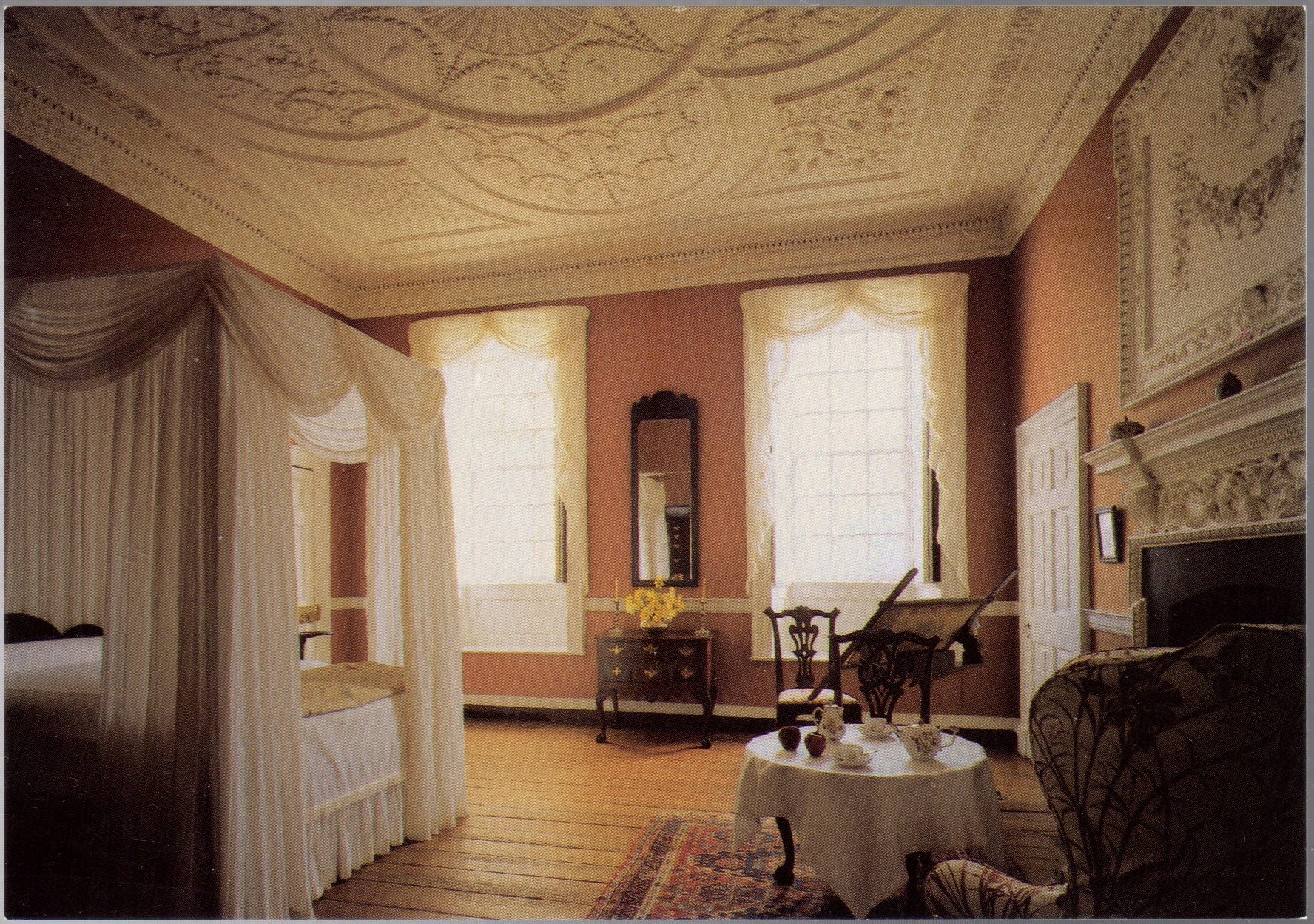
    While postcards are amusing souvenirs and a source of nostalgia, they can also offer us important insights into the evolution of historic sites and cities.  Postcards of Kenmore have helped us document the restoration of the house, the development of the property, and past interpretations, even providing documentation of collection items for which we may not have records.

    For your enjoyment, I’ve selected some of my favorite postcards to showcase how they’ve documented the historical restoration and interpretation of Kenmore.

    Exterior: Pre-Restoration

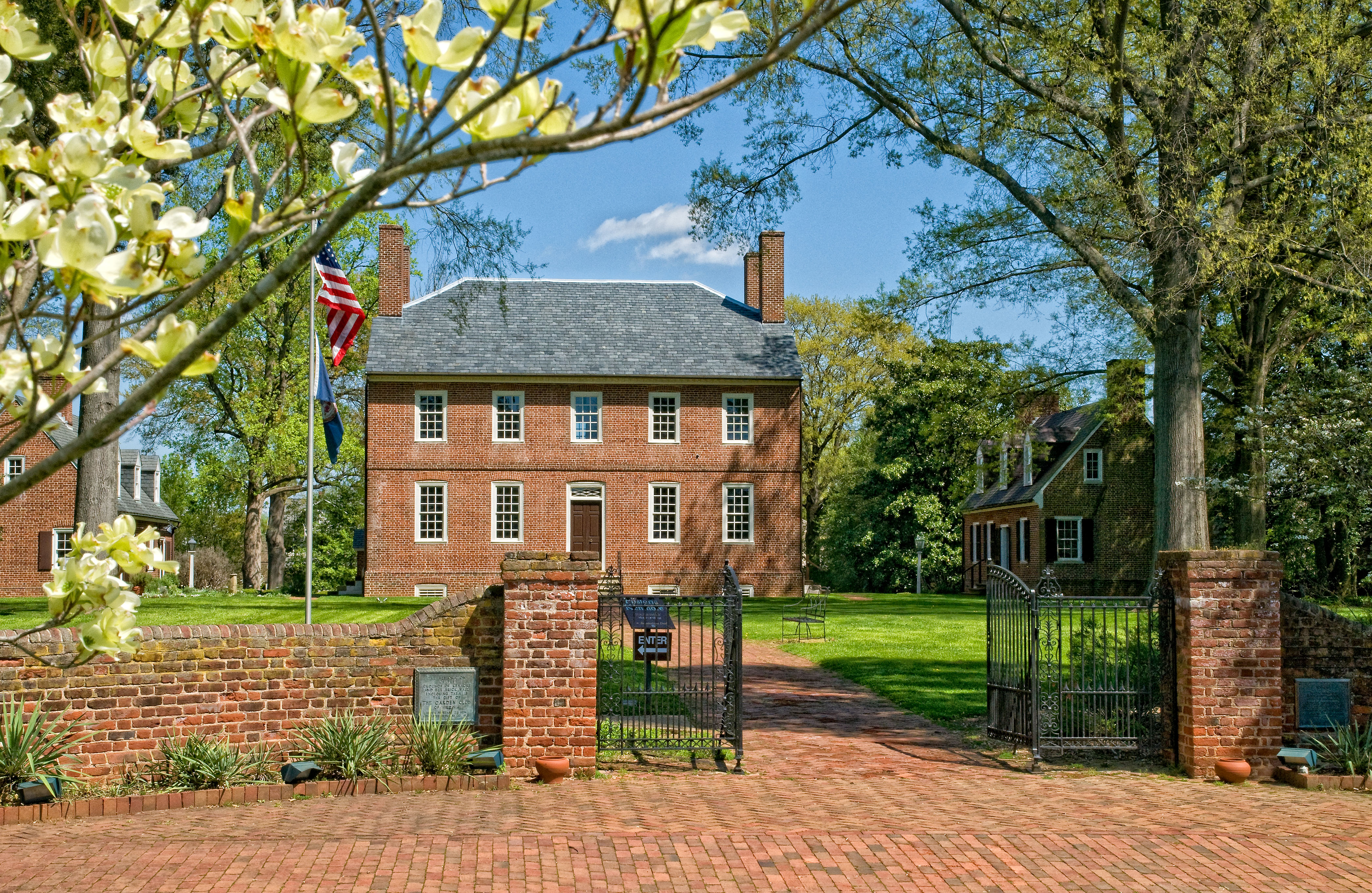
    Kenmore has always been quite the showpiece, even when it was privately owned.  One of the earliest postcards of Kenmore’s exterior is dated 1908, as indicated by the postmark.  The Howard family owned the house until it was acquired by E.G. Heflin around 1914. 

    The postcard shows the house from the Washington Avenue side (west elevation) and provides a glimpse of the properties before any restoration work.  The old kitchen can be seen on the north side of the house, while the exact date it was built is unknown; we know it was built in the late 1880s or early 1890s.  It was torn down in 1929. 
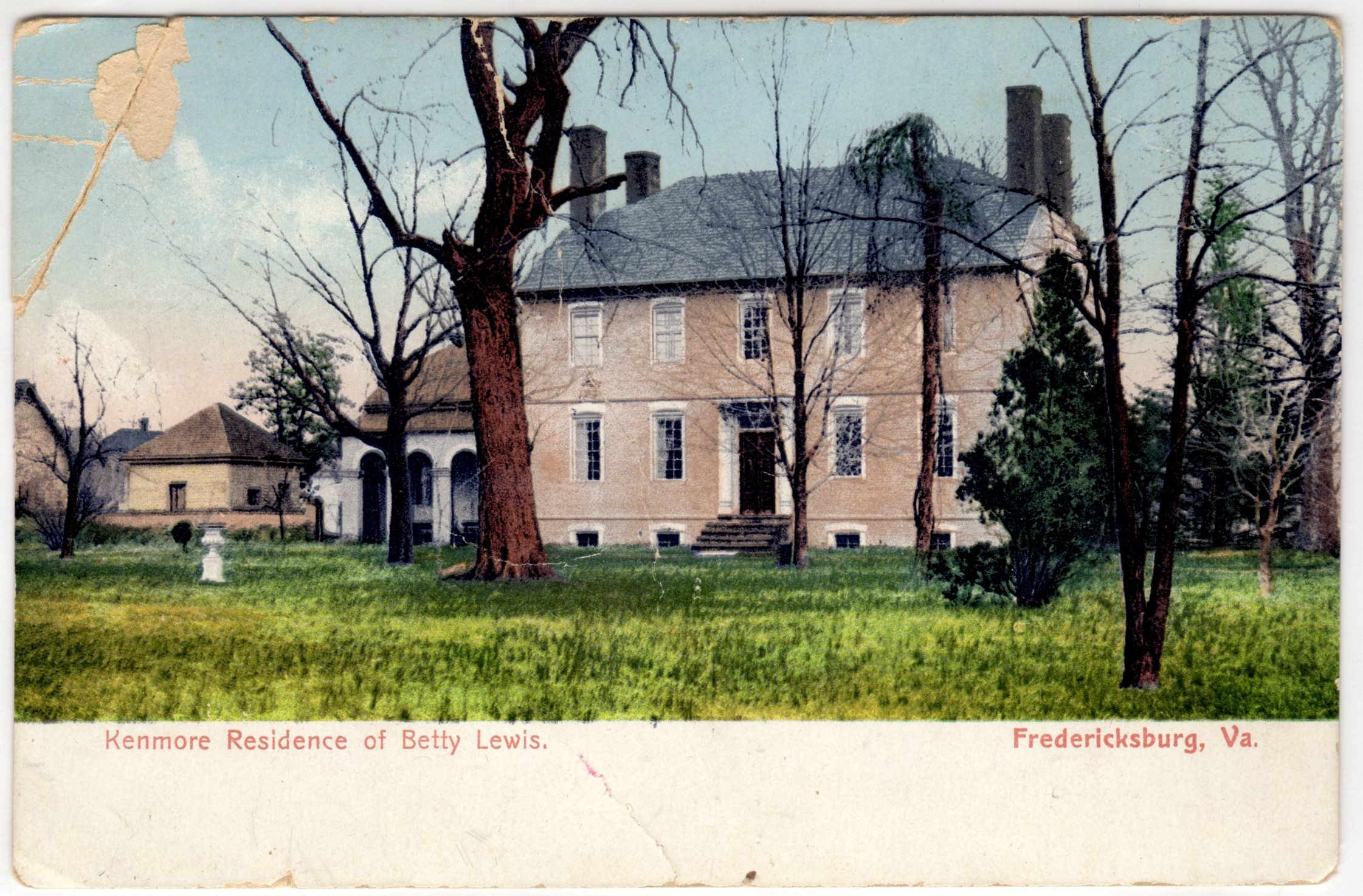
    Additionally, the exterior brick has been painted, along with the lintel, which was removed in 1929. We can see the paintwork better in the second color postcard. 

    Interior

    Entrance Hall

    One of the earliest postcards we have of the entrance hall, around 1923.    One of the most notable things is the plasterwork on the ceiling.  If you see current pictures of the entrance, you will notice that this plasterwork no longer exists.  The plasterwork was done by former resident William Key Howard, Jr., when he was restoring the original ceiling in the other rooms.    In 1930, the Association decided to remove the plasterwork because it was not original to the Lewis family.  Mr. Howard Jr. was not happy when he found out that the plasterwork had been destroyed and called it an act of vandalism. 

    Additionally, we can see next to the tall case clock a door that leads into the drawing room, which no longer exists.  It was decided that this was not the original placement, and the door was moved directly across from the office door in 1930. 

    Chamber/NW room, first floor

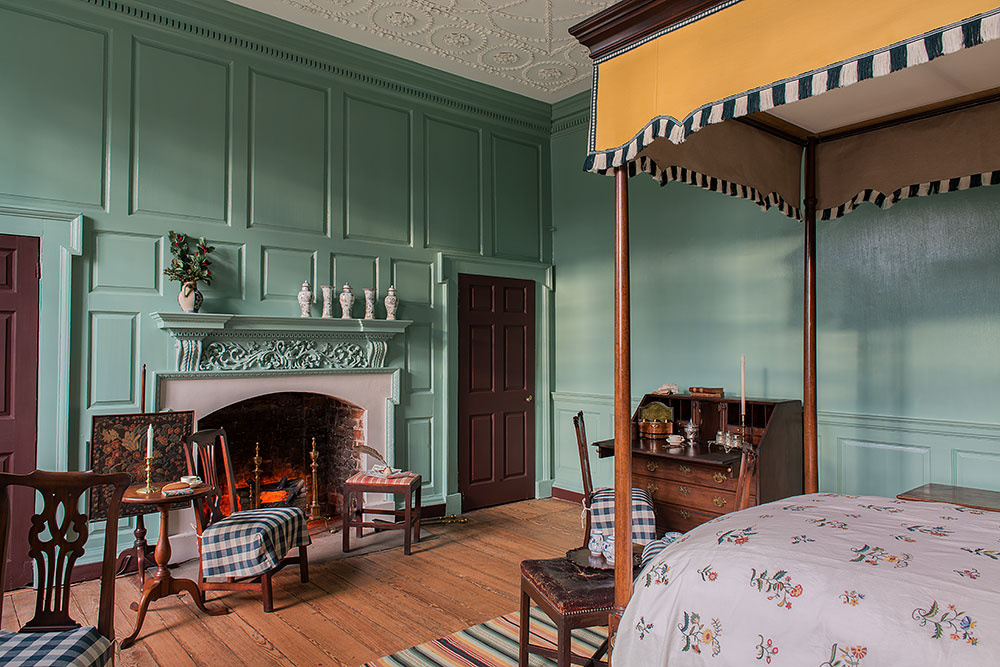
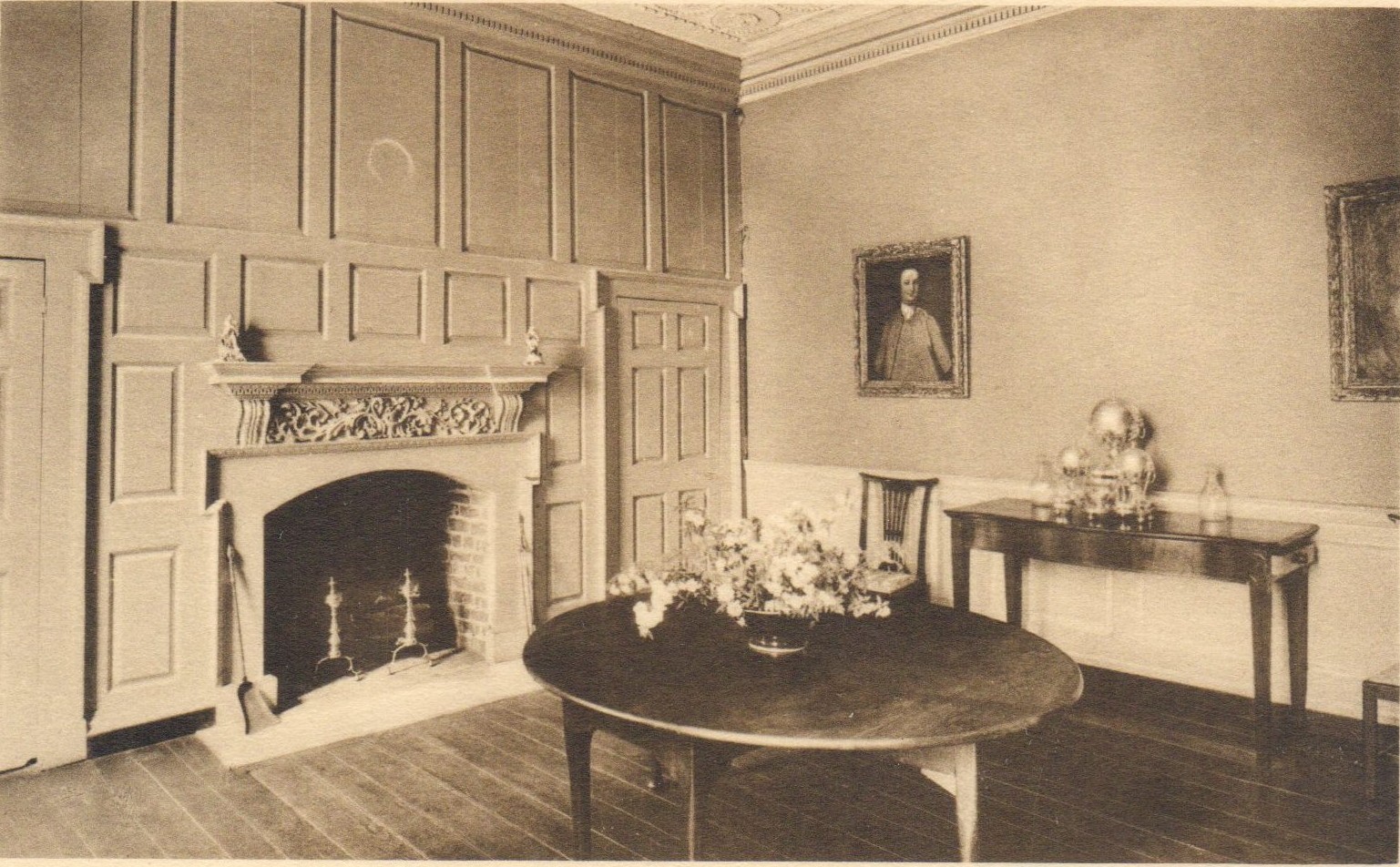
    While we currently interpret the NW room on the first floor as the chamber, the ladies referred to it as the Dining Room. We can see a round table, a sideboard, two chairs, and two portraits, plus a large silver tea urn.   The postcard dates from the late 1930s because we know from our records that most of these pieces were donated in 1935.  We still have all these objects in the collection, but the only things currently on display to the public are the round table in the dining room and the chairs in the drawing room.  All other pieces are in storage. 
    Dining Room/NE room, first floor

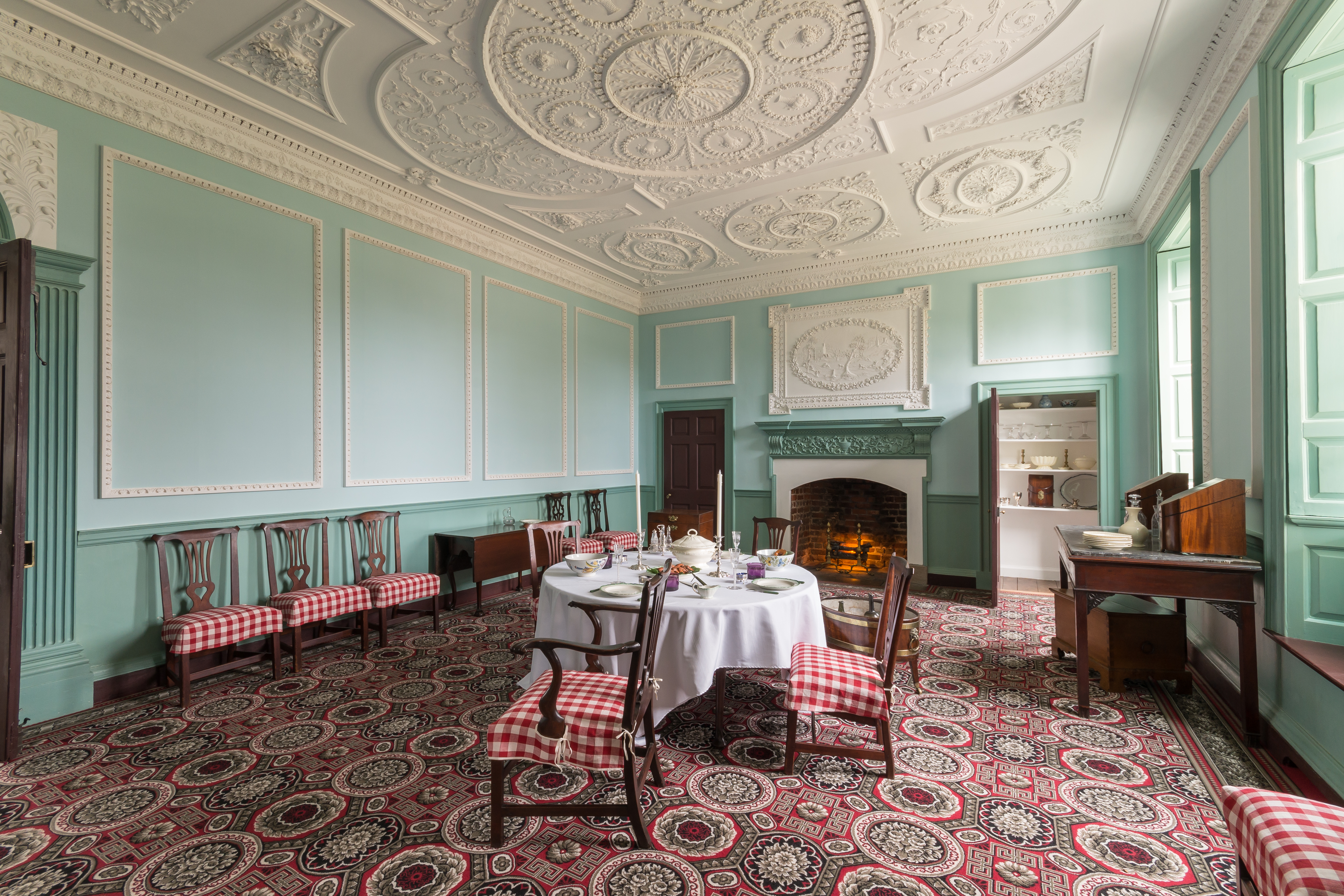
    We currently refer to the NE room on the first floor as the dining room.  It has undergone many changes, with Gothic arches added to the closets during the 19th century, and has been restored to its original shape.   Not everything in the postcard is still in our collection, but you can see the square table still on display in the dining room, and Betty’s portrait is now in the drawing room. 

    On the left is the Dining Room during the Howard occupation around the 1890s, and on the right, the Dining Room today
    The Dining Room after the Kenmore Association’s restoration, c. 1940s

    Drawing Room/SE room, first floor

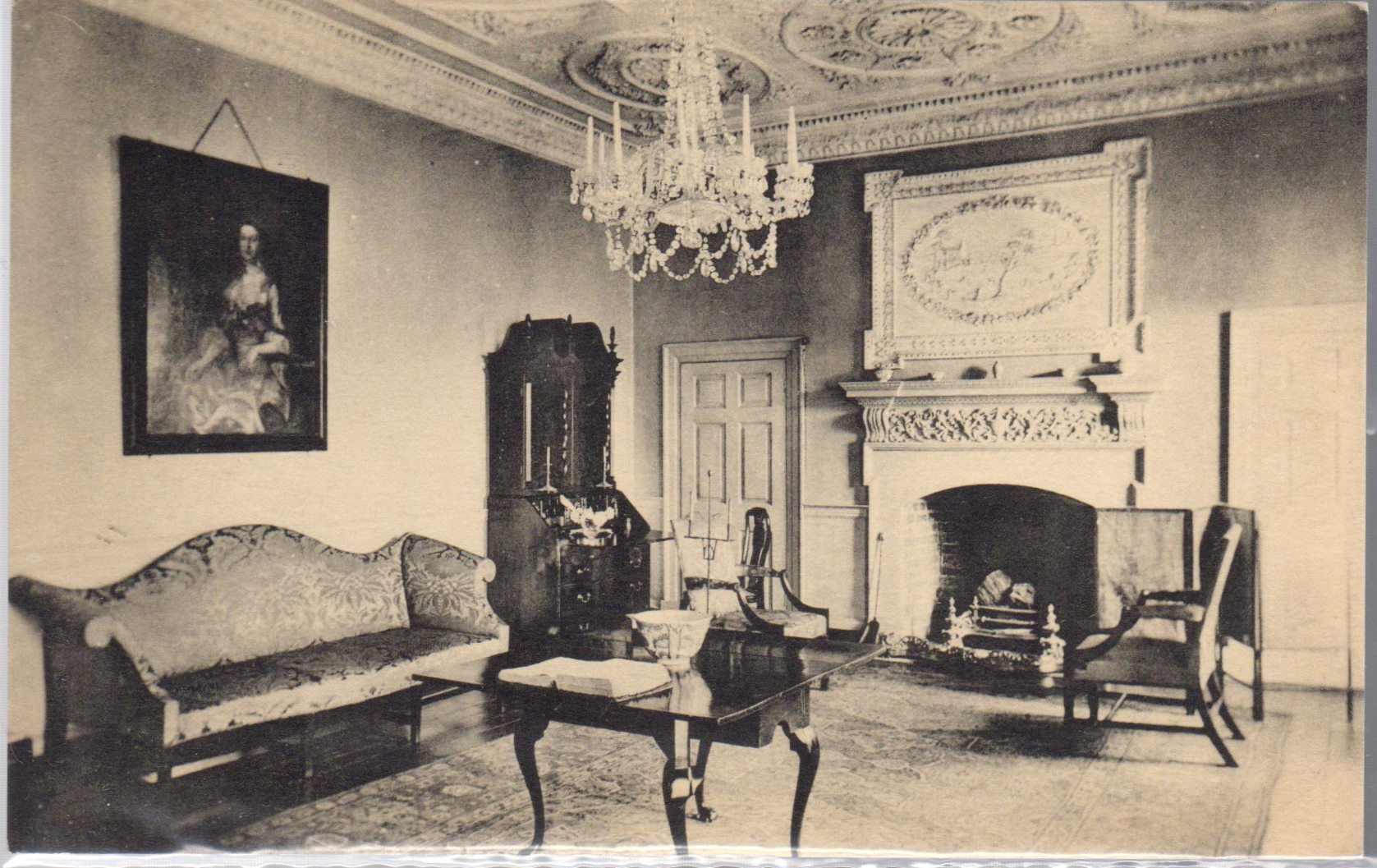
    The drawing room was previously known as the library and also served as a chamber for a while in the 1980s.  By the window, you can see Betty’s desk in the older postcard (c.1940s), which is still on display, but in the chamber.  We still have the tea set on display where it was in the chamber, but it is currently in storage.

    On the left is the Drawing Room during the Howard occupation around the 1890s, and on the right is the Drawing Room now

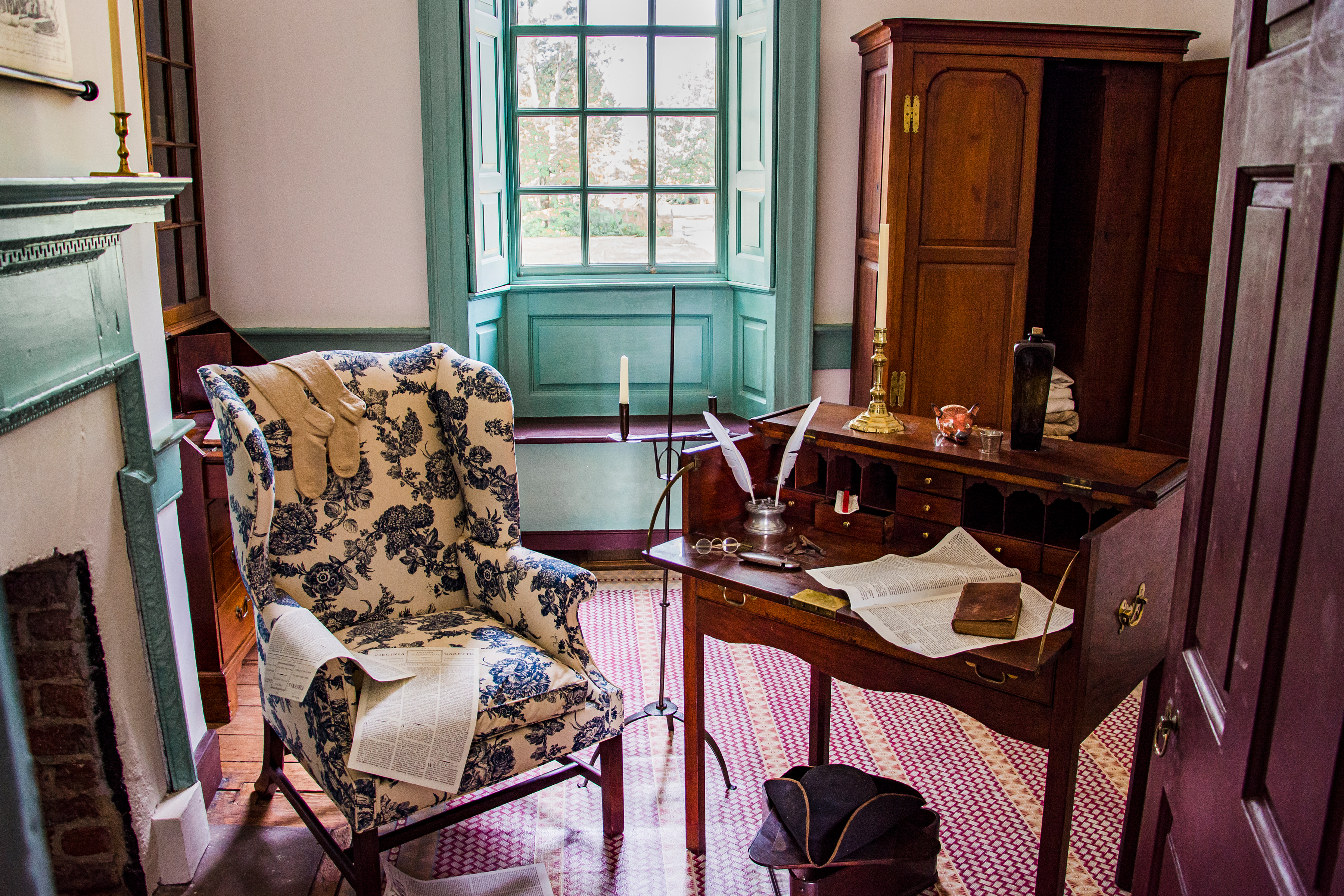
    Office/SW room, first floor

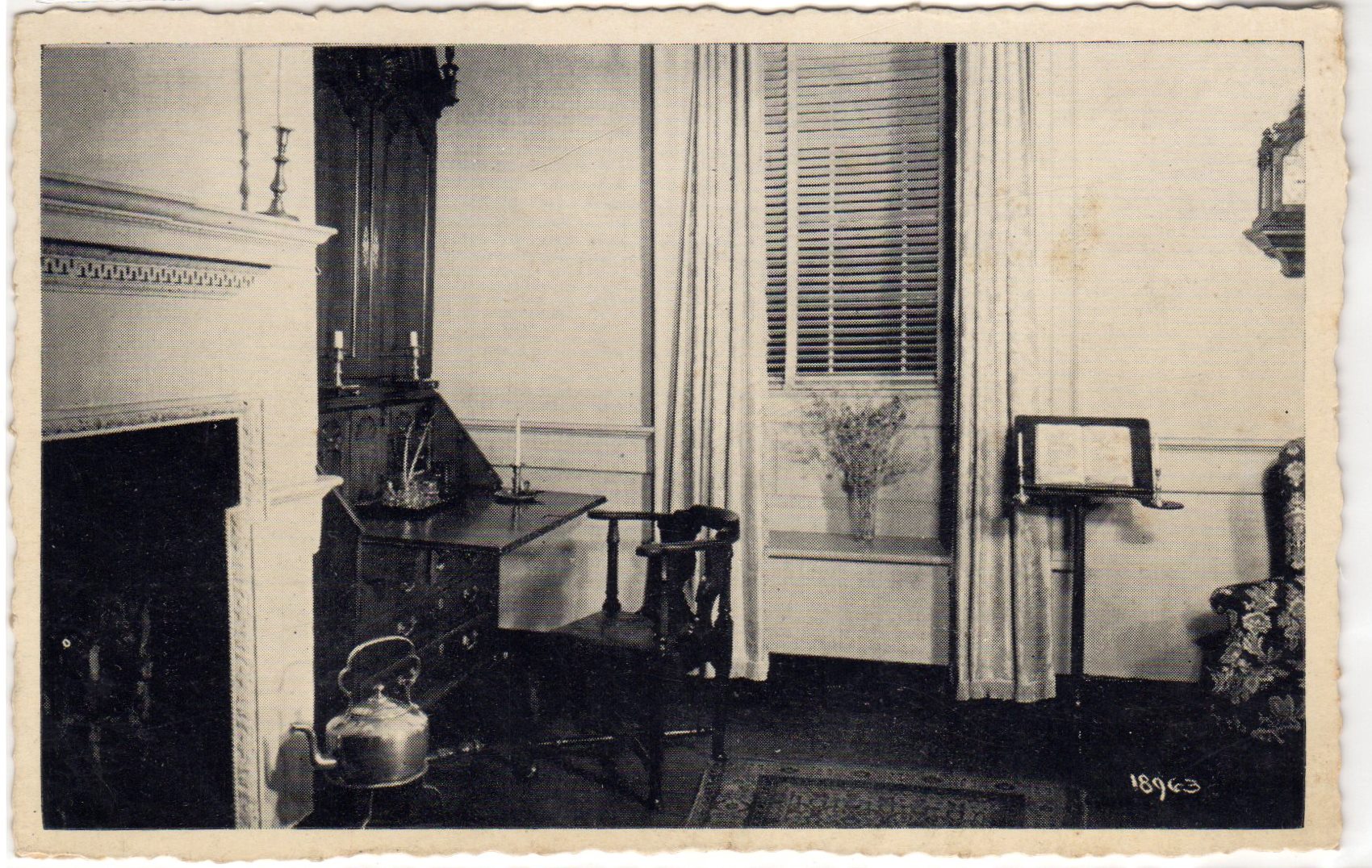
    Fielding’s office has been displayed as a sitting room and a kids’ room.  We don’t have many of the objects in the postcards still in the collection, except the corner chair, which now has a check seat, and the music stand, which is too fragile at the moment for display.
    2nd floor

    We currently do not offer tours of the upstairs area because we don’t put too much stress on our lovely plaster ceilings.  The Kenmore Association interpreted the upstairs as individual bedrooms for the family, which is not the most historically accurate version.

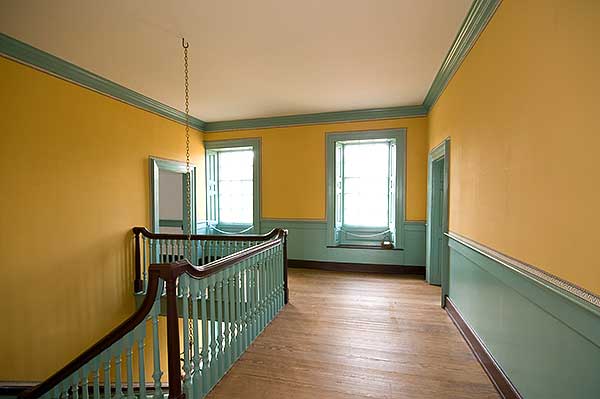
    Hallway/ 2nd floor

    Besides the paint color, the hallways upstairs remain structurally the same.  The ladies have Betty’s desk on display, with the Hammond quilt above.  We still have the Hammond quilt; fortunately, we removed it from the frame, but it is a massive quilt and is not currently on display. However, it is in excellent condition.  As for the tall case clock, chandelier, and curtains, they have been lost to history.

    “Mary Washington Bedroom”/NE room/2nd floor

    We have no evidence that Mary ever had a dedicated bedroom at Betty’s house, and it seems unlikely with the size of the Lewis family.  We do still have some of the pieces in the collection. The tea box is currently on display in the chamber, and the yellow tea set has been displayed intermittently over the years.  The two calendar prints hung on the wall are now downstairs in the drawing room.  Lastly, the chaise lounge was loaned to the foundation by the Metropolitan Museum of Art in the 1930s (subsequently purchased in 1968) and is currently in storage, as there is no evidence that the Lewis family owned many northern furniture pieces.
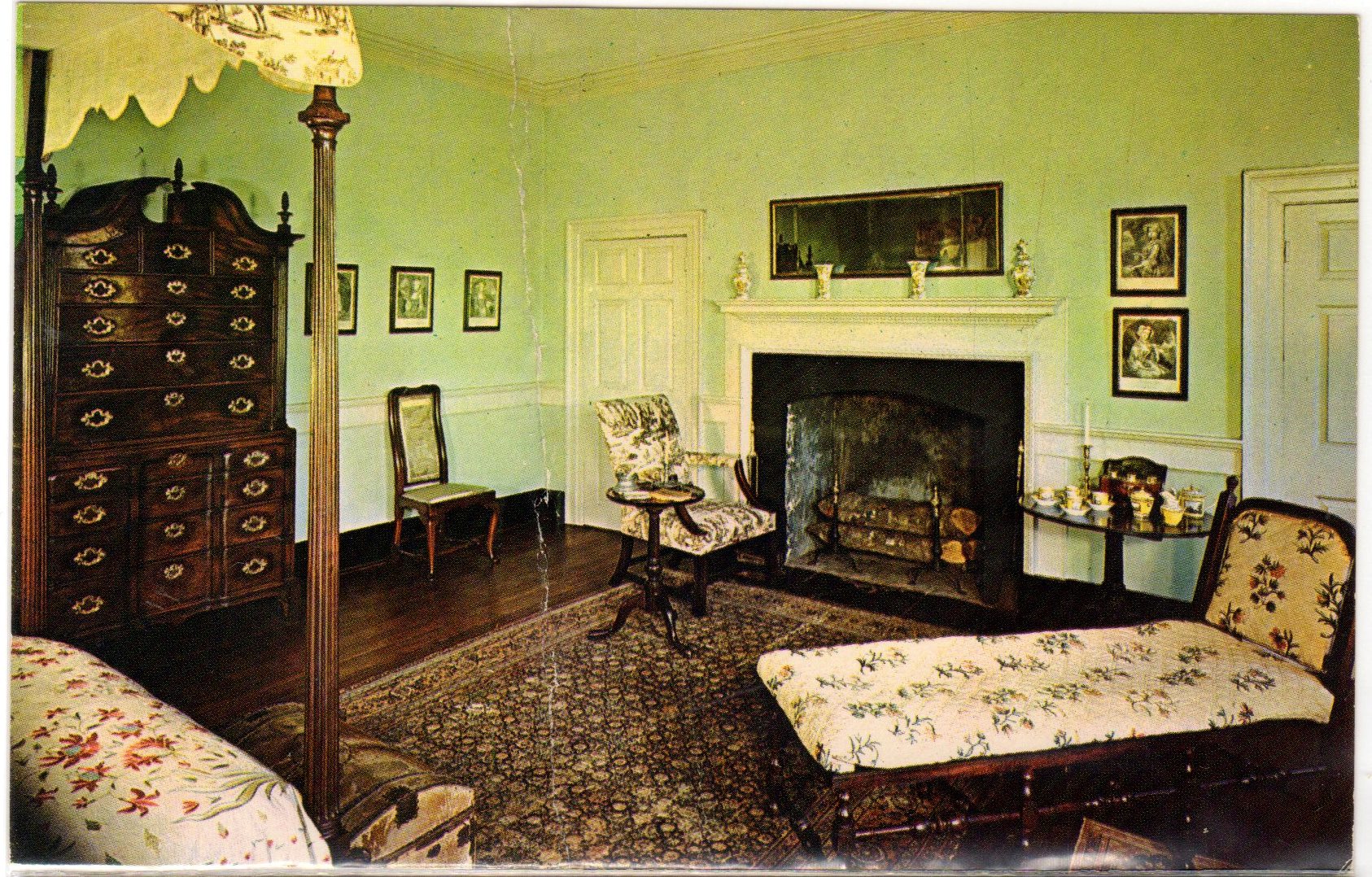
    “Mary’s Bedroom” is currently storage with temporary covering to protect the original floors.

    “Guest Bedroom”/NW room/2nd floor

    Much like “Mary’s bedroom,” it is very unlikely that the Lewis family had a “guest room,” with as large as the family was, it would have been a waste of space.  The bed still resides in our collection, disassembled and in storage. 

    “Betty’s bedroom”/SE room/2nd floor

    Again, during the Lewis occupation in the 18th century, individual bedrooms were not common, except for the head of the family.  Not many of the objects in the postcard are still in our collection, except for the bed, which is now in the chamber downstairs, and the William Walker, Jr. armchair, which is currently off display, but we do have another one in the dining room.
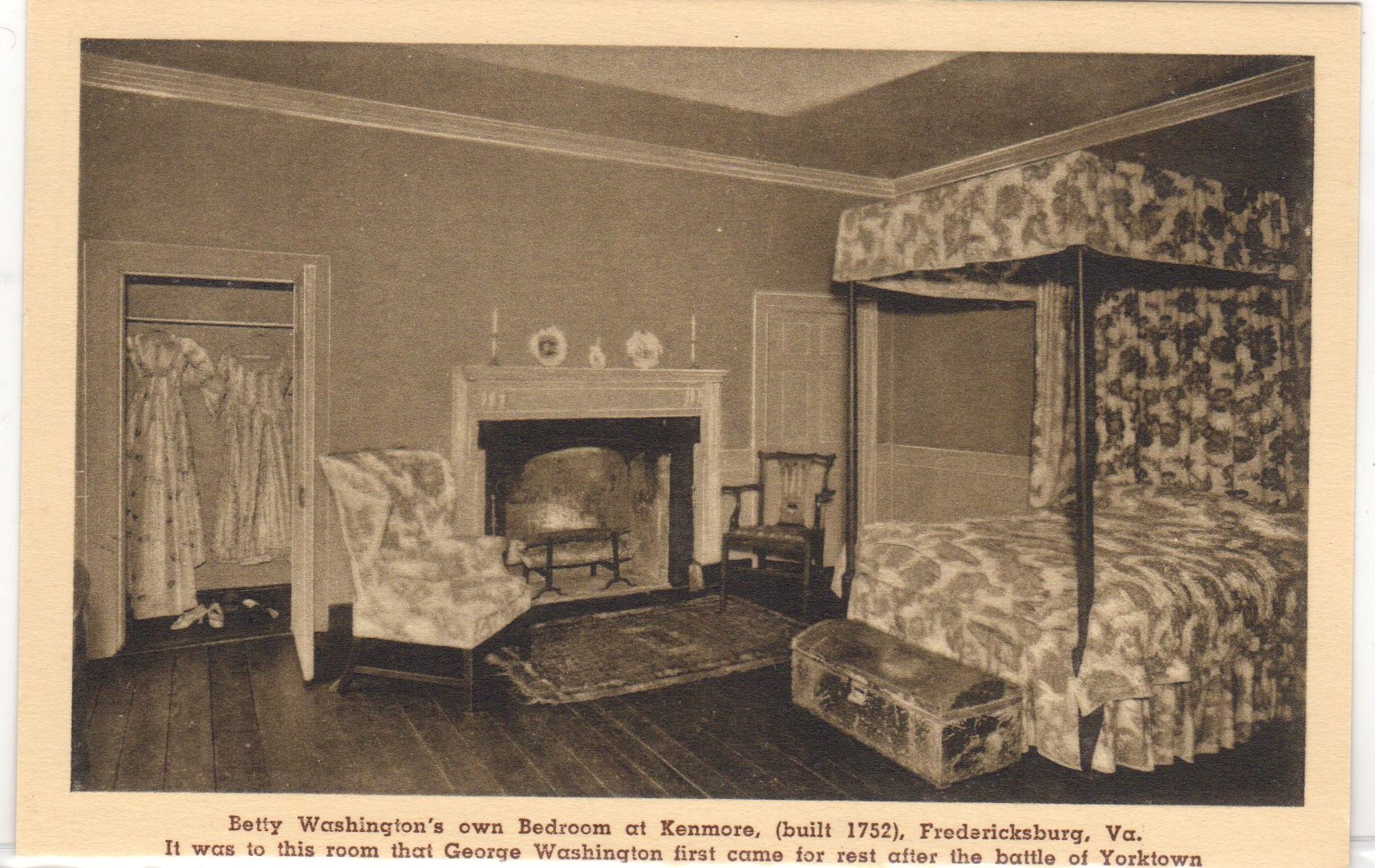
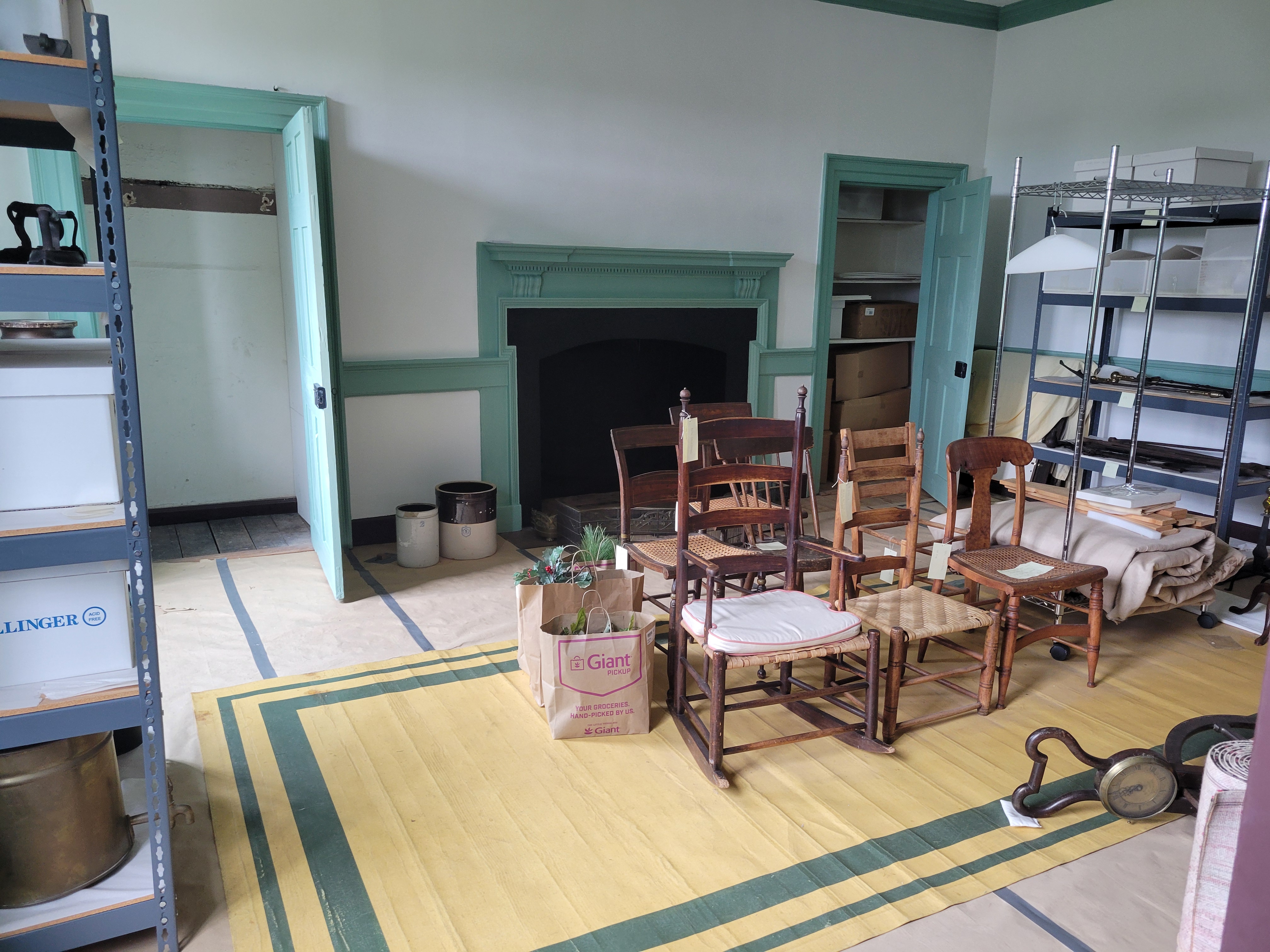
    “Betty’s bedroom (2nd floor SE) is currently used as storage…and some Twelfth Night decorations

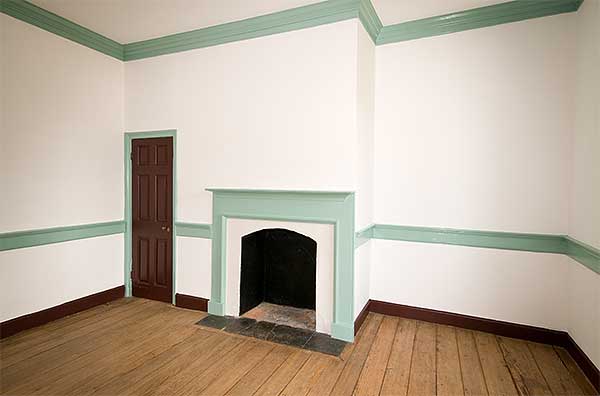
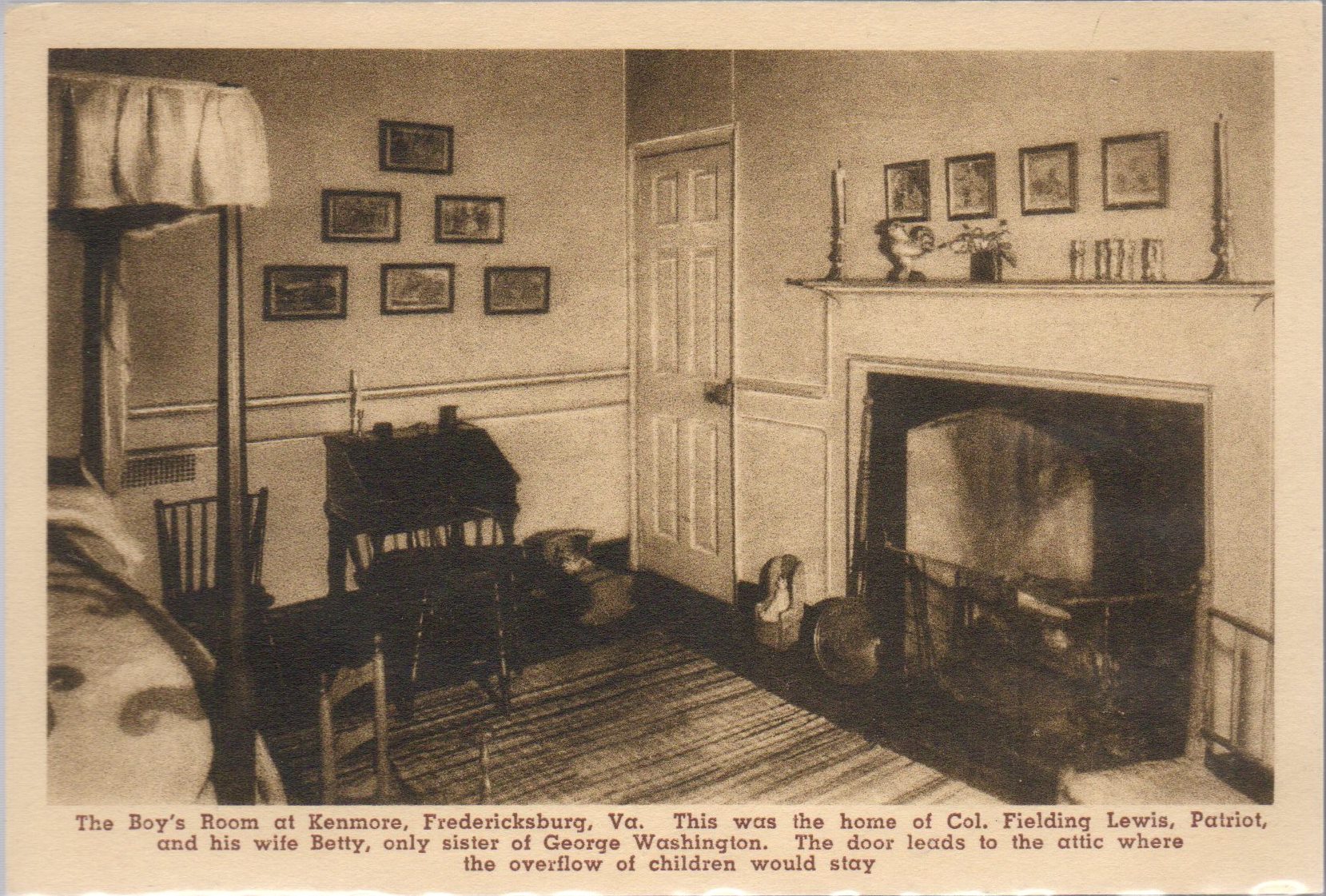
    “Boy’s Room”/SW room/2nd floor

    The last room upstairs is smaller than the other rooms and has access to the attic.  The ladies used this as the boys’ room, but as we discussed, with the other rooms, it is unlikely that this was accurate.  We do still have many of the pieces’ pictures, but the only one currently on display is the slant-top desk in the Visitors Center. 

    Heather Baldus

    Collections Manager

  • No Buttons for the Ladies

    Whilst I costume actors, living historians, and myself from time to time in 18th century clothing, I find myself puzzled about the stark difference between the closures and attachments of ladies’ and men’s garb.  I have to lace myself into my stays, tie on layers of padding and petticoats around my waist, and finally pin my gown closed.  Men have the enjoyment of a few buttons on their breeches and waistcoat, but that is it.  It frequently makes me grumpy how long it takes me to dress in comparison to my male counterpart.  I did not understand this phenomenon, until recently. 

    To put 18th century clothing closures into perspective, you had hooks and eyes, buttons, and ties/laces.  Thomas Hancock created elastic for gloves, suspenders, and stockings in the 1820s, but it struggled to withstand heat and last through time.  The elastic we know and love in our garments today did not come around until the early 1900s.[1]  The modern zipper was patented in 1917 and was used mainly on boots and tobacco pouches.  It took another 20 years before the technology even made it to mass produced clothing.[2]  By comparison, the button first becomes functional over decorative around 1,000 BCE in Asia.  Buttons would eventually travel the Mediterranean during the crusades into European territories around the late 11th century CE.[3]  So George Washington did not have a zipper on his pants or elastic on his socks, but he definitely had buttons on his coat.   

    A eye from a hook and eye set. Source: Ferry Farm Archaeological Collections

    Hooks and eyes were sometimes used for gown closures for women in the 18th century.  They were not used as much as pins were because of the rigidity in size it created for the garment. 

    We have buttons from men’s garments in the archaeological collections here at Ferry Farm.  We also see buttons all around male portraiture in our curatorial collection.  The ladies, however, are stuck with laces, ribbons, and pins.  And boy, do we have the pins to prove it in the archaeology collections. 

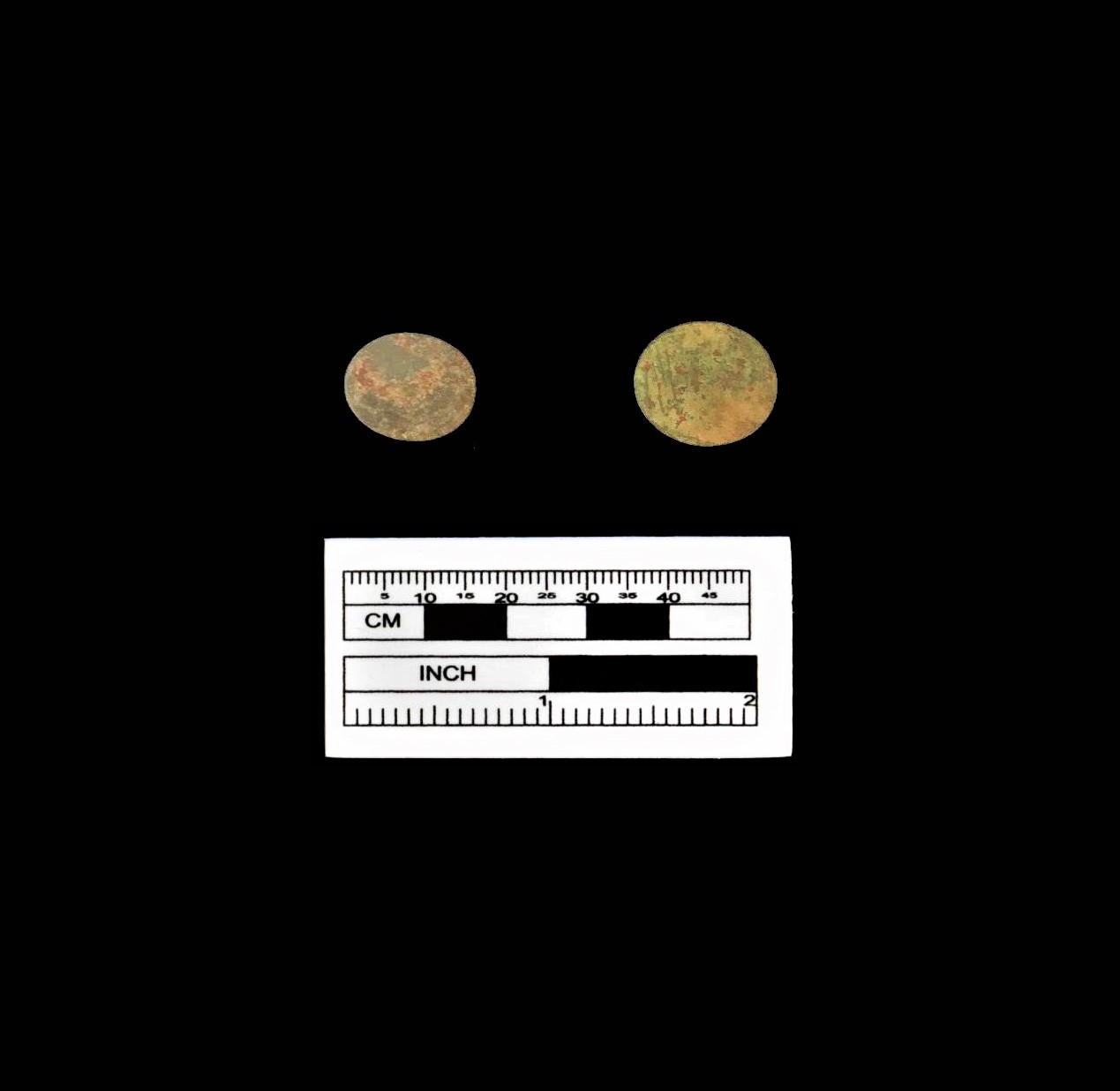
    Two metal buttons most likely from men’s garments.  Source: Ferry Farm Archaeological Collections
    Bone buttons Source: Ferry Farm Archaeological Collections
    Pins were used for pinning jackets closed and keeping caps pinned to your hair.  They were a necessary part of dressing. Source: Ferry Farm Archaeological Collections

    A small sample of the large collection of brass dress pins found at Ferry Farm.  Pins were not used for sewing, as basting before sewing was the regular practice.  Pins were used for pinning jackets closed and keeping caps pinned to your hair.  They were a necessary part of dressing.

    The answer to why this phenomenon is how it is hit me one day after rewatching a lecture given by a former staff member entitled “Betty Washington Lewis and Women’s Health.”  Dr. Kelly Brennen Arehart spoke about maternity wardrobes and how women wore their everyday clothing throughout pregnancy.  For my contemporary mind, this was shocking, but the more I thought about it the more it made sense. 

    Women go through a lot of fluctuations in body shape, weight, and proportions in their lifetime.  Between hitting puberty and development of curves, to many pregnancies, to the changes of menopause, women’s bodies go through so much.  Of course in between all of the big changes, there are also changes to the female body based on time in her menstrual cycle, metabolism fluctuations, or periods of eating more or less or different types of food that all change the body’s shape and size.  Unlike today, women of the past could not just go to the shop and buy a pair of pants in the size up.  Clothing was incredibly expensive and time consuming to make before sewing machines and mass production come into play.  In the 18th century, even the highest classes of women did not have the money or the time to go buy or have new clothing made when they gained a few pounds or got pregnant.  It was a matter of adjusting the clothing they already had.  And that is exactly what ties, pins, and laces allowed women to do. 

    The lacing, pinning, and tying made clothing far more adjustable compared to the rigidity of buttons.  Women tied their petticoats looser and simply covered the wider gap in the side with their jacket or gown.  Stays were either loosened significantly by the laces or they were left unlaced at the bottom entirely, especially in cases of late term pregnancies.  On top of the stays, jackets could be pinned further out to allow for more room in the bust and waist, or a stomacher could be added in the center opening of the jacket to expand the top even further.

    Whether these closures were intentionally created to be adjustable or if it was just a byproduct of lacking clothing technology, I am not entirely sure.  But the idea that buttons were only used on men’s not so fluctuating bodies (for the most part) says something.  A button is sewn down and cannot be easily moved or adjusted on a regular basis.  Once a button is sewn into place, there is no room for variation in body shape, unless one wanted to move the buttons every time he ate a large meal the previous day. 

    Even though Betty Washington Lewis had Charlotte, who we believe to be an enslaved woman acting as the seamstress of the Lewis household, Betty was pregnant on and off for twenty years.  If Charlotte or another enslaved seamstress had to make a maternity wardrobe for Betty every time she was with child, the seamstress would have no time to do any other tasks whatsoever.  It was not economical with precious time or expensive cloth for women to need new clothes every few weeks. 

    So to tie all this together, I am still not happy that it is so inconvenient for me to dress myself in 18th century clothing, but I understand why getting dressed was this way.  The adjustability of women’s clothing was so intentionally created to conform to their bodies in any season it was in.  It also opens my eyes to why pins were so important.  Without them, a woman could not dress. 

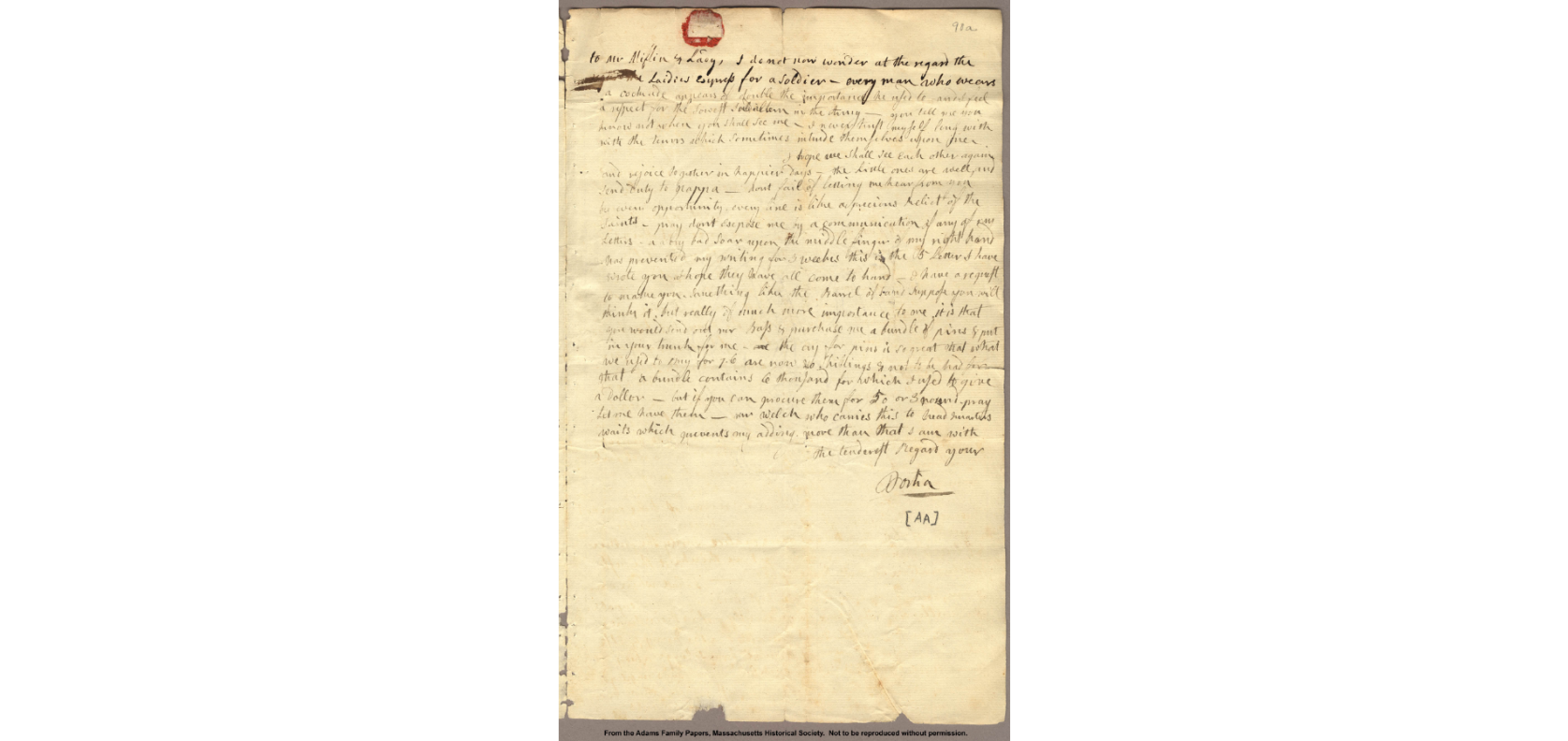
    Letter from Abigail to John Adams, June 14, 1775.  Source: Massachusetts Historical Society

    …I have a request to make you. Something like the Barrel of Sand suppose you will think it, but really of much more importance to me. It is that you would send out Mr. Bass and purchase me a bundle of pins and put in your trunk for me. The cry for pins is so great that what we used to Buy for 7.6 are now 20 Shillings and not to be had for that. A bundle contains 6 thousand for which I used to give a Dollor, but if you can procure them for 50 [shillings] or 3 pound, pray let me have them. Mr. Welch who carries this to head Quarters waits which prevents my adding more than that I am with the tenderest Regard

    your

    Portia


    Allison Ellis

    Manager of Public Programs


    [1] “Questions About Elastic,” Maggie May Clothing, Accessed July 10, 2023, https://maggiemayfashions.com/questions-about-elastic-2/.

    [2] Ninette Dean, “The Up and Down History of the Zipper,” The Smithsonian Libraries and Archives, Accessed July 10, 2023, https://blog.library.si.edu/blog/2010/05/03/the-up-an-down-history-of-the-zipper/.

    [3] Caroline Stone, “The Westward Journeys of Buttons,” AramcoWorld, Accessed July 10, 2023, https://www.aramcoworld.com/Articles/November-2020/The-Westward-Journeys-of-Buttons.

  • Bane of the Washingtons Part II: The Deaths of Lawrence, Fielding, and Samuel

    Welcome back to our 3-Part Blog charting tuberculosis in the extended Washington Family. If you are new to this series, Part I examined how the disease works, charted its history, and explained standard courses of treatments in the 1700s. You can find the blog here, and we encourage a review of the “Treatment” section. In Part II, we will begin to look at the family members who suffered from the disease and how this impacted their lives and those around them.

    Lawrence Washington (1718-1752, aged 33/34):

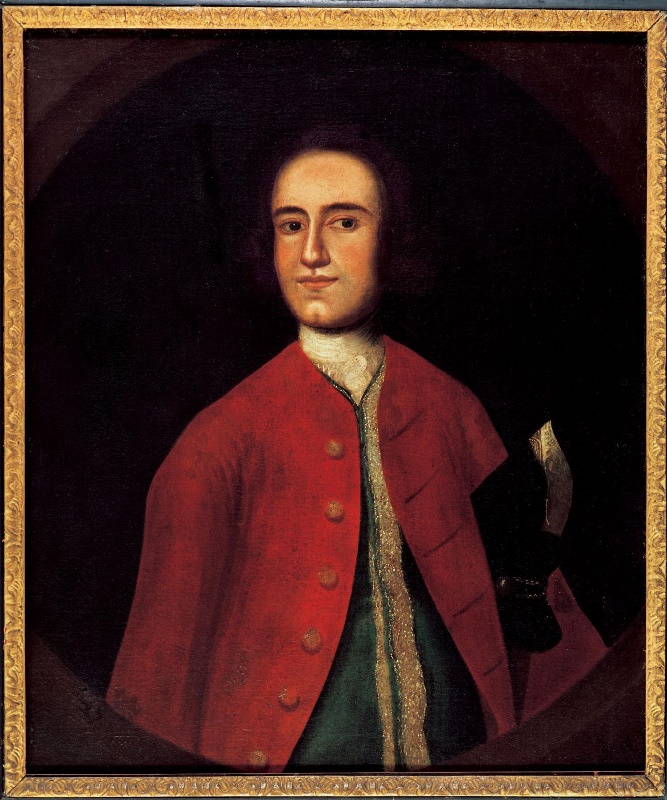
    Lawrence Washington Source: Mount Vernon

    Perhaps the best-known case of tuberculosis in the Washington family pertains to Lawrence Washington. George’s eldest half-brother, credited as serving as a role model, died of the disease in 1752, which subsequently laid the foundations for George to inherit Mount Vernon and become the Father of His Country. Behind this, however, lies one of the more clear timelines for the devastation the disease.

                Lawrence may have contracted tuberculosis during his service in the War of Jenkins’ Ear (served 1740-1742) or after his return to Virginia in 1742. Certainly, he had developed severe enough symptoms, particularly a cough, by the end of 1748, to cause him to take a leave of absence from the House of Burgesses. He resumed his duties in the spring of 1749, but his illness forced him home for a final time in May. That same month, George wrote hoping for news that his brother’s cough had improved and that he had “given over the thoughts of leaving Virginia.”1 Lawrence could not provide his brother with the news he desired, and sailed to England in the summer of that year to consult with physicians. Lawrence returned in November with little encouragement, but set out for Berkeley Springs in July 1750, to take the waters. George accompanied his brother on this venture, but they did not stay long.

    By 1751, Lawrence had exhausted any hope of finding a cure at home and his doctors recommended visiting a warmer climate. Following this advice, Lawrence and George sailed for Barbados on 25 September and arrived on 2 November. Shortly after their arrival, George recorded that a doctor came “to pass his opinion on [his] brother’s disorder, which he did in a favorable light, giving great assurances that…a cure might be effectually made.”2 George mentions little else of Lawrence’s condition in his journal, a month of course went undocumented as George had smallpox, and he returned to Virginia alone in December.

    Lawrence, having not found the relief he hoped for, decided to try Bermuda and journeyed there after George left. In an April 1752, letter to a friend, Lawrence referred to Bermuda as his “last refuge, where [he] must receive [his] final sentence.”3 Describing himself as “a criminal condemned, though not without hopes of a reprieve,”4 Lawrence followed his doctor’s treatment plan by “abstaining from flesh of every sort, all strong liquors, and by riding as much [he] could bear.”5 His doctor advised to take what benefit he could from the climate as another winter in Virginia would surely kill him. While Lawrence remained somewhat hopeful in this letter, he soon wrote again about his “unhappy state of health”6 and expressed the belief that, if it should worsen, he would “hurry home to [his] grave.”7 Evidently, Lawrence soon resigned himself to his impending death as he returned to Mount Vernon and set his affairs in order with the aid of his half-siblings and stepmother. He died on 26 July 1752.

    Upon Lawrence’s death, he left behind his wife Anne Fairfax and daughter Sarah. Three other children had already died all under the age of two. Infant mortality frequently occurred in the 1700s, so it proves impossible to know what caused each death. However, it remains a possibility that they contracted tuberculosis from their father, which then killed them quicker due to their age and weaker immune systems, or left them vulnerable to secondary infections. Sarah would suffer a similar fate in 1754, aged four, and her mother, having married into the Lee family, would die in 1761, aged thirty-three. These deaths allowed George to inherit Mount Vernon.

    Fielding Lewis (1725-1781, aged 56):

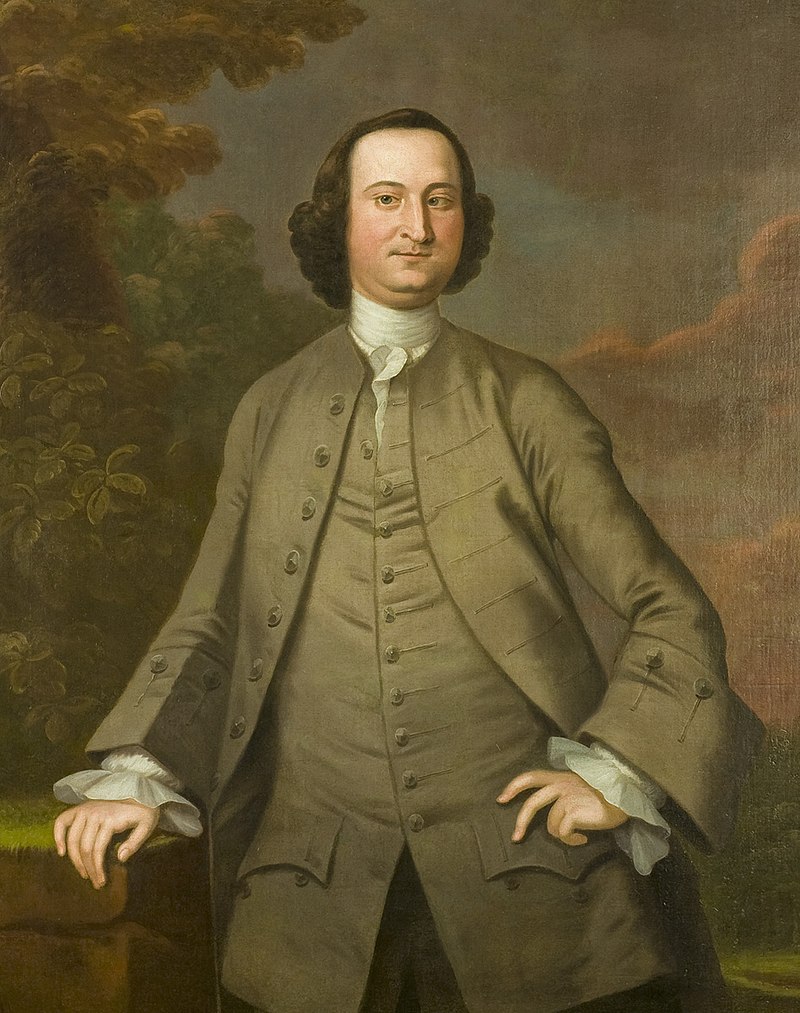
    Fielding Lewis

    The husband of Betty Washington and the mind behind Kenmore, Fielding Lewis served his country during the war by funding various supply and defense lines. One of the richest men in Virginia, Fielding had the ability to provide aid and, as the brother-in-law of the commander-in-chief, could hardly stay out of the conflict. While his efforts did much for the cause, Fielding drew the short straw by spending nearly all of his money. Accounts of Fielding Lewis’ death often insinuate a connection to the stress of losing his fortune. While this certainly put him under strain, and would not have helped his health, Fielding’s case of tuberculosis meant that he would have died regardless of his financial status.

    Tracing tuberculosis in Fielding’s life proves more difficult than that of Lawrence. Mentions of Fielding as ailing exist for several years prior to his death. However, with no description, one can hardly say if this references tuberculosis or some other affliction. Like many, he frequented Berkeley Springs and even purchased property there. Fielding recorded little of his visits, but his interests lay in the spring’s supposed medicinal benefits and, to that end, undertook an annual August trip from 1772 onwards. Throughout the war, Fielding held the rank of colonel and, though he never received a formal posting, oversaw Fredericksburg’s gun manufactory and the defense of the Rappahannock. This position required no military action and had strong connections to his background as a merchant. However, the choice of assignment may have derived from knowledge that he would never be well enough to effectively command troops. Then again, Fielding was in his fifties and had no military experience. In any case, the position reflected a strategic choice that played to Fielding’s strengths and lessened the impact of field inexperience and ill health.

    If Fielding hoped for a peaceful death, he would not receive it. In the summer of 1781, with the British encroaching on Fredericksburg, the Lewis household and Mary Washington fled. At this stage, Fielding’s health had significantly deteriorated, leaving him an invalid confined to his home. A sudden evacuation by carriage would have done little to ease his discomfort as the household hurried to another property in Frederick County, Virginia. Once there, Fielding focused on putting his affairs in order and likely did not have the strength to visit nearby Berkeley Springs. The news of the Yorktown victory undoubtedly brought some emotional respite, but it proved short-lived as Fielding died mid-December 1781. The location of his burial site on the Frederick County property remains unknown. Fielding’s death brought immense grief to his widow, Betty Washington, who had lost her brother Samuel to the same disease only three months earlier.   

    Samuel Washington (1734-1781, aged 46):

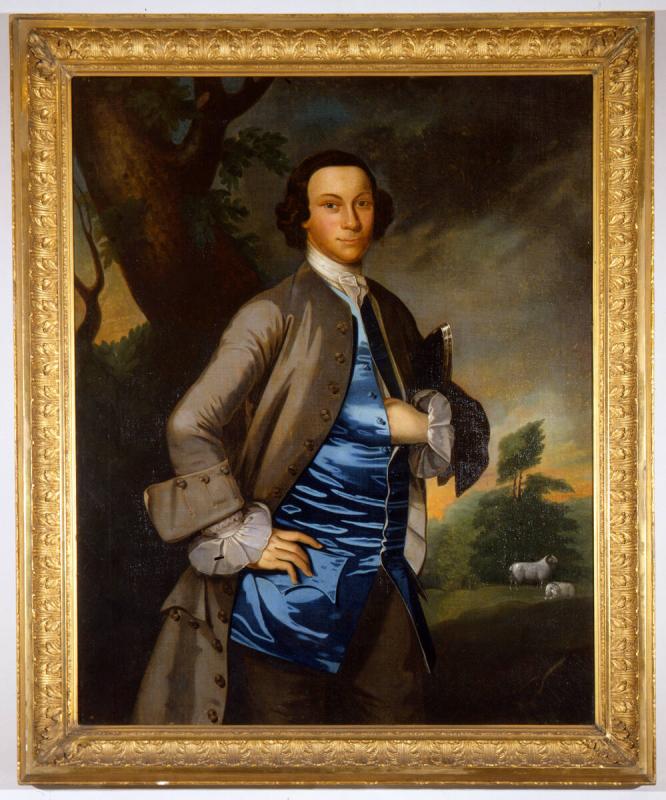
     Samuel Washington Source: Mount Vernon

    The second son of Augustine Washington and Mary Ball, Samuel grew up at Ferry Farm with his full-siblings. Said to have suffered from tuberculosis for most of his life, it remains unknown where, when, and from whom he contracted it. However, by visiting Lawrence in July 1752, to help put his half-brother’s affairs in order, seventeen-year-old Samuel certainly faced exposure. Samuel died at his home Harewood, near Charles Town, West Virginia, in September 1781, shortly before the victory at Yorktown. The home itself lies conveniently close to Berkeley Springs, which may indicate that its location and Samuel’s move from Stafford County, Virginia, derived from a desire for easy access to the springs and their reputed health benefits.

    Despite dying just shy of age forty-seven, Samuel famously married five times. His final wife, Susannah Perrin Holden (1753–1783, m. 1778), survived him, and the fourth, Anne Steptoe (1737–1777, m. 1764), died of complications from a smallpox inoculation. However, the deaths of his first three wives, Jane Champe (1724–1755, m. 1754), Mildred Thornton (roughly 1741–1762, m. 1756), and Lucy Chapman (1743–1763, m. 1762), have long been associated with tuberculosis.

    All three experienced rapid declines in health after their marriages to Samuel, and in correlation with several pregnancies. Pregnancy and childbirth proved extremely dangerous during this period, so these deaths could simply be tragic examples. However, as pregnancy exacerbates tuberculosis, the common interpretation remains that the women contracted the disease from Samuel, saw it worsen at an alarming rate due to pregnancy, and the strain of one or more births on top of the disease made it impossible to recover. Regarding his children, several died quite young, which may mirror the fate of Lawrence’s children, and three of his sons who reached adulthood would ultimately die of the disease. 

    Coming Up

                In our final blog on tuberculosis, we will be taking a look at how the disease impacted the next generation of the extended Washington family and those they enslaved. This will be coming out on June 28th.

    Emma Schlauder

    Research Archaeologist


    Bibliography

    2-7 Anderson, Alicia K. & Lynn A. Price (editors) 2018     George Washington’s Barbados Diary: 1751-52. University of Virginia Press, Charlottesville, VA.

    1 Chernow, Ron 2010     Washington: A Life. Penguin Books Ltd, London, UK.

    Felder, Paula S. 1998     Fielding Lewis and the Washington Family: A Chronicle of 18th Century Fredericksburg. The American History Company.

    Glen, Justin 2014     The Washingtons: A Family History, Vol 1, Seven Generations of the Presidential Branch. Savas Beatie LLC, El Dorado Hills, CA.

  • When a Spoon is More Than a Spoon: The Initialed Teaspoon of Betty Washington

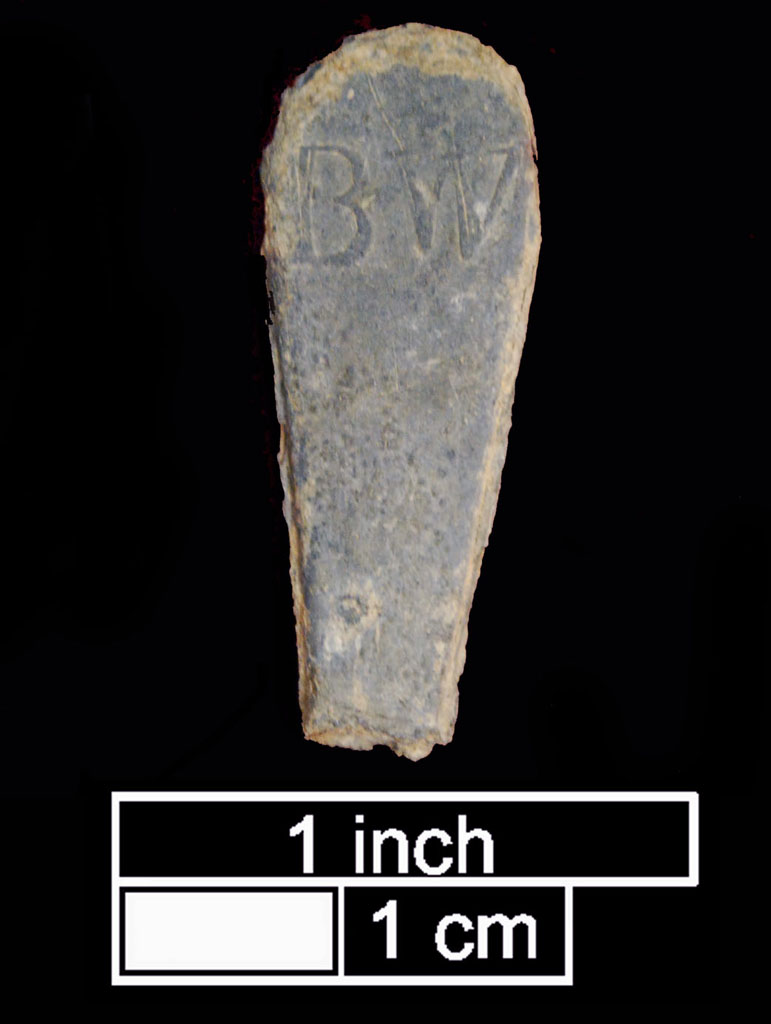
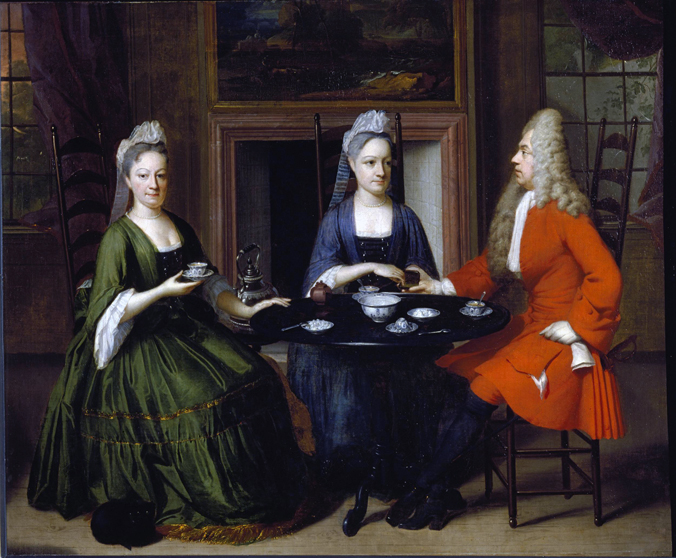
    One of the most exciting and important discoveries archaeologists have made at Ferry Farm is a pewter teaspoon baring the initials B.W.  It belonged to Betty Washington.  This spoon was part of a set that trained her to oversee the extremely important tea ceremony.

    Serving tea in the 18th century was more than an act of providing a mid-afternoon refreshment or a small meal to family and guests.  Tea time, with its prescribed social behaviors and ritualistic customs of service, symbolized gentility and civility, and was an expression of social class.[1]  As an imported good, tea was initially an expensive commodity used only by the upper and middle classes of society.  In addition to the tea, a proper hostess also had to purchase the accouterments of the tea ceremony, such as teapots, cups and saucers, slop and sugar bowls, milk jugs, silverware, and a suitable tea table for presentation.  The cost of these accessories, as well as the time and decorous social habits needed to prepare, serve, and entertain family and guests, meant that the tea ceremony was more a custom of the elite leisure classes, who had the time and money to do such things. 

    As a restricted custom, the tea ceremony transformed into an indicator of class and gentility, and consequently, its “social and cultural significance increased enormously.”[2]  Rules governing the behavior of the participants, including the host, family and guests, were understood by all and represented learned standards of civility. Politeness and courtesy were important, and deference was made to the hostess in terms of the pace and content of conversation.  Even the act of serving tea was ceremonial in nature. Seated at her tea table, the hostess made, poured, and distributed an individualized cup of tea for each guest, who received it in a gracious manner.  It was a “small personal ceremony” that “epitomized the giving that was at the heart of hospitality.”[3]

    Two ladies and an officer seated at tea (1715) by unknown artist.
    Credit: Victoria and Albert Museum.

    The tea ceremony was a gendered activity almost exclusively performed by and associated with the women of the household, who selected the teaware that they used in the ceremony[4] A household’s leading female figure, often the wife or oldest daughter, predominantly oversaw the service of tea to family members and guests, emphasizing her position of authority within the household and the gathered social circle.  As such, women used the opportunity to express their gentility and respectability.[5]

    Teatime also supplied a moment to maintain and cultivate important social ties within the community.[6]  Neighbors, business and political associates, and potential suitors met over a convivial small meal and discussed important matters.

    Teatime was also an opportunity to teach the younger generation, especially girls, how to act and behave during this social encounter.[7] As a future wife in charge of her household, it was essential for women, such as Mary Washington’s daughter Betty, to know how to successfully conduct this unique social custom and be able to demonstrate her inclusion and influence in the community elite.[8]  Betty was trained in the art of tea making, as is evidenced by the archaeological presence of a pewter teaspoon bearing her initials at Ferry Farm.  Monogrammed just for Betty, the teaspoon was part of a beginners tea set used by a young lady to train for many future tea times to come.

    Betty Washington Lewis (1750) by John Wollaston. Credit: Mount Vernon Ladies’ Association.

    Betty’s uncle Joseph Ball also sent her a silver tea set when she was a teenage girl, further enforcing her future role.[9]  The importance of properly entertaining guests with such tea equipage cannot be overstated, but in addition to this, Betty’s learning how to elegantly serve tea was a must for her prospects as the future wife of a well-off gentleman.  One can imagine a teenage Betty serving tea gracefully to her future husband, Fielding Lewis, having practiced diligently with her pewter and silver tea sets.

    Mara Kaktins, Archaeologist
    Ceramics & Glass Specialist


    [1] Woodruff Smith, Consumption and the Making of Respectability, 1600-1800 (New York: Routledge, 2002), 173; Amanda Vickery, Behind Closed Doors: At Home in Georgian England (New Haven: Yale University Press, 2009), 275.

    [2] Smith, 172.

    [3] Vickery, 273.

    [4] Annie Gray, “‘The Proud Air of an Unwilling Slave’: Tea, Women and Domesticity, c.1700-1900,” in Historical and Archaeological Perspectives on Gender Transformations: From Private to Public, ed. Suzanne M. Spencer-Wood,  23-43 (New York: Springer, 2013), 28; Smith, 174.

    [5] Smith, 173.

    [6] Ibid.

    [7] Smith, 174.

    [8] Laura Galke, “The Mother of the Father of Our Country: Mary Ball Washington’s Genteel Domestic Habits, Northeast Historical Archaeology 38 (2009): 29-48.

    [9] Paula Felder, Fielding Lewis and the Washington Family: A Chronicle of Eighteenth-Century Fredericksburg. (Fredericksburg, VA: The American History Publishing Company, 1998), 68.

  • More Than Meets the Eye: What Their Portraits Say About the Lewis Family

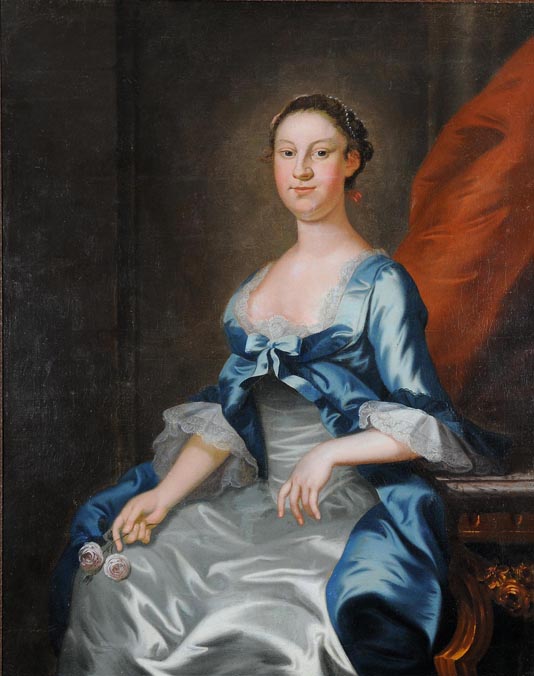
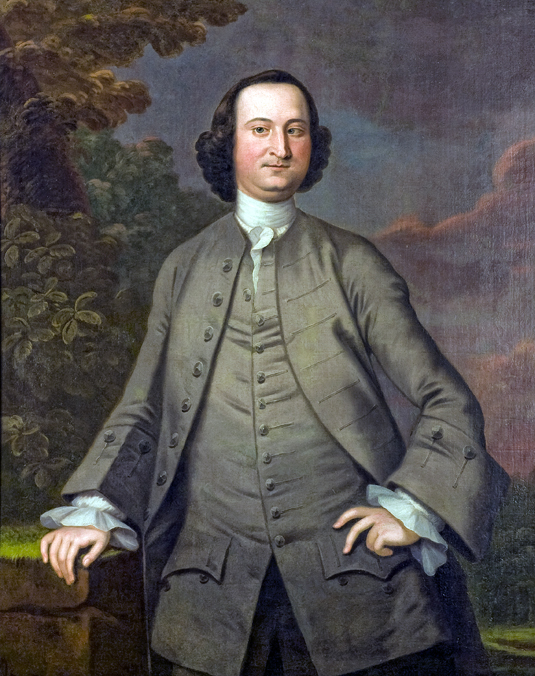
    On walls of the Historic Kenmore’s drawing room hang two large portraits of a man and a woman.  The man is an older gentleman in a serene outdoor setting, looking quite dignified and sober in a brownish knee-length jacket, knee breeches and long waistcoat. His eyes rest on the portrait viewer, one hand on moss-covered rocks, the other on his hip, and his head turned slightly to his left.  Across the room, the woman sits at a slight profile with her head turned to her left to face the portrait viewer. She wears a billowing blue and white dress and holds two pink roses in her right hand while her left arm casually sits on a marble top table. She is indoors with what appear to be some drapes billowing behind her. The man and woman are Fielding Lewis and Betty Washington Lewis, the owners of Kenmore.

    Fielding and Betty’s portraits were commissioned by the couple and painted by prolific colonial artist John Wollaston in the 1750s.  On the surface, these paintings are just two genial portraits that provide us with visual records of the heads of the family. Through the subtle symbolism, however, they also tell a larger story of how Fielding and Betty wished to be portrayed publically to their contemporaries as well as to posterity.

    Portraits first became a popular mode of expression for the aristocracy and the wealthy during the Renaissance.  These paintings were usually large scale affairs meant to be displayed and seen by the public.  The paintings depicted people with expensive goods, fine cloth, rare flowers, and exotic pets. Whether the portraits’ subjects actually owned these items was less important than the suggestion including the items made. In fact, these paintings were filled with symbolism–images, objects, or colors representing ideas and that allow the artist to go beyond the obvious to create links between otherwise different concepts.  A color can depict character, a flower personality and a fabric economic status.[1]

    Through symbolism, portraits were used to reflect social status, wealth, success, power and cultural refinement.  A portrait’s details were integral to the story of the painting and many factors had to be taken into account.  Aspects such as artist, style, background, color, fabric, and accessories all needed to be discussed to create the portrayal desired by the patron.[2]

    Centuries after the Renaissance, the importance of portraiture as a record of status and position in society had not changed and the custom had become more popular outside of the aristocracy as well as outside of Europe.  Even in faraway British North America, the wealth of the gentry, or upper class, desired portraits to show their status and position. Fielding Lewis and Betty Washington Lewis, members of the gentry with a wealthy business in Atlantic World trade, were no exception. Mr. and Mrs. Lewis wanted to portray themselves as socially refined not only to cement their place in the community but to allow for a continued rise in their status.  Accordingly, they sat for portraits by John Wollaston.

    Fielding Lewis (c. 1753-1758) by John Wollaston.

    The most noticeable thing about Fielding’s portrait is the muted colors used in the background and in his clothing.  One of the most visually striking symbols in portraits was the colors used to represent the subject.  While color may not have inherent meaning, it can be made meaningful through context.  The colors in the background, clothing, and accessories all relate to the overall message or story being told by the artist. The browns, greens, and beiges in Fielding’s portrait create a natural and relaxed atmosphere.  The nature background is a stylized classical bucolic setting that helps strike a balance between Fielding’s muted clothing palette and the landscape setting.  The woodland glen signifies a natural sincerity that, when mixed with the brown and beige of his ensemble, creates the feeling of calmness, reliability, dependability and an earthy richness.  All of these traits are important for a successful merchant.  Fielding was telling visitors to his house that he was a person they could do business with and trust.[3]

    Betty Lewis (1750) by John Wollaston. Credit: Mount Vernon Ladies’ Association.

    Betty’s portrait uses color, context, fabric and an accessory to illustrate her own geniality and her family’s affluence, for not only as a Lewis but as a Washington as well.  The background around Betty, who is at the center of the portrait, offers hints of this grandeur with brown walls and a heavy brown billowing curtain creating a frame of luxurious richness.  To add to the opulence, Betty is poised with her arm resting on an ornate Rococo-style marble top table with heavily carved gold legs.  The portrait conveys that she can afford such ornamental comforts.  Next to the table, Betty in her flowy blue and white satin dress with a pair of roses resting on her right knee is the focus.  Blue was a popular color for ladies and was common in many portraits painted by Wollaston. The color gives the sitter not only an air of peace and calmness but also of restraint and intelligence. The satin denotes a luxury and fashion available to only those with means. Meanwhile, the pink rose tells of Betty’s grace, beauty and gentility.  Overall, the portrait depicts a sophisticated and refined 18th century woman, a wife and mother who adds balance and depth to her husband’s trustworthiness and professionalism.[4]

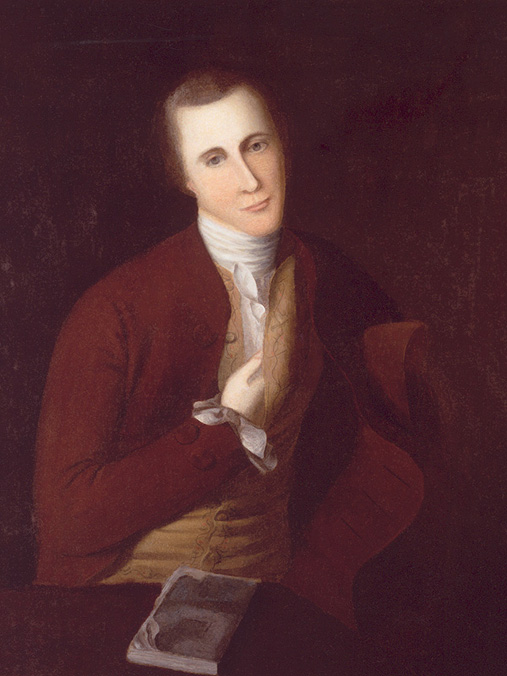
    Fielding and Betty did not stop with portraits of themselves.  About twenty years after sitting for John Wollaston, they commissioned famed painter Charles Willson Peale to produce several portraits of their offspring.  There are two in Kenmore’s collection.

    John Lewis (c. 1775) by Charles Willson Peale.

    One of these Peale portraits depicts John Lewis, the eldest son of Fielding and his first wife, Catharine who sits with one hand on his hip and one hand on a book.  The posture gives John a sense of self-assurance and capability.  Unlike his father’s subdued color palette, John’s jacket and waistcoat are an amazing red with gold detailing.  The red paired with the gold creates warmth but also projects a sense of power, strength and confidence.  The book in his the left hand gives an air of knowledge and awareness.

    Fielding Lewis Jr (c. 1775) by Charles Willson Peale.

    The second Peale portrait in the collection depcits Fielding Lewis Jr., the eldest son of Fielding and Betty, striking a very traditional pose with a hand tucked in his jacket and a slight tilt of the head.  The pose is welcoming, kind and is the embodiment of a thoughtful young gentleman.  Much like his father he chose a subdued color palette with an earthy reddish-brown jacket and goldish yellow waistcoat, which convey a sense of reliability, stability and affability.  The brown background adds a natural simplicity with soothing warmth.   Additionally, like his brother, there is a well-read book by his side indicating a sense of learning and mindfulness.  This portrait’s symbolism reflects the more aspirational messages in these paintings as Fielding, Jr. struggled with money problems for most of his life and even ended up in debtors’ prison.

    Later portraits in Kenmore’s collection contain other fascinating symbolism that tells the stories of the paintings’ subjects. These portraits visually record family history or emphasize familial connections.

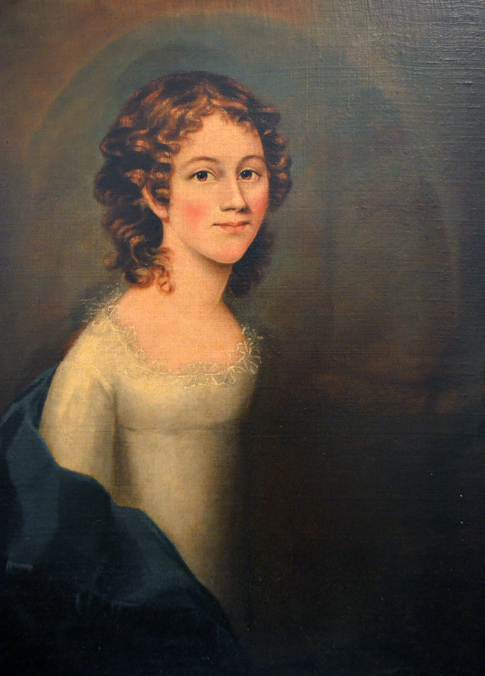
    Eleanor Rosalie Tucker (1818) by unknown artist.

    This 19th century portrait of Eleanor Rosalie Tucker, the great granddaughter of Fielding and Betty, is painted in characteristic neoclassical style with direct lighting, soft features, rosy cheeks and a roundness of the face.  The white muslin gown gives the young girl a purity and serenity beyond her years.  The halo surrounding the sitter represents her delicacy and gives her an otherworldliness. This is appropriate as, sadly, she was painted for this portrait on her deathbed in 1818.

    The Wallace Family (c. 1856-1862) by John Adams Elder. A loan courtesy of Mrs. W. Wallace Morton, Jr.

    Finally, this portrait of the Wallace family painted in the mid-Victorian period is quite a unique painting in our collection with a fascinating twist to its symbolism.  The portrait has a traditional composition but at the center is a large leashed bird in mid-flight.  This bird is a rebus, a puzzle device used to visually depict words and/or phrases.  They are used extensively in heraldry to hint at the name of the bearer.  This painting’s bird rebus is attached to a young girl named Mary Byrd Wallace, the great, great granddaughter of Fielding and Betty Lewis.

    Portraits are sometimes the only visual representation we may have of a historic figure.  These portraits do more than capture a person’s appearance, however.  The wealthy and socially important also used portraits and their symbolism to emphasize their wealth and high status.  Portraits also visually recorded family history or emphasized familial connections.  For the Lewis family, like everything in their house and like their house itself, their portraits revealed how they saw themselves and, perhaps more importantly, how they wanted others to see them whether in the 18th or the 21st centuries.

    Heather Baldus
    Collections Manager

    [1] “Faces of a New Nation: American Portraits of the 18th and early 19th centuries”, The Metropolitan Museum of Art Bulletin, Summer 2003: 11

    [2] Crown, Carol. The New Encyclopedia of Southern Culture, Vol. 23, University of North Carolina Press, 2013: 150-151.

    [3] Centeno, Carlos. “Lose the Color Symbolism Chart: The Unpredictable Meanings of Color,” July 6 2016. https://medium.com/@carlitocenteno/lose-the-color-symbolism-chart-the-unpredictable-meanings-of-color-edc81db6541e; “Faces of a New Nation,” 13

    [4] “British and American Grand Master Portraits of the 1700s”, National Gallery of Art. https://www.nga.gov/features/slideshows/british-and-american-grand-manner-portraits-of-the-1700s.html; Centeno; De la Tour, Charlotte. Le langage des fleurs, 1819: 58; Hooper, Lucy. The Lady’s Book of Flowers and Poetry, 1846: 248.

  • Charlotte and the Mercury Pills

    As part of our ongoing effort to research the enslaved communities that once lived and worked at Historic Kenmore and George Washington’s Ferry Farm, we recently came across some very unusual information pertaining to a young enslaved woman named Charlotte who resided at Kenmore.

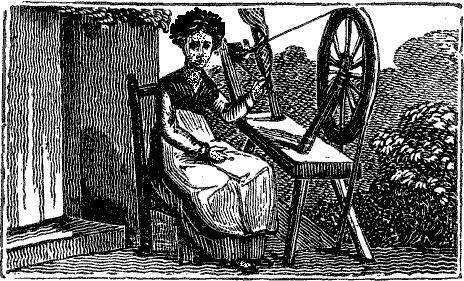
    Charlotte, unfortunately, is a somewhat enigmatic figure. We know only a few things about her. She was about 11 years old in 1781, when Fielding Lewis died – her name appears as “Sharliot” in his probate inventory. She is also listed (along with her age) on a document called the Divvy List created by Betty Lewis shortly after her husband’s death and listing which slaves were to stay with her at Kenmore and which ones would eventually be given to her three youngest sons. Betty chose Charlotte to stay with her at Kenmore. Sixteen years later, Charlotte appears again on a list of slaves from the Lewis properties who were to be sold at vendu (public sale or auction). This document indicates that Charlotte worked as a seamstress in the Lewis household, and that she had both a young son named George, and a baby (although the baby was not identified by name or gender). One final reference to Charlotte in Kenmore’s manuscript collection is a notation that she was among 21 enslaved persons receiving textile rations sometime around 1796 (she received 5 yards of linen).

    enslaved seamstress
    Enslaved seamstress in the 18th century. Credit: Historical Images

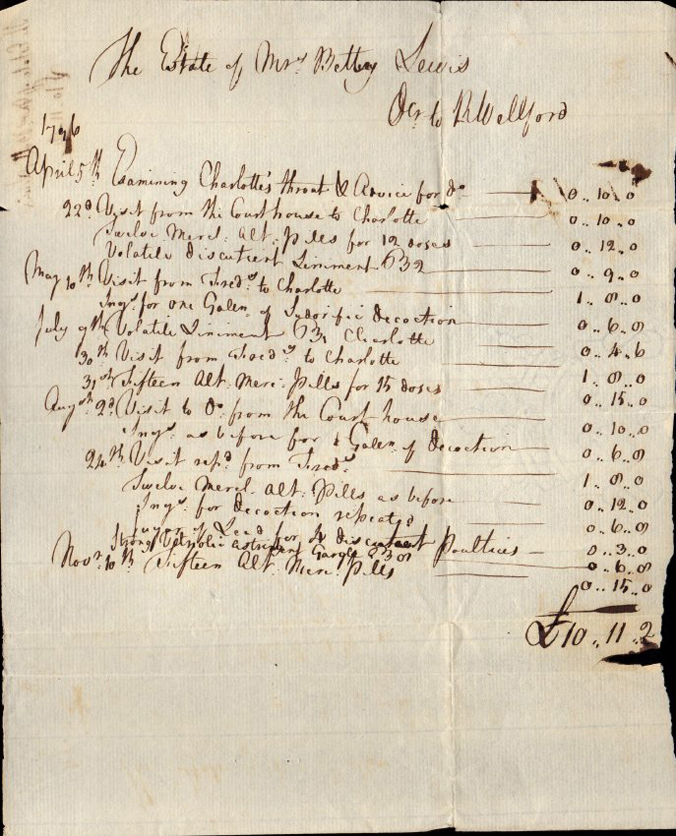
    As often happens in this kind of research, we can have very sparse detail about a subject’s life until we find a new document that provides incredible detail about a very specific moment in that person’s life. Such is the case with Charlotte. The new document is a list of charges for medical examinations and treatments “to Charlotte” submitted by an “R. Wellford”, a doctor, to Betty Lewis’s estate sometime after Betty’s death in 1797. It shows that from April through November of 1796, Betty Lewis paid over £10 to treat Charlotte’s unidentified ailment.

    ms 850

    Transcription of MS 850, Charges for Medical Expenses [1]

    The Estate of Mrs. Betty Lewis
    Dbt. To R. Wellford

    1796
    April 15th Examining Charlotte’s throat & advice for do . . . . . . . . . . . . . . . . . . . . . . 0.10.0
    22nd Visit from the Courthouse to Charlotte . . . . . . . . . . . . . . . . . . . . . . . . . . . . . . . . . 0.10.0
    Twelve Mercl. Alt. pills for 12 doses . . . . . . . . . . . . . . . . . . . . . . . . . . . . . . . . . . . . . . . . . 0.12.0
    Volatile discutrent Liniment @ 32 . . . . . . . . . . . . . . . . . . . . . . . . . . . . . . . . . . . . . . . . . . . 0.9.0

    May 10th Visit from Frdbg. To Charlotte . . . . . . . . . . . . . . . . . . . . . . . . . . . . . . . . . . . . . 0.10.0
    Ings. For one Galen of Sudorific decoction . . . . . . . . . . . . . . . . . . . . . . . . . . . . . . . . . . . 0.6.0

    July 9th Volatile Linament @3, Charlotte . . . . . . . . . . . . . . . . . . . . . . . . . . . . . . . . . . . . . 0.4.6
    30th Visit from Fredbg. To Charlotte . . . . . . . . . . . . . . . . . . . . . . . . . . . . . . . . . . . . . . . . . 1.0.0
    31st Fifteen Alt. Merc. Pills for 15 doses . . . . . . . . . . . . . . . . . . . . . . . . . . . . . . . . . . . . . . 0.15.0

    Aug. 2nd Visit to do from Courthouse . . . . . . . . . . . . . . . . . . . . . . . . . . . . . . . . . . . . . . . . 0.10.0
    Ings. As before for 1 Galen of decoction . . . . . . . . . . . . . . . . . . . . . . . . . . . . . . . . . . . . . . 0.6.0
    24th Visit refd. From Fredbg . . . . . . . . . . . . . . . . . . . . . . . . . . . . . . . . . . . . . . . . . . . . . . . . 1.0.0
    Twelve Mercl. Alt. pill as before . . . . . . . . . . . . . . . . . . . . . . . . . . . . . . . . . . . . . . . . . . . . . 0.12.0
    Ings. for decoction repeated . . . . . . . . . . . . . . . . . . . . . . . . . . . . . . . . . . . . . . . . . . . . . . . . .0.6.0
    Sugar of lead for 4 discontent poultices . . . . . . . . . . . . . . . . . . . . . . . . . . . . . . . . . . . . . . 0.3.0
    Strong vitriolic astringent gargle @3 or . . . . . . . . . . . . . . . . . . . . . . . . . . . . . . . . . . . . . . 0.6.0

    Novr. 10th Fifteen Alt. Merc. Pills . . . . . . . . . . . . . . . . . . . . . . . . . . . . . . . . . . . . . . . . . . . .0.15.0

    £10.11.2

    What can this new document tell us about Charlotte’s life? First, we can take a look at the medications prescribed to treat what we assume to be a respiratory ailment…

    To begin her treatments, Charlotte was given 12 doses of mercury tablets on April 15, 1796. When ingested mercury causes the body to sweat and salivate and, as was incorrectly believed at that time, to rid itself of excess moisture and any toxins causing the sickness. In reality, mercury is a poison and the sweating, salivating, and intense diarrhea is actually the the body trying to rid itself of the deadly mercury. Mercury can also stimulate the mucous membranes thus increasing congestion and actually making it more difficult for the body to expel the mercury.

    In the 18th century, much of medicine was still heavily based on a theory dating back to ancient Greece when it was believed that an imbalance of the body’s liquids or humors (black bile, yellow bile, phlegm, and blood) caused illness. While there were many medical voices in the 18th century who questioned the humors theory of illness, the idea persisted deep into the 19th century. Similarly, mercury in a drug called ‘calomel’ was still prescribed by doctors well into the 20th century.

    On April 15, Charlotte was also prescribed a ‘Volatile discutrent Liniment’. This was basically ammonia suspended in some kind of oil that was spread on her chest or face to open up her airways. Think of this liniment as a very early form of Vicks VapoRub that smelled of urine. This probably would work pretty well to temporarily ease congestion if you had a nasty cold.

    Then, on May 10, Charlotte receives a ‘sudorific decoction’ that, like the mercury tablets, was supposed to make her sweat a lot. If she had a fever, profuse sweating could possibly help bring down her body temperature by spurring the body’s natural cooling process of evaporating sweat from skin. The doctor may have been once again been trying to purge her body of supposed excess moisture. Regardless, with repeated purgings, Charlotte was in real danger of dehydration, a significant problem when you are ill.

    On July 9 and 31, Charlotte is given even more ammonia liniment and mercury. By now, you can’t help but wonder if these treatments were making her feel far more terrible than her underlying disease.

    Twice more in August, Charlotte is given more heroic amounts of mercury in addition to the ‘decoction’ to purge her system further. She is also given an ammonia gargle, probably for a sore throat, that would have tasted incredibly vile. For the first time, she is given sugar of lead poultices, which were placed on skin to dry up conditions that were ‘weepy’. Charlotte probably had some kind of sore that her doctor was trying to dry up. Perhaps it was a bed sore from being laid up for long periods by her treatments and by what we assume to be a prolonged respiratory condition?

    Finally, on November 10, long suffering Charlotte is dosed once again with mercury. Presumably she still has some excess moisture in her respiratory system but as this is the only treatment given on that day and the last of the treatments recorded, she must have been recovering somehow.

    Beyond the course of treatment that Charlotte underwent and clues to her what underlying illness may have been, the document also answers a few longstanding questions about the fate of many in Kenmore’s enslaved community at the end of the Lewis era. We have always wondered how many enslaved people Betty Lewis took with her when she left Kenmore and moved to Millbrook, the small farmhouse on the Po River south of town. It’s never been clear whether or not Millbrook was a large enough house to require much labor to keep it running, nor has it ever been clear how much of a farming operation Betty undertook on that land. And yet, the enslaved population that once worked at Kenmore went somewhere in 1795, when Betty left (a document in Kenmore’s collection shows that Betty paid tax on 17 slaves for the year of 1795[2]).

    The bill submitted to Betty’s estate by Dr. Wellford answers at least a bit of that question. Charlotte was with Betty at Millbrook, showing that Betty felt she needed the services of a seamstress in her new home, which may indicate that Betty intended to keep up a robust household. Additionally, we know that Betty’s financial situation was precarious by the time she moved to Millbrook. The £10 that she spent on Charlotte’s medical treatment was a sizable sum for her at the time. The willingness to pay out so much money for repeated treatments may indicate that Charlotte held favored status in the household, perhaps because of her particular skilled trade, but also perhaps because she had been in the Lewis household since she was just a small child.

    Interestingly, this document also tells us about the doctor prescribing Charlotte’s treatment. The “R. Wellford” shown at the top of the list of charges was almost certainly Dr. Robert Wellford, who was an interesting figure in American history. During the Revolution, Wellford began the war as a doctor in the British army, assigned to the care of American prisoners. Apparently, he was so moved by the plight of these prisoners, that he began advocating for more resources to better their living conditions. When his superiors refused, Wellford more or less “allowed” himself to be captured by the Continental Army. He informed his captors that he would provide intelligence on British movements if they sent him back to the British, which they did. Over the course of a year, Wellford spied for the Americans, smuggling out information to them, before he eventually fled to the American lines after his superiors began to question his loyalties.

    Following the war, Wellford chose to stay in America, although as a former British officer he had difficulty in attracting patients to his practice in Philadelphia. George Washington eventually recommended that he move to Fredericksburg, where Washington’s family and friends would be happy to have his services. Washington even wrote a letter of introduction for him to some of the leading citizens of the area. Wellford and his family remained in Fredericksburg for the rest of his life, and he continued to be a family physician to all of the various Lewis and Washington households in the area.

    Along with being a well-known physician to some of the most prominent families in Fredericksburg, Wellford seemed to take a special interest in the healthcare of the enslaved community in the area, as well. In addition to making the trip south of town to Millbrook to see Charlotte seven times over the course of his treatments, Wellford kept a diary detailing his treatments of various enslaved persons in Fredericksburg. One such treatment included a cranial surgery performed to relieve pressure on the brain of young man who had suffered a severe fall. [3]

    Healthcare for the enslaved in the antebellum south is a complicated topic. While lack of proper nutrition and housing, as well as harsh working conditions, plagued enslaved communities, slave owners often thought of their enslaved workers as significant investments of money, and therefore had a vested interest in keeping them at least healthy enough to work. It was often the plantation mistress who provided the majority of healthcare to the enslaved people on the property. She mixed medicines, provided first aid, birthed babies and directed the re-housing of those affected with contagious disease (outbreaks were a constant worry in the crowded confines of slave quarters). Actual physicians were only brought in when an injury or disease was beyond the mistress’s skill. The receipt for Wellford’s services in treating Charlotte shows us that this was indeed the case on Lewis properties.

    Remarkably, Charlotte survived both her ailment and the agonizing treatment for it. Unfortunately, in the 1798 document showing the final disposition of the Lewis family slaves put up for sale, we learn that Charlotte had to face another all-too-common occurrence in the lives of the enslaved. Charlotte was sold to Charles Carter for £103, while her son George was sold to Howell Lewis for £55. Carter resided in present-day Frederick County, Virginia at the time, while Lewis was still a resident of Fredericksburg, meaning that mother and son would probably see very little of each other again, and no mention is made of the listed baby. At the age of only 27, Charlotte had endured far more than horrendous illness and questionable 18th century medical treatments.

    Meghan Budinger
    Aldrich Director of Curatorial Operations

    Mara Kaktins, Archaeologist
    Archaeology Lab Surpervisor

    [1] Account, 5 April, 1796 – 10 November, 1796. Kenmore Manuscript Collection, MS 850.

    [2] Receipt, 5 September 1796.  Kenmore Manuscript Collection, MS 423.

    [3] Diary of Robert Wellford (Mss1 W4599 a6), Wellford Family Papers (1794-1940), Virginia Historical Society.

  • Family Leaders Guiding a Younger Generation: George and Betty’s Letters

    George Washington was the oldest of Augustine and Mary Washington’s five children. The next oldest was daughter Betty, who was born 14 months after George and was his only sister.

    George and Betty are immensely important to us at George Washington’s Ferry Farm & Historic Kenmore. They spent their formative years at Ferry Farm and Betty called Kenmore home for two decades.  As main characters in our historic sites’ stories, we often ponder what their relationship as siblings was like.

    The only way to gauge George and Betty’s relationship is through two dozen letters they wrote to each other between 1779 and 1796.  As we saw in our first post about the two letters Betty wrote to George during the Revolutionary War, theirs was a complex relationship of sibling love and camaraderie strained by intermittent conflict.  The wartime letters revealed a sadness over extended absences and stress from the tensions and difficulties of George’s wartime position as the new nation’s leader.

    This second post in our multi-part examination of George and Betty’s sibling relationship deals with their roles as leaders of the Washington and Lewis families.  They were the eldest of the Washington siblings and, after 1781, Betty was the widowed matriarch of the Lewises.  In these roles, Betty and George both cared for and guided a brood of children, grandchildren, step-children, nieces, and nephews.  In fact, of their twenty-four surviving letters, thirteen of them deal substantially with the life of some younger member of the extended Washington-Lewis families.  Most of these 13 letters focused on niece Harriot Washington, whose saga we’ve previously written about here and here.  The others dealt with Robert and Howell Lewis, both sons of Betty and nephews of George, who each became his secretaries for a time.

    Robert Lewis was 20-years-old when Uncle Washington was inaugurated president on April 30, 1789.  Robert saw opportunity in George’s position and apparently requested, through Betty, that he might work for the new president.  Uncle Washington replied to Betty with an offer for Robert to be one of his secretaries, writing “I have thought it probable that I may have occasion for a young person in my family of a good disposition, who writes a good hand, and who can confine himself a certain reasonable number of hours in the 24 to the recording of letters in books.”  George warned that Robert’s pay “cannot be great as there are hundreds [of others] who would be glad to come in)” but, if he was okay with a relatively small salary, George would “be very glad to give him the preference.”  In fact, Robert was paid $300 per year, the smallest amount among Washington’s secretaries.  Since Robert was family, however, he could reside with the Washingtons in New York “at no expence (except in the article of clothing) as he will be one of the family and live as we do.”  George desired to know immediately if Robert would accept the offer and, if so, would his nephew accompany Martha “(and at her expence, as she will want somebody to accompany her) when I send my horses back [to Virginia] after I am fixed in New York.”  Robert himself enthusiastically replied to this offer, writing “I shall ever consider myself under a thousand obligations for the proffered post, and think the confinement you speak off rather a pleasure, and hope from my assiduous attention to merit that station.”  Robert Lewis worked as secretary for George until early 1791, when he returned home to get married.

    Roughly a year and a half later Robert’s younger brother Howell Lewis, who was at that time also age 20, was offered a secretarial position by President Washington.  George wrote to Betty on April 8, 1792, proposing…

    If your Son Howell is living with you, and not usefully employed in your own Affairs; and should incline to spend a few months with me, as a writer in my Office (if he is fit for it) I will allow him at the rate of Three hundred dollars a year, provided he is diligent in discharging the duties of it from breakfast until dinner—Sundays excepted.

    This sum will be punctually paid him and I am particular in declaring beforehand what I require, and what he may expect, that there may be no disappointment, or false expectations on either side. He will live in the family in the same manner his brother Robert did. If the offer is acceptable he must hold himself in readiness to come on immediately upon my giving him notice.

    I take it for granted that he writes a fair & legible hand, otherwise he would not answer my purpose; as it is for recording letters, and other papers I want him. That I may be enabled to judge of his fitness let him acknowledge the receipt of this letter with his own hand, and say whether he will accept the offer here made him, or not. If he does, & I find him qualified from the specimen he gives in his letter I will immediately desire him to come on which he must do without a moments delay, or I shall be obliged to provide another instead of him.

    Betty replied to George, reporting that Howell was away at the time but that she had dispatched George’s offer to him and expected an answer in two weeks’ time.  She worried that Howell’s “very Slender Education” and “his Fathers Death at so Early a Period has been a great disadvantage to him” for he was “left without any Person of Age and Judgement” to guide him.  Howell, Betty said, had to rely on only himself to improve his lot in life and was “not very well informd.”  She closed by praising her son’s “exceeding Good disposition,” felt that “the employment you have design’d for him not difficult,” and he could serve George satisfactorily.

    Howell accepted the position, writing to his Uncle Washington that “I consider myself extremely favour’d by your proposal of a birth in your family & shall chearfully accept it provided my probation is deemed satisfactory—I lament that I have not been more attentive to the improvement of my writing tho hope that I shall soon be qualified to do the business for which you mean to enploy me.”

    Howell soon set out to join the President in Philadelphia, the national capital since late 1790, carrying another letter from Betty for George with him.  She wrote

    You will receive this by Howell, who seems Very happy In the thought of becoming One of your family,1 I sincerely wish he may be Equal to the task you desire for him, he has Promis’d me to Indeaver to Please, and by Close application to improve him self, it is with Infinite Pleasure to my self that he has a Prospect of geting in a Place where he may receive so much advantage to him self, his Fortune being very small there is little Prospect of happiness in this world without thay Can get into Busness of some sort.

    In a letter to Charles Carter of Ludlow, Washington revealed that, in actuality, he had “no real want . . . of Howell Lewis” but had offered him the work because “he was spending his time rather idly” and was very slenderly provided for by his father.”  George thought that “by taking him under my care, I might impress him with ideas, and give him a turn to some pursuit or other that might be serviceable to him hereafter.”  Howell worked as secretary until July 1793, when his uncle tapped him to be manager at Mount Vernon.

    So, as might be expected between the eldest siblings of a family, much of the correspondence and relationship between Betty and George Washington focused on their respective and extended families’ offspring.  George and Betty were the family leaders and propriety dictated that they work together when necessary to provide for and guide these children, grandchildren, stepchildren, nieces, and nephews to success in life.  As we have seen, earlier with Harriot, and now with Robert and Howell, nearly half of Betty and George’s surviving letters and thus their relationship dealt in some fashion with matters concerning the Washington and Lewis families’ younger generations.

    Zac Cunningham
    Manager of Educational Programs

  • Where Are the Human Remains?: Fielding and Betty Lewis

    You might remember the discovery of Richard III’s grave under a Leicester parking lot back in 2012 and how shocking it was that a former King of England’s gravesite had been lost. For archaeologists, missing gravesites aren’t that uncommon.

    When put into perspective, it’s not surprising that we can’t locate the graves of many famous Virginians, including some members of the Washington and Lewis families. In Fredericksburg fires, flooding, war, and neglect have all contributed to the loss of historic graves and other important sites during our nearly 300 year history.

    Professional and amateur researchers alike have dedicated years of their lives to gathering the lost history of Fredericksburg, including lost graves of famous Virginians. Thanks to this dedication, we have saved possible sites for the future. This includes George Washington’s Ferry Farm itself. Can you believe there was almost a Walmart built directly on top of the Washington house cellar before it was discovered?!

    In the Washington edition of “Where Are the Human Remains?” we talked about Mildred Washington, George’s youngest sister who died before the age of 2.  She is the only known family member to be buried somewhere at Ferry Farm. In this edition, we will discuss the remains and burial locations of Fielding and Betty Lewis.

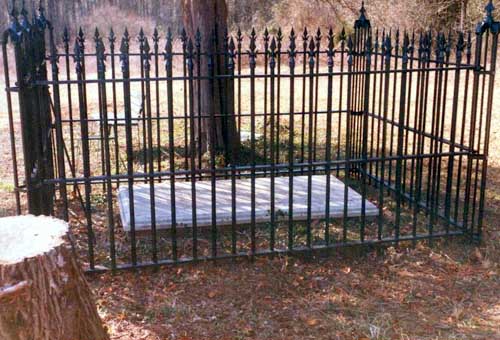
    The approximate location of Betty Lewis’s grave is actually known.[1] She struggled financially after Fielding’s death in late 1781 and, following the Revolutionary War, it was especially difficult for Betty to keep Kenmore afloat. Eventually, she went to live on small farm outside Fredericksburg called Millbrook where she spent the rest of her life. Betty passed away, however, while visiting her daughter, Betty Carter in 1797.  She was buried at her daughter’s home, Western View Plantation in Culpeper County, Virginia. The gravestone in the photograph was added later, so the exact location of the Betty’s burial site isn’t known for sure, but it is somewhere on the property.

    Portrait of Betty Washington Lewis by John Wollaston, c. 1755. Credit: Mount Vernon Ladies Association
    Betty Washington Lewis’s grave stone. Credit: Trice Glancy / FindaGrave.com
    Burial site of Betty Washington Lewis. Credit: Marvin Sport / FindaGrave.com

    So, what about Fielding Lewis? The short answer, again, is that we aren’t sure. We have an idea but it may not be what you think or may have heard! Local lore mentions St. Georges Church as the location of Fielding’s grave, as he was a vestryman there. However, he is most likely NOT buried in this location.

    Portrait of Fielding Lewis by John Wollaston, c. 1755.

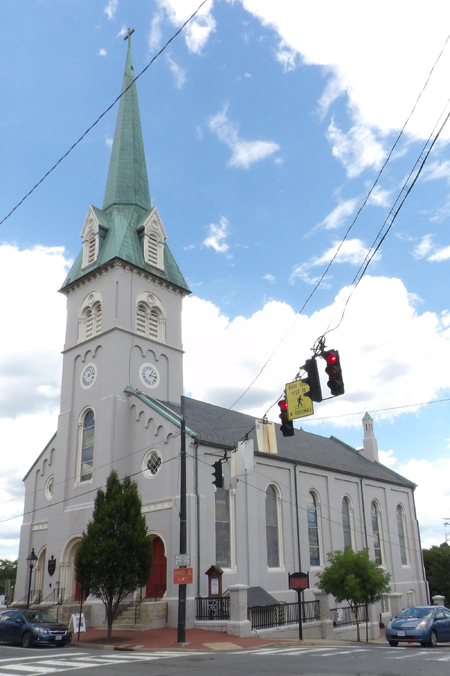
    St. Georges Episcopal Church in downtown Fredericksburg is a local icon, seen in several paintings as one of the tallest buildings in our town’s skyline. The church’s first structure was built in 1730, and the Lewis family would attend services in this wooden structure. Then, with the major fire in Fredericksburg in 1807, the replacement of the original church building with a more substantial brick building in 1815, and further alterations to the layout of the church over the years, it’s understandable that burial sites and other features around the church were lost.

    St. George’s Episcopal Church. Credit: Virginia Department of Historic Resources

    Furthermore, if you have taken any local ghost tours of Fredericksburg, you may have heard the story of Fielding and three of his grandchildren being buried “under the church steps”. This particular tale came from a book called The Ghosts of Fredericksburg… and nearby environs by L. B. Taylor, Jr.  Over 30 years ago, this book was used to create the script for Fredericksburg’s annual Ghostwalk sponsored by the University of Mary Washington Historic Preservation Club. While it’s clear that the author spent a great deal of time collecting stories about ghostly Virginia locations, it should be noted that there aren’t any sources or citations listed in the book.  Taylor was a storyteller, and his main focus was ghostly tales, not historical facts. As a result, we now have this chilling, but likely untrue information, intertwined with the Lewis family history.

    In reality, like wife Betty, Fielding died far away from Fredericksburg on a property he owned located in what is Frederick County around Winchester, Virginia today. In a letter written by one of his children, Robert, to his sister Betty Carter, Robert tried to convince his sister to move to the area, stating; “You would be in the neighborhood where the venerated remains of our dear decd. Father lie.”[2] While this indicates Fielding’s burial is in Fredrick County, the exact location was never recorded.

    Elyse Adams, Archaeologist
    Co-Field Director / Archaeology Lab Technician


    [1] Find a Grave, database and images (https://www.findagrave.com : accessed 26 May 2020), memorial page for Elizabeth “Betty” Washington Lewis (20 Jun 1733–31 Mar 1797), Find a Grave Memorial no. 22154, citing Western View Plantation, Culpeper, Culpeper County, Virginia, USA ; Maintained by Find A Grave.

    [2] Letter from Robert Lewis to Betty Lewis Carter, 1826 quoted in Paula Felder, Fielding Lewis and the Washington Family: A Chronicle of 18th Century Fredericksburg, American History Company, 1999: 300n10

  • Fielding and Betty Lewis Married 270 Years Ago Today

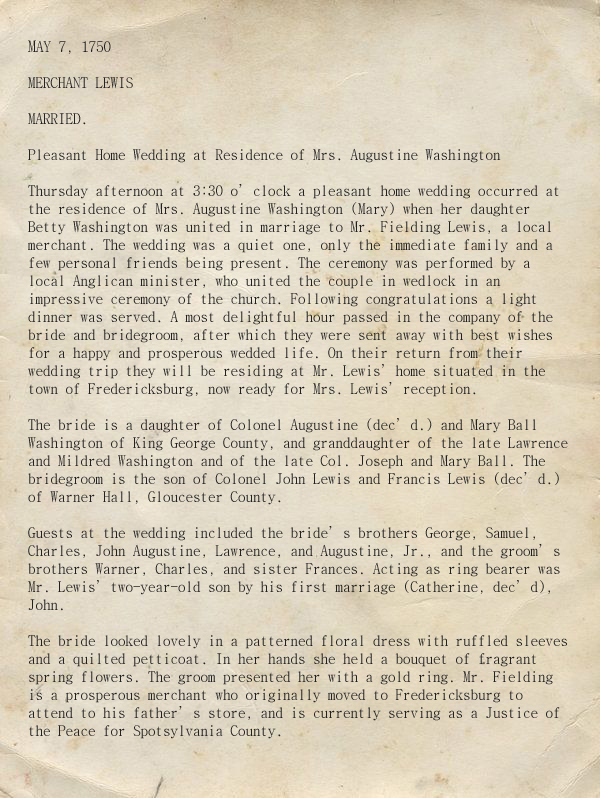
    Fielding and Betty Washington Lewis were married on this date in 1750 and would have celebrated their 270th wedding anniversary this year. In honor of their anniversary, we’ve taken some creative liberty and have created a fictional newspaper announcement of their nuptials.

    At the time of their wedding, Betty Washington was sixteen years old, almost seventeen, and Fielding was twenty four, a widow and father. Save for the date on which it occurred — May 7, 1750 — we have no other historical details about the ceremony nor who actually attended. Still, it’s an auspicious date we like to remember in some fashion each year.

    For a general historical discussion of 18th century weddings, read “A Colonial Wedding”.

    Betty and Fielding wedding

  • All That’s Fit to Buy: Shopping in the 18th Century

    It seems we are all pre-occupied with the subject of groceries lately – how we’re going to get them, which store has what, which items are hard to find at the moment.  The current shopping situation is an alien one to us in our modern world of on-line ordering and nearly instant delivery.  The stress of not being able to get something we need or want at a moment’s notice causes us anxiety, makes us worry about future procurement and how we’ll find what we need.  However, this new reality wouldn’t be at all unusual to those who lived here in Fredericksburg in the 18th century.  In fact, it was their daily way of life, and in some ways,  a form of entertainment and a social outlet.

    Empty bottled water shelves
    Shelves at a store in Ohio emptied of bottled water on March 15, 2020 during the COVID-19 pandemic. Credit: Dan Keck / Wikipedia

    To get into the mind-set of someone like Betty Lewis, who was shopping for her own immediate family, a household staff of enslaved labor, and probably her aging mother, as well, we must take a look at how shopping has evolved in America.  Much of what we do today has its roots in the colonial period.  In the early 18th century, shops were few and far between.  In fact, the concept of a free-standing building purpose-built to be a shop didn’t really exist.  The first places where locals could find various goods for sale were really private homes.  These makeshift shops might be a single room in a house, or goods for sale might be found in various storage spaces throughout the house.[1]  Customers, usually neighbors and acquaintances, might come in on social calls and peruse the goods while taking tea and visiting.

    Without formal supply chains or reliable access to any one kind of good, early merchants did not specialize in anything, but rather sold whatever they happened to come across. Their customers rarely arrived with a list, but rather decided what would be useful to them once they saw what was available.  And what was available could really run the gamut.

    The contents of one such in-home shop in rural Virginia in 1728 was described by an inventory taker as being arranged between a small storage building on the property and “in the dwelling” itself.  A shelf in the storage building held hose, hats and fabric, while underneath it on the floor were books, shoes, various tools, beads and spectacles.  A single crate on the floor held stoneware, glassware, and pewter vessels, as well as needles, combs, sugar and more books.  In the house, the inventory listed more hose, gloves, 2 boxes of smoking pipes, chaffing dishes, chamber pots and punch bowls.[2]  Not only is there no real theme to the goods for sale, they appear to be heaped together in a jumble, leaving the customer to dig through it all.

    As the 1700s progressed, colonial American shops became more formal affairs with their own dedicated buildings, purpose-built as commercial structures, often sporting identifiable features like large display windows in front, and a large counter inside, separating customers from the merchant and more expensive goods.  While the wide, and sometimes bizarre, variety of goods available did not decrease, their arrangement on shelves and tables began to have a bit more thought behind it.  It was the first inkling of visual display and marketing in America, and as the number of shops increased, it was more and more necessary to attract customers.

    The contents of a free-standing shop in 1801 Virginia was inventoried for tax purposes and shows quite a transition.  One entire wall of the shop was covered with shelving and cubby holes.  The cubbies held buttons separated by size, 124 types of “paper”, razors, knives and forks (each wrapped in individual paper packages) and ribbons.  The shelves held fabrics by the yard and books.  A series of three trunks arranged under the shelving held glassware, while creamware was housed in 3 crates.  Barrels of dry goods that needed to be measured and weighed sat at the end of the counter, where a set of scales was at the ready.[3]  This shop was clearly a general mercantile, offering a bit of everything, but by the end of the 18th century, shopkeepers did tend to specialize.  One might be known for fabrics, while another sold furniture, and another was more of a grocer.[4]  Even so, almost every establishment always had an assortment of odds and ends for sale, and so a customer might come away with fabric and lace for a new dress, and a bottle of castor oil, since it was available.

    So this was the shopping world that Betty Lewis operated in.  Many of her receipts and accounts with local Fredericksburg shops still survive in the Kenmore manuscript collection, as do a few shop accounts from the Lewis store.  They show that Fredericksburg was typical of the 18th century evolution in shopping.  For instance, William Potter’s account at the Lewis store for the year 1744 (before Fielding Lewis took over the operation from his father) shows that the Lewises were offering the “jumble” approach to goods for sale.  Potter purchased hanks of silk, buttons, yard goods, pipes, sewing notions, butter, a trunk, rum, soap, wig curlers, and finally, bacon.[5]

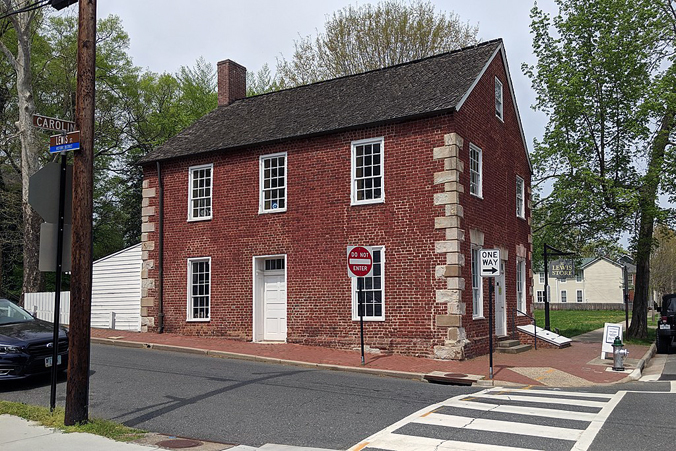
    Lewis Store in Fredericksburg, Virginia
    Historic Lewis Store in Fredericksburg, Virginia. Credit: George Barnick / Wikipedia

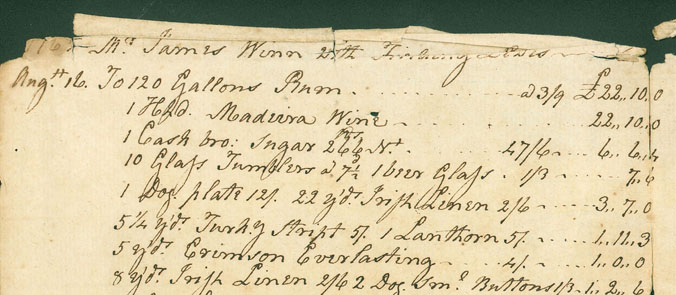
    By 1766, Fielding had obviously expanded his mercantile operation to carry a more streamlined assortment of housewares, many of which reflected his ability to procure high end products from England through his trade ships.  James Winn’s account with the Lewis store in that year shows purchases of a set of 10 glass tumblers, creamware plates, soup spoons, brass sconces and amazingly, a “turkey stript” which is not a reference to poultry but more likely to a striped Turkish rug, which would have been an exceedingly hard thing to find in 18th century Virginia.  While the Lewis store seemed to be catering to its urban clientele, they were also carrying that ubiquitous assortment of odds and ends that changed week to week.  On the same day that Winn purchased his striped Turkish rug, he also bought a ladies’ hat and 12 pounds of coffee.

    ms 109 excerpt
    An excerpt of James Winn’s account with Fielding Lewis, showing his purchase of “turkey stript”

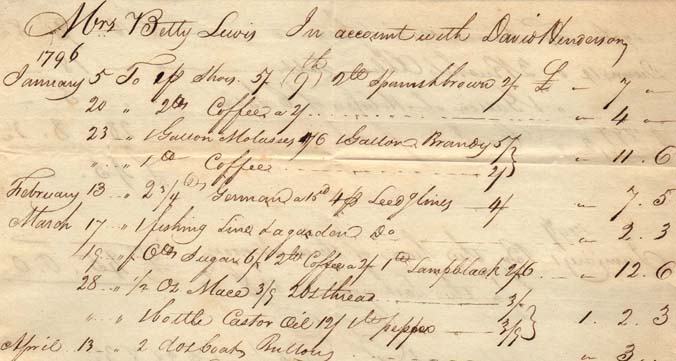
    The surviving accounts also show that Betty was a shopper of her time, picking up a thing or two on every outing, debating what would be useful to her, and what might come in handy down the road when it was no longer available in the shops.  By the end of the 18th century, Callender & Henderson was the primary general mercantile store in Fredericksburg, while Andrew Parks ran a shop selling luxury goods and housewares.  Betty Lewis did business with both.  From October of 1796 through January of 1797, Betty purchased sugar cones, a purple shawl, and quite a few pieces of nice fabric from Mr. Parks, as well as “1 wire sifter” which was noted on the account to be from Baltimore, as all good wire sifters should be.[6]  Betty’s purchases with Callender & Henderson in 1794 ranged from snuff to limes, turpentine to mustard, grammar lesson books to molasses.[7]  An account with the same store in 1796 showed what items Betty purchased on each shopping trip.  On January 5, she procured both a pair of shoes and Spanish Brown pigment for paint.  On May 26, she came away with a cask of cut nails and molasses.  And on June 27, Betty had a banner day at the shops, purchasing a dozen buttons and 2 barrels of pickled herring.[8]

    ms 856 excerpt
    An excerpt of Betty Lewis’s account with Callender & Henderson, showing a range of purchases in 1796.

    Back here in our modern world, suddenly feeling very reminiscent of the 18th century, I myself recently bought eggs from the barber shop, toilet paper from a local restaurant and yogurt from the butcher.  All odd sources to our minds, but Betty Lewis wouldn’t have batted an eye.  You buy what you can find where you can find it, and if you can’t get what you need, change the plan.  Did Betty go out on June 27, 1796 with the intention of buying two barrels of pickled herring? I highly doubt it, but I’m willing to bet that the Lewis household had fish for dinner that night, even though the menu may have originally called for game hens.

    [1] Hodge, Christina J. Consumerism and the Emergence of the Middle Class in Colonial America. Cambridge University Press, 2014; pp. 122.

    [2] Martin, Ann Smart. “Commercial Space as Consumption Arena: Retail Stores in Early Virginia.” Perspectives in Vernacular Architecture, vol. 8, 2000, pp. 204. JSTOR, http://www.jstor.org/stable/3514414. Accessed 16 Apr. 2020.

    [3] Ibid.

    [4] Hodge, pp. 130.

    [5] William Potter in Account with John Lewis, 1744.  Kenmore Manuscript Collection, MS 102.

    [6] Betty Lewis in Account with Andrew Parks, October, 1796 – January, 1797.  Kenmore Manuscript Collection, MS 426.

    [7] Betty Lewis in Account with David Henderson, 1794. Kenmore Manuscript Collection, MS 716.

    [8] Betty Lewis in Account with David Henderson, 1796. Kenmore Manuscript Collection, MS 856.