Lives and Legacies

Tag: Betty Washington Lewis

  • Siblings Strained by Revolution: George and Betty’s Wartime Letters

    George Washington was the oldest of Augustine and Mary Washington’s five children. The next oldest was daughter Betty, who was born 14 months after George and was his only sister. 

    George and Betty are immensely important to us at George Washington’s Ferry Farm & Historic Kenmore. They spent their formative years at Ferry Farm and Betty called Kenmore home for two decades.  As main characters in our historic sites’ stories, we often ponder what their relationship as siblings was like.

    The best and, frankly, only gauge of George and Betty’s relationship are the letters they wrote to one another later in their lives.  Twenty-four letters written between 1779 and 1796 have survived. They wrote more than just these two dozen but many have not been found.  The 24 that have survived depict a complex relationship of sibling love and camaraderie tempered by occasional conflict.  Let’s begin, on this National Siblings Day, a multi-post examination of George and Betty’s letters and what they may indicate about the relationship of this historically consequential brother and sister.

    In our first post, we look at the letters George and Betty wrote to one another during the Revolutionary War.  There are only two, both from the hand of Betty, but they are profoundly interesting, nonetheless.

    The first surviving letter comes in 1779 while George was away commanding the Continental Army.  He had been commander-in-chief for four years by that time and, during the second half of 1779, his service found him headquartered at the highly-fortified and strategically important West Point, New York overlooking the Hudson River.  On September 21, Betty wrote her brother there to thank him for “the miniature Picture—for which I am much Indetted”.  The miniature was painted by Charles Willson Peale and was a small version of his portrait of Washington commemorating the American victories at Trenton on December 26, 1776 and Princeton on January 3, 1777. Peale painted s miniature copy of the portrait specifically for Betty indicating that either George wanted to share his likeness with his sister or that Betty had requested a likeness of her brother that she could have while he was away fighting.
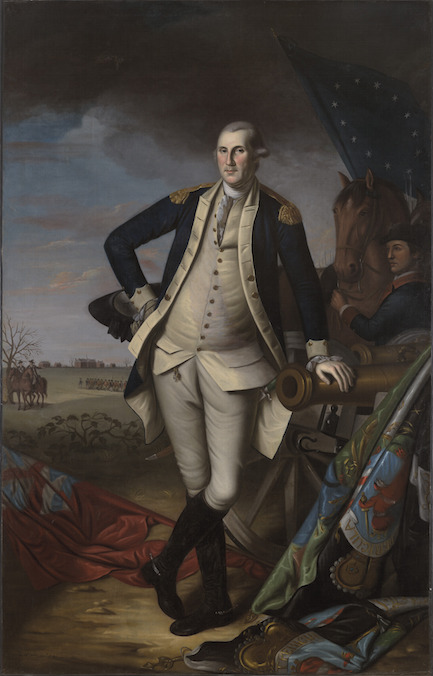
    George Washington at the Battle of Princeton (1779) by Charles Willson Peale
    “George Washington at the Battle of Princeton” (1779) by Charles Willson Peale. Credit: Yale University Art Gallery

    Indeed, this letter shows that Betty cleared missed George.  In sharing that she, her husband Fielding, and their daughter also named Betty had recently visited George’s wife Martha, Betty noted her wish that she could have found George there upon their arrival at Mount Vernon. Doing so, she wrote, “would of Compleat’d My Happiness.”  It had been at least four long years since Betty had laid eyes on George.  Closing the letter, she wistfully expressed her longing for the war’s end, writing, “O when will that Day Come that we Shall meet again[?]—I trust in the Lord soon, till when you have the sincere Prayr’s and Good wishes for your helth [sic] and happiness.”

    The only other surviving wartime letter written between George and Betty comes towards the end of the Revolutionary War and reveals a bit more conflict in the sibling relationship than the first.  It is dated August 25, 1783 and is quite a confusing and unclear letter at times.

    Betty begins by congratulating George on “the happy Change in our Affairs” because she hoped “it will be the meanes of our Seeing you Soon”.  Betty may simply be congratulating George on the looming end of the war but, at the same time, throughout her letter she refers to more than one event that happened back at the end of 1781.  Indeed, much in the letter seems to indicate that their correspondence had lapsed for a substantial amount of time and that this is may be a catching up letter. If so, then perhaps her good wishes are for George’s victory at Yorktown and the surrender of General Lord Cornwallis back on October 19, 1781?
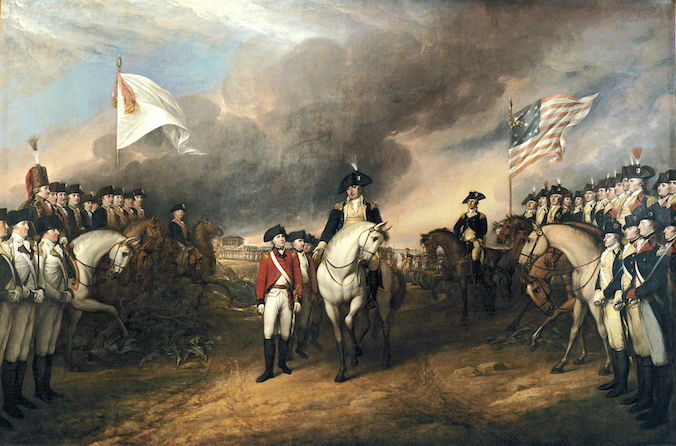
    Surrender of Lord Cornwallis (1820) by John Trumbull
    “Surrender of Lord Cornwallis” (1820) by John Trumbull. Credit: Architect of the Capitol

    Regardless, Betty is quite upset that she has not heard from George in an extraordinarily long time.  She starkly admonishes him for not writing, saying “I have been at a loss how to account for your long silence,[.] the multiplicity of Business you have on your mind is the only One I Can find that flatters me [that] I am not quite forgot[ten.]”  While acknowledging the pressures on his time as the army’s commander, Betty scolds her “Dear Brother” for not finding “one half [h]Our you Could Spare to write a few lines to an only Sister whoe [sic] was lab[o]ring under so mutch [sic] Affliction both of Body and mind.”

    The affliction faced by Betty was the deaths of both her brother Samuel and her husband Fielding, which she says took place within three weeks of one another.  Samuel died on September 26, 1781.  Fielding’s death did not actually take place until sometime between December 10, 1781, when he swore out a codicil to his will, and January 17, 1782, when his will and codicil were presented in court.  Perhaps Betty mistakenly wrote the word “weeks” when she actually meant “months”?  Perhaps time and grief caused her to misremember the length of the interval between the two deaths?  Perhaps she was attempting to make George feel guilty for his long silence?  Regardless, save for the Yorktown victory, late 1781 was indeed a grim time for Betty and it seemed to affect her physical health, if not also her mental health.  She told George that “the uneasiness of mind it Caus’d me to get in an Ill state of helth and I expect’d Shortly to follow them”.  She feared joining Samuel and Fielding.

    Betty writes that her illness “happen’d at a time when every thing Contributed to ad[d] to my uneasiness” including a failure to see George when he apparently passed directly through or close to Fredericksburg on his way north after Yorktown.  We’re not entirely sure George actually went through his hometown on this trip.  Betty’s opaque phrasing — “your being in Fredericksburg the only Chance we had of seeing you from the Commencement of the War” — is not terribly helpful in figuring it out.  She is upset because she missed seeing him during his visit or because this was his only visit since the war started or because he passed close to town without stopping at all.

    There is evidence, however, that George did travel directly through Fredericksburg but that Betty and his family were not in town at that moment and so did not see him.  In a letter written to George on March 13, 1782, Mary, his mother, laments not being at home “when you went through fredirecksburg [sic].”  She indicates that she was “over the Mountains”, perhaps meaning present-day Berkeley Springs, West Virginia, where the Lewis and Washington families often traveled to use the hot springs for pleasure and medicinal reasons.  Indeed, fearing targeted abduction by the British during the fighting in Virginia in the fall of 1781, Fielding took Mary and Betty and fled to a Lewis property probably in or near today’s Berkeley Springs.  With Fielding in exceedingly poor health, it is thought that this is where he ultimately died, which would put the family there until at least December 1781.  George passed through or near to Fredericksburg sometime in November.

    After her scolding and laments, Betty did end her letter to George with a bit of hope and expresses again how much she missed him.  She tells him that she is “Recovering my helth fast and Please my self with thoughts of Shortly Seeing you once more with us.”  But, in a postscript, she gives one more scolding to her beloved brother, saying “I Wrote you three Letters when you was in Virginia but never heard if you got One of them.”

    These two wartime letters written by Betty Lewis to her brother George Washington reveal a complex relationship between the two siblings.  It was a relationship characterized by love and by the deep sadness of absence.  It was also a relationship strained by the tensions and difficulties of war and by George’s all-consuming responsibilities as Commander-in-Chief of the Continental Army.

    Zac Cunningham
    Manager of Educational Programs

  • Betty Washington’s Cookbooks

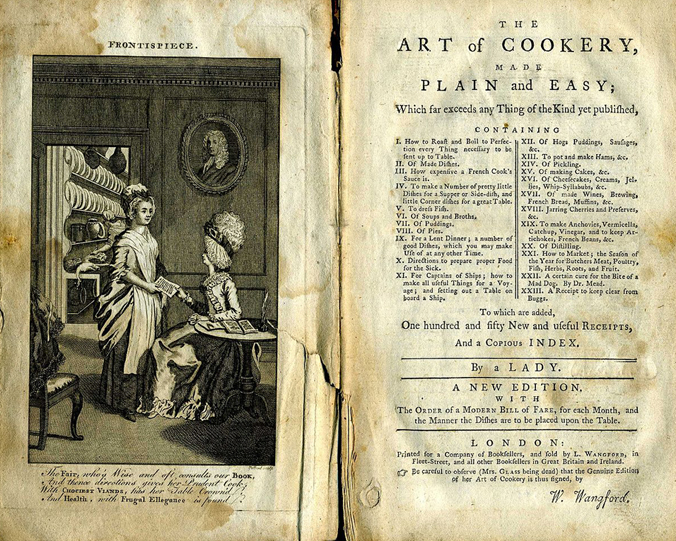
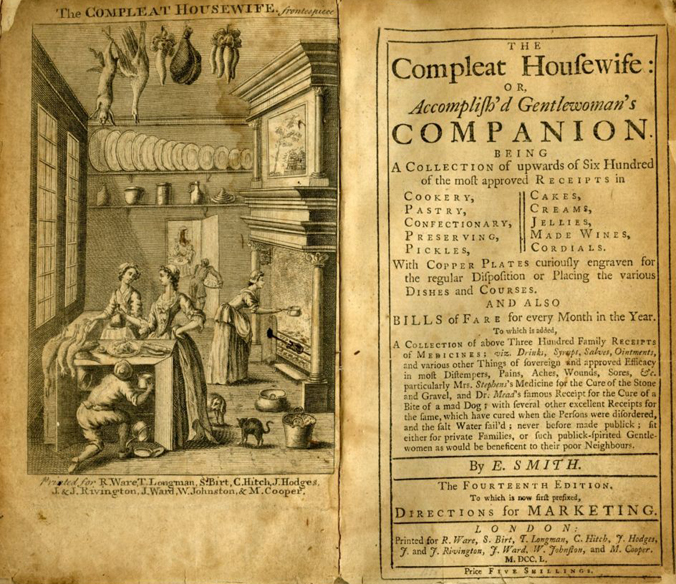
    In the 18th century, more women began to publish cookbooks.  Previously, writing or compiling such books was the domain professional cooks or chefs, who were men.  Two of these women and their books, Hannah Glasse’s The Art of Cookery, Made Plain and Easy and Eliza Smith’s The Compleat Housewife, or, Accomplished Gentlewoman’s Companion, ended up in Betty Washington Lewis’s personal library.  She no doubt referenced these two useful books as much as I have referenced them in my blog posts about cooking here, here, and here.  Both Glasse and Smith were part of an innovative movement to create guide books on cooking for common people in a common language without pretense.

    Cookbooks on the Probate
    The “Compleat House Wife” and “Glasses Cookery” listed on the probate inventory made following Fielding Lewis’s death in 1782.

    Hannah Glasse was born in London in 1708 and had her first book Compleat Confectioner published in 1742. Her second book The Art of Cookery was published in 1747.  This book on cookery was so popular that it went through ten editions before her death in 1770.  It was reissued another sixteen times after 1770, including two American editions in 1805 and 1812. The book’s commercial success did not translate to personal success for Glasse, however.  Unfortunate business decisions eventually led to her declaring bankruptcy, selling the copyright to The Art of Cookery, and being sent to debtor’s jail.

    Hannah Glasse's 'Art of Cookery' frontispiece
    The frontispiece of Hannah Glasse’s The Art of Cookery Made Plain and Easy. Credit: Wikipedia

    Eliza Smith and her life are shrouded in mystery and, unfortunately, not much is known about her. She wrote only one book, The Compleat Housewife, or, Accomplished Gentlewoman’s Companion, which went through eighteen editions and became the first cook book published in Colonial America in 1742.  According to her own account, what she presented in the book was from her own experience.  Her recipes and tips came from a “space of thirty years and upwards during which time I have been constantly employed in fashionable and noble families.”

    Eliza Smith's 'The Compleat Housewife' frontispiece
    Frontispiece of Eliza Smith’s The Compleat Housewife: or Accomplish’d Gentlewoman’s Companion. Credit: Wikipedia

    When these two ladies were writing in the mid-18th century, more people were residing in urban areas as part of the emerging middle and gentry classes.  These new relatively or very affluent groups were desperate to keep up with fashions, manners, and lifestyle of the aristocracy.

    This often meant the middle-class housewife needed assistance with how to run a household or plan multi-course meals to keep her from committing embarrassing social faux paus.  The old commercial cook books were usually unhelpful since they were written by grand chefs for other cooks working in courts or mansions with large kitchen staffs. These books were filled with technical language and extravagant recipes with expensive ingredients.

    New writers like Glasse and Smith became popular because they offered practical advice, common sense recipes, and organization.  They wrote their books to help average middle and gentry class homes with small staffs, basic cooking equipment, and a limited budget. As Glasse stated, she wrote her book “in so full and plain a manner, that most ignorant Person, who can read, will know how to do Cookery well”[1] She only hoped her book would “answer the ends I intend it for; which is to improve the servants, and save the ladies a great deal of trouble.”[2]  Eliza Smith had a similar goal, writing that her book would be a guide for the housewife where “the receipts [recipes] are all suitable to English constitutions…wholesome, toothsome, all practicable and easy to be performed; here are those proper for a frugal, and also for a sumptuous table.”[3]

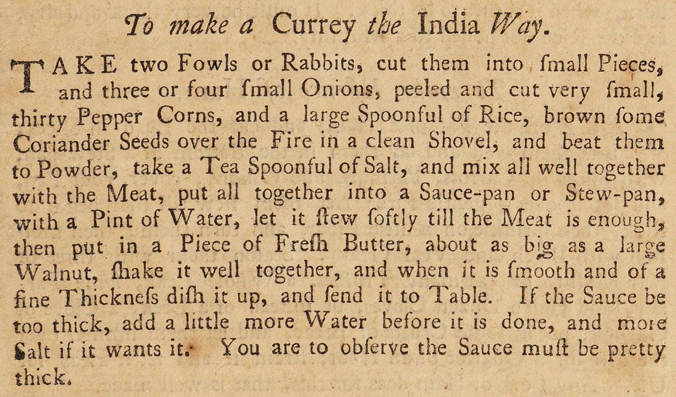
    Indeed, both women’s recipes had simple instructions, accessible ingredients, easy and practical help with weights, measurements, and cooking times.  Recipes had no French vocabulary, no complicated patisserie, and no confusing directions. They were just simple, delicious dishes any housewife could make or have servants make without formal culinary training.  Eliza Smith offered over a dozen different types of stew with everything from beef to eel and her pancake and apple fritter recipes sound delicious! Hannah Glasse included over 20 different types of pies, an easy and lovely syllabub, and even the first recorded recipe for curry.

    'To make a Currey the India Way' from Hannah Glasse
    Recipe for curry from Glasse’s “The Art of Cookery”. Credit: Wikipedia

    The 18th century middle or gentry class housewife and her staff, e.g. Betty and enslaved cook Rachel, could use these books to create meals that no longer consisted of just boiled meat and a vegetable. Now, they could create a range of dishes that would not be out of place on the table of a Lord or Lady.  Betty could have dinners prepared for the week, plan special dishes for a party, or undertake extravagant desserts for her Christmastime table.  All would delight guests who were using the same books.

    The Art of Cookery and The Compleat Housewife democratized cooking, which is something Betty Washington Lewis, sister of the first American president, would have appreciated.

    Heather Baldus
    Collections Manager

    [1] Hannah Glasse, The Art of Cookery Made Plain and Easy, T. Maiden for A. Lemoine & J. Roe, 1802: pg 3

    [2] Hannah Glasse, The Art of Cookery Made Plain and Easy, J. Rivington and Sons [and 25 others], 1788: pg 4

    [3] Eliza Smith, The Compleat Housewife: or, Accomplished Gentlewoman’s Companion, J. and J. Pemberton, 1739: Preface

  • Lecture – Betty Washington Lewis and Women’s Health [Video]

    On Tuesday, May 1, 2018, Dr. Kelly Brennan Arehart, Manager of Interpretation & Visitor Services at The George Washington Foundation, presented a lecture titled “Betty Washington Lewis and Women’s Health.” Betty Washington Lewis gave birth to 11 children; a feat almost unheard of today.  Kelly explored Betty’s  journey from childhood to womanhood, from maiden to mother, and medical challenges that 18th century women faced.  A cradle to grave examination of women’s heath tells us of the strength and resilience of Betty Washington Lewis and other women who endured at time without anesthetics or knowledge of germs.

    Join us at the library on Tuesday, May 8, 2018 for “Coinage and Credit: The Economy of Colonial Virginia,” a lecture about the business and trade of Fredericksburg merchant Fielding Lewis presented by David Arehart, a site supervisor at Colonial Williamsburg.  Talk begins at 7:00 p.m. The lecture is FREE and hosted at the Central Rappahannock Regional Library at 1201 Caroline Street, Fredericksburg, Virginia. To learn more, visit http://www.kenmore.org or livesandlegaciesblog.org.

  • George’s Hometown: Kenmore

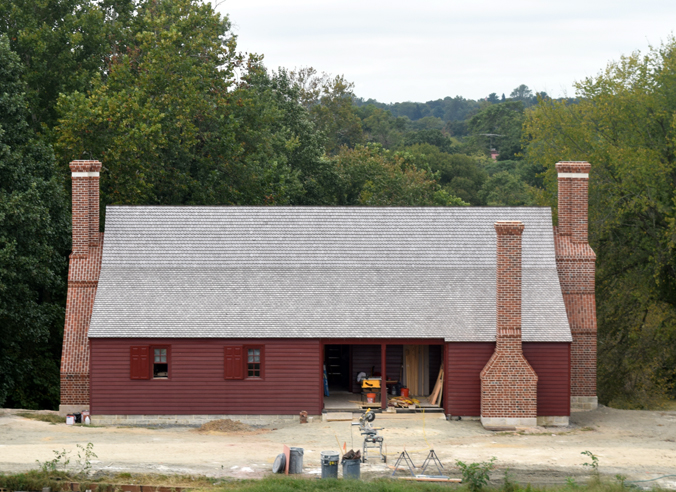
    As George Washington’s Ferry Farm prepares to celebrate the reconstruction of the Washington house, we traveled around George’s hometown – Fredericksburg, Virginia – to visit a few places important in the transformation of George from boy to man.

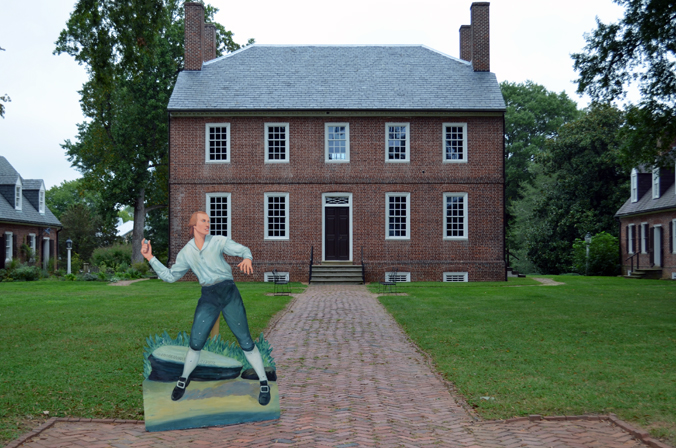
    Fredericksburg remained important to George Washington throughout his life. It was the home of Mary Ball Washington, his mother, until her death on August 26, 1789 at the age of 80 from breast cancer. It remained the home of Betty Washington Lewis, his sister, until 1795 when she was forced by financial circumstances to leave the grand house she and husband Fielding Lewis, a wealthy merchant, had built to live at Mill Brook, a farm in Spotsylvania County.  Washington visited his mother as well as his sister and brother-in-law regularly but, as the years passed, these visits became more and more infrequent as the Revolution and Presidency required all his time and attention.  George Washington visited Betty and Fielding at Kenmore once in 1784.

    George's Hometown 5
    Historic Kenmore

    Join us at the Washington House Celebration on Saturday, October 7, 2017 from 12:00 p.m. – 4:30 p.m. to celebrate the construction of the Washington house! A special ribbon-cutting ceremony will begin at 1:30 p.m. featuring notable speakers. After the ceremony, guests will be invited to view the reconstructed Washington house!

    Ferry Farm opens to visitors at noon on Saturday, October 7.

    DSC_3072
    The reconstructed Washington house at Ferry Farm.

    PLEASE NOTE: PARKING for the event is off site at the VRE Fredericksburg Park and Ride Lot G at the corner of Prince Edward Street and Frederick Street. Buses will transport guests to and from Ferry Farm—traveling from the VRE lot to Ferry Farm on a regular schedule from 11:45 a.m. to 1:15 p.m., and 3:00 p.m. to 4:15 p.m. Bus transportation will pause during the ribbon-cutting ceremony. The last bus will depart Ferry Farm at 5:15 p.m. Limited handicap parking is available at Ferry Farm.

  • Harriot’s Happily Ever After

    As we saw in this blog post, Harriot Washington lost both of her parents by the time she was five years old.  Her childhood was spent shuffling from one relative’s household to another.  Finally, she came into the care of her uncle George Washington, who along with aunt Betty Washington Lewis, provided stability and support throughout Harriot’s teenage years.  She lived with Betty for many years at Kenmore.  By the age of 19, Harriot had matured into respectable young woman. Marriage was at hand.

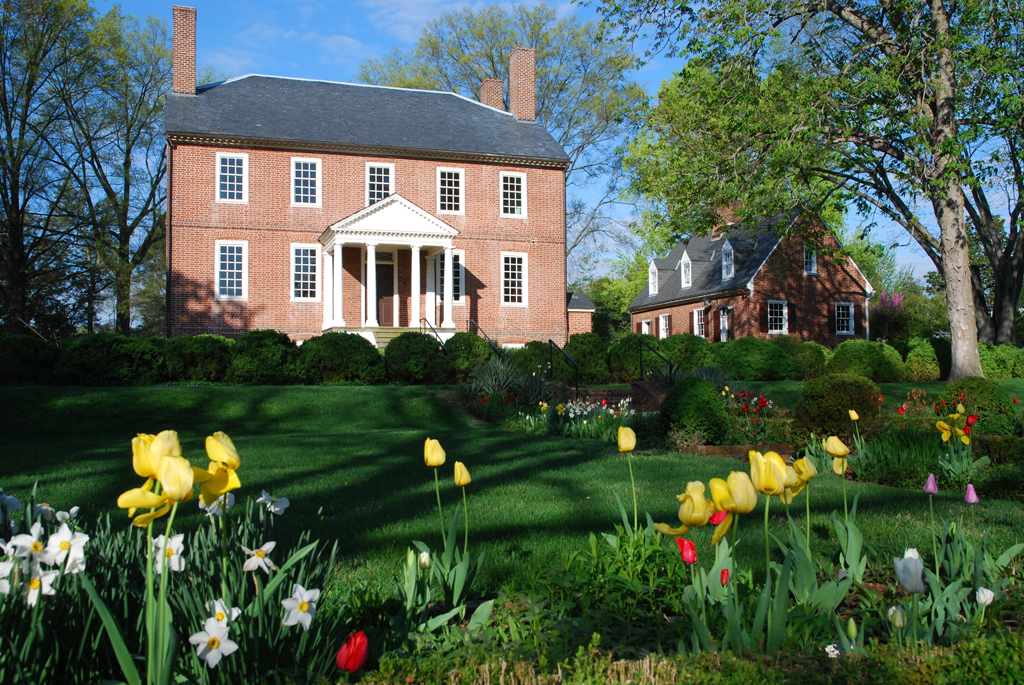
    Spring time in the gardens at Kenmore Plantation
    Kenmore in Spring

    On April 1, 1796, Washington received a letter from Andrew Parks of Fredericksburg.  Andrew had asked Harriot to marry him.  Harriot referred him to Washington for his consent and had told Andrew that she would not marry him unless her uncle approved. Andrew wrote a letter promoting himself, with details on his life in town as a mercantile businessman.  He frankly revealed that his fortune did not “exceed three thousand pounds.”  He believed that he was a hard enough worker to make up for his lack of current money and that he had hopes of improving his situation. He mentioned relations in Baltimore and offered to provide a complete accounting of these family connections, if Washington desired.

    Washington replied on April 7.  He noted the proposal was a “serious one” that deserved “serious consideration” and that he would take time to ponder it.  He warned Andrew that, while Harriot had “very little fortune of her own,” fortunes were not the only factors to consider when contemplating marriage.  Harriot’s guardian desired to see her happy and believed only a “gentleman of respectable connexions, and of good dispositions,” who made money, instead of spending it, and who could “support her in the way she has always lived” was an acceptable match.

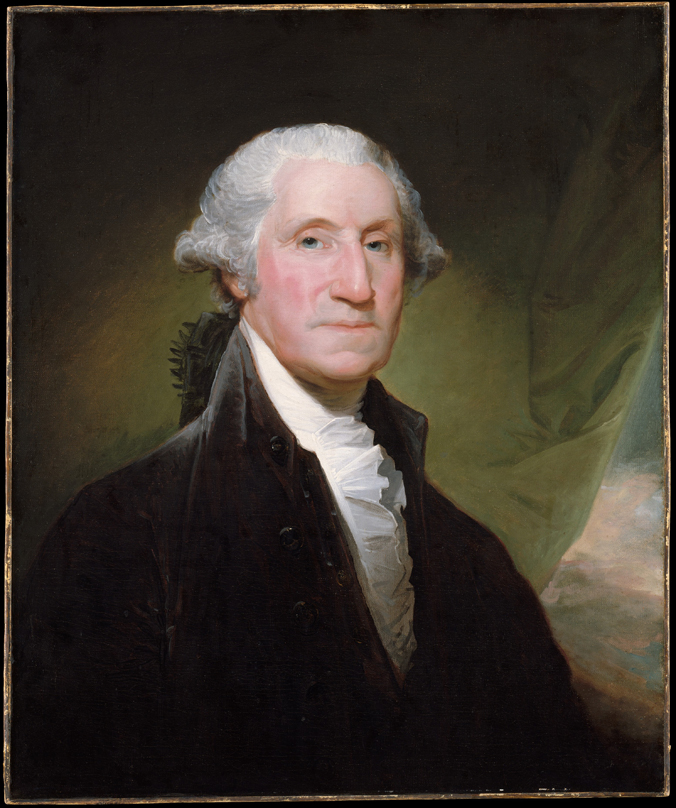
    Portrait of George Washington (1795) by Gilbert Stuart
    Portrait of George Washington (1795) by Gilbert Stuart. Credit: Public Domain / Metropolitan Museum of Art

    Of course, Betty also contacted Washington to inform him of Andrew’s proposal.  Her letter seems not to have survived but his response, also dated April 7, basically requested more information about Andrew.  Harriot’s uncle acknowledged that “having very little fortune herself,” Harriot had “no right to expect a great one in the man she marry‘s; but if he has not a competency to support her in the way she has lived, in the circle of her friends, she will not find the matrimonial state so comfortable as she may have expected when a family is looking up to her & but scanty means to support it.”  Though a great one was beyond possibility, he still believed Harriot ought to “expect one whose connexions are respectable, & whose relations she could have no objection to associate with.”  What really troubled Washington was “How far this is, or is not the case with Mr Parks.”  He worried,  “I know not for neither his own letter, or yours give any acct of his family nor whether he is a native or a foreigner—& we have his own word only for his possessing any property at all altho’ he estimates his fortune at £3000. A precarious dependance this when applied to a man in Trade.”

    Although he had no desire to impede the marriage, Washington indeed was anxious for information, which he immediately endeavored to collect.  Secretary of War James McHenry wrote Thomas McElderry, Andrew’s brother-in-law and business partner, on behalf of the president.  McElderry replied that, after the death of Andrew’s father, he had made Andrew his partner, allowing his brother-in-law to be well set up in business. McElderry also reported that Andrew was a hard worker, gentlemen, and generally well-liked in the community.  McElderry judged him “much more promising than many of the Virginia Gentlemen with their large landed Estate and Negroes.”  One wonders how helpful this final statement might have been in convincing Washington – the first among Virginia’s landed and slaveholding gentlemen – of Andrew’s good connections!

    Betty also made inquiries about Andrew and notified Washington that she had “heard nothing to his disadvantage” and that “he is respected by all his acquaintance.”  She revealed that Andrew was “A Constant Visitor here and I believe Harriots Affections are plac’d intirely on him.”  Indeed, Harriot, in Betty’s opinion, was sick with “anxiety for fear of offending and not gaining your consent.”  Betty then admonished her brother that his “long Silence has given her much uneasiness.”

    George Lewis, Betty’s son, examined Andrew’s background and concluded the match, at least at the moment, “to be madness in the extreme.”  He suggested waiting until Washington returned to Mount Vernon after his presidency ended, so that he could attend the matter personally and better investigation of Andrew could be made.  Still, he believed Andrew “a young Man of good talents” and noted that none of his initial inquiries revealed major problems.

    Betty again wrote George about the matter on July 5, 1796.  She told George that Lawrence Lewis, another of her sons, had made inquiries and seemed “well pleased” while Harriot’s own brother told Betty that he thought the marriage would be a “very happy one.”  Ultimately, Betty herself concluded that Andrew bore “the Best caracter of any young Person that I know” and that Harriot was “Old Enougf now to make choice for her self.”  It was high time she was married and that is exactly what happened.  On July 16, 1796, Harriot Washington, aged 20, married Andrew Parks.

    The day after her wedding, Harriot wrote to her uncle, hoping he was “not offend’d at my Union.”  She expressed, with some finality, that “my heart will ever with the liveliest gratitude most gratefully acknowledge and remember your’s & Aunt Washington’s great goodness and attention to me.”[1]

    “Far from being displeased at the event,” Uncle Washington responded, “I offer you my congratulations thereon; and sincerely wish it may prove the source of continual happiness to you.”  Washington closed the letter with an invitation for his niece and her new husband to visit Mount Vernon whenever Andrew’s business might allow it.

    Harriot replied with this joyful letter:

    Fredericksburg Sepber 9th 1796

    I need not repeat to my dear & Honord Uncle, the infinite pleasure I experienced on reading his kind, & affectionate letter… Mr. Parks and myself return our most grateful thank’s, to you and Aunt Washington for your congratulations and also polite invitation, to visit you which no circumstance whatever could afford us more satisfaction…

    My love to Aunt Washington & Nelly Custis. I am my dear & Honord Uncle Your ever affectionate Neice

    Harriot Parks

    The newlyweds visited Mount Vernon from September 4 to September 8, 1798.

    Zac Cunningham
    Manager of Educational Programs
    [1] Miriam Anne Bourne, First Family: George Washington and His Intimate Relations, New York: W.W. Norton, 1982, 154-5.

  • Harriot Washington’s “Hard Knock Life”

    With one sister and three brothers, George Washington was uncle to numerous nieces and nephews.  One niece was Harriot Washington was born sometime in 1776 to his brother Samuel and Samuel’s fourth wife Ann Steptoe.  Harriot was orphaned by the time she was five years old, when her mother died in 1777 and her father in 1781.  Harriot’s younger years were a hard life of shuffling between relatives’ households.  She gained stability with her aunt Betty Lewis at Kenmore, where she spent her teenage years.  Both George and Betty were constantly concerned about her financial well-being and development into a respectable woman of the gentry class.[1]

    HARRIOT AT MOUNT VERNON, Late 1780s-1792

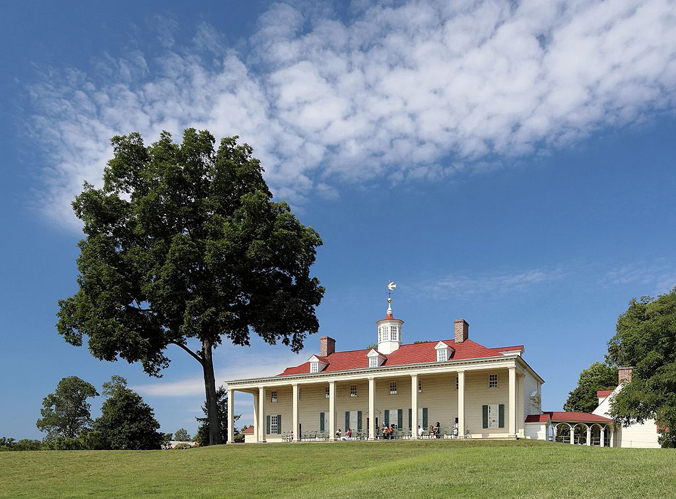
    mount-vernon
    Mount Vernon. Credit: Wikipedia/Martin Falbisoner

    After her parents’ deaths and living in the care of her mother’s relatives for four or five years, Harriot came to live with uncle George at Mount Vernon because, as Washington noted to nephew George Augustine Washington, he knew of “no resource that Harriot has for Supplies but from me.”

    When George and Martha departed Mount Vernon for New York City and his presidency, however, Martha’s niece Fanny became Harriot’s de facto guardian.  Washington lamented to Tobias Lear that Fanny was “little fitted” to the task of caring for her, however.  The new president seemed perplexed by Harriot “who is almost grown” but “is not quite a Woman” and wondered, with some exasperation, about what to do with her.  He judged that, while she was by no means too old to attend boarding school, any such school would have to “enforce good rules” since Harriot was “prone to idleness” and had been “under no control.”

    Several letters between Harriot and her uncle survive.  The first in the record was written on April 2, 1790.  Harriot was 14-years-old and living at Mount Vernon while Washington was in New York. Harriot asked her uncle to send her a guitar since she wanted to take lessons for “all the young Ladyes are a learning musick.”  Harriot was confident “that five or six lessons would be sufficient for any body to learn.”  The records consulted reveal no response from Washington.

    Harriot wrote a brief letter on October 24, 1791 with short comments about the dreadful weather and an illness plaguing Lund Washington. Harriot mentioned that she had waited until the last minute to write the letter before it had to be sent. This seeming laziness displeased Washington and, worried about his niece’s idle behavior, he took the opportunity to provide a lengthy letter of advice beyond admonishing her to not wait until the last moment to begin a task.  He warned Harriot of the…

    “delicacy and danger of that period, to which you are now arrived under peculiar circumstances—You are just entering into the state of womanhood without the watchful eye of a Mother to admonish, or the protecting aid of a Father to advise and defend you; you may not be sensible that you are at this moment about to be stamped with that character which will adhere to you through life.”

    Washington assured Harriot that her cousins at Mount Vernon were “well qualified to give you advice” and he hoped that she was “disposed to receive it.”  If she was “disobliging—self willed and untowardly,” however, her cousins would not “engage themselves in unpleasant disputes” but would likely leave her to descend into poor character.  Washington encouraged her to “Think then to what dangers a giddy girl of 15 or 16 must be exposed in circumstances like these—To be under but little or no controul may be pleasing to a mind that does not reflect, but this pleasure cannot be of long duration.”  Washington seemed to express concern about those with whom she was associating and that from them she “can derive nothing that is good.”  This warning might have also been a general caution against keeping poor company.  Regardless, he wanted her to “aid to your Cousin in the domestic concerns of the family.”

    Harriot replied, “I was very sensible, of your kindness in giving me such good advice, and shall try to profit, by it as much as I can, I know very well, the obligations I am under, to you and I am very thankful for your care and attention to me.”  She duly promised to assist more with the household duties.  On May 28, 1792, Harriot requested a guitar again and this time, Washington bought her one for $17.

    HARRIOT AT KENMORE, 1792-1795

    Betty Washington Lewis
    Portrait of Betty Washington Lewis by John Wollaston, c. 1755.

    In the fall of 1792, Washington determined it was necessary for Harriot to go live with his sister Betty Washington Lewis in Fredericksburg.  He and Martha were to return to the new national capital of Philadelphia while Fanny and her ill husband were leaving for New Kent County.  No one was left at Mount Vernon to care for Harriot.

    Betty raised no objections to taking in Harriot “if she comes well cloath’d or Provided to get them, that she may appear tolerable.” She wanted to forestall any chance that the young lady “was prevented frequently from appearing in publick.”  Betty reminded George of the Lewis family’s deep financial difficulties and that her grandchildren were living with her too.

    Washington assured his sister that Harriot would arrive “very well provided with every thing proper for a girl in her situation.”  He judged Harriot as having “sense enough, but no disposition to industry nor to be careful of her Cloaths.”  He hoped Betty’s example and guidance would end the 16-year-old’s habit of always wearing her best things while also leaving clothing lying all over her room. Fanny had been too lenient with her, Washington suggested, but Betty’s firm hand could still yet “make a fine woman.”

    Not long after getting settled in Fredericksburg, however, Harriot requested money from Washington for a dress or dress material so that she could attend the town’s ball celebrating the president’s birthday.  She apologized for again troubling Washington and assured him that any money sent would be kept by Betty.  Harriot promised to “properly care for the new dress.

    At the end of January 1793, Betty confirmed receiving money sent by Washington for Harriot.  She noted that living in town was “unfortunate” for Harriot “for many [of her] things that could be wore to the last string in a [country] Place, will not do here, where we see so much Company.”  Betty took the opportunity to praise Harriot as well, noting that she “Payes the strictest regard to the advice I give her and really she is very Ingenious in makeing her Clothes and altering them to the best advantage.”

    Time and a few other letters about money passed back and forth until September 1793 when Betty sent a letter to her brother asking when he might send for Harriot so that she could again live at Mount Vernon.  Betty revealed that, while she knew “of none that I would sooner have to live with me,” her own dire financial situation was not conducive to Harriot staying.  Betty expressed dismay over the small amount of her income and the small number of servants she had. To compound matters, she now only owned two horses, which kept her from visiting over any lengthy distance.  All the while, Harriot and two grandchildren lived with her.

    Washington perhaps agreed that the time had come for Harriot’s return to his household.  It seems he told Betty that if Philadelphia’s yellow fever epidemic continued, Martha would spend the winter of 1793-94 away from danger at Mount Vernon.  If this were the case, he would send for Harriot and she could stay with Martha.  This plan, however, was not implemented.  Instead, Harriot spent part of the winter of 1793-94 with a relative in Culpeper.

    As Kenmore, life for Harriot seemed to settle into something of a routine.  Her letters reveal a growing maturity and an understanding of her situation.  Money was still an ever present matter but one gets the impression that her requests were for real needs.  In 1794, requests for cash went to Washington on May 25, and June 27.  A letter of thanks from Harriot to him is dated July 10.  One further request for money came on January 4, 1795.

    Betty and Harriot left Kenmore to live at Millbrook in November 1795.  Harriot turned 19-years-old that year and the focus of her relationship with both her aunt and uncle shifted from an orphan girl who had lived a “hard knock life” to a eligible and mature young woman with a respectable suitor and marriage on the horizon.

    To be continued….

    Zac Cunningham
    Manager of Educational Programs
    [1] ; Frank E. Grizzard, Jr., “Washington, Samuel, (1734-1781),” George! A Guide to All Things Washington, Charlottesville, VA: Mariner Publishing, 2005, 337-338; Note accompanying “To George Washington from Harriot Washington, 2 April 1790,” Founders Online, National Archives, http://founders.archives.gov/documents/Washington/05-05-02-0199;  “Samuel Washington,” Wikipedia, http://en.wikipedia.org/wiki/Samuel_Washington, [accessed September 8, 2014].

  • Yes, Virginia, there is a Christmas Hedgehog!

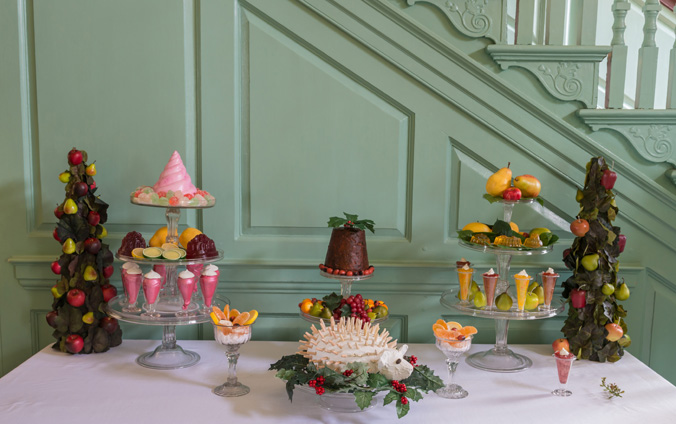
    During the holidays, it’s the curatorial team’s job to festoon Historic Kenmore in period-appropriate holiday swag to celebrate the Christmas season.  Greenery is brought in to cheer up the rooms and a table of special desserts is laid out as if ready for Christmas guests.  These sweet treats are a pretty traditional fare but one particular dessert garners far more attention and questions than the others: the hedgehog sitting at the center of the table.

    hedgehog-1
    The Christmas dessert table complete with faux marzipan hedgehog in the Passage at Historic Kenmore.

    “What is it?” and “Why a hedgehog?” are heard from visitors again and again.  I decided to investigate to see if I could find out how and why this spiny confection graced Betty Lewis’s table during the holidays.  Unfortunately, my research raised more questions than answers and ultimately lead me to an interesting but ambiguous conclusion based mainly on my own conjecture.

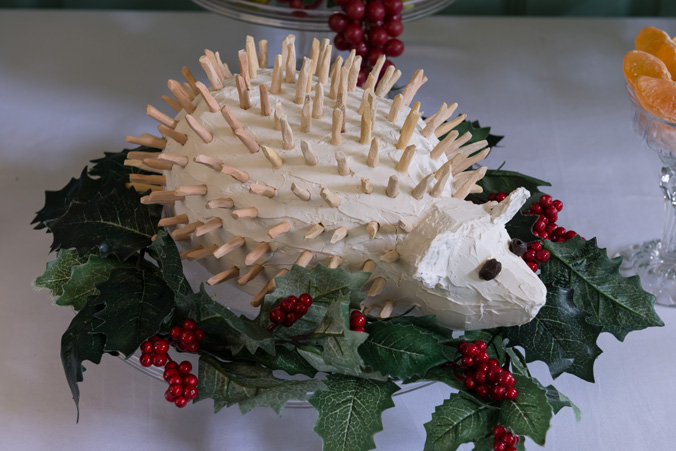
    First, I have often heard the hedgehog referred to as a “cake” but it is not a cake.  It is made out of marzipan; a sweet created using sugar or honey and ground almonds.  Marzipan can be flavored, contain fruit and nuts, or even covered in chocolate …the possibilities are endless!  It is often shaped into miniature fruits, vegetables, or animals and colored with dyes.  The confection is usually eaten on special days or for special events.

    Hedgehog 2.JPG
    A closer view of the faux marzipan hedgehog.

    No one knows for sure where marzipan was first created but it likely originated in the Middle East around the ninth-century.[1] It made its way to Europe through trade and immigration. Each country personalized the candy by adding its own unique ingredients and traditions.

    Regardless of which country has the honor of creating this particular delicious dessert, it became quite popular. Recipes for marzipan began to show up in various cookbooks dating from the sixteenth century onward.   The two books most important to my investigation were The Compleat Housewife or, Accomplished Gentlewoman’s Companion by Eliza Smith published in 1727 and Hannah Glasse’s The Art of Cookery Made Plain and Easy published in 1747.  We know Betty owned both of these books because they are listed in the 1781 probate inventory. [2]

    In Mrs. Smith’s The Compleat Housewife, the chapter “All Sorts of Cakes” includes a recipe for ‘march-pane’ which is an old English word for marzipan.[3]  The recipe is a traditional non-baked marzipan that includes ground almond, refined sugar and orange-flower water for flavoring. [4] Twenty years after Mrs. Smith published her book, Mrs. Glasse published The Art of Cookery and, by this time, the hedgehog had made its debut.  The Art of Cookery does not list marzipan specifically but in chapter sixteen titled “Cheesecakes, creams, jellies, whipt syllabubs” there is a recipe “To make a hedge-hog”.[5]  This is a cooked marzipan recipe that instructs the baker to form the almond paste into the shape of a hedge-hog with little slivered almond spines.

    How did the hedgehog become associated with this almond dessert? The short answer is I’m not sure.  I researched hedgehogs trying to discover any relation to the holiday season, to winter, or to the New Year. I was unable to find any.

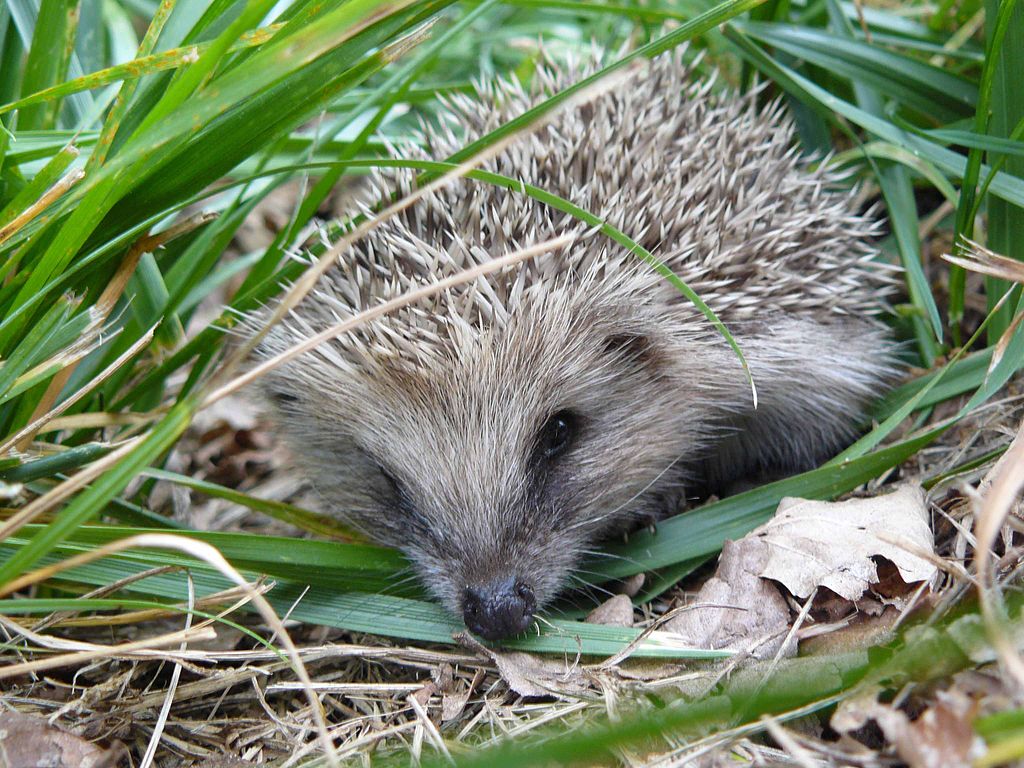
    Hedgehogs are native to England, where both cookbooks were published, but not to the Americas.[6]  Colonial Americans would likely never have seen a hedgehog.   There is not a lot of positive symbolism or folklore associated with the little creatures besides being industrious and cute.[7]  They have been used medicinally for a variety of ailments and were a food source in many cultures.[8]  None of this provides a reason why these little creatures were immortalized in almond meal and sugar at Christmas.

    hedgehog-3
    A photo of a real hedgehog because it’s so cute! Credit: Wikimedia/AlmaGz

    I think the most likely development of this holiday treat was a combination of coincidence and novelty. Someone made the marzipan for the holidays,shaped it into a dome, and then decorated it with almonds. Eventually maybe someone else thought this resembled a hedgehog and added a little hedgehog face because it was clever and cute.

    Why would Betty choose a marzipan hedgehog to sit on her holiday dessert table in colonial Virginia? As previously noted, marzipan was an established treat used to celebrate special days. The cost of the ingredients, which included two pounds of almonds, orange-flower water, canary wine, cream, butter and sugar, was substantial and illustrated to guests the effort and expense the family lavished on the party.  While the table would probably have smaller bite-sized marzipan pieces in the more traditional fruit shapes, the novel hedgehog with the slivered almond spines created a visually appealing and attention-grabbing dish. The Christmas hedgehog was a great conversation starter then!  The Christmas hedgehog is a great conversation starter now!

    Heather Baldus
    Collections Manager

    [1] Habeeb Salloum, Muna Salloum, and Leila Salloum, Sweet Delights from A Thousand and One Nights: The Story of Traditional Arab Sweets, (London: I.B. Tauris & Co. Ltd, 2013), 168: Sidney W. Mintz, “Color, Taste and Purity: Some Speculations on the Meanings of Marzipan”, Etnofoor, Jaarg. 4, Nr.1 (1991): 103-108.

    [2] Fielding Lewis Probate Inventory, 1781

    [3] Thomas Dawson, The Good Huswifes Jewell (London: John Wolfe, 1587), 23; Thomas Dawson, The good Huswifes Handmaide for the Kitchin. (London: Richard Jones, 1594), 37b.

    [4] Eliza Smith, The Compleat Housewife or, Accomplished Gentlewoman’s Companion, (Williamsburg: William Parks, 1742), 73.

    [5] Hannah Glasse, The Art of Cookery, Made Plain and Easy (London: A. Millar and R. Tonson, 1765), 288.

    [6] Mazin B. Qumsiyeh, Mammals of the Holy Land (Texas: Texas Tech University Press, 1996), 63.

    [7] Jacqueline Simpson and Stephen Roud, A Dictionary of English Folklore (Oxford: Oxford University Press, 2000); Tatjana Civjan and Dainius Razauskas, “Hedgehog in Cosmogonic and Etiological Legends of the Balto-Balcanic Area,” Tautosakos darbai, no. XXI (2004): 79-91.

    [8] Mazin B. Qumsiyeh, Mammals of the Holy Land (Texas: Texas Tech University Press, 1996), 64; Vincent Nijman and Daniel Bergin, “Trade in Hedgehogs in Morocco,” Journal of Threatened Taxa, (2015): 7132-7136.

  • Ten Well-Known Visitors to Historic Kenmore

    Since its transformation into a historic site, Kenmore has drawn its share of prominent and recognizable visitors including a vice president, a congressman, and numerous First Ladies of the United States. Indeed, the ladies of the Kenmore Association, who worked to save, restore, and operate the historic home during the 20th century, made it a point to reach out to First Ladies and, in turn, several of those First Ladies visited the auspicious brick home of Patriot merchant Fielding Lewis and wife Betty Washington Lewis, sister of George Washington.  For that matter, even during the days that Fielding and Betty lived in the home during the late 1700s, important figures in colonial Virginia and of the Patriot cause occasionally came to Kenmore.  Here is a list of “Ten Well-Known Visitors to Historic Kenmore.”

    10. Louise du Pont Crowninshield (1877-1958)

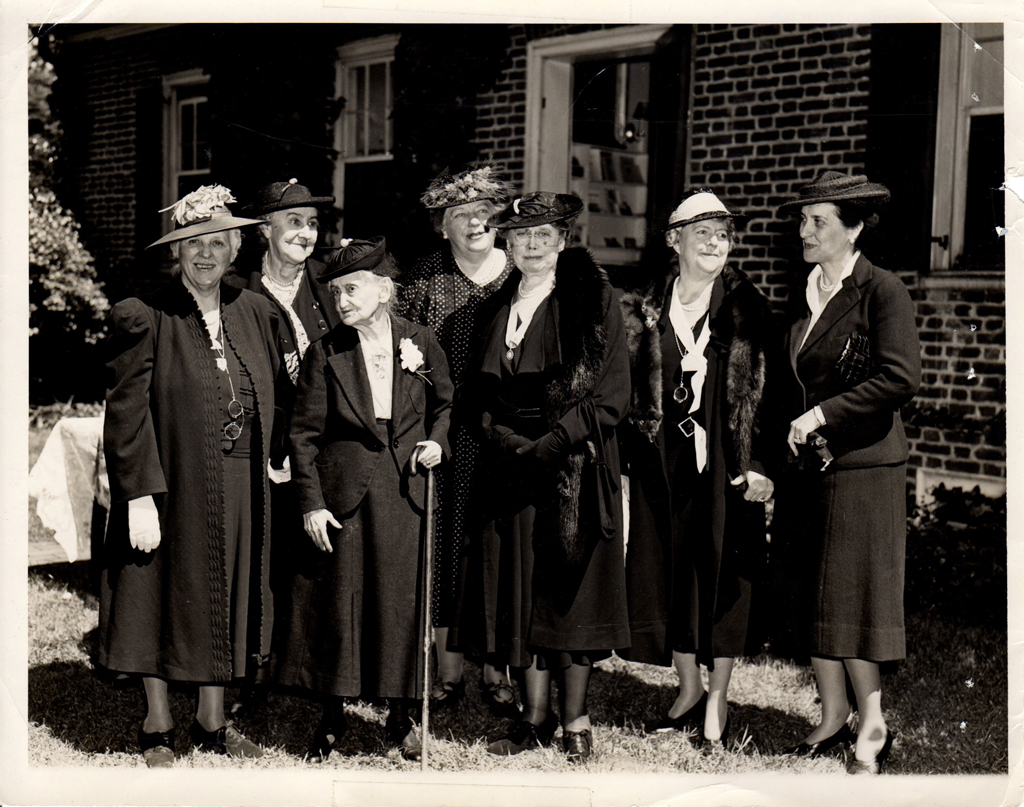
    Louise du Pont Crowninshield surrounded by other members of the Kenmore Association.
    Louise du Pont Crowninshield surrounded by other members of the Kenmore Association.

    Louise du Pont Crowninshield was president and chairman of the board of trustees of the Kenmore Association from 1940 to 1954.  An active historic preservationist, she was also a founding trustee of the National Trust for Historic Preservation.  Mrs. Crowninshield was born into the prominent Du Pont family and grew up at Winterthur, the family estate in Delaware. The home is now a museum and holds some of most important collections of Americana in the United States.  She helped save and restore Kenmore and visited many times during her term as president.

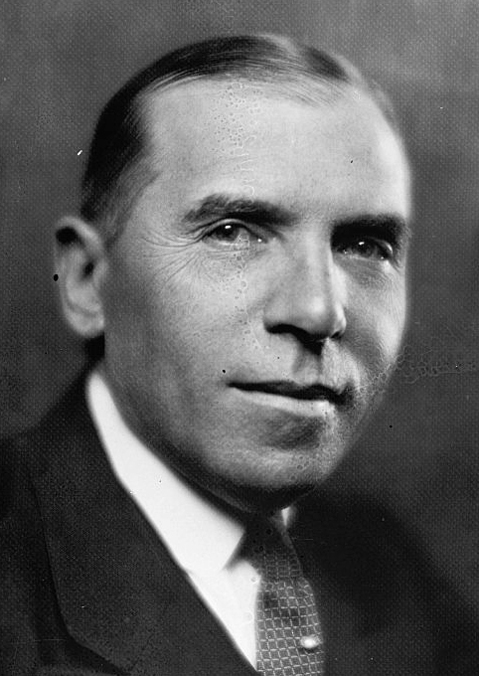
    sol-bloom-portrait
    Sol Bloom in 1923. Credit: Library of Congress / Wikipedia

    9. Sol Bloom (1870-1949)
    Sol Bloom was an entertainer, music publisher, and congressman from New York.  He was the biggest producer of sheet music in the U.S. before taking up politics.  Bloom was associate director of the United States George Washington Bicentennial Commission and came to Kenmore for a luncheon with Emily White Fleming and the Kenmore Association.  In 1936, Bloom made a $10,000 bet with Walter “Big Train” Johnson, former Washington Senator’s star pitcher, that Johnson could not throw a silver dollar across the Rappahannock River as legend said George Washington had done.  Bloom lost but refused pay the money.

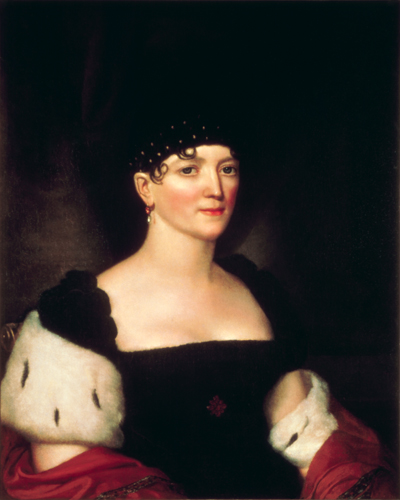
    elizabeth-monroe
    Elizabeth Monroe, unknown date and artist. Public domain. Credit: John Vanderlyn / Wikipedia

    8. Elizabeth Monroe (1768-1830)
    Elizabeth Kortright Monroe was First Lady of the United States from 1817 to 1825.  Elizabeth was born in New York City and married James Monroe in 1786.  She spent time in France and Britain during her husband’s ambassadorship and was even invited to be part of the American delegation that attended Napoleon Bonaparte’s coronation.  Mrs. Monroe actually lived at Kenmore shortly after her marriage to James.  Her husband left town on business and, since they had not yet set up a home in Fredericksburg, she stayed with Betty Lewis until James returned.


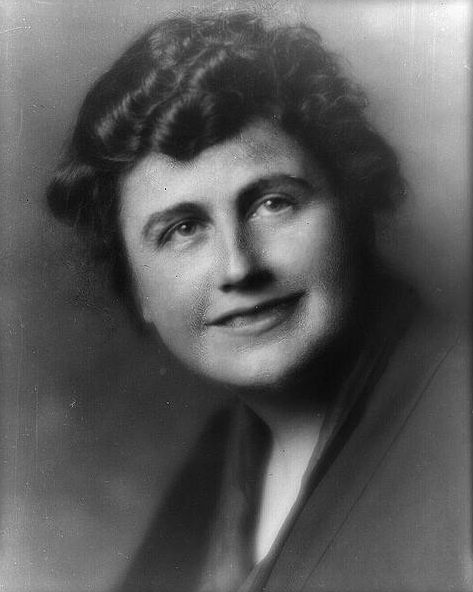
    edith-wilson
    Edith Wilson. Credit: Library of Congress / Wikipedia

    7. Edith Wilson (1872-1961)
    Edith Bolling Wilson was the second wife of President Woodrow Wilson and served as First Lady of the United States from 1915 to 1921.  Some historians argue that Mrs. Wilson became the de facto president after her husband’s stroke in 1919. She did, it seems, act as the only conduit to and from the president and decided which matters important enough to bring to her husband’s attention while relaying his decisions to those who needed to know.  Long after her time in the White House, Mrs. Wilson came to Kenmore for a luncheon in October 1946.

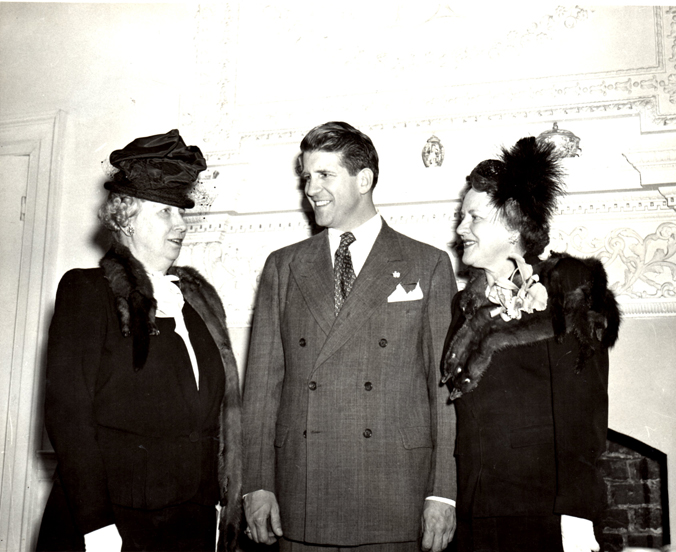
    6. Elizabeth Virginia “Bess” Truman (1885-1982)

    bess-truman
    Bess Truman in front of the fireplace in Kenmore’s dining room with Robert Porterfield, founder of the Barter Theatre, and an unidentified woman.

    Elizabeth Virginia “Bess” Truman was First Lady of the United States from 1945 to 1953.  Elizabeth Wallace was born in Independence, Missouri and had known Harry Truman, her future husband, since they were children.  They married in 1919.  Mrs. Truman detested the lack of privacy and disliked the social and political scene of Washington, D.C.  She was relieved to move back to Missouri.  Mrs. Truman visited Kenmore multiple times and was pictured in front of the mantel in the Dining Room with Robert Porterfield, founder of Barter Theatre, the State Theatre of Virginia, in Abingdon.

    5. Lou Hoover (1874-1944)

    Lou Henry Hoover was First Lady of the United States from 1929 to 1933.  Lou Henry was born in Iowa in 1874 and married Herbert Hoover in 1899.  She majored in Geology at Stanford University, was fluent in Chinese and Latin, assisted in the Belgian relief during WWI, and worked a great deal with the Girl Scouts of America.  Mrs. Hoover, as First Lady, toured Kenmore in September 1930.

    4. Colonel Sanders (1890-1980)

    Colonel Harland David Sanders founded the restaurant chain Kentucky Fried Chicken (KFC) in 1930.  Sanders was born in Indiana in 1890 and, after a number of jobs, he started selling fried chicken at a roadside restaurant in Corbin, Kentucky during the Great Depression.  The restaurant, Kentucky Fried Chicken, was a success and, in 1952, he started franchising across the country.  In 1964, Sanders sold the company and used his stock holdings to create several charitable organizations.  He promote these organizations as well as KFC by touring the country dressed as the Colonel.  He came to Kenmore and took a tour in the summer of 1977.

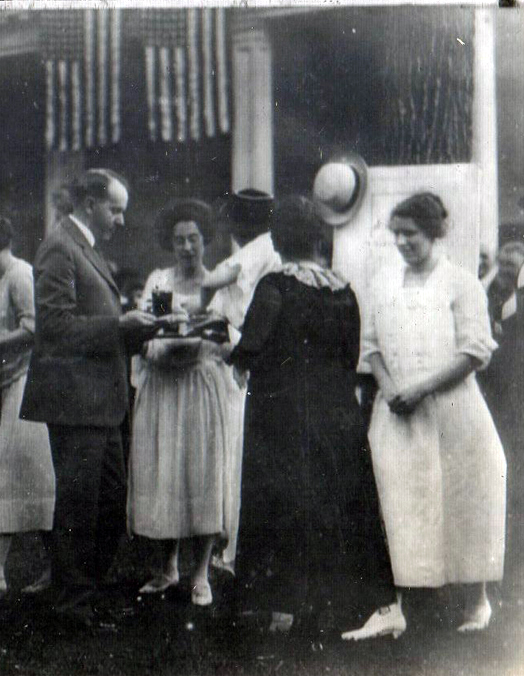
    calvin-coolidge
    Calvin Coolidge (left) enjoys gingerbread at Kenmore.

    3. Calvin Coolidge (1872-1933)
    Calvin Coolidge was born in Vermont in 1872.  After college, he became a lawyer and went into politics becoming the governor of Massachusetts from 1919 to 1921.  He was the 29th vice president under Warren Harding and the 30th President of the United States from 1923 to 1929.  Vice President Coolidge came to Kenmore in July 1922 to launch a fundraising campaign aimed at raising money to purchase the house and make it a historic site. He enjoyed some gingerbread during his visit.


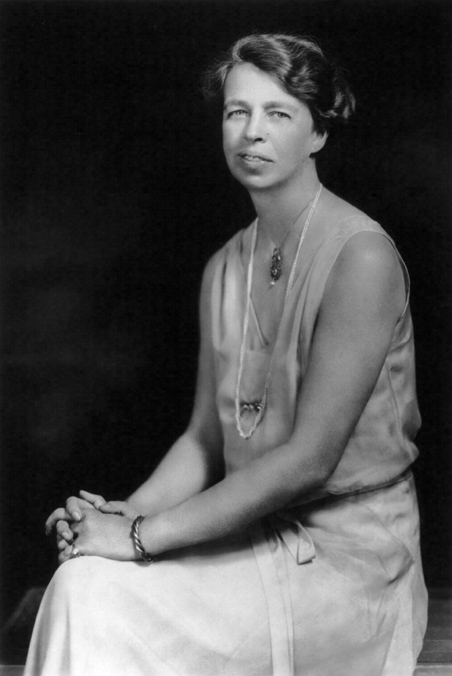
    eleanor-roosevelt-portrait
    Eleanor Roosevelt in 1932. Credit: Library of Congress / Wikipedia.

    2. Eleanor Roosevelt (1884-1962)
    Eleanor Roosevelt was First Lady of New York from 1929 to 1933 and First Lady of the United States from 1933 to 1945.  She was born in New York City to the socially prominent Roosevelt and Livingston families and married Franklin D. Roosevelt in March 1905.  After her time in the White House, she chaired the United Nations Commission on Human Rights in the late 1940s and early 1950s and John F. Kennedy’s Presidential Commission on the Status of Women.  When she was First Lady of New York, Mrs. Roosevelt visited Kenmore on several occasions with various groups who came from the New York state capital of Albany.

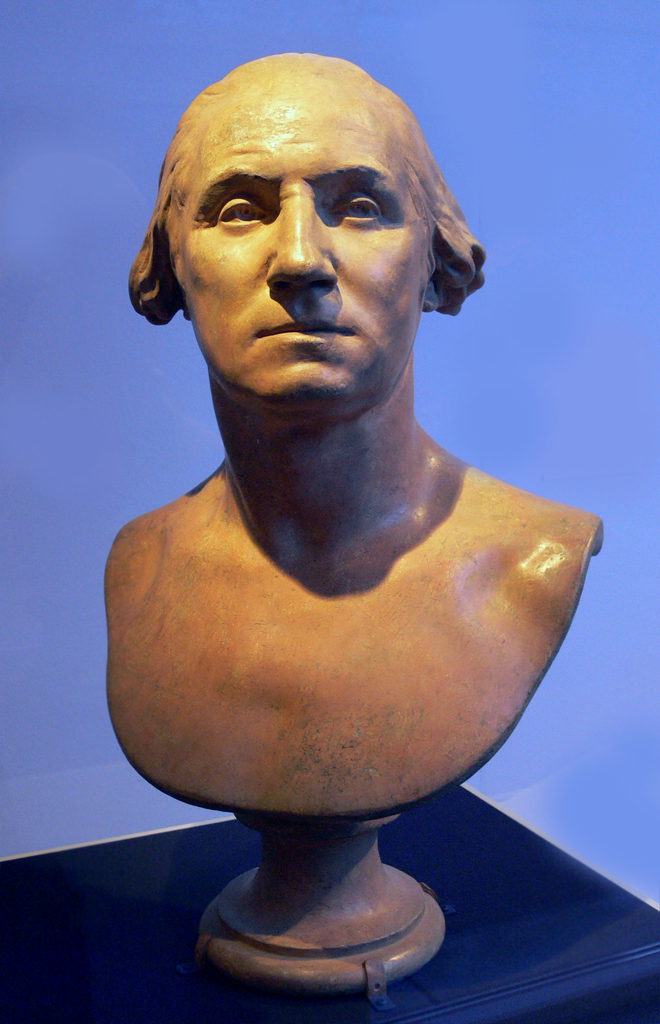
    1. George Washington (1731-1799)

    houdons-george-washington
    Bust of George Washington (c. 1786) by Jean-Antoine Houdon and based on a life mask of Washington. Public domain. Credit: Dallas Museum of Art / Wikipedia.

    George Washington was the first President of the United States (1789-1797) and the older brother of Betty Washington Lewis.  Construction of Kenmore was complete late in 1775. George would not stay in the house until 1784.  Including this 1784 visit, Washington stayed at Kenmore at different times during the years 1785, 1787, 1788, and 1791.  The final visits in April and June 1791 were the only times he stayed at Kenmore while serving as president.[1]

    Heather Baldus
    Collections Manager

    [1] Paula Felder, Fielding Lewis and the Washington Family: A Chronicle of 18th Century Fredericksburg. The American History Company, 1998: 216.

  • The Man on the Ceiling: Neoclassical Decorating at Kenmore

    As with many things at Historic Kenmore, the reasoning behind the choices Fielding and Betty Lewis made for their masterpiece of a house remain a mystery to us.  Why are Aesop’s Fables the subject of the decorative plaster overmantel in the Dining Room? Why is there an old-fashioned paneled wall in the Chamber? Why did they cover the expensive Drawing Room wallpaper with artwork but didn’t hang any art in the Dining Room? We’ll probably never know why they made most of these choices…but it’s pretty fun to speculate!

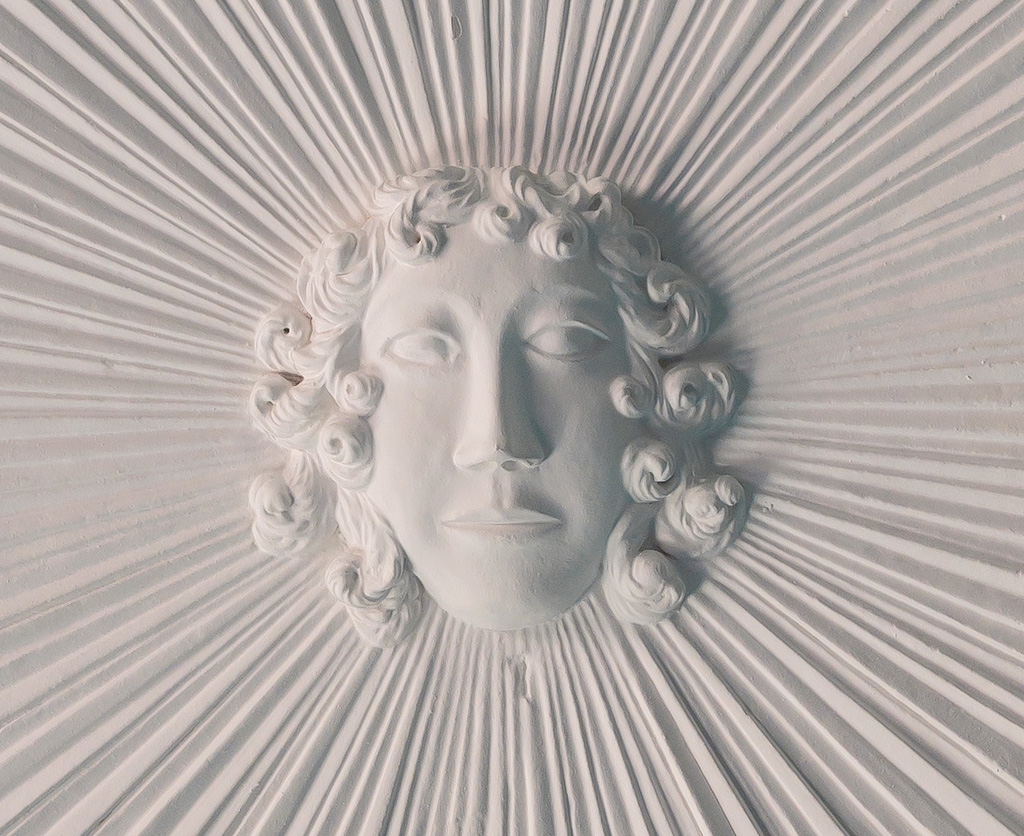
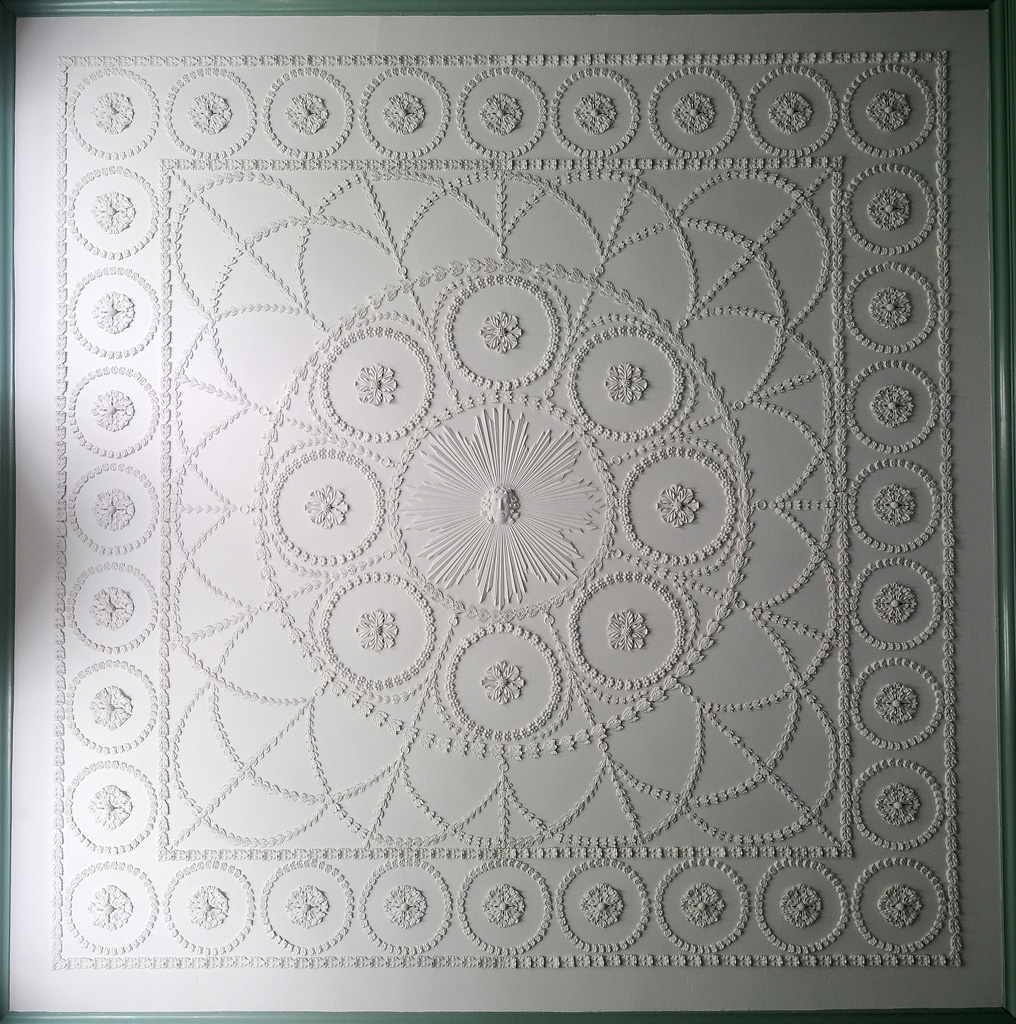
    One such stylistic choice is at the center of the plasterwork ceiling in the master bedchamber.  Visitors to Kenmore may recall the man’s face surrounded by rays or beams of light depicted there.  It is believed that this man is Apollo, the Greek god, and that the light beams emanating from his head, in this case, indicate that he is being depicted as Apollo the Sun God (one of many titles attributed to him).

    apollo-on-chamber-ceiling
    Apollo on the ceiling of the master bedchamber at Historic Kenmore.
    chamber-ceiling
    The entire bedchamber ceiling with Apollo at the center.

    When asked, we usually give visitors a fairly simple explanation for his position on the ceiling, something along the lines of “Apollo was a common symbol of the neoclassical style which was a popular decorating theme at the time.” That’s very true.  In the mid to late 18th century, the neoclassical style was all the rage throughout England and France, and much of the rest of Europe, as well.  As the story goes, the discoveries of the ruined ancient cities of Herculaneum and Pompeii created a fascination with the ancient world that showed up in everything from window curtains to tea pots.  Although the fashion arrived in the American colonies a bit later than in Europe, and despite far fewer options for incorporating it into their homes, the gentry tried to bring the neoclassical flare to their houses, as well.

    However, this explanation for Apollo’s presence in the Kenmore bedchamber may be a bit oversimplified.  After all, Apollo’s face is really the only identifiable neoclassical symbol in the entire house.  Why would Fielding and Betty choose to place this one symbol in this one room, and then completely ignore the neoclassical esthetic in the rest of the house?

    Much has been made of the mysterious craftsman who created Kenmore’s famous plaster ceilings – could the Stucco Man simply have chosen Apollo imagery at random for the bedchamber? Or, could there be another, less obvious, meaning behind the depiction? Maybe we should be looking at the 18th century concept of Apollo himself, rather than his use as a decorative motif.

    raleigh-tavern
    Exterior of the reconstructed Raleigh Tavern in Colonial Williamsburg. Credit: Maggie McCain/Wikipedia
    apollo-room
    Raleigh Tavern’s Apollo Room in Benson Lossing’s The Pictorial Field-Book of the Revolution published in 1860. Lossing visited the tavern in the late 1850s just prior to a renovation (thus the depiction of tools in the room’s center). The tavern was destroyed by fire in 1859. Public domain. Credit: Wikipedia.

    Kenmore’s bedchamber isn’t the only place that Apollo shows up in 18th century Virginia.  In fact, Apollo’s name is fairly common in the colony…especially in taverns.  Many inns and taverns had a room known as the Apollo Room.[1]  The most famous of these Apollo Rooms is probably the one at the Raleigh Tavern in Williamsburg, which was a well-known meeting space and the scene of large public gatherings, like balls or dinners.  When the House of Burgesses was disbanded by the royal governor in 1773, the burgesses simply moved themselves down the street to the Raleigh Tavern and conducted their business in the Apollo Room, drafting the non-importation act and other “treasonous” acts.  There is some thought that the Apollo Room in Williamsburg, and the other various Apollo Rooms in Virginia taverns, were named in honor of the Apollo Room at Hercules Pillars (or Pillars of Hercules, depending on who you talk to) in London.

    pillars-of-hercules
    The Pillars of Hercules pub as it appears today in Soho, London. Credit: Ewan Munro/Wikipedia

    The Hercules was a tavern established sometime before 1709, and is actually still in business today.  The Hercules was a leader among the several taverns in London that catered to the gentlemen’s “clubs” that were so popular at the time.  Much like modern-day college fraternities, these clubs were often known for one thing or another – some focused on scientific discourse, some were patrons of the arts, some met to read poetry, some were political in nature, some were more raucous than others, but they were all essentially drinking clubs.  For their monthly dues, members could meet at their club’s tavern and imbibe or enjoy a good meal, and take part in good conversation.  At the Hercules, the club met in the Apollo Room.[2]  Although it was a bit of a disconnect, Apollo was used in this case as a symbol of refined culture and knowledge, as opposed Bacchus, a god who symbolized wild partying and debauchery.  Whatever the reality, the Apollo Room was intended to be a place for polite discourse and companionship.

    Now, in a previous post on this blog, we discussed some archaeological evidence that Fielding may have had ties to a fraternal organization (that was essentially a drinking club, too) in England known as the Right Honorable Society of Bucks, and we know definitively that he was a member of the Fredericksburg masonic lodge, another fraternal, social organization.  Could that be the idea that Fielding was trying to express in putting Apollo’s head on the ceiling in the bedchamber – Apollo as a symbol of fraternity and knowledge? It would make sense, especially in light of the fact that Fielding was clearly trying to create the household of a proper English gentlemen when designing Kenmore.  Membership in these social clubs was probably prevalent among Fielding’s business associates in England, and certainly masonic membership was important for businessmen in Virginia.  Perhaps Fielding was subtly creating his own “Apollo Room.”

    chamber
    Kenmore’s master bedchamber

    Alas, there is a glitch in this theory.  If Fielding is trying to create his own Apollo Room, or at least convey the idea of an Apollo Room, why did he choose the bedchamber for it? As visitors to Kenmore have no doubt learned on tour, the master bedchamber in an 18th century household was considered an entertaining space, so that’s not the issue – people other than Betty and Fielding spent time there.  It’s more that the bedchamber is typically the domain of the lady of the house.  It was Betty’s command central, she spent most of her day there, running the household, keeping tabs on the enslaved servants and tending to her children.  If there were visitors to be entertained there, they were most likely Betty’s visitors.  The bedchamber tends to have a feminine connotation.  If Fielding wanted to make his business associates and social guests aware of his culturally refined and knowledgeable status, wouldn’t he put the Apollo symbol in the Dining Room or the Drawing Room?

    As I stated at the beginning of this post, there are many aspects of Kenmore that we might never fully understand, and the man on the ceiling is one of them.

    Meghan Budinger
    Aldrich Director of Curatorial Operations

    [1] Study of Taverns in Virginia in the 18th Century. Department of Research, Colonial Williamsburg Foundation, 1990.

    [2] Club Life of London with Anecdotes of the Clubs, Coffee-Houses and Taverns of the Metropolis, During the 17th, 18th and 19th Centuries, Vol. II. John Timbs, 1866.

  • In Memory of Mother Washington

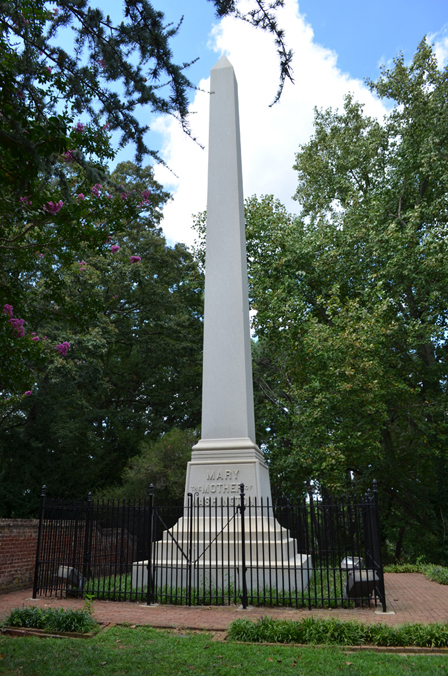
    2016MaryWashingtonMounment
    The Mary Washington Monument on Washington Avenue in Fredericksburg, Virginia.

    Today, August 25th, marks the 227th anniversary of the death of George Washington’s mother, Mary.   Mary lived to be 82 years old, and suffered from breast cancer during her final years.

    Few biographers have been neutral in their treatment of Mother Washington, a woman of great significance in George’s life.  Some writers have offered overly sentimental descriptions of this matron, whereas others have been critical, and even harsh in their evaluation of her role as George’s mother.

    Mary Ball married Augustine Washington on March 6, 1731.  Their marriage produced six children: George, Betty, Samuel, John Augustine, Charles, and Mildred.  When Augustine died twelve years later, a significant portion of the family’s property went to Augustine’s two oldest sons from his first marriage.  Mary raised their five surviving children at their Ferry Farm home, keeping the family together.  In 1772, at the insistence of her children, an aging Mary Washington moved into the town of Fredericksburg where she could be closer to her daughter, Betty.

    In the summer of 1789, Mother Washington’s health was rapidly deteriorating.  Betty wrote to her older brother George,

    “I am sorry to inform you my mother’s breast still continues bad.  …she is sensible of it and is perfectly resigned…  …the doctors think if they could get some hemlock it would be of service to her breast.”

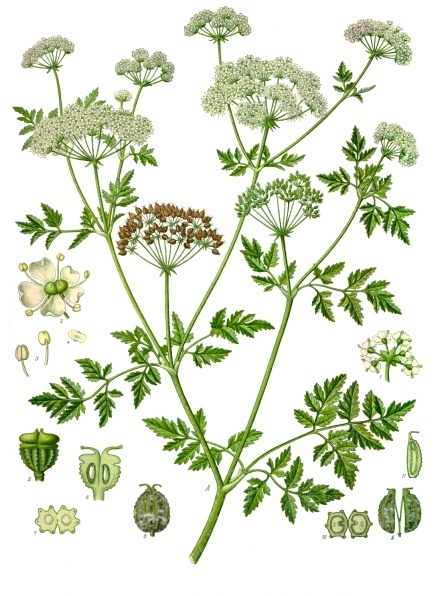
    Hemlock in Köhler's Medizinal Pflanzen
    19th-century illustration of hemlock or Conium maculatum (from Köhler’s Medizinal-Pflanzen). Public domain. Courtesy: Wikipedia

    Hemlock, an extremely poisonous plant that “affects the transmission of nerve impulses to muscle and causes death through respiratory failure,” was a traditional treatment for breast cancer in the early 1700s. Although doctors in England had largely abandoned this treatment by the late 1780s, when Mary Washington was suffering from this disease, it is evident that local doctors were not up-to-date on the most recent treatments.

    It seems likely that hemlock was indeed administered to Mary.  Burgess Ball wrote to George on the 25th of August, 1789:

    “The Cause of her dissolution (I believe) was the Cancer on her breast, but for about 15 days she has been deprived of her speech and for the five last days she has remained in a sleep.”

    These symptoms that Mary experienced in her final days, such as loss of speech and prolonged unconsciousness, seem consistent with hemlock poisoning, which attacks the nervous system and can cause comas.  Side effects include loss of speech (Steger 1972:71; http://www.webmd.com/).

    George publically recognized his mother’s role in his life at a 1784 event where he addressed the citizens of Fredericksburg, when he referred to her, “…by whose Maternal hand (early deprived of a Father) I was led to Manhood”.

    After his mother’s death, himself recovering from surgery to his left thigh (Abbot et al. 1992b, pp. 75-77), George consoled his grieving sister Betty Washington Lewis in a letter dated September 13, 1789:

    “Awful, and affecting as the death of a Parent is, there is consolation in knowing that Heaven has spared ours to an age, beyond which few attain, and favored her with the full enjoyment of her mental faculties, and as much bodily strength as usually falls to the lot of four score.  Under these considerations and a hope that she is translated to a happier place, it is the duty of her relatives to yield due submission to the decrees of the Creator….” 

    On August 28th, Betty Lewis and her children buried Mary Washington near a rock outcropping known today as “meditation rock” (Hetzel 1903:5).  The letter conveying the news of her death had still not reached her son George (Hetzel 1903:1), preventing him from attending the ceremony (cf. Rejai and Phillips 2000:15).  The burial site was part of the Lewis family’s Fredericksburg plantation.  This was a favorite spot of Mary’s, to sit, read the Bible, and spend time with her grandchildren.

    For some time, Mary’s grave had no permanent marker.  An attempt to move her remains to Mount Vernon stirred concerned local residents into action (NRHP 2002 Section 8, p. 21) and an effort was begun to place a marker on Mary’s final resting place in 1826.  While a cornerstone for a marker was laid in 1833, construction failed to materialize a suitable memorial before 1893 when the Mary Washington Memorial Association brought this effort to fruition (NRHP 2002 Section 7 p. 16, Section 8, pp. 22, 27).  In 1894 President Grover Cleveland, as well as his Vice President, the Governor of Virginia, the Mayor of Fredericksburg, a senator from Virginia, and thousands of citizens attended the dedication of the completed memorial (NRHP 2002 Section 8, p. 28).

    1903MaryWashingtonMonument copy
    The Mary Washington Monument as it appeared in 1903. Library of Congress photo.

    This Saturday, August 27th, you can commemorate Mary Washington’s death with the Washington Heritage Museums at the grave of Mary Washington.  A reception (cost $10) at the Mary Washington House on Charles Street follows.  For event details, visit washingtonheritagemuseums.org.

    Laura Galke, Archaeologist
    Site Director/Small Finds Analyst

    Further Reading

    Abbot, W. W., Dorothy Twohig, Philander D. Chase, Beverly H. Runge, Beverly S. Kirsch, and Debra B. Kessler
    1992  The Papers of George Washington, Confederation Series Volume 1.  University Press of Virginia, Charlottesville.

    Hetzel, Susan Riviere
    1903  The Building of a Monument Press of Wickersham Company, Lancaster, Pennsylvania.

    NRHP
    2002  National Register of Historic Places Form, Washington Avenue Historic District,
    http://www.dhr.virginia.gov/registers/Cities/Fredericksburg/1115262_Washington_Avenue_HD_2002_Final_Nomination.pdf (accessed August 11, 2016).

    Rejai, Mostafa and Kay Phillips
    2000  The Young George Washington in Phychobiographical Perspective.  The Edwin Mellon Press, Lewiston, New York.

    Steger, Robert E.
    1972  Native Plants Poisonous to Humans.  Journal of Range Management 25(1):71-72.