Lives and Legacies

Tag: Charlotte

  • Bane of the Washingtons: Deaths in the Next Generation and Amongst the Enslaved

    Welcome back to our 3-Part Blog charting tuberculosis (TB) in the extended Washington Family. If you are new to this series, Part I examined how the disease works, charted its history and explained standard courses of treatments in the 1700s. Part II looked at victims from George’s generation, including his brothers Lawrence and Samuel and brother-in-law Fielding Lewis. You can find those blogs here and here. In our final entry, we will continue to look at individuals who suffered from the disease and see more evidence of how the disease stayed within a family. 

    George Steptoe Washington (1771-1809, aged 37)

    George Steptoe Washington Source: MESDA

    As covered in Part 2, George’s brother Samuel died of tuberculosis, as did several of his sons, including George Steptoe Washington. A product of his father’s fourth marriage to Anne Steptoe, George Steptoe became an orphan at age ten. He and his siblings then fell under the care of their uncle, George Washington. George Steptoe would go on to marry Lucy Payne, the sister of Dolly Madison. Like his father, the point of infection cannot be determined but is likely derived from a family member. George Steptoe certainly faced exposure to TB via his father from the moment of his birth but may have caught it later in life. Regardless, his health experienced a serious decline sometime after 1800, and he ultimately traveled to Augusta, Georgia, in search of health benefits. He died there on January 10, 1809.

    George Augustine Washington (1759-1793, aged 34) & Frances “Fanny” Bassett (1767-1796, aged 29): George Augustine was another nephew of George Washington through his youngest brother Charles and quickly became his uncle’s favorite. He joined the Mount Vernon household in the early 1780s but had already experienced several periods of ill health that forced him to take leaves of absence from the battlefield. A diagnosis of tuberculosis soon came, leading George Washington to take an involved interest in his nephew’s health. Despite having witnessed the lack of improvement made by his brother Lawrence during such ventures, George funded trips to Berkeley Springs, Barbados, and Bermuda for George Augustine. He returned in May 1785 “in better health than when he set out, but not quite recovered.”1
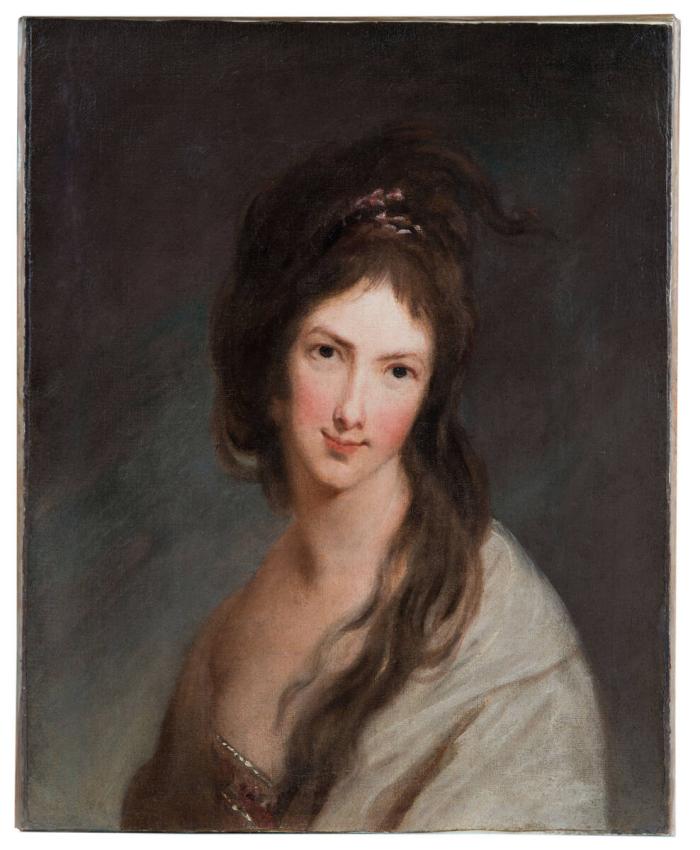
    Fanny Bassett Source: Mount Vernon

    During George Augustine’s absence, Frances “Fanny” Bassett, Martha Washington’s favorite niece, officially joined the household. Upon his return, the two quickly formed an attachment and married on October 15, 1785. George Augustine later became the manager of Mount Vernon, but his health steadily declined, leading his uncle to describe him as “a shadow of what he was.”2 Despite barely being able to ride, George Augustine traveled to Berkeley Springs in October 1791 but would be bedridden and coughing up blood by August 1792. After battling the disease for over ten years, he finally succumbed in 1793. His death “had been long expected,”3 but nevertheless caused his uncle to feel “it very keenly.”4

    The death of her husband left Fanny a young widow with three very young children. Unlike many in that situation, she retained a comfortable lifestyle. As the beloved niece of George and Martha, she always had a home at Mount Vernon and frequently served as an additional hostess. Regardless, she did not remain a widow for long and married Tobias Lear, secretary to her uncle, in August 1795. Sadly, she passed less than a year later, in March 1796, with Lear lamenting, “The Partner of my life is no more!”5 Thought to have died of TB, Fanny likely contracted it from George Augustine during their marriage.

    Charlotte (~1770-unknown, aged 27+): Charlotte served as an enslaved seamstress at Kenmore and later at Betty Washington’s final home, Millbrook. She first appears, aged eleven, in the 1781 probate inventory following the death of Fielding Lewis. Few details about her life exist apart from the record of a son, George, and another baby in a document from 1797. However, Charlotte clearly held an important position within Betty Washington’s household, given the medical records we have.

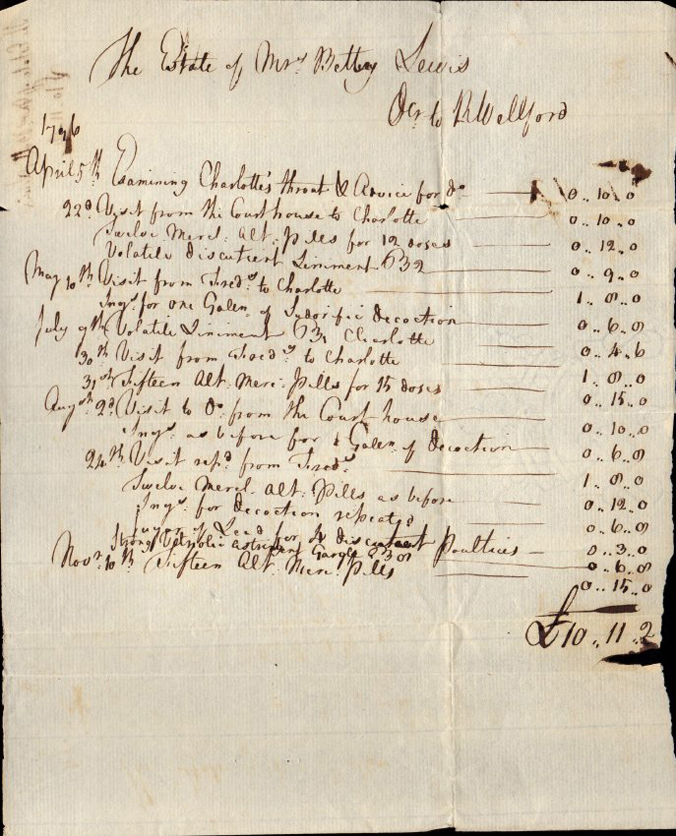
    Bill for Charlotte’s medical treatments

    Charlotte took ill at Millbrook in 1796 with some form of respiratory complaint. Rather than care for Charlotte personally, Betty sent for the doctor seven times over the year. Charlotte underwent throat examinations and notably received treatment with mercury tablets and ammonia liniment for the chest. The former served as a common cure, which “purged” the body of any imbalances, while the latter mimicked early Vicks VapoRub by opening the airways. None of these treatments would have been pleasant, and the mercury certainly did more harm than good, but Charlotte recovered nonetheless. However, Betty Washington Lewis’ death in 1797 prompted the division of her enslaved staff. In an all-too-common occurrence, Charlotte and her son went to different properties (no mention of the baby exists). They likely saw little of each other after this or never met again. At age twenty-seven, we know Charlotte resided on a property owned by Charles Carter in Frederick County, Virginia. After this, she disappears from the record.

    The true nature of Charlotte’s illness remains a mystery. She certainly suffered from a respiratory ailment and received treatment in line with that given to tuberculosis patients. Nevertheless, we cannot conclusively diagnose it as TB or determine if it ever affected her again. Despite this, her story reflects an important aspect of life in eighteenth-century Virginia and a failing of history. An interest in keeping the enslaved healthy enough to work existed, but the actual health of an enslaved individual often went undocumented. We only know of Charlotte’s illness due to the bill sent by the doctor listing dates and treatments. Even this reflects a rarity as the lady of the household generally oversaw medical treatment for the enslaved rather than a physician. Considering the widespread nature of TB, its higher prominence in poor and minority communities, enslaved living and working conditions, and the high death rates recorded amongst Philadelphia’s free Black population in the early 1800s, the disease likely accounted for a high number of deaths within Virginia’s enslaved population. Sadly, we may never know how many individuals died of the disease or its impact on their lives.

    You can read the full details of Charlotte’s treatment and life here.

    Hercules Posey (~1754-1812, aged roughly 64)
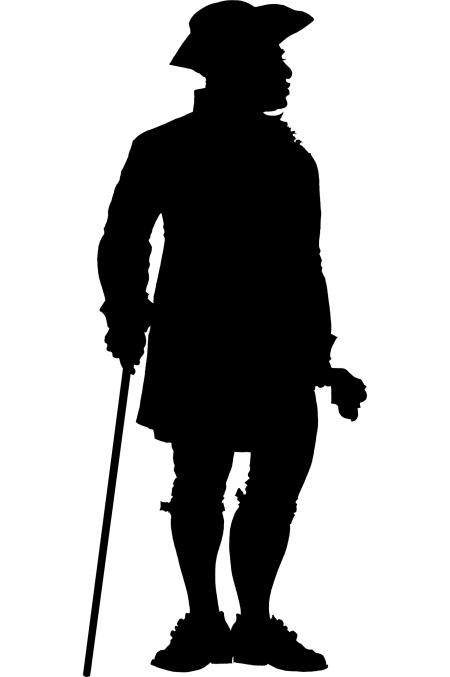
    Hercules Posey Source: Mount Vernon

    One Black individual known to have died of tuberculosis was Hercules Posey. Hercules came to Mount Vernon in 1767 after his previous enslaver, John Posey, failed to pay a mortgage owed to Washington. Having served as a ferryman for Posey, Hercules initially took up the same position. By 1786, he had moved on to the position of cook, for which he is best known. Highly skilled in his culinary abilities, Hercules counted amongst the nine enslaved individuals the Washingtons brought with them to Philadelphia in 1790. Early 1797, however, found Hercules working as a laborer at Mount Vernon, and he acted to self-emancipate in February. In doing so, Hercules left behind at least three children, Richmond, Evey, and Delia, who he shared with his late wife, Alice. Due to Alice’s status as a dower slave, none of their children would receive their freedom in Washington’s will.

    After his escape, Hercules made his way to New York City, where he again worked as a chef. He died on May 15, 1812, with the cause given as TB, and his grave lies in the Second African Burying Ground in Lower Manhattan. Given the span of time between his escape to freedom and death, he possibly contracted the disease after leaving Mount Vernon. Then again, it remains entirely possible that he became ill while enslaved in Virginia or Philadelphia. In this case, he either suffered with an active case for many years, with periods of waxing and waning or had a dormant case that reactivated later in life.

    Others: Additional members of the extended Washington family contracted the disease as time went on, and the same goes for the enslaved. However, an interesting aspect of tuberculosis is that far more individuals may have had it but remained unaware. As covered in Part I, TB can go dormant by walling itself off in the lungs. Minor symptoms would have appeared at the time of infection, but those pauses when the disease goes dormant. Depending on how long it remained active and how severe, the TB may have gone unnoticed or been misdiagnosed. If the disease never reactivated, a person could live a full life and never know they had it.

    Today, we diagnose tuberculosis through symptom analysis and testing. Multiple successful treatments additionally exist to help people overcome the disease. For the 1700s, however, symptoms alone provided the diagnosis, and the dormant phase served as the only successful reprieve from the disease. The fact that our modern technology and medical knowledge would have saved many of the people covered in this 3-part blog appears evident. Nonetheless, it remains unclear just how many people in the extended Washington family actually contracted TB. This then raises the question, if TB testing had existed in the 1700s, would individuals such as George and Betty Washington have turned up positive?

    Emma Schlauder

    Research Archaeologist


    Bibliography

    Anderson, Alicia K. & Lynn A. Price (editors) 2018     George Washington’s Barbados Diary: 1751-52. University of Virginia Press, Charlottesville, VA.

    Budinger, Meghan & Mara Kaktins 2020    Charlotte and the Mercury Pills. Lives & Legacies Blog, The George Washington Foundation <https://livesandlegaciesblog.org/2020/06/17/charlotte-and-the-mercury-pills/&gt;. Accessed April 11 2023.

    Chernow, Ron 2010     Washington: A Life. Penguin Books Ltd, London, UK.

    5 Eliassen, Meredith, Tobias Lear. Digital Encyclopedia of George Washington’s Mount Vernon, George Washington’s Mount Vernon < https://www.mountvernon.org/library/digitalhistory/digital-encyclopedia/article/tobias-lear/&gt;. Accessed April 11 2023.

    1-4 Fore, Samuel K. George Augustine Washington (ca. 1759-1793). Digital Encyclopedia of George Washington’s Mount Vernon, George Washington’s Mount Vernon < https://www.mountvernon.org/library/ digitalhistory/digital-encyclopedia/article/george-augustine-washington-ca-1759-1793/>. Accessed April 11 2023.

    Glen, Justin 2014     The Washingtons: A Family History, Vol 1, Seven Generations of the Presidential Branch. Savas Beatie LLC, El Dorado Hills, CA.

    Lenhart, Chelsea  Hercules. Digital Encyclopedia of George Washington’s Mount Vernon, George Washington’s Mount Vernon < https://www.mountvernon.org/library/digitalhistory/digital-encyclopedia/ article/hercules/>. Accessed 11 April 2023.

    Rankin-Hill, Lesley M.  1997     A Biohistory of 19th-Century Afro-Americans: The Burial Remains of a Philadelphia Cemetery. Bergin & Garvey, Westport, CT.
  • Charlotte and the Mercury Pills

    As part of our ongoing effort to research the enslaved communities that once lived and worked at Historic Kenmore and George Washington’s Ferry Farm, we recently came across some very unusual information pertaining to a young enslaved woman named Charlotte who resided at Kenmore.

    Charlotte, unfortunately, is a somewhat enigmatic figure. We know only a few things about her. She was about 11 years old in 1781, when Fielding Lewis died – her name appears as “Sharliot” in his probate inventory. She is also listed (along with her age) on a document called the Divvy List created by Betty Lewis shortly after her husband’s death and listing which slaves were to stay with her at Kenmore and which ones would eventually be given to her three youngest sons. Betty chose Charlotte to stay with her at Kenmore. Sixteen years later, Charlotte appears again on a list of slaves from the Lewis properties who were to be sold at vendu (public sale or auction). This document indicates that Charlotte worked as a seamstress in the Lewis household, and that she had both a young son named George, and a baby (although the baby was not identified by name or gender). One final reference to Charlotte in Kenmore’s manuscript collection is a notation that she was among 21 enslaved persons receiving textile rations sometime around 1796 (she received 5 yards of linen).

    enslaved seamstress
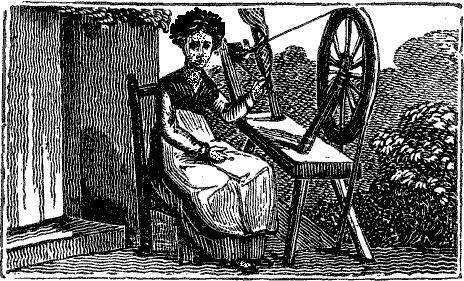
    Enslaved seamstress in the 18th century. Credit: Historical Images

    As often happens in this kind of research, we can have very sparse detail about a subject’s life until we find a new document that provides incredible detail about a very specific moment in that person’s life. Such is the case with Charlotte. The new document is a list of charges for medical examinations and treatments “to Charlotte” submitted by an “R. Wellford”, a doctor, to Betty Lewis’s estate sometime after Betty’s death in 1797. It shows that from April through November of 1796, Betty Lewis paid over £10 to treat Charlotte’s unidentified ailment.

    ms 850

    Transcription of MS 850, Charges for Medical Expenses [1]

    The Estate of Mrs. Betty Lewis
    Dbt. To R. Wellford

    1796
    April 15th Examining Charlotte’s throat & advice for do . . . . . . . . . . . . . . . . . . . . . . 0.10.0
    22nd Visit from the Courthouse to Charlotte . . . . . . . . . . . . . . . . . . . . . . . . . . . . . . . . . 0.10.0
    Twelve Mercl. Alt. pills for 12 doses . . . . . . . . . . . . . . . . . . . . . . . . . . . . . . . . . . . . . . . . . 0.12.0
    Volatile discutrent Liniment @ 32 . . . . . . . . . . . . . . . . . . . . . . . . . . . . . . . . . . . . . . . . . . . 0.9.0

    May 10th Visit from Frdbg. To Charlotte . . . . . . . . . . . . . . . . . . . . . . . . . . . . . . . . . . . . . 0.10.0
    Ings. For one Galen of Sudorific decoction . . . . . . . . . . . . . . . . . . . . . . . . . . . . . . . . . . . 0.6.0

    July 9th Volatile Linament @3, Charlotte . . . . . . . . . . . . . . . . . . . . . . . . . . . . . . . . . . . . . 0.4.6
    30th Visit from Fredbg. To Charlotte . . . . . . . . . . . . . . . . . . . . . . . . . . . . . . . . . . . . . . . . . 1.0.0
    31st Fifteen Alt. Merc. Pills for 15 doses . . . . . . . . . . . . . . . . . . . . . . . . . . . . . . . . . . . . . . 0.15.0

    Aug. 2nd Visit to do from Courthouse . . . . . . . . . . . . . . . . . . . . . . . . . . . . . . . . . . . . . . . . 0.10.0
    Ings. As before for 1 Galen of decoction . . . . . . . . . . . . . . . . . . . . . . . . . . . . . . . . . . . . . . 0.6.0
    24th Visit refd. From Fredbg . . . . . . . . . . . . . . . . . . . . . . . . . . . . . . . . . . . . . . . . . . . . . . . . 1.0.0
    Twelve Mercl. Alt. pill as before . . . . . . . . . . . . . . . . . . . . . . . . . . . . . . . . . . . . . . . . . . . . . 0.12.0
    Ings. for decoction repeated . . . . . . . . . . . . . . . . . . . . . . . . . . . . . . . . . . . . . . . . . . . . . . . . .0.6.0
    Sugar of lead for 4 discontent poultices . . . . . . . . . . . . . . . . . . . . . . . . . . . . . . . . . . . . . . 0.3.0
    Strong vitriolic astringent gargle @3 or . . . . . . . . . . . . . . . . . . . . . . . . . . . . . . . . . . . . . . 0.6.0

    Novr. 10th Fifteen Alt. Merc. Pills . . . . . . . . . . . . . . . . . . . . . . . . . . . . . . . . . . . . . . . . . . . .0.15.0

    £10.11.2

    What can this new document tell us about Charlotte’s life? First, we can take a look at the medications prescribed to treat what we assume to be a respiratory ailment…

    To begin her treatments, Charlotte was given 12 doses of mercury tablets on April 15, 1796. When ingested mercury causes the body to sweat and salivate and, as was incorrectly believed at that time, to rid itself of excess moisture and any toxins causing the sickness. In reality, mercury is a poison and the sweating, salivating, and intense diarrhea is actually the the body trying to rid itself of the deadly mercury. Mercury can also stimulate the mucous membranes thus increasing congestion and actually making it more difficult for the body to expel the mercury.

    In the 18th century, much of medicine was still heavily based on a theory dating back to ancient Greece when it was believed that an imbalance of the body’s liquids or humors (black bile, yellow bile, phlegm, and blood) caused illness. While there were many medical voices in the 18th century who questioned the humors theory of illness, the idea persisted deep into the 19th century. Similarly, mercury in a drug called ‘calomel’ was still prescribed by doctors well into the 20th century.

    On April 15, Charlotte was also prescribed a ‘Volatile discutrent Liniment’. This was basically ammonia suspended in some kind of oil that was spread on her chest or face to open up her airways. Think of this liniment as a very early form of Vicks VapoRub that smelled of urine. This probably would work pretty well to temporarily ease congestion if you had a nasty cold.

    Then, on May 10, Charlotte receives a ‘sudorific decoction’ that, like the mercury tablets, was supposed to make her sweat a lot. If she had a fever, profuse sweating could possibly help bring down her body temperature by spurring the body’s natural cooling process of evaporating sweat from skin. The doctor may have been once again been trying to purge her body of supposed excess moisture. Regardless, with repeated purgings, Charlotte was in real danger of dehydration, a significant problem when you are ill.

    On July 9 and 31, Charlotte is given even more ammonia liniment and mercury. By now, you can’t help but wonder if these treatments were making her feel far more terrible than her underlying disease.

    Twice more in August, Charlotte is given more heroic amounts of mercury in addition to the ‘decoction’ to purge her system further. She is also given an ammonia gargle, probably for a sore throat, that would have tasted incredibly vile. For the first time, she is given sugar of lead poultices, which were placed on skin to dry up conditions that were ‘weepy’. Charlotte probably had some kind of sore that her doctor was trying to dry up. Perhaps it was a bed sore from being laid up for long periods by her treatments and by what we assume to be a prolonged respiratory condition?

    Finally, on November 10, long suffering Charlotte is dosed once again with mercury. Presumably she still has some excess moisture in her respiratory system but as this is the only treatment given on that day and the last of the treatments recorded, she must have been recovering somehow.

    Beyond the course of treatment that Charlotte underwent and clues to her what underlying illness may have been, the document also answers a few longstanding questions about the fate of many in Kenmore’s enslaved community at the end of the Lewis era. We have always wondered how many enslaved people Betty Lewis took with her when she left Kenmore and moved to Millbrook, the small farmhouse on the Po River south of town. It’s never been clear whether or not Millbrook was a large enough house to require much labor to keep it running, nor has it ever been clear how much of a farming operation Betty undertook on that land. And yet, the enslaved population that once worked at Kenmore went somewhere in 1795, when Betty left (a document in Kenmore’s collection shows that Betty paid tax on 17 slaves for the year of 1795[2]).

    The bill submitted to Betty’s estate by Dr. Wellford answers at least a bit of that question. Charlotte was with Betty at Millbrook, showing that Betty felt she needed the services of a seamstress in her new home, which may indicate that Betty intended to keep up a robust household. Additionally, we know that Betty’s financial situation was precarious by the time she moved to Millbrook. The £10 that she spent on Charlotte’s medical treatment was a sizable sum for her at the time. The willingness to pay out so much money for repeated treatments may indicate that Charlotte held favored status in the household, perhaps because of her particular skilled trade, but also perhaps because she had been in the Lewis household since she was just a small child.

    Interestingly, this document also tells us about the doctor prescribing Charlotte’s treatment. The “R. Wellford” shown at the top of the list of charges was almost certainly Dr. Robert Wellford, who was an interesting figure in American history. During the Revolution, Wellford began the war as a doctor in the British army, assigned to the care of American prisoners. Apparently, he was so moved by the plight of these prisoners, that he began advocating for more resources to better their living conditions. When his superiors refused, Wellford more or less “allowed” himself to be captured by the Continental Army. He informed his captors that he would provide intelligence on British movements if they sent him back to the British, which they did. Over the course of a year, Wellford spied for the Americans, smuggling out information to them, before he eventually fled to the American lines after his superiors began to question his loyalties.

    Following the war, Wellford chose to stay in America, although as a former British officer he had difficulty in attracting patients to his practice in Philadelphia. George Washington eventually recommended that he move to Fredericksburg, where Washington’s family and friends would be happy to have his services. Washington even wrote a letter of introduction for him to some of the leading citizens of the area. Wellford and his family remained in Fredericksburg for the rest of his life, and he continued to be a family physician to all of the various Lewis and Washington households in the area.

    Along with being a well-known physician to some of the most prominent families in Fredericksburg, Wellford seemed to take a special interest in the healthcare of the enslaved community in the area, as well. In addition to making the trip south of town to Millbrook to see Charlotte seven times over the course of his treatments, Wellford kept a diary detailing his treatments of various enslaved persons in Fredericksburg. One such treatment included a cranial surgery performed to relieve pressure on the brain of young man who had suffered a severe fall. [3]

    Healthcare for the enslaved in the antebellum south is a complicated topic. While lack of proper nutrition and housing, as well as harsh working conditions, plagued enslaved communities, slave owners often thought of their enslaved workers as significant investments of money, and therefore had a vested interest in keeping them at least healthy enough to work. It was often the plantation mistress who provided the majority of healthcare to the enslaved people on the property. She mixed medicines, provided first aid, birthed babies and directed the re-housing of those affected with contagious disease (outbreaks were a constant worry in the crowded confines of slave quarters). Actual physicians were only brought in when an injury or disease was beyond the mistress’s skill. The receipt for Wellford’s services in treating Charlotte shows us that this was indeed the case on Lewis properties.

    Remarkably, Charlotte survived both her ailment and the agonizing treatment for it. Unfortunately, in the 1798 document showing the final disposition of the Lewis family slaves put up for sale, we learn that Charlotte had to face another all-too-common occurrence in the lives of the enslaved. Charlotte was sold to Charles Carter for £103, while her son George was sold to Howell Lewis for £55. Carter resided in present-day Frederick County, Virginia at the time, while Lewis was still a resident of Fredericksburg, meaning that mother and son would probably see very little of each other again, and no mention is made of the listed baby. At the age of only 27, Charlotte had endured far more than horrendous illness and questionable 18th century medical treatments.

    Meghan Budinger
    Aldrich Director of Curatorial Operations

    Mara Kaktins, Archaeologist
    Archaeology Lab Surpervisor

    [1] Account, 5 April, 1796 – 10 November, 1796. Kenmore Manuscript Collection, MS 850.

    [2] Receipt, 5 September 1796.  Kenmore Manuscript Collection, MS 423.

    [3] Diary of Robert Wellford (Mss1 W4599 a6), Wellford Family Papers (1794-1940), Virginia Historical Society.