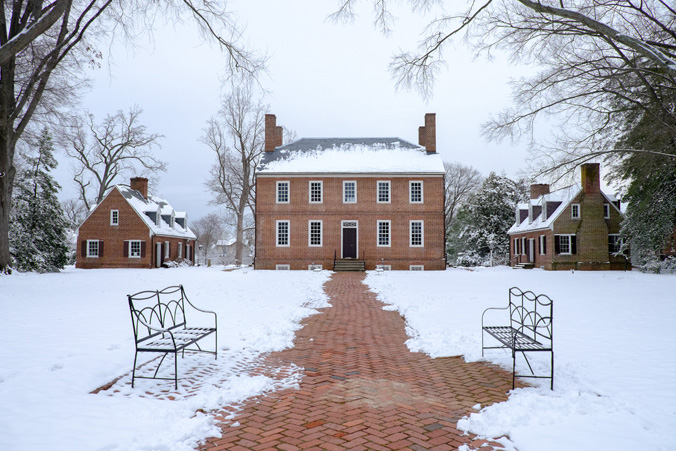
On January 8, 9, and 10, Historic Kenmore presents “Twelfth Night at Kenmore,” a dramatic theater performance inside the 18th century home of Fielding and Betty Lewis. This short video previews the performance.
Immerse yourself in the experience the candlelight, music, and decorations of an eighteenth-century Christmas!
Performance Times: 3:00, 3:45, 4:45 and 5:30 p.m. Reservations required. Call 540-370-0732 x24 or email [email protected] Cost: $12.00 adults, $6.00 ages 3-17; free ages 3 and under.
The George Washington Foundation wishes everyone a joyous holiday season! Enjoy these photos of holiday decorations created by wonderful volunteers! The George Washington Foundation Garden Guild decorated at Kenmore and the Lake Anna Garden Club decorated at Ferry Farm.
There is still time to see Historic Kenmore and George Washington’s Ferry Farm adorned for the season as well as each site’s annual display of dollhouses, miniatures, and gingerbread creations. For details about these exhibits, visit kenmore.org/events. Finally, if you missed it, check out our most recent post A Christmas of Uncertainty, December 1775.
When Fielding Lewis moved his family into their new home – the magnificent brick house we call Kenmore – in late 1775 it was the culmination of years of hard work and planning. It might seem as though that year’s holiday season should have been one of continual joy. Unfortunately, the Lewis family’s first Christmas inside Kenmore was far from joyful. December 1775 was an extremely difficult time in their lives and for the American Revolution.
That December, the Revolution was in a frustrating state of limbo. Although declared to be in open rebellion by the King and Parliament, few colonies had yet to see any armed conflict. Fighting outside of Boston started in the spring but fizzled into stalemate following the Battle of Bunker Hill in June. Independence may have been discussed in taverns but was still far from being discussed at the Continental Congress in Philadelphia.
The colonies were still suffering economically and had been suffering for some time. In 1774, Congress passed the Non-Importation Agreement. These measures stopped all trade with Great Britain and other British-owned ports. The Association, as it came to be known, remained in effect in December 1775. Colonists lacked numerous supplies and goods. Fielding Lewis experienced a significant drop in his shipping business and the family’s finances began to suffer.
Even though it was the holiday season, the Non-Importation Agreement also discouraged…
To be loyal to the American cause, one could not delight in the revelries typically enjoyed during Christmas.
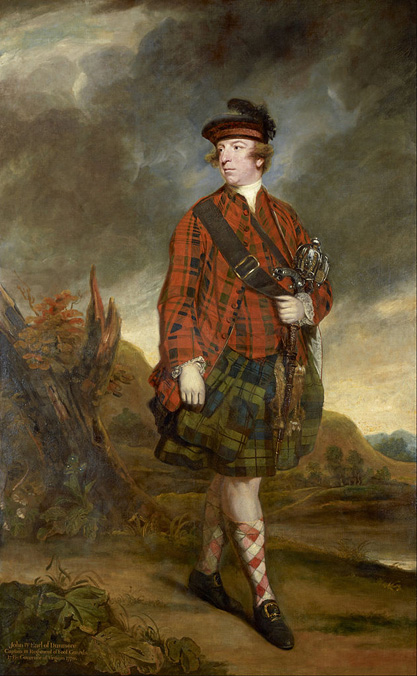
All levels of Virginia society felt the strain of war’s uncertainty that fateful December. John Murray, 4th Earl of Dunmore and Virginia’s Royal Governor, had been at odds with his colonists since he removed portions of the public stores of gunpowder to a Royal Navy ship back in the spring. Lord Dunmore’s most recent action, however, hit much closer to home for Fielding Lewis and his fellow planters. The Governor threatened to take their slaves, the precious private property, as they saw them, upon which they had built their livelihoods and wealth.
Portrait of John Murry, 4th Earl of Dunmore by Joshua Reynolds (1765)
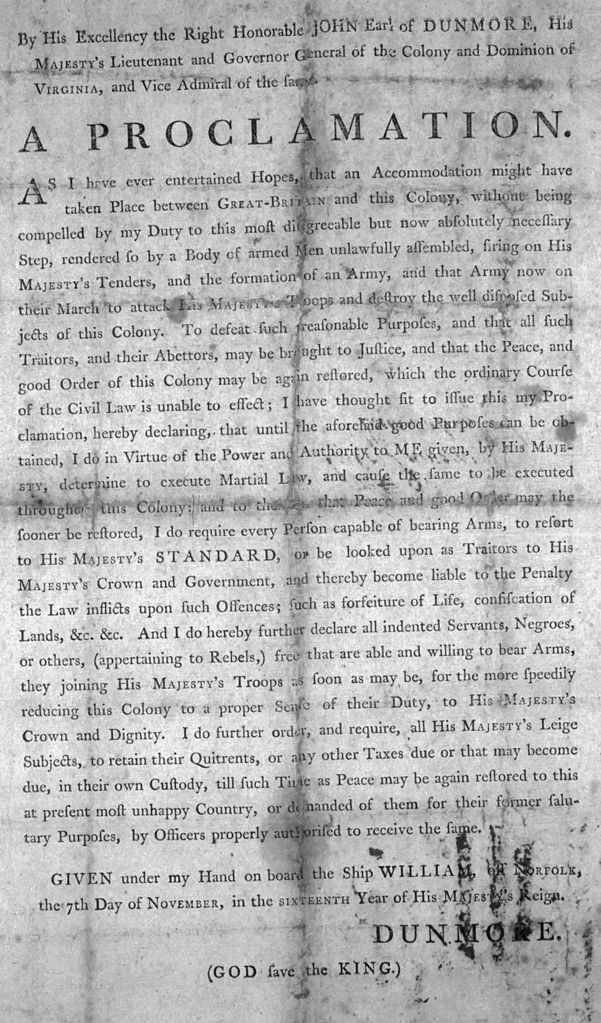
In November 1775, Dunmore had issued a proclamation in Virginia intended to swell his ranks and cripple the so-called ‘rebels’ by imposing martial law, raising the King’s standard, and declaring, most significantly,
A copy of Dunmore’s proclamation. Library of Congress photo
Dunmore’s Proclamation angered and frightened slave owners throughout Virginia and put the colony’s enslaved population in a difficult predicament. Achieving freedom was highly dependent on an enslaved person’s ability to get to Dunmore in Norfolk. Not surprisingly, the largest percentage of enslaved people who fled to the British came from the counties closest to that port city. While it is uncertain if any Lewis slaves ran away to the British, at least one indentured servant perhaps did. Joseph Smith, an a painter who had worked for George Washington and presumably for Fielding Lewis, saw the political schism in Virginia as an opportunity to free himself from his servitude and fled in the summer of 1775. In November, Fielding wrote to George, saying “I have never heard of your Painter tho’ suspected he was gone to Ld Dunmore[.] I do not expect he can be got as Dunmore wants Men.” Smith’s successful escape may have been on the mind of the other indentured servants and enslaved people in the Lewis household when word of Dunmore’s Proclamation arrived in Fredericksburg.
December 1775 in the Lewis family’s new home was an anxious one for many and yet for others it must have been a hopeful one as well. The American forces at Bunker Hill had proven to the British that the fight would not be easy or quick. The Fourth Virginia Convention met that December and ordered even more companies formed to support the Continental forces. Most hopefully, Dunmore’s forces were defeated in the Battle of Great Bridge on December 9. The Governor would leave the shores of Virginia in the early part of 1776 never to return. His forces did include a portion of enslaved people who had dared to hope for their own freedom, a hope that would be denied for many Christmases to come. A large portion were captured and returned to slavery, many more died from disease or lack of supplies, and others perished in battle. Few actually gained their freedom.
Back in Fredericksburg, the December of 1775 was most likely not what the Lewises had expected or hoped for. It was a Christmas of uncertainty, when war raged on Virginian soil. Yet, the future was not solely bleak for Fielding, Betty, and the Americans. As 1776 began, it begged the hopeful question: what may the new year bring?
Joe Ziarko
Manager of Interpretation & Visitor Services
Experience this Lewis family’s Christmas of uncertainty during Twelfth Night at Kenmore, a dramatic theater presentation at Historic Kenmore on Friday, January 8, Saturday, January 9, or Sunday, January 10. The year is January 1776. It is the first Christmas that Fielding and Betty Washington Lewis celebrate in their newly built home. It is not the usual celebration, however. War brings fear, doubt, and frustration to the Lewis family and their friends. Immerse yourself in the experience the candlelight, music, and decorations of an eighteenth-century Christmas!
Performance Times: 3:00, 3:45, 4:45 and 5:30 p.m.
Reservations required. Call 540-370-0732 x24 or email [email protected]
Cost: $12.00 adults, $6.00 ages 3-17; free ages 3 and under.
For the second year, Historic Kenmore presents “A Wee Christmas,” an exhibit for the holiday season of highly detailed, replica dollhouses – including the Kenmore mansion – and miniatures in the Crowninshield Museum Building. Come to Kenmore and share memories of your dollhouse with children and grandchildren as you explore the treasures in this festive display!
The dollhouses and miniatures of the “A Wee Christmas” remain on display until December 30. Historic Kenmore is open Monday – Saturday from 10:00 a.m. – 4:00 p.m and on Sunday from 12:00 p.m. – 4:00 p.m. Kenmore will be closed Christmas Eve and Christmas Day.
Admission cost for viewing the dollhouse exhibit only is $5 adults, $2.50 students, under 6 free. There is an additional fee for a guided tour of Kenmore. Visit www.kenmore.org for more details.
“Baxter House” submitted by James Opher, Julie Silvester, owner of Lilliput’s Doll House Shop, and Traci Haden, president of Virginia Minature Enthusiast Region E-1. Originally built by Mr. & Mrs. Baxter the house has over 16 rooms including a Grand Ballroom.
“Harris Farm” submitted 6-year-old collector Emily Jane Harding, who received the house from her grandmother.
“Smaller Home and Garden” submitted by Fernanda L. Kain.
“Petite Princess Collection” submitted by Jessica and Nancy Burger features dollhouse furniture that first appeared in the Sears Christmas Wish Book in 1964.
“Santons” submitted by Anna Jennings. A Santon is a small hand-painted terracotta Nativity scene figure made in France’s Provence region.
“Teapot Tea Room (at the North Pole)” submitted by Joanna Borgman even includes tiny bags of “Kenmore-blend” tea.
“Bartlett House” submitted by Katherine S. Opdycke.
“Place of Worship” submitted by James Opher has features to represent the Catholic, Islamic, Methodist, and non-demoninational faiths.
“The Apple Blossom” submitted by David Budinger is the childhood dollhouse of Kenmore’s Curator Meghan Budinger.
“Georgian Court” submitted by 8-year-old collector Elizabeth Harding, who was given the house by her mother.
“A Collection” submitted by Gail Steffey includes a display of leather furniture and a glass conservatory.
“Antique Dollhouse” submitted by Susan Larson
“Santa’s Slumber” submitted by Jessica Waltz
“Lost But Not Forgotten” submitted by James Opher is a diorama of a Japanese castle.
“Santa’s Workshop” submitted by Peggy Severson
Some of the dollhouse exhibitors: (l-r) Meghan Budinger, James Opher, Joanna Borgman, Fernanda L. Kain, Gail Steffey, Peggy Severson, (front) Elizabeth and Emily Jane Harding.
It’s a long-standing holiday tradition! Adults and children alike will enjoy the sights and smells of the festive creations displayed at George Washington’s Ferry Farm!
This year’s theme is “George Washington Slept Here” and a list of contest winners can be seen here (PDF). Visitors may vote for their favorite and this ‘people’s choice’ winner will be announce after the holidays. The gingerbread houses remain on display until December 30.
Ferry Farm is open Monday – Saturday from 10:00 a.m. – 4:00 p.m and on Sunday from 12:00 p.m. – 4:00 p.m. The site will be closed Christmas Eve and Christmas Day.
Admission cost for viewing the gingerbread exhibit only is $4 adults, $2 students, under 6 free. There is an additional fee for a self-guided iPad tour of Ferry Farm. Visit www.ferryfarm.org for more details.
Mr. Gingerbread happily accepts votes for favorite gingerbread house.
All the gingerbread creations make the museum gallery smell delicious!
Visitors view the gingerbread houses during Sunday’s opening reception.
Young visitor looks one of the gingerbread houses.
“Valley Forge, 1777” by Matthew Yagla
“George Washington’s Birthplace” by Rachel Bosco
“Washington’s Headquarters at Valley Forge” by C.J. Crocker
“Young George at Ferry Farm” by Lachlan Eaton shows George chopping down a cherry tree.
“Ferry Farm” by Ryan Jackson
George slept here.
“Kenmore” by Diane Jackson
“Washington’s Headquarters at Fort Cumberland” by Gavin Carpenter
Interior view of the Ft. Cumberland headquarters.
“Mary Washington House” by Maggie Jackson
“Valley Forge, Washington Headquarters” by Valerie Jackson
“Hoovervilles” by Post Oak Middle School German Club
“Schlaf gut, Geroge! (Sleep well, George!)” by Chancellor Middle School German Class
“George’s Mount Vernon” by Chancellor High School German Club
“Martha & George in Love” by Courtland High School German Club depicts the Longfellow House.
“Chatham” by Girl Scout Troop 5057
“George Washington Surveying Natural Bridge” by Mr. & Mrs. John Simmers
George with his surveying equipment
“Washington’s Revolutionary War Headquarters” by Carrie Gonzalez and Shelley Brosius depicts the Ford Mansion in Morristown, NJ
“Gingerbread Friends at Ferry Farm”
“RACSB, RAAI Gingerbread House”
“Washington Headquarters, Longfellow House” by Nancy Rowland
Although Fielding Lewis certainly built a home capable of hosting the elaborate Christmas celebrations popular in 18th century Virginia, Historic Kenmore probably never saw occasions on such a lavish scale, with the possible exception of the family’s first Christmas in the house in December 1775. If the family hosted the traditional Christmas celebration, Fielding and Betty would have welcomed lots of friends and family, serving them fancy dinners and entertaining them with dancing and music. They and their guests might have enjoyed fox hunts as well.
Virginians regularly included fox hunts as part of their Christmas celebrations.[1] In an era long before environmental conservation, colonial Virginians viewed foxes as pests that endangered livestock, which is why they hunted them so relentlessly.[2]Additionally, during hunts, gentry men like George Washington could show off their hunting dogs and their skill at horseback riding while chasing foxes through the countryside.
George Washington loved fox hunting. In the year 1768, for example, he went on fox hunts 40 different times. These hunts often lasted hours. On a March day in 1768, he caught “a fox with a bobd Tail & cut Ears, after 7 hours chase.”
George owned numerous hunting dogs and “helped develop the breed known as the American Foxhound.” These hounds chased the fox and hunters on horseback chased the hounds. The chase required galloping horses to jump over streams, bushes, and fences and riders to duck under low-hanging tree limbs. Fox hunting allowed wealthy Virginians to show-off their horse riding skills and George was widely considered an excellent horseman.
Hunters also wore special clothes. George went hunting in “a blue riding frock and scarlet waistcoat threaded with gold lace and topped by a black velvet cap. He wore high boots and carried a . . . riding crop.”[2] He wore cuff links that said “tallio” on them – that’s what hunters would shout when they found a fox. These cufflinks were unearthed by archaeologists at George Washington’s Ferry Farm and their discovery hint at George’s interest in fox hunting even in his younger years. He also hung paintings of fox hunts on the walls of his home at Mount Vernon.
Cufflinks discovered in the parlor root cellar and yard of the Washington House at Ferry Farm show a fox running across grassy rolling hills with the word “tallio” engraved above. This is a popular 18th century motif.
Like the George’s paintings at Mount Vernon, Fielding Lewis included foxes in the decor of his home. At Kenmore, the Lewis children were always reminded of the sneaky ways of foxes when they looked at a picture above the Dining Room fireplace. The plaster image illustrates the Aesop’s fable known as “The Fox and the Crow.”
This plaster over-mantle in Historic Kenmore’s dining room depicts the Aesop’s Fable known as “The Fox and the Crow.”
One day a fox saw a crow flying with a piece of cheese in its beak and settle on a branch of a tree. “That’s for me!’ said Master Fox, and he walked up to the foot of the tree.
“Good-day, Mistress Crow,” he cried, “How well you are looking today; how shiny your feathers; how bright your eyes. Your voice must be more beautiful than that of other birds. Won’t you, please, sing me a song that I may know you are the Queen of Birds?
The crow, quite happy to hear such praise, began to sing her best – “Caw, Caw, Caw”, but when she opened her beak, the piece of cheese dropped to the ground and was snapped up by Master Fox.
A close-up view of the over-mantle shows Mistress Crow dropping her cheese to be scooped up by Master Fox.
“Aha, Mistress Crow,” said he. “That was what I wanted. In exchange for your cheese I will give you some advice for the future: “Beware of false flattery.”
This Christmas, some sneaky foxes have found their way into Kenmore.
A sneaky fox hiding somewhere inside Kenmore.
During the holiday season, younger visitors can help us look for them in a special scavenger hunt and learn about the colonial Christmas custom of fox hunting.
Zac Cunningham
Manager of Educational Programs
[1] Philip Vickers Fithian, Journal & Letters of Philip Vickers Fithian, 1773-1774: A Plantation Tutor of the Old Dominion, ed Hunter Dickinson Farish (Williamsburg, Va., 1943), entry for Dec. 18, 1773: 44
[2] Jane Carson, Colonial Virginians at Play, Williamsburg, VA: Colonial Williamsburg Foundation, 1998: 62-64
[3] Ron Chernow, Washington: A Life, New York: Penguin Press, 2010: 124-5.
Today – January 6 – marks the end of Christmas or, at least, it did two centuries ago. If we lived in the days of George Washington, Betty Washington Lewis, and Fielding Lewis and moved within their social circle, we would all be preparing for the grandest celebration of the Twelve Days of Christmas, which began on December 25. This grand event, known as Twelfth Night, was celebrated much in the same way that many of us mark New Year’s Eve with family and friends gathered together for food, drink, sweets, music, dancing, games, and conversation.
This past weekend, Historic Kenmore hosted just such a celebration in the form of a theatrical presentation titled “Twelfth Night at Kenmore.” Set in January 1776, as Fielding and Betty Washington Lewis end their first Christmas in their newly built home, “Twelfth Night at Kenmore” depicted an unusual seasonal celebration, as the growing American Revolution brings fear, doubt, and frustration to the Lewis family, their friends, and members of the enslaved community.
Kenmore is lit for the celebration.
Betty Washington Lewis (Amy Wolf) and daughter-in-law Nancy Alexander Lewis (Juliana Jones) ponder how the war might impact the family.
Betty welcomes her guests.
Guests listen to Betty’s welcome.
(l-r) John Lewis (Michael Taylor) and George Lewis (Will Goldstein), two of Fielding Lewis’s sons, are joined by Captain Richard Taylor (Scott Houk) , a local ship’s master, in the singing of a traditional carol.
Visitors, some who came dressed in colonial-era clothing, join in the singing.
Fielding Lewis (John Hollinger) leads the singing.
Our excellent musicians for the evening: Zach, Kelsey, Kaylee, and Luke Payne.
George Weedon, a leading Fredericksburg patriot and tavernkeeper.
Captain Taylor and George Weedon argue about the wisdom of suspending horse racing because of the war.
The men continue debating.
George Lewis (Will Goldstein) expresses his desire to enlist in the Continental Army.
Captain Taylor, John Lewis, and George Lewis play cards while discussing George’s desire to enlist.
Hetty (Ashlee’ James), an enslaved washerwoman and house servant for the Lewises, overheard party guests talking about Lord Dunmore’s offer of freedom to slaves and wonders if she ought to run away to the British side.
In the colonial-era, the Christmas season lasted into January and concluded on Twelfth Night, a festive evening to mark the end of the Twelve Days of Christmas and celebrated much like our New Year’s Eve is today. While the entire period featured frequent banquets and balls with much food and spirits, Twelfth Night was especially known for its revelry.
Just as we do today, many colonial Americans got into the holiday ‘spirit’ with a glass of something special and warming on Twelfth Night. Special drinks called for distinctive mugs, glasses, and containers that were both functional and designed to impress your party guests. In these containers, early Americans enjoyed familiar festive beverages like eggnog, hot chocolate, hot toddies, and punch. At the same time, some of their holiday drinks are now a thing of the past or perhaps only enjoyed by those imbibers with an appreciation for history.
Many of these holiday beverages were created out of a desire to preserve the taste of fresh fruits harvested in the summer and fall so they could be enjoyed during the winter months. Cherry ‘Bounce’ is a great example of this – in addition to being fun to say! Easy to make, cherry bounce was started in the early summer when the fruit is ripe. Fresh cherries (traditionally of the sour variety) were placed in bottles and topped off with brandy then stored for as long as you could stand to wait. Leaving the fruit to infuse as long as possible increased the flavor and lent a lovely red color to the brandy. The decanted off-flavored brandy was mixed with sugar and spices. Martha Washington possessed a recipe for cherry bounce that included cloves, cinnamon and nutmeg and George Washington was said to have loved it so much that he took some in a canteen with him on a trip over the Allegheny Mountains in 1784.
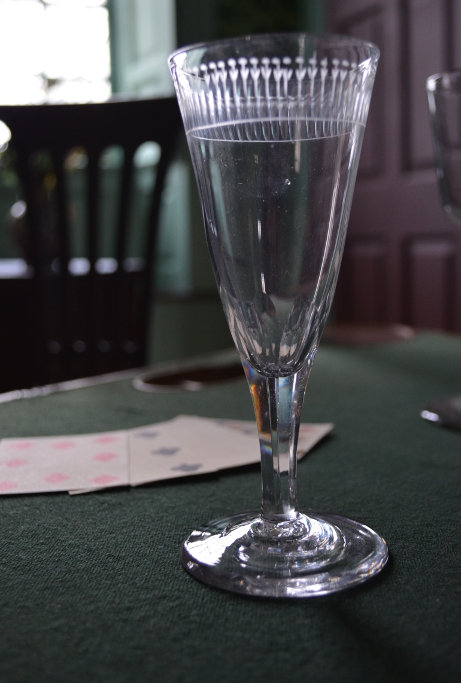
Copper wheel engraved wine glass.
Syllabub is another colonial beverage that has been forgotten. Originating in England, this odd-sounding half-dessert, half-cocktail, was created by combining spirts such as wine, sherry, ale or cider with fresh milk – preferably so fresh that it had just come out of the cow and was still warm! In fact, some recipes stated that a maid should milk the cow directly into a pan of your chosen spirit. Unfortunately, this technique probably also resulted in some ‘barn yard’ material ending up in the concoction. Sugar, spices and possibly citrus were then added. While there are many versions of syllabubs, it often involved a frothy mixture of whipped egg whites, curd or cream that can be spooned off and eaten while you drink the liquid whey that separates beneath. Served in a conical glass and sometimes displayed on a pyramid-shaped dessert tray with colorful jellies, syllabub made for a very festive holiday drink.
A Copper Wheel engraved dessert/fortified wine glass used to serve syllabub.
While many people may not have heard of syllabub and cherry bounce, wassail is a term that most are familiar with even if they’re not entirely sure what it is. Actually, wassail was both a beverage and an activity. Similar to today’s mulled ciders and wine, wassail was often served from a punch bowl passed around from person to person in an act of sharing and celebration. The old Christmas carol “Here We Come A-Wassailing” describes the act of going from house to house singing and wishing good cheer while also sipping the punch-like drink composed of hot wine or ale mixed with spices, apples and sometimes topped with bread or toast. But before you condemn our ancestors for drinking odd things, just think what future generations might think of what we consume today. And perhaps try a colonial holiday beverage or two this Twelfth Night and evoke the spirit of holidays past!
Hand-blown mug for hot beverages such as wassail.
You can experience a dramatic theater presentation depicting a Twelfth Night celebration (minus the alcohol) at Historic Kenmore on Saturday, January 3 or Sunday, January 4. Reservations are required and can be made by calling 540-370-0732 x24 or emailing [email protected]. Visit the events page on http://www.kenmore.org for more information!
Mara Kaktins
Archaeologist, Ceramics and Glass Specialist
Six-year-old George Washington and his family moved to the land we call Ferry Farm late in 1738, perhaps even in time to mark Christmas in their new home. If so, it was the first of many. George lived at Ferry Farm into young adulthood. Interestingly, the best documented Christmas he spent in Fredericksburg was actually in 1769, long after his boyhood years, and it paints a picture of the holiday as typically celebrated in Virginia, past and present.
George Washington at age 40 in 1772, three years after the Christmas of 1769. By J.W. Paradise (engraving) from a picture by J.G. Chapman after Charles Wilson Peale [Public domain], via Wikimedia Commons.After the House of Burgesses recessed, 36-year-old George Washington left Williamsburg for home on December 21, 1769. Instead of traveling all the way to Mount Vernon, he stopped in Fredericksburg on December 23 and stayed in town through Christmas. He arrived at “4 Oclock in the Aftern.” and went to the home of his brother-in-law Fielding Lewis. In 1769, the Lewis family did not yet live in the brick home we call Kenmore. Instead, they were located near the present-day corner of Princess Anne and Lewis Streets. That evening, George “ding. [dined] at Colo. Lewis” and he and Fielding may have been joined by George’s sister Betty, his young nephews George, Charles, Samuel, Lawrence, Robert, and his niece Betty. Christmas was a period of rest that Virginians used for long visits and large meals with family and friends. The meals amounted to feasts and a Christmas meal at Mount Vernon once featured, for example, “an elegant variety of roast beef, veal, turkey, ducks, fowls, hams &c.; puddings, jellies, oranges, apples, nuts, almonds, figs, raisins, & a variety of wines & punch. . .”[1]
On Christmas Eve, which was a Sunday, George “Went to Prayers, & dined afterwds. at Colo. Lewis.” The prayer service he attended probably took place at St. George’s Church, an wooden structure located on the site of today’s St. George’s Episcopal Church. Many colonial Virginians combined the holiday’s religious nature with secular activities such as parties, much as we do today. Washington was no different. After his morning at church, he passed the evening in Julian’s Tavern with Edward Jones, the overseer of Ferry Farm, where George’s mother Mary still lived. This tavern was located at the corner of Amelia and Caroline Streets.
Christmas Day was spent with the Lewis family and George won 2 pounds and 5 shillings playing cards. Card playing for money was another aspect of Christmas carousing enjoyed by Virginians, whether men, women, or children. Popular games included whist (similar to bridge), and piquet (similar to rummy) and were great ways to pass the time when visiting family and friends during Christmas.
On December 26, Washington prepared to continue his journey home by going to to the barber and paying for repairs to his carriage. Before leaving, though, he again “Dined at Colo. Lewis” and then “went over the River and logd at my Mothers” for his final night in Fredericksburg. After giving Mary 6 pounds in cash, George left Ferry Farm on the 27th and arrived home at Mount Vernon on December 28.
The Christmas season of the colonial era lasted much longer than ours does, extending into January and concluding on Twelfth Night, a festive evening to mark the end of the Twelve Days of Christmas and celebrated much like our New Year’s Eve is today. During the first days of 1770 at Mount Vernon, Washington and his family continued visiting friends and hosted two dinners, including one on Twelfth Night. It appears to have been a relatively subdued affair with only immediate family and four or five neighbors. Three years later, on January 6, 1773, he had at least fourteen guests, excluding his own family, at a Twelfth Night celebration.
Christmas 1769 was one of many that George Washington spent in Fredericksburg. It is the only one for which he recorded his activities, however. He spent time with family, he enjoyed several good meals, he went to church, he drank at a local tavern, he won some money at cards, and he attended or hosted several celebratory gatherings. All-in-all, his was a Christmas spent in ways not all that different from the ways many of us will spend our own holidays.
Zac Cunningham
Manager of Educational Programs
[1] Theophilus Bradbury quoted in Laura F. Winner, A Cheerful & Comfortable Faith: Anglican Religious Practice in the Elite Households of Eighteenth-Century Virginia, New Haven, CT: Yale University Press, 2010: 130.
This year is our first-ever “A Wee Christmas — Dollhouses and Miniatures Show” at Historic Kenmore! “A Wee Christmas” has brought together many different dollhouses, miniature scenes, and figurines loaned by friends, neighbors, and staff for visitors to Kenmore Plantation to enjoy. The highly detailed, replica dollhouse of Kenmore on display in our Crowninshield Museum inspired this new holiday event. You can read a blog post about the history of the Kenmore dollhouse here.
The photos in the gallery below show several of the whimsical dollhouses and miniatures on display. To enjoy all of them up close, visit Historic Kenmore before the exhibit ends on December 30. Check out the events page on http://www.kenmore.org for more information!
“Country Church.” Submitted by James Opher.
A glimpse through the church’s front door.
Inside the country church.
“Antique Dollhouse.” Submitted by Susan Larson.
Susan bought her dollhouse during a visit to Fredericksburg, not knowning that she would soon move to the city.
“The Apple Blossom.” Submitted by David Budinger.
David built the house for his daughter, Meg (now Kenmore’s curator) around 1990.
Christmas tree inside “The Apple Blossom.”
“Plantation House.” Submitted by James Opher.
It was built in 1975…
…and renovated in 2014.
Inside the “Plantation House.”
“Bonaise” Submitted by Lucy Harmon.
“Bonaise” is a replica of the Harmons’ old farmhouse on White Oak Road in Stafford County.
Scene from “The Nutcracker.” Submitted by Anne Higgins.
“Victorian Dollhouse.” Submitted by Beth Waters Hunsinger & son Jackson Waters Hunley.
Santa gave Beth this house when she was about 9 years old.
Now, her son Jackson enjoys rearranging the furniture inside.
Interior of “Rammings’ House.” Submitted by Anna Jennings.
Made by Michael & Gloria Ramming in 1985, the house is a miniature of their home and furnishings in San Francisco, California.
“The Quilt Shop.” Submitted by Carol House.
The shop was featured in the Miniature Quilts magazine.