Lives and Legacies

Tag: Civil War Medicine

  • Horror Artifacts of Ferry Farm: Myth, Disease, Vampires, and Dolls

    With Halloween just around the corner, we thought we would take our readers behind the scenes to look at some of the creepiest and macabre artifacts we have uncovered at Ferry Farm. Some may seem like obvious choices, but others have hidden connections and meanings. Be sure to let us know your favorite in the poll at the end.

    Bartmann Jug: The Wild Man and Witchcraft

                This jug may look familiar to those who enjoy visiting Colonial sites. Made predominantly in Germany during the 16th and 17th centuries, these pieces of salt-glazed stoneware proved incredibly popular. Known as Bartmann Jugs, all pieces share the presence of a bearded face on the neck of the vessel. Some have additional designs, such as crests, on the body. The face lends the name to the jug as “Bartmann” translates from German to “bearded man.” Still, this begs the question of who the face belongs to?

    Bartmann Jugs
    Remnants of Bartmann Jug

                The bearded face depicts a figure known as the Wild Man. A character from Northern European folklore of the 14th-16th centuries, Wild Men reportedly flourished in remote, alpine regions. In characterization, Wild Men are similar to the satyrs and fauns of Greco-Roman tradition. They are covered in hair, hence the bearded face, and wear no clothes. The popular depiction of Wild Men began in the late Middle Ages when the figure became secular. They thus appeared in all art forms with males and females being depicted. The somewhat exaggerated face on the Bartmann Jug speaks the Wild Man’s untamed nature.

    Wild Man by Martin Schongauer, 1480s

                Aside from Wild Men, Bartmann Jugs have a role in witchcraft. At a time of religious turmoil and witch hunts, England saw a rise in the use of witch bottles in the 1600s. These bottles were white magic in nature and supposedly protected against black magic. Bartmann Jugs account for most witch bottles from this period and the abnormal face may have factored in to its use. To make a witch bottle, one filled the vessel with items such as nails, human hair, fingernail clippings, heart-shaped pieces of cloth, pins, and urine before sealing it. The bottle was then buried or submerged near the area it protected. No Bartmann witch bottles have been found in the America, but the Mathers of Massachusetts wrote about witch bottles in the late 1600s. Could ours have served such a purpose?
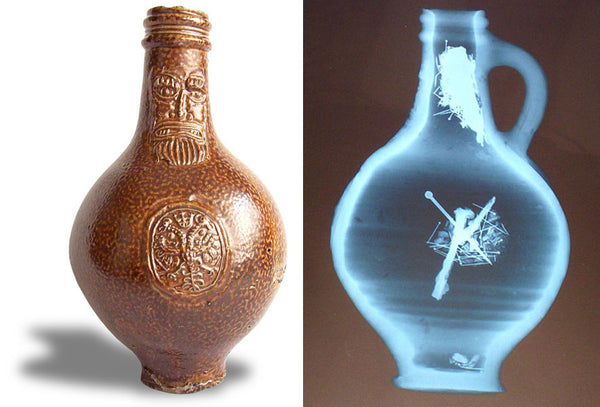
    X-Ray of Bartmann Witch Bottle

    Civil War Medicine

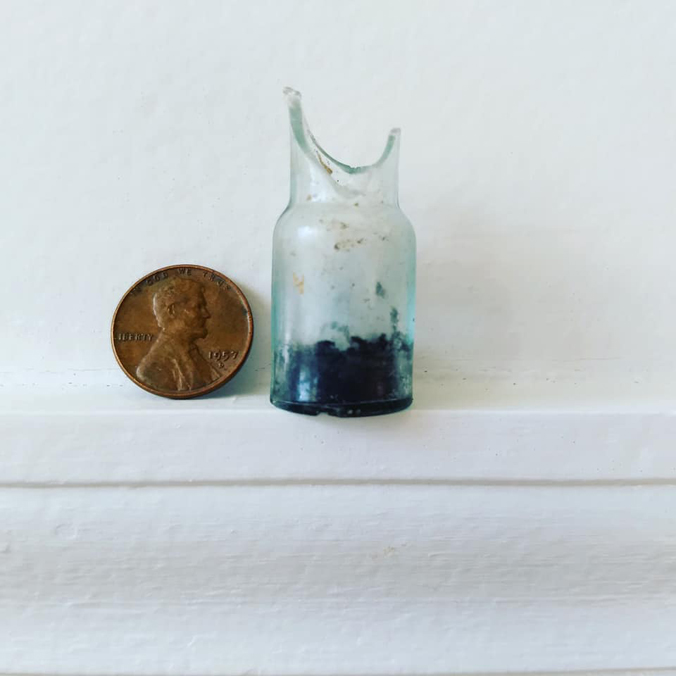
                Just the thought of Civil War medicine is typically enough to conjure scenes of horror, so this simple glass bottle may seem a bit disappointing. However, things are rarely what they seem. We recovered this artifact from a Civil War trench and quickly became interested in what it originally held. Scientific analysis of the remaining residue revealed that the bottle served a medicinal role and once contained liquid mercury. As mercury is known as extremely dangerous, this may come as a shock. Why would anyone have mercury on their person and how could it be medicinal? Believe it or not, mercury once served as a cure-all in the medical world and it was only in 20th century that its dangers were fully accepted. Those who used mercury medicinally viewed the topical burning, sweating, excess saliva, and diarrhea it produced as signs of successfully purging their body of their affliction. In reality, it was their body trying to rid itself of the mercury.
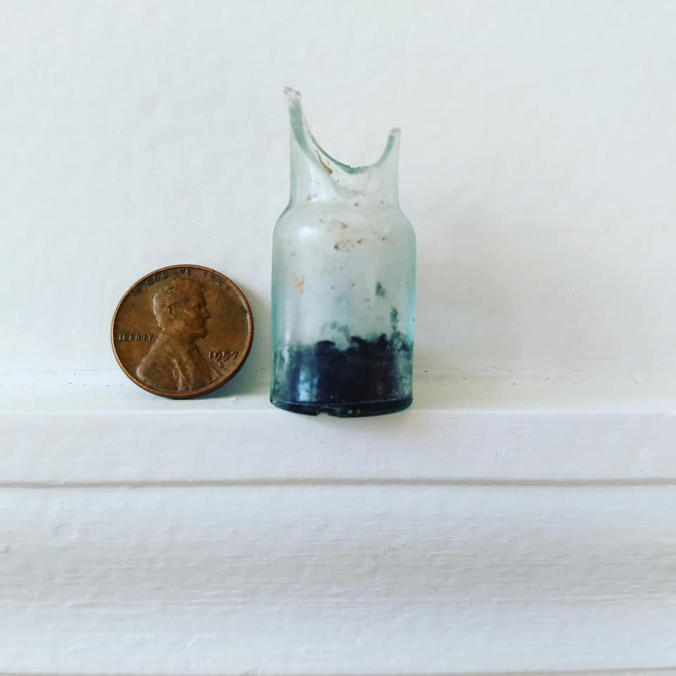
    Mercury Bottle

    As a cure all, people utilized mercury for all sorts of afflictions and pest control. Common uses in a Civil War camp may have included treatment for head lice, bed bugs, skin sores and lacerations, as well as parasitic infections. The most terrifying of all, however, would have been syphilis. The dominant strain of this disease is sexually transmitted, and was often ripe in military camps. A disease that did not kill quickly, a person could live with syphilis for years as it slowly ate away at the body. As it progressed, the afflicted would note rashes, open sores, and growths or bumps on their body. Neurological problems could occur and the loss of your nose was not uncommon. As the disease stayed with you until death, it had time to impact the skeleton, most notably leaving pitting on the skull, potentially an eaten away nose cavity, and other signs of deterioration. Overall, a horrible way to go and a wicked good topic for this blog.
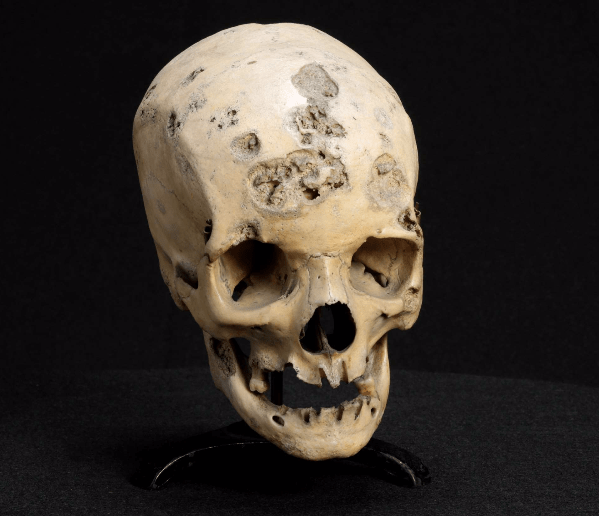
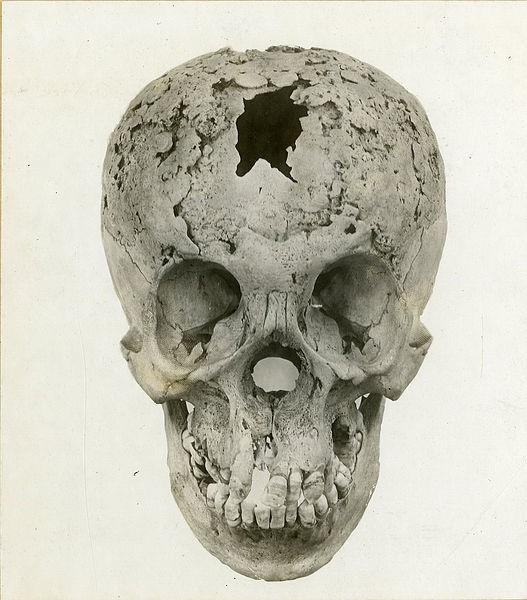
    For further reading on this artifact and the scientific analysis, you can read a previous blog on it here.

    Dracula’s Jewelry

                Mourning jewelry became extremely popular during the mid to late 1800s. While pieces came in many forms, they mainly reflected somber colors, like black, or carried something of the deceased’s, such as hair. The rise in this trend first derived from Queen Victoria’s endless mourning for her husband Prince Albert in the United Kingdom. Her mourning set a fashion trend and, with the number of deaths that occurred in the American Civil War, Americans had a reason to adopt it. Alongside the somber tone of jewelry, the period approached the topic of death with a rise in the macabre, séances, and horror.
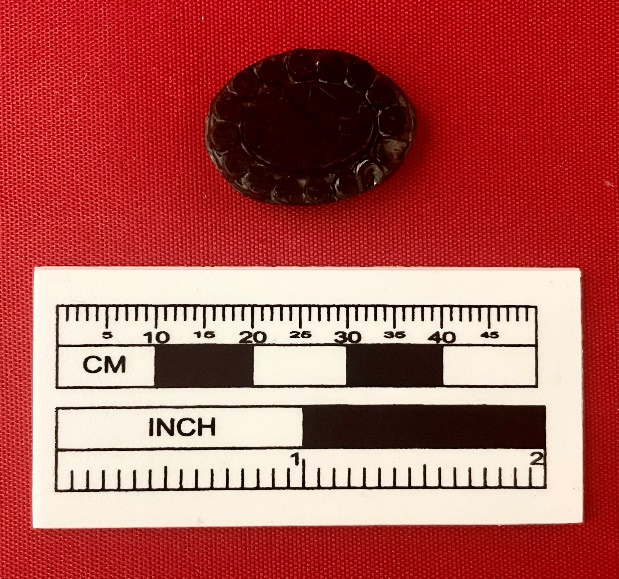
    Mourning Jewelry

                At Ferry Farm, we have uncovered a single piece of mourning jewelry, which connects to one of the most famous Gothic novels and literary monsters of all time, DRACULA! This small piece may have once been set in a necklace or bracelet and belonged to someone who inhabited the property or visited after the war. While that is all very interesting, I am sure you want to know where the King of Horror fits in. The answer lies in the material. The pendant is made of jet, which accounted for much of the 1800s’ mourning jewelry. Sources of jet exist in various parts of Europe and the American Southwest, but the most prosperous jet production existed in Whitby, England during Victorian times.

    A seaside, port town in the north of England, Whitby is noted for the ruins of an impressive abbey that dominate the landscape. Fans of Bram Stoker’s novel will recognize the town as the location where Count Dracula first arrives in England, and Whitby Abbey even appears in the novel. Stoker wrote much of the book in Whitby, and he reportedly first came across the story of Vlad the Impaler in the local library. Today, Whitby embraces its vampiric legacy (they currently hold the record for the largest gathering of vampires at 1,369 people) and the jet business has seen a resurgence in popularity by aligning itself with this tourist draw. So what do you think of our piece? We highly recommend it for lovers of death, horror, and literature. Please note: Vampire not included.

    Whitby Abbey

    Creepy Dolls

                It goes without saying the most people find dolls creepy. They frequently feature in ghost stories and many serve as the malevolent force in horror movies. Here at Ferry Farm, I am not sure which is worse, finding a full doll or severed doll parts.

                With people living on the property through the 1990s, we have plenty of potential to uncover dolls. In fact, we found a severed doll hand this summer that we previously featured as a #FridayFind. Other parts include ceramic legs, broken arms, heads, and faces. Perhaps this is the most obvious choice for a scary artifact blog, but, then again, dolls will never stop being creepy.

    Creepy Doll Parts

    Emma Schlauder (she/her/hers)

    Research Archaeologist
  • Bad Medicines: Mercury and Self-Medication in the Civil War

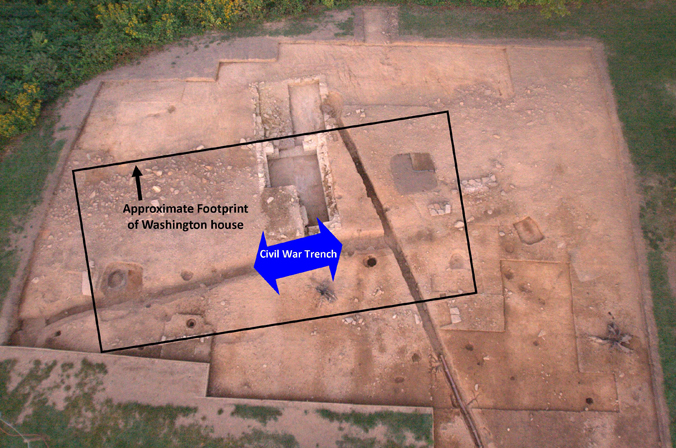
    During the Civil War, George Washington’s Ferry Farm was the site of Union Army encampments that included some defensive works like a trench dug into the crest of the ridge overlooking the river.  In that trench and throughout Ferry Farm’s landscape, Union soldiers lost and threw away a wide array of military gear and personal belongings, which our archaeologists frequently excavate.

    Civil War Trench
    Excavated area containing the footprint of the 18th century Washington house at Ferry Farm and showing a 19th century Civil War trench running the length of the house and beyond.

    This blog post highlights an intriguing artifact excavated from the trench: a diminutive glass bottle.  This bottle is not so much interesting because of what it is – it’s a very common medicine style bottle for the mid-19th century– but rather what’s inside.  Clearly visible within the bottle is a hard black substance and for years we’ve wondered what the substance may be.

    Medicine bottle containing mercury residue
    Medicine bottle excavated by archaeologists at George Washington’s Ferry Farm and containing an mystery residue.

    Enter Ruth Ann Armitage, our amazing chemist friend from Eastern Michigan University.  Over the years, she and her colleagues have generously used their extremely fancy equipment to analyze many of the residues we’ve recovered archaeologically. So we chipped off a little fragment of the substance in the bottle and sent it to her lab.

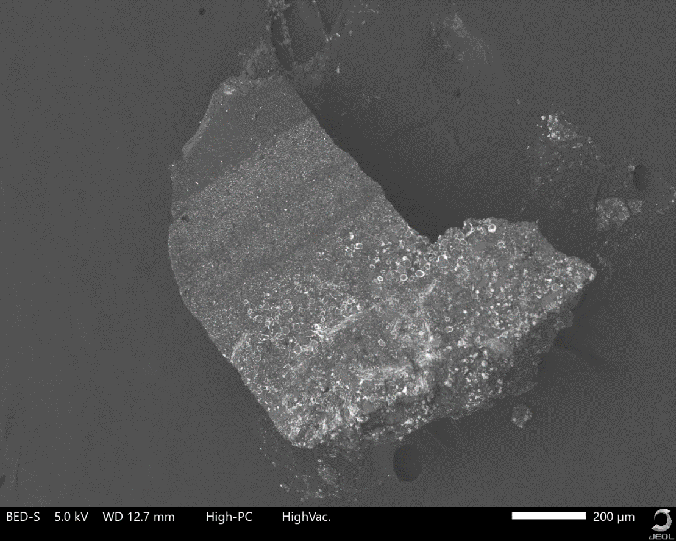
    The sample was analyzed using scanning electron microscopy (SEM).  SEM works by shooting a beam of electrons at the sample, which gives you an image of its surface topography.  Backscattered electrons (BSE), collected in a different detector, tell you about the elemental composition.  In a BSE image, the contrast in the image is related to the atomic number of the material, with brighter areas showing high number elements (usually metals) and darker areas representing low number elements (like carbon). X-rays are also produced when the electron beam hits the sample, so an x-ray detector allows the chemist to do energy dispersive x-ray spectroscopy (EDS) to map out specifically what elements are present in the sample.  To put it simply, all of these techniques are good at alerting the chemist to the elements within a residue.

    Our sample was also run through DART (direct in real time) mass spectrometry.  This technique is good at detecting organic components within a substance.  It’s important to note here that this is not an episode of CSI and a reading does not automatically tell you what is in the bottle.

    Mercury residue analysis 1
    A magnified image BED of sample, which is clearly stratified with darker low atomic number elements such as carbon at the top. The brighter areas represent higher atomic number elements, in this case, mercury.

    That being said, almost immediately, Ruth Ann responded and we weren’t disappointed: “Did you know there’s mercury in this?”  Nope, we did not.

    However, this discovery was not too surprising given the use of mercury in many medicines for thousands of years.  Now a days it’s common knowledge that you shouldn’t drink mercury…or touch it…or inhale it.  Believe it or not many people did not accept mercury’s dangers until well into the 20th century.  Some people born in the 1980s and before might even remember playing with the little balls of mercury from a broken thermometer, am I right?  As weird as it seems this wasn’t that dangerous because mercury is not toxic in such small concentrations.  However, if you were born a little further back you may remember a substance called calomel (mercury chloride), which was marketed as a cure all. Perhaps most tragically, it was as a common teething medication for children until the 1950s.  For a long time, mercury was seen as a potent healing metal and it was readily rubbed on skin, consumed, and vaporized for immediate effect on the lungs.

    And while all of these treatments using mercury did little to address the body’s medical problem, mercury still caused an immediate bodily response, which convinced people it was working to cure their ailments.  When applied topically, it burned. When introduced into the body, it caused a person to sweat, salivate, and have diarrhea. The mucous membranes also went into overdrive, leading many to believe that the bad stuff in your system making you sick was being purged by the mercury.   The reality, of course, was that the body was trying desperately to rid itself of poison, the mercury.  That being said, mercury does actually have a place in the medical world and can be useful, it just took a little while for people to learn how to properly utilize it.

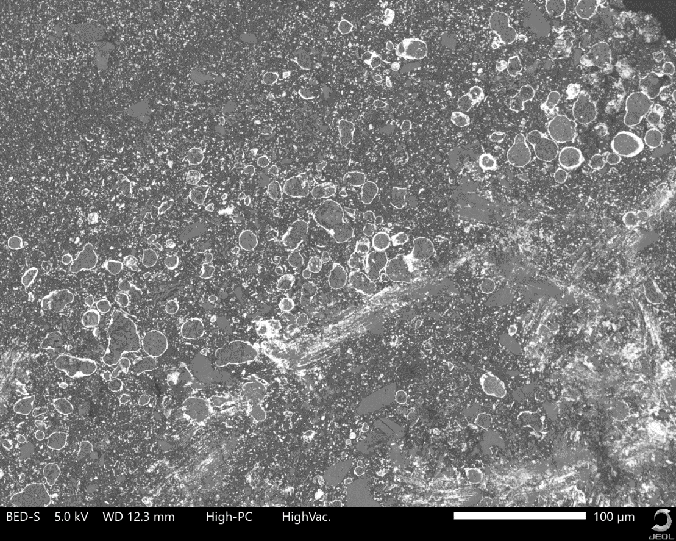
    So, if the residue inside our bottle was medicine, what medicine was it?  Initially our archaeology lab thought it was calomel but the chemical analysis didn’t show any chlorine.  The most interesting components were mercury and sulfur, which could possibly indicate cinnabar, the ore from which mercury is obtained.  The image below is a close up of the mercury and shows the sulfur (dark circles) surrounded by the brighter mercury.

    Mercury residue analysis 2

    Other elements detected include carbon, oxygen, and trace amounts of iron, silica, and aluminum.  A closer look at the DART analysis suggests that the mercury compound might be in the dried remains of a fat or oil based on the presence of substances that form when fats decompose over time.

    What does all this mean?  Unfortunately, without more research, it’s hard to say what was in the bottle other than the basic components already detected.  Because it’s a medicine bottle, our assumption is that the residue it contains was a treatment of some sort in which case we’re dealing with a soldier who had an ailment.  Common Civil War-era uses for mercury-based medicines were treating skin sores and lacerations, internal and external parasite infections, syphilis, and constipation, to name but a few.

    What is even more interesting is that a nearly identical bottle which also contained a hefty amount of mercury was recovered across the river just a few years ago by Dovetail Cultural Resource Group from another Civil War context.  Read more about their discovery here.

    Soldiers throughout history are known to have carried their own medicines with them so it’s very cool to see actual physical evidence of that.  As to the exact medicine, perhaps we’ll know someday but for now let’s just say it was definitely bad medicine.

    Mara Kaktins, Archaeologist
    Archaeology Lab Supervisor

  • “They gave me grog…and put me to sleep with opium pills”: Kenmore as a Civil War Hospital

    Kenmore sometime before the end of 1862.  The wooden structure to the mansion's left is the kitchen, which would be destoryed during the Battle of Fredericksburg.
    Historic Kenmore sometime before the end of 1862. The wooden structure to the mansion’s left is the kitchen, which would be destroyed during the Battle of Fredericksburg.  An enslaved woman can be seen standing at the corner of the kitchen while an enslaved man is visible under the tree at the far left.

    As the sesquicentennial of the Civil War draws to a close, we are remembering the war at Kenmore, and its aftermath.  Although Kenmore is best known as a house of the colonial period, it had quite a history during the Civil War.  Visitors to Kenmore have long heard that the house survived bombardment during the Battle of Fredericksburg in December, 1862.  At least 11 cannon balls hit the house, with at least one penetrating the interior, damaging the famous plasterwork ceiling in the Drawing Room.  While that battle was intense and destructive, the true lasting effects of the war on Kenmore came later, when the house was used as a Union field hospital during the early stages of the Overland Campaign.

    Cannon ball hole in Kenmore's roof.
    Cannon ball hole in Kenmore’s roof.

    In May of 1864, Union and Confederate forces clashed at The Wilderness just west of Fredericksburg, with further hostilities throughout the month at nearby Spotsylvania Courthouse.  The wounded from these battles were evacuated from the front lines to Fredericksburg.  The city was soon overwhelmed with soldiers in dire circumstances, needing far more medical attention and resources than were available.

    A memoir of experiences during the war written by Amos Rood, an officer in the 7th Wisconsin Infantry who was wounded at Spotsylvania, gives a vivid account of the situation in Fredericksburg and at Kenmore specifically (a transcription of the memoir is in the Kenmore manuscript collection).  Rood writes, “…where to put the thousands who were being brot [sic] in! City already full: every house, barn, shop, factory, shed: all overcrowded and thousands laying on the sidewalks and gardens and fields!”[1] Rood was in a wagon which had been left on a crowded street in the city, but a chaplain who he knew happened by and helped him find shelter at Kenmore.  He describes the scene upon his arrival, “…took me out of the rig and had me carried into Kenmore house and (no room on the ground floor so they toted me up one flight and laid my cot down on the floor by the bannister or balustrade) so I could see people (Drs & c.) coming up and going down…Surgeons noticed me…They gave me grog…and put me to sleep with opium pills.”

    The second floor landing where Rood was treated for his wounds.
    The second floor landing where Rood was given medical treatment.

    Rood would stay at Kenmore, in increasingly dire circumstances, from May 14th through the 17th.  Although he describes a serious leg wound that was obviously infected, he was given no medical treatment other than doses of opium and liquor.  The fact that a man in such a condition did not rate top billing for treatment perhaps speaks to the situation of the other soldiers being brought into Kenmore by the hundreds every day.  It has long been believed that Kenmore’s glorious dining room was used as the surgery, as evidenced by the fact that all of its original floorboards had to be ripped up and replaced after the war.  War era graffiti left on the rafters of the attic attest to the fact that wounded soldiers were crammed into every available space in the house.  Eventually, more than a hundred bodies and at least one horse were buried on Kenmore’s grounds, mostly in hastily dug shallow graves.

    In 1868, the removal of soldiers’ remains from temporary graves all over the city began, when a national cemetery was established in Fredericksburg.  Eventually more than 13,000 remains were re-interred.  The process took decades.  In fact, the last known grave of a soldier buried at Kenmore was discovered in December, 1929, when the Kenmore Association began excavations to rebuild the kitchen dependency.  An article in the Free Lance-Star on December 5th said, “The finding of soldier’s [sic] remains in Fredericksburg and its environments is not unusual and often workmen engaged in digging ditches…or in excavating for new building projects, come across all that is left of a once youthful soldier.”[2] The ladies of Kenmore made arrangements with the American Legion to have the remains re-interred with full military honors on the 66th anniversary of the Battle of Fredericksburg on December 13th. An account of the ceremony reads, “…the cortege left ‘Kenmore’.  The body had been placed in a new casket and this draped with a large United States flag, which often floated from the ‘Kenmore’ flagstaff.”[3]

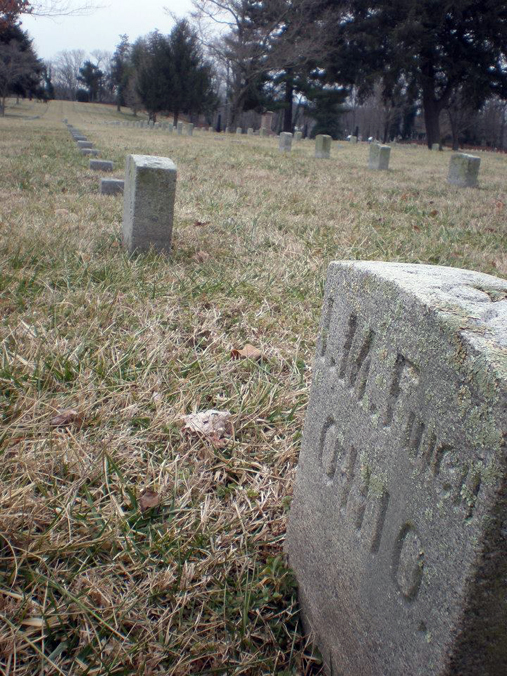
    Fredericksburg National Cemetery
    Gravestones at Fredericksburg National Cemetery

    With that last re-interrment, the war finally came to an end for Kenmore.  150 years later, we still remember its lasting effects.

    Meghan Budinger
    Aldrich Director of Curatorial Operations

    [1] Rood, Amos. Memoirs of the War. Trans. Steven L. Acker.  Kenmore Manuscript Collection.

    [2] “Remains of Union Soldier are Found.” The Free Lance-Star [Fredericksburg, VA] 5 December, 1929: Kenmore Manuscript Collection.

    [3] “Unknown Soldier Buried in Kenmore.” The Chattanooga Times 12  January , 1930: Kenmore Manuscript Collection.