Saint Patrick’s Day honors St. Patrick, the patron saint of Ireland, who was born in England and lived during the 5th century. Early in life, he was kidnapped, sold into slavery, and ended up living in Ireland. He is credited with converting the Irish to Christianity, as illustrated in the legendary tale that says he drove the snakes (a metaphor for pagans and druids) from Ireland. He established many churches and was honored with a feast day in his name.
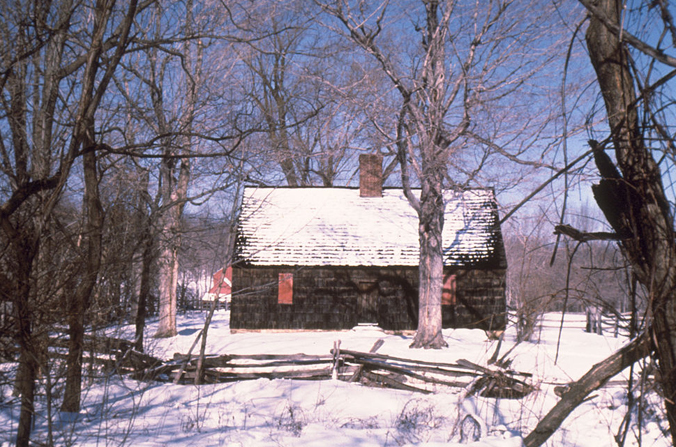
Over time, Saint Patrick’s Day shifted from a religious holiday to a secular celebration of Irish culture and history. The first St. Patrick’s Day parade was held in Boston in 1737. By the time the Revolutionary War started, there was also a parade in New York City and the holiday had become a meaningful celebration to Irish-Americans. Subsequently, during a cold winter encampment in 1780 in Morristown, New Jersey, General George Washington, then commander-in-chief of the Continental Army, noticed his men were having a bout of particularly low morale. The soldiers were low on food, had very shabby shelters, and the winter was harsh.
Washington, a man of many curiosities, became interested in the political goings-on in Ireland, which was also ruled by the British. He could see that Ireland, like the colonies at that time, was struggling to find common ground with the Crown in England. He found the Irish struggle relatable, and also useful. Perhaps, if England could be distracted enough by unrest in Ireland, they would falter in the war against the colonies.
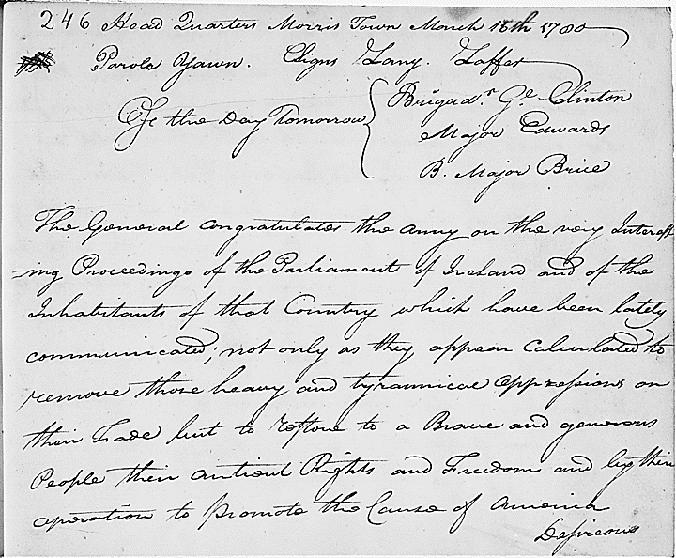
Recognizing the need for a boost, and the opportunity to resonate with specific groups, Washington issued an order on March 16, 1780. Today, it is known as the St. Patrick’s Day General Order. It reads in full:
Head Quarters Morris Town March 16th, 1780 General Order
The general congratulates the army on the very interesting proceedings of the parliament of Ireland and the inhabitants of that country which have been lately communicated; not only as they appear calculated to remove those heavy and tyrannical oppressions on their trade but to restore to a brave and generous people their ancient rights and freedom and by their operations to promote the cause of America.
Desirous of impressing upon the minds of the army, transactions so important in their nature, the general directs that all fatigue and working parties cease for tomorrow the seventeenth, a day held in particular regard by the people of the nation. At the same time that he orders this, he persuades himself that the celebration of the day will not be attended with the least rioting or disorder, the officers to be at their quarters in camp and the troops of the state line to keep within their own encampment.
Copy of Washington’s St. Patrick’s Day General Order. Credit: National Archives
The celebration in the camp was the only day the men had off throughout the winter of 1780. According to Washington, the army was in a perilous state well into May. However, the day of rest and celebration certainly helped the troops soldier on. It seems that March 17th was meant to become a day of happenings for George Washington and his army, because 4 years previous to the Morristown order, Washington and his men watched the British retreat from Boston during the opening act of the Revolution.
“I heard Bulletts whistle and believe me there was something charming in the sound.”[1] — George Washington
Before his first brush with battle, three military adventures worked together to charm and inspire young George Washington’s fascination with the military and helped push him to pursue a career as a soldier in Virginia’s militia and then as commander of the Continental Army.
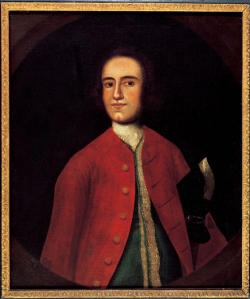
Portrait of Lawrence Washington attributed to Gustavus Hesselius (c. 1738). Credit: Wikipedia / Mount Vernon.
The boy Washington was first charmed by the military service of his older half-brother Lawrence. In 1739, the colorfully-named War of Jenkins’ Ear between Britain and Spain began. Ostensibly sparked by the Spanish coast guard boarding a ship captained by Robert Jenkins and cutting off his ear, the war was another one of those conflicts over trade, colonies, and the spoils of the New World so often fought between Europe’s empires in the 18th century.
In June 1740, a commission from George II arrived in Virginia for Lawrence. He was made a captain in one of four infantry regiments of colonial Virginians being raised for service in the war. On May 30, 1741, Lawrence wrote to his father Augustine describing his role in the Battle of Cartegena de Indias when the British launched an amphibious assault on the city of Cartegena de Indias in Colombia.
Lawrence reported to his father that the British “destroyed eight Forts, six Men of War, six gallioons and some Merchant ships” but “what number of Men they [the Spaniards] lost we know not; the enemy killed of ours about six hundred & some wounded, & the climate killed us in greated [sic] numbers.” In the end, the British suffered a crushing defeat but more because of disease than battle casualties.
“Defensa de Cartagena de Indias por la escuadra de D. Blas de Lezo, año 1741” by Luis Fernández Gordillo. Credit: Wikipedia / Naval Museum of Madrid.
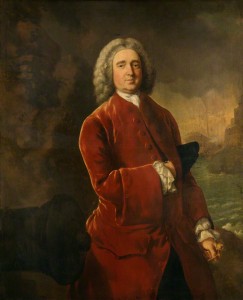
Virginia’s regiments suffered greatly. “Some are so weak as to be reduced to a third of their men,” Lawrence wrote but he also revealed that “vastly to my satisfaction” he had been serving “on board Admiral Vernon’s ship.” Vernon was the naval commander during the battle and was greatly admired by Lawrence. He was so admired, in fact, that Lawrence named the family’s Little Hunting Creek property bequeathed to him after Augustine’s death Mount Vernon.
Lawrence ultimately concluded that “war is horrid in fact, but much more so in imagination.” His experiences aboard an admiral’s flagship probably protected him some from the horrors of war. War did not turn Lawrence off of military service. He was awarded the post of Adjutant General for all of Northern Virginia’s militia along with the rank of major.
George was about 10-years-old when Lawrence returned home from war. How many war stories did his older brother share with him? We do not know but we do know that George and Lawrence were close, especially in the aftermath of their father’s death. It seems a safe bet to conclude that Lawrence’s military service also likely influenced his effort in 1746 to have fourteen-year-old George join the Royal Navy.
George’s captivation with military adventure was further strengthened by the exploits of Duke Frederick Herman von Schomberg. On September 10, 1747, fourteen-year-old George purchased 3 books from his cousin Bailey for the combined price of 4 shillings 12 pence. One of the books is listed as “Scomberg,” a reference to a 17th century German Protestant soldier of fortune, who fought under the flags of France, Germany, Portugal, and England and died at the Battle of the Boyne fighting for William of Orange. Schomberg wrote about his adventures, which would have been of great interest to a young man like Washington. That George willing spent hard earned money during a time of financial hardship reveals how enthralled he was with military exploits.
Portrait of Friedrich von Schomberg atrributed to Adrian van der Werff (c. 1600s) Credit: Wikipedia.
We do not know the impact, if any, of Schomberg’s exploits upon George’s military thinking. One incident does stands out, however. While in Ireland commanding the army of William of Orange, England’s new king, against supporters of James II, England’s old king, Schomberg decided that his raw and undisciplined troops would not fare well in battle. As a result, he held his army behind defensive works instead of confronting the enemy and their superior numbers. This much-criticized action bares notable similarities to Washington’s main strategy during the Revolutionary War. Washington defeated the British because, overall, he did not fight the British. Instead, he maintained his “army in being.” Washington wisely avoided confrontation, when possible, with the professionals who made up the best army in the world. The American army was inexperienced and initially amateur but as long as the army existed, the newly independent United States would also exist. The Continental Army had to survive even if that meant avoiding, instead of confronting, the British Army.
The final adventure that inspired a fascination with military things in young George Washington was his trip to Barbados. In 1751, nineteen-year-old George and his older half-brother Lawrence traveled to that Caribbean island in the hope that the tropical climate would relieve Lawrence’s tuberculous. This was George’s first and only trip away from the North American continent and to another part in Britain’s vast Empire.
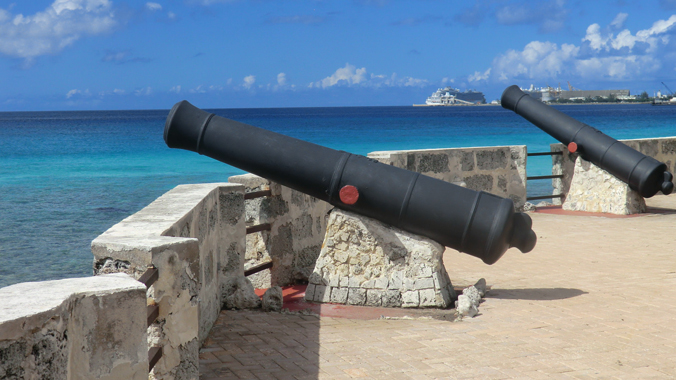
Early in their stay, Washington made the first of several visits to Needham’s Fort guarding the south side of Carlisle Bay. He met Captain Petrie, the fort’s commander, and dined with him at the fort more then once. The fortress seems to have impressed the teenage Washington for he recorded in his journal that it was “pretty strongly fortified and mounts about 36 Gunes within the fortifin and 2 facine Batterys.”[2]
Furthermore, he and Lawrence stayed at the house of Captain Croftan, who commanded James Fort on the bay’s north side. Even Croftan’s house, Washington noted, “command[ed] the prospect of Carlyle Bay & all the shipping in such manner that none can go in or out with out being open to our view.”[3]
Home of Captain Croftan where Washington lived during the several months he visited Barbados in 1751. Credit: Wikipedia / Jerry E. and Roy Klotz
On the return voyage to Virginia and Ferry Farm, George judged that because Barbados had “large intrenchments cast up wherever its possible for an Enemy to Land” the island itself was essentially “one intire fortification.”[4]
As Jack Warren ably concludes, “George Washington’s encounter with the British military establishment in Barbados seems to have had a crucial impact on his aspirations . . . . After returning to Virginia, he dedicated himself to advancement in the military more completely than any of his Virginia contemporaries. And unlike most of the prominent colonial militia officers of the 1750s, he sought a commission in the regular British military establishment– an ambition that was probably prompted, and undoubtedly stimulated, by his experience in Barbados.”
Portrait of George Washington (1772) by Charles Willson Peale. The earliest authenticated portrait depicts Washington in the Virginia Militia uniform he wore during the French and Indian War. Credit: Washington and Lee University / Wikipedia
These three military adventures – Lawrence’s service in the War of Jenkin’s Ear, the written exploits of Schomberg, and George’s trip to the heavily fortified imperial outpost of Barbados – all worked to inspire Washington’s fascination with military matters and drove him to eventually pursue the life of a soldier in the French and Indian War and then, most importantly, in the War for Independence.
[2] Washington in The Daily Journal of Major George Washington in 1751-2 Kept While on a Tour from Virginia to the Island of Barbadoes, J.M. Toner, ed., Albany, NY: Joel Munsell’s Sons, 1892: 52.