Lives and Legacies

Tag: education

  • Meet the 2024 Field Crew

    The dig is in full swing, and we are a little over halfway through our 11-week dig season. Over the past few weeks, we have made lots of new exciting discoveries, and as you may have noticed, added quite a few new faces to our crew.

    Hosting a field school from the University of South Florida as well as interns from colleges and universities around the country has more than doubled our crew this season. While this is definitely awesome in itself, the fact that the entire field school and crew are women makes this year’s dig stand out even more. Now before we get into why an all women dig is so impressive, lets meet our crew.
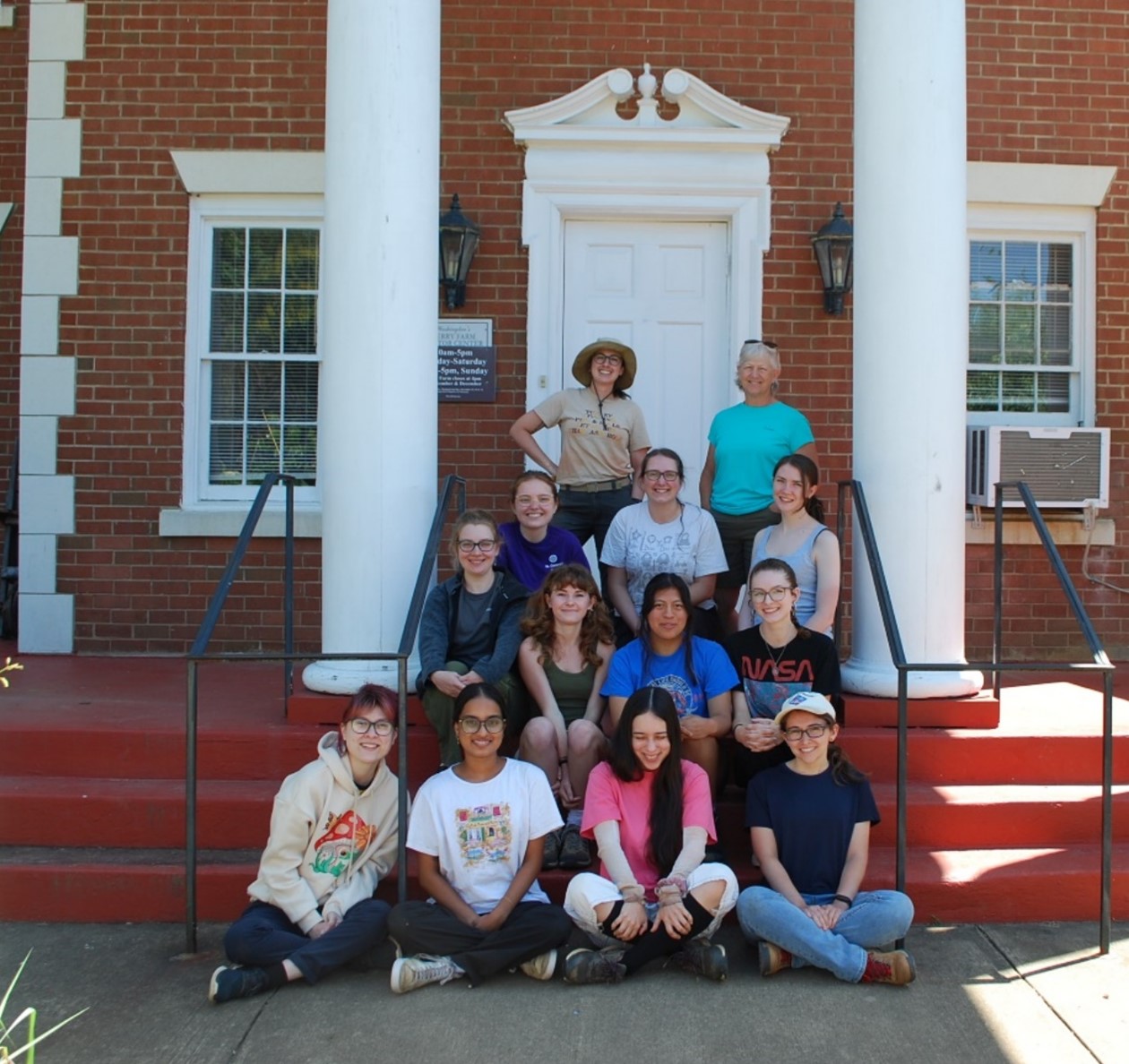
    Front Row Left to Right: Alaina, Srin, Sarah, Sofia. Second Row: Abbie, Amelie, Rosie, Lindsay. Third Row: Kate, Rachel, Kellina. Back Row: Danielle, Judy.

    Srinidhi

    “Srinidhi is from Lithia, Florida. She just recently graduated from the University of South Florida with a bachelor’s degree in history. She plans on attending graduate school sometime in the future. Outside of school, Srinidhi enjoys reading high fantasy novels, playing video games, and hanging out with her dog, Felix.”

    Lindsay Marrion

    “Lindsay Marrion, from Niceville, Florida, attends the University of South Florida for English and Art History. She hopes to continue her education in graduate school, with dreams of working in academia one day. Outside of school, Lindsay in as avid reader and writer, and she loves an adventure of any kind.”

    Alaina Scapicchio

    “Alaina Scapicchio is a doctoral student at the University of South Florida in Tampa. She did her first field school at Ferry Farm in 2018 and now she is the graduate assistant for this year’s field school. Her dissertation is focused on public memory and the commemoration of witch trials in colonial America. She is the owner of two senior citizen fat cats named Tazz and Amira who she misses very much.”

    Sofia Almeida

    “Sofia Almeida is an incoming History PhD student at the University of South Florida. She recently completed her MA thesis on the digitization of historic Black cemeteries in Florida. Moving forward she is interested in American history, historic archaeology, and memory. Outside of school, she enjoys reading, playing guitar, and going on adventures with friends.”

    Amelie

    “Amelie is from Tucson, Arizona and is studying Biology, French, and Anthropology at the University of Arizona. She enjoys reading, hiking, and weightlifting and aspires to travel the world.”

    Rosie Muraca

    “Rosie Muraca is from Fredericksburg, VA. This is her first time working as a field student. She plans to attend Mount Holyoke College in the spring. When she is not digging, she is spending time with her two cats.”

    Kellina

    “Kellina is a rising junior at Yale University. She is an anthropology major from Spotsylvania, VA and she hopes to work in museum conservation. Spending the summer at the Ferry Farm archaeological dig has given her a better understanding of artifacts prior to their museum life and deepened her understanding of American history.”

    Kate McDonald

    “Kate McDonald Yaun is a rising freshman at Sewanee: The University of the South. She is studying Environment Arts and Humanities. Her hobbies include playing her viola, reading, and spending time outdoors.”

    Abbie Wood

    “Abbie Wood graduated from UVA in 2023 with a B.S. in Anthropology and a B.S. in Archaeology. This is her second dig season at Ferry Farm and the fourth overall, following a collections management museum internship. She has a passionate interest in caring for artifacts and history.”

    Sarah

    “Sarah came to Ferry Farm as a student of Virginia Commonwealth University in the summer of 2014. She has participated in half a dozen summer digs as an intern at Ferry Farm since then. Her favorite artifacts consist of the more personal items people had such as buttons, beads, sewing pins and Ferry Farm’s famous and abundant collection of colonial wig hair curlers.”

    So back to why an all women crew is so awesome. Well, our crew illustrates how women are gaining ground in a previously male dominated field. Historically, many professional positions in archaeology were held by men, but times are changing.

    Hopefully we will see some of these faces again somewhere down the archaeology pipeline, or wherever their futures may take them.


    Danielle Arens

    GWF Archaeologist
  • Stories that Demand to be Told: Fielding Lewis and the Bray School for Educating Enslaved Children

    During the 18th century, the city of Fredericksburg was described as “a considerable town of trade, furnishing the country around.”[1] As such, it was deemed a rather important town and was the site of one of two schools for enslaved children established in Virginia during the Colonial period. The school was located somewhere downtown, likely near St. George’s Church. Two of the trustees in charge of operating the school were the Reverends James Marye, Sr. and later his son James Marye, Jr. Another trustee was none other than Historic Kenmore’s own, Fielding Lewis.

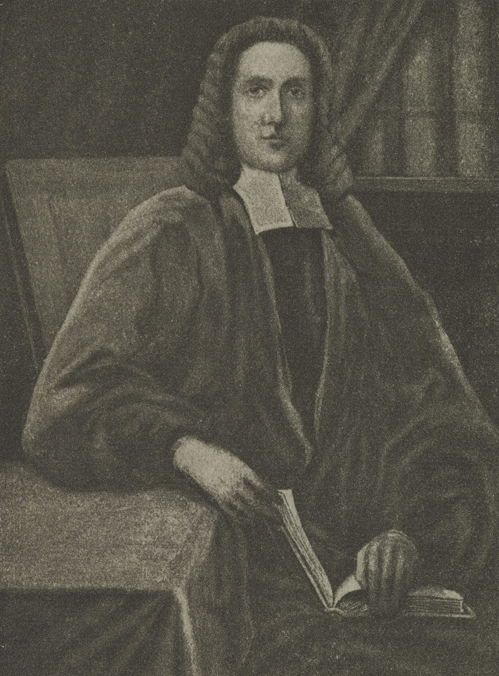
    The school was funded and established by a group of English clergymen and philanthropists known as the Associates of Dr. Bray. Thomas Bray was an Anglican minister who had grown up without wealth. Due to his family’s financial situation, Bray found certain doors, specifically education, closed to him. Through his time in the ministry, however, he was able to gain the knowledge needed to become a great influence and practitioner of philanthropy. Towards the end of his life, he established The Associates of the Reverend Dr. Bray. Its eventual goal was to create avenues of religious and secular education for black children. While never condemning slavery, Bray felt that the souls of enslaved people needed to be saved in the Anglican faith. In order to be able to worship properly, they would need to be able to read and write. By the end of the 18th century, the Bray Associates had founded 41 libraries, donated over 22,000 books to different Anglican parishes in the colonies, and established a handful of schools across British North America.

    Thomas Bray as depicted in The Founders: Portraits of Persons Born Abroad Who Came to the Colonies in North America Before the Year 1701; With an Introduction, Biographical Outlines and Comments on the Portraits. E 187.5 .B69. Special Collections, University of Virginia, Charlottesville, Va. Credit: encyclopediavirginia.org

    The first Bray Associates colonial school was established in 1758 in Philadelphia. Pennsylvania’s Quaker population was decidedly anti-slavery even in the 18th century so Philadelphia already had a sizable population of free blacks. By 1780, the state of Pennsylvania completed the process of gradual emancipation and did not allow slavery, though there were loopholes in the law, one of which allowed President George Washington to use enslaved men and women at the executive mansion situated in Philadelphia. Slavery in an urban setting like Philadelphia looked different than on plantations in southern colonies. Most urban enslaved people typically performed domestic labor. This meant different expectations for enslaved people in cities, i.e. knowing how to read and write was more important. Due to these circumstances, the Bray school in Philadelphia operated quite successfully. A location for the school was procured without much effort, and a schoolmistress was also easy to come by. The school’s trustees reported full enrollment to the Bray Associates throughout its operation. The school was so successful that it reopened after the American Revolution, and the Bray Associates opened two additional schools in Philadelphia during the 19th century.

    After the school in Philadelphia was established, the Associates were eager to create additional schools in the colonies. At this time, Benjamin Franklin was in London and became an Associate. He suggested several potential locations and even trustees for the next school. This second school was established in 1760 in Williamsburg. The Associates sought an enrollment number of 30, and the school opened with 24 pupils. The trustees deemed this quite successful and thought the number was a fair amount for one schoolmistress to manage. In fact, the trustees had a difficult time finding a schoolmistress at all. Their solution was that the Associates would provide additional funding for a few years but, in turn, the Associates encouraged the trustees to find charitable citizens in the town to help supplement the endowment.

    The Bray-Digges House in its original location on Prince George Street, c. 1928
    Credit: Special Collections, John D. Rockefeller Jr. Library, The Colonial Williamsburg Foundation
    . Credit: The Colonial Williamsburg Foundation [PDF]

    Another issue at the Williamsburg school was that pupils, even those who belonged to the small free black population in town, were unable to attend regularly. They often stayed for no longer than it took to gain basic reading and writing knowledge. The goal of the Bray Associates, however, was to bring black children to the Anglican faith. This could not be realized if they left school too soon. The trustees attempted to draw up formal rules and a desired curriculum that would encourage the children to remain in the school longer, but it didn’t help the situation.

    The Williamsburg school operated for a little over 13 years and was closed in 1774. The closure likely stemmed from the financial difficulties of securing a new schoolmistress after the first one had passed away as well as from the frustration over the lack of returning students year-to-year. There was not an overall lack of students, however, because a report in 1769 said the school still had a full 30 enrolled.

    Due to the measured success of the Williamsburg school, the Associates began to search for other southern towns in which to continue their mission. Fredericksburg was suggested by a local minister and the supplies for the school were sent in 1764. From the start, Rev. James Marye, Sr., and Fielding Lewis were pessimistic about the school’s outlook. When the idea was presented to prominent members of the town, there was no enthusiasm. Nonetheless, in September of 1765, Fielding Lewis sent a letter to the Bray Associates informing them that the school had been opened the previous April.

    There are three letters (14 September 1765, 31 October 1768, and 1 February 1772) written by Fielding to the Bray Associates that survive. They provide what little information we have about the Bray school in Fredericksburg. It appears that Fielding followed the rules and curriculum that the Williamsburg school had established. It also seems as though he faced similar problems to the Williamsburg school. He had a difficult time securing a schoolmistress for the low wages offered. Unlike Williamsburg, the Bray Associates did not offer additional money. Again, enslaved children were only permitted to attend until basic literacy was obtained, and then they were removed back to work by their owners. The school in Fredericksburg struggled with enrollment numbers. It opened to 16 pupils and dropped to nine by 1768 with only four of those attending in summer. A smaller population of black children (whether enslaved or free) and even less support from local slave owners probably affected the school’s attendance more than Williamsburg. In Fielding’s final letter to the Associates, he stated “learning them to read is rather a disadvantage to the owners, we having had some examples of that sort.” These concerns hint at what led to Virginia passing extremely restrictive ‘slave codes,’ which included a law forbidding enslaved people to be taught to read and write, throughout the 18th and 19th centuries.

    Virginia historical marker W-109 at the original site of the Bray School. Credit: Virginia Department of Historic Resources

    It is unfortunate that more information regarding the Bray schools throughout the colonies did not survive. What is clear though is that these schools led to the literacy of a significant number of enslaved and free blacks throughout the colonies. Recently, Colonial Williamsburg determined that the building that housed the school is still intact and had been moved to William & Mary’s campus. They added a historical marker honoring the school and the children who attended it. As we gain knowledge and rediscover the past, stories like those of the enslaved and free children who gained a new foothold in a literate world are stories that demand to be told.

    Elizabeth Hosier
    Manager of Interpretation and Visitor Services


    [1] Oscar H. Darter, Colonial Fredericksburg and Neighborhood in Perspective, (New York: Twayne Publishers, 1957), 62-63.

  • [Infographic] Ten Pivotal Moments of George Washington’s Boyhood

    You can also read the original blog post with a few more details here.

  • Archaeology Camp at Ferry Farm 2018 [Photos]

    Last week, George Washington’s Ferry Farm hosted Archaeology Camp for ages 9-12.  From digging, washing, and mending “artifacts” that they “excavated” in educational mock digs at Ferry Farm, campers learned about the entire archaeology process and the importance of archaeology to history. They also visited the archaeology laboratory for a behind-the-scenes tour and learned about interpretation and conservation of artifacts and the recording of information. The camp culminated with each camper creating an artifact diorama to take home, along with a new-found knowledge of what is beneath their feet! Here are some photos of the camp.

  • George’s Hometown: St. George’s Church

    As George Washington’s Ferry Farm prepares to celebrate the reconstruction of the Washington house, we traveled around George’s hometown – Fredericksburg, Virginia – to visit a few places important in the transformation of George from boy to man.

    George Washington’s education as a boy at Ferry Farm included copying The Rules of Civility and Decent Behavior in Company and Conversation to learn the correct etiquette and moral code of Virginia’s gentry class. By strictly following its advice, young Washington molded his character into that of a wealthy Virginia gentleman.  Unable to attend school in England after his father’s death, George possibly studied with the Rev. James Marye, rector of St. George’s Parish across the river in Fredericksburg.

    George's Hometown 2

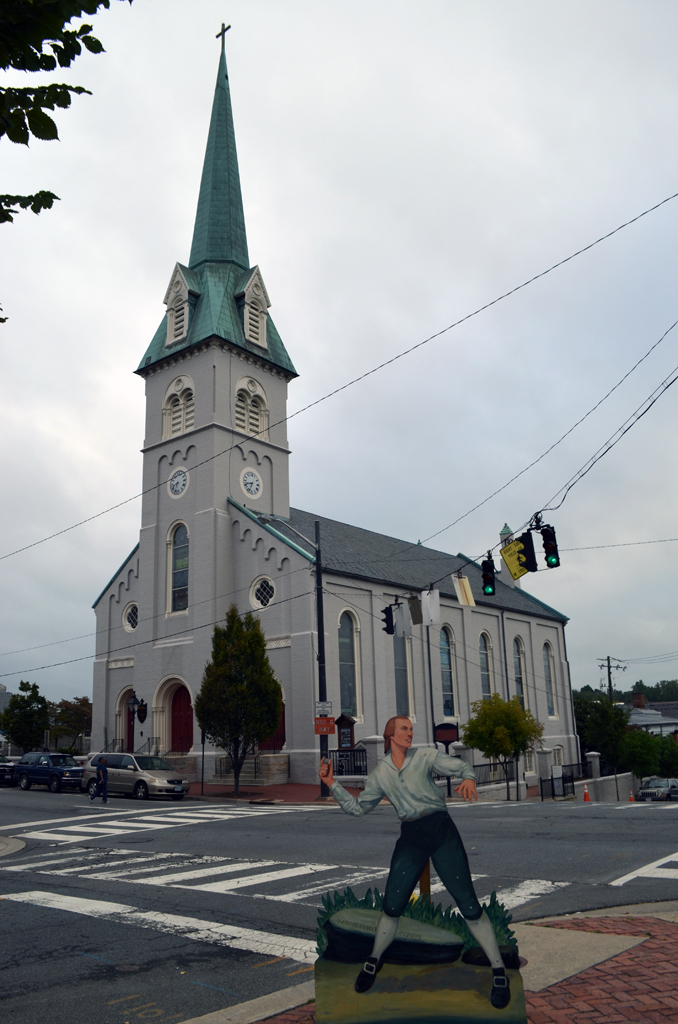
    St. George’s Church built their first church building in the 1730s. The current church building (pictured) dates from 1849.

    Join us at the Washington House Celebration on Saturday, October 7, 2017 from 12:00 p.m. – 4:30 p.m. to celebrate the construction of the Washington house! A special ribbon-cutting ceremony will begin at 1:30 p.m. featuring notable speakers. After the ceremony, guests will be invited to view the reconstructed Washington house! Parking for the event is off site at the VRE Fredericksburg Park and Ride Lot G at the corner of Prince Edward Street and Frederick Street. Limited handicap parking is available at Ferry Farm. Buses will transport guests to and from Ferry Farm. The Washington House Celebration is a free event and RSVPs are not required.


  • Photos: Grandparent-Grandchild Archaeology Day Camp

    During spring break last week, George Washington’s Ferry Farm hosted to Grandparent-Grandchild Archaeology Camp. Campers, young and old, got a crash course on the entire archaeology process at Ferry Farm and the importance of archaeology to history. From recording information and digging up artifacts to a behind-the-scenes lab tour and creating an artifact diorama, campers left with a new-found knowledge of what is beneath their feet!  Here are some photos of the camp.

  • History’s Paper Trail: What Handwriting & Spelling Reveal about Early America

    One of the aspects of a historian’s job is dealing with primary sources, the paper trail of history.  The archives here at The George Washington Foundation contain primary sources that include letters, wills, land grants, court orders, military orders, bills and receipts.  These hand-written documents are largely related to the Fielding and Betty Lewis family and provide us with a wealth of information on all facets of their lives from how much rum they bought to how much they paid in yearly taxes.  At the same time, they and other written historical records provide a glimpse into some fascinating dynamics of early American society and culture.

    However, sometimes these documents can be difficult to read because, in the 18th century, writing style and spelling were still not completely standardized.

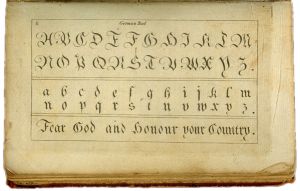
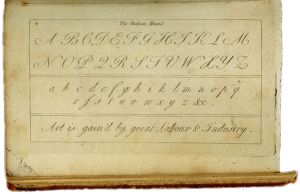
    Students in early America usually learned to write by copying different styles of writing known as ‘hands’ in a copybook that showed alphabets and phrases in the ‘hand’ to be learned.  Students copied the alphabets and phrases exactly, for practice and for reference, and business forms.  For example, while attending school in Fredericksburg, young George Washington copied The Rules of Civility and Decent Behavior to learn handwriting as well as proper behavior in polite society.

    Above: Examples of ‘hands’ (Flourishing Alphabet, Italian Hand, German Text, Round Hand) from The Instructor, or American Young Man’s Best Companion Containing Spelling, Reading, Writing, and Arithmetick by George Fisher and published by Isaiah Thomas, Worcester, 1786

    In the 1700s, writing was a skill reserved for select groups of people, mainly professionals and upper class males.  Women, artisans, lower classes, and the enslaved were not formally taught handwriting because it was viewed as unnecessary to their everyday life.  A lack of formal education did not stop people from writing.  Instead, they just developed their own system of penmanship and style.

    Spelling

    Colonial-era writers could choose from a number of dictionaries to assist with spelling.  Many of these books, however, focused only on difficult, obscure, or archaic words.  It wasn’t until 1755 that Samuel Johnson published the influential A Dictionary of the English Language, which offered a more comprehensive lexicon of contemporary English of the time.  By the colonial period, much English spelling was recognizably modern due to the beginning movements of standardization in education and print. Dictionaries also assisted in the development of a more uniform writing style.

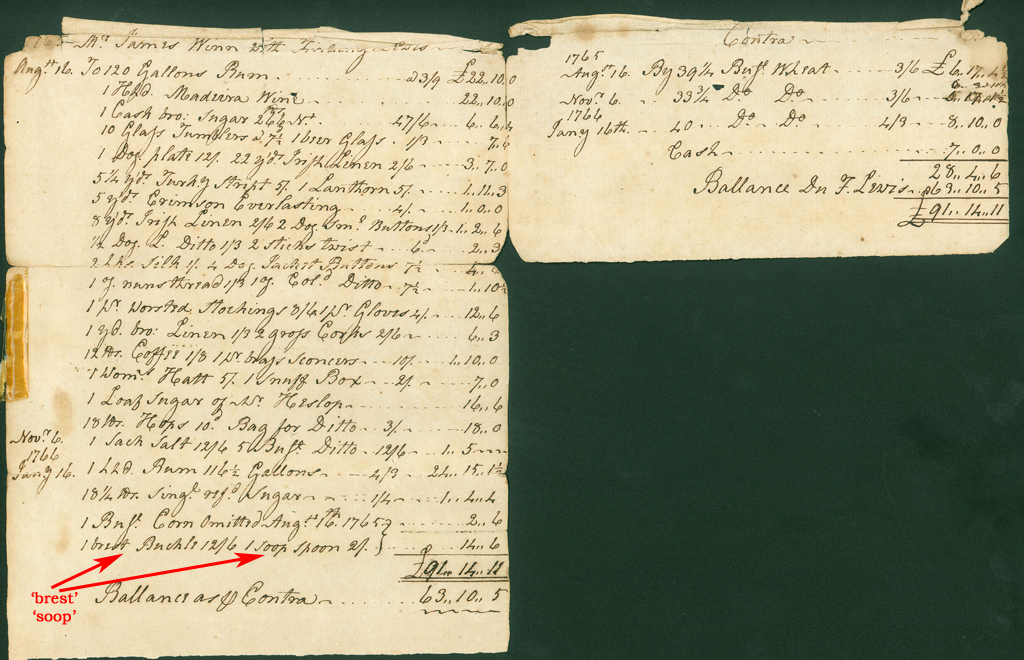
    What if you had not been to school or had never seen a dictionary?  Well, you simply spelled a word the best you could by sounding it out phonetically.  So, ‘school’ became ‘skool’ or ‘laugh’ became ‘laff.’ A word might be spelled a dozen different ways by a dozen different people.  When read aloud, these words sound fine but, when silently reading a primary source document, the written phonetic spelling can take a few seconds to process.

    An account statement from 1766 between James Winn and Fielding Lewis that includes two examples of phonetic spelling: “brest” buckle and “soop” spoon.

    The Long ‘s’

    The long ‘s’ was a style of spelling that generally fell out of use in print by the end of the 18th century.  It persisted in handwriting until the mid-19th century.  The long ‘s’ was an elongated version of a lowercase ‘s’.  It was often seen at the beginning of a word, in the middle of a word, and in words containing a double ‘s’.   A notable example is the spelling of Congress in the Bill of Rights.

    Understandably, when we read primary sources today, the long ‘s’ is often mistaken for an ‘f’ or ‘p’ and it takes some practice to get the context of what is being said.

    The word ‘Witnes’ in this document includes an excellent example of the long ‘s’ in the word and it’s close resemblance to an ‘f.’  This is a bond dated 14 September 1747 that requires George Lewis, who lives in Frederick County, to pay 3 pounds of Pennsylvania Currency to Charles Dunnahie by 1 May 1749.

    Abbreviations/Subscript

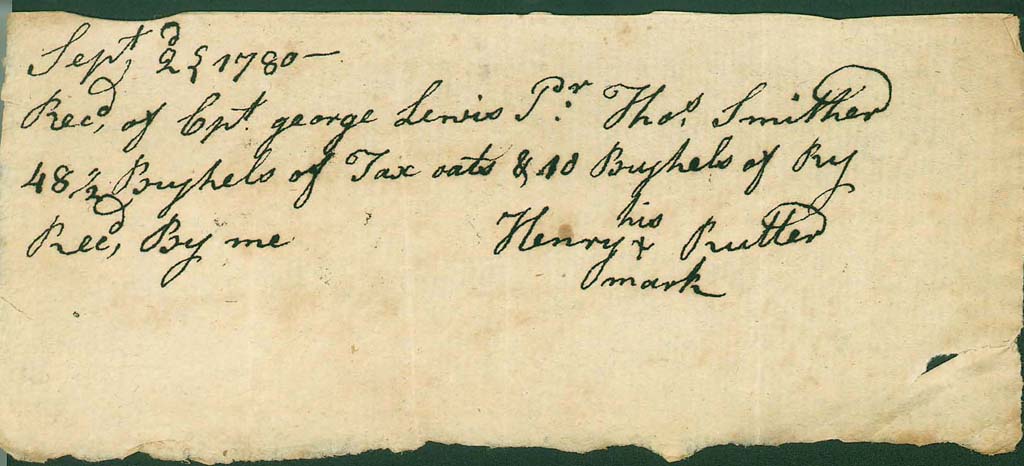
    Abbreviations and subscript often come up in colonial-era handwritten documents, particularly on bills, invoices and receipts. Shortening words or phrases like can’t for cannot or asap for as soon as possible is something we are familiar with today.  Commonly, abbreviations in the 18th century were indicated by beginning the word in regular-sized letters and ending with superscript letters like Recd for received.  Superscript or subscript letters are most frequently seen today in chemical compounds (H₂O) or in mathematical expressions.

    This receipt, dated 25 September 1780, from Henry Rutter to George Lewis for 48 1/2 bushels of tax oats and 40 Bushels of Rye from George Lewis per Thomas Smither.  The “Recd” at the beginning of the receipt is an excellent example of both an abbreviation and superscript.

    All the quirks in 18th century writing present many challenges for the historian.  Creating a system of deciphering can take time and plenty of practice.  At times, it can be more than a little frustrating.  Once the documents’ particular meanings are deciphered, the writing itself can reveal many different dynamics about early American society and culture.

    One of the biggest of these dynamics is that very few people received enough education to develop a professional level of literacy.  Professional level of literacy, at the time, would mean having enough skill to conduct business.  Such a level was reserved, usually, for white middle to upper class males.

    Selective education provided a powerful form of social control and a framework for society to judge and instantly understand a person’s social status, education, and occupation.  At this time, it was not thought important for women, slaves, or the lower classes to know how to write.  Some even thought that teaching these groups to write would encourage them to aspire above their allotted station in life.  Writing gives people the freedom to express themselves and their ideas in a concrete way which can easily be transmitted to others, an uncomfortable prospect for a society based on a selective hierarchy.

    Though a woman, George Washington’s mother Mary Ball Washington could write.  Her spelling was extremely phonetic as seen in this letter transcription and reflects a lack of formal schooling but not necessarily a lack of intelligence as some historians have argued.  Indeed, primary sources like Mary’s letters supported by “new archaeological data has yielded a decidedly more complex picture of this influential matron than is possible using the historical record alone.” Laura Galke, an archaeologist here at The George Washington Foundation, argues (PDF) that artifacts discovered at George Washington’s boyhood home at Ferry Farm demonstrate that Mary “enjoyed the personal agency that widowhood allowed her; she was responsible for the management decisions of the Washington household and the surrounding farm. Mary’s choices reflect an ambitious woman determined to participate in the genteel society her family had enjoyed before Augustine’s death.”  This required much intelligence.

    Interestingly, Mary’s daughter Betty Washington Lewis also knew how to write.  Mary ensured Betty knew how to run a household and keep in touch with family, which numerous letters written by Betty show she did effectively.

    Betty Washington Lewis
    Portrait of Betty Washington Lewis painted by John Wollaston in the 1750s

    Her phonetic spelling in this letter transcription is an improvement over her mother’s.  The improvement in Betty’s spelling when compared to Mary’s further illustrates the increasing standardization during the 18th century and can also be seen as an example of changing beliefs in education for women at the end of the 1700s.  A movement was growing late in the century to teach writing to women.  This movement, however, did not come from a revolutionary drive for equality but, rather, from an expanded idea regarding the duties of Motherhood.  If women could not read and write, it was thought, how would they teach their sons, the future generation of leaders, to do the same?

    Though difficult, at times, to decipher, the simple act of writing gives us a glimpse into the minds of people who thought about and experienced a life quite different from ours.

    Heather Baldus
    Collections Manager