Lives and Legacies

Tag: horses

  • Horsing Around: Archeological Finds at Ferry Farm

    Think about a portrait or painting of George Washington.  What is a common element in the paintings?  His uniform, yes, he is indeed painted quite a bit in his impressive military uniform. But how about a horse?  George is often painted riding beautiful horses with a quiet dignity and noble appearance we expect from the father of our country. 
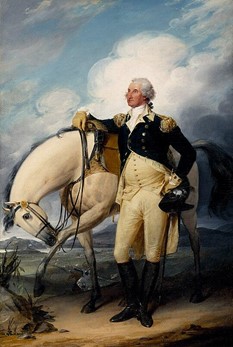
    Washington at Verplanck’s Point by John Trumbull, Source: Winterthur

    However, the horses in these paintings are not mere symbols of wealth or power. They are depicted with George because, from a tender age, his life has been intertwined with these creatures. As a surveyor, soldier, landowner, farmer, gentry, commander-in-chief, and president, he was inextricably linked with horses, not just as a mode of transportation but as a vital part of his daily life.

    And it all started at Ferry Farm…

    George moved to Ferry Farm around 1738 at the age of six. His father, Augustine Washington, was a member of the “planter class,” or Colonial American gentry. This meant he was a prominent member of society, involved in politics, and owned lots of land. Augustine purchased 150 acres across the river from Fredericksburg and later added an additional 450-acre parcel.  In total, he owned Little Hunting Creek, Pope’s Creek, and the Ferry Farm properties. 

    The point?  Augustine needed help because there were places to be, people to see, and fields to farm.  So, horses were a fundamental necessity for the Washington family, and George would have grown up around them, taking care of them and learning to ride.

    We have two great sources that give us some understanding of the horse situation at Ferry Farm. First, in 1743, the Washington patriarch died, leaving behind a widow, an 11-year-old George, and a probate inventory. On page two of the inventory, three horses and one mare are listed.

    Augustine Washington Probate Inventory, 1743

    Secondly, some pretty cool horse tack dating from the Washington occupation has been found during various archeological digs.

    The Finds

    One of the most universally known horse tack, essential for all horse maintenance – is the horseshoe.  The horseshoe was used to protect the hooves because “…being rendered subservient to the use of man…applied to severe and continued labour, and compelled to tread frequently…on the irregular and stony surface of the roads, it became necessary to secure his feet from ruin by strengthening them with the iron band which we call a shoe” (Vial de Saint Bel, 1793).  These shoes were handmade with no standardization across makers in shape, narrowness, or thickness. (Hume, 2001).  This makes it difficult to pinpoint and assign a time on shape alone.

    Farrier Shoeing a Horse by Marechal Ferrant et Operant Source: The Wellcome Collection

    Our horseshoe was found in the second cellar of the Washington Home. It is quite wide between the branches (the curving sides), and the toe seems to straighten a bit at the center. The crease (the groove that runs down the sides) gives enough depth to allow the shoe to be firmly attached to the hoof with six nails (which we found a few originals). (University of Zurich, 2024)  This find illustrates that there was active shoeing and horse maintenance going on at the farm.  Additionally, these horses were ridden or used for farm work because shoes were used to protect the hooves from the wear and tear of hard roads, distribute the horse’s weight evenly on uneven ground, and provide traction on various surfaces. 

    Horseshoe with original nails

    Another artifact found in the cellar of the Washington Home, the stirrup, further demonstrates horse riding as a family necessity. (Cofield, 2014) 

    Stirrup

    The stirrups are used as foot support for the rider, and they hang from a saddle on straps known as stirrup leathers.   Basic stirrups are made of three parts the eyes for the stirrup leathers to attach the stirrup to the saddle, a platform or base where the rider places their foot, and arms which connect the eye to the base. (Cofield, 2014)

    Examples of Stirrup Forms Source: Diagnostic Artifacts in Maryland

    Horseback riding master and author VS Littauer described the Forward Seat as a stirrup-centric approach versus traditional riding’s seat-centric. He argued riding without stirrups taught people to grip with the knee, which he considered a dangerous habit and likely to stiffen the rider. With stirrups, you can ride with a looser knee, letting your weight flow PAST your knee and into the stirrup. That is a more secure approach than riding with the thigh and knee. (Littauer, 1962)

    Captain Vladimir Littauer – Forward Seat Riding,1947

    Stirrups allow the rider’s legs to absorb up/down motion by allowing them to stand in matching balance with the horse, which makes riding longer distances more comfortable. Augustine certainly had to travel a great distance to check on his properties and perform his civic duties, like serving as a justice of the peace and sheriff for the county of Westmoreland. 

    One final utilitarian bit of horse tack found again in the cellar is a mullen mouth bit or snaffle bit. This bit consists of two rings on each side of a half-moon-shaped bar with no joint.  The bit applies even pressure on the horse’s tongue and bars (gums) and allows the horse’s lips to feel the pressure from the bit and side rings.  The bit, bridle, and reins function to create communication between the rider and the horse.

    Mouth Bit

    The Washington children would have used bits to learn to control.  They would have learned how to work with the horse in a cooperative way that would create an effortless and seamless ride.  George used this skill of communication and intuition to become a great rider.  As Thomas Jefferson reminisced in a letter in 1814, “his person, you know, was fine, his stature exactly what one would wish, his deportment easy, erect, and noble; the best horseman of his age, and the most graceful figure that could be seen on horseback.” (National Archives, n.d.)

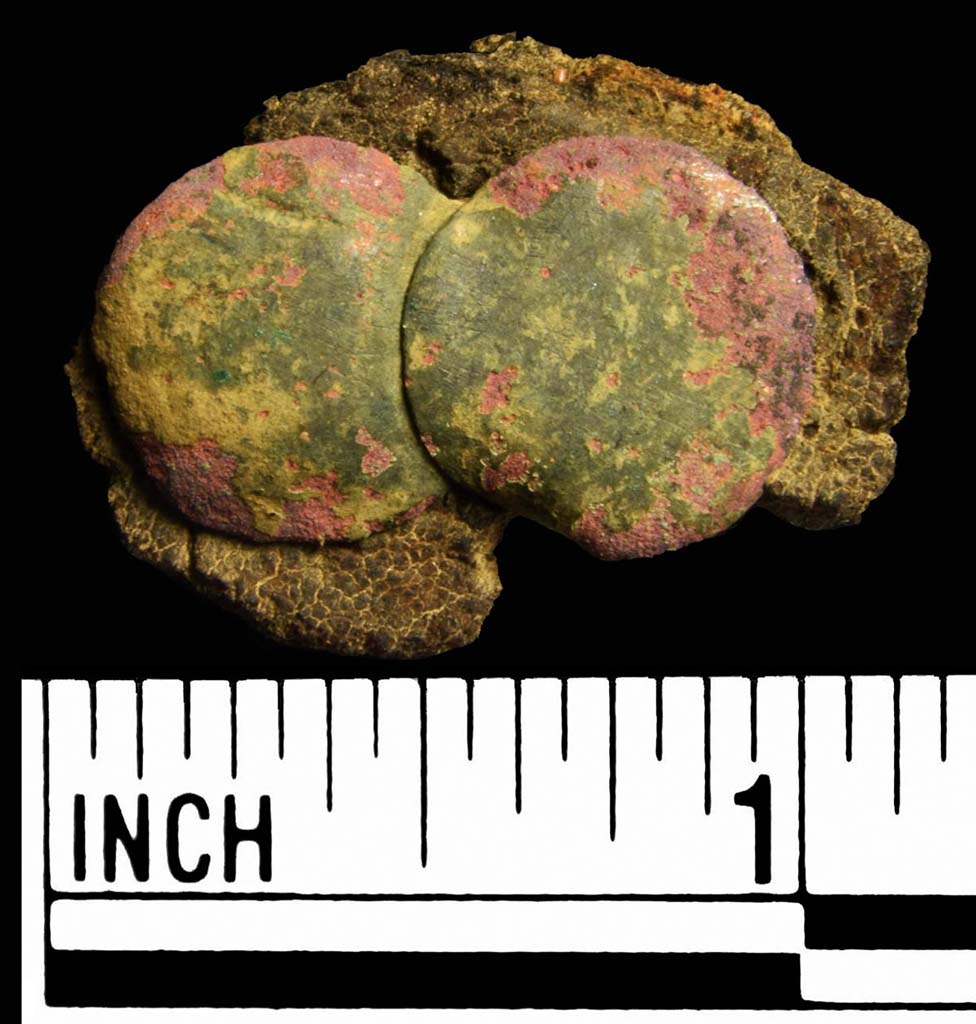
    Lastly, just south of “The Quarter,” we uncovered around twenty leather ornaments.   They were used to decorate the leather straps, nosebands, harnesses, and reins of horses.  We wrote a post about them earlier explaining their purpose, which was purely aesthetic. Horse tack could be made without these pieces, but where is the fun in that?  These flashy accessories were a great way to grab the attention of the public and hint at how fashionable and elegant you were as you trotted through town.    


    These artifacts illustrate that not only were horses actively used by the family, but it also fostered an environment where young George would have taken his first steps into learning about horsemanship.  This knowledge and skill would help him in his future careers of surveying the Shenandoah Valley, as a lieutenant colonel during the French and Indian War, as a farmer and landowner at Mount Vernon, as a representative in the House of Burgesses, as commander-and-chief of the Continental Army and finally President of the United States. 

    Come see our new pop-up exhibit at Ferry Farm, where all these wonderful artifacts are displayed and put together with the help of our Fleming-Smith scholar, Sarah Moore.


    References

    Cofield, S. R. (2014, May 14). Stirrups. Retrieved from Diagnostic Artifacts in Maryland: https://apps.jefpat.maryland.gov/diagnostic/SmallFinds/Stirrups/index-stirrups.html

    Hume, I. N. (2001). A Guide to Artifacts of Colonial America. New York: Vintage Books.

    Littauer, V. S. (1962). The Development of Modern Riding. Washington D.C.: D.Van Nostrand Company, Inc.

    National Archives. (n.d.). Thomas Jefferson to Walter Jones, 2 January 1814. Retrieved from Founders Online: https://founders.archives.gov/documents/Jefferson/03-07-02-0052

    University of Zurich. (2024). Fullering. Retrieved from E-Hoof: https://e-hoof.com/glossary/en/fullering/

    Vial de Saint Bel, C. (1793). Lectures on the Elements of Farriery. London: Veterinary College, London.
  • The Mystery of the Mane Comb

    Before there were planes, trains, and automobiles, and other engine-driven devices, people of the 18th, 19th and early-20th centuries used horses, mules, and other four-legged draft animals to transport themselves, pull their wagons and carriages, and help manage the chores of farm and rural life.

    Just like the time and expense we currently spend on car, truck, and small engine maintenance to keep those running smoothly, an equal amount of attention is essential to keeping horses healthy, clean, and physically fit so that they can perform the tasks we ask of them. The process of grooming a horse not only improves the health of their skin, coat, hooves, mane, and tails but it also allows the groomer to notice any health issues or problems that aren’t apparent until seen up close.

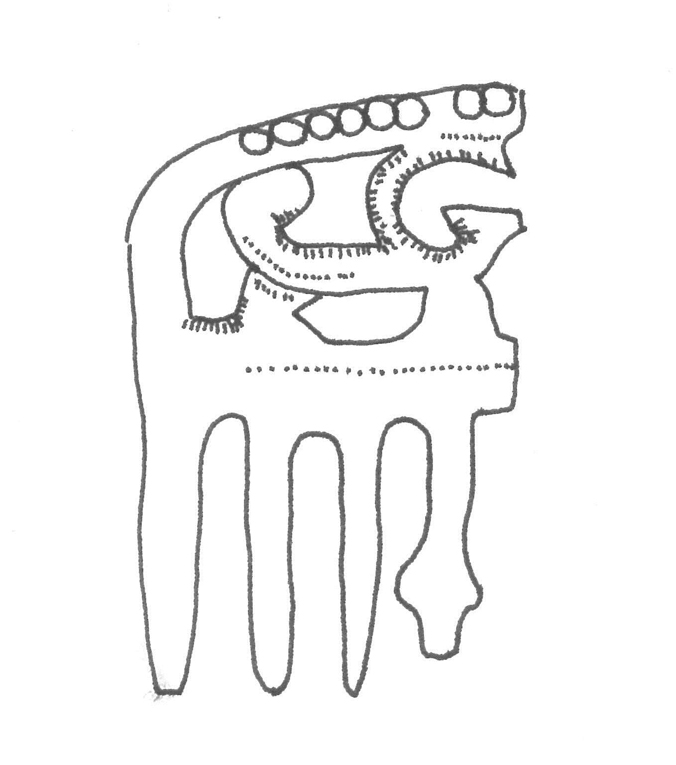
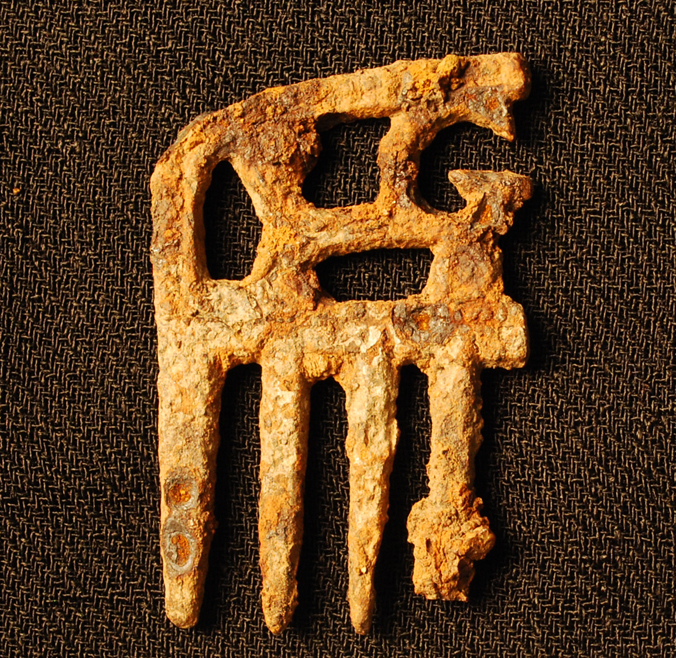
    A mane comb, an essential horse grooming tool, was excavated at George Washington’s Ferry Farm from an early nineteenth-century context. This rusty iron alloy comb is incomplete, measuring two inches high with a broken width of 1 ¼ inches.  The finished width might have been between 3 and 4 inches.  What makes this find interesting is that there is a decorative “G” inset above the comb’s teeth.  This letter was obviously followed by others, but what the complete word or initials indicate is a complete mystery.  Was the word a favorite horse’s name or just the name of the comb maker?  Was it actually a person’s name? And, of course, if it is a person name, could it possibly be George Washington’s name?

    Mane comb
    Mane comb excavated at George Washington’s Ferry Farm.

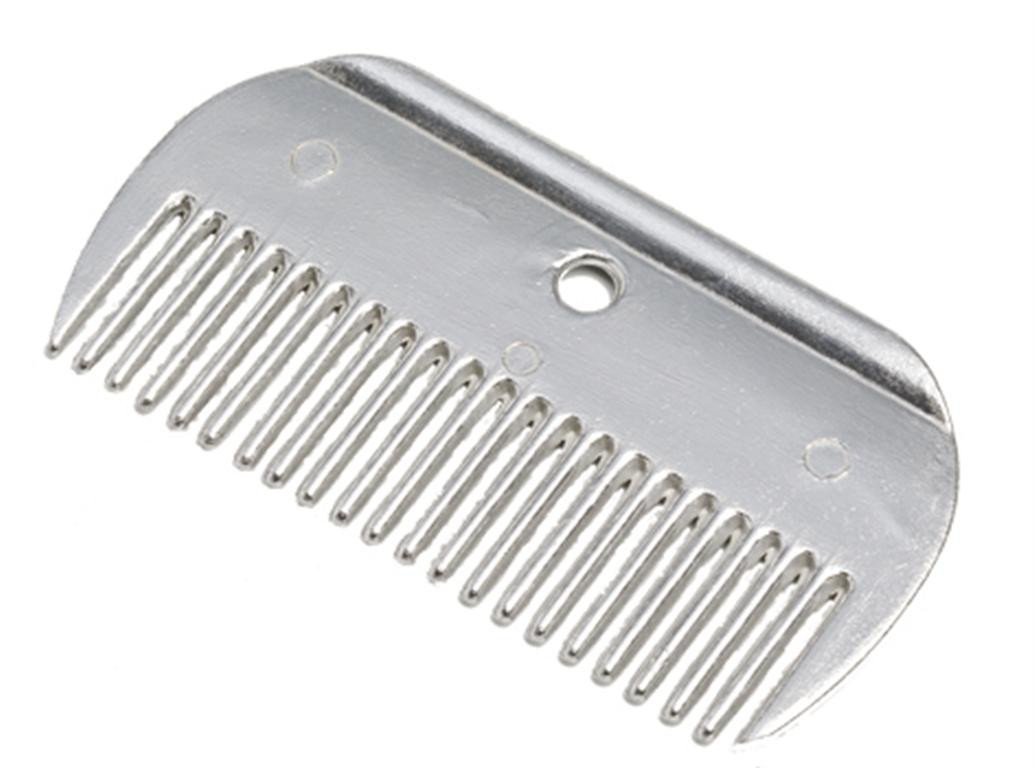
    Mane combs are just one piece in any essential grooming kit for horses, which also includes curry combs, brushes, hoof picks, and grooming cloths.  The mane comb is used to comb out the tangles and remove debris from the mane and tail of horses.  It can be very simple and utilitarian in looks, similar to a common hair comb, or more ornate and decorative, such as this example that is stored on a leather backing. Our mane comb falls between these two extremes. It does not have an elaborative top but it is still decorated within the handle area with a swirled scroll, raised beading along the outer band, and the letter “G–”.

    CT-5774-5_W-1520
    A simple modern mane comb. Credit: MyEquineStore.com

    original
    A more ornate antique mane comb with decorative handle. Credit: Roger Jones & Co.

    DRAWING OF COMB inked1
    A drawing of the mane comb excavated at Ferry Farm clearly showing the decorative inset “G”.

    Ferry Farm archaeologists are curating a number of artifacts related to animal husbandry, an assemblage dominated by utilitarian buckles. Such buckles may have been part of harnesses but these fasteners had many uses around a farm. Horseshoes are the next most frequently recovered item, and they date from throughout the 1800s and 1900s. A few are of a style of manufacture that reliably derives from the colonial era. Bits, stirrups, curb chains, and harness rings were also lost or discarded by their owners. A mid-1800s iron alloy brace for a saddle was also discovered. Ferry Farm archaeologists found evidence for mules as well, as our collection includes a few mule shoes. A few bolts for carriages or wagons were recovered. Perhaps our favorite animal husbandry objects are the brass ornaments used to embellish leather horse tack. Several of these have been recovered and all date from the colonial period, when these early New World equestrians relished showing off their fine steeds.

    So if there are any horse-loving readers out there who recognize this style of mane comb or have a clue as to what “G” could be the start of, please let us know.  We may never know but we do hope that maybe the “G” is the beginning of the name of our site’s most famous horseman, George, who was certainly well known for his horsemanship skills!

    Juby Jobrack, Archaeologist
    Assistant Lab Supervisor

    Laura Galke, Archaeologist
    Small Finds Analyst/Field Director

  • Show Horse: How Colonial Horse and Rider Looked Their Best

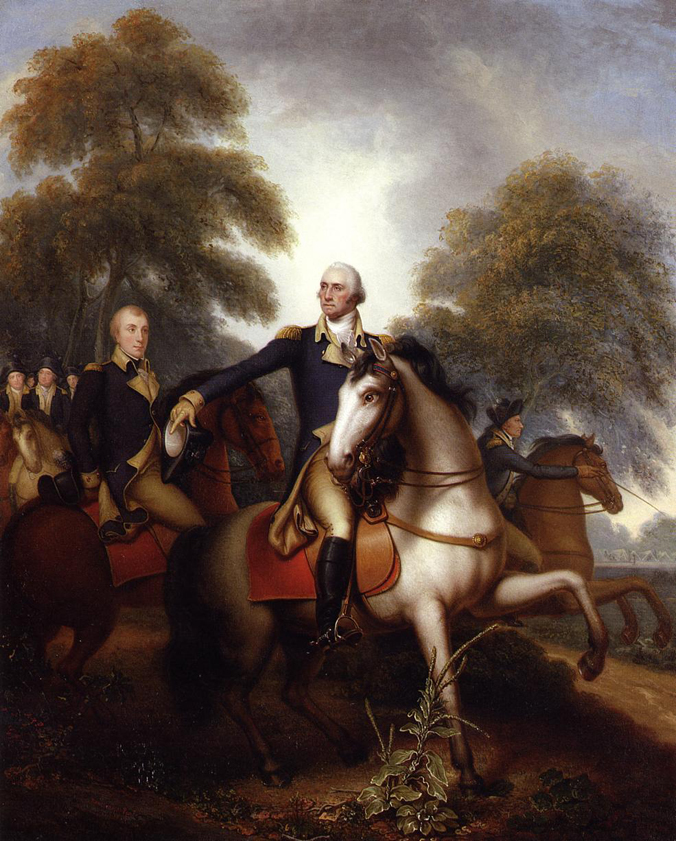
    "Washington Before Yorktown" by Rembrandt Peale (1823) Public domain. Courtesy: The Athenaeum/Wikipedia
    “Washington Before Yorktown” by Rembrandt Peale (1823) Public domain. Courtesy: The Athenaeum/Wikipedia

    Editor’s Note: This is the first of two posts inspired by this year’s Summer Olympics. This week, it’s an equestrian-inspired post from Archaeologist Laura Galke, who briefly looks at some of the ornaments found on 18th century horse tack.

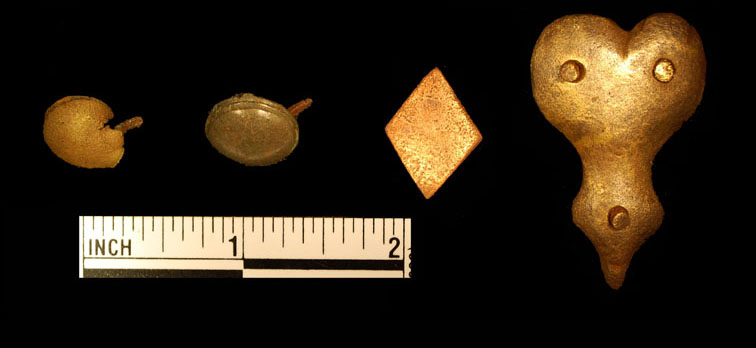
    What an impressive sight the Washingtons made as they rode their horses with bridles and straps embellished with these shiny brass decorations.  Today, people who study these decorations refer to them as “mounts” or “leather ornaments.”  They were used to ornament the leather straps, nosebands, harnesses, and reins of horses. Individual riders enjoyed these, but they also could adorn steeds that pulled carriages.  About twenty of these ornaments have been found during recent excavations at Ferry Farm.

    Ferry Farm leather ornaments dating from the 1700s. The Harwoods, Strothers or the Washingtons may have purchased these.
    Ferry Farm leather ornaments dating from the 1700s. The Harwoods, Strothers or the Washingtons may have purchased these.

    Colonial Virginians, including George Washington, took pride in owning horses. Adorning their stallions with such flashy decorations attracted attention to their owners as they journeyed through the streets, on the ferries, and along the trails of Colonial Virginia and beyond.  It was also a great way to draw attention to a favorite steed or an elegant carriage in a public setting. Unlike household adornments – which were esteemed by an intimate circle of family, friends, and enslaved attendants – investments in these leather ornaments were appreciated by a wider audience as rider and horse proudly paraded about the colony and region.

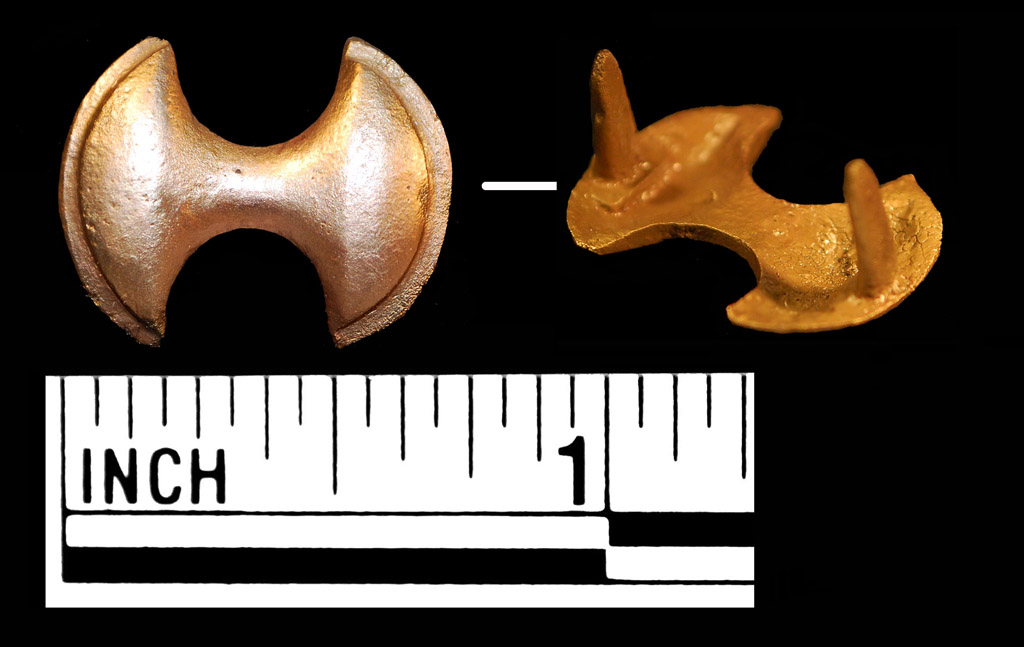
    This copper-alloy mount dates from the mid-to-late 1700s.
    This copper-alloy mount dates from the mid-to-late 1700s.

    In Colonial households, men typically purchased these showy trimmings. Indeed, they bought most things associated with the stable: horses or transportation.  Horse milliners were the source for such tack.  However, purchases related to the health of livestock, such as medicine, was the responsibility of women.

    Copper naturally repels the bacteria that break down organic materials such as leather. These mid-to-late 1700s Washington family ornaments have actually preserved a small portion of the original leather straps they adorned.
    Copper naturally repels the bacteria that break down organic materials such as leather. These mid-to-late 1700s Washington family ornaments have actually preserved a small portion of the original leather straps they adorned.

    George Washington was an accomplished rider praised by Thomas Jefferson as “the best horseman of his age, and the most graceful figure that could be seen on horseback.”  Leather ornaments and mounts like those excavated at Ferry Farm helped to create that graceful appearance for George and all horse-loving Virginians.

    Laura Galke, Archaeologist
    Site Director/Small Finds Analyst

    Further Reading

    Cofield, Sara Rivers
    2008  A Preliminary Study of 17th– and 18th-Century Leather Ornaments from Maryland.  Maryland Archaeology 44(2):12-27.  Available online http://www.jefpat.org/research.html

    Griffiths, Nick
    2004  Harness Pendants and Associated Fittings.  In The Medieval Horse and its Equipment, c. 1150 – c. 1450, edited by John Clark, pp. 61-71.  The Boydell Press, Woodbridge.

    McBane, Susan
    1992  The Illustrated Guide to Horse Tack.  David and Charles.  Milanostampa, Brunel House Newton Abbot Devon.

    Noel Hume, Ivor
    1991  A Guide to Artifacts of Colonial America.  Vintage Books, New York.

    Vickery, Amanda
    2009  Behind Closed Doors: At Home in Georgian England.  Yale University Press, New Haven.

  • Fredericksburg’s June Fair

    Ask someone to list traditional summertime activities and they will probably mention picnics, family reunions, beach vacations, mountain getaways, and baseball games. Their list is likely to include going to the fair as well.  The fair as a summer pastime is a long tradition and like many American traditions can be traced back to the age of Washington.

    In 1738, Augustine Washington moved his wife Mary and their five children, including six-year-old George, to Ferry Farm on the Rappahannock River opposite Fredericksburg, Virginia.  Coincidentally, in the same year, the colony’s General Assembly authorized two fairs to be held each year in Fredericksburg (pg. 35). This act built on an earlier ordinance passed in 1705 allowing for ‘markets and fairs’ as a necessary and civilizing element of early Virginian society.

    Although other cities held fairs, Fredericksburg was one of the few that held a fair in June.  Sometimes called June Fair, it was one of the oldest and largest in the colony.  June Fair and other fairs were “first and foremost a market ‘for the sale and vending of all manner of cattle, victuals, provisions, goods, wares, and merchandizes.’ Prizes, ‘or bounties,’ were sometimes offered for the best stock and poultry” (pg. 18).

    Pieter Angillis, 1685–1734, Flemish, active in Britain (from ca. 1715), Covent Garden, ca. 1726, Oil on copper. Pubic domain. Credit: Yale Center for British Art, Paul Mellon Collection
    Although this painting depicts a busy London agricultural market in the early 1700s, a similar hustle and bustle likely filled Fredericksburg during June Fair.  Covent Garden (1726) by Pieter Angillis, 1685–1734, Flemish, active in Britain (from ca. 1715), Oil on copper. Pubic domain. Credit: Yale Center for British Art, Paul Mellon Collection.

    Fairs were about more than agriculture, however. The importance of a summer fair was its ability to gather people from all over the surrounding counties to a single central location to conduct business and government and to offer social interactions and entertainments.  In an agricultural colony such as Virginia, homes and plantations were very distant from one another and, for much of the year, people hardly saw anyone besides their immediate neighbors and family members.  Most colonial Virginians traveled no more than fifty miles from home in their lifetimes. This made for an isolated existence focused on the constant attendance of crops. During natural seasonal breaks, however, farmers traveled to a town to sell those crops at the fair.

    Fairs were not just for farmers to sell. Court sessions, also known as ‘Public Times’, often coincided with fairs. Soon merchants and entertainers saw opportunity in the large numbers of people gathered together at the fair. Many people got paid or, more likely, an increase in credit and ready money made the fair a natural time to celebrate, entertain, gamble, and socialize.

    Among the amusements common to colonial-era fairs,

    “contests for prizes . . . in cudgeling, wrestling, manual-exercises, foot-racing, dancing, singing, violin-playing, greased-pig-chasing, etc. Prizes were offered to the most beautiful maid.  In towns large enough to warrant their attention, companies of actors sometimes arranged to give plays during fairs. Such plays, however, were held at the local play-house or theatre, and not on the market-square, where the fair usually took place” (pg. 19).

    For example, in 1752, an acting troupe known as “THE Company of COMEDIANS, from the new Theatre at Williamsburg, propose[d] … to proceed to Fredericksburg, to play during the Continuance of June Fair.” The troupe hoped “That all Gentlemen and Ladies, who are Lovers of Theatrical Entertainments, will favour us with their Company.”

    Company of Comedians - Va Gazette
    Advertisement in The Virginia Gazette announcing the appearance of the Company of Comedians at June Fair in 1752.

    The fair brought people together to conduct more than agricultural business.  Indeed, “the fair was also a place where men met to make and pay debts. Land, houses, storehouses, and personal property were offered for sale at fairs — privately and by public auction” (pg. 18).

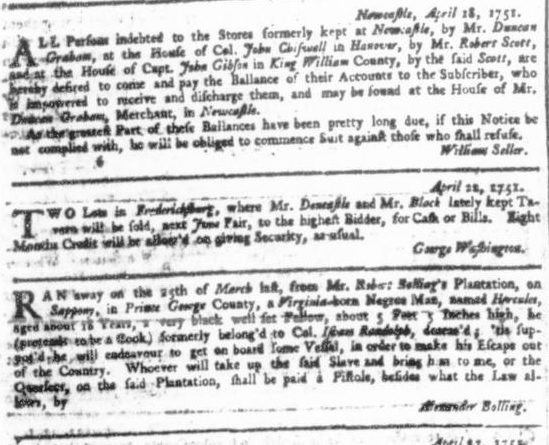
    During June Fair in 1751, 19-year-old George Washington auctioned off two of his lots in Fredericksburg.  His announcement of the sale in The Virginia Gazette offered the lots, “where Mr. Doncastle and Mr. Black lately kept Tavern, next June Fair, to the highest Bidder, for Cash or Bills. Eight Months Credit will be allow’d on giving Security, as usual” and was signed “George Washington.”

    Washington Virginia Gazette Ad
    Announcement placed in The Virginia Gazette by George Washington announcing his intention to auction off two lots of his land in Fredericksburg at June Fair in 1751.

    A decade later at June Fair in 1760, George’s account ledger shows him paying Fielding Lewis £40.  Furthermore, just few days before paying his debt to brother-in-law Fielding, George also bought tickets to a ball and lost money on a horse race, both popular fair activities.

    Indeed, “the most popular attractions of the fairs in Virginia and Maryland were the horse-races . . . held at race-tracks near the town. Purses were subscribed, and many gentlemen, who had no interest in the other activities, would attend the races” (pg. 19).

    Gambling at the fair, mainly in the form of lotteries, even supported more noble pursuits.  At June Fair in 1769, a lottery was undertaken to raise £450 for building a new church and for purchasing an organ for that church.  The drawing was to take place on “the 7th day of JUNE next (being the first day of the Fredericksburg fair) at the town-house” and was supervised and supported by a host of the town’s luminaries including Charles Dick, Hugh Mercer, Charles Washington (George’s brother), George Weedon, and Fielding Lewis.

    June Fair was a community event attended by Virginians from across the colony and brought George Washington back to his boyhood home on more than one occasion.  At the fair, Virginians sold farm goods and land, settled debts and tried court cases, enjoyed a play and gambled on the horses.  June Fair, much like today’s summer pastimes, was a moment in the year to enjoy the summer weather and the company of neighbors, friends, and family before returning to isolated plantations and farms and the unending work of plowing, planting, and harvest.

    Zac Cunningham
    Manager of Educational Programs

    Joe Ziarko
    Manager of Interpretation & Visitor Services