Lives and Legacies

Tag: Mary Ball Washington

  • Wish You Were Here: Historical Documentation Through Postcards

    Postcards were a staple of vacations.  Collected and sent back to friends and family so they could be part of your adventures. Many of us can remember trying to pick up postcards on the first day of vacation to get them in the mail quickly so they would arrive back home before you. 

    Postcards were created in the mid-nineteenth century, and through the decades, they were mass-produced with popular scenic images and were inexpensive, so many people picked up postcards to document their vacations rather than taking pictures.    Their popularity and collectability mean that boxes and boxes of old postcards can be found in antique stores and flea markets. 

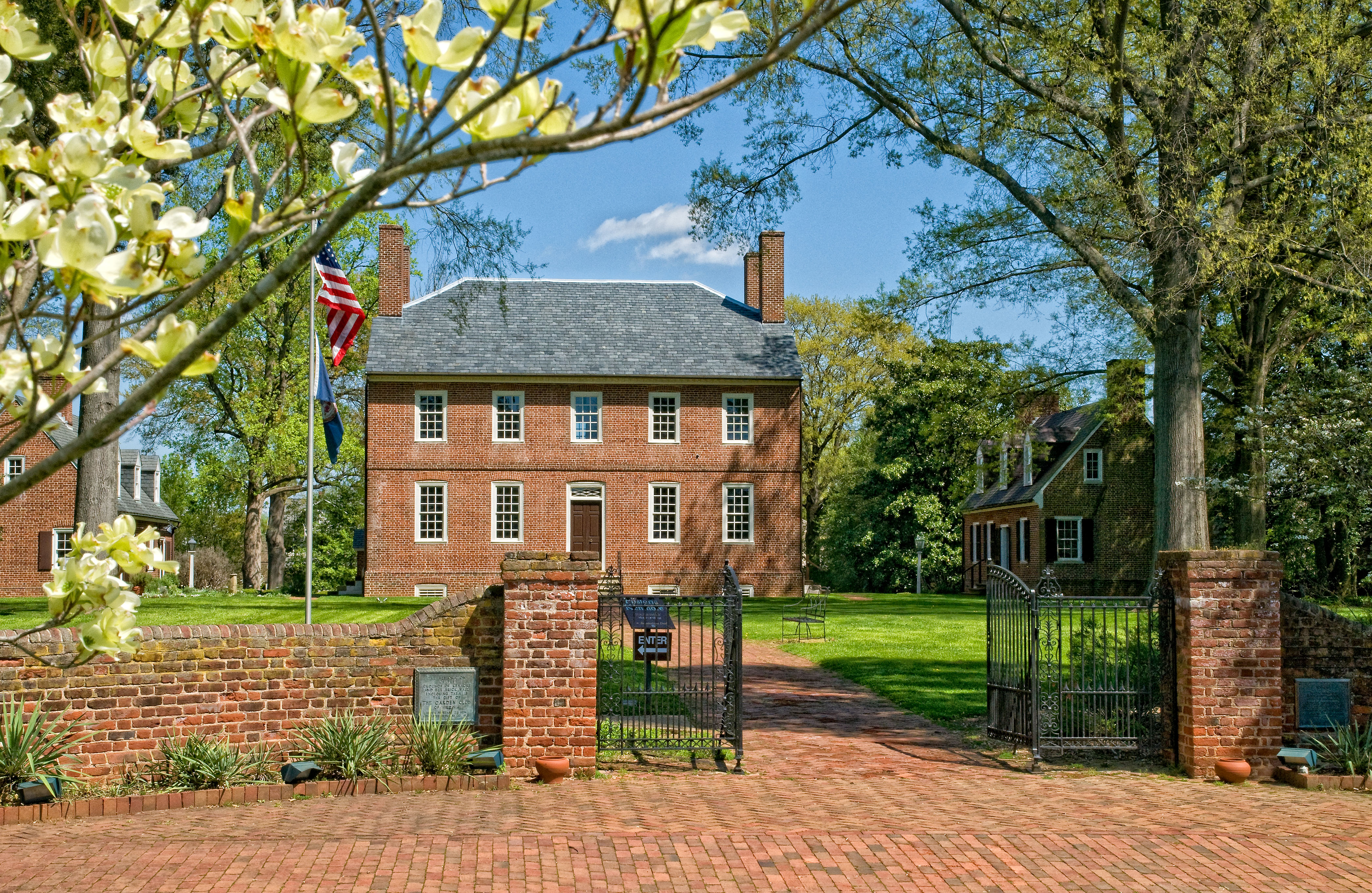
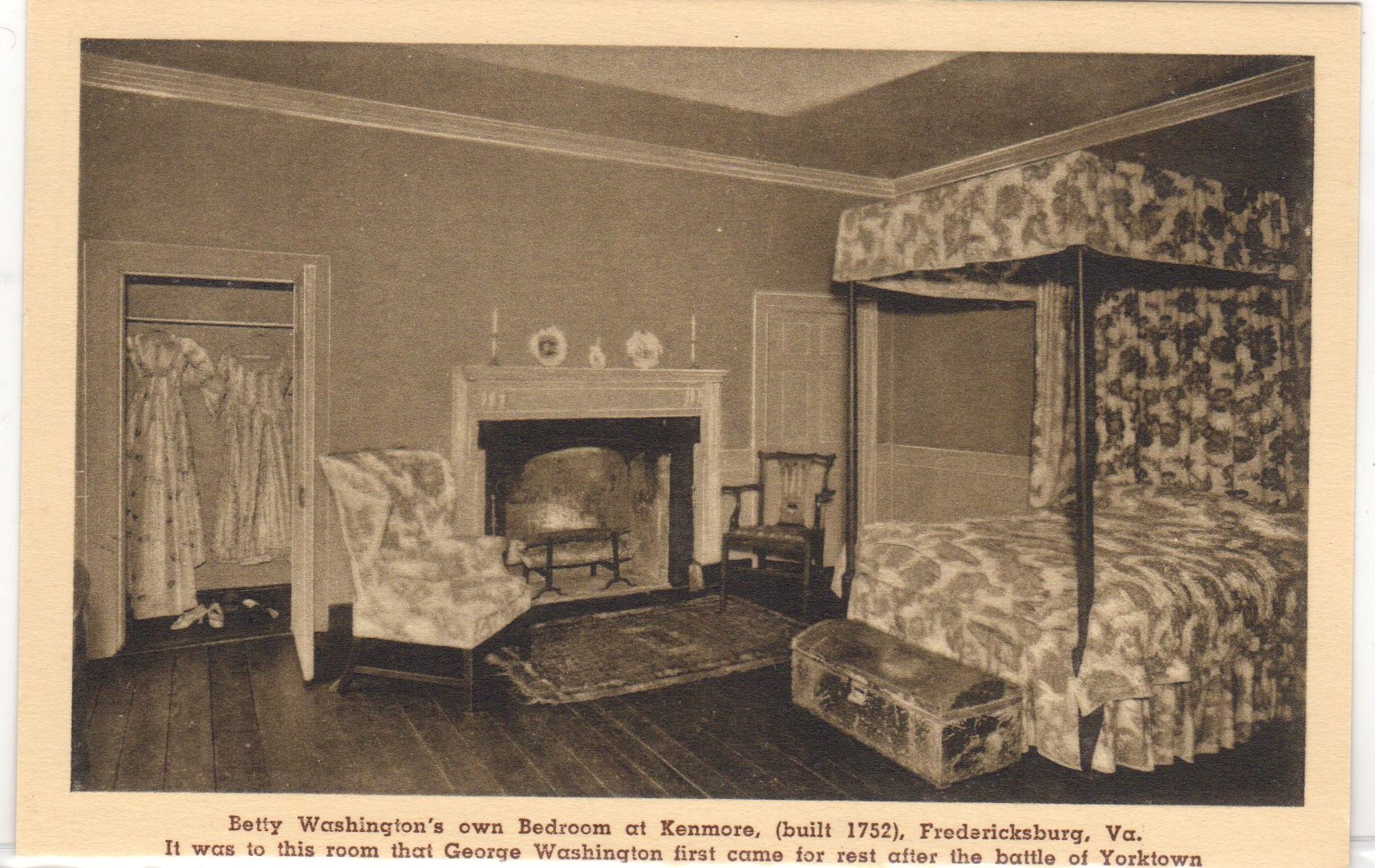
    While postcards are amusing souvenirs and a source of nostalgia, they can also offer us important insights into the evolution of historic sites and cities.  Postcards of Kenmore have helped us document the restoration of the house, the development of the property, and past interpretations, even providing documentation of collection items for which we may not have records.

    For your enjoyment, I’ve selected some of my favorite postcards to showcase how they’ve documented the historical restoration and interpretation of Kenmore.

    Exterior: Pre-Restoration

    Kenmore has always been quite the showpiece, even when it was privately owned.  One of the earliest postcards of Kenmore’s exterior is dated 1908, as indicated by the postmark.  The Howard family owned the house until it was acquired by E.G. Heflin around 1914. 

    The postcard shows the house from the Washington Avenue side (west elevation) and provides a glimpse of the properties before any restoration work.  The old kitchen can be seen on the north side of the house, while the exact date it was built is unknown; we know it was built in the late 1880s or early 1890s.  It was torn down in 1929. 
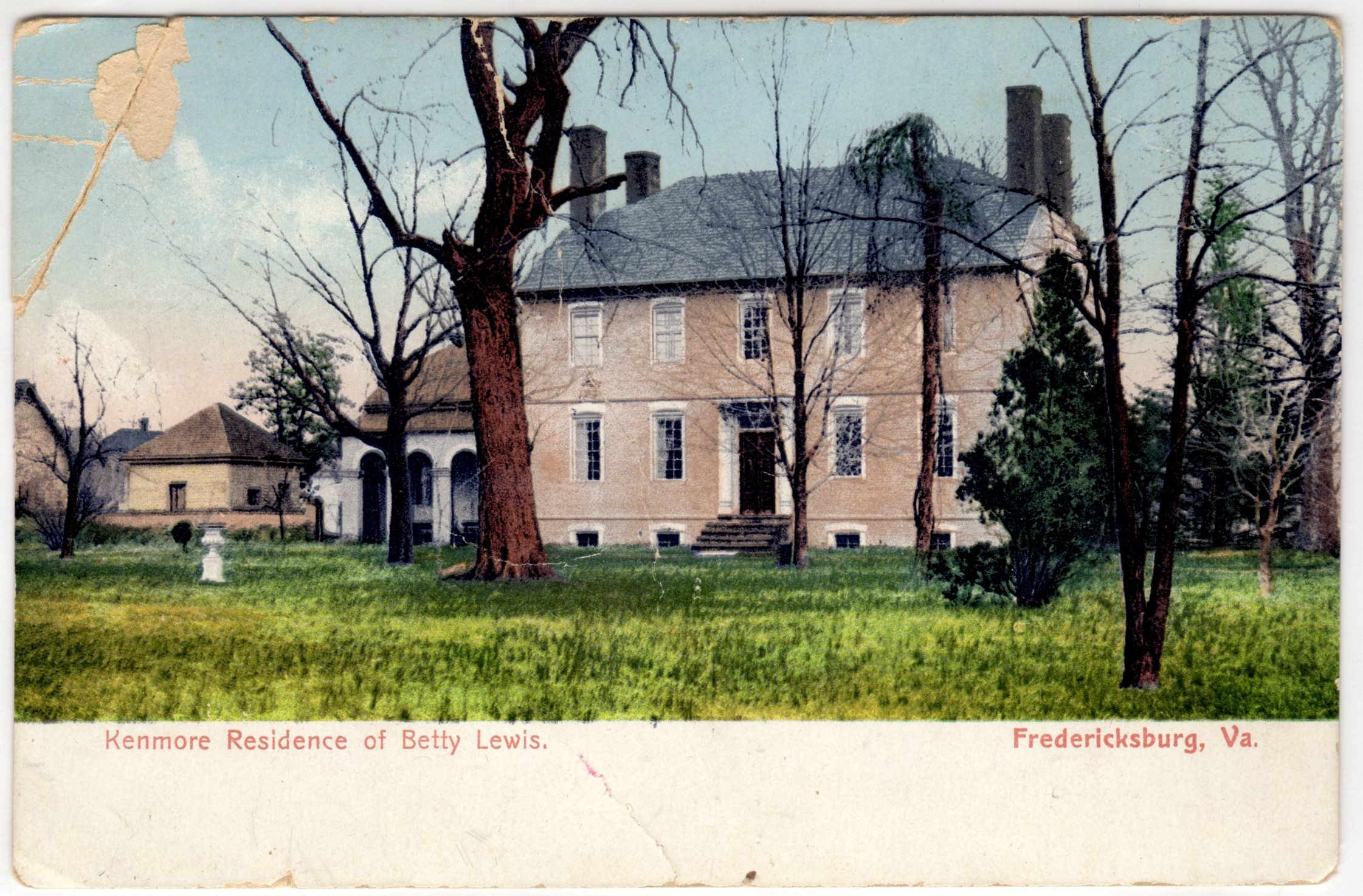
    Additionally, the exterior brick has been painted, along with the lintel, which was removed in 1929. We can see the paintwork better in the second color postcard. 

    Interior

    Entrance Hall

    One of the earliest postcards we have of the entrance hall, around 1923.    One of the most notable things is the plasterwork on the ceiling.  If you see current pictures of the entrance, you will notice that this plasterwork no longer exists.  The plasterwork was done by former resident William Key Howard, Jr., when he was restoring the original ceiling in the other rooms.    In 1930, the Association decided to remove the plasterwork because it was not original to the Lewis family.  Mr. Howard Jr. was not happy when he found out that the plasterwork had been destroyed and called it an act of vandalism. 

    Additionally, we can see next to the tall case clock a door that leads into the drawing room, which no longer exists.  It was decided that this was not the original placement, and the door was moved directly across from the office door in 1930. 

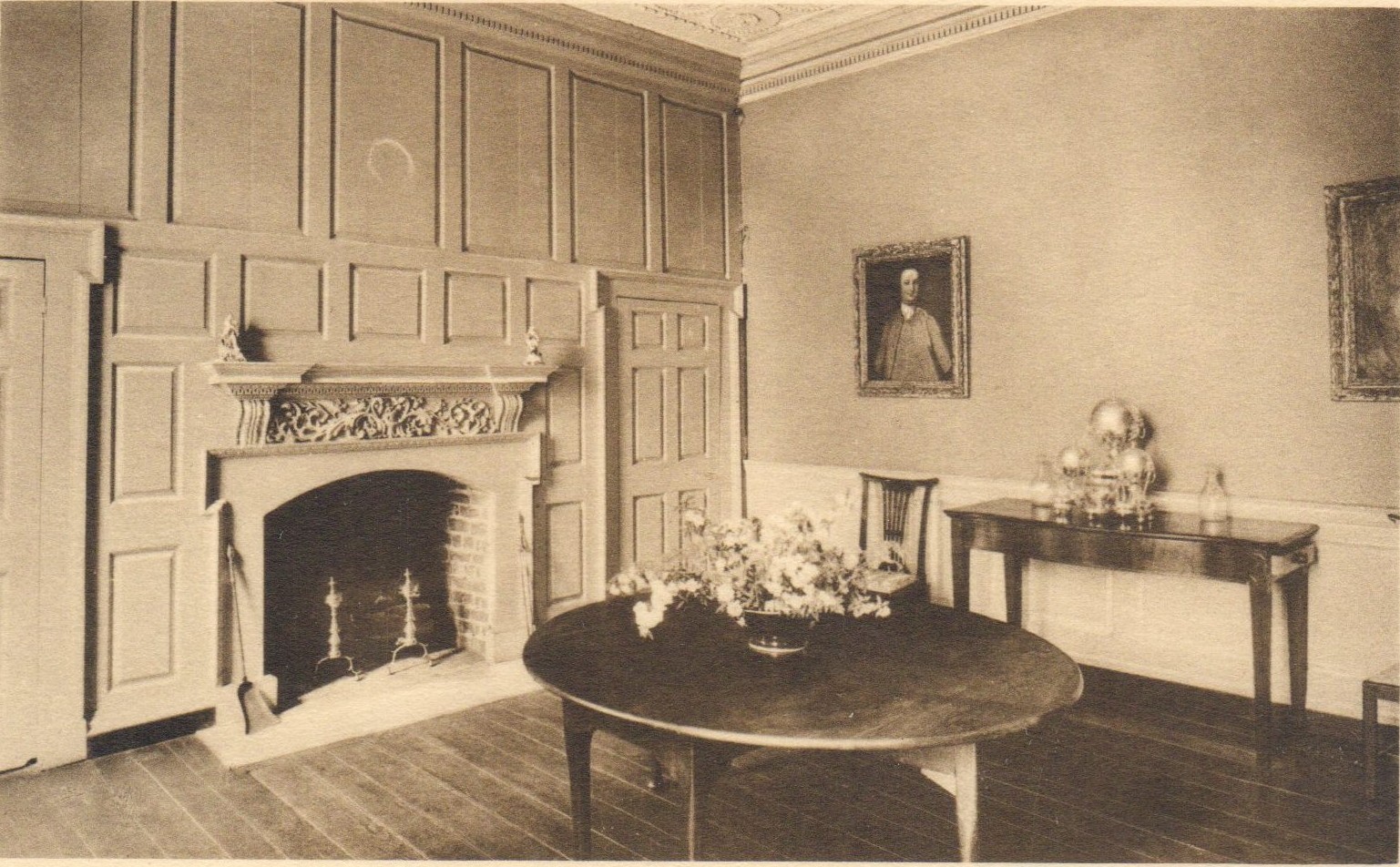
    Chamber/NW room, first floor

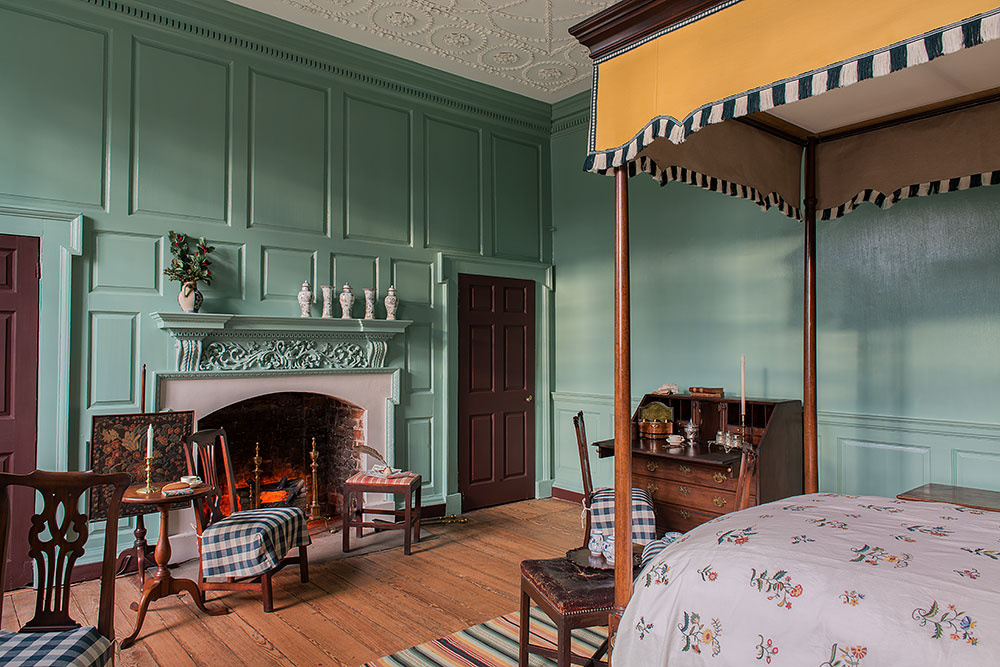
    While we currently interpret the NW room on the first floor as the chamber, the ladies referred to it as the Dining Room. We can see a round table, a sideboard, two chairs, and two portraits, plus a large silver tea urn.   The postcard dates from the late 1930s because we know from our records that most of these pieces were donated in 1935.  We still have all these objects in the collection, but the only things currently on display to the public are the round table in the dining room and the chairs in the drawing room.  All other pieces are in storage. 
    Dining Room/NE room, first floor

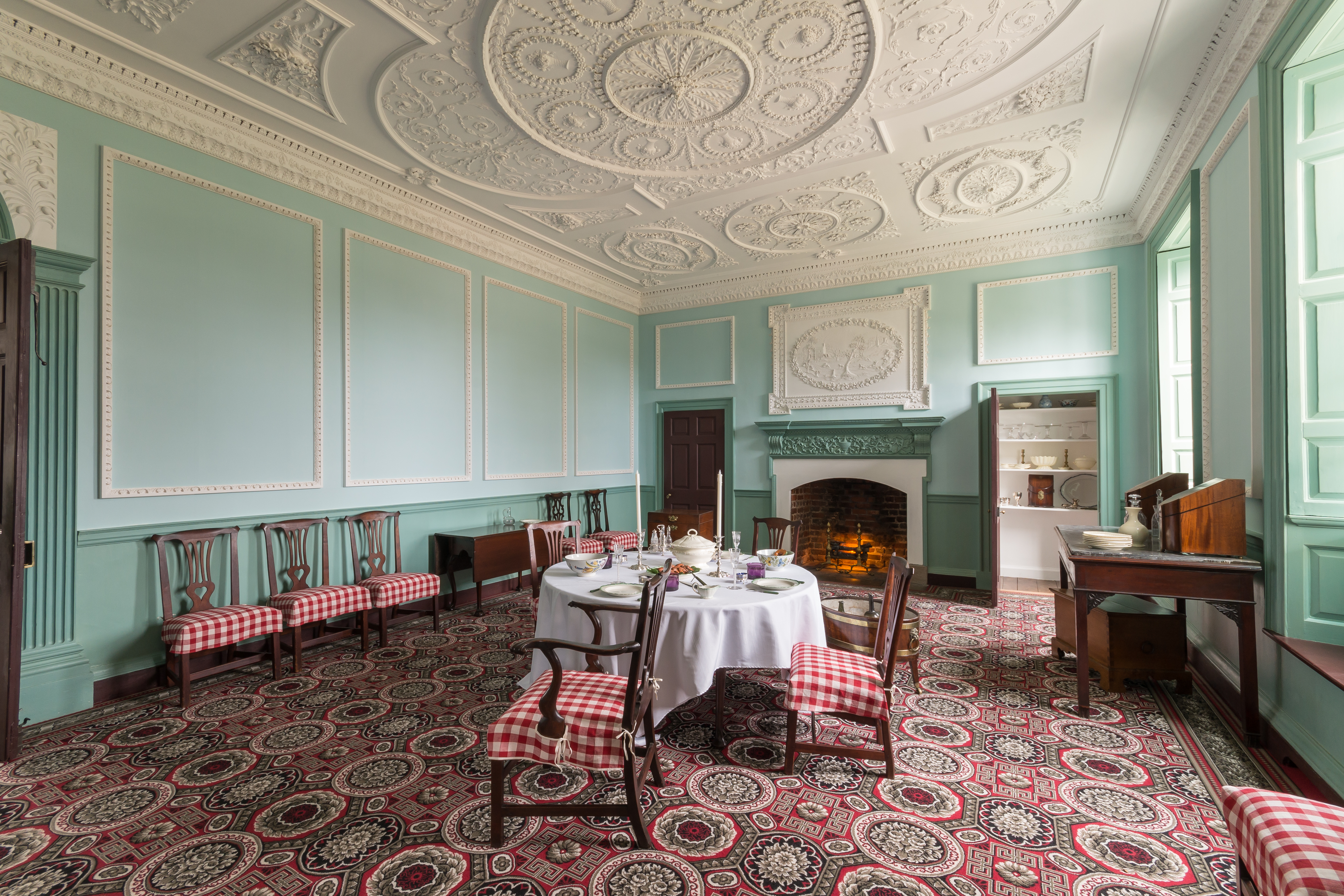
    We currently refer to the NE room on the first floor as the dining room.  It has undergone many changes, with Gothic arches added to the closets during the 19th century, and has been restored to its original shape.   Not everything in the postcard is still in our collection, but you can see the square table still on display in the dining room, and Betty’s portrait is now in the drawing room. 

    On the left is the Dining Room during the Howard occupation around the 1890s, and on the right, the Dining Room today
    The Dining Room after the Kenmore Association’s restoration, c. 1940s

    Drawing Room/SE room, first floor

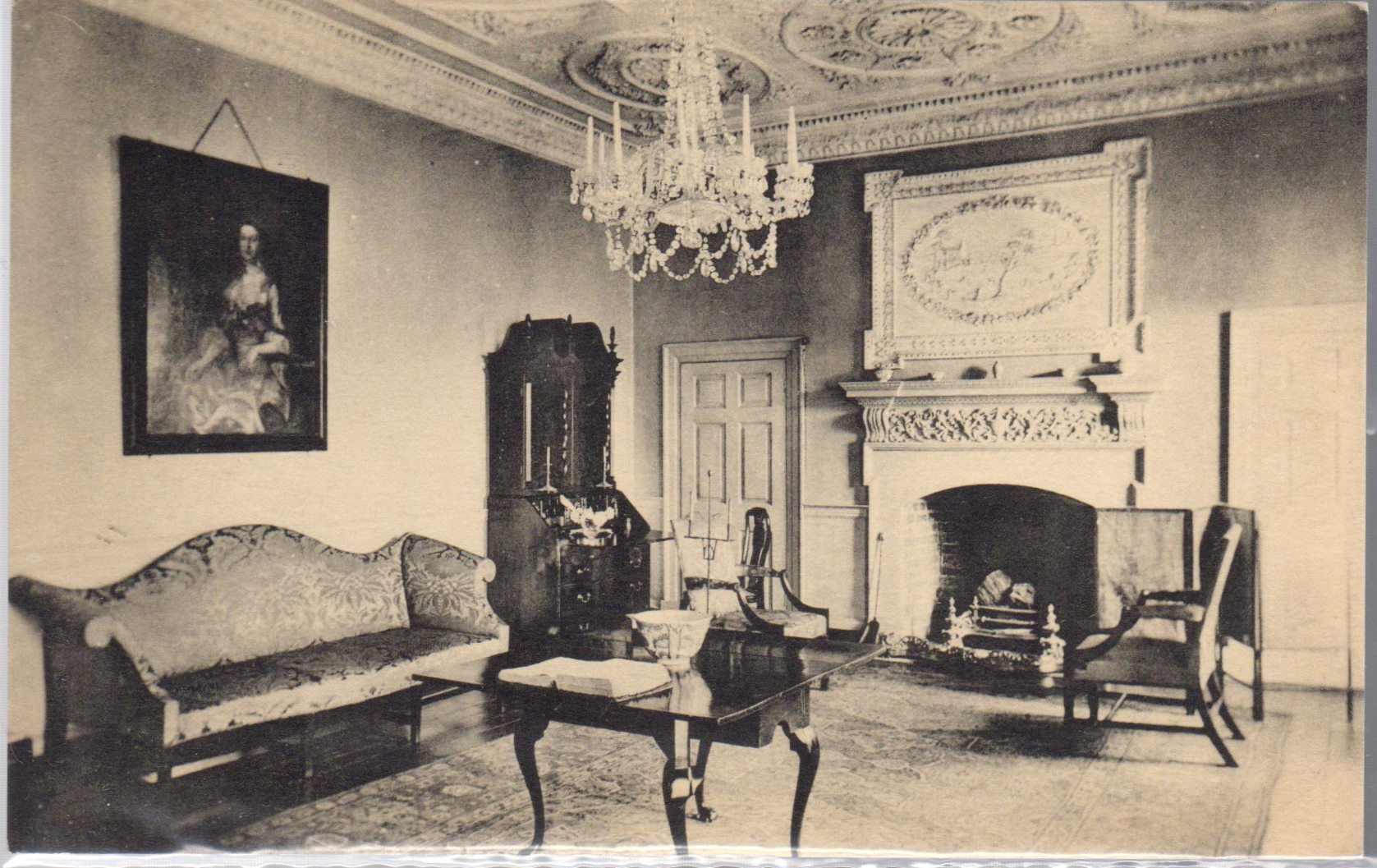
    The drawing room was previously known as the library and also served as a chamber for a while in the 1980s.  By the window, you can see Betty’s desk in the older postcard (c.1940s), which is still on display, but in the chamber.  We still have the tea set on display where it was in the chamber, but it is currently in storage.

    On the left is the Drawing Room during the Howard occupation around the 1890s, and on the right is the Drawing Room now

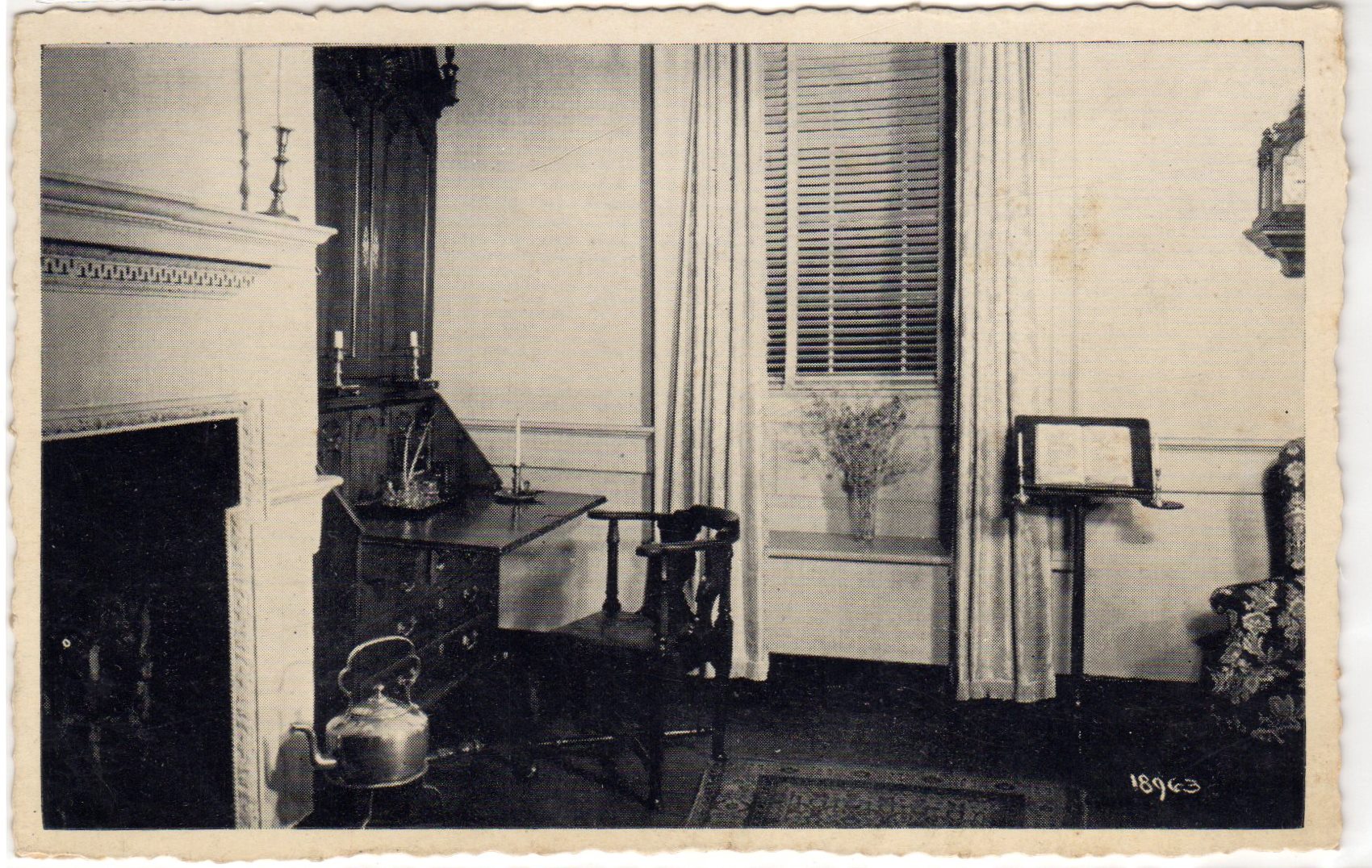
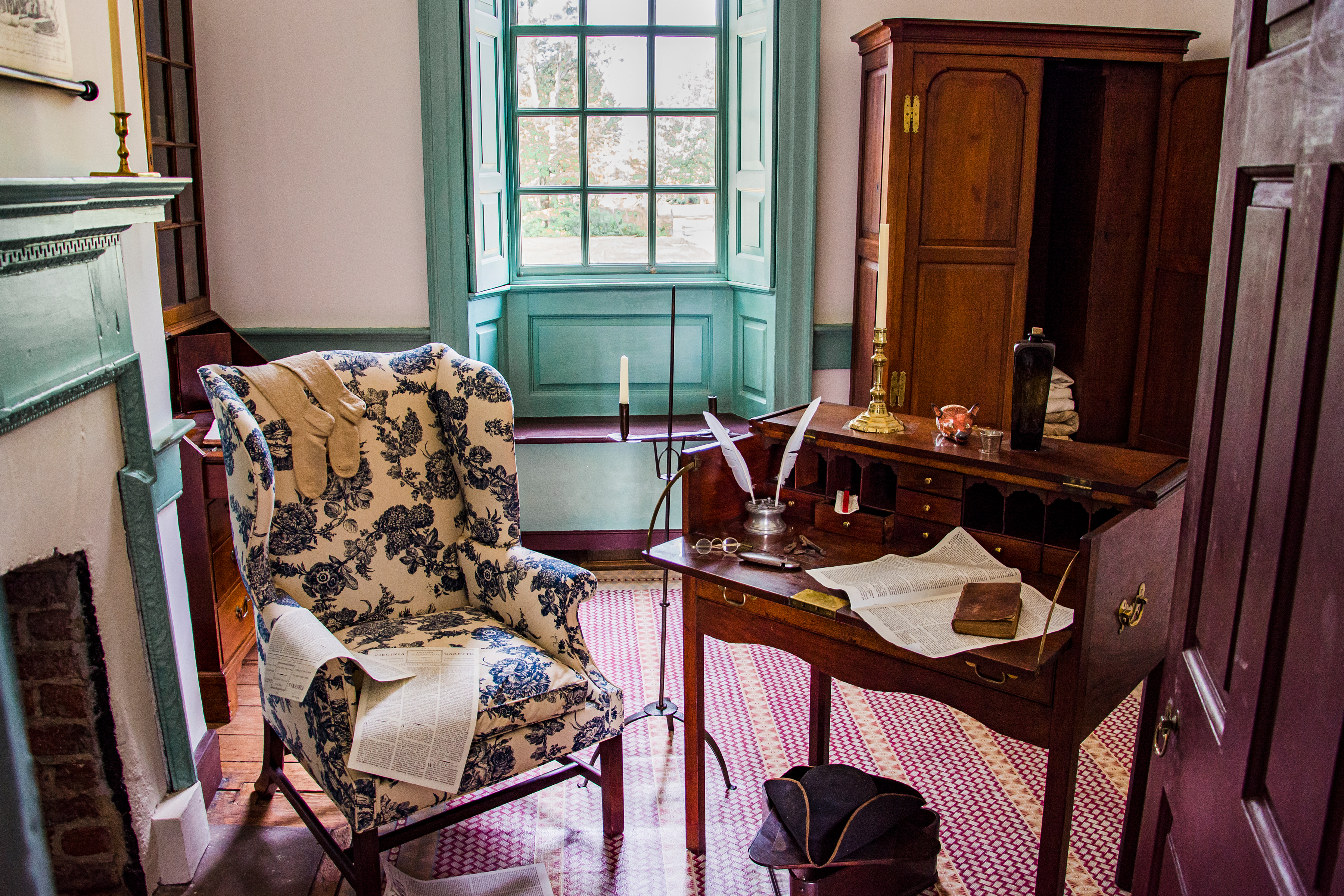
    Office/SW room, first floor

    Fielding’s office has been displayed as a sitting room and a kids’ room.  We don’t have many of the objects in the postcards still in the collection, except the corner chair, which now has a check seat, and the music stand, which is too fragile at the moment for display.
    2nd floor

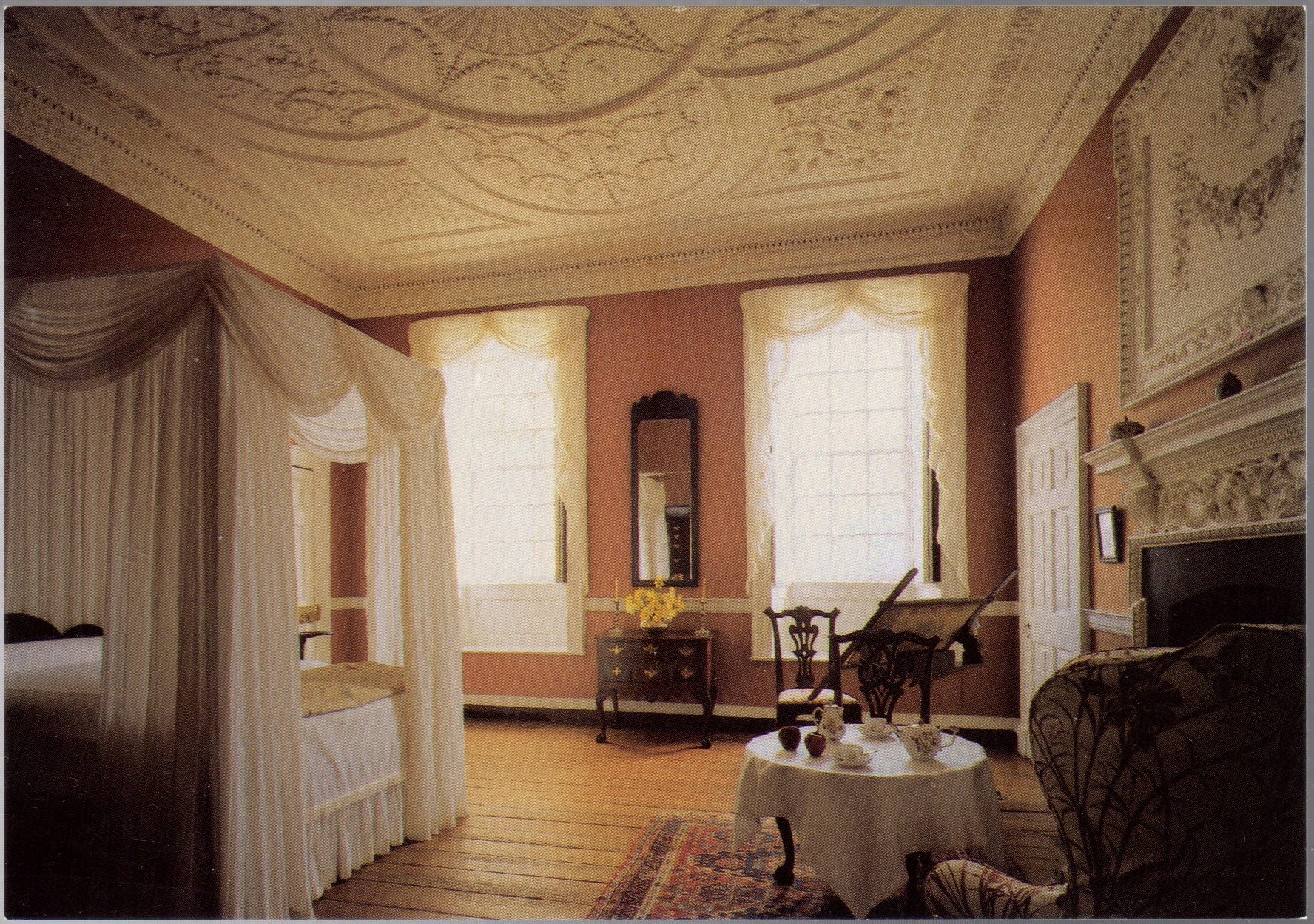
    We currently do not offer tours of the upstairs area because we don’t put too much stress on our lovely plaster ceilings.  The Kenmore Association interpreted the upstairs as individual bedrooms for the family, which is not the most historically accurate version.

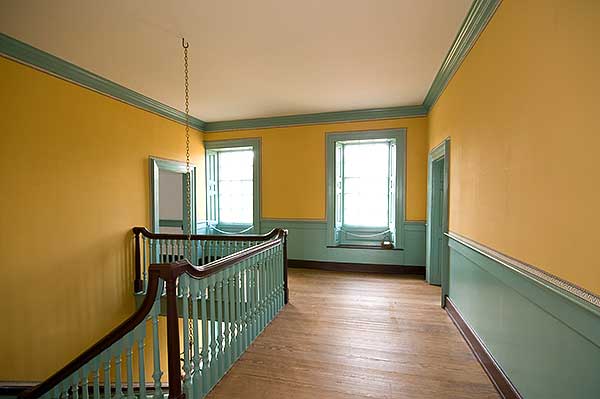
    Hallway/ 2nd floor

    Besides the paint color, the hallways upstairs remain structurally the same.  The ladies have Betty’s desk on display, with the Hammond quilt above.  We still have the Hammond quilt; fortunately, we removed it from the frame, but it is a massive quilt and is not currently on display. However, it is in excellent condition.  As for the tall case clock, chandelier, and curtains, they have been lost to history.

    “Mary Washington Bedroom”/NE room/2nd floor

    We have no evidence that Mary ever had a dedicated bedroom at Betty’s house, and it seems unlikely with the size of the Lewis family.  We do still have some of the pieces in the collection. The tea box is currently on display in the chamber, and the yellow tea set has been displayed intermittently over the years.  The two calendar prints hung on the wall are now downstairs in the drawing room.  Lastly, the chaise lounge was loaned to the foundation by the Metropolitan Museum of Art in the 1930s (subsequently purchased in 1968) and is currently in storage, as there is no evidence that the Lewis family owned many northern furniture pieces.
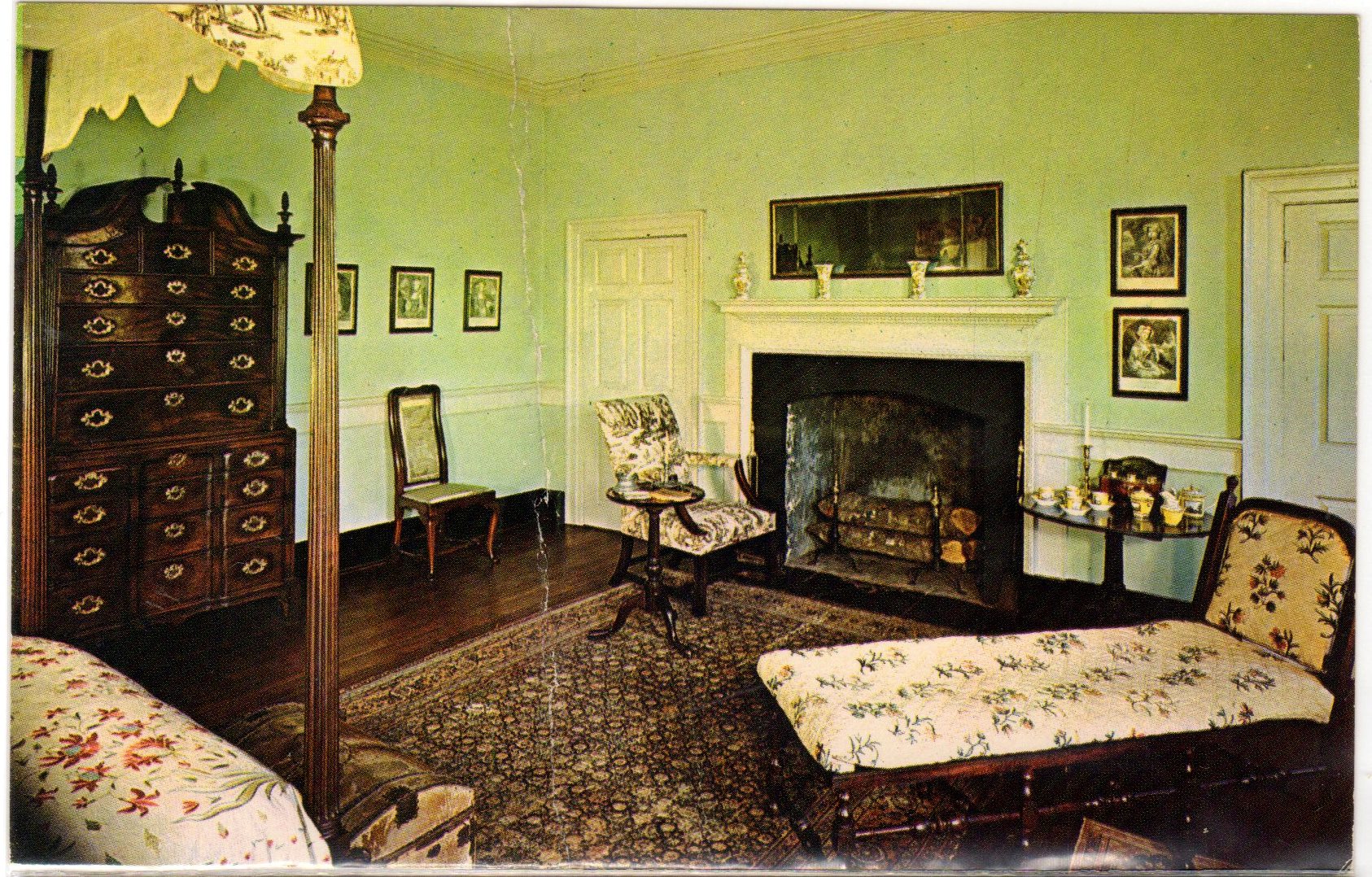
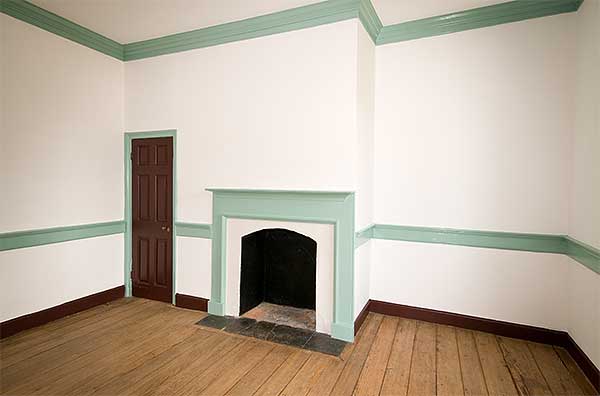
    “Mary’s Bedroom” is currently storage with temporary covering to protect the original floors.

    “Guest Bedroom”/NW room/2nd floor

    Much like “Mary’s bedroom,” it is very unlikely that the Lewis family had a “guest room,” with as large as the family was, it would have been a waste of space.  The bed still resides in our collection, disassembled and in storage. 

    “Betty’s bedroom”/SE room/2nd floor

    Again, during the Lewis occupation in the 18th century, individual bedrooms were not common, except for the head of the family.  Not many of the objects in the postcard are still in our collection, except for the bed, which is now in the chamber downstairs, and the William Walker, Jr. armchair, which is currently off display, but we do have another one in the dining room.
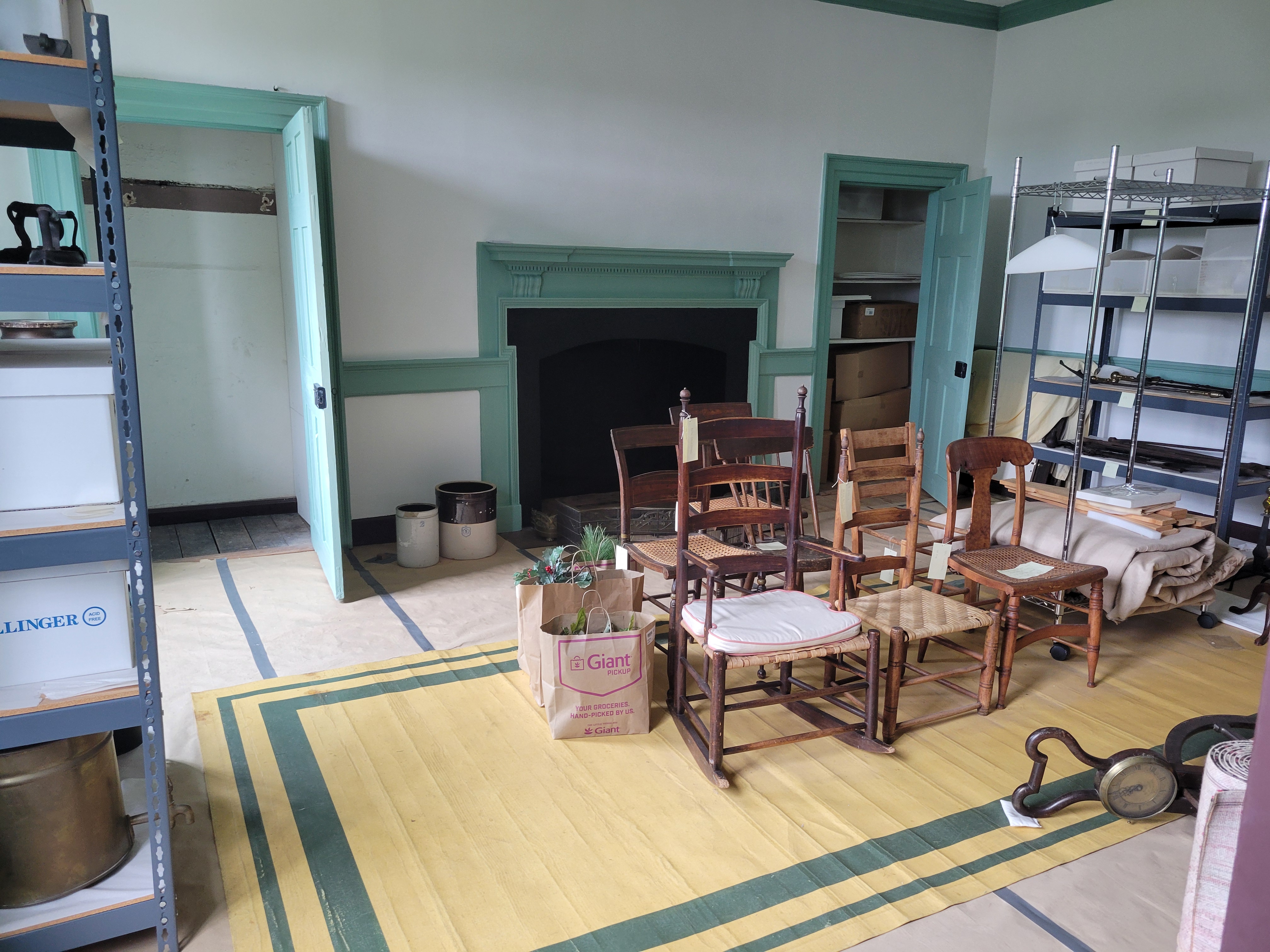
    “Betty’s bedroom (2nd floor SE) is currently used as storage…and some Twelfth Night decorations

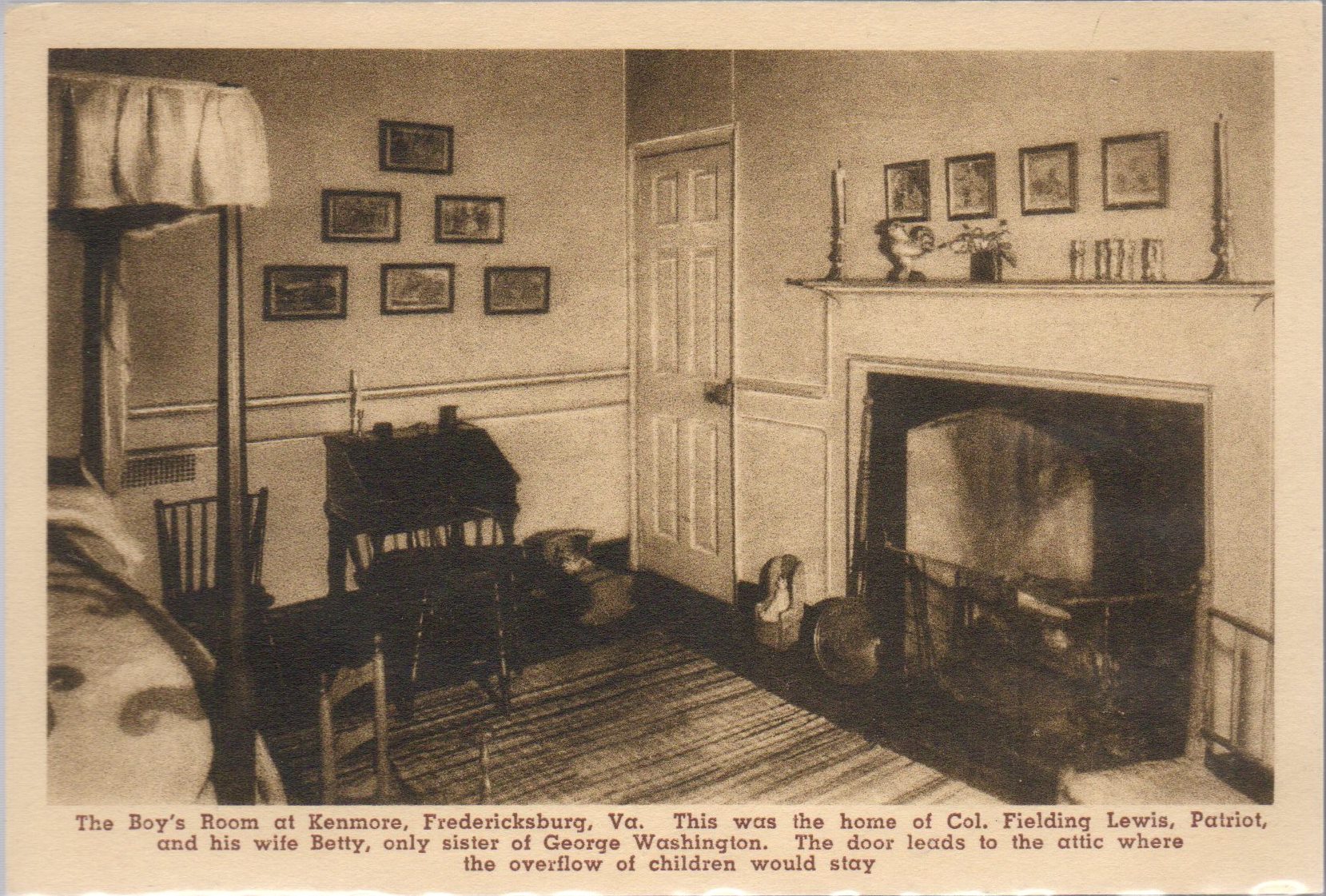
    “Boy’s Room”/SW room/2nd floor

    The last room upstairs is smaller than the other rooms and has access to the attic.  The ladies used this as the boys’ room, but as we discussed, with the other rooms, it is unlikely that this was accurate.  We do still have many of the pieces’ pictures, but the only one currently on display is the slant-top desk in the Visitors Center. 

    Heather Baldus

    Collections Manager

  • Mary’s Dishes [Video]

    In this video, archaeologist Mara Kaktins shares bits of Mary Washington’s dishes excavated at Ferry Farm and explains their significance.

    Read more about Mary’s dishes in this blog post.

  • Appearance is Everything: Mary Washington and Her Specialized Ceramics of Gentility – Some Seriously Fancy Dishes!

    The story of Mary Ball Washington is one of overcoming a lifetime of adversity.  Often overshadowed by her larger than life son George, Mary’s place in history fluctuated from saint to shrew with many historians ignoring the obstacles she faced and overcame.  The archaeological record sheds light on some of the strategies Mary used to navigate her way through mid-18th century life as a widow while trying to maintain her own social status and that of her children.  Fragments of highly-specialized ceramics excavated at Ferry Farm, the plantation Mary called home for much of her life, speaks to her efforts.

    Specialized dishes are those designed for a very specific job unlike, say, a bowl which is multi-purpose.  We have uncovered evidence of many dishes Mary owned that fulfilled single tasks.  These type of ceramics are a sign of gentility. Most households could not afford these items and likely did not possess the resources to make the food and drink that they were designed to hold. 

    As the 18th century progressed, so did dining habits. Increasingly, people of means gravitated toward dinners with multiple courses of entrees, appetizers, beverages, and deserts. Previously, most meals consisted of large one-pot creations with multiple ingredients.  In order to pull course cooking off, one required the specialized dishes designed for serving multiple courses. 

    One prime example of such specialized dishes from Ferry Farm is Mary’s elaborately decorated creamware sauce boats.  The sauce boats are a luxury in and of themselves. They’re highly decorated and were very fashionable at the time.  Not only were they expensive, but they showed that Mary had the refinement to serve her guests the fancy sauces being introduced into colonial cooking.  They also indicated that she had a trained kitchen staff of enslaved workers capable of executing these new and intricate recipes. You never thought a sauce boat could hold so much meaning, did you?

    Portion of a highly-decorated creamware sauce boat that belonged to Mary Washington.

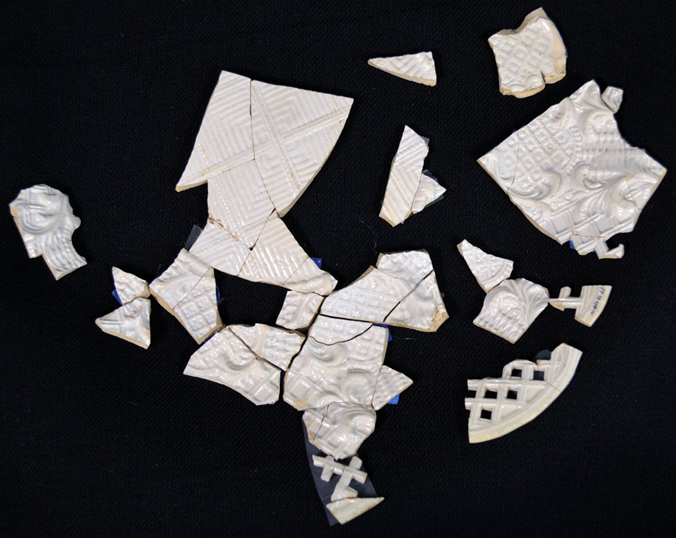
    Fragments of an extremely fancy white salt glazed fruit dish are further examples of Mary’s calculated purchasing of dishes.  Previously written about here and here, this dish was meant to display fruit, another luxury in the 18th century. Being able to afford non-local or out-of-season fruit was a status symbol and necessitated the proper dish to proudly display the fruit.  To put the rarity of fruit in perspective, in colonial America, pineapples were so expensive you could rent one for display at parties in the holiday season because most people couldn’t afford to buy one outright.  While renting a fruit may seem ridiculous to modern readers, the action highlights just how important being seen to own certain items was during the colonial era. Of course, we still engage in this same behavior today, but just not with pineapples.

    Fragments of a white salt-glazed fruit dish excavated at Ferry Farm and a complete example from the collection at Kenmore (above).

    Ferry Farm archaeologists also excavated fragments of two creamware condiment dishes.  Once again, the ability to serve various condiments to dinner guests conveyed status.  Condiments could include relishes, dips, mustards, ketchups (mushroom ketchup being the preferred type), and pickled vegetables such as capers.  Castor sets were also a way to serve other condiments such as olive oil, vinegar, pepper, etc. Generally, these castor sets were only owned by well-to-do households in the colonial period. The base of a creamware castor was recovered at Ferry Farm.

    Creamware castor base excavated at Ferry Farm.

    The fact that so many of Mary’s specialized ceramics are made of creamware should also be noted.  Creamware was invented in 1762 and wasn’t the most expensive type of ceramic (that was porcelain) but it was highly fashionable.  Mary, as a widow with five children and a diminished income following her husband’s death, likely couldn’t afford much porcelain. She opted for the less expensive but still highly-desirable creamware, instead.

    The Washington family went to great lengths to demonstrate their status and refinement to visiting friends, neighbors, and relatives.  At Ferry Farm, this burden fell solely on Mary after the death of her husband.  Her specialized ceramics served to illustrate her place within the gentry class despite her diminished income and refusal to remarry after being widowed.  Her goal was to remain independent while raising five children to be successful adults and members of the Virginia gentry class.  In doing so, she likely realized that the socioeconomic security of her children would ensure her own into the future as well. Consequently, it was important that Mary cultivate a refined household with appropriate table and teawares. Ceramic artifacts from Ferry Farm reveal a woman who carefully selected choice ceramics to perform very specific tasks, while at the same time not overextending her budget.  These ceramics contributed to her goal of remaining a part of the gentry class and teaching her children genteel habits so they could do the same. It was a task in which she overwhelmingly succeeded.

    Mara Kaktins, Archaeologist
    Ceramics & Glass Specialist

  • True or False? Test Your Knowledge of Mary Washington

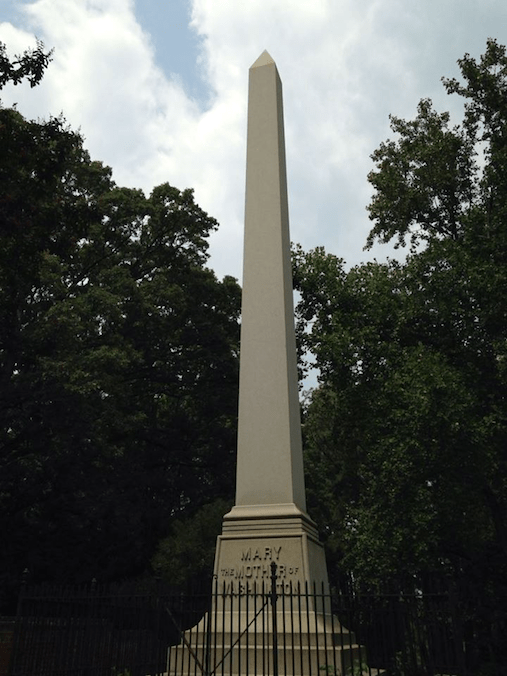
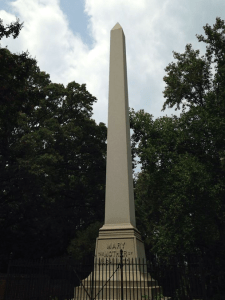
    Mary Washington Monument in Fredericksburg, Virginia. Credit: Beth Hosier/The George Washington Foundation

    True or False?

    Mary Washington had a set of false teeth like her son George?
    FALSE – Mary did not have a famous set of dentures like her son George.

    All of Mary’s children lived to adulthood?
    FALSE – Mary and Augustine Washington had six children together, five living to adulthood.  Their youngest child, Mildred, born in 1738, died at the age of 16 months and is buried at Ferry Farm.

    Mary often traveled to Mount Vernon for extended visits with her son George and his wife Martha?
    FALSE – In fact, George dissuaded his mother from living with them in her later years, arguing that Mount Vernon was much too busy with constant travelers and guests for someone such as his dear and aged mother who deserved peace and quiet.

    Mary lived in Virginia her whole life?
    TRUE – Born and raised on the Northern Neck, Mary moved with her husband throughout their marriage to different family farms located in Westmoreland County, Fairfax County, and then King George County. She lived at Ferry Farm, then called the “Home House”, from 1738 until 1772, when George purchased her a house – the Mary Washington House – in the town of Fredericksburg. She lived there until her death in 1789.

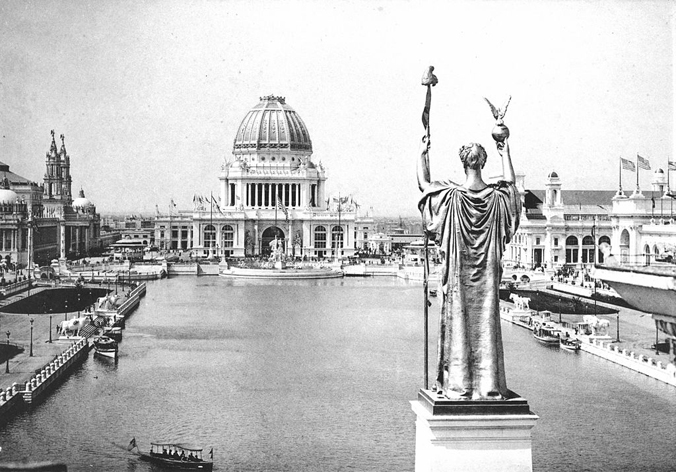
    Mary Washington’s Fredericksburg home was almost sold and moved in its entirety to Chicago for The Colombian Exposition of 1893?
    TRUE – Plans were made to disassemble the Mary Washington House and rebuild it at the 1893 Chicago World’s Fair. The Association for the Preservation of Virginia Antiquities stepped in and purchased house in 1889. They restored and opened it up to the public.

    Chicago World’s Fair looking west from Peristyle, Court of Honor and Grand Basin, 1893. Credit: C. D. Arnold (1844-1927); H. D. Higinbotham; Wikipedia

    Mary remarried after her husband Augustine died in 1743?
    FALSE – It was commonplace during the Colonial era for women to remarry after the death of a spouse. Mary did not, however, preferring to manage the family properties and raise her five young children herself without committing to another marriage that might have restricted her parental control.

    Mary did not live to see her son George become president of the new United States of America?
    FALSE – George visited his mother at her home in Fredericksburg on the way to his presidential inauguration in April 1789 in New York City. Mary died later that same year in August at the age of 81.

    Mary died of breast cancer?
    TRUE – Two doctors treated Mary during the last months of her life in 1789. They could do nothing for her cancer beyond making her comfortable with palliative remedies.

    Mary did not know how to read or write?
    FALSE

    Mary Ball Washington had a ship named after her?
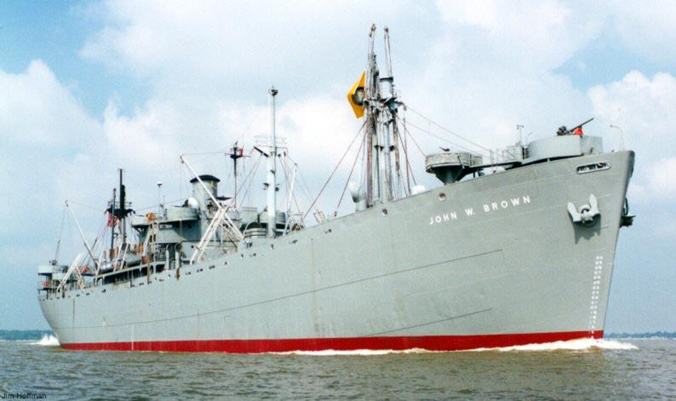
    TRUE – The SS Mary Ball was a “Liberty ship” built during World War II.  Liberty ships were a class of mass-produced cargo vessels simple in design, cheap in cost, and constructed in just a few months.  Built and launched in 1943 as a tank carrier and aircraft freighter, the SS Mary Ball was eventually sold for scrap in 1972.

    SS John W. Brown as an example of a “Liberty Ship” similar to the SS Mary Ball.
    Credit: Wikipedia

    Judy Jobrack, Archaeologist
    Co-Field Director

  • George Washington’s “Last Act of Personal Duty”

    The Presidential election of 1789 looked quite different than our current election day. For one, the election had to last almost a month to ensure that each state had time for their voters to choose their candidate. Then, in February, the Electoral College announced that Washington would be the first president with a resounding 69 electoral votes. Along with this victory, George Washington was unanimously chosen by the popular vote to lead our country. No other president has accomplished this feat. To most, Washington was the obvious choice. His status as a war hero, his strong self-will, and his determination to provide our new nation with solid-ground to build upon were just a few of the things that led him to victory.

    When George was first notified of his new job title, he was at Mount Vernon and knew he must prepare to travel to New York City, the nation’s first capital city, to be inaugurated. First, he started by preparing Mount Vernon for his departure. He ordered his overseers, farm managers, secretaries, and even nephews keep him up-to-date on all goings-on while he was away. Washington, like most landed-gentry in the new country, was land rich and cash poor. So he also wrote a letter to a friend and merchant, Richard Conway, asking to borrow money. “Five hundred pounds would enable me to discharge what I owe in Alexandria &ca;” he wrote, “and to leave the State (if it shall not be permitted me to remain at home in retirement) without doing this, would be exceedingly disagreeable to me.” From this letter, we can see that Washington apparently was not especially enthusiastic about his new appointment. Nonetheless, he saw undertaking the presidency as his duty as expressed in his first inaugural address.

    Among the other plans and arrangements he made, George visited his mother Mary in Fredericksburg. Once Richard Conway had agreed to lend him the needed funds, Washington thanked him and wrote that he would “set of tomorrow for Fredericksburg in order probably to discharge the last Act of personal duty, I may, (from her age) ever have it in my power to pay my Mother it would be very inconvenient for me.” Indeed, by 1789, Mary had fallen quite ill with breast cancer. She had been sick for a while, but only recently had the family realized she was ultimately nearing her end.

    Washington's Last Interview with his Mother
    “Washington’s Last Interview with his Mother” (1860) by an unknown artists, printed by H.E. Coates. Courtesy of Mount Vernon Ladies’ Association

    It had all started in April of 1787. George was heading to Philadelphia to join the Constitutional Convention when he received an urgent letter from Fredericksburg. He wrote to Henry Knox to inform him of his delay in reaching the convention, saying “I am summoned by an express who assures me not a moment is to be lost, to see a mother, and only Sister (who are supposed to be in the agonies of death) expire; and I am hastening to obey this melancholy call, after having just bid an eternal farewell to a much loved Brother who was the intimate companion of my youth and the most affectionate friend of my ripened age.” The previous few months had been rough for the entire family, as George’s letter suggests. John Augustine had passed away suddenly and it had taken its toll. George himself was complaining of arthritis, saying that he was “so much afflicted with a rheumatic complaint (of which I have not been entirely free for Six months) as to be under the necessity of carrying my arm in a sling for the last ten days”.

    Upon arriving in Fredericksburg, after a hasty pace of a ride, George found Betty to be doing much better. Mary, on the other hand, he said “left little hope of her recovery as she was exceedingly reduced and much debilitated by age and the disorder.” It is not certain that this bout of illness had anything to do with the cancer that would later take Mary’s life, but the illness certainly kept the children, especially Betty, watchful of Mary’s health.

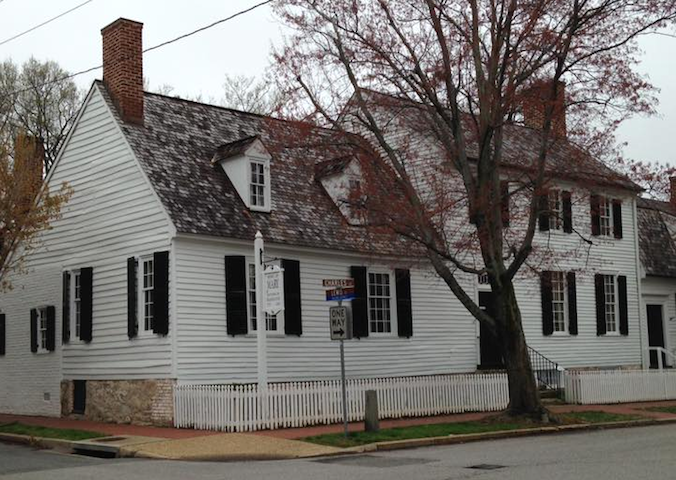
    Mary Washington House
    The Mary Washington House in Fredericksburg, Virginia. Credit: Beth Hosier/The George Washington Foundation

    Mary Washington Monument
    Mary Washington Monument in Fredericksburg, Virginia. Credit: Beth Hosier/The George Washington Foundation

    So in 1789, when Mary’s health was deteriorating once more, George knew that he had to visit her before he left for New York and the presidency. Later, he wrote Betty, “When I was last at Fredericksburg, I took a final leave of my Mother, never expecting to see her more.” Many say that when George visited Mary in March of 1789, it was to ask for a blessing on his new position as President of the United States. Unfortunately, there is no documentation of what their visit entailed other than Washington spending time with his sick mother. Furthermore, given his personal adversity to taking the position, it seems unlikely that he would have needed or wanted permission to take the job. However, I think it can be said that given Mary’s strong influence as a single parent, George’s sense of duty may have been all the blessing or permission he needed from his mother.

    Elizabeth Hosier
    Manager of Interpretation and Visitor Services

  • Lecture – Drinking with the Washingtons: Archaeological Evidence of Colonial Imbibing at Ferry Farm [Video]

    On Tuesday, May 7, 2019, Archaeologist Mara Kaktins, Ceramics & Glass Specialist at The George Washington Foundation, presented a lecture titled “Drinking with the Washingtons: Archaeological Evidence of Colonial Imbibing at Ferry Farm.” Mara explored a wide variety of beverage-related artifacts from teawares to punch bowls and discussed how cups and glasses reflected efforts by Mary Washington to demonstrate the family’s economic status and refinement.

    Join us on Tuesday, May 14, 2019 for “Food in the Eighteenth Century” when Deborah Lawton, Park Ranger at George Washington Birthplace National Monument, will explore the new dishes and changing tastes that marked the foodways of the eighteenth century. Talk begins at 7:00 p.m. The lecture is FREE and hosted at the Fredericksburg branch of the Central Rappahannock Regional Library at 1201 Caroline Street, Fredericksburg, Virginia. To learn more, visit http://www.kenmore.org.

  • The Legend of Mary Washington and the Deadly Lightning Strike

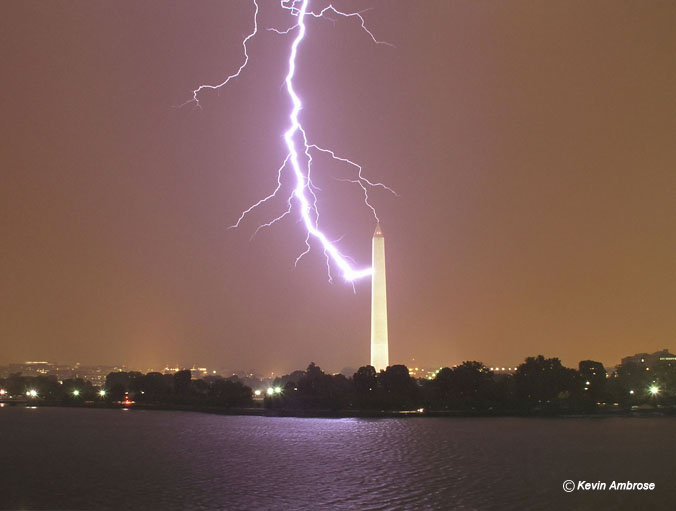
    Lightning striking the Washington Monument, July 1, 2005.
    Lightning striking the Washington Monument on July 1, 2005. Credit: Kevin Ambrose

    Originally, this post was going to explore colonial America’s fear and fascination with lightning and the practical tools created to help prevent destructive lightning damage.  During my research, however, I encountered a tale about Mary Ball Washington and a close encounter with lightning that supposedly traumatized her for the rest of her life.  If true, this story would be a fabulous illustration of the destructiveness of lightning as well as of the anxiety colonial Americans felt about these random bolts from the sky.

    According to the story, one summer evening, Mary was having supper with friends when a bolt of lightning struck the house, traveled down the chimney, and instantly killed the woman sitting next to Mary.  This alleged event was said to be so traumatizing for Mary that it affected every facet of her life from then on.  She trembled at the approach of thunderstorms, she never traveled far from home, she discouraged her children from taking risks, and her nervousness had a negative effect on her relationships with her family.  If true, this story is indeed disturbing and would definitely have been a seminal moment in the life of Mary.

    I began researching the story to try and establish its legitimacy and accuracy.  This began a deep descent down the rabbit hole of historical myth versus truth.  All of which had absolutely nothing to do with lightning.  So I set Benjamin Franklin and his lightning rod to one side in a quest to prove or disprove this tale about Mary.

    My goal was to find primary source documentation that would support this story.  I wanted direct or firsthand evidence about the event from documents like newspaper articles, journal or diary entries, letters or other accounts of the incident from the time.  If I was unable to find primary sources that recorded the incident, then my secondary objective was to trace the story to its point of origin.

    The most recent reiteration of the story comes from a biography first published in 1997.  The author writes, “When [Mary] was pregnant with George Washington, she experienced a shock that may have shaped her relationship with the large child taking shape in her womb.  One summer Sunday afternoon, while the family was having dinner with guests from church, a thunderstorm rolled in.  A bolt of lightning struck the house and traveled down the chimney and hit a young girl . . . .  The electric current was so strong it fused the knife and fork she was using to cut her meat.  She died instantly.  The lightning hit with such force that it severely jolted the pregnant Mary Washington, who was sitting only a few feet away.”  The author theorizes that “Mary Ball Washington never recovered fully from the shock she had seen and felt.  She rarely traveled any farther than church on Sunday and her timorousness touched off a number of dashes with her family, especially her son, who she discouraged from taking any risks . . . she could not understand; in fact she resented [George’s] desire to stray from her side and leave the safety of the farm to go off to war.”[1]

    I was quite excited to find such a detailed account of the event so I flipped to the book’s bibliography to find the author’s source but there was none listed.

    Disappointed, I continued my work to trace the story to its origin.  Eventually, I found six different accounts of Mary’s traumatic lightning story with the earliest appearing in 1850.  Margaret Conkling was the first to recount the tale in Memoirs of the mother and wife of Washington stating that Mary’s “almost constitutional timidity, was occasioned by a singularly distressing incident of her youth – the instant death, from the effects of lightning, of a young friend, who was at the moment when the accident occurred, sitting close beside her.”[2]

    This account has none of the details of the 1997 account and makes no mention of Mary being pregnant with George at the time and instead states the lightning strike occurred in “her youth”.  Subsequent accounts from 1852 to 1892 recount the tale but none of them provide a primary source.[3]

    And that is where my search ended.  There are no primary sources or references about Mary and the lightning incident before 1850, nearly 120 year after the incident supposedly took place.

    This must lead us to ask if the story is even true and, if it isn’t, why would writers continue to use it as a pivotal and personality molding event in Mary’s history?

    We do not know much about Mary Ball Washington’s youth.  We know that by the time she was twelve both her parents had died and she became the legal ward of her uncle.  In 1731, she was introduced to recently widowed Augustine Washington and the two married and moved to Pope’s Creek, Virginia.[4]  Mary left relatively few written records and many letters from various family members at the time barely reference her, let alone give us detailed stories from her life.

    Mary’s enigmatic past has led to many different interpretations of her personality over the years.  In the different lightning stories I found, it seems that each writer was trying to use the story to explain their own ideas of who Mary was as a person. The earlier versions use the story to illustrate a woman of courage and intelligence who, despite being strong, still had flaws. The later version uses the story to show a nervous, harsh woman who tried to hinder her son’s greatness due to her own fears.  While traumatic for Mary, this alleged lightning event also serves as a kind of prophecy or superhero origin story for her future son, turning George into a demigod worthy of becoming the father of a nation.  Each writer used the story as an illustration to fit their own narrative but none of them provide evidence that the event really happened.  The temptation to include a story as dramatic and potentially consequential as a fatal lightning strike and, for Mary, a near death experience is indeed hard to resist.

    This is not to say these authors knowingly falsified the story. They simply are relying more on legend than on fact.  Mary’s reputation and, for that matter, Washington family history has always been steeped in much legend.   So was Mary present when one of her friends was struck and killed by lightning while eating supper?  It’s not impossible but it is highly improbable the event ever took place.

    Heather Baldus
    Collections Manager

    [1] Randall, Willard Sterne. George Washington: A Life. Galahad Books, 2006.

    [2] Conkling, Margaret Cockburn. Memoirs of the mother and wife of Washington. Derby, Miller and company, 1850.

    [3] Hervy, Nathaniel. The memory of Washington. Boston, J. Munroe, 1852; Custis, George Washington. Recollections and Private Memoir of Washington. J.W. Bradley, 1859; Lossing, John Benson. Mary and Martha, the mother and the wife of George Washington, New York, Harper & Brothers, 1886; Walter, James. Memorials of Washington and of Mary, his mother, and Martha, his wife. New York, C. Scribner’s Sons, 1887; Harland, Marion. The Story of Mary Washington. New York, Houghton, Mifflin & Co, 1892.

    [4] “Mary Ball Washington.” George Washington Digital Encyclopedia. George Washington’s Mount Vernon, 2019, www.mountvernon.org/library/digitalhistory/digital-encyclopedia/article/mary-ball-washington/ [accessed March 22, 2019].

  • When George Washington Almost Joined the British Royal Navy

    Not long ago, we explored Three Military Adventures that Inspired George Washington and the influence that Lawrence Washington and his wartime service played in stoking George’s interest in military matters.

    Lawrence fought with the British in the War of Jenkins’ Ear in the early 1740s and spent time aboard the flagship of Admiral Edward Vernon, who commanded British forces during the Battle of Cartegena de Indias.  Lawrence returned to Virginia with stories sure to spark his 10-year-old brother George’s imagination and desire for adventure.  Lawrence’s military service and George’s interest in military things had a fascinating, if perplexing, practical outcome when, late in 1746, Lawrence proposed for 14-year-old George to join the Royal Navy.

    Lawrence Washington attributed to Gustavus Hesselius (c 1738)
    Portrait of Lawrence Washington attributed to Gustavus Hesselius (c. 1738). Credit: Wikipedia / Mount Vernon.

    This is a relatively little known and rather mysterious incident in the life of young George Washington.  Few documents survive that address the matter directly.  There are no documents written by George, Lawrence, or Mary Washington that reveal their actions or motivations in the matter.  The three letters that do address the incident were all written by secondary figures involved.

    It all began in the fall of 1746 when Lawrence sent two letters — one each for George and Mary respectively – to Fredericksburg via Colonel William Fairfax.  George was to deliver Mary’s himself and keep the one to him a secret from her.  We do not know what either of these letters said.

    What we do know is only what William Fairfax told Lawrence in a report dated September 9, 1746 and sent to Lawrence at Mount Vernon.  Fairfax wrote:

    “The weather being so sultry, and being necessarily obliged to go about this town to collect several things wanted, I have not yet seen Mrs. Washington.  George has been with us, and says He will be steady and thankfully follow your Advice as his best Friend.  I gave him his Mother’s letter to deliver with Caution not to shew his.  I have spoke to Dr. Spencer who I find is often at the Widow’s and has some influence, to persuade her to think better of your advice in putting Him to Sea with good Recommendation.”[1]

    The Dr. Spencer mentioned may have been William Spencer, who often was involved as a witness for land transfers to Lawrence.  The secretiveness of George hiding his letter from Mary and of Lawrence apparently enlisting his business partners to argue in favor of the proposal for George to go to sea emphasize the conspiratorial nature of Lawrence’s efforts.

    It appears that, for a time, Lawrence’s manipulations may have worked.  On September 18, 1746, Robert Jackson, a Washington family friend, wrote to Lawrence that “I am afraid Mrs. Washington will not keep up to her first resolution.”  This seems to indicate that she wasn’t against the idea immediately but she did change her mind.  Jackson reported that Mary “seems to intimate a dislike to George’s going to Sea and says several Persons have told her it’s a very bad Scheme.”  He condescendingly dismisses her concerns as “trifling objections such as fond and unthinking mothers naturally suggest” and expresses frustration that “one word against [George’s] going has more weight than ten for it.”

    Jackson noted that William Fairfax was inclined to visit Mary and, moreover, Jackson noted that he himself would “take an opportunity to talk with her and will let you knew her result.”[2]  While Jackson may have let Lawrence know the result, no document has been found to let us know the result of these specific discussions two centuries later.

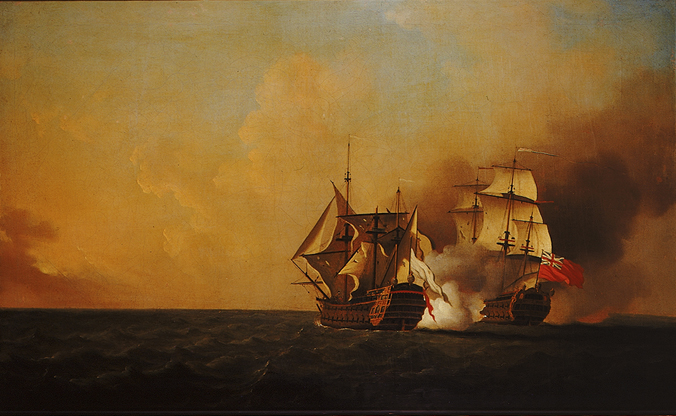
    Action Between Nottingham and Mars, 1746 by Samuel Scott
    “Action Between Nottingham and Mars” (1746) by Samuel Scott depicts a British-French naval battle in October 1746 when the Washingtons were debating whether George should join the Royal Navy. Credit: Wikipedia/National Maritime Museum.

    At some point, perhaps feeling outnumbered, Mary decided to solicit the advice of her brother Joseph Ball in England.  Dated May 19, 1747, his reply, which is a disdainful rejection of the entire proposal, is worth quoting at length.

    “I understand that you are advised and have some thoughts of putting your son George to sea.  I think he had better be put apprentice to a tinker, for a common sailor before the mast has by no means the common liberty of the subject; for they will press him from ship to ship where he has fifty shillings a month, and make him take twenty-three, and cut and slash and use him like a negro, or rather like a dog.  And as to any considerable preferment in the navy, it is not to be expected, as there are so many gaping for it here who have interest, and he has none.  And if he should get to be master of a Virginia ship (which is very difficult to do), a planter who has three or four hundred acres of land, and three or four slaves, if he be industrious, many live more comfortably, and have his family in better bread than such a master of a ship can . . .  He must not be too hasty to be rich but go on gently and with patience as things will naturally go.  This method without aiming at being a fine gentleman before his time, will carry a man more comfortably and surely thought the world than going to sea, unless it be a great chance indeed.”[3]

    Mary must have ultimately and definitely rejected Lawrence’s plan, a courageous act for a woman in male dominated colonial Virginia.  George, of course, did not pursue a career at sea but turned to surveying instead.

    Like many incidents in young George Washington’s life, the historical record is elusive and often raises more questions than it answers.  What prompted Lawrence to make the suggestion in the first place?  What were George’s views on the proposal and the debate?  What were Mary’s specific objections?  None of these questions may ever be answered.  Of course, the greatest question raised by the incident is the also unknowable counterfactual one.  Would history have unfolded differently if the man who was supposed to have been the commander of the Continental Army ended up spending his life on the King’s ships?

    Zac Cunningham
    Manager of Educational Programs

    [1] William Fairfax to Lawrence Washington, September 9, 1746, quoted in Moncure Daniel Conway’s Barons of the Potomack and the Rapphannock, New York, Grolier Club, 1892: 238, available at https://books.google.com/books?id=zDESAAAAYAAJ&dq=barons%20of%20the%20potomac%20and%20rappahannock&pg=PP1#v=onepage&q&f=false [accessed August 26, 2017].

    [2] Robert Jackson to Lawrence Washington, September 18, 1746, quoted in Moncure Daniel Conway’s Barons of the Potomack and the Rapphannock, New York, Grolier Club, 1892: 239-40, available at https://books.google.com/books?id=zDESAAAAYAAJ&dq=barons%20of%20the%20potomac%20and%20rappahannock&pg=PP1#v=onepage&q&f=false [accessed August 26, 2017].

    [3] Joseph Ball to Mary Washington, May 19, 1747 quoted in Marion Harland’s The Story of Mary Washington, New York: Houghton, Mifflin & Co, 1893: 79-80 available at https://archive.org/details/storyofmarywashi00harl [accessed August 26, 2017].

  • Video – Lecture: “The Mother of the Father of Our Country”

    On Tuesday, September 12, 2017, Laura Galke, archaeologist, small finds analyst and site director at The George Washington Foundation, presented a lecture titled “The Mother of the Father of Our Country.” Laura examined how historical documents and newly-unearthed artifacts indicate that Mary Washington, George’s mother, faced challenges, governed her home, and managed the family’s plantations with a skill and determination that recent biographers have not appreciated. Laura explored how the Washingtons’ investments in attire, furnishings, and landscape modification reflect their strategy for overcoming setbacks and exhibiting British colonial refinement.  The lecture was given at the Central Rappahannock Regional Library headquarters in Fredericksburg, Virginia.

    Join us at the Washington House Celebration on Saturday, October 7, 2017 from 12:00 p.m. – 4:30 p.m to celebrate the construction of the Washington house! A special ribbon-cutting ceremony will begin at 1:30 p.m. featuring notable speakers. After the ceremony, guests will be invited to view the reconstructed Washington house! Parking for the event is off site at the VRE Fredericksburg Park and Ride Lot G at the corner of Prince Edward Street and Frederick Street.  Limited handicap parking is available at Ferry Farm. Buses will transport guests to and from Ferry Farm. The Washington House Celebration is a free event and RSVPs are not required.

    Learn more about the Washington House here and view other videos, photos, and blog posts about the project here.

  • Video – Lecture: “Building George’s House, Introducing the New Ferry Farm”

    On Tuesday, September 5, 2017, Dave Muraca, director of archaeology and vice president of museum content at The George Washington Foundation, presented “Building George’s House: Introducing the New Ferry Farm,” his account of the last eighteen months as George Washington’s Ferry Farm witnessed the careful reconstruction of the Washington house using many traditional techniques. Dave reviewed the archaeology that made the reconstruction possible and recounted the work of the skilled craftsmen building George’s house. The lecture was given at the Central Rappahannock Regional Library headquarters in Fredericksburg, Virginia.

    Join us at the Washington House Celebration on Saturday, October 7, 2017 from 12:00 p.m. – 4:30 p.m to celebrate the construction of the Washington house! A special ribbon-cutting ceremony will begin at 1:30 p.m. featuring notable speakers. After the ceremony, guests will be invited to view the reconstructed Washington house! Parking for the event is off site at the VRE Fredericksburg Park and Ride Lot G at the corner of Prince Edward Street and Frederick Street. Limited handicap parking is available at Ferry Farm. Buses will transport guests to and from Ferry Farm. The Washington House Celebration is a free event and RSVPs are not required.

    Learn more about the Washington House here and view other videos, photos, and blog posts about the project here.