Lives and Legacies

Tag: Preservation

  • Lovely Linoleum and Other Historic Floor Coverings – Two Hot Takes

    Linum (“Flax”) and oleum (“oil”) – Fashionable and Affordable

    As a Historic Preservation student at the University of Mary Washington, I’ve grown to appreciate almost all aspects of materiality. Over the past four years, my education has taught me to look closely at the built environment around me.

    Two years ago, I stumbled across a book about mid-century kitchens, which discussed modern flooring’s ugly duckling: linoleum. From this, I developed an appreciation for linoleum and vinyl flooring and an equal obsession with spotting them.

    Most people wouldn’t put Linoleum at the top of their list of favored materials. After all, historically, it’s been labeled as cheap, tacky, and ugly. However, linoleum has been an important part of modern living since the late 19th century. While the patterns most people initially thought of weren’t very attractive (that one red brick style), their initial creation changed the game for durable materials in a household and single-handedly became a hospital favorite.

    Linoleum was first invented by Frederick Walton in Chiswick, England, when he discovered that oxidized linseed oil could replace rubber when mixing the oil with cork and other fibers. This process was sped up by heating the oil with lead and zinc, which formed a sticky paste that would be mixed with sawdust or cork to keep the cloth from becoming tacky. Shortly after receiving a patent in 1864, Walton opened the American Linoleum Manufacturing Company on Staten Island, New York, in 1872, with the nearby town named Linoliumville in its honor.

    Fred Walton, creator of Linoleum

    The genius of linoleum was/is its durability and ability to be mass-produced cheaply. Additionally, the material could be customized using pigments to create virtually any pattern, which aided in its early popularity in homes. Early linoleum was commonly produced in printed, marbled, inlaid, or plain patterns, with these distinct designs often serving as time machines to gauge when the flooring was installed. Putting aside the aesthetics, linoleum is most likely to be seen in high-traffic areas, such as hallways, kitchens, and mudrooms, due to its long-term durability.

    A well-installed linoleum is waterproof and surprisingly antibacterial, which is why, since its invention, linoleum has been commonly used in hospitals. The flooring was also popular among naval vessels in the early twentieth century, with battleships and luxury cruisers taking advantage of the material. In fact, the RMS Titanic used inlaid linoleum flooring for a significant portion of its decks, which can be seen in past photos and even on the sea floor today.
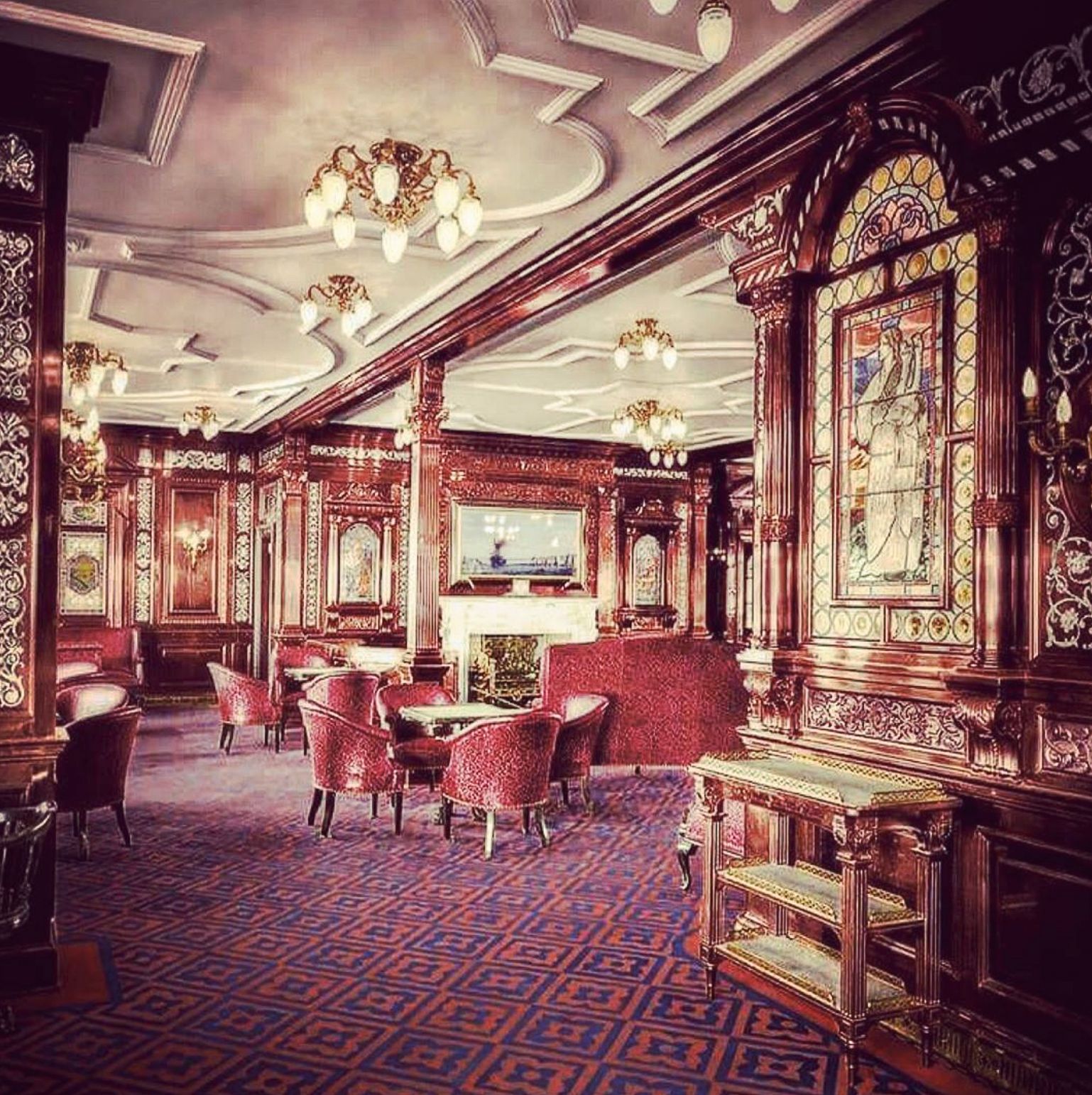
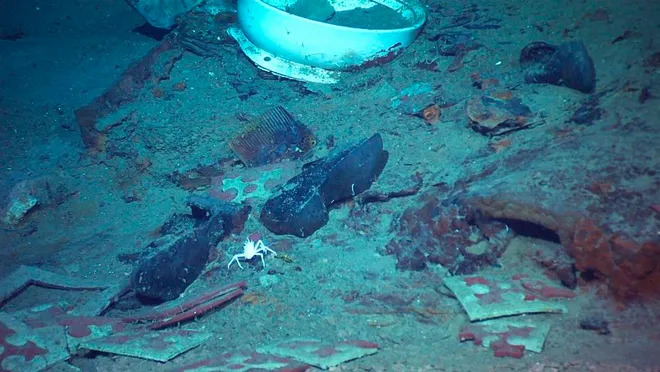
    The manufacturing boom of the mid-twentieth century brought modern materials and technologies to the average household, including the popularization of linoleum in common spaces. Kitchens and high-traffic areas would continue to have the flooring material. However, living rooms, eating spaces, and even walls would start to display colorful and flashy patterns. This popularity would be short-lived, as the 1950s brought vinyl flooring, an extremely similar product, but was pushed as a newer and more “fashionable” alternative to linoleum.
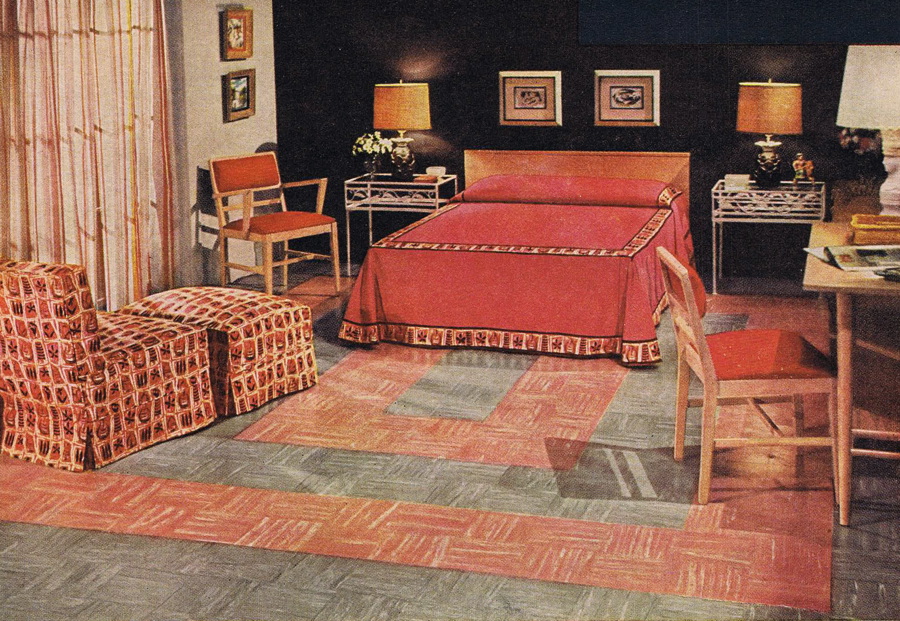
    An image of a bedroom from a 1952 advertisement for linoleum flooring

    Despite the initial falloff, linoleum has made a surprising comeback in homes within the last few years. It’s understandable, as per square foot, the material is very affordable and easy to clean, not to mention that rising interest in the conservation of historic homes has led to the preservation and replication of historic linoleum. Most often, the damage to the material features is rips and cracks, which are easily repaired with patching and a fresh coat of sealant.

    I don’t write any of this intending that you agree with me. However, I believe that linoleum reflects the best of modern materiality. It’s low-cost, eco-friendly, durable, and easy to customize, allowing lower-income homes to decorate their spaces economically and colorfully. While spotting linoleum in older buildings may be rare due to being covered with changing fashion trends (we are all familiar with carpet over beautiful hardwood floors), preserving it is just as important as any other part of the built environment.


    Helena Samson

    Fleming Smith Scholar, UMW Class of 2025


    Linoleum’s Forebearer “Fancy Pattern-Cloth” – Eighteenth Century Floorcloths

    The future of home restoration and preservation will involve saving certain building materials, such as wood, stone, brick, and decorative elements, like linoleum. While humble and even ridiculed (you know the pattern), linoleum will eventually be treasured as a lasting historical remnant, helping future preservationists add context and depth to restorations.

    Classic linoleum, everyone seemed to have despite not wanting to admit it.

    Unfortunately, in eighteenth-century historical preservation, we are rarely lucky enough to find samples of the predecessor of linoleum, the floorcloth. The floorcloth was a relatively common floor covering in eighteenth-century Virginia homes. It was made from woven cloth, usually heavy and sturdy, like linen or cotton canvas. This canvas was then stretched, several layers of oil paint applied, and covered in varnish. This floorcloth could be painted in any fashionable design, as seen in John Carwitham’s book published in 1739, with the replica marble being one of the favorites. 

    Like linoleum, floorcloth was prized because it was customizable, durable, easily cleaned, and repairable. It could also be cut down and used in other areas like kitchens or closets after it lost its fashionability or was replaced with carpet. It was so versatile that it basically reused itself out of existence.

    While no known complete examples of eighteenth-century floorcloths exist, bits and pieces have been found, offering insight into their construction and functionality in the home. Coincidentally, here at Kenmore, we found remnants of a floorcloth under the floorboards in the attic during a period of restoration in 1989. Small samples from the remnants were taken for analysis:
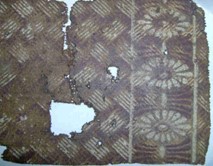
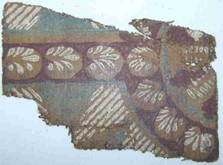
    Base layer – yellow preparatory layers of lead white and yellow ochre ground in linseed oil. The uneven distribution of the large, clumped pigments suggests it was hand-ground paint.

    Black paint is found in the third layer above the ground coatings with remnants of plant resin varnish, followed by a green design layer. This could mean the black paint was the original design, and it was repainted after varnish and the green design were put on top.

    Green-painted areas – made up of white lead, Prussian blue, yellow ochre, and calcium carbonate.

    White paint – composed primarily of white lead and calcium carbonate

    We can draw a few conclusions from this paint analysis. One, the floorcloth was well used but eventually worked its way down the list of favored household furnishings, whether from wear and tear or fashionability. Either way, it was ultimately rolled up and stored out of sight, and lucky for us, forgotten.

    Second, the white paint sample did not contain zinc white, which was used after 1840, and the green paint sample did not contain chrome green, which means it was likely produced before 1816, when chrome yellow pigments were commercially available. So, while we can’t verify that it was a Lewis family floorcloth, it is a very early example of the floor covering. It inspired the floorcloth reproduced for Fielding’s office in Kenmore, which you can read about in our previous post, “What Was Old Is New Again”.
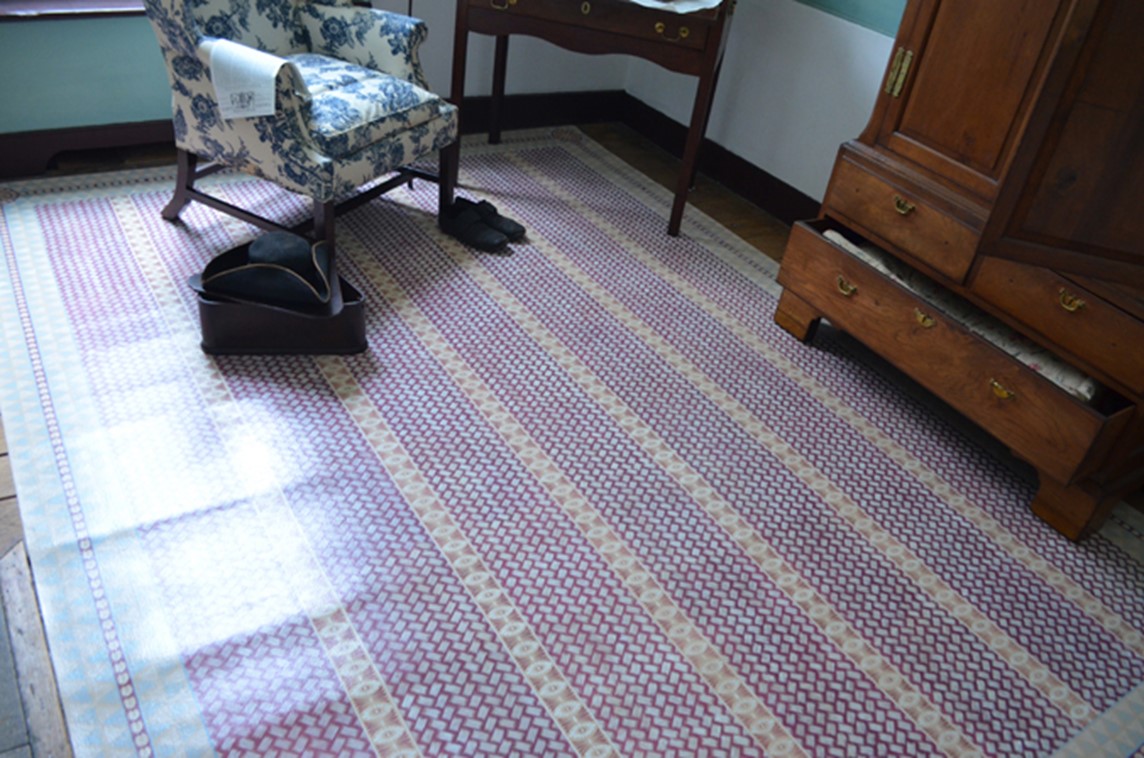
    Beautiful reproduction floorcloth hand-painted by Black Dog Gallery, Yorktown.

    Today, thanks to linoleum, we can choose affordable, durable, and even fashionable flooring materials. Linoleum is the evolution of floorcloths with similar goals and functionality. However, while floorcloths didn’t usually survive, linoleum will follow us through history and deserves to be preserved even if it leads to awkward questions about style and décor.

    Oh, there will be questions.

     Heather Baldus

    Collections Manager


    Bibliography

    Kaldewei, G. (2000). Linoleum: History, design, Architecture, 1882-2000. Hatje Cantz ; Distribution in the US, DAP, Distributed Art Publishers.

    Garcia, K. (2023, December 6). Caring for 100-year old linoleum. Tenement Museum. https://www.tenement.org/blog/fun-with-linoleum-no-really/

    Houseman, C. (2020, September 11). Titanic’s linoleum. Encyclopedia Titanica Message Board. https://www.encyclopedia-titanica.org/community/threads/titanics-linoleum.52676/

    NPS. (n.d.). https://www.nps.gov/orgs/1739/upload/treatment-guidelines-2017-part2-reconstruction-restoration.pdf

    Landreau, A.N. (1976). America underfoot: A history of floor coverings from colonial times to the present. Published for the Smithsonian Institution Traveling Exhibition Service by the Smithsonian Institution Press.

    Weissman, J.R., & Lavitt, W. (1994). Labors of love: America’s textiles and Needlework, 1650-1930. Wings Book: Distributed by Outlet Book Co.

    Buck, Susan L. Floorcloth Fragments Cross-Section Microscopy Report, Kenmore, Fredericksburg, Virginia. (2006)

  • From the Vaults: Rarely Seen Documents

    Some of the most delicate objects in our collection are our archives. Paper and other document materials like vellum and parchment are very sensitive materials that can be irreversibly damaged simply by light.  This makes it very difficult to display or put on exhibit for extended periods despite our comprehensive policies for conserving and preserving documents; exhibition has always been unfeasible.  To remedy this, we have been working on getting archival-safe, high-quality images of our important documents online for everyone to access.  So, while you might not see the documents in person, you can still explore, read, and learn about these important papers while we preserve them for future generations.     

    Until we launch our online archives, I wanted to give everyone a sneak peek at a few of our incredible pieces.

    One of our oldest documents in the collection is a Land Grant signed by William Gooch on September 28, 1730, written on vellum.  William Gooch was a colonial administrator who served as governor of Virginia from 1727 to 1749.  The grant is not in the best condition, but it reads that it grants 400 acres in Spotsylvania County to Paul Plunkepee.  This grant is officially recorded as Land Office Patents, No. 14, 1728-1732, page 40, and is available at the Library of Virginia.

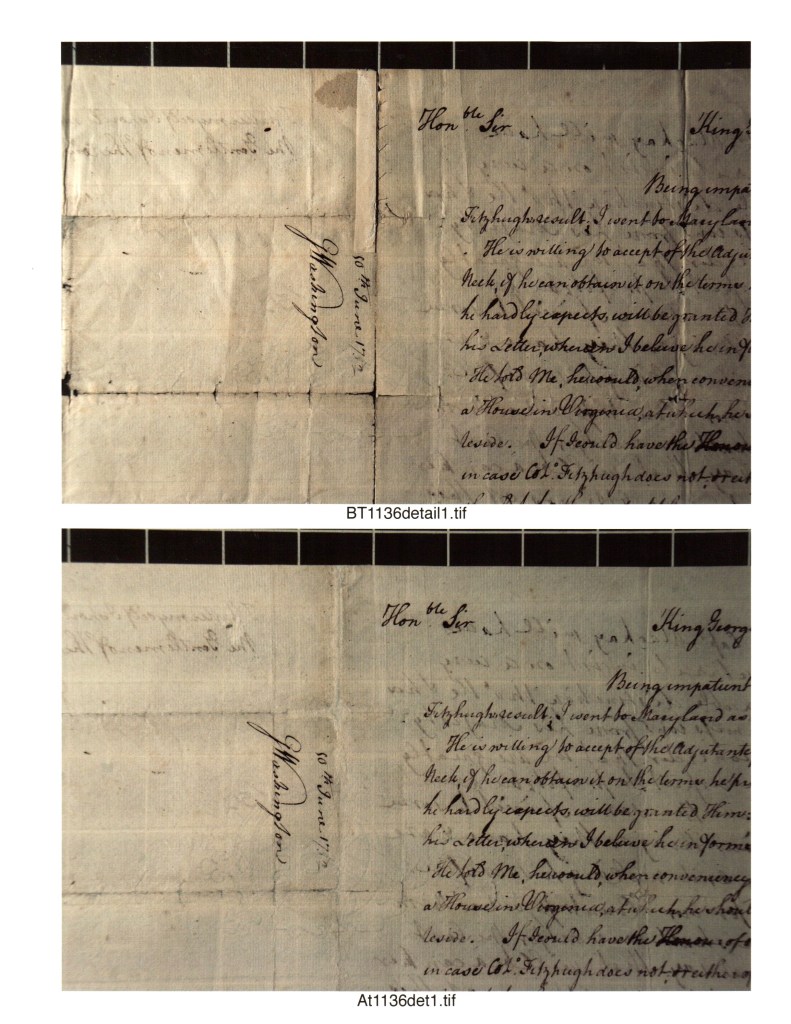
    One of our most unique documents is a letter from George Washington to Lieutenant Governor Robert Dinwiddie, written on June 10, 1752, when he was twenty.  Robert Dinwiddie served as Lieutenant Governor of Virginia from 1751 to 1758.  In the letter, George requests his first military appointment to the open adjutancy of the Northern Neck or other district.  George’s half-brother Lawrence had been appointed Adjutant General of the colony in 1743.  Due to his illness and eventual death, the adjutant was to be divided into smaller districts (i.e., Northern Neck).

    Dinwiddie declined the appointment but assigned George to an envoy position that winter to confront the French, who had recently built a fort on what Dinwiddie considered British land.  Additionally, George met with the Iroquois Confederacy to make peace and obtain intelligence about the French.  

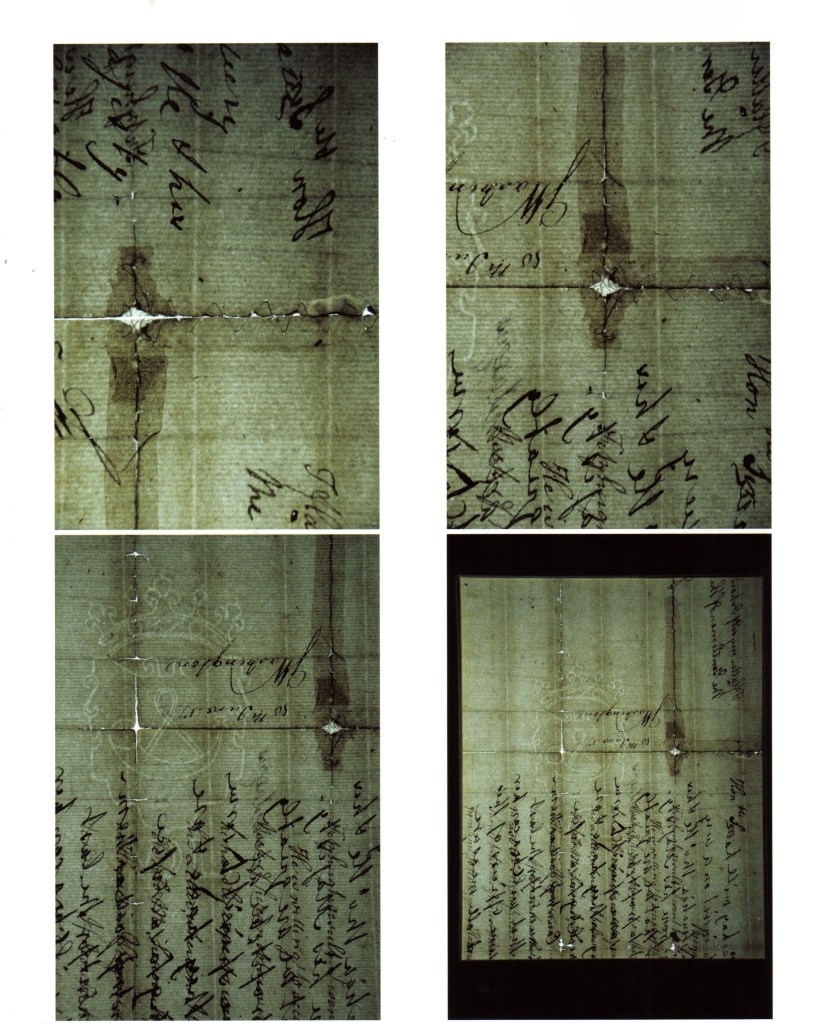
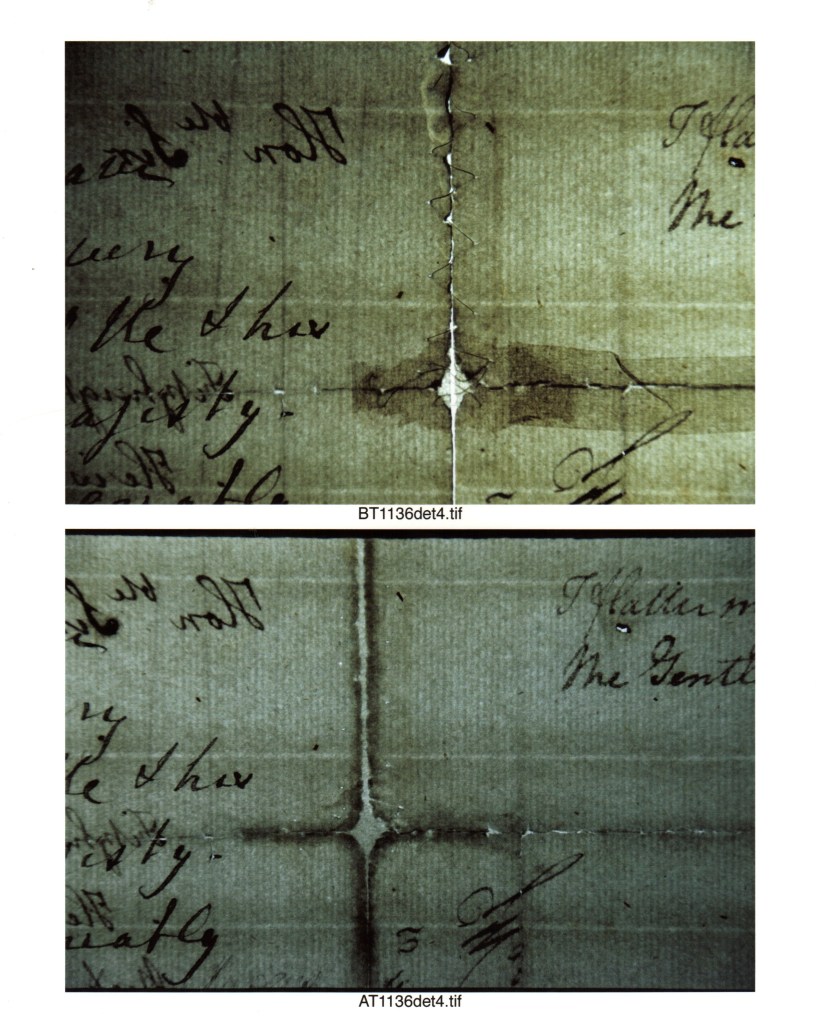
    This amazing letter pinpoints the beginning of George Washington’s illustrious military career, which would eventually culminate in him becoming the first President of the new United States of America.  The letter is in great condition after meticulous conservation work, which included repairs with Japanese tissue called tengucho and wheat starch paste called jin shofu.  It was then cleaned and flattened, and the iron gall ink stabilized.

    A transcript of the letter can be found on the National Archives website at Founders Online.

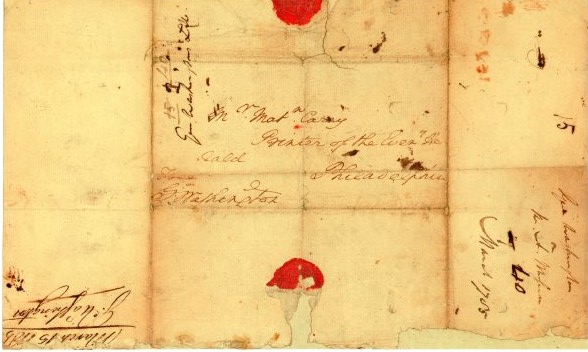
    Next are two letters between George Washington and Irish-born publisher Matthew Carey.  Matthew Carey moved to America in 1784 and settled in Philadelphia, where he established a publishing business and bookshop with $400 given to him by the Marquis de Lafayette.  Carey’s first publication was The Pennsylvania Herald in 1785, followed by two of the first successful American magazines, The Columbian Magazine and The American Magazine in 1786 and 1787.

    In George’s first letter to Carey in 1785, he requests a subscription to Carey’s newspaper but asks him to send the newspaper disguised as an ordinary letter because George has been having problems with the post office delivering his newspapers .  George thinks his papers may not have been delivered because “persons who wishing to read News Papers without being of the expence [sic] of paying for them, make free with those which are addressed to others.”

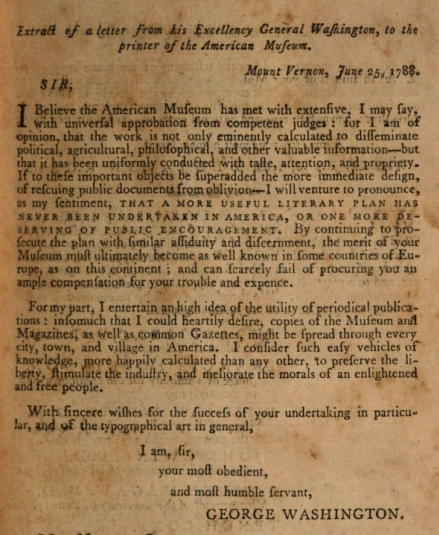
    The second letter between George and Matthew is dated June 25, 1788.  The year before, Carey launched “The American Museum” magazine.  It was a literary museum that reprinted significant historical documents on American history and original essays on politics, commerce, and culture.  The magazine got a positive response, but Carey was finding it expensive to distribute the magazine across the country, so he asked George, one of his first subscribers, to write an endorsement for the magazine that would help attract new subscribers.[2] 

    Washington responded immediately, seizing the opportunity offered by Carey to express his belief that the free dissemination of information and ideas was vital to preserving American liberty.  ‘I could heartily desire,’ Washington wrote, that ‘copies of the Museum and Magazines, as well as common Gazettes, might be spread through every city, town & village in America – I consider such easy vehicles of knowledge, more happily calculated that any other, to preserve the liberty, stimulate the industry and meliorate the morals of an enlightened and free People.”

    Carey published Washington’s endorsement in the next issue of his magazine—his marks for the typesetter can be seen in the original Washington letter.  The result was a flood of new subscriptions that allowed Carey to continue publishing The American Museum for another four years.

    Transcripts of the letters can be found on the National Archives website at Founders Online.

    These are just a few of the amazing documents in our collection, which we hope to bring you soon so that you can explore them yourself.  Check back often, and we will keep you updated on our progress with our digitization project.

    Heather Baldus

    Collections Manager


    Bibliography

    Edd Applegate (August 17, 2012). The rise of Advertising in the United States: A History of Innovation to 1960. Scarecrow Press. p.25.


  • 1925 Dedication Day: A (Block) Party from the Past
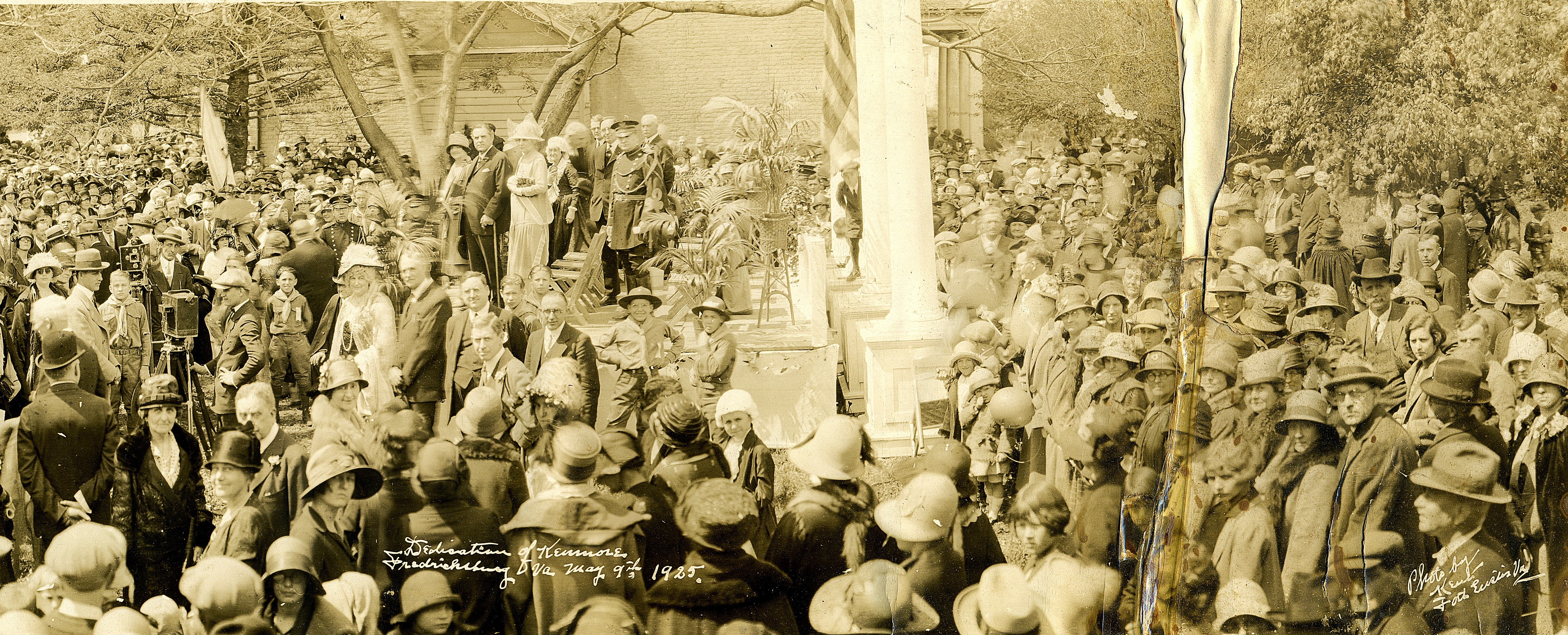
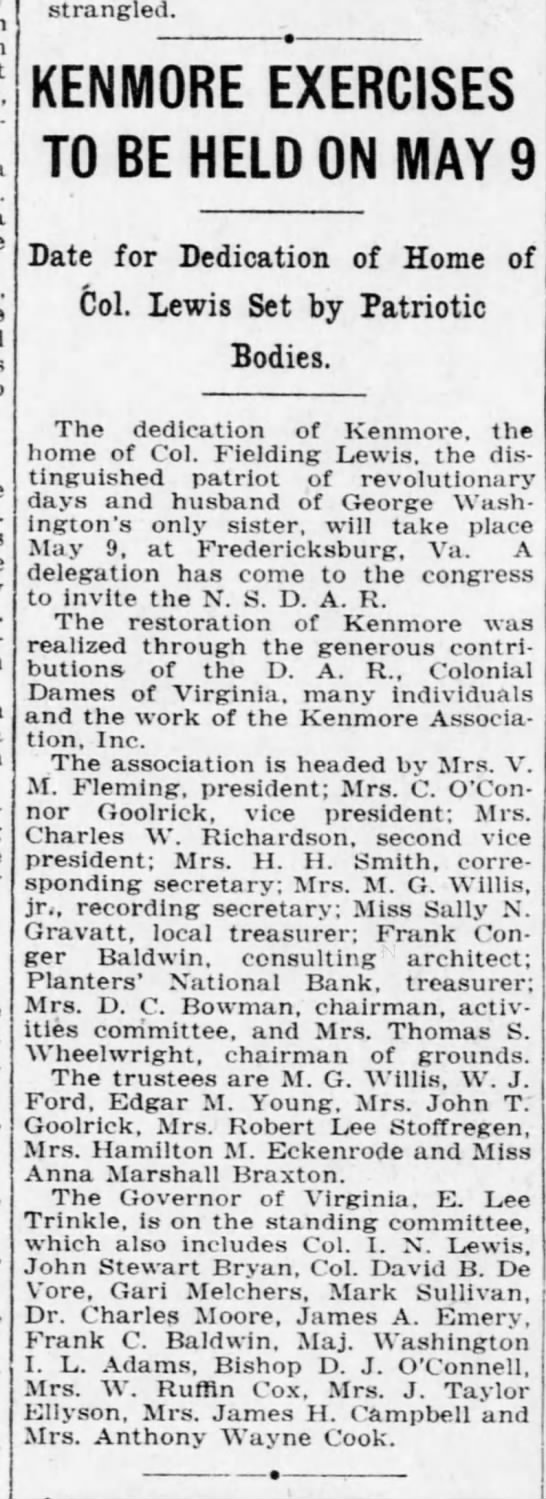
    Spring is a busy time of year for historic house museums, as we see an influx of school groups, vacationers, and families taking advantage of the beautiful weather. This spring is an especially exciting year at Historic Kenmore since we are preparing to celebrate our centennial anniversary! As discussed in our previous blog post, it is thanks to the efforts of Emily White Fleming, her daughter Annie Fleming Smith, and the Washington Lewis DAR chapter, that Kenmore was saved from development in 1922. In honor of the centennial, we have installed a new exhibit in the Crowninshield Building Visitor Center that explores Kenmore’s preservation history. One image currently on display is a photograph from May 9, 1925, Kenmore’s dedication day.

    Dedication Day 1925

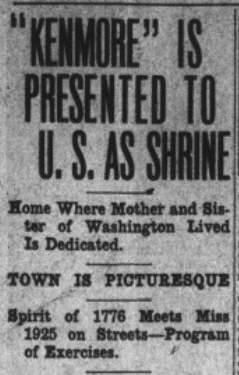
    On May 9, 1925, a dedication was held to celebrate Kenmore opening to the public. People flocked to Washington Avenue for the day’s festivities. According to the Richmond News Leader, “automobiles from all parts of the state and from other states” brought people to Fredericksburg, and “every train was crowded.”[i] Articles advertising the event can be found in local papers ranging from The Evening Star (Washington, D.C.) to the Gloucester Gazette and Northern Neck News, as well as in larger publications like The New York Times. In large block print, the Times declares: “BETTY WASHINGTON’S HOME HAS BEEN SAVED; Women of Fredericksburg, Va., Will Dedicate Kenmore on May 9.”[ii] Dedication day activities included a large parade, costume contest, and brass tunes played by the United States Marine Band. Fredericksburg school children danced the minuet; students from the Virginia State Teachers College hosted a maypole dance, and the mayor and governor gave remarks. The widespread publicity that Kenmore’s reopening received was a reflection of Americans’ growing interest in the historic preservation movement of the day. Notably, many of these early twentieth-century preservation efforts were led almost entirely by women.

    As part of our centennial celebrations (and reminiscent of Kenmore’s original dedication day), we will host a Centennial Block Party at Kenmore on Saturday, April 9th, from 10:00 am to 2:00 pm. This community event will feature tours of the house, games, crafts, stories in the garden, and more! Many of the activity tables will highlight different elements of the house that, thanks to twentieth-century preservation efforts, we are still able to appreciate today.

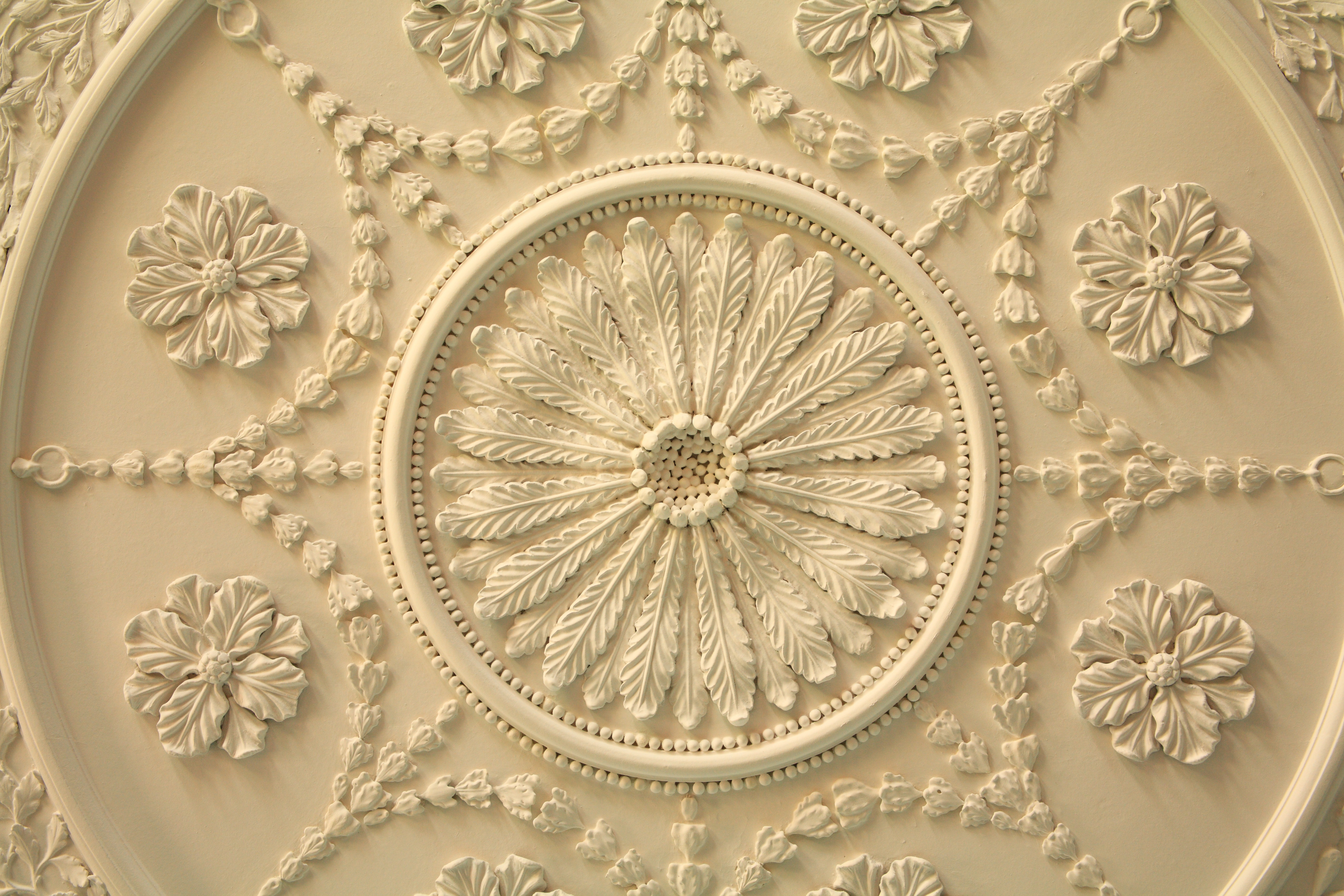
    Stucco Ceilings:

    Stucco Ceiling at Kenmore

    Referred to in Lewis family letters simply as “The Stucco Man,” not much is known about the craftsperson who created Kenmore’s beautiful stucco ceilings. “The Stucco Man” is responsible for the three elaborate plasterwork ceilings and two over-mantel inlays at Kenmore. In 1882, Kenmore resident William Key Howard, Jr. lay on his back atop scaffolding to clean and repair extensive damage to the original plasterwork ceilings. At our plaster activity table, visitors can try their hand at making their own “plaster” impressions or, like Howard, tracing the intricate ceiling patterns. (Scaffolding not included!)

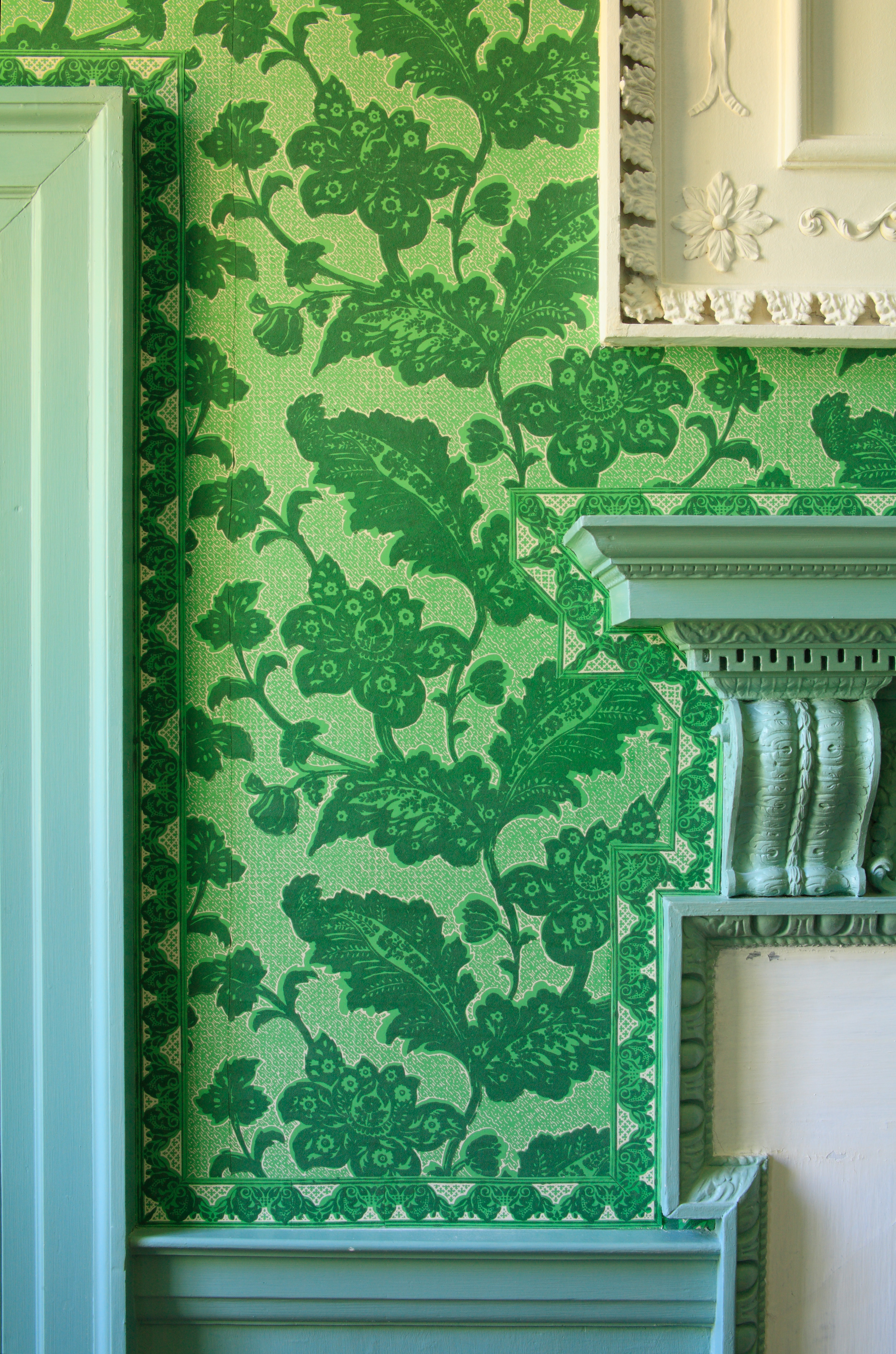
    Flocked Wallpaper

    Flocked wallpaper in Drawing Room at Kenmore

    Vibrant green flocked wallpaper covers the walls of Kenmore’s drawing room. “Flocked” wallpaper was supposed to imitate the look of expensive damask or velvet hangings. The raised velvet-like texture was created by adhering small powdered textile particles called “flock” to the wallpaper.[iii]  At our wallpaper activity table, visitors can design their own wallpaper swatch using stamps and stencils to mimic eighteenth-century block printing techniques.

    In addition to these and other activities, throughout the event, visitors can engage with historic interpreters, curators, and archaeologists to learn more about preservation history, the Lewis and Washington families, and the enslaved men and women who lived and worked at Kenmore.

    Kenmore has a long history with many different stories to tell, and it is thanks to the twentieth-century preservation movement that we still have the physical spaces in which to bring these stories to life. Peopling these spaces is important, and our goal is to continue to preserve, uncover, and interpret the histories of all those who have passed through Kenmore. While the historic preservation field has grown and evolved since Kenmore’s dedication day in 1925, we hope that our community block party will spark a similar interest in preservation efforts and will encourage visitors to reflect on why historic preservation still matters today. What places in your own community have special meaning to you? What stories would you choose to preserve and protect for future generations?

    Ann Waters

    Manager of Interpretation and Visitor Services


    [i] ”Kenmore” is presented to U.S. as shrine. (1925, May 9). The Richmond News Leader, Number 8690 Page 1.

    [ii] Betty Washington’s home has been saved: Women of Fredericksburg, Va., Will Dedicate Kenmore on May 9. (1925, May 3). The New York Times, Section XX, Page 6. https://www.nytimes.com/1925/05/03/archives/betty-washingtons-home-has-been-saved-women-of-fredericksburg-va.html

    [iii] Victoria and Albert Museum. (n.d.). Flock Wallpaper. https://www.vam.ac.uk/articles/flock-wallpaper

  • Kenmore’s Centennial: How the Ladies of the Kenmore Association Saved the Lewis Family Home

    The year 2022 is significant for The George Washington Foundation as it is the centennial of the saving of Kenmore.  We have begun the new year with a new exhibit exploring the saving of Kenmore by The Kenmore Association and the beginning of the restoration of the house and turning it into a treasured historic site.

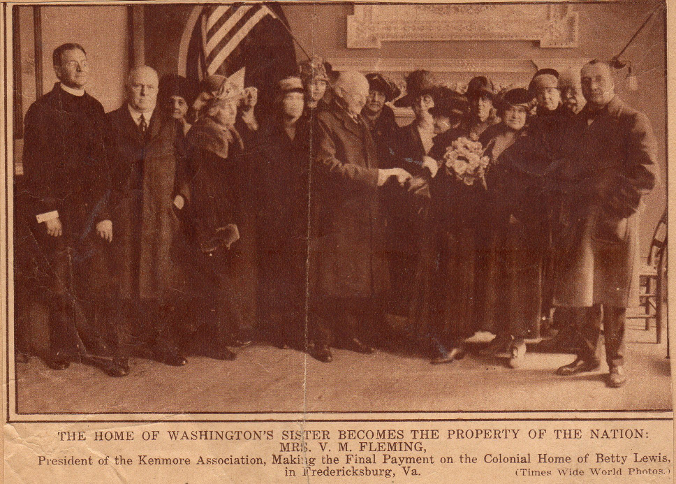
    On January 1, 1925 — ninety-seven years ago — a group of well-dressed women in hats and long fur coats assembled at Kenmore to hand over the final $1,000 payment and gain full possession of the house and land.  This meeting was the culmination of thirty-two months of persistent work and determination by the ladies of The Kenmore Association to save the historic property from destruction.

    Emily White Fleming (identified in the newspaper caption by her husband Vivian Minor Fleming’s initials) makes the final payment to purchase Historic Kenmore on January 1, 1925.

    This crusade began four years earlier with a brief notice in the Fredericksburg Daily Star from Mr. E. G. Heflin, the owner of the Kenmore property.  The announcement stated: “I have decided to build at once…6 or more modern, up-to-date residence [sic] on Kenmore.”  Built on a section of the plantation property, these houses prompted concern among many local citizens at the thought of further loss to the historic site.

    By 1922, the destruction of the old Lewis home seemed imminent.  Mr. Heflin placed an advertisement for the sale of the house itself and cut up much of the original estate into smaller building lots to be sold to developers.  If the house was sold, it might be remodeled into apartments or just razed to the ground.  This escalation increased the alarm even more, and some tried to raise funds to purchase Kenmore.  This attempt proved unsuccessful, and the house did look to be lost.  However, salvation appeared in the form of Kate Waller Barrett and the National Society of the Daughters of the American Revolution (DAR).

    In March of that year, Mrs. Barrett, Virginia Regent of the DAR, came to Fredericksburg with the purpose of organizing a new chapter in the town.  Emily White Fleming and a group of intrepid ladies proposed this turn of events as a potential way of saving Kenmore.  Mrs. Fleming was 68 years old and, though seemingly small and fragile, she, in reality, had a tenacious and determined spirit.  She accepted the position and, with the help of her daughter Annie Fleming Smith, known as “Miss Annie,” began their campaign to save the old Lewis house from destruction.

    The ladies approached Mr. Heflin and negotiated an agreement to the purchase the property.  The group had to make a first payment of $10,000 within four months, or the deal would be off.  Furthermore, if Mr. Heflin got a satisfactory offer within those four months, he could go ahead and sell the property outright. It was a tough deal, but the ladies rose to the challenge spectacularly.

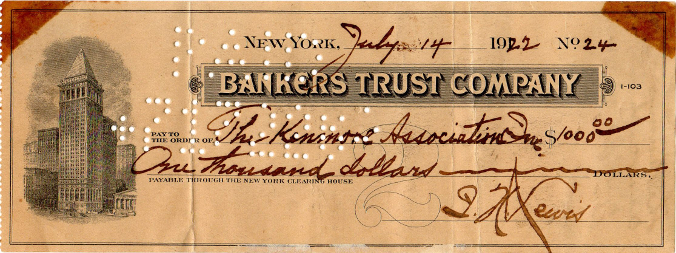
    Mrs. Fleming and Miss Annie began fundraising immediately.  They wrote hundreds of letters by hand, stating facts about Kenmore in a simple, forceful style and then making appeals for help. Mrs. Fleming recalled, “I could write thirty-nine letters a day and Annie forty-nine. We never had a typewriter until the campaign was over.” In response to one of Mrs. Fleming’s letters, Colonel Isaac Newton Lewis, maker of the Lewis machine gun and a descendant of Fielding Lewis, contributed the first $1,000. Not to be outdone, The Colonial Dames of America in the State of Virginia gave a substantial donation of a $1,000 as well.

    Donation from Colonel Isaac Newton Lewis donated the first $1,000 to the Kenmore Association.

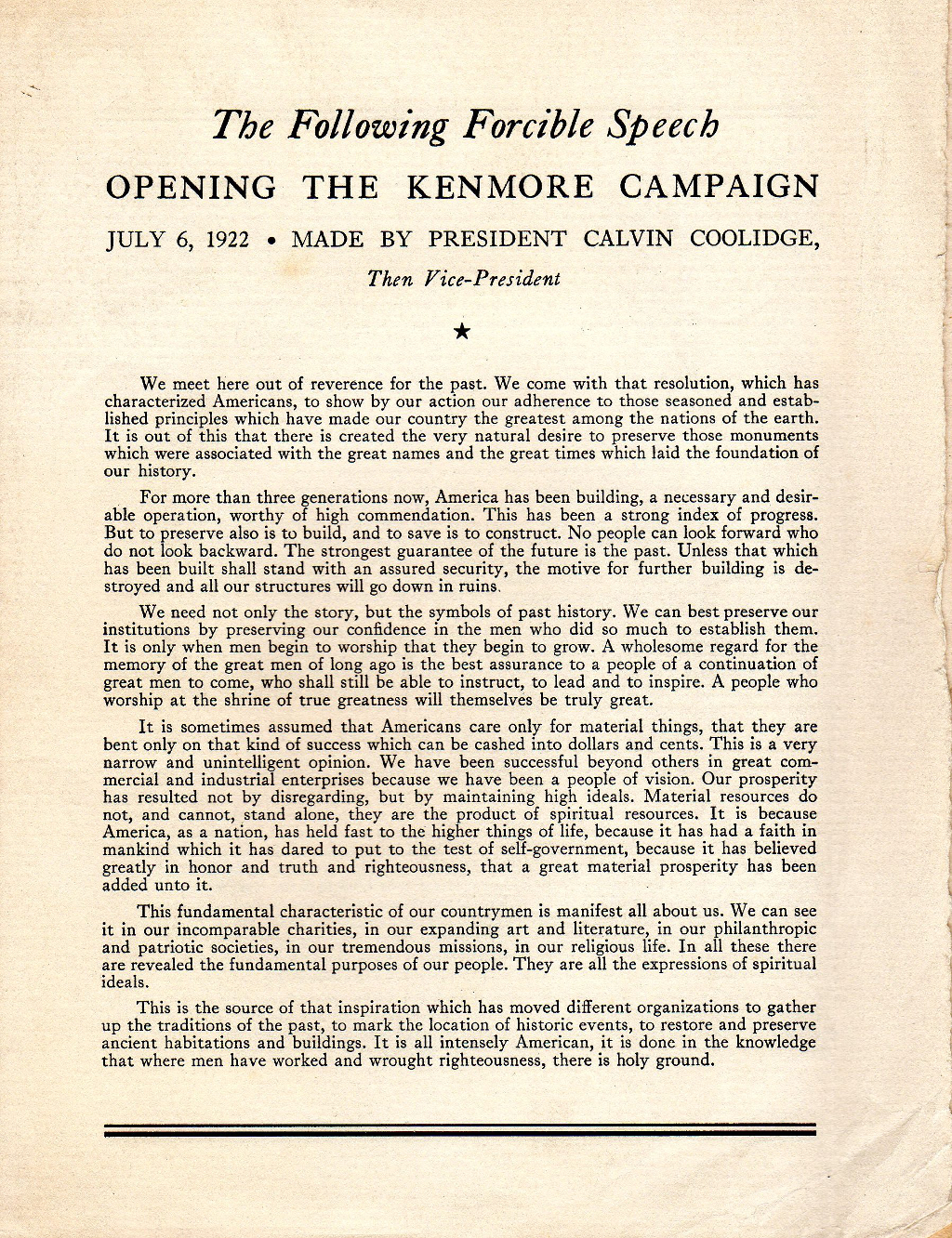
    In July 1922, the Kenmore Association launched a public fundraising drive with a host of distinguished men and women coming to Fredericksburg for the start of the campaign. Even Calvin Coolidge, then the vice president under Warren G. Harding, made a speech (see below) pleading for patriotic Americans to save this home that was so critical in the history of the country.  “It ought to be preserved for its own sake,” Coolidge demanded, “It must be preserved for the sake of patriotic America.”

    Speech made by Vice President Calvin Coolidge in support of the Kenmore Association’s effort to save the historic home.

    Through the efforts of this determined group of women, by the first of September 1922, they were able to pay an initial installment of $12,000 on the account.  Impressed with the Kenmore Association’s work, Mr. Heflin made his own gift of $2,000.   By New Year’s Day 1925, the hard work paid off, and the ladies made the final payment and took possession of the property.  Historic Kenmore was saved!

    Although the saving of Kenmore one hundred years ago certainly marked a new beginning, transforming the house into a historic site for the public to enjoy required many more years of work.  Indeed, in many ways, the work begun by Mrs. Fleming, Miss Annie, and the Kenmore Association continues even as 2022 begins.  In the New Year at Kenmore, we will focus celebrating the establishment of the Kenmore Association and the ladies’ work to save this national treasure.  You can follow the year’s celebration here of the “Lives and Legacies” blog and The George Washington Foundation website.  Like in 1922, the year 2022 should prove an exciting time.

    Heather Baldus
    Collections Manager

  • Kenmore’s Famed Gingerbread

    Historic Kenmore was associated with gingerbread for decades.  Many people’s first memories of Kenmore involve the square of gingerbread and a cup of tea that used to be served at the end of every tour.    The dessert welcomed visitors to the world of colonial Fredericksburg, it comforted soldiers on their way to war in Europe or the Pacific, and, most important of all, it helped save the historic house itself.

    The ladies of the Kenmore Association, which owned and operated the historic home in the 20th century, took on a great challenge when they accepted stewardship of Kenmore.  Raising the money to purchase the house was not the only obstacle they faced.  They also needed funds to restore and staff the house. Unfortunately, the ladies drive to save Kenmore coincided with the Great Depression and the Second World War.  Led by Annie Fleming Smith or “Miss Annie,” the ladies triumphed, kept Kenmore running, and even used the grounds to assist Fredericksburg in the war effort.  They did all this with their indomitable drive and patriotism and with a little help from gingerbread.

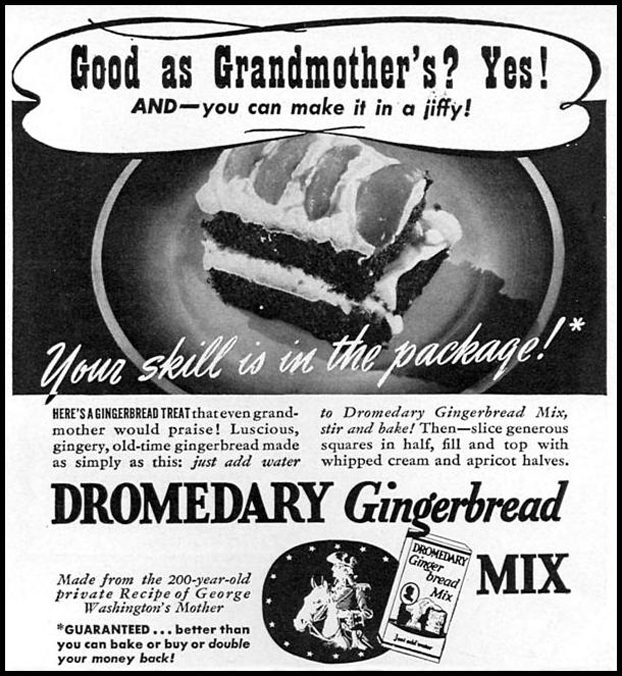
    The beneficial partnership between gingerbread and Kenmore began in the early 1930s when the Dromedary Cake Mix Company launched a nationwide search for gingerbread recipes new and old.  In the search, Mary Washington’s personal recipe was found in a cookbook owned by the Washington-Lewis Chapter of the Daughters of the American Revolution. It was tried and well-liked.  The firm approached the chapter about producing the recipe as one of their mixes.  Because the Washington-Lewis Chapter worked closely with the Kenmore Association in saving, restoring, and caring for Kenmore, Miss Annie and the ladies, being astute business women, brokered a deal with the company to benefit the historic home.

    Dromedary Ad
    An 1940s-era advertisement for Dromedary gingerbread mix “made from the 200-year-old Recipe of George Washington’s Mother.”

    The arrangement allowed Dromedary to produce gingerbread mixes based on Mary Washington’s recipe.  In exchange, the Kenmore Association got all the gingerbread they could serve to visitors.  The company also donated mixes to be sold by the Association and various DAR chapters for 25 cents a box.  The Association got half of the money realized from these sales minus the shipping costs.  This agreement, in the end, earned the Kenmore Association over $38,000 – a hefty sum in the mid-20th century – and provided countless visitors with a yummy Washington family treat.

    In 1941, the United States entered World War II.  Fredericksburg became a hub of activity with thousands of soldiers stationed at the A.P. Hill Military Reservation in Bowling Green visiting town to get a break from military life.

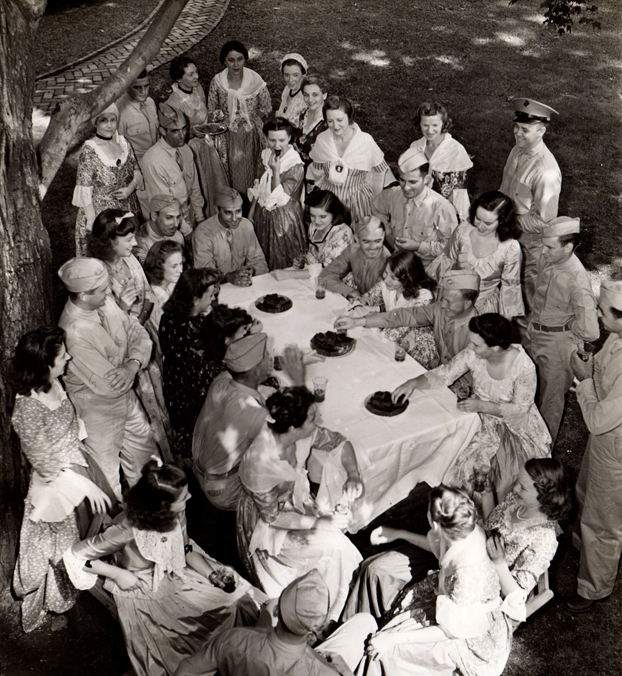
    The Association’s ladies knew that Kenmore, with its historical and patriotic legacy, had a unique opportunity to welcome soldiers who would be fighting for the country and ideals that the Lewis and Washington families helped create. So, they threw open the gates, set out the picnic tables, and recruited local women to put on their colonial best and greet the men of the United States military. At the heart of this hospitality was iced tea and Mary Washington’s gingerbread.

    Gingerbread (1)
    Servicemen enjoy gingerbread and tea on the grounds at Kenmore.

    During the war years, Kenmore hosted over 60,000 soldiers making sure each one was fed and knew his service was greatly cherished.  The ladies of the Washington-Lewis DAR even took time to write each serviceman’s mother, wife, or sweetheart about their loved ones.

    Gingerbread (2)
    C.R. Murphy, Sr. of Coolidge, Georgia wrote The Free Lance Star to express his gratitude for Annie Fleming Smith’s (identified in the letter as Mrs. H.H. Smith)  hospitality towards him and his son during a visit to Fredericksburg from a nearby military post where the son was stationed.

    The humble gingerbread recipe from Mary Washington’s cookbook gave Kenmore a perfect tangible link to its colonial past and bright future.  The gingerbread that resulted assisted the ladies in their community outreach, their historic preservation, and their national patriotic duty.   It was a sign of nostalgia, of hospitality, and most of all appreciation.

    Today, when you tour Kenmore, our guides will happily take you through the reconstructed colonial kitchen that functioned as the Kenmore Association’s tea room.  Regrettably, gingerbread and tea are no longer served to visitors because we do not have a fully-functioning kitchen.  Gingerbread mixes and teas specifically created for The George Washington Foundation are available for purchase by anyone who might wish to relive their first taste of Kenmore’s famed gingerbread.

    Heather Baldus
    Collections Manager

  • Kenmore’s Kitchen: Then & Now

    The brick kitchen building next to Historic Kenmore is not original to the property. It was built in the 1930s in the colonial revival architectural style popular at that time.

    Kitchen01

    The brick construction does not reflect the kitchen building seen in the earliest known photo of such a building at Kenmore.  That image, taken around the time of the Civil War, shows a large wooden kitchen to the north of the house as well two enslaved people standing in the kitchen yard.

    pre-1862kitchen02
    The wooden kitchen can be seen to the left of the house in this Civil War-era photograph.

    The Kenmore Association, a group of women who saved the mansion and transformed the property into a historic site open to the public, built the brick kitchen in the 1930s.

    ms 1687
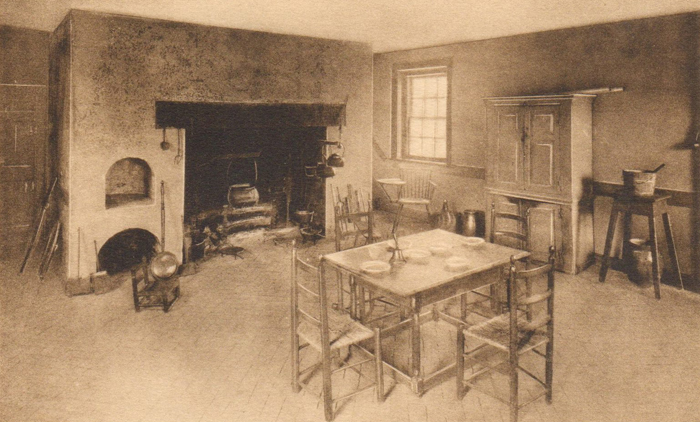
    Inside the brick kitchen just after construction was completed in the 1930s.

    Throughout much of the 20th century, visitors sat around the table in the photo above to enjoy gingerbread and tea served by the ladies of the Kenmore Association.

    Recently, we decided to highlight these ladies and their efforts to preserve Kenmore even more during our tours. We felt the most logical of places to do this was in the kitchen where they served their famed gingerbread and tea.

    We placed a tea set and faux gingerbread on the same table used to serve visitors for so many years. We surrounded that table with many of the same ladderback chairs, though most of their seats have been re-caned. We returned some of the china and the china cupboard that had stood for so long in the kitchen back to that space.

    While we cannot serve actual gingerbread and tea – modern-day museum guidelines prohibit food service inside historic structures – we can discuss the Kenmore Association’s monumental efforts to save Kenmore and make the mansion accessible to the public. You can read about these efforts here.  Although it does not date back to Kenmore’s very beginning, the 80-year-old brick kitchen is still a part of the site’s centuries-long story.

  • Kenmore’s New Beginning: How the Ladies of the Kenmore Association Saved the Lewis Family Home

    January and the start of the year are always a time of new beginnings.  Recently, while digging through archival material, I came upon an exciting collection of newspaper clippings and photographs that detailed the New Year’s purchase of Kenmore and the beginning of the old home’s transformation into a historic site to be enjoyed by all.

    On January 1, 1925 — ninety years ago — a group of well-dressed women in hats and long fur coats assembled at Kenmore to hand over the final $1,000 payment and gain full possession of the house and land.  This meeting was the culmination of thirty-two months of persistent work and determination by the ladies of The Kenmore Association to save the historic property from destruction.

    Emily White Fleming (identified in the newspaper caption by her husband Vivian Minor Fleming’s initials) makes the final payment to purchase Historic Kenmore on January 1, 1925.

    This crusade began four years earlier with a brief notice in the Fredericksburg Daily Star from Mr. E. G. Heflin, the owner of the Kenmore property.  The announcement stated: “I have decided to build at once…6 or more modern up-to-date residence [sic] on Kenmore.”  Built on a section of the plantation property, these houses prompted concern among many local citizens at the thought of further loss to the historic site.

    By 1922, the destruction of the old Lewis home seemed imminent.  Mr. Heflin placed an advertisement for the sale of the house itself and cut up much of the original estate into smaller building lots to be sold to developers.  If the house was sold, it might be remodel into apartments or just razed to the ground.  This escalation increased the alarm even more and some tried to raise funds to purchase Kenmore.  This attempt proved unsuccessful and the house did look to be lost.  However, salvation appeared in the form of Kate Waller Barrett and the National Society of the Daughters of the American Revolution (DAR).

    In March of that year, Mrs. Barrett, Virginia Regent of the DAR, came to Fredericksburg with the purpose of organizing a new chapter in the town.  She asked Emily White Fleming to lead the proposed chapter, which would work to save Kenmore.  Mrs. Fleming was 68 years old and, though seemingly small and fragile, she, in reality, had a tenacious and determined spirit.  She accepted the position and with the help of her daughter Annie Fleming Smith, known as “Miss Annie,” began their campaign to save the old Lewis house from destruction.

    The ladies approached Mr. Heflin and negotiated an agreement to the purchase the property.  The group had to make a first payment of $10,000 within four months or the deal would be off.  Furthermore, if Mr. Heflin got a satisfactory offer within those four months, he could go ahead and sell the property outright. It was a tough deal but the ladies rose to the challenge spectacularly.

    Mrs. Fleming and Miss Annie began fundraising immediately.  They wrote hundreds of letters by hand, stating facts about Kenmore in simple, forceful style and then making appeals for help. Mrs. Fleming recalled, “I could write thirty-nine letters a day and Annie forty-nine. We never had a typewriter until the campaign was over.” In response to one of Mrs. Fleming’s letters, Colonel Isaac Newton Lewis, maker of the Lewis machine gun and a descendant of Fielding Lewis, contributed the first $1,000. Not to be outdone, The Colonial Dames of America in the State of Virginia gave a substantial donation of a $1,000 as well.

    Donation from Colonel Isaac Newton Lewis donated the first $1,000 to the Kenmore Association.

    In July 1922, the Kenmore Association launched a public fundraising drive with a host of distinguished men and women coming to Fredericksburg for the start of the campaign. Even Calvin Coolidge, then the vice president under Warren G. Harding, made a speech (see below) pleading for patriotic Americans to save this home that was so critical in the history of the country.  “It ought to be preserved for its own sake,” Coolidge demanded, “It must be preserved for the sake of patriotic America.”

    Speech made by Vice President Calvin Coolidge in support of the Kenmore Association’s effort to save the historic home.

    Through the efforts of this determined group of women, by the first of September 1922, they were able to pay an initial installment of $12,000 on the account.  Impressed with the Kenmore Association’s work, Mr. Heflin made his own gift of $2,000.   By New Year’s Day 1925, the hard work paid off and the ladies made the final payment and took possession of the property.  Historic Kenmore was saved!

    Although the purchase of Kenmore nine decades ago certainly marked a new beginning, transforming the house into a historic site for the public to enjoy required many more years of work.  Indeed, in many ways, the work begun by Mrs. Fleming, Miss Annie, and the Kenmore Association continues even as 2015 begins.  In the new year at Kenmore, we will focus on refurnishing Fielding’s office and will soon hang portraits of Fielding Lewis, Betty Washington Lewis, and other family members in the Drawing Room.  You can follow the year’s work here on the “Lives & Legacies” blog and on “The Rooms at Kenmore” blog, which is solely dedicated to the refurnishing project, at www.kenmore.org/wordpress.  Like 1925, the year 2015 should prove to be an exciting beginning!

    Heather Baldus
    Collections Manager