Lives and Legacies

Tag: restoration

  • Lovely Linoleum and Other Historic Floor Coverings – Two Hot Takes

    Linum (“Flax”) and oleum (“oil”) – Fashionable and Affordable

    As a Historic Preservation student at the University of Mary Washington, I’ve grown to appreciate almost all aspects of materiality. Over the past four years, my education has taught me to look closely at the built environment around me.

    Two years ago, I stumbled across a book about mid-century kitchens, which discussed modern flooring’s ugly duckling: linoleum. From this, I developed an appreciation for linoleum and vinyl flooring and an equal obsession with spotting them.

    Most people wouldn’t put Linoleum at the top of their list of favored materials. After all, historically, it’s been labeled as cheap, tacky, and ugly. However, linoleum has been an important part of modern living since the late 19th century. While the patterns most people initially thought of weren’t very attractive (that one red brick style), their initial creation changed the game for durable materials in a household and single-handedly became a hospital favorite.

    Linoleum was first invented by Frederick Walton in Chiswick, England, when he discovered that oxidized linseed oil could replace rubber when mixing the oil with cork and other fibers. This process was sped up by heating the oil with lead and zinc, which formed a sticky paste that would be mixed with sawdust or cork to keep the cloth from becoming tacky. Shortly after receiving a patent in 1864, Walton opened the American Linoleum Manufacturing Company on Staten Island, New York, in 1872, with the nearby town named Linoliumville in its honor.

    Fred Walton, creator of Linoleum

    The genius of linoleum was/is its durability and ability to be mass-produced cheaply. Additionally, the material could be customized using pigments to create virtually any pattern, which aided in its early popularity in homes. Early linoleum was commonly produced in printed, marbled, inlaid, or plain patterns, with these distinct designs often serving as time machines to gauge when the flooring was installed. Putting aside the aesthetics, linoleum is most likely to be seen in high-traffic areas, such as hallways, kitchens, and mudrooms, due to its long-term durability.

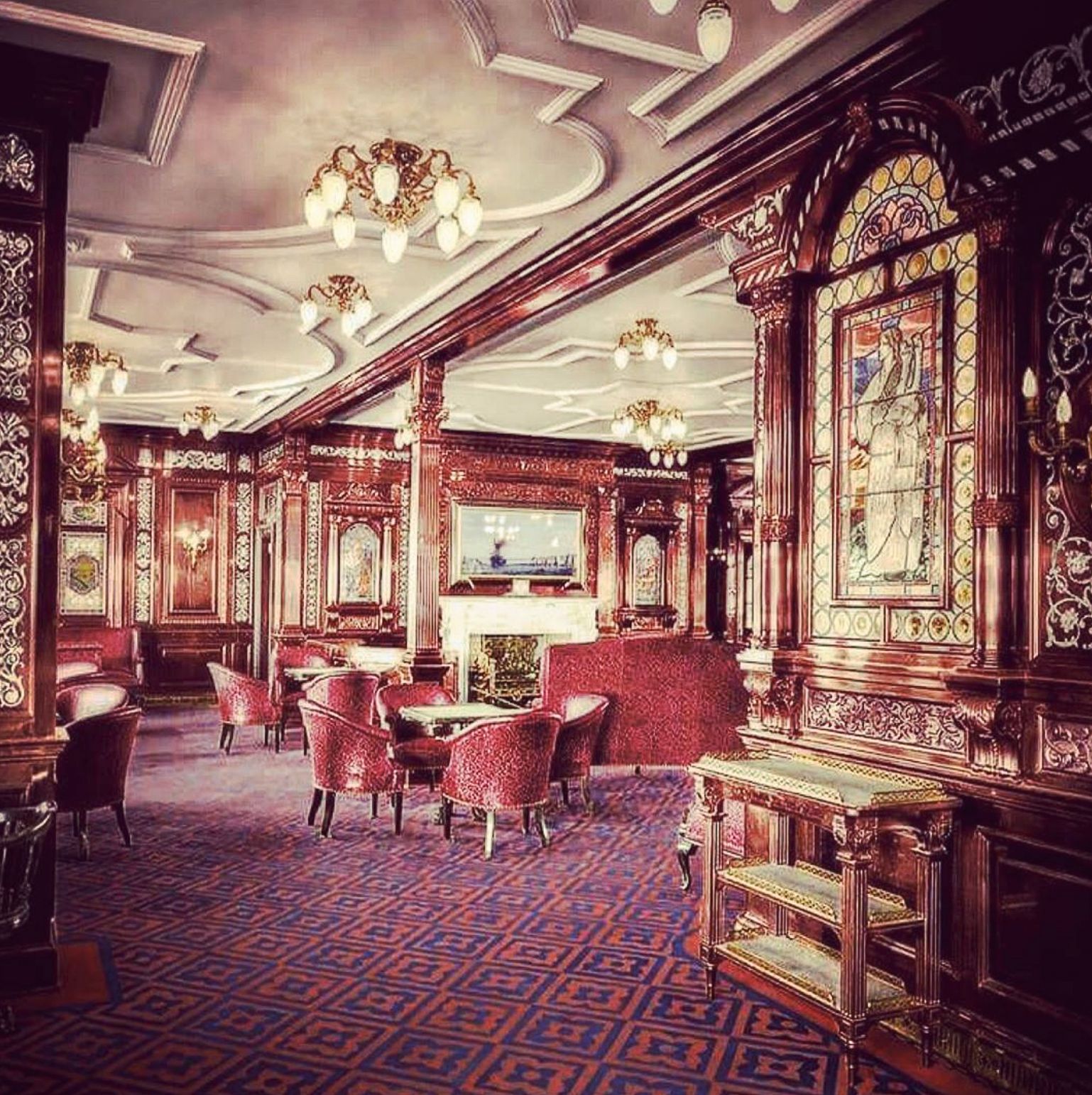
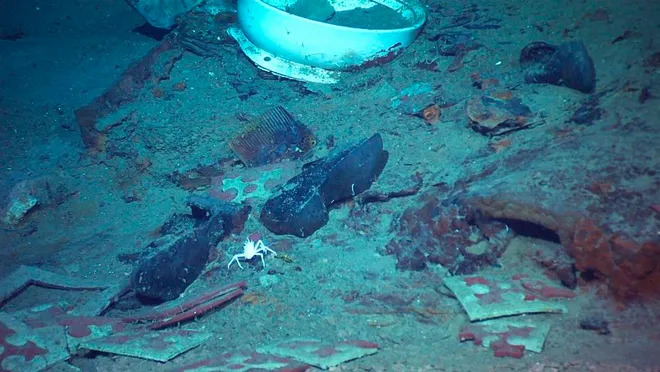
    A well-installed linoleum is waterproof and surprisingly antibacterial, which is why, since its invention, linoleum has been commonly used in hospitals. The flooring was also popular among naval vessels in the early twentieth century, with battleships and luxury cruisers taking advantage of the material. In fact, the RMS Titanic used inlaid linoleum flooring for a significant portion of its decks, which can be seen in past photos and even on the sea floor today.
    The manufacturing boom of the mid-twentieth century brought modern materials and technologies to the average household, including the popularization of linoleum in common spaces. Kitchens and high-traffic areas would continue to have the flooring material. However, living rooms, eating spaces, and even walls would start to display colorful and flashy patterns. This popularity would be short-lived, as the 1950s brought vinyl flooring, an extremely similar product, but was pushed as a newer and more “fashionable” alternative to linoleum.
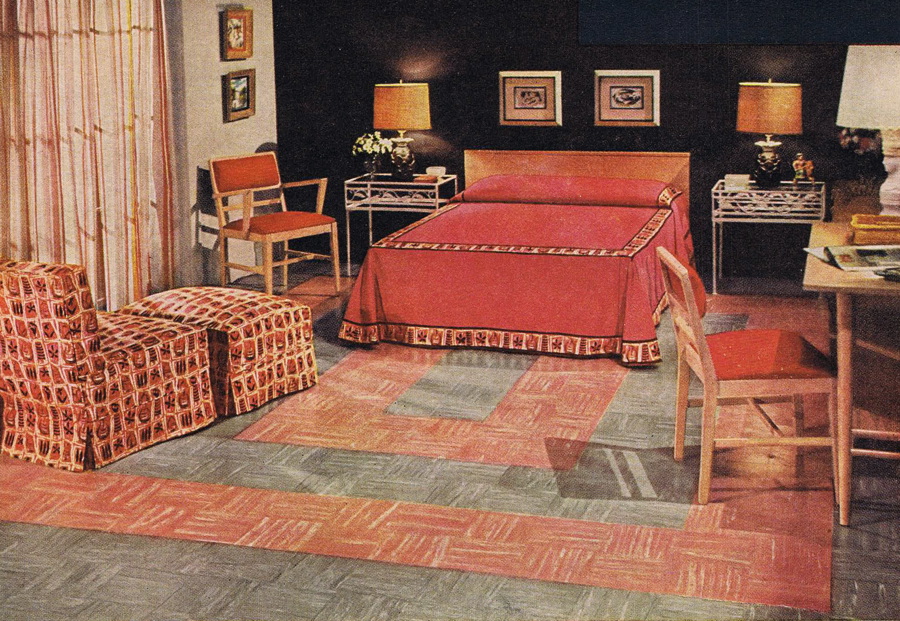
    An image of a bedroom from a 1952 advertisement for linoleum flooring

    Despite the initial falloff, linoleum has made a surprising comeback in homes within the last few years. It’s understandable, as per square foot, the material is very affordable and easy to clean, not to mention that rising interest in the conservation of historic homes has led to the preservation and replication of historic linoleum. Most often, the damage to the material features is rips and cracks, which are easily repaired with patching and a fresh coat of sealant.

    I don’t write any of this intending that you agree with me. However, I believe that linoleum reflects the best of modern materiality. It’s low-cost, eco-friendly, durable, and easy to customize, allowing lower-income homes to decorate their spaces economically and colorfully. While spotting linoleum in older buildings may be rare due to being covered with changing fashion trends (we are all familiar with carpet over beautiful hardwood floors), preserving it is just as important as any other part of the built environment.


    Helena Samson

    Fleming Smith Scholar, UMW Class of 2025


    Linoleum’s Forebearer “Fancy Pattern-Cloth” – Eighteenth Century Floorcloths

    The future of home restoration and preservation will involve saving certain building materials, such as wood, stone, brick, and decorative elements, like linoleum. While humble and even ridiculed (you know the pattern), linoleum will eventually be treasured as a lasting historical remnant, helping future preservationists add context and depth to restorations.

    Classic linoleum, everyone seemed to have despite not wanting to admit it.

    Unfortunately, in eighteenth-century historical preservation, we are rarely lucky enough to find samples of the predecessor of linoleum, the floorcloth. The floorcloth was a relatively common floor covering in eighteenth-century Virginia homes. It was made from woven cloth, usually heavy and sturdy, like linen or cotton canvas. This canvas was then stretched, several layers of oil paint applied, and covered in varnish. This floorcloth could be painted in any fashionable design, as seen in John Carwitham’s book published in 1739, with the replica marble being one of the favorites. 

    Like linoleum, floorcloth was prized because it was customizable, durable, easily cleaned, and repairable. It could also be cut down and used in other areas like kitchens or closets after it lost its fashionability or was replaced with carpet. It was so versatile that it basically reused itself out of existence.

    While no known complete examples of eighteenth-century floorcloths exist, bits and pieces have been found, offering insight into their construction and functionality in the home. Coincidentally, here at Kenmore, we found remnants of a floorcloth under the floorboards in the attic during a period of restoration in 1989. Small samples from the remnants were taken for analysis:
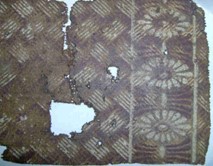
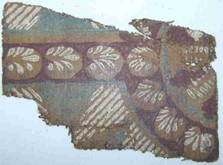
    Base layer – yellow preparatory layers of lead white and yellow ochre ground in linseed oil. The uneven distribution of the large, clumped pigments suggests it was hand-ground paint.

    Black paint is found in the third layer above the ground coatings with remnants of plant resin varnish, followed by a green design layer. This could mean the black paint was the original design, and it was repainted after varnish and the green design were put on top.

    Green-painted areas – made up of white lead, Prussian blue, yellow ochre, and calcium carbonate.

    White paint – composed primarily of white lead and calcium carbonate

    We can draw a few conclusions from this paint analysis. One, the floorcloth was well used but eventually worked its way down the list of favored household furnishings, whether from wear and tear or fashionability. Either way, it was ultimately rolled up and stored out of sight, and lucky for us, forgotten.

    Second, the white paint sample did not contain zinc white, which was used after 1840, and the green paint sample did not contain chrome green, which means it was likely produced before 1816, when chrome yellow pigments were commercially available. So, while we can’t verify that it was a Lewis family floorcloth, it is a very early example of the floor covering. It inspired the floorcloth reproduced for Fielding’s office in Kenmore, which you can read about in our previous post, “What Was Old Is New Again”.
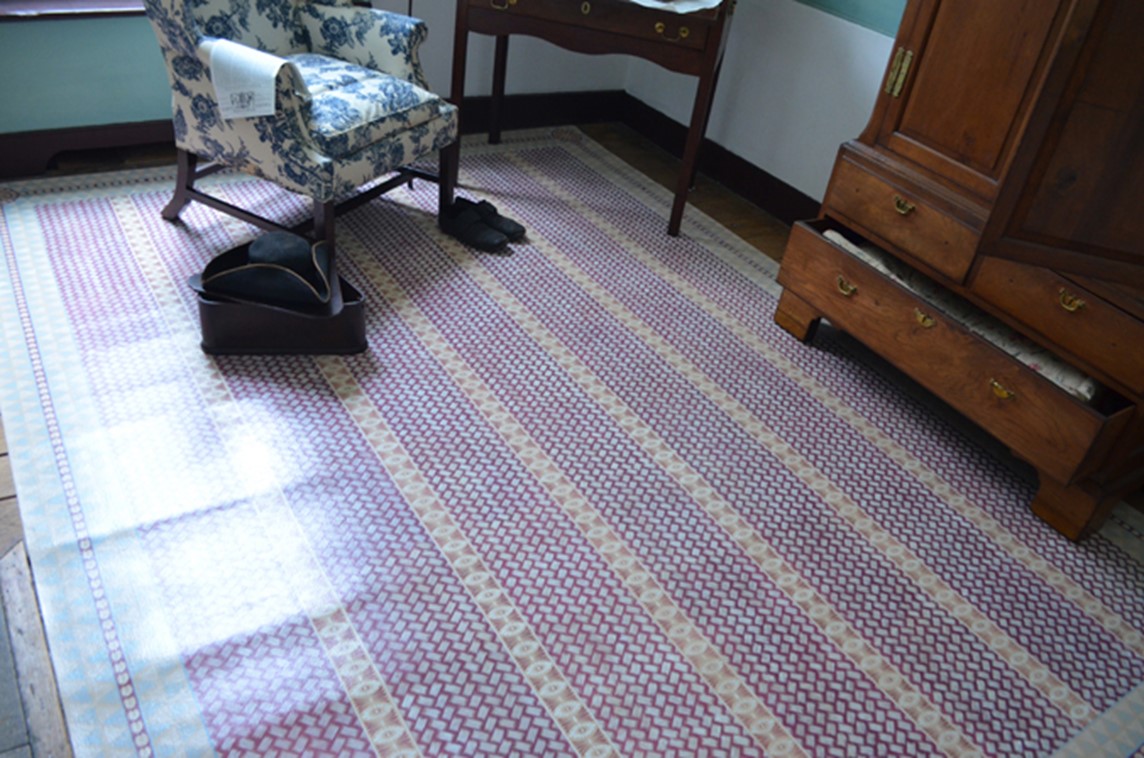
    Beautiful reproduction floorcloth hand-painted by Black Dog Gallery, Yorktown.

    Today, thanks to linoleum, we can choose affordable, durable, and even fashionable flooring materials. Linoleum is the evolution of floorcloths with similar goals and functionality. However, while floorcloths didn’t usually survive, linoleum will follow us through history and deserves to be preserved even if it leads to awkward questions about style and décor.

    Oh, there will be questions.

     Heather Baldus

    Collections Manager


    Bibliography

    Kaldewei, G. (2000). Linoleum: History, design, Architecture, 1882-2000. Hatje Cantz ; Distribution in the US, DAP, Distributed Art Publishers.

    Garcia, K. (2023, December 6). Caring for 100-year old linoleum. Tenement Museum. https://www.tenement.org/blog/fun-with-linoleum-no-really/

    Houseman, C. (2020, September 11). Titanic’s linoleum. Encyclopedia Titanica Message Board. https://www.encyclopedia-titanica.org/community/threads/titanics-linoleum.52676/

    NPS. (n.d.). https://www.nps.gov/orgs/1739/upload/treatment-guidelines-2017-part2-reconstruction-restoration.pdf

    Landreau, A.N. (1976). America underfoot: A history of floor coverings from colonial times to the present. Published for the Smithsonian Institution Traveling Exhibition Service by the Smithsonian Institution Press.

    Weissman, J.R., & Lavitt, W. (1994). Labors of love: America’s textiles and Needlework, 1650-1930. Wings Book: Distributed by Outlet Book Co.

    Buck, Susan L. Floorcloth Fragments Cross-Section Microscopy Report, Kenmore, Fredericksburg, Virginia. (2006)
  • Slides That Saved Kenmore

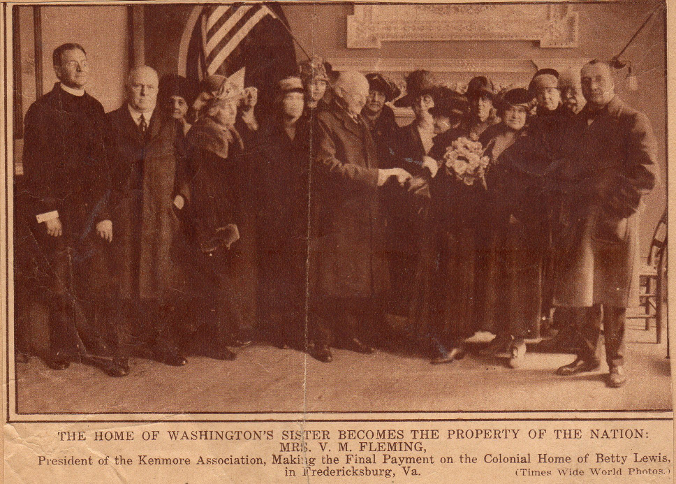
    On January 1, 1925, a group of well-dressed women in hats and long fur coats assembled at Kenmore to hand over the final $1,000 payment and gain full possession of the house and land.  This meeting was the culmination of thirty-two months of persistent work and determination by the ladies of The Kenmore Association to save the historic property from destruction.

    The incredible work in saving Kenmore was beginning for the ladies. Undoubtedly, a house as large and old as Kenmore would require a substantial amount of money for restoration and upkeep.   Until the sale to the Kenmore Association, the house had been a residence for several different families, each leaving a unique imprint on the building.  Unfortunately, these alterations needed to be reversed to restore Kenmore to its original state when Fielding and Betty Lewis first inhabited the house around 1775.

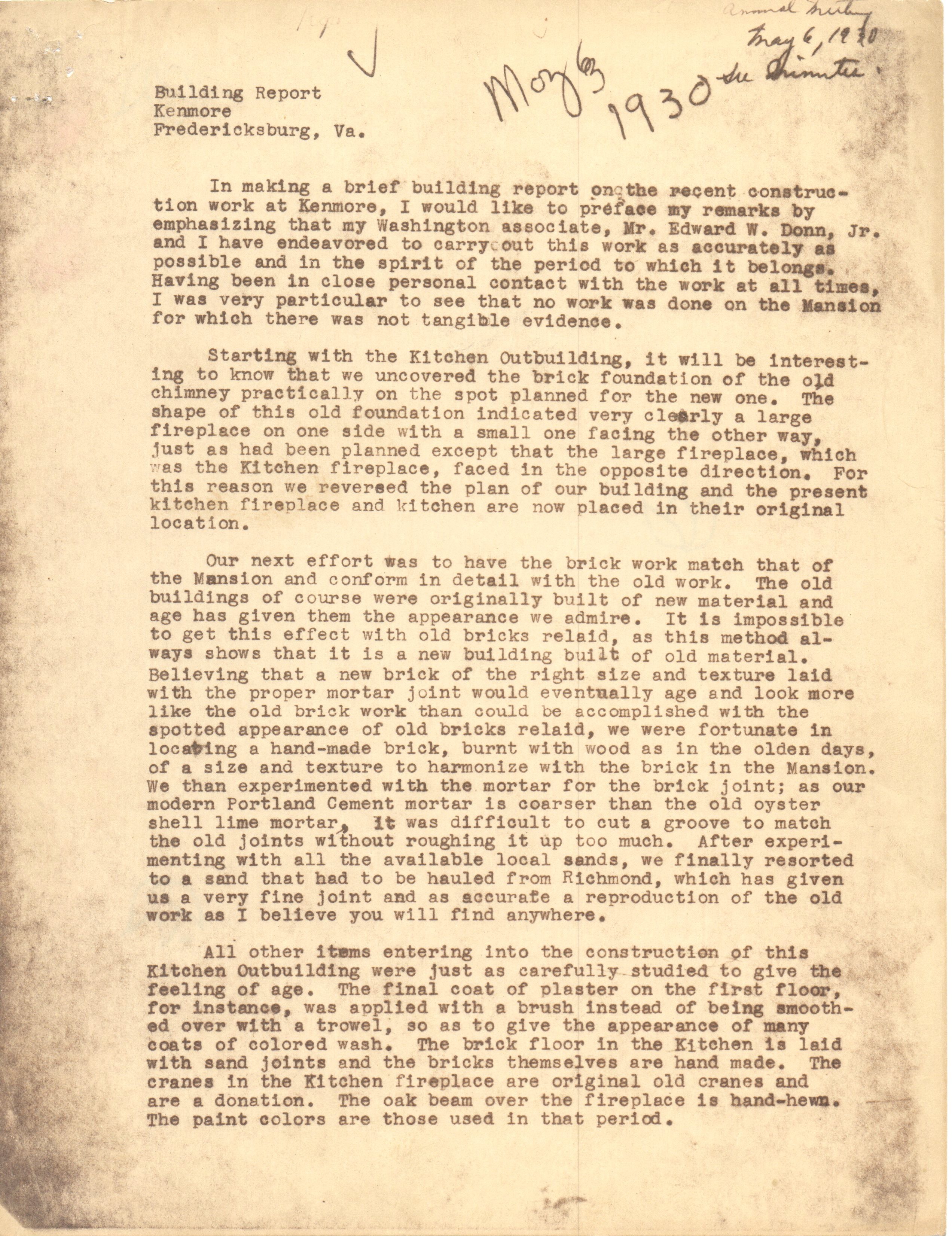
    By 1930, the Kenmore Association had made significant progress in restoring Kenmore. Major projects included removing the modern attached kitchen, updating wiring and plumbing, and restoring windows, brickwork, and ornamental plasterwork, all completed for $19,372.57. (Mesick, 1992) This figure did not include the ongoing refurnishing of the house, highlighting the scale of the task.
    How was the Kenmore Association able to finance this costly restoration and refurnishing? These ladies knew how to raise money. In 1927, they established a restoration fund and began soliciting contributions.  

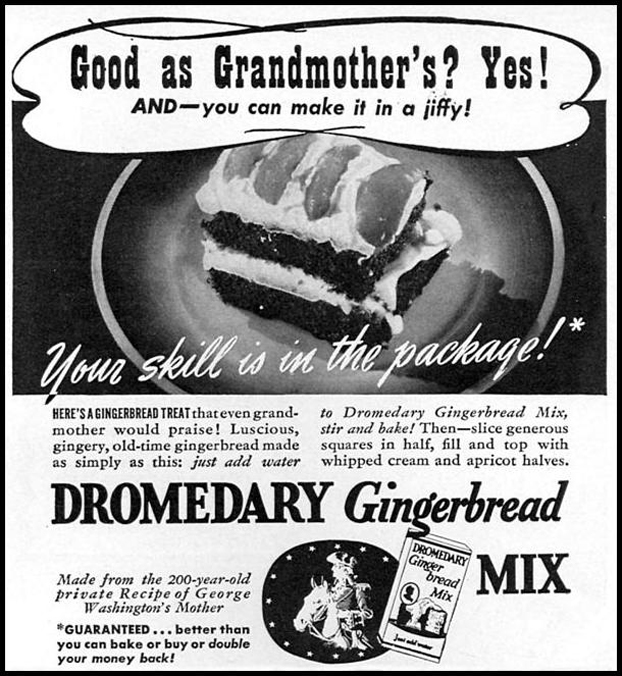
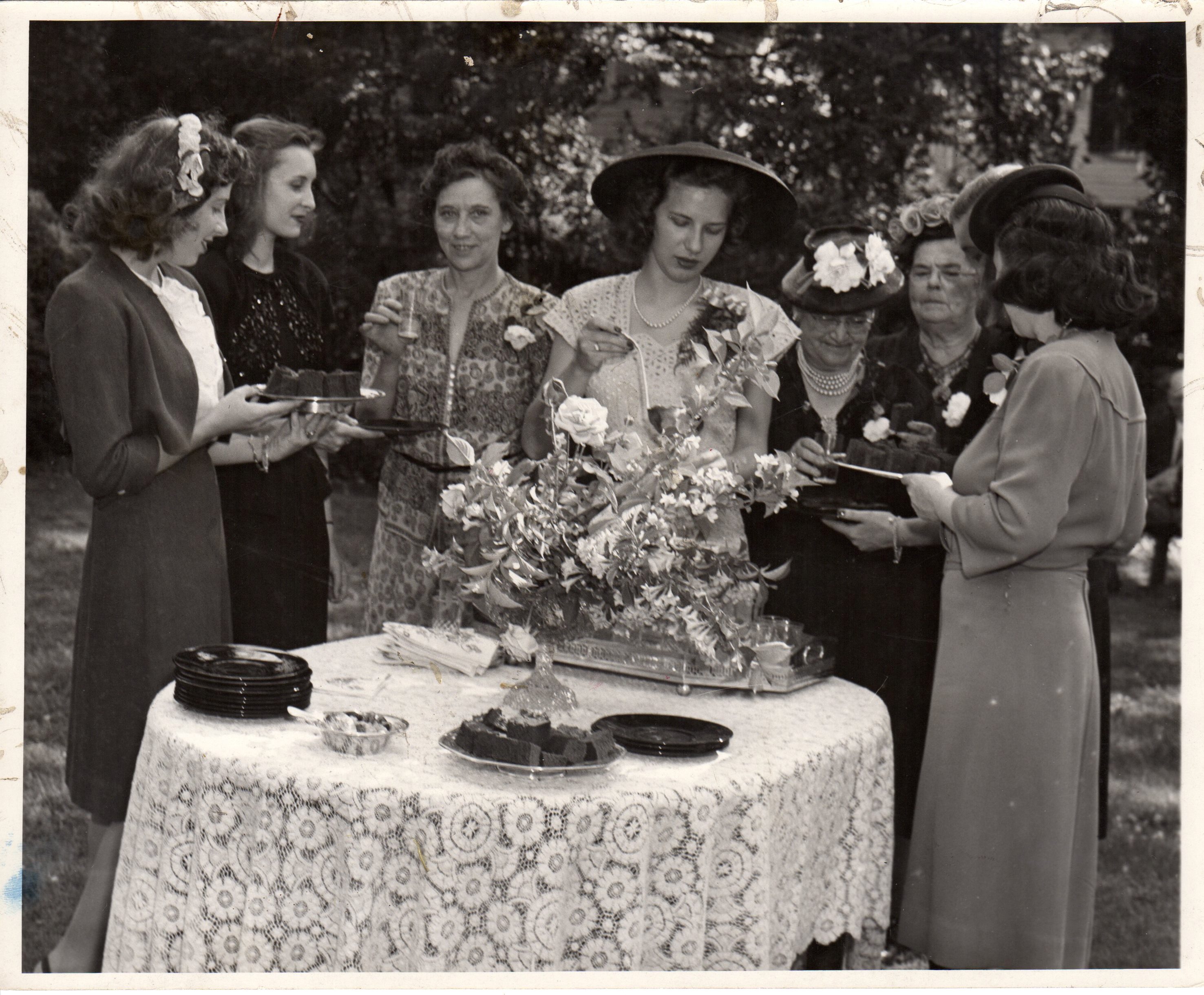
    We previously discussed the amazing partnership between Mrs. Smith secured with the Dromedary Cake Mix Company and their boxed gingerbread.   The arrangement allowed Dromedary to produce gingerbread mixes based on Mary Washington’s recipe.  In exchange, the Kenmore Association got all the gingerbread they could serve to visitors.  The company also donated mixes to be sold by the Association and various chapters of the Daughters of the American Revolution (DAR) for 25 cents a box.  The Association got half the money realized from these sales minus the shipping costs. 

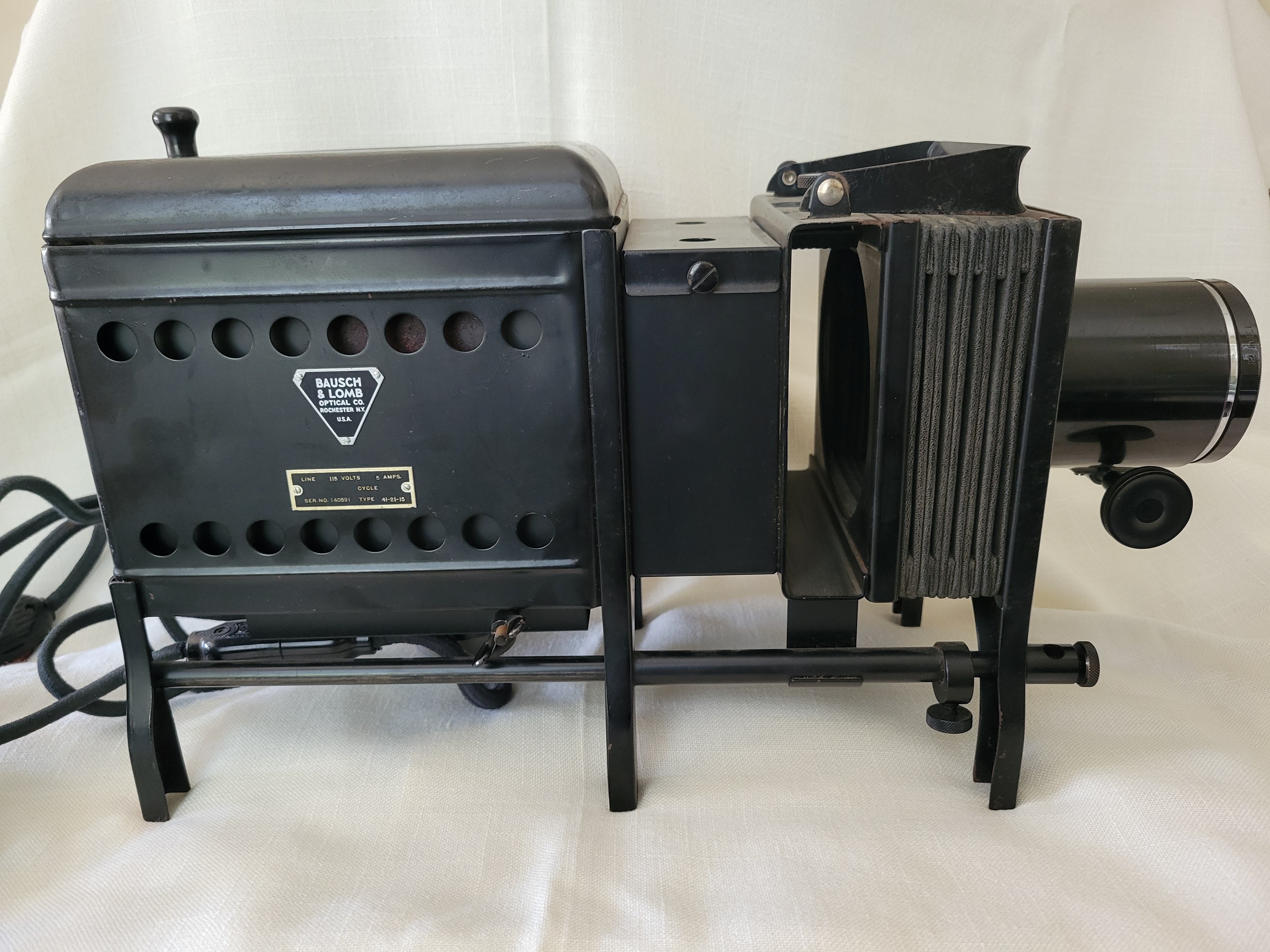
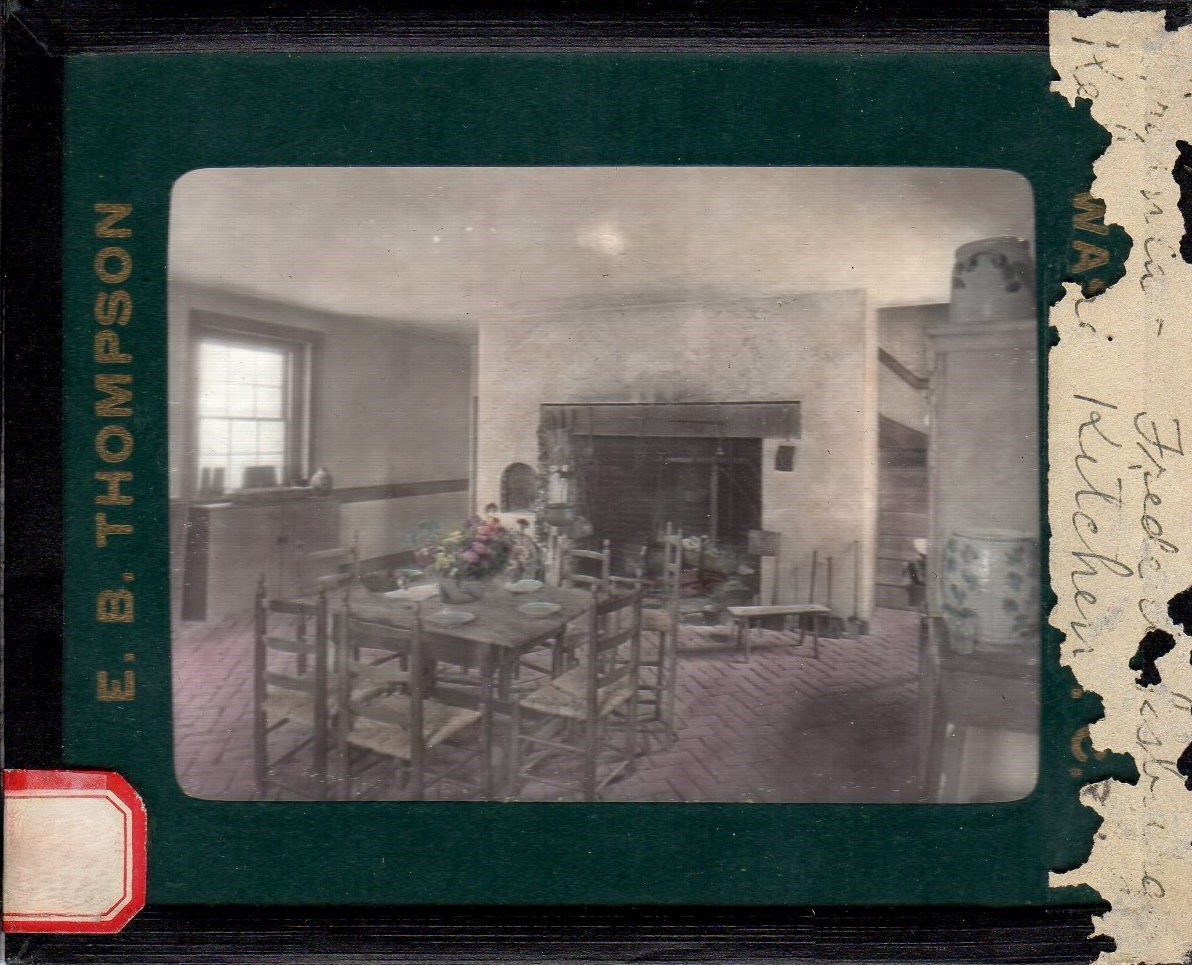
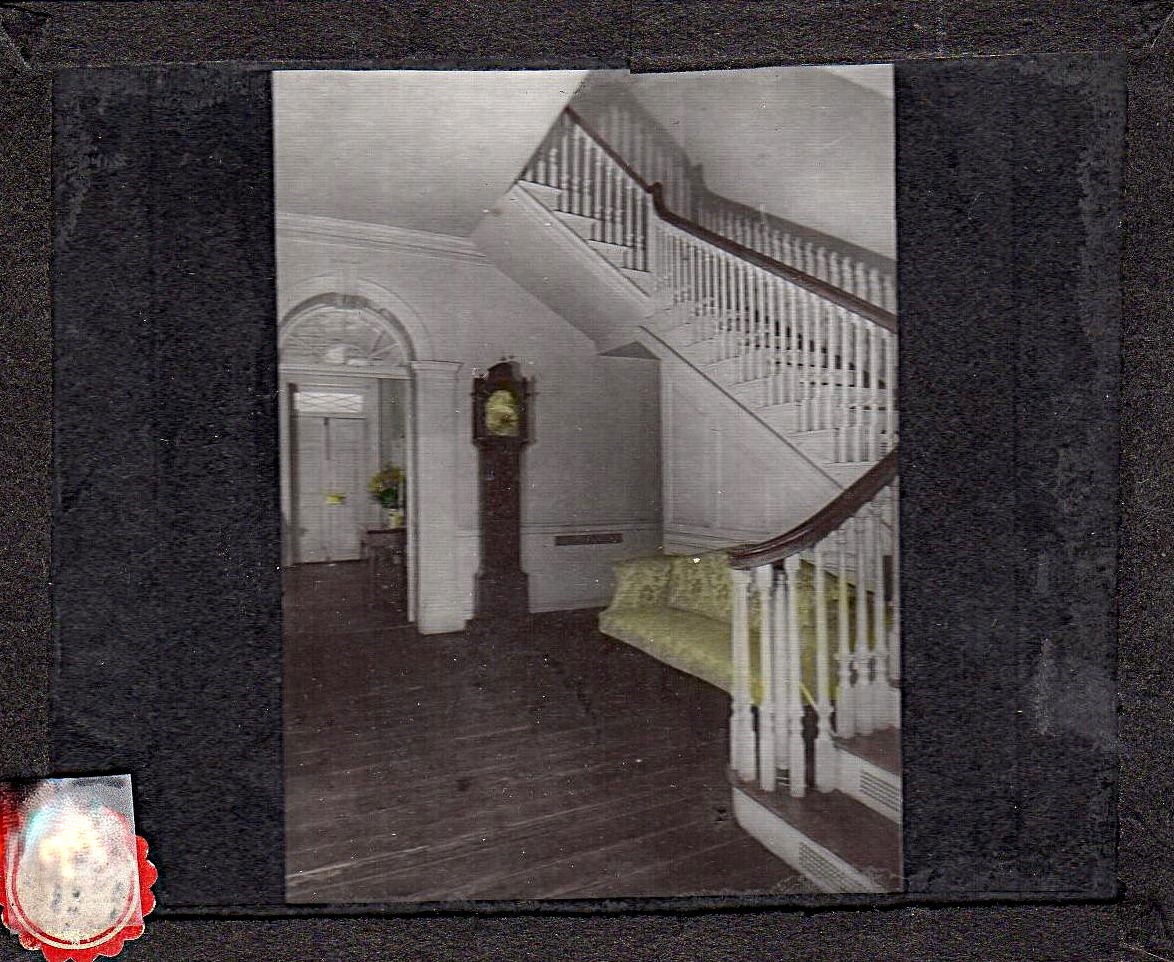
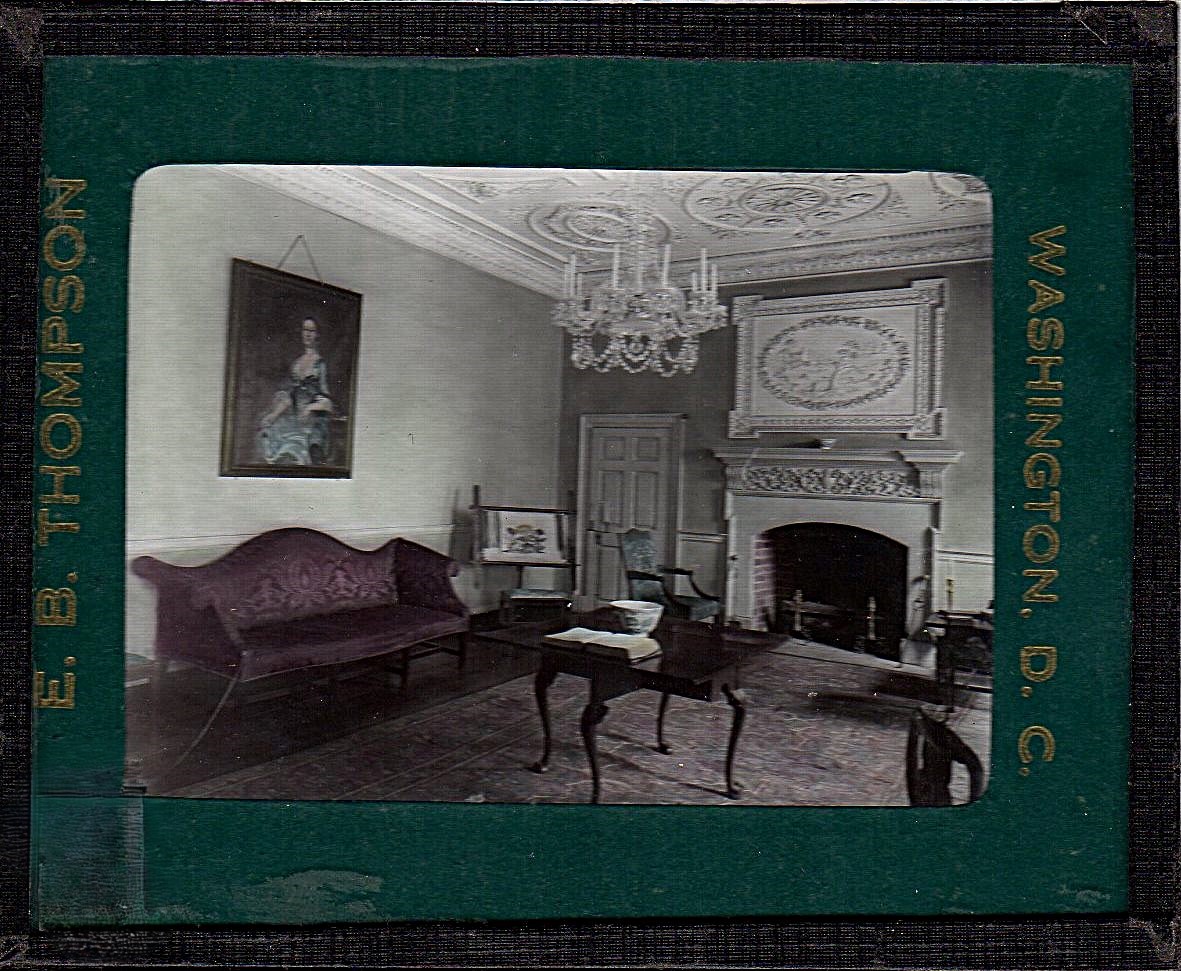
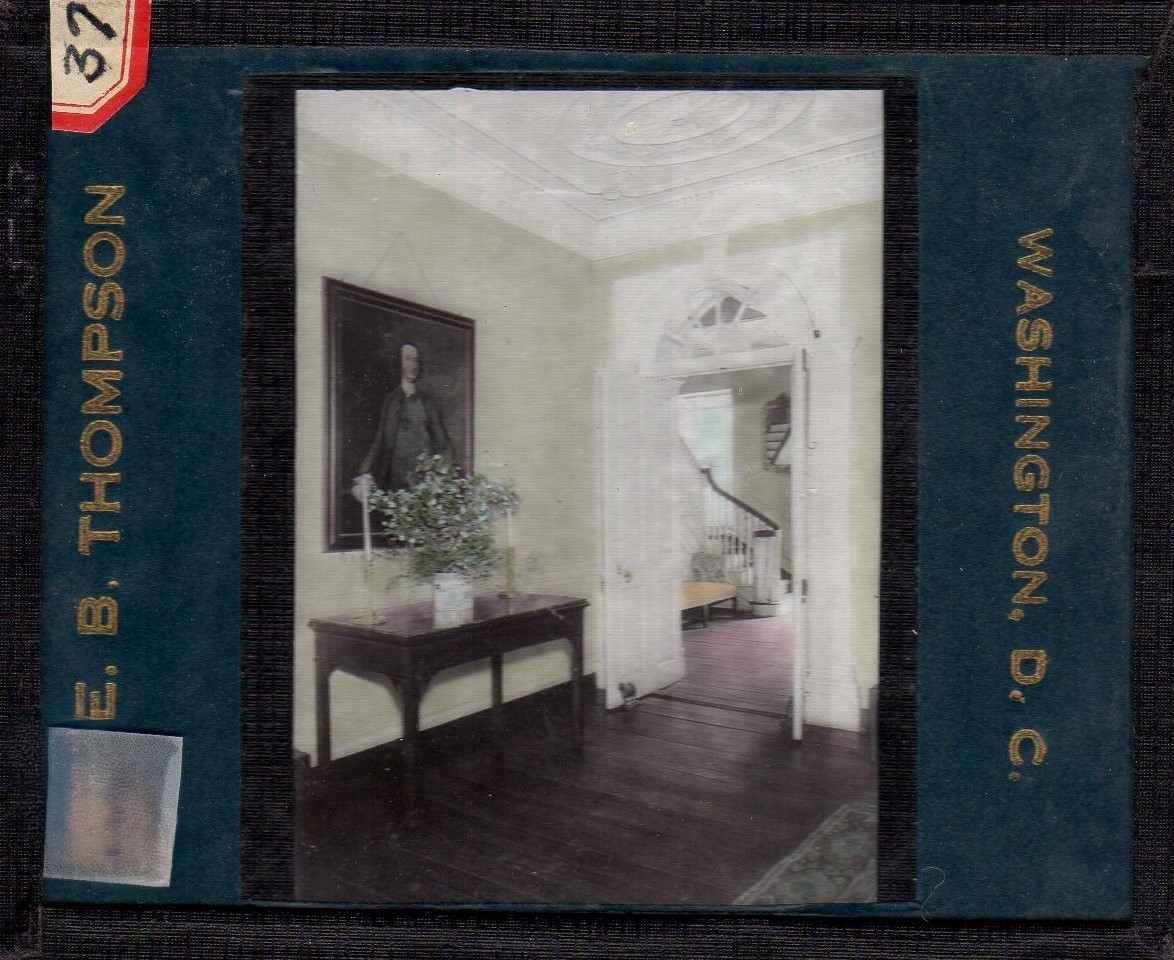
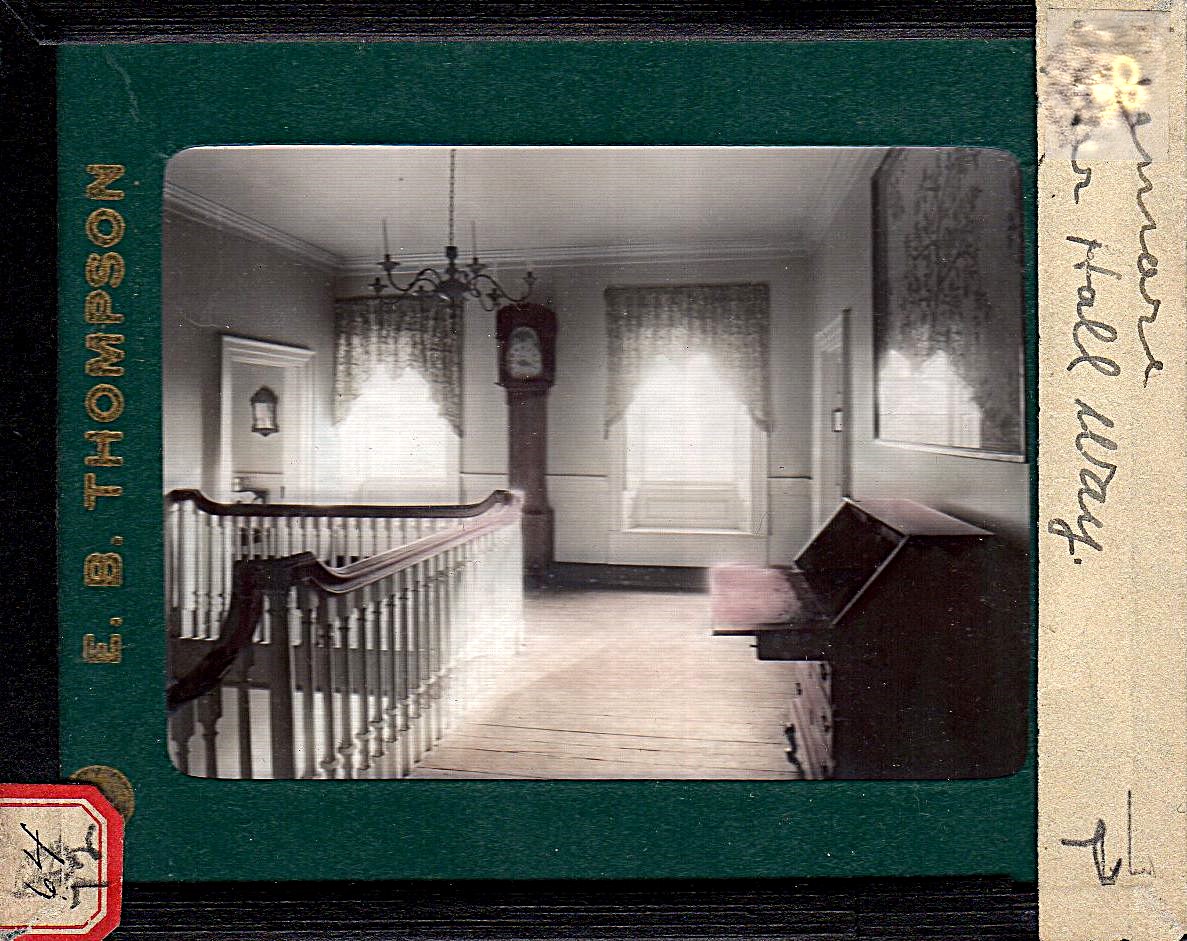
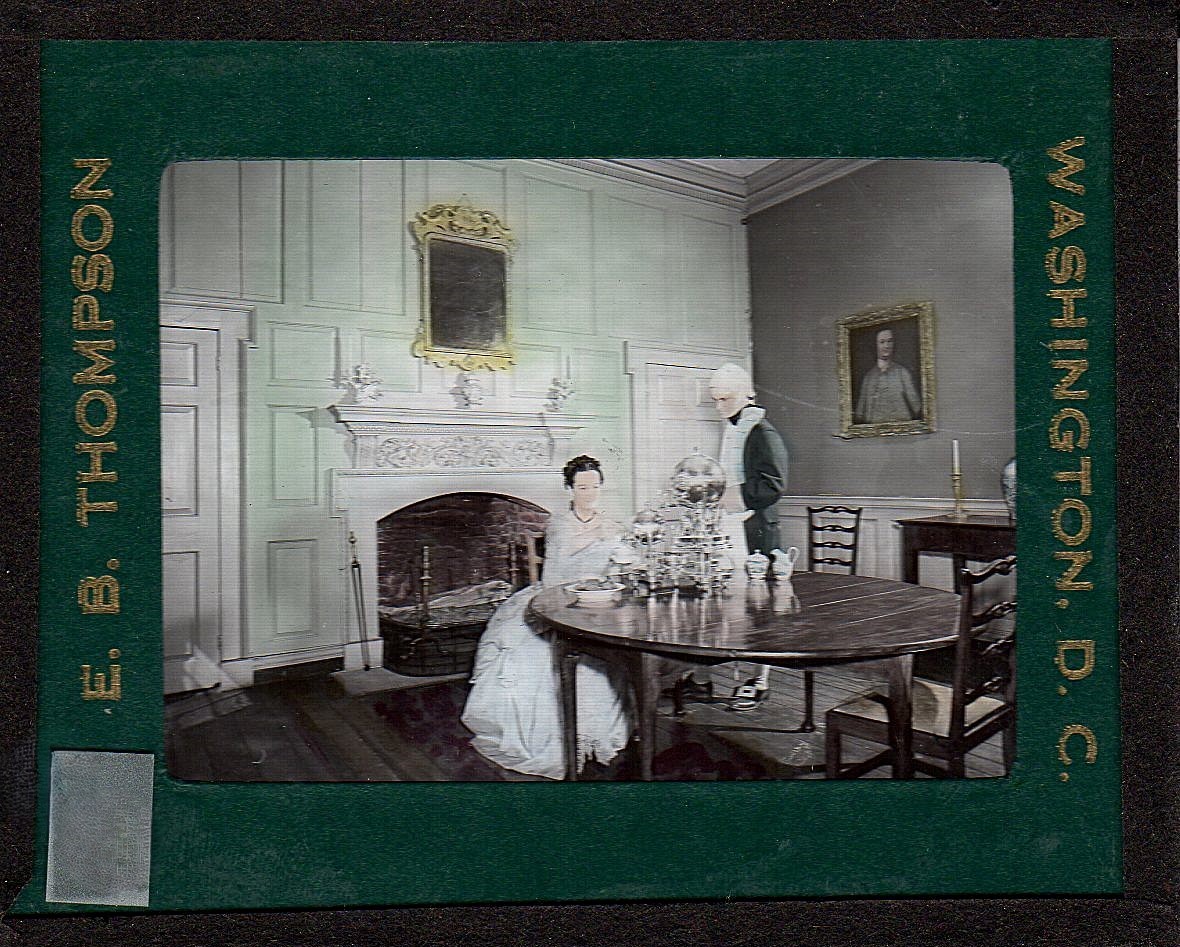
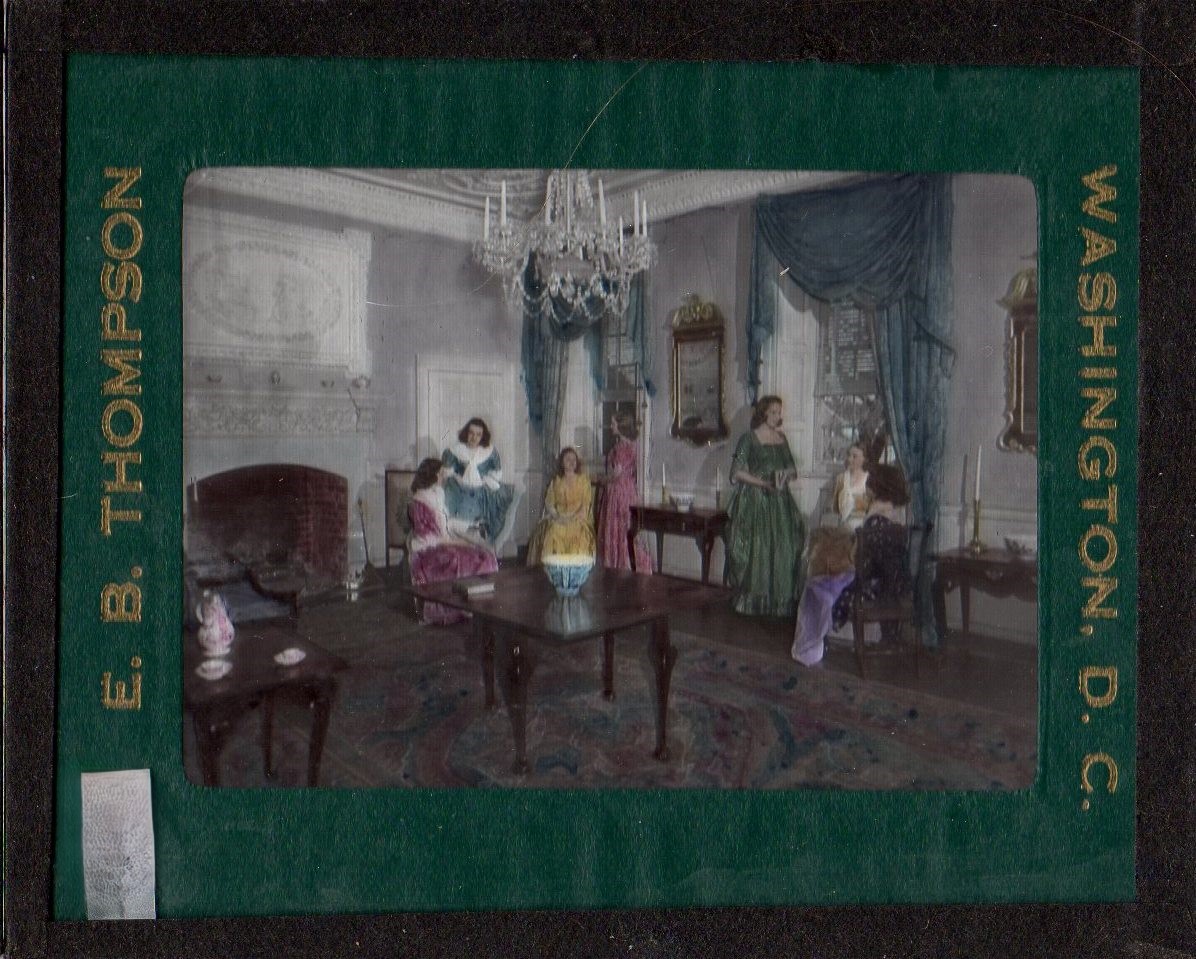
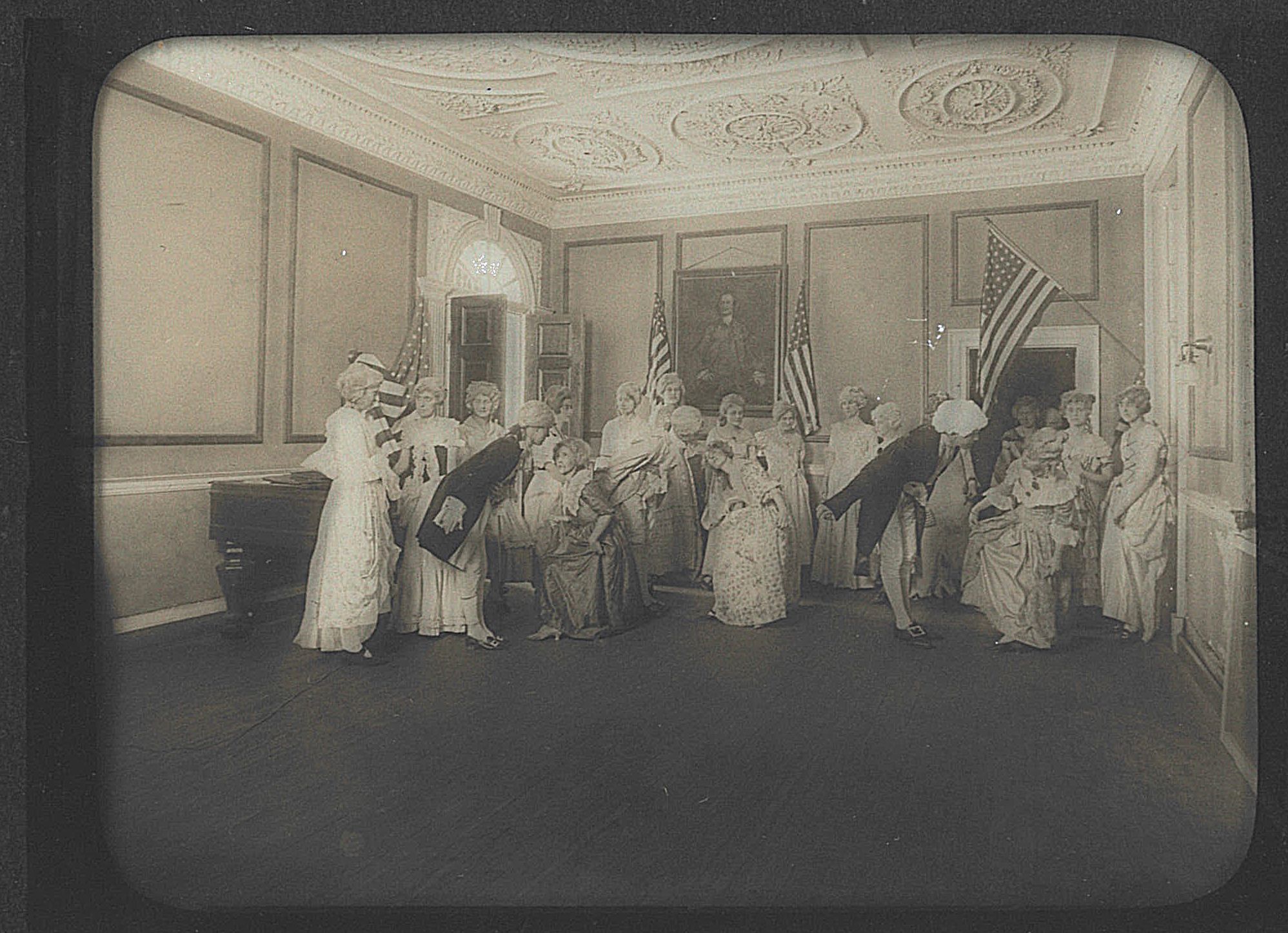
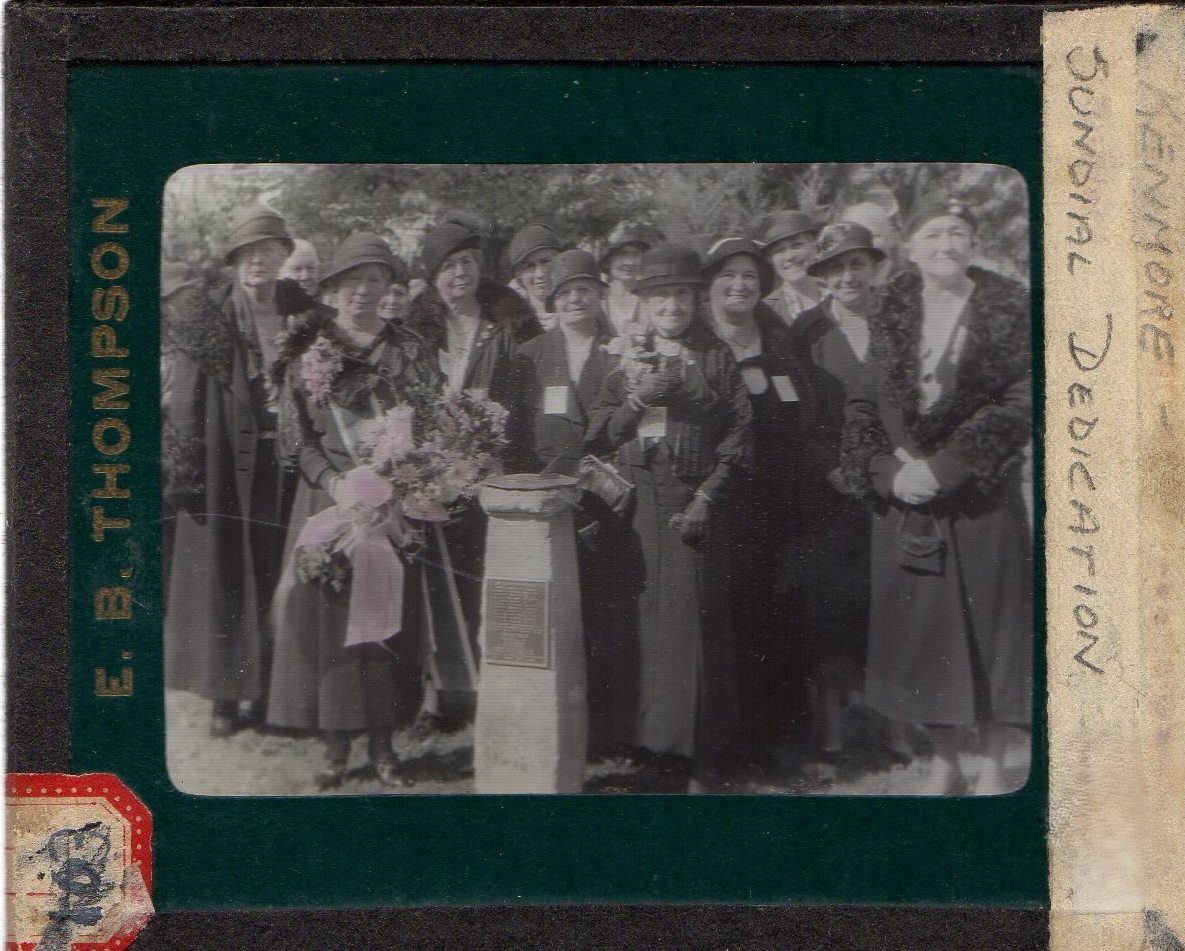
    To help the various DAR chapters across the U.S. sell gingerbread, the Kenmore Association developed a visual program using the Bauch & Lomb Balopticon and trays of glass slides. Mrs. Smith worked with Mrs. Louise du Pont Crowninshield to select various photographers to assist in the project, including the well-known E.B. Thompson of Washington, D.C.  This was no inexpensive program to develop with balopticons running around $77 a piece and slides costing $1 to $3 per slide of which we have over three hundred. 

    This program featured black-and-white and colored glass slides documenting the restoration and refurnishing of Kenmore and its gardens. Its goal was twofold. First, it showed the groups the product of their previous fundraising efforts, and second, it gave them an understanding of the house, property, and its goals for the future. Groups from all over the country wrote to Mrs. Smith requesting that she send out the program, which consisted of the balopticon and a set of glass slides for their meetings.  Sometimes, Mrs. Smith would even join the program herself, presenting and answering questions about upcoming projects. 

    These glass slide presentations were eventually updated into paper guidebooks, films, and postcards featuring up-to-date Kenmore images. The slides were packed away in the closet for the last eighty-plus years, and now offer us a great source of documentation for the early years of The Kenmore Association and the restoration of Kenmore.

    Heather Baldus

    Collections Manager


    Sources

    Mesick, C.W. (1992). Kenmore Historic Structure Report. Albany

  • The ‘Monuments Men’ of World War II Come to Kenmore

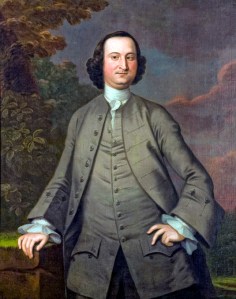
    Fielding Lewis by John Wollaston, ca. 1765. This portrait has been in the Kenmore Collection for many decades.  It was recently returned to the Drawing Room, where it would have hung when the Lewis family lived in the house 200 years ago. Watch a video of the hanging process here.

    Editor’s Note: This Memorial Day, we again remember ‘The Monuments Men’ and their invaluable work to locate and save European art looted by the Nazis during World War II as well as their continued efforts to conserve and preserve art after the war, including art at Historic Kenmore.  This post originally appeared on Lives & Legacies on May 20, 2015.

    Recently, while flipping through old files of the Kenmore Association dating back to the 1920s and looking for anything related to our portrait of Fielding Lewis by John Wollaston (ca. 1765), I spotted a familiar name: George Stout.  It took me only a moment to realize why the name was familiar.  Those of you who read Robert Edsel’s book The Monuments Men: Allied Heroes, Nazi Thieves and the Greatest Treasure Hunt in History or saw the movie The Monuments Men starring George Clooney, Matt Damon, John Goodman, and Bill Murray may also recognize the name.

    During World War II, George Stout was a member of the U.S. Army’s  Monuments, Fine Arts, and Archives unit, nicknamed the “Monuments Men.”  These soldiers volunteered to leave their jobs as curators, historians and conservators to travel the frontlines in Europe, documenting, cataloging and in some cases saving priceless cultural artifacts in harm’s way.  Along with serving as a Monuments Man, Stout is widely considered the father of modern methods in art conservation in the museum world.  He’s kind of a rock star to all of us who work in museums, as are all of the Monuments Men.  It is not often that curators get to be the hero, but those men were.

    Lieutenant George Stout, U.S. First Army and U.S. Twelfth Army Group. Age: 47. Born: Winterset, Iowa. A towering figure in the then obscure field of art conservation, Stout was one of the first people in America to understand the Nazi threat to the cultural patrimony of Europe and pushed the museum community and the army toward establishing a professional art conservation corps. As a field officer, he was the go-to expert for all the other Monuments Men in northern Europe and their indispensable role model and friend. Dapper and well-mannered, with a fastidiousness and thoroughness that shone in the field, Stout, a veteran of World War I, left behind a wife, Margie, and a young son. His oldest son served in the U.S. Navy. Walter Hanncock Collection, courtesy of the Monuments Men Foundation
    Lieutenant George Stout, U.S. First Army and U.S. Twelfth Army Group. Age: 47. Born: Winterset, Iowa. A towering figure in the then obscure field of art conservation, Stout was one of the first people in America to understand the Nazi threat to the cultural patrimony of Europe and pushed the museum community and the army toward establishing a professional art conservation corps. As a field officer, he was the go-to expert for all the other Monuments Men in northern Europe and their indispensable role model and friend. Dapper and well-mannered, with a fastidiousness and thoroughness that shone in the field, Stout, a veteran of World War I, left behind a wife, Margie, and a young son. His oldest son served in the U.S. Navy.  From the Walter Hancock Collection courtesy of the Monuments Men Foundation.

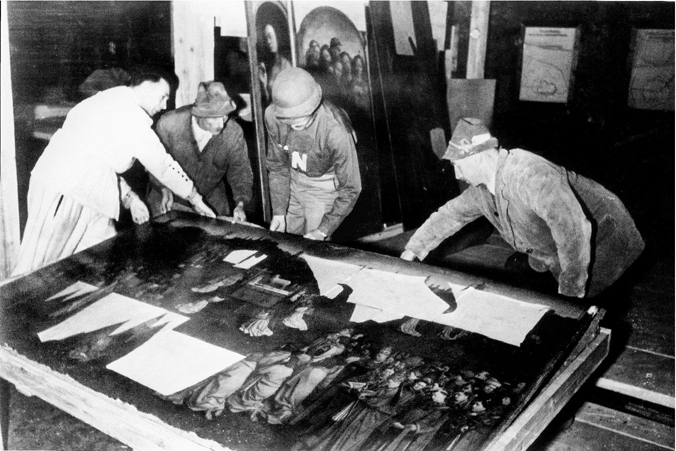
    ALTAUSSEE, AUSTRIA – JULY 10, 1945: Removal of priceless works of art from the salt mine at Alt Aussee posed problems for Monuments Man George Stout unlike any ever contemplated. Stout constructed a pulley to lift Michelangelo’s Bruges Madonna onto the salt cart to begin its long trip home to Belgium. Visible on the far left is Monuments Man Steve Kovalyak, an expert in packing art, who was a key assistant to Stout. National Gallery of Art photo courtesy of the Monuments Men Foundation.

    After the war, many of the Monuments Men returned to their museum jobs where they continued to work together, revolutionizing the care and conservation of artwork and historic objects.  They established standards for conservation practices, ethics for conservators, and tested new scientific methods for preserving all varieties of artwork.  Perhaps their greatest legacy was that many of them established schools for training conservators, ensuring the future of the field.  For the first time, American museums had a cadre of experts to turn to when masterpieces in their collections needed help.

    Kenmore’s old files perfectly reveal the post-war story of George Stout and the Monuments Men. It’s a story that also involves numerous other luminaries of the art conservation world such as John Walker, Harold Cross, Sheldon and Caroline Keck, and Russell Quandt.

    It all started in 1949, when John Walker, then Chief Curator of the National Gallery of Art, visited Kenmore.  His visit moved him to write a letter to Kenmore’s own Louise DuPont Crowninshield, praising the Kenmore Association for its work in saving the property and for its fine collection, which included the Wollaston portrait of Fielding Lewis.  Mr. Walker felt very strongly that the Wollaston portrait was in need of immediate conservation treatment.  He recommended a young man named Harold Cross, the new restorer at the Corcoran Gallery of Art in Washington, D.C., for the project.

    John Walker was not a Monuments Man but he was heavily involved in the complicated and tedious post-war effort to identify artwork looted by the Nazis.  This brought him in close contact with many of the Monuments Men over several decades.  He suggested the Kenmore Association contact George Stout, then at the Worcester Museum of Art, to get a personal testimonial as to Harold Cross’s abilities. Cross apprenticed under George Stout, receiving training in Stout’s scientific methodology.  Mrs. Crowninshield contacted Stout, who highly recommended his former student. Cross performed the first ever restoration of the ca. 1765 Wollaston portrait.  The post-war Monuments Men network had made its first mark at Kenmore by saving our only image of Fielding Lewis.

    keck_sheldon
    Lieutenant Sheldon Keck (kneeling), United States Army. Read Keck’s biography here. Courtesy of the Monuments Men Foundation.

    The next involvement of the Monuments Men with the Wollaston portrait came in 1952, when the ladies of the Kenmore Association became concerned that the portrait was warping at an alarming rate.  Through personal connections, they learned that Sheldon and Caroline Keck would be visiting Colonial Williamsburg in January.  Sheldon Keck was a former Monuments Man and the chief restorer at the Brooklyn Museum of Art; his wife Caroline was also a restoration specialist at the same museum.  Together, they trained more than 150 conservators before they retired.

    Their presence in Virginia was fortuitous, and the decision was made to pack up the Wollaston and have Executive Director Mary Mason take it directly to Williamsburg.  Mr. and Mrs. Keck agreed to take a look at the painting, and apparently performed their treatment of it in their hotel room, “re-keying” the wooden stretcher so as to tighten the canvas and reduce the warp.  The Kecks did not charge for their emergency services “in the field”, rather they indicated that it was their pleasure to assist in the preservation of such an important work.

    Finally, in 1957, the Wollaston portrait’s care was passed on to the capable hands of another heir to the Monuments Men legacy.  When new preservation issues surfaced, the Kecks recommended a former student of theirs, Russell Quandt, examine the painting.  Over the next decade, Mr. Quandt would be the primary conservator of the portrait, performing treatments on it both on-site at Kenmore, at his lab at the Corcoran, and eventually at his own private-practice studio.

    All told, the Monuments Men were either directly responsible, or had trained those responsible, for the preservation of Kenmore’s Wollaston portrait for almost 20 years.  It can be argued that they continue in that role today, as we hire conservators whose professional training has been a direct result of the methods, systems and institutions established by them.  Many of today’s conservators are still inspired by the wartime service of the Monuments Men.  As Memorial Day approaches, the museum world in both Europe and in this country owes them an immense debt of gratitude.

    Visit http://www.monumentsmenfoundation.org/ to learn more about George Stout and Sheldon Keck, their comrades, and their wartime work.

    Meghan Budinger
    Aldrich Director of Curatorial Operations

  • Dining Room vs. Dining Room

    Several months ago, Historic Kenmore concluded the refurnishing effort in the Dining Room.  After painstaking research and scientific investigation, that room has been returned to a state that would be immensely familiar to Fielding and Betty Washington Lewis.

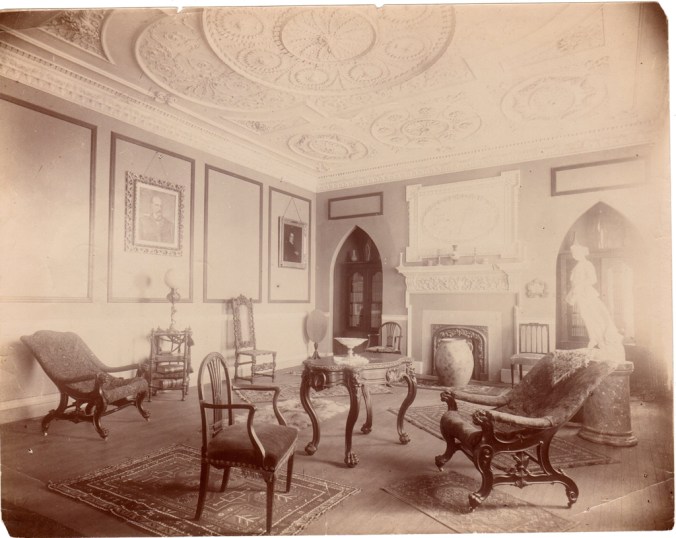
    It might look somewhat unfamiliar, however, to later occupants of Kenmore.  The first picture below was taken sometime between 1880 and 1902 when the Howard family occupied the house.

    When, in 1881, Kenmore was purchased by Mr. William Key Howard of Maryland, the place was in deplorable condition.

    Kenmore suffered considerable damage to its ornamental plaster ceilings during the Civil War. Young William K. Howard, Jr. urged his father to allow him to repair them. When scaffoldings were built, the artistic lad worked long and patiently making his own molds for replacement elements when needed.

    The Howards saved the ceiling but, naturally, their goal was not to return the building to its colonial-era appearance.  When Kenmore became a historic house museum, changes still had to be made over many decades to achieve a historically accurate décor that closely resembles the one the Lewises would have known in the late 1700s.

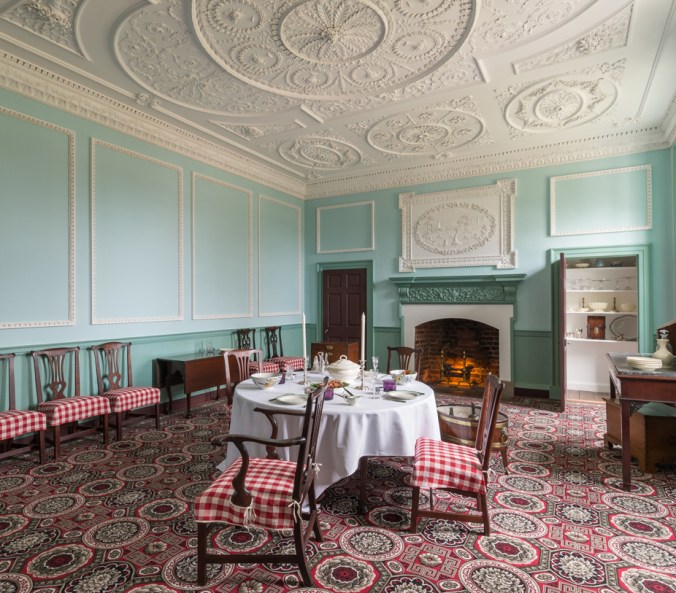
    The second picture shows the dining room as it appears today after meticulous restoration and refurnishing.  Comparing the two photos, we see the biggest architectural change to the room was the removal of the gothic arched niches on each side of the fireplace.  The arches were returned to the original square doors.

    The narrow oak flooring, which replaced the original floor stained with the blood of Civil War soldiers who received medical treatment at Kenmore, was itself replaced with heart pine flooring.  Late last year, the floor was covered with a beautiful replica 18th century carpet.

    Decorative coal grating and surrounding bricks were removed from the fireplaces making them larger.

    The wood molding put on the walls to create false panels was removed and replaced with plaster molding whose original location was found during removal of paint during restoration work.

    Those are just a few of the changes both large and small that can be seen when comparing these two photos.  The changes occurred over many decades and involved many dedicated people but each started, in many ways, with the Howards.  They and all the rest of us who have spent our days at Kenmore have taken something old and made it new again.

    Heather Baldus, Collections Manager
    Zac Cunningham, Manager of Educational Programs