When you enter a museum you’re surrounded by cool stuff. Be it paintings, fossils, or ancient artifacts, they’re all special items that you’d be hard pressed to find elsewhere. But what if I told you that the cool objects you see on display in a museum are a mere fraction of what most museums actually have in their collections? There is just never enough room, even for the biggest museums, to display everything. Additionally, some items are just too delicate to make available to the public. This is one of the reasons I love my job. My fellow archaeologists and I get a daily backstage pass to all the incredibly cool things excavated at George Washington’s Ferry Farm. Here’s our list of “Ten Cool But Rarely-Exhibited Artifacts Found at Ferry Farm.” Be sure to click on any of the photos for more detailed views of the artifacts.
Wine Bottle Seal
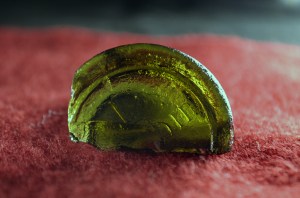 Starting in the 17th century if you were a wealthy gentleman or tavern owner chances are you ordered at least a few custom wine bottles complete with your personal seal. The seals were stamped in various ways, such as with names, initials, symbols, crests, and dates. Archaeologists love them because they’re ‘talky,’ meaning the artifact yields lots of information. A fragmentary bottle seal was found here in 2004 and bears the incomplete name of its owner. The letters visible are either a capital “I” or “J” (the English used the letter I for J), and below that are the letters “-bin”. These few letters might refer to someone in the Corbin family, an extensive Virginia family with local ties. With a little investigation, perhaps we can flush out who was the mystery guest that brought his own bottle of wine for a visit to Ferry Farm!
Lead Whistle
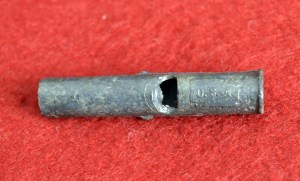 Instruments and toys tend to grab our imagination because they make us think about who used them and how the object got lost to time and archaeology. In our collection we have a simple lead whistle, measuring 1 7/8” long and 3/8” in diameter, with “U.S.A.” stamped on the side. It’s cheaply made out of lead, which was a very inexpensive material that has, for obvious reasons, been phased out of the toy industry. In the “Good Ol’ Days”, no one thought twice about making an instrument you put in your mouth out of lead. Maybe it’s a good thing that the person who owned the whistle lost it.
Chunkey Stone
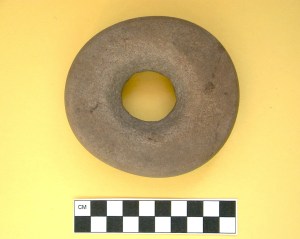 Fun to say. Fun to play. Basically a prehistoric rock doughnut, this hand-ground stone was used in a Mississippian Indian game called “Chunkey.” Warriors rolled disc-shaped stones across the ground and threw spears as close to the stone as possible. Similar to the Italian game of bocce, but unlike the Italians who threw wooden balls, Chunkey players threw spears, which is pretty awesome. It’s a bit of a mystery as to how it got to Ferry Farm because there is no evidence that Chunkey was played in eastern Virginia, however some of these gaming stones have been excavated in Maryland and Northern Virginia. It is also possible that one of Ferry Farm’s colonial inhabitants collected this exotic looking artifact for their cabinet of curiosities.
“Joseph” bottle fragment
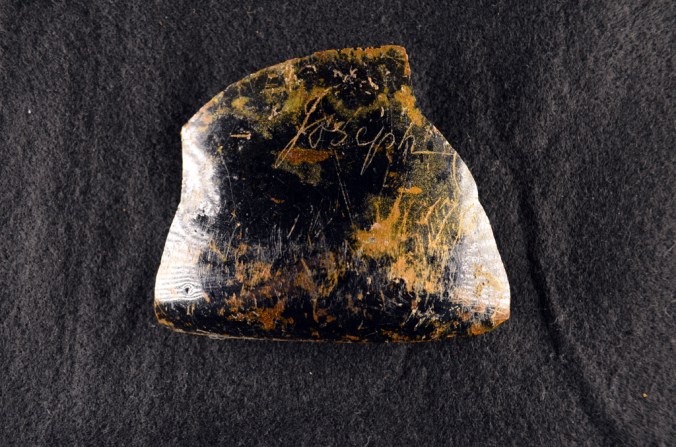 Normally broken bottle glass would have trouble finding its way onto any top ten list, but this fragment is one of a kind. Its owner inscribed his name “Joseph” and the date “174?” into the body of the bottle. That’s not an easy or common thing to do. The inscription is carved in an elegant and beautiful form indicating a gentry status for its owner. While no occupant of Ferry Farm was named Joseph, Mary Ball Washington’s older brother bore that name.
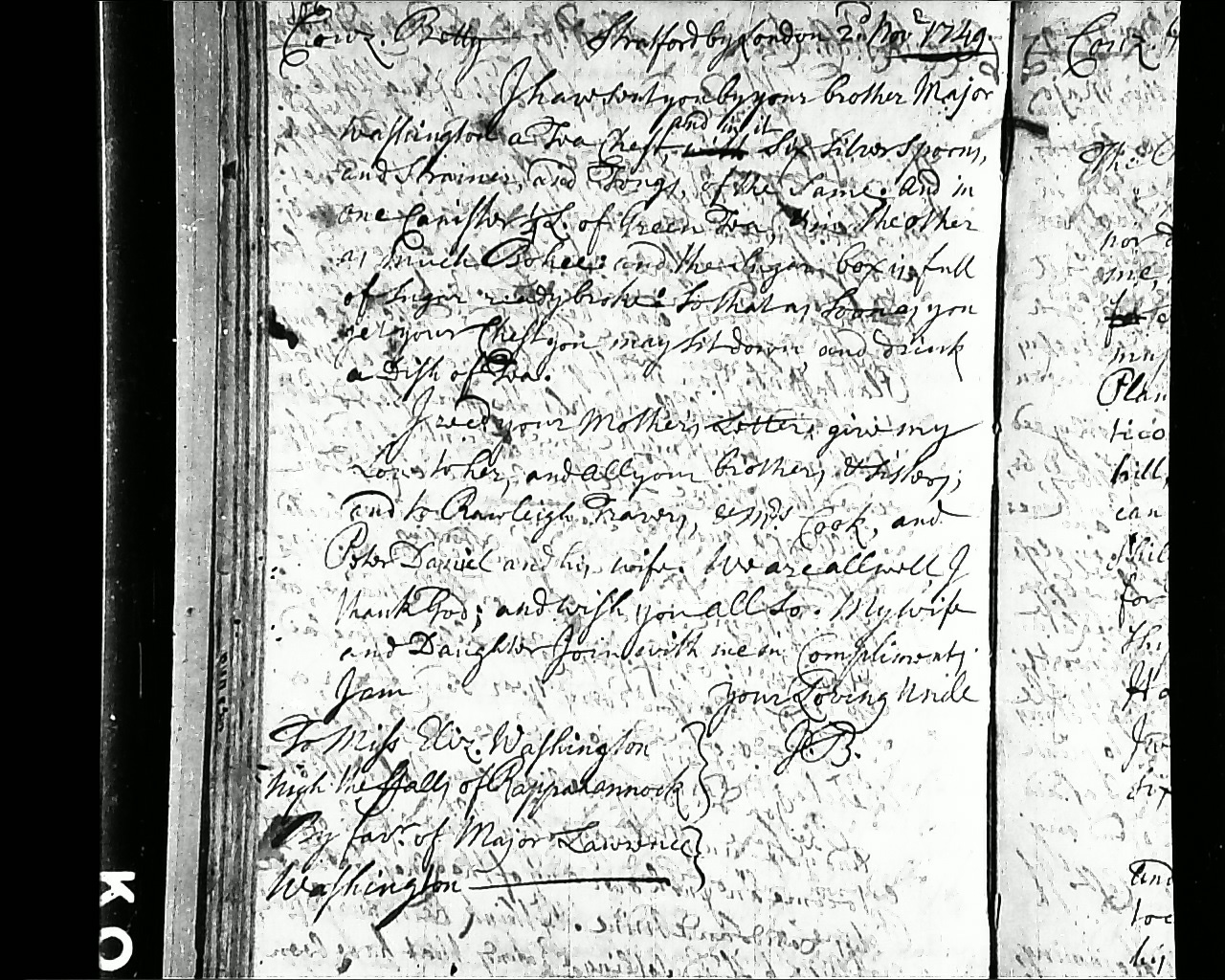
Joseph Ball, though living in England, was heavily involved with Ferry Farm. He absentee owned and operated a neighboring plantation. Joseph was lavish in both his gifts and advice to the Washingtons. He gave Betty, George’s sister, a beautiful silver tea set just before she married. He offered Mary advice on how to keep George out of the Royal Navy when a plan was hatched to put the then 13-year-old onboard a ship. And maybe, just maybe, he sent over a special bottle of wine with his name engraved on it for the Washington family.
Lead Toy Hatchet
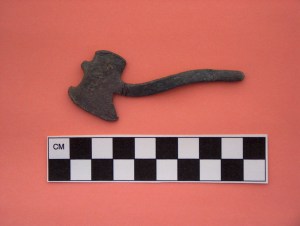 More lead toys? Yep. This little beauty has special significance to Ferry Farm because of the cherry tree myth. The 3-inch lead hatchet appears to be a souvenir made during the 20th century, possibly dropped during 1932’s anniversary celebration of George Washington’s birth. Keepsakes associated with George and the cherry tree abound in Fredericksburg. Previous private owners of Ferry Farm were known to capitalize on the history of the property, often selling fragments of the ‘original cherry tree’ and cherry seeds to visitors. This hatchet is an obvious symbol recalling the cherry tree story that is so closely associated with Washington’s childhood.
Milk Glass Darning Egg
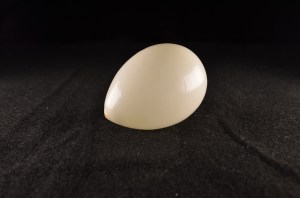 Recovered completely intact from an old burrow belonging to a groundhog, this artifact had multiple uses on a 19th and 20th century homestead. The glass egg was a darning aid used to fill out a sock while it was repaired or could be placed in a henhouse to encourage the ladies to lay eggs in a particular spot. There is also a persistent myth that these eggs were used to kill snakes. The snake would eat the glass egg, it was believed, which would then shatter inside them. This line of reasoning ignores the fact that snakes hunt by detecting chemical signatures of their prey and that snakes can’t really see the egg-like shape of our artifact because of their poor vision. But it’s a story that highlights the mythology that surrounds some objects once they fade into obscurity.
Tambour Hook
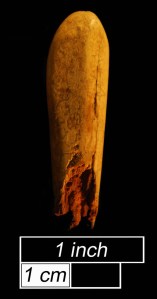 The tambour hook falls into the category of artifacts that are a little too fragile to display. Made of carved bone and metal, this exceptional object was used by a gentlewoman, probably George’s sister Betty, to adorn fabric with elaborate embroidery. Recovered from the bottom-most soil level of the Washingtons’ root cellar where it was deposited sometime between 1741 and 1760, the carved designs that cover the bone handle feature a parrot, leaves, flowing vines, and numerous flowers and represent some of the most popular embroidery themes of the time. This hook helps demonstrates the fashionability of the Washington women, which contradicts the portrait painted by many modern biographers.
Pewter Teaspoon with Betty Washington’s Initials
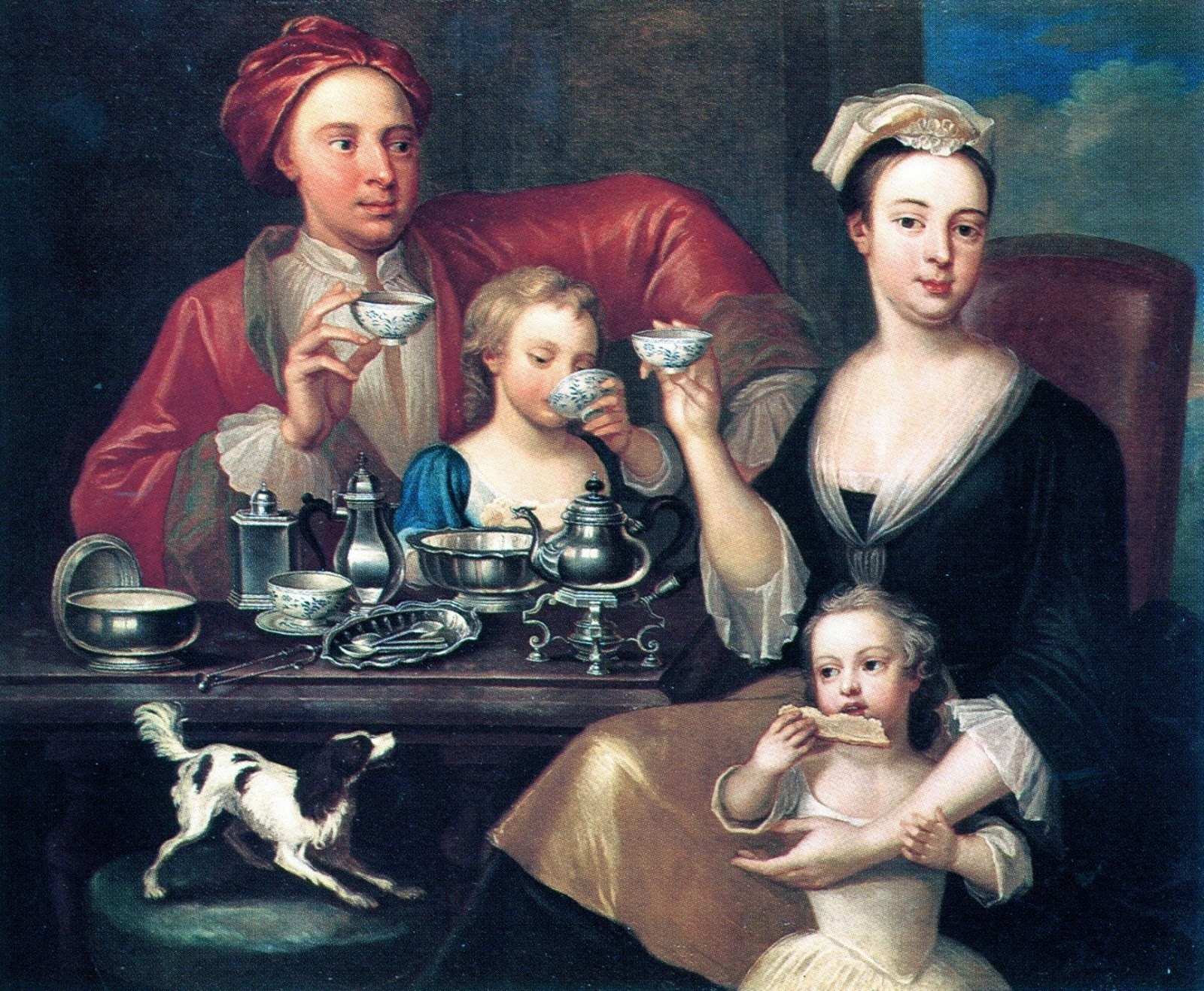
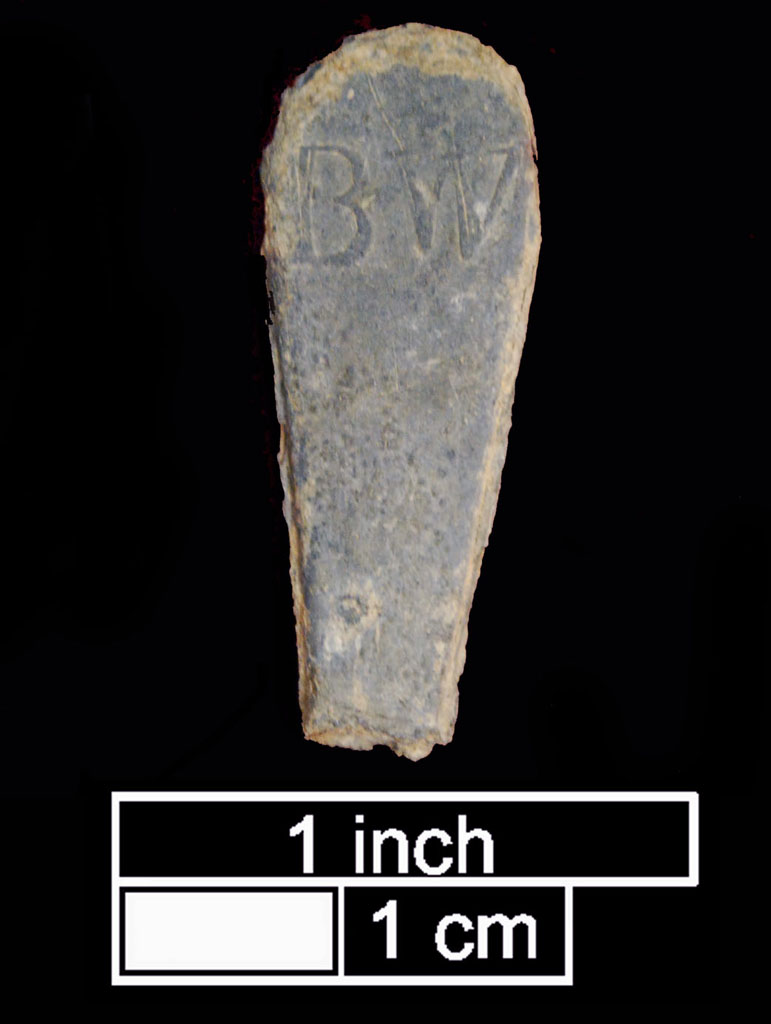
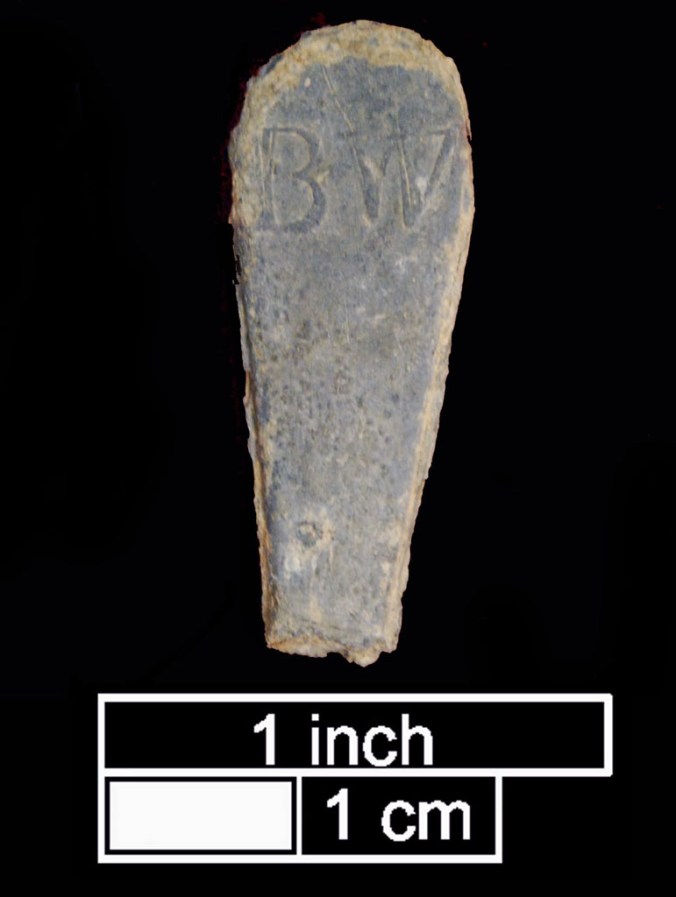 Betty had some of the coolest artifacts and this one literally has her name on it. It was customary for tea to be dispensed by the wife or by the oldest daughter in the house and Betty, as the only daughter, was clearly groomed in this ceremony as is evidenced by her own teaspoons. Pewter, an alloy containing a number of different metals including lead (yes, more lead), wasn’t as fancy as silver but the fact that it’s customized makes it special. This tea set appears to be part of a “practice” set that Betty used before her uncle gave her a silver tea set around her 16th birthday.
Bartmann or Bellarmine Jug/Bottle
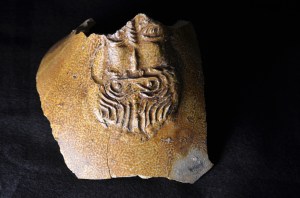 Who doesn’t want to drink out of a jug exhibiting the large face of a crazy bearded man? I do, and if you were a colonist in the 1700s and early 1800s, you did as well. Originating in Germany, these face jugs depicted a ‘wild man’ of the woods character popular in Eastern European folklore. By the time these vessels made it to the English market that aspect seems to have been forgotten. Subsequently, the English created their own story behind the bearded man revolving around their dislike for a similarly-bearded and unpopular anti-protestant cardinal by the name of Robert Bellarmine. For more about this artifact, read this blog post.
Repaired Creamware Cherry and Flower Punchbowl
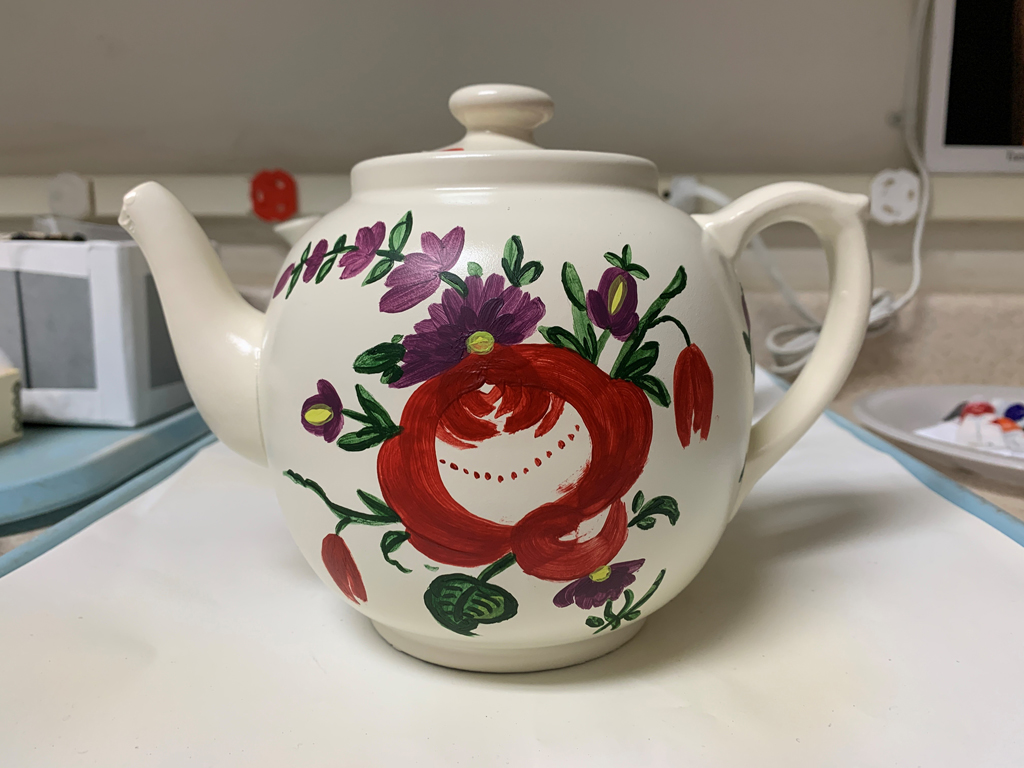
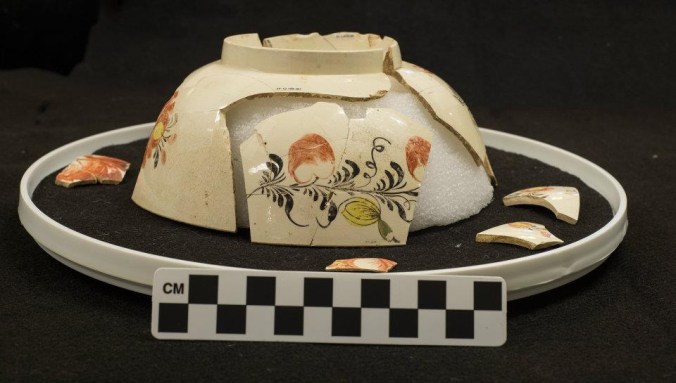 This artifact is cool for so many reasons. A beautiful bowl adorned with graceful hand painted flowers and cherries (remember, we love those here), it also exhibits a complicated and tortured use-life while highlighting the importance of punch drinking in the eighteenth century. Written about here, this bowl was owned by Mary Washington, George’s mother. Punch bowls vary in size and this one would have been called a ‘sneaker’, which denotes a bowl small enough for guests to take turns sipping out of it before passing it to the next person. Mary clearly loved the bowl so much that, when it broke sometime between 1765 and 1772, she had it repaired with glue. Although the hide or cheese-based glue used would not have resulted in a vessel capable of holding punch again, she could display it on her mantle or in her china cabinet…Oh, and the glaze? It has lead in it.
Laura Galke, Site Director/Small Finds Analyst
Judy Jobrack, Assistant Lab Supervisor
Mara Kaktins, Ceramics & Glass Specialist
Melanie Marquis, Lab Supervisor
Dave Muraca, Director of Archaeology