Lives and Legacies

Tag: Westerwald

  • That’s A Wrap! Ferry Farm’s Dig Season Recap

    October just happens to be Virginia Archaeology Month, and what better way to celebrate than to recap this summer’s excavation at George Washington’s Boyhood Home at Ferry Farm.
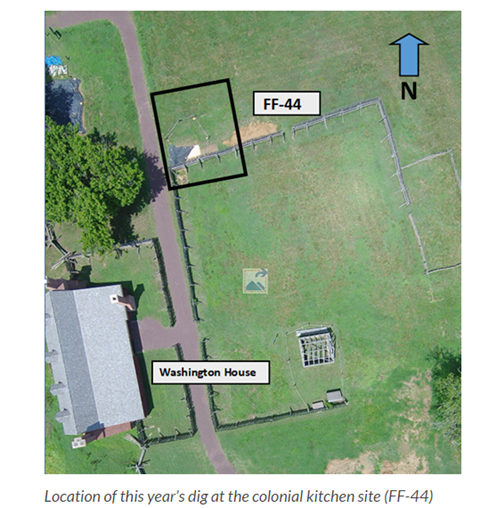
    You might remember from our dig preview, that this year’s dig (FF-44) focused on the continued exploration of the 18th-century kitchen site located just northeast of the main house. In 2023, our limited investigations uncovered just a small section of the kitchen’s stone foundation and cellar, giving us a sneak preview of the conditions and parameters of future site work. Armed with this knowledge, our aims this year were to uncover more of the original foundation walls of the kitchen cellar, to uncover additional architectural evidence of the kitchen outbuilding, and explore the surrounding landscape for features. So, did we do it?
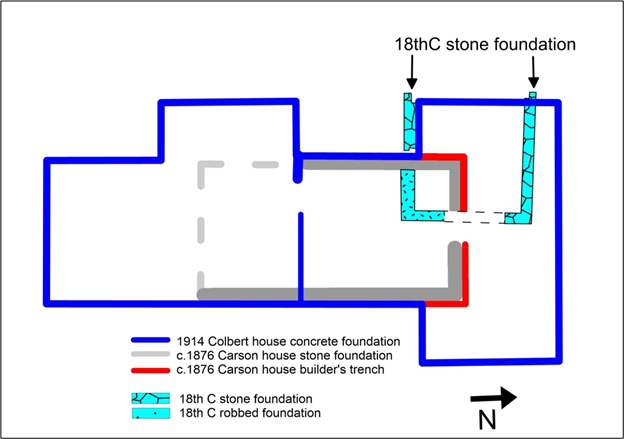
    Location of the 18th century kitchen foundation in relation to two later farmhouses dating to 1876 and 1914. 

    We did! But before we get to the fun discoveries, let’s go over how we got there. As far as sites go here at Ferry Farm, this one has been through a lot. Not only did the original 16’ by 16’ kitchen building burn and collapse in on itself in the middle of the 18th century, but it also had two subsequent farmhouses built on top of it that were either moved, damaged in a fire, or demolished all within the last 150 years. A previous archaeology project on the site introduced another element of complexity in understanding the depositional sequence of fills on the earlier 18th-century site, which had obviously been heavily disturbed by all these later events.

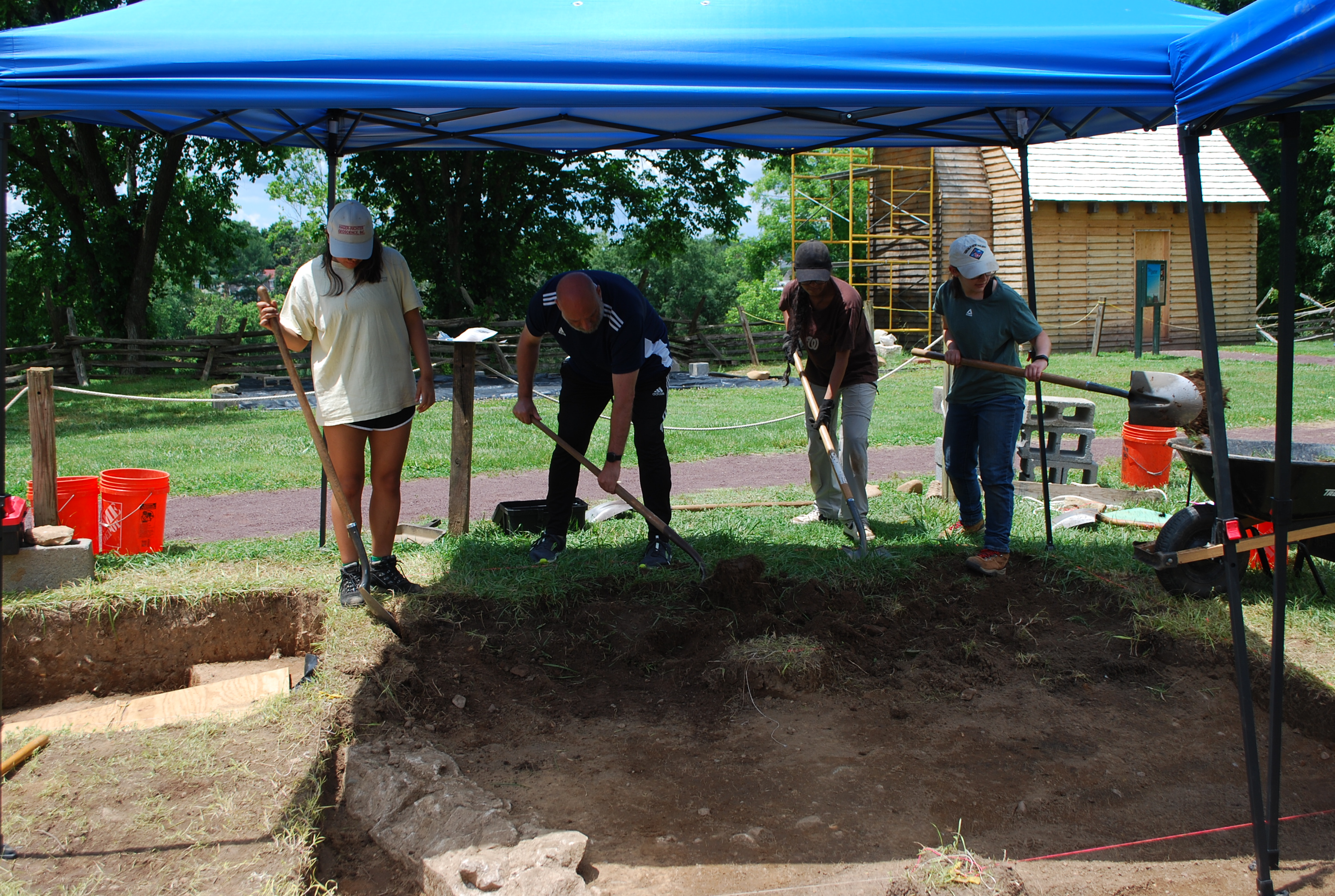
    All this led to an interesting excavation. Since a significant portion of the site had previously been excavated in the 1990s, a sizable amount of our site time was spent re-excavating backfilled archaeology units with the purpose of exposing unexcavated layers around the site. Not only would these unexcavated layers allow us to gather new data, but it would also give us the opportunity to better understand the findings as recorded in the earlier reports.
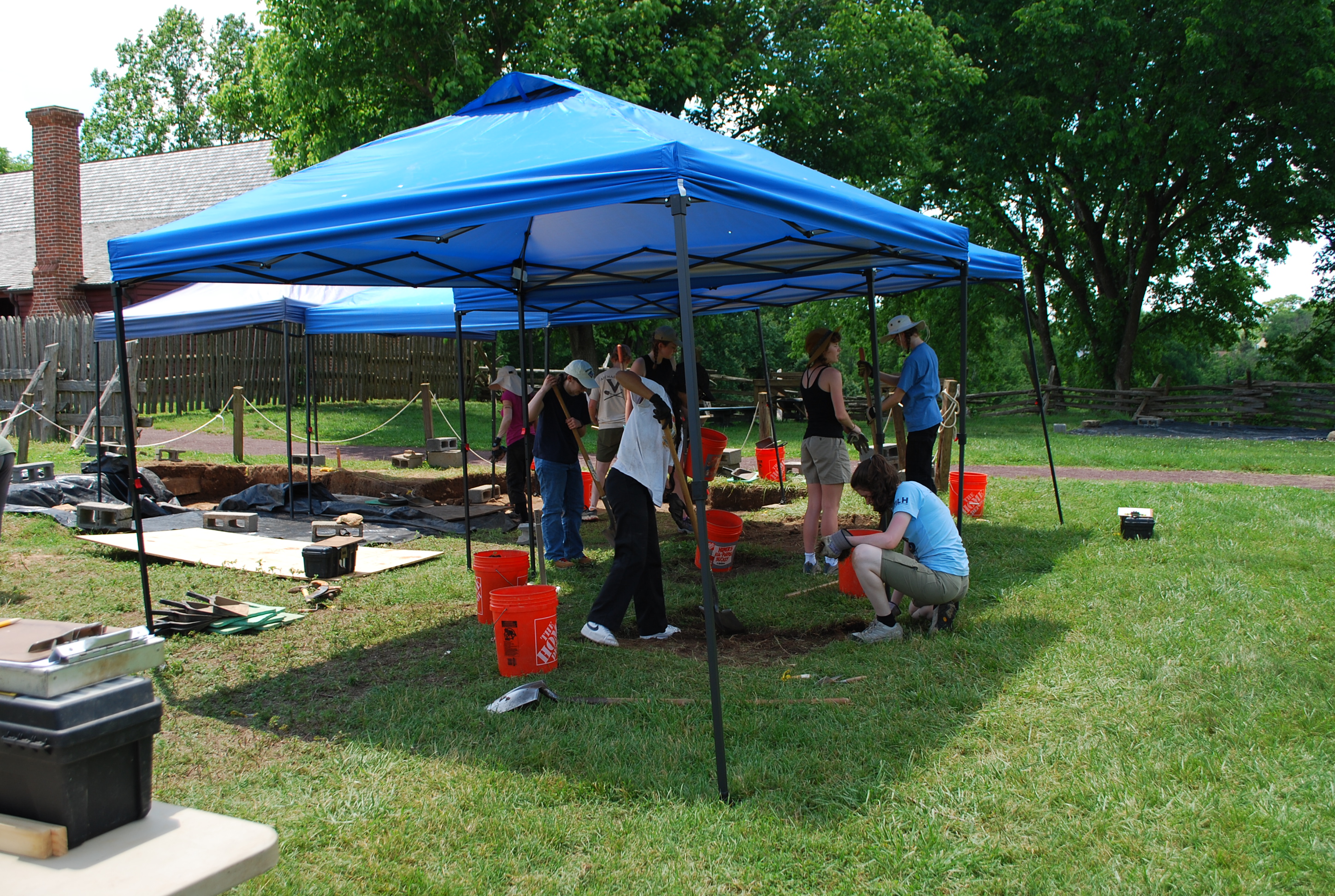
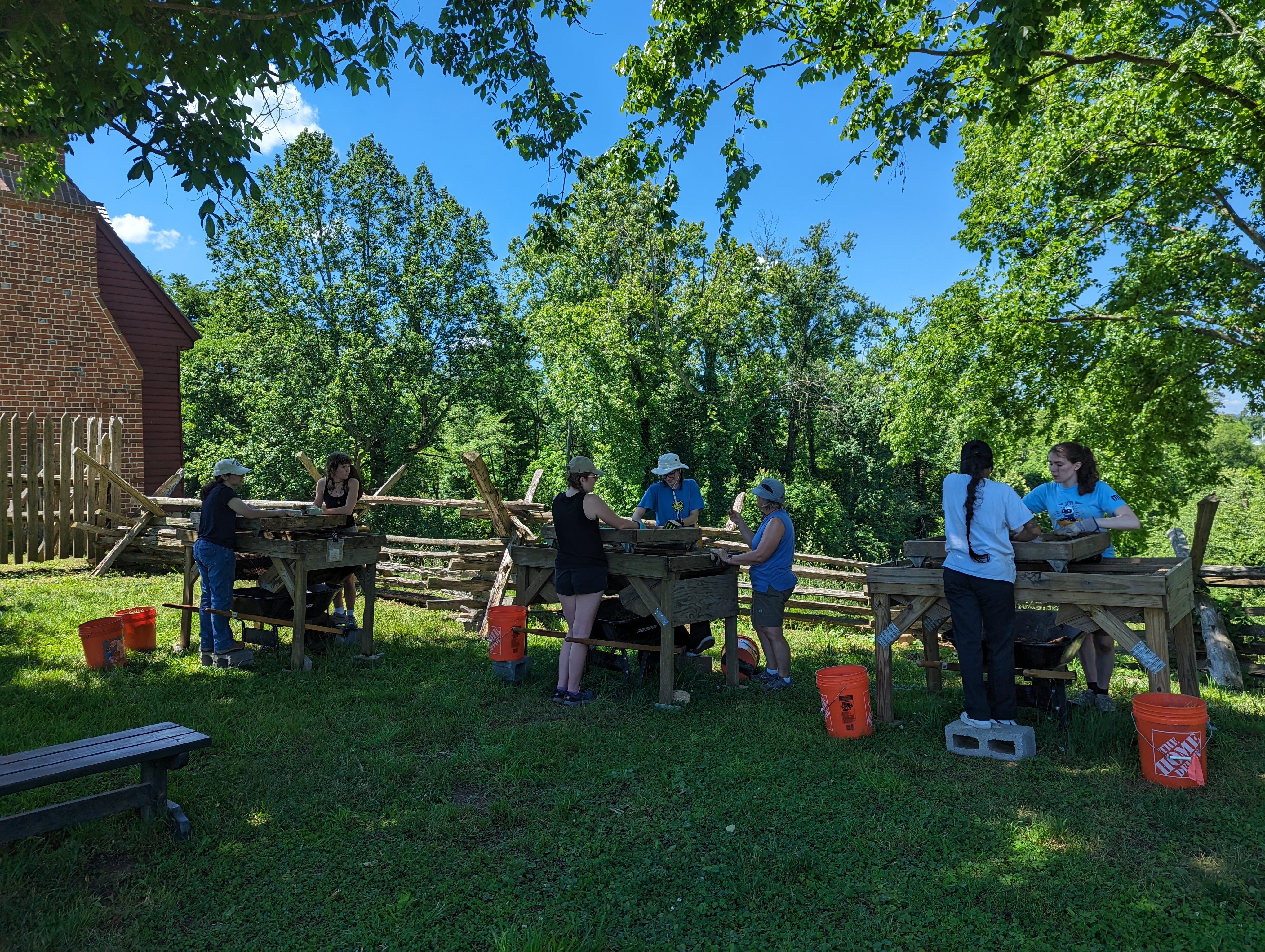
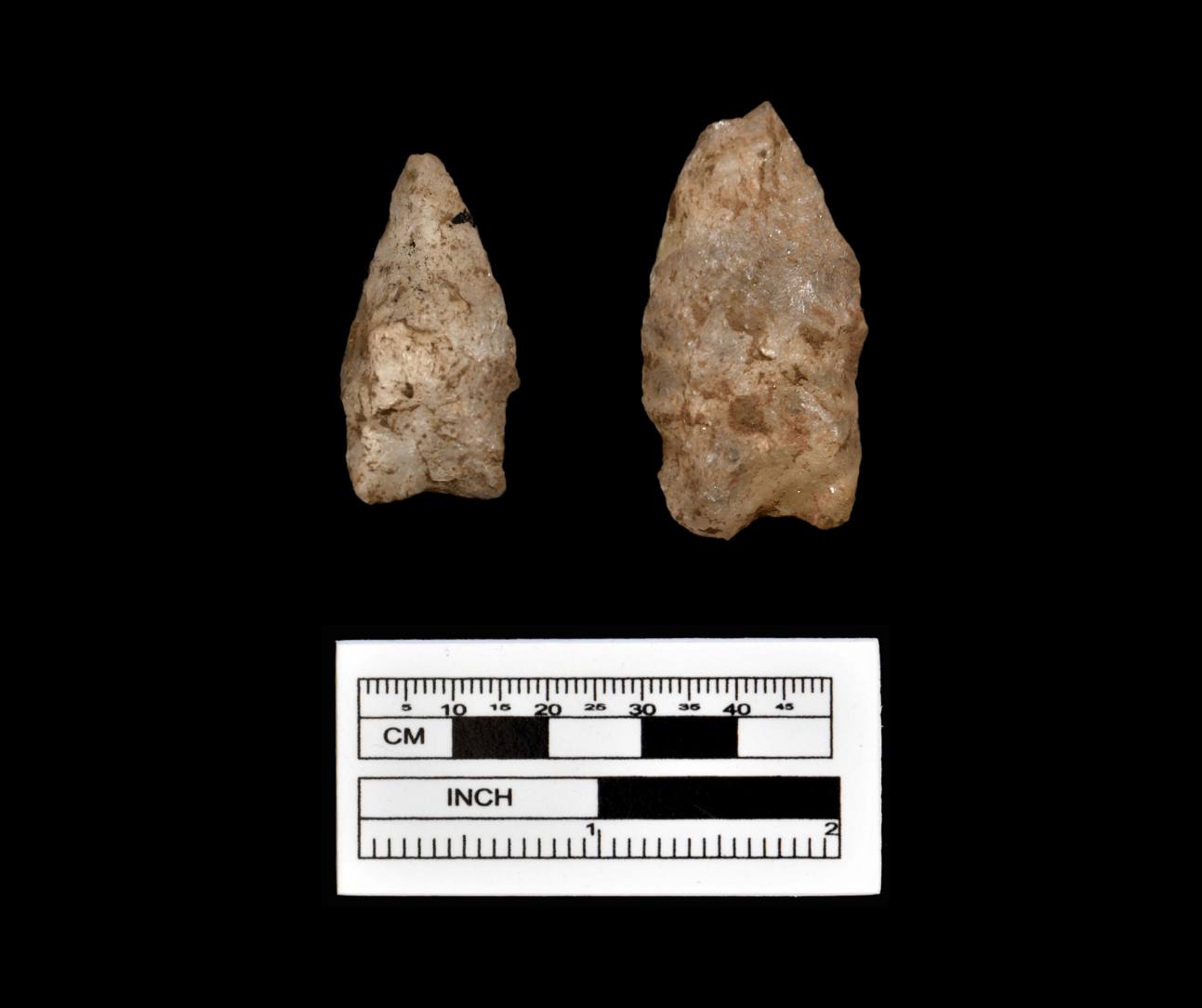
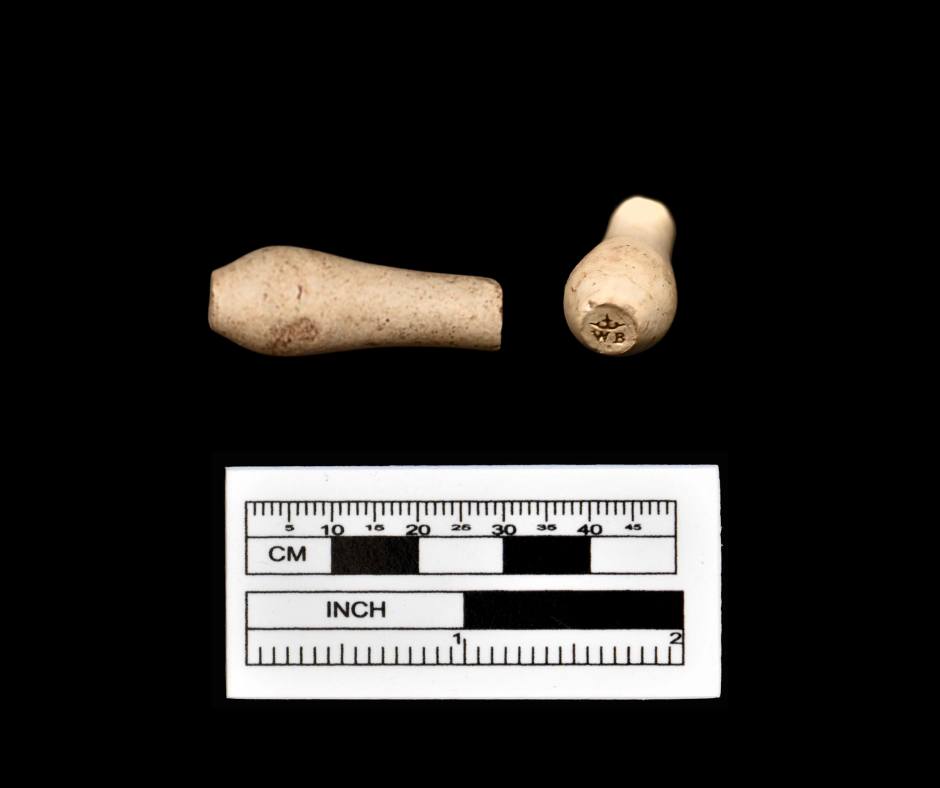
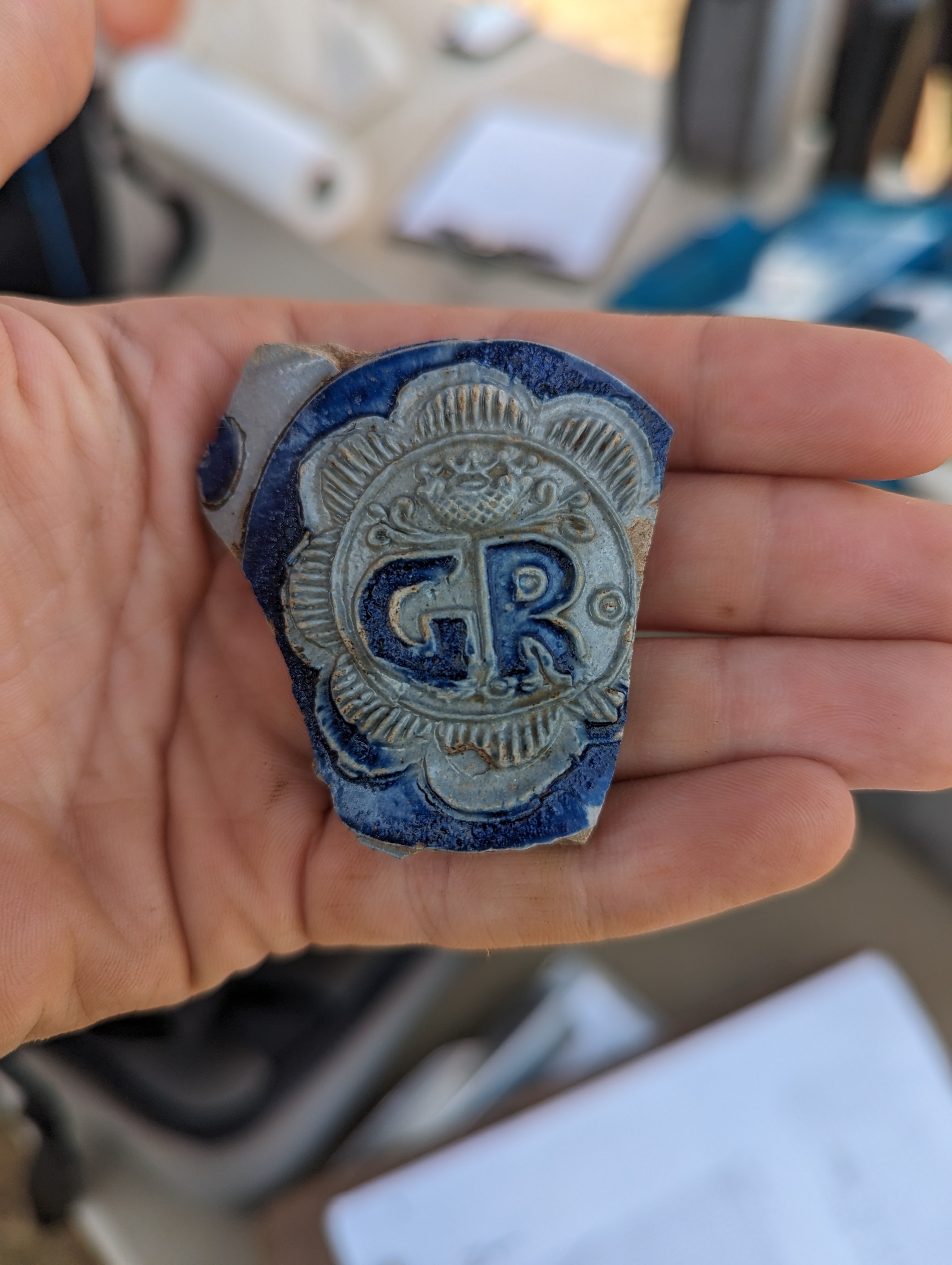
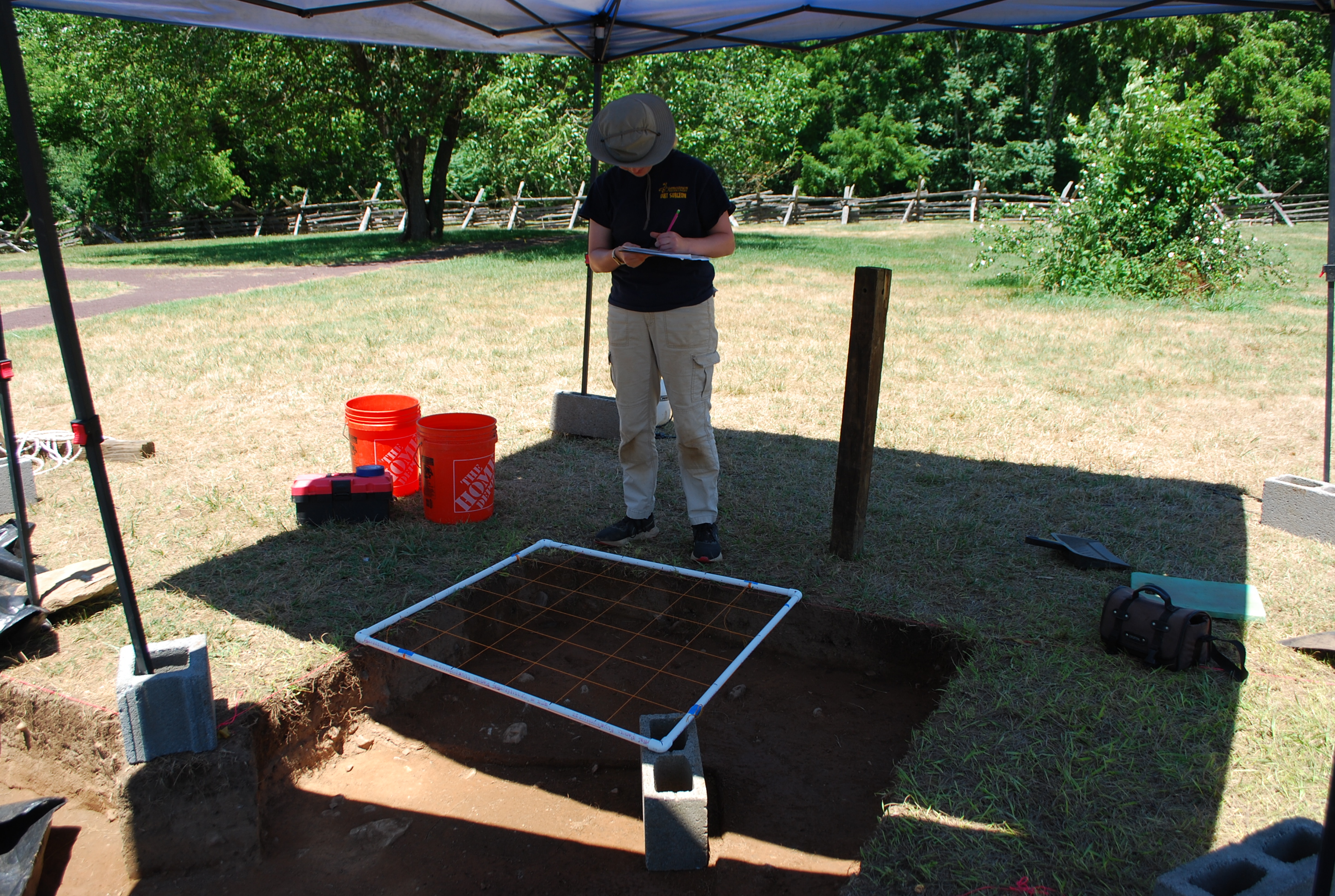
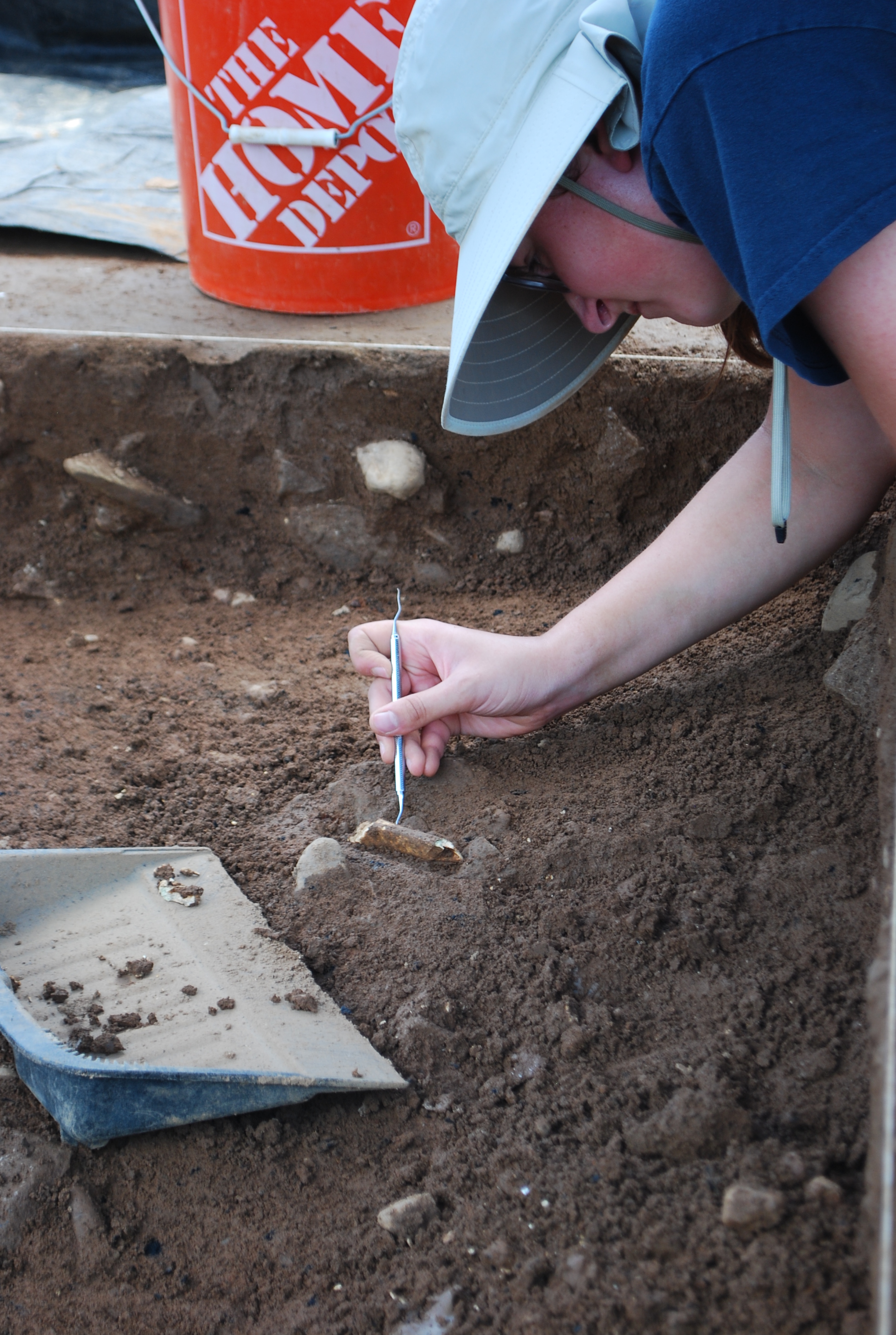
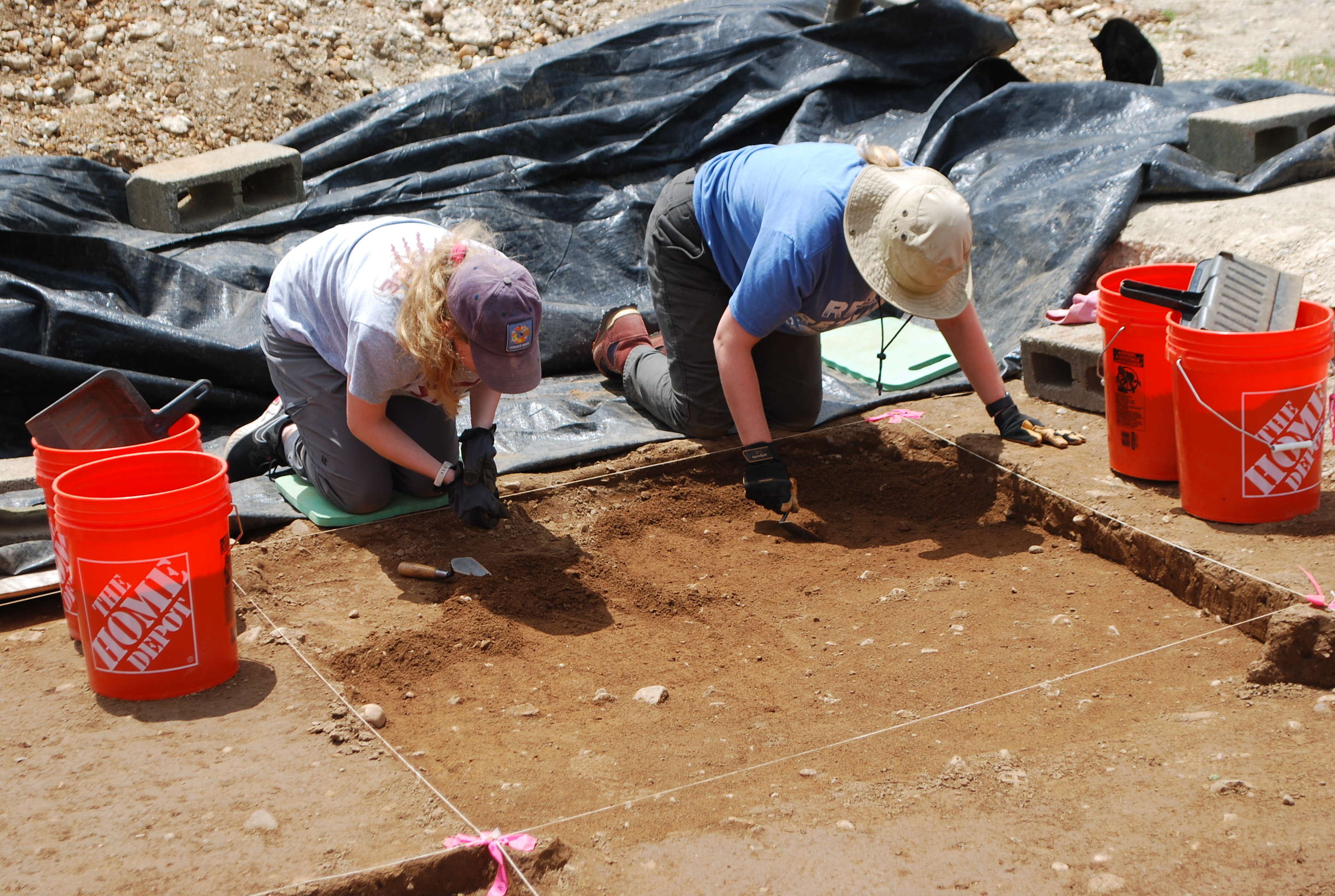
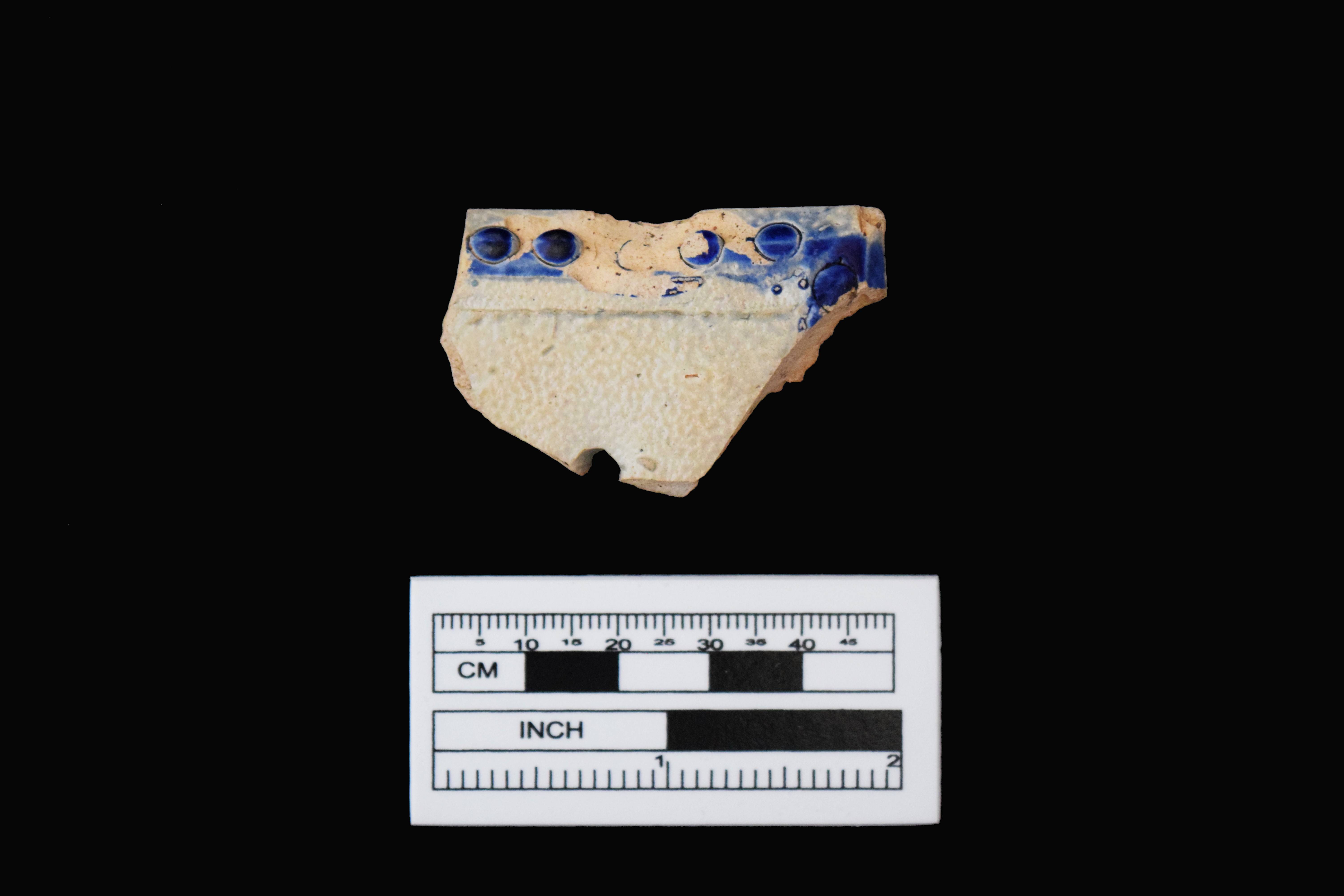
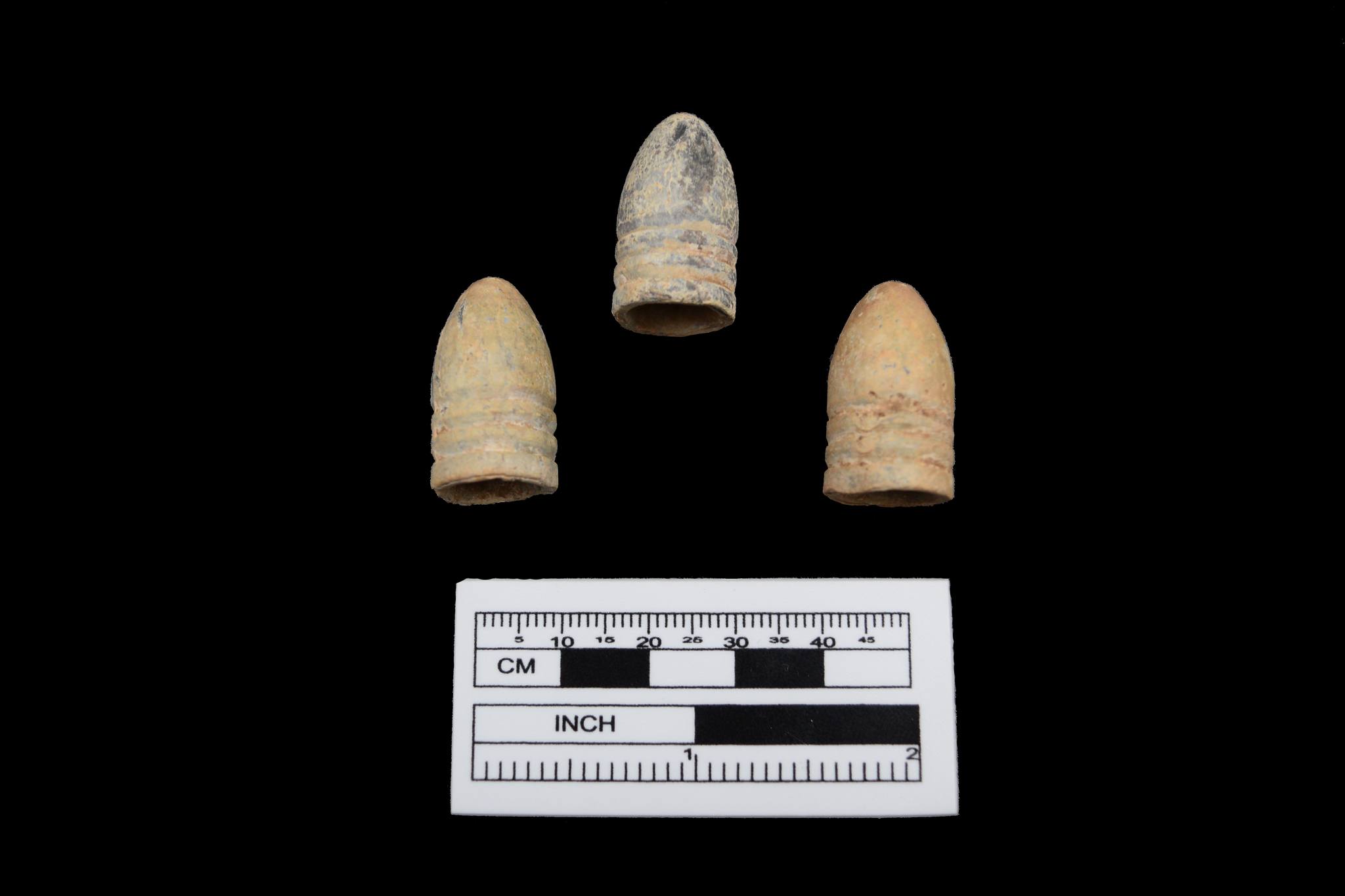
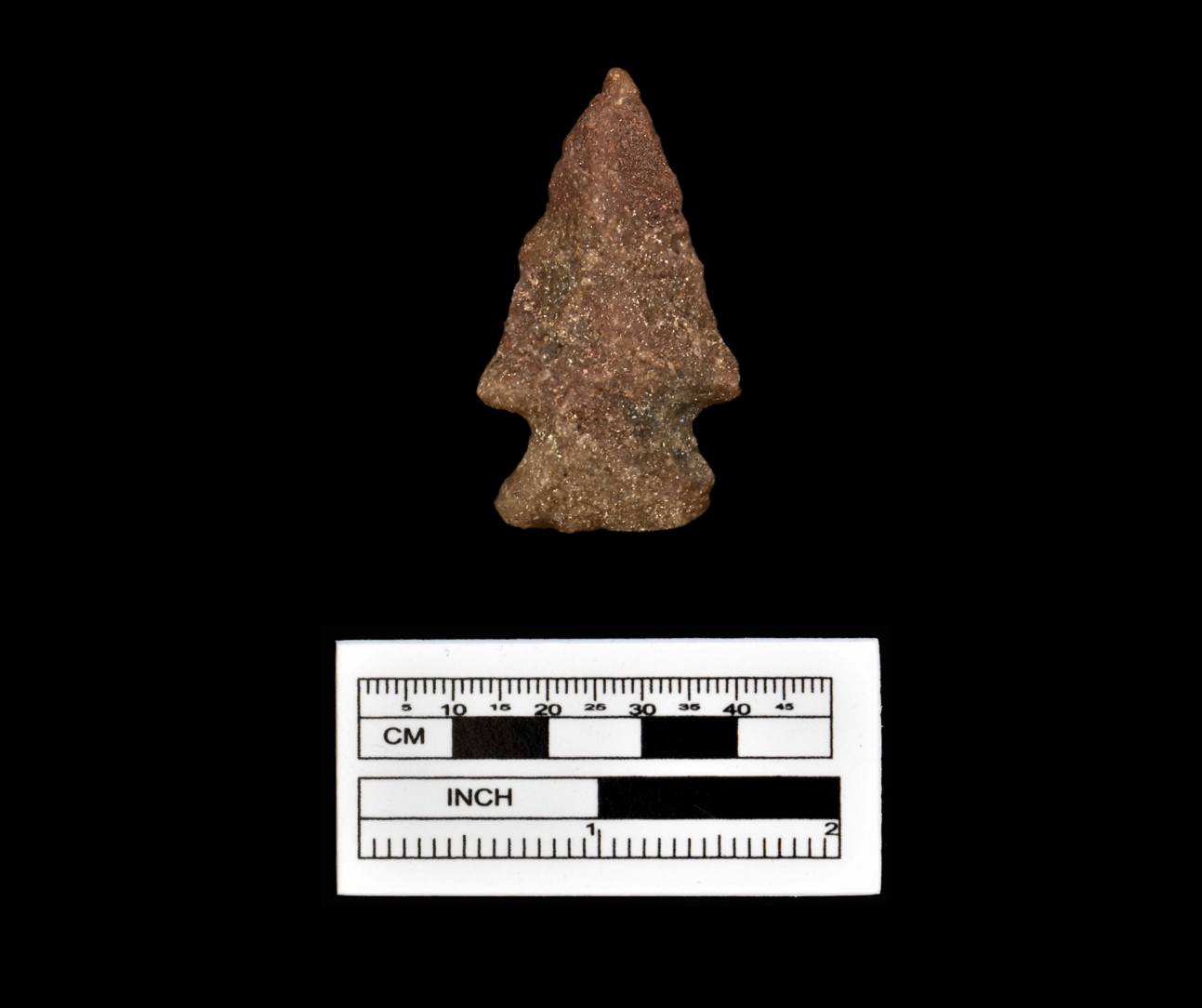
    With the help of our wonderful field school students and interns, we opened a total of twenty-seven 5’x5’ units across the kitchen site. Sifting through the dirt, hundreds of artifacts were found dating to all occupations of Ferry Farm. Super cool finds that date to the 18th-century period of use for the kitchen included tobacco pipe fragments, wine bottle sherds, and a variety of ceramics, including English stoneware, Chinese porcelain, and a German Westerwald ‘GR’ sherd. The prehistoric Native American occupations of the site were represented by an unusually high number of projectile points found (8 and counting!), dating to both the Early Archaic (8000 BC – 6500 BC) and Early Woodland (1100 BC – 500 BC) periods.  Civil War bullets came up in our screens, of course, as did 20th-century plastic, tools, toys, and bottle caps.
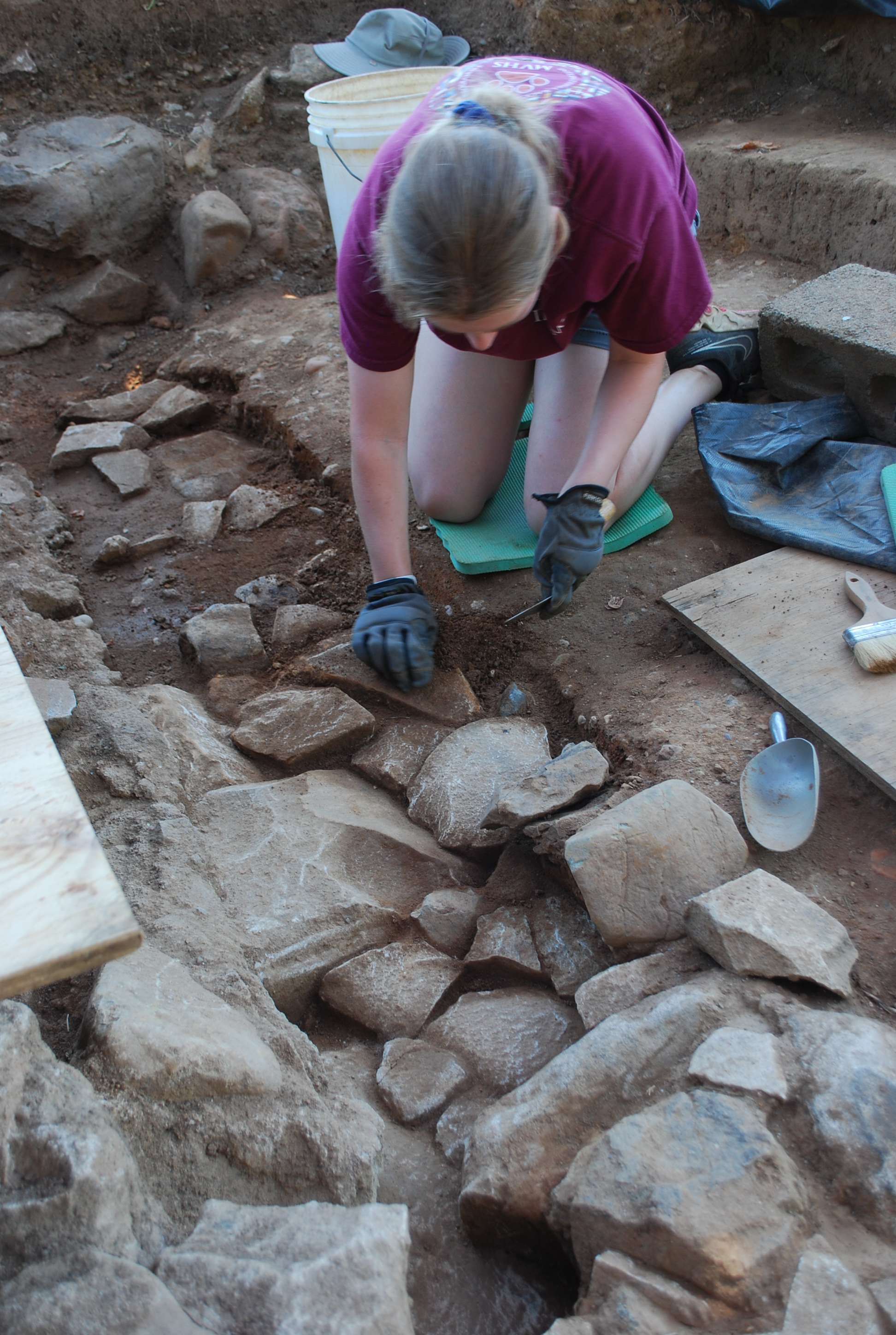
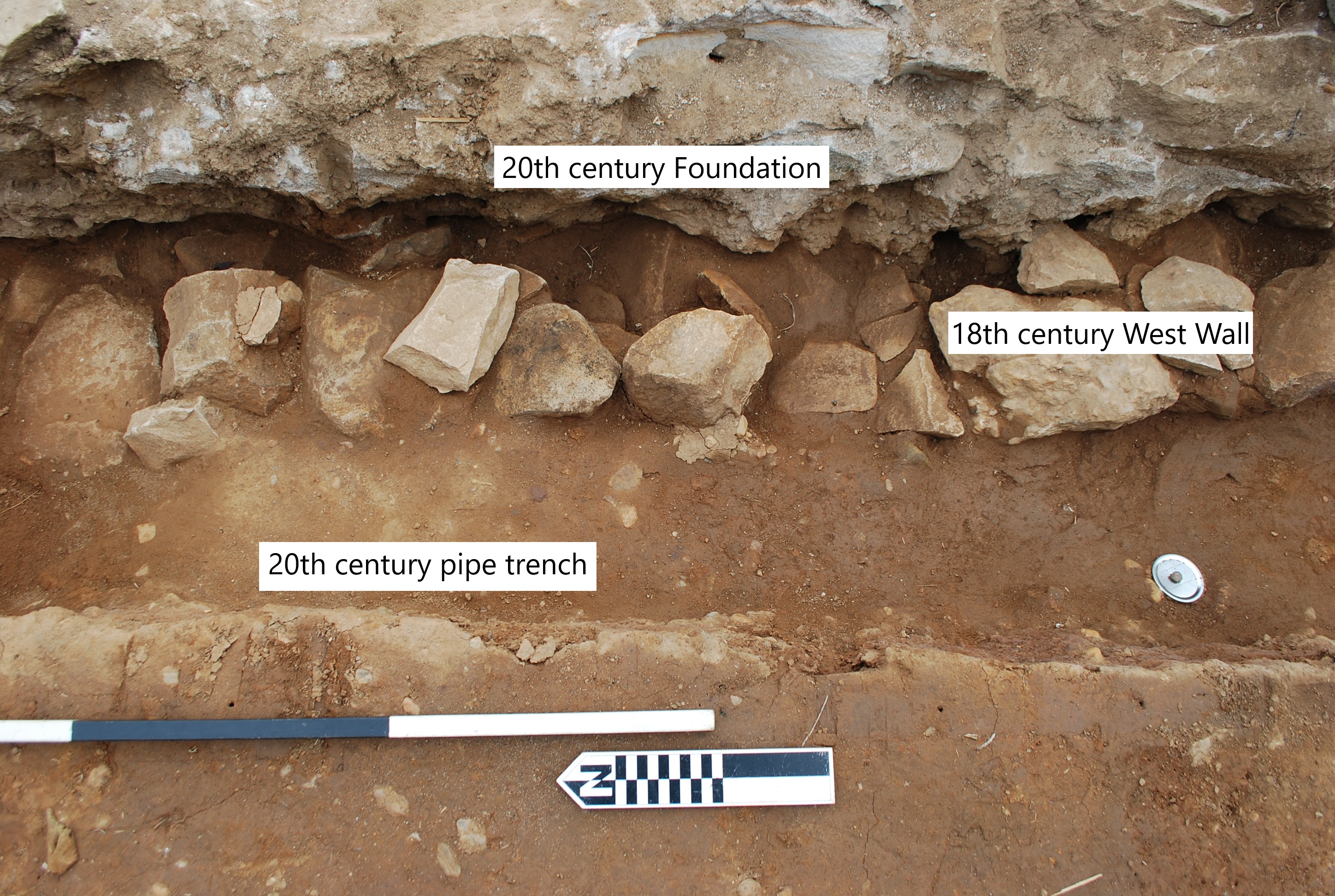
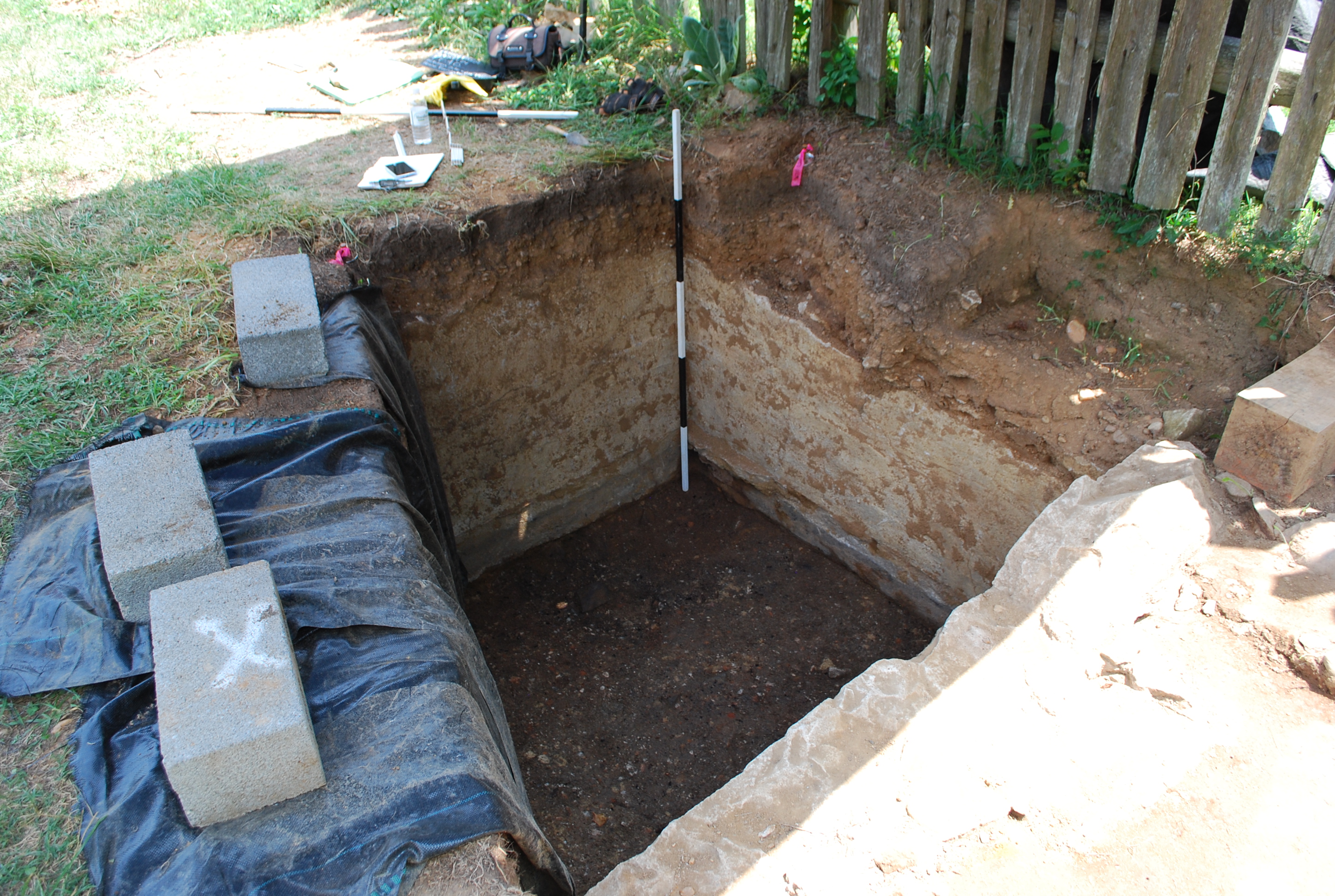
    But when it comes to finds, our most exciting discovery did not turn up in our sifting screens.  In fact, it was discovering that the western foundation wall of the kitchen cellar, thought to have been demolished, still survived!  During the 1990s excavations, the archaeologists did not see this portion of the stone foundation and assumed the construction of the 1914 Colbert house had destroyed it. Fortunately for us, it was hiding under a 20th century utility pipe and trench and lay directly adjacent to the Colbert concrete foundation. Now we have all four foundation walls that we hope to fully uncover next year.
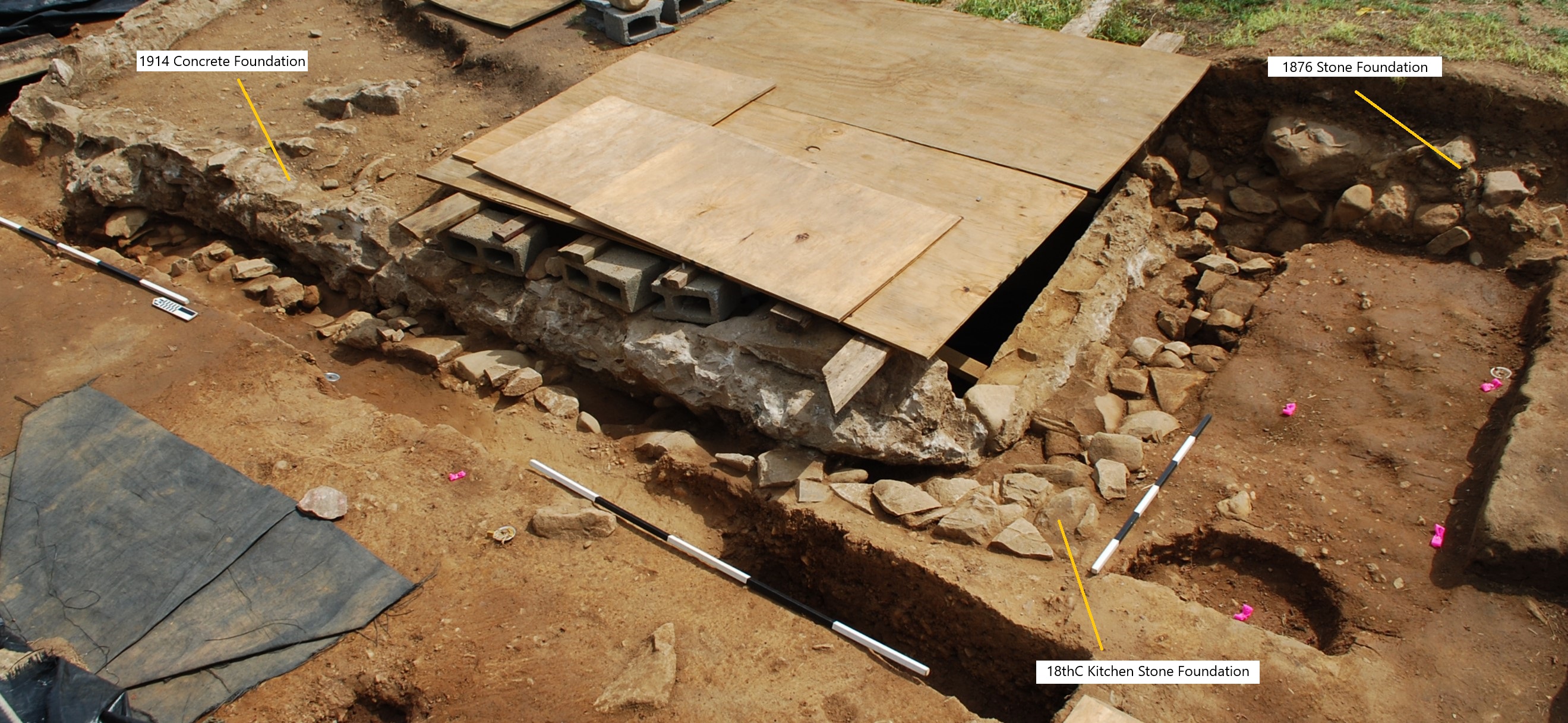
    Exposed south and west stone walls of the colonial kitchen lie adjacent to and just outside of the 1914 concrete foundation wall.  
    West wall of colonial kitchen that was hiding under the pipe trench

    Our excavation units surrounding the kitchen foundation have not, as of yet, exposed additional building features associated with the kitchen outbuilding, such as foundations or fireplaces. That search will continue next year as we continue taking those units down and expanding our site area. Features exposed in the 1990s dig, but not excavated by them or us, such as possible post holes and trash middens, also await our return in 2025, when we plan on finishing their excavation.
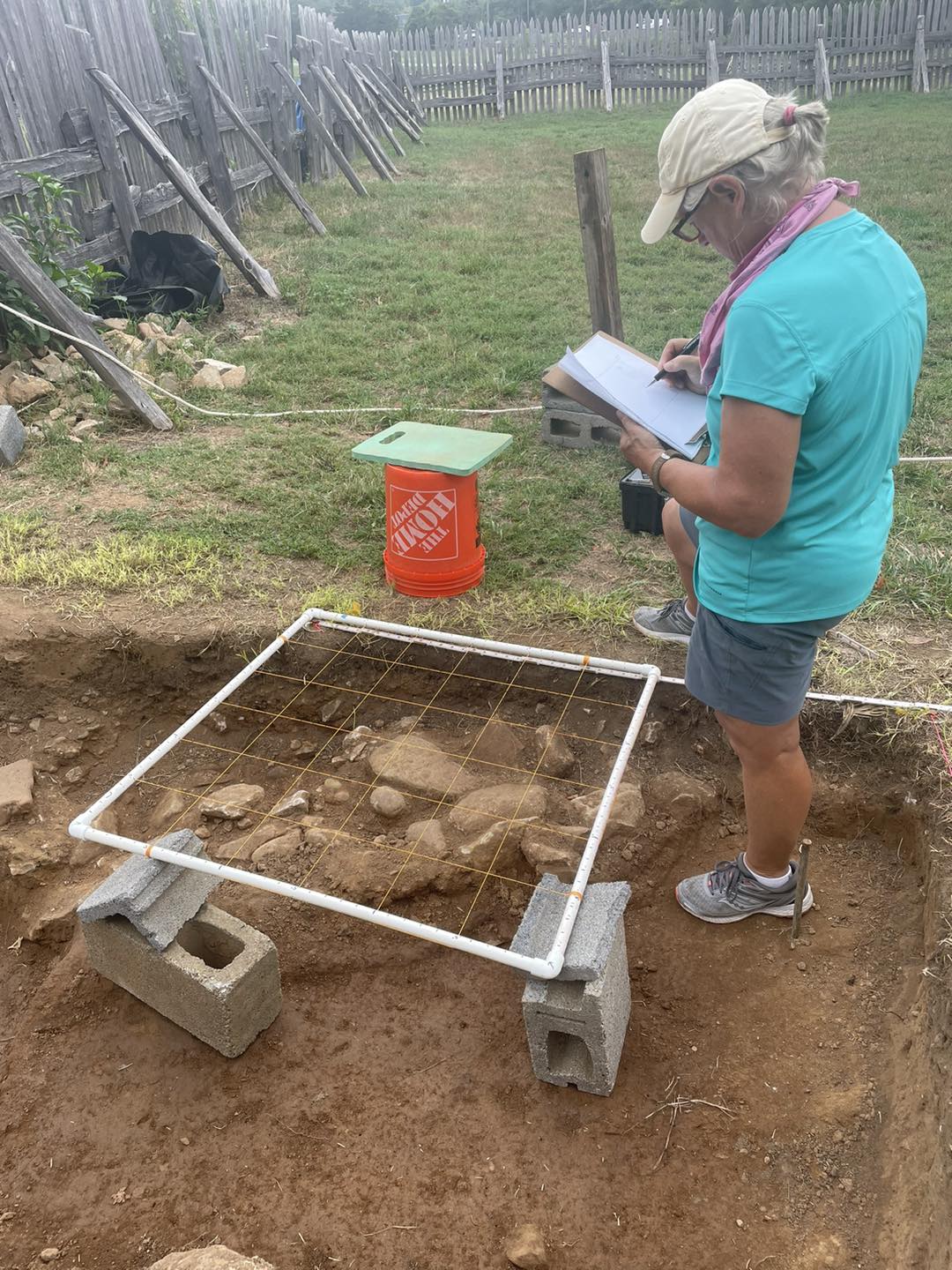
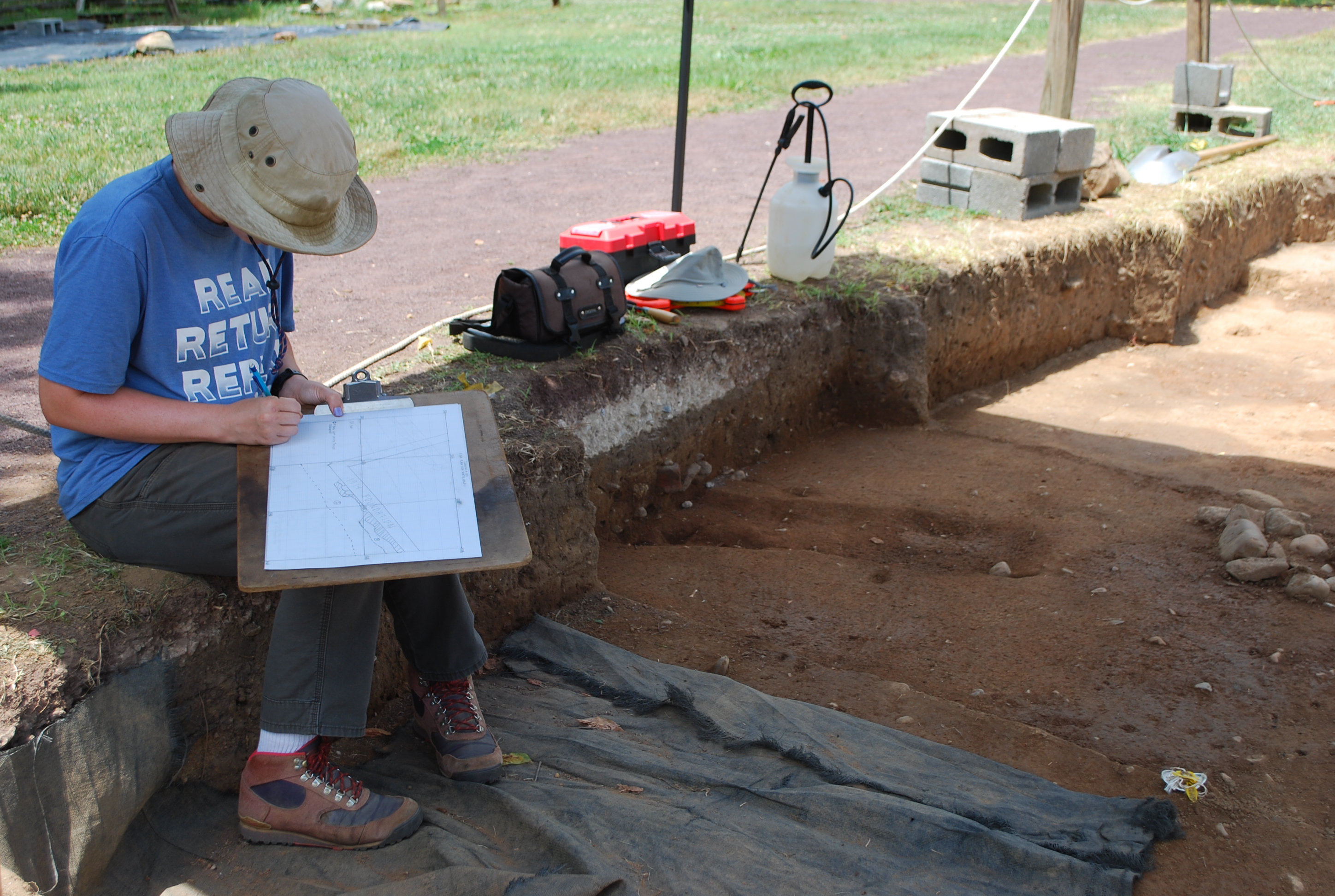
    Each year’s excavation is built on the work accomplished in the previous years.  With the incredible amount of work done this past summer of exposing the original kitchen foundation, as well as the later farmhouse foundations, removing old fill, and opening up the adjacent landscape, we are looking forward to expanding our investigations of the kitchen site next year.  Stay tuned as we unravel the mysteries that are here at Ferry Farm, George Washington’s Boyhood Home.


    Danielle Arens and Judy Jobrack

    GWF Archaeology Field Directors
  • 2023 Dig Season Recap!

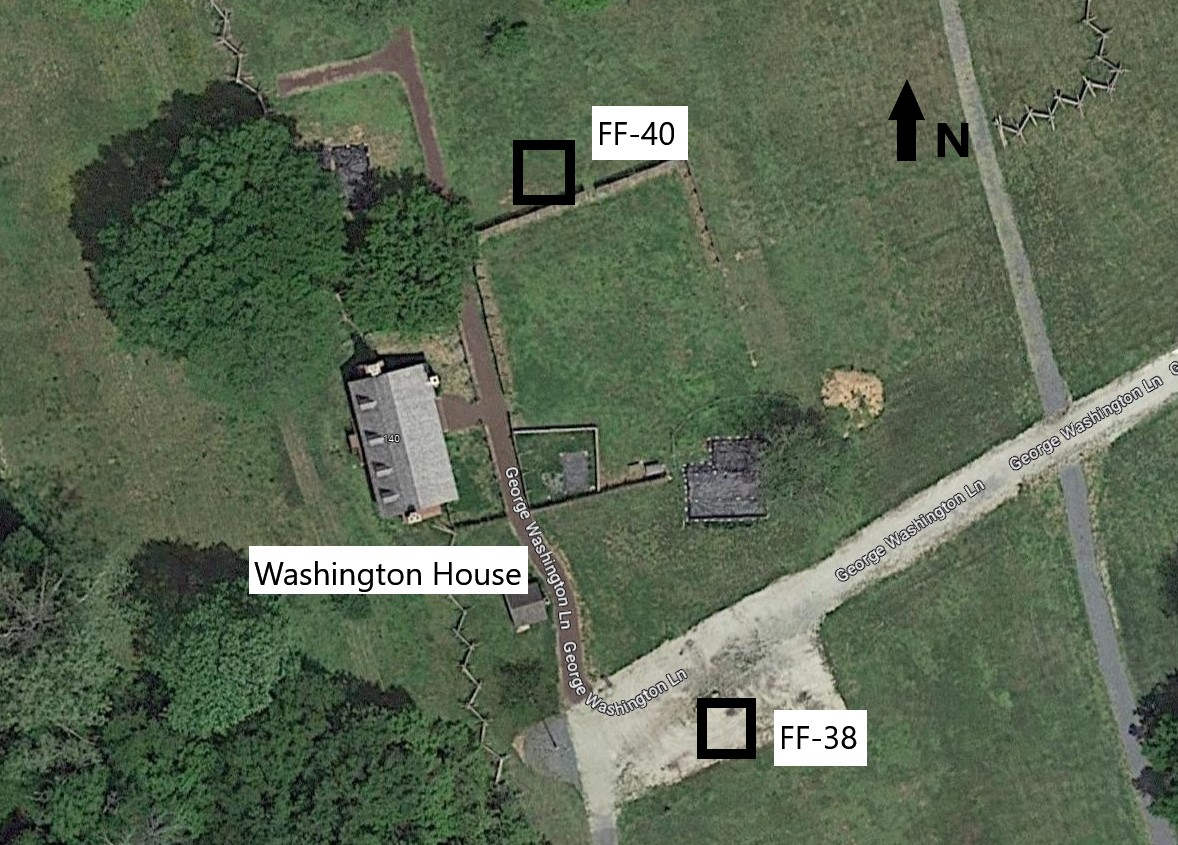
    It’s that time again! As we welcome Fall and the beautiful cool weather it brings, let’s take a look back at our Summer 2023 dig season here at Ferry Farm, George Washington’s Boyhood Home. This year’s dig actually involved excavating two separate areas, designated FF-38 and FF-40, within the historic area. 

    Location of the archaeological projects FF-38 and FF-40 at Ferry Farm.

    Project FF-38

    The FF-38 area contained a large, dark, soil stain that was discovered by accident during the monitoring of a utility trench in 2016.  Only a portion of this feature was visible at that time as it continued beneath the south wall of the trench. We had clues as to the approximate date of this partially-exposed feature, but we still needed to fully uncover the entire feature to establish its total dimensions and determine its age, function, and how it relates to the surrounding landscape.

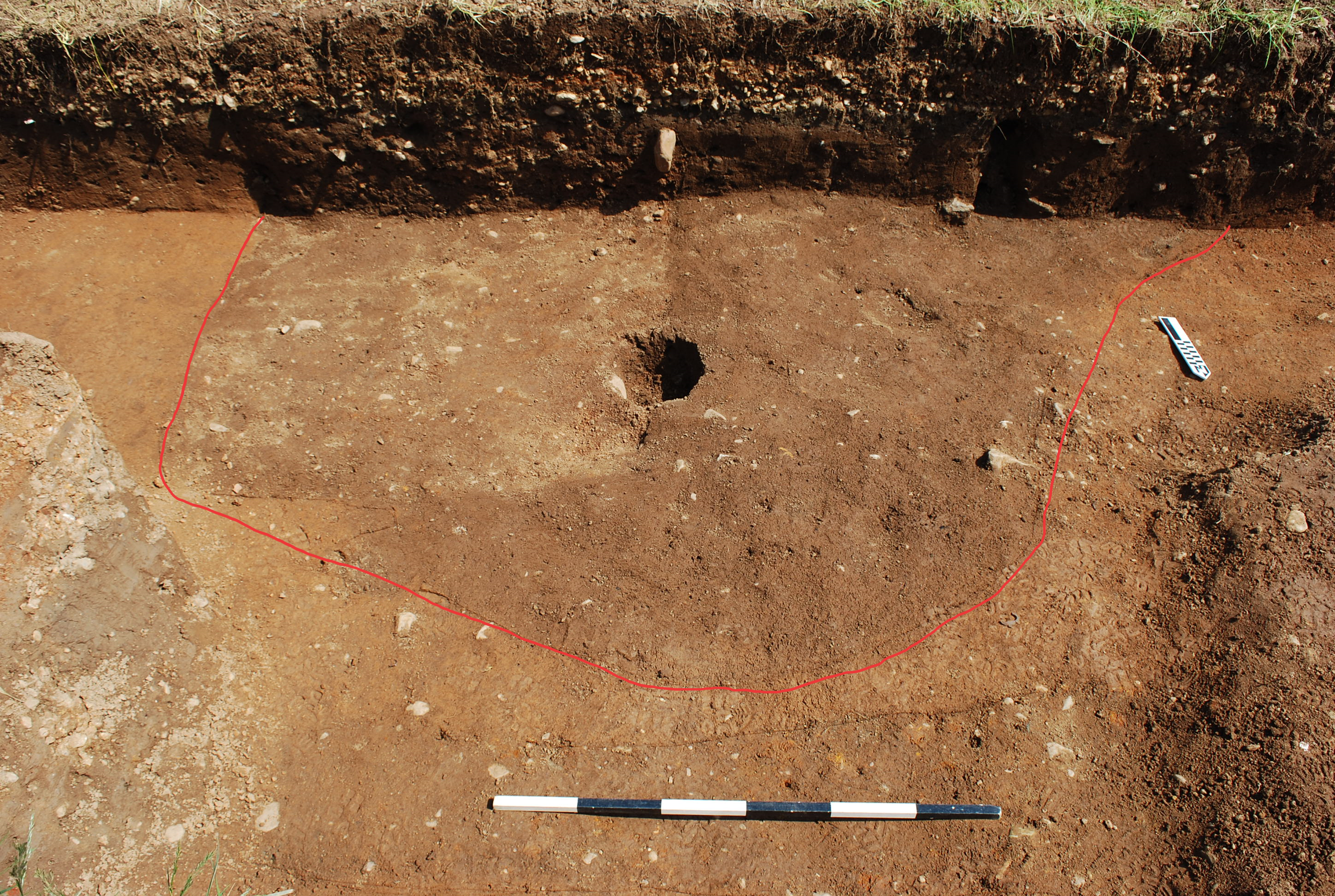
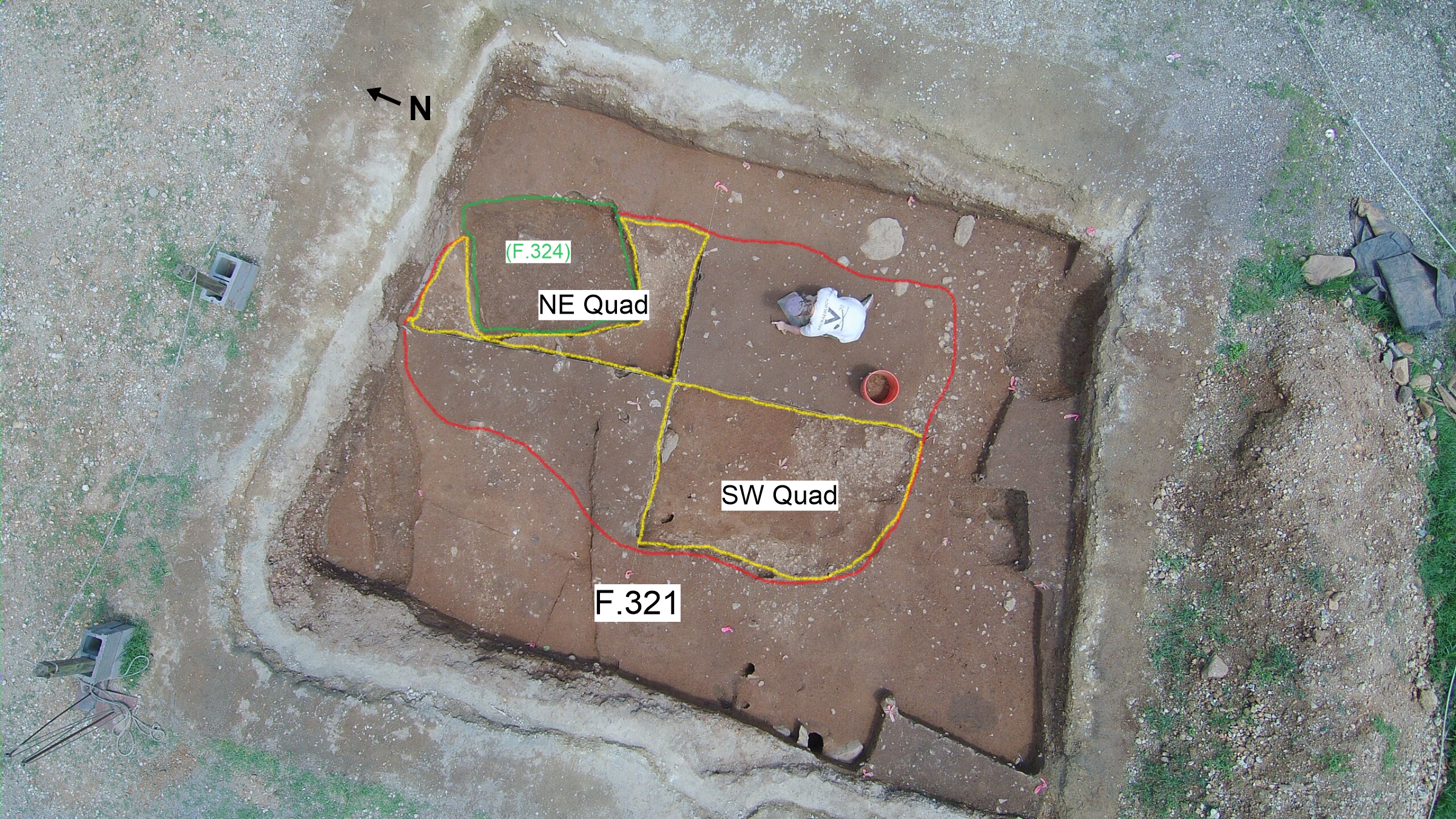
    F.321 as seen in 2016 within the utility trench. Only the northern portion of the feature was exposed at this time. F.321 is outlined in red, and is intruded by a square, lighter-colored 19th-century feature (F. 324).

    Our excavation began by the machine removal of two modern layers of gravel that overlay a thick 19th-century layer of plowed soil. The excavation area measured approximately 16 ft. by 20 ft. Our crew of archaeologists then slowly excavated down through the plowed layer until we could identify the boundaries of Feature 321. Fully uncovered, the exciting discoveries began.

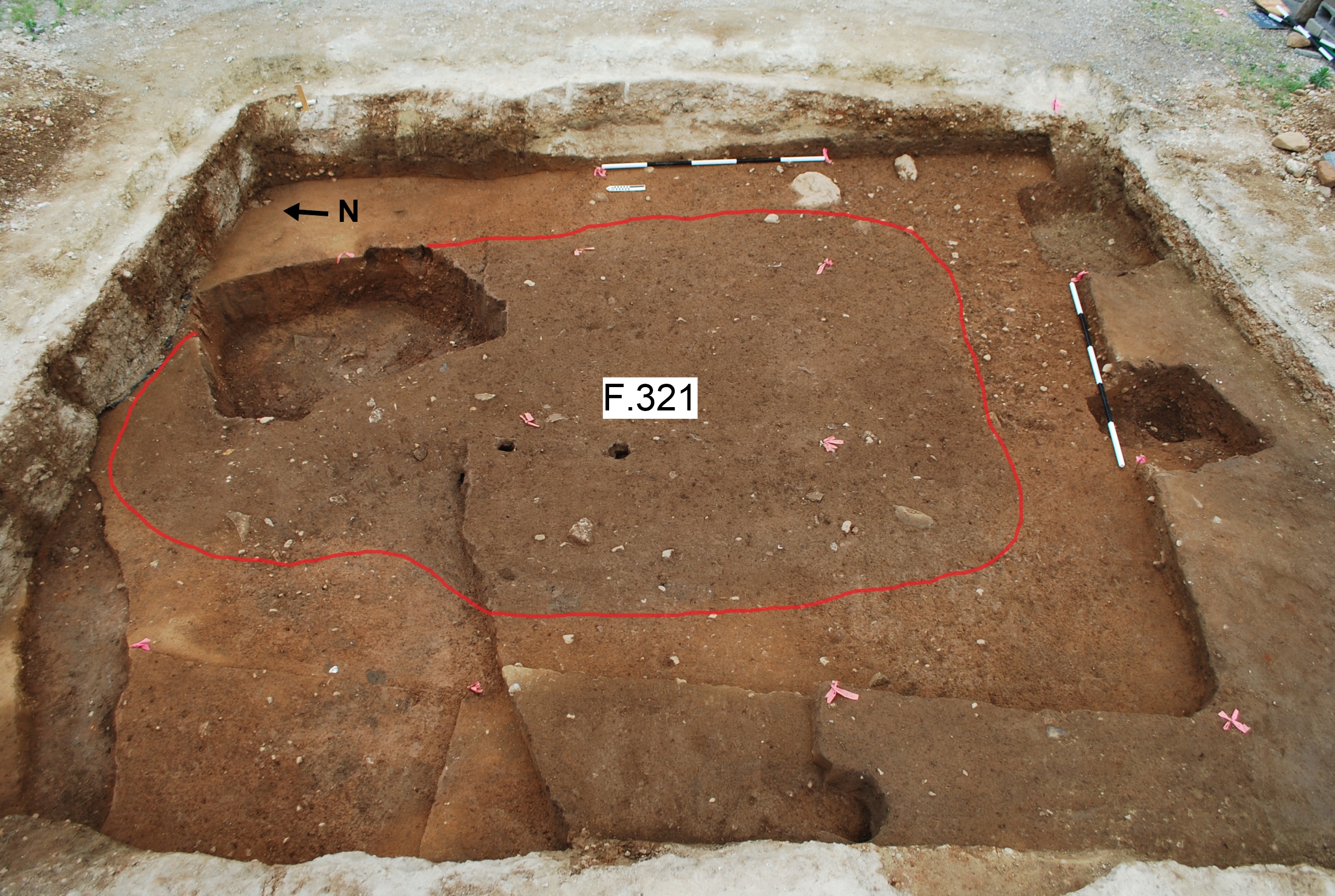
    First and foremost, we discovered the feature was much bigger than originally thought! What initially appeared in 2016 to be a 5’x7’ roundish feature turned out to be the northern tip of a large rectangle measuring 10’ by 16’. The size and shape alone of the feature shifted our interpretation from a small pit to something larger.

    F.321 fully exposed before excavation (outlined in red). The intrusive feature, F. 324, has been partially dug out at the north end of the site.

    Feature 321 was divided into four sections and our crew excavated both southwest and northeast quadrants. This excavation approach allowed us to determine that the feature was roughly 1’ deep at the center, with gently sloping sides, and filled with successive layers of soil and ash-filled deposits. These soil layers provided us with an awesome mix of artifacts which were used to nail down the feature’s end date to the middle of the 18th century.  But establishing a date is only part of the process: artifacts can further help us identify the function of the feature as well.

    F.321 after the southwest and northeast quadrants were excavated.  Intrusive Feature 324 is outlined in green.

    That being said, we are still unsure of what this feature actually is. Here is what we know so far.  There is no hearth of chimney remains. Lack of a fireplace suggests it wasn’t a domestic dwelling, but it could be another type of plantation outbuilding, such as a storage building, shed, or barn. The edges are almost vertical, and the floor is relatively flat.  There is no silt so the pit was covered while it was open.   It is too regular to be a quarry pit used to harvest clay as a building material.

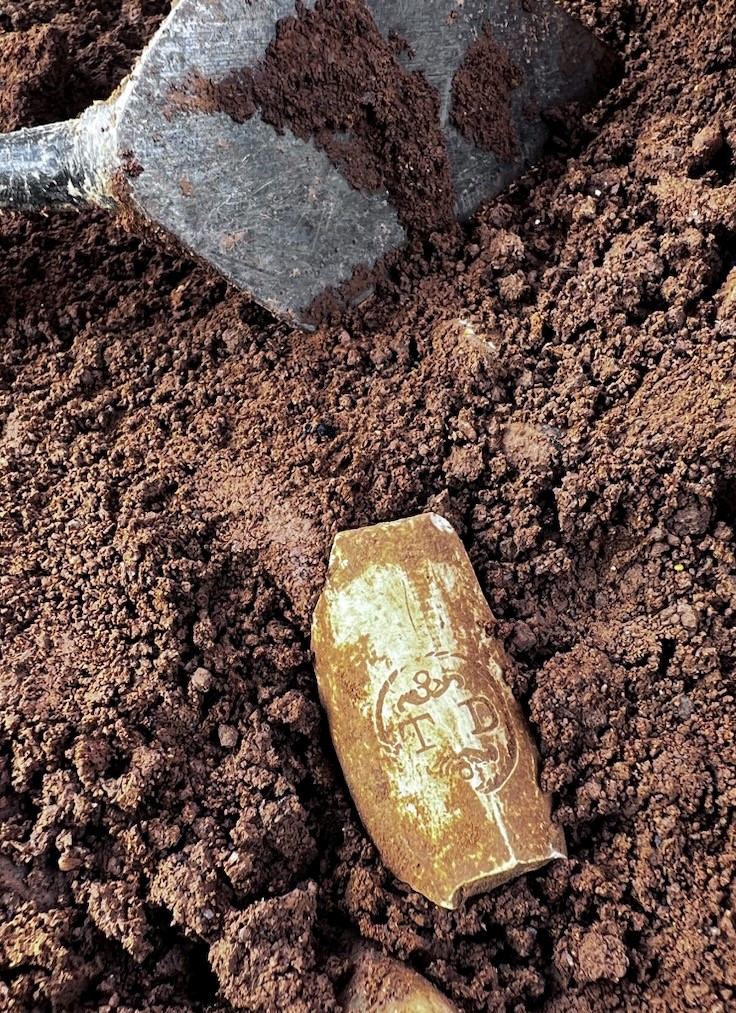
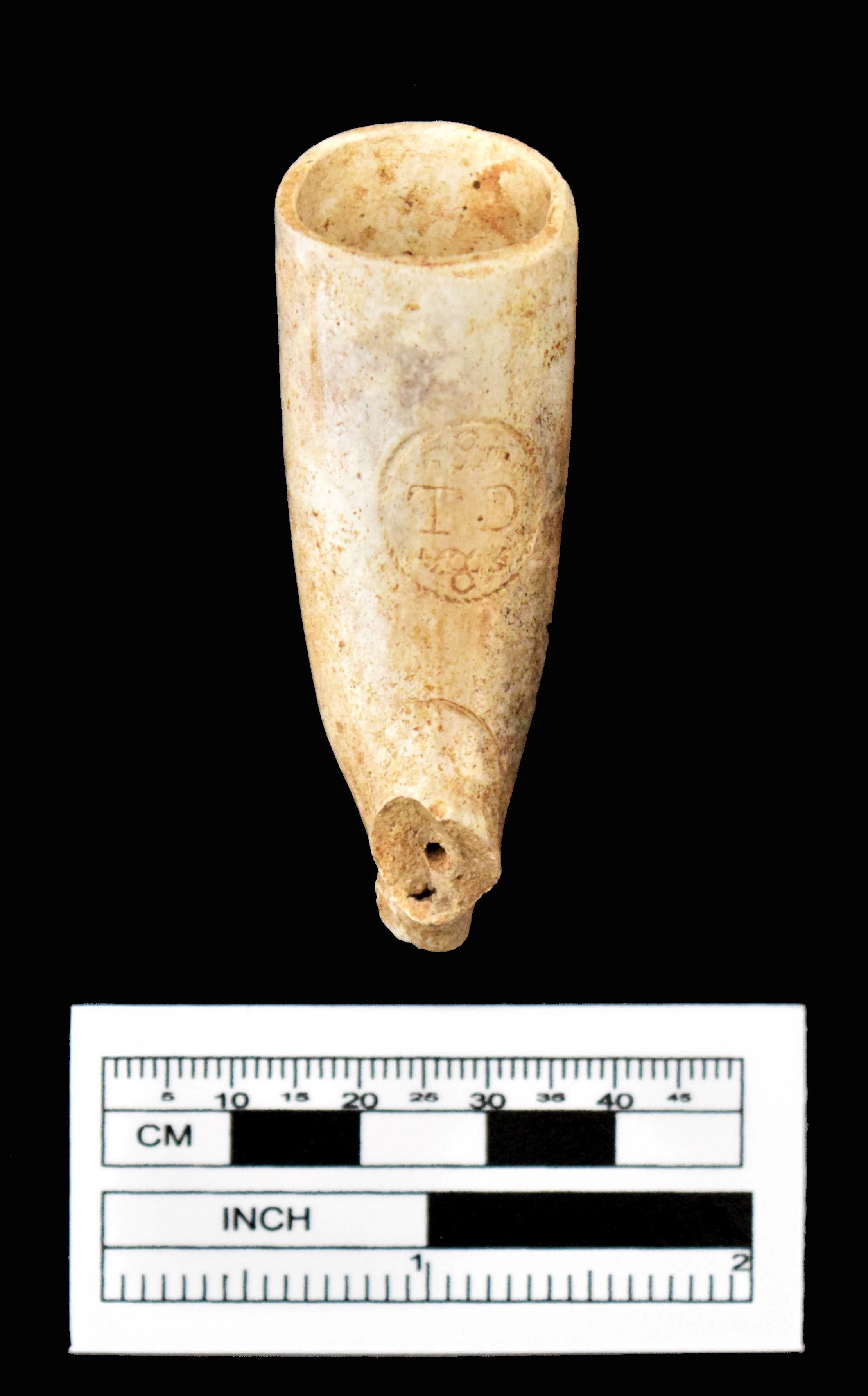
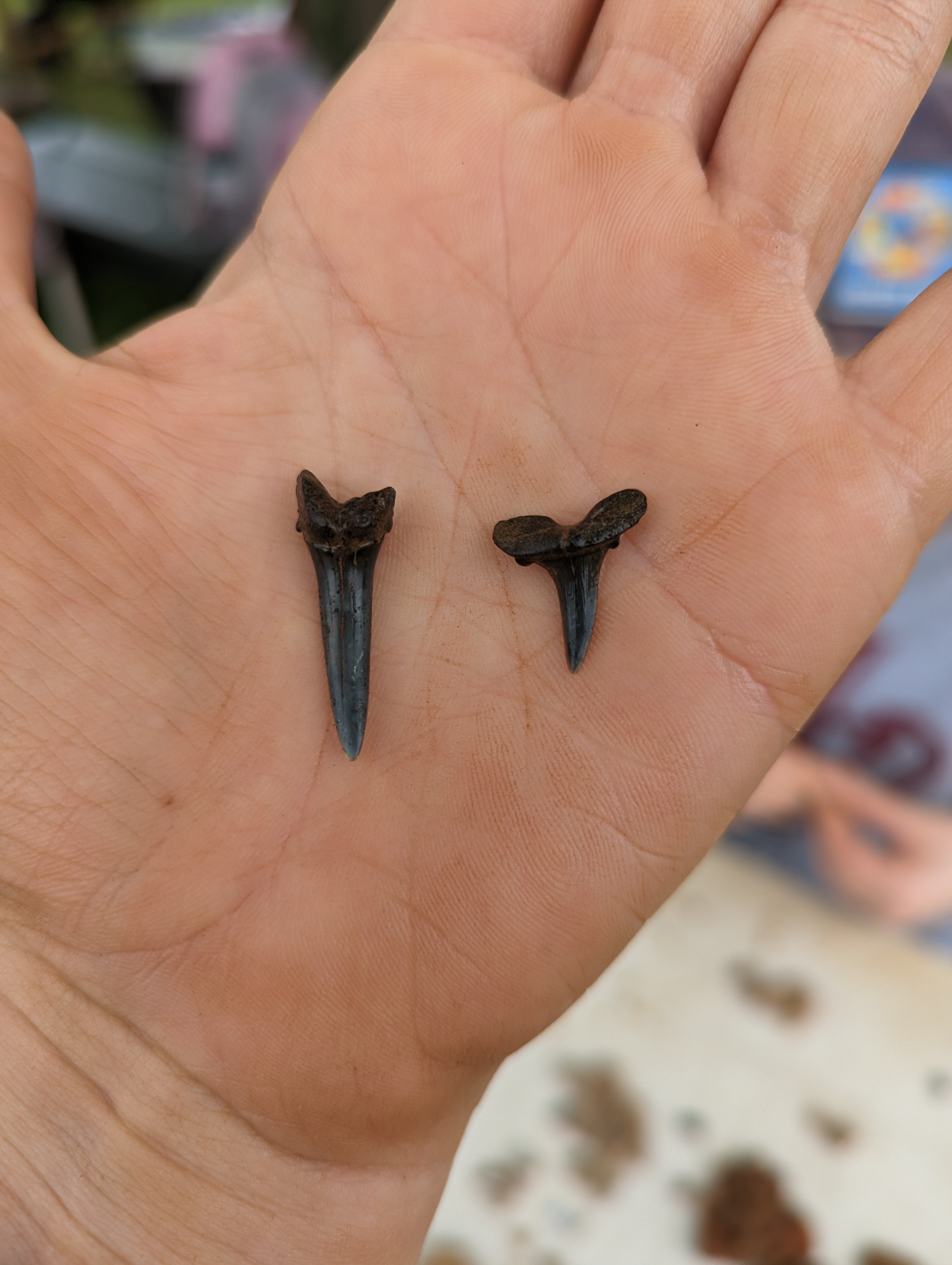
    Even though we are still in the early days of analyzing the artifacts, that doesn’t mean we can’t talk about a few great things we found. This feature had a little bit of everything: personal items, food-related items, architectural debris, domestic items, etc. The crowning glory of the excavation (in our humble opinion) would have to be the complete pipe bowl that was stamped with a maker’s mark that featured the letters “TD.” Other exciting finds include a clipped Spanish coin, sherds to a Westerwald ink well, shark teeth, and prehistoric pottery, just to name a few. This feature also contained a layer of ash that preserved delicate artifacts such as bone, fish scales, and straight pins – items that often don’t survive in the archaeological record.

    So what does this all mean? Well, this means that we will definitely be returning to the FF-38 site next season. While we have gathered a lot of information during this dig, there is still much left to find. Expanding our excavation beyond the limits of the feature and excavating one of the remaining two quadrants will help us interpret the feature’s function and how it relates to the 18th-century farm landscape of the Washington family.

    FF-40

    Wait, that’s not all for this year’s dig. Don’t forget that we had two excavation areas this year. Our second area was FF-40, which was the remains of an 18th century kitchen had experienced an intense fire. This kitchen was partially excavated in the 1990s, so this year’s excavation had more of an exploratory excavation designed to help us establish a game plan for future excavation. We knew the kitchen remains were below the foundations of two later farmhouses, and that the foundation walls of these farmhouses were still extant. Additionally, the interior of the foundations was filled with sand to protect the kitchen site. Our excavations confirmed the location of the farmhouse foundations and the existence of a protective layer of sand! Once our crew were able to get through this sandy fill, a quick clean of the kitchen fill uncovered artifacts that were absolutely toasty. Okay, toasty isn’t a technical term, but the artifacts showed evidence of a fire that burned at extremely high temperatures. This included a high number of architectural artifacts as well as charred ceramics and melted glass. Findings from this year will help guide the excavation in the future.

    The burned kitchen site is located beneath these concrete house foundations dating to 1914.  This picture was taken after protective sand fill was removed within the excavation unit.

    Phew, that was a lot! That sums up our 12-week dig season. We answered a lot of our initial questions and found many more questions to investigate. Archaeologists will be in the lab the rest of the year processing artifacts, researching our findings, planning next season’s dig, and enjoying the A/C. Stop by the lab in the Visitor’s Center and take a peek at what’s happening. See you all in the field next May!


    Danielle Arens

    GWF Archaeologist

  • Liberty vs. The King: National Identities in Two Lewis Family Drinking Vessels

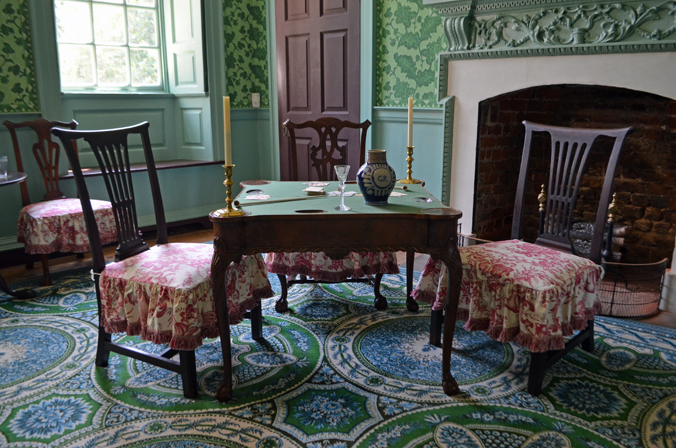
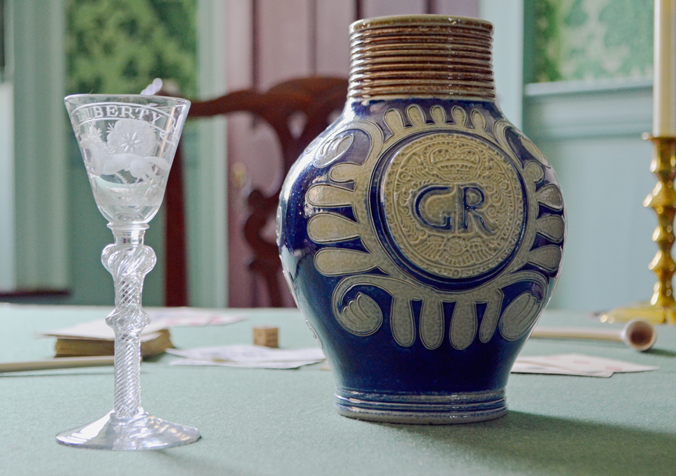
    Visitors to Kenmore’s Drawing Room may have noticed an unusual pairing of glassware and ceramic pieces displayed on the gaming table – a beautiful, air-twist stem wine glass sitting next to a Westerwald pottery jug. At first glance, this small vignette may simply appear to depict a wine jug at the ready, waiting to fill the glasses of those seated for the card game. But a closer inspection reveals that there’s more to the story.

    The gaming table in Historic Kenmore’s Drawing Room.
    Air-twist stem wine glass sitting next to a Westerwald pottery jug on the gaming table.

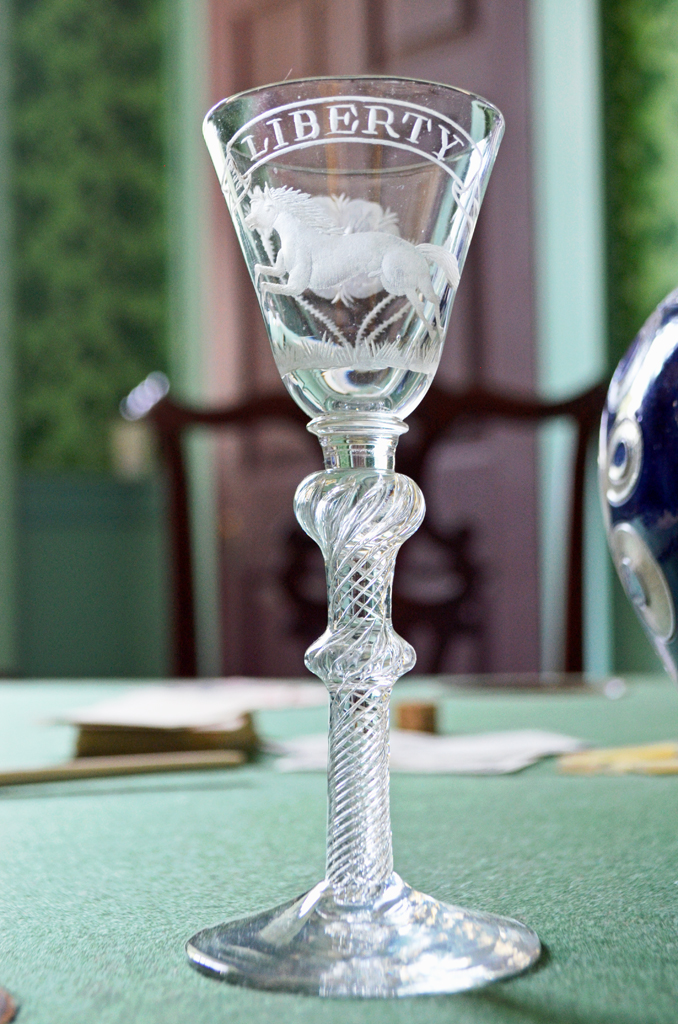
    In addition to its delicate air twists and balusters, the cup of the wine glass is etched with intricate designs. On one side, there’s a rose, and on the other is the word “Liberty.” The rose refers to the Scottish House of Stuart and their exiled claimant to the Scottish throne, the Bonnie Prince Charlie. The word “Liberty”, in this case, refers to the Jacobite Uprising of 1745 – 1746, in which the Scottish clans attempted to overthrow the English king and re-install the Bonnie Prince, thereby ending the English occupation of Scotland. The Uprising ended in a bloodbath for the Scottish forces at Culloden Moor, and the Bonnie Prince remained in exile for the rest of his life. The defeat at Culloden ushered in a period of extreme violence and repression of Scottish Highland culture known today as the Clearances. Thousands of Scots were forced from their homes and prosecuted in English courts for crimes against the Crown. Those found guilty were often sentenced to “transportation,” which meant they were crowded onto prison ships and sent to the American colonies.

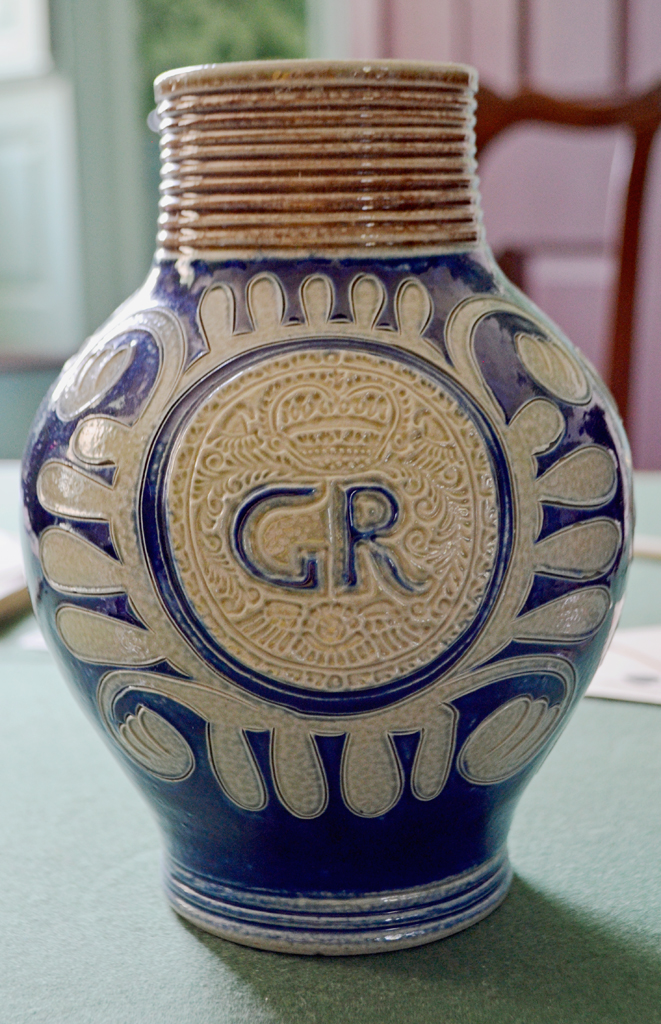
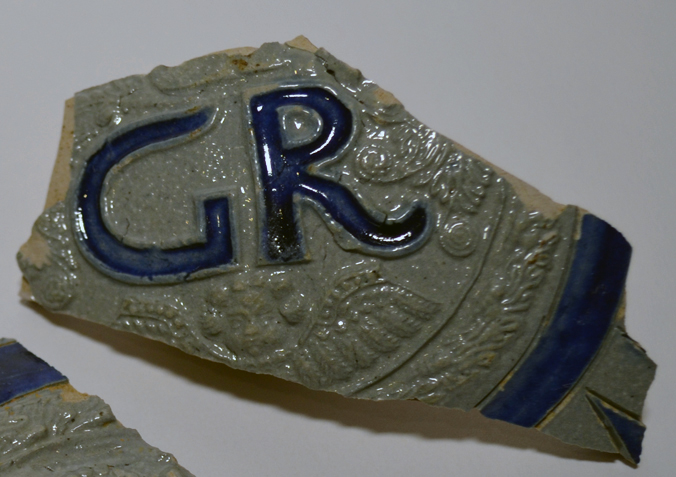
    The stoneware jug is decorated in typical Westerwald-style cobalt blue glaze patterns, with the addition of a sprigged central medallion bearing the letters “GR.” Those initials stand for Georgius Rex, the Latin for King George of Britain, probably George III in this case. Westerwald ceramics produced in what is now Germany for export to Britain in the 18th century were often decorated with the GR emblem in honor of King George. Most British households, including young George Washington’s home at Ferry Farm, would have had a piece or two exhibiting the GR motif.

    Both items are included in Kenmore’s furnishings today because fragments of similar pieces were found archaeologically on the site during excavations in the 1990s, so we know that both were used by the Lewis family at very nearly the same time. The juxtaposition of their messages, though, illustrates what a very strange and confusing time the Lewis family were living in. Literally up until the very eve of the American Revolution, Fielding Lewis saw himself very much as a proper English subject. His business relied almost entirely on good relations with English counterparts. He built Kenmore to emulate in every way the proper English manor house, and apparently he owned ceramics that honored King George.

    Almost overnight, however, the Lewis’s world completely changed. They were no longer English subjects, but rather traitors to the Crown. Fielding’s income and business were gone, and his very English house was now a liability. Those transported Jacobites living in the American colonies, many of them neighbors to the Lewises like Hugh Mercer, were among those who advocated for war with Britain. The symbols and ideals of the Jacobite Uprising were adopted into the American revolutionary movement. And so our placement of the Liberty glass next to the GR jug on the gaming table is both a wink and a nod to the idea of rebellion hidden in plain sight, and a recognition of the complicated times in which the Lewis’s found themselves.

    Celebrate the 245th anniversary of liberty from the King during the Fourth of July at George Washington’s Ferry Farm from 10 a.m. to 4 p.m., Sunday, July 4, 2021! Tour the Washington house, learn about archaeology at Ferry Farm, enjoy a patriotic flag retirement ceremony at 1:00 p.m., interact with historic reenactors, listen to festive music, view living history demonstrations and theatre performances, make crafts, play games, and enjoy other activities for the whole family. $5.00 per car for a combined parking and event admission pass. Advance purchase of parking and event admission pass is strongly encouraged. Visit kenmore.org/events to learn more and purchase pass.

    Meghan Budinger
    Aldrich Director of Curatorial Operations

  • Five International Influences on George Washington’s Early Life

    An Essay of a New and Compact Map, Containing the Known Parts of the Terrestrial Globe by Jacques-Nicolas Bellin was published in 1750 when George Washington was 18-years-old. Credit: Wikipedia.

    Ferry Farm was a unique place to live in the mid-1700s. Situated where farm, frontier, city, river, and road converged on the edge of English empire, young George Washington, his family, and the farm’s enslaved community found their daily lives governed by Britain’s global economy and imperial culture.  Ferry Farm, nearby Fredericksburg, and the colonies more broadly were international places made up of a host of different European, African, and Native American ethnicities and nationalities in the 18th century.  Accordingly, we present a list of “Five International Influences on George Washington’s Youth.” This is by no means an exhaustive list but each influence helped shape young Washington into a man capable of commanding the Continental Army and serving as the new nation’s first president.

    1) The Rappahannock River

    The Rappahannock River as viewed from a window in the Washington house replica at Ferry Farm.
    Voyages of British ships in the last half of the 18th century. Created by Geographer James Cheshire, PhD, on his Spatial.ly blog and used with permission.

    Young George could look from a window in the family home at Ferry Farm down the bluff to the Rappahannock River. He saw ocean-going, sailing vessels being loaded and unloaded at the wharves and warehouses of Fredericksburg. These vessels were part of a global trade network, which we’ve written about here and here, that stretched to Europe, Africa, the Caribbean, India and China. These vessels were not large but traveled the world nonetheless.  They took the corn, wheat, and timber of places like Ferry Farm to Europe or the Caribbean and returned with Westerwald mugs from Germany, tea from India, porcelain from China, and enslaved laborers from Africa. The sailors on these ships probably represented numerous ethnicities and nations. One easily can imagine young George, so prone to a thirst for adventure, finding any excuse he could to visit the docks and ships down on the river and, by doing so, traveling the world without leaving the Rappahannock.

    2) Westerwald stoneware

    Those ships carried numerous manufactured goods from all over the world to Ferry Farm. Westerwald ceramics were one such import. Produced in the Westerwald region of what is now Germany beginning in the 1500s, archaeologists have excavated numerous bits of decorated stoneware tankards, jugs, and other drinking vessels used in the 1700s at Ferry Farm.  Several of these excavated vessels sported the initials ‘G.R.’, meaning Georgius Rex, the Latin for King George. The three British kings of the 18th century were all named George and came from the House of Hanover, a German royal family placed on the British throne in 1714. A gentleman sporting a ‘G.R.’ on his Westerwald tankard or jug advertised his loyalty to the Crown with every draught of ale. The presence of these initialed drinking vessels at Ferry Farm show that, until the Revolution, Washington, like most Americans, viewed himself as a loyal subject of the British Crown (ironically worn by a German head).

    G.R. medallion on a Westerwald jug fragment.
    A nearly complete Westerwald drinking vessel in the collection at Historic Kenmore.

    3) Venetian glass

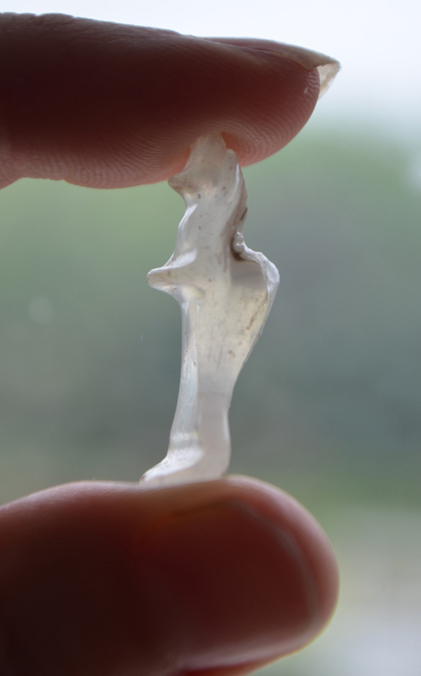
    The vast majority of ceramics in the Washington household came from England. The same can be said about the family’s table glass, but the fanciest glassware owned by the Washington family actually came from Venice, Italy.  Found by our archaeologists, this piece of a pincered and buttressed handle is likely part of an elaborate hand-blown Venetian piece, made of finely crafted colorless soda lime glass with a barely visible bead of opaque glass running through the center.  A Venetian glass goblet such as this was a show piece displayed prominently within the house to emphasize that, despite their colonial location, the Washington family strived to maintain a level of European refinement appropriate to their gentry status.

    Archaeologists excavated this small fragment of Venetian glass at Ferry Farm.
    Wine goblet made in the 16th century in Venice, Italy. Credit: The Metropolitan Museum of Art

    4) Barbados

    In 1751, George Washington made his only trip off the North American continent, traveling with his half-brother Lawrence to Barbados. Visiting the island’s fortifications and meeting members of its military garrison fed George’s growing desire for a military career. As Jack Warren concludes, “After returning to Virginia, he dedicated himself to advancement in the military more completely than any of his Virginia contemporaries. And unlike most of the prominent colonial militia officers of the 1750s, he sought a commission in the regular British military establishment – an ambition that was probably prompted, and undoubtedly stimulated, by his experience in Barbados.”

    Needham’s Point, Barbados. Credit: Reinhard Link.

    5) The Frontier

    Military service eventually took George into the frontier wilderness of the vast Ohio country. Tasked by Governor Dinwiddie with delivering a demand to the French to leave lands claimed by Virginia and the British Crown, young Major George Washington embarked on a thousand-mile, ten-week trek to and from Fort LeBoeuf on Lake Erie. He was accompanied by the Dutchman Jacob Van Braam, who served as his French interpreter, and by Tanacharison, known as Half-King, as well as other men from Native American nations. Along the way, he met several French officers and soldiers. Although confined to North America, this trip in late 1753 and early 1754 was, in reality, a foreign trip that exposed Washington to different peoples and cultures. It provided vital diplomatic, military, and intelligence gathering experience to the future Continental Army commander and first president. Washington, notes Paul Royster, “practiced diplomacy to keep the Native leaders allied to the English cause; he interviewed French deserters and reported on the extent of French military posts between New Orleans and the Great Lakes; he reconnoitered the Forks of the Ohio with an eye to the proper site for building a fort; and he inspected and reported on the construction of the new French forts and made estimates of their strength . . . .”

    Portrait of George Washington, 1772 by Charles Willson Peale. Credit: National Portrait Gallery
    The Ohio region from Cumberland to Fort LeBoeuf through which Washington journeyed, overlayed onto the famed map in Thomas Jefferson’s Notes on the State of Virginia (1787). Credit: Paul Royster / University of Nebraska.

    Conclusion

    Although a fourth generation American, George Washington grew up in a time and place – 18th century Ferry Farm and British North America — where international economic and cultural influences on his life were quite numerous. Through the five international influences we’ve briefly examined, we’ve seen how these influences helped Washington maintain his gentry status, which ultimately set him on a path to military and political greatness.

    Zac Cunningham
    Manager of Educational Programs

    Mara Kaktins, Archaeologist
    Ceramics & Glass Specialist

  • Artifact, Object, Repro: Part 2 – White Salt-Glaze and Westerwald Stonewares

    Furnishings posts logo finalToday, we continue our look at the different ceramics displayed or soon to be displayed in the Washington house at George Washington’s Ferry Farm.  We’re examining the artifacts recovered at Ferry Farm, the complete 18th century objects those artifacts represent, and the reproduction pieces inspired by these artifact sherds as well as by the complete originals.  Last week, we learned about the blue and white Chinese Export Porcelain reproductions gracing the house.  This week, in the second post of this series, will investigate the white salt-glaze stoneware and the Westerwald stoneware.

    These fragments are from white salt-glazed (WSG) stoneware dinner plate rims, and show two different styles of molded decoration.  The pattern in the above photo on the left was known as “dot/diaper/basket” and the pattern in the above photo on the right was known as “royal rim.”


    Molded WSG came into existence in the 1740s, so the Washington family was right on trend.  A few decades later, creamware would replace it as popular dinnerware, but the rim patterns found on WSG were often very similar to those used on later creamware.

    During the height of the Colonial Revival decorating style in mid-20th century America, the patterns used on WSG and creamware back in the 18th century had a major resurgence.  Several American potteries started producing white stoneware table wares, similar to WSG, with glossy surfaces similar to creamware, using molded rim decorations that were almost exactly like their 18th century predecessors.  The Canonsburg Pottery outside of Pittsburgh, Pennsylvania, produced dot/diaper/basket plates under the pattern name of American Traditional from the early 20th century through the company’s closure in 1978.  The Red Cliff Company pottery in Chicago produced plates with a rim pattern taken from the “royal” rim style on 18th century creamware (which was similar to an earlier WSG rim) under the pattern name Heirloom from the 1950s until their closure in 1977.  Similarly, Sears sold an almost identical plate under the pattern name American Federalist until the mid-1980s.  Luckily for us, all of these 20th century patterns are collectible and we found many of them in stores and on-line.

    C1 - Westerwald Artifact

    The above fragment came from either a mug or a jug made from grey stoneware decorated with cobalt blue glaze, known as Westerwald.  The Washington family owned quite a bit of Westerwald ceramic, as did the Lewis family at Kenmore.

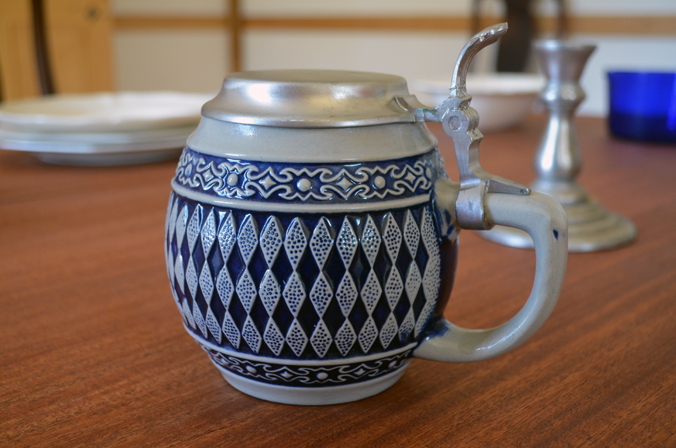
    C2 - Westerwald Mug

    Westerwald pottery originated in 17th century Germany, and it is still produced there today.  It was a popular style for traditional German steins, often with pewter lids attached.  In the 18th century, it was often made for export to England and was therefore decorated with the “GR” emblem, referencing Georgius Rex (King George).

    C2 - Westerwald Repro

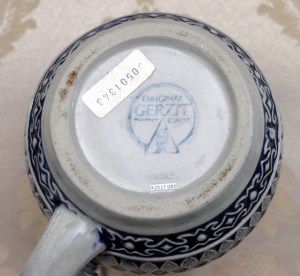
    During one of our treks through a thrift store, we came across this lidded Westerwald mug, and we were amazed at how similar to our 18th century fragments it was.  So amazed, in fact, that we questioned whether or not it might actually be an antique piece (that somehow remained in pristine condition)! A look at the bottom revealed a very 20th century maker’s mark, however, but it also spurred a desire to find out more about the company that was producing such excellent Westerwald. The mark indicated that the Markpiece was “Original Gerzit,” and some internet research revealed that the Gerzit Company in Höhr-Grenzhausen, Germany, was originally the pottery founded by Simon Peter Gerz in 1857.  The family owned and continued to operate the pottery through World War II, at which time they changed the name to Gerzit.  By German law established in 1887, Westerwald produced for export has to be marked Made in Germany.  Westerwald produced for sale in Germany doesn’t have to carry a mark at all.  Any Westerwald produced after World War II for export has to specify whether it was made in East or West Germany.  Putting all of that together, and comparing it to the mark on our newly acquired mug, shows us that it was produced sometime between 1949 (when the company name changed) and 1997 (when the company closed) and was originally intended for sale within Germany.  How it ended up in a thrift store in Virginia is anyone’s guess, but it was a very lucky find for us!
    In part 3, we’ll revisit Chinese Export Porcelains to see imari and famille rose artifacts, originals, and reproductions that will go in the Washington house.

    Meghan Budinger
    Aldrich Director of Curatorial Operations

  • George Toasts George?

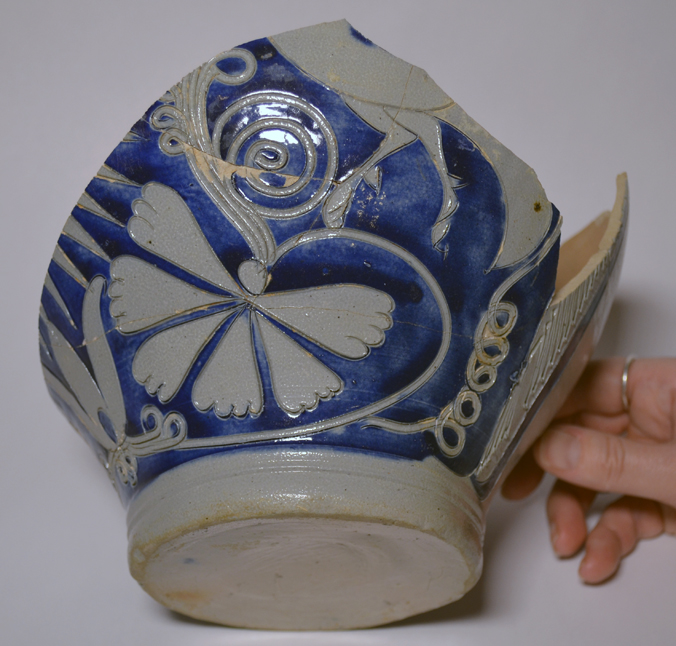
    At George Washington’s Ferry Farm we’ve just wrapped up a ceramic mending project.  We explain how and why we undertake these mending projects in this post.  Our most recent effort focused on Westerwald stonewares owned by the Washington family.  Stoneware is a high-fired, non-porous ceramic that is excellent for producing storage containers and drinking vessels.  But what is a Westerwald, you may ask?  Well, Westerwald stonewares were a ceramic produced in the Westerwald region of what is now Germany beginning in the 1500s.  Destined for the British Isles and British colonial markets, this particular ceramic is common to archaeological sites in the Chesapeake region.

    Westerwalds were salt-glazed, meaning that during the firing process large quantities of salt were introduced into the kiln.  The salt vitrified (converted into a glass-like substance) upon contact with the vessels, producing a shiny glaze and a characteristic ‘orange peel’ texture on the surface of the pots.  Decorated predominantly with molded and incised designs that are filled with bright cobalt blue and deep purple, Westerwalds are strikingly beautiful.

    Jug with a bird motif.

    We’ve learned a great deal from analyzing the Westerwalds used by the Washingtons.  Many of the vessels identified in the Ferry Farm assemblage were tankards, jugs, and other drinking vessels from which beverages such as ale and cider, a large part of the colonial diet, were consumed.  Some tankard handles we’ve excavated have small holes at the top, where a pewter lid — a distinguishing characteristic of German-made steins — was attached.  These lids often do not survive in the archaeological record because the metal had value.  Rather than being discarded, the pewter was often recycled.

    In addition to being aesthetically pleasing, Westerwald drinking vessels often served a political purpose.  An excellent example of this is to be found within our assemblage of Westerwalds in the form of multiple mugs emblazoned with the initials ‘G.R.’, meaning Georgius Rex, the Latin for King George.  During the time Westerwalds were produced in Germany, three British kings were named George.  Interestingly, however, all three came from the House of Hanover, a German royal family placed on the British throne in 1714.  For Americans, of course, the most famous of these Hanover kings was George III.

    Sprig decorated G.R. medallion on a jug fragment.

    Thus, a gentleman sporting a ‘G.R.’ on his tankard or jug advertised his loyalty to the Crown with every draught of ale.  A night of drinking involved numerous toasts “To the King’s Health!”  It was not unheard of for dozens of toasts to be recited for the king, his family, and anyone else of political interest the imbibers saw fit to honor.  Toasts and drinking vessels were also utilized to express disagreement with political powers.  Politics and drinking definitely went hand-in-hand in the colonies.  Once George Washington became a public figure, there were toasts such as “To General Washington, and victory to the American arms!” to honor him.

    The presence of these initialed Westerwalds at Ferry Farm show that until the Revolution the Washington family, like most Americans, viewed themselves as loyal subjects of the British Crown.  Indeed, many families in Fredericksburg would have owned such mugs and toasted their monarch prior to the war.  In fact, several ‘G.R.’ vessels have also been excavated at Historic Kenmore, the home of George Washington’s sister, Betty.  The people of Ferry Farm, Kenmore, and Fredericksburg found their daily lives governed by Britain’s global economy and imperial culture.  Colonial men – whether gentry, tradesman, or servants – pursued homes, professions, pleasures, and possessions that conveyed their status, wealth, and English identities.  One such possession that emphasized this identity was Westerwald drinking vessels.

    Hollowware fragments with an unknown motif.

    One has to wonder what became of these mugs once the Revolution began.  Did Loyalists quietly stash away some of their ‘G.R.’ mugs once the tide of war went against them?  Perhaps some tankards and jugs were smashed publically by Patriots in a ritual different from their intended purpose of toasting but no less a political act than those toasts had been.  Nevertheless, it is intriguing to picture a young George Washington drinking heartily from a ‘G.R.’ mug and toasting a king against whom he would lead a revolution.

    Mara Kaktins
    Archaeologist/Ceramics & Glass Specialist