Lives and Legacies

Tag: Winchester Street

  • New Kids on the Block: The 20th-Century Houses of Kenmore Court

    When you visit Historic Kenmore today, you will find a preserved city block with gardens and pathways reaching from front to back. The tranquil estate is only interrupted by two other houses along Lewis Street, hidden behind a tree line. These buildings remain the only surviving evidence of a time when Kenmore’s block was almost swallowed up by modern developments.
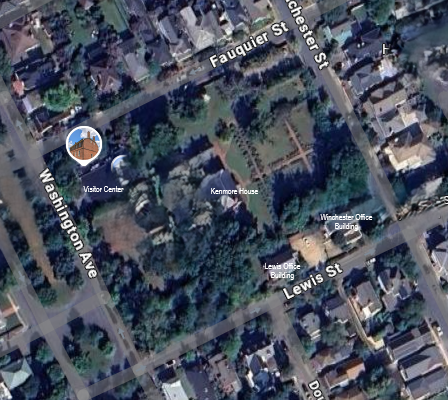
    Although we have spoken at length on this blog about how Kenmore was saved from being turned into apartments (here, here, and here), we have not yet covered the houses that had, in fact, already gone up before Mrs. Emily Fleming and “Miss Annie” Fleming-Smith had even begun their fundraising.

    In 1914, Kenmore was sold by the Howard family, the last private residents of Kenmore, to Elmer “Peck” Heflin, a prolific land developer in Fredericksburg. By the end of the year, Heflin had already subdivided Kenmore into several lots and began to sell them off.

    A newspaper advertisement placed by Heflin in The Daily Star, November 1914.

    His goal was ultimately to turn the Kenmore block into a picturesque and modern housing development complete with single-family houses, apartments, driveways, and a parkway. This was illustrated for all of Fredericksburg to see in another newspaper ad from 1921 (Heflin, 1921). Heflin’s vision for the court was a 20th century city developer’s dream, squeezing as many lots as he could get into the space and ensuring that automobiles could have access to the entire area. Cutting edge, efficient, and shockingly modern.

    “Kenmore Court” plans with “Kenmore Residence” at the center, The Daily Star, January 1921

    By the time this advertisement ran, at least two of the proposed twenty lots had already been built on and three more had been sold to future homeowners. The earliest developments were done along the 1200 block of Winchester Street (which runs along the top of the illustrated plan).
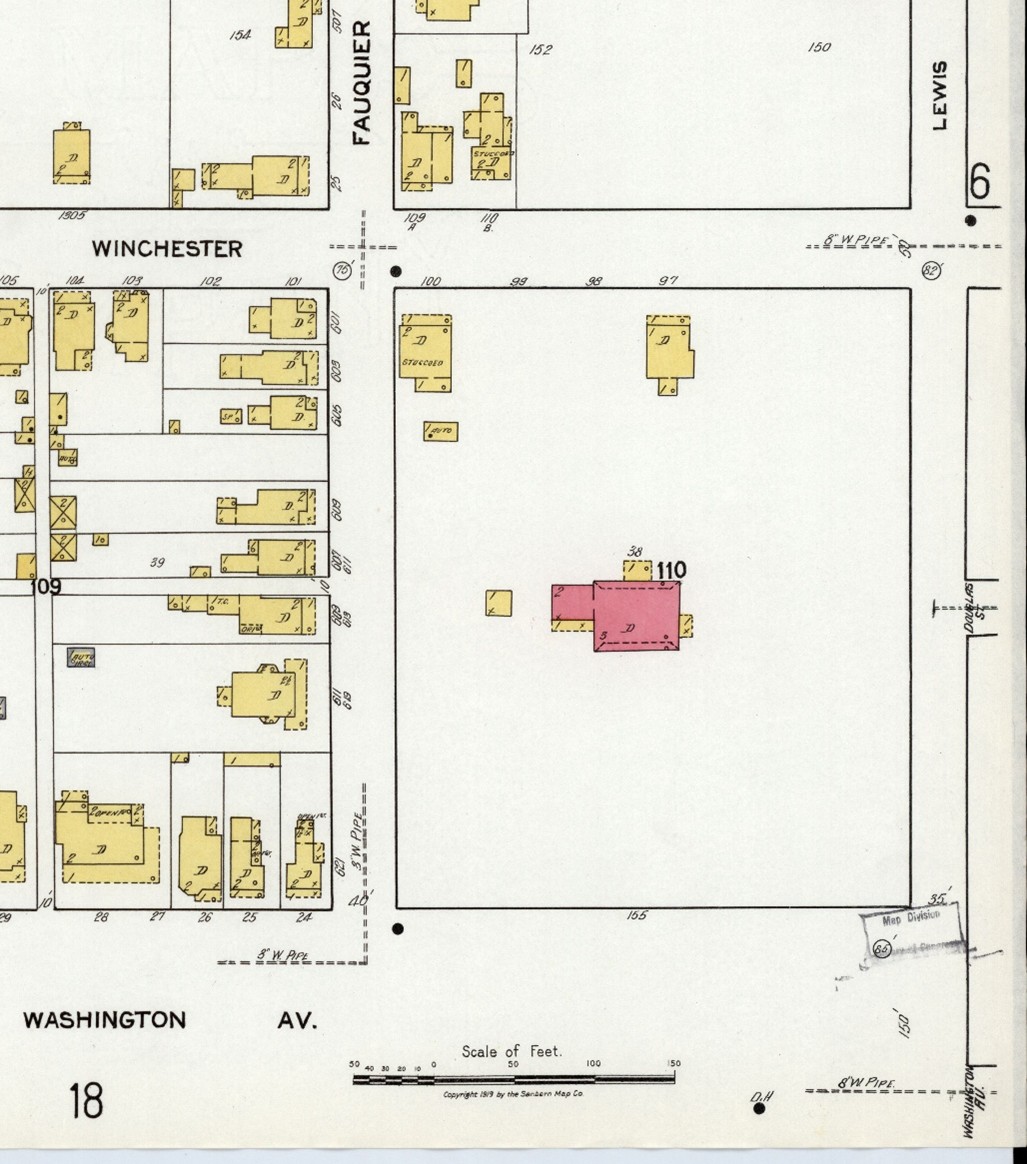
    A fire insurance map from 1919 showing the two new houses and Kenmore. (Sanborn Map Co., 1919).

    It was possibly this very newspaper ad with the proposed plan, seen by Mrs. Fleming and Miss Annie, that shocked them into action to save Kenmore before it was too late. However, even though they had finished their payments to Heflin by 1925 and officially owned the Kenmore mansion, they had yet to undo the sales that had already been made.

    Between 1919 and 1927, another five houses went up along Winchester St. and an additional one along Lewis St. The lots in the 1200 block of Winchester were now completely filled.

    A fire insurance map from 1927 showing the Kenmore block with nine total houses and a now preserved Kenmore listed as “(Shrine)”. (Sanborn Map Cp., 1927)

    Although the Kenmore Association now owned the Kenmore great house and had successfully saved it from demolition, they also valued the physical beauty that the surrounding land had potential for. The new houses were taking up space that could be gardens, reminiscent of what the original grounds may have looked like. But now, they only contained a view into several family’s backyards.
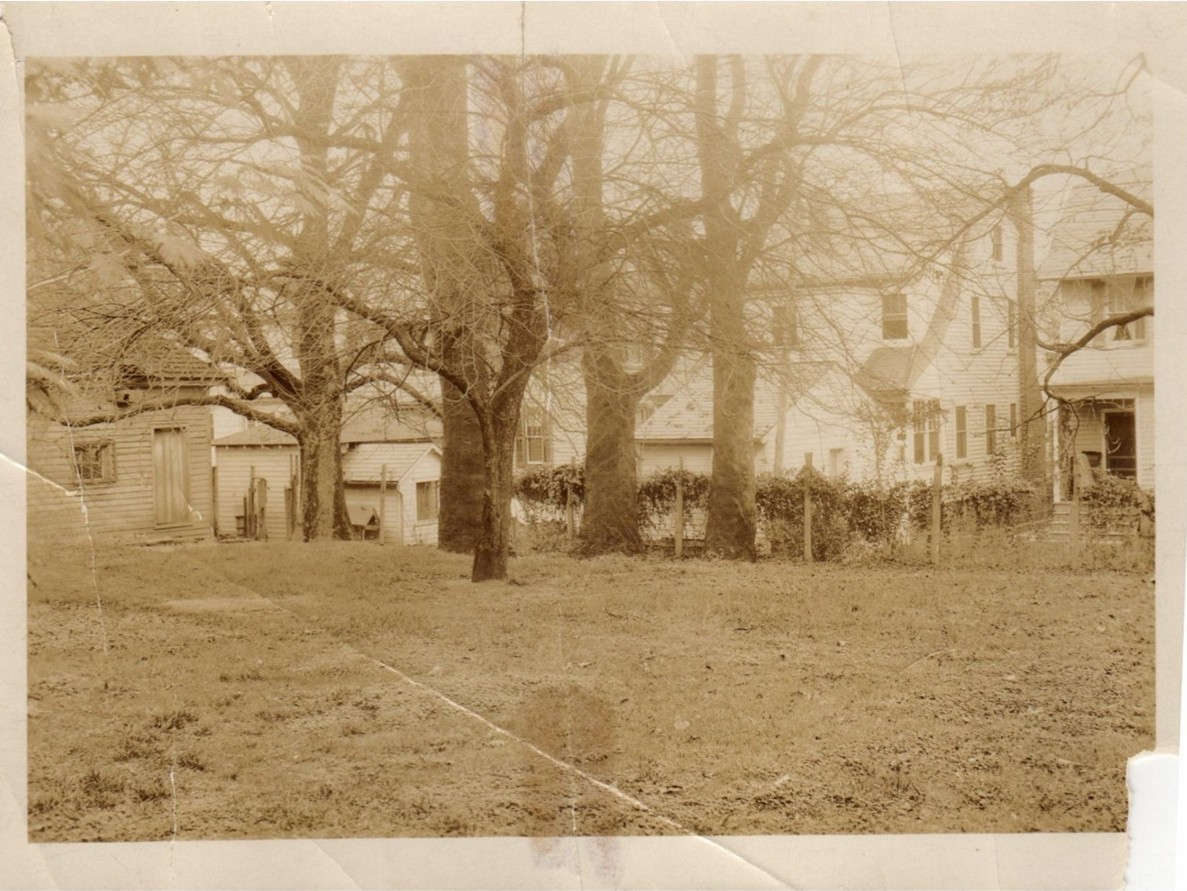
    Kenmore Gardens Pre-Restoration as seen from the portico of the Kenmore great house, photo from the George Washington Foundation Collection.

    The Kenmore Auxiliary for the Reclaiming of Land formed to buy back the sold lots (Whidden, 1972). By 1930 they had already purchased two of the houses, 1206 and 1208 Winchester, and two empty lots on Cornell Street, just a few blocks north. By 1931, the houses were physically moved from Winchester St. to Cornell St.
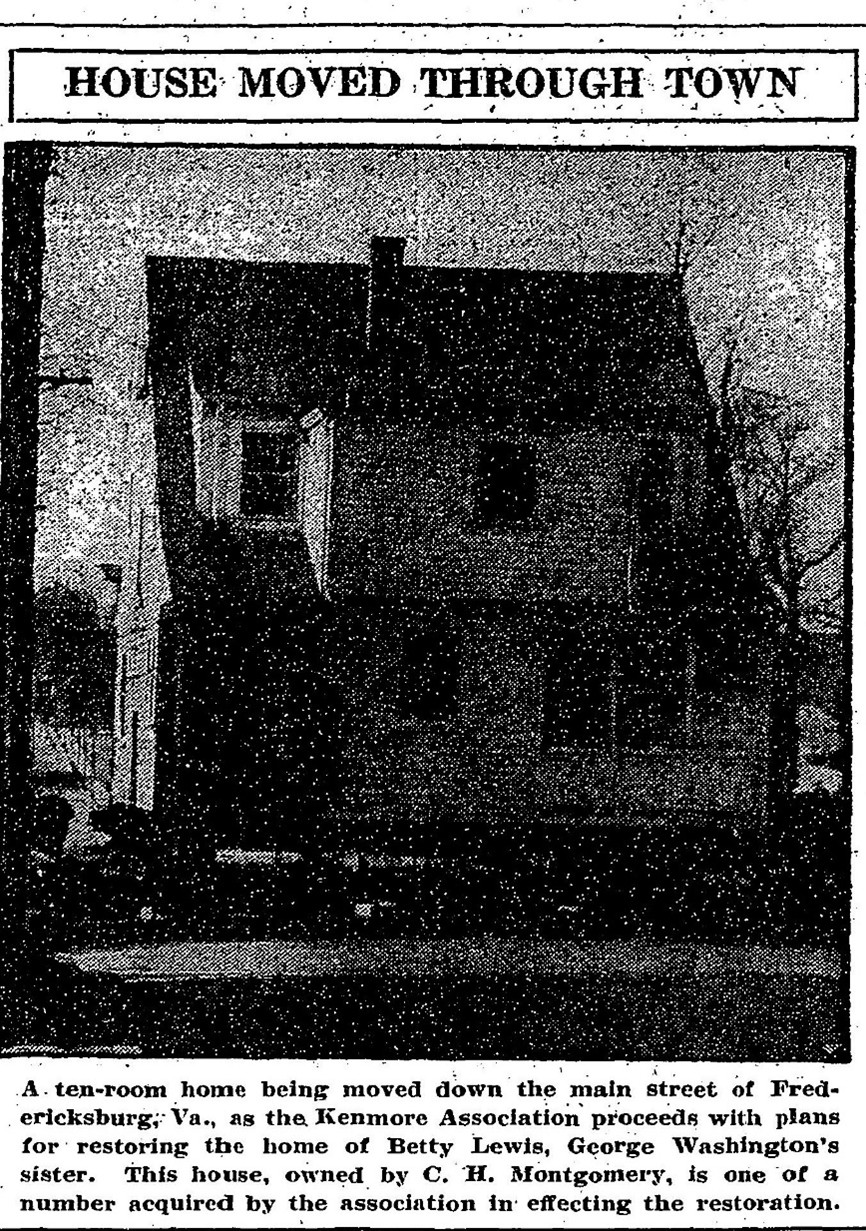
    “House Moved Through Town” article appeared in the Washington Post, Dec. 1930.

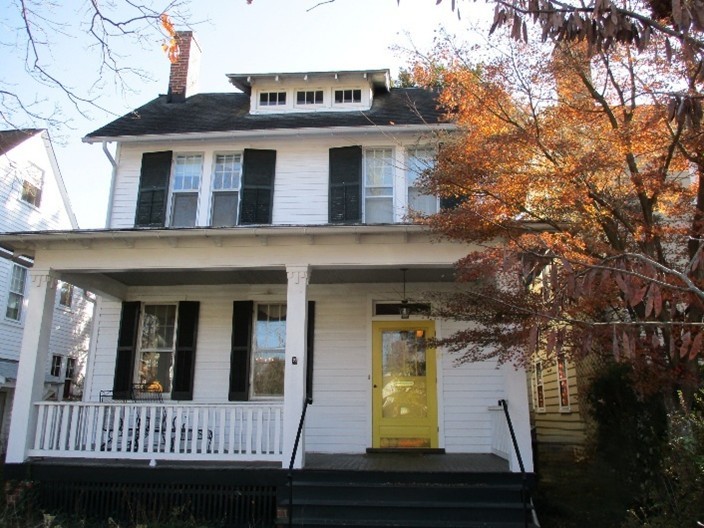
    The Kenmore Association continued to rent these houses out for some time to tenants, generating extra income to help with Kenmore’s preservation process, until they eventually sold the homes to private owners. These Cornell St. houses still exist to this day. Few changes have been made from their historical exteriors.
    With the assistance of donations from individuals and foundations all over the country, the Kenmore Association was able to raise enough money to make offers to three other homeowners along the 1200 block of Winchester St., all of whom accepted. Most of Winchester St. belonged to the Association by the end of the decade (Whidden, 1972). The houses continued to be rented out to tenants through 1940. Unfortunately, after that year we have not yet discovered what happen to the Winchester St. houses, but they no longer exist on the revised 1947 fire insurance map and are presumed to have been demolished around 1941 or ‘42.

    A fire insurance map from 1947 showing revisions made between 1927 and then. (Sanborn Map Co., 1948)

    You notice that there are still three houses remaining on the block alongside the Kenmore great house. These holdouts remained for many years as private residences. Two of these houses, 605 Lewis St. and 1200 Winchester St., can still be seen today.

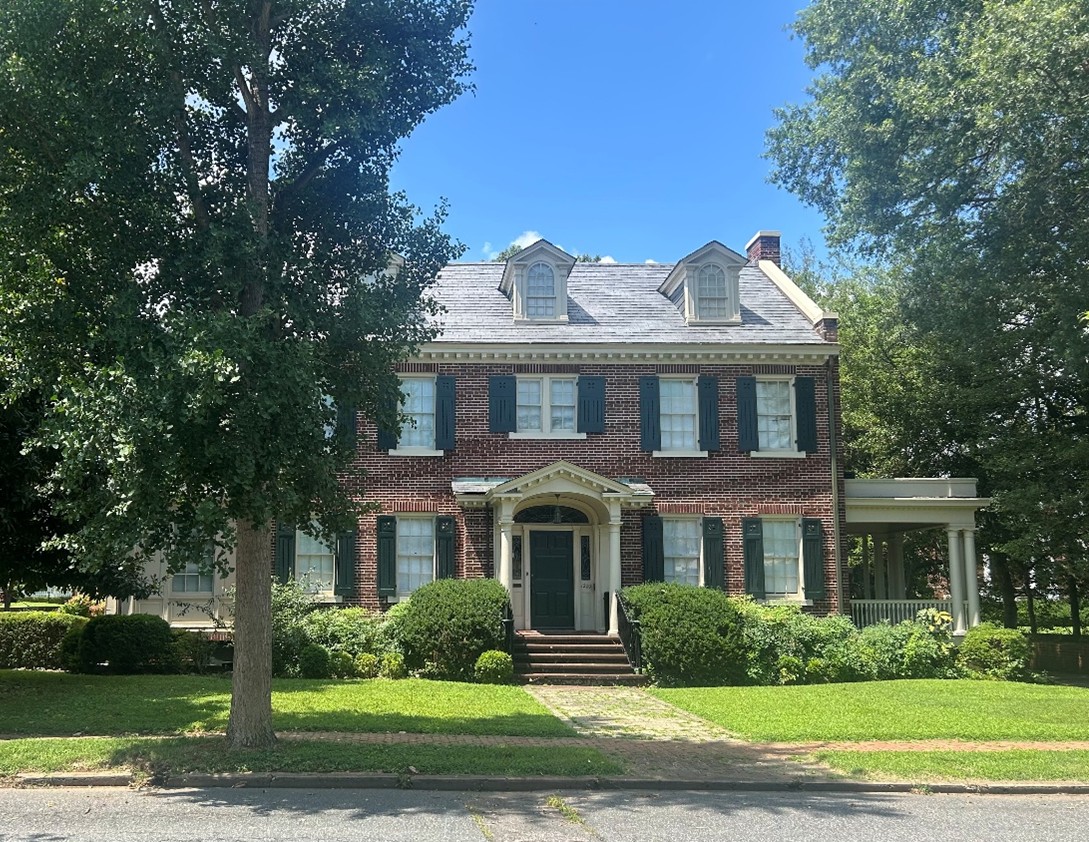
    1200 Winchester St. is a large brick façade building that was originally constructed for Dr. Frank Pratt. Dr. Pratt used to treat patients in the building’s basement and lived in the house until his passing in 1964. He founded the Pratt Medical Group in 1937, which still exists today with several locations in Fredericksburg and Spotsylvania (Obituary, 1969). His house was sold in 1991 by the last private owners, the Westfall family, to the Kenmore Association and has become one of the main office buildings on the site.
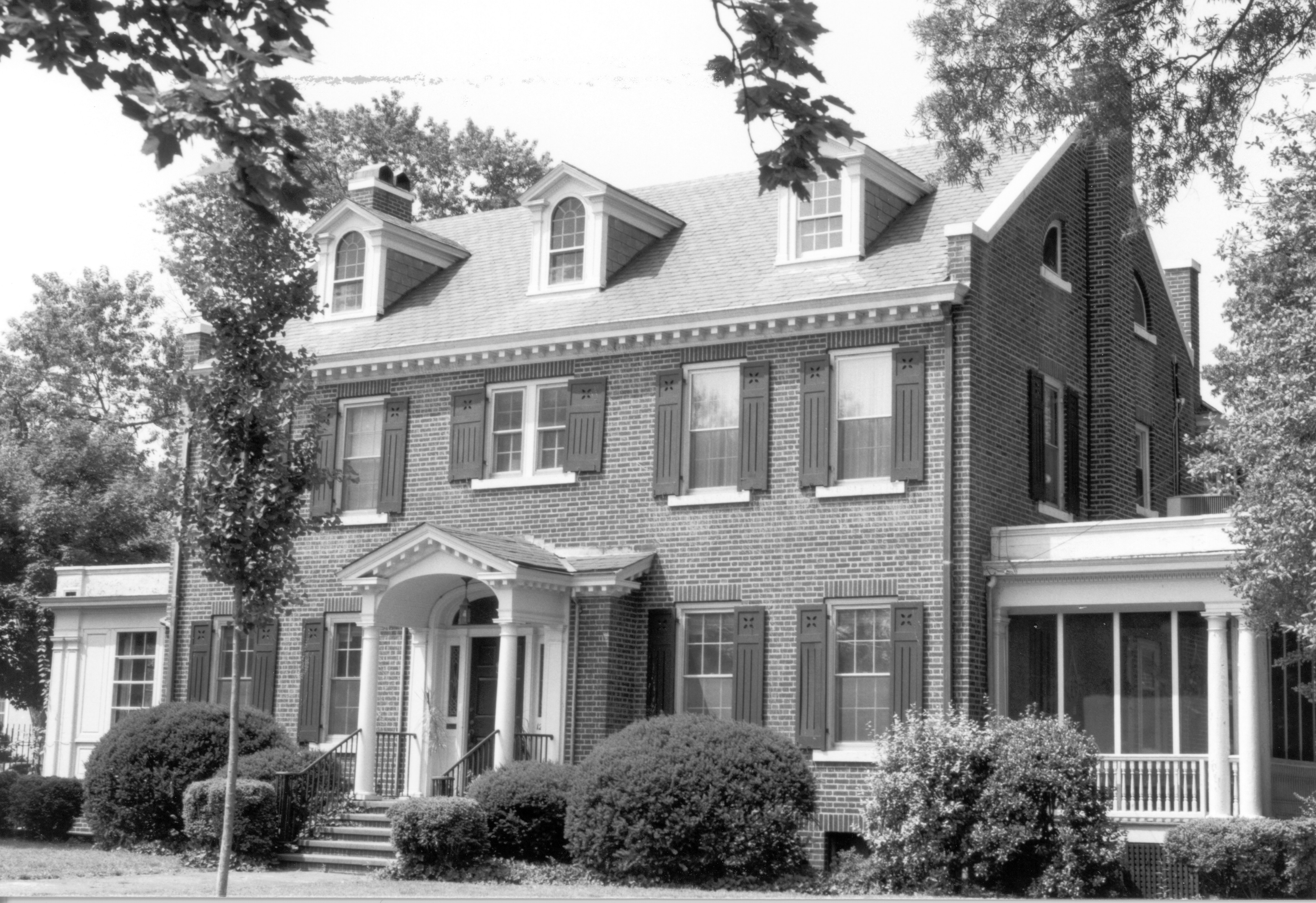
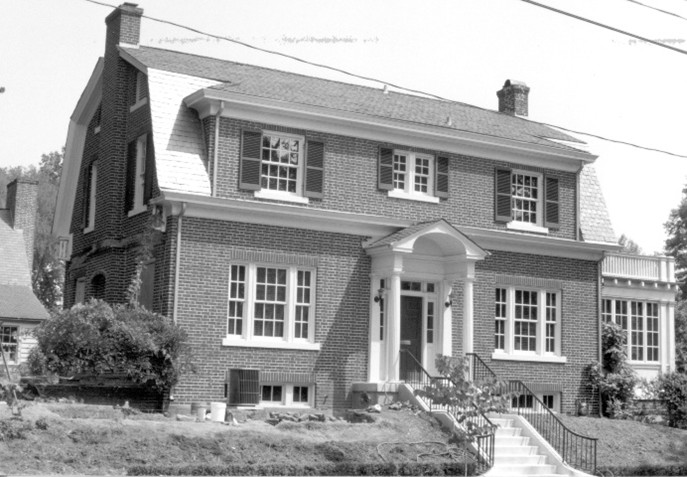
    605 Lewis St. has a very similar story to 1200 Winchester. Another brick structure, it was built for William Lacy who lived there with his wife Norah, daughter Celia, and sister-in-law Celia Goolrick. Lacy was a pharmacist who passed away in 1933, leaving his home to his wife. She and her sister continued living in the house until both had passed by 1965 (Obituary, 1965). The building was sold to the Kenmore Association in 1992 and converted to offices as well.
    The house I’ve saved for last has quickly become my favorite, since it’s the one that sparked my interest in this subject in the first place. While visiting a small antique shop in central New York of all places, I stumbled on a postcard with an image of 1216 Winchester St., also known as the Wilson House.

    The Wilson House on a postcard, circa 1921-1941. From the George Washington Foundation Collection.

    The Wilson house was the only Stucco house of the bunch, constructed in the prairie style. It was owned by Thomas Wilson, co-founder of Wilson Bros. Lumber. He, his wife Temple, Daughter Esther, and granddaughter Janet all lived in the house in 1930. By 1940, it had become a boarding house that rented out space to tenants and visitors. It had at least three units inside of it.

    The Wilson house sat on the corner of Fauquier and Winchester streets, blocking Kenmore’s new brick wall originally meant to extend around the block, until 1971. I don’t know what changed that year, whether it was a death or shift in the family or if the money finally became too good of an offer to refuse, but the Wilson family finally sold their home to the Kenmore Association, who promptly had it razed (Whidden, 1972). The brick wall was never full finished, and the area where this beautiful house once stood is now used as a service lot.

    There are countless other things that could be said about these missing structures that haunt the property. The stories of the people who lived in them. A debate about whether these modern homes were worthy of preservation as well. The archaeological damage that their construction likely caused. So on and so forth. One thing is certain though: the grounds of Kenmore hold history. Not just of the Lewis family, but of the Pratts, the Wilsons, the Lacys, the Franklins, the Coxes, the Joneses, and the countless others who once lived on this city block.

    Sarah Alden

    Manager of Visitor Services and Interpretation


    Bibliography

    City of Fredericksburg. (2025). 806 Cornell St. Fredericksburg: Fredericksburg Information Technology.

    City of Fredericksburg. (2025). 808 Cornell St. Fredericksburg: Fredericksburg Information Technology.

    Heflin, E. (1921, January 24). Modern Homes. The Daily Star, 28(180), 4.

    Lots on Beautiful Kenmore Court. (1914, November 12). The Daily Star, 22(119), 2. Fredericksburg, VA.

    Obituary. (1965, May 19). Mrs. W. J. Lacy Dies in Atlanta, Rites Thursday. The Free Lance-Star, p. 5.

    Obituary. (1969, May 10). Monday Rites for Mrs. Pratt. The Free Lance-Star.

    Sanborn Map Co. (1912, July 12). Fire Insurance Maps Online. Retrieved from Historical Information Gatherers: https://fims-historicalinfo-com.ezproxy.virginiamemory.com/FIMSSD.aspx?m=09021_1912

    Sanborn Map Co. (1919, October 31). Fire Insurance Maps Online. Retrieved from Historical Information Gatherers: https://fims-historicalinfo-com.ezproxy.virginiamemory.com/FIMSSD.aspx?m=09021_1919

    Sanborn Map Co. (1948, June 7). Fire Insurance Maps Online. Retrieved from Historical Information Gatherers: https://fims-historicalinfo-com.ezproxy.virginiamemory.com/FIMSSD.aspx?m=09021_1947

    Sanborn Map Cp. (1927, May 27). Fire Insurance Maps Online. Retrieved from Historical Information Gatherers: https://fims-historicalinfo-com.ezproxy.virginiamemory.com/FIMSSD.aspx?m=09021_1927

    Stanton, G. (2011, February 21). 15th US Census, 1930. Fredericksburg City Enumeration District 107-1 Upper Ward. Retrieved from Fredericksburg Research Resources: https://resources.umwhisp.org/Fredericksburg/census/fbg1930ED107-1.htm

    Stanton, G. (2014, November 28). 16th U. S. Census, Virginia, Fredericksburg (Upper Ward), S.D. 1, ED No. 107-3. Enumerated Beginning 2 April 1940. Retrieved from Fredericksburg Research Resources: https://resources.umwhisp.org/Fredericksburg/census/fbg1940ED107-3.htm

    Whidden, R. W. (1972). Kenmore 1752: Fifty Years as a National Shrine. Richmond, VA: Whittet & Shepperson.
  • Recreation and Racism: Fredericksburg’s Reception of Black Servicemen during WWII

    As the United States and historic sites across the country, including the George Washington Foundation, prepare to commemorate the nation’s 250th anniversary next year, it might be easy for the eightieth anniversary of the end of World War II to become an afterthought. After all, the interpretation of Historic Kenmore focuses on the Revolutionary era; the home was already the better part of 200 years old in 1945.  But the histories of Kenmore and Fredericksburg are as intricately intertwined with the Second World War as they are with the War of Independence, and the legacies of both conflicts resonate today.

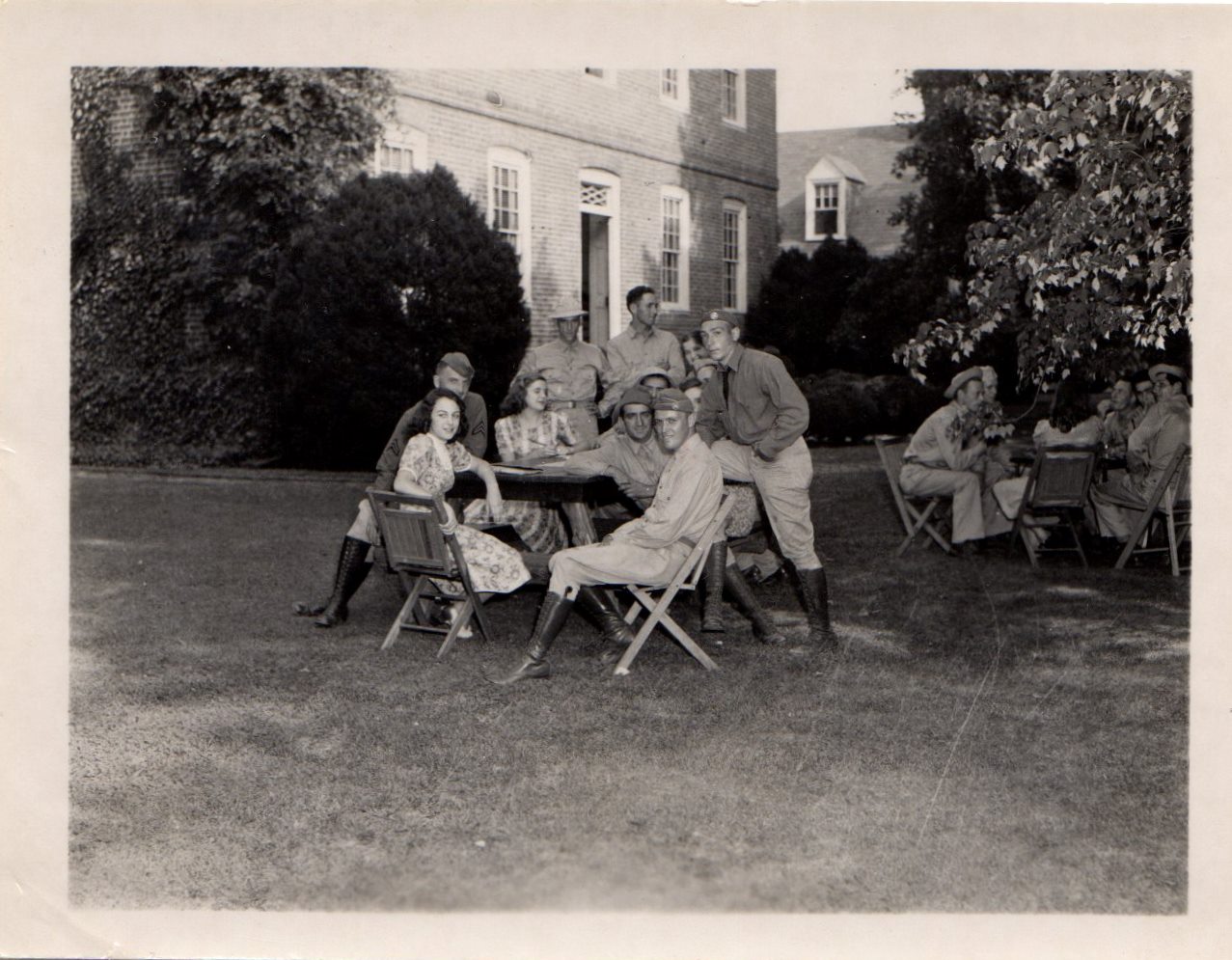
    Soldiers being hosted on lawn of Kenmore

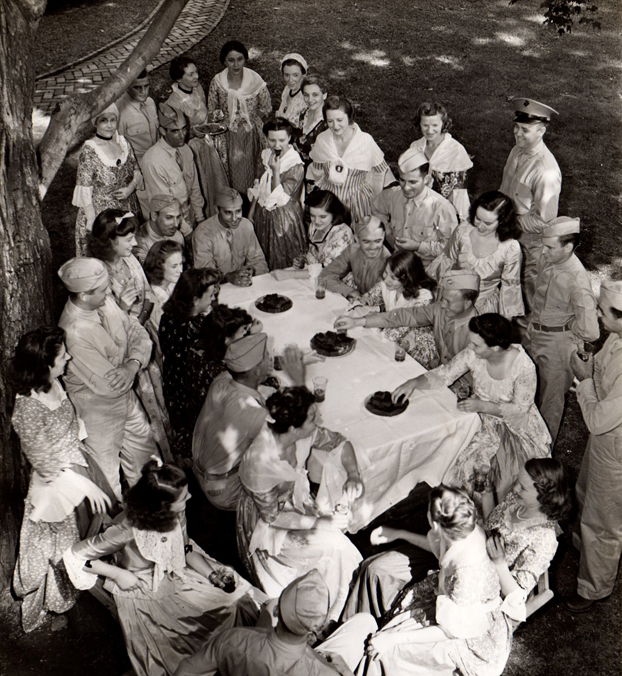
    Like many Americans, the women of the Kenmore Association sought during the war years to demonstrate pride in their nation and support for its troops. Annie Fleming Smith, then national secretary of the Association, showed her appreciation for the country’s military by opening Kenmore’s doors to thousands of service members stationed in the Fredericksburg area. The Association took them “through the mansion and served them iced tea and gingerbread.” It hosted lawn parties and entertained soldiers early in the day and late at night. Hosts told everyone in uniform “who passed over the Kenmore steps…about George Washington, and other great men, passing over these very same steps.”

    Kenmore hosted soldiers with gingerbread and iced tea.

    Smith regarded the Association’s commitment to “making our American boys feel at home in a home of the Washingtons” as Kenmore’s way of contributing “to the defense of the nation.” She also hoped that visits to Kenmore would crystalize in servicemen a commitment to the U.S. ideals of freedom and democracy.

    The commitment to helping the recently transplanted soldiers feel comfortable in town was admirable; however, there are no records of Smith or Kenmore welcoming Black servicemen, stationed along with their white counterparts at what was then A.P. Hill Military Reservation and other nearby military installations.  Smith and other members of the Kenmore Association, along with whites across Fredericksburg, the South, and the country, apparently did not see any conflict between simultaneous support for liberty, as embedded in the founding documents of the United States, and a racist social system.

    The 366th Infantry Regiment

    So how, in segregated Fredericksburg, did Black service members spend their leisure time? If the city’s white-led institutions, including Kenmore, did not welcome African Americans serving their country, Black Fredericksburgers proved happy to host the men fighting the Double V campaign—victory over fascism abroad and victory over racism and discrimination at home. Indeed, at least two Black fraternal organizations in Fredericksburg provided recreational opportunities to African American soldiers during World War II.

    The 366th Infantry Regiment choir at Camp Atterbury, Indiana, on December 17, 1943. Source: Indiana State Library

    The city’s Black Odd Fellows lodge (located at 301 Charles Street), “under auspices of the Citizens Committee of Local Negros,” hosted at least one dance for African American soldiers from A.P. Hill. This dance, held in February 1942, came shortly after white officials implicated Black servicemen stationed at A.P. Hill and Fort Belvoir in a “near-riot” that began after a Fredericksburg police officer attempted to arrest a Black soldier for public intoxication. 

    Following the altercation between the soldiers and the city’s police, during which white officers beat a Black soldier and threw a tear gas grenade, the Free Lance-Star published a letter to the editor from local NAACP leaders calling for the establishment of a Black USO—since the white USO barred Black soldiers from entering— and more leisure opportunities for African American soldiers in the city.

    Other efforts to make the city more welcoming to Black service members followed. In May of that year, a group of Black Fredericksburgers requested that “the city furnish recreational facilities, showers, soap and towels for colored troops stationed at Camp A. P. Hill.” According to the letter containing this request submitted to the City Council, “there were slightly over a hundred colored soldiers now stationed at Camp A. P. Hill and that there were no recreational facilities at Camp A. P. Hill or in the City of Fredericksburg for these colored troops.”

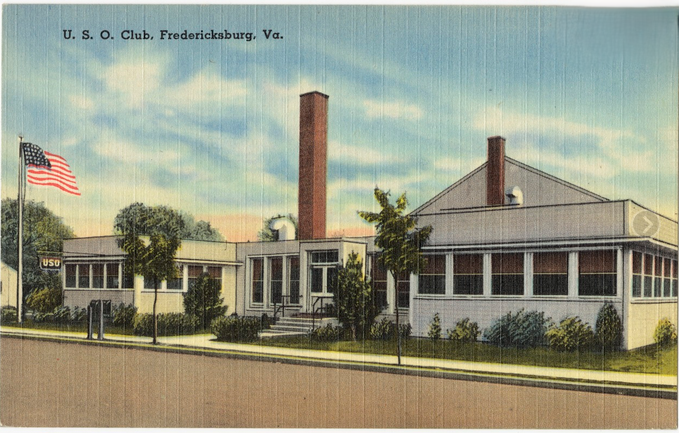
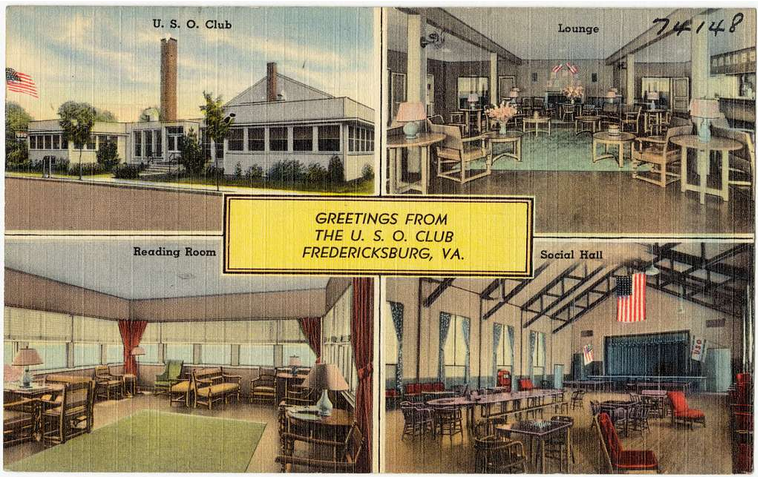
    Eventually, the efforts of Black soldiers’ advocates succeeded: The Black USO sought by the NAACP leaders opened in June 1943 at Rappahannock Lodge 229 of the Independent Benevolent Protective Order Elks of the World (otherwise known as the African American Elks). Lodge 229 was at 1103 Winchester Street, just a block from Historic Kenmore. Across the world, USOs gave “troops somewhere to play cards, dance and socialize while taking a break from their duties.” Each USO facility was supposed to be “open to all men in uniform,” regardless of race, but in practice, centers were often segregated. Fredericksburg’s white USO opened in January 1942 at 408 Canal Street, which is today the Dorothy Hart Community Center.

    Although Fredericksburg’s Black USO closed the following April, reportedly because of low attendance, another Black USO was completed in Caroline County in December of 1943 and was still operating in 1945.

    However, the presence of these recreational facilities did not resolve tensions between white area residents and visiting Black service members. In the fall of 1943, while the Fredericksburg USO was open, A.P. Hill Military Reservation was home to the 366th Infantry Regiment, a Black unit. When members of the 366th chaffed against racism—for instance, by evicting the driver of a bus who instructed the soldiers to move to the back of the vehicle and finishing the drive back to A.P. Hill from Fredericksburg themselves—local whites reacted with fear. By November, the city’s white residents worried that the soldiers planned to “‘clean up the town on the first’” of December in objection to Jim Crow laws and segregation. Whites expressed relief when the unit shipped out before that date. 

    During World War II, the Kenmore Association opened its doors to white soldiers to share the stories of those Americans “who planned the principles, which is the beacon light of the world today.” Eight decades ago, the world’s democracies fought for those principles and defeated the forces of totalitarianism abroad, but racism endured at home.  While progress has been made in the United States regarding the assertion “that all men are created equal,” the struggle against inequality continues.


    Adam Nubbe

    Manager of School & Youth Programs


    Bibliography

    Fredericksburg City Council. (1942, January). Fredericksburg City Council Minutes Vol 28. Fredericksburg, Virginia, USA.

    Hall, D. (1943, November 27). Fearful Whites Relieved as 366th Leaves Virginia. Baltimore Afro-American, p. 21.

    Johnson, S. (2022, February 7). How the USO Served a Racially Segregated Military Throughout World War II. Retrieved from USO: https://www.uso.org/stories/3001-how-the-uso-served-a-racially-segregated-military-throughout-world-war-ii

    Salter, K. (2014). The Story of Black Military Officers, 1861-1948. London: Routledge.

    Smith, A. F. (1941, December 26). Letter to Mrs. Barnum. Fredericksburg, Virginia, USA.

    Smith, A. F. (1941, November 4). Letter to Mrs. Mitchell. Fredericksburg, Virginia, USA.

    Smith, A. F. (1941, November 21). Letter to Mrs. Stone. Fredericksburg, Virginia, United States of America.

    The Baltimore Afro-American. (1942, March 31). Soldier, On Furlough, Finds Vs. Prejudice Ignores War. The Baltimore Afro-American, p. 9.

    The Free Lance-Star. (1942, February 9). Dance Friday Night for Negro Soldiers. The Free Lance-Star, p. 6.

    The Free Lance-Star. (1942, January 31). Soldiers Causing Disorder Jailed. The Free Lance-Star, p. 1.

    The Free Lance-Star. (1942, January 29). Tear Gas Quells Near-Riot Here. The Free Lance-Star, p. 1.

    The Free Lance-Star. (1943, December 2). Colored USO in Caroline Completed. Fredericksburg, Virginia, USA.

    The Free Lance-Star. (1943, June 3). New Colored USO is Dedicated Here. Fredericksburg, Virginia, USA.

    The Free Lance-Star. (1944, November 14). USO Club in City To Be Withdrawn. The Free Lance-Star. Fredericksburg, Virginia, USA.

    The Free Lance-Star. (1944, April 29). USO Cuts $7,200 Off Budget Here. Fredericksburg, Virginia, USA.

    Woodfork Genealogy. (2025, January 27). USO Highway Number 2 Club. Retrieved from Woodfork Genealogy: https://woodforkgenealogy.com/caroline-county-virginia/uso-highway-number-2-club/

    Wyatt, P. E. (1942, February 6). Negro USO is Seen as Need for City. The Free Lance-Star, p. 4.