Lives and Legacies

Category: 18th Century Crafts

  • Lovely Linoleum and Other Historic Floor Coverings – Two Hot Takes

    Linum (“Flax”) and oleum (“oil”) – Fashionable and Affordable

    As a Historic Preservation student at the University of Mary Washington, I’ve grown to appreciate almost all aspects of materiality. Over the past four years, my education has taught me to look closely at the built environment around me.

    Two years ago, I stumbled across a book about mid-century kitchens, which discussed modern flooring’s ugly duckling: linoleum. From this, I developed an appreciation for linoleum and vinyl flooring and an equal obsession with spotting them.

    Most people wouldn’t put Linoleum at the top of their list of favored materials. After all, historically, it’s been labeled as cheap, tacky, and ugly. However, linoleum has been an important part of modern living since the late 19th century. While the patterns most people initially thought of weren’t very attractive (that one red brick style), their initial creation changed the game for durable materials in a household and single-handedly became a hospital favorite.

    Linoleum was first invented by Frederick Walton in Chiswick, England, when he discovered that oxidized linseed oil could replace rubber when mixing the oil with cork and other fibers. This process was sped up by heating the oil with lead and zinc, which formed a sticky paste that would be mixed with sawdust or cork to keep the cloth from becoming tacky. Shortly after receiving a patent in 1864, Walton opened the American Linoleum Manufacturing Company on Staten Island, New York, in 1872, with the nearby town named Linoliumville in its honor.

    Fred Walton, creator of Linoleum

    The genius of linoleum was/is its durability and ability to be mass-produced cheaply. Additionally, the material could be customized using pigments to create virtually any pattern, which aided in its early popularity in homes. Early linoleum was commonly produced in printed, marbled, inlaid, or plain patterns, with these distinct designs often serving as time machines to gauge when the flooring was installed. Putting aside the aesthetics, linoleum is most likely to be seen in high-traffic areas, such as hallways, kitchens, and mudrooms, due to its long-term durability.

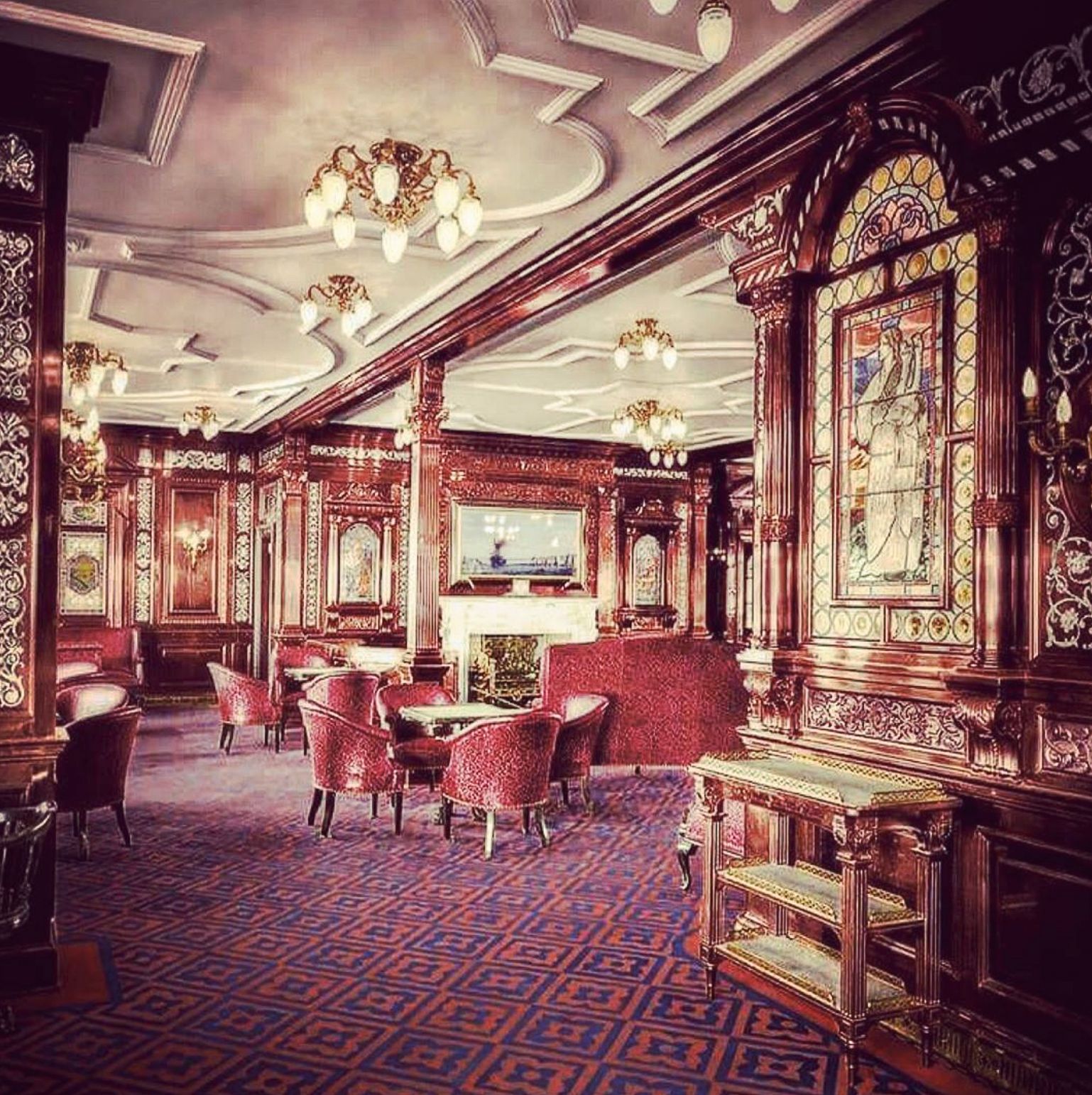
    A well-installed linoleum is waterproof and surprisingly antibacterial, which is why, since its invention, linoleum has been commonly used in hospitals. The flooring was also popular among naval vessels in the early twentieth century, with battleships and luxury cruisers taking advantage of the material. In fact, the RMS Titanic used inlaid linoleum flooring for a significant portion of its decks, which can be seen in past photos and even on the sea floor today.

    The manufacturing boom of the mid-twentieth century brought modern materials and technologies to the average household, including the popularization of linoleum in common spaces. Kitchens and high-traffic areas would continue to have the flooring material. However, living rooms, eating spaces, and even walls would start to display colorful and flashy patterns. This popularity would be short-lived, as the 1950s brought vinyl flooring, an extremely similar product, but was pushed as a newer and more “fashionable” alternative to linoleum.
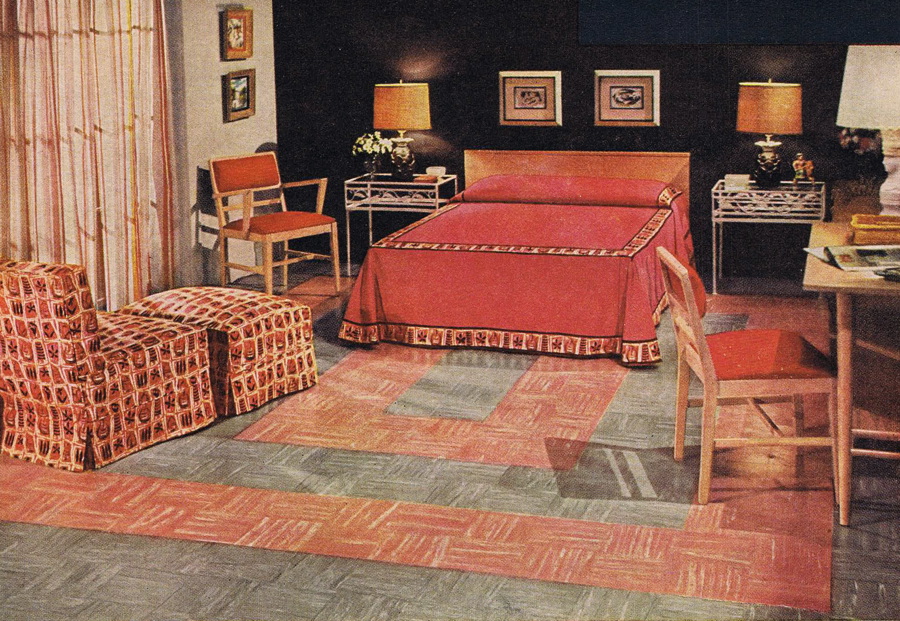
    An image of a bedroom from a 1952 advertisement for linoleum flooring

    Despite the initial falloff, linoleum has made a surprising comeback in homes within the last few years. It’s understandable, as per square foot, the material is very affordable and easy to clean, not to mention that rising interest in the conservation of historic homes has led to the preservation and replication of historic linoleum. Most often, the damage to the material features is rips and cracks, which are easily repaired with patching and a fresh coat of sealant.

    I don’t write any of this intending that you agree with me. However, I believe that linoleum reflects the best of modern materiality. It’s low-cost, eco-friendly, durable, and easy to customize, allowing lower-income homes to decorate their spaces economically and colorfully. While spotting linoleum in older buildings may be rare due to being covered with changing fashion trends (we are all familiar with carpet over beautiful hardwood floors), preserving it is just as important as any other part of the built environment.


    Helena Samson

    Fleming Smith Scholar, UMW Class of 2025


    Linoleum’s Forebearer “Fancy Pattern-Cloth” – Eighteenth Century Floorcloths

    The future of home restoration and preservation will involve saving certain building materials, such as wood, stone, brick, and decorative elements, like linoleum. While humble and even ridiculed (you know the pattern), linoleum will eventually be treasured as a lasting historical remnant, helping future preservationists add context and depth to restorations.

    Classic linoleum, everyone seemed to have despite not wanting to admit it.

    Unfortunately, in eighteenth-century historical preservation, we are rarely lucky enough to find samples of the predecessor of linoleum, the floorcloth. The floorcloth was a relatively common floor covering in eighteenth-century Virginia homes. It was made from woven cloth, usually heavy and sturdy, like linen or cotton canvas. This canvas was then stretched, several layers of oil paint applied, and covered in varnish. This floorcloth could be painted in any fashionable design, as seen in John Carwitham’s book published in 1739, with the replica marble being one of the favorites. 

    Like linoleum, floorcloth was prized because it was customizable, durable, easily cleaned, and repairable. It could also be cut down and used in other areas like kitchens or closets after it lost its fashionability or was replaced with carpet. It was so versatile that it basically reused itself out of existence.

    While no known complete examples of eighteenth-century floorcloths exist, bits and pieces have been found, offering insight into their construction and functionality in the home. Coincidentally, here at Kenmore, we found remnants of a floorcloth under the floorboards in the attic during a period of restoration in 1989. Small samples from the remnants were taken for analysis:
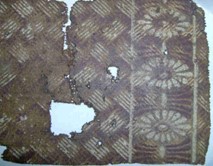
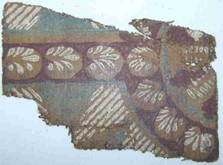
    Base layer – yellow preparatory layers of lead white and yellow ochre ground in linseed oil. The uneven distribution of the large, clumped pigments suggests it was hand-ground paint.

    Black paint is found in the third layer above the ground coatings with remnants of plant resin varnish, followed by a green design layer. This could mean the black paint was the original design, and it was repainted after varnish and the green design were put on top.

    Green-painted areas – made up of white lead, Prussian blue, yellow ochre, and calcium carbonate.

    White paint – composed primarily of white lead and calcium carbonate

    We can draw a few conclusions from this paint analysis. One, the floorcloth was well used but eventually worked its way down the list of favored household furnishings, whether from wear and tear or fashionability. Either way, it was ultimately rolled up and stored out of sight, and lucky for us, forgotten.

    Second, the white paint sample did not contain zinc white, which was used after 1840, and the green paint sample did not contain chrome green, which means it was likely produced before 1816, when chrome yellow pigments were commercially available. So, while we can’t verify that it was a Lewis family floorcloth, it is a very early example of the floor covering. It inspired the floorcloth reproduced for Fielding’s office in Kenmore, which you can read about in our previous post, “What Was Old Is New Again”.
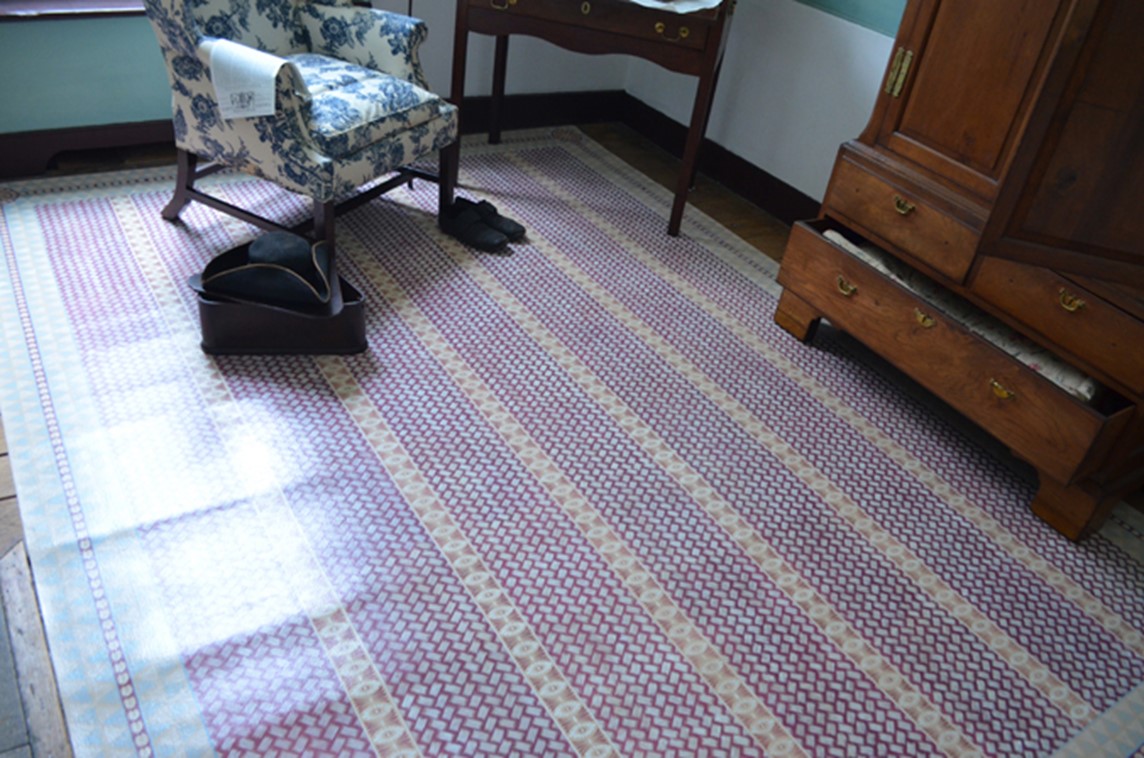
    Beautiful reproduction floorcloth hand-painted by Black Dog Gallery, Yorktown.

    Today, thanks to linoleum, we can choose affordable, durable, and even fashionable flooring materials. Linoleum is the evolution of floorcloths with similar goals and functionality. However, while floorcloths didn’t usually survive, linoleum will follow us through history and deserves to be preserved even if it leads to awkward questions about style and décor.

    Oh, there will be questions.

     Heather Baldus

    Collections Manager


    Bibliography

    Kaldewei, G. (2000). Linoleum: History, design, Architecture, 1882-2000. Hatje Cantz ; Distribution in the US, DAP, Distributed Art Publishers.

    Garcia, K. (2023, December 6). Caring for 100-year old linoleum. Tenement Museum. https://www.tenement.org/blog/fun-with-linoleum-no-really/

    Houseman, C. (2020, September 11). Titanic’s linoleum. Encyclopedia Titanica Message Board. https://www.encyclopedia-titanica.org/community/threads/titanics-linoleum.52676/

    NPS. (n.d.). https://www.nps.gov/orgs/1739/upload/treatment-guidelines-2017-part2-reconstruction-restoration.pdf

    Landreau, A.N. (1976). America underfoot: A history of floor coverings from colonial times to the present. Published for the Smithsonian Institution Traveling Exhibition Service by the Smithsonian Institution Press.

    Weissman, J.R., & Lavitt, W. (1994). Labors of love: America’s textiles and Needlework, 1650-1930. Wings Book: Distributed by Outlet Book Co.

    Buck, Susan L. Floorcloth Fragments Cross-Section Microscopy Report, Kenmore, Fredericksburg, Virginia. (2006)

  • The Women of Silver: 18th-century English Silversmiths

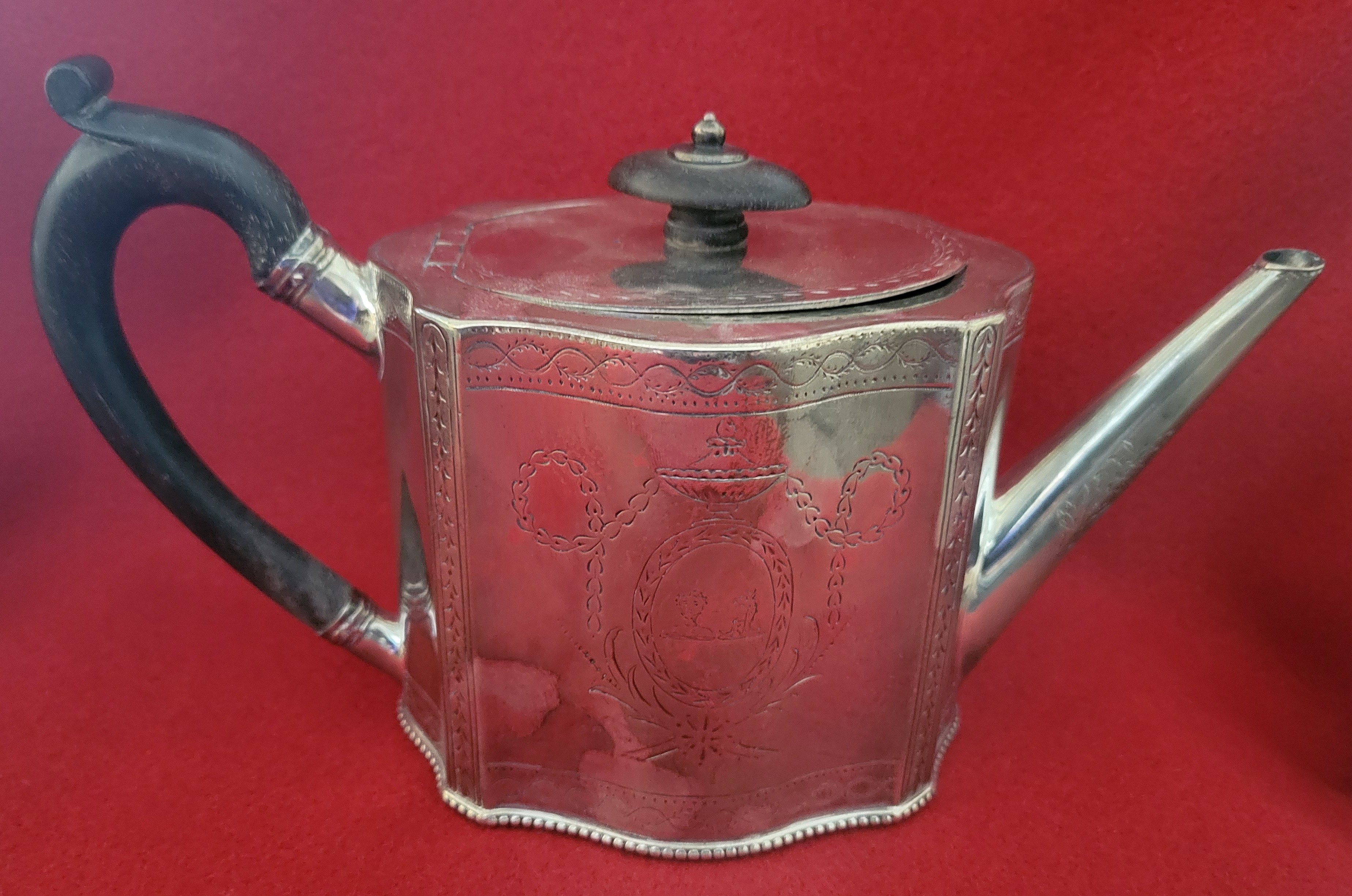
    We have a lot of silver in our collections, ranging from candlesticks to teapots to spoons.  With all the silver, I have become familiar with eighteenth-century silversmith marks, but I have never explored the artisans behind the marks. 

    I was pleasantly surprised to find at least four women silversmiths represented through various pieces.  These four women were all London-based traders within an active community of women artisans in luxury trades.  I wanted to discover how these women entered this male-dominated trade and registered their marks. (City Women, 2025)

    First, we need a little background to understand how the silversmith trade worked in eighteenth-century England. 

    The Trade

    In the eighteenth century, English silversmiths were much more regulated than American silversmiths due to having around a four-hundred-year head start in establishing trade organization.  However, no one on either side of the ocean would have been considered a master craftsman without a long multi-year apprenticeship. 

    Silver plating workshop from Diderot’s Encyclopédie

    While this was a rare path for girls, these four women were introduced to silversmith work through their families without formal apprenticeships.  However, that doesn’t mean they didn’t spend years becoming expert artisans and learning to run a successful business from their fathers, brothers, and husbands. 

    When a silversmith obtained their “free” status, it meant they could sell their ware in the city of London.  To earn this status, the silversmith had to be granted a hallmark from a Livery, like the Goldsmith’s Company.  Women were only granted a mark if they were the widows of a silversmith. (Rue Pigalle, 2025)

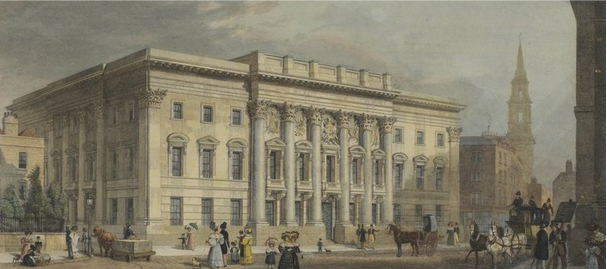
    Worshipful Company of Goldsmith in the city of London, current building in late 19th century. The company has been occupying this spot since 1339.

    The Marks

    In eighteenth-century England, the silversmith could sell the articles they made only after the pieces had been assayed and stamped with appropriate hallmarks. (Ford, 2018)

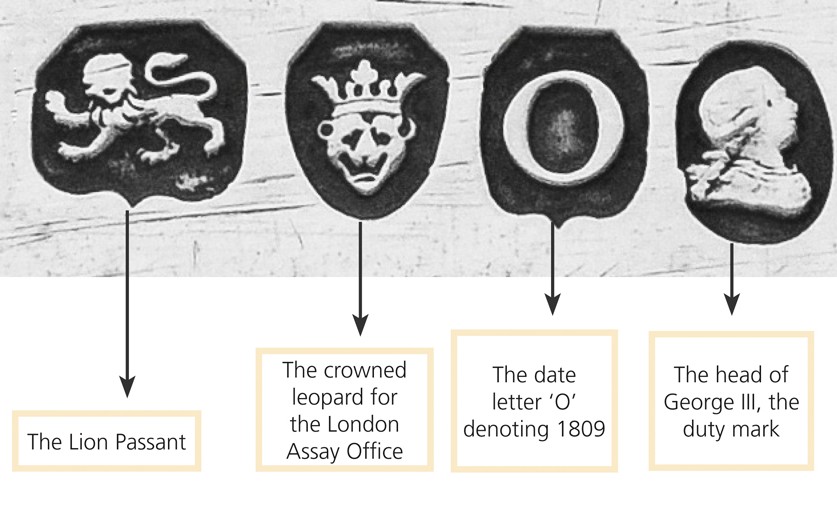
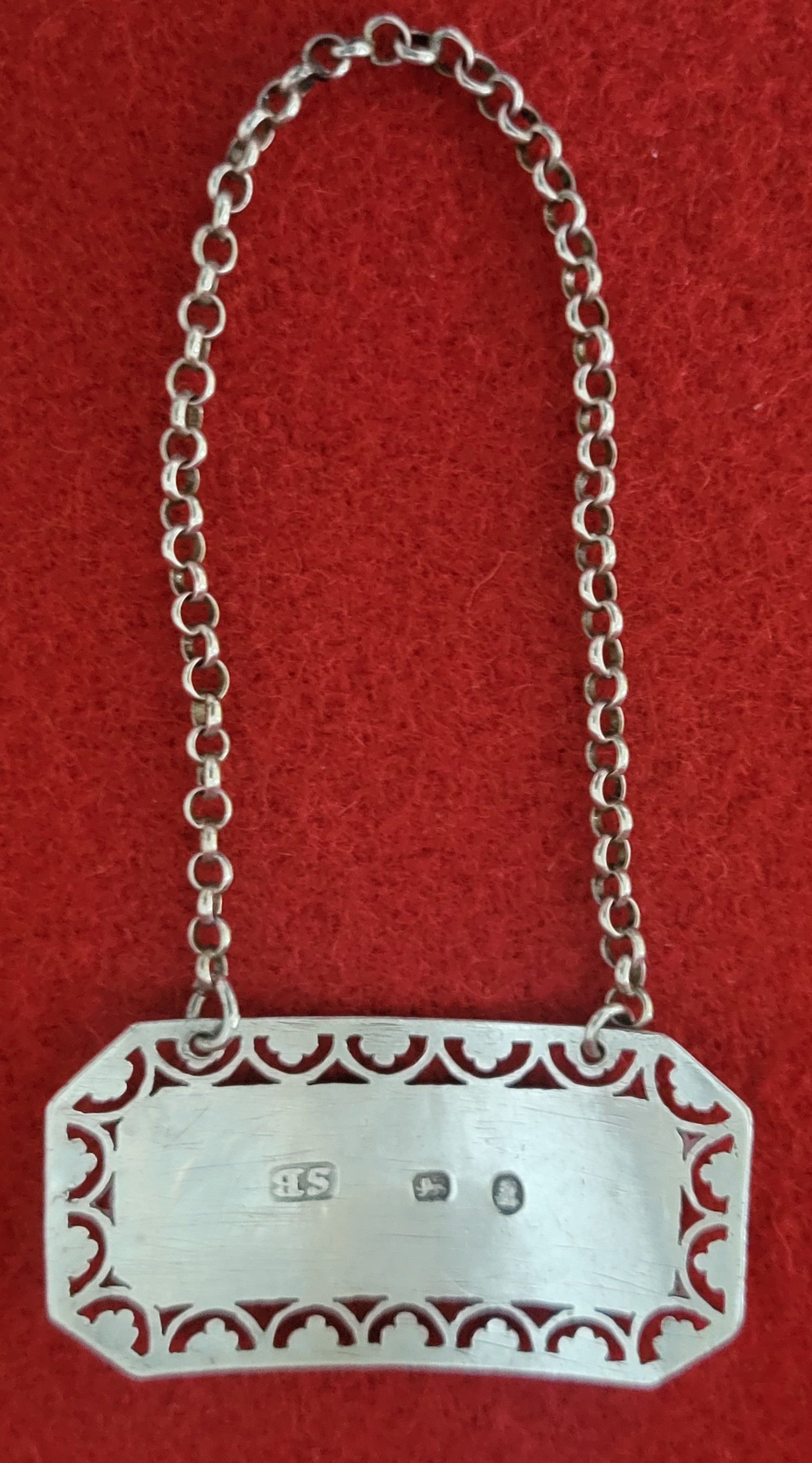
    Explanation of silver marks

    One hallmark is the symbol of the guildhall where it was assayed.  Each location had a different image, like a London goldsmith guild’s head of a leopard, and has been used for over seven centuries. 

    Another is the maker’s mark, which has been required since 1363.  This mark is now always the marker’s initials, but one was more often a trade symbol.

    The mark of English sterling standard fineness—a lion passant—has been used since 1544 to certify that the metal is 92.5 percent pure silver. (Ford, 2018)

    There is also a date mark indicated by a letter representing a year.

    Finally, duty marks on silver from 1784 to 1890 reflect the tax on precious metals with the profile of George III or Victoria.  (Arkell, 2025)

    The Silversmiths

    Hester Bateman

    One of the most well-known eighteenth-century London silversmiths is Hester Bateman.  She became the matriarch of the renowned Bateman family silversmithing company. 

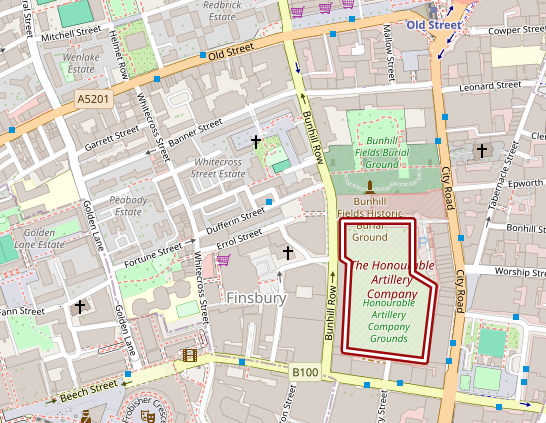
    She was born Hester Nedem in London in 1708. She grew up poor with little formal education.  In 1732, she married John Bateman, a goldsmith and chain maker.  John died in 1760 of tuberculosis and left Hester his tools in his will.  Hester took over the shop located at 107 Bunhill Row and registered her mark at London Goldsmith’s Hall on April 16, 1761. (Bly, 2008)

    Hester Bateman’s shop was located at 107 Bunhill Row, Islington, London

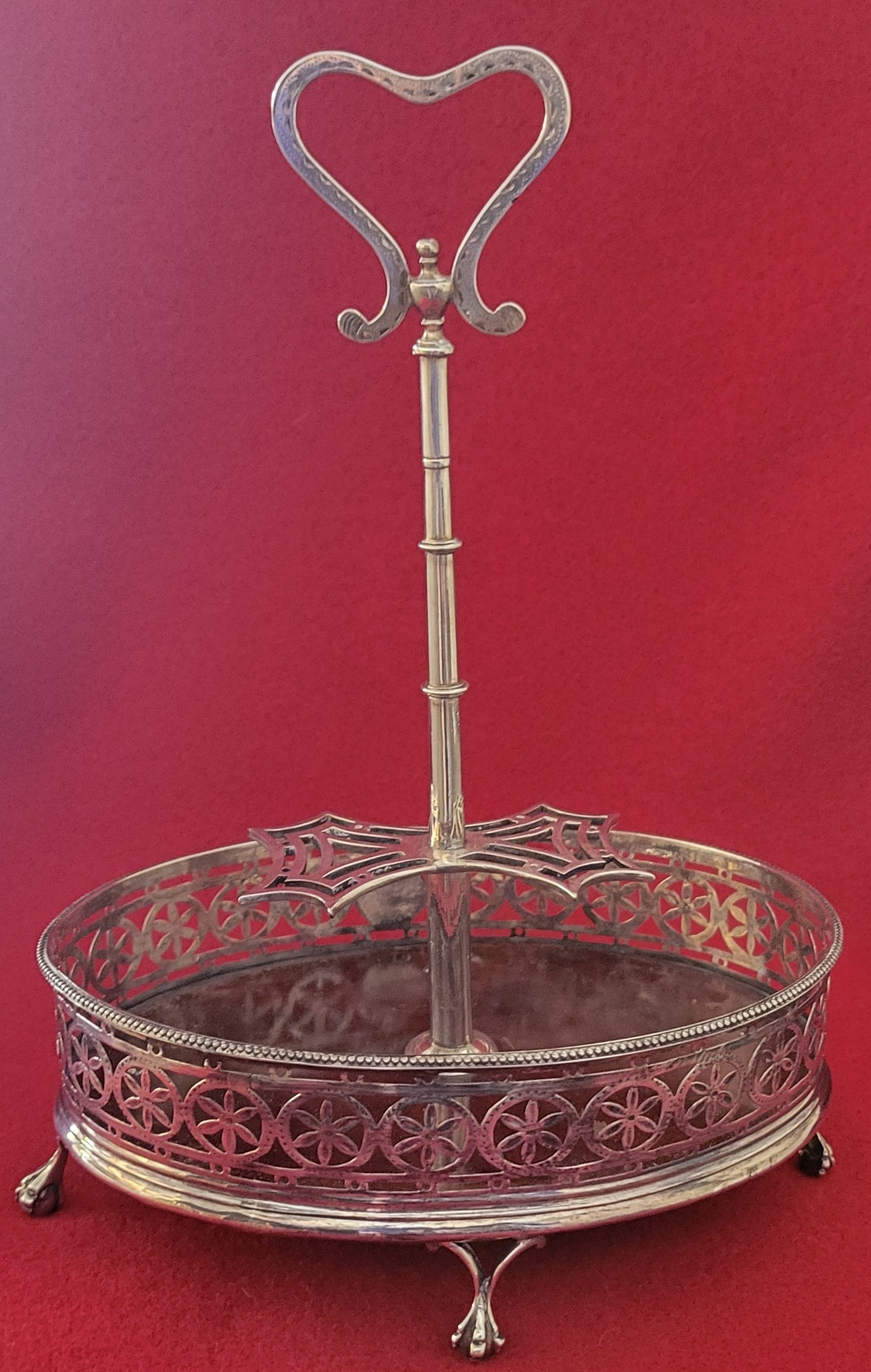
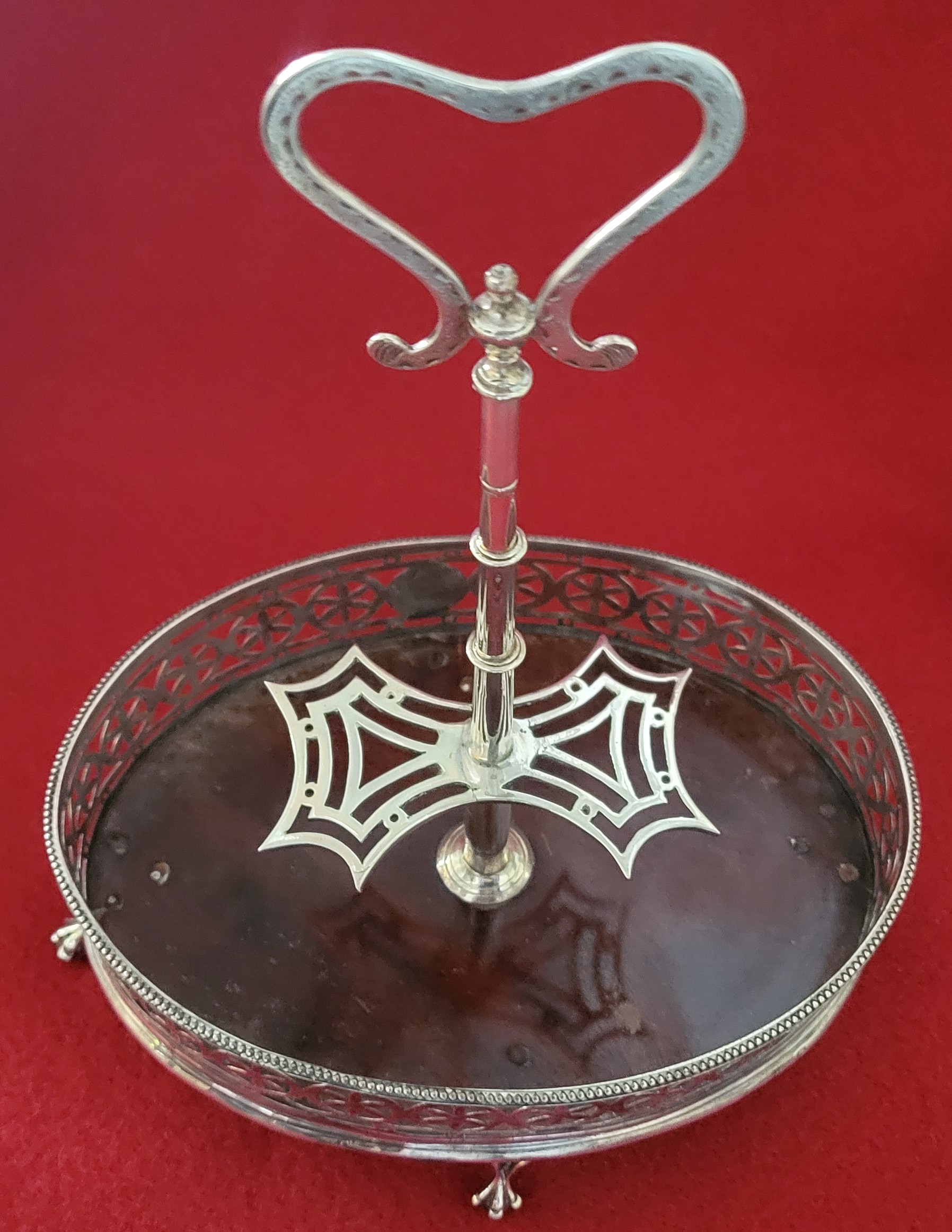
    She continued to run the business for over thirty years, bringing two sons, one daughter (Letitia Clarke), and a daughter-in-law (Ann Bateman) into it. (Eagle and Pearl, 2025)  The Bateman silversmith company specialized in household silver, such as flatware, cruet stands, and fashionable tea and coffee sets. (Slavid, 2021)  The company’s work is characterized by bright-cut engraving and piercing in the neoclassical style.

    The key to Hester’s success was adopting and integrating modern technologies, taking advantage of new cost-effective manufacturing processes to supply elegant wares to the middle class. (Slavid, 2021)  One of the new cost-effective processes they used was the “Sheffield Plate,” developed in the 1740s.  It is a fusion of copper and sterling silver to create gauge sheet silver, which can be punched and pierced by machines and is cheaper to produce than solid silver.  (Campbell, 2006)

    Hester retired in 1790 and was succeeded by her sons, who registered their hallmarks in December 1790.  The Bateman family company continued for another fifty years, closing under William Bateman in 1843. (Campbell, 2006)

    Ann Bateman

    One of the renowned Bateman silversmith family members was Ann Bateman, daughter-in-law of Hester, who was married to her son Jonathan. 

    Better look at maker’s mark by Peter and Ann Bateman

    She registered her first mark in 1791, the year her husband died. She then worked in partnership with her brother-in-law Peter and eventually her son in 1800.  Her works were popular tableware in fashionable neoclassical styles. (Bly, 2008)

    Elizabeth Godfrey

    Elizabeth was born in London, the daughter of Simon Pantin, a prominent silversmith.  She was believed to have been trained in her father’s workshop.  She married two silversmiths; her first husband was Abraham Buteux, a French goldsmith.

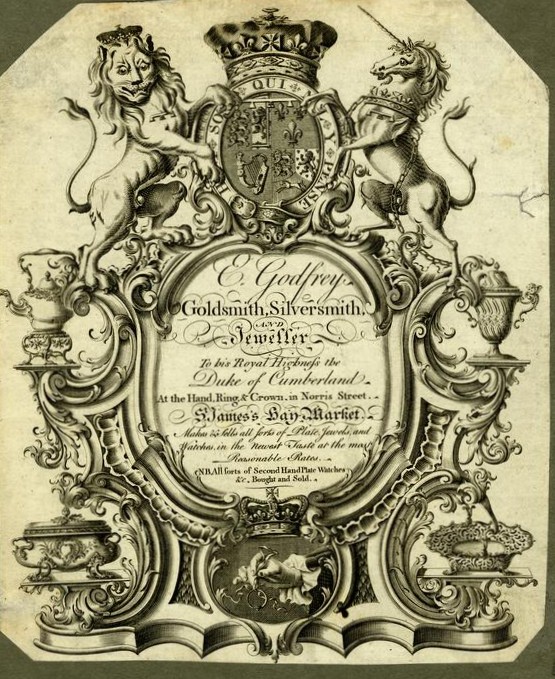
    Abraham died in 1731, and she registered her first mark as Elizabeth Buteux for her shop in Norris Street.  She continued her first husband’s business until her marriage to Benjamin Godfrey in 1732.  Upon Benjamin’s death in 1741, she registered a second mark as Elizabeth Godfrey. (Arts, 2025)  She is described on her trade card as “Goldsmith, Silversmith, Jeweller, [who] makes and sells all sorts of plates, jewels, and watches, in the newest taste at the most reasonable rates.” (Mrkusic, 2014)

    After her second husband’s death, she took charge of the company and began producing silver pieces in the fashionable Rococo style.  This earned her many loyal patrons, including the Duke of Cumberland.  (Skerry, 2018)

    Elizabeth Godfrey passed away in London around 1758. (NMWA, 2025)

    Susanna Barker

    Our last silversmith is Susanna Barker.  Unfortunately, little information about her life exists, and only a few museums have her works.  Barker was classified as a small worker, which means she produced small-scale pieces of precious metals. (The Goldsmiths’ Centre, 2025)

    She worked at 29 Gutter Lane and registered her first mark on 25 June 1778, second on 12 August 1789, and third on 26 August 1778.

    Women’s work throughout history has sometimes been overshadowed, undervalued, or not recorded.  However, with these solid silver markings, the ladies cemented themselves into the history of the arts. 

    If you want to learn more about women in the arts, visit the National Museum of Women in the Arts.

    Heather Baldus

    Collections Manager


    Bibliography

    Arkell, R. (2025, January 22). Hallmarks. Retrieved from Antiques Trade Gazette: http://www.antiquestradegazette.com

    Arts, N. M. (2025, January 21). Elizabeth Godfrey. Retrieved from National Museum of Women in the Arts: https://nmwa.org

    Bly, J. (2008). Discovering Hallmarks on English Silver. London: Shire Publications.

    Campbell, G. (2006). The Gove Encyclopedia of Decorative Arts, Volume 1. Oxford: Oxford University Press.

    City Women. (2025, January 21). City Women in the 18th Century: An Outdoor Exhibition of Women Traders in Cheapside. Retrieved from City Women: https//citywomen.hist.cam.ac.uk

    Eagle and Pearl. (2025, January 21). Our Story. Retrieved from Eagle and Pearl: http://www.eagleandpearl.com

    Ford, T. K. (2018). The Silversmith in Eighteenth Century Williamsburg. Williamsburg: Colonial Williamsburg.

    Mrkusic, P. (2014, July 7). Antiques Today. Retrieved from The South African Antique, Art & Design Association: http://www.saada.co.za/antiques-today-september-2011/

    NMWA. (2025, January 22). Elizabeth Godfrey. Retrieved from National Museum of Women in the Arts: https://nmwa.org/art/artists/elizabeth-godfrey/

    Rue Pigalle. (2025, January 21). Goldsmith’s Jewelry Series Part 2: The Women of Silversmithing. Retrieved from Rue Pigalle: https://www.ruepigalle.ca/blog-posts/goldsmiths-jewelry-series-part-2-sophia-tobin

    Skerry, J. E. (2018). Beyond the working dates: reconstructing the life and career of Elizabeth Patin Buteux Godfrey. Silver Studies. The Journal of the Silver Society, 75-88.

    Slavid, S. (2021, April 16). Hester Bateman: Domestic Silver in 18th Century England. Retrieved from Bonhams Skinner: https://www.skinnerinc.com/news/blog/hester-bateman-domestic-silver-in-18th-century-england/

    The Goldsmiths’ Centre. (2025, January 22). Smallworker. Retrieved from The Goldsmiths’ Centre: http://www.goldsmiths-centre.org

  • No Nails? No Problem! The Construction of the Great Oak Pavilion

    What do you get when you have a canoe, tools, and a dream team of builders? The Great Oak Pavilion! Okay, maybe the canoe wasn’t completely necessary, but it is a very interesting part of the construction of the Great Oak Pavilion. Many visitors at Ferry Farm have questions about this building and how it came to be.  Did George Washington build it? How did it get here? And what is it all about?

    The Great Oak Pavilion

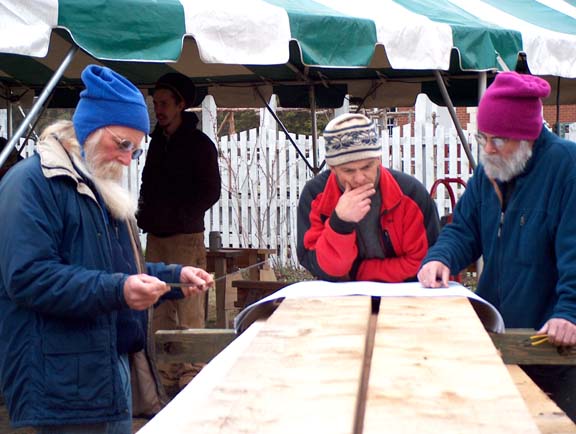
    For starters, contrary to popular belief (mostly by our younger visitors), George Washington did not build the Pavilion. Construction on the building began in 2005 through a collaborative effort of the Virginia Military Institute, Timber Framers Guild, and the George Washington Foundation, who together built a much-needed classroom space for the foundation. How, you might ask, did these forces come together? It just so happened that longtime foundation supporter Dr. Grigg Mullen was also a member of the Timber Framers Guild and a professor of Civil Engineering at VMI. Together with Matt Webster, the GWF Director of Architectural Restoration, Dr. Mullen and the team designed the Great Oak Pavilion. He even had his students help construct the building over their spring break!

    While it wasn’t built in the 18th century, many of the pavilion’s construction techniques reflect those that would have been used during that period. These techniques allow the pavilion to fit seamlessly within the landscape. As a self-proclaimed architecture nerd, I can’t just leave it at that, so let’s go over a few building techniques. Next time you visit, see if you can spot them!

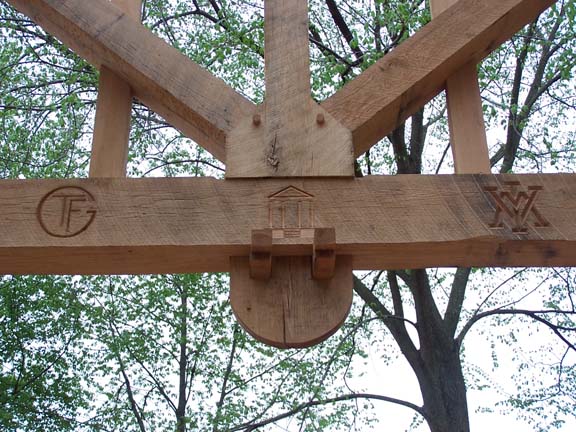
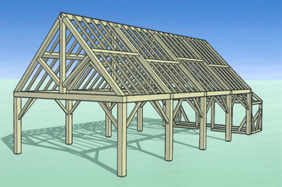
    One of the major things you may notice is that no nails or metal plates are used in constructing the building’s frame. In fact, nails are only used to attach the wooden shingles and siding, just as it would have been done in the colonial period. Instead, the timbers are connected using traditional joinery techniques, where each piece of wood is cut in a specific way so that the pieces fit snuggly together – sort of like a puzzle piece. The “puzzle pieces” can be very elaborate or simple, it all depends on the function of the joint.

    Mortise and tenon joints are commonly used joints throughout the Pavilion. They are created by cutting a slot (mortise) in one timber and then reducing the wood on another timber to create a tab (tenon). The tenon fits into the mortise to create a strong, stable compression joint.  

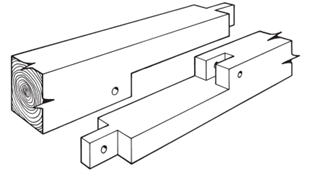
    Another type of joint, the halved and bridled scarf joint, is also used in the Pavilion. These connect timbers, increasing the length of a beam. Notches are cut into the beams in this joint, which then fit inside the overlapping timbers. Wooden pins provide extra security.

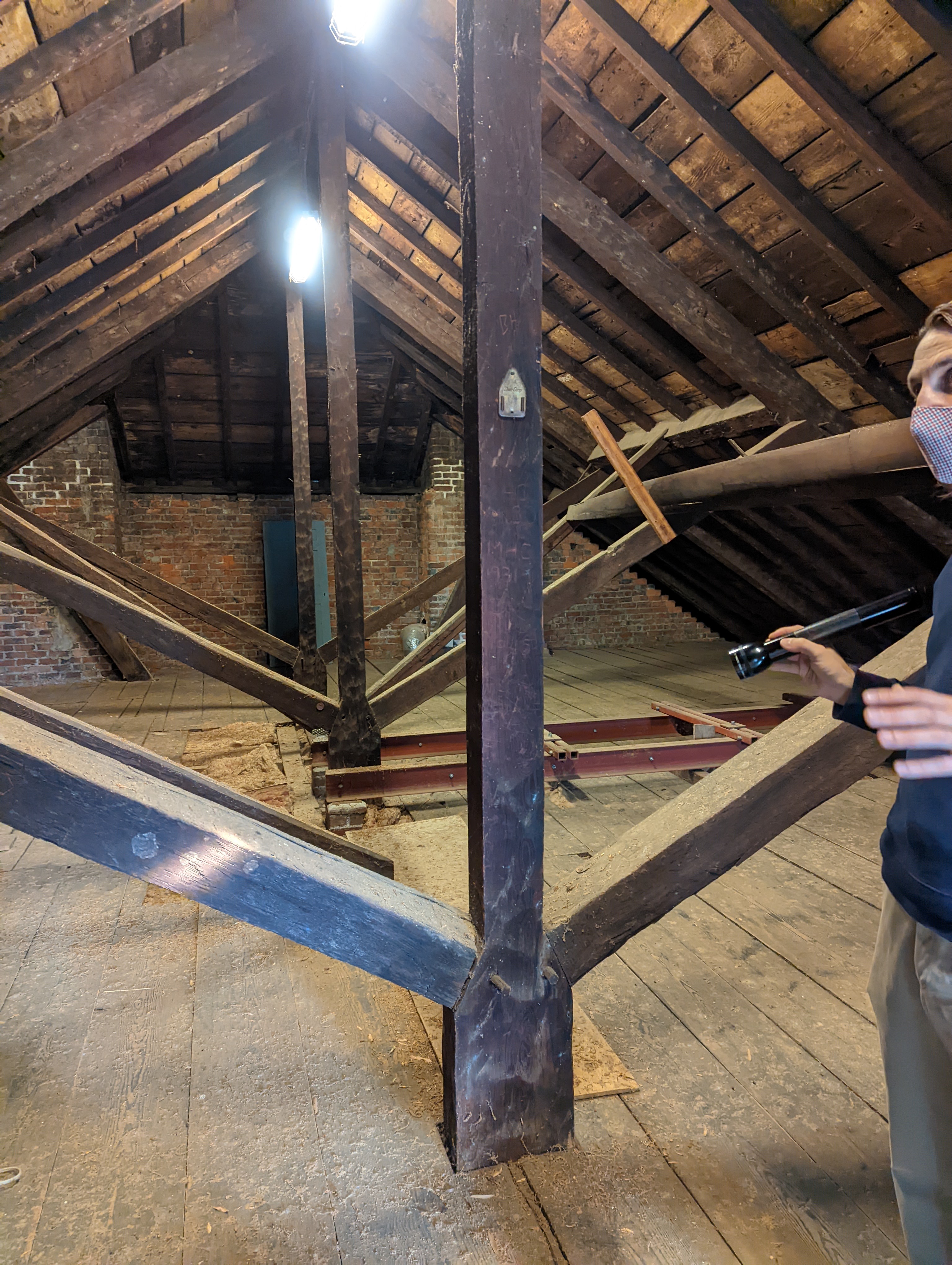
    The 18th-century techniques don’t stop there! The design of the Pavilion is modeled after Kenmore, using the same support system for the roof. The construction of the 2005 truss system, known as a king post truss, is the same system used at Kenmore when it was built in the early 1770s.

    Now, don’t think I forgot about the canoe part of the story. Remember how I mentioned the construction occurred over spring break? Well, it just so happened to be a very rainy spring. So rainy in fact, that the area where the builders were working and camping for the week flooded. That didn’t stop them, though. They just loaded up their wares in a canoe and paddled back and forth to the site. That’s dedication!

    While the Great Oak Pavilion may not have been built by George Washington, it demonstrates how the George Washington Foundation and its supporters can come together to make great things happen. In other words, teamwork does indeed make the dream work.

    Danielle Arens

    GWF Archaeologist


    References

    National Park Service (2001). Historic American Timber Joinery A Graphic Guide.

  • Cowrie Shells: Cultural and Economic Ties in the 18th-Century Atlantic World 

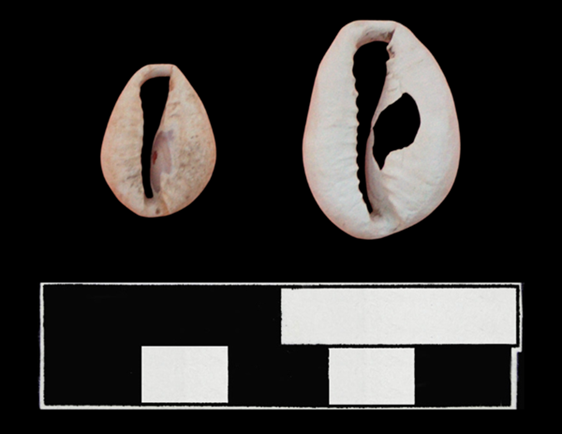
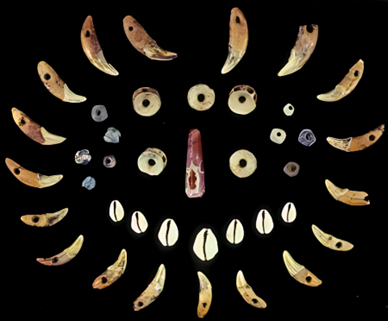
    Figure 1: Ferry Farm cowries

    Many readers will undoubtedly recognize these two artifacts (Fig. 1). Known as cowrie shells, these artifacts have become synonymous with slavery and serve as identifiers for the presence of free and enslaved Black individuals in the Americas. Still, the role of cowries in the 18th century goes far beyond that of a marker.  

    Origin 

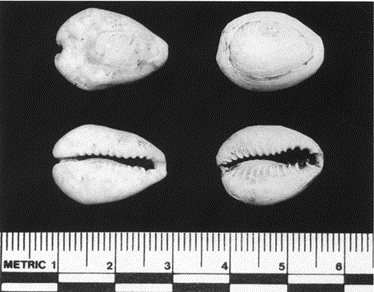
    Cowries (Cypraeidae), a taxonomic family of sea snail, live throughout the world (Fig. 2). However, the species with the most relevance to the 1700s reside in the Indo-Pacific region, particularly in the waters around the Maldives. They include Monetaria annulus (alt. Cypraea annulus, Annulus Linnaeus) and Monetaria moneta (Fig. 3). Even if your Latin proves non-existent, each species’ genus, along with M. moneta’s epithet, easily identifies the original role cowries played in human hands – money.  

    Figure 2: Monetaria monetaKwajalein Underwater
    Figure 3: M. moneta (L) and M. annulus (R) shells in their natural forms
    Barabara Heath

    Economics and Culture in West Africa 

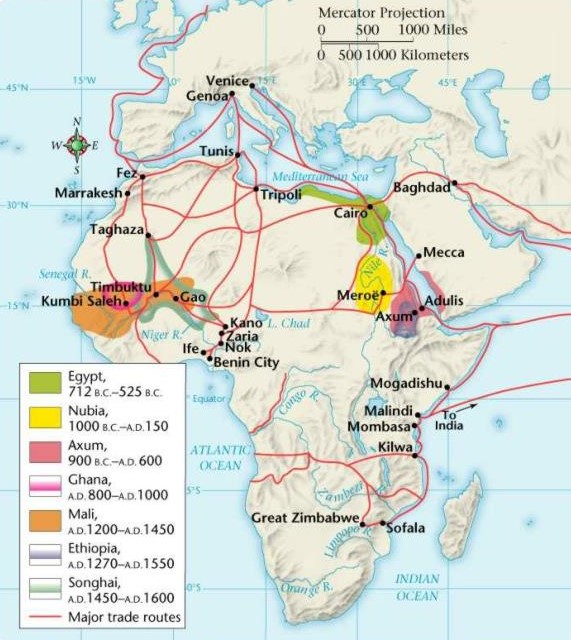
    Centuries before the 1700s, West Africa thrived as a region of independent kingdoms and tribes. With these groups engaged in trade, they required a shared currency that served as a medium of exchange and a store of value. In choosing cowries as currency in the fourteenth century, West Africa continued a long history of groups throughout the world using shell money. Through pre-existing trade routes to the Indo-Pacific, West Africans could easily import the shells via other parts of Africa and had them transported across the Sahara. As the cowries used did not reside in West Africa and proved difficult to forge, the market had built in protections against hyperinflation and counterfeits.  

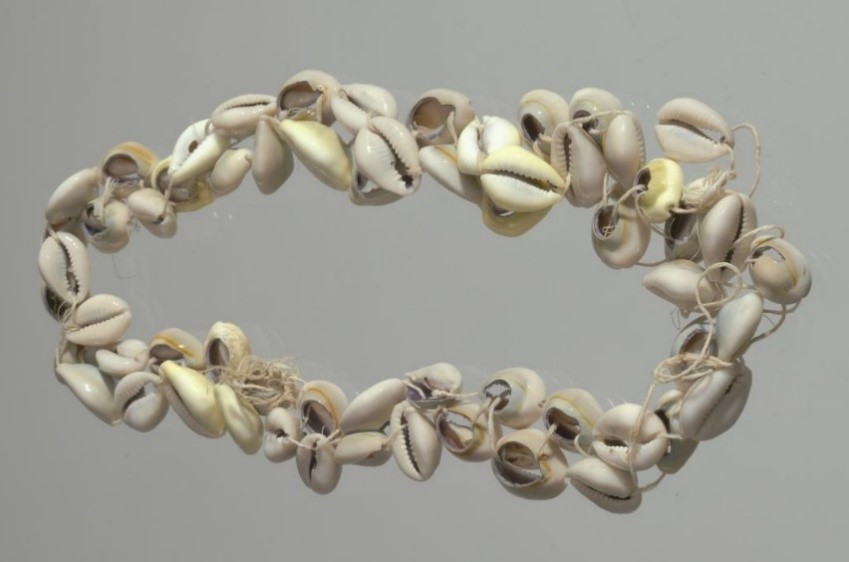
    Figure 4: Modified cowries strung togetherNational Museum of African American History & Culture

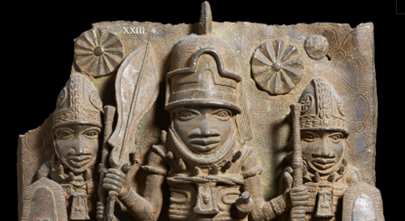
    Once in West Africa, the shells served as the basis of the region’s economies. Still, the shells took on several cultural roles. To keep cowries on hand, the shells often underwent modifications, including slicing off the rounded side of the shell or piercing them (Fig. 4). This allowed for stringing them together and weaving into hair or onto clothing. While done for practical reasons, this led cowries to enter the world of personal adornment. With this, their role expanded to symbols of status, fertility, and beauty while further appearing on ceremonial garb (Fig. 5). 

    Figure 5: Benin Bronze plaque; 16th-17th century. The warriors on either side of the central figure wear helmets decorated with cowries
    British Museum

    Atlantic Trade Routes 

    Europe and Africa had a long history of trade and exchange networks prior to the late 1400s, but the boom of global exploration led to an immediate escalation of these market connections. With European nations expanding their territories abroad and seeking to gain resources not found within their borders, they developed a need to break into the African markets while establishing permanent trade posts in the region. To achieve this, Europeans needed to supply goods that were in demand, and their minds set upon cowries.  

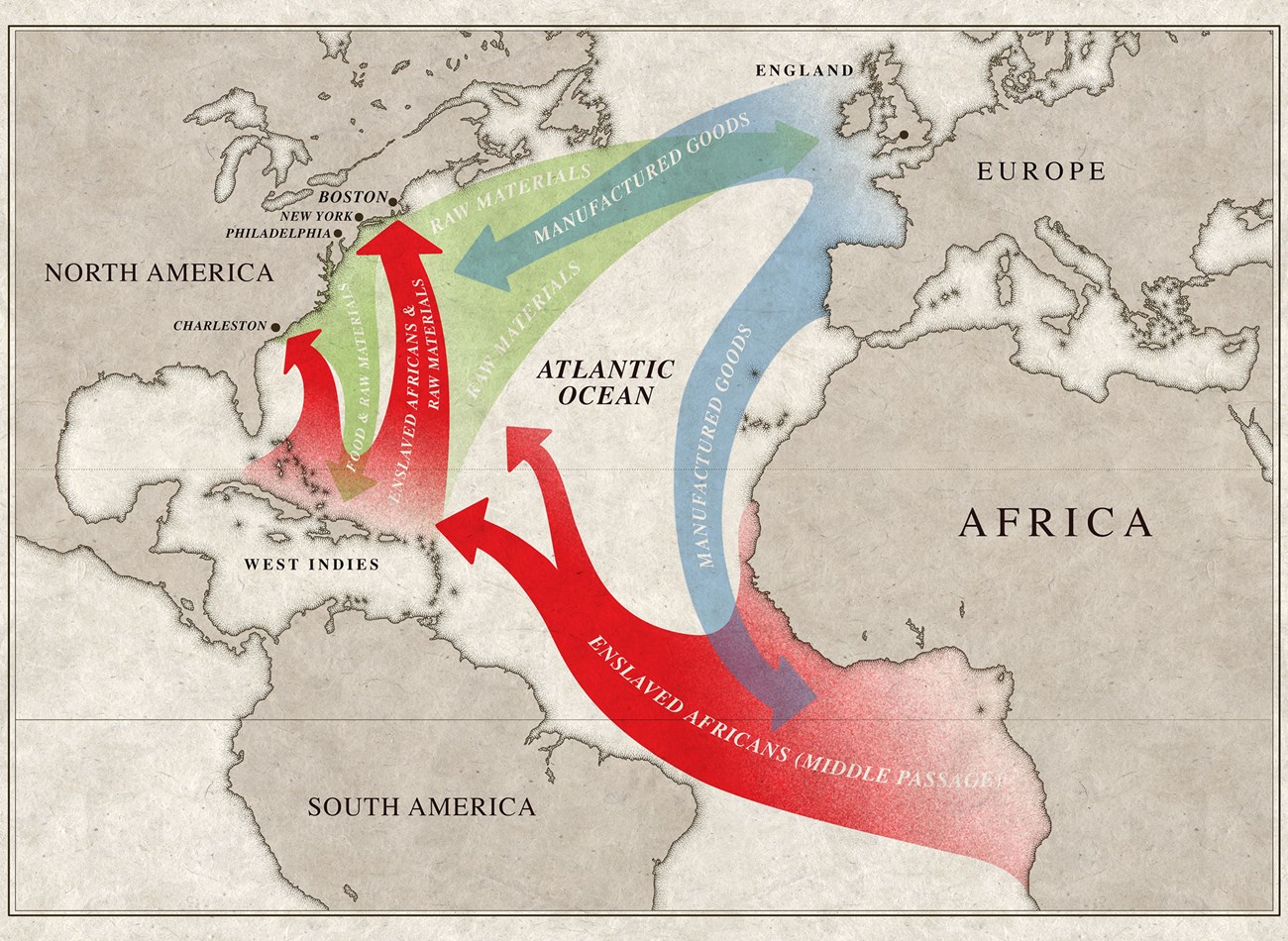
    While an item of currency and self-adornment to West Africans, cowries became a commodity in the hands of European, and later American, merchants. With cowries, merchants could navigate the local economy and barter for desired goods. Inevitably, this included kidnapped Africans. In his memoir, Olaudah Equiano (c. 1745-1797), a famed writer and abolitionist, recalled how one enslaver sold him to another for 172 “little white shells” while still in Africa. An examination of eighteenth-century shipping records reveals that cowries ranked amongst the most common goods transported to West Africa and used to trade for captives (Fig 6). For Africans who then faced the Middle Passage, they forcibly traveled aboard these same ships that in turn provided West Africa with the currency driving the economy and their enslavement — cowries.   

    Figure 6: List of goods imported to the Isle of Man via Rotterdam for trade in Africa, 1761
    Manx National Heritage

    Cowries in the Americas 

    Indo-Pacific cowries arrived in the Americas through several carriers, but ultimately all traveled on slave ships. In trading cowries to West Africa, foreign merchants supplied both types even though the market preferred M. moneta. As such, they often had leftover M. annulus which remained onboard as cargo and ballast when the ships continued their trans-Atlantic journeys. Once in the Americas, some captains elected to dump or sell off the remaining cowries rather than transport them back across the Atlantic. Cowries additionally arrived in the Americas on the bodies of kidnapped Africans. While common practice involved stripping captives in Africa, primary accounts report individuals retained beads and shells in their hair and as necklaces. Enslavers further distributed beads, and likely shells, as pacifiers during the Middle Passage. 

    Once in the Americas, cowries largely remained within Black communities though they did face geographical restrictions. For Virginia, archaeological distribution of the shells, mainly M. annulus, places them within the Tidewater region. Higher counts of shells appear in urban areas (Yorktown = 252) while plantations typically only have a few. Although Virginia’s current archaeological cowrie count falls above 353, this remains too few to support the traditional role as currency. Instead, the shells continued in roles of adornment and ritual with added symbolism of cultural loss, memory, and survival. Outside random finds in areas associated with enslavement, cowries recovered in the Americas have derived from burials, spirit caches, and sub-floor pits (Fig. 7). 

    Figure 7: Necklace recovered from an enslaved burial ground at Newton Plantation, BarbadosJerome Handler

    At Ferry Farm 

    Over the course of our twenty-plus year excavation, two cowries have appeared at Ferry Farm. Found in contexts located around the Washington House, including one in a root cellar, our shells represent M. annulus and have undergone modification to allow for stringing or weaving (Fig. 8). As with findings in previous studies, we believe these shells took on cultural roles through self-adornment. Despite not knowing the identity of the shells’ owner(s), the cowries provide enough information to form an interpretation of who they belonged to and how they arrived at Ferry Farm. 

    Figure 8: Ferry Farm cowries with modifications visible

    As their contexts of origin line up with the Washington House, the enslaved individuals who left them behind likely lived and worked close to the Washington family. This places them within the working realm of the house or the nearby work yard. For accommodation, the owner(s) may have occupied the Quarter adjacent to the Washington house or lived in one of the work yard’s support buildings. 

    Regarding the arrival of cowries on the plantation, this likely happened through the movement and exchange of people and goods. To provide the labor required to meet their goals, enslavers moved those they enslaved between different plantations as needed and expanded their workforce through the enslavement of more people or hiring of persons enslaved by others. This could account for the arrival of cowries at Ferry Farm. Alternatively, Ferry Farm’s proximity to the (port) city of Fredericksburg meant the enslaved community had access to a regional economy and trans-Atlantic vessels. Either network may have transported cowries to the city, but it additionally meant that Fredericksburg served as a meeting and trade point for those enslaved in the region. 

    Legacy 

    Cowries have a long and nuanced history in the Atlantic World. Beginning as a unit of currency and cultural symbol, cowries fell prey to the demands of the market, taking on a new role in the hands of foreign merchants. What once served to strengthen economies and nations suddenly worked to strip away the very people who inhabited West Africa. For those who endured enslavement, the cowries that accompanied them became symbols of a stolen home, a continuation of culture, and a determination to survive. Today, cowries remain important items in African and African American cultures by symbolizing their history as currency, continuing in self-adornment and ritual roles, and appearing prominently in works of art (Fig. 9-11).  

    Figure 9-11: Left: The Central Bank of West African States (BCEAO) tower in Cotonou, Benin, features cowrie shells on its facade Creative Commons Attribution-Share Alike 4.0 International; ReThink Quarterly Center: 20-cedi coin from Ghana. Cedi, the Akan word for cowrie, is Ghana’s unit of currency Michael C. Carlos Museum
    Right: Beyoncé donning a cowrie headdress by Ivorian designer Lafalaise Dion Design Indaba

    Emma Schlauder

    Research Archaeologist


    Bibliography 

    Alpern, Stanley B.                                                                                                                                                  1995     What Africans Got for Their Slaves: A Master List of European Trade Goods. History in Africa 22: 5-43

    Equiano, Olaudah 1789 The Interesting Narrative of the Life of Olaudah Equiano, Or Gustavus Vassa, The African. Written By Himself. London, UK

    Handler, Jerome S. 2006 On the Transportation of Material Goods by Enslaved Africans During the Middle Passage: Preliminary findings from Documentary Sources. African Diaspora Archaeology Newsletter 9 (4): 1-22 (Article 16).

    2007 From Cambay in India to Barbados in the Caribbean: Two Unique Beads from a Plantation Slave Cemetery. African Diaspora Archaeology Newsletter 10(1): 1-10 (Article 1)

    Heath, Barbara J. 2016 Cowrie Shells, Global Trade, and Local Exchange: Piecing Together the Evidence for Colonial Virginia. Historical Archaeology 50 (2): 17-46.

    National Museum of African American History & Culture n.d. Cowrie Shells and Trade Power. National Museum of African American History & Culture, Smithsonian, Washington D.C. <https://nmaahc.si.edu/cowrie-shells-and-trade-power>. Accessed 3 June 2024.

    Ogundiran, Akinwumi 2002 Of Small Things Remembered: Beads, Cowries, and Cultural Translations of the Atlantic Experience in Yorubaland. The International Journal of African Historical Studies 35 (2/3): 427-457.

    Pallaver, Karin 2023 Cowries, the currency that powered West Africa. ReThink Quarterly 7 <https://rethinkq.adp.com/artifact-cowries-west-africa/>. Accessed 3 June 2024.

    Pearce, Laurie E. 1992 The Cowrie Shell in Virginia: A Critical Evaluation of Potential Archaeological Significance. Master’s thesis, Department of Anthropology, College of William & Mary. University Microfilms International, Ann Arbor, MI.

    Radburn, Nicholas J. 2009 William Davenport, the Slave Trade, and Merchant Enterprise in Eighteenth-Century Liverpool. Master’s thesis, Department of History, Victoria University of Wellington, Wellington, New Zealand.

    Samford, Patricia 1994 Searching for West African Cultural Meanings in the Archaeological Record. African Diaspora Newsletter 1 (3): 1-3 (Article 2).
  • Where is Whieldon? Survey Says: Probably Not on Your Table

    Archaeologists tend to have strong feelings about ceramics. Ceramics can play a major role in interpreting a site, as their materials often reflect their function. This can be helpful when determining how a site was used. For instance, finding an abundance of redwares and stonewares could indicate a primarily utilitarian site like what would have been used in our Cellar House whereas porcelain and refined earthenwares may reflect a more domestic space.  So, it really isn’t surprising that we feel some type of way about these artifacts.

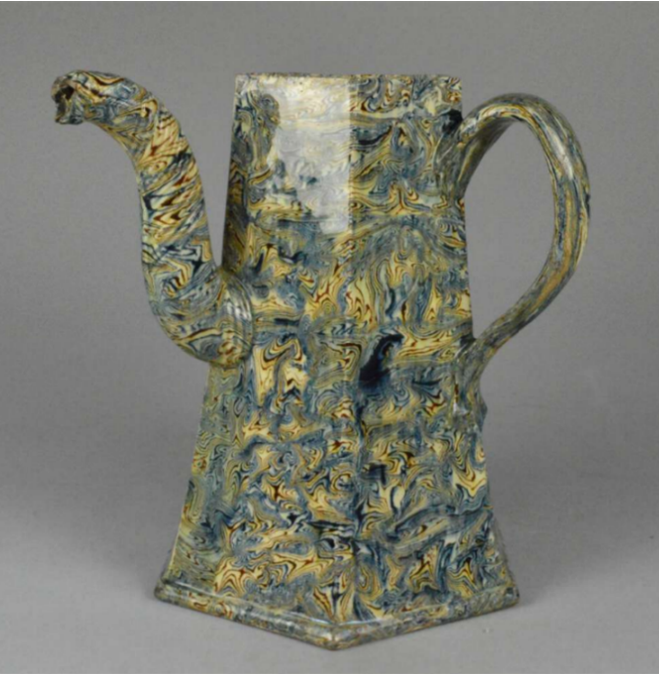
    But don’t let that fool you. Archaeologists have feelings about ceramics based solely on their appearance as well. It has come to my attention that Whieldon Ware just might hold the title as the most polarizing ceramic type as of late. These feelings were made very apparent during our recent acquisition of some Whieldon Ware pieces. Most either love or hate it; rarely is there an in-between.  Before we get into the ceramic and its distinct look that conjures images of either vomit or a work of art (depending on whom you ask), let’s go over a little background on its creator, Thomas Whieldon.

    Thomas Whieldon was an influential English potter producing examples of early creamware beginning in the mid-18th century. He gained popularity for his innovative shapes and decoration, which can be seen on various figurines, dishes, and other vessels. Whieldon is also well known for his partnership with the MVP of the ceramics world, Josiah Wedgwood, Mr. Creamware himself. Together, they developed advances in the realm of refined earthenware, like the perfecting of the green glaze as seen on the pineappleware we have found at Ferry Farm (Wedgwood & Ormsbee, 1947).

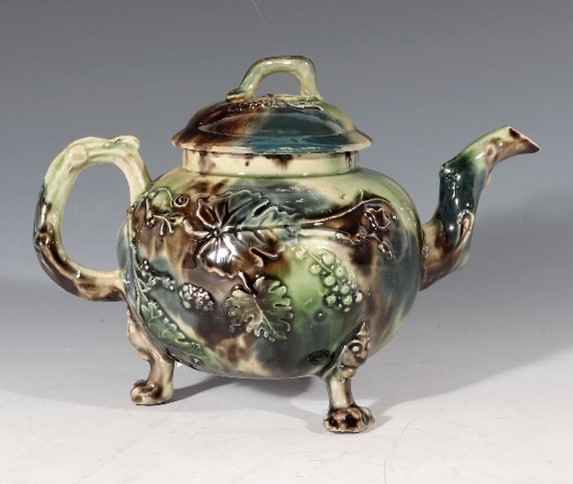
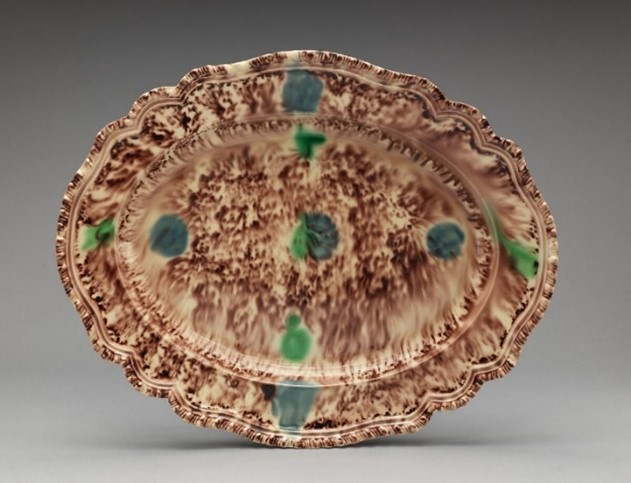
    With that said, what we commonly think of when referring to Whieldon Ware is Whieldon’s tortoiseshell or clouded wares. These were created by sponging metal oxides on cream-colored earthenware and then adding a clear lead glaze. The mixing of the metal oxides with the liquid glaze caused the colors to blend and streak, creating splotches of green, yellow, purple, blue, and brown, depending on the types of metal oxides used (Gallagher, 2015). This resulted in a clouded or tortoiseshell decoration. Due to the nature of the technique, no two pieces look exactly the same. For Whieldon lovers like myself, the uniqueness of each piece gives it its charm.

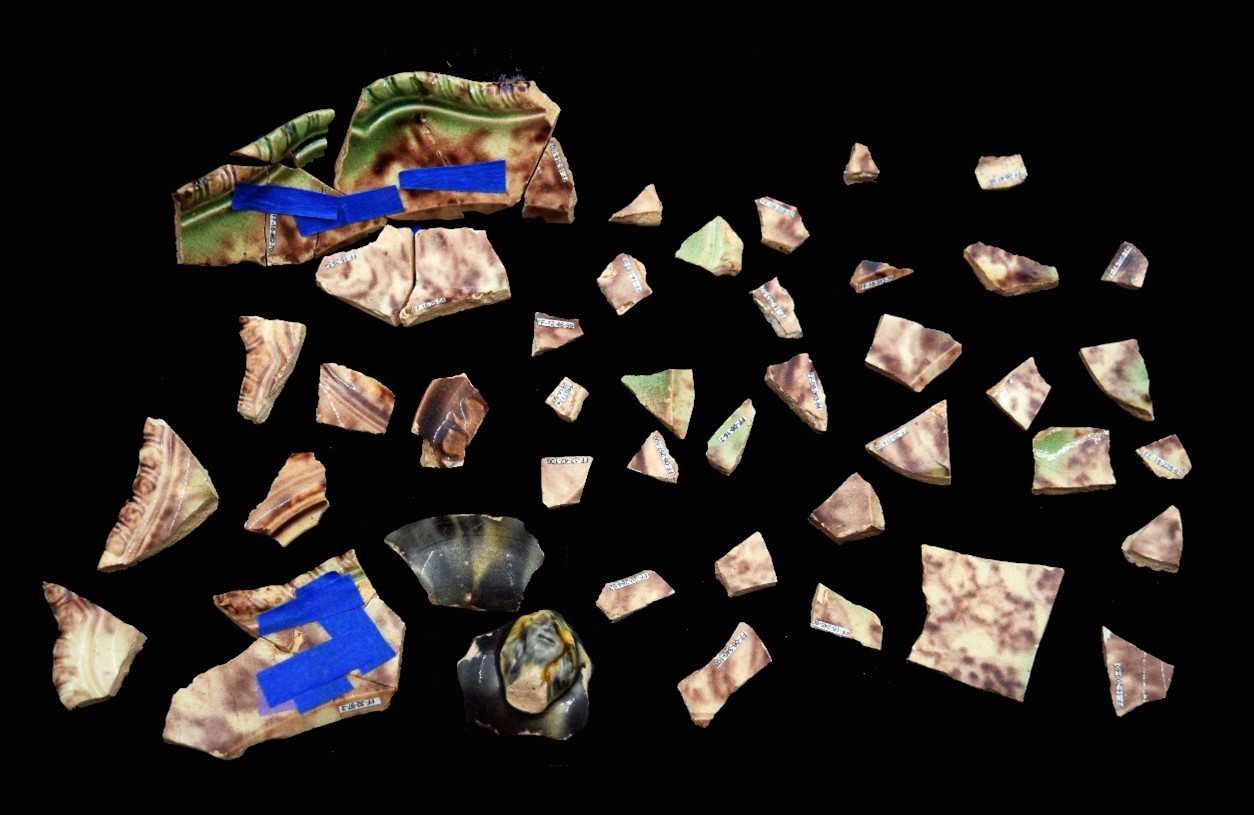
    Now that we know more about Whieldon Ware and how some of us feel about it today, let’s talk about how Mary Washington may have felt about it. I firmly believe that she was not team Vomit Ware and instead found the decoration quite desirable. Our excavations have found evidence of at least four Whieldon Ware plates, a teapot, teacup, and other medium-sized holloware vessels at Ferry Farm. Considering the short-lived popularity of the type, lasting only from 1740-1775, we can be quite certain that it was Mary who was buying these items.

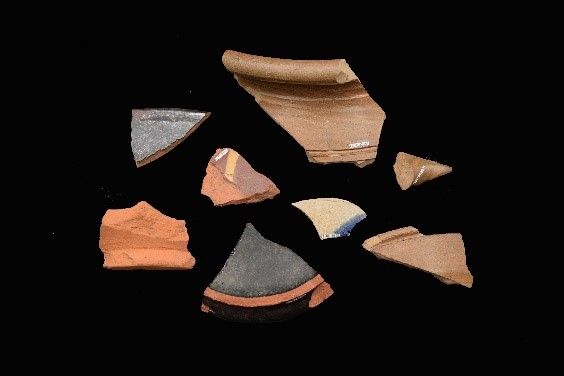
    Some Whieldon Ware vessel mends and sherds excavated at Ferry Farm

    Toward the end of the 1770’s, Whieldon Ware quickly went out of style and was replaced by Wedgwood’s new, improved creamware and its more subtle decoration. While it may have gone out of style, potters continued to replicate the technique for many years, which makes it difficult to attribute all examples of the type to Whieldon himself. After 1780, he retired from the business, demolished his factory, built an ornamental garden in its place, and spent the rest of his years as a sheriff (Hildyard, 2005; The London Gazette, 1785).

    So, there you have it, the very brief story of Whieldon and his wares.

     While Mary Washington and a couple of us in the lab are Team Whieldon all day, every day (or at least the days concerning Whieldon), the majority are a hard pass.  Where do you stand? Are you Team Whieldon or team Whieldout?

    Danielle Arens

    GWF Archaeologist


    References

    Gallagher, B. (2015). British Ceramics 1675-1825: The Mint Museum. Charlotte: The Mint Museum.

    Hildyard, R. (2005). English Pottery 1620-1840. London: V&A Publications.

    The London Gazette. (1785, November 12). The London Gazette(12699), p. 522.

    Wedgwood, J., & Ormsbee, T. H. (1947). Staffordshire Pottery. New York: Robert M. McBride & Company.

    Images

    https://www.britishmuseum.org/collection/object/H_1938-0314-47-CR – figurine

    https://www.britishmuseum.org/collection/object/H_1923-0122-13-CR – coffee pot

    https://www.metmuseum.org/art/collection/search/237853?who=Whieldon%2c+Thomas%2c+factory%24Thomas+Whieldon+factory%2c+Stoke-on-Trent%2c+Fenton+Vivian%2c+Staffordshire&ao=on&ft=*&offset=0&rpp=20&pos=3  – platter

    https://vandekar.com/inventory/Ceramics/British%20Pottery/Whieldon/works/26486 – tea pot


  • Stop Collaborate and Listen TD is Back with a Brand New Edition

    A quick refresher from part one of the TD marked pipe saga – Clay tobacco pipes with the mark TD are a ubiquitous item at historical archaeology sites dating from the mid-18th through the 20th century. While at one point the mark represented a specific maker, it later became a mark synonymous with clay tobacco pipes themselves. So, it’s not surprising that archaeologists and historians have been looking to identify the origin of the mark for years. These efforts led to the naming of Thomas Dormer as the maker most likely to have begun the rise of the TD mark, though this identification was less than certain (Walker, 1966).

    Now that we are all caught up, let’s pick up the quest once again.

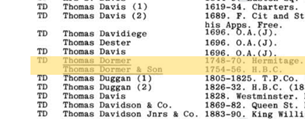
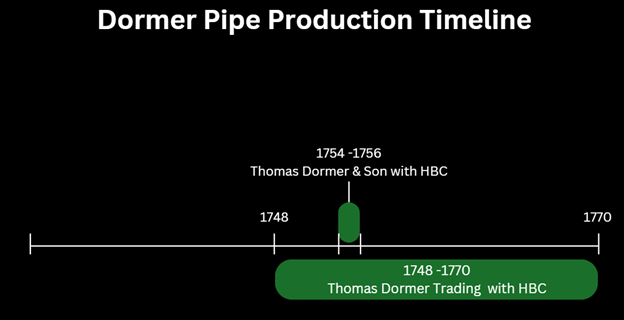
    Adrian Oswald’s (1975) index of pipe makers lists Thomas Dormer as one of the only London-based pipe makers with the initials TD trading with the Hudson’s Bay Company (HBC) in the years 1748-1770. HBC records also mention that Dormer went into business with his son for a brief time from 1754-1756. Oswald built on this by looking at the insurance policies of pipe makers of the time, which shows that the value of Thomas Dormer’s estate was nearly five times that of other pipe makers (Alexander, 1978). In the 18th century, pipe makers and the pipe making industry were often relegated to the lower class and the poorer parts of town (Walker, 1981). Dormer’s large estate implies he stood out at the time.

    So, we know that Thomas Dormer produced and imported his pipes into North America around the time TD marked pipes started popping up at sites, and that he was doing well for himself. We can call it a day and say Thomas Dormer was the original TD, right? While that does sound pretty enticing, there still needs to be more evidence supporting Dormer’s claim to the TD mark. At the time of the previous research there was very little historical documentation of Dormer and his life available, which left some questions unanswered: Why did Dormer stop exporting pipes in 1770? What is the reason behind the brief mention of this son in the mid 1750’s? And why did these pipes continue to be produced beyond 1770 with the TD mark, if not by Dormer himself? These questions made it difficult to confirm that Thomas Dormer was the TD.

    Previous timeline of Dormer pipe production

    This opens the door for my research as I attempt to fill in the blanks surrounding Dormer and his life. Since a trip to London to begin my research was off the table, much of my investigation was done through online archival research. Yay for digitization efforts and increased access to information!

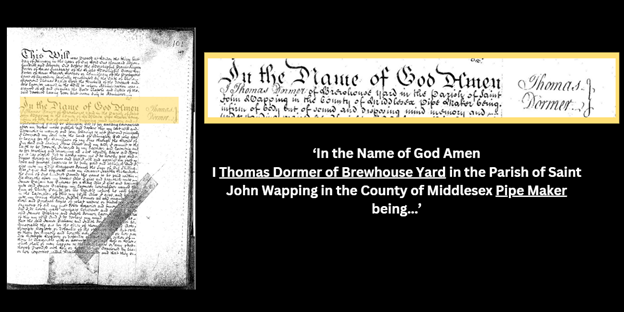
    One of the first items identified was Thomas Dormer’s will dated January 1771 (National Archives). It gives his occupation as a pipe maker and his location at Brewhouse Yard, confirming this to be the correct Thomas Dormer. Finding this document provided information that would further the investigation including a probable death date and the names of family members.

    Thomas Dormer’s will 1771 (National Archives)

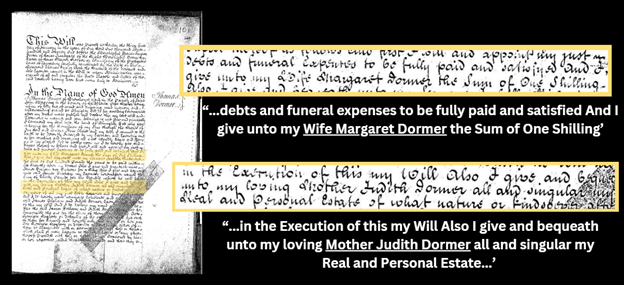
    Speaking of family members, Thomas Dormer chose to leave the entirety of his vast estate to his “loving mother Judith.” On the other hand, he left his wife Margaret one single shilling. Hold up, just one shilling? This led me down a mini rabbit hole where I found that Thomas and Margaret had been married for 11 years. Indeed, long enough for her to have a fair share of the estate. Additionally, it wasn’t uncommon for wives to take over their husband’s pipe making business after their death, yet Dormer left things to his mother instead. Ouch!

    Dormer’s division of his estate (National Archives)

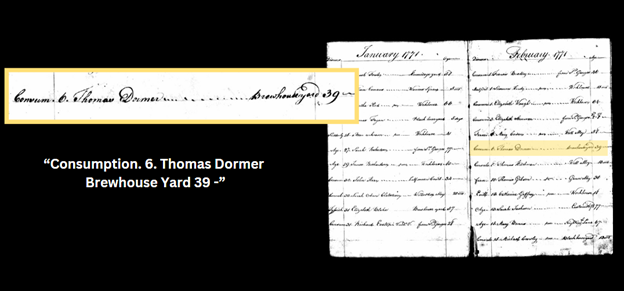
    Anyway, back to the investigation. Using 1771 as a probable death date I was able to find a Burial Notice dated February 1771 stating Thomas Dormer died at the age of 39 due to consumption, or tuberculosis as we know it today (London Metropolitan Archives [LMA]). An age at death gave me the ability to estimate his birthday to sometime around 1731 or 1732 and identified a Christening Record for Dormer dated 1731(LMA). It lists his mother as Judith Dormer which fits with previous records, and it also lists his father who is, wait for it, Thomas Dormer, a pipe maker. This uncovers the fact that there were two Thomas Dormers producing pipes in 18th century London, father and son.

    Dormer’s Burial Notice 1771 (London Metropolitan Archives)
    Dormer’s Christening Record 1731 (London Metropolitan Archives)

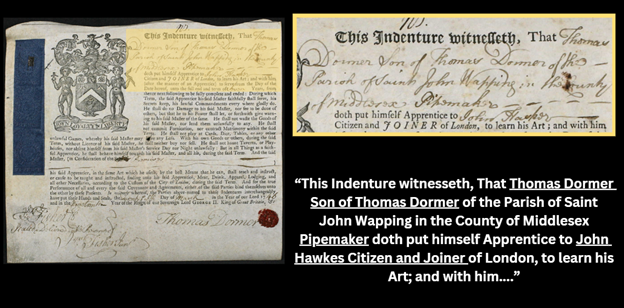
    After finding that fun fact I switched gears to see if I could find information about Thomas Dormer Sr. Given the birthdate of Thomas Jr., I figured Thomas Sr. was probably born some time in the early 1700s. Using that date, I identified his Burial Notice dated December 1756. It listed Thomas Dormer Sr. dying at the age of 56 due to asthma (LMA). Additionally, an apprenticeship indenture for Thomas Jr. was located (LMA). Dated 1746, it lists his seven-year apprenticeship under John Hawkes. Now, an apprenticeship in itself isn’t too exciting, but this was an apprenticeship for a joiner, not a pipe maker. Considering Jr. did go on to be a pipe maker, and a popular one at that, makes his previous foray into joinery an unexpected plot twist.

    Dormer Sr.’s Burial Notice 1756 (London Metropolitan Archives)
    Dormer Jr.’s Indenture Record 1746 (London Metropolitan Archives)

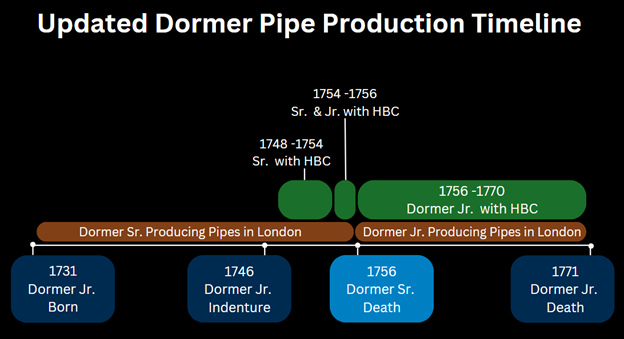
    Let’s put all of this information together. Cue the timeline! The newly discovered documentary evidence now allows me to create an updated chronology of the Dormer pipe production. Thomas Dormer Sr. began producing pipes in the London area some time prior to 1731. By 1748 Dormer Sr. was doing well enough in the business to begin exporting pipes into North America. Indenture records suggest that Dormer Jr. was not always intending to take over the business, but perhaps his father’s health prompted this, or the incoming wealth from overseas changed his mind. Nonetheless, sometime in the year 1754, or the years leading up to it, Thomas Dormer Jr. came into the family business. This partnership was short lived due to Thomas Dormer Sr.’s death in 1756, explaining the brief mention of their partnership in the HBC records. Following Dormer Sr.’s death, his son Thomas Dormer Jr., continued to produce and export pipes to North America until his death in 1771.  

    Updated Dormer pipe production timeline with new information

    This timeline helps put all the previous information into context and more fully supports Thomas Dormer Sr. and then Jr. as the originators of the TD mark.

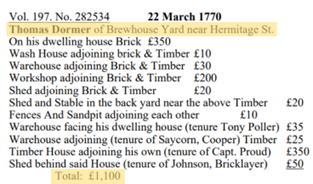
    But wait there’s more! I also located Judith Dormer’s (Thomas Jr.’s mom) will dated 1782 (LMA). In her will she mentions her properties and its association with Tidy & Evans pipe makers (LMA). During my look into the HBC records I found that Tidy & Evans take over the London pipe export a few years after Dormer Jr.’s death. Now remember, Jr gave her all his estate which included his warehouse and workshop (LMA). Perhaps Tidy & Evans occupied his workshop and continued making TD marked pipes using Dormer’s molds after his death. Using the molds of other pipe makers was not unheard of at the time (Walker, 1981). But why would they want to make pipes with a mark other than their own?

    Mention of Tidy & Evans in HBC records and Judith’s will

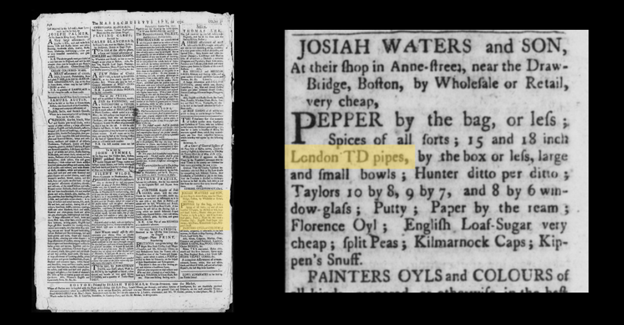
    Well, a search on the Library of Congress’s Chronicling America located a 1771 Massachusetts Spy advertisement that specifically lists London TD pipes (LOC). Not only does this solidify that TD pipes were based out of London, it also supports that the popularization of these pipes occurred during the Dormers’ lifetimes. For these pipes to be advertised by name it can be assumed that their popularity had already been established by this point. Whether this popularity had to do with the quality or the quantity of Dormer’s pipes being imported into North America remains unknown. The resulting name recognition may have caused a continued demand for these pipes, leading Tidy & Evans and others to continue producing them.

    1771 Massachusetts Spy article (LOC)

    These new findings present a solid case for Thomas Dormer being the originator of the TD mark. We can now see that TD pipes were based out of London and popularized during the period when Dormer produced and exported pipes. After 1771 the TD mark stopped representing pipes made by Dormer, and the mark was then used by other makers, perhaps Tidy & Evans, representing tobacco clay pipes themselves rather than a specific maker.

    Research such as this illustrates the importance of revisiting past theories. Whether it be trying to answer questions about a mark representing nearly 300 years of tobacco smoking culture, or looking to find interesting insight into the life of the pipe maker that created it, there is more information out there, we just need to keep looking.

    So, what do you think? Did I solve the mystery of the man behind the mark?

    Danielle Arens

    GWF Archaeologist


    References

    Alexander, L. T. (1978) ‘Clay Tobacco Smoking Pipes from the Caleb Pusey House, The Archaeological Society of Delaware9, 35pp.

    London Metropolitan Archives; London, England; London Church of England Parish Registers; Reference Number: P69/Gis/A/002/Ms06419/016

    London Metropolitan Archives; London, England; London Church of England Parish Registers; Reference Number: P93/JN2/025

    London Metropolitan Archives; London, England; London Church of England Parish Registers; Reference Number: P93/JN2/026

    London Metropolitan Archives; London, England; London Church of England Parish Registers; Reference Number: P93/JN2/026

    London Metropolitan Archive; Reference Number: COL/CHD/FR/02/0778-0-785

    Manitoba Archives. Merchandise exported to HBC posts [microfilm]. H1-16-2 ( A.25/2 )

    National Archives, Kew, Will of Thomas Dormer, Pipe Maker of Saint John Wapping , Middlesex, PROB 11/963/352

    Oswald, A. (1975) Clay Pipes for the Archaeologist, British Archaeological Reports, British Series 14, Oxford, 207pp

    Walker, I. (1966, June). TD Pipes – A Preliminary Study. Quarterly Bulletin Archeological Society of Virginia, pp. 86-102.

    Walker, S. (1981). The Clay Pipe Industry of the Parish of St Olave’s Southwark, in P Davey, The Archaeology of the Clay Tobacco Pipe 6, Pipes and Kilns in the London Region, B97, 173–82

    Woollard, P, (2001) Some Clay Tobacco Pipemakers with Fire Insurance Policies in the Sun Assurance Company 1710-1844, The Society for Clay Pipe Research, 62

  • You Down with Old TD? Yeah, You Know Me!  

     TD Marked Tobacco Pipes That Is! 

    Clay tobacco pipes are a hallmark of historical archaeology. Grandma smoked, the enslaved smoked, the elite smoked, children smoked, just about everyone smoked. Smoking was one of America’s favorite pastimes, and there are plenty of pipes left in the archaeological record to prove it. Tobacco pipes were not only a vessel for a leisurely activity, they could also be a way to display one’s identity or beliefs.  

    Figure 1: A Smoking Club (NYPL)

    Because of this, the motifs and marks on tobacco pipes can tell us a lot about the people who used them.  

    Tobacco pipes can also be valuable tools for dating a site by using pipe bore diameters, typologies, and maker’s marks. This last one helps set the stage for our question of the hour.  

    Some makers would mark their pipes to indicate a product as theirs.  These marks can be found on different parts of a pipe, such as the bowl, heel, or stem. Finding a pipe with a maker’s mark can be very exciting as it allows a pipe to be attributed to a specific pipe maker and, thus, a time period. But that is not always the case. One of the more common maker’s marks in many archaeological sites is the mark “TD.” Remember the two we found during last summer’s dig?  

     So, you’re probably thinking, what’s the question again? Just go look up a pipe maker with the initials TD, and you will have your maker. Well, unfortunately, it’s not always that easy. 

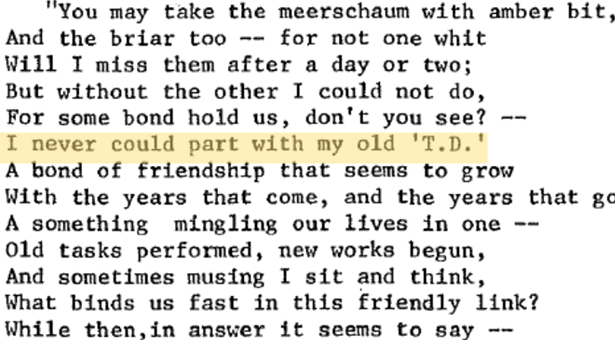
    There are multiple pipe makers with those initials, and the pipes with variations of the TD mark have been found at sites with occupation dates suggesting the mark was being produced from the mid-18th century all the way into the 20th century. At some point, the mark stopped representing a single maker and instead became a symbol used on pipes throughout the years, reflecting clay tobacco pipes themselves. Think of it as the Kleenex or Q-tip of its time. TD became synonymous with clay tobacco pipes. This can be seen in written records like a catalog from 1892 that touts their rendition of “the Celebrated “T.D.” pipe” (Zorn). An early 20th-century song referencing “the Old TD” also supports the lasting influence of the mark (Cooper, 1907, as cited by Walker, 1966).  

    Since there is no solid end date to help frame who the possible maker could be, archaeologists and historians have focused on looking at beginning dates to help find the original maker of the TD pipes, settling on a date in the middle of the 18th century. Archaeologists Adrian Oswald and Iain Walker are often cited as laying the foundations of the current TD lore. The combination of their findings identifies 18th-century London-based pipemaker Thomas Dormer as the most likely originator of the TD mark (Walker, 1966). With that said, Walker (1966) states that more information will have to be found to definitively give Dormer credit for originating the mark. 
    So, that brings us to the start of my research and a revisiting of the foundation of this theory, which was laid out as early as the 1930s.  Who is Thomas Dormer, and is he the original TD? Why were TD pipes so popular that they were copied and made for centuries? And can we find new information to crack the case of the elusive TD mark? 

    The first step of the investigation is reviewing the literature and identifying current thoughts on TD pipes and their maker. One of the earliest deep dives into TD pipe origins can be found in the article “A Theory Regarding TD pipes” in the November 1937 printing of Antiques magazine. In this article, Alfred Hopkins expresses the mystery surrounding the mark and suggests its possible meaning. At the time, Hopkins (1937) and his contemporaries were unable to find potential pipe makers with the initials TD that would indicate the mark was referring to a maker. Instead, he states that it was a trademark of sorts to identify a quality product (Hopkins, 1937). He also mentions that TD may represent the beginning of the Christian hymn Te Deum Laudamus (Hopkins, 1937). Now remember, folks, this was written in the 1930s, and at the time, they didn’t have easy access to information. While more information has since been shared, we now know that there were indeed pipe makers with these initials and look more toward a maker rather than a hymn; Hopkins’ article plays an integral part in our quest by illustrating that there was an interest in the TD mark as early as the 1930s.  

    Figure 7: 1937 Alfred Hopkins article 

    Moving away from the 1930s and into the 1960s, Adrian Oswald compiled an index of pipe makers, which Iain Walker (1966) refined to find three possible English pipe makers that could be the originator of the mark: Thomas Dennis, Thomas Darkes, and Thomas Dormer. Walker (1966) continued this search and identified London-based pipemaker Thomas Dormer as the most likely of the three. Nailing down their sources became the next part of the puzzle in an attempt to confirm this information through primary source research and examination of any sources referred to in support of the theory.  

    This is where the quest to find new information about Thomas Dormer begins. Through this investigation, I was able to identify the “OG TD,” some juicy 18th-century family drama, and the possible first plagiarizers of the TD mark. There are twists, turns, and, unfortunately, too much to tell you in just one blog, so be sure to check out part two, where we get to the bottom of this mystery that began nearly 100 years ago. 

    Danielle Arens

    GWF Archaeologist


    ​​References 

    ​​(2022). Retrieved from George-M-Woodward-mavcor.yale.edu.jpg 

    ​George Zorn & Co. (1892). Pipes & Smokers Articles. Philadelphia. 

    ​Hopkins, A. (1937, November). A Theory Regarding TD Pipes. Antiques, pp. 234-235. 

    ​National Pipe Archive. (n.d.). Retrieved from http://www.pipearchive.co.uk/images/how%20to/pipe_figure_1.jpg&nbsp;

    ​Walker, I. (1966, June). TD Pipes – A Preliminary Study. Quarterly Bulletin Archeological Society of Virginia, pp. 86-102. 

    ​​​ 

  • Seeing The Big Picture:  How Excavated Ceramics Informed The George Washington Foundation’s Acquisition of Complete Pieces for Display

    The archaeology and curatorial departments for The George Washington Foundation have long worked together to furnish the reproduced Washington house with historically accurate items that resemble as closely as possible the ones that George and his family would have lived with daily. These pieces are not originals, which means visitors touring the house can handle them.

    Go ahead and touch everything.

    In our latest collaboration we’ve been examining sherds of ceramic vessels owned by the Washington’s to obtain actual eighteenth-century dishes. We want to display these dishes in our gallery to give visitors an idea of what the whole vessels looked like. Four such ceramics have recently been acquired at auctions by the Foundation and you can see them first here along with the excavated remnants they resemble.

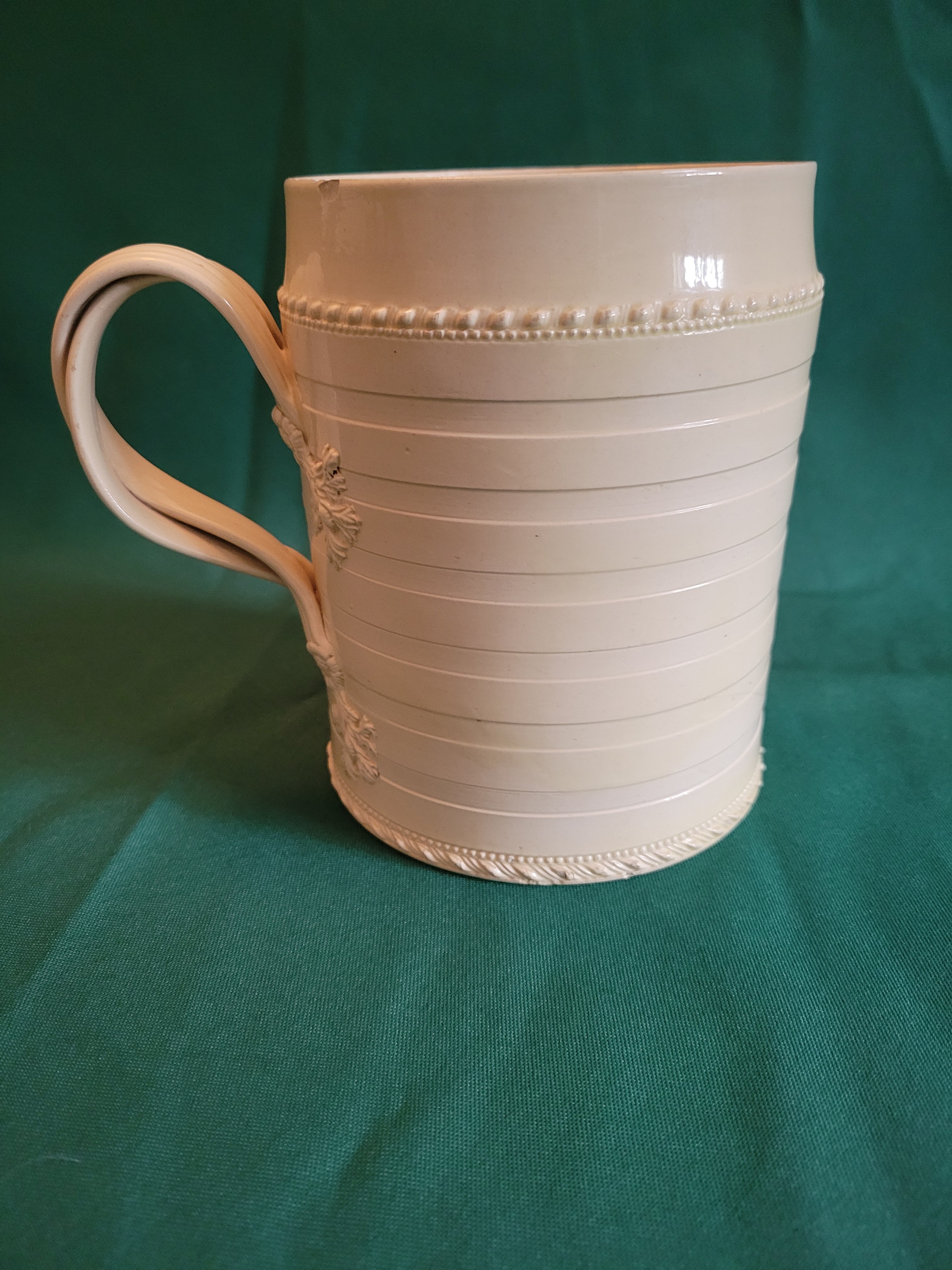
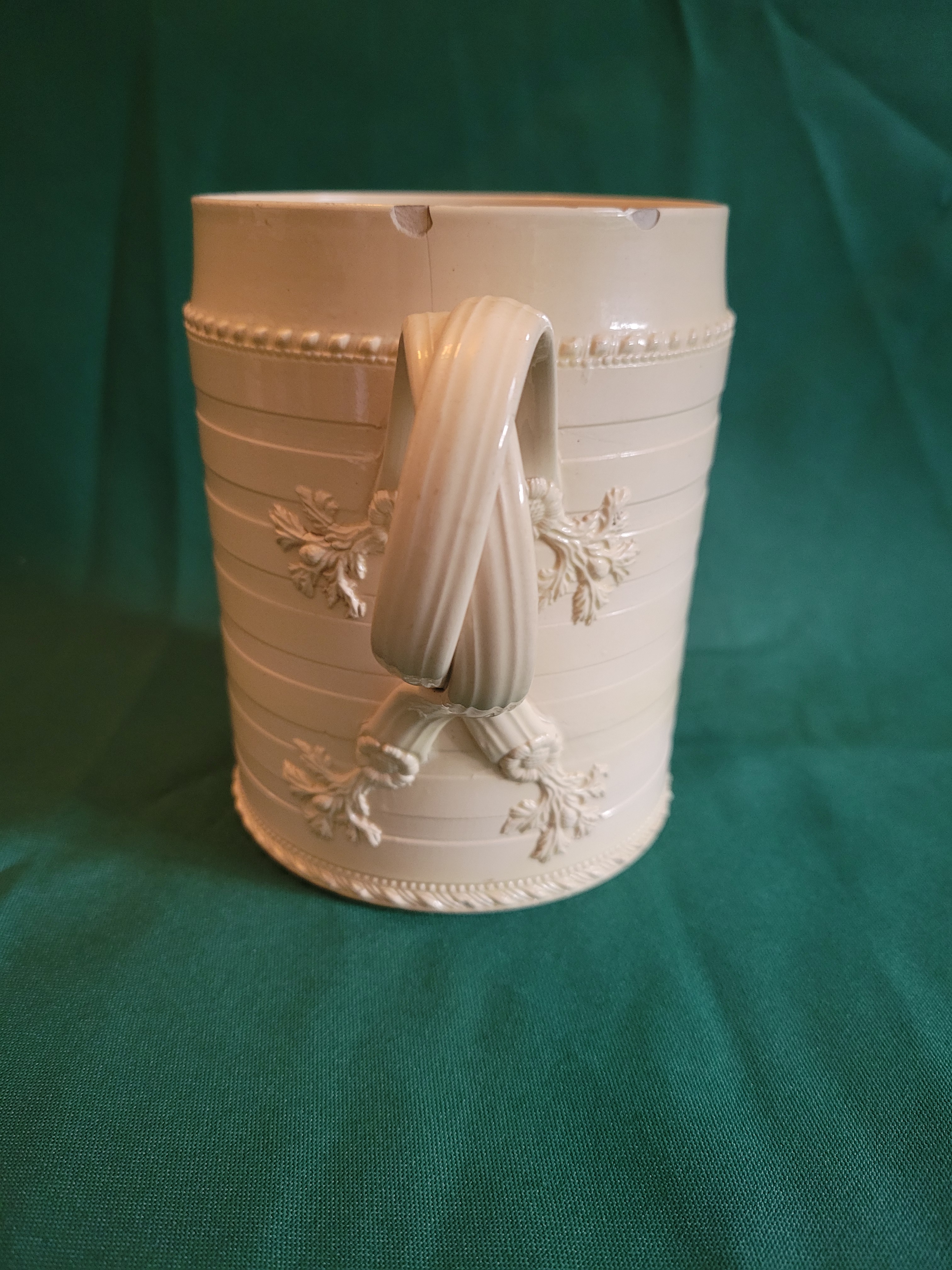
    Three of our acquisitions are a type of English ceramic called ‘creamware,’ which was invented in the early 1760’s and was very popular with George’s mother, Mary. Both this lovely pitcher and mug exhibit decorative elements represented by our excavated ceramics. Most prominent are the elegantly curved handles that terminate in delicate strawberry flowers. At least two vessels with these types of handles have been recovered at Ferry Farm. The first is a highly decorative creamware sauce boat and the second a petite teacup, both of which were considered quite fashionable for the time. The jug and teacup also share a common form of decoration called a ‘beaded rim.’

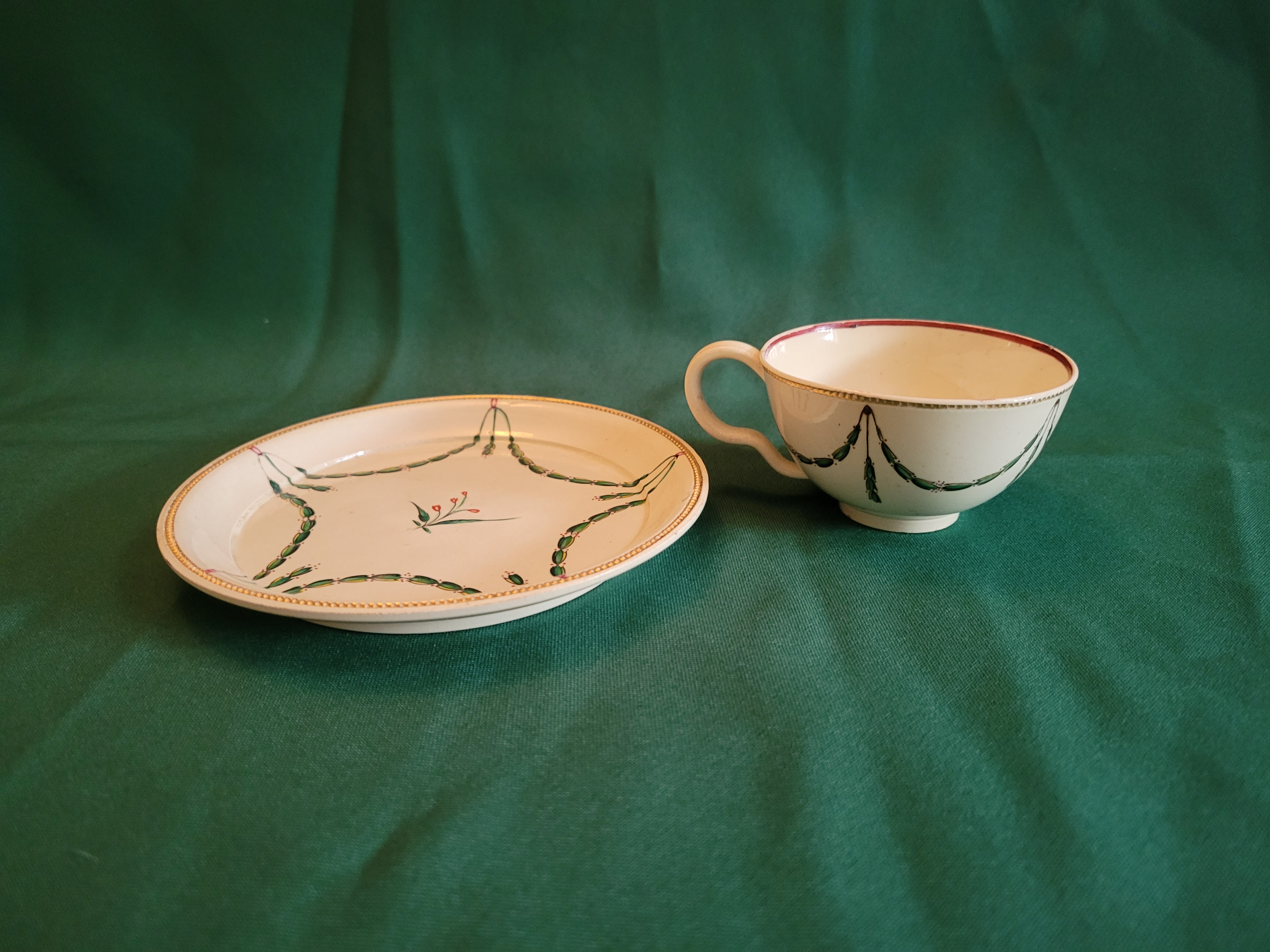
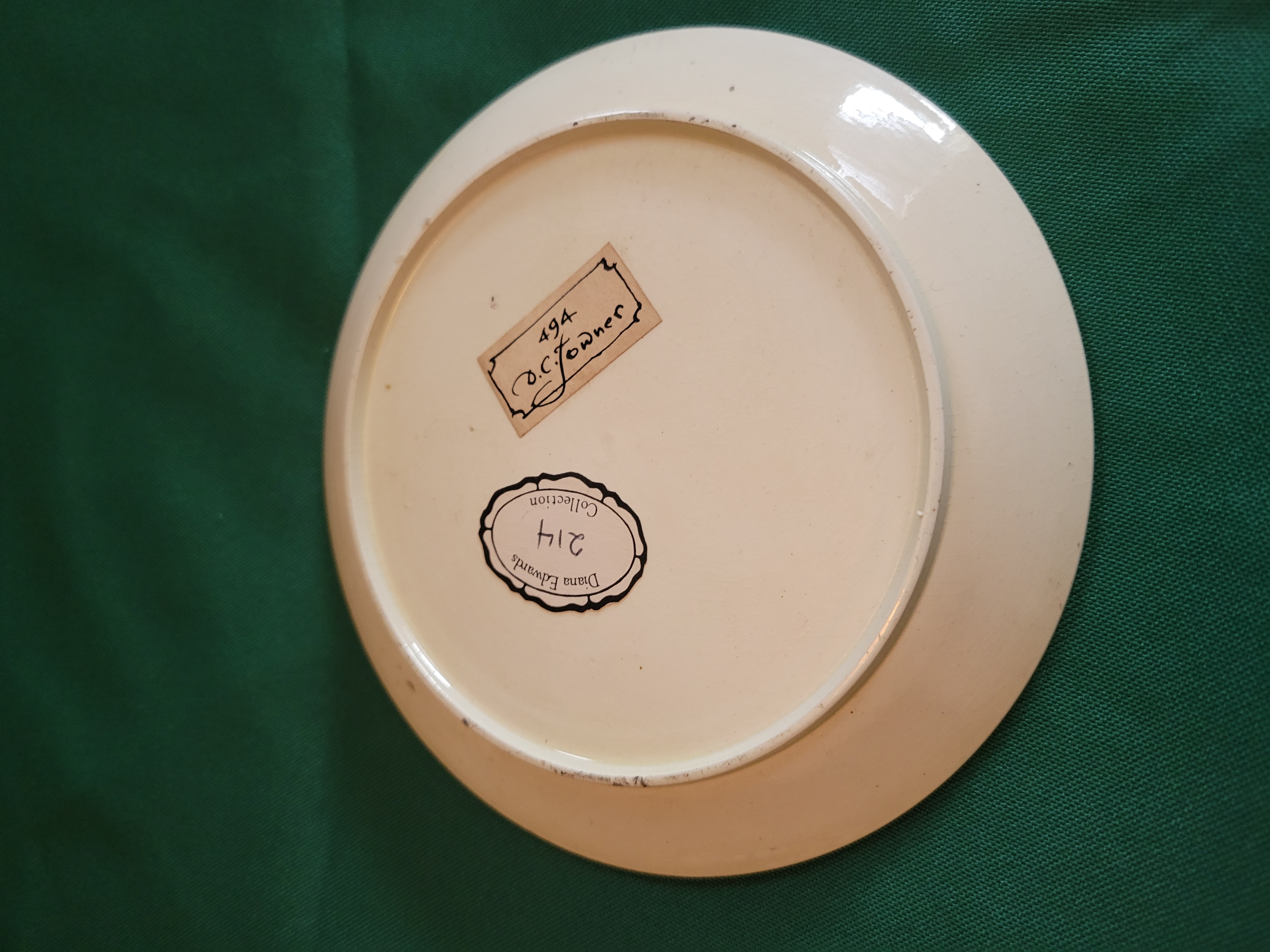
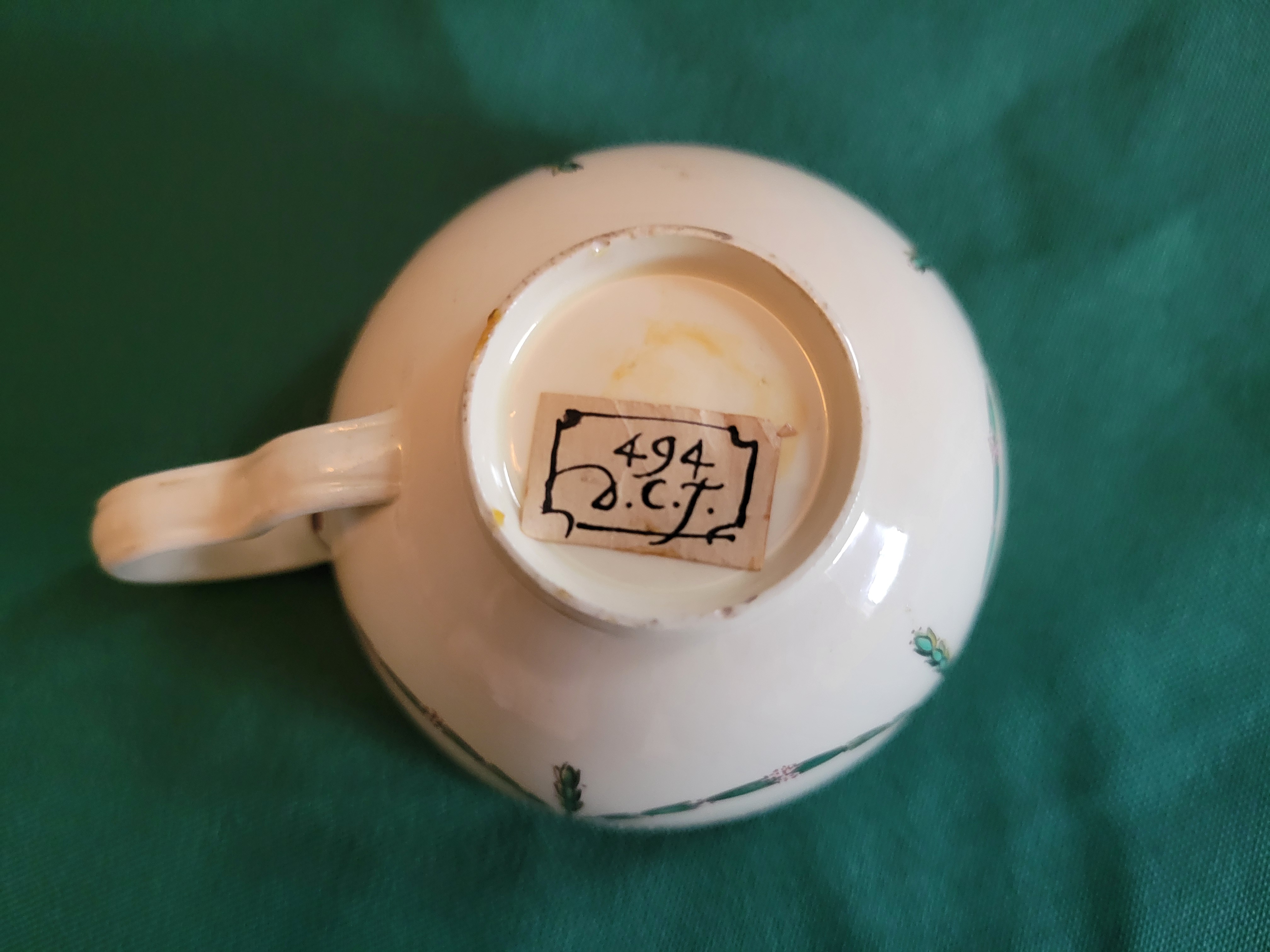
    Another teacup owned by Mary was this beautiful piece hand-painted with a detailed swag motif. But from the sherds it’s difficult to really appreciate how graceful this decoration is. Luckily, our curators hunted down a similar cup and saucer with the same decoration, which is unusual. The saucer also features a beaded rim that has been filled in with gold gilding, although we believe the gold to be a later addition to the piece. The cup and saucer also have handwritten tags affixed to the bases which indicate they had the distinction of having been in the collection of a well-known (at least to ceramics geeks like yours truly) collector of creamware. This man by the name of Donald Towner had written extensively on the topic of English ceramics and over his career had amassed a large study collection, of which this was one. His book on the Leeds Pottery in England features a catalogue from the pottery that includes many of the decorative elements and shapes discussed above (Towner, 1965).

    But my favorite is this delightfully potbellied creamer with three legs featuring lion’s heads and paws for feet. The ceramic type in question is called Whieldon and started to come on the market in England around 1749. Of note is the raised molded leaf decoration which resembles one sherd from our collection. While we may never know the exact type of vessel our leaf came from, the complete creamer gives one a better idea of how the decoration was placed and looked. Mary’s choice of ceramics played a large part in emphasizing her and her children’s place among the Virginia Gentry and we’re very pleased to have some whole examples now to help illustrate to visitors just how lovely some of these dishes were!

    Mara Kaktins, Archaeologist & Lab Manager


    Bibliography

    Towner, Donald.  The Leeds Pottery, 1965.  Taplinger Publishing Co., Inc., New York. 

  • Spoooooooooky Teapots?

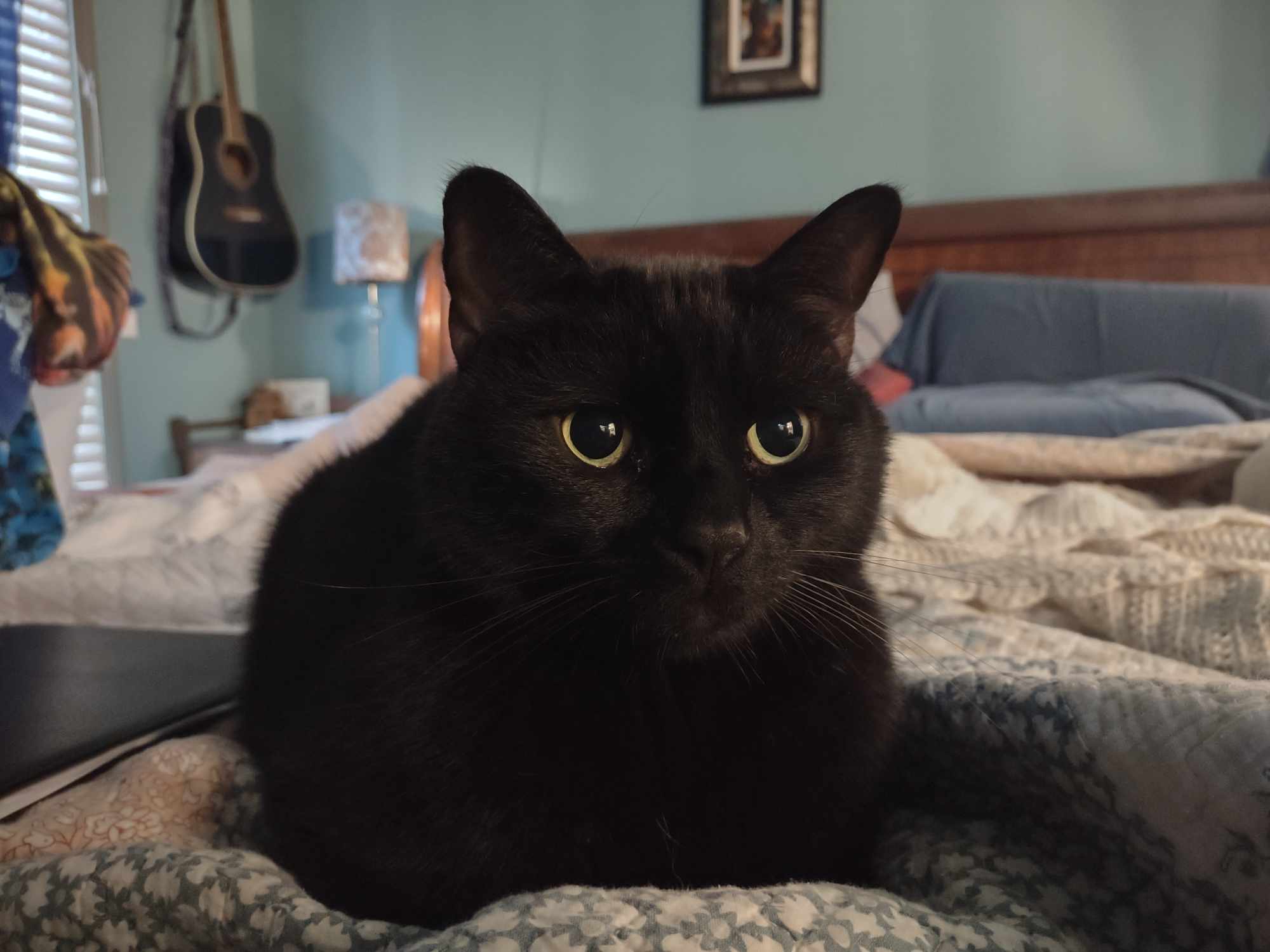
    There’s plenty to be frightened about in the colonial period. But teapots? Not exactly. However, aesthetics change as time passes. We see things through different lenses. As I type this, my substantial black cat with big yellow eyes stares at me, demanding attention.

    Poe, the big black cat with yellow eyes.

    Black animals are currently the least likely to be adopted in the United States, so black can be seen as a negative in pets…but what about black teapots?

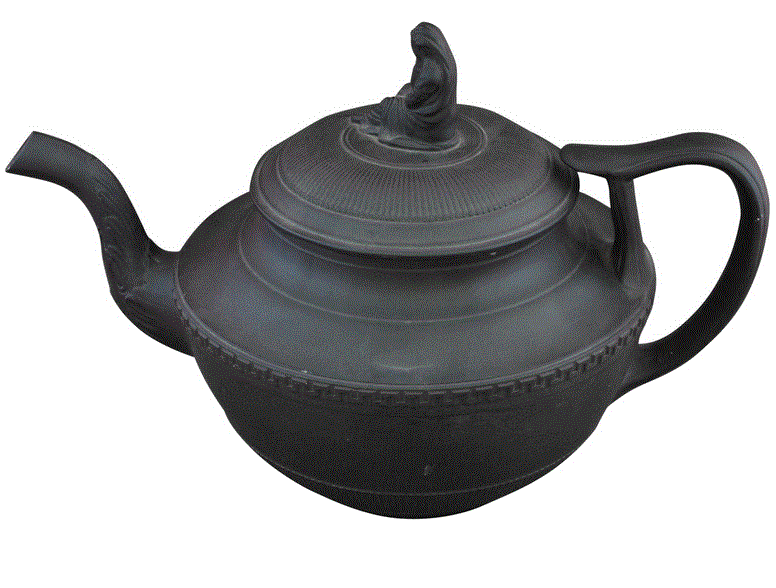
    Black Basalt Teapot, Turner, circa 1805

    Turns out, they were very much the rage during the middle of the 18th century and even into the early 20th century. 

    “Black is sterling and will last forever.”

    In 1767, Josiah Wedgwood started working with black basalts – a richly hued, glossy black stoneware medium – for his famous Etruscan vases. Wedgewood’s basalt is made from reddish-brown clay that burns black in the firing process; black basalt owes its color to the addition of manganese. [1]  [2]

    After Wedgwood perfected the fine-grained stoneware, it was soon being produced by other Staffordshire potters in England. It was called ‘Black Basalt’ or ‘Egyptian Black.’ [3] [4]  A matte black teaware that was striking and, by our modern estimations, quite possibly macabre. 

    Black Basalt teapots were decorated utilizing a new technology called ‘engine turning’ lathes. Simple turning lathes have been used for pottery production since the early 1700s. By the 1730s, virtually all hollow wares (mugs, jugs, cups, bowls, etc.) were being lathe-turned to shape and thin bodies. The engine-turning lathe further provided the ability to cut regular patterns in the clay bodies to create decorative elements. [5] The decorative elements at the time were heavily influenced by classical art from Ancient Greece and Rome. [6] 

    A striking finial accented the lovely neoclassical etches on the body of the matte black pot.

    Teapot, Circa 1800, Black Basalt, Mayer Manufacture, Staffordshire, England

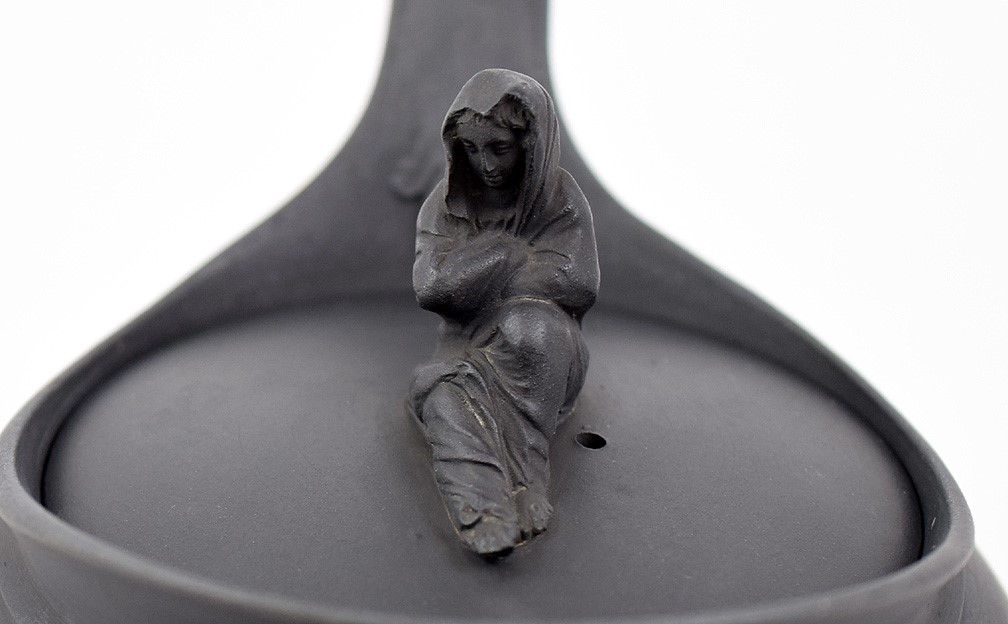
    What is a finial? The little knob on the top of the lid. This is where it gets weird for our modern-day eyes. Some looked like women hunched over, draped in mourning clothes or grieving widows. Add this to the black body, and the oddly shaped pots start to take on a dark tone. 

    Woman Finial

    Mary Washington owned an early iteration of these black basalt pots, but was it for mourning purposes? Not likely.

    Her husband Augustine died in 1743, early into the family’s occupation at Ferry Farm. This would have been before the invention of this style of pottery and well before strict (and quite frankly tedious) Victorian mourning rituals. A black teapot may seem to symbolize some outward decorative display of bereavement or grief (particularly with a sad woman finial). Yet, to Mary, it would have just been a neoclassical design in the latest black basalt trend. She was just being her fashionable self. Her teaware collection was pretty admirable, and the fact that she owned a black basalt teapot is not surprising. 

    But that shouldn’t stop us from enjoying beautiful and somewhat spooky teapots.


    Mara Kaktins, Archaeologist & Lab Manager

    Sources

      [1] M.S. Rau. (2019, December 11). Wedgwood: A collector’s guide to English ceramic treasures. https://rauantiques.com/blogs/canvases-carats-and-curiosities/wedgwood-collectors-guide

    [2] Todd, L. M. (2020, December 17). Rediscovering Black basalt one of Josiah Wedgwood’s first and most enduring inventions. Architectural Digest. https://www.architecturaldigest.com/story/rediscovering-black-basalt-one-of-josiah-wedgwoods-first-and-most-enduring-inventions

    [3] STONEWARE, BLACK BASALT – Type Index | Historical Archaeology Type Gallery. (n.d.). https://www.floridamuseum.ufl.edu/typeceramics/type/stoneware-black-basalt/

    [4] The Mint Museum. (2023, January 24). Classic Black: The Basalt sculpture of Wedgwood and his contemporaries – Mint Museum. Mint Museum. https://www.mintmuseum.org/exhibition/classic-black/

    [5] The Chipstone Foundation. (n.d.). https://www.chipstone.org/article.php/151/Ceramics-in-America-2004/The-Little-Engine-That-Could:-Adaptation-of-the-Engine-Turning-Lathe-in-the-Pottery-Industry

    [6] Portals to the Past: British ceramics 1675-1825 – Google Arts & Culture. (n.d.-b). Google Arts & Culture. https://artsandculture.google.com/story/portals-to-the-past-british-ceramics-1675-1825/GgUh1Et0LThYLw

  • Catherine of Braganza: How the copy of a 17th-century plate tells the story of design, consumer consumption, and the Washington Family

    The concept of buying items to remember certain events or travels is commonplace today. Who goes abroad without bringing back a trinket naming the location? Is it possible to go antiquing without seeing an item that commemorates the wedding of Charles and Diana? Even the smallest item has the ability to tell a story through what it depicts. In our world of mass consumption, these items prove commonplace and relatively easy to obtain, but the concept is not new.

    Charles & Diana memorabilia

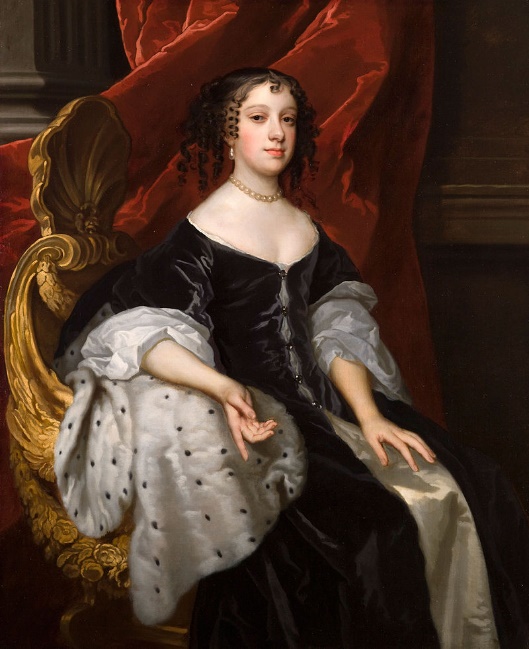
    Back in the mid to late 1600s, a potter by the name of Thomas Toft (d.1689) produced a series of plates depicting Charles II and his wife Catherine of Braganza. When Cromwell’s strict Puritan regime ended in 1660, the people of Great Britain rejoiced at the restoration of the monarchy. Charles II was an active king who enjoyed the arts and a good time. His marriage to Catherine, a Portuguese princess, in 1662 was a cause for further celebration, even if her Catholic faith raised concerns. Regardless, Toft had his market.

                A Scandinavian immigrant, Toft lived in Staffordshire, England, and specialized in slipware. Slipware involved the use of clay slips and a lead glaze to decorate a piece. Typically, a white clay slip, which is essentially, watered-down clay, covered the upper surface of a piece before the artist drew on the design. Dark brown and orange-red clay slips then helped bring the design to life. To complete the piece, the artist utilized a lead glaze to enrich the colors and seal it. Toft became one of the most famous slipware potters of the time due in part to his habit of prominently signing his works at the base of his cross-hatching border, which was unusual in the 17th century. He produced plates depicting the royals throughout his career. Toft’s pieces may not have undergone the mass production that they would today, but they fed a market that desired commemorative memorabilia.

    Slipware plate by Thomas Toft depicting Charles II and the Royal Oak

    You may be asking how talk of royals and artists from the 1660s connect to Ferry Farm? The answer comes from the desire to add a slipware plate to the house. As many will know, the items in the Washington house are replicas inspired by archaeological finds on site and pieces dating to the period. Until now, the slipware style did not appear in the house. Aiming to fix this, I went about choosing a design that would not only serve the desired purpose but also tell a story. In the end, I found a Toft plate that depicted Catherine, and the idea came to me.

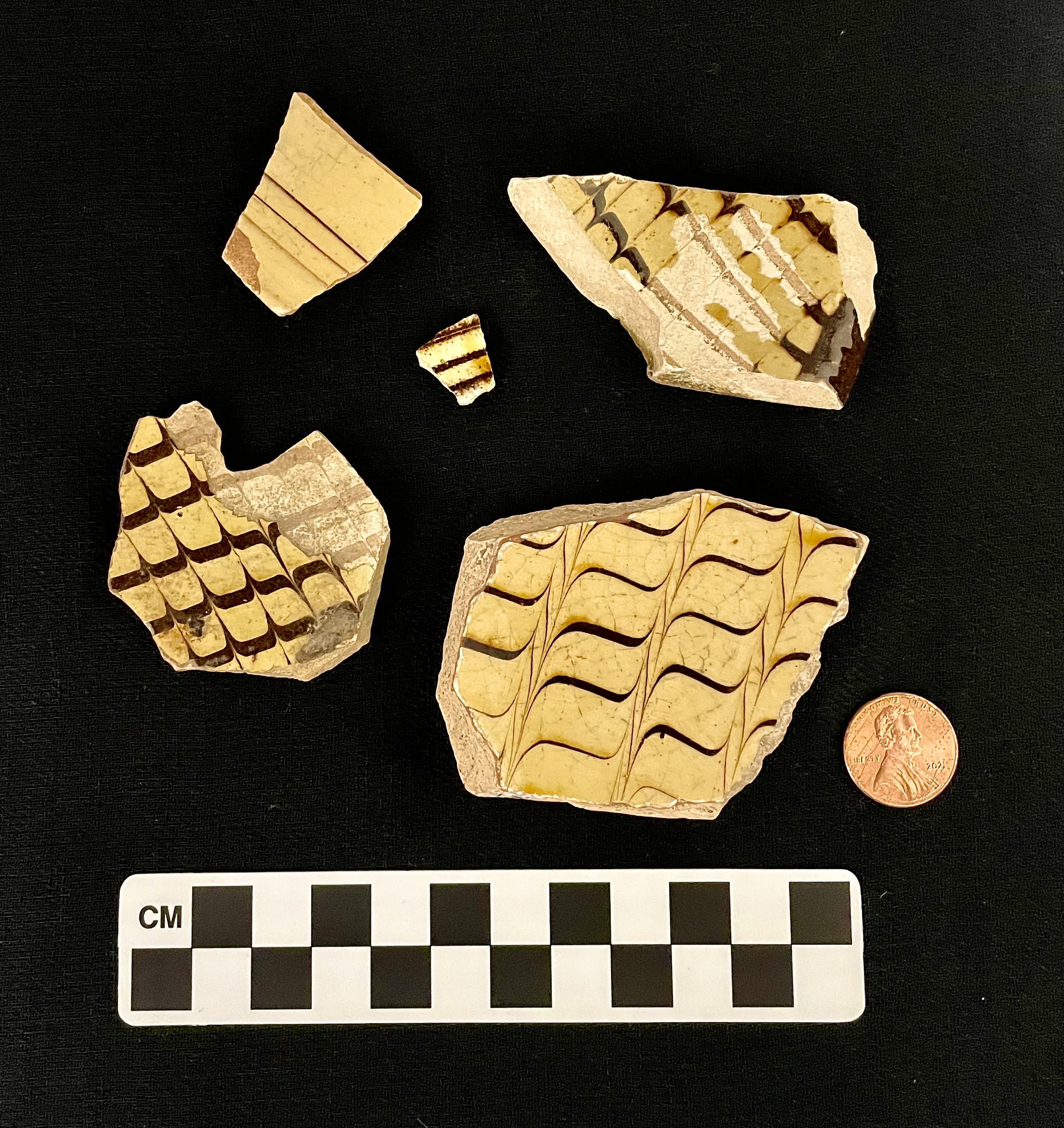
    Pieces of slipware found at Ferry Farm

    John Washington (1631-1677), George’s great-grandfather, immigrated to Virginia in 1657. Motivation for this possibly derived from hardships faced by the Washington family after Cromwell came to power since the family had sided with the monarchy during the English Civil War (1642-1651) and business ties. With the restoration of the monarchy three years after their arrival, it seems likely that this would have been a cause for celebration in the Washington household. We know from finds at Ferry Farm and Kenmore that the Washington and Lewis families owned items depicting royal motifs up until the Revolution. So not only would the Washingtons of the 1660s have raised a toast to the King and later his bride, but they may have acquired items celebrating them. While we do not have evidence for the Washingtons’ owning a piece with this specific theme, items pass through generations, and we know the family brought older items with them to Ferry Farm in 1738.

    In making the replica, I aimed to keep it as close to the original as I could, though the cross-hatching border proved impossible to keep as tight. The imagery itself prompts the telling of the Washington-Royalist-immigration story, so nothing major needed changing. Keen viewers, looking at the images below, will notice the addition of a “Q” and a “K” to help identify Catherine. While Toft’s work rarely included royal monograms, they did appear on other designs of the time, making it a simple and fitting addition. In these other pieces, Catherine’s first initial always appears as a “K.” While we may spell Catherine’s name with a “C,” there was no standard of spelling in the 1600s, and this may have occurred since her husband’s name also starts with a “C.” After prepping the plate with a base coat of paint, I sketched the desired design and painted over it in a way that mimicked slipware techniques. A clear coat of spray paint then sealed the design in place of the lead glaze.

      The plate will go on display in the Visitor’s Center, where we display and explore the topics of our blog. Next time you visit, be sure to keep your eyes peeled and let Catherine tell you her story.

    Emma Schlauder

    Research Archaeologist