Lives and Legacies

Category: Collections Management

  • Wish You Were Here: Historical Documentation Through Postcards

    Postcards were a staple of vacations.  Collected and sent back to friends and family so they could be part of your adventures. Many of us can remember trying to pick up postcards on the first day of vacation to get them in the mail quickly so they would arrive back home before you. 

    Postcards were created in the mid-nineteenth century, and through the decades, they were mass-produced with popular scenic images and were inexpensive, so many people picked up postcards to document their vacations rather than taking pictures.    Their popularity and collectability mean that boxes and boxes of old postcards can be found in antique stores and flea markets. 

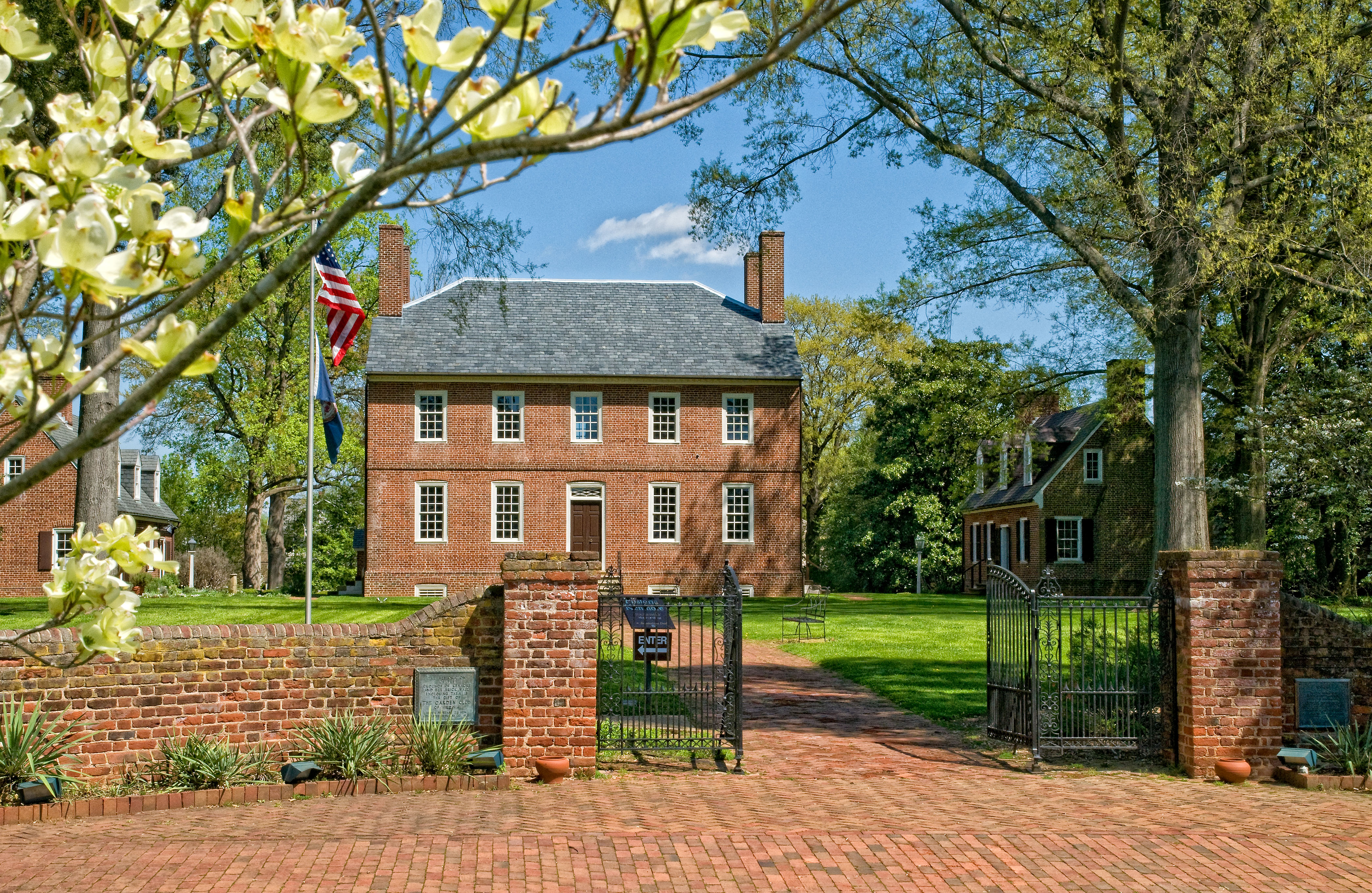
    While postcards are amusing souvenirs and a source of nostalgia, they can also offer us important insights into the evolution of historic sites and cities.  Postcards of Kenmore have helped us document the restoration of the house, the development of the property, and past interpretations, even providing documentation of collection items for which we may not have records.

    For your enjoyment, I’ve selected some of my favorite postcards to showcase how they’ve documented the historical restoration and interpretation of Kenmore.

    Exterior: Pre-Restoration

    Kenmore has always been quite the showpiece, even when it was privately owned.  One of the earliest postcards of Kenmore’s exterior is dated 1908, as indicated by the postmark.  The Howard family owned the house until it was acquired by E.G. Heflin around 1914. 

    The postcard shows the house from the Washington Avenue side (west elevation) and provides a glimpse of the properties before any restoration work.  The old kitchen can be seen on the north side of the house, while the exact date it was built is unknown; we know it was built in the late 1880s or early 1890s.  It was torn down in 1929. 
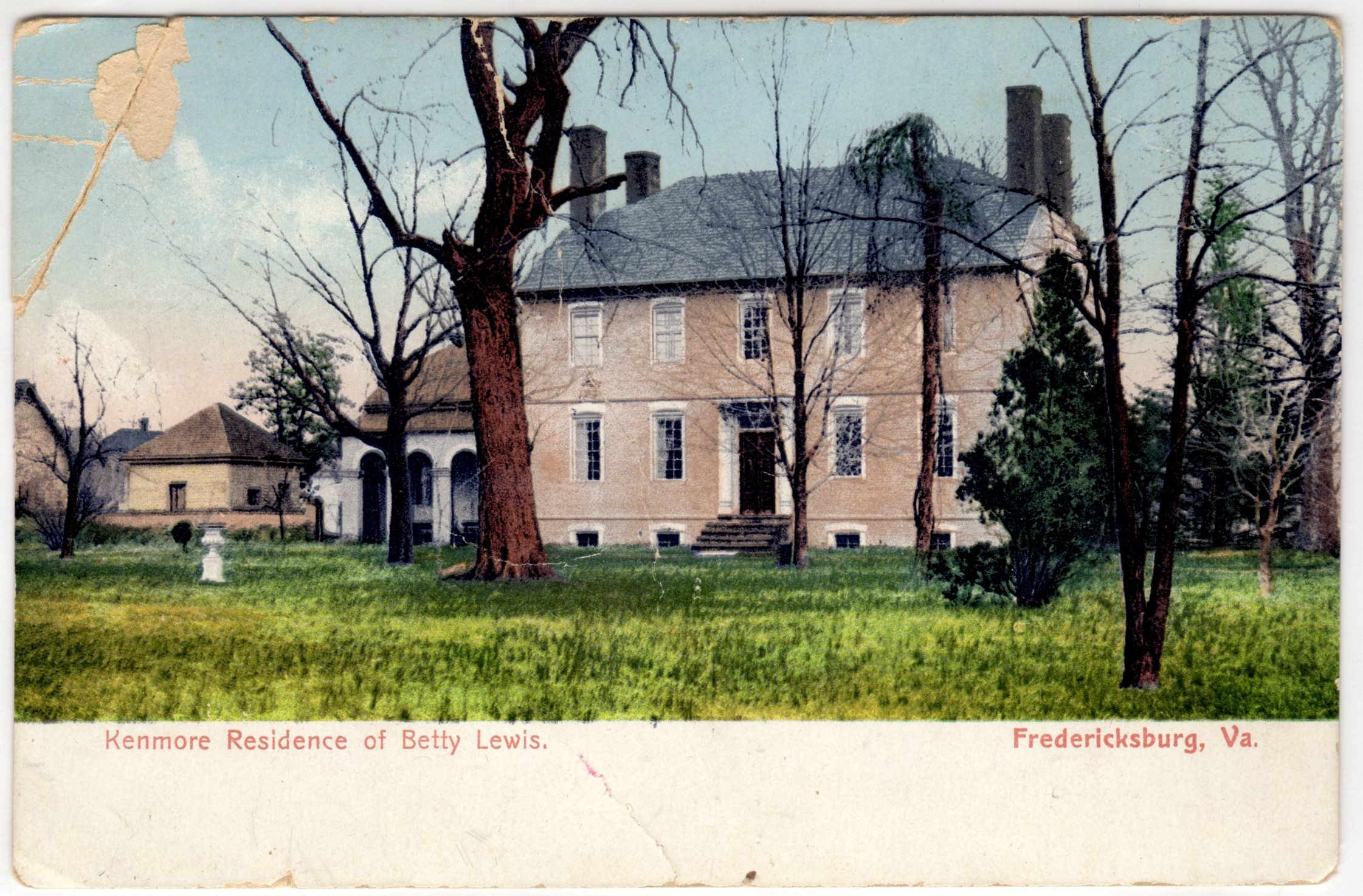
    Additionally, the exterior brick has been painted, along with the lintel, which was removed in 1929. We can see the paintwork better in the second color postcard. 

    Interior

    Entrance Hall

    One of the earliest postcards we have of the entrance hall, around 1923.    One of the most notable things is the plasterwork on the ceiling.  If you see current pictures of the entrance, you will notice that this plasterwork no longer exists.  The plasterwork was done by former resident William Key Howard, Jr., when he was restoring the original ceiling in the other rooms.    In 1930, the Association decided to remove the plasterwork because it was not original to the Lewis family.  Mr. Howard Jr. was not happy when he found out that the plasterwork had been destroyed and called it an act of vandalism. 

    Additionally, we can see next to the tall case clock a door that leads into the drawing room, which no longer exists.  It was decided that this was not the original placement, and the door was moved directly across from the office door in 1930. 

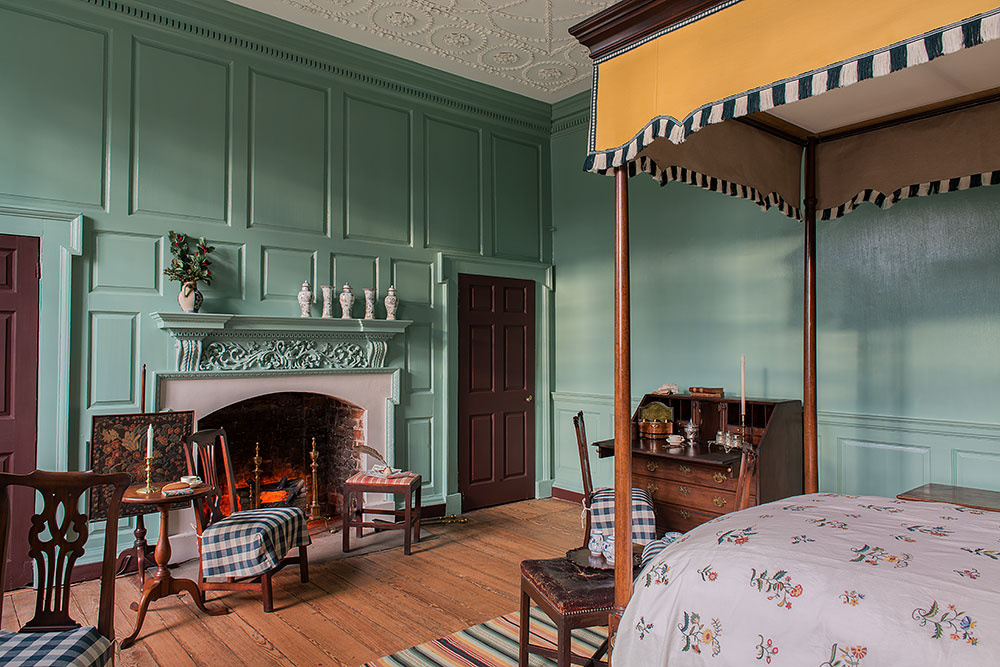
    Chamber/NW room, first floor

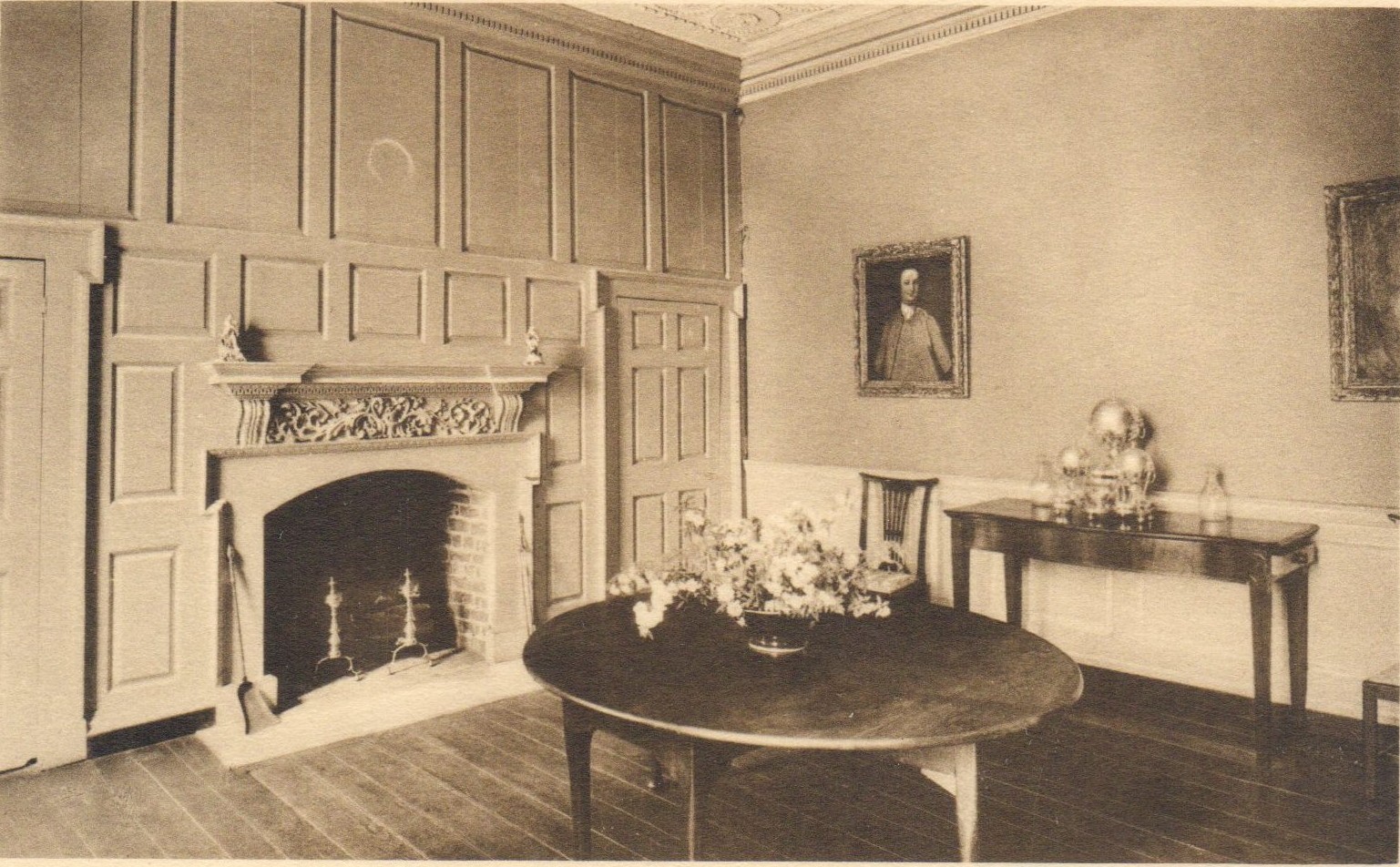
    While we currently interpret the NW room on the first floor as the chamber, the ladies referred to it as the Dining Room. We can see a round table, a sideboard, two chairs, and two portraits, plus a large silver tea urn.   The postcard dates from the late 1930s because we know from our records that most of these pieces were donated in 1935.  We still have all these objects in the collection, but the only things currently on display to the public are the round table in the dining room and the chairs in the drawing room.  All other pieces are in storage. 
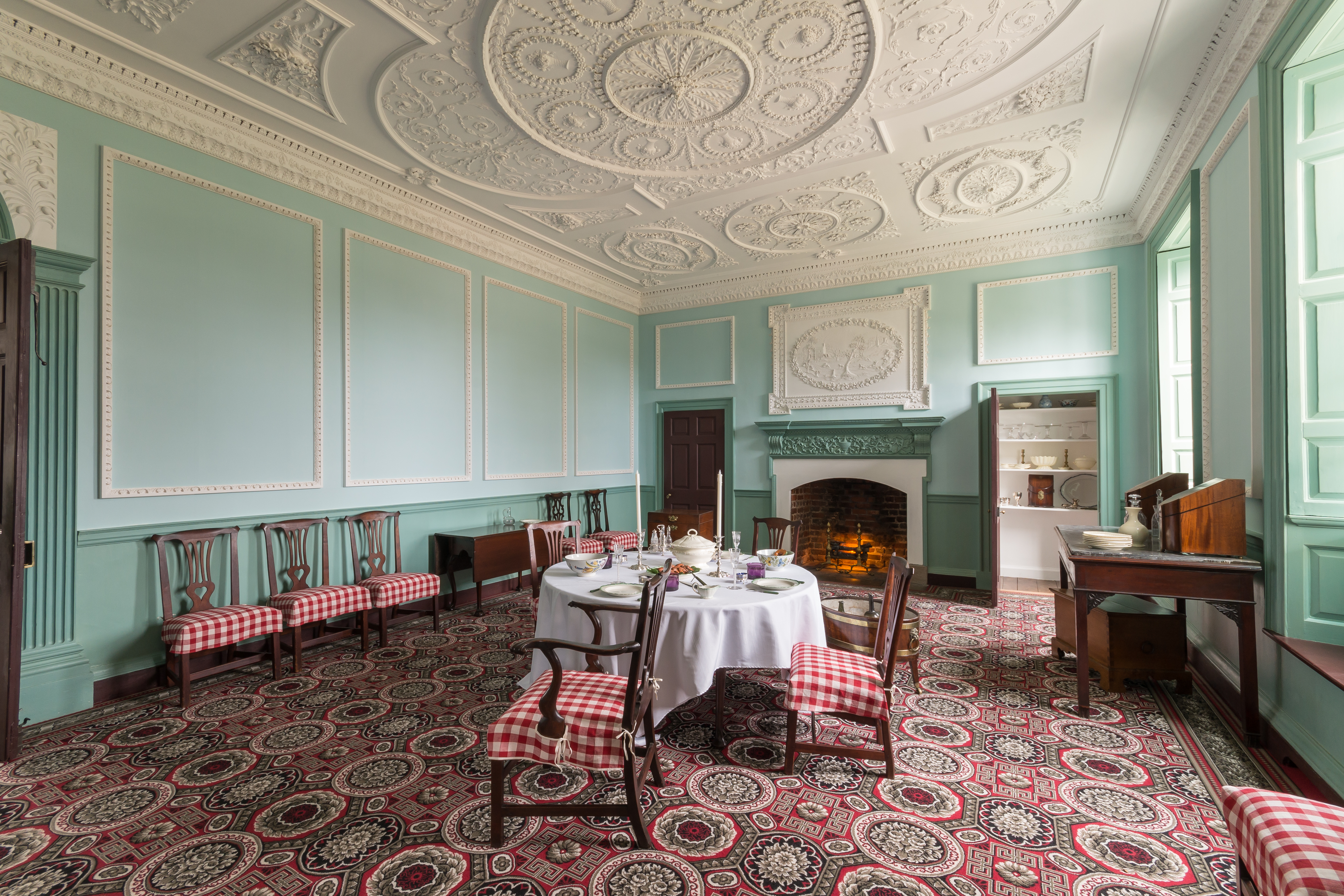
    Dining Room/NE room, first floor

    We currently refer to the NE room on the first floor as the dining room.  It has undergone many changes, with Gothic arches added to the closets during the 19th century, and has been restored to its original shape.   Not everything in the postcard is still in our collection, but you can see the square table still on display in the dining room, and Betty’s portrait is now in the drawing room. 

    On the left is the Dining Room during the Howard occupation around the 1890s, and on the right, the Dining Room today
    The Dining Room after the Kenmore Association’s restoration, c. 1940s

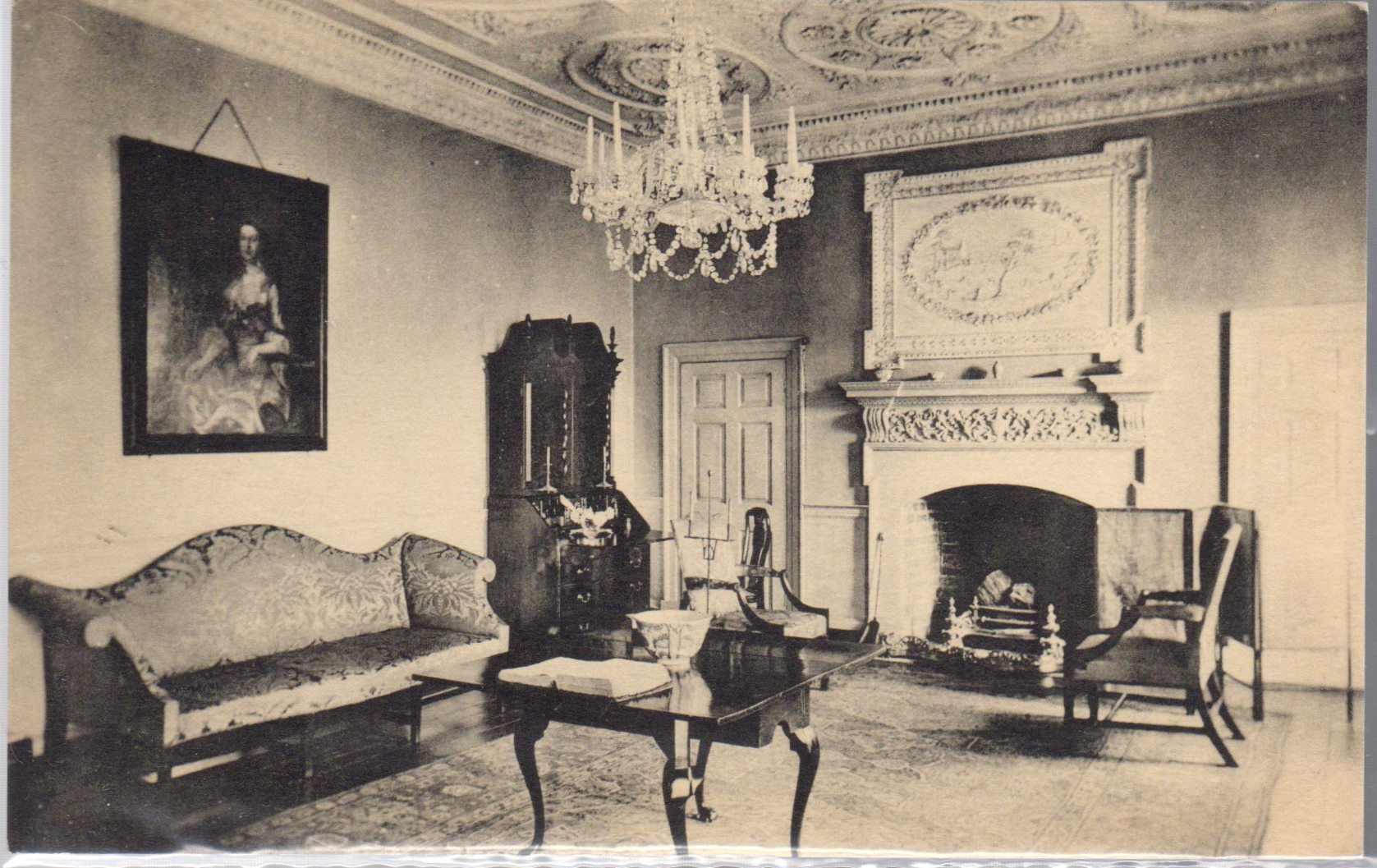
    Drawing Room/SE room, first floor

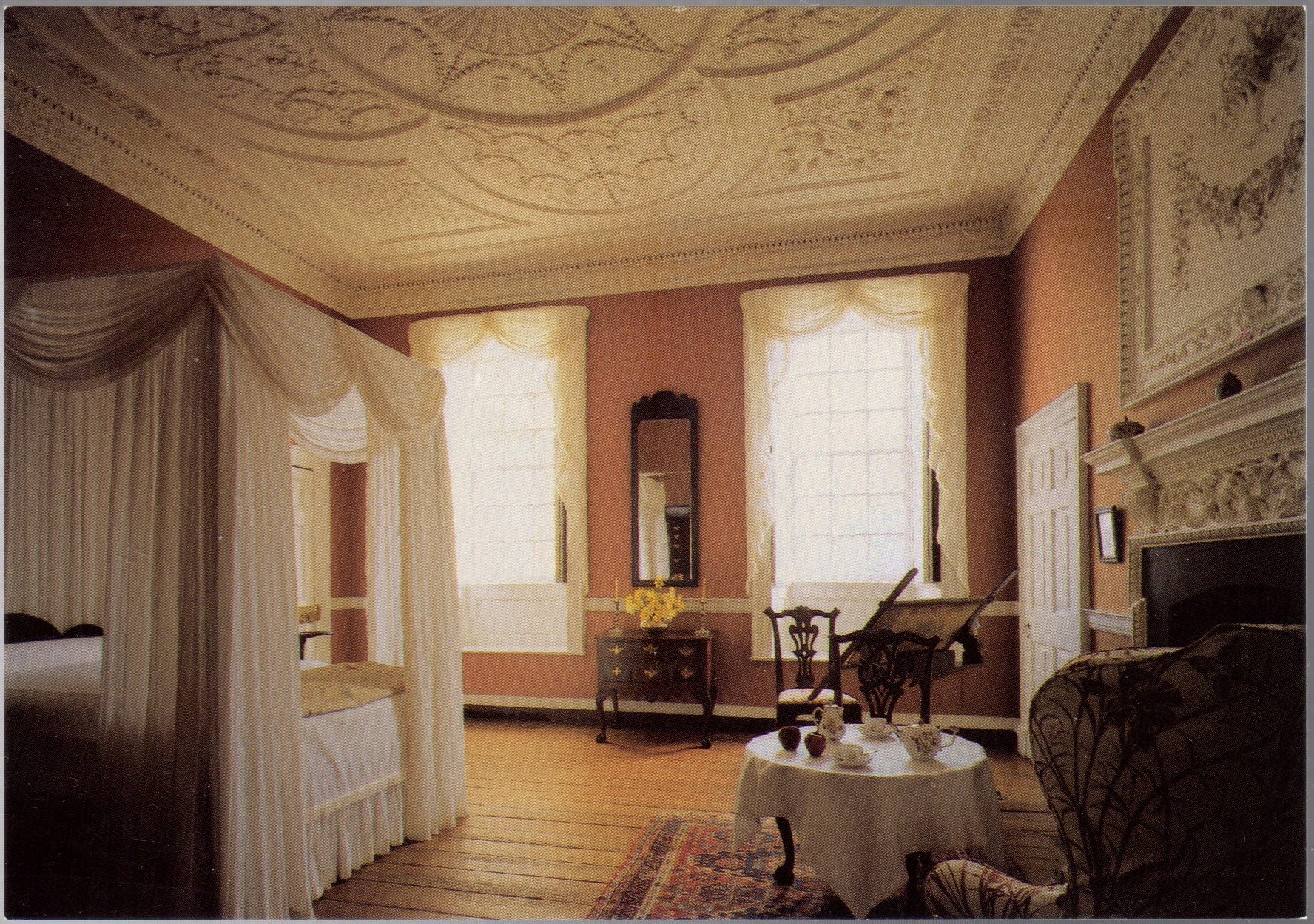
    The drawing room was previously known as the library and also served as a chamber for a while in the 1980s.  By the window, you can see Betty’s desk in the older postcard (c.1940s), which is still on display, but in the chamber.  We still have the tea set on display where it was in the chamber, but it is currently in storage.

    On the left is the Drawing Room during the Howard occupation around the 1890s, and on the right is the Drawing Room now

    Office/SW room, first floor

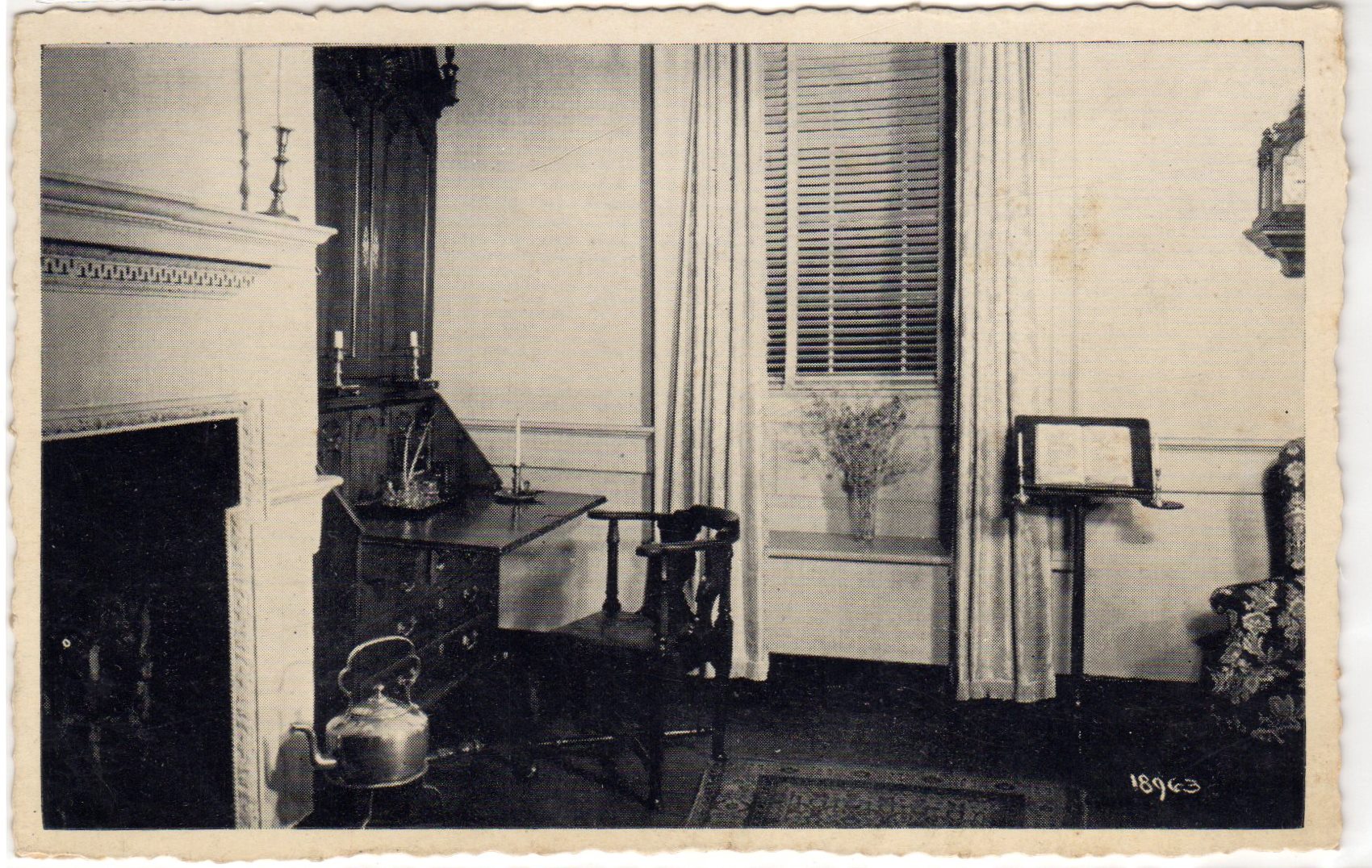
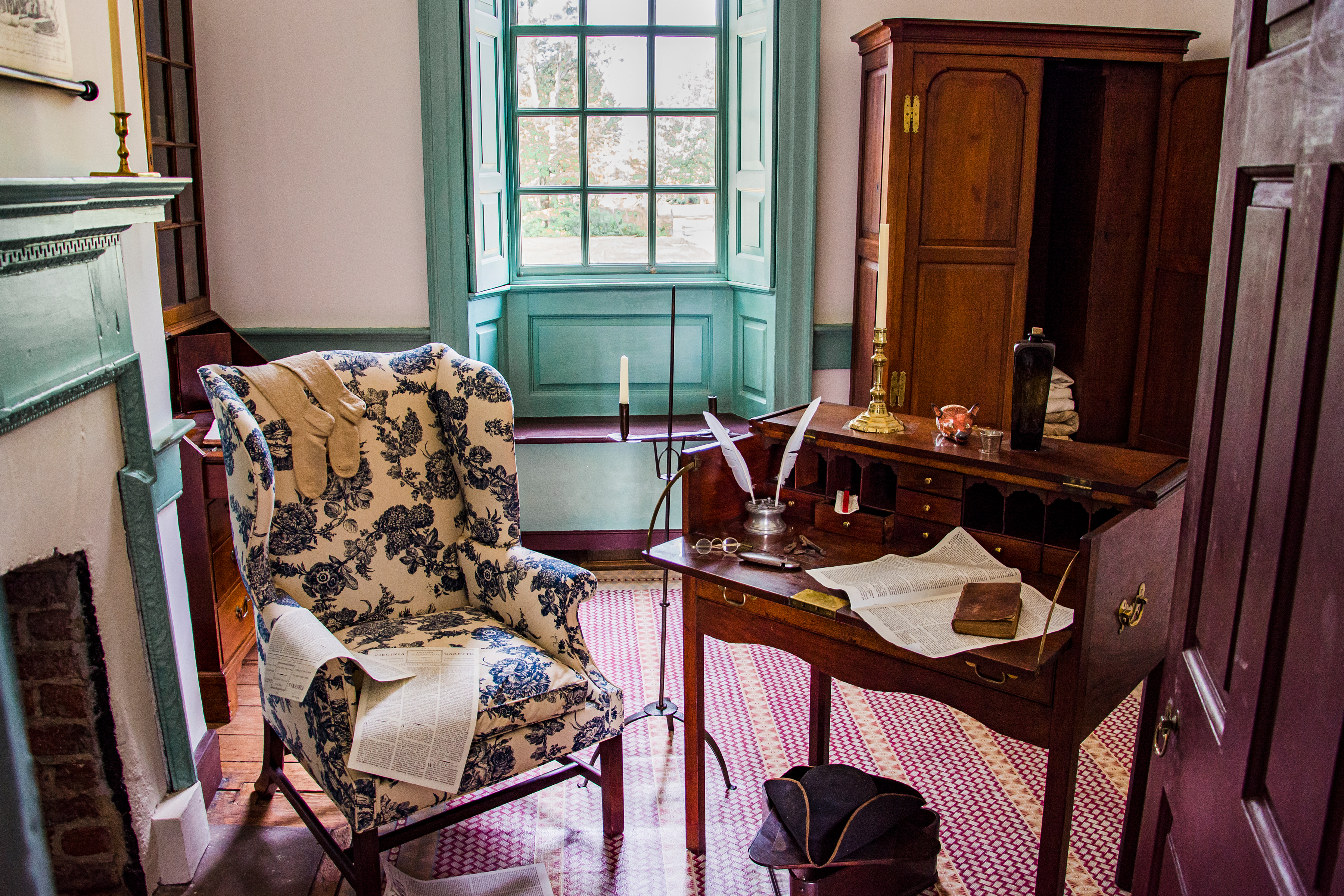
    Fielding’s office has been displayed as a sitting room and a kids’ room.  We don’t have many of the objects in the postcards still in the collection, except the corner chair, which now has a check seat, and the music stand, which is too fragile at the moment for display.
    2nd floor

    We currently do not offer tours of the upstairs area because we don’t put too much stress on our lovely plaster ceilings.  The Kenmore Association interpreted the upstairs as individual bedrooms for the family, which is not the most historically accurate version.

    Hallway/ 2nd floor

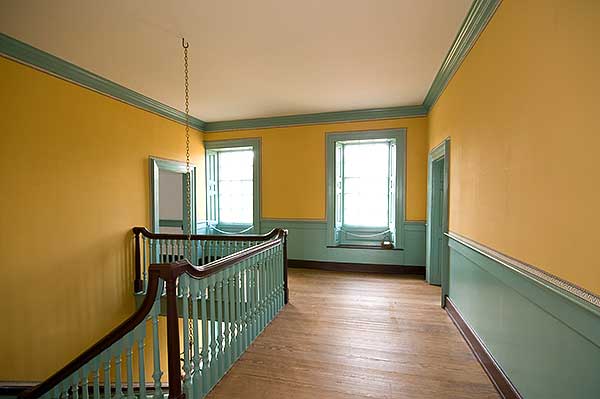
    Besides the paint color, the hallways upstairs remain structurally the same.  The ladies have Betty’s desk on display, with the Hammond quilt above.  We still have the Hammond quilt; fortunately, we removed it from the frame, but it is a massive quilt and is not currently on display. However, it is in excellent condition.  As for the tall case clock, chandelier, and curtains, they have been lost to history.

    “Mary Washington Bedroom”/NE room/2nd floor

    We have no evidence that Mary ever had a dedicated bedroom at Betty’s house, and it seems unlikely with the size of the Lewis family.  We do still have some of the pieces in the collection. The tea box is currently on display in the chamber, and the yellow tea set has been displayed intermittently over the years.  The two calendar prints hung on the wall are now downstairs in the drawing room.  Lastly, the chaise lounge was loaned to the foundation by the Metropolitan Museum of Art in the 1930s (subsequently purchased in 1968) and is currently in storage, as there is no evidence that the Lewis family owned many northern furniture pieces.
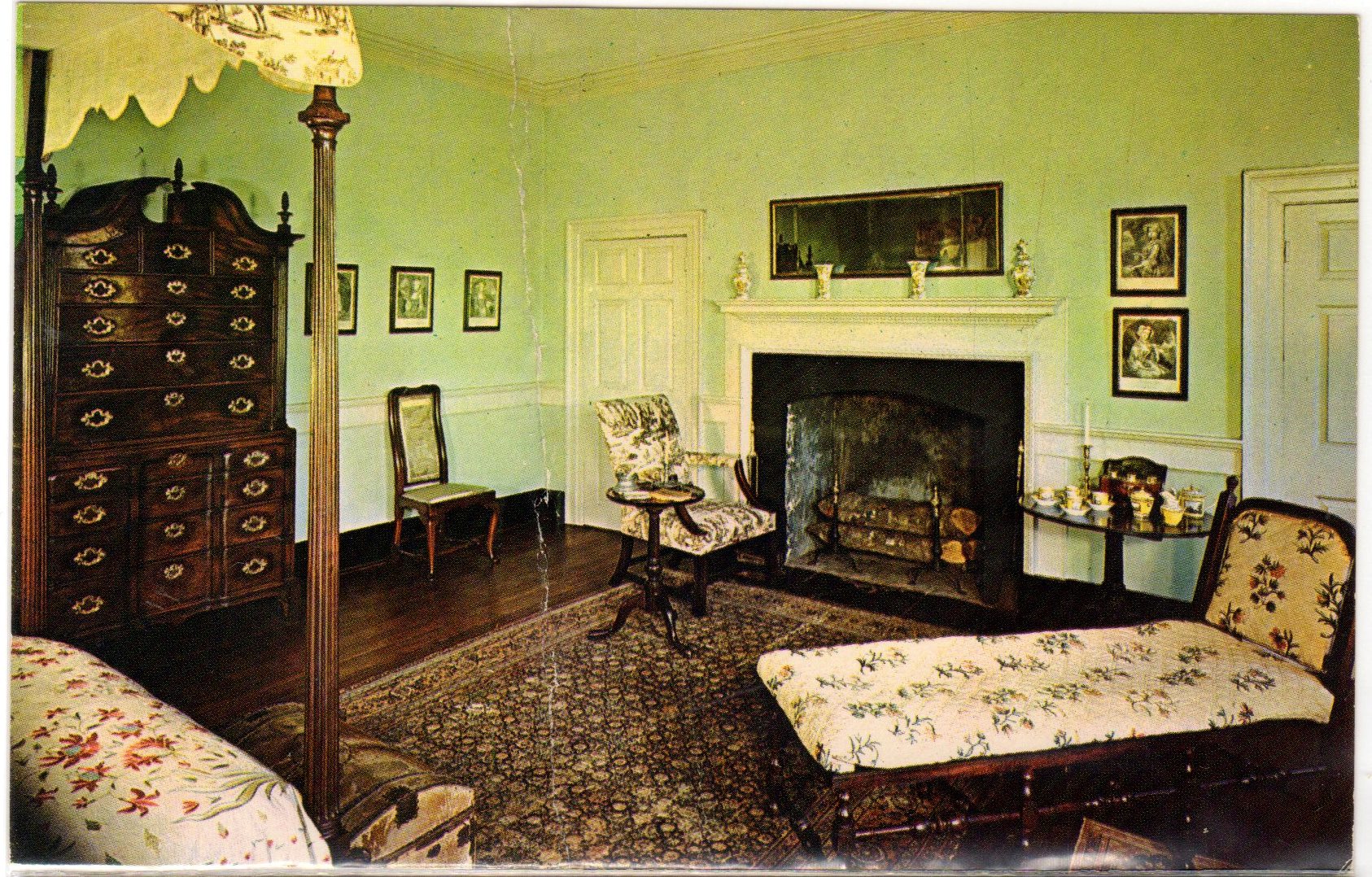
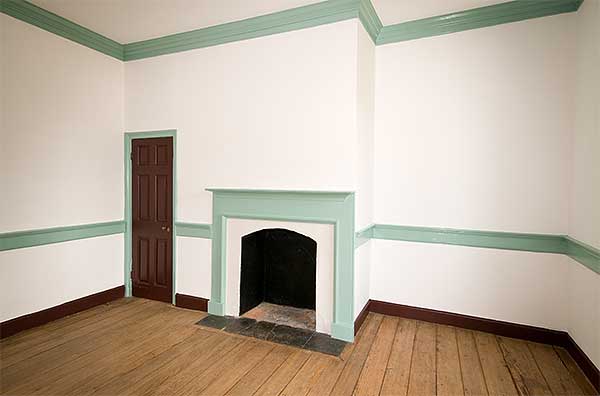
    “Mary’s Bedroom” is currently storage with temporary covering to protect the original floors.

    “Guest Bedroom”/NW room/2nd floor

    Much like “Mary’s bedroom,” it is very unlikely that the Lewis family had a “guest room,” with as large as the family was, it would have been a waste of space.  The bed still resides in our collection, disassembled and in storage. 

    “Betty’s bedroom”/SE room/2nd floor

    Again, during the Lewis occupation in the 18th century, individual bedrooms were not common, except for the head of the family.  Not many of the objects in the postcard are still in our collection, except for the bed, which is now in the chamber downstairs, and the William Walker, Jr. armchair, which is currently off display, but we do have another one in the dining room.
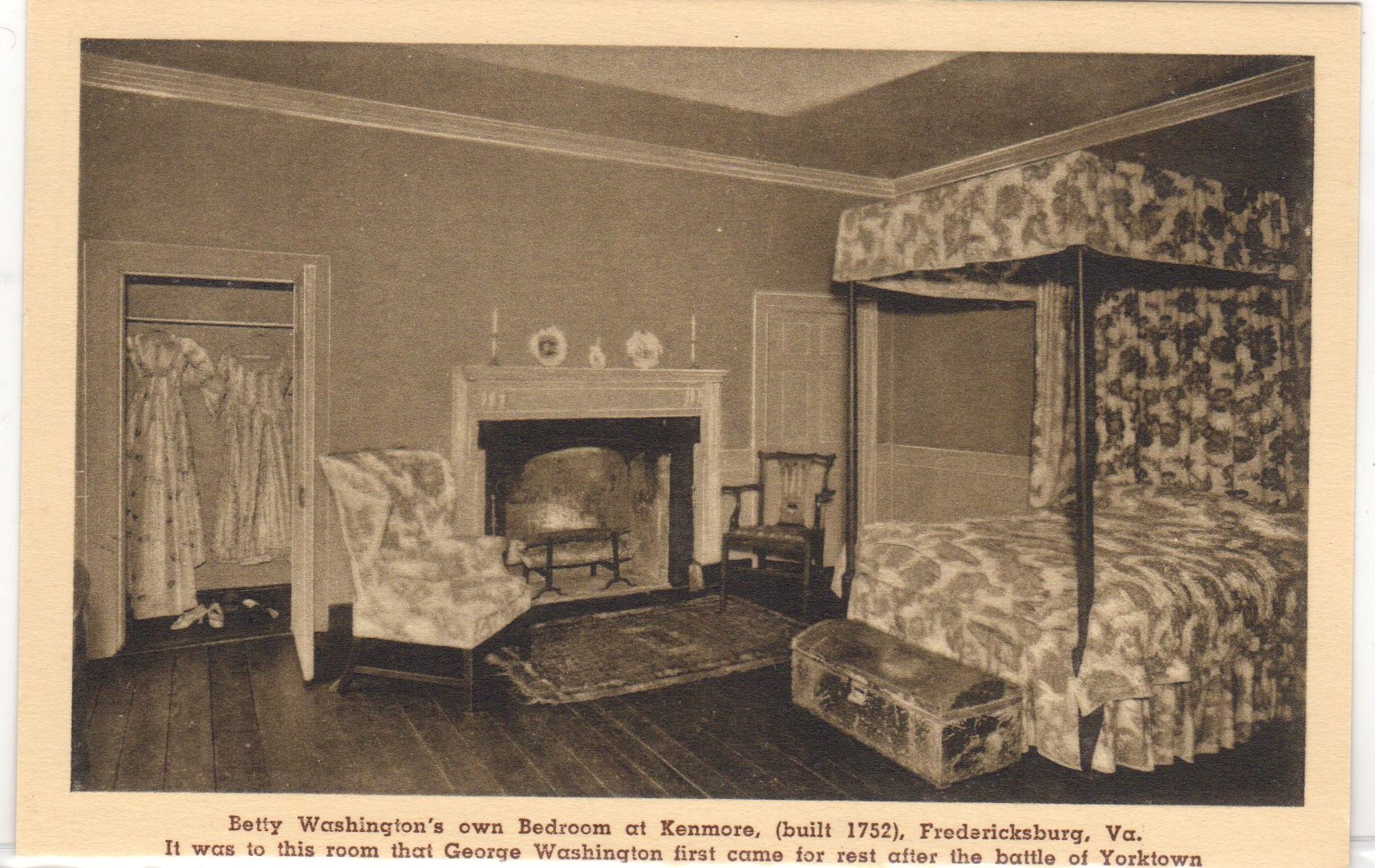
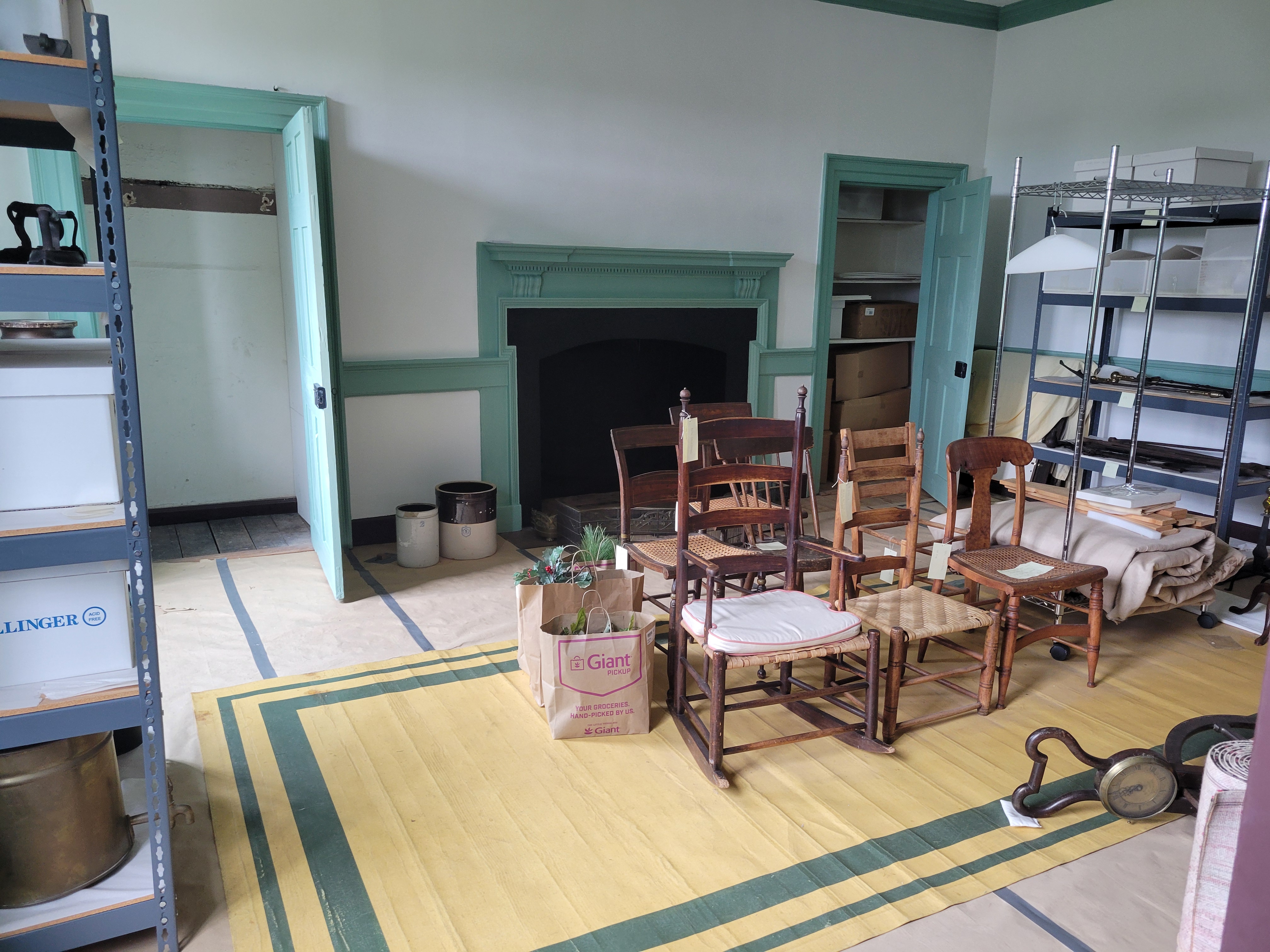
    “Betty’s bedroom (2nd floor SE) is currently used as storage…and some Twelfth Night decorations

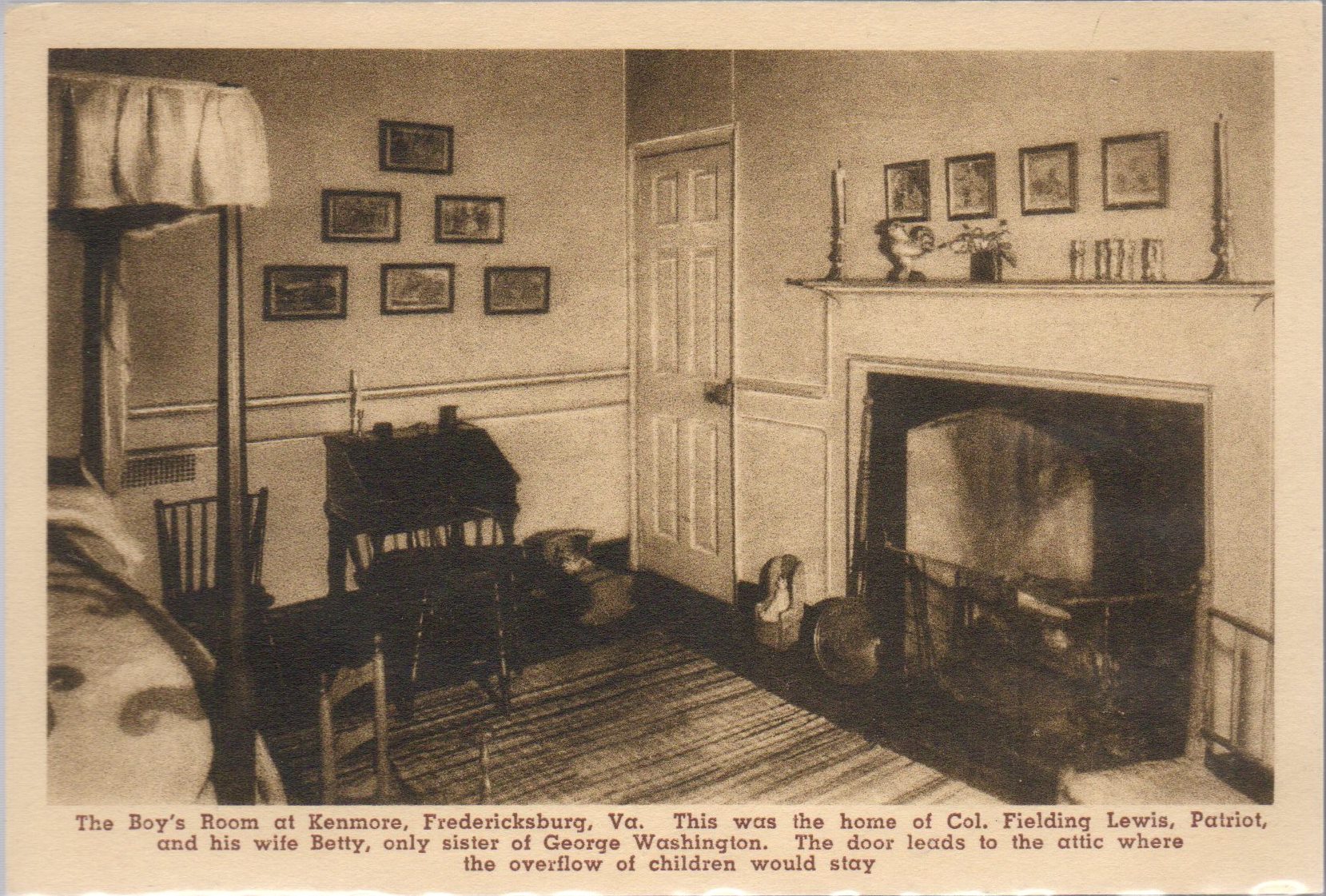
    “Boy’s Room”/SW room/2nd floor

    The last room upstairs is smaller than the other rooms and has access to the attic.  The ladies used this as the boys’ room, but as we discussed, with the other rooms, it is unlikely that this was accurate.  We do still have many of the pieces’ pictures, but the only one currently on display is the slant-top desk in the Visitors Center. 

    Heather Baldus

    Collections Manager

  • Lovely Linoleum and Other Historic Floor Coverings – Two Hot Takes

    Linum (“Flax”) and oleum (“oil”) – Fashionable and Affordable

    As a Historic Preservation student at the University of Mary Washington, I’ve grown to appreciate almost all aspects of materiality. Over the past four years, my education has taught me to look closely at the built environment around me.

    Two years ago, I stumbled across a book about mid-century kitchens, which discussed modern flooring’s ugly duckling: linoleum. From this, I developed an appreciation for linoleum and vinyl flooring and an equal obsession with spotting them.

    Most people wouldn’t put Linoleum at the top of their list of favored materials. After all, historically, it’s been labeled as cheap, tacky, and ugly. However, linoleum has been an important part of modern living since the late 19th century. While the patterns most people initially thought of weren’t very attractive (that one red brick style), their initial creation changed the game for durable materials in a household and single-handedly became a hospital favorite.

    Linoleum was first invented by Frederick Walton in Chiswick, England, when he discovered that oxidized linseed oil could replace rubber when mixing the oil with cork and other fibers. This process was sped up by heating the oil with lead and zinc, which formed a sticky paste that would be mixed with sawdust or cork to keep the cloth from becoming tacky. Shortly after receiving a patent in 1864, Walton opened the American Linoleum Manufacturing Company on Staten Island, New York, in 1872, with the nearby town named Linoliumville in its honor.

    Fred Walton, creator of Linoleum

    The genius of linoleum was/is its durability and ability to be mass-produced cheaply. Additionally, the material could be customized using pigments to create virtually any pattern, which aided in its early popularity in homes. Early linoleum was commonly produced in printed, marbled, inlaid, or plain patterns, with these distinct designs often serving as time machines to gauge when the flooring was installed. Putting aside the aesthetics, linoleum is most likely to be seen in high-traffic areas, such as hallways, kitchens, and mudrooms, due to its long-term durability.

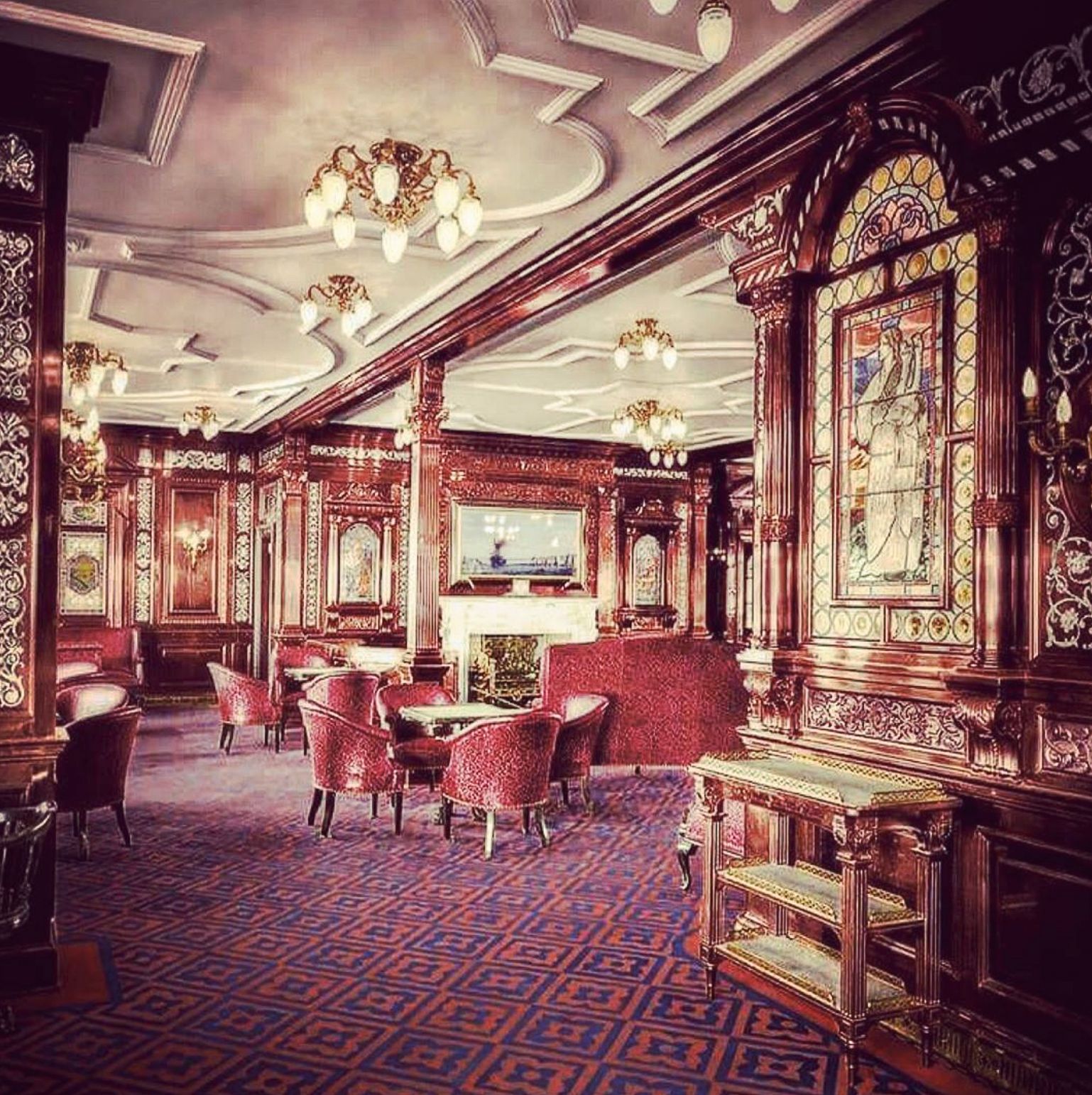
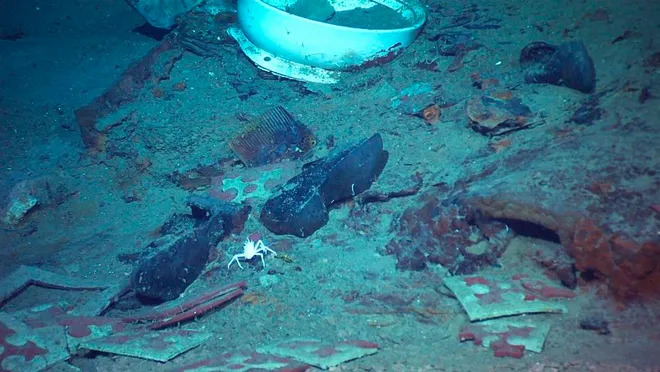
    A well-installed linoleum is waterproof and surprisingly antibacterial, which is why, since its invention, linoleum has been commonly used in hospitals. The flooring was also popular among naval vessels in the early twentieth century, with battleships and luxury cruisers taking advantage of the material. In fact, the RMS Titanic used inlaid linoleum flooring for a significant portion of its decks, which can be seen in past photos and even on the sea floor today.

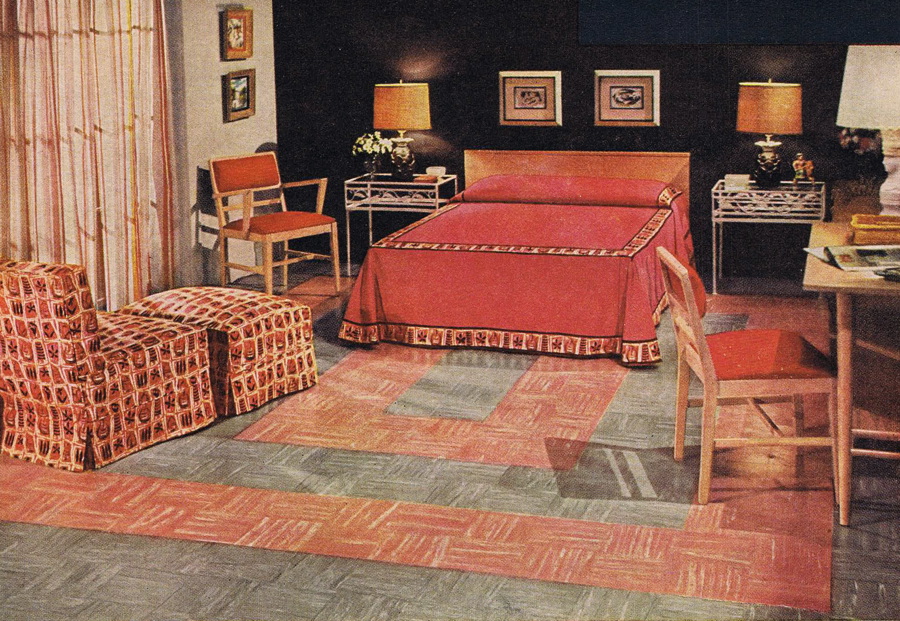
    The manufacturing boom of the mid-twentieth century brought modern materials and technologies to the average household, including the popularization of linoleum in common spaces. Kitchens and high-traffic areas would continue to have the flooring material. However, living rooms, eating spaces, and even walls would start to display colorful and flashy patterns. This popularity would be short-lived, as the 1950s brought vinyl flooring, an extremely similar product, but was pushed as a newer and more “fashionable” alternative to linoleum.

    An image of a bedroom from a 1952 advertisement for linoleum flooring

    Despite the initial falloff, linoleum has made a surprising comeback in homes within the last few years. It’s understandable, as per square foot, the material is very affordable and easy to clean, not to mention that rising interest in the conservation of historic homes has led to the preservation and replication of historic linoleum. Most often, the damage to the material features is rips and cracks, which are easily repaired with patching and a fresh coat of sealant.

    I don’t write any of this intending that you agree with me. However, I believe that linoleum reflects the best of modern materiality. It’s low-cost, eco-friendly, durable, and easy to customize, allowing lower-income homes to decorate their spaces economically and colorfully. While spotting linoleum in older buildings may be rare due to being covered with changing fashion trends (we are all familiar with carpet over beautiful hardwood floors), preserving it is just as important as any other part of the built environment.


    Helena Samson

    Fleming Smith Scholar, UMW Class of 2025


    Linoleum’s Forebearer “Fancy Pattern-Cloth” – Eighteenth Century Floorcloths

    The future of home restoration and preservation will involve saving certain building materials, such as wood, stone, brick, and decorative elements, like linoleum. While humble and even ridiculed (you know the pattern), linoleum will eventually be treasured as a lasting historical remnant, helping future preservationists add context and depth to restorations.

    Classic linoleum, everyone seemed to have despite not wanting to admit it.

    Unfortunately, in eighteenth-century historical preservation, we are rarely lucky enough to find samples of the predecessor of linoleum, the floorcloth. The floorcloth was a relatively common floor covering in eighteenth-century Virginia homes. It was made from woven cloth, usually heavy and sturdy, like linen or cotton canvas. This canvas was then stretched, several layers of oil paint applied, and covered in varnish. This floorcloth could be painted in any fashionable design, as seen in John Carwitham’s book published in 1739, with the replica marble being one of the favorites. 

    Like linoleum, floorcloth was prized because it was customizable, durable, easily cleaned, and repairable. It could also be cut down and used in other areas like kitchens or closets after it lost its fashionability or was replaced with carpet. It was so versatile that it basically reused itself out of existence.

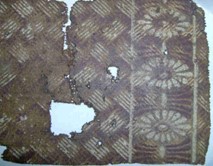
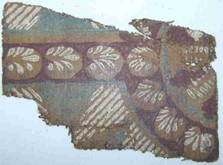
    While no known complete examples of eighteenth-century floorcloths exist, bits and pieces have been found, offering insight into their construction and functionality in the home. Coincidentally, here at Kenmore, we found remnants of a floorcloth under the floorboards in the attic during a period of restoration in 1989. Small samples from the remnants were taken for analysis:

    Base layer – yellow preparatory layers of lead white and yellow ochre ground in linseed oil. The uneven distribution of the large, clumped pigments suggests it was hand-ground paint.

    Black paint is found in the third layer above the ground coatings with remnants of plant resin varnish, followed by a green design layer. This could mean the black paint was the original design, and it was repainted after varnish and the green design were put on top.

    Green-painted areas – made up of white lead, Prussian blue, yellow ochre, and calcium carbonate.

    White paint – composed primarily of white lead and calcium carbonate

    We can draw a few conclusions from this paint analysis. One, the floorcloth was well used but eventually worked its way down the list of favored household furnishings, whether from wear and tear or fashionability. Either way, it was ultimately rolled up and stored out of sight, and lucky for us, forgotten.

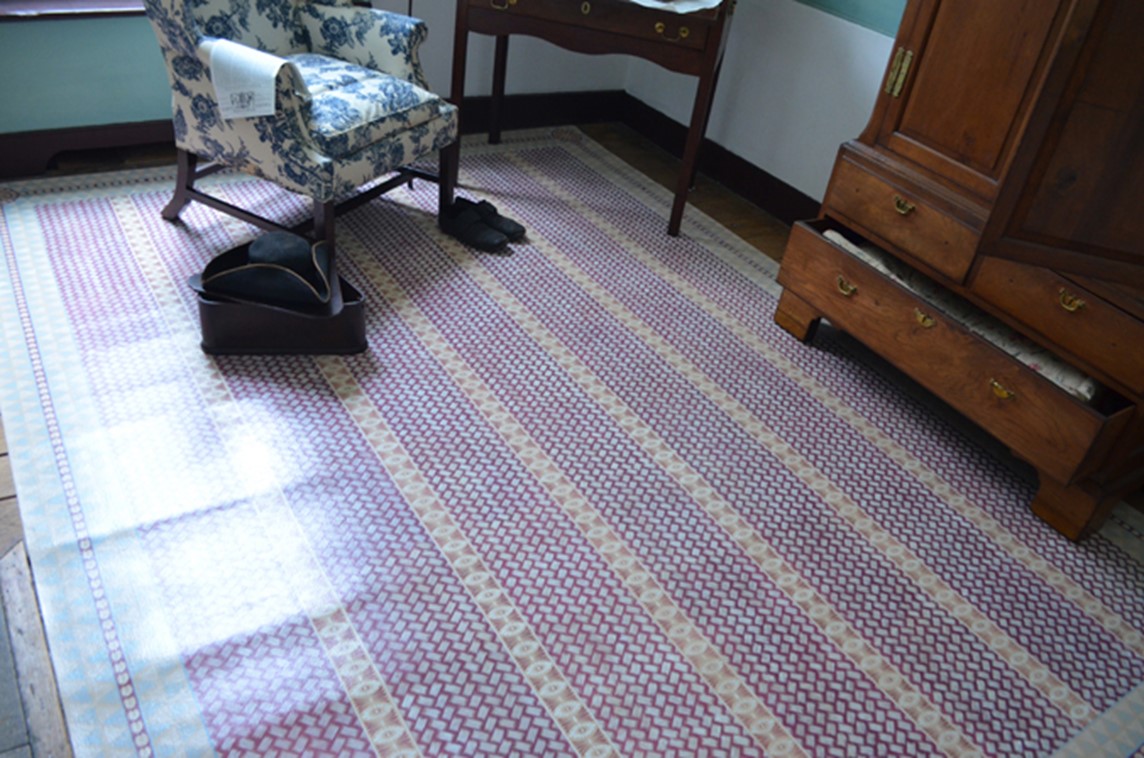
    Second, the white paint sample did not contain zinc white, which was used after 1840, and the green paint sample did not contain chrome green, which means it was likely produced before 1816, when chrome yellow pigments were commercially available. So, while we can’t verify that it was a Lewis family floorcloth, it is a very early example of the floor covering. It inspired the floorcloth reproduced for Fielding’s office in Kenmore, which you can read about in our previous post, “What Was Old Is New Again”.

    Beautiful reproduction floorcloth hand-painted by Black Dog Gallery, Yorktown.

    Today, thanks to linoleum, we can choose affordable, durable, and even fashionable flooring materials. Linoleum is the evolution of floorcloths with similar goals and functionality. However, while floorcloths didn’t usually survive, linoleum will follow us through history and deserves to be preserved even if it leads to awkward questions about style and décor.

    Oh, there will be questions.

     Heather Baldus

    Collections Manager

    Bibliography

    Kaldewei, G. (2000). Linoleum: History, design, Architecture, 1882-2000. Hatje Cantz ; Distribution in the US, DAP, Distributed Art Publishers.

    Garcia, K. (2023, December 6). Caring for 100-year old linoleum. Tenement Museum. https://www.tenement.org/blog/fun-with-linoleum-no-really/

    Houseman, C. (2020, September 11). Titanic’s linoleum. Encyclopedia Titanica Message Board. https://www.encyclopedia-titanica.org/community/threads/titanics-linoleum.52676/

    NPS. (n.d.). https://www.nps.gov/orgs/1739/upload/treatment-guidelines-2017-part2-reconstruction-restoration.pdf

    Landreau, A.N. (1976). America underfoot: A history of floor coverings from colonial times to the present. Published for the Smithsonian Institution Traveling Exhibition Service by the Smithsonian Institution Press.

    Weissman, J.R., & Lavitt, W. (1994). Labors of love: America’s textiles and Needlework, 1650-1930. Wings Book: Distributed by Outlet Book Co.

    Buck, Susan L. Floorcloth Fragments Cross-Section Microscopy Report, Kenmore, Fredericksburg, Virginia. (2006)

  • From the Vaults: Rarely Seen Documents

    Some of the most delicate objects in our collection are our archives. Paper and other document materials like vellum and parchment are very sensitive materials that can be irreversibly damaged simply by light.  This makes it very difficult to display or put on exhibit for extended periods despite our comprehensive policies for conserving and preserving documents; exhibition has always been unfeasible.  To remedy this, we have been working on getting archival-safe, high-quality images of our important documents online for everyone to access.  So, while you might not see the documents in person, you can still explore, read, and learn about these important papers while we preserve them for future generations.     

    Until we launch our online archives, I wanted to give everyone a sneak peek at a few of our incredible pieces.

    One of our oldest documents in the collection is a Land Grant signed by William Gooch on September 28, 1730, written on vellum.  William Gooch was a colonial administrator who served as governor of Virginia from 1727 to 1749.  The grant is not in the best condition, but it reads that it grants 400 acres in Spotsylvania County to Paul Plunkepee.  This grant is officially recorded as Land Office Patents, No. 14, 1728-1732, page 40, and is available at the Library of Virginia.

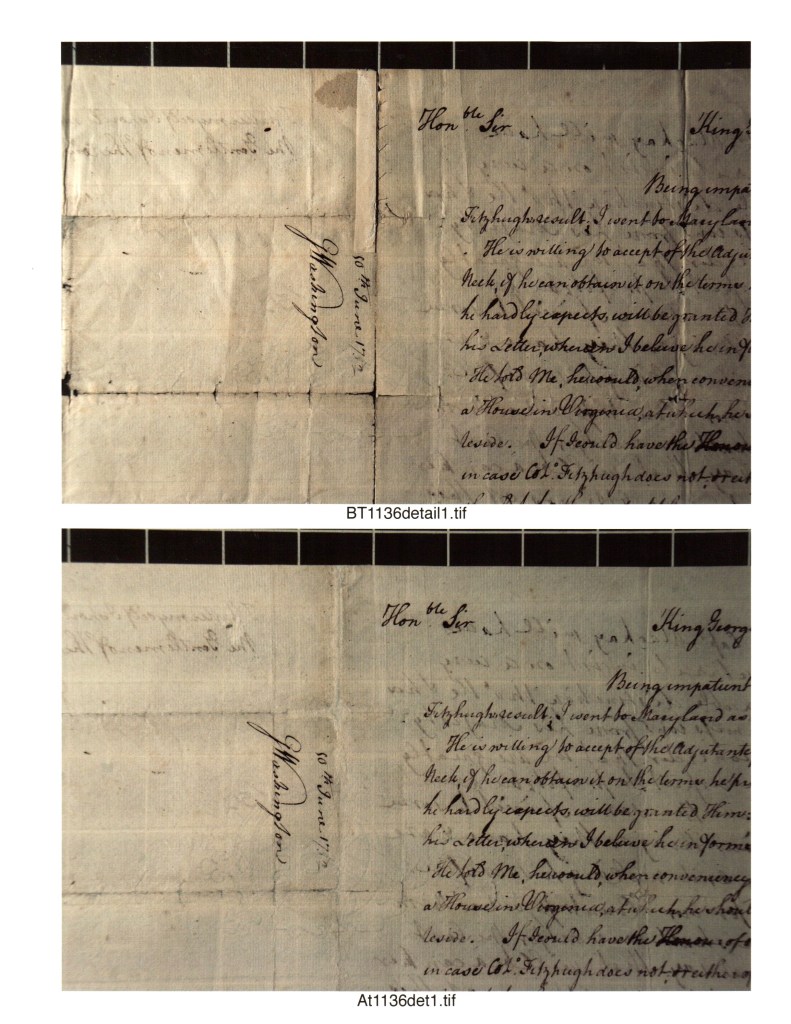
    One of our most unique documents is a letter from George Washington to Lieutenant Governor Robert Dinwiddie, written on June 10, 1752, when he was twenty.  Robert Dinwiddie served as Lieutenant Governor of Virginia from 1751 to 1758.  In the letter, George requests his first military appointment to the open adjutancy of the Northern Neck or other district.  George’s half-brother Lawrence had been appointed Adjutant General of the colony in 1743.  Due to his illness and eventual death, the adjutant was to be divided into smaller districts (i.e., Northern Neck).

    Dinwiddie declined the appointment but assigned George to an envoy position that winter to confront the French, who had recently built a fort on what Dinwiddie considered British land.  Additionally, George met with the Iroquois Confederacy to make peace and obtain intelligence about the French.  

    This amazing letter pinpoints the beginning of George Washington’s illustrious military career, which would eventually culminate in him becoming the first President of the new United States of America.  The letter is in great condition after meticulous conservation work, which included repairs with Japanese tissue called tengucho and wheat starch paste called jin shofu.  It was then cleaned and flattened, and the iron gall ink stabilized.

    A transcript of the letter can be found on the National Archives website at Founders Online.

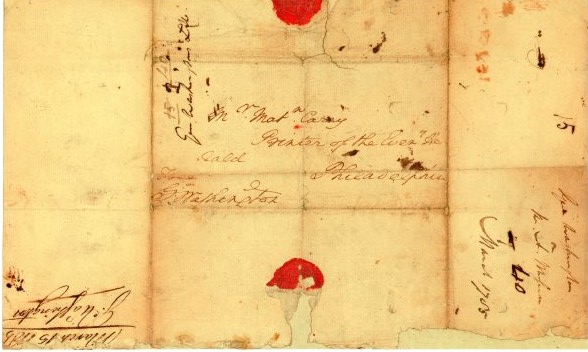
    Next are two letters between George Washington and Irish-born publisher Matthew Carey.  Matthew Carey moved to America in 1784 and settled in Philadelphia, where he established a publishing business and bookshop with $400 given to him by the Marquis de Lafayette.  Carey’s first publication was The Pennsylvania Herald in 1785, followed by two of the first successful American magazines, The Columbian Magazine and The American Magazine in 1786 and 1787.

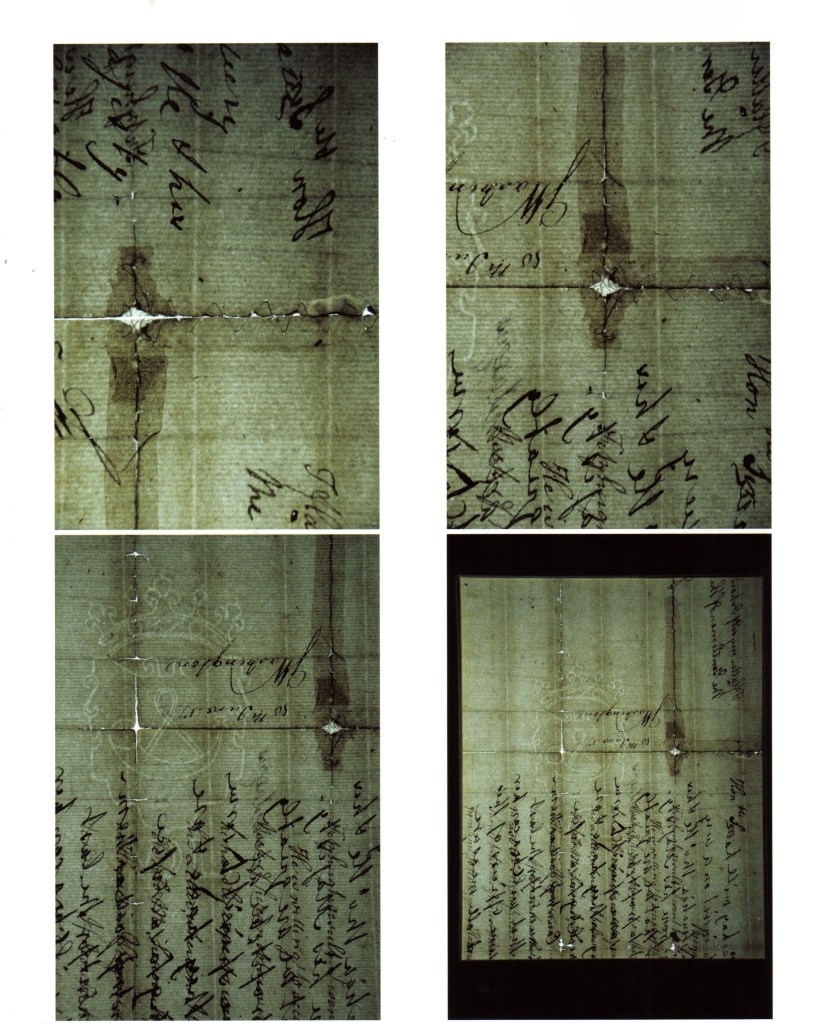
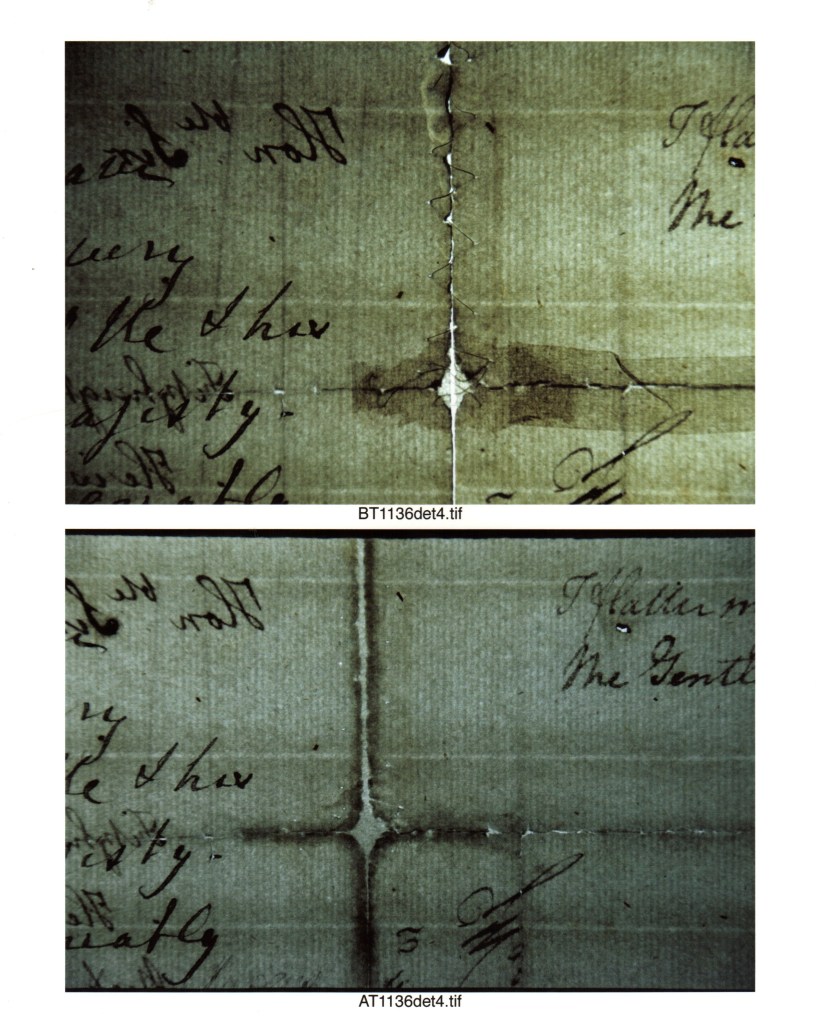
    In George’s first letter to Carey in 1785, he requests a subscription to Carey’s newspaper but asks him to send the newspaper disguised as an ordinary letter because George has been having problems with the post office delivering his newspapers .  George thinks his papers may not have been delivered because “persons who wishing to read News Papers without being of the expence [sic] of paying for them, make free with those which are addressed to others.”

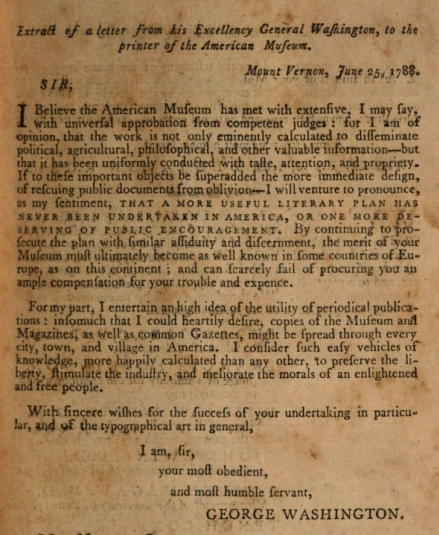
    The second letter between George and Matthew is dated June 25, 1788.  The year before, Carey launched “The American Museum” magazine.  It was a literary museum that reprinted significant historical documents on American history and original essays on politics, commerce, and culture.  The magazine got a positive response, but Carey was finding it expensive to distribute the magazine across the country, so he asked George, one of his first subscribers, to write an endorsement for the magazine that would help attract new subscribers.[2] 

    Washington responded immediately, seizing the opportunity offered by Carey to express his belief that the free dissemination of information and ideas was vital to preserving American liberty.  ‘I could heartily desire,’ Washington wrote, that ‘copies of the Museum and Magazines, as well as common Gazettes, might be spread through every city, town & village in America – I consider such easy vehicles of knowledge, more happily calculated that any other, to preserve the liberty, stimulate the industry and meliorate the morals of an enlightened and free People.”

    Carey published Washington’s endorsement in the next issue of his magazine—his marks for the typesetter can be seen in the original Washington letter.  The result was a flood of new subscriptions that allowed Carey to continue publishing The American Museum for another four years.

    Transcripts of the letters can be found on the National Archives website at Founders Online.

    These are just a few of the amazing documents in our collection, which we hope to bring you soon so that you can explore them yourself.  Check back often, and we will keep you updated on our progress with our digitization project.

    Heather Baldus

    Collections Manager

    Bibliography

    Edd Applegate (August 17, 2012). The rise of Advertising in the United States: A History of Innovation to 1960. Scarecrow Press. p.25.


  • Behind the Glass at Ferry Farm’s Archaeology Lab

    The observer stands behind glass and watches. The one being watched picks up the object with her bare hands turns it carefully to see every angle, then sets it down to record data into her computer. Then she washes her hands, unwraps another object – and eats it!

    Visitors to George Washington’s Ferry Farm can explore more than the museum gallery, or the Washington House replica, or newly constructed Quarter and Cellar outbuildings. They can tap into their people-watching curiosities and observe real archaeologists in a laboratory researching, washing objects, making labels, cataloguing, repairing ceramics – and even eating lunch!

    One extraordinary thing about Ferry Farm is that its archaeology lab is viewable and accessible to the public. The mysteries of history lie out in the open, sitting out on tables or in trays ready to be washed and categorized. Like zoo-goers, visitors are mesmerized by the goings-on behind the glass, and likewise, our archaeologists love interacting with the public, glad to answer questions or even pose for a picture.

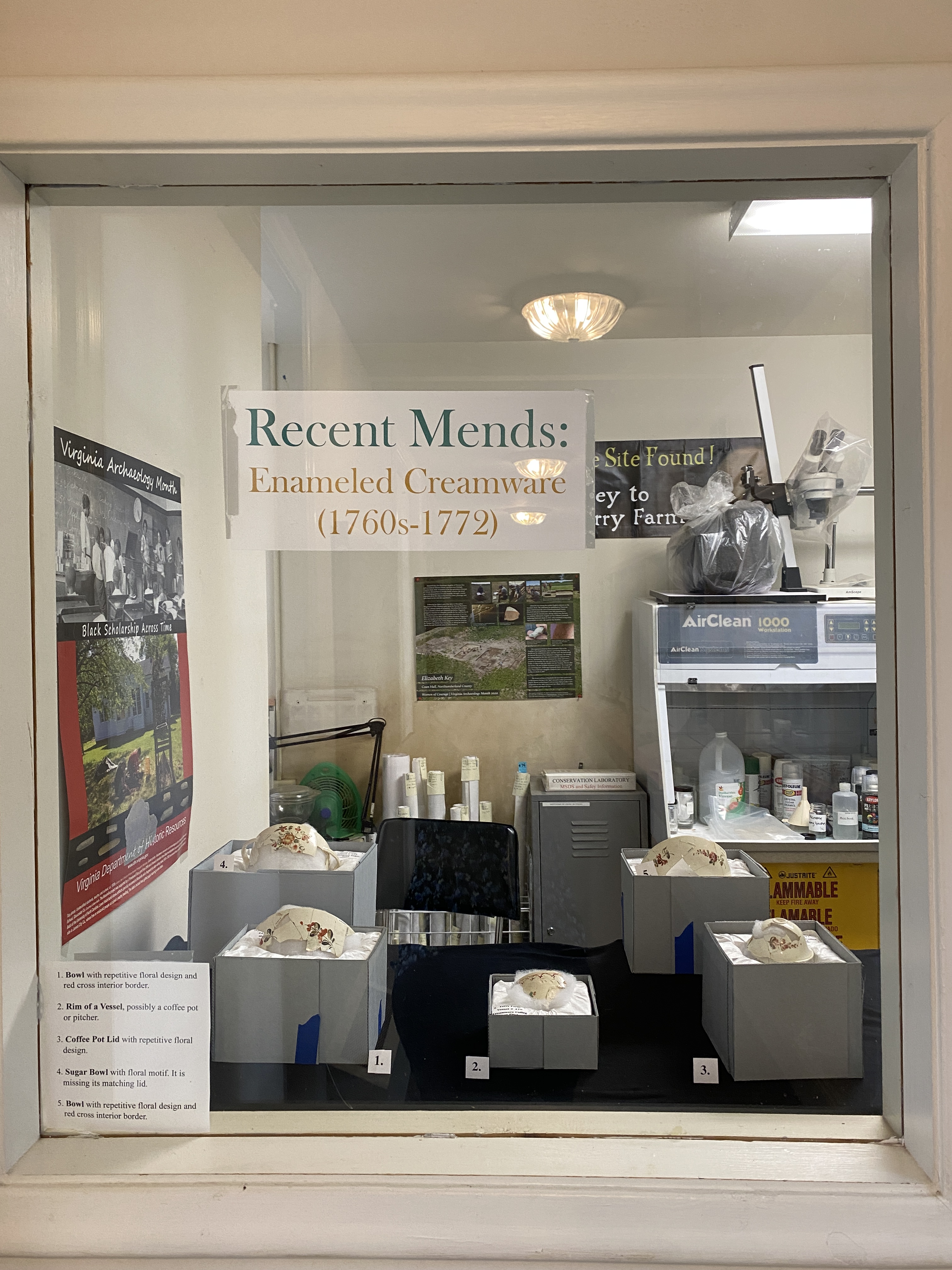
    Recent mends of enameled creamware behind one of several Archaeology Lab observation windows.

    It may be an interesting coincidence, but as Mary Washington drives the story of Ferry Farm and Historic Kenmore was saved by a group of intrepid women, Ferry Farm’s archaeology laboratory is also dominated by women who are passionate about what they do and more than willing to share their findings with guests and professional peers. Who are these interesting women, and what exactly happens in the lab? Its main inhabitants are Lab Supervisor Mara Kaktins and Field Directors Judy Jobrack and Danielle Arens. Also, part of the team (but not in the fishbowl) are Research Archaeologist Emma Schlauder and Director of Archaeology Dave Muraca. Dave, the only man in the department, led the team that discovered the foundation of the Washington House.

    There would be no lab work if there was no field work, and every summer for about 11 weeks, a carefully planned dig occurs on the grounds of George Washington’s Boyhood Home. Rich in artifacts, the land has yielded over 800,000 since the 1990’s. Finds date from indigenous, colonial, Civil War, and a sequence of farms throughout the 20th century. As Dave Muraca has said, “I would never recommend having a Civil War battle on your archaeological site. There are five successive farms out there, one on top of each other. In that way, it’s very complicated and hard to take apart.” That said, the fieldwork is not easy, but incredibly, each season, they find thousands of artifacts that will need to be mapped, processed, washed, bagged, catalogued in the database, labeled, stored, and researched.

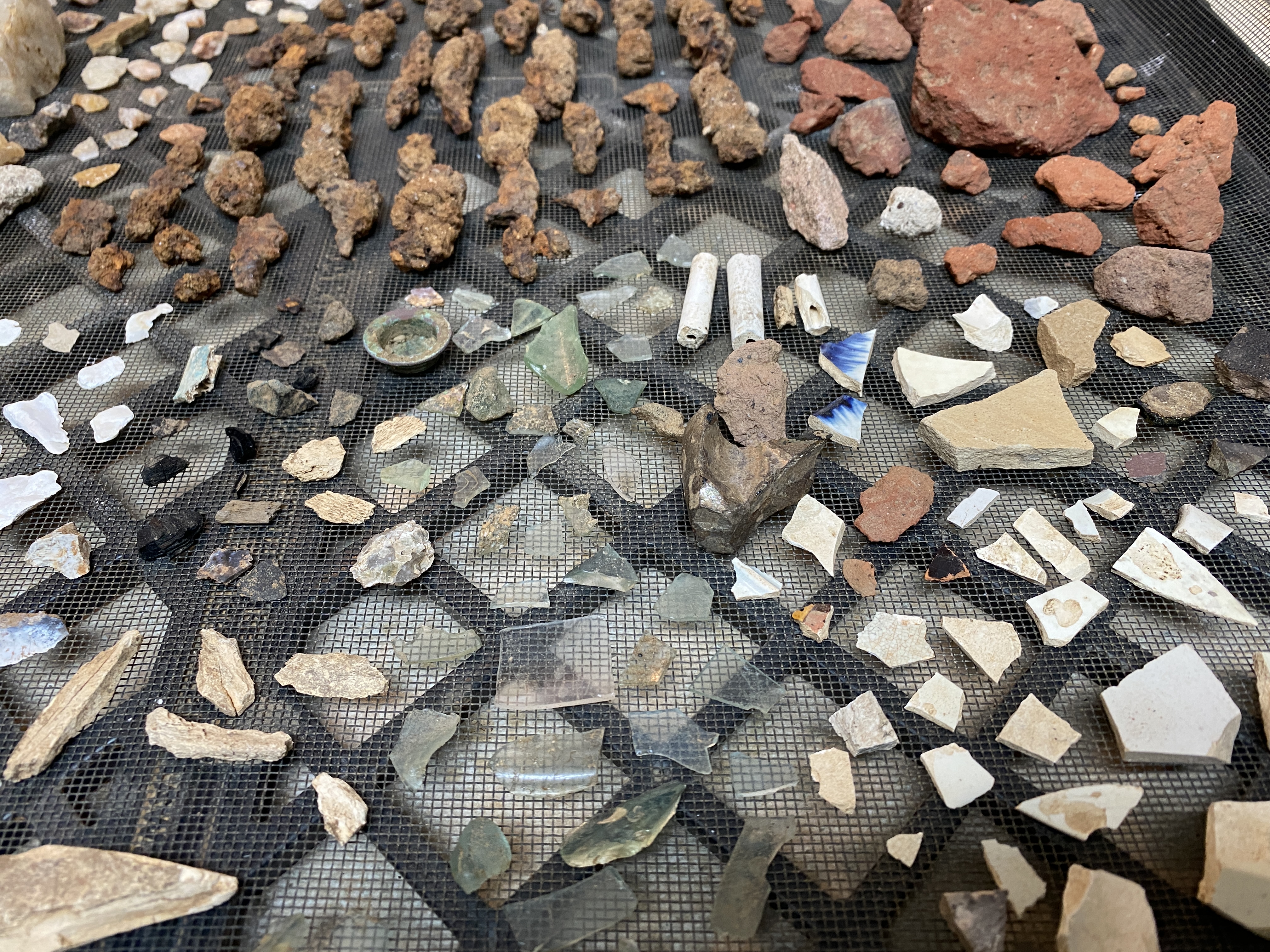
    Washed artifacts waiting to be bagged and catalogued.

    Typical finds include ceramic sherds, window glass shards, architectural pieces, household items, mortar, sandstone, personal items, pipes, wig curlers, buttons, personal adornment, and indigenous and faunal (animal remains). Objects popular with the public include a Masonic pipe bowl, cufflinks engraved with foxes and “Tally O,” a chamber pot, and even 20th-century items that indicate children used to live on-site, such as Matchbox cars, a toy motorcycle, or a doll’s head. Observers are also surprised to learn that 21st-century trash is catalogued because it was unearthed, and someday that too will be a part of Ferry Farm’s history.

    It’s important to note that Ferry Farm doesn’t dig exhaustively. While archaeologists are certainly concerned with the past, they also make concessions for the future, leaving areas untouched for future generations to dig using as-yet not invented technology. Ground penetrating radar has not been used much because of all that has happened on the land since Washingtons’ time. The main emphasis is feature-chasing – looking for structures such as the Washington House, cellar, kitchen, the Quarter, and more. No land feature will be recreated without knowing exactly where it stood.

    A unique quality of Ferry Farm’s Archaeology Department is that lab and field duties are not segregated; the same amazing team works both in the lab and field. This creates an intimacy with the artifacts that may not be present elsewhere. One day in the field equals three working days in the lab, processing, interpreting, and analyzing all the data from the artifacts. The first step is turning the field data into a format that’s digestible for record-keeping, end-of-year reports, and future Ferry Farm archaeologists. In the field, a site grid in five-foot increments is established and laid out to track where the finds are. Within that grid, context numbers are assigned to specific soil layers and features. A context is essentially a 5’ x 5’ address that notes the horizontal and vertical location of artifacts, noting spatial distribution where items are concentrated. In the lab, context maps are made from each grid unit, and the maps are put together to create the stratigraphy of a dig site.

    Leaded glass takes on a blue hue under UV light.

    Artifacts that come in are brought to the Wet Lab and washed with water in a tub or colander using tools such as toothbrushes, pipe cleaners, or dental picks. One might wonder if there are special precautions for handling artifacts, and interestingly, controversy swirls over whether artifacts should be handled with gloves or not. Rubber gloves are worn during lengthy washings to keep hands from getting too waterlogged. It turns out wearing gloves for analysis proves more damaging since touch sensitivity is reduced and gloves are prone to ripping. Items being examined have been surrounded by the elements for years, so oils from hands are not likely to harm artifacts any further.

    Next to the Wet Lab is the Conservation Lab, where acetone might be used to remove glue from previously mended artifacts. It’s equipped with a vent hood for fumes and the archaeologists wear masks for safety. They often create tableware replicas for the Washington House display, which might require the use of spray paint.

    Very well-designed and equipped, the lab was created by archaeologists for archaeologists. Their equipment includes a light table, a Dremel, a fine water screen for the field, and a UV light to identify leaded glass. For further testing, the department may contract out to other labs, such as the University of Eastern Michigan, with DART mass spectrometry capable of identifying organic materials.

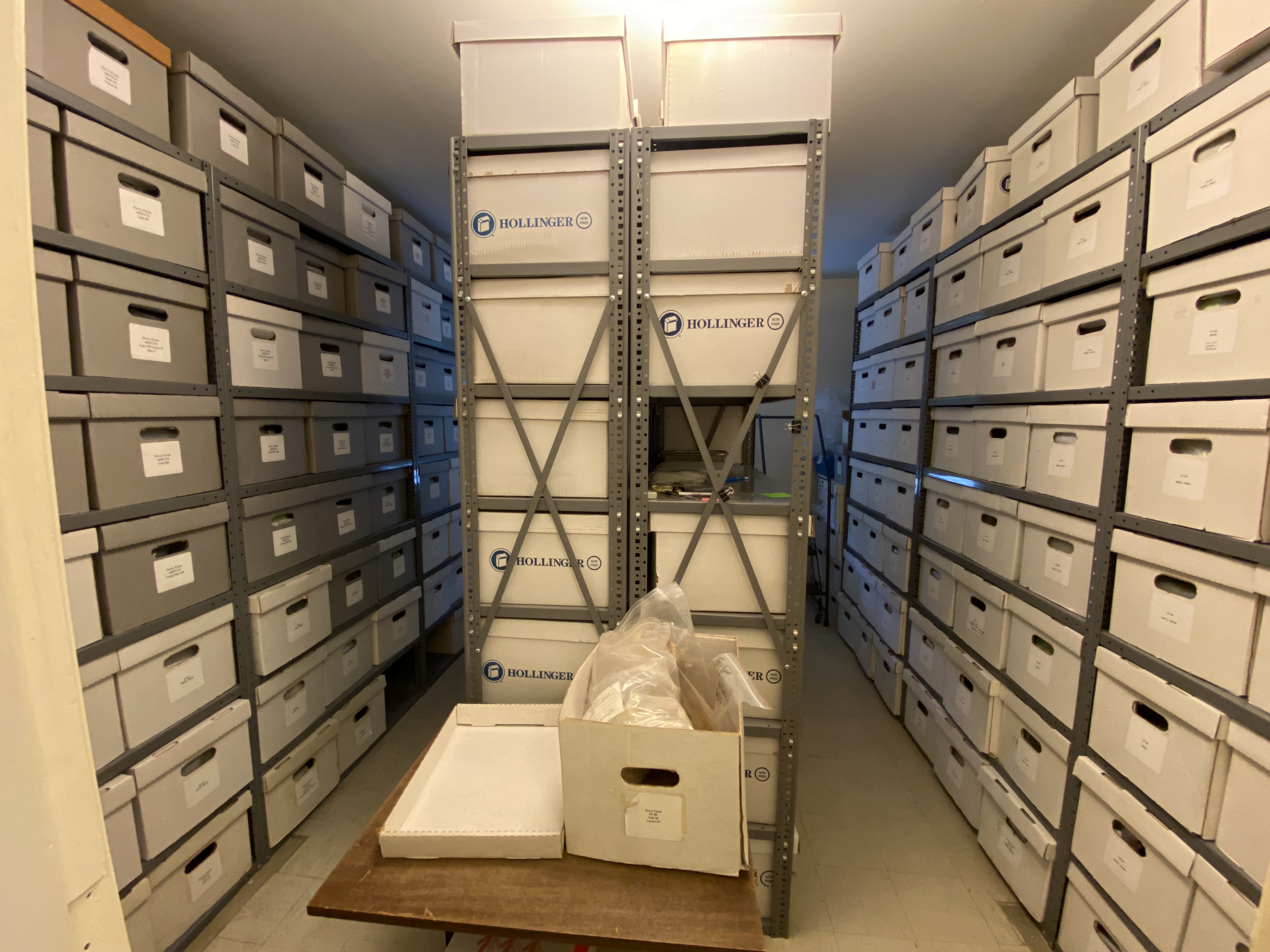
    After artifacts are entered into the database and bagged with tiny labels indicating their project number and context, they are either put in the study collection or housed in cabinets or a storage room. With almost a million artifacts in the collection, the boxes stacked in the storage room resemble a miniature version of the ending scene in Raiders of the Lost Ark.

    Boxes of artifacts stacked in the storage room resemble a miniature version of the ending scene in Raiders of the Lost Ark.

    While one cannot put a value on tiny sherds of 18th-century ceramics, a rusted hinge, or an old button, Kaktins says, “Everything is priceless because of the information gleaned from it.” Archaeology at Ferry Farm is the driving force behind the stories shared with visitors. It informs where the buildings go, reveals the long-forgotten secrets of inhabitants, and intrigues visitors as they glimpse into the past.

    Lori Pikkaart

    Marketing & Communications Manager

  • Seeing The Big Picture:  How Excavated Ceramics Informed The George Washington Foundation’s Acquisition of Complete Pieces for Display

    The archaeology and curatorial departments for The George Washington Foundation have long worked together to furnish the reproduced Washington house with historically accurate items that resemble as closely as possible the ones that George and his family would have lived with daily. These pieces are not originals, which means visitors touring the house can handle them.

    Go ahead and touch everything.

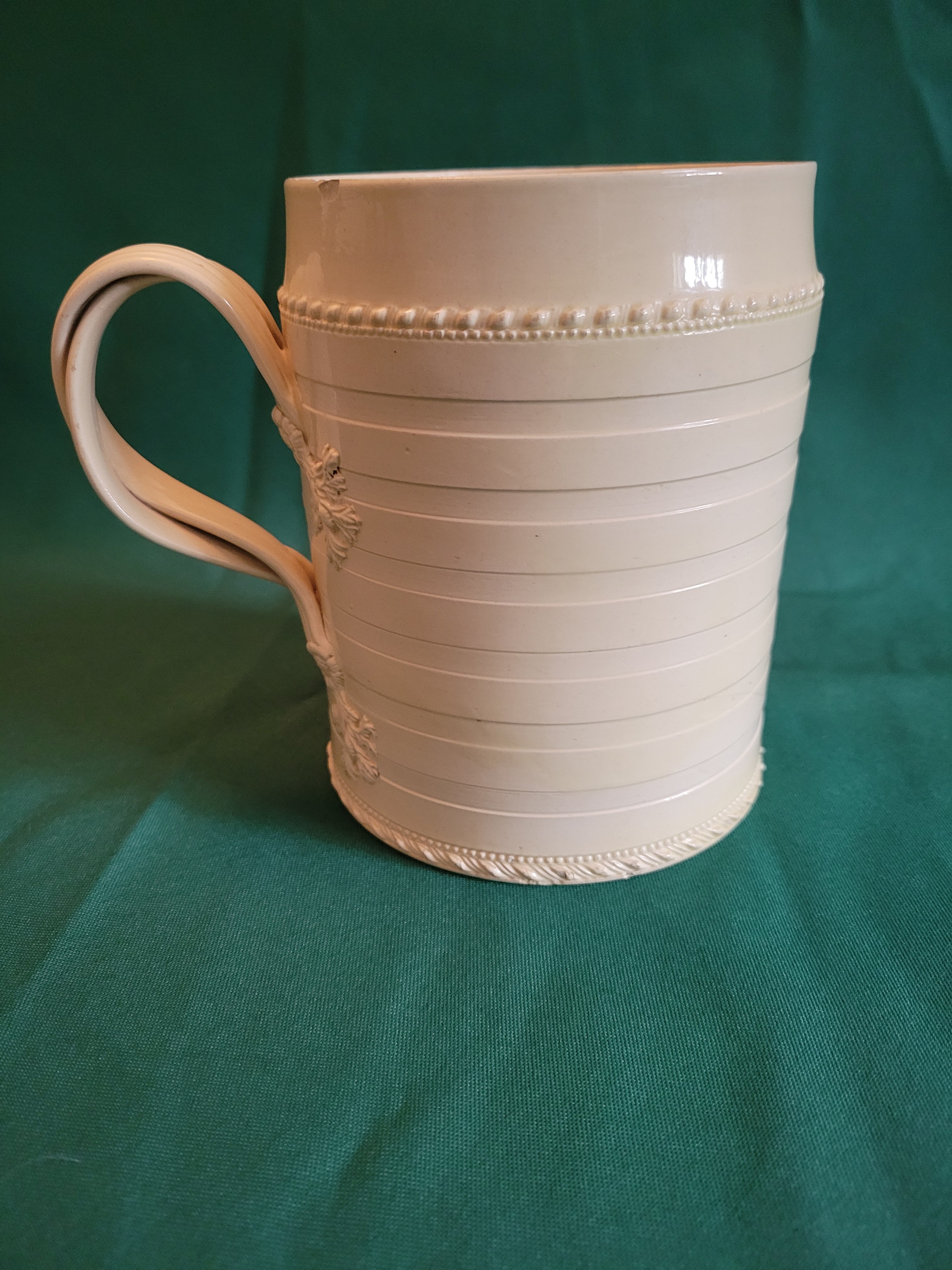
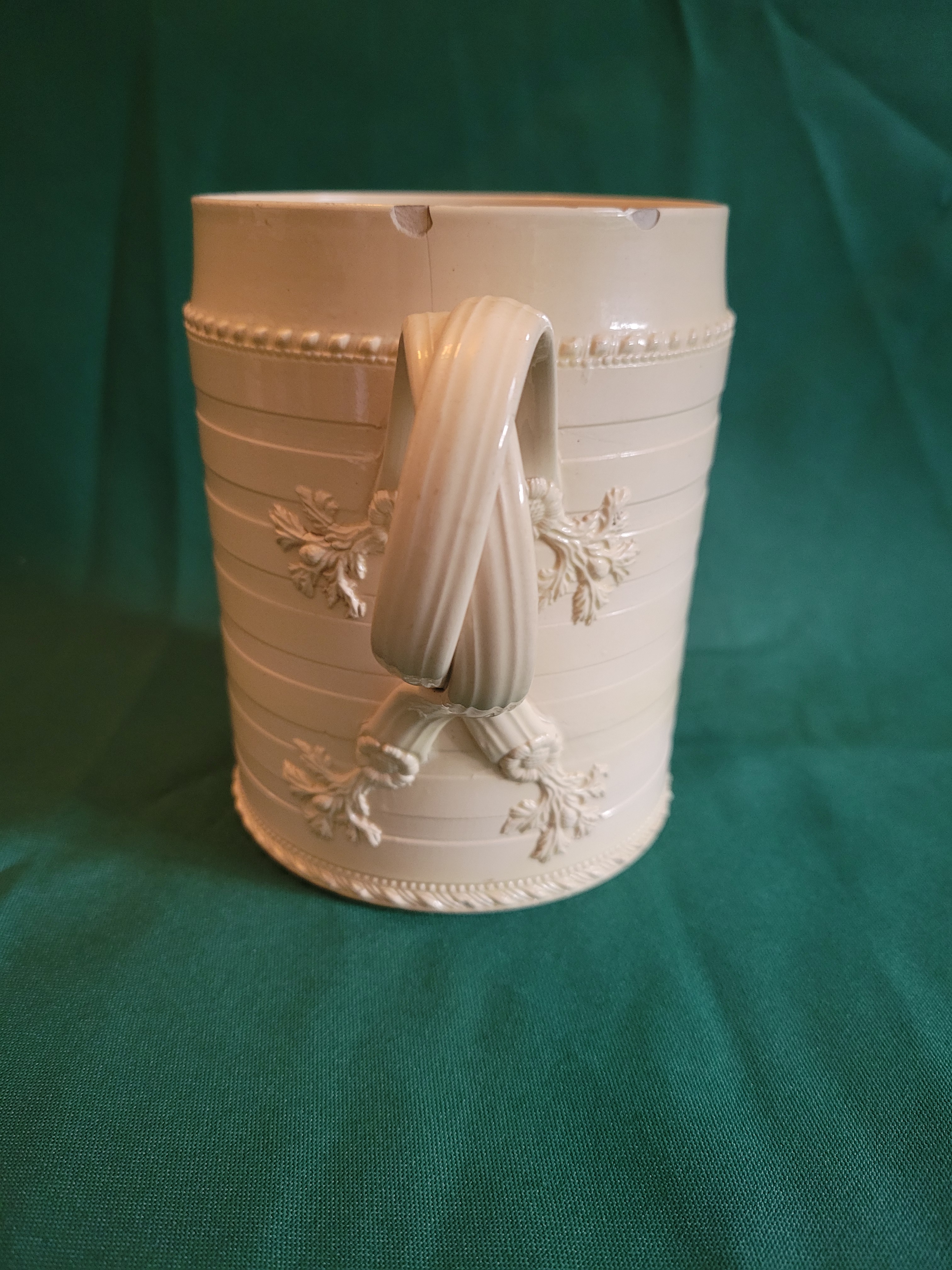
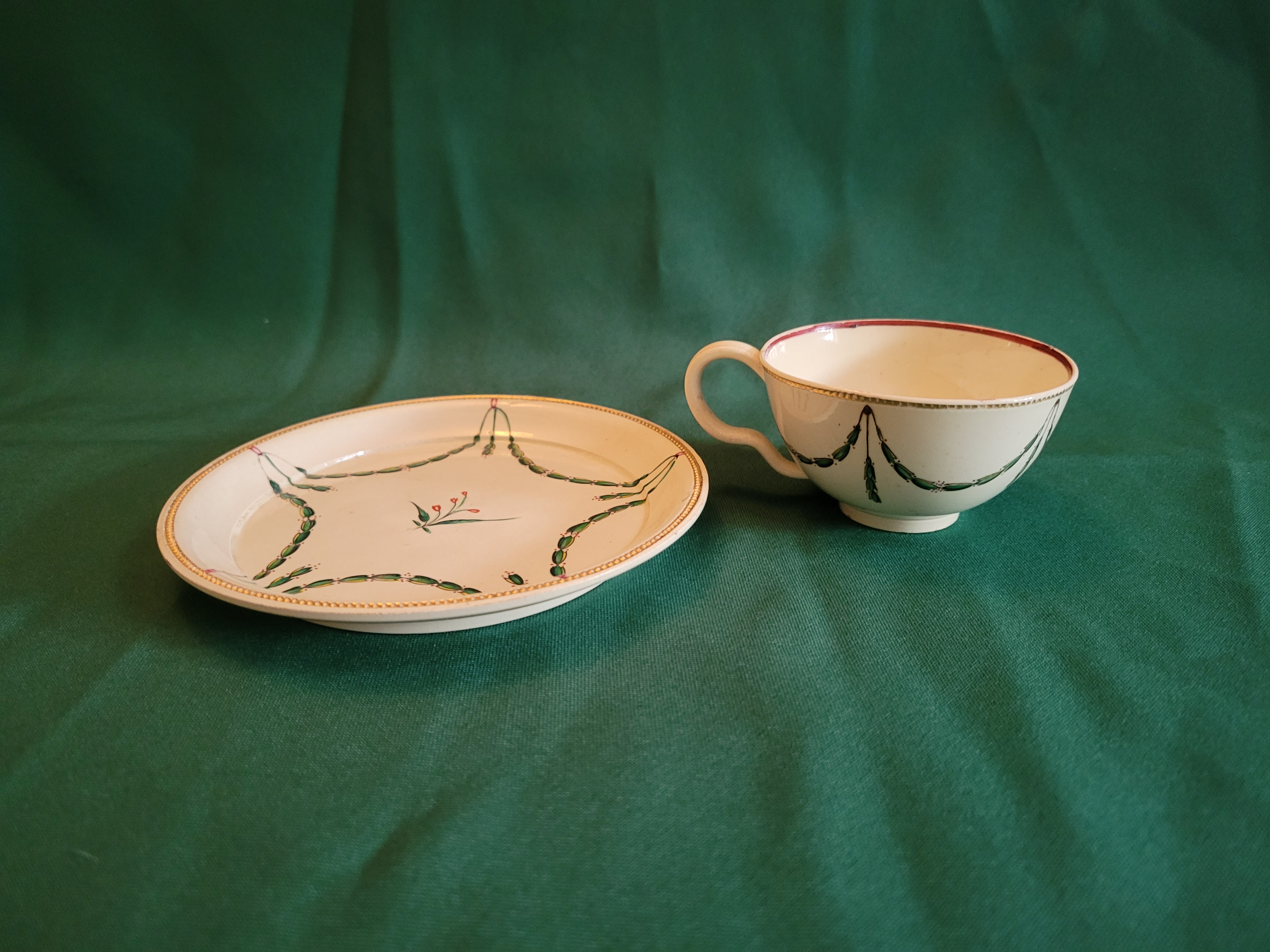
    In our latest collaboration we’ve been examining sherds of ceramic vessels owned by the Washington’s to obtain actual eighteenth-century dishes. We want to display these dishes in our gallery to give visitors an idea of what the whole vessels looked like. Four such ceramics have recently been acquired at auctions by the Foundation and you can see them first here along with the excavated remnants they resemble.

    Three of our acquisitions are a type of English ceramic called ‘creamware,’ which was invented in the early 1760’s and was very popular with George’s mother, Mary. Both this lovely pitcher and mug exhibit decorative elements represented by our excavated ceramics. Most prominent are the elegantly curved handles that terminate in delicate strawberry flowers. At least two vessels with these types of handles have been recovered at Ferry Farm. The first is a highly decorative creamware sauce boat and the second a petite teacup, both of which were considered quite fashionable for the time. The jug and teacup also share a common form of decoration called a ‘beaded rim.’

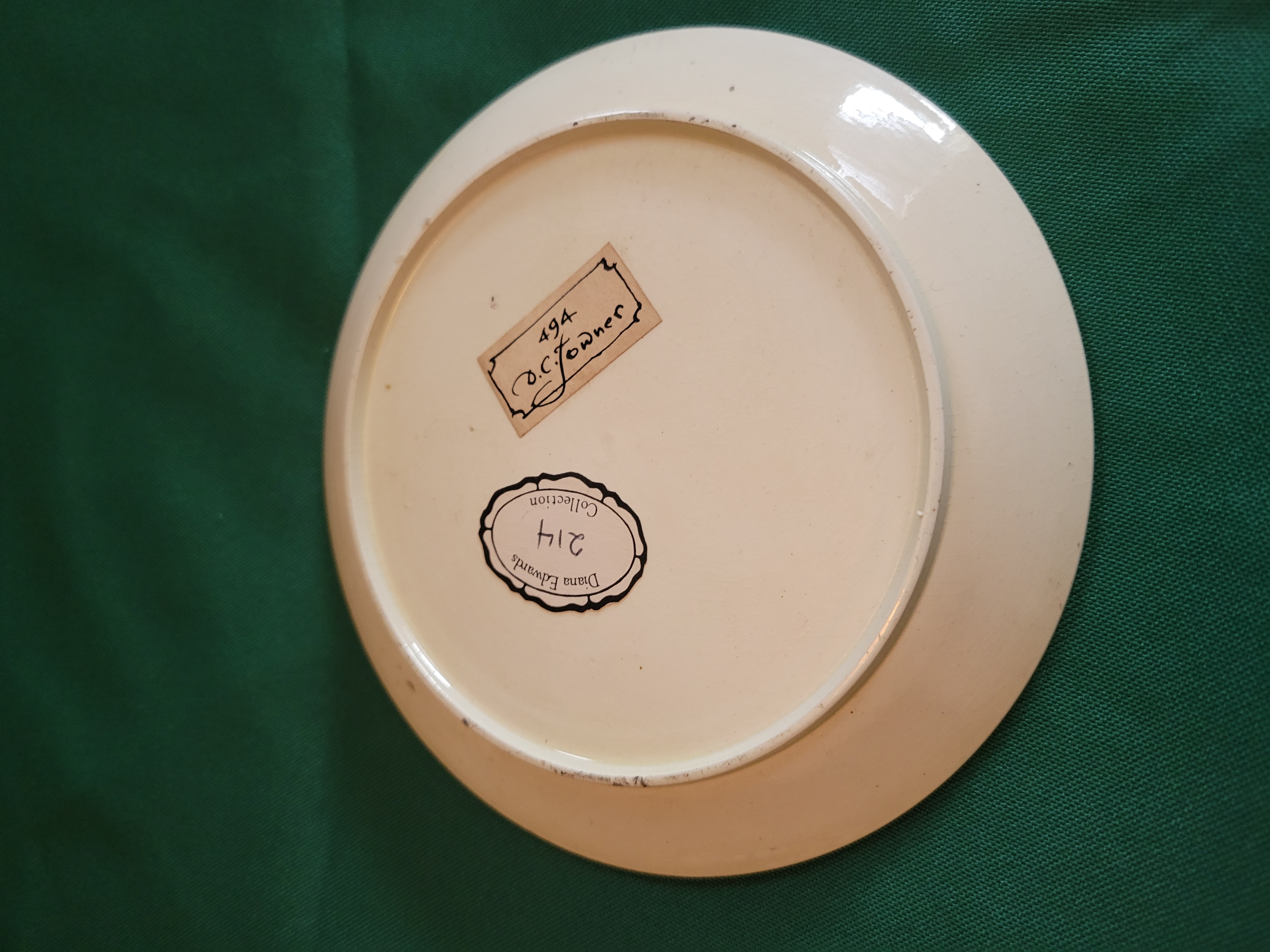
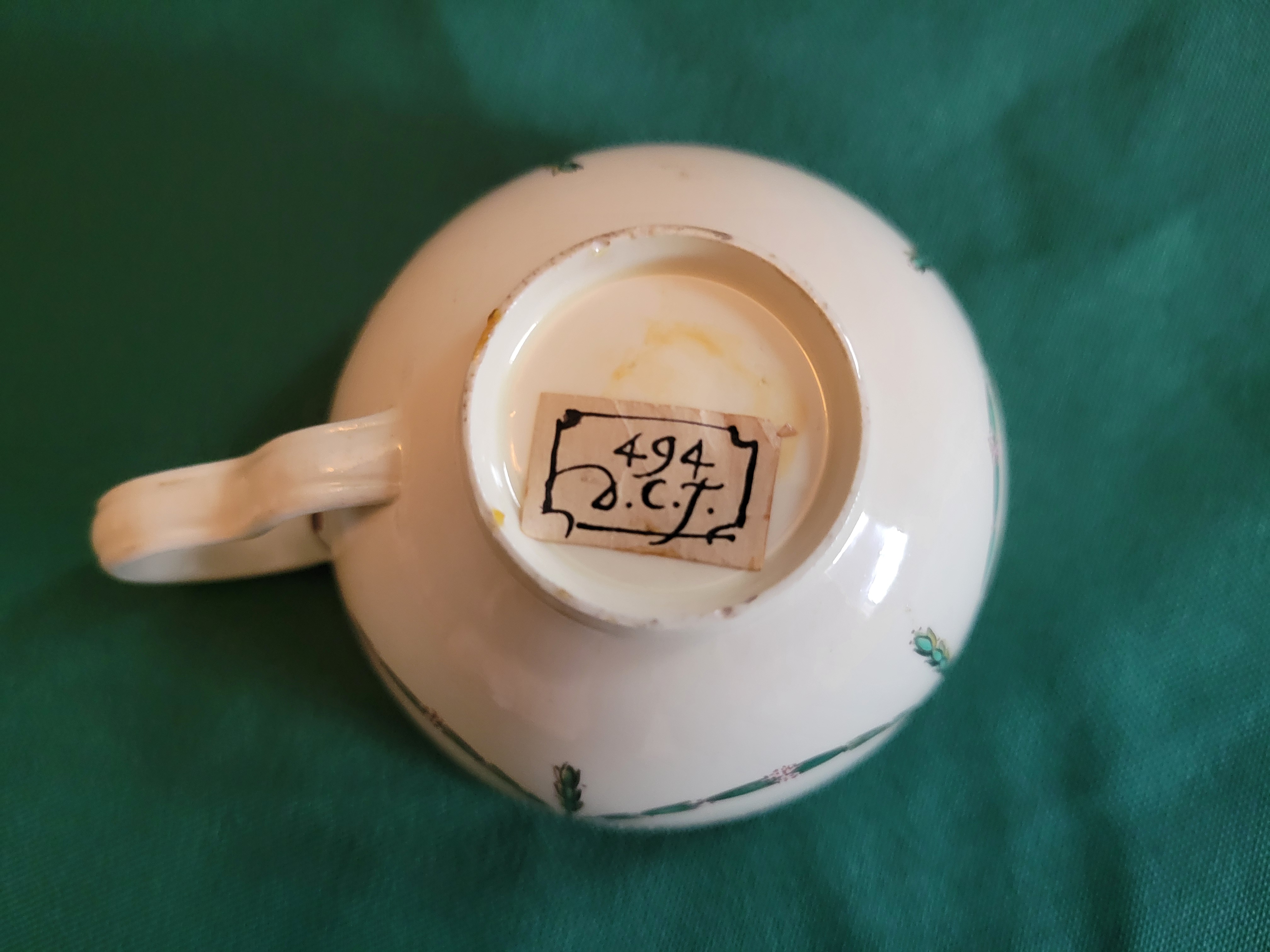
    Another teacup owned by Mary was this beautiful piece hand-painted with a detailed swag motif. But from the sherds it’s difficult to really appreciate how graceful this decoration is. Luckily, our curators hunted down a similar cup and saucer with the same decoration, which is unusual. The saucer also features a beaded rim that has been filled in with gold gilding, although we believe the gold to be a later addition to the piece. The cup and saucer also have handwritten tags affixed to the bases which indicate they had the distinction of having been in the collection of a well-known (at least to ceramics geeks like yours truly) collector of creamware. This man by the name of Donald Towner had written extensively on the topic of English ceramics and over his career had amassed a large study collection, of which this was one. His book on the Leeds Pottery in England features a catalogue from the pottery that includes many of the decorative elements and shapes discussed above (Towner, 1965).

    But my favorite is this delightfully potbellied creamer with three legs featuring lion’s heads and paws for feet. The ceramic type in question is called Whieldon and started to come on the market in England around 1749. Of note is the raised molded leaf decoration which resembles one sherd from our collection. While we may never know the exact type of vessel our leaf came from, the complete creamer gives one a better idea of how the decoration was placed and looked. Mary’s choice of ceramics played a large part in emphasizing her and her children’s place among the Virginia Gentry and we’re very pleased to have some whole examples now to help illustrate to visitors just how lovely some of these dishes were!

    Mara Kaktins, Archaeologist & Lab Manager


    Bibliography

    Towner, Donald.  The Leeds Pottery, 1965.  Taplinger Publishing Co., Inc., New York. 

  • New Arrivals at Ferry Farm & Kenmore [Video]

    In this video, curator Meghan Budinger updates us on the latest arrivals in the final steps of furnishing the Washington house replica at George Washington’s Ferry Farm and of re-furnishing Historic Kenmore.

  • Lecture – Cabinet of Curiosities: Kenmore and the Evolution of Museum Collections [Video]

    On Tuesday, May 15, 2018, Meghan Budinger, Aldrich Director of Curatorial Operations for The George Wsahington Foundation presented a lecture titled “Cabinets of Curiosities: Kenmore and the Evolution of Museum Collections.” Using Kenmore’s collection as a case study, Meghan reviewed 100-years worth of museum curation and talked about some of the most exciting and unusual objects in Kenmore’s collection.

    This final lecture in the latest trilogy of Foundation lectures took place at the Central Rappahannock Regional Library in Fredericksburg, Virginia.

  • Search for Washington House Furnishings Takes Exciting Turn!

    Furnishings posts logo finalAs Meghan talked about in her latest blog post, we are currently taking on the immense task of finding accurate and well-made reproduction furnishings and household items for the reconstructed Washington house at George Washington’s Ferry Farm.  We recently completed two successful shopping expeditions and acquired an array of items for the home from earthenware tankards to creamware cups and saucers.  While, many of these pieces will be familiar to anyone who loves to pick through local antique stores, there are some unique items whose names and purposes are might not be that familiar to the modern person.

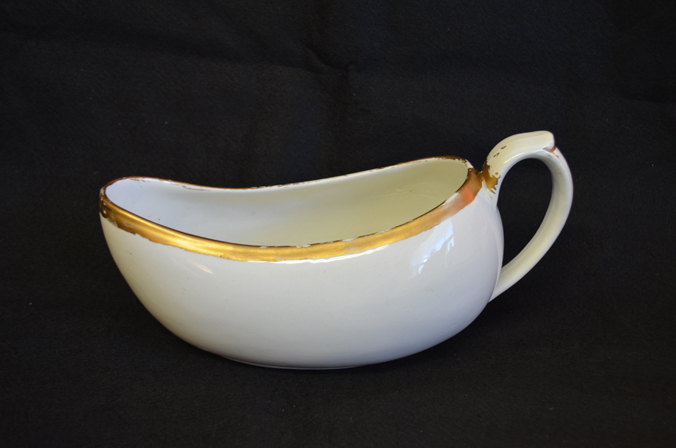
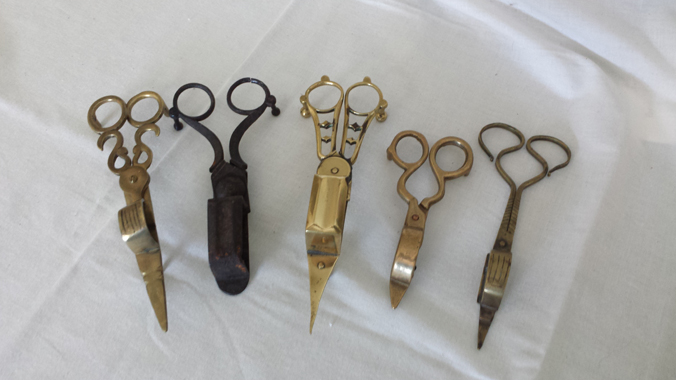
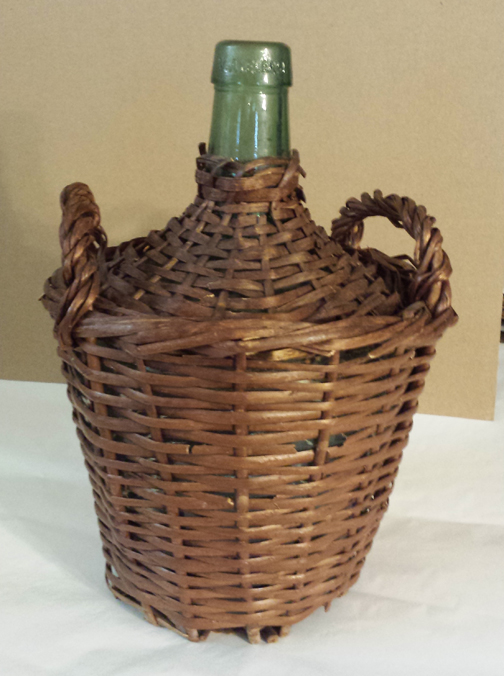
    The first two items, a bourdaloue and wick trimmers, were purchased at auction in Richmond.  The auction sold props used on the AMC show “Turn: Washington’s Spies” which wrapped filming this year after four seasons.  “Turn” takes place from 1776 to 1781 and follows a farmer and his childhood friends as they form a group of spies called the Culper Ring.  The show used many good reproductions of everyday 18th century objects and the auction proved an excellent resource for items to use in the house at Ferry Farm.  The third item, a demijohn, was found at an antique store on Virginia’s Northern Neck.

    Bourdaloue

    Bourdaloue
    A replica bourdaloue purchased at the “Turn” auction.

    While this might look like a gravy boat to modern eyes, it is actually a bourdaloue, which is a smaller and more feminine version of a chamber pot.  They could be china, tin, and even leather.

    In an era without public toilets, the bourdaloue provided a lady with a portable and relatively clean means of relieving herself away from home.  The vessel was oblong, rectangular, or oval in shape and a slightly raised lip at one end and a handle at the other and allowed usage from a squatting or standing position.  The bowl would then be given to the lady’s maid who disposed of the waste discretely.  Bourdaloues slowly disappeared from everyday life after indoor plumbing and bathrooms made their way into everyone’s home.

    Legend is that the bourdaloue got its name from a Jesuit priest, Louis Bourdaloue, who would preach for hours at church.  Ladies used the vessel as easy way to relieve themselves without missing a moment of his amazing sermons.  While amusing and repeated often on many websites, there is no historic proof whatsoever for this claim.

    Wick trimmers or “Candle snuffs”

    Wick Trimmers
    Wick trimmers

    These odd scissor-like utensils were a must-have in the day when candles were the only lighting in a house.  Also known as “candle snuffs,” wick trimmers were, as the name declares, used to trim a candle’s burning wick. Trimming the wick kept your candle burning well, kept it from getting too hot, and kept it from smoking too much and creating excessive odors.

    For centuries, the only source of light after-dark was either a fire in the hearth or a flame from a candle.  Candles for everyday use by most people were not made of lovely beeswax (which was terribly expensive) but rather from tallow, a fat from cows or sheep. Tallow candles were cheap and easy to make. You twisted a thread of flax, cotton, or hemp and repeatedly dipped it into melted fat.  The quality of a candle depended on the fat used.  The better the fat the firmer and less smelly the candle.

    However, the wicks of these candles were not particularly efficient.  To keep them burning bright, they needed to be trimmed occasionally. Trimming was done to prevent soot build up or guttering, which is when the candle melts too fast and the wax or tallow starts to spill over the edges creating a mess.

    Around the beginning of the 19th century, candle makers started braiding rather than simply twisting strands of cotton for wicks, creating a “self-trimming” or “self-consuming” wick.  This technique allowed the wick to curl back into the flame maintaining the height of the wick and therefore the flame.  This also meant more of the wick is burnt, leaving a less sooty snuff that needs to be cleaned.[1]

    With this improvement to candles, wick trimmers were no longer essential to keeping your evening candles burning their brightest. Electricity further sped the decline of the trimmers in households and their purpose was forgotten by most people.  However, if you are a candle enthusiast, you might want to think about picking up a pair because proper wick maintenance can help even modern candles burn brighter and with less sooty mess.

    Demijohn

    Demijohn
    Demijohn

    You may not know the official name but you have no doubt seen a demijohn if you frequent antique stores or consignment shops.   This glass vessel with a large body and small neck surrounded by wickerwork were used to ship large amounts of wine and spirits to merchants who would then parcel the alcohol out for sale to customers.

    The origin of the word “demijohn” is murky.  Some say it comes from the French “dame-jeanne” and others say it is a corruption of the name of the Persian glass-making town of Damaghan.[2] Regardless, by the early 18th century, the word begins to appear in literature and advertisements.

    Demijohns are sometimes called carboys.  However, demijohns usually carried alcohol or non-corrosive liquids, while carboys carried strong chemicals, mostly acids like aquafortis (aka nitric acid).

    Today, these glass wares are usually found in homes used for decorative purposes or even made into terrariums.  The older demijohns and carboys have usually been stripped of their wicker exterior to allow for a more visually appealing curio.

    Heather Baldus
    Collections Manager
    [1] Paul R. Wonning, A Brief History of Candle Making: A Short History of the Candle (History of Things Series Book 5), Mossy Feet Books, 2014.

    [2] Oxford English Dictionary; “The Philology of Slang,” Littell’s Living Age, May 9, 1874, pg 369.

  • Just What is Colonial Revival?

    Furnishings posts logo finalYou’ve probably heard the phrase “colonial revival” before.  Most people think of it as an architectural style –what they mean when they say “a colonial style house.” In actuality, the phrase refers to a whole cultural movement in the United States that had its beginnings in the late 19th century and that still exists today.  It is a style of architecture, decoration, literature, art, fashion, and even philosophy that has become so intertwined with American identity that we often have difficulty in separating what is truly Revival from what is truly colonial.

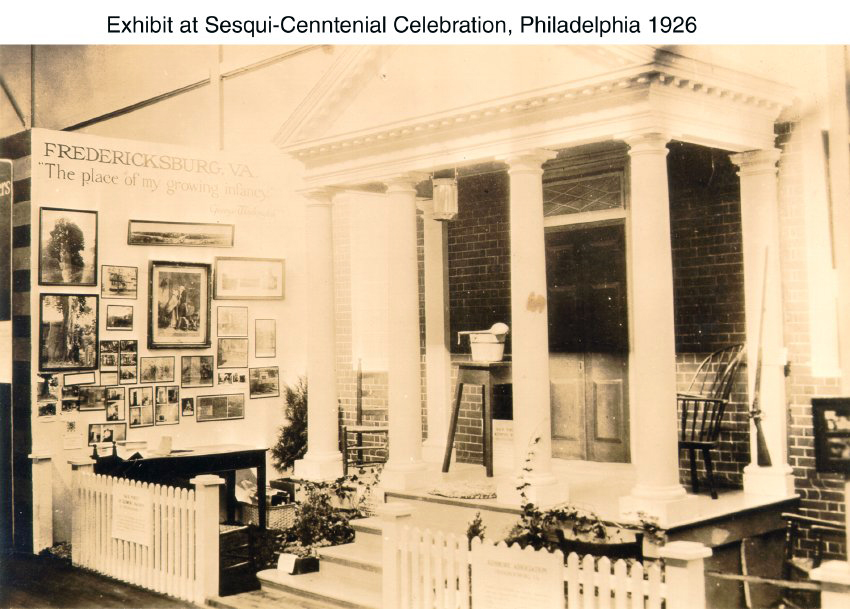
    As with many trends in American history, the Colonial Revival can trace its birth to a World’s Fair, specifically the Philadelphia Exposition of 1876, commemorating the nation’s centennial.  At the time, the United States was still healing from the Civil War, dealing with a rough economy, and experiencing a wave of immigration that was drastically changing the population.  In the midst of this upheaval, Americans began to look longingly to their colonial past, when life seemed so simple and pure, and the ideals of the Revolution were supposedly clear-cut.  Exhibits at the 1876 Exposition highlighted the virtues of simple, sturdy colonial American craftsmanship in furniture and household goods.  Romanticized biographies of the Founding Fathers set forth a new American mythology.  The clean, simple lines of Georgian and Federal style architecture were extolled as the epitome of Americanism. The realities of life in war-torn colonial America were lost in the skirl of fifes and drums, powdered wigs, and pewter tankards, however.  Yet, Gilded Age Americans went wild for it.  A craze was born, complete with wallpaper, draperies and spinning wheels.  The Colonial Revival peaked in popularity in the 1920s, but then experienced a Colonial Revival revival in 1976, during the Bicentennial.

    Philadelphia Exposition 1
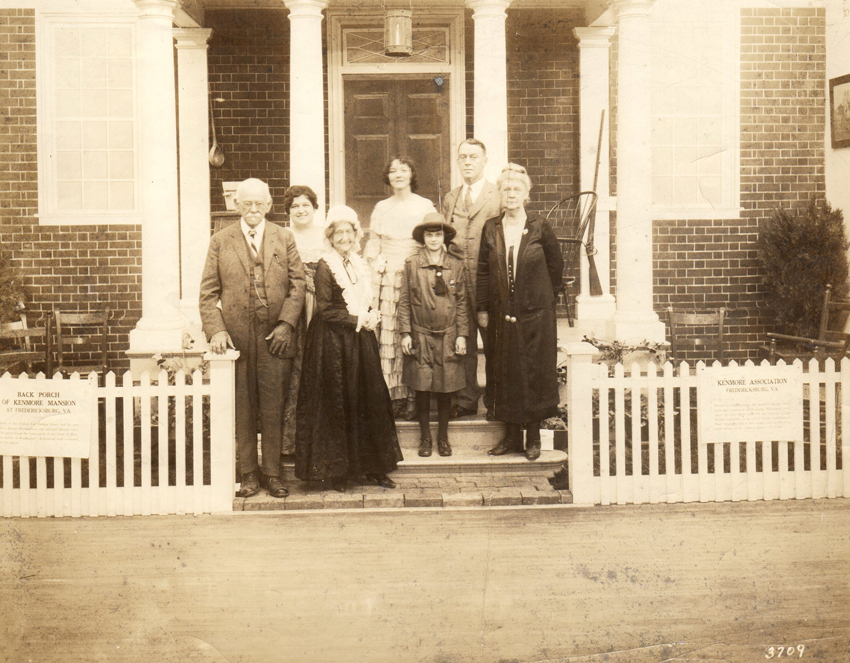
    Photos showing the Kenmore exhibit in the Virginia Hall at the Philadelphia Exposition in 1926. Emily Minor Fleming (pictured second from the left, front row in the photograph below) lead the effort to construct a life-size replica of Kenmore’s portico and East façade. The exhibit highlighted important antiques from the colonial era in Virginia. (Kenmore Photographic Collection, .1345 and .1345-2 PBW)

    Philadelphia Exposition 2

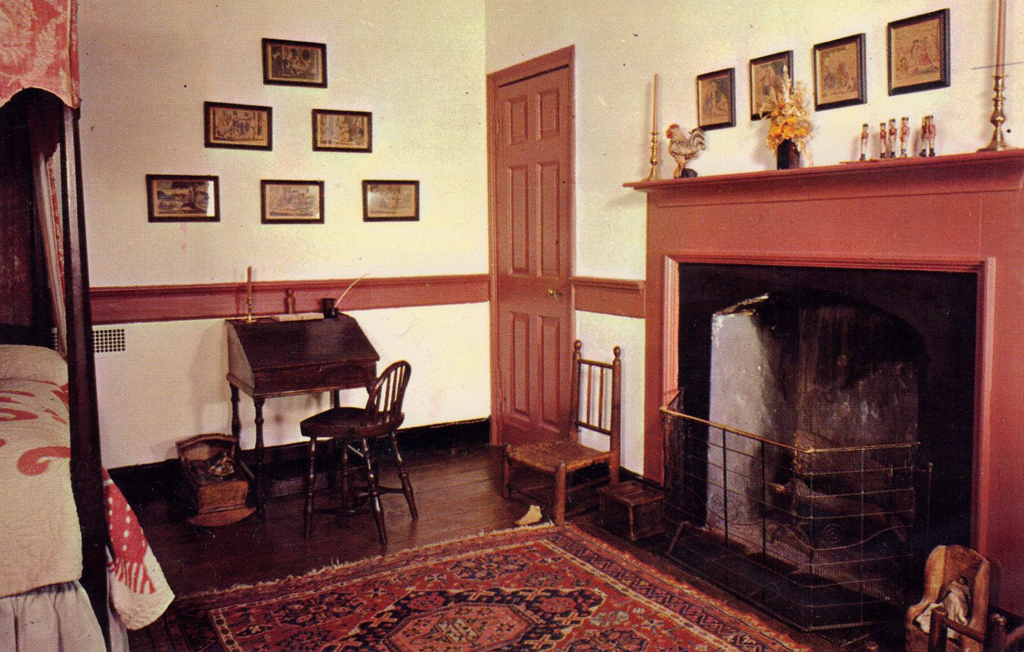
    The Colonial Revival had an especially interesting effect on historic sites and museums across the country.  Today, historic house museum employees spend a great deal of time (some might say too much time!) pursuing historical accuracy and researching everything we do. Our early 20th century predecessors had a different idea of what a historic house should be.  The homes of the Revolution’s great figures were seen as memorials not only to those great figures, but to their way of life, and thus the true American way of life.  Emphasis was placed on collecting fine examples of antique furnishings, although the actual dates of those antiques were not so important.  An English hall chair from the 1690s might sit beside a pie crust tea table from the 1790s, while the tea was being served from a silver plated teapot from the 1890s.  It was more important that when put together these antique pieces created a certain feel and image to a room, one that conveyed a sense of cozy warmth, family values, and individual enterprise. The result was the postcard-perfect rooms that we’ve all seen – a wooden hutch against the wall, lined with pewter plates and tankards (which in actuality would have been used on a daily basis and not reserved for decoration), a handmade rag rug on the wide plank pine floors (rag rugs were actually a 19th century staple), a spinning wheel before the fireplace (spinning was considered labor and would not have taken place in the public spaces of a house, and probably not near open flame), a pot bubbling over the fire (cooking didn’t happen in the house), a smattering of toy soldiers scattered playfully on the hearth (children didn’t have much in the way of toys, let alone toy soldiers).  The time, care, and effort that went into creating these rooms was immense, and it was the first time that the American public saw their history brought to life. While perhaps inaccurate by our measure today, the Colonial Revival created an intense interest in American history and is probably the main reason so many historical sites have survived.

    Postcard 1
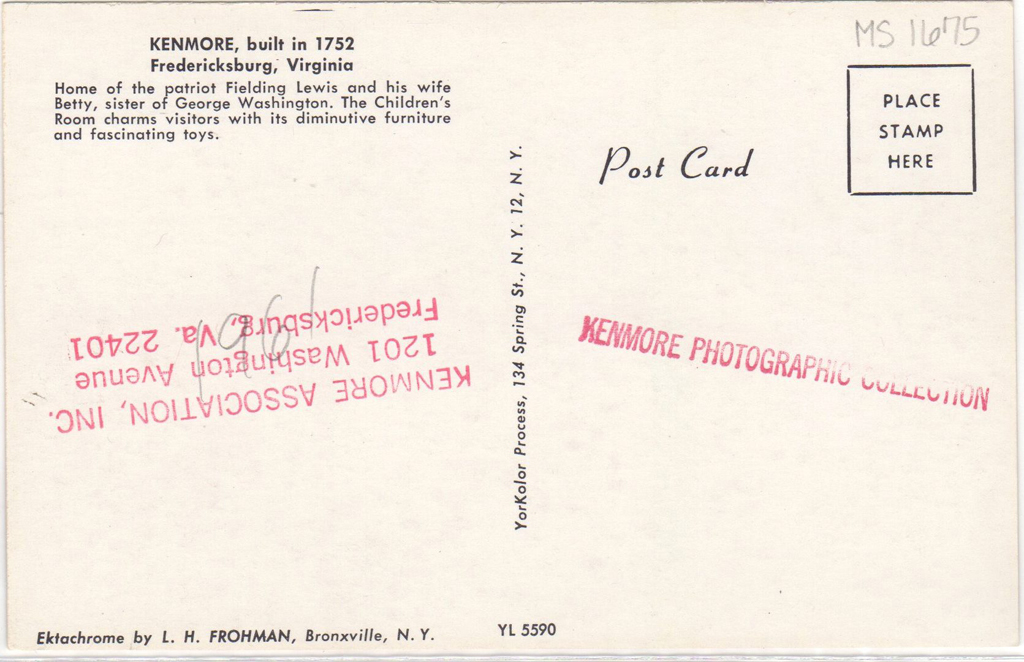
    Postcards from the 1970s showing Kenmore’s kitchen and “Children’s Room” in all their early American splendor. Descriptions of the rooms on the reverse of the postcards capture the essence of the Colonial Revival spirit. (The George Washington Foundation Manuscript Collection, MS 1675 and MS 1684)

    Postcard 1b   Postcard 2a

    Postcard 2b

    Events and programs at historic sites at the height of the Colonial Revival also reflected this emphasis on the colonial ideal.  Especially in the early 20th century, there was a strong belief that by exposing America’s youth to the style of colonial life, they would be instilled with the virtues — honesty, integrity, a strong work ethic and patriotic spirit — of the Founding Fathers.  As such, events at historic sites were often aimed at young adults, and often called upon the participants to role play the parts of historical figures. At Kenmore, for instance, Colonial-themed balls took place and theatrical presentations were held on the lawn.  Young soldiers headed to battle during the Second World War were entertained at Kenmore with ginger bread and tea, served by young ladies in colonial garb, and encouraged to “remember the Spirit of ’76, boys!”  At Ferry Farm, where George Washington lived during his childhood, a home for wayward boys was established on the property, specifically in the hopes that living on the site of Washington’s youth would cause the boys to reform their ways.
    Peace Ball 1
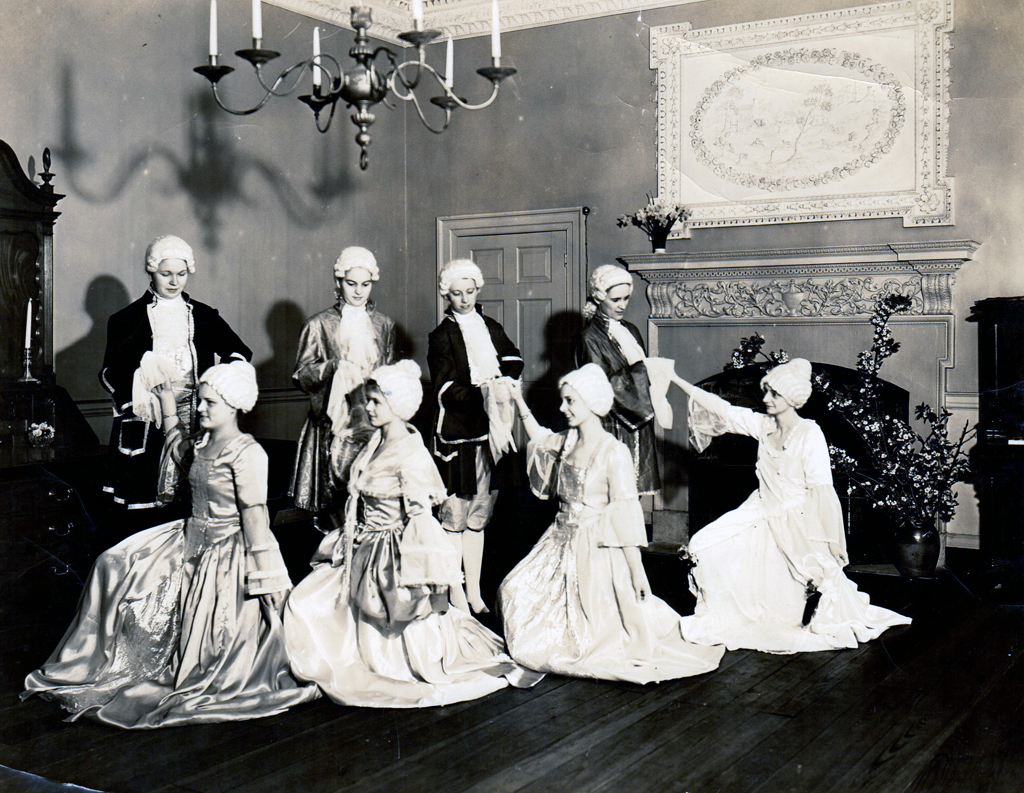
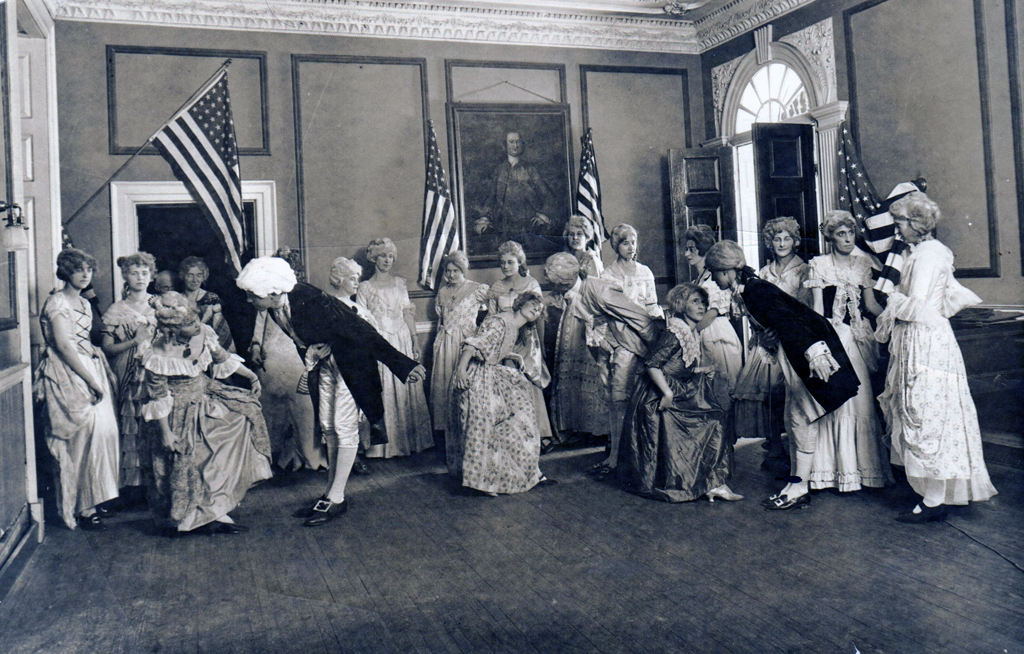
    Photos from a re-enactment of the Peace Ball, held in the Kenmore dining room in 1924. The participants are students from the Fredericksburg State Teacher’s College. (Kenmore Photographic Collection, .1713 and .1713-2 PBW)

    Peace Ball 2

    The ideas of the Colonial Revival even traveled from the museum into people’s homes.  It was during the heyday of the Colonial Revival that museums and home fashion crossed paths, perhaps for the first time in any significant way.  Thousands of antique pieces from museum collections all over the country were selected to be reproduced for re-sale to modern homeowners wanting to bring the colonial style into their lives.  Some of it was, shall we say, kitschy, while some of it was actually quite well done.  Colonial Williamsburg became a leader in this industry, making a concerted effort to educate their customers on the history of the pieces they were selling in their shops and through an extensive mail order business.  Even today, there are collectors who focus exclusively on finding pieces from the height of Colonial Williamsburg’s reproduction sales.

    For the current Washington house reconstruction project at Ferry Farm, we find ourselves in a unique situation with regard to the Colonial Revival different from the one at Historic Kenmore.  We recently completed a 10-year long restoration and re-furnishing project at Kenmore that was intensely focused on historical accuracy as determined through a nearly-forensic investigation of the house and its documentation.  In essence, we have been trying to be less Revival and more colonial.  Ferry Farm’s Washington house recreation has been a similarly intense forensic project but, in this case, we are actually turning to the Colonial Revival for some assistance.  As you probably know, the Washington house will be fully furnished with reproduction pieces, allowing our visitors to sit on the chairs, open drawers and pick up the plates on the table.  However, finding accurate, well-made reproductions of pieces from the Washington-era is no small feat.

    Because of the scope of the Colonial Revival in this country, there are in fact well-made reproductions to be found, and there are craftsman trained in colonial-era techniques who know how to make these reproductions.  Our Washington house furnishing project is the melding of intensive research into what the Washingtons really had in their house with the skills and products born out of a movement that ran counter to such research.  Rather than finding our furnishings in antiques showrooms and in the treasure-troves of dealers and auction houses, our sources are a little different.  In the coming weeks, we hope to share some of those interesting sources, from Hollywood production sets to hole-in-the-wall flea markets, and to give you some insight into how we find them.

    Meghan Budinger
    Aldrich Director of Curatorial Operations

  • Kenmore’s Holy Grail

    “The drawing-room walls are covered with pictures, some very fine, from the ancient masters, but most of them portraits of our most distinguished men, six or eight by Stewart. The mantelpiece, tables in each corner and in fact wherever one could be fixed, were filled with busts, and groups of figures in plaster, so that this apartment had more the appearance of a museum of the arts than of a drawing room.” Those are the words of Margaret Bayard Smith upon entering the drawing room at James Madison’s Montpelier in 1828.  Smith was a noted journalist and socialite in 19th century Washington, DC, and a good friend of Thomas Jefferson, in addition to James and Dolley Madison.  She is best remembered for her detailed diary entries, recounting her lengthy visits to the homes of well-known figures in American society at the time.  Her record is a treasure trove of information for the curators trying to piece together the original appearance of some of those great houses.  And she was not alone! Many a traveler in the 18th and 19th century wrote down their observations of daily life at Montpelier, Monticello, Mount Vernon and similar places in letters, diaries, journals, and even occasionally in newspaper columns.  Altogether, these contemporary descriptions of times long past are some of the best resources we have for creating a picture of what a house looked like once upon a time.

    M-108, Courtesy of the Montpelier Foundation
    The Drawing Room at James Madison’s Montpelier. Courtesy of Montpelier, a National Trust Historic Site.

    Margaret Bayard Smith
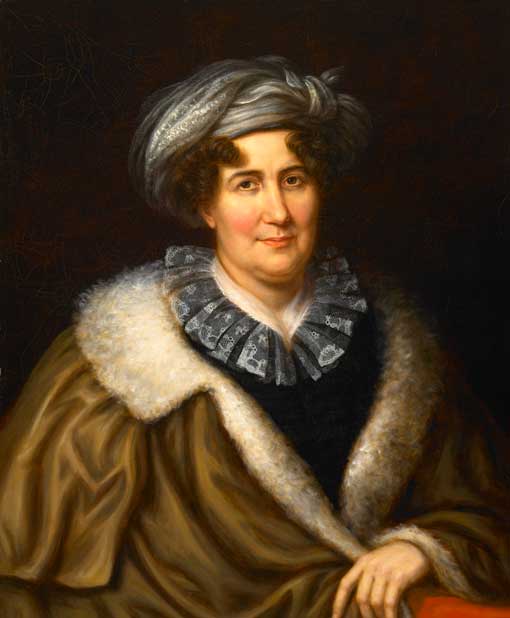
    Portrait of Margaret Bayard Smith by Charles Bird King (c. 1829). Credit: Smithsonian Institution

    Alas, Mrs. Smith never made it to Kenmore.  Nor, apparently, did any of the other wonderfully prolific travel writers of her day.  Amazingly, not a single contemporary description of Kenmore, either its interior or exterior, has ever surfaced.  It would seem that not one visitor to the Lewis home was moved to write down any impressions of the awe-inspiring plasterwork ceilings that quite literally defied imagination.  The English carpets on the floors inspired no comment.  No one ever reported the gossip of an evening’s entertainment at Kenmore to a friend.  None of the Lewis family members themselves ever described a family dinner.  This lack of description is baffling, and it has been a frustrating problem for those of us working on Kenmore’s restoration and refurnishing over the last 15 years.  But more than bafflement and frustration, it’s become an intriguing mystery.  In short, a description of Kenmore from the 18th century has become our Holy Grail.

    Let’s begin with the premise that it is highly unlikely that NO ONE ever wrote anything about Kenmore during the Lewis era.  Someone, somewhere, surely put pen to paper and wrote about their surroundings in the Lewis house.  It is simply that we haven’t found these accounts yet.  They exist, but they’re hidden away somewhere.  So the real question is why haven’t any of them come to light yet? There are several possible reasons.

    First, history has not remembered Fielding Lewis the way it has George Washington and Thomas Jefferson.  Although his role in early American history was a rather important one, it didn’t make headlines at the time, and it doesn’t show up in many history books today.  Documents related to Fielding and his family were not given the same status and protection by later generations as those related to the Founders and early presidents.  Ironically, most of the existing letters written by Fielding Lewis survive only because he was writing to George Washington, and therefore they are held in the same repositories that hold the Washington Papers (Mount Vernon, the Library of Congress, etc.).  In our own lives, we often discard quite a bit of correspondence and other paperwork because it seems trivial, or because it doesn’t have anything to do with an important person or event.  Many original documents related to Kenmore may simply did not survived.

    Lewis Papers
    While there are some Lewis family documents in our collection, there is no description of Kenmore during the Lewises time among the family’s papers.

    Another possible explanation for the lack of descriptive accounts is difficulty that many historic sites have to deal with: The Civil War.  In almost any effort to trace the historical roots of, well, anything, in the United States, there tends to be this deep, black abyss when you reach the years of the Civil War.  Repositories for legal documents, like courthouses and libraries, were ransacked and destroyed all over the South (and in parts of the North, as well).  Newspaper printing offices were wrecked.  Family records, stored in attics and Father’s desk, were destroyed in fires and bombardments.  Correspondence was disrupted, and what made it through rarely described beautiful houses, but rather focused on the horrors of war.  Fredericksburg, which saw one of the earliest examples of urban warfare rage through its streets in 1862, was particularly hard hit.  If documents describing Kenmore existed prior to the War, it is entirely possible that they did not survive it.

    The third possibility has something to do with Kenmore’s name.  As those who have been on tour know, the house was not called “Kenmore” when the Lewis family lived in it.  In fact, the Lewis family did not give the house a name at all.  It wasn’t until 1819, when the Gordons owned the property, that the name “Kenmore” appears in court records (the Gordons named the house in honor of the ancestral home in Scotland, Kenmuir).

    So, any documents describing Kenmore from the Lewis era would not have used the word “Kenmore.” It is entirely possible that researchers have in fact come across descriptions of Kenmore, but they didn’t know what they were looking at because the house described was not identified as Kenmore.  It’s also possible that descriptions of Kenmore do survive in repositories that have no connection to the Lewises, the Washingtons or even Virginia, in which case they would have no idea what they were looking at, without the word “Kenmore” to Google.  It seems like a trivial issue, but it’s actually a real problem!

    There you have it.  Could it be that one of the most beautiful houses in colonial America was seemingly ignored by correspondents of the day? It seems unlikely, and so our search for own Holy Grail continues.  If any of our readers happen to be combing through obscure 18th century documents in the future, we would appreciate you keeping an eye out for us!

    Meghan Budinger
    Aldrich Director of Curatorial Operations