Lives and Legacies

Category: Lewis Family

  • Harriot Washington’s “Hard Knock Life”

    With one sister and three brothers, George Washington was uncle to numerous nieces and nephews.  One niece was Harriot Washington was born sometime in 1776 to his brother Samuel and Samuel’s fourth wife Ann Steptoe.  Harriot was orphaned by the time she was five years old, when her mother died in 1777 and her father in 1781.  Harriot’s younger years were a hard life of shuffling between relatives’ households.  She gained stability with her aunt Betty Lewis at Kenmore, where she spent her teenage years.  Both George and Betty were constantly concerned about her financial well-being and development into a respectable woman of the gentry class.[1]

    HARRIOT AT MOUNT VERNON, Late 1780s-1792
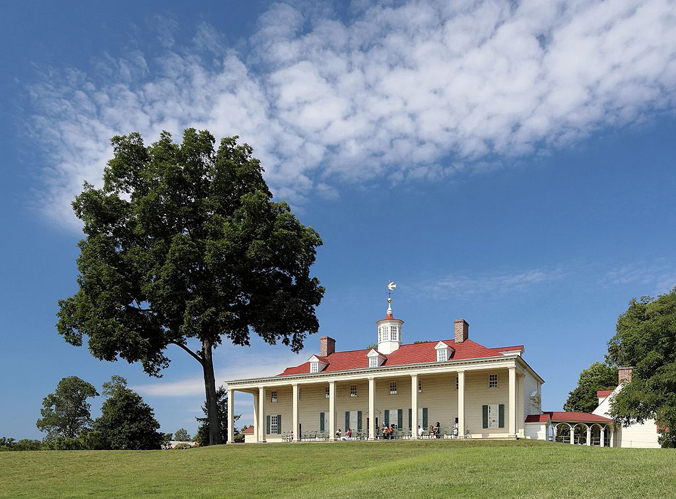
    mount-vernon
    Mount Vernon. Credit: Wikipedia/Martin Falbisoner

    After her parents’ deaths and living in the care of her mother’s relatives for four or five years, Harriot came to live with uncle George at Mount Vernon because, as Washington noted to nephew George Augustine Washington, he knew of “no resource that Harriot has for Supplies but from me.”

    When George and Martha departed Mount Vernon for New York City and his presidency, however, Martha’s niece Fanny became Harriot’s de facto guardian.  Washington lamented to Tobias Lear that Fanny was “little fitted” to the task of caring for her, however.  The new president seemed perplexed by Harriot “who is almost grown” but “is not quite a Woman” and wondered, with some exasperation, about what to do with her.  He judged that, while she was by no means too old to attend boarding school, any such school would have to “enforce good rules” since Harriot was “prone to idleness” and had been “under no control.”

    Several letters between Harriot and her uncle survive.  The first in the record was written on April 2, 1790.  Harriot was 14-years-old and living at Mount Vernon while Washington was in New York. Harriot asked her uncle to send her a guitar since she wanted to take lessons for “all the young Ladyes are a learning musick.”  Harriot was confident “that five or six lessons would be sufficient for any body to learn.”  The records consulted reveal no response from Washington.

    Harriot wrote a brief letter on October 24, 1791 with short comments about the dreadful weather and an illness plaguing Lund Washington. Harriot mentioned that she had waited until the last minute to write the letter before it had to be sent. This seeming laziness displeased Washington and, worried about his niece’s idle behavior, he took the opportunity to provide a lengthy letter of advice beyond admonishing her to not wait until the last moment to begin a task.  He warned Harriot of the…

    “delicacy and danger of that period, to which you are now arrived under peculiar circumstances—You are just entering into the state of womanhood without the watchful eye of a Mother to admonish, or the protecting aid of a Father to advise and defend you; you may not be sensible that you are at this moment about to be stamped with that character which will adhere to you through life.”

    Washington assured Harriot that her cousins at Mount Vernon were “well qualified to give you advice” and he hoped that she was “disposed to receive it.”  If she was “disobliging—self willed and untowardly,” however, her cousins would not “engage themselves in unpleasant disputes” but would likely leave her to descend into poor character.  Washington encouraged her to “Think then to what dangers a giddy girl of 15 or 16 must be exposed in circumstances like these—To be under but little or no controul may be pleasing to a mind that does not reflect, but this pleasure cannot be of long duration.”  Washington seemed to express concern about those with whom she was associating and that from them she “can derive nothing that is good.”  This warning might have also been a general caution against keeping poor company.  Regardless, he wanted her to “aid to your Cousin in the domestic concerns of the family.”

    Harriot replied, “I was very sensible, of your kindness in giving me such good advice, and shall try to profit, by it as much as I can, I know very well, the obligations I am under, to you and I am very thankful for your care and attention to me.”  She duly promised to assist more with the household duties.  On May 28, 1792, Harriot requested a guitar again and this time, Washington bought her one for $17.

    HARRIOT AT KENMORE, 1792-1795

    Betty Washington Lewis
    Portrait of Betty Washington Lewis by John Wollaston, c. 1755.

    In the fall of 1792, Washington determined it was necessary for Harriot to go live with his sister Betty Washington Lewis in Fredericksburg.  He and Martha were to return to the new national capital of Philadelphia while Fanny and her ill husband were leaving for New Kent County.  No one was left at Mount Vernon to care for Harriot.

    Betty raised no objections to taking in Harriot “if she comes well cloath’d or Provided to get them, that she may appear tolerable.” She wanted to forestall any chance that the young lady “was prevented frequently from appearing in publick.”  Betty reminded George of the Lewis family’s deep financial difficulties and that her grandchildren were living with her too.

    Washington assured his sister that Harriot would arrive “very well provided with every thing proper for a girl in her situation.”  He judged Harriot as having “sense enough, but no disposition to industry nor to be careful of her Cloaths.”  He hoped Betty’s example and guidance would end the 16-year-old’s habit of always wearing her best things while also leaving clothing lying all over her room. Fanny had been too lenient with her, Washington suggested, but Betty’s firm hand could still yet “make a fine woman.”

    Not long after getting settled in Fredericksburg, however, Harriot requested money from Washington for a dress or dress material so that she could attend the town’s ball celebrating the president’s birthday.  She apologized for again troubling Washington and assured him that any money sent would be kept by Betty.  Harriot promised to “properly care for the new dress.

    At the end of January 1793, Betty confirmed receiving money sent by Washington for Harriot.  She noted that living in town was “unfortunate” for Harriot “for many [of her] things that could be wore to the last string in a [country] Place, will not do here, where we see so much Company.”  Betty took the opportunity to praise Harriot as well, noting that she “Payes the strictest regard to the advice I give her and really she is very Ingenious in makeing her Clothes and altering them to the best advantage.”

    Time and a few other letters about money passed back and forth until September 1793 when Betty sent a letter to her brother asking when he might send for Harriot so that she could again live at Mount Vernon.  Betty revealed that, while she knew “of none that I would sooner have to live with me,” her own dire financial situation was not conducive to Harriot staying.  Betty expressed dismay over the small amount of her income and the small number of servants she had. To compound matters, she now only owned two horses, which kept her from visiting over any lengthy distance.  All the while, Harriot and two grandchildren lived with her.

    Washington perhaps agreed that the time had come for Harriot’s return to his household.  It seems he told Betty that if Philadelphia’s yellow fever epidemic continued, Martha would spend the winter of 1793-94 away from danger at Mount Vernon.  If this were the case, he would send for Harriot and she could stay with Martha.  This plan, however, was not implemented.  Instead, Harriot spent part of the winter of 1793-94 with a relative in Culpeper.

    As Kenmore, life for Harriot seemed to settle into something of a routine.  Her letters reveal a growing maturity and an understanding of her situation.  Money was still an ever present matter but one gets the impression that her requests were for real needs.  In 1794, requests for cash went to Washington on May 25, and June 27.  A letter of thanks from Harriot to him is dated July 10.  One further request for money came on January 4, 1795.

    Betty and Harriot left Kenmore to live at Millbrook in November 1795.  Harriot turned 19-years-old that year and the focus of her relationship with both her aunt and uncle shifted from an orphan girl who had lived a “hard knock life” to a eligible and mature young woman with a respectable suitor and marriage on the horizon.

    To be continued….

    Zac Cunningham
    Manager of Educational Programs

    [1] ; Frank E. Grizzard, Jr., “Washington, Samuel, (1734-1781),” George! A Guide to All Things Washington, Charlottesville, VA: Mariner Publishing, 2005, 337-338; Note accompanying “To George Washington from Harriot Washington, 2 April 1790,” Founders Online, National Archives, http://founders.archives.gov/documents/Washington/05-05-02-0199;  “Samuel Washington,” Wikipedia, http://en.wikipedia.org/wiki/Samuel_Washington, [accessed September 8, 2014].

  • Meet the Lewis Family: John and Fielding Jr.

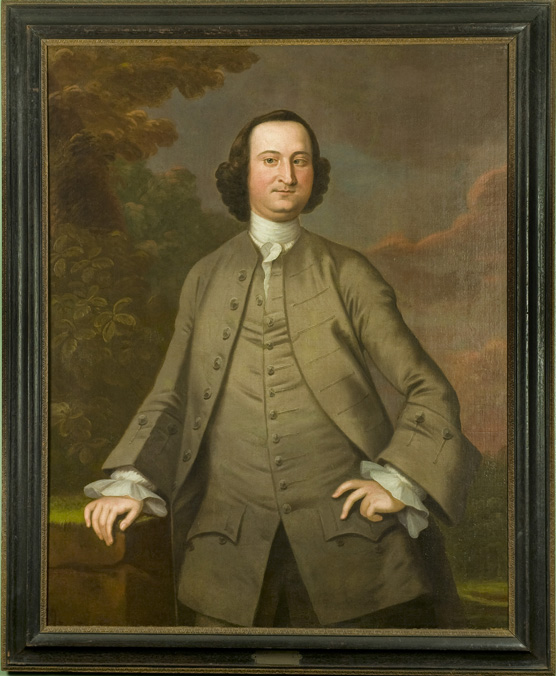
    Fielding Lewis was married twice.  He and Catharine Washington, his first wife, had three children: John, Frances and Warner.  Both Warner and Frances died leaving John as the sole heir from this first marriage.  After Catharine’s death, Fielding married Betty Washington, and not quite a year later Fielding Lewis Jr. was born in 1751.  Although just 4 years younger than his half-brother John, by rights at that time, Fielding Jr. could have supplanted his older brother as Fielding Sr.’s primary heir.  No personal accounts or letters tell us what Fielding Sr. thought about his two eldest sons’ status as heirs to his estate but his actions in the years after their births are telling.


    In 1775, Fielding Lewis commissioned five portraits by American artist Charles Willson Peale, for his newly completed home at Kenmore.  Only two have been located and they are of Fielding’s two eldest sons.  Peale scholars feel fairly certain that the works were painted as companion portraits, intended to hang side by side with the poses of the two sitters meant to complement one another.  Perhaps Fielding was making a visual statement that his two eldest sons were on equal footing and that neither took precedence.  Indeed, in his final will and testament, Fielding provides for both sons equally, giving his Spotsylvania lands to John and his Frederick County lands to Fielding Jr.  On the surface, it might appear that the two brothers had an amicable relationship, not marred by the usual 18th century family in-fighting over inheritance.  Well, that appearance might not tell the whole story.  The half-brothers couldn’t have been more different.

    As early as 1769, Fielding Sr. worried about Fielding Jr’s management of his finances.  The 18-year-old had recently married Nancy Alexander, the daughter of a prominent household in Alexandria, Virginia.  Nancy apparently came to the marriage with a sizeable fortune and Fielding Jr. immediately set about spending it.  In September, both Fieldings wrote to George Washington, to ask his assistance with the Alexander money.  Fielding Jr. wrote his uncle, “Inclos’d you have an Order on Mr. Robart [sic] Alexander for the Balance remaining…of my Wifes Fortune which I shall be Oblig’d to you to receive for me, and purchase Slaves to the amount thereof…” His letter is enclosed in one written by his father, in which we learn a little more about Fielding Jr.’s request to his uncle.

    fielding-lewis-sr-1750s-by-john-wollaston
    Fielding Lewis, Sr. (c. 1750s) by John Wollaston

    Fielding Sr. revealed that Mr. Alexander was concerned at the rate with which Fielding Jr. was spending the money, and has asked Fielding Sr. to take the remainder and use it for something that would help the couple in the long run.  Fielding Sr. went on to say, “I am allmost [sic] certain that he will in a year or Two spend every Shillg as I cannot perceive the least amendment since his Marriage, nor has he the least regard to any advice I give him.” This statement seems to indicate that Fielding Jr.’s spendthrift ways existed prior to marriage and worsened with the influx of his wife’s money.

    Unfortunately, Fielding’s prediction would prove true.  Over the next decade, Fielding Sr. paid his son’s debts time and again, while Fielding Jr. continued to make significant purchases on credit.  Eventually, Fielding Sr.’s burden would be passed to John Lewis.

    Fielding Lewis passed away in 1781.  John Lewis remained in the Fredericksburg area, acting as executor of his father’s estate, and seeing to its myriad debts and complicated business transactions.  He oversaw operations on the lands left to him, and assisted his step-mother, Betty Lewis, in maintaining Kenmore, which would become his upon her death.  He wrote on several occasions of tight finance, and frustrations with his father’s estate but managed to hold it all together.

    His brother Fielding (who dropped the “junior” from his signature following his father’s death), was not managing so well.  He, his wife, and their three children were living on the Frederick County property that he inherited.  His debts were so severe that, by 1784, he was in debtors’ prison and again turned to his famous uncle for help.  In order to bolster his case for being worthy of Washington’s assistance, he sent a collection of letters from his father prior to his death that outlined his plan to save his son from the debt of his “youthfull Folley [sic].”  Fielding wrote, “Since which it has pleased God to take him out of this transetorey [sic] life, before he had Completed his Intention, tharefore [sic] I have taken the Freedom and liberty, of beging you to Assist me…for what Evor Sum or Sums you will be Able to lend me…as Nothing I think in this life So disagreeable as to be drag’ed About by the Sherrifs [sic]…Which Situation I am in at present…”

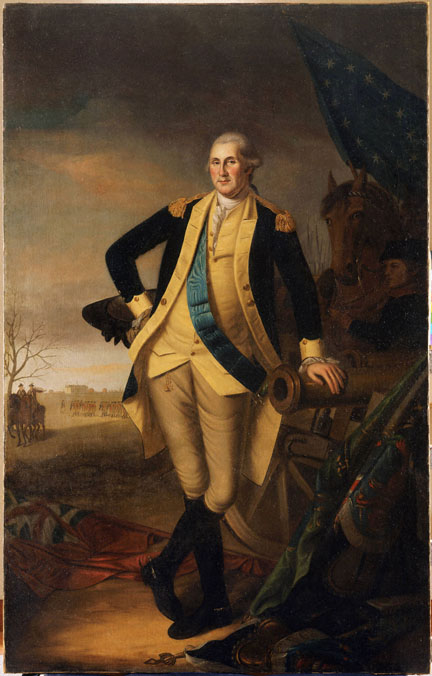
    george-washington-c-1779-by-charles-willson-peale
    George Washington (c. 1779) by Charles Willson Peale

    Washington gently rebuffed his wayward nephew, replying that he had his own debts and there was little money to spare.  He made a pointed statement at the end of his short letter, perhaps indicating that he didn’t fully believe Fielding was the victim of his own youthful folly. He wrote, “There was a great space between…when you were called upon by your Father for a specific list of your Debts and his death: How happened it, that in all that time you did not comply with his request?” Indeed, receipts in our archives show that Fielding commissioned a new carriage to be made for him in August of 1784, just one month before he was sent to prison.  He would not pay for the carriage until a suit was filed against him two years later.[1]

    As Fielding was seeking help from his uncle, John was planning one of many trips to “the Westward” as he called it – the Western frontier, and Kentucky in particular.  His first expedition to the Kentucky territory was on behalf of his father, before the Revolution, when Fielding Sr. was considering a land purchase there.  Apparently, John fell in love with the country, and returned many times in the coming years, making several land purchases of his own.  His uncle George asked him to act as his agent on several of these trips, to assess the state of Washington’s own property near Pittsburgh.

    While Washington was placing increasing trust in John, he had apparently lost faith in Fielding Jr.  By 1786, Fielding had been released from prison but had lost all of his inherited land in Frederick County.  He and his family were living on a lot in Fauquier County and were attempting to build a house.  Once again, Fielding asked for assistance.  Washington’s response was not as gentle this time, replying, “Altho’ your disrespectful conduct towards me, in coming into this country & spending weeks therein without ever coming near me, entitles you to very little notice or favor from me; yet I consent that you may get timber from off my Land in Fauquier County to build a house on your Lott…”  Despite his sharp words, he still agreed to help.

    Fielding’s improved situation was short-lived.  His wife Nancy died in 1788.  Fielding remarried to Elizabeth Dade, who apparently did not bring a fortune to the union, and so the 1790s would be a rough decade for Fielding.  He was returned to debtor’s prison in 1790, and found that there was no one in a financial situation to save him, with the exception of his brother John.  John, however, was not willing to give him money outright.  Instead, he required that Fielding mortgage everything – slaves, housewares, livestock – in exchange for £1200.[2]  One senses the family losing patience with Fielding.

    In 1792, Fielding was again incarcerated for debt, and this time there was no home for his wife and children, who went to live with Betty Lewis at Kenmore.  Betty wrote to her brother George about the situation, “I am sorry it will not be in my Power to advance any, haveing at this time three of my Grandchildren to support, and god knows from every Account but I may expect as many more shortly, Fielding is so distrest that his Children would go naked if it was not for the assistance I give him…”

    After this disastrous turn of events, Fielding’s whereabouts for the rest of his life become murky.  He never again owns property, and most likely stayed with various family members, including John.  His children remained with Betty at Kenmore.  There may have been little contact between Fielding and his children, as indicated in a letter written to him by his brother George informing him of Betty’s death in 1797. George wrote, “You will no doubt be anxious to know what is to be done with poor little Nancy (Fielding’s daughter), she is in good health, and at present with sister Carter…”[3] It is unknown where Fielding was when George sent him this letter.

    After Betty’s death, John moved quickly to sell Kenmore.  Although it would take several years, he did eventually save enough money to move his family to his land in Kentucky, where he spent the rest of his life.  Perhaps the family obligations and strain of his father’s estate made Kentucky a more appealing home than Fredericksburg.  While Fielding Lewis Sr. wanted very much for his two eldest sons to be seen and treated as equals, their lives played out in very different ways, and that’s the real story behind the portraits.

    [1] Fielding Lewis Jr. to Richard Simcock, 15 January 1786.  The George Washington Foundation Manuscript Collection.

    [2] Indenture Between Fielding Lewis Jr. and John Lewis, 20 March 1790. The George Washington Foundation Manuscript Collection.

    [9] George Lewis to Fielding Lewis Jr., 31 March 1797. The George Washington Foundation Manuscript Collection.