Each year, Historic Kenmore is the site of the Arbor Day Celebration for the City of Fredericksburg. This video shares sights and sounds from this year’s celebration held on Thursday, April 14, 2016.

Lives and Legacies
Each year, Historic Kenmore is the site of the Arbor Day Celebration for the City of Fredericksburg. This video shares sights and sounds from this year’s celebration held on Thursday, April 14, 2016.
This past Friday, November 13, visitors enjoyed “Night in Washington’s Day,” a special evening event at Historic Kenmore that explored the history of nighttime in the 18th century. Night was an active time 200 years ago. People cleaned, cooked, plowed, prayed, and visited neighbors at night. Darkness inspired scientists to make incredible discoveries that led to centuries of exploration and different cultures composed epic narratives inspired by the stars. You can read information similar to that presented during “Night in Washington’s Day” here and here.


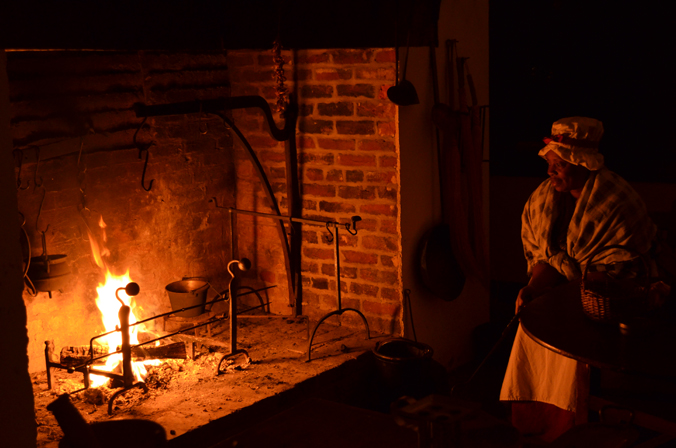
The black darkness of night — before electric lights – is hard for us to imagine today. We assume life simply stopped as our ancestors awaited day’s return, though historical research suggests it did not. People cleaned, cooked, plowed, prayed, and even visited neighbors in the dead of night. In one instance, George Washington wrote John Hancock, saying “From the hours allotted to Sleep, I will borrow a few moments to convey my thoughts on sundry important matters to Congress.” Night did not necessarily mean sleep for early Americans.
Historian Roger Ekirch of Virginia Tech has found substantial documentary evidence that, before the Industrial Revolution, people “experienced two major intervals of sleep bridged by up to an hour or more of quiet wakefulness.” This ‘segmented sleep’ was referred to as first sleep, watch or watching, and second or morning sleep.[1] It seems that people of the 18th century did not immediately go to bed with the onset of darkness. They waited until about two hours after dusk. Once they went to bed, they slept for four hours but, not long after midnight, they awoke and remained awake for an hour or two. Eventually, they fell back asleep, slept for about four more hours, and awoke around dawn.
The idea of segmented sleep has been supported by some scientific studies, the most famous of which was conducted by psychiatrist Thomas Wehr. In the study, Wehr removed electric light from people’s lives. After a four-week adjustment period, the study’s subjects moved away from sleeping for eight uninterrupted hours and actually reverted to sleeping for four hours, being awake for one or two, and then sleeping for four more hours. How many of us who suffer with ‘insomnia’ might simply be hanging on to an older sleeping pattern altered by the relatively new technology of electric light?
Segmented sleep, however, may not even be the oldest human sleeping pattern. Brand new research published last month in Current Biology raises the possibility that, in actuality, eight hours of uninterrupted sleep is an even older sleeping pattern than segmented sleep. Scientists studied some of Earth’s last remaining groups of hunter-gatherers and found that all three groups slept for 7 to 8.5 hours per night without a period of wakefulness. The study’s primary author, Jerome Siegel of UCLA, “doesn’t dispute Ekirch’s analysis; he just thinks that the old two-block pattern was preceded by an even older single-block one.” Siegel speculates that segmented sleep arose when humans moved away from the equator into latitudes with longer periods of darkness.
So during the many centuries of that humans followed the segmented sleep pattern, what did people do during watch, that time in the middle of the night between first and second sleeps? The short answer is almost anything! Most people seem to have simply remained quietly in bed, perhaps pondering their dreams or even praying. They may have talked with their bedmate, who was not just a spouse but could have have been another servant in the household or another traveler overnighting at the tavern. Beds were often used to full capacity, even if that meant sleeping with a stranger.
If people rose from bed during watch, it might have been to use the chamber pot or privy.
Work took place too, since fires might need tending or the next day’s baking started. The ancient Roman poet Virgil even mentions women servants spinning yarn during watch.
On farms, a full moon could practically turn night into day. Work schedules changed to take advantage of the light. “For several nights every September,” writes Ekirch, “light from the full moon nearest the autumnal equinox is more prolonged than usual because of the small angle of the moon’s orbit. Well known in England as the ‘harvest moon’ . . . farmers on both sides of the Atlantic benefited from the moonlight to gather crops. ‘Sometimes,’ Jasper Charlton wrote in 1735, ‘the harvest people work all night at their hay or corn.’ Nearly as useful was the ‘hunter’s moon’ in October, when a full moon next appeared. ‘The moon of September,’ declared a writer, ‘shortens the night. The moon of October is hunter’s delight.’”[2]
If there was no moon or work to do, night brought a respite from the hard routine and strict rules of the workday for laborers, tradesmen, servants and slaves. Enslaved people especially relished night as a time to run away, to sneak away and visit family on other plantations, to gather together for celebrations, to earn money through extra work, or simply to do whatever personal chores had piled up while working for master or mistress.

The darkness of watch afford ne’er-do-wells opportunity to steal and poach. Even Washington noted how night was a time for thieving when he complained about slaves using dogs to “aid them in their night robberies” of his sheep.
Because of segmented sleep, night, at least in George Washington’s day, seems to have been a surprisingly active time. People were awake for a couple of hours each night and during that time did almost anything imaginable from personal errands and household chores to farm labor and crime to prayer and meditation. The 18th century may have literally been a darker time but it was not necessarily a time for more sleep.
Zac Cunningham
Manager of Educational Programs
[1] A. Roger Ekirch, At Day’s Close: Night in Times Past, New York: W.W. Norton, 2005: 300-1.
[2] Ekirch, 171.

The night sky is the astronomer’s workspace, the explorer’s final frontier, and, perhaps surprisingly, the historian’s library of epic tales, myths, and legends. This library of stars connects us to the cultures and civilizations of our past in a uniquely special way. The Ancient Greeks, Native Americans, enslaved Africans, British colonists of the 18th century, and even George Washington himself all looked up at essentially the same night sky we can see two centuries later.
Inspired by stories, myths, and legends, our ancestors gazed into the sky and connected the stars together into patterns they imagined were familiar objects, fierce animals, great heroes, or powerful gods. We call these patterns ‘constellations’ and the stories or ‘star lore’ they tell are as old as humanity itself.
Imagine a clear, crisp early November night. George Washington and his brother-in-law Fielding Lewis are walking home from a nearby tavern. George is enjoying another of his occasional visits with his sister and her husband in Fredericksburg. During their journey home, the two men’s path is lit only by the small flame in the glass lantern they carry. Once in a while, they see a feeble candle through a house window. Otherwise, the Fredericksburg they walk through is far darker than we could imagine today. Consequently, George and Fielding see millions of sparkling pinpoints of light over their heads.
As educated men, George and Fielding could identify and name numerous constellations created by these pinpoints of light. On their imaginary November walk, the two men no doubt spotted Orion, Cassiopeia, Bootes, and, of course, the distinctive Big Dipper pattern that forms part of the constellation Ursa Major or “The Great Bear.”

They would have known the Greek myths attached to each of these constellations. For example, the myth behind the Great Bear says that the goddess Hera turned Callisto, a maiden desired by Hera’s husband, the god Zeus, into a bear. Zeus then lifted the bear into the sky by its tail, causing the tail to stretch. The three stars of the dipper’s handle represent this elongated tail. Another Greek tale says Hercules threw a troublesome bear into the sky by grabbing its tail, swinging it above his head, and flinging it up to join the stars. Probably even more familiar to plantation owners like George and Fielding was the idea – common throughout Britain – that the stars of the Dipper actually form a plow.
In the basements, attics, and kitchens of some of the houses George and Fielding passed, enslaved men, women, and children slept. Literally brought in chains from their African homelands, they looked up at the night sky above the land of their enslavement and were reminded of home by the constellations they saw. Some of these Africans may have seen what they termed “The Drinking Gourd.” Indeed, there is speculation that our common use of the Big Dipper as the name for this distinct pattern comes directly from the African idea that the stars form a hollowed out gourd used for collecting and drinking water. In the 1800s, the drinking gourd formed the basis of the African American folksong “Follow the Drinking Gourd,” which, it is claimed, contained thinly veiled instructions for slaves to follow when running north to freedom. The Dipper pattern can assist someone navigating by stars to find the North Star.
Before George, Fielding, and their slaves lived in Fredericksburg, Native Americans occupied the land along the Rappahannock River. Interestingly, like the Greeks, certain Algonquian-speaking nations, also saw the Big Dipper as a bear. Instead of a long tail, however, the three stars of the Dipper’s handle were three hunters who chased the bear across the sky. This chase lasted until autumn when the hunters killed the bear and its blood fell to Earth and caused the leaves to change color.
It is increasingly difficult for today’s Americans to see the library of epic tales, myths, and legends in our night sky. The glow from streetlights, security lights, lighted signs, and other outdoor lighting is blotting out the stars from view. Indeed, 2/3 of Americans – over 200 million people – can’t see the Milky Way from their own homes. In 1994, an earthquake knocked out all the power to Los Angeles. Many anxious residents phoned authorities to report a “giant, silvery cloud” in the dark sky. They were seeing the Milky Way, normally obliterated by the urban sky glow.

If we can’t see the stars, we may ultimately forget the stories they tell and even more tragically our ancestors – the Greeks, Africans, and Native Americans – who created those stories. More and more, we are no longer looking up at the same night sky that George and Fielding beheld on their imagined walk home from the tavern. The same sparkling stars are still there. We just can’t see for the light.
On Friday, November 13, learn more star lore during Night in Washington’s Day at Historic Kenmore! Families and visitors of all ages can experience Kenmore lit only by methods available in the 1700s and witness a theater scene showing how enslaved people used their night hours to catch up on personal chores. Glenn Holliday from the Rappahannock Astronomy Club will share tales of great discoveries from astronomy’s past. Children may make a paper-bag ‘tin punch’ luminary and cookies and cider will be served to all! Please bring a flashlight to use in select activities.
Cost: $12.00 adults, $6.00 ages 4-17, free ages 3 and under.
Reservations required. Call 540-370-0732 x24 or email [email protected]
Zac Cunningham
Manager of Educational Programs
In our age of weekly farmers’ markets, drive-thru smoothie shops, and 24/7 grocery stores, it can be hard to truly understand the importance of fruit to the average colonial Virginian. They, however, would have been well aware of how rare it was and of what it meant to have it. Indeed, they were so aware of its rarity and luxury that they bought and used special dishes in which to serve the fruit. We recently wrote in “Fine and Fashionable Fruit Dishes” about just such white, salt-gazed fruit dish excavated at George Washington’s Ferry Farm. Just how rare was fresh fruit in colonial America and, when it was available, where did it come from?

Historians have surveyed old records from stores, taverns, and ordinary households to figure out how often early Americans ate fruit. One such study ranked different foods according to the amount of money spent on them. In this ranking, fruit came in eighth after meat/poultry, grains, alcohol, and other foods. Ultimately, paired with nuts, fruit accounted for less than 3% of the overall food expenses in Virginian households.[1]
The same study examined the food expenses of people at all levels of society, whether an anonymous wigmaker or the royal governor. From 1769 to 1770, fruit/nuts were nearly 8% of the royal governor’s food expenses while most other Virginians spent less than 1% of their food expenses on fruit/nuts.[2] Fruit was for the wealthy and was a rare luxury in 18th century America.
The rarity of this luxury was a direct result of where fruit grew and how people got it. There were two options when it came to fruit for the colonists; locally grown or imported. For most, of course, locally-sourced seasonal produce was really the only option.
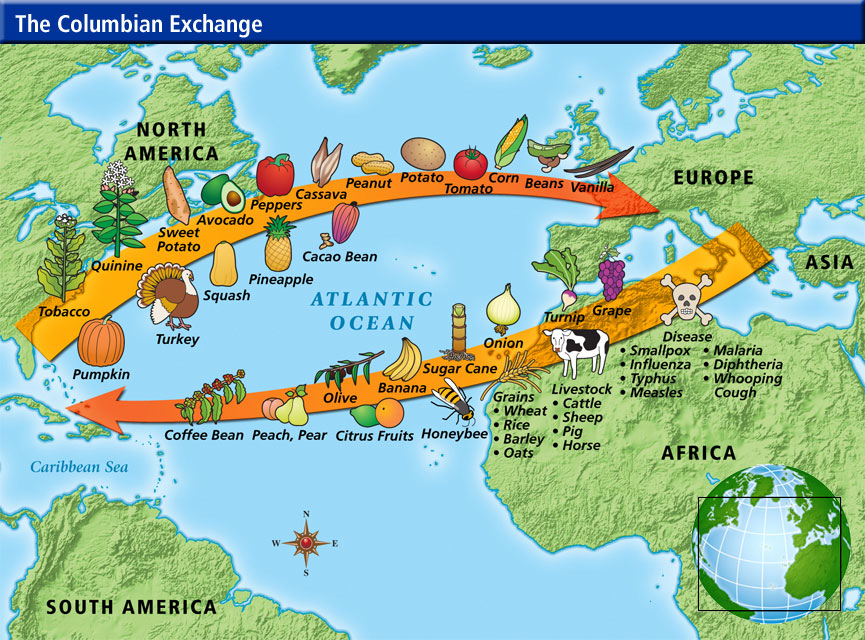
A global exchange of livestock, diseases, fruits and vegetables sometimes called “The Columbian Exchange” began with European exploration of the Americas in 16th century. By the mid-1700s, the American colonies were a unique place for growing fruit. Europeans transplanted old favorites — quinces, apples and peaches — to the New World. They enjoyed new varieties of fruits — strawberries, cherries, and grapes — in America that had closely related cousins in England and Europe. Then, they added to their diet fruits naturally indigenous to the Americas. These included fruits well-known today like cranberries and blueberries as well as fruits now largely forgotten like pawpaws. With all that variety, early Americans still had to settle for what could be grown in their specific climate and at a particular time of the year. Even local fruit, whether transplanted or indigenous, was an expensive luxury.
Naturally, tropical species like citrus fruits and pineapples became the zenith of the colonial fruit hierarchy. If someone really wanted to demonstrate their wealth, these imported fruits were the way to go. They could not be acquired locally and indicated the buyer had deep pockets as well as a more sophisticated palate. While wealthy Virginians attempted to grow some of these fruits in private “orangeries”, the precursor to modern greenhouses, they mostly came from islands in the Caribbean. Transportation made them extraordinarily expensive but their expense did not mean there was any shortage of uses for them.
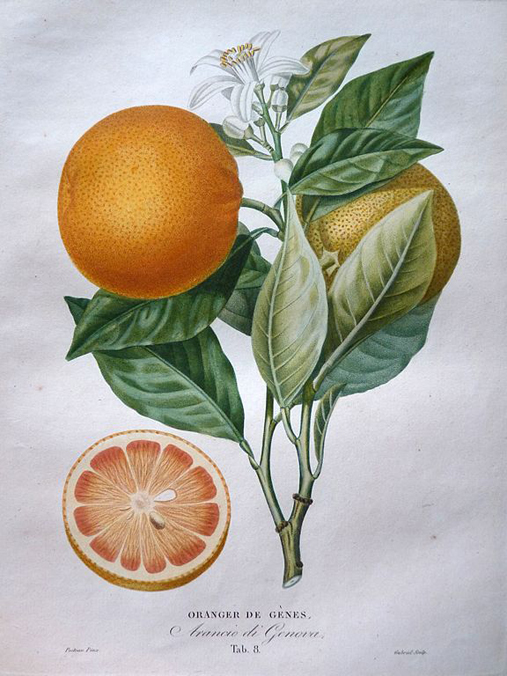
Because they symbolized wealth and simply had a short shelf life, fresh fruit was displayed on a fruit dish or epergne as a decoration and status symbol. Fruit’s value also came from its multiple uses within a home. Cookbooks of the time gave plenty of uses for fruit ranging from the familiar such as apple dumplings to the foreign like salt pickled lemon. The most commonplace recipes (or receipts as they were referred to in that period) concentrated on preserving fruits so that colonists could enjoy their flavors throughout the year.
To conclude, we present a receipt from Hannah Glasse’s The Art of Cookery Made Plain and Easy, a book we know was part of the Lewis family library at Kenmore. The receipt’s colonial version comes from a first edition facsimile from 1747.
An Orange Fool – Colonial Version
TAKE the Juice of six Oranges and six Eggs well beaten, a Pint of Cream, a quarter of a Pound of Sugar, a little Cinnamon and Nutmeg; mix all together, and keep stirring over a slow Fire, till it is thick, then put in a little Piece of Butter, and keep stirring till cold, and dish it up.
An Orange Fool – Version updated for today
1 c Heavy Cream
1 c Orange Juice (3 Fresh squeezed oranges or store brought)
1/3 c Sugar + 1 tsp sugar
½ Orange zest
½ Tbs butter
1 egg + 2 egg yolks
½ tsp Vanilla Extract
½ tsp Cinnamon
¼ tsp Nutmeg
Next time you pour yourself a fresh glass of orange juice, buy some fresh fruit at the grocery store, or stop a farm stand by the road for apples remember the luxury that you are enjoying. This aspect of our daily lives is an opportunity of which our forefathers would have been sincerely jealous.
Joe Ziarko
Manager of Interpretation and Visitor Services
[1] Walsh, Lorena S., Ann Smart Martin and Joanne Bowen. Provisioning Early American Towns. The Chesapeake: A Multidisciplinary Case Study. Williamsburg: The Colonial Williamsburg Foundation, 1997: 141.
[2] Ibid: 300.
Just outside a window of the Archaeology Lab near the demonstration garden at George Washington’s Ferry Farm stands a hummingbird feeder. We regularly receive feathered visitors to the feeder. Archaeologist Laura Galke recently captured some photos of a couple of the hummingbirds as well as a surprise guest.


George Washington’s Boyhood Home at Ferry Farm offers a wonderful blend of woods, fields, wetlands, and riverfront. Fox, groundhogs, snakes, lizards, turtles, and deer make Ferry Farm their home. In the meadows, bushy heads of grass seeds provide an important source of food for birds. Beautiful flowers and majestic trees abound across the landscape. A few weeks ago, we set out on a nature walk around Ferry Farm to enjoy the flora and fauna.


Learn more about Ferry Farm’s natural environment here.
Scenes from the Demonstration Garden at George Washington’s Ferry Farm on a peaceful summer morning. The garden contains a variety of colonial-era plants that would have been grown by the Washington family like tobacco, corn, and squash. There are also modern flower species plus birds and other wildlife.
Nature shaped the lives of English colonists and enslaved Africans living and working at Kenmore Plantation 200 years ago. Over centuries, humans changed Kenmore’s natural world from a plantation setting into an urban green space. Yet, nature remains just outside the door.
This past Saturday at Historic Kenmore, visitors had a chance to explore humans’ dynamic relationship with nature through the years during Our Urban Nature. They discovered — in some cases, held — the wildlife living right in town with Fredericksburg Parks & Recreation. They explored the meaning behind the color of the river’s water with Friends of the Rappahannock. Visitors learned about worm composting with the Rappahannock Regional Solid Waste Management Board. They dug into the importance of dirt with the Tri-County/City Soil and Water Conservation District. Visitors also enjoyed a native plant and urban geology walk through the neighborhood and learned how to build terrariums from found objects and plants. Kids created a food web mobile, fairy houses, and built their own river.


Humans are an inescapable part of nature. It shapes us and we shape it. Most of us can see this dynamic relationship when looking back 200 years. It is easier to appreciate the centrality of nature in the lives of 18th century planters, farmers, and enslaved people whose livelihoods and bellies depended on good weather for growing crops. Time was governed by the sun and the seasons. Commerce depended on domesticated animals to pull wagons and on wind to drive sailing ships.
At its most basic, history is the study of change over time. As we study, we tend to focus on the changes within the very human realms of politics, society, and culture. We relate more to the lives and stories of fellow human beings like George Washington, Betty Washington Lewis, or Fielding Lewis. These humans, however, sparked other more subtle changes far outside human realms. Human history has drastically altered the natural world while nature itself has actively shaped human history.
When Fielding Lewis finished building the mansion that would become Kenmore in 1775, it stood at the heart of a large plantation, an actively managed world of agricultural fields and livestock mixed with natural flora and fauna. Over two centuries, humans slowly changed Kenmore from a plantation into an urban green space now nestled in the midst of a dense residential neighborhood. Hundreds of houses rest where slaves once toiled, crops once grew, and cows once pastured.
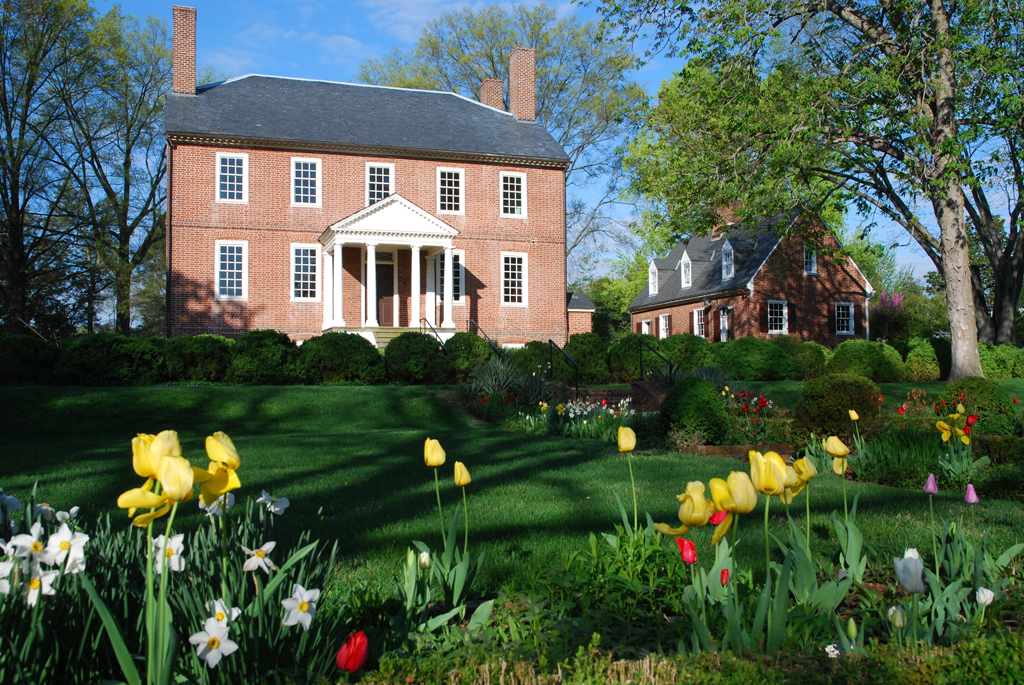
Yet, nature hasn’t disappeared. It remains right outside all of our doors. We can find it in our beautiful flower gardens and backyard birdhouses, in the squirrel nests atop the oak tree across the street, and in the weeds pushing up through sidewalk cracks and overtaking the front lawn.
The term weed itself is an excellent example of the dynamic relationship between humans and nature. Today, weeds are plants we loath as undesirable nuisances. Yet, these weeds exist because at one time, we viewed them as useful and even desirable. Weeds and humans have fascinating interrelated histories.
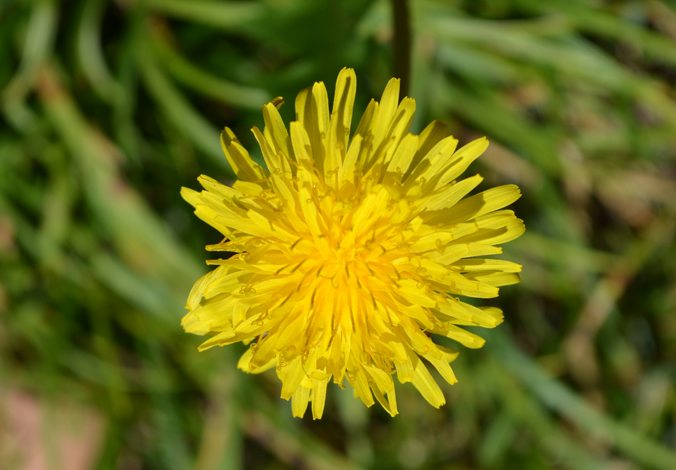
Dandelion is native to the Americas. Early Americans steeped teas from the dry root and desperate Civil War soldiers used roasted dandelion root as a coffee substitute. Even though it took a lot of time to gather them, people throughout history have used the flowers to make dandelion wine.
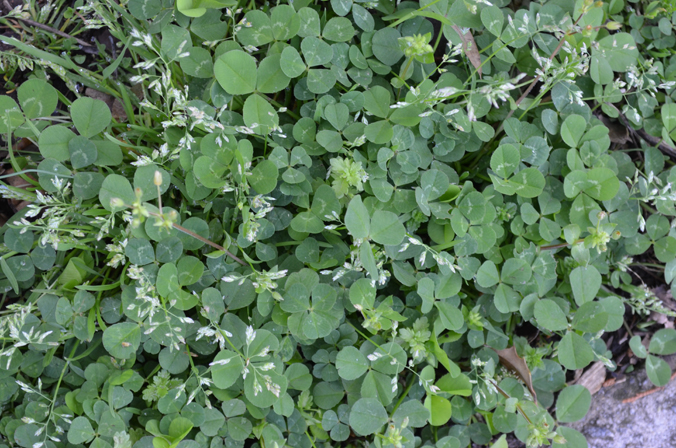
European colonists introduced Clover because it served as an excellent pasture crop for consumption by livestock.

Wild Garlic was introduced as a spice, which Native Americans quickly adopted.

Purple Deadnettle was found across Eurasia but it is not clear who exactly introduced it into the Americas. Colonial Americans valued deadnettle, in part, for its medicinal purposes as it could stop bleeding. Its flowers contain a lot of sweet nectar as well and, thus, people in the past often used them to make sweet teas.
If you want to learn more about native plants and other aspects of Our Urban Nature, join us from 10:00 a.m. to 1:00 p.m. on Saturday, May 16 at Historic Kenmore. Discover what wildlife are living right in town with Fredericksburg Parks & Recreation. Explore the meaning behind the color of the river’s water with Friends of the Rappahannock. Learn about worm composting with the Rappahannock Regional Solid Waste Management Board. Dig into the importance of dirt with the Tri-County/City Soil and Water Conservation District. Visitors can enjoy a native plant and urban geology walk and learn how to build a terrarium from found objects and plants. Kids can create a food web mobile, fairy houses, and build their own river.
Additionally, George Washington’s Ferry Farm will host native plant walks later this summer on June 6 and then again on September 18.
Mara Kaktins, Archaeologist/Ceramics and Glass Specialist
Zac Cunningham, Manager of Educational Programs


