As many of you know, the Washington house replica at George Washington’s Ferry Farm was reconstructed and furnished as accurately as possible using historic documents, paintings, letters, and, of course, archaeology. Now that the challenge of getting the house built and open to visitors has passed, it’s time to turn to the rest of our plan for interpreting Ferry Farm’s landscape. This will eventually include constructing outbuildings, finishing the work yard, and improving the garden.
Even though the present garden is located at Ferry Farm’s Visitor Center and not yet near the Washington house replica, we used archaeological discoveries to decide what goes into the garden this spring. Using data from past excavations on Washington-era contexts, we drew some conclusions on what the Washington family and their enslaved workers cultivated here. While most organic material left behind over 250 years ago is long gone, as archaeologists, we sometimes get lucky and find biological and botanical remains that have withstood the time in the ground. We get especially lucky when we do find botanical remains like seeds and wood because, depending on the elements, they usually decompose easier and faster than bone.
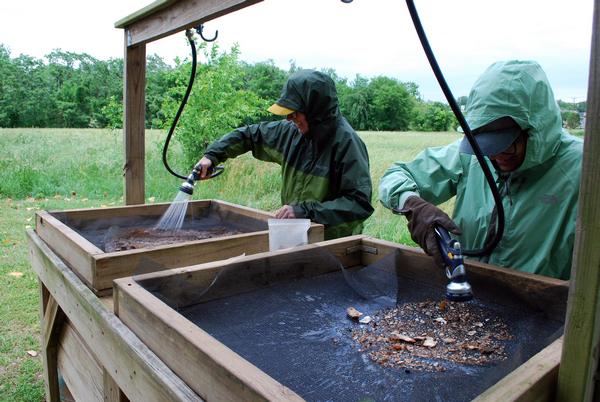
Visitor often ask how we find some of our tiniest artifacts such as seeds. For important contexts and Washington era features, we don’t want to miss a single (tiny) thing, so we use a water screen. Instead of the usual quarter-inch screen we use for dry sifting dirt, we use a gentle stream of water from a garden hose and spray away the dirt through a window screen. We then use tweezers to pick out the tiny artifacts left behind. Objects like the straight pin in the photo below and seeds could otherwise fall through the standard quarter-inch screen.
Water screeningPicking out the artifacts after water screening.Straight pin
In 2015, we had flora remains from a mid-18th century storehouse cellar feature that had been captured by our fine mesh water screens sent to Justine McKnight, an archaeobotanical consultant for analysis. Without getting extremely technical, I will say that we gained some very useful data to use to plant our garden this year. Seed specimens discovered archaeologically and used in cultivation consisted of peas, green beans, wheat, and corn. Seeds included hackberry and, of course, cherry. The only nut uncovered was a hazelnut shell.
Common bean (Phaseolus vulgaris) cotyledon half and fragment. Scale = 1mm grid. Credit: Justine McKnight.
Filbert (Corylus sp.) or hazelnut shell fragment recovered from Sample FF-22-00506. Scale = 1mm grid. Credit: Justine McKnight.
Along with this archaeological evidence, we also know that some tobacco was grown on the Washington farm because of court records. In the 17th and 18th centuries, tobacco was Virginia’s premier export and most valuable cash crop but places along the Rappahannock River like Ferry Farm were not great tobacco land. In these areas, as our excavated seeds show, planters moved onto corn, wheat, and other crops, knowing they would never get rich on tobacco.
Using all of this information, we planted similar crops in the demonstration garden along with other crops widely grown in 18th century colonial America.
While seemingly insignificant at first glance, these tiny charred remains of flora give us a snapshot in time of the diets of the Washington family and enslaved workers at Ferry Farm. These definitely are not the only plants they were eating, but we do know via archaeology that these were stored by the family in the mid-18th century. Using the other archival resources listed above, we will continue to fill in the gaps and enhance our garden and landscape according to the historical and archaeological records.
On Tuesday, May 21, 2019, Dave Muraca, Director of Archaeology at The George Washington Foundation, presented “The Social Role of Garbage in Colonial Virginia,” the final talk in this year’s annual lecture series. Dave presented three case studies in 18th century garbage disposal at George Washington’s Ferry Farm, Colonial Williamsburg, and Historic Kenmore.
Thanks to the Fredericksburg branch of the Central Rappahannock Regional Library at 1201 Caroline Street in Fredericksburg, Virginia for hosting the series once again this year. To learn about other events and happenings, visit kenmore.org.
The replica Washington house at George Washington’s Ferry Farm has been open for tours for one year now but we still continue to add reproduction furniture and objects to the rooms inside. Since the house is a replica built using archaeology, historic research, and expert knowledge, we are using the same three foundations to create replica objects to display inside the house so that visitors may have a hands-on interactive experience. Guests may sit on chairs, lie on the beds, pick up tumblers, hold tea pots and much more! Here in the archaeology lab at Ferry Farm, we’re always hard at work making new reproduction ceramic and glass items for the Washington house, as seen in this video. Let’s take a look at some of our newest additions!
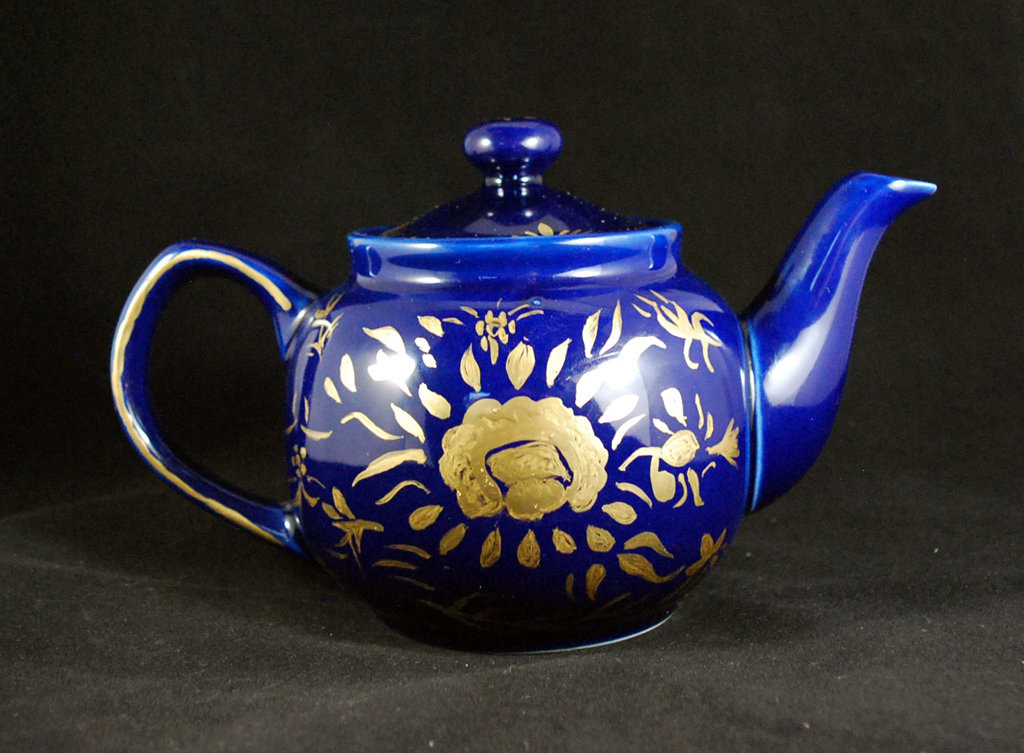
This adorable little teapot is a reproduction of a ware type called Littler’s Blue which had a very short run between 1750 and 1765. These pots were often gilded with gold so we found a tiny blue teapot and made it fabulous.
Before: Littler’s Blue pitcher reproduction
After: Littler’s Blue pitcher reproduction
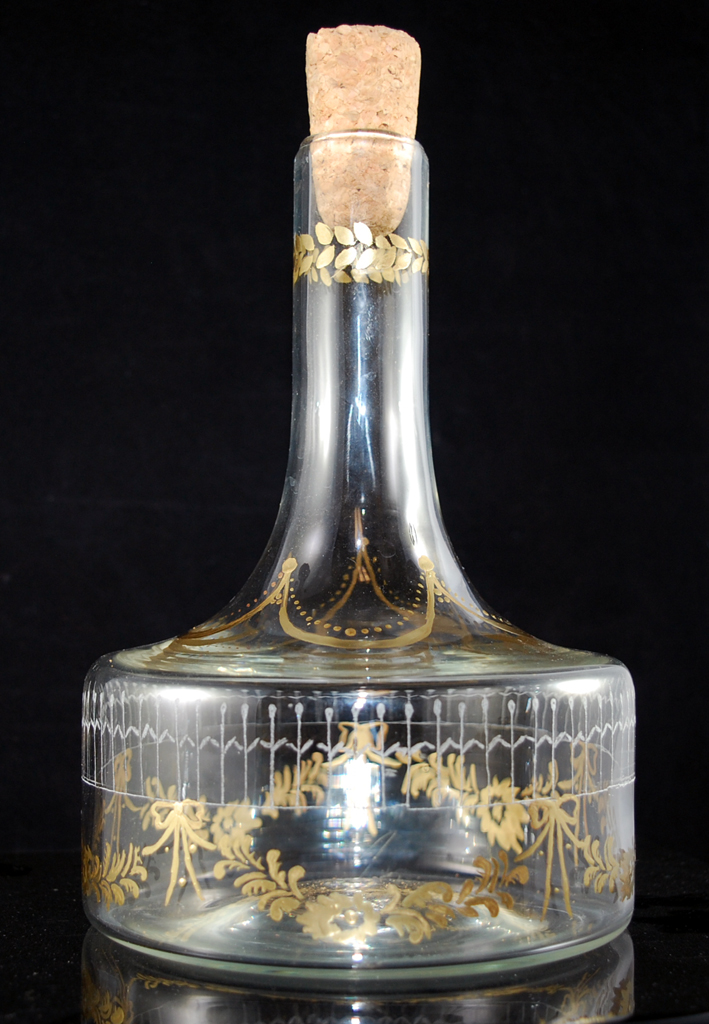
We needed a decanter for the Washington house and while the shape of this one wasn’t perfect we were able to engrave it with a tulip motif based on artifacts recovered archaeologically at Ferry Farm. And because we caught gilding fever one of our very talented interns embellished it further to match eighteenth century examples. We also whittled down the ridiculous cork, although we’re searching for a more appropriate glass one.
Before: Glass decanter reproduction
After: Glass decanter reproduction
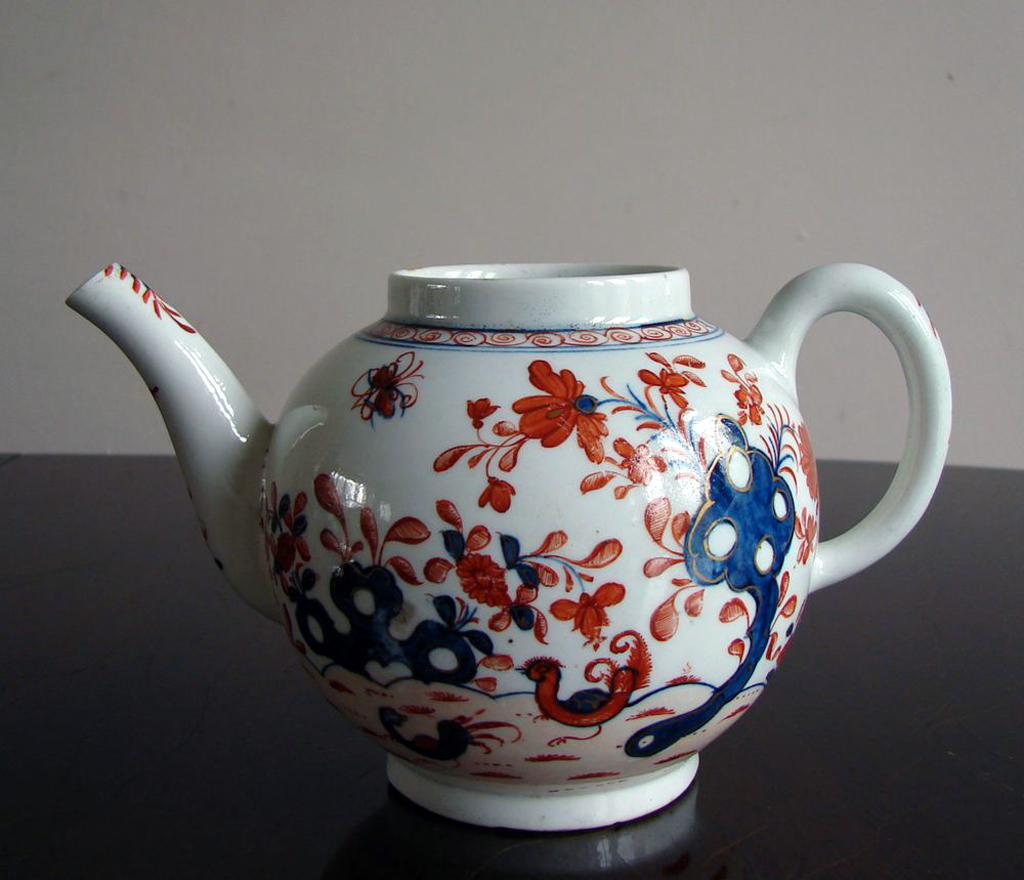
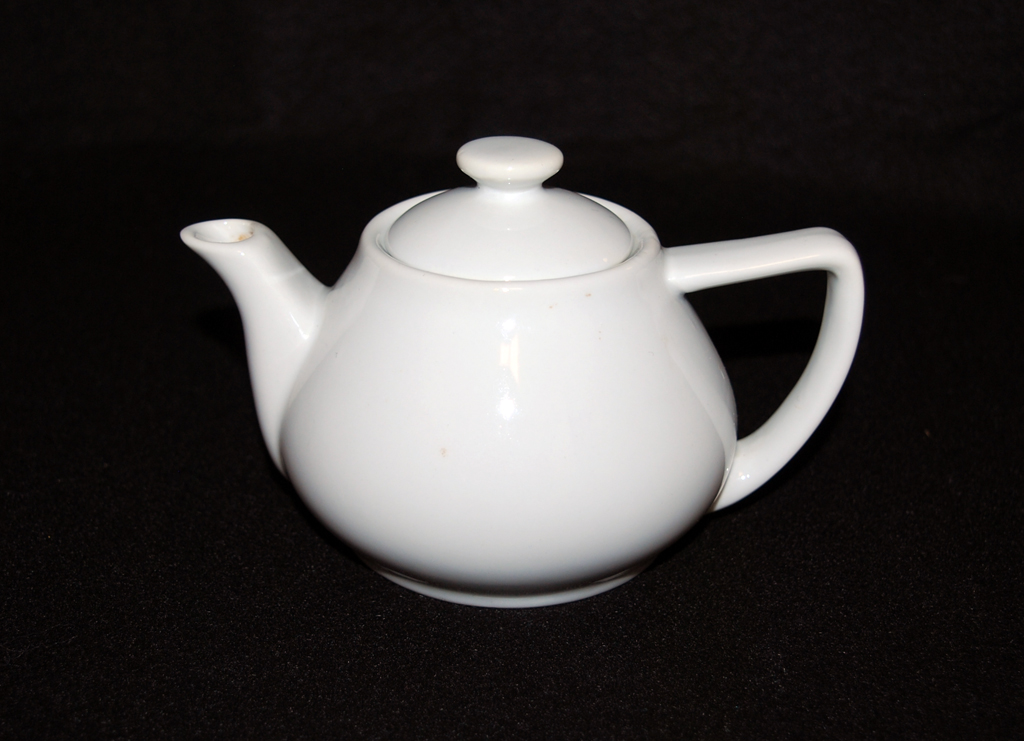
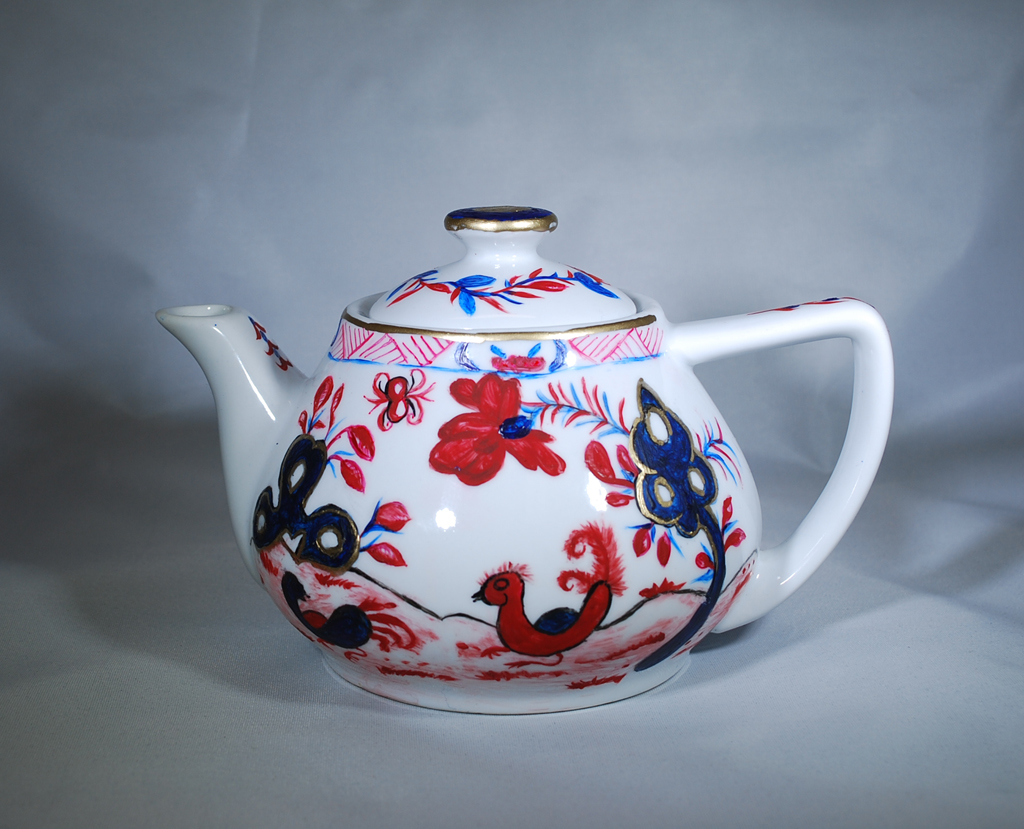
We’ve excavated a lot of Chinese porcelain with what is called at ‘Imari’ palette, which is defined by under the glaze blue hand-painting, over-the-glaze red painting, and gilding. Reproduction Imari is hard to find so we turned this plain white teapot into an Imari. Our inspiration was the 18th century teapot below featuring cute little silkie chickens!
Original: Imari silkie chicken teapot
Before: Imari silkie chicken teapot reproduction
After: Imari silkie chicken teapot reproduction
Our staff then set out to turn this colonial revival basin into a tin-glazed serving bowl. Our excavations have turned up quite a bit of hand-painted polychrome tin-glaze so it was a must have for the new house. We decided to copy the eighteenth century bowl below. A little bit of paint and presto! Bye basin and hello serving bowl! Can you spot the tiny bee hidden among the flowers?
Original: tin glaze serving bowl
Before: tin glaze serving bowl reproduction
After: tin glaze serving bowl reproduction
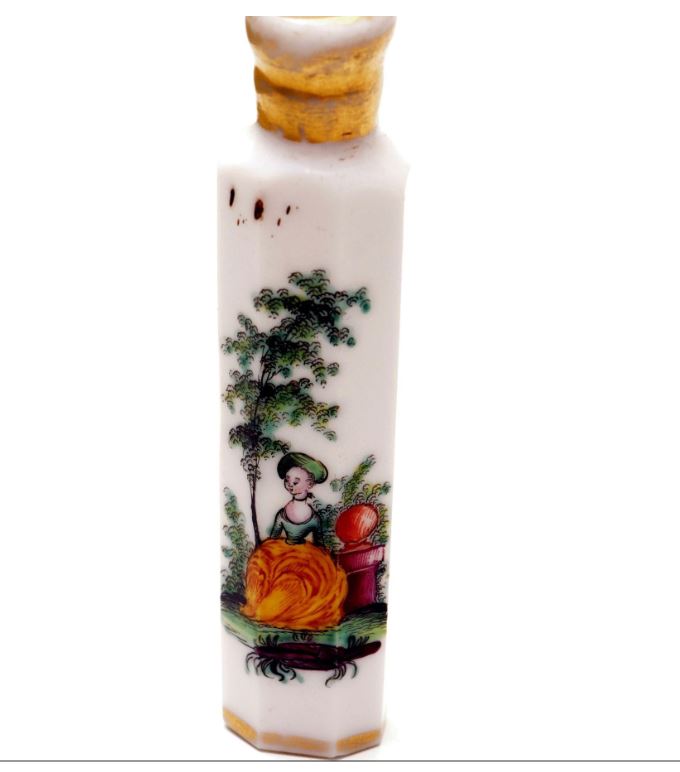
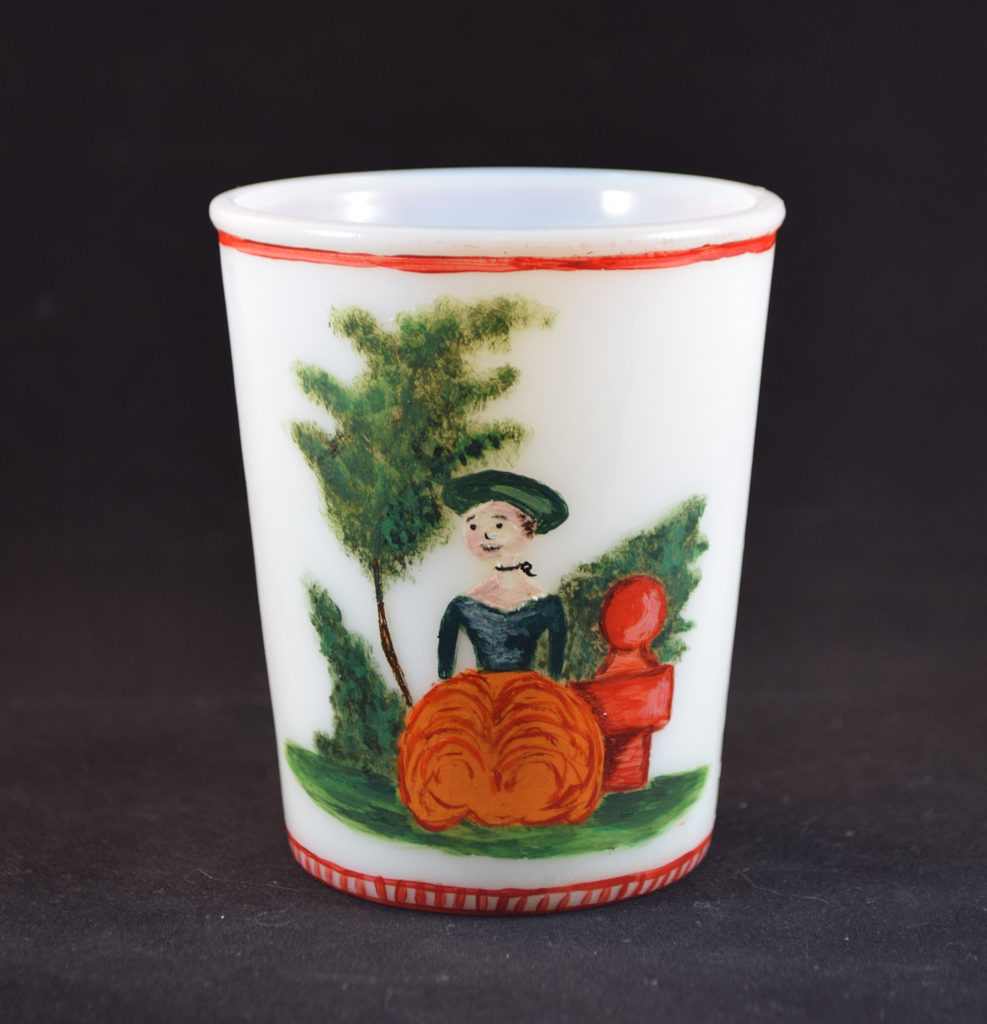
We’ve been very fortunate to have a few extremely artistic interns, one of whom decorated this milk glass tumbler with an eighteenth century design from the vase below. Some artistic license was taken and we decided to leave out the odd crab/lobster/crayfish….thing at the feet of the lady. We think she turned out pretty nicely and since we’ve excavated a lot of painted milk glass at Ferry Farm she is a good fit for the house!
Original: Milk glass vase with woman under tree
After: Milk glass tumbler with lady under tree reproduction
If you’d like to see any of these in person, please come take a tour of the Washington house replica at Ferry Farm! Where, unlike most museums, touching the (reproduction) objects is highly encouraged!
Mara Kaktins, Archaeologist
Archaeology Lab Supervisor
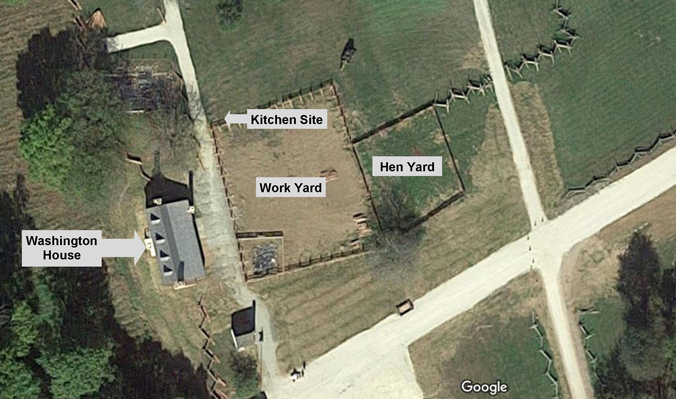
Twenty years ago, archaeologists digging at George Washington’s Ferry Farm unearthed the remains of a mid-eighteenth century kitchen. It was immediately obvious from the state of the artifacts that this kitchen had not simply fallen into to ruin and been abandoned – it had burned down. While this is fairly interesting in and of itself, a reexamination of the kitchen fire artifacts this year revealed surprising information about the intensity of the fire.
Overhead image of George Washington’s Ferry Farm showing location of the kitchen that burnt down in the 18th century. Credit: Google
What first struck us was the sheer density of artifacts in this kitchen. We recovered A LOT of artifacts. Furthermore, these broken sherds could be mended to form almost whole bottles, crocks, jugs, pans, and such. The number of artifacts and the fact they could be put together to form entire objects tell us that the Washington family and their slaves did not have much, if any, time to salvage what was inside the burning kitchen. Food, wine bottles, food storage and preparation vessels and utensils, furniture, and more all destroyed exactly where they stood. Think of this kitchen as a mini Pompeii or Titanic. Just about everything that the Washington’s had in their kitchen went down with the ship and was still there, just squished and burned.
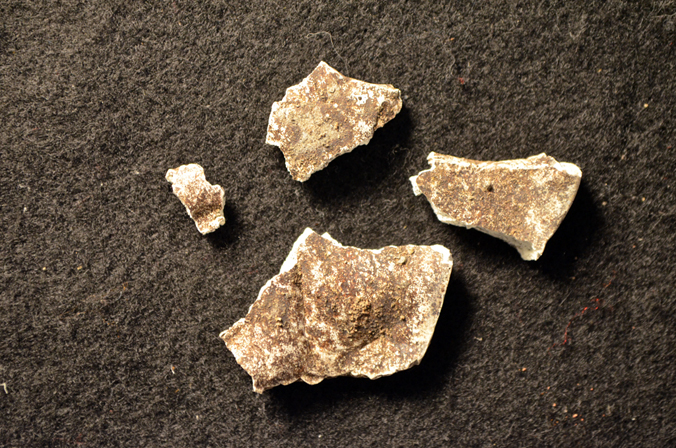
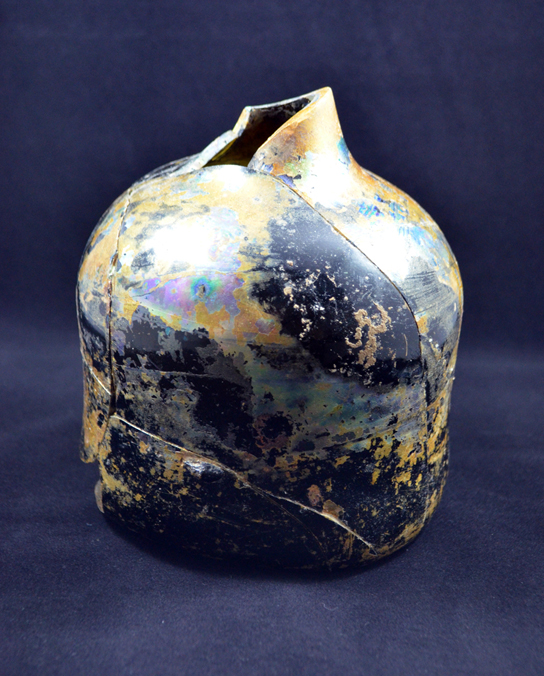
A preserved moment in time like this fire is a great opportunity for archaeologists to study the Washingtons but it comes with one big problem—most of the artifacts were totally cooked and absolutely toasted beyond recognition in some cases. Soft metal artifacts made from lead and copper, for example, were reduced to melted blobs by the fire. Ceramic vessels appear to have exploded from the heat and were reduced to blackened sherds. Some of the glass bottles survived with a minimal amount of warping from heat but the majority were melted or even burned in a process called ‘devitrification’. And oddly enough there was very little animal bone, which is usually ubiquitous in kitchens found archaeologically.
To put the intensity of this kitchen fire in context here are some quick statistics (in Fahrenheit):
Lead melts at 621.4 degrees.
According to the National Institute of Fire and Safety Training, the average modern house fire tops out at around 1,100 degrees.
1,400-1,800 degrees is the temperature at which bone will be destroyed
Copper melts at 1,984 degrees
Glass melts between 2,600 and 2,800 degrees.
Since the Washington kitchen fire was hot enough to actually burn glass, not just melt it, we’re looking at a fire that likely exceeded 2,800 degrees. That’s incredible! It also explains why there was so little animal bone recovered. Most bone was probably completely destroyed by the flames.
Extremely burned tin glaze ceramic recovered from the kitchen site at Ferry Farm.Devitrified glass from the burnt Washington kitchenMelted copper alloy excavated from the Ferry Farm kitchenBlobs of lead alloy recovered from the kitchen siteSlightly burned wine bottle from the kitchenA second slightly burned wine bottle
So, how on earth did the fire get that hot? We’ll probably never know, unfortunately. Some possible explanations may be the environmental conditions at the time of the blaze – a hot dry day with high winds could produce a perfect storm for a wooden kitchen to turn into an inferno. The fire also may have started at night when few people were awake to notice and try to put it out, although presumably the kitchen housed enslaved people, as was common for that time period. Another culprit may have been what was kept in the kitchen. There were dozens of wine bottles in there. While we call them ‘wine’ bottles today, they were actually all-purpose vessels that held any kind of spirituous liquid including harder alcohol like gin, whiskey, and rum, which are highly combustible. Animal products such as lard, tallow, beeswax, and even whale oil for lamps were likely stored in the kitchen and all burn quite well for long periods of time.
Regardless of the fire’s cause, it is clear from archaeological evidence that it happened quickly because not much within the structure could be saved, if anything. We also know that it burned extremely hot and for a sustained period of time in order to have caused so much damage to the items within.
Finally, perhaps, the last and the biggest mystery is where the replacement kitchen was located. Kitchens were almost all outbuildings because, as you may have deduced, they tended to catch on fire easily. A colonial household absolutely required a kitchen, however, and another would have been built almost immediately. Somewhere on the landscape at Ferry Farm, there is another kitchen waiting to be discovered archaeologically.
In the meantime, The George Washington Foundation plans to reconstruct the original Washington era kitchen so visitors can experience the sights, sounds, and smells of an eighteenth century kitchen, minus the blazing inferno, of course.
Mara Kaktins, Archaeologist
Archaeology Lab Supervisor
Ceramics & Glass Specialist
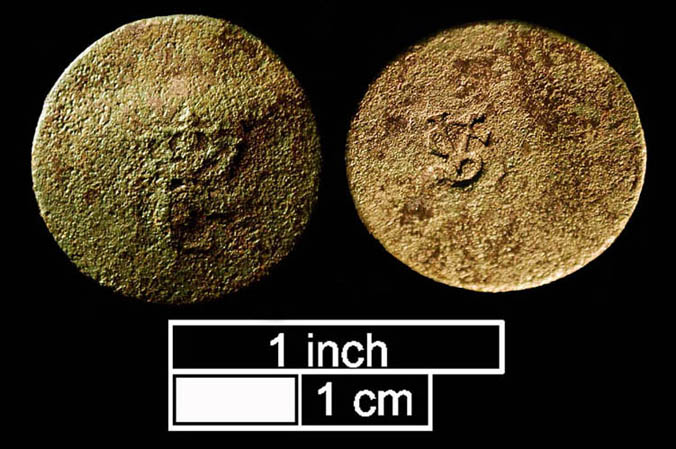
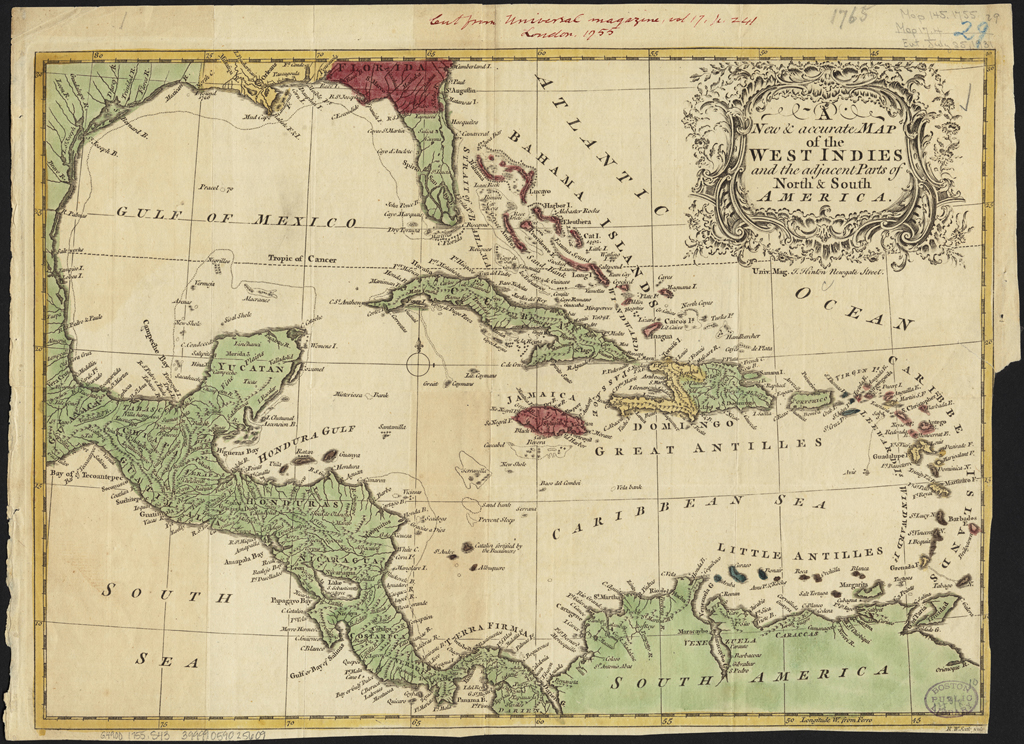
The heavily worn coin, known as a “black dogg” and pictured above, is a unique archaeological find at George Washington’s Ferry Farm. It was originally circulated in the French Caribbean and certainly traveled some distance to find its way to British Virginia. The coin may have traveled this distance in the pocket of a sailor whose ship first visited the West Indies, as the Caribbean islands were known in the 1700s, and then docked at Fredericksburg to unload its cargo. Fredericksburg was a port town in the 18th century and marked the furthest point up the Rappahannock River that small ocean-going vessels could travel before encountering rapids. These sailing vessels were a familiar sight to the Washington family as they looked down upon the river from their home atop the bluff (Read this blog post about a Fredericksburg ship’s voyage around the Atlantic in 1732).
The coin’s poor condition is a tribute in part to how popular it was as currency. Some black doggs featured a high pewter content. Their darker color, when compared to other coinage of the time, is how they came to be called black dogs or black doggs in the British colonies. British colonists used the term generally to refer to non-British, small change coinage that came from the West Indies. It was not a complimentary term, and these coins were typically the lowest value available.
While the French government provided coinage for its Caribbean colonies, hard currency proved difficult to come by for these islanders. French Caribbean coins such as our black dogg were widely circulated. An amalgam of copper and silver alloy coin bits, these debased silver coins provided much needed small change for remote colonies.
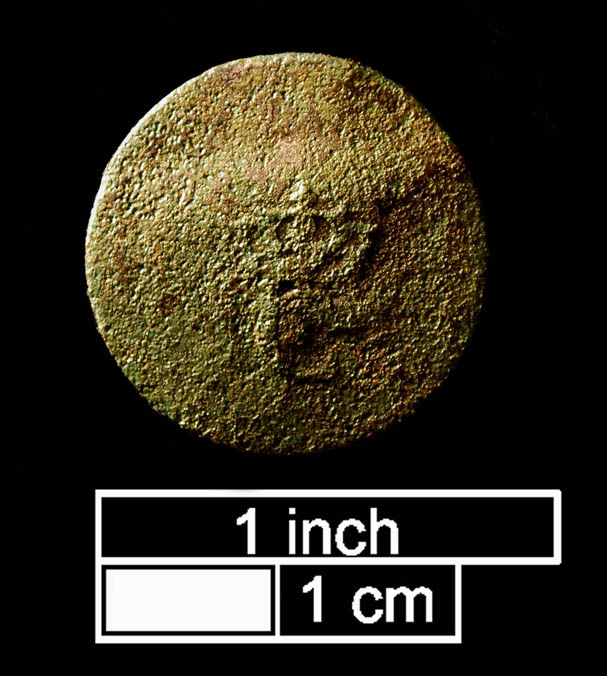
In 1779, France issued a coin for their Caribbean islands featuring a crowned “C” in relief on the front. The reverse side was blank, and individual islands often elected to stamp them with initials emblematic of a particular island.
The black dogg’s front featuring a barely visible crowned “C” in relief.
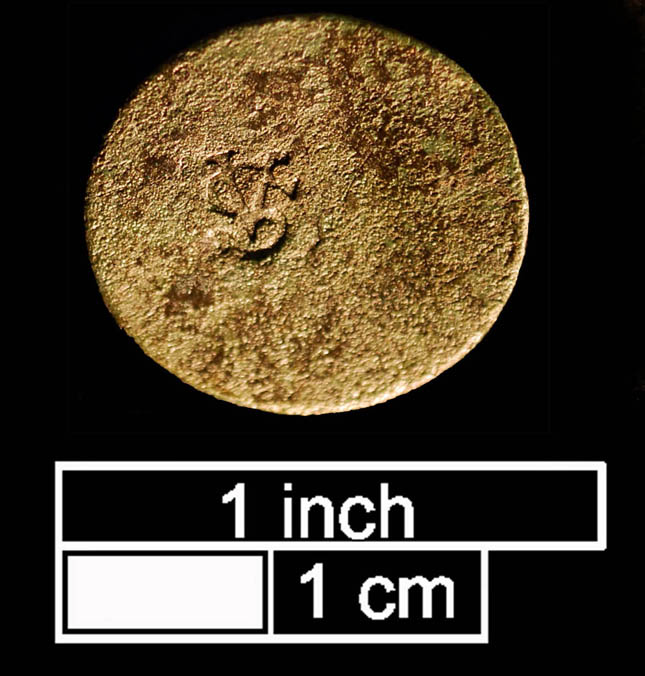
Although Ferry Farm’s black dogg is in poor condition given both its many years in the soil and its popularity while in use, the “SV” counter stamp is clear, and refers to the island of Saint Vincent. Saint Vincent was a prize the British Crown enjoyed after the Treaty of Paris that ended the Seven Years’ War in 1763. However in 1779, the year this coin was made, the French regained control of the island for a few years. Saint Vincent was eventually returned to the British under the terms of the Treaty of Versailles in 1783, which ended the hostilities between allies France and Spain and their adversary Britain that had resulted from the American War of Independence.
The black dogg’s reverse featuring a stamped “SV” for Saint Vincent.
At the same time, this coin may be a counterfeit produced in England. Birmingham produced many counterfeit coins, which were sometimes referred to as “stampe” or “stampee.” Since a counterfeit coin possessed some silver content, it provided some value for its users, but it was not minted by a government. Caribbean islanders were so desperate for hard currency that even coins that were easily recognized as counterfeit circulated freely, much to the dismay of colonial governments.
Correspondence of the time occasionally refers to people buying “a dogs worth” of a given product. In this context, “dog” referred to the currency used, not our four-legged friends. A dogs worth would represent a very small quantity. For poor people and the enslaved – whose commerce involved trading or purchasing items of low value – coins worth a fraction of a pence were popular indeed.
Although the black dogg coin found at Ferry Farm was of little value in the 1700s, for us today, it is an excellent representation of the far-flung British empire and of a thriving global network of trade that even reached Fredericksburg and the Washington family at Ferry Farm.
Last week, George Washington’s Ferry Farm hosted Archaeology Camp for ages 9-12. From digging, washing, and mending “artifacts” that they “excavated” in educational mock digs at Ferry Farm, campers learned about the entire archaeology process and the importance of archaeology to history. They also visited the archaeology laboratory for a behind-the-scenes tour and learned about interpretation and conservation of artifacts and the recording of information. The camp culminated with each camper creating an artifact diorama to take home, along with a new-found knowledge of what is beneath their feet! Here are some photos of the camp.
“THE BLOOD IS THE LIFE!” ACCOMPLISHED AT LAST! THE EFFICACY OF ELECTRICITY!! Nearly all Diseases Effectually Cured by BOYD’S MINIATURE GALVANIC BATTERY!
This is the opening pitch of an 1879 advertising circular for a popular medical medallion called a Boyd’s Battery. The battery was a disc, about 1¼ inch in diameter, meant to hang from one’s neck on a cord and that used the “soft and gentle” galvanic action of electricity to purportedly cure a host of diseases.
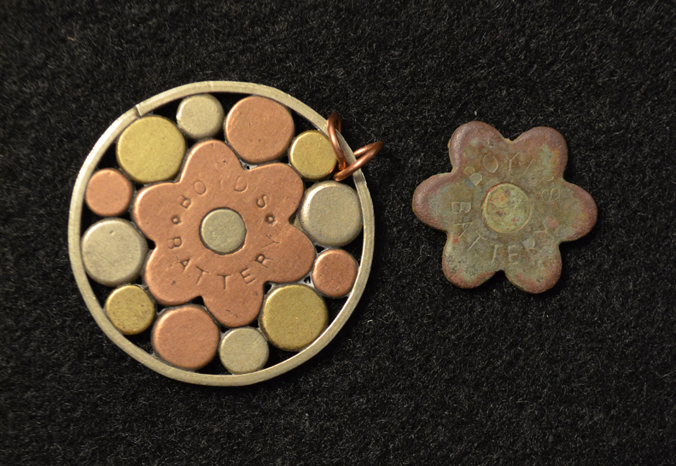
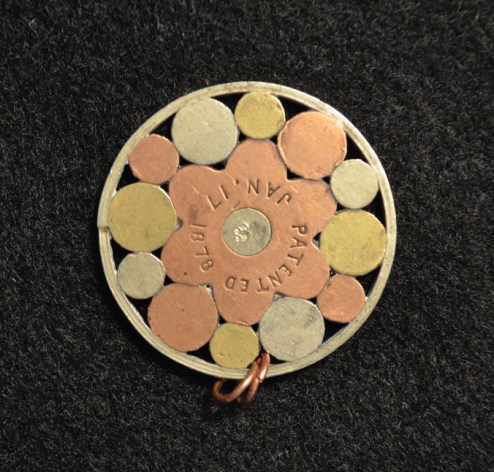
The medallion consisted of a flower-shaped central disc of copper and brass, surrounded by twelve smaller discs of various metals, all encased within another metallic band. These adjoining metals, using the humidity of the wearer’s skin, would supposedly produce a gentle electrical charge that was transferred to the wearer’s bloodstream. “By electrifying the blood, it stimulates the entire system, so that it enables nature to throw off nearly all diseases, and causes the blood to become youthful and vigorous in its action,” the advertisement claimed.
A complete Boyd’s Battery (left) next to a portion of one (right) excavated at George Washington’s Ferry Farm.Reverse of a Boyd’s Battery showing it’s patent date as Jan. 17, 1878.
Part of a Boyd’s Battery was excavated in 2006 at George Washington’s Ferry Farm during the summer excavations around the site of the 18th century era Washington home. The only surviving part of the battery found was the rosette-shaped innermost disc, stamped with “BOYD’S BATTERY.” Jane and John Corson, who bought the property in 1872, owned Ferry Farm during the late 19th century during the height of popularity for Boyd’s Batteries. John Corson’s death notice in the April 1, 1887 Fredericksburg Free Lance mentioned that he suffered a shock of paralysis a couple of years before his death from a stroke.[1] We’ll never know for sure but perhaps Mr. Corson was trying to relieve or cure his symptoms of paralysis by wearing a Boyd’s Battery?
“Professor” James C. Boyd, a man of dubious legitimacy in the real academic world, patented Boyd’s Batteries in 1878. Each medallion cost just 50 cents and results were guaranteed or your money back. The instructions specified a battery should be worn day and night directly on the skin, though it was recommended that children under six should wear a battery only at night. In certain extreme cases, two batteries could be worn at the same time, one on the chest and the other between the shoulder blades. The batteries lasted a lifetime but the ad circular cautioned that “under no circumstances should the same Battery be used by two different persons, as the disease from one would be conveyed to the other.”
The list of diseases and conditions that allegedly could be cured by wearing this medallion was impressive and wide-ranging. Patients suffering from the following conditions were encouraged to wear it: paralysis, restless nights, gout, sciatica, fainting spells, disordered conditions of the liver, blood and kidneys, loss of confidence, loss of manhood, female complaints, asthma, deafness, ulcers and tumors, chills, vertigo, and the list goes on. Boyd did add a disclaimer to his product that also listed diseases or conditions the battery could not cure, such as yellow fever, cholera, congestion of the brain, gleet, influenza, worms, whooping cough and consumption.
Boyd’s Battery advertising circular from 1879.
Credit: The Skeptiseum
Advertising circulars and testimonial books extolled the merits of the product. One book, titled “Boyd’s Battery” listed numerous testimonials from satisfied patients that were meant to sway unconvinced customers. Boyd also used the circulars in his search for agents to sell his products. Boyd’s Batteries were sold to the public either door to door, by mail order, or through businesses such as druggists.
Electricity has a long history of being used for the treatment of pain and disease. Roman, Greek, and Egyptian doctors treated patients with arthritis, epilepsy, and migraines by touching or attaching electric eels or fish to the affected areas. In one case a live torpedo fish, also known as a “narce”, was placed on the head of a patient suffering from migraines and left there until the area was numb.
The use of electricity as a therapeutic procedure gained momentum during the late 18th century after scientist Luigi Galvani observed twitches in the legs of dead frogs when they were touched by an electrical current. Further electrical experimentation by fellow scientists followed and by the early 19th century a small number of hospitals had organized their own electrical therapy departments.
By the 1870s, there were numerous self-help products sold to the general public touting the healing effects of electricity and Boyd’s Battery was not the only medical medallion to capitalize on this trend. There were a number of direct battery knock offs produced under the names of Sagendorph, Elias, Richardson, Flanigan, and Downing, differing only in their battery design.
J.C. Boyd went into the battery business in 1878 with his partner, Ellis H. Elias. Boyd supplied the startup money and Elias ran the daily business. Interestingly, Elias, and his brothers William, Henry, and Richard, were well-known con men of the time, running a number of different scams and swindles in New York City and Cincinnati during the 1870s and 1880s. They were constantly being hounded by the authorities who were trying to shut down their many illegal schemes. Even Ellis Elias’ death notice in the New York Times [PDF] noted “his connection with various enterprises of a doubtful character” and referred to him as “the chief of the gang of sawdust swindlers.”
Boyd’s Batteries clearly fell into the category of a “scheme or swindle.” In fact, there was some question as to exactly who was the original inventor of “Boyd’s” Battery. In a case before the New York Supreme Court, Boyd testified that he wasn’t sure who invented the battery but that it wasn’t him. In fact, Richard Elias testified that his brother Ellis initially used George Sagendorph’s name in the battery business before using Boyd’s name in 1878. The circulars for the Sagendorph and Boyd Batteries were practically identical and it was a common practice at that time to simply slap a new name onto a previous business and continue on with the swindle.[2] Even though journalists at the time exposed such schemes as frauds, they were still surprised that “people will believe that the wearing of the thing does them good.”[3]
People today are still looking for self-help treatments that don’t involve doctors or medically-approved medicines and treatments and there are a multitude of dubious products out there right now to fill this need. Surprisingly, even George Washington placed his trust in a similar product of his time called Perkins Metallic Tractors.
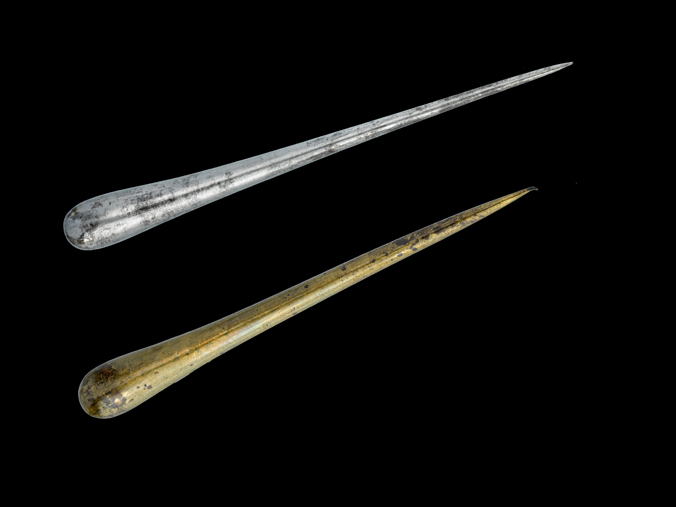
The Tractors were patented by Elisha Perkins in 1797 and consisted of two metal pins, one brass and one steel, that when rubbed together over an affected area would supposedly cure rheumatism, gout, burns, boils, cramps, and even cancer. Even though the efficacy of this product was promptly debunked by scientists, Perkin’s Metallic Tractors like the later Boyd’s Battery continued to be a popular product.
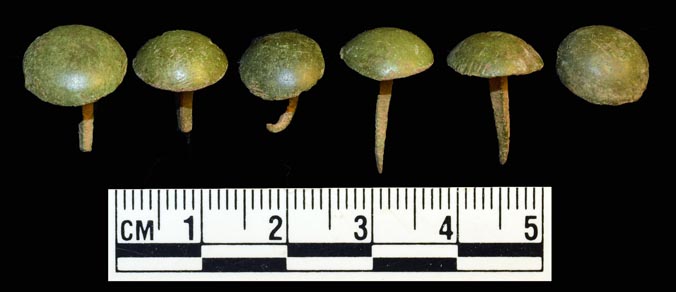
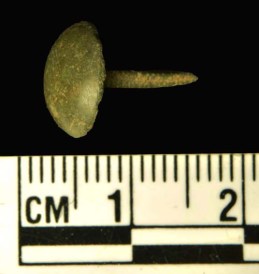
Tacks recovered archaeologically at George Washington’s Ferry Farm.
Let’s do our tacks! I know you’ve been dreading doing your tacks, and putting it off as long as you could, but time is running out. It is time to do our tacks, friends.
Whether iron alloy or copper alloy, tacks provide important clues to the presence of upholstered furniture, trunks, and horse tack at a site. Delicate items have disappeared but their tacks remain. There is “tacks-ation without representation.”
Copper alloy tacks often called brass tacks are one of those artifacts that archaeologists occasionally encounter. They tend to occur in small quantities at any given site. Archaeologists also recover iron alloy tacks used in cabinetry, furniture, and architecture but this blog will focus mainly upon brass tacks.
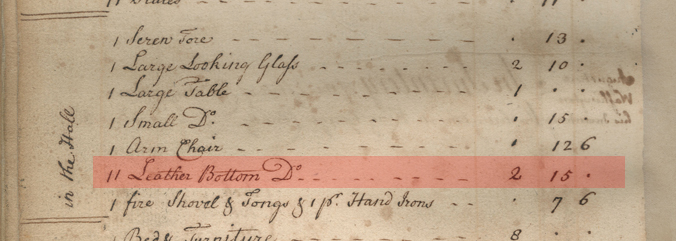
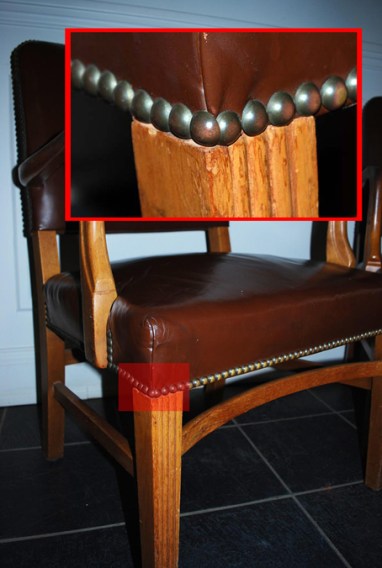
Brass tacks were shiny beacons of taste that drew well-deserved attention to the fine fabric or leather coverings that encased upholstered furniture. Augustine Washington’s 1743 probate inventory lists eleven “leather bottom” chairs in the home’s hall where George and his family dined while sitting upon these chairs. It was likely that brass tacks secured the leather to the frame of the chairs. Leather was an especially popular chair covering in Virginia, due in part to its availability to talented Williamsburg craftsmen.
A portion of Augustine Washington’s probate inventory from 1743. The highlighted entry shows eleven leather bottom chairs in the Hall. The entry reads “11 Leather Bottom Do.” The Do. is an abbreviation for “ditto” meaning the prior entry will indicate the item being inventoried.A modern leather chair using tacks that are similar in appearance and function to 18th century tacks.
Furthermore, a couch was located in the passage, and might also have been tastefully tack adorned. While often associated with furniture cushions, tacks were also widely popular on saddles, carriages, and riding chairs. Copper alloy tacks even embellished trunks, coffins, and were employed to hang window coverings.
To date, 127 copper alloy tacks have been discovered by excavators at Ferry Farm. They are scattered throughout the yard spaces surrounding the multiple colonial and antebellum-era dwellings of this site. This assemblage of tacks represents a very small proportion of the tacks used here historically. Like many of our discoveries at this site, the vast majority represent items that were inadvertently lost. Such loss increased when the items they adorned were used, cleaned, repaired, or moved.
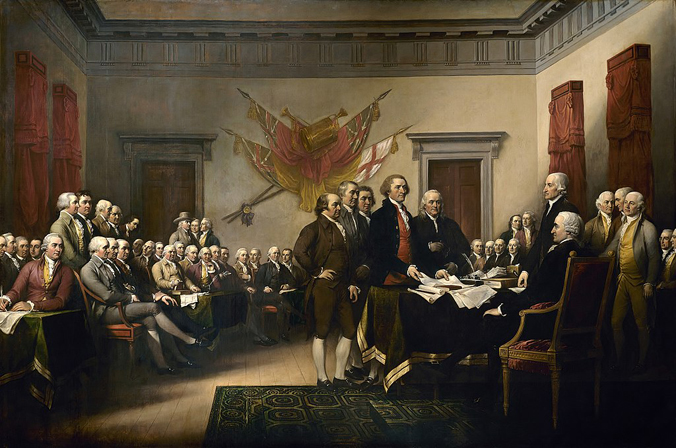
“Taxation without representation” was a rallying cry of the American colonists against British Parliament in the years following the French and Indian War. The victory against the French had been costly, and Britain needed her colonists to contribute to defraying the costs. Parliament opted to impose a variety of taxes – such as on paper and upon tea – and the King’s North American subjects found these fees increasingly irksome. Because the colonists lacked a representative in Britain, Parliament was unable to benefit from the perspective and wisdom of the colonies. Being taxed without such representation was unacceptable, and the colonists took steps to provincial they had no influence on legislation and taxation upon the colonists. The “Declaration of Independence” (1818) by John Trumbull. Credit: Architect of the CapitolThe shanks of tacks can be square in cross section or round, their ends pointed or blunt, depending upon their function and method of manufacture. Sometimes the shanks are straight and other times they are bent. Bending a shank was sometimes done to ensure the tack was well fastened, and less likely to be lost. However, it can be difficult – some might argue impossible – to discern whether bent shanks were an intentional part of their past function, or whether the shanks were altered as an incidental consequence of their loss, burial, and exposure to subsequent activities that occurred at the site. Occasionally, the shank is missing altogether: broken off and irrevocably misplaced.
Tacks are a timely reminder that the archaeological record does not preserve all of the items that the families who lived here used. The artifacts that we unearth from the yards surrounding the dwellings that were here only represent those things that preserve well and were sturdy. The primary components of furniture decompose readily, often because they are manufactured from organic items. The fabric, leather, canvas, marsh grass, Spanish moss, horsehair, iron hardware, and wood that typified colonial upholstered items do not survive long in the environmental conditions under which the archaeological record of Ferry Farm is exposed. Even under ideal, indoor circumstances, upholstery fairs poorly over time, becoming faded, outdated, and brittle. Cushioning sags and droops over time. Addressing these maintenance issues can result in replacement of these materials and the unintentional loss or even the replacement of its hardware, including tacks.
Despite these limitations, tacks often reflect the use of upholstered furniture, even if the furniture itself has not endured. Most sites lack probate inventories or wills, and tacks provide important clues to the presence of upholstered furniture, trunks, and horse tack. Hence the “tacks-ation without representation” title: while the delicate items which these tacks graced have literally disappeared or are no longer represented, their tacks bear testament to their presence on the site. In the coming years, as archaeologists record more attributes and generate larger collections of these items, their full interpretive potential may be realized.
Laura Galke, Archaeologist
Small Finds Analyst/Field Director
Mara Kaktins, archaeology lab supervisor at George Washington’s Ferry Farm, explains the weird patination on some glass artifacts excavated by our archaeologists.
With building work on the reconstructed Washington family home at George Washington’s Ferry Farm nearly finished, our archaeologists are in the midst of identifying Washington-owned plates, bowls, glasses, and other household artifacts to be used to furnish the house once construction is finally complete.
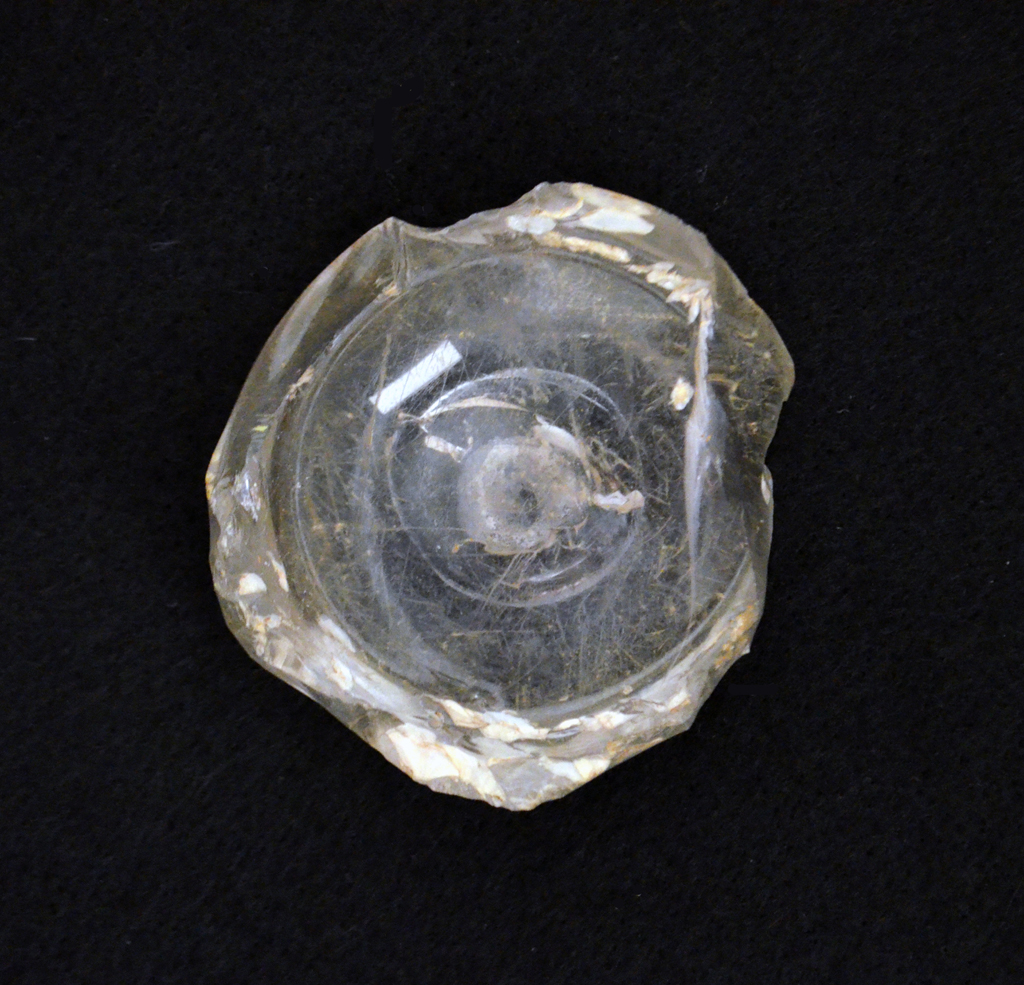
While working to identify things, archaeologists sometimes encounter a “mystery artifact” that either can’t be identified or has been altered to serve an unknown purpose from what was originally intended. We wrote about one especially perplexing mystery artifact almost three years ago. With that mystery artifact, someone intentionally and for unknown reasons chipped away the edges of that 18th century leaded glass base from a cup or mug to form a disc .
Recently, during analysis of the Washington family’s table glass, Ferry Farm archaeologists discovered another base from an 18th century drinking glass that someone tried to modify by actually breaking or knapping off flakes of glass. It was an apparent attempt to turn the base into a disc. As before, we don’t know for what reason.
To confirm the glass was knapped, Ferry Farm archaeologists got “science-y” and asked nearby Dovetail Cultural Resource Group in Fredericksburg to take photographs of the glass base using a microscope camera.
Using this microscope camera made the clear glass appear green in the resulting photos. More importantly, the photos helped us to see flake scars from knapping, which we’ve outlined in black in the photo below, and thus confirm that the glass was actually knapped by someone.
As often happens when studying the past, however, our analysis provided answers but also created many more questions. Who did the knapping? Was it perhaps the job of an enslaved worker? What was the goal? Why make these modifications? Although it’s the science of history, even archaeology can’t yet provide answers to these questions. In fact, we many never have the answers. In the end, sometimes not knowing is just as much a part of archaeology as knowing.