Lives and Legacies

Tag: Fashion

  • Lovely Linoleum and Other Historic Floor Coverings – Two Hot Takes

    Linum (“Flax”) and oleum (“oil”) – Fashionable and Affordable

    As a Historic Preservation student at the University of Mary Washington, I’ve grown to appreciate almost all aspects of materiality. Over the past four years, my education has taught me to look closely at the built environment around me.

    Two years ago, I stumbled across a book about mid-century kitchens, which discussed modern flooring’s ugly duckling: linoleum. From this, I developed an appreciation for linoleum and vinyl flooring and an equal obsession with spotting them.

    Most people wouldn’t put Linoleum at the top of their list of favored materials. After all, historically, it’s been labeled as cheap, tacky, and ugly. However, linoleum has been an important part of modern living since the late 19th century. While the patterns most people initially thought of weren’t very attractive (that one red brick style), their initial creation changed the game for durable materials in a household and single-handedly became a hospital favorite.

    Linoleum was first invented by Frederick Walton in Chiswick, England, when he discovered that oxidized linseed oil could replace rubber when mixing the oil with cork and other fibers. This process was sped up by heating the oil with lead and zinc, which formed a sticky paste that would be mixed with sawdust or cork to keep the cloth from becoming tacky. Shortly after receiving a patent in 1864, Walton opened the American Linoleum Manufacturing Company on Staten Island, New York, in 1872, with the nearby town named Linoliumville in its honor.

    Fred Walton, creator of Linoleum

    The genius of linoleum was/is its durability and ability to be mass-produced cheaply. Additionally, the material could be customized using pigments to create virtually any pattern, which aided in its early popularity in homes. Early linoleum was commonly produced in printed, marbled, inlaid, or plain patterns, with these distinct designs often serving as time machines to gauge when the flooring was installed. Putting aside the aesthetics, linoleum is most likely to be seen in high-traffic areas, such as hallways, kitchens, and mudrooms, due to its long-term durability.

    A well-installed linoleum is waterproof and surprisingly antibacterial, which is why, since its invention, linoleum has been commonly used in hospitals. The flooring was also popular among naval vessels in the early twentieth century, with battleships and luxury cruisers taking advantage of the material. In fact, the RMS Titanic used inlaid linoleum flooring for a significant portion of its decks, which can be seen in past photos and even on the sea floor today.
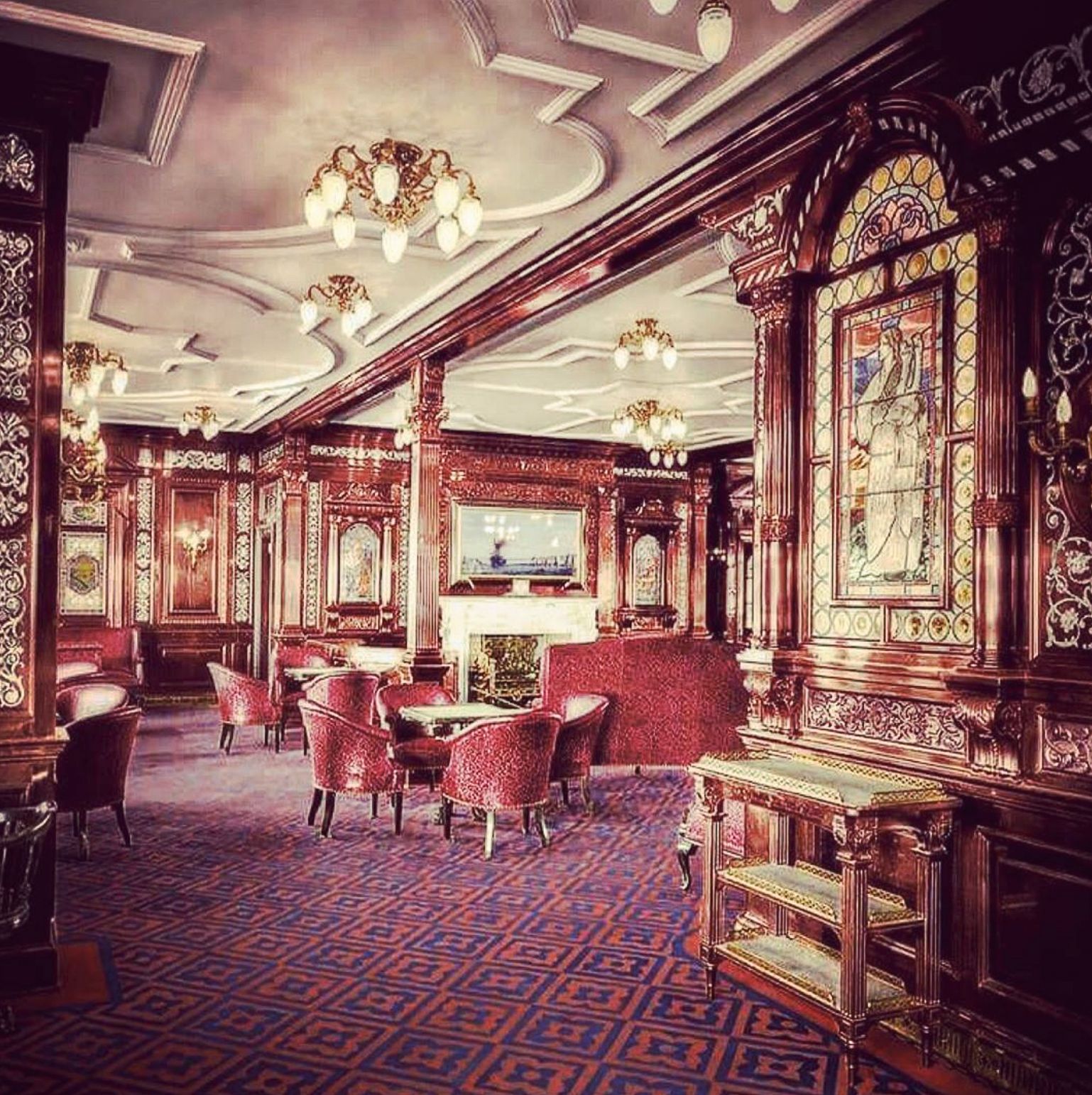

    The manufacturing boom of the mid-twentieth century brought modern materials and technologies to the average household, including the popularization of linoleum in common spaces. Kitchens and high-traffic areas would continue to have the flooring material. However, living rooms, eating spaces, and even walls would start to display colorful and flashy patterns. This popularity would be short-lived, as the 1950s brought vinyl flooring, an extremely similar product, but was pushed as a newer and more “fashionable” alternative to linoleum.
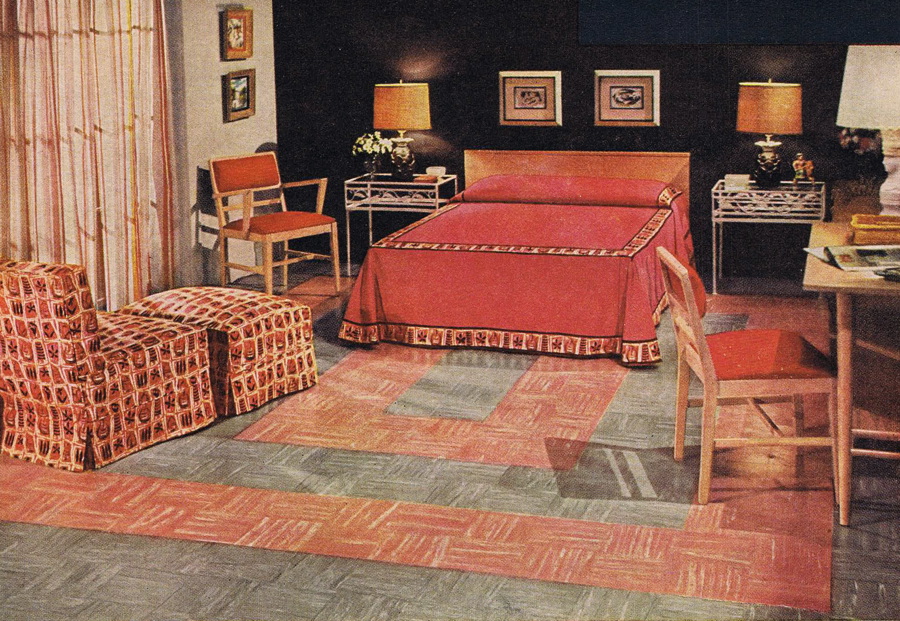
    An image of a bedroom from a 1952 advertisement for linoleum flooring

    Despite the initial falloff, linoleum has made a surprising comeback in homes within the last few years. It’s understandable, as per square foot, the material is very affordable and easy to clean, not to mention that rising interest in the conservation of historic homes has led to the preservation and replication of historic linoleum. Most often, the damage to the material features is rips and cracks, which are easily repaired with patching and a fresh coat of sealant.

    I don’t write any of this intending that you agree with me. However, I believe that linoleum reflects the best of modern materiality. It’s low-cost, eco-friendly, durable, and easy to customize, allowing lower-income homes to decorate their spaces economically and colorfully. While spotting linoleum in older buildings may be rare due to being covered with changing fashion trends (we are all familiar with carpet over beautiful hardwood floors), preserving it is just as important as any other part of the built environment.


    Helena Samson

    Fleming Smith Scholar, UMW Class of 2025


    Linoleum’s Forebearer “Fancy Pattern-Cloth” – Eighteenth Century Floorcloths

    The future of home restoration and preservation will involve saving certain building materials, such as wood, stone, brick, and decorative elements, like linoleum. While humble and even ridiculed (you know the pattern), linoleum will eventually be treasured as a lasting historical remnant, helping future preservationists add context and depth to restorations.

    Classic linoleum, everyone seemed to have despite not wanting to admit it.

    Unfortunately, in eighteenth-century historical preservation, we are rarely lucky enough to find samples of the predecessor of linoleum, the floorcloth. The floorcloth was a relatively common floor covering in eighteenth-century Virginia homes. It was made from woven cloth, usually heavy and sturdy, like linen or cotton canvas. This canvas was then stretched, several layers of oil paint applied, and covered in varnish. This floorcloth could be painted in any fashionable design, as seen in John Carwitham’s book published in 1739, with the replica marble being one of the favorites. 

    Like linoleum, floorcloth was prized because it was customizable, durable, easily cleaned, and repairable. It could also be cut down and used in other areas like kitchens or closets after it lost its fashionability or was replaced with carpet. It was so versatile that it basically reused itself out of existence.

    While no known complete examples of eighteenth-century floorcloths exist, bits and pieces have been found, offering insight into their construction and functionality in the home. Coincidentally, here at Kenmore, we found remnants of a floorcloth under the floorboards in the attic during a period of restoration in 1989. Small samples from the remnants were taken for analysis:
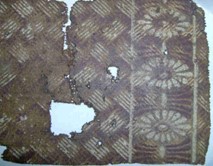
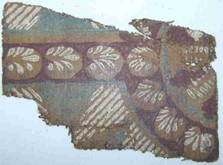
    Base layer – yellow preparatory layers of lead white and yellow ochre ground in linseed oil. The uneven distribution of the large, clumped pigments suggests it was hand-ground paint.

    Black paint is found in the third layer above the ground coatings with remnants of plant resin varnish, followed by a green design layer. This could mean the black paint was the original design, and it was repainted after varnish and the green design were put on top.

    Green-painted areas – made up of white lead, Prussian blue, yellow ochre, and calcium carbonate.

    White paint – composed primarily of white lead and calcium carbonate

    We can draw a few conclusions from this paint analysis. One, the floorcloth was well used but eventually worked its way down the list of favored household furnishings, whether from wear and tear or fashionability. Either way, it was ultimately rolled up and stored out of sight, and lucky for us, forgotten.

    Second, the white paint sample did not contain zinc white, which was used after 1840, and the green paint sample did not contain chrome green, which means it was likely produced before 1816, when chrome yellow pigments were commercially available. So, while we can’t verify that it was a Lewis family floorcloth, it is a very early example of the floor covering. It inspired the floorcloth reproduced for Fielding’s office in Kenmore, which you can read about in our previous post, “What Was Old Is New Again”.
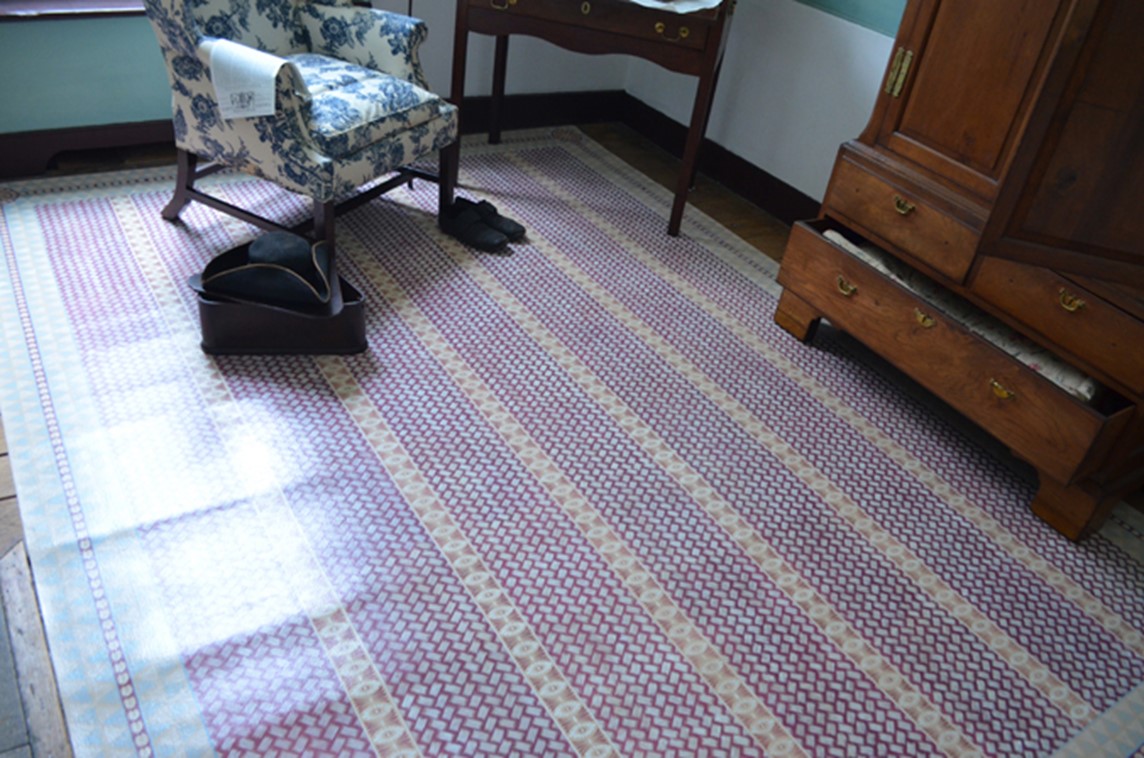
    Beautiful reproduction floorcloth hand-painted by Black Dog Gallery, Yorktown.

    Today, thanks to linoleum, we can choose affordable, durable, and even fashionable flooring materials. Linoleum is the evolution of floorcloths with similar goals and functionality. However, while floorcloths didn’t usually survive, linoleum will follow us through history and deserves to be preserved even if it leads to awkward questions about style and décor.

    Oh, there will be questions.

     Heather Baldus

    Collections Manager


    Bibliography

    Kaldewei, G. (2000). Linoleum: History, design, Architecture, 1882-2000. Hatje Cantz ; Distribution in the US, DAP, Distributed Art Publishers.

    Garcia, K. (2023, December 6). Caring for 100-year old linoleum. Tenement Museum. https://www.tenement.org/blog/fun-with-linoleum-no-really/

    Houseman, C. (2020, September 11). Titanic’s linoleum. Encyclopedia Titanica Message Board. https://www.encyclopedia-titanica.org/community/threads/titanics-linoleum.52676/

    NPS. (n.d.). https://www.nps.gov/orgs/1739/upload/treatment-guidelines-2017-part2-reconstruction-restoration.pdf

    Landreau, A.N. (1976). America underfoot: A history of floor coverings from colonial times to the present. Published for the Smithsonian Institution Traveling Exhibition Service by the Smithsonian Institution Press.

    Weissman, J.R., & Lavitt, W. (1994). Labors of love: America’s textiles and Needlework, 1650-1930. Wings Book: Distributed by Outlet Book Co.

    Buck, Susan L. Floorcloth Fragments Cross-Section Microscopy Report, Kenmore, Fredericksburg, Virginia. (2006)

  • No Buttons for the Ladies

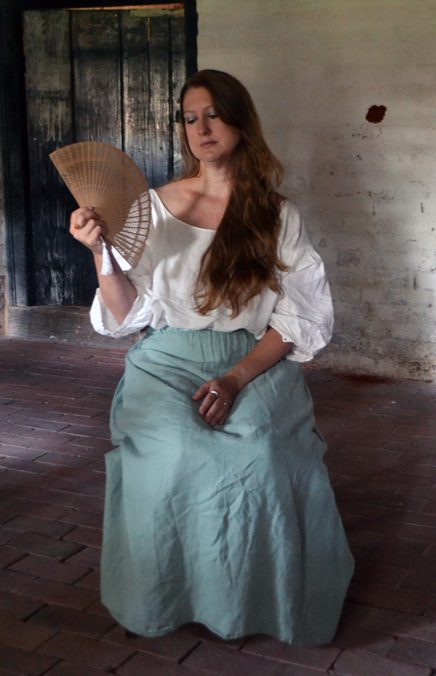
    Whilst I costume actors, living historians, and myself from time to time in 18th century clothing, I find myself puzzled about the stark difference between the closures and attachments of ladies’ and men’s garb.  I have to lace myself into my stays, tie on layers of padding and petticoats around my waist, and finally pin my gown closed.  Men have the enjoyment of a few buttons on their breeches and waistcoat, but that is it.  It frequently makes me grumpy how long it takes me to dress in comparison to my male counterpart.  I did not understand this phenomenon, until recently. 

    To put 18th century clothing closures into perspective, you had hooks and eyes, buttons, and ties/laces.  Thomas Hancock created elastic for gloves, suspenders, and stockings in the 1820s, but it struggled to withstand heat and last through time.  The elastic we know and love in our garments today did not come around until the early 1900s.[1]  The modern zipper was patented in 1917 and was used mainly on boots and tobacco pouches.  It took another 20 years before the technology even made it to mass produced clothing.[2]  By comparison, the button first becomes functional over decorative around 1,000 BCE in Asia.  Buttons would eventually travel the Mediterranean during the crusades into European territories around the late 11th century CE.[3]  So George Washington did not have a zipper on his pants or elastic on his socks, but he definitely had buttons on his coat.   

    A eye from a hook and eye set. Source: Ferry Farm Archaeological Collections

    Hooks and eyes were sometimes used for gown closures for women in the 18th century.  They were not used as much as pins were because of the rigidity in size it created for the garment. 

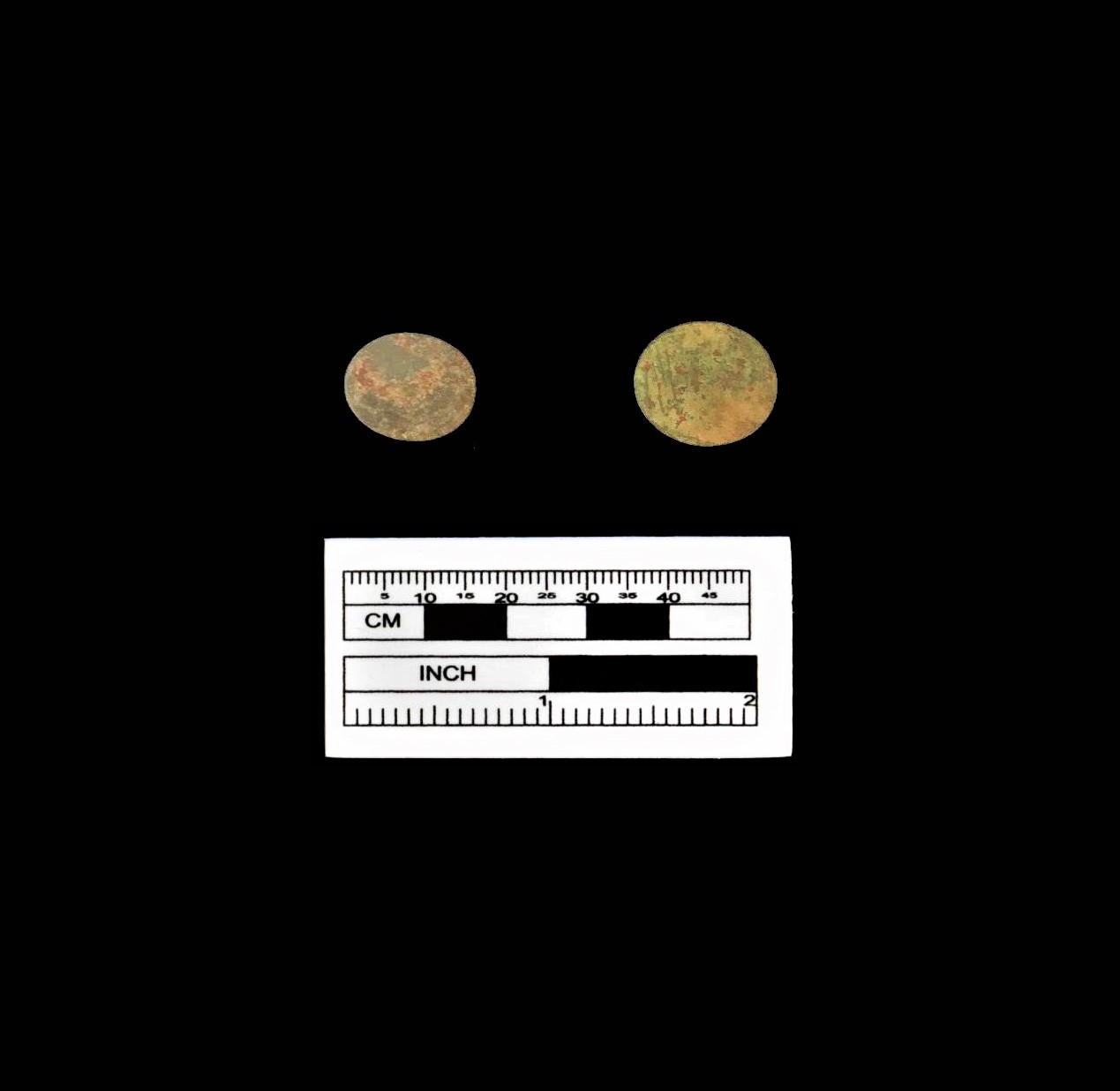
    We have buttons from men’s garments in the archaeological collections here at Ferry Farm.  We also see buttons all around male portraiture in our curatorial collection.  The ladies, however, are stuck with laces, ribbons, and pins.  And boy, do we have the pins to prove it in the archaeology collections. 

    Two metal buttons most likely from men’s garments.  Source: Ferry Farm Archaeological Collections
    Bone buttons Source: Ferry Farm Archaeological Collections
    Pins were used for pinning jackets closed and keeping caps pinned to your hair.  They were a necessary part of dressing. Source: Ferry Farm Archaeological Collections

    A small sample of the large collection of brass dress pins found at Ferry Farm.  Pins were not used for sewing, as basting before sewing was the regular practice.  Pins were used for pinning jackets closed and keeping caps pinned to your hair.  They were a necessary part of dressing.

    The answer to why this phenomenon is how it is hit me one day after rewatching a lecture given by a former staff member entitled “Betty Washington Lewis and Women’s Health.”  Dr. Kelly Brennen Arehart spoke about maternity wardrobes and how women wore their everyday clothing throughout pregnancy.  For my contemporary mind, this was shocking, but the more I thought about it the more it made sense. 

    Women go through a lot of fluctuations in body shape, weight, and proportions in their lifetime.  Between hitting puberty and development of curves, to many pregnancies, to the changes of menopause, women’s bodies go through so much.  Of course in between all of the big changes, there are also changes to the female body based on time in her menstrual cycle, metabolism fluctuations, or periods of eating more or less or different types of food that all change the body’s shape and size.  Unlike today, women of the past could not just go to the shop and buy a pair of pants in the size up.  Clothing was incredibly expensive and time consuming to make before sewing machines and mass production come into play.  In the 18th century, even the highest classes of women did not have the money or the time to go buy or have new clothing made when they gained a few pounds or got pregnant.  It was a matter of adjusting the clothing they already had.  And that is exactly what ties, pins, and laces allowed women to do. 

    The lacing, pinning, and tying made clothing far more adjustable compared to the rigidity of buttons.  Women tied their petticoats looser and simply covered the wider gap in the side with their jacket or gown.  Stays were either loosened significantly by the laces or they were left unlaced at the bottom entirely, especially in cases of late term pregnancies.  On top of the stays, jackets could be pinned further out to allow for more room in the bust and waist, or a stomacher could be added in the center opening of the jacket to expand the top even further.

    Whether these closures were intentionally created to be adjustable or if it was just a byproduct of lacking clothing technology, I am not entirely sure.  But the idea that buttons were only used on men’s not so fluctuating bodies (for the most part) says something.  A button is sewn down and cannot be easily moved or adjusted on a regular basis.  Once a button is sewn into place, there is no room for variation in body shape, unless one wanted to move the buttons every time he ate a large meal the previous day. 
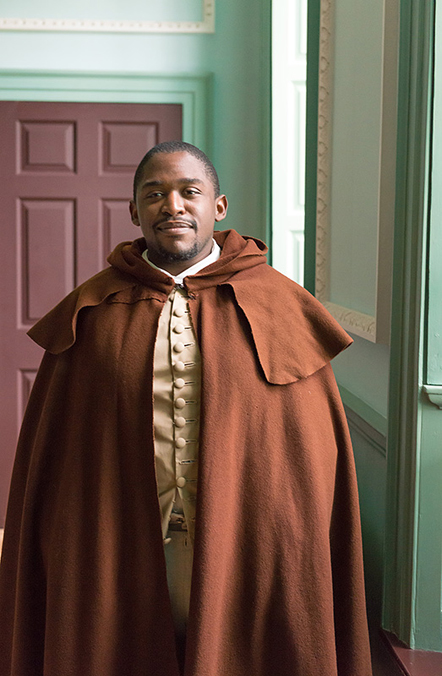
    Even though Betty Washington Lewis had Charlotte, who we believe to be an enslaved woman acting as the seamstress of the Lewis household, Betty was pregnant on and off for twenty years.  If Charlotte or another enslaved seamstress had to make a maternity wardrobe for Betty every time she was with child, the seamstress would have no time to do any other tasks whatsoever.  It was not economical with precious time or expensive cloth for women to need new clothes every few weeks. 

    So to tie all this together, I am still not happy that it is so inconvenient for me to dress myself in 18th century clothing, but I understand why getting dressed was this way.  The adjustability of women’s clothing was so intentionally created to conform to their bodies in any season it was in.  It also opens my eyes to why pins were so important.  Without them, a woman could not dress. 

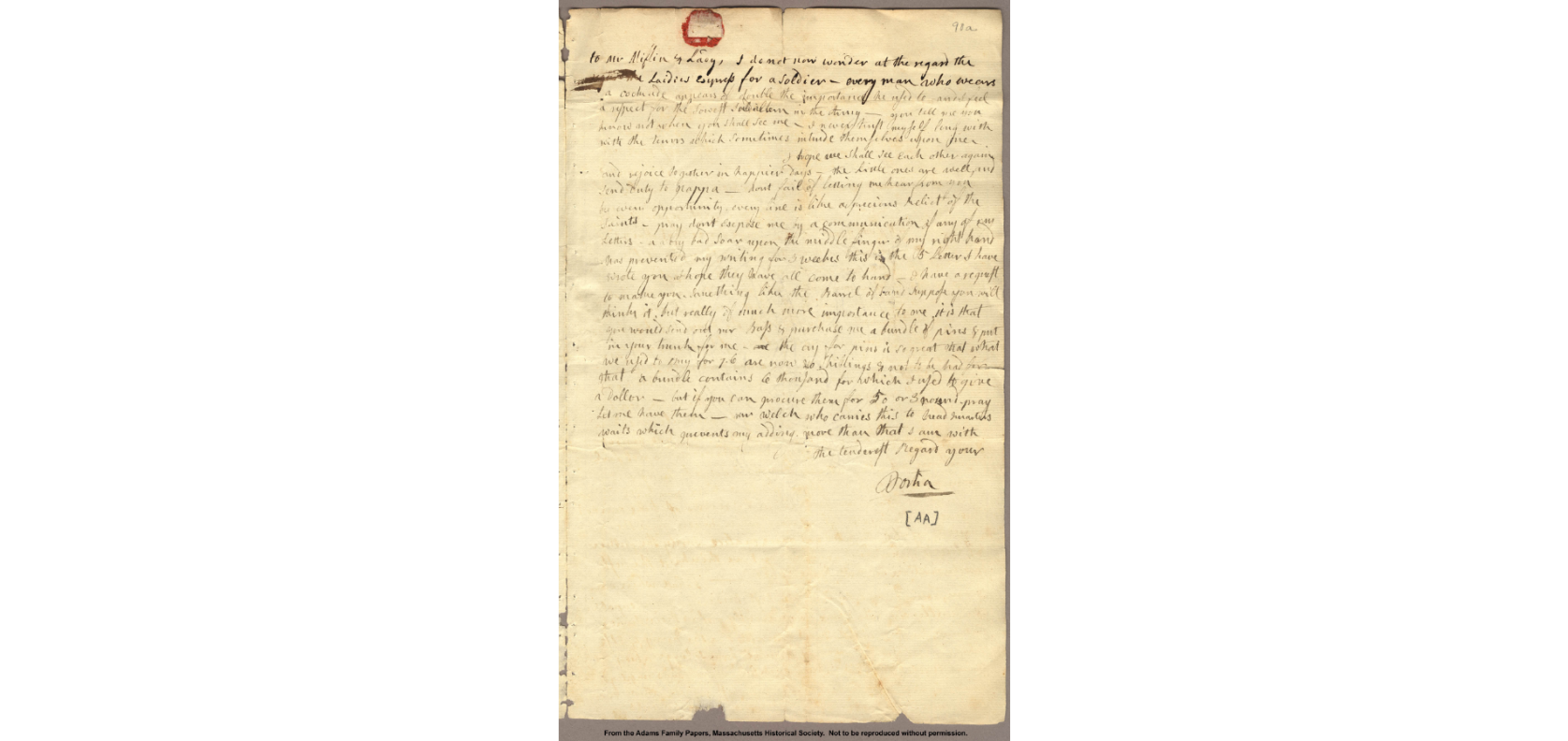
    Letter from Abigail to John Adams, June 14, 1775.  Source: Massachusetts Historical Society

    …I have a request to make you. Something like the Barrel of Sand suppose you will think it, but really of much more importance to me. It is that you would send out Mr. Bass and purchase me a bundle of pins and put in your trunk for me. The cry for pins is so great that what we used to Buy for 7.6 are now 20 Shillings and not to be had for that. A bundle contains 6 thousand for which I used to give a Dollor, but if you can procure them for 50 [shillings] or 3 pound, pray let me have them. Mr. Welch who carries this to head Quarters waits which prevents my adding more than that I am with the tenderest Regard

    your

    Portia


    Allison Ellis

    Manager of Public Programs


    [1] “Questions About Elastic,” Maggie May Clothing, Accessed July 10, 2023, https://maggiemayfashions.com/questions-about-elastic-2/.

    [2] Ninette Dean, “The Up and Down History of the Zipper,” The Smithsonian Libraries and Archives, Accessed July 10, 2023, https://blog.library.si.edu/blog/2010/05/03/the-up-an-down-history-of-the-zipper/.

    [3] Caroline Stone, “The Westward Journeys of Buttons,” AramcoWorld, Accessed July 10, 2023, https://www.aramcoworld.com/Articles/November-2020/The-Westward-Journeys-of-Buttons.

  • Stay Informed About Historical Undergarments

    You have probably seen an enormous amount of corsetry imagery in your life. Whether it was the scene in Gone with the Wind where Mammy is lacing Scarlet into her corset as she holds onto the bedpost or a social media post about waist training using a modern piece of shapewear. Needless to say, you probably think that corsetry was restricting, painful, and dangerous for all women in the 18th, 19th, and 20th centuries. Enter me, a corsetry enthusiast, here to break the wall of misconceptions surrounding women’s boned undergarments. 

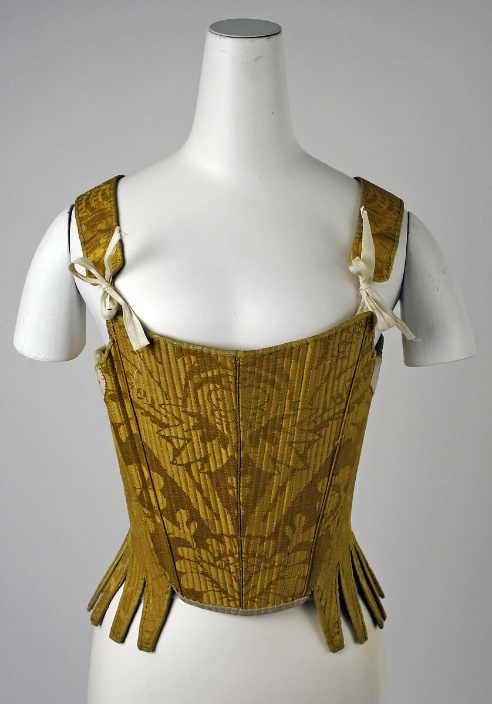
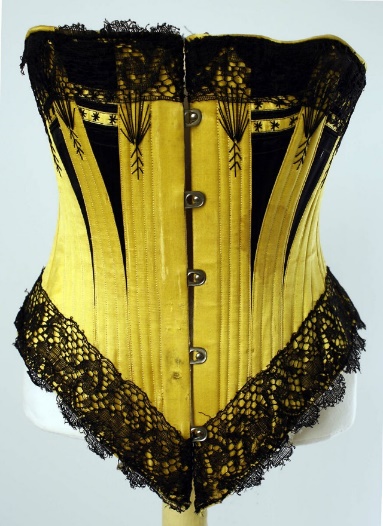
    I would like to start by differentiating between stays and corsets. Stays are the fully or partially boned shaping garments worn by women in the 18th century. Stays gave support to the bust and created an inverted conical shape by holding the shoulders back, trimming the waist, and supporting the mantua, or gown. Stays can be laced in the front, back, or both. Corsets became fashionable in the early to the mid-19th century. Corsets give the more famous hourglass shape, are laced in the back, and fastened in the front with hooks. I will be focusing on 18th-century stays, but know that many misconceptions about stays and corsets fall into similar categories. Some differences are the spark to the misconceptions, though. 

    Early 18th Century silk stays in collections of the Metropolitan Museum of Art

    1880s Silk Corset in the collection of the Metropolitan Museum of Art

    Take everything you think you know about stays and throw it out the window. The most common misconceptions about historical boned shapewear can be debunked if you step outside of the 21st century’s media-driven view of corsetry.

    Weren’t stays painful and hazardous to women’s health? No, actually. This misconception comes from the idea that women tight-laced their stays, meaning they pulled the laces tighter to force waste reduction. Most women did not practice tight lacing. Additionally, the boning was made of baleen (whalebone), which looks rigid but is quite flexible and molds to the wearer’s body over time. Stays were meant to be supportive, not restrictive. Organs were not squeezed, and ribs were not broken. Think of stays as a garment, not unlike a modern bra: snug, supportive, but wearable in an everyday setting. Women were able to work, eat, and breathe in their stays. It was probably more likely you would faint from the smells in the street than you would from the tightness of your stays in the 1700s. 

    1777 Satire of fashion print, British Museum

    Women of all classes in society wore stays. From the lowest of working classes to the highest of nobility, everyone wore them. You were not considered properly dressed without your stays on. Materials differed based on what you could afford, but some iteration was necessary for every woman. Working women often wore stays without straps so as not to restrict any movement of the arms or shoulders. Wealthier women who were not doing physical labor tended to enjoy the extra support the straps gave.

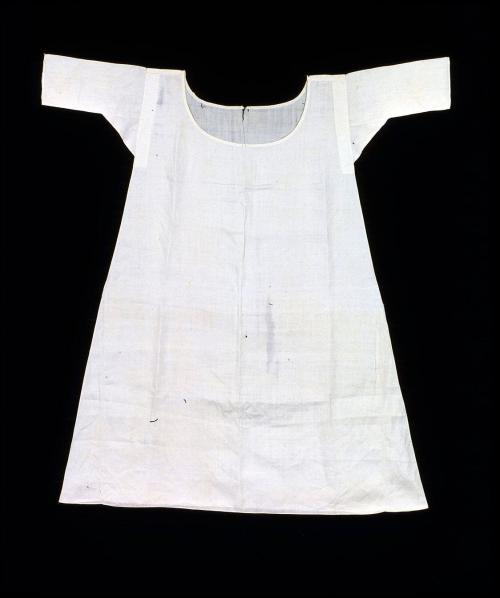
    Stays were not worn up against the skin. No matter what the covers of romance novels or the saucy scenes in period dramas portray, there was always a layer of clothing between the woman and her support garment. Laundry was not as simple as throwing everything into a machine and hitting start in the 18th century. Therefore, women wore foundational garments called shifts that were washed frequently and protected outer garments like gowns and stays that were not washed as often. A shift was a nightgown-like garment usually made of linen. This was considered your base layer. It absorbed sweat and oils, protecting the rest of the clothing and stays from the elements of the body. 

    Linen shift in the collections of Colonial Williamsburg

    Stays were never laced in a crossed pattern; they were always spiral laced.    That crisscross lacing that you see so often was not commonly used until 19th-century corsets. Spiral lacing was achieved by anchoring one end of the lacing chord at either the top or bottom and running it in a circular pattern through the offset laces until the other end of the stays were reached, then it was anchored off at that other end. This is a common mistake made in period films. If it isn’t spiral laced, it isn’t the 18th century. 

    Spiral-laced early 18th Century linen stays in the collection of the Metropolitan Museum of Art
    Cross-laced 1890s silk corset in the collection of the Metropolitan Museum of Art

    Another lacing myth is that women in the upper classes were the ones who wore back-lacing stays, and women in the lower classes wore front or front and back-lacing stays. This idea came to be from the thought that women needed help to get into back-lacing stays; therefore, they needed a servant or enslaved person to place them in while lower-class or poorer women could lace their own stays in the front. Experts know this is not true as stays in fancier fabrics, like silk, worn by wealthier women are often front lacing, and stays in common fabrics, like linen, are often back lacing and vice versa with no real correlation. This tells us that the lacings of stays were not exclusive to class. I can also confirm that this was most likely the case as I have worn and laced my own back lacing stays by myself. It is not a magic trick or due to any extreme flexibility. I do what I was shown: lace the stays loosely in front, then spin them around, so the lacing is on my back and tightens them up. Simple, fast, and effective. 

    Something surprising that I learned while constructing my stays is that stays were not made by the milliner or mantua maker. Stays were most frequently made by a specialty staymaker or the tailor. That’s right, and this is such a specific and complicated garment to construct that it was often made by a specific craftsman. It took many years for someone to master the art of stay-making. Despite mantua making and millinery work being a female dominated trade in the 18th century, stay making and tailoring was a male-dominated trade. It took a lot of strength to process the whalebone, a job more suited to men. Next time you hear an actress from a period drama complain about how tight the corsetry was and how she could barely breathe, know that her corset was most likely not fitted properly and made historically; therefore, it just did not fit. Stays were made to fit the wearer, which would take an enormous amount of time to do for a film’s costumes. Premade corsets are bound to be uncomfortable to wear. Staymakers knew exactly how to fit a set of stays to the wearer, an art that is now nearly lost to time. 

    1780s stays from the Victoria & Albert Museum Collections (linen)
    1780s stays from the Victoria & Albert Museum Collections (silk)

    Stepping back into our 21st-century lenses, what can you see? Do you see oppressed women fainting in the street or strong women working in their homes and out in the world going about their business? I hope this has made you think twice about regarding corsetry as the worst garment ever to grace the body, but also about appreciating the women who wore them and what they did to get us to where we are today. 

    Allison Ellis

    Manager of Public Programs

  • “I Look Not On Things Beneath Me”: Our Snobbiest Artifact, a Wax Seal Stamp That Needs To Dial Back that Sass

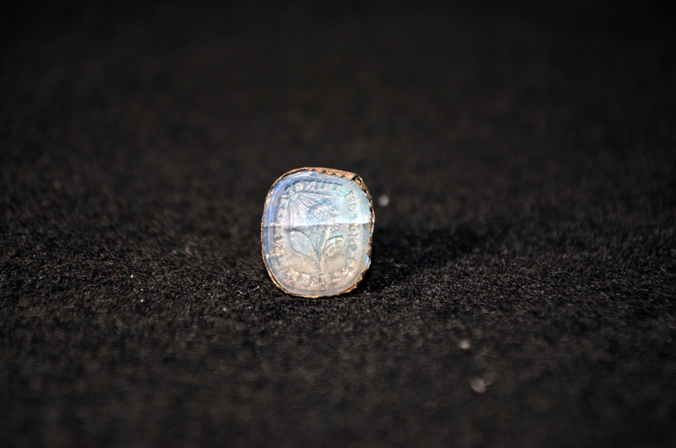
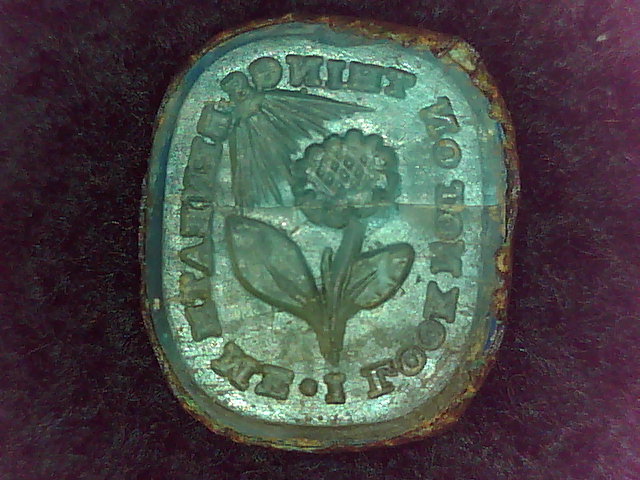
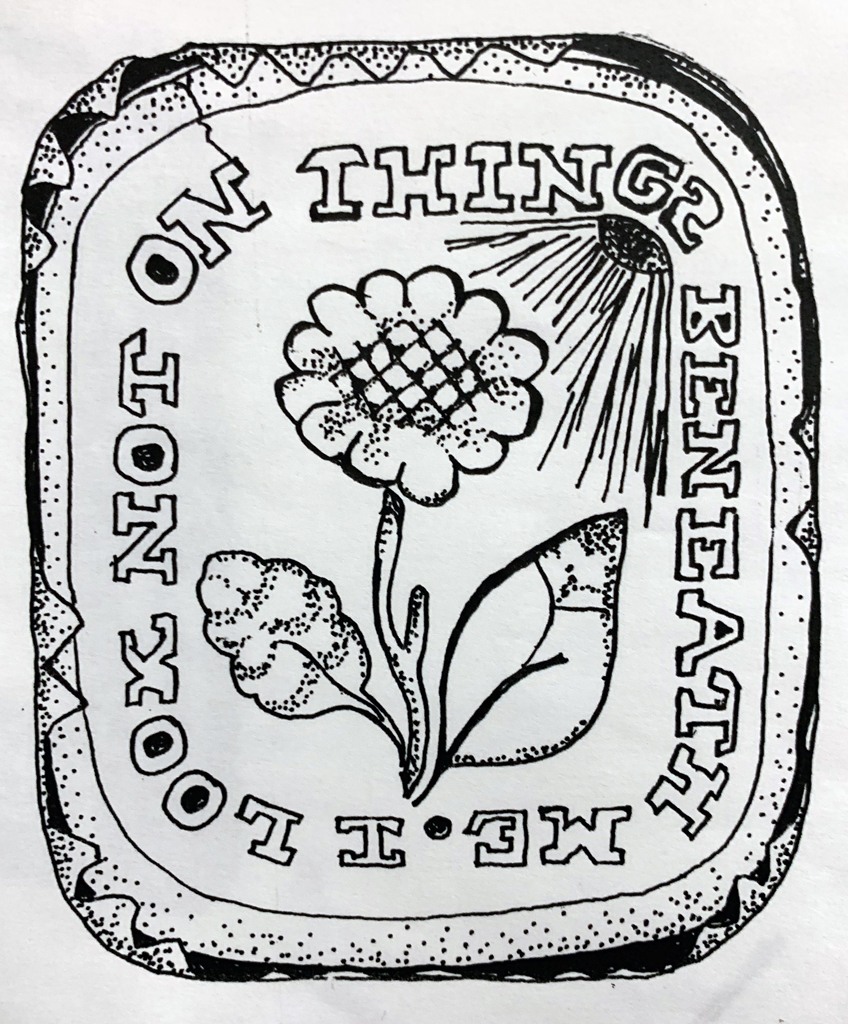
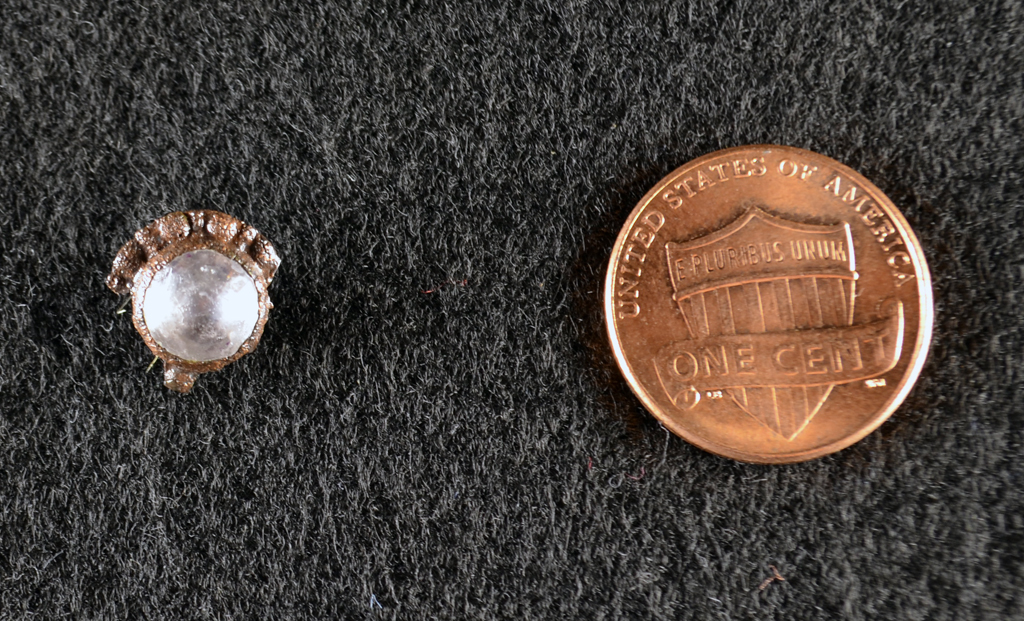
    ‘Haughty’ is not a word used often to describe artifacts.  That is, of course, unless the artifact in question is a glass wax seal stamp with a kind of snooty message on it.  Of diminutive size (smaller than a dime) with a pretty little flower in the center it proclaims in reversed letters “I Look Not on Things Beneath Me”.

    Kenmore Wax Seal Stamp 1
    Wax seal stamp excavated by archaeologists at Historic Kenmore.

    Seal Excavated at Kenmore 2
    Closeup view of the wax seal through a digital microscope.

    Drawing of Wax Seal Stamp
    A drawing of the wax seal stamp with the text reversed so it is legible.

    Initially thought to be a signet ring, archaeologists at Ferry Farm reexamined it and determined the itty bitty blue piece of glass is actually a wax seal stamp used to personalize letters.  This seems to be an odd choice of message for the recipient of a correspondence but who are we to judge?

    Found at Kenmore, this pretty little thing likely dates to the late Victorian period and would have been worn by a woman, possibly at the end of a chatelaine.  Chatelaines were all the rage with Victorian women and consisted of a long chain worn around the neck with charms at the end, which could be tucked into one’s dress or belt.  These charms often had practical uses.  Common chatelaine charms included tiny scissors, cute vials, petite magnifying glasses, and minuscule mirrors.

    Unfortunately, some fashionable lady lost this at Kenmore over a hundred years ago, possibly while wandering through the garden, drink in hand, and idly thinking of sending off a letter sealed with a snarky wax message reminding everyone that “I Look Not on Things Beneath Me.”

    It’s a good thing that we archaeologists don’t take the same attitude.

    Mara Kaktins, Archaeologist
    Archaeology Lab Supervisor

  • Drawers, Knickers, or Pants: Why Do We Call Them That?

    There truly is a National Day for absolutely everything and even a National Underwear Day! That’s right! Undergarments have their own appreciation day and, to be precise, it was August 5.  At first glance, National Underwear Day may seem rather silly but actually we probably don’t give enough thought to the importance of underwear. Before August ends, we want to remedy that by taking a look at underwear from a historical perspective.  Have you ever wondered why there are so many names for our various undergarments? It turns out that all the names we have for underwear today are rooted in the past.

    Cooling in Basement
    Woman in a shift and petticoat.

    Underwear as we know it today didn’t really get its start until the 1800s.  Prior to that, people like the Washingtons and the Lewises actually didn’t wear much at all under their numerous layers of clothing.  Women wore nothing under their shifts (which were loose-fitting, waistless dresses that acted as the first layer of a woman’s wardrobe and were sometimes the outer layer in hot weather or workday situations).  Men’s shirts were initially similar to shifts in that they were all-purpose – base layer, outer layer, sleep shirts, etc.  But, men were actually the ones who began the trend toward true undergarments.

    In Washington’s day, men wore breeches on the outside, but they also wore a similar lighter weight garment underneath, which came to be known as “drawers.” Why drawers, you ask? The prevailing theory is that the name comes from the fact that early versions of this undergarment were actually two separate legs that had to be “drawn” up and tied in place, hence why we still refer to underwear as “pairs” even though they are single garments now – “a pair of drawers”, “a pair of underwear.”

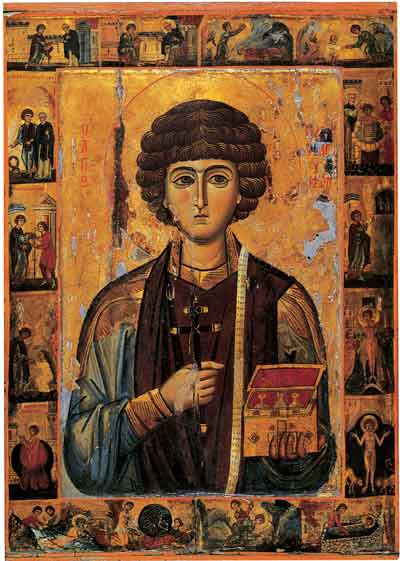
    St Panteleimon
    Icon of saint Panteleimon (Saint Catherine’s Monastery, Mount Sinai) dating from the 13th century. Credit: Wikipedia

    Eventually, women adopted men’s undergarments for themselves, with some modifications.  This is the point where the ubiquitous term “pants” has its beginnings.  “Pantaloons”, “pants”, and “panties” all come from the same remarkable origin, a Catholic saint, martyred in the 1st century A.D. named Saint Pantaleon. Now, Saint Pantaleon had nothing to do with pants himself but centuries after his death, he became a focus of religious zealotry in Venice, Italy, where many men wore a peculiar type of breeches that were rather poofy.  Because the men who were also a part of the cult of Saint Pantaleon wore these same poofy breeches, they came to be known as “pantalones.”  Additionally, because of their rather flamboyant behavior and dress, pantalones became the stereotypical way to depict Venetian characters in comedic plays, which travelled across Europe.  Eventually the most distinctive characteristic of these comedic characters, the poofy breeches, became iconic and took on the name “pantaloons.”

    Interestingly, pantaloons became a popular fashion accessory among women in France, as an undergarment that was intentionally meant to be seen under slightly shorter dresses.  When the fashion reached England, it was primarily among men, and eventually the word “pantaloons” was shortened to “pants” and applied to any outerwear bottoms generally.  Among women, they remained undergarments, which got continually shorter and smaller as the centuries passed, and are now referred to with the diminutive “panties.”

    The Italian Comedians by Antoine Watteau
    “The Italian Comedians” (c1720) by Antoine Watteau shows several characters in costumes with pantaloons typical of commedia dell’arte theater popular in European from the 16th to the 18th centuries. Credit: National Gallery of Art

    Alice Manfield, Guide Alice, Mt Buffalo c1900
    Portrait of Alice Manfield (Guide Alice) (1878-1960), mountain guide, naturalist, chalet owner, photographer, and early feminist figure based at Mt Buffalo, Victoria, Australia. Photographer: Unknown. Credit: State Library of Victoria.

    And now the term “knickers.” Although this name for both male and female underwear got its start in the United States, its current usage is much more common in Great Britain.  In 1809, Washington Irving wrote A History of New York under the pen name Dietrich Knickerbocker.  Knickerbocker was depicted in newspaper illustrations wearing loose-fitting, almost baggy, breeches tied or buckled at the knee.  This style of knee breeches had become highly fashionable among young men in America, and the press surrounding the book and Knickerbocker himself added to the trend.  Eventually, the style became known as “knickerbockers” but the breeches weren’t an undergarment.  Men wore them to play sports (one of the first professional baseball teams was called the New York Knickerbockers, and knickerbockers were standard baseball uniforms well into the 20th century) and for casual wear.

    Knickers or Drawers
    Kncikers or Drawers, 1880s, Credit: The Metropolitan Museum of Art

    Once again, though, women saw a handy piece of clothing, and altered it for their own purposes.  At this point in women’s fashion, hoops and cages were being used to hold skirts out and add volume.  Things were a bit drafty under those cages, and knickerbockers seemed like the perfect solution.  In order to capitalize on this trend, manufacturers had to differentiate the bottoms that men were wearing for manly pursuits from the bottoms that ladies were wearing under their hoop skirts, and so “knickers” were born.  Much like pantaloons, knickers kept getting shorter and smaller until they were basically the same thing as panties.

    And there you have our brief history of underwear for National Underwear Day!

    Meghan Budinger, Aldrich Director of Curatorial Operations

  • Summer Stinks!: The Odoriferous 18th Century

    Editor’s Note: Looking back in time, people’s personal hygiene, fashion choices, medical treatments, and more sometimes look, at the very least, bizarre, if not outright disgusting.  When confronted with these weird or gross practices, our first reaction can be to dismiss our ancestors as primitive, ignorant, or just silly.  Before such judgments, however, we should try to understand the reasons behind these practices and recognize that our own descendants will judge some of what we do as strange or gross.  Here at George Washington’s Ferry Farm and Historic Kenmore, we’ve come to describe our efforts to understand the historically bizarre or disgusting as “Colonial Grossology.”  The following is the latest installment in Lives & Legacies’ “Colonial Grossology” series.

    Virginia is a hot place during summer and even for much of autumn.  While we once wrote about how people in pre-air conditioned colonial times dealt with the heat in a previous blog post aptly titled, “The heat is beyond your conception”, I want to talk today about another bane of colonial Americans’ comfort in summer,  namely smells and particularly body odor.

    Today, history comes scent-free.  We must study the past without using smell, one of our main senses, and, as we will soon see, that is probably for the better.

    An 18th century summer smelled of human and animal waste, garbage, stagnant water, and body odor.  These odors permeated every breath taken by colonists, whether very rich or very poor.  Noted philosopher Jean-Jacques Rousseau once complained about the aroma of “stagnant urine” the hung about the Palais Royal in summer.[1]

    How did colonists attempt to deal with the ubiquitous human stink before deodorant and regular bathing?  What were the deodorizing options available to the likes of George or Betty Washington? What could they have possibly used to keep the dreaded stink of summer away or, at the very least, subdued?

    Bathing

    We’ve previously written about bathing in the 18th century in detail but toward the end of the 1700s, baths, or the immersion of the body in a tub of water, were becoming more popular with more affluent Americans.  As the intrepid Elizabeth Drinker wrote of her first experience in a shower, “I bore it better than I expected, not having been wett [sic] all over at once for 28 years past”. [2] The wealthy tended to bathe more because they also had the luxury of milder soaps. Generally, the main soap available at the time was not normally used in washing the body because it was made of harsh cleaning agents.[3]  Additionally, few experts advised taking more than one bath a month for health reasons.[4]  There was actually a widespread fear that bathing could make you sick. Most importantly, very few people could devote time or energy to the immense task of fetching water and warming it for a bath.  People’s daily washing consisted of a splash of cold water from a basin usually in the kitchen or bedchamber.[5]  They washed the bits that showed namely the face, the feet, and the hands.  This daily washing helped George or Betty start off their day smelling fresh but it didn’t last long in the brutal Virginia summer.

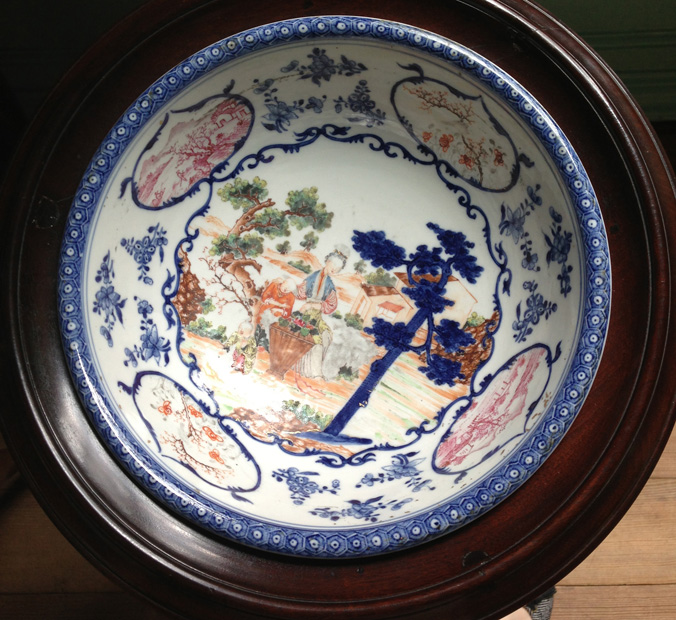
    Wash Basin in Bedchamber
    Wash basin in Historic Kenmore’s bedchamber.
    Wash Basin
    Close up of the wash basin in Kenmore’s bedchamber.
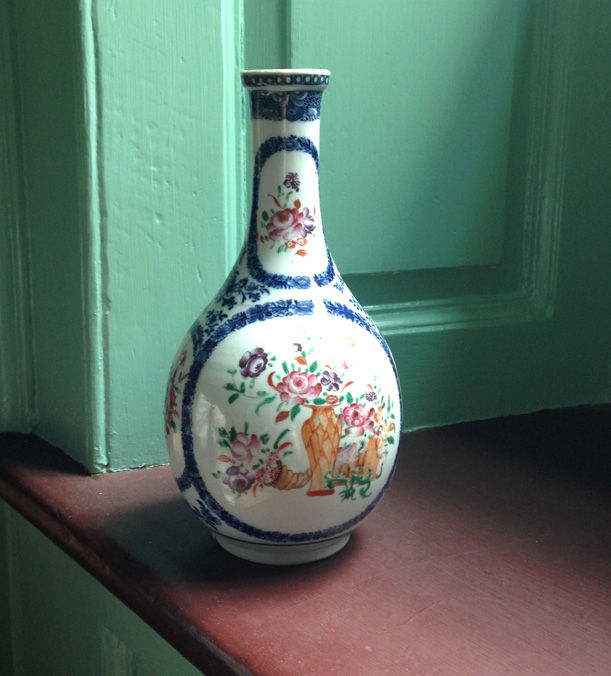
    Wash Basin Pitcher
    Pitcher that goes with bedchamber wash basin.

    Clothing

    In 1765, Stephen Hawtrey advised brother, Edward, who was preparing to come to Virginia, that “Your cloathing [sic] in summer must be as thin and light as possible . . . You must carry a stock of linen waistcoats [which were kind of like vests] made very large and loose that they may not stick to your hide when you perspire.”  Light and thin fabrics made of natural fibers like cotton and linen absorbed sweat from the body and dried relatively quickly.  Additionally, lighter undergarments could be washed more regularly than the outer garments which usually weren’t laundered.

    Toward the end of the 1700s, a weekly changing of underwear was recommended and more frequent cleanings lead to more incentives for perfuming washtubs, chests and drawers.[6]  Besides laundering, people also infused garments with a lovely fragrance or sewed up sweet smelling sachets to put in their pockets.

    The English Husewife contains an interesting recipe to perfume gloves that involved soaking them in a mixture of angelica water, rose water, cloves, ambergris, musk, lignum aloes, benzoin, and calamus.[7] Meanwhile, The Toilet of Flora provided instruction on using violet and cypress powder to make sachets that could be secreted in a ladies pocket.[8]

    Even ornamentation and jewelry didn’t escape the quest to hide the stench of summer.   Recipes for perfumed chaplets and medals created a smelly paste substance that could be concealed in jeweled smelling boxes or worn as wax decorative medal.[9] Similarly, little sponges soaked in essential oils could be hidden in jewelry to give the wearer a sweet aroma.

    Perfuming

    As shown by all this perfuming of jewelry, clothes, and clothing storage, perfumes and waters were the most common way people in the 18th century tried to cover the stench of summer.  Perfumes are strong concentrations of scents that last for a long time while waters are the more diluted eaux de toilette or eaux de cologne.  All were available for purchase in colonial stores for those of means.[10]  Additionally, there were dozens of handy books that supplied many easy to follow recipes for various lovely smelling perfumes and waters.  The Toilet of Flora had about 6 perfume and 60+ recipes for waters.[11]

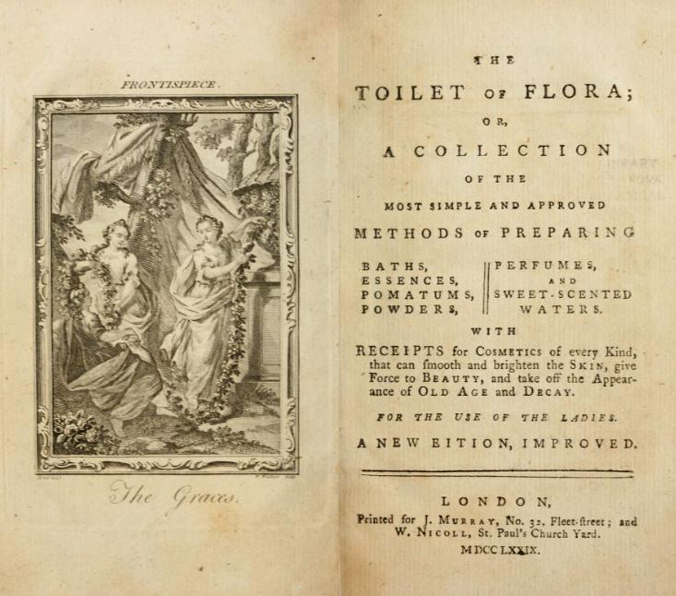
    Toilet of Flora frontispice
    Frontispiece and title page of a 1779 edition of “The Toilet of Flora”.

    Before continuing, we should define some terms to help navigate the confusing and complex world of perfumery.

    PERFUME is made of essential oils or an aroma compound as well as fixatives and solvents.  ESSENTIAL OILS are oils from a plant usually extracted through distillation.  Compared to fatty oils, they are lighter and tend to evaporate without a trace. A perfume usually contains 15 to 20% pure essence.  A perfume’s FIXATIVE helps the scent last. Today, we use synthetic fixatives but, in the 18th century, popular fixatives were benzoin (aka gum of Benjamin) labdanum, storax, ambergris (basically whale vomit), castoreum (the castor sacs of a mature North American beaver), and musk (the glandular secretions of the musk deer).   Lastly, a perfume’s SOLVENT dilutes the perfume oil. The most common solvent being some type of alcohol/water mix but coconut oil or liquid waxes like jojoba oil can be substituted. Perfume is very strong and lasts for about five to eight hours.

    EAU DE TOILETTE is light-scented cologne with a high alcohol content, 5 to 15% perfume essence and is usually scented with something floral or fruity like lavender, lilac, orange or lemon.  An eau de toilette has a light scent that lasts around 3 to 4 hours. EAU DE COLOGNE is composed of two to four percent perfume oils in alcohol and water.  The first eau de cologne was made in Cologne, Germany in 1709 and contained many different citrus oils.  An eau de cologne has a light scent that only lasts a couple of hours.

    One particularly perfume recommended in The Toilet of Flora contains musk, cloves, lavender, civet and ambergris.[12] While it likely smelled nice, it was probably expensive to make so would not have been an item produced for everyone.  Nor did some think that perfume was appropriate for a woman of good repute to wear at the time. They instead recommended eau de rose or eau de lavender as a more appropriate alternative.   As one guide stated, “In no circumstances should real perfume be applied to the skin.  Only aromatic toilet waters – distilled rose, plantain, bean, or strawberry water – and eau de cologne were permissible”.[13]

    Perfume Bottle
    Portion of an 18th century perfume bottle excavated by archaeologists at George Washington’s Ferry Farm.

    Needless to say, while perfume and waters masked some smells, they were not viable deodorizers for many who couldn’t afford the luxury.  George Washington, being a practicing gentleman, probably used an eau de toilette in the morning when washing.  It is believed that George regularly purchased bottles of scent from Dr. William Hunter’s apothecary in Newport, Rhode Island, the forerunner of today’s Caswell-Massey.  Of the 20 scents Hunter offered, George settled on Number Six and even bought some bottles as gifts.  Number Six is still available for purchase today so that even you can smell like George!  Betty probably used an eau de toilette or scented soap in the morning. It would have been inappropriate for a young lady to wear a perfume, but she may have worn it on special occasions as a married woman.

    No matter if they used a scent, laundered clothing, or bathe, the fact remains that an 18th century summer just stunk.  People tried to mask it with whatever concoctions they could invent but it took another 100 years before deodorant and antiperspirant were invented to save humanity from the smell of itself during the hot humid summer months.

    Heather Baldus
    Collections Manager


    [1] Alain Corbin, The Foul and the Fragrant: Odor and the French Social Imagination, Cambridge, MA, Harvard University Press, 1986: 27.

    [2] Richard L. Bushman and Claudia L. Bushman, “The Early History of Cleanliness in America,” Journal of American History, Vol. 74, No. 4 (Mar. 1988): 1214.

    [3] “Wash-Balls” in The Toilet of Flora, London, 1779: 199-207.

    [4] Corbin, 178.

    [5] David S. and Jeanne T. Heidler, Daily Life in the Early American Republic, 1790-1820: Creating a New Nation, Westport, CT, Greenwood Press, 2004: 46.

    [6] Corbin, 179.

    [7] G.M., The English Huswife, J.B., London, 1623: 142.

    [8] Toilet of Flora, 196.

    [9] Toilet of Flora, 6

    [10] Nivins and Warwick advertisement, Virginia Gazette (Purdie and Dixon), Apr 4, 1766, pg 4, col1; https://research.history.org/CWDLImages/VA_GAZET/Images/PD/1766/0021hi.jpg

    [11] Toilet of Flora, 50-114

    [12] Toilet of Flora, 57.

    [13] Corbin, 183.

  • How Many Curlers did a Harried Hairdresser Need? Let’s Do the Math!

    After unearthing over 200 wig hair curlers from Washington’s Boyhood Home, we were in a position to do something that – to our knowledge – has never been done before: crossmend all those curler fragments. As a result, we can now predict the minimum number of curlers the Washington family’s harried hairdressers needed.

    2013_07_04_wigcurler
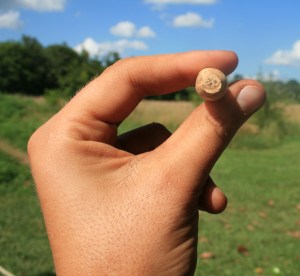
    Plate 1: A wig hair curler fresh from the excavation of the Washingtons’ task yard. Note the “WB” mark on its end, which we believe to be the Initials of its British manufacturer. Image courtesy of Virginia Commonwealth University/Bernard Means.

    If you remember our blog post from way back in January 2015, these unglazed ceramic curlers were often used by wigmakers to create the curled styles of a wig’s coiffure during the making of a new peruke (Plate 1). We’ve also learned that hair stylists employed curlers to freshen the lagging curls upon an existing wig, after a gentleman had worn it out. How often a wig needed to be re-set depended upon the standards of the gentleman, and the activities and weather that he and his stylish coiffure encountered. Because curlers had to be heated to be effective, they were only used when wigs were safely removed from the gentleman’s head.

    Before our crossmending could commence, the curlers had to be washed, cataloged, and labeled. Then, all of the labeled curler fragments could be compared and evaluated for crossmending. Previous analysis revealed that the assemblage included nine different sizes (Plate 2). Most of our curlers are smaller diameter, especially sizes one and two (for shorter hair/narrow width curls). Within each size, width and even length varied: they were not manufactured in a standardized way. This was the eighteenth century, after all.

    Ferry Farm All Nine-b-Smaller
    Plate 2: Representatives of the nine different curler sizes from Ferry Farm. These nine sizes were analytically imposed. They may not necessarily represent historically defined categories.

    FFCurlerMarksShopt.small
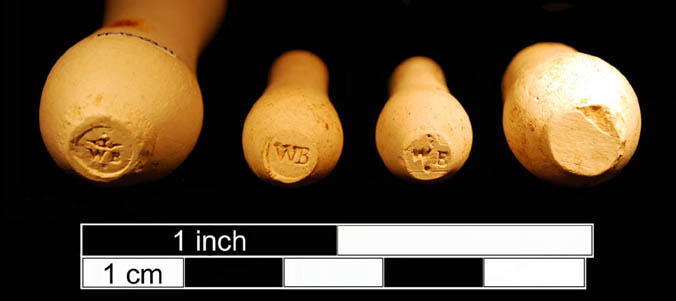
    Plate 3: There were three varieties of maker’s marks. A few curlers had no marks.

    Most curlers had one of three varieties of maker’s marks (Plate 3). However, a handful exhibited no mark at all. It was within these subcategories that the cross mending began. And the results were surprising.

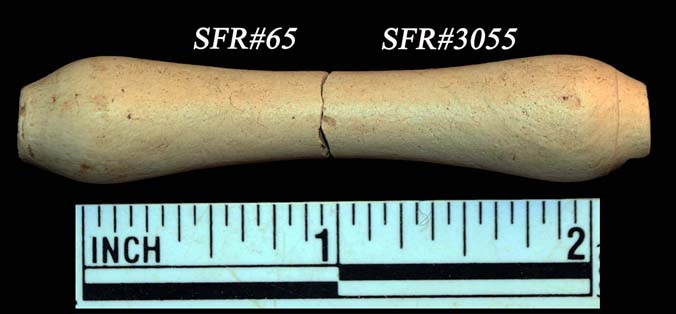
    You’ve probably broken a glass or plate. They usually break into many pieces. In contrast, curlers tend to break into two fragments at their weakest point: near the center of the curler (Plate 4). With a single mend you can often get a complete or near complete specimen (Plate 5).

    FF18 Curlers h.shopt.small
    Plate 4: Curlers tend to break into two fragments.

    One of the primary goals of crossmending was to determine whether we had found all of the curlers used here during the mid-1700s, or just a portion of them. If we had found the entire assemblage, for example, our 194 curler fragments should result in 97 crossmended curlers. That is to say, they should all mend to another fragment. An example of a crossmend is shown in Plate 5.

    Archaeologists refer to this process of mending fragmented remains of a larger item together as “crossmending.” Whether glass bottles. tablewares, ceramic vessels, or even the bones of animals, this process allows us to determine the minimum number of any given item in the recovered collection. For example, if after crossmending, you have three right hind cow legs and two left hind cow legs you know that were a minimum of three cows on site. This is a dramatic oversimplification, but you get the idea. This educated guess of the least number of specimens present is called the minimum number of individuals, or MNI.

    SFR65-3055
    Plate 5: A typical curler crossmend from Ferry Farm. Two fragments mend to form a complete specimen. Often, these curlers break in the middle, as shown.

    After weeks of dedicated crossmendingby steadfast interns, enthusiastic volunteers, and dedicated Foundation staff, a total of fifteen whole curlers were crossmended from thirty previously disparate fragments. When added to our impressive collection of complete curlers (n=20), a total of 35 complete curlers (20 complete, excavated curlers and an additional 15 formed from 30 mended fragments) make up the Ferry Farm assemblage.

    Another exciting result of this exercise was that we now had two complete (mended) size one curlers and a mended size eight curler: previously these two respective sizes were only represented by disjointed fragments. Unfortunately, no mended size nine curlers were discovered. Size nine continues to be represented by fragments, and it is the only size from Ferry Farm for which we have no complete examples.

    So what’s the minimum number of curlers that the Washingtons’ hairdresser used to curl their many wigs? Let’s do the math!

    There are        164 molded curler fragments with no matches
    +  1 hand made curler fragment
    +20 whole (unbroken) molded curlers
    +15 mended molded curlers (from 30 fragments)
                              (a minimum of) 200 curlers

    Another informative aspect of crossmending is seeing from what areas of the site the mended curlers were found (Figure 1). As Figure 1 shows, a clear relationship between the work yard, where the majority of curlers were discovered and the Washington House can be seen. This adds additional evidence to our hypothesis that the majority of curling tasks took place in the eastern work yard and that finishing tasks associated with wigs (powdering, drying the washed, wet wig, and final elegant touches) took place in the parlor. The parlor has emerged as an area of wig hair maintenance, since eight curlers/curler fragments were recovered from the parlor room root cellar.

    14SeptCurlerXMendzSmall
    Figure 1: This bird’s-eye view of the Washington house and surrounding yard shows where ten of the crossmended fragments mend to their respective mates. A ‘path’ between the work yard – where the majority of curlers were used – and the Parlor inside the house is evident.

    While wearing wigs was highly fashionable among refined British colonial gentleman, little is known about how they were maintained, how often they were cleaned and set, and how these crucial activities were performed at the household level. The data recovered from Ferry Farm is providing new information and innovative analysis of this poorly understood, but essential hairdressing routine

    All in all, a terrific exercise!

    Laura Galke, Archaeologist
    Site Director/Small Finds Analyst

  • Dressing the Past: Costuming Challenges at Ferry Farm & Kenmore

    Twelfth Night 2016 19
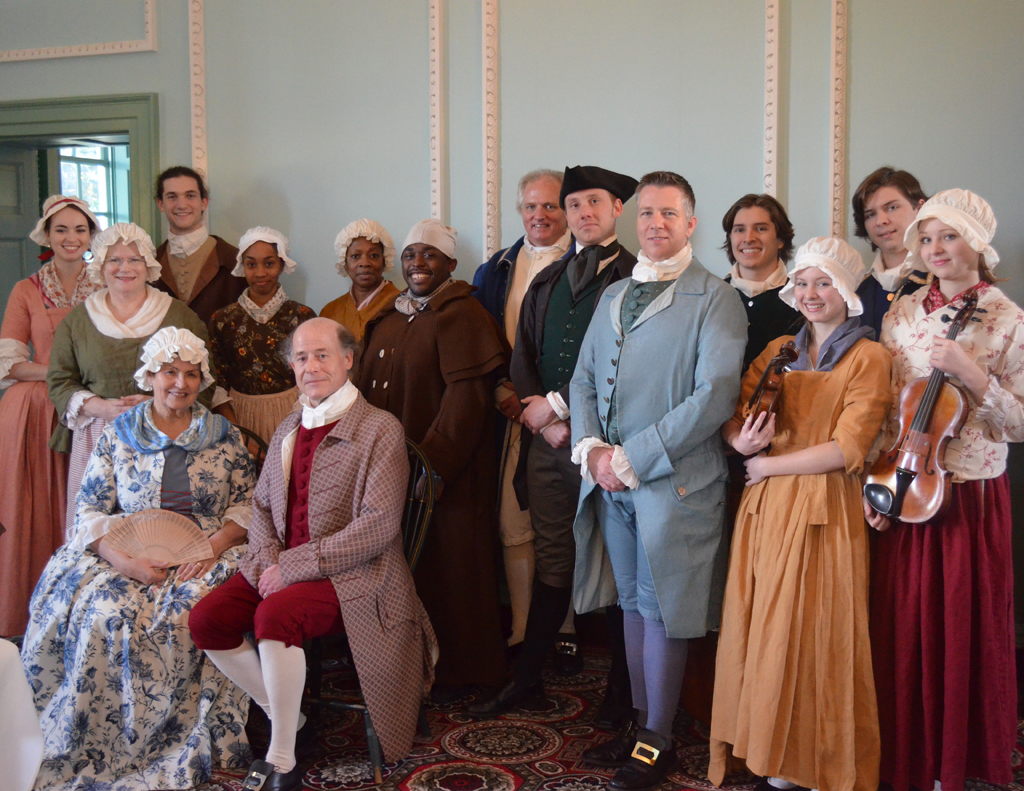
    The cast of Twelfth Night at Kenmore in their period clothing. In our educational programming, we must dress staff and actors of different body types who portray a variety of social classes and time periods.

    We have been working tirelessly to improve the accuracy of the costumes that actors and staff wear when performing for or interacting with the public at Historic Kenmore and George Washington’s Ferry Farm. This is no easy task, but it improves the visitor experience and helps them better understand the Washington and the Lewis families in the context of the 18th century.

    This blog post addresses some of the challenges and successes we’ll continue to experience as we expand our costuming after the reconstructed Washington house and the new historic landscape at Ferry Farm opens to the public.

    Some of the challenges we face are no different than what other sites face. The modern expense of this specialized clothing, the difficulty of fitting multiple wearers, questions of time period to portray and achieving the small true-to-life details of historic clothing are all important to the success of dressing the interpretive staff. But we’ve come a long way and are on the path to sustained success.  We’ve been working on all of the pitfalls mentioned above and have made great headway. Below is an examination of some of the difficulties we’ve faced and the ways we have met them straight on.

    Expense of this Historic Clothing

    Cloak
    Cloaks are necessary to keep actors and staff warm but they are among the more expensive pieces of clothing needed to properly dress as someone from the 18th century.

    The cost of well-made, accurate period clothing is one of the greatest hurdles we’ve or, for that matter, any historic site or museum experiences. Eighteenth century clothing is a highly specialized type of clothing that is often imitated with mixed success. For example, a good quality off-the-rack great coat costs about $325, while a custom-made high-end 18th century men’s great coat costs about $1,000. There were pieces in our costume stock that did not fit our criteria and had to be removed – meaning they had to be replaced with new (and more expensive) articles of clothing. Correcting past clothing choices is its own challenge, but it is far from insurmountable. We make very careful decisions about what was a priority and where we should spend resources first and we have begun acquiring garments that we deem priorities.

    One-Size-Fits-No One

    Because of the number of people we costume, we sometimes have to use the same costumes on different people (not at the same time, of course!). This is a challenge because both men’s and women’s 18th century clothing was fitted to the individual. A tailor would custom-make waistcoats, coats, and breeches to fit the wearer; even when the ensemble was fashioned out of a hand-me-down suit.  Mantua makers (dress makers) would custom-make women’s gowns and petticoats to fit snugly. We must make our clothing fit a variety of wearers.  We are now quite proficient in the art of pinning and mysteries of knot tying. It’s not perfect, but it goes a long way toward creating a more accurate fit.

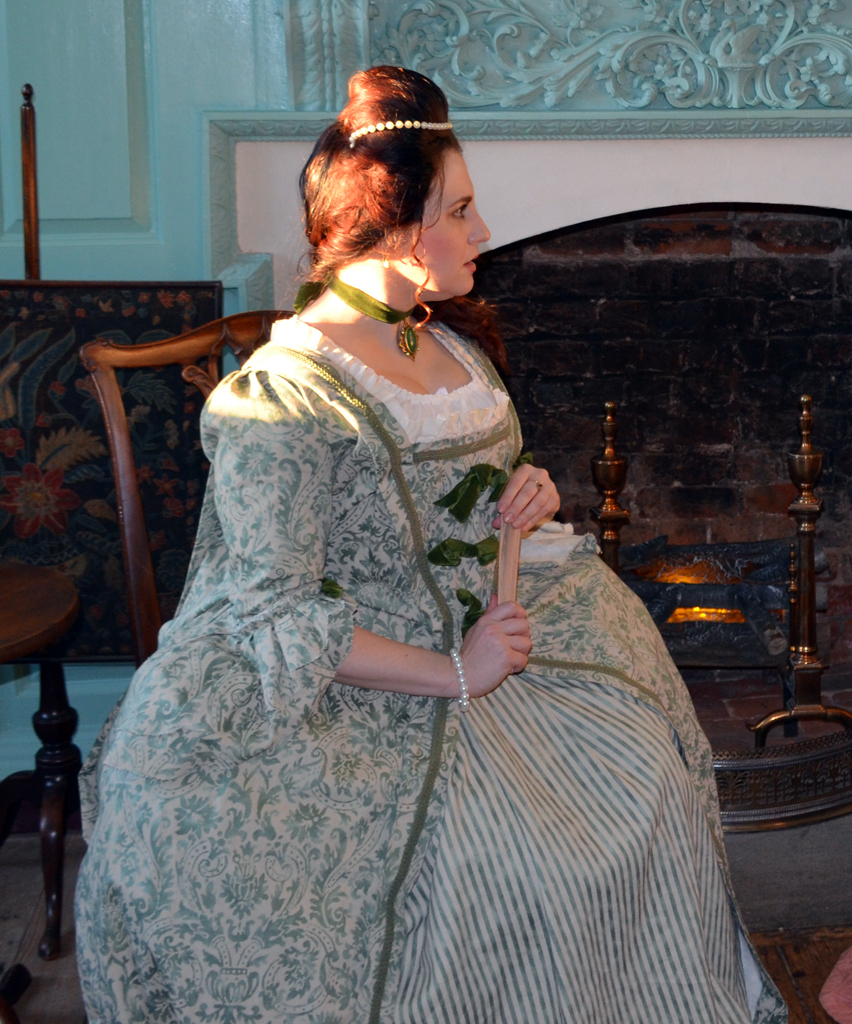
    Another important part of fit for women is the undergarments. Stays, bum rolls, and hoops create the ideal 18th century shape. Stays were 18th century support garments, much the way corsets were in the 19th century. We recently made acquiring stays a priority and purchased some in a variety of sizes.  This has improved the actor’s appearance in addition to helping her achieve the proper 18th century posture.  Bum rolls accentuate the behind (no, really!) and hoops accentuate the hips.  These help create a period appropriate look that we are now pleased to share with visitors.

    The True-to-Life Details

    Costume details
    Small details like the fan, necklace, brooch, and hair style create a fully realized character with a stronger connection to the past.

    Just as it is today, the small details make the 18th century outfit. Attention to men’s and women’s shoe buckles and hats, men’s knee buckles, and women’s jewelry and stays polishes the look that makes history come alive. Our men’s and women’s hats are correct to the period and we have a nice but limited collection of accouterments.  Because 18th-century-style shoes are expensive and we can’t exactly buy a pair of shoes in every size, we have been using buckles on plain black shoes to disguise their modernity. As we move forward, we are working on better solutions to best achieve the small details needed to make a costume fully 18th century.

    1750s vs. 1770s

    Another challenge we face as the Washington house and Ferry Farm’s new historic landscape gradually come on-line is that we’ll have to costume staff for both the 1750s – the period we interpret at Ferry Farm – and the 1770s – the period we interpret at Kenmore.  This is important for a number of reasons. First, we want to demonstrate clearly that the events that took place at the two sites took place in two different time periods. This sounds obvious, but visitors will better internalize the time difference between the sites with the aid of clothing. Secondly, it would be flat-out wrong to dress the staff portraying our historic figures at both places in clothing from the same period. As a museum, we have a responsibility to make the visitor experience as accurate as possible.

    Despite the challenges, our devotion to accuracy in the period clothing worn by our staff will improve the visitors’ experience and help them better understand the Washington and Lewis Families.

    Kelly Brennan Arehart
    Manager of Interpretation & Visitor Services

  • Ten Rarely-Displayed Objects from Kenmore’s Collection

    It is impossible for museums to exhibit the thousands of objects in their collections.  Historic Kenmore is no exception. While each of our objects is certainly unique and interesting, not every piece fits within our current interpretation of the life and times of the Lewis family.

    One reason museums might not display items is they are not from the time period being interpreted.  Our curator selects each object shown to the public after exhaustive study of primary resources like wills, probate inventories, letters and diaries and making sure it illustrates 18th century life in a wealthy Virginian home.  If we displayed pieces we have from the 1600s or 1960s, it would detract from the story of the Lewis family in the 1700s.

    A second reason museums might not display items is preservation and conservation.  Items that are two-hundred years old or more are very delicate and require special environments with proper temperatures, relative humidity, restricted lighting, and limited handling.  Material like textiles and papers don’t do well on display for long periods of time.  These items are better utilized in temporary exhibits in our visitors center or as digital content.

    In this list, I present ten of my favorite objects from Kenmore’s collection not often exhibited because they don’t quite match the history we’re trying to share or because they are too delicate for display. Besure to click on any of the photos for more detailed views of the objects.

    Ivory Silk Overdress and Petticoat

    overdress-and-petticoat
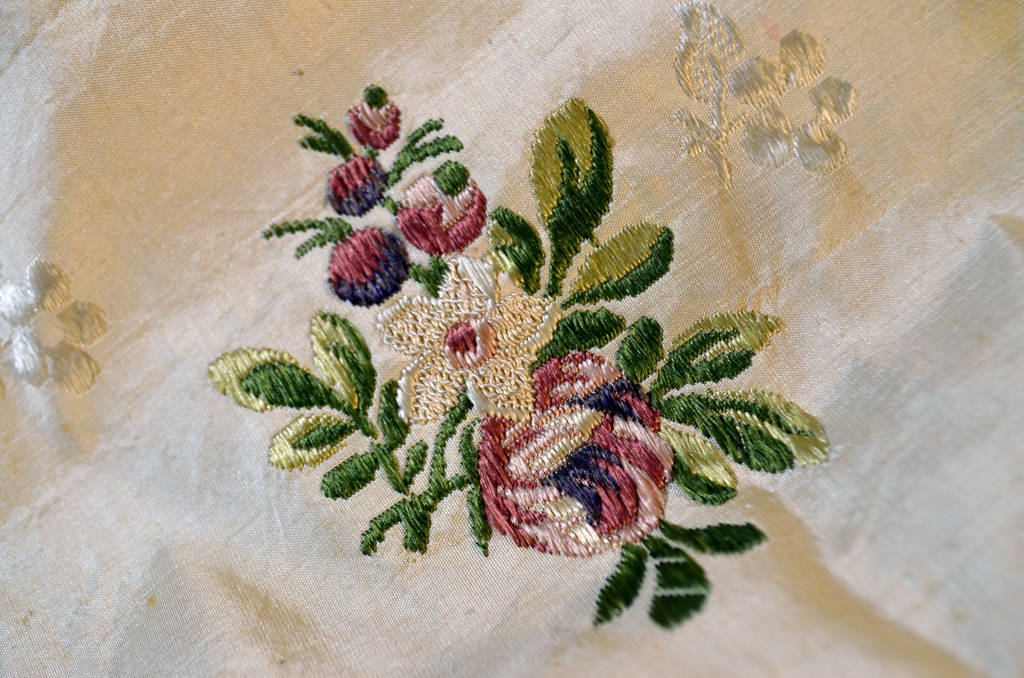
    One portion of the floral embroidery on the dress in Kenmore’s collection. The gown’s material is so delicate in some areas that we felt it best not to try and photograph the complete gown.

    robe-a-la-francaise-block-printed-cotton-c-1770
    Robe à la Française, c. 1770, similar in style to the dress in Kenmore’s collection. Credit: Los Angeles County Museum of Art / Wikipedia

    In Kenmore’s collection is an extremely delicate  overdress and petticoat with a brocaded multicolor floral pattern in the open robe style that dates from about 1775-1785. The particular cut of the open robe style was also known as “a la francaise” or “sack-back gown”.  This robe à la francaise is an illustration of the Rococo aesthetic that was popular during the eighteenth century.  I find clothing to be some of the most personal historic artifacts in any collection.  These pieces are not simply costumes but functional everyday garments that were used, stained, and mended by their owners.  Being able to see and handle this tangible historic link is as close to time-travel as we will get but, at the same times, textiles are extremely fragile and must be handled only rarely.

    empire-dress
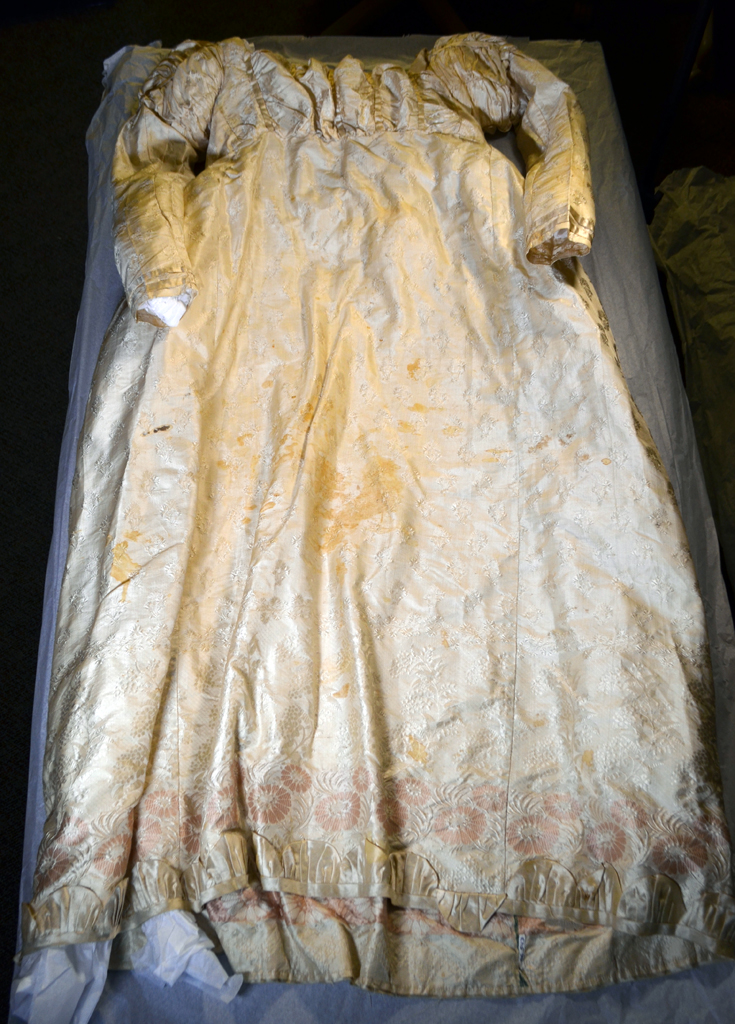
    Empire-style dress in Kenmore’s collection photograph while still laying in its storage box.

    Empire Waist Dress
    This cream-colored silk dress dates from between 1790 and 1820 and features a pattern of flower sprays and vines with row of pink brocaded flowers along bottom.  Cut in neo-classical style popular in the early nineteenth century with an “empire-style” waist, square neck and loose skirt.  Regency fashion is one of my favorite fashion epochs.  I find the empire-waisted silhouette to be flattering and probably the most comfortable of all historic women’s styles.  This piece doesn’t come out of storage much because it is a little too late for the Lewis era.

    “A New and Exact Map of the Dominions”
    new-and-exact-map-of-the-dominions
    Drawn by London cartographer Herman Moll in 1715, this map shows a fascinatingly detailed view of the Atlantic coastline from present-day South Carolina to Newfoundland, Canada indicating counties, mountains, towns, Indian settlements, rivers and bodies of water.  Insets along the bottom are maps of the Gulf of Mexico, the Carolinas, Charles-Town, and a small map of the “Principal Port of North America.” At right center is an inset showing a fully-colored view of Niagara Falls, with cute little beavers in the foreground building a dam.

    “View of London”

    view-of-london
    Close-up of a portion of Frederick de Wit’s “View of London.”

    This colored engraving done by Dutch cartographer Frederick de Wit shows a topographic view of the London with “The River Thames” across the center of map.  In the upper right corner there is a key with 148 streets, churches, wharves, theatres, and monuments listed and identified on the plan with a corresponding number. As an Anglophile who went to graduate school in London and spent over a year exploring that city’s streets,  I like seeing many familiar streets and sites on this map.  It shows that London city’s center has changed very little across the centuries.

    Bourdaloue
    bourdaloe
    This creamware bourdaloue is a smaller and more feminine version of a chamber pot circa 1780-1790.  In an era without public toilets, the bourdaloue provided a lady with a portable and relatively clean means of relieving herself away from home.  The vessel was oblong, rectangular, or oval in shape and a slightly raised lip at one end and a handle at the other and allowed usage from a squatting or standing position.  The bowl would then be given to the lady’s maid who disposed of the waste discretely.  Little everyday artifacts can get overlooked but they these fascinating little pieces give us a whole picture of colonial life. Plus, everyone loves chamber pots!

    The Gentleman’s Magazine
    gentlemans-magazine
    This March 1752 edition of The Gentleman’s Magazine includes articles on poetry, music, weather, gardening tips, criminal proceedings, history, and social services.  It’s amusing to read the various articles today and reflect on how similar they can be to our current news. There is a riveting report on the trial of Miss Blandy for poisoning her father, an account of the history of the Incas, and birth, marriage, and death announcements for the upper-crust of London society.  The Gentleman’s Magazine is digitized and can be read here. The Gentleman’s Magazine was founded in London in 1731 and remained in continuous print for 191 years.

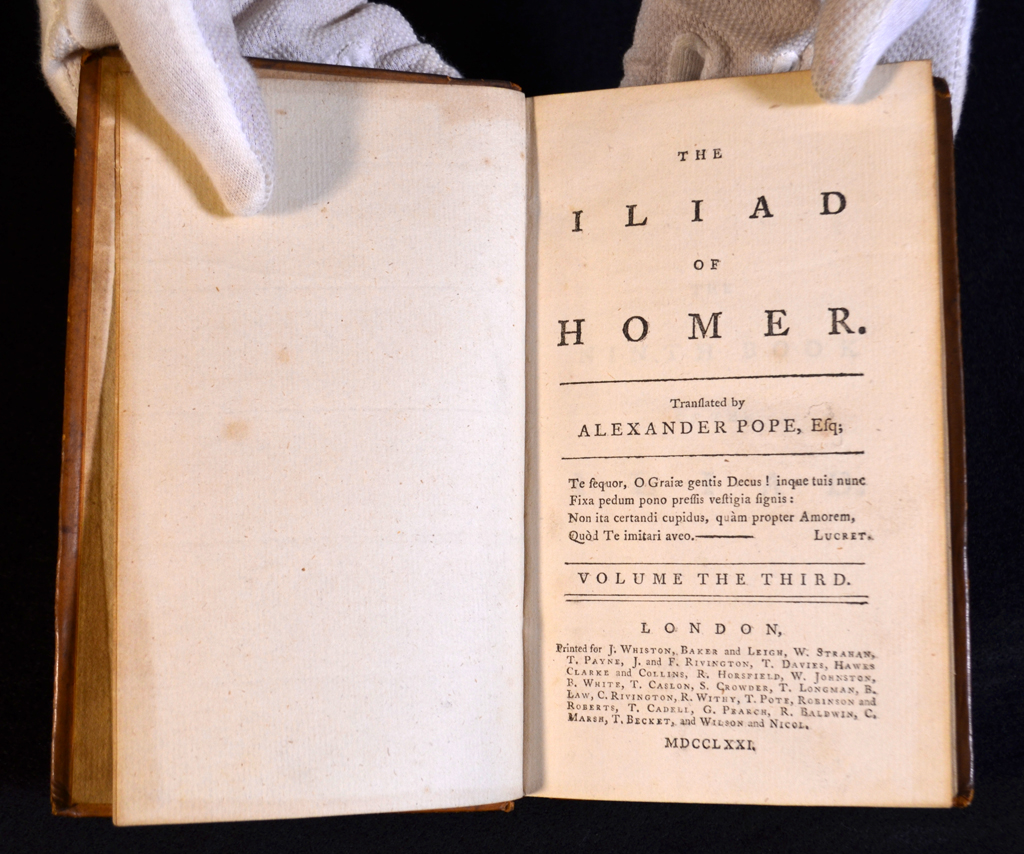
    Homer’s The Iliad translated by Alexander Pope
    iliad
    These five volumes of Homer’s The Iliad were translated into English by the poet Alexander Pope between 1715 and 1720.  Written around the 8th century BC, Homer’s timeless story has influenced great artists for 2,000 years.  Pope was one of those artists.  He suffered from many health problems but was one of the few English poets able to earn a living from his literary works and I just think it’s cool that we have these special books in our collection.  Pope translated the epic verse for the publisher Bernard Lintot and earned the significant sum of £210.

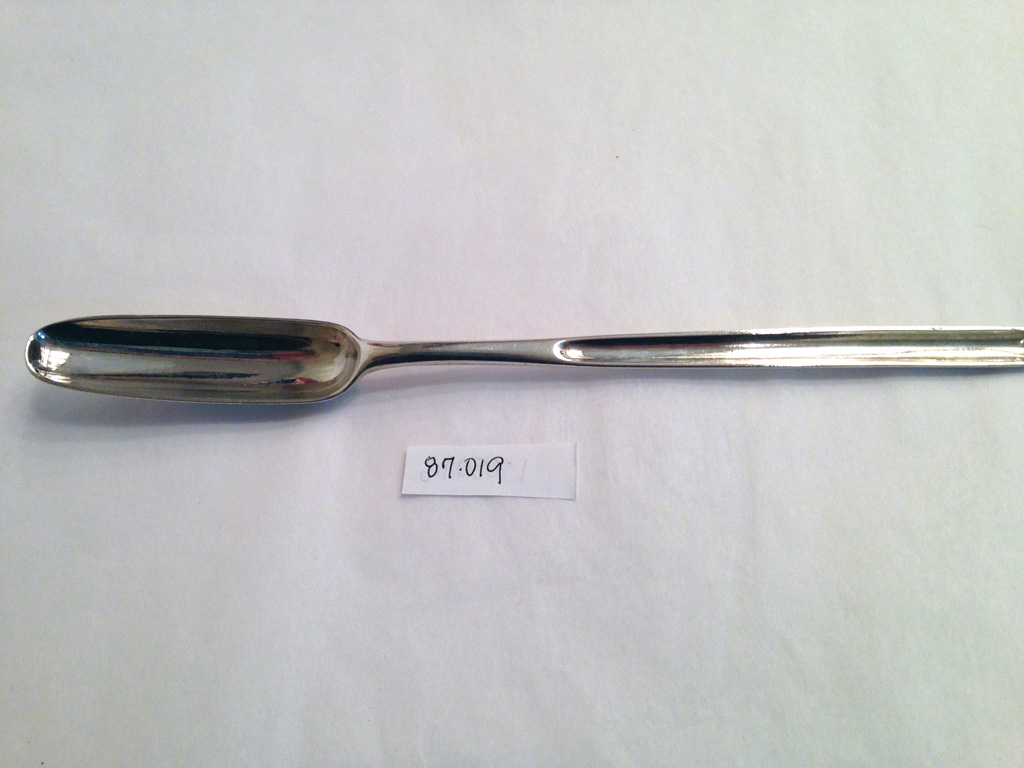
    Marrow Spoon
    marrow-spoon
    This silver marrow spoon, circa 1722, features a long narrow scoop at one end and a broader spoon at the other.  Enjoying bone-marrow was so common that utensils were created to assist the diner in retrieving every morsel. These spoons were used at the table to get the tasty marrow out of the center of the bones without having to rudely gnaw, suck, slurp, bang, crack, or bite.  The fashionableness of certain food can be traced through the evolution of dining implements.  Today, our familiarity with the double scooped spoon and its purpose has waned just like roasted long-bone sprinkled with salt is no longer a prevalent dish on our tables.

    Mary Washington Monument Stone

    mary-washington-monument-stone
    Painted on this view of the stone are the ‘new’ [current] monument and the Mary Washington House.
    This is an Aquia sandstone fragment from the original Mary Washington Monument that was started in 1833 when President Andrew Jackson laid the cornerstone. The monument was never finished and was heavily damaged during the Civil war. In 1892, in order to raise money for a new memorial, the Mary Washington Monument Association began to sell off the original pieces painted by local women as “relics”.  While some felt this was desecrating Mary’s grave, the Association raised enough money for a new monument. In 1894, President Grover Cleveland dedicated the new monument, which still stands today. Although the way the group went about raising funds for the new memorial is not how it would be done today, these stones represent the beginning of the American preservation movement at the turn of the century.

    sampler
    The sampler’s poem has large faded from view. It read: “Learn to contemn all Praise betimes / For Flattery Is the Nurse of Crimes / With early Virtue plant thy Breast / The Specious Arts of Vice detest / Youth like softened Wax with Ease will take / Those Images that first Impressions make / If those be fair their Actions will be bright / If foul they’ll clouded be with Shades of / Night.”

    Sampler by Betty Washington Lewis
    This sampler was embroidered, signed, and dated by Betty Washington Lewis on February 25, 1805.  Betty was the daughter of Howell Lewis and the granddaughter of Fielding and Betty Lewis.  Girls demonstrated or tested their needlework skills by making samplers and often included the alphabet, figures, decorative motifs and, usually, a name and date.  This is one of the few textiles in our collection directly related to and created by a member of the Lewis family.  When an item is clearly marked with the date and who made it, it really doesn’t get much better for a historian!

    Heather Baldus
    Collections Manager

  • Paste Gems: It’s the Real Thing (Almost!)

    The majority of what crosses my desk everyday as I catalog artifacts are items that would be difficult, if not impossible, to ascribe to any one person who lived on the land we call Ferry Farm. Architectural debris (brick, mortar, plaster, nails), food remains (oyster shell, animal and fish bones, eggshells (!)), broken household objects (glass bottles, wineglasses, dinner plates, storage crocks), and modern garbage (plastic – so much of it!), when found on site, are all interesting artifacts in and of themselves and can answer specific research questions. At the same time, they all attest to the mundane, collective aspects of everyday life on a farm that has been occupied off and on for over 250 years.  Every once in a while, however, an artifact is caught in the field sifting screen or the lab wash bucket that puts a smile on your face and causes you to excitedly announce to the rest of the crew, “Look what I found – a gem!” Then, you think “I wonder who it belonged to?”

    sf1947
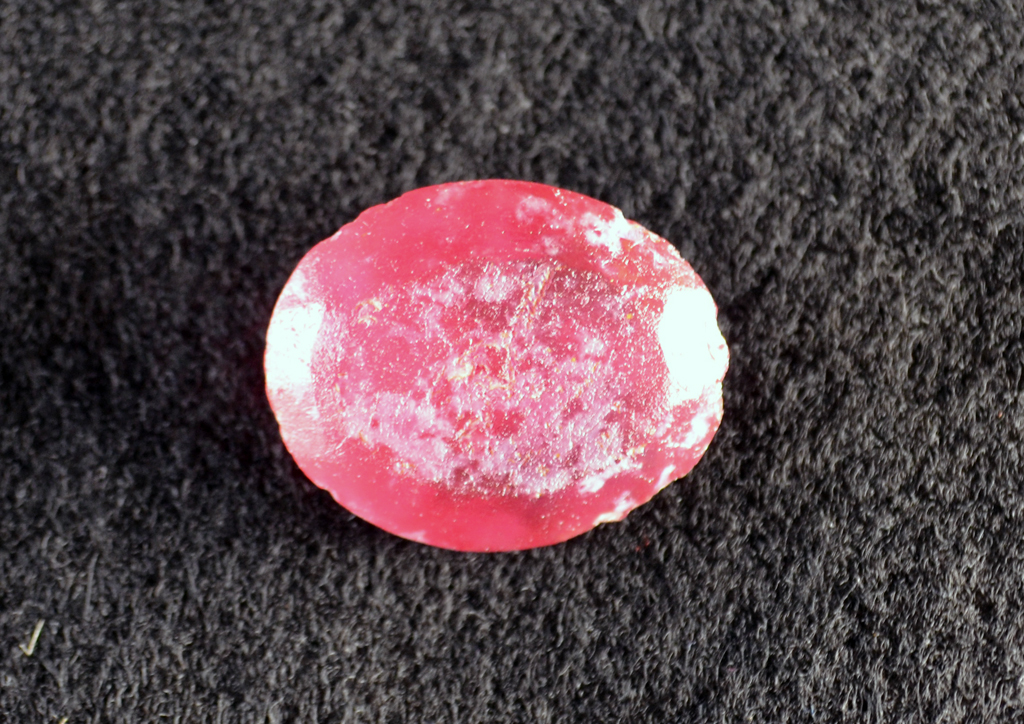
    An oval, faceted red paste gem that probably came from a piece of jewelry. (SF 1947)

    Gemstones and jewelry are definitely exciting finds on any archaeological site, but at Ferry Farm we are more likely to find bits of jewelry and clothing fasteners decorated with imitation or “paste” gems.  Paste gems are molten leaded glass pressed into gem-like molds and then polished to look like the real thing.  With the better quality pastes, the facets could even be cut and polished.  They were available in any color imaginable by adding metallic oxides during their manufacture. Their color could also be enhanced or changed by attaching colored foils to the undersides of the gem.   Paste gems were usually set in closed, versus open-backed, settings to protect the foil backing from tarnishing.

    sf1948
    This colorless paste gem is cut in a style similar to the “brilliant cut,” a popular diamond cut during the 18th century, and would have been set in a closed setting for either a piece of jewelry, a button, or a buckle. (SF 1948)

    The use of paste gems was popular from the 17th through the early 19th centuries because they were so versatile and economical. Pastes were available in a wide selection of colors that imitated any precious or semi-precious gemstone.  Because they were created in molds, they also came in a multitude of sizes and shapes, such as circles, triangles, squares, octagons and hexagons.  The jeweler could then cut the gems to fit together in closely-set arrangements not always possible with real stones.  Improvements in the quality of the glass during the 18th century heralded gems with added brilliance and allowed greater flexibility in cutting and using the paste stones in detailed settings. Despite being imitations, pastes were highly desired in and of themselves by both the middle class and the wealthy.

    sfs-212-215-230
    Three similar rectangular faceted gems in blue and green. (SFs 212, 215, 230)

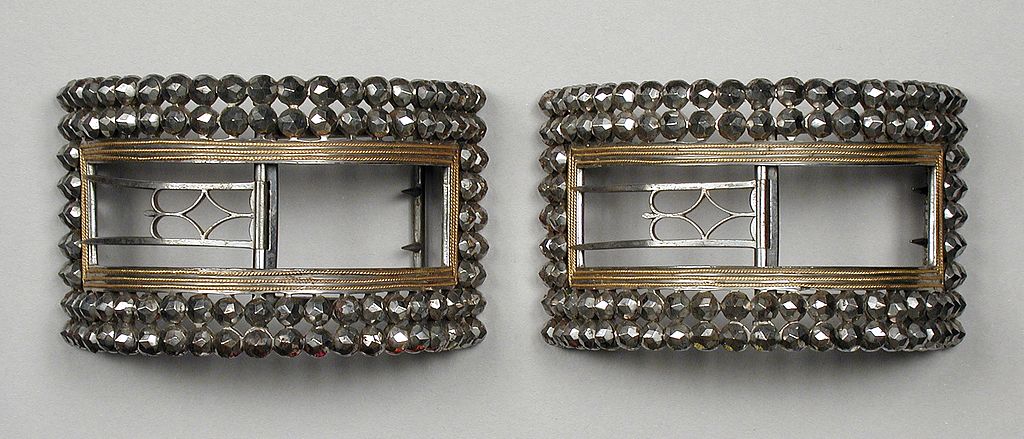
    Just like real stones, paste gems were set in all kinds of jewelry and items of personal adornment worn by both men and women.  Necklaces, brooches, rings, bracelets, and earrings were all decorated with paste gems.  Clothing fasteners, such as buckles, buttons, sleeve buttons, were also set with pastes.  Buckles used to fasten a wide variety of clothing articles, such as hats, shoes, girdles, stocks, and gloves, were very fashionable items to be set with paste gems.  One advantage of using pastes over real stones is that it was certainly easier to replace a lost buckle set with pastes than one set with real diamonds!

    mans-shoe-buckles-c-1777-1785
    Pair of man’s steel and gilt wire shoe buckles, England, circa 1777-1785. Public domain. Credit: Los Angeles County Museum of Art / Costume Council Fund / Wikipedia

    Paste gems found at Ferry Farm have come in a range of colors – green, red, pink, aqua, blue, black, and colorless – as well as shapes.  Figure (SF#1947) is an oval, faceted red paste gem that probably came from a piece of jewelry.  Figure (SF# 212, 215, 230) shows three similar rectangular faceted gems in blue and green.  The colorless paste gem in Figure (SF#1948), cut in a style similar to the “brilliant cut,” a popular diamond cut during the 18th century, would have been set in a closed setting for either a piece of jewelry, a button, or a buckle.

    sf234
    Sleeve button with its colorless glass inset. (SF 234)

    Sometimes the paste gem is still found within its setting, such as the sleeve button with its colorless glass inset seen above (SF#234) but, more often than not, finding a paste gem in its original, complete setting is a rare occurrence. Figure (SF#1971) is a fragment of a copper alloy shoe buckle with two empty settings for paste gems.

    sf1971
    Fragment of a copper alloy shoe buckle with two empty settings for paste gems. (SF 1971)

    Who did these gems and their settings belong to?  Distinctive style changes in gem shapes and jewelry settings help establish when certain pieces were in fashion.  Knowing changes in clothing fashions through time and recognizing when certain types of clothing fasteners, such as shoe buckles and sleeve buttons, were popular also help us focus our research.   We can assume that whoever was sporting these gems was trying to be stylish and fashionable in their time by adding a little “bling” and glitter to their wardrobe.  For as long as people have been traditionally adorning themselves with real gemstones in jewelry, there has always been that goal to create comparable imitations to swap out the real thing.  These special artifacts found at Ferry Farm are a reflection of these stylistic changes.

    Judy Jobrack, Archaeologist
    Assistant Archaeology Lab Supervisor

    Further Reading

    Pointon, Marcia. Brilliant Effects: A Cultural History of Gem Stones & Jewelry.  New Haven: Yale University Press, 2009.

    White, Carolyn. American Artifacts of Personal Adornment, 1680-1820. Lanham: AltaMira Press, 2005.