Lives and Legacies

Tag: Fashion

  • Le Pouf: Sensational Hairstyle of the 18th Century

    wig-hair-curlers
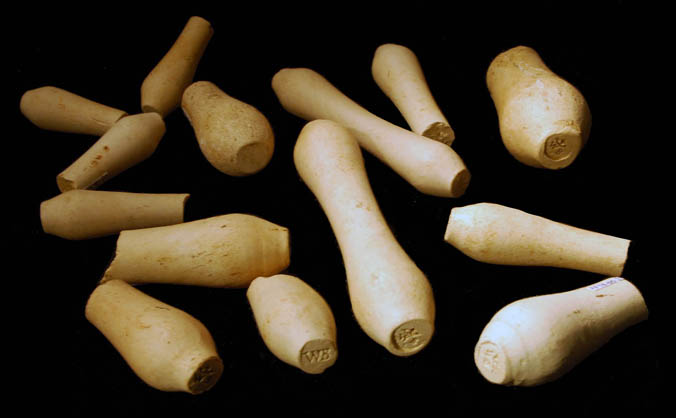
    Wig curlers excavated at George Washington’s Ferry Farm.

    We’re pretty interested in 18th century hairstyles, wigs, and wig-styling here at George Washington’s Ferry Farm and Historic Kenmore.  As evidence, check out our most viewed blog post. It’s about wig styling.  Our interest stems from the hundreds of wig curlers archaeologists have excavated during digs at Ferry Farm.  While those wig curlers were used to style men’s wigs here in British North America, our research explorations into hairstyling of the 1700s sometimes range more widely.  The information we find may have no direct relevance to George Washington and his family here in Fredericksburg but it still helps us to understand the world in which they lived.  Sometimes the information is simply too fascinating not to share here on Lives & Legacies and it’s all thanks to those little wig curlers that keep popping out of the ground where George Washington’s boyhood home once stood.

    One of the most sensational wig and hair styles of the 18th century – the pouf – was found among the women courtiers of Louis XVI and Marie Antoinette in France across the Atlantic from Ferry Farm.  The pouf was a hairstyle that became popular in the French court during the late part of the eighteenth century.  The pouf utilized everything from wire, cloth, gauze, wigs, animal hair, and the wearer’s own hair to create a voluminous coiffure that could be used as a canvas to express feelings (pouf à la sentiment) or commemorate events (pouf à la circonstance).[1]

    Portrait of Maria Amalie Auguste of Saxony in Polish costume (1780) by Heinrich Carl Brandt. Public domain. Credit: Royal Castle in Warsaw/Wikipedia.
    Portrait of Maria Amalie Auguste of Saxony in Polish costume (1780) by Heinrich Carl Brandt. Public domain. Credit: Royal Castle in Warsaw/Wikipedia.

    The pouf’s creation has been attributed to two people: Madame Rose Bertin and hairdresser Monsieur Léonard. [2]  Bertin had a shop in Paris, close to the Palace, where she and Léonard began offering these unique headdresses to the wealthy noble women of the court including Marie Antoinette.

    One of the first women of court to commission such a headdress was the Duchess of Chartres in April 1774.  The Duchess wanted to commemorate the birth of her son so she had Léonard create a unique coiffure.  It featured “fourteen yards of gauze and numerous plumes waving at the top of a tower…two waxen figures as ornaments, representing her son in his nurse’s arms.  Beside was placed a parrot pecking at a plate of cherries, and reclining at the nurse’s feet, a waxen figure of a little African boy of whom the duchess was very fond.  On different parts of the hairpieces were the initials of Duke of Chartres, of Penthievre, and of Orleans, formed with the hair of those princes – the husband, father, and father-in-law of the duchess.”[3]  The poufs popularity took off after the Duchess premiered this flamboyant bouffant and it became a must have fashion accessory for all aristocratic and wealthy ladies of France.

    The Duchess of Lauzun hired Bertin to decorate her locks as bemused contemporary journalists reported with– “a stormy sea, a hunter shooting at ducks, a mill where a female mill worker was being seduced by a priest, and at the bottom, the mill-worker’s husband walking along with his donkey.” [4]

    Young Marie Antoinette, France’s new queen, became the leader of all things fashionable in pouf décor.  One of her most written about headpieces was the “coiffure à l’Iphigénie” which was wound with black mourning ribbons, trimmed with a black veil, adorned with a wreath of black flowers and topped with a crescent moon.  She wore this on a night at the opera to support a friend Christoph Gluck and his Parisian debut of “Iphigénie en Aulide.”[5]
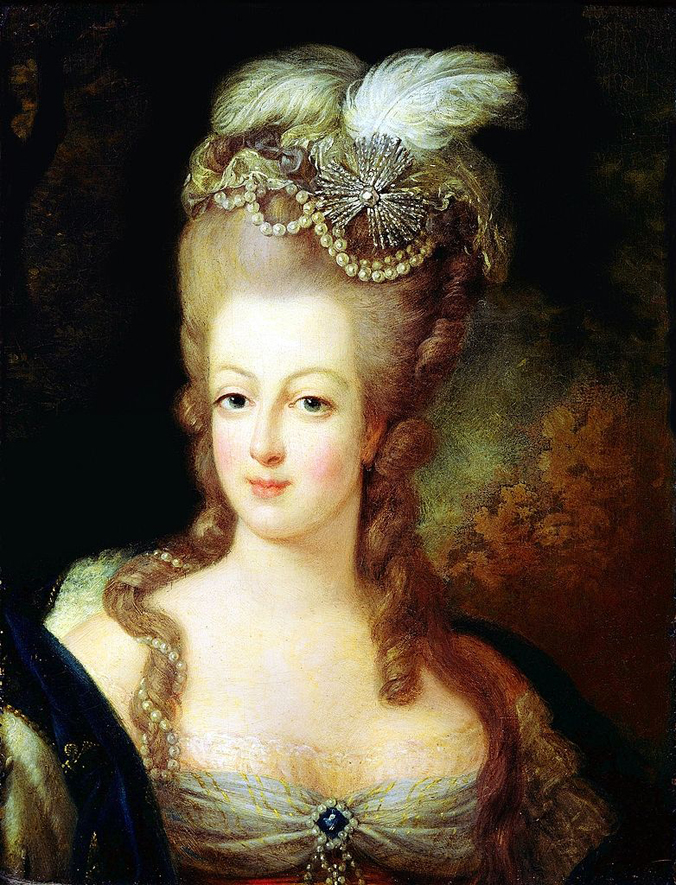
    Portrait of Marie Antoinette (c. 1775) probably by Jean-Baptiste Gautier Dagoty. Public domain. Credit: Musée Antoine-Lécuyer/Wikipedia
    Portrait of Marie Antoinette (c. 1775) probably by Jean-Baptiste Gautier Dagoty. Public domain. Credit: Musée Antoine-Lécuyer/Wikipedia

    Ever at the cutting edge not only in fashion but in medicine, she unveiled “pouf à la inoculation” to celebrate her husband’s recent small pox vaccinationThis pouf included a serpent belonging to the Greek’s god of medicine, Aesculapius, twined around an olive tree that symbolized wisdom with a great golden sun rising behind it as a nod to her husband’s grandfather Louis XIV, the much-loved Sun King.

    Two other noted examples that caused a stir in the court were the Zephyr and the Coiffure a la Belle-Poule.  The Zephyr, created by Monsieur Léonard, was a moving garden of brightly colored flowers which was celebrated as a peak achievement for the hairdresser.  The Coiffure a la Belle-Poule was a nautical pouf that consisted of a ship sailing on a sea of thick wavy hair.  It was invented after the naval battle in which the frigate La Belle Poule was victorious.

    A realistic view of the "Coiffure à la Belle Poule." Public domain. Credit: Bibliothèque nationale de France/Wikipedia.
    A fairly realistic view of the “Coiffure à la Belle Poule.” Public domain. Credit: Bibliothèque nationale de France/Wikipedia.

    Soon these new hairdos began to make their way out of the circles of aristocracy to the streets of Paris.  However, as cutting-edge fashion makes its way out into the streets, the distinctiveness is somewhat diluted creating more audacious and ostentatious copycats.  This was quickly picked up on by social critics and became a fertile subject for mockery and satire.

    One critic lampooned the imitators saying, “they did not hesitate to embrace styles more ridiculous than sublime.  Thus spotting in the Queen’s pouf a la jardinière such implausible ingredients as an artichoke, a carrot, some radishes, and a head of cabbage.” [6] Another complained, “Frivolous women covered their heads with butterflies” and “Melancholic women went so far as to put crematory urns in their headdress.”  Even the hair dresser who invented the pouf began to decry the “prodigious folly of composite and fabricated coiffures, as pictures of towns, little models of Paris, a globe or the heavens.”

    A satirical view of the "Coiffure à la Belle Poule." Public domain. Credit: Henri Moreau/Wikipedia.
    A satirical view of the “Coiffure à la Belle Poule.” Public domain. Credit: Henri Moreau/Wikipedia.

    Some complaints seemed more valid than others.  Spectators at the Paris Opera petitioned the director, to refuse any lady whose coiffure blocked the view of the rest of the audience.    While enjoying the theatre might inconvenience others, getting to the theatre brought its own set of physical dilemmas for the pouf wearer.  Try squeezing a three foot bouffant into a small covered carriage or navigating a standard doorway with the additional height.

    Luckily, for those who found the pouf a public nuisance, a silly fashion fad, or just a physical pain to wear did not have to wait long for it to fall out of favor spectacularly.  The huge grandiose styles began to represent a symbol of aristocratic excess in a society on the verge of political revolution.  It embodied the nobility’s unbridled lavishness in the face of public discontent.  This willful ignorance didn’t end well for the coiffured-court ladies who soon found they no longer had anywhere to put their elaborate headdresses.

    Heather Baldus
    Collections Manager

    [1] Caroline Weber, Queen of Fashion: What Marie Antoinette Wore to the Revolution, New York: Picador, 2006: 104.

    [2] Weber, 104.

    [3] Weber, 105; Olivier Bernier, The Eighteenth Century Woman, New York: Doubleday, 1982: 235; Will Bashor, Marie Antoinette’s Head: The Royal Hairdresser, the Queen, and the Revolution, Guilford, CT: Lyons Press, 2013: 65

    [4] Weber, 105.

    [5] Weber, 106; Bashor, 66.

    [6] Weber, 111.

  • Petticoats and Pink Lightning

    This week, we delve into our collections to investigate some fascinating fashions from across the centuries. London Fashion Week took place late last month while today marks the final day of Paris Fashion Week.  Just as they do in the 21st century, those two cities represented cultures that helped determine the height of fashion in the 18th century. To us today, fashions of the past may consist of strange terms, foreign garments, or archaic customs. In this post, Lives & Legacies contributors come together to salvage some fashions from the pages of history in an appreciation of both them and of the people who wore them.

    Petticoats

    To most of us today, the term “petticoat” refers to a ladies’ undergarment – a fabric support for a skirt, intended to give the skirt more fullness or volume.  Petticoats have essentially disappeared from our modern wardrobes but, for 400 years, petticoats were a staple of female dress and weren’t always hidden under skirts.

    The earliest references to petticoats show up in the Middle Ages.  Only they weren’t worn by women.  And they weren’t skirts.  A “petty coat” referred to a short (“petty”) robe (“coat”) that was padded and worn under a knight’s armor or chain mail.  Eventually, the term “skirt” was used to describe the tails of men’s petty coats (“the skirts of his petty coat hung so long they touched the ground”), and was also used to describe typical women’s attire, just as we use it today.  By the 16th century, somehow women’s skirts and men’s petty coats became synonymous, and as time went by and men ceased wearing petty coats, the word “petticoat” referred entirely to a woman’s skirt.  Petticoats could be worn as stand-alone skirts, or under open-front robes, creating a two-part dress. By the mid-19th century, petticoats were no longer seen and became an undergarment worn under an all-encompassing dress, mostly to add structure to the voluminous skirts that had become popular by then.[1]

    In the 1700s, women often wore quilted petticoats under those open-front robes or as stand-alone skirts.  In either case, the quilted petticoat was intended to showcase intricate handiwork in the quilted pattern.  Geometric patterns, birds, flowers and even pastoral scenes were all common themes for quilted petticoats, which had an added bonus of providing extra warmth.

    One quilted petticoat dating to approximately 1760 survives in our collection.  Made of peach satin silk with wool batting between the two layers, it is quilted in a chevron pattern above an undulating band, below which is an assortment of flowers and leaves.  Although it appears that this particular petticoat was made over several times in its life, there are indications that it was originally intended be worn over a dome-shaped hoop skirt, which probably means that it was worn under an open-front robe for a more formal dress.[2]  The wearer would have been at the height of 18th century fashion!

    Meghan Budinger
    Aldrich Director of Curatorial Operations

    Busk Boards

    Corsets have been a fashion mainstay in women’s clothing throughout history.  Like petticoats, they have changed their shape, material and purpose but, unlike petticoats, they have always been a very personal and private garment.  From the 15th to the 18th century, corsets contained a small sliver of stiff material called a busk or busk board.  The busk was made of wood, ivory, or bone and measured between 12 to 16 inches long and 1 to 2 inches wide.  They were inserted into a special narrow pocket in the front of the corset to keep the garment straight and upright.

    Given the intimate location of the busk they were often given as tokens from lovers and contained elaborate carvings.   Hearts, cupids, and initials were favorite and common motifs inscribed on the busk.  The board in our collection is made out of wood in a long rectangle shape with round end.  On the surface are etched a pinwheel, a fleur-de-lis, six flowers petal enclosed in a circle, and a square with a diamond carved design all surrounded by a cross-hatched edging.  At the end is inscribed “B.L. 1785” with a sprig of leaves.

    Heather Baldus
    Collections Manager

    Shoes

    Perhaps, unlike pretty petticoats and busk boards, when we today think of footwear in the colonial era, we often think of pedestrian black leather. This might have been sufficient for the puritans of New England, who were typically adverse to bright colors and flashy clothes. Here in Virginia, however, where London fashions were king, the style conscience demanded something more. Much like today, there were shoes meant for work and shoes meant to impress. Linen shoes, like the ones in our collection, would have certainly impressed.

    In our collection we have three versions of 18th century ladies’ shoes: black shoes from the late 1770s which have a pointed vamp and an Italian heel; a silk and linen pair from the 1760s; and, finally, an embroidered linen pair with a white rand and leather-covered English heel. All were the height of fashion in the 1700s and perfect for showing off at a fine evening of dance, a Sunday at church, or even at home while company was visiting. Like all shoes in the 1700s, a trained shoemaker made them by hand.  Although there were journeyman and master shoemakers in the colonies, the finest worked in London and shipped their merchandise across the Atlantic. While certain elements of these shoes are ubiquitous such as the thin leather soles, wooden heels, straps for fine buckles, and a linen base, eighteenth century shoes were like the shoes of today varying in style, color, material, and purpose.

    Personally, my favorite aspect of these shoes is how contemporary they truly are. While they seem like a foreign footwear from a bygone era, anyone who has splurged on the perfect pair of boots, fashionable flats, or even stylish sneakers can relate to the original owners of these beautiful artifacts.

    Joe Ziarko
    Manager of Interpretation & Visitor Services

    Lipstick

    Pink Lightning”!  Meteorogically speaking, it is a distinctive type of lightning that is exceptionally loud and generates a unique purple-pink color.  But in the world of fashion, “Pink Lightning” was the color name created by Revlon for a line of beauty products in 1944. Face powder, nail polish, and lipstick were available in this shade for women who wanted to sport a distinctive, high voltage color on their lips and nails.

    While most of this post has focused on 18th century fashion, both Historic Kenmore and George Washington’s Ferry Farm have long histories beyond the 1700s. We often unearth objects that span 300 years during archaeological excavations.  Indeed, during the summer of 2014, an intact tube of 20th century lipstick was excavated.  The product label – “Revlon – Pink Lightning”- was still legible on the base of the wartime-inspired bullet-shaped casing, and remnants of the crème lipstick still surprisingly survived inside the tube.  Someone, sometime, pulled out her lipstick tube, dabbed ‘Pink Lightning” on her lips, and promptly dropped it on the ground to be lost for nearly 70 years.

    Lipstick is the ultimate fashion accessory.  As the very last beauty product applied before heading out the door, it is usually the finishing touch to an outfit. The world of fashion is not only about clothing, but just as much about the hair and makeup created to complement and highlight fashionable outfits. Wearing “Pink Lightning” lipstick would certainly suggest a fashion image that was “electrifying!”

    Judy Jobrack, Archaeologist
    Assistant Lab Supervisor


    [1] https://whitepavilion.com/articles/petticoats Petticoats, White Pavillion Clothiers, 2014.

    [2] Baumgarten, Linda. Eighteenth Century Clothing at Williamsburg. The Colonial Williamsburg Foundation, 1986.

  • Perukes, Pomade, and Powder: Hair Care in the 1700s

    Editor’s Note: Looking back in time, people’s personal hygiene, fashion choices, medical treatments, and more sometimes look, at the very least, bizarre, if not outright disgusting.  When confronted with these weird or gross practices, our first reaction can be to dismiss our ancestors as primitive, ignorant, or just silly.  Before such judgments, however, we should try to understand the reasons behind these practices and recognize that our own descendants will judge some of what we do as strange or gross.  Here at George Washington’s Ferry Farm and Historic Kenmore, we’ve come to describe our efforts to understand the historically bizarre or disgusting as “Colonial Grossology.”  The following is the first in a series of “Colonial Grossology” posts that we’re offering on Lives & Legacies.

    Archaeologists at George Washington’s Ferry Farm have recovered a variety of hair care artifacts, including over 200 wig hair curlers.  These baked clay curlers were used exclusively to curl wig hair, and formed part of the Washington family’s regimen of wig maintenance.  The regimen included several practices that might seem strange or gross to us today.

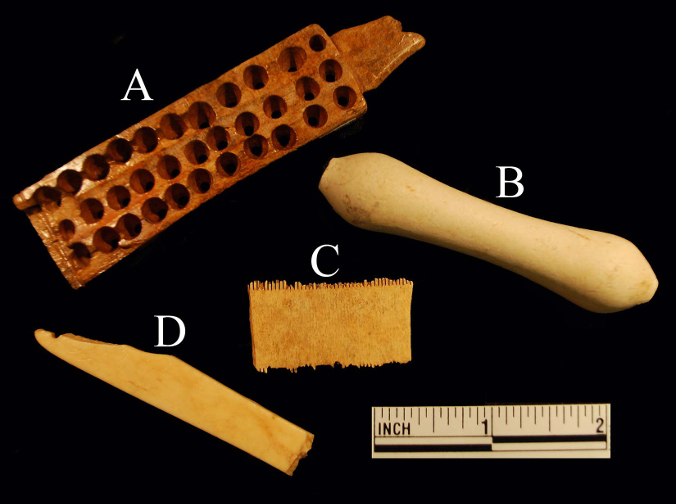
    Artifacts from Ferry Farm related to eighteenth-century hair care.  A) A woman’s bone hair brush, used on natural (not wig) hair.  B) An earthenware wig hair curler, made c. 1740-1780.  C)  A bone grooming or “lice” comb.  D)  A bone razor guard, used by men to shave their facial hair and to shave the head to accommodate a tight-fitting peruke.
    Artifacts from Ferry Farm related to eighteenth-century hair care. A) A woman’s bone hair brush, used on natural (not wig) hair. B) An earthenware wig hair curler, made c. 1740-1780. C) A bone grooming or “lice” comb. D) A bone razor guard, used by men to shave their facial hair and to shave the head to accommodate a tight-fitting wig.

    Powdered wigs, or ‘perukes’, were highly fashionable among gentlemen of the 1700s, and a few affluent households even insisted that their butlers and coachmen wear them.  Some gentlemen, including George Washington, opted not to wear a peruke.  To remain fashionable these men often styled their own hair to resemble a wig.

    George Washington, 1796, by Gilbert Stuart [Public Domain].  His hair was pomaded and powdered by his personal valet.
    George Washington, 1796, by Gilbert Stuart [Public Domain]. His own hair, not a wig, was pomaded and powdered by his personal valet to look as if he were wearing a wig.
    Human hair was often used to make these wigs, but horsehair, cow, goat, yak, and sheep hair provided economical options for consumers on a budget.  Owners of perukes made from human hair were often anxious about their quality:  it was a widespread concern that the hair of criminals, cadavers, prostitutes, or even plague victims was used to construct wigs.

    Throughout the 1700s, whether it was a person’s own hair or a peruke, pomade or pomatum was applied before wigs were powdered.  The word ‘pomade’ derives from the Latin word for apple, “pomum,” – since early recipes incorporated apples.   One recipe combined a pound of sheep suet (fat) with one pound of pig suet.  Sixteen rosewater-boiled apples were added.  Fragrance then enhanced this mixture, and might include some combination of rosewood oil, bay leaves, bergamot orange, or Macassar oil.  Such fragrances helped to lengthen the interval between hairdressing sessions and counteracted any rancid odors.

    Powder was typically made from wheat flour or dried white clay.  Beanmeal or cornflour was also used.  Powder was often enhanced by fragrances, such as those of orange flowers, rose petals, nutmeg, ambergris, jasmine, orris root, or lavender.

    A hairdresser or personal valet added the powder, which was freshly applied every morning, or each time a wig was donned.  The combination of lard and powder produced rigid curls and stiff hair styles.  Powder made hairstyles heavier: as much as two pounds heavier for the large periwigs popular until the 1730s[1]. A few households featured ‘powder rooms:’ a small room set aside for the application of powder.  A power bellows, a ‘carrot’[2], a swan-down puff, or comb was used to dust hair with powder.  White or grey powders were especially popular, but adventurous consumers might use black, blue, lavender, pink, red, or yellow.

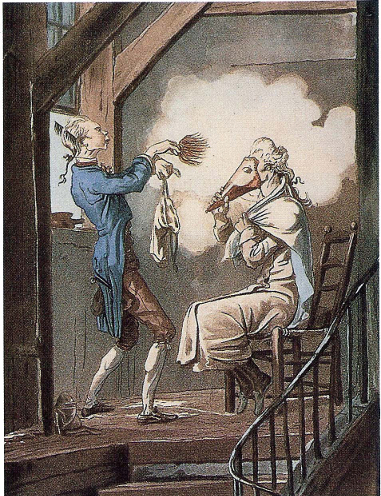
    A gentleman being powdered by his valet.  A cone protects the gentleman’s face during the process.  Powder was made from starch, often wheat flour, or powdered white clay.  The Toilette of the State Prosecutor’s Clerk, c. 1768 by Carle Vernet.
    A gentleman being powdered by his valet. A cone protects the gentleman’s face during the process. Powder was made from starch, often wheat flour, or powdered white clay. The Toilette of the State Prosecutor’s Clerk, c. 1768 by Carle Vernet.

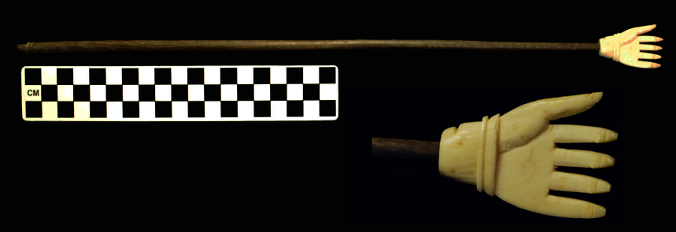
    Hairdressers could remove wigs to apply pomade and powder in a separate space, a convenience for wig wearers that men who only wore their own hair likely envied.  Men who did wear their own hair used a hairnet to preserve their pomaded locks overnight.  Each morning[3], a valet combed out the previous day’s pomade and dirty powder, before applying fresh pomade and powder.  This process could take an hour or more.  Many hairstyles remained undisturbed for weeks.  Headscratchers were kept close at hand: they allowed people to itch their scalps without disturbing their hairstyle too dramatically.

    An ivory-handled head scratcher and closeup [inset]. Personal collection. Used with permission
    The beginnings of this fashion trend were inspired by disease and lice.  Most people did not wash their hair very often.  Syphilis was rampant in Europe throughout the colonial period.  Symptoms such as hair loss, scabs, and rashes could be partially hidden beneath a voluminous wig.  The prevalence of highly contagious head lice, and the difficulty in exterminating them, also encouraged the adoption of false hairpieces.  In order to insure a good fit, gentleman shaved their heads, eliminating the hairs upon which lice thrived.  While cleaning lice from one’s own hair could be time-consuming, wigs could be conveniently removed – and boiled to eliminate pests and dirt.  However, if wigs were not properly maintained, they could become a haven for a variety of pests.

    To us today, the wearing of wigs covered in animal fat along with wheat flour or dried white clay may seem bizarre or disgusting or both.  Still, to the people of the time the reasons behind the practices made perfect sense.  Which of today’s perfectly sensible fashion choices might our descendants living 200 years in the future find strange or gross or both?

    Laura Galke
    Archaeologist, Site Director/Small Finds Analyst


    [1] Periwigs took as many as ten heads of hair to produce.
    [2] This was a carrot-shaped, wooden tube from which powder was blown onto the hair.
    [3] Ideally fresh pomade and powder were freshened each morning.  Frugal gentlemen might wait a week or more.