Lives and Legacies

Tag: history

  • Happy Birthday, Mr. President!

    Not every president gets their birthday celebrated every year with a federal holiday, but George Washington, a favorite of his countrymen and the first president, has had that privilege since 1879. But one year was a little different from the others: 1932.  It marked Washington’s 200th birthday, and the United States was going to make a big deal about it. 

    In honor of the upcoming birthday, we decided to look at some of the memorabilia in our collection created to celebrate and educate the American public.   

    George Washington Bicentennial Commission

    The planning for this celebration started early when Calvin Coolidge signed a joint resolution that established a commission to oversee the bicentennial ceremonies on Dec 2, 1924.  The resolution was to mark the occasion of the birthday across the country and increase the understanding of Washington. (George Washington Bicentennial Commission, 1932)  Under the direction of Representative Sol Bloom, an experienced entertainment promoter who got his start at the 1893 World’s Colombian Exposition, the committee initiated thousands of events, released educational resources for students, and had plays written in honor of Washington. (Larson, 2004)
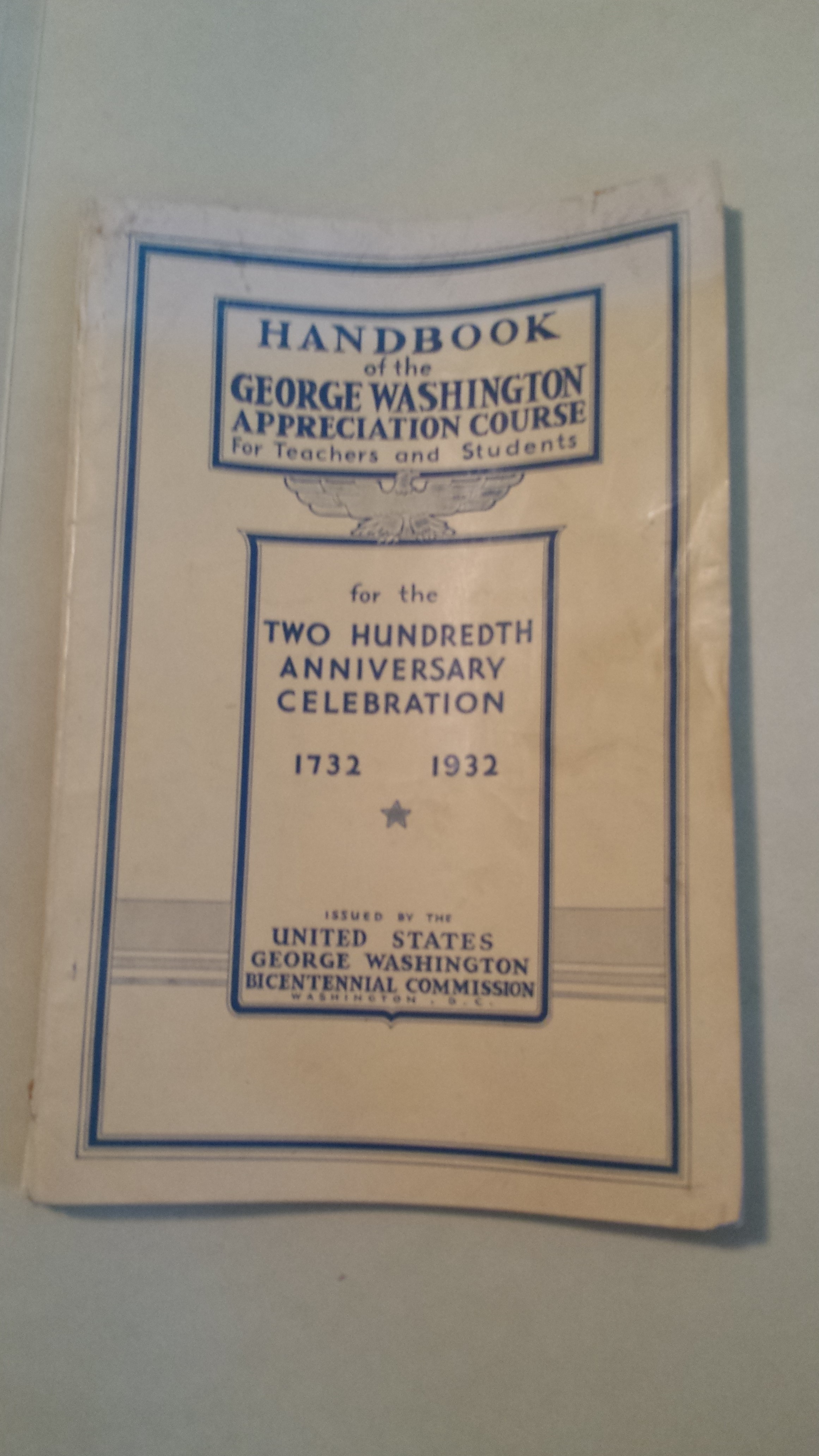
    Handbook of the George Washington Appreciation Course for Teachers and Students
    “Washington Takes the Risk”, including George Washington, Fielding Lewis, and Betty Washington Lewis

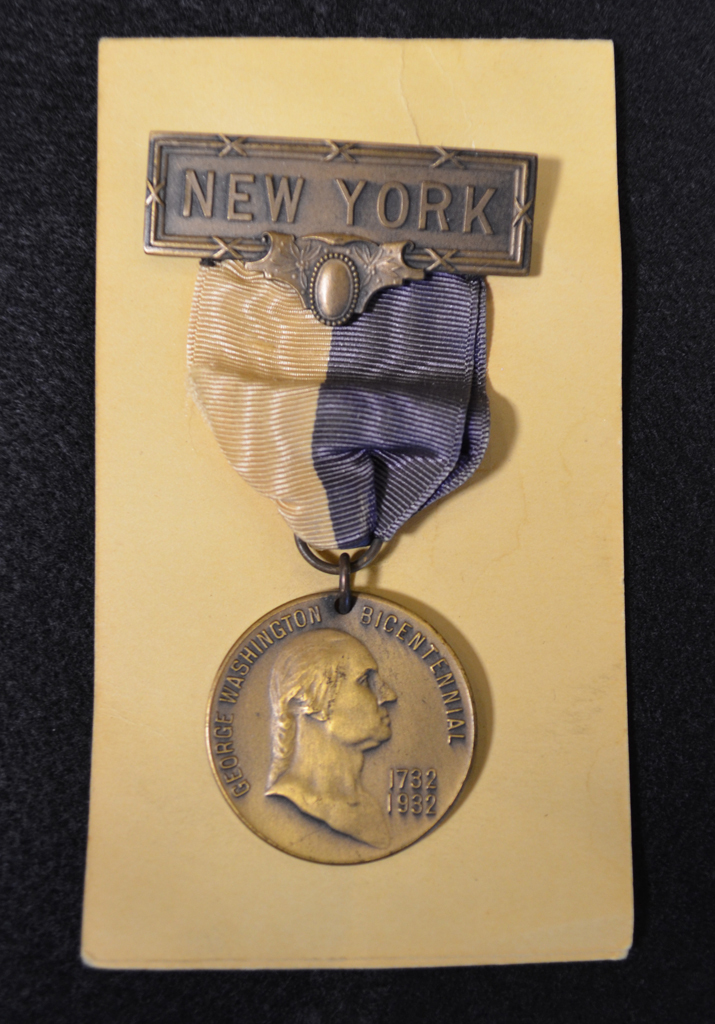
    The commission additionally worked with over 250,000 local commissions to organize special events at not only a federal level but a state and city too. (The Washington Post, 1932) Special volunteers and prominent local people were often given commemorative metals as thanks for their service.  We have one from the state of New York.  It is a circular bronze medal attached to a blue and white ribbon.  The back of the medal states, “1779 / Planned Sullivan / Clinton Campaign 1782 / Newburgh Temple Hill / Refused a crown / 1789 April 30th / New York City / Inaugurated first / President of the / United States.” 

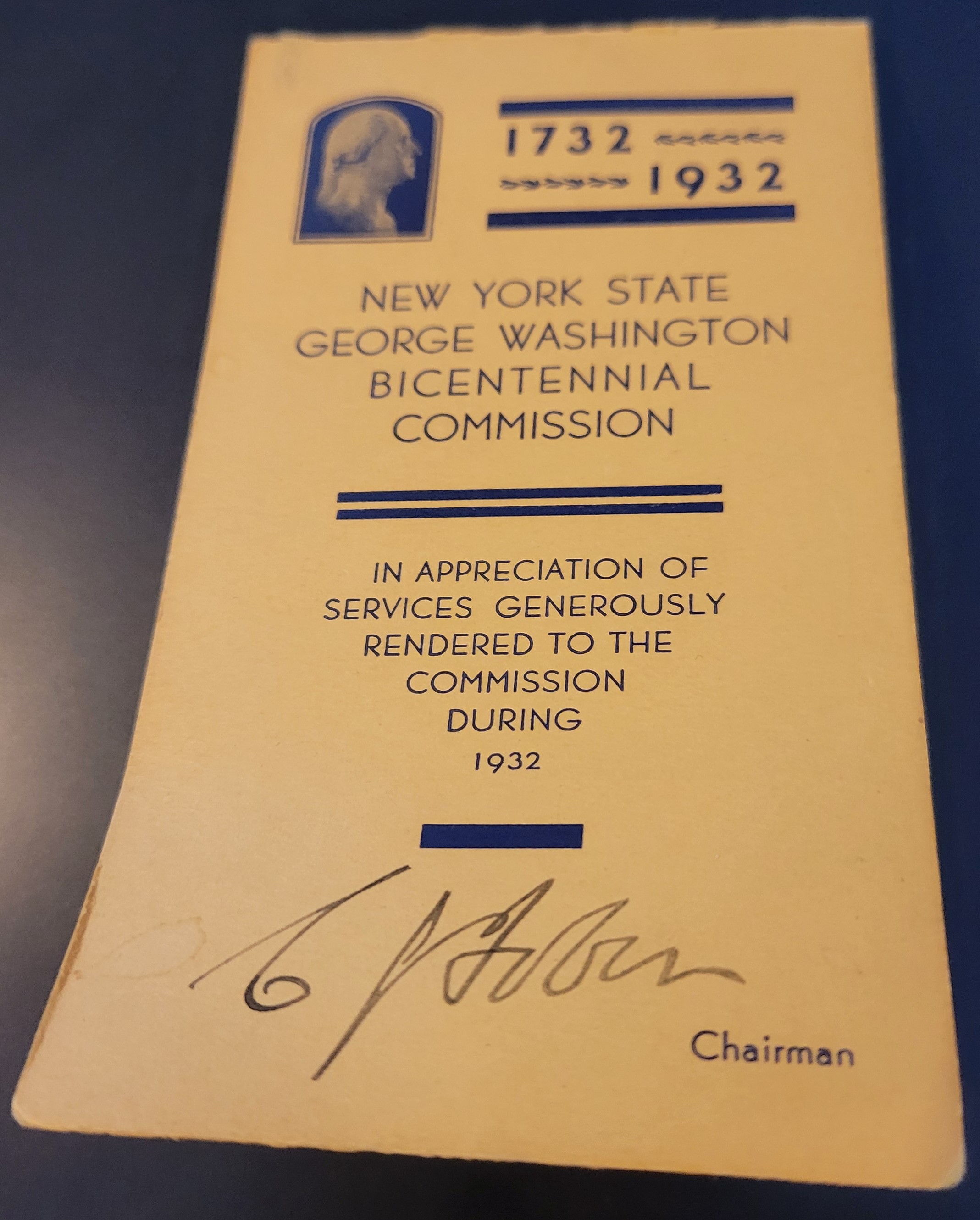
    The medal is encased in a paper envelope with “New York State / George Washington Bicentennial Commission / In appreciation of / Services generously / Rendered to the / Commission / During / 1932” written on the front along with the signature Charles Tobin, chairman representing New York state on the Bicentennial Commission. 
    Historical Context Help: The Sullivan-Clinton campaign was ordered by George Washington in response to the 1778 attacks by the Iroquois and British in central New York.  Newburgh Temple Hill was a Continental Army encampment near Washington’s headquarters, where he gave a speech to quell the mass of soldiers who were getting ready to mutiny and attack Congress to get their promised back pay and pensions. Finally, in 1789, George was sworn in as President at Federal Hall in New York City.

    Calling All Philatelists

    Washington Post, Jan 2, 1932

    The U.S. Post Office became involved in the commemoration of George with the release of a dozen stamps celebrating his life.   The stamps were incredibly popular, and when they were first released for sale in D.C., there was a crowd of 50,000 people waiting to get their set of stamps. (The Washington Post, 1932)

    Marketing George

    Private companies even got in on Washington-mania by releasing all types of souvenirs like postcards, pins, coins, bottles, calendars, cigar box covers, books and pamphlets, hat stands, billheads, stationary, cartes-de-visite, playing cards, and puzzles. (Subseries 5.8. Washington’s Birthday, Bicentennial Souvenirs, 1931-1932 , 2024)

    We have two bottles created for the Bicentennial celebration.  The green water bottle has a likeness of George with “Washington/Bicentennial” underneath the image and 1732 and 1932 written on the sides.  The water bottle was produced by the Hemingway Glass Company in Muncie, Indiana. 

    The clear pear-shaped bottle is embossed on one side with a cherry tree and the dates “1732 and 1932”.  On the other, with a profile of Washington.  It was created by the Owens-Illinois Glass Co. of Huntington, West Virginia.

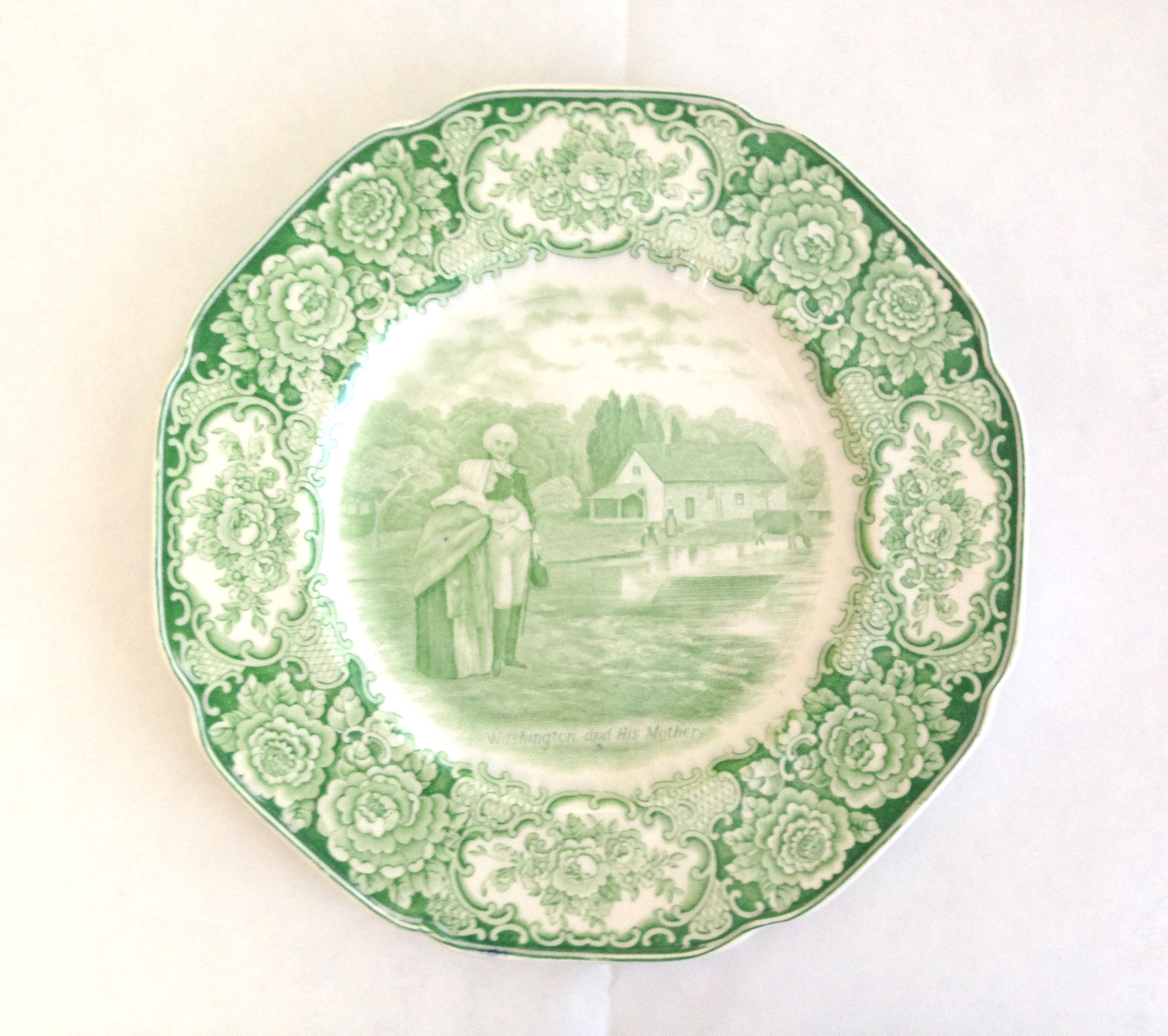
    Plates were another big commemorative item.  We have three plates issued by Crown Ducal, with the same scene of “Washington and his Mother” based on the print of the same name.  On the back with the Crown Ducal crest, it says, “George Washington Bicentenary Memorial Plates / 1732-1932 / First in War / First in Peace / First in the hearts of his countrymen”.  Crown Ducal released a series of twelve plates documenting Washington’s life.  Of course, we are a little biased and like the one with his mother, Mary Ball Washington, the best.
    Some companies even brought in Mrs. Martha Washington, like this set of plates from the Capital Souvenir Company.  These are two round commemorative plates depicting George and Martha Washington, both with an elaborate floral gilded border.

    Fun Bicentennial Fact:  On the eve of the birthday, Sears Roebuck was awarded a commission by the U.S. government to create a full-scale replica of Mount Vernon at the Exposition Coloniale Internationale in Paris.  The agreed-upon price was around $75,000, and every detail of the home was reproduced from brass hardware, mantelpieces, and even cabinets.  After the exposition, the house was bought by an American doctor working in Paris, and it was relocated to Vaucresson (a western suburb of Paris).  It still stands today as a private residence and was even on the market in 2012 for 27 million dollars.     

    Sears Roebuck also built the exact replica in Prospect Park, Brooklyn, NYC for the Bicentennial Commission. However, the house was not taken care of and boarded up and abandoned until it was eventually torn down. (The Brooklyn Daily Eagle, 1933) 

    Sears’ role in the reconstruction of Mount Vernon led to interest in their kit homes.  In 1932, they offered a house in their catalog, loosely based on Mount Vernon.  This model was oddly called “The Jefferson”.

    Sears Roebuck house kit “The Jefferson” which strangely resembles Mount Vernon.

    While we may not have as many George souvenirs, we are still putting on a big birthday party to celebrate George Washington and his time at Ferry Farm. 

    The party is on Monday, February 19th from 10am – 3 pm.  While enjoying the grounds of Ferry Farm, you can take a selfie with “George Washington,” participate in our annual stone-throwing contest, play colonial games, and eat birthday cupcakes (while supplies last).

    Additionally, guests can enjoy several educational stations, take an abbreviated Washington House tour, and talk with archaeologists, historians, and other experts to learn about Ferry Farm and the Washington Family.


    Heather Baldus

    Collections Manager


    References

    George Washington Bicentennial Commission. (1932). History of the George Washington Bicentennial Celebration. Washington D.C.

    Larson, E. (2004). The Devil in the White City: Murder, Magic, and Madness at the Fair That Changed America. New York City: Knopf Doubleday Publishing Group.

    Subseries 5.8. Washington’s Birthday, Bicentennial Souvenirs, 1931-1932 . (2024). Retrieved from The George Washington Presidential Library at Mount Vernon: https://archives.mountvernon.org/repositories/3/archival_objects/14635

    The Brooklyn Daily Eagle. (1933, June 14). Fate in Doubt On Park Replica of Mt. Vernon. The Brooklyn Daily Eagle, p. 5.

    The Washington Post. (1932, January 2). 50,000 Stand In Line to Get New Stamps. The Washington Post, p. 1.

    The Washington Post. (1932, January 5). Bicentennial Stamps Profit. The Washington Post, p. 6.

  • An Image Captured: The Development of Photography through Lewis Family Descendants

    One of my favorite historical objects in the collection are photographs.  Not particularly for artistic reasons, but as a documentation of a moment, a time, a person, a world that no longer exists.  During the Victorian era (1837-1901), there were extraordinary developments in the field of photography. In a span of forty years, photographs went from complicated metal plates, harsh chemicals, and long exposure times to inexpensive images on cardboard that could be taken, processed, and given to the sitter in minutes. 

    We have many pictures in our collection, and we can trace the development of photography through images of Lewis family descendants. 

    A Pleasant View of Burgundy

    The widely accepted creator of photography as we know it was French inventor Joseph Nicéphore Niépce.  He produced the first surviving photograph around 1826 showing the scene from his window in Burgundy.  After Niepce’s death, his former associate, Louis-Jacques-Mandé Daguerre, continued improving Niepce’s photographic process, introducing the “daguerreotype” in 1839. (The University of Texas Austin, 2024)  To create an early daguerreotype, a polished silver-plated copper sheet was treated with iodine vapor to make it light-sensitive. After exposure, the plate would be developed with mercury vapor and fixed with sodium chloride.  This was a tedious and complex process that required the subject to remain entirely still for three to fifteen minutes. (Stewart, 2018) (The Library of Congress, 2024) (Department of Photographs, 2004) The process was amended and, by the 1850s, used large glass-plate negatives, allowing for a crisper picture and a much shorter exposure time. (Department of Photographs, 2004)

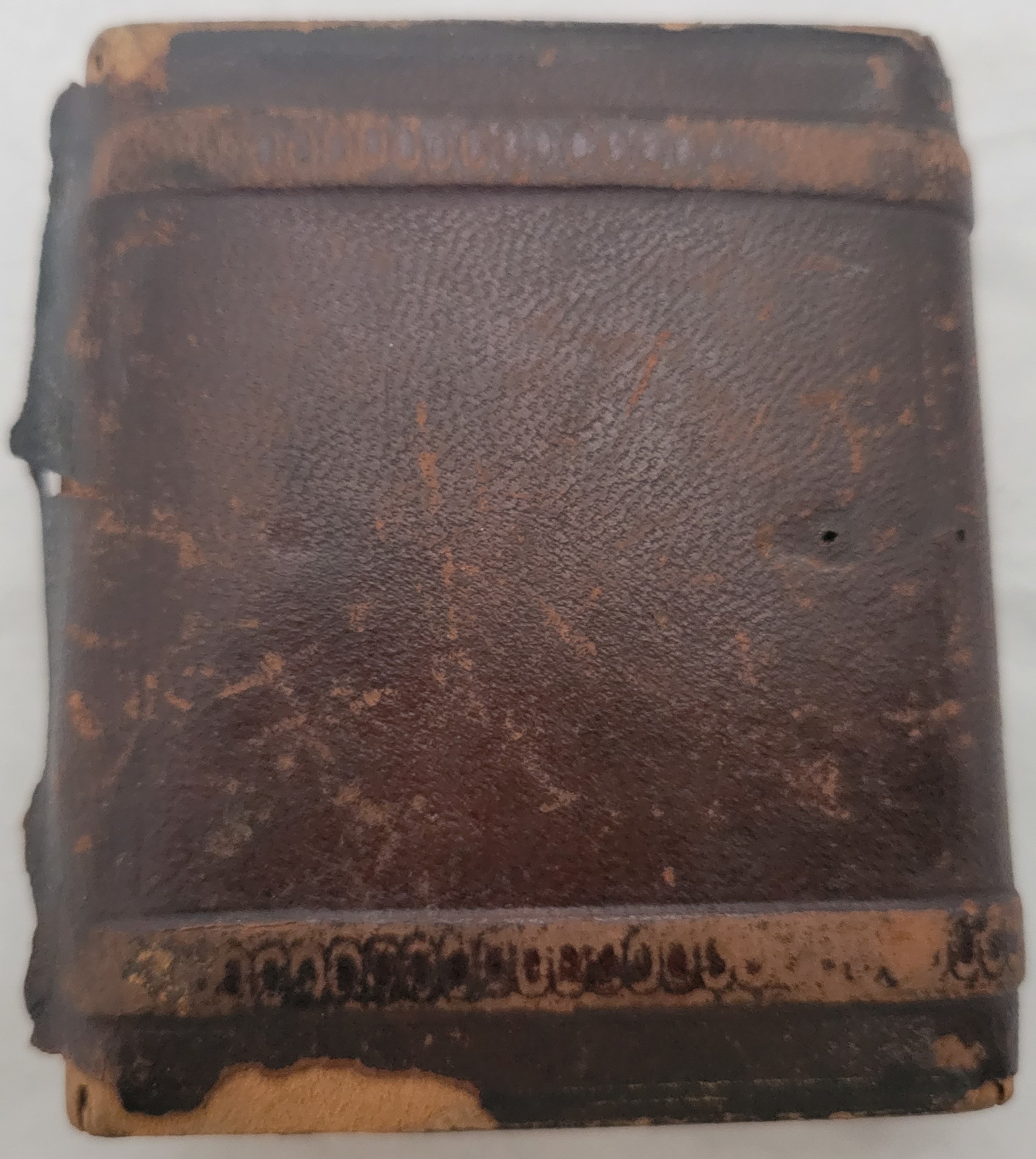
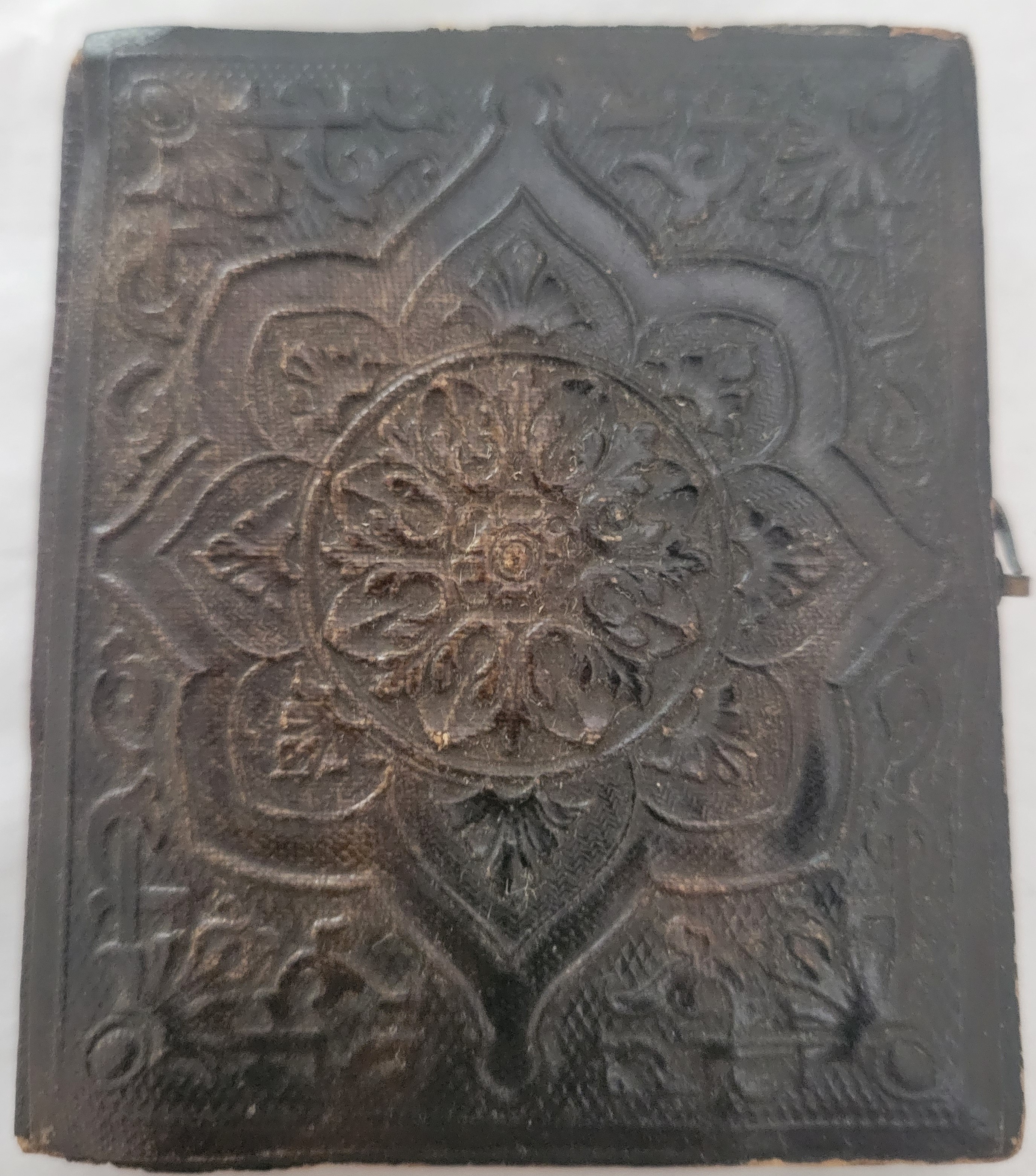
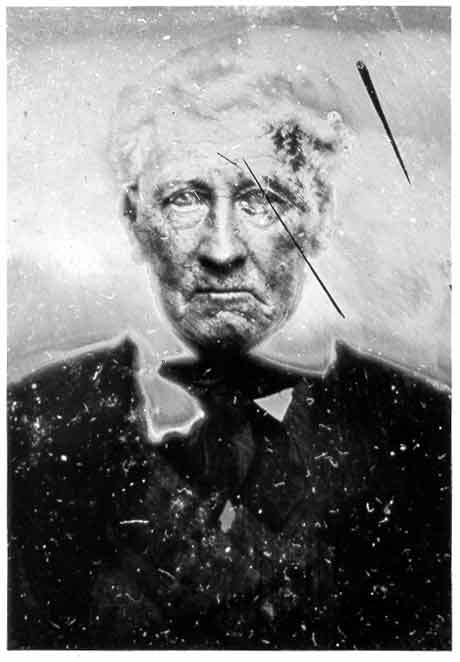
    We have three daguerreotypes in the collection dating circa 1850s.  They are all portraits housed in elaborate leather cases with gilt-metal frames.  The larger photograph is called a sixth-plate daguerreotype portrait of John Taliaferro Lewis (1785-1862), who was the grandson of Charles Lewis, Fielding Lewis’s brother.  John was a Methodist minister and lived at “Stepney” near Manassas.  Through his wife, Francis Tasker Ball, he became the owner of “Portici,” also near Manassas. The two smaller ninth-plate daguerreotypes are both portraits of Ellen Lewis Nye (1834-1886), the granddaughter of Howell Lewis, the ninth son of Fielding and Betty.  She married Anselm Tupper Nye, and they resided in Ohio, where they were both buried.

    Images for Loved Ones

    The daguerreotype was soon replaced in popularity by the ambrotype and tintype, which were both cheaper and easier to develop. (Harding, 2013). 

    An ambrotype is comprised of an underexposed glass negative placed against a dark background. The dark backing material creates a positive image. They were sold in either cases or ornate frames to provide an attractive product and to protect the negative with a cover glass and brass mat. (Library of Congress, 2024)

    We have three ambrotypes in the collection: a landscape and two portraits.  The landscape dates to circa 1855 and shows a group of people gathered around Washington’s tomb at Mount Vernon. Two of the figures were Thomas Coatsworth (1821-1887) and his wife Electra Weller Coatsworth (1832-1869). It is housed in an embossed leather case.

    One portrait is of John Taliaferro Lewis and is almost identical to his daguerreotype. The other portrait is of Daingerfield Lewis (1785-1862).  It dates from the same time and is held in a leather case. Daingerfield Lewis was the son of Captain George Lewis, the fourth son of Fielding and Betty, who served in the Continental Army under his uncle George Washington.

    Tintypes became especially popular because the photographer could take a picture and develop it within just a few minutes. It was called the new “instant photo.”  This “instant photo” could be found at fairs, carnivals, and on the boardwalk, not just professional studios. Due to the tintype price, weight, and unbreakable nature, they became extremely popular during the Civil War because soldiers were able to mail them back to loved ones. (Stewart, 2018)

    The three tintypes in the collection are a group of siblings, two brothers, and one sister (there were eight total siblings).  George Lewis (1832-1883), Fielding Lewis (1839 – 1863) and Betty Fitzhugh Lewis (1847-1920).  Their father was Howell Lewis Jr. (1808-1883), the son of Howell Lewis and grandson of Fielding and Betty.  Howell Lewis Jr. was one of the earliest settlers of Henry County, Missouri, and established Lewis Station (now called Lewis, Missouri).  There is not much information on the siblings besides the basics.  George Lewis, the eldest, was born in West Virginia, died in Nevada, and is buried at the Lewis Station Cemetery.  Fielding Lewis was born in Missouri and died young during his service with the Confederate army in Texas.  Betty Fitzhugh Lewis was born in Missouri as well; he married Milton D Finks, had at least three children, and is buried in Calhoun cemetery.

    Paper, Cardboard, and Formality

    By the later part of the nineteenth century, paper photos mounted on cardboard became more popular. Carte-de-visite became quite a fad after carte portraits of Queen Victoria with her husband and children were published. (Harding, 2013).  Part of why they became popular is they were cheaper to produce because multiple images (eight) could be taken with the same photographic plate, cut into small portraits, and mounted to heavy cardboard. (The Editors of Encyclopedia Britannica, 1998) 

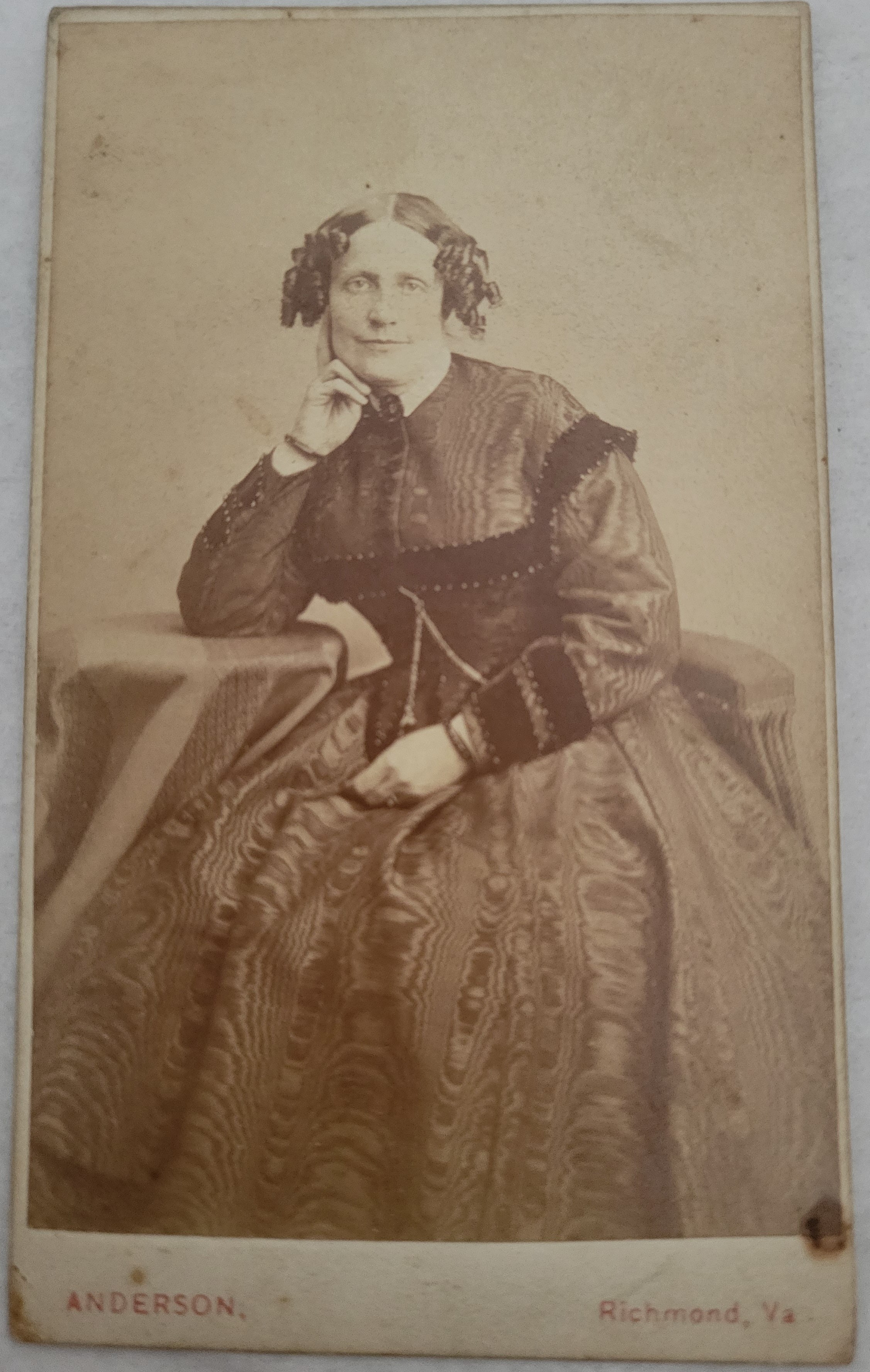
    Two of our carte-de-visites are portraits of two young ladies around 1860.  One is Ellen Lewis Nye, who previously appeared in daguerreotype around the same time.  The second is Mary Ellen Lewis Hogan (1834-1874), who was the daughter of Howell Lewis, Jr. and sister to George, Fielding, and Betty Lewis.  She was born in West Virginia, married Robert Henderson Hogan, and is buried in Illinois.   

    The carte-de-visite was gradually superseded by the cabinet card, which remained popular until the introduction of the Kodak Box Brownie camera in 1900. (City Gallery, 2005)  The cabinet card marked a transition from more formal portraiture to amusing, personal, and even candid images.  They were taken in studios that were equipped with lights, props, and sometimes even hair and makeup. The average price was around $1.50 for a dozen cards, which is around $45 today. (Salvesen, 2021)

    Our cabinet cards date from 1850 to 1897 and are portraits of three females who, like all the others, are descendants of the Lewis family.  The oldest is of Francis Fielding Lewis Gwathmey (1808-1888), and it was taken around 1850, putting her in her early forties.  Her father was Howell Lewis, son of Fielding and Betty and sister to Howell Lewis Jr.  Francis married Rev. John “Parson” Blair and had twelve children, of which only three outlived her.  She is buried in Richmond, Virginia. 

    We have another picture of Ellen Lewis Nye, who has previously been represented in daguerreotype and carte-de-visite.  The card was taken in 1885, shortly before her death. The last one is Virginia Tayloe Lewis (1842-1916), taken during the Christmas season of 1897.  She was born in Washington, D.C., at The Octagon House.  She was the daughter of Captain Henry Howell Lewis and great-granddaughter to Fielding and Betty. 

    Money and the Magic Lantern

    This is a brief history of photography seen through the descendants of the Lewis family. But make no mistake, these are not the only important pictures in our collection.  There are still trays of glass slides that belong to a curious device called the “lanterna magica,” which became an invaluable tool that, along with gingerbread, helped restore Kenmore.

    Magic lantern glass slide of Kenmore before the restoration

    Heather Baldus

    Collections Manager


    Bibliography

    City Gallery. (2005). Cabinet Card. Retrieved from City Gallery: http://www.city-gallery.com/learning/types/cabinet_card/index.php

    Department of Photographs. (2004, October). The Daguerreian Era and Early American Photography on Paper, 1839–60. Retrieved from The Metropolitan Museum of Art: https://www.metmuseum.org/toah/hd/adag/hd_adag.htm

    Harding, C. (2013, June 27). How to spot a carte de visite (late 1850s–c.1910). Retrieved from The National Science and Media Museum: https://blog.scienceandmediamuseum.org.uk/find-out-when-a-photo-was-taken-identify-a-carte-de-visite/

    Harding, C. (2013, May 25). How to spot a ferrotype, also known as a tintype (1855–1940s). Retrieved from The National Science and Media Museum: https://blog.scienceandmediamuseum.org.uk/find-out-when-a-photo-was-taken-identify-ferrotype-tintype/

    Library of Congress. (2024). Liljenquist Family Collection of Civil War Photographs. Retrieved from Library of Congress: https://www.loc.gov/collections/liljenquist-civil-war-photographs/articles-and-essays/ambrotypes-and-tintypes/

    Salvesen, B. (2021, June 28). The Return of Cabinet Cards. Retrieved from Los Angeles County Museum of Art: https://unframed.lacma.org/2021/06/28/return-cabinet-cards

    Stewart, J. (2018, December 31). Tintype Photography: The Vintage Photo Technique That’s Making a Comeback. Retrieved from My Modern Met: https://mymodernmet.com/tintype-photography/

    The Editors of Encyclopedia Britannica. (1998, July 20). Carte-de-visite. Retrieved from Encyclopedia Britannica: https://www.britannica.com/technology/carte-de-visite

    The Library of Congress. (2024). The Daguerreotype Medium. Retrieved from The Library of Congress: https://www.loc.gov/collections/daguerreotypes/articles-and-essays/the-daguerreotype-medium/

    The University of Texas Austin. (2024). The Henry Ranson Center. Retrieved from The University of Texas Austin: https://www.hrc.utexas.edu/niepce-heliograph/

  • Family Ties: An American Princess

    The George Washington Foundation believes the Washington and Lewis families’ story is worth protecting for future generations. We are in contact with many descendants of the Washingtons and Lewises who have assisted the foundation in presenting the families’ legacies by adding to our collections and archives. We decided to explore the ancestors and descendants interesting tales and life accounts, using the artifacts and documents in our collections as a starting point.   

    The first person in our spotlight is Catherine Dangerfield Willis, who was born in Virginia, lived on the Florida frontier, became a historic preservationist, and became a Princess of the Second Empire because of her Washington relation.

    Virginia Native and Washington Descendant

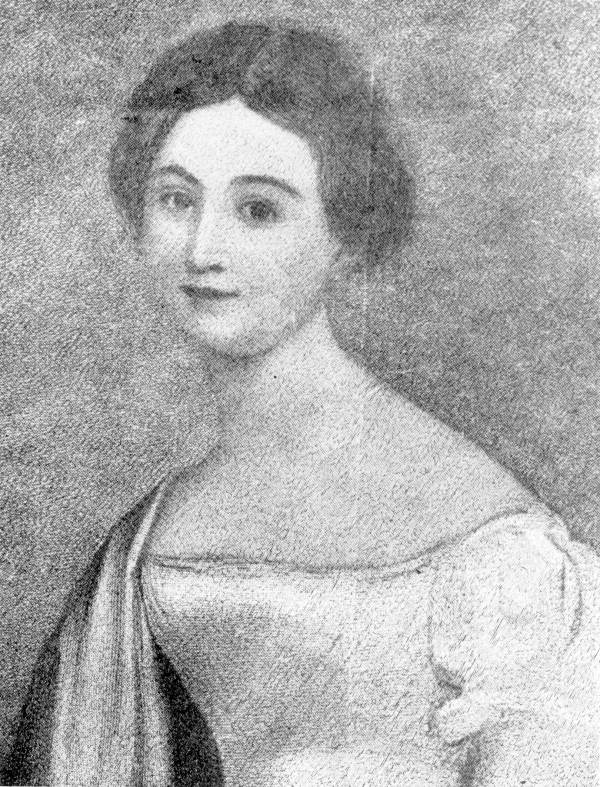
    Catherine Daingerfield Willis was born in Fredericksburg in 1803. She was the daughter of Colonel Byrd Charles Willis and his wife Mary (née Lewis) Willis. From her maternal family side, Catherine was the great-granddaughter of Fielding and Betty Lewis and the great-grandniece of George Washington. (Glenn, 2014)

    Catherine married Atcheson Gray at an early age, around 13 to 17 years old; accounts vary. The newlywed couple resided at their father-in-law’s house, Wakefield (yes, George’s birthplace). (Unknown, 2004)  Sadly, their marriage was cut short when Atcheson died of malaria less than a year after their union, along with their first child. (Bellet, 1976)

    Catherine Daingerfield Willis Gray Murat, watercolor generously donated to GWF by Mrs. Lucy Robb Winston Works and family.

    The Florida Frontier

    After being widowed, Catherine and her family moved south to Tallahassee, the recently christened capital of the Florida Territory (Florida didn’t become a state until 1845) (Gannon, 2003). It had previously been an important Apalachee settlement which had been abandoned after it was burned to the ground by Andrew Jackson in 1818 during the first part of the Seminole Wars. (Smith, 2023) When Catherine and her family took up residence in Tallahassee in the 1820s, it was a rough place and had a reputation as an outlaw frontier town. Men carried guns and knives to protect themselves from the many duels, brawls, and knife fights that were common in the city. The eminent Ralph Waldo Emerson (a noted friend of Prince Murat) traveled to Tallahassee in 1827 and called it “a grotesque place…rapidly settled by public officers, land speculators, and desperadoes.” (Downes, 1956)

    The less-than-stellar reviews of the city didn’t stop the Legislative Council from building three crude log huts for their official meetings. (Gannon, 2003)  There was even the establishment of a city police force in 1826 to combat lawlessness. The police force consisted of only one guy, a City Marshal, but it still counts. (Tallahassee Police Department, 2023)

    In this primitive but developing city, a love story blossomed between Catherine and an exiled French prince.   

    A quick look at the tumultuous life of Charles Louis Napoleon Achille Murat

    Achille Murat was born in the Hôtel de Brienne in Paris to Caroline Bonaparte, Grand Duchess of Berg, Queen of Naples, and sister to Napoleon Bonaparte, Emperor of the French  By 1815, after his uncle’s second exile and the execution of his father Joachim Murat, the family fled to Austria. (Burnett, 1996)

    When Achille turned twenty-one, he emigrated to the United States, landing in New York and immediately applying for naturalization. (Niles, 1823)  Additionally, he renounced all European titles and citizenship. (Brandon, 1944)  Before long, he made his way down to Florida to get in on some of the land deals in the newly acquired territory. His first stop was St. Augustine, where he purchased land and established a plantation called “Parthenope,” which utilized slave labor to grow oranges, sugar cane, cotton, and tobacco. (Roberts, 2004) (Bellet, 1976)

    Prince Murat immediately on arrival in America applied for naturalization and renouncing his European titles.

    While in St. Augustine, he developed a reputation for being a little eccentric. He liked to sit naked in the local Moses Creek during the sweltering Florida summers. (Hanna, 1948)  He was obsessed with eating all different kinds of animals, like turkey buzzards, owls, alligators, and rattlesnakes. (Roberts, 2004)  Finally, he disliked bathing and changing his clothes while living in a humid subtropical climate, and he “washed his feet only after he wore out his shoes.” (Hanna, 1948)

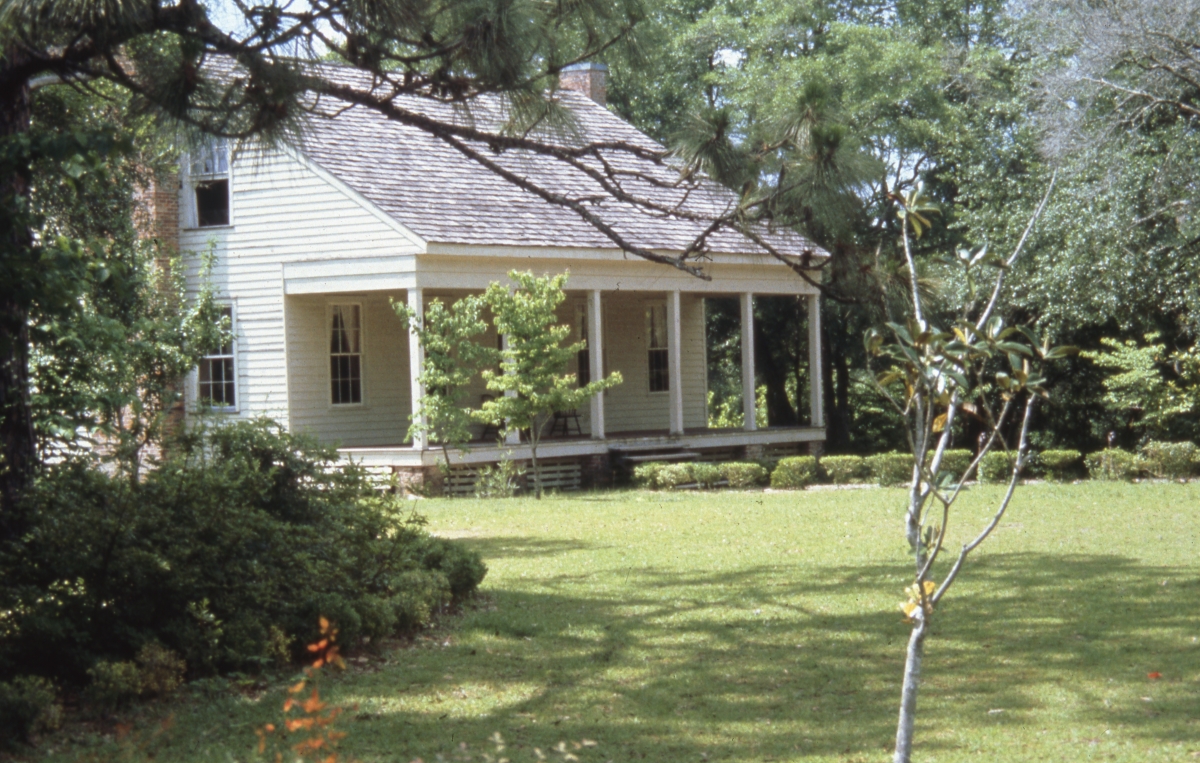
    Home of Prince Murat, which was built around 1790 – Saint Augustine, Florida

    Shortly before he met and married Catherine, he purchased another plantation named “Lipona,” which would be his primary residence in the US until his death. 

    A Marriage Between the Bonaparte’s and Washington’s and Entertaining Europe

    In 1826, Catherine Daingerfield Willis Gray married the ex-prince of Naples and nephew of Napoleon Bonaparte, Achille Murat. Catherine’s father was initially against the match because of the Bonaparte and Murat families’ opposition to the union. Luckily, the Bonaparte’s and Murat’s were made aware that Caroline was the great-grandniece of George Washington, and the family warmly welcomed her. (Bellet, 1976)

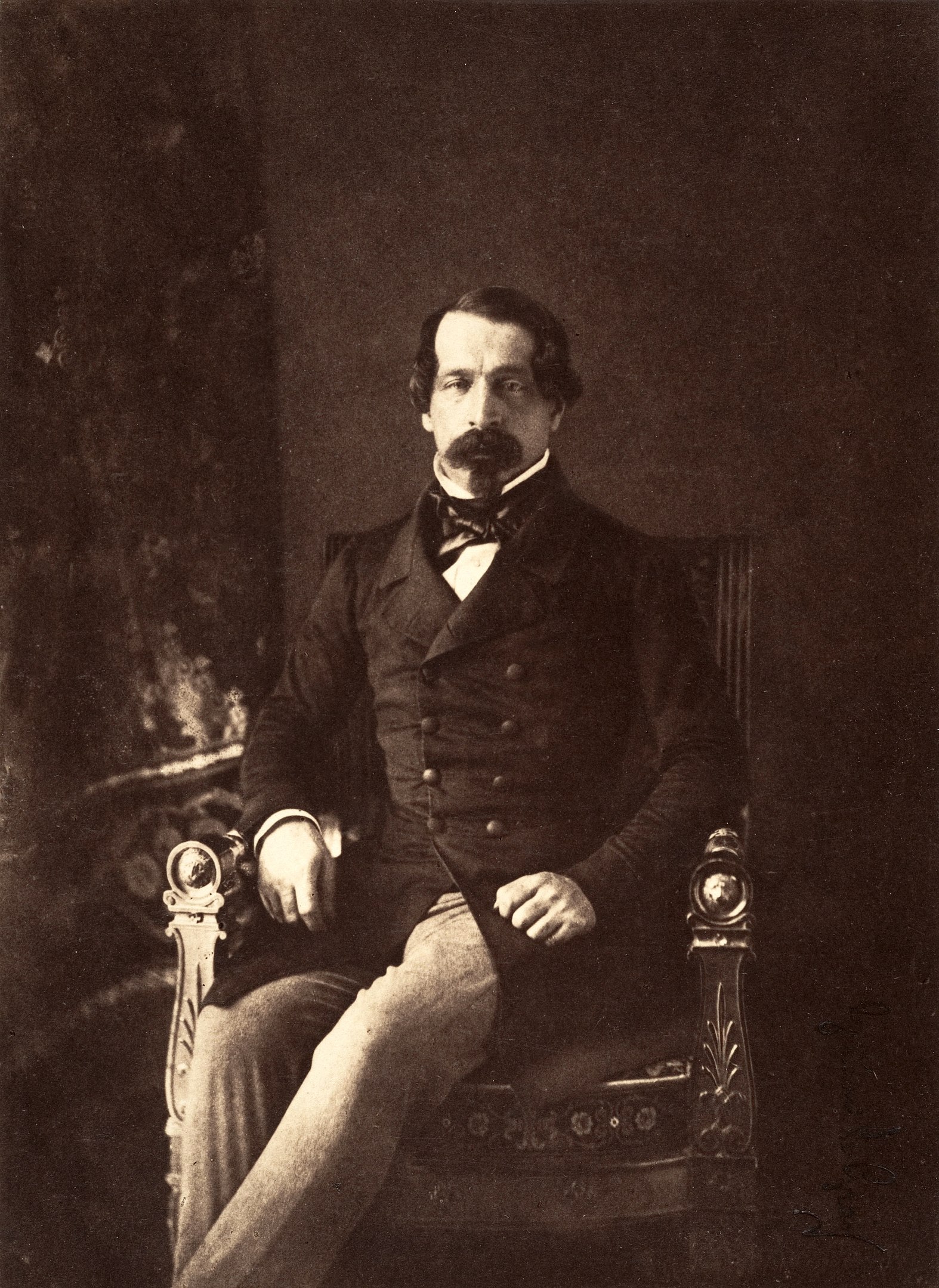
    The couple lived at Lipona outside of Tallahassee until the July Revolution of 1830 in Paris when Charles X abdicated, and Louis Philippe was selected as King. The Murats traveled to Europe as Achille tried to press claims to restore the families’ money and lands, but he failed. (Bellet, 1976)  The couple moved to London, where they spent a few years in high society. Catherine became a favorite of Louis Napoleon (who would become the first President and then Emperor of France, Napoleon III). While in London, Catherine even attended and was given a seat in Westminster Abbey for the coronation of William IV of the United Kingdom. (Bellet, 1976)

    Coronation of William IV, 8 September 1831

    Return to America

    Around 1835, the pair returned to America and set up residence just outside New Orleans, where Achille attempted to run a sugarcane plantation and practice law, both of which failed. (Hare, 2002) . They returned to Florida to their plantation Lipona, which he had mortgaged to the bank and subsequently lost due to nonpayment, requiring the couple to move to a smaller property. (Hanna, 1948) 

    Achille died in 1847, leaving his widow in a precarious financial situation, having acquired massive debt during his life. After the death of her husband, Catherine purchased a cotton plantation named Bellevue (now part of the Tallahassee Museum). She successfully managed the property and, after ten years, had paid all of Achille’s debts. (Sandler, 1999)

    Bellevue Plantation

    When Napoleon III became Emperor in 1852, Catherine was pronounced French royalty and Princess of the Second Empire, which granted her an annuity from the French government and allowed her to use the livery of France. (Bellet, 1976)

    Catherine Daingerfield Willis Gray Murat, Princess of the Second Empire

    Preservation and the Mount Vernon Ladies Association

    In 1853, Ann Pamela Cunningham founded the Mount Vernon Ladies Association (MVLA) to preserve and restore George Washington’s Mount Vernon. There had been other failed attempts by owner John Augustine Washington to sell the property to the US government and the state of Virginia, and even vile rumors of it being looked at by “speculators” to turn it into a resort hotel. Seeing the state of the property belonging to one of the most beloved founding fathers, Cunningham was able to make a deal with Washington after much discussion to sell the property (house, outbuildings, and 202 acres) to the Association for $200,000 (around 7 to 8 million dollars today).  (West, 1999)

    To raise money, Cunningham created a nationwide network of women by appointing one lady from each state as a vice regent to assist in fundraising. (Grabitske, 2004)  In Florida, the daughter of the territorial governor, Ellen Call Long, was asked to become the state regent. She declined but suggested Catherine because of her family ties and influence. Catherine enthusiastically took on the role of vice-regent. She raised $3791.25, which was no small feat, with the entire population of Florida in 1860 being 144,424 people. (United States Census Bureau, 2021)  The MVLA raised the funds and paid off the purchase price within two years despite The Panic of 1857 and the economic recession just before the beginning of the Civil War. (Casper, 2008) (Huston, 1987) Mount Vernon was saved and continues to be owned and maintained by the Association, as it is overseen by a board of regents of ladies from 27 states. (George Washington’s Mount Vernon, 2024)

    Meeting of the Mount Vernon Ladies Association, 1870s (Mount Vernon Ladies Association)

    The Final Resting Place of an American Princess

    Princess Catherine Murat died in August 1867 at her plantation, Bellevue. She is buried beside her husband, Prince Achille Murat, in the Tallahassee Episcopal Cemetery. They had no children.

    Heather Baldus

    Collections Manager


    References

    Bellet, L. P. (1976). Some Prominent Virginia Families, Volumes 1-2. Clearfield.

    Brandon, E. E. (1944). A Pilgrimage of Liberty. Lawhead Press.

    Burnett, G. (1996). Florida’s Past: People and Events That Shaped the State. Pineapple Press.

    Casper, S. E. (2008). Sarah Johnson’s Mount Vernon : the forgotten history of an American shrine. New York: Hill and Wang.

    Downes, A. J. (1956). The Legendary Visit of Emerson to Tallahassee. The Florida Historical Quarterly, 334-338.

    Gannon, M. (2003). Florida A Short History. University Press of Florida.

    George Washington’s Mount Vernon. (2024). About Mount Vernon. Retrieved from George Washington’s Mount Vernon: https://www.mountvernon.org/about/

    Glenn, J. (2014). The Washingtons. Volume 1: Seven Generations of the Presidential Branch. Savas Publishing.

    Grabitske, D. M. (2004). First Lady of Preservation: Sarah Sibley and the Mount Vernon Ladies Association. Minnesota History, 407-416.

    Hanna, A. J. (1948). A Prince in Their Midst: The Adventurous Life of Achille Murat on the American Frontier. University of Oklahoma Press.

    Hare, J. (2002). Tallahassee: A Capital City History. ‎ Arcadia Publishing.

    Huston, J. L. (1987). The panic of 1857 and the coming of the Civil War. Baton Rouge: Louisiana State University Press.

    Niles, H. (1823). Niles’ Weekly Register, p. 272.

    Roberts, D. (2004). Dream state : eight generations of swamp lawyers, conquistadors, Confederate daughters, banana Republicans, and other Florida wildlife. New York City: New York: Free Press.

    Sandler, R. (1999, October 23). The Princess Who Saved Mount Vernon. The Free-Lance Star, pp. 3-4.

    Smith, S. (2023, Apirl 1). Exploring Tallahassee’s April History Day By Day. Retrieved from WFSU Public Media: https://wfsu.org/local-routes/2023-04-01/exploring-tallahassees-april-history-day-by-day/

    Tallahassee Police Department. (2023, December 27). Retrieved from Wikipedia: https://en.wikipedia.org/wiki/Tallahassee_Police_Department

    United States Census Bureau. (2021, April 26). Historical Population Change Data (1910-2020). Retrieved from United States Census Bureau: https://web.archive.org/web/20210429012609/https://www.census.gov/data/tables/time-series/dec/popchange-data-text.html

    Unknown. (2004, November 27). Grand mansion is lost to time. Fredericksburg, Virginia, United States of America: The Free-Lance Star.

    West, P. (1999). Domesticating History: The Political Origins of America’s House Museums . Smithsonian Books.

  • Spilling the Tea: The Boston Tea Party at 250

    Author’s Note: This blog contains hyperlinks to primary documents related to the event.

    Figure 1: 250th Logo (Boston Tea Party Ships and Museum)

    Intro

    This year marks the 250th anniversary of the Boston Tea Party (Figure 1). Hailed as a defining moment in the quest for American independence and an act of patriotism, the event has inspired commemorations in many forms, and it remains a vital part of the American History curriculum. I, for one, thought it the epitome of achievement that I had the date memorized in kindergarten. Like much of our founding history, however, the story retains an element of myth. So, what exactly is the truth behind this event?  

    The Story

    A general account of the Boston Tea Party tells how patriotic Bostonians, angered by unfair taxes, boarded three ships in Boston Harbor on December 16, 1773. Disguised as members of the Mohawk or Narragansett tribes, Samuel Adams led the Sons of Liberty in protest by throwing crates of the King’s tea overboard. This act helped unite the colonies against Britain and started the chain of events that ended in the “Shot Heard Round the World” on Lexington Green on the morning of April 19, 1775, following Paul Revere’s ride.

    Sound familiar? In truth, this account covers the basics. It provides the “who,” “what,” “when,” “where,” and “why.” Nonetheless, it only scratches the surface of the complex event we know as the Boston Tea Party. To unpack this, let us look at what led to the event, how it happened, and the initial response.

    Truth of the Tax

    Taxes and tea sit at the heart of this story. The taxes that the colonies took issue with went into effect starting in the 1760s, with the ultimate goal of lessening the debt incurred by Britain during the Seven Years’ War. However, this set a new precedence as Britain had never taxed the colonists directly, and the passing of these tax laws occurred without consulting the colonies. The formal chant of “no taxation without representation” first appeared in 1768, and while the lack of representation presented a key reason for displeasure, the impact of taxes on merchants served as another.

    While the Tea Act of 1773 served as the catalyst for the Boston Tea Party, the Tea Tax had existed since 1767. Introduced under the Townshend Acts, the tax remained the only one in effect upon the Act’s repeal in 1770. General dislike for the tax persisted, but the Tea Act took the issue to another level. In an aim to bail out the East India Company (EIC), the Act granted a monopoly over the tea trade by opening the colonial market to the company as the sole supplier, waived their tax payment in favor of those paid by colonists, and mandated that only EIC company agents (consignees) could sell the tea (Figure 2). Many perceived this as a restriction on business, as merchants could no longer source tea from Britain and smugglers, freedom of choice and rights.  In truth, the protests against the tax and Tea Act occurred as a matter of principle since the cost of tea actually dropped, with consumers now able to buy directly from a supplier who faced no additional costs.

    Figure 2: EIC Seal (East India Company)

    Build Up

    With the Boston Tea Party story often told in a bubble, it appears as an impulsive act, but far more happened behind the scenes. By the end of 1773, displeasure with the Tea Act made attempts of preventing the unloading of tea and boycotts of its purchase common. When DartmouthBeaver, and Eleanor anchored at Griffin’s Wharf (November 28-December 15), locals had expected their arrival since October and had spent November demanding the resignations of the consignees. Many foresaw the risk of tensions coming to a head, including Abigail Adams, who, on December 5, wrote that “the Tea that bainfull weed is arrived…The flame is kindled…Great will be the devastation if not timely quenched or allayed by some more Lenient Measures.”

    After successfully chasing the consignees out of town, Bostonians urged Francis Rotch, whose family owned two of the ships, to depart without unloading the cargo. The Sons of Liberty stationed a guard at the docks to ensure that the tea remained onboard while Rotch decided. In response, Royal Governor Thomas Hutchinson ordered Rotch to unload the cargo within the standard twenty days of arrival or forfeit it and the ships. Rotch thus found himself in an impossible situation as Hutchinson and customs refused to let him leave while the Sons would accept nothing less.

    December 16th

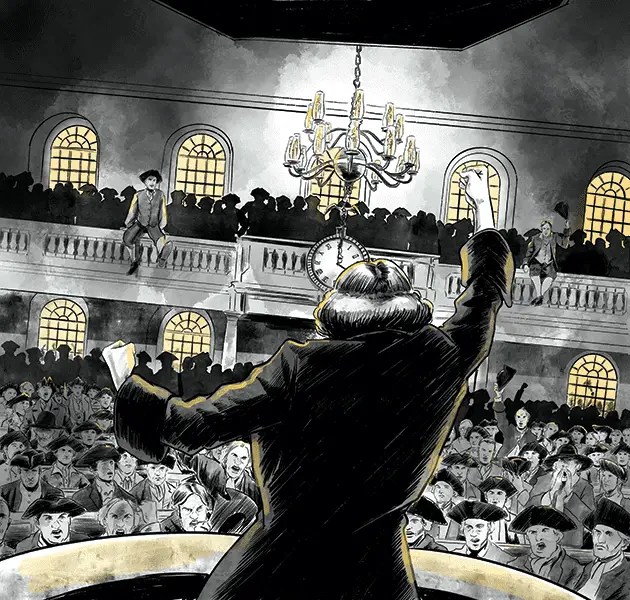
    Many awoke on December 16, knowing the crisis would come to a head. The date marked the deadline for unloading Dartmouth’s cargo, and Rotch would make one final attempt to plead his case to both sides. Hutchinson and customs refused to budge, which further incensed Bostonians when Rotch reported that the tea would not be leaving. This announcement came as Samuel Adams headed a meeting at the Old South Meeting House (Figure 3).

    Figure 3: Adams’ Speech at Old South (Revolutionary Spaces)

    Serving as a leading figure within the Sons of Liberty, Adams had led many of the meetings and attacks that occurred almost daily in the buildup to the 16th. This particular meeting drew 5,000-7,000 people who clamored to hear the latest developments in the tea crisis. When Rotch’s news broke, Adams stated, “This meeting can do nothing further to save the country.” While often billed as a signal to start the Tea Party, doubt remains over the statement’s significance. According to eyewitness accounts, many stayed another 15 minutes, and Adams tried to prevent people from leaving before the meeting concluded.

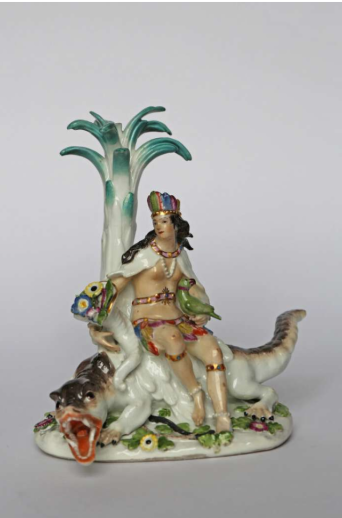
    Regardless of intent, hundreds of people made their way to Griffin’s Wharf. Along the way, some donned disguises that mimicked Native Americans. These disguises served both practical and symbolic purposes. First, donning a disguise shielded the identity of individuals carrying out the illegal acts, even if no one mistook them for actual tribal members. Secondly, the choice of a Native American-inspired look embraced an allegory of America and linked Indigenous resistance to colonization with the colonists’ struggle against Britain (Figure 4).

    Figure 4: “Allegory of the Continent of America,” c. 1750 (The Clark Museum)

    Interestingly, Adams never claimed or denied involvement with the Tea Party, yet, in contrast to popular depictions, he did not appear at the harbor that night. Instead, he remained at Old South. Of the participants, only the identities of 116 are known, and only one faced arrest.

    The day after, Samuel’s cousin, John Adams, described the event as “the most magnificent Movement of all. There is a Dignity, a Majesty, a Sublimity in this last Effort of the Patriots that I greatly admire. The People should never rise without doing something to be remembered—something notable And striking. This Destruction of the Tea is so bold, so daring, so firm, intrepid and inflexible, and it must have so important Consequences, and so lasting, that I cant but consider it as an Epocha in History.

    Reactions

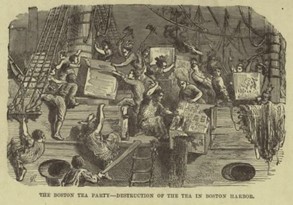
    Despite a post-independent America enshrining the Boston Tea Party in glory, most initial reactions proved far less enthusiastic than that of John Adams. The name “Boston Tea Party” did not emerge until the 1820s, and even then, “Party” referred to a group of people rather than something celebratory. Instead, mentions of the event usually identified it by what happened, such as “the destruction of the tea” (Figure 7).

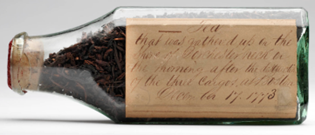
    Figure 7: “Tea that was gathered up on the shore of Dorchester Neck on the morning after the destruction of the three cargos at Boston; December 17, 1773” (MHS)

    While Parliament’s taxes made many colonists unhappy, they also valued their right to private property. In the case of the Boston Tea Party, the ships that the Sons of Liberty trespassed on belonged to Americans, while the EIC owned the destroyed tea. The King and Parliament had no direct connection to the ships or their cargo. As such, many viewed the attack as one on private property rather than a true strike against Parliament. Those who spoke out against it included Founding Fathers. Benjamin Franklin felt “truly concern’d…that there should seem to any a Necessity for carrying Matters to such Extremity, as, in a Dispute about Publick Rights, to destroy private Property.” Meanwhile, George Washington supported taking a stand against taxation and felt the cause of Boston equated to the cause of America, but ultimately could not “approve their cond[uc]t in destroyg the Tea.”

    Impact

    In the short run, the Boston Tea Party did little to fan the flames of independence. It inspired a few more boycotts (i.e., the Annapolis, Edenton, and Yorktown Tea Parties) and furthered a decline in consumption, but the British response to the event served as the primary catalyst. By punishing all of Boston, and by extension, Massachusetts Bay Colony, rather than just those responsible, the British infringed upon the rights of the colonists. Under the Coercive (nicknamed “Intolerable”) Acts, the British closed the harbor, demanded Bostonians pay damages to the EIC, imposed martial law, and required citizens to house, or quarter, members of the military on their property at their own expense (Figure 8).

    Figure 8: “The Bostonians in Distress;” 1774 Satire of the Boston Port Act (LoC)

    Those living in the twelve other colonies did not take well to this, as they feared the implementation of these acts in their homes. In response, the First Continental Congress met in Philadelphia from September to October 1774. While some delegates saw the issue as a Massachusetts one, others pressed the need to take a stand against the overreaches of Parliament and sympathized with Massachusetts. They concluded Congress by issuing their Declaration and Resolves, which listed objections to Parliament and confirmed their commitment to a trade boycott. However, when news of Lexington & Concord broke in April 1775, and Massachusetts found itself at war, the other colonies quickly had to decide which side they would take.

    Legacy

    Two hundred fifty years on, the Boston Tea Party remains an iconic event in American history and a pivotal moment in the founding of the country (Figure 9). While not wholly embraced as such upon its occurrence, the retelling of the event over time came to enshrine it in lore and leave out details that complicated the narrative. This shows that one cannot study a singular event without contextualizing it within the bigger picture. Nevertheless, John Adams’ belief that the “Destruction of the Tea” would become an epoch in history proved correct.

    Figure 9: Robinson Tea Chest – 1 of 2 surviving chests (Boston Tea Party Ships and Museum)

    Emma Schlauder

    Research Archaeologist


    Bibliography

    Adams, Abigail. Abigail Adams to Mercy Otis Warren, 5 December 1773. Letter. From National Archives, Adams Papershttps://founders.archives.gov/documents/Adams/04-01-02-0065 (accessed Nov 13, 2023).

    Adams, John. [December 1773]. Diary. From National Archives, Adams Papers. https://founders.archives.gov/documents/Adams/01-02-02-0003-0008 (accessed Nov. 13, 2023).

    “Boston Tea Party History.” Boston Tea Party Ships & Museum (website). https://www.bostonteapartyship.com/boston-tea-party-history (accessed Nov. 14, 2023).

    Cooper, Samuel. To Benjamin Franklin from Samuel Cooper, 17 December 1773. Letter. From National Archives, Franklin Papershttps://founders.archives.gov/documents/Franklin/01-20-02-0266 (accessed Nov. 13, 2023).

    “Declaration and Resolves of the First Continental Congress.” American Battlefields Trust (website). https://www.battlefields.org/learn/primary-sources/declaration-and-resolves-first-continental-congress (accessed Nov. 14, 2023).

    Franklin, Benjamin. From Benjamin Franklin to the Massachusetts House Committee of Correspondence, 2 February 1774. Letter. From National Archives, Franklin Papers. https://founders.archives.gov/documents/Franklin/01-21-02-0023 (accessed Nov. 13, 2023).

    ““Made one of the celebrated Tea Party in Boston harbor:” Remembering the Boston Tea Party in 1826.” American Battlefields Trust (website). https://www.battlefields.org/learn/primary-sources/made-one-celebrated-tea-party-boston-harbor (accessed Nov. 14, 2023).

    ““No Taxation Without Representation:” The Evolution of the Historic Phrase.” American Battlefields Trust (website). https://www.battlefields.org/learn/articles/no-taxation-without-representation (accessed Nov. 14, 2023).

    “Participants in the Boston Tea Party.” Boston Tea Party Ships & Museum (website). https://http://www.bostonteapartyship.com/participants-in-the-boston-tea-party#participant-list (accessed Nov. 14, 2023).

    Schiff, Stacy. The Revolutionary Samuel Adams. New York: Little, Brown and Company, 2022. “Tea Act.” American Battlefields Trust (website). https://www.battlefields.org/learn/primary-sources/tea-act (accessed Nov. 14, 2023).

     “The Boston Tea Party.” Massachusetts Historical Society (website). https://www.masshist.org/revolution/teaparty.php (accessed Nov 14, 2023).

    “The Final Straw.” Boston Tea Party Ships & Museum (website). https://www.bostonteapartyship.com/the-final-straw (accessed Nov 14, 2023).

    “The Intolerable Acts.” Boston Tea Party Ships & Museum (website). https://www.bostonteapartyship.com/the-intolerable-acts (accessed Nov 14, 2023).

    The Massachusetts Gazette; and the Boston Post-Boy and Advertiser. “Philadelphia, September 29. Extract of a letter from London, August 4.” From Massachusetts Historical Society. https://www.masshist.org/database/viewer.php?pid=2&old=1&mode=nav&ft+Coming% &nbsp 20of%20the%20American%20Revolution&item_id=434 (accessed Nov. 13, 2023).

    “The Secret Plan.” Boston Tea Party Ships & Museum (website). https://www.bostonteapartyship.com/the-secret-plan (accessed Nov 14, 2023).

    “Townshend Act.” American Battlefields Trust (website). https://www.battlefields.org/learn/primary-sources/townshend-act (accessed Nov. 14, 2023).

    Washington, George. From George Washington to George William Fairfax, 10–15 June 1774. Letter. From National Archives, Washington Papershttps://founders.archives.gov/documents/Washington/02-10-02-0067 (accessed November 13, 2023).