Lives and Legacies

Tag: Lewis Family

  • Bread Talk: A Slice of History in Colonial America

    In 2020, many of us spent a great majority of our time at home.  This gave us the opportunity to get creative and explore new hobbies.   One such hobby that became a viral sensation, plastered across social media, food blogs, and television news outlets, was that of baking bread.  Bread has been around in some form for nearly as long as human civilization, although before industrialization, it was a means to survive, not just a fun challenge for the amateur baker.  So here is a crumb of history on bread and what this glutinous baked good was like in Colonial America. 

    To start with the basics, bread is made up of 3 simple ingredients: Flour, water, and a leavening agent.  Typically salt and some kind of sweetening, like sugar or honey, are also added.  Everything else is extra.

    Wheat flour was (and still is) the most common ingredient used for bread.  Wheat quickly became a desirable crop in Colonial America.  We can infer wheat was grown on Lewis family land based on documentation of family members paying for goods in wheat.  Biological remains in the ground found by archaeologists at Ferry Farm suggest wheat was planted there too.  Wheat and other crops were planted, cared for, and harvested by enslaved laborers on both plantations.  Wheat specifically was a difficult crop to care for, requiring vast knowledge and careful timing to produce a fruitful harvest.  Wheat is a form of grass, usually not well digested or particularly nutritious to humans.  When wheat is ground into flour, put through the fermentation process of breadmaking, and baked, it becomes far more digestible, nutritious, and caloric for people to eat.  For most of Europe’s history, bread was about half of calorie intake for poorer classes, and wheat still makes up about 20% of people’s diets today. 

    Records of Betty Lewis’ accounts with Andrew Parks totaling £6.13.2. Payment by cash and wheat.
    Wheat kernel recovered from Ferry Farm.  Scale = 1mm grid. Credit: Justine McKnight.

    In the early 18th century, sieves made of fine Chinese silk that allowed for separating the bran from the wheat seed made whiter flour easier to obtain.  Although the bran is the most nutritious part of wheat, it quickly became associated with the poor and lower classes in many Western European cultures.  White bread was a sign of wealth.  This led to bakers putting additives like alum, lime, and chalk into bread to make it whiter.  Despite British Parliament passing laws regulating ingredients allowed in bread, it continued to be an ongoing issue throughout the 18th and 19th centuries.[1]  Even with contemporary knowledge about the benefits of whole grains, 70% of bread baked today is white, based on this century old principle of white flour’s superiority.[2]

    By the time Colonial America comes into the picture, bread is engrained into life.  This is so much so that most 18th century cookbooks do not have bread recipes in them as it is assumed everyone already knows how to make basic table bread. That’s right, Hannah Glasse does not have a simple bread recipe in The Art of Cookery.  It is just the three simple ingredients worked into a dough with the hands that is set aside to rise, then baked until a strong crust forms, after all.  This is something foreign to us in a time when sliced bread is $1.99 in the supermarket.  There is no need for us to spend hours baking bread ourselves in this modern age, but when you made bread every week or every day, it was something as simple as getting dressed or brushing our teeth is now. 

    Kneading bread dough in a wooden dough bowl.

    In urban areas, bakers were trained in the art of breadmaking, but in rural places, it was left to the individual household to make their own bread.  Trained or not, the science behind breadmaking on a molecular level was not understood until the 19th century.  What they did know was that they needed a leavening, or rising, agent in their bread to ensure it rose properly.  Leavened bread came into existence in Egypt about 6,000 years ago.  Bread could be made without a rising agent, but it would be a completely different texture.  In the 18th century, leavening agents came from a few different places.  Barm is the frothy substance on the top of beer after production and is the perfect rising agent for bread, making connections between bakers and brewers in urban areas imperative.  Also, just leaving dough to sit for a day or two to collect the bacteria in the air, from the kneader’s hands, and from the dough bowl with leftover dough bits can also be enough to leaven a batch of dough.[3]  This method of collecting bacteria from the dough’s surroundings is reminiscent of creating a sourdough starter.

    Loaves of bread were placed into a bake oven, a large cast iron Dutch oven, or on a hot hearth.  Regulating temperature was up to the expertise of the cook or baker, there was no temperature dial like we have on our modern oven.  And despite this, when the temperature is kept controlled, the baking process takes about the same amount of time as it does in a modern oven.  The physical baking process is about the same both ways. 

    Whether you prefer white or whole wheat bread, I hope this entry has given you a grain of insight on the importance of bread throughout history.  Breaking the bread down in this article may make it sound simple, but I will say from experience that getting the dough smooth, the crust tender, and the crumb coat correct is no easy task.  Put that loaf over coals from the hearth and you add a whole new element of challenge.  Reflect on the enslaved cook at Kenmore or Ferry Farm who was responsible for not only making bread, but three meals a day, along with planning and prepping ingredients for future meals.  Cooking and baking in an 18th century kitchen were physically and mentally challenging, making it one of many difficult jobs for those enslaved on southern plantations.  I suggest everyone try baking a loaf for themselves.  To me, it is a task that humanizes food production and reminds us of its delicate nature now and throughout time.

    Loaves of bread made on the hearth at Kenmore for Taste Through Time program.

    Allison Ellis

    Manager of Public Programs


    [1] Federation of Baking. “Fact Sheet No. 9 – the History of Bread.” Last modified 2011. https://www.fob.uk.com/wp-content/uploads/2017/01/FS-9-History-of-Bread.pdf.

    [2]  Pollen, Michael.  Cooked: A Natural History of Transformation. New York: Penguin Books, 2014.

    [3] Edlin, A. A Treatise on the Art of Bread-making. London: J/ Wright, St. John’s Square for Vernor and Hood Poultry, 1805.

  • An Image Captured: The Development of Photography through Lewis Family Descendants

    One of my favorite historical objects in the collection are photographs.  Not particularly for artistic reasons, but as a documentation of a moment, a time, a person, a world that no longer exists.  During the Victorian era (1837-1901), there were extraordinary developments in the field of photography. In a span of forty years, photographs went from complicated metal plates, harsh chemicals, and long exposure times to inexpensive images on cardboard that could be taken, processed, and given to the sitter in minutes. 

    We have many pictures in our collection, and we can trace the development of photography through images of Lewis family descendants. 

    A Pleasant View of Burgundy

    The widely accepted creator of photography as we know it was French inventor Joseph Nicéphore Niépce.  He produced the first surviving photograph around 1826 showing the scene from his window in Burgundy.  After Niepce’s death, his former associate, Louis-Jacques-Mandé Daguerre, continued improving Niepce’s photographic process, introducing the “daguerreotype” in 1839. (The University of Texas Austin, 2024)  To create an early daguerreotype, a polished silver-plated copper sheet was treated with iodine vapor to make it light-sensitive. After exposure, the plate would be developed with mercury vapor and fixed with sodium chloride.  This was a tedious and complex process that required the subject to remain entirely still for three to fifteen minutes. (Stewart, 2018) (The Library of Congress, 2024) (Department of Photographs, 2004) The process was amended and, by the 1850s, used large glass-plate negatives, allowing for a crisper picture and a much shorter exposure time. (Department of Photographs, 2004)

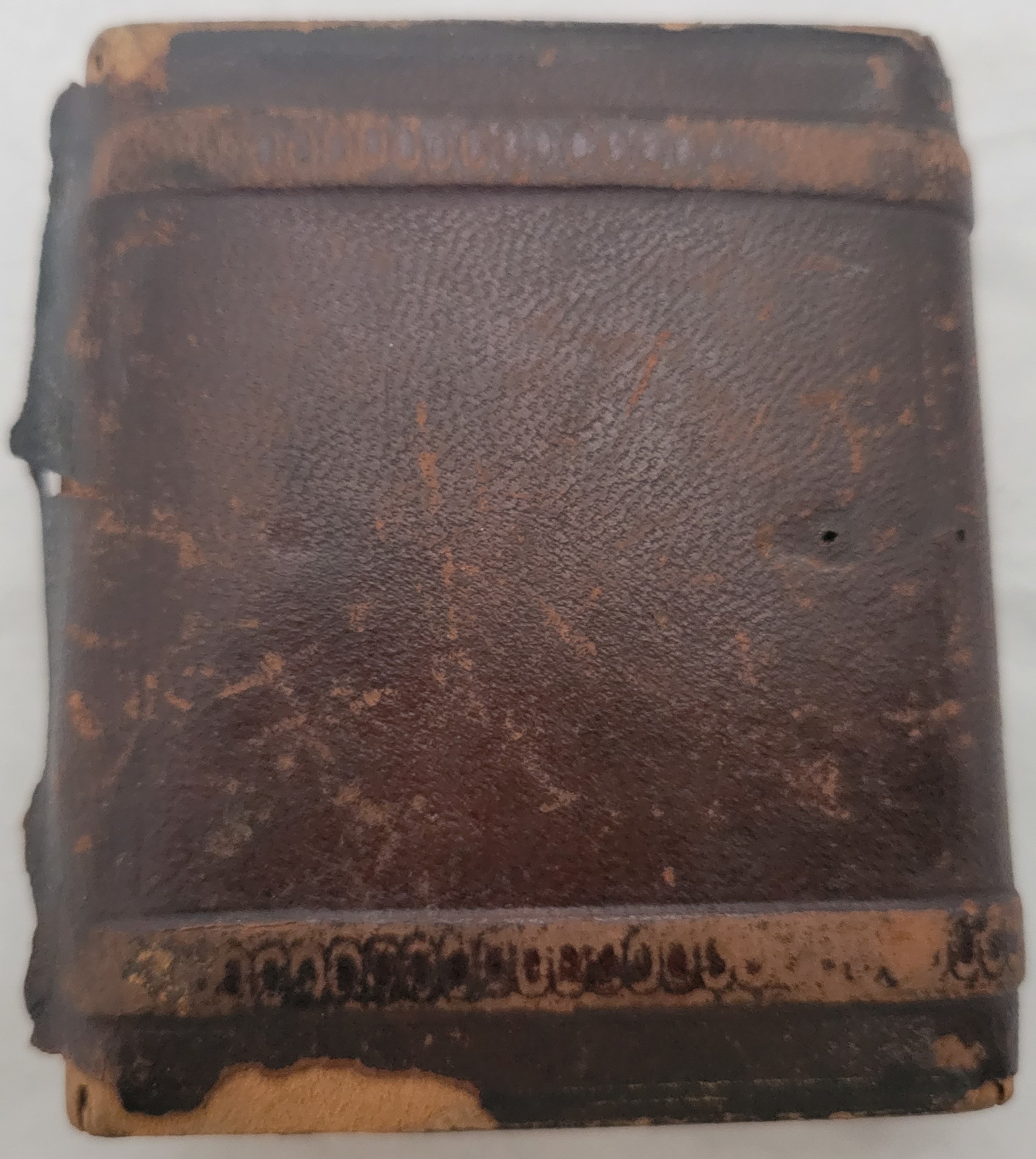
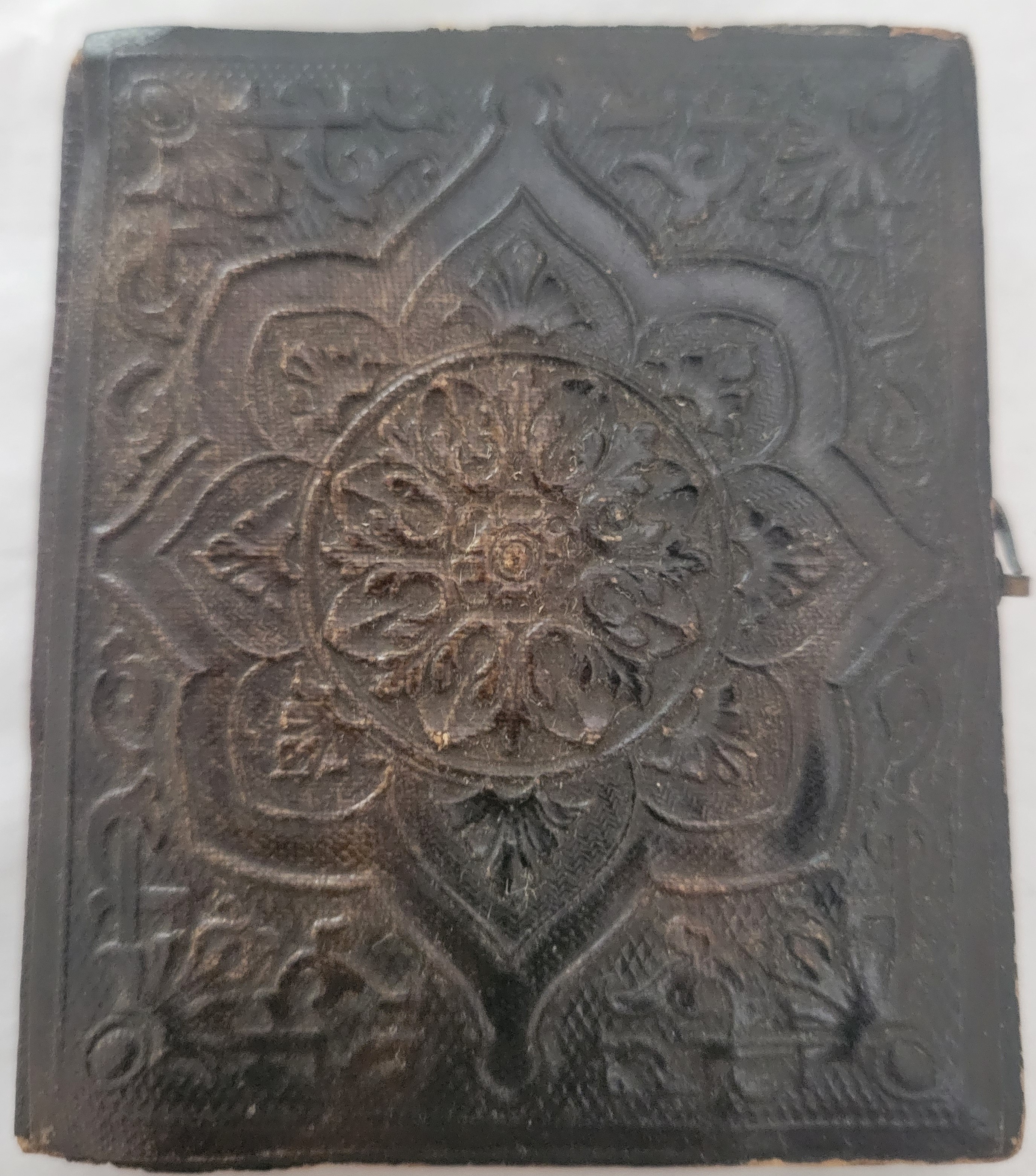
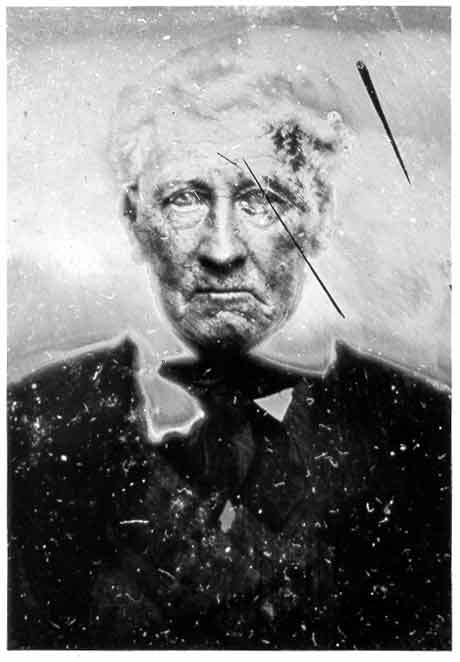
    We have three daguerreotypes in the collection dating circa 1850s.  They are all portraits housed in elaborate leather cases with gilt-metal frames.  The larger photograph is called a sixth-plate daguerreotype portrait of John Taliaferro Lewis (1785-1862), who was the grandson of Charles Lewis, Fielding Lewis’s brother.  John was a Methodist minister and lived at “Stepney” near Manassas.  Through his wife, Francis Tasker Ball, he became the owner of “Portici,” also near Manassas. The two smaller ninth-plate daguerreotypes are both portraits of Ellen Lewis Nye (1834-1886), the granddaughter of Howell Lewis, the ninth son of Fielding and Betty.  She married Anselm Tupper Nye, and they resided in Ohio, where they were both buried.

    Images for Loved Ones

    The daguerreotype was soon replaced in popularity by the ambrotype and tintype, which were both cheaper and easier to develop. (Harding, 2013). 

    An ambrotype is comprised of an underexposed glass negative placed against a dark background. The dark backing material creates a positive image. They were sold in either cases or ornate frames to provide an attractive product and to protect the negative with a cover glass and brass mat. (Library of Congress, 2024)

    We have three ambrotypes in the collection: a landscape and two portraits.  The landscape dates to circa 1855 and shows a group of people gathered around Washington’s tomb at Mount Vernon. Two of the figures were Thomas Coatsworth (1821-1887) and his wife Electra Weller Coatsworth (1832-1869). It is housed in an embossed leather case.

    One portrait is of John Taliaferro Lewis and is almost identical to his daguerreotype. The other portrait is of Daingerfield Lewis (1785-1862).  It dates from the same time and is held in a leather case. Daingerfield Lewis was the son of Captain George Lewis, the fourth son of Fielding and Betty, who served in the Continental Army under his uncle George Washington.

    Tintypes became especially popular because the photographer could take a picture and develop it within just a few minutes. It was called the new “instant photo.”  This “instant photo” could be found at fairs, carnivals, and on the boardwalk, not just professional studios. Due to the tintype price, weight, and unbreakable nature, they became extremely popular during the Civil War because soldiers were able to mail them back to loved ones. (Stewart, 2018)

    The three tintypes in the collection are a group of siblings, two brothers, and one sister (there were eight total siblings).  George Lewis (1832-1883), Fielding Lewis (1839 – 1863) and Betty Fitzhugh Lewis (1847-1920).  Their father was Howell Lewis Jr. (1808-1883), the son of Howell Lewis and grandson of Fielding and Betty.  Howell Lewis Jr. was one of the earliest settlers of Henry County, Missouri, and established Lewis Station (now called Lewis, Missouri).  There is not much information on the siblings besides the basics.  George Lewis, the eldest, was born in West Virginia, died in Nevada, and is buried at the Lewis Station Cemetery.  Fielding Lewis was born in Missouri and died young during his service with the Confederate army in Texas.  Betty Fitzhugh Lewis was born in Missouri as well; he married Milton D Finks, had at least three children, and is buried in Calhoun cemetery.

    Paper, Cardboard, and Formality

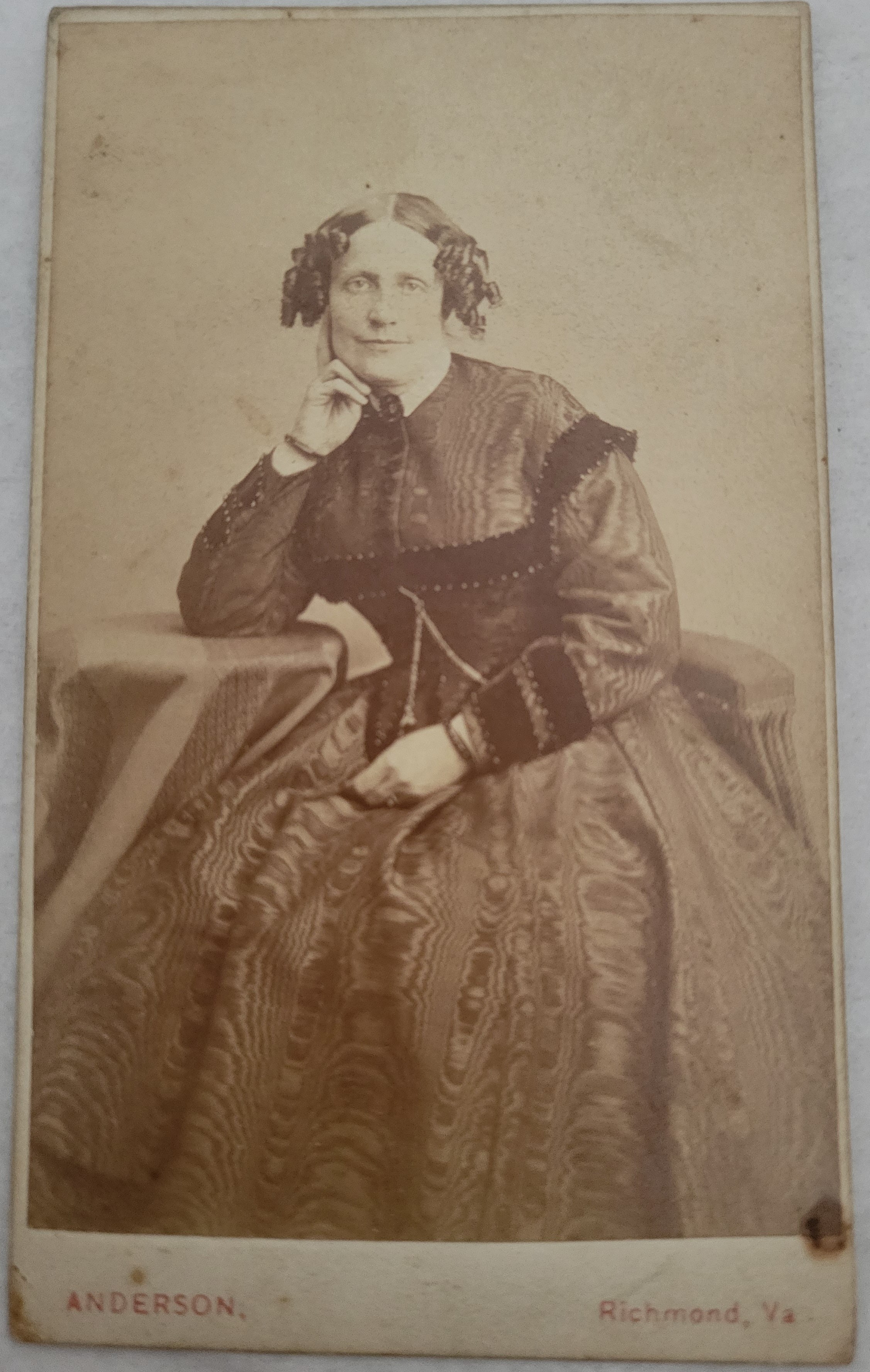
    By the later part of the nineteenth century, paper photos mounted on cardboard became more popular. Carte-de-visite became quite a fad after carte portraits of Queen Victoria with her husband and children were published. (Harding, 2013).  Part of why they became popular is they were cheaper to produce because multiple images (eight) could be taken with the same photographic plate, cut into small portraits, and mounted to heavy cardboard. (The Editors of Encyclopedia Britannica, 1998) 

    Two of our carte-de-visites are portraits of two young ladies around 1860.  One is Ellen Lewis Nye, who previously appeared in daguerreotype around the same time.  The second is Mary Ellen Lewis Hogan (1834-1874), who was the daughter of Howell Lewis, Jr. and sister to George, Fielding, and Betty Lewis.  She was born in West Virginia, married Robert Henderson Hogan, and is buried in Illinois.   

    The carte-de-visite was gradually superseded by the cabinet card, which remained popular until the introduction of the Kodak Box Brownie camera in 1900. (City Gallery, 2005)  The cabinet card marked a transition from more formal portraiture to amusing, personal, and even candid images.  They were taken in studios that were equipped with lights, props, and sometimes even hair and makeup. The average price was around $1.50 for a dozen cards, which is around $45 today. (Salvesen, 2021)

    Our cabinet cards date from 1850 to 1897 and are portraits of three females who, like all the others, are descendants of the Lewis family.  The oldest is of Francis Fielding Lewis Gwathmey (1808-1888), and it was taken around 1850, putting her in her early forties.  Her father was Howell Lewis, son of Fielding and Betty and sister to Howell Lewis Jr.  Francis married Rev. John “Parson” Blair and had twelve children, of which only three outlived her.  She is buried in Richmond, Virginia. 

    We have another picture of Ellen Lewis Nye, who has previously been represented in daguerreotype and carte-de-visite.  The card was taken in 1885, shortly before her death. The last one is Virginia Tayloe Lewis (1842-1916), taken during the Christmas season of 1897.  She was born in Washington, D.C., at The Octagon House.  She was the daughter of Captain Henry Howell Lewis and great-granddaughter to Fielding and Betty. 

    Money and the Magic Lantern

    This is a brief history of photography seen through the descendants of the Lewis family. But make no mistake, these are not the only important pictures in our collection.  There are still trays of glass slides that belong to a curious device called the “lanterna magica,” which became an invaluable tool that, along with gingerbread, helped restore Kenmore.

    Magic lantern glass slide of Kenmore before the restoration

    Heather Baldus

    Collections Manager


    Bibliography

    City Gallery. (2005). Cabinet Card. Retrieved from City Gallery: http://www.city-gallery.com/learning/types/cabinet_card/index.php

    Department of Photographs. (2004, October). The Daguerreian Era and Early American Photography on Paper, 1839–60. Retrieved from The Metropolitan Museum of Art: https://www.metmuseum.org/toah/hd/adag/hd_adag.htm

    Harding, C. (2013, June 27). How to spot a carte de visite (late 1850s–c.1910). Retrieved from The National Science and Media Museum: https://blog.scienceandmediamuseum.org.uk/find-out-when-a-photo-was-taken-identify-a-carte-de-visite/

    Harding, C. (2013, May 25). How to spot a ferrotype, also known as a tintype (1855–1940s). Retrieved from The National Science and Media Museum: https://blog.scienceandmediamuseum.org.uk/find-out-when-a-photo-was-taken-identify-ferrotype-tintype/

    Library of Congress. (2024). Liljenquist Family Collection of Civil War Photographs. Retrieved from Library of Congress: https://www.loc.gov/collections/liljenquist-civil-war-photographs/articles-and-essays/ambrotypes-and-tintypes/

    Salvesen, B. (2021, June 28). The Return of Cabinet Cards. Retrieved from Los Angeles County Museum of Art: https://unframed.lacma.org/2021/06/28/return-cabinet-cards

    Stewart, J. (2018, December 31). Tintype Photography: The Vintage Photo Technique That’s Making a Comeback. Retrieved from My Modern Met: https://mymodernmet.com/tintype-photography/

    The Editors of Encyclopedia Britannica. (1998, July 20). Carte-de-visite. Retrieved from Encyclopedia Britannica: https://www.britannica.com/technology/carte-de-visite

    The Library of Congress. (2024). The Daguerreotype Medium. Retrieved from The Library of Congress: https://www.loc.gov/collections/daguerreotypes/articles-and-essays/the-daguerreotype-medium/

    The University of Texas Austin. (2024). The Henry Ranson Center. Retrieved from The University of Texas Austin: https://www.hrc.utexas.edu/niepce-heliograph/

  • Bane of the Washingtons Part II: The Deaths of Lawrence, Fielding, and Samuel

    Welcome back to our 3-Part Blog charting tuberculosis in the extended Washington Family. If you are new to this series, Part I examined how the disease works, charted its history, and explained standard courses of treatments in the 1700s. You can find the blog here, and we encourage a review of the “Treatment” section. In Part II, we will begin to look at the family members who suffered from the disease and how this impacted their lives and those around them.

    Lawrence Washington (1718-1752, aged 33/34):

    Lawrence Washington Source: Mount Vernon

    Perhaps the best-known case of tuberculosis in the Washington family pertains to Lawrence Washington. George’s eldest half-brother, credited as serving as a role model, died of the disease in 1752, which subsequently laid the foundations for George to inherit Mount Vernon and become the Father of His Country. Behind this, however, lies one of the more clear timelines for the devastation the disease.

                Lawrence may have contracted tuberculosis during his service in the War of Jenkins’ Ear (served 1740-1742) or after his return to Virginia in 1742. Certainly, he had developed severe enough symptoms, particularly a cough, by the end of 1748, to cause him to take a leave of absence from the House of Burgesses. He resumed his duties in the spring of 1749, but his illness forced him home for a final time in May. That same month, George wrote hoping for news that his brother’s cough had improved and that he had “given over the thoughts of leaving Virginia.”1 Lawrence could not provide his brother with the news he desired, and sailed to England in the summer of that year to consult with physicians. Lawrence returned in November with little encouragement, but set out for Berkeley Springs in July 1750, to take the waters. George accompanied his brother on this venture, but they did not stay long.

    By 1751, Lawrence had exhausted any hope of finding a cure at home and his doctors recommended visiting a warmer climate. Following this advice, Lawrence and George sailed for Barbados on 25 September and arrived on 2 November. Shortly after their arrival, George recorded that a doctor came “to pass his opinion on [his] brother’s disorder, which he did in a favorable light, giving great assurances that…a cure might be effectually made.”2 George mentions little else of Lawrence’s condition in his journal, a month of course went undocumented as George had smallpox, and he returned to Virginia alone in December.

    Lawrence, having not found the relief he hoped for, decided to try Bermuda and journeyed there after George left. In an April 1752, letter to a friend, Lawrence referred to Bermuda as his “last refuge, where [he] must receive [his] final sentence.”3 Describing himself as “a criminal condemned, though not without hopes of a reprieve,”4 Lawrence followed his doctor’s treatment plan by “abstaining from flesh of every sort, all strong liquors, and by riding as much [he] could bear.”5 His doctor advised to take what benefit he could from the climate as another winter in Virginia would surely kill him. While Lawrence remained somewhat hopeful in this letter, he soon wrote again about his “unhappy state of health”6 and expressed the belief that, if it should worsen, he would “hurry home to [his] grave.”7 Evidently, Lawrence soon resigned himself to his impending death as he returned to Mount Vernon and set his affairs in order with the aid of his half-siblings and stepmother. He died on 26 July 1752.

    Upon Lawrence’s death, he left behind his wife Anne Fairfax and daughter Sarah. Three other children had already died all under the age of two. Infant mortality frequently occurred in the 1700s, so it proves impossible to know what caused each death. However, it remains a possibility that they contracted tuberculosis from their father, which then killed them quicker due to their age and weaker immune systems, or left them vulnerable to secondary infections. Sarah would suffer a similar fate in 1754, aged four, and her mother, having married into the Lee family, would die in 1761, aged thirty-three. These deaths allowed George to inherit Mount Vernon.

    Fielding Lewis (1725-1781, aged 56):

    Fielding Lewis

    The husband of Betty Washington and the mind behind Kenmore, Fielding Lewis served his country during the war by funding various supply and defense lines. One of the richest men in Virginia, Fielding had the ability to provide aid and, as the brother-in-law of the commander-in-chief, could hardly stay out of the conflict. While his efforts did much for the cause, Fielding drew the short straw by spending nearly all of his money. Accounts of Fielding Lewis’ death often insinuate a connection to the stress of losing his fortune. While this certainly put him under strain, and would not have helped his health, Fielding’s case of tuberculosis meant that he would have died regardless of his financial status.

    Tracing tuberculosis in Fielding’s life proves more difficult than that of Lawrence. Mentions of Fielding as ailing exist for several years prior to his death. However, with no description, one can hardly say if this references tuberculosis or some other affliction. Like many, he frequented Berkeley Springs and even purchased property there. Fielding recorded little of his visits, but his interests lay in the spring’s supposed medicinal benefits and, to that end, undertook an annual August trip from 1772 onwards. Throughout the war, Fielding held the rank of colonel and, though he never received a formal posting, oversaw Fredericksburg’s gun manufactory and the defense of the Rappahannock. This position required no military action and had strong connections to his background as a merchant. However, the choice of assignment may have derived from knowledge that he would never be well enough to effectively command troops. Then again, Fielding was in his fifties and had no military experience. In any case, the position reflected a strategic choice that played to Fielding’s strengths and lessened the impact of field inexperience and ill health.

    If Fielding hoped for a peaceful death, he would not receive it. In the summer of 1781, with the British encroaching on Fredericksburg, the Lewis household and Mary Washington fled. At this stage, Fielding’s health had significantly deteriorated, leaving him an invalid confined to his home. A sudden evacuation by carriage would have done little to ease his discomfort as the household hurried to another property in Frederick County, Virginia. Once there, Fielding focused on putting his affairs in order and likely did not have the strength to visit nearby Berkeley Springs. The news of the Yorktown victory undoubtedly brought some emotional respite, but it proved short-lived as Fielding died mid-December 1781. The location of his burial site on the Frederick County property remains unknown. Fielding’s death brought immense grief to his widow, Betty Washington, who had lost her brother Samuel to the same disease only three months earlier.   

    Samuel Washington (1734-1781, aged 46):

     Samuel Washington Source: Mount Vernon

    The second son of Augustine Washington and Mary Ball, Samuel grew up at Ferry Farm with his full-siblings. Said to have suffered from tuberculosis for most of his life, it remains unknown where, when, and from whom he contracted it. However, by visiting Lawrence in July 1752, to help put his half-brother’s affairs in order, seventeen-year-old Samuel certainly faced exposure. Samuel died at his home Harewood, near Charles Town, West Virginia, in September 1781, shortly before the victory at Yorktown. The home itself lies conveniently close to Berkeley Springs, which may indicate that its location and Samuel’s move from Stafford County, Virginia, derived from a desire for easy access to the springs and their reputed health benefits.

    Despite dying just shy of age forty-seven, Samuel famously married five times. His final wife, Susannah Perrin Holden (1753–1783, m. 1778), survived him, and the fourth, Anne Steptoe (1737–1777, m. 1764), died of complications from a smallpox inoculation. However, the deaths of his first three wives, Jane Champe (1724–1755, m. 1754), Mildred Thornton (roughly 1741–1762, m. 1756), and Lucy Chapman (1743–1763, m. 1762), have long been associated with tuberculosis.

    All three experienced rapid declines in health after their marriages to Samuel, and in correlation with several pregnancies. Pregnancy and childbirth proved extremely dangerous during this period, so these deaths could simply be tragic examples. However, as pregnancy exacerbates tuberculosis, the common interpretation remains that the women contracted the disease from Samuel, saw it worsen at an alarming rate due to pregnancy, and the strain of one or more births on top of the disease made it impossible to recover. Regarding his children, several died quite young, which may mirror the fate of Lawrence’s children, and three of his sons who reached adulthood would ultimately die of the disease. 

    Coming Up

                In our final blog on tuberculosis, we will be taking a look at how the disease impacted the next generation of the extended Washington family and those they enslaved. This will be coming out on June 28th.

    Emma Schlauder

    Research Archaeologist


    Bibliography

    2-7 Anderson, Alicia K. & Lynn A. Price (editors) 2018     George Washington’s Barbados Diary: 1751-52. University of Virginia Press, Charlottesville, VA.

    1 Chernow, Ron 2010     Washington: A Life. Penguin Books Ltd, London, UK.

    Felder, Paula S. 1998     Fielding Lewis and the Washington Family: A Chronicle of 18th Century Fredericksburg. The American History Company.

    Glen, Justin 2014     The Washingtons: A Family History, Vol 1, Seven Generations of the Presidential Branch. Savas Beatie LLC, El Dorado Hills, CA.

  • Family Leaders Guiding a Younger Generation: George and Betty’s Letters

    George Washington was the oldest of Augustine and Mary Washington’s five children. The next oldest was daughter Betty, who was born 14 months after George and was his only sister.

    George and Betty are immensely important to us at George Washington’s Ferry Farm & Historic Kenmore. They spent their formative years at Ferry Farm and Betty called Kenmore home for two decades.  As main characters in our historic sites’ stories, we often ponder what their relationship as siblings was like.

    The only way to gauge George and Betty’s relationship is through two dozen letters they wrote to each other between 1779 and 1796.  As we saw in our first post about the two letters Betty wrote to George during the Revolutionary War, theirs was a complex relationship of sibling love and camaraderie strained by intermittent conflict.  The wartime letters revealed a sadness over extended absences and stress from the tensions and difficulties of George’s wartime position as the new nation’s leader.

    This second post in our multi-part examination of George and Betty’s sibling relationship deals with their roles as leaders of the Washington and Lewis families.  They were the eldest of the Washington siblings and, after 1781, Betty was the widowed matriarch of the Lewises.  In these roles, Betty and George both cared for and guided a brood of children, grandchildren, step-children, nieces, and nephews.  In fact, of their twenty-four surviving letters, thirteen of them deal substantially with the life of some younger member of the extended Washington-Lewis families.  Most of these 13 letters focused on niece Harriot Washington, whose saga we’ve previously written about here and here.  The others dealt with Robert and Howell Lewis, both sons of Betty and nephews of George, who each became his secretaries for a time.

    Robert Lewis was 20-years-old when Uncle Washington was inaugurated president on April 30, 1789.  Robert saw opportunity in George’s position and apparently requested, through Betty, that he might work for the new president.  Uncle Washington replied to Betty with an offer for Robert to be one of his secretaries, writing “I have thought it probable that I may have occasion for a young person in my family of a good disposition, who writes a good hand, and who can confine himself a certain reasonable number of hours in the 24 to the recording of letters in books.”  George warned that Robert’s pay “cannot be great as there are hundreds [of others] who would be glad to come in)” but, if he was okay with a relatively small salary, George would “be very glad to give him the preference.”  In fact, Robert was paid $300 per year, the smallest amount among Washington’s secretaries.  Since Robert was family, however, he could reside with the Washingtons in New York “at no expence (except in the article of clothing) as he will be one of the family and live as we do.”  George desired to know immediately if Robert would accept the offer and, if so, would his nephew accompany Martha “(and at her expence, as she will want somebody to accompany her) when I send my horses back [to Virginia] after I am fixed in New York.”  Robert himself enthusiastically replied to this offer, writing “I shall ever consider myself under a thousand obligations for the proffered post, and think the confinement you speak off rather a pleasure, and hope from my assiduous attention to merit that station.”  Robert Lewis worked as secretary for George until early 1791, when he returned home to get married.

    Roughly a year and a half later Robert’s younger brother Howell Lewis, who was at that time also age 20, was offered a secretarial position by President Washington.  George wrote to Betty on April 8, 1792, proposing…

    If your Son Howell is living with you, and not usefully employed in your own Affairs; and should incline to spend a few months with me, as a writer in my Office (if he is fit for it) I will allow him at the rate of Three hundred dollars a year, provided he is diligent in discharging the duties of it from breakfast until dinner—Sundays excepted.

    This sum will be punctually paid him and I am particular in declaring beforehand what I require, and what he may expect, that there may be no disappointment, or false expectations on either side. He will live in the family in the same manner his brother Robert did. If the offer is acceptable he must hold himself in readiness to come on immediately upon my giving him notice.

    I take it for granted that he writes a fair & legible hand, otherwise he would not answer my purpose; as it is for recording letters, and other papers I want him. That I may be enabled to judge of his fitness let him acknowledge the receipt of this letter with his own hand, and say whether he will accept the offer here made him, or not. If he does, & I find him qualified from the specimen he gives in his letter I will immediately desire him to come on which he must do without a moments delay, or I shall be obliged to provide another instead of him.

    Betty replied to George, reporting that Howell was away at the time but that she had dispatched George’s offer to him and expected an answer in two weeks’ time.  She worried that Howell’s “very Slender Education” and “his Fathers Death at so Early a Period has been a great disadvantage to him” for he was “left without any Person of Age and Judgement” to guide him.  Howell, Betty said, had to rely on only himself to improve his lot in life and was “not very well informd.”  She closed by praising her son’s “exceeding Good disposition,” felt that “the employment you have design’d for him not difficult,” and he could serve George satisfactorily.

    Howell accepted the position, writing to his Uncle Washington that “I consider myself extremely favour’d by your proposal of a birth in your family & shall chearfully accept it provided my probation is deemed satisfactory—I lament that I have not been more attentive to the improvement of my writing tho hope that I shall soon be qualified to do the business for which you mean to enploy me.”

    Howell soon set out to join the President in Philadelphia, the national capital since late 1790, carrying another letter from Betty for George with him.  She wrote

    You will receive this by Howell, who seems Very happy In the thought of becoming One of your family,1 I sincerely wish he may be Equal to the task you desire for him, he has Promis’d me to Indeaver to Please, and by Close application to improve him self, it is with Infinite Pleasure to my self that he has a Prospect of geting in a Place where he may receive so much advantage to him self, his Fortune being very small there is little Prospect of happiness in this world without thay Can get into Busness of some sort.

    In a letter to Charles Carter of Ludlow, Washington revealed that, in actuality, he had “no real want . . . of Howell Lewis” but had offered him the work because “he was spending his time rather idly” and was very slenderly provided for by his father.”  George thought that “by taking him under my care, I might impress him with ideas, and give him a turn to some pursuit or other that might be serviceable to him hereafter.”  Howell worked as secretary until July 1793, when his uncle tapped him to be manager at Mount Vernon.

    So, as might be expected between the eldest siblings of a family, much of the correspondence and relationship between Betty and George Washington focused on their respective and extended families’ offspring.  George and Betty were the family leaders and propriety dictated that they work together when necessary to provide for and guide these children, grandchildren, stepchildren, nieces, and nephews to success in life.  As we have seen, earlier with Harriot, and now with Robert and Howell, nearly half of Betty and George’s surviving letters and thus their relationship dealt in some fashion with matters concerning the Washington and Lewis families’ younger generations.

    Zac Cunningham
    Manager of Educational Programs

  • Where Are the Human Remains?: Fielding and Betty Lewis

    You might remember the discovery of Richard III’s grave under a Leicester parking lot back in 2012 and how shocking it was that a former King of England’s gravesite had been lost. For archaeologists, missing gravesites aren’t that uncommon.

    When put into perspective, it’s not surprising that we can’t locate the graves of many famous Virginians, including some members of the Washington and Lewis families. In Fredericksburg fires, flooding, war, and neglect have all contributed to the loss of historic graves and other important sites during our nearly 300 year history.

    Professional and amateur researchers alike have dedicated years of their lives to gathering the lost history of Fredericksburg, including lost graves of famous Virginians. Thanks to this dedication, we have saved possible sites for the future. This includes George Washington’s Ferry Farm itself. Can you believe there was almost a Walmart built directly on top of the Washington house cellar before it was discovered?!

    In the Washington edition of “Where Are the Human Remains?” we talked about Mildred Washington, George’s youngest sister who died before the age of 2.  She is the only known family member to be buried somewhere at Ferry Farm. In this edition, we will discuss the remains and burial locations of Fielding and Betty Lewis.

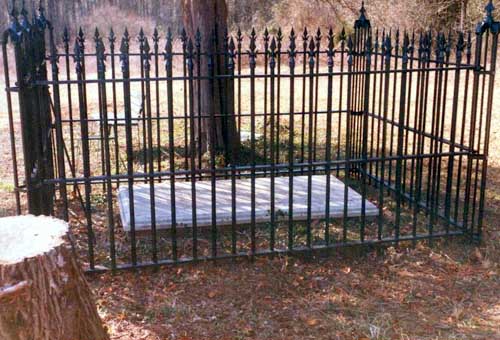
    The approximate location of Betty Lewis’s grave is actually known.[1] She struggled financially after Fielding’s death in late 1781 and, following the Revolutionary War, it was especially difficult for Betty to keep Kenmore afloat. Eventually, she went to live on small farm outside Fredericksburg called Millbrook where she spent the rest of her life. Betty passed away, however, while visiting her daughter, Betty Carter in 1797.  She was buried at her daughter’s home, Western View Plantation in Culpeper County, Virginia. The gravestone in the photograph was added later, so the exact location of the Betty’s burial site isn’t known for sure, but it is somewhere on the property.

    Portrait of Betty Washington Lewis by John Wollaston, c. 1755. Credit: Mount Vernon Ladies Association
    Betty Washington Lewis’s grave stone. Credit: Trice Glancy / FindaGrave.com
    Burial site of Betty Washington Lewis. Credit: Marvin Sport / FindaGrave.com

    So, what about Fielding Lewis? The short answer, again, is that we aren’t sure. We have an idea but it may not be what you think or may have heard! Local lore mentions St. Georges Church as the location of Fielding’s grave, as he was a vestryman there. However, he is most likely NOT buried in this location.

    Portrait of Fielding Lewis by John Wollaston, c. 1755.

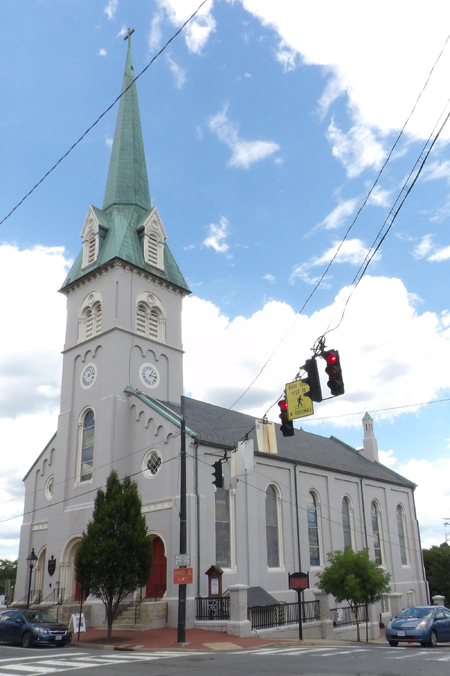
    St. Georges Episcopal Church in downtown Fredericksburg is a local icon, seen in several paintings as one of the tallest buildings in our town’s skyline. The church’s first structure was built in 1730, and the Lewis family would attend services in this wooden structure. Then, with the major fire in Fredericksburg in 1807, the replacement of the original church building with a more substantial brick building in 1815, and further alterations to the layout of the church over the years, it’s understandable that burial sites and other features around the church were lost.

    St. George’s Episcopal Church. Credit: Virginia Department of Historic Resources

    Furthermore, if you have taken any local ghost tours of Fredericksburg, you may have heard the story of Fielding and three of his grandchildren being buried “under the church steps”. This particular tale came from a book called The Ghosts of Fredericksburg… and nearby environs by L. B. Taylor, Jr.  Over 30 years ago, this book was used to create the script for Fredericksburg’s annual Ghostwalk sponsored by the University of Mary Washington Historic Preservation Club. While it’s clear that the author spent a great deal of time collecting stories about ghostly Virginia locations, it should be noted that there aren’t any sources or citations listed in the book.  Taylor was a storyteller, and his main focus was ghostly tales, not historical facts. As a result, we now have this chilling, but likely untrue information, intertwined with the Lewis family history.

    In reality, like wife Betty, Fielding died far away from Fredericksburg on a property he owned located in what is Frederick County around Winchester, Virginia today. In a letter written by one of his children, Robert, to his sister Betty Carter, Robert tried to convince his sister to move to the area, stating; “You would be in the neighborhood where the venerated remains of our dear decd. Father lie.”[2] While this indicates Fielding’s burial is in Fredrick County, the exact location was never recorded.

    Elyse Adams, Archaeologist
    Co-Field Director / Archaeology Lab Technician


    [1] Find a Grave, database and images (https://www.findagrave.com : accessed 26 May 2020), memorial page for Elizabeth “Betty” Washington Lewis (20 Jun 1733–31 Mar 1797), Find a Grave Memorial no. 22154, citing Western View Plantation, Culpeper, Culpeper County, Virginia, USA ; Maintained by Find A Grave.

    [2] Letter from Robert Lewis to Betty Lewis Carter, 1826 quoted in Paula Felder, Fielding Lewis and the Washington Family: A Chronicle of 18th Century Fredericksburg, American History Company, 1999: 300n10

  • Meet the Lewis Family: John and Fielding Jr.

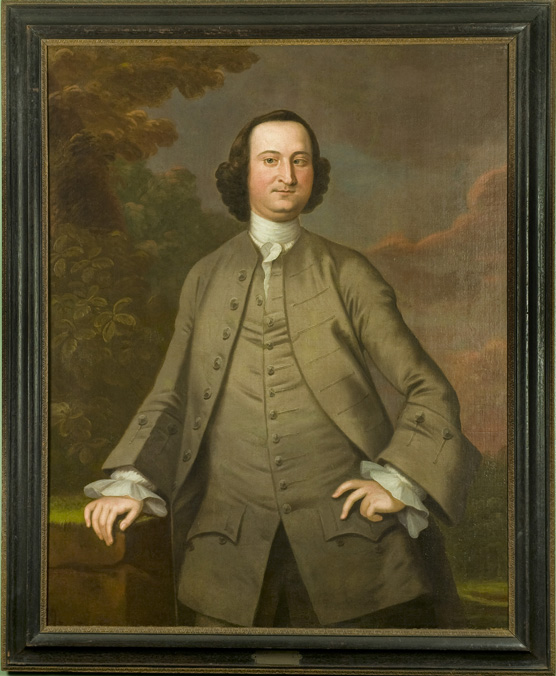
    Fielding Lewis was married twice.  He and Catharine Washington, his first wife, had three children: John, Frances and Warner.  Both Warner and Frances died leaving John as the sole heir from this first marriage.  After Catharine’s death, Fielding married Betty Washington, and not quite a year later Fielding Lewis Jr. was born in 1751.  Although just 4 years younger than his half-brother John, by rights at that time, Fielding Jr. could have supplanted his older brother as Fielding Sr.’s primary heir.  No personal accounts or letters tell us what Fielding Sr. thought about his two eldest sons’ status as heirs to his estate but his actions in the years after their births are telling.


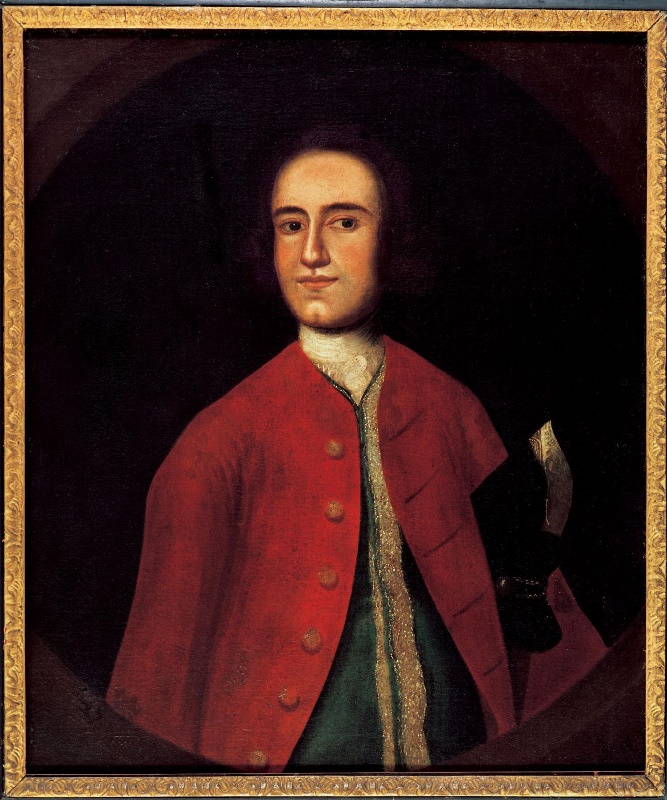
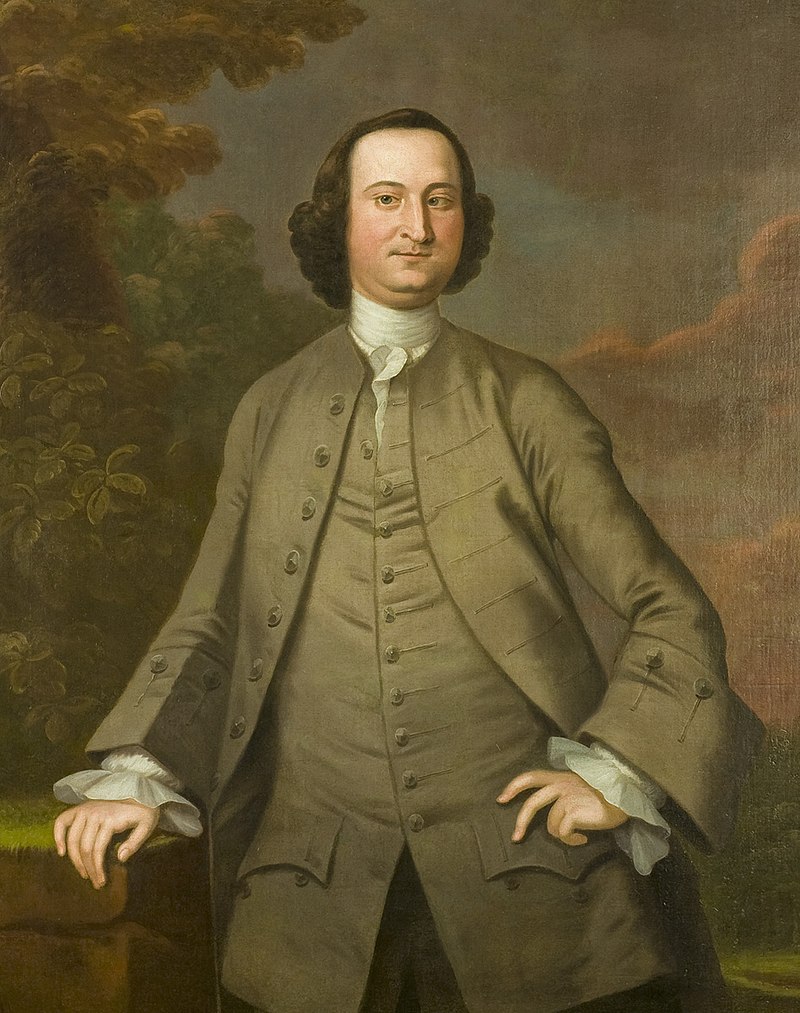
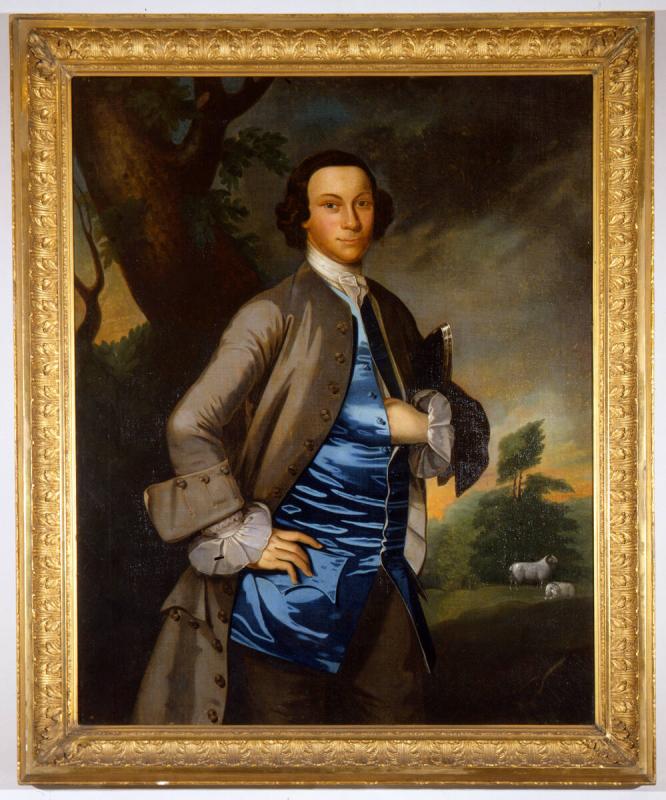
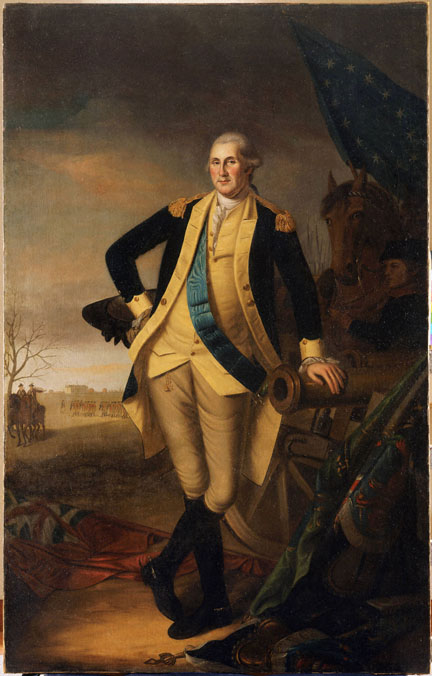
    In 1775, Fielding Lewis commissioned five portraits by American artist Charles Willson Peale, for his newly completed home at Kenmore.  Only two have been located and they are of Fielding’s two eldest sons.  Peale scholars feel fairly certain that the works were painted as companion portraits, intended to hang side by side with the poses of the two sitters meant to complement one another.  Perhaps Fielding was making a visual statement that his two eldest sons were on equal footing and that neither took precedence.  Indeed, in his final will and testament, Fielding provides for both sons equally, giving his Spotsylvania lands to John and his Frederick County lands to Fielding Jr.  On the surface, it might appear that the two brothers had an amicable relationship, not marred by the usual 18th century family in-fighting over inheritance.  Well, that appearance might not tell the whole story.  The half-brothers couldn’t have been more different.

    As early as 1769, Fielding Sr. worried about Fielding Jr’s management of his finances.  The 18-year-old had recently married Nancy Alexander, the daughter of a prominent household in Alexandria, Virginia.  Nancy apparently came to the marriage with a sizeable fortune and Fielding Jr. immediately set about spending it.  In September, both Fieldings wrote to George Washington, to ask his assistance with the Alexander money.  Fielding Jr. wrote his uncle, “Inclos’d you have an Order on Mr. Robart [sic] Alexander for the Balance remaining…of my Wifes Fortune which I shall be Oblig’d to you to receive for me, and purchase Slaves to the amount thereof…” His letter is enclosed in one written by his father, in which we learn a little more about Fielding Jr.’s request to his uncle.

    fielding-lewis-sr-1750s-by-john-wollaston
    Fielding Lewis, Sr. (c. 1750s) by John Wollaston

    Fielding Sr. revealed that Mr. Alexander was concerned at the rate with which Fielding Jr. was spending the money, and has asked Fielding Sr. to take the remainder and use it for something that would help the couple in the long run.  Fielding Sr. went on to say, “I am allmost [sic] certain that he will in a year or Two spend every Shillg as I cannot perceive the least amendment since his Marriage, nor has he the least regard to any advice I give him.” This statement seems to indicate that Fielding Jr.’s spendthrift ways existed prior to marriage and worsened with the influx of his wife’s money.

    Unfortunately, Fielding’s prediction would prove true.  Over the next decade, Fielding Sr. paid his son’s debts time and again, while Fielding Jr. continued to make significant purchases on credit.  Eventually, Fielding Sr.’s burden would be passed to John Lewis.

    Fielding Lewis passed away in 1781.  John Lewis remained in the Fredericksburg area, acting as executor of his father’s estate, and seeing to its myriad debts and complicated business transactions.  He oversaw operations on the lands left to him, and assisted his step-mother, Betty Lewis, in maintaining Kenmore, which would become his upon her death.  He wrote on several occasions of tight finance, and frustrations with his father’s estate but managed to hold it all together.

    His brother Fielding (who dropped the “junior” from his signature following his father’s death), was not managing so well.  He, his wife, and their three children were living on the Frederick County property that he inherited.  His debts were so severe that, by 1784, he was in debtors’ prison and again turned to his famous uncle for help.  In order to bolster his case for being worthy of Washington’s assistance, he sent a collection of letters from his father prior to his death that outlined his plan to save his son from the debt of his “youthfull Folley [sic].”  Fielding wrote, “Since which it has pleased God to take him out of this transetorey [sic] life, before he had Completed his Intention, tharefore [sic] I have taken the Freedom and liberty, of beging you to Assist me…for what Evor Sum or Sums you will be Able to lend me…as Nothing I think in this life So disagreeable as to be drag’ed About by the Sherrifs [sic]…Which Situation I am in at present…”

    george-washington-c-1779-by-charles-willson-peale
    George Washington (c. 1779) by Charles Willson Peale

    Washington gently rebuffed his wayward nephew, replying that he had his own debts and there was little money to spare.  He made a pointed statement at the end of his short letter, perhaps indicating that he didn’t fully believe Fielding was the victim of his own youthful folly. He wrote, “There was a great space between…when you were called upon by your Father for a specific list of your Debts and his death: How happened it, that in all that time you did not comply with his request?” Indeed, receipts in our archives show that Fielding commissioned a new carriage to be made for him in August of 1784, just one month before he was sent to prison.  He would not pay for the carriage until a suit was filed against him two years later.[1]

    As Fielding was seeking help from his uncle, John was planning one of many trips to “the Westward” as he called it – the Western frontier, and Kentucky in particular.  His first expedition to the Kentucky territory was on behalf of his father, before the Revolution, when Fielding Sr. was considering a land purchase there.  Apparently, John fell in love with the country, and returned many times in the coming years, making several land purchases of his own.  His uncle George asked him to act as his agent on several of these trips, to assess the state of Washington’s own property near Pittsburgh.

    While Washington was placing increasing trust in John, he had apparently lost faith in Fielding Jr.  By 1786, Fielding had been released from prison but had lost all of his inherited land in Frederick County.  He and his family were living on a lot in Fauquier County and were attempting to build a house.  Once again, Fielding asked for assistance.  Washington’s response was not as gentle this time, replying, “Altho’ your disrespectful conduct towards me, in coming into this country & spending weeks therein without ever coming near me, entitles you to very little notice or favor from me; yet I consent that you may get timber from off my Land in Fauquier County to build a house on your Lott…”  Despite his sharp words, he still agreed to help.

    Fielding’s improved situation was short-lived.  His wife Nancy died in 1788.  Fielding remarried to Elizabeth Dade, who apparently did not bring a fortune to the union, and so the 1790s would be a rough decade for Fielding.  He was returned to debtor’s prison in 1790, and found that there was no one in a financial situation to save him, with the exception of his brother John.  John, however, was not willing to give him money outright.  Instead, he required that Fielding mortgage everything – slaves, housewares, livestock – in exchange for £1200.[2]  One senses the family losing patience with Fielding.

    In 1792, Fielding was again incarcerated for debt, and this time there was no home for his wife and children, who went to live with Betty Lewis at Kenmore.  Betty wrote to her brother George about the situation, “I am sorry it will not be in my Power to advance any, haveing at this time three of my Grandchildren to support, and god knows from every Account but I may expect as many more shortly, Fielding is so distrest that his Children would go naked if it was not for the assistance I give him…”

    After this disastrous turn of events, Fielding’s whereabouts for the rest of his life become murky.  He never again owns property, and most likely stayed with various family members, including John.  His children remained with Betty at Kenmore.  There may have been little contact between Fielding and his children, as indicated in a letter written to him by his brother George informing him of Betty’s death in 1797. George wrote, “You will no doubt be anxious to know what is to be done with poor little Nancy (Fielding’s daughter), she is in good health, and at present with sister Carter…”[3] It is unknown where Fielding was when George sent him this letter.

    After Betty’s death, John moved quickly to sell Kenmore.  Although it would take several years, he did eventually save enough money to move his family to his land in Kentucky, where he spent the rest of his life.  Perhaps the family obligations and strain of his father’s estate made Kentucky a more appealing home than Fredericksburg.  While Fielding Lewis Sr. wanted very much for his two eldest sons to be seen and treated as equals, their lives played out in very different ways, and that’s the real story behind the portraits.

    [1] Fielding Lewis Jr. to Richard Simcock, 15 January 1786.  The George Washington Foundation Manuscript Collection.

    [2] Indenture Between Fielding Lewis Jr. and John Lewis, 20 March 1790. The George Washington Foundation Manuscript Collection.

    [9] George Lewis to Fielding Lewis Jr., 31 March 1797. The George Washington Foundation Manuscript Collection.

  • Meet the Lewis Family: George Lewis

    George Washington Lewis was Fielding and Betty Lewis’s fourth son, being born on March 14, 1757.  His birth came within months of the deaths of two of his older brothers – Augustine and Warner, ages 4 and 1 – and was a bright spot in dark days for his parents.  He was named for his uncle George, who would have great influence on his nephew later in life.  Young George would also become a favorite of his uncle’s, too.

    Bed and Desk
    No known images of George Lewis exist. This photograph shows a bed and the desk he inherited from his parents and that both currently reside in the Bed Chamber at Historic Kenmore.

    The earliest mentions of George in the Lewis family records concern his education.  In 1771, he and his younger brother Charles were sent away to school in New Jersey.  Thirteen-year-old George attended the College of New Jersey (now known as Princeton), while ten-year-old Charles went to a nearby grammar school.  The Lewis boys would be enrolled in New Jersey for the next three years, coming home to Fredericksburg on occasional school breaks.[1]  Whether it was his family relationship to the man who would lead the Continental Army during the Revolution or the strict anti-Anglican education he received in New Jersey, George Lewis would become the most militarily-involved of all of the Lewis children.

    In November of 1775, George Washington asked that his wife, Martha, leave Mount Vernon and spend the winter with him at his encampment in Cambridge.  He was well aware that his nephew George (now eighteen years old) was interested in joining the cause, but Washington was reluctant to give any family members appointments in his army for fear of the appearance of favoritism.  In an attempt to give his eager nephew something to do, he asked the young man to accompany his wife on what would be a very arduous winter journey from Virginia to the encampment.  When George left his childhood home for Mount Vernon, he carried with him a letter from his father to General Washington, in which Fielding gave his blessing for his son to join the military, but hoped that the General could find some “little post that will bear his expenses”[2] for him, safely away from the fighting.  No doubt, this is what Washington originally hoped for, as well.  The reality of George Lewis’s military career would be far different.

    Initially, George did serve as a secretary for his uncle after his arrival in Cambridge.  He must have proved himself trustworthy and capable, though, because in the spring his uncle suddenly reversed his position on commissioning relatives and made his nephew a First Lieutenant on March 12th, 1776, just two days before his 19th birthday.  Lt. Lewis was made second in command of a new cavalry unit, the Commander-in-Chief’s Guard.  In addition to performing as Washington’s personal couriers and escorts, the Guard was also responsible for his protection during battle.  Lt. Lewis would be in the vanguard of the surprise attack on Trenton, and later in the attack on his former stomping grounds at Princeton.  During the battle of Princeton, fellow Fredericksburger General Hugh Mercer was mortally wounded, and captured by the British.  Washington sent his nephew George under a flag of truce and carrying a letter to General Cornwallis, asking that the young man be allowed to tend to General Mercer in his final days.  Cornwallis relented, and Lt. Lewis spent the next few days providing comfort to the dying man.[3]

    In 1777, Lt. Lewis was promoted to Captain in the Third Continental Dragoons.  He participated in the Philadelphia Campaign, wintered with the army at Valley Forge, and survived an encounter with the British 17th Light Dragoons at the disastrous Baylor’s Massacre, when most of the Third Dragoons were ambushed in a barn and slaughtered.[4]

    “Washington and Lafayette at Valley Forge” by John Ward Dunsmore, 1907. Library of Congress photo.

    During the rebuilding of the Third Dragoons, the few officers who remained were assigned to Washington’s headquarters, where Capt. Lewis returned to the rather mundane activities of being Washington’s courier.  At some point during 1779, George met Colonel William Daingerfield, Commander of the Seventh Virginia Regiment of the Continental line, and his daughter Catherine.  George and Catherine fell in love, and apparently the relationship became a huge distraction for the young Captain, who was increasingly absent from camp.  General Washington wrote his nephew an angry rebuke in February, saying that his behavior reflected badly not only on himself but on Washington, too.[5]  Although George returned to his duties immediately after receiving the letter from his uncle, he would resign by September and marry Catherine.

    George and Catherine settled near Berryville, Virginia, on land owned by Fielding Lewis that would eventually be George’s inheritance.  Although he became a planter, his military career wasn’t quite over.  In 1794, the Whiskey Rebellion in southwestern Pennsylvania broke out, and President Washington called on his trusted nephew to supplement the tiny standing army.  George raised a cavalry unit that he called the Fredericksburg Troop of Volunteers.  George was made a Major Commandant and his unit was deployed to Fort Pitt.

    Finally, with the end of the Whiskey Rebellion, George Lewis took up a quiet life.  He and Catherine had three children, and eventually purchased the plantation Marmion, on Virginia’s Northern Neck outside of Fredericksburg.  Many of the original furnishings from Kenmore would be left to George, and would descend through his family at Marmion.  George continued to maintain a close friendship with Washington, who often asked for his advice on family and business matters.  When Washington died, he left his nephew a handsome inheritance, as well as his pick of Washington’s swords.

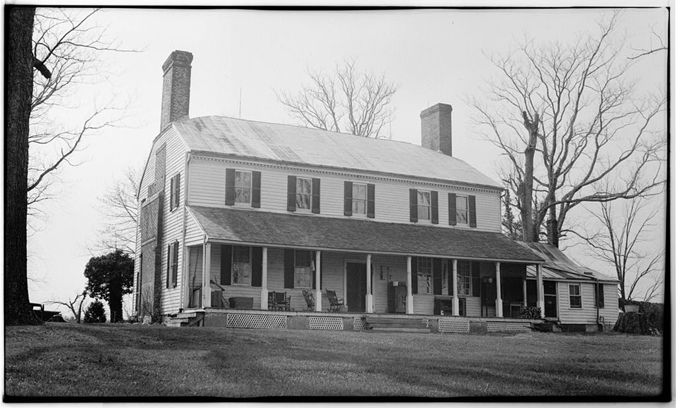
    Marmion
    Marmion, the home of George Lewis and family, as it appeared in the mid-20th century. Library of Congress photo.

    George Lewis died in 1821.  He and Catherine are thought to be buried at Willis Hill in Fredericksburg, the home of their son-in-law, Byrd Willis.

    Meghan Budinger
    Aldrich Director of Curatorial Operations

    [1] Felder, Paula S. Fielding Lewis and the Washington Family, 1998. Pgs. 163-164.

    [2] Fielding Lewis to George Washington, November 14th, 1775.  Pennsylvania Historical Society.

    [3] Lossing, Benson J., ed. Recollections and Private Memoirs of Washington, 1859. Pgs. 180-184.

    [4] Moran, Donald L. The Men of the Commander in Chief Guard, The Liberty Tree Newsletter, 2006; Demarest, Thomas. The Baylor Massacre, Bergen County History Annual, 1971.

    [5] George Washington to George Lewis, February 13th, 1779.

  • Meet the Lewis Family: Lawrence Lewis

    Lawrence Lewis

    Lawrence Lewis was born on April 4, 1767, the ninth child of Fielding and Betty Lewis and nephew of George Washington.  His birth was noted by Fielding in the Lewis family bible,

    “Our Ninth a Son named Lawrence born the 4th of April 1767.  Mr. Chas Washington & Mr. Francis Thornton Godfather & Mrs. Mary Dick Godmother”[1]

    Just as the American Revolution started, Lawrence moved into Kenmore with his parents and siblings when he was eight years old.  Sadly, the move to the new house began a devastating chapter for the family that saw the loss of their financial security and, ultimately, of their patriarch.  Lawrence witnessed the toll that financing and supporting the War for Independence exacted on his father.  For the Patriot cause, Fielding provided much needed supplies to the army, bought and built ships for the navy, and funded a musket factory with his own money.  After all these sacrifices, Fielding died in 1781 when Lawrence was fourteen.

    Fielding bequeathed his ninth child “one thousand acres of land in the County of Frederick [this land was near Bath, Virginia, which is now Berkeley Springs, West Vriginia] on which my overseer Butler now lives as surveyed by Mr. Berry with the one sixth part of all my negroes.”

    Instead of going west, however, Lawrence struck out east.  By 1790, the twenty-three year old was living in Essex County and awaiting the birth of his first child with his wife Susannah Edmonton.  Sadly, Susannah and the child died in labor.  After this devastating death, Lawrence disappears from the historic records until four years later.

    In 1794, Lawrence volunteered for military service and served as aide-de-camp to General Daniel Morgan in western Pennsylvania during the Whiskey Rebellion. [2]  This rebellion was led by western farmers in response to the tax on all domestically-produced distilled spirits.  This was the first time the newly formed government, under the leadership of Lawrence’s Uncle Washington, who was now President of the United States, imposed a tax on a domestic product.  A destructive uprising was avoided and the tax was eventually repealed under Thomas Jefferson but the event led to the formation of America’s first political parties. [3][4][5]

    WhiskeyRebellion
    President George Washington reviews troops near Fort Cumberland, Maryland, before their march to suppress the Whiskey Rebellion in western Pennsylvania. Unknown, attributed to Frederick Kemmelmeyer – Metropolitan Museum of Art. Public domain.

    After Washington retired from the presidency, he began looking for a personal secretary and offered the position to Lawrence.

    “I require some person (fit & Proper) to ease me of the trouble of entertaining company…and for a little time only, to come, an hour in the day, now and then, devoted to the recording of some Papers which time would not allow me to complete before I left Philadelphia.”[6]

    Lawrence became part of the Washington household at Mount Vernon assisting his uncle with his entertaining, correspondence, and day-to-day activities. Also residing at Mount Vernon was Eleanor “Nelly” Parke Custis, the granddaughter of Martha.  Eleanor and her brother George had been informally adopted by the Washingtons after the death of their father. Two years after arriving at his uncle’s house, Lawrence and Eleanor married on February 22, 1799.

    Obviously fond of his nephew and step-granddaughter, Washington enjoyed having them near Mount Vernon.  Shortly before his death, he offered Lawrence and Nelly a large tract of land.  Washington made it known that he wanted them to start enjoying the property immediately and not wait for his death.

    “But, as it has been understood from expressions occasionally dropped from your wife, that it is the wish of you both to settle in the neighborhood…I shall inform you, that in the will which I have by me …that part of my Mount Vernon tract…is bequeathed to you and her jointly, if you incline to build on it.”[7]

    Sadly, George died a few months after he made the offer of land to the couple and never got to enjoy his nephew’s family living so near.

    Lawrence and Eleanor started building their home, now known as Woodlawn, in 1800. The house was completed five years later and designed by William Thornton, the same architect who designed the U.S. Capitol.  Owned by the National Trust for Historic Preservation in Alexandria, Virginia, you can visit Woodlawn as well as the 20th century Pope-Leighey House designed by Frank Lloyd Wright.  The two houses provide a great juxtaposition between a classical Federal house of straight lines and proportion and a modern Usonian home that exudes simplicity and nature.[8]  Lawrence and Nelly raised their eight children and lived peacefully at Woodlawn until 1830.

    Woodlawn. Photo Courtesy of the National Trust for Historic Preservation – Gordon Beall Photography

    PLH
    Pope-Leighey House. Photo Courtesy of the National Trust for Historic Preservation.

    Lawrence Lewis died on November 20, 1839 at the age of 72 and was buried close to George and Martha in the vault at Mount Vernon.  His wife Eleanor passed away in 1852 and was placed next to her husband and much loved adopted grandparents.

    Heather Baldus
    Collections Manager

    [1] Felder, Paula. “Fielding Lewis and the Washington Family”, The American History Company, Fredericksburg, 1998, pg 73

    [2] http://www.mountvernon.org/research-collections/digital-encyclopedia/article/lawrence-lewis/

    [3] Holt, Wythe. “The Whiskey Rebellion of 1794: A Democratic Working-Class Insurrection”.

    [4] http://historynewsnetwork.org/article/27341

    [5] http://www.mountvernon.org/research-collections/digital-encyclopedia/article/whiskey-rebellion/

    [6] “From George Washington to Lawrence Lewis, 4 August 1797,” Founders Online, National Archives (http://founders.archives.gov/documents/Washington/06-01-02-0245 [last update: 2015-03-20]). Source: The Papers of George Washington, Retirement Series, vol. 1, 4 March 1797 – 30 December 1797, ed. W. W. Abbot. Charlottesville: University Press of Virginia, 1998, pp. 288–289.

    [7] “From George Washington to Lawrence Lewis, 20 September 1799,” Founders Online, National Archives (http://founders.archives.gov/documents/Washington/06-04-02-0263-0001 [last update: 2015-03-20]). Source: The Papers of George Washington, Retirement Series, vol. 4, 20 April 1799 – 13 December 1799, ed. W. W. Abbot. Charlottesville: University Press of Virginia, 1999, pp. 311–315.

    [8] http://www.woodlawnpopeleighey.org/pope-leighey-house