Lives and Legacies

Tag: Mount Vernon

  • Pull Over!! The Virginia Highway Historical Markers of The George Washington Foundation

    As you drive down the road, sometimes, there are enough signs to make your head spin.  It can be tempting to just drive by these stark white cast iron road markers with black text when you see them.  Even so, sometimes you can’t help but let a word or a phrase catch your eye, sparking curiosity as you continue on with your travels.

    “Highway markers near Seven Pines, VA” courtesy of the Library of Virginia. (Virginia State Chamber of Commerce)

    The Virginia Highway Marker program is the oldest one of its kind in the United States (Virginia Department of Transportation, n.d.).  In 1927, State Route 1 was freshly paved and ready for new motor vehicles to coast down from Washington, DC to Richmond. (Virginia Department of Transportation, 2006).

    Drivers were given a red carpet to travel straight to what many viewed as the birthplace of our nation, George Washington’s Mount Vernon. Thousands began their pilgrimage. Hotels, motels, gas stations, and attractions began to pop up along the path.
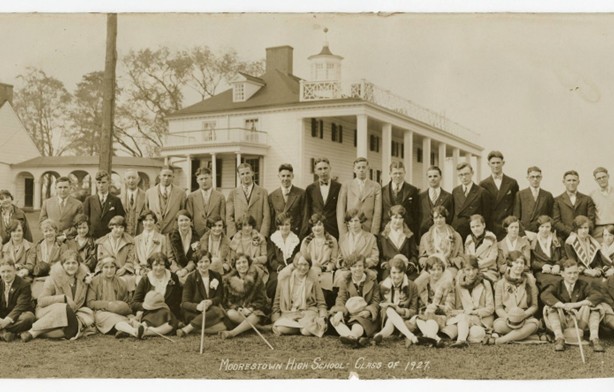
    “Moorestown High School Class of 1927” posing in front of Mount Vernon

    With all these new travelers who appreciated their state’s history, William E. Carson of the Conservation and Economic Development Commission erected several markers along the road, designating historic areas of interest and turning the roads into an attraction. (Virginia Department of Transportation, n.d.).

    Fabricating the markers was a beast to tackle since the traditional method of construction would have been granite.  Unfortunately, the stone was a bit too pricy and was also found to be difficult to read at the lightning-fast 25 mph speed limit.  Aluminum was an option for its lightweight and non-corrosive nature, and in fact, many early signs were manufactured from the metal, although they were quickly found to crack easily.  They were replaced with cast iron, and cast metal has been the preferred method of construction ever since (Rachal, 1949).

    Two of our three markers were first seen in the early years of the program. The oldest of our three was also the one that had the least amount of time in the light.  The Accokeek Iron Furnace marker (E-49) is located off Courthouse Rd in Stafford near an archaeological dig site owned by the George Washington Foundation. The modern iteration was erected in 1998.

    Accokeek Iron Furnace: The Principio Company constructed the Accokeek Iron Furnace nearby about 1726 on land leased from Augustine Washington (father of George Washington), who became a partner. After Washington’s death in 1743, his son Lawrence inherited his interest in the company and the furnace. When he in turn died ten years later, his share descended first to his brother Augustine Washington Jr. and later to William Augustine Washington. The archaeological site is a rare example of an 18th-century Virginia industrial enterprise. It includes the furnace location, the wheel pit and races, a retaining wall made of slag, an extensive slag dump, and mine pits.

    This text is not what was written prior to 1930. Those signs were brief, containing only a sentence or two for motorists to read as they drove by.  Between 1927 and 1930, though, cars sped up.  Where they were once going 25 mph, they were soon going 40 mph or even rocketing 50 mph down the highways!

    Trying to read the markers while driving quickly became impossible. The Commission’s solution? Publish a booklet with each highway marker printed and arranged neatly for passengers to read as they traveled.  All you had to remember was the marker’s number or title.  The first of these booklets were distributed in early 1930, free of charge (Rachal, 1949).

    This edition contains the earliest record of the Accokeek marker, then titled “Ancient Iron Furnace,” and reading only: “Here on Accokeek Run were iron mines and a furnace in which Augustine Washington, father of George Washington, began to smelt iron in 1727.”

    Unfortunately for our little marker, this was the last time it could be featured in the booklet. Disaster struck in late 1930. Engineer P. W. Snead wrote to the Commission on December 19th to report that the sign was found that morning, knocked from its post, and shattered.  The commission wrote back a few days later, asking for the aluminum pieces to be gathered and sent back since the factory would refund them for the parts.  (Library of Virginia Archives, 1930). The Accokeek marker was not restored until 1998, 68 years later, as part of a federal grant, according to the manager of the highway marker program, Jennifer Loux.

    The “Washington’s Boyhood Home” marker is also found in the booklet’s first edition, and its modern counterpart is now at the entrance to Ferry Farm.  Although there are no records of the sign being damaged prior to its replacement in 1997, after exposure to the elements for almost 70 years, it was probably time for a refresh.

    Alternatively, the motivation for the marker’s replacement (likely from the same federal grant) may have come from historical inaccuracies. The original text of the marker reads:

    “Washington’s Boyhood Home: At this place, the Ferry Farm, George Washington lived most of the time from 1739 to 1747. Here, according to tradition, he cut down the cherry tree. Washington’s father died here in 1743. The farm was his share of the paternal estate.”

    We now believe that the Cherry Tree story was likely an exaggeration or a myth, and so the verbiage was changed on the modern marker. Many old highway markers contained inaccurate information, as is often the case with many historical resources. As technology and research evolve over time, so does what we know. Another example of this never made it to the press, but early drafts of the marker’s text include his attendance at the “Old Field School.” We have since learned that there is no documentation of Washington ever attending a formal school in his life.

    The current marker was installed in 1997, the same year the George Washington Foundation obtained the property, and the sign continues to greet visitors to this day.
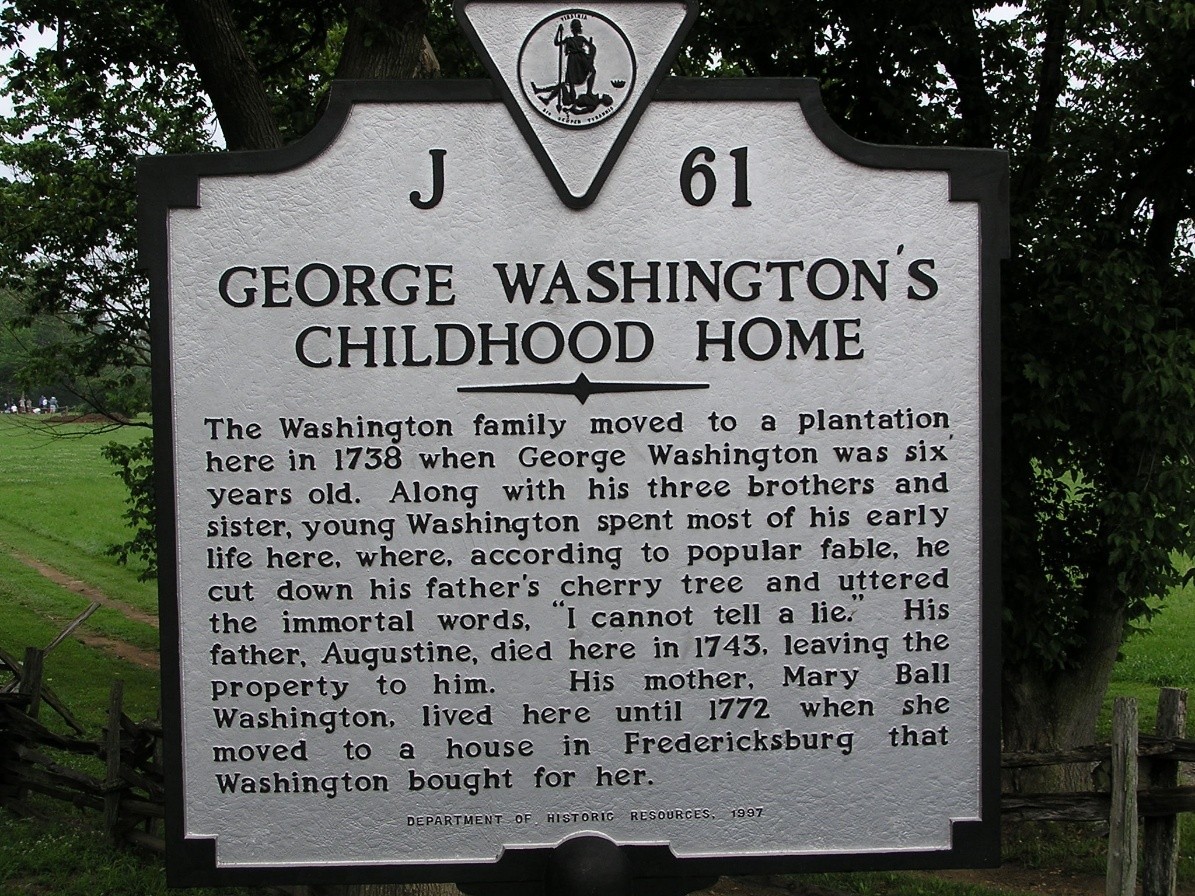
    George Washington’s Childhood Home: The Washington family moved to a plantation here in 1738 when George Washington was six years old. Along with his three brothers and sister, young Washington spent most of his early life here, where, according to popular fable, he cut down his father’s cherry tree and uttered the immortal words, “I cannot tell a lie.” His father, Augustine, died here in 1743, leaving the property to him. His mother, Mary Ball Washington, lived here until 1772 when she moved to a house in Fredericksburg that Washington bought for her.

    Our third marker is different, having not been placed until 1995.  At this point in time, the highway marker program had been passed around, with different organizations all bearing the burden of putting up new signs and maintaining the old ones.  It first passed hands in 1949 to the Virginia Department of Highways, who, after a year, handed the responsibility off to the Virginia State Library.  In 1966, it was traded again and is now operated by the Virginia Department of Historic Resources in collaboration with the Department of Transportation (Virginia Department of Historic Resources, n.d.).

    Former director of the Kenmore Association (now the George Washington Foundation) Vernon Edenfield wrote to the DHR proposing the marker. The Association paid for the manufacturing out of pocket. You can now visit it along Caroline St, four blocks from Kenmore, in front of Fielding Lewis’ storefront.

    Kenmore: Four blocks west stands Kenmore, built in 1775 by Col. Fielding Lewis for his wife, Betty, sister of George Washington. Near here, between Kenmore and the Rappahannock River, stood Lewis’s warehouses and docks. Kenmore’s intricate plasterwork is the finest in the country. Among 19th-century owners and occupants were Samuel Gordon, who named it Kenmore, and William Key Howard Jr., who restored and embellished the mansion’s plasterwork. Washington and other Revolutionary leaders often visited, and during the Civil War, Union troops used it as a hospital. The Garden Club of Virginia, starting in 1929, rehabilitated Kenmore’s gardens as its first restoration project.

    Although you might think after nearly 100 years of recording and presenting history that the Virginia Highway Marker program has run out of ideas, you can’t be further from the truth.  New markers are being planned constantly, and more gaps in history are being filled each year. In Fredericksburg alone, there are plenty more markers commemorating the city’s rich history.  If you feel there is an opportunity for a new marker somewhere, you can submit a proposal through the DHR’s website.
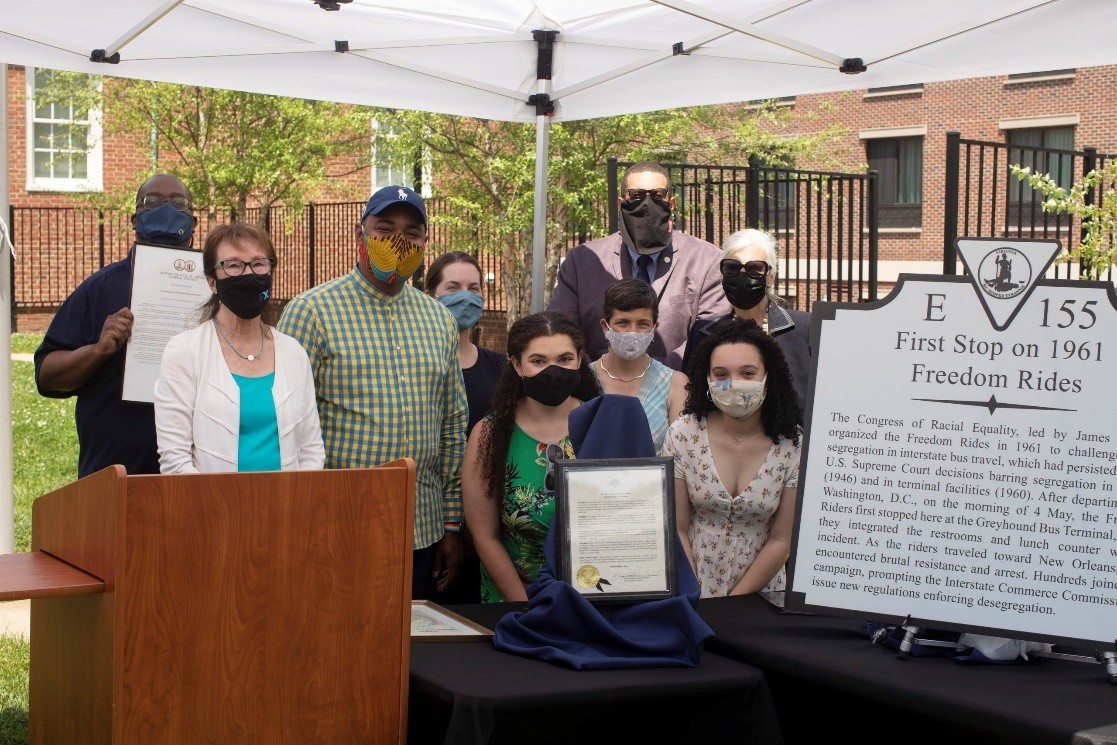
    The unveiling of the new Freedom Rides marker in 2021 at the site of the old Greyhound bus depot on Princess Anne St, which was proposed by staff and students from the University of Mary Washington

    History can be found anywhere if you know where to look, and the Virginia highway markers are a testament to that.  Be sure to keep an eye out for them on your next drive!

    Sarah Alden

    Manager of Visitor Services and Interpretation


    Bibliography

    Laiacona, J. (2021, May 4). Marker Furthers UMW Mission on Freedom Rides’ 60th Anniversary. Retrieved from University of Mary Washington: https://www.umw.edu/news/2021/05/04/marker-furthers-umw-mission-on-freedom-rides-60th-anniversary/

    Library of Virginia Archives. (1930). Virginia

    Mount Vernon. (n.d.). Historic Preservation at Mount Vernon. Retrieved from George Washington’s Mount Vernon: https://www.mountvernon.org/preservation/historic-preservation-at-mount-vernon#main-content

    Prats, J. J. (2010, October 23). State Historical Markers Numbering Plans. Retrieved from The Historical marker Database: https://www.hmdb.org/m.asp?m=2

    Rachal, W. M. (1949). Historical Markers on Virginia Highways. State and Local History News, 151-153.

    Virginia Department of Historic Resources. (n.d.). Historic Markers. Retrieved from Virginia Department of Historic Resources: https://www.dhr.virginia.gov/programs/highway-markers/

    Virginia Department of Transportation. (2006). A History of Roads in Virginia: “The Most Convenient Wayes”. Richmond: Virginia Department of Transportation Office of Public Affairs.

    Virginia Department of Transportation. (n.d.). Historical Markers. Retrieved from Directional Signing Program: https://vaidsp.com/historicalmarkers/

    Virginia State Chamber of Commerce, a. L. (n.d.). Highway markers near Seven Pines, Va. Picture Collection.

  • Happy Birthday, Mr. President!

    Not every president gets their birthday celebrated every year with a federal holiday, but George Washington, a favorite of his countrymen and the first president, has had that privilege since 1879. But one year was a little different from the others: 1932.  It marked Washington’s 200th birthday, and the United States was going to make a big deal about it. 

    In honor of the upcoming birthday, we decided to look at some of the memorabilia in our collection created to celebrate and educate the American public.   

    George Washington Bicentennial Commission

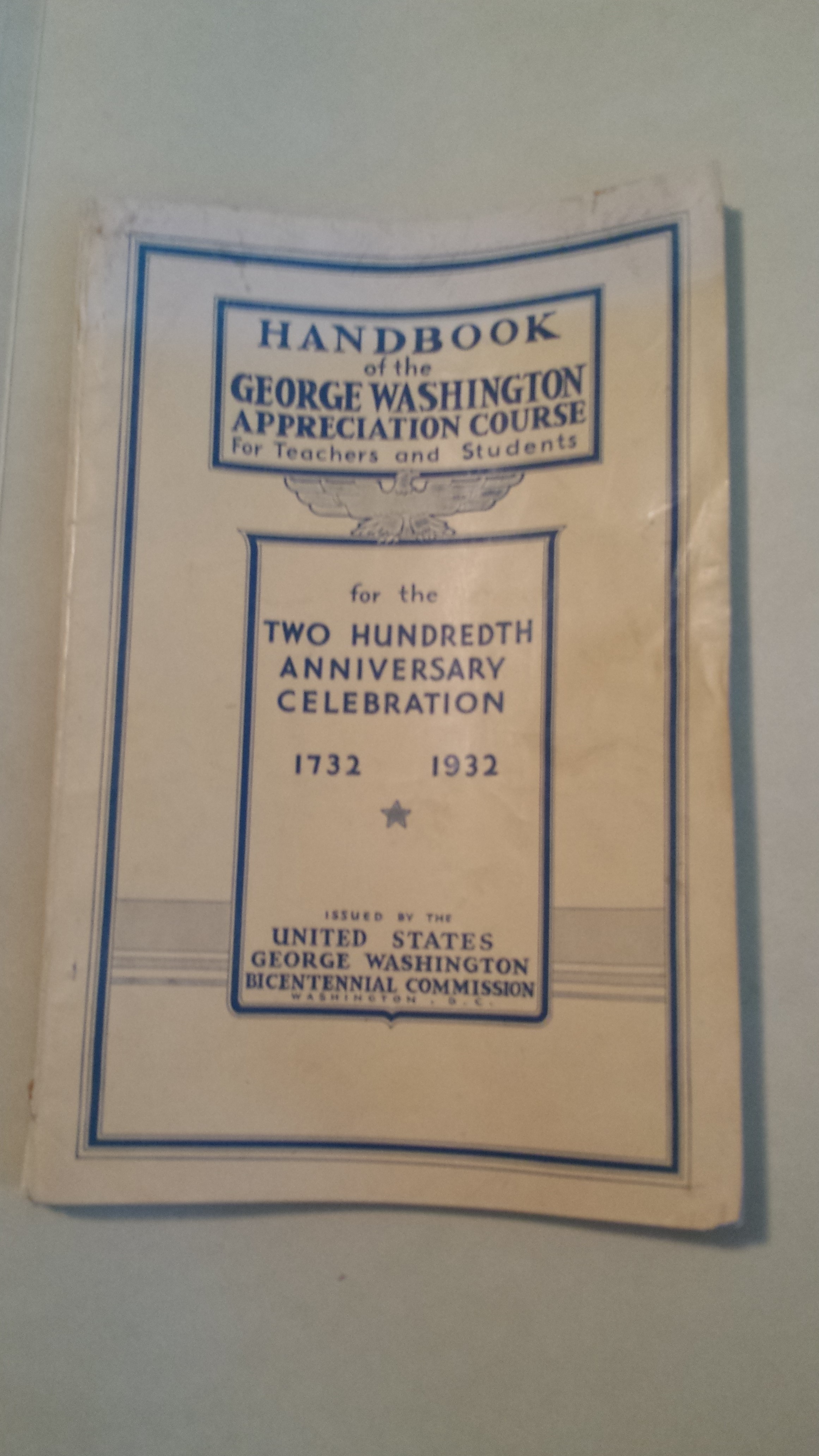
    The planning for this celebration started early when Calvin Coolidge signed a joint resolution that established a commission to oversee the bicentennial ceremonies on Dec 2, 1924.  The resolution was to mark the occasion of the birthday across the country and increase the understanding of Washington. (George Washington Bicentennial Commission, 1932)  Under the direction of Representative Sol Bloom, an experienced entertainment promoter who got his start at the 1893 World’s Colombian Exposition, the committee initiated thousands of events, released educational resources for students, and had plays written in honor of Washington. (Larson, 2004)

    Handbook of the George Washington Appreciation Course for Teachers and Students
    “Washington Takes the Risk”, including George Washington, Fielding Lewis, and Betty Washington Lewis

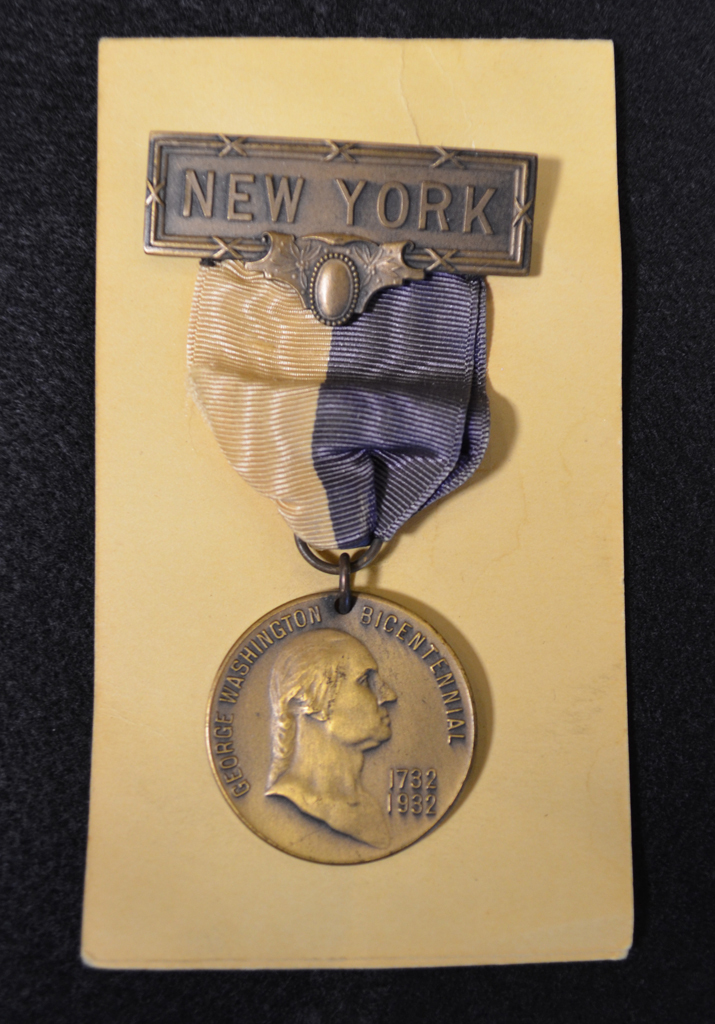
    The commission additionally worked with over 250,000 local commissions to organize special events at not only a federal level but a state and city too. (The Washington Post, 1932) Special volunteers and prominent local people were often given commemorative metals as thanks for their service.  We have one from the state of New York.  It is a circular bronze medal attached to a blue and white ribbon.  The back of the medal states, “1779 / Planned Sullivan / Clinton Campaign 1782 / Newburgh Temple Hill / Refused a crown / 1789 April 30th / New York City / Inaugurated first / President of the / United States.” 

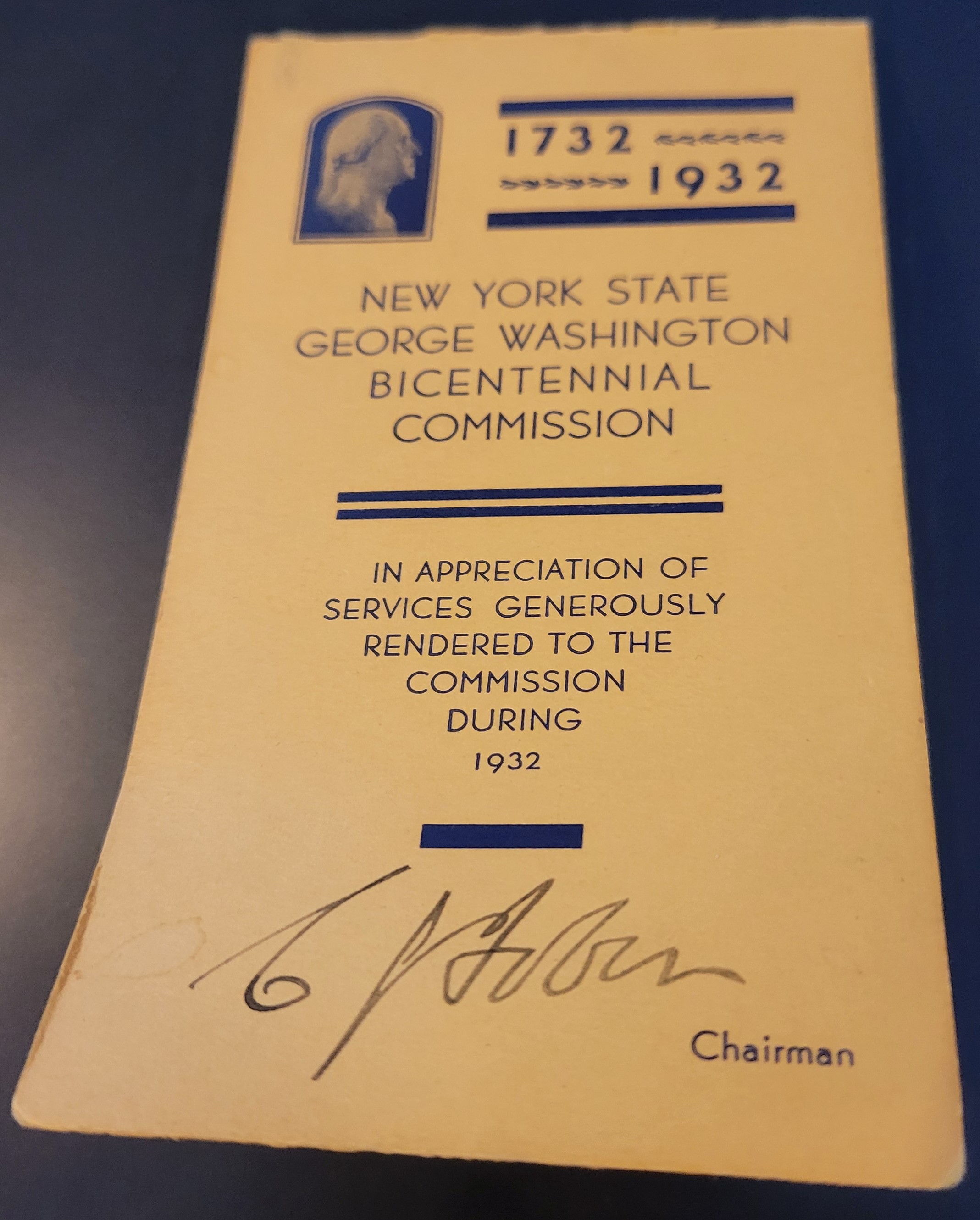
    The medal is encased in a paper envelope with “New York State / George Washington Bicentennial Commission / In appreciation of / Services generously / Rendered to the / Commission / During / 1932” written on the front along with the signature Charles Tobin, chairman representing New York state on the Bicentennial Commission. 

    Historical Context Help: The Sullivan-Clinton campaign was ordered by George Washington in response to the 1778 attacks by the Iroquois and British in central New York.  Newburgh Temple Hill was a Continental Army encampment near Washington’s headquarters, where he gave a speech to quell the mass of soldiers who were getting ready to mutiny and attack Congress to get their promised back pay and pensions. Finally, in 1789, George was sworn in as President at Federal Hall in New York City.

    Calling All Philatelists

    Washington Post, Jan 2, 1932

    The U.S. Post Office became involved in the commemoration of George with the release of a dozen stamps celebrating his life.   The stamps were incredibly popular, and when they were first released for sale in D.C., there was a crowd of 50,000 people waiting to get their set of stamps. (The Washington Post, 1932)

    Marketing George

    Private companies even got in on Washington-mania by releasing all types of souvenirs like postcards, pins, coins, bottles, calendars, cigar box covers, books and pamphlets, hat stands, billheads, stationary, cartes-de-visite, playing cards, and puzzles. (Subseries 5.8. Washington’s Birthday, Bicentennial Souvenirs, 1931-1932 , 2024)

    We have two bottles created for the Bicentennial celebration.  The green water bottle has a likeness of George with “Washington/Bicentennial” underneath the image and 1732 and 1932 written on the sides.  The water bottle was produced by the Hemingway Glass Company in Muncie, Indiana. 

    The clear pear-shaped bottle is embossed on one side with a cherry tree and the dates “1732 and 1932”.  On the other, with a profile of Washington.  It was created by the Owens-Illinois Glass Co. of Huntington, West Virginia.

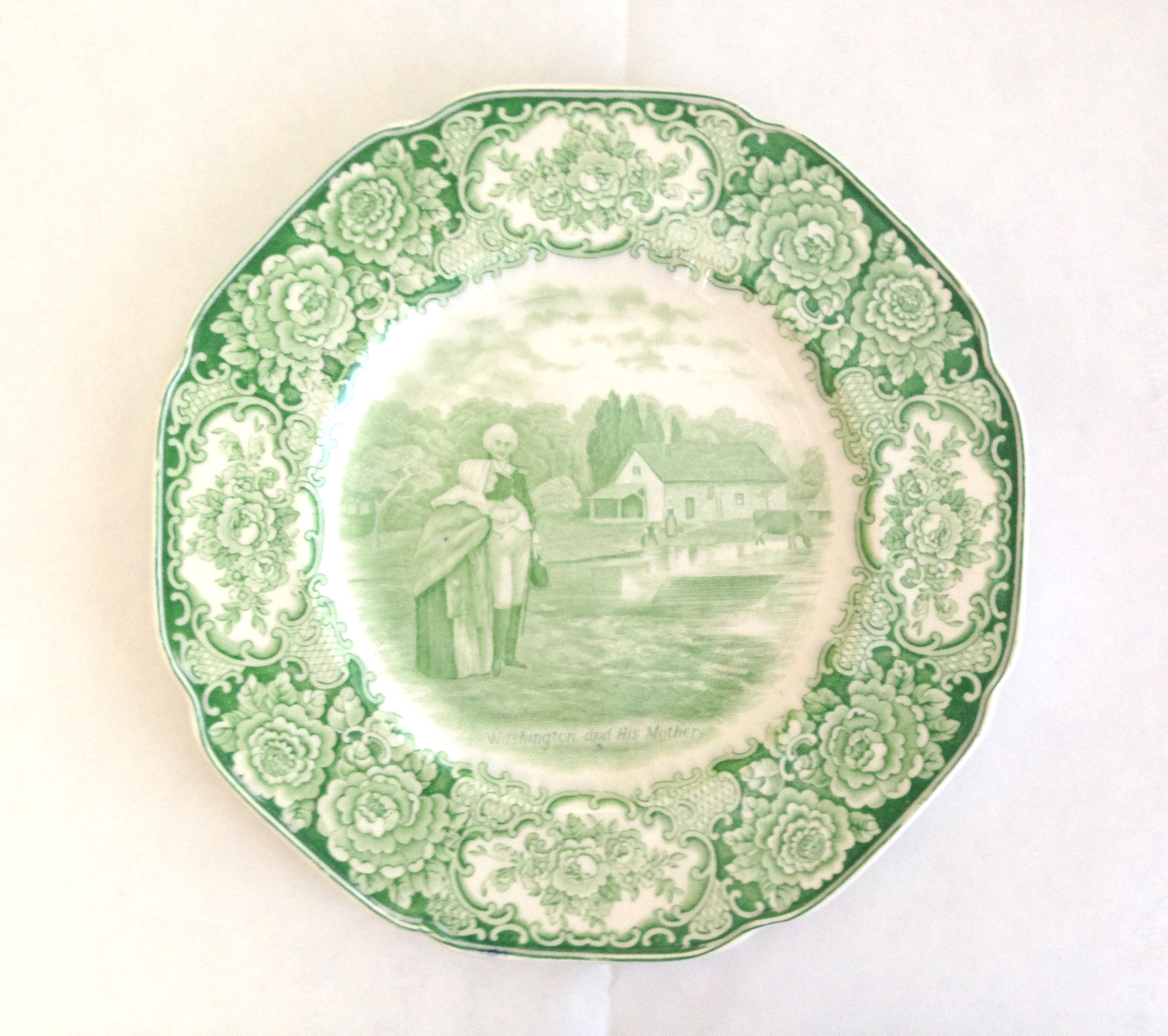
    Plates were another big commemorative item.  We have three plates issued by Crown Ducal, with the same scene of “Washington and his Mother” based on the print of the same name.  On the back with the Crown Ducal crest, it says, “George Washington Bicentenary Memorial Plates / 1732-1932 / First in War / First in Peace / First in the hearts of his countrymen”.  Crown Ducal released a series of twelve plates documenting Washington’s life.  Of course, we are a little biased and like the one with his mother, Mary Ball Washington, the best.

    Some companies even brought in Mrs. Martha Washington, like this set of plates from the Capital Souvenir Company.  These are two round commemorative plates depicting George and Martha Washington, both with an elaborate floral gilded border.

    Fun Bicentennial Fact:  On the eve of the birthday, Sears Roebuck was awarded a commission by the U.S. government to create a full-scale replica of Mount Vernon at the Exposition Coloniale Internationale in Paris.  The agreed-upon price was around $75,000, and every detail of the home was reproduced from brass hardware, mantelpieces, and even cabinets.  After the exposition, the house was bought by an American doctor working in Paris, and it was relocated to Vaucresson (a western suburb of Paris).  It still stands today as a private residence and was even on the market in 2012 for 27 million dollars.     

    Sears Roebuck also built the exact replica in Prospect Park, Brooklyn, NYC for the Bicentennial Commission. However, the house was not taken care of and boarded up and abandoned until it was eventually torn down. (The Brooklyn Daily Eagle, 1933) 

    Sears’ role in the reconstruction of Mount Vernon led to interest in their kit homes.  In 1932, they offered a house in their catalog, loosely based on Mount Vernon.  This model was oddly called “The Jefferson”.

    Sears Roebuck house kit “The Jefferson” which strangely resembles Mount Vernon.

    While we may not have as many George souvenirs, we are still putting on a big birthday party to celebrate George Washington and his time at Ferry Farm. 

    The party is on Monday, February 19th from 10am – 3 pm.  While enjoying the grounds of Ferry Farm, you can take a selfie with “George Washington,” participate in our annual stone-throwing contest, play colonial games, and eat birthday cupcakes (while supplies last).

    Additionally, guests can enjoy several educational stations, take an abbreviated Washington House tour, and talk with archaeologists, historians, and other experts to learn about Ferry Farm and the Washington Family.


    Heather Baldus

    Collections Manager


    References

    George Washington Bicentennial Commission. (1932). History of the George Washington Bicentennial Celebration. Washington D.C.

    Larson, E. (2004). The Devil in the White City: Murder, Magic, and Madness at the Fair That Changed America. New York City: Knopf Doubleday Publishing Group.

    Subseries 5.8. Washington’s Birthday, Bicentennial Souvenirs, 1931-1932 . (2024). Retrieved from The George Washington Presidential Library at Mount Vernon: https://archives.mountvernon.org/repositories/3/archival_objects/14635

    The Brooklyn Daily Eagle. (1933, June 14). Fate in Doubt On Park Replica of Mt. Vernon. The Brooklyn Daily Eagle, p. 5.

    The Washington Post. (1932, January 2). 50,000 Stand In Line to Get New Stamps. The Washington Post, p. 1.

    The Washington Post. (1932, January 5). Bicentennial Stamps Profit. The Washington Post, p. 6.

  • An Image Captured: The Development of Photography through Lewis Family Descendants

    One of my favorite historical objects in the collection are photographs.  Not particularly for artistic reasons, but as a documentation of a moment, a time, a person, a world that no longer exists.  During the Victorian era (1837-1901), there were extraordinary developments in the field of photography. In a span of forty years, photographs went from complicated metal plates, harsh chemicals, and long exposure times to inexpensive images on cardboard that could be taken, processed, and given to the sitter in minutes. 

    We have many pictures in our collection, and we can trace the development of photography through images of Lewis family descendants. 

    A Pleasant View of Burgundy

    The widely accepted creator of photography as we know it was French inventor Joseph Nicéphore Niépce.  He produced the first surviving photograph around 1826 showing the scene from his window in Burgundy.  After Niepce’s death, his former associate, Louis-Jacques-Mandé Daguerre, continued improving Niepce’s photographic process, introducing the “daguerreotype” in 1839. (The University of Texas Austin, 2024)  To create an early daguerreotype, a polished silver-plated copper sheet was treated with iodine vapor to make it light-sensitive. After exposure, the plate would be developed with mercury vapor and fixed with sodium chloride.  This was a tedious and complex process that required the subject to remain entirely still for three to fifteen minutes. (Stewart, 2018) (The Library of Congress, 2024) (Department of Photographs, 2004) The process was amended and, by the 1850s, used large glass-plate negatives, allowing for a crisper picture and a much shorter exposure time. (Department of Photographs, 2004)

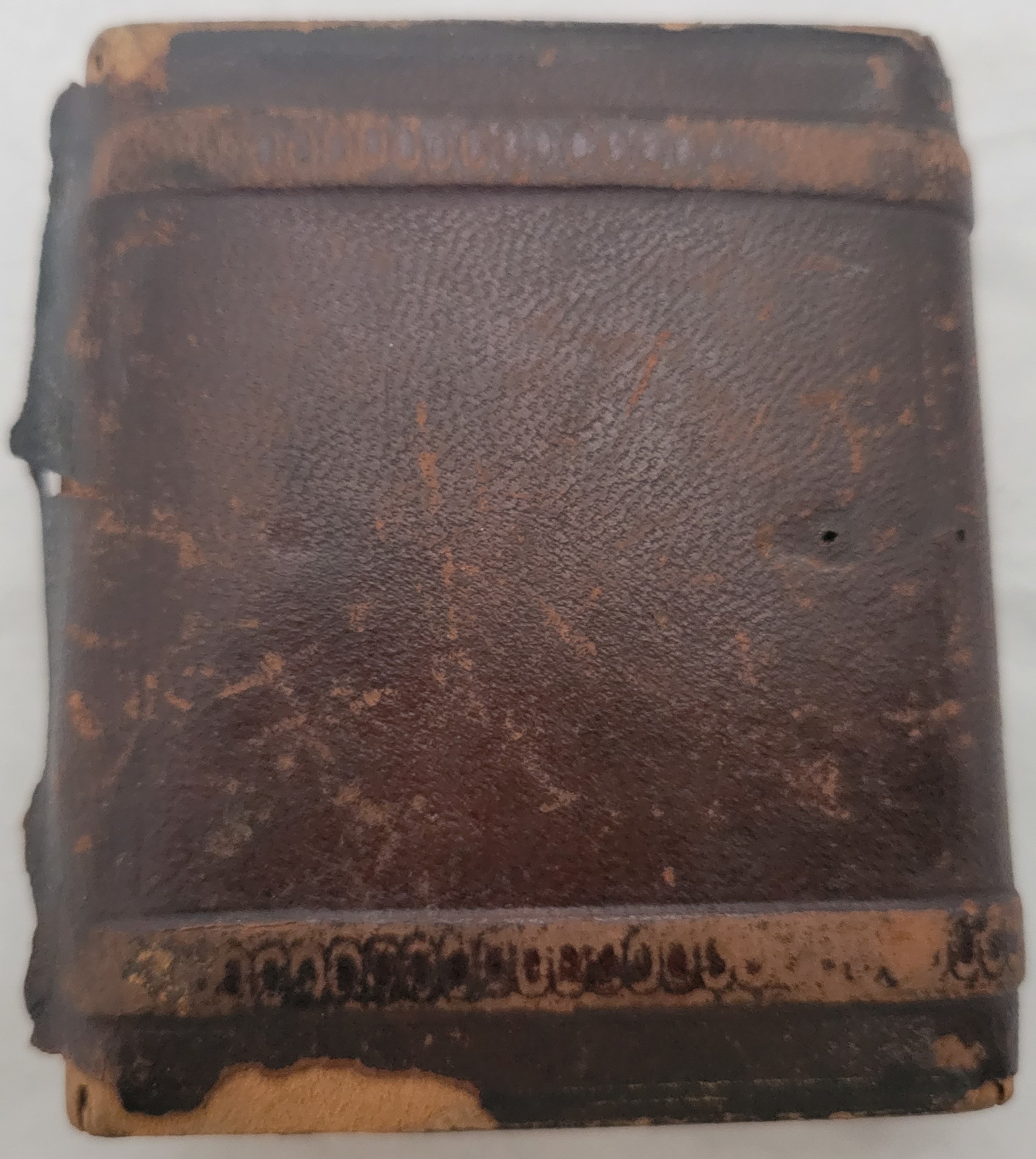
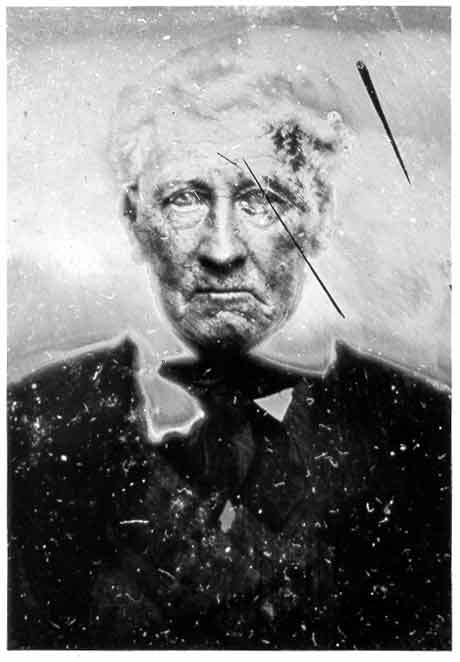
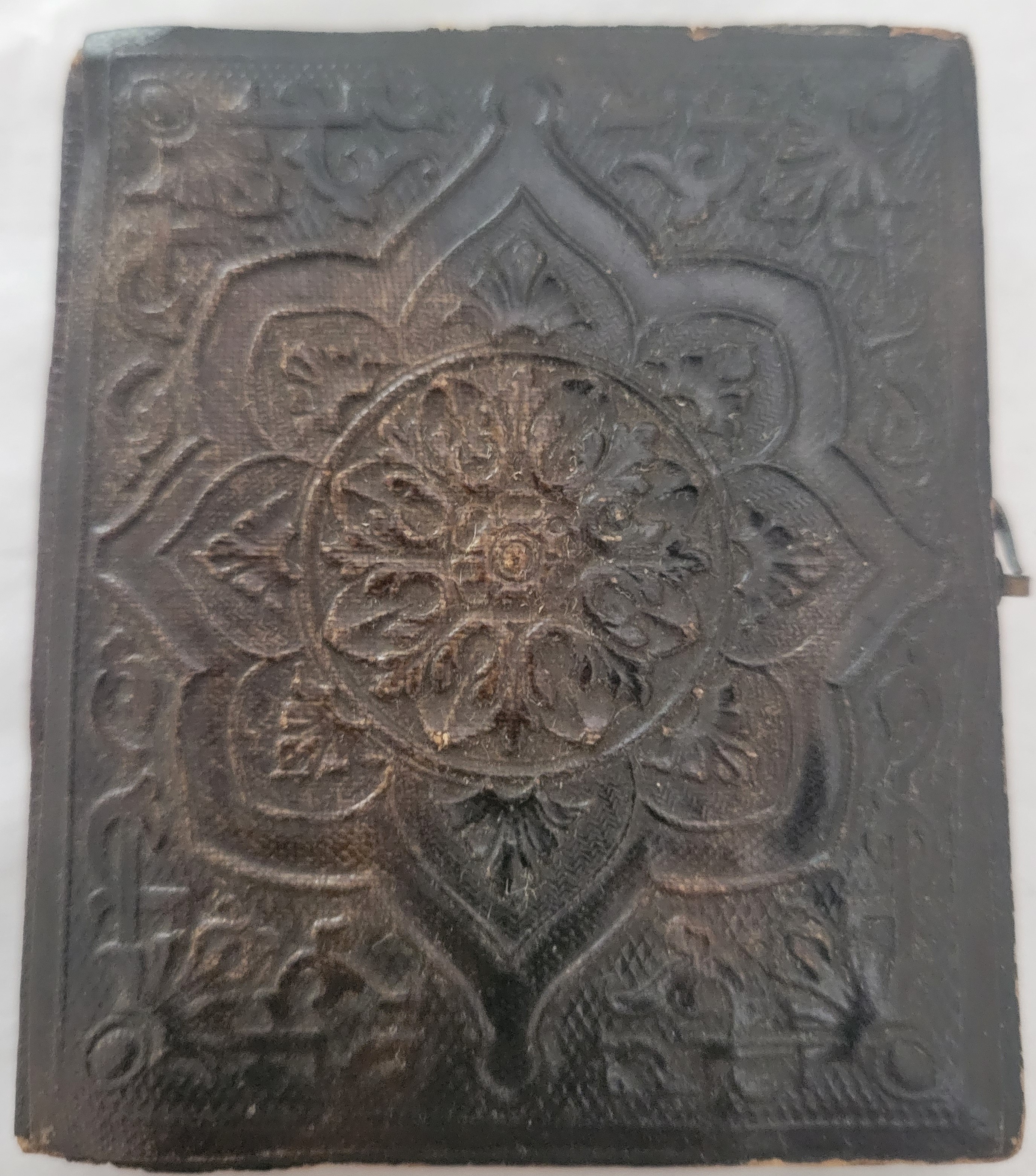
    We have three daguerreotypes in the collection dating circa 1850s.  They are all portraits housed in elaborate leather cases with gilt-metal frames.  The larger photograph is called a sixth-plate daguerreotype portrait of John Taliaferro Lewis (1785-1862), who was the grandson of Charles Lewis, Fielding Lewis’s brother.  John was a Methodist minister and lived at “Stepney” near Manassas.  Through his wife, Francis Tasker Ball, he became the owner of “Portici,” also near Manassas. The two smaller ninth-plate daguerreotypes are both portraits of Ellen Lewis Nye (1834-1886), the granddaughter of Howell Lewis, the ninth son of Fielding and Betty.  She married Anselm Tupper Nye, and they resided in Ohio, where they were both buried.

    Images for Loved Ones

    The daguerreotype was soon replaced in popularity by the ambrotype and tintype, which were both cheaper and easier to develop. (Harding, 2013). 

    An ambrotype is comprised of an underexposed glass negative placed against a dark background. The dark backing material creates a positive image. They were sold in either cases or ornate frames to provide an attractive product and to protect the negative with a cover glass and brass mat. (Library of Congress, 2024)

    We have three ambrotypes in the collection: a landscape and two portraits.  The landscape dates to circa 1855 and shows a group of people gathered around Washington’s tomb at Mount Vernon. Two of the figures were Thomas Coatsworth (1821-1887) and his wife Electra Weller Coatsworth (1832-1869). It is housed in an embossed leather case.

    One portrait is of John Taliaferro Lewis and is almost identical to his daguerreotype. The other portrait is of Daingerfield Lewis (1785-1862).  It dates from the same time and is held in a leather case. Daingerfield Lewis was the son of Captain George Lewis, the fourth son of Fielding and Betty, who served in the Continental Army under his uncle George Washington.

    Tintypes became especially popular because the photographer could take a picture and develop it within just a few minutes. It was called the new “instant photo.”  This “instant photo” could be found at fairs, carnivals, and on the boardwalk, not just professional studios. Due to the tintype price, weight, and unbreakable nature, they became extremely popular during the Civil War because soldiers were able to mail them back to loved ones. (Stewart, 2018)

    The three tintypes in the collection are a group of siblings, two brothers, and one sister (there were eight total siblings).  George Lewis (1832-1883), Fielding Lewis (1839 – 1863) and Betty Fitzhugh Lewis (1847-1920).  Their father was Howell Lewis Jr. (1808-1883), the son of Howell Lewis and grandson of Fielding and Betty.  Howell Lewis Jr. was one of the earliest settlers of Henry County, Missouri, and established Lewis Station (now called Lewis, Missouri).  There is not much information on the siblings besides the basics.  George Lewis, the eldest, was born in West Virginia, died in Nevada, and is buried at the Lewis Station Cemetery.  Fielding Lewis was born in Missouri and died young during his service with the Confederate army in Texas.  Betty Fitzhugh Lewis was born in Missouri as well; he married Milton D Finks, had at least three children, and is buried in Calhoun cemetery.

    Paper, Cardboard, and Formality

    By the later part of the nineteenth century, paper photos mounted on cardboard became more popular. Carte-de-visite became quite a fad after carte portraits of Queen Victoria with her husband and children were published. (Harding, 2013).  Part of why they became popular is they were cheaper to produce because multiple images (eight) could be taken with the same photographic plate, cut into small portraits, and mounted to heavy cardboard. (The Editors of Encyclopedia Britannica, 1998) 

    Two of our carte-de-visites are portraits of two young ladies around 1860.  One is Ellen Lewis Nye, who previously appeared in daguerreotype around the same time.  The second is Mary Ellen Lewis Hogan (1834-1874), who was the daughter of Howell Lewis, Jr. and sister to George, Fielding, and Betty Lewis.  She was born in West Virginia, married Robert Henderson Hogan, and is buried in Illinois.   

    The carte-de-visite was gradually superseded by the cabinet card, which remained popular until the introduction of the Kodak Box Brownie camera in 1900. (City Gallery, 2005)  The cabinet card marked a transition from more formal portraiture to amusing, personal, and even candid images.  They were taken in studios that were equipped with lights, props, and sometimes even hair and makeup. The average price was around $1.50 for a dozen cards, which is around $45 today. (Salvesen, 2021)

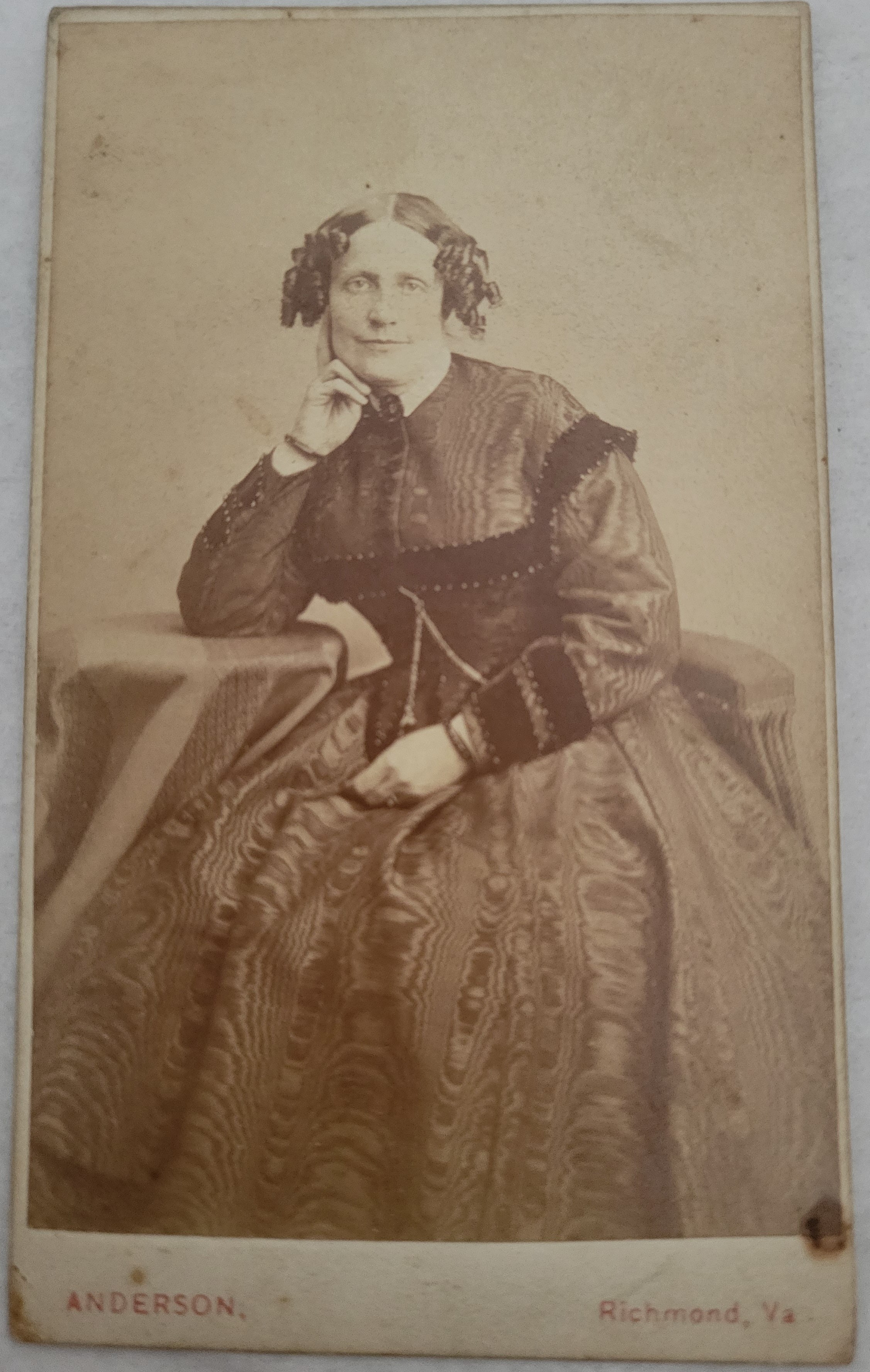
    Our cabinet cards date from 1850 to 1897 and are portraits of three females who, like all the others, are descendants of the Lewis family.  The oldest is of Francis Fielding Lewis Gwathmey (1808-1888), and it was taken around 1850, putting her in her early forties.  Her father was Howell Lewis, son of Fielding and Betty and sister to Howell Lewis Jr.  Francis married Rev. John “Parson” Blair and had twelve children, of which only three outlived her.  She is buried in Richmond, Virginia. 

    We have another picture of Ellen Lewis Nye, who has previously been represented in daguerreotype and carte-de-visite.  The card was taken in 1885, shortly before her death. The last one is Virginia Tayloe Lewis (1842-1916), taken during the Christmas season of 1897.  She was born in Washington, D.C., at The Octagon House.  She was the daughter of Captain Henry Howell Lewis and great-granddaughter to Fielding and Betty. 

    Money and the Magic Lantern

    This is a brief history of photography seen through the descendants of the Lewis family. But make no mistake, these are not the only important pictures in our collection.  There are still trays of glass slides that belong to a curious device called the “lanterna magica,” which became an invaluable tool that, along with gingerbread, helped restore Kenmore.

    Magic lantern glass slide of Kenmore before the restoration

    Heather Baldus

    Collections Manager


    Bibliography

    City Gallery. (2005). Cabinet Card. Retrieved from City Gallery: http://www.city-gallery.com/learning/types/cabinet_card/index.php

    Department of Photographs. (2004, October). The Daguerreian Era and Early American Photography on Paper, 1839–60. Retrieved from The Metropolitan Museum of Art: https://www.metmuseum.org/toah/hd/adag/hd_adag.htm

    Harding, C. (2013, June 27). How to spot a carte de visite (late 1850s–c.1910). Retrieved from The National Science and Media Museum: https://blog.scienceandmediamuseum.org.uk/find-out-when-a-photo-was-taken-identify-a-carte-de-visite/

    Harding, C. (2013, May 25). How to spot a ferrotype, also known as a tintype (1855–1940s). Retrieved from The National Science and Media Museum: https://blog.scienceandmediamuseum.org.uk/find-out-when-a-photo-was-taken-identify-ferrotype-tintype/

    Library of Congress. (2024). Liljenquist Family Collection of Civil War Photographs. Retrieved from Library of Congress: https://www.loc.gov/collections/liljenquist-civil-war-photographs/articles-and-essays/ambrotypes-and-tintypes/

    Salvesen, B. (2021, June 28). The Return of Cabinet Cards. Retrieved from Los Angeles County Museum of Art: https://unframed.lacma.org/2021/06/28/return-cabinet-cards

    Stewart, J. (2018, December 31). Tintype Photography: The Vintage Photo Technique That’s Making a Comeback. Retrieved from My Modern Met: https://mymodernmet.com/tintype-photography/

    The Editors of Encyclopedia Britannica. (1998, July 20). Carte-de-visite. Retrieved from Encyclopedia Britannica: https://www.britannica.com/technology/carte-de-visite

    The Library of Congress. (2024). The Daguerreotype Medium. Retrieved from The Library of Congress: https://www.loc.gov/collections/daguerreotypes/articles-and-essays/the-daguerreotype-medium/

    The University of Texas Austin. (2024). The Henry Ranson Center. Retrieved from The University of Texas Austin: https://www.hrc.utexas.edu/niepce-heliograph/

  • Family Ties: An American Princess

    The George Washington Foundation believes the Washington and Lewis families’ story is worth protecting for future generations. We are in contact with many descendants of the Washingtons and Lewises who have assisted the foundation in presenting the families’ legacies by adding to our collections and archives. We decided to explore the ancestors and descendants interesting tales and life accounts, using the artifacts and documents in our collections as a starting point.   

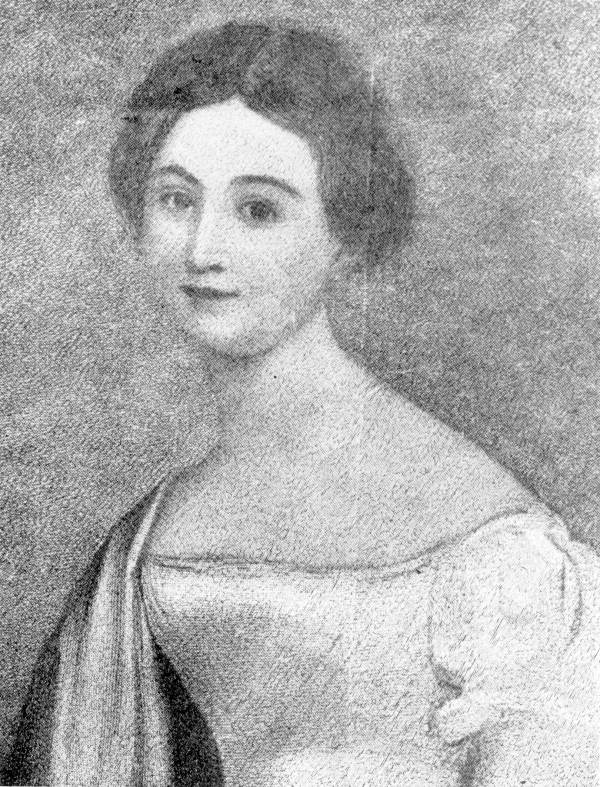
    The first person in our spotlight is Catherine Dangerfield Willis, who was born in Virginia, lived on the Florida frontier, became a historic preservationist, and became a Princess of the Second Empire because of her Washington relation.

    Virginia Native and Washington Descendant

    Catherine Daingerfield Willis was born in Fredericksburg in 1803. She was the daughter of Colonel Byrd Charles Willis and his wife Mary (née Lewis) Willis. From her maternal family side, Catherine was the great-granddaughter of Fielding and Betty Lewis and the great-grandniece of George Washington. (Glenn, 2014)

    Catherine married Atcheson Gray at an early age, around 13 to 17 years old; accounts vary. The newlywed couple resided at their father-in-law’s house, Wakefield (yes, George’s birthplace). (Unknown, 2004)  Sadly, their marriage was cut short when Atcheson died of malaria less than a year after their union, along with their first child. (Bellet, 1976)

    Catherine Daingerfield Willis Gray Murat, watercolor generously donated to GWF by Mrs. Lucy Robb Winston Works and family.

    The Florida Frontier

    After being widowed, Catherine and her family moved south to Tallahassee, the recently christened capital of the Florida Territory (Florida didn’t become a state until 1845) (Gannon, 2003). It had previously been an important Apalachee settlement which had been abandoned after it was burned to the ground by Andrew Jackson in 1818 during the first part of the Seminole Wars. (Smith, 2023) When Catherine and her family took up residence in Tallahassee in the 1820s, it was a rough place and had a reputation as an outlaw frontier town. Men carried guns and knives to protect themselves from the many duels, brawls, and knife fights that were common in the city. The eminent Ralph Waldo Emerson (a noted friend of Prince Murat) traveled to Tallahassee in 1827 and called it “a grotesque place…rapidly settled by public officers, land speculators, and desperadoes.” (Downes, 1956)

    The less-than-stellar reviews of the city didn’t stop the Legislative Council from building three crude log huts for their official meetings. (Gannon, 2003)  There was even the establishment of a city police force in 1826 to combat lawlessness. The police force consisted of only one guy, a City Marshal, but it still counts. (Tallahassee Police Department, 2023)

    In this primitive but developing city, a love story blossomed between Catherine and an exiled French prince.   

    A quick look at the tumultuous life of Charles Louis Napoleon Achille Murat

    Achille Murat was born in the Hôtel de Brienne in Paris to Caroline Bonaparte, Grand Duchess of Berg, Queen of Naples, and sister to Napoleon Bonaparte, Emperor of the French  By 1815, after his uncle’s second exile and the execution of his father Joachim Murat, the family fled to Austria. (Burnett, 1996)

    When Achille turned twenty-one, he emigrated to the United States, landing in New York and immediately applying for naturalization. (Niles, 1823)  Additionally, he renounced all European titles and citizenship. (Brandon, 1944)  Before long, he made his way down to Florida to get in on some of the land deals in the newly acquired territory. His first stop was St. Augustine, where he purchased land and established a plantation called “Parthenope,” which utilized slave labor to grow oranges, sugar cane, cotton, and tobacco. (Roberts, 2004) (Bellet, 1976)

    Prince Murat immediately on arrival in America applied for naturalization and renouncing his European titles.

    While in St. Augustine, he developed a reputation for being a little eccentric. He liked to sit naked in the local Moses Creek during the sweltering Florida summers. (Hanna, 1948)  He was obsessed with eating all different kinds of animals, like turkey buzzards, owls, alligators, and rattlesnakes. (Roberts, 2004)  Finally, he disliked bathing and changing his clothes while living in a humid subtropical climate, and he “washed his feet only after he wore out his shoes.” (Hanna, 1948)

    Home of Prince Murat, which was built around 1790 – Saint Augustine, Florida

    Shortly before he met and married Catherine, he purchased another plantation named “Lipona,” which would be his primary residence in the US until his death. 

    A Marriage Between the Bonaparte’s and Washington’s and Entertaining Europe

    In 1826, Catherine Daingerfield Willis Gray married the ex-prince of Naples and nephew of Napoleon Bonaparte, Achille Murat. Catherine’s father was initially against the match because of the Bonaparte and Murat families’ opposition to the union. Luckily, the Bonaparte’s and Murat’s were made aware that Caroline was the great-grandniece of George Washington, and the family warmly welcomed her. (Bellet, 1976)

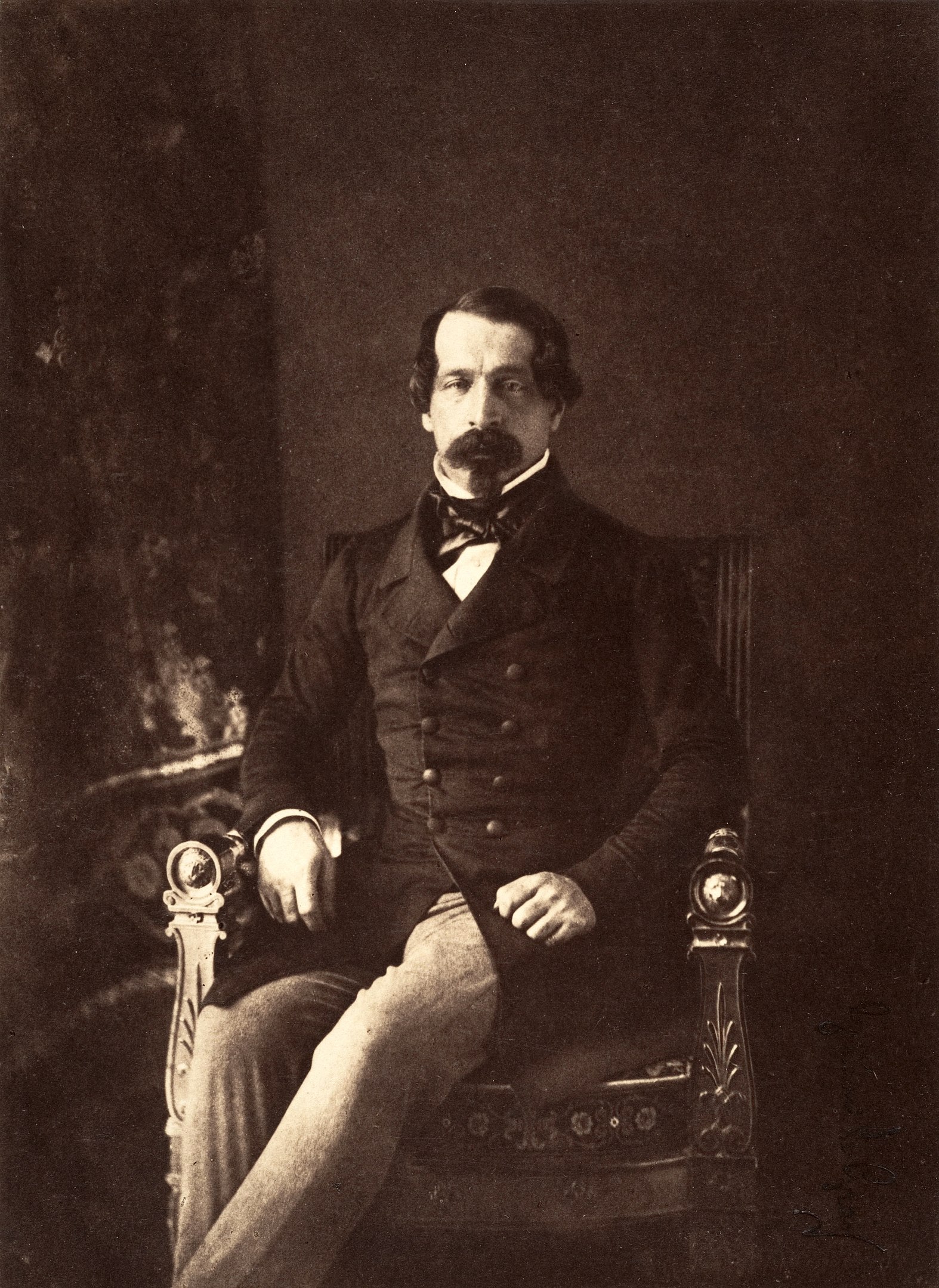
    The couple lived at Lipona outside of Tallahassee until the July Revolution of 1830 in Paris when Charles X abdicated, and Louis Philippe was selected as King. The Murats traveled to Europe as Achille tried to press claims to restore the families’ money and lands, but he failed. (Bellet, 1976)  The couple moved to London, where they spent a few years in high society. Catherine became a favorite of Louis Napoleon (who would become the first President and then Emperor of France, Napoleon III). While in London, Catherine even attended and was given a seat in Westminster Abbey for the coronation of William IV of the United Kingdom. (Bellet, 1976)

    Coronation of William IV, 8 September 1831

    Return to America

    Around 1835, the pair returned to America and set up residence just outside New Orleans, where Achille attempted to run a sugarcane plantation and practice law, both of which failed. (Hare, 2002) . They returned to Florida to their plantation Lipona, which he had mortgaged to the bank and subsequently lost due to nonpayment, requiring the couple to move to a smaller property. (Hanna, 1948) 

    Achille died in 1847, leaving his widow in a precarious financial situation, having acquired massive debt during his life. After the death of her husband, Catherine purchased a cotton plantation named Bellevue (now part of the Tallahassee Museum). She successfully managed the property and, after ten years, had paid all of Achille’s debts. (Sandler, 1999)

    Bellevue Plantation

    When Napoleon III became Emperor in 1852, Catherine was pronounced French royalty and Princess of the Second Empire, which granted her an annuity from the French government and allowed her to use the livery of France. (Bellet, 1976)

    Catherine Daingerfield Willis Gray Murat, Princess of the Second Empire

    Preservation and the Mount Vernon Ladies Association

    In 1853, Ann Pamela Cunningham founded the Mount Vernon Ladies Association (MVLA) to preserve and restore George Washington’s Mount Vernon. There had been other failed attempts by owner John Augustine Washington to sell the property to the US government and the state of Virginia, and even vile rumors of it being looked at by “speculators” to turn it into a resort hotel. Seeing the state of the property belonging to one of the most beloved founding fathers, Cunningham was able to make a deal with Washington after much discussion to sell the property (house, outbuildings, and 202 acres) to the Association for $200,000 (around 7 to 8 million dollars today).  (West, 1999)

    To raise money, Cunningham created a nationwide network of women by appointing one lady from each state as a vice regent to assist in fundraising. (Grabitske, 2004)  In Florida, the daughter of the territorial governor, Ellen Call Long, was asked to become the state regent. She declined but suggested Catherine because of her family ties and influence. Catherine enthusiastically took on the role of vice-regent. She raised $3791.25, which was no small feat, with the entire population of Florida in 1860 being 144,424 people. (United States Census Bureau, 2021)  The MVLA raised the funds and paid off the purchase price within two years despite The Panic of 1857 and the economic recession just before the beginning of the Civil War. (Casper, 2008) (Huston, 1987) Mount Vernon was saved and continues to be owned and maintained by the Association, as it is overseen by a board of regents of ladies from 27 states. (George Washington’s Mount Vernon, 2024)

    Meeting of the Mount Vernon Ladies Association, 1870s (Mount Vernon Ladies Association)

    The Final Resting Place of an American Princess

    Princess Catherine Murat died in August 1867 at her plantation, Bellevue. She is buried beside her husband, Prince Achille Murat, in the Tallahassee Episcopal Cemetery. They had no children.

    Heather Baldus

    Collections Manager


    References

    Bellet, L. P. (1976). Some Prominent Virginia Families, Volumes 1-2. Clearfield.

    Brandon, E. E. (1944). A Pilgrimage of Liberty. Lawhead Press.

    Burnett, G. (1996). Florida’s Past: People and Events That Shaped the State. Pineapple Press.

    Casper, S. E. (2008). Sarah Johnson’s Mount Vernon : the forgotten history of an American shrine. New York: Hill and Wang.

    Downes, A. J. (1956). The Legendary Visit of Emerson to Tallahassee. The Florida Historical Quarterly, 334-338.

    Gannon, M. (2003). Florida A Short History. University Press of Florida.

    George Washington’s Mount Vernon. (2024). About Mount Vernon. Retrieved from George Washington’s Mount Vernon: https://www.mountvernon.org/about/

    Glenn, J. (2014). The Washingtons. Volume 1: Seven Generations of the Presidential Branch. Savas Publishing.

    Grabitske, D. M. (2004). First Lady of Preservation: Sarah Sibley and the Mount Vernon Ladies Association. Minnesota History, 407-416.

    Hanna, A. J. (1948). A Prince in Their Midst: The Adventurous Life of Achille Murat on the American Frontier. University of Oklahoma Press.

    Hare, J. (2002). Tallahassee: A Capital City History. ‎ Arcadia Publishing.

    Huston, J. L. (1987). The panic of 1857 and the coming of the Civil War. Baton Rouge: Louisiana State University Press.

    Niles, H. (1823). Niles’ Weekly Register, p. 272.

    Roberts, D. (2004). Dream state : eight generations of swamp lawyers, conquistadors, Confederate daughters, banana Republicans, and other Florida wildlife. New York City: New York: Free Press.

    Sandler, R. (1999, October 23). The Princess Who Saved Mount Vernon. The Free-Lance Star, pp. 3-4.

    Smith, S. (2023, Apirl 1). Exploring Tallahassee’s April History Day By Day. Retrieved from WFSU Public Media: https://wfsu.org/local-routes/2023-04-01/exploring-tallahassees-april-history-day-by-day/

    Tallahassee Police Department. (2023, December 27). Retrieved from Wikipedia: https://en.wikipedia.org/wiki/Tallahassee_Police_Department

    United States Census Bureau. (2021, April 26). Historical Population Change Data (1910-2020). Retrieved from United States Census Bureau: https://web.archive.org/web/20210429012609/https://www.census.gov/data/tables/time-series/dec/popchange-data-text.html

    Unknown. (2004, November 27). Grand mansion is lost to time. Fredericksburg, Virginia, United States of America: The Free-Lance Star.

    West, P. (1999). Domesticating History: The Political Origins of America’s House Museums . Smithsonian Books.

  • Corncrib: A Building as Corny as it Gets

    If you have followed the news of our excavations, you will have kept up to date with our building finds. The past two summers helped uncover evidence of one such structure, which we now believe represents a corncrib. While the name may seem self-explanatory, we have frequently heard the question, “What is a corncrib?”  To answer this, we thought we would dedicate our newest blog to it.

    Indian Corn Source: Wisconsin Horticulture

    Corn as a Crop

                Long cultivated by Native Americans, early colonists quickly adopted corn into their agricultural repertoire. As a crop, corn proved easy to cultivate due to its hardy and adaptable nature, and its high yield to seed ratio made it a prosperous choice. The corn season lasted from planting in early May to the September-October harvest. After this, collected corn, counted as barrels, lay in corncribs. Husking and shelling occurred as needed since home consumption only required a small amount at a given time. This process continued throughout the winter months. 

                As a food staple, corn became an important part of free and enslaved diets in Colonial Virginia. Corn grew in such abundance that it reportedly fed everything. This led to Virginia husbandry relying on the crop and any decline in quantity led to a state of distress. As for the enslaved, records of food rations allotted to enslaved communities often refer to “pecks” or “bushels” of corn. Corn served as a useful ration since small amounts went far and multiple uses for it existed. It also provided better nutrition, which did not go unnoticed by enslavers. Instances of enslaved rations excluding corn resulted in a decline in health, energy, and production. This made the inclusion of the staple essential.  
    Despite their forced labor, enslaved communities integrated corn harvesting into their culture. Annual so-called corn shucking festivities proved frequent sights on plantations, especially as corn production expanded. During this time, the harvested corn lay in heaps next to the crib. As the size of the harvest required many people for husking, this event provided time for socializing. A moment filled with music and dance, even neighboring enslaved individuals and relatives not attached to the property could attend under the guise of providing extra labor. This latter detail explains why such gatherings went ahead. Enslavers often encouraged corn-shucking festivities to speed up the process and at times offered rewards to the person who could shuck the most corn.

    Corn Shucking, Virginia, 1840s Source: Slavery Images

                The expansion of corn production lies in the decline of tobacco. While tobacco served as the original cash crop of Virginia, its cultivation damaged soils, resulting in increasingly poor crop cycles. Some planters, including George Washington at Mount Vernon, opted to plant grains to avoid this trend and thus have more return each year. As tobacco prices fell in the late 1700s, due in part to the Revolution, more Virginia planters turned their focus to grains. This led to an expansion in corn cultivation, as it became a central part of the economy.

    No longer used for just animal feed or local consumption, corn became a cash crop. In doing so, more structures related to grains appeared or underwent expansion. Gristmills became more common as did grain stores near wharfs. On plantations, the land devoted to grains increased to sustain production with additional or larger storage buildings, such as corncribs, appearing to accommodate the harvest. Corncribs would soon rank amongst the most common structures to appear on farmlands. Apart from buildings, husking and shelling additionally underwent a change as this now occurred over the course of a few weeks, thus allowing for enslaved gatherings, rather than throughout the winter.

    Corncrib

                With corn holding such an important position in society, it required proper storage. Native Americans constructed the first corncribs with Europeans taking note of them shortly after arriving on the continent. The structure evidently held significance for indigenous tribes as many place and group names derive from the various words for a corncrib. Interestingly, our modern term “barbecue” comes from “barbacoa,” an indigenous term from present-day Georgia, which has several meanings including corncrib. Apart from ranging in size, the design of corncribs dating from pre-contact to present appear very similar, as several key elements remain consistent.

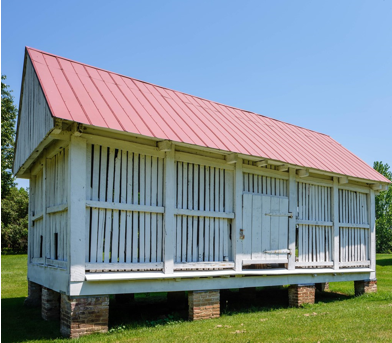
    The main roles of a corncrib constitute storing harvested corn, protecting it, and keeping it dry. To that end, the most recognizable characteristic involves the floor of the structure resting at least a foot off the ground via posts or piles/piers. Raising the structure deterred vermin from accessing the crop and helped keep it dry. The design of the sides additionally helped with this latter desire as vertical slats or offset horizontal siding provided gaps for airflow. Vertical slats for “cribbing” proved the most common during the colonial period.

    Corncrib raised on piers with vertical slats Source: Thomas Stone National Historic Site

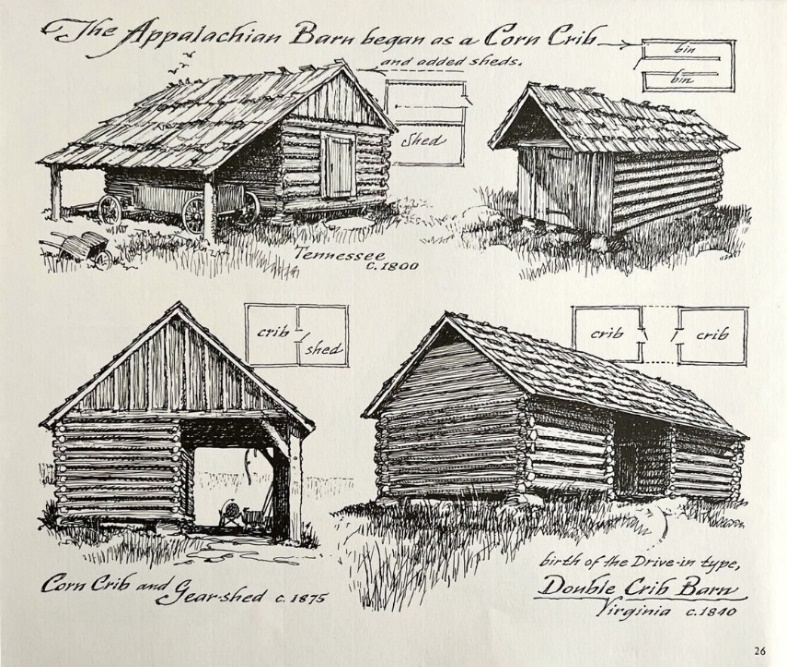
    Overall, the structure required robust timbers and construction techniques that would allow it to carry dead loads and resist interior pressure. Once constructed, the building generally took on a rectangular shape with a gabled roof of shingles, boards, or thatch. This roof could extend over one or more sheds attached to the long sides of the building while a door, typically on a shorter side, provided interior access. The interior varied from an open plan to one with removable dividers to form cribs, hence the name of the structure. Post-colonial era designs could include an additional crib to form a double or “drive-thru” corncrib.

    Corn Crib Designs Source: Sloane 1990: 26

    Since its adoption by colonists, the building’s name has experienced some variation. While we have gone with “corncrib” at Ferry Farm, several other accurate terms exist. The most simple, and unhelpful for interpreting records, consists of “barn.” During colonial times, “barn” could refer to nearly any outbuilding, and corncribs fall under a barn style called “crib-barns.” This, in turn, may refer to the building. While no standard for outbuildings included on properties existed during this time, corncribs counted amongst the most common. Other name options include the similar “corn-house” and the term “stacks.” This latter term may or may not have “corn” attached to it, but referenced ability to relocate the structure. In the end, unless corn appears in the name, identifying the building requires context clues such as location, crop knowledge, structure design, and recorded narratives.

    Our Findings

                So what did we find to suggest we had a corncrib? To start, we know from documents dating to Washington occupation that corn constituted one of the crops grown at Ferry Farm. We knew little beyond this until archaeology provided an insight. Across our 2020 and 2021 field seasons, we uncovered four aligning postholes that each measured 10ft apart. At the same time, a decline in artifact count occurred, suggesting our dig lay on the outskirts of the work yard. In 2022, we expanded this dig area to determine if the postholes belonged to a fence or, as we hoped, a building. The low artifact count continued to support the theory of entering the agricultural world and we soon discounted a fence line, as our excavation revealed no further postholes on that line. Moving 20ft south from the postholes, we uncovered a line of three features, also 10ft apart, which aligned with the first three postholes. The issue? They came from piles/piers rather than posts, and one of the stones for that line remains in place (Fig. 5).

    Image depicting the lines of 4 postholes and 3 pile/pier sites as of 2022

                The two parallel lines evidently went together, but we now needed to identify a structure that used both building techniques. After perusing historic images and sources on 18th century agricultural buildings, we identified the corncrib as the only structure that fit this construction. While corncribs most often stand alone on piles/piers or posts, some examples include an open shed area for carts and temporary storage as discussed earlier. Neither part of the structure would have led to large artifact deposits as the crib merely stored corn while the shed area supported the act of storage.

                So what did our corncrib look like? Well, apart from identifying the crib and shed portions, we can say the crib must have rested at least a foot off the ground. Furthermore, in keeping with standard construction, the siding, likely vertical slats, would have breaks in between to allow airflow. As for the basic dimensions of the corncrib, our emergency access road unfortunately runs through the unexcavated portion.

    Since we cannot inhibit this access, we only have the complete outline of the shed and one side of the crib (Fig. 6). Still, we can make a few estimates for the structure’s dimensions. While we cannot determine height at this stage, the outline of the shed indicates this portion measured 20x30ft. This, in turn, tells us that the corncrib itself measures 30ft in length. As for the crib’s width, several details allow us to determine a range. One source stated that the length of a corncrib should be 2-3 times the width. Of the examples we identified, they generally had a length about twice the size of the width, with the widest one measuring 20ft. On top of this, shed portions do not appear much wider than the accompanying crib. With this in mind, our crib likely measures 15-20ft in width.

    Overview of excavation site showing the 20x30ft shed outline and start of the crib

    Future

                By now, you must wonder when you will see a corncrib at Ferry Farm. One of our goals involves reconstructing the Washington landscape and this will include the corncrib. Currently, we have started construction on a root cellar and slave quarter. Once completed, these structures will be part of your visit and we will turn our attention to reconstructing more areas. This may include the corncrib, but will likely take a few years. In the meantime, continue to visit our ongoing construction projects and make sure to talk with the archaeologists and interpreters.

    Our future corncrib may look similar to this small one at the Museum of Appalachia Source: Wikipedia

    Historical Fact: Those familiar with the life of Harriet Tubman may recognize the term “corncrib” as she, her brothers, and several others briefly hid in one while she led them to freedom.


    Emma Schlauder

    Research Archaeologist


    Belanger, Fergus & T. H. Warner   1934     Notes about Williamsburg and William and Mary College. The William and Mary Quarterly 14(3): 239-240.

    Carson, Cary & Carl Lounsbury (editors)   2013     The Chesapeake House: Architectural Investigation by Colonial Williamsburg. The University of North Carolina Press, Chapel Hill, NC.

    Carter, Landon  1908     Diary of Col. Landon Carter. The William and Mary Quarterly 16(3): 149-156.

    Chandler, Dana 2000     The Prehistory of Randolph County, Alabama. Central States Archaeological Journal 47(1): 28-29.

    Copeland, Pamela C. & Richard K MacMaster 1989     The Five George Masons. University of Virginia Press, Richmond, VA.

    Harriet Tubman Underground Railroad Byway  2023     25. Choptank Landing: Site of Harriet Tubman’s Most Daring Rescues. Harriet Tubman Underground Railroad Byway < https://harriettubmanbyway.org/choptank-landing/&gt;. Accessed 19 June 2023.

    Herman, Bernard L.  1992     The Stolen House. University Press of Virginia, Charlottesville, VA.

    Hollingsworth Jr., G. Dixon  1979     The Story of Barbecue. The Georgia Historical Quarterly 63(3): 391-395.

    Katz-Hyman, Martha B. & Kym S. Rice (editors) 2011     World of a Slave: Encyclopedia of the Material Life of Slaves in the United States. Greenwood, Santa Barbara, CA.

    Kimball, Fiske  1954     Gunston Hall. Journal of the Society of American History 13(2): 3-8.

    Lanier, Gabrielle M. & Bernard L. Vlach  1997     Everyday Architecture of the Mid-Atlantic: Looking at Buildings and Landscapes. The John Hopkins University Press, Baltimore, MD.

    Linebaugh, Donald W. 1994     “All the Annoyances and Inconveniences of the Country”: Environmental Factors in the Development of Outbuildings in the Colonial Chesapeake. Winterthur Portfolio 29(1): 1-18.

    Lounsbury, Carl R. (editor) 1994     An Illustrated Glossary of Early Southern Architecture and Landscape. University Press of Virginia, Charlottesville, VA.

    Morgan, Philip D.  1998     Slave Counterpoint: Black Culture in the Eighteenth-Century Chesapeake & Lowcountry. The University of North Carolina Press, Chapel Hill, NC.

    NPS 2021     Barnyard Trail: Corn Crib. Fire Island National Seashore, NPS <https://www.nps.gov/ places/barnyard-trail-corn-crib.htm>. Accessed 24 May 2023.

    Siener, William H. 1985     Charles Yates, the Grain Trade, and Economic Development in Fredericksburg, Virginia, 1750-1810. The Virginia Magazine of History and Biography 93(4): 409-425.

    Sloane, Eric 1990     An Age of Barns, reprint of earlier edition. Henry Holt & Co., New York City, NY.

    Speck, Frank G. 1907     Notes on the Chickasaw Ethnology and Folk-Lore. The Journal of American Folklore 20(76): 50-58.

    Stilgoe, John R. 1982     Common Landscapes of America, 1580-1845. Yale University Press, New Haven, CT.

    Wells, Camille 1993     The Planter’s Prospect: Houses, Outbuildings, and Rural Landscapes in Eighteenth Century Virginia. Winterthur Portfolio 28(1): 1-31.

    Upton, Dell & John M. Vlach (editors)  1986     Common Places: Readings in American Vernacular Architecture. The University of Georgia Press, Athens, GA.

    Vlach, John M. 1993 Back of the Big House: the Architecture of Plantation Slavery. The University of North Carolina Press, Chapel Hill, NC.

    Washington, Augustine Jr. 1750  Record of Sale and Payment to Mary Ball Washington.

    Washington, George  1749 Letter to Lawrence Washington dated 5 May 1749. Washington Papers, National Archives, Washington, DC.

    Washington, George  1771 Survey of Ferry Farm.                 

    Washington, Mary Ball Undated     Letter to John Augustine Washington, undated no. 154. Box: 87, Folder: undated no. 154, Identifier: RM-904; MS-5404, The George Washington Presidential Library at Mount Vernon, Mount Vernon, VA.

  • Bane of the Washingtons: Deaths in the Next Generation and Amongst the Enslaved

    Welcome back to our 3-Part Blog charting tuberculosis (TB) in the extended Washington Family. If you are new to this series, Part I examined how the disease works, charted its history and explained standard courses of treatments in the 1700s. Part II looked at victims from George’s generation, including his brothers Lawrence and Samuel and brother-in-law Fielding Lewis. You can find those blogs here and here. In our final entry, we will continue to look at individuals who suffered from the disease and see more evidence of how the disease stayed within a family. 

    George Steptoe Washington (1771-1809, aged 37)

    George Steptoe Washington Source: MESDA

    As covered in Part 2, George’s brother Samuel died of tuberculosis, as did several of his sons, including George Steptoe Washington. A product of his father’s fourth marriage to Anne Steptoe, George Steptoe became an orphan at age ten. He and his siblings then fell under the care of their uncle, George Washington. George Steptoe would go on to marry Lucy Payne, the sister of Dolly Madison. Like his father, the point of infection cannot be determined but is likely derived from a family member. George Steptoe certainly faced exposure to TB via his father from the moment of his birth but may have caught it later in life. Regardless, his health experienced a serious decline sometime after 1800, and he ultimately traveled to Augusta, Georgia, in search of health benefits. He died there on January 10, 1809.

    George Augustine Washington (1759-1793, aged 34) & Frances “Fanny” Bassett (1767-1796, aged 29): George Augustine was another nephew of George Washington through his youngest brother Charles and quickly became his uncle’s favorite. He joined the Mount Vernon household in the early 1780s but had already experienced several periods of ill health that forced him to take leaves of absence from the battlefield. A diagnosis of tuberculosis soon came, leading George Washington to take an involved interest in his nephew’s health. Despite having witnessed the lack of improvement made by his brother Lawrence during such ventures, George funded trips to Berkeley Springs, Barbados, and Bermuda for George Augustine. He returned in May 1785 “in better health than when he set out, but not quite recovered.”1

    Fanny Bassett Source: Mount Vernon

    During George Augustine’s absence, Frances “Fanny” Bassett, Martha Washington’s favorite niece, officially joined the household. Upon his return, the two quickly formed an attachment and married on October 15, 1785. George Augustine later became the manager of Mount Vernon, but his health steadily declined, leading his uncle to describe him as “a shadow of what he was.”2 Despite barely being able to ride, George Augustine traveled to Berkeley Springs in October 1791 but would be bedridden and coughing up blood by August 1792. After battling the disease for over ten years, he finally succumbed in 1793. His death “had been long expected,”3 but nevertheless caused his uncle to feel “it very keenly.”4

    The death of her husband left Fanny a young widow with three very young children. Unlike many in that situation, she retained a comfortable lifestyle. As the beloved niece of George and Martha, she always had a home at Mount Vernon and frequently served as an additional hostess. Regardless, she did not remain a widow for long and married Tobias Lear, secretary to her uncle, in August 1795. Sadly, she passed less than a year later, in March 1796, with Lear lamenting, “The Partner of my life is no more!”5 Thought to have died of TB, Fanny likely contracted it from George Augustine during their marriage.

    Charlotte (~1770-unknown, aged 27+): Charlotte served as an enslaved seamstress at Kenmore and later at Betty Washington’s final home, Millbrook. She first appears, aged eleven, in the 1781 probate inventory following the death of Fielding Lewis. Few details about her life exist apart from the record of a son, George, and another baby in a document from 1797. However, Charlotte clearly held an important position within Betty Washington’s household, given the medical records we have.

    Bill for Charlotte’s medical treatments

    Charlotte took ill at Millbrook in 1796 with some form of respiratory complaint. Rather than care for Charlotte personally, Betty sent for the doctor seven times over the year. Charlotte underwent throat examinations and notably received treatment with mercury tablets and ammonia liniment for the chest. The former served as a common cure, which “purged” the body of any imbalances, while the latter mimicked early Vicks VapoRub by opening the airways. None of these treatments would have been pleasant, and the mercury certainly did more harm than good, but Charlotte recovered nonetheless. However, Betty Washington Lewis’ death in 1797 prompted the division of her enslaved staff. In an all-too-common occurrence, Charlotte and her son went to different properties (no mention of the baby exists). They likely saw little of each other after this or never met again. At age twenty-seven, we know Charlotte resided on a property owned by Charles Carter in Frederick County, Virginia. After this, she disappears from the record.

    The true nature of Charlotte’s illness remains a mystery. She certainly suffered from a respiratory ailment and received treatment in line with that given to tuberculosis patients. Nevertheless, we cannot conclusively diagnose it as TB or determine if it ever affected her again. Despite this, her story reflects an important aspect of life in eighteenth-century Virginia and a failing of history. An interest in keeping the enslaved healthy enough to work existed, but the actual health of an enslaved individual often went undocumented. We only know of Charlotte’s illness due to the bill sent by the doctor listing dates and treatments. Even this reflects a rarity as the lady of the household generally oversaw medical treatment for the enslaved rather than a physician. Considering the widespread nature of TB, its higher prominence in poor and minority communities, enslaved living and working conditions, and the high death rates recorded amongst Philadelphia’s free Black population in the early 1800s, the disease likely accounted for a high number of deaths within Virginia’s enslaved population. Sadly, we may never know how many individuals died of the disease or its impact on their lives.

    You can read the full details of Charlotte’s treatment and life here.

    Hercules Posey (~1754-1812, aged roughly 64)

    Hercules Posey Source: Mount Vernon

    One Black individual known to have died of tuberculosis was Hercules Posey. Hercules came to Mount Vernon in 1767 after his previous enslaver, John Posey, failed to pay a mortgage owed to Washington. Having served as a ferryman for Posey, Hercules initially took up the same position. By 1786, he had moved on to the position of cook, for which he is best known. Highly skilled in his culinary abilities, Hercules counted amongst the nine enslaved individuals the Washingtons brought with them to Philadelphia in 1790. Early 1797, however, found Hercules working as a laborer at Mount Vernon, and he acted to self-emancipate in February. In doing so, Hercules left behind at least three children, Richmond, Evey, and Delia, who he shared with his late wife, Alice. Due to Alice’s status as a dower slave, none of their children would receive their freedom in Washington’s will.

    After his escape, Hercules made his way to New York City, where he again worked as a chef. He died on May 15, 1812, with the cause given as TB, and his grave lies in the Second African Burying Ground in Lower Manhattan. Given the span of time between his escape to freedom and death, he possibly contracted the disease after leaving Mount Vernon. Then again, it remains entirely possible that he became ill while enslaved in Virginia or Philadelphia. In this case, he either suffered with an active case for many years, with periods of waxing and waning or had a dormant case that reactivated later in life.

    Others: Additional members of the extended Washington family contracted the disease as time went on, and the same goes for the enslaved. However, an interesting aspect of tuberculosis is that far more individuals may have had it but remained unaware. As covered in Part I, TB can go dormant by walling itself off in the lungs. Minor symptoms would have appeared at the time of infection, but those pauses when the disease goes dormant. Depending on how long it remained active and how severe, the TB may have gone unnoticed or been misdiagnosed. If the disease never reactivated, a person could live a full life and never know they had it.

    Today, we diagnose tuberculosis through symptom analysis and testing. Multiple successful treatments additionally exist to help people overcome the disease. For the 1700s, however, symptoms alone provided the diagnosis, and the dormant phase served as the only successful reprieve from the disease. The fact that our modern technology and medical knowledge would have saved many of the people covered in this 3-part blog appears evident. Nonetheless, it remains unclear just how many people in the extended Washington family actually contracted TB. This then raises the question, if TB testing had existed in the 1700s, would individuals such as George and Betty Washington have turned up positive?

    Emma Schlauder

    Research Archaeologist


    Bibliography

    Anderson, Alicia K. & Lynn A. Price (editors) 2018     George Washington’s Barbados Diary: 1751-52. University of Virginia Press, Charlottesville, VA.

    Budinger, Meghan & Mara Kaktins 2020    Charlotte and the Mercury Pills. Lives & Legacies Blog, The George Washington Foundation <https://livesandlegaciesblog.org/2020/06/17/charlotte-and-the-mercury-pills/&gt;. Accessed April 11 2023.

    Chernow, Ron 2010     Washington: A Life. Penguin Books Ltd, London, UK.

    5 Eliassen, Meredith, Tobias Lear. Digital Encyclopedia of George Washington’s Mount Vernon, George Washington’s Mount Vernon < https://www.mountvernon.org/library/digitalhistory/digital-encyclopedia/article/tobias-lear/&gt;. Accessed April 11 2023.

    1-4 Fore, Samuel K. George Augustine Washington (ca. 1759-1793). Digital Encyclopedia of George Washington’s Mount Vernon, George Washington’s Mount Vernon < https://www.mountvernon.org/library/ digitalhistory/digital-encyclopedia/article/george-augustine-washington-ca-1759-1793/>. Accessed April 11 2023.

    Glen, Justin 2014     The Washingtons: A Family History, Vol 1, Seven Generations of the Presidential Branch. Savas Beatie LLC, El Dorado Hills, CA.

    Lenhart, Chelsea  Hercules. Digital Encyclopedia of George Washington’s Mount Vernon, George Washington’s Mount Vernon < https://www.mountvernon.org/library/digitalhistory/digital-encyclopedia/ article/hercules/>. Accessed 11 April 2023.

    Rankin-Hill, Lesley M.  1997     A Biohistory of 19th-Century Afro-Americans: The Burial Remains of a Philadelphia Cemetery. Bergin & Garvey, Westport, CT.