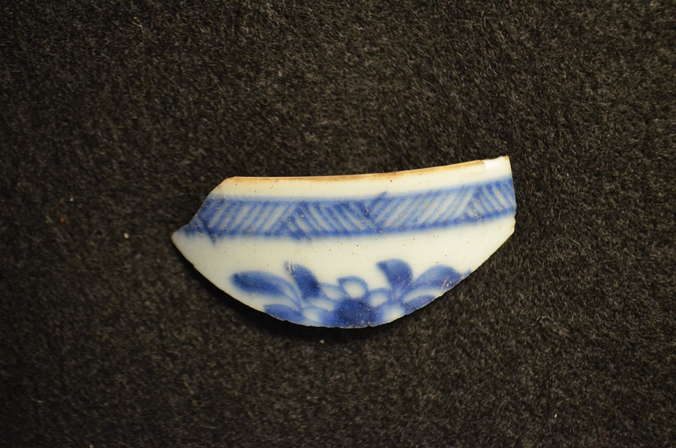
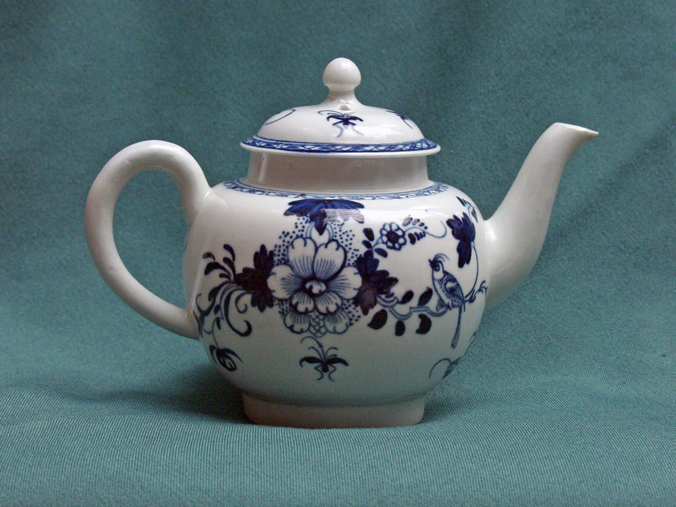
The replica Washington house at George Washington’s Ferry Farm has been open for tours for one year now but we still continue to add reproduction furniture and objects to the rooms inside. Since the house is a replica built using archaeology, historic research, and expert knowledge, we are using the same three foundations to create replica objects to display inside the house so that visitors may have a hands-on interactive experience. Guests may sit on chairs, lie on the beds, pick up tumblers, hold tea pots and much more! Here in the archaeology lab at Ferry Farm, we’re always hard at work making new reproduction ceramic and glass items for the Washington house, as seen in this video. Let’s take a look at some of our newest additions!
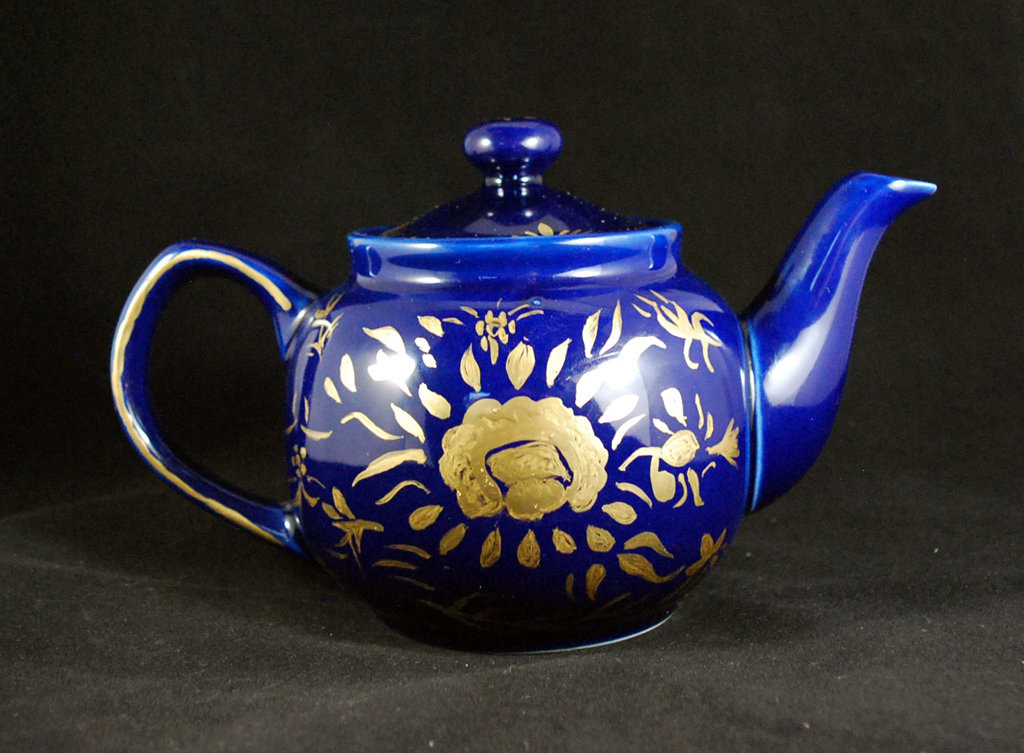
This adorable little teapot is a reproduction of a ware type called Littler’s Blue which had a very short run between 1750 and 1765. These pots were often gilded with gold so we found a tiny blue teapot and made it fabulous.

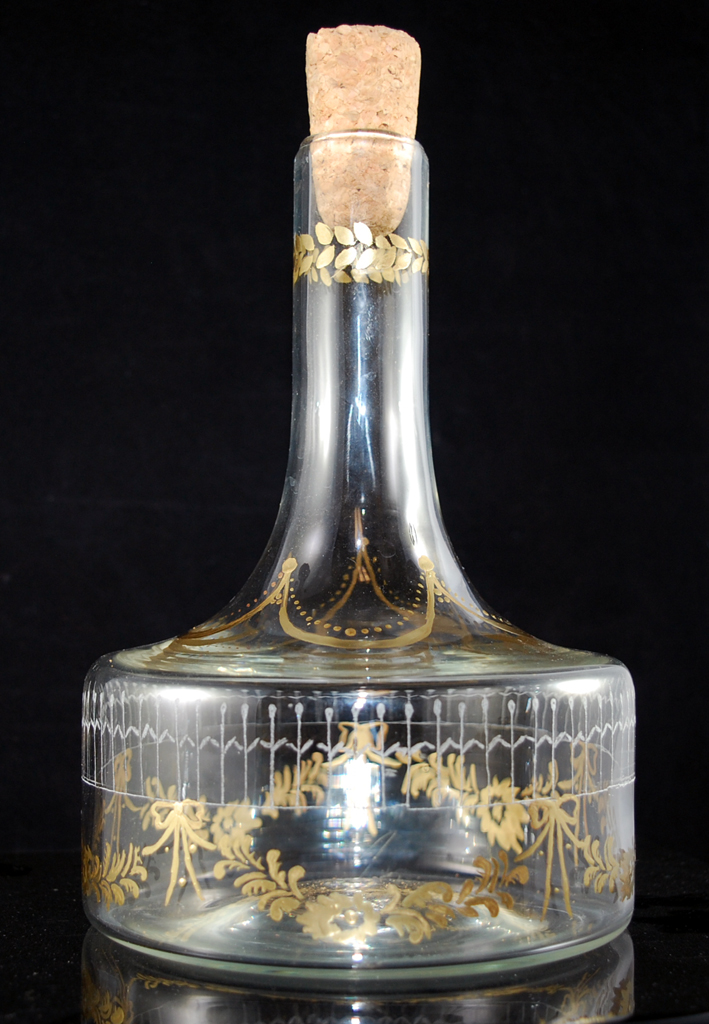
We needed a decanter for the Washington house and while the shape of this one wasn’t perfect we were able to engrave it with a tulip motif based on artifacts recovered archaeologically at Ferry Farm. And because we caught gilding fever one of our very talented interns embellished it further to match eighteenth century examples. We also whittled down the ridiculous cork, although we’re searching for a more appropriate glass one.

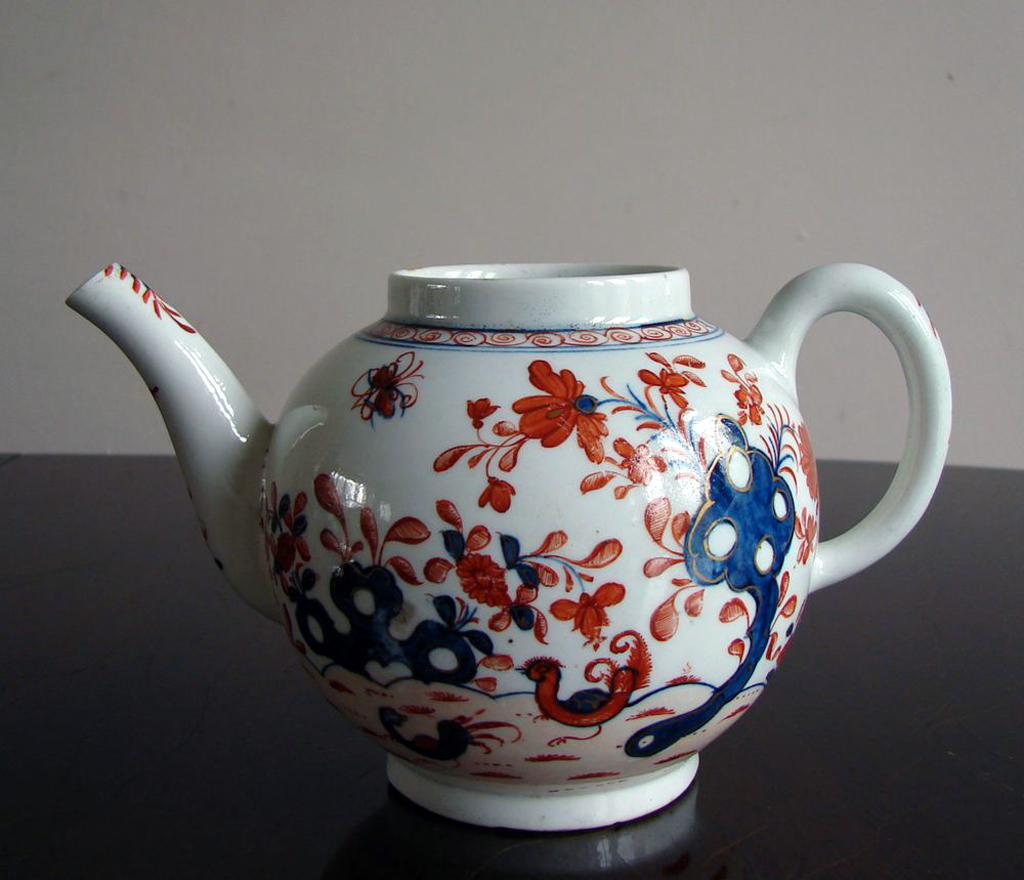
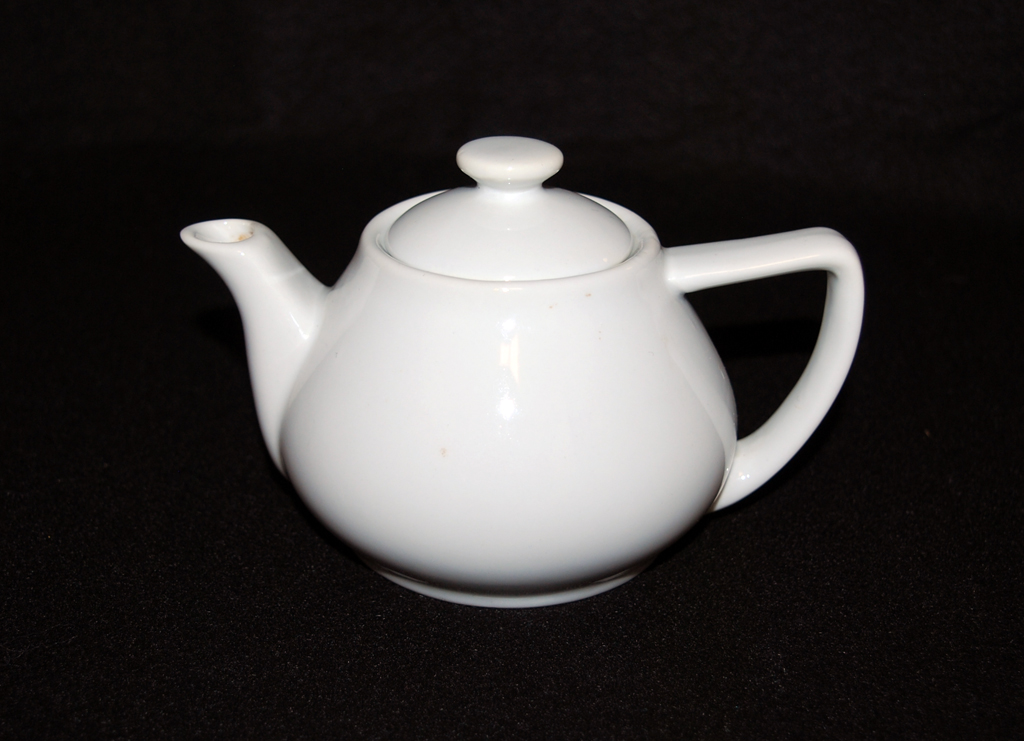
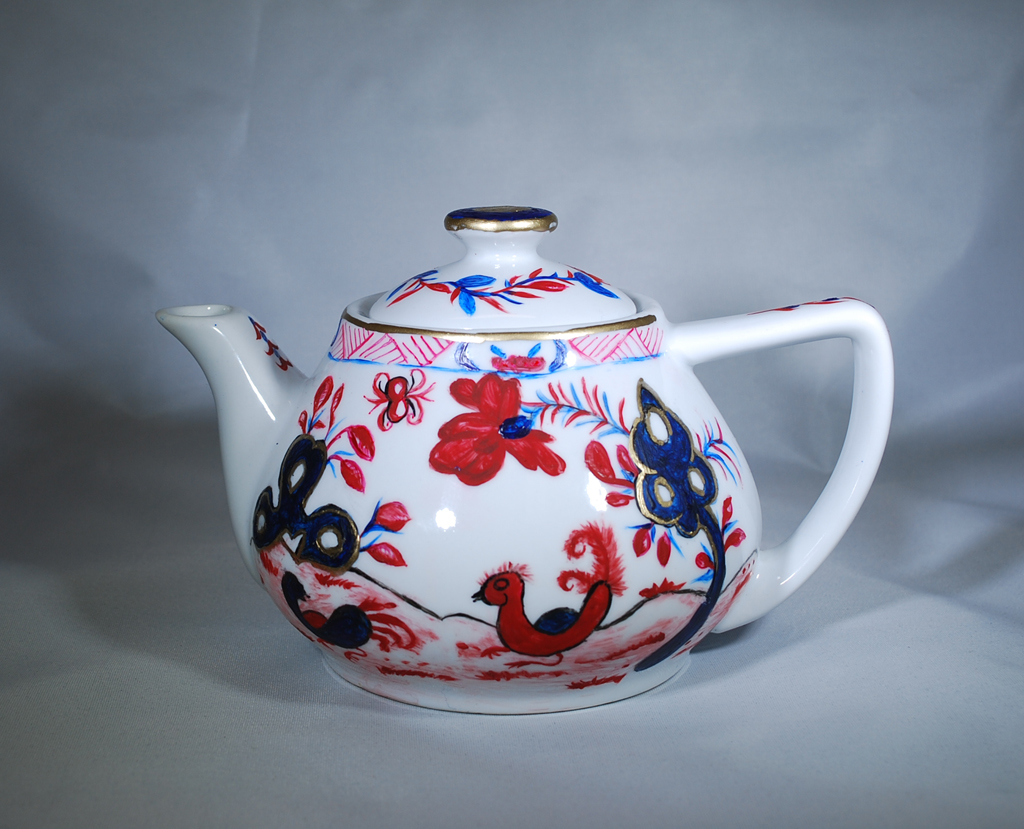
We’ve excavated a lot of Chinese porcelain with what is called at ‘Imari’ palette, which is defined by under the glaze blue hand-painting, over-the-glaze red painting, and gilding. Reproduction Imari is hard to find so we turned this plain white teapot into an Imari. Our inspiration was the 18th century teapot below featuring cute little silkie chickens!
Our staff then set out to turn this colonial revival basin into a tin-glazed serving bowl. Our excavations have turned up quite a bit of hand-painted polychrome tin-glaze so it was a must have for the new house. We decided to copy the eighteenth century bowl below. A little bit of paint and presto! Bye basin and hello serving bowl! Can you spot the tiny bee hidden among the flowers?


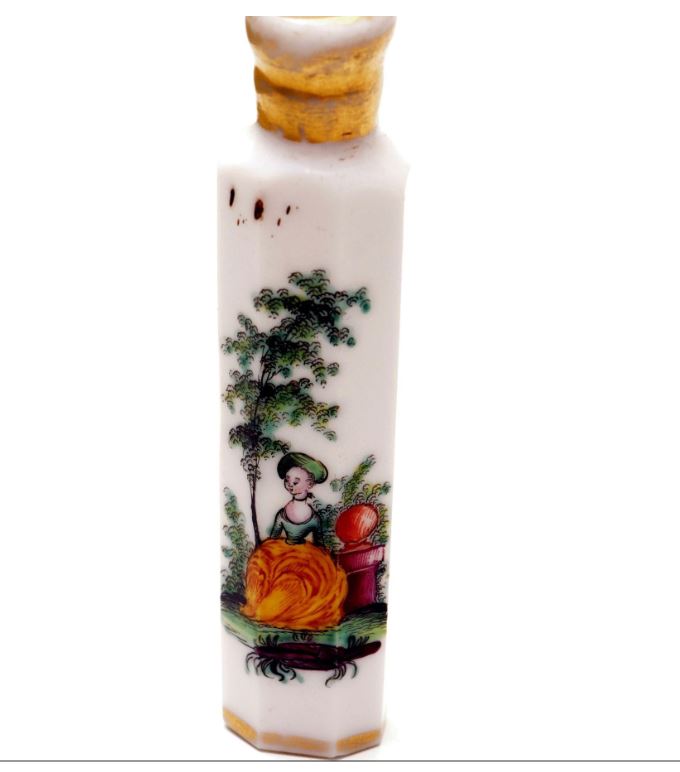
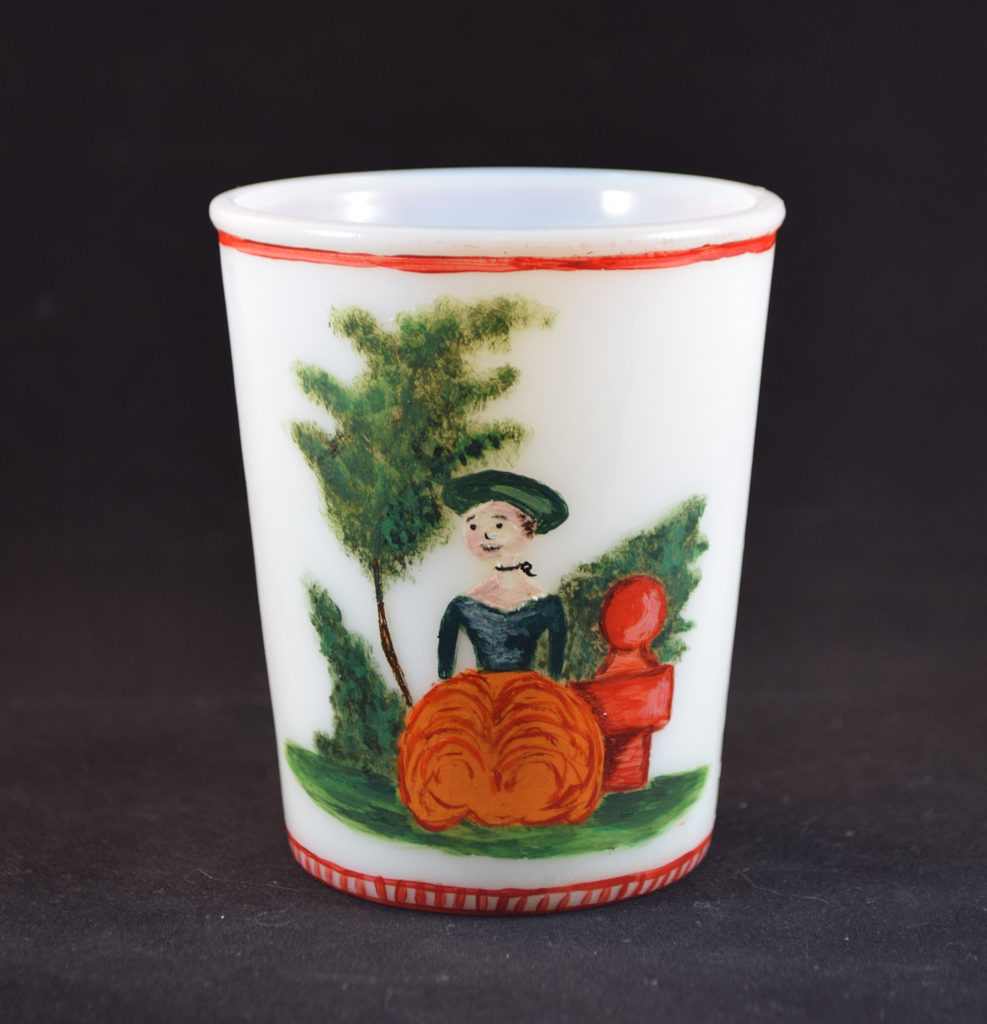
We’ve been very fortunate to have a few extremely artistic interns, one of whom decorated this milk glass tumbler with an eighteenth century design from the vase below. Some artistic license was taken and we decided to leave out the odd crab/lobster/crayfish….thing at the feet of the lady. We think she turned out pretty nicely and since we’ve excavated a lot of painted milk glass at Ferry Farm she is a good fit for the house!
If you’d like to see any of these in person, please come take a tour of the Washington house replica at Ferry Farm! Where, unlike most museums, touching the (reproduction) objects is highly encouraged!
Mara Kaktins, Archaeologist
Archaeology Lab Supervisor
 Today, we revisit the Chinese Export Porcelain (CEP) reproduction ceramics now displayed or to be displayed in the future in the Washington house replica at George Washington’s Ferry Farm. We’re examining the artifacts recovered at Ferry Farm, the complete 18th century objects those artifacts represent, and the reproduction pieces inspired by these artifact sherds as well as by the complete originals. This is the final post in this three week series and in it we’ll take a look at two special styles of CEP known as imari and famille rose.


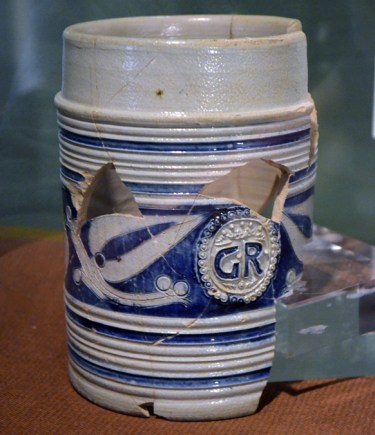
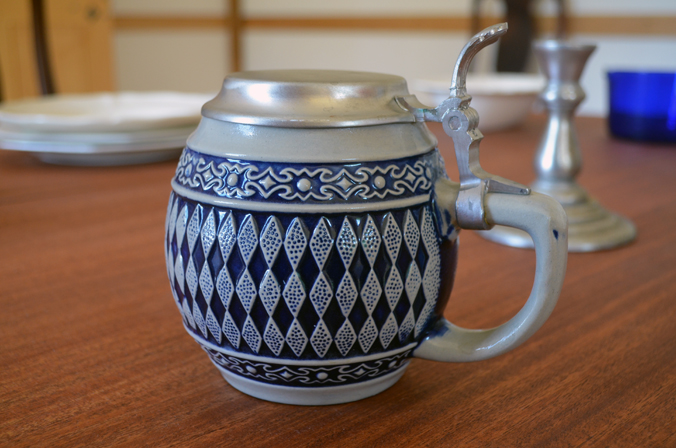
 piece was “Original Gerzit,” and some internet research revealed that the Gerzit Company in Höhr-Grenzhausen, Germany, was originally the pottery founded by Simon Peter Gerz in 1857. The family owned and continued to operate the pottery through World War II, at which time they changed the name to Gerzit. By German law established in 1887, Westerwald produced for export has to be marked Made in Germany. Westerwald produced for sale in Germany doesn’t have to carry a mark at all. Any Westerwald produced after World War II for export has to specify whether it was made in East or West Germany. Putting all of that together, and comparing it to the mark on our newly acquired mug, shows us that it was produced sometime between 1949 (when the company name changed) and 1997 (when the company closed) and was originally intended for sale within Germany. How it ended up in a thrift store in Virginia is anyone’s guess, but it was a very lucky find for us!