Lives and Legacies

Tag: Samuel Washington

  • Bane of the Washingtons Part II: The Deaths of Lawrence, Fielding, and Samuel

    Welcome back to our 3-Part Blog charting tuberculosis in the extended Washington Family. If you are new to this series, Part I examined how the disease works, charted its history, and explained standard courses of treatments in the 1700s. You can find the blog here, and we encourage a review of the “Treatment” section. In Part II, we will begin to look at the family members who suffered from the disease and how this impacted their lives and those around them.

    Lawrence Washington (1718-1752, aged 33/34):
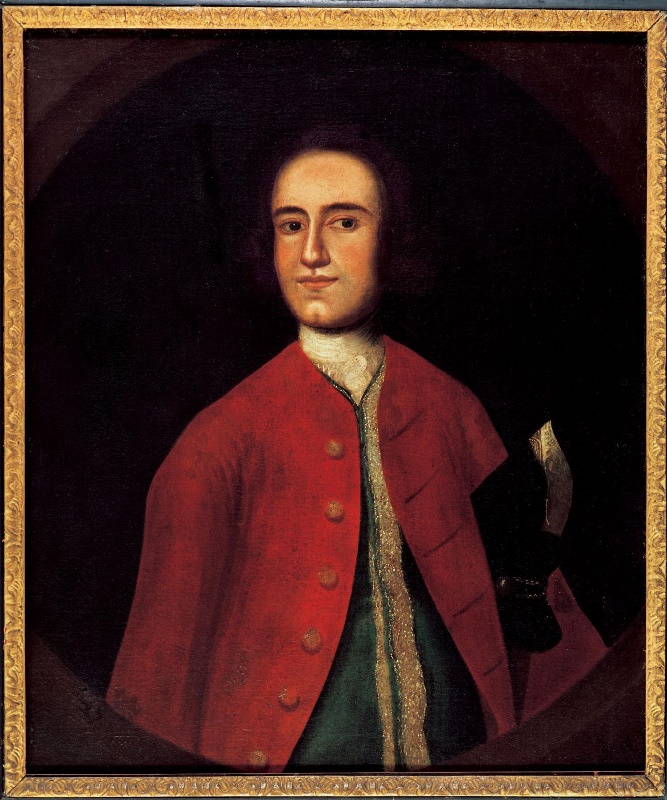
    Lawrence Washington Source: Mount Vernon

    Perhaps the best-known case of tuberculosis in the Washington family pertains to Lawrence Washington. George’s eldest half-brother, credited as serving as a role model, died of the disease in 1752, which subsequently laid the foundations for George to inherit Mount Vernon and become the Father of His Country. Behind this, however, lies one of the more clear timelines for the devastation the disease.

                Lawrence may have contracted tuberculosis during his service in the War of Jenkins’ Ear (served 1740-1742) or after his return to Virginia in 1742. Certainly, he had developed severe enough symptoms, particularly a cough, by the end of 1748, to cause him to take a leave of absence from the House of Burgesses. He resumed his duties in the spring of 1749, but his illness forced him home for a final time in May. That same month, George wrote hoping for news that his brother’s cough had improved and that he had “given over the thoughts of leaving Virginia.”1 Lawrence could not provide his brother with the news he desired, and sailed to England in the summer of that year to consult with physicians. Lawrence returned in November with little encouragement, but set out for Berkeley Springs in July 1750, to take the waters. George accompanied his brother on this venture, but they did not stay long.

    By 1751, Lawrence had exhausted any hope of finding a cure at home and his doctors recommended visiting a warmer climate. Following this advice, Lawrence and George sailed for Barbados on 25 September and arrived on 2 November. Shortly after their arrival, George recorded that a doctor came “to pass his opinion on [his] brother’s disorder, which he did in a favorable light, giving great assurances that…a cure might be effectually made.”2 George mentions little else of Lawrence’s condition in his journal, a month of course went undocumented as George had smallpox, and he returned to Virginia alone in December.

    Lawrence, having not found the relief he hoped for, decided to try Bermuda and journeyed there after George left. In an April 1752, letter to a friend, Lawrence referred to Bermuda as his “last refuge, where [he] must receive [his] final sentence.”3 Describing himself as “a criminal condemned, though not without hopes of a reprieve,”4 Lawrence followed his doctor’s treatment plan by “abstaining from flesh of every sort, all strong liquors, and by riding as much [he] could bear.”5 His doctor advised to take what benefit he could from the climate as another winter in Virginia would surely kill him. While Lawrence remained somewhat hopeful in this letter, he soon wrote again about his “unhappy state of health”6 and expressed the belief that, if it should worsen, he would “hurry home to [his] grave.”7 Evidently, Lawrence soon resigned himself to his impending death as he returned to Mount Vernon and set his affairs in order with the aid of his half-siblings and stepmother. He died on 26 July 1752.

    Upon Lawrence’s death, he left behind his wife Anne Fairfax and daughter Sarah. Three other children had already died all under the age of two. Infant mortality frequently occurred in the 1700s, so it proves impossible to know what caused each death. However, it remains a possibility that they contracted tuberculosis from their father, which then killed them quicker due to their age and weaker immune systems, or left them vulnerable to secondary infections. Sarah would suffer a similar fate in 1754, aged four, and her mother, having married into the Lee family, would die in 1761, aged thirty-three. These deaths allowed George to inherit Mount Vernon.

    Fielding Lewis (1725-1781, aged 56):
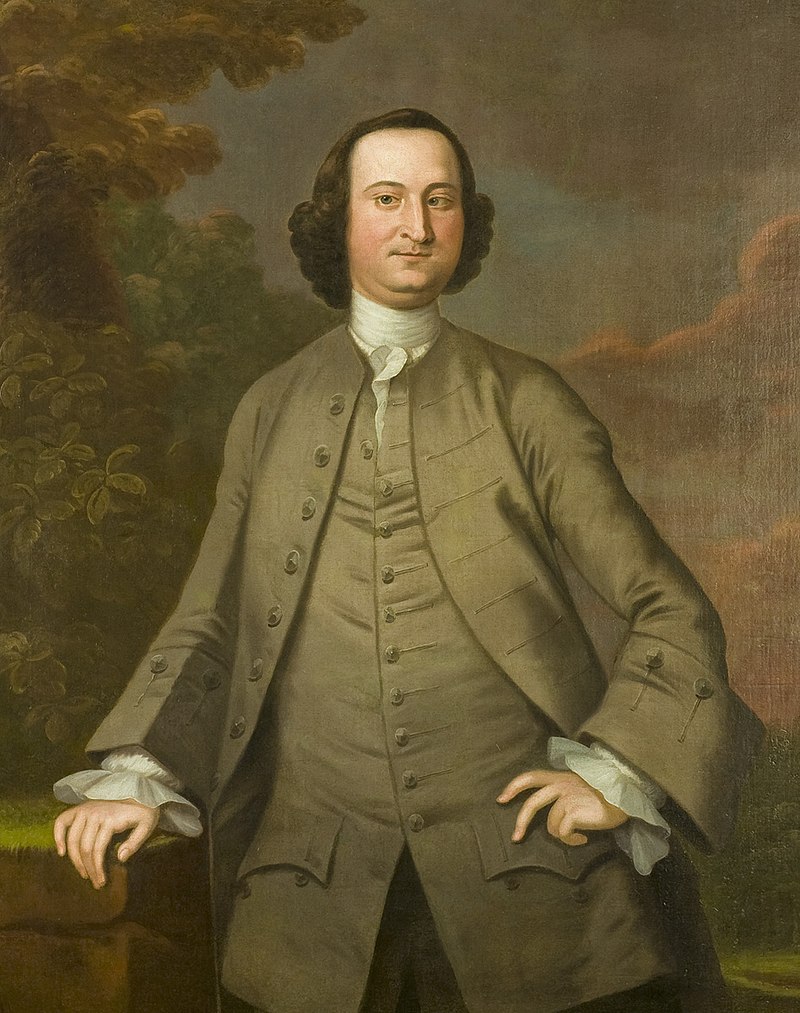
    Fielding Lewis

    The husband of Betty Washington and the mind behind Kenmore, Fielding Lewis served his country during the war by funding various supply and defense lines. One of the richest men in Virginia, Fielding had the ability to provide aid and, as the brother-in-law of the commander-in-chief, could hardly stay out of the conflict. While his efforts did much for the cause, Fielding drew the short straw by spending nearly all of his money. Accounts of Fielding Lewis’ death often insinuate a connection to the stress of losing his fortune. While this certainly put him under strain, and would not have helped his health, Fielding’s case of tuberculosis meant that he would have died regardless of his financial status.

    Tracing tuberculosis in Fielding’s life proves more difficult than that of Lawrence. Mentions of Fielding as ailing exist for several years prior to his death. However, with no description, one can hardly say if this references tuberculosis or some other affliction. Like many, he frequented Berkeley Springs and even purchased property there. Fielding recorded little of his visits, but his interests lay in the spring’s supposed medicinal benefits and, to that end, undertook an annual August trip from 1772 onwards. Throughout the war, Fielding held the rank of colonel and, though he never received a formal posting, oversaw Fredericksburg’s gun manufactory and the defense of the Rappahannock. This position required no military action and had strong connections to his background as a merchant. However, the choice of assignment may have derived from knowledge that he would never be well enough to effectively command troops. Then again, Fielding was in his fifties and had no military experience. In any case, the position reflected a strategic choice that played to Fielding’s strengths and lessened the impact of field inexperience and ill health.

    If Fielding hoped for a peaceful death, he would not receive it. In the summer of 1781, with the British encroaching on Fredericksburg, the Lewis household and Mary Washington fled. At this stage, Fielding’s health had significantly deteriorated, leaving him an invalid confined to his home. A sudden evacuation by carriage would have done little to ease his discomfort as the household hurried to another property in Frederick County, Virginia. Once there, Fielding focused on putting his affairs in order and likely did not have the strength to visit nearby Berkeley Springs. The news of the Yorktown victory undoubtedly brought some emotional respite, but it proved short-lived as Fielding died mid-December 1781. The location of his burial site on the Frederick County property remains unknown. Fielding’s death brought immense grief to his widow, Betty Washington, who had lost her brother Samuel to the same disease only three months earlier.   

    Samuel Washington (1734-1781, aged 46):
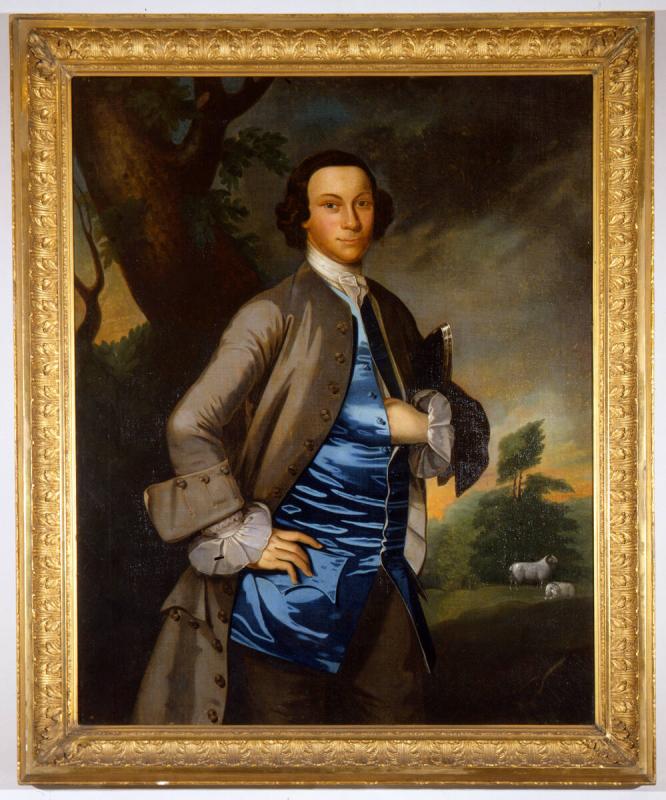
     Samuel Washington Source: Mount Vernon

    The second son of Augustine Washington and Mary Ball, Samuel grew up at Ferry Farm with his full-siblings. Said to have suffered from tuberculosis for most of his life, it remains unknown where, when, and from whom he contracted it. However, by visiting Lawrence in July 1752, to help put his half-brother’s affairs in order, seventeen-year-old Samuel certainly faced exposure. Samuel died at his home Harewood, near Charles Town, West Virginia, in September 1781, shortly before the victory at Yorktown. The home itself lies conveniently close to Berkeley Springs, which may indicate that its location and Samuel’s move from Stafford County, Virginia, derived from a desire for easy access to the springs and their reputed health benefits.

    Despite dying just shy of age forty-seven, Samuel famously married five times. His final wife, Susannah Perrin Holden (1753–1783, m. 1778), survived him, and the fourth, Anne Steptoe (1737–1777, m. 1764), died of complications from a smallpox inoculation. However, the deaths of his first three wives, Jane Champe (1724–1755, m. 1754), Mildred Thornton (roughly 1741–1762, m. 1756), and Lucy Chapman (1743–1763, m. 1762), have long been associated with tuberculosis.

    All three experienced rapid declines in health after their marriages to Samuel, and in correlation with several pregnancies. Pregnancy and childbirth proved extremely dangerous during this period, so these deaths could simply be tragic examples. However, as pregnancy exacerbates tuberculosis, the common interpretation remains that the women contracted the disease from Samuel, saw it worsen at an alarming rate due to pregnancy, and the strain of one or more births on top of the disease made it impossible to recover. Regarding his children, several died quite young, which may mirror the fate of Lawrence’s children, and three of his sons who reached adulthood would ultimately die of the disease. 

    Coming Up

                In our final blog on tuberculosis, we will be taking a look at how the disease impacted the next generation of the extended Washington family and those they enslaved. This will be coming out on June 28th.

    Emma Schlauder

    Research Archaeologist


    Bibliography

    2-7 Anderson, Alicia K. & Lynn A. Price (editors) 2018     George Washington’s Barbados Diary: 1751-52. University of Virginia Press, Charlottesville, VA.

    1 Chernow, Ron 2010     Washington: A Life. Penguin Books Ltd, London, UK.

    Felder, Paula S. 1998     Fielding Lewis and the Washington Family: A Chronicle of 18th Century Fredericksburg. The American History Company.

    Glen, Justin 2014     The Washingtons: A Family History, Vol 1, Seven Generations of the Presidential Branch. Savas Beatie LLC, El Dorado Hills, CA.
  • Summer Vacation, 18th Century Style

    Despite issues of poor roads, lack of transportation, financial considerations and simply an absence of places to go, colonial Virginians fancied a summer vacation just as much as we do today.  In fact, getting out of the city, or away from hot, steamy climates and hordes of mosquitoes in the summer months was actually necessary for health.  In the late 1760s and right through the Revolution, Fielding Lewis and his brother-in-law George Washington joined a number of other Fredericksburg locals in making regular summer visits to one of the few getaways locales in existence at the time – the warm springs in (at the time) Frederick County.

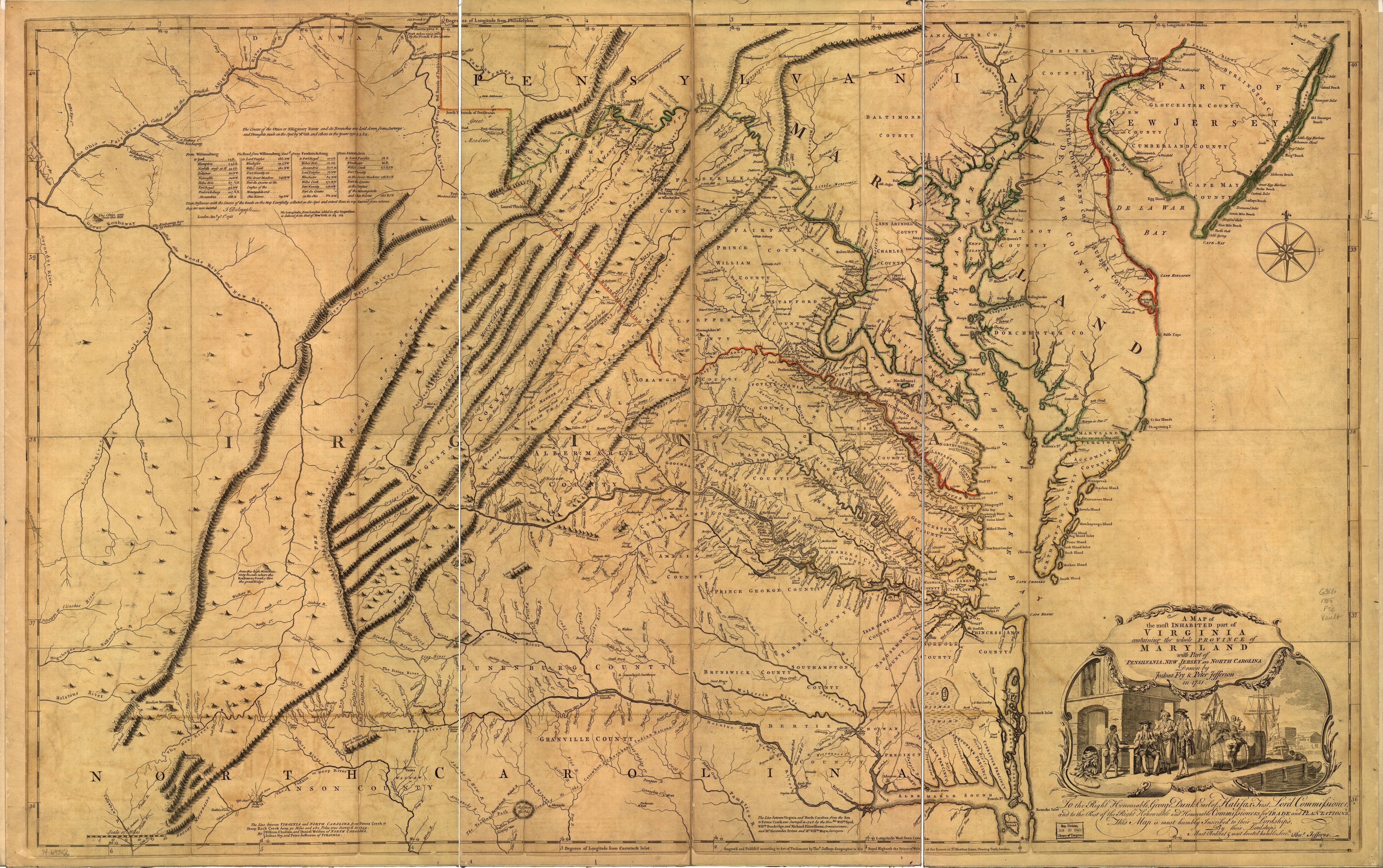
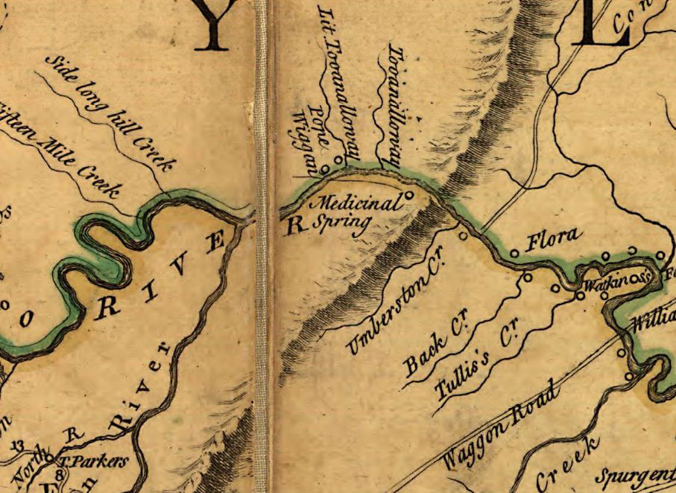
    Now known as Berkeley Springs in present-day West Virginia, the bubbling natural springs and their reputed medicinal powers have attracted visitors since long before Europeans came across them.  Native Americans visited the springs to take advantage of its healing waters, and told settlers about the spot, as well.  The site is labeled as “Medicinal spring” on the famed 1747 Fry-Jefferson map.

    A map of the most inhabited part of Virginia containing the whole province of Maryland with part of Pensilvania, New Jersey and North Carolina, 1747
    “A map of the most inhabited part of Virginia containing the whole province of Maryland with part of Pensilvania, New Jersey and North Carolina”, 1747 (the Fry-Jefferson map) by Joshua Fry & Peter Jefferson. Credit: Library of Congress.

    Enlargement of Fry-Jefferson Map showing Medicinal Spring
    Enlargement of the Fry-Jefferson map showing the location of the Medicinal Spring frequented by the Washington and Lewis families. Credit: Library of Congress.

    Sixteen-year-old George Washington made his first visit the following year, as part of Lord Fairfax’s wilderness surveying crew.  At that very early date, a visit to the springs really was purely for medicinal purposes, as there certainly were no other amenities to attract vacationers, and getting there was a feat in itself, being tucked away in the remote mountains.  To say that conditions were primitive would be an understatement, and young George was…unimpressed. In his diary, which he began on this trip and would continue for nearly the rest of his life, George wrote, “We this day call’d to see y. Fam’d Warm Springs. We camped out in y. field this night. Nothing remarkable happen’d…”[1]

    Indeed, early reports about the situation at the “fam’d Warm Springs” conjur some interesting mental images.  Native Americans “took the waters” by simply hollowing out shallow pools in the sandy ground and squatting in them, allowing the natural spring water to bubble up around them.  They also built temporary saunas to steam in, and apparently allowed ailing white visitors to share.  Although, the shallow pits were eventually lined with stones found nearby to make them more or less permanent, one still pictures fully-clothed, wig-wearing colonists sitting miserably in tepid water, hoping their fever, cold or rheumatism would be cured.  As there were no structures built on the site, visitors hauled their own provisions, tents and even household staffs with them in wagons and camped out on the steep hillsides.[2]

    And apparently, this state of affairs went on for quite a while, perhaps testifying to the desperation of the sick and injured in the 18th century for some sort of relief.  On a return trip to the springs in August of 1761, George Washington described a similar situation to what he had witnessed more than a decade earlier.  “We found of both sexes about 250 people at this place, full of all manner of diseases and complaints…They are situated very badly on the east side of a steep mountain and enclosed by hills on all sides, so that the afternoon’s sun is hid by 4 o’clock and the fog hangs over us till 9 or 10…I am of the opinion that numbers get more hurt by their manner of lying, than the waters can do them good. Had we not succeeded in getting a tent and marquee from Winchester, we should have been in a most miserable situation here.”[3]

    Yet, despite the less than ideal accommodations, George did return to the warm springs.  And so did many other members of the Virginia gentry, including Fielding Lewis.  They did seem to believe that the waters there had a positive effect, and so the trip was worthwhile…but, gee, it sure would be great if they could have a bit more fun while doing it!  And so they set about turning the place into a more comfortable spot, a resort really, where they could not only take the waters but enjoy entertainments, visit with friends, have good food and drink, and generally have a good time for a few weeks every summer.  By all accounts, they succeeded.

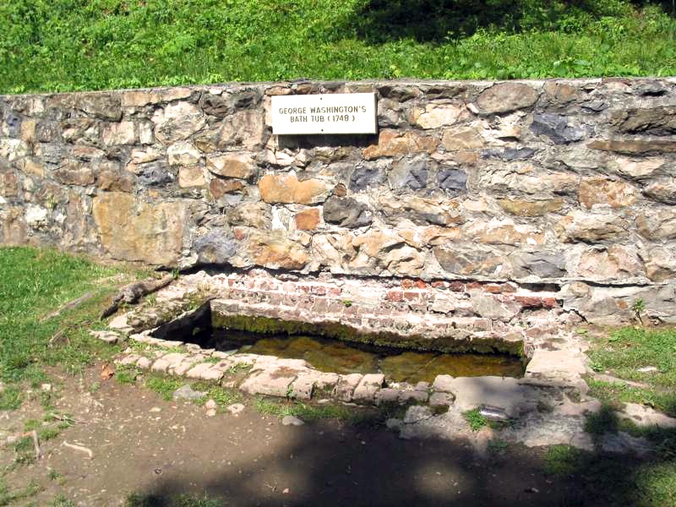
    George Washington's Bathtub
    “George Washington’s Bath Tub”, a monument constructed to represent bathing conditions in Washington’s time in present-day Berkeley Springs State Park. Credit: Warfieldian / Wikipedia

    The first effort to civilize the warm springs was by Fredericksburg resident James Mercer, a good friend of both Fielding Lewis and Charles Dick.  He apparently was given permission by Lord Fairfax to build a rather large summer cottage at the site, and it quickly became the center of Fredericksburg’s summer social scene.  The group of Fredericksburg friends, all young men in their 30s and early 40s, along with wives and children, journeyed to Mercer’s cottage for vacation.  In 1769, George Washington brought Martha and Patsy to stay for several weeks, and described the many visitors in and out of the cottage, including Lord Fairfax himself and his family members, and several former military friends from Pennsylvania.[4]

    With the building of a new road to the area in 1772, James Mercer got some neighbors.  Inns and taverns sprang up (including Washington’s favorite, Throgmorton’s Sign of the Liberty Pole and Flag) other houses were built (although still mostly cabins and one room shanties) and the influx of vacationers increased.  It was a kind of hodge-podge, though, with no systematic plan for building or improvement.  The Fredericksburg friends (and associated relatives) saw an opportunity, though, and in 1775 they convinced Lord Fairfax to allow the laying out of a proper town, and Samuel and Warner Washington were put in charge of it.  Town lots were quickly bought up, mostly by the Fredericksburg contingent, and the building of cottages commenced.  The group decided to give their new town the rather aspirational name of Bath, after the popular spa resort in England.

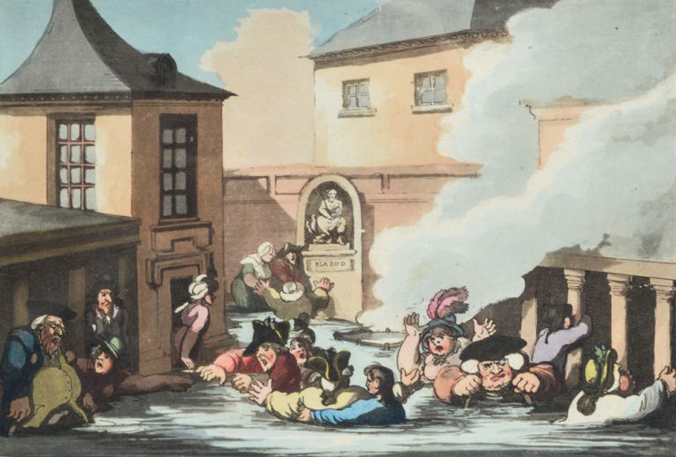
    The Comforts of Bath
    “King Bladud’s Bath” from The Comforts of Bath series (1798) by satirist Thomas Rowlandson. Credit: Wikigallery.

    So what was daily life like for a colonial Virginian on summer vacation? By the 1770s, life in Bath had changed drastically from the early days of squatting in shallow pits.  In addition to sampling the local mineral water, vacationers could enjoy public balls that happened twice a week, tavern nightlife, gambling, horse racing, daily teas at 5:00 and a number of options for food and drink.  By 1784, an advertisement in the Maryland Gazette describes the town as having five bathhouses, each with their own dressing rooms, an assembly room, and even a theater, where the travelling performance group The American Company of Comedians was expected to perform that summer.[5]

    Noted early Virginia diarist Philip Vickers Fithian wrote of his visit to the springs in 1775, “In our dining Room Companies at Cards, Five & forty, Whist, Alfours, Callico-Betty &c. I walked out among the Bushes here also was—Amusements in all Shapes, & in high Degrees, are constantly taking Place among so promiscuous Company.” Fithian also goes on to describe the gentlemen of the village serenading the ladies from outside their lodgings until 4:00 in the morning, following a large ball.[6]

    Fielding’s eldest son, John Lewis, and his cousin Warner Washington, who were in their 20s, were among the young gentry who suddenly found the springs interesting as entertainment opportunities increased.  The cousins eventually bought lots and built cottages, although it’s probably safe to say they weren’t there for the waters.  The little village had become so raucous in the summer months, a Methodist minister referred to it as an “overflowing tide of immorality.”[7]

    But the curative properties of the springs were still the primary focus of visitors’ time.  Depending on the ailment that visitors were seeking to cure, they might “take the waters” up to three times a day at one of several actual bathhouses that had been built over the natural springs.  We have some description of these bathhouses from a French traveler, who vacationed at the springs in 1791, “…a plain and large frame structure, divided into eight small rooms made of badly joined boards where the bathers go in the morning. There is a staircase in each small room so that when the bather wishes he can gradually change the water line.”[8]  Both men and women used the bathhouses, but they did so at separate times of day.  At European spas of the day, men generally went swimming in the nude, while women wore bathing gowns, so that was perhaps the convention used at the American Bath, as well.

    Fielding Lewis made an annual visit to the springs every August for several weeks, as early as 1772 and possibly much earlier.  When the town lots were laid out, he purchased #45 which fronted on Liberty Street.  His next door neighbor was Charles Dick, and James Mercer’s big cottage was just a few doors down.  Fielding’s mentions of his visits are few.  We don’t know whether the entire Lewis family travelled with him, although due to mentions in Philip Fithian’s journal, we know that in 1775 son George was with his father (George had attended the College of New Jersey with Fithian years earlier and Fithian enjoyed the chance to catch up with an old friend).  Most likely Fielding was among the springs vacationers who was there almost entirely for medicinal reasons, as his health had begun its long decline, and already the stresses of wartime were weighing heavily on him.

    So there you have it.  It was cold, muddy and filled with hordes of sick and injured people, but the company was good and the party never ended – it was summer vacation, 18th century style!

    Meghan Budinger
    Aldrich Director of Curatorial Operations


    [1] “A Journal of my Journey over the Mountains began Fryday the 11th. of March 1747/8,” Founders Online, National Archives, accessed June 4, 2019, https://founders.archives.gov/documents/Washington/01-01-02-0001-0002.

    [2] Mozier, Jeanne. The Early Days of Bath.  Accessed June 4, 2019, http://berkeleysprings.com/history-berkeley-springs/early-days-bath

    [3] The Papers of George Washington, Colonial Series, vol. 7, 1 January 1761 – 15 June 1767, ed. W. W. Abbot and Dorothy Twohig. Charlottesville: University Press of Virginia, 1990, pp. 68–70.

    [4] Felder, Paula.  Fielding Lewis and the Washington Family.  The American History Company, 1998, pp. 186.

    [5] Flexner, James Thomas.  Steamboats Come True: American Inventors in Action. Fordham University Press, 1992, pg. 67.

    [6] Fithian, Philip Vickers. Journal, 1775-1776: Written on the Virginia-Pennsylvania frontier and in the army around New York. Robert Greenhalgh Albion and Leonidas Dodson, eds. Princeton: Princeton University Press, 1934.

    [7] Mozier.

    [8] Bayard, Ferdinand M. Voyage dans l’intérieur des États-Unis: à Bath, Winchester, dans la vallée de Shenandoah, etc., etc., pendant l’été de 1791. As quoted in Mozier, ibid.

  • Harriot’s Happily Ever After

    As we saw in this blog post, Harriot Washington lost both of her parents by the time she was five years old.  Her childhood was spent shuffling from one relative’s household to another.  Finally, she came into the care of her uncle George Washington, who along with aunt Betty Washington Lewis, provided stability and support throughout Harriot’s teenage years.  She lived with Betty for many years at Kenmore.  By the age of 19, Harriot had matured into respectable young woman. Marriage was at hand.

    Spring time in the gardens at Kenmore Plantation
    Kenmore in Spring

    On April 1, 1796, Washington received a letter from Andrew Parks of Fredericksburg.  Andrew had asked Harriot to marry him.  Harriot referred him to Washington for his consent and had told Andrew that she would not marry him unless her uncle approved. Andrew wrote a letter promoting himself, with details on his life in town as a mercantile businessman.  He frankly revealed that his fortune did not “exceed three thousand pounds.”  He believed that he was a hard enough worker to make up for his lack of current money and that he had hopes of improving his situation. He mentioned relations in Baltimore and offered to provide a complete accounting of these family connections, if Washington desired.

    Washington replied on April 7.  He noted the proposal was a “serious one” that deserved “serious consideration” and that he would take time to ponder it.  He warned Andrew that, while Harriot had “very little fortune of her own,” fortunes were not the only factors to consider when contemplating marriage.  Harriot’s guardian desired to see her happy and believed only a “gentleman of respectable connexions, and of good dispositions,” who made money, instead of spending it, and who could “support her in the way she has always lived” was an acceptable match.

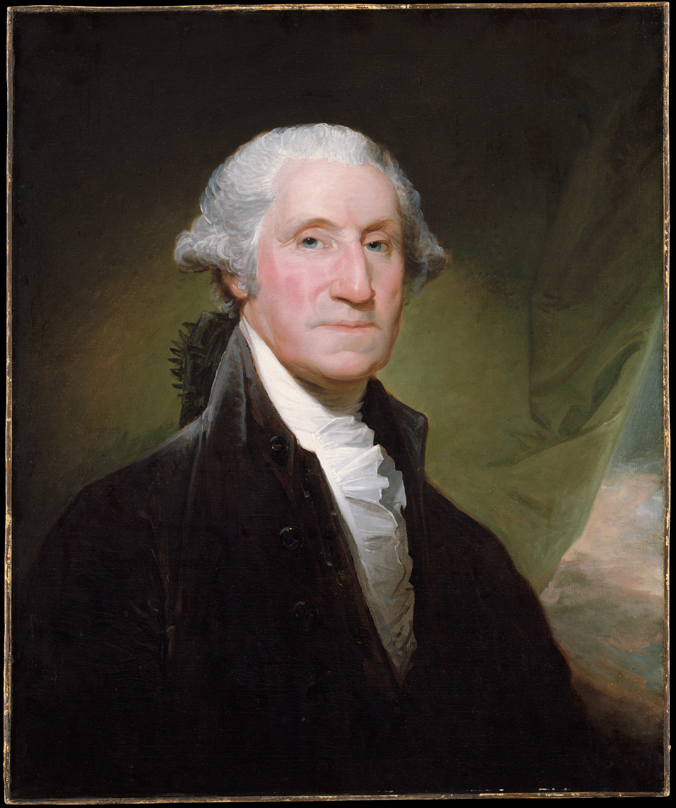
    Portrait of George Washington (1795) by Gilbert Stuart
    Portrait of George Washington (1795) by Gilbert Stuart. Credit: Public Domain / Metropolitan Museum of Art

    Of course, Betty also contacted Washington to inform him of Andrew’s proposal.  Her letter seems not to have survived but his response, also dated April 7, basically requested more information about Andrew.  Harriot’s uncle acknowledged that “having very little fortune herself,” Harriot had “no right to expect a great one in the man she marry‘s; but if he has not a competency to support her in the way she has lived, in the circle of her friends, she will not find the matrimonial state so comfortable as she may have expected when a family is looking up to her & but scanty means to support it.”  Though a great one was beyond possibility, he still believed Harriot ought to “expect one whose connexions are respectable, & whose relations she could have no objection to associate with.”  What really troubled Washington was “How far this is, or is not the case with Mr Parks.”  He worried,  “I know not for neither his own letter, or yours give any acct of his family nor whether he is a native or a foreigner—& we have his own word only for his possessing any property at all altho’ he estimates his fortune at £3000. A precarious dependance this when applied to a man in Trade.”

    Although he had no desire to impede the marriage, Washington indeed was anxious for information, which he immediately endeavored to collect.  Secretary of War James McHenry wrote Thomas McElderry, Andrew’s brother-in-law and business partner, on behalf of the president.  McElderry replied that, after the death of Andrew’s father, he had made Andrew his partner, allowing his brother-in-law to be well set up in business. McElderry also reported that Andrew was a hard worker, gentlemen, and generally well-liked in the community.  McElderry judged him “much more promising than many of the Virginia Gentlemen with their large landed Estate and Negroes.”  One wonders how helpful this final statement might have been in convincing Washington – the first among Virginia’s landed and slaveholding gentlemen – of Andrew’s good connections!

    Betty also made inquiries about Andrew and notified Washington that she had “heard nothing to his disadvantage” and that “he is respected by all his acquaintance.”  She revealed that Andrew was “A Constant Visitor here and I believe Harriots Affections are plac’d intirely on him.”  Indeed, Harriot, in Betty’s opinion, was sick with “anxiety for fear of offending and not gaining your consent.”  Betty then admonished her brother that his “long Silence has given her much uneasiness.”

    George Lewis, Betty’s son, examined Andrew’s background and concluded the match, at least at the moment, “to be madness in the extreme.”  He suggested waiting until Washington returned to Mount Vernon after his presidency ended, so that he could attend the matter personally and better investigation of Andrew could be made.  Still, he believed Andrew “a young Man of good talents” and noted that none of his initial inquiries revealed major problems.

    Betty again wrote George about the matter on July 5, 1796.  She told George that Lawrence Lewis, another of her sons, had made inquiries and seemed “well pleased” while Harriot’s own brother told Betty that he thought the marriage would be a “very happy one.”  Ultimately, Betty herself concluded that Andrew bore “the Best caracter of any young Person that I know” and that Harriot was “Old Enougf now to make choice for her self.”  It was high time she was married and that is exactly what happened.  On July 16, 1796, Harriot Washington, aged 20, married Andrew Parks.

    The day after her wedding, Harriot wrote to her uncle, hoping he was “not offend’d at my Union.”  She expressed, with some finality, that “my heart will ever with the liveliest gratitude most gratefully acknowledge and remember your’s & Aunt Washington’s great goodness and attention to me.”[1]

    “Far from being displeased at the event,” Uncle Washington responded, “I offer you my congratulations thereon; and sincerely wish it may prove the source of continual happiness to you.”  Washington closed the letter with an invitation for his niece and her new husband to visit Mount Vernon whenever Andrew’s business might allow it.

    Harriot replied with this joyful letter:

    Fredericksburg Sepber 9th 1796

    I need not repeat to my dear & Honord Uncle, the infinite pleasure I experienced on reading his kind, & affectionate letter… Mr. Parks and myself return our most grateful thank’s, to you and Aunt Washington for your congratulations and also polite invitation, to visit you which no circumstance whatever could afford us more satisfaction…

    My love to Aunt Washington & Nelly Custis. I am my dear & Honord Uncle Your ever affectionate Neice

    Harriot Parks

    The newlyweds visited Mount Vernon from September 4 to September 8, 1798.

    Zac Cunningham
    Manager of Educational Programs

    [1] Miriam Anne Bourne, First Family: George Washington and His Intimate Relations, New York: W.W. Norton, 1982, 154-5.

  • Harriot Washington’s “Hard Knock Life”

    With one sister and three brothers, George Washington was uncle to numerous nieces and nephews.  One niece was Harriot Washington was born sometime in 1776 to his brother Samuel and Samuel’s fourth wife Ann Steptoe.  Harriot was orphaned by the time she was five years old, when her mother died in 1777 and her father in 1781.  Harriot’s younger years were a hard life of shuffling between relatives’ households.  She gained stability with her aunt Betty Lewis at Kenmore, where she spent her teenage years.  Both George and Betty were constantly concerned about her financial well-being and development into a respectable woman of the gentry class.[1]

    HARRIOT AT MOUNT VERNON, Late 1780s-1792

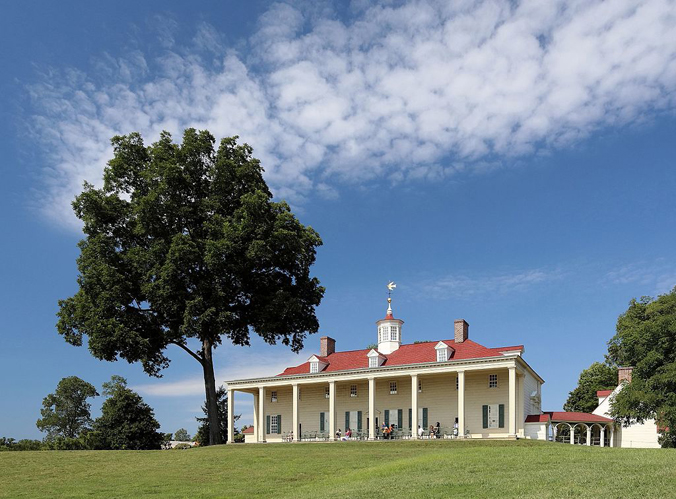
    mount-vernon
    Mount Vernon. Credit: Wikipedia/Martin Falbisoner

    After her parents’ deaths and living in the care of her mother’s relatives for four or five years, Harriot came to live with uncle George at Mount Vernon because, as Washington noted to nephew George Augustine Washington, he knew of “no resource that Harriot has for Supplies but from me.”

    When George and Martha departed Mount Vernon for New York City and his presidency, however, Martha’s niece Fanny became Harriot’s de facto guardian.  Washington lamented to Tobias Lear that Fanny was “little fitted” to the task of caring for her, however.  The new president seemed perplexed by Harriot “who is almost grown” but “is not quite a Woman” and wondered, with some exasperation, about what to do with her.  He judged that, while she was by no means too old to attend boarding school, any such school would have to “enforce good rules” since Harriot was “prone to idleness” and had been “under no control.”

    Several letters between Harriot and her uncle survive.  The first in the record was written on April 2, 1790.  Harriot was 14-years-old and living at Mount Vernon while Washington was in New York. Harriot asked her uncle to send her a guitar since she wanted to take lessons for “all the young Ladyes are a learning musick.”  Harriot was confident “that five or six lessons would be sufficient for any body to learn.”  The records consulted reveal no response from Washington.

    Harriot wrote a brief letter on October 24, 1791 with short comments about the dreadful weather and an illness plaguing Lund Washington. Harriot mentioned that she had waited until the last minute to write the letter before it had to be sent. This seeming laziness displeased Washington and, worried about his niece’s idle behavior, he took the opportunity to provide a lengthy letter of advice beyond admonishing her to not wait until the last moment to begin a task.  He warned Harriot of the…

    “delicacy and danger of that period, to which you are now arrived under peculiar circumstances—You are just entering into the state of womanhood without the watchful eye of a Mother to admonish, or the protecting aid of a Father to advise and defend you; you may not be sensible that you are at this moment about to be stamped with that character which will adhere to you through life.”

    Washington assured Harriot that her cousins at Mount Vernon were “well qualified to give you advice” and he hoped that she was “disposed to receive it.”  If she was “disobliging—self willed and untowardly,” however, her cousins would not “engage themselves in unpleasant disputes” but would likely leave her to descend into poor character.  Washington encouraged her to “Think then to what dangers a giddy girl of 15 or 16 must be exposed in circumstances like these—To be under but little or no controul may be pleasing to a mind that does not reflect, but this pleasure cannot be of long duration.”  Washington seemed to express concern about those with whom she was associating and that from them she “can derive nothing that is good.”  This warning might have also been a general caution against keeping poor company.  Regardless, he wanted her to “aid to your Cousin in the domestic concerns of the family.”

    Harriot replied, “I was very sensible, of your kindness in giving me such good advice, and shall try to profit, by it as much as I can, I know very well, the obligations I am under, to you and I am very thankful for your care and attention to me.”  She duly promised to assist more with the household duties.  On May 28, 1792, Harriot requested a guitar again and this time, Washington bought her one for $17.

    HARRIOT AT KENMORE, 1792-1795

    Betty Washington Lewis
    Portrait of Betty Washington Lewis by John Wollaston, c. 1755.

    In the fall of 1792, Washington determined it was necessary for Harriot to go live with his sister Betty Washington Lewis in Fredericksburg.  He and Martha were to return to the new national capital of Philadelphia while Fanny and her ill husband were leaving for New Kent County.  No one was left at Mount Vernon to care for Harriot.

    Betty raised no objections to taking in Harriot “if she comes well cloath’d or Provided to get them, that she may appear tolerable.” She wanted to forestall any chance that the young lady “was prevented frequently from appearing in publick.”  Betty reminded George of the Lewis family’s deep financial difficulties and that her grandchildren were living with her too.

    Washington assured his sister that Harriot would arrive “very well provided with every thing proper for a girl in her situation.”  He judged Harriot as having “sense enough, but no disposition to industry nor to be careful of her Cloaths.”  He hoped Betty’s example and guidance would end the 16-year-old’s habit of always wearing her best things while also leaving clothing lying all over her room. Fanny had been too lenient with her, Washington suggested, but Betty’s firm hand could still yet “make a fine woman.”

    Not long after getting settled in Fredericksburg, however, Harriot requested money from Washington for a dress or dress material so that she could attend the town’s ball celebrating the president’s birthday.  She apologized for again troubling Washington and assured him that any money sent would be kept by Betty.  Harriot promised to “properly care for the new dress.

    At the end of January 1793, Betty confirmed receiving money sent by Washington for Harriot.  She noted that living in town was “unfortunate” for Harriot “for many [of her] things that could be wore to the last string in a [country] Place, will not do here, where we see so much Company.”  Betty took the opportunity to praise Harriot as well, noting that she “Payes the strictest regard to the advice I give her and really she is very Ingenious in makeing her Clothes and altering them to the best advantage.”

    Time and a few other letters about money passed back and forth until September 1793 when Betty sent a letter to her brother asking when he might send for Harriot so that she could again live at Mount Vernon.  Betty revealed that, while she knew “of none that I would sooner have to live with me,” her own dire financial situation was not conducive to Harriot staying.  Betty expressed dismay over the small amount of her income and the small number of servants she had. To compound matters, she now only owned two horses, which kept her from visiting over any lengthy distance.  All the while, Harriot and two grandchildren lived with her.

    Washington perhaps agreed that the time had come for Harriot’s return to his household.  It seems he told Betty that if Philadelphia’s yellow fever epidemic continued, Martha would spend the winter of 1793-94 away from danger at Mount Vernon.  If this were the case, he would send for Harriot and she could stay with Martha.  This plan, however, was not implemented.  Instead, Harriot spent part of the winter of 1793-94 with a relative in Culpeper.

    As Kenmore, life for Harriot seemed to settle into something of a routine.  Her letters reveal a growing maturity and an understanding of her situation.  Money was still an ever present matter but one gets the impression that her requests were for real needs.  In 1794, requests for cash went to Washington on May 25, and June 27.  A letter of thanks from Harriot to him is dated July 10.  One further request for money came on January 4, 1795.

    Betty and Harriot left Kenmore to live at Millbrook in November 1795.  Harriot turned 19-years-old that year and the focus of her relationship with both her aunt and uncle shifted from an orphan girl who had lived a “hard knock life” to a eligible and mature young woman with a respectable suitor and marriage on the horizon.

    To be continued….

    Zac Cunningham
    Manager of Educational Programs

    [1] ; Frank E. Grizzard, Jr., “Washington, Samuel, (1734-1781),” George! A Guide to All Things Washington, Charlottesville, VA: Mariner Publishing, 2005, 337-338; Note accompanying “To George Washington from Harriot Washington, 2 April 1790,” Founders Online, National Archives, http://founders.archives.gov/documents/Washington/05-05-02-0199;  “Samuel Washington,” Wikipedia, http://en.wikipedia.org/wiki/Samuel_Washington, [accessed September 8, 2014].

  • Samuel Washington: George’s Brother and Wartime Confidant

    Samuel Washington was born in Westmoreland County on November 16, 1734 at “…about 3 in the morning.” He was the third child and second oldest boy of Augustine and Mary Washington.[1]  Aside from his relationship to his famous older brother, George Washington, there is relatively little known about Samuel Washington when compared to what is known about George.

    In 1738, when Samuel was about four-years-old, the family moved to Ferry Farm, where he spent his childhood.  When Samuel was eight-years-old, Augustine died in April 1743.  According to Augustine’s will, his sons were to receive their inheritance when they turned 21-years-old.  Until then, Mary controlled their inherited property.

    This property included enslaved men, women, and children.  Samuel received ten of his father’s slaves: Dick, Ralph, Tom, Merry, Rosa, Pegg, Milla, Sarah, Charles, Virgin, and Will.  Of these, only Dick is listed as one of the “Negroes at the Home House” in Augustine’s probate inventory, meaning that he came from the enslaved community living at Ferry Farm.

    Samuel also inherited land from Augustine, namely Chotank Farm in Frederick County and a portion of land in Westmoreland County. [2]  When Samuel reached age of 21 in 1755, he sold the Westmoreland property and moved to Chotank Farm with his new wife, Jane Champe.[3]

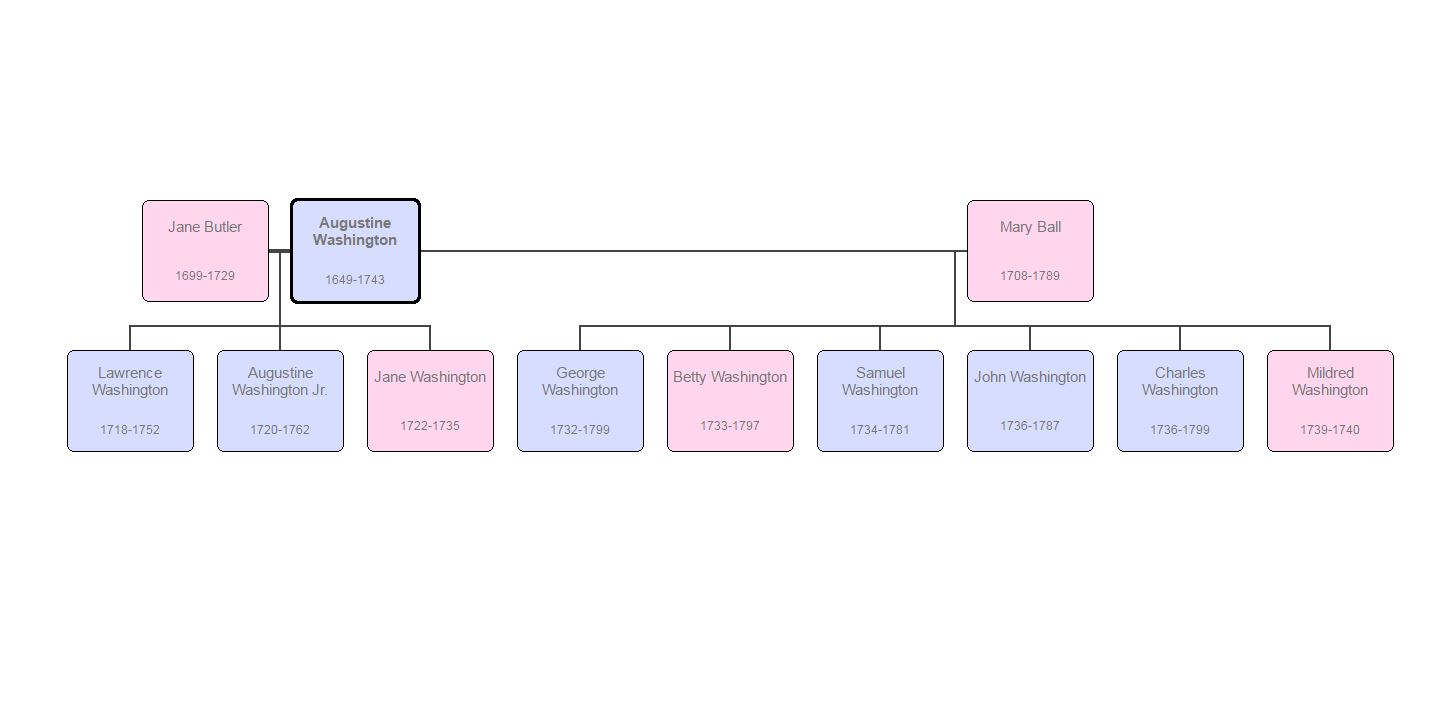
    augustine-washington-family-tree
    The Family of Augustine Washington (click photo to enlarge)

    Over the course of his life, Samuel married five times.  Each of his wives died from illness or during childbirth.  Similarly, several children of Samuel and his wives passed away.  Thornton Washington, a son Samuel fathered with second wife Mildred Thorton, survived to adulthood and fought in the American Revolution[4]  Samuel and Anne Steptoe Allerton, his fourth wife, had three children who survived childhood: George Steptoe Washington, Lawrence Augustine Washington, and Harriot Washington.[5]

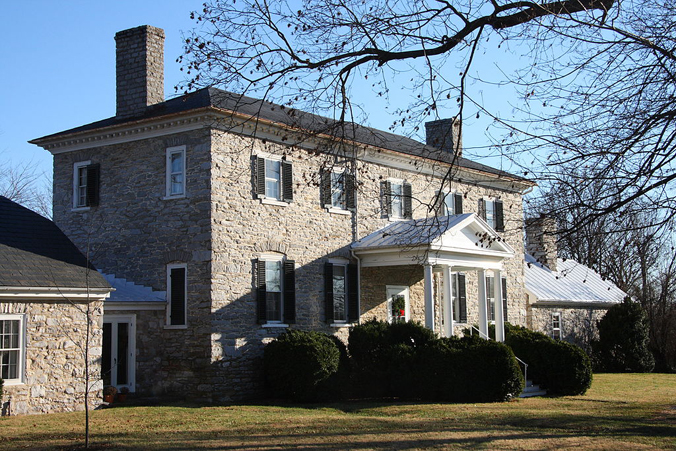
    In 1770, Samuel moved his family from Frederick County to a new home called Harewood (now in Jefferson County, West Virginia).[6]  At Harewood, he was situated far from the Revolutionary War.  Samuel was sickly for much of his life, most likely with tuberculosis, which precluded him from actively fighting in the war. He still joined his local militia in 1771 and eventually became a colonel.[7]  He also played a role in local politics, both before and during the Revolution. In 1766, he signed the Leedstown or Westmoreland Resolves [PDF] against the Stamp Act.  The same year, Samuel was named a justice in Stafford County[8], and in 1769, was appointed by the governor as a member of the new Commission of the Peace.[9]

    harewood
    Harewood as it appears today near Charles Town, West Virginia. Credit: Acroterion/Wikipedia

    Although Samuel’s direct involvement in the war was limited, George Washington saw his brother as a confidant. For much of the Revolution, George sent Samuel many letters describing the war’s course and hardships. He even included sensitive information such as troop movements. Multiple times, George wrote to his brother to tell him the news of the front, frequently describing the battles and their outcome, lamenting the lack of troops and supplies, and once even sent Samuel a list of the names of prisoners taken.  George could express to Samuel his uncertainties about the war and the future of the country he was fighting to create. In 1776, George confessed to his brother; “We are, I expect, upon the Eve of something very important; what may be the Issue; Heaven alone can tell, I will do the best I can, and leave the rest to the supreme direction of Events”

    In 1780, George wrote his brother in frustration, saying “We are always without an Army—or have a raw and undisciplined one, engaged for so short a time that we are not fit either for the purposes of offence or defence, much less is it in our power to project schemes & execute plans which depend upon well-disciplined and permanent Troops—One half the year is spent in getting Troops into the Field—the other half is lost in discharging them, from their limited Service, & the manner & time in which they come and go.” This expression of doubt shows how comfortable George was with telling his brother the bleak truth about what was happening in war.

    Since there are no surviving letters from Samuel, it is necessary to rely on what George wrote to his brother to get an idea of their relationship. On a personal level, the two men seem to have been close given the level of trust George showed by sharing his innermost thoughts about the war and the state of the army with Samuel.  Beyond affairs of state, at times, George simply missed Samuel, telling him in 1772 that “I was in great hopes to have met with you at Fredericksburg, or seen you at this place on your way up but it would almost seem as if you had foresworn this part of the Country.”  There were other letters similar to this, asking Samuel when he would visit George at Mount Vernon. During the Revolution, there was little opportunity for visiting and travel, but the brothers were able to stay in touch, up until Samuel’s death.

    Samuel did not live to see the new country that his brother was fighting to create. In 1781, shortly before the Battle of Yorktown, Samuel’s health declined sharply and he died in September.[10] It is believed he died of tuberculosis.  Thornton Washington, Samuel’s eldest son, died in 1787, leaving George Steptoe, Augustine Lawrence, and Harriot to be cared for by Samuel’s siblings. Betty became the main caretaker of Harriot while Charles and George had many disputes over the welfare of their two nephews, mainly arguing over money.

    Samuel left many debts unpaid after his death. In 1783, an exasperated George pondered in a letter to his younger brother, John Augustine, “How did my Brothr. Saml. Contrive to get himself so enormously in debt? Was it by purchases? By misfortunes? Or shear indolence and inattention to business?”[11] Whatever the reason, there was little that remained to pay off Samuel’s debts, his children were nearly destitute. Samuel’s wealth was most likely tied up in land and that land was sold off to pay his debts. Because neither his will nor any probate inventory have been found, it is nearly impossible to discover what his assets were before his death. Charles, John Augustine, Betty and George all pitched-in over the next several years to make sure that Samuel’s children were well cared for.  In his will, George Washington exonerated the debts that were owed him by Samuel and said that he did not expect Samuel’s children to repay him for their education or anything else that may have been given to them.

    Madeline Fanta
    Summer Fleming-Smith Scholar

    [1] Augustine and Mary Washington family bible; Felder, Paula S. Fielding Lewis and the Washington Family: A Chronicle of 18th Century Fredericksburg, American History Company, 1998: pg. 4

    [2] Ambler, Charles Henry, George Washington and the West, Historic Pittsburgh Text Collection, 1873- 1957: pg. 32 http://bit.ly/2cpnGgO [Accessed 8/17/16].

    [3] Bedinger Family History and Genealogy Website, http://www.bedinger.org/col-samuel-washington.html [Accessed 8/17/16].

    [4] Ibid.

    [5] Ibid.

    [6] Grizzard, Frank E. Jr. George! A Guide to All Things Washington, Charlottesville, VA: Mariner Publishing, 2005: pg. 337

    [7] Bedinger Family History and Genealogy Website, http://www.bedinger.org/col-samuel-washington.html [accessed 6/15/2016].

    [8] Bushong, Millard Kessler, A History of Jefferson County, West Virginia, 1719-1940, Westminster, MD: Heritage Books Inc. 2007: pg. 308

    [9] Felder, pg. 152.

    [10] Bedinger Family History and Genealogy Website http://www.bedinger.org/col-samuel-washington.html [accessed 6/15/2016].

    [11] Grizzard, pg. 337