Lives and Legacies

Author: ferryfarmandkenmore

  • Time for Some Trash Talk: The Social Role of Garbage at Historic Kenmore

    Editor’s Note: Looking back in time, people’s personal hygiene, fashion choices, medical treatments, and more sometimes look, at the very least, bizarre, if not outright disgusting.  When confronted with these weird or gross practices, our first reaction can be to dismiss our ancestors as primitive, ignorant, or just silly.  Before such judgments, however, we should try to understand the reasons behind these practices and recognize that our own descendants will judge some of what we do as strange or gross.  Here at George Washington’s Ferry Farm and Historic Kenmore, we’ve come to describe our efforts to understand the historically bizarre or disgusting as “Colonial Grossology.”  The following is the latest installment in Lives & Legacies’ “Colonial Grossology” series.

    Today, we would find trash disposal in the 18th century to be pretty horrifying.  Garbage of all sorts – sharp-edged broken household objects, putrefying food scraps, and odoriferous human waste – was simply dumped in the street, the back yard, or, when available, nearby holes or ravines.  Often, it was literally tossed out the nearest window or the back door.

    Believe it or not, archaeology is very concerned with the garbage disposal habits of people in the past.  Sites of disposal called middens are treasure troves of artifacts that excite archaeologists the most because people’s trash can reveal so much about their lives and sometimes even a bit about their personalities.

    Archaeologists have excavated a sizable portion of George Washington’s Ferry Farm for decades.  These excavations revealed how the Washington family and their enslaved workers disposed of household items, food scraps, and human waste in the area immediately behind the house. Color-coded maps showing the intensity of artifact concentrations illustrate how they simply stepped to the edge of the back porch and tossed trash into the back yard.
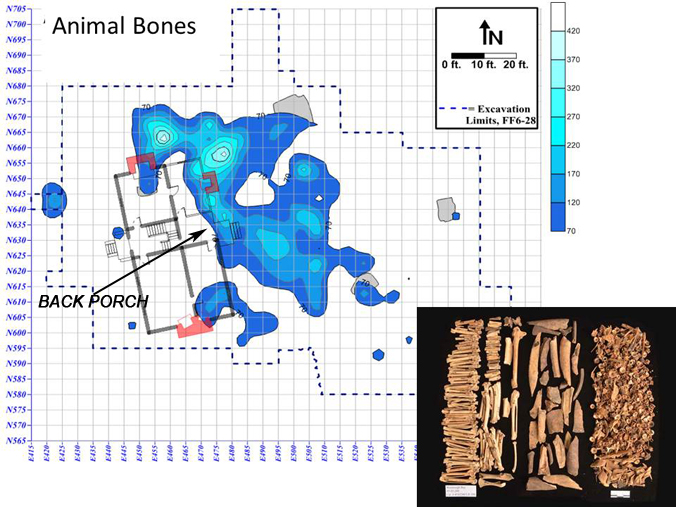
    Animal Bone Concentration behind Washington House
    Map showing the concentration of animal bones excavated from the midden at the rear of the Washington house at Ferry Farm.

    At Historic Kenmore, some archaeology has been done around the kitchen site and these excavations reveal more complex habits of trash disposal compared to Ferry Farm.

    Fielding and Betty Washington Lewis successfully manipulated the landscape immediately surrounding the house and kitchen and designated certain areas for certain tasks.

    An insurance plat of Kenmore from 1797 shows the house as well as the nearby outbuildings in relation to the house.  In the 1700s, wood-built kitchen and laundry buildings stood on the spots were two recreated Colonial Revival-style brick outbuildings stand today.

    Insurance Plat of Kenmore, 1797
    A drawing done in 1797 for insurance purposes showing the location of outbuildings in relation to the main house at Kenmore.

    The earliest photo of the kitchen taken during the mid-1800s when Kenmore was owned the Harrison family shows a sizable wooden structure with two enslaved workers – a man named Cary and a woman named Brittania – in the front of the kitchen.
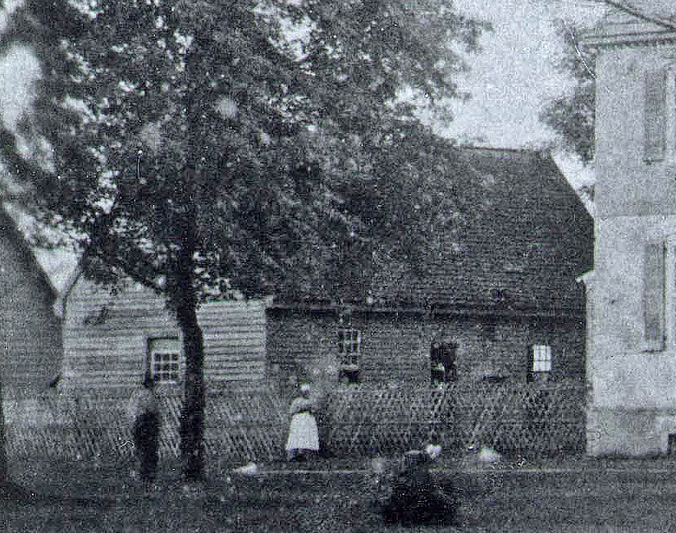
    Kitchen at Kenmore in the mid-1800s
    The earliest known photo of Kenmore’s wooden kitchen taken sometime in the mid-1800s and showing two enslaved workers believed to be a woman named Brittania and a man named Cary.

    The kitchen was just 30 feet from the house.  Rachel, an enslaved cook for the Lewises back in the late 1700s, carried food from the kitchen, across the kitchen yard, and entered the main house through an exterior door that opened into the slave passage, a short but extremely narrow hallway leading to both the master bedchamber and to the dining room.  After a meal, enslaved house servants cleared the dining room table or wherever else in the house that the family might have taken their meal and reversed the trip, carrying food waste back outside through the slave passage.
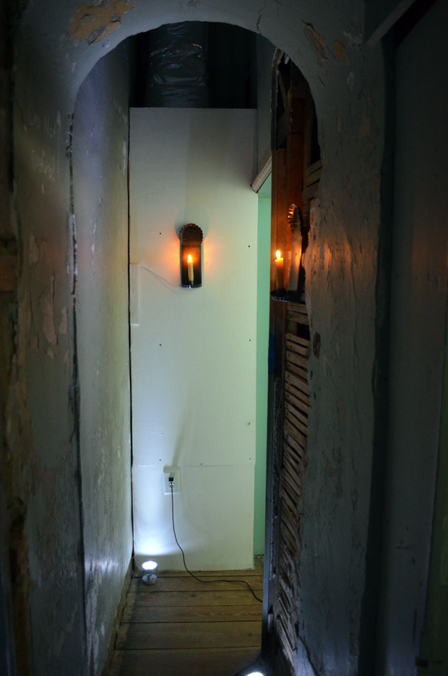
    Slave Passage from Bedchamber to Dining Room
    Passage in Kenmore used by enslaved workers to travel between the kitchen, dining room, and master bedchamber.

    As archaeology has shown us at Ferry Farm, it would not have been unusual for the enslaved workers to simply dump the food waste into the yard between the kitchen and the house.  Excavations at Kenmore, however, show an extraordinarily clean kitchen yard with few artifacts.  The things like animal bones and broken ceramic dishes or glass cups that you would normally find in an 18th century midden, or trash disposal area, are not there.  The area is very clean, which indicates that it was kept very clean.
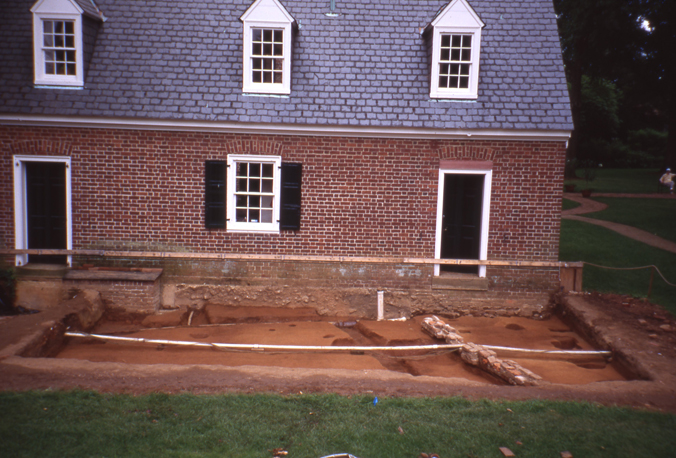
    Excavated kitchen yard 1
    Yard at Kenmore between the kitchen (shown) and the house (behind photographer) under excavation.
    Excavated kitchen yard 2
    The kitchen yard was relatively clean archaeologically.

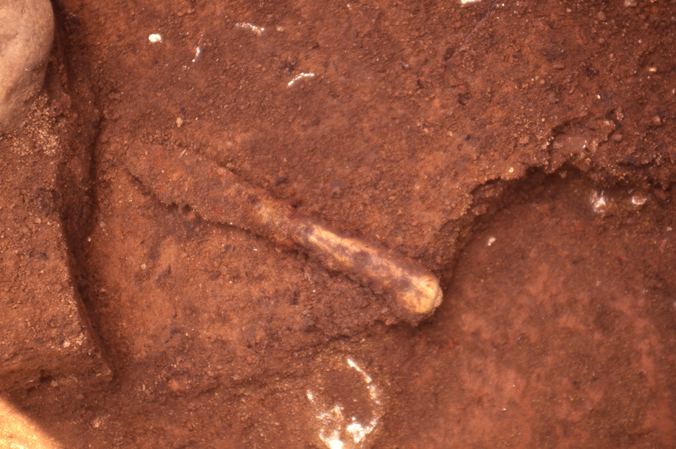
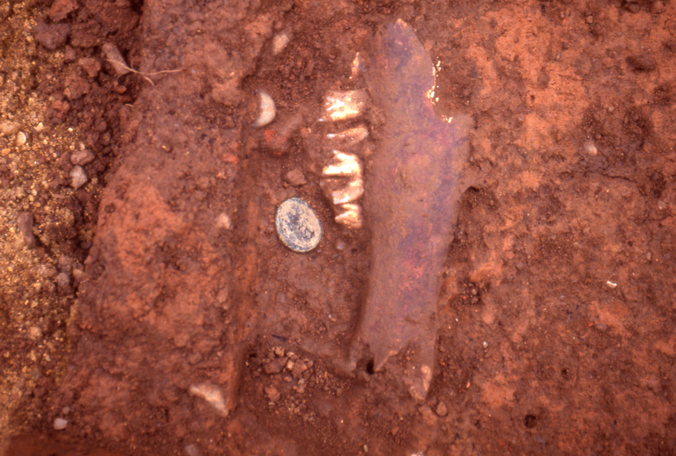
    Archaeologists at Kenmore did find the kitchen midden, however.  It was located just to the west.  While there is a window on the west side of the kitchen, there is no door.  If the waste couldn’t be tossed out the window, enslaved workers walked over to that side of the building to dump it.  This midden is full of artifacts: a pig jaw, for example, and an amazing amount of other animal bones, a knife with a bone handle, as well as architectural material and much more.
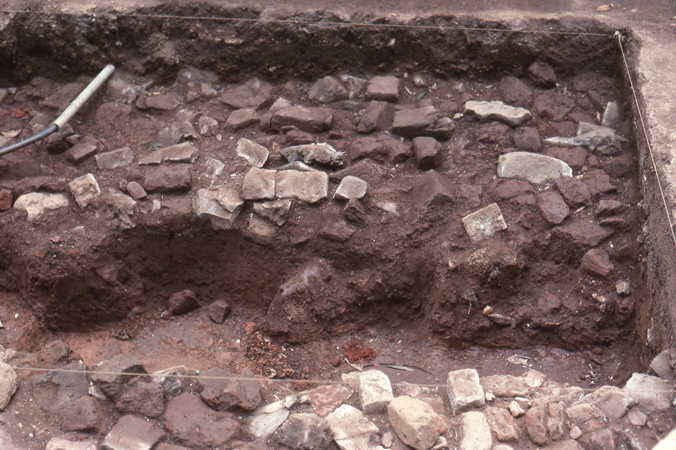
    Midden at Kenmore
    The midden discovered at Kenmore contained a large amount of architectural debris.
    Pig jaw found in Kenmore's midden
    Pig jaw found in Kenmore’s midden.
    Bone handled knife found in Kenmore's midden
    Bone-handled knife found in Kenmore’s midden.

    The relative lack of artifacts in the clean area between the house and kitchen along with the centralized location of artifacts in the midden gives some idea of the level of control and surveillance enslaved workers were subjected to by Fielding and Betty Lewis.  Betty, for example, could sit at her desk in the master bedchamber (her “command central”) and with the slave passage doors open see directly into the kitchen yard.  From her seat, she ran the household and, in Fielding’s absence and then after his death, the plantation itself.

    View of Slave Passage from Bedchamber
    View from Betty Washington Lewis’s desk into the slave passage. The closed door visible in the passage opened into the kitchen yard.

    The land on the kitchen’s north side was used still another way.  Excavations show it was a kitchen garden.  A cutaway view of the soil layers or the soil stratigraphy reveal subsoil formed before humans, then plowed soil in a large field of corn before the house was built, followed by redeposited clay from the house construction between 1772 and 1775, and finally soil indicating a kitchen garden.  Kitchen garden soil is marked by plow scars that go in all kinds of different directions as many different crops are planted over the years.
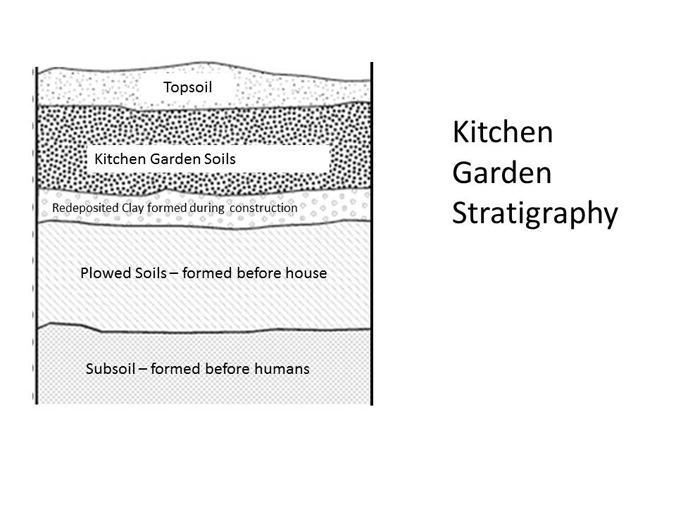
    Kitchen garden stratigraphy
    Diagram illustrating the soil layers excavated in the kitchen garden area at Kenmore.

    Finally, the kitchen’s east side was dominated by the formal gardens and terrace.  While the present garden at Kenmore is Colonial Revival in style, archaeological clues to what the original 18th century garden looked like remain under the soil.

    Archaeology has shown us that at Ferry Farm, the disposal of trash was something of a free-for-all within the area behind the Washington house.  At Kenmore, however the yard on each side of the kitchen building was carefully controlled for a different use.
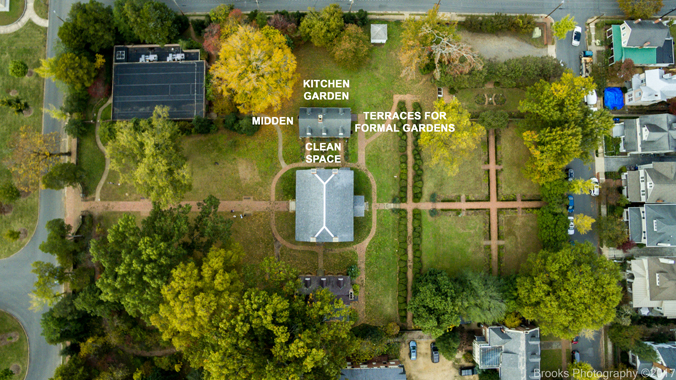
    Land Use around Kenmore's Kitchen
    Aerial photo of Historic Kenmore with different land uses around the kitchen marked.

    No matter where the garbage was disposed, however, finding the trash middens on the landscapes has revealed much about the free and enslaved residents of George Washington’s Ferry Farm and Historic Kenmore.

    Dave Muraca
    Director of Archaeology

    Zac Cunningham
    Manager of Educational Programs

  • Summer Vacation, 18th Century Style

    Despite issues of poor roads, lack of transportation, financial considerations and simply an absence of places to go, colonial Virginians fancied a summer vacation just as much as we do today.  In fact, getting out of the city, or away from hot, steamy climates and hordes of mosquitoes in the summer months was actually necessary for health.  In the late 1760s and right through the Revolution, Fielding Lewis and his brother-in-law George Washington joined a number of other Fredericksburg locals in making regular summer visits to one of the few getaways locales in existence at the time – the warm springs in (at the time) Frederick County.

    Now known as Berkeley Springs in present-day West Virginia, the bubbling natural springs and their reputed medicinal powers have attracted visitors since long before Europeans came across them.  Native Americans visited the springs to take advantage of its healing waters, and told settlers about the spot, as well.  The site is labeled as “Medicinal spring” on the famed 1747 Fry-Jefferson map.

    A map of the most inhabited part of Virginia containing the whole province of Maryland with part of Pensilvania, New Jersey and North Carolina, 1747
    “A map of the most inhabited part of Virginia containing the whole province of Maryland with part of Pensilvania, New Jersey and North Carolina”, 1747 (the Fry-Jefferson map) by Joshua Fry & Peter Jefferson. Credit: Library of Congress.
    Enlargement of Fry-Jefferson Map showing Medicinal Spring
    Enlargement of the Fry-Jefferson map showing the location of the Medicinal Spring frequented by the Washington and Lewis families. Credit: Library of Congress.

    Sixteen-year-old George Washington made his first visit the following year, as part of Lord Fairfax’s wilderness surveying crew.  At that very early date, a visit to the springs really was purely for medicinal purposes, as there certainly were no other amenities to attract vacationers, and getting there was a feat in itself, being tucked away in the remote mountains.  To say that conditions were primitive would be an understatement, and young George was…unimpressed. In his diary, which he began on this trip and would continue for nearly the rest of his life, George wrote, “We this day call’d to see y. Fam’d Warm Springs. We camped out in y. field this night. Nothing remarkable happen’d…”[1]

    Indeed, early reports about the situation at the “fam’d Warm Springs” conjur some interesting mental images.  Native Americans “took the waters” by simply hollowing out shallow pools in the sandy ground and squatting in them, allowing the natural spring water to bubble up around them.  They also built temporary saunas to steam in, and apparently allowed ailing white visitors to share.  Although, the shallow pits were eventually lined with stones found nearby to make them more or less permanent, one still pictures fully-clothed, wig-wearing colonists sitting miserably in tepid water, hoping their fever, cold or rheumatism would be cured.  As there were no structures built on the site, visitors hauled their own provisions, tents and even household staffs with them in wagons and camped out on the steep hillsides.[2]

    And apparently, this state of affairs went on for quite a while, perhaps testifying to the desperation of the sick and injured in the 18th century for some sort of relief.  On a return trip to the springs in August of 1761, George Washington described a similar situation to what he had witnessed more than a decade earlier.  “We found of both sexes about 250 people at this place, full of all manner of diseases and complaints…They are situated very badly on the east side of a steep mountain and enclosed by hills on all sides, so that the afternoon’s sun is hid by 4 o’clock and the fog hangs over us till 9 or 10…I am of the opinion that numbers get more hurt by their manner of lying, than the waters can do them good. Had we not succeeded in getting a tent and marquee from Winchester, we should have been in a most miserable situation here.”[3]

    Yet, despite the less than ideal accommodations, George did return to the warm springs.  And so did many other members of the Virginia gentry, including Fielding Lewis.  They did seem to believe that the waters there had a positive effect, and so the trip was worthwhile…but, gee, it sure would be great if they could have a bit more fun while doing it!  And so they set about turning the place into a more comfortable spot, a resort really, where they could not only take the waters but enjoy entertainments, visit with friends, have good food and drink, and generally have a good time for a few weeks every summer.  By all accounts, they succeeded.

    George Washington's Bathtub
    “George Washington’s Bath Tub”, a monument constructed to represent bathing conditions in Washington’s time in present-day Berkeley Springs State Park. Credit: Warfieldian / Wikipedia

    The first effort to civilize the warm springs was by Fredericksburg resident James Mercer, a good friend of both Fielding Lewis and Charles Dick.  He apparently was given permission by Lord Fairfax to build a rather large summer cottage at the site, and it quickly became the center of Fredericksburg’s summer social scene.  The group of Fredericksburg friends, all young men in their 30s and early 40s, along with wives and children, journeyed to Mercer’s cottage for vacation.  In 1769, George Washington brought Martha and Patsy to stay for several weeks, and described the many visitors in and out of the cottage, including Lord Fairfax himself and his family members, and several former military friends from Pennsylvania.[4]

    With the building of a new road to the area in 1772, James Mercer got some neighbors.  Inns and taverns sprang up (including Washington’s favorite, Throgmorton’s Sign of the Liberty Pole and Flag) other houses were built (although still mostly cabins and one room shanties) and the influx of vacationers increased.  It was a kind of hodge-podge, though, with no systematic plan for building or improvement.  The Fredericksburg friends (and associated relatives) saw an opportunity, though, and in 1775 they convinced Lord Fairfax to allow the laying out of a proper town, and Samuel and Warner Washington were put in charge of it.  Town lots were quickly bought up, mostly by the Fredericksburg contingent, and the building of cottages commenced.  The group decided to give their new town the rather aspirational name of Bath, after the popular spa resort in England.

    The Comforts of Bath
    “King Bladud’s Bath” from The Comforts of Bath series (1798) by satirist Thomas Rowlandson. Credit: Wikigallery.

    So what was daily life like for a colonial Virginian on summer vacation? By the 1770s, life in Bath had changed drastically from the early days of squatting in shallow pits.  In addition to sampling the local mineral water, vacationers could enjoy public balls that happened twice a week, tavern nightlife, gambling, horse racing, daily teas at 5:00 and a number of options for food and drink.  By 1784, an advertisement in the Maryland Gazette describes the town as having five bathhouses, each with their own dressing rooms, an assembly room, and even a theater, where the travelling performance group The American Company of Comedians was expected to perform that summer.[5]

    Noted early Virginia diarist Philip Vickers Fithian wrote of his visit to the springs in 1775, “In our dining Room Companies at Cards, Five & forty, Whist, Alfours, Callico-Betty &c. I walked out among the Bushes here also was—Amusements in all Shapes, & in high Degrees, are constantly taking Place among so promiscuous Company.” Fithian also goes on to describe the gentlemen of the village serenading the ladies from outside their lodgings until 4:00 in the morning, following a large ball.[6]

    Fielding’s eldest son, John Lewis, and his cousin Warner Washington, who were in their 20s, were among the young gentry who suddenly found the springs interesting as entertainment opportunities increased.  The cousins eventually bought lots and built cottages, although it’s probably safe to say they weren’t there for the waters.  The little village had become so raucous in the summer months, a Methodist minister referred to it as an “overflowing tide of immorality.”[7]

    But the curative properties of the springs were still the primary focus of visitors’ time.  Depending on the ailment that visitors were seeking to cure, they might “take the waters” up to three times a day at one of several actual bathhouses that had been built over the natural springs.  We have some description of these bathhouses from a French traveler, who vacationed at the springs in 1791, “…a plain and large frame structure, divided into eight small rooms made of badly joined boards where the bathers go in the morning. There is a staircase in each small room so that when the bather wishes he can gradually change the water line.”[8]  Both men and women used the bathhouses, but they did so at separate times of day.  At European spas of the day, men generally went swimming in the nude, while women wore bathing gowns, so that was perhaps the convention used at the American Bath, as well.

    Fielding Lewis made an annual visit to the springs every August for several weeks, as early as 1772 and possibly much earlier.  When the town lots were laid out, he purchased #45 which fronted on Liberty Street.  His next door neighbor was Charles Dick, and James Mercer’s big cottage was just a few doors down.  Fielding’s mentions of his visits are few.  We don’t know whether the entire Lewis family travelled with him, although due to mentions in Philip Fithian’s journal, we know that in 1775 son George was with his father (George had attended the College of New Jersey with Fithian years earlier and Fithian enjoyed the chance to catch up with an old friend).  Most likely Fielding was among the springs vacationers who was there almost entirely for medicinal reasons, as his health had begun its long decline, and already the stresses of wartime were weighing heavily on him.

    So there you have it.  It was cold, muddy and filled with hordes of sick and injured people, but the company was good and the party never ended – it was summer vacation, 18th century style!

    Meghan Budinger
    Aldrich Director of Curatorial Operations


    [1] “A Journal of my Journey over the Mountains began Fryday the 11th. of March 1747/8,” Founders Online, National Archives, accessed June 4, 2019, https://founders.archives.gov/documents/Washington/01-01-02-0001-0002.

    [2] Mozier, Jeanne. The Early Days of Bath.  Accessed June 4, 2019, http://berkeleysprings.com/history-berkeley-springs/early-days-bath

    [3] The Papers of George Washington, Colonial Series, vol. 7, 1 January 1761 – 15 June 1767, ed. W. W. Abbot and Dorothy Twohig. Charlottesville: University Press of Virginia, 1990, pp. 68–70.

    [4] Felder, Paula.  Fielding Lewis and the Washington Family.  The American History Company, 1998, pp. 186.

    [5] Flexner, James Thomas.  Steamboats Come True: American Inventors in Action. Fordham University Press, 1992, pg. 67.

    [6] Fithian, Philip Vickers. Journal, 1775-1776: Written on the Virginia-Pennsylvania frontier and in the army around New York. Robert Greenhalgh Albion and Leonidas Dodson, eds. Princeton: Princeton University Press, 1934.

    [7] Mozier.

    [8] Bayard, Ferdinand M. Voyage dans l’intérieur des États-Unis: à Bath, Winchester, dans la vallée de Shenandoah, etc., etc., pendant l’été de 1791. As quoted in Mozier, ibid.

  • What’s Growing in Ferry Farm’s Garden?

    As many of you know, the Washington house replica at George Washington’s Ferry Farm was reconstructed and furnished as accurately as possible using historic documents, paintings, letters, and, of course, archaeology. Now that the challenge of getting the house built and open to visitors has passed, it’s time to turn to the rest of our plan for interpreting Ferry Farm’s landscape. This will eventually include constructing outbuildings, finishing the work yard, and improving the garden.

    Even though the present garden is located at Ferry Farm’s Visitor Center and not yet near the Washington house replica, we used archaeological discoveries to decide what goes into the garden this spring. Using data from past excavations on Washington-era contexts, we drew some conclusions on what the Washington family and their enslaved workers cultivated here. While most organic material left behind over 250 years ago is long gone, as archaeologists, we sometimes get lucky and find biological and botanical remains that have withstood the time in the ground. We get especially lucky when we do find botanical remains like seeds and wood because, depending on the elements, they usually decompose easier and faster than bone.

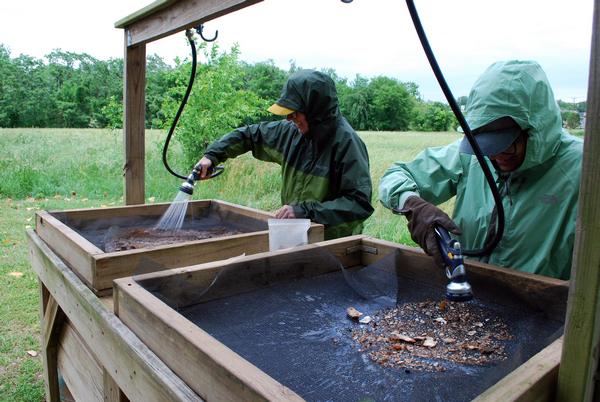
    Visitor often ask how we find some of our tiniest artifacts such as seeds. For important contexts and Washington era features, we don’t want to miss a single (tiny) thing, so we use a water screen. Instead of the usual quarter-inch screen we use for dry sifting dirt, we use a gentle stream of water from a garden hose and spray away the dirt through a window screen. We then use tweezers to pick out the tiny artifacts left behind.  Objects like the straight pin in the photo below and seeds could otherwise fall through the standard quarter-inch screen.

    GWF_FF20-Waterscreen-Cate-Courtney-24May2013H
    Water screening
    GWF_FF20-Waterscreen-16May2013
    Picking out the artifacts after water screening.
    GWF_FF20-Waterscreen-StraightPin-17May2013
    Straight pin

    In 2015, we had flora remains from a mid-18th century storehouse cellar feature that had been captured by our fine mesh water screens sent to Justine McKnight, an archaeobotanical consultant for analysis.  Without getting extremely technical, I will say that we gained some very useful data to use to plant our garden this year. Seed specimens discovered archaeologically and used in cultivation consisted  of peas, green beans, wheat, and corn. Seeds included hackberry and, of course, cherry. The only nut uncovered was a hazelnut shell.

    Along with this archaeological evidence, we also know that some tobacco was grown on the Washington farm because of court records. In the 17th and 18th centuries, tobacco was Virginia’s premier export and most valuable cash crop but places along the Rappahannock River like Ferry Farm were not great tobacco land.  In these areas, as our excavated seeds show, planters moved onto corn, wheat, and other crops, knowing they would never get rich on tobacco.

    Using all of this information, we planted similar crops in the demonstration garden along with other crops widely grown in 18th century colonial America.

    While seemingly insignificant at first glance, these tiny charred remains of flora give us a snapshot in time of the diets of the Washington family and enslaved workers at Ferry Farm. These definitely are not the only plants they were eating, but we do know via archaeology that these were stored by the family in the mid-18th century. Using the other archival resources listed above, we will continue to fill in the gaps and enhance our garden and landscape according to the historical and archaeological records.

    Elyse Adams, Archaeologist
    Archaeology Lab Technician

  • Digging Ferry Farm – Laying in the Grid [Video]

    Before digging, archaeologists must survey the land and place a grid on their dig site so they can locate artifact discoveries on the landscape and make maps and other records. In this video, Archaeologist Joseph Blondino of Dovetail Cultural Resource Group explains how this survey is done, shows us the tools used, and then lays the grid for this year’s archaeological excavation at George Washington’s Ferry Farm.

  • When a Toy Hatchet is so Much More: Trench Art at Ferry Farm

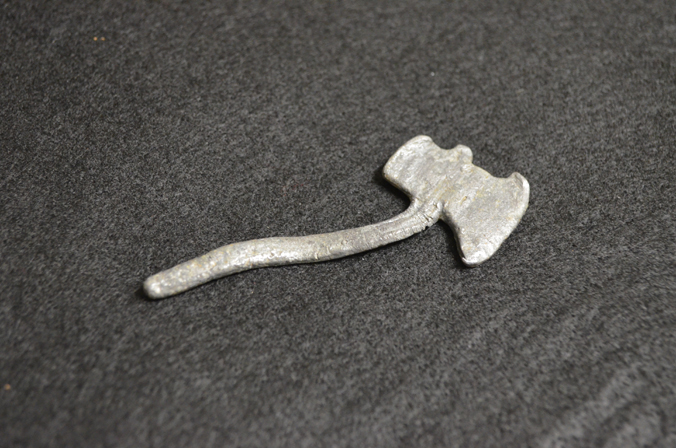
    Lead Hatchet - Flat Side
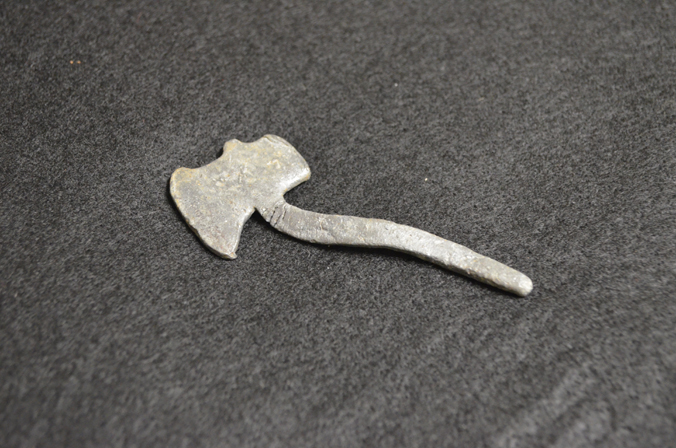
    Lead toy hatchet excavated at George Washington’s Ferry Farm.

    This is a Memorial Day story of a tiny hatchet excavated at George Washington’s Ferry Farm.  For such a diminutive object it speaks quite loudly to our local history in Fredericksburg, Virginia.  Initially, archaeologists at Ferry Farm assumed it was a pewter toy souvenir given out or sold in 1932, when our country and Fredericksburg celebrated the 200th anniversary of George’s birth.  Indeed, cheap pewter toys were very popular during the time period.


    A closer look at the provenience, or the location on the Ferry Farm landscape, where the artifact was recovered paints a more complex picture.  Provenience is very important in archaeology because whatever is excavated around an artifact paints a more complete picture than one object all by itself.  A reexamination of all the artifacts from the context where the hatchet was found revealed that nothing from that strata (we excavate in layers) had any 20th century artifacts in it, nor did the two strata above it.  In fact, the youngest artifacts from these strata were all mid-19th century.  Additionally, although the archaeologists who excavated the hatchet didn’t know it at the time, the excavation unit from which the hatchet came sat right inside the Civil War-era trench that runs across the property.

    Civil War Trench
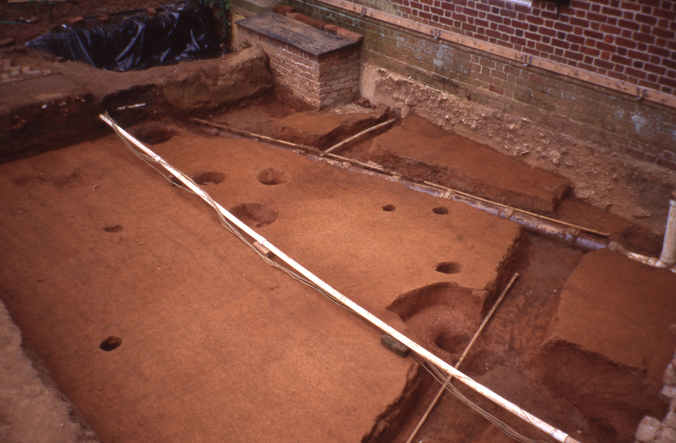
    Excavated area containing the footprint of the 18th century Washington house at Ferry Farm showing a 19th century Civil War trench running the length of the house and beyond.

    This revelation shut the door on our ‘it’s a 20th century souvenir’ narrative but opened the door to an even cooler one.  A close examination of the hatchet showed that it didn’t have mold seams, which are always present on cast pewter toys.  Furthermore, for some reason, it had one smooth side and one textured side leading us to believe that it was handmade, not machine cast.  This was supported by a thorough internet search to find an identical toy hatchet, which came up empty, further supporting our new theory that this piece was a one of a kind.  The textured side resembled the grain of wood so we surmised it had been cast in a simple hand carved wooden mold.  All of these clues, combined with its location within a Civil War trench, made us suspect that the hatchet was crafted by a soldier, possibly from a lead minie ball.  The hatchet is likely ‘trench art’.

    Lead Hatchet - Mold Side
    Textured side of the lead hatchet. See photo at the start of post for at image of the smooth side.

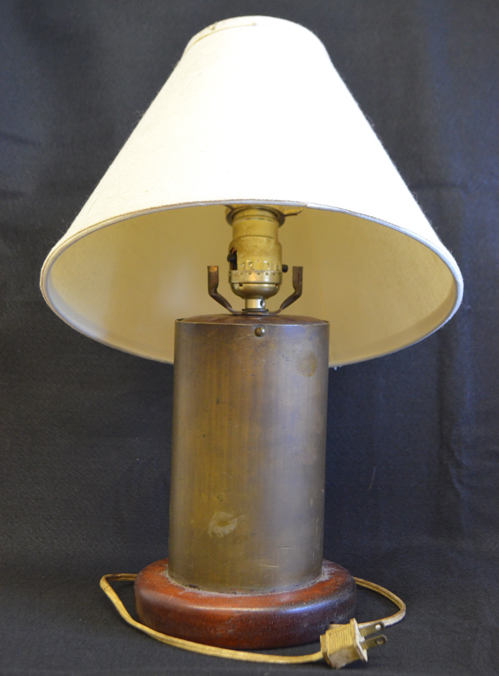
    Trench art is defined as objects either made by soldiers and POWs or by civilians using military items such as brass shell casings or lead bullets.  This simple lamp, owned by the author, was made using a 105 millimeter brass artillery shell casing.

    Lamp - Artillery Shell
    Lamp fashioned from a portion of a 105 millimeter brass artillery shell casing.

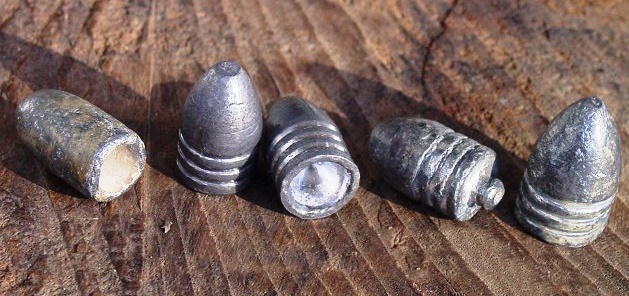
    To further support our identification of the hatchet as trench art, we took the artifact to the Virginia Department of Historic Resources where the amazing Katherine Ridgeway analyzed it using XRF or X-ray florescence analysis.  This non-destructive technique determines the composition of metal.  We also brought along a few minie balls recovered from the same unit for comparison.  It turned out that what we thought was a pewter hatchet was actually a lead hatchet with a similar compositional profile to minie balls, which are mostly lead with trace amounts of other metals such as tin and nickel.  While minie balls vary in their composition due to their imprecise method of manufacture, the hatchet was still a close match.

    Minie Balls
    Minie Balls – rifled musket bullets. From left to right: .557 Enfield Minie Bullet, Burton Pattern Minie Bullets .58 Springfield (x 2), Williams Bullet missing zinc base, .69 Caliber Minie Bullet for modified 1843 Springfield Musket. Credit: Mike Cumpston / Wikipedia
    One can just imagine a bored Union soldier whittling the mold and then melting down some of his bullets to pour into it.  He likely chose the hatchet form because of the famous cherry tree story, in which young George Washington owned up to hacking his father’s cheery tree with a hatchet by proclaiming ‘I cannot tell a lie’.  The soldier would have been well-versed in the Washington cherry tree myth, which was set at Ferry Farm by Mason Locke Weems in his first biography of Washington, published in 1800. By the 1860s, the story was nationally known.  Additionally, letters Union soldiers wrote while encamped at Ferry Farm indicate they knew the site’s connection to Washington. They even went so far as to send home cherry seeds for their families.
    While the identification of the hatchet is now secured, we have so many more questions.  Who was this soldier?  How many hatchets did he make and why did this one come to be left behind in his trench? Was it a souvenir for himself or did he send one home to his family or share with fellow soldiers?  Did he survive the war?  Unfortunately these are mysteries that will likely never be solved but that make for great pondering on this Memorial Day.

    Mara Kaktins, Archaeologist
    Archaeology Lab Supervisor

  • Lecture – The Social Role of Garbage in Colonial Virginia [Video]

    On Tuesday, May 21, 2019, Dave Muraca, Director of Archaeology at The George Washington Foundation, presented “The Social Role of Garbage in Colonial Virginia,” the final talk in this year’s annual lecture series. Dave presented three case studies in 18th century garbage disposal at George Washington’s Ferry Farm, Colonial Williamsburg, and Historic Kenmore.

    Thanks to the Fredericksburg branch of the Central Rappahannock Regional Library at 1201 Caroline Street in Fredericksburg, Virginia for hosting the series once again this year. To learn about other events and happenings, visit kenmore.org.

  • Lecture – Foodways in the 18th Century [Video]

    On Tuesday, May 14, 2019, Park Ranger Deborah Lawton of George Washington Birthplace National Monument presented a lecture titled “Foodways in the 18th Century” that explored the new dishes and changing tastes of the time.

    Join us on Tuesday, May 21, 2019 for “The Social Role of Garbage in Colonial Virginia” with Dave Muraca, Director of Archaeology at The George Washington Foundation. Dave will explore some of the aspects of colonial waste disposal and put these practices into a larger context that in turn may make modern persons question their own sense of normalcy. Talk begins at 7:00 p.m. The lecture is FREE and hosted at the Fredericksburg branch of the Central Rappahannock Regional Library at 1201 Caroline Street, Fredericksburg, Virginia. To learn more, visit kenmore.org.

  • ‘Now With No Morphine!’:  A Look at Patent Medicine Bottles Donated to Ferry Farm

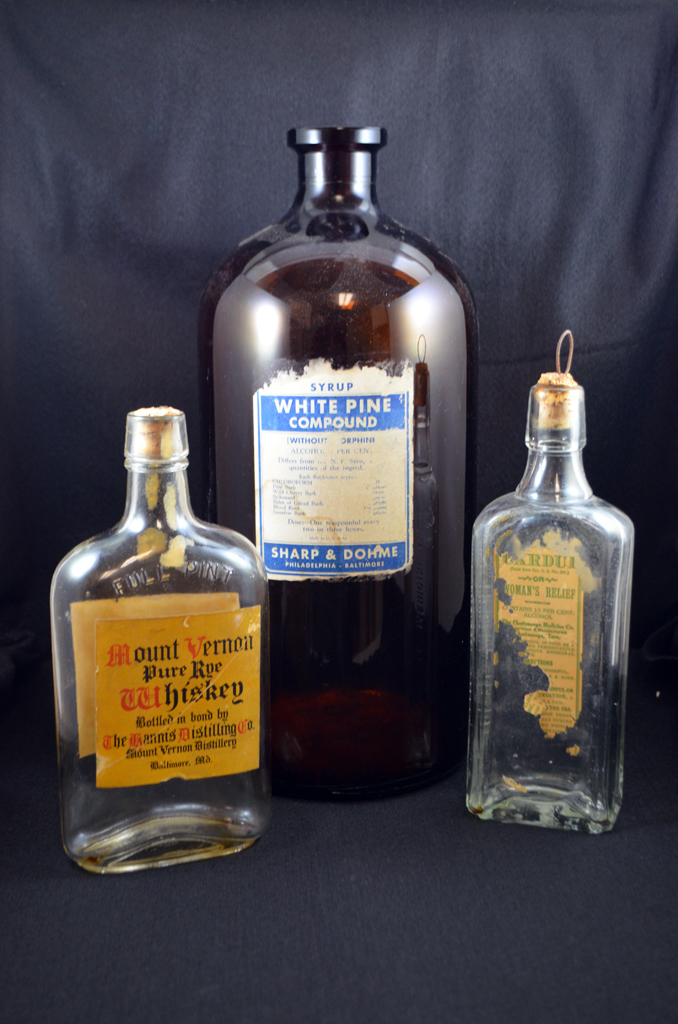
    Recently, George Washington’s Ferry Farm received a generous donation of bottles from the Mary Ball Washington Museum and Library.  For the most part they date from the late 19th to early 20th century and therefore have no connection to the Washingtons.  However, our Archaeology Department can certainly use them for a type collection.  A type collection is a teaching tool that will employ these bottles, known as an assemblage, to compare with bottle sherds we excavate from the field.  As such, we needed to do a thorough analysis of these bottles and it turns out a sizable portion of them are what we would call ‘patent medicines’.

    Patent Medicine Bottles

    Patent medicines have been around for a long time but reached the height of their popularity in the 19th century.  The term is a bit of a misnomer because it wasn’t the formula of the medicine that was patented but rather just the medicine’s name.  By doing this the manufacturer was not obligated to disclose the ingredients of their potions and as such could mix anything together and call it ‘medicine’.  Subsequently, many of these concoctions included ingredients designed to make you feel better, even if they did not actual cure any of your ailments.  This included, but was not limited to, copious quantities of alcohol, laudanum, cocaine, heroin, morphine, ether, chloroform, opium, etc.  In some cases, the medicines, particularly creams and ointments, contained zero active ingredients but also included a substance to make you feel a physical healing sensation. For example, capsaicin, eucalyptus, camphor, or menthol in these medicines could make your skin feel hot, cold, or tingly.

    Patent medicine manufacturers emphasized the consumer’s ability to take their health into their own hands since their products could be purchased without a prescription.  Their advertisements vilified traditional doctors, who they portrayed as agents of death.  Often marketed as cure alls, some purported to treat dozens of ailments ranging from headaches to warts.  The patent medicine propaganda machine was strong, often trumpeting false testimonials from people miraculously cured by them and millions of bottles of quack medicine were sold in the 19th century.  Eventually, concern mounted over the addictive quality of many of these medicines, bolstered by a mounting death count attributed to the unregulated concoctions. Many of the deaths were unfortunately children.

    One good example of a highly dangerous patent medicine was Porter’s Pain King.  It claimed to relieve colds, nervous and sick headache, rheumatic and neuralgic pains, toothache, backache, sprains, bruises and burns.  Containing a whopping 63 percent alcohol (much more than tequila) mixed with ether (a powerful anesthetic which is even more intoxicating than alcohol), it had dosages for adults, children, and animals.  The manufacturer also recommended bathing in it, which was potentially an even worse idea than ingesting this toxic brew.  Ether is really good at rendering people unconscious when inhaled and the fumes are more potent and unstable when heated by hot water.  Although, you wouldn’t feel any pain after taking Porter’s Pain King, it probably wasn’t worth the risk of addiction and death.  To combat the rampant patent medicine industry the 1906 Pure Food and Drug Act was passed, which eventually led to the creation of the Food and Drug Administration (FDA).  The act forced patent medicine makers to reveal their active ingredients and ensure that they actually contained what was advertised. It proved the downfall of many and we can all be grateful for that.

    BUT back to our own bottles!  We selected a few of the most interesting ones and have described them below along with a brief history of each.[1]

     Sharp and Dohme White Pine Compound Syrup

    Upon looking at this bottle, you may notice the reassuring words “without morphine”. Though today we might hope this would go without saying, by the time of the Civil War, morphine was an extremely popular pain-killer. Unfortunately, morphine was as addictive as it was effective and morphine addictions were common. Said one writer, “As an allayer of pain it is king, but as a destroyer of men, mentally, morally, and physically, it is as the traitor, pretending to be friendly, but at the same time slowly dragging its victim to death.”[2]

    Sharp and Dohme White Pine Compound Syrup

    The morphine epidemic, or morphinism, as it was called at the time, was a growing problem in the early 20th century. Recognizing the dangers of morphine, pharmaceutical companies, like Sharp and Dohme, began turning to other alternatives, like chloroform and heroin.[3] These were just as effective at numbing pain, but supposedly less habit forming than morphine (they weren’t).[4] Like in this bottle, the mixing of herbs, alcohol, and opiates or chloroform was fairly common in patent medicines.  As a side note, ingesting chloroform is an absolutely awful idea and you should never do it.

    Wine of Cardui

    Medicines advertising the treatment of ‘female complaints’ became their own sub-category of patent medicine. In the late 19th and early 20th century, women’s tonics, such as Wine of Cardui and Lydia Pinkham’s Vegetable Compound were extremely popular solutions to all manner of ‘womanly troubles’. At this time, discussion of women’s health issues such as menstruation and childbirth were fairly taboo so many women turned to patent medicines for help.[5] These tonics advertised curing everything from menstrual pain to acting as a general restorative for ‘delicate’ women.[6] Discussions of rampant sexism of the marketing aside, Wine of Cardui was over 50% potassium carbonate, 16% salt, and 20% alcohol,[7] with alcohol being its most potent active ingredient. Women’s tonics and medicines were also a socially acceptable way for women to consume alcohol. At the time, there was a significant stigma associated with women drinking alcohol recreationally, but there was no stigma with drinking alcoholic tonics to aid her womanly issues.[8] Unfortunately, many of these remedies also contained powerful opiates which led many to become unknowingly addicted.

    Mount Vernon Whiskey

    During Prohibition, patent medicines experienced a revival of sorts. One of the only legal ways to obtain alcohol during Prohibition was through a prescription. During this time, the government permitted limited production of spirits for medicinal purposes and wine for religious sacraments. Though the efficacy of medicinal alcohol was debated and, at times, discouraged, the practice continued.[9] Medicinal alcohol could be prescribed to treat a wide variety of ailments, from cancer to depression and could be prescribed to anyone willing to pay the hefty price tag. In fact, prescribing alcohol became a pretty lucrative business for doctors and pharmacists. Obtaining and filling a prescription could cost around $6 for a pint at the time, which is upwards of $70 in today’s money.[10] Upon obtaining this prescription, patients could receive one pint of their drink of choice every ten days. The practice proved extremely popular and doctors prescribed an estimated 64 million pints of medicinal alcohol in the first year of Prohibition.  Eventually, the Willis-Campbell Act of 1921 tightened the restrictions of these prescriptions limiting doctors to 100 prescriptions every 90 days and patients to a half-pint of alcohol. These restrictions did little to lessen the frequency of prescriptions, and physicians wrote millions of prescription a year throughout the 1920s.[11] Mount Vernon Whiskey is a classic example of ‘medicinal alcohol’, and it clearly states on the back label that it is only to be ingested for medical purposes (yeah right!).  And at a whopping 100% proof, it would surely make you feel better, at least initially.

    Conclusion

    Although most patent medicines have disappeared, a few held on because they actually did cure certain ailments.  These include Bayer aspirin, Doan’s pills, Luden’s cough drops, and Vick’s VapoRub, to name a few, although now these medicines are regulated by the government.  However, that is not to say that unregulated medicines do not still exist in our country.  ‘Supplements’, often taken for medical purposes, were ruled to be a category of food in 1994 and as such are not required to do rigorous testing by the FDA.  Drugs have to be proven safe before they can be sold but supplements are assumed to be safe until proven otherwise and have no obligation to show that they actually work in the manner advertised.  Additionally, they do not have to disclose all ingredients or demonstrate they contain the concentration of ingredients advertised, making them the patent medicines of our modern era.

    Carolyn Currin, UMW Student
    Spring 2019 Fleming Smith Scholar

    Mara Kaktins, Archaeologist
    Archaeology Lab Supervisor


    [1] Fike, Richard, The Bottle Book: A Comprehensive Guide to Historic, Embossed medicine Bottles. The Blackburn Press, New Jersey, 1987; Carson, Gerald, One for a Man, Two for a Horse: A Pictoral History, Grave & Comic, of Patent Medicines. Bramhall House, New York, 1961.

    [2] L.L. Stanley, “Morphinism” Journal of the American Institute of Criminal Law and Criminology 6, no. 4 (1915): 586-93, https://www.jstor.org/stable/1132738?sid=primo&origin=crossref&seq=3#metadata_info_tab_contents [accessed April 8, 2019].

    [3] Joe McKendry, “Sears Once Sold Heroin.” The Atlantic, March 2019, https://www.theatlantic.com/magazine/archive/2019/03/sears-roebuck-bayer-heroin/580441/ [accessed April 8,, 2019].

    [4] “Ether and Chloroform” History.com, April 21, 2018, https://www.history.com/topics/inventions/ether-and-chloroform [accessed April 8, 2019].

    [5] “Quack Cures and Self-Remedies: Patent Medicine” Digital Public Library of America. https://dp.la/exhibitions/patent-medicine/women-health-household-hints/?item=1303 [accessed April 8, 2019].

    [6] “Black Draught and Cardui Promise Quick Relief” The History Engine, 2015 https://historyengine.richmond.edu/episodes/view/4650 [accessed April 8, 2019].

    [7] Ibid; Cramp, Arthur J. “Nostrums and Quackery: Articles on the Nostrum Evil, Quackery and Allied Matters Affecting the Public Health” American Medical Association, vol. 2 (1921). https://books.google.com/books?id=8AVEAAAAIAAJ&pg=PA171&lpg=PA171&dq=wine+of+cardui&source=bl&ots=Uj6v9dWCFj&sig=ACfU3U2BbKfuBig1nwqlbX1WzoNZkQdBLA&hl=en&sa=X&ved=2ahUKEwi16Jjw7MDhAhVEqlkKHThZBV04ChDoATAOegQICBAB#v=onepage&q=wine%20of%20cardui&f=false [accessed April 8. 2019].

    [8] Becky M. Nicolaides, “The State’s ‘Sharp Line Between the Sexes: Women, alcohol, and the law in the United States, 1850-1908” Addiction 8, no. 91 (1996): 1211-1230, https://www.ncbi.nlm.nih.gov/pubmed/8828248 [accessed April 8, 2019].

    [9] Megan Gambino, “During Prohibition, You Doctor Could Write You A Prescription for Booze,” Smithsonian.com, October 7, 2013, https://www.smithsonianmag.com/history/during-prohibition-your-doctor-could-write-you-prescription-booze-180947940/ [accessed April 8, 2019].

    [10] Paula Mejia, “The Lucrative Business of Prescribing Booze During Prohibition” Atlas Obscura, March 15, 2017, https://www.atlasobscura.com/articles/doctors-booze-notes-prohibition [accessed April 8, 2019]; “Medicinal Alcohol” The Ohio State University, 2019. https://prohibition.osu.edu/american-prohibition-1920/medicinal-alcohol [accessed April 8, 2019].

    [11] Ibid.

  • Lecture – Drinking with the Washingtons: Archaeological Evidence of Colonial Imbibing at Ferry Farm [Video]

    On Tuesday, May 7, 2019, Archaeologist Mara Kaktins, Ceramics & Glass Specialist at The George Washington Foundation, presented a lecture titled “Drinking with the Washingtons: Archaeological Evidence of Colonial Imbibing at Ferry Farm.” Mara explored a wide variety of beverage-related artifacts from teawares to punch bowls and discussed how cups and glasses reflected efforts by Mary Washington to demonstrate the family’s economic status and refinement.

    Join us on Tuesday, May 14, 2019 for “Food in the Eighteenth Century” when Deborah Lawton, Park Ranger at George Washington Birthplace National Monument, will explore the new dishes and changing tastes that marked the foodways of the eighteenth century. Talk begins at 7:00 p.m. The lecture is FREE and hosted at the Fredericksburg branch of the Central Rappahannock Regional Library at 1201 Caroline Street, Fredericksburg, Virginia. To learn more, visit http://www.kenmore.org.

  • Making 18th Century Glass & Ceramic Reproductions: An Update

    The replica Washington house at George Washington’s Ferry Farm has been open for tours for one year now but we still continue to add reproduction furniture and objects to the rooms inside. Since the house is a replica built using archaeology, historic research, and expert knowledge, we are using the same three foundations to create replica objects to display inside the house so that visitors may have a hands-on interactive experience.  Guests may sit on chairs, lie on the beds, pick up tumblers, hold tea pots and much more! Here in the archaeology lab at Ferry Farm, we’re always hard at work making new reproduction ceramic and glass items for the Washington house, as seen in this video.  Let’s take a look at some of our newest additions!

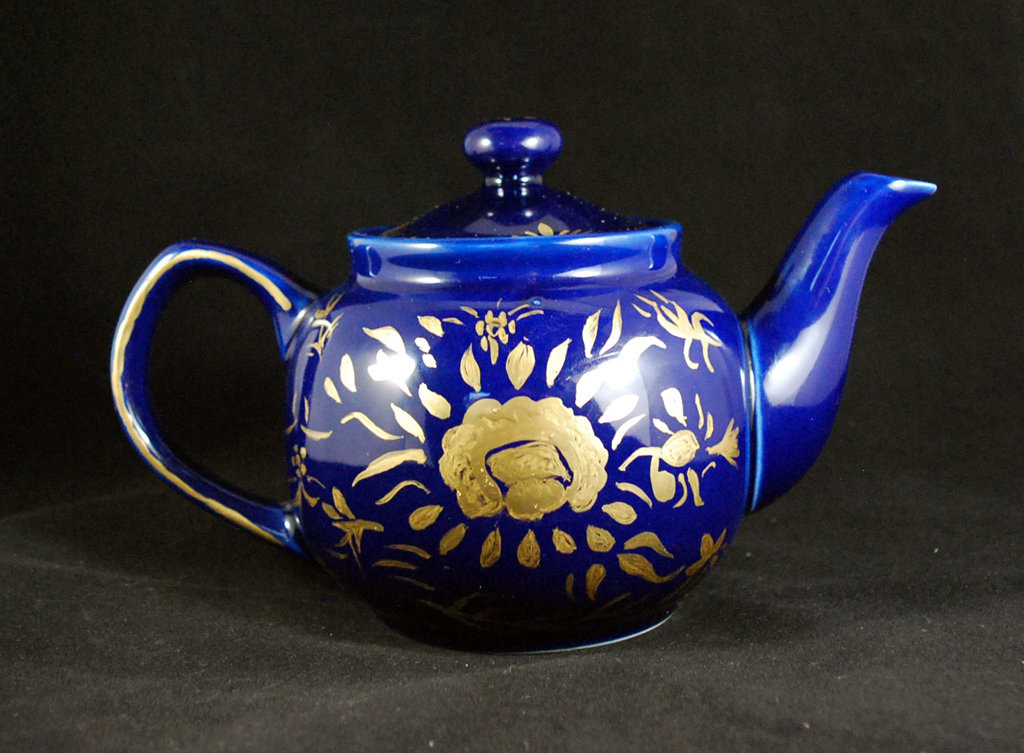
    This adorable little teapot is a reproduction of a ware type called Littler’s Blue which had a very short run between 1750 and 1765.  These pots were often gilded with gold so we found a tiny blue teapot and made it fabulous.

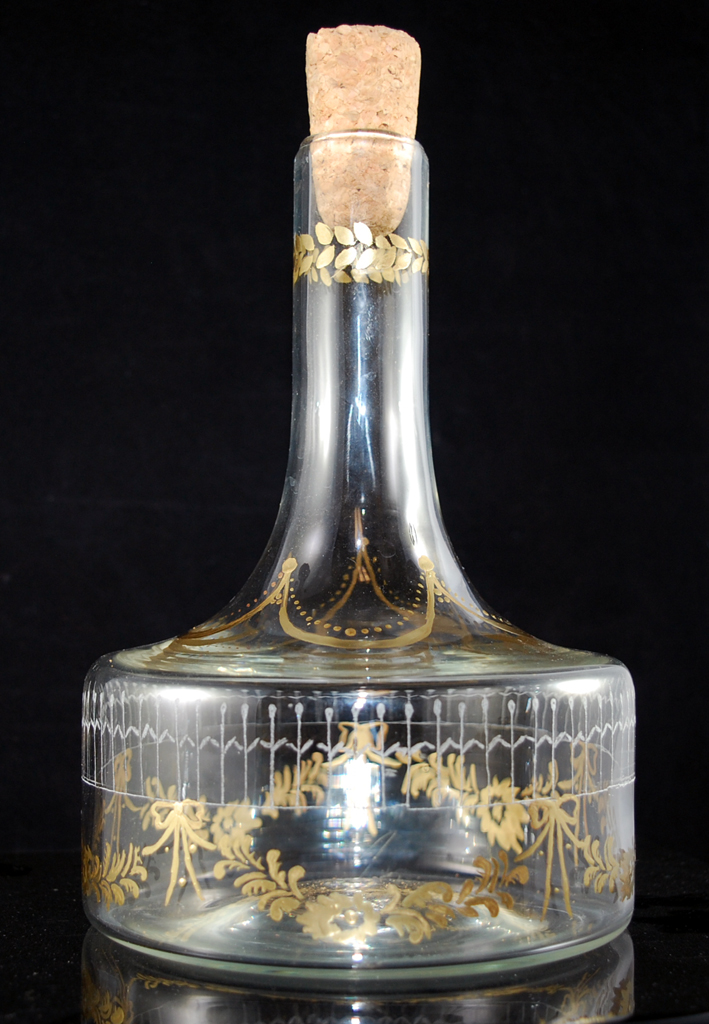
    We needed a decanter for the Washington house and while the shape of this one wasn’t perfect we were able to engrave it with a tulip motif based on artifacts recovered archaeologically at Ferry Farm. And because we caught gilding fever one of our very talented interns embellished it further to match eighteenth century examples. We also whittled down the ridiculous cork, although we’re searching for a more appropriate glass one.

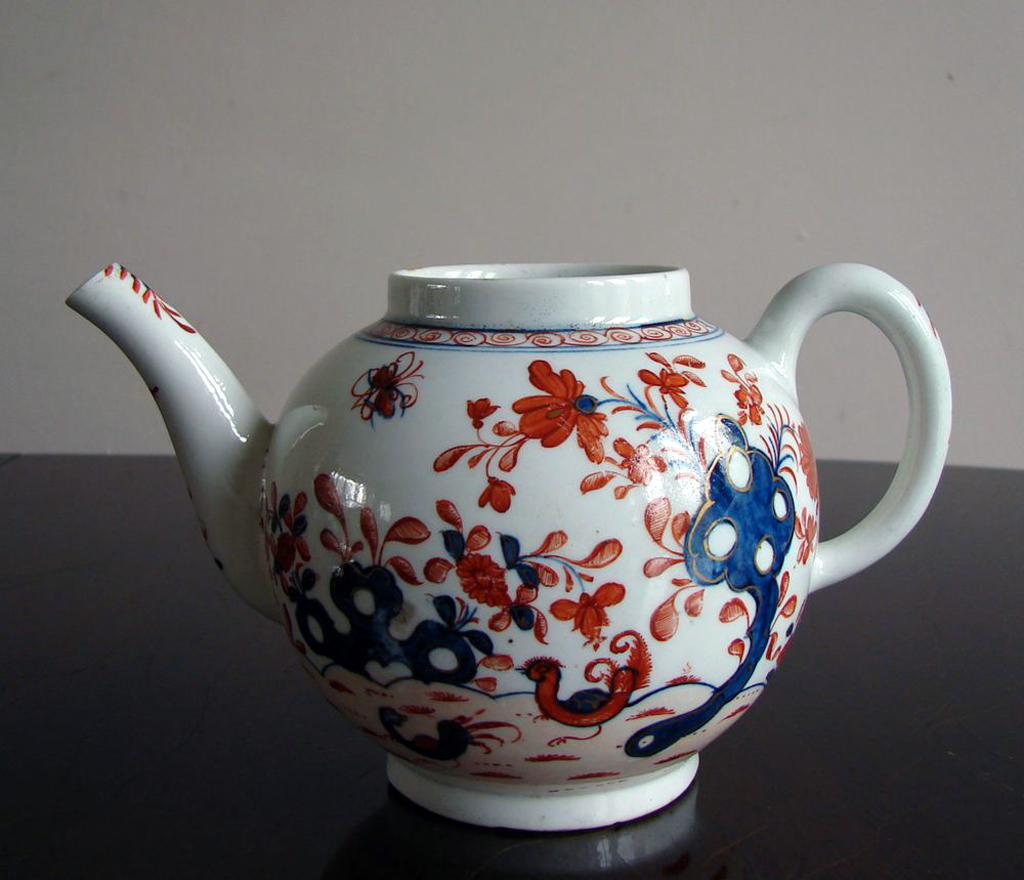
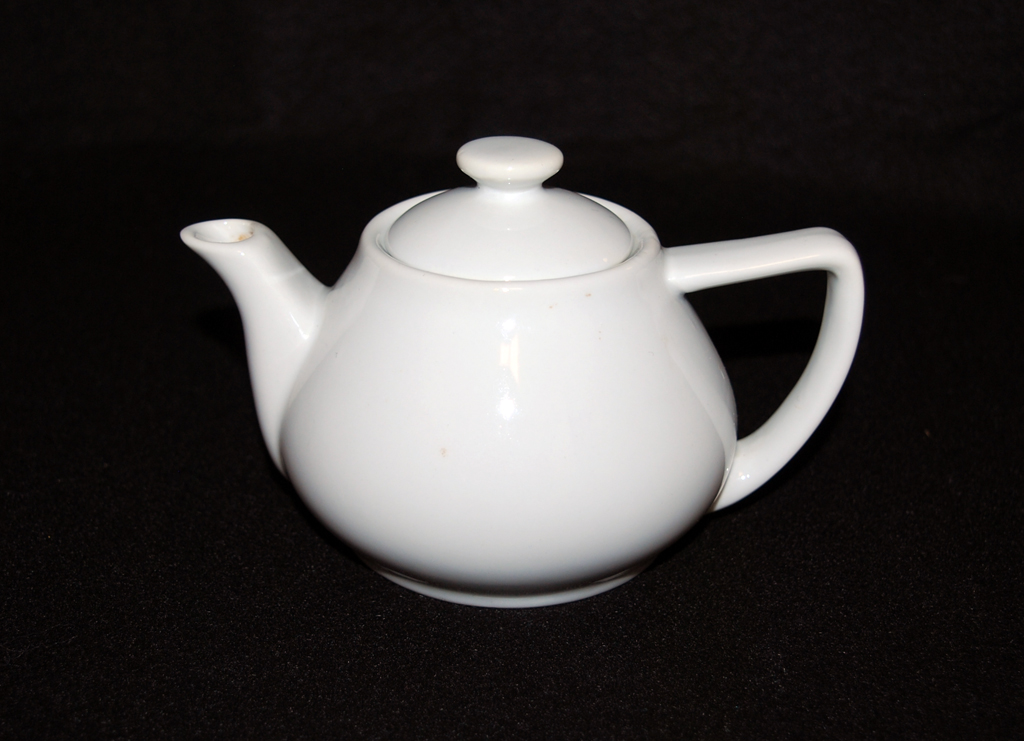
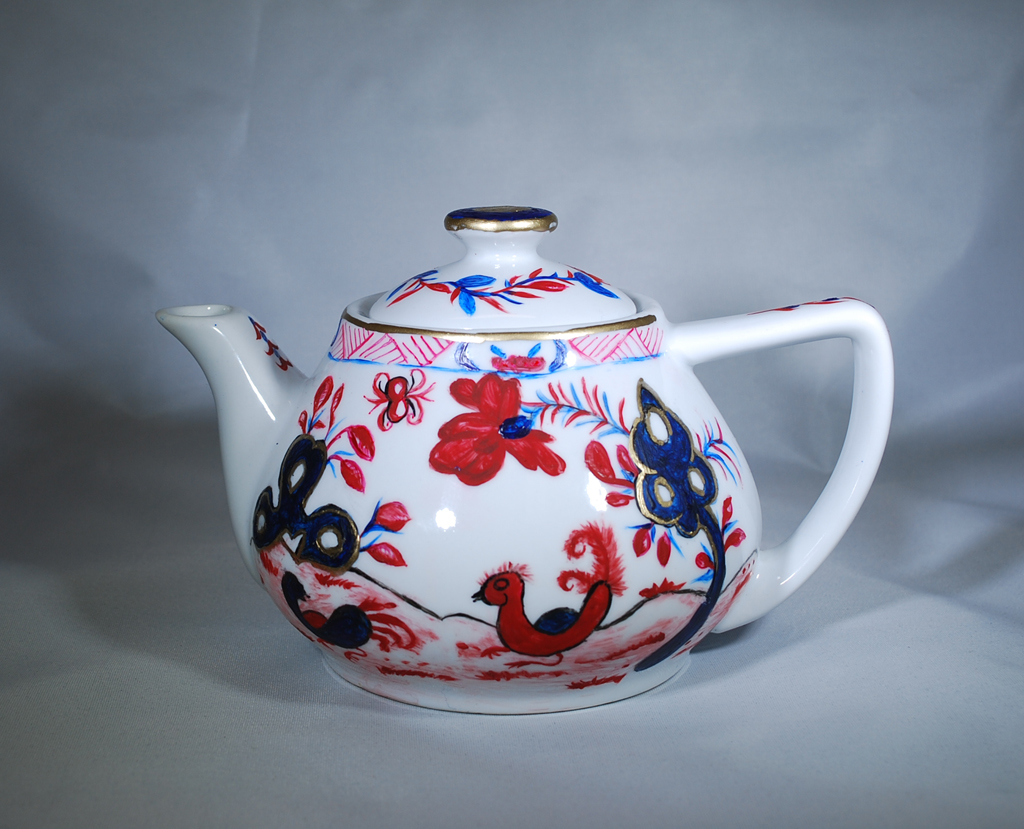
    We’ve excavated a lot of Chinese porcelain with what is called at ‘Imari’ palette, which is defined by under the glaze blue hand-painting, over-the-glaze red painting, and gilding.  Reproduction Imari is hard to find so we turned this plain white teapot into an Imari.  Our inspiration was the 18th century teapot below featuring cute little silkie chickens!

    Our staff then set out to turn this colonial revival basin into a tin-glazed serving bowl.  Our excavations have turned up quite a bit of hand-painted polychrome tin-glaze so it was a must have for the new house.  We decided to copy the eighteenth century bowl below. A little bit of paint and presto!  Bye basin and hello serving bowl!  Can you spot the tiny bee hidden among the flowers?

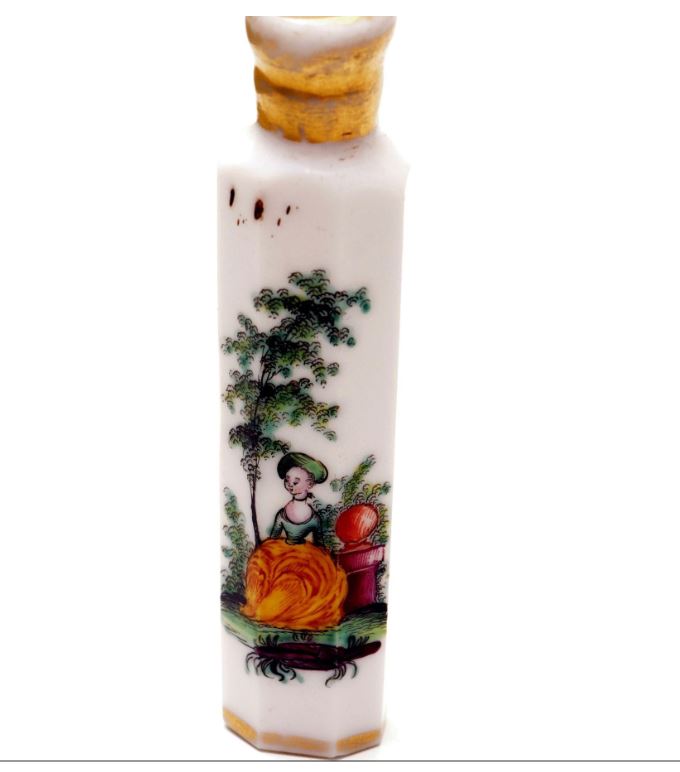
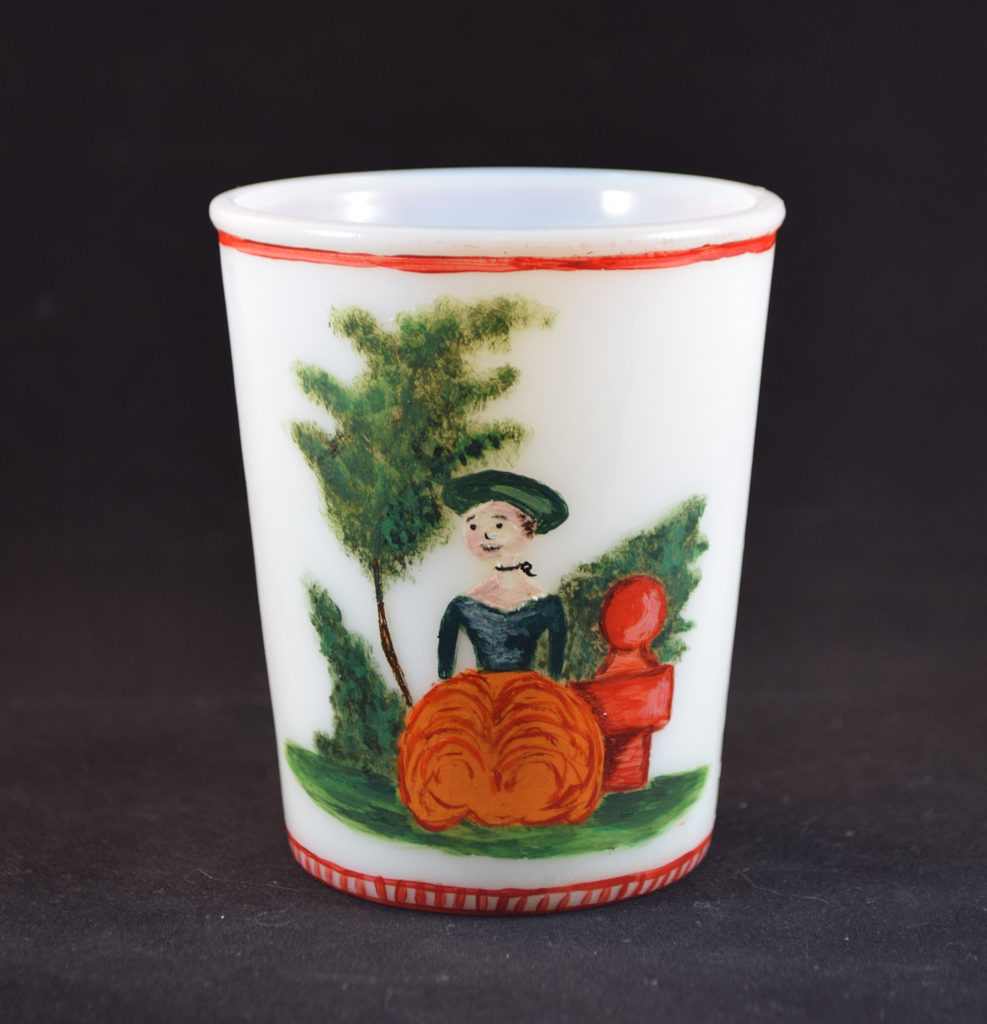
    We’ve been very fortunate to have a few extremely artistic interns, one of whom decorated this milk glass tumbler with an eighteenth century design from the vase below.  Some artistic license was taken and we decided to leave out the odd crab/lobster/crayfish….thing at the feet of the lady.  We think she turned out pretty nicely and since we’ve excavated a lot of painted milk glass at Ferry Farm she is a good fit for the house!

    If you’d like to see any of these in person, please come take a tour of the Washington house replica at Ferry Farm!  Where, unlike most museums, touching the (reproduction) objects is highly encouraged!

    Mara Kaktins, Archaeologist
    Archaeology Lab Supervisor