Lives and Legacies

Author: ferryfarmandkenmore

  • Payment Tokens… Of a Different Kind

    Tokens (1)
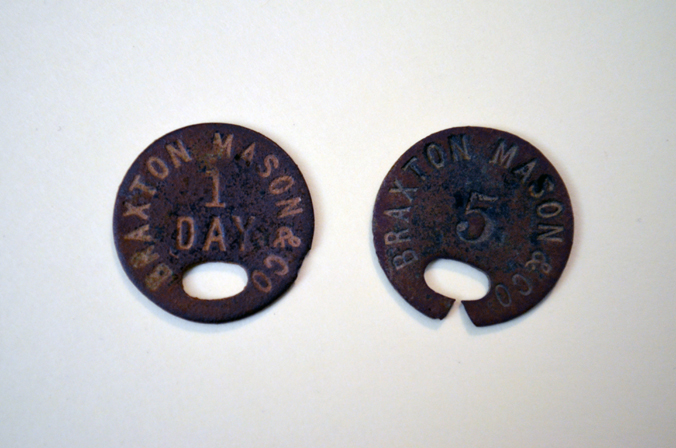
    Two of 21 payment tokens discovered by archaeologists at Historic Kenmore.

    During excavations around and under Kenmore’s 19th century portico in the early 2000s, archaeologists discovered several small metal disks.  Some disks were significantly corroded but a few still showed markings clearly.  They were stamped with the words “Braxton Mason & Co” as well as “1 day” and on another disk “5”. The disks had oval-shaped holes punched through the middle.  Over the years, excavations have found a total of 21 disks scattered around Kenmore.

    Tokens (2)
    Archival box containing artifact bags of payment tokens recovered during excavations at Kenmore.

    What were these disks? The machine-made nature of both the disks and the stamped words on them suggested they dated much later the 18th century and were more likely from the late 19th or even early 20th centuries.  The first clue to their purpose was the holes punched in the middle of each disk, which suggested they were intended to be strung together on a chain or key ring.  Though of different shapes and materials, similar artifacts intended to be strung together in the same manner had been excavated at other sites around Fredericksburg, especially on the nearby Northern Neck.  In those instances, the artifacts were identified as payment tokens used by workers in the “truck farming” industry.  Day laborers were hired to pick produce, which was collected by the bushel-full in trucks and then sold roadside from the same trucks.  For every bushel of produce picked, the laborer received a payment token, usually marked with either the amount “1 bushel” or so many pounds.  At the end of the day or of the week, laborers lined up to trade in their tokens for payment.  As the 20th century progressed, the Northern Neck became a center for the food canning industry, and eventually the small truck farms raised produce almost solely to supply 120 canneries.  These canneries started issuing their own payment tokens often stamped with the company name. [1]

    For a long time, it was believed the metal tokens found at Kenmore were payment tokens related to truck farming.  The thought was that the Howard family, who owned Kenmore from 1881 until 1914, perhaps used the remaining land surrounding the house for a small truck farming operation.  The tokens probably had been inadvertently dropped by laborers around the property.  On its surface, this seemed a plausible explanation and was added to the canon of Kenmore’s history.

    Upon closer inspection, however, there were issues with the truck farming theory.  First, Braxton Mason & Co was neither a Northern Neck cannery nor a business anywhere in the Fredericksburg area in the 20th century.  Also, the Kenmore tokens were stamped with time increments instead of quantities.  Lastly, there was no other evidence of the Howards being involved in truck farming.

    Working in the museum field has its definite perks, and one of them is that we have access to a vast network of people who possess an impressive amount of knowledge about a wide variety of topics.  Almost all of them love a good mystery!  Armed with the name Braxton Mason & Co and a rough date range of 1820 to 1880, I put out a call to museum colleagues in Virginia.  Had anyone ever heard of Braxton Mason & Co? Did anyone have any idea what kind of business it was? Within days, I began receiving bits of information and a truly interesting picture began to emerge.

    First, a colleague from Petersburg found a tiny reference to Braxton Mason & Co in the Railroad Gazette of 1871.  The single sentence stated that the company won the contract to build a portion of the Lynchburg and Danville railroad.[2]  Braxton Mason & Co was a railroading firm!  But who were the individuals Braxton and Mason? The Acts of the General Assembly of the State of Virginia for 1870 recorded that a Mr. Braxton and two gentlemen named Mason were among a group of 24 investors who formed the Fredericksburg & Northern Neck Railway Company in April.  Could this Braxton and one of the two Masons be our guys?

    A second colleague found reference to a Carter M. Braxton in the Fredericksburg City Council minutes of 1866. With the Civil War over, the city renewed pre-war efforts to build a railway line to Gordonsville.[3] The project’s engineer was Carter Braxton.  The Fredericksburg-Gordonsville Railroad was completed in 1870, just before Braxton Mason & Co was contracted to build the Lynchburg-Danville line.  Could Carter Braxton and one of his fellow investors (named Mason) in the Fredericksburg Northern Neck Railroad Company have split off and formed a smaller railway business? At the moment, that seems the likely explanation.

    So, that explains what Braxton Mason & Co was but what did it have to do with Kenmore? A third colleague inadvertently came up with a potential answer.  In order for Carter Braxton to complete the rail line to Gordonsville, the 1866 city council minutes said, swampy land that was part of the Kenmore property needed to be drained.  It was decided the “owners of Kenmore” would be asked to contribute since they would benefit financially from the railway’s construction.  The third colleague involved in this research had done extensive work establishing Kenmore’s ownership history.  The upheaval of the Civil War kept this history a bit cloudy.  Deeds and records of sale simply did not survive.  Because of my colleague’s work, however, we know that, in 1866, Kenmore’s owner was Levi Beardsley, a New Yorker who came to Virginia after the war in hopes of finding promising business ventures.[4]  As New Yorkers were not popular in the South, he told people that he was actually from Iowa.  His secret came to light during a failed political campaign in 1868 and his various business ventures began to crumble.  In order to keep Kenmore safe from his creditors, he put it into trust for his wife.[5]  The trustee was a man named William Barton.

    In 1870, the same year that Braxton Mason & Co began taking contracts on their own, Beardsley and his wife finally gave up and left Virginia.  Kenmore was supposedly auctioned off, but it appears that William Barton retained control of the property.  Shortly thereafter, Barton rented the house out to tenants.  We have never known the identity or number of these tenants.
    Tokens (3)
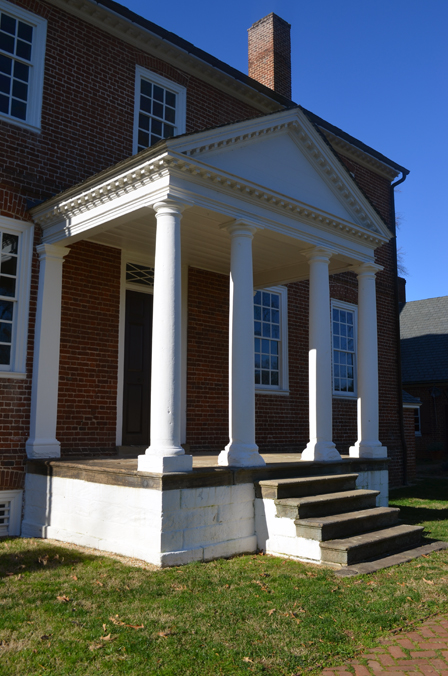
    The 19th century portico on the east front of Kenmore.

    Is it possible that, while working on the Fredericksburg-Gordonsville Railroad that crossed Kenmore property, Braxton Mason & Co housed their workers at Kenmore itself? Did laborers gather on the house’s portico each week to collect payment for their tokens, some of which were accidentally dropped nearby? It would certainly explain the presence of these perplexing metal disks and fill in the gap of who was living at Kenmore after 1870.  Whether this theory can be proven with certainty remains to be seen but, in the end, it’s the investigation that makes it fun…with a little help from our friends.

    Meghan Budinger
    Aldrich Director of Curatorial Operations

    [1] Dodd, Anita L. Day Laborer Tokens: Meaning and Function at Two 18th Century Plantations. 2006.

    [2] Railroad Gazette, vol. 3, 1871. Pg. 68.  Reference provided by Emmanuel Dabney, Curator, Petersburg National Battlefield.

    [3] Minutes of the City Council of Fredericksburg, 1866.  Reference provided by Judy Hynson, Archivist, Stratford Hall.

    [4] Walker, Travis. Levi A. Beardsley and Family. 2013.

    [5] Norman, Gary J. and Edgar R. Hon. Kenmore’s Yankees: The Beardsleys in Fredericksburg. 1996.

  • Photos: “Twelfth Night at Kenmore” 2016

    Each January, Historic Kenmore presents Twelfth Night at Kenmore, a dramatic theater presentation that imagines the first Christmas that Fielding and Betty Washington Lewis spent in their newly built home. The play is set in January 1776 and that year is not a time for the usual celebration. War brings fear, doubt, and frustration to the Lewis family and their friends.

    The 2016 edition of Twelfth Night at Kenmore took place this past weekend. Here are photos from that performance.

  • Glue: The Coolest Thing I’ve Ever Found

    As an archaeologist, I am often asked “What is the coolest thing you’ve ever found?”  The answer is complicated.  Although I’ve unearthed 10,000 year old Paleoindian hearths, elaborate porcelains, coins, long lost jewelry, and ancient stone tools, I say that the coolest thing I’ve ever found is …. glue.  This proclamation always elicits questioning looks from well-meaning folks who expect something a little more glamorous.  Let me tell you why, to date, glue is the “coolest thing I’ve ever found.”

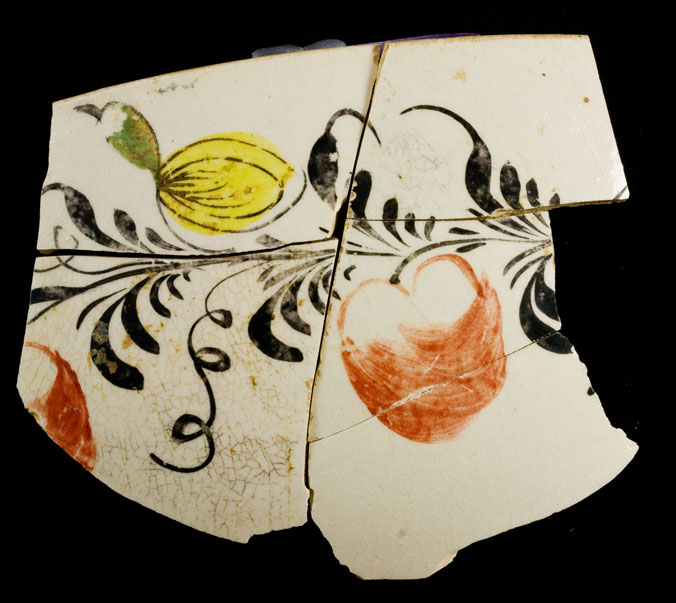
    It’s not just the glue itself that is incredible but also the object on which the glue was found.  When I started working at George Washington’s Ferry Farm, my first assignment was to examine creamware associated with Mary Washington, George’s mother, which was excavated from the cellar of the Washington home.  I focused on a lovely punch bowl with beautiful hand-painted enamel depicting a floral motif with cherry accents.  Obviously, we adore cherries at Ferry Farm, being the setting of the fabled chopping down of a certain tree by young George, and we wanted to learn more about it.

    PunchBowl

    cherry-sherds

    The punch bowl was manufactured in the 1760s or early 1770s.  It exhibited a lot of use wear, indicating it was obviously a favorite of Mary’s.  The punch bowl was of a size designed to be passed around at a gathering for each guest to take a sip directly from it.  This was a time before germs were well understood.  Thankfully, for health’s sake, 18th century punch contained a hefty amount of alcohol.  This also meant that punch was not cheap.  Actually, the production and drinking of punch was very much a ceremonial form of conspicuous consumption.  Mary chose this special bowl as much for its beauty as for its function.

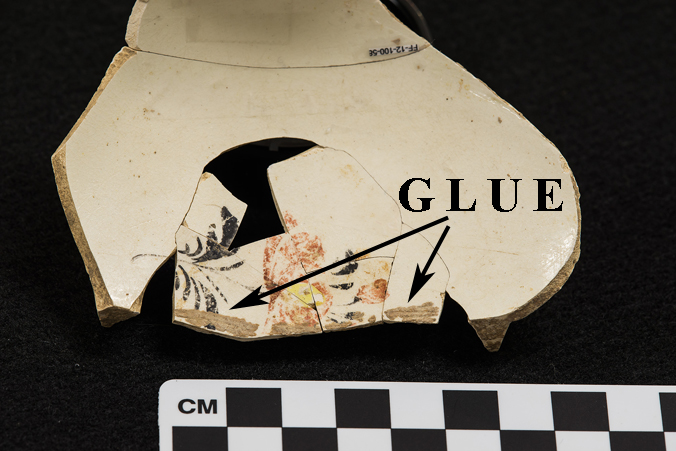
    After close inspection of the vessel, I noticed a strange substance adhering to many of the edges.  This unsightly brown stuff extended across the many breaks in the bowl and, upon microscopic examination, exhibited suspicious brush marks.  Furthermore, additional ceramics from the same cellar excavation revealed similar residues.  Could it be glue? If it were, this would shed light on a previously unknown behavior taking place in the Washington home – the breaking and subsequent repair of ceramics.  We had to know!  What followed was a multi-year study during which we tested the historic glue residue samples utilizing mass spectrometry courtesy of Eastern Michigan University. We spent months researching historic glues, replicating those glues, and then breaking and mending much thrift store pottery with the aforementioned glue in the name of science.  The conclusion?  We had indeed discovered eighteenth century glues!

    interior-glue copy

    While this may not seem like a ‘eureka’ moment, it was actually quite significant.  First of all, it’s amazing that 250-year-old glue survived in the ground for so long.  Second, the discovery improves our understanding of Mary Washington, a woman that gave birth to and shaped the young life of our first president.  By replicating period glues and mending modern pottery, we also learned that the vessels Mary had repaired probably were not used for anything other than display after mending.  They could not have held a liquid, which means that after it was broken and mended, the beloved punch bowl was probably relegated to mantle or shelf where the delicate hand-painted flowers and charming cherries could be admired but never used for its intended purpose ever again.

    We also concluded that Mary herself would probably not have made and applied the glues personally.  Turns out making eighteenth century glues involved a wide array of bizarre and often stinky ingredients including ox gall, animal hide, bull’s blood, garlic, eggs, cheese, isinglass (extracted from a fish’s swim bladder), and the slime from garden snails (yep). Watch the video below to see how colonial-era glue was made. You can also click here. It was a time consuming and messy endeavor that was likely undertaken by the enslaved people living at Ferry Farm rather than by the mistress of the house.

    To date, seven vessels belonging to Mary exhibit glue residue.  Interestingly, even though a professional mender was operating in the town of Fredericksburg just across the river from where she lived, Mary chose to have glue prepared at home with which to repair her ceramics. That, plus the fact that she had these pieces mended even though she could never use them again means Mary was a thrifty woman who saw the value in displaying the objects.  Perhaps demonstrating that she owned these highly fashionable ceramics took precedence over using them?

    What makes the glues even more exciting is that nowhere in the historic record does it mention that Mary was repairing ceramics at home.  Our only evidence for this activity is archaeological and it has revealed a previously unknown aspect of her life.  Perhaps now the question is not “Did George chop down the cherry tree?” but rather “Did George break the cherry punch bowl”?

    And all that is why glue is the coolest thing I’ve ever found.

    Mara Kaktins, Archaeologist
    Ceramics & Glass Specialist

  • Photos: Last Year’s “Twelfth Night at Kenmore”

    This coming weekend — Friday, January 8, Saturday, January 9, or Sunday, January 10 — Historic Kenmore again presents Twelfth Night at Kenmore, a dramatic theater presentation set in January 1776. It is the first Christmas that Fielding and Betty Washington Lewis celebrate in their newly built home. It is not the usual celebration, however. War brings fear, doubt, and frustration to the Lewis family and their friends.

    Here is a collection of photos from last year’s performances.

    Immerse yourself in the experience the candlelight, music, and decorations of an eighteenth-century Christmas!

    Performance Times: 3:00, 3:45, 4:45 and 5:30 p.m.
    Reservations required. Call 540-370-0732 x24 or email [email protected]
    Cost: $12.00 adults, $6.00 ages 3-17; free ages 3 and under.

  • Top 5 “Lives & Legacies” Posts of 2015

    This December marks the one-year anniversary of Lives & Legacies: Stories from George Washington’s Ferry Farm and Historic Kenmore. As we bring the blog’s first year to a close, we thought it might be worthwhile to share once again several of our most read entries from 2015. We hope you enjoy reading them for the first time or reading them again as we move into 2016 and year two of Lives & Legacies.

    Here are our Top 5 Most Read Posts of 2015:

    #5… Nancy Hallam: America’s First Celebrity Actress tells the story of the the earliest known acting troupe in the colonies and that troupe’s close connection to Virginia.  At the center of this story was a young actress named Nancy Hallam, whose talent was greatly praised at the time and who probably performed for Thomas Jefferson and George Washington. Her renown was such that she was even painted by Charles Willson Peale.

    #4… What is this Artifact? is one of many entries during the year focused on one particular artifact recovered by archaeologists at George Washington’s Ferry Farm.  As is often the case with archaeology, the artifact presented a mystery to solve.  A variety of alterations to an 18th century leaded glass base from a cup or mug raised the possibility that the resulting glass disc may have been a homemade toy top.

    #3… George Toasts George? investigates the political meanings found in Westerwald stoneware recovered at Ferry Farm.   The presence of these artifacts celebrating the British Crown at George Washington’s boyhood home show that until the Revolution the Washington family, like most Americans, viewed themselves as loyal subjects of the king.  It is indeed intriguing to picture a young George Washington drinking heartily from a ‘G.R.’ mug and toasting a king against whom he would lead a revolution.

    #2… After Digging: What Happens in the Archaeology Lab?  reveals that archaeology is far more than just digging for artifacts. In fact, generally, archaeologists spend 3 days in the lab cleaning, cataloging, labeling, and analyzing objects discovered for every 1 day spent digging them up. This post explains the process artifacts go through in the lab after being excavated from an archaeological site.

    #1… Perukes, Pomade, and Powder: Hair Care in the 1700s begins with the fact that archaeologists at Ferry Farm have recovered a variety of hair care artifacts, including over 200 wig hair curlers.  These baked clay curlers were used exclusively to curl wigs, or ‘perukes’, and formed part of the Washington family’s regimen of wig maintenance.  The regimen included wearing wigs made from human hair, styling those wigs using pomades made from animal fats, and powdering them with flour or clay.  The post also discusses why powdered wigs were highly fashionable among gentlemen of the 1700s.

  • Video: “Twelfth Night at Kenmore,” A Preview

    On January 8, 9, and 10, Historic Kenmore presents “Twelfth Night at Kenmore,” a dramatic theater performance inside the 18th century home of Fielding and Betty Lewis. This short video previews the performance.

    Immerse yourself in the experience the candlelight, music, and decorations of an eighteenth-century Christmas!

    Performance Times: 3:00, 3:45, 4:45 and 5:30 p.m.
    Reservations required. Call 540-370-0732 x24 or email [email protected]
    Cost: $12.00 adults, $6.00 ages 3-17; free ages 3 and under.

    Learn more about the event at http://kenmore.org/events.html.

  • Photos: Holiday Decorations at Ferry Farm & Kenmore

    The George Washington Foundation wishes everyone a joyous holiday season!  Enjoy these photos of holiday decorations created by wonderful volunteers!  The George Washington Foundation Garden Guild decorated at Kenmore and the Lake Anna Garden Club decorated at Ferry Farm.

    There is still time to see Historic Kenmore and George Washington’s Ferry Farm adorned for the season as well as each site’s annual display of dollhouses, miniatures, and gingerbread creations. For details about these exhibits, visit kenmore.org/events. Finally, if you missed it, check out our most recent post A Christmas of Uncertainty, December 1775.

  • A Christmas of Uncertainty, December 1775

    Kenmore in Snow.JPG

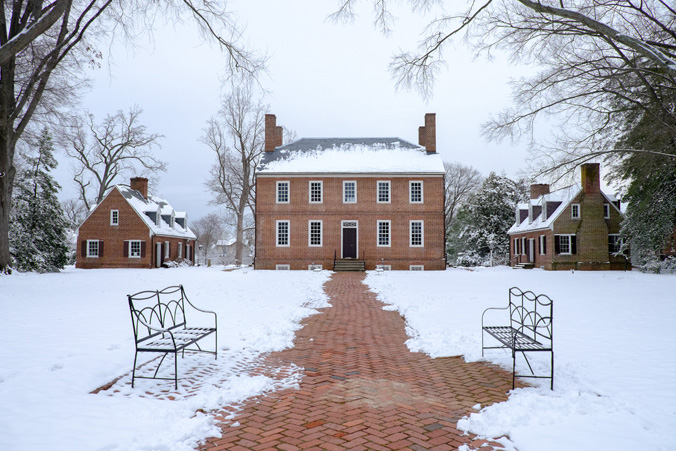
    When Fielding Lewis moved his family into their new home – the magnificent brick house we call Kenmore – in late 1775 it was the culmination of years of hard work and planning. It might seem as though that year’s holiday season should have been one of continual joy. Unfortunately, the Lewis family’s first Christmas inside Kenmore was far from joyful. December 1775 was an extremely difficult time in their lives and for the American Revolution.

    That December, the Revolution was in a frustrating state of limbo. Although declared to be in open rebellion by the King and Parliament, few colonies had yet to see any armed conflict. Fighting outside of Boston started in the spring but fizzled into stalemate following the Battle of Bunker Hill in June.  Independence may have been discussed in taverns but was still far from being discussed at the Continental Congress in Philadelphia.

    The colonies were still suffering economically and had been suffering for some time. In 1774, Congress passed the Non-Importation Agreement. These measures stopped all trade with Great Britain and other British-owned ports. The Association, as it came to be known, remained in effect in December 1775.  Colonists lacked numerous supplies and goods.  Fielding Lewis experienced a significant drop in his shipping business and the family’s finances began to suffer.

    Even though it was the holiday season, the Non-Importation Agreement also discouraged…

    every species of extravagance and dissipation, especially all horse-racing, and all kinds of gaming, cock-fighting, exhibitions of shews, plays, and other expensive diversions and entertainments. 

    To be loyal to the American cause, one could not delight in the revelries typically enjoyed during Christmas.

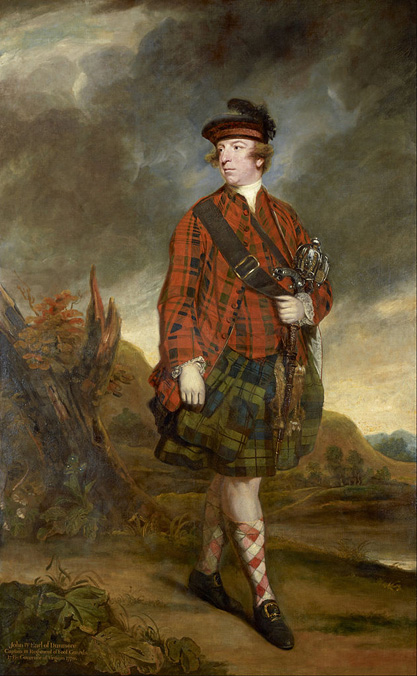
    All levels of Virginia society felt the strain of war’s uncertainty that fateful December. John Murray, 4th Earl of Dunmore and Virginia’s Royal Governor, had been at odds with his colonists since he removed portions of the public stores of gunpowder to a Royal Navy ship back in the spring. Lord Dunmore’s most recent action, however, hit much closer to home for Fielding Lewis and his fellow planters.  The Governor threatened to take their slaves, the precious private property, as they saw them, upon which they had built their livelihoods and wealth.

    Lord Dunmore.jpg
    Portrait of John Murry, 4th Earl of Dunmore by Joshua Reynolds (1765)

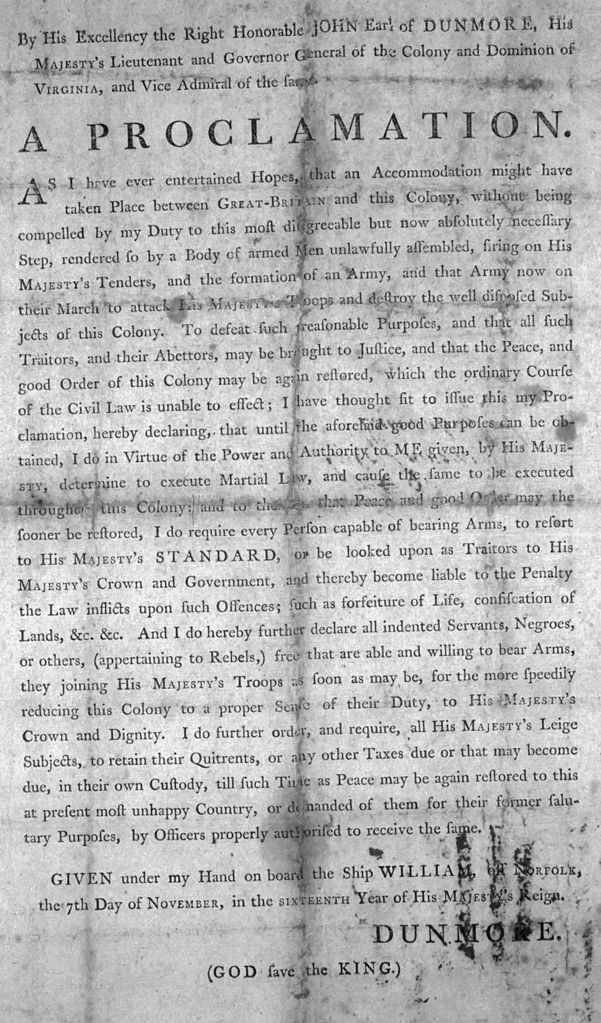
    In November 1775, Dunmore had issued a proclamation in Virginia intended to swell his ranks and cripple the so-called ‘rebels’ by imposing martial law, raising the King’s standard, and declaring, most significantly,

    all indentured Servants, Negroes, or others, (appertaining to Rebels,) free that are able and willing to bear Arms.

    DunmoresProclamation
    A copy of Dunmore’s proclamation. Library of Congress photo

    Dunmore’s Proclamation angered and frightened slave owners throughout Virginia and put the colony’s enslaved population in a difficult predicament. Achieving freedom was highly dependent on an enslaved person’s ability to get to Dunmore in Norfolk. Not surprisingly, the largest percentage of enslaved people who fled to the British came from the counties closest to that port city.  While it is uncertain if any Lewis slaves ran away to the British, at least one indentured servant perhaps did. Joseph Smith, an a painter who had worked for George Washington and presumably for Fielding Lewis, saw the political schism in Virginia as an opportunity to free himself from his servitude and fled in the summer of 1775. In November, Fielding wrote to George, saying “I have never heard of your Painter tho’ suspected he was gone to Ld Dunmore[.] I do not expect he can be got as Dunmore wants Men.” Smith’s successful escape may have been on the mind of the other indentured servants and enslaved people in the Lewis household when word of Dunmore’s Proclamation arrived in Fredericksburg.

    December 1775 in the Lewis family’s new home was an anxious one for many and yet for others it must have been a hopeful one as well. The American forces at Bunker Hill had proven to the British that the fight would not be easy or quick. The Fourth Virginia Convention met that December and ordered even more companies formed to support the Continental forces.  Most hopefully, Dunmore’s forces were defeated in the Battle of Great Bridge on December 9. The Governor would leave the shores of Virginia in the early part of 1776 never to return. His forces did include a portion of enslaved people who had dared to hope for their own freedom, a hope that would be denied for many Christmases to come. A large portion were captured and returned to slavery, many more died from disease or lack of supplies, and others perished in battle. Few actually gained their freedom.

    Back in Fredericksburg, the December of 1775 was most likely not what the Lewises had expected or hoped for. It was a Christmas of uncertainty, when war raged on Virginian soil.  Yet, the future was not solely bleak for Fielding, Betty, and the Americans. As 1776 began, it begged the hopeful question: what may the new year bring?

    Joe Ziarko
    Manager of Interpretation & Visitor Services

    Experience this Lewis family’s Christmas of uncertainty during Twelfth Night at Kenmore, a dramatic theater presentation at Historic Kenmore on Friday, January 8, Saturday, January 9, or Sunday, January 10. The year is January 1776. It is the first Christmas that Fielding and Betty Washington Lewis celebrate in their newly built home. It is not the usual celebration, however. War brings fear, doubt, and frustration to the Lewis family and their friends.  Immerse yourself in the experience the candlelight, music, and decorations of an eighteenth-century Christmas!

    Performance Times: 3:00, 3:45, 4:45 and 5:30 p.m.
    Reservations required. Call 540-370-0732 x24 or email
    [email protected]
    Cost: $12.00 adults, $6.00 ages 3-17; free ages 3 and under.

  • Video: Historic Kenmore’s Dining Room Table

    Curator Meghan Budinger shows us some of the beautiful and fascinating historic tableware on display in Kenmore’s dining room.

    Learn more about Kenmore’s decorative arts on “The Rooms at Kenmore” blog at http://kenmore.org/wordpress/.

  • A Secret Society and a Historical Mystery

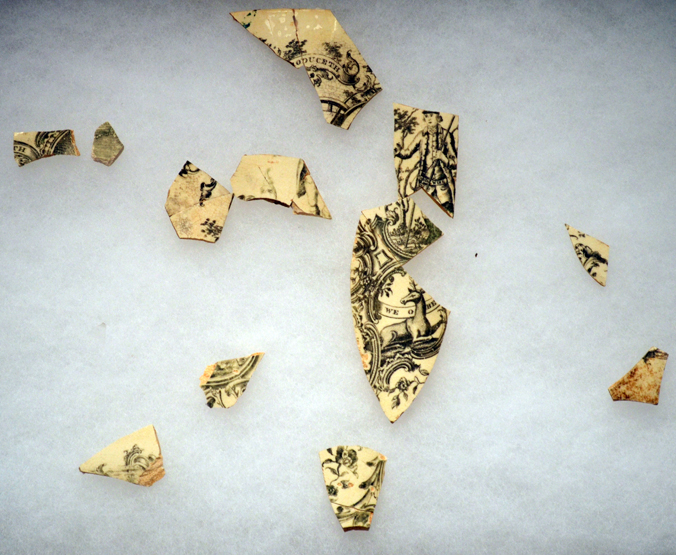
    Occasionally, archaeologists uncover an artifact which raises more questions than it answers.  Recent re-examination of artifacts recovered from Historic Kenmore revealed a number of ceramic sherds with an elaborate but unidentified crest. Determining the ware and vessel type was a snap, it was clearly a creamware pitcher with olive over-the-glaze printing.  The glaze may have originally been black but, because it was not glazed over, the decoration degraded after burial.

    Mystery Sherds
    The perplexing ceramic fragments recovered during archaeological excavations at Historic Kenmore.

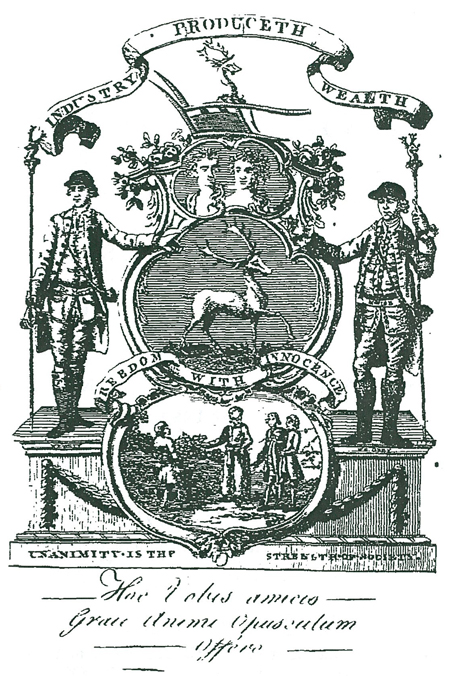
    But what of the mysterious crest?  Did it belong to a family or a specific city?  Thankfully, it was a fairly distinctive crest with a multitude of phrases written on it including “Industry Produceth Wealth”, “We Obey”, “Be Merry And Wise”, “Freedom With Innocence” and “Unanimity Is The Strength Of Society”.  In archaeology terms we would call it ‘talky’.  Unfortunately, nowhere on the pitcher did it state a family’s name, a city’s name, or clearly indicate the identity of the crest in any other way. Talk about frustrating!

    One of the problems lay in the popularity of drinking vessels emblazoned with similar motifs during the late 18th and early 19th centuries.   Ceramic vessels such as punch bowls, mugs, and pitchers printed with scenes or crests proclaiming the political views, the patriotism, or the private affiliations of the owner were quite common.  After many hours of pouring over books and the Internet later, we discovered the identity of the mysterious crest.  It belonged to an organization called The Most Ancient and Honourable Society of Bucks.

    Crest 01
    The crest of The Most Ancient and Honourable Society of Bucks as it would have appeared on the complete pitcher.

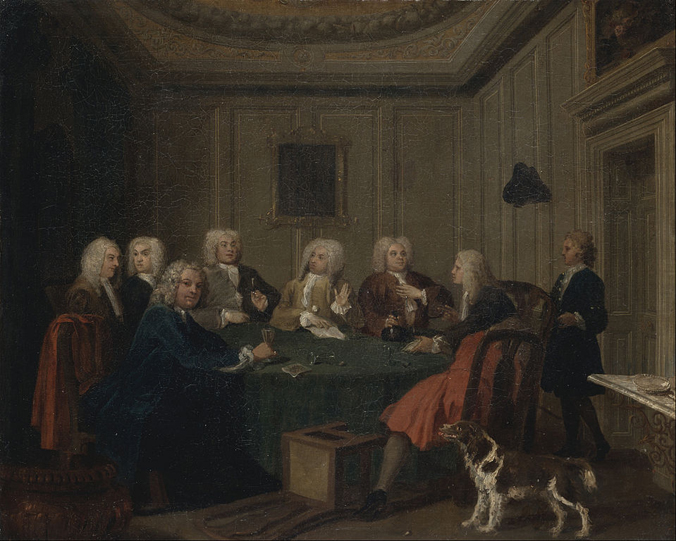
    The Society of Bucks was a somewhat obscure secret fraternal organization (sort of like the Masons) that claimed it descended from Nimrod, a Mesopotamian king figuring in several Biblical stories.  Despite these allegedly lofty origins, in reality, the society was more of a gentlemen’s drinking club known for its rowdy parties.  A member of the society in the 1770s – a man known to history only as “Hurle” – left the group after becoming disgusted with their behavior. In 1781, he founded another fraternal order known as the Ancient Order of Druids, which forbade its members from using profanity or discussing politics.  Apparently, the Society of Bucks had quite a reputation.

    Joseph Highmore's A Club of Gentlemen
    “A Club of Gentlemen” by Joseph Highmore, circa 1730. Public domain.

    The Society existed in Britain from the 1720s through the 1820s.  It’s heyday seems to have been in the 1760s and 1770s.  The fragments found at Kenmore showing the Bucks crest indicate the vessel dates to sometime after 1757.  The Society’s crest had a different appearance before that year, when John Sadler published a print of a new version of the crest.

    While these fragments indicate the presence of a very specific piece that we can now set about acquiring for display in Kenmore, they have also opened a window on a completely new possibility in our knowledge of Fielding Lewis’s life.

    Fielding was a Mason, having joined the Fredericksburg Lodge in 1754, but his level of involvement in the organization has always been unknown.  Masonry at the time was as much about secret vows and handshakes as it was about social status and business connections.  It also had a heavy political component, as many of the leaders of the colonial revolutionary movement were Masons.  It is unknown which aspect appealed most to young Fielding.  As with most things in his life, we are left with very few clues as to his thoughts and motivations, especially from his own hand.

    One fact that we thought we had firmly nailed down was the surprising notion that he had never been to England, or even left Virginia.  For a man of his status, and of his family’s status during his childhood, it is rather unusual that Fielding had never visited England, whether for business or education.  But no historical document makes mention of such a trip, and in the timeline of his life it is hard to find a window in which such a lengthy voyage could have taken place.  The discovery of the Society of Bucks fragments at Kenmore raises some intriguing possibilities.

    First, the society originated in Liverpool, the city in which most of Fielding’s trade relationships existed.  It apparently never made the leap across the Atlantic to the New World, as no indications of the Society of Bucks being present in the colonies has ever been found.  If Fielding could never have encountered the Society of Bucks in Virginia, and he never travelled to the city with which he did so much business, how did he come to own these vessels? Is it possible that he did in fact visit Liverpool at some point? While there, did he perhaps join the local fraternal society as a way to network with local businessmen, much as he did with the Masons in Fredericksburg? Were these vessels perhaps a gift from members of the Society? Whatever the case, the archaeological fragments found at Kenmore continue to call into question some long-held beliefs about Fielding Lewis’s life and remind us again that history is a dynamic and ever-changing story.

    Meghan Budinger
    Aldrich Director of Curatorial Operations

    Mara Kaktins, Archaeologist
    Ceramics & Glass Specialist