Lives and Legacies

Category: Civil War

  • “We encampt here on the banks of the Rappahannock. Oh, it is beautiful country.”

    A Personal Look At Civil War Soldiers As Told Through Artifacts

    Ferry Farm is most well-known as the Boyhood home of George Washington. While our primary emphasis of interpretation and research has focused on young George and his family’s life on this farm, Ferry Farm has many other stories to tell. The American Civil War had a major impact on the Ferry Farm community, changing both the landscape and the lives of those who lived here. This blog will look at how our archaeological efforts have brought to light artifacts that reflect the experiences of the soldiers that were stationed on the “old Washington Farm.”   
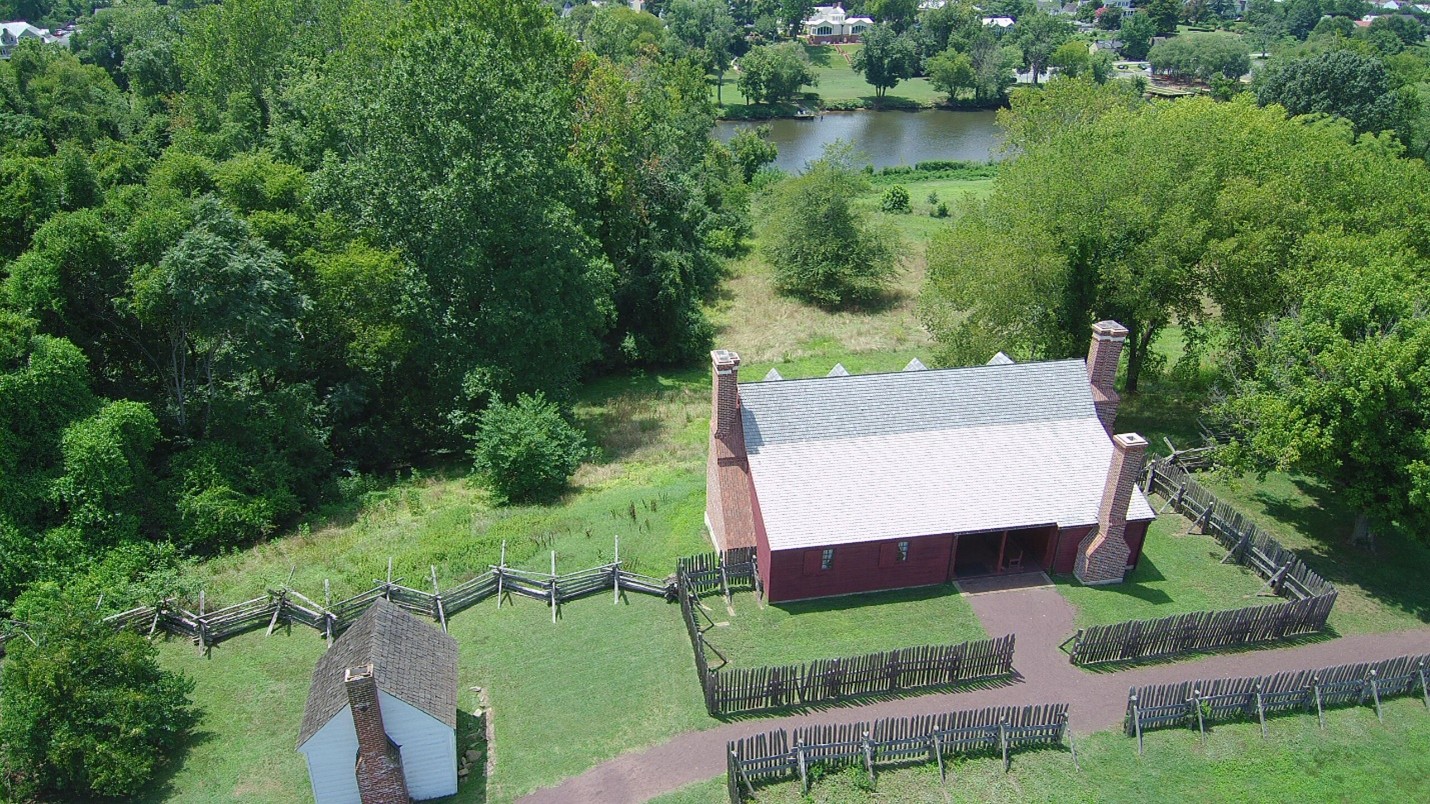
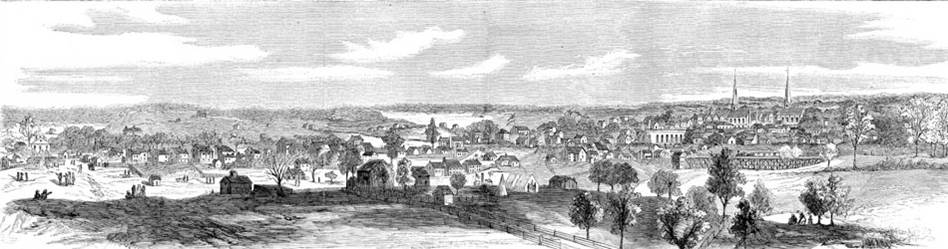
    The Washington house and its outbuildings gradually fell into disrepair until by the mid-1830s there was no trace of them on the landscape. But the soldiers still knew the significance of the site. In April 1862, the Civil War came full force to Fredericksburg and to Ferry Farm. Federal Forces took over and occupied the City of Fredericksburg behind the retreating Confederate Army.  Encampments and gun emplacements were established all along our side of the river and throughout Stafford County as the army set about maintaining control of the city across the river. Engineers were set to the task of rebuilding the railroad bridge and erecting pontoon bridges, including one at the end of Ferry Road.

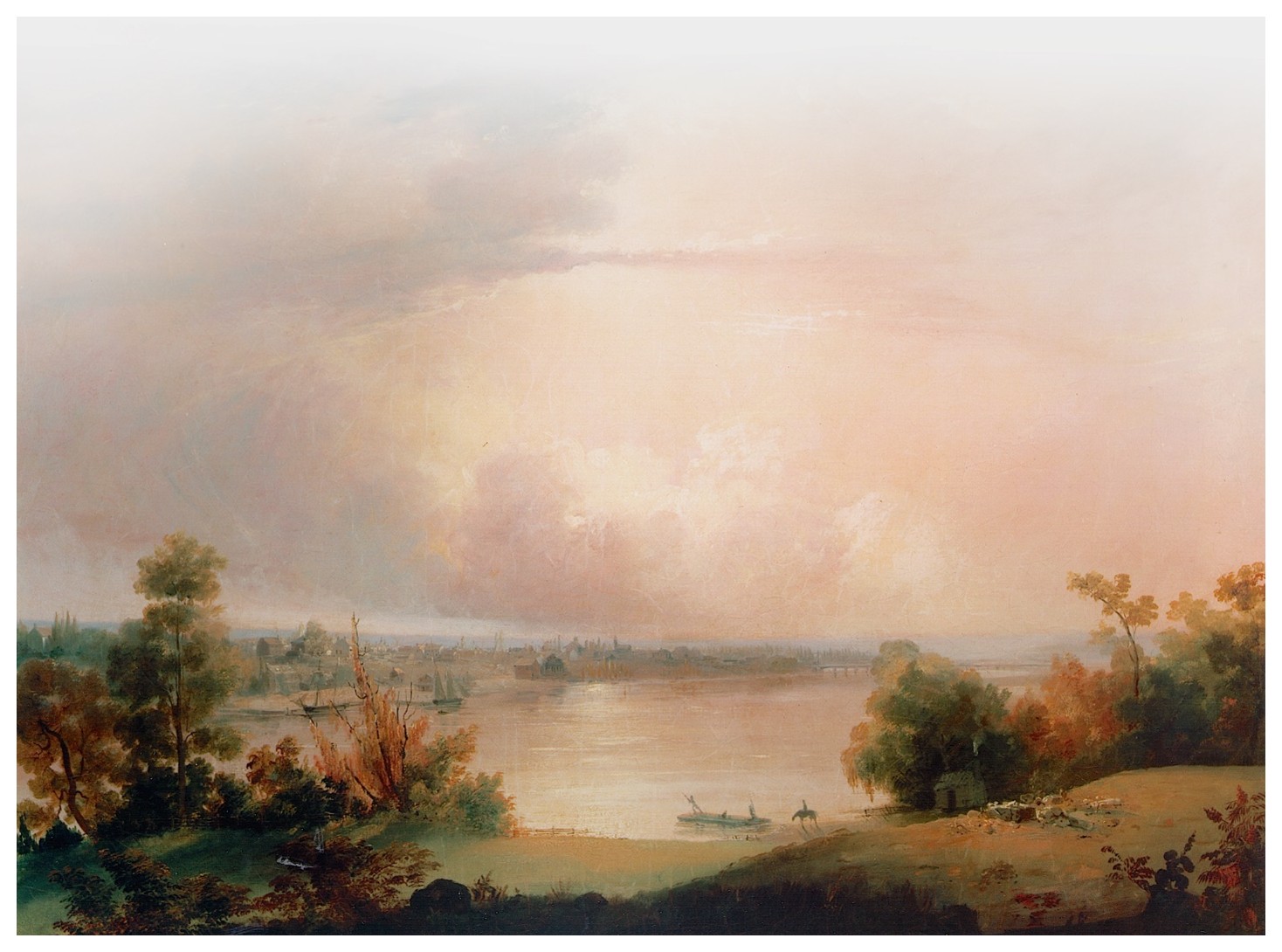
    Looking over Fredericksburg by Alfred R. Waud

    This spring deployment and the military occupation of Ferry Farm was relatively quiet and uneventful. There is no evidence of a large, formal camp at Ferry Farm, but soldiers were stationed here to protect one of the pontoon bridges that ran from the bottom land of Ferry Farm across to the city of Fredericksburg. In August of 1862, the army suddenly retreated from the city and the surrounding countryside to defend Washington, D.C.

    In November of the same year, the full force of the Union Army returned to Stafford County in preparation for the retaking of Fredericksburg and their expected march to take over Richmond. Instead, the Federals suffered a devastating defeat at the Battle of Fredericksburg in December and retreated to the north side of the river for winter camp. Now, Ferry Farm was being used more actively as a staging ground for multiple troop movements, bivouacs for soldiers guarding the pontoon bridges, and as a defensive line for the Federal troops.

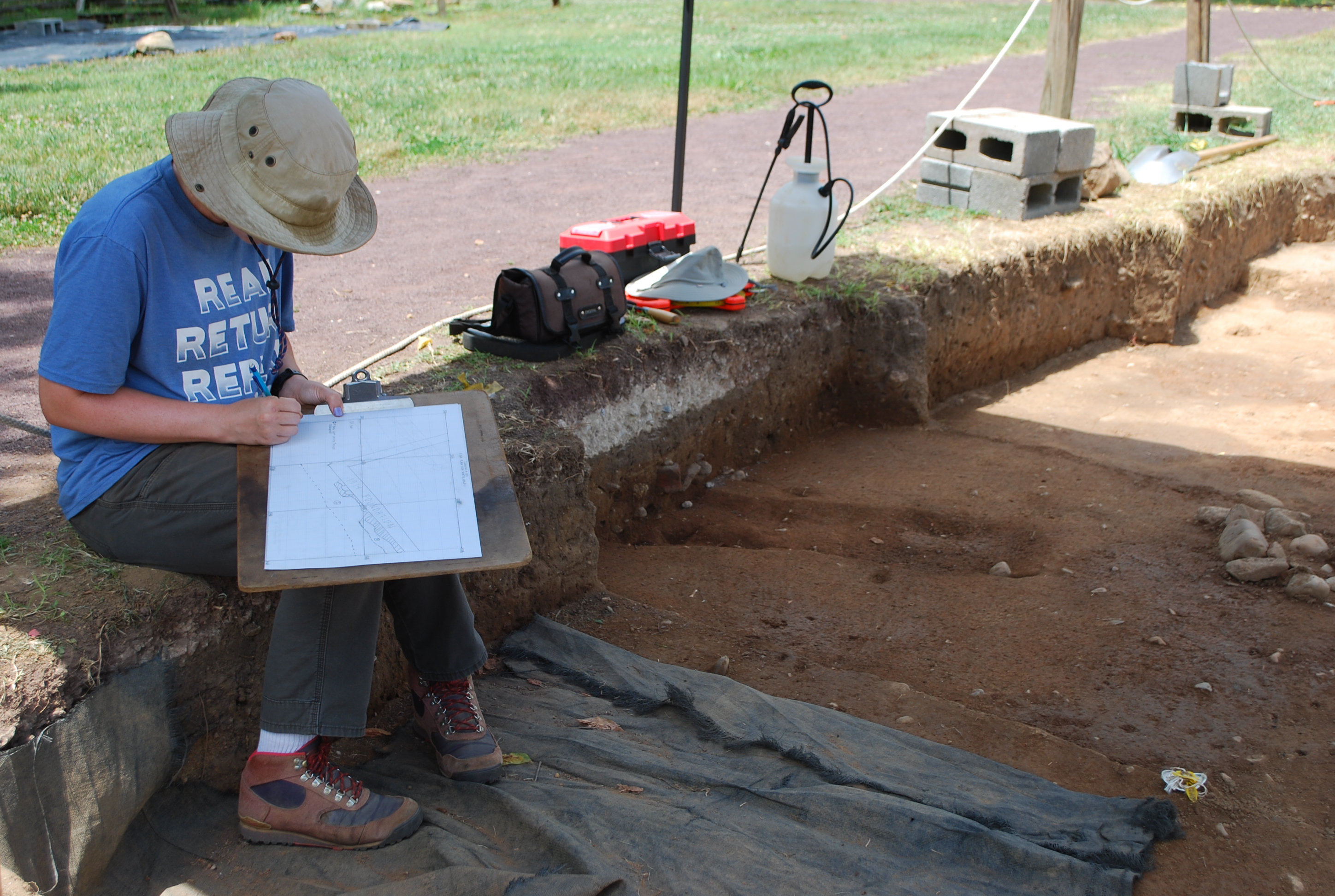
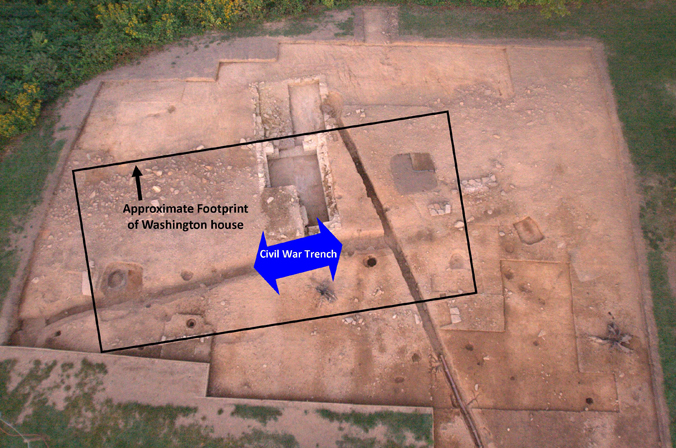
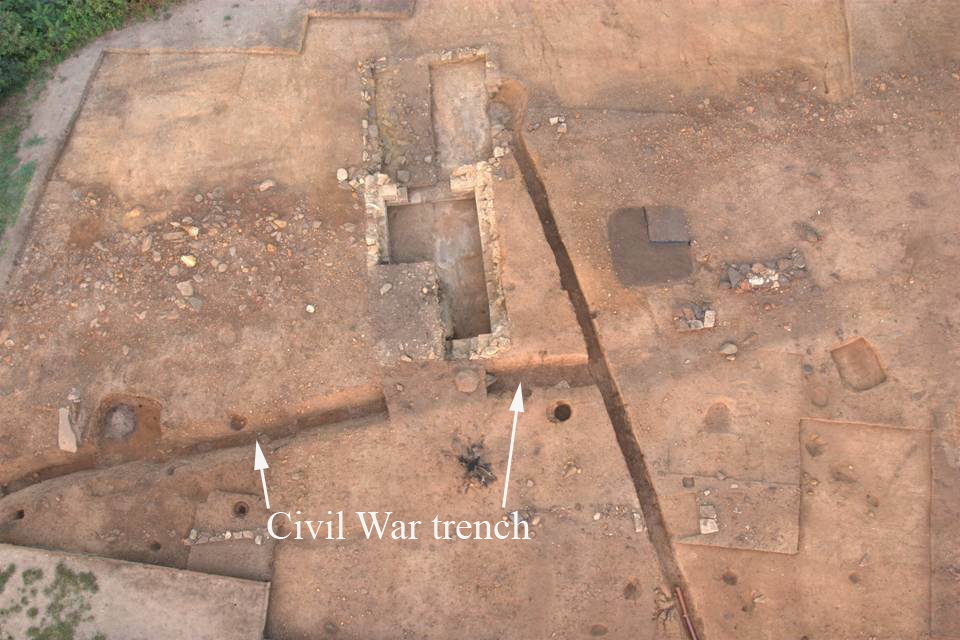
      A defensive trench, or rifle pit, with an adjoining berm to protect soldiers from gunfire originating on the Fredericksburg side of the river, was dug across the edge of the upper river terrace, stretching north-south from the edge of the stream gully through the remains of the Washington house. A small extension on the south end of the trench was dug out to connect it to the now-exposed cellar.

    Artifacts found within the cellar trench fill reflect the extensive use of the house ruins by soldiers during both occupations. In the spring and summer, they used the farmhouse as their headquarters, writing on the plaster walls and leaving graffiti in pencil and charcoal on hundreds of plaster fragments that have been excavated and preserved.
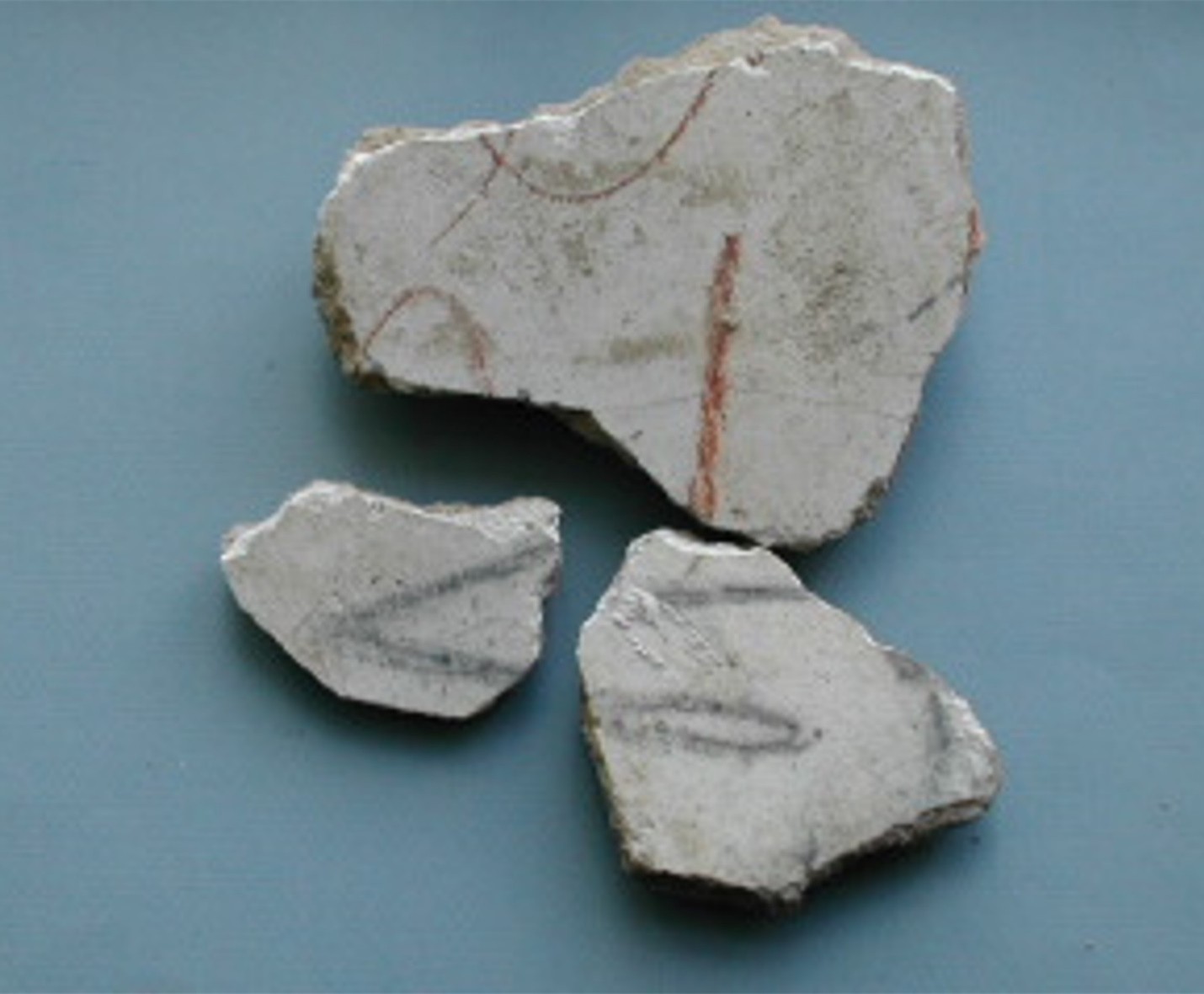
    Plaster fragments with graffiti

    Various artifacts were abandoned when they left, including canteens, bullets, gun parts, and writing tools. But this blog isn’t about buttons, bullets, and buckles. It’s about the items the soldiers found more dear. Objects they made or relied on for small comforts.

    So, on a more personal level, what was everyday life like for the Union soldiers stationed here during the Civil War? When they weren’t directly experiencing the brutal and intense combat fighting on the front, it was a routine-filled life of constant drilling, standing watches, maintaining equipment, and finding imaginative ways to entertain themselves in the camps. But camp life had its own struggles and hardships. Poor shelter, food, and hygiene, along with low immunity rates to communicable diseases, all contributed to high rates of sickness and disease. Add to that boredom and homesickness, and camp life was a private’s first test of survival.

    It was very important for the soldiers to recognize that they were standing on the very ground that their hero, George Washington, once stood on. Those sentiments were expressed in a speech by Private Edwin Jones of the 6th Wisconsin when he said, “We are assembled on sacred soil…It was while living on this plantation, under the direction and blessed with the teaching of a noble mother, that George Washington learned those lessons…fitting him for leadership in war and peace, to lay the foundation of the mighty Nation that we today are fighting to preserve.”

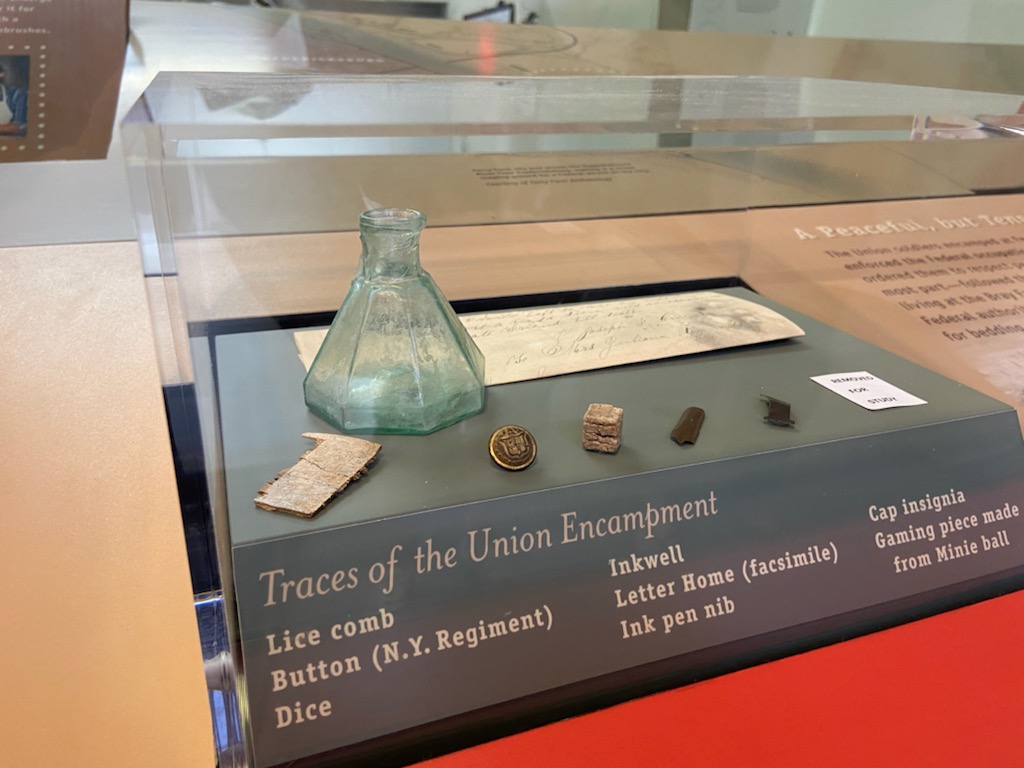
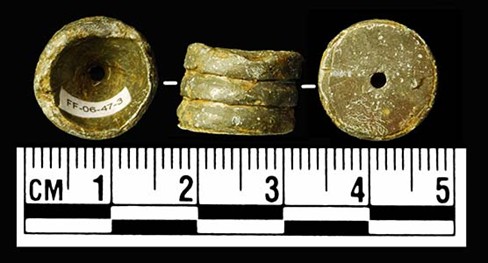
    On a more personal note, we know soldiers spent a lot of idle time playing games among themselves. Dice, card games, chess, checkers, and gambling were all very popular, and remnants of these activities are found on all Civil War sites. At Ferry Farm, we have a collection of gaming pieces, including this bone die and a gaming piece crafted from a Minié ball, which could have been used to play chess, checkers, or as markers in a game of chance.

    And we can’t forget about the importance of music in camp life. Music was a common and welcome pastime activity for troops. Fiddles, guitars, fifes, harmonicas, and accordions all came out at night to entertain the soldiers who relished listening to songs about home and the worries of war. Jaw harps were inexpensive and easily portable, which made them very popular with soldiers. Our jaw harps, one of which was recovered from the civil war trench, is of the style known as a Gloucester type, one of the most common designs in America during Colonial times and after the Revolution.
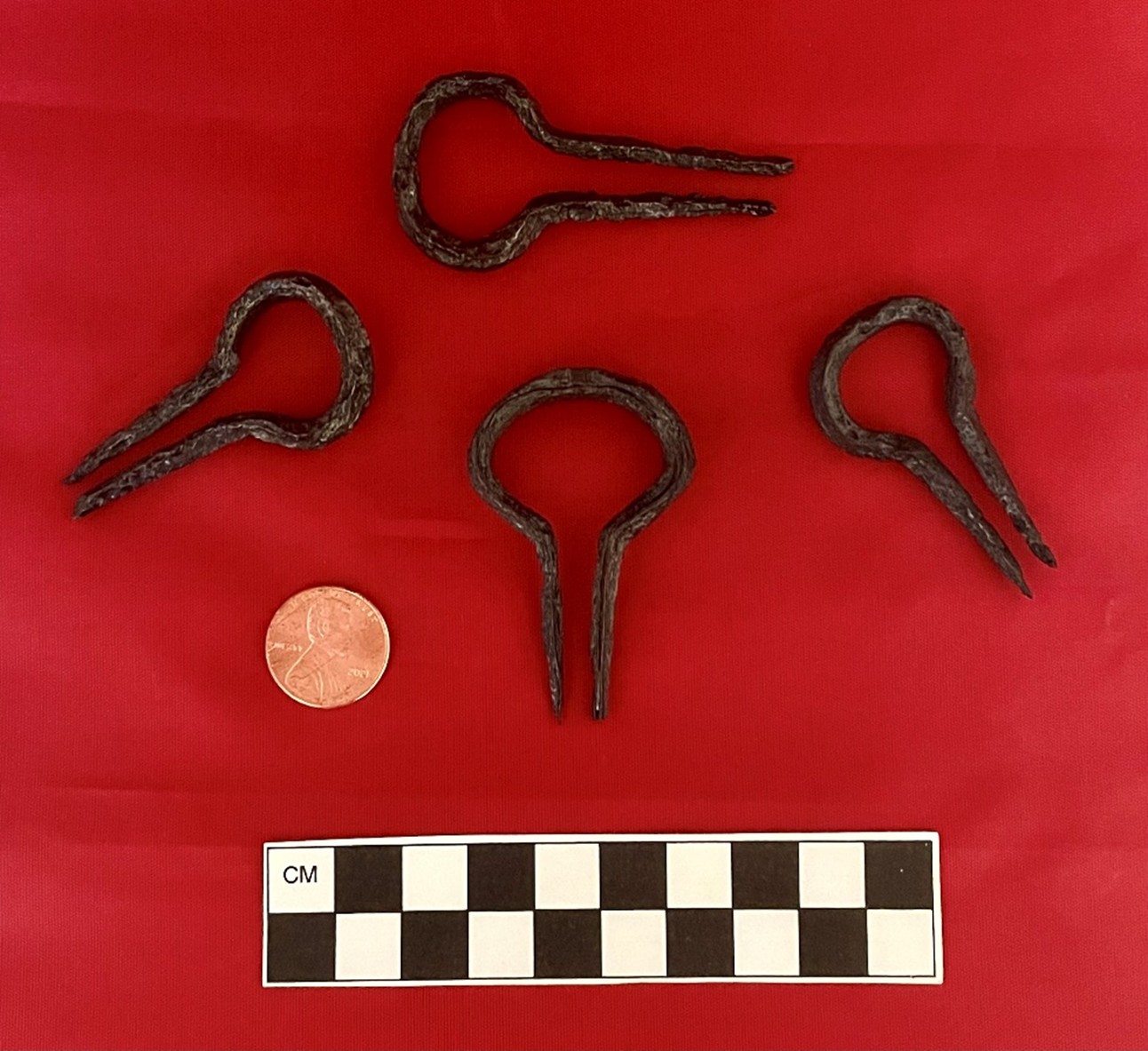
    “Gloucester type” jaw harp

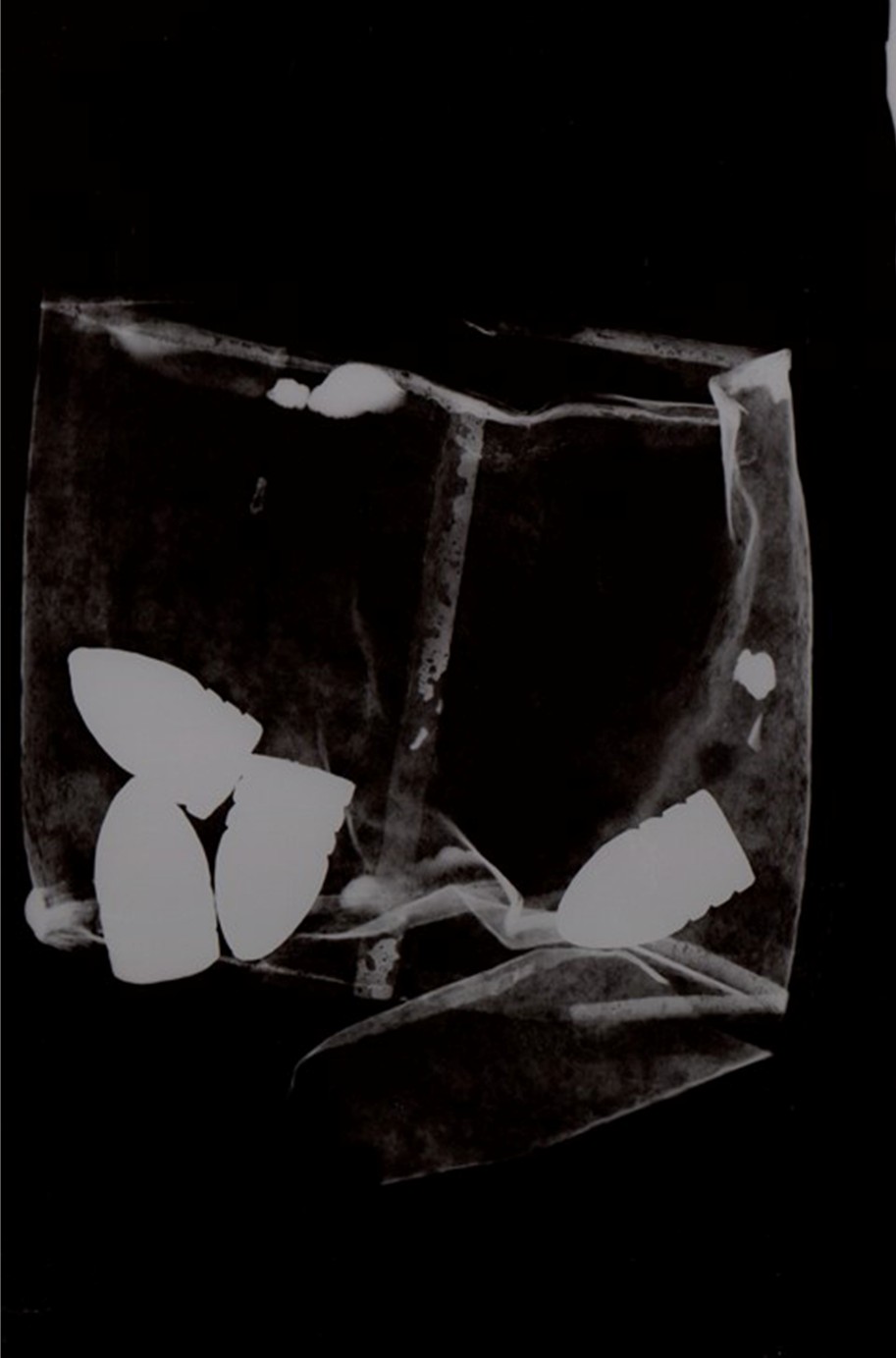
                Nothing is normal about wartime. Many people were forced to improvise, and it’s very hard to determine why a soldier placed four unfired Minié balls in this tin can, which was revealed through X-ray. Did he lose his ammo case? Was it just idle behavior? Were these bullets saved to be turned into gaming pieces? This is the type of artifact that raises more questions than answers.

    Literacy – Ink Bottle/Pen nib:

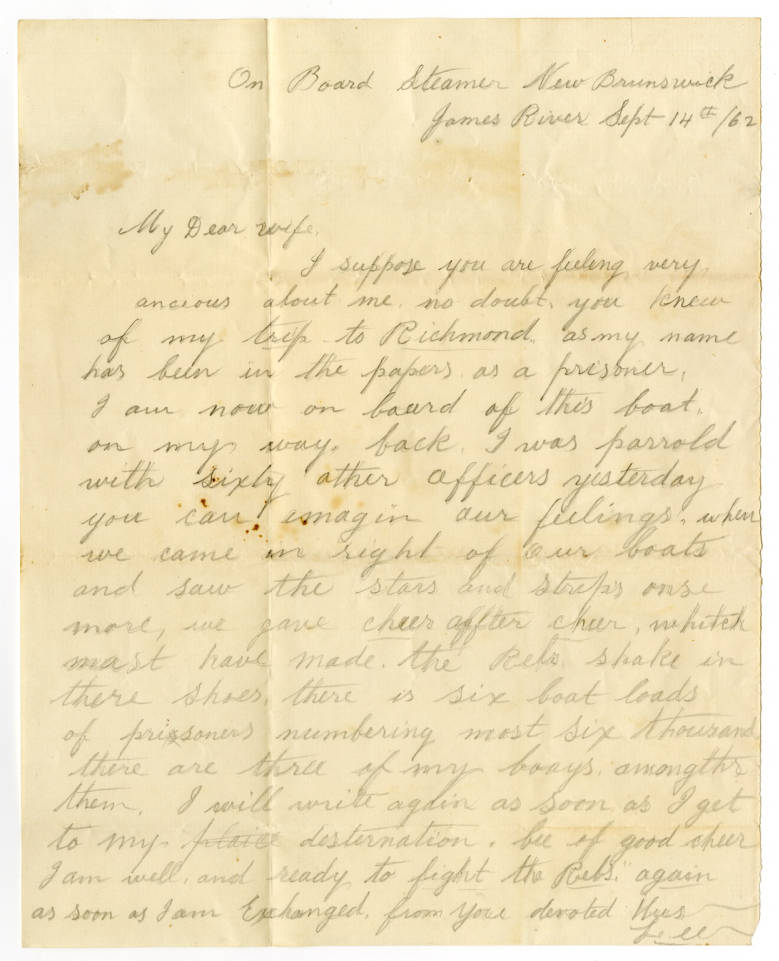
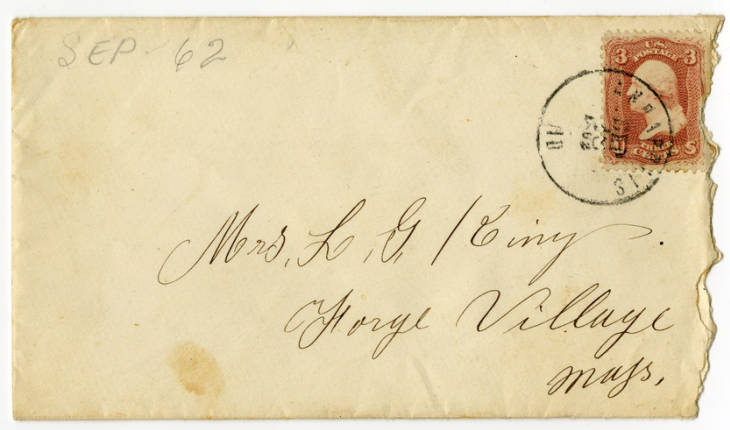
    Literacy among Civil War soldiers was very high, and much of what we know about daily camp life comes from the letters written and received by the soldiers themselves. Letter-writing to loved ones at home allowed the soldier to keep up with local news, forward monetary and business instructions to those left running the household or farm, and relay war news to their family.

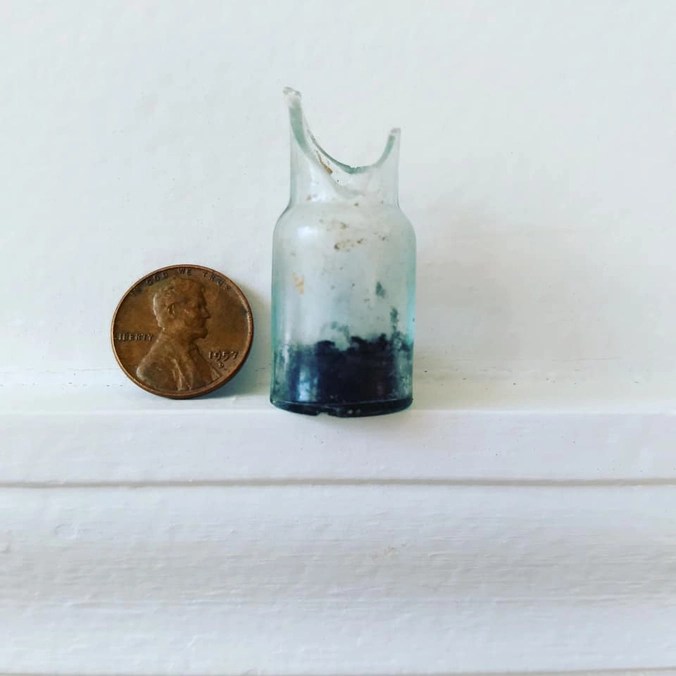
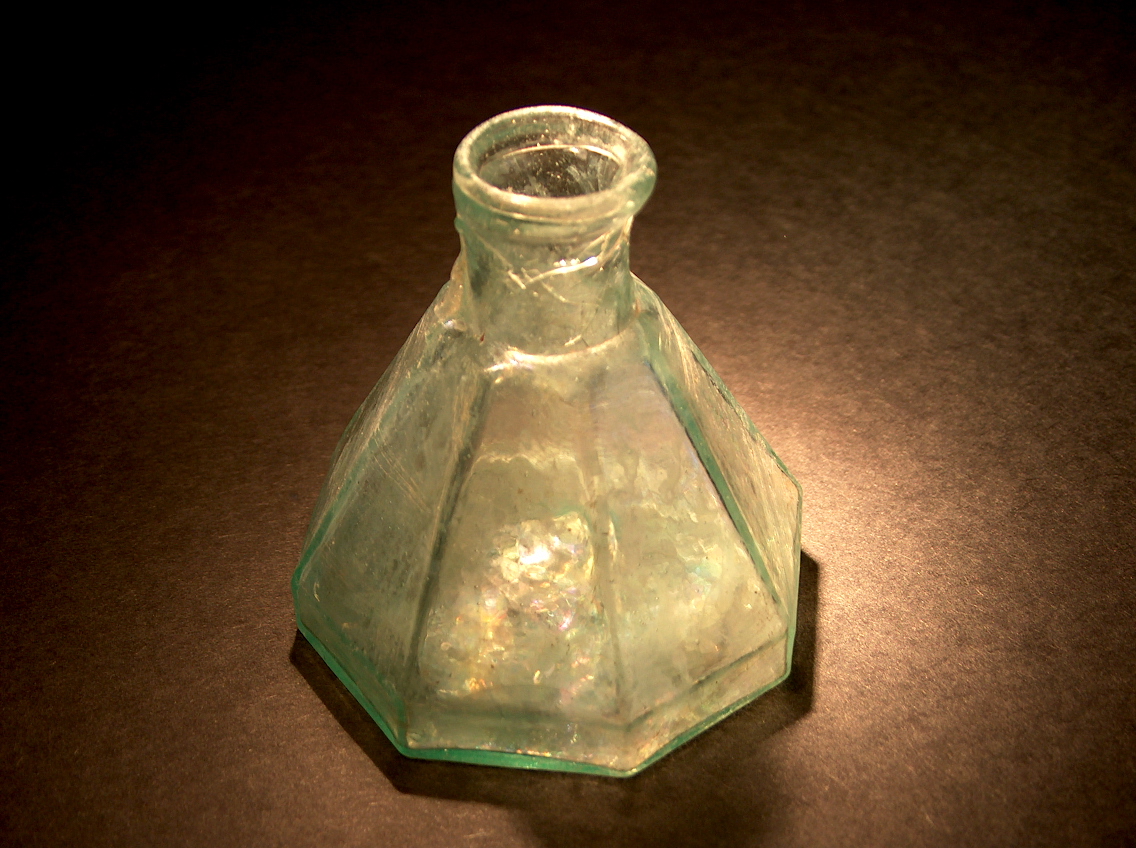
                A complete ink bottle and pen nib recovered from the site evidences the desire for correspondence, both official and personal. The ink bottle itself was found in the Bray cellar hole, which the Union soldiers used as a defensive dugout to avoid Confederate sharp shooters. We can just picture a group of soldiers huddled down inside the cellar, building a small campfire to stay warm, and writing letters home to their families. Was it a hasty departure that left this bottle in the cellar, or perhaps the owner expected to return but didn’t. As archaeologists, we can’t answer all these questions, but we know it was used during the Civil War by a Union soldier and was found in a location many soldiers never wanted to be stuck in.

    This particular ink bottle is an ‘umbrella’ shape, one of the most ubiquitous ink bottle forms from this era. The bottle was typically meant for single use and would have been made in one of the numerous American glasshouses present during the 19th century. It was then filled with ink, affixed with a label, and marketed for single use.
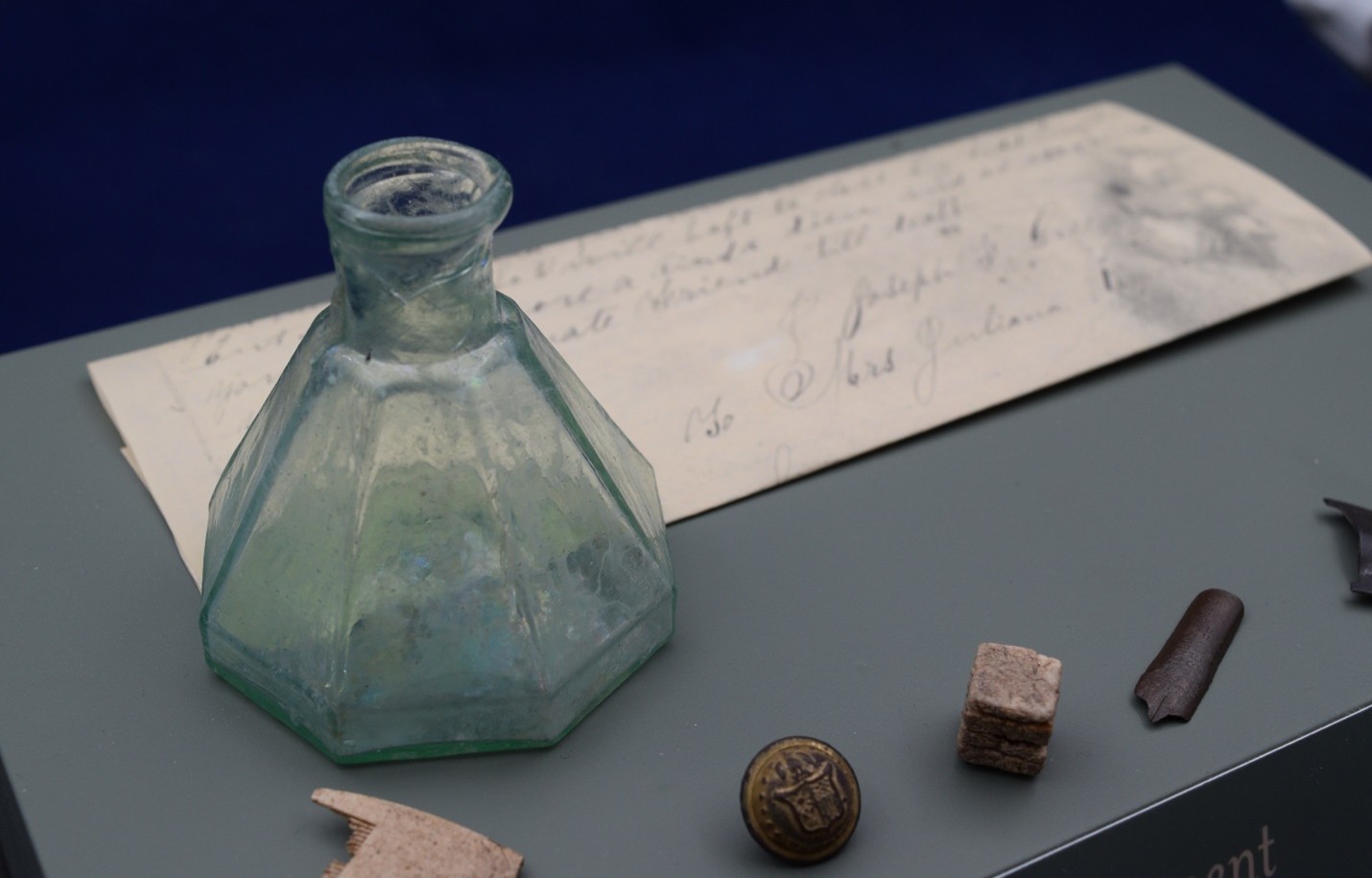
    “umbrella” shaped ink bottle and small pen nib

    This small pen nib is stamped with a maker’s mark and style name. The Esterbrook Company started making nibs, including the “Relief” style, in 1858 in Camden, New Jersey, and became one of the largest manufacturers of this product in the US. The nib was part of a dip pen, which consisted of a handle made of various materials and the replaceable nib.

    The first evidence of self-care in the trenches takes the form of a small double-sided bone comb. Combs were made from an assortment of materials, including bone, ivory, gutta perch, and steel, and were used for grooming the moustache and hair. But their fine teeth were also handy in capturing the pesky lice that were endemic to camp life among men marching and living together in close quarters. This comb would have been an essential component of any soldier’s personal kit.

    small double-sided bone comb

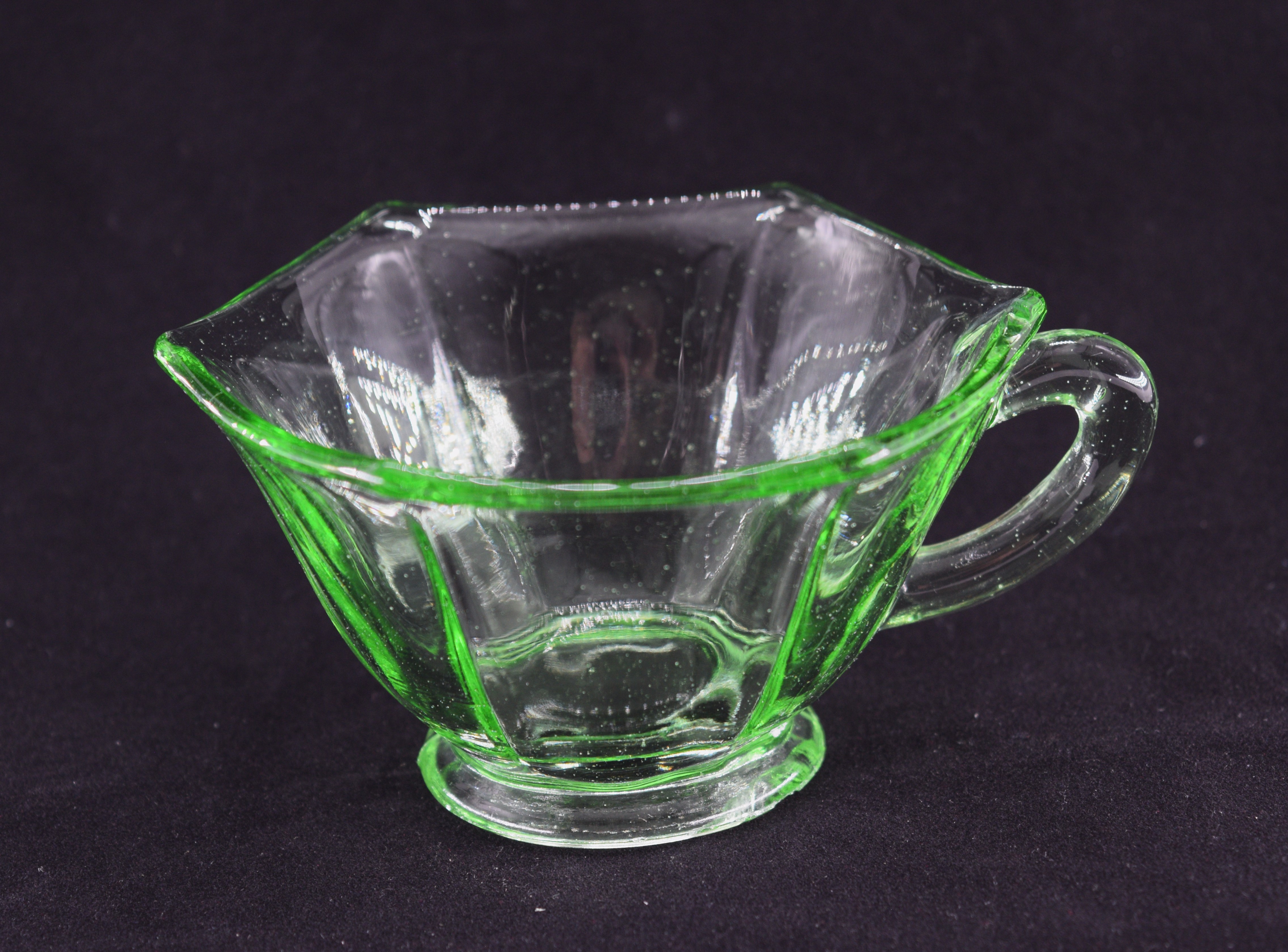
    Our second evidence of self-care is this intriguing bottle. It is not so much interesting because of what it is – it’s a very common medicine style bottle for the mid-19th century– but rather what’s inside. Clearly visible within the bottle is a hard black substance, and for years, we’ve wondered what the substance may be.
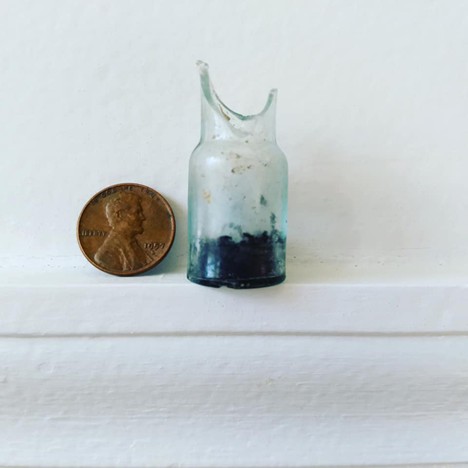
    Mercury bottle, mercury was used for a variety of medicinal reasons at the time

    So we chipped off a little fragment of the substance and sent it to Ruth Ann Armitage, our chemist friend at Eastern Michigan University. The sample was analyzed using scanning electron microscopy to map out specifically what elements were present in the sample. Our sample was also run through DART (direct in real time) mass spectrometry. This technique is good at detecting organic components within a substance.

                Almost immediately, Dr Armitage responded, and we weren’t disappointed: “Did you know there’s mercury in this?”  Nope, we did not.

    However, this discovery was not too surprising given the use of mercury in many medicines for thousands of years. Nowadays, it’s common knowledge that you shouldn’t drink mercury…or touch it…or inhale it, but for a long time, mercury was seen as a potent healing metal, and it was readily rubbed on skin, consumed, and vaporized for immediate effect on the lungs.

    And while all these treatments using mercury did little to address the body’s underlying medical problem, mercury did cause an immediate bodily response, which convinced people it was working to cure their ailments. When applied topically, it burned. When introduced into the body, it caused a person to sweat, salivate, and have diarrhea. The mucous membranes also went into overdrive, leading many to believe that the bad stuff in your system making you sick was being purged by the mercury. The reality, of course, was that the body was trying desperately to rid itself of poison.

    So, if the residue inside our bottle was medicine, what was its exact formula? All we can say at this point is that it was mercury-based and that it could have been in either liquid or pill form. Common Civil War-era uses for mercury-based medicines were for treating skin sores and lacerations, internal and external parasite infections, syphilis, and constipation, to name but a few. On a side note, an almost identical bottle also containing mercury was found across the river in Fredericksburg at a site that was well known to be a Union field hospital. It was found in a knapsack discarded in a trench that included amputated limbs.

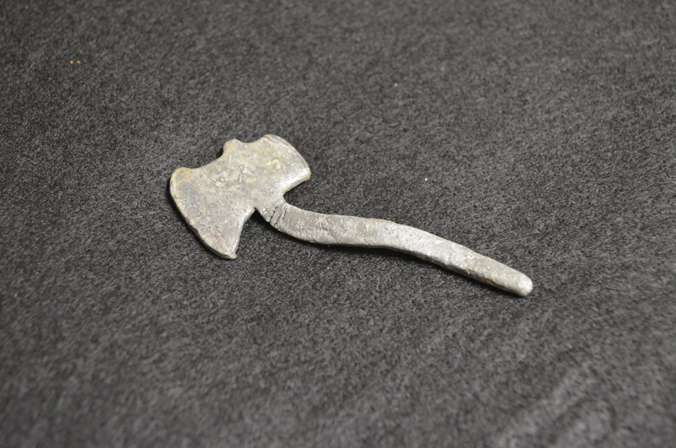
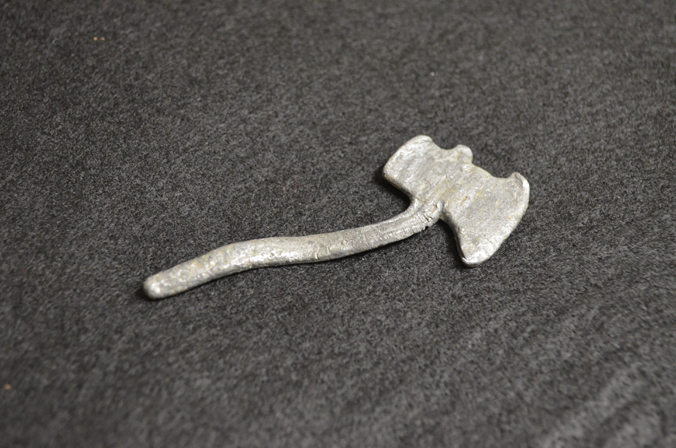
    Lastly, we’d like to highlight one of our favorite artifacts, a tiny hatchet about two and a half inches long, recovered from the bottom of the Civil War trench. For such a diminutive object, it speaks quite loudly to our local history in Fredericksburg, Virginia. Initially, earlier archaeologists at Ferry Farm assumed it was a pewter toy souvenir given out or sold in 1932, when our country and Fredericksburg celebrated the 200th anniversary of George’s birth. Indeed, cheap pewter toys were very popular during this time period.

    A recent reexamination of all the artifacts from the context where the hatchet was found revealed that nothing from that stratum had any 20th-century artifacts in it, nor did the two strata above it. In fact, the youngest artifacts from these strata were all mid-19th century. Additionally, although the archaeologists who excavated the hatchet didn’t know it at the time, the excavation unit from which the hatchet came sat right inside the Civil War-era trench.

    This revelation shut the door on our ‘it’s a 20th-century souvenir’ narrative but opened the door to an even cooler one.  A close examination of the hatchet showed that it didn’t have mold seams, which are always present on cast pewter toys. Furthermore, for some reason, it had one smooth side and one textured side, leading us to believe that it was handmade, not machine-cast. This was supported by a thorough internet search to find an identical toy hatchet, which came up empty, further supporting our new theory that this piece was a one of a kind. The textured side resembled the grain of wood, so we surmised it had been cast in a simple hand-carved wooden mold. All of these clues, combined with its location within a Civil War trench, made us suspect that the hatchet was crafted by a soldier, likely from a lead Minié ball. The hatchet is likely ‘trench art’, which is defined as objects of art either made by soldiers, POWs, or by civilians to create mementos of the war experience.

    To further support our identification of the hatchet as trench art, we took the artifact to the Virginia Department of Historic Resources, where Katherine Ridgeway analyzed it using XRF, or X-ray fluorescence analysis. This non-destructive technique determines the composition of metal. We also brought along a few Minié balls recovered from the same unit for comparison. It turned out that what we thought was a pewter hatchet was actually a lead hatchet with a similar compositional profile to Minié balls, which are mostly lead with trace amounts of other metals such as tin and nickel.

    One can just imagine a bored Union soldier whittling the mold and then melting down some of his bullets to pour into it. He likely chose the hatchet form because of the famous cherry tree story, in which young George Washington owned up to hacking his father’s cherry tree with a hatchet by proclaiming, ‘I cannot tell a lie.’ The soldier would have been well-versed in the Washington cherry tree myth at Ferry Farm, created by Mason Locke Weems in his first biography of Washington, published in 1800. By the 1860s, the story was nationally known. Additionally, letters Union soldiers wrote while encamped at Ferry Farm indicate they knew the site’s connection to Washington. They even went so far as to send home cherry seeds for their families.
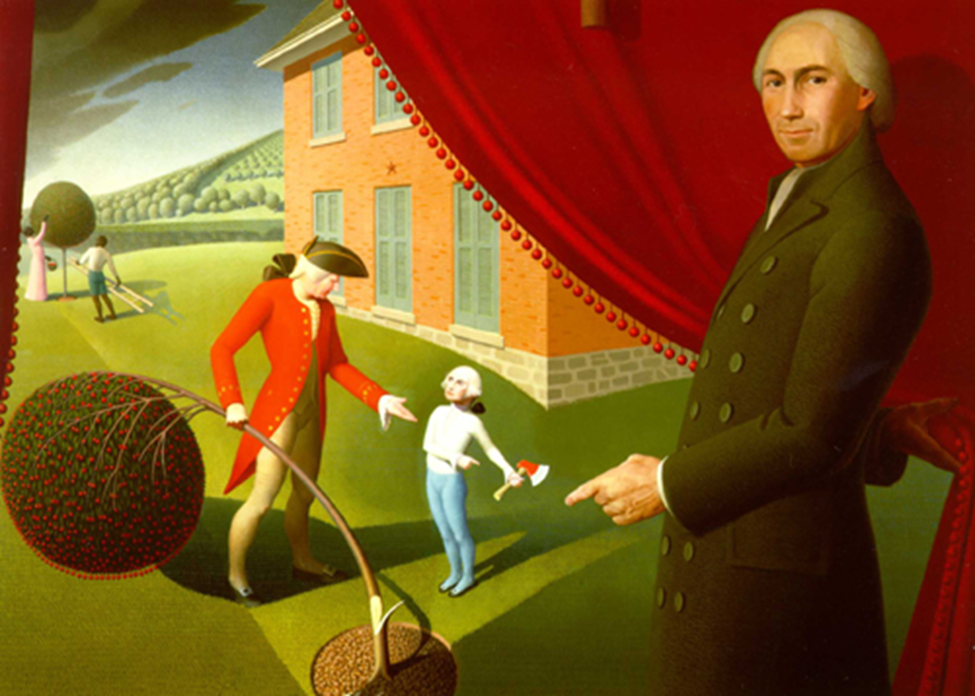
    Grant Wood — Parson Weems’ Fable (1939)

    While the identification of the hatchet is now secured, we have so many more questions. Who was this soldier? How many hatchets did he make, and why did this one come to be left behind in his trench? Was it a souvenir for himself, or did he send one home to his family, or share with fellow soldiers?  Did he survive the war? Unfortunately, these are mysteries that will likely never be solved, but that make for great pondering.

    Mara Kaktins, Archaeologist and Lab Manager

    Judy Jobrack, Archaeology Co-Field Director

  • Kenmore Goes to Sea: Ship Naming in the US Navy

    On July 22, 1942, Annie Fleming Smith wrote a letter. Smith was a prolific letter writer—her innumerable missives had helped raise the funds that saved Kenmore two decades earlier—so it is not surprising that she put pen to paper on that summer day. What is surprising is that the intended recipient of that letter was not a prospective donor, a fellow regent of the Kenmore Association, or a friend. Instead, she addressed her epistle to Frank Knox, the Secretary of the Navy. Smith wanted “confirmation of the fact of the naming of the U.S.S. KENMORE” after the home and “any other information you can release” about the ship.[1]

    Letter that Annie Fleming Smith sent to Secretary of the Navy Frank Knox asking for confirmation that the first USS Kenmore had been named after the historic home. Smith, Annie Fleming to Frank Knox, July 22, 1942. The George Washington Foundation.

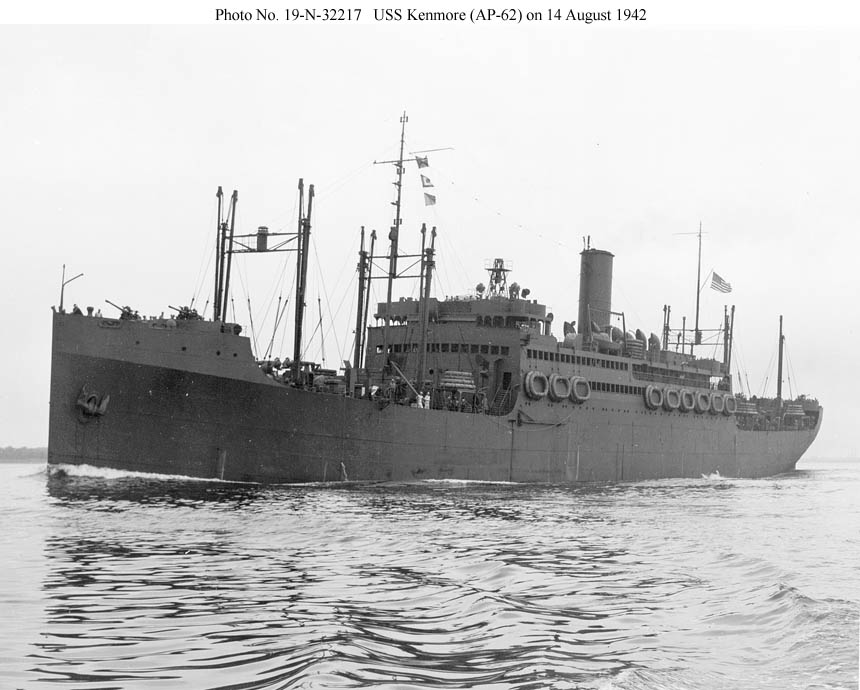
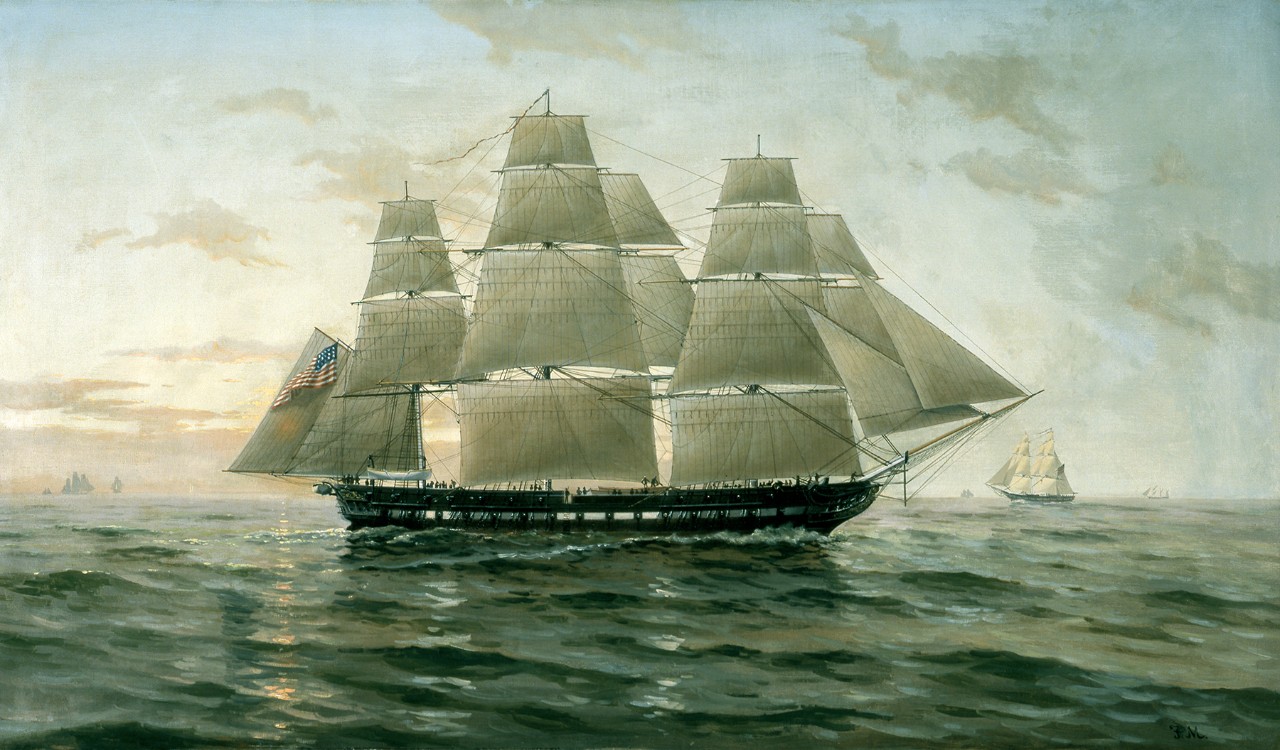
    Although there is no record that Knox responded to Smith (there was, after all, a war on), the USS Kenmore was, in fact, named for the historic estate. The Naval History and Heritage Command ship-naming file on Kenmore I (AP-62) includes an April 13, 1942, memo to the Secretary of the Navy from the chief of the Bureau of Navigation and prepared by Louis Emil Denfeld, then assistant chief of the Bureau of Navigation, recommending that the President Madison be renamed Kenmore, in honor of the “[h]ome of Betty Washington at Fredericksburg, Virginia, sister of George Washington who married Col Fielding Lewis.”[2] The recommendation was approved on April 16 of that year, and the newly renamed vessel was “commissioned at Baltimore, Md., on 5 August 1942, Cmdr. Myron T. Richardson in command.”[3]

    USS Kenmore (AP-62) on trials in the Chesapeake Bay on August 14, 1942. Shipscribe

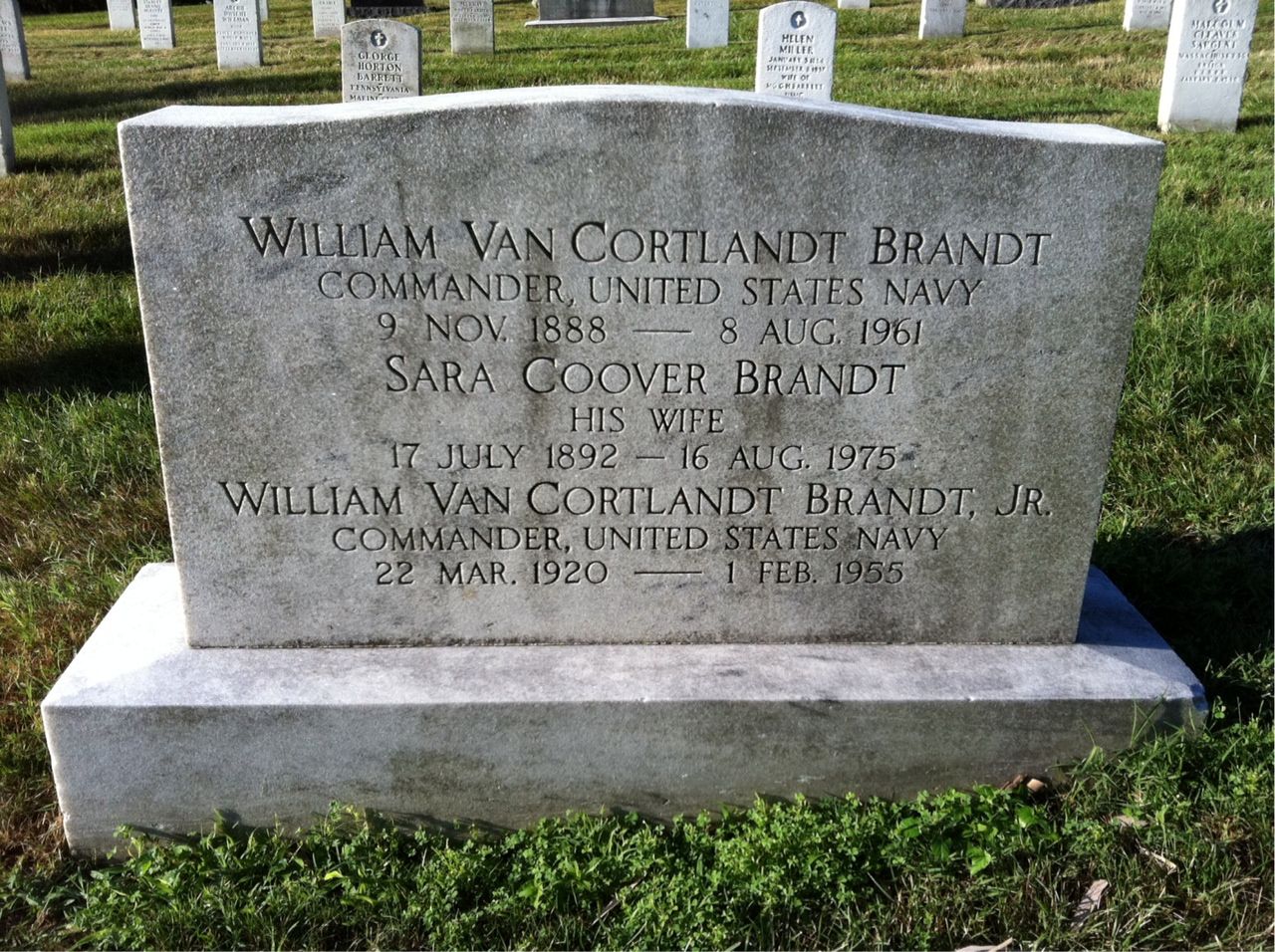
    Smith had learned of the ship during a mid-1942 visit to the estate from Lt. Commander William VanC. Brandt (USNR) of the Kenmore, who later wrote to “Miss Annie” to thank her for her hospitality.[4] “All the Officers of the Kenmore,” Brandt told Smith, “were most interested in learning the history and record of the beautiful estate for which our ship is named.”[5] Brandt planned to have framed and displayed in the ship’s wardroom photographs of the property given to him by Smith; later, the vessel’s captain requested a picture of the house for his room.[6] For her part, Smith was “thrilled” to meet Brandt and “to know about your ship,” although she was skeptical enough of the origin of the transport’s new name to write Knox.[7]

    The Arlington National Cemetery headstone of William VanC. Brandt, from whom Annie Fleming Smith learned that a Navy ship had been named after the historic home she had helped save from development in the 1920s.

    The Kenmore operated primarily in the Pacific until September 1943; she was then converted into a hospital ship and renamed Refuge.[8] The Navy must have liked the name Kenmore, as it was bestowed in October 1943 on another transport, originally called the James H. McClintock.[9] The Kenmore II also served in the Pacific Theater and, after “hostilities ended on 15 August 1945, [began] returning veterans to the U.S.”[10] She was decommissioned on February 1, 1946.[11]

    The Kenmores were not the only vessels named for properties associated with George Washington and his family. The Wakefield (AP-21) borrowed its name from the Westmoreland County birthplace of the first president, today owned by the National Park Service.[12] There have been five Mount Vernons; the first was built in 1859 and chartered by the Navy two years later, before they bought it later that year.[13] The most recent vessel named after Washington’s residence and plantation was a dock landing ship commissioned in 1972 and decommissioned in 2003.[14] The possible birthplace of Mary Ball, George Washington’s mother, lent its name to the Epping Forest, a dock landing ship launched in 1943.[15]

    The monikers of other ships are connected more tenuously to places tied to George Washington and his family. For example, a 1943 submarine chaser was rechristened the Abingdon in 1956.[16] The vessel’s new name came from the town of Abingdon, in Washington County, Virginia (named, yes, for George Washington).[17] According to the county’s official history, “myths claim that [the town] was named for Martha Washington’s ancestral home” in England.[18] While this may be a false etymology, were those who named the ship drawing on the tale when they chose to call the vessel Abingdon? Additionally, the many Arlingtons that have served the Navy over the years have each been named after Arlington County, which draws its appellation from Arlington House, built for George Washington Parke Custis, the step-grandson of his celebrated namesake.[19]

    Arlington Mansion was built by George Washington Parke Custis. Union soldiers posing on the lawn, June 28, 1864.

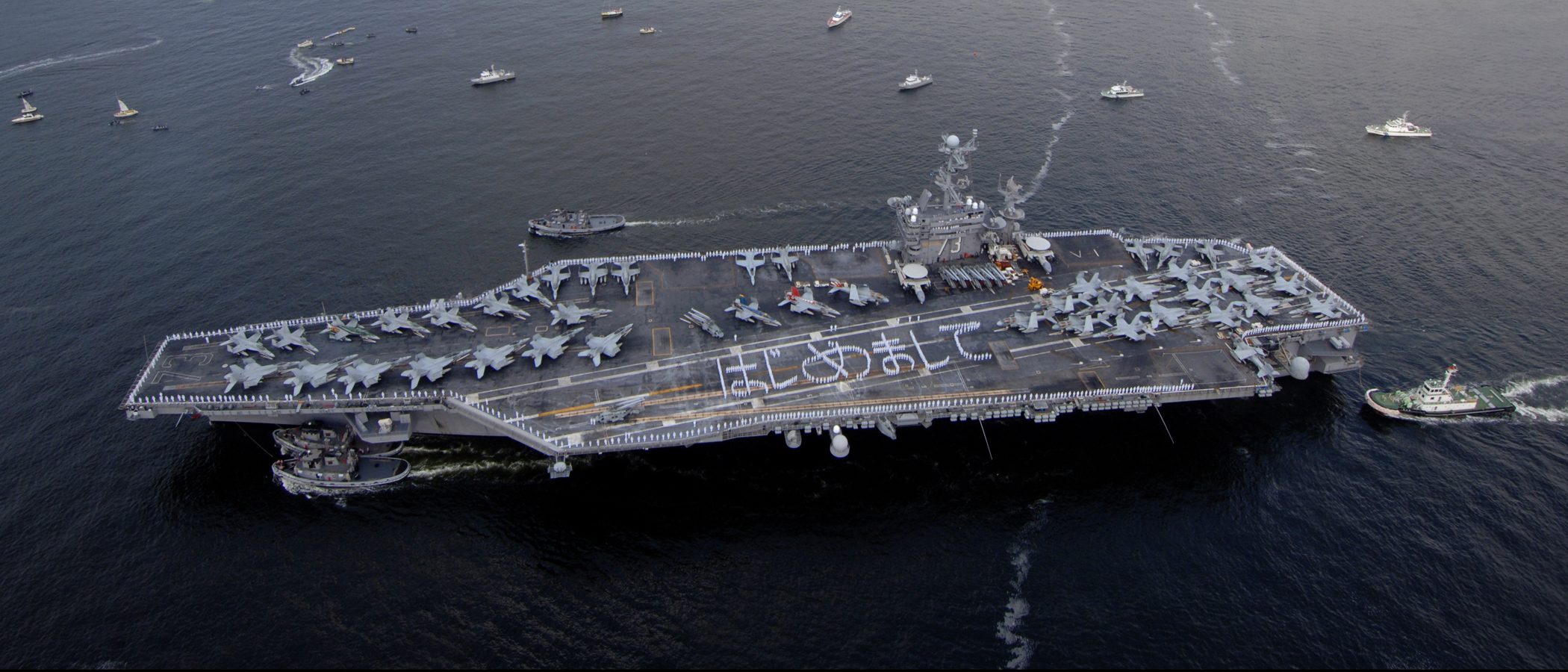
    The Navy’s infatuation with the commander in chief of the Continental Army has, of course, also been expressed by naming ships directly after Washington and his family, not just their properties. While a complete inventory of such vessels is beyond the scope of this post, it is worth noting that four ships have been named the George Washington, including CVN-73, an active nuclear-powered aircraft carrier, while several others have sailed under just his surname.[20] Martha, George’s wife and the nation’s first first lady, has inspired the names of at least two Navy ships: the Lady Washington and the Martha Washington.[21] Civilian shipbuilders have also found inspiration in the Washington family: the SS Mary Ball was a liberty ship active during World War II.[22]

    Who was responsible for naming these ships? As hinted at above, while final authority for ship names was (and still is) the responsibility of the Secretary of the Navy, during World War II, it was the Bureau of Navigation (renamed the Bureau of Personnel on May 21, 1942) that researched and recommend ship names based on the traditional naming conventions associated with each class of vessels.[23]

    Typically, it was dock landing ships, or LSDs, that were named for “cities and places of historical interest of same name, or places of historical interest only.” [24] Epping Forest, Gunston Hall I (named for George Mason’s home), Ashland (for the boyhood home of Henry Clay), Carter Hall (after the Virginia estate), Oak Hill (for the home of President James Monroe), and Shadwell (for the birthplace of Thomas Jefferson) are all examples of LSDs whose names aligned with this convention.[25]

    But the Kenmores, the Mount Vernon IV, and the Wakefield were not LSDs; they were transports, classified AP, and anyone seeking consistency in the Navy’s naming of troop transports during World War II is bound to be disappointed. Some vessels in the AP class were named after celestial bodies, others after Revolutionary War heroes, and others, as we have seen, after historic estates.

    This lack of consistency is not surprising. After all, when Benjamin Stoddert named the Navy’s sixth ship, a frigate, he chose to call it the Chesapeake, despite President George Washington’s agreement with the recommendation that frigates be named after “principles or symbols found in the US Constitution.” Therefore, “the very first naming decision by the very first Secretary of the Navy resulted in the ‘corruption’ of the established naming convention.”[26] This tradition of flexibility regarding ship names has endured, and ship names continue to excite interest (and occasionally strong feelings) from many parties, including those who propose denominations for new vessels. If you are such a person, here’s an idea: how about another Kenmore, or maybe a Ferry Farm?  


    Adam Nubbe

    Manager of School & Youth Programs


    [1] Smith, Annie Fleming to Frank Knox, July 22, 1942. The George Washington Foundation.

    [2] Naval History and Heritage Command, Kenmore I, ship-naming file, April 13, 1942.

    [3] Ibid; Cressman, R. J. (2020, March 31). Kenmore I (AP-62). https://www.history.navy.mil/research/histories/ship-histories/danfs/k/kenmore.html

    [4] Brandt, William VanC. to Annie Fleming Smith, June 30, 1942. The George Washington Foundation.

    [5] Ibid.

    [6] Ibid; Smith, Annie Fleming to William VanC. Brandt, July 10, 1942. The George Washington Foundation.

    [7] Smith, Annie Fleming to William VanC. Brandt, July 10, 1942. The George Washington Foundation.

    [8] Naval History and Heritage Command, Kenmore I, ship-naming file, April 13, 1942.

    [9] Cressman, R. J. (2020, March 31). Kenmore II (AP-162). https://www.history.navy.mil/research/histories/ship-histories/danfs/k/kenmore-ii–ap-162-.html

    [10] Ibid.

    [11] Ibid.

    [12] Cressman, R. J. (2022, April 1). Wakefield (AP-21). https://www.history.navy.mil/research/histories/ship-histories/danfs/w/wakefield.html

    [13] Naval History and Heritage Command. (2015, August 11). Mount Vernon I (Gbt). https://www.history.navy.mil/research/histories/ship-histories/danfs/m/mount-vernon-i.html

    [14] Pike, J. (n.d.). LSD 39 Mount Vernon. https://www.globalsecurity.org/military/agency/navy/lsd-39.htm

    [15] Naval History and Heritage Command. (2015, July 8). Epping Forest. https://www.history.navy.mil/research/histories/ship-histories/danfs/e/epping-forest.html

    [16] Mann, R. A., & Cressman, R. J. (2023, November 27). Abingdon (PC-1237). https://www.history.navy.mil/research/histories/ship-histories/danfs/a/abingdon.html

    [17] Ibid; Hagy, J. W. (2019, June 10). A Brief History of Washington County, Virginia. Washington County, Virginia. https://www.washcova.com/history/

    [18] Ibid.

    [19] Parsons, L., & Cressman, R. J. (2023, December 13). Arlington I (AP-174). https://www.history.navy.mil/research/histories/ship-histories/danfs/a/arlington-i.html; Arlington, Virginia. (n.d.). History of Arlington. https://www.arlingtonva.us/Government/Topics/Welcome-Kit/History-of-Arlington; National Park Service. (2023, January 12). George Washington Parke Custis. https://www.nps.gov/arho/learn/historyculture/george-custis.htm

    [20] Naval History and Heritage Command. (2020, May 5). Washington VIII (BB-56). https://www.history.navy.mil/research/histories/ship-histories/danfs/w/washington-viii.html; US Navy. (n.d.). USS George Washington (CVN 73). https://www.airpac.navy.mil/Organization/USS-George-Washington-CVN-73/

    [21]  Naval History and Heritage Command. (2016, February 9). Martha Washington. https://www.history.navy.mil/research/histories/ship-histories/danfs/m/martha-washington.html; Naval History and Heritage Command. (2015, July 28). Lady Washington. https://www.history.navy.mil/research/histories/ship-histories/danfs/l/lady-washington.html

    [22] Jobrack, J. (2020, September 10). True or False? Test Your Knowledge of Mary Washington. https://livesandlegaciesblog.org/2020/09/10/true-or-false-test-your-knowledge-of-mary-washington/.

    [23] Calkins, W. F. (1958, July). Down to the sea in ships’–names. U.S. Naval Institute. https://www.usni.org/magazines/proceedings/1958/july/down-sea-ships-names; Naval History and Heritage Command. (2020, June 29). Denfeld, Louis Emil. Louis Emil Denfeld. https://www.history.navy.mil/research/library/research-guides/modern-biographical-files-ndl/modern-bios-d/denfeld-louis-emil.html

    [24] Department of the Navy, A Report on Policies and Practices of the U.S. Navy for Naming the Vessels of the Navy (2012, November), 63. https://apps.dtic.mil/sti/tr/pdf/ADA569699.pdf

    [25] DANFS – Naval History and Heritage Command. Dictionary of American Naval Fighting Ships — Index. (n.d.). https://www.history.navy.mil/research/histories/ship-histories/danfs.html

    [26] Department of the Navy, A Report on Policies and Practices of the U.S. Navy for Naming the Vessels of the Navy (2012, November), 7. https://apps.dtic.mil/sti/tr/pdf/ADA569699.pdf


  • Archaeology Is Not For The Faint Of Heart – But We Love It Anyway

    A lot of people have told me that they want or wanted to become archaeologists.  I always find this flattering.  Yours truly was only in my single digits when I declared the same to my family and anyone who would listen.  After reading every National Geographic magazine I could get my hands on, ‘excavating’ abandoned houses and bottle dumps on or near the property where I grew up, and too many years of schooling than I am willing to admit…. here I am today.  I am an archaeologist of 25 years.  That being said, it is not an easy profession to get into.  To wedge your way into this field, it is recommended you have an obsession with learning, stubbornness equal to a Black Friday shopper outside a Target in 20-degree temperatures at 3 am the night before, a hefty amount of luck, the willingness to obsess over dead people’s broken garbage, and just to be sure it would help if you’re at least a little bit mad. 

    Happy archeologists!

                    Now, I am an archaeology lab manager in our museum, which means I enjoy the comfort of climate control, access to bathrooms, an office, and a place to store my breakfasts and lunches.   But, like most archaeologists, I had to cut my teeth in the field (digging outside), which lacked all the above amenities.  This is where many archaeologists figure out if they genuinely want to go through with the folly they have embarked upon.  Many decide they do not and switch majors.  Good for them; they likely make more money than most archaeologists.   But could it really be that bad?  Isn’t it fun finding cool stuff?  Yes, of course.  But here are all the obstacles those noble field archaeologists face daily:

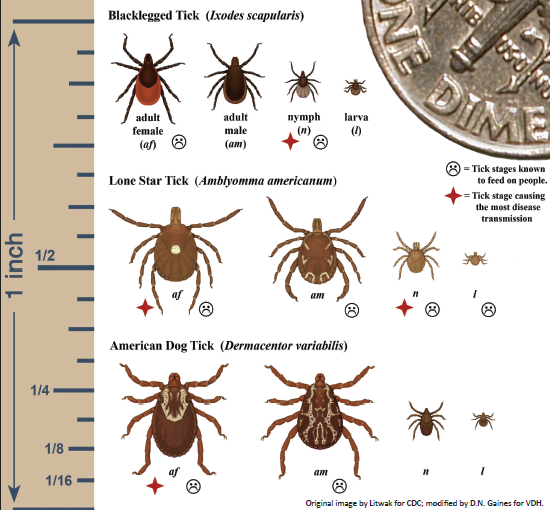
    • Bugs. Lots of them.  Bugs have taken down many of my brave colleagues.  Forget the snakes (Unlike Indiana Jones, most of us like snakes) and spiders.  I am talking about chiggers and ticks.  No one gets just one chigger bite.  They hang out in gangs of hundreds, and you will not know they have bitten you until they have had their fill of your yummy body juices and peace-ed out.  Hours later, you’ll notice around your ankles and waistband the unbelievable itching of dozens of bites that will haunt you for weeks.  Ticks are worse.  Way worse. Ticks carry diseases that can be very serious, including Lyme and Rocky Mountain Spotted Fever, both of which should be avoided at all costs. Don’t forget bees, hornets, and wasps.  No archaeologist worth their salt is without a harrowing tale of valiantly battling or running the heck away from a swam of ticked-off single-minded, murderous, flying, stingy wingy thingies.
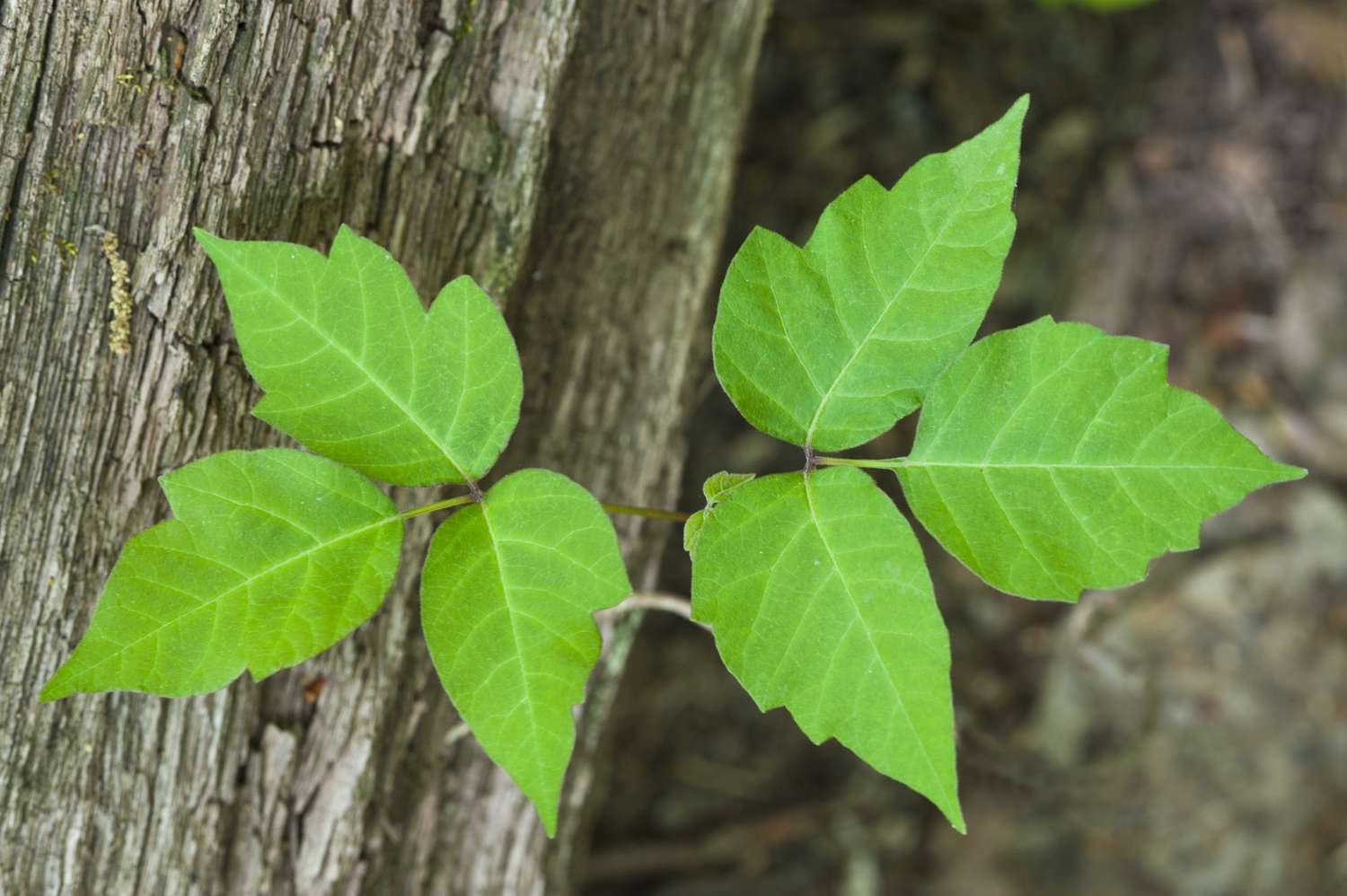
    • Plants that will make you wish you were never born.  Let’s start with some annoying and inconvenient but not diabolical plants: Those with thorns.  After being told by your crew chief that you need to hack your way through a six-foot-tall thicket of blackberries, multiflora rose, devil’s walking sticks (Yep, that’s a thing), cacti, or thistles in order to dig one tiny shovel test pit you WILL begin to question your life’s choices.  However, for those who are allergic to poison ivy, oak, and/or sumac (and it’s most of us), your field career will be a constant battle where your enemy has highly transmittable and very toxic poison juices in every single part of them (even the roots) while you are armed with a bottle of calamine lotion.  Those field archaeologists who do not get poison ivy will make fun of you and flaunt their superpowers, but just remember they’ll get theirs because the more you’re exposed to these plants, the more likely you are to feel their wrath. 
    • Ancient Curses.  No, you should NOT read that inscription on the 3,000-year-old tablet found in that tomb with all the warnings engraved on the entrance.  If I had a nickel every time I had to tell a member of my crew to drop that darn ancient idol that’s started to glow red inside and run, I’d be able to pay off my student debts.  Just kidding, that will never happen. 
    Unbroken seal of King Tut’s tomb…maybe just leave it.
    •  This one is very serious and should never be taken lightly by anyone working outdoors because they take anyone by surprise just like that. Dehydration, heat stroke/exhaustion, sunburn, and frostbite. Field archeologists must dig in almost all conditions and all seasons.  They are wind-worn and road-weary, and you should not mess with anyone who can dig dozens of holes a day in temperatures above 100 or below freezing. 
    •  Animals.  I’m not talking just about the wild ones.  I’ve only ever seen a bear in the woods once, just a few harmless snakes and maybe a couple of bucks that gave me the side eye.  But I have had years knocked off my life by pheasants or tiny fawns exploding out of the brush a foot away from me.  For the most part, pets are not an issue, and petting a friendly dog or cat is a welcome reprieve from digging holes.  Livestock, however, would scare my crews.  I grew up on a farm, so I knew what animals didn’t want to snuggle.  Here’s the thing, though.  Cows are bored and extremely curious when something or someone spices up their daily routine.  It’s hard for someone from the city to calmly stare down a herd of Holsteins weighing 1,500 pounds each while they barrel towards you.  But all they want is to sniff you, rifle through your dig kit, and lick your equipment because it’s salty.  Annoyingly, they will also eat the plastic flagging tape that you carefully tied up to mark your transect line.  So will deer, fun fact. 
    •  Unexploded ordinance (UXO).  Gunpowder does not necessarily become so old that it won’t go boom any longer.  It actually becomes less and less stable.  Sure, that cannonball you found is cool.  Sure, it’s super old.  Stay.  Away.  From.  It. Military bases and old battlefields are ripe with potentially dangerous mortars, shells, grenades, and bullets. Unfortunately, here in Virginia, there are cases of collectors who have brought finds home from Civil War battlefields only to find out the hard way that these artifacts can still do a lot of harm. That being said, you’d be surprised at all the places archaeologists have found things that can explode.  I worked on a project in a former neighborhood, so imagine our surprise when a pit in the backyard of a house was found to contain dozens of WWII live .50 caliber antiaircraft ammunition.  One thing you learn very quickly as an archaeologist is that some people are weird, and they do weird things you will never be able to explain.  The fancy word for this is idiosyncratic behavior, and it’s one of my favorite terms.  It’s the academic way to throw up your hands and say, “I got nothing.”  So, if you find any UXO, contact local law enforcement; they know what to do with it.
    Unexploded Parrott shell, Kennesaw Mountain National Battlefield Park, Georgia
    • Collapsed excavation units. Unstable excavation walls are no joke.  I’ve personally had one collapse on me, and while I was fine, it was still frightening.  Shoring up walls and expanding out before digging deeper can mitigate these issues, but there are many types of soils, and they’re not created equal, so never overestimate the strength of your walls.  Don’t become an artifact yourself. 
    •  Soil contamination/hazardous waste. Archaeologists occasionally run into hazardous waste, which is bad—enough said. Arsenic was a major embalming ingredient in the 19th century, and since archaeologists are frequently called in to identify and remove burials, arsenic is a significant consideration.  It was also used to make a beautiful green color called Scheel’s green, which was used in dying such things as fabric, book covers, and wallpaper.  Imagine wearing a gorgeous Victorian-era dress while reading a book and sitting in a wallpapered room all dyed green with copious quantities of poison. Green is my favorite color but hold the early death, please.  Mercury was considered a type of cure and used to treat various ailments such as syphilis, toothaches, melancholy, worms, tuberculosis, constipation, and apoplexy, to name a few.  It was in perfumes, lotions, soaps, hats, etc….and just like arsenic, it doesn’t go away in the soil.  And if you’re above a certain age, you definitely remember those mercury thermometers that, when broken, produced magical fun silver balls you could roll across the floor until your mother caught you.   Another principal offender is lead.  Humans discovered how awesome lead was thousands of years ago.  Please don’t personally verify this, but somehow, the Romans found that degraded lead was sweet, so they put it in substandard wine to jazz it up a bit.  Lead was also used in cosmetics until embarrassingly recently to produce that immaculate white complexion valued by the upper crust.  YOLO.  Lead was also used in water pipes, paint, glassware, ceramic glazes, and later in plastics and gasoline.  There is so much lead in our environment now that even non-archaeologists are in danger of exposure.  I could go on and on, but it’s time to move to…
    •  Enraged locals and/or property owners.  We get it.  No one wants that pipeline/highway/gas line/sewer to go through their property.  And when it does, the archaeologists have to test that area.  But please don’t run out of your house while visibly carrying a firearm and threaten the archaeologists.  We are the lowest entity on this unpleasant totem pole and unfortunately the first people you’ll see trapsing over your land and digging holes.  This was not our idea; it was our job.  Working on these projects is the worst because people are understandably angry and want to vent, but this is not the way to do it.  Ironically, one of the only things that can stop that pipeline from going through your horse pasture is if we find some amazing archaeological site with immense cultural significance.  This will force a rerouting of the project, so your neighbors will have to deal with the headache. 
    Dealing with enraged locals is a delicate situation

    This is not by any means intended as an exhaustive list, but I’ve already greatly exceeded my word count for this blog.  You get the idea.  So why, you may ask, does anyone become an archaeologist?  Quite simply put, every job has its hassles, some more than others, but most archaeologists really (and I mean REALLY) love archaeology.  The jobs in archaeology may not fit the stereotypes (full disclosure: most of us adore Indiana Jones, though).  Archaeology is rarely glamorous; it can be dangerous or frustrating, but it is, above all else, AWESOME.  Being a part of uncovering human history and sharing information never gets old, and I wouldn’t trade my job for any other. 


    Mara Kaktins

    Archaeologist & Lab Manager


  • That’s A Wrap! Ferry Farm’s Dig Season Recap

    October just happens to be Virginia Archaeology Month, and what better way to celebrate than to recap this summer’s excavation at George Washington’s Boyhood Home at Ferry Farm.

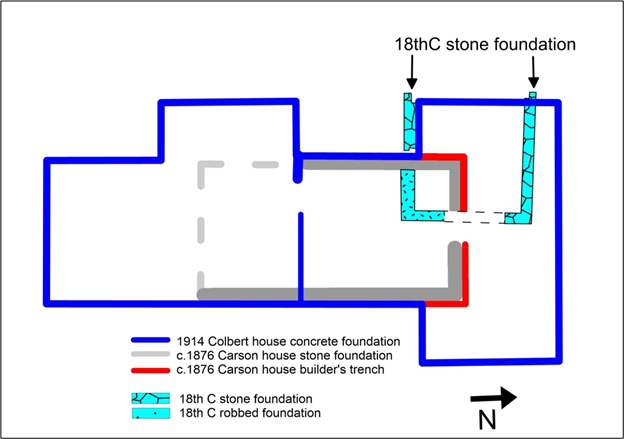
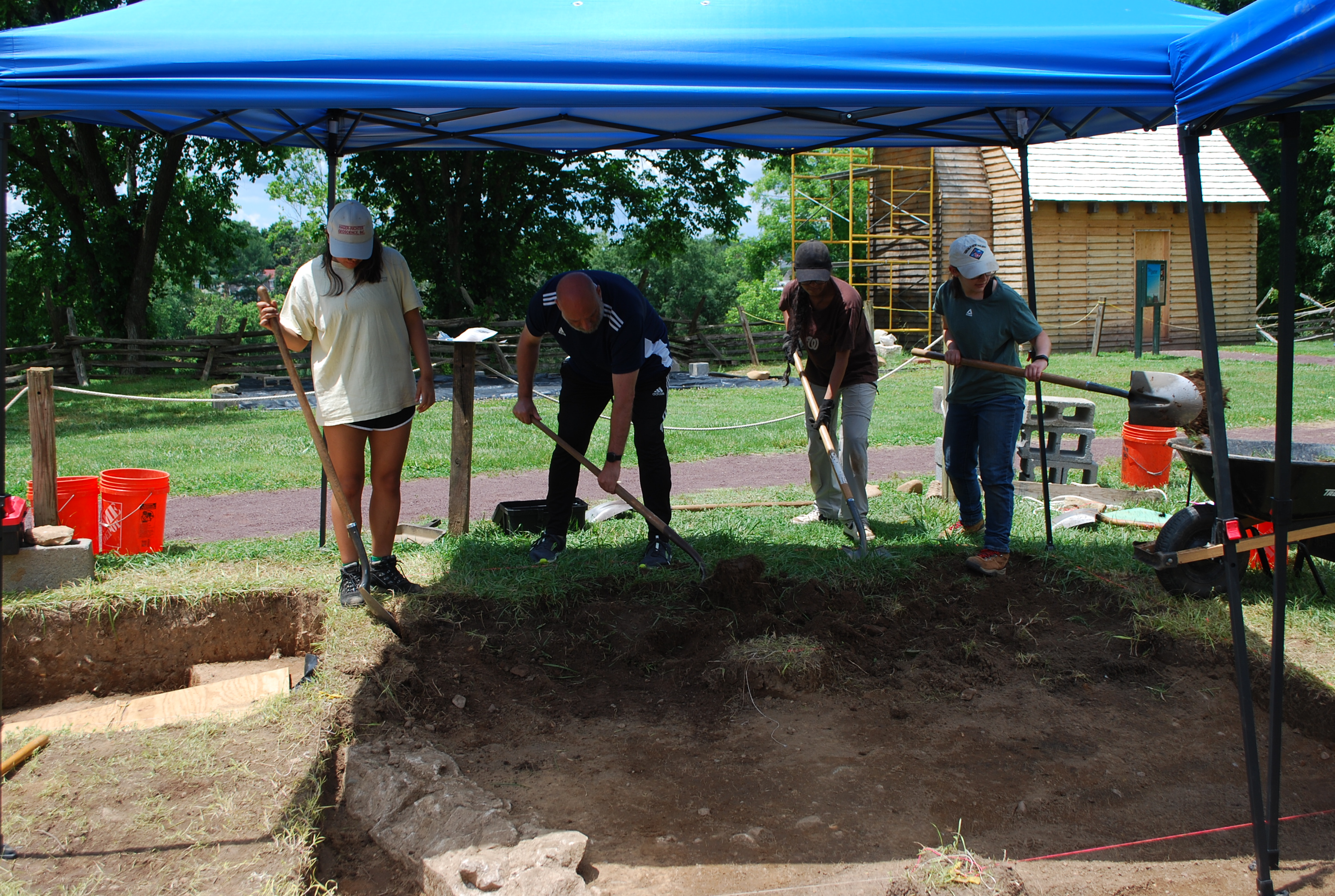
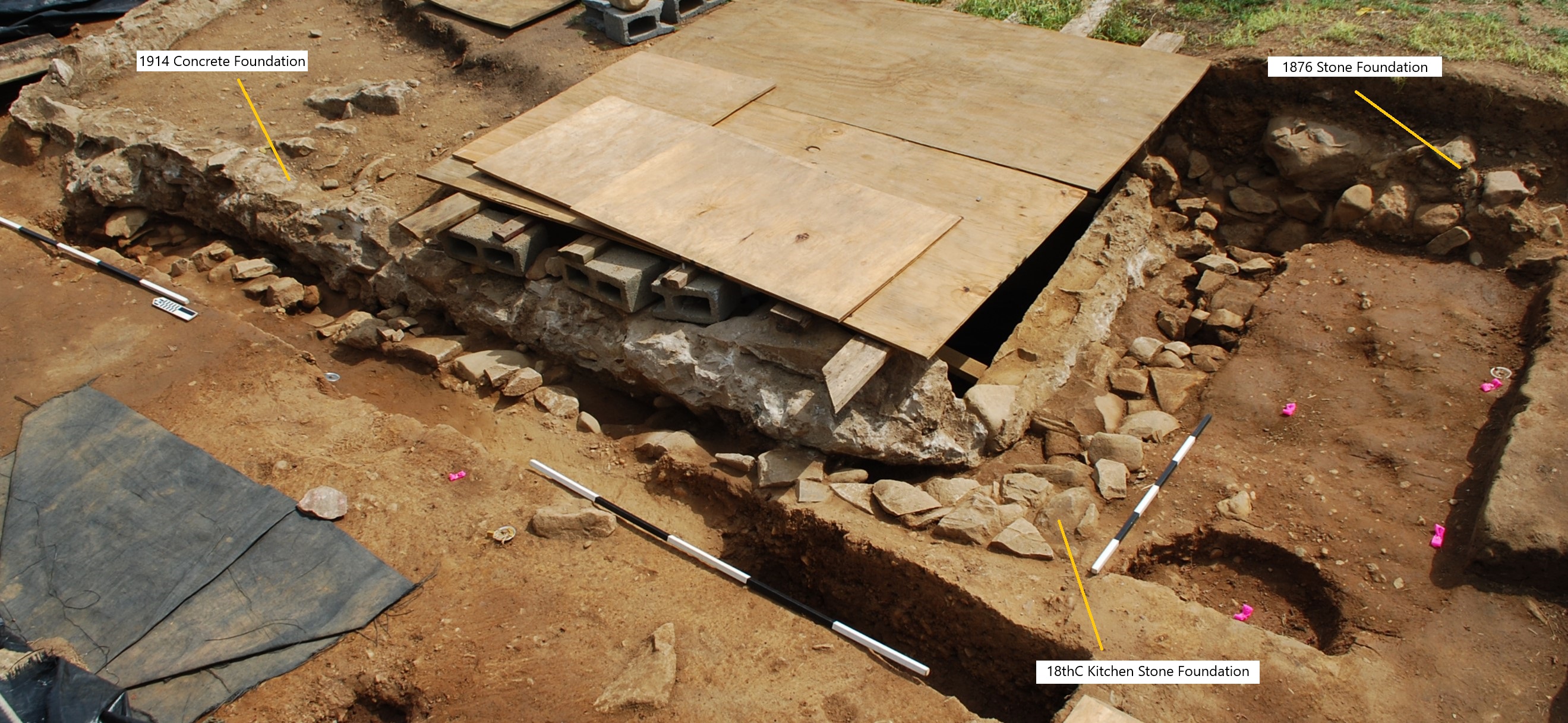
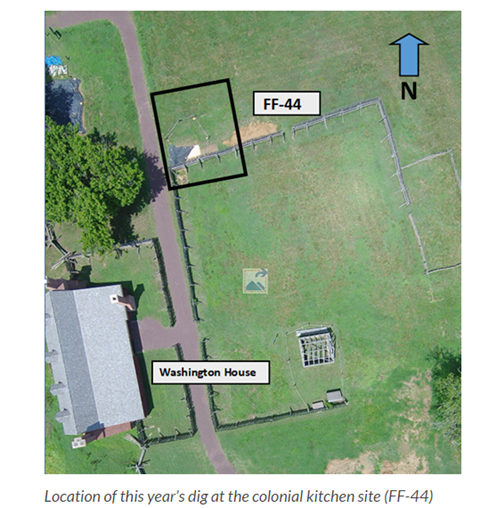
    You might remember from our dig preview, that this year’s dig (FF-44) focused on the continued exploration of the 18th-century kitchen site located just northeast of the main house. In 2023, our limited investigations uncovered just a small section of the kitchen’s stone foundation and cellar, giving us a sneak preview of the conditions and parameters of future site work. Armed with this knowledge, our aims this year were to uncover more of the original foundation walls of the kitchen cellar, to uncover additional architectural evidence of the kitchen outbuilding, and explore the surrounding landscape for features. So, did we do it?

    Location of the 18th century kitchen foundation in relation to two later farmhouses dating to 1876 and 1914. 

    We did! But before we get to the fun discoveries, let’s go over how we got there. As far as sites go here at Ferry Farm, this one has been through a lot. Not only did the original 16’ by 16’ kitchen building burn and collapse in on itself in the middle of the 18th century, but it also had two subsequent farmhouses built on top of it that were either moved, damaged in a fire, or demolished all within the last 150 years. A previous archaeology project on the site introduced another element of complexity in understanding the depositional sequence of fills on the earlier 18th-century site, which had obviously been heavily disturbed by all these later events.

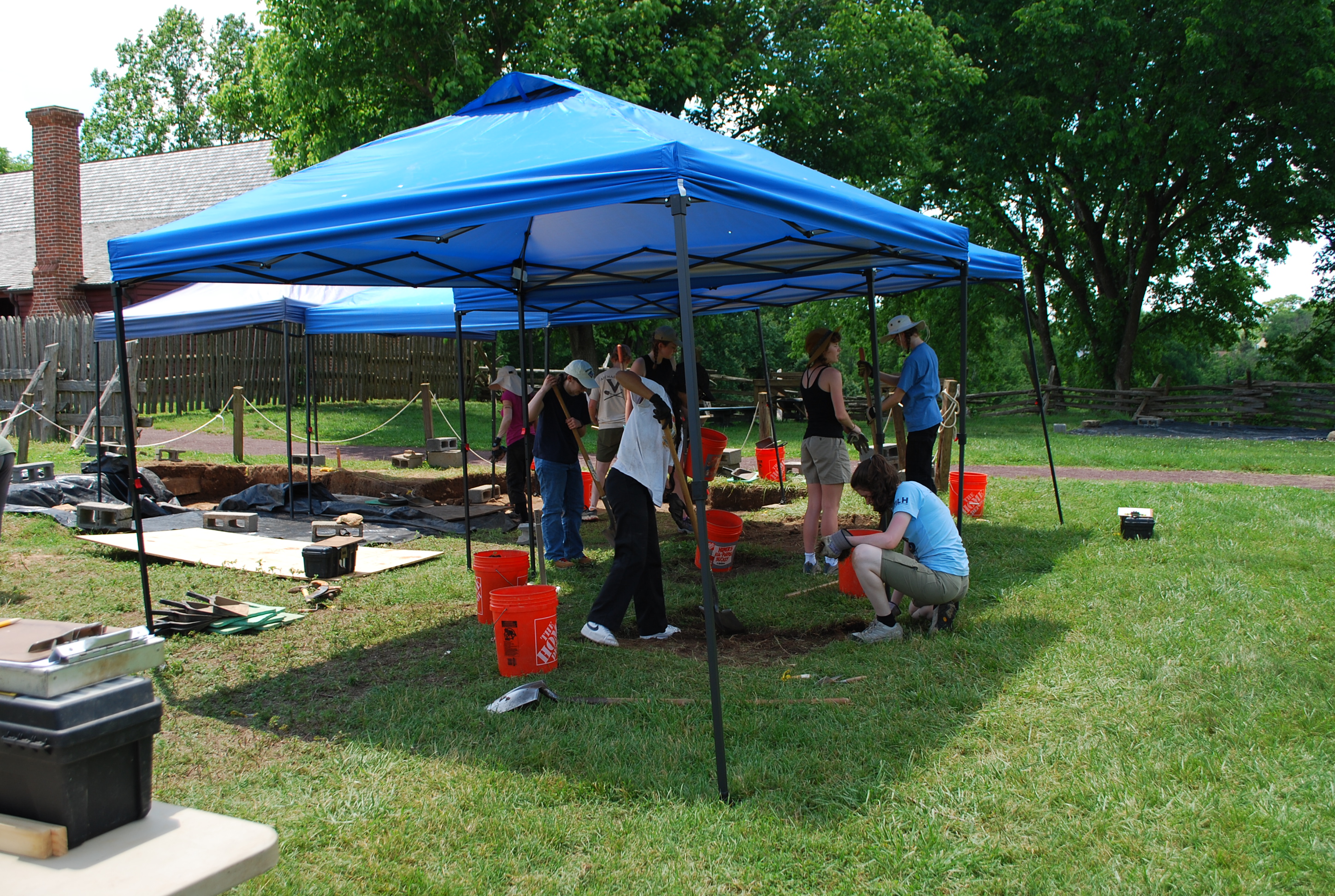
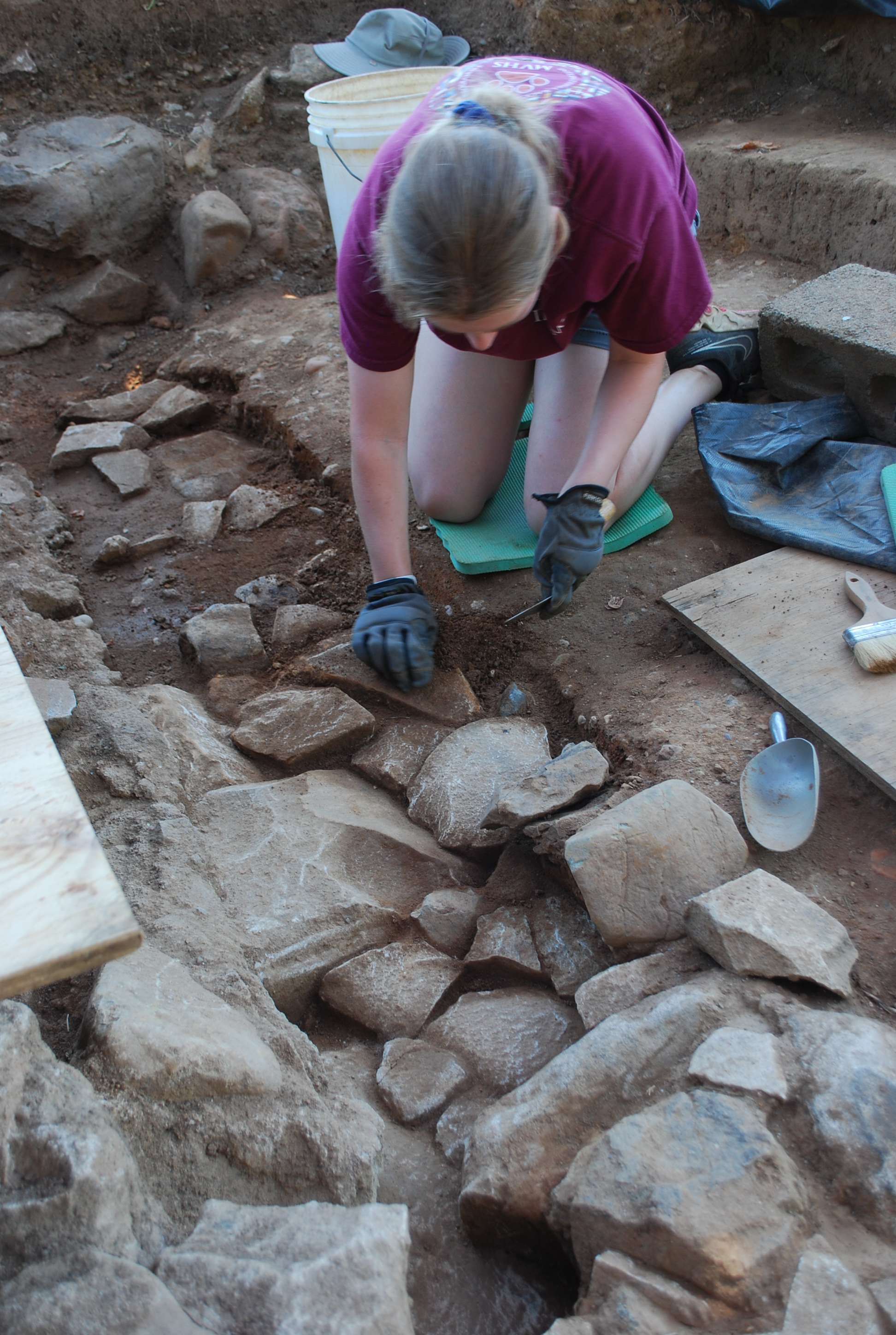
    All this led to an interesting excavation. Since a significant portion of the site had previously been excavated in the 1990s, a sizable amount of our site time was spent re-excavating backfilled archaeology units with the purpose of exposing unexcavated layers around the site. Not only would these unexcavated layers allow us to gather new data, but it would also give us the opportunity to better understand the findings as recorded in the earlier reports.

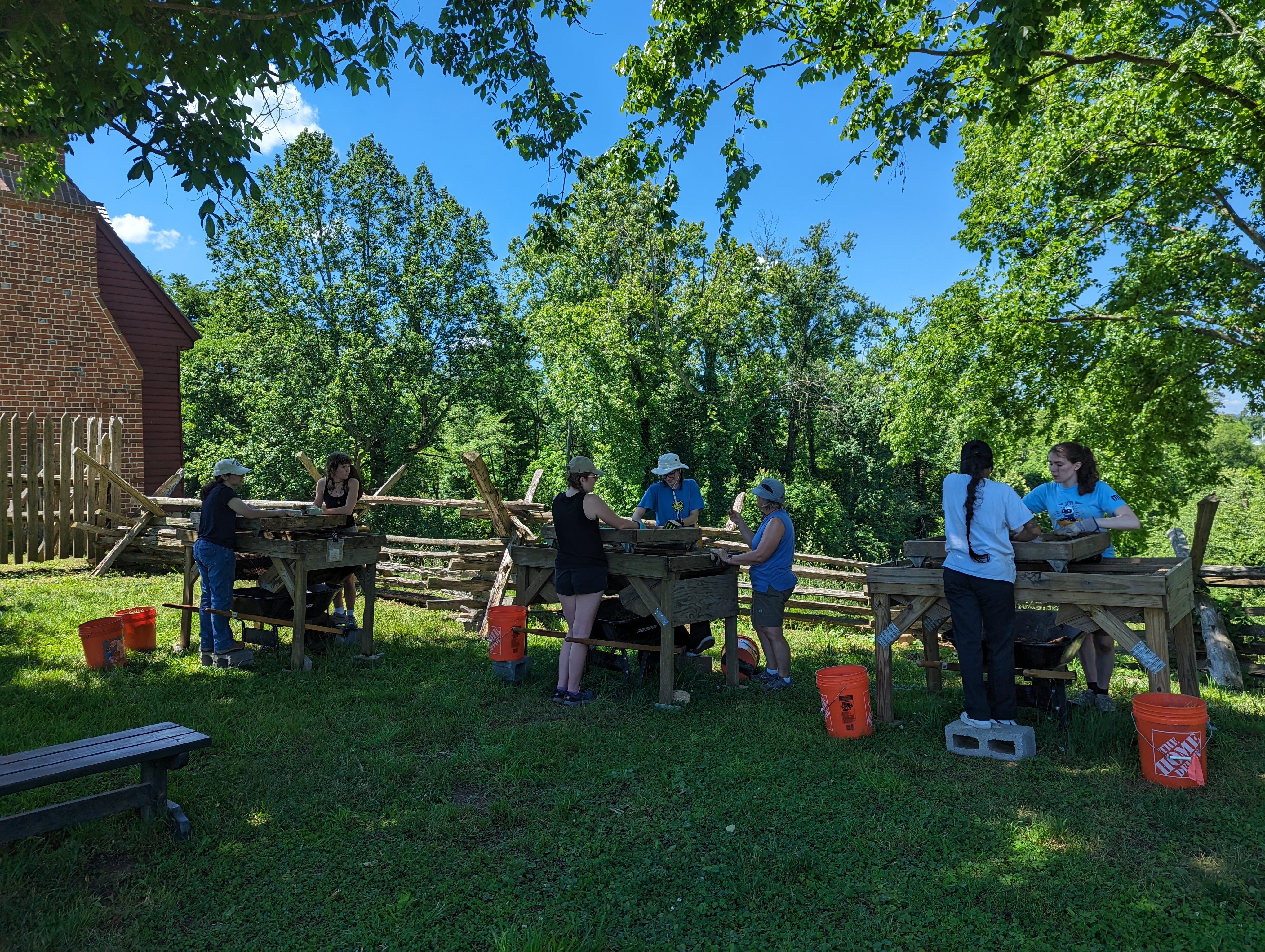
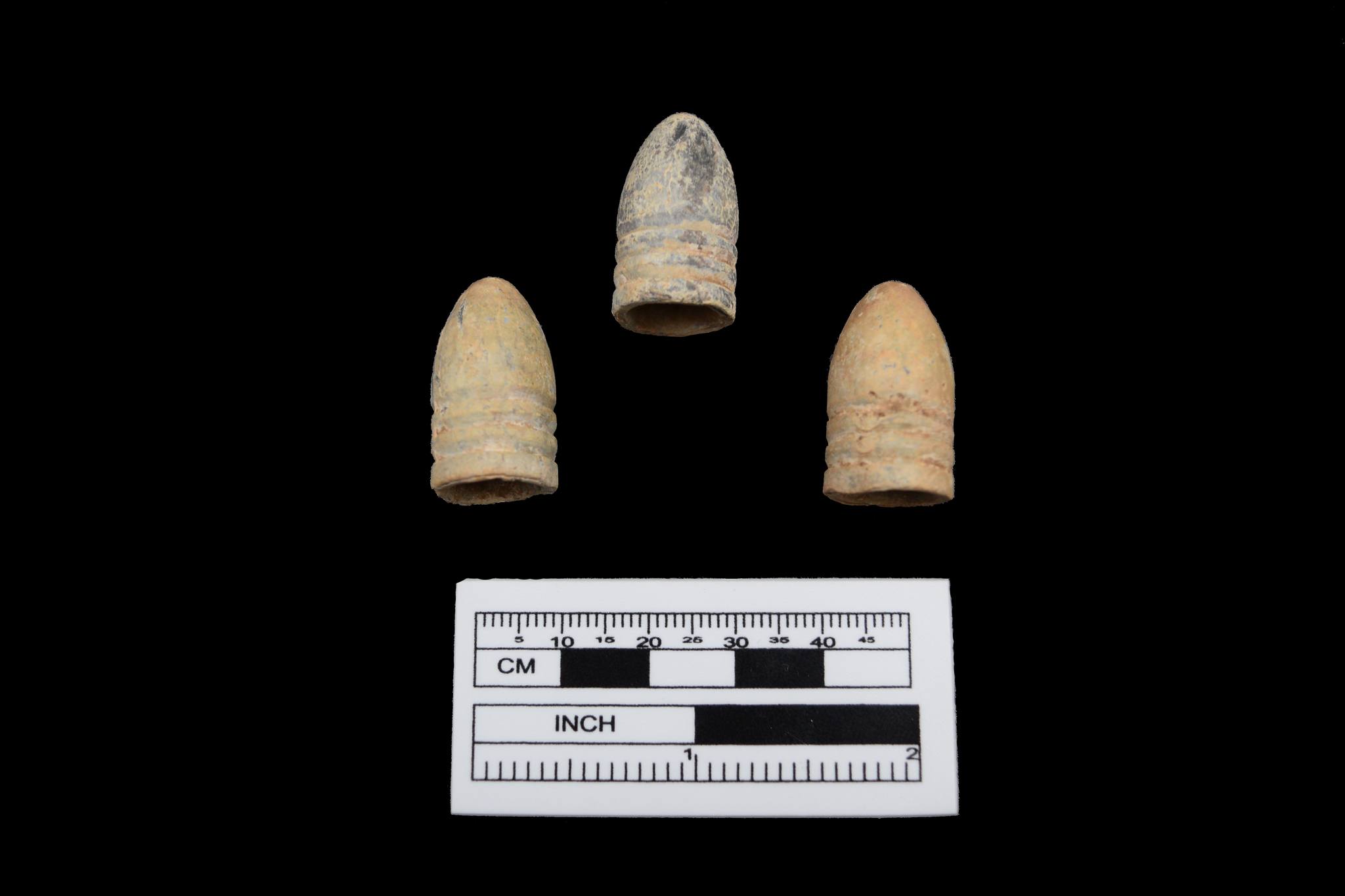
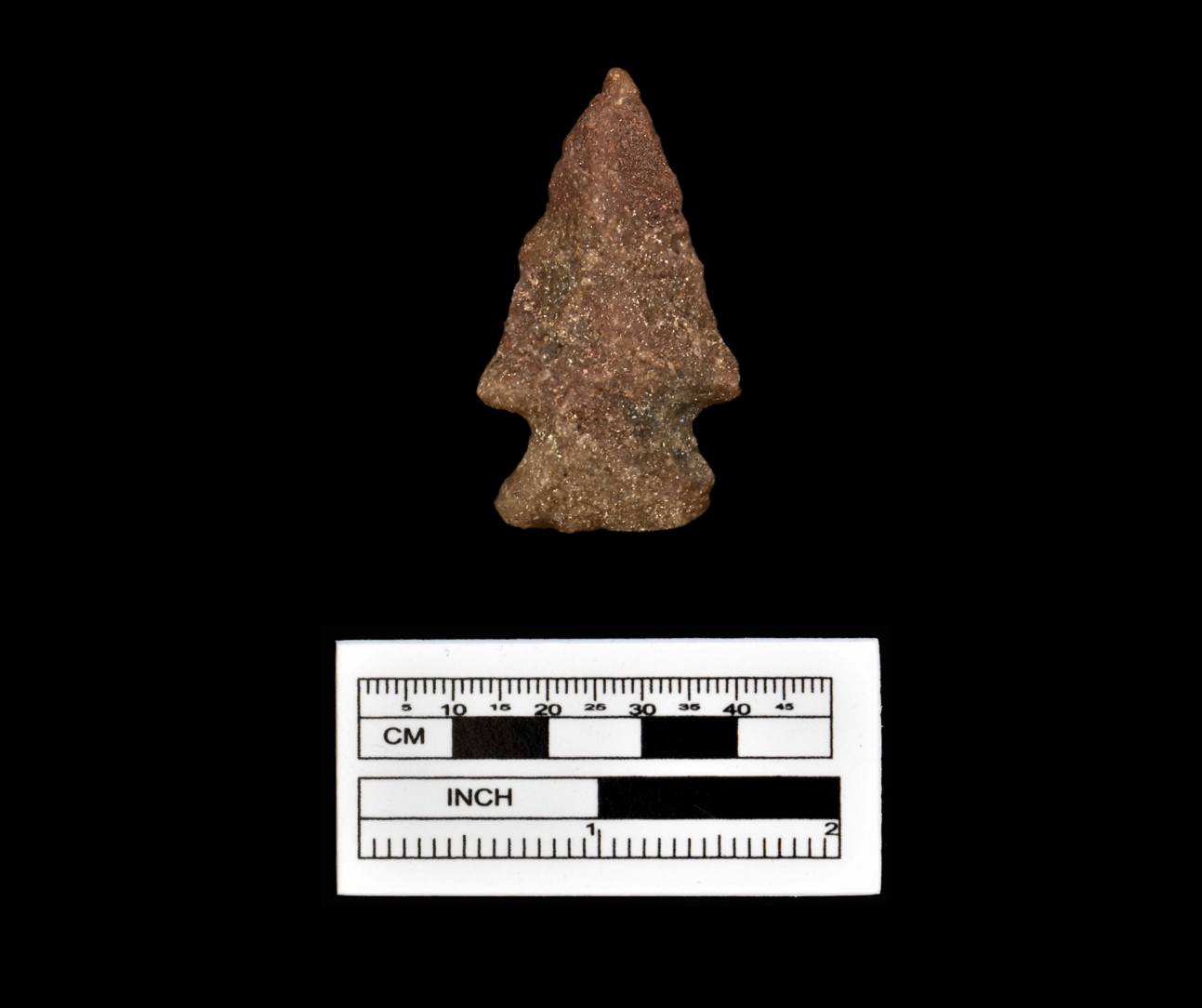
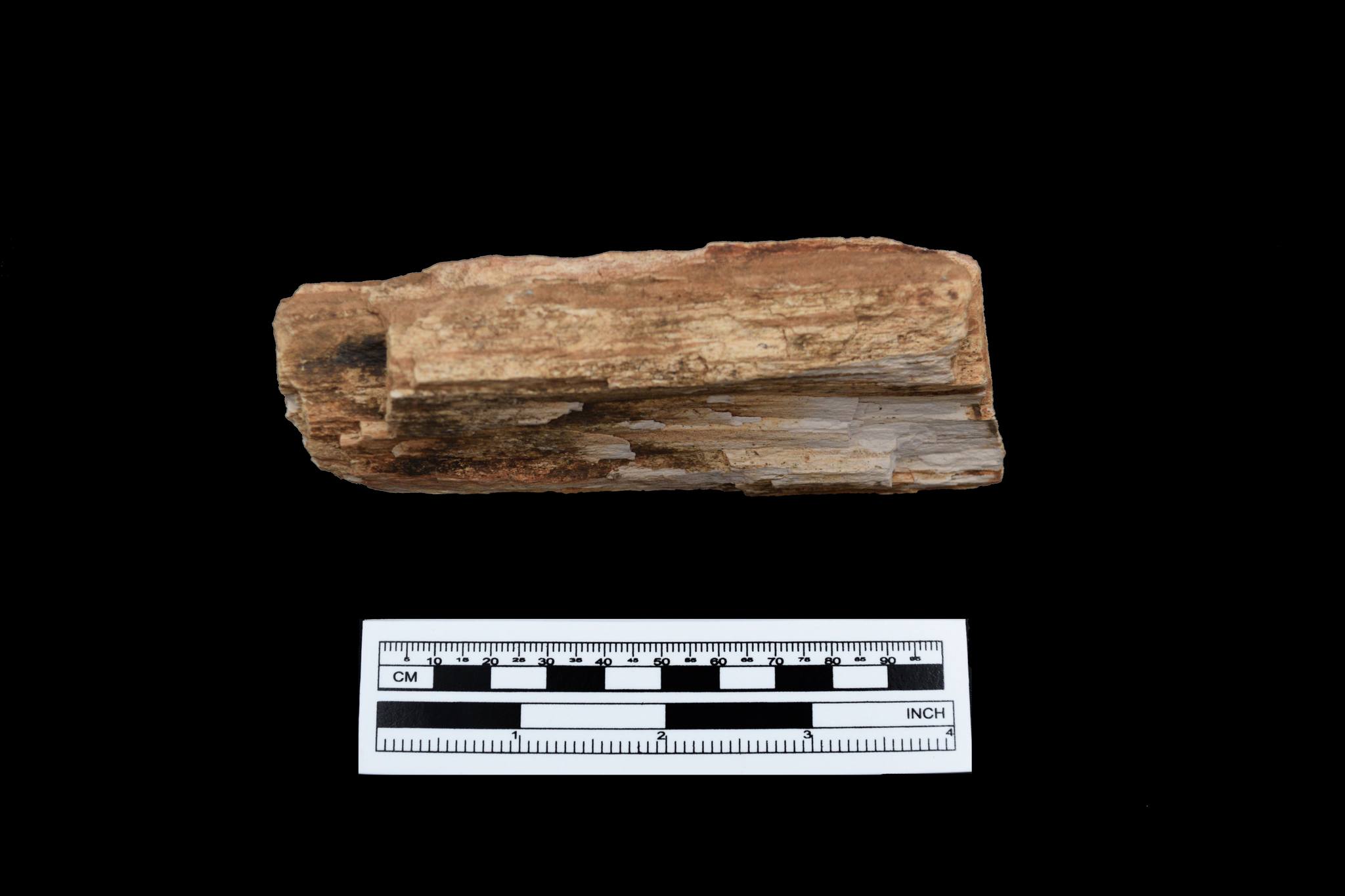
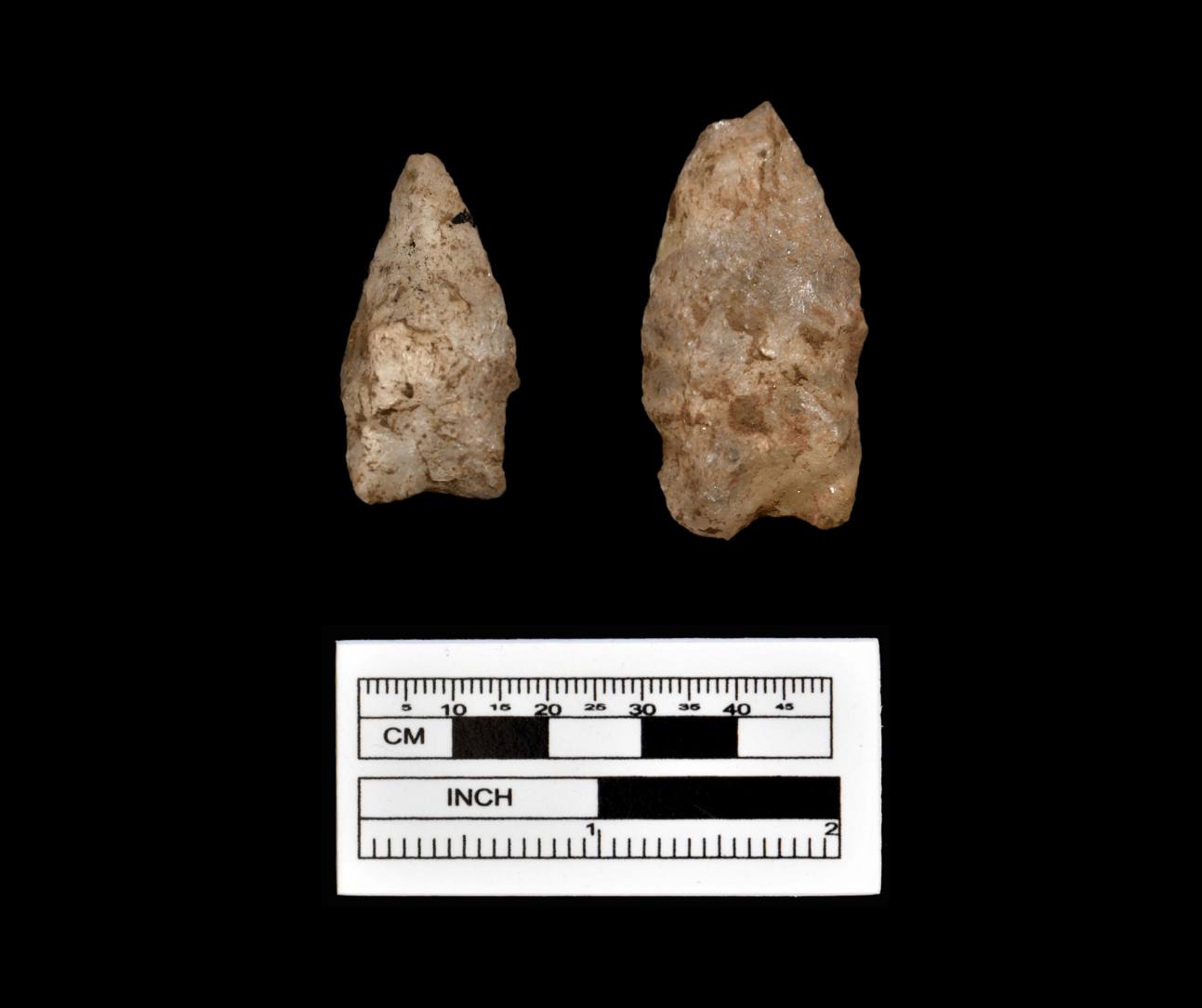
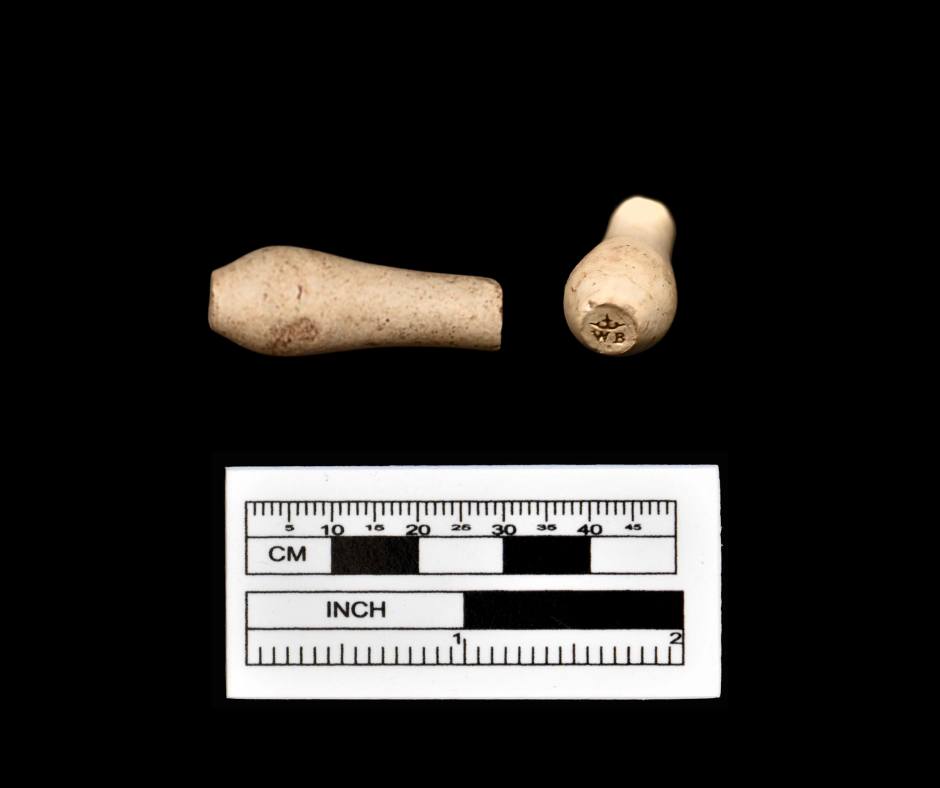
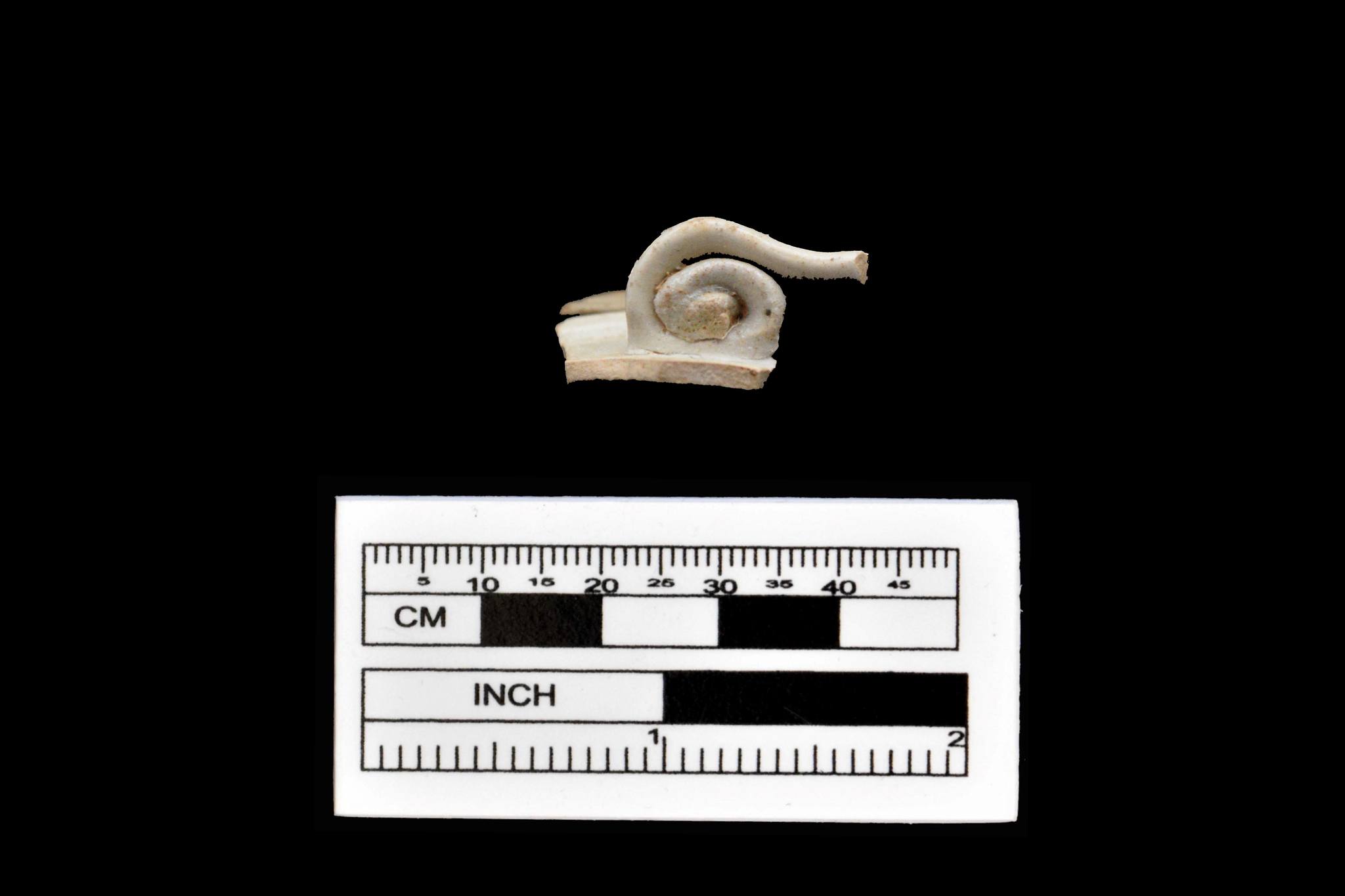
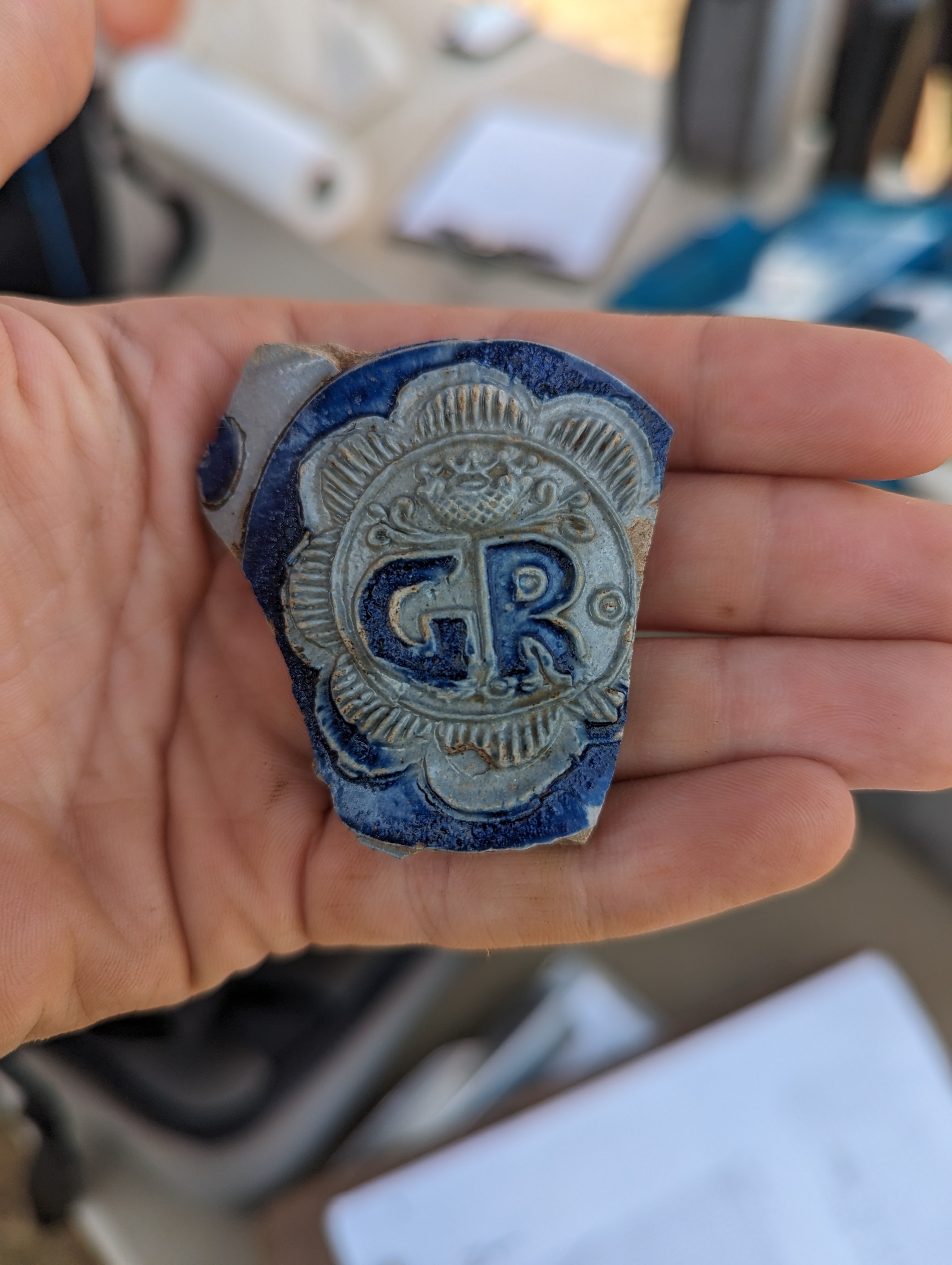
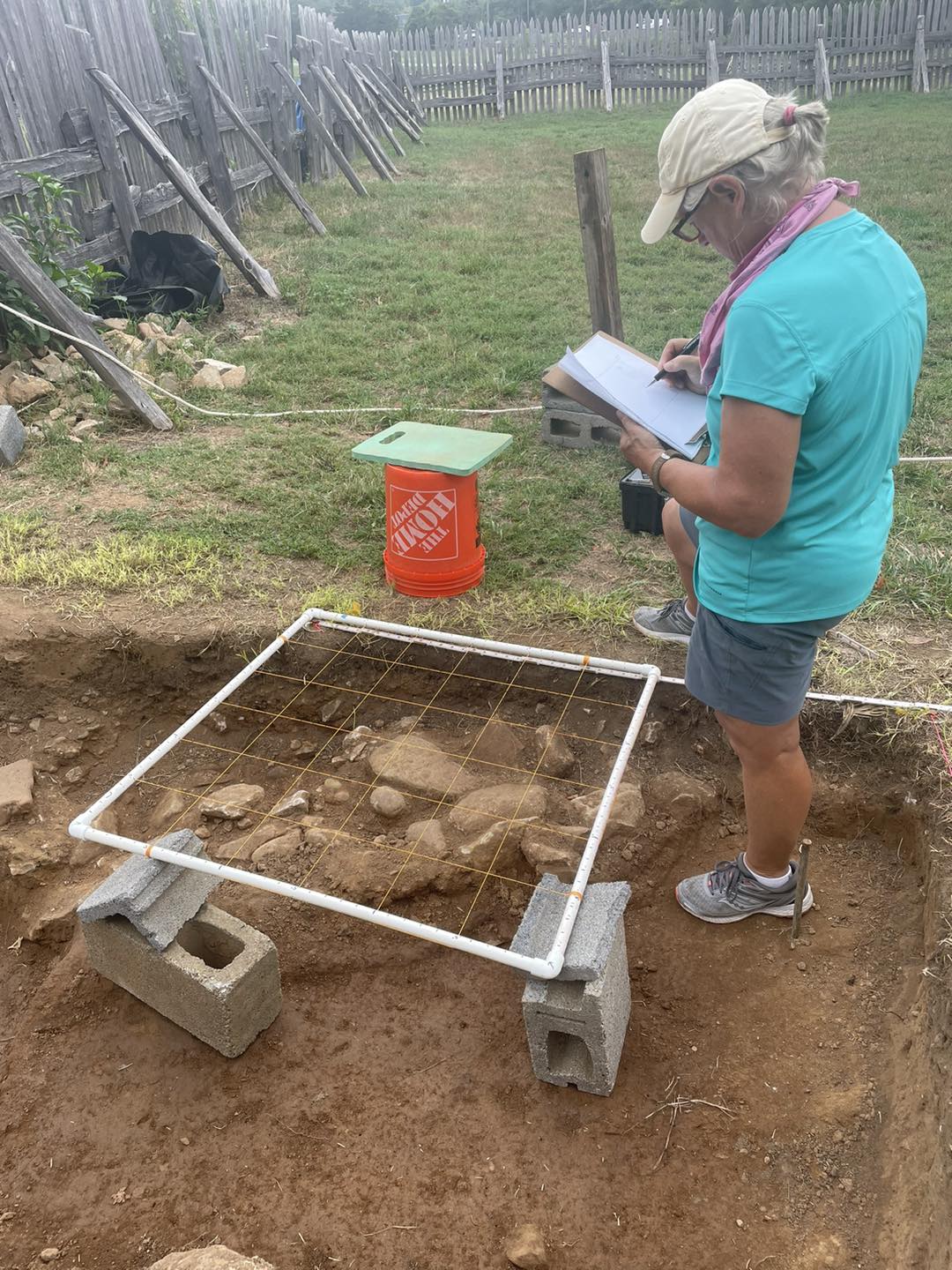
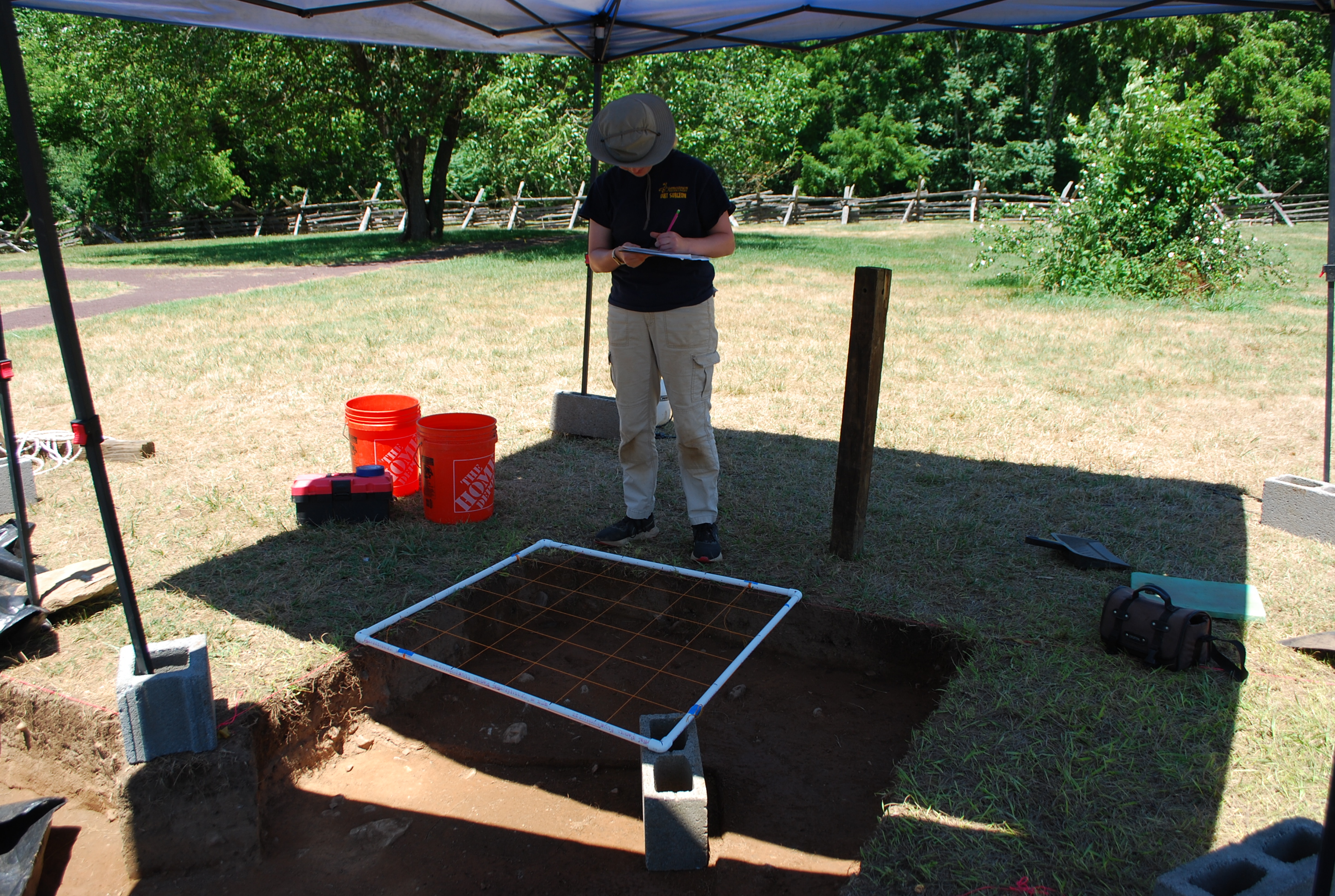
    With the help of our wonderful field school students and interns, we opened a total of twenty-seven 5’x5’ units across the kitchen site. Sifting through the dirt, hundreds of artifacts were found dating to all occupations of Ferry Farm. Super cool finds that date to the 18th-century period of use for the kitchen included tobacco pipe fragments, wine bottle sherds, and a variety of ceramics, including English stoneware, Chinese porcelain, and a German Westerwald ‘GR’ sherd. The prehistoric Native American occupations of the site were represented by an unusually high number of projectile points found (8 and counting!), dating to both the Early Archaic (8000 BC – 6500 BC) and Early Woodland (1100 BC – 500 BC) periods.  Civil War bullets came up in our screens, of course, as did 20th-century plastic, tools, toys, and bottle caps.

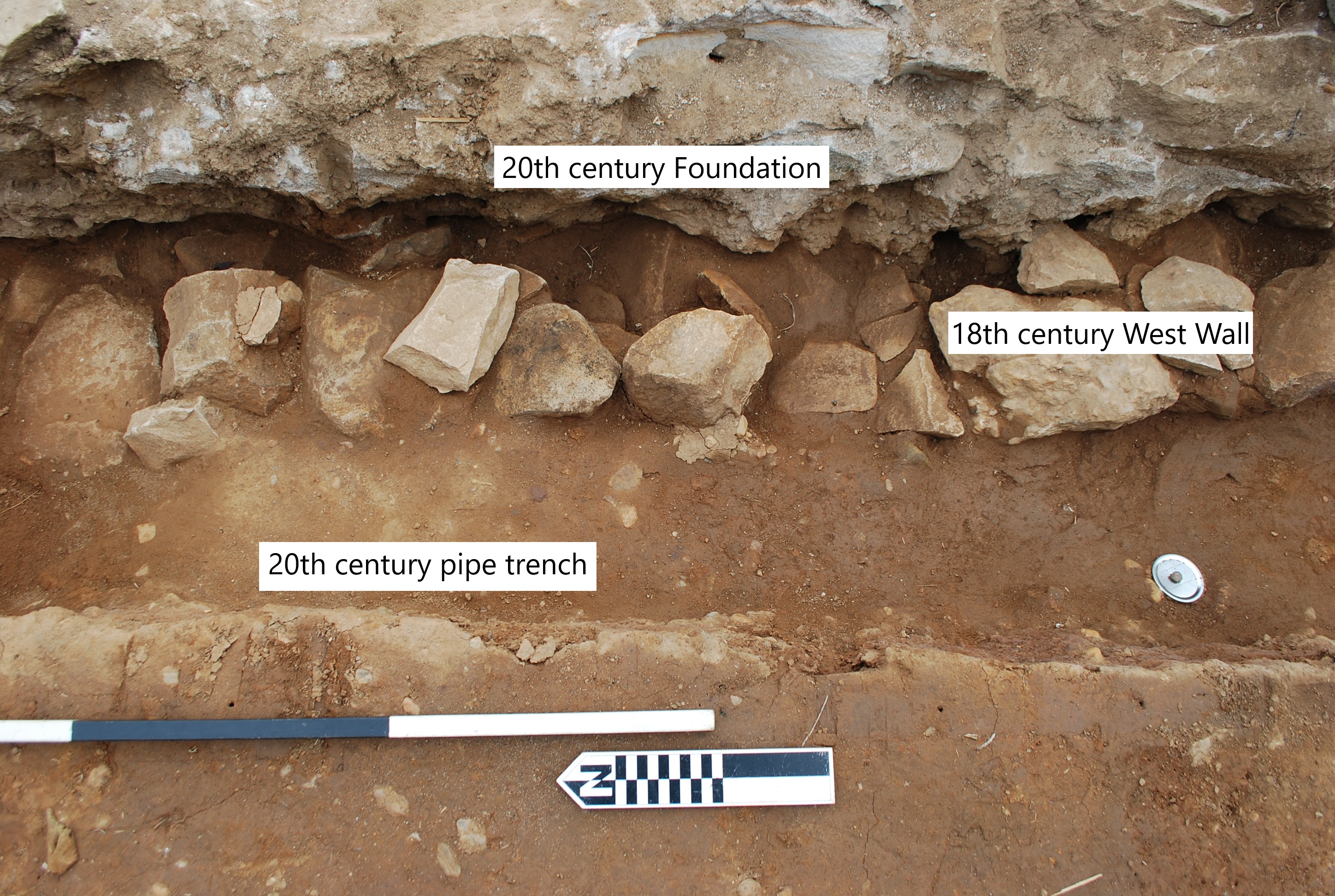
    But when it comes to finds, our most exciting discovery did not turn up in our sifting screens.  In fact, it was discovering that the western foundation wall of the kitchen cellar, thought to have been demolished, still survived!  During the 1990s excavations, the archaeologists did not see this portion of the stone foundation and assumed the construction of the 1914 Colbert house had destroyed it. Fortunately for us, it was hiding under a 20th century utility pipe and trench and lay directly adjacent to the Colbert concrete foundation. Now we have all four foundation walls that we hope to fully uncover next year.

    Exposed south and west stone walls of the colonial kitchen lie adjacent to and just outside of the 1914 concrete foundation wall.  
    West wall of colonial kitchen that was hiding under the pipe trench

    Our excavation units surrounding the kitchen foundation have not, as of yet, exposed additional building features associated with the kitchen outbuilding, such as foundations or fireplaces. That search will continue next year as we continue taking those units down and expanding our site area. Features exposed in the 1990s dig, but not excavated by them or us, such as possible post holes and trash middens, also await our return in 2025, when we plan on finishing their excavation.

    Each year’s excavation is built on the work accomplished in the previous years.  With the incredible amount of work done this past summer of exposing the original kitchen foundation, as well as the later farmhouse foundations, removing old fill, and opening up the adjacent landscape, we are looking forward to expanding our investigations of the kitchen site next year.  Stay tuned as we unravel the mysteries that are here at Ferry Farm, George Washington’s Boyhood Home.


    Danielle Arens and Judy Jobrack

    GWF Archaeology Field Directors

  • Letters from the Battlefield

    Such a tiny thing, a letter. What does it mean now? For many of us, a letter via ‘snail mail’ is a nuisance. Needless paper that litters our mailbox. Ads. Spam. Bills. Scams (most of which are electronic now and also a pain). Mail has been ruined for most of us with the sheer barrage of unimportant stuff that claims a box at the end of the driveway which once held so many wonders. Communications evolve rapidly throughout time, as well they should. But they change so fast that occasionally we forget just how important getting a letter was. Being delivered a letter was a moment of anticipation, perhaps dread or admiration, instead of the mundane. Many have written of the hopes or fear of a letter in the mail. In the iconic song ‘Mr. Postman’ by the Marvelettes, a lovelorn lady, yearns for word from her boyfriend. “So many days you passed me by, you saw the tears standin’ in my eye. Wait a minute, Mr. Postman.” Still, others have had to pen terrible letters they never wished to send, which informed families of what they feared most, the loss of a loved one.

                Our artifact blog posts tend to focus on unique objects. However, this time I’m going to concentrate on a very commonplace ink bottle that dates to the mid-19th century. So many of these were made that they normally escape notice. Mere curiosities. Who doesn’t love an old bottle? However, the importance of a simple vessel such as this one should not be understated. This particular example is in an ‘umbrella’ shape, one of the most ubiquitous ink bottle forms from this era. However, this particular bottle has the distinction of having been located within a portion of a Union Civil War trench which extended through the cellar of the house George Washington grew up in.

                Several units were assigned to Ferry Farm during the two occupations in 1862. The spring deployment was relatively quiet and uneventful except for the chaos of the hasty August withdrawal to defend Washington DC. The second occupation cumulated in the Battle of Fredericksburg. Union soldiers deployed at Ferry Farm include regiments from New York, the 7th Wisconsin, and the 36th Massachusetts. While no large encampments were established at Ferry Farm, soldiers did occasionally camp there and used the farm for picket duty and to provision themselves. The farm experienced combat only during the initial stages of the Battle of Fredericksburg.

                The Federals appear to have built no large, formal camps at Ferry Farm. No evidence of winter huts, latrine trenches, or clay borrow pits have been unearthed to date. That is not to say that soldiers were not stationed at Ferry Farm both before and after December 1862. Photographs of the farm show small groups of tents situated on the terrace overlooking the river. The terrace served as bivouacs for soldiers guarding or maintaining the pontoon bridges and later for pickets. These activities suggest that a small force was a relatively constant at the farm.  Artifacts associated with soldiers at Ferry Farm included buttons, knapsack hooks, grommets, cap letters, minie balls, percussion caps, exploded artillery shells, cutlery, and of course, one simple ink bottle. The ink held within probably penned many a letter with critical information that could have changed the tide of war and/or altered the lives of so many families expecting word from the front. 

    Military Encampment, Spring 1862. Credit: Unknown

                Really this bottle would be totally insignificant were it not for the location it was found in. We do know that the bottle was typically meant for single use and would have been made in one of the numerous American glasshouses present during the 19th century. It was then filled with ink, affixed with a label, and marketed for single use, which does not mean it wasn’t refilled from a ‘master ink’ bottle when the original contents were depleted. We’ll never know the exact history of this object, and there lies the mystery of it. As archaeologists, we can’t be privy to who owned it, what letters were written with the ink, or if those correspondences even made it out of the trench to the outside world. We’ll never know the travels of the bottle before it was deposited in the trench or the circumstances that led to it being abandoned. We only know that it was used during the Civil War by the Union and was found in a location many soldiers never wanted to be stuck in. Chances are, the soldier or soldiers who made use of the bottle never made it back home alive. The fact that it was discarded when the bottle still potentially retained at least some value and during a time when possessions were at a premium indicates a hasty departure, or perhaps the owner expected to return but didn’t. Regardless, letters were likely written using the ink from this humble bottle. Some may have had great importance in our country’s history, while some may have carried tidings of possible homecomings or hardships endured. Every ink bottle held the potential for countless correspondences, but this one has quite a history, the exact nature of which we’ll never know.

    Mara Kaktins, Archaeologist

    Archaeology Laboratory Manager

  • When a Toy Hatchet is so Much More: Trench Art at Ferry Farm

    Lead Hatchet - Flat Side
    Lead toy hatchet excavated at George Washington’s Ferry Farm.

    This is a Memorial Day story of a tiny hatchet excavated at George Washington’s Ferry Farm.  For such a diminutive object it speaks quite loudly to our local history in Fredericksburg, Virginia.  Initially, archaeologists at Ferry Farm assumed it was a pewter toy souvenir given out or sold in 1932, when our country and Fredericksburg celebrated the 200th anniversary of George’s birth.  Indeed, cheap pewter toys were very popular during the time period.


    A closer look at the provenience, or the location on the Ferry Farm landscape, where the artifact was recovered paints a more complex picture.  Provenience is very important in archaeology because whatever is excavated around an artifact paints a more complete picture than one object all by itself.  A reexamination of all the artifacts from the context where the hatchet was found revealed that nothing from that strata (we excavate in layers) had any 20th century artifacts in it, nor did the two strata above it.  In fact, the youngest artifacts from these strata were all mid-19th century.  Additionally, although the archaeologists who excavated the hatchet didn’t know it at the time, the excavation unit from which the hatchet came sat right inside the Civil War-era trench that runs across the property.

    Civil War Trench
    Excavated area containing the footprint of the 18th century Washington house at Ferry Farm showing a 19th century Civil War trench running the length of the house and beyond.

    This revelation shut the door on our ‘it’s a 20th century souvenir’ narrative but opened the door to an even cooler one.  A close examination of the hatchet showed that it didn’t have mold seams, which are always present on cast pewter toys.  Furthermore, for some reason, it had one smooth side and one textured side leading us to believe that it was handmade, not machine cast.  This was supported by a thorough internet search to find an identical toy hatchet, which came up empty, further supporting our new theory that this piece was a one of a kind.  The textured side resembled the grain of wood so we surmised it had been cast in a simple hand carved wooden mold.  All of these clues, combined with its location within a Civil War trench, made us suspect that the hatchet was crafted by a soldier, possibly from a lead minie ball.  The hatchet is likely ‘trench art’.

    Lead Hatchet - Mold Side
    Textured side of the lead hatchet. See photo at the start of post for at image of the smooth side.

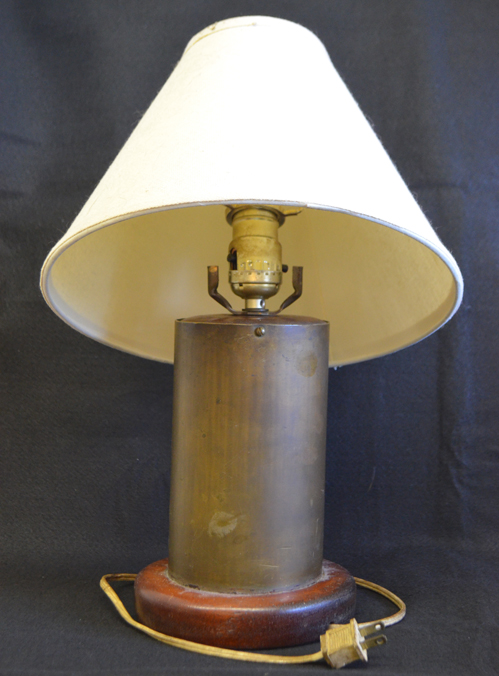
    Trench art is defined as objects either made by soldiers and POWs or by civilians using military items such as brass shell casings or lead bullets.  This simple lamp, owned by the author, was made using a 105 millimeter brass artillery shell casing.

    Lamp - Artillery Shell
    Lamp fashioned from a portion of a 105 millimeter brass artillery shell casing.

    To further support our identification of the hatchet as trench art, we took the artifact to the Virginia Department of Historic Resources where the amazing Katherine Ridgeway analyzed it using XRF or X-ray florescence analysis.  This non-destructive technique determines the composition of metal.  We also brought along a few minie balls recovered from the same unit for comparison.  It turned out that what we thought was a pewter hatchet was actually a lead hatchet with a similar compositional profile to minie balls, which are mostly lead with trace amounts of other metals such as tin and nickel.  While minie balls vary in their composition due to their imprecise method of manufacture, the hatchet was still a close match.

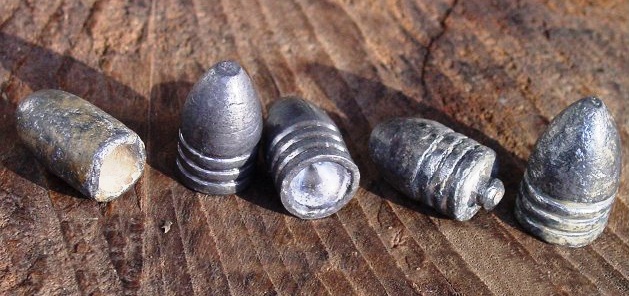
    Minie Balls
    Minie Balls – rifled musket bullets. From left to right: .557 Enfield Minie Bullet, Burton Pattern Minie Bullets .58 Springfield (x 2), Williams Bullet missing zinc base, .69 Caliber Minie Bullet for modified 1843 Springfield Musket. Credit: Mike Cumpston / Wikipedia

    One can just imagine a bored Union soldier whittling the mold and then melting down some of his bullets to pour into it.  He likely chose the hatchet form because of the famous cherry tree story, in which young George Washington owned up to hacking his father’s cheery tree with a hatchet by proclaiming ‘I cannot tell a lie’.  The soldier would have been well-versed in the Washington cherry tree myth, which was set at Ferry Farm by Mason Locke Weems in his first biography of Washington, published in 1800. By the 1860s, the story was nationally known.  Additionally, letters Union soldiers wrote while encamped at Ferry Farm indicate they knew the site’s connection to Washington. They even went so far as to send home cherry seeds for their families.

    While the identification of the hatchet is now secured, we have so many more questions.  Who was this soldier?  How many hatchets did he make and why did this one come to be left behind in his trench? Was it a souvenir for himself or did he send one home to his family or share with fellow soldiers?  Did he survive the war?  Unfortunately these are mysteries that will likely never be solved but that make for great pondering on this Memorial Day.

    Mara Kaktins, Archaeologist
    Archaeology Lab Supervisor

  • Chock Full o’ Minie Balls: A Civil War Mystery

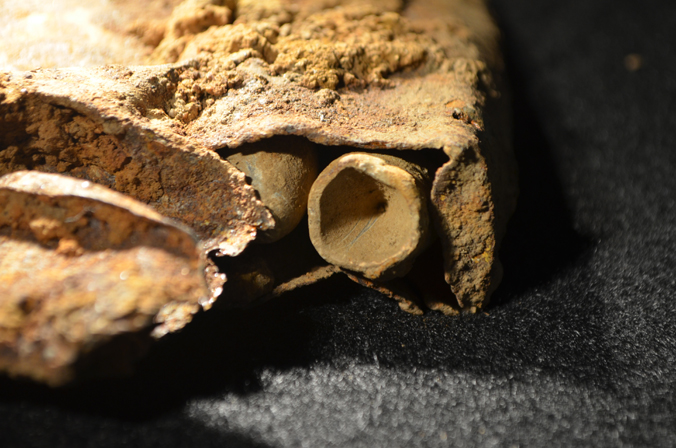
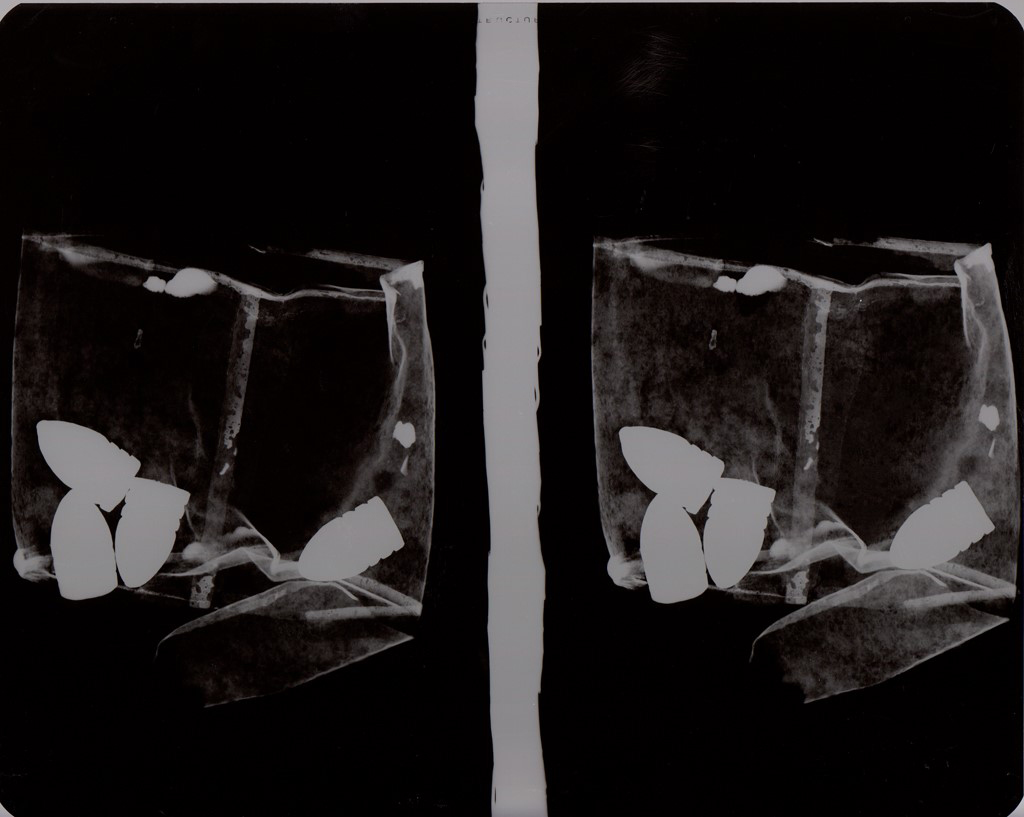
    Old, crushed, and rusted food cans in and of themselves aren’t terribly interesting, at least not to me.  But when the can contains 150-year-old bullets, it becomes very interesting indeed.  Recently, while going through our artifact collection database, I came across an item excavated at George Washington’s Ferry Farm nearly 20 years ago and simply listed as a ‘can’.  Wanting to know the exact nature of this can (Was it a food can? Was it a paint can?), I looked at the database’s comments section, which sometimes describes an artifact in more detail.  The comment read:  “Smashed can containing Minié balls.”  Now this can had my full attention!  I had the can pulled from artifact storage and was not disappointed.  It was, as advertised, a flattened can with at least 3 visible Minié balls lodged inside. Furthermore, there was something not visible rattling around inside of it.  Because it had simply been cataloged as a ‘can’, it escaped the notice of our crack team of research archaeologists for two decades.  I began investigating!

    Flattened Can Containing Minie Balls 1
    Flattened can containing Minié balls excavated at George Washington’s Ferry Farm.

    Flattened Can Containing Minie Balls 2
    The end of Minié ball sticking out of the can.

    First, I wanted to know the age of the can.  I knew the Minié balls dated to a little over 150 years ago when Union soldiers were stationed at Ferry Farm during the Civil War. The can, however, may have been from a later date.  In oral histories, people who lived at Ferry Farm in the 20th century have mentioned collecting Civil War bullets in cans so my initial assumption was that this was the forgotten treasure of a relic hunter.  The next step was to examine the other artifacts recovered with the can at the same time and in the same spot on the Ferry Farm landscape.  All of these artifacts were from the mid-19th century.  Furthermore, the can was excavated from smack dab in the middle of a Civil War trench that runs across Ferry Farm.  So the can and the bullets were from the same time period.

    Minie Balls
    Various types of Minié balls from left to right: .577 Enfield Minié Bullet, Burton Pattern Minié Bullets .58 Springfield (x 2), Williams Bullet missing zinc base, .69 Caliber Minié Bullet for modified 1843 Springfield Musket. Credit: Mike Cumpston / Wikipedia

    But the can didn’t look anything like a typical cartridge box.  It looked like a run of the mill tinned food can and what was rattling around inside?  It was time to do some science!  I took the can to the Virginia Department of Historic Resources where their awesome conservator Katherine Ridgway was kind enough to x-ray the can.  The x-rays proved the can was a food can and that the rattling object inside was another Minié ball.

    FFcan_xray02_20180608_cn
    X-ray images of can containing Minié balls. Credit: Katherine Ridgeway / Virginia Department of Historic Resources

    While we now know a lot more about our can now, one mystery still remains. Why did a soldier store some of his bullets in a can?  What we do know is that, at some point, the can was abandoned or forgotten at the bottom of the trench and then crushed either under a boot or by the weight of the dirt once the trench was filled in after the war.  A 150 year old moment in time captured in the archaeological record.

    Mara Kaktins, Archaeologist
    Archaeology Lab Supervisor

  • A Thimble of My Love

    FF06-Thimbles.copy
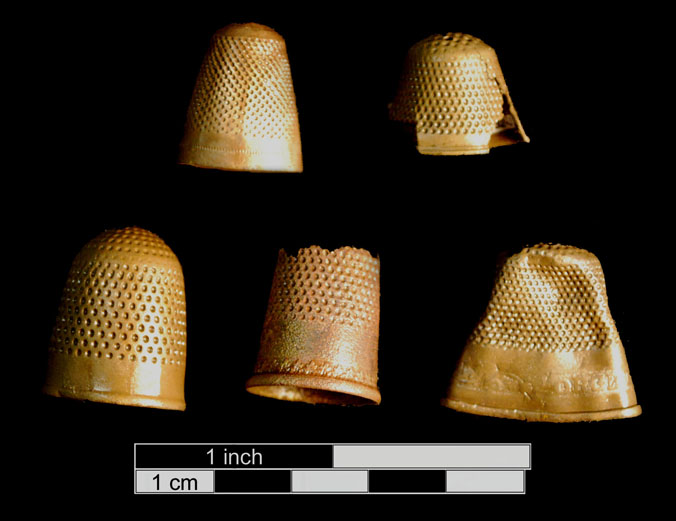
    A sample of the 30 historical thimbles found to date by archaeologists at George Washington’s Ferry Farm.

    Thimbles were once a popular token of affection given to ladies by family members, close acquaintances, or sanguine suitors. These essential tools formed an ideal gift for a beloved family member or an appropriate token of affection during those early, initial stages of a budding romance.  They were considered a less intimate gift than perfume or jewelry – all of which had more serious, romantic connotations. Gifting thimbles to cherished daughters or sweethearts developed as an esteemed tradition by the 1500s in Europe.

    Thimbles served as an emblem of female domesticity and skill.  Thimbles possessing a domed end were employed to protect the tip of the finger as a seamstress pushed a needle through cloth. Such thimbles typified domestic use, where tasks were dominated by sewing and mending. These duties were associated with a well-run home, and these skills grew to define womanhood.

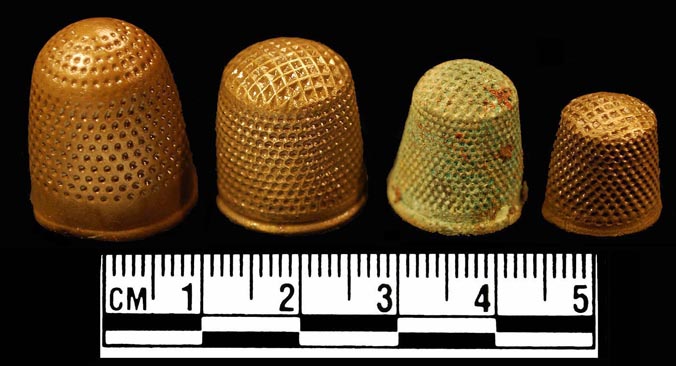
    Thimbles came in a variety of graduated sizes to accommodate the young as well as the experienced. Accomplished girls were expected to produce elaborate samplers and embroidery by the age of seven. The products of these young artisans were ostentatiously displayed throughout the house, where prospective suitors and visiting families could appreciate the budding skills and diligence of their daughters. Thimbles were such essential tools in the daily lives of women that they were part of everyday dress, often worn on the body as part of a chatelaine or belt-hung tool kit that included scissors, needles, and a thimble (think of Downton Abbey’s Mrs. Hughes).

    FF-Graduated Thimbles-shoptSmall
    A variety of sizes accommodated a child’s growth to adulthood. These examples were uncovered by archaeologists at Ferry Farm.

    Commercially-used thimbles were typically open ended and known as thimble rings. They proved to be popular amongst tailors who used these special thimbles “sideways” to protect the side of the finger. An open ended, ‘thimble ring’ provided a better option for use with thicker materials, such as leather. Such sturdy fabrics were associated with upholstery manufacture. Products that employed leather, such as saddles and tack, also required thimble rings. Tailors were often male, and many assert that thimble rings were used by men exclusively. Like all assumptions, they should be made with care: no doubt women who worked in industries associated with thicker materials employed thimble rings, and men who needed to mend their clothes in the absence of female family members made ready use of thimbles (soldiers in camp, for instance).

    Archaeologists have recovered over thirty functional (not souvenir) thimbles from the soils surrounding the Washington home. The majority date from the 18th and 19th centuries and – given their context – likely represent those used by women and girls for sewing hems, mending tears, and stitching. These historical examples from Ferry Farm were typically made from brass, reflecting both the popularity of that metal for manufacture, but also its durability and stability over time. A few examples feature copper sides with steel tips. Iron thimbles were also popular, but they decompose quickly and are rarely encountered by excavators.

    Sometimes, when given as gifts, thimbles were enhanced with mottos, a tradition that was especially popular during the 1800s. They might be friendly, such as “Live Happy,” or didactic: “Pray and Work.” Slogans included “Remember Me,” “I Live to Die,” “A Friend’s Gift,” “Amor,” and “Pray and Prosper,” to mention a few. Two thimbles embossed with the sentimental idiom “Forget Me Not” were unearthed at Ferry Farm, each recovered from layers dating from the antebellum era (the time before the American Civil War). During this time, the ownership of the Ferry Farm lands was dynamic, and the property changed hands frequently.

    Chatham resident, and Commonwealth of Virginia Supreme Court of Appeals Judge, John Coalter purchased the property in 1829. However he never resided at Ferry Farm. Less than a decade later, in 1838, John Teasdale and Joseph Mann attained the property. Just five years after that, the land was transferred to Lewis G. Sutton. By mid-century, in 1846, John R. Bryan owned the farm and in December of that same year Winter Bray purchased Ferry Farm.

    FerryFarm20Dec1862
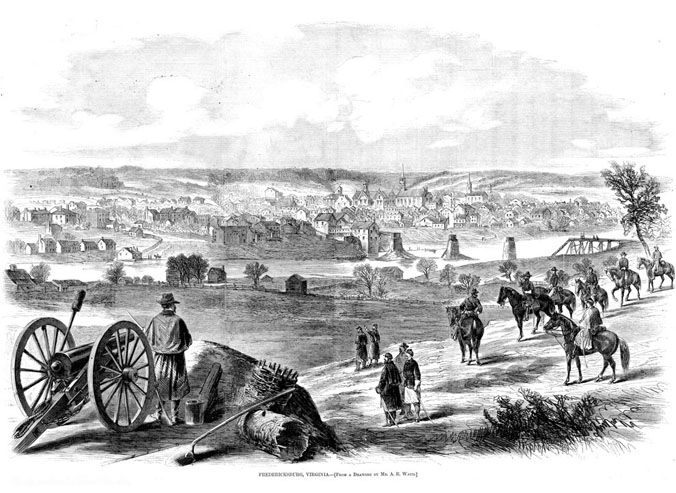
    “Fredericksburg, Virginia — [From a Drawing by Mr. A.R. Waud]” in the December 20, 1862 edition of “Harper’s Weekly.” This image was drawn on the Ferry Farm side of the Rappahannock looking across the river into Fredericksburg. Buildings of the Bray farmstead can be seen along the river bank in the image’s left middleground. Public domain.
    Bray engaged an overseer at Ferry Farm to manage the property. Importantly, they constructed a dwelling on the property in 1851, where the overseer resided. The George Washington Foundation’s archaeologists unearthed this structure as well as a kitchen related to this occupation in 2004. The construction of these dwellings is significant, since it demonstrates that people were residing on the land. Thimbles are more likely to derive from such a residential occupation as opposed to an absentee owner who devoted the land to pure farming.

    We know from their method of manufacture that the “Forget Me Not” thimbles date from the 1800s. Given the dynamic history of property ownership and occupation that characterizes Ferry Farm at this time, it might at first seem challenging to determine which land owner – or rather which land owner’s family of resident workers – purchased these touching thimbles. However one thimble was found in the center of one of the Bray era dwellings, from a stratum dating from sometime between 1800 and 1860. The other thimble was discovered in the yard east of the Bray era structures, recovered from a layer that also dated from the antebellum era. It’s possible that both of these thimbles relate to the Bray era of ownership, and specifically to the overseers who occupied the property on the Bray family’s behalf.

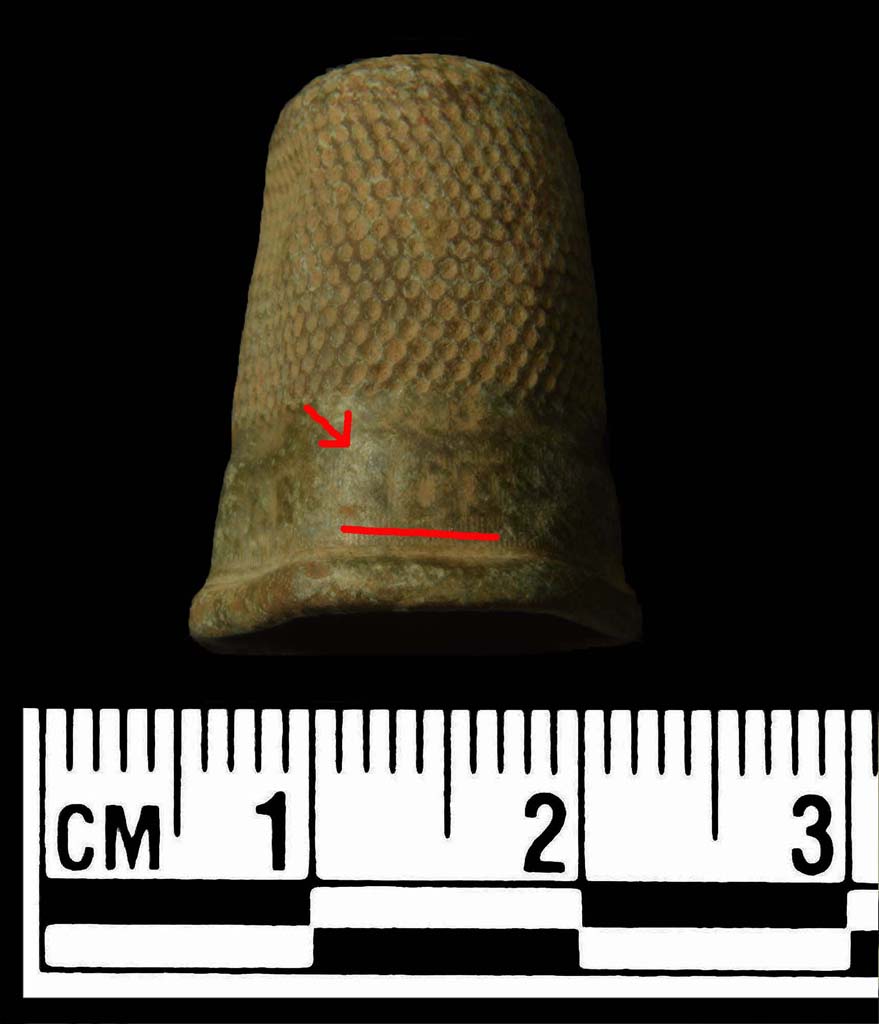
    FF.2794-NOT-2SmallLines
    Look closely and you can read the word “NOT” upon this unconserved “Forget Me Not” thimble found in 2014. It was found in the yard east of the Bray era structures in a layer dating from sometime between 1800-1860.

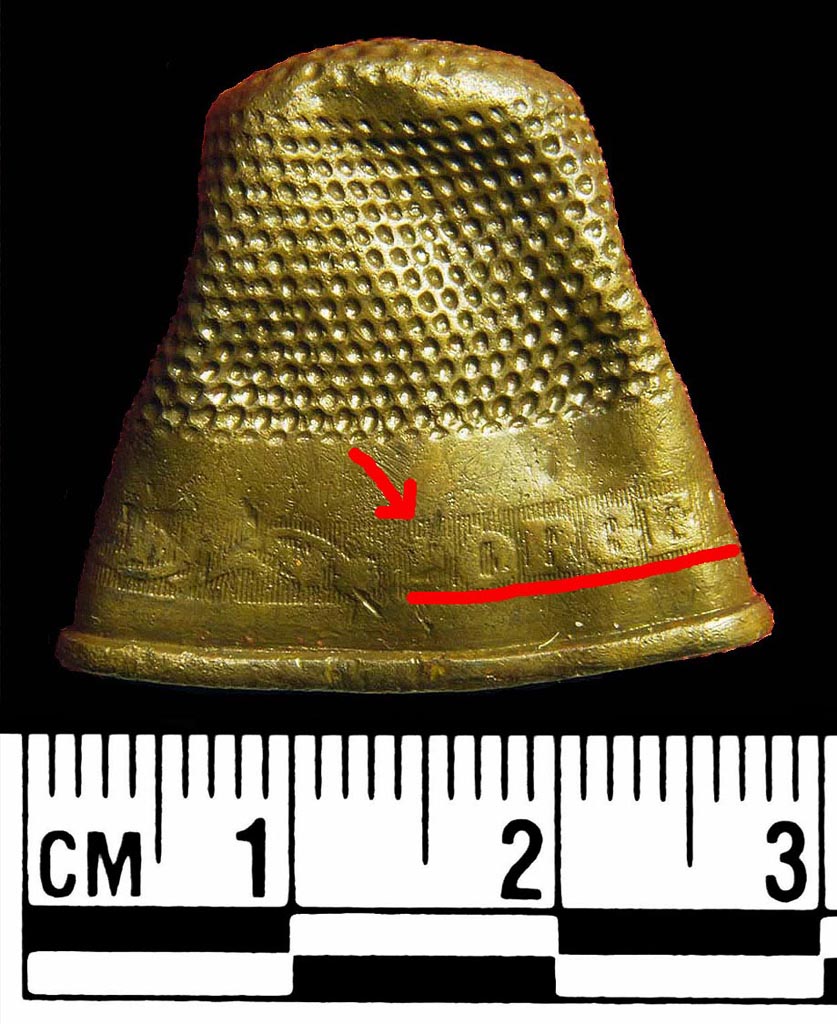
    FFForgetThimbleBlogLines
    It’s easier to see the letters “FORGE…” of the phrase “FORGET ME NOT” upon this conserved Ferry Farm thimble. It was found in 2004 in direct association with one of the Bray era dwellings.

    Over the centuries, sentimental tokens similar to the thimbles excavated from the Bray dwelling cemented relationships, expressed affection, and inspired diligence among sisters, daughters, and sweethearts.

    Laura Galke, Archaeologist
    Small Finds Analyst

  • “They gave me grog…and put me to sleep with opium pills”: Kenmore as a Civil War Hospital

    Kenmore sometime before the end of 1862.  The wooden structure to the mansion's left is the kitchen, which would be destoryed during the Battle of Fredericksburg.
    Historic Kenmore sometime before the end of 1862. The wooden structure to the mansion’s left is the kitchen, which would be destroyed during the Battle of Fredericksburg.  An enslaved woman can be seen standing at the corner of the kitchen while an enslaved man is visible under the tree at the far left.

    As the sesquicentennial of the Civil War draws to a close, we are remembering the war at Kenmore, and its aftermath.  Although Kenmore is best known as a house of the colonial period, it had quite a history during the Civil War.  Visitors to Kenmore have long heard that the house survived bombardment during the Battle of Fredericksburg in December, 1862.  At least 11 cannon balls hit the house, with at least one penetrating the interior, damaging the famous plasterwork ceiling in the Drawing Room.  While that battle was intense and destructive, the true lasting effects of the war on Kenmore came later, when the house was used as a Union field hospital during the early stages of the Overland Campaign.

    Cannon ball hole in Kenmore's roof.
    Cannon ball hole in Kenmore’s roof.

    In May of 1864, Union and Confederate forces clashed at The Wilderness just west of Fredericksburg, with further hostilities throughout the month at nearby Spotsylvania Courthouse.  The wounded from these battles were evacuated from the front lines to Fredericksburg.  The city was soon overwhelmed with soldiers in dire circumstances, needing far more medical attention and resources than were available.

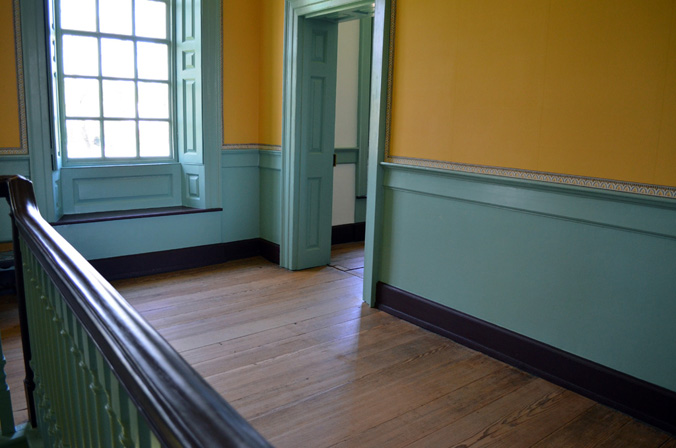
    A memoir of experiences during the war written by Amos Rood, an officer in the 7th Wisconsin Infantry who was wounded at Spotsylvania, gives a vivid account of the situation in Fredericksburg and at Kenmore specifically (a transcription of the memoir is in the Kenmore manuscript collection).  Rood writes, “…where to put the thousands who were being brot [sic] in! City already full: every house, barn, shop, factory, shed: all overcrowded and thousands laying on the sidewalks and gardens and fields!”[1] Rood was in a wagon which had been left on a crowded street in the city, but a chaplain who he knew happened by and helped him find shelter at Kenmore.  He describes the scene upon his arrival, “…took me out of the rig and had me carried into Kenmore house and (no room on the ground floor so they toted me up one flight and laid my cot down on the floor by the bannister or balustrade) so I could see people (Drs & c.) coming up and going down…Surgeons noticed me…They gave me grog…and put me to sleep with opium pills.”

    The second floor landing where Rood was treated for his wounds.
    The second floor landing where Rood was given medical treatment.

    Rood would stay at Kenmore, in increasingly dire circumstances, from May 14th through the 17th.  Although he describes a serious leg wound that was obviously infected, he was given no medical treatment other than doses of opium and liquor.  The fact that a man in such a condition did not rate top billing for treatment perhaps speaks to the situation of the other soldiers being brought into Kenmore by the hundreds every day.  It has long been believed that Kenmore’s glorious dining room was used as the surgery, as evidenced by the fact that all of its original floorboards had to be ripped up and replaced after the war.  War era graffiti left on the rafters of the attic attest to the fact that wounded soldiers were crammed into every available space in the house.  Eventually, more than a hundred bodies and at least one horse were buried on Kenmore’s grounds, mostly in hastily dug shallow graves.

    In 1868, the removal of soldiers’ remains from temporary graves all over the city began, when a national cemetery was established in Fredericksburg.  Eventually more than 13,000 remains were re-interred.  The process took decades.  In fact, the last known grave of a soldier buried at Kenmore was discovered in December, 1929, when the Kenmore Association began excavations to rebuild the kitchen dependency.  An article in the Free Lance-Star on December 5th said, “The finding of soldier’s [sic] remains in Fredericksburg and its environments is not unusual and often workmen engaged in digging ditches…or in excavating for new building projects, come across all that is left of a once youthful soldier.”[2] The ladies of Kenmore made arrangements with the American Legion to have the remains re-interred with full military honors on the 66th anniversary of the Battle of Fredericksburg on December 13th. An account of the ceremony reads, “…the cortege left ‘Kenmore’.  The body had been placed in a new casket and this draped with a large United States flag, which often floated from the ‘Kenmore’ flagstaff.”[3]

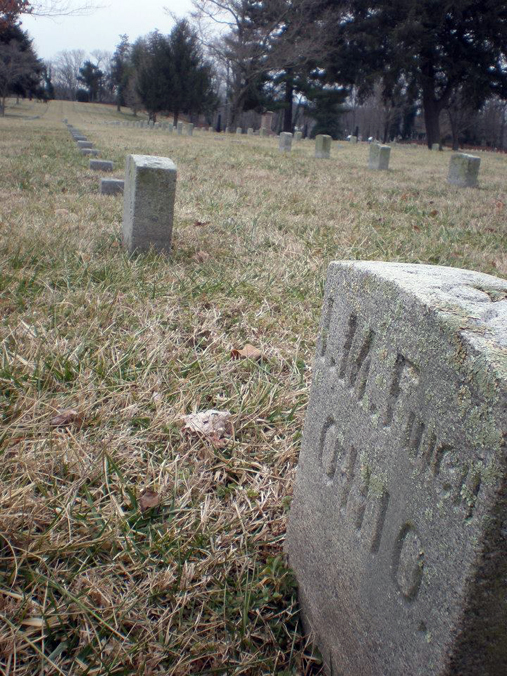
    Fredericksburg National Cemetery
    Gravestones at Fredericksburg National Cemetery

    With that last re-interrment, the war finally came to an end for Kenmore.  150 years later, we still remember its lasting effects.

    Meghan Budinger
    Aldrich Director of Curatorial Operations

    [1] Rood, Amos. Memoirs of the War. Trans. Steven L. Acker.  Kenmore Manuscript Collection.

    [2] “Remains of Union Soldier are Found.” The Free Lance-Star [Fredericksburg, VA] 5 December, 1929: Kenmore Manuscript Collection.

    [3] “Unknown Soldier Buried in Kenmore.” The Chattanooga Times 12  January , 1930: Kenmore Manuscript Collection.

  • The Civil War at the ‘Old Washington Farm’

    Editor’s Note: Lives & Legacies continues to remember the Civil War as that conflict’s 150th anniversary concludes this April and May.  During the Civil War, the homes of George Washington and Fielding Lewis – both indispensable to securing American freedom in the Revolution — served as campsite and hospital in a bloody struggle over the definition of that same freedom.  This brief overview of Ferry Farm’s Civil War history is adapted from Report on the Excavation of the Washington Farm: The 2006 and 2007 Field Seasons by Dave Muraca, Paul Nasca and Phil Levy, Site No. 44ST-174, Department of Archaeology, George Washington Foundation, 2010, pg. 27-32.

    On two separate campaigns in 1862, Union forces occupied the north bank of the Rappahannock River, including Ferry Farm, in an attempt to take control of Confederate Fredericksburg. The military objective of each campaign was the same; however, the circumstances under which the two were executed differed greatly.  The first occupation employed the Union Army’s strategy of ‘peaceful’ occupation while the second employed ‘hard war,’ resulting in a major impact on the social and physical landscape of the area.

    In late April 1862, the Army of the Rappahannock, under the command of Major General Irvin McDowell, advanced south from Warrenton, Virginia. His military objective was to take control of Fredericksburg. This move was intended to help protect Washington, D.C., located 50 miles to the north, while the main body of the Union Army pushed toward Richmond on the James and York River peninsula. McDowell’s forward cavalry encountered, and quickly defeated, the Confederate forces defending Fredericksburg. In retreat, the Confederates burned the two foot-traffic bridges spanning the Rappahannock, as well as a vital railroad bridge. The Mayor of Fredericksburg surrendered the city to the Union Army.
    The occupying Federals quickly established their encampments on the north side of the Rappahannock, including the land at Ferry Farm, and set about the task of erecting two floating bridges across the river and constructing a new railroad bridge.

    Union Army wagons cross the Rappahannock River on a floating pontoon bridge at Ferry Farm. This photograph was taken from the present-day City Dock on the Fredericksburg side of the river looking across to Ferry Farm.

    The Union soldiers encamped at Ferry Farm were the muscle that enforced the occupation of Fredericksburg. Their officers ordered them to respect people and property, and the men – for the most part – followed their command. Still, local residents, like the overseer living at Ferry Farm, complained bitterly to Federal authorities about barnyards raided for livestock, hay stolen for bedding, and fences dismantled for firewood.

    Federal regiments hailing from New York, Wisconsin, and Massachusetts passed the spring and summer at Ferry Farm performing drills pulling guard duty, and rebuilding the structures their fellow troops sometimes damaged. When off duty, the men had time to improve their camp, wash their clothes, write letters home, play games, and even go into town to shop and see the sights.

    In August, newly-appointed Union General John Pope recalled Fredericksburg’s occupiers to defend Washington. Departing Union soldiers destroyed their pontoon bridges, the railroad bridge they had just finished rebuilding, and other new structures they feared would benefit the Confederates.  Apart from the superficial harm caused by their three-month encampment, they left behind a landscape largely intact with Ferry Farm’s buildings still standing.

    Four months later, Union General Ambrose Burnside brought the largest number of Federal troops ever amassed to the north bank of the Rappahannock. His plan was to cross the river and march victoriously on to Richmond. But he delayed his army’s crossing waiting for pontoon boats. This gave General Robert E. Lee time to fully entrench his Army of Northern Virginia on the opposite side of the river. Burnside’s delay set the stage for a fierce battle, which devastated Fredericksburg and ended in a staggering Union defeat. Badly mauled, the Federals withdrew, pulled up their pontoon bridges, and hunkered down for the winter, turning Ferry Farm into part of their defensive front line.

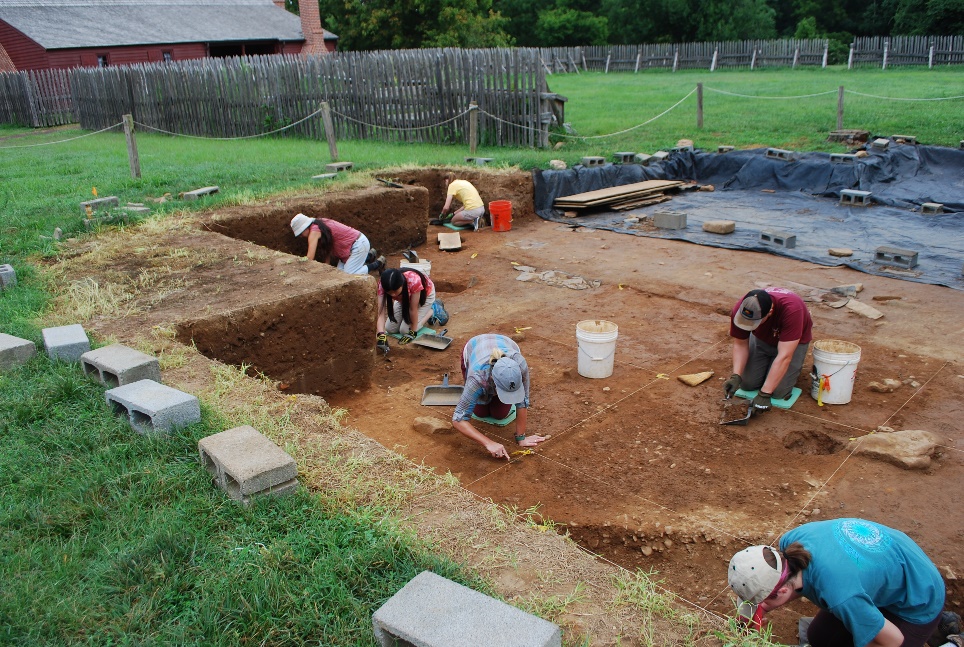
    Although the Washington family’s house had disappeared by 1830, our excavations of its location have revealed not only the Washington’s cellar but also a Civil War-era trench passing within inches of the cellar.

    The massive Union Army that arrived for battle in November was far different from the modest occupying force that had spent the summer here. Battle-hardened and irritated by a string of defeats, these soldiers cared little for local concerns about property. Burnside’s men did not hesitate to take whatever they wanted, including trees, fences, livestock, and homes. Anything useful was commandeered, stripped clean, or torn down over the ensuing months to sustain the winter camp – including Ferry Farm’s buildings.

    William F. Draper, of the 36th Massachusetts Infantry, recalls his experience at Ferry Farm in late-November, 1862. “Our picket duty here was especially interesting from the associations connected with the spot where that duty was performed. The part of the line that it usually fell to my lot to hold was on the old Washington Farm, where General Washington passed most of his earlier years, and where he cut the cherry tree with his little hatchet but could not tell a lie.

    Inkwell dating from the Civil War excavated at Ferry Farm.

    Military action was renewed in the spring of 1863, culminating at the Battle of Chancellorsville. During this engagement, Ferry Farm was again the location of a pontoon bridge, and the Federal guns overlooking it roared back to life. At Chancellorsville, the Union Army would yet again sustain a crippling defeat; however, Fredericksburg would ultimately come under Federal control. In May 1864, the last of the military pontoon bridges to span the Rappahannock at Ferry Farm was in place, and would remain in this location following the Battle of Spotsylvania Courthouse.

    After the war, attempts to restore peace and prosperity started with Ferry Farm’s first post-war occupants, the Carson family. They filled in trenches, cleaned up debris, and built a new farmstead that stood into the twentieth century.