Lives and Legacies

Tag: artifact analysis

  • “A Silly Bauble”: Ferry Farm’s Sputnik Moment

    EDITOR’S NOTE: Sixty years ago today, the Soviet Union launched Sputnik, Earth’s first artificial satellite, into orbit.  It was an event with consequences, both great and small, that spanned the globe, even reaching Ferry Farm, once the boyhood home of George Washington, in Virginia. Today, we reshare this blog post about Ferry Farm’s Sputnik moment.

    Sputniks and mutniks, flying through the air,
    Sputniks and mutniks, flying everywhere,
    It’s so ironic. Are they atomic?
    Those funny missiles have got me scared.
    -Lyrics from “Sputniks and Mutniks” by Ray Anderson and the Home Folks (1958)
    sputnik
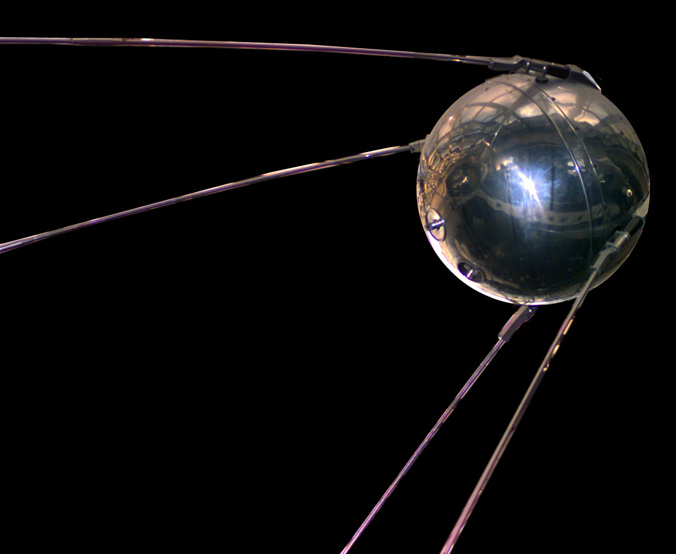
    A replica of Sputnik at the National Air and Space Museum in Washington, DC. Credit: NASA/Wikipedia.

    “Beep, Beep, Beep…” went the sinister telemetry signals from the Earth’s first artificial satellite.  Launched by the Soviet Union on October 4, 1957 — 59 years ago today — those irritating beeps, which can be heard below, provided undeniable evidence of the successful launch. It occurred during the Cold War between the Communist East and the Capitalist West, and represented the dawn of the space age. Embedded within Sputnik were two radio transmitters that, using a single watt of power, broadcast a series of beeps received by radios and televisions all over the world. These beeping sounds frightened some, who mistrusted the technological breakthrough and its potential military applications.


    awake-at-last
    Uncle Sam is “Awake at Last” from his bed of complacency while Sputnik can be seen through the window hurtling across the sky transmitting it’s urgent ‘beep.’ Cartoon by Edwin Marcus. Credit: Library of Congress

    Sputnik roused considerable political anxiety on the part the United States, a country determined to perfect satellite technology and to engage in cosmic exploration.  They underestimated the progress of the Soviet program. Today, in popular parlance, a “sputnik moment” refers to being spectacularly caught off guard by the unanticipated advancements of a rival. President Obama incorporated “Sputnik moment” in his 2011 State of the Union Address designed to encourage investment in research and technology.

    At the height of the crisis in 1957, the Eisenhower administration referred to Sputnik as “…a silly bauble….” The satellite represented a rather modest accomplishment whose engineers prioritized being first in orbit over producing a sophisticated data-gathering tool. Recently, some scholars have suggested that the satellite was a bit of a ‘bluff’ to make the United States believe that the Soviet program was more sophisticated than it was.  Like many martial ‘bluffs,’ the impact was far-reaching and it exacerbated and escalated an already frigid Cold War.

    About the size of a beach ball, Sputnik orbited less than 600 miles above earth. Each orbit lasted 96 minutes. The National Aeronautics and Space Administration (NASA) was created in 1958 as a response to this (perceived) technological “wake up” call. Nationally, efforts to strengthen primary school science education ensued and encouraged more students to seek technologically-oriented careers in service of a more robust space program.

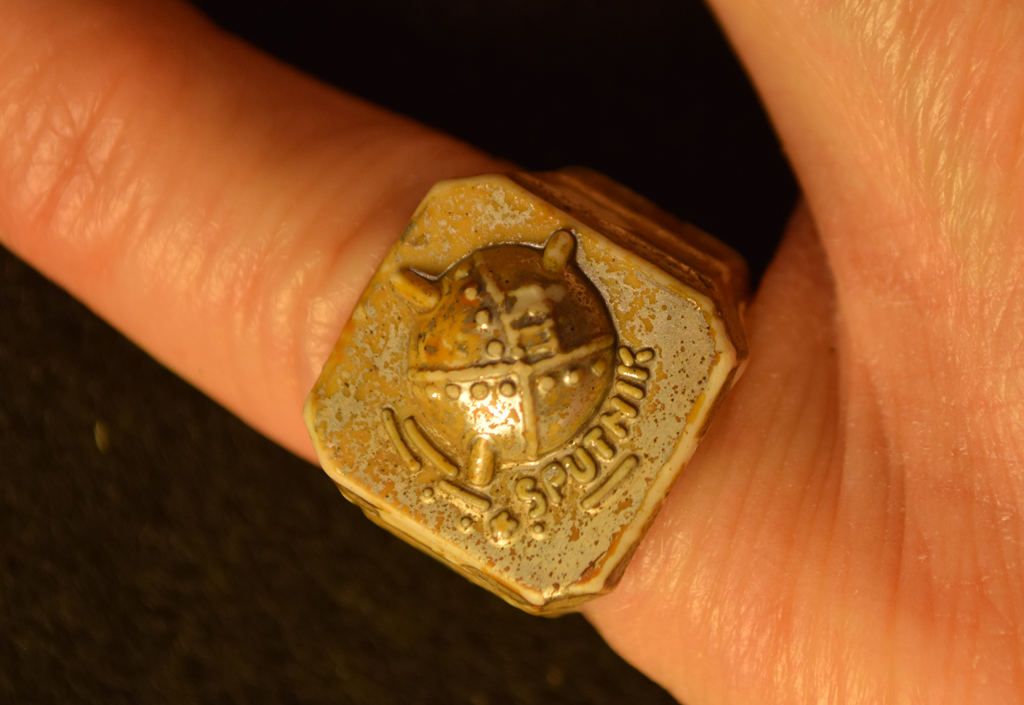
    In 2014, Ferry Farm archaeologists unearthed a tangible prize from this moment: a plastic toy “Sputnik” finger ring. Remember that Ferry Farm remained home to a variety of individuals and families in the centuries since the Washingtons lived there.  The flashy gold-colored ring, originally dispensed from a gumball machine, featured an idealized image of the satellite and the word “SPUTNIK.” It was no doubt cherished by its original owner, and envied by the prospective young space explorer’s friends.
    sputnik-ring-2
    The Sputnik ring recovered archaeologically at George Washington’s Ferry Farm.
    sputnik-ring-3
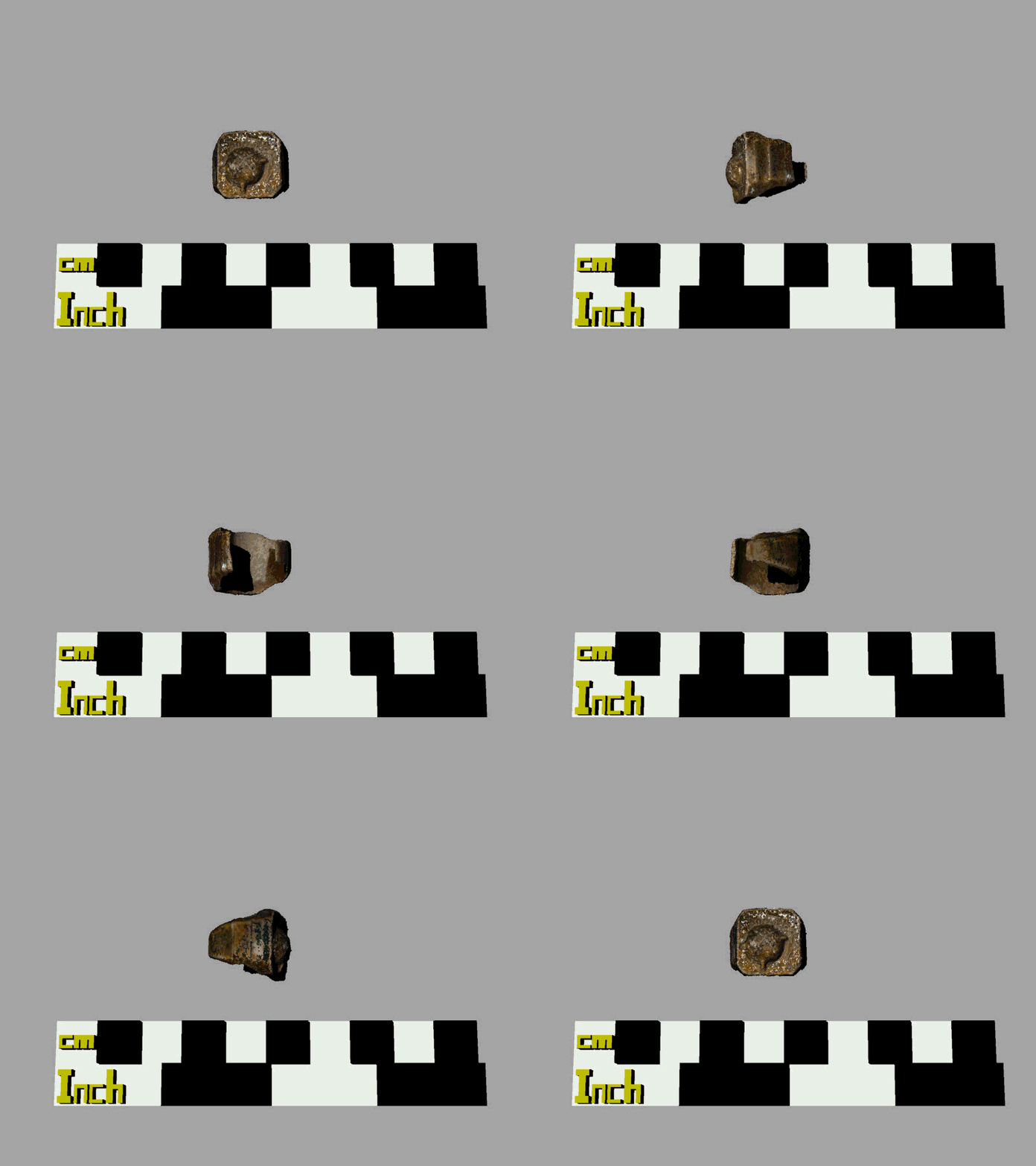
    A 3D image of the Sputnik ring.

    As an archaeologist, the find confused me: why would toys commemorating Soviet satellites exist in the United States?  Who would buy this celebratory object for their child? For goodness sake this land had once been Washington’s home, first president of the definitely-not communist United States. I foremost saw the object through a politico-military lens, rather than as a space-age wonder for all people.

    In popular American culture of the late 1950s, the surprise of Sputnik frequently was one of delight rather than apprehension. For some, those cosmic beeps were inspirational, promising future space travel and technological progress. From this new age of cosmic exploration emerged songs, dance, theatre, literature, and graphic art.

    A generation of young Americans, enthralled by science fiction adventures of Buck Rogers and Flash Gordon, could not contain their excitement.  They were captivated by the real-life manifestation of their outer space fantasies. The launch excited children who dreamed of the day they might defend the earth against hostile invaders from space. Kids who spent their school days engaged in “duck and cover” drills ironically raced out to their back yard for a glimpse of the Soviet technology racing across the night sky.

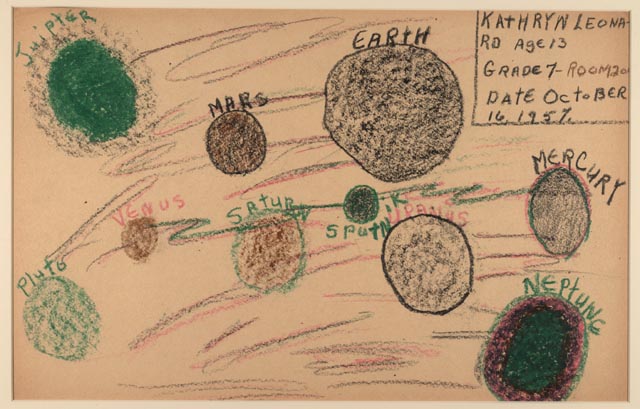
    childs-drawing-1
    American child’s drawing of Sputnik by a female, aged 13, October 18, 1957. Crayon on paper. Credit: Manuscript Division, Library of Congress (252L)
    childs-drawing-2
    American child’s drawing of Sputnik by a female, aged 13, October 16, 1957. Crayon on paper. Credit: Manuscript Division , Library of Congress (252h)

    The satellite orbited the earth for three months, though its radio signals tactfully subsided after three weeks.  Sputnik’s orbit eroded 4 January 1958.  Its effects were as far reaching as they were long lasting.

    The Sputnik launch garnered a diverse array of reactions nationally and internationally: pride, disquiet, excitement, imagination, and infinite inspiration. The rich variety of these responses led to the creation of a wide range of material culture – objects as small and inexpensive as a child’s toy ring and as massive an investment as the Kennedy Space Center. People created – and experienced – music, technology, literature, dance, and theatre that allowed them to understand this event in ways relevant to their own lives.   These responses reflect humankind’s desire to comprehend pivotal events that are beyond their control through personal agency.  Material culture – artifacts – gives us the capacity to participate in, to understand, and to ‘own,’ grand events that are larger than we are.

    This was true in the past as well, as the assorted artifacts analyzed daily at Ferry Farm attest. Prehistoric ground stone tools were an astonishing advancement in their time: this technology allowed our ancestors to maximize the nutritional benefits of nuts, seeds, and grains, to fell trees that made dwellings more comfortable, and to toss spears farther and with greater force. Such scientific wonders no doubt inspired non-ground stone-producing peoples to invest in technological developments of their own.

    Have a Sputnik moment! Let’s redefine the phrase to commemorate the boundless scientific and artistic creativity that the launch stimulated, rather than the political anxiety that emerged. Create a technologically- or arts-inspired marvel of your own! Don’t avoid sputnik moments… pursue them.  Show your support for World Space Week, which is held annually October 4-10. To learn more about this year’s events: http://www.worldspaceweek.org/

    Laura Galke, Archaeologist
    Site Director/Small Finds Analyst

    Further Reading

    Blair, Elizabeth
    2007  “Sputnik in Space and Song.”  National Public Radio.  Accessed 15 September 2016. http://www.npr.org/temptates/story/story.php?storyId=14937486.

    Blough, Glenn O.
    1957  “Children, Put Away Your Sputniks.”  The Science Teacher 24(8):373-374.

    Bonner, Thomas N.
    1958  “Sputniks and the Educational Crisis in America.”  The Journal of Higher Education 29(4):177-184, 232.

    Brandau, Daniel
    2015  “Demarcations in the Void: Early Satellites and the Making of Outer Space.”  Historical Social Rsearch/Historische Sozialforschung 40(1[151]):239-264.

    Cowen, Ron
    2007  “Sputnik + 50: Remembering the Dawn of the Space Age.”  Science News 172(14):216-217, 221.

    Kabakchi, V. V. and Charles Clay Doyle
    1990  “Of Sputniks, Beatniks, and Nogoodniks.”  American Speech 65(3):275-278.

    Launius, Roger D.
    2009  “Abandoned in Place: Interpreting the U.S. Material Culture of the Moon Race.”  The Public Historian 31(3):9-38.

    Moskowitz, Clara
    2012  “How Sputnik Changed the World 55 Years Ago Today”.  Space.com. http://www.space.com/17894-sputnik-anniversary-changed-the-world.html.  Accessed 14 September 2016.

    Osgood, Kenneth
    2006  Total Cold War: Eisenhower’s Secret Propaganda Battle at Home and Abroad. Lawrence, KS: University of Kansas Press.

    Starnes, Bobby Ann
    2011 “Change, Sputnik, and Fast Food.”  The Phi Delta Kappan 92(7):72-73.

    Usselman, Steven W.
    2010  “From Sputnik to SCOT: The Historiography of American Technology.”  OAH Magazine of History 24(3):9-14.

  • Video – Lecture: “The Rooms at Ferry Farm”

    Furnishings posts logo finalOn Tuesday, September 19, 2017, Meghan Budinger, Aldrich Director of Curatorial Operations at The George Washington Foundation, presented a lecture titled “The Rooms at Ferry Farm.” Meghan surveyed how we plan to furnish the reconstructed Washington house using traditional decorative arts scholarship but also adopted skills from genealogists, architectural historians, material cultural experts, scientists, and even investigative reporters. Meghan discussed how the Washington house and the effort to accurately furnish its rooms is a prime example of the synthesis of all of these vocations. The lecture was given at the Central Rappahannock Regional Library headquarters in Fredericksburg, Virginia.
    Join us at the Washington House Celebration on Saturday, October 7, 2017 from 12:00 p.m. – 4:30 p.m to celebrate the construction of the Washington house! A special ribbon-cutting ceremony will begin at 1:30 p.m. featuring notable speakers. After the ceremony, guests will be invited to view the reconstructed Washington house! Parking for the event is off site at the VRE Fredericksburg Park and Ride Lot G at the corner of Prince Edward Street and Frederick Street.  Limited handicap parking is available at Ferry Farm. Buses will transport guests to and from Ferry Farm. The Washington House Celebration is a free event and RSVPs are not required.

    Learn more about the Washington House here and view other videos, photos, and blog posts about the project here.

  • Video – Lecture: “The Mother of the Father of Our Country”

    On Tuesday, September 12, 2017, Laura Galke, archaeologist, small finds analyst and site director at The George Washington Foundation, presented a lecture titled “The Mother of the Father of Our Country.” Laura examined how historical documents and newly-unearthed artifacts indicate that Mary Washington, George’s mother, faced challenges, governed her home, and managed the family’s plantations with a skill and determination that recent biographers have not appreciated. Laura explored how the Washingtons’ investments in attire, furnishings, and landscape modification reflect their strategy for overcoming setbacks and exhibiting British colonial refinement.  The lecture was given at the Central Rappahannock Regional Library headquarters in Fredericksburg, Virginia.
    Join us at the Washington House Celebration on Saturday, October 7, 2017 from 12:00 p.m. – 4:30 p.m to celebrate the construction of the Washington house! A special ribbon-cutting ceremony will begin at 1:30 p.m. featuring notable speakers. After the ceremony, guests will be invited to view the reconstructed Washington house! Parking for the event is off site at the VRE Fredericksburg Park and Ride Lot G at the corner of Prince Edward Street and Frederick Street.  Limited handicap parking is available at Ferry Farm. Buses will transport guests to and from Ferry Farm. The Washington House Celebration is a free event and RSVPs are not required.

    Learn more about the Washington House here and view other videos, photos, and blog posts about the project here.

  • Video – Lecture: “Building George’s House, Introducing the New Ferry Farm”

    On Tuesday, September 5, 2017, Dave Muraca, director of archaeology and vice president of museum content at The George Washington Foundation, presented “Building George’s House: Introducing the New Ferry Farm,” his account of the last eighteen months as George Washington’s Ferry Farm witnessed the careful reconstruction of the Washington house using many traditional techniques. Dave reviewed the archaeology that made the reconstruction possible and recounted the work of the skilled craftsmen building George’s house. The lecture was given at the Central Rappahannock Regional Library headquarters in Fredericksburg, Virginia.

    Join us at the Washington House Celebration on Saturday, October 7, 2017 from 12:00 p.m. – 4:30 p.m to celebrate the construction of the Washington house! A special ribbon-cutting ceremony will begin at 1:30 p.m. featuring notable speakers. After the ceremony, guests will be invited to view the reconstructed Washington house! Parking for the event is off site at the VRE Fredericksburg Park and Ride Lot G at the corner of Prince Edward Street and Frederick Street. Limited handicap parking is available at Ferry Farm. Buses will transport guests to and from Ferry Farm. The Washington House Celebration is a free event and RSVPs are not required.

    Learn more about the Washington House here and view other videos, photos, and blog posts about the project here.

  • Lecture Series will Introduce the New Ferry Farm

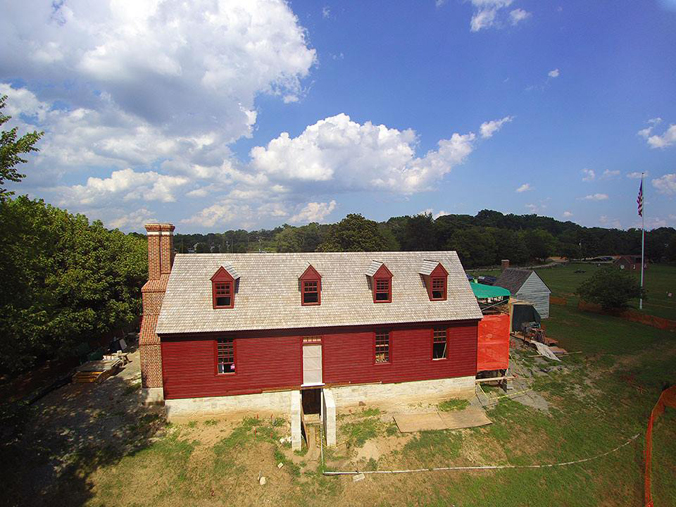
    Aerial House Photo
    A recent aerial view of the Washington house in the midst of construction at George Washington’s Ferry Farm. Photo credit: Jimmy Cline

    As construction of the Washington house at George Washington’s Ferry Farm nears completion, we want to share the many years of archaeology, historical research, scientific investigation, skilled craftsmanship, and hard work that made building this reconstruction possible.  Next month, The George Washington Foundation will present a lecture series titled George Washington: Boy Before Legend – Introducing the New Ferry Farm over three consecutive Tuesdays.

    First, on Tuesday, September 5, Dave Muraca, archaeologist and the Foundation’s vice president of museum content, will present “Building George’s House,” his account of the last eighteen months as Ferry Farm witnessed the careful reconstruction of the Washington House using many traditional techniques.  Dave’s talk will review the archaeology that made our replica possible and recount the work of the skilled craftsmen building George’s house.

    Second, on Tuesday, September 12, archaeologist and artifacts analysts Laura Galke will present “The Mother of the Father of Our Country.”  Laura’s lecture will examine how historical documents and newly-unearthed artifacts indicate that Mary Washington, George’s mother, faced challenges, governed her home, and managed the family’s plantations with a skill and determination that recent biographers have not appreciated. Laura will also discuss how the Washingtons’ investments in attire, furnishings, and landscape modification reflected their strategy for overcoming setbacks and for exhibiting British colonial refinement.

    Finally, on Tuesday, September 19, Meghan Budinger, director of curatorial operations, will survey how we plan to furnish the reconstructed Washington house in “The Rooms at Ferry Farm.”  In recent years, accuracy in historic house museums has become a primary focus of the curator’s presentation to the public.  How we know what we know about the past has become almost as interesting as the objects we curate.  As such, curators are not only decorative arts scholars, but have adopted skills from genealogists, architectural historians, material cultural experts, scientists, and even investigative reporters. Meghan will discuss how the Washington house and the effort to accurately furnish its rooms is a prime example of the synthesis of all of these vocations.

    Each lecture will begin at 7:00 p.m. and admission is free. The lectures will take place at Central Rappahannock Regional Library Headquarters, 1201 Caroline Street, Fredericksburg, Virginia 22401.  For more information, call 540-370-0732 ext. 24 or email hayes@gwffoundation.org.

    Then, in October, celebrate the construction of the Washington house at a special ribbon-cutting event at George Washington’s Ferry Farm.  More details soon!

    Jessica Burger
    Manager of Marketing, Communications, and Technology

    Zac Cunningham
    Manager of Educational Programs

  • The Fox: A Bygone Symbol of Liberty

    There is no man who hates the power of the crown more, or who has a worse opinion of the Person to whom it belongs than I.” – Charles James Fox, letter to Edmund Burke, 24 January 1779. Quoted in L. G. Mitchell, Charles James Fox (1997:41).

    It is intolerable that it should be in the power of one blockhead to do so much mischief.” – Charles James Fox referring to King George III. From a letter to Mr. Fitzpatrick, 9 September 1781. Quoted in John Brooke, George III (1974:363-364).

    Charles_James_Fox00.ByJoshuaReynolds-1782jpg
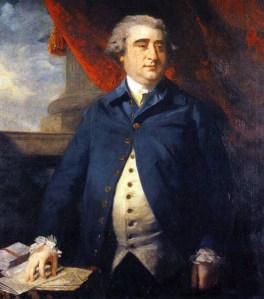
    The Right Honourable Charles James Fox, MP, wore buff and blue apparel for this 1782 portrait by Joshua Reynolds. Credit: Wikipedia.

    Charles James Fox was contrary. He gambled excessively, drank heavily, and he was generally irreverent. He enjoyed resisting powerful people, supported unpopular causes, and expressed his disdain for high society by adopting a disheveled appearance later in life. His colorful British Parliamentary career spanned decades. He was a champion of liberty: including the abolition of slavery, religious freedom, the colonists’ struggles with King George III, and he supported the French people in their quest for democracy.

    Fox questioned King George III’s policies toward the American colonies and feared that the monarch was becoming tyrannical. It was parliament’s job to guard against such corruption. Fox and his supporters often wore apparel in the colors of buff and blue – the colors of Washington’s army – to show their support for American concerns. The Americans, in turn, honored their parliamentary champion with their own fashion accessory: they wore buttons that featured a fox, an obvious – and often used – stand-in for the controversial orator.[1]

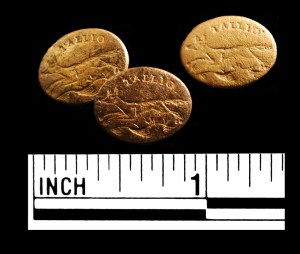
    Buttons featuring a fox racing across the landscape with the word “TALLIO” were intensely popular from the 1770s through at least the first quarter of the 1800s and they are common discoveries at archaeological sites. “Tallio,” “talley-o,” “talley-oh,” “talleo” and “talley ho” were all acceptable spellings for the traditional huntsmen’s shout upon spotting the fox during a chase. But this exclamation dates from the 1770s: well over a century after the sport had been brought to the Chesapeake. [2]

    TallioCLOSEUP
    A close-up of a “TALLIO” sleeve button from the Washingtons’ parlor cellar, c. 1766-1772.

    Fox hunting enjoyed wide popularity among Chesapeake gentlemen. The English Brook family brought their foxhound pack to Prince George’s County, Maryland when they immigrated in 1655.[3] Fox hunting continued in the Brook family for generations, and the popularity of this privileged recreational activity spread. Fox hunting on horseback was an amusement of the leisure class and the chase was considered more important than the capture of the prey. By the late 1760s, Washington himself maintained a pack of fox hounds at Mount Vernon.

    TallioLinksPC012a.300dpi
    Additional TALLIO sleeve buttons from the antebellum-era plowzone at Washington’s boyhood home. They are notably more weathered from its increased exposure to the elements given its shallow soil burial environment.

    Many who discover these buttons today attribute their imagery solely to the popularity of fox hunting as a sport. These buttons are often referred to as “hunt” buttons, a category that includes buttons which feature favored hobbies or athletic pursuits. Some assert that these sleeve links were widespread because fox hunting was so popular. And indeed, it was. These links – historically referred to as ‘sleeve buttons’ – enjoyed great popularity in the years surrounding the American Revolution, the Early Republic, and into the antebellum period.

    I believe these buttons also achieved a deeper, political meaning, however, especially in the years around the American Revolution. Due to the support by Charles James Fox of the American cause, fox imagery came to represent resistance to tyranny. A number of contemporary British political cartoons used a fox to symbolize this politician. In addition to this documentary evidence, I believe the fox imagery used on these buttons came to symbolize the fight for liberty. For those recovered buttons for which we have context, it is evident that they are especially prevalent at sites associated with the Revolutionary War and with American patriots.

    LewisWalpoleLibrary.1776.TheParricideWithArrowAddedLJG
    Colonial discord is represented in this 1776 image showing America (symbolized as a woman in a feathered headdress, center left) attacking a defenseless Britannia (symbolized by the woman at center right). Charles James Fox is represented as a fox in the background (see arrow). Courtesy of the Lewis Walpole Library, Yale University.

    As the political difficulties between the British Crown and the American colonies intensified, Fox’s outspoken support of colonial concerns attracted attention on both sides of the Atlantic. In Britain, some called Fox a traitor for his disrespectful rhetoric against the crown. In Britain’s North American colonies, his stoic support for their cause provided colonists a crucial ally in an unexpected, but politically powerful position. Patriots and revolutionaries enthusiastically incorporated these fox hunting-themed buttons into a celebration of Fox’s ardent support.

    lwlpr05356-1784
    A 1784 image of a fox, featuring the head of British parliamentarian Charles James Fox. Courtesy of the Lewis Walpole Library, Yale University

    Tallio/fox buttons have been recovered from several American Revolution-era and Early Republic era forts in Tennessee and New York. Two domestic sites associated with George Washington have yielded these buttons as part of their archaeological discoveries. Signer of the Declaration of Independence, William Paca, proudly wore a tallio/fox button. Colonial towns such as Dumfries, Virginia and Jacksonborough, South Carolina have yielded these buttons from layers dating from the Revolutionary era.

    Harlem Heights Fox FolktaleAnthropologists – scholars who study people – make special efforts to identify such symbols in societies, both in contemporary studies and in analyses of past people.[4] Symbols are especially powerful because viewers do not need to be able to read, to understand language, to hear, or to speak, in order to comprehend a symbol’s message. These messages can summon strong emotional responses. Think about how you feel when you see an American flag and how your responses might change depending on how a flag might be used at a protest, funeral, or baseball game. During the last quarter of the eighteenth century, the fox symbolized resistance to tyranny, freedom, and the pursuit of liberty. Wearing a fox button proclaimed your support for American independence.
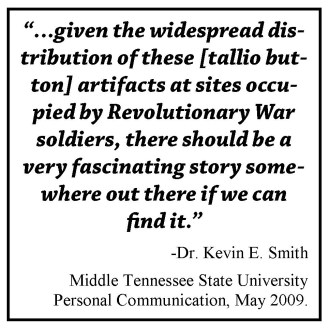
    The die struck fox image on these buttons was not originally created as a political symbol for Charles Fox, however. The meaning of these buttons was adapted to that purpose after their initial manufacture. As we have seen, fox hunting was indeed a common pastime for gentlemen, and these fashionable buttons were popular among those who “chased the hounds.”  As tensions between Britain and her North American colonies increased, Smith Quotebeginning by the 1760s, the fox symbolism present on tallio buttons was malleable[5], and provided a gentleman with leeway in a politically volatile climate: its meaning could change according to a gentleman’s situation.  Among unfamiliar company, such a multivocal symbol would allow an adroit – or perhaps even a vacillating – patriot some political latitude. Uncertain if the person with whom you’re dining is a Tory? Your innocent little TALLIO sleeve link merely celebrates a popular, recreational activity, whose roots in the Middle Atlantic region went back generations. But, at the same time, comrades in the struggle for American Independence recognized their solidarity in the symbolism of the fox: honoring their parliamentary advocate of colonial resistance to the King George III.

    Along with the tallio sleeve button, another apparel item as evidence for the Washington family’s burgeoning resistance to the Crown has been found at Ferry Farm. As I wrote in an earlier blog post, the Washingtons wore a mid-1700s William III sleeve button to display their resistance to George III: a monarch that many colonists deemed tyrannical in his exercise of power. On more than one occasion, Charles Fox himself compared America’s Declaration of Independence to William and Mary’s “Glorious Revolution,” and (fairly or not) drew parallels between the monarchical abuse of powers exercised by George III and James II. British subjects had the right to replace a tyrannical king with another: an example set by William and Mary, and an important precedent for the American colonists. The Washingtons’ support for the Leedstown Resolves in February 1766 provides documentary evidence for their concerns with Britain’s rule and (at the time) their loyalty to the Crown.[6]

    William III sleeve link
    Close-up of a mid-1700s sleeve button recovered at Ferry Farm. It features the image of King William III and reads “Gulielmus D. G.” which translates as “William by the grace of God King.” This button is another demonstration of growing resistance to George III from Washington’s boyhood home.

    Together, the symbolism on each of these buttons and the Washington brothers’ participation in the Leedstown Resolves demonstrates a long and growing frustration among Virginians with Britain’s colonial policies. The material expression of these sentiments can be traced back to the mid-1700s-era male apparel buttons at Washington’s childhood home. These discoveries were possible thanks to the preservation of this site, the thorough excavation of its layers, and a contextual understanding of the social and political landscape of this period.

    This fox/liberty symbolism apparently endured well into the 1800s in the United States. Archaeologists recovered a “TALLIO” sleeve button from the root cellar of a quarter for enslaved laborers in South Carolina:[7] strong circumstantial evidence that this symbol of the struggle for liberty and freedom continued beyond the American Revolution. As previous mentioned, Fox was an ardent abolitionist. The layer from which this particular button was recovered dated no earlier than 1845. In this context, this symbol of liberty underwent another change and now represented a reproach displayed by enslaved Americans to highlight the paradox of slavery in what was supposed to be a democracy. Though Charles James Fox died in 1806, the use of the fox as a symbol for the struggle for freedom endured.

    Laura Galke, Archaeologist
    Site Director/Small Finds Analyst

    Sites where such TALLIO links have been recovered

    Collectors and archaeologists have found TALLIO buttons from at least New York to South Carolina, and westward to Tennessee,[8] where they occur at a number of United States military forts, late 1700s-era towns, and at sites associated with patriots.

    Bledsoe’s Station, Tennessee (1783-1795) – “civilian fort” (Context dates from c. 1783-1795).

    British Officer’s Revolutionary War Hut in New York (Calver and Bolton 1950: 225, 227).

    Dumfries, Virginia, “Late 18th century.” (Sprouse 1988:119-120).

    Fort Southwest Point, Tennessee (1797-1807), federal military fort.

    Fort Blount, Tennessee – territorial militia post (1794-1797); federal post (1797-1798).

    George Washington’s Boyhood Home (1762-1772), parlor cellar and antebellum plowzone.

    H.M.S. DeBraak, Delaware (1798) shipwreck. (Cofield 2012:103-104, 113).

    Jacksonborough, South Carolina. Colonial town. (Smith, Dawson, and Wilson 2008:22-23, 30).

    Mount Vernon, Virginia, Washington’s home (1754-1799).  Recovered from a c. 1820s garden layer.

    Tellico Blockhouse, Tennessee – federal military post (1794-1807).

    University of North Carolina, Chapel Hill. Plowzone. (Fitts et al. 2012:35, 88-89).

    William Paca Garden, (c. 1763-1780) Annapolis, Maryland. http://annapoliscurator.blogspot.com/2014/09/william-pacas-sleeve-buttons_12.html

    Further Reading

    Boswell, James
    2008    Life of Johnson. Oxford University Press, Oxford.

    Calver, William L. and Reginald P. Bolton
    1950    History Written with a Pick and Shovel.  University of Virginia Press.

    Cofield, Sara Rivers
    2012    Linked Buttons of the Middle Atlantic, 1670-1800. Journal of Middle Atlantic Archaeology, 28:99-116. https://www.jefpat.org/diagnostic/SmallFinds/SleeveButtons-Cufflinks-Studs/Linked%20Buttons.pdf

    Fitts, Mary Elizabeth, Ashley Peles, and R. P. Stephen Davis, Jr.
    2012    Archaeological Investigations at the Vance Site on the University of North Carolina Campus, Chapel Hill, North Carolina. Research Report No. 34. The University of North Carolina, Chapel Hill.

    Hastings, Anne M.
    1997    Fox Hunting: History and Change in a Mountain Sport. Appalachian Journal 25(1):30-46.

    Mitchell, Leslie George
    1997    Charles James Fox. Penguin, London.

    Noël Hume, Ivor
    1961    Sleeve Buttons:  Diminutive Relics of the Seventeenth and Eighteenth Centuries.  In Antiques 79(4):380-383.

    Polhemus, Richard R.
    1979    Archaeological Investigations of the Tellico Blockhouse Site (40MR50): A Federal Military and Trade Complex. Report of Investigations 26, Department of Anthropology, University of Tennessee, Knoxville.

    Reich, Jerome R.
    1998    British Friends of the American Revolution. M. E. Sharpe, Armonk, New York.

    Smith, Kevin E.
    2000    Bledsoe Station: Archaeology, History, and the Interpretation of the Middle Tennessee Frontier, 1770–1820. Tennessee Historical Quarterly 59(3):175–187.

    Smith, Samuel D., and Benjamin C. Nance
    2000    An Archaeological Interpretation of the Site of Fort Blount, a 1790s Territorial Militia and Federal Military Post, Jackson County, Tennessee. Tennessee Dept. of Environment and Conservation, Division of Archaeology, Nashville, TN

    Smith, Steven D., Audrey R. Dawson, and Tamara S. Wilson.
    2008    The Search for Colonial Jacksonborough (38CN280) Colleton County, South Carolina. South Carolina Institute of Archaeology and Anthropology Report, Columbia. Presented to Lowcountry Council of Governments, Yemassee, and Francis Marion Trail Commission, Florence.

    Sprouse, Deborah A.
    1988    A Guide to Excavated Colonial and Revolutionary War Artifacts.  Heritage Trails, Turbotville, Pennsylvania..

    Steen, Carl
    2008    Archaeology on the Great Pee Dee River: The Johannes Kolb Site. http://38da75.com/professional.htm, accessed July 31, 2012. Diachronic Research Foundation, Columbia, SC.

    Notes

    [1] A generation earlier Fox’s father, Henry Fox – also a member of parliament – found himself represented as a fox on multiple occasions in political satire.

    [2] The recovery of this artifact from a layer created between 1766 and 1772 indicates that “tallio” was a term popular before it first appeared in print in 1773 (“tally-ho, int. and n.” OED Online. Oxford University Press, March 2017. Web. 31 May 2017). Since this “TALLIO” button was deposited before 1773, perhaps the Oxford University Press might consider updating their “tally-ho” entry.

    [3] A nice history of fox hunting is provided in Anne M. Hastings, 1997 article “Fox Hunting: History and Change in a Mountain Sport.” Appalachian Journal 25(1):30-46.

    [4] Archaeology is a subfield of anthropology. Archaeologists study past peoples.

    [5] Political sleeve buttons that said “Liberty” (revolutionary) or portrayed a Crown (Loyalist) provided their gentlemen no political leeway: they betrayed the political sympathies of their gentlemen quite directly. Did gentlemen who elected to wear TALLIO buttons lack commitment, perhaps coveting the ambiguous – and potentially innocent – message of the fox imagery?

    [6] Samuel, John Augustine, and Charles Washington all signed the Leedstown Resolves which, though it expresses concern, is nonetheless effusive in its expressed respect for the monarchy.

    [7] Carl Steen, Personal Communication, 15 April 2013.

    [8] http://annapoliscurator.blogspot.com/2014/09/william-pacas-sleeve-buttons_12.html; http://emuseum.history.org/view/objects/asitem/search@/0?t:state:flow=15c6b88c-4d16-46be-9dce-2bc1fc9f6420


  • Glass Tablewares of the Washington Household

    As work continues on the reconstructed Washington family home at Ferry Farm, we archaeologists are continuing to identify items that were owned by the Washingtons so we can eventually fill the reconstructed house with plates, bowls, glasses, and many other objects based on artifacts we’ve discovered.  Our latest mending project towards this goal involves glass tablewares.  Piecing together thousands of fragments of clear tableglass is a special kind of agony but a wonderful amount of data has been collected from this painstaking exercise. And we’re not even close to being done yet!  In this post, I’ve written about three of the glasswares we have identified in our study thus far.

    LEAD GLASS BOTTLE

    Lead Glass Bottle Neck
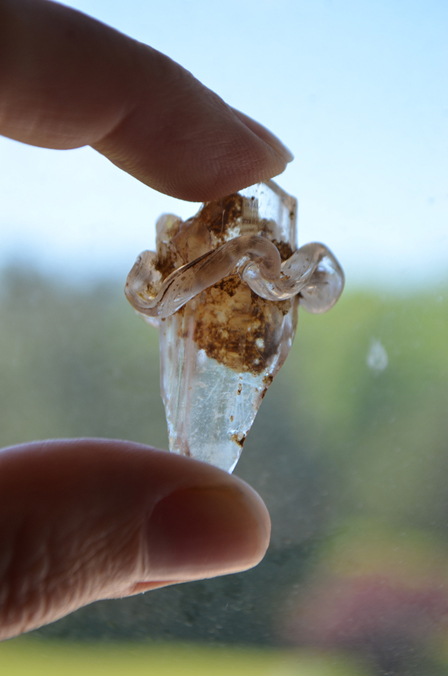
    Fragment of the neck of a lead glass bottle excavated at George Washington’s Ferry Farm.

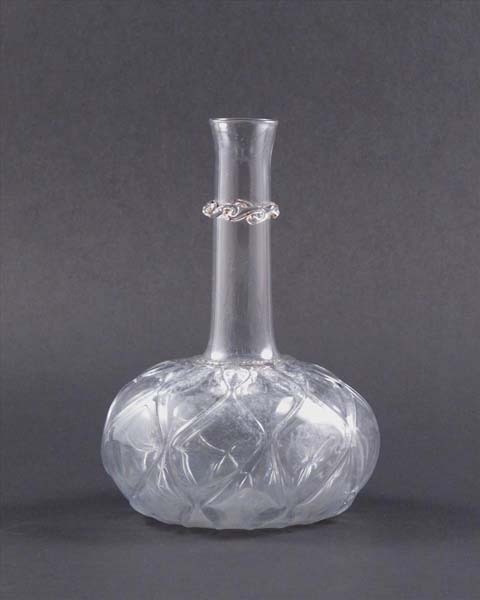
    This particular fragment likely belonged to a small decanter or carafe.  It could also possibly be part of a scent bottle, meant to hold perfumes.  It was created using a pattern mold.  The craftsman would have blown the glass into a simple mold with a ribbed pattern and then twisted it to get this diagonal line effect.  He would finish the bottle by adding a separate piece of glass to create the delightful ‘ruffle’ on the neck.  Below is an example of what the whole vessel may have looked like.  Hopefully, we’ll find more fragments and know precisely what this piece is soon!

    Lead Glass Bottle
    Lead glass bottle showing the ruffled neck on the fragment excavated at Ferry Farm.

    FLIP CUP

    Flip Cup (1)
    Portions of a flip cup dug up by Ferry Farm archaeologists.

    If you google ‘flip cup’, the first image result is a large red plastic cup commonly associated with college parties.  The original flip cups were far more aesthetically pleasing. However, they too were used to enjoy recreational beverages.  The drink called flip was the original cocktail and needed its own fancy glassware.  Colonists loved flip and made it by combining a  bizarre (by our modern standards) mixture of beer, hard liquor, spices such as nutmeg, a raw egg (a not uncommon ingredient in eighteenth century drinks), and then immersing a hot iron poker into the concoction.  This resulted in a delightfully lukewarm eggy, boozy beverage that was then decanted into a decorative tumbler – the flip cup.  While these cups were not only used for flip, the name has stuck. They are delicate and were often engraved with elaborate designs or scenes using a copper wheel.  At Ferry Farm, we have a number of archaeological fragments of flip cups.  Our examples are made of soda lime glass, not leaded glass, which is common.

    Flip Cup (2)
    Flip cup in the collection at Historic Kenmore. It features the same design as the fragments discovered at Ferry Farm.

    VENETIAN GLASS

    Venetian Glass
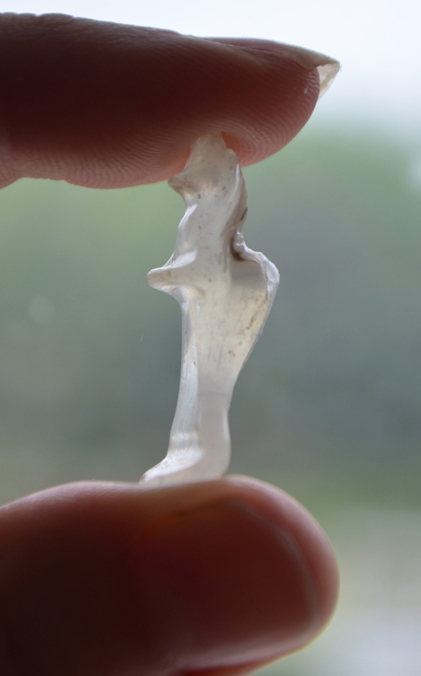
    Archaeologists excavated this small fragment of Venetian glass at Ferry Farm.

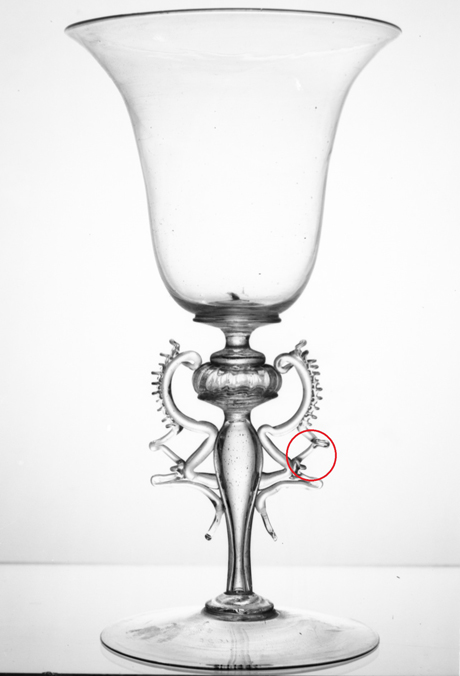
    This fragment represents what may be the fanciest glassware owned by the Washington family during their time at Ferry Farm.  It is a piece of a pincered and buttressed handle that belonged on a vessel such as the beautiful goblet pictured below.  Although the sherd may appear unassuming, it is likely part of an elaborate hand-blown Venetian piece made of finely crafted colorless soda lime glass with a barely visible bead of opaque glass running through the center.  This would certainly have been a show piece and displayed prominently within the house.

    91.1.1442
    The portion of the handle circled in red on this 16th century Venetian glass goblet is similar to the fragment excavated at Ferry Farm. Credit: The Metropolitan Museum of Art

    Follow Lives & Legacies for updates on the Washington family’s glasswares we are identifying at Ferry Farm. More discoveries await!

    Mara Kaktins, Archaeologist
    Ceramics & Glass Specialist

  • Drink Your Vegetables: A Special 18th Century Wedgwood Ware

    Fads come and go. Such is life.  Eighteenth century colonists were not immune to flash-in-the-pan trends.  However, given that information traveled a bit slower before the digital age, in the 18th century a ‘quick trend’ may have lasted 10 or 20 years, instead of 10 or 20 months.  Such is the case with ‘vegetable ware’, a refined earthenware molded to look like produce.  Imagine being the envy of all your colonial neighbors if you served them tea out of an elaborate ceramic cauliflower, pineapple, melon, or cabbage.  As evidenced by the archaeological record, Mary Washington, George’ mother, was similarly taken with the prospect of displaying her very own veggie-themed teaware.

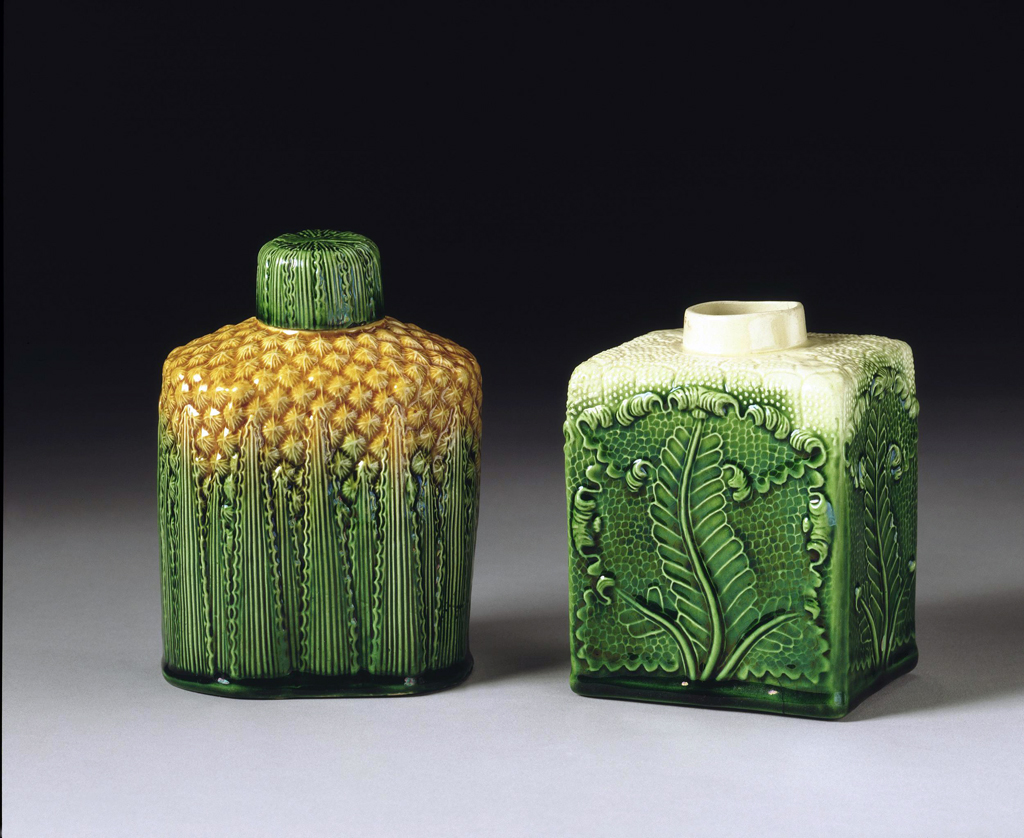
    The advent of vegetable ware seems to coincide with the development of bright green and yellow pottery glazes by a young and upcoming potter named Josiah Wedgwood in 1760.  He used these new flashy glazes for a number of applications, including coloring teaware molded to resemble produce.  While some combinations of ceramics and decorations had previously enjoyed decades or even centuries of popularity in the past, the demand for the initially popular vegetable ware seemed to drop off after only ten years, around 1770. At that time, Wedgewood indicated he was glad to send a shipment of overstocked vegetable ware to the colonies – a popular dumping ground for out of fashion or slightly damaged English goods.

    vegetable-ware-tea-canisters-1
    Ceramic vegetable ware tea canisters made at the Josiah Wedgwood’s factory in England between 1754 and 1764. Credit: © Victoria and Albert Museum, London.

    Mary seemed to prefer the pineapple form and owned at least one item, if not more, of this fruit-shaped tea equipage.  Her preference for the tropical fruit design was not unique.  In the 18th century, the pineapple was an incredibly sought after luxury item loaded with symbolism.  Today, many of us, especially along the East Coast, associate the pineapple with welcoming guests into our home and as a decoration for the holidays. Colonial Americans considered it a Christian symbol as well as a display of status. They readily incorporated it into the architecture of their houses, decorated room interiors with the motif, and served food and beverages out of pineapple-shaped objects.  These were all cheaper options than displaying an actual pineapple, which was well outside the price range of the average colonial American. In fact, there are accounts of people actually renting a real pineapple for a party rather than purchasing one outright.  Rented fruit!  Let that sink in for a second.

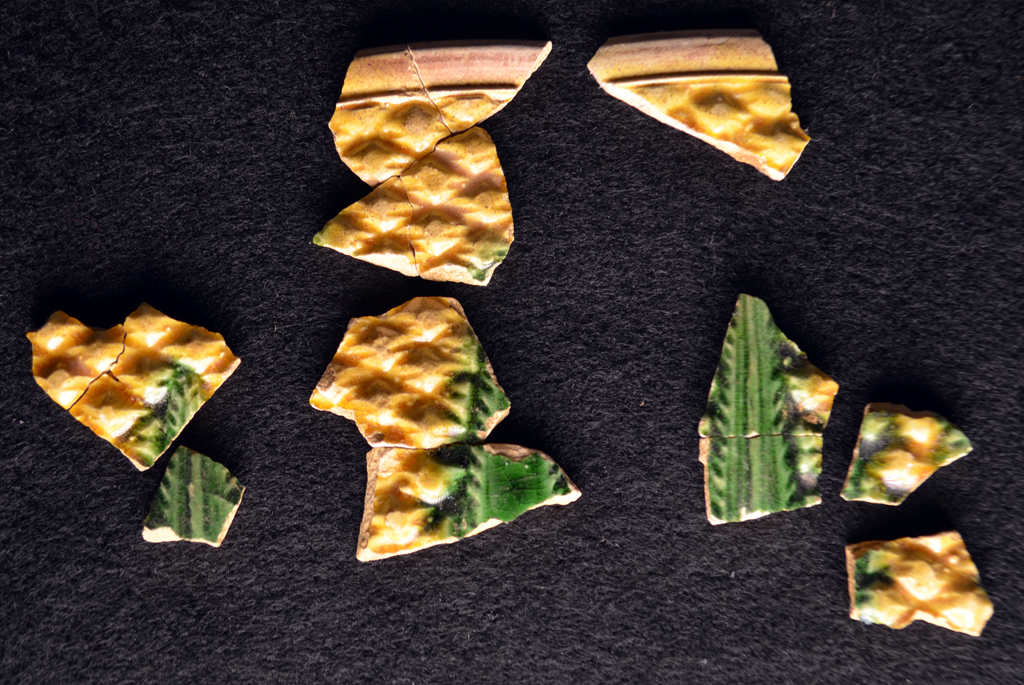
    Returning to Mary’s ceramic pineapple, which is represented archaeologically by a dozen or so sherds.  It is almost certainly some type of tea equipage, although we are not exactly

    vegetable-ware-sherds
    Vegetable ware sherds excavated at George Washington’s Ferry Farm.

    sure which tea vessel it may be.  The pineapple color and texture are unmistakable but we’ve yet to identify the specific object.  A number of forms have been ruled out. It is not a tea or coffee pot because it appears to be relatively squat with a straight or very gently sloping body and a wide rim.  What’s especially odd about this particular vegetable ware vessel is that the rim is unglazed.  This would seem to suggest that it sported a lid of some kind or perhaps endured a defect during firing.  Hopefully more of the vessel will come to light, we’ll be able to answer the question, and proudly display pineapple teaware in the newly recreated Washington house!

    Mara Kaktins, Archaeologist
    Ceramics & Glass Specialist

  • Tales of a Patch Stand and a Porringer

    For the past year or so my focus here at George Washington’s Ferry Farm has been determining what types of ceramics were owned by the Washington family. Once we have this information we want to acquire accurate examples to place in the reconstructed house for all to see.  From door hardware to teacups, most of the details of the house will be informed by archaeology or historic documents.  If a visitor asks “Why do you have these plates on the table?”, we can say “That’s an excellent question!  Because we’ve dug up pieces of it right over here!”  Our most recent focus has been on the white salt glazed stonewares, which have been featured in previous blog posts.  In this post, we talk about fragments that have been identified as a patch stand and a porringer.

    First of all, identifying whole vessels from tiny sherds involves a lot of research.  This is made all the more difficult when you’re working with a ware-type such as white salt glazed that is defined by its plain white color.  So, it’s always a thrilling moment when you’re paging through a huge book with a tiny but distinctive fragment of pottery in your hand and you manage to spot the fragment’s whole object.

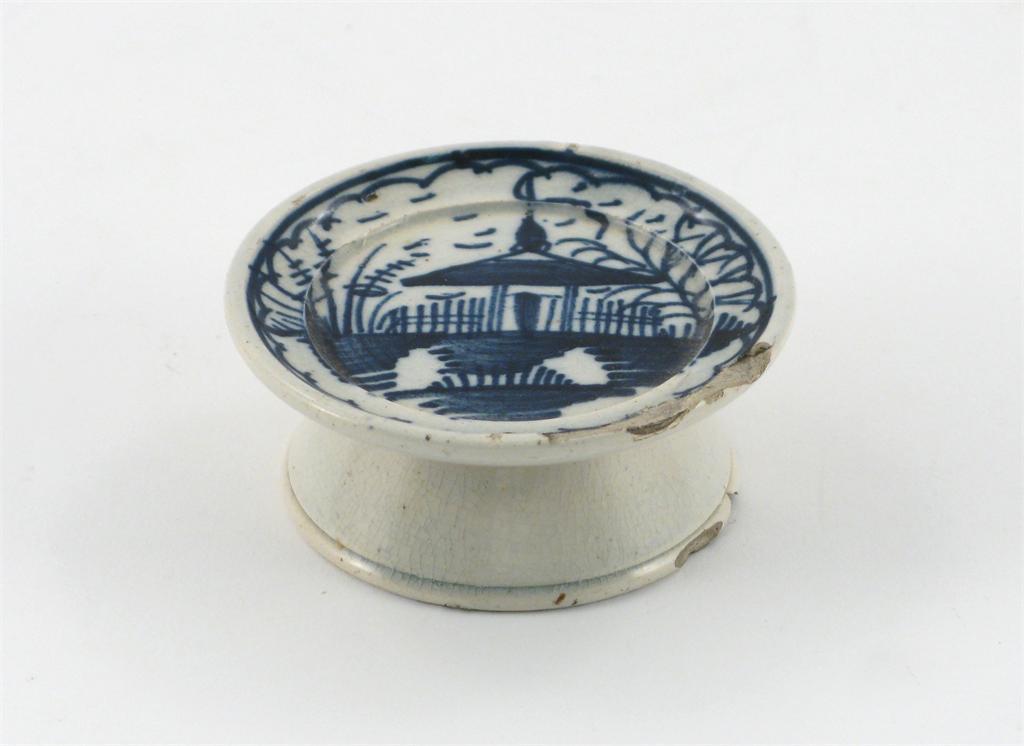
    My most recent ‘Eureka!’ moment involved both a patch stand and a porringer.  You’ve likely never heard these terms but you may own modern day equivalents.  A patch stand is a teapot stand, designed to elevate a teapot, arguably the most important object in a tea set, above the other tea wares.  It also serves the practical purpose of keeping the hot pot off of the table surface.

    18th-century-patch-stand
    18th century pearlware blue and white patch stand. Credit: Woolley & Wallis.

    At Ferry Farm, archaeologists found four small fragments from just such a patch stand.  The fragments all have evidence of ‘piercing’ or the cutting out of wet clay before it was fired to form a pattern.  The pattern created through piercing also promoted air circulation under the stand. Patch stands are not common in the archaeological record so we’re very happy to have identified the sherds. Now we’ll be able to furnish the new Washington house replica with a patch stand.

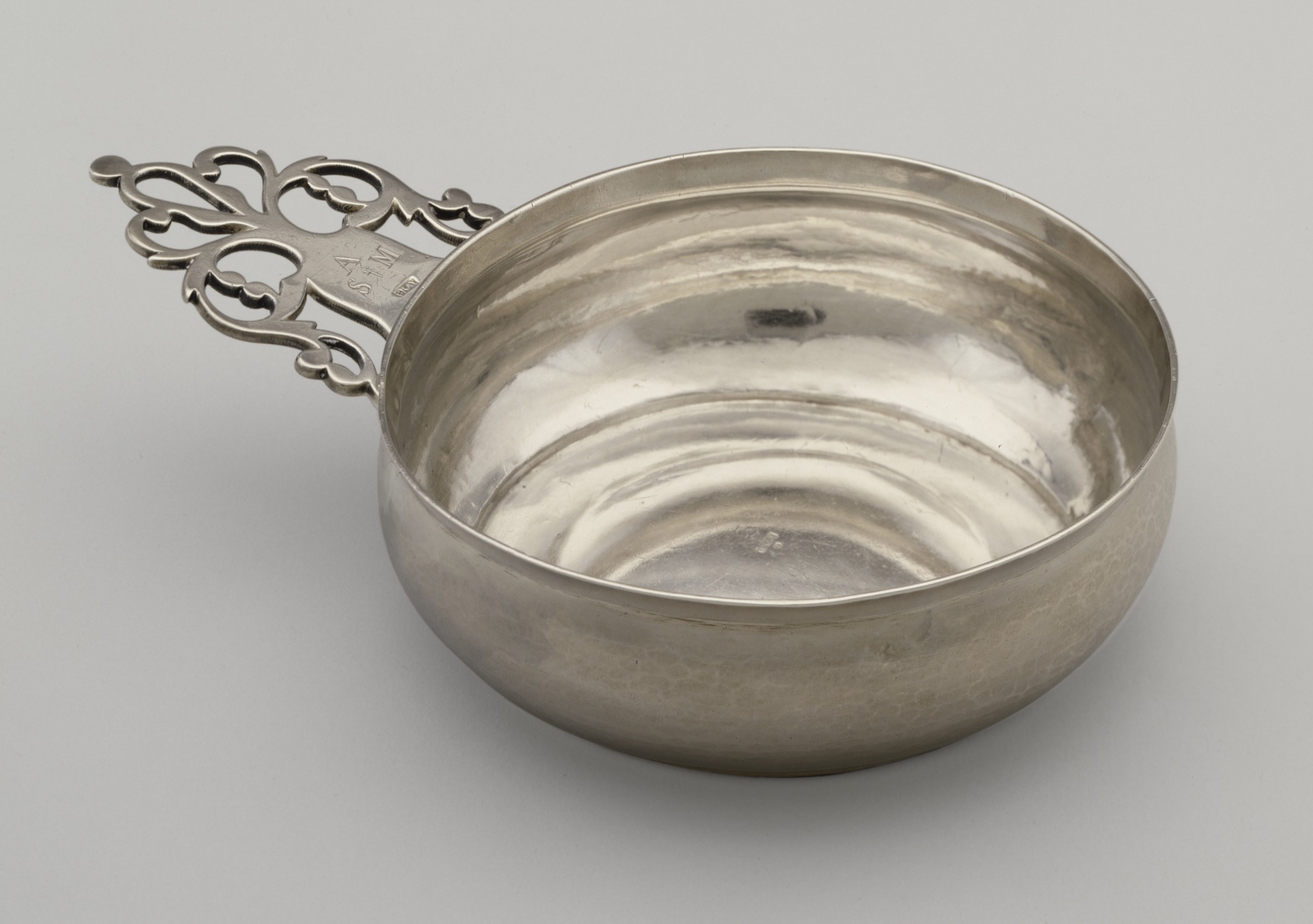
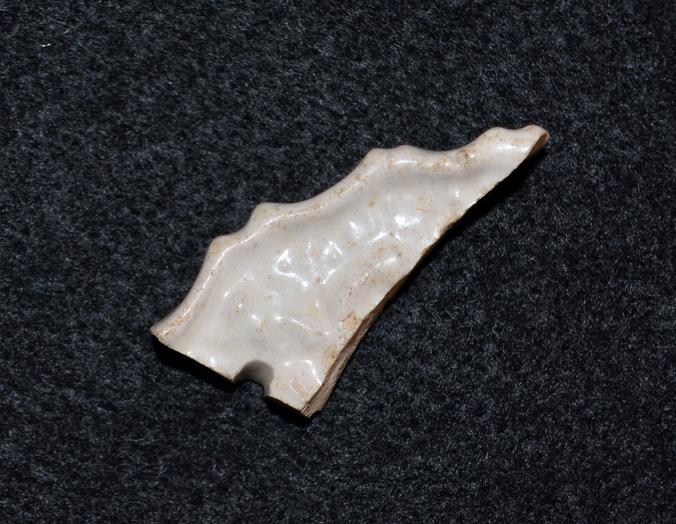
    The other vessel is a porringer. Although kind of a weird name, porringers were really handy and ubiquitous in every colonial household.  A porringer was simply a bowl with a handle for eating soups, porridges, stews, and the like.  You may have some equivalent in your house, like those oversized coffee mugs you can also use to eat soup or cereal.

    4x5 original
    A silver porringer dating from 1742 and made in Boston by Samuel Gray II. Credit: Los Angeles County Museum of Art.
    porringer-handle-fragment
    Fragment of a ceramic porringer handle excavated at Ferry Farm.

    Stay tuned and keep your eyes out for a sweet patch stand and a nifty porringer once the Washington house is finished!

    Mara Kaktins, Archaeologist
    Ceramics & Glass Specialist

  • Inside the Archaeology Lab: Putting Artifacts on Exhibit

    Here on Lives & Legacies we’ve shown you a variety of important tasks that take place inside the Archaeology Lab at George Washington’s Ferry Farm. You’ve seen how we wash, catalog, label, and then mend vessels with archival glue. One goal of all this work is to piece together whole artifacts from the many broken bits found and share that whole artifact with our visitors as part of the exhibits in our museum gallery.  Right now, a new exhibit of white salt-glazed stoneware vessels is on display at Ferry Farm. It took numerous staff and volunteers working hundreds of hours to get the vessels on display ready to be exhibited. Here’s how we did it!

    Seven reconstructed white salt-glazed (WSG) stoneware vessels make up a new exhibit at Ferry Farm.  These pieces, which include two dinner plates, a fruit dish, three ointment pots (used for mixing medicines and cosmetics), and a tea ware or condiment pot lid, were all excavated from the Ferry Farm site. These ceramics were popular during the mid-18th century and most likely graced the tables of the Washington family.

    white-salt-glaze-fruit-dish
    White salt glaze stoneware fruit dish, 1740-1765. The dish is decorated with a molded “dot, diaper, basket” pattern and would have been displayed prominently in the Washington house at Ferry Farm. An almost identical dish has been excavated at Mount Vernon and additional sherds with a similar pattern were recovered across the river at Kenmore. This may signify a Washington family preference for the motif or indicate that someone within the family acquired multiple fruit dishes and gave them as gifts, something George Washington was known to do.

    In preparation for the exhibit, I spent the better part of three weeks in August and September finishing the documentation for the individual vessels and then meticulously gluing them together. This relatively small amount of time spent at the end of the project was only the tip of the iceberg – the total amount of time spent getting these pieces ready for exhibition encompassed a year and a half! Preparing these pieces to be displayed involved the hard work of numerous archaeology lab staff and volunteers.

    November 2014 – January 2015: Executive decisions are made…
    First, discussions were held within the archaeology department about studying Ferry Farm’s archaeological collection of white salt-glazed stoneware. Such a study would answer questions about the material setting of the Washington household and help with interpreting the forthcoming Washington house replica to the public. The project was given the go-ahead.

    January 2015: Getting the lists together…
    Using our searchable artifact database, we generated a list of every piece of white salt-glazed stoneware in our collection.  A total number of 1,623 artifact bags were on this list, representing over 2,800 actual sherds.

    database
    Screencap of the artifact database.

    February 2015: Puzzle-solving begins!
    We started pulling the 1,623 artifact bags from storage, and by my records, we were still pulling artifact bags in June.  Lab staff, volunteers, and, on rainy days, the excavation field crews helped with pulling the artifacts.

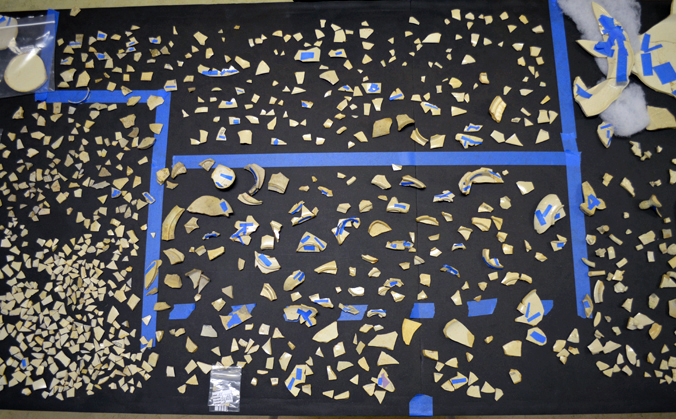
    After making sure the sherds were labeled correctly, we laid them all out on one of the lab tables, which had been covered in a black foam board to make it easier to see the all-white ceramics. The sherds were first separated by decorative variations, such as plain white salt-glazed, slip-dipped, scratch blue, or dipped with iron oxide, and next by vessel part, such as rims, bases, and bodies. Then the cross-mending began.

    white-salt-glaze-artifacts-on-table
    Sherds of white salt glaze stoneware waiting to be mended together.

    Over the next eleven months, countless hours were spent at the table looking for mends between the sherds.  Having identifiable vessel parts, such as rims and molded and decorative elements, helped in the matching process, but there were hundreds of plain white, non-descript sherds to try and fit together.  Pieces that mended were taped together with painter’s tape, which doesn’t leave an adhesive residue on the artifacts.

    A friendly competition began and whoever had the most mends at the end of each month won a free lunch!  In all, everyone spent countless, addictive hours each week scrutinizing the sherds and patiently putting together “puzzles” for which, unfortunately, the majority of the pieces were missing.

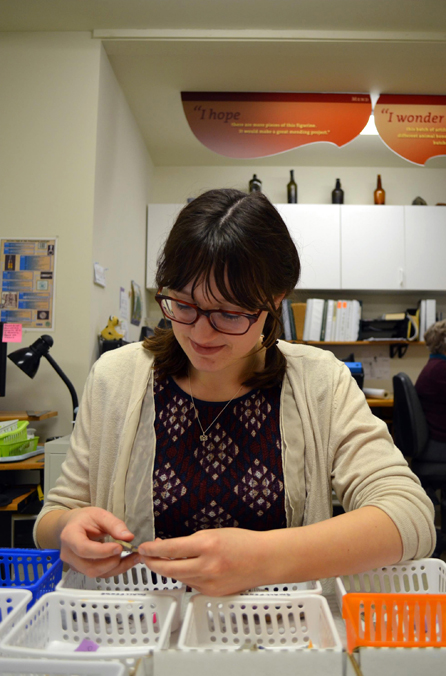
    lauren-mending
    “Do these match?”
    vessel-209-pot-lid-recto-before-treatment
    Puzzle solved!

    January 2016: Minimum Vessel Count…
    After eleven months, we cried “uncle” to the cross-mending and started the minimum vessel count by figuring out how many and what types of individual WSG vessels were represented in our collection.  Under the supervision of Mara Kaktins, The George Washington Foundation’s ceramic and glass specialist, the sherds were separated into what we believed were individual vessels using the bases and rim styles.  By late April, our choices were firm and over sixty white salt-glazed vessels were identified.

    July 2016: Putting the paperwork in order….
    Treatment reports were started on the most complete vessels, which would be included in the new exhibit.  Each report listed all the sherds that made up each vessel and their condition. Photographs were taken to help with the mending and gluing.  The remaining white salt-glazed sherds on the table were separated into bags according to decorative and body type, their contexts recorded in a spreadsheet for our records, and then returned in storage.

    August 2016: Finally, the fun part – gluing!
    I started gluing the vessels using a product called B-72, an archival glue that can be removed, if necessary, and that we mix ourselves in the lab.  The design of the upcoming exhibit, including the layout, mounts and signage, was created by Meghan Budinger and Heather Baldus, the Foundation’s curatorial team.

    lid
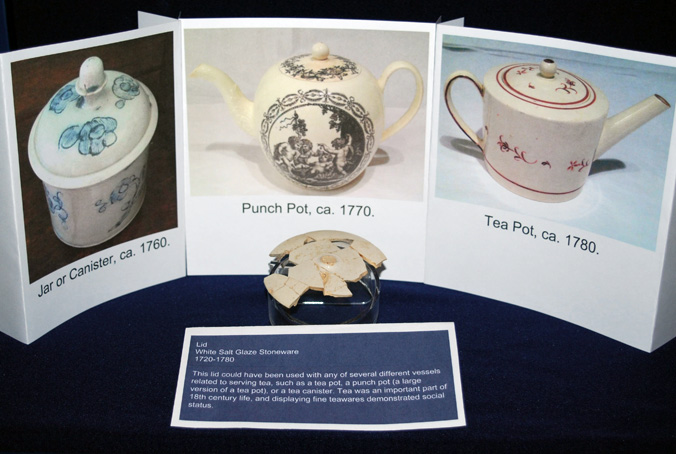
    White salt glaze stoneware lid, 1720-1780. This lid could have been used with any of several different vessels related to serving tea, such as a tea pot, a punch put (a large version of a tea pot), or a tea canister. Tea was an important part of 18th century life, and displaying fine teawares demonstrated social status.

    September 2016: Finishing touches…
    The white salt-glazed stoneware exhibit is now installed and ready for the enjoyment of our visitors to Ferry Farm. A total of 614 days from report prep to exhibition!

    Judy Jobrack, Archaeologist
    Assistant Lab Supervisor