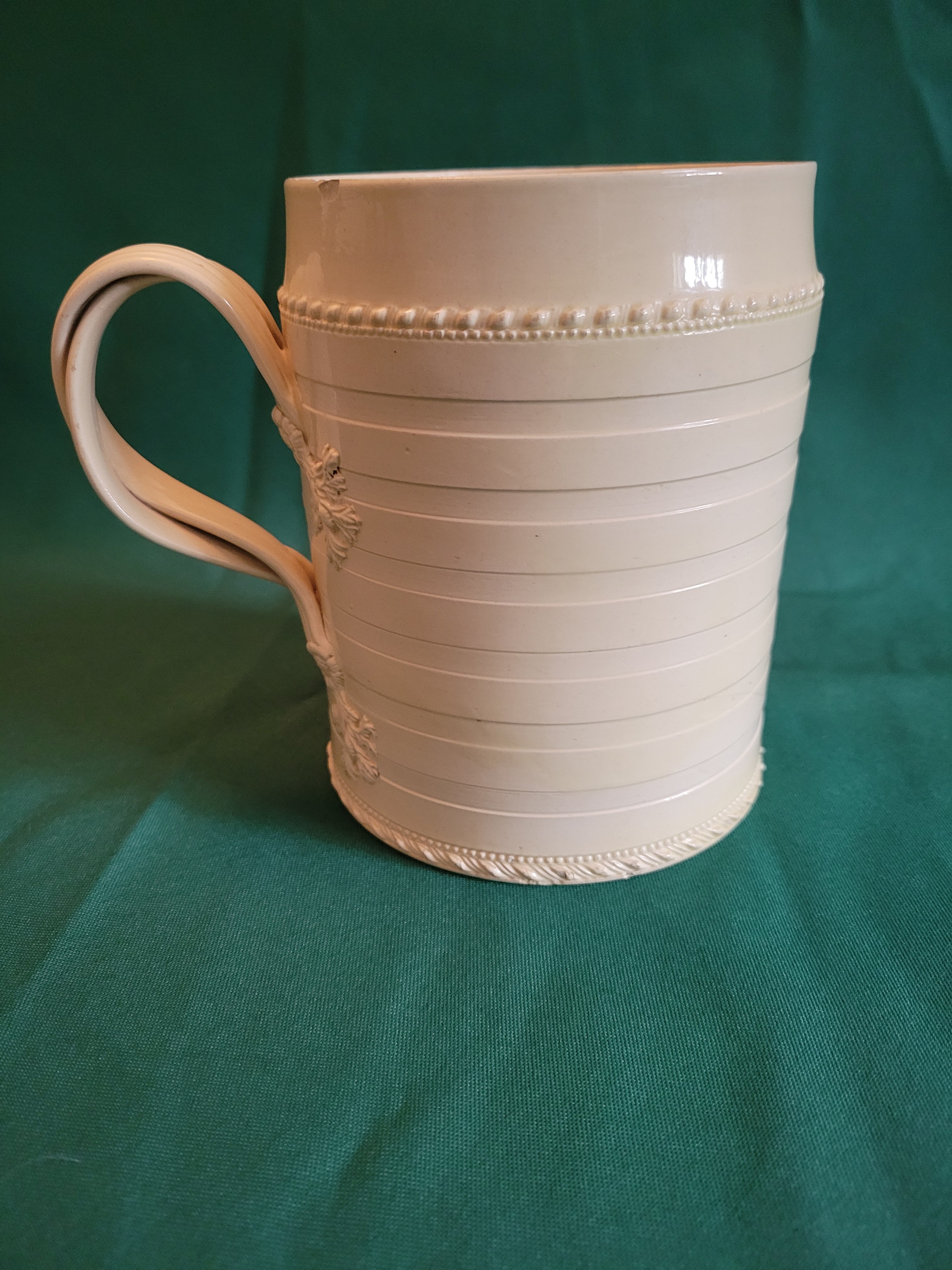
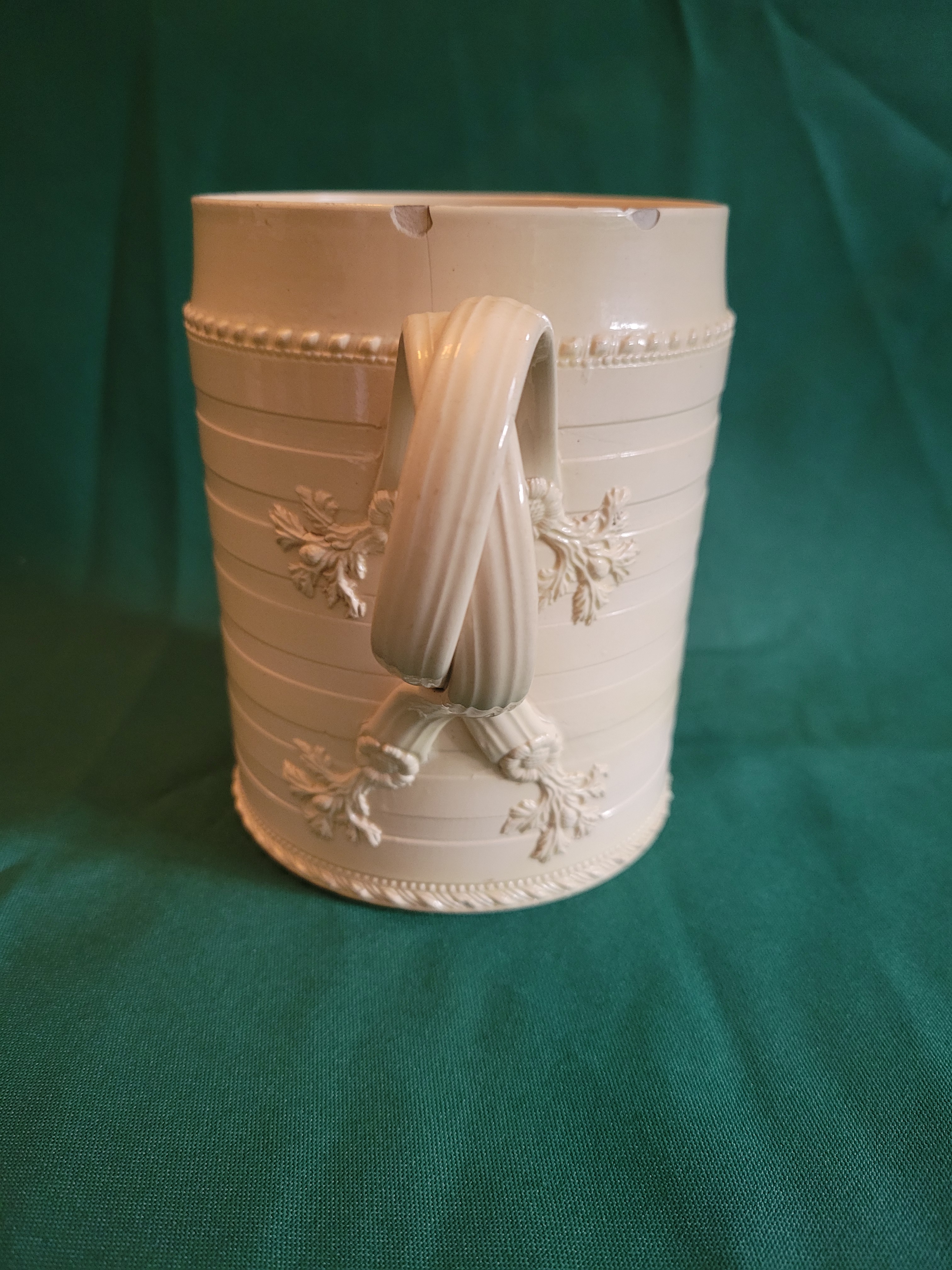
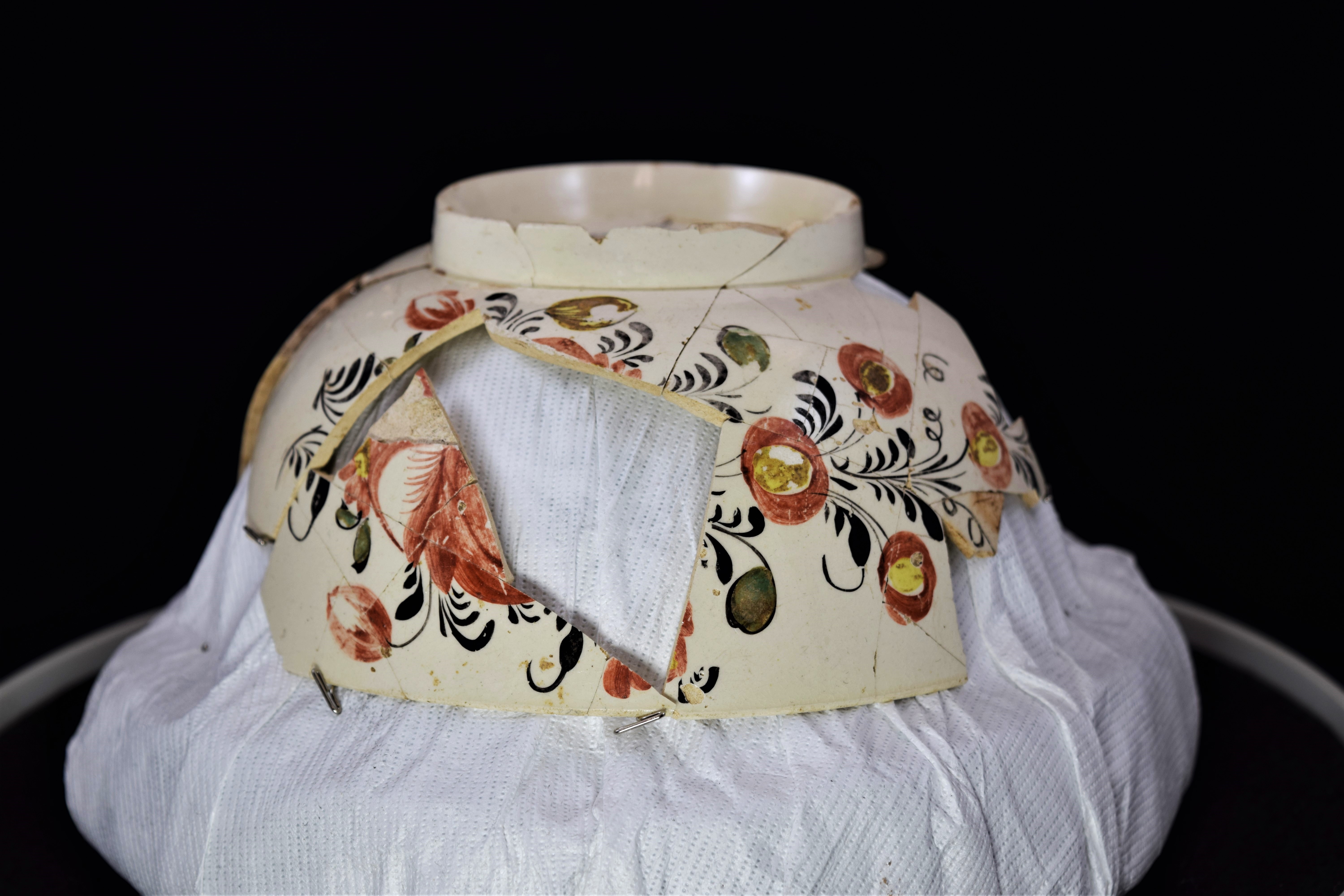
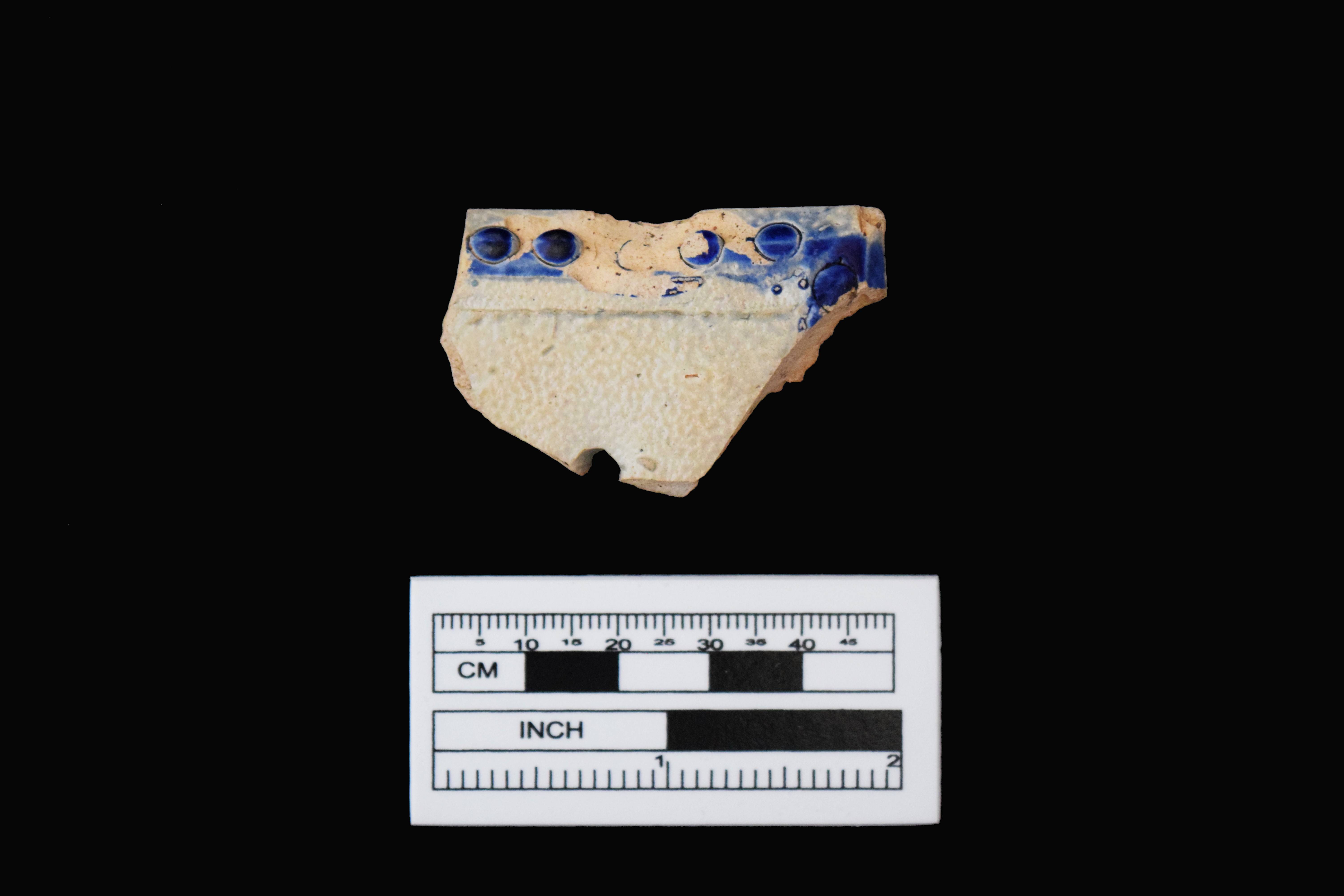
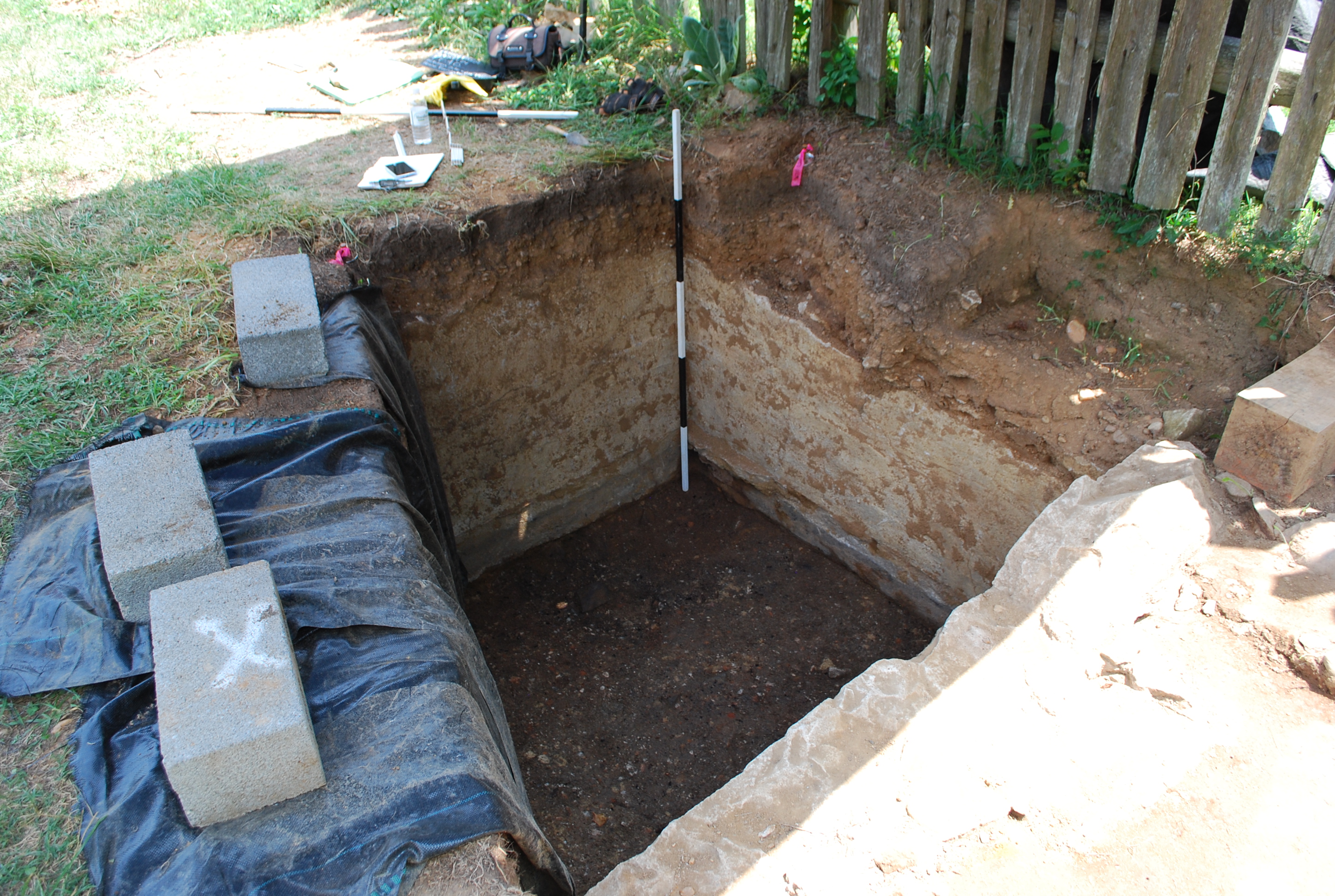
The archaeology and curatorial departments for The George Washington Foundation have long worked together to furnish the reproduced Washington house with historically accurate items that resemble as closely as possible the ones that George and his family would have lived with daily. These pieces are not originals, which means visitors touring the house can handle them.
In our latest collaboration we’ve been examining sherds of ceramic vessels owned by the Washington’s to obtain actual eighteenth-century dishes. We want to display these dishes in our gallery to give visitors an idea of what the whole vessels looked like. Four such ceramics have recently been acquired at auctions by the Foundation and you can see them first here along with the excavated remnants they resemble.
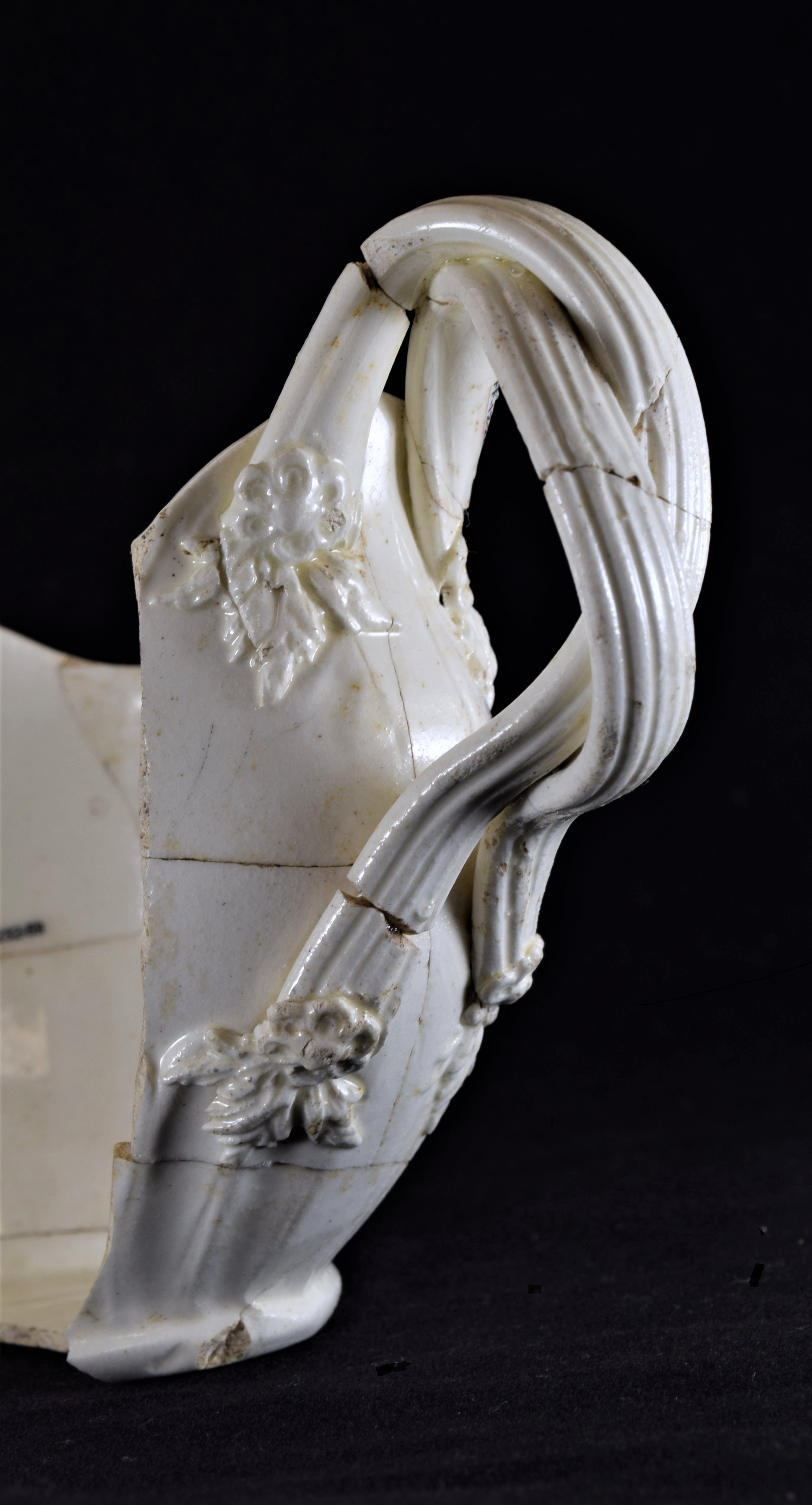
Creamware tankard with strawberry terminals and twisted reeded handles, ca. 1750-1800Creamware tankard with strawberry terminals and twisted reeded handles, ca. 1750-1800Creamware jug with strawberry terminals and twisted reed handles; face below the spout of the jug. ca. 1750-1800 Creamware sauceboat with curved handle which terminate with strawberry flowers. Moulded detail finials
Three of our acquisitions are a type of English ceramic called ‘creamware,’ which was invented in the early 1760’s and was very popular with George’s mother, Mary. Both this lovely pitcher and mug exhibit decorative elements represented by our excavated ceramics. Most prominent are the elegantly curved handles that terminate in delicate strawberry flowers. At least two vessels with these types of handles have been recovered at Ferry Farm. The first is a highly decorative creamware sauce boat and the second a petite teacup, both of which were considered quite fashionable for the time. The jug and teacup also share a common form of decoration called a ‘beaded rim.’
Creamware jug with strawberry terminals and twisted reed handles; face below the spout of the jug, ca. 1750-1800Creamware jug with strawberry terminals and twisted reed handles; face below the spout of the jug. ca. 1750-1800Creamware sherd with “beaded rim”Creamware teacup sherd with “beaded rim”
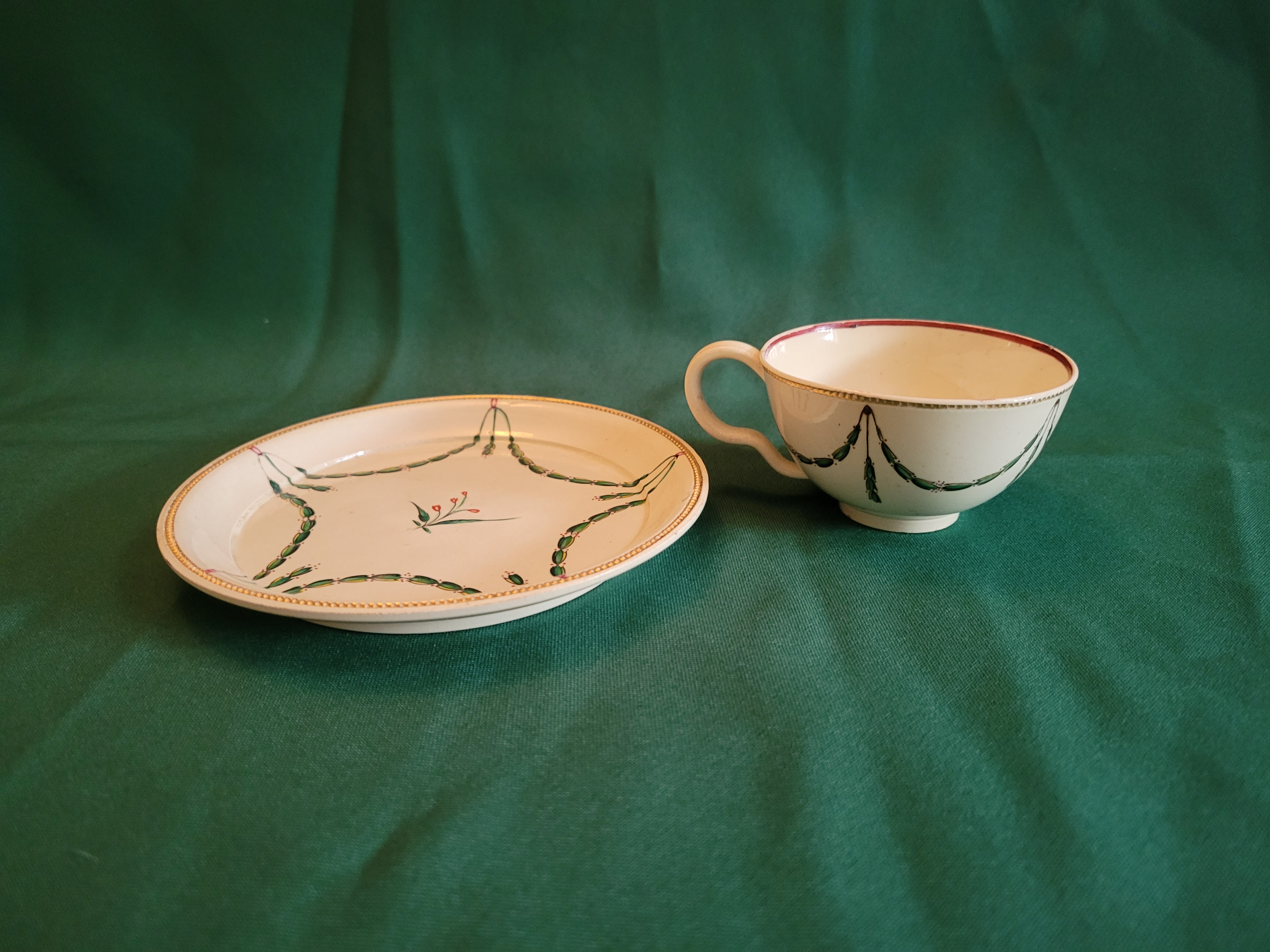
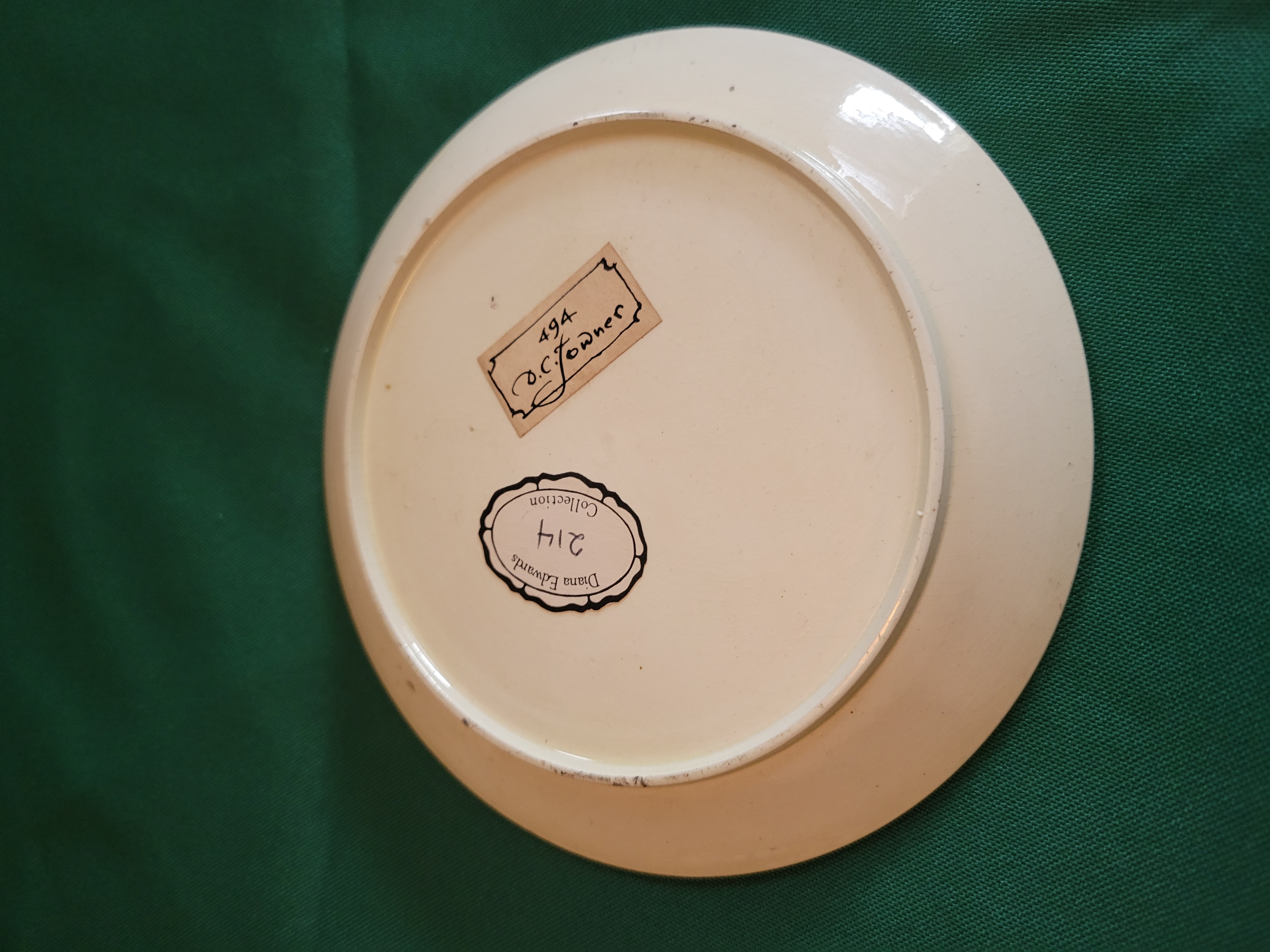
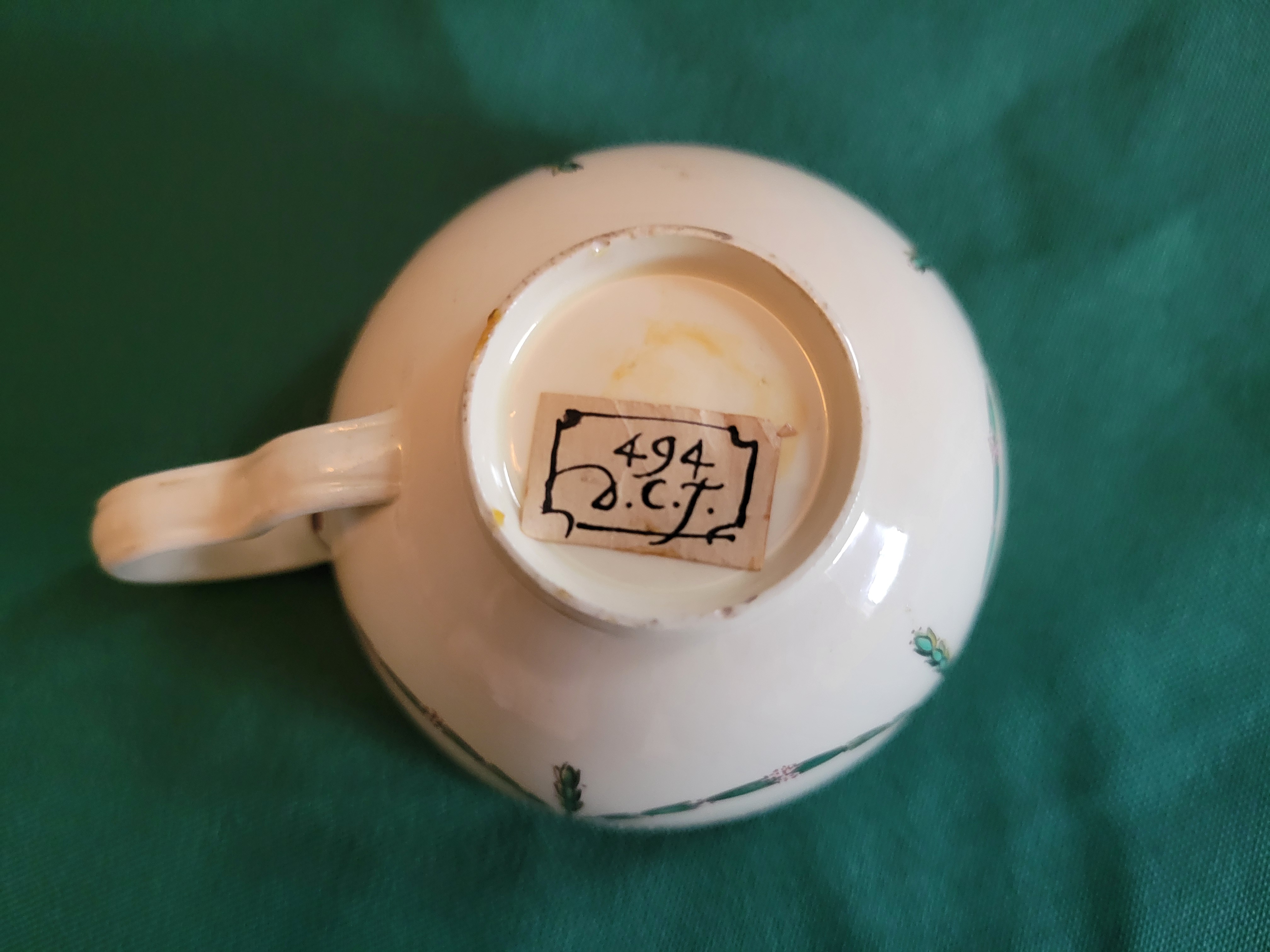
Another teacup owned by Mary was this beautiful piece hand-painted with a detailed swag motif. But from the sherds it’s difficult to really appreciate how graceful this decoration is. Luckily, our curators hunted down a similar cup and saucer with the same decoration, which is unusual. The saucer also features a beaded rim that has been filled in with gold gilding, although we believe the gold to be a later addition to the piece. The cup and saucer also have handwritten tags affixed to the bases which indicate they had the distinction of having been in the collection of a well-known (at least to ceramics geeks like yours truly) collector of creamware. This man by the name of Donald Towner had written extensively on the topic of English ceramics and over his career had amassed a large study collection, of which this was one. His book on the Leeds Pottery in England features a catalogue from the pottery that includes many of the decorative elements and shapes discussed above (Towner, 1965).
English Creamware Cup and Saucer, ca. 1775-1780English Creamware Saucer, ca. 1775-1780. Formerly in Donald Tower Collection, 1968, A Belton, 1988 and Diana Edwards MurnaghanTeacup from Donald Towner Collection, 1968.Teacup sherd with swag motif
But my favorite is this delightfully potbellied creamer with three legs featuring lion’s heads and paws for feet. The ceramic type in question is called Whieldon and started to come on the market in England around 1749. Of note is the raised molded leaf decoration which resembles one sherd from our collection. While we may never know the exact type of vessel our leaf came from, the complete creamer gives one a better idea of how the decoration was placed and looked. Mary’s choice of ceramics played a large part in emphasizing her and her children’s place among the Virginia Gentry and we’re very pleased to have some whole examples now to help illustrate to visitors just how lovely some of these dishes were!
Whieldon ware sherd, ca. 1740-1770Staffordshire Mottled Creamware Milk Jug, c. 1755-1765Staffordshire Mottled Creamware Milk Jug, c. 1755-1765
Mara Kaktins, Archaeologist & Lab Manager
Bibliography
Towner, Donald. The Leeds Pottery, 1965. Taplinger Publishing Co., Inc., New York.
Thanksgiving is next week, and families and friends across the United States will gather again to celebrate the past year’s blessings.
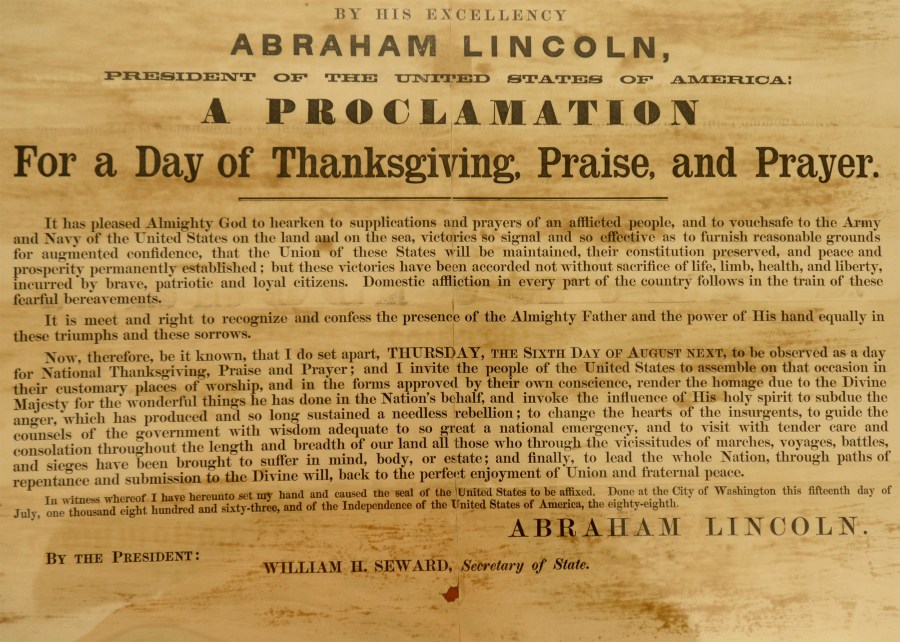
Days for giving thanks have been proclaimed throughout history for many reasons – most often to celebrate a bountiful summer or fall harvest, the end of a war, or even the beginning of a new nation. George Washington proclaimed a one-time day of Thanksgiving on Thursday, November 26, 1789, “to be devoted by the People of these States to the service of that great and glorious Being, … for the civil and religious liberty with which we are blessed, and the means we have of acquiring and diffusing useful knowledge; and in general for all the great and various favors which he hath been pleased to confer upon us.”.
The 1769 Thanksgiving Day Proclamation by George Washington
Individual states have proclaimed specific Thanksgiving days throughout the nation’s early years. Still, it wasn’t until 1863 when President Abraham Lincoln issued a proclamation designating the last Thursday of November “as a day of Thanksgiving” to be observed by all “fellow citizens in every part of the United States.” The nation was still suffering through the Civil War. Lincoln included a remembrance of “all those who have become widows, orphans, mourners or sufferers in the lamentable civil strife in which we are unavoidably engaged, and fervently implore the interposition of the Almighty Hand to heal the wounds of the nation and to restore it as soon as may be consistent with the Divine purposes to the full enjoyment of peace, harmony, tranquillity, and Union.”
1863 Thanksgiving Day Proclamation by President Abraham Lincoln
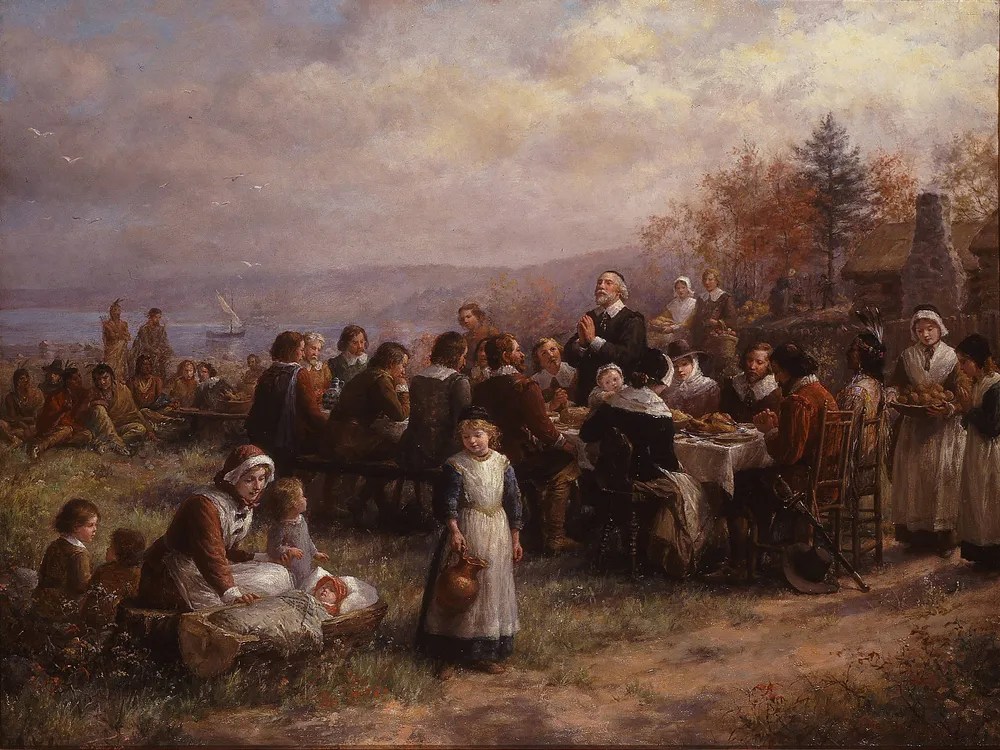
As the traditional vision of Thanksgiving is based upon the 1621 New England harvest feast shared by the Pilgrims of Plymouth, Massachusetts, and their new friends, the Wampanoag tribe, the November holiday is associated with an abundance and display of fall harvest foods. A table laden with a wide spread of traditional foodstuffs is the norm, but what’s underneath all that food is what I’m interested in!
Jennie Brownscombe’s 1925 very idealized version of the first Thanksgiving
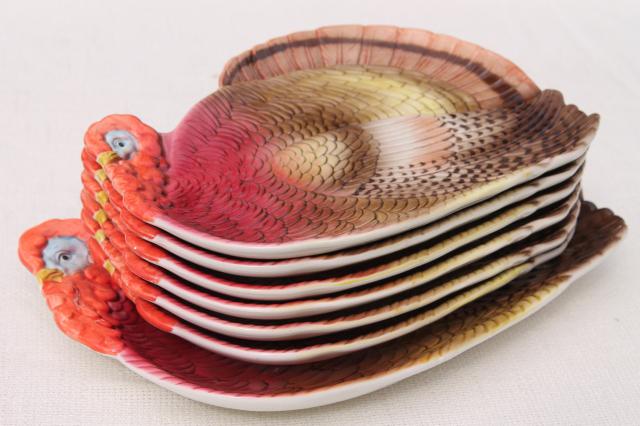
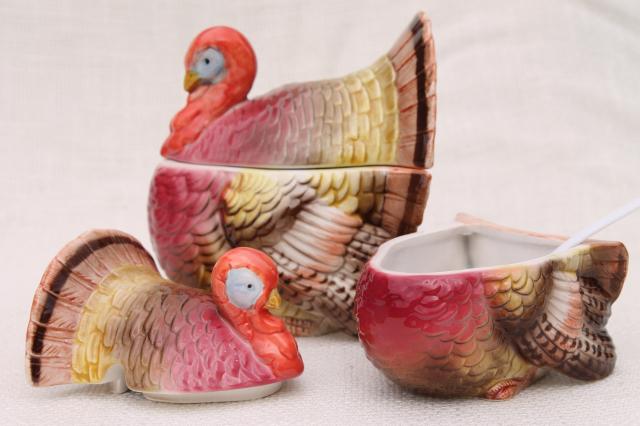
Our best china! Sometimes, it’s Grandma’s china, brought out of the basement, dusted, and cleaned off for the occasion. Other times, it’s our wedding china, if you are of that generation that still wants or received wedding china. Other times, it’s unique dishes made and decorated for the occasion (think turkey-shaped plates!). Dinner plates, salad and butter plates, serving platters and bowls, condiment vessels, punch bowls, sauceboats for the gravy, dessert plates, tea, and coffee services, crustal wine glasses – the variety can be tremendous, and the different table wares are utilized to display and serve specific foods and finished dishes.
Turkey Plate if that’s your thing.Turkey shaped gravy boat and cranberry sauce dish…an absolute necessity on a Thanksgiving table
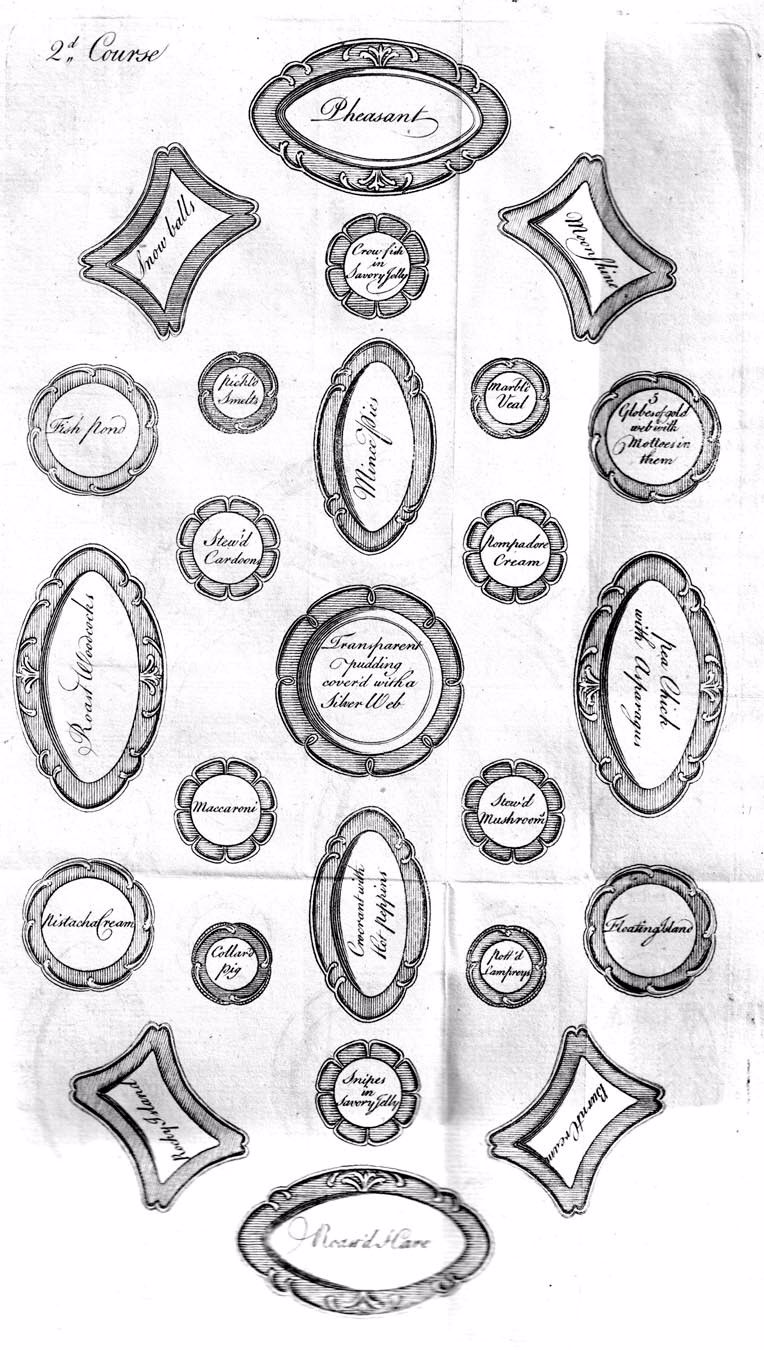
Mary Washington, as a member of the gentry class in Colonial Virginia, would have been well-versed in setting a stylish dinner table for family and guests. Formal dining habits during the 18th century slowly evolved to dinners consisting of multiple courses of food prepared and served in a more elaborate and complicated fashion. Cookbooks of the age detailed the possible menus for different seasons and even produced drawings of how each course’s dishes were laid out on the table. Elizabeth Rafferty’s 1769 The Experienced English Housekeeperincludes a copperplate drawing illustrating one such arrangement for the second course of a dinner. Hours could be spent looking up how some of her dishes were prepared, such as “Pistacha Cream,” “Potted Lampreys,” or “Transparent Pudding Covered With a Silver Web.”
Second course dinner layout from The Experienced English Housekeeper, 1769
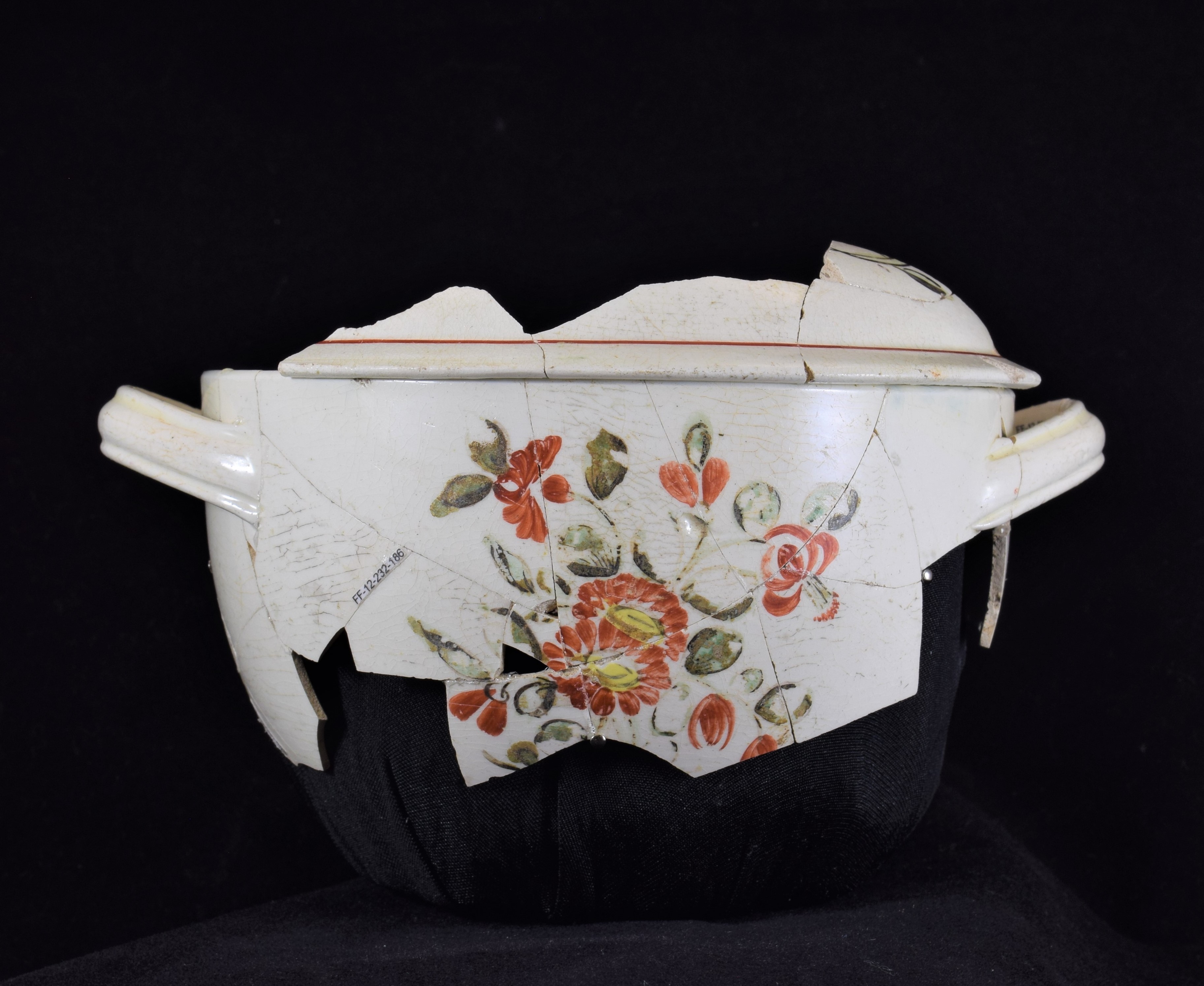
Fragments of highly specialized ceramics excavated at Ferry Farm, the plantation Mary called home for much of her life, speak to her efforts to set a stylish table for guests. Numerous highly decorated (molded or painted) creamware vessels, including sauceboats, plates, platters, oval and round serving bowls, condiment bowls, casters, serving spoons, and tea wares, are in our collection and speak to the refinement of her table. Porcelain was the most desirous of tablewares, but its sheer expense was prohibitive for Mary except for limited items, such as teawares. Creamware, however, was within her budget and was extremely fashionable during the third quarter of the eighteenth century in English society.
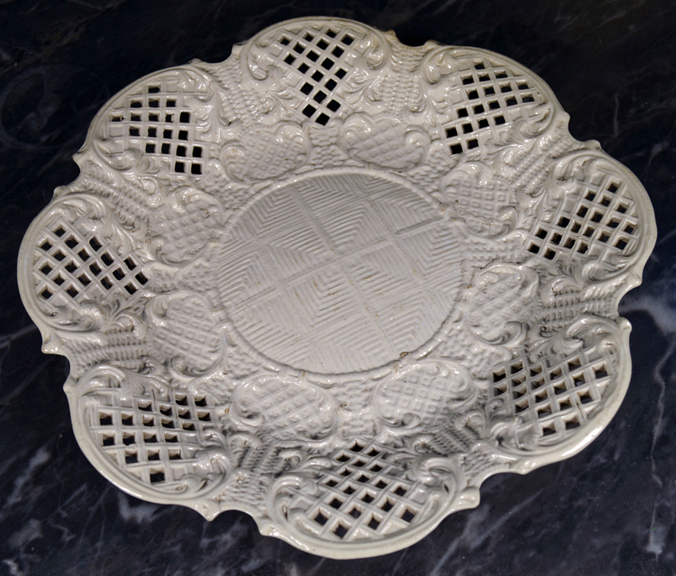
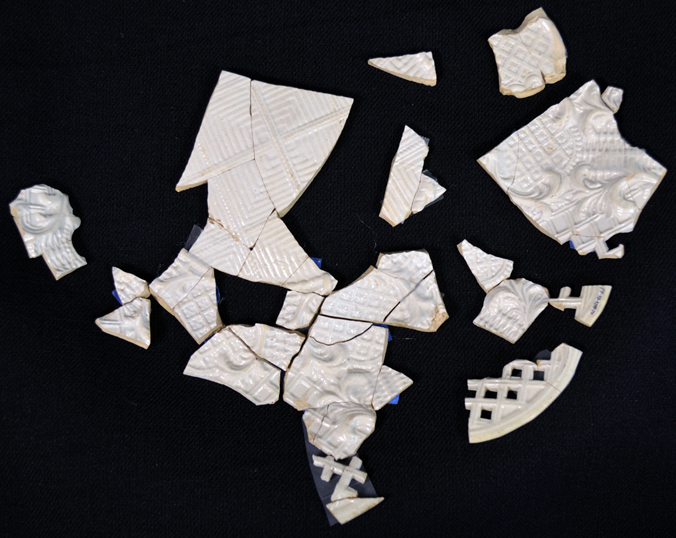
Mary also had a fancy white salt-glazed stoneware fruit dish in her collection. This dish, and possibly an accompanying pierced bowl, would serve local and non-local produce such as grapes, figs, oranges, pineapples, apples, peaches, and pears. Fresh fruit, especially during off-season times, was expensive as it had to be shipped in from warmer climates. However, its presence on the table indicated a measure of wealth and, consequently, status within the gentry lifestyle. Mary needed to maintain her gentry status for herself, but more importantly, for her children and their future success in the stratified society in which they lived.
Dish, 1760-1775 in Kenmore Collection
Fragments of a white salt-glazed fruit dish excavated at Ferry Farm
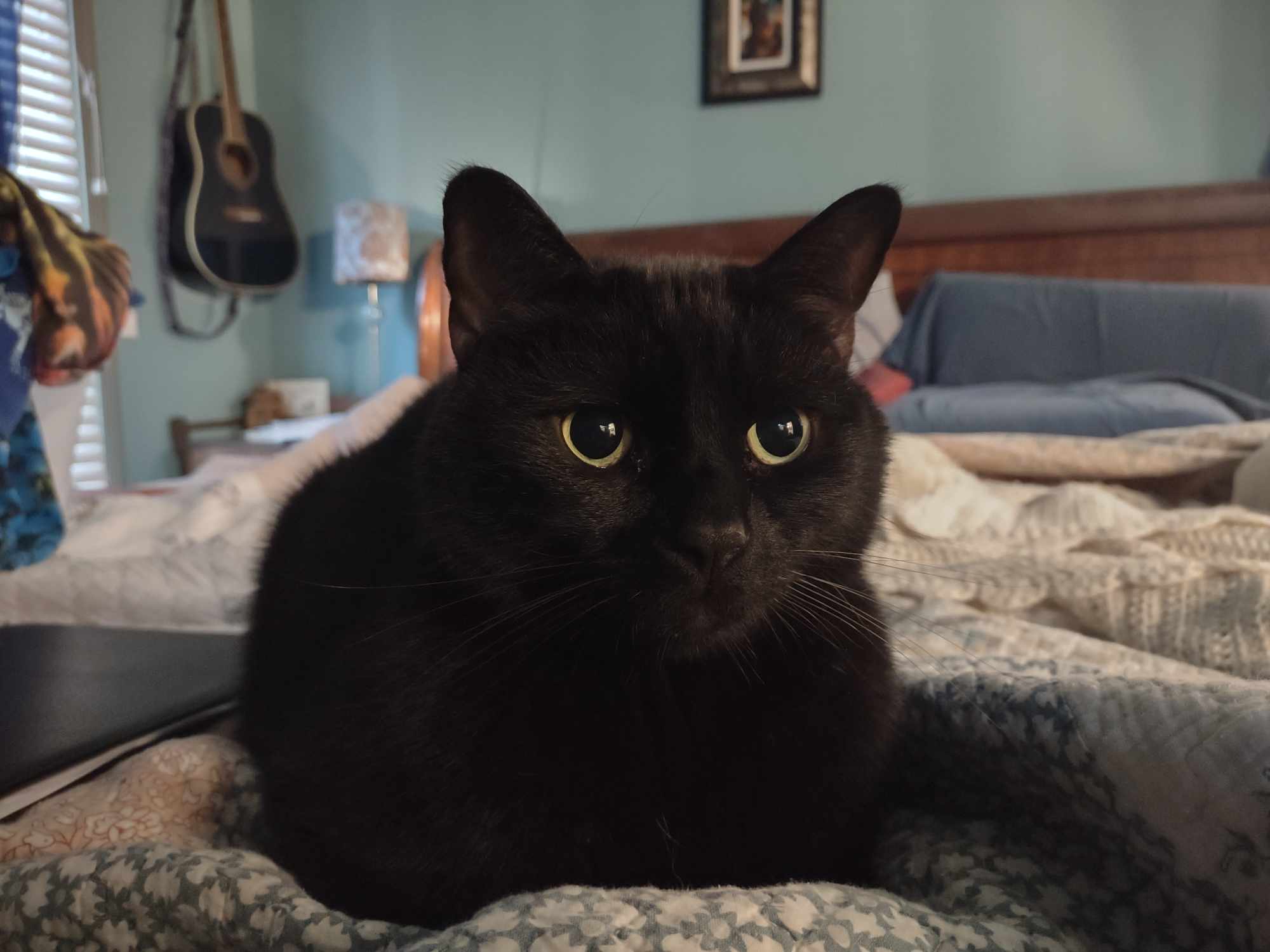
There’s plenty to be frightened about in the colonial period. But teapots? Not exactly. However, aesthetics change as time passes. We see things through different lenses. As I type this, my substantial black cat with big yellow eyes stares at me, demanding attention.
Poe, the big black cat with yellow eyes.
Black animals are currently the least likely to be adopted in the United States, so black can be seen as a negative in pets…but what about black teapots?
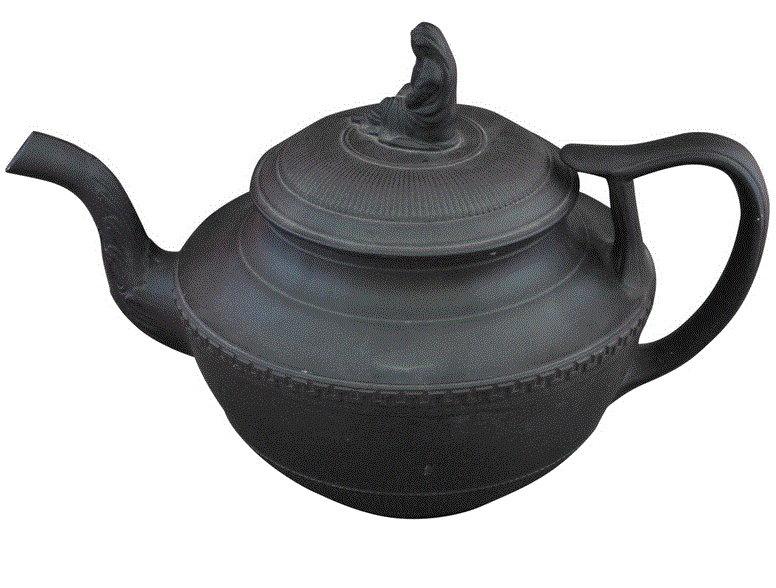
Black Basalt Teapot, Turner, circa 1805
Turns out, they were very much the rage during the middle of the 18th century and even into the early 20th century.
“Black is sterling and will last forever.”
In 1767, Josiah Wedgwood started working with black basalts – a richly hued, glossy black stoneware medium – for his famous Etruscan vases. Wedgewood’s basalt is made from reddish-brown clay that burns black in the firing process; black basalt owes its color to the addition of manganese. [1] [2]
A Wedgwood Black ‘Basaltes’ Encaustic-Decorated ‘FIRST DAY’S VASE’, 1769Wedgwood Black Basalt “Etruscan” Vase, circa 1800.
After Wedgwood perfected the fine-grained stoneware, it was soon being produced by other Staffordshire potters in England. It was called ‘Black Basalt’ or ‘Egyptian Black.’ [3] [4] A matte black teaware that was striking and, by our modern estimations, quite possibly macabre.
Black Basalt teapots were decorated utilizing a new technology called ‘engine turning’ lathes. Simple turning lathes have been used for pottery production since the early 1700s. By the 1730s, virtually all hollow wares (mugs, jugs, cups, bowls, etc.) were being lathe-turned to shape and thin bodies. The engine-turning lathe further provided the ability to cut regular patterns in the clay bodies to create decorative elements. [5] The decorative elements at the time were heavily influenced by classical art from Ancient Greece and Rome. [6]
A striking finial accented the lovely neoclassical etches on the body of the matte black pot.
Teapot, Circa 1800, Black Basalt, Mayer Manufacture, Staffordshire, England
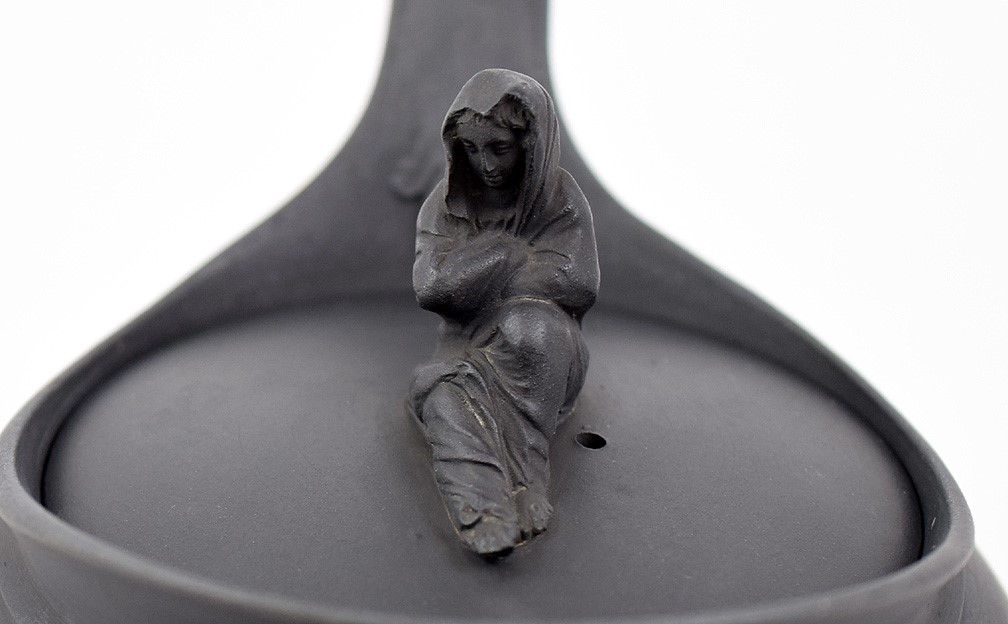
What is a finial? The little knob on the top of the lid. This is where it gets weird for our modern-day eyes. Some looked like women hunched over, draped in mourning clothes or grieving widows. Add this to the black body, and the oddly shaped pots start to take on a dark tone.
Woman Finial
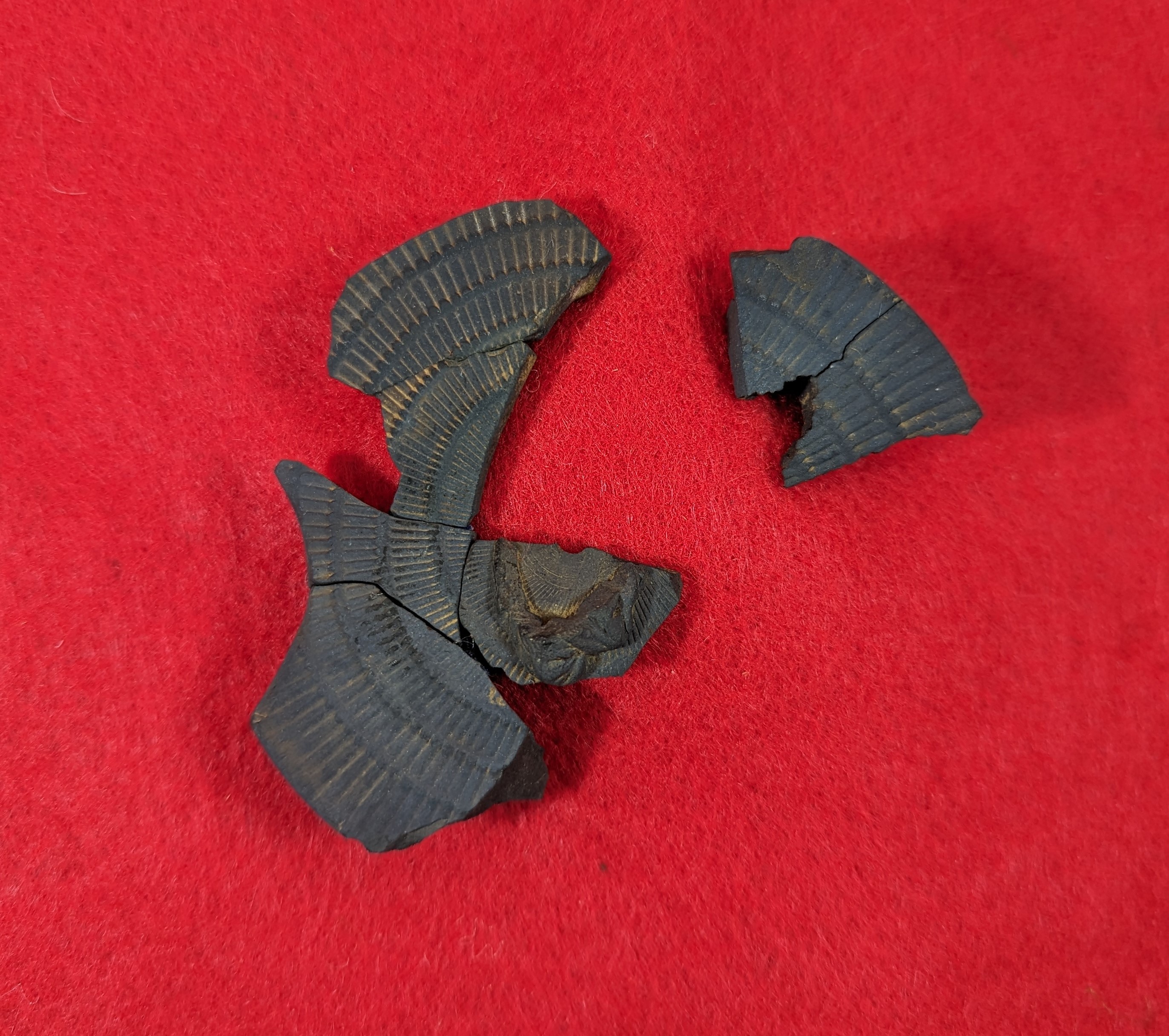
Mary Washington owned an early iteration of these black basalt pots, but was it for mourning purposes? Not likely.
Base and body of black basalt pot found at Ferry Farm.Base and body of black basalt pot found at Ferry Farm.Black basalt pot base found at Ferry Farm.Lid of black basalt pot found at Ferry Farm.Lid of black basalt pot found at Ferry Farm.Shoulder of black basalt pot found at Ferry Farm.
Her husband Augustine died in 1743, early into the family’s occupation at Ferry Farm. This would have been before the invention of this style of pottery and well before strict (and quite frankly tedious) Victorian mourning rituals. A black teapot may seem to symbolize some outward decorative display of bereavement or grief (particularly with a sad woman finial). Yet, to Mary, it would have just been a neoclassical design in the latest black basalt trend. She was just being her fashionable self. Her teaware collection was pretty admirable, and the fact that she owned a black basalt teapot is not surprising.
But that shouldn’t stop us from enjoying beautiful and somewhat spooky teapots.
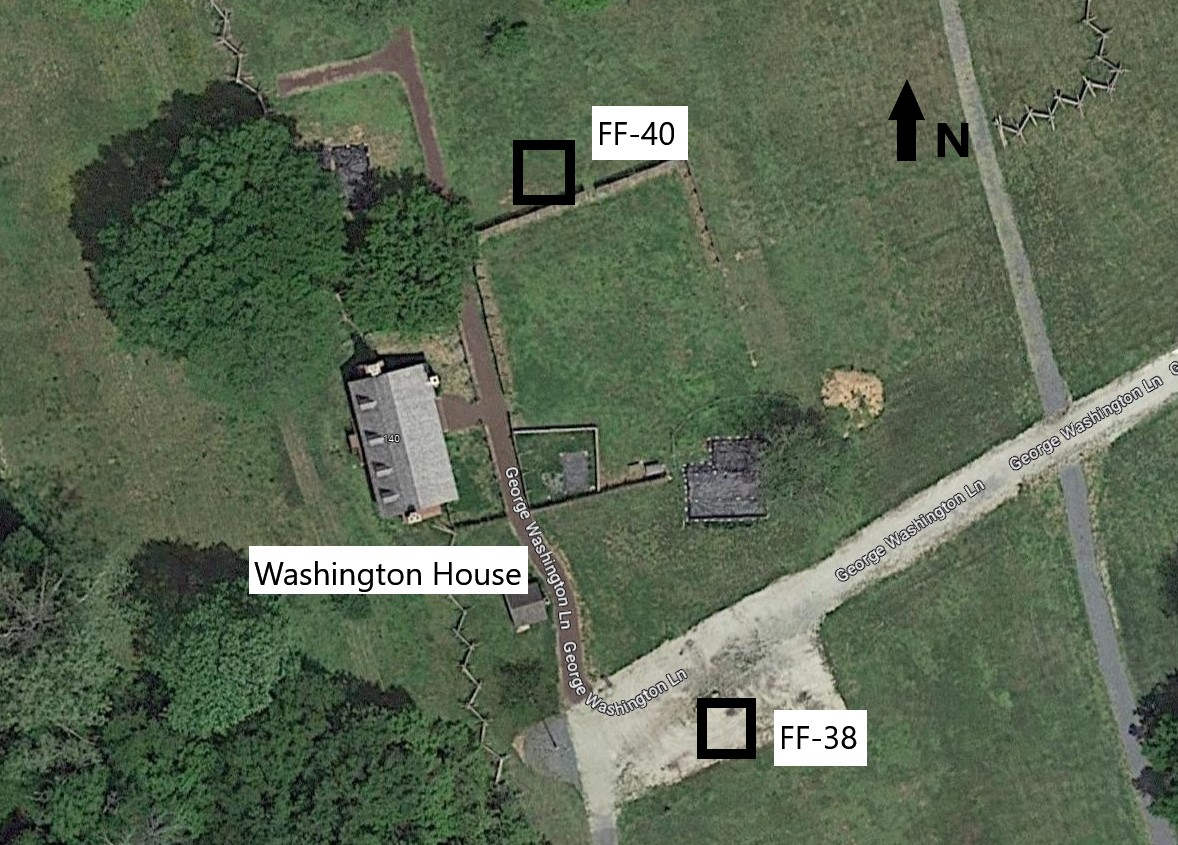
It’s that time again! As we welcome Fall and the beautiful cool weather it brings, let’s take a look back at our Summer 2023 dig season here at Ferry Farm, George Washington’s Boyhood Home. This year’s dig actually involved excavating two separate areas, designated FF-38 and FF-40, within the historic area.
Location of the archaeological projects FF-38 and FF-40 at Ferry Farm.
Project FF-38
The FF-38 area contained a large, dark, soil stain that was discovered by accident during the monitoring of a utility trench in 2016. Only a portion of this feature was visible at that time as it continued beneath the south wall of the trench. We had clues as to the approximate date of this partially-exposed feature, but we still needed to fully uncover the entire feature to establish its total dimensions and determine its age, function, and how it relates to the surrounding landscape.
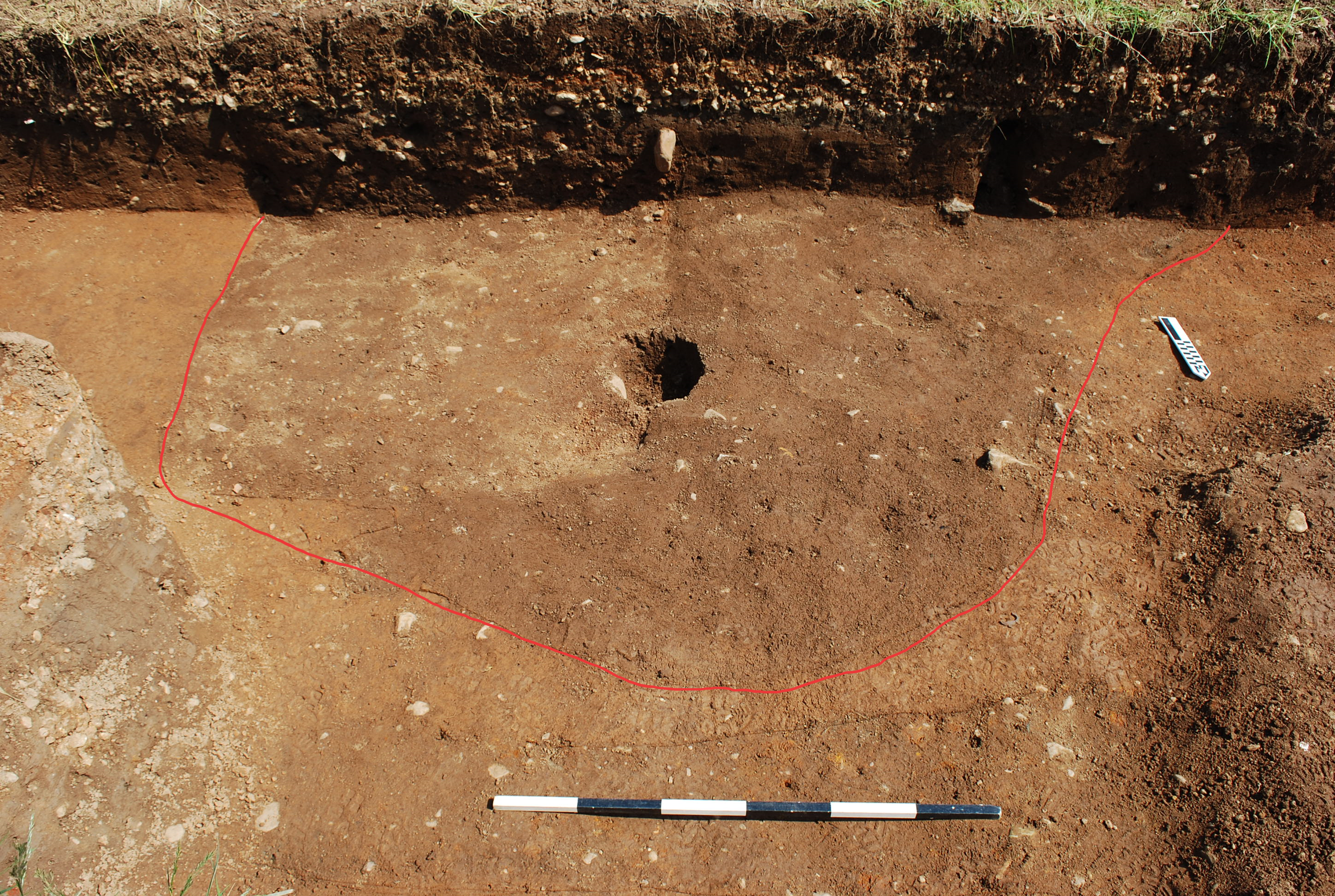
F.321 as seen in 2016 within the utility trench. Only the northern portion of the feature was exposed at this time. F.321 is outlined in red, and is intruded by a square, lighter-colored 19th-century feature (F. 324).
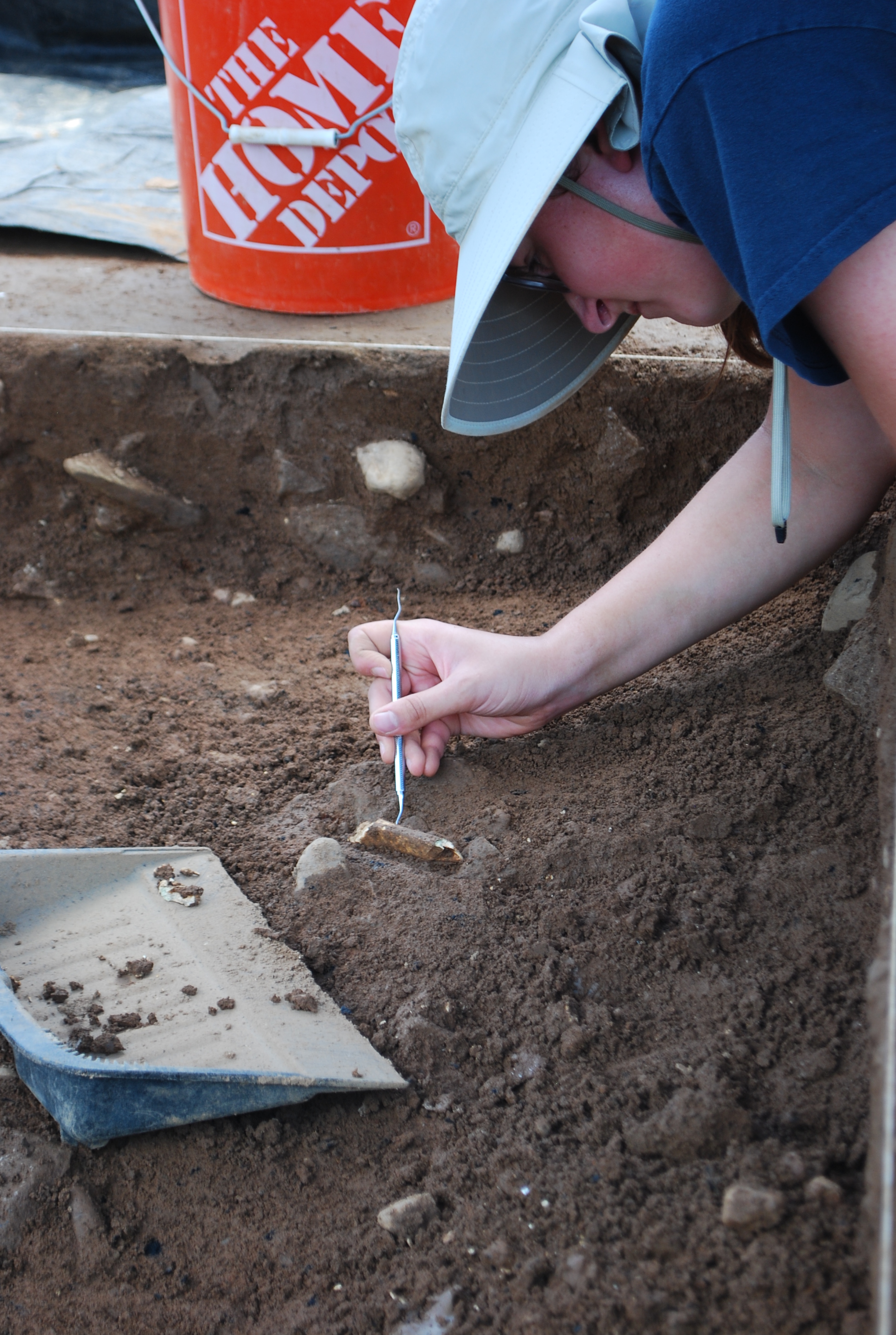
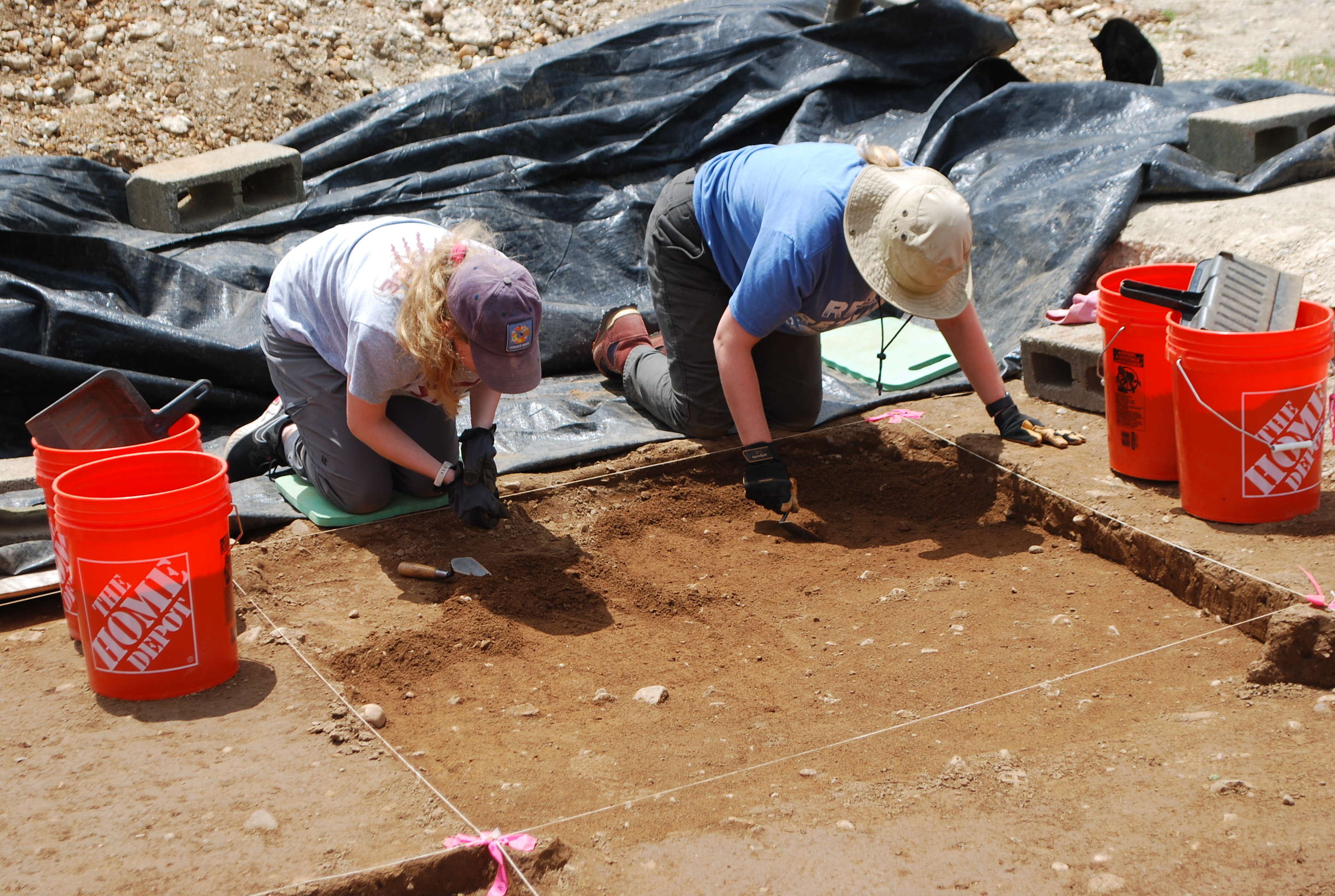
Our excavation began by the machine removal of two modern layers of gravel that overlay a thick 19th-century layer of plowed soil. The excavation area measured approximately 16 ft. by 20 ft. Our crew of archaeologists then slowly excavated down through the plowed layer until we could identify the boundaries of Feature 321. Fully uncovered, the exciting discoveries began.
First and foremost, we discovered the feature was much bigger than originally thought! What initially appeared in 2016 to be a 5’x7’ roundish feature turned out to be the northern tip of a large rectangle measuring 10’ by 16’. The size and shape alone of the feature shifted our interpretation from a small pit to something larger.
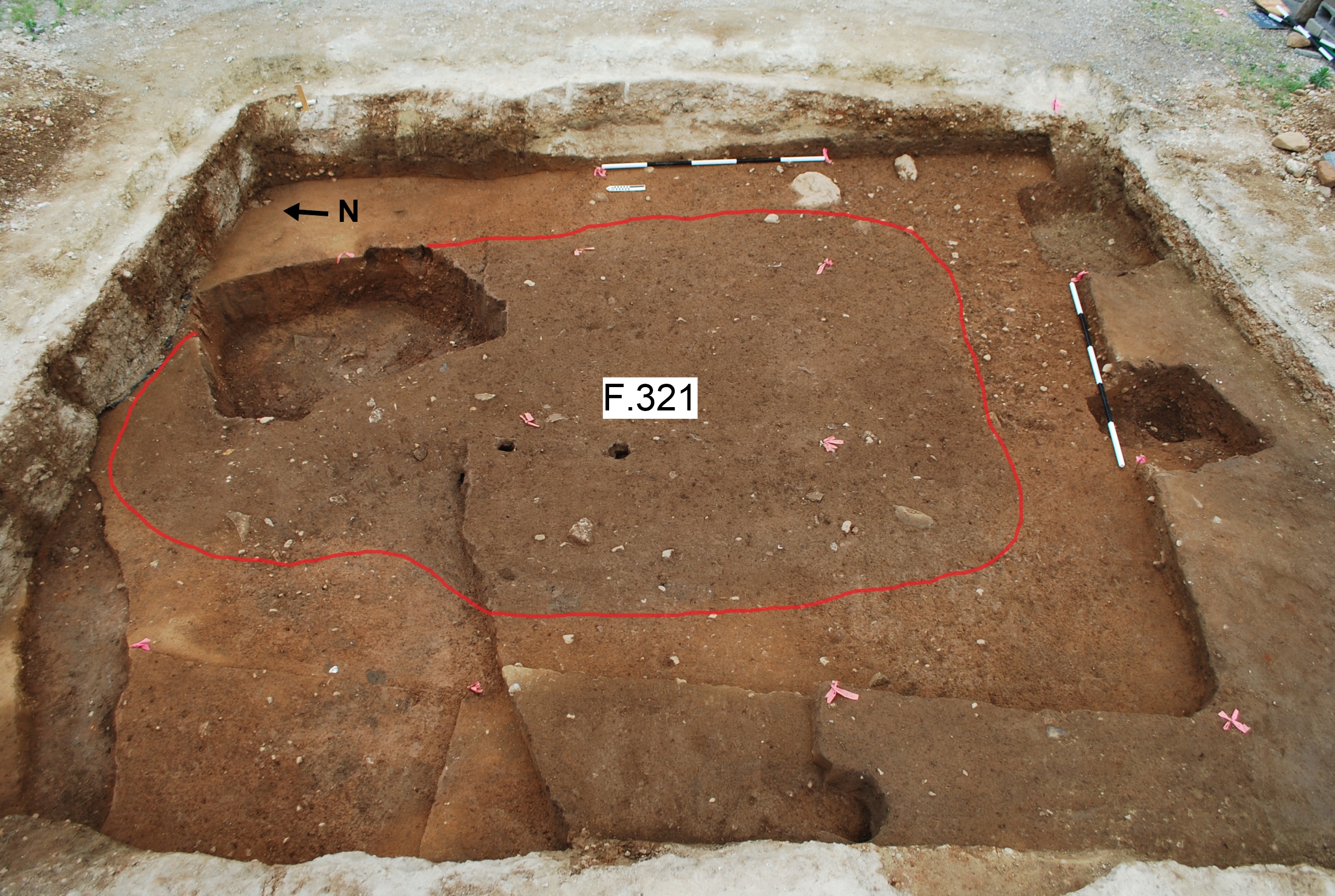
F.321 fully exposed before excavation (outlined in red). The intrusive feature, F. 324, has been partially dug out at the north end of the site.
Feature 321 was divided into four sections and our crew excavated both southwest and northeast quadrants. This excavation approach allowed us to determine that the feature was roughly 1’ deep at the center, with gently sloping sides, and filled with successive layers of soil and ash-filled deposits. These soil layers provided us with an awesome mix of artifacts which were used to nail down the feature’s end date to the middle of the 18th century. But establishing a date is only part of the process: artifacts can further help us identify the function of the feature as well.
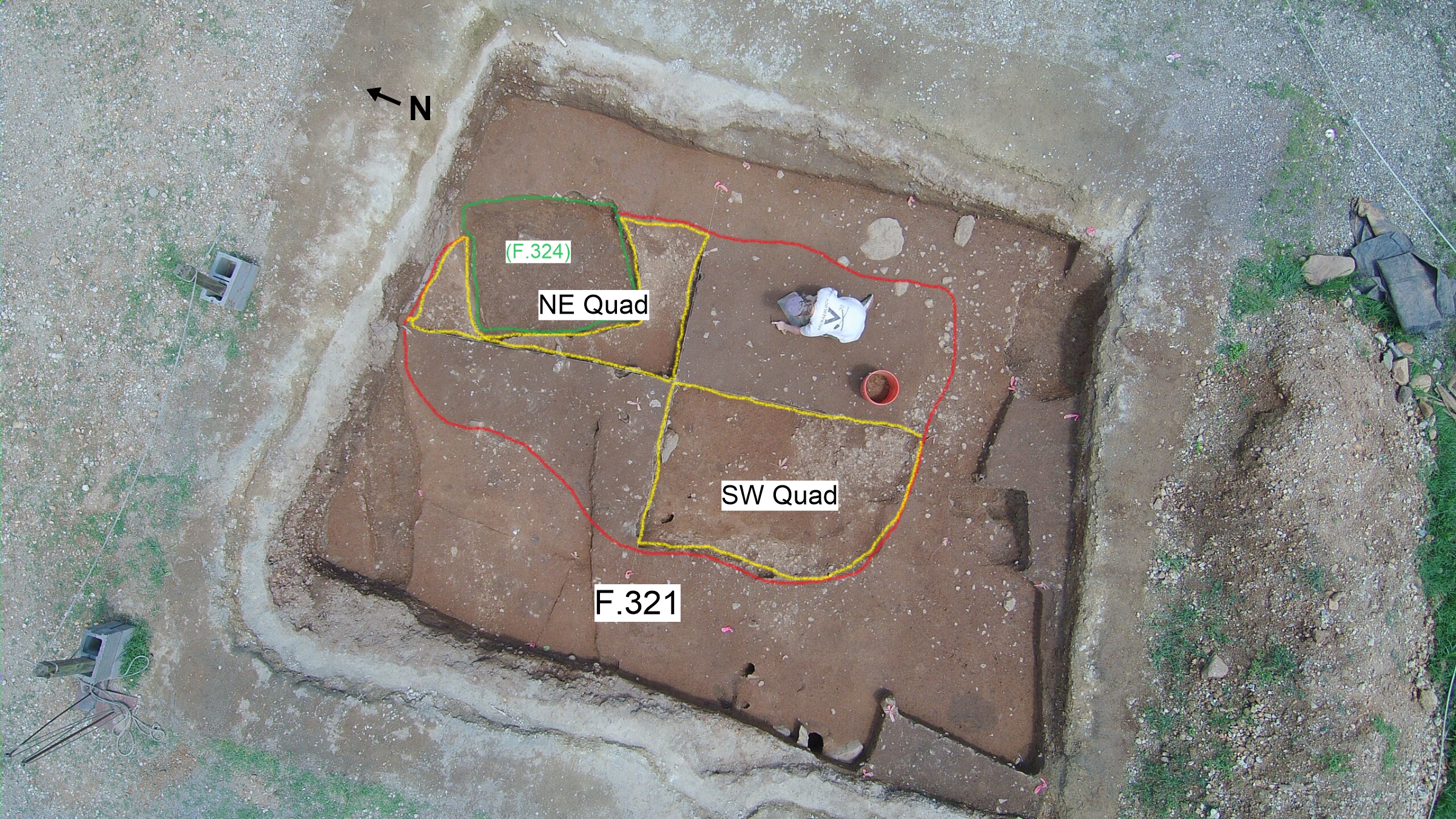
F.321 after the southwest and northeast quadrants were excavated. Intrusive Feature 324 is outlined in green.
That being said, we are still unsure of what this feature actually is. Here is what we know so far. There is no hearth of chimney remains. Lack of a fireplace suggests it wasn’t a domestic dwelling, but it could be another type of plantation outbuilding, such as a storage building, shed, or barn. The edges are almost vertical, and the floor is relatively flat. There is no silt so the pit was covered while it was open. It is too regular to be a quarry pit used to harvest clay as a building material.
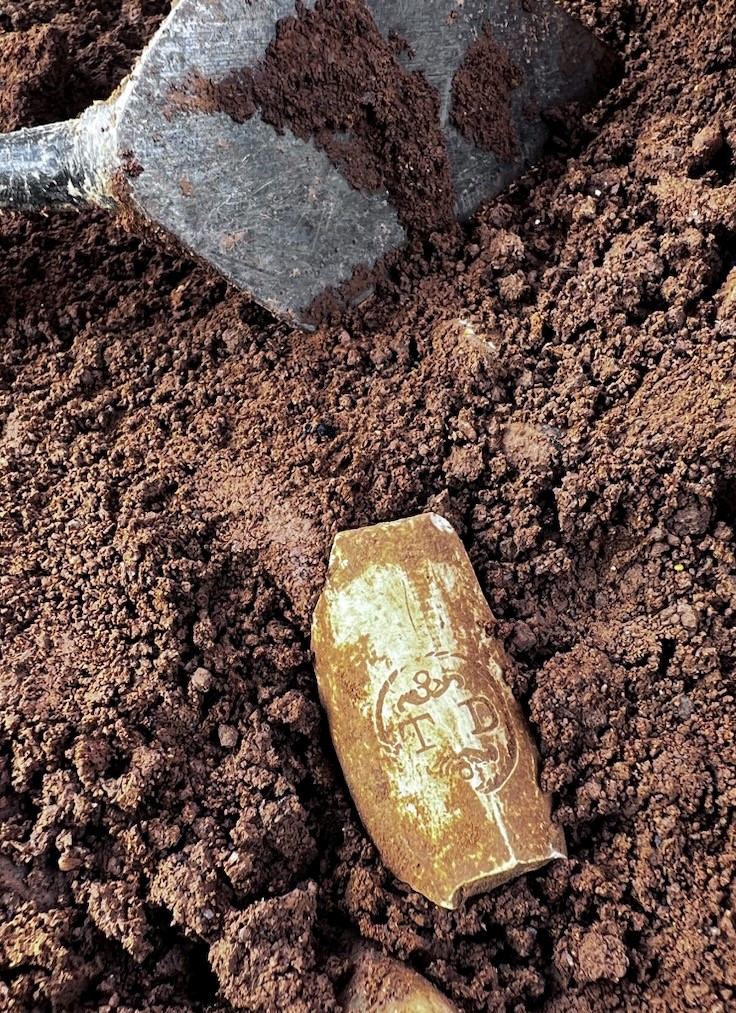
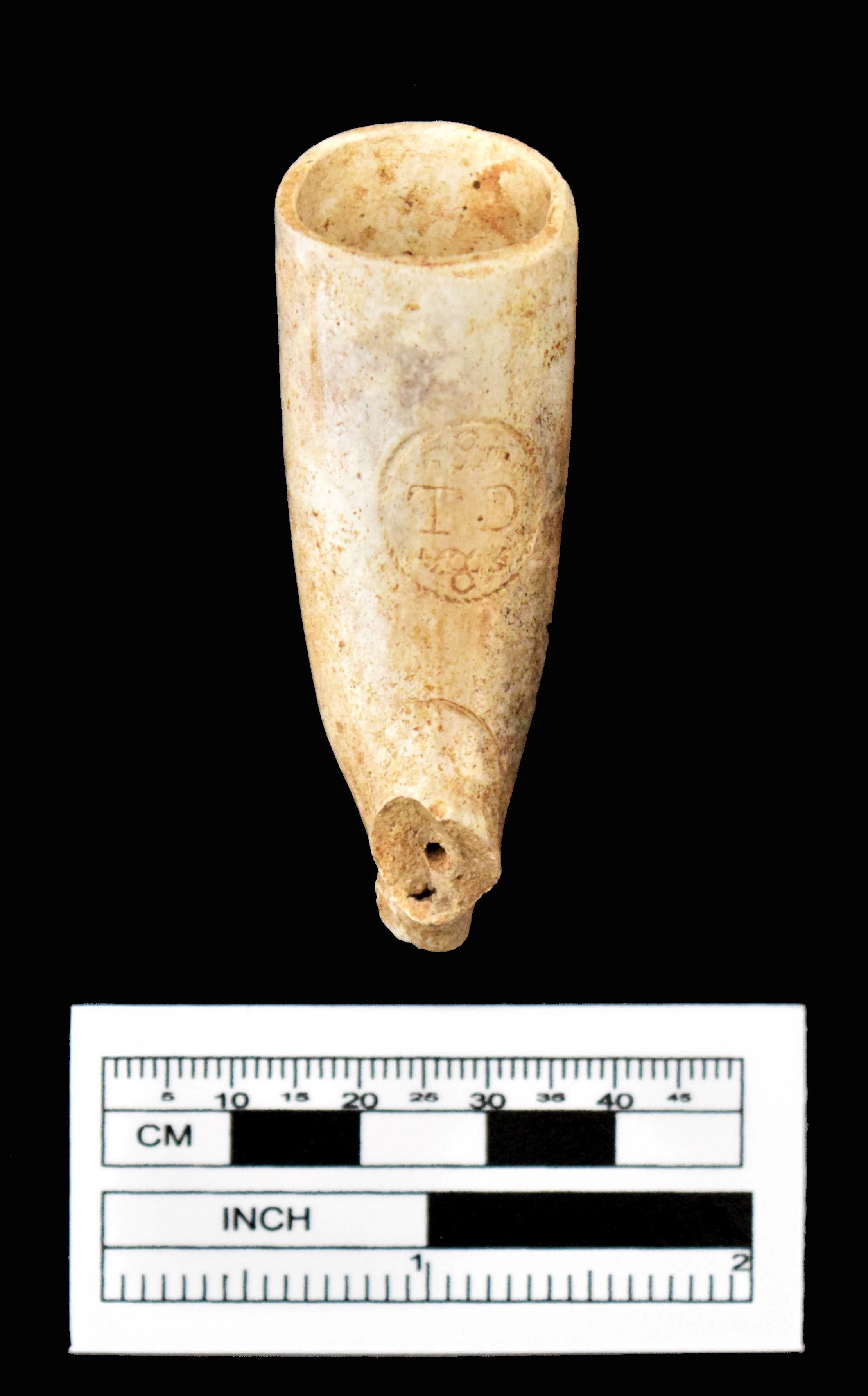
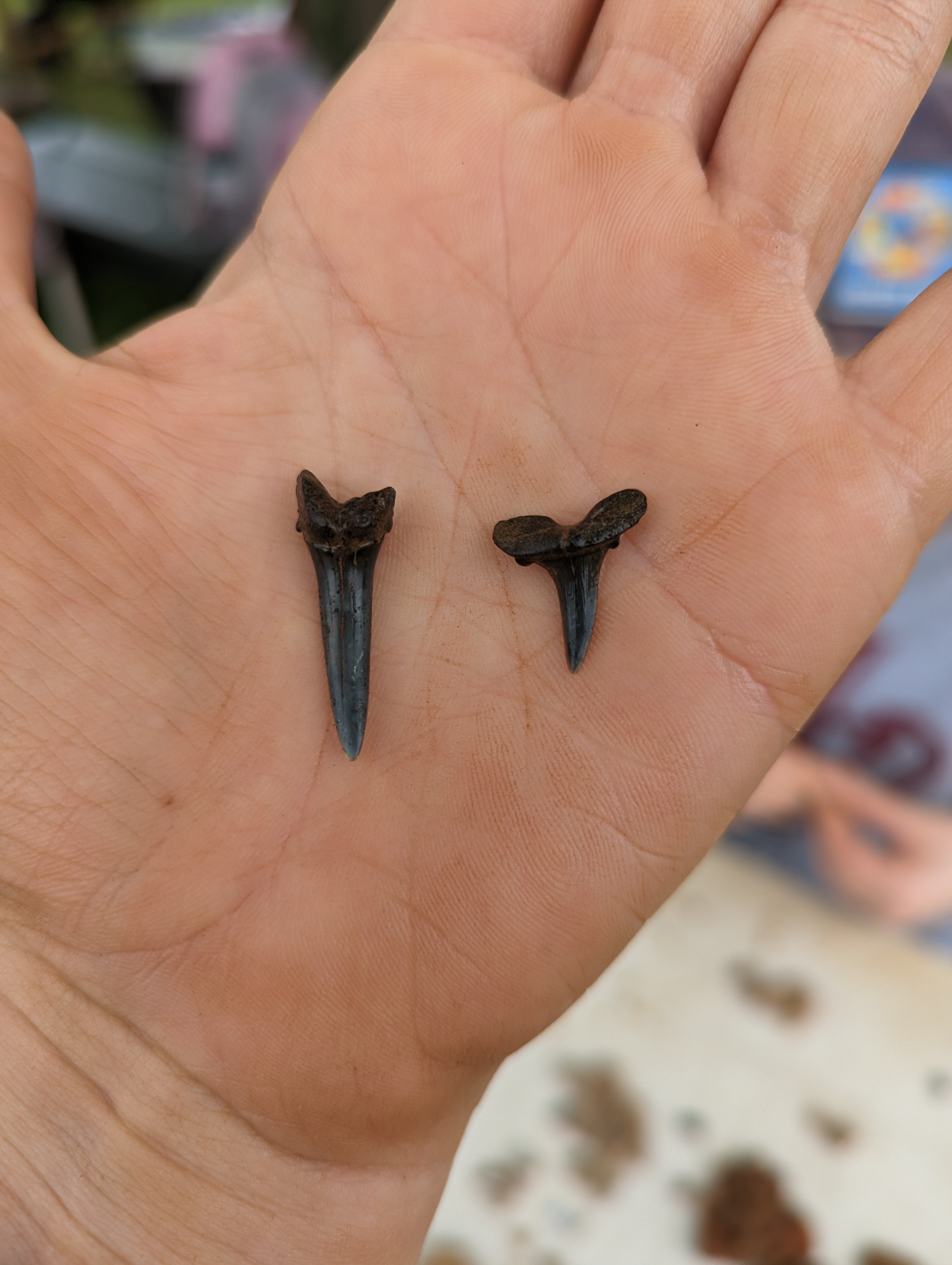
Even though we are still in the early days of analyzing the artifacts, that doesn’t mean we can’t talk about a few great things we found. This feature had a little bit of everything: personal items, food-related items, architectural debris, domestic items, etc. The crowning glory of the excavation (in our humble opinion) would have to be the complete pipe bowl that was stamped with a maker’s mark that featured the letters “TD.” Other exciting finds include a clipped Spanish coin, sherds to a Westerwald ink well, shark teeth, and prehistoric pottery, just to name a few. This feature also contained a layer of ash that preserved delicate artifacts such as bone, fish scales, and straight pins – items that often don’t survive in the archaeological record.
So what does this all mean? Well, this means that we will definitely be returning to the FF-38 site next season. While we have gathered a lot of information during this dig, there is still much left to find. Expanding our excavation beyond the limits of the feature and excavating one of the remaining two quadrants will help us interpret the feature’s function and how it relates to the 18th-century farm landscape of the Washington family.
FF-40
Wait, that’s not all for this year’s dig. Don’t forget that we had two excavation areas this year. Our second area was FF-40, which was the remains of an 18th century kitchen had experienced an intense fire. This kitchen was partially excavated in the 1990s, so this year’s excavation had more of an exploratory excavation designed to help us establish a game plan for future excavation. We knew the kitchen remains were below the foundations of two later farmhouses, and that the foundation walls of these farmhouses were still extant. Additionally, the interior of the foundations was filled with sand to protect the kitchen site. Our excavations confirmed the location of the farmhouse foundations and the existence of a protective layer of sand! Once our crew were able to get through this sandy fill, a quick clean of the kitchen fill uncovered artifacts that were absolutely toasty. Okay, toasty isn’t a technical term, but the artifacts showed evidence of a fire that burned at extremely high temperatures. This included a high number of architectural artifacts as well as charred ceramics and melted glass. Findings from this year will help guide the excavation in the future.
The burned kitchen site is located beneath these concrete house foundations dating to 1914. This picture was taken after protective sand fill was removed within the excavation unit.
Phew, that was a lot! That sums up our 12-week dig season. We answered a lot of our initial questions and found many more questions to investigate. Archaeologists will be in the lab the rest of the year processing artifacts, researching our findings, planning next season’s dig, and enjoying the A/C. Stop by the lab in the Visitor’s Center and take a peek at what’s happening. See you all in the field next May!
A pest is a broad term for any organism that spreads disease, causes destruction, or is generally a nuisance. In the 21st century, we still constantly battle pests from squirrels who chew through your internet cables or spiders who set up house in the high corner of the ceiling, watching and judging you to evil mosquitoes that ruin outdoor activities and leave you with itchy red welts that no amount of calamine lotion will help. It is a fight as old as time.
I wanted to investigate one pest in particular: rodents. Why were mice and rats present in colonial homes? Why this was an issue? What were some of the methods the Washington’s would have used to combat these furry creatures? And how we know without a doubt that Kenmore and Mount Vernon had rodent tenants.
The Suspects
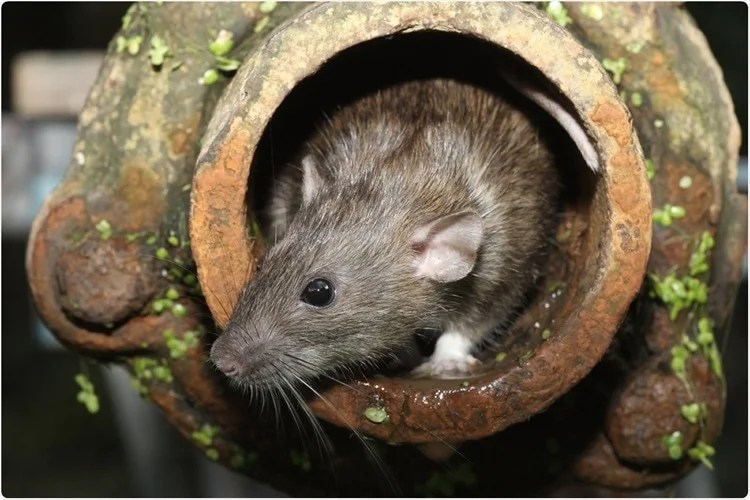
House MouseBlack Rat aka Roof RatsBrown Rat aka Sewer Rat
The house mouse, or Mus Musculus, originating on the Asian and Indian subcontinent, has become the most successful invasive species in recent history. [1] They arrived in this country with the trading ships and settlers that came to the New World in the 16th century. [2][3]
Similarly, the black rat, aka roof rat, boarded ships for their westward journey around the same time as the seafaring mouse. [4] Their presence is noted by the residents of Jamestown in November of 1608, stating, “When the shippes departed al the provision of the store but that the President had gotten was so rotten with the last somers rain, and eaten with rats and wormes” [5] The notorious brown rat or sewer rat, who seems to currently enjoy the cities of Chicago, Los Angeles, and New York, arrived a little later than their brethren setting foot in the new country around the 1750s.[6]
America, the land of plenty…of garbage
There is no nice way to say it, but living in colonial America was usually gross. Housing wasn’t always the greatest, sometimes being very rudimentary. Food storage was typically simple and easily accessible. But one of the biggest problems (or benefits if you are a rodent) was the lack of systematic waste disposal. [7][8] Garbage (including human waste) was a personal problem often solved by opening the window and chucking out.
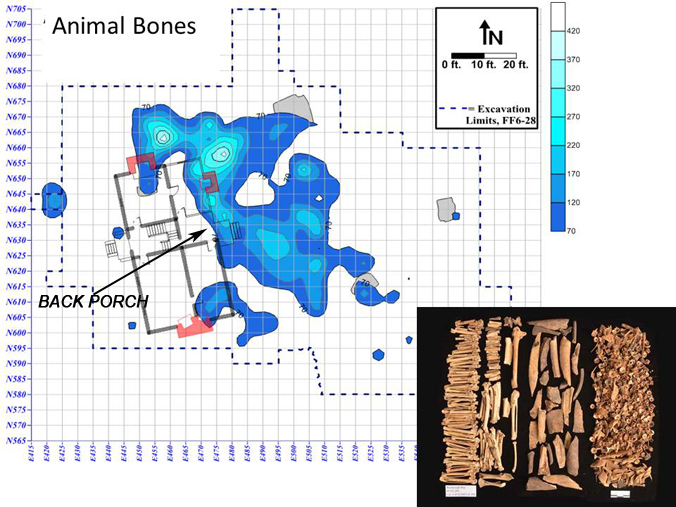
We have abundant archeological information from Ferry Farm and Kenmore that supports these habits. A large part of Ferry Farm has been excavated over the decades, leaving clear evidence that the Washington family and their enslaved workers disposed of waste right in the backyard…off the porch. Large amounts of artifacts were discovered and mapped, showing the proximity to the house, meaning the garbage was close, and rodents love trash.
Map showing the concentration of animal bones excavated from the midden at the rear of the Washington house at Ferry Farm.
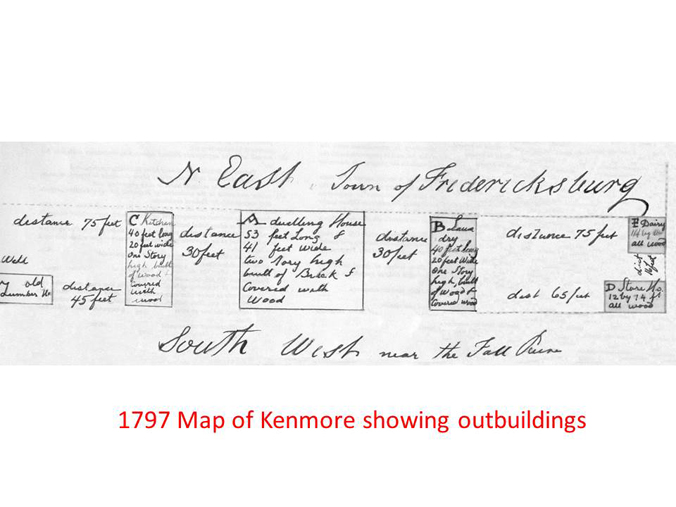
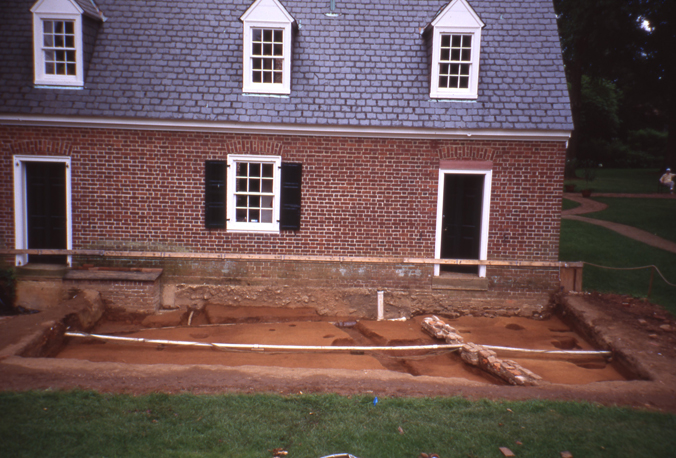
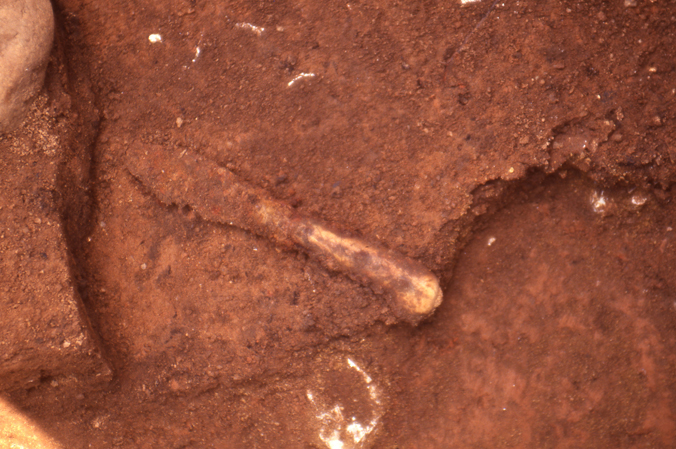
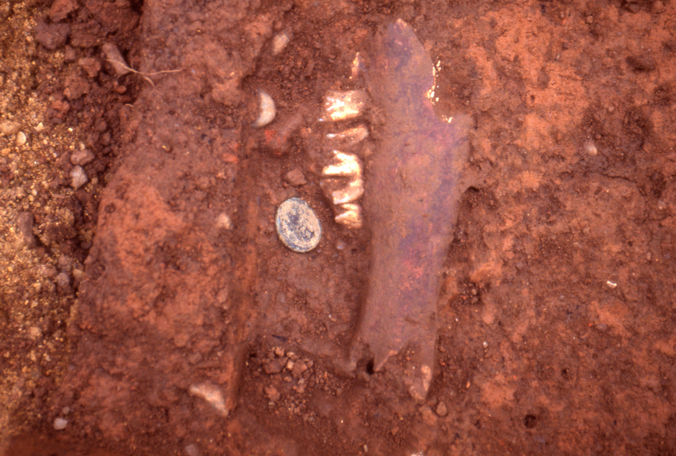
At Kenmore, the garbage situation seemed to be a little more regulated because the grounds and buildings were planned. The main house was made of brick, surrounded by two wood-built structures containing the kitchen and laundry. During excavations of the kitchen yard (between the house and kitchen), there were minimal artifacts, but a dump site was found west of the kitchen. The location could be accessed by the window or by walking around the side of the building and contained a pig jaw, animal bones, bone-handled knife, and other objects. The kitchen is about 30 feet from the house, with the slave passage doors opening right onto the kitchen yard…plenty close enough for an enterprising rat or mouse.
Bad House-guests
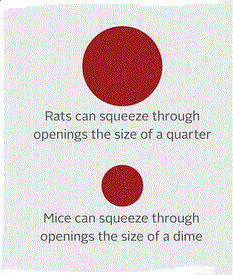
So, why are rodents bad to have in your house? Disease, contamination, destruction, smells, and lots of poop. [9] Rats can squeeze through an opening the size of a quarter. Mice only need the size of a dime…so they will be everywhere in your house and will bring friends. [10] Rats and mice are spreaders of disease from rat-bite fever that spreads through bacteria in the rodent’s saliva, urine, or droppings to the bubonic plague transmitted by the lice hitching a ride on their fluffy friend.[11][12] While today, rodents are relatively low on the list of dangerous disease spreaders in an era of limited medical knowledge and treatments, it could be a matter of life or death.
Contamination and destruction are these creatures’ modus operandi. They get into everything, period. They will eat almost any human food, chewing through any storage system, leaving behind chaos; they have even been known to eat soap and glue. [13] While venturing through the house, they are constantly urinating and pooping, which is smelly, can create mold growth, and should never be consumed. [14] In their quest for food, they often destroy household items, eating books, chewing clothes, gnawing on mattresses, and even nesting in furniture. All of which is not only annoying but expensive to fix or replace. [15][16]
But one of the most offensive things a mouse or rat can do is die in your walls. Take it from Colonel Landon Carter, who had to deal with a rat dying behind his wainscoting, informing everyone, “Wainscoted rooms have their conveniences [inconveniences?] as a dead rat has been stinking behind mine in the hall at least six days and is now intolerable in spite of burning tar…this dead rat stunk prodigiously.” [17]
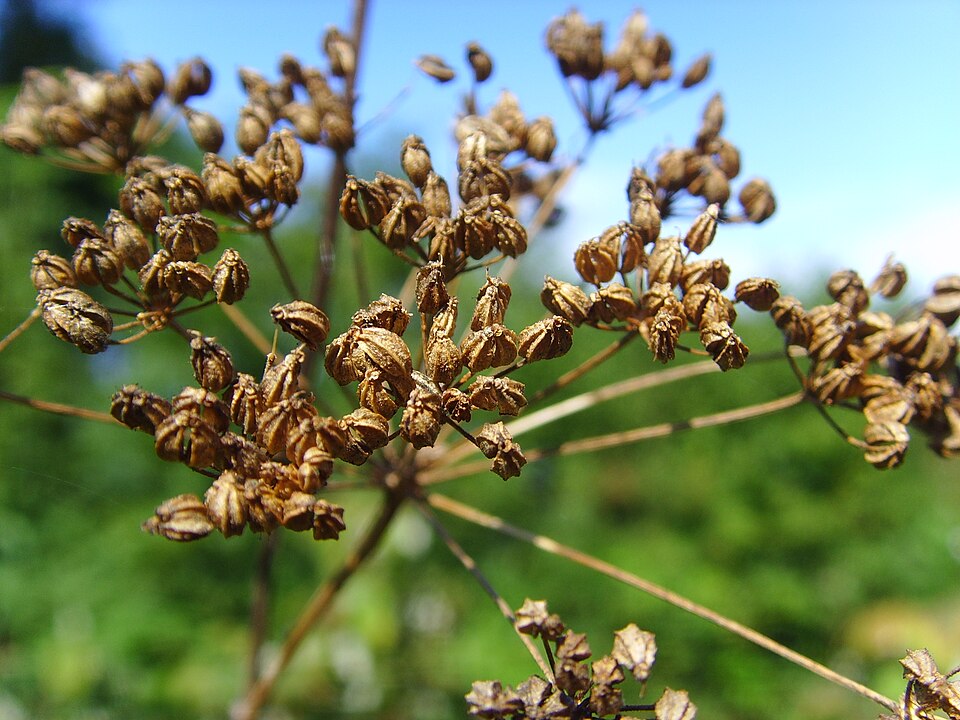
Surprisingly, colonists used many of the same techniques we do today to eliminate these pests. Pesticides or chemical warfare was widespread, with many recommendations and recipes dating back to the 15th century. I found recipes containing helliberry leaves, bitter almonds, “seade of wild cowcumbers,” colluentida, hemlock seed, aconite or wolfsbane, and arsenic.[18] I don’t know many of those ingredients, but apparently, they kill rodents nicely.
Hemlock seed, the notorious plant which was used to execute Socrates for impiety and corruption of the youth.Wolfsbane an extremely poisonous plant that should be handled with care.
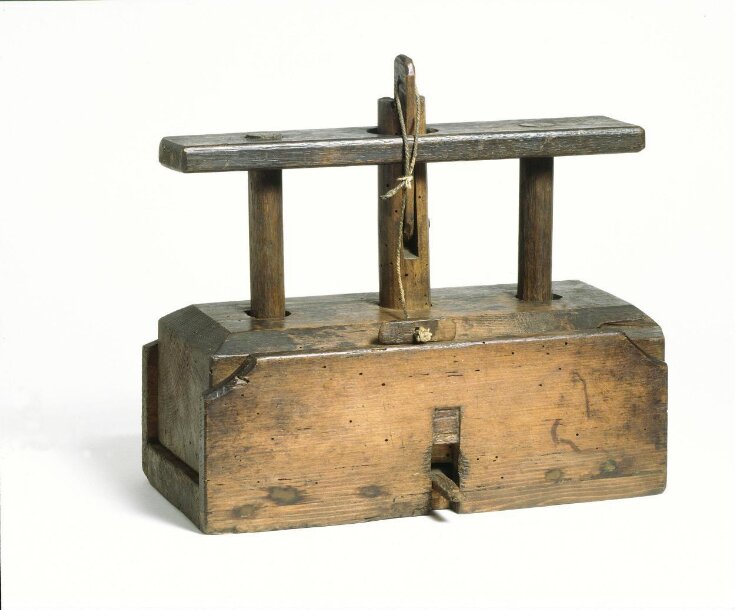
Another method was traps, which are common today. They were pretty popular, and there were many advertisements in the Virginia Gazette from sellers touting that their mouse traps just arrived from England. [19] There are also many instructions for building easy mouse traps like the “deadfall” or “noose” traps, which are as horrible as you imagine. [20][21]
Deadfall mouse trap, c. 1800-1850 Source: V&A Collection
Lastly, one method that is making a comeback is animals, both cats and dogs.[22][23] Cats have been used for ages as rodent killers and are good at their job. [24] A 14th-century manual suggests that if you have problems with vermin, “have as a good supply of cats.”[25] The famous diarist Samuel Pepys wrote in December 1660, “my boy taking a catt home with him from my Lord’s, which Sarah hath given him for my wife, we being much troubled with mice.”[26] There are even modern programs like Barn Buddies that save feral and skittish cats and adopt them out as “rodent control technicians.”[27]
And dogs, mainly terriers, have been used to clear mice and rat infestations for centuries, just like cats. Ever the dog lover, George Washington had terriers at Mount Vernon, which probably helped immensely around the plantation.[28] Today, cities like Chicago and New York use these canines in modern rat hunts.[29] It seems the skills of the terrier will always be in demand.
Little Historians
Lastly, how do we, without a doubt, know that there were rodents at Kenmore and Mount Vernon? Rat nests. Rat nests are usually found in walls or under floorboards, and they not only prove these guys resided in the houses as long as the families themselves, but also provide a fascinating historical glimpse into the material lives of the occupants.
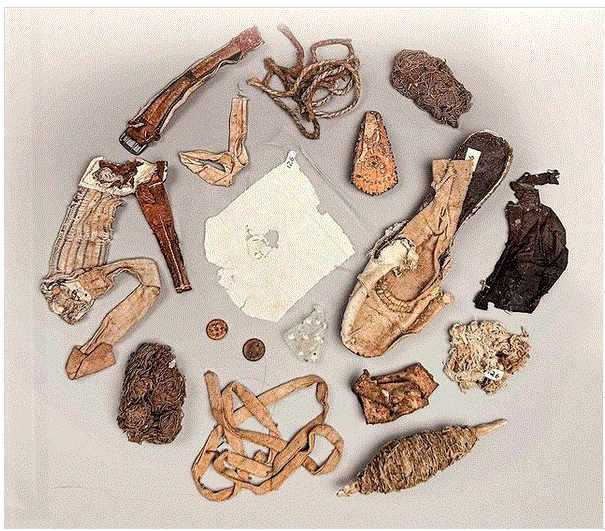
Mount Vernon documented the finding of a rat nest in 1949 behind the wall in Washington’s bedchamber. When dissected, it included buttons, paper, rope, yarn, a whole woman’s shoe, and fabric matching Washington’s bed curtains.[30]
Similarly, in 1989, a rat nest was found in Kenmore while investigating the walls and floorboards. We recently picked apart the bundle to find fabrics, fibers, thread, yarn, newspapers, bones, nutshells, and wood splinters. The remnants in the nest were dated no later than the early 20th century due to dates on newspaper fragments and the absence of plastics.
In conclusion, rats and mice have been a constant annoyance since they first set foot in this country; unfortunately, that is still somewhat true. These enterprising rodents have adopted America as their own and we as fellow citizens must learn to live together despite our often distaste for each other.
Fun Fact – We don’t want to malign rats more than they have been throughout history so we would like to add that rats make good pets. They are quick learners, highly trainable, very clever, and have excellent memories. They are now being trained to detect land mines, diseases like tuberculosis, and even rescue earthquake survivors.
Heather Baldus
Collections Manager
[1] Agwamba, K. D., & Nachman, M. W. (2023). The demographic history of house mice (Mus musculus domesticus) in eastern North America. G3 Genes|Genomes|Genetics, 13(2). https://doi.org/February 2023
[4] Newman, M. H. (2001). The vermin -killers: Pest control in the early Chesapeake [Doctoral Dissertation, Willam & Mary University]. https://scholarworks.wm.edu/etd/1539623387/, pg 111.
[30] Mount Vernon [mount_vernon]. “In 1949, preservation staff removed a rat’s nest from behind a wall in the Washingtons’ bedchamber..”* Instagram, May 19, https://www.instagram.com/p/CsbIc9sOO_2/.
Editor’s Note: As the two-hundred-sixty-ninth anniversary of the skirmish of Jumonville Glen approaches this Sunday, May 28th, some recent and exciting discoveries have occurred at the battlefield. The National Park Service (NPS) released an announcement this week stating that after a four-week archeological investigation, objects have been found to verify the location of the first skirmish, Jumonville Glen, of the French and Indian War. Archeologists found a multitude of artifacts, including several eighteenth-century musket balls.
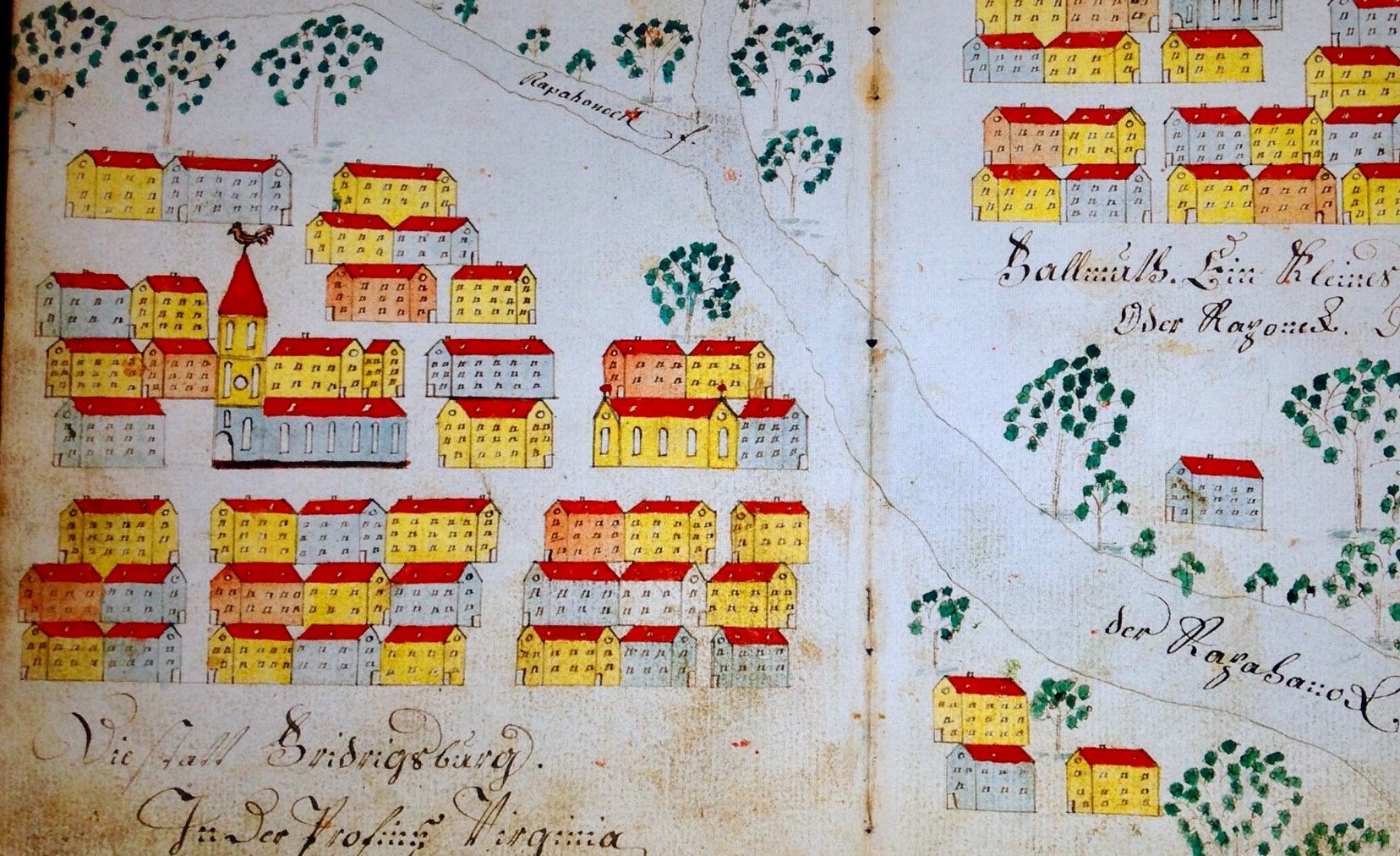
Figure 1. Detail of a highly stylized depiction of Fredericksburg, VA by Fench soldier Georg Daniel Flohr, who visited in 1782. Despite the use of artistic license, the illustration conveys Flohr’s perception of the 18th Century town as a “rather large” port with “intense boat traffic.” Source: Account of the Land and Sea Expedition in America of the Acclaimed DeuxPonts Regiment from 1780 to 1784
Crowding out the fresh spring air of a wooded countryside, the acidic scent of aerosolized gunpowder began to sting the interior of a nervous 22-year-old’s nostrils. His ears rang from the shock of dozens of nearby explosions. Smoke clouded his vision, and sensory overload likely clouded his judgment. Soon-to-be-familiar sounds followed rapidly: scurried movement, intense chatter, and groans of agony. Yet, the inexperienced youth had to make decisions on behalf of the crowd around him. He found himself at the center of a new form of chaos: the opening volleys of a world war.
Lieutenant Colonel George Washington’s Virginia soldiers had just fired into a French military camp near the Monongahela River in western Pennsylvania at a moment (May 28th, 1754) when peace among European empires and Native American nations sat at a precarious equilibrium. Over the past several months, French forces had been busy erecting Fort Duquesne at the Forks of the Ohio River (the site of modern-day Pittsburgh, PA). Royal Governor Robert Dinwiddie of Virginia considered this commercially and strategically significant location part of the British Empire and sent Washington to the area to help re-establish British control. This was the context in which Washington’s Virginians and a party of Mingo warriors came upon the ill-fated French camp in a ravine soon to be known by the infamous moniker of “Jumonville’s Glen.”[1]
After the first shots rang out around the glen, things only got worse. Washington’s cocommander, Tannagrison (a Seneca politician leading the party of Mingos), summarily executed the French officer in command, Ensign Joseph Coulon de Villiers, Sieur de Jumonville, and events escalated from there. In fact, this frontier skirmish grew into a world war that would not only give rise to the North America of the Revolutionary Era, but would forever alter the power dynamics of entire globe. Consider the growth of the British Empire, two centuries of exploitation and resistance in India, the birth of the United States, the creation of independent republics in Latin America, the French Revolution, English colonization of Australia, the American Civil War, the Assassination of Archduke Ferdinand, the rise of the Axis Powers, the Vietnamese independence movements of the 20th Century, and even the War on Terror. The conflict that Washington and Tannagrison started at Jumonville’s Glen, known as the“Seven Years’ War” or the “French and Indian War” (1754-1763), shaped all these events, along with countless others. And as residents of the Fredericksburg region, the Washingtons and Lewises sat at a crossroads of this worldwide upheaval.
As the 250th anniversary of American nationhood approaches, understanding the Seven Years’ War’s social, martial, and political context is perhaps more important than ever. In anticipation of future posts related to this subject, I hope what is below will introduce you to how the stories of those associated with Kenmore and Ferry Farm intertwined with the larger story of the war.
We’ll start with George. As an officer commissioned in the provincial (colonial) Virginia Regiment, George Washington not only helped initiate the Seven Years’ War but saw his first real military service at places like Fort Necessity or as a volunteer aid-de-camp in the ill-fated Braddock Expedition of 1755, where he nearly died during the famous British defeat at Battle of the Monongahela. Of course, historians have worn countless pens, pencils, and keyboards recording Washington’s involvement in the early stages of the war and documenting the future Commander-in-Chief’s first brushes with combat. However, George’s duties increasingly involved more independent responsibility after 1755. These events came on the heels of George’s formal relocation from his mother, Mary Washington’s, residence at Ferry Farm to his late half-brother’s estate at Mount Vernon.
The two years that followed George Washington’s more well-known deeds at the Monongahela produced circumstances similar to those he would contend with during the American War for Independence (1775-1783). Throughout 1756 and 1757, the Virginia Regiment had to defend a string of small, isolated forts along Virginia’s vulnerable frontier to the west of the Blue Ridge Mountains.[3] The task of managing poorly-supplied posts that stretched from Winchester, VA, to the vicinity of modern-day Martinsville, VA, presented George with the opportunity to develop three aspects of leadership that would define his work in future years: military administration over vast geographical territory, long-term strategic planning, and the sustaining of volunteer troops despite strained logistical resources.
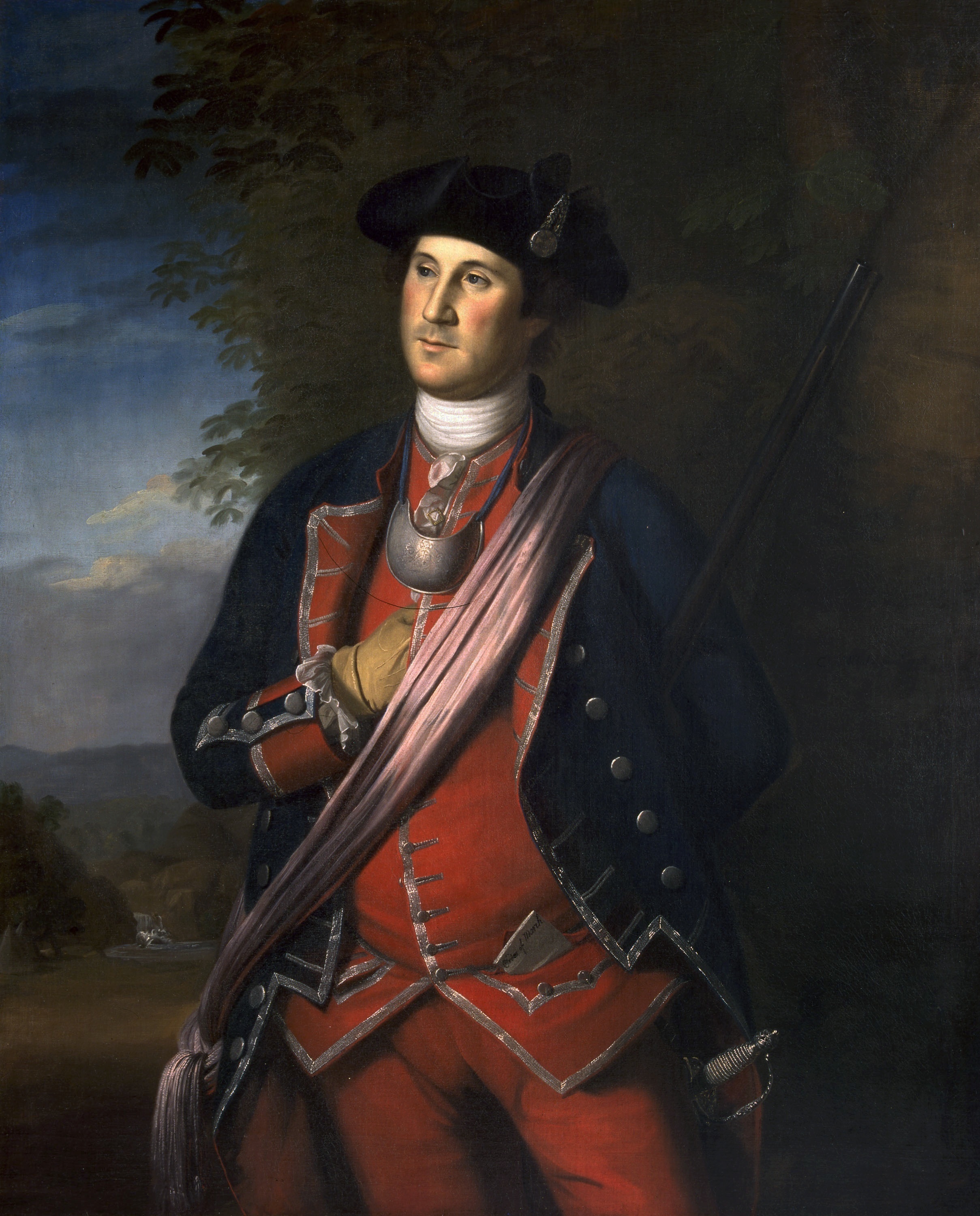
Figure 2: a 1772 portrait Charles Wilson Peal depicting Washington in a uniform similar to those worn by officers of the Virginia Regiment Source:Washington and Lee University
During a tour of Virginia’s frontier forts, the “bad regulation of the militia; the disorderly proceedings of the Garrisons; and the unhappy circumstances of the Inhabitants” shocked the young officer.[4] Washington filled his correspondence of this era with phrases such as “inconceivable trouble” and “unhappy Juncture” as he recorded innumerable instances of paucity, civilian death, and desertion.[5]
Washington’s struggles continued into 1758 when the Virginia Regiment became involved in the Forbes Expedition, a laborious campaign that eventually resulted in the British capture of Fort Duquesne. Around that time, the needs of sick veterans of the past three years of fighting, marching, and garrison duty presented further challenges. None other than Fielding Lewis, a young Fredericksburg merchant and husband of George’s sister Betty, agreed to contract with his brother-in-law to provide for Virginia’s ill. That June, for instance, Lewis sent the material for 60 blankets to “Colo. Washington for the Country Dr.”[6]
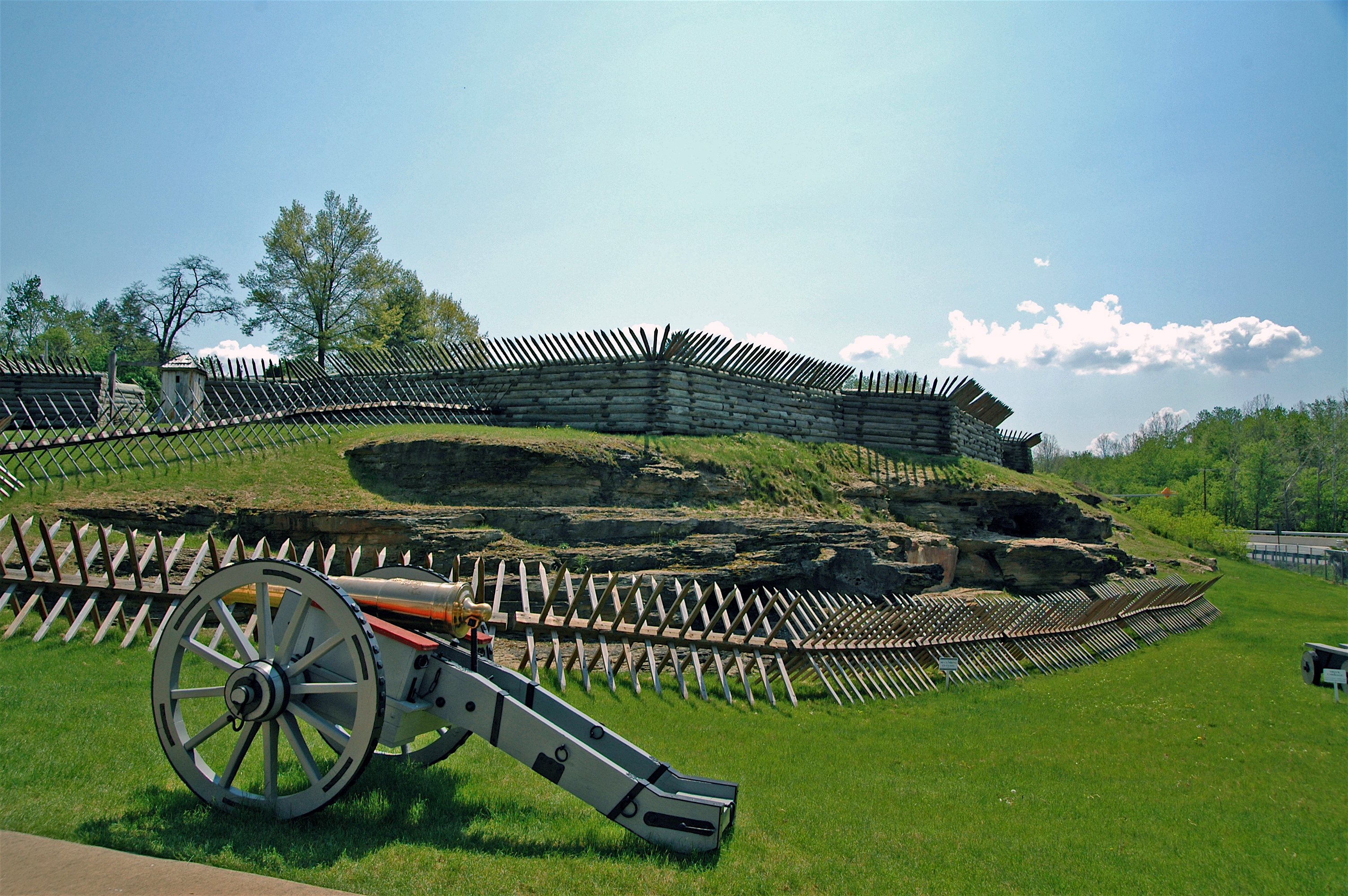
Figure 3: View of reconstructed fortifications at Fort Ligonier, the centerpiece of the 1758 Battle of Loyalhanna, an important part of the Forbes Expedition. Source: Jeff Kubina via flickr
As a businessman with a growing family, Fielding Lewis must have had more reason than most to fear the potential adverse effects of world war upon his trans-Atlantic commercial ventures. However, as British fortunes began to change for the better, Lewis reaped the benefits of citizenship in a growing empire. Before the war’s end, he was conducting a lucrative speculation business at a fair in Fredericksburg.[7] Lewis’s success eventually provided the means to commission the construction of Historic Kenmore.
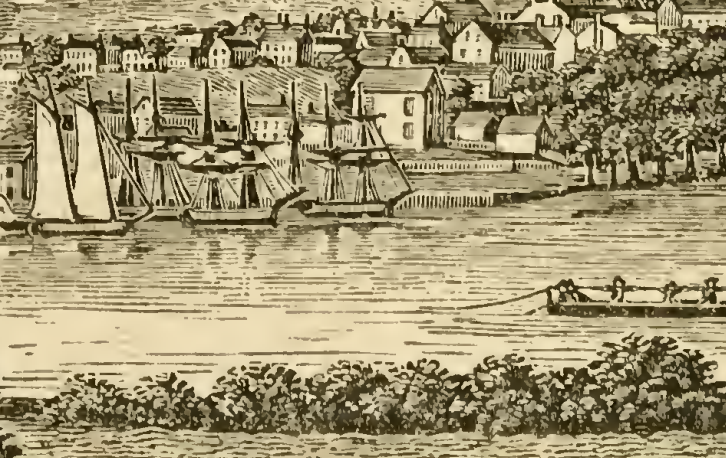
Figure 4: Detail of an 1845 illustration of Fredericksburg as seen from Ferry Farm, showing tall ships by the town’s wharves.. Fielding and his father John invested in several merchant vessels, the towering masts of which were once common parts of Fredericksbrug’s cityscape. Source: Internet Archive
Of course, learning about wealthy and influential men like Washington and Lewis is easy. However, countless individuals of all social standings played a part in the drama of the Seven Years’ War. Part II of this post will explore how those on the Homefront coped with world war and how the conflict transformed the community of Fredericksburg in ways still visible today.
Stay tuned.
Ethan Knick,
School and Youth Programs Manager
[1]David Lee Preston, Braddock’s Defeat: The Battle of the Monongahela and the Road to Revolution (Oxford University Press, 2015), 26-28.
Fred Anderson, Crucible of War: The Seven Years’ War and the Fate of Empire in British North America, 1754-1766 (Knopf Doubleday Publishing Group, 2007), 18-23.
Spring is here, which means another season of exciting archaeological work at Ferry Farm is about to begin! Ferry Farm, the boyhood home of George Washington, has been conducting archaeological investigations for over 30 years with the aim of recreating and analyzing the 18th-century farm landscape that shaped George Washington during his formative years as a young man. Every season brings new discoveries, and this year will be no different.
This season we will be investigating two separate areas within the historic site. The first (FF-38) is a feature discovered in 2018 when we monitored the excavation of a utilities trench for the reproduction Washington house. This large feature, approximately 5’ x 7’ and over 2.5’ deep, is filled with dark brown organic soil and contains 18th-century artifacts, including a wig curler, a signature find for our site. Our excavations will expose the entire plan view of the feature and how it relates to other possible features in the surrounding area.
Figure 1. The location of our two summer projects in the historic area.
The second area of investigation (FF-40) is the site of a colonial-era kitchen that burned early in the Washington family tenure of the farm. Though the building’s remains were the subject of previous archaeological studies in the 1990s, we are going to open the site up again to have a second look. Since we have been unable, so far, to locate the kitchen that would have replaced this one after it was destroyed in a very hot fire, we want to continue examining the one we do know about!
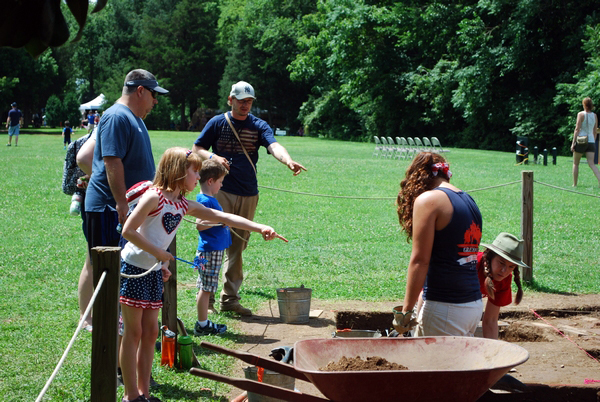
The dig begins the week of May 8th and ends July 21st. The crew will be on-site Monday through Friday, 8 am to 4 pm. We are more than happy to answer questions about our work and show our visitors the artifacts that we find. Assistance is always welcome at our sifting screens, so come by and get your hands just a little bit dirty as we search for answers in the ground!
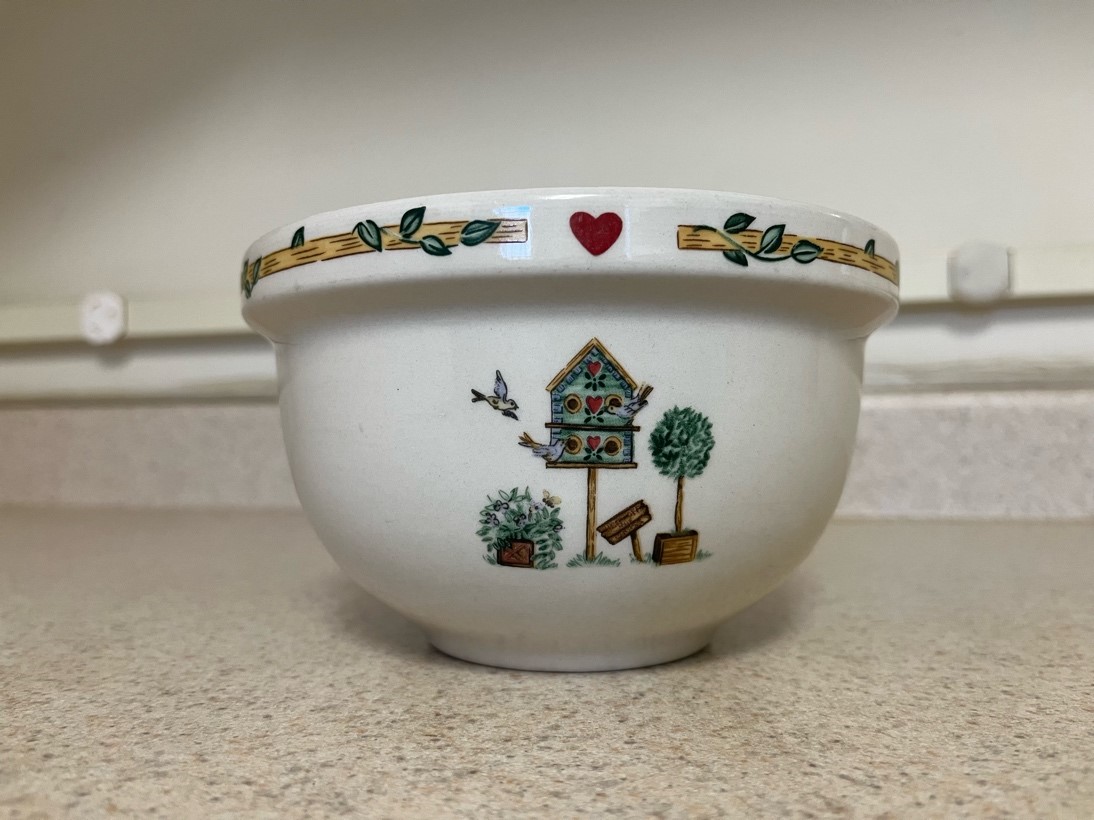
If you visited Ferry Farm on October 21, 2022, you may have heard a loud crash coming from the archaeology lab – don’t worry, it was on purpose! During my fall semester internship at the Ferry Farm Archaeology Department, I had the pleasure of learning how to mend ceramic vessels, and like any skill, practice makes perfect. I purchased a cheap ceramic bowl from Goodwill and purposefully shattered it so I could practice putting it back together again. Follow along as I take you through the process!
Bowl in one piece before being broken
Here is what the bowl looked like when I first bought it – in one piece! I chose this bowl because it was a good size: not too big where it would be too long of a project, but not too small where it would only take a few days to complete.
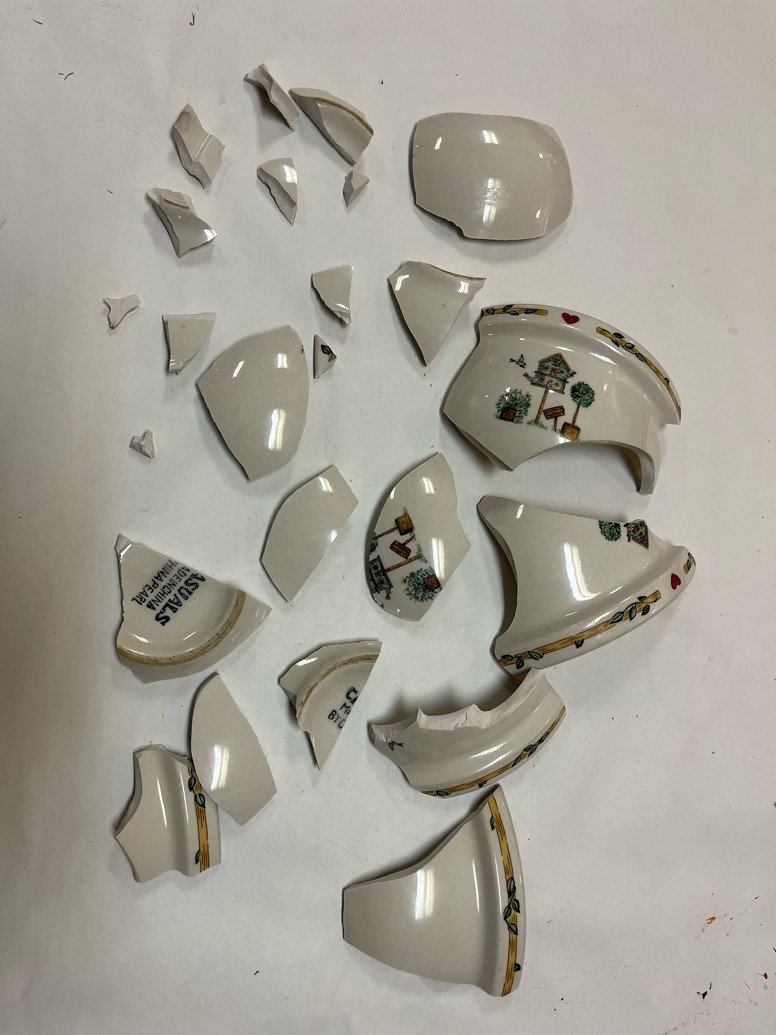
Breaking the bowl
Next came the fun part: breaking it! I placed the bowl inside a plastic bag so that all the pieces would stay together. Then, against my natural instinct, I threw the bag onto the ground and broke it into pieces! Notice how some are larger than others- this means that I had to be very careful as to not accidentally exclude a small piece from the entire bowl.
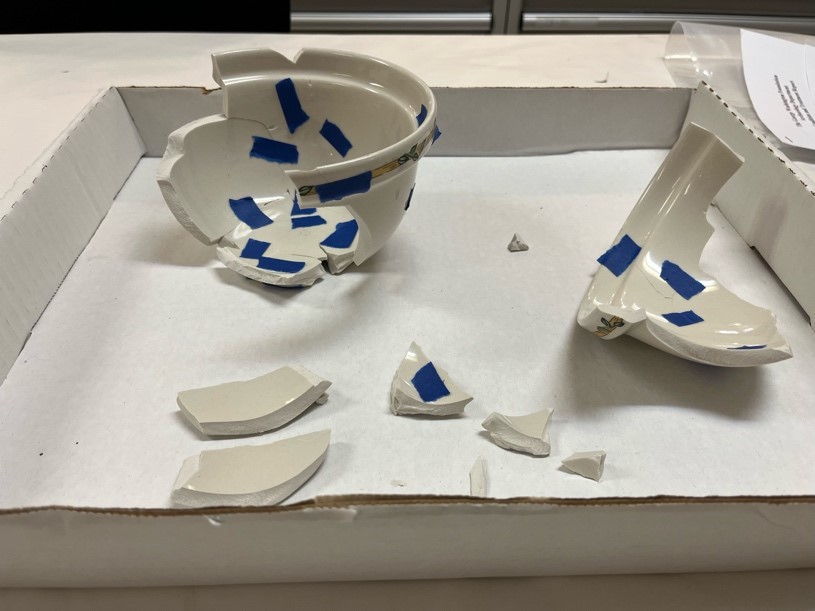
Taping sherds
After collecting all the sherds, my next step was to figure out where everything goes by taping the sherds together. This process allowed me to plan out the order in which the sherds would be glued together. I used blue painter’s tape to do this because it doesn’t leave residual adhesive on the surface of the sherds. This same tape is used when mending the ceramics found archaeologically at Ferry Farm.
More taping
More taping… it’s coming together!
Here is the completed bowl after taping! Once all the sherds were back in their rightful places, it was time to carefully plan out how I wanted to glue them. When mending, you don’t want to just start gluing together the first pieces you know fit together. It is important to take into account the shape of the vessel so that you leave as few gaps between the sherds as possible. I developed a plan to start from the base and work my way up to the rim of the bowl. With this done, it was time to start gluing!
It is protocol in the Archaeology Department to mend ceramics using a reversible method. The glue I used was a solution of 35% B72 in acetone, which is removable with acetone. I started by coating the broken edges of the sherds with a less concentrated solution of the glue, 5% B72 in acetone. This prepped the sherds to have glue applied to it. After this, I applied 35% B72 to only one sherd to be mended and then held it together with its neighbor. After 10 seconds of holding the sherds together, they were sticking quite nicely. I then placed a few pieces of painter’s tape to ensure the glue would hold, and placed the freshly glued sections into a bucket filled with glass beads.
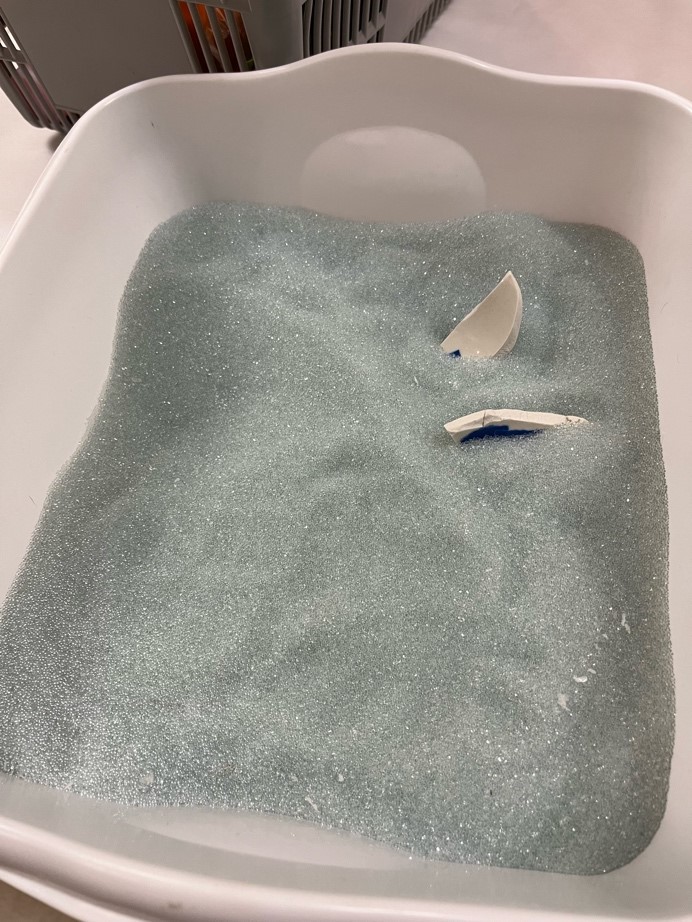
Glass beads…yes, everyone who goes to the lab runs their fingers through them.
The glass beads hold the glued sherds together and prevent them from shifting as the glue dries. I repeated this process for all the sherds over the course of a few days until…
Finished glued bowl
…the gluing was complete!
Here is the final product! Now, no mend is ever going to be perfect. Once a vessel is broken, there will always be misaligned sherds in the vessel due to the tension of the entire piece being broken.
So, why do we mend ceramics in the first place? It can help archaeologists understand what types of objects a site’s occupants would have used and what activities were taking place. It is also an important process in public interpretation: mended ceramics can help the public see what certain vessels would have looked like during a site’s target period of significance.
Finally, keep in mind that what I did with this bowl was only practice: actual mending with sherds excavated from an archaeological site does not go as smoothly as this. Only a small percentage of a vessel is typically found and thus able to be mended. The reason why so few sherds of one vessel are found is because decades and centuries of being in the ground allows for sherds to get mixed up and moved due to bioturbation (movement of soil by animals such as rodents and insects), erosion, and in some cases, agricultural plowing.
With Halloween just around the corner, we thought we would take our readers behind the scenes to look at some of the creepiest and macabre artifacts we have uncovered at Ferry Farm. Some may seem like obvious choices, but others have hidden connections and meanings. Be sure to let us know your favorite in the poll at the end.
Bartmann Jug: The Wild Man and Witchcraft
This jug may look familiar to those who enjoy visiting Colonial sites. Made predominantly in Germany during the 16th and 17th centuries, these pieces of salt-glazed stoneware proved incredibly popular. Known as Bartmann Jugs, all pieces share the presence of a bearded face on the neck of the vessel. Some have additional designs, such as crests, on the body. The face lends the name to the jug as “Bartmann” translates from German to “bearded man.” Still, this begs the question of who the face belongs to?
Remnants of Bartmann Jug
The bearded face depicts a figure known as the Wild Man. A character from Northern European folklore of the 14th-16th centuries, Wild Men reportedly flourished in remote, alpine regions. In characterization, Wild Men are similar to the satyrs and fauns of Greco-Roman tradition. They are covered in hair, hence the bearded face, and wear no clothes. The popular depiction of Wild Men began in the late Middle Ages when the figure became secular. They thus appeared in all art forms with males and females being depicted. The somewhat exaggerated face on the Bartmann Jug speaks the Wild Man’s untamed nature.
Wild Man by Martin Schongauer, 1480s
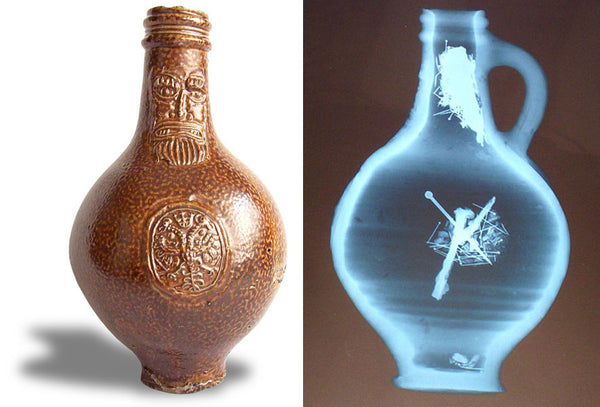
Aside from Wild Men, Bartmann Jugs have a role in witchcraft. At a time of religious turmoil and witch hunts, England saw a rise in the use of witch bottles in the 1600s. These bottles were white magic in nature and supposedly protected against black magic. Bartmann Jugs account for most witch bottles from this period and the abnormal face may have factored in to its use. To make a witch bottle, one filled the vessel with items such as nails, human hair, fingernail clippings, heart-shaped pieces of cloth, pins, and urine before sealing it. The bottle was then buried or submerged near the area it protected. No Bartmann witch bottles have been found in the America, but the Mathers of Massachusetts wrote about witch bottles in the late 1600s. Could ours have served such a purpose?
X-Ray of Bartmann Witch Bottle
Civil War Medicine
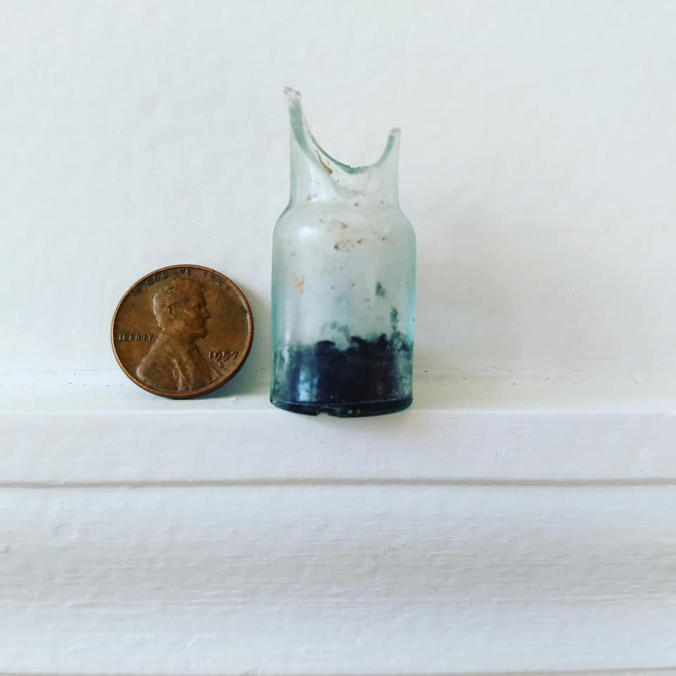
Just the thought of Civil War medicine is typically enough to conjure scenes of horror, so this simple glass bottle may seem a bit disappointing. However, things are rarely what they seem. We recovered this artifact from a Civil War trench and quickly became interested in what it originally held. Scientific analysis of the remaining residue revealed that the bottle served a medicinal role and once contained liquid mercury. As mercury is known as extremely dangerous, this may come as a shock. Why would anyone have mercury on their person and how could it be medicinal? Believe it or not, mercury once served as a cure-all in the medical world and it was only in 20th century that its dangers were fully accepted. Those who used mercury medicinally viewed the topical burning, sweating, excess saliva, and diarrhea it produced as signs of successfully purging their body of their affliction. In reality, it was their body trying to rid itself of the mercury.
Mercury Bottle
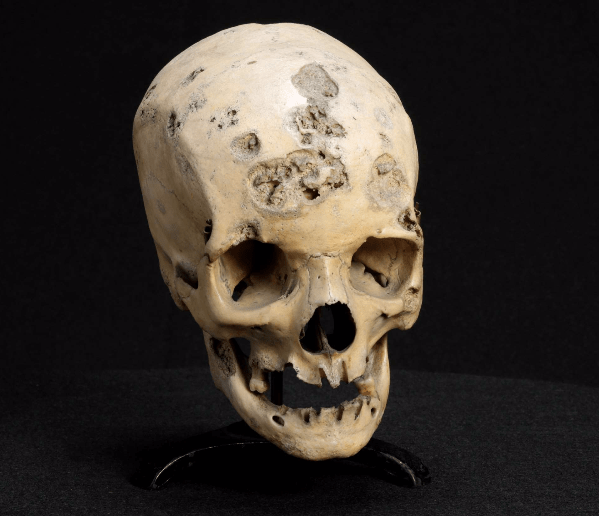
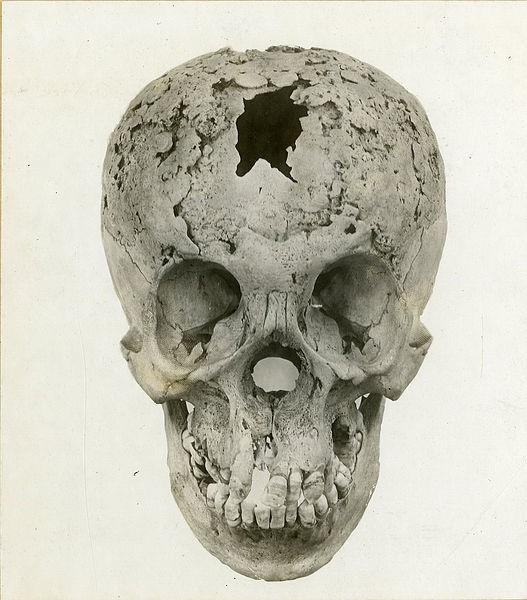
As a cure all, people utilized mercury for all sorts of afflictions and pest control. Common uses in a Civil War camp may have included treatment for head lice, bed bugs, skin sores and lacerations, as well as parasitic infections. The most terrifying of all, however, would have been syphilis. The dominant strain of this disease is sexually transmitted, and was often ripe in military camps. A disease that did not kill quickly, a person could live with syphilis for years as it slowly ate away at the body. As it progressed, the afflicted would note rashes, open sores, and growths or bumps on their body. Neurological problems could occur and the loss of your nose was not uncommon. As the disease stayed with you until death, it had time to impact the skeleton, most notably leaving pitting on the skull, potentially an eaten away nose cavity, and other signs of deterioration. Overall, a horrible way to go and a wicked good topic for this blog.
For further reading on this artifact and the scientific analysis, you can read a previous blog on it here.
Dracula’s Jewelry
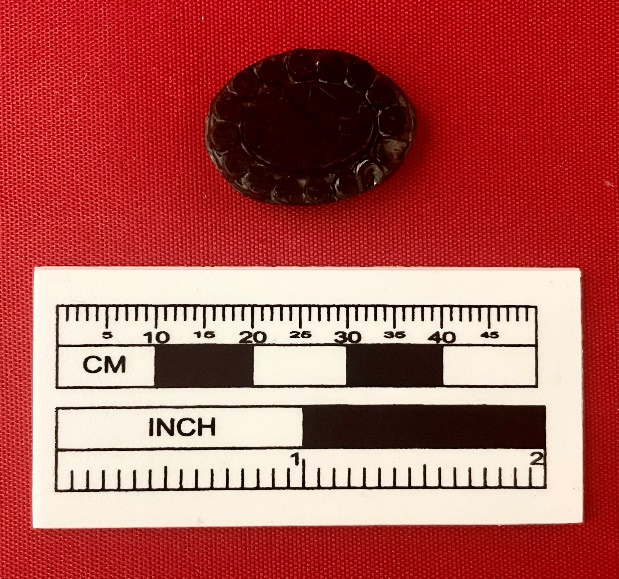
Mourning jewelry became extremely popular during the mid to late 1800s. While pieces came in many forms, they mainly reflected somber colors, like black, or carried something of the deceased’s, such as hair. The rise in this trend first derived from Queen Victoria’s endless mourning for her husband Prince Albert in the United Kingdom. Her mourning set a fashion trend and, with the number of deaths that occurred in the American Civil War, Americans had a reason to adopt it. Alongside the somber tone of jewelry, the period approached the topic of death with a rise in the macabre, séances, and horror.
Mourning Jewelry
At Ferry Farm, we have uncovered a single piece of mourning jewelry, which connects to one of the most famous Gothic novels and literary monsters of all time, DRACULA! This small piece may have once been set in a necklace or bracelet and belonged to someone who inhabited the property or visited after the war. While that is all very interesting, I am sure you want to know where the King of Horror fits in. The answer lies in the material. The pendant is made of jet, which accounted for much of the 1800s’ mourning jewelry. Sources of jet exist in various parts of Europe and the American Southwest, but the most prosperous jet production existed in Whitby, England during Victorian times.
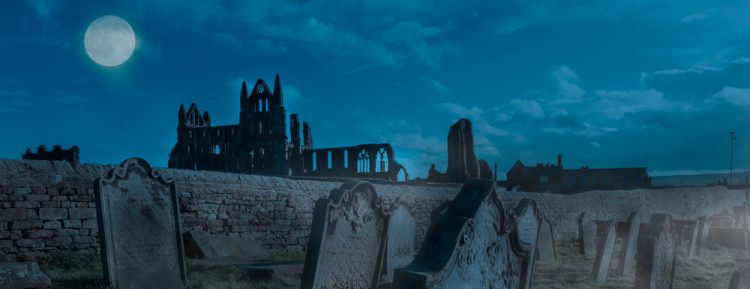
A seaside, port town in the north of England, Whitby is noted for the ruins of an impressive abbey that dominate the landscape. Fans of Bram Stoker’s novel will recognize the town as the location where Count Dracula first arrives in England, and Whitby Abbey even appears in the novel. Stoker wrote much of the book in Whitby, and he reportedly first came across the story of Vlad the Impaler in the local library. Today, Whitby embraces its vampiric legacy (they currently hold the record for the largest gathering of vampires at 1,369 people) and the jet business has seen a resurgence in popularity by aligning itself with this tourist draw. So what do you think of our piece? We highly recommend it for lovers of death, horror, and literature. Please note: Vampire not included.
Whitby Abbey
CreepyDolls
It goes without saying the most people find dolls creepy. They frequently feature in ghost stories and many serve as the malevolent force in horror movies. Here at Ferry Farm, I am not sure which is worse, finding a full doll or severed doll parts.
With people living on the property through the 1990s, we have plenty of potential to uncover dolls. In fact, we found a severed doll hand this summer that we previously featured as a #FridayFind. Other parts include ceramic legs, broken arms, heads, and faces. Perhaps this is the most obvious choice for a scary artifact blog, but, then again, dolls will never stop being creepy.
What is a jaw harp, and what does it tell us? This little instrument likely looks familiar, but you may not know that much about it. That certainly proved the case for me when I decided to research the four we have in our collection.
To start, a jaw harp is an extremely simple instrument to make and play. It only requires an iron or copper alloy frame and a flexible metal tongue, or lamella, which runs through the center. Manufacturing styles vary, but many undergo casting or forging to create the bow shape and arms. The lamella most often attaches by hammering it in place. This part is rarely preserved in the archaeological record, so only the frame remains for us to find.
To play the instrument, one places it against their mouth and plucks the lamella while breathing out. Varying your breathing and the shape of your mouth cavity allows the sound to change. That said, while the instrument is easy to play, it proves difficult to play well, and many dislike its boings and buzzes. Those skilled at the jaw harp, however, went on to play for the likes of Frederick the Great and George IV. They even managed to play more than one jaw harp at once.
Man playing a jaw harp (Mackinac State Historic Parks 2018)
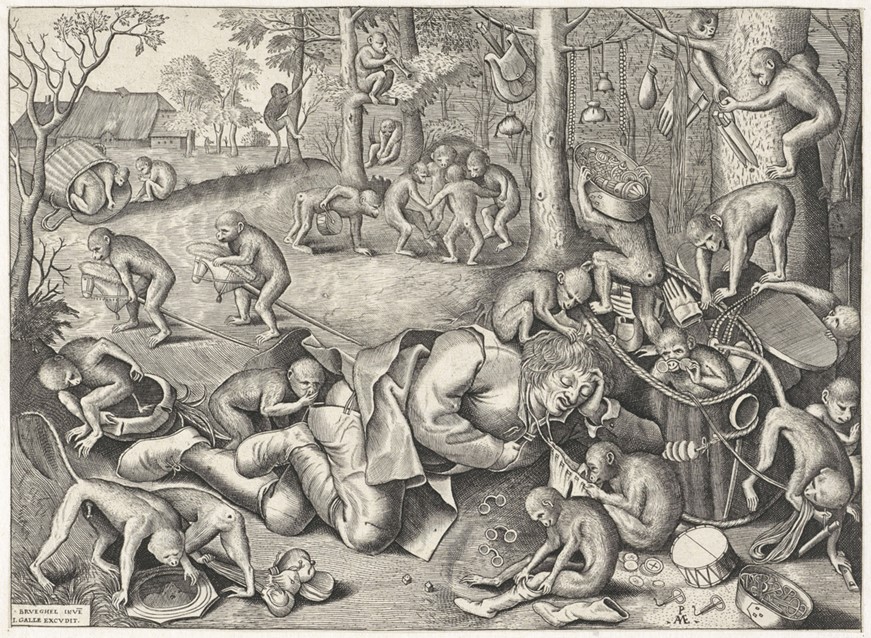
The history of jaw harps dates beyond the fifth century BCE in Asia. Archaeological evidence places the instrument’s arrival in Europe around 1200, with the migration occurring along northern routes through the Baltic. Due to their mundane nature, jaw harps rarely appear in historic accounts or art. Two exceptions include Pieter Bruegel the Elder’s The Sleeping Peddler Robbed by Monkeys (1562), which helps identify peddlers as the main purveyors of jaw harps, and accounts of the North Berwick Witch Trials (1590-1592), where one of the accused performed for James VI of Scotland. Witches aside, the most common players at this time included the lower classes and soldiers.
While jaw harps may not have generated the most attention, they played key roles in early trade deals in North America. Jaw harps likely first came to North America in the company of soldiers, but they soon gained popularity amongst indigenous groups, such as the Five Nations Iroquois. Confirmation of this occurred as early as 1595, with Robert Dudley reporting that the instrument made a successful trade item. As trade continued, the exchange of jaw harps frequently related to the fur trade, but some larger and more dubious, deals included the acquisitions of Staten Island and Maryland. That said, even the fur traders came under fire for using jaw harps of poor quality.
Within established colonies, jaw harps appeared as an item frequently sold by merchants. Numerous adverts appeared in papers between the 1730s and 1780s. For Virginia, this included merchants in Williamsburg during the 1760s, as well as Alexandria and Gloucester in the 1770s. Production would have occurred in England with the then imported good available to all customers in the colonies. We know that soldiers played them during the French & Indian War and the American Revolution. This connection to soldiers would even continue through the Civil War. As for other players in Colonial times, a couple of adverts for runaway indentured servants placed in Benjamin Franklin’s Pennsylvania Gazette listed jaw harps as a special talent of the individual and amongst the items possibly carried by them.
Aside from these individuals, the other most common players consisted of enslaved people. Evidence of this comes solely from the archaeological record. Excavations have uncovered jaw harps at a number of sites in Virginia, including Monticello, that date from the mid-1700s to early 1800s. In all of these cases, the instruments came from enslaved domestic quarters and work areas. Due to their nature, jaw harps would have proved an easy item for an enslaved person to hold on to, use, and share with others. In use, they would have been part of the enslaved music culture, which offered individuals a respite from work, a way to express themselves, and perhaps an outlet for the continuation of West African cultural practices.
As I mentioned earlier, four jaw harps reside in our collection. Three came from the Washington cellar, while the fourth came from a Civil War trench that ran through the cellar. To understand their significance, an examination of the artifacts themselves and their contexts help us identify and date them.
Physically, all four appear to reflect a design known as Gloucester. This means they consist of an iron frame and represent one of the most common designs in America during Colonial times and after the Revolution. We know that the ones that came directly from the cellar pre-date the 1830s due to the collapse of the house. A closer look at the artifacts accompanying them provide us with a range of the 1780s-1830s for the date of deposit.
Depiction of a Gloucester-type jaw harp sans lamella
As for the harp from the Civil War trench, while this may seem like an obvious identification, it remains tricky. A Union soldier may have played and discarded it while encamped here. However, when people filled the trench after the war, they may have used dirt that contained earlier artifacts from Ferry Farm. As the trench ran through the cellar, this harp ultimately lay close to the other three, and the dirt used to fill the trench may have come from that area. We may never know for sure on this particular piece, but it likely dates either to the war period or as a contemporary of the other three.
Ferry Farm’s jaw harps
While the dates provided occur after the Washington occupation of Ferry Farm, jaw harps existed on the market during their time, meaning the instrument may have had an earlier presence. As for who played them, these instruments likely reflect use by enslaved individuals. After the Battle of Princeton (1777) claimed the life of Hugh Mercer, who had purchased Ferry Farm from George Washington, the property passed through a series of renters. None occupied the site for long, but an enslaved population maintained a constant presence as each renter relied on enslaved labor. This continued up until the Civil War. With the evidence of enslaved people using jaw harps at other sites in Virginia and the fact that enslaved individuals constantly lived or worked at Ferry Farm, we can attribute these artifacts to them.
One of our future projects involves reconstructing the enslaved quarters at Ferry Farm to better represent and tell the enslaved narrative. As jaw harps represents an activity that occurred during the limited down time allocated to enslaved people and reflects the importance of music in the culture, one will certainly be included upon completion of the project.
After all that history and archaeology, I leave those wondering what a jaw harp sounds like with the perfect piece. Fittingly titled “Washington’s Birthday,” this 1909 piece by Charles Ives utilizes the instrument to invoke the sound of country dances on a cold, dreary day in February. To hear the jaw harp, skip to 7:37. Enjoy!
Emma Schlauder
Research Archaeologist
References
Clyne, Anthony, 1928. The Jew’s Harp a Century Ago. The Musical Times 69(1024): 508-509.
Kolltveit, Giermund, 2006. Jew’s Harps in European Archaeology. Archaeopress, Oxford, UK.
2009, The Jew’s Harp in Western Europe: Trade, Communication, and Innovation, 1150-1500. Yearbook for Traditional Music 41: 42-61.
Samford, Patricia M.,1994. Searching for West African Cultural Meanings in the Archaeological Record. African Diaspora Archaeology Newsletter 1(3): 1-3.
Wright, Michael, 2008. The Jew’s Harp in the Law, 1590-1825. Folk Music Journal 9(3): 349-371.
2011, The Jew’s Harp Trade in Colonial America. The Galpin Society Journal 64: 209-218.