Lives and Legacies

Tag: artifacts

  • Catherine of Braganza: How the copy of a 17th-century plate tells the story of design, consumer consumption, and the Washington Family

    The concept of buying items to remember certain events or travels is commonplace today. Who goes abroad without bringing back a trinket naming the location? Is it possible to go antiquing without seeing an item that commemorates the wedding of Charles and Diana? Even the smallest item has the ability to tell a story through what it depicts. In our world of mass consumption, these items prove commonplace and relatively easy to obtain, but the concept is not new.

    Charles & Diana memorabilia

    Back in the mid to late 1600s, a potter by the name of Thomas Toft (d.1689) produced a series of plates depicting Charles II and his wife Catherine of Braganza. When Cromwell’s strict Puritan regime ended in 1660, the people of Great Britain rejoiced at the restoration of the monarchy. Charles II was an active king who enjoyed the arts and a good time. His marriage to Catherine, a Portuguese princess, in 1662 was a cause for further celebration, even if her Catholic faith raised concerns. Regardless, Toft had his market.

                A Scandinavian immigrant, Toft lived in Staffordshire, England, and specialized in slipware. Slipware involved the use of clay slips and a lead glaze to decorate a piece. Typically, a white clay slip, which is essentially, watered-down clay, covered the upper surface of a piece before the artist drew on the design. Dark brown and orange-red clay slips then helped bring the design to life. To complete the piece, the artist utilized a lead glaze to enrich the colors and seal it. Toft became one of the most famous slipware potters of the time due in part to his habit of prominently signing his works at the base of his cross-hatching border, which was unusual in the 17th century. He produced plates depicting the royals throughout his career. Toft’s pieces may not have undergone the mass production that they would today, but they fed a market that desired commemorative memorabilia.

    Slipware plate by Thomas Toft depicting Charles II and the Royal Oak

    You may be asking how talk of royals and artists from the 1660s connect to Ferry Farm? The answer comes from the desire to add a slipware plate to the house. As many will know, the items in the Washington house are replicas inspired by archaeological finds on site and pieces dating to the period. Until now, the slipware style did not appear in the house. Aiming to fix this, I went about choosing a design that would not only serve the desired purpose but also tell a story. In the end, I found a Toft plate that depicted Catherine, and the idea came to me.
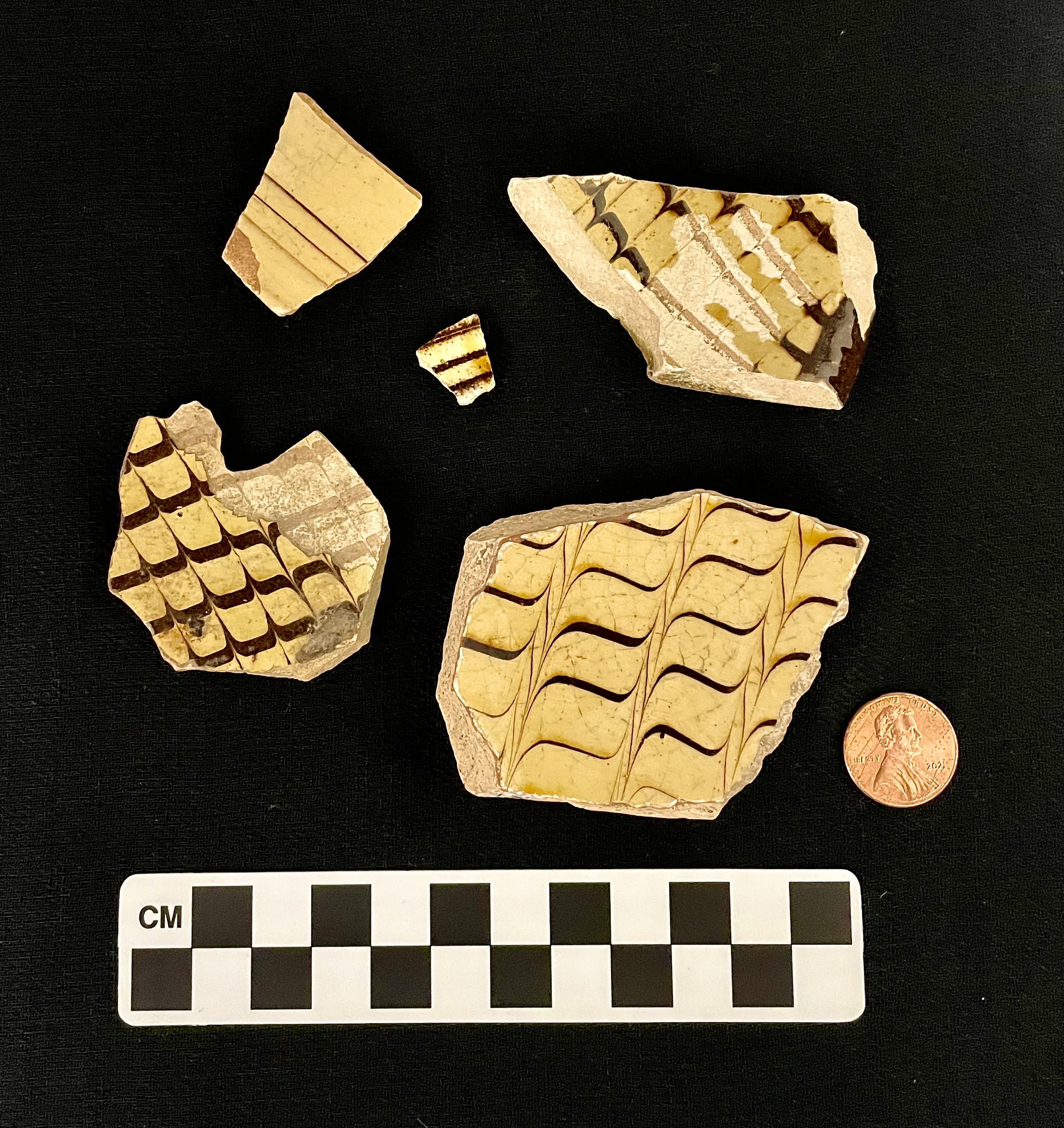
    Pieces of slipware found at Ferry Farm

    John Washington (1631-1677), George’s great-grandfather, immigrated to Virginia in 1657. Motivation for this possibly derived from hardships faced by the Washington family after Cromwell came to power since the family had sided with the monarchy during the English Civil War (1642-1651) and business ties. With the restoration of the monarchy three years after their arrival, it seems likely that this would have been a cause for celebration in the Washington household. We know from finds at Ferry Farm and Kenmore that the Washington and Lewis families owned items depicting royal motifs up until the Revolution. So not only would the Washingtons of the 1660s have raised a toast to the King and later his bride, but they may have acquired items celebrating them. While we do not have evidence for the Washingtons’ owning a piece with this specific theme, items pass through generations, and we know the family brought older items with them to Ferry Farm in 1738.
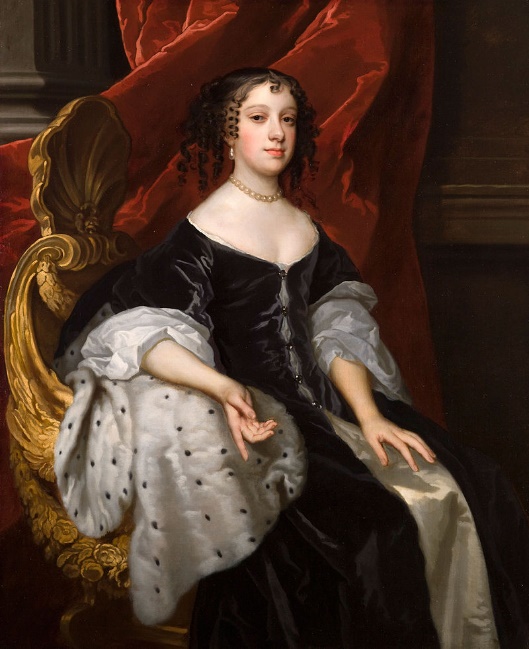
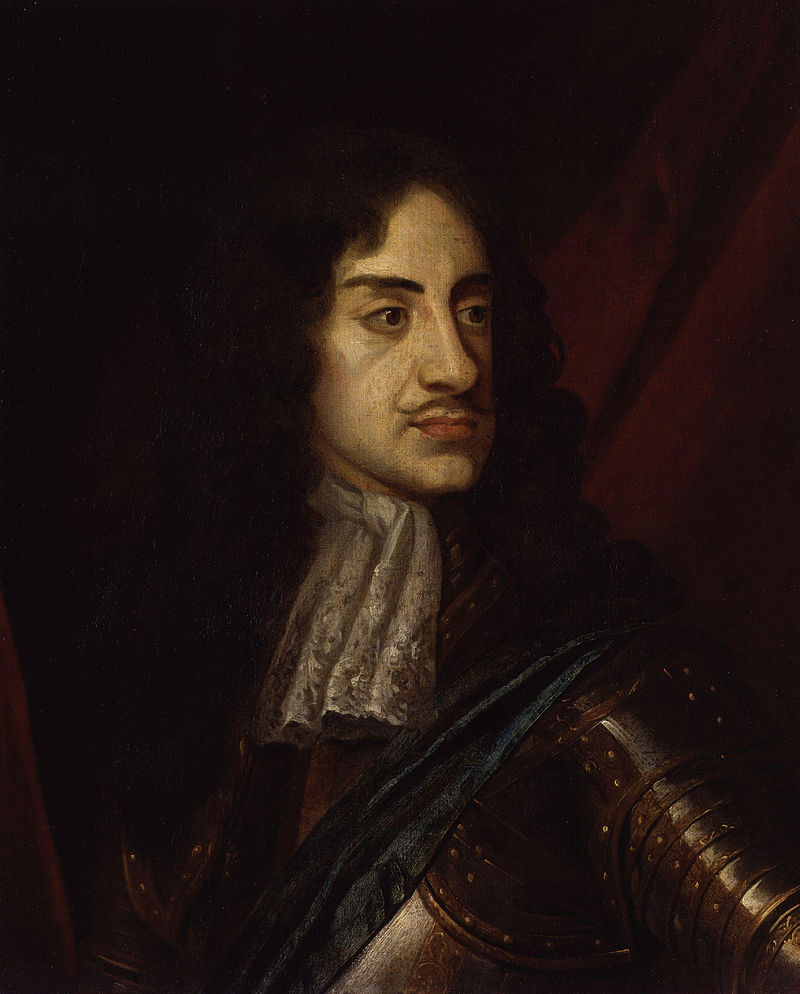
    In making the replica, I aimed to keep it as close to the original as I could, though the cross-hatching border proved impossible to keep as tight. The imagery itself prompts the telling of the Washington-Royalist-immigration story, so nothing major needed changing. Keen viewers, looking at the images below, will notice the addition of a “Q” and a “K” to help identify Catherine. While Toft’s work rarely included royal monograms, they did appear on other designs of the time, making it a simple and fitting addition. In these other pieces, Catherine’s first initial always appears as a “K.” While we may spell Catherine’s name with a “C,” there was no standard of spelling in the 1600s, and this may have occurred since her husband’s name also starts with a “C.” After prepping the plate with a base coat of paint, I sketched the desired design and painted over it in a way that mimicked slipware techniques. A clear coat of spray paint then sealed the design in place of the lead glaze.

      The plate will go on display in the Visitor’s Center, where we display and explore the topics of our blog. Next time you visit, be sure to keep your eyes peeled and let Catherine tell you her story.

    Emma Schlauder

    Research Archaeologist
  • When is a rock also an artifact?

    As archaeologists, we focus on studying the past by examining the items previous humans have left behind. Anything that has been made or changed by someone in the past is therefore considered to be an artifact.

    When you think of stone artifacts, the first thing that usually comes to mind are arrowheads. Arrowheads and spearheads are referred to by archaeologists as projectile points. In addition to projectile points, archaeologists also find a wide variety of other stone tools, including awls, scrapers, knives, axe heads, grinding stones, and fishing weights. All of these tools, and others, were used to procure and process food and for preparing items of clothing, storage, and shelter.

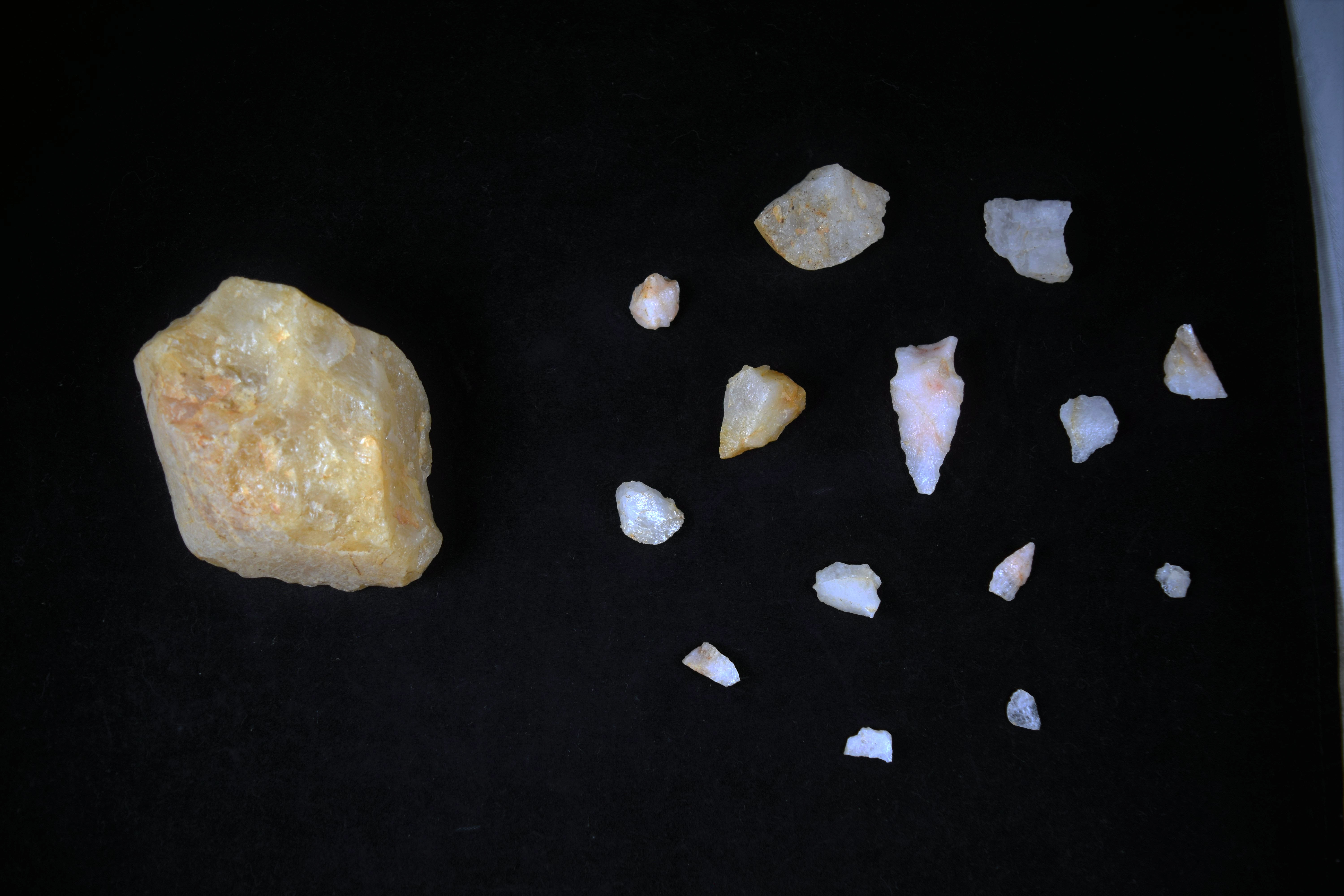
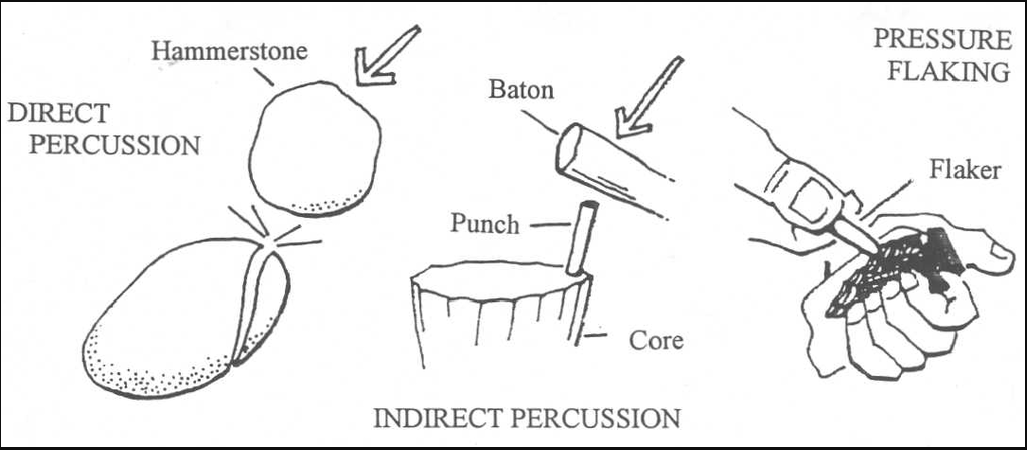
    Complete tools, however, are not the only evidence Native Americans left behind. Stone artifacts called flakes, shatter, and cores are evidence of the production of stone tools and are found in abundance on prehistoric Native American sites. A core is the first stage of lithic reduction, where the rock is considered an artifact. Typically a natural rock is broken into one or more lithic cores, which will be reduced to usable flakes and tools. Flakes are relatively thin shards of stone precisely removed from a stone core. Shatter consists of chunks of stone that come off the core in unintended or less predictable ways. To make a stone tool, flakes are removed from a core by striking them off with a hammerstone or antler baton. This is called percussion flaking. Each core would then be reduced through percussion flaking to a rough preform of the intended tool. Once that is complete, a lithic tool will be reduced to a finished shape and then sharpened. This is done through a process called pressure flaking. While percussion flaking makes bigger lithic flakes, pressure flaking makes very small flakes. Instead of hitting the stone, a narrow piece of bone or antler is firmly pressed against the side of the stone, breaking off a small flake and leaving a sharp and more robust edge.The best lithic tools are made from stones that break in predictable patterns. This quality is found in rocks that have a cryptocrystalline structure. Some examples of rock types we find lithic tools made from are: chert, flint, jasper, and quartz.

    Three methods of lithic reduction.
    Examples of lithics found at Ferry Farm, a core on the left and on the right a projectile point surrounded by flakes and shatter.

    While archaeologists can learn much from artifacts such as projectile points and tools, we are also interested in a category of stone artifacts called fire-cracked rock. Fire cracked rock, commonly abbreviated to FCR, is a byproduct of cooking at a time primarily before the creation and widespread use of ceramics more than 3000 years ago. In order to boil water for cooking, they would heat rocks in a fire and drop them into pots of water made from animal hides or wood. After doing this multiple times, the rocks would permanently turn red from the heat of the fire and shatter into small pieces from the rapid cooling and heating. By finding FCR here at Ferry Farm, we can deduce that people were cooking meals here before ceramic technology was widespread.

    Fire Cracked Rock found at Ferry Farm. Note the red color on the exterior caused by the heat of a fire.

    When lithic flakes and shatter are found, we know that at some point, someone made a stone tool there. By examining the type of stone, it is possible to determine where that material came from. Sometimes the local material available isn’t the best for making tools, and people would travel or trade for better materials. This is the case at Ferry Farm, where most of the lithics we find are made of quartz, but sometimes we find jasper or chert flakes that indicate travel or trade.

    There’s even more, we can learn from projectile points and some tools. Projectile points changed in shape, size, and form over time. These changes could be due to a change in purpose of the point or a change in maker. Archaeologists have grouped points together to create types that were made in a certain region during a given date range. We can use these groups to match points we find in our excavations and determine where it came from and when it could have been made.

    Native Peoples lived in the Rappahannock area, including what would become Ferry Farm, for thousands of years before Europeans arrived. The projectile points, tools, FCR, and lithic debris they left behind are some of the only artifacts that were able to survive until today. Being able to tell the difference between them and a natural rock becomes an important skill for archaeologists. Have you ever found a lithic?[1][2][3]

    Top and Bottom images: Examples of different types of points and the various materials they can be made from. All excavated at Ferry Farm.

    Mason Schultz

    Co-Field Director and Staff Archaeologist

    [1] “Diagnostic Artifacts in Maryland, Projectile Point Typology.” Jefferson Patterson Park and Museum, Maryland Archaeological Conservation Lab, 2002, https://apps.jefpat.maryland.gov/diagnostic/ProjectilePoints/AboutProjectilePoints/ProjectilePointTypology.html. Accessed 9 Aug. 2022.

    [2] “Diagnostic Artifacts in Maryland, How Are Points Made?” Jefferson Patterson Park and Museum, Maryland Archaeological Conservation Lab, 2002, https://apps.jefpat.maryland.gov/diagnostic/ProjectilePoints/AboutProjectilePoints/HowArePointsMade.html. Accessed 9 Aug. 2022.

    [3] Cullen, Darcy. “Methods of Flaking Stone.” Quizlet, https://quizlet.com/250350464/methods-of-flaking-stone-diagram /. Accessed 9 Aug. 2022.

  • Letters from the Battlefield

    Such a tiny thing, a letter. What does it mean now? For many of us, a letter via ‘snail mail’ is a nuisance. Needless paper that litters our mailbox. Ads. Spam. Bills. Scams (most of which are electronic now and also a pain). Mail has been ruined for most of us with the sheer barrage of unimportant stuff that claims a box at the end of the driveway which once held so many wonders. Communications evolve rapidly throughout time, as well they should. But they change so fast that occasionally we forget just how important getting a letter was. Being delivered a letter was a moment of anticipation, perhaps dread or admiration, instead of the mundane. Many have written of the hopes or fear of a letter in the mail. In the iconic song ‘Mr. Postman’ by the Marvelettes, a lovelorn lady, yearns for word from her boyfriend. “So many days you passed me by, you saw the tears standin’ in my eye. Wait a minute, Mr. Postman.” Still, others have had to pen terrible letters they never wished to send, which informed families of what they feared most, the loss of a loved one.

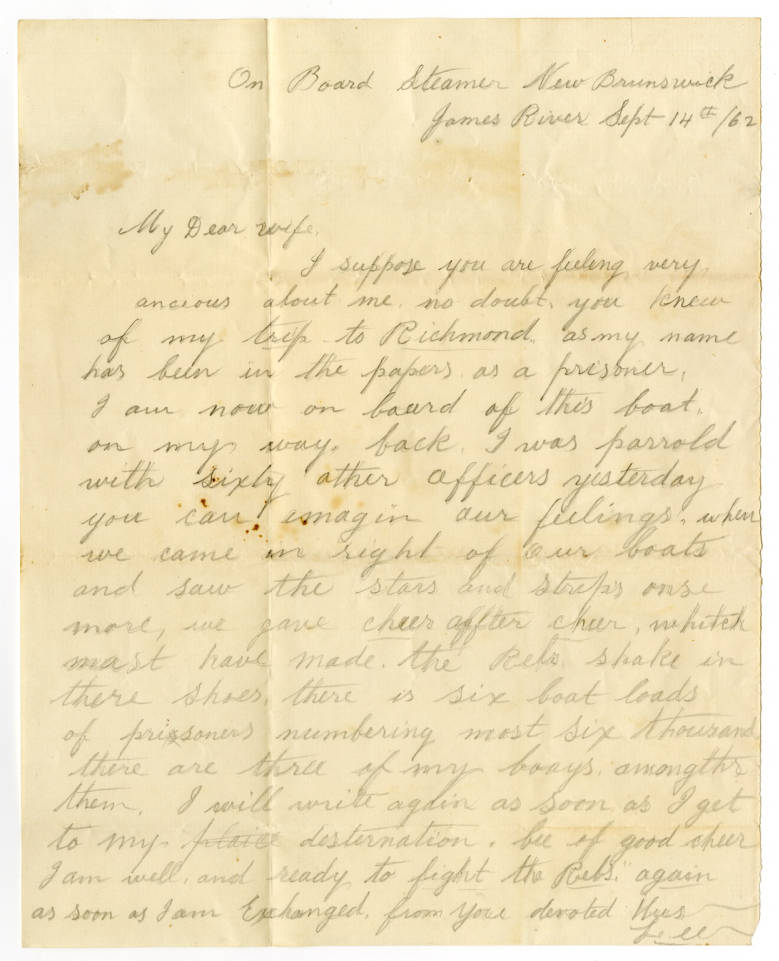
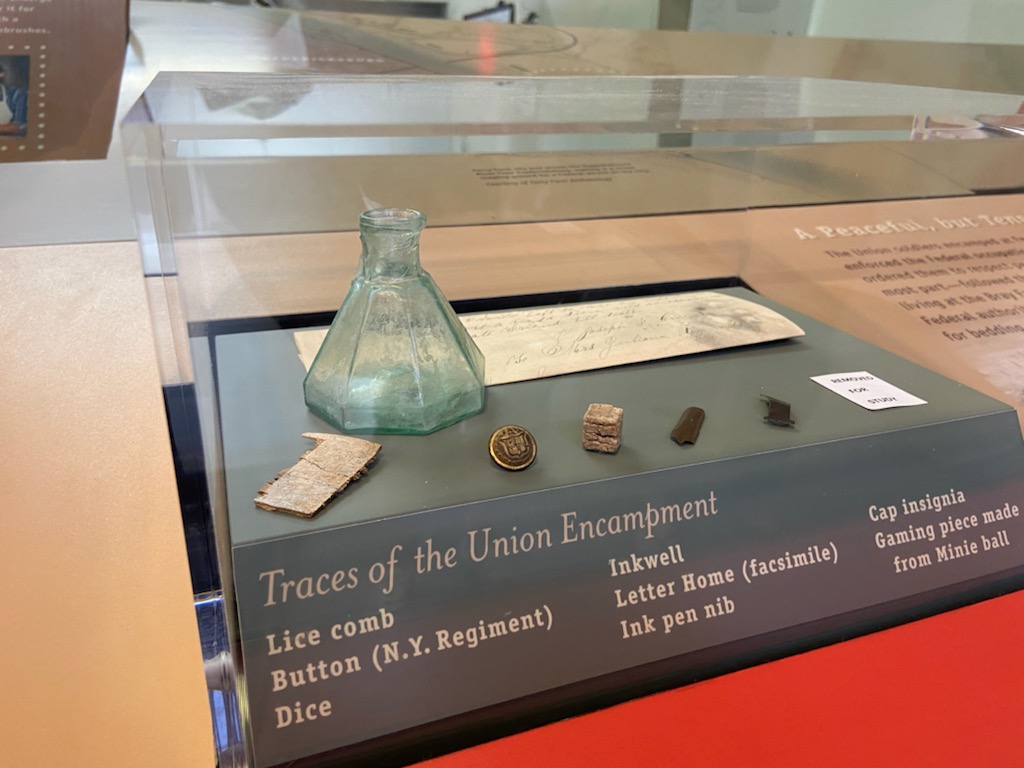
                Our artifact blog posts tend to focus on unique objects. However, this time I’m going to concentrate on a very commonplace ink bottle that dates to the mid-19th century. So many of these were made that they normally escape notice. Mere curiosities. Who doesn’t love an old bottle? However, the importance of a simple vessel such as this one should not be understated. This particular example is in an ‘umbrella’ shape, one of the most ubiquitous ink bottle forms from this era. However, this particular bottle has the distinction of having been located within a portion of a Union Civil War trench which extended through the cellar of the house George Washington grew up in.

                Several units were assigned to Ferry Farm during the two occupations in 1862. The spring deployment was relatively quiet and uneventful except for the chaos of the hasty August withdrawal to defend Washington DC. The second occupation cumulated in the Battle of Fredericksburg. Union soldiers deployed at Ferry Farm include regiments from New York, the 7th Wisconsin, and the 36th Massachusetts. While no large encampments were established at Ferry Farm, soldiers did occasionally camp there and used the farm for picket duty and to provision themselves. The farm experienced combat only during the initial stages of the Battle of Fredericksburg.

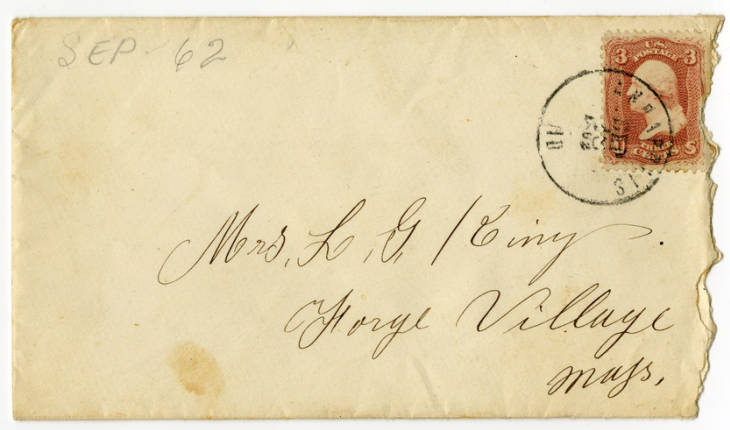
                The Federals appear to have built no large, formal camps at Ferry Farm. No evidence of winter huts, latrine trenches, or clay borrow pits have been unearthed to date. That is not to say that soldiers were not stationed at Ferry Farm both before and after December 1862. Photographs of the farm show small groups of tents situated on the terrace overlooking the river. The terrace served as bivouacs for soldiers guarding or maintaining the pontoon bridges and later for pickets. These activities suggest that a small force was a relatively constant at the farm.  Artifacts associated with soldiers at Ferry Farm included buttons, knapsack hooks, grommets, cap letters, minie balls, percussion caps, exploded artillery shells, cutlery, and of course, one simple ink bottle. The ink held within probably penned many a letter with critical information that could have changed the tide of war and/or altered the lives of so many families expecting word from the front. 

    Military Encampment, Spring 1862. Credit: Unknown

                Really this bottle would be totally insignificant were it not for the location it was found in. We do know that the bottle was typically meant for single use and would have been made in one of the numerous American glasshouses present during the 19th century. It was then filled with ink, affixed with a label, and marketed for single use, which does not mean it wasn’t refilled from a ‘master ink’ bottle when the original contents were depleted. We’ll never know the exact history of this object, and there lies the mystery of it. As archaeologists, we can’t be privy to who owned it, what letters were written with the ink, or if those correspondences even made it out of the trench to the outside world. We’ll never know the travels of the bottle before it was deposited in the trench or the circumstances that led to it being abandoned. We only know that it was used during the Civil War by the Union and was found in a location many soldiers never wanted to be stuck in. Chances are, the soldier or soldiers who made use of the bottle never made it back home alive. The fact that it was discarded when the bottle still potentially retained at least some value and during a time when possessions were at a premium indicates a hasty departure, or perhaps the owner expected to return but didn’t. Regardless, letters were likely written using the ink from this humble bottle. Some may have had great importance in our country’s history, while some may have carried tidings of possible homecomings or hardships endured. Every ink bottle held the potential for countless correspondences, but this one has quite a history, the exact nature of which we’ll never know.

    Mara Kaktins, Archaeologist
    Archaeology Laboratory Manager

  • Put A Lid On it: Mason Jars and Home Canning in America

    As a Historic Preservation major at the University of Mary Washington, I spend a lot of time studying objects from the past. Through my courses, I have learned that common, everyday objects are often able to reflect the values of the people that created and used them. I kept this in mind during my internship in the Archaeology Lab at Ferry Farm this semester. While looking through the collection, I came across one of these everyday items, an item that I use every day, the Mason Jar.

    Though there are many uses for Mason jars today, these glass jars were originally designed for home canning and have been preserving food in America for over 150 years. Using the idea that everyday objects such as the Mason jar are able to reflect the values of the people using them, let’s take a look at the evolution of home canning and the Mason jar throughout its 150-year history to see how the value of the Mason jar may have changed.

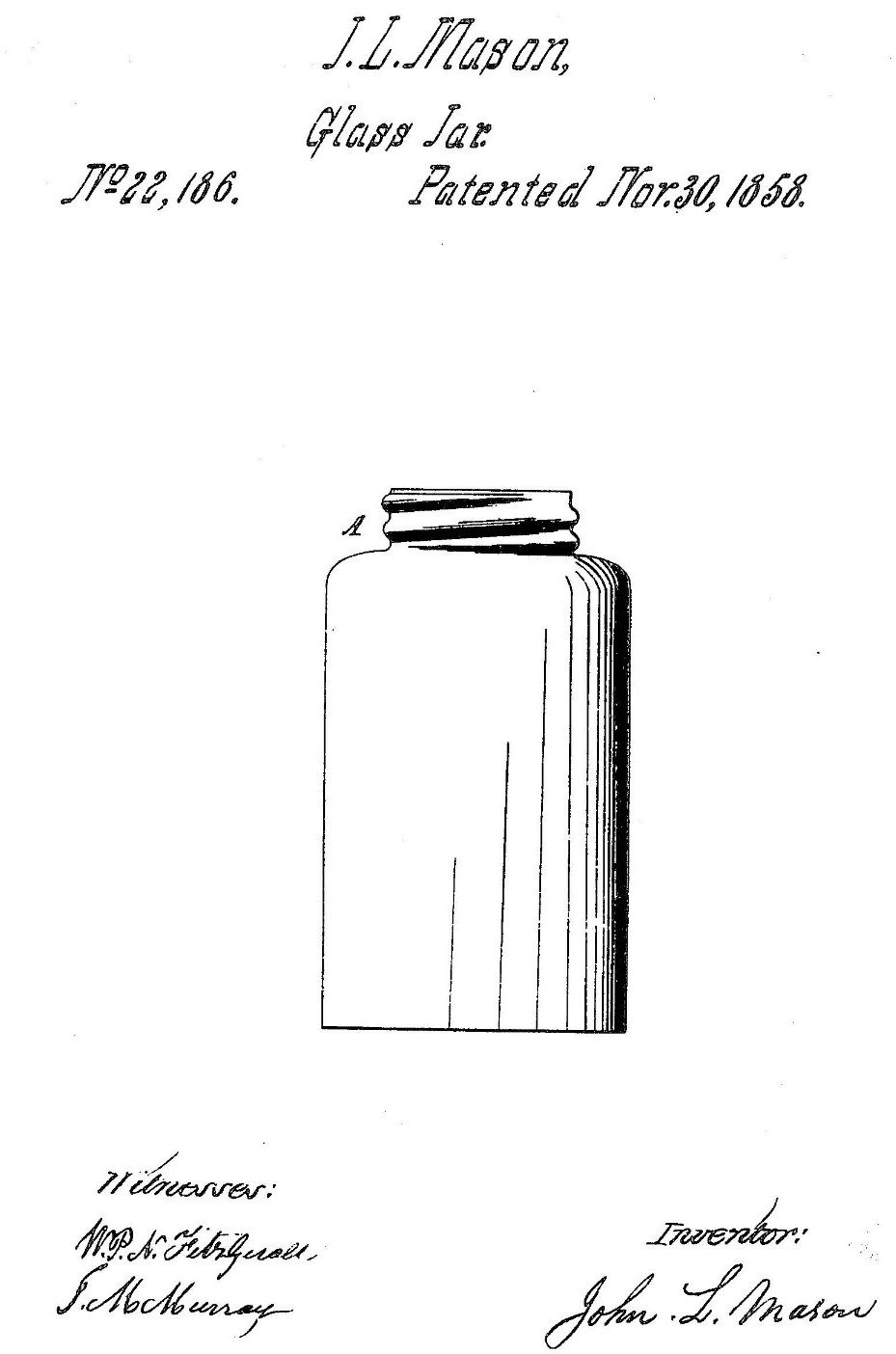
    Patent for Mason Jar, 1858. Source: Suiter Swantz IP

    The 1850s marked the beginning of home canning’s popularity in America, and the glass canning jar as we know it today was first patented by John Landis Mason in 1858.[1] Mason’s first jars were sealed using a zinc screw-on lid. With this design, the zinc was able to come into contact with the contents of the jar, affecting the food’s taste.[2] This issue was remedied in 1869 when Mason sold his patents to Lewis Boyd the creator of milk glass lid liners.[3] Together Mason’s glass jar and screw-on lid with Lewis Boyd’s patented milk glass lid liner created an affordable canning jar that was able to be sealed without interfering with taste. Here at Ferry Farm, we have a few examples of these milk glass lid liners in our collection.

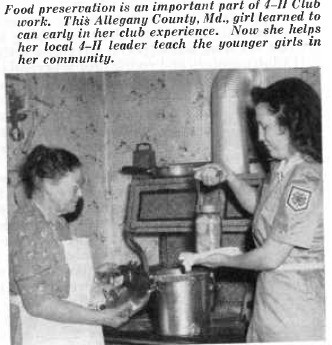
    Home Canning. Source: National Agricultural Library

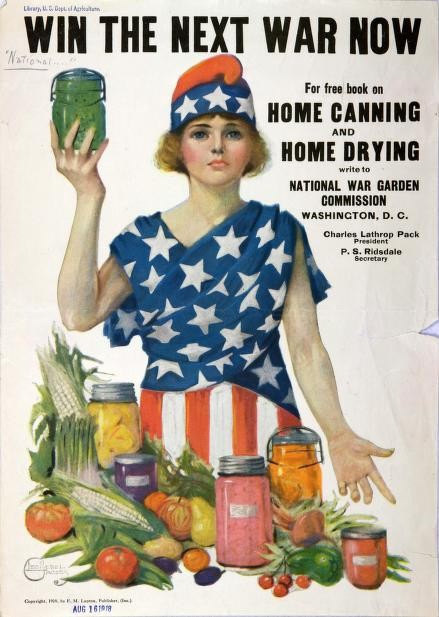
    While canning food during this early period served as a practical way to preserve surplus food, during the early 20th century its value shifted to something a bit more patriotic. During World War I and World War II, home canning became a way for American’s, primarily women, to support their country and troops on the home front.[4] By growing and preserving food at home in their ‘war gardens’ (or ‘victory gardens’ as they were called after the war), they were ensuring that the available food supplies were able to get to the troops.[5] This also became a way for communities to band together and help support one another during periods of rationing food supplies.[6]

    Home Canning During War. Source: National Agricultural Library

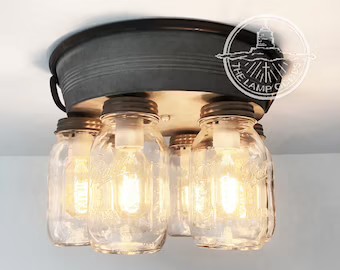
    After World War II, canning at home decreased in popularity due to the increased accessibility of home refrigeration and the rise of the supermarket.[7] Though it may have lost its widespread popularity, canning continued to serve as a way for gardeners to preserve their pickles, jams, and other produce. During the beginning of the 21st century, the Mason jar became widely popular once again, but for its looks rather than its use in canning.[8] It became the symbol for the ‘rustic farmhouse’ aesthetic and a popular do-it-yourself crafting item for everything from wedding decor to light fixtures. Mason jars also became a more sustainable, economic replacement for plastic food storage and even drinkware.

    Homemade Mason Jar Light Fixture. Source: Etsy

    Recently we have seen a revival in home canning in response to the pandemic. As people had more time at home, and supply issues caused produce scarcity in supermarkets, many turned to their gardens once again. The popularity of the Mason jar may ebb and flow, but it is an object that has been a staple for many Americans for over 150 years. Do you have a Mason jar at home? What do these canning jars mean to you?

    Danielle Arens

    Archaeology Intern


    [1] FRUIT JARS… A History Worth Remembering by Melissa Milner https://www.fohbc.org/PDF_Files/Milner_FruitJars.pdf

    [2] ibid

    [3] ibid

    [4] Making Sense of Mason Jars: A Qualitative Exploration of Contemporary Home Canning Pennington, P. Suzanne. https://www.proquest.com/docview/1474906609/fulltextPDF/5AF40FBE73384694PQ/1?accountid=12299

    [5] ibid

    [6] ibid

    [7] https://www.smithsonianmag.com/innovation/brief-history-mason-jar-180975546/

    [8] Ibid

  • Happy Birthday, George!

    We are excited to be celebrating George Washington’s 290th birthday (although it’s the day before his actual birth date) on President’s Day! On February 22, 1732, George was born in Westmoreland County, Virginia. Some interesting facts are associated with his birth-date and the subsequent birthday celebrations he would have as an adult. For instance, did you know that he technically has two birthdays? It’s true! Under the Julian calendar, his birth date would have been February 11, 1731. This means that his birthday was actually earlier in the month until the calendar switched to the Gregorian calendar in 1752. The Gregorian calendar added 11 days and one year to his date of birth!

    Just when did his birthday become so popular to celebrate? The earliest known date of his birthday being recognized (beyond his family) was actually during the American Revolution. It was the winter of 1778, and the soldiers were desperate to keep warm at their headquarters in Valley Forge, Pennsylvania. General Henry Knox planned the event. Clearly, General Knox did more than coordinate the movement of cannons from Canada to Boston; he apparently could also list “party planner” upon his resume.

    General Henry Knox aka “Party Planner”. Source: Wikimedia Commons

    The festivities of this inaugural birthday bash included a parade from an artillery band consisting of drums and fifes. Around this time, George was also becoming known as the “Father of his Country,” replacing King George III at every chance. For instance, the King’s birthday would no longer be listed in the Almanac. Instead, you would find the birth-date of George Washington. However, that doesn’t quite answer the question of when his birthday became an annual event on a broader scale.

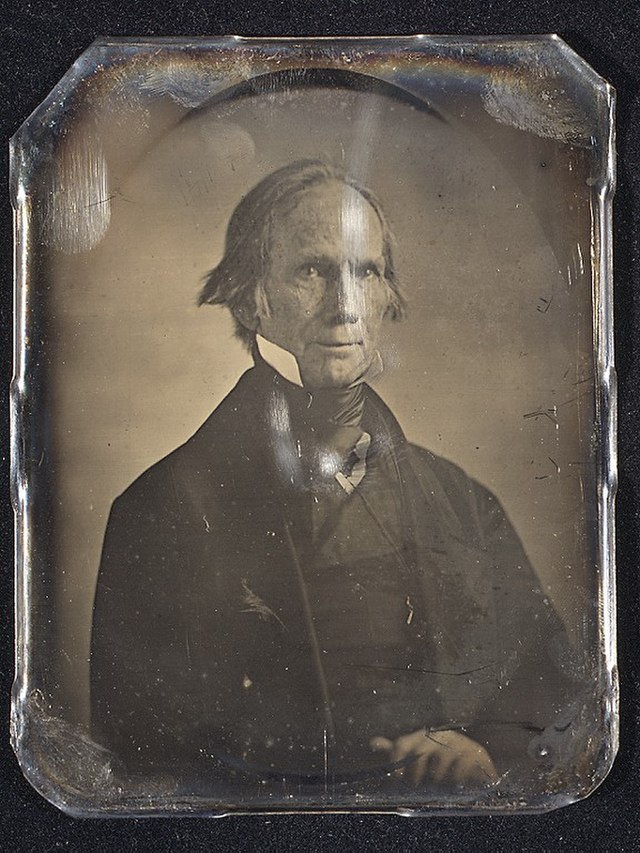
    For that, we turn to everyone’s favorite statesman, whose most significant accomplishment was never being elected President of the United States despite the number of times he ran for that office. The one, the only…Henry Clay. Senator Clay was part of a joint Congressional committee that wanted to recognize the centennial of George’s birth. They decided to do this by giving themselves the day off and adjourning Congress on February 22, 1832. While not the celebration you might have imagined, it did get the ball rolling for an expanded holiday that we celebrate today.

    Senator Henry Clay. Source: Wikimedia Commons

    As the years went by, cities, states, and even Congress realized they had to do more to commemorate George’s contribution to the Nation. In 1862, yes, in the midst of the Civil War, the Senate began to read Washington’s Farewell Address each year on his birthday. In 1879, Congress made the date a federal holiday for federal employees ONLY IN DC. Though this caused confusion among those employees as some were paid for that holiday and others were not… This discrepancy was amended in 1885 when the holiday became a paid one for all DC federal workers.

    Almost 100 years after the Senate began their annual tradition of reading the Farewell Address on February 22, Congress passed the Monday Holiday law to make federal holidays more uniform. So instead of celebrating George’s birthday on February 22, it was recognized on the third Monday of the month. There are two interesting things about this law when applied to George’s birthday. First, because of February’s shortened number of days, there is no possible way for the federally observed holiday to fall on his actual birthday. Second, the holiday we all know as “President’s Day” doesn’t actually exist. It has yet to be formally changed by Congress or the President from being first recognized as “Washington’s Birthday,” which is pretty fascinating!

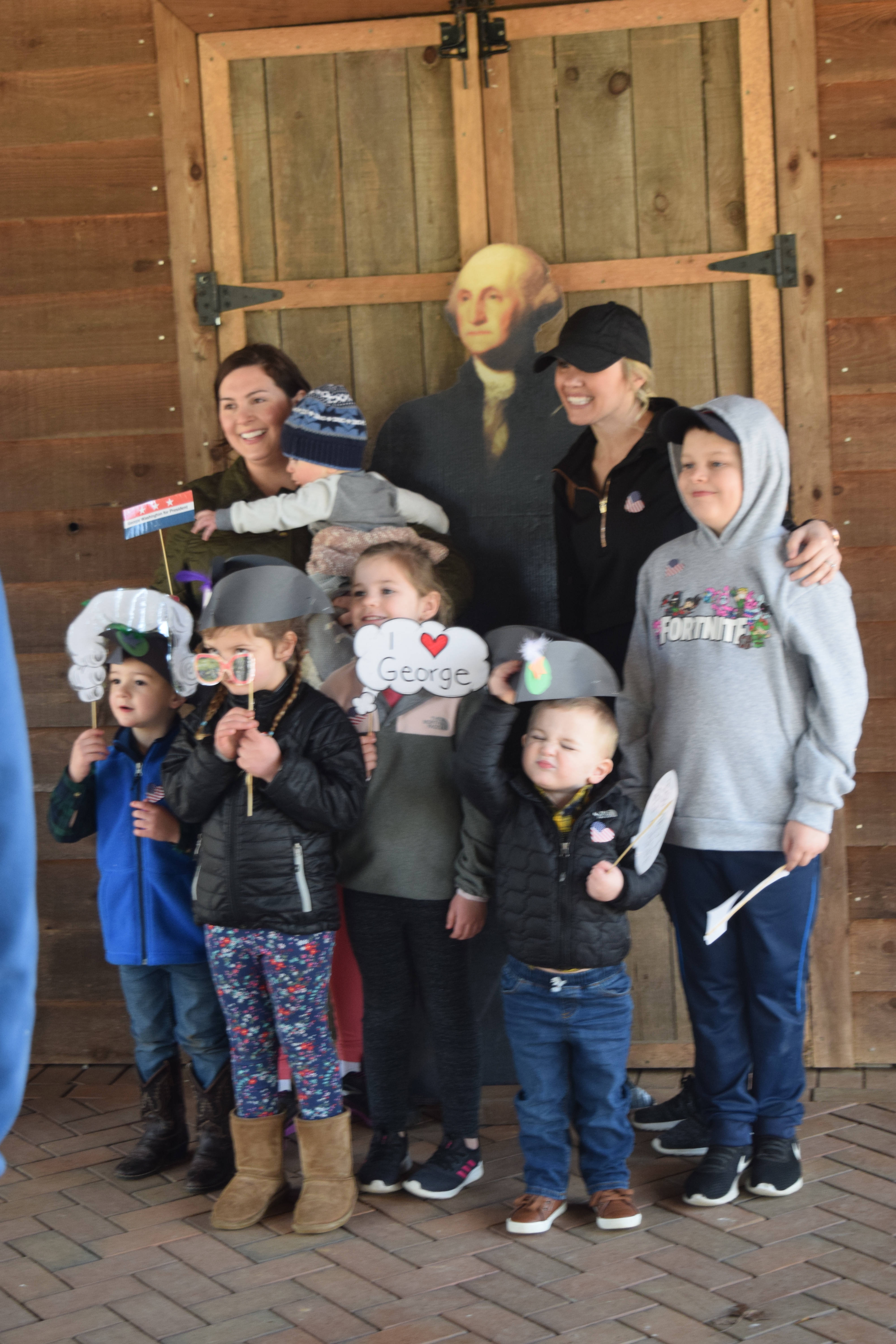
    If you’re looking for a fun way to celebrate George’s birthday this year, I encourage you to check out our event at Ferry Farm. For the event, we are offering tours of the reconstructed Washington House, new (and returning) crafts, a chance to meet real archeologists and learn about what they’ve found at the site, the opportunity to see if you can throw a stone as far as George supposedly could, and obviously, we’re having cupcakes because it’s a birthday party!

    This year’s event will be held on Monday, February 21, from 10 am to 3 pm, and tickets can be purchased by visiting our website. Tickets are $5 per adult (age 18+) and FREE for children (17 & unders). We encourage you to purchase your tickets in advance.

    -Amy N. Durbin, Director of Education

  • Behind the Glass of the Archaeology Lab: Creating an Exhibit

    It can be daunting to look at a blank space and realize you are in charge of filling it. And not just filling it, you need to create something that will leave a lasting impression on the public. The process of creating an exhibit is much more complicated than it seems. From the initial idea to the final product, there are many steps that require careful attention.

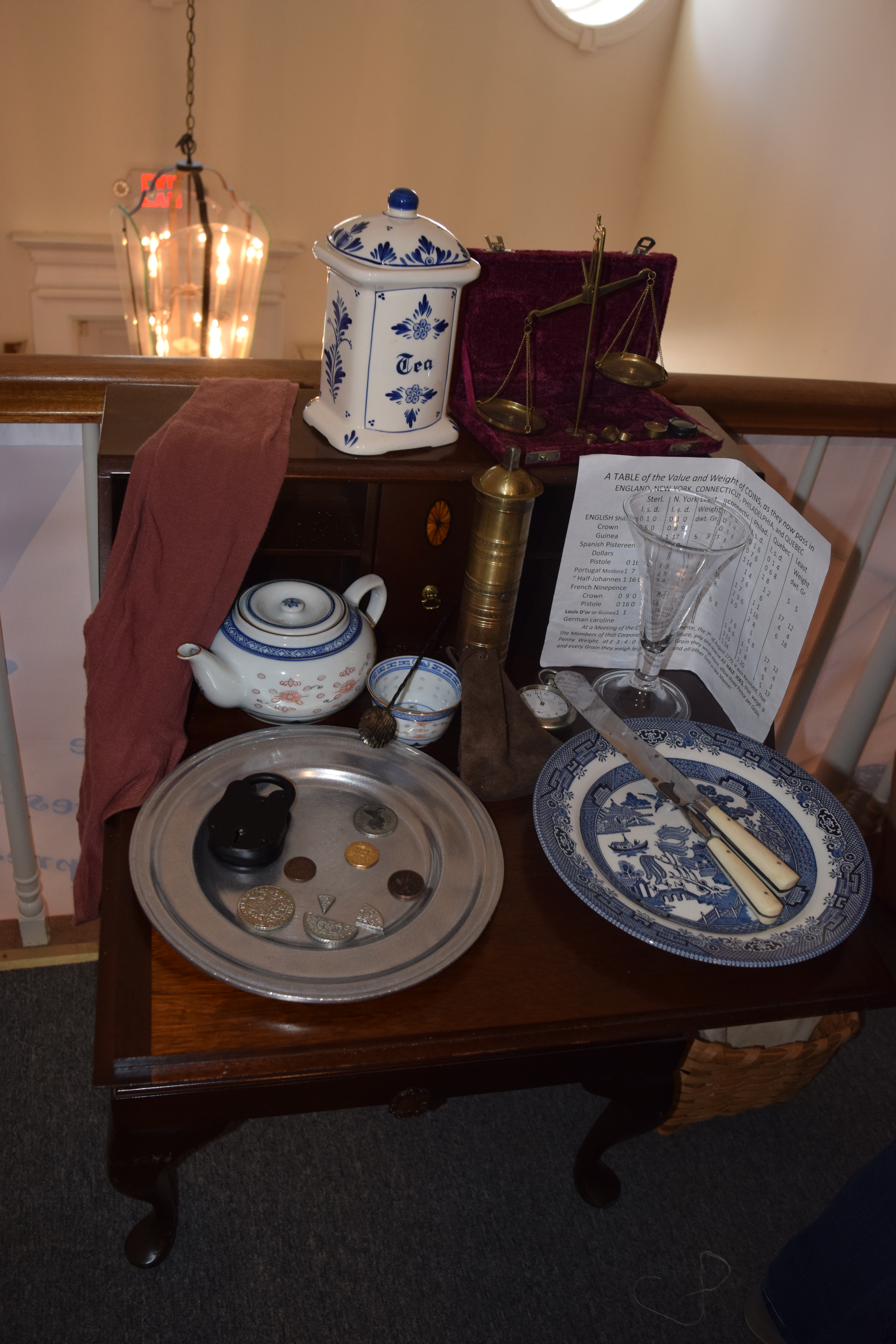
    With countless artifacts in the Archaeology Lab, finding inspiration for a topic was easy. Once I settled on 18th Century tea practices, everything seemed to fall into place. There were many subjects I could have focused on from this topic. In order to connect the idea to Ferry Farm and the Washington legacy, I chose to focus on Betty Washington and what she would have learned from her mother growing up at Ferry Farm.

    This inspiration came from an archaeologically excavated pewter teaspoon handle with the initials ‘BW’ stamped into it. It is clear that Miss Betty Washington was the owner of this spoon. The spoon was likely part of a children’s tea set that Betty was given in order to teach her the intricacies of the American Tea Ceremony. This education was Mary’s legacy for Betty; it taught her how to be a proper gentry lady and interact with the upper-class circles in Virginia.

    Teaspoon handle with “BW” initials.

    Once I picked my topic, it was time to begin researching. Research is the backbone of any exhibit, though it might not be the most exciting part. I was able to obtain an understanding of the Tea Ceremony from my research that I applied to my specific topic. The biggest question on my mind throughout my research was: Why was this important for Betty?

    While working on research, I was simultaneously creating a reproduction 18th Century creamware teapot. With the help of the Archaeology Lab Forgeries Department, I quickly transformed a Goodwill find into delicate creamware with a rose motif. The pot is the centerpiece of the exhibit on 18th Century tea practices. Many scholars wrote that the teapot is the literal and figurative center of the ceremony, bringing people together and initiating the ceremony. This concept inspired my placement of the teapot for the exhibit.

    Hand painting of reproduction teapot.

    After concluding my research, writing the signs for the exhibit, and finishing the replica pot, I had to choose the artifacts to include in the exhibit. Throughout this process, I kept my thoughts on Betty. The BW teaspoon handle was set aside for the exhibit as well as the replica teapot. Including teaware from Ferry Farm and Kenmore displayed the continuity of Betty’s gentry practices throughout her life. A slop bowl excavated from Kenmore, as well as a teacup and a saucer excavated from Ferry Farm were both chosen for the exhibit in order to support that point.

    Once this was all completed, the excitement truly began. I saw my work come to fruition when I set up the display in the conservation window of the Archaeology Lab. Being able to share what I had learned with the public was an excited prospect. The exhibit is currently on display and can be seen in the Ferry Farm Visitor Center.

    Intern Gillian Both standing behind her exhibit.

    This process has taught me a lot about exhibit design and the research process. I couldn’t have completed the exhibit without the Archaeology Lab staff helping me along every step of the way. I encourage you to go and visit the lab to see the exhibit and learn more about archaeology at Ferry Farm.

    Gillian Both

    Fleming Smith Scholar, UMW Class of 2022

  • Dig These Dishes! We Recreate an 18th Century Table Setting Using Only Artifacts.

    Dig These Dishes! We Recreate an 18th Century Table Setting Using Only Artifacts.

    On a typical day at George Washington’s Boyhood Home at Ferry Farm, visitors experiencing the house tour are ushered into the main hall upon which a dining table is set out before them with 18th-century reproductions of plates, glassware, wine bottles, and serving dishes. This setting creates an interactive experience for our visitors, transporting them back in time to the mid-18th century when the Washington family lived here on site.

    Last month, however, an unexpected sight greeted a tour group as they entered the hall. The dining table was set, not with reproductions, but actual plates, jugs, and serving dishes that could very well have graced the Washington family’s dinner table over 250 years ago.  The principal difference is that nothing on the table was complete – all were fragmented versions of the originals. 

    Dining table in Hall set up for dinner.

    The setting was a special photoshoot for The George Washington Foundation and an occasion to display and highlight the array of vessels, many mended, residing in the Archaeology Department’s collection.  Everything on the table was archaeologically recovered from either Ferry Farm or Historic Kenmore and represent vessels that date to the Washington family’s occupation of Ferry Farm or Betty Washington Lewis’ time at Kenmore. 

    The Archaeology Department at Ferry Farm has been mending vessels over the past couple of years for our museum displays at the Ferry Farm and Kenmore Visitor Centers. This mending was also done for research purposes as the curatorial department worked to furnish the replica house with accurate, period-relevant household items.

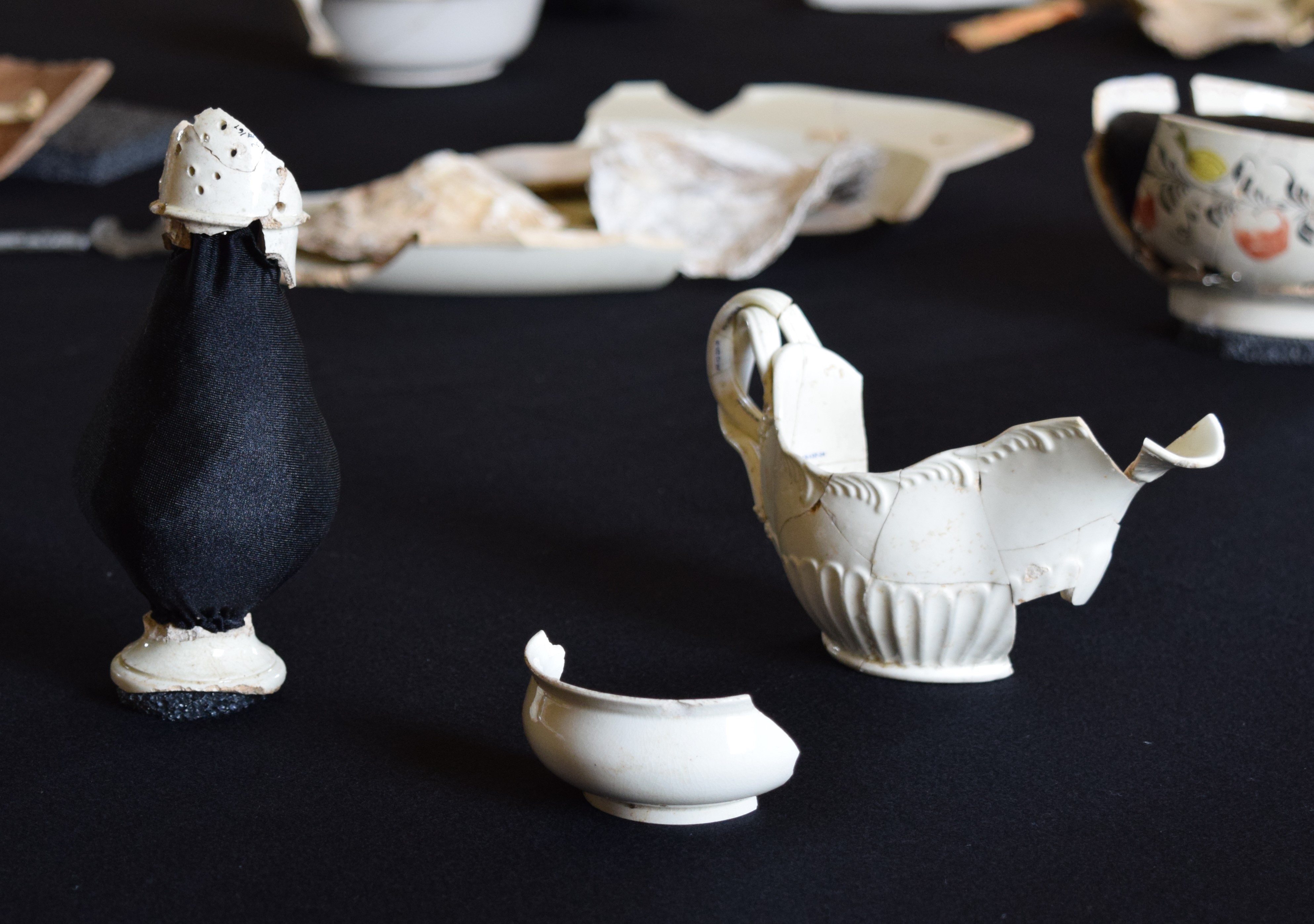
    So what is on the table? Creamware and white salt-glazed plates and serving dishes, glass tumblers and wine glasses, German stoneware jugs, dark green glass wine bottles, a porcelain teacup, coarse earthenware porringers, forks and knives with bone handles, silver spoons, and Mary Washington’s creamware enamel-painted punch bowl.  Many of the ceramic tablewares and a few of the glass tumblers were mended using archival glue.  Some of the objects were able to stand on the table unaided, while others needed mounts for support, such as the wine glass.

    Fragments of dinner and glasswares

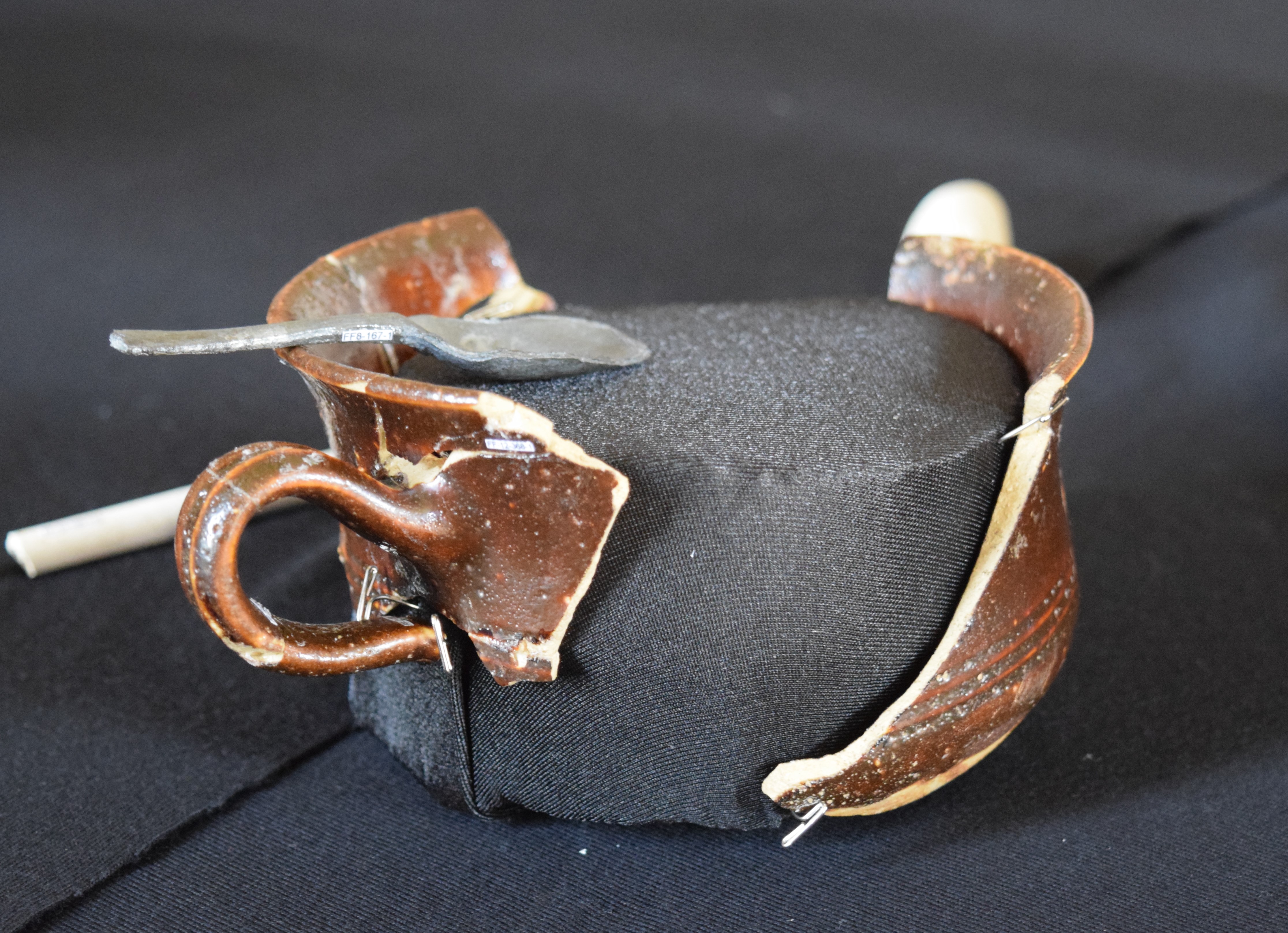
    To help envisage the original shape of some of the fragmented vessels and make them recognizable, we first sculpted their shapes out of foam, covered them with fabric, and then attached the incomplete vessel fragments in their correct positions. This process allowed us to present a more “complete” and familiar view of some of the tablewares, such as the two large stoneware jugs, the creamware pepper pot, the glass tumbler, and the two wine bottles. All of these items would have been very difficult to display simply using the fragments themselves. 

    Having such an array of different ceramic styles on the table is more a function of what we have mended in our collection versus what Mary might have actually had on her table.  But for our purposes, we are happy showcasing all of the different ceramic types presently in our possession.

    Welcome to the Washington dining table! Enjoy!

    Judy Jobrack, Archaeologist
    Co-Field Director

  • Playing Around: 20th Century Die-Cast Toys Excavated at Ferry Farm

    A lot of people don’t realize how many 20th century artifacts we excavate at George Washington’s Ferry Farm.  Up until the 1990s, families lived and farmed on the property, leaving tens of thousands of artifacts behind.  Some of our favorite modern artifacts are the toys we recover, whether marbles, plastic army and cowboy figurines, doll parts, or miniature tea sets. In this blog, we look at three die-cast toys left behind by the many children who played on the same ground where young George Washington grew up. 

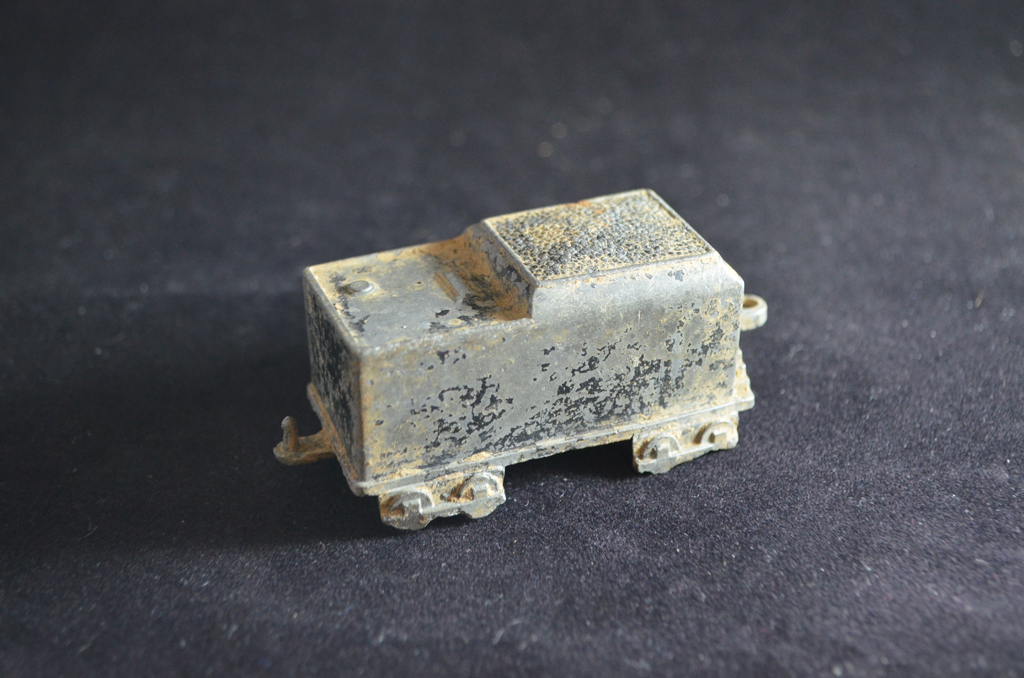
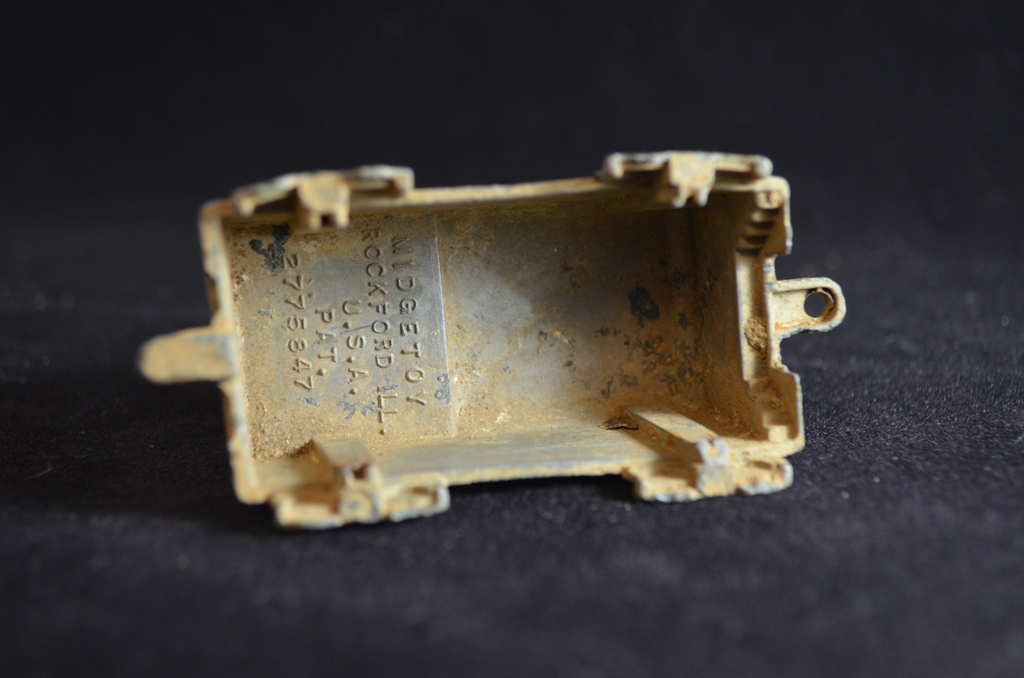
    The first is a small die-cast coal car almost completely intact, except for its missing rubber wheels.  In archaeology terms, we call this artifact ‘talky’.  It makes an archaeologist’s research so much easier when “Midgetoy / Rockford, Ill / U.S.A. / PAT. / 2775847” is embossed on the underside of the car.  However, we still need a date range for this particular toy.  The patent number is a huge help.  After an Internet search, we discovered the patent for this toy was taken out in 1954 by the A&E Tool and Gage Company.  The patent specified an improvement in the wheels to make them rotate more smoothly.  To find the date after which this toy was no longer manufactured, we researched the toy company, Midgetoy, since the patent suggests the toy’s manufacturer started out under a different name.  A&E Tool and Gage was started in 1943 by Alvin and Earl Herdklotz as a defense-based precision tool-and-die business. After the Second World War, they changed their business model to toy making with the goal of creating low-priced die-cast toys.  Thus, Midgetoy was born. The company stopped producing toys in the late 1970s or early 1980s, which represent the approximate end date for this die-cast coal car.

    Our next toy is a fully intact purple die-cast car. With “Tootsietoy Dragster / USA / 3” embossed on the underside, it’s another talky artifact!  Much like Midgetoy, Tootsietoy Corporation started off as something completely different.  Two die casting companies of the Dowst and Shure Brothers were established around the same time in the 1890s.  The companies merged and, in 1909, produced their first model cars: a limousine and Model T Ford. ‘Tootsietoy’ became a registered trademark in 1924. The dragster was not produced until much later, however.  The company didn’t just make cars either It made charms for Cracker Jack boxes as well as die cast dollhouse furniture.  It also produced promotional cars used by dealerships to sell full scale models.  Our dragster has a wedge body with a rear engine, which wasn’t invented until 1974, so this particular toy dates to the mid ‘70s or ‘80s.

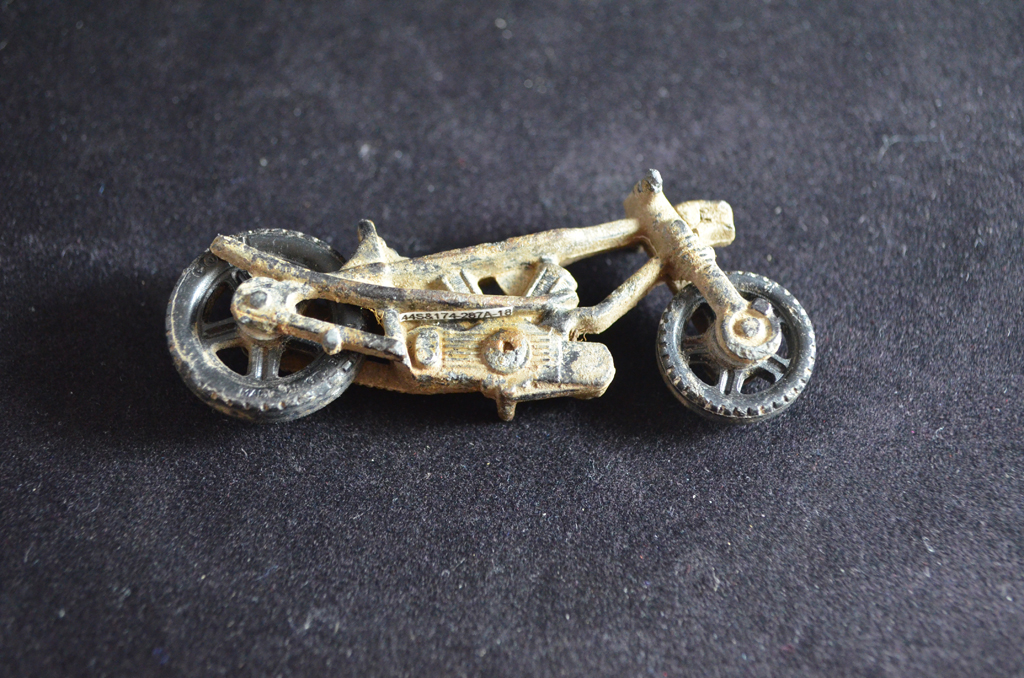
    The last toy is one of my favorites, a funky motorcycle.  When it was first discovered, our lab staff thought it looked a lot like a motorcycle from the First World War.  It has an elongated metal body with hard black plastic tires.  Admittedly, our archaeology department knows very little about motorcycles so we started to do some research.  Initially, it appeared as though the toy had no identifying marks. Closer inspection under magnification ultimately revealed that the larger back tire had ‘Corgi’ and ‘Made in Gt. Britain’ faintly embossed on it.  Our initial assessment of the toy being modeled after a World War I motorcycle was completely off.  Although, the toy looked complete to us, the bike was actually missing some parts.  Roughly modeled after a racing bike, it would have had a plastic front piece and a rider figurine. In this case, either Batman, Spiderman, or (our favorite) the Pink Panther, which we would love to recover in a future excavation.

    Aside from these toys being fun to research while occasionally rolling across our desks as we make ‘vrooooom’ noises, they are also poignant reminders of the kids who played here.  The truth is that aside from the Washington children, we don’t know very much about the youth of Ferry Farm.  In many cases, the only record of them living on this landscape are the toys they left behind.  I often wonder who owned these little treasures and how they got lost.  Were the toys missed?  Would any of the adults who grew up at Ferry Farm remember them? When he’s washing a toy, Robert Bailey, a lab volunteer who lived here as a child, often wonders if it was one of his toys.  Regardless, these toys are a nice reminder of the young ones who once played on the same landscape as little George, and that’s pretty cool.

    Mara Kaktins, Archaeology
    Archaeology Lab Supervisor

  • How to Do Archaeology During a Pandemic

    Like so many of you, in the middle of March this year, nearly all employees of George Washington’s Ferry Farm & Historic Kenmore began working from home and did not return to our offices for two and a half months.  We expected a lengthy time away and, as such, prepared as best we could for the change.  For some departments, the change mainly involved figuring out access to digital files but, since our jobs revolve around physical artifacts, we archaeologists had to do a little improvising.

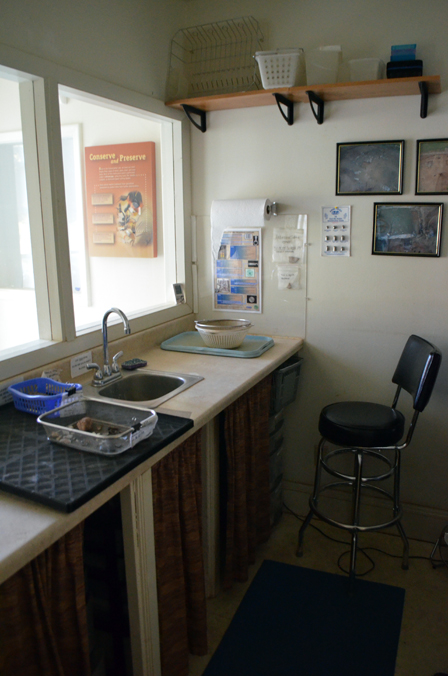
    The ‘wet lab’ where artifacts are washed before cataloging and analysis sits quietly unused at George Washington’s Ferry Farm during the COVID-19 pandemic of 2020.

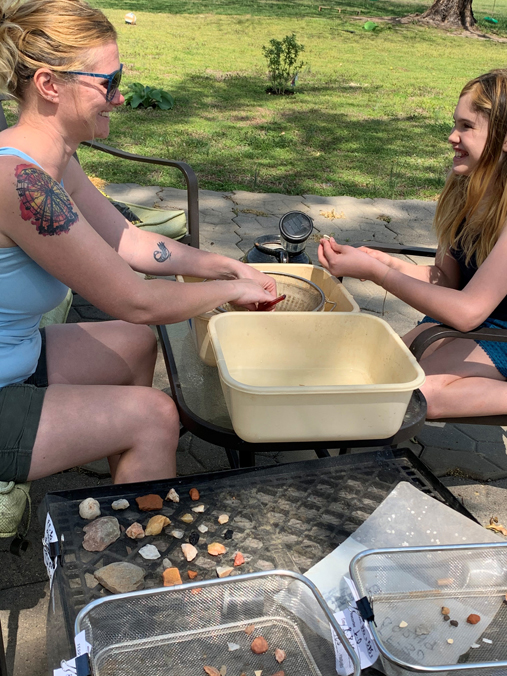
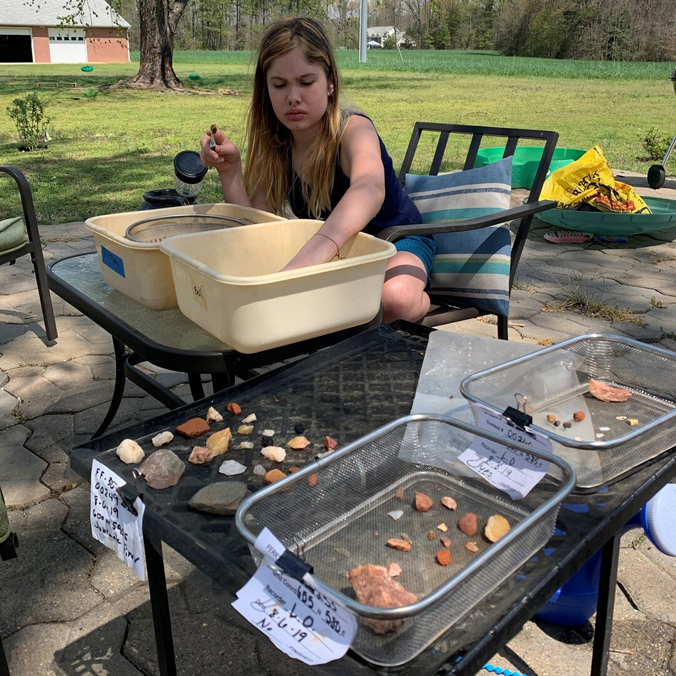
    First, while it’s normally not a “best practice” to take artifacts home, we really had no choice if we were going to remain productive.  This meant I as archaeology lab supervisor and that Elyse and Judy, archaeology lab technicians , all had to create what essentially amounted to an a archaeology lab in each of our homes.  Elyse and Judy need space to wash, label, and catalogue artifacts while I needed space to analyze artifacts while simultaneously keeping them away from my extremely inquisitive preschooler! I mostly succeeded in that last task. Elyse actually enlisted the help of her older and amazing daughter June with washing artifacts.  As so many of us found out in 2020, working and parenting from home is not easy but Elyse and I adapted well, I think.

    Elyse Adams, archaeology lab technician, and her daughter June wash artifacts at home.

    It should also be noted, however, that keeping artifacts away from all of our many, many dogs and cats proved challenging as well.   While my cats were thrilled (well, as thrilled as cats can get, at least) that I was home all day, they were occasionally of the opinion that the Washington-era porcelain sherds I was researching looked much better on the floor.

    Despite these challenges, we got the job done and eventually returned to the lab at Ferry Farm having accomplished quite a bit.

    Life inside Ferry Farm’s archaeology lab looks quite different now, too, compared to this time in 2019. Since the lab is relatively close quarters, we instituted a rigorous cleaning schedule, spaced our work areas out as much as possible, and started taking temperatures every day.  Our beloved volunteers have not come back (Shout out to our volunteers! You guys are awesome!) because we needed to limit the number of people working in the lab to only myself, Elyse, and Judy.

    One of the coolest features of our lab is the huge viewing window through which visitors could see real live archaeologists at work.  While Ferry Farm is now open to the public for tours, the visitor center remains closed and there’s no longer any inquisitive folks peering at us through the glass. It’s a surprisingly lonely feeling not to glance up from our work occasionally to see visitors watching what we’re doing.  We also put a temporary halt on lab tours that we do occasionally during special events or children’s camps at Ferry Farm.  Both of these changes are a bummer because we really liked the interaction we had with visitors. That being said, we’re optimistic that someday life will return to normal eventually and we’ll be able to share our lab with the public once again.  When that time does finally comes, please visit and check out the archaeology lab at George Washington’s Ferry Farm. We miss you!

    Mara Kaktins, Archaeologist
    Archaeology Lab Supervisor

  • “I Look Not On Things Beneath Me”: Our Snobbiest Artifact, a Wax Seal Stamp That Needs To Dial Back that Sass

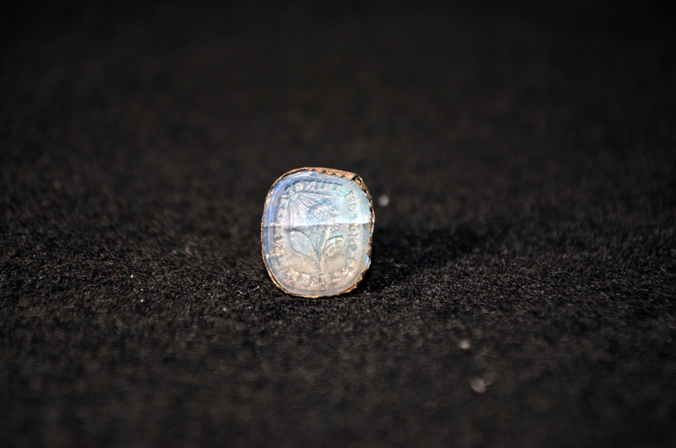
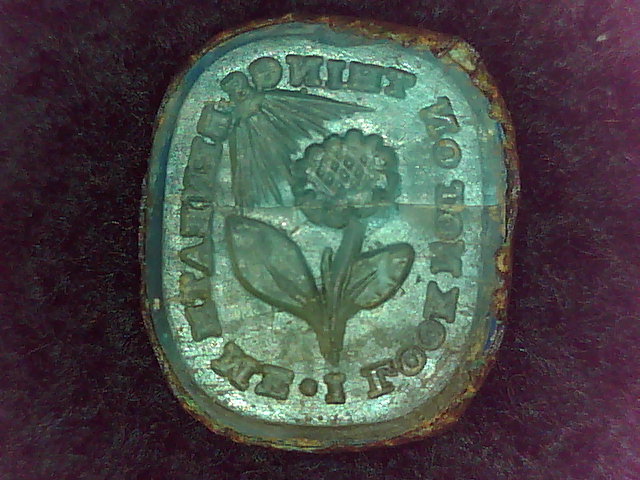
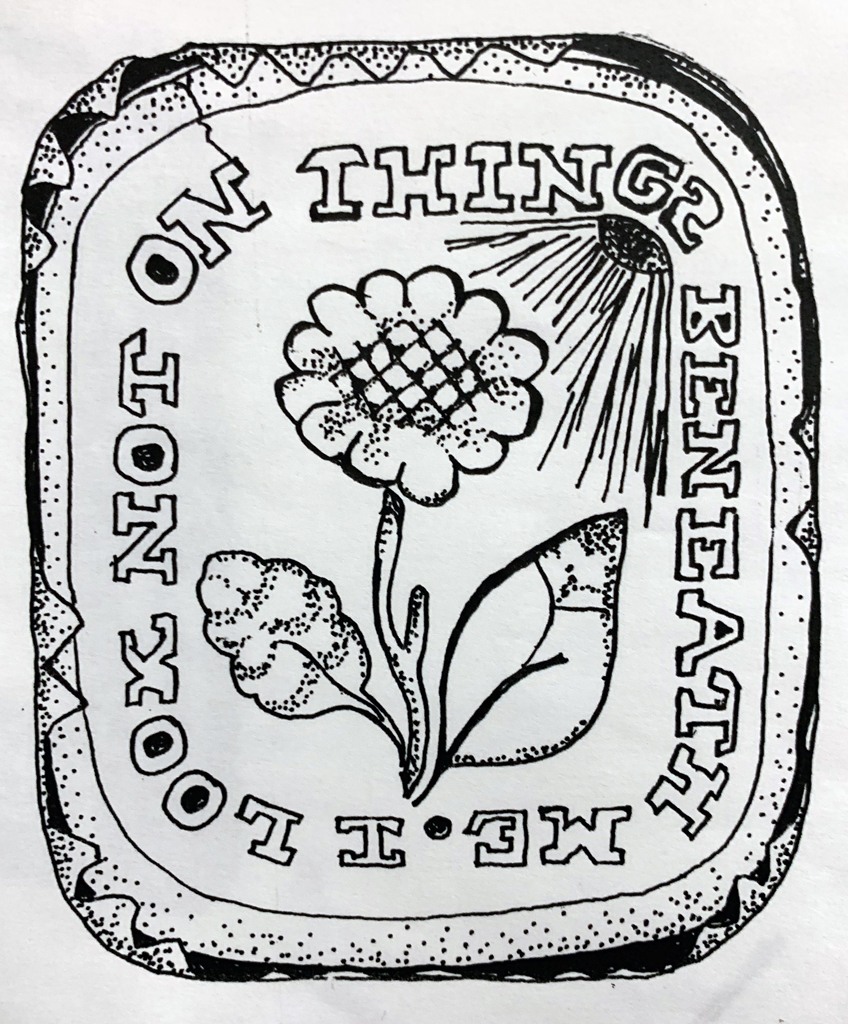
    ‘Haughty’ is not a word used often to describe artifacts.  That is, of course, unless the artifact in question is a glass wax seal stamp with a kind of snooty message on it.  Of diminutive size (smaller than a dime) with a pretty little flower in the center it proclaims in reversed letters “I Look Not on Things Beneath Me”.

    Kenmore Wax Seal Stamp 1
    Wax seal stamp excavated by archaeologists at Historic Kenmore.

    Seal Excavated at Kenmore 2
    Closeup view of the wax seal through a digital microscope.

    Drawing of Wax Seal Stamp
    A drawing of the wax seal stamp with the text reversed so it is legible.

    Initially thought to be a signet ring, archaeologists at Ferry Farm reexamined it and determined the itty bitty blue piece of glass is actually a wax seal stamp used to personalize letters.  This seems to be an odd choice of message for the recipient of a correspondence but who are we to judge?

    Found at Kenmore, this pretty little thing likely dates to the late Victorian period and would have been worn by a woman, possibly at the end of a chatelaine.  Chatelaines were all the rage with Victorian women and consisted of a long chain worn around the neck with charms at the end, which could be tucked into one’s dress or belt.  These charms often had practical uses.  Common chatelaine charms included tiny scissors, cute vials, petite magnifying glasses, and minuscule mirrors.

    Unfortunately, some fashionable lady lost this at Kenmore over a hundred years ago, possibly while wandering through the garden, drink in hand, and idly thinking of sending off a letter sealed with a snarky wax message reminding everyone that “I Look Not on Things Beneath Me.”

    It’s a good thing that we archaeologists don’t take the same attitude.

    Mara Kaktins, Archaeologist
    Archaeology Lab Supervisor