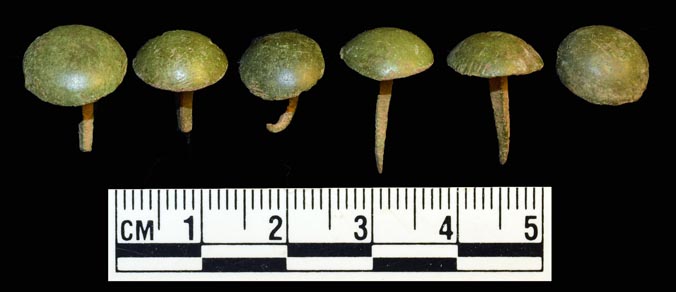
Let’s do our tacks! I know you’ve been dreading doing your tacks, and putting it off as long as you could, but time is running out. It is time to do our tacks, friends.
Whether iron alloy or copper alloy, tacks provide important clues to the presence of upholstered furniture, trunks, and horse tack at a site. Delicate items have disappeared but their tacks remain. There is “tacks-ation without representation.”
Copper alloy tacks often called brass tacks are one of those artifacts that archaeologists occasionally encounter. They tend to occur in small quantities at any given site. Archaeologists also recover iron alloy tacks used in cabinetry, furniture, and architecture but this blog will focus mainly upon brass tacks.
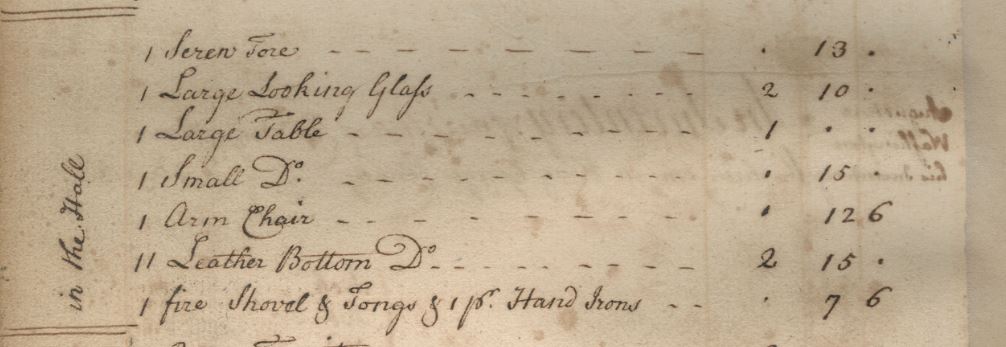
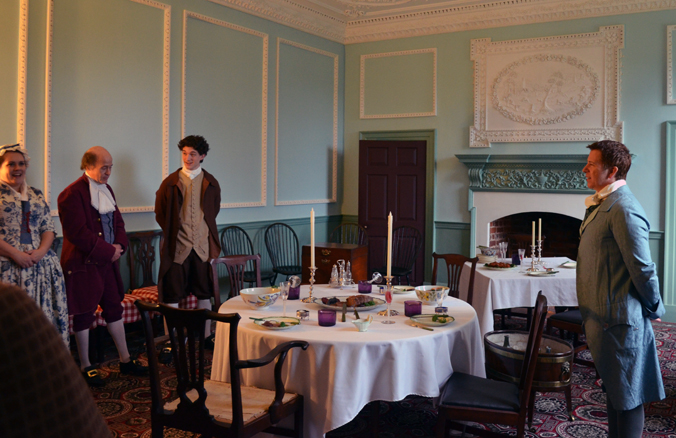
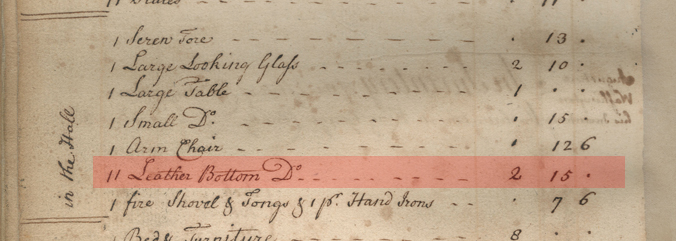
Brass tacks were shiny beacons of taste that drew well-deserved attention to the fine fabric or leather coverings that encased upholstered furniture. Augustine Washington’s 1743 probate inventory lists eleven “leather bottom” chairs in the home’s hall where George and his family dined while sitting upon these chairs. It was likely that brass tacks secured the leather to the frame of the chairs. Leather was an especially popular chair covering in Virginia, due in part to its availability to talented Williamsburg craftsmen.
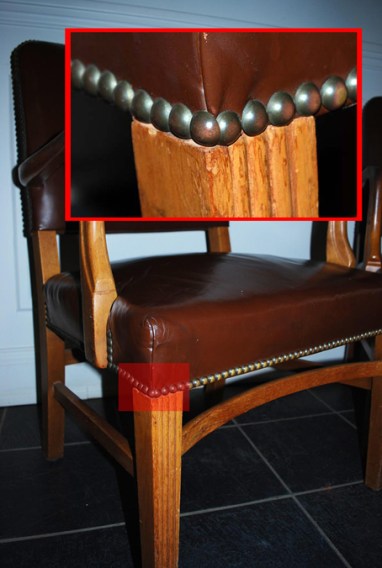
Furthermore, a couch was located in the passage, and might also have been tastefully tack adorned. While often associated with furniture cushions, tacks were also widely popular on saddles, carriages, and riding chairs. Copper alloy tacks even embellished trunks, coffins, and were employed to hang window coverings.
To date, 127 copper alloy tacks have been discovered by excavators at Ferry Farm. They are scattered throughout the yard spaces surrounding the multiple colonial and antebellum-era dwellings of this site. This assemblage of tacks represents a very small proportion of the tacks used here historically. Like many of our discoveries at this site, the vast majority represent items that were inadvertently lost. Such loss increased when the items they adorned were used, cleaned, repaired, or moved.
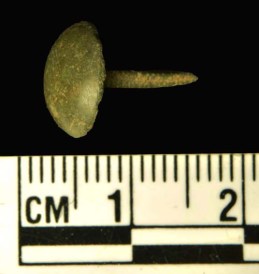
Tacks are a timely reminder that the archaeological record does not preserve all of the items that the families who lived here used. The artifacts that we unearth from the yards surrounding the dwellings that were here only represent those things that preserve well and were sturdy. The primary components of furniture decompose readily, often because they are manufactured from organic items. The fabric, leather, canvas, marsh grass, Spanish moss, horsehair, iron hardware, and wood that typified colonial upholstered items do not survive long in the environmental conditions under which the archaeological record of Ferry Farm is exposed. Even under ideal, indoor circumstances, upholstery fairs poorly over time, becoming faded, outdated, and brittle. Cushioning sags and droops over time. Addressing these maintenance issues can result in replacement of these materials and the unintentional loss or even the replacement of its hardware, including tacks.
Despite these limitations, tacks often reflect the use of upholstered furniture, even if the furniture itself has not endured. Most sites lack probate inventories or wills, and tacks provide important clues to the presence of upholstered furniture, trunks, and horse tack. Hence the “tacks-ation without representation” title: while the delicate items which these tacks graced have literally disappeared or are no longer represented, their tacks bear testament to their presence on the site. In the coming years, as archaeologists record more attributes and generate larger collections of these items, their full interpretive potential may be realized.
Laura Galke, Archaeologist
Small Finds Analyst/Field Director
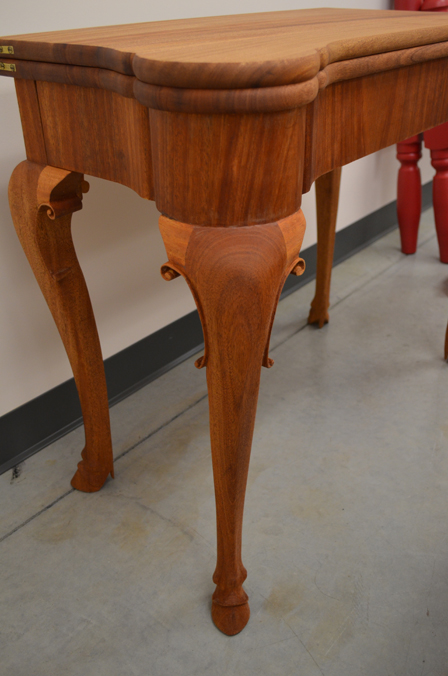
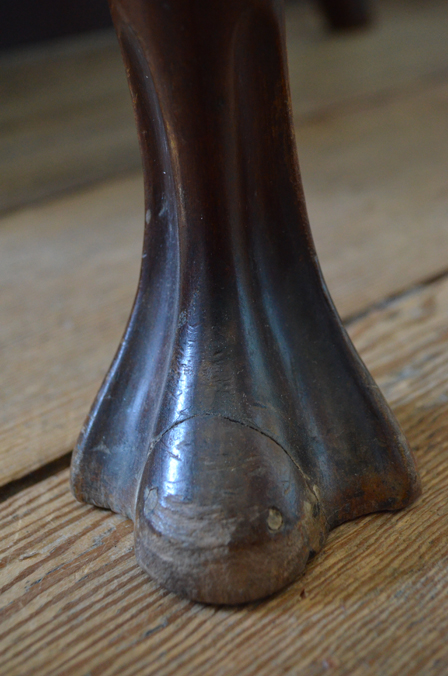
 As more of reproduction furnishings for the Washington house get underway, I thought I might address one of the more notable characteristics of the pieces: their feet. Anyone familiar with antique furniture has noticed the sometimes rather odd appearance of foot shapes at the end of table and chair legs. We have a variety of feet among the Washington house furnishings, some more unusual to our modern eyes than others. There are three furniture styles represented in the Washington house furnishings: William and Mary (the earliest, dating from the late 17th century to the very early 18th century), Queen Anne (early to mid-18th century) and a bit of Chippendale (mid-18th century onward). Each of these styles had their own weird feet.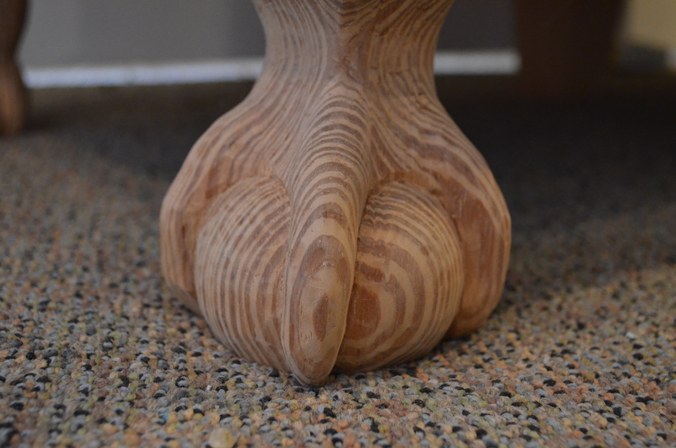



 One of the first pieces of furniture that will arrive at the recreated Washington house at George Washington’s Ferry Farm will be the large, round dining table for the Hall. It’s being made at a shop in Pennsylvania and we hope to have it before the end of the year. With Thanksgiving just a week away, we wanted to take a look at the practice of dining and the furnishings it required in the early 18th century, before it became a formal ritual and before it had a dedicated room in the home.