Lives and Legacies

Tag: George Washington

  • Ten Well-Known Visitors to Historic Kenmore

    Since its transformation into a historic site, Kenmore has drawn its share of prominent and recognizable visitors including a vice president, a congressman, and numerous First Ladies of the United States. Indeed, the ladies of the Kenmore Association, who worked to save, restore, and operate the historic home during the 20th century, made it a point to reach out to First Ladies and, in turn, several of those First Ladies visited the auspicious brick home of Patriot merchant Fielding Lewis and wife Betty Washington Lewis, sister of George Washington.  For that matter, even during the days that Fielding and Betty lived in the home during the late 1700s, important figures in colonial Virginia and of the Patriot cause occasionally came to Kenmore.  Here is a list of “Ten Well-Known Visitors to Historic Kenmore.”

    10. Louise du Pont Crowninshield (1877-1958)
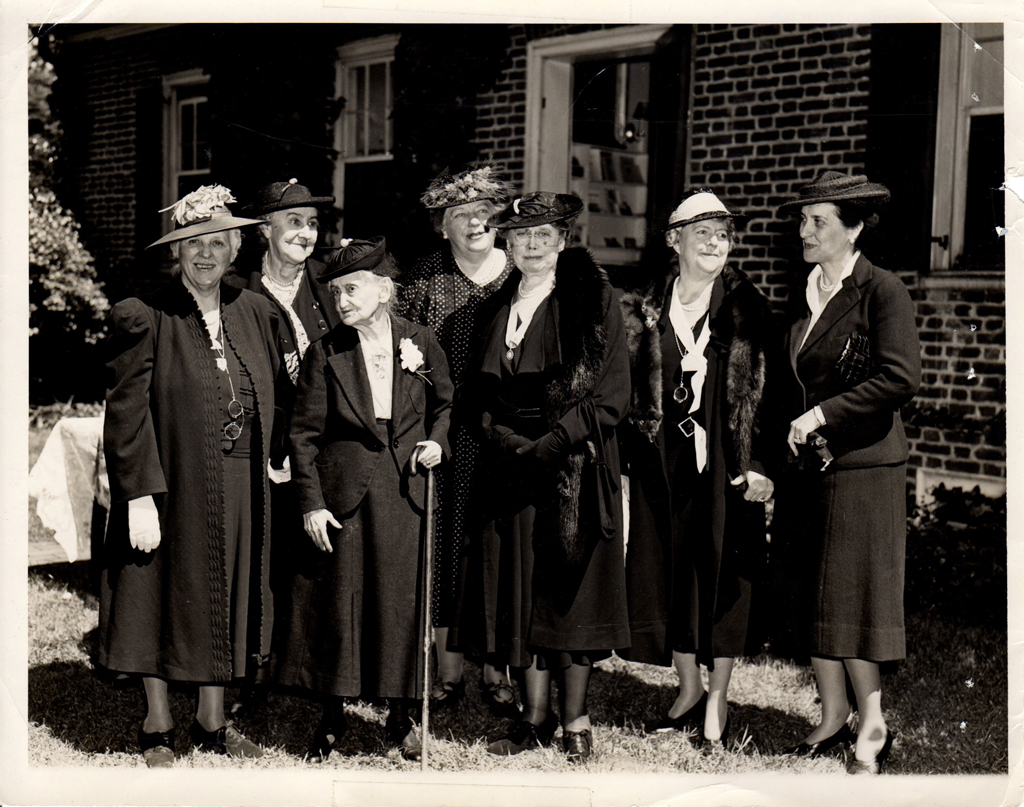
    Louise du Pont Crowninshield surrounded by other members of the Kenmore Association.
    Louise du Pont Crowninshield surrounded by other members of the Kenmore Association.

    Louise du Pont Crowninshield was president and chairman of the board of trustees of the Kenmore Association from 1940 to 1954.  An active historic preservationist, she was also a founding trustee of the National Trust for Historic Preservation.  Mrs. Crowninshield was born into the prominent Du Pont family and grew up at Winterthur, the family estate in Delaware. The home is now a museum and holds some of most important collections of Americana in the United States.  She helped save and restore Kenmore and visited many times during her term as president.
    sol-bloom-portrait
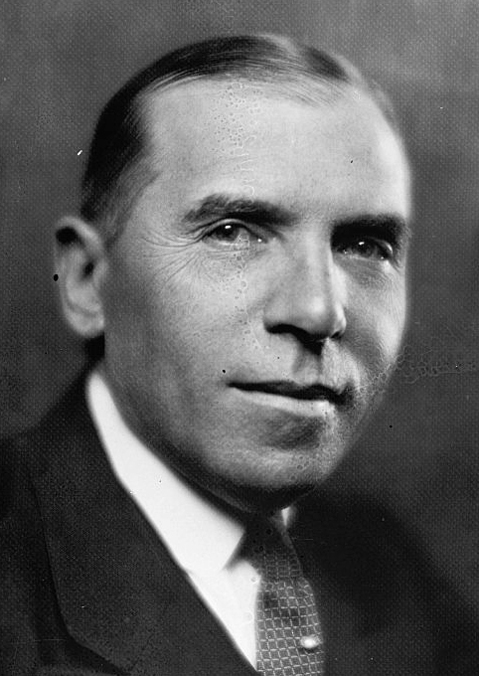
    Sol Bloom in 1923. Credit: Library of Congress / Wikipedia

    9. Sol Bloom (1870-1949)
    Sol Bloom was an entertainer, music publisher, and congressman from New York.  He was the biggest producer of sheet music in the U.S. before taking up politics.  Bloom was associate director of the United States George Washington Bicentennial Commission and came to Kenmore for a luncheon with Emily White Fleming and the Kenmore Association.  In 1936, Bloom made a $10,000 bet with Walter “Big Train” Johnson, former Washington Senator’s star pitcher, that Johnson could not throw a silver dollar across the Rappahannock River as legend said George Washington had done.  Bloom lost but refused pay the money.

    elizabeth-monroe
    Elizabeth Monroe, unknown date and artist. Public domain. Credit: John Vanderlyn / Wikipedia

    8. Elizabeth Monroe (1768-1830)
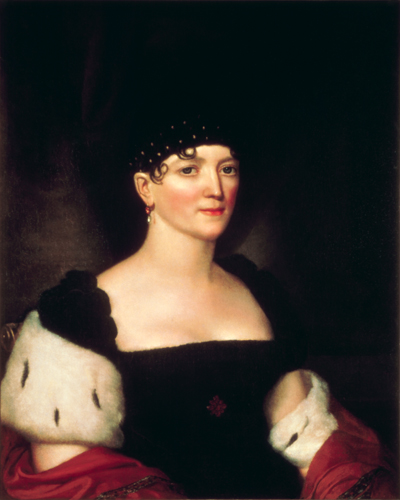
    Elizabeth Kortright Monroe was First Lady of the United States from 1817 to 1825.  Elizabeth was born in New York City and married James Monroe in 1786.  She spent time in France and Britain during her husband’s ambassadorship and was even invited to be part of the American delegation that attended Napoleon Bonaparte’s coronation.  Mrs. Monroe actually lived at Kenmore shortly after her marriage to James.  Her husband left town on business and, since they had not yet set up a home in Fredericksburg, she stayed with Betty Lewis until James returned.
     

    edith-wilson
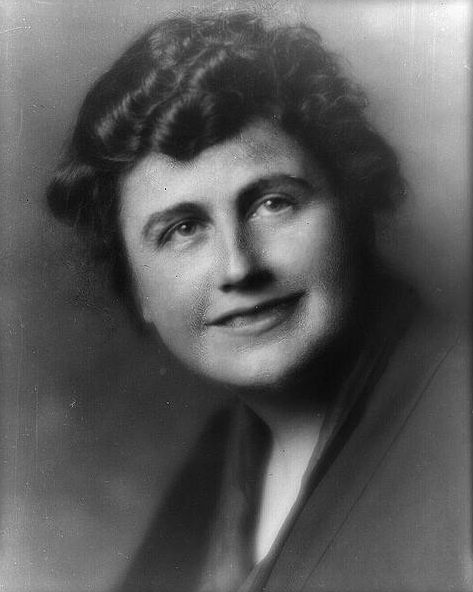
    Edith Wilson. Credit: Library of Congress / Wikipedia

    7. Edith Wilson (1872-1961)
    Edith Bolling Wilson was the second wife of President Woodrow Wilson and served as First Lady of the United States from 1915 to 1921.  Some historians argue that Mrs. Wilson became the de facto president after her husband’s stroke in 1919. She did, it seems, act as the only conduit to and from the president and decided which matters important enough to bring to her husband’s attention while relaying his decisions to those who needed to know.  Long after her time in the White House, Mrs. Wilson came to Kenmore for a luncheon in October 1946.

    6. Elizabeth Virginia “Bess” Truman (1885-1982)
    bess-truman
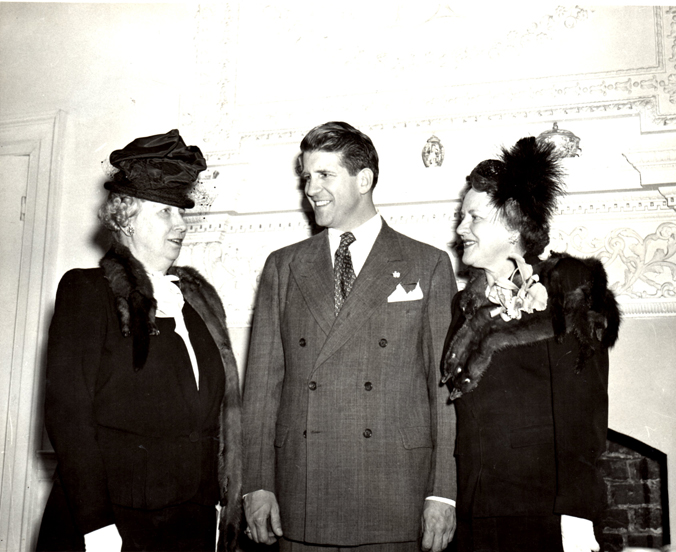
    Bess Truman in front of the fireplace in Kenmore’s dining room with Robert Porterfield, founder of the Barter Theatre, and an unidentified woman.

    Elizabeth Virginia “Bess” Truman was First Lady of the United States from 1945 to 1953.  Elizabeth Wallace was born in Independence, Missouri and had known Harry Truman, her future husband, since they were children.  They married in 1919.  Mrs. Truman detested the lack of privacy and disliked the social and political scene of Washington, D.C.  She was relieved to move back to Missouri.  Mrs. Truman visited Kenmore multiple times and was pictured in front of the mantel in the Dining Room with Robert Porterfield, founder of Barter Theatre, the State Theatre of Virginia, in Abingdon.

    5. Lou Hoover (1874-1944)

    Lou Henry Hoover was First Lady of the United States from 1929 to 1933.  Lou Henry was born in Iowa in 1874 and married Herbert Hoover in 1899.  She majored in Geology at Stanford University, was fluent in Chinese and Latin, assisted in the Belgian relief during WWI, and worked a great deal with the Girl Scouts of America.  Mrs. Hoover, as First Lady, toured Kenmore in September 1930.

    4. Colonel Sanders (1890-1980)

    Colonel Harland David Sanders founded the restaurant chain Kentucky Fried Chicken (KFC) in 1930.  Sanders was born in Indiana in 1890 and, after a number of jobs, he started selling fried chicken at a roadside restaurant in Corbin, Kentucky during the Great Depression.  The restaurant, Kentucky Fried Chicken, was a success and, in 1952, he started franchising across the country.  In 1964, Sanders sold the company and used his stock holdings to create several charitable organizations.  He promote these organizations as well as KFC by touring the country dressed as the Colonel.  He came to Kenmore and took a tour in the summer of 1977.
    calvin-coolidge
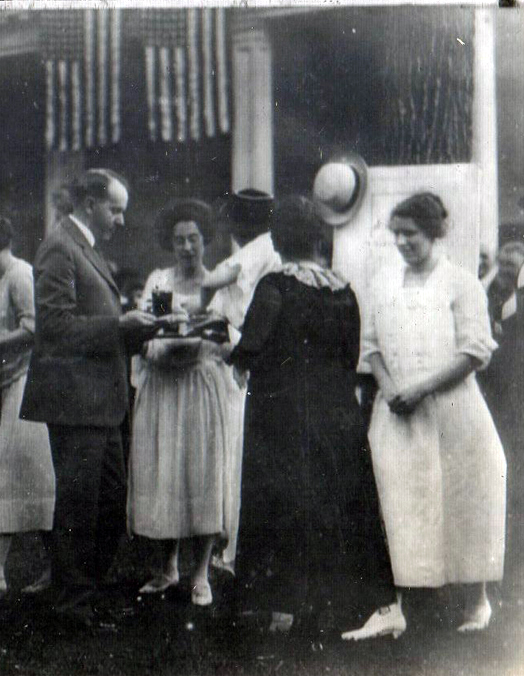
    Calvin Coolidge (left) enjoys gingerbread at Kenmore.

    3. Calvin Coolidge (1872-1933)
    Calvin Coolidge was born in Vermont in 1872.  After college, he became a lawyer and went into politics becoming the governor of Massachusetts from 1919 to 1921.  He was the 29th vice president under Warren Harding and the 30th President of the United States from 1923 to 1929.  Vice President Coolidge came to Kenmore in July 1922 to launch a fundraising campaign aimed at raising money to purchase the house and make it a historic site. He enjoyed some gingerbread during his visit.
     

    eleanor-roosevelt-portrait
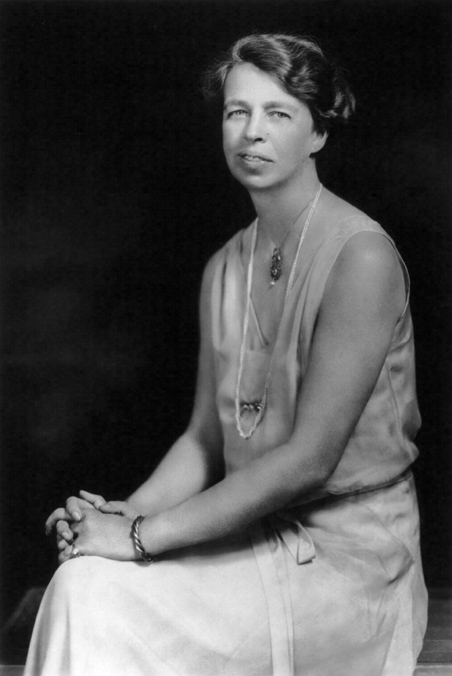
    Eleanor Roosevelt in 1932. Credit: Library of Congress / Wikipedia.

    2. Eleanor Roosevelt (1884-1962)
    Eleanor Roosevelt was First Lady of New York from 1929 to 1933 and First Lady of the United States from 1933 to 1945.  She was born in New York City to the socially prominent Roosevelt and Livingston families and married Franklin D. Roosevelt in March 1905.  After her time in the White House, she chaired the United Nations Commission on Human Rights in the late 1940s and early 1950s and John F. Kennedy’s Presidential Commission on the Status of Women.  When she was First Lady of New York, Mrs. Roosevelt visited Kenmore on several occasions with various groups who came from the New York state capital of Albany.

    1. George Washington (1731-1799)
    houdons-george-washington
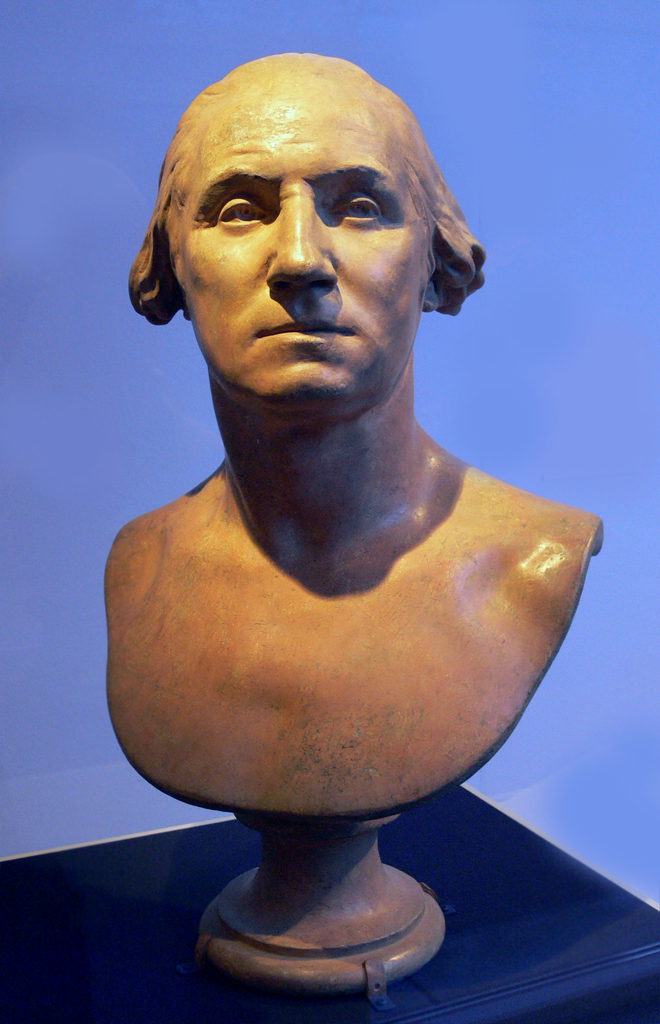
    Bust of George Washington (c. 1786) by Jean-Antoine Houdon and based on a life mask of Washington. Public domain. Credit: Dallas Museum of Art / Wikipedia.

    George Washington was the first President of the United States (1789-1797) and the older brother of Betty Washington Lewis.  Construction of Kenmore was complete late in 1775. George would not stay in the house until 1784.  Including this 1784 visit, Washington stayed at Kenmore at different times during the years 1785, 1787, 1788, and 1791.  The final visits in April and June 1791 were the only times he stayed at Kenmore while serving as president.[1]

    Heather Baldus
    Collections Manager

    [1] Paula Felder, Fielding Lewis and the Washington Family: A Chronicle of 18th Century Fredericksburg. The American History Company, 1998: 216.
  • Samuel Washington: George’s Brother and Wartime Confidant

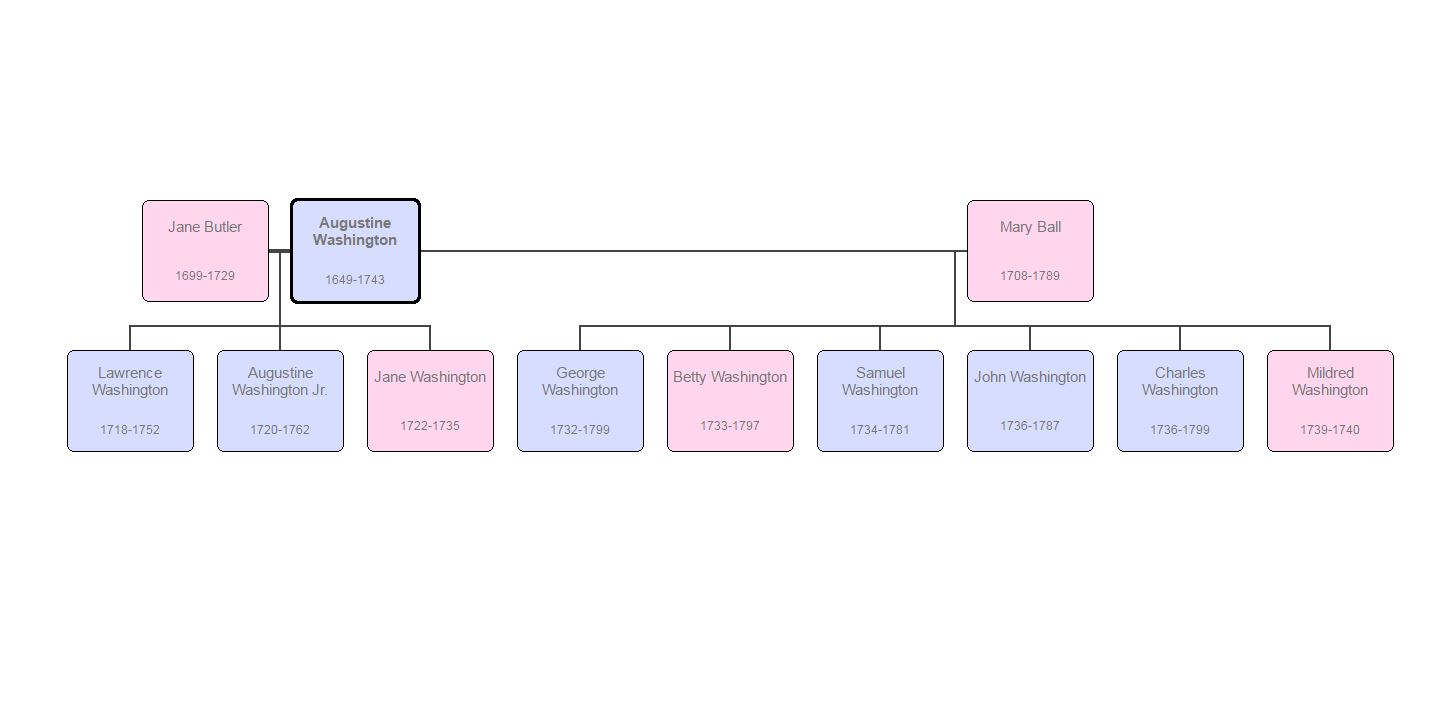
    Samuel Washington was born in Westmoreland County on November 16, 1734 at “…about 3 in the morning.” He was the third child and second oldest boy of Augustine and Mary Washington.[1]  Aside from his relationship to his famous older brother, George Washington, there is relatively little known about Samuel Washington when compared to what is known about George.

    In 1738, when Samuel was about four-years-old, the family moved to Ferry Farm, where he spent his childhood.  When Samuel was eight-years-old, Augustine died in April 1743.  According to Augustine’s will, his sons were to receive their inheritance when they turned 21-years-old.  Until then, Mary controlled their inherited property.

    This property included enslaved men, women, and children.  Samuel received ten of his father’s slaves: Dick, Ralph, Tom, Merry, Rosa, Pegg, Milla, Sarah, Charles, Virgin, and Will.  Of these, only Dick is listed as one of the “Negroes at the Home House” in Augustine’s probate inventory, meaning that he came from the enslaved community living at Ferry Farm.

    Samuel also inherited land from Augustine, namely Chotank Farm in Frederick County and a portion of land in Westmoreland County. [2]  When Samuel reached age of 21 in 1755, he sold the Westmoreland property and moved to Chotank Farm with his new wife, Jane Champe.[3]

    augustine-washington-family-tree
    The Family of Augustine Washington (click photo to enlarge)

    Over the course of his life, Samuel married five times.  Each of his wives died from illness or during childbirth.  Similarly, several children of Samuel and his wives passed away.  Thornton Washington, a son Samuel fathered with second wife Mildred Thorton, survived to adulthood and fought in the American Revolution[4]  Samuel and Anne Steptoe Allerton, his fourth wife, had three children who survived childhood: George Steptoe Washington, Lawrence Augustine Washington, and Harriot Washington.[5]

    In 1770, Samuel moved his family from Frederick County to a new home called Harewood (now in Jefferson County, West Virginia).[6]  At Harewood, he was situated far from the Revolutionary War.  Samuel was sickly for much of his life, most likely with tuberculosis, which precluded him from actively fighting in the war. He still joined his local militia in 1771 and eventually became a colonel.[7]  He also played a role in local politics, both before and during the Revolution. In 1766, he signed the Leedstown or Westmoreland Resolves [PDF] against the Stamp Act.  The same year, Samuel was named a justice in Stafford County[8], and in 1769, was appointed by the governor as a member of the new Commission of the Peace.[9]

    harewood
    Harewood as it appears today near Charles Town, West Virginia. Credit: Acroterion/Wikipedia

    Although Samuel’s direct involvement in the war was limited, George Washington saw his brother as a confidant. For much of the Revolution, George sent Samuel many letters describing the war’s course and hardships. He even included sensitive information such as troop movements. Multiple times, George wrote to his brother to tell him the news of the front, frequently describing the battles and their outcome, lamenting the lack of troops and supplies, and once even sent Samuel a list of the names of prisoners taken.  George could express to Samuel his uncertainties about the war and the future of the country he was fighting to create. In 1776, George confessed to his brother; “We are, I expect, upon the Eve of something very important; what may be the Issue; Heaven alone can tell, I will do the best I can, and leave the rest to the supreme direction of Events”

    In 1780, George wrote his brother in frustration, saying “We are always without an Army—or have a raw and undisciplined one, engaged for so short a time that we are not fit either for the purposes of offence or defence, much less is it in our power to project schemes & execute plans which depend upon well-disciplined and permanent Troops—One half the year is spent in getting Troops into the Field—the other half is lost in discharging them, from their limited Service, & the manner & time in which they come and go.” This expression of doubt shows how comfortable George was with telling his brother the bleak truth about what was happening in war.

    Since there are no surviving letters from Samuel, it is necessary to rely on what George wrote to his brother to get an idea of their relationship. On a personal level, the two men seem to have been close given the level of trust George showed by sharing his innermost thoughts about the war and the state of the army with Samuel.  Beyond affairs of state, at times, George simply missed Samuel, telling him in 1772 that “I was in great hopes to have met with you at Fredericksburg, or seen you at this place on your way up but it would almost seem as if you had foresworn this part of the Country.”  There were other letters similar to this, asking Samuel when he would visit George at Mount Vernon. During the Revolution, there was little opportunity for visiting and travel, but the brothers were able to stay in touch, up until Samuel’s death.

    Samuel did not live to see the new country that his brother was fighting to create. In 1781, shortly before the Battle of Yorktown, Samuel’s health declined sharply and he died in September.[10] It is believed he died of tuberculosis.  Thornton Washington, Samuel’s eldest son, died in 1787, leaving George Steptoe, Augustine Lawrence, and Harriot to be cared for by Samuel’s siblings. Betty became the main caretaker of Harriot while Charles and George had many disputes over the welfare of their two nephews, mainly arguing over money.

    Samuel left many debts unpaid after his death. In 1783, an exasperated George pondered in a letter to his younger brother, John Augustine, “How did my Brothr. Saml. Contrive to get himself so enormously in debt? Was it by purchases? By misfortunes? Or shear indolence and inattention to business?”[11] Whatever the reason, there was little that remained to pay off Samuel’s debts, his children were nearly destitute. Samuel’s wealth was most likely tied up in land and that land was sold off to pay his debts. Because neither his will nor any probate inventory have been found, it is nearly impossible to discover what his assets were before his death. Charles, John Augustine, Betty and George all pitched-in over the next several years to make sure that Samuel’s children were well cared for.  In his will, George Washington exonerated the debts that were owed him by Samuel and said that he did not expect Samuel’s children to repay him for their education or anything else that may have been given to them.

    Madeline Fanta
    Summer Fleming-Smith Scholar

    [1] Augustine and Mary Washington family bible; Felder, Paula S. Fielding Lewis and the Washington Family: A Chronicle of 18th Century Fredericksburg, American History Company, 1998: pg. 4

    [2] Ambler, Charles Henry, George Washington and the West, Historic Pittsburgh Text Collection, 1873- 1957: pg. 32 http://bit.ly/2cpnGgO [Accessed 8/17/16].

    [3] Bedinger Family History and Genealogy Website, http://www.bedinger.org/col-samuel-washington.html [Accessed 8/17/16].

    [4] Ibid.

    [5] Ibid.

    [6] Grizzard, Frank E. Jr. George! A Guide to All Things Washington, Charlottesville, VA: Mariner Publishing, 2005: pg. 337

    [7] Bedinger Family History and Genealogy Website, http://www.bedinger.org/col-samuel-washington.html [accessed 6/15/2016].

    [8] Bushong, Millard Kessler, A History of Jefferson County, West Virginia, 1719-1940, Westminster, MD: Heritage Books Inc. 2007: pg. 308

    [9] Felder, pg. 152.

    [10] Bedinger Family History and Genealogy Website http://www.bedinger.org/col-samuel-washington.html [accessed 6/15/2016].

    [11] Grizzard, pg. 337

  • George Washington, My Grandfather, and the Noble Art of Fencing

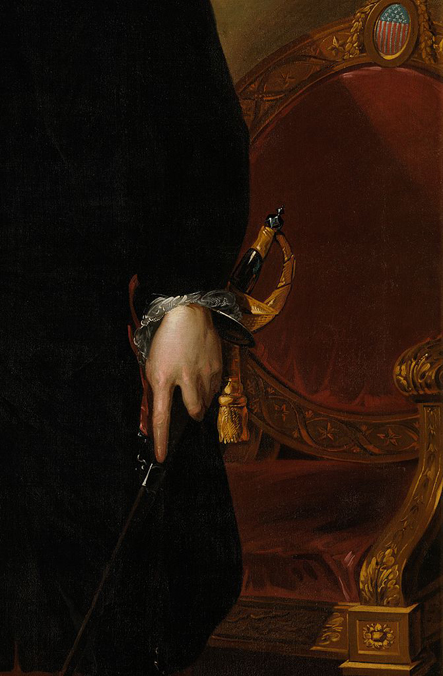
    George Washington by Gilbert Stuart (1796). Public domain.
    George Washington by Gilbert Stuart (1796). In the portrait, Washington wears his ceremonial sword. Public domain.

    Editor’s Note: This is the second of two posts inspired by this year’s Summer Olympics. This week, Archaeologist Mara Kaktins reflects on the connection fencing has created between her family and George Washington. Read our first Olympics-inspired post here.

    At our monthly blog meetings, post topics are floated and people grab them up, usually when it aligns with individual research interests.  George Washington as an avid fencer seemed an appropriate subject with the Summer Olympics in full swing this month.  I am no fencer, nor am I an athlete, so why write about fencing?  The spirit to volunteer for this assignment came to me because of the recent passing of my father.  He, my uncle, and my grandfather were all fencers.  It led me to ponder our first president, my grandfather, and the modern Olympic sport of fencing.

    Let’s begin by examining the early history of fencing in the American colonies.  Long considered a ‘gentleman’s sport’, fencing was massively popular in Europe. Respect for the knowledge of sword play extended to the colonies, where masters from abroad set up schools to teach young men this ancient art.  These instructors did not just show their students how to fence.  Sword play was part of a larger artistic curriculum that could also include dancing, horseback riding, popular languages such as French, boxing, gentlemen’s games like cards, and knowledge of various musical instruments.   Fencing, or ‘short sword’ as it was sometimes called, was not seen as merely a sport.  It was referred to as an ‘art’.  With mastery, came not just dexterity, physical fitness, and strength but also good temperament, courtly manners, and a sense of restraint.  Teachers often emphasized that a gentleman well-versed in the sword was less likely to ever use one, having gained honor and discipline in addition to knowledge of a deadly weapon.  Sort of like the colonial equivalent of “With great power comes great responsibility”.

    George Washington by Gilbert Stuart Sword
    A closer view of Washington’s ceremonial sword.

    As a young man living at Ferry Farm, George Washington attempted to better himself learning all of the gentlemanly arts. It is no surprise he studied fencing.  Some evidence suggests that Lawrence Washington, his older half-brother who was a Captain in the Virginia Militia may have helped him in this regard.  Schooled in England, Lawrence learned all he needed to know of being a gentleman in the mother country, as was customary for gentry children.  George Washington never attended a real school, much less an English one.  He was determined, however, and sought his gentlemanly education where he could in Fredericksburg, Virginia.

    Ferry Farm Sword Fragment
    Fragment of a cooper-alloy hand guard from a sword dating to the late 1600s or early 1700s and unearthed by archaeologists at Ferry Farm.

    The closest dedicated fencing instructor was in far-away Williamsburg so George had to make do. The early George Washington biographer, Washington Irving, suggested that Lawrence and his military friends along with an adjutant known only by his last name of Muse probably instructed George in sword play.  There was also a rather mysterious Dutch mercenary and translator, Jacob Van Braam (all good stories should have a shadowy Dutchman).  Temporarily located in Fredericksburg, Van Braam was in between wars and supplemented his income by teaching young George how to handle a blade.  They later campaigned together and fought at Fort Necessity in 1754 where a mistranslation by Van Braam may actually have contributed to the conflict that is credited with helping start the Seven Year War.  Presumably the Dutchman was more skilled with weapons than in French and George Washington went on to become a famous general, often depicted carrying a sword, a symbol of his status and military skill.  Van Braam later fought in the Revolutionary War but for the British before retiring to France.

    Foil
    Fencing foil belonging to the late Uldis Kaktins, my father.

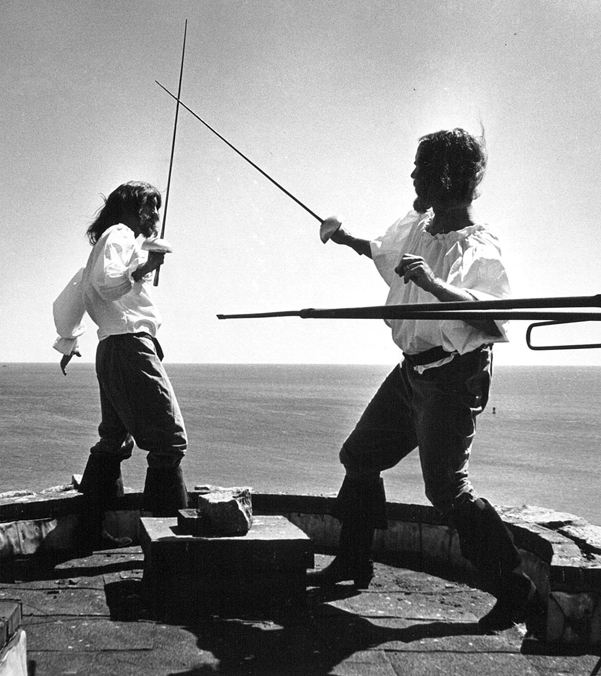
    Fast forward two centuries to a young man in Latvia named Zigurds, my grandfather.  Fencing remained a popular sport in Europe and a skill that educated men certainly looked to acquire.  Zigurds was tall, young, and handsome, had a law degree, and his father was a world famous opera singer.  Zigurds seemed to have a lot going for him and likely learned to fence for many of the reasons George did: physical prowess and a respected mental fortitude.  With the onset of the Second World War, Zigurds learned that the Soviets were going to deport him, his wife, and two young children to Siberia so he took his family and fled to the United States.  In America, his and his wife’s law degrees were worthless.  They moved into a rough but affordable neighborhood in Boston and worked blue collar jobs.  My grandfather’s life was completely different from what he had known in Latvia except for fencing.  He instructed fencing at the YMCA and headed a Latvian fencing club.  Normally a fairly stern figure, Zigurds once dressed as a ‘swashbuckler’ to be filmed fencing for a short film or commercial.

    Mara's Grandfather
    Zigurds Kaktins, my grandfather, (right) fencing in swashbuckler’s costume in the 1960s.

    Zigurds passed on fencing to my father and uncle.  My recently deceased father always had a grace about him.  He carried himself easily and with confidence but was quick and nimble when needed.  Perhaps not coincidentally, he was also an excellent dancer.  I think that his early instruction in fencing contributed to this grace.  A man of grace and confidence, an excellent dancer, and a fencer.  These words prove an apt description of my father, my grandfather, and the Father of my Country.

    Mara Kaktins
    Archaeologist

  • Video – Building George’s House: The Concrete Cradle

    An interpretive replica of the house that young George Washington lived in with his family is being built at his boyhood home at Ferry Farm near Fredericksburg, Virginia. This replica is being constructed on the exact location of the original. Through the use of a specially-designed concrete cradle, the replica will not harm any of the original architectural remains underground. In this video, we see the construction of this cradle and learn about the science and skill that makes this engineering feat possible.

    To learn more, read an “Introduction to the New George Washington’s Ferry Farm.”

  • Introducing the New George Washington’s Ferry Farm

    chapman-overlay-blog

    In 1996, the Trustees, Regents, and staff of The George Washington Foundation, known then as the Kenmore Association, were part of a large and vocal group of concerned citizens that banded together to save the site of George Washington’s Boyhood Home from commercial development.  While all the Washington-era structures, yards, and fences vanished almost 200 years ago, it was critical to preserve this significant place in our nation’s history—where beginning in 1738 young George and his family called home.

    After years of meticulous research and planning by historians, architects, archaeologists, and curators, the Foundation is fulfilling that goal.  Up to this point Ferry Farm has been an archaeology park known for its grassy fields, beautiful views of the Rappahannock River, large-scale archaeology excavations, and an amazing and extensive collection of Washington artifacts. Today with the beginning of the construction of the interpretive replica of the Washington house and the surrounding landscape Ferry Farm is beginning its transition to an outdoor living museum.

    George Washington lived at Ferry Farm from age 6 to around age 22.  The Cherry Tree and the Stone Throw legends were set here.  He learned to survey, joined the Masonic Lodge, read his first book on military adventurers, copied the Rules of Civility, and petitioned colonial Virginia’s British Governor for his first military office at Ferry Farm.  This is the landscape that was formed by the Washingtons and their enslaved workers, and George Washington’s years on this ground were essential to his development into an extraordinary man.

    Wash-House-Front-Elevation-blog
    An architectural rendering of front facade of the interpretive replica of the Washington house at Ferry Farm.

    Starting with stone masons, who are now working on the site, the construction process involves  a succession of skilled artisans, employing a mix of modern and traditional techniques, including brick masons, blacksmiths, carpenters, joiners, plasterers, and painters, who together will produce the rich detail and beauty of a colonial home.

    Once the replica house is in place, the Foundation will reconstruct the support buildings, fences, and yards, informed by archaeology and historical research, that surrounded and served the house.  To date, we have unearthed remnants of a kitchen, slave quarter, trash yard, work yard, hen yard, and storehouse from the Washington period.  As archaeology continues to reveal additional structures and other elements, they will be added to the landscape until we create a place that evokes early Virginia and portrays what life was like for young George Washington.  Because the house is a reconstruction, we look forward to presenting colonial America in ways not possible for most historic house museums.  We will light fires in the fireplace, open windows, and invite visitors to sit in the chairs.  This unique environment will let guests experience eighteenth-century life with all their senses.

    Washington-House-Interior-blog
    Architectural floor plans of the interpretive replica of the Washington house at Ferry Farm.

    As Ferry Farm transitions from grassy fields to construction site, please stop in and witness the making of history up close.  George Washington’s Boyhood Home in Stafford County, Virginia, is open Monday through Sunday.  We invite you to explore Ferry Farm with the self-guided iPad tour, “Uncovering George Washington’s Youth,” or participate in a dynamic educational program relating to archaeology, history, and the natural environment.  The Foundation also offers special events and tours at its sister site, Historic Kenmore Plantation in Fredericksburg. You can follow the progress at Ferry Farm on this blog, as well as the Foundation’s Facebook page and website, where we will offer glimpses into eighteenth-century construction techniques and address historical issues.  We hope you will visit George Washington’s Ferry Farm soon.

    David Muraca
    Director of Archaeology

    Learn more about building George Washington’s boyhood home in Clint Schemmer’s article, “George Washington Really Did Sleep Here”, on the Fredericksburg Free Lance-Star’s website.


  • Video: Picnicking with Washington

    In this video, we talk about how people, including George Washington, picnicked in the 18th century and take a closer look at one particular piece of furniture used while on a picnic 200 years ago.

    You can read more about picnicking customs of the 1700s here.

  • “Dined at the Barbicue”: Washington Goes Picnicking

    In the summer of 1770, George Washington came to Fredericksburg for an extended stay. His time here would seem familiar to anyone who has gone back to their childhood hometown. While in town he visited his mother, went to the tavern to play cards with old friends, and stayed with his sister and brother-in-law. But the most interesting moment of his stay was on August 4, 1770 when he records…

    “Dined at the Barbicue with a great deal of other Company and stay’d there till Sunset.”

    GW BBQ Diary Entry (2)

    While it is difficult to understand what exactly he meant by ‘Barbicue’. It is safe to assume that it was a communal meal similar to a modern day cook-out. Going to a cookout, a barbecue or a picnic, in today’s parlance, all mean pretty much the same thing – eating well-known foods while outdoors, probably seated on the ground, in a casual atmosphere.  Above all, it is a highly social gathering.  We use these kinds of meals to celebrate national holidays, family occasions or just a beautiful day – it’s what Americans do.  But where did this past-time come from?

    In England, the idea of consuming light fare outdoors in the form of a picnic had been around since as early as 1748, when the word “picnic” first shows up in writing.  The word was probably a corruption of the French “pique nique” which basically means “to pick at small foods,” but for the English a picnic meant a fully mobile meal and all the accoutrements necessary to eat it.  Baskets of food were packed, equipment for entertainment (games of cricket or maybe some hunting or fishing) was gathered, and wagons were loaded (usually one for guests, and one or more for the provisions).  Then, the party set off to a pre-determined picturesque location, where it was all unpacked and set up by servants.  Although we might be amazed at the sheer volume of stuff these picnics required (everything from chairs and tables to cutlery and glassware), an 18th century English picnic was still considered a very informal affair by that time’s standards.  Guests might even be asked to contribute dishes to the meal (a forerunner of our potlucks), making recipes for picnic food were all the rage by the late 18th century.

    This painting shows chairs being provided for the ladies to use during lunch on a fishing trip. The Anglers' Repast (1789) by George Morland, 1763–1804, British, Oil on canvas. Public domain. Credit: Yale Center for British Art, Paul Mellon Collection.
    This painting shows chairs being provided for the ladies to use during lunch on a fishing trip. The Anglers’ Repast (1789) by George Morland, 1763–1804, British, Oil on canvas. Public domain. Credit: Yale Center for British Art, Paul Mellon Collection.

    While picnic’s etymology is relatively easy to trace, ‘Barbecue’ is far more difficult to pin down in the 17th and 18th centuries. Even the term itself is nearly impossible to decipher. The earliest known recording comes from a Spanish explorer in 1526, who used it as a verb meaning to roast meat. In 1672, the first reference in English came from the writings of John Lederer, a German explorer of the Blue Ridge Mountains. Originally written in Latin, Lederer’s expedition reports were translated into English by Maryland’s Governor Sir William Talbot and published.

    Many scholars believe the word “barbecue” most likely derives from the West Indian word “barbacoa” in the 16th century.  Believed to be a Taino word (although this is still up to scholarly debate), it is a term for slow-roasting meat over hot coals, usually using plenty of green saplings that would have created a lot of smoke. The meat originally roasted in this style was probably not the ubiquitous pork barbecue. While Christopher Columbus did bring some pigs on his voyage, it is Hernando de Soto who is credited with introducing the pig into Central America and Florida in 1539.

    The word, and the meat, was probably encountered by ships’ crews during the colonial period and eventually made its way to the American colonies.  Slow-roasting meat and spicing it with various rubs and marinades was a familiar concept in a many parts of the world, and especially on the African continent, so enslaved Africans living in the colonies also helped to proliferate the cooking method.  As happened with many traditions from around the globe that found their way to the New World, a true “barbecue” as George would know it quickly became a uniquely American concept, combining the English love of a good outdoor meal and the exotic foods and cooking methods of the West Indies and Africa.

    While the first American barbecues were practical affairs, held among enslaved communities or farming populations during the slaughtering season so as to quickly cook and preserve as much meat as possible, they very quickly took on a much more social aspect.  An entire town might gather for a barbecue, which might last for several days, perhaps to coincide with court days or a market.

    Between 1769 and 1774, George Washington recorded his attendance at six such affairs in his diary, including one barbecue that he hosted himself, another that was probably held at Fielding Lewis’s house in Fredericksburg, and a third in Alexandria at which he stayed all night.

    Meghan Budinger
    Aldrich Director of Curatorial Operations

    Joe Ziarko
    Manager of Interpretation & Visitor Services

  • Washington Birthday Wishes

    This month marks the 284th anniversary of George Washington’s birth. Americans have celebrated our first president’s birthday since long before it became an official national holiday in the late 1800s.  In fact, early Americans even marked George’s birth during his lifetime, most notably with “Birthnight Balls” that replicated the grand dances held in Britain to celebrate the monarch’s birthday.  In 1879, an Act of Congress made February 22 a holiday within the District of Columbia. Six year later, Congress expanded the holiday to all federal offices across the country.

    As with many American holidays, both officially recognized and otherwise, businesses created postcards and greeting cards to be used to send good wishes to family and friends on the holiday.  We have four such Washington Birthday postcards in our collection.  These cards date from around 1912-13, as a couple of the cards include cancelled postage stamps that note it being the 180th birthday of George Washington.

    This year, you can celebrate George Washington’s Birthday at Ferry Farm by making your own birthday card for George!

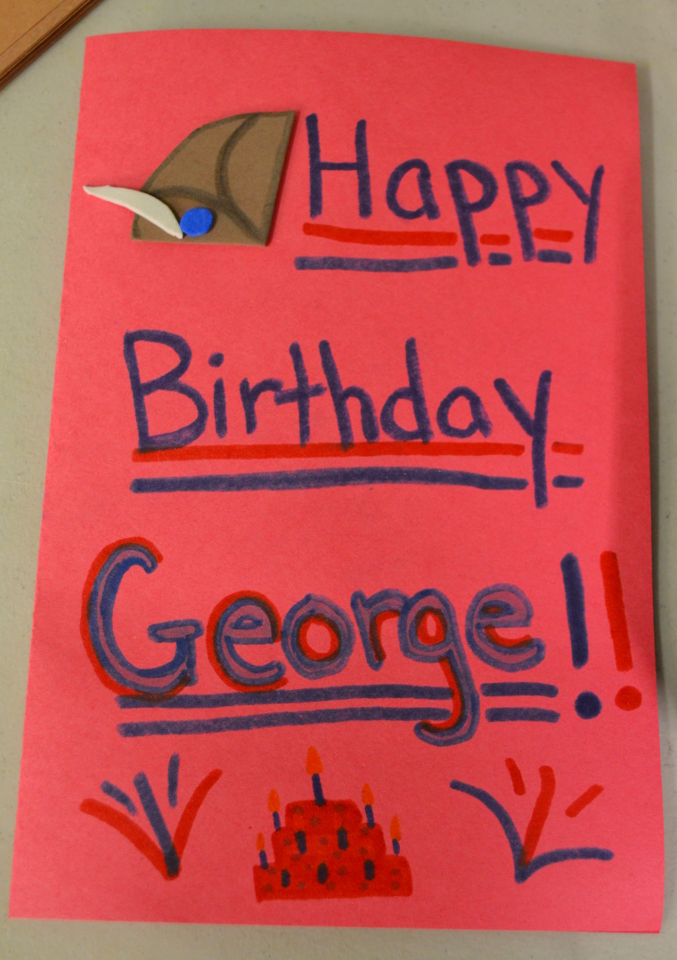
    Visitors even made birthday cards for George!

    Visit his boyhood home on Saturday, February 13 from 10:00 a.m. – 4:00 p.m. for family  fun, including games, crafts, exhibits, the Stone Throw Challenge (weather permitting), history theater, and birthday cake! “General Washington” will attend the Birthday Celebration to talk about his youth on the farm! You can see a short video of last year’s celebration here. $5 adults; 17 and under free.

    Additionally, on Presidents’ Day, Monday, February 14 from 10:00 a.m. – 4:00 p.m., learn about archaeology at George Washington’s Boyhood Home. Enjoy crafts, theater performances, presentations by Muraca the Magnificent – Guru of Glues, tours of the archaeology lab, a scavenger hunt, and the Archaeology Artifact Challenge.  Archaeology Day is a free event.

    For more information call 540-370-0732 x22 or email sherman@gwffoundation.org.

    Zac Cunningham
    Manager of Educational Programs

  • Video: George Washington’s Birthday at Ferry Farm

    Celebrate George Washington’s 284th birthday at his boyhood home with fun activities for the whole family, including games, crafts, exhibits, the Stone Throw Challenge (weather permitting), history theater, and birthday cake! “General Washington” will attend the Birthday Celebration to talk about his youth on the farm! The video below is a preview of the celebration.

    This year’s celebration is Saturday, February 13 from 10:00 a.m. to 4:00 p.m.

    For more information call 540-370-0732 x22 or email sherman@gwffoundation.org.

    $5 adults; 17 and under free.

  • Masonic Pipe in 3D

    139_Masonic_pipe_NO_SCALE.gif
    Click on the photo for to link to a 3D image the you can zoom, rotate, and manipulate.

    Recently, a 3D image of a smoking pipe was added to the Virtual Curation Lab, an online project of Virginia Commonwealth University.  You can view rotate, zoom, and manipulate the image by clicking the photo above or by clicking here.  The smoking pipe was discovered within the fill of the main cellar of the Washington family house at George Washington’s Ferry Farm, his boyhood home.  The pipe features the square and compass and twin pillars that distinguish this as a masonic pipe.  Such motifs were very popular.  The masonic symbols faced the smoker and fluting characterized that portion visible to surrounding friends.  The design elements used suggest that this pipe was likely made in the northeast of England sometime between 1770-1810, in places like Hull.

    George Washington was initiated as an apprentice mason on November 4, 1752, passed to fellow craft on March 3, 1753, and became a master mason on August 4, 1753. He achieved all of these masonic ranks at Fredericksburg Lodge No. 4.  While it is certainly possible the masonic pipe belonged to George, he was one of four notable masons associated with Ferry Farm.  The other three were Fielding Lewis, Hugh Mercer, and George Weedon, who each may also have left this specimen behind in the archaeological record.

    The Virtual Curation Laboratory (VCL) at Virginia Commonwealth University, headed by Dr. Bernard K. Means, scanned this pipe bowl in three dimensions.  3D scanning provides two types of digital models: a three-dimensional image to be viewed on a monitor and, with the use of a special 3D printer, a plastic replica of the item.  Replicas can be printed at a larger scale, allowing details to be viewed more easily.  VCL has used the technology to scan bones from extinct passenger pigeons, allowing researchers from around the nation to compare these known digital models to bird bones in their own assemblages so that they can identify passenger pigeons in their collection.

    Scanning
    The pipe bowl being scanned in 3D.

    Three-dimensional scanning allows The George Washington Foundation to provide greater public access to fragile artifacts both on the Internet virtually and as 3D printed copies that visitors can see and hold.  Making 3D images available online allows more people to see these artifacts than could ever visit Washington’s boyhood home.  We can even make these digital files available to researchers on the web, allowing others to 3D print them wherever in the world they may be.  In the field, 3D replicas allow staff to engage visitors, showing them (for example) a wig hair curler or tobacco pipe, then inviting them to guess how the object was used in the past.

    Lauren
    3D replicas allow Ferry Farm archaeologist Lauren Volkers to share rare and unique artifacts with visitors when the archaeological dig site is open.

    Fragile ceramic sherds can be printed in plastic, allowing visitors to mend the pieces together as an educational exercise.  Such access allows the original objects to be on exhibit while simultaneously allowing maximum access to the replicas physically and digitally.

    Vivian
    Archaeologist Vivian Hite uses a 3D printed plastic replica of the masonic pipe to engage young visitors.

    Laura Galke, Archaeologist
    Site Director/Small Finds Analyst