Lives and Legacies

Tag: illness

  • Bane of the Washingtons Part II: The Deaths of Lawrence, Fielding, and Samuel

    Welcome back to our 3-Part Blog charting tuberculosis in the extended Washington Family. If you are new to this series, Part I examined how the disease works, charted its history, and explained standard courses of treatments in the 1700s. You can find the blog here, and we encourage a review of the “Treatment” section. In Part II, we will begin to look at the family members who suffered from the disease and how this impacted their lives and those around them.

    Lawrence Washington (1718-1752, aged 33/34):
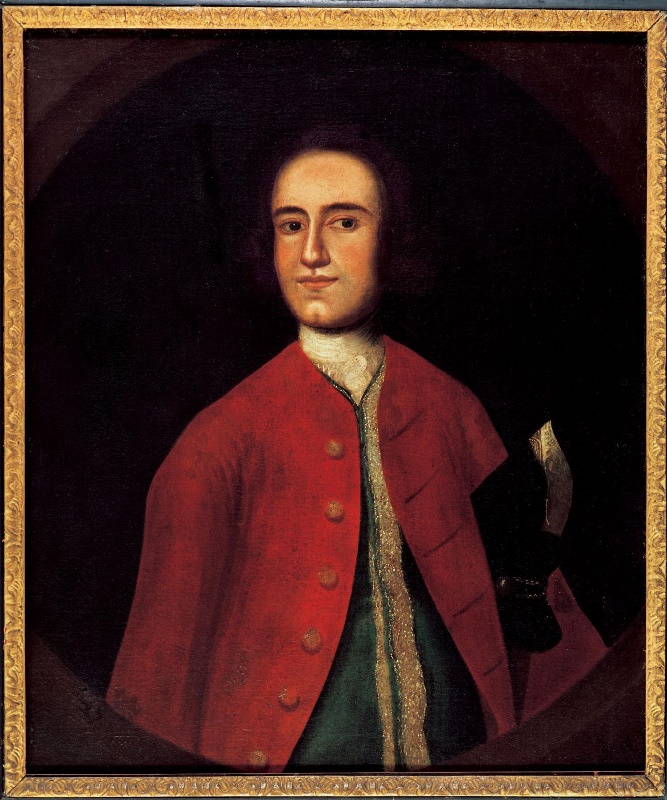
    Lawrence Washington Source: Mount Vernon

    Perhaps the best-known case of tuberculosis in the Washington family pertains to Lawrence Washington. George’s eldest half-brother, credited as serving as a role model, died of the disease in 1752, which subsequently laid the foundations for George to inherit Mount Vernon and become the Father of His Country. Behind this, however, lies one of the more clear timelines for the devastation the disease.

                Lawrence may have contracted tuberculosis during his service in the War of Jenkins’ Ear (served 1740-1742) or after his return to Virginia in 1742. Certainly, he had developed severe enough symptoms, particularly a cough, by the end of 1748, to cause him to take a leave of absence from the House of Burgesses. He resumed his duties in the spring of 1749, but his illness forced him home for a final time in May. That same month, George wrote hoping for news that his brother’s cough had improved and that he had “given over the thoughts of leaving Virginia.”1 Lawrence could not provide his brother with the news he desired, and sailed to England in the summer of that year to consult with physicians. Lawrence returned in November with little encouragement, but set out for Berkeley Springs in July 1750, to take the waters. George accompanied his brother on this venture, but they did not stay long.

    By 1751, Lawrence had exhausted any hope of finding a cure at home and his doctors recommended visiting a warmer climate. Following this advice, Lawrence and George sailed for Barbados on 25 September and arrived on 2 November. Shortly after their arrival, George recorded that a doctor came “to pass his opinion on [his] brother’s disorder, which he did in a favorable light, giving great assurances that…a cure might be effectually made.”2 George mentions little else of Lawrence’s condition in his journal, a month of course went undocumented as George had smallpox, and he returned to Virginia alone in December.

    Lawrence, having not found the relief he hoped for, decided to try Bermuda and journeyed there after George left. In an April 1752, letter to a friend, Lawrence referred to Bermuda as his “last refuge, where [he] must receive [his] final sentence.”3 Describing himself as “a criminal condemned, though not without hopes of a reprieve,”4 Lawrence followed his doctor’s treatment plan by “abstaining from flesh of every sort, all strong liquors, and by riding as much [he] could bear.”5 His doctor advised to take what benefit he could from the climate as another winter in Virginia would surely kill him. While Lawrence remained somewhat hopeful in this letter, he soon wrote again about his “unhappy state of health”6 and expressed the belief that, if it should worsen, he would “hurry home to [his] grave.”7 Evidently, Lawrence soon resigned himself to his impending death as he returned to Mount Vernon and set his affairs in order with the aid of his half-siblings and stepmother. He died on 26 July 1752.

    Upon Lawrence’s death, he left behind his wife Anne Fairfax and daughter Sarah. Three other children had already died all under the age of two. Infant mortality frequently occurred in the 1700s, so it proves impossible to know what caused each death. However, it remains a possibility that they contracted tuberculosis from their father, which then killed them quicker due to their age and weaker immune systems, or left them vulnerable to secondary infections. Sarah would suffer a similar fate in 1754, aged four, and her mother, having married into the Lee family, would die in 1761, aged thirty-three. These deaths allowed George to inherit Mount Vernon.

    Fielding Lewis (1725-1781, aged 56):
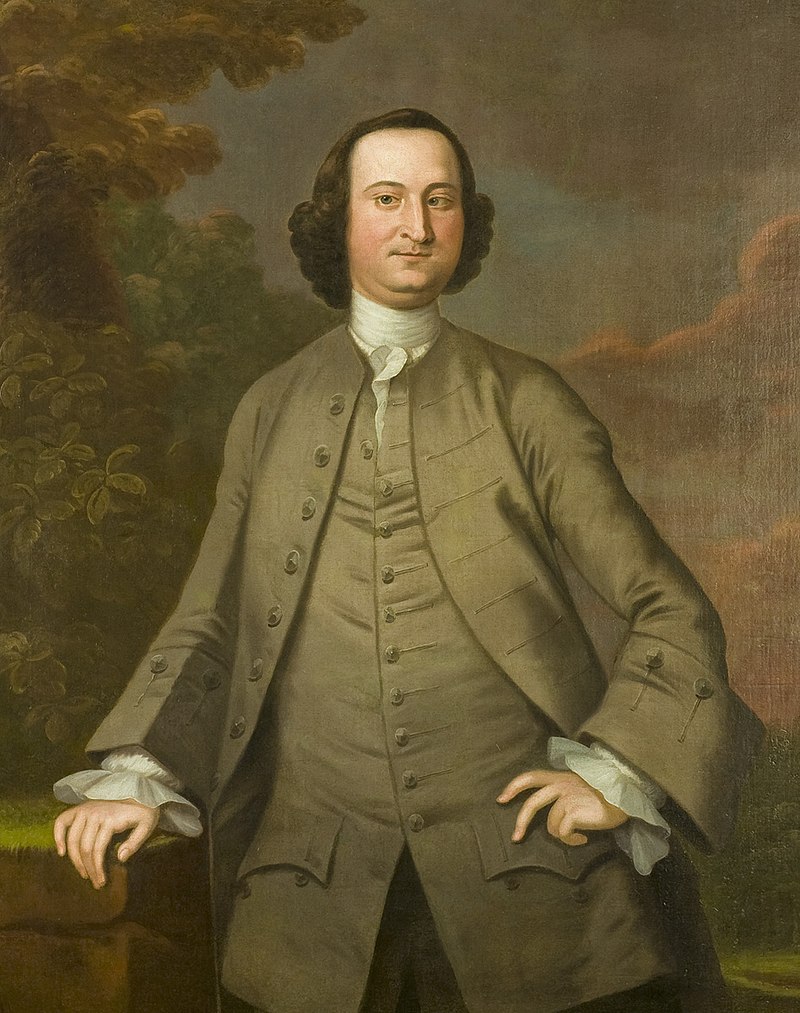
    Fielding Lewis

    The husband of Betty Washington and the mind behind Kenmore, Fielding Lewis served his country during the war by funding various supply and defense lines. One of the richest men in Virginia, Fielding had the ability to provide aid and, as the brother-in-law of the commander-in-chief, could hardly stay out of the conflict. While his efforts did much for the cause, Fielding drew the short straw by spending nearly all of his money. Accounts of Fielding Lewis’ death often insinuate a connection to the stress of losing his fortune. While this certainly put him under strain, and would not have helped his health, Fielding’s case of tuberculosis meant that he would have died regardless of his financial status.

    Tracing tuberculosis in Fielding’s life proves more difficult than that of Lawrence. Mentions of Fielding as ailing exist for several years prior to his death. However, with no description, one can hardly say if this references tuberculosis or some other affliction. Like many, he frequented Berkeley Springs and even purchased property there. Fielding recorded little of his visits, but his interests lay in the spring’s supposed medicinal benefits and, to that end, undertook an annual August trip from 1772 onwards. Throughout the war, Fielding held the rank of colonel and, though he never received a formal posting, oversaw Fredericksburg’s gun manufactory and the defense of the Rappahannock. This position required no military action and had strong connections to his background as a merchant. However, the choice of assignment may have derived from knowledge that he would never be well enough to effectively command troops. Then again, Fielding was in his fifties and had no military experience. In any case, the position reflected a strategic choice that played to Fielding’s strengths and lessened the impact of field inexperience and ill health.

    If Fielding hoped for a peaceful death, he would not receive it. In the summer of 1781, with the British encroaching on Fredericksburg, the Lewis household and Mary Washington fled. At this stage, Fielding’s health had significantly deteriorated, leaving him an invalid confined to his home. A sudden evacuation by carriage would have done little to ease his discomfort as the household hurried to another property in Frederick County, Virginia. Once there, Fielding focused on putting his affairs in order and likely did not have the strength to visit nearby Berkeley Springs. The news of the Yorktown victory undoubtedly brought some emotional respite, but it proved short-lived as Fielding died mid-December 1781. The location of his burial site on the Frederick County property remains unknown. Fielding’s death brought immense grief to his widow, Betty Washington, who had lost her brother Samuel to the same disease only three months earlier.   

    Samuel Washington (1734-1781, aged 46):
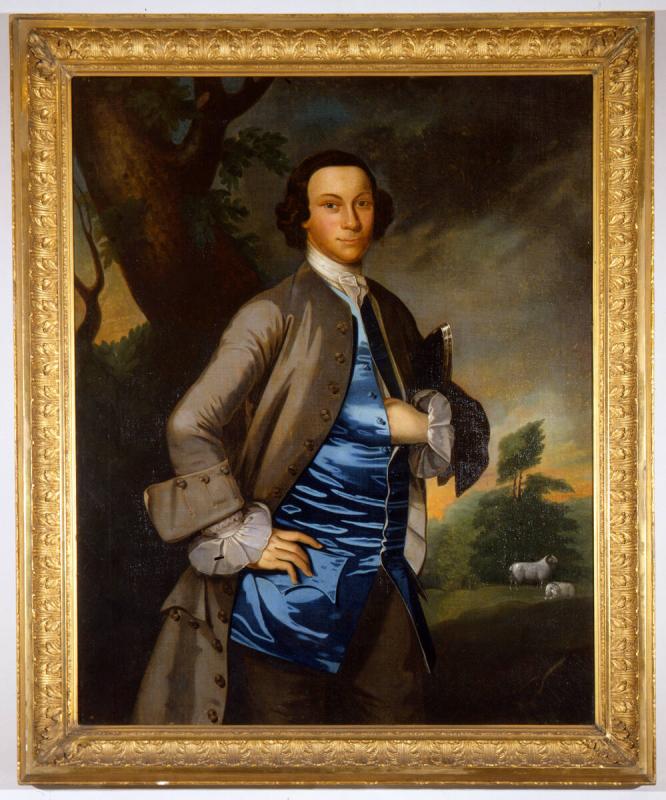
     Samuel Washington Source: Mount Vernon

    The second son of Augustine Washington and Mary Ball, Samuel grew up at Ferry Farm with his full-siblings. Said to have suffered from tuberculosis for most of his life, it remains unknown where, when, and from whom he contracted it. However, by visiting Lawrence in July 1752, to help put his half-brother’s affairs in order, seventeen-year-old Samuel certainly faced exposure. Samuel died at his home Harewood, near Charles Town, West Virginia, in September 1781, shortly before the victory at Yorktown. The home itself lies conveniently close to Berkeley Springs, which may indicate that its location and Samuel’s move from Stafford County, Virginia, derived from a desire for easy access to the springs and their reputed health benefits.

    Despite dying just shy of age forty-seven, Samuel famously married five times. His final wife, Susannah Perrin Holden (1753–1783, m. 1778), survived him, and the fourth, Anne Steptoe (1737–1777, m. 1764), died of complications from a smallpox inoculation. However, the deaths of his first three wives, Jane Champe (1724–1755, m. 1754), Mildred Thornton (roughly 1741–1762, m. 1756), and Lucy Chapman (1743–1763, m. 1762), have long been associated with tuberculosis.

    All three experienced rapid declines in health after their marriages to Samuel, and in correlation with several pregnancies. Pregnancy and childbirth proved extremely dangerous during this period, so these deaths could simply be tragic examples. However, as pregnancy exacerbates tuberculosis, the common interpretation remains that the women contracted the disease from Samuel, saw it worsen at an alarming rate due to pregnancy, and the strain of one or more births on top of the disease made it impossible to recover. Regarding his children, several died quite young, which may mirror the fate of Lawrence’s children, and three of his sons who reached adulthood would ultimately die of the disease. 

    Coming Up

                In our final blog on tuberculosis, we will be taking a look at how the disease impacted the next generation of the extended Washington family and those they enslaved. This will be coming out on June 28th.

    Emma Schlauder

    Research Archaeologist


    Bibliography

    2-7 Anderson, Alicia K. & Lynn A. Price (editors) 2018     George Washington’s Barbados Diary: 1751-52. University of Virginia Press, Charlottesville, VA.

    1 Chernow, Ron 2010     Washington: A Life. Penguin Books Ltd, London, UK.

    Felder, Paula S. 1998     Fielding Lewis and the Washington Family: A Chronicle of 18th Century Fredericksburg. The American History Company.

    Glen, Justin 2014     The Washingtons: A Family History, Vol 1, Seven Generations of the Presidential Branch. Savas Beatie LLC, El Dorado Hills, CA.

  • Winter Ailments (and how to endure them in the eighteenth century)

    As spring approaches in the Middle Atlantic and Northeastern states, we welcome the chance to spend more time outdoors in the fresh air instead of cooped up in our houses – getting sick.  Ailments such as colds and flu are contractible anytime, but we usually associate them with the wintertime as that’s when they seem to be more prevalent.

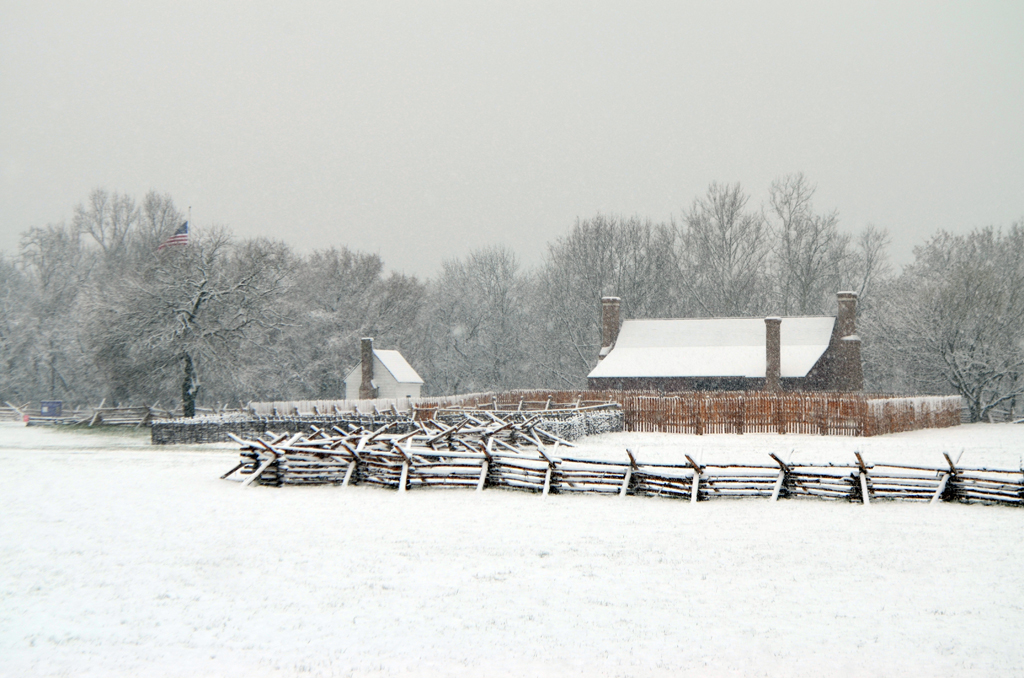
    Ferry Farm during winter storm

    With modern medicine, we can easily treat and overcome these and other more serious illnesses that rise up during the colder months.  People living in the eighteenth century, however, did not have the luxury of our scientific knowledge of modern medicines, and so what is easily treatable today could be, and often was, deadly during their lifetime. They had to deal with serious diseases, such as dysentery, measles, mumps, smallpox, rickets, typhus, typhoid, tuberculosis, and yellow fever, without the benefit of antibiotics. 

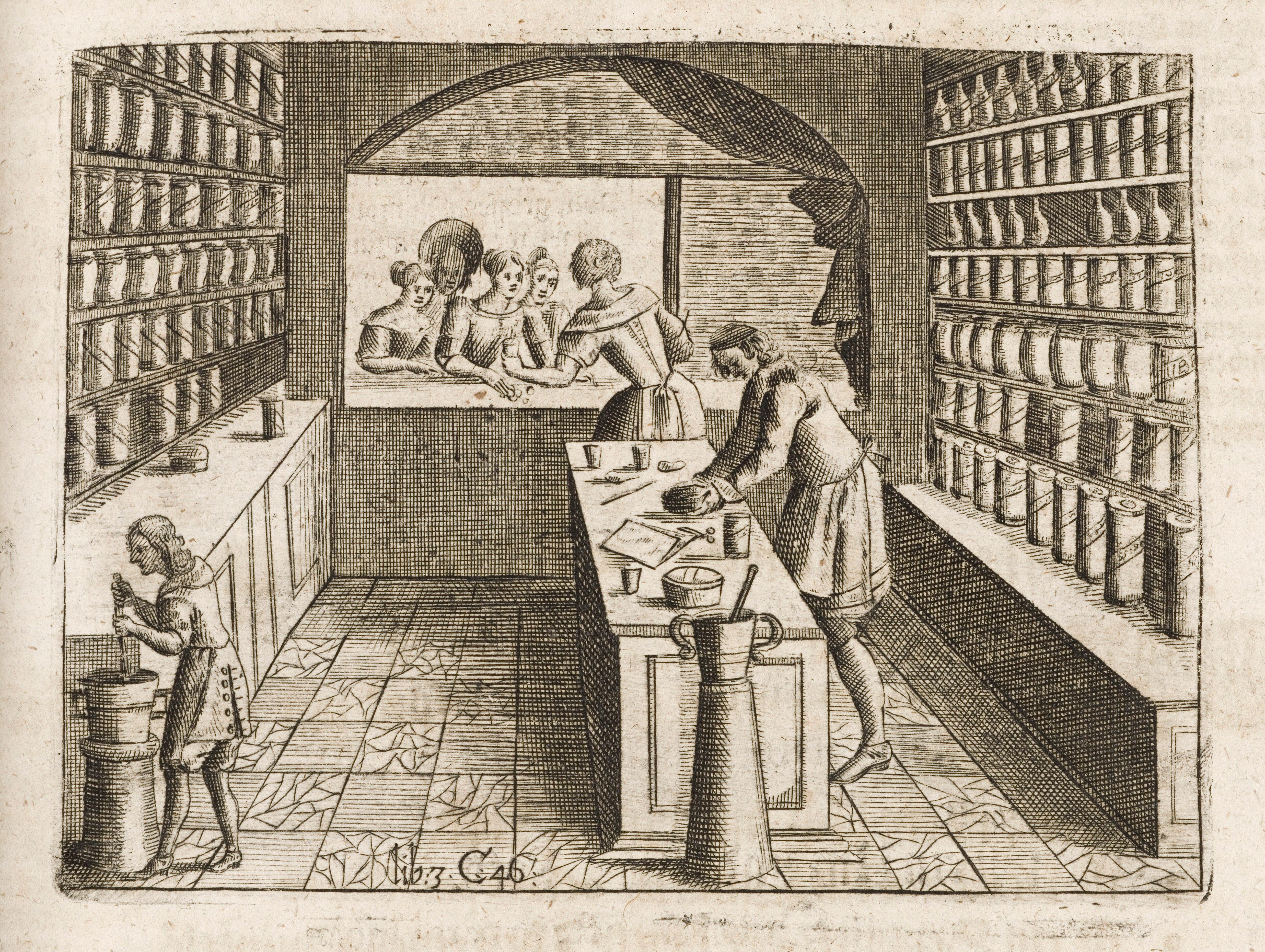
    Medical treatments for dealing with illnesses in the eighteenth century were primarily herbal remedies and traditions passed down over the centuries in medical books or as local knowledge. People like the Washington family probably relied on local healers, apothecaries, physicians, or midwives in the Fredericksburg area to prepare the medicines and treat their illnesses.  It is also very likely that Mary Washington would have had the knowledge herself to oversee the formulation of cough syrups, laxatives, and other tinctures using the herbs and flowers in her own garden. Betty Washington Lewis, Mary’s daughter, owned a copy of Eliza Smith’s 1739 The Compleat Housewife: or, Accomplished Gentlewoman’s Companion, a cookbook, in which are explicit medicinal recipes for dealing with hysterics, the vapours, pain from stones, the plague, upset stomachs, a cancerous breast, consumption, and for ‘preserving the lungs,’ among other things.[1]  The chances are pretty good her mother Mary also had access to this same recipe book.

    We do not have any historical information on the childhood diseases or winter ailments that were present in the Washington home, but here are two that they might have experienced.

    Pneumonia

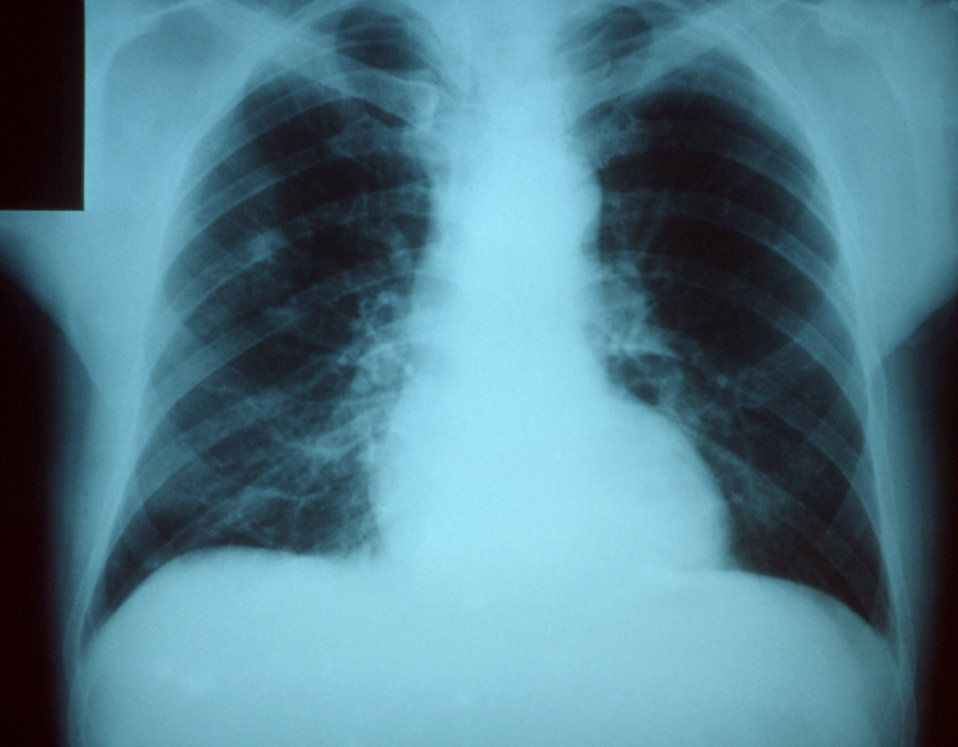
    Anteroposterior chest x-ray revealed right upper lobe pneumonia. Credit: Public Domain Files

    Pneumonia, a bacterial infection of the lungs, also known as ‘Winter Fever’, was a great concern in colonial Virginia.  Although it was not known as a disease in and of itself but rather a symptom of other illnesses until much later, the presence of this respiratory ailment was noted by colonists. 

    Pneumonia and many other such illnesses were prevalent in the winter months when conditions forced people inside with closed windows and doors.  Prior to modern home climate-control technology, windows and doors were opened in good weather to create a breeze that cooled down a house but also served to air it out.  Additionally, many activities we perform indoors today took place outside, such as laundry and food processing, which got people out in the open more.  When the weather turned cold, however, people were stuck inside with little ventilation and essentially stewing in their own germs.  As such, pneumonia spread rampantly throughout the winter, and with no antibiotics, it was often deadly especially for the young and elderly. 

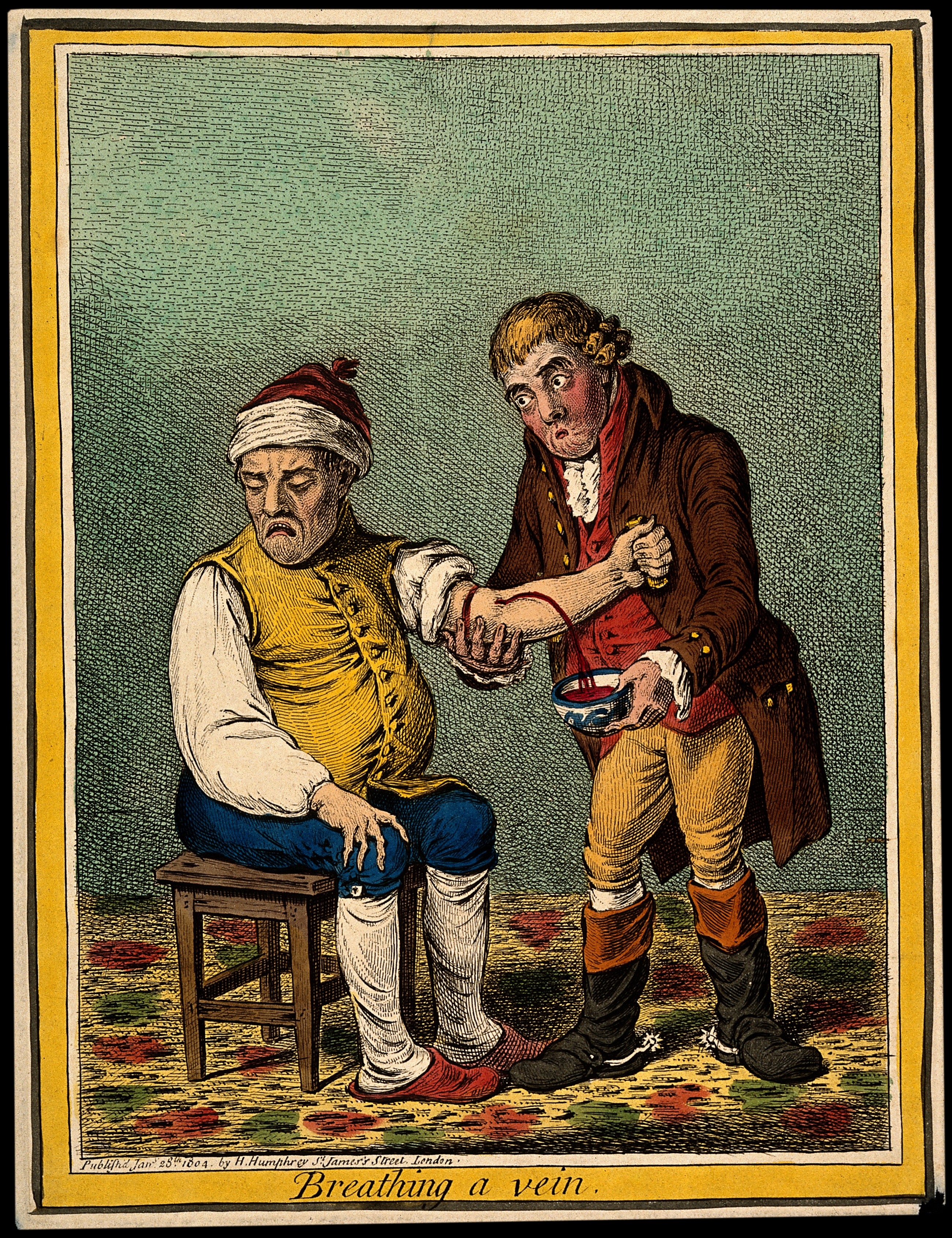
    An ill man who is being bled by his doctor. Credit: Wikimedia Commons

    The commonly incorrect assumption at the time was that many illnesses resulted from bad smells or miasma. Bloodletting, laxatives, and emetics were justified treatments for almost anything wrong with you because it was essential to purge and expel the bad blood and humours from one’s body.  In general, these treatments did more harm than good and, in some cases, killed the patient.

    In addressing the symptoms of pneumonia (fever, cough, inflammation of the lungs), a mixture of treatments would have been proscribed for the patient.  Cough syrups recipes were many and concocted from a wide variety of aromatic herbs infused in flavored waters, honey, or liquor. Opium in the form of poppy leaves was also a common ingredient.  Additional treatments included bloodletting “8 to 10 ounces if strong 12 ounces” and applying ‘blisters’ on the back of their neck to promote sweating and to help with a headache.[2]  Blistering was an aggressive treatment to the skin and essentially created pain in one spot to counteract pain elsewhere. A blistering agent, such as mustard, capsicum, or Spanish Fly, was applied in a poultice to the skin, causing redness and, in extreme cases, a raised pus-filled blister.[3] The cure might have been worse than the disease!

    Scientists have since made great breakthroughs in treating pneumonia, including the invention of penicillin by Alexander Fleming in 1928.  Yay science!

    Rickets

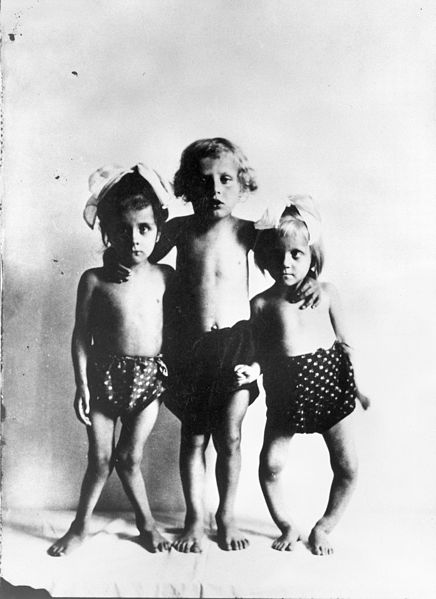
    Three children displaying signs of rickets. Credit: Wellcome Collection

    Bowed legs, thickened wrists and ankles, low weight, and deformities of the skull and pelvis are all signs of Rickets, a common disease of the 18th century and prevalent during the winter months.  Rickets is caused by a lack of Vitamin D in a child’s diet, leading to soft, weak bones that don’t mineralize properly. The symptoms of rickets usually appear between the ages of 3 to 18 months, and if caught early, the disease is reversible by ensuring a proper diet of Vitamin D-rich foods (fatty fish, egg yolks, fish oil) and exposure to sunlight.

    Eighteenth-century physicians knew about the disease and discussed the symptoms and possible remedies in their medical books, but they didn’t understand the actual cause (Vitamin D deficiency) and, therefore, how to cure it. And although Rickets is often associated with children living in poverty with limited diets or restricted to sunless living and working conditions, it affected children of all socio-economic levels.

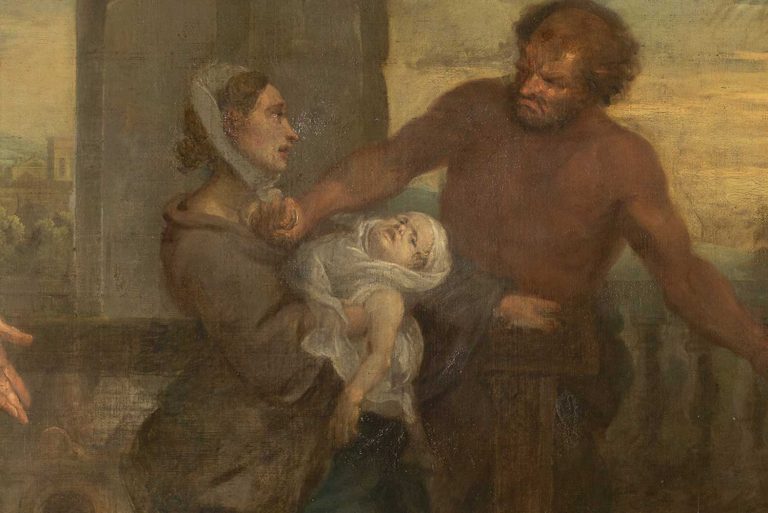
    Mother holding a child with symptoms of rickets in Christ at the Pool of Bethesda by William Hogarth (1697–1764) Credit: Barts Heritage

    John Freke, in his 1748 book “An Essay on the Art of Healing,” felt that the diet of the children affected by Rickets was “in general too luxuriant” and should be scaled back to a more austere diet than ordinary.[4]  “Care should be taken to send this sort of Children into a sharp Air,” and “rousing their Blood by shaking and tossing them often, giving them now-and-then a little red Wine, and dipping them every Morning in cold Water.” He was spot on to suggest letting them play outside in the sun, but restricting their diet would certainly have had a deleterious effect on the patient.

    The 1710 Book of Physick was a recipe book of natural remedies using plants and minerals to cure the everyday ills and complaints of the sick.[5] The first step incurring rickets was to administer a “purge,” which was a drink that flushes everything out of your digestive system by either vomiting or diarrhea.  Purgatives were seen as a cure-all for many diseases because the prevailing thought was you had to expel whatever was making you sick out of your body.

    The recommended purge was made of a long list of plants, including liverwort, speedwell, and yarrow, mixed with fruits such as figs and raisins, all slowly simmered together in water. Dosage was three spoonful’s every morning and night for 14 days.

    Next on the list was bloodletting, of course! Just a prick on the ear would do the job, or leeches behind the ears! What is interesting is that this instruction was immediately followed by a reference to the page on how “to staunch bleeding.”

    Not all remedies had to come from physician’s books but could be found in publications geared towards laymen.  The Servants Directory, Improved; or House-Keepers Companion, published in1762, was an instruction manual on all things household, ranging from how to kill rats, clean furniture, wash silk stockings to the best way to cook parsnips.   Included in a chapter on the care of small children was a cure for a Rickety child.  The first suggestion was to give the child three doses of a gentle physic, or purge, similar to the 1710 Phisick book.  Next, rub the child with a concoction of smashed garden snails and liquor every day for a month.  Outside exercise was also recommended, thank goodness![6]

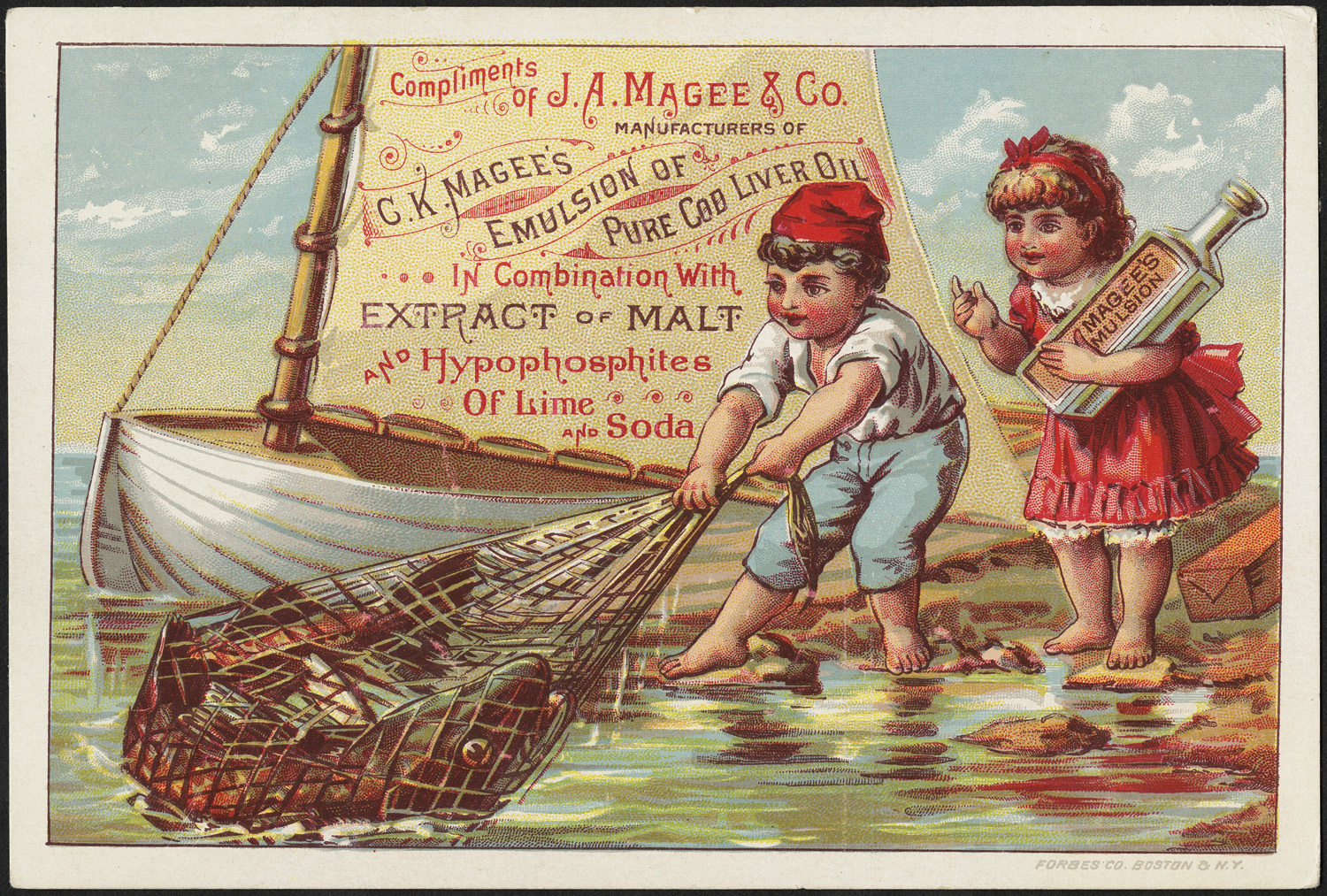
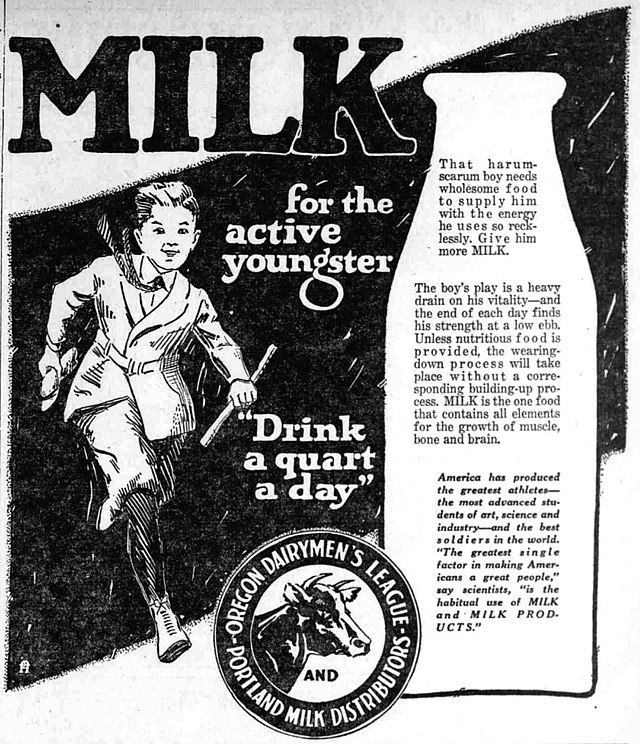
    If the 18th century rickety child could survive multiple purges, bloodletting, a restrictive diet, vigorous body rubs with bug juice, and occasional sun exposure, who’s to say which treatment was the one that was most effective (Just kidding)!  Progress in studying the causes and treatments of Rickets culminated in the early 20th century when it was clearly shown the benefits of using sources of Vitamin D, such as cod liver oil and sun exposure, in curing rickets.[7]

    If you are interested in medical history see our other blog posts on mercury, patent medications, Civil War medicines, Civil War hospitals, bad medicines, homemade medical remedies, dental care and smallpox.

    Judy Jobrack

    Staff Archaeologist

    Mara Kaktins, Archaeologist

    Ceramic & Glass Specialist


    [1] Eliza Smith, The Compleat Housewife: or, Accomplished Gentlewoman’s Companion, J. and J. Pemberton, 1739, pgs. 240-250.

    [2] A Book of Phisick. Made June 1710, p. 46. Wellcome Collection. Public Domain Mark

    [3] Souter, Keith. Bleed, Blister, Vomit and Purge. July 23, 2015. https://westernfictioneers.blogspot.com/

    [4] Freke, John. An Essay on the Art of Healing, p. 247-248. 1748. https://play.google.com/books/reader?id=H_o1AQAAMAAJ&pg=GBS.PA246&hl=en

    [5] A Book of Phisick, pg. 92-93.

    [6] The Servants Directory, Improved; or, House-Keepers Companion. H. Glass. Fourth Edition, 1762. Reprinted 2001 by United States Historical Research Service.

    [7] O’Riordan, Jeffrey and Olav Bijvoet. Rickets before the discovery of vitamin D. Published online 2014 Jan 8. https://www.ncbi.nlm.nih.gov/pmc/articles/PMC3899557/