Lives and Legacies

Tag: Lawrence Washington

  • From the Vaults: Rarely Seen Documents

    Some of the most delicate objects in our collection are our archives. Paper and other document materials like vellum and parchment are very sensitive materials that can be irreversibly damaged simply by light.  This makes it very difficult to display or put on exhibit for extended periods despite our comprehensive policies for conserving and preserving documents; exhibition has always been unfeasible.  To remedy this, we have been working on getting archival-safe, high-quality images of our important documents online for everyone to access.  So, while you might not see the documents in person, you can still explore, read, and learn about these important papers while we preserve them for future generations.     

    Until we launch our online archives, I wanted to give everyone a sneak peek at a few of our incredible pieces.

    One of our oldest documents in the collection is a Land Grant signed by William Gooch on September 28, 1730, written on vellum.  William Gooch was a colonial administrator who served as governor of Virginia from 1727 to 1749.  The grant is not in the best condition, but it reads that it grants 400 acres in Spotsylvania County to Paul Plunkepee.  This grant is officially recorded as Land Office Patents, No. 14, 1728-1732, page 40, and is available at the Library of Virginia.

    One of our most unique documents is a letter from George Washington to Lieutenant Governor Robert Dinwiddie, written on June 10, 1752, when he was twenty.  Robert Dinwiddie served as Lieutenant Governor of Virginia from 1751 to 1758.  In the letter, George requests his first military appointment to the open adjutancy of the Northern Neck or other district.  George’s half-brother Lawrence had been appointed Adjutant General of the colony in 1743.  Due to his illness and eventual death, the adjutant was to be divided into smaller districts (i.e., Northern Neck).

    Dinwiddie declined the appointment but assigned George to an envoy position that winter to confront the French, who had recently built a fort on what Dinwiddie considered British land.  Additionally, George met with the Iroquois Confederacy to make peace and obtain intelligence about the French.  

    This amazing letter pinpoints the beginning of George Washington’s illustrious military career, which would eventually culminate in him becoming the first President of the new United States of America.  The letter is in great condition after meticulous conservation work, which included repairs with Japanese tissue called tengucho and wheat starch paste called jin shofu.  It was then cleaned and flattened, and the iron gall ink stabilized.
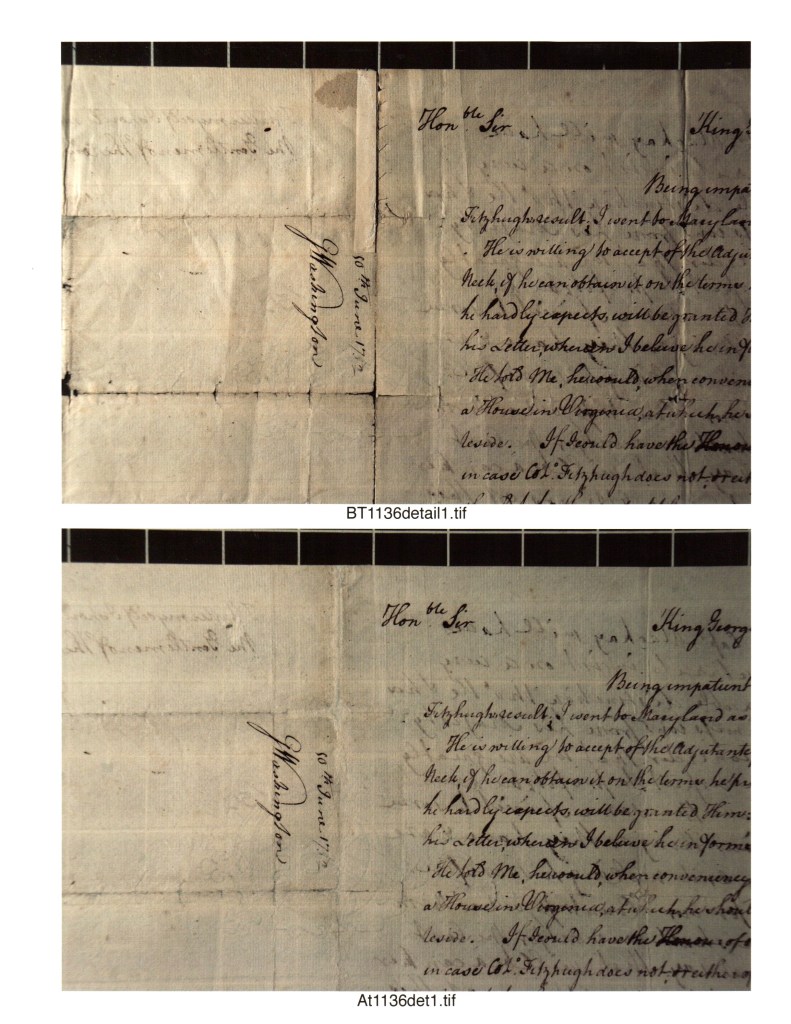
    A transcript of the letter can be found on the National Archives website at Founders Online.

    Next are two letters between George Washington and Irish-born publisher Matthew Carey.  Matthew Carey moved to America in 1784 and settled in Philadelphia, where he established a publishing business and bookshop with $400 given to him by the Marquis de Lafayette.  Carey’s first publication was The Pennsylvania Herald in 1785, followed by two of the first successful American magazines, The Columbian Magazine and The American Magazine in 1786 and 1787.

    In George’s first letter to Carey in 1785, he requests a subscription to Carey’s newspaper but asks him to send the newspaper disguised as an ordinary letter because George has been having problems with the post office delivering his newspapers .  George thinks his papers may not have been delivered because “persons who wishing to read News Papers without being of the expence [sic] of paying for them, make free with those which are addressed to others.”

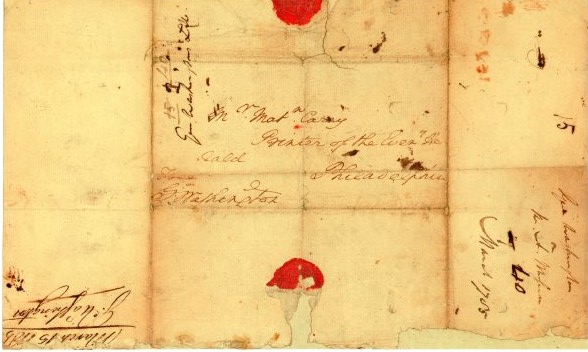
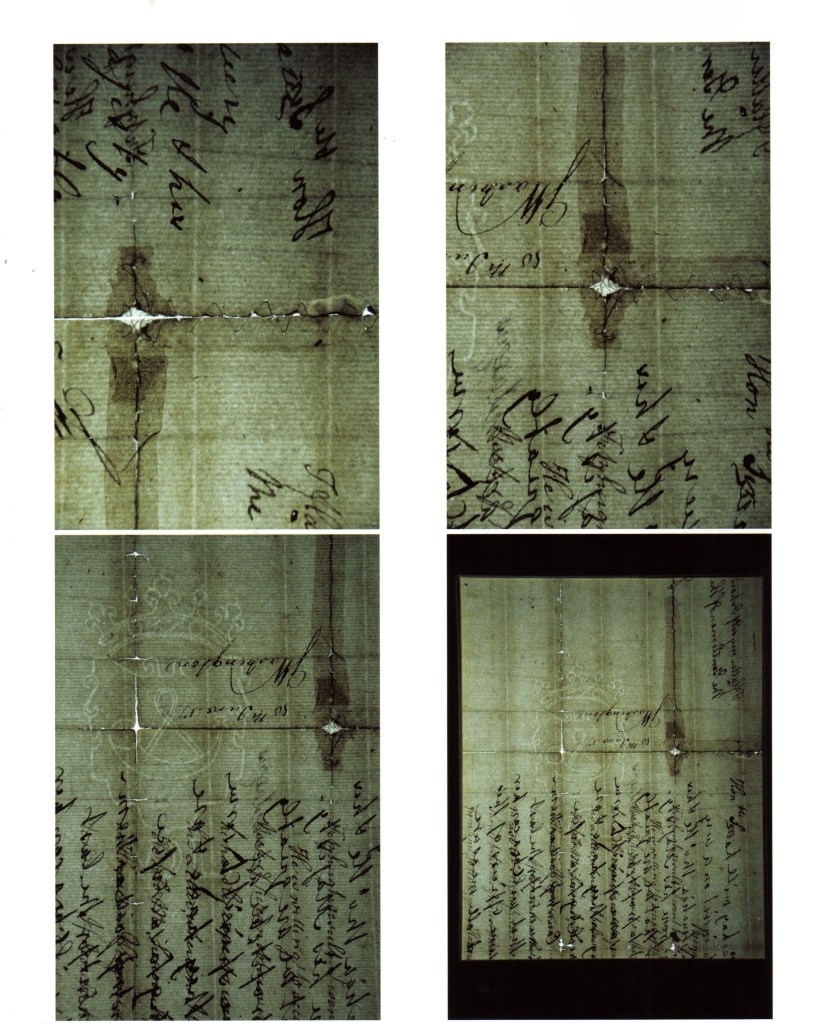
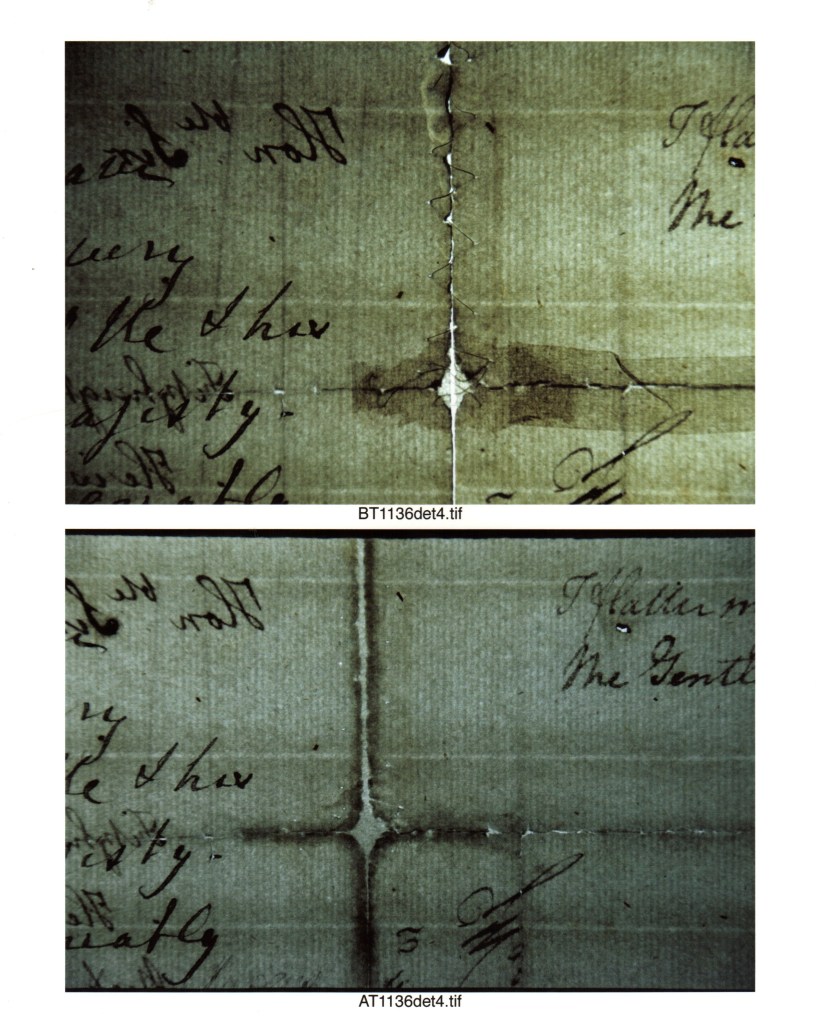
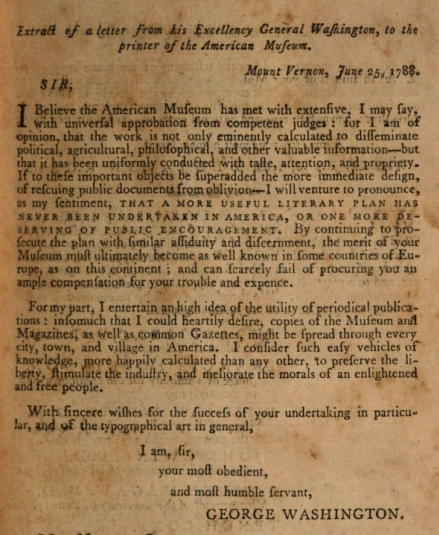
    The second letter between George and Matthew is dated June 25, 1788.  The year before, Carey launched “The American Museum” magazine.  It was a literary museum that reprinted significant historical documents on American history and original essays on politics, commerce, and culture.  The magazine got a positive response, but Carey was finding it expensive to distribute the magazine across the country, so he asked George, one of his first subscribers, to write an endorsement for the magazine that would help attract new subscribers.[2] 

    Washington responded immediately, seizing the opportunity offered by Carey to express his belief that the free dissemination of information and ideas was vital to preserving American liberty.  ‘I could heartily desire,’ Washington wrote, that ‘copies of the Museum and Magazines, as well as common Gazettes, might be spread through every city, town & village in America – I consider such easy vehicles of knowledge, more happily calculated that any other, to preserve the liberty, stimulate the industry and meliorate the morals of an enlightened and free People.”

    Carey published Washington’s endorsement in the next issue of his magazine—his marks for the typesetter can be seen in the original Washington letter.  The result was a flood of new subscriptions that allowed Carey to continue publishing The American Museum for another four years.

    Transcripts of the letters can be found on the National Archives website at Founders Online.

    These are just a few of the amazing documents in our collection, which we hope to bring you soon so that you can explore them yourself.  Check back often, and we will keep you updated on our progress with our digitization project.

    Heather Baldus

    Collections Manager


    Bibliography

    Edd Applegate (August 17, 2012). The rise of Advertising in the United States: A History of Innovation to 1960. Scarecrow Press. p.25.
     

  • Bane of the Washingtons Part II: The Deaths of Lawrence, Fielding, and Samuel

    Welcome back to our 3-Part Blog charting tuberculosis in the extended Washington Family. If you are new to this series, Part I examined how the disease works, charted its history, and explained standard courses of treatments in the 1700s. You can find the blog here, and we encourage a review of the “Treatment” section. In Part II, we will begin to look at the family members who suffered from the disease and how this impacted their lives and those around them.

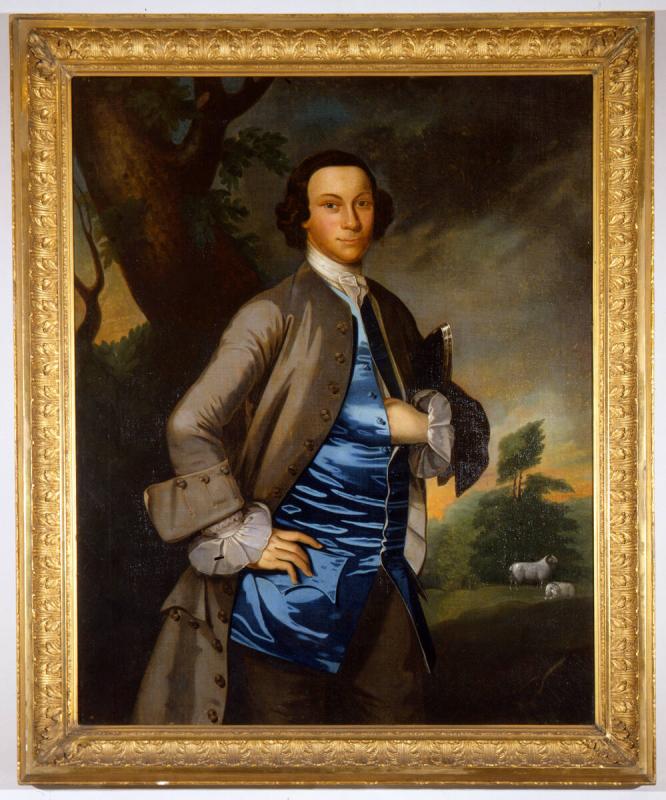
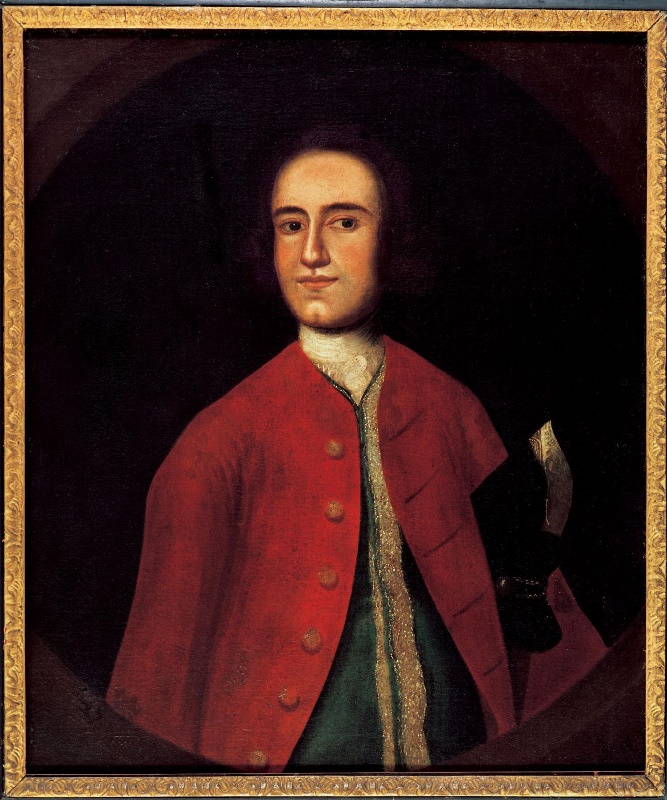
    Lawrence Washington (1718-1752, aged 33/34):

    Lawrence Washington Source: Mount Vernon

    Perhaps the best-known case of tuberculosis in the Washington family pertains to Lawrence Washington. George’s eldest half-brother, credited as serving as a role model, died of the disease in 1752, which subsequently laid the foundations for George to inherit Mount Vernon and become the Father of His Country. Behind this, however, lies one of the more clear timelines for the devastation the disease.

                Lawrence may have contracted tuberculosis during his service in the War of Jenkins’ Ear (served 1740-1742) or after his return to Virginia in 1742. Certainly, he had developed severe enough symptoms, particularly a cough, by the end of 1748, to cause him to take a leave of absence from the House of Burgesses. He resumed his duties in the spring of 1749, but his illness forced him home for a final time in May. That same month, George wrote hoping for news that his brother’s cough had improved and that he had “given over the thoughts of leaving Virginia.”1 Lawrence could not provide his brother with the news he desired, and sailed to England in the summer of that year to consult with physicians. Lawrence returned in November with little encouragement, but set out for Berkeley Springs in July 1750, to take the waters. George accompanied his brother on this venture, but they did not stay long.

    By 1751, Lawrence had exhausted any hope of finding a cure at home and his doctors recommended visiting a warmer climate. Following this advice, Lawrence and George sailed for Barbados on 25 September and arrived on 2 November. Shortly after their arrival, George recorded that a doctor came “to pass his opinion on [his] brother’s disorder, which he did in a favorable light, giving great assurances that…a cure might be effectually made.”2 George mentions little else of Lawrence’s condition in his journal, a month of course went undocumented as George had smallpox, and he returned to Virginia alone in December.

    Lawrence, having not found the relief he hoped for, decided to try Bermuda and journeyed there after George left. In an April 1752, letter to a friend, Lawrence referred to Bermuda as his “last refuge, where [he] must receive [his] final sentence.”3 Describing himself as “a criminal condemned, though not without hopes of a reprieve,”4 Lawrence followed his doctor’s treatment plan by “abstaining from flesh of every sort, all strong liquors, and by riding as much [he] could bear.”5 His doctor advised to take what benefit he could from the climate as another winter in Virginia would surely kill him. While Lawrence remained somewhat hopeful in this letter, he soon wrote again about his “unhappy state of health”6 and expressed the belief that, if it should worsen, he would “hurry home to [his] grave.”7 Evidently, Lawrence soon resigned himself to his impending death as he returned to Mount Vernon and set his affairs in order with the aid of his half-siblings and stepmother. He died on 26 July 1752.

    Upon Lawrence’s death, he left behind his wife Anne Fairfax and daughter Sarah. Three other children had already died all under the age of two. Infant mortality frequently occurred in the 1700s, so it proves impossible to know what caused each death. However, it remains a possibility that they contracted tuberculosis from their father, which then killed them quicker due to their age and weaker immune systems, or left them vulnerable to secondary infections. Sarah would suffer a similar fate in 1754, aged four, and her mother, having married into the Lee family, would die in 1761, aged thirty-three. These deaths allowed George to inherit Mount Vernon.

    Fielding Lewis (1725-1781, aged 56):

    Fielding Lewis

    The husband of Betty Washington and the mind behind Kenmore, Fielding Lewis served his country during the war by funding various supply and defense lines. One of the richest men in Virginia, Fielding had the ability to provide aid and, as the brother-in-law of the commander-in-chief, could hardly stay out of the conflict. While his efforts did much for the cause, Fielding drew the short straw by spending nearly all of his money. Accounts of Fielding Lewis’ death often insinuate a connection to the stress of losing his fortune. While this certainly put him under strain, and would not have helped his health, Fielding’s case of tuberculosis meant that he would have died regardless of his financial status.

    Tracing tuberculosis in Fielding’s life proves more difficult than that of Lawrence. Mentions of Fielding as ailing exist for several years prior to his death. However, with no description, one can hardly say if this references tuberculosis or some other affliction. Like many, he frequented Berkeley Springs and even purchased property there. Fielding recorded little of his visits, but his interests lay in the spring’s supposed medicinal benefits and, to that end, undertook an annual August trip from 1772 onwards. Throughout the war, Fielding held the rank of colonel and, though he never received a formal posting, oversaw Fredericksburg’s gun manufactory and the defense of the Rappahannock. This position required no military action and had strong connections to his background as a merchant. However, the choice of assignment may have derived from knowledge that he would never be well enough to effectively command troops. Then again, Fielding was in his fifties and had no military experience. In any case, the position reflected a strategic choice that played to Fielding’s strengths and lessened the impact of field inexperience and ill health.

    If Fielding hoped for a peaceful death, he would not receive it. In the summer of 1781, with the British encroaching on Fredericksburg, the Lewis household and Mary Washington fled. At this stage, Fielding’s health had significantly deteriorated, leaving him an invalid confined to his home. A sudden evacuation by carriage would have done little to ease his discomfort as the household hurried to another property in Frederick County, Virginia. Once there, Fielding focused on putting his affairs in order and likely did not have the strength to visit nearby Berkeley Springs. The news of the Yorktown victory undoubtedly brought some emotional respite, but it proved short-lived as Fielding died mid-December 1781. The location of his burial site on the Frederick County property remains unknown. Fielding’s death brought immense grief to his widow, Betty Washington, who had lost her brother Samuel to the same disease only three months earlier.   

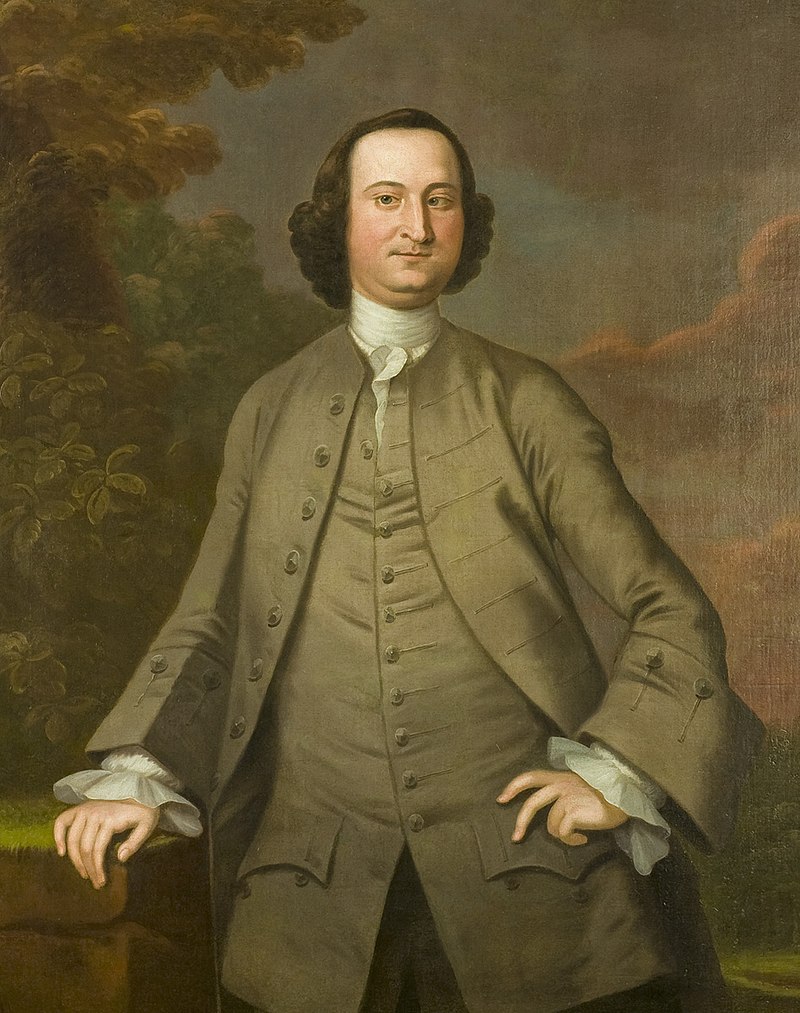
    Samuel Washington (1734-1781, aged 46):

     Samuel Washington Source: Mount Vernon

    The second son of Augustine Washington and Mary Ball, Samuel grew up at Ferry Farm with his full-siblings. Said to have suffered from tuberculosis for most of his life, it remains unknown where, when, and from whom he contracted it. However, by visiting Lawrence in July 1752, to help put his half-brother’s affairs in order, seventeen-year-old Samuel certainly faced exposure. Samuel died at his home Harewood, near Charles Town, West Virginia, in September 1781, shortly before the victory at Yorktown. The home itself lies conveniently close to Berkeley Springs, which may indicate that its location and Samuel’s move from Stafford County, Virginia, derived from a desire for easy access to the springs and their reputed health benefits.

    Despite dying just shy of age forty-seven, Samuel famously married five times. His final wife, Susannah Perrin Holden (1753–1783, m. 1778), survived him, and the fourth, Anne Steptoe (1737–1777, m. 1764), died of complications from a smallpox inoculation. However, the deaths of his first three wives, Jane Champe (1724–1755, m. 1754), Mildred Thornton (roughly 1741–1762, m. 1756), and Lucy Chapman (1743–1763, m. 1762), have long been associated with tuberculosis.

    All three experienced rapid declines in health after their marriages to Samuel, and in correlation with several pregnancies. Pregnancy and childbirth proved extremely dangerous during this period, so these deaths could simply be tragic examples. However, as pregnancy exacerbates tuberculosis, the common interpretation remains that the women contracted the disease from Samuel, saw it worsen at an alarming rate due to pregnancy, and the strain of one or more births on top of the disease made it impossible to recover. Regarding his children, several died quite young, which may mirror the fate of Lawrence’s children, and three of his sons who reached adulthood would ultimately die of the disease. 

    Coming Up

                In our final blog on tuberculosis, we will be taking a look at how the disease impacted the next generation of the extended Washington family and those they enslaved. This will be coming out on June 28th.

    Emma Schlauder

    Research Archaeologist


    Bibliography

    2-7 Anderson, Alicia K. & Lynn A. Price (editors) 2018     George Washington’s Barbados Diary: 1751-52. University of Virginia Press, Charlottesville, VA.

    1 Chernow, Ron 2010     Washington: A Life. Penguin Books Ltd, London, UK.

    Felder, Paula S. 1998     Fielding Lewis and the Washington Family: A Chronicle of 18th Century Fredericksburg. The American History Company.

    Glen, Justin 2014     The Washingtons: A Family History, Vol 1, Seven Generations of the Presidential Branch. Savas Beatie LLC, El Dorado Hills, CA.

  • [Infographic] Ten Pivotal Moments of George Washington’s Boyhood

    You can also read the original blog post with a few more details here.

  • Primary Sources: Interpreting the Past in the Present

    At George Washington’s Ferry Farm, we focus on archaeology as one way to learn about both the Washingtons and the other people who lived and worked on this landscape.  We rely on archaeology because many of these residents did not leave behind documentary primary sources for us to study.  A primary source is a “letter, speech, diary, newspaper article, oral history interview, document, photograph, artifact, or anything else that provides firsthand accounts about a person or event.”  Primary sources are the historian’s most essential tool and serve as windows into the past that allow us all to decipher meanings and draw conclusions about history’s people and events.

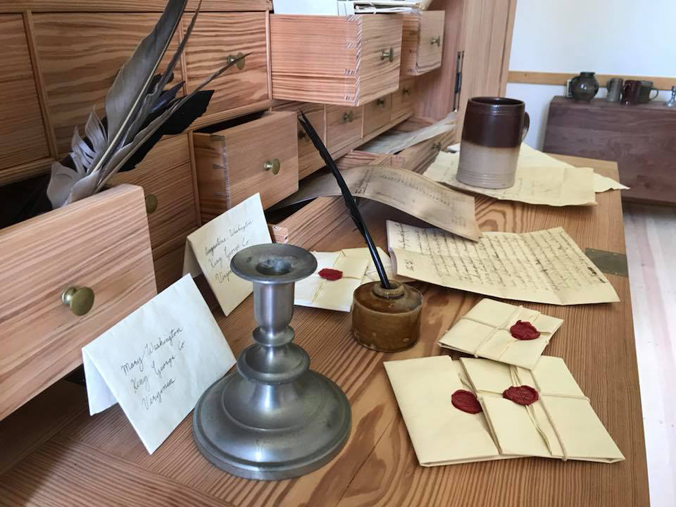
    Reproduction Washington family documents
    Reproduction Washington documents in the house at George Washington’s Ferry Farm. Credit: Brice Hart

    Even with our focus on archaeology, written primary sources have played a vital role in understanding Ferry Farm’s history and in helping us reconstruct and now interpret the Washington house.  For example, Augustine Washington’s probate inventory is helping us furnishing the recreated family home.  Basically, primary sources help The George Washington Foundation staff to understand the Washingtons and others so we can better inform the visitor. Most importantly, primary sources help us to remember that, while the past was certainly different from today, the people of the past were human just like us and, in a way, can bring them to life.  Let’s see how!

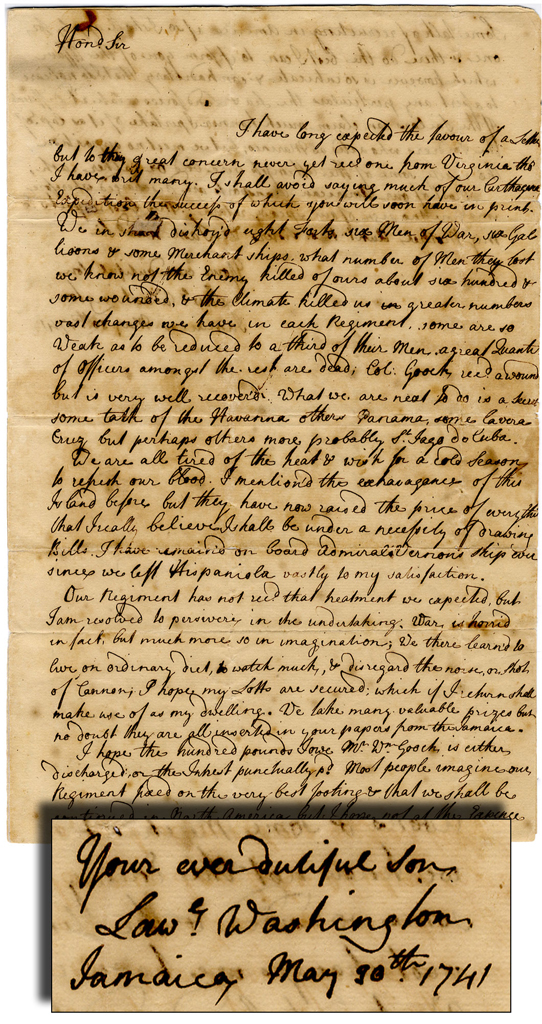
    Lawrence Washington to Augustine Washington - May 30, 1741
    The letter dated May 30, 1741 written by Lawrence Washington to his father Augustine Washington while fighting in the War of Jenkins’ Ear. Credit: Raynor’s Historical Collectible Auctions.

    The primary source we will use in this blog post is a letter written by Lawrence Washington (eldest son of the Washington family) to Augustine Washington (patriarch of the Washington family). The letter was written on May 30, 1741 from Jamaica where Lawrence was fighting as a loyal subject of English king against the Spanish, one of the other European powers competing for global dominance through colonization.

    The letter provides the reader pertinent details in how the Colonial Era differed from the 21st Century; yet it also contains clues on how the two time periods are similar. Lawrence begins by addressing his father with “Honored Sir” and ends with “Your ever dutiful Son,” a stark contrast in how we might address our parents or relatives today. This suggests that families in the Gentry class of the original English colonies addressed their elders with an air of formality and respect. This would have been much the same in their mother country of England and a practice carried over by the colonists.

    Lawrence also mentions that he had written many letters to his father, but “to [his] great concern, [he] [had] never yet received one from Virginia”. This gives us a closer look into the lives of military men of that time who were missing home and writing fervently to their families. A soldier’s timeless and ever-present homesickness can also be seen in Lawrence’s grumbling that “We are all tired of the heat & wish for a Cold season to refresh our blood.”

    Lawrence also comments to his father, “I hope my Lotts are secured; which If I return shall make use of as my dwelling”. As the eldest son, he would have received inheritance in the form of land from his father. Unlike today, land was everything to the people of the Colonial Era, and it is not unusual for Lawrence to remind his father of his intentions with his land once returning to Virginia from war abroad. Like us today, he also worries about a debt he owes. Even men at war abroad today make similar statements to loved ones about worries and plans after their service is complete.

    Lastly, another statement Lawrence makes to Augustine is that “War is horrid in fact.” He also relates how he and his compatriots have learned “to watch much & disregard the noise, or shot of a cannon”. This brief description of war could come from any century.

    Many living in 2018 can fail to recognize the many similarities they have with persons from history. In doing so, we can forget to see the people of history as individuals living lives similar to our own. We can easily turn them into a historic figure, and forget they are a person. This often happens with George Washington and the rest of his family. However, the beauty of primary sources is that they can bring someone who has passed long ago, back to life in our imaginations.

    Allison Burns
    Museum Educator

  • When George Washington Almost Joined the British Royal Navy

    Not long ago, we explored Three Military Adventures that Inspired George Washington and the influence that Lawrence Washington and his wartime service played in stoking George’s interest in military matters.

    Lawrence fought with the British in the War of Jenkins’ Ear in the early 1740s and spent time aboard the flagship of Admiral Edward Vernon, who commanded British forces during the Battle of Cartegena de Indias.  Lawrence returned to Virginia with stories sure to spark his 10-year-old brother George’s imagination and desire for adventure.  Lawrence’s military service and George’s interest in military things had a fascinating, if perplexing, practical outcome when, late in 1746, Lawrence proposed for 14-year-old George to join the Royal Navy.

    Lawrence Washington attributed to Gustavus Hesselius (c 1738)
    Portrait of Lawrence Washington attributed to Gustavus Hesselius (c. 1738). Credit: Wikipedia / Mount Vernon.

    This is a relatively little known and rather mysterious incident in the life of young George Washington.  Few documents survive that address the matter directly.  There are no documents written by George, Lawrence, or Mary Washington that reveal their actions or motivations in the matter.  The three letters that do address the incident were all written by secondary figures involved.

    It all began in the fall of 1746 when Lawrence sent two letters — one each for George and Mary respectively – to Fredericksburg via Colonel William Fairfax.  George was to deliver Mary’s himself and keep the one to him a secret from her.  We do not know what either of these letters said.

    What we do know is only what William Fairfax told Lawrence in a report dated September 9, 1746 and sent to Lawrence at Mount Vernon.  Fairfax wrote:

    “The weather being so sultry, and being necessarily obliged to go about this town to collect several things wanted, I have not yet seen Mrs. Washington.  George has been with us, and says He will be steady and thankfully follow your Advice as his best Friend.  I gave him his Mother’s letter to deliver with Caution not to shew his.  I have spoke to Dr. Spencer who I find is often at the Widow’s and has some influence, to persuade her to think better of your advice in putting Him to Sea with good Recommendation.”[1]

    The Dr. Spencer mentioned may have been William Spencer, who often was involved as a witness for land transfers to Lawrence.  The secretiveness of George hiding his letter from Mary and of Lawrence apparently enlisting his business partners to argue in favor of the proposal for George to go to sea emphasize the conspiratorial nature of Lawrence’s efforts.

    It appears that, for a time, Lawrence’s manipulations may have worked.  On September 18, 1746, Robert Jackson, a Washington family friend, wrote to Lawrence that “I am afraid Mrs. Washington will not keep up to her first resolution.”  This seems to indicate that she wasn’t against the idea immediately but she did change her mind.  Jackson reported that Mary “seems to intimate a dislike to George’s going to Sea and says several Persons have told her it’s a very bad Scheme.”  He condescendingly dismisses her concerns as “trifling objections such as fond and unthinking mothers naturally suggest” and expresses frustration that “one word against [George’s] going has more weight than ten for it.”

    Jackson noted that William Fairfax was inclined to visit Mary and, moreover, Jackson noted that he himself would “take an opportunity to talk with her and will let you knew her result.”[2]  While Jackson may have let Lawrence know the result, no document has been found to let us know the result of these specific discussions two centuries later.

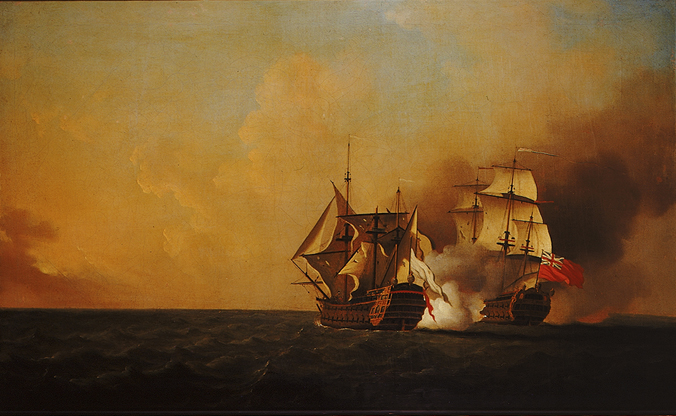
    Action Between Nottingham and Mars, 1746 by Samuel Scott
    “Action Between Nottingham and Mars” (1746) by Samuel Scott depicts a British-French naval battle in October 1746 when the Washingtons were debating whether George should join the Royal Navy. Credit: Wikipedia/National Maritime Museum.

    At some point, perhaps feeling outnumbered, Mary decided to solicit the advice of her brother Joseph Ball in England.  Dated May 19, 1747, his reply, which is a disdainful rejection of the entire proposal, is worth quoting at length.

    “I understand that you are advised and have some thoughts of putting your son George to sea.  I think he had better be put apprentice to a tinker, for a common sailor before the mast has by no means the common liberty of the subject; for they will press him from ship to ship where he has fifty shillings a month, and make him take twenty-three, and cut and slash and use him like a negro, or rather like a dog.  And as to any considerable preferment in the navy, it is not to be expected, as there are so many gaping for it here who have interest, and he has none.  And if he should get to be master of a Virginia ship (which is very difficult to do), a planter who has three or four hundred acres of land, and three or four slaves, if he be industrious, many live more comfortably, and have his family in better bread than such a master of a ship can . . .  He must not be too hasty to be rich but go on gently and with patience as things will naturally go.  This method without aiming at being a fine gentleman before his time, will carry a man more comfortably and surely thought the world than going to sea, unless it be a great chance indeed.”[3]

    Mary must have ultimately and definitely rejected Lawrence’s plan, a courageous act for a woman in male dominated colonial Virginia.  George, of course, did not pursue a career at sea but turned to surveying instead.

    Like many incidents in young George Washington’s life, the historical record is elusive and often raises more questions than it answers.  What prompted Lawrence to make the suggestion in the first place?  What were George’s views on the proposal and the debate?  What were Mary’s specific objections?  None of these questions may ever be answered.  Of course, the greatest question raised by the incident is the also unknowable counterfactual one.  Would history have unfolded differently if the man who was supposed to have been the commander of the Continental Army ended up spending his life on the King’s ships?

    Zac Cunningham
    Manager of Educational Programs

    [1] William Fairfax to Lawrence Washington, September 9, 1746, quoted in Moncure Daniel Conway’s Barons of the Potomack and the Rapphannock, New York, Grolier Club, 1892: 238, available at https://books.google.com/books?id=zDESAAAAYAAJ&dq=barons%20of%20the%20potomac%20and%20rappahannock&pg=PP1#v=onepage&q&f=false [accessed August 26, 2017].

    [2] Robert Jackson to Lawrence Washington, September 18, 1746, quoted in Moncure Daniel Conway’s Barons of the Potomack and the Rapphannock, New York, Grolier Club, 1892: 239-40, available at https://books.google.com/books?id=zDESAAAAYAAJ&dq=barons%20of%20the%20potomac%20and%20rappahannock&pg=PP1#v=onepage&q&f=false [accessed August 26, 2017].

    [3] Joseph Ball to Mary Washington, May 19, 1747 quoted in Marion Harland’s The Story of Mary Washington, New York: Houghton, Mifflin & Co, 1893: 79-80 available at https://archive.org/details/storyofmarywashi00harl [accessed August 26, 2017].

  • Three Military Adventures that Inspired George Washington

    “I heard Bulletts whistle and believe me there was something charming in the sound.”[1]  — George Washington

    Before his first brush with battle, three military adventures worked together to charm and inspire young George Washington’s fascination with the military and helped push him to pursue a career as a soldier in Virginia’s militia and then as commander of the Continental Army.

    Lawrence Washington attributed to Gustavus Hesselius (c 1738)
    Portrait of Lawrence Washington attributed to Gustavus Hesselius (c. 1738). Credit: Wikipedia / Mount Vernon.

    The boy Washington was first charmed by the military service of his older half-brother Lawrence.  In 1739, the colorfully-named War of Jenkins’ Ear between Britain and Spain began. Ostensibly sparked by the Spanish coast guard boarding a ship captained by Robert Jenkins and cutting off his ear, the war was another one of those conflicts over trade, colonies, and the spoils of the New World so often fought between Europe’s empires in the 18th century.

    In June 1740, a commission from George II arrived in Virginia for Lawrence. He was made a captain in one of four infantry regiments of colonial Virginians being raised for service in the war.  On May 30, 1741, Lawrence wrote to his father Augustine describing his role in the Battle of Cartegena de Indias when the British launched an amphibious assault on the city of Cartegena de Indias in Colombia.

    Lawrence reported to his father that the British “destroyed eight Forts, six Men of War, six gallioons and some Merchant ships” but “what number of Men they [the Spaniards] lost we know not; the enemy killed of ours about six hundred & some wounded, & the climate killed us in greated [sic] numbers.”  In the end, the British suffered a crushing defeat but more because of disease than battle casualties.

    Defensa de Cartagena de Indias por la escuadra de D. Blas de Lezo, año 1741 by Luis Fernández Gordillo
    “Defensa de Cartagena de Indias por la escuadra de D. Blas de Lezo, año 1741” by Luis Fernández Gordillo. Credit: Wikipedia / Naval Museum of Madrid.

    Virginia’s regiments suffered greatly.  “Some are so weak as to be reduced to a third of their men,” Lawrence wrote but he also revealed that “vastly to my satisfaction” he had been serving “on board Admiral Vernon’s ship.” Vernon was the naval commander during the battle and was greatly admired by Lawrence. He was so admired, in fact, that Lawrence named the family’s Little Hunting Creek property bequeathed to him after Augustine’s death Mount Vernon.

    NPG 881; Edward Vernon by Thomas Gainsborough
    Portrait of Edward Vernon by Thomas Gainsborough, c. 1753 (NPG 881). Credit: National Portrait Gallery, London.

    Lawrence ultimately concluded that “war is horrid in fact, but much more so in imagination.” His experiences aboard an admiral’s flagship probably protected him some from the horrors of war.  War did not turn Lawrence off of military service.  He was awarded the post of Adjutant General for all of Northern Virginia’s militia along with the rank of major.

    George was about 10-years-old when Lawrence returned home from war.  How many war stories did his older brother share with him?  We do not know but we do know that George and Lawrence were close, especially in the aftermath of their father’s death.  It seems a safe bet to conclude that Lawrence’s military service also likely influenced his effort in 1746 to have fourteen-year-old George join the Royal Navy.

    George’s captivation with military adventure was further strengthened by the exploits of Duke Frederick Herman von Schomberg.  On September 10, 1747, fourteen-year-old George purchased 3 books from his cousin Bailey for the combined price of 4 shillings 12 pence.  One of the books is listed as “Scomberg,” a reference to a 17th century German Protestant soldier of fortune, who fought under the flags of France, Germany, Portugal, and England and died at the Battle of the Boyne fighting for William of Orange.  Schomberg wrote about his adventures, which would have been of great interest to a young man like Washington.  That George willing spent hard earned money during a time of financial hardship reveals how enthralled he was with military exploits.


    Friedrich von Schomberg atrributed to Adrian van der Werff (1600s)
    Portrait of Friedrich von Schomberg atrributed to Adrian van der Werff (c. 1600s) Credit: Wikipedia.

    We do not know the impact, if any, of Schomberg’s exploits upon George’s military thinking. One incident does stands out, however.  While in Ireland commanding the army of William of Orange, England’s new king, against supporters of James II, England’s old king, Schomberg decided that his raw and undisciplined troops would not fare well in battle.  As a result, he held his army behind defensive works instead of confronting the enemy and their superior numbers.  This much-criticized action bares notable similarities to Washington’s main strategy during the Revolutionary War.  Washington defeated the British because, overall, he did not fight the British. Instead, he maintained his “army in being.”  Washington wisely avoided confrontation, when possible, with the professionals who made up the best army in the world.  The American army was inexperienced and initially amateur but as long as the army existed, the newly independent United States would also exist.  The Continental Army had to survive even if that meant avoiding, instead of confronting, the British Army.

    The final adventure that inspired a fascination with military things in young George Washington was his trip to Barbados.  In 1751, nineteen-year-old George and his older half-brother Lawrence traveled to that Caribbean island in the hope that the tropical climate would relieve Lawrence’s tuberculous.  This was George’s first and only trip away from the North American continent and to another part in Britain’s vast Empire.


    Early in their stay, Washington made the first of several visits to Needham’s Fort guarding the south side of Carlisle Bay. He met Captain Petrie, the fort’s commander, and dined with him at the fort more then once.  The fortress seems to have impressed the teenage Washington for he recorded in his journal that it was “pretty strongly fortified and mounts about 36 Gunes within the fortifin and 2 facine Batterys.”[2]

    Needham's Point, Barbabos by Reinhard Link
    Needham’s Point, Barbados. Credit: Reinhard Link.

    Furthermore, he and Lawrence stayed at the house of Captain Croftan, who commanded James Fort on the bay’s north side.  Even Croftan’s house, Washington noted, “command[ed] the prospect of Carlyle Bay & all the shipping in such manner that none can go in or out with out being open to our view.”[3]

    Washington House, Barbados
    Home of Captain Croftan where Washington lived during the several months he visited Barbados in 1751. Credit: Wikipedia / Jerry E. and Roy Klotz

    On the return voyage to Virginia and Ferry Farm, George judged that because Barbados had “large intrenchments cast up wherever its possible for an Enemy to Land” the island itself was essentially “one intire fortification.”[4]

    As Jack Warren ably concludes, “George Washington’s encounter with the British military establishment in Barbados seems to have had a crucial impact on his aspirations . . . .  After returning to Virginia, he dedicated himself to advancement in the military more completely than any of his Virginia contemporaries. And unlike most of the prominent colonial militia officers of the 1750s, he sought a commission in the regular British military establishment– an ambition that was probably prompted, and undoubtedly stimulated, by his experience in Barbados.”

    washington-portrait-1772
    Portrait of George Washington (1772) by Charles Willson Peale. The earliest authenticated portrait depicts Washington in the Virginia Militia uniform he wore during the French and Indian War. Credit: Washington and Lee University / Wikipedia

    These three military adventures – Lawrence’s service in the War of Jenkin’s Ear, the written exploits of Schomberg, and George’s trip to the heavily fortified imperial outpost of Barbados – all worked to inspire Washington’s fascination with military matters and drove him to eventually pursue the life of a soldier in the French and Indian War and then, most importantly, in the War for Independence.

    Zac Cunningham
    Manager of Educational Programs


    [1] George Washington to John Augustine Washington, May 31, 1754, https://founders.archives.gov/documents/Washington/02-01-02-0058 [accessed May 22, 2017].

    [2] Washington in The Daily Journal of Major George Washington in 1751-2 Kept While on a Tour from Virginia to the Island of Barbadoes, J.M. Toner, ed., Albany, NY: Joel Munsell’s Sons, 1892: 52.

    [3] Washington in Toner, 47-8.

    [4] Washington in Toner, 62.

  • Ten Pivotal Moments in George Washington’s Boyhood

    George Washington did not experience what we would now consider a normal childhood.  Life at Ferry Farm was filled with excitement, sadness, intrigue, and tragedy for young George. Here we present a list of “Ten Pivotal Moments of George Washington’s Boyhood.” This is by no means an exhaustive list but each of these events definitely helped shape Washington into a man capable of commanding the Continental Army and serving as the new nation’s first president.

    Moving to Ferry Farm

    chapman_GW HOME_overlay3_day1
    “View from the Old Mansion House of the Washington Family Near Fredericksburg, Virginia” (1833) by John Gadsby Chapman modified to depict the location and approximate appearance of the Washington family home, which was actually a complete ruin when visited and painted by Chapman in the early 1830s.

    In 1738, Augustine Washington moved his family to Ferry Farm.   He appears to have chosen this plantation situated across from Fredericksburg to be nearer to his iron ore interests located about seven miles away.  Ferry Farm was very different than the other Washington properties.  The proximity of Fredericksburg made it more urban.  Ferry Farm was also surrounded by transportation routes including the Rappahannock River, and two roads that crossed the plantation.  The bustling nature of Ferry Farm and its surroundings played a critical role in George’s development.

    strother-ad
    Announcement in the Virginia Gazette in April 1738 advertising “100 acres, lying about 2 miles below the Falls of Rappahannock . . . with a very handsome Dwelling house.” The property was being sold by  William Strother’s estate, would be purchased by Augustine Washington, and eventually come to be know as Ferry Farm.

    The Deaths of Mildred and Augustine
    George’s youngest sister Mildred was born shortly after the family moved to Ferry Farm.  She lived only 18 months, and her death when George was just seven years old was the first significant death of his youth, but not his last.

    Augustine Washington, George’s father, followed Mildred in death on April 11, 1743. George inherited Ferry Farm and ten slaves from Augustine. His mother, Mary, managed this inheritance until George turned 21 years old. Augustine’s death began a period of financial hardship for the family and probably prevented George from being educated in England, a lost opportunity he remained self-conscious about for the rest of his life. It also meant George had to scramble to find a mentor to introduce him to the complex requirements associated with gentry life.

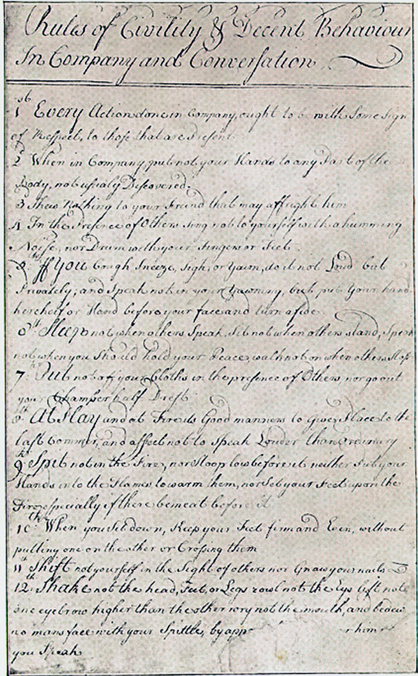
    rules-of-civility
    George Washington’s handwritten copy of The Rules of Civility and Decent Behavior in Company and Conversation.

    The Rules of Civility and Decent Behavior
    Young George copied The Rules of Civility and Decent Behavior, a guide to gentlemanly behavior in polite society, probably as a school assignment. This combination etiquette manual and moral code taught young George how to interact with his powerful and influential neighbors. By strictly following its advice, young Washington molded his character into that of a wealthy Virginia gentleman.

    His Gentry Education
    Washington’s diaries and accounts reveal how he mastered the pastimes of the gentry as a young man. He played for stakes at popular card games, took fencing lessons, and paid for his own dancing lessons. He frequented the theater in both Fredericksburg and Williamsburg. In a society obsessed with horse racing, equine bloodlines, and fox hunting, Mary Washington was well versed in horses and riding and appears to have been responsible for teaching George about riding.  By the time George was an adult, he was renowned as a “superb horseman.”  All of these skills, which remained with George for a lifetime, were acquired while he grew up at Ferry Farm.

    The Royal Navy Episode
    Following Augustine’s death, George’s eldest half-brother, Lawrence, took an interest in his future.  Lawrence conspired with Colonel William Fairfax, some of Augustine’s business associates, and George himself to convince Mary to allow 13-year-old George to join the Royal Navy. Mary eventually rejected the plan, a courageous act for a woman in male dominated colonial Virginia.  George turned to a career as a surveyor instead.  Imagine the future commander of the Continental Army serving on a King’s ship!

    schomberg-portrait
    Portrait of Frederick Herman  von Schomberg attributed to Adrian van der Werff. Public domain. Credit: Hampel Auctions / Wikipedia.

    Introduction to Military Adventurers
    On September 10, 1747, George purchased 3 books from his cousin Bailey for the combined price of 4 shillings 12 pence.  One of the books is listed as “Scomberg,” a reference to the 17th century German Protestant soldier of fortune, Duke Frederick Herman von Schomberg, who fought under the flags of France, Germany, Portugal, and England and died at the Battle of the Boyne fighting for William of Orange.  Schomberg wrote about his adventures which would have been of great interest and fascination to a young man of fourteen.  That George was willing to spend his hard earned money during a time of financial hardship reveals how enthralled he was by this subject.

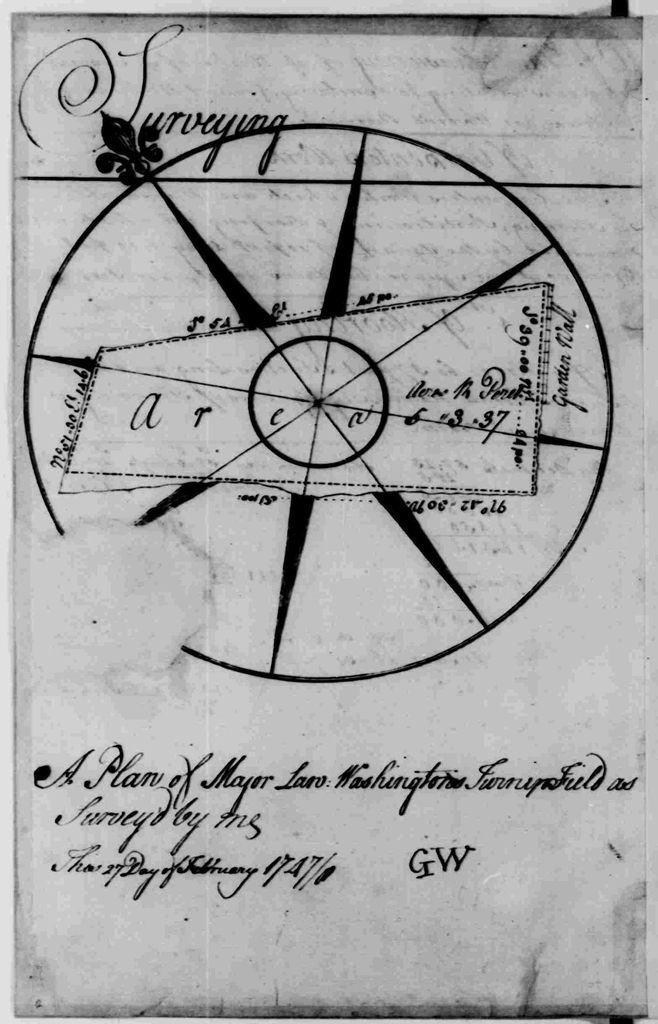
    turnip-patch-survey
    “A Plan of Major Law. Washington’s Turnip Field as surveyed by me this 27 Day of February 1747 GW” Credit: Library of Congress

    Surveying: His First Job
    George Washington began surveying at about age 15. His father’s probate inventory included a set of surveyor’s instruments. In 1748, at age 16, George went with Lord Fairfax’s surveying party on his first expedition into the wilds of western Virginia.  At age 17, George Washington was appointed to his first public office as surveyor of nearby Culpeper County. Surveying, like his skills in mathematics and keeping accounts, helped him manage his properties profitably throughout his life.

    1749 – More Hard Times
    The financial safety net set up for Augustine’s wife and minor children had almost completely collapsed by 1749.  Before the monetary struggles were over, half of Ferry Farm would have been sold, and Mary’s land near the Accokeek Iron Furnace had been lost for failing to pay taxes.  George Washington in a letter to his brother wrote “…my Horse is in very poor order to undertake such a journey, and is in no likelihood of mending for want of Corn sufficient to support him…” He remembered these hard times well into adulthood writing in 1788, during another period of financial stress, that “I never felt the want of money so sensibly since I was a boy of 15 years old as I have done for the last 12 Months.”

    washington-barbados-painting
    “George Washington” (1997) by Walter Kerr Cooper

    Trip to Barbados
    In 1751, George Washington made his only trip abroad, traveling with his half-brother Lawrence to Barbados. Lawrence, suffering from tuberculosis, hoped the warm climate would prove beneficial to his health. He died from the illness, however, just a few months after his return to Virginia. Lawrence’s death set up the eventual inheritance of Mount Vernon by George.  The tropical island did little good for George’s health either.  He contracted a severe case of smallpox that left his skin scarred for life.


     GWs Request to be Appointed as the Virginia Militia Adjutant

    washington-portrait-1772
    Portrait of George Washington (1772) by Charles Willson Peale. The earliest authenticated portrait depicts Washington in the Virginia Militia uniform he wore during the French and Indian War. Credit: Washington and Lee University / Wikipedia

    In 1752, George Washington wrote a letter from Ferry Farm requesting that the Governor of Virginia appoint him as the militia adjutant position vacancy created by his half-brother Lawrence’s death.  The governor declined at this time, but one year later he did appoint George.  The 21-year-old Washington had no military experience at the time of his appointment.  This appointment eventually resulted in Washington igniting the Seven Years War between Britain and her colonies and France.

    Dave Muraca
    Director of Archaeology

    Zac Cunningham
    Manager of Educational Programs

  • George Washington, My Grandfather, and the Noble Art of Fencing

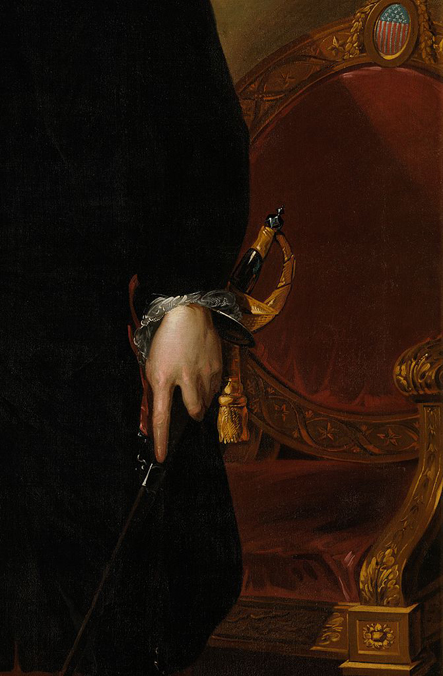
    George Washington by Gilbert Stuart (1796). Public domain.
    George Washington by Gilbert Stuart (1796). In the portrait, Washington wears his ceremonial sword. Public domain.

    Editor’s Note: This is the second of two posts inspired by this year’s Summer Olympics. This week, Archaeologist Mara Kaktins reflects on the connection fencing has created between her family and George Washington. Read our first Olympics-inspired post here.

    At our monthly blog meetings, post topics are floated and people grab them up, usually when it aligns with individual research interests.  George Washington as an avid fencer seemed an appropriate subject with the Summer Olympics in full swing this month.  I am no fencer, nor am I an athlete, so why write about fencing?  The spirit to volunteer for this assignment came to me because of the recent passing of my father.  He, my uncle, and my grandfather were all fencers.  It led me to ponder our first president, my grandfather, and the modern Olympic sport of fencing.

    Let’s begin by examining the early history of fencing in the American colonies.  Long considered a ‘gentleman’s sport’, fencing was massively popular in Europe. Respect for the knowledge of sword play extended to the colonies, where masters from abroad set up schools to teach young men this ancient art.  These instructors did not just show their students how to fence.  Sword play was part of a larger artistic curriculum that could also include dancing, horseback riding, popular languages such as French, boxing, gentlemen’s games like cards, and knowledge of various musical instruments.   Fencing, or ‘short sword’ as it was sometimes called, was not seen as merely a sport.  It was referred to as an ‘art’.  With mastery, came not just dexterity, physical fitness, and strength but also good temperament, courtly manners, and a sense of restraint.  Teachers often emphasized that a gentleman well-versed in the sword was less likely to ever use one, having gained honor and discipline in addition to knowledge of a deadly weapon.  Sort of like the colonial equivalent of “With great power comes great responsibility”.

    George Washington by Gilbert Stuart Sword
    A closer view of Washington’s ceremonial sword.

    As a young man living at Ferry Farm, George Washington attempted to better himself learning all of the gentlemanly arts. It is no surprise he studied fencing.  Some evidence suggests that Lawrence Washington, his older half-brother who was a Captain in the Virginia Militia may have helped him in this regard.  Schooled in England, Lawrence learned all he needed to know of being a gentleman in the mother country, as was customary for gentry children.  George Washington never attended a real school, much less an English one.  He was determined, however, and sought his gentlemanly education where he could in Fredericksburg, Virginia.

    Ferry Farm Sword Fragment
    Fragment of a cooper-alloy hand guard from a sword dating to the late 1600s or early 1700s and unearthed by archaeologists at Ferry Farm.

    The closest dedicated fencing instructor was in far-away Williamsburg so George had to make do. The early George Washington biographer, Washington Irving, suggested that Lawrence and his military friends along with an adjutant known only by his last name of Muse probably instructed George in sword play.  There was also a rather mysterious Dutch mercenary and translator, Jacob Van Braam (all good stories should have a shadowy Dutchman).  Temporarily located in Fredericksburg, Van Braam was in between wars and supplemented his income by teaching young George how to handle a blade.  They later campaigned together and fought at Fort Necessity in 1754 where a mistranslation by Van Braam may actually have contributed to the conflict that is credited with helping start the Seven Year War.  Presumably the Dutchman was more skilled with weapons than in French and George Washington went on to become a famous general, often depicted carrying a sword, a symbol of his status and military skill.  Van Braam later fought in the Revolutionary War but for the British before retiring to France.

    Foil
    Fencing foil belonging to the late Uldis Kaktins, my father.

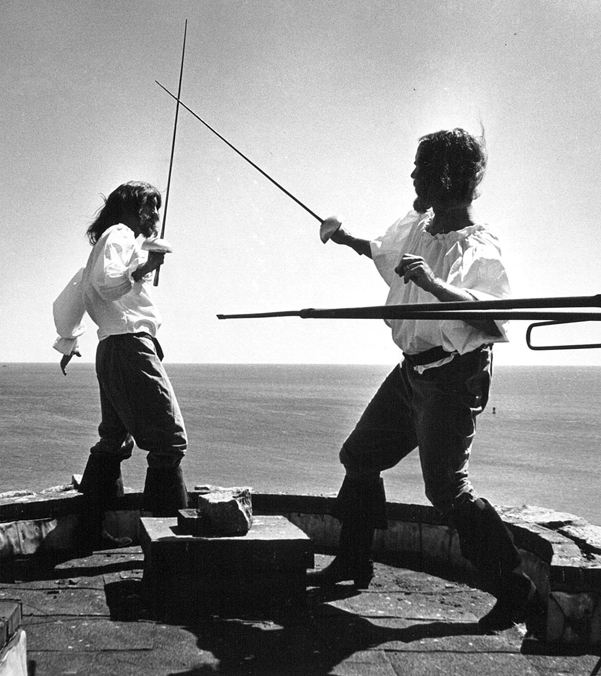
    Fast forward two centuries to a young man in Latvia named Zigurds, my grandfather.  Fencing remained a popular sport in Europe and a skill that educated men certainly looked to acquire.  Zigurds was tall, young, and handsome, had a law degree, and his father was a world famous opera singer.  Zigurds seemed to have a lot going for him and likely learned to fence for many of the reasons George did: physical prowess and a respected mental fortitude.  With the onset of the Second World War, Zigurds learned that the Soviets were going to deport him, his wife, and two young children to Siberia so he took his family and fled to the United States.  In America, his and his wife’s law degrees were worthless.  They moved into a rough but affordable neighborhood in Boston and worked blue collar jobs.  My grandfather’s life was completely different from what he had known in Latvia except for fencing.  He instructed fencing at the YMCA and headed a Latvian fencing club.  Normally a fairly stern figure, Zigurds once dressed as a ‘swashbuckler’ to be filmed fencing for a short film or commercial.

    Mara's Grandfather
    Zigurds Kaktins, my grandfather, (right) fencing in swashbuckler’s costume in the 1960s.

    Zigurds passed on fencing to my father and uncle.  My recently deceased father always had a grace about him.  He carried himself easily and with confidence but was quick and nimble when needed.  Perhaps not coincidentally, he was also an excellent dancer.  I think that his early instruction in fencing contributed to this grace.  A man of grace and confidence, an excellent dancer, and a fencer.  These words prove an apt description of my father, my grandfather, and the Father of my Country.

    Mara Kaktins
    Archaeologist