Lives and Legacies

Tag: Rappahannock River

  • “We encampt here on the banks of the Rappahannock. Oh, it is beautiful country.”

    A Personal Look At Civil War Soldiers As Told Through Artifacts

    Ferry Farm is most well-known as the Boyhood home of George Washington. While our primary emphasis of interpretation and research has focused on young George and his family’s life on this farm, Ferry Farm has many other stories to tell. The American Civil War had a major impact on the Ferry Farm community, changing both the landscape and the lives of those who lived here. This blog will look at how our archaeological efforts have brought to light artifacts that reflect the experiences of the soldiers that were stationed on the “old Washington Farm.”   
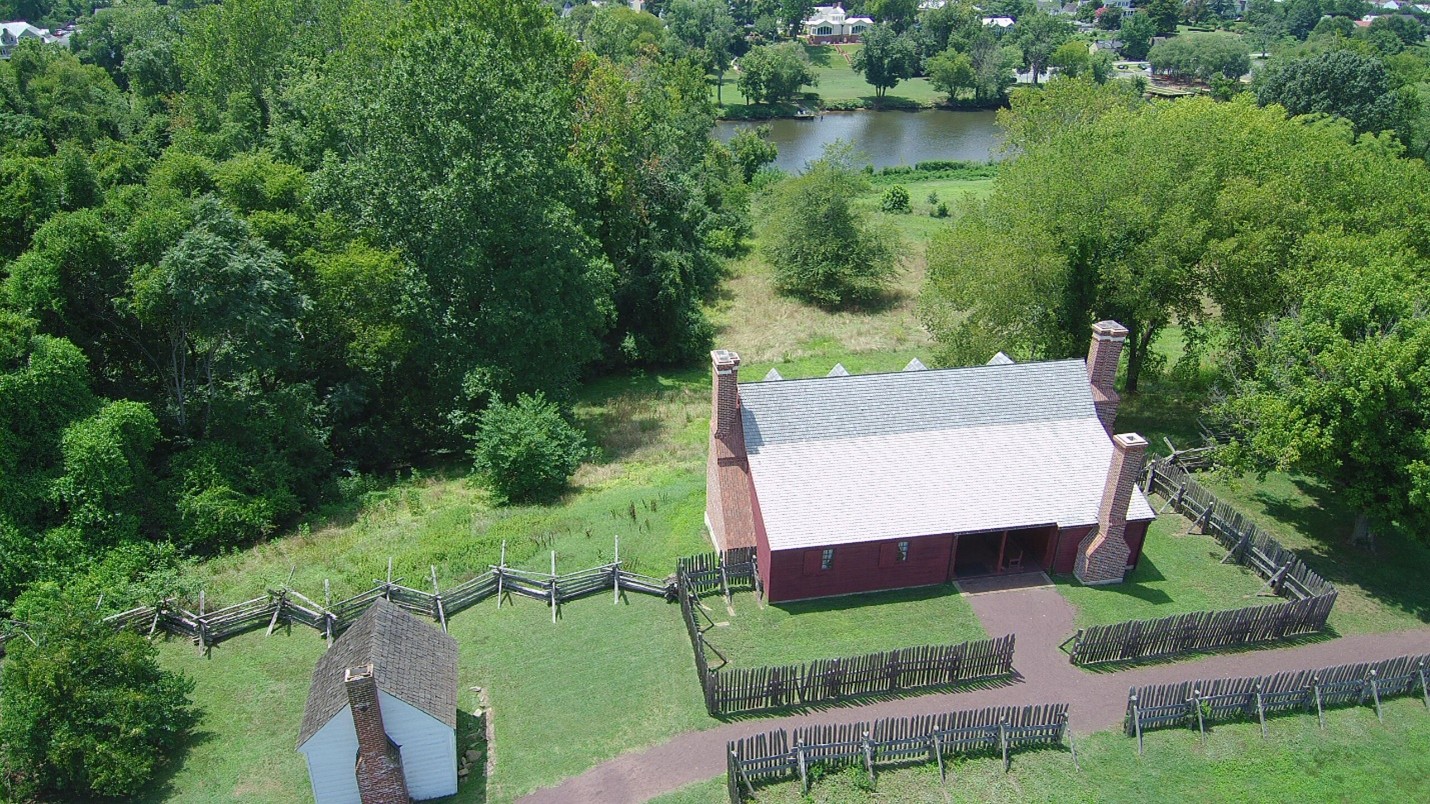
    The Washington house and its outbuildings gradually fell into disrepair until by the mid-1830s there was no trace of them on the landscape. But the soldiers still knew the significance of the site. In April 1862, the Civil War came full force to Fredericksburg and to Ferry Farm. Federal Forces took over and occupied the City of Fredericksburg behind the retreating Confederate Army.  Encampments and gun emplacements were established all along our side of the river and throughout Stafford County as the army set about maintaining control of the city across the river. Engineers were set to the task of rebuilding the railroad bridge and erecting pontoon bridges, including one at the end of Ferry Road.

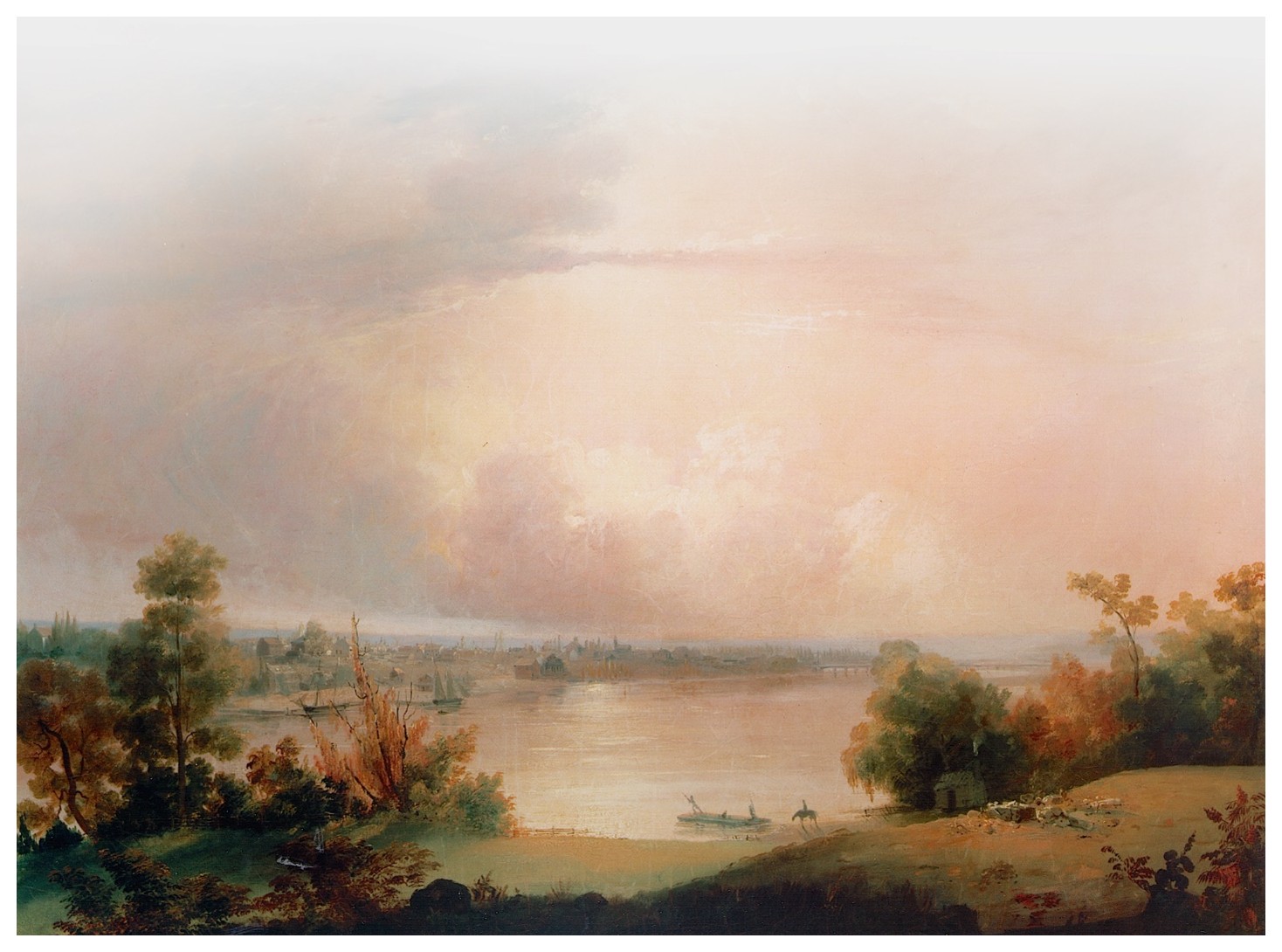
    Looking over Fredericksburg by Alfred R. Waud

    This spring deployment and the military occupation of Ferry Farm was relatively quiet and uneventful. There is no evidence of a large, formal camp at Ferry Farm, but soldiers were stationed here to protect one of the pontoon bridges that ran from the bottom land of Ferry Farm across to the city of Fredericksburg. In August of 1862, the army suddenly retreated from the city and the surrounding countryside to defend Washington, D.C.

    In November of the same year, the full force of the Union Army returned to Stafford County in preparation for the retaking of Fredericksburg and their expected march to take over Richmond. Instead, the Federals suffered a devastating defeat at the Battle of Fredericksburg in December and retreated to the north side of the river for winter camp. Now, Ferry Farm was being used more actively as a staging ground for multiple troop movements, bivouacs for soldiers guarding the pontoon bridges, and as a defensive line for the Federal troops.

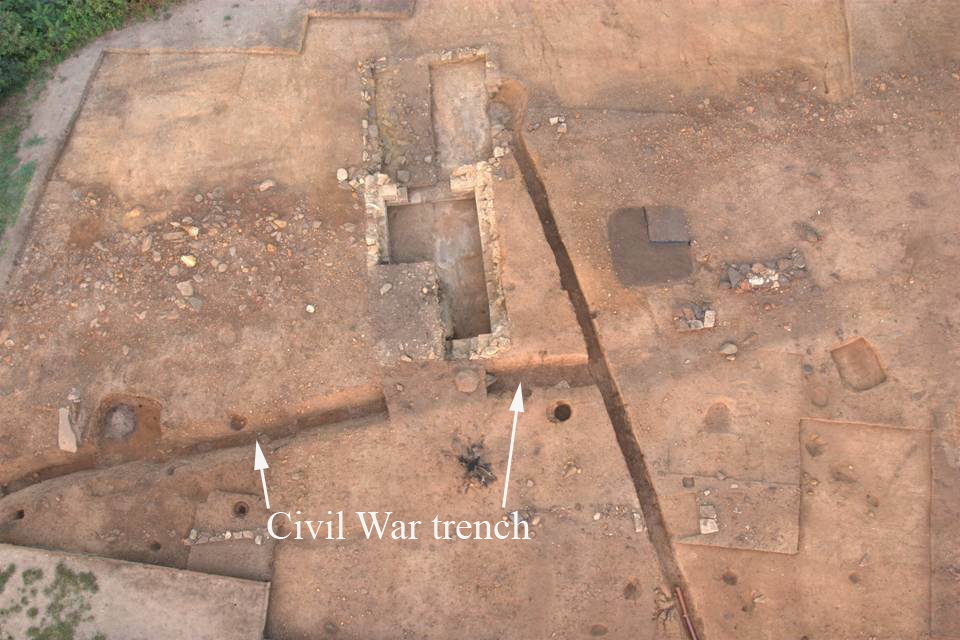
      A defensive trench, or rifle pit, with an adjoining berm to protect soldiers from gunfire originating on the Fredericksburg side of the river, was dug across the edge of the upper river terrace, stretching north-south from the edge of the stream gully through the remains of the Washington house. A small extension on the south end of the trench was dug out to connect it to the now-exposed cellar.

    Artifacts found within the cellar trench fill reflect the extensive use of the house ruins by soldiers during both occupations. In the spring and summer, they used the farmhouse as their headquarters, writing on the plaster walls and leaving graffiti in pencil and charcoal on hundreds of plaster fragments that have been excavated and preserved.
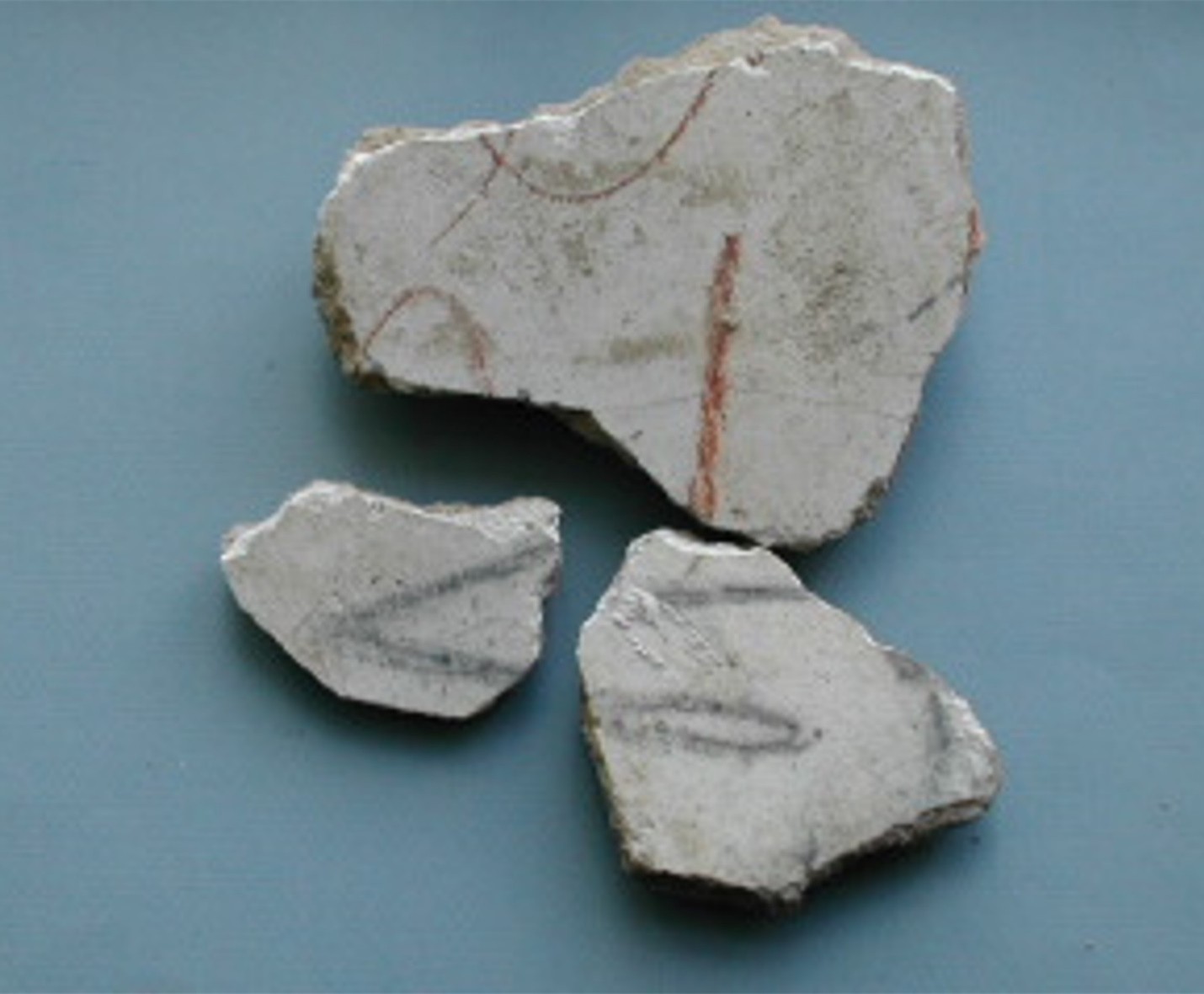
    Plaster fragments with graffiti

    Various artifacts were abandoned when they left, including canteens, bullets, gun parts, and writing tools. But this blog isn’t about buttons, bullets, and buckles. It’s about the items the soldiers found more dear. Objects they made or relied on for small comforts.

    So, on a more personal level, what was everyday life like for the Union soldiers stationed here during the Civil War? When they weren’t directly experiencing the brutal and intense combat fighting on the front, it was a routine-filled life of constant drilling, standing watches, maintaining equipment, and finding imaginative ways to entertain themselves in the camps. But camp life had its own struggles and hardships. Poor shelter, food, and hygiene, along with low immunity rates to communicable diseases, all contributed to high rates of sickness and disease. Add to that boredom and homesickness, and camp life was a private’s first test of survival.

    It was very important for the soldiers to recognize that they were standing on the very ground that their hero, George Washington, once stood on. Those sentiments were expressed in a speech by Private Edwin Jones of the 6th Wisconsin when he said, “We are assembled on sacred soil…It was while living on this plantation, under the direction and blessed with the teaching of a noble mother, that George Washington learned those lessons…fitting him for leadership in war and peace, to lay the foundation of the mighty Nation that we today are fighting to preserve.”

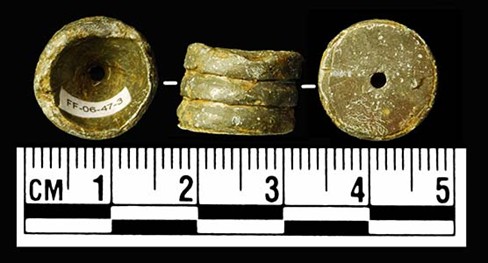
    On a more personal note, we know soldiers spent a lot of idle time playing games among themselves. Dice, card games, chess, checkers, and gambling were all very popular, and remnants of these activities are found on all Civil War sites. At Ferry Farm, we have a collection of gaming pieces, including this bone die and a gaming piece crafted from a Minié ball, which could have been used to play chess, checkers, or as markers in a game of chance.

    And we can’t forget about the importance of music in camp life. Music was a common and welcome pastime activity for troops. Fiddles, guitars, fifes, harmonicas, and accordions all came out at night to entertain the soldiers who relished listening to songs about home and the worries of war. Jaw harps were inexpensive and easily portable, which made them very popular with soldiers. Our jaw harps, one of which was recovered from the civil war trench, is of the style known as a Gloucester type, one of the most common designs in America during Colonial times and after the Revolution.
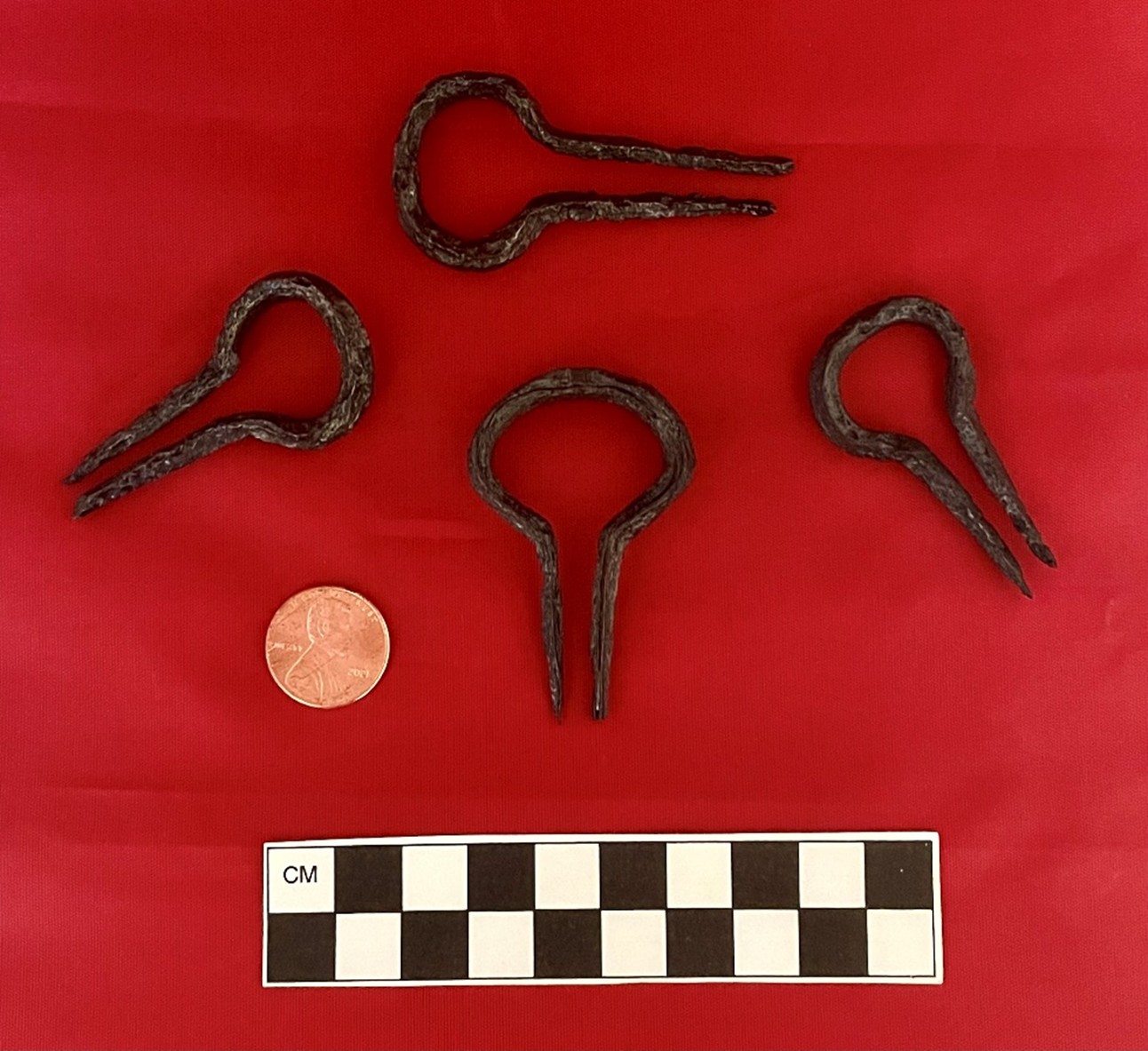
    “Gloucester type” jaw harp

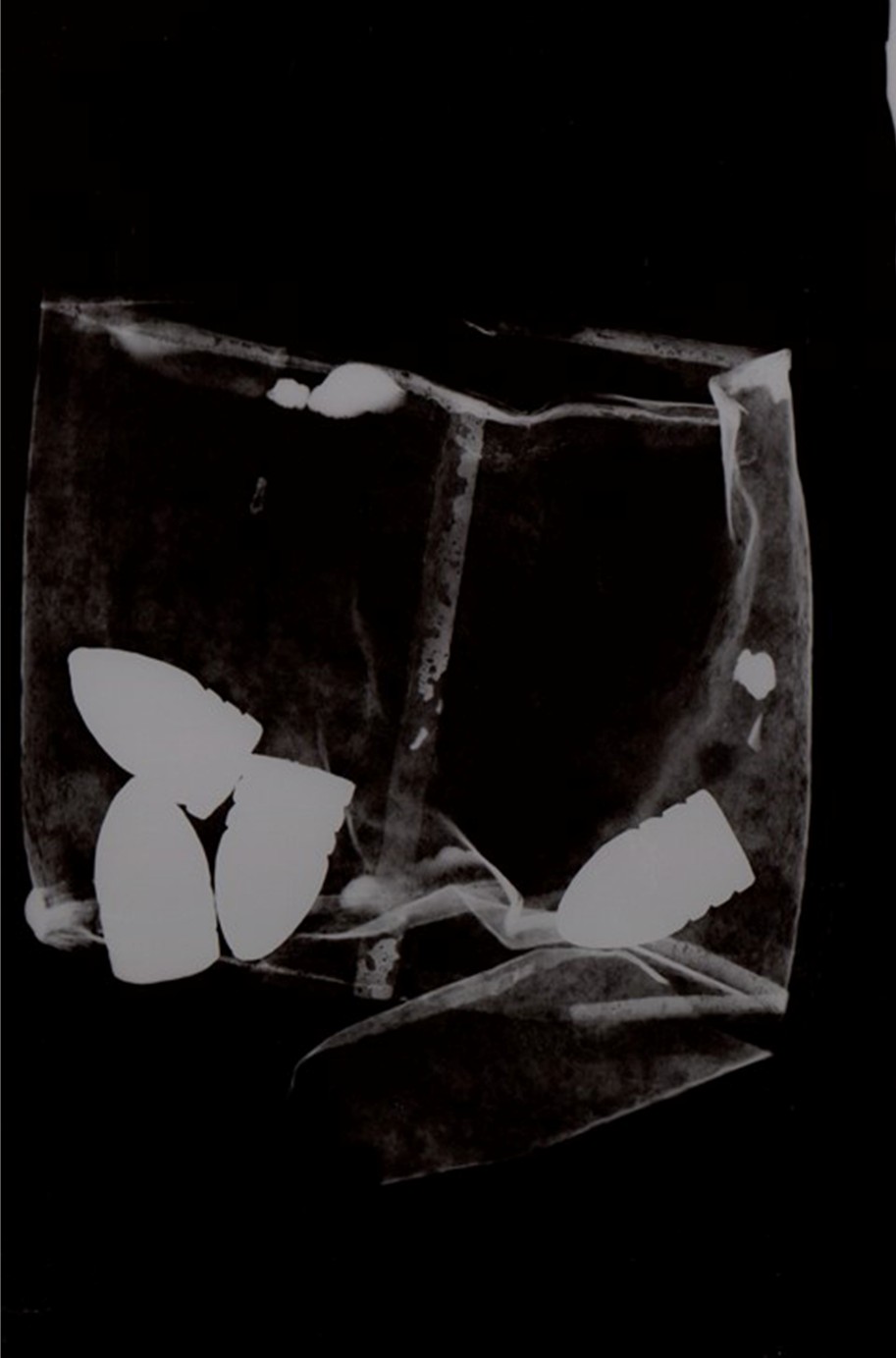
                Nothing is normal about wartime. Many people were forced to improvise, and it’s very hard to determine why a soldier placed four unfired Minié balls in this tin can, which was revealed through X-ray. Did he lose his ammo case? Was it just idle behavior? Were these bullets saved to be turned into gaming pieces? This is the type of artifact that raises more questions than answers.

    Literacy – Ink Bottle/Pen nib:

    Literacy among Civil War soldiers was very high, and much of what we know about daily camp life comes from the letters written and received by the soldiers themselves. Letter-writing to loved ones at home allowed the soldier to keep up with local news, forward monetary and business instructions to those left running the household or farm, and relay war news to their family.

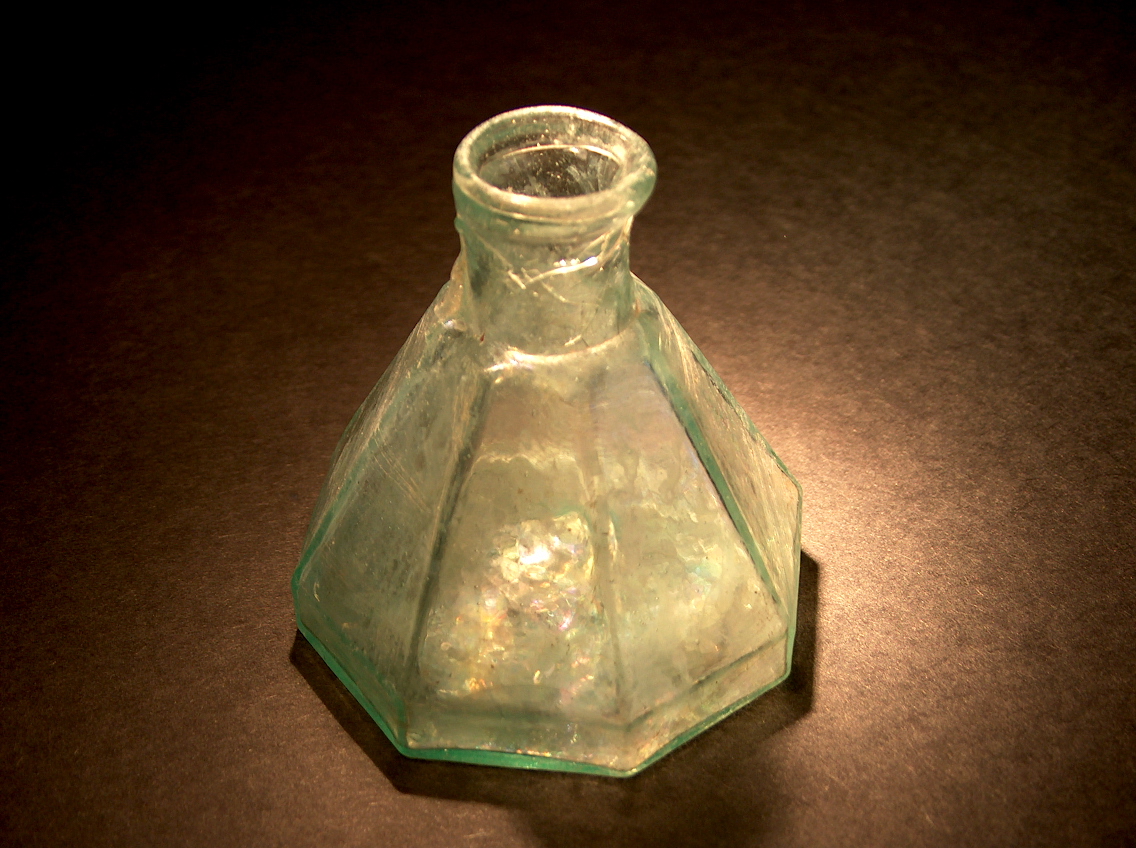
                A complete ink bottle and pen nib recovered from the site evidences the desire for correspondence, both official and personal. The ink bottle itself was found in the Bray cellar hole, which the Union soldiers used as a defensive dugout to avoid Confederate sharp shooters. We can just picture a group of soldiers huddled down inside the cellar, building a small campfire to stay warm, and writing letters home to their families. Was it a hasty departure that left this bottle in the cellar, or perhaps the owner expected to return but didn’t. As archaeologists, we can’t answer all these questions, but we know it was used during the Civil War by a Union soldier and was found in a location many soldiers never wanted to be stuck in.

    This particular ink bottle is an ‘umbrella’ shape, one of the most ubiquitous ink bottle forms from this era. The bottle was typically meant for single use and would have been made in one of the numerous American glasshouses present during the 19th century. It was then filled with ink, affixed with a label, and marketed for single use.
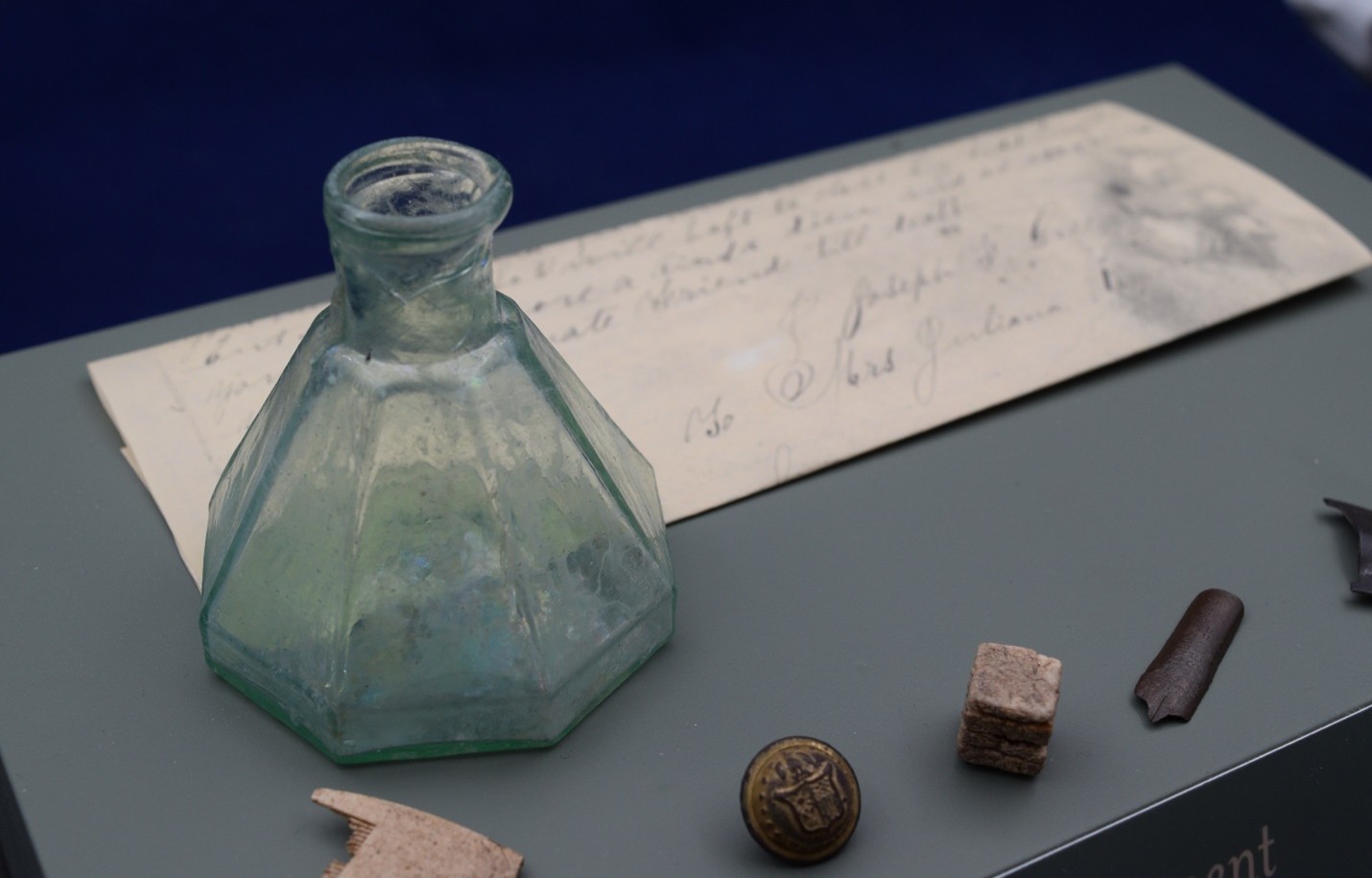
    “umbrella” shaped ink bottle and small pen nib

    This small pen nib is stamped with a maker’s mark and style name. The Esterbrook Company started making nibs, including the “Relief” style, in 1858 in Camden, New Jersey, and became one of the largest manufacturers of this product in the US. The nib was part of a dip pen, which consisted of a handle made of various materials and the replaceable nib.

    The first evidence of self-care in the trenches takes the form of a small double-sided bone comb. Combs were made from an assortment of materials, including bone, ivory, gutta perch, and steel, and were used for grooming the moustache and hair. But their fine teeth were also handy in capturing the pesky lice that were endemic to camp life among men marching and living together in close quarters. This comb would have been an essential component of any soldier’s personal kit.

    small double-sided bone comb

    Our second evidence of self-care is this intriguing bottle. It is not so much interesting because of what it is – it’s a very common medicine style bottle for the mid-19th century– but rather what’s inside. Clearly visible within the bottle is a hard black substance, and for years, we’ve wondered what the substance may be.
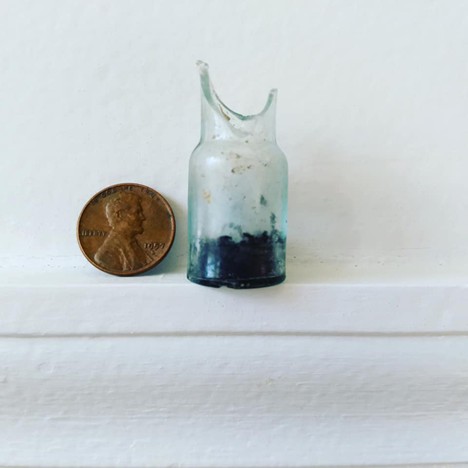
    Mercury bottle, mercury was used for a variety of medicinal reasons at the time

    So we chipped off a little fragment of the substance and sent it to Ruth Ann Armitage, our chemist friend at Eastern Michigan University. The sample was analyzed using scanning electron microscopy to map out specifically what elements were present in the sample. Our sample was also run through DART (direct in real time) mass spectrometry. This technique is good at detecting organic components within a substance.

                Almost immediately, Dr Armitage responded, and we weren’t disappointed: “Did you know there’s mercury in this?”  Nope, we did not.

    However, this discovery was not too surprising given the use of mercury in many medicines for thousands of years. Nowadays, it’s common knowledge that you shouldn’t drink mercury…or touch it…or inhale it, but for a long time, mercury was seen as a potent healing metal, and it was readily rubbed on skin, consumed, and vaporized for immediate effect on the lungs.

    And while all these treatments using mercury did little to address the body’s underlying medical problem, mercury did cause an immediate bodily response, which convinced people it was working to cure their ailments. When applied topically, it burned. When introduced into the body, it caused a person to sweat, salivate, and have diarrhea. The mucous membranes also went into overdrive, leading many to believe that the bad stuff in your system making you sick was being purged by the mercury. The reality, of course, was that the body was trying desperately to rid itself of poison.

    So, if the residue inside our bottle was medicine, what was its exact formula? All we can say at this point is that it was mercury-based and that it could have been in either liquid or pill form. Common Civil War-era uses for mercury-based medicines were for treating skin sores and lacerations, internal and external parasite infections, syphilis, and constipation, to name but a few. On a side note, an almost identical bottle also containing mercury was found across the river in Fredericksburg at a site that was well known to be a Union field hospital. It was found in a knapsack discarded in a trench that included amputated limbs.

    Lastly, we’d like to highlight one of our favorite artifacts, a tiny hatchet about two and a half inches long, recovered from the bottom of the Civil War trench. For such a diminutive object, it speaks quite loudly to our local history in Fredericksburg, Virginia. Initially, earlier archaeologists at Ferry Farm assumed it was a pewter toy souvenir given out or sold in 1932, when our country and Fredericksburg celebrated the 200th anniversary of George’s birth. Indeed, cheap pewter toys were very popular during this time period.

    A recent reexamination of all the artifacts from the context where the hatchet was found revealed that nothing from that stratum had any 20th-century artifacts in it, nor did the two strata above it. In fact, the youngest artifacts from these strata were all mid-19th century. Additionally, although the archaeologists who excavated the hatchet didn’t know it at the time, the excavation unit from which the hatchet came sat right inside the Civil War-era trench.

    This revelation shut the door on our ‘it’s a 20th-century souvenir’ narrative but opened the door to an even cooler one.  A close examination of the hatchet showed that it didn’t have mold seams, which are always present on cast pewter toys. Furthermore, for some reason, it had one smooth side and one textured side, leading us to believe that it was handmade, not machine-cast. This was supported by a thorough internet search to find an identical toy hatchet, which came up empty, further supporting our new theory that this piece was a one of a kind. The textured side resembled the grain of wood, so we surmised it had been cast in a simple hand-carved wooden mold. All of these clues, combined with its location within a Civil War trench, made us suspect that the hatchet was crafted by a soldier, likely from a lead Minié ball. The hatchet is likely ‘trench art’, which is defined as objects of art either made by soldiers, POWs, or by civilians to create mementos of the war experience.

    To further support our identification of the hatchet as trench art, we took the artifact to the Virginia Department of Historic Resources, where Katherine Ridgeway analyzed it using XRF, or X-ray fluorescence analysis. This non-destructive technique determines the composition of metal. We also brought along a few Minié balls recovered from the same unit for comparison. It turned out that what we thought was a pewter hatchet was actually a lead hatchet with a similar compositional profile to Minié balls, which are mostly lead with trace amounts of other metals such as tin and nickel.

    One can just imagine a bored Union soldier whittling the mold and then melting down some of his bullets to pour into it. He likely chose the hatchet form because of the famous cherry tree story, in which young George Washington owned up to hacking his father’s cherry tree with a hatchet by proclaiming, ‘I cannot tell a lie.’ The soldier would have been well-versed in the Washington cherry tree myth at Ferry Farm, created by Mason Locke Weems in his first biography of Washington, published in 1800. By the 1860s, the story was nationally known. Additionally, letters Union soldiers wrote while encamped at Ferry Farm indicate they knew the site’s connection to Washington. They even went so far as to send home cherry seeds for their families.
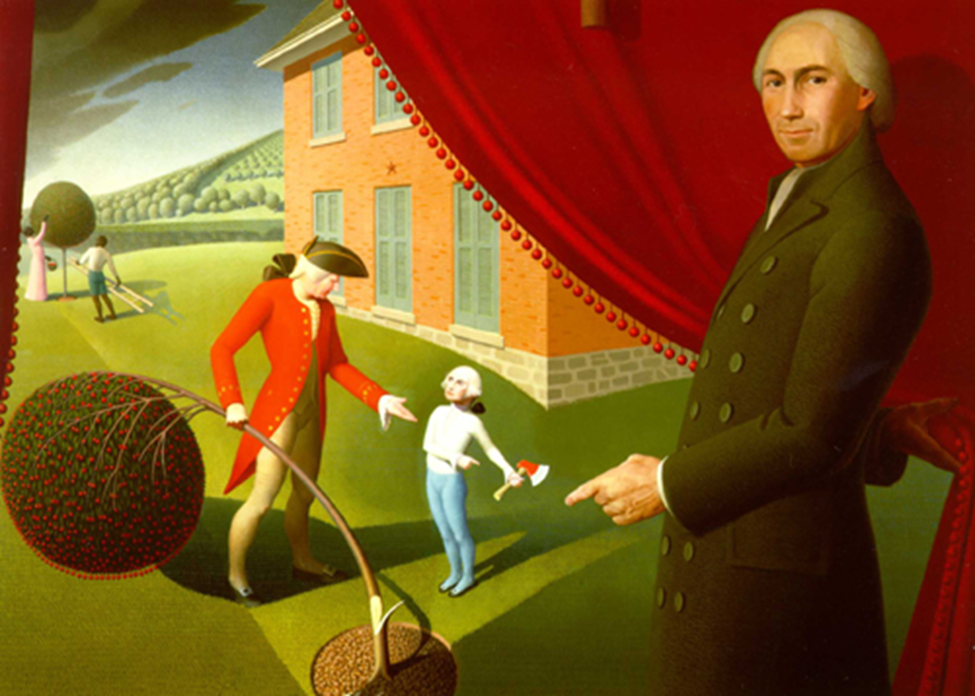
    Grant Wood — Parson Weems’ Fable (1939)

    While the identification of the hatchet is now secured, we have so many more questions. Who was this soldier? How many hatchets did he make, and why did this one come to be left behind in his trench? Was it a souvenir for himself, or did he send one home to his family, or share with fellow soldiers?  Did he survive the war? Unfortunately, these are mysteries that will likely never be solved, but that make for great pondering.

    Mara Kaktins, Archaeologist and Lab Manager

    Judy Jobrack, Archaeology Co-Field Director

  • Caring for Ferry Farm’s Flora and Fauna

    Step onto the grounds of George Washington’s boyhood home and, notwithstanding its famous connection, there’s no mistaking the feeling of being in a special place. A National Historic Landmark, Ferry Farm stretches along the Rappahannock River across from downtown Fredericksburg’s City Dock. The land is varied and rich, with native woodlands, a native grass meadow, walking trails, riverbeds, springs, a garden, and scenic Virginia rail fences. It has seen a significant share of American history from the activities of Native Peoples, to the colonial inhabitants, to Civil War Union encampments, and more.

    View of Fredericksburg from Ferry Farm

    Historically significant land such as this ought to be carefully maintained and stewarded – and it is. With its variety of features, maintenance can become a challenge, as there is always the threat of erosion, the caring for trees, the need to ensure the grounds are safe and passable for visitors, and finding economical ways to use and reuse what’s available. Also, we cannot forget the residents that have first rights to be here – Ferry Farm’s numerous critters.

    Leaving natural habitats for flora and fauna promotes a healthy ecosystem

    “We try to keep a balanced ecosystem by only introducing native plants that would not interrupt the natural beauty of the site,” explains John Carmichael, Buildings and Grounds Director. “The land is kept as natural as possible to maintain a primitive ecosystem native to the area. Forests are kept healthy by mitigating the growth of invasives. Grasslands are maintained with tough turf, mainly natural growth. We’re not looking to keep up a pretty green lawn with no weeds; we maintain how it would have looked in Washington’s day, with natural growth, clover, and field grasses.”

    The grass in front of the House leading to the riverfront gets mowed sparingly in order to protect all of the embankments from erosion. Growing large strong roots helps keep the soil in place. Underbrush on the riverbank remains in place, for the same reasons, and fencing keeps visitors off of the area since it is unsafe footing.

    Grasses are kept long in front of the Washington House and along the Rappahannock River to protect the embankment from erosion.

    The entire flat nearest the water was created by the Corps of Engineers shortly after the conclusion of the Civil War. Sediment from erosion was threatening to make the river too shallow to navigate. To relieve the problem, the Corps built wooden retaining walls along the river’s edge and then dredged a channel to allow ships to resume operating on the river. They used the sand from the dredge to fill in behind the wooden retaining walls. With sand not being optimal land for growing trees, trees that happen to grow there are left because they’ve already proven their hardiness.

    Since no commercial fertilizers and minimal weed killers are used at Ferry Farm, composting and mulching are an essential part of stewardship. Large limbs, trimmings, and small branches are placed at the edges of woods to decompose and provide shelter for animals. Tree trimming partners will mulch downed limbs which in turn get spread onto walking paths and parking lots.

    Composting at Ferry Farm is a three-year process. New grass clippings, greens, weeds, manure, wood ash, and leaves go into an initial pile for decomposition. In year two, everything gets turned and sifted regularly. By the third season, it’s ready to be spread throughout gardens and flower beds. Green and cost-effective, composting keeps useable nutrients out of the landfill.

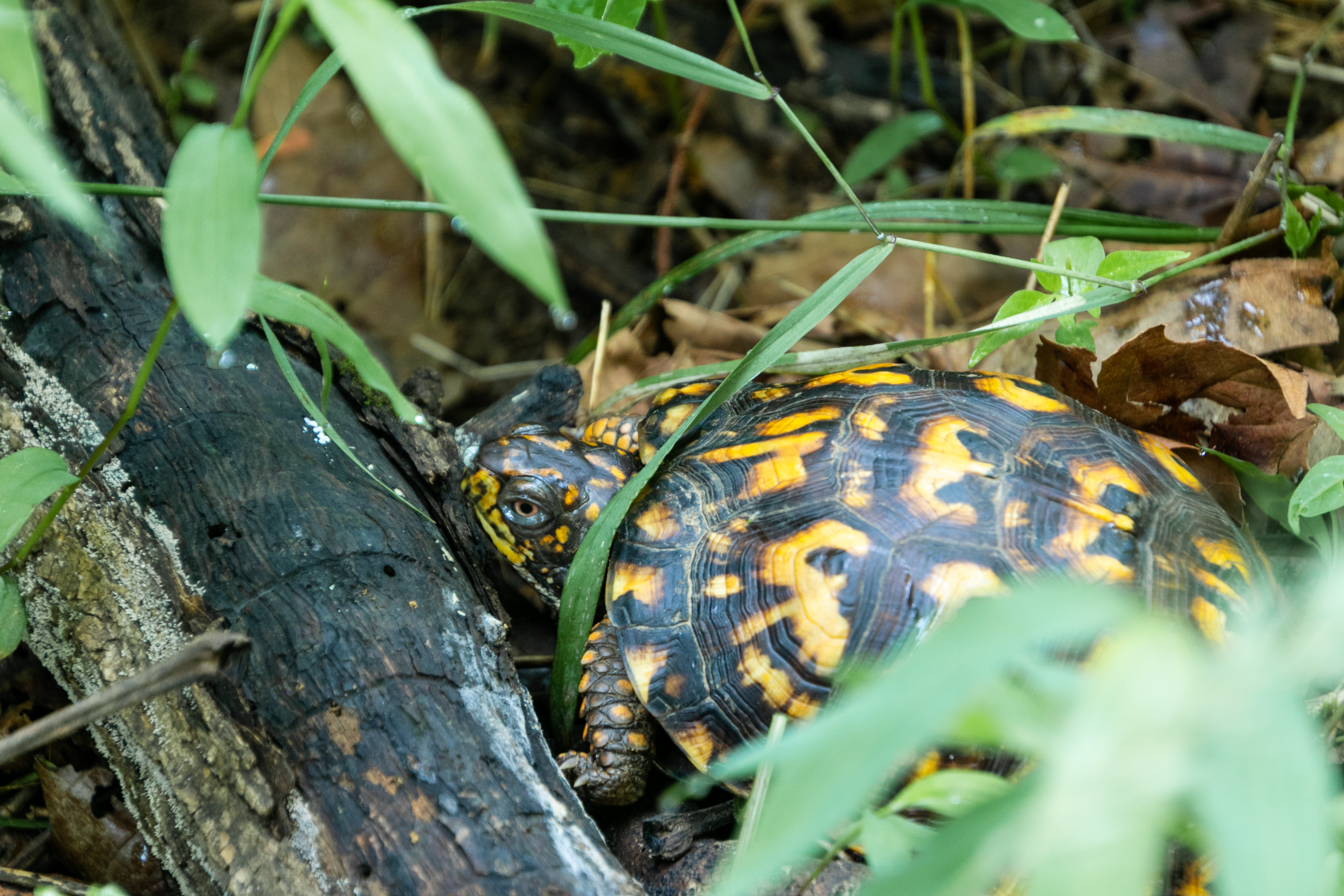
    Box turtles thrive in tall grasses in front of the Washington House. Source: Sharon Houston

    Surrounded by busy roads on two sides, Ferry Farm is a wild animal sanctuary for deer, rabbits, groundhogs, red and grey foxes, hawks, bald eagles, herons, opossums, raccoons, black and garter snakes, box turtles, bats, and hundreds of bird species. Leaving natural habitats for flora and fauna promotes a healthy ecosystem. The back meadow receives rejuvenate mowing in early spring to encourage it back to good health. It’s a birders’ paradise dotted with bluebird boxes along a mowed walking path. Over 125 different species of birds have been identified on the property over the years. Look closely, and flat patches of grass indicate where a deer has bedded for the night. Critters are welcome here. “As long as it poses no threat, it has a right to be here,” says Chris Lynn, Buildings and Grounds Technician.

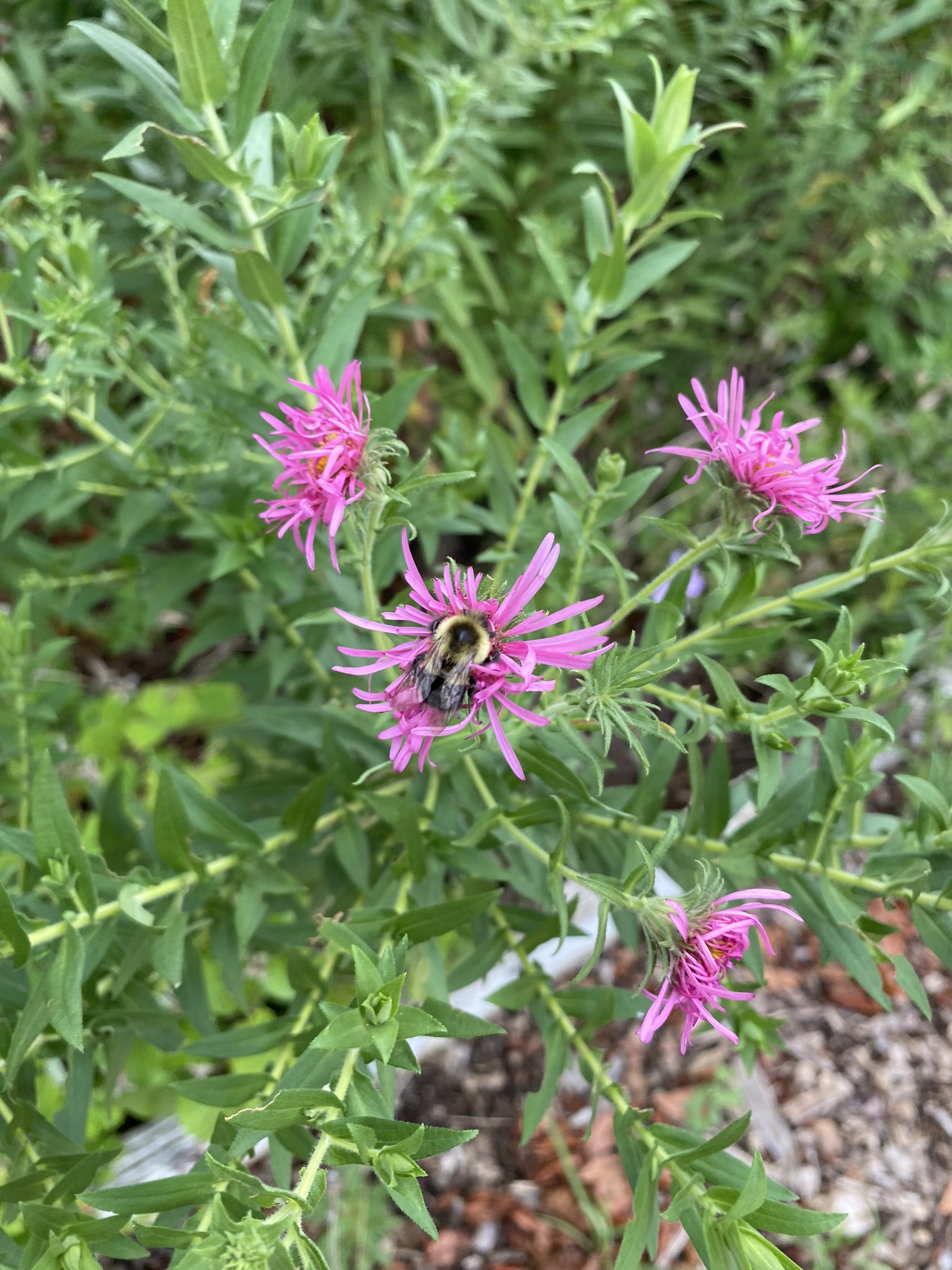
    The flowers in the garden attract pollinators to the herbs and vegetables; fruit-bearing trees and shrubs do their part to attract as well. Gardens grow with the three sisters – corn, squash and beans – as well as tobacco, cotton, potatoes, and more.

    A flower in the garden bed serves to attract pollinators for herbs and vegetables

    Ferry Farm’s beauty conjures up days of natural grasslands, mature forests, and living in harmony with the land’s resources. Knowing that the “Father of our Country” spent his childhood here evokes moments of contemplation. Absorbing the sights and smells of wild flora and fauna while walking where young George walked is a step back in time, where the present awakens the past.

    Lori Scott Pikkaart,

    Marketing & Communications Manager

  • Maritime History at Kenmore & Ferry Farm

    Today – September 30 – is World Maritime Day. The United Nations and the International Maritime Organization created World Maritime Day in 1978 “to celebrate the international maritime industry’s contribution towards the world’s economy, especially in shipping.”

    “The South East Prospect of London from the Tower to London Bridge” (1746) by John Maurer. Credit: Royal Collection Trust / © HM Queen Elizabeth II 2018

    Both Historic Kenmore and George Washington’s Ferry Farm – perhaps surprisingly – feature fairly significant maritime histories.  Situated on the Rappahannock River, Fredericksburg was a bustling seaport in the 1700s when George Washington grew up at Ferry Farm and when Fielding Lewis practiced his merchant trade while living at Kenmore.  George saw ocean-going sailing vessels unloading and loading cargo from his bedroom window.  Some of these ships were owned by Fielding and his family.  Both men were part of “the Atlantic World,” a global community of many different peoples trading back and forth across the Atlantic Ocean.

    Here on Lives & Legacies, we’ve written regularly about Fredericksburg as a seaport and about the impact of Atlantic trade on both the Washingtons and the Lewises.

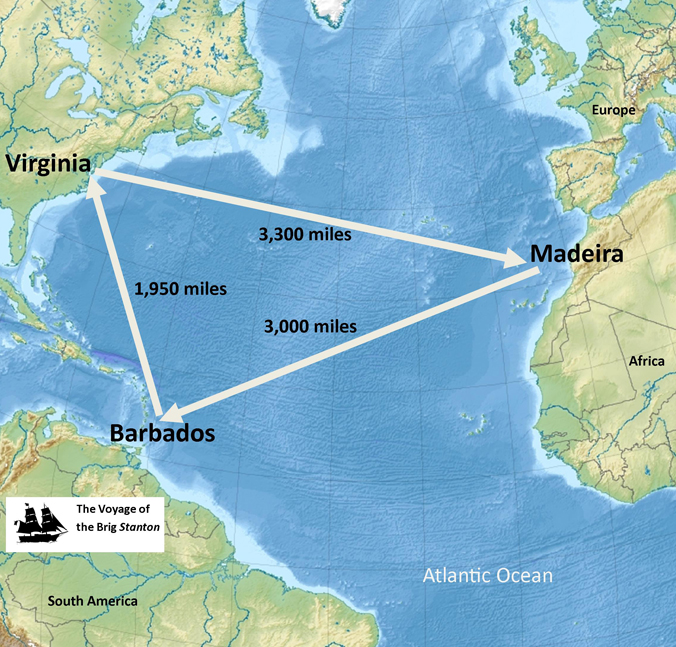
    “The Voyage of the ‘Stanton’” recounts one voyage of a Lewis family ship and the cargo it carried traveling from Virginia to Madeira off the European coast, then to the British West Indies in the Caribbean, and finally back to Virginia.  Each leg of this journey formed part of the Atlantic World’s famed “Triangular Trade.”

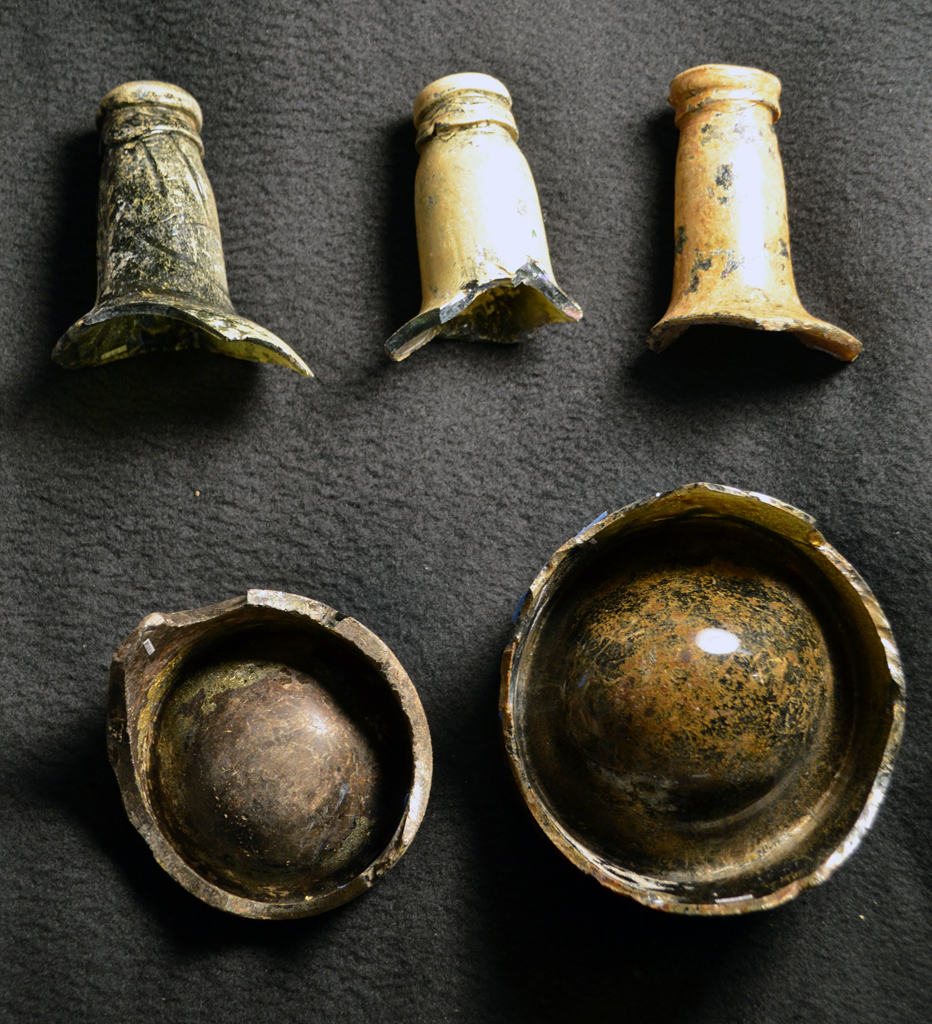
    Many of the Washington family artifacts recovered at Ferry Farm came to their home from different parts of this triangle and beyond.  For example, the fragments of wine bottles depicted below and written about in “The Wine Bottle: Ubiquitous and Informative” may have carried fortified wine from Madeira to Ferry Farm. European grapes did not grow well in the colonies while native grapes did not make good wine so wine was imported.

    Mid-18th century bottle neck and base fragments excavated from the Washington house cellar at Ferry Farm.
    An example of what the bottles excavated at Ferry Farm looked when they were whole.

    The maritime-based economy that brought Madeira wine and the many other goods used by the Washingtons at Ferry Farm is also perfectly symbolized by a “black dogg” coin. Unearthed not far from the Washington house site and written about in “The Tale of the ‘Black Dogg,’” this coin “originally circulated in the French Caribbean” and may well have come to Fredericksburg in a sailor’s pocket.

    “Black dogg” coin excavated at George Washington’s Ferry Farm.

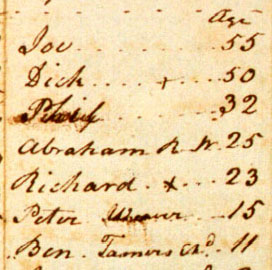
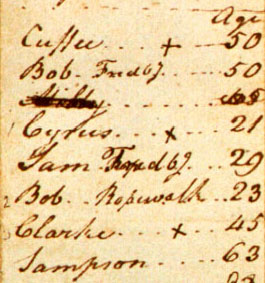
    As a merchant, Fielding Lewis owned ships that traveled the Atlantic World carrying goods to and from Fredericksburg.  The goods brought to Fredericksburg he then sold to the community or placed in his fashionable home.  Maritime trade was Fielding’s life-long business and he put some of his enslaved workers to that task.  As written about in “Abraham and The Ropewalkers,” a handful of Lewis slaves wove rope at ropewalks near Fredericksburg or perhaps even in Richmond.  Of course, much of this rope was likely used on Virginian sailing vessels.

    Portion of The Divvy List made by Betty Washington Lewis showing Abraham with an “R.W.” after his name.
    Portion of The Divvy List showing Bob #2 with “Fredbg” after his name and Bob #2 with “Ropewalk” after his name.

    The impact of today’s ocean-going global trade can be largely unseen. Similarly, the maritime histories of Kenmore and Ferry Farm are not immediately evident to our eyes. However, sailors, ships, and their cargos significantly influenced the lives of the Washingtons, the Lewises, and the enslaved people of Ferry Farm and Kenmore in 1700s.  World Maritime Day is a good day to remember the impact of the international maritime industry, past and present.

    Zac Cunningham
    Manager of Public Programs

  • Five International Influences on George Washington’s Early Life

    An Essay of a New and Compact Map, Containing the Known Parts of the Terrestrial Globe by Jacques-Nicolas Bellin was published in 1750 when George Washington was 18-years-old. Credit: Wikipedia.

    Ferry Farm was a unique place to live in the mid-1700s. Situated where farm, frontier, city, river, and road converged on the edge of English empire, young George Washington, his family, and the farm’s enslaved community found their daily lives governed by Britain’s global economy and imperial culture.  Ferry Farm, nearby Fredericksburg, and the colonies more broadly were international places made up of a host of different European, African, and Native American ethnicities and nationalities in the 18th century.  Accordingly, we present a list of “Five International Influences on George Washington’s Youth.” This is by no means an exhaustive list but each influence helped shape young Washington into a man capable of commanding the Continental Army and serving as the new nation’s first president.

    1) The Rappahannock River

    The Rappahannock River as viewed from a window in the Washington house replica at Ferry Farm.
    Voyages of British ships in the last half of the 18th century. Created by Geographer James Cheshire, PhD, on his Spatial.ly blog and used with permission.

    Young George could look from a window in the family home at Ferry Farm down the bluff to the Rappahannock River. He saw ocean-going, sailing vessels being loaded and unloaded at the wharves and warehouses of Fredericksburg. These vessels were part of a global trade network, which we’ve written about here and here, that stretched to Europe, Africa, the Caribbean, India and China. These vessels were not large but traveled the world nonetheless.  They took the corn, wheat, and timber of places like Ferry Farm to Europe or the Caribbean and returned with Westerwald mugs from Germany, tea from India, porcelain from China, and enslaved laborers from Africa. The sailors on these ships probably represented numerous ethnicities and nations. One easily can imagine young George, so prone to a thirst for adventure, finding any excuse he could to visit the docks and ships down on the river and, by doing so, traveling the world without leaving the Rappahannock.

    2) Westerwald stoneware

    Those ships carried numerous manufactured goods from all over the world to Ferry Farm. Westerwald ceramics were one such import. Produced in the Westerwald region of what is now Germany beginning in the 1500s, archaeologists have excavated numerous bits of decorated stoneware tankards, jugs, and other drinking vessels used in the 1700s at Ferry Farm.  Several of these excavated vessels sported the initials ‘G.R.’, meaning Georgius Rex, the Latin for King George. The three British kings of the 18th century were all named George and came from the House of Hanover, a German royal family placed on the British throne in 1714. A gentleman sporting a ‘G.R.’ on his Westerwald tankard or jug advertised his loyalty to the Crown with every draught of ale. The presence of these initialed drinking vessels at Ferry Farm show that, until the Revolution, Washington, like most Americans, viewed himself as a loyal subject of the British Crown (ironically worn by a German head).

    G.R. medallion on a Westerwald jug fragment.
    A nearly complete Westerwald drinking vessel in the collection at Historic Kenmore.

    3) Venetian glass

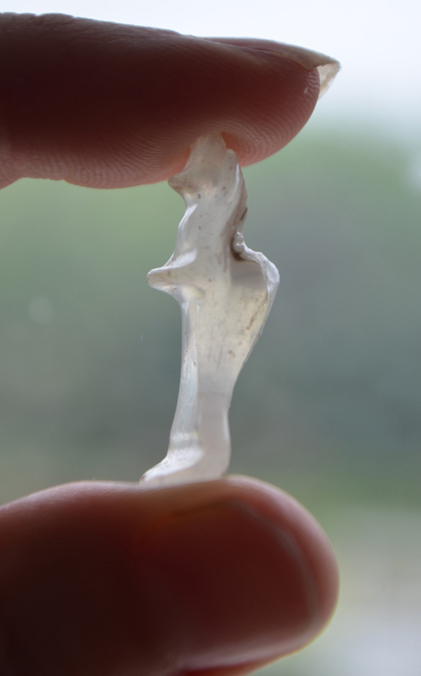
    The vast majority of ceramics in the Washington household came from England. The same can be said about the family’s table glass, but the fanciest glassware owned by the Washington family actually came from Venice, Italy.  Found by our archaeologists, this piece of a pincered and buttressed handle is likely part of an elaborate hand-blown Venetian piece, made of finely crafted colorless soda lime glass with a barely visible bead of opaque glass running through the center.  A Venetian glass goblet such as this was a show piece displayed prominently within the house to emphasize that, despite their colonial location, the Washington family strived to maintain a level of European refinement appropriate to their gentry status.

    Archaeologists excavated this small fragment of Venetian glass at Ferry Farm.
    Wine goblet made in the 16th century in Venice, Italy. Credit: The Metropolitan Museum of Art

    4) Barbados

    In 1751, George Washington made his only trip off the North American continent, traveling with his half-brother Lawrence to Barbados. Visiting the island’s fortifications and meeting members of its military garrison fed George’s growing desire for a military career. As Jack Warren concludes, “After returning to Virginia, he dedicated himself to advancement in the military more completely than any of his Virginia contemporaries. And unlike most of the prominent colonial militia officers of the 1750s, he sought a commission in the regular British military establishment – an ambition that was probably prompted, and undoubtedly stimulated, by his experience in Barbados.”

    Needham’s Point, Barbados. Credit: Reinhard Link.

    5) The Frontier

    Military service eventually took George into the frontier wilderness of the vast Ohio country. Tasked by Governor Dinwiddie with delivering a demand to the French to leave lands claimed by Virginia and the British Crown, young Major George Washington embarked on a thousand-mile, ten-week trek to and from Fort LeBoeuf on Lake Erie. He was accompanied by the Dutchman Jacob Van Braam, who served as his French interpreter, and by Tanacharison, known as Half-King, as well as other men from Native American nations. Along the way, he met several French officers and soldiers. Although confined to North America, this trip in late 1753 and early 1754 was, in reality, a foreign trip that exposed Washington to different peoples and cultures. It provided vital diplomatic, military, and intelligence gathering experience to the future Continental Army commander and first president. Washington, notes Paul Royster, “practiced diplomacy to keep the Native leaders allied to the English cause; he interviewed French deserters and reported on the extent of French military posts between New Orleans and the Great Lakes; he reconnoitered the Forks of the Ohio with an eye to the proper site for building a fort; and he inspected and reported on the construction of the new French forts and made estimates of their strength . . . .”

    Portrait of George Washington, 1772 by Charles Willson Peale. Credit: National Portrait Gallery
    The Ohio region from Cumberland to Fort LeBoeuf through which Washington journeyed, overlayed onto the famed map in Thomas Jefferson’s Notes on the State of Virginia (1787). Credit: Paul Royster / University of Nebraska.

    Conclusion

    Although a fourth generation American, George Washington grew up in a time and place – 18th century Ferry Farm and British North America — where international economic and cultural influences on his life were quite numerous. Through the five international influences we’ve briefly examined, we’ve seen how these influences helped Washington maintain his gentry status, which ultimately set him on a path to military and political greatness.

    Zac Cunningham
    Manager of Educational Programs

    Mara Kaktins, Archaeologist
    Ceramics & Glass Specialist

  • The Lewis Ships That Sailed the Atlantic World

    B1981.25.623
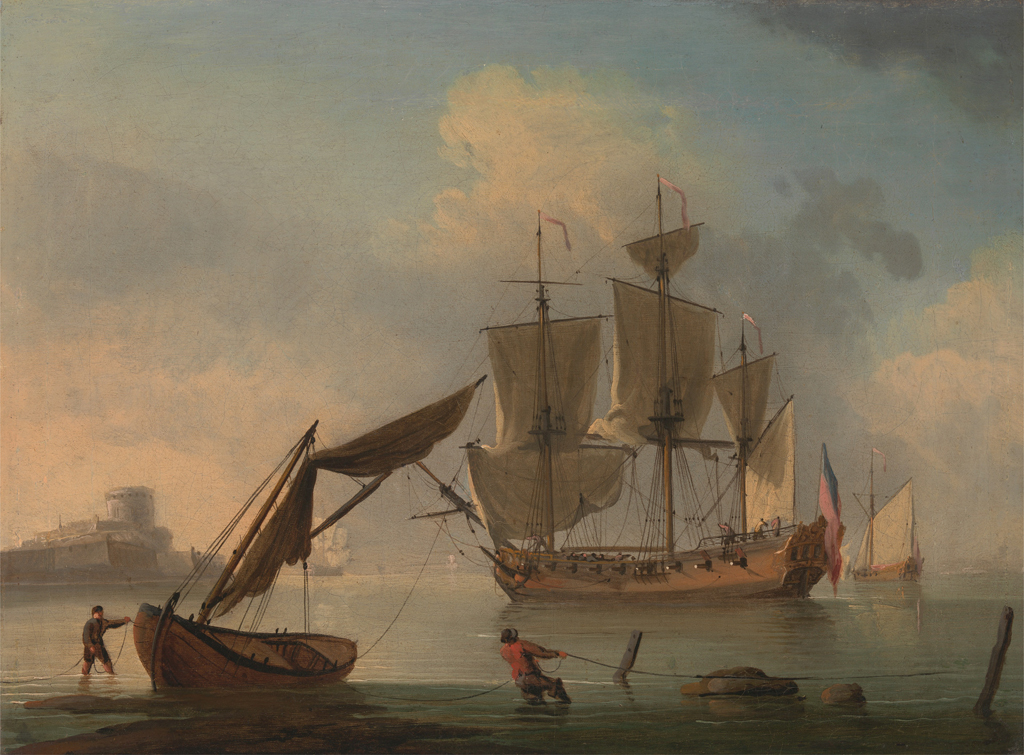
    “An English Sloop Becalmed near the Shore” (mid-18th cent.) by Francis Swaine. Credit: Yale Center for British Art, Paul Mellon Collection

    George Washington’s Ferry Farm is located on a hill overlooking the Rappahannock River.  That river connects to the Chesapeake Bay and eventually the Atlantic Ocean.  When young George Washington lived at Ferry Farm, the Rappahannock was a gateway to the entire world.  Fredericksburg was a port town on the river’s opposite bank from the farm and small ocean-going sailing vessels traveled up the Chesapeake and into the Rappahannock to dock at the bustling town’s wharves.  Ships like the brigs Stanton and Priscilla as well as the schooners Grampus and Penguin brought goods to buy, news from the rest of the British Empire, and occasionally people to settle and work in the colonies.

    Growing up next to the river influenced the young Washington.  He got to experience life at sea first-hand when he left Ferry Farm and sailed to Barbados at the age of 17. Also, for a time, the family debated whether teenage George should pursue a career in the Royal Navy.  Moreover, at Ferry Farm, the Washingtons produced and consumed the goods that ships plied back and forth across the ocean.

    George Washington, his family, slaves and neighbors were members of what historians call “The Atlantic World,” a global community of many different peoples taking part in the trade that traveled back and forth across the Atlantic Ocean.  Washington, his brother-in-law Fielding Lewis, and other Fredericksburg residents saw sailing ships on the Rappahannock every day and interacted with the sailors from those ships every day.  They supplied the ships with goods to take to destinations far across the sea and then bought the goods these ships carried when they returned.

    In the 1600s and 1700s, tobacco was Virginia’s most important export but, at the same time, many planters along the Rappahannock chose to export things like wheat, foodstuffs, timber, and other raw materials used to manufacture goods.

    Broadly speaking, these manufactured goods were made in Europe using the raw materials exported from the Americas.  Europe then sent the manufactured goods to Africa as well as back to the Americas.  In Africa, they were used to buy slaves while, in the Americas, they were used to purchase more raw materials.  This movement of goods has long been referred to as the “Triangular Trade” because of the triangle shape that the goods traveled when traced on a map.  Of course, this is a very simplistic description of a very complex network of trade that really spread across the globe.  Still, a triangle is a useful way to imagine, understand, and remember the basics of the process.

    Washington’s brother-in-law Fielding Lewis and the Lewis family built and owned ships that transported goods throughout the Atlantic World. Records of these ships’ voyages help illuminate the Triangular Trade and also how Atlantic trade routes often did not look like a triangle at all.

    Map of the Stanton's Voyage

    In one of the earliest voyages of a Lewis ship, the 80-ton brig Stanton – owned by Fielding’s father John Lewis and captained by Richard Williams – made a roughly six month voyage in the first half of 1732. The Stanton was bound for Madeira, an island off the coast of Portugal, and then Barbados, an island in the Caribbean Sea, before returning to Virginia. Its voyage is a perfect illustration of the Triangular Trade and we’ve written about it here.

    But the Atlantic trade was not always a triangular one.

    During the first half of 1737, the Lewis brig Priscilla sailed directly to London and back under the command of Richard Williams and carrying 192 hogsheads of tobacco, six tons of iron, and 5,000 staves.[1] The ship returned to Virginia with “European goods” and, after a brief stop at Madeira, added some wine to its cargo.

    'The South East Prospect of London from the Tower to London Bridge' 1746 by John Maurer
    “The South East Prospect of London from the Tower to London Bridge” (1746) by John Maurer. Credit: Royal Collection Trust / © HM Queen Elizabeth II 2018

    The next year, the John Lewis-owned schooner Grampus mastered by John Briggs set sail with 300 staves, 600 bushels of corn, 900 bushels of peas, 180 bushels of wheat, 1 hogshead of wine, and 400 feet of walnut plank bound on a direct voyage to and from “New England.”  It returned with 5 hogsheads and 6 barrels of rum, some molasses, cider, oil, and “New England Ware.”

    Finally, about a decade later, we find another John Lewis-owned ship departing Virginia.  The Penguin, a schooner captained by Will Whitterong with a crew of six, set sail for Antigua in the Caribbean on March 1, 1745 carrying 100 barrels of pitch, 303 barrels of tar, 35 barrels of turpentine, 100 bushels of peas, 8 barrels of tallow, and 13,800 shingles.  The Penguin arrived at Antigua on May 17 and returned to Virginia on June 5 with a cargo of 30 hogsheads and 1 tierce[2] of rum, 27 barrels of sugar, and British goods.

    Did some of the items these ships brought back from across the Atlantic end up at Ferry Farm to be consumed or used by George Washington and his family (or the Strother family, the farm’s earlier occupants)?  It’s unlikely but not impossible.  Many of the items excavated by archaeologists at Ferry Farm definitely fit the descriptions “European goods,” “New England Ware,” or “British goods.”  Westerwald jugs, Bartmann bottles, white salt-glazed stoneware fruit dishes, and glass wine bottles all journeyed across the Atlantic to be used by Ferry Farm’s residents, then broken, thrown away, and buried, eventually to be recovered by archaeologists. No matter who actually used them, these recovered items represent the people and way of life of the 18th century’s Atlantic World made possible by the ships Stanton, Priscilla, Grampus, and Penguin.

    Zac Cunningham
    Manager of Educational Programs

    [1] Staves are the curved lengths of wood used to make barrels, buckets, or, in this case, pipes. Yes, wooden pipes.

    [2] Tierce is an archaic measure of wine that roughly equaled 35 gallons. The term was also used as a synonym for cask, which seems what is meant in this case.

  • Photos: Nature Walk at George Washington’s Ferry Farm


    George Washington’s Boyhood Home at Ferry Farm offers a wonderful blend of woods, fields, wetlands, and riverfront.  Fox, groundhogs, snakes, lizards, turtles, and deer make Ferry Farm their home.  In the meadows, bushy heads of grass seeds provide an important source of food for birds.  Beautiful flowers and majestic trees abound across the landscape.  A few weeks ago, we set out on a nature walk around Ferry Farm to enjoy the flora and fauna.

    Learn more about Ferry Farm’s natural environment here.

  • Photos: Our Urban Nature at Historic Kenmore

    Nature shaped the lives of English colonists and enslaved Africans living and working at Kenmore Plantation 200 years ago.  Over centuries, humans changed Kenmore’s natural world from a plantation setting into an urban green space. Yet, nature remains just outside the door.

    This past Saturday at Historic Kenmore, visitors had a chance to explore humans’ dynamic relationship with nature through the years during Our Urban Nature.  They discovered — in some cases, held — the wildlife living right in town with Fredericksburg Parks & Recreation. They explored the meaning behind the color of the river’s water with Friends of the Rappahannock. Visitors learned about worm composting with the Rappahannock Regional Solid Waste Management Board. They dug into the importance of dirt with the Tri-County/City Soil and Water Conservation District. Visitors also enjoyed a native plant and urban geology walk through the neighborhood and learned how to build terrariums from found objects and plants. Kids created a food web mobile, fairy houses, and built their own river.

  • The Civil War at the ‘Old Washington Farm’

    Editor’s Note: Lives & Legacies continues to remember the Civil War as that conflict’s 150th anniversary concludes this April and May.  During the Civil War, the homes of George Washington and Fielding Lewis – both indispensable to securing American freedom in the Revolution — served as campsite and hospital in a bloody struggle over the definition of that same freedom.  This brief overview of Ferry Farm’s Civil War history is adapted from Report on the Excavation of the Washington Farm: The 2006 and 2007 Field Seasons by Dave Muraca, Paul Nasca and Phil Levy, Site No. 44ST-174, Department of Archaeology, George Washington Foundation, 2010, pg. 27-32.

    On two separate campaigns in 1862, Union forces occupied the north bank of the Rappahannock River, including Ferry Farm, in an attempt to take control of Confederate Fredericksburg. The military objective of each campaign was the same; however, the circumstances under which the two were executed differed greatly.  The first occupation employed the Union Army’s strategy of ‘peaceful’ occupation while the second employed ‘hard war,’ resulting in a major impact on the social and physical landscape of the area.

    In late April 1862, the Army of the Rappahannock, under the command of Major General Irvin McDowell, advanced south from Warrenton, Virginia. His military objective was to take control of Fredericksburg. This move was intended to help protect Washington, D.C., located 50 miles to the north, while the main body of the Union Army pushed toward Richmond on the James and York River peninsula. McDowell’s forward cavalry encountered, and quickly defeated, the Confederate forces defending Fredericksburg. In retreat, the Confederates burned the two foot-traffic bridges spanning the Rappahannock, as well as a vital railroad bridge. The Mayor of Fredericksburg surrendered the city to the Union Army.

    The occupying Federals quickly established their encampments on the north side of the Rappahannock, including the land at Ferry Farm, and set about the task of erecting two floating bridges across the river and constructing a new railroad bridge.

    Union Army wagons cross the Rappahannock River on a floating pontoon bridge at Ferry Farm. This photograph was taken from the present-day City Dock on the Fredericksburg side of the river looking across to Ferry Farm.

    The Union soldiers encamped at Ferry Farm were the muscle that enforced the occupation of Fredericksburg. Their officers ordered them to respect people and property, and the men – for the most part – followed their command. Still, local residents, like the overseer living at Ferry Farm, complained bitterly to Federal authorities about barnyards raided for livestock, hay stolen for bedding, and fences dismantled for firewood.

    Federal regiments hailing from New York, Wisconsin, and Massachusetts passed the spring and summer at Ferry Farm performing drills pulling guard duty, and rebuilding the structures their fellow troops sometimes damaged. When off duty, the men had time to improve their camp, wash their clothes, write letters home, play games, and even go into town to shop and see the sights.

    In August, newly-appointed Union General John Pope recalled Fredericksburg’s occupiers to defend Washington. Departing Union soldiers destroyed their pontoon bridges, the railroad bridge they had just finished rebuilding, and other new structures they feared would benefit the Confederates.  Apart from the superficial harm caused by their three-month encampment, they left behind a landscape largely intact with Ferry Farm’s buildings still standing.

    Four months later, Union General Ambrose Burnside brought the largest number of Federal troops ever amassed to the north bank of the Rappahannock. His plan was to cross the river and march victoriously on to Richmond. But he delayed his army’s crossing waiting for pontoon boats. This gave General Robert E. Lee time to fully entrench his Army of Northern Virginia on the opposite side of the river. Burnside’s delay set the stage for a fierce battle, which devastated Fredericksburg and ended in a staggering Union defeat. Badly mauled, the Federals withdrew, pulled up their pontoon bridges, and hunkered down for the winter, turning Ferry Farm into part of their defensive front line.

    Although the Washington family’s house had disappeared by 1830, our excavations of its location have revealed not only the Washington’s cellar but also a Civil War-era trench passing within inches of the cellar.

    The massive Union Army that arrived for battle in November was far different from the modest occupying force that had spent the summer here. Battle-hardened and irritated by a string of defeats, these soldiers cared little for local concerns about property. Burnside’s men did not hesitate to take whatever they wanted, including trees, fences, livestock, and homes. Anything useful was commandeered, stripped clean, or torn down over the ensuing months to sustain the winter camp – including Ferry Farm’s buildings.

    William F. Draper, of the 36th Massachusetts Infantry, recalls his experience at Ferry Farm in late-November, 1862. “Our picket duty here was especially interesting from the associations connected with the spot where that duty was performed. The part of the line that it usually fell to my lot to hold was on the old Washington Farm, where General Washington passed most of his earlier years, and where he cut the cherry tree with his little hatchet but could not tell a lie.

    Inkwell dating from the Civil War excavated at Ferry Farm.

    Military action was renewed in the spring of 1863, culminating at the Battle of Chancellorsville. During this engagement, Ferry Farm was again the location of a pontoon bridge, and the Federal guns overlooking it roared back to life. At Chancellorsville, the Union Army would yet again sustain a crippling defeat; however, Fredericksburg would ultimately come under Federal control. In May 1864, the last of the military pontoon bridges to span the Rappahannock at Ferry Farm was in place, and would remain in this location following the Battle of Spotsylvania Courthouse.

    After the war, attempts to restore peace and prosperity started with Ferry Farm’s first post-war occupants, the Carson family. They filled in trenches, cleaned up debris, and built a new farmstead that stood into the twentieth century.

  • ‘Not Having Been Wett All Over at Once, for 28 Years Past’: Bathing in Early America

    Editor’s Note: Looking back in time, people’s personal hygiene, fashion choices, medical treatments, and more sometimes look, at the very least, bizarre, if not outright disgusting.  When confronted with these weird or gross practices, our first reaction can be to dismiss our ancestors as primitive, ignorant, or just silly.  Before such judgments, however, we should try to understand the reasons behind these practices and recognize that our own descendants will judge some of what we do as strange or gross.  Here at George Washington’s Ferry Farm and Historic Kenmore, we’ve come to describe our efforts to understand the historically bizarre or disgusting as “Colonial Grossology.”  This the second in a series of “Colonial Grossology” posts that we’re offering on Lives & Legacies.

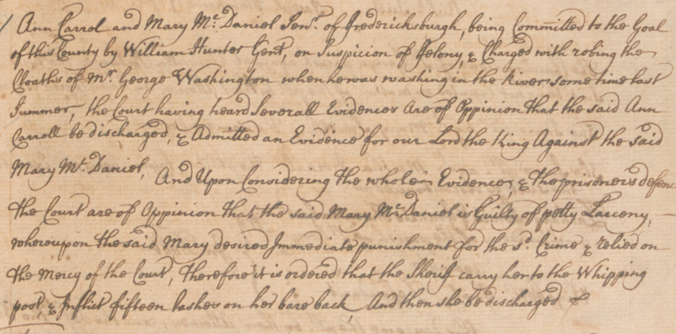
    At least once during his youth at Ferry Farm, probably in July 1750, George Washington went “washing in the river.”  We know this because Ann Carrol and Mary McDaniel were arrested and tried and one of them was even flogged for stealing valuables from his clothes while he was in the Rappahannock.  Of course, it seems quite safe to assume that young George swam in the river on many more occasions than this one moment chronicled in court records.

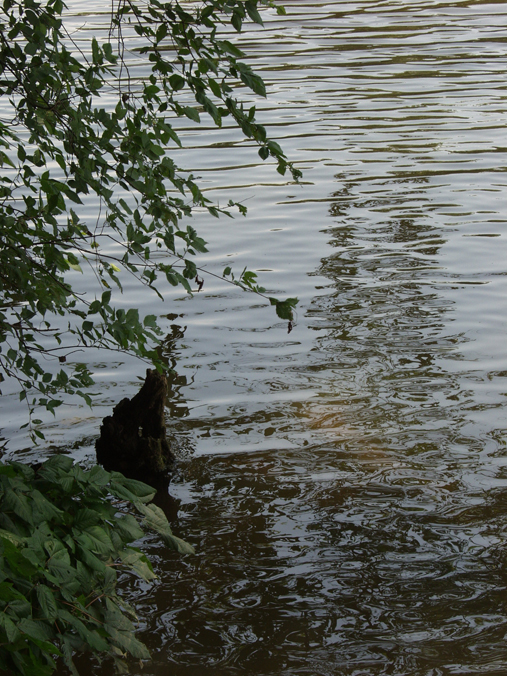
    The Rappahannock River at George Washington's Ferry Farm.
    The Rappahannock River at George Washington’s Ferry Farm.

    Document showing the outcome of a court case involving George Washington.  Ann Carrol and Mary McDaniel stole valuables from Washington's clothes while he was "washing in the river." Carol testified against McDaniel, who was convicted or petty larceny and "flogged fifteen lashes on her bare back."
    Document showing the outcome of a court case involving George Washington. Ann Carrol and Mary McDaniel stole valuables from Washington’s clothes while he was “washing in the river.” Carol testified against McDaniel, who was convicted of petty larceny and “flogged fifteen lashes on her bare back.”  Spotsylvania County Court Records, Order Book 1749-1755, Central Rappahannock Heritage Center.

    The court records say he was “washing in the river.” But was he bathing to get clean or swimming just for fun?  It’s hard to say.  In the 1700s, swimming was “rarely intended for hygienic purposes,” though, of course, it made a person clean.  Cleaning was not swimming’s intended purpose, however.  People went swimming largely to cool off during hot weather.  Still, the word “washing” in the court documents seems significant.  If Washington was bathing with the purpose of getting clean, his dip in the river was somewhat unusual for more than the fact that he fell victim to thieves.[1]

    How often did Washington and his fellow colonial Americans bathe to get clean?  The question’s answer is more complicated that you might imagine.

    First, the answer largely depends upon what we mean by the word bathing.  If we mean head-to-toe immersion in water and scrubbing with soap to get clean, then bathing was quite infrequent.  In the 1700s, many people feared immersing the body in water as a sure way to get sick.  American settlers came from Europe, where bathing occurred in public bathhouses for much of the early modern period.  Before the late 1800s, people did not understand that germs caused disease.  Instead, when they got sick, people sometimes blamed the bathhouses and bathing.  For much of the 18th century, this suspicion towards bathing “reflected medical theories about the dangers to a healthy body of extremes of heat, cold, wetness, and dryness.  Any extreme might disturb the delicate equilibrium of the body’s humors, temperature, and moisture.  Compared to the shock of immersion in water, dirt upon the skin seemed benign.”  In fact, some people believed dirt helped keep you healthy by “reinforcing the skin.”[2]

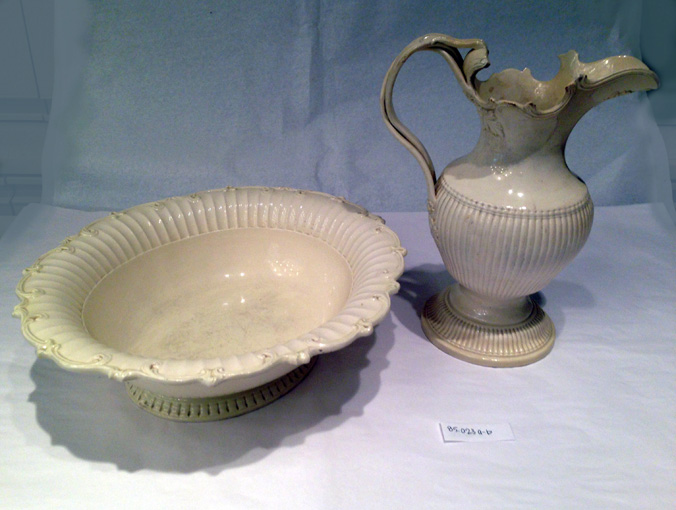
    Second, an immersive bath was simply a lot of hard work.  Unless you had servants or owned slaves to do that hard work, you carried water to the tub from your water source, perhaps a well, a spring, or a nearby stream, two buckets at a time.  Multiple trips would be necessary.  To warm the water, you had to use precious firewood to build a fire.  Building the fire and getting it started were not simple tasks either.  The incredible effort it took to bathe also explains why, when baths did actually occur, the same water was used by multiple people in the household.  The father bathed first, the sons next, then the mother and daughters, and finally the servants.[3]  To add to these practical difficulties, “tubs specifically made for bathing did not make an appearance in America” until the very late 18th century.[4]  As a result, daily cleaning for most of the colonial era was “accomplished by washing the face and hands . . . in one’s bed chamber, with a basin and a relatively small amount of water.”  We today might refer to this method as a sponge bath.

    Most early Americans washed daily using water from a pitcher and basin. Ornate sets similar to the one depicted would have been found in the homes of the wealthy like Fielding and Betty Lewis.
    Most early Americans washed daily using water from a pitcher and basin. Ornate sets similar to the one depicted would have been found in the homes of the wealthy like Fielding and Betty Lewis.

    “A bath in which the entire body was submerged, or showered with water, was generally taken for reasons of pleasure or preventive health maintenance, and in some cases, as a type of remedy for a particular affliction.”[5]  Immersive bathing for pleasure and health occurred in resort cities and towns at the sites of warm, mineral springs.  For example, George Washington, Fielding Lewis, and kin frequently trekked to Bath, Virginia (now Berkeley Springs, West Virginia) and both gentlemen owned property in the mountain resort.

    For most of the 1700s, washing from a basin remained the most common method for getting clean on a daily basis.  Indeed, it was so much the norm that when Elizabeth Drinker, a wealthy Philadelphia women, tried the new shower her husband built in the backyard, she wrote in her diary: “I bore it better than I expected, not having been wett all over at once, for 28 years past.”[6]

    Zac Cunningham
    Manager of Educational Programs

    [1] Dorothy A. Mays, Women in Early America: Struggle, Survival, and Freedom in a New World, Santa Barbara, CA: ABC-CLIO, 2004: 190

    [2] Kathleen M. Brown, Foul Bodies: Cleanliness in Early America, New Haven, CT: Yale University Press, 2009: 19-21.

    [3] Brown, 209.

    [4] Mays, 190.

    [5] “Bathing,” Thomas Jefferson Encyclopedia, Thomas Jefferson’s Monticello, www.monticello.org/site/jefferson/bathing [accessed February 10, 2015]

    [6] Richard L. Bushman and Claudia L. Bushman, “The Early History of Cleanliness in America,” Journal of American History, Vol. 74, No. 4 (Mar. 1988): 1214.

  • George Washington, Baseball Player?

    I find that February, though it has the fewest days, can be the longest month of the year. The novelty of winter has worn off and, often, I simply seem to be enduring until the first glimpses of spring in March. I do, however, look forward with excitement to two moments in February: George Washington’s Birthday and the day that Major League Baseball’s pitchers start their spring training. In a way, these two events are connected by more than their close proximity to one another on the calendar.

    After the familiar cherry tree tale, the second most popular story about George Washington’s youth is the story of him throwing a rock the size of a silver dollar across a river. This legend has changed several times over the years but it may have some truth.

    The earliest version appears in The Life of Washington by Mason Locke Weems, who notes that George’s cousin remembered seeing him “throw a stone across [the] Rappahannock, at the lower ferry of Fredericksburg.”[1] George Washington Parke Custis, Martha’s son, provides a bit more detail for this toss, noting that the rock was actually “a piece of slate, fashioned to about the size and shape of a dollar, and which, sent by an arm so strong, not only spanned the river, but took the ground at least thirty yards on the other side.”[2] Archaeologist Phil Levy estimates “that could have been a distance of anywhere from a staggering 440 feet (professional baseball fields vary from 390 to 435 feet at the centerfield wall) to an impressive 340 feet.”[3]

    We’ll never have the evidence historians need to say with certainty that young George actually threw a rock across the Rappahannock. It is a plausible story, however. So, each February at Ferry Farm’s birthday celebration, visitors try and duplicate George’s feat, provided the day’s weather or any lingering snow on the ground doesn’t prevent us from traipsing down to the river.

    A visitor attempts to throw a rock across the Rappahannock River during the George Washington Birthday Celebration at Ferry Farm.

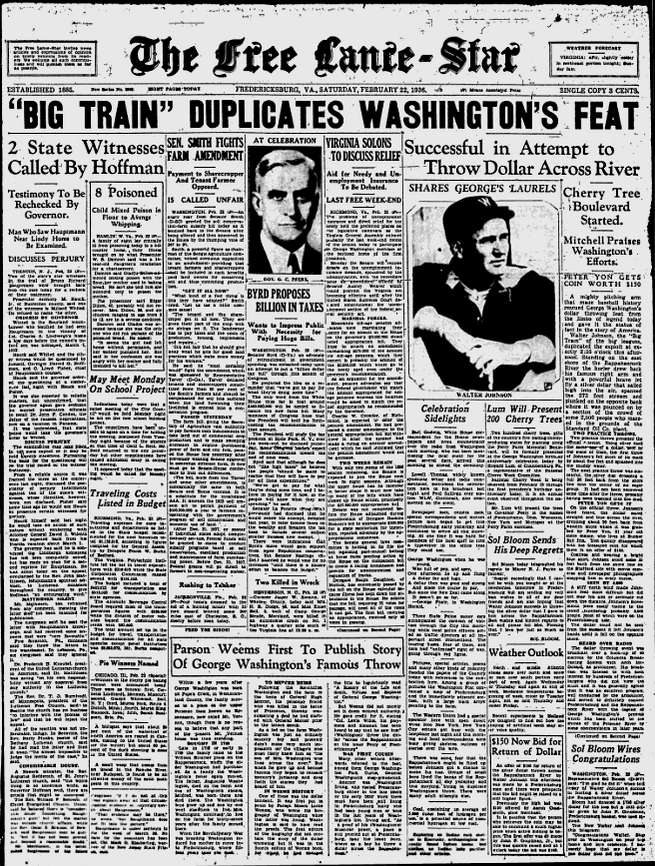
    The feat has actually been duplicated, most famously by Walter “Big Train” Johnson, celebrated pitcher for the Washington Senators, on a Depression-era February day in 1936. Officials in charge of that year’s birthday celebration at Ferry Farm challenged the retired Major League right-hander, raising the ire of Congressman Sol Bloom of New York, who believed the story of Washington’s toss, to be “preposterous.” Quoted in the February 18, 1936 edition of The Free Lance Star, Bloom felt the feat “physically impossible” because “Washington was about 10 years old when the miracle was supposed to have happened.” Perhaps, he forgot that George lived at Ferry Farm well into his late teens?

    A few days before the celebration, reporters found Johnson training for the toss by throwing a coin at the barn on his Germantown, Maryland farm. “‘Maybe I can’t throw that far,’ he drawled, ‘but there’s one thing certain—if George Washington did it, I can too.’”

    Walter Johnson poses as if in mid-throw on the icy bank of the Rappahannock.

    Finally, the day came. On the front page of the February 22, 1936 edition, The Free Lance Star’s banner headline trumpeted “‘Big Train’ Duplicates Washington’s Feat.” Standing on the Ferry Farm side of the river at 2:30 p.m. that day, Johnson took two practice tosses. The first plopped into the water just five feet short of the bank while the second made it across. Then, he attempted the official throw. Johnson “drew back his famous right arm and with a powerful heave let fly a silver dollar that sailed high into the air, spanned the 273 foot stream and plunked on the opposite bank.” Bloom graciously wired his congratulations and invited Johnson to stop in Washington and celebrate with him on his way back to Germantown.

    Front page of The Free Lance Star, February 22, 1936

    The attempt became something of a national sensation with newspapers in Michigan, Florida, Connecticut, Kansas, Missouri, and beyond reporting the story. A live radio program on the Columbia Broadcasting System beamed a description of the throw into countless homes across the nation.

    Although it doesn’t garner the attention it did in 1936, the Stone Throw Challenge remains a centerpiece of Ferry Farm’s annual Washington’s Birthday Celebration when the weather allows it. On that day, which is usually about the time that today’s aspiring Walter Johnsons are starting to prepare for their seasons, I think of a day during the Great Depression when a big league pitcher added to his own legend by duplicating the prodigious feat of the most legendary American of all. As I watch our visitors attempt their throws, I think of the “Big Train” and I also always wonder just what kind of ballplayer George Washington might have been.

    Zac Cunningham
    Manager of Educational Programs

    Join us at Ferry Farm on Saturday, February 14 for our George Washington’s Birthday Celebration, when – weather permitting – we’ll see if anyone else can throw a stone across the Rappahannock River. Along with the Stone Throw Challenge, enjoy crafts, games, exhibits, live history performances, and birthday cake! Visit www.kenmore.org/events.html for more details about the Birthday Celebration along with Archaeology Day on Monday, February 16!

    [1] Mason Locke Weems, A History of the Life and Death, Virtues and Exploits of General George Washington, Macy-Masius Publishers, 1927: 39.

    [2] George Washington Parke Custis, Recollections and Private Memoirs of Washington, Philadelphia, J.W. Bradley, 1861: 482.

    [3] Phil Levy, Where the Cherry Tree Grew: The Story of Ferry Farm, George Washington’s Boyhood Home, New York: St. Martin’s Press, 2013: 226.