Lives and Legacies

Tag: Tea

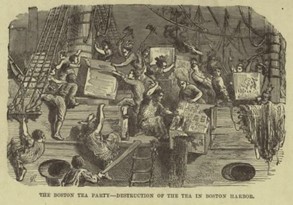
  • Spilling the Tea: The Boston Tea Party at 250

    Author’s Note: This blog contains hyperlinks to primary documents related to the event.
    Figure 1: 250th Logo (Boston Tea Party Ships and Museum)

    Intro

    This year marks the 250th anniversary of the Boston Tea Party (Figure 1). Hailed as a defining moment in the quest for American independence and an act of patriotism, the event has inspired commemorations in many forms, and it remains a vital part of the American History curriculum. I, for one, thought it the epitome of achievement that I had the date memorized in kindergarten. Like much of our founding history, however, the story retains an element of myth. So, what exactly is the truth behind this event?  

    The Story

    A general account of the Boston Tea Party tells how patriotic Bostonians, angered by unfair taxes, boarded three ships in Boston Harbor on December 16, 1773. Disguised as members of the Mohawk or Narragansett tribes, Samuel Adams led the Sons of Liberty in protest by throwing crates of the King’s tea overboard. This act helped unite the colonies against Britain and started the chain of events that ended in the “Shot Heard Round the World” on Lexington Green on the morning of April 19, 1775, following Paul Revere’s ride.

    Sound familiar? In truth, this account covers the basics. It provides the “who,” “what,” “when,” “where,” and “why.” Nonetheless, it only scratches the surface of the complex event we know as the Boston Tea Party. To unpack this, let us look at what led to the event, how it happened, and the initial response.

    Truth of the Tax

    Taxes and tea sit at the heart of this story. The taxes that the colonies took issue with went into effect starting in the 1760s, with the ultimate goal of lessening the debt incurred by Britain during the Seven Years’ War. However, this set a new precedence as Britain had never taxed the colonists directly, and the passing of these tax laws occurred without consulting the colonies. The formal chant of “no taxation without representation” first appeared in 1768, and while the lack of representation presented a key reason for displeasure, the impact of taxes on merchants served as another.

    While the Tea Act of 1773 served as the catalyst for the Boston Tea Party, the Tea Tax had existed since 1767. Introduced under the Townshend Acts, the tax remained the only one in effect upon the Act’s repeal in 1770. General dislike for the tax persisted, but the Tea Act took the issue to another level. In an aim to bail out the East India Company (EIC), the Act granted a monopoly over the tea trade by opening the colonial market to the company as the sole supplier, waived their tax payment in favor of those paid by colonists, and mandated that only EIC company agents (consignees) could sell the tea (Figure 2). Many perceived this as a restriction on business, as merchants could no longer source tea from Britain and smugglers, freedom of choice and rights.  In truth, the protests against the tax and Tea Act occurred as a matter of principle since the cost of tea actually dropped, with consumers now able to buy directly from a supplier who faced no additional costs.

    Figure 2: EIC Seal (East India Company)

    Build Up

    With the Boston Tea Party story often told in a bubble, it appears as an impulsive act, but far more happened behind the scenes. By the end of 1773, displeasure with the Tea Act made attempts of preventing the unloading of tea and boycotts of its purchase common. When DartmouthBeaver, and Eleanor anchored at Griffin’s Wharf (November 28-December 15), locals had expected their arrival since October and had spent November demanding the resignations of the consignees. Many foresaw the risk of tensions coming to a head, including Abigail Adams, who, on December 5, wrote that “the Tea that bainfull weed is arrived…The flame is kindled…Great will be the devastation if not timely quenched or allayed by some more Lenient Measures.”

    After successfully chasing the consignees out of town, Bostonians urged Francis Rotch, whose family owned two of the ships, to depart without unloading the cargo. The Sons of Liberty stationed a guard at the docks to ensure that the tea remained onboard while Rotch decided. In response, Royal Governor Thomas Hutchinson ordered Rotch to unload the cargo within the standard twenty days of arrival or forfeit it and the ships. Rotch thus found himself in an impossible situation as Hutchinson and customs refused to let him leave while the Sons would accept nothing less.

    December 16th

    Many awoke on December 16, knowing the crisis would come to a head. The date marked the deadline for unloading Dartmouth’s cargo, and Rotch would make one final attempt to plead his case to both sides. Hutchinson and customs refused to budge, which further incensed Bostonians when Rotch reported that the tea would not be leaving. This announcement came as Samuel Adams headed a meeting at the Old South Meeting House (Figure 3).
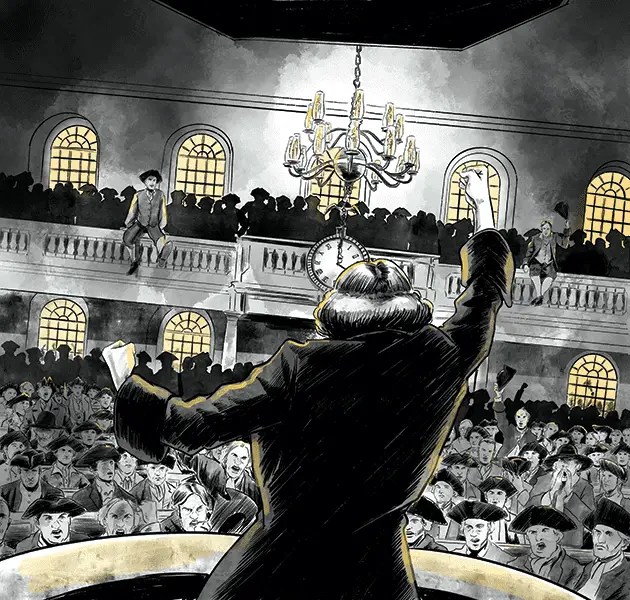
    Figure 3: Adams’ Speech at Old South (Revolutionary Spaces)

    Serving as a leading figure within the Sons of Liberty, Adams had led many of the meetings and attacks that occurred almost daily in the buildup to the 16th. This particular meeting drew 5,000-7,000 people who clamored to hear the latest developments in the tea crisis. When Rotch’s news broke, Adams stated, “This meeting can do nothing further to save the country.” While often billed as a signal to start the Tea Party, doubt remains over the statement’s significance. According to eyewitness accounts, many stayed another 15 minutes, and Adams tried to prevent people from leaving before the meeting concluded.

    Regardless of intent, hundreds of people made their way to Griffin’s Wharf. Along the way, some donned disguises that mimicked Native Americans. These disguises served both practical and symbolic purposes. First, donning a disguise shielded the identity of individuals carrying out the illegal acts, even if no one mistook them for actual tribal members. Secondly, the choice of a Native American-inspired look embraced an allegory of America and linked Indigenous resistance to colonization with the colonists’ struggle against Britain (Figure 4).
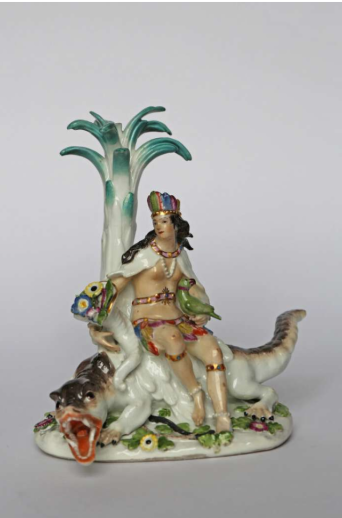
    Figure 4: “Allegory of the Continent of America,” c. 1750 (The Clark Museum)

    Interestingly, Adams never claimed or denied involvement with the Tea Party, yet, in contrast to popular depictions, he did not appear at the harbor that night. Instead, he remained at Old South. Of the participants, only the identities of 116 are known, and only one faced arrest.

    The day after, Samuel’s cousin, John Adams, described the event as “the most magnificent Movement of all. There is a Dignity, a Majesty, a Sublimity in this last Effort of the Patriots that I greatly admire. The People should never rise without doing something to be remembered—something notable And striking. This Destruction of the Tea is so bold, so daring, so firm, intrepid and inflexible, and it must have so important Consequences, and so lasting, that I cant but consider it as an Epocha in History.

    Reactions

    Despite a post-independent America enshrining the Boston Tea Party in glory, most initial reactions proved far less enthusiastic than that of John Adams. The name “Boston Tea Party” did not emerge until the 1820s, and even then, “Party” referred to a group of people rather than something celebratory. Instead, mentions of the event usually identified it by what happened, such as “the destruction of the tea” (Figure 7).
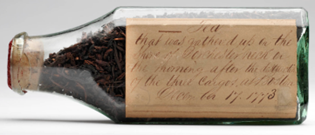
    Figure 7: “Tea that was gathered up on the shore of Dorchester Neck on the morning after the destruction of the three cargos at Boston; December 17, 1773” (MHS)

    While Parliament’s taxes made many colonists unhappy, they also valued their right to private property. In the case of the Boston Tea Party, the ships that the Sons of Liberty trespassed on belonged to Americans, while the EIC owned the destroyed tea. The King and Parliament had no direct connection to the ships or their cargo. As such, many viewed the attack as one on private property rather than a true strike against Parliament. Those who spoke out against it included Founding Fathers. Benjamin Franklin felt “truly concern’d…that there should seem to any a Necessity for carrying Matters to such Extremity, as, in a Dispute about Publick Rights, to destroy private Property.” Meanwhile, George Washington supported taking a stand against taxation and felt the cause of Boston equated to the cause of America, but ultimately could not “approve their cond[uc]t in destroyg the Tea.”

    Impact

    In the short run, the Boston Tea Party did little to fan the flames of independence. It inspired a few more boycotts (i.e., the Annapolis, Edenton, and Yorktown Tea Parties) and furthered a decline in consumption, but the British response to the event served as the primary catalyst. By punishing all of Boston, and by extension, Massachusetts Bay Colony, rather than just those responsible, the British infringed upon the rights of the colonists. Under the Coercive (nicknamed “Intolerable”) Acts, the British closed the harbor, demanded Bostonians pay damages to the EIC, imposed martial law, and required citizens to house, or quarter, members of the military on their property at their own expense (Figure 8).

    Figure 8: “The Bostonians in Distress;” 1774 Satire of the Boston Port Act (LoC)

    Those living in the twelve other colonies did not take well to this, as they feared the implementation of these acts in their homes. In response, the First Continental Congress met in Philadelphia from September to October 1774. While some delegates saw the issue as a Massachusetts one, others pressed the need to take a stand against the overreaches of Parliament and sympathized with Massachusetts. They concluded Congress by issuing their Declaration and Resolves, which listed objections to Parliament and confirmed their commitment to a trade boycott. However, when news of Lexington & Concord broke in April 1775, and Massachusetts found itself at war, the other colonies quickly had to decide which side they would take.

    Legacy

    Two hundred fifty years on, the Boston Tea Party remains an iconic event in American history and a pivotal moment in the founding of the country (Figure 9). While not wholly embraced as such upon its occurrence, the retelling of the event over time came to enshrine it in lore and leave out details that complicated the narrative. This shows that one cannot study a singular event without contextualizing it within the bigger picture. Nevertheless, John Adams’ belief that the “Destruction of the Tea” would become an epoch in history proved correct.

    Figure 9: Robinson Tea Chest – 1 of 2 surviving chests (Boston Tea Party Ships and Museum)

    Emma Schlauder

    Research Archaeologist


    Bibliography

    Adams, Abigail. Abigail Adams to Mercy Otis Warren, 5 December 1773. Letter. From National Archives, Adams Papershttps://founders.archives.gov/documents/Adams/04-01-02-0065 (accessed Nov 13, 2023).

    Adams, John. [December 1773]. Diary. From National Archives, Adams Papers. https://founders.archives.gov/documents/Adams/01-02-02-0003-0008 (accessed Nov. 13, 2023).

    “Boston Tea Party History.” Boston Tea Party Ships & Museum (website). https://www.bostonteapartyship.com/boston-tea-party-history (accessed Nov. 14, 2023).

    Cooper, Samuel. To Benjamin Franklin from Samuel Cooper, 17 December 1773. Letter. From National Archives, Franklin Papershttps://founders.archives.gov/documents/Franklin/01-20-02-0266 (accessed Nov. 13, 2023).

    “Declaration and Resolves of the First Continental Congress.” American Battlefields Trust (website). https://www.battlefields.org/learn/primary-sources/declaration-and-resolves-first-continental-congress (accessed Nov. 14, 2023).

    Franklin, Benjamin. From Benjamin Franklin to the Massachusetts House Committee of Correspondence, 2 February 1774. Letter. From National Archives, Franklin Papers. https://founders.archives.gov/documents/Franklin/01-21-02-0023 (accessed Nov. 13, 2023).

    ““Made one of the celebrated Tea Party in Boston harbor:” Remembering the Boston Tea Party in 1826.” American Battlefields Trust (website). https://www.battlefields.org/learn/primary-sources/made-one-celebrated-tea-party-boston-harbor (accessed Nov. 14, 2023).

    ““No Taxation Without Representation:” The Evolution of the Historic Phrase.” American Battlefields Trust (website). https://www.battlefields.org/learn/articles/no-taxation-without-representation (accessed Nov. 14, 2023).

    “Participants in the Boston Tea Party.” Boston Tea Party Ships & Museum (website). https://http://www.bostonteapartyship.com/participants-in-the-boston-tea-party#participant-list (accessed Nov. 14, 2023).

    Schiff, Stacy. The Revolutionary Samuel Adams. New York: Little, Brown and Company, 2022. “Tea Act.” American Battlefields Trust (website). https://www.battlefields.org/learn/primary-sources/tea-act (accessed Nov. 14, 2023).

     “The Boston Tea Party.” Massachusetts Historical Society (website). https://www.masshist.org/revolution/teaparty.php (accessed Nov 14, 2023).

    “The Final Straw.” Boston Tea Party Ships & Museum (website). https://www.bostonteapartyship.com/the-final-straw (accessed Nov 14, 2023).

    “The Intolerable Acts.” Boston Tea Party Ships & Museum (website). https://www.bostonteapartyship.com/the-intolerable-acts (accessed Nov 14, 2023).

    The Massachusetts Gazette; and the Boston Post-Boy and Advertiser. “Philadelphia, September 29. Extract of a letter from London, August 4.” From Massachusetts Historical Society. https://www.masshist.org/database/viewer.php?pid=2&old=1&mode=nav&ft+Coming% &nbsp 20of%20the%20American%20Revolution&item_id=434 (accessed Nov. 13, 2023).

    “The Secret Plan.” Boston Tea Party Ships & Museum (website). https://www.bostonteapartyship.com/the-secret-plan (accessed Nov 14, 2023).

    “Townshend Act.” American Battlefields Trust (website). https://www.battlefields.org/learn/primary-sources/townshend-act (accessed Nov. 14, 2023).

    Washington, George. From George Washington to George William Fairfax, 10–15 June 1774. Letter. From National Archives, Washington Papershttps://founders.archives.gov/documents/Washington/02-10-02-0067 (accessed November 13, 2023).
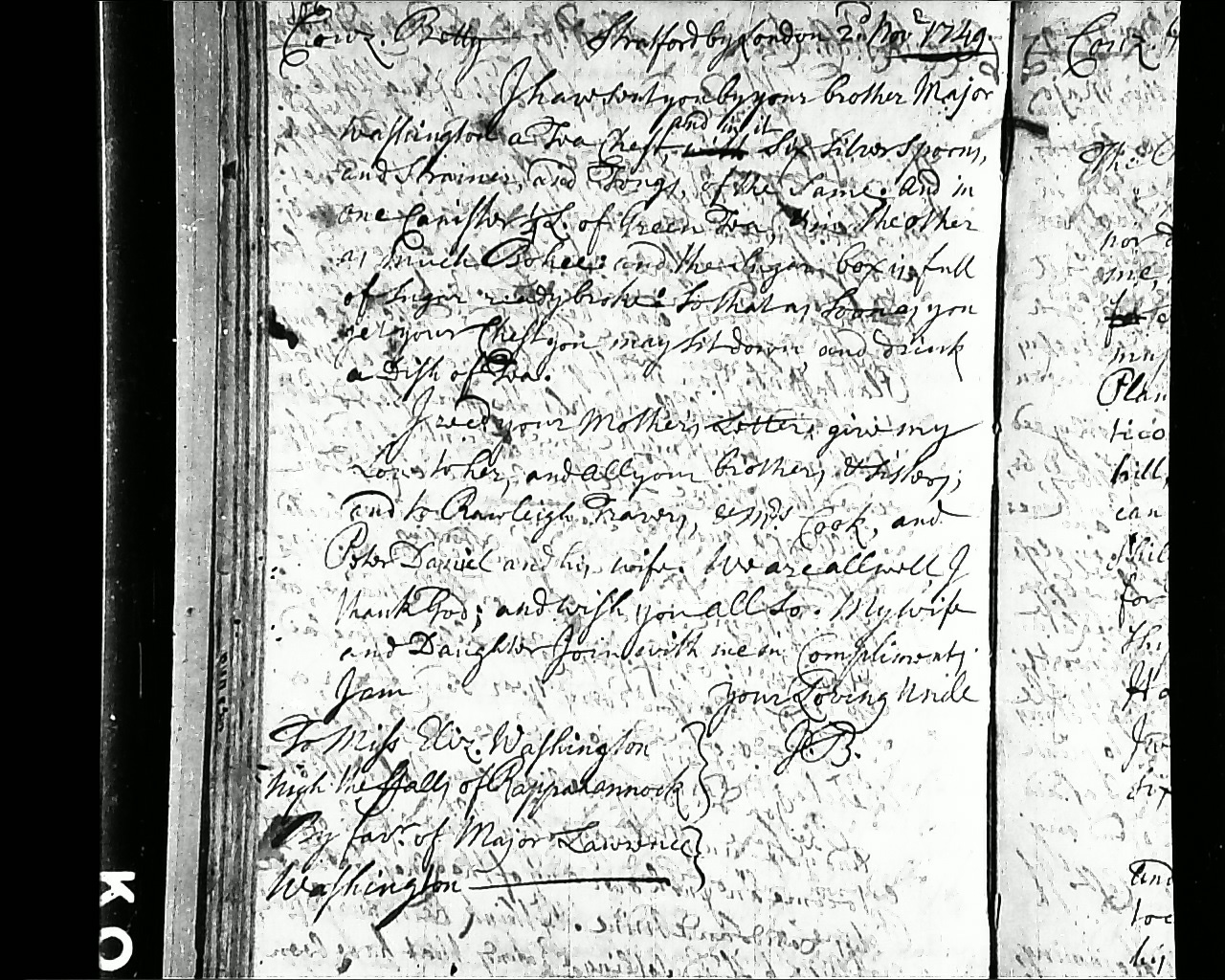
  • A Gift Across the Seas: Betty Washington’s Silver Tea Set from Her Uncle Joseph Ball

    Couz. Betty                                                     Stratford by London 2nd [Nov] 1749
                I have sent you by your brother Major Washington a Tea Chest; and in it Six Silver Spoons, and Strainer, and Tongs, of the Same. And in one Canister 1/2 L. [pound] of Green Tea, in The other a Pinch Bohee: and the Sugar box is full of Sugar ready broke: So that as Soon as you get your Chest you may Sit down and drink a Dish of Tea.
                I read your Mother’s letter, give my Love to her, and all your brothers, & sisters; and to Rawleigh Travers, & Mrs. Cook, and Peter Daniel and his wife. We are all well I thank God; and wish you allso. My wife and Daughter Join with me in Compliments.
    I am                                                                                                               Your Loving Uncle
                                                                                                                                  J.B
    To Miss Eliz. Washington                                                                                                                              
    nigh the Falls of Rappahannock
    By [fav.] of Major Lawrence Washington

    In 1749, one year before her marriage to Fielding Lewis, Betty Washington received a valuable gift – a silver tea set and other tea equipment – from her Uncle Joseph Ball in England. Tea equipment at this time was still expensive and the tea ceremony was reserved for upper class individuals. By providing Betty with equipment for such an important ceremony, Joseph Ball was helping prepare his niece for success in the gentry class. He provided silver teaspoons, a strainer, tongs, and a tea canister– four of the necessary pieces of equipment for the tea ceremony. Other items needed for the ceremony included a teapot, slop bowl, milk or cream container, sugar container, cups, and saucers.[i] Mary Washington provided these pieces for Betty while she lived at Ferry Farm, using them to teach her daughter how to host the important ceremony.

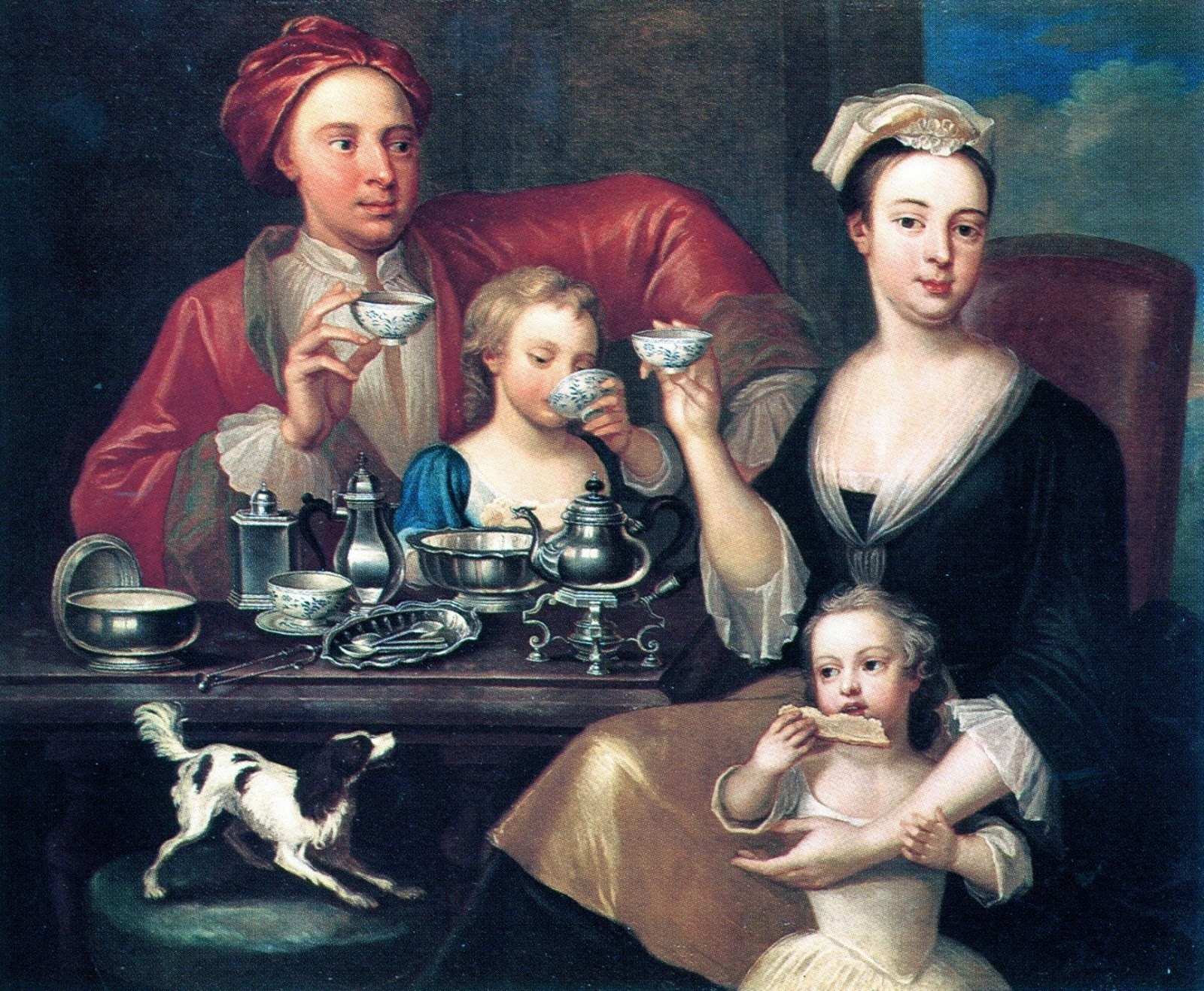
    The tea ceremony was a popular social event in 18th-century American culture. First and foremost, hosting or attending a tea party was a symbol of class.[ii] It was typical for gentry class individuals to participate in this leisure activity as a way to deepen or forge relationships within their community. Only an individual who was part of this class could afford the time and money required to learn the social graces and equip the table for the ceremony. The Washingtons worked hard to project an image of gentility through their material consumption. Participation in the tea ceremony was essential for this image. Mary took the time to “bequeath gentry-level domestic culture and etiquette to her children,” keeping them in leisure class circles.[iii]

    An English Tea Party (c. 1730) by Joseph Van Aken. Credit: Wikipedia

    Within the leisure class the tea ceremony was considered, “as much an instrument of sociability as was a bit of music or conversation.”[iv] With its rules that dictated everything from table arrangement and conversation to order of events, the ceremony was complex. Mastery of the ceremony, especially for women, was key to one’s reputation within social circles. Mary and Betty Washington used the intricate event to maintain the family’s social standing and to interview suitors for Betty. As the oldest daughter, Betty was trained for this ceremony from a young age. She would likely have been the host of numerous tea parties at Ferry Farm before her marriage. Perhaps even using the silver tea set from her uncle during some of the events.

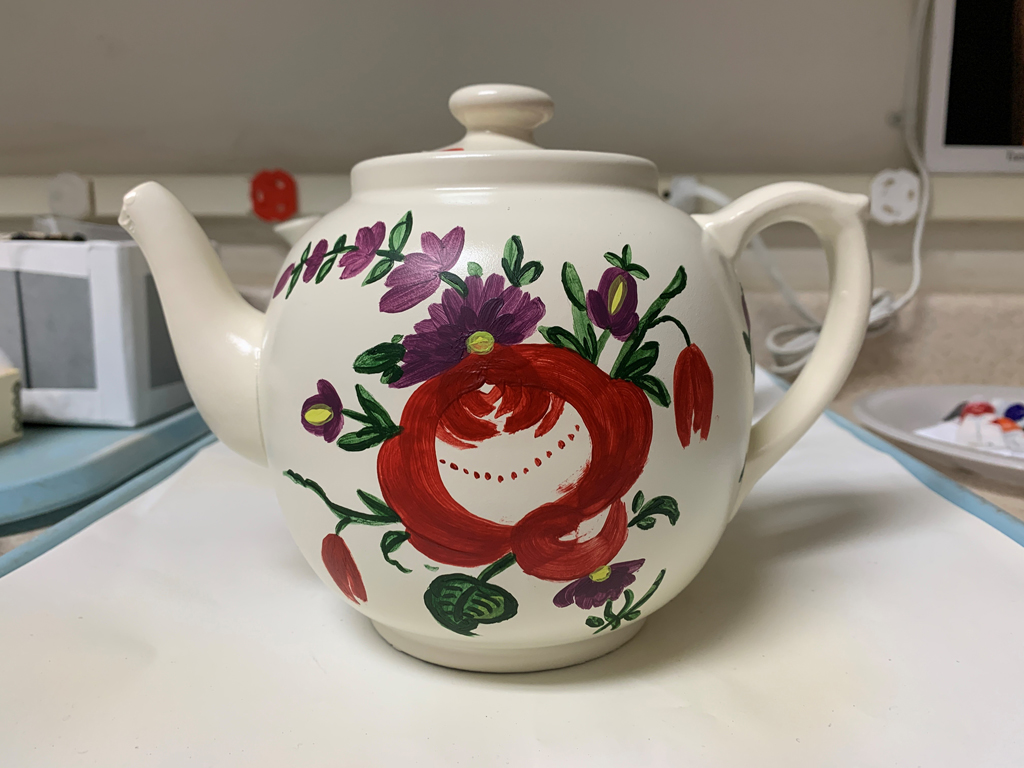
    Replica teapot.

    The social custom of the tea ceremony revolved around the teapot, thus earning it a spot at the center of the tray or tea table.[v] The archaeology department at Ferry Farm recently produced a replica teapot for display in an upcoming exhibit on 18th-century tea practices. This replica will serve as the centerpiece for the exhibit and be surrounded by archaeological artifacts and contemporary examples representative of the Washington family’s tea practices. The exhibit can be viewed through one of the windows into the Archaeology Lab starting December 1. Add George Washington’s Ferry Farm to your list of places to visit during the holiday season to see this small tea exhibit!

    Gillian Both, UMW ‘22
    Fall Fleming Smith Scholar


    [i] Rodris Roth, Tea Drinking in 18th-Century America: Its Etiquette and Equipage (Washington: Tea Trade Mart Publishing Co., 2017), 24.

    [ii] Ibid., 1.

    [iii] Laura J. Galke, “The Mother of the Father of Our Country: Mary Ball Washington’s Genteel Domestic Habits,” in Northeast Historical Archaeology 38 (2009): 33.

    [iv] Roth, 23.

    [v] Roth, 49.

  • When a Spoon is More Than a Spoon: The Initialed Teaspoon of Betty Washington

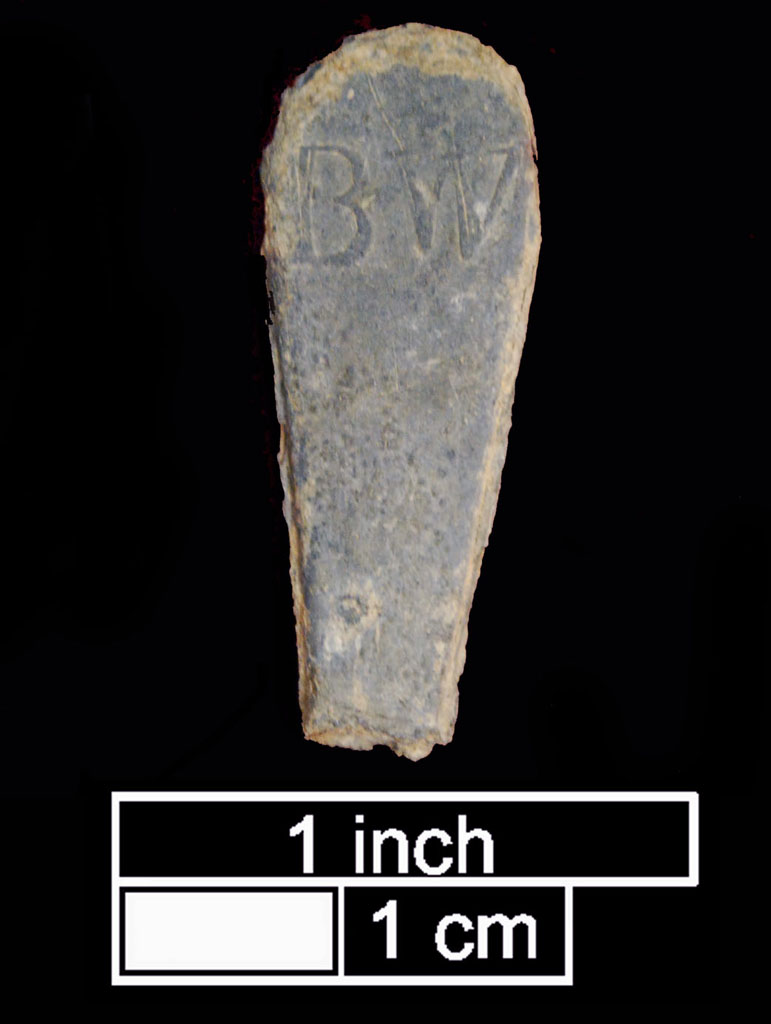
    One of the most exciting and important discoveries archaeologists have made at Ferry Farm is a pewter teaspoon baring the initials B.W.  It belonged to Betty Washington.  This spoon was part of a set that trained her to oversee the extremely important tea ceremony.

    Serving tea in the 18th century was more than an act of providing a mid-afternoon refreshment or a small meal to family and guests.  Tea time, with its prescribed social behaviors and ritualistic customs of service, symbolized gentility and civility, and was an expression of social class.[1]  As an imported good, tea was initially an expensive commodity used only by the upper and middle classes of society.  In addition to the tea, a proper hostess also had to purchase the accouterments of the tea ceremony, such as teapots, cups and saucers, slop and sugar bowls, milk jugs, silverware, and a suitable tea table for presentation.  The cost of these accessories, as well as the time and decorous social habits needed to prepare, serve, and entertain family and guests, meant that the tea ceremony was more a custom of the elite leisure classes, who had the time and money to do such things. 

    As a restricted custom, the tea ceremony transformed into an indicator of class and gentility, and consequently, its “social and cultural significance increased enormously.”[2]  Rules governing the behavior of the participants, including the host, family and guests, were understood by all and represented learned standards of civility. Politeness and courtesy were important, and deference was made to the hostess in terms of the pace and content of conversation.  Even the act of serving tea was ceremonial in nature. Seated at her tea table, the hostess made, poured, and distributed an individualized cup of tea for each guest, who received it in a gracious manner.  It was a “small personal ceremony” that “epitomized the giving that was at the heart of hospitality.”[3]

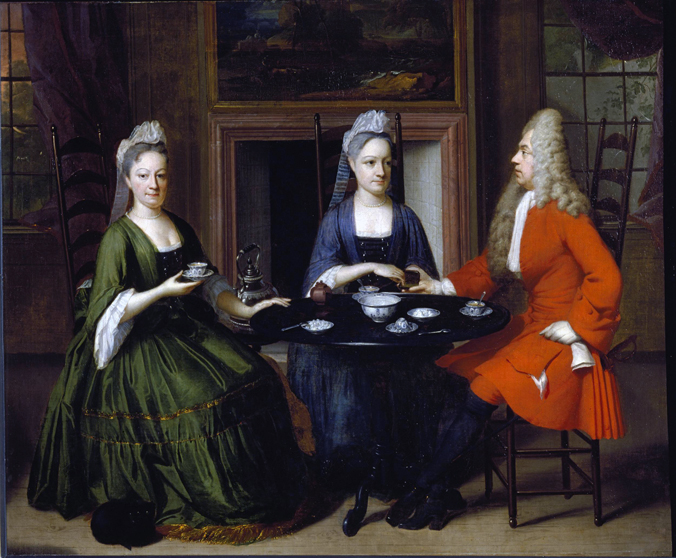
    Two ladies and an officer seated at tea (1715) by unknown artist.
    Credit: Victoria and Albert Museum.

    The tea ceremony was a gendered activity almost exclusively performed by and associated with the women of the household, who selected the teaware that they used in the ceremony[4] A household’s leading female figure, often the wife or oldest daughter, predominantly oversaw the service of tea to family members and guests, emphasizing her position of authority within the household and the gathered social circle.  As such, women used the opportunity to express their gentility and respectability.[5]

    Teatime also supplied a moment to maintain and cultivate important social ties within the community.[6]  Neighbors, business and political associates, and potential suitors met over a convivial small meal and discussed important matters.

    Teatime was also an opportunity to teach the younger generation, especially girls, how to act and behave during this social encounter.[7] As a future wife in charge of her household, it was essential for women, such as Mary Washington’s daughter Betty, to know how to successfully conduct this unique social custom and be able to demonstrate her inclusion and influence in the community elite.[8]  Betty was trained in the art of tea making, as is evidenced by the archaeological presence of a pewter teaspoon bearing her initials at Ferry Farm.  Monogrammed just for Betty, the teaspoon was part of a beginners tea set used by a young lady to train for many future tea times to come.

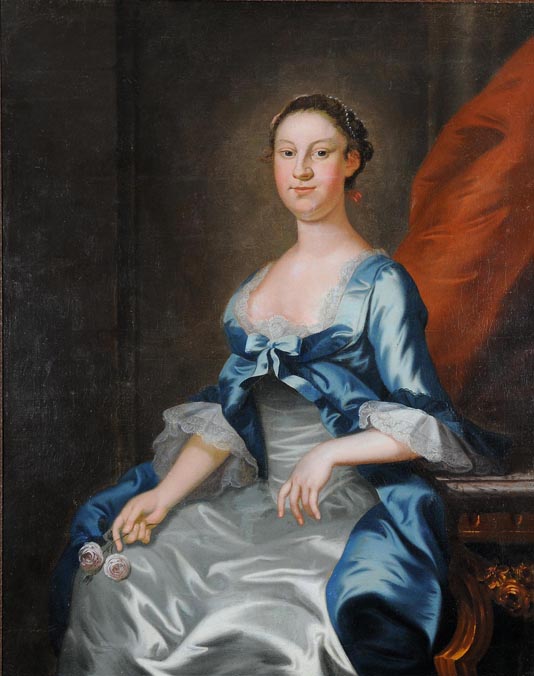
    Betty Washington Lewis (1750) by John Wollaston. Credit: Mount Vernon Ladies’ Association.

    Betty’s uncle Joseph Ball also sent her a silver tea set when she was a teenage girl, further enforcing her future role.[9]  The importance of properly entertaining guests with such tea equipage cannot be overstated, but in addition to this, Betty’s learning how to elegantly serve tea was a must for her prospects as the future wife of a well-off gentleman.  One can imagine a teenage Betty serving tea gracefully to her future husband, Fielding Lewis, having practiced diligently with her pewter and silver tea sets.

    Mara Kaktins, Archaeologist
    Ceramics & Glass Specialist


    [1] Woodruff Smith, Consumption and the Making of Respectability, 1600-1800 (New York: Routledge, 2002), 173; Amanda Vickery, Behind Closed Doors: At Home in Georgian England (New Haven: Yale University Press, 2009), 275.

    [2] Smith, 172.

    [3] Vickery, 273.

    [4] Annie Gray, “‘The Proud Air of an Unwilling Slave’: Tea, Women and Domesticity, c.1700-1900,” in Historical and Archaeological Perspectives on Gender Transformations: From Private to Public, ed. Suzanne M. Spencer-Wood,  23-43 (New York: Springer, 2013), 28; Smith, 174.

    [5] Smith, 173.

    [6] Ibid.

    [7] Smith, 174.

    [8] Laura Galke, “The Mother of the Father of Our Country: Mary Ball Washington’s Genteel Domestic Habits, Northeast Historical Archaeology 38 (2009): 29-48.

    [9] Paula Felder, Fielding Lewis and the Washington Family: A Chronicle of Eighteenth-Century Fredericksburg. (Fredericksburg, VA: The American History Publishing Company, 1998), 68.

  • Thievery, Espionage, and Fancy Dishes: Why Porcelain Was a Big Deal for the Washington Family

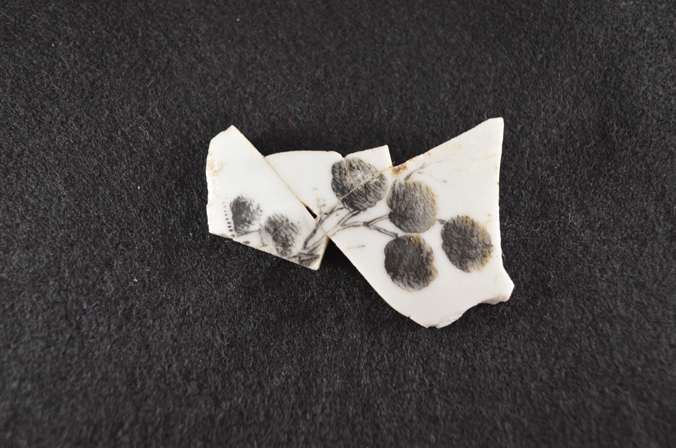
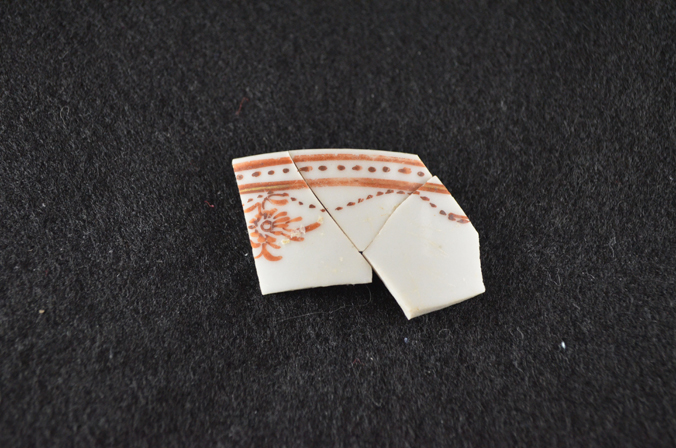
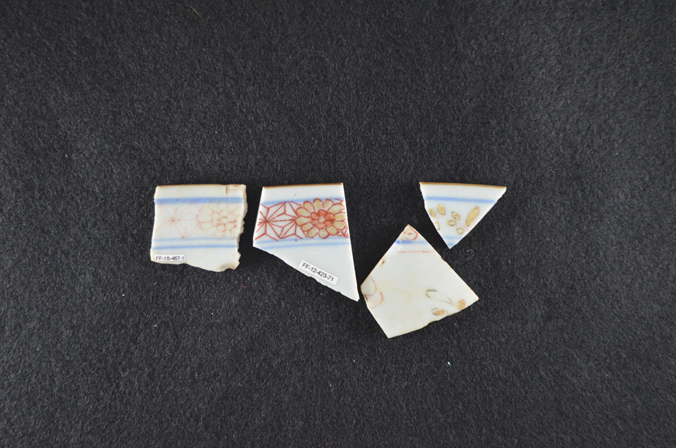
    Porcelain is the king of all ceramics.  As resilient as it is beautiful, porcelain has long fascinated many people.  During the Ming Dynasty (1368-1644 AD), the Chinese began exporting porcelain to Europeans, who coveted the precious dishes to the point that porcelain became more valuable than gold.  Europeans obsessed over how it was produced and various countries sent spies, attempted to kidnap those with the knowledge, and sought to steal texts describing the process.  The Chinese closely guarded the secret, however, and the recipe for the clays and how to get the firing temperature high enough (between 2,200, and 2,600 degrees Fahrenheit) remained a mystery.  The Chinese had been making hard-paste porcelain (as opposed to soft-paste porcelain, which was considered less desirable) for over a thousand years.  That’s a well-kept secret, folks.

    Porcelain (1)
    Tea canister with hand painted landscape motif.

    In the 16th century, the first Europeans attempted to make porcelain in Florence but without success.  Following that, Portuguese traders returned from China with kaolin, a clay found to be key in making porcelain, but they didn’t know what else to add to it so it would survive the high firing.  Then, around 1700, a teenage alchemy apprentice with poor judgement named Johann Friedrich Böttger boasted that he knew the secret of the Philosopher’s Stone, a substance that would turn base metals into gold.   Word got out and he was kidnapped first by Frederick I of Prussia and then Augustus II the Strong of Poland.  Augustus locked him up in Dresden and ordered him to make good on his claim.  Obviously he couldn’t and to avoid being killed by the increasingly impatient king, he reluctantly partnered in 1707 with Ehrenfried Walther von Tschirnhaus, a scientist working on developing porcelain.  Combining their efforts resulted in the first hard-paste porcelain manufactured in Europe and resulted in the establishment of the Meissen porcelain factory in 1710.

    Porcelain (2)
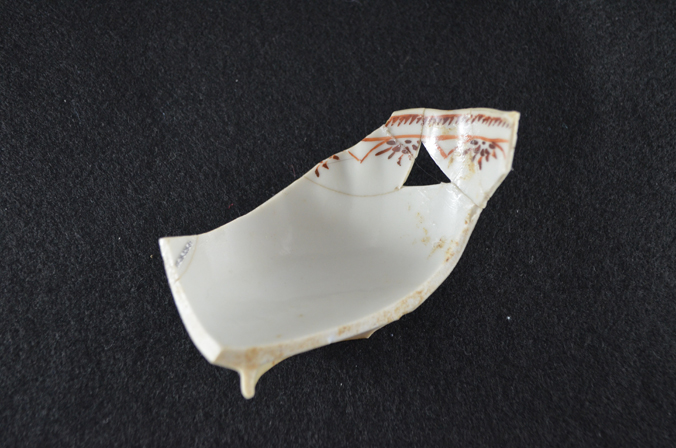
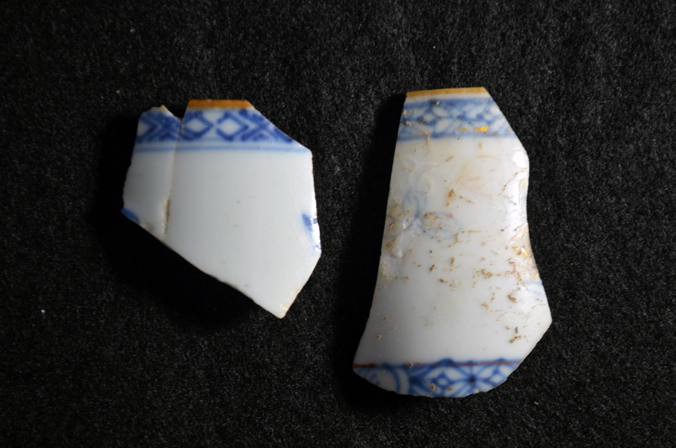
    Saucer fragment (rim and body) with hand painted landscape motif and gilding

    But the intrigue doesn’t end there.  In 1712, Father Francois Xavier d’Entrecolles, a French Jesuit, learned the secrets of how the Chinese manufactured porcelain with the help of Chinese he had converted to Catholicism.  He published a letter detailing the process, in what was arguably an act of industrial espionage, and it began circulating through Europe.  To further complicate matters, Samuel Stölzel, an employee of the Meissen factory, which fought hard to prevent its employees from blabbing about their secret for making porcelain, fled the factory’s oppressive conditions in 1719. He made it to Vienna, where he promptly spilled the aforementioned secret.  Within a few decades, porcelain was being produced widely across Europe.  Although Chinese porcelain was still highly valued, their exports began to drop off.

    Porcelain (3)
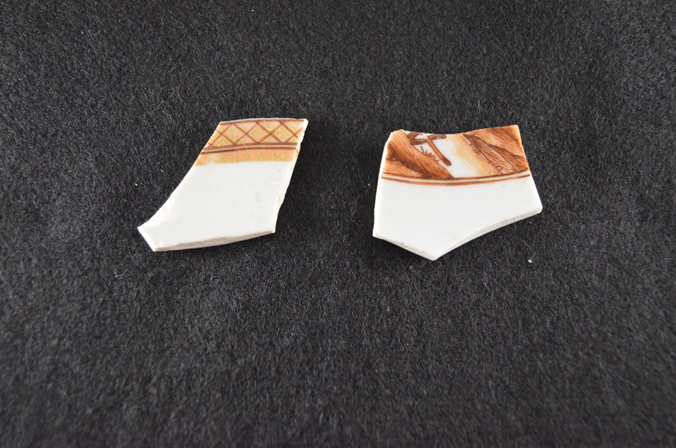
    Rim sherds from a hand painted teacup.

    As evidenced by all this thievery and espionage, porcelain was a big deal.  Owning porcelain was a sign of status and refinement.  If you were of the European upper class, it was imperative that you own these fancy dishes AND show them off whenever possible.  It was no less imperative for the gentry class in British North America.  Archaeological analysis of the Washington family’s porcelain illustrates that they were very much a part of this culture of conspicuous consumption when they lived at Ferry Farm.

    Porcelain (4)
    Rim and body sherds from a hand painted punch bowl in the Imari palette.

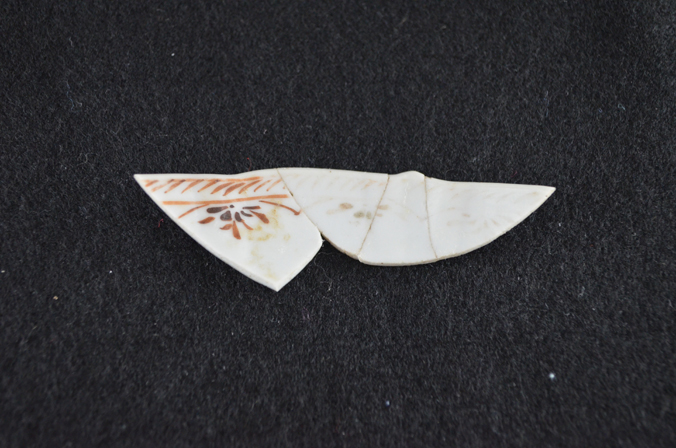
    Our current mending project, piecing together porcelain sherds recovered from Ferry Farm, revealed dozens of distinct dishes once owned by the family.  George Washington’s mother Mary owned porcelain predominantly from China.  Interestingly, all were teawares as opposed to dinner wares.  While dinner was definitely a time to show off one’s ‘good china’, colonial tea time was arguably an even better opportunity.  Serving tea in the 18th century had a large ceremonial aspect and was an opportunity for those participating to show off how cultured they were while serving a beverage (also from the distant locale of China as well as India) linked closely to high status.  Perhaps Mary, a widow on a budget, decided to put her limited resources into more conspicuous teawares rather than dinner plates and bowls.  Previous analysis in our archaeology lab indicates that Mary preferred a ceramic called white salt-glazed for her dinner dishes.

    Porcelain (5)
    Hand painted partial teacup with scalloped rim.

    Porcelain (6)
    Matching saucer for teacup for teacup immediately above.

    It has also been interesting to discover the china patterns that Mary favored, which include landscape scenes, abstract geometrical designs, and floral patterns.  While she did not appear to own ‘sets’ of china she did have cups that matched saucers, a further illustration of refinement.  As complete sets of china were not common in the middle of the 18th century, one could attempt to match up similar color palettes.  Although we’ve identified dozens of motifs in our collection, there is little evidence for Mary matching the palettes of her porcelains.  Her table, as with most colonial households, was a lot more varied in colors and patterns than we expect in the modern day.  Mary’s porcelains were delicate and skillfully hand-painted with brushes sometimes containing no more than a few bristles.  Many of the teawares are also gilded, which was a premium type of decoration for the time.

    Porcelain (7)
    Two chocolate/coffee style cups. Hand painted and likely gilded.

    In addition to teacups and saucers, our archaeologists have identified one tea canister and a few coffee or chocolate style cups, which tend to have taller and straighter sides and be of a smaller diameter.

    With this mending experiment under our belt it’s on to the next one in our never ending quest to learn as much as we can about the Washington family!

    Mara Kaktins, Archaeologist
    Archaeology Lab Supervisor

  • Lecture – Drinking with the Washingtons: Archaeological Evidence of Colonial Imbibing at Ferry Farm [Video]

    On Tuesday, May 7, 2019, Archaeologist Mara Kaktins, Ceramics & Glass Specialist at The George Washington Foundation, presented a lecture titled “Drinking with the Washingtons: Archaeological Evidence of Colonial Imbibing at Ferry Farm.” Mara explored a wide variety of beverage-related artifacts from teawares to punch bowls and discussed how cups and glasses reflected efforts by Mary Washington to demonstrate the family’s economic status and refinement.

    Join us on Tuesday, May 14, 2019 for “Food in the Eighteenth Century” when Deborah Lawton, Park Ranger at George Washington Birthplace National Monument, will explore the new dishes and changing tastes that marked the foodways of the eighteenth century. Talk begins at 7:00 p.m. The lecture is FREE and hosted at the Fredericksburg branch of the Central Rappahannock Regional Library at 1201 Caroline Street, Fredericksburg, Virginia. To learn more, visit http://www.kenmore.org.

  • LiberTEA

    With hindsight, the events of history often seem inevitable.  America was destined for independence from Britain.  All colonists were patriots who saw themselves as a nation and a people separate from the mother country.  This was absolutely not the case.  Colonists’ views on the appropriateness of independence evolved with events.  Over time, British identity gave way to American identity.

    US and UK flags
    The American Stars and Stripes and British Union Jack, the present-day flags of the United States and the United Kingdom. Credit: Hellerick / Wikipedia

    We have written several blog posts about how colonists, including members of the Washington family, clung to their Englishness.  They expressed this identity through Westerwald mugs emblazoned with ‘G.R.’ for Georgius Rex in homage to three British kings named George, including George III who would be the foe of the American independence movement. They expressed their English identity through pipe bowls emblazoned with the British royal coat of arms.  Even as protests against their lack of representation in Parliament increased, colonists still hung onto their English roots through, in the Washingtons’ case, wearing cuff links emblazoned with an image of King William III, who “came to represent the right of subjects to resist a king who was abusing power.”

    The shift from a British identity to an American identity took time as colonists gave up aspects of British culture while they resisted, first, governmental overreach and, then, ultimately embraced full national independence.

    Tea was one aspect of English culture given up as a political act to protest British rule and to show support for the American cause.  Abstention from tea drinking began with the Tea Act of 1773.  Parliament passed the Tea Act to bailout the financially troubled East India Company (EIC).[1]  The government told the Company that it could ship tea directly to the colonies, duty-free.  The EIC could get rid of loads of tea piling up in their London storerooms.  Colonists could get tea that was cheaper than the illegal stuff smuggled in.  Everyone should have been happy.  But everyone wasn’t.  The tea the Company sold to the colonists was to be taxed under the Townshend Acts.  If colonists purchased it, they indirectly accepted Parliament’s right to tax them without representation.[2]

    Tea became an emblem of British oppression and a boycott of the drink became a revolutionary act.  John Adams wrote to his wife Abigail that “Tea must be universally renounced and I must be weaned, and the sooner the better.”  Rejecting British culture, patriotic associations gave less than hospitable “tea parties” in Boston and Yorktown for merchants who continued to sell the politically incorrect brew.[3]  Less well-known was a tea party of sorts organized by the women of Edenton, North Carolina, who came together on October 25, 1774 and pledged to boycott tea and other British goods.  Whether politicians or housewives, Americans up and down the colonies joined these protests and vowed to never serve tea in their homes.[4]

    A Society of Patriotic Ladies
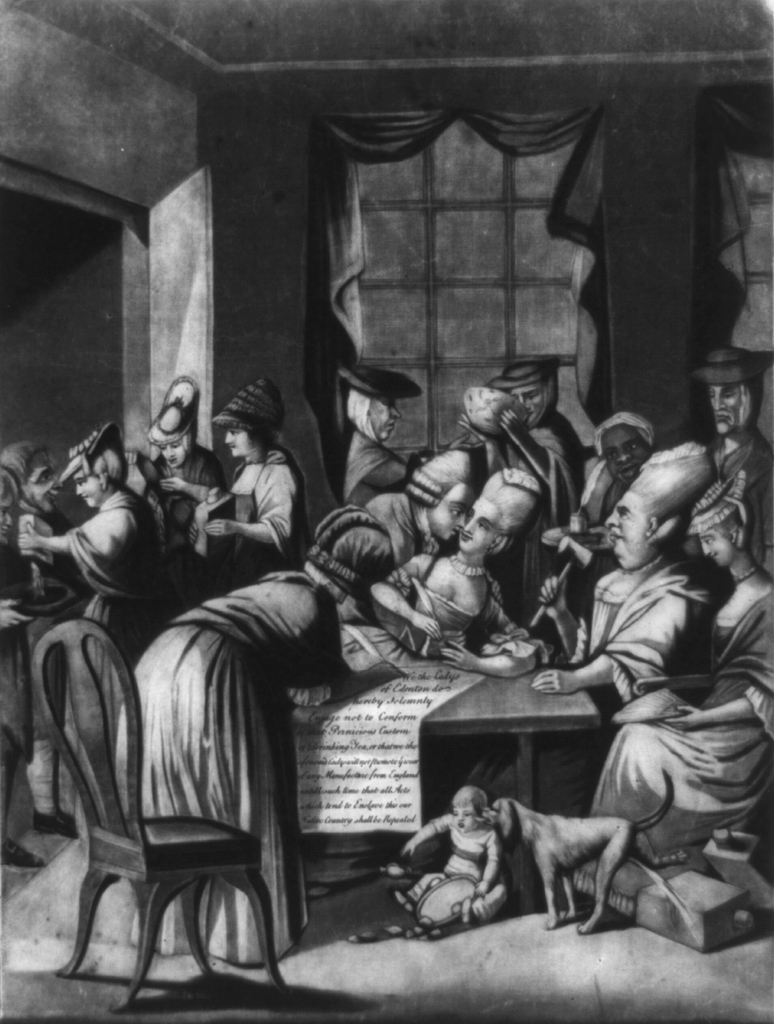
    “A society of patriotic ladies, at Edenton in North Carolina” printed for R. Sayer & J. Bennett on March 25, 1775 in London. This satirical print shows American women pledging to boycott English tea in response to Continental Congress resolution in 1774 to boycott English goods. Credit: Library of Congress.

    By at least May of 1774, Virginians near Fredericksburg had given up their tea.   Philip Vickers Fithian, tutor to the Carter family at Nomini Hall, visited some neighbors on May 19 and noted in his diary that he “Drank Coffee at four, they are now too patriotic to use tea.”[5] Indeed, as Fithan indicates and as we’ve previously explored in this post, coffee became Americans’ go-to substitute for tea.

    Fithian did not seem all that enthusiastic about the tea boycott, however. A few months later, he got very excited when “Something in our palace this Evening, very merry happened—Mrs Carter made a dish of Tea. At Coffee, she sent me a dish—& the Colonel both ignorant—He smelt, sipt—look’d—At last with great gravity he asks what’s this?—Do you ask Sir—Poh!—And out he throws it splash a sacrifice to Vulcan” [meaning the Roman god of fire, of course, and not Spock’s homeworld on Star Trek].[6]  While “the Colonel” Robert Carter III “did not volunteer for political or military service during the Revolution. He did, however, sign the Virginia loyalty oath and supported the non-importation agreements drawn up by the First Continental Congress.”  He patriotically did not partake of the British beverage but Fithian clearly missed his tea.

    For those who disliked coffee or simply still wanted tea, there was a black market to provide one with British tea but there were also American-grown substitutes that adhered to the boycott and came to be known as “Liberty Teas.”  Dr. Leonard Perry, extension professor at the University of Vermont, provides an excellent summary of tea substitutes used by early Americans during their tea boycotts…

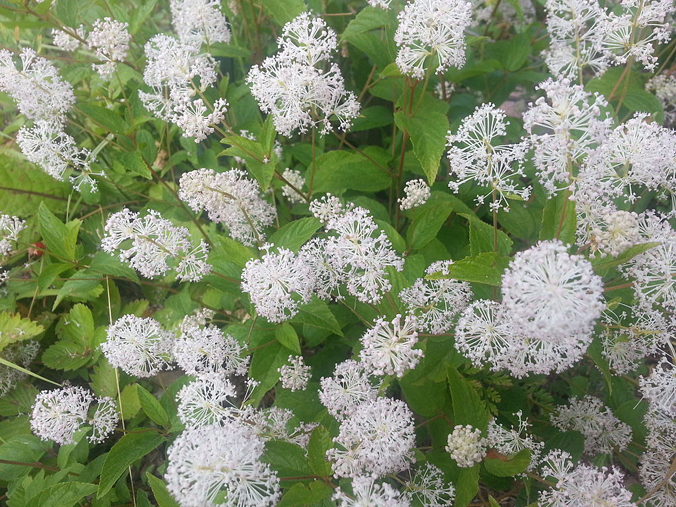
    “One of the most common substitutes was the native American shrub New Jersey tea (Ceanothus americanus), also known then as Indian tea or Walpole tea.  Leaves of raspberry also were commonly used for these colonial teas, as were sweet fern and spicebush. Bark from some trees such as sassafras and willow were used.

    Common flowers used for the Liberty teas were sweet goldenrod (Solidago odora), red clover, chamomile, and violets.  Leaves of herbaceous plants such as bergamot (bee balm or Oswego tea), lemon balm, and mints were brewed as many are today.  Many herbs were brewed in the 18th century including parsley, thyme, marjoram, rosemary, and sage. Native Americans introduced the colonists to many of these plants which they often brewed to use medicinally.  Even some fruits were used in colonial teas, including those of dried strawberries, blueberries and apples.  Rosehips, rich in vitamin C and used today in teas, were used then as well.  “Indian lemonade tea” was made from boiling the berries of the red sumac.

    Often ingredients were combined, such as a common tea recipe of that time including equal parts sweet goldenrod, betony, clover, and New Jersey tea.”

    New Jersey tea (Ceanothus americanus)
    New Jersey tea (Ceanothus americanus). Credit: John Oyston / Wikipedia.

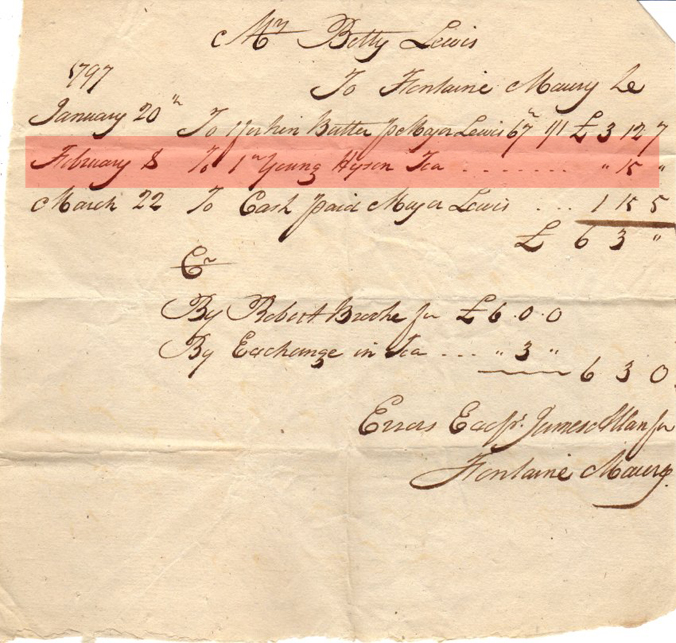
    Tea would return to American tables following the successful War for Independence.  There are several receipts from the 1790s that show Betty Washington Lewis purchasing tea, including a type of imported Chinese green tea, at Kenmore.  But, for the most part, these imported teas as well as the herbal liberty teas were ultimately eclipsed by coffee, which became, like tea for the British, the drink synonymous with American culture.

    Betty Lewis receipt for tea copy
    Receipt showing Betty Washington Lewis’ purchase of some “young hyson tea,” a type of Chinese green tea, on February 8, 1797.

    Visit Historic Kenmore on Saturday, May 4 for “Tea and Tour: The Ladies of Kenmore” focusing on the many generations of ladies who have called Kenmore home! Enjoy Kenmore tea and gingerbread while experiencing eighteenth-century tea service first hand. See the first floor of the mansion, learning the history of the grand 1775 home through vignettes, and meet a few of the extraordinary ladies of Kenmore along the way as part of this dramatic tour.

    Event admission is $20 Adults and $10 under 17.  Reservations required and there are only a very few spaces left. For more information and reservations, please call (540) 370-0732 ext. 24 or email events@gwffoundation.org.

    Zac Cunningham
    Manager of Educational Programs

    Heather Baldus
    Collections Manager


    [1] Breen, T. H., The Marketplace of Revolution, Oxford: University Press, 2004: 298-301.

    [2] Breen, 235-239.

    [3] Clark, F, “Chocolate and other Colonial Beverages” in Chocolate: History, Culture, and Heritage, 2009 (eds L. E. Grivetti and H.-Y. Shapiro), John Wiley & Sons, Inc., Hoboken, NJ: 276.

    [4] Root, Waverly et al., Eating in America, New York: Ecco, 1981: 127

    [5] Diary entry, May 19 1774 by Philip Vickers Fithian, Journal & Letters of Philip Vickers Fithian, 1773-1774: A Plantation Tutor of the Old Dominion, Williamsburg, VA: Colonial Williamsburg, 1943, 147.

    [6] Diary entry, September 26, 1774 by Fithian, 257.

  • Coffee: A Revolutionary Drink

    The history of coffee is long and complex and can never be fully explored in a single blog post, however, because of my admiration for the caffeinated beverage I wanted to learn how the colonist utilized coffee.  Fortunately, in the collections at Kenmore, we not only have a selection of 18th century coffeepots and cups but also original records for coffee purchases made by the Lewis family.  These objects give us a tangible record of coffee in the colonial home but this post will also explore how the drink became popular in the colonies, how the colonials made their morning brew, and how a tax made coffee a revolutionary drink earning it the nickname “King of the American breakfast table”.[1]

    ms 856 copy
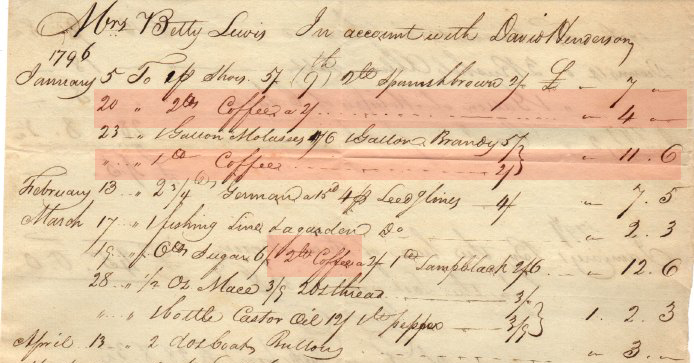
    Betty Washington Lewis made three purchases of coffee in January and March 1796.

    The Basics

    Coffee plants are flowering shrubs that produce berries which are harvested, peeled, dried, roasted, ground and, eventually, brewed to produce the cup of dark brown liquid that helps most of us get through the day.[2]

    Coffee, tea, and chocolate were introduced into North America almost simultaneously in the later part of the 1600s.[3]  By the mid-1700s, coffee and tea were becoming staple drinks for early Americans. [4]

    The easiest way to get a cup of coffee in Colonial America was the coffee-house, which usually was a mixture of café, tavern, and inn.  Coffee-houses tended to offer more than just a strong cup of java and had ale, wine, spirits, or even tea available. [5]  Even Fredericksburg had its own coffeehouse.  As local historian Paula Felder notes, “In 1751, Charles Julian of Norfolk, a baker, opened a coffee house and was granted an ordinary license.  When he joined the new Masonic lodge in 1756, the meetings were held ‘at brother Julian’s’ until the lodge meetings were moved to the new Town House in 1763.  The coffee house remained a prominent gathering place for many years. A ceremonial luncheon was given here in honor of George Washington in February 1784 on his first visit after the Revolutionary War.”  However, coffee-houses were not always a socially acceptable place for everyone. Nor were they always the most convenient way to get that much sought after cup of java.  As the desire for coffee heightened, it made its way into the homes showing up on the breakfast table, in-between meals, and after dinners.[6]

    How to Make a Colonial Cup

    In the 1700s, when you purchased coffee from your local merchant it most likely was in the form of bags of green beans.  The burden of turning those beans into the perfect cup of coffee was on the consumer.

    Roasting

    Domestick Coffee Man
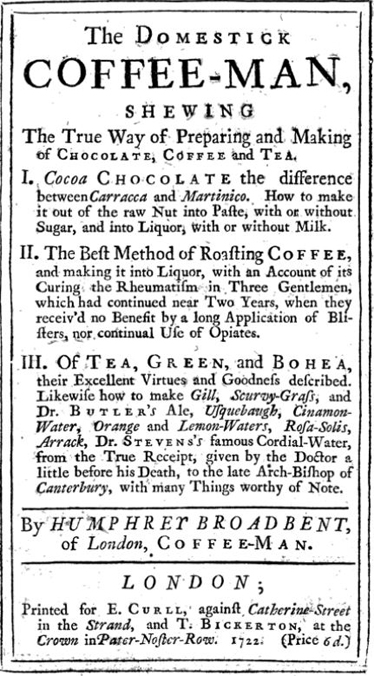
    Title page of Humphrey Broadbent’s The Domestick Coffee-man published in 1722.

    The first step was roasting the green beans to a dark brown. Humphrey Broadbent, writer of The Domestick Coffee-man, explained how to properly roast the beans, “Particular Care ought to be taken in Roasting the Berries, for without doubt in that, Depends much of goodness of them Berries.  I hold it best to Roast them in an Iron Vessel full of little Holes, made to turn on a Spit over a Charcoal Fire, keeping them continually Turning, and sometimes Shaking them that they do not Burn, and when they are taken out of the Vessel, spread’em on some Tin or Iron Plate ‘till the Vehemency of the Heat is Vanished.”[7]

    If you had a more primitive set up and didn’t have a roasting spit you could place them in a frying pan, known as a spider, or iron kettle in the hearth.  When the beans are heated, they slowly turn yellow, release steam, expand in size, and darken.  Once they begin to crackle, they are ready to be cooled.[8]

    Grinding

    By the early 18th century in Europe, coffee grinders were quite common and inexpensive.  These grinders were based on the original spice grinder. However, in the colonies, most people used a mortar and pestle to pound the beans into a coarse powder.[9]

    Brewing

    There were two different methods of brewing that were popular: boiling and infusion.  Broadbent helpfully explained the difference to the novice coffee drinker who wished to become a connoisseur.

    “The common way of making this Liquor, is, to put an Ounce of Powder, to a Quart of Water and so let it Boil till the Head is Boyled down; but this is a very silly way…if Coffee be but very little too much Boiled it is Spoiled, and grows either Flat or Sour, but if by long Custom you will not part from your Boiling, let it not Boil above a Minute.”[10]

    Broadbent much preferred infusion, stating “Put the Quantity of Powder you intend, into your pot then pour Boiling-Hot Water upon the aforsaid Powder, and let if stand to infuse Five Minutes before the Fire.”[11]

    To get that lovely cup of coffee in the 1700s, you just needed to purchase the beans, roast them, grind them, and then boil them.

    Equipment

    As the drinking of coffee moved from the coffee-house to people’s homes, a group of tableware became associated with the drink.  Central to this tableware was the coffeepot and cups.  One of the earliest representations of these items is found in a 1674 woodcut showing an English coffeehouse where men are drinking from porcelain cups without handles and coffee is being served from a metal or earthenware jug.  Later, a print from 1710 shows coffeepots with a long straight spout and small annular porcelain bowls cups.[12]  Initially, these coffees pots and cups looked quite similar to the ones used to serve tea but, over time, they began to differ in appearance to what we today would recognize as two distinct serving sets.

    The prevailing but inconclusive theory as to why the two pots changed shape is that the countries of origin of each drink played a part in the style of the tablewares.  Essentially, coffeepots and cups resembled those used in Arabic coffee houses while tea pots and tea cups resembled those used in Chinese tea rituals.[13]

    Revolutionary Coffee

    We know how colonial Americans made coffee and how they drank coffee but how did coffee become a revolutionary drink that Americans, who were once English, came to prefer over tea, Britain’s national drink?  The answer, in a word, is taxes.  The Tea Act of 1773 was created by the British government to bailout the financially troubled East India Company (EIC). [14]  The government told the Company that they could ship tea directly to the colonies, duty-free.  The EIC would get rid of loads of tea that was piling up in their London storerooms.  Colonists would get tea that was cheaper than the illegal stuff smuggled in.  Everyone should have been happy.  But everyone wasn’t.  The tea the Company was selling to the colonists would still be taxed under the Townshend Acts.  If the colonists purchased it, they would be indirectly accepting Parliament’s right of taxation without representation.[15]

    Tea became an emblem of British oppression and a boycott of the drink became a revolutionary act.  Rejecting British culture, patriotic associations gave less than hospitable “tea parties” in Boston and Yorktown for merchants who continued to sell the politically incorrect brew.[16]  Whether politicians or housewives, Americans up and down the colonies joined the boycott and vowed to never serve tea in their homes.[17]

    A Society of Patriotic Ladies
    “A society of patriotic ladies, at Edenton in North Carolina” printed for R. Sayer & J. Bennett on March 25, 1775 in London. This satirical print shows American women pledging to boycott English tea in response to Continental Congress resolution in 1774 to boycott English goods. Credit: Library of Congress.

    As John Adams wrote to his wife, “Tea must be universally renounced and I must be weaned, and the sooner the better.”[18]  However, the colonists still needed their caffeine and coffee stepped up to do its patriotic duty.  Consumption of coffee soared and played a small role in the creation of a new American identity. More than a drink, it became a sign of independence and unity in the midst of revolution and upheaval.[19]

    Heather Baldus
    Collections Manager

    Sources

    Breen, T. H. The Marketplace of Revolution. Oxford: University Press, 2004

    Broadbent, Humphery. The Domestick Coffee-Man, Shewing The True Way of Preparing and Making of Chocolate, Coffee, and Tea. London, 1722

    Clark, F. (2009) Chocolate and other Colonial Beverages, in Chocolate: History, Culture, and Heritage (eds L. E. Grivetti and H.-Y. Shapiro), John Wiley & Sons, Inc., Hoboken, NJ, USA

    Felder, Paula. “George Washington’s Fredericksburg: The Fredericksburg Scene in 1755,” Map in the Free Lance-Star, July 3, 2004.

    Goodwin, Mary. “The Coffee House Historical Report, Block 17, Building 34: The Coffee-House of the 17th and 18th Centuries,” Colonial Williamsburg Foundation Library Research Report Series – 0050 (1956): http://research.history.org/DigitalLibrary/View/index.cfm?doc=ResearchReports%5CRR0050.xml#p12

    Jamieson, Ross W. “The Essence of Commodification: Caffeine Dependencies in Early Modern World.” Journal of Social History, Vol 35, No2 (2001): 269-294


    Regelski, Christina, “The Revolution of American Drinking,” http://ushistoryscene.com/article/american-drinking/

    Root, Waverly et al., Eating in America (New York: Ecco, 1981)

    Smith, Andrew F., The Oxford Encyclopedia of Food and Drink in America 2nd edition (Oxford University Press, 2013, p 266

    Ukers, William H. All About Coffee. England: The Tea and Coffee Trade Journal Company, 1922

    Ukers, W.H. “The Early Preparation of Coffee.” The Wisconsin Magazine of History, Vol 2 (1919): 353-356

    Witkowski, Terrence H. “Colonial Consumers in Revolt: Buyer Values and Behavior during Nonimportation Movement, 1764-1776,”Journal of Consumer Research Vol. 16, No. 2 (Sep., 1989), pp. 216-226

    [1] Ukers, 107

    [2] Ibid, 133

    [3] Ibid, 105

    [4] Regelski, http://ushistoryscene.com/article/american-drinking/

    [5] Goodwin, http://research.history.org/DigitalLibrary/View/index.cfm?doc=ResearchReports%5CRR0050.xml#p12

    [6] Felder, GW’s Fredericksburg; Ukers, 689

    [7] Broadbent, p 8-9

    [8] Ukers, “Early Preparation of Coffee”, 354

    [9] Ukers, 695

    [10] Broadbent, p 11

    [11] Broadbent, p 11

    [12] Jamieson, 285

    [13] Ukers, 602; Jamieson, 285

    [14] Breen, T.H. pg 298-301

    [15] Ibid, pg 235-239

    [16] Clark, p 276

    [17] Root, p 127

    [18] Smith, p 266

    [19] Witkowski, p 218

  • Drink Your Vegetables: A Special 18th Century Wedgwood Ware

    Fads come and go. Such is life.  Eighteenth century colonists were not immune to flash-in-the-pan trends.  However, given that information traveled a bit slower before the digital age, in the 18th century a ‘quick trend’ may have lasted 10 or 20 years, instead of 10 or 20 months.  Such is the case with ‘vegetable ware’, a refined earthenware molded to look like produce.  Imagine being the envy of all your colonial neighbors if you served them tea out of an elaborate ceramic cauliflower, pineapple, melon, or cabbage.  As evidenced by the archaeological record, Mary Washington, George’ mother, was similarly taken with the prospect of displaying her very own veggie-themed teaware.

    The advent of vegetable ware seems to coincide with the development of bright green and yellow pottery glazes by a young and upcoming potter named Josiah Wedgwood in 1760.  He used these new flashy glazes for a number of applications, including coloring teaware molded to resemble produce.  While some combinations of ceramics and decorations had previously enjoyed decades or even centuries of popularity in the past, the demand for the initially popular vegetable ware seemed to drop off after only ten years, around 1770. At that time, Wedgewood indicated he was glad to send a shipment of overstocked vegetable ware to the colonies – a popular dumping ground for out of fashion or slightly damaged English goods.

    vegetable-ware-tea-canisters-1
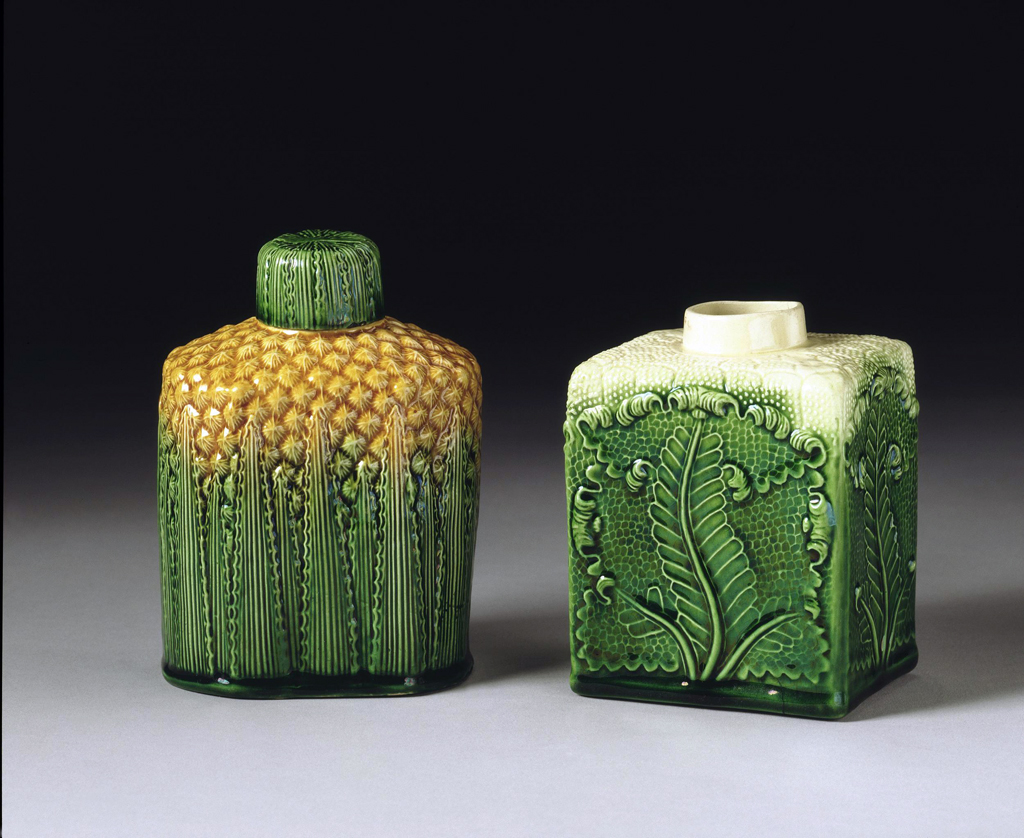
    Ceramic vegetable ware tea canisters made at the Josiah Wedgwood’s factory in England between 1754 and 1764. Credit: © Victoria and Albert Museum, London.

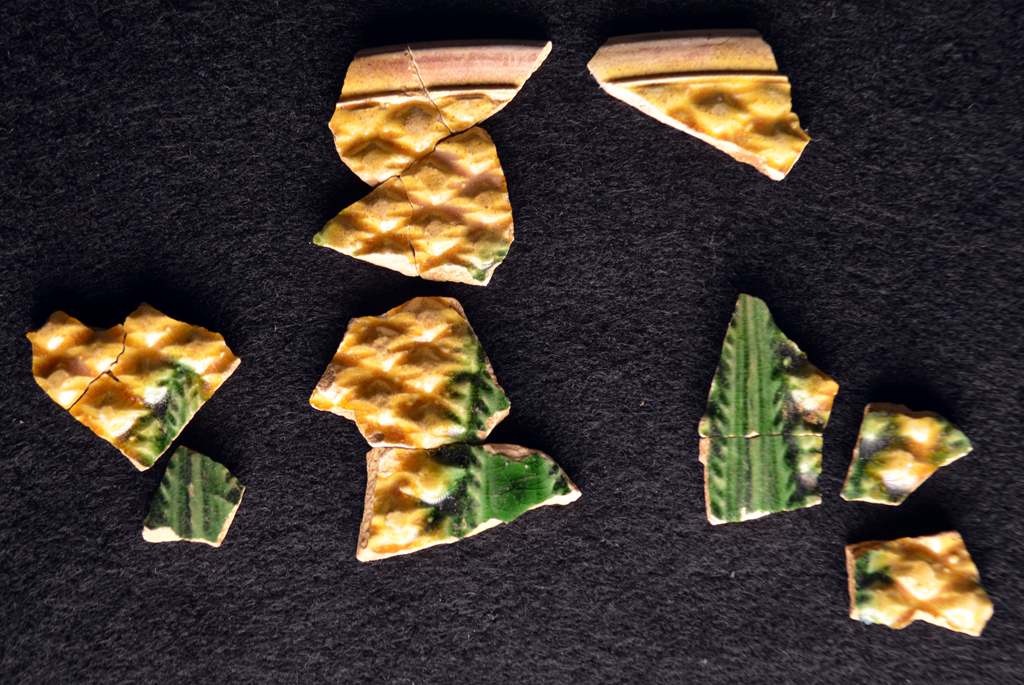
    Mary seemed to prefer the pineapple form and owned at least one item, if not more, of this fruit-shaped tea equipage.  Her preference for the tropical fruit design was not unique.  In the 18th century, the pineapple was an incredibly sought after luxury item loaded with symbolism.  Today, many of us, especially along the East Coast, associate the pineapple with welcoming guests into our home and as a decoration for the holidays. Colonial Americans considered it a Christian symbol as well as a display of status. They readily incorporated it into the architecture of their houses, decorated room interiors with the motif, and served food and beverages out of pineapple-shaped objects.  These were all cheaper options than displaying an actual pineapple, which was well outside the price range of the average colonial American. In fact, there are accounts of people actually renting a real pineapple for a party rather than purchasing one outright.  Rented fruit!  Let that sink in for a second.

    Returning to Mary’s ceramic pineapple, which is represented archaeologically by a dozen or so sherds.  It is almost certainly some type of tea equipage, although we are not exactly

    vegetable-ware-sherds
    Vegetable ware sherds excavated at George Washington’s Ferry Farm.

    sure which tea vessel it may be.  The pineapple color and texture are unmistakable but we’ve yet to identify the specific object.  A number of forms have been ruled out. It is not a tea or coffee pot because it appears to be relatively squat with a straight or very gently sloping body and a wide rim.  What’s especially odd about this particular vegetable ware vessel is that the rim is unglazed.  This would seem to suggest that it sported a lid of some kind or perhaps endured a defect during firing.  Hopefully more of the vessel will come to light, we’ll be able to answer the question, and proudly display pineapple teaware in the newly recreated Washington house!

    Mara Kaktins, Archaeologist
    Ceramics & Glass Specialist

  • Tales of a Patch Stand and a Porringer

    For the past year or so my focus here at George Washington’s Ferry Farm has been determining what types of ceramics were owned by the Washington family. Once we have this information we want to acquire accurate examples to place in the reconstructed house for all to see.  From door hardware to teacups, most of the details of the house will be informed by archaeology or historic documents.  If a visitor asks “Why do you have these plates on the table?”, we can say “That’s an excellent question!  Because we’ve dug up pieces of it right over here!”  Our most recent focus has been on the white salt glazed stonewares, which have been featured in previous blog posts.  In this post, we talk about fragments that have been identified as a patch stand and a porringer.

    First of all, identifying whole vessels from tiny sherds involves a lot of research.  This is made all the more difficult when you’re working with a ware-type such as white salt glazed that is defined by its plain white color.  So, it’s always a thrilling moment when you’re paging through a huge book with a tiny but distinctive fragment of pottery in your hand and you manage to spot the fragment’s whole object.

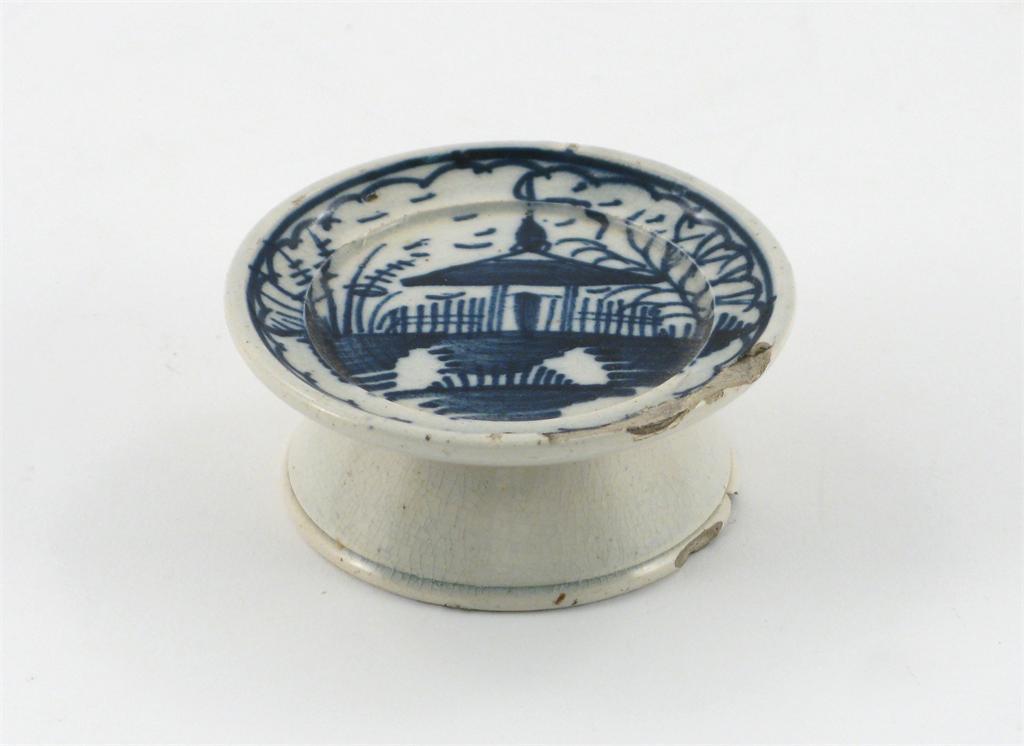
    My most recent ‘Eureka!’ moment involved both a patch stand and a porringer.  You’ve likely never heard these terms but you may own modern day equivalents.  A patch stand is a teapot stand, designed to elevate a teapot, arguably the most important object in a tea set, above the other tea wares.  It also serves the practical purpose of keeping the hot pot off of the table surface.

    18th-century-patch-stand
    18th century pearlware blue and white patch stand. Credit: Woolley & Wallis.

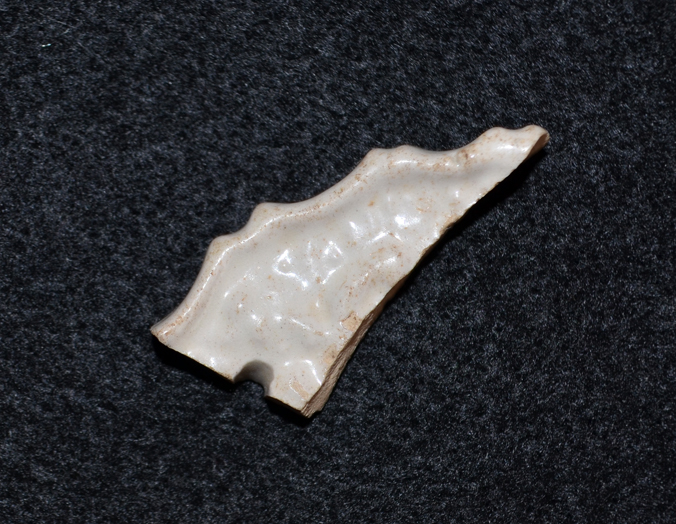
    At Ferry Farm, archaeologists found four small fragments from just such a patch stand.  The fragments all have evidence of ‘piercing’ or the cutting out of wet clay before it was fired to form a pattern.  The pattern created through piercing also promoted air circulation under the stand. Patch stands are not common in the archaeological record so we’re very happy to have identified the sherds. Now we’ll be able to furnish the new Washington house replica with a patch stand.

    The other vessel is a porringer. Although kind of a weird name, porringers were really handy and ubiquitous in every colonial household.  A porringer was simply a bowl with a handle for eating soups, porridges, stews, and the like.  You may have some equivalent in your house, like those oversized coffee mugs you can also use to eat soup or cereal.

    4x5 original
    A silver porringer dating from 1742 and made in Boston by Samuel Gray II. Credit: Los Angeles County Museum of Art.

    porringer-handle-fragment
    Fragment of a ceramic porringer handle excavated at Ferry Farm.

    Stay tuned and keep your eyes out for a sweet patch stand and a nifty porringer once the Washington house is finished!

    Mara Kaktins, Archaeologist
    Ceramics & Glass Specialist

  • Ten Cool But Rarely-Exhibited Artifacts Found at Ferry Farm

    When you enter a museum you’re surrounded by cool stuff.  Be it paintings, fossils, or ancient artifacts, they’re all special items that you’d be hard pressed to find elsewhere.  But what if I told you that the cool objects you see on display in a museum are a mere fraction of what most museums actually have in their collections?  There is just never enough room, even for the biggest museums, to display everything.  Additionally, some items are just too delicate to make available to the public.  This is one of the reasons I love my job.  My fellow archaeologists and I get a daily backstage pass to all the incredibly cool things excavated at George Washington’s Ferry Farm.  Here’s our list of “Ten Cool But Rarely-Exhibited Artifacts Found at Ferry Farm.” Be sure to click on any of the photos for more detailed views of the artifacts.

    Wine Bottle Seal
    wine-bottle-seal
    Starting in the 17th century if you were a wealthy gentleman or tavern owner chances are you ordered at least a few custom wine bottles complete with your personal seal.  The seals were stamped in various ways, such as with names, initials, symbols, crests, and dates.  Archaeologists love them because they’re ‘talky,’ meaning the artifact yields lots of information.  A fragmentary bottle seal was found here in 2004 and bears the incomplete name of its owner. The letters visible are either a capital “I” or “J” (the English used the letter I for J), and below that are the letters “-bin”.   These few letters might refer to someone in the Corbin family, an extensive Virginia family with local ties. With a little investigation, perhaps we can flush out who was the mystery guest that brought his own bottle of wine for a visit to Ferry Farm!

    Lead Whistle
    lead-whistle
    Instruments and toys tend to grab our imagination because they make us think about who used them and how the object got lost to time and archaeology.  In our collection we have a simple lead whistle, measuring 1 7/8” long and 3/8” in diameter, with “U.S.A.” stamped on the side.  It’s cheaply made out of lead, which was a very inexpensive material that has, for obvious reasons, been phased out of the toy industry.  In the “Good Ol’ Days”, no one thought twice about making an instrument you put in your mouth out of lead.  Maybe it’s a good thing that the person who owned the whistle lost it.

    Chunkey Stone
    chunkey-stone
    Fun to say.  Fun to play.  Basically a prehistoric rock doughnut, this hand-ground stone was used in a Mississippian Indian game called “Chunkey.”  Warriors rolled disc-shaped stones across the ground and threw spears as close to the stone as possible.  Similar to the Italian game of bocce, but unlike the Italians who threw wooden balls, Chunkey players threw spears, which is pretty awesome.  It’s a bit of a mystery as to how it got to Ferry Farm because there is no evidence that Chunkey was played in eastern Virginia, however some of these gaming stones have been excavated in Maryland and Northern Virginia.   It is also possible that one of Ferry Farm’s colonial inhabitants collected this exotic looking artifact for their cabinet of curiosities.

    “Joseph” bottle fragment
    joseph-bottle-fragment
    Normally broken bottle glass would have trouble finding its way onto any top ten list, but this fragment is one of a kind.  Its owner inscribed his name “Joseph” and the date “174?” into the body of the bottle. That’s not an easy or common thing to do.  The inscription is carved in an elegant and beautiful form indicating a gentry status for its owner.  While no occupant of Ferry Farm was named Joseph, Mary Ball Washington’s older brother bore that name.

    Joseph Ball, though living in England, was heavily involved with Ferry Farm.  He absentee owned and operated a neighboring plantation.  Joseph was lavish in both his gifts and advice to the Washingtons.  He gave Betty, George’s sister, a beautiful silver tea set just before she married.  He offered Mary advice on how to keep George out of the Royal Navy when a plan was hatched to put the then 13-year-old onboard a ship. And maybe, just maybe, he sent over a special bottle of wine with his name engraved on it for the Washington family.

    Lead Toy Hatchet
    toy-hatchet
    More lead toys?  Yep.  This little beauty has special significance to Ferry Farm because of the cherry tree myth.  The 3-inch lead hatchet appears to be a souvenir made during the 20th century, possibly dropped during 1932’s anniversary celebration of George Washington’s birth.  Keepsakes associated with George and the cherry tree abound in Fredericksburg.  Previous private owners of Ferry Farm were known to capitalize on the history of the property, often selling fragments of the ‘original cherry tree’ and cherry seeds to visitors. This hatchet is an obvious symbol recalling the cherry tree story that is so closely associated with Washington’s childhood.

    Milk Glass Darning Egg
    darning-egg
    Recovered completely intact from an old burrow belonging to a groundhog, this artifact had multiple uses on a 19th and 20th century homestead.  The glass egg was a darning aid used to fill out a sock while it was repaired or could be placed in a henhouse to encourage the ladies to lay eggs in a particular spot. There is also a persistent myth that these eggs were used to kill snakes. The snake would eat the glass egg, it was believed, which would then shatter inside them.  This line of reasoning ignores the fact that snakes hunt by detecting chemical signatures of their prey and that snakes can’t really see the egg-like shape of our artifact because of their poor vision.  But it’s a story that highlights the mythology that surrounds some objects once they fade into obscurity.

    Tambour Hook
    tambour-hook
    The tambour hook falls into the category of artifacts that are a little too fragile to display.  Made of carved bone and metal, this exceptional object was used by a gentlewoman, probably George’s sister Betty, to adorn fabric with elaborate embroidery.  Recovered from the bottom-most soil level of the Washingtons’ root cellar where it was deposited sometime between 1741 and 1760, the carved designs that cover the bone handle feature a parrot, leaves, flowing vines, and numerous flowers and represent some of the most popular embroidery themes of the time.  This hook helps demonstrates the fashionability of the Washington women, which contradicts the portrait painted by many modern biographers.

    Pewter Teaspoon with Betty Washington’s Initials
    teaspoon-fragment-with-betty-initials-1
    Betty had some of the coolest artifacts and this one literally has her name on it.  It was customary for tea to be dispensed by the wife or by the oldest daughter in the house and Betty, as the only daughter, was clearly groomed in this ceremony as is evidenced by her own teaspoons.  Pewter, an alloy containing a number of different metals including lead (yes, more lead), wasn’t as fancy as silver but the fact that it’s customized makes it special.  This tea set appears to be part of a “practice” set that Betty used before her uncle gave her a silver tea set  around her 16th birthday.

    Bartmann or Bellarmine Jug/Bottle
    bartmann-bottle-1
    Who doesn’t want to drink out of a jug exhibiting the large face of a crazy bearded man?  I do, and if you were a colonist in the 1700s and early 1800s, you did as well.  Originating in Germany, these face jugs depicted a ‘wild man’ of the woods character popular in Eastern European folklore. By the time these vessels made it to the English market that aspect seems to have been forgotten.  Subsequently, the English created their own story behind the bearded man revolving around their dislike for a similarly-bearded and unpopular anti-protestant cardinal by the name of Robert Bellarmine.  For more about this artifact, read this blog post.

    Repaired Creamware Cherry and Flower Punchbowl
    punchbowl
    This artifact is cool for so many reasons.  A beautiful bowl adorned with graceful hand painted flowers and cherries (remember, we love those here), it also exhibits a complicated and tortured use-life while highlighting the importance of punch drinking in the eighteenth century.  Written about here, this bowl was owned by Mary Washington, George’s mother.  Punch bowls vary in size and this one would have been called a ‘sneaker’, which denotes a bowl small enough for guests to take turns sipping out of it before passing it to the next person.  Mary clearly loved the bowl so much that, when it broke sometime between 1765 and 1772, she had it repaired with glue.  Although the hide or cheese-based glue used would not have resulted in a vessel capable of holding punch again, she could display it on her mantle or in her china cabinet…Oh, and the glaze? It has lead in it.

    Laura Galke, Site Director/Small Finds Analyst
    Judy Jobrack, Assistant Lab Supervisor
    Mara Kaktins, Ceramics & Glass Specialist
    Melanie Marquis, Lab Supervisor
    Dave Muraca, Director of Archaeology