Lives and Legacies

Author: ferryfarmandkenmore

  • “Mark’d with Gunpowder”: Tattoos in Early America

    Recently, I came across an interesting notice in an early edition of the Virginia Gazette.  On June 9, 1738, Augustine Washington, George Washington’s father, placed a notice in the newspaper about one of his indentured servants running away.  The notice read…

    “RAN away from Capt. McCarty’s Plantation, on Pope’s Creek, in Westmoreland County, a Servant Man belonging to me the Subscriber, in Prince William County; his Christian Name is John, but Sirname [sic] forgot, is pretty tall, a Bricklayer by Trade, and is a Kentishman; he came to Patowmack, in the Forward, Capt. Major, last Year; is suppos’d to have the Figure of our Saviour mark’d with Gunpowder on one of his Arms. He went away about the 20th of April last, in Company with three other Servants…”

    The notice then described the three other indentured servants, ostensibly belonging to McCarty. First, sailor Richard Martin was “a middle siz’d Man, fresh colour’d, and 22 Years of Age.” Next, tailor Edward Ormsby was “a small thin Fellow, of a swarthy Complexion . . . has a Hesitation or Stammering in his Speech, and being an Irishman, has a good deal of the Brogue.” Finally, carpenter Richard Kibble was “a middle siz’d young Fellow, has several Marks made with Gunpowder on his Arms, but particularly one on his Breast, being the Figures of a Woman and a Cherry Tree.”

    I found the inclusion of the tattoos’ descriptions fascinating and the spark to many questions. How common was tattooing in Colonial America?  Who was most likely to have tattoos? What kind were popular? Where were they placed on the body? And finally, why did colonial people choose to permanently mark their bodies in this fashion?

    Notice of runaway indentured servants placed by Augustine Washington in the Virginia Gazette on June 9, 1738.

    Tattoos in Early America

    Tattooing is as old as the human race itself.  Anthropologists place its origins sometime in the pre-historic Paleolithic era or “before the wide dispersal of man.”[1] Tattooing has been practiced in early societies and indigenous cultures for thousands of years. 

    Unfortunately, documentation of tattoos from the 18th century is scarce, and finding information about tattooing in early America is nearly impossible.  Two records I did find helpful were the Seamen’s Protection Certificate Applications (SPC-A) and various runaway indentured servant and convict notices in the Virginia Gazette.

    Sailors

    The SPC-A were applications made by seamen under the Act for Relief and Protection of American Seamen of 1796.  The act was passed to protect American seamen from impressment into the British Royal Navy in the years that led up to the War of 1812.  Each sailor who served on a United States vessel applied for a certificate of protection, which included a detailed physical description that encompassed any tattoos. 

    The applications range from sailors of 12-years-old with one tattoo to 59-years-old with several detailed designs.  Tattoos on the “17 and under” tended to be pretty standard symbols like personal initials, initials of loved ones, or small maritime and religious marks like anchors and crucifixes.  These were boys probably just starting their careers as sailors and had not yet had the time or the travels to collect a more complex range of tattoos.

    For the more seasoned sailor, initials, names, words, and letters seemed to be the most common and sought after tattoos with 38% of all reported from 1796-1818 falling into this category.[2]  Second most common was the 21% of sailors who reported some type of sea-themed tattoo from simple anchors and compasses to more complex ships, mermaids, and sea creatures. 

    Surprisingly, coming in at 8% were symbols of love with around 200 tattoos.  These included but were not limited to hearts, linked hearts, hearts and darts, hearts and arrows, hearts with initials and dates, bleeding hearts, and hearts with doves.[3]  Patriotic and political tattoos were prevalent as well, particularly with men born in or before 1776.  These designs included flags, eagles, clusters of stars, “1776”, and words such as “Independence” and “Liberty”.[4]  Religious symbols represented around 8% of tattoos and another 4% were miscellaneous depictions of people and animals or other crude drawings. 

    Around 95% of tattoos were found on sailors’ hands or arms.  This became much less common during the 20th century when areas like the chest, shoulders, back, and legs grew in popularity, providing a bigger canvas while also being easier to cover.

    Indentured Servants & Convicts

    Another source for my survey of colonial tattoo use was newspaper notices alerting the populace to runaway indentured servants and wayward convicts.  Fifteen different notices examined from the Virginia Gazette between 1737 and 1768 described a runaway’s tattoos.  For these 14 men and one woman, the tattoos ranged from initials made with gunpowder to a complicated floral design in blue ink. 

    The woman, a “convict servant” named Winnifred Thomas, was described as “mark’d on the Inside of her Right Arm, with Gun-powder, W.T. and the Date of the Year underneath.”  It is a fair assumption that the tattooed W.T. were her initials and may have been done for identification purposes.

    Of the 14 men, 11 had lettering of some sort, whether their initials or the name of a loved one. Convict servant William Roberts, for example, had tattooed on his arm the name “Mary Roberts” along with “Letters on one of his Hands, mark’d with Gun-powder, and on one of his Arms a darted Heart.”

    Six of the men had designs ranging from floral patterns to bleeding hearts to religious iconography.  Christopher Lewellen, a runaway indentured servant, had “a great many letters and Flowers mark’d on his Arms in Blue, with the letters C L on one of his Hands, very dull.” John Peters, also an indentured servant, was “mark’d on the middle of his Breast, with the Picture of a Woman and several Children before her” plus “on one Arm, a crucifix,” and “on the other, the Jerusalem Arms.”

    The placement of the tattoos tended to be on the arms, wrists, or hands with all 15 having at least one mark on these extremities.  Only two men were described as having marks on their chest in addition to their arms.
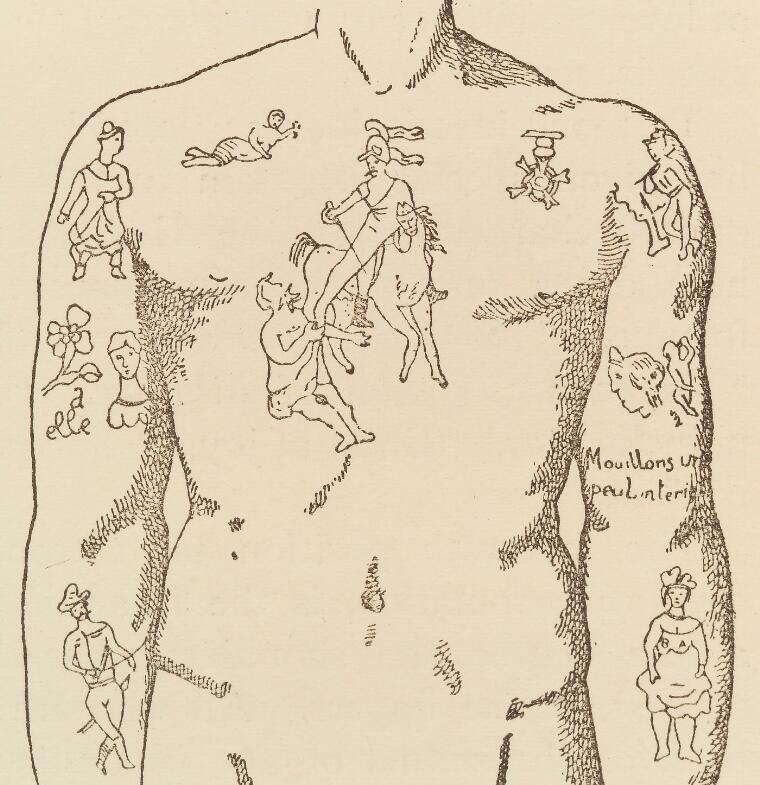
    A French glazier, thief, deserter from army. The chief figure tattooed on his chest is St. George. Credit: Public Domain / Wellcome Collection

    Conclusions

    There is minimal information available that documents tattooing and tattoos in Colonial America.  What information we can glimpse is from records that were mainly descriptive markers of the subject.  The personal history and individual intent of the tattoos are lost to time. 

    We can surmise from the data that the people who marked their skin with gunpowder or ink tended to be those on the margins of society.  At the time, these were people deemed to be in the lower rungs of society or people in positions of servitude.  They could mark their bodies without their social position being questioned because they were already positioned at the bottom. 

    Why might they mark themselves in society when already marginalized? There are a few possible reasons.  First, the tattoos could have been forced upon them.   It was common for soldiers to get tattoos as a form of identification.  It would have been a convenient and permanent way to mark convicts, indentured servants, enslaved workers, and others in servitude, hindering potential escapes and creating easier captures. 

    Second, tattoos created comradery and a sense of belonging, particularly for the sailors.  It became sort of rite of passage for sailors to tattoo their bodies with marks of their trade and thereby distinguishing themselves from “landlubbers.” 

    Lastly, people got tattooed for sentimental reasons, which is similar to the primary reason people arguably get tattooed today.  Tattoos reminded them of their family, faith, and history.  It was a way to permanently remember important events and people in their lives.

    We do not know if Augustine Washington’s runaway notice in the Virginia Gazette resulted in the return of John or any of the other three indentured servants. He offered 5 pounds reward for John’s return. The notice reports that “They went away from Capt. Aylett’s Landing, on Patowmack, in a small Boat and are suppos’d to be gone towards the Eastern-Shore or North-Carolina.” Another of the runaways in one the other notices examined was believed to be headed to North Carolina as well.  The wild, sparsely-populated swamps, tidal marshes, and barrier islands of both regions drew many of the 18th century’s marginalized people seeking to create a new, freer life.  Many likely marked in some way by tattoos.

    Heather Baldus
    Collections Manager


    [1] Ira Dye, “The Tattoos of Early American Seafarers, 1796-1818” Proceedings of the American Philosophical Society, Vol. 133, No. 4 (Dec., 1989), 520; Petar N. Zidarov, “The Antiquity of Tattooing in Southeastern Europe,” in Ancient Ink: The Archaeology of Tattooing, ed. Lars Krutak and Aaron Deter-Wolf (Seattle: University of Washington Press, 2017), 137-149.

    [2] Dye, 544.

    [3] Ibid.

    [4] Dye, 541.

  • A Day at the Dig at George Washington’s Ferry Farm [Video]

    In this video, spend a day with the archaeologists digging at George Washington’s Ferry Farm this summer.
  • The Flora and Fauna of Ferry Farm [Photos]

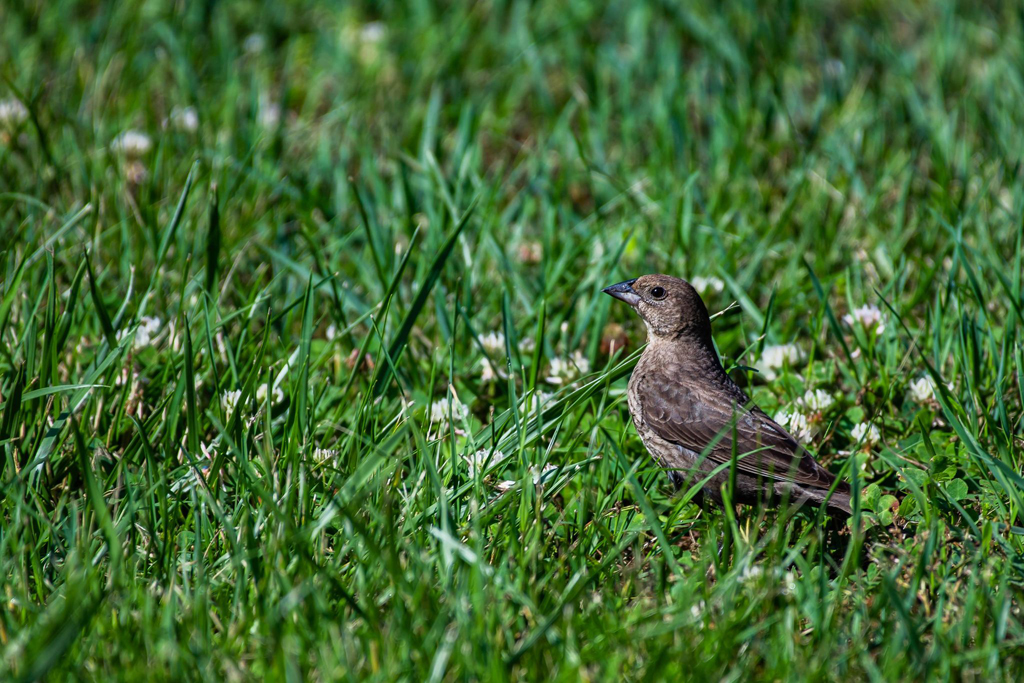
    On a recent summer Saturday morning, a group of photographers came to George Washington’s Ferry Farm for a hike on the trails around the property. A lot of wildlife call Ferry Farm home, and we hoped to capture some of it. We saw many birds, a turtle, and a rabbit eating breakfast in the grass as well as plenty of beautiful flowers. Unfortunately, many animals – including the doe and fawn that have been spotted frequently on the property this year – seemed shy that morning, but we are planning another wild photography session at Ferry Farm in the fall.

    If you’d like to explore wilds of Ferry Farm yourself, you can purchase a self-guided grounds only tour upon arrival at the Ferry Farm Visitor Center. Ferry Farm is currently open from 10 a.m. to 5 p.m., Monday-Saturday and from Noon to 5 p.m., Sunday.

    Jessica Burger
    Manager of Marketing, Communications, and Information Technology

  • We’re Still Digging!: An Update on 2021’s Archaeological Excavation at Ferry Farm [Photos]

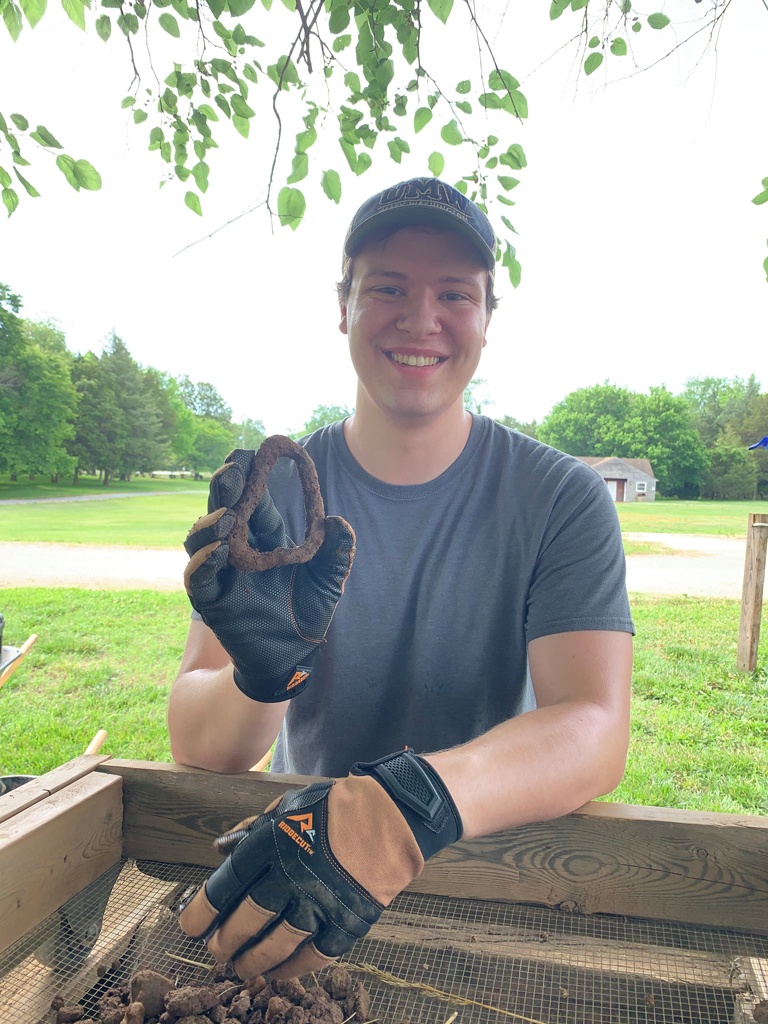
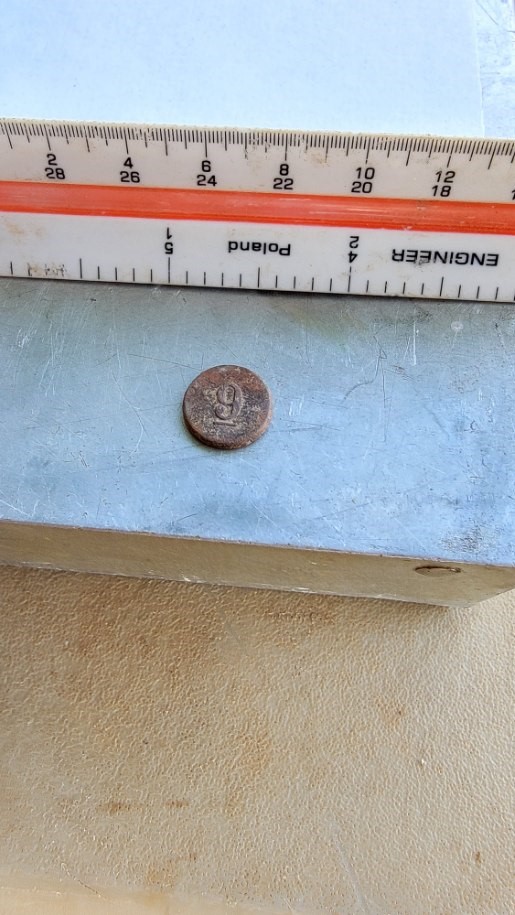
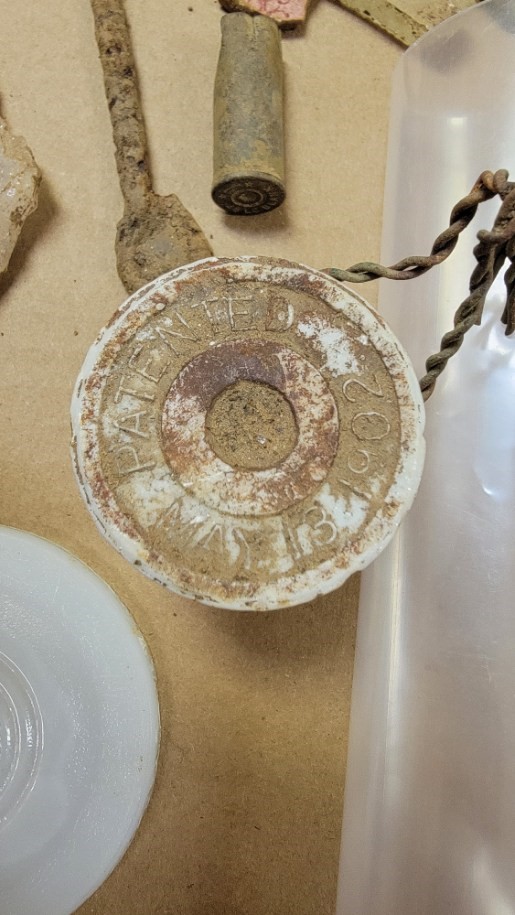
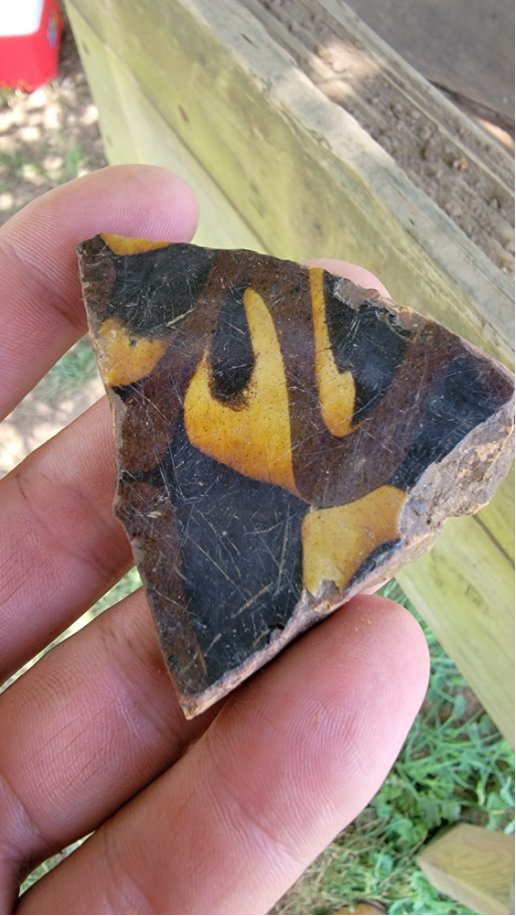
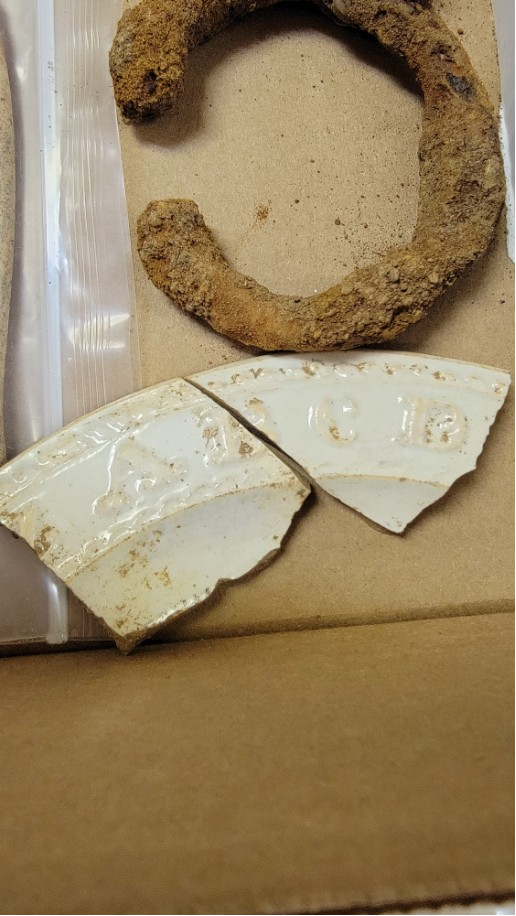
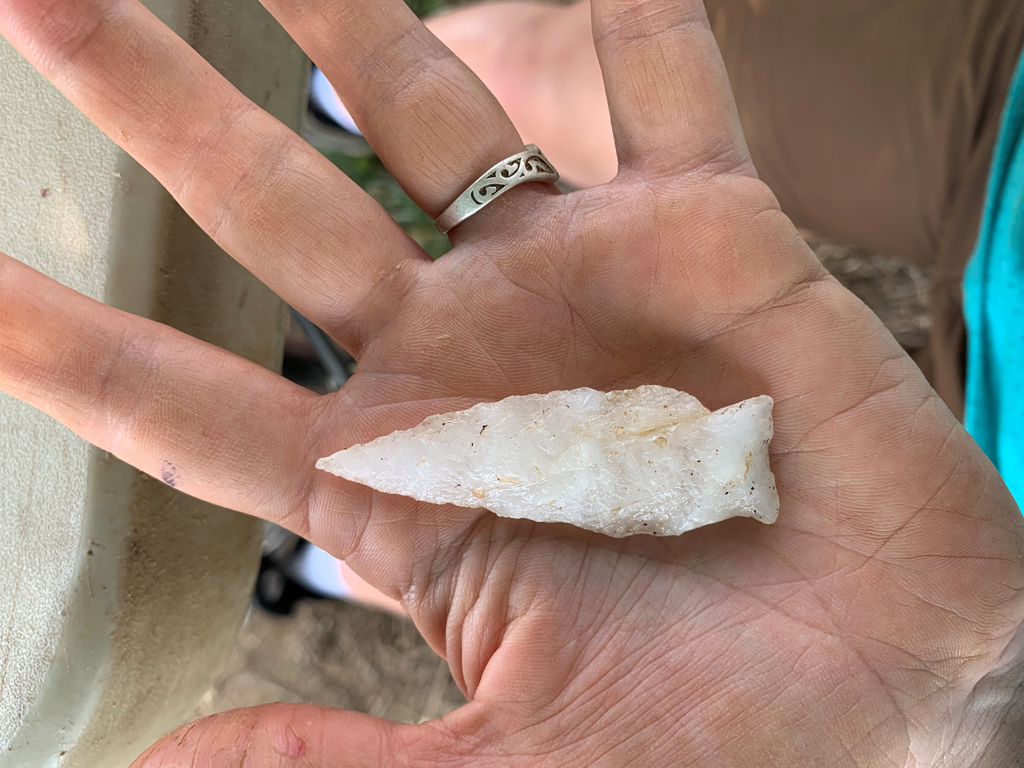
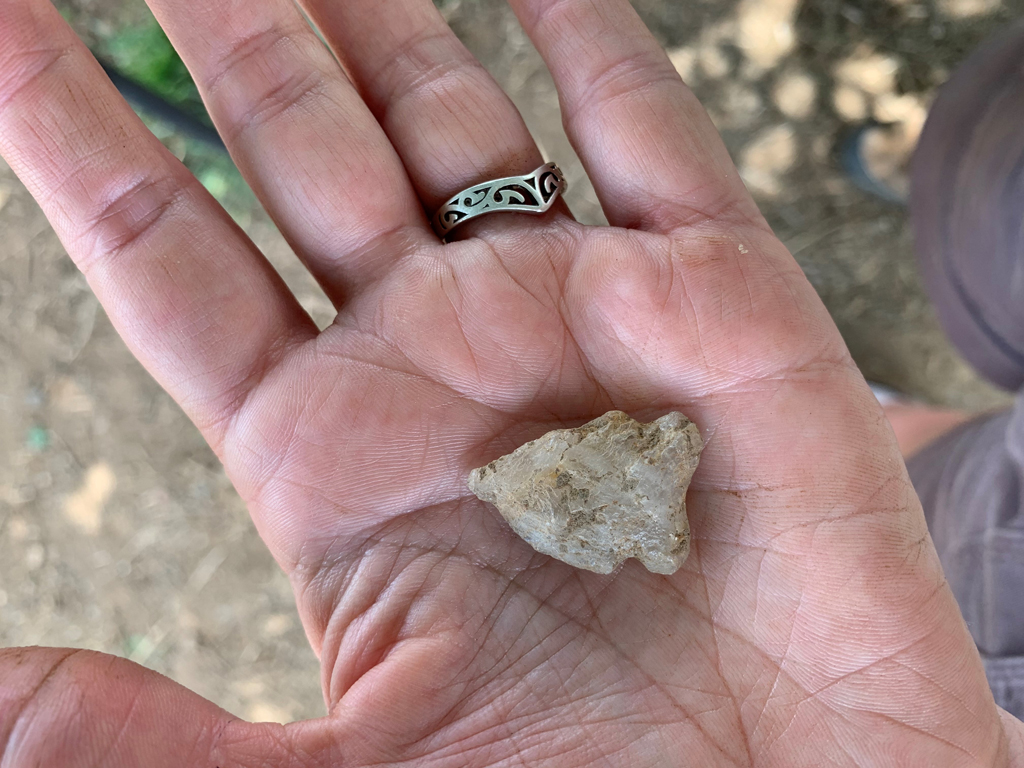
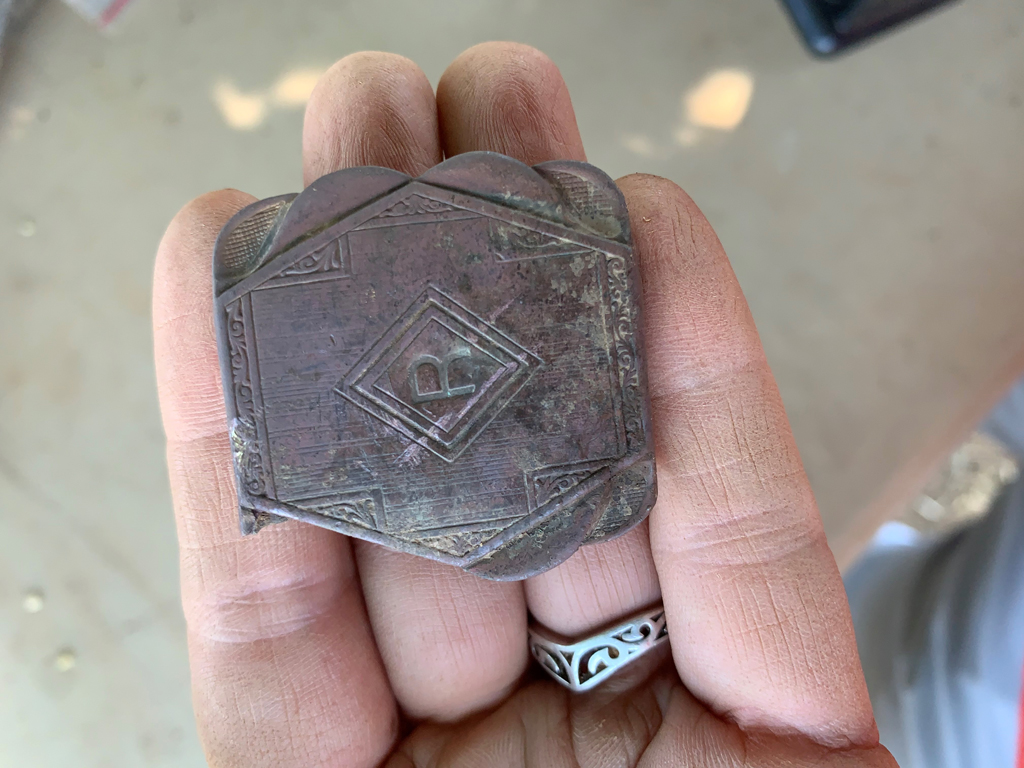
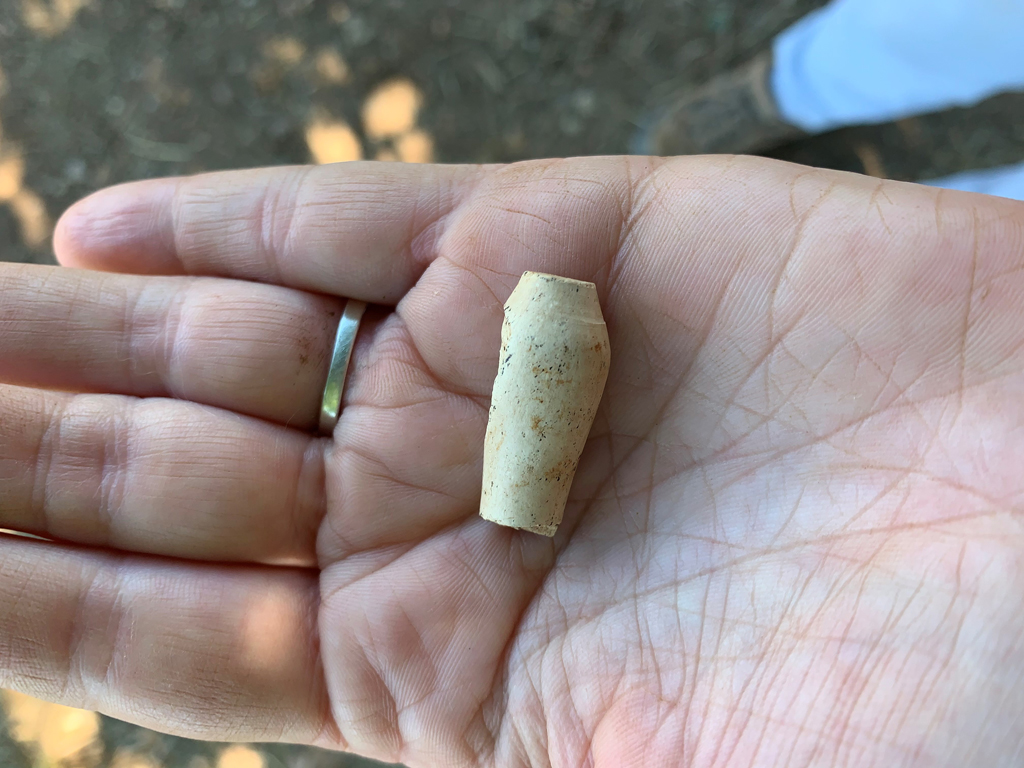
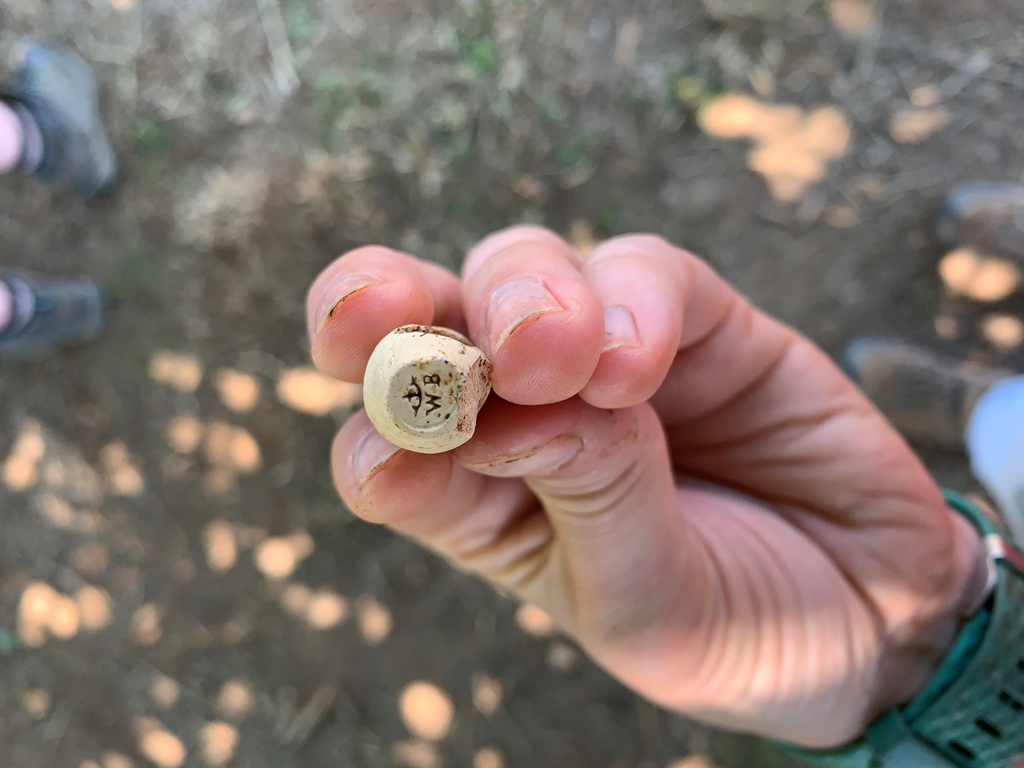
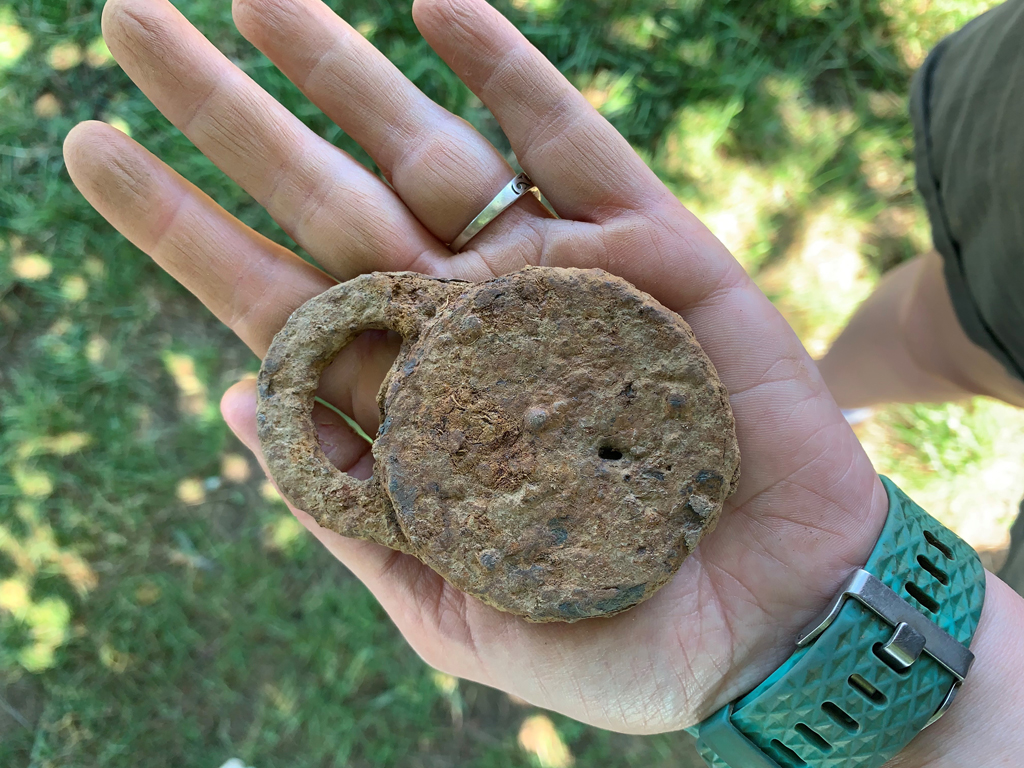
    The 2021 archaeological dig season at George Washington’s Ferry Farm is over two-thirds complete. Here’s a collection of photos taken in the field of a few artifacts discovered thus far.  You can read an overview of our expectations and goals for this year’s dig here.  Visitors can ask archaeologists questions and observe their work Monday through Friday at Ferry Farm. The dig continues until August 20.

    Elyse Adams, Archaeologist
    Co-Field Director

  • National Parks, National Historic Landmarks, and the National Register of Historic Places, Oh My!

    Throughout my time as a museum professional, I have worked at several different museums each with different classifications, rules, and operating procedures. Before entering the museum world, I used to think that most museums operated in a similar way. However, that could not be further from the truth. One of the most common questions I have gotten since leaving the National Park Service for the private sector has been some variation of: “Why can’t I use my National Park Pass here?” It is an understandable question that I am here to answer.

    Museums can be categorized by many different subjects. For example, there are art museums, history museums, science museums, zoos, gardens and more! There are also different categories on how museums operate, fundraise, and are preserved. For example, George Washington’s Ferry Farm and Historic Kenmore are both historic house museums. They are owned by The George Washington Foundation, a private, non-profit organization that is charged with caring for the properties. Ferry Farm and Kenmore are funded by your donations, admission fees, and fundraising events. However, the Washington Monument in Washington, D.C. is a National Park Service (NPS) property, operated by the government and funded, in part, with tax-payer dollars.

    Aerial view of the Washington Monument

    In addition to the NPS sites, the United States government also created the National Register of Historic Places. The National Register of Historic Places is a list of places that are worthy of preservation but are not necessarily and, in fact, are not usually operated by the U.S. government. Sites on this list are able to apply for certain grants and funding through the NPS. They also receive certain tax breaks and can work towards becoming a National Park Site. Fun fact, there are almost 100,000 properties listed on the National Register of Historic Places!

    Of those 100,000 National Register properties, some also have the distinction of being National Historic Landmarks. Landmarks are sites that are again, not necessarily government-run, but have been recognized by the federal government as being nationally significant, meaning they correlate to a significant part of our nation’s history. These properties are also able to apply for certain grants and tax breaks. Not all properties on the National Register of Historic Places and not all properties listed as National Historic Landmarks are museums and not all of them are open for public visitation. However, being on these lists adds a layer of protection should the owners of that property need assistance in preserving the site.

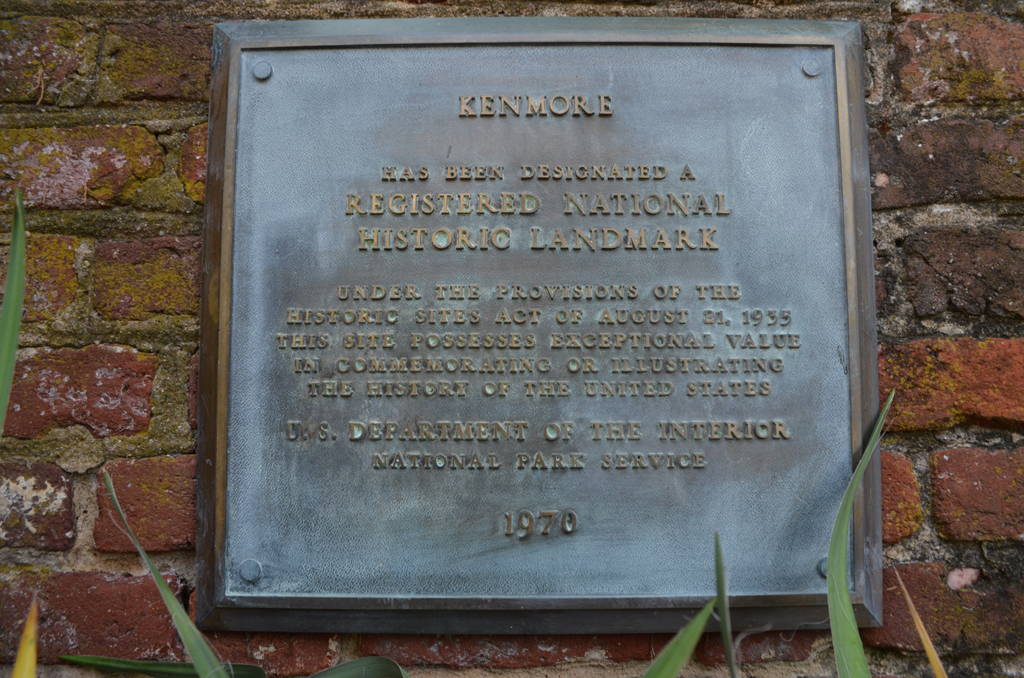
    Marker noting Historic Kenmore’s designation as a National Historic Landmark in 1970.
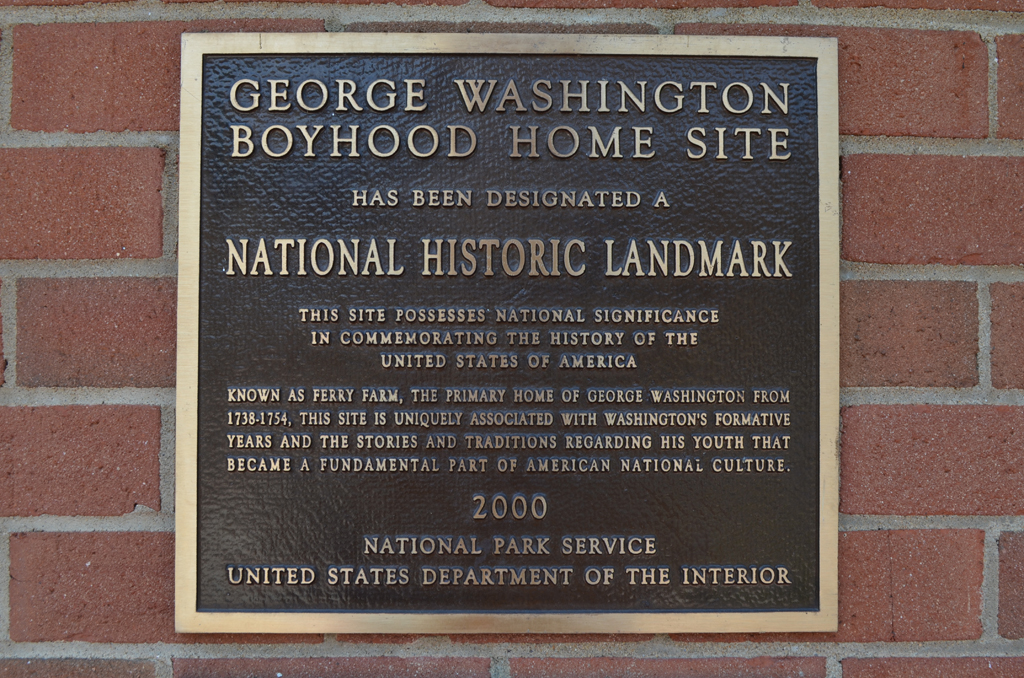
    Marker noting George Washington Ferry Farm’s designation as a National Historic Landmark in 2000.

    Along with National Register and National Historic Landmark status, there are also several types of Easements that can be put in place to protect historic sites. Two types of easements often used in the museum world are Conservation Easements and Preservation Easements. These easements are agreements between the government and a property’s stewardship organization that allow for the government to step in and take over the operation of a property if the private owners are not caring for it properly or it becomes endangered in some fashion. Easements also allow the government to have approval over major changes to the properties to ensure they maintain their historic or natural significance. Private easements can also be created between two parties such as a historic site and a local conservation organization to protect the natural areas of a historic site.

    The George Washington Foundation is a 503(c) (3) non-profit. This designation gives our organization certain tax exemptions. We are a private foundation that operates the two historic sites. These sites are not National Park Service sites and do not receive direct taxpayer funding from local, state, or federal governments. Both Historic Kenmore and George Washington’s Ferry Farm are on the National Register of Historic Places and also are both National Historic Landmarks. Additionally, Ferry Farm is under a conservation easement with the National Park Service. All of this means that while we still operate as a private foundation, there are several layers of protection to ensure these treasured historic properties are preserved and protected for decades to come.

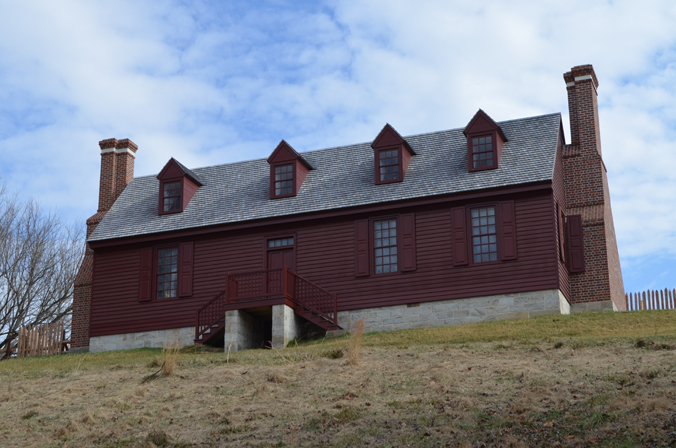
    Ferry Farm
    Kenmore

    As a private organization, we rely on admission fees and your generous donations to fund our sites. We are not part of any National Park or state park pass system. Your ticket purchase helps preserve and promote the legacies of these two sites. Perhaps that is why we are so appreciative for each and every guest who visits. If you would like to support The George Washington Foundation, please consider a donation. We hope to see you at the National Historic Landmarks of Historic Kenmore and George Washington’s Ferry Farm soon!

    Elizabeth Hosier
    Manager of Interpretation and Visitor Services

  • The Fifes & Drums of York Town at George Washington’s Ferry Farm [Video]

    The Fifes & Drums of York Town played and marched today at George Washington’s Ferry Farm. The group will also perform on the lawn at Historic Kenmore this Sunday, June 27. There will be three 15 minute performances between 12:30pm and 1:30pm. No admission required, but we encourage you to make a day of it and purchase a guided tour of Historic Kenmore. Buy tour tickets at kenmore.org/visit-kenmore.

  • Liberty vs. The King: National Identities in Two Lewis Family Drinking Vessels

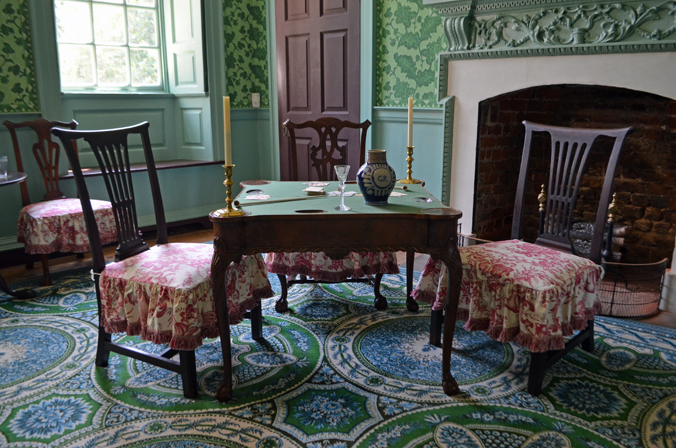
    Visitors to Kenmore’s Drawing Room may have noticed an unusual pairing of glassware and ceramic pieces displayed on the gaming table – a beautiful, air-twist stem wine glass sitting next to a Westerwald pottery jug. At first glance, this small vignette may simply appear to depict a wine jug at the ready, waiting to fill the glasses of those seated for the card game. But a closer inspection reveals that there’s more to the story.

    The gaming table in Historic Kenmore’s Drawing Room.
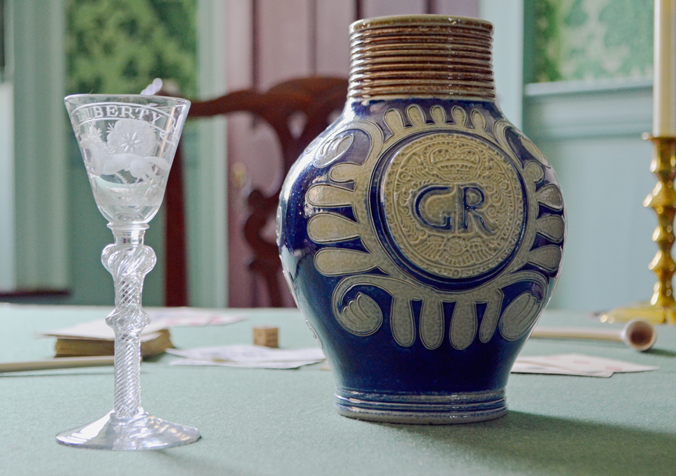
    Air-twist stem wine glass sitting next to a Westerwald pottery jug on the gaming table.

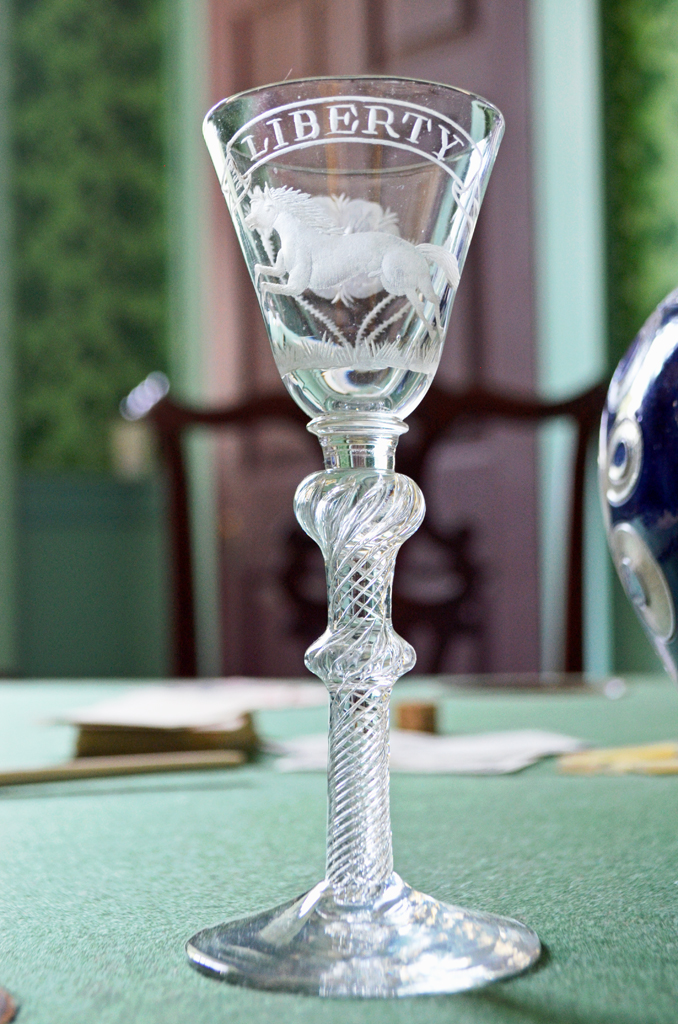
    In addition to its delicate air twists and balusters, the cup of the wine glass is etched with intricate designs. On one side, there’s a rose, and on the other is the word “Liberty.” The rose refers to the Scottish House of Stuart and their exiled claimant to the Scottish throne, the Bonnie Prince Charlie. The word “Liberty”, in this case, refers to the Jacobite Uprising of 1745 – 1746, in which the Scottish clans attempted to overthrow the English king and re-install the Bonnie Prince, thereby ending the English occupation of Scotland. The Uprising ended in a bloodbath for the Scottish forces at Culloden Moor, and the Bonnie Prince remained in exile for the rest of his life. The defeat at Culloden ushered in a period of extreme violence and repression of Scottish Highland culture known today as the Clearances. Thousands of Scots were forced from their homes and prosecuted in English courts for crimes against the Crown. Those found guilty were often sentenced to “transportation,” which meant they were crowded onto prison ships and sent to the American colonies.

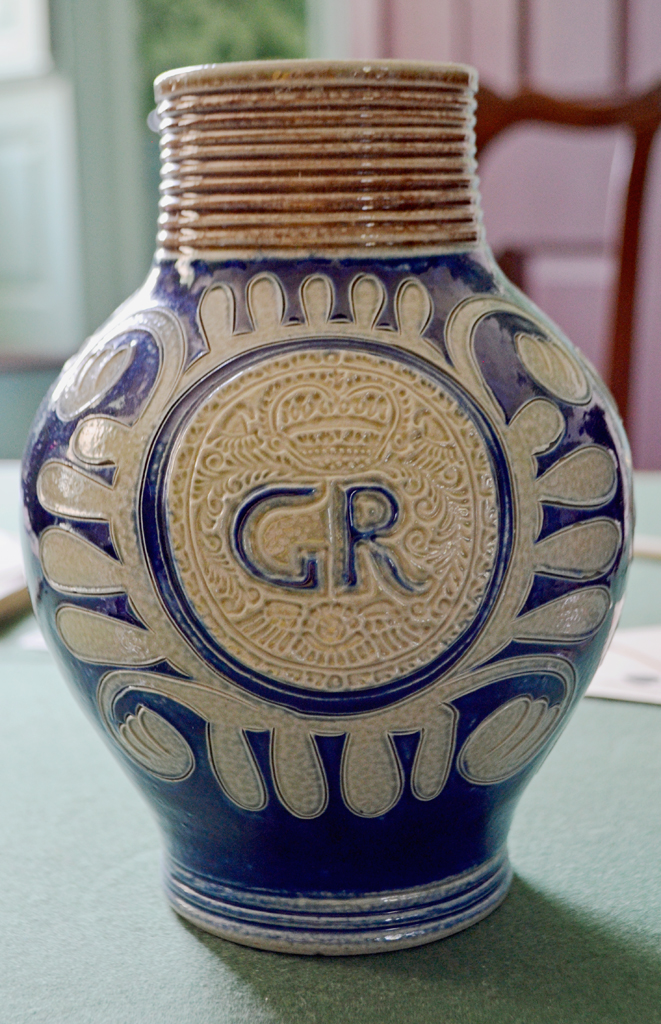
    The stoneware jug is decorated in typical Westerwald-style cobalt blue glaze patterns, with the addition of a sprigged central medallion bearing the letters “GR.” Those initials stand for Georgius Rex, the Latin for King George of Britain, probably George III in this case. Westerwald ceramics produced in what is now Germany for export to Britain in the 18th century were often decorated with the GR emblem in honor of King George. Most British households, including young George Washington’s home at Ferry Farm, would have had a piece or two exhibiting the GR motif.

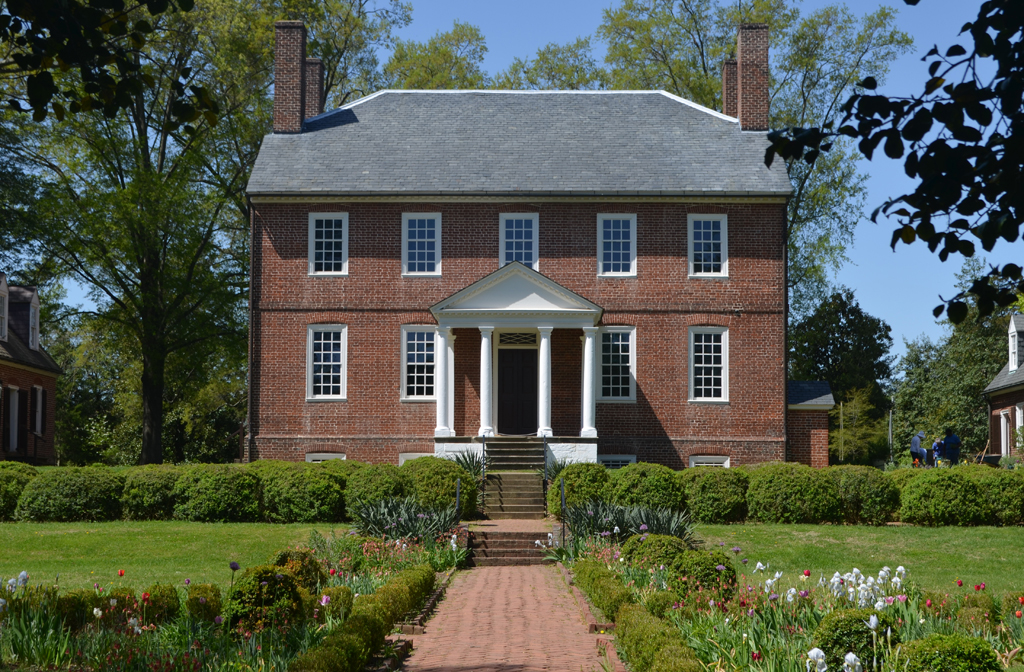
    Both items are included in Kenmore’s furnishings today because fragments of similar pieces were found archaeologically on the site during excavations in the 1990s, so we know that both were used by the Lewis family at very nearly the same time. The juxtaposition of their messages, though, illustrates what a very strange and confusing time the Lewis family were living in. Literally up until the very eve of the American Revolution, Fielding Lewis saw himself very much as a proper English subject. His business relied almost entirely on good relations with English counterparts. He built Kenmore to emulate in every way the proper English manor house, and apparently he owned ceramics that honored King George.

    Almost overnight, however, the Lewis’s world completely changed. They were no longer English subjects, but rather traitors to the Crown. Fielding’s income and business were gone, and his very English house was now a liability. Those transported Jacobites living in the American colonies, many of them neighbors to the Lewises like Hugh Mercer, were among those who advocated for war with Britain. The symbols and ideals of the Jacobite Uprising were adopted into the American revolutionary movement. And so our placement of the Liberty glass next to the GR jug on the gaming table is both a wink and a nod to the idea of rebellion hidden in plain sight, and a recognition of the complicated times in which the Lewis’s found themselves.

    Celebrate the 245th anniversary of liberty from the King during the Fourth of July at George Washington’s Ferry Farm from 10 a.m. to 4 p.m., Sunday, July 4, 2021! Tour the Washington house, learn about archaeology at Ferry Farm, enjoy a patriotic flag retirement ceremony at 1:00 p.m., interact with historic reenactors, listen to festive music, view living history demonstrations and theatre performances, make crafts, play games, and enjoy other activities for the whole family. $5.00 per car for a combined parking and event admission pass. Advance purchase of parking and event admission pass is strongly encouraged. Visit kenmore.org/events to learn more and purchase pass.

    Meghan Budinger
    Aldrich Director of Curatorial Operations

  • We’re Digging!: A Preview of 2021’s Archaeological Excavation at Ferry Farm

    Visitors to George Washington’s Ferry Farm will once again be able to meet and talk to our staff archaeologists as they work at our archaeological dig this summer. The dig opened this past Monday, June 7 and runs through Friday, August 20. Archaeologists dig Monday through Friday.

    Approximate location of the 2021 archaeological dig at Ferry Farm.

    The dig is located on the east side of the Washington house in the work yard.  The work yard is where the everyday activities associated with the running of an 18th-century household took place. These activities including food preparation, cooking and cleaning, washing laundry, animal husbandry, dairying, household storage and wig maintenance.  Eventually showing and interpreting these activities as well as incorporating our findings into Ferry Farm’s history are the reasons we dig.

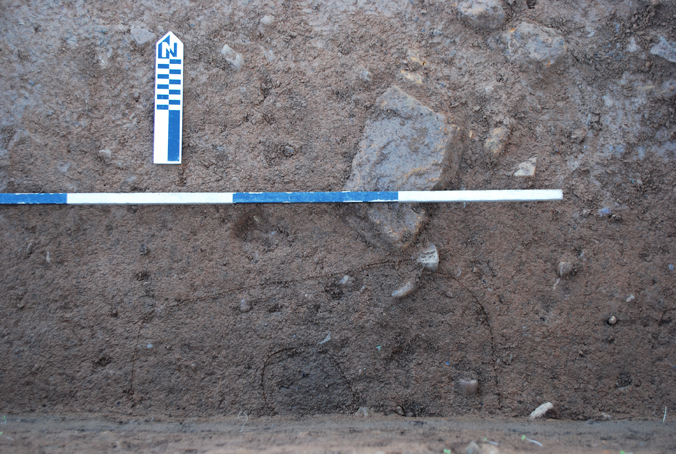
    We are looking for the remains of outbuildings in this area of the site.  Luckily for us, last fall we uncovered a large post mold and hole which we suspect is a structural part of one such outbuilding. This first week we are opening up multiple 5’x5’ units to the south of our posthole feature in anticipation of finding more of this structure.   

    Large post mold and hole located at the southern edge of the 2020 site.

    Our crew will consist of four paid interns in addition to Elyse Adams and myself as co-site directors.  COVID-19 has again eliminated the possibility of university archaeology students joining us for a six-week field school this year, but we hope they can finally return next year. 

    The 2021 dig will be located directly beneath our visitor’s feet in this photo.

    Over the next 12 weeks, we’ll post some of our more interesting discoveries during on Ferry Farm’s Facebook and Instagram so everyone can stay up-to-date our progress.  When you visit Ferry Farm, please stop by the excavation site to ask questions and watch us at work. We are happy to share our daily findings and explain the process of digging into the Washington family’s past!

    Judy Jobrack, Archaeologist
    Co-field Director

  • The Fossils of Ferry Farm

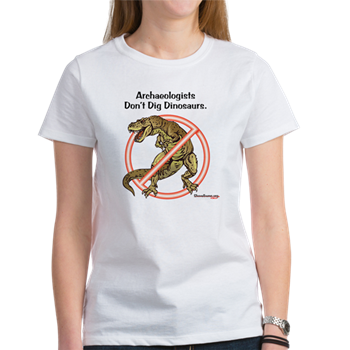
    Archaeologists have one pretty big hang up, and that is when people ask us if we dig for dinosaurs.  We’re so obsessed with making sure that people know we don’t dig dinosaurs that you can find shirts, coffee mugs, keychains, and other merchandise that all say “Archaeologists Don’t Dig Dinosaurs.” But we get it: dinosaurs and other prehistoric animals are super cool- just ask my 4-and-a-half-year-old son or my nine-year-old nephew.  Still, we archaeologists go to great lengths to emphasize that archaeology and paleontology are pretty different.  Archaeologists study historic and pre-historic human cultures by examining the artifacts they left behind.  Basically, we obsess over dead people’s broken stuff. Paleontologists, however, study ancient plants and animals using the fossil record.  Now, that being said, archaeologists do frequently happen to uncover fossils while excavating for artifacts. We’ve made our share of fossil finds while digging at George Washington’s Ferry Farm and we’re going to share some of those finds with you today.

    Archaeologists Don’t Dig Dinosaurs T-Shirt. Credit: cafepress

    First, it should be noted that what we call Virginia today looked a lot different when the creatures our fossil finds represent were alive.  During the Cretaceous and early Paleogene periods, which lasted from 145 to around 56 million years ago, much of this part of Virginia was at times completely underwater as part of the newly formed Atlantic Ocean, while inland areas were very swampy with high temperatures and humidity (Yes, even more so than today’s notorious Virginia climate. Back then, it got up to around 100 degrees most days).  Hence, most of the fossils we recover are from marine environments or swamps.

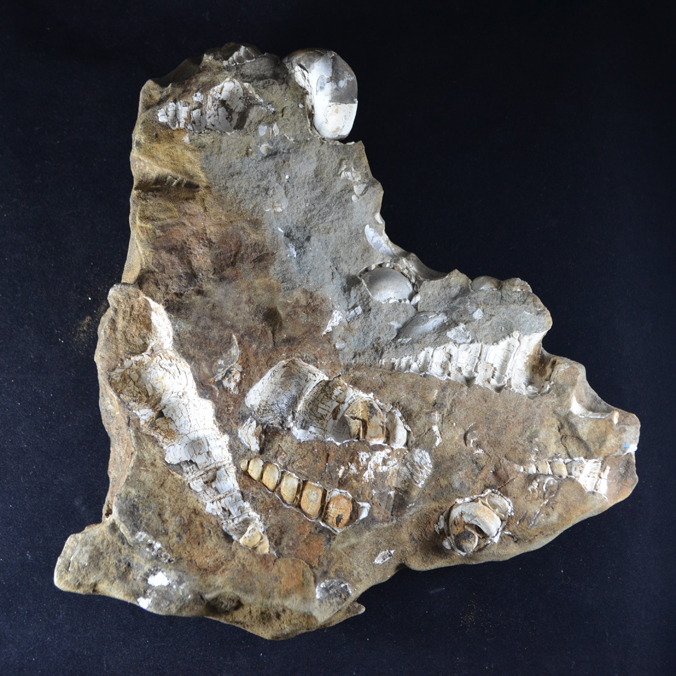
    Let’s start with one of my favorites: the turritella, a species of spiral-shaped gastropods or mollusks that still exist today. The turritella we find at Ferry Farm, however, are around 50 million years old.  We don’t usually find the shell, but rather the ‘cast’ which forms when sediment fills the inside of a dead mollusk’s shell and then turns to stone, leaving an impression of the inside of the animal.  The resulting fossil cast resembles a corkscrew.  They’re pretty common in this area.  In this picture, you can see a turritella that still has its shell and fragments of the interior case.  Usually they can be found in clusters, representing mass die-off events in which a lot of the turritella met their demise all at once.

    Conglomerate of turritella fossils.

    Bits of turritella excavated at Ferry Farm.

    Turritella casts from the author’s collection.

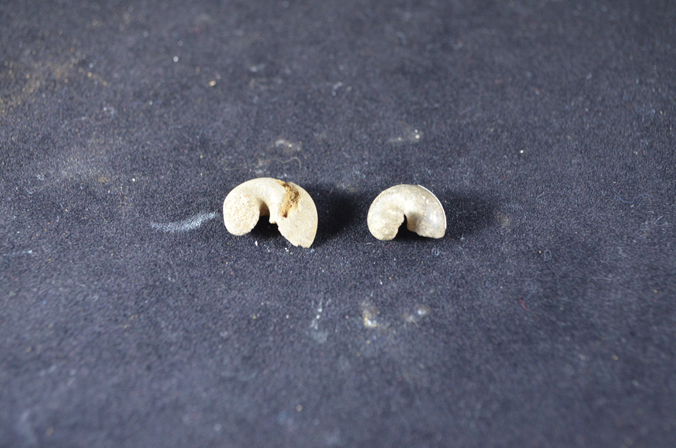
    Other marine fossils we’ve found include pelecypods.  These bivalves resemble modern day scallops and are estimated to be around 60 million years old.  We have two fragments found at Ferry Farm next to a whole example unearthed by my husband Joe Blondino, who is also an archaeologist, while on another excavation.  We believe these to be Chesapecten jeffersonius pelecypods, which is the Virginia state fossil. Tuck that back in your brain for future trivia nights!

    Fragments of Chesapecten jeffersonius found at Ferry Farm (foreground) next to whole examples from the author’s collection.
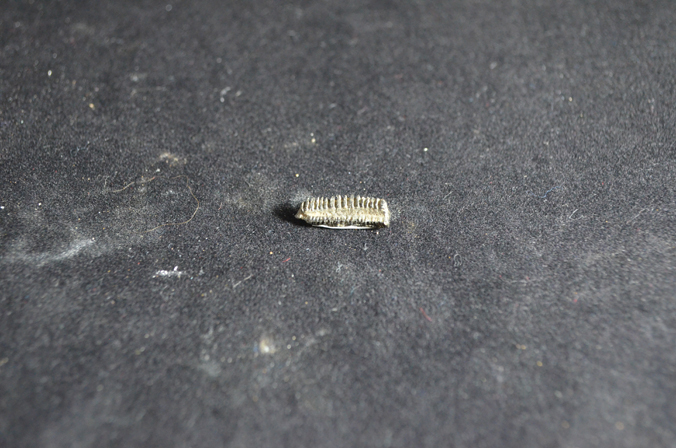
    Ray mouth plate fragment excavated at Ferry Farm.

    This little guy above is another one of my favorites.  It may not look like much, but this is a ray mouth plate fragment.  Rays, which also still exist today, used these specialized ‘teeth’ plates to crush the shells of their favorite prey.  It may have shared the waters with some of this fossilized coral, of which we’ve excavated only a few tiny pieces that are as yet unidentified with regard to species.

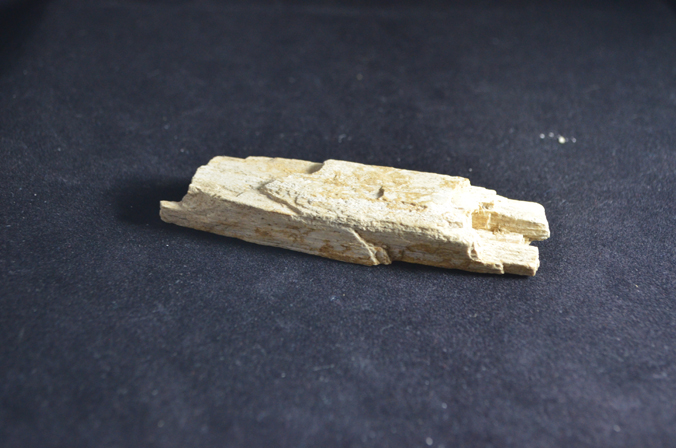
    We also uncover quite a bit of petrified wood.  These trees would have lived during the periods of the Cretaceous when Virginia was a hot and humid swamp.  After falling into the waters, they were covered and, over millions of years, petrified as the trees’ organic tissues were slowly replaced by minerals.  This example is our largest specimen.

    Petrified wood excavated at Ferry Farm.

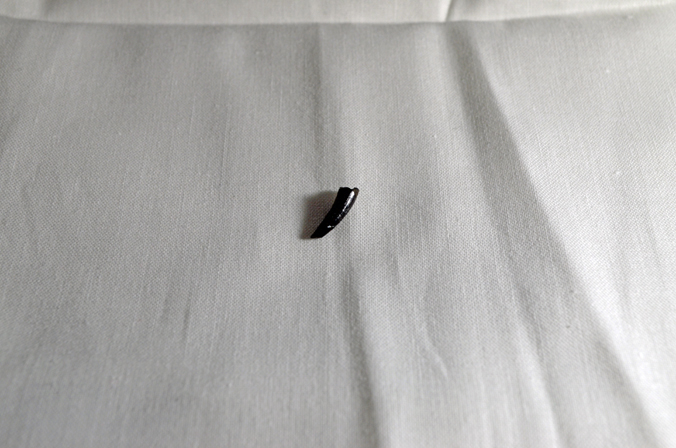
    Crocodiles also swam where the George Washington’s boyhood home replica now stands when the land was covered in a warm, shallow sea.  We think the tooth pictured below belongs to one of those crocs, although likely a juvenile one.  Unlike a shark tooth, it is conical, with a depression at the top.

    Crocodile tooth, like from a juvenile, found at Ferry Farm.

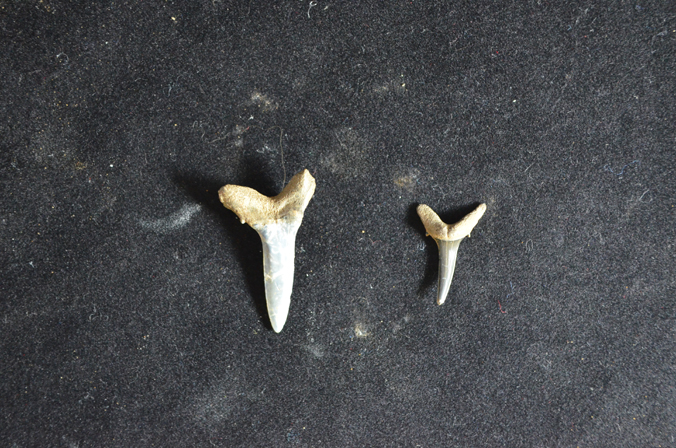
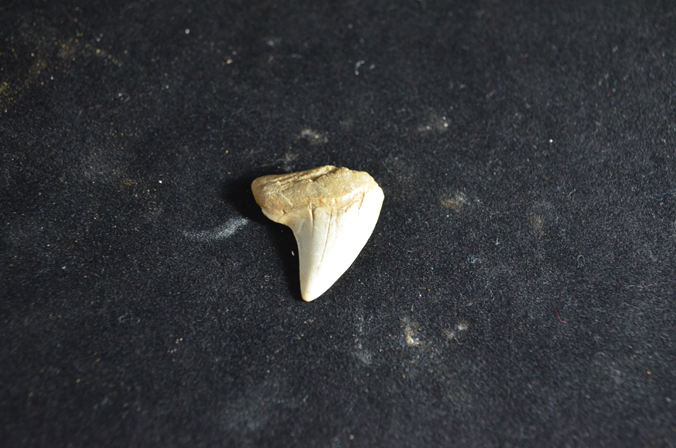
    We’ll end with everyone’s favorite: shark teeth!  They’re the most common fossil found at Ferry Farm due in no small part to the fact that sharks continuously shed their teeth throughout their lifetime. Some sharks go through up to 50,000 teeth in their lifetimes!  Most of our shark teeth belong to a species of sand tiger shark, which still exists today (they’re also called the gray nurse shark).  Starting at the beginning of the Cenozoic Era, approximately 66 million years ago, sand tiger sharks swam near the coast in the warm shallow sea waters that covered this part of Virginia.  Their teeth are not large, but quite numerous. They have a distinctive shape with a long very ‘pointy’ crown, small sharp bumps called cusplets on either side, and relatively long root lobes.  The only shark’s tooth we have that doesn’t resemble the sand tiger at all is one we think may be from a species of white shark (related to the great white).

    Sand tiger shark teeth excavated at Ferry Farm.
    Possible giant white shark’s tooth excavated at Ferry Farm.

    Even though archaeologists do not dig for dinosaurs, we certainly do find fossils in our excavations. Since we are obsessively focused on the human cultures of the past, these fossils are not our primary interest. We do not dig for dinosaurs but maybe we actually do sort of DIG them and all fossils from ancient times in a “Wow, fossils are really cool!” sort of way.

    Mara Kaktins, Archaeologist
    Archaeology Lab Supervisor

  • Stories that Demand to be Told: Fielding Lewis and the Bray School for Educating Enslaved Children

    During the 18th century, the city of Fredericksburg was described as “a considerable town of trade, furnishing the country around.”[1] As such, it was deemed a rather important town and was the site of one of two schools for enslaved children established in Virginia during the Colonial period. The school was located somewhere downtown, likely near St. George’s Church. Two of the trustees in charge of operating the school were the Reverends James Marye, Sr. and later his son James Marye, Jr. Another trustee was none other than Historic Kenmore’s own, Fielding Lewis.

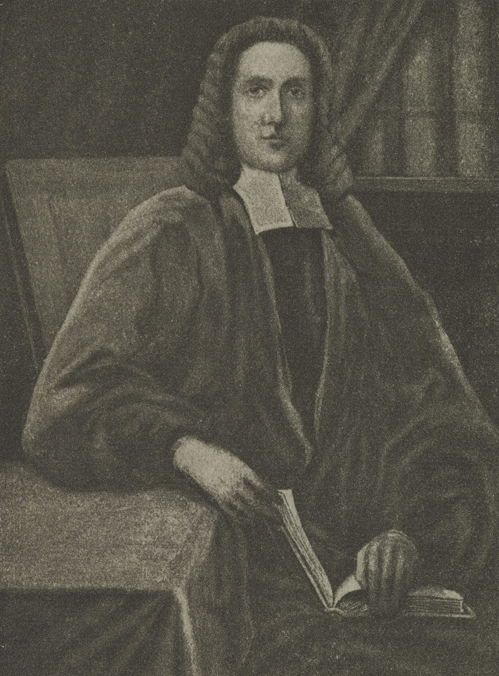
    The school was funded and established by a group of English clergymen and philanthropists known as the Associates of Dr. Bray. Thomas Bray was an Anglican minister who had grown up without wealth. Due to his family’s financial situation, Bray found certain doors, specifically education, closed to him. Through his time in the ministry, however, he was able to gain the knowledge needed to become a great influence and practitioner of philanthropy. Towards the end of his life, he established The Associates of the Reverend Dr. Bray. Its eventual goal was to create avenues of religious and secular education for black children. While never condemning slavery, Bray felt that the souls of enslaved people needed to be saved in the Anglican faith. In order to be able to worship properly, they would need to be able to read and write. By the end of the 18th century, the Bray Associates had founded 41 libraries, donated over 22,000 books to different Anglican parishes in the colonies, and established a handful of schools across British North America.

    Thomas Bray as depicted in The Founders: Portraits of Persons Born Abroad Who Came to the Colonies in North America Before the Year 1701; With an Introduction, Biographical Outlines and Comments on the Portraits. E 187.5 .B69. Special Collections, University of Virginia, Charlottesville, Va. Credit: encyclopediavirginia.org

    The first Bray Associates colonial school was established in 1758 in Philadelphia. Pennsylvania’s Quaker population was decidedly anti-slavery even in the 18th century so Philadelphia already had a sizable population of free blacks. By 1780, the state of Pennsylvania completed the process of gradual emancipation and did not allow slavery, though there were loopholes in the law, one of which allowed President George Washington to use enslaved men and women at the executive mansion situated in Philadelphia. Slavery in an urban setting like Philadelphia looked different than on plantations in southern colonies. Most urban enslaved people typically performed domestic labor. This meant different expectations for enslaved people in cities, i.e. knowing how to read and write was more important. Due to these circumstances, the Bray school in Philadelphia operated quite successfully. A location for the school was procured without much effort, and a schoolmistress was also easy to come by. The school’s trustees reported full enrollment to the Bray Associates throughout its operation. The school was so successful that it reopened after the American Revolution, and the Bray Associates opened two additional schools in Philadelphia during the 19th century.

    After the school in Philadelphia was established, the Associates were eager to create additional schools in the colonies. At this time, Benjamin Franklin was in London and became an Associate. He suggested several potential locations and even trustees for the next school. This second school was established in 1760 in Williamsburg. The Associates sought an enrollment number of 30, and the school opened with 24 pupils. The trustees deemed this quite successful and thought the number was a fair amount for one schoolmistress to manage. In fact, the trustees had a difficult time finding a schoolmistress at all. Their solution was that the Associates would provide additional funding for a few years but, in turn, the Associates encouraged the trustees to find charitable citizens in the town to help supplement the endowment.

    The Bray-Digges House in its original location on Prince George Street, c. 1928
    Credit: Special Collections, John D. Rockefeller Jr. Library, The Colonial Williamsburg Foundation
    . Credit: The Colonial Williamsburg Foundation [PDF]

    Another issue at the Williamsburg school was that pupils, even those who belonged to the small free black population in town, were unable to attend regularly. They often stayed for no longer than it took to gain basic reading and writing knowledge. The goal of the Bray Associates, however, was to bring black children to the Anglican faith. This could not be realized if they left school too soon. The trustees attempted to draw up formal rules and a desired curriculum that would encourage the children to remain in the school longer, but it didn’t help the situation.

    The Williamsburg school operated for a little over 13 years and was closed in 1774. The closure likely stemmed from the financial difficulties of securing a new schoolmistress after the first one had passed away as well as from the frustration over the lack of returning students year-to-year. There was not an overall lack of students, however, because a report in 1769 said the school still had a full 30 enrolled.

    Due to the measured success of the Williamsburg school, the Associates began to search for other southern towns in which to continue their mission. Fredericksburg was suggested by a local minister and the supplies for the school were sent in 1764. From the start, Rev. James Marye, Sr., and Fielding Lewis were pessimistic about the school’s outlook. When the idea was presented to prominent members of the town, there was no enthusiasm. Nonetheless, in September of 1765, Fielding Lewis sent a letter to the Bray Associates informing them that the school had been opened the previous April.

    There are three letters (14 September 1765, 31 October 1768, and 1 February 1772) written by Fielding to the Bray Associates that survive. They provide what little information we have about the Bray school in Fredericksburg. It appears that Fielding followed the rules and curriculum that the Williamsburg school had established. It also seems as though he faced similar problems to the Williamsburg school. He had a difficult time securing a schoolmistress for the low wages offered. Unlike Williamsburg, the Bray Associates did not offer additional money. Again, enslaved children were only permitted to attend until basic literacy was obtained, and then they were removed back to work by their owners. The school in Fredericksburg struggled with enrollment numbers. It opened to 16 pupils and dropped to nine by 1768 with only four of those attending in summer. A smaller population of black children (whether enslaved or free) and even less support from local slave owners probably affected the school’s attendance more than Williamsburg. In Fielding’s final letter to the Associates, he stated “learning them to read is rather a disadvantage to the owners, we having had some examples of that sort.” These concerns hint at what led to Virginia passing extremely restrictive ‘slave codes,’ which included a law forbidding enslaved people to be taught to read and write, throughout the 18th and 19th centuries.

    Virginia historical marker W-109 at the original site of the Bray School. Credit: Virginia Department of Historic Resources

    It is unfortunate that more information regarding the Bray schools throughout the colonies did not survive. What is clear though is that these schools led to the literacy of a significant number of enslaved and free blacks throughout the colonies. Recently, Colonial Williamsburg determined that the building that housed the school is still intact and had been moved to William & Mary’s campus. They added a historical marker honoring the school and the children who attended it. As we gain knowledge and rediscover the past, stories like those of the enslaved and free children who gained a new foothold in a literate world are stories that demand to be told.

    Elizabeth Hosier
    Manager of Interpretation and Visitor Services


    [1] Oscar H. Darter, Colonial Fredericksburg and Neighborhood in Perspective, (New York: Twayne Publishers, 1957), 62-63.