On a typical day at George Washington’s Boyhood Home at Ferry Farm, visitors experiencing the house tour are ushered into the main hall upon which a dining table is set out before them with 18th-century reproductions of plates, glassware, wine bottles, and serving dishes. This setting creates an interactive experience for our visitors, transporting them back in time to the mid-18th century when the Washington family lived here on site.
Last month, however, an unexpected sight greeted a tour group as they entered the hall. The dining table was set, not with reproductions, but actual plates, jugs, and serving dishes that could very well have graced the Washington family’s dinner table over 250 years ago. The principal difference is that nothing on the table was complete – all were fragmented versions of the originals.
Dining table in Hall set up for dinner.
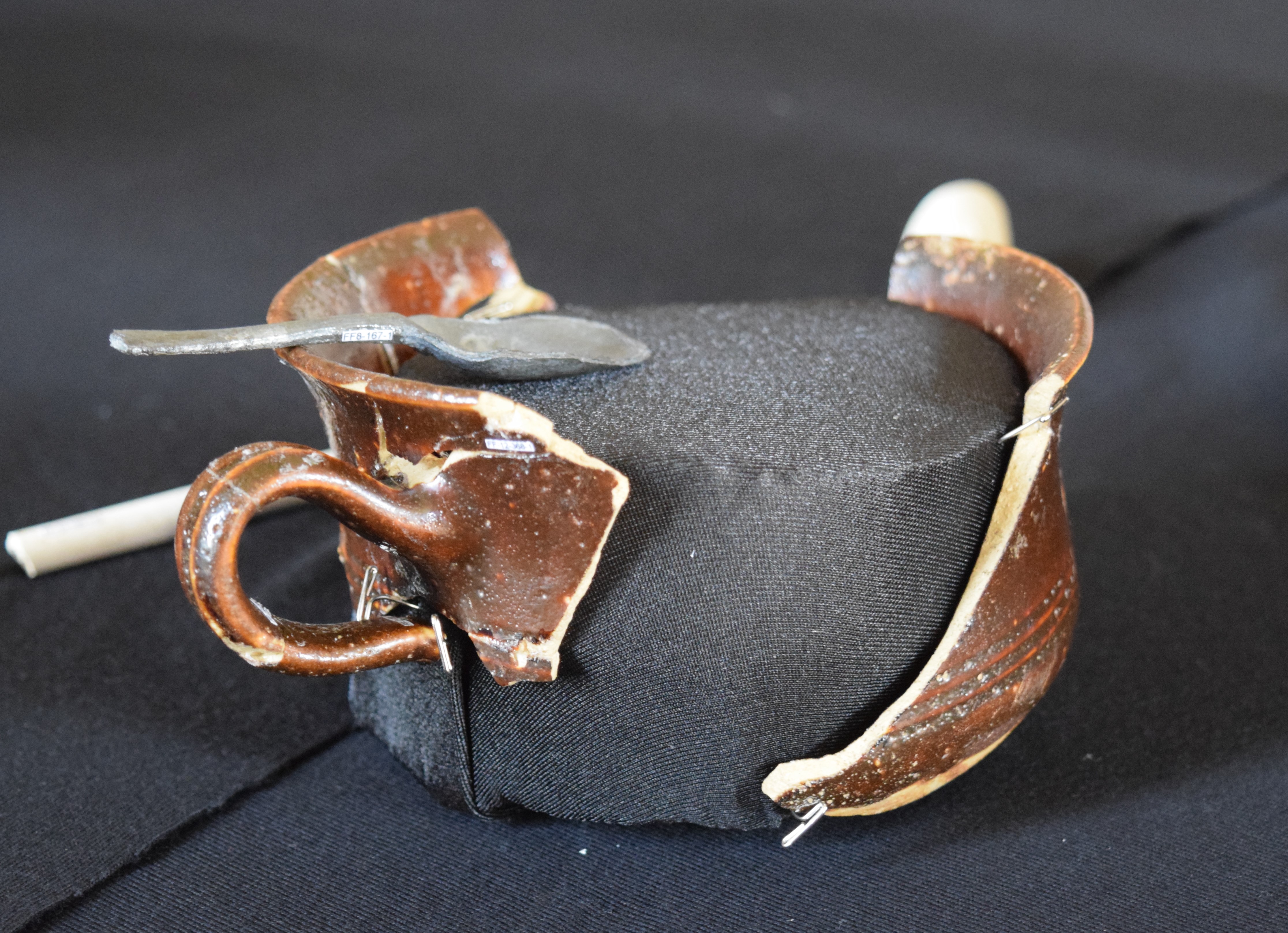
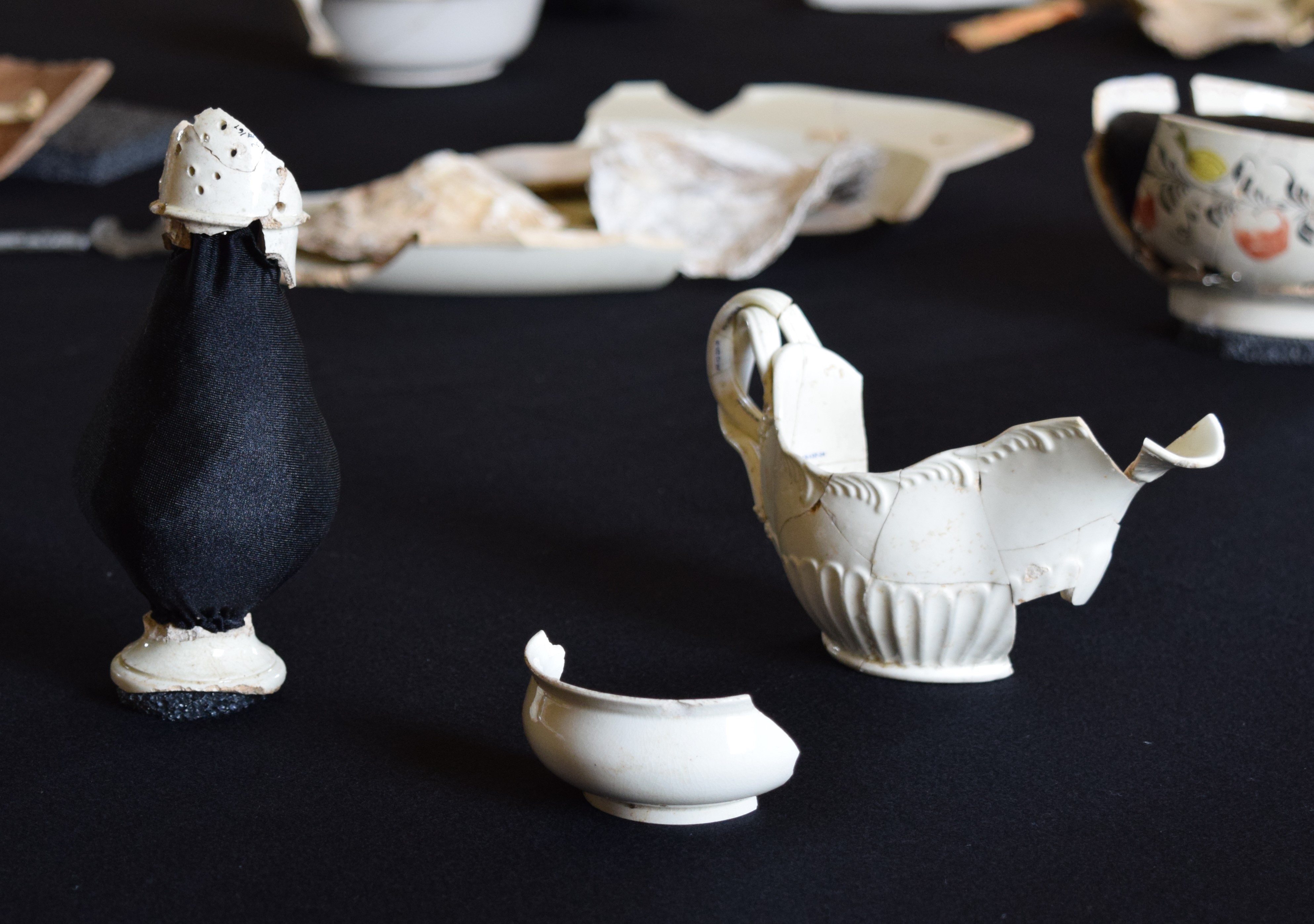
The setting was a special photoshoot for The George Washington Foundation and an occasion to display and highlight the array of vessels, many mended, residing in the Archaeology Department’s collection. Everything on the table was archaeologically recovered from either Ferry Farm or Historic Kenmore and represent vessels that date to the Washington family’s occupation of Ferry Farm or Betty Washington Lewis’ time at Kenmore.
The Archaeology Department at Ferry Farm has been mending vessels over the past couple of years for our museum displays at the Ferry Farm and Kenmore Visitor Centers. This mending was also done for research purposes as the curatorial department worked to furnish the replica house with accurate, period-relevant household items.
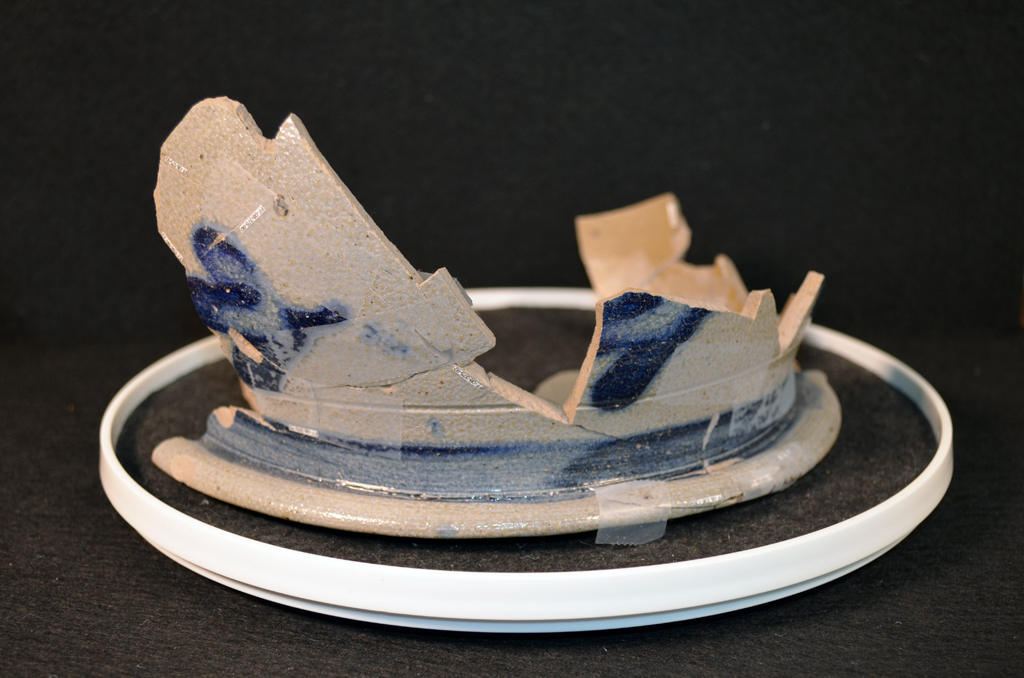
So what is on the table? Creamware and white salt-glazed plates and serving dishes, glass tumblers and wine glasses, German stoneware jugs, dark green glass wine bottles, a porcelain teacup, coarse earthenware porringers, forks and knives with bone handles, silver spoons, and Mary Washington’s creamware enamel-painted punch bowl. Many of the ceramic tablewares and a few of the glass tumblers were mended using archival glue. Some of the objects were able to stand on the table unaided, while others needed mounts for support, such as the wine glass.
Fragments of dinner and glasswares
To help envisage the original shape of some of the fragmented vessels and make them recognizable, we first sculpted their shapes out of foam, covered them with fabric, and then attached the incomplete vessel fragments in their correct positions. This process allowed us to present a more “complete” and familiar view of some of the tablewares, such as the two large stoneware jugs, the creamware pepper pot, the glass tumbler, and the two wine bottles. All of these items would have been very difficult to display simply using the fragments themselves.
Having such an array of different ceramic styles on the table is more a function of what we have mended in our collection versus what Mary might have actually had on her table. But for our purposes, we are happy showcasing all of the different ceramic types presently in our possession.
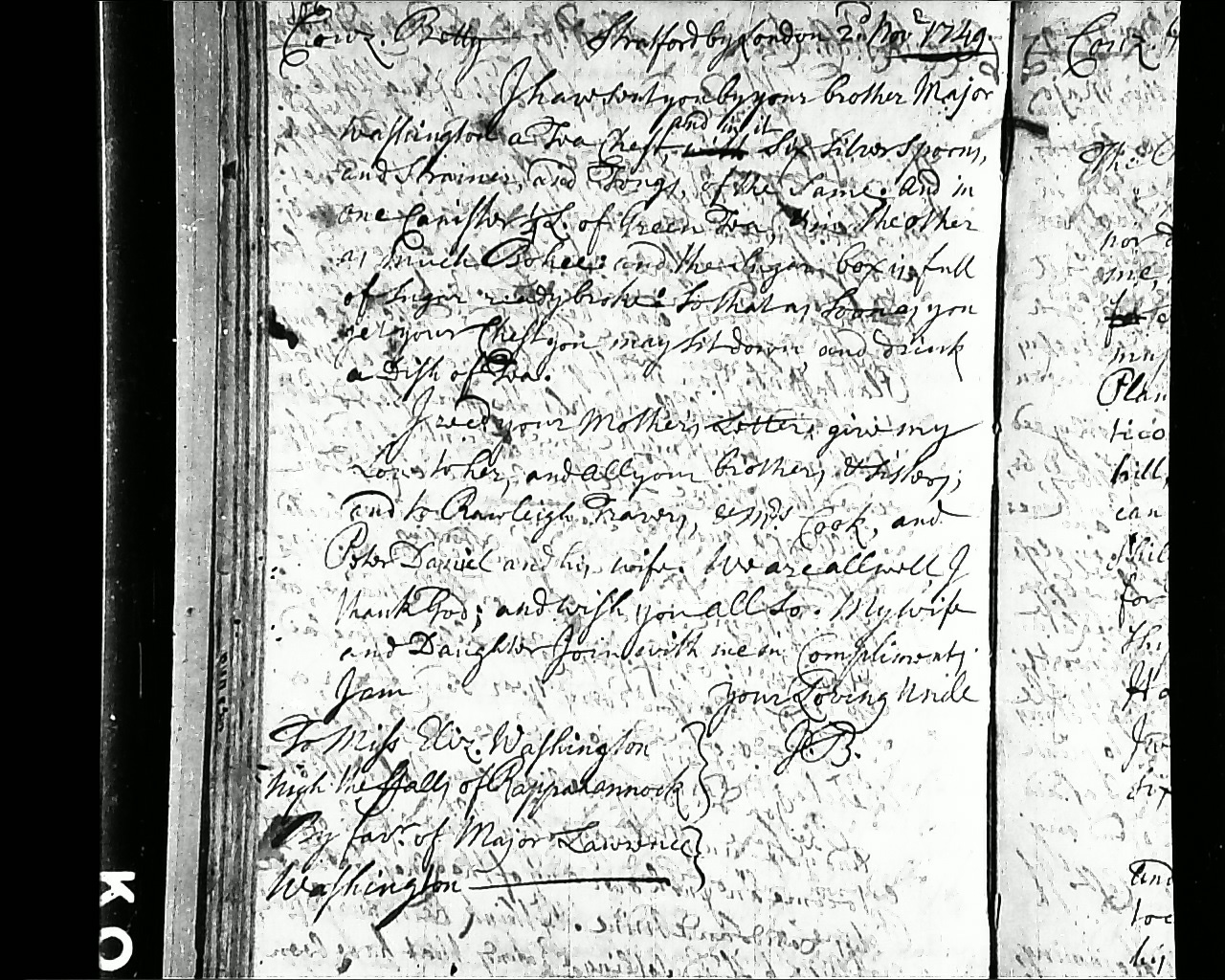
Couz. Betty Stratford by London 2nd [Nov] 1749 I have sent you by your brother Major Washington a Tea Chest; and in it Six Silver Spoons, and Strainer, and Tongs, of the Same. And in one Canister 1/2 L. [pound] of Green Tea, in The other a Pinch Bohee: and the Sugar box is full of Sugar ready broke: So that as Soon as you get your Chest you may Sit down and drink a Dish of Tea. I read your Mother’s letter, give my Love to her, and all your brothers, & sisters; and to Rawleigh Travers, & Mrs. Cook, and Peter Daniel and his wife. We are all well I thank God; and wish you allso. My wife and Daughter Join with me in Compliments. I am Your Loving Uncle J.B To Miss Eliz. Washington nigh the Falls of Rappahannock By [fav.] of Major Lawrence Washington
In 1749, one year before her marriage to Fielding Lewis, Betty Washington received a valuable gift – a silver tea set and other tea equipment – from her Uncle Joseph Ball in England. Tea equipment at this time was still expensive and the tea ceremony was reserved for upper class individuals. By providing Betty with equipment for such an important ceremony, Joseph Ball was helping prepare his niece for success in the gentry class. He provided silver teaspoons, a strainer, tongs, and a tea canister– four of the necessary pieces of equipment for the tea ceremony. Other items needed for the ceremony included a teapot, slop bowl, milk or cream container, sugar container, cups, and saucers.[i] Mary Washington provided these pieces for Betty while she lived at Ferry Farm, using them to teach her daughter how to host the important ceremony.
The tea ceremony was a popular social event in 18th-century American culture. First and foremost, hosting or attending a tea party was a symbol of class.[ii] It was typical for gentry class individuals to participate in this leisure activity as a way to deepen or forge relationships within their community. Only an individual who was part of this class could afford the time and money required to learn the social graces and equip the table for the ceremony. The Washingtons worked hard to project an image of gentility through their material consumption. Participation in the tea ceremony was essential for this image. Mary took the time to “bequeath gentry-level domestic culture and etiquette to her children,” keeping them in leisure class circles.[iii]
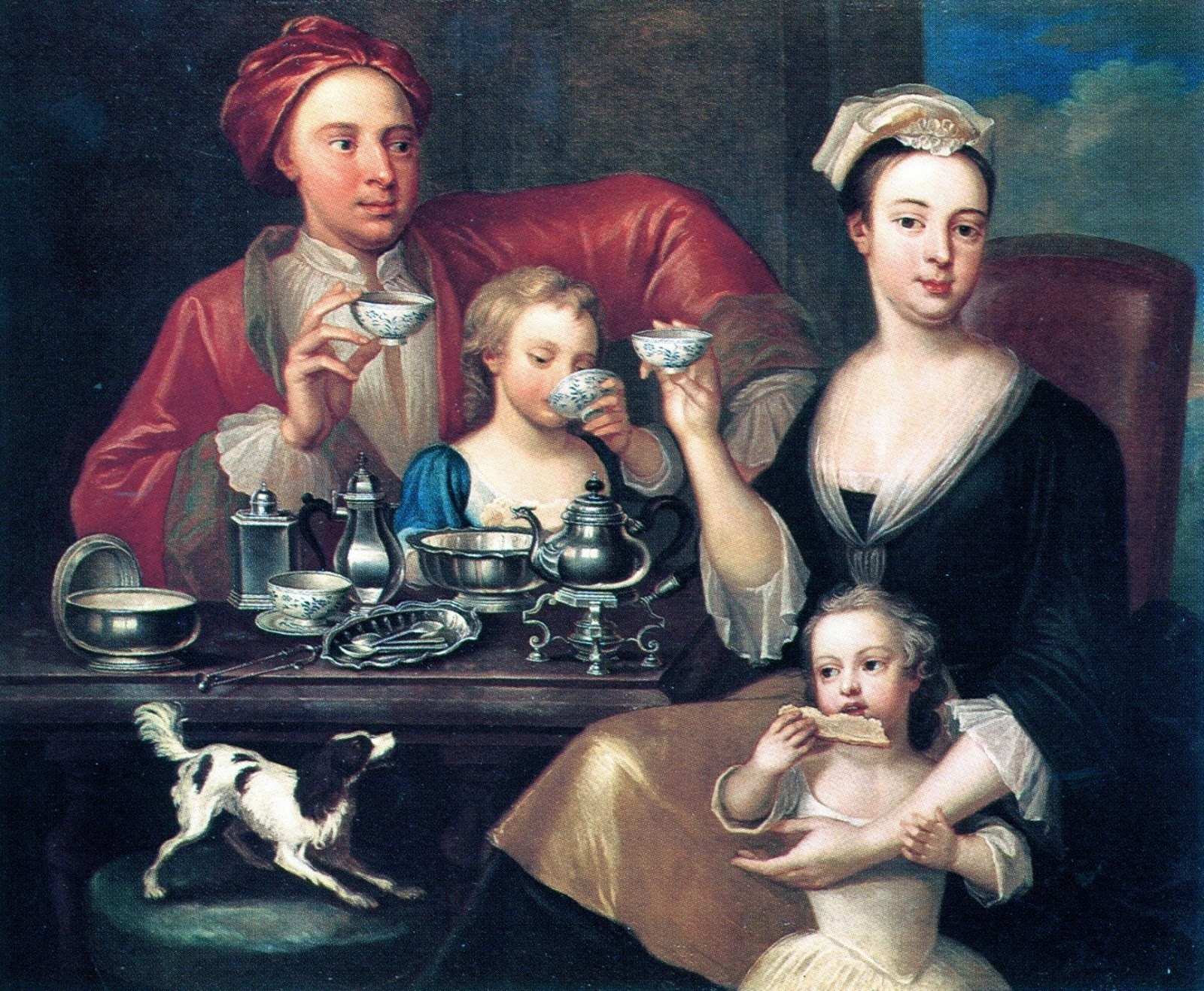
An English Tea Party (c. 1730) by Joseph Van Aken. Credit: Wikipedia
Within the leisure class the tea ceremony was considered, “as much an instrument of sociability as was a bit of music or conversation.”[iv] With its rules that dictated everything from table arrangement and conversation to order of events, the ceremony was complex. Mastery of the ceremony, especially for women, was key to one’s reputation within social circles. Mary and Betty Washington used the intricate event to maintain the family’s social standing and to interview suitors for Betty. As the oldest daughter, Betty was trained for this ceremony from a young age. She would likely have been the host of numerous tea parties at Ferry Farm before her marriage. Perhaps even using the silver tea set from her uncle during some of the events.
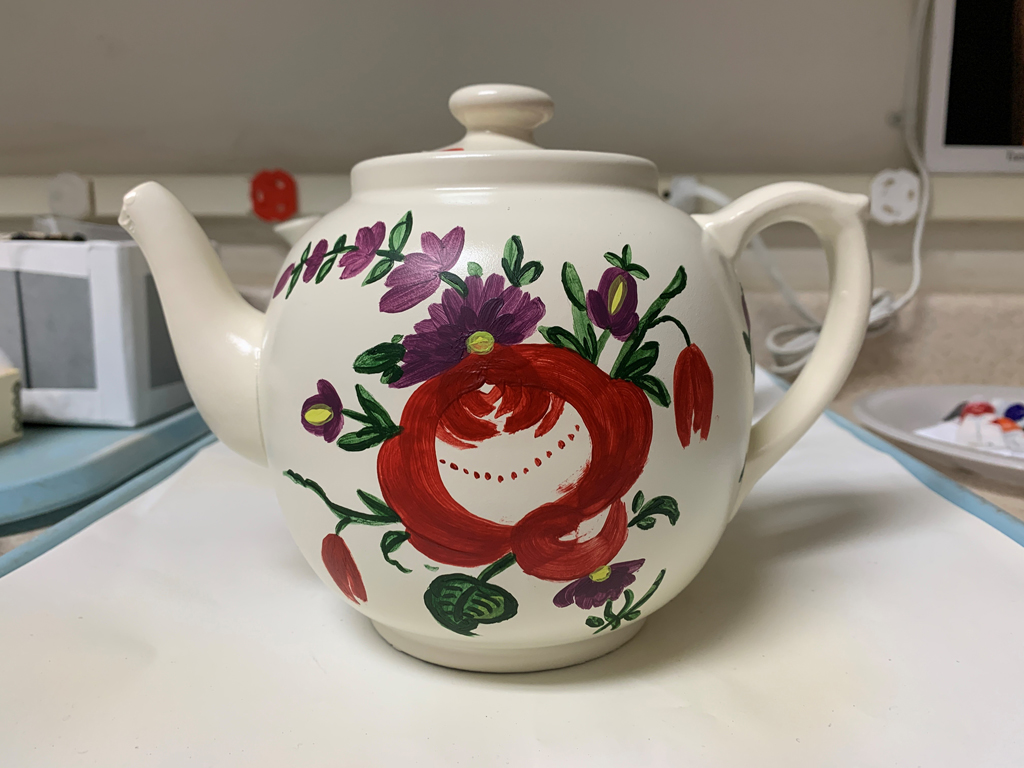
Replica teapot.
The social custom of the tea ceremony revolved around the teapot, thus earning it a spot at the center of the tray or tea table.[v] The archaeology department at Ferry Farm recently produced a replica teapot for display in an upcoming exhibit on 18th-century tea practices. This replica will serve as the centerpiece for the exhibit and be surrounded by archaeological artifacts and contemporary examples representative of the Washington family’s tea practices. The exhibit can be viewed through one of the windows into the Archaeology Lab starting December 1. Add George Washington’s Ferry Farm to your list of places to visit during the holiday season to see this small tea exhibit!
Gillian Both, UMW ‘22 Fall Fleming Smith Scholar
[i] Rodris Roth, Tea Drinking in 18th-Century America: Its Etiquette and Equipage (Washington: Tea Trade Mart Publishing Co., 2017), 24.
[iii] Laura J. Galke, “The Mother of the Father of Our Country: Mary Ball Washington’s Genteel Domestic Habits,” in Northeast Historical Archaeology 38 (2009): 33.
But seriously…. World Toilet Day – today, November 19 – is kind of a big deal, considering the vast numbers of people across the globe who do not have access to indoor plumbing. According to the United Nations, 3.6 billion people in the world today do not have a toilet that is “not shared with other households, that either treats or disposes of human waste on site, stores it safely to be emptied and treated off-site, or connects to a functioning sewer.” Nearly 500 million people must practice “open defecation” (PDF) somewhere outside their homes. Ultimately, “life without a toilet is dirty, dangerous, and undignified.” A lack of toilets also deeply impacts people with toilets because “poor sanitation contaminates drinking-water sources, rivers, beaches and food crops, spreading deadly diseases among the wider population.”
Editor’s Note: Looking back in time, people’s personal hygiene, fashion choices, medical treatments, and more can seem disgusting. When confronted with gross practices, our first reaction can be to dismiss our ancestors as primitive, ignorant, or just silly. Before such judgments, however, we should try to understand the reasons behind these practices and recognize that our own descendants will judge some of what we do as gross. Here at George Washington’s Ferry Farm and Historic Kenmore, we’ve come to describe our efforts to understand the historically disgusting as “Colonial Grossology.”
At George Washington’s Ferry Farm, we’re frequently asked by visitors where the Washington family’s privy (what an outhouse was called in the 1700s) was located. The fact is the Washingtons didn’t have a privy (or a well, for that matter.) We’re often met with looks of disbelief when we pass on this bit of information. Ground penetrating radar conducted at Ferry Farm confirms the lack of a privy and a well, which would have been picked up immediately by this technology. As discussed here and here, the Washingtons and most colonial Virginians used chamber pots to go to the bathroom. Indeed, for this part of Virginia in the 18th century, many households didn’t need a privy.
18th century chamber pot
Sadly, this lack of a specific sanitary place for human waste was a familiar one for those who lived in the 1700s. Because of their poor understanding of germ-caused diseases at the time, 18th century people did not fully appreciate the health dangers presented by human waste. They did make obvious correlations, however. Noting how sick people were getting from drinking water, local colonial governments started enacting laws which prohibited privies from being dug too close to the water table. They also frequently ordered that wells be dug a safe distance from privies.
Privies took many forms before modern plumbing. They could be deep, brick-lined shafts that could go 30 feet or more into the ground with substantial above ground buildings. They could also be made out of a simple wooden barrel placed in the ground with a humble structure above it. Small privies could accommodate one person at a time. Larger privies could potentially have eight seats or more (and not much privacy).
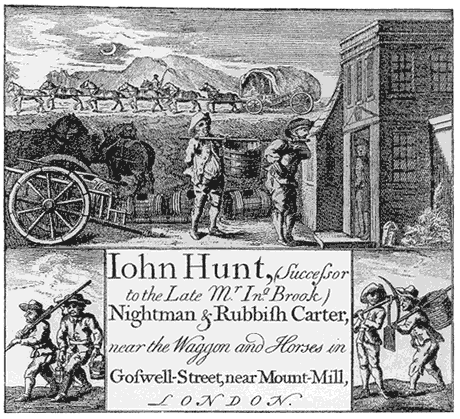
Regardless, privies had to be emptied at some point and it was some nasty business. Probably the most unglamorous job prior to indoor plumbing was that of the night soil men. Sounds scary, and it is. These workers descended into the depths of a privy and scooped the contents into wagons that were carted away. They did this at night usually because most neighborhood citizens would rather be asleep when that terrible smell wafted around. Usually, this human waste would be carted to local farms and sold as fertilizer (yep).
Calling card advertisement for an 18th century night soil man in London. Credit: Public domain
A night soil man in Baltimore. Credit: Public domain
Who were the night soil men at Ferry Farm? Well, the Washingtons owned some 20 enslaved workers. Invariably, some enslaved, typically children, were tasked with emptying chamber pots and fetching water. They dumped chamber pots in the area behind the Washington house that archaeologists call the “midden.” This was a trash pile where everything from human waste to table scraps to broken household items was thrown away. Enslaved workers also fetched water for the Washingtons from a spring and stream, not far from the Rappahannock River, at the base of the bluff where the house stood. Every day, these workers made multiple trips up and down the hill carrying heavy wooden buckets probably hanging from each end of a carrying pole or “milkmaid’s yoke.” Hence no need for an outside toilet or well.
But a privy was not just a toilet. Like the Washington’s backyard midden, most privies were also used to dispose of any garbage from a house or institution. This means food waste, broken pottery, bottles, and sometimes much more scandalous items were thrown into that void only to be brought up again by the night soil men. Often, when a privy had degraded to the point where it was no longer draining properly or was falling in on itself, it was abandoned with all of the precious garbage sealed within. Wells were treated the same way. Once they had lived out their life, they were filled in with the lovely broken things that archaeologists love to look for. While unsanitary for their original users, historic privies plus wells can be a treasure trove of information for us today.
Portion of a chamber pot excavated at George Washington’s Ferry Farm.
Privies. Chamber pots. Thankfully, they were necessities for our ancestors but not for most of us today. That said, there are still many people in our 21st-century world who must go to the bathroom as if it were still the 18th century. On this World Toilet Day, let’s hope more can be done for the health and dignity of people without safe and sanitary toilets.
Mara Kaktins, Archaeologist Ceramics & Glass Specialist
Looking back in time, people’s personal hygiene, fashion choices, medical treatments, and more can seem disgusting. When confronted with gross practices, our first reaction can be to dismiss our ancestors as primitive, ignorant, or just silly. Before such judgments, however, we should try to understand the reasons behind these practices and recognize that our own descendants will judge some of what we do as gross. Here at George Washington’s Ferry Farm and Historic Kenmore, we’ve come to describe our efforts to understand the historically disgusting as “Colonial Grossology.” In this video, we examine three ways that daily life in the 18th century was sort of gross.
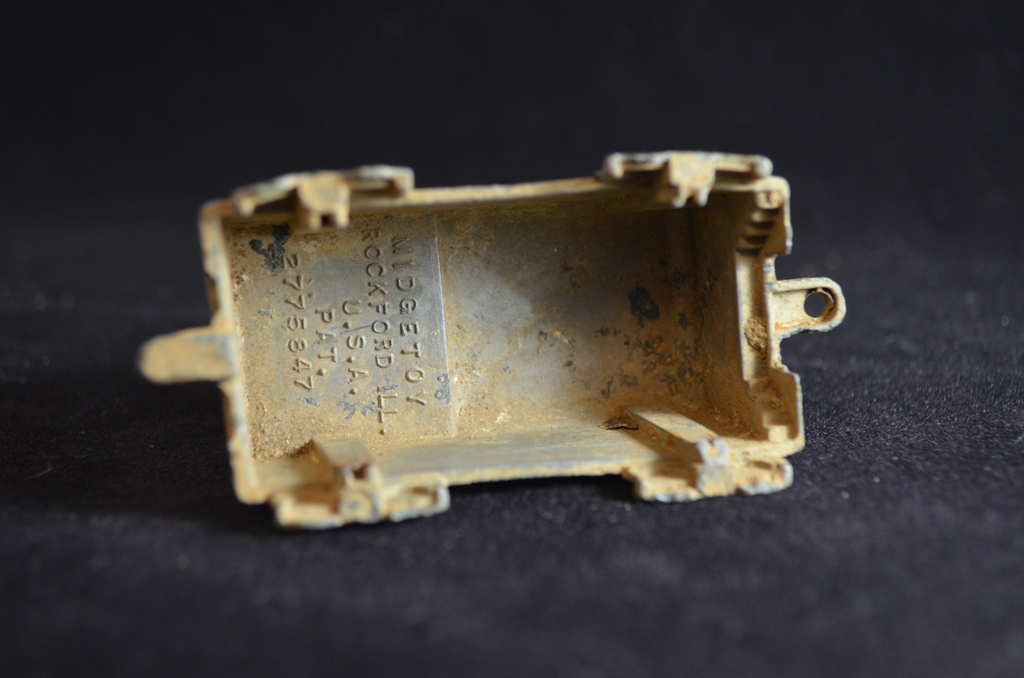
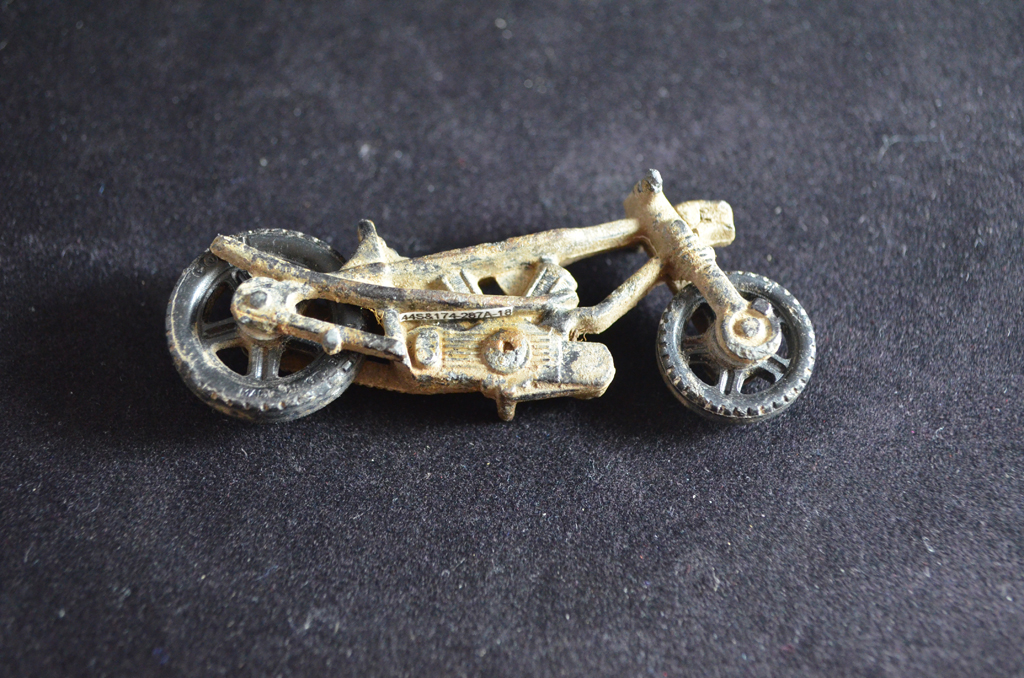
A lot of people don’t realize how many 20th century artifacts we excavate at George Washington’s Ferry Farm. Up until the 1990s, families lived and farmed on the property, leaving tens of thousands of artifacts behind. Some of our favorite modern artifacts are the toys we recover, whether marbles, plastic army and cowboy figurines, doll parts, or miniature tea sets. In this blog, we look at three die-cast toys left behind by the many children who played on the same ground where young George Washington grew up.
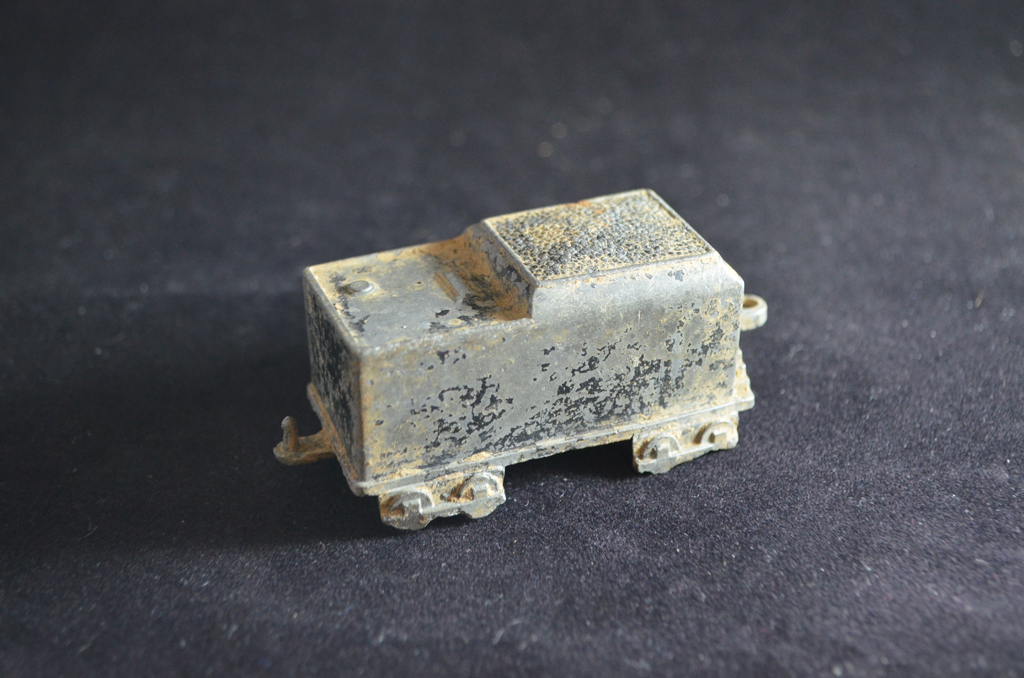
The first is a small die-cast coal car almost completely intact, except for its missing rubber wheels. In archaeology terms, we call this artifact ‘talky’. It makes an archaeologist’s research so much easier when “Midgetoy / Rockford, Ill / U.S.A. / PAT. / 2775847” is embossed on the underside of the car. However, we still need a date range for this particular toy. The patent number is a huge help. After an Internet search, we discovered the patent for this toy was taken out in 1954 by the A&E Tool and Gage Company. The patent specified an improvement in the wheels to make them rotate more smoothly. To find the date after which this toy was no longer manufactured, we researched the toy company, Midgetoy, since the patent suggests the toy’s manufacturer started out under a different name. A&E Tool and Gage was started in 1943 by Alvin and Earl Herdklotz as a defense-based precision tool-and-die business. After the Second World War, they changed their business model to toy making with the goal of creating low-priced die-cast toys. Thus, Midgetoy was born. The company stopped producing toys in the late 1970s or early 1980s, which represent the approximate end date for this die-cast coal car.
Our next toy is a fully intact purple die-cast car. With “Tootsietoy Dragster / USA / 3” embossed on the underside, it’s another talky artifact! Much like Midgetoy, Tootsietoy Corporation started off as something completely different. Two die casting companies of the Dowst and Shure Brothers were established around the same time in the 1890s. The companies merged and, in 1909, produced their first model cars: a limousine and Model T Ford. ‘Tootsietoy’ became a registered trademark in 1924. The dragster was not produced until much later, however. The company didn’t just make cars either It made charms for Cracker Jack boxes as well as die cast dollhouse furniture. It also produced promotional cars used by dealerships to sell full scale models. Our dragster has a wedge body with a rear engine, which wasn’t invented until 1974, so this particular toy dates to the mid ‘70s or ‘80s.
The last toy is one of my favorites, a funky motorcycle. When it was first discovered, our lab staff thought it looked a lot like a motorcycle from the First World War. It has an elongated metal body with hard black plastic tires. Admittedly, our archaeology department knows very little about motorcycles so we started to do some research. Initially, it appeared as though the toy had no identifying marks. Closer inspection under magnification ultimately revealed that the larger back tire had ‘Corgi’ and ‘Made in Gt. Britain’ faintly embossed on it. Our initial assessment of the toy being modeled after a World War I motorcycle was completely off. Although, the toy looked complete to us, the bike was actually missing some parts. Roughly modeled after a racing bike, it would have had a plastic front piece and a rider figurine. In this case, either Batman, Spiderman, or (our favorite) the Pink Panther, which we would love to recover in a future excavation.
Aside from these toys being fun to research while occasionally rolling across our desks as we make ‘vrooooom’ noises, they are also poignant reminders of the kids who played here. The truth is that aside from the Washington children, we don’t know very much about the youth of Ferry Farm. In many cases, the only record of them living on this landscape are the toys they left behind. I often wonder who owned these little treasures and how they got lost. Were the toys missed? Would any of the adults who grew up at Ferry Farm remember them? When he’s washing a toy, Robert Bailey, a lab volunteer who lived here as a child, often wonders if it was one of his toys. Regardless, these toys are a nice reminder of the young ones who once played on the same landscape as little George, and that’s pretty cool.
Mara Kaktins, Archaeology Archaeology Lab Supervisor
Both Historic Kenmore and George Washington’s Ferry Farm – perhaps surprisingly – feature fairly significant maritime histories. Situated on the Rappahannock River, Fredericksburg was a bustling seaport in the 1700s when George Washington grew up at Ferry Farm and when Fielding Lewis practiced his merchant trade while living at Kenmore. George saw ocean-going sailing vessels unloading and loading cargo from his bedroom window. Some of these ships were owned by Fielding and his family. Both men were part of “the Atlantic World,” a global community of many different peoples trading back and forth across the Atlantic Ocean.
Here on Lives & Legacies, we’ve written regularly about Fredericksburg as a seaport and about the impact of Atlantic trade on both the Washingtons and the Lewises.
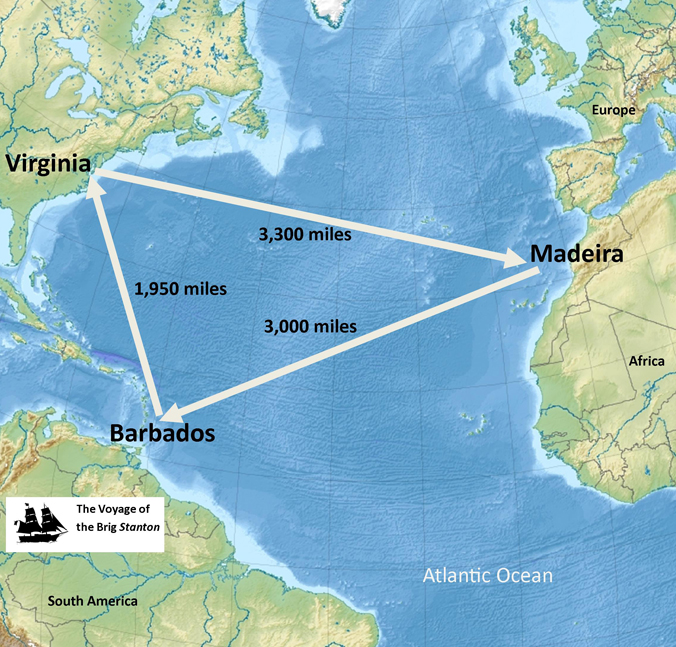
“The Voyage of the ‘Stanton’” recounts one voyage of a Lewis family ship and the cargo it carried traveling from Virginia to Madeira off the European coast, then to the British West Indies in the Caribbean, and finally back to Virginia. Each leg of this journey formed part of the Atlantic World’s famed “Triangular Trade.”
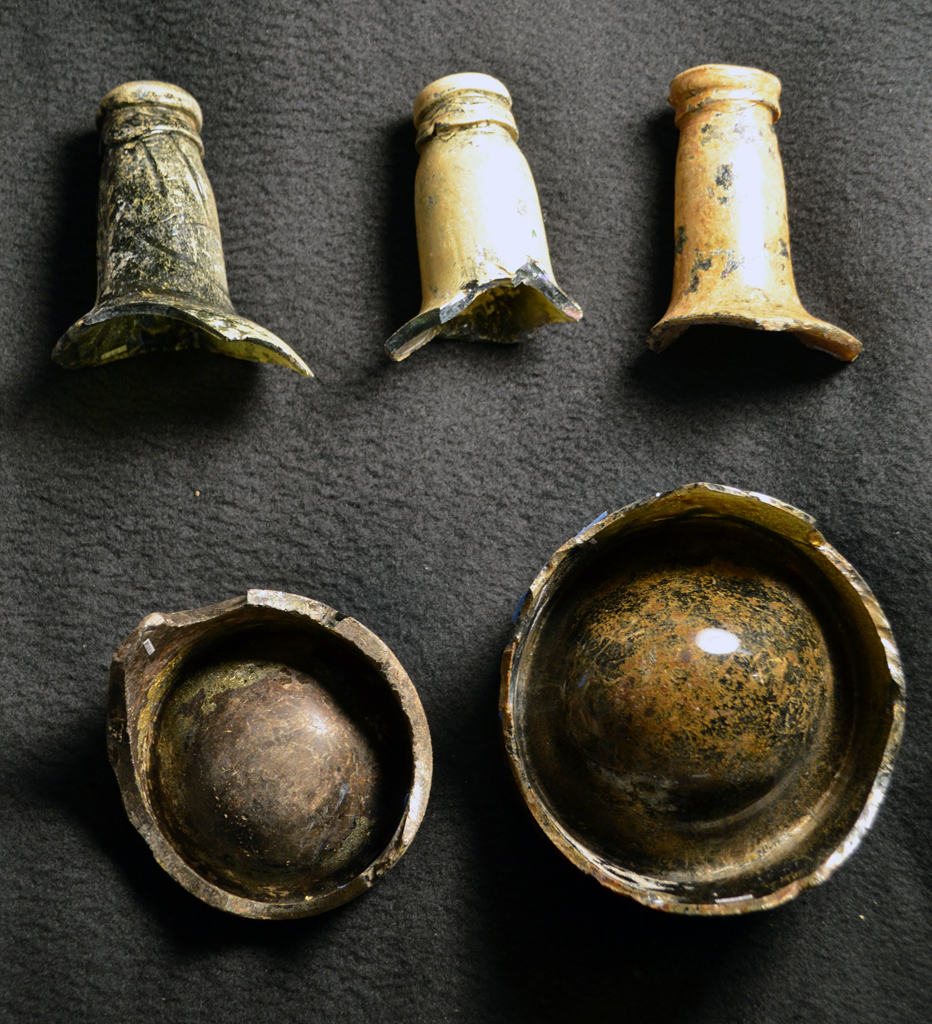
Many of the Washington family artifacts recovered at Ferry Farm came to their home from different parts of this triangle and beyond. For example, the fragments of wine bottles depicted below and written about in “The Wine Bottle: Ubiquitous and Informative” may have carried fortified wine from Madeira to Ferry Farm. European grapes did not grow well in the colonies while native grapes did not make good wine so wine was imported.
Mid-18th century bottle neck and base fragments excavated from the Washington house cellar at Ferry Farm.
An example of what the bottles excavated at Ferry Farm looked when they were whole.
The maritime-based economy that brought Madeira wine and the many other goods used by the Washingtons at Ferry Farm is also perfectly symbolized by a “black dogg” coin. Unearthed not far from the Washington house site and written about in “The Tale of the ‘Black Dogg,’” this coin “originally circulated in the French Caribbean” and may well have come to Fredericksburg in a sailor’s pocket.
“Black dogg” coin excavated at George Washington’s Ferry Farm.
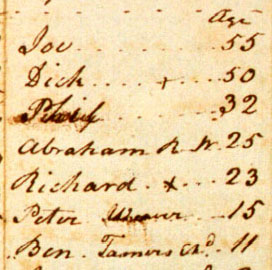
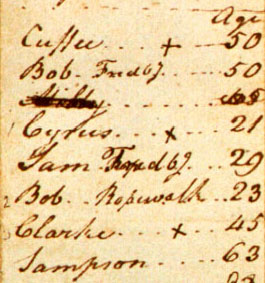
As a merchant, Fielding Lewis owned ships that traveled the Atlantic World carrying goods to and from Fredericksburg. The goods brought to Fredericksburg he then sold to the community or placed in his fashionable home. Maritime trade was Fielding’s life-long business and he put some of his enslaved workers to that task. As written about in “Abraham and The Ropewalkers,” a handful of Lewis slaves wove rope at ropewalks near Fredericksburg or perhaps even in Richmond. Of course, much of this rope was likely used on Virginian sailing vessels.
Portion of The Divvy List made by Betty Washington Lewis showing Abraham with an “R.W.” after his name.
Portion of The Divvy List showing Bob #2 with “Fredbg” after his name and Bob #2 with “Ropewalk” after his name.
The impact of today’s ocean-going global trade can be largely unseen. Similarly, the maritime histories of Kenmore and Ferry Farm are not immediately evident to our eyes. However, sailors, ships, and their cargos significantly influenced the lives of the Washingtons, the Lewises, and the enslaved people of Ferry Farm and Kenmore in 1700s. World Maritime Day is a good day to remember the impact of the international maritime industry, past and present.
“Have you found anything today?” was (and always is) the most-asked question posed by our daily visitors who stopped by our archaeological site at George Washington’s Ferry Farm this summer. Everyone wants to understand what is going on in the very large square hole we have made in the lawn. “Yes, we find something every day,” our crew happily answered, while showing the visitors all the small bits of ceramics, glass, metals, and other artifacts sifted out of the dirt that day. Not only did we find hundreds of artifacts during the course of the summer dig, but we also hope we found a building!
This year’s archaeological dig at Ferry Farm began on June 7 and ended on August 21. We opened twelve new 5-foot by 5-foot square units and reopened six previously excavated units just south of and adjacent to last year’s excavation site. Our site is located within the Washington house work yard, where activities such as food preparation and cooking, washing laundry, animal husbandry, dairying, household storage and wig maintenance took place.
The direction of this year’s dig was prompted by the discovery during last season’s excavation of two large rectangular postholes with similar alignments and measuring ten feet from each other.
Two postholes about 10-feet apart at the end of last year’s excavation.
Finding additional postholes of similar size and properly distanced from each other would enable us to determine if our postholes were part of a fence line or one side of a post-in-the-ground building.
After a lot of hard work, we uncovered two similar postholes on the same line as the first two. Unfortunately, we did not find a parallel line of postholes representing the opposite side of a building within the limits of our dig.
Four postholes in a line at the end of this year’s excavations.
The abundance of artifacts found on the north side of the posthole line, and the contrasting lack of artifacts to the south of them, indicates the presence of some physical barrier substantial enough to create a division preventing artifacts from passing. Our plan for next season is to hopefully expand the excavation block to the south and the west because that is where associated posts would be located. If there are no matching posthole features, we know we have a fence. If it is a building, we want to get the proper dimensions of that structure, which in turn will help determine its function on the landscape.
Now that this year’s dig is over, our staff and volunteers are busy in the lab washing and cataloging the artifacts we found this season. As usual, we collected artifacts ranging from present day plastics to thousand-year-old prehistoric tools. Although our total artifact count was not as numerous as in former dig years, we did manage to find some interesting items.
Our total wig curler count of over 200 continues to grow with the addition of seven wig curler fragments this year. This may not necessarily sound like a lot, but the amount of curlers found this season alone surpasses the number most other domestic colonial sites have in Virginia. Thirty wig curler fragments have been found within the 30-foot by 45-foot excavation block dug between from the years 2019 to 2021 in the work yard.
Approximate Ferry Farm work yard area excavated between 2019 and 2021.
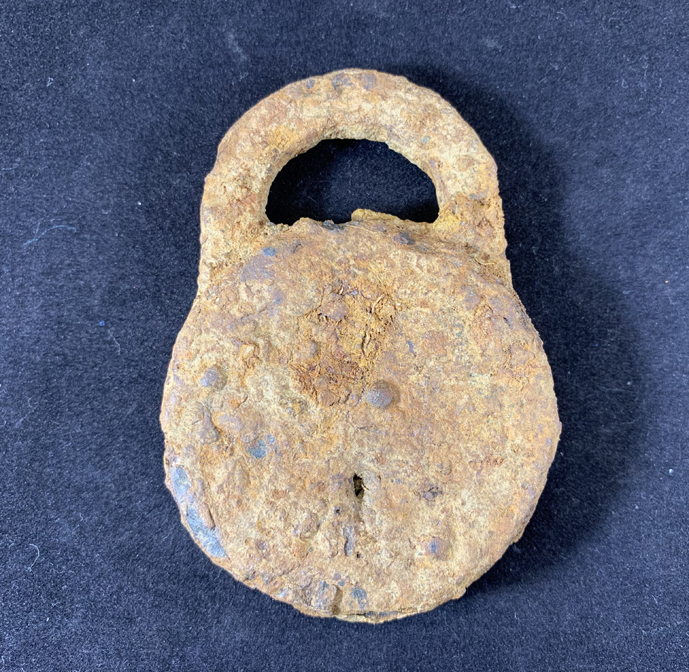
Other artifacts of interest include a bone-handled toothbrush, children’s toys, a round rusty lock, delicate Chinese porcelain cup fragments, projectile points, buttons, and the rim of an alphabet plate.
The prettiest artifact prize goes to our blue paste gem button. Research has not yet started on this little gem, but we suspect it dates to the 18th century.
Blue paste gem button
For now, the excavation site is once again covered with tarp for protection against the winter elements until we open it again next year. Here on Lives & Legacies, we’ll keep you up-to-date about what we found this summer as we spend the next several months researching these 2021 artifacts in the lab.
Join us for our first Movie on the Lawn event at Historic Kenmore on Friday, September 17 as we show National Treasure starring Nicholas Cage and the Declaration of Independence!
FACT: George Washington’s Culper Spy Ring used codes, ciphers, and invisible ink (among other tactics) to outwit the British during the American Revolution.
FICTION: There is a map in invisible ink on the back of the Declaration of Independence.
You are probably wondering what the connection to George Washington is, right? He did not write the Declaration. He did not debate it. He did not sign it. Ah, but he read it and more importantly, he read it to his troops on July 9, 1776. He was sent a copy hastily printed by John Dunlap, a printer in Philadelphia.
Much like Washington, the document is one of America’s treasures. The Declaration has a fascinating history on its journey to the National Archives, where, in National Treasure, Nicholas Cage’s character steals it in order to save it. Think about it! Just how did the document we all celebrate every July survive these past 200+ years?
After it was signed, sealed, and distributed, the official version remained with Charles Thompson, Secretary to the Congress, until he retired in 1789. The person who next took responsibility for the document was Roger Alden, deputy secretary of foreign affairs (The U.S. briefly has a Department of Foreign Affairs before it became the Department of State). By March of 1790, Thomas Jefferson would become Secretary of State and protector of the document he spearheaded in drafting. Talk about full circle!
In August 1800, the Declaration was moved to newly-built Washington, D.C., residing briefly in the Treasury building. It was sent to the War Office in May 1801 where it would stay until 1814. Thanks to the quick thinking of Stephen Pleasonton, a senior clerk at the State Department, the Declaration (among other critical documents. Ahem! The Constitution!) were secreted out of the City to a farmhouse in Virginia during the British attack on Washington on August 24, 1814. The documents were returned to the Capital after three weeks, once the British had left town.
While at the State Department, the document was mounted and displayed (with Washington’s Continental Army commission!) at the Patent Office (today the National Portrait Gallery) at the suggestion of then Secretary of State Daniel Webster in 1841. Preservation techniques were not considered, as the document was placed in direct sunlight and exposed to all manner of elements. It remained on display for the next 35 years!
Memorial certificate attesting that the holder visited the Centennial Exhibition in Philadelphia in 1876. Credit: Picryl
When it traveled to Philadelphia for the 1876 Centennial Exhibition, the public was exposed to the dire state of the parchment caused by sunlight. The good news was that it was better cared for during this time and was even kept in a fireproof safe. The bad news was that its condition was widely reported in the newspapers. In response to the resulting public outcry, Congress adopted a joint resolution that the Secretary of the Interior, Secretary of the Smithsonian, and Librarian of Congress figure out a way to save the Declaration.
Despite the commission, nothing was done for 17 more years. The document was exposed to even more light until 1894, when the State Department decided to shield it in a steel case. The Declaration was then examined by the National Academy of Science in 1904 to determine how best to preserve it. The conclusion? Keep it in a dark and dry place, never to be displayed again. So, the State Department did just that and locked the document up for the next twenty years!
Between1904 and 1920, Herbert Putnam, then the Librarian of Congress, campaigned for the State Department to turn over the founding documents to the Library of Congress (LOC), with no luck. He would not see any movement on his mission to preserve and house the Declaration until Secretary of State Bainbridge Colby formed a committee to review necessary preservation steps and recommended the Declaration be sent to the LOC. President Warren Harding issued and signed an Executive Order on September 29th, 1921 to that effect. Putnam was ecstatic and used the official library vehicle, a Model T mail wagon, to transfer the document from the State Department to the LOC.
The question remains, though. How did it eventually end up at the National Archives?
During the tumultuous years of World War II, Librarian of Congress Archibald MacLeish was on a mission to protect the documents from potential damage. His solution? Stored them at Fort Knox! It was perhaps one of the most “hush-hush” operations ever carried out by the LOC. George Washington probably would have been very proud to witness the operation carried out with a military precision worthy of Henry Knox’s (the Fort’s namesake) mission to move cannons from the Great Lakes to Dorchester Heights in Boston during the American Revolution.
Finally, the documents were transferred from the LOC to the National Archives building on December 13, 1952 (the cornerstone was laid in 1933). Congress created the Archives in the 1930s to care for government records and made the Declaration the Archives’ responsibility in 1952. Representatives of all the armed forces carried out the transfer, including military police, a color guard, the U.S. Army Band, the U.S. Air Force Drum and Bugle Corps. They used a Marine Corps armored personnel carrier, two light tanks, and a motorcycle escort. Lining Pennsylvania and Constitution Avenues were members of all the service branches. At the National Archives since 1952, the Declaration has been (and continues to be) preserved so that visitors can view it daily. Ultimately, it also inspired a fun action-adventure film!
Film footage of the transfer of the Declaration of Independence from the Library of Congress to the National Archives on December 13, 1952. Credit: National Archives.
The Declaration of Independence on display at the National Archives in Washington, D.C. Credit: National Archives
While mostly fiction, National Treasure is one of those movies that excites people about History. The number of times visitors to the National Archives have asked “Is there actually a map on the back of the Declaration of Independence?” and they hear “Nope” is not a bad thing. It is clear that something brought them to that museum and it shows they took an interest and asked a question, which is a great start to studying History.
Interestingly, a line of the riddle from the movie:
“The legend writ, the stain affected, the key in Silence undetected, fifty-five in iron pen, Mr. Matlack can’t offend”
refers to Timothy Matlack, who while considered a “boisterous, swashbuckling personality,” was also known to be “a man of intellectual vigor, a fine writer and public speaker.” He was selected by the Continental Congress to write out the official document (the one now residing in the National Archives) that measures 24.25 by 29.75 inches. He also — fun fact! — wrote out George Washington’s commission to lead the Continental army!
So, gather some friends, grab chairs, blankets, and whatever movie snacks will make you happy, purchase a ticket and join us on the lawn of Historic Kenmore on Friday, September 17 for an epic adventure starring the Declaration of Independence! Oh, and that guy Nicholas Cage too.
Amy N. Durbin Director of Education
Puleo, Stephen. American Treasures: The Secret Efforts to Save the Declaration of Independence, the Constitution, and the Gettysburg Address. Picador, 2017.