Lives and Legacies

Tag: ceramics

  • Thievery, Espionage, and Fancy Dishes: Why Porcelain Was a Big Deal for the Washington Family

    Porcelain is the king of all ceramics.  As resilient as it is beautiful, porcelain has long fascinated many people.  During the Ming Dynasty (1368-1644 AD), the Chinese began exporting porcelain to Europeans, who coveted the precious dishes to the point that porcelain became more valuable than gold.  Europeans obsessed over how it was produced and various countries sent spies, attempted to kidnap those with the knowledge, and sought to steal texts describing the process.  The Chinese closely guarded the secret, however, and the recipe for the clays and how to get the firing temperature high enough (between 2,200, and 2,600 degrees Fahrenheit) remained a mystery.  The Chinese had been making hard-paste porcelain (as opposed to soft-paste porcelain, which was considered less desirable) for over a thousand years.  That’s a well-kept secret, folks.
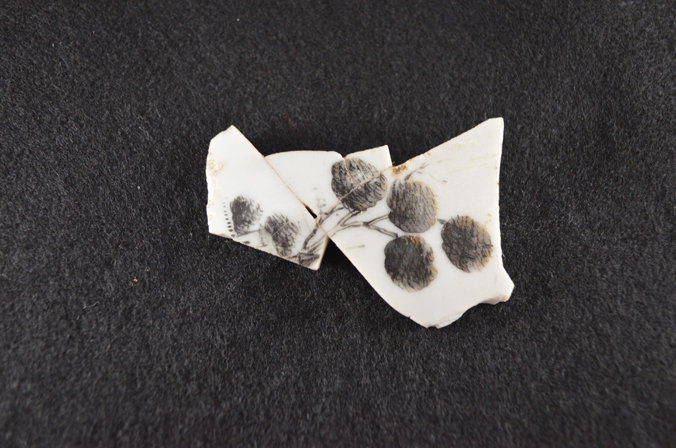
    Porcelain (1)
    Tea canister with hand painted landscape motif.

    In the 16th century, the first Europeans attempted to make porcelain in Florence but without success.  Following that, Portuguese traders returned from China with kaolin, a clay found to be key in making porcelain, but they didn’t know what else to add to it so it would survive the high firing.  Then, around 1700, a teenage alchemy apprentice with poor judgement named Johann Friedrich Böttger boasted that he knew the secret of the Philosopher’s Stone, a substance that would turn base metals into gold.   Word got out and he was kidnapped first by Frederick I of Prussia and then Augustus II the Strong of Poland.  Augustus locked him up in Dresden and ordered him to make good on his claim.  Obviously he couldn’t and to avoid being killed by the increasingly impatient king, he reluctantly partnered in 1707 with Ehrenfried Walther von Tschirnhaus, a scientist working on developing porcelain.  Combining their efforts resulted in the first hard-paste porcelain manufactured in Europe and resulted in the establishment of the Meissen porcelain factory in 1710.
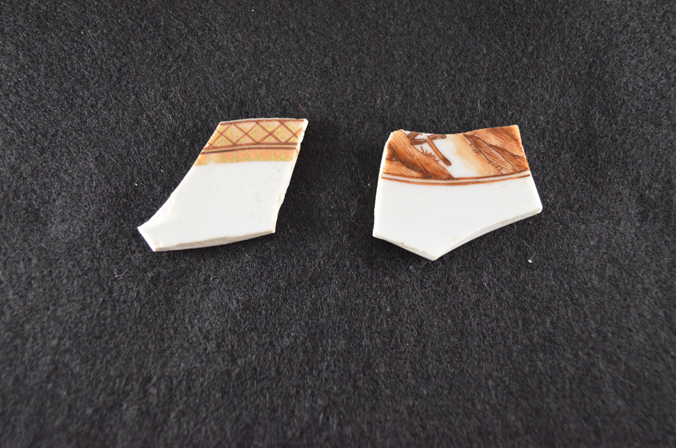
    Porcelain (2)
    Saucer fragment (rim and body) with hand painted landscape motif and gilding

    But the intrigue doesn’t end there.  In 1712, Father Francois Xavier d’Entrecolles, a French Jesuit, learned the secrets of how the Chinese manufactured porcelain with the help of Chinese he had converted to Catholicism.  He published a letter detailing the process, in what was arguably an act of industrial espionage, and it began circulating through Europe.  To further complicate matters, Samuel Stölzel, an employee of the Meissen factory, which fought hard to prevent its employees from blabbing about their secret for making porcelain, fled the factory’s oppressive conditions in 1719. He made it to Vienna, where he promptly spilled the aforementioned secret.  Within a few decades, porcelain was being produced widely across Europe.  Although Chinese porcelain was still highly valued, their exports began to drop off.
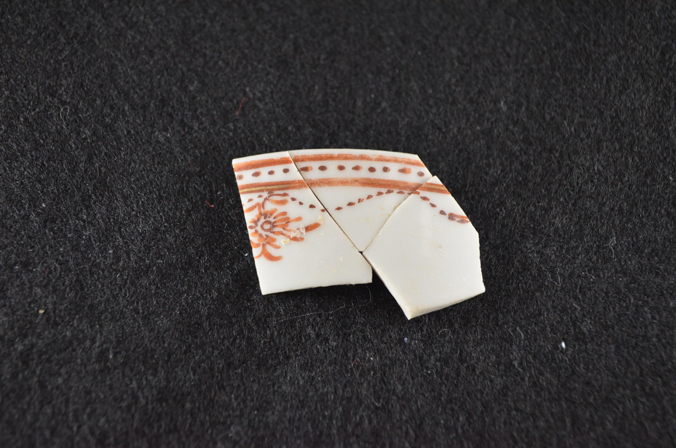
    Porcelain (3)
    Rim sherds from a hand painted teacup.

    As evidenced by all this thievery and espionage, porcelain was a big deal.  Owning porcelain was a sign of status and refinement.  If you were of the European upper class, it was imperative that you own these fancy dishes AND show them off whenever possible.  It was no less imperative for the gentry class in British North America.  Archaeological analysis of the Washington family’s porcelain illustrates that they were very much a part of this culture of conspicuous consumption when they lived at Ferry Farm.
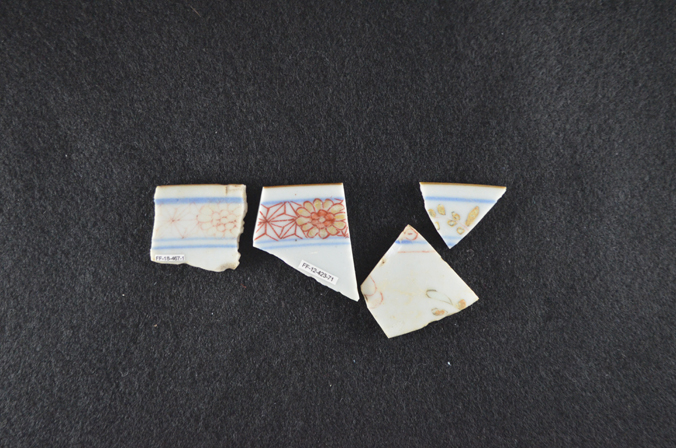
    Porcelain (4)
    Rim and body sherds from a hand painted punch bowl in the Imari palette.

    Our current mending project, piecing together porcelain sherds recovered from Ferry Farm, revealed dozens of distinct dishes once owned by the family.  George Washington’s mother Mary owned porcelain predominantly from China.  Interestingly, all were teawares as opposed to dinner wares.  While dinner was definitely a time to show off one’s ‘good china’, colonial tea time was arguably an even better opportunity.  Serving tea in the 18th century had a large ceremonial aspect and was an opportunity for those participating to show off how cultured they were while serving a beverage (also from the distant locale of China as well as India) linked closely to high status.  Perhaps Mary, a widow on a budget, decided to put her limited resources into more conspicuous teawares rather than dinner plates and bowls.  Previous analysis in our archaeology lab indicates that Mary preferred a ceramic called white salt-glazed for her dinner dishes.
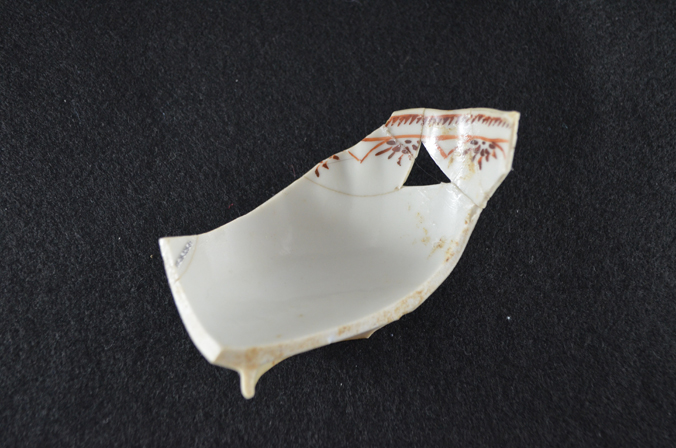
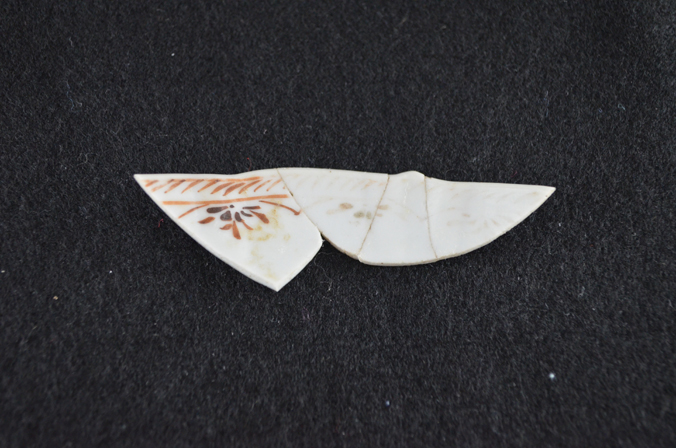
    Porcelain (5)
    Hand painted partial teacup with scalloped rim.
    Porcelain (6)
    Matching saucer for teacup for teacup immediately above.

    It has also been interesting to discover the china patterns that Mary favored, which include landscape scenes, abstract geometrical designs, and floral patterns.  While she did not appear to own ‘sets’ of china she did have cups that matched saucers, a further illustration of refinement.  As complete sets of china were not common in the middle of the 18th century, one could attempt to match up similar color palettes.  Although we’ve identified dozens of motifs in our collection, there is little evidence for Mary matching the palettes of her porcelains.  Her table, as with most colonial households, was a lot more varied in colors and patterns than we expect in the modern day.  Mary’s porcelains were delicate and skillfully hand-painted with brushes sometimes containing no more than a few bristles.  Many of the teawares are also gilded, which was a premium type of decoration for the time.
    Porcelain (7)
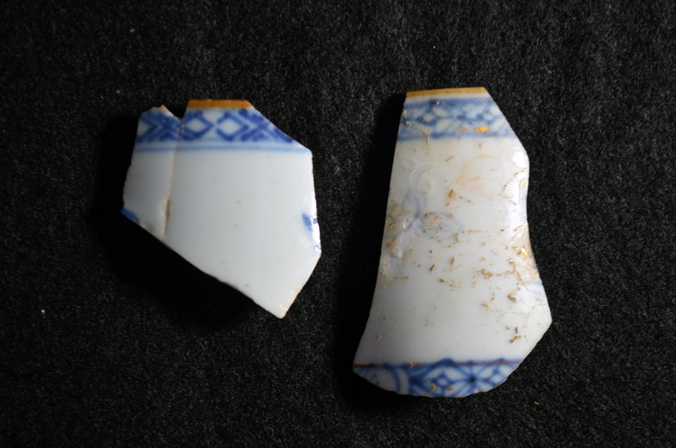
    Two chocolate/coffee style cups. Hand painted and likely gilded.

    In addition to teacups and saucers, our archaeologists have identified one tea canister and a few coffee or chocolate style cups, which tend to have taller and straighter sides and be of a smaller diameter.

    With this mending experiment under our belt it’s on to the next one in our never ending quest to learn as much as we can about the Washington family!

    Mara Kaktins, Archaeologist
    Archaeology Lab Supervisor

  • Lecture – Drinking with the Washingtons: Archaeological Evidence of Colonial Imbibing at Ferry Farm [Video]

    On Tuesday, May 7, 2019, Archaeologist Mara Kaktins, Ceramics & Glass Specialist at The George Washington Foundation, presented a lecture titled “Drinking with the Washingtons: Archaeological Evidence of Colonial Imbibing at Ferry Farm.” Mara explored a wide variety of beverage-related artifacts from teawares to punch bowls and discussed how cups and glasses reflected efforts by Mary Washington to demonstrate the family’s economic status and refinement.

    Join us on Tuesday, May 14, 2019 for “Food in the Eighteenth Century” when Deborah Lawton, Park Ranger at George Washington Birthplace National Monument, will explore the new dishes and changing tastes that marked the foodways of the eighteenth century. Talk begins at 7:00 p.m. The lecture is FREE and hosted at the Fredericksburg branch of the Central Rappahannock Regional Library at 1201 Caroline Street, Fredericksburg, Virginia. To learn more, visit http://www.kenmore.org.

  • Making 18th Century Glass & Ceramic Reproductions: An Update

    The replica Washington house at George Washington’s Ferry Farm has been open for tours for one year now but we still continue to add reproduction furniture and objects to the rooms inside. Since the house is a replica built using archaeology, historic research, and expert knowledge, we are using the same three foundations to create replica objects to display inside the house so that visitors may have a hands-on interactive experience.  Guests may sit on chairs, lie on the beds, pick up tumblers, hold tea pots and much more! Here in the archaeology lab at Ferry Farm, we’re always hard at work making new reproduction ceramic and glass items for the Washington house, as seen in this video.  Let’s take a look at some of our newest additions!

    This adorable little teapot is a reproduction of a ware type called Littler’s Blue which had a very short run between 1750 and 1765.  These pots were often gilded with gold so we found a tiny blue teapot and made it fabulous.

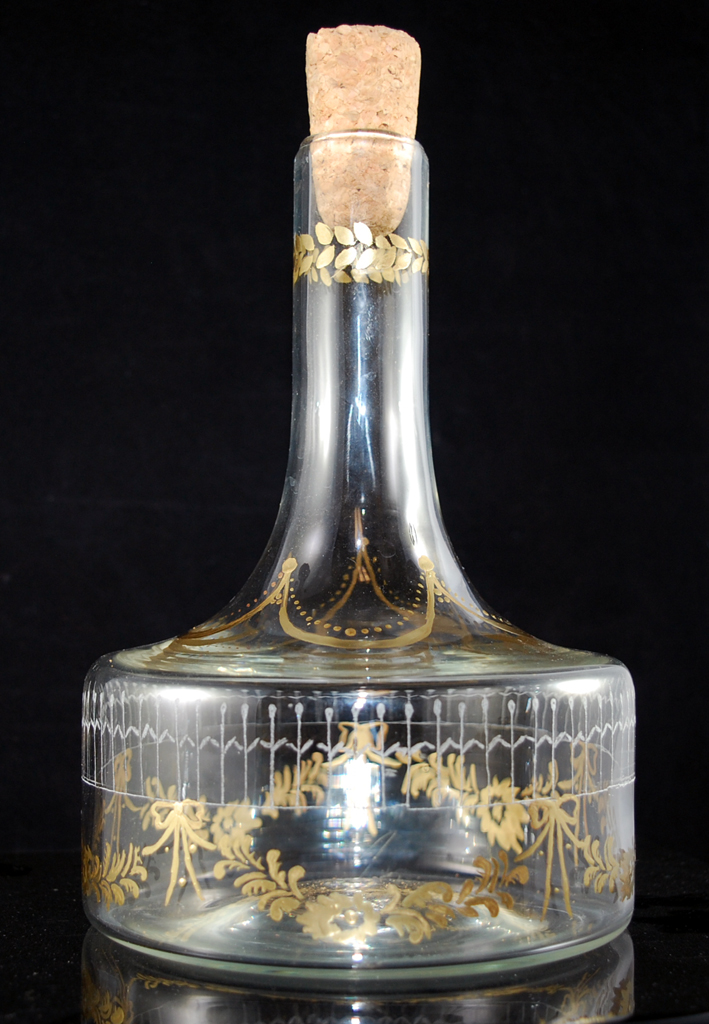
    We needed a decanter for the Washington house and while the shape of this one wasn’t perfect we were able to engrave it with a tulip motif based on artifacts recovered archaeologically at Ferry Farm. And because we caught gilding fever one of our very talented interns embellished it further to match eighteenth century examples. We also whittled down the ridiculous cork, although we’re searching for a more appropriate glass one.

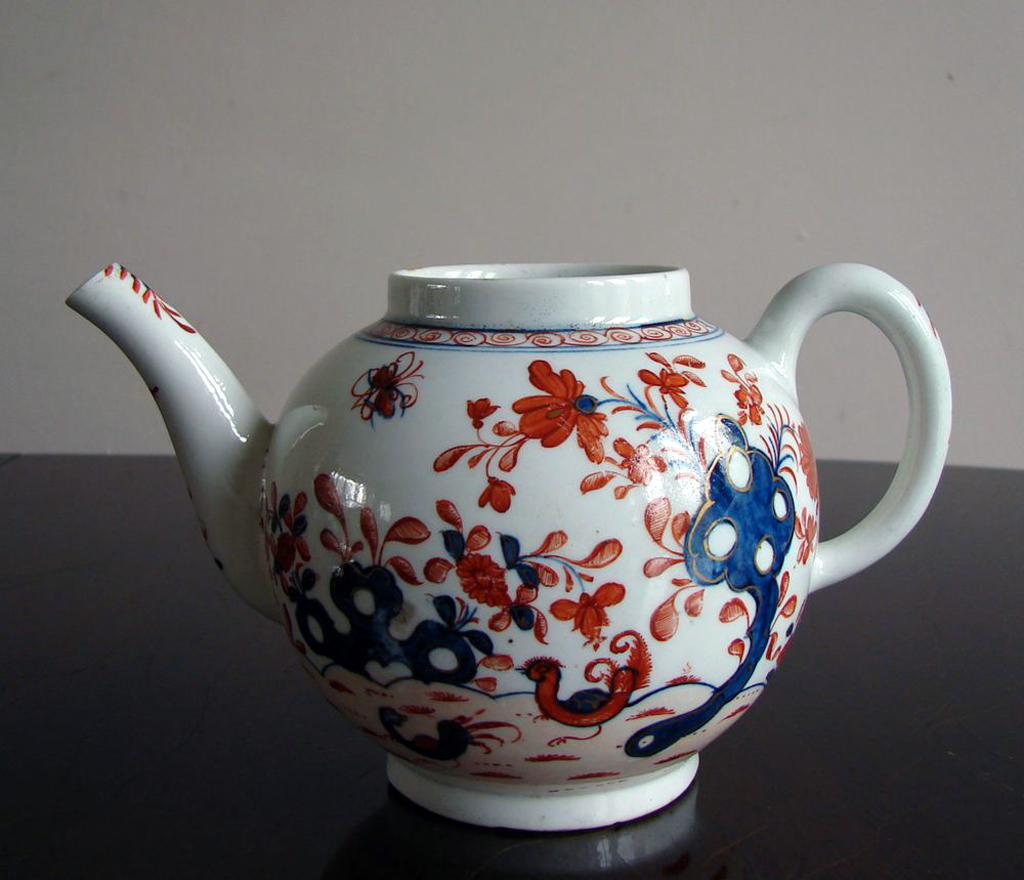
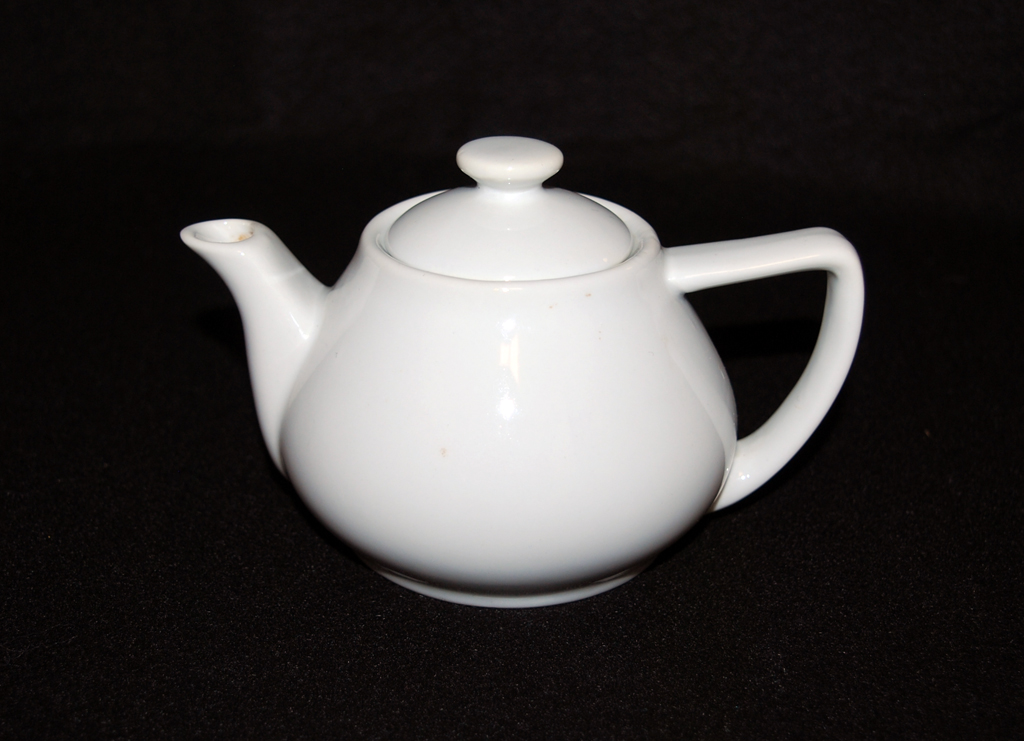
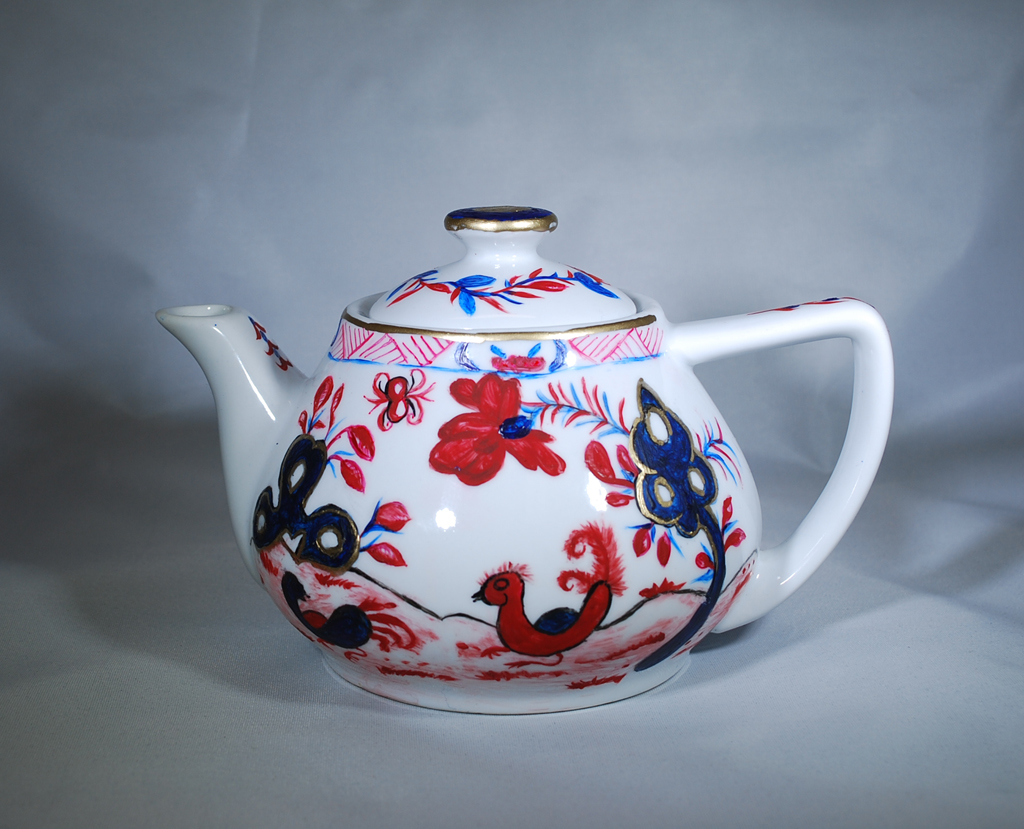
    We’ve excavated a lot of Chinese porcelain with what is called at ‘Imari’ palette, which is defined by under the glaze blue hand-painting, over-the-glaze red painting, and gilding.  Reproduction Imari is hard to find so we turned this plain white teapot into an Imari.  Our inspiration was the 18th century teapot below featuring cute little silkie chickens!

    Our staff then set out to turn this colonial revival basin into a tin-glazed serving bowl.  Our excavations have turned up quite a bit of hand-painted polychrome tin-glaze so it was a must have for the new house.  We decided to copy the eighteenth century bowl below. A little bit of paint and presto!  Bye basin and hello serving bowl!  Can you spot the tiny bee hidden among the flowers?

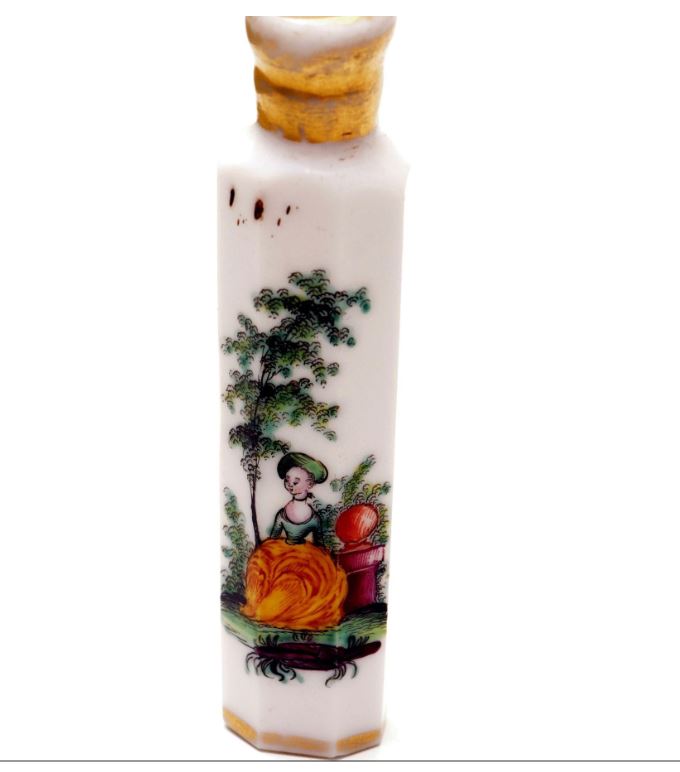
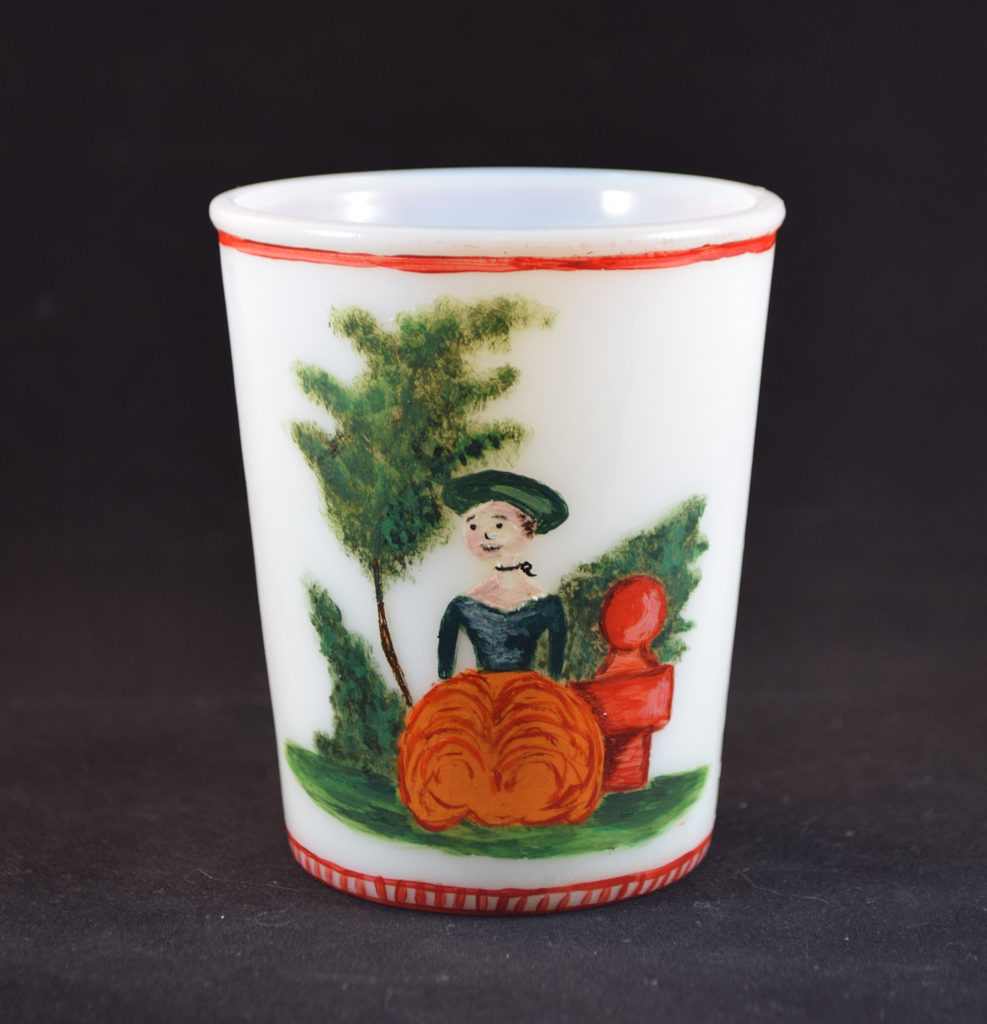
    We’ve been very fortunate to have a few extremely artistic interns, one of whom decorated this milk glass tumbler with an eighteenth century design from the vase below.  Some artistic license was taken and we decided to leave out the odd crab/lobster/crayfish….thing at the feet of the lady.  We think she turned out pretty nicely and since we’ve excavated a lot of painted milk glass at Ferry Farm she is a good fit for the house!

    If you’d like to see any of these in person, please come take a tour of the Washington house replica at Ferry Farm!  Where, unlike most museums, touching the (reproduction) objects is highly encouraged!

    Mara Kaktins, Archaeologist
    Archaeology Lab Supervisor
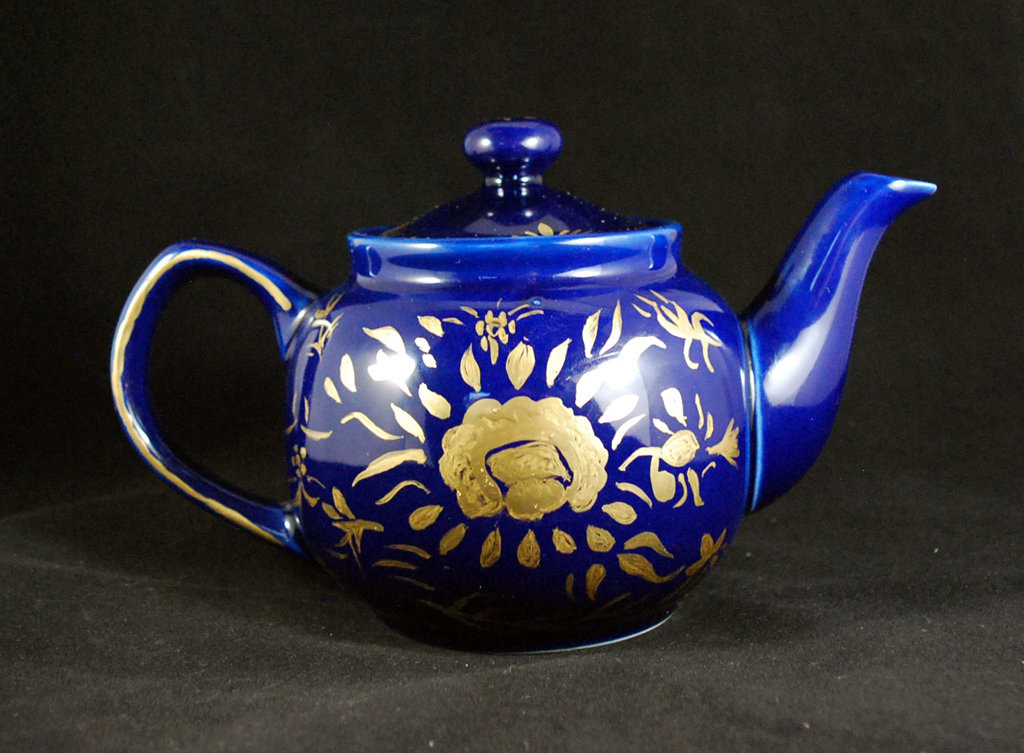
  • Making 18th Century Glass & Ceramic Replicas [Video]

    Our Archaeology team reveals how they are creating replica 18th century glass and ceramic objects that visitors may touch during tours of the Washington house replica at Ferry Farm.

    Learn more about the Washington house replica here.

  • Some Like it Hot …But Probably Not This Hot: The Archaeology of a (BIG!) Fire

    Twenty years ago, archaeologists digging at George Washington’s Ferry Farm unearthed the remains of a mid-eighteenth century kitchen.  It was immediately obvious from the state of the artifacts that this kitchen had not simply fallen into to ruin and been abandoned – it had burned down.  While this is fairly interesting in and of itself, a reexamination of the kitchen fire artifacts this year revealed surprising information about the intensity of the fire.

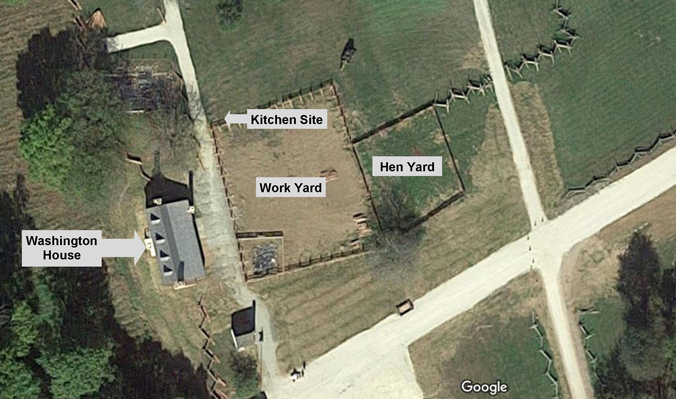
    Map of Kitchen Site
    Overhead image of George Washington’s Ferry Farm showing location of the kitchen that burnt down in the 18th century. Credit: Google

    What first struck us was the sheer density of artifacts in this kitchen. We recovered A LOT of artifacts.  Furthermore, these broken sherds could be mended to form almost whole bottles, crocks, jugs, pans, and such.  The number of artifacts and the fact they could be put together to form entire objects tell us that the Washington family and their slaves did not have much, if any, time to salvage what was inside the burning kitchen.  Food, wine bottles, food storage and preparation vessels and utensils, furniture, and more all destroyed exactly where they stood.  Think of this kitchen as a mini Pompeii or Titanic. Just about everything that the Washington’s had in their kitchen went down with the ship and was still there, just squished and burned.

    A preserved moment in time like this fire is a great opportunity for archaeologists to study the Washingtons but it comes with one big problem—most of the artifacts were totally cooked and absolutely toasted beyond recognition in some cases.  Soft metal artifacts made from lead and copper, for example, were reduced to melted blobs by the fire.  Ceramic vessels appear to have exploded from the heat and were reduced to blackened sherds.  Some of the glass bottles survived with a minimal amount of warping from heat but the majority were melted or even burned in a process called ‘devitrification’.  And oddly enough there was very little animal bone, which is usually ubiquitous in kitchens found archaeologically.

    To put the intensity of this kitchen fire in context here are some quick statistics (in Fahrenheit):

    • Lead melts at 621.4 degrees.
    • According to the National Institute of Fire and Safety Training, the average modern house fire tops out at around 1,100 degrees.
    • 1,400-1,800 degrees is the temperature at which bone will be destroyed
    • Copper melts at 1,984 degrees
    • Glass melts between 2,600 and 2,800 degrees.

    Since the Washington kitchen fire was hot enough to actually burn glass, not just melt it, we’re looking at a fire that likely exceeded 2,800 degrees.  That’s incredible!  It also explains why there was so little animal bone recovered. Most bone was probably completely destroyed by the flames.

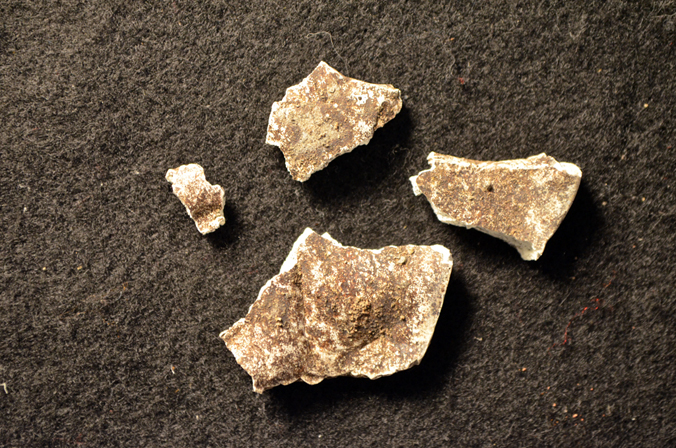
    Extremely Burned Tin Glaze
    Extremely burned tin glaze ceramic recovered from the kitchen site at Ferry Farm.
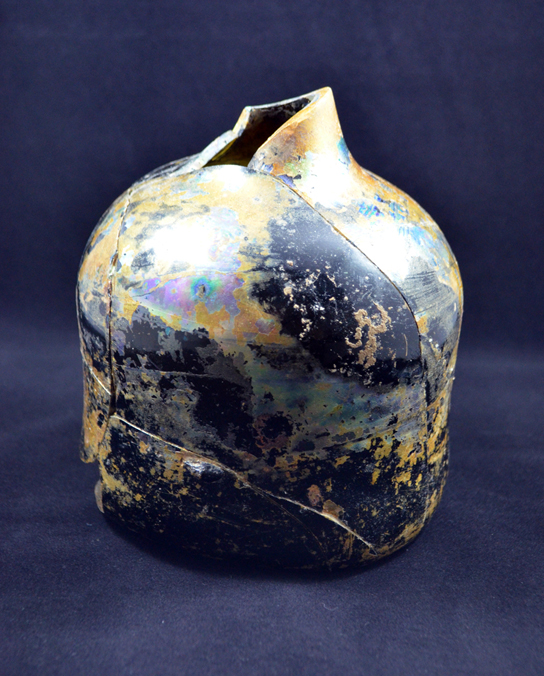
    Devitrified Glass
    Devitrified glass from the burnt Washington kitchen
    Melted Cooper Alloy
    Melted copper alloy excavated from the Ferry Farm kitchen
    Blob of Lead Alloy
    Blobs of lead alloy recovered from the kitchen site
    DSC_0006
    Slightly burned wine bottle from the kitchen
    DSC_0011
    A second slightly burned wine bottle

    So, how on earth did the fire get that hot?  We’ll probably never know, unfortunately.  Some possible explanations may be the environmental conditions at the time of the blaze – a hot dry day with high winds could produce a perfect storm for a wooden kitchen to turn into an inferno.  The fire also may have started at night when few people were awake to notice and try to put it out, although presumably the kitchen housed enslaved people, as was common for that time period.  Another culprit may have been what was kept in the kitchen.  There were dozens of wine bottles in there. While we call them ‘wine’ bottles today, they were actually all-purpose vessels that held any kind of spirituous liquid including harder alcohol like gin, whiskey, and rum, which are highly combustible.  Animal products such as lard, tallow, beeswax, and even whale oil for lamps were likely stored in the kitchen and all burn quite well for long periods of time.

    Regardless of the fire’s cause, it is clear from archaeological evidence that it happened quickly because not much within the structure could be saved, if anything.  We also know that it burned extremely hot and for a sustained period of time in order to have caused so much damage to the items within.

    Finally, perhaps, the last and the biggest mystery is where the replacement kitchen was located.  Kitchens were almost all outbuildings because, as you may have deduced, they tended to catch on fire easily.  A colonial household absolutely required a kitchen, however, and another would have been built almost immediately. Somewhere on the landscape at Ferry Farm, there is another kitchen waiting to be discovered archaeologically.

    In the meantime, The George Washington Foundation plans to reconstruct the original Washington era kitchen so visitors can experience the sights, sounds, and smells of an eighteenth century kitchen, minus the blazing inferno, of course.

    Mara Kaktins, Archaeologist
    Archaeology Lab Supervisor
    Ceramics & Glass Specialist

  • Artifact, Object, Repro: Part 3 – Imari & Famille Rose Porcelain

    Furnishings posts logo finalToday, we revisit the Chinese Export Porcelain (CEP) reproduction ceramics now displayed or to be displayed in the future in the Washington house replica at George Washington’s Ferry Farm.  We’re examining the artifacts recovered at Ferry Farm, the complete 18th century objects those artifacts represent, and the reproduction pieces inspired by these artifact sherds as well as by the complete originals.  This is the final post in this three week series and in it we’ll take a look at two special styles of CEP known as imari and famille rose.

    These sherds are CEP like the blue and white porcelains we wrote about in part 1 but they are in different colorways, namely “imari” (blue, red, orange and occasionally some gilt accents) and “famille rose” (pink, orange and some green).  Sometimes, the exterior of teacups, bowls and saucers were painted an opaque brown, which is a style known as “Batavian.”  Our fragments suggest some Batavian pieces were in use in the Washington house, as well as some that show gilding. 

    Buildings, people and fish were all popular motifs in imari and famille rose palettes.  Famille rose was one of the earliest of the CEP decorative styles, dating as early as the 1720s.  If a colonial American family managed to obtain a piece of famille rose CEP, it would be a treasured possession for generations.

    Again, we have located individual pieces in period-correct shapes, that are decorated in colors and motifs that belong to the imari and famille rose palettes.  While interest in all things Asian may have reached its height in 18th century Europe, the style had several resurgences over the ensuing years, including in the early 20th century, which helped us greatly in our hunt for suitable reproductions of CEP.  During that time, Japanese potters began to churn out massive quantities of porcelain decorated in what became known as the “geisha girl” style, using green, orange and pink enamels.  The decorations depicted geishas in gardens near buildings.  While geishas may be a Japanese cultural theme, the colors, the delicate ceramic, and the inclusion of buildings and flowers all reference Chinese famille rose.

    These pieces were intended for the Western market, and were often found in American dime stores, or given away as premiums in packages of tea.  They were produced from the 1890s, through World War II and even during the Allied occupation of Japan.  As a result, they’ve become highly collectable and we were able to find several different forms to add to our collection of stand-ins for famille rose tea wares.

    Meghan Budinger
    Aldrich Director of Curatorial Operations

  • Artifact, Object, Repro: Part 2 – White Salt-Glaze and Westerwald Stonewares

    Furnishings posts logo finalToday, we continue our look at the different ceramics displayed or soon to be displayed in the Washington house at George Washington’s Ferry Farm.  We’re examining the artifacts recovered at Ferry Farm, the complete 18th century objects those artifacts represent, and the reproduction pieces inspired by these artifact sherds as well as by the complete originals.  Last week, we learned about the blue and white Chinese Export Porcelain reproductions gracing the house.  This week, in the second post of this series, will investigate the white salt-glaze stoneware and the Westerwald stoneware.

    These fragments are from white salt-glazed (WSG) stoneware dinner plate rims, and show two different styles of molded decoration.  The pattern in the above photo on the left was known as “dot/diaper/basket” and the pattern in the above photo on the right was known as “royal rim.”


    Molded WSG came into existence in the 1740s, so the Washington family was right on trend.  A few decades later, creamware would replace it as popular dinnerware, but the rim patterns found on WSG were often very similar to those used on later creamware.

    During the height of the Colonial Revival decorating style in mid-20th century America, the patterns used on WSG and creamware back in the 18th century had a major resurgence.  Several American potteries started producing white stoneware table wares, similar to WSG, with glossy surfaces similar to creamware, using molded rim decorations that were almost exactly like their 18th century predecessors.  The Canonsburg Pottery outside of Pittsburgh, Pennsylvania, produced dot/diaper/basket plates under the pattern name of American Traditional from the early 20th century through the company’s closure in 1978.  The Red Cliff Company pottery in Chicago produced plates with a rim pattern taken from the “royal” rim style on 18th century creamware (which was similar to an earlier WSG rim) under the pattern name Heirloom from the 1950s until their closure in 1977.  Similarly, Sears sold an almost identical plate under the pattern name American Federalist until the mid-1980s.  Luckily for us, all of these 20th century patterns are collectible and we found many of them in stores and on-line.

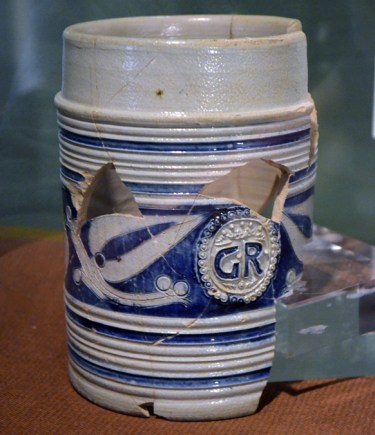
    C1 - Westerwald Artifact

    The above fragment came from either a mug or a jug made from grey stoneware decorated with cobalt blue glaze, known as Westerwald.  The Washington family owned quite a bit of Westerwald ceramic, as did the Lewis family at Kenmore.

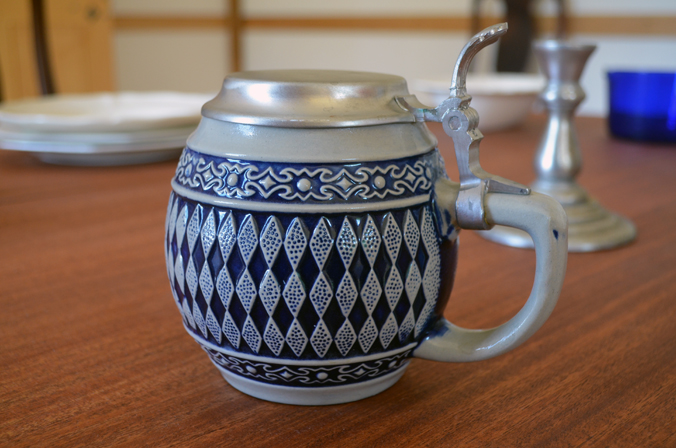
    C2 - Westerwald Mug

    Westerwald pottery originated in 17th century Germany, and it is still produced there today.  It was a popular style for traditional German steins, often with pewter lids attached.  In the 18th century, it was often made for export to England and was therefore decorated with the “GR” emblem, referencing Georgius Rex (King George).

    C2 - Westerwald Repro

    During one of our treks through a thrift store, we came across this lidded Westerwald mug, and we were amazed at how similar to our 18th century fragments it was.  So amazed, in fact, that we questioned whether or not it might actually be an antique piece (that somehow remained in pristine condition)! A look at the bottom revealed a very 20th century maker’s mark, however, but it also spurred a desire to find out more about the company that was producing such excellent Westerwald. The mark indicated that the Markpiece was “Original Gerzit,” and some internet research revealed that the Gerzit Company in Höhr-Grenzhausen, Germany, was originally the pottery founded by Simon Peter Gerz in 1857.  The family owned and continued to operate the pottery through World War II, at which time they changed the name to Gerzit.  By German law established in 1887, Westerwald produced for export has to be marked Made in Germany.  Westerwald produced for sale in Germany doesn’t have to carry a mark at all.  Any Westerwald produced after World War II for export has to specify whether it was made in East or West Germany.  Putting all of that together, and comparing it to the mark on our newly acquired mug, shows us that it was produced sometime between 1949 (when the company name changed) and 1997 (when the company closed) and was originally intended for sale within Germany.  How it ended up in a thrift store in Virginia is anyone’s guess, but it was a very lucky find for us!

    In part 3, we’ll revisit Chinese Export Porcelains to see imari and famille rose artifacts, originals, and reproductions that will go in the Washington house.

    Meghan Budinger
    Aldrich Director of Curatorial Operations

  • Artifact, Object, Repro: Part 1 – Blue & White Chinese Export Porcelain

    Furnishings posts logo finalAs you may recall from past posts (here and here) about our hunt for reproduction ceramics and glassware to use in the Washington house at George Washington’s Ferry Farm, and taking a page from the Colonial Revival playbook, our sources have been varied and surprising – junk shops, flea markets, TV show props liquidation sales, attics of friends and relatives.  You name it, we’ve probably been there! Now it’s time to take a look at what we’ve found, and show you how we decided what passed muster to be placed in the Washington house.  In this series of posts, we’ll examine different ceramics and take a look at the artifact recovered at Ferry Farm, the complete 18th century object those artifacts represent, and the reproduction pieces inspired by the artifacts and originals.  This first post will examine blue and white Chinese Export Porcelain (CEP).

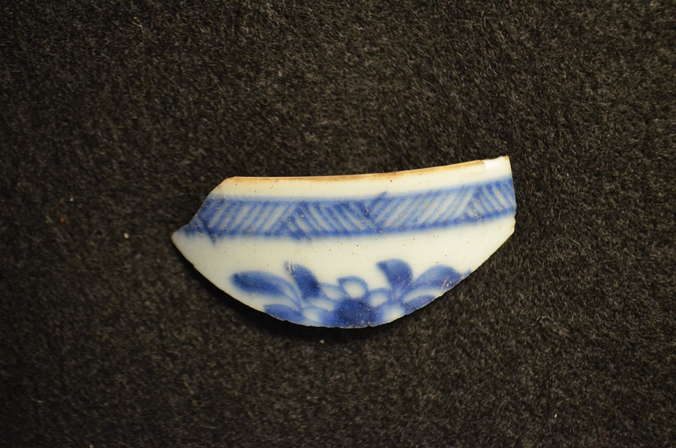
    Blue and White Artifact
    Blue and white Chinese Export Porcelain artifact excavated at George Washington’s Ferry Farm.

    The above tiny archaeological fragment was found on the Washington house site and identified by our archaeologists as being from fine, white porcelain tea wares, decorated in applied blue motifs.  Such tea wares are known as blue and white Chinese Export Porcelain (CEP) and were produced throughout the 18th century.

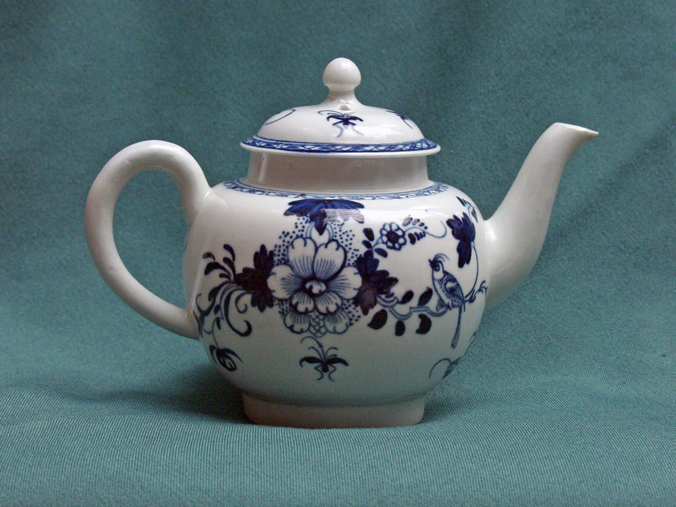
    This 18th century blue and white teapot in the collection at Historic Kenmore is an excellent example of an English attempt to create porcelain like CEP.

    Original porcelain made in China, where the technique was created and perfected, was highly coveted during the 1700s, but it wasn’t easy to come by and was often quite expensive.  Eventually, makers in England and other European countries tried producing this porcelain.  They were never quite able to simulate the very thin, nearly translucent white body, but they came close in replicating the decoration.  Colonists in Virginia, like the Washingtons, had an even tougher time coming across true CEP, so their collections of “porcelain” tea wares were often a mix of true porcelain and the thicker European variety.  The above teapot from the Kenmore collection is an example of an 18th century English attempt at creating porcelain like CEP.  While the ceramic body is sturdier than true Chinese porcelain, the blue decoration is very similar to CEP.

    Blue and White Repro
    20th century blue and white Chinese Export Porcelain reproduction teapot displayed inside the Washington house replica at Ferry Farm.
    Blue and White Repro teawares
    20th century blue and white CEP teaware reproductions in the Washington house.

    Above are some of the blue and white ceramics that we found to represent the Washington’s original blue and white CEP tea wares.  The difficulty in finding true porcelain continues even today! These pieces were selected because they all have blue decoration that is very similar to the typical motifs used in the Washington period, and their shapes and sizes correspond to what was available in the time period too.  In other words, from 5 steps away, they look just like period examples.  They were all produced in the 20th century, however, and represent manufactories in Germany and England.  Piecing together a tea service from multiple sources allowed us to accomplish another hallmark of 18th century tea wares: Nothing matches! Discerning buyers in the Washington’s time might choose a particular colorway that they liked and find individual pieces exhibiting those colors, but the idea of buying a complete tea set in one pattern was not a possibility until much later in the 19th century.

    In the part 2, we’ll examine white salt-glazed stoneware artifacts, originals, and reproductions that will go in the Washington house.

    Meghan Budinger
    Aldrich Director of Curatorial Operations

  • The Fly …uh, Snail… in the Ointment …Pot

    It’s flu season again.  And for most of us who get sick that means a trip to the doctor, perhaps some prescribed medicines, and lots of rest.  But what did George Washington do when he got sick?  Although most of us likely think of our first president as perpetually healthy and strong, he was actually stricken by quite a few serious illnesses in his lifetime, many of which occurred while he was growing up at Ferry Farm.

    Mary, George’s mother, had a few options when caring for her sick children but a hospital was not one. They did not exist yet.  The most expensive solution was to call a doctor (Back then, they came to you. You do not go to them).  Most people could not afford a doctor’s visit, however, and many distrusted doctors as being worse than the diseases they cured.  This fear of doctors was somewhat justified given that George ultimately died of an illness he could well have survived had he not been bled to death by his doctors.

    An ill man who is being bled by his doctor. Coloured etching by J. Sneyd, 1804, after J. Gillray
    “An ill man who is being bled by his doctor. Coloured etching by J. Sneyd, 1804, after J. Gillray.” by James Gillray. Credit: Wellcome Collection. CC BY

    Option number two was to visit a pharmacy.  Now, we’re not talking Walgreens.  Think smaller and jars full of leeches.  Anyone could visit an 18th century pharmacy without any kind of prescription or referral. If you had the money, you could purchase whatever ‘cure’ you wanted.  The pharmacist was not necessarily a medical professional and may or may not have been good at diagnosing whatever illness you had. That didn’t mean you couldn’t walk out of a pharmacy with any and all manner of odd concoctions that cured you or did not cure you.  For instance, folks were awfully fond of self-treating with mercury tinctures until well into the 19th century, which we now know to be a colossally terrible idea.

    Michel Schuppach in his pharmacy examining a young woman's urine who is seated opposite him awaiting the result. Line engraving by B. Hübner, 1775, after G. Locher, 1774
    ‘Michel Schuppach in his pharmacy examining a young woman’s urine who is seated opposite him awaiting the result. Line engraving by B. Hübner, 1775, after G. Locher, 1774.’ by Gottfried Locher. Credit: Wellcome Collection. CC BY

    Another popular option was to make your own medicines at home.  Recipes for cures were passed down through word of mouth and many households had herb gardens containing medicinal plants, many brought with colonists from Europe.  There were also a number of books available that divulged the secrets of pharmacopoeia.  Many of the medicines described in these books sound like things a storybook witch might brew up.  One such tome available to Mary Washington was Thomas Fuller’s Pharmacopeia Extemporanea, published in 1710. It contains remedies such as ‘Pectoral Snail Water’, said to be good for “Erratic scorbutic Fevers, Flushings, flying Pains of the Joynts, hectic wasting of Flesh, and Night-sweats”.  The delicious-sounding ingredients were as follows:

    “Snails beaten to mash with their Shells 3 pound
    Crumb of white Bread new bak’d 12 ounces
    Nutmeg 6 drams
    Ground-Ivy 6 handfuls
    Whey 3 quarts; distil it in a cold Still, without burning
    One half pint brandy”

    One can only assume that the last ingredient was to help the mashed snails go down.

    We do have evidence showing the use of home medicines at Ferry Farm in the form of numerous ointment pots.  At least half a dozen have been identified thus far.  Ointment pots were used for holding various medical or cosmetic unguents likely made at home.  Generally, such pots were fairly plain with a rolled or flared lip used to secure a textile, hide, or paper lid with a string.

    Judging by their lack of use wear, the pots recovered at Ferry Farm were used for storage, not for actually manufacturing medicines.  The act of stirring or grinding substances in the pots would have resulted in microscopic striations or scratches in the glaze and these are absent in the Washington family ointment pots.  However, they do indicate the storage of medicines at Ferry Farm.  Given the nature of home remedies in the 1700s, one’s imagination can run wild thinking of all the interesting concoctions that they may have held!

    Mara Kaktins, Archaeologist
    Archaeology Lab Supervisor
    Further Reading

    Fuller, Thomas. Pharmacopoeia extemporanea : or, a body of prescripts. In which forms of select remedies, accommodated to most intentions of cure, are propos’d. London. 1710.

    Hume, Ivor Noel.  A Guide to the Artifacts of Colonial America.  University of Pennsylvania Press, Philadelphia.  2001.

    Hume, Ivor Noel.  Early English Delftware from London and Virginia.  Colonial Williamsburg Foundation, Virginia.  1977.

    Mellor, Maureen.  Pots and People that Have Shaped the Heritage of Medieval and Later England.  Ashmolean Museum, Oxford.  2000.

    Skerry, Janine E. and Suzanne Findlen Hood.  Stalt-Glazed Stoneware in Early America.  University Press of New England, Hanover and London.  2009


  • Photos: “Antiques” Hunt!

    Furnishings posts logo finalSeveral weeks ago, staff from George Washington’s Ferry Farm went hunting for objects to go into the reconstructed Washington house, which will be fully furnished with reproduction pieces to allow our visitors to sit on the chairs, open drawers, and pick up the plates on the table.  Finding accurate, well-made reproductions of pieces from the Washington-era is no small feat but staff members have traveled to a variety of flea markets and consignment shops on the hunt for 20th century Colonial Revival objects that will pass as 18th century.  Here are a few photos from one of these trips…

    To learn more about the reconstructed Washington house furnishing effort, you might wish to read these blog posts…

    Furnishing George’s House: The Corner Cupboard
    Furnishing George’s House: What Exactly is That? Curatorial Conundrums in the Washington House – Part 1: Scrutoire
    Furnishing George’s House: What Exactly is That? Curatorial Conundrums in the Washington House – Part 2: Sugar Box
    Search for Washington House Furnishings Takes Exciting Turn!
    Just What is Colonial Revival?
    Getting “Judgy” With Colonial Revival Ceramics

    Video – Lecture: “The Rooms at Ferry Farm”

    Meghan Budinger
    Aldrich Director of Curatorial Operations