While Historic Kenmore remains closed temporarily because of the COVID-19 coronavirus pandemic, nature’s seasons move forward as normal. One of the highlights of spring in Kenmore’s gardens is the first blooms of our tulips and other flowers. Since visitors cannot see the beauty of these flowers in person, we wanted to share some photos for everyone to enjoy.
Sewing was an important and necessary skill that all girls in the 18th century learned from a young age.A family’s clothing, bed and table linens, and other items made of fabric were in constant need of repair. These repairs and other sewing tasks were considered women’s work. Along with practical applications, sewing skills included fancier needlework used to make decorative luxuries.
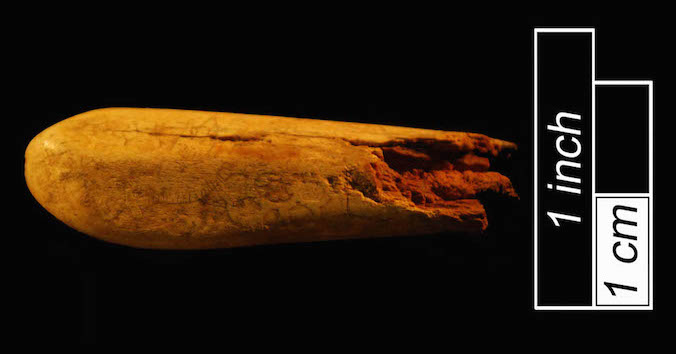
To showcase these artistic needlework skills, girls and young women made samplers. One tool used to make such samplers was a special embroidery hook called a tambour hook. One of these hooks was found by archaeologists in the remains of the Washington house at Ferry Farm. Young Betty Washington probably used this special tool, made of a bone handle and a portion of a steel hook, to add decorative touches to fine needlework projects.
Tambour hook used for neddlework excavated by archaeologists from the reamains of the Washington house at Ferry Farm.
Using the picture and list below to find sewing-related artifacts excavated at Ferry Farm! Click on the image to enlarge.
George Washington was the oldest of Augustine and Mary Washington’s five children. The next oldest was daughter Betty, who was born 14 months after George and was his only sister.
George and Betty are immensely important to us at George Washington’s Ferry Farm & Historic Kenmore. They spent their formative years at Ferry Farm and Betty called Kenmore home for two decades.As main characters in our historic sites’ stories, we often ponder what their relationship as siblings was like.
Portrait of Betty Washington Lewis by John Wollaston, c. 1755. Credit: Mount Vernon Ladies Association
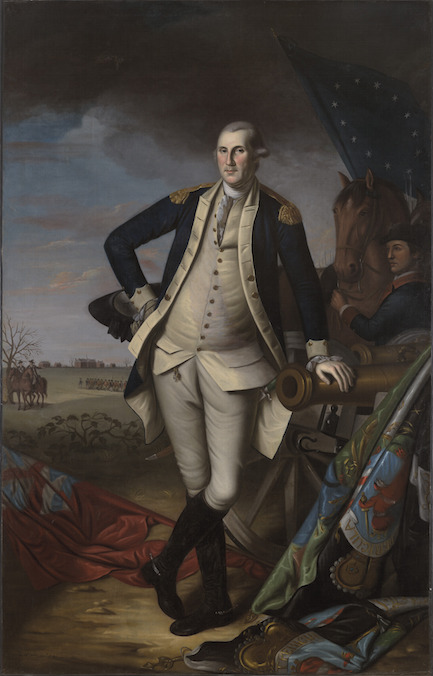
Portrait of George Washington, 1772 by Charles Willson Peale. Credit: National Portrait Gallery
The best and, frankly, only gauge of George and Betty’s relationship are the letters they wrote to one another later in their lives.Twenty-four letters written between 1779 and 1796 have survived. They wrote more than just these two dozen but many have not been found.The 24 that have survived depict a complex relationship of sibling love and camaraderie tempered by occasional conflict.Let’s begin, on this National Siblings Day, a multi-post examination of George and Betty’s letters and what they may indicate about the relationship of this historically consequential brother and sister.
In our first post, we look at the letters George and Betty wrote to one another during the Revolutionary War.There are only two, both from the hand of Betty, but they are profoundly interesting, nonetheless.
The first surviving letter comes in 1779 while George was away commanding the Continental Army.He had been commander-in-chief for four years by that time and, during the second half of 1779, his service found him headquartered at the highly-fortified and strategically important West Point, New York overlooking the Hudson River.On September 21, Betty wrote her brother there to thank him for “the miniature Picture—for which I am much Indetted”.The miniature was painted by Charles Willson Peale and was a small version of his portrait of Washington commemorating the American victories at Trenton on December 26, 1776 and Princeton on January 3, 1777. Peale painted s miniature copy of the portrait specifically for Betty indicating that either George wanted to share his likeness with his sister or that Betty had requested a likeness of her brother that she could have while he was away fighting.
“George Washington at the Battle of Princeton” (1779) by Charles Willson Peale. Credit: Yale University Art Gallery
Indeed, this letter shows that Betty cleared missed George.In sharing that she, her husband Fielding, and their daughter also named Betty had recently visited George’s wife Martha, Betty noted her wish that she could have found George there upon their arrival at Mount Vernon. Doing so, she wrote, “would of Compleat’d My Happiness.”It had been at least four long years since Betty had laid eyes on George.Closing the letter, she wistfully expressed her longing for the war’s end, writing, “O when will that Day Come that we Shall meet again[?]—I trust in the Lord soon, till when you have the sincere Prayr’s and Good wishes for your helth [sic] and happiness.”
The only other surviving wartime letter written between George and Betty comes towards the end of the Revolutionary War and reveals a bit more conflict in the sibling relationship than the first.It is dated August 25, 1783 and is quite a confusing and unclear letter at times.
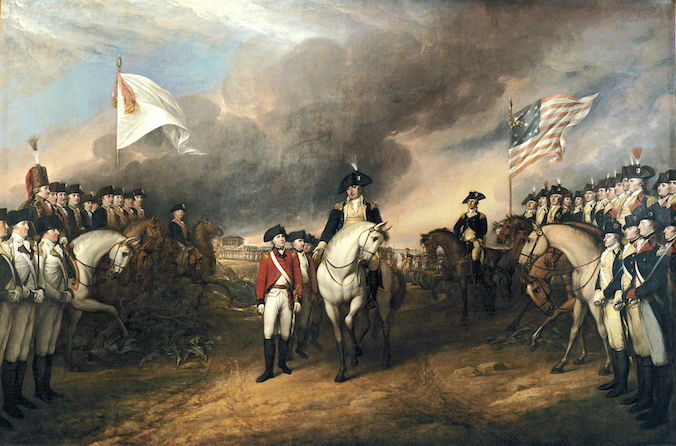
Betty begins by congratulating George on “the happy Change in our Affairs” because she hoped “it will be the meanes of our Seeing you Soon”.Betty may simply be congratulating George on the looming end of the war but, at the same time, throughout her letter she refers to more than one event that happened back at the end of 1781.Indeed, much in the letter seems to indicate that their correspondence had lapsed for a substantial amount of time and that this is may be a catching up letter. If so, then perhaps her good wishes are for George’s victory at Yorktown and the surrender of General Lord Cornwallis back on October 19, 1781?
Regardless, Betty is quite upset that she has not heard from George in an extraordinarily long time.She starkly admonishes him for not writing, saying “I have been at a loss how to account for your long silence,[.] the multiplicity of Business you have on your mind is the only One I Can find that flatters me [that] I am not quite forgot[ten.]”While acknowledging the pressures on his time as the army’s commander, Betty scolds her “Dear Brother” for not finding “one half [h]Our you Could Spare to write a few lines to an only Sister whoe [sic] was lab[o]ring under so mutch [sic] Affliction both of Body and mind.”
The affliction faced by Betty was the deaths of both her brother Samuel and her husband Fielding, which she says took place within three weeks of one another.Samuel died on September 26, 1781.Fielding’s death did not actually take place until sometime between December 10, 1781, when he swore out a codicil to his will, and January 17, 1782, when his will and codicil were presented in court.Perhaps Betty mistakenly wrote the word “weeks” when she actually meant “months”?Perhaps time and grief caused her to misremember the length of the interval between the two deaths?Perhaps she was attempting to make George feel guilty for his long silence?Regardless, save for the Yorktown victory, late 1781 was indeed a grim time for Betty and it seemed to affect her physical health, if not also her mental health.She told George that “the uneasiness of mind it Caus’d me to get in an Ill state of helth and I expect’d Shortly to follow them”.She feared joining Samuel and Fielding.
Betty writes that her illness “happen’d at a time when every thing Contributed to ad[d] to my uneasiness” including a failure to see George when he apparently passed directly through or close to Fredericksburg on his way north after Yorktown.We’re not entirely sure George actually went through his hometown on this trip.Betty’s opaque phrasing — “your being in Fredericksburg the only Chance we had of seeing you from the Commencement of the War” — is not terribly helpful in figuring it out.She is upset because she missed seeing him during his visit or because this was his only visit since the war started or because he passed close to town without stopping at all.
There is evidence, however, that George did travel directly through Fredericksburg but that Betty and his family were not in town at that moment and so did not see him.In a letter written to George on March 13, 1782, Mary, his mother, laments not being at home “when you went through fredirecksburg [sic].”She indicates that she was “over the Mountains”, perhaps meaning present-day Berkeley Springs, West Virginia, where the Lewis and Washington families often traveled to use the hot springs for pleasure and medicinal reasons.Indeed, fearing targeted abduction by the British during the fighting in Virginia in the fall of 1781, Fielding took Mary and Betty and fled to a Lewis property probably in or near today’s Berkeley Springs.With Fielding in exceedingly poor health, it is thought that this is where he ultimately died, which would put the family there until at least December 1781.George passed through or near to Fredericksburg sometime in November.
After her scolding and laments, Betty did end her letter to George with a bit of hope and expresses again how much she missed him.She tells him that she is “Recovering my helth fast and Please my self with thoughts of Shortly Seeing you once more with us.”But, in a postscript, she gives one more scolding to her beloved brother, saying “I Wrote you three Letters when you was in Virginia but never heard if you got One of them.”
These two wartime letters written by Betty Lewis to her brother George Washington reveal a complex relationship between the two siblings.It was a relationship characterized by love and by the deep sadness of absence.It was also a relationship strained by the tensions and difficulties of war and by George’s all-consuming responsibilities as Commander-in-Chief of the Continental Army.
George Washington was born in England in 1732? FALSE – Although technically he was born a subject of the King on “English” soil, George was born on his father’s farm on Pope’s Creek in Westmoreland County in the English colony of Virginia in 1732. The site is now the George Washington Birthplace National Monument.
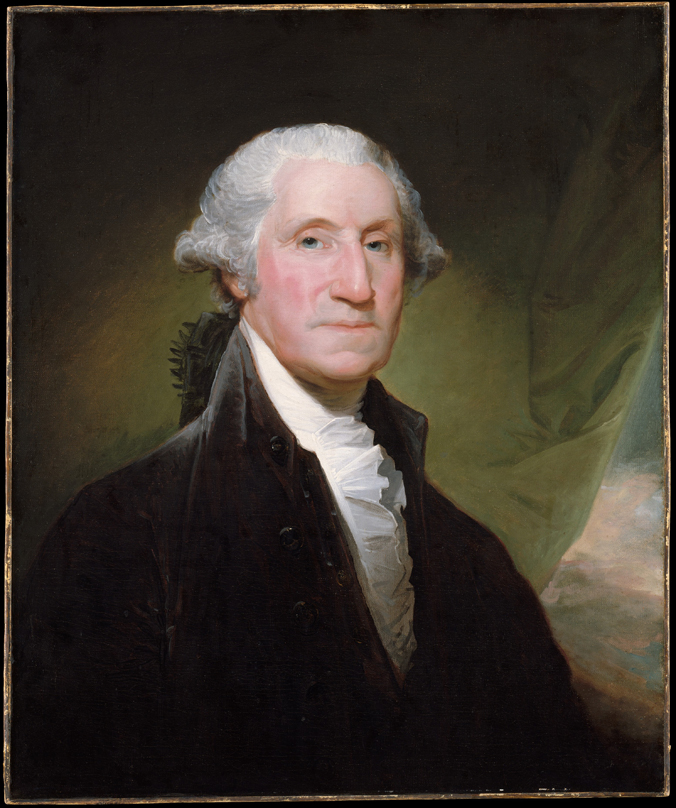
George Washington wore a white wig? FALSE – As an adult, Washington did not wear a wig, as was the fashion at the time and even though contemporary portraits make it seem that he did.He chose to pull his hair back in a queue and powdered his hair white to make it look like he was wearing a wig.Based on the number of wig curlers excavated archaeologically at Ferry Farm, we do suspect that he and his brothers wore wigs as boys. Read more about wigs and wig curlers.
George Washington was the only President not to reside in the White House? TRUE – The Federal government did not move from Philadelphia to Washington, D.C. until 1800 when John Adams was the President. Washington did pick the location of the President’s House and approved the architectural design by Irish-born James Hoban.
Washington visited only one other country during his lifetime? TRUE – In September of 1751 at the age of 19 he traveled to Barbados with his step-brother Lawrence, who was ill with tuberculosis and advised to spend the winter in a warmer climate.George only stayed until December, but it was during this time that he contracted smallpox. This trip was the only time Washington ever traveled outside the borders of what would become the United States. Read “Three Military Adventures that Inspired George Washington” to learn more.
George Washington chopped down his father’s cherry tree? FALSE – This story was written by Mason Locke Weems in the first biography of Washington’s life to encourage readers to emulate what Weems, a parson, saw as admirable qualities (truthfulness and physical strength) expected from a great and patriotic leader.
George Washington signed the Declaration of Independence? FALSE – Washington was in New York City on July 4, 1776, anticipating and preparing for an attack by the British army. On July 9th, he assembled his troops to listen to a reading of the proclamation from the Continental Congress which declared independence from Great Britain.
George threw a silver dollar across the Potomac River as a young man? FALSE – The earliest version of this legend claims that George threw a piece of slate the size of a silver dollar across the Rappahannock River when he lived at Ferry Farm.Over the years, it somehow became an actual silver dollar (dollars did not exist when George was a boy nor would he have wasted one by throwing it) and got moved north to the Potomac at Mount Vernon.Although the Rappahannock at Ferry Farm was wider in George’s day, a few baseball players have achieved the feat. Read “George Washington, Baseball Player?” to learn more.
George Washington’s first job was as a surveyor? TRUE – George learned how to survey as a teenager and was hired in 1748 at the young age of sixteen to survey land in western Virginia. The following year he was appointed surveyor for Culpeper County.Surveying was his main occupation until 1752 when he was commissioned as a district adjutant for the Virginia militia by Governor Dinwiddie. Washington made a survey of Ferry Farm in 1771 titled “the fields where my mother lives.” Read more about “George’s First Job.“
George Washington did not have a middle name? TRUE.
George Washington uttered the famous words “Give me liberty or give me death!”? FALSE – this quote is attributed to Patrick Henry from a speech he made to the Second Virginia Convention on March 23, 1775 at St. John’s Church in Richmond, Virginia. George Washington was a delegate in attendance at this convention when a resolution was approved to supply troops from the Virginia militia to the Continental Army.
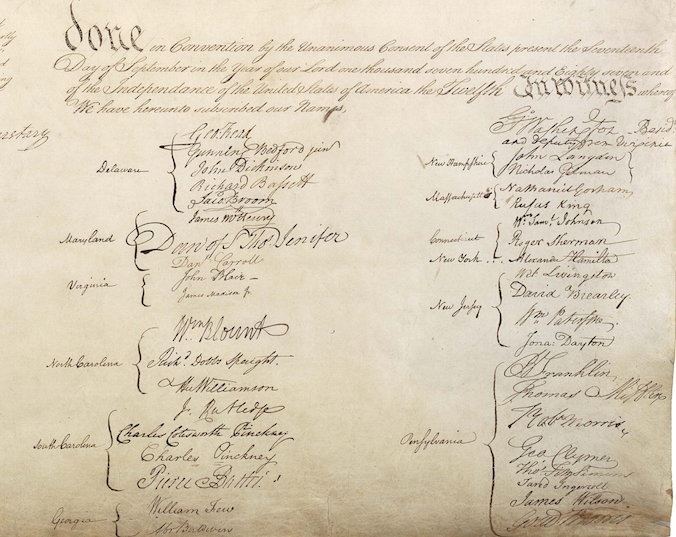
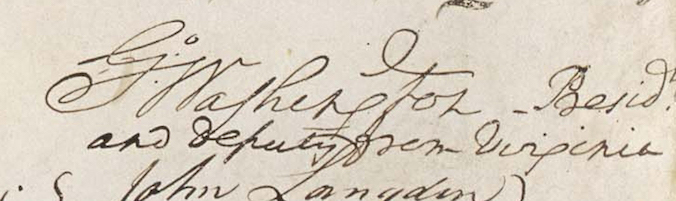
George Washington was the first person to sign the Constitution in Philadelphia? TRUE – On September 17, 1787, Washington signed the document as both “President” of the Constitutional Convention and as a delegate from Virginia.
Signatures on the Constitution of the United States by delegates to the Constitutional Convention. George Washington’s is visible at the top of the right-hand column. Credit: National ArchivesA closeup of Washington’s signature on the U.S. Constitution.
George Washington was tall and had reddish brown hair? TRUE – George was 6’2” and, yes, he was a ginger!
George Washington’s false teeth were made of wood? FALSE – His dentures or false teeth were not made of wood, as is commonly supposed. One of his denture sets (he had many throughout his life) on display at Mount Vernon is made of human, cow and horse teeth held together in a lead frame with wires. When Washington was inaugurated as President in 1789, he had only one real tooth remaining in his mouth! Read more about “George’s Troublesome Teeth.”
George Washington’s Secretary of Treasurer was Alexander Hamilton? TRUE – And he was in the room where it happened, the room where it happened, the room where it happened!
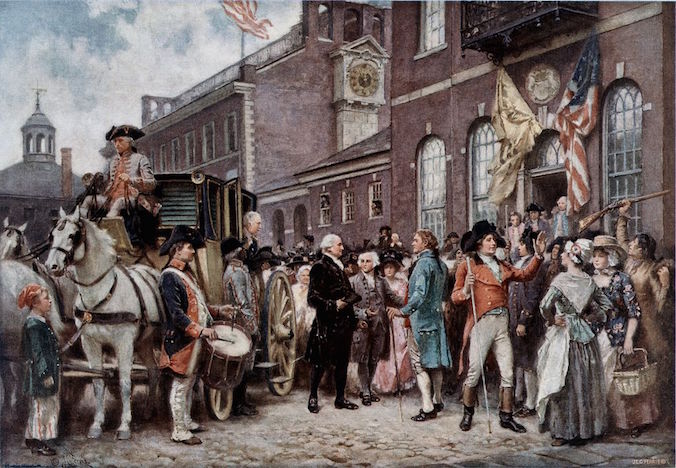
When Washington became the first President of the United States, our federal government was based at its current location of Washington, DC? FALSE – When Washington was inaugurated President in 1789, New York City was the seat of the government.In 1790, it was moved to Philadelphia.Ten years later in 1800, it moved to the purposely-built city of Washington where it has remained ever since.
“Washington’s Inauguration at Philadelphia” (1947) by Jean Leon Gerome Ferris. Credit: Library of Congress
Washington once had his clothes were robbed by two women while he swam in the Rappahannock River? TRUE – The women, Ann Carrol and Mary McDaniel, were arrested and tried in court. Charges against Ann Carrol were dismissed when she gave evidence for the prosecution. Mary McDaniel was found guilty and punished with “fifteen lashes on her bare back” at the whipping post. Read “‘Not Having Been Wett All Over at Once, for 28 Years Past’: Bathing in Early America” to learn more about this incident.
As a boy, George Washington helped run the ferry service that ran between his family’s property (now called Ferry Farm) and the town of Fredericksburg? FALSE – Though located riverside on the Washington farm, the ferry was not actually owned by the Washington family.The moniker “Ferry Farm” was not ever applied to Washington’s boyhood home until the late 19th century.To the Washington family, it was called the Home Farm.
Ferry Farm, the boyhood home of George Washington in Stafford County, VA, was actually owned by George, not his mother? TRUE – Eleven-year-old George inherited the farm upon his father Augustine’s death in 1743.As he was not of age yet, his mother Mary decided to manage the farm for him until he turned 21.In the end, Mary lived at and managed the farm until 1772, when George sold the property and moved her into a new home across the river in Fredericksburg.
Many families have called Historic Kenmore “home” over its more than two centuries of existence. In late 19th century, the Howards lived in the grand brick home and one Howard in particular left an everlasting mark on the house and its history.
William Key Howard, Sr. was born in Maryland in 1829 (and was related to Francis Scott Key).Howard Sr. married twice, first to Agnes Schley and then to Clara Randolph.He and Clara had three sons: William Jr., Allan, and Clarence.
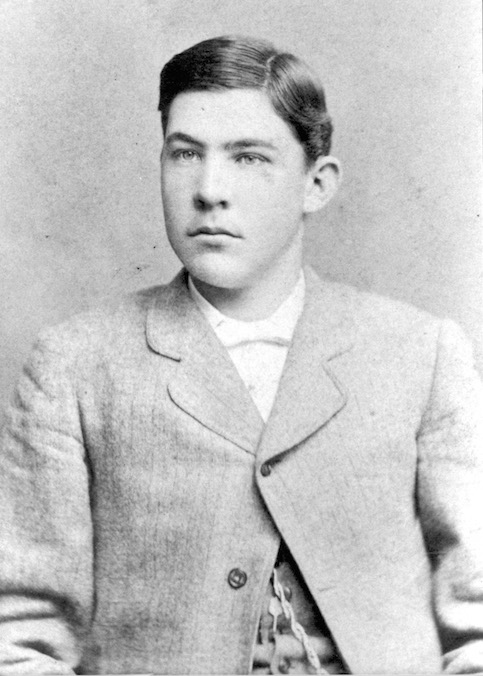
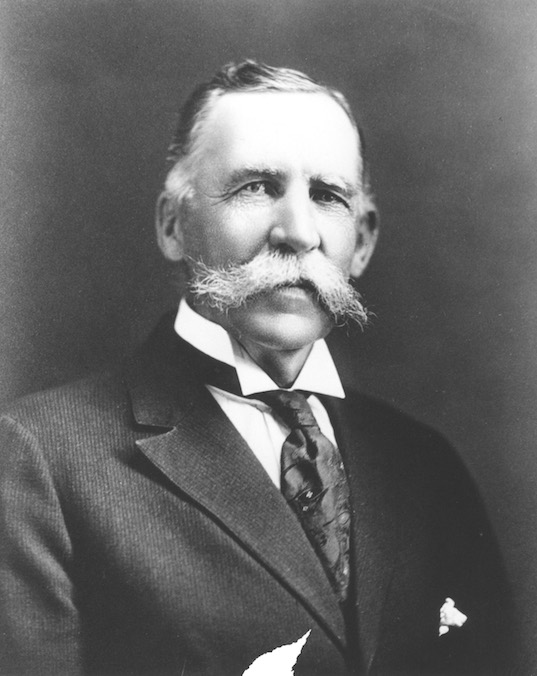
William Key Howard, Jr., the eldest son and the most important Howard in Kenmore’s history, was born on December 11, 1861 in Richmond but the family lived in Baltimore during his early years.
A young William Key Howard, Jr.
According to Howard, Jr’s obituary, during the Civil War, both of his parents were accused of being Confederate spies and jailed. Junior successfully appealed for his mother’s release. Another source states that Howard, Sr. joined the Confederate Army in 1861, was captured and imprisoned at Elmira, NY in 1864, and then paroled at war’s end.
After the Civil War, the family moved to an estate near Fredericksburg called “Altoona” and Junior received a private education in Fredericksburg and in Hanover County.
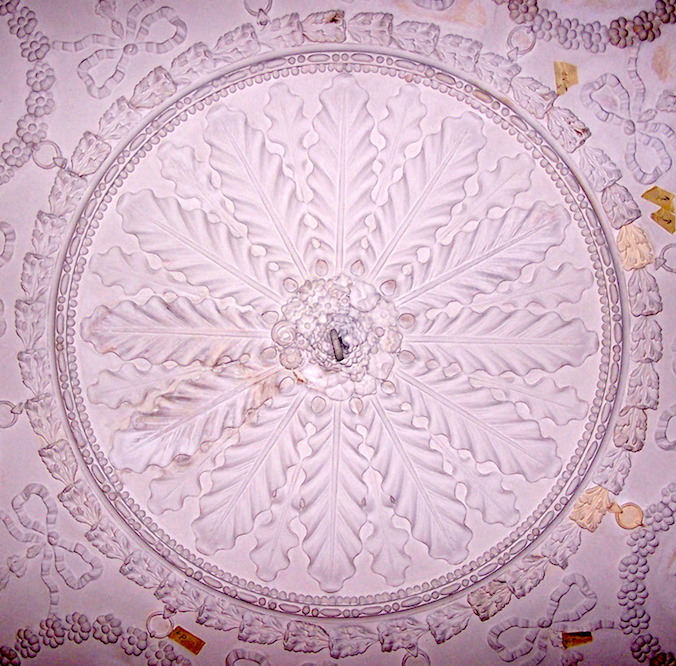
Howard, Sr. purchased Kenmore in 1881.The Howards found the house’s plasterwork so damaged that Senior considered removing the ceilings.Howard, Jr. convinced his father to let him restore them instead, even though Junior was restricted to a cast to correct a spinal problem.
William Key Howard, Jr. worked on the ceilings for nearly all of 1882. He lay on his back on scaffolding, used homemade tools to clean off dirt and debris, and injected hide glue behind loose plasterwork.An adept woodcarver, Howard Jr. enjoyed creating items like a walnut-shaped ring box, a goblet with rings around the stem all made for a single piece of wood, and another goblet carved from a coconut.
Walnut ring box
Goblet with rings
Goblet carved from a coconut
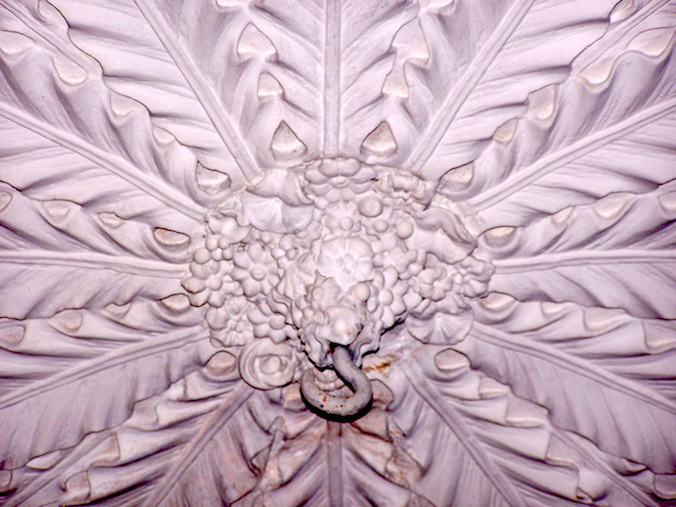
When it came time to replace specific decorative plater pieces, Howard Jr. was well-suited to carving the new molds to copy and remake the original plaster shapes.With great foresight, he also used tinted plaster so future generations could know they were not original pieces.
The central portion of the Dining Room ceiling at Kenmore. To the extreme left are two plaster leaf replacement pieces made by William Key Howard, Jr.A hook and surrounding flowers in the center of Kenmore’s Dining Room ceiling date from William Key Howard, Jr.’s restoration efforts and has been left, in part, as a memorial to his work to save the ceilings.
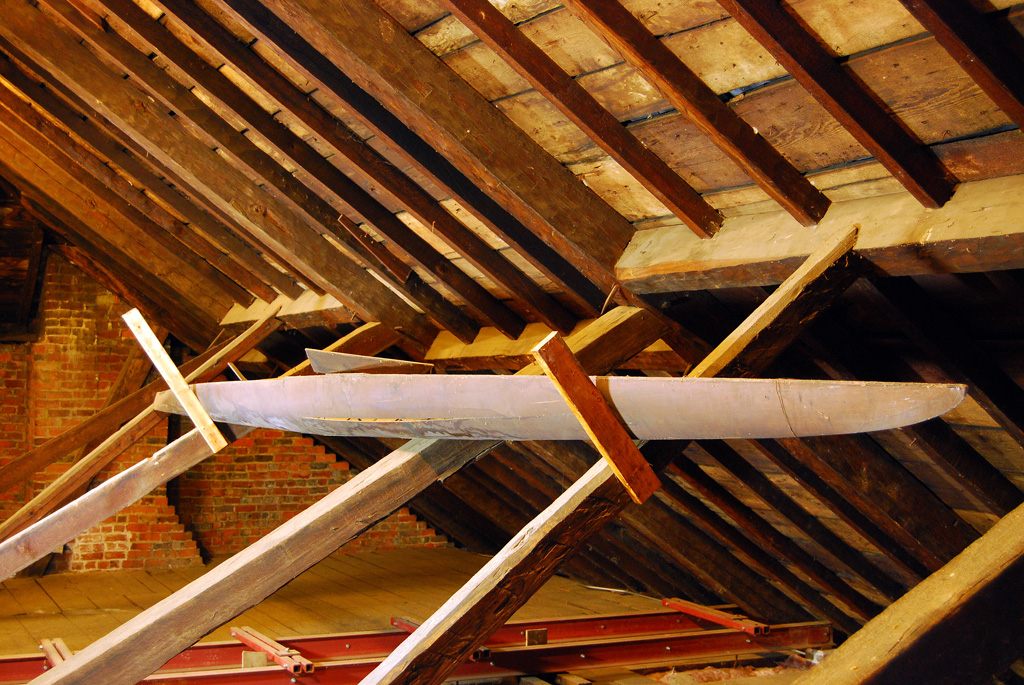
Along with the ceilings, William Key Howard, Jr. left his mark on Kenmore in one other unusual way. He and the Howard family in general were boating enthusiasts.Howard Jr. enjoyed rowing in a racing scull on the Rappahannock River regularly. His racing scull is still in Kenmore’s attic today. At the time that Junior was rowing, there was a large tree growing on the south side of the house.He rigged a rope and pulley system in the tree so that he could hoist his scull up high enough to swing it through the attic window and store it there in the off-season. Unfortunately, the scull was still in the attic years later when the tree came down.The only other way to reach Kenmore’s attic is up a very narrow, twisty staircase – too narrow and twisty for a racing scull.And so, the scull remains in the attic to this day, a reminder of Howard Jr.’s life at Kenmore.
William Key Howard, Jr.’s rowing scull in the attic at Kenmore.The Howard family were boating enthusiasts and owned a variety of boats over the years, included the “PDQ”.
In 1887, Howard, Sr. conveyed Kenmore to Howard Jr. for $4,000 to hold in trust.It appears that both Senior and Clara continued to live at Kenmore while Howard, Jr. took an interest in electrical engineering and headed south to build power plants.In Georgia, he married Florence Lamar Moore of Griffin about 1895.They had 4 children: John, Clara, Francis, Agnes (Betsy).
William Key Howard, Sr. died on February 10, 1899.
Howard, Jr. returned to Virginia in 1902 to build an ice plant in Urbanna. Three years later, the Howard family together conveyed Kenmore to youngest brother, Clarence. The 1910 census, however, still lists Clara as head of the household. Living with her were Clarence, then 39, a merchant; his wife of ten years, Mary F., aged 31, a nephew, Clarence Harrison, 30; an aging boarder and a 7-year-old boy.By March 1914, the Howards decided to further subdivide and sell the property, apparently to settle debts owed to the Conway, Gordon & Garnett National Bank of Fredericksburg.
An older William Key Howard, Jr.
Junior finally returned to Fredericksburg (but not to Kenmore) in 1909 to be the superintendent of the municipally-owned electric light plant.Then, he went to South Boston to work at another light plant until his retirement in 1931.Once more he returned to Fredericksburg, where he died on December 28, 1934. He was buried in the family plot at Hollywood Cemetery in Richmond.
Saint Patrick’s Day honors St. Patrick, the patron saint of Ireland, who was born in England and lived during the 5th century. Early in life, he was kidnapped, sold into slavery, and ended up living in Ireland. He is credited with converting the Irish to Christianity, as illustrated in the legendary tale that says he drove the snakes (a metaphor for pagans and druids) from Ireland. He established many churches and was honored with a feast day in his name.
Over time, Saint Patrick’s Day shifted from a religious holiday to a secular celebration of Irish culture and history. The first St. Patrick’s Day parade was held in Boston in 1737. By the time the Revolutionary War started, there was also a parade in New York City and the holiday had become a meaningful celebration to Irish-Americans. Subsequently, during a cold winter encampment in 1780 in Morristown, New Jersey, General George Washington, then commander-in-chief of the Continental Army, noticed his men were having a bout of particularly low morale. The soldiers were low on food, had very shabby shelters, and the winter was harsh.
Washington, a man of many curiosities, became interested in the political goings-on in Ireland, which was also ruled by the British. He could see that Ireland, like the colonies at that time, was struggling to find common ground with the Crown in England. He found the Irish struggle relatable, and also useful. Perhaps, if England could be distracted enough by unrest in Ireland, they would falter in the war against the colonies.
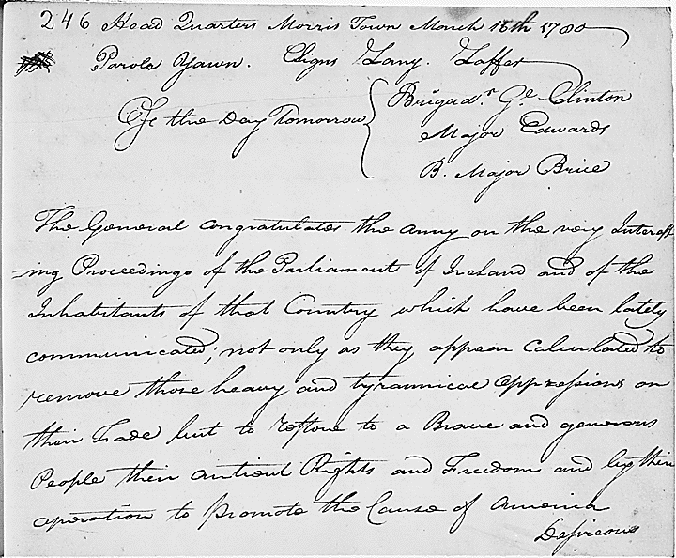
Recognizing the need for a boost, and the opportunity to resonate with specific groups, Washington issued an order on March 16, 1780. Today, it is known as the St. Patrick’s Day General Order. It reads in full:
Head Quarters Morris Town March 16th, 1780 General Order
The general congratulates the army on the very interesting proceedings of the parliament of Ireland and the inhabitants of that country which have been lately communicated; not only as they appear calculated to remove those heavy and tyrannical oppressions on their trade but to restore to a brave and generous people their ancient rights and freedom and by their operations to promote the cause of America.
Desirous of impressing upon the minds of the army, transactions so important in their nature, the general directs that all fatigue and working parties cease for tomorrow the seventeenth, a day held in particular regard by the people of the nation. At the same time that he orders this, he persuades himself that the celebration of the day will not be attended with the least rioting or disorder, the officers to be at their quarters in camp and the troops of the state line to keep within their own encampment.
Copy of Washington’s St. Patrick’s Day General Order. Credit: National Archives
The celebration in the camp was the only day the men had off throughout the winter of 1780. According to Washington, the army was in a perilous state well into May. However, the day of rest and celebration certainly helped the troops soldier on. It seems that March 17th was meant to become a day of happenings for George Washington and his army, because 4 years previous to the Morristown order, Washington and his men watched the British retreat from Boston during the opening act of the Revolution.
At the end of 2019, Dr. Edward E. Moore donated a collection of family documents to Historic Kenmore. Dr. Moore’s is the great-great grandnephew of Esther Maria Lewis Moore, who was the great granddaughter of Lawrence Lewis. Lawrence was the son of Betty and Fielding Lewis. Among the papers donated was a small pocket diary covered in blue silk. This diary, dating from 1826, belonged to Esther Moore’s grandmother, Esther Maria Coxe, and then to Esther Moore’s father, Henry Llewellyn Dangerfield Lewis, who received it on his sixteenth birthday in April 1859.
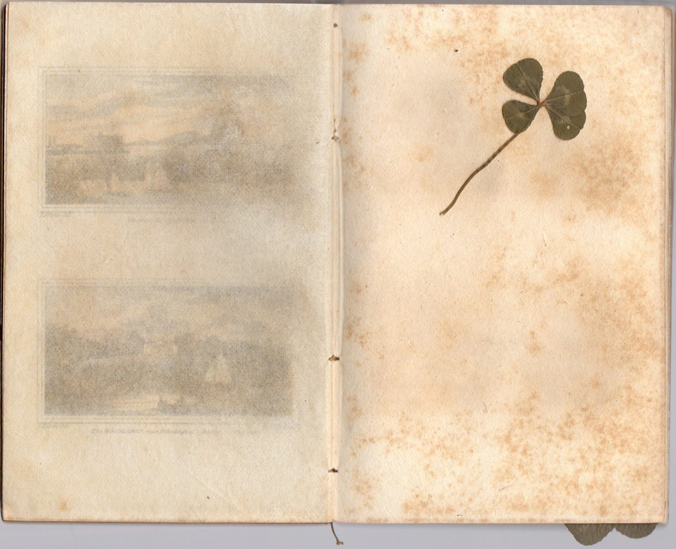
Upon cataloguing this diary, I was surprised to find eleven four-leaf clovers pressed between the various pages. I had never seen a four-leaf clover personally and was surprised to find the dried remains of so many in this 200-year-old book. Besides knowing the three-leafed varieties are called shamrocks and the four-leafed varieties are considered lucky, I knew really nothing else about clover. With St. Patrick’s Day approaching and on my mind, I decided to investigate what clover is, when it became “lucky”, and what exactly is the difference between four-leaf clovers and shamrocks. In the process, I learned how this symbol of Ireland first evolved out of the tumultuous political atmosphere of the 18th century and an Irish political group that looked to the American Revolution for inspiration?
Four-leaf clovers inside the Moore family diary.
There are over 300 different types of clover but the one most associated with the “four-leaf clover” is white clover. White clover is an allotetrapoloid, meaning it has 4 chromosomes instead of 2 like humans and most other organisms. Additionally, each pair of white clover’s four chromosomes comes from different species. Basically, these little plants have incredibly complicated genetic structures.
Why some white clover sprout four leaves and some only three is not entirely clear but it is likely some combination of genetic mutation and weather.
Similarly, the association of four-leaf clovers with “good-luck” is not entirely clear either and seems to mostly come from the fact that they are rare. Your chances of finding one are around 1 in 5,000 three-leaf clovers.
While there is no genetic different between a shamrock and a four-leaf clover, the shamrock is traditionally considered to have just three leaves. It also has much more of a historical mythology or folklore, which is wrapped up tightly with St. Patrick and Ireland. The word shamrock comes from the Irish word “seamrog,” meaning “little clover.” It is an ambiguous term that includes white clover, hop clover, red clover, and many other different types.
The first documented mention of shamrock in the English language was in the works of Elizabethan scholar Edmund Campion in 1571. In his work Boke of the Histories of Irelande [sic], he stated the Irish ate “shamrotes, watercresses, rootes, and other herbes” and, soon enough, the shamrock became a plant associated with the Irish people.
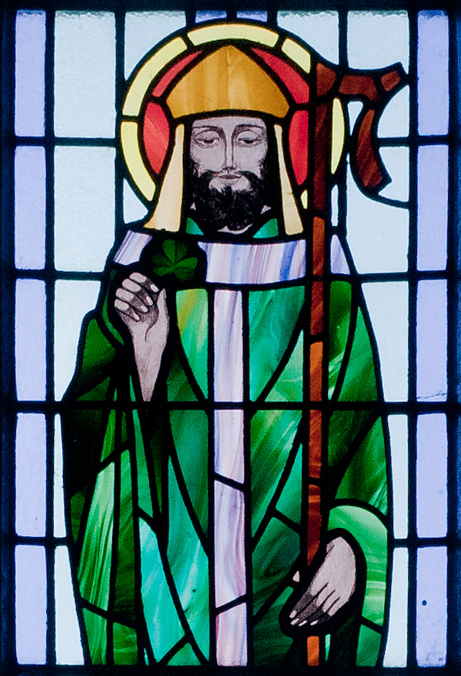
Window depicting St. Patrick holding a shamrock in St. Benin’s Church, Kilbennan, County Galway, Ireland. Credit: Andreas F. Borchert/Wikipedia
Around the same time as the emergence of the St. Patrick legend, Ireland, much like the America, was in political upheaval. At the time, the shamrock became a symbol of Irish politics. The Irish Volunteers, a militia raised to defend Ireland from French and Spanish invasion after the British withdrew troops to fight in the war in the colonies, began using the shamrock as its symbol.[1] Additionally, inspired by the American Revolution and its anti-monarchical goals, the Society of United Irishmen sought to get rid of the rule of the King in Ireland. They used the iconic clover as a symbol of freedom.[2]
The official Tourism Ireland logo is a stylized shamrock. Credit: Tourism Ireland
So at your St. Patrick’s Day party you can entertain your friends with the interesting genetics of clover, the history of the shamrock, and how Ireland’s iconic emblem evolved in turbulent political times to represent a group inspired by the American Revolution. All thanks to the lucky find of some lucky four-leaf clovers in a centuries old diary donated to Kenmore by a descendant of Betty and Fielding Lewis.
Heather Baldus
Collections Manager
[1] Allan Blackstock, Double Traitors?: The Belfast Volunteers and Yeomen, 1778-1828, Ulster Historical Foundation, 2000: pg 2
[2]The Shamroc, [sic]. Printed by Joseph Mehain 22, Castle-street. 11 March 1799.
In the 18th century, more women began to publish cookbooks. Previously, writing or compiling such books was the domain professional cooks or chefs, who were men. Two of these women and their books, Hannah Glasse’s The Art of Cookery, Made Plain and Easy and Eliza Smith’s The Compleat Housewife, or, Accomplished Gentlewoman’s Companion, ended up in Betty Washington Lewis’s personal library. She no doubt referenced these two useful books as much as I have referenced them in my blog posts about cooking here, here, and here. Both Glasse and Smith were part of an innovative movement to create guide books on cooking for common people in a common language without pretense.
The “Compleat House Wife” and “Glasses Cookery” listed on the probate inventory made following Fielding Lewis’s death in 1782.
Hannah Glasse was born in London in 1708 and had her first book Compleat Confectioner published in 1742. Her second book The Art of Cookery was published in 1747. This book on cookery was so popular that it went through ten editions before her death in 1770. It was reissued another sixteen times after 1770, including two American editions in 1805 and 1812. The book’s commercial success did not translate to personal success for Glasse, however. Unfortunate business decisions eventually led to her declaring bankruptcy, selling the copyright to The Art of Cookery, and being sent to debtor’s jail.
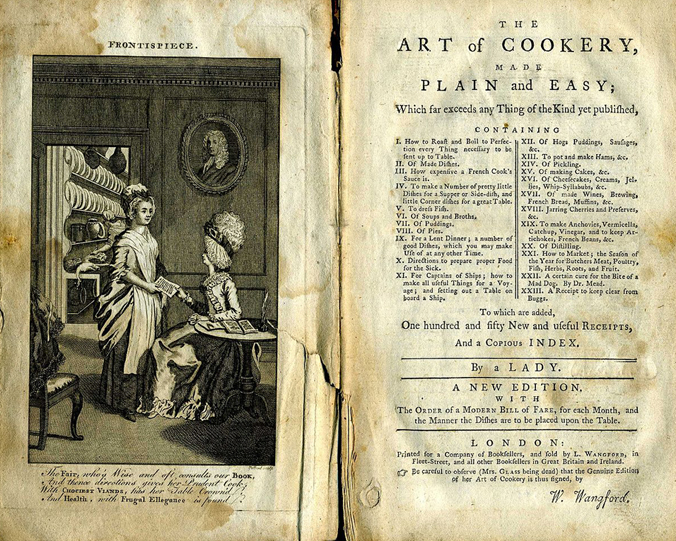
The frontispiece of Hannah Glasse’s The Art of Cookery Made Plain and Easy. Credit: Wikipedia
Eliza Smith and her life are shrouded in mystery and, unfortunately, not much is known about her. She wrote only one book, The Compleat Housewife, or, Accomplished Gentlewoman’s Companion, which went through eighteen editions and became the first cook book published in Colonial America in 1742. According to her own account, what she presented in the book was from her own experience. Her recipes and tips came from a “space of thirty years and upwards during which time I have been constantly employed in fashionable and noble families.”
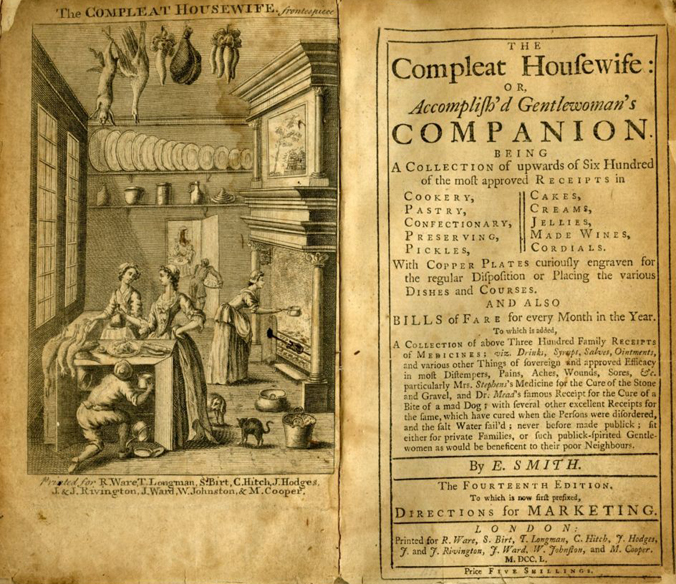
Frontispiece of Eliza Smith’s The Compleat Housewife: or Accomplish’d Gentlewoman’s Companion. Credit: Wikipedia
When these two ladies were writing in the mid-18th century, more people were residing in urban areas as part of the emerging middle and gentry classes. These new relatively or very affluent groups were desperate to keep up with fashions, manners, and lifestyle of the aristocracy.
New writers like Glasse and Smith became popular because they offered practical advice, common sense recipes, and organization. They wrote their books to help average middle and gentry class homes with small staffs, basic cooking equipment, and a limited budget. As Glasse stated, she wrote her book “in so full and plain a manner, that most ignorant Person, who can read, will know how to do Cookery well”[1] She only hoped her book would “answer the ends I intend it for; which is to improve the servants, and save the ladies a great deal of trouble.”[2] Eliza Smith had a similar goal, writing that her book would be a guide for the housewife where “the receipts [recipes] are all suitable to English constitutions…wholesome, toothsome, all practicable and easy to be performed; here are those proper for a frugal, and also for a sumptuous table.”[3]
Indeed, both women’s recipes had simple instructions, accessible ingredients, easy and practical help with weights, measurements, and cooking times. Recipes had no French vocabulary, no complicated patisserie, and no confusing directions. They were just simple, delicious dishes any housewife could make or have servants make without formal culinary training. Eliza Smith offered over a dozen different types of stew with everything from beef to eel and her pancake and apple fritter recipes sound delicious! Hannah Glasse included over 20 different types of pies, an easy and lovely syllabub, and even the first recorded recipe for curry.
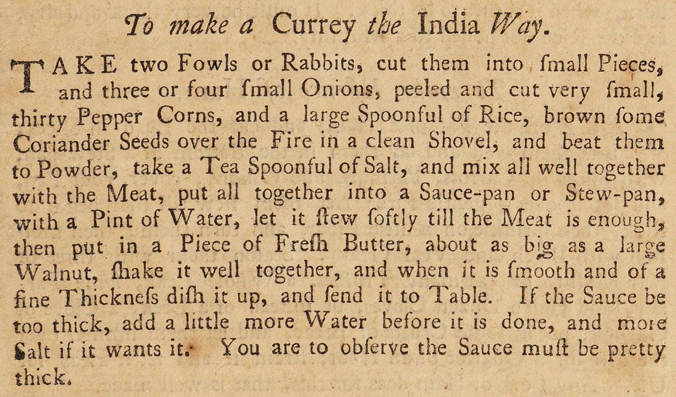
Recipe for curry from Glasse’s “The Art of Cookery”. Credit: Wikipedia
The 18th century middle or gentry class housewife and her staff, e.g. Betty and enslaved cook Rachel, could use these books to create meals that no longer consisted of just boiled meat and a vegetable. Now, they could create a range of dishes that would not be out of place on the table of a Lord or Lady. Betty could have dinners prepared for the week, plan special dishes for a party, or undertake extravagant desserts for her Christmastime table. All would delight guests who were using the same books.
The Art of Cookery and The Compleat Housewife democratized cooking, which is something Betty Washington Lewis, sister of the first American president, would have appreciated.
Heather Baldus
Collections Manager
[1] Hannah Glasse, The Art of Cookery Made Plain and Easy, T. Maiden for A. Lemoine & J. Roe, 1802: pg 3
[2] Hannah Glasse, The Art of Cookery Made Plain and Easy, J. Rivington and Sons [and 25 others], 1788: pg 4
[3] Eliza Smith, The Compleat Housewife: or, Accomplished Gentlewoman’s Companion, J. and J. Pemberton, 1739: Preface
A staff member who works at George Washington’s Ferry Farm and Historic Kenmore recently visited Pittsburgh. Little George accompanied her and visited places related in some fashion to George Washington’s life in the 1700s, the world he lived at that time , or his long legacy as a historic figure national and internationally. Here is a collection of photos documenting Little George’s travels!
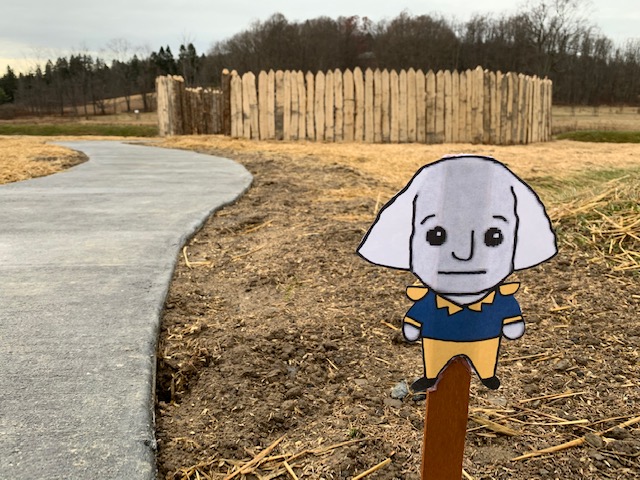
First, on the road to Pittsburgh, Little George stopped a place that does not hold fond memories for him. The battle of Fort Necessity took place in 1754. Washington and a group of Virginia Militiamen were sent to the area to meet with Ensign Joseph Coulon de Jumonville, the leader of the French detachment of troops nearby. While there are not clear descriptions of what happened, there was clearly some miscommunication and Jumonville was killed. Within a few months, the French retaliated, attacking Colonial and British forces in this clearing known as Great Meadows. Washington had built Fort Necessity but the design, a circular fort surrounded by tree-lined high ground, led to a swift defeat.
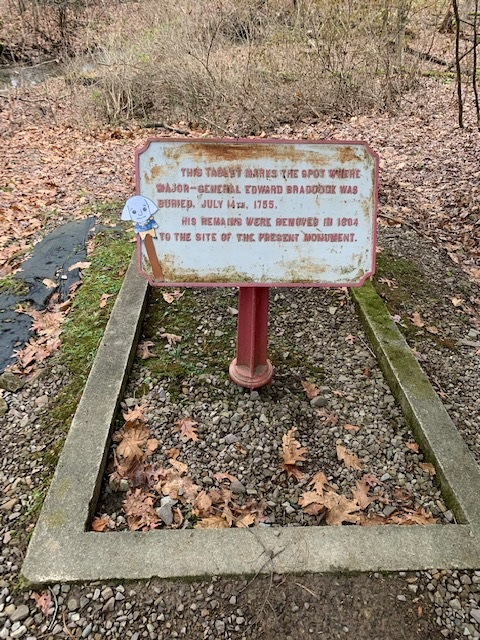
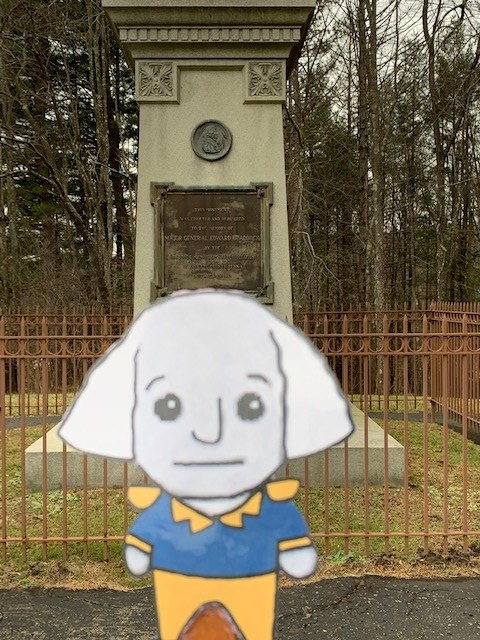
Original burial site of General Braddock.Current site of General Braddock’s grave.
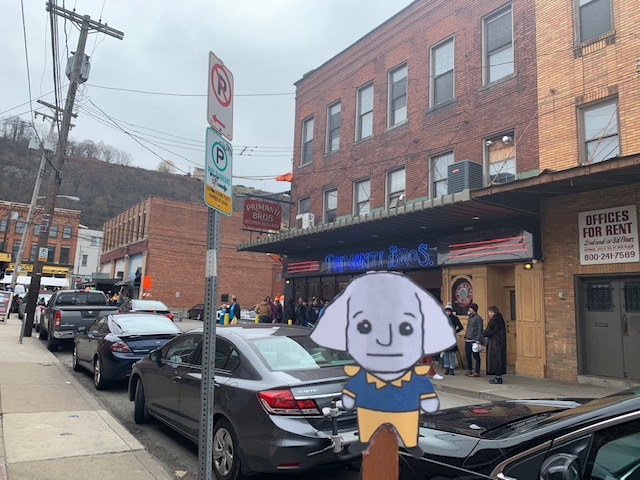
After a few stops that tugged at Little George’s heartstrings, we decided to continue on into the city. Little George was looking a bit famished so I decided to take him to a place he hadn’t seen on his last trip to Pittsburgh. Little George thought Primanti Brothers was top notch!
Pirmanti Brothers sandwich shop
Next, Little George thought a trip to the top of Mount Washington would make for a great view of the city. As he began to prepare for a hearty trek up the mountain, I drove us to another modern development. Little George decided that the Duquesne Incline would have been handy in the 1750s!
The Duquense Incline up Mount Washington
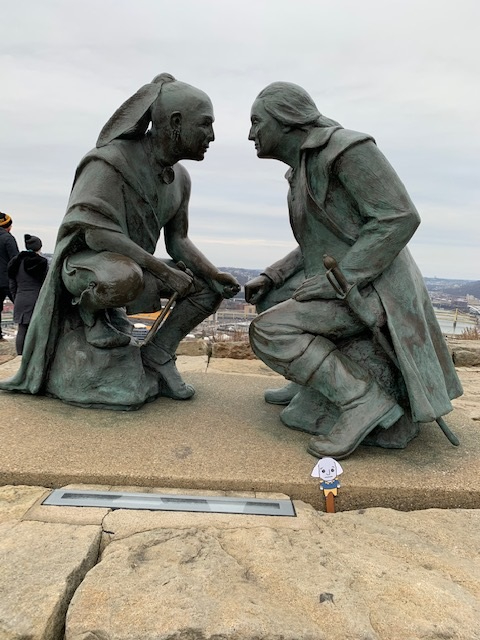
As we got to the top of Mount Washington, we walked along, admiring the city and came to a spot where the people of Pittsburgh had memorialized George Washington and Guyasuta, a leader of the Seneca people who met and traveled with George Washington in 1753 but ultimately sided with the French during the French and Indian War. Later, he would take the side of the British during the American Revolution thus, making the two men constantly at odds with each other.
Statue of Guyasuta and Washington
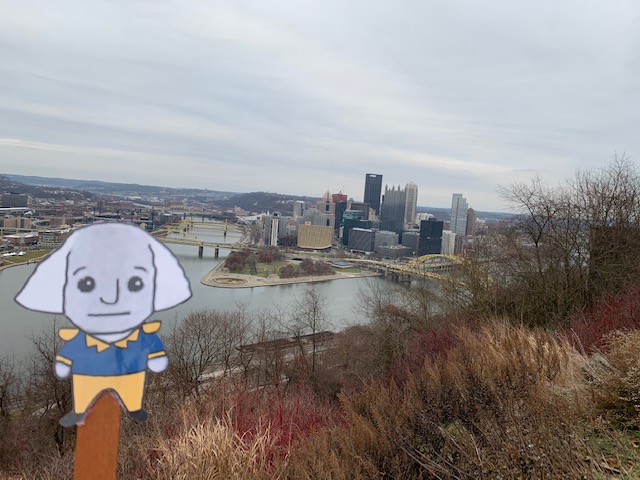
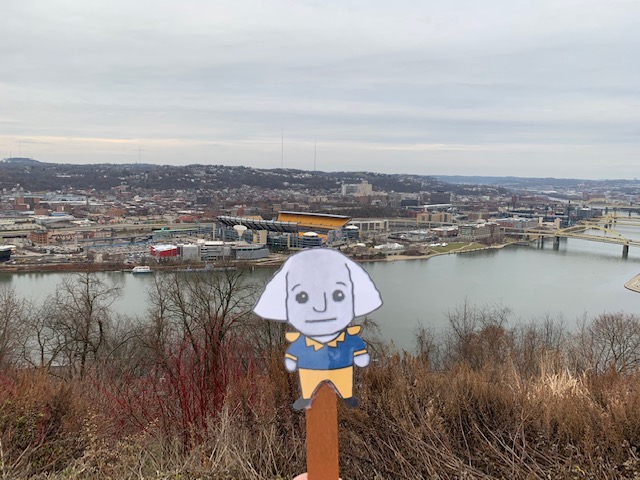
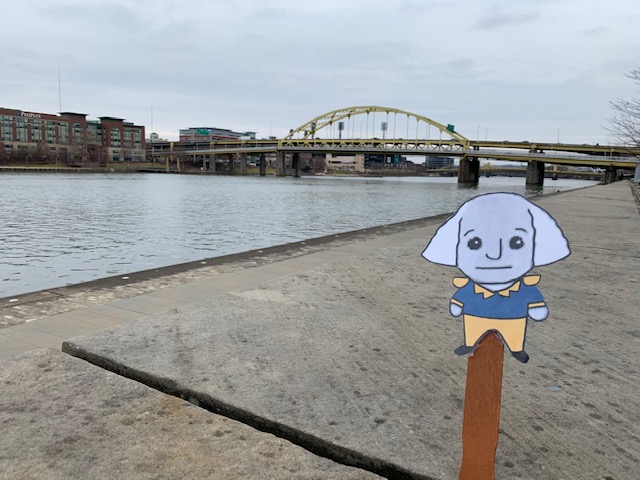
Looking down over the confluence of the Alleghany and the Monongahela brought back a lot of memories for Little George. Even with the new buildings and bridges, he recalled his march to Fort Duquesne. However, he did seem very interested in this “football” that modern Americans seem to like so much. After I explained it a bit, he didn’t think he could pick a single team to root for, but thought the field of play here was in a beautiful location.
Downtown Pittsburgh and the confluence of the Allegheny and, Monongahela Rivers, whose meeting forms the Ohio.A view of Heinz Field, home of the Pittsburgh Steelers
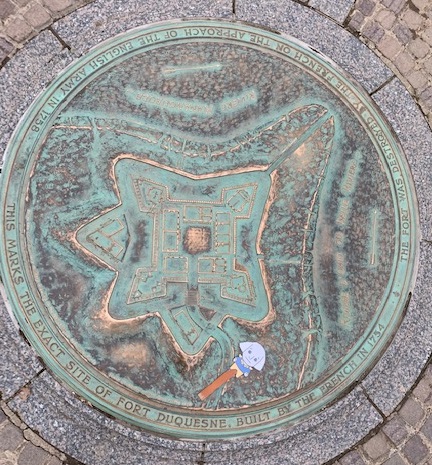
After admiring the view from above, I took George down to the site of where Fort Duquesne once stood. He recalled the assault on Fort Duquesne. The battle was fierce, and despite the French victory, they withdrew from the area due to the fact that the British force was more than ten times the size of the French force. Thus, the British rebuilt the remains of Fort Duquesne and reinforced it, calling it Fort Pitt, in honor of the English Prime Minister at the time.
Site of Fort Duquense, later renamed Fort Pitt
While down by the water, I convinced Little George to also take a picture next to the River. He was a little nervous getting too close to the Allegheny River and I asked him why. He explained that in 1753, when travelling through the area, he attempted a crossing. At the time, the water was very cold with large chunks of ice flowing through it. George fell into the water and nearly froze to death overnight while waiting on a small island for the river to freeze and he could finally cross safely the next morning. I told him not to worry as the river wasn’t that cold just yet.
The Allegheny RiverVisiting the Wigle Whiskey Distillery
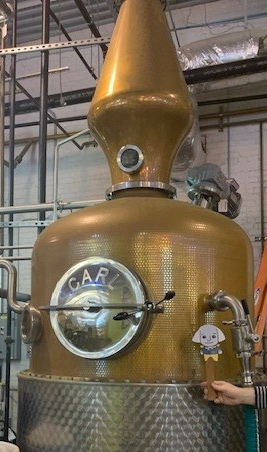
After all the talks of battles and falling in icy rivers, I decided we should warm up a bit. I remembered just down the river was a spot where Little George might also like to reminisce. During his Presidency, George Washington enacted a whiskey tax that led to the Whiskey Rebellion in western Pennsylvania. During this time, he sent representatives to attempt to collect the taxes, and even led organized troops to march against the insurrection. However, the rebels were no match and they folded. Only two of them were convicted of treason: John Mitchell and Philip Wigle. The men were sentenced to hang, but Washington later pardoned the men. In 2011, Wigle Whiskey was reopened to keep Philp Wigle’s legacy alive. Little George enjoyed the visit, noting that he too owned a whiskey distillery at the end of his life. He bragged only slightly to the folks at Wigle about producing 11,000 gallons in 1799. At the time, it was one of the largest distilleries in the country.
It’s hard to believe that there was once a time when products weren’t covered in labels listing all their ingredients in great detail. We are used to labels promising the absence of unhealthy chemicals. We are accustomed to labels warning when a product was packaged in the same facility as an allergen. Product safety is serious concern of manufacturers and customers. We, as a society, are growing increasingly aware of what is going into our bodies.
Before the creation of the Food and Drug Administration (FDA) in 1906, products did not carry ingredient labels. Regulations on medicines were especially lax, compared to today. In this blog, we begin exploring historic cases of “bad medicines” that were used by someone living or working either at Ferry Farm and Kenmore long before federal regulations came into play. Medical history is a profound example of how even well-intentioned people can make lasting and deadly mistakes.
People have lived at or worked on Ferry Farm for over 300 years. We have archaeologically excavated hundreds of thousands of artifacts from the 18th and 19th centuries. Among these artifacts are fragments of glass in all shapes and sizes. Many are bottle fragments- 47,926 of them to be exact. We can’t always determine the function of a bottle from the fragments found, but when we do find enough pieces to identify the bottle’s function, we excitedly begin research into its use.
One such artifact is a larger piece of a patent medicine bottle, one that was large enough to make out the embossed lettering on the side and identify its former ingredients. The bottle contained Mrs. Winslow’s Soothing Syrup, first marketed in 1849. Its basic contents were morphine and alcohol so, I suppose, the soothing part of the name was indeed correct.
Mrs. Winslow’s Soothing Syrup bottle fragment excavated at George Washington’s Ferry farm.Complete Mrs. Winslow’s Soothing Syrup bottle. Credit: P0mbal / Wikipedia
Today, Avinza® is a common morphine sulfate medication prescribed to patients suffering chronic pain. The FDA has covered its bases on the use of this medication, thoroughly describing how to take this medication without dying. One section very forcibly states:
“Swallow AVINZA whole. Do not cut, break, chew, crush, dissolve, snort, or inject AVINZA because this may cause you to overdose and die.” [1]
What is the recommended dosage for this medication, you ask? Around 60 mg of this morphine sulfate PER DAY for an adult. [2] Mrs. Winslow’s soothing syrup contained a whopping 65 mg of morphine PER OUNCE with slack rules on exactly how many drops to give to a teething infant.
You read that correctly folks – a teething infant.
Mrs. Winslow’s Soothing Syrups and other such 19th century medications led to the deaths of thousands of infants. Several children died from withdrawal symptoms after having taking the medication for an extended period of time, but most simply fell asleep never to wake up. Knowing little about drug reactions at the time, and due to the higher infant mortality rates in the 19th century, the cause of the deaths were often blamed on “crib death” (Sudden Infant Death Syndrome or SIDS) or whatever ailment that was causing the child to be fussy enough to drug in the first place.
It wasn’t until 1905 when investigative journalist Samuel Hopkins Adams exposed the unregulated world of patent medicines in The Great American Fraud.
This publication attacked every type of patent medicine with testimonies from doctors and patients as well as scientific reports from trusted sources. In the section aptly titled “Baby Killers”, Adams detailed how various “soothing syrups” led to infant deaths from the mid-1850s to 1905.
Shockingly, Mrs. Winslow’s Soothing Syrup wasn’t the most deadly such syrup in terms of morphine content. Irreparable damage had been caused by all of the different morphine cocktails available on the market in the 1800s. As grieving parents began to realize what had actually happened to their children, these products were taken off the market.
With an enraged public and 509 pages of proof from Samuel Hopkins Adams, Congress enacted the Pure Food and Drug Act in 1906, creating the FDA to ensure the safety of American food and medicines. Still, reports of child death caused by soothing syrups persisted until 1910.