Lives and Legacies

Author: ferryfarmandkenmore

  • Spilling the Tea: The Boston Tea Party at 250

    Author’s Note: This blog contains hyperlinks to primary documents related to the event.
    Figure 1: 250th Logo (Boston Tea Party Ships and Museum)

    Intro

    This year marks the 250th anniversary of the Boston Tea Party (Figure 1). Hailed as a defining moment in the quest for American independence and an act of patriotism, the event has inspired commemorations in many forms, and it remains a vital part of the American History curriculum. I, for one, thought it the epitome of achievement that I had the date memorized in kindergarten. Like much of our founding history, however, the story retains an element of myth. So, what exactly is the truth behind this event?  

    The Story

    A general account of the Boston Tea Party tells how patriotic Bostonians, angered by unfair taxes, boarded three ships in Boston Harbor on December 16, 1773. Disguised as members of the Mohawk or Narragansett tribes, Samuel Adams led the Sons of Liberty in protest by throwing crates of the King’s tea overboard. This act helped unite the colonies against Britain and started the chain of events that ended in the “Shot Heard Round the World” on Lexington Green on the morning of April 19, 1775, following Paul Revere’s ride.

    Sound familiar? In truth, this account covers the basics. It provides the “who,” “what,” “when,” “where,” and “why.” Nonetheless, it only scratches the surface of the complex event we know as the Boston Tea Party. To unpack this, let us look at what led to the event, how it happened, and the initial response.

    Truth of the Tax

    Taxes and tea sit at the heart of this story. The taxes that the colonies took issue with went into effect starting in the 1760s, with the ultimate goal of lessening the debt incurred by Britain during the Seven Years’ War. However, this set a new precedence as Britain had never taxed the colonists directly, and the passing of these tax laws occurred without consulting the colonies. The formal chant of “no taxation without representation” first appeared in 1768, and while the lack of representation presented a key reason for displeasure, the impact of taxes on merchants served as another.

    While the Tea Act of 1773 served as the catalyst for the Boston Tea Party, the Tea Tax had existed since 1767. Introduced under the Townshend Acts, the tax remained the only one in effect upon the Act’s repeal in 1770. General dislike for the tax persisted, but the Tea Act took the issue to another level. In an aim to bail out the East India Company (EIC), the Act granted a monopoly over the tea trade by opening the colonial market to the company as the sole supplier, waived their tax payment in favor of those paid by colonists, and mandated that only EIC company agents (consignees) could sell the tea (Figure 2). Many perceived this as a restriction on business, as merchants could no longer source tea from Britain and smugglers, freedom of choice and rights.  In truth, the protests against the tax and Tea Act occurred as a matter of principle since the cost of tea actually dropped, with consumers now able to buy directly from a supplier who faced no additional costs.

    Figure 2: EIC Seal (East India Company)

    Build Up

    With the Boston Tea Party story often told in a bubble, it appears as an impulsive act, but far more happened behind the scenes. By the end of 1773, displeasure with the Tea Act made attempts of preventing the unloading of tea and boycotts of its purchase common. When Dartmouth, Beaver, and Eleanor anchored at Griffin’s Wharf (November 28-December 15), locals had expected their arrival since October and had spent November demanding the resignations of the consignees. Many foresaw the risk of tensions coming to a head, including Abigail Adams, who, on December 5, wrote that “the Tea that bainfull weed is arrived…The flame is kindled…Great will be the devastation if not timely quenched or allayed by some more Lenient Measures.”

    After successfully chasing the consignees out of town, Bostonians urged Francis Rotch, whose family owned two of the ships, to depart without unloading the cargo. The Sons of Liberty stationed a guard at the docks to ensure that the tea remained onboard while Rotch decided. In response, Royal Governor Thomas Hutchinson ordered Rotch to unload the cargo within the standard twenty days of arrival or forfeit it and the ships. Rotch thus found himself in an impossible situation as Hutchinson and customs refused to let him leave while the Sons would accept nothing less.

    December 16th

    Many awoke on December 16, knowing the crisis would come to a head. The date marked the deadline for unloading Dartmouth’s cargo, and Rotch would make one final attempt to plead his case to both sides. Hutchinson and customs refused to budge, which further incensed Bostonians when Rotch reported that the tea would not be leaving. This announcement came as Samuel Adams headed a meeting at the Old South Meeting House (Figure 3).
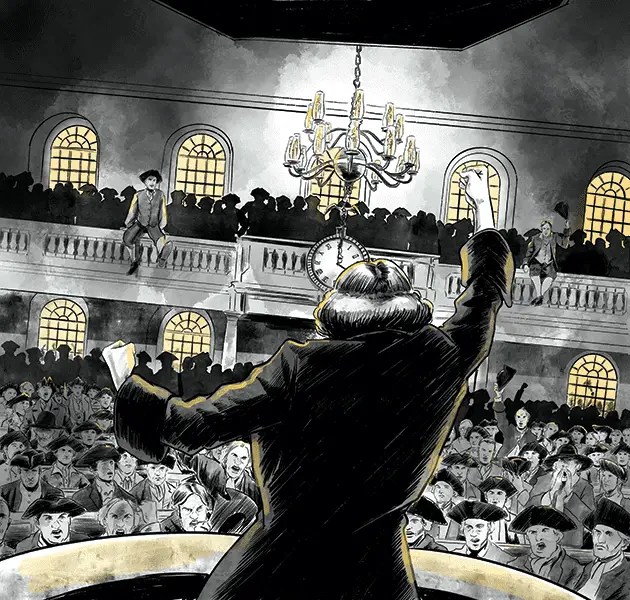
    Figure 3: Adams’ Speech at Old South (Revolutionary Spaces)

    Serving as a leading figure within the Sons of Liberty, Adams had led many of the meetings and attacks that occurred almost daily in the buildup to the 16th. This particular meeting drew 5,000-7,000 people who clamored to hear the latest developments in the tea crisis. When Rotch’s news broke, Adams stated, “This meeting can do nothing further to save the country.” While often billed as a signal to start the Tea Party, doubt remains over the statement’s significance. According to eyewitness accounts, many stayed another 15 minutes, and Adams tried to prevent people from leaving before the meeting concluded.

    Regardless of intent, hundreds of people made their way to Griffin’s Wharf. Along the way, some donned disguises that mimicked Native Americans. These disguises served both practical and symbolic purposes. First, donning a disguise shielded the identity of individuals carrying out the illegal acts, even if no one mistook them for actual tribal members. Secondly, the choice of a Native American-inspired look embraced an allegory of America and linked Indigenous resistance to colonization with the colonists’ struggle against Britain (Figure 4).
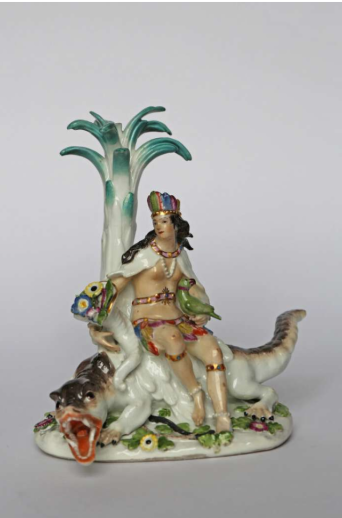
    Figure 4: “Allegory of the Continent of America,” c. 1750 (The Clark Museum)

    Interestingly, Adams never claimed or denied involvement with the Tea Party, yet, in contrast to popular depictions, he did not appear at the harbor that night. Instead, he remained at Old South. Of the participants, only the identities of 116 are known, and only one faced arrest.

    The day after, Samuel’s cousin, John Adams, described the event as “the most magnificent Movement of all. There is a Dignity, a Majesty, a Sublimity in this last Effort of the Patriots that I greatly admire. The People should never rise without doing something to be remembered—something notable And striking. This Destruction of the Tea is so bold, so daring, so firm, intrepid and inflexible, and it must have so important Consequences, and so lasting, that I cant but consider it as an Epocha in History.“

    Reactions

    Despite a post-independent America enshrining the Boston Tea Party in glory, most initial reactions proved far less enthusiastic than that of John Adams. The name “Boston Tea Party” did not emerge until the 1820s, and even then, “Party” referred to a group of people rather than something celebratory. Instead, mentions of the event usually identified it by what happened, such as “the destruction of the tea” (Figure 7).
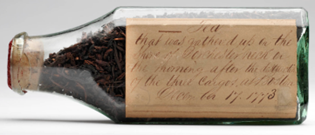
    Figure 7: “Tea that was gathered up on the shore of Dorchester Neck on the morning after the destruction of the three cargos at Boston; December 17, 1773” (MHS)

    While Parliament’s taxes made many colonists unhappy, they also valued their right to private property. In the case of the Boston Tea Party, the ships that the Sons of Liberty trespassed on belonged to Americans, while the EIC owned the destroyed tea. The King and Parliament had no direct connection to the ships or their cargo. As such, many viewed the attack as one on private property rather than a true strike against Parliament. Those who spoke out against it included Founding Fathers. Benjamin Franklin felt “truly concern’d…that there should seem to any a Necessity for carrying Matters to such Extremity, as, in a Dispute about Publick Rights, to destroy private Property.” Meanwhile, George Washington supported taking a stand against taxation and felt the cause of Boston equated to the cause of America, but ultimately could not “approve their cond[uc]t in destroyg the Tea.”

    Impact

    In the short run, the Boston Tea Party did little to fan the flames of independence. It inspired a few more boycotts (i.e., the Annapolis, Edenton, and Yorktown Tea Parties) and furthered a decline in consumption, but the British response to the event served as the primary catalyst. By punishing all of Boston, and by extension, Massachusetts Bay Colony, rather than just those responsible, the British infringed upon the rights of the colonists. Under the Coercive (nicknamed “Intolerable”) Acts, the British closed the harbor, demanded Bostonians pay damages to the EIC, imposed martial law, and required citizens to house, or quarter, members of the military on their property at their own expense (Figure 8).

    Figure 8: “The Bostonians in Distress;” 1774 Satire of the Boston Port Act (LoC)

    Those living in the twelve other colonies did not take well to this, as they feared the implementation of these acts in their homes. In response, the First Continental Congress met in Philadelphia from September to October 1774. While some delegates saw the issue as a Massachusetts one, others pressed the need to take a stand against the overreaches of Parliament and sympathized with Massachusetts. They concluded Congress by issuing their Declaration and Resolves, which listed objections to Parliament and confirmed their commitment to a trade boycott. However, when news of Lexington & Concord broke in April 1775, and Massachusetts found itself at war, the other colonies quickly had to decide which side they would take.

    Legacy

    Two hundred fifty years on, the Boston Tea Party remains an iconic event in American history and a pivotal moment in the founding of the country (Figure 9). While not wholly embraced as such upon its occurrence, the retelling of the event over time came to enshrine it in lore and leave out details that complicated the narrative. This shows that one cannot study a singular event without contextualizing it within the bigger picture. Nevertheless, John Adams’ belief that the “Destruction of the Tea” would become an epoch in history proved correct.

    Figure 9: Robinson Tea Chest – 1 of 2 surviving chests (Boston Tea Party Ships and Museum)

    Emma Schlauder

    Research Archaeologist


    Bibliography

    Adams, Abigail. Abigail Adams to Mercy Otis Warren, 5 December 1773. Letter. From National Archives, Adams Papers. https://founders.archives.gov/documents/Adams/04-01-02-0065 (accessed Nov 13, 2023).

    Adams, John. [December 1773]. Diary. From National Archives, Adams Papers. https://founders.archives.gov/documents/Adams/01-02-02-0003-0008 (accessed Nov. 13, 2023).

    “Boston Tea Party History.” Boston Tea Party Ships & Museum (website). https://www.bostonteapartyship.com/boston-tea-party-history (accessed Nov. 14, 2023).

    Cooper, Samuel. To Benjamin Franklin from Samuel Cooper, 17 December 1773. Letter. From National Archives, Franklin Papers. https://founders.archives.gov/documents/Franklin/01-20-02-0266 (accessed Nov. 13, 2023).

    “Declaration and Resolves of the First Continental Congress.” American Battlefields Trust (website). https://www.battlefields.org/learn/primary-sources/declaration-and-resolves-first-continental-congress (accessed Nov. 14, 2023).

    Franklin, Benjamin. From Benjamin Franklin to the Massachusetts House Committee of Correspondence, 2 February 1774. Letter. From National Archives, Franklin Papers. https://founders.archives.gov/documents/Franklin/01-21-02-0023 (accessed Nov. 13, 2023).

    ““Made one of the celebrated Tea Party in Boston harbor:” Remembering the Boston Tea Party in 1826.” American Battlefields Trust (website). https://www.battlefields.org/learn/primary-sources/made-one-celebrated-tea-party-boston-harbor (accessed Nov. 14, 2023).

    ““No Taxation Without Representation:” The Evolution of the Historic Phrase.” American Battlefields Trust (website). https://www.battlefields.org/learn/articles/no-taxation-without-representation (accessed Nov. 14, 2023).

    “Participants in the Boston Tea Party.” Boston Tea Party Ships & Museum (website). https://http://www.bostonteapartyship.com/participants-in-the-boston-tea-party#participant-list (accessed Nov. 14, 2023).

    Schiff, Stacy. The Revolutionary Samuel Adams. New York: Little, Brown and Company, 2022. “Tea Act.” American Battlefields Trust (website). https://www.battlefields.org/learn/primary-sources/tea-act (accessed Nov. 14, 2023).

     “The Boston Tea Party.” Massachusetts Historical Society (website). https://www.masshist.org/revolution/teaparty.php (accessed Nov 14, 2023).

    “The Final Straw.” Boston Tea Party Ships & Museum (website). https://www.bostonteapartyship.com/the-final-straw (accessed Nov 14, 2023).

    “The Intolerable Acts.” Boston Tea Party Ships & Museum (website). https://www.bostonteapartyship.com/the-intolerable-acts (accessed Nov 14, 2023).

    The Massachusetts Gazette; and the Boston Post-Boy and Advertiser. “Philadelphia, September 29. Extract of a letter from London, August 4.” From Massachusetts Historical Society. https://www.masshist.org/database/viewer.php?pid=2&old=1&mode=nav&ft+Coming% &nbsp 20of%20the%20American%20Revolution&item_id=434 (accessed Nov. 13, 2023).

    “The Secret Plan.” Boston Tea Party Ships & Museum (website). https://www.bostonteapartyship.com/the-secret-plan (accessed Nov 14, 2023).

    “Townshend Act.” American Battlefields Trust (website). https://www.battlefields.org/learn/primary-sources/townshend-act (accessed Nov. 14, 2023).

    Washington, George. From George Washington to George William Fairfax, 10–15 June 1774. Letter. From National Archives, Washington Papers. https://founders.archives.gov/documents/Washington/02-10-02-0067 (accessed November 13, 2023).

  • What’s on your Thanksgiving table?

    Thanksgiving is next week, and families and friends across the United States will gather again to celebrate the past year’s blessings. 

    Days for giving thanks have been proclaimed throughout history for many reasons – most often to celebrate a bountiful summer or fall harvest, the end of a war, or even the beginning of a new nation. George Washington proclaimed a one-time day of Thanksgiving on Thursday, November 26, 1789, “to be devoted by the People of these States to the service of that great and glorious Being, … for the civil and religious liberty with which we are blessed, and the means we have of acquiring and diffusing useful knowledge; and in general for all the great and various favors which he hath been pleased to confer upon us.”.

    The 1769 Thanksgiving Day Proclamation by George Washington

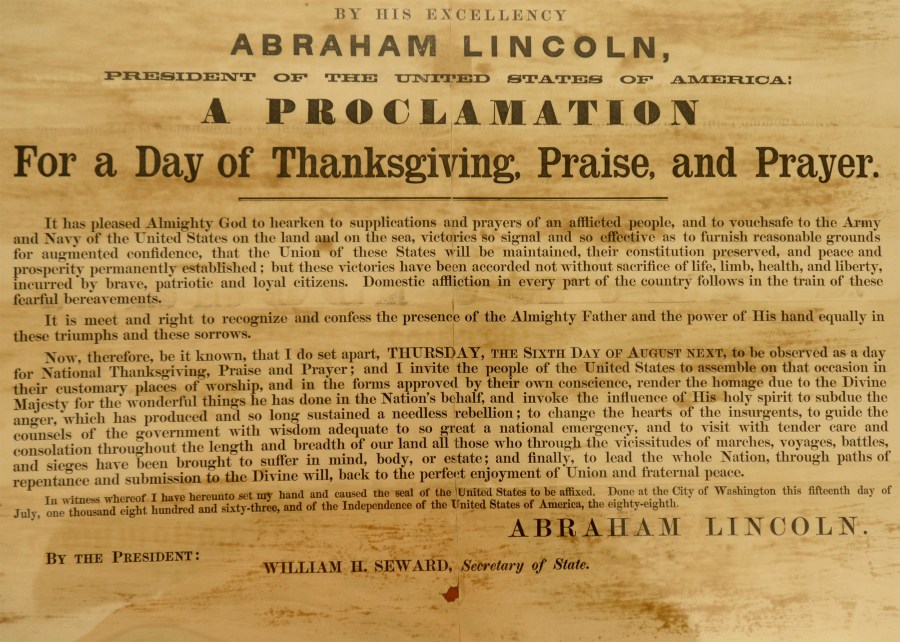
    Individual states have proclaimed specific Thanksgiving days throughout the nation’s early years. Still, it wasn’t until 1863 when President Abraham Lincoln issued a proclamation designating the last Thursday of November “as a day of Thanksgiving” to be observed by all “fellow citizens in every part of the United States.” The nation was still suffering through the Civil War. Lincoln included a remembrance of “all those who have become widows, orphans, mourners or sufferers in the lamentable civil strife in which we are unavoidably engaged, and fervently implore the interposition of the Almighty Hand to heal the wounds of the nation and to restore it as soon as may be consistent with the Divine purposes to the full enjoyment of peace, harmony, tranquillity, and Union.”

    1863 Thanksgiving Day Proclamation by President Abraham Lincoln

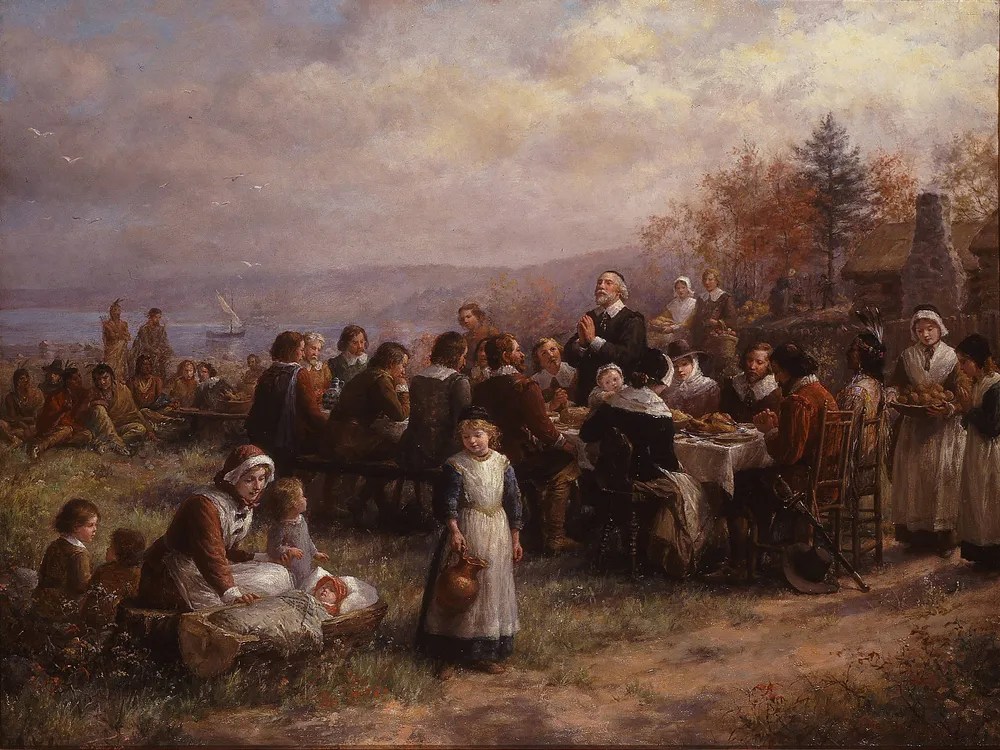
    As the traditional vision of Thanksgiving is based upon the 1621 New England harvest feast shared by the Pilgrims of Plymouth, Massachusetts, and their new friends, the Wampanoag tribe, the November holiday is associated with an abundance and display of fall harvest foods. A table laden with a wide spread of traditional foodstuffs is the norm, but what’s underneath all that food is what I’m interested in!

    Jennie Brownscombe’s 1925 very idealized version of the first Thanksgiving

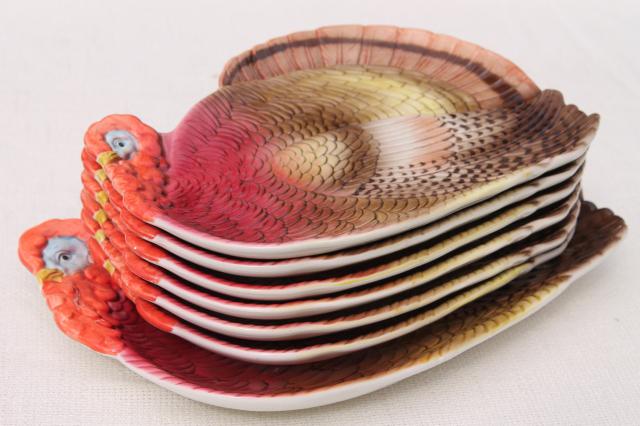
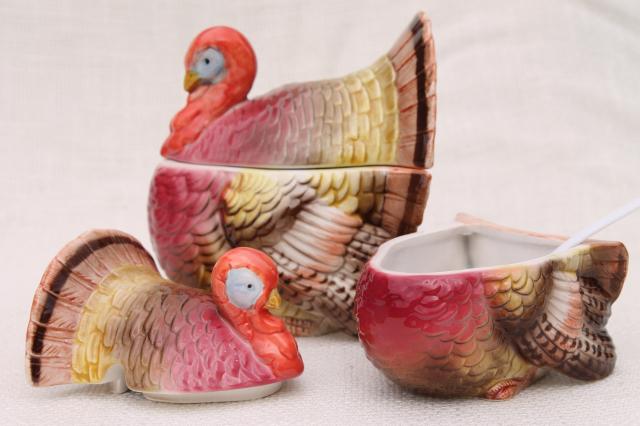
    Our best china! Sometimes, it’s Grandma’s china, brought out of the basement, dusted, and cleaned off for the occasion. Other times, it’s our wedding china, if you are of that generation that still wants or received wedding china. Other times, it’s unique dishes made and decorated for the occasion (think turkey-shaped plates!). Dinner plates, salad and butter plates, serving platters and bowls, condiment vessels, punch bowls, sauceboats for the gravy, dessert plates, tea, and coffee services, crustal wine glasses – the variety can be tremendous, and the different table wares are utilized to display and serve specific foods and finished dishes.

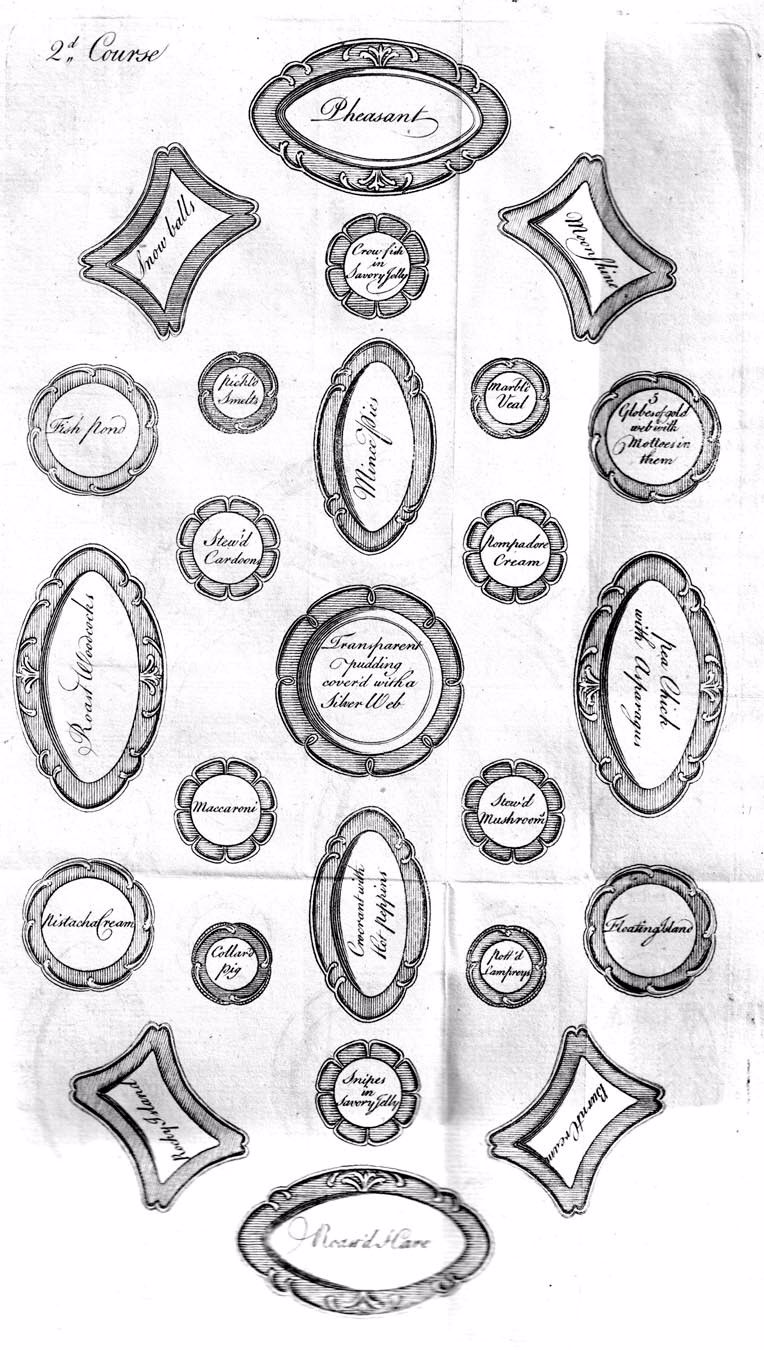
    Mary Washington, as a member of the gentry class in Colonial Virginia, would have been well-versed in setting a stylish dinner table for family and guests. Formal dining habits during the 18th century slowly evolved to dinners consisting of multiple courses of food prepared and served in a more elaborate and complicated fashion. Cookbooks of the age detailed the possible menus for different seasons and even produced drawings of how each course’s dishes were laid out on the table. Elizabeth Rafferty’s 1769 The Experienced English Housekeeper includes a copperplate drawing illustrating one such arrangement for the second course of a dinner. Hours could be spent looking up how some of her dishes were prepared, such as “Pistacha Cream,” “Potted Lampreys,” or “Transparent Pudding Covered With a Silver Web.”

    Second course dinner layout from The Experienced English Housekeeper, 1769

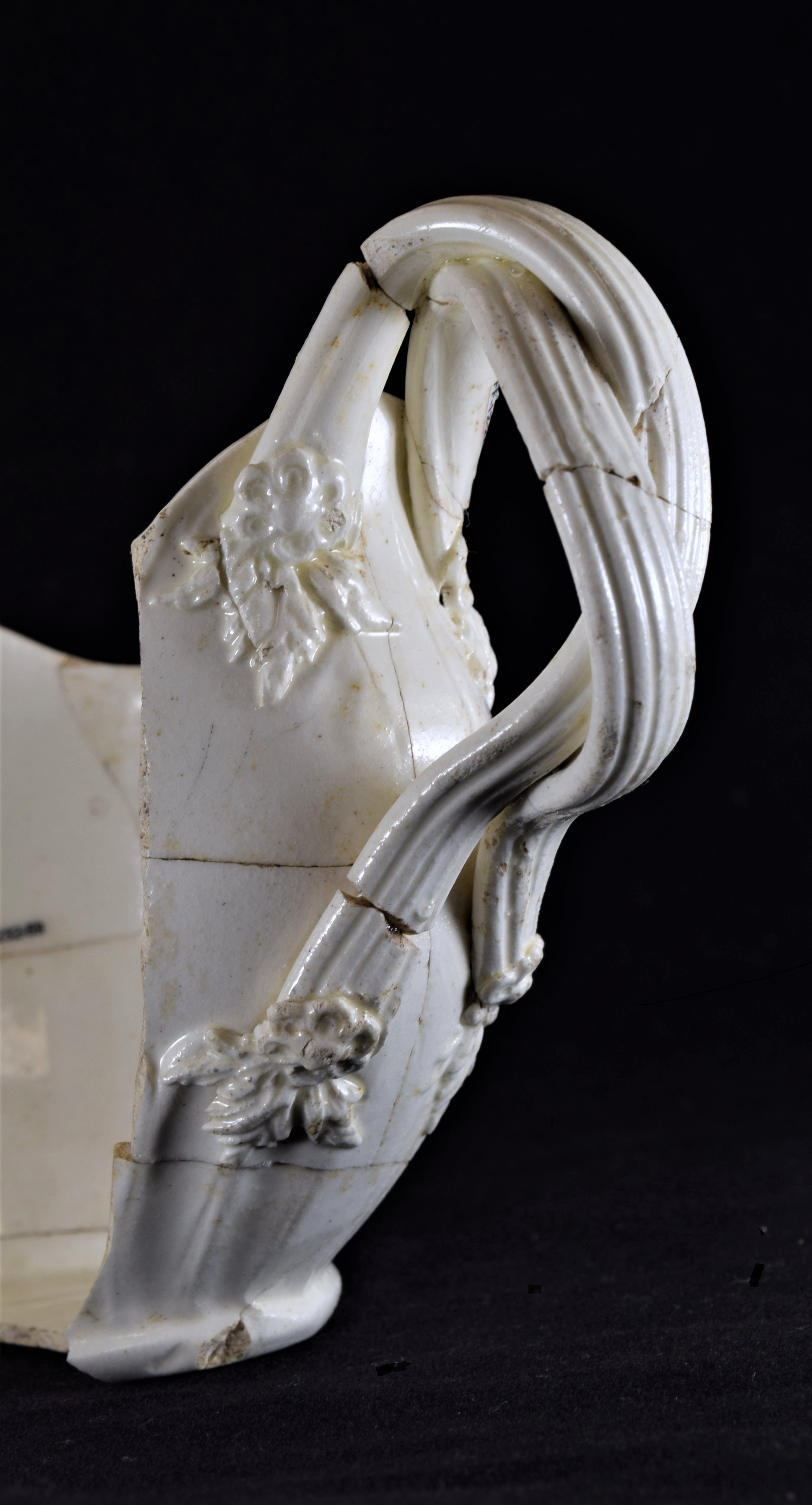
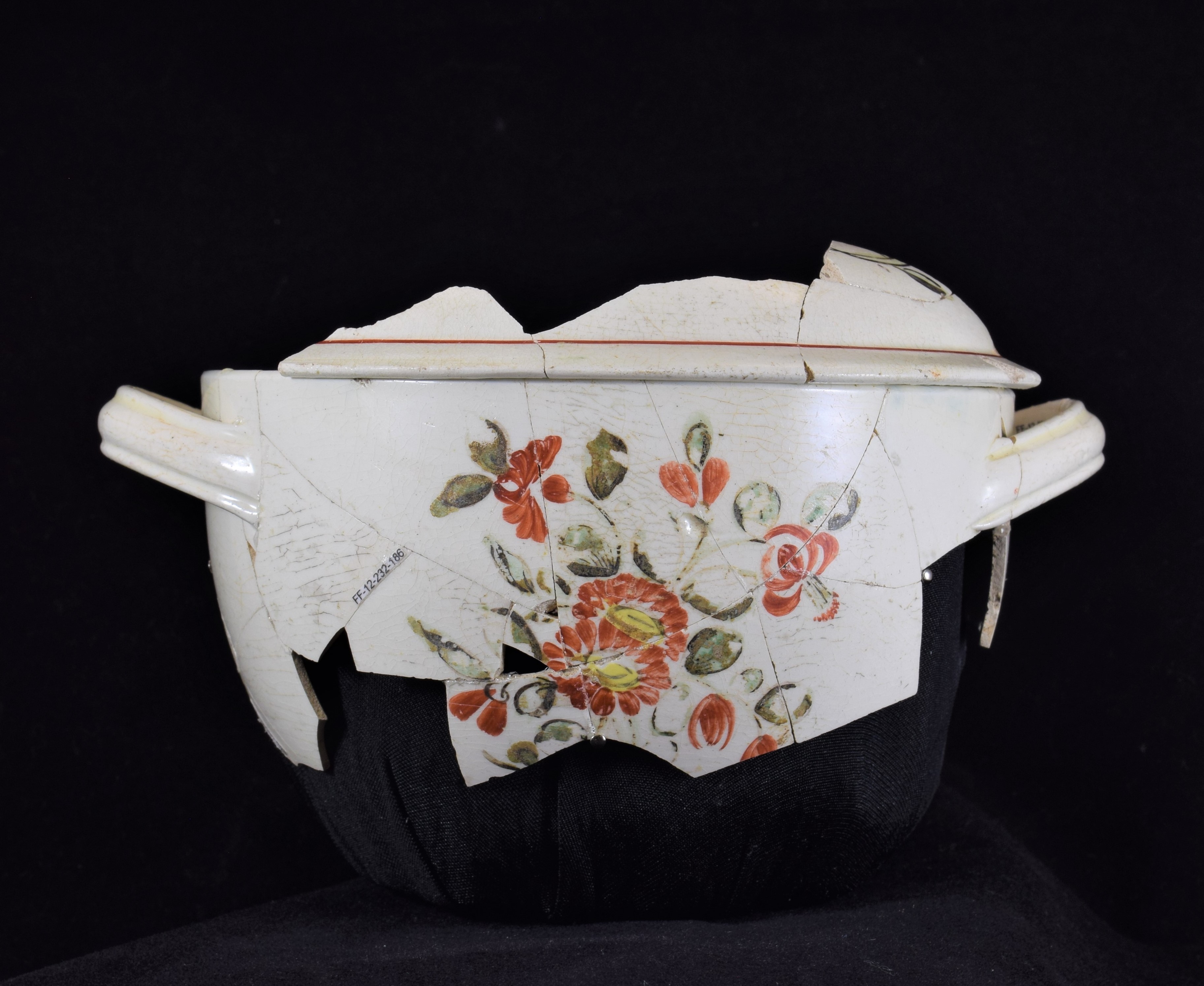
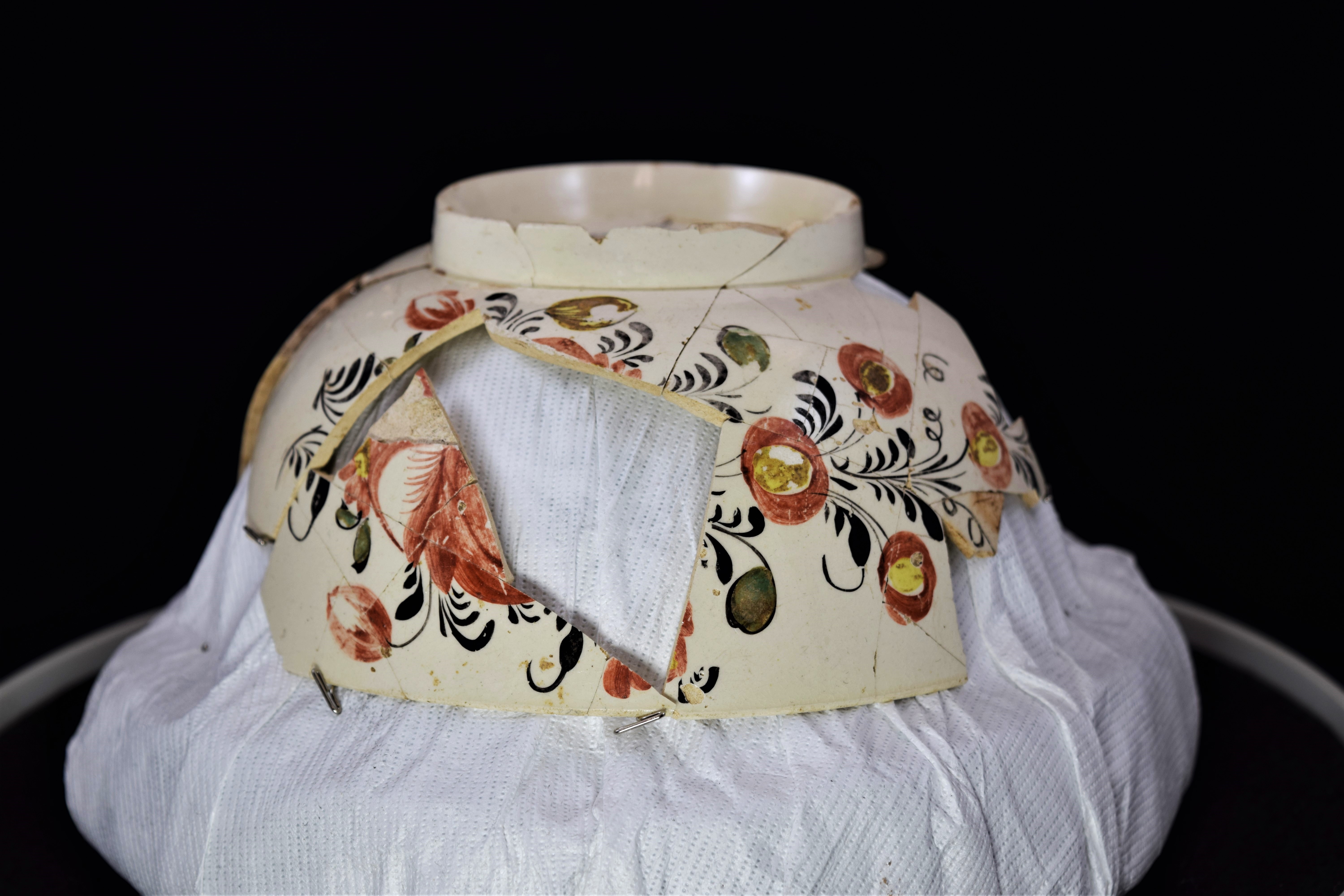
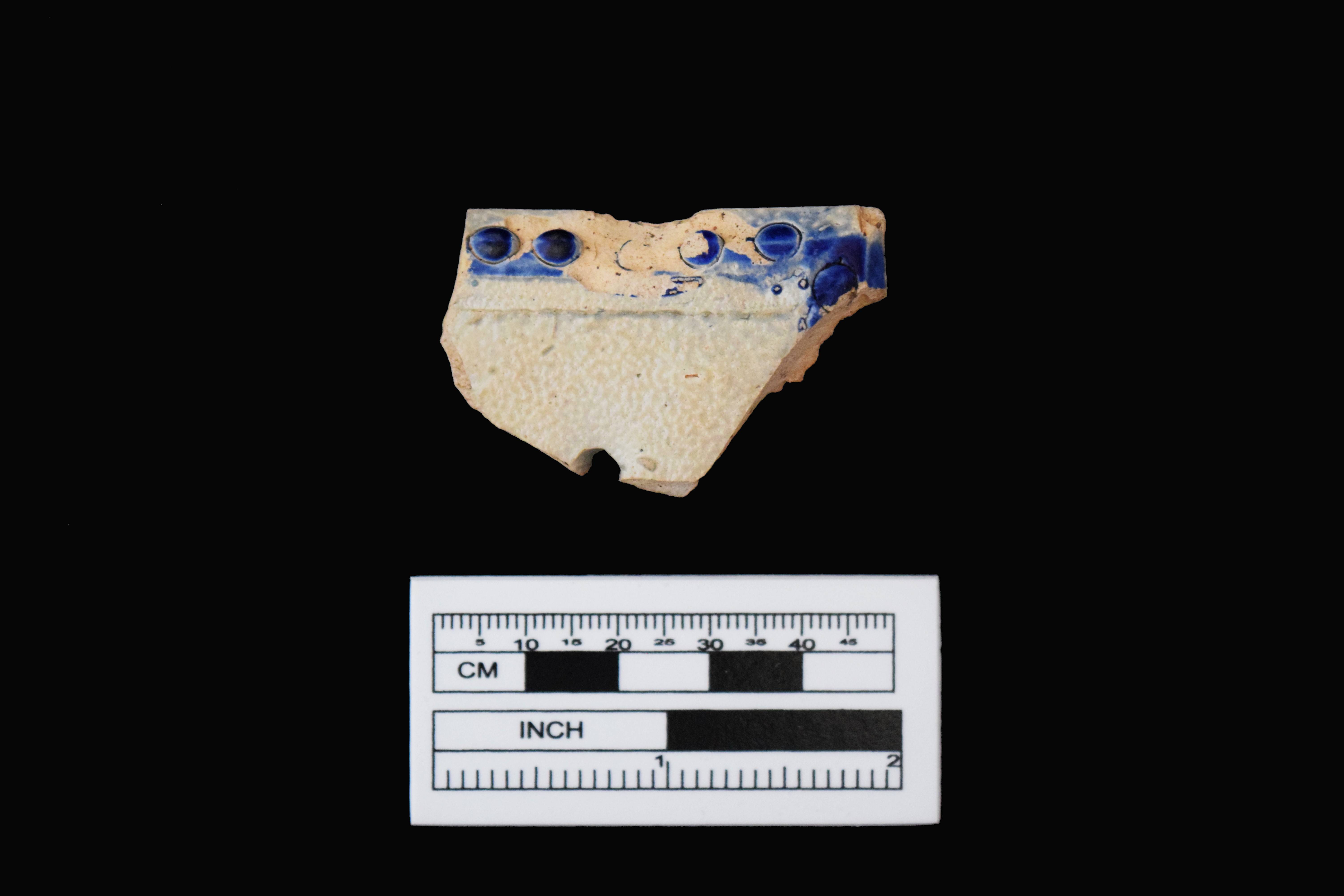
    Fragments of highly specialized ceramics excavated at Ferry Farm, the plantation Mary called home for much of her life, speak to her efforts to set a stylish table for guests. Numerous highly decorated (molded or painted) creamware vessels, including sauceboats, plates, platters, oval and round serving bowls, condiment bowls, casters, serving spoons, and tea wares, are in our collection and speak to the refinement of her table. Porcelain was the most desirous of tablewares, but its sheer expense was prohibitive for Mary except for limited items, such as teawares. Creamware, however, was within her budget and was extremely fashionable during the third quarter of the eighteenth century in English society.

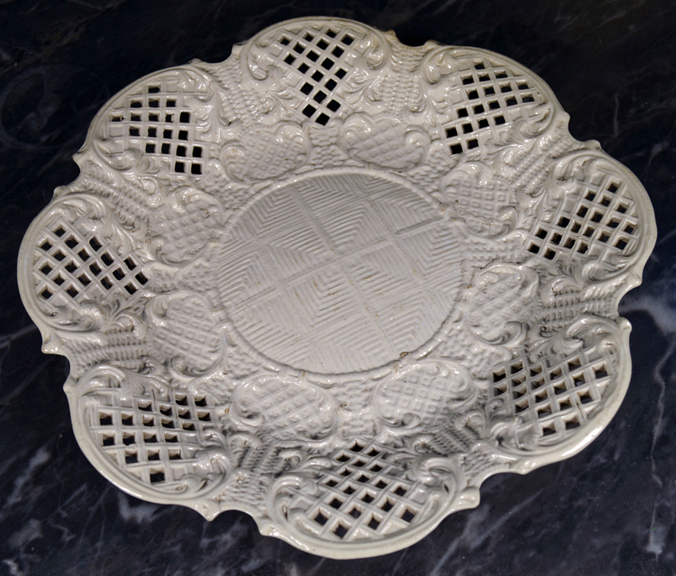
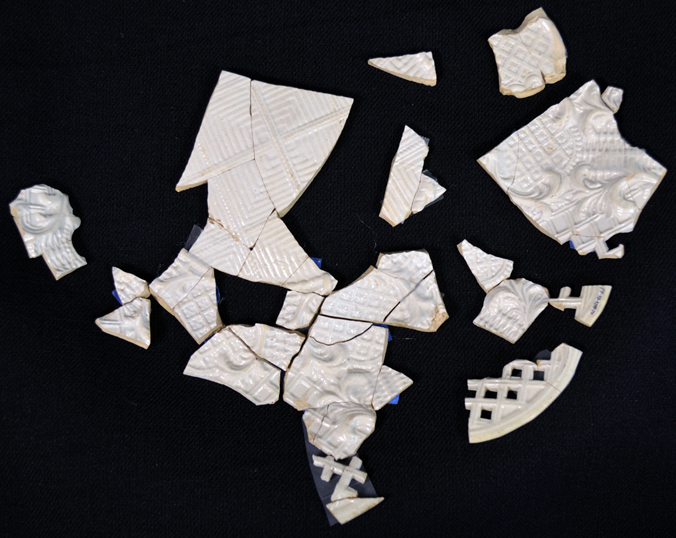
    Mary also had a fancy white salt-glazed stoneware fruit dish in her collection. This dish, and possibly an accompanying pierced bowl, would serve local and non-local produce such as grapes, figs, oranges, pineapples, apples, peaches, and pears. Fresh fruit, especially during off-season times, was expensive as it had to be shipped in from warmer climates. However, its presence on the table indicated a measure of wealth and, consequently, status within the gentry lifestyle. Mary needed to maintain her gentry status for herself, but more importantly, for her children and their future success in the stratified society in which they lived.

    So, what’s on your table this Thanksgiving?


    Judy Jobrack

    Archaeology Field Director

  • Spoooooooooky Teapots?

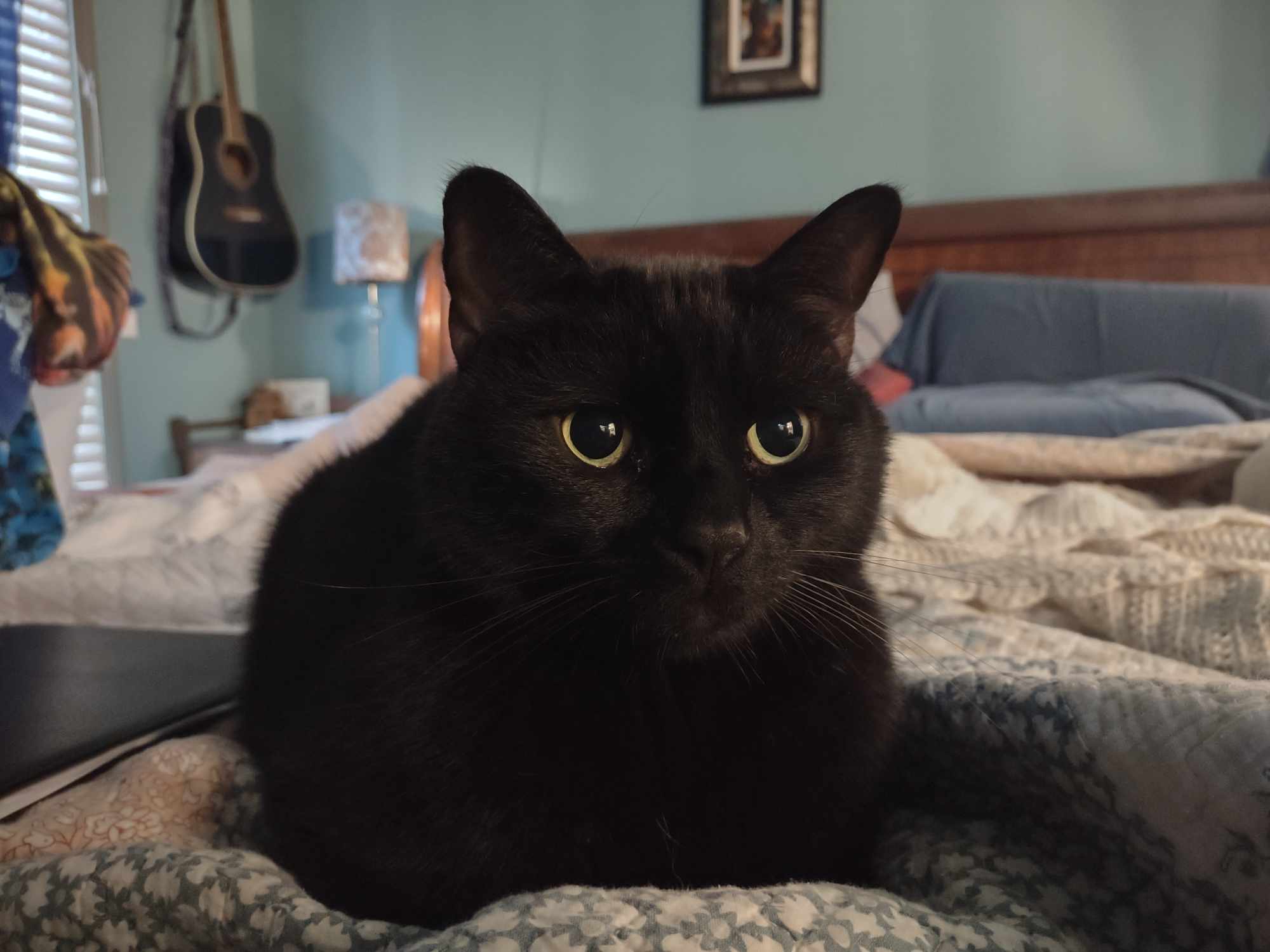
    There’s plenty to be frightened about in the colonial period. But teapots? Not exactly. However, aesthetics change as time passes. We see things through different lenses. As I type this, my substantial black cat with big yellow eyes stares at me, demanding attention.

    Poe, the big black cat with yellow eyes.

    Black animals are currently the least likely to be adopted in the United States, so black can be seen as a negative in pets…but what about black teapots?

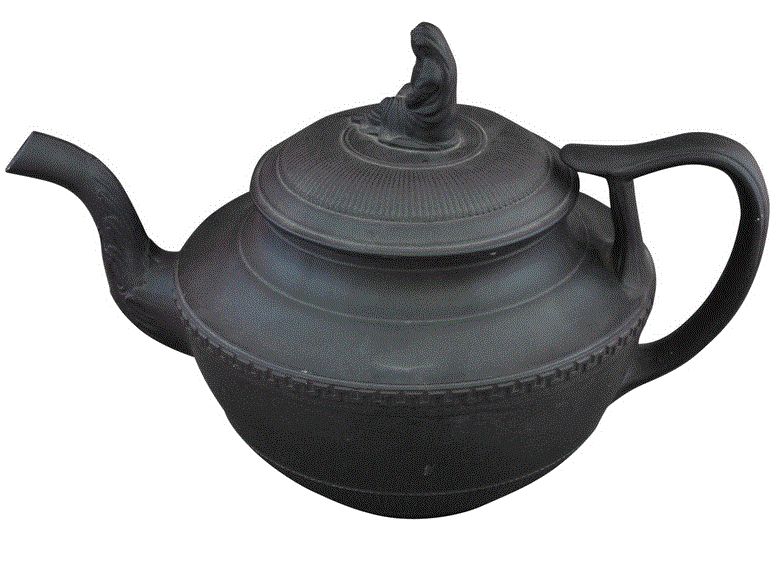
    Black Basalt Teapot, Turner, circa 1805

    Turns out, they were very much the rage during the middle of the 18th century and even into the early 20th century. 

    “Black is sterling and will last forever.”

    In 1767, Josiah Wedgwood started working with black basalts – a richly hued, glossy black stoneware medium – for his famous Etruscan vases. Wedgewood’s basalt is made from reddish-brown clay that burns black in the firing process; black basalt owes its color to the addition of manganese. [1]  [2]

    After Wedgwood perfected the fine-grained stoneware, it was soon being produced by other Staffordshire potters in England. It was called ‘Black Basalt’ or ‘Egyptian Black.’ [3] [4]  A matte black teaware that was striking and, by our modern estimations, quite possibly macabre. 

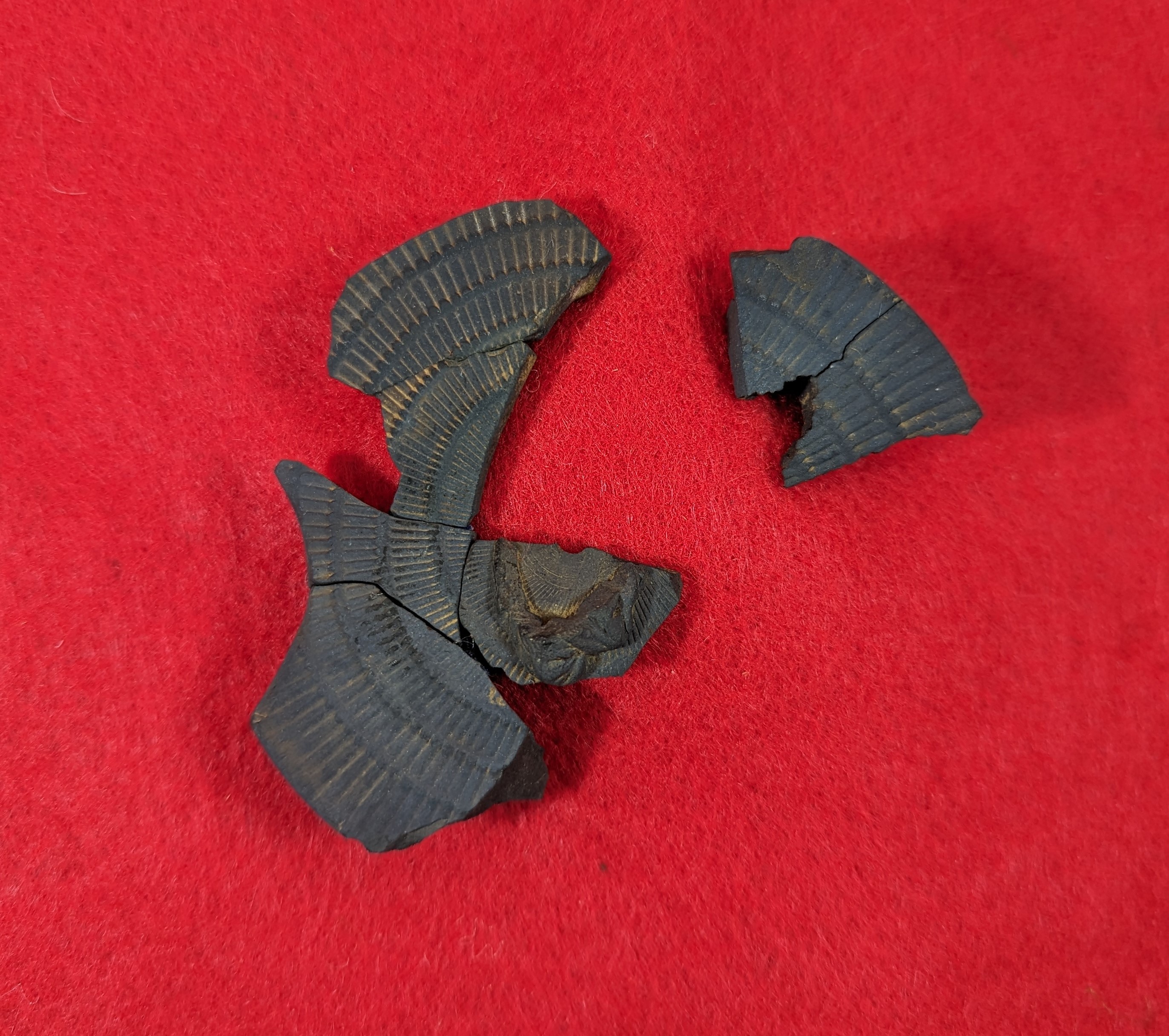
    Black Basalt teapots were decorated utilizing a new technology called ‘engine turning’ lathes. Simple turning lathes have been used for pottery production since the early 1700s. By the 1730s, virtually all hollow wares (mugs, jugs, cups, bowls, etc.) were being lathe-turned to shape and thin bodies. The engine-turning lathe further provided the ability to cut regular patterns in the clay bodies to create decorative elements. [5] The decorative elements at the time were heavily influenced by classical art from Ancient Greece and Rome. [6] 

    A striking finial accented the lovely neoclassical etches on the body of the matte black pot.

    Teapot, Circa 1800, Black Basalt, Mayer Manufacture, Staffordshire, England

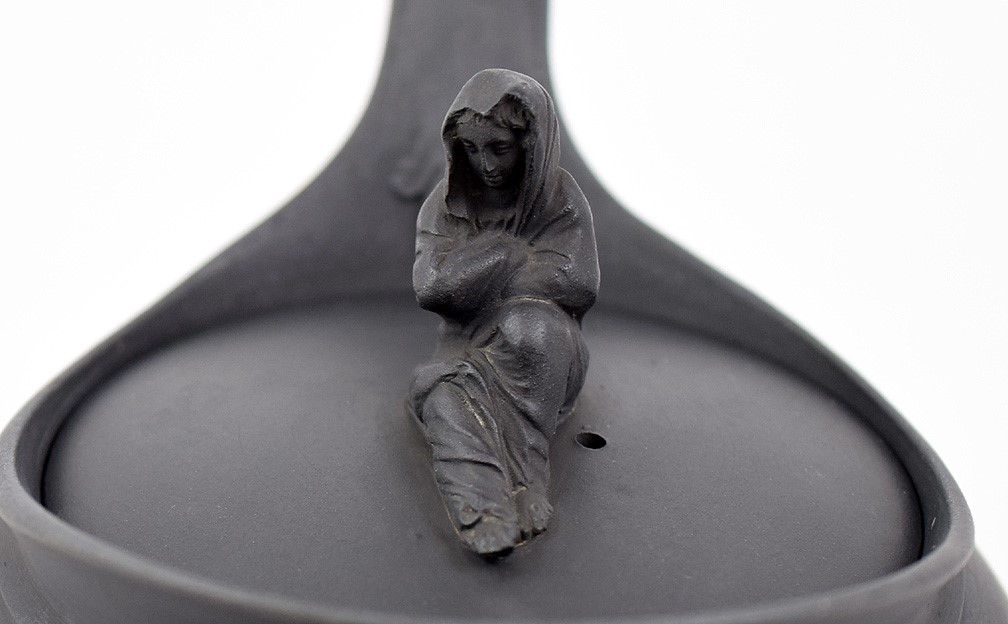
    What is a finial? The little knob on the top of the lid. This is where it gets weird for our modern-day eyes. Some looked like women hunched over, draped in mourning clothes or grieving widows. Add this to the black body, and the oddly shaped pots start to take on a dark tone. 

    Woman Finial

    Mary Washington owned an early iteration of these black basalt pots, but was it for mourning purposes? Not likely.

    Her husband Augustine died in 1743, early into the family’s occupation at Ferry Farm. This would have been before the invention of this style of pottery and well before strict (and quite frankly tedious) Victorian mourning rituals. A black teapot may seem to symbolize some outward decorative display of bereavement or grief (particularly with a sad woman finial). Yet, to Mary, it would have just been a neoclassical design in the latest black basalt trend. She was just being her fashionable self. Her teaware collection was pretty admirable, and the fact that she owned a black basalt teapot is not surprising. 

    But that shouldn’t stop us from enjoying beautiful and somewhat spooky teapots.


    Mara Kaktins, Archaeologist & Lab Manager

    Sources

      [1] M.S. Rau. (2019, December 11). Wedgwood: A collector’s guide to English ceramic treasures. https://rauantiques.com/blogs/canvases-carats-and-curiosities/wedgwood-collectors-guide

    [2] Todd, L. M. (2020, December 17). Rediscovering Black basalt one of Josiah Wedgwood’s first and most enduring inventions. Architectural Digest. https://www.architecturaldigest.com/story/rediscovering-black-basalt-one-of-josiah-wedgwoods-first-and-most-enduring-inventions

    [3] STONEWARE, BLACK BASALT – Type Index | Historical Archaeology Type Gallery. (n.d.). https://www.floridamuseum.ufl.edu/typeceramics/type/stoneware-black-basalt/

    [4] The Mint Museum. (2023, January 24). Classic Black: The Basalt sculpture of Wedgwood and his contemporaries – Mint Museum. Mint Museum. https://www.mintmuseum.org/exhibition/classic-black/

    [5] The Chipstone Foundation. (n.d.). https://www.chipstone.org/article.php/151/Ceramics-in-America-2004/The-Little-Engine-That-Could:-Adaptation-of-the-Engine-Turning-Lathe-in-the-Pottery-Industry

    [6] Portals to the Past: British ceramics 1675-1825 – Google Arts & Culture. (n.d.-b). Google Arts & Culture. https://artsandculture.google.com/story/portals-to-the-past-british-ceramics-1675-1825/GgUh1Et0LThYLw

  • In Jewelry Remembered: Fashion as a Mourning Ritual

    Collections managers deal with a wide array of objects. Sometimes those objects can be quite odd and even a bit gross to the modern person.  One object that has always fascinated me is mourning jewelry and the hair of the deceased that jewelry contains.  Not many people nowadays think of collecting loved ones hair to keep in a locket or to weave into bracelets, but this was a widespread practice and even quite fashionable a relatively short time ago.  While perhaps odd to us today, mourning jewelry gives us a glimpse into rituals surrounding the dead and grieving at a time when death was a more prominent and ubiquitous part of life.

    The evolution of mourning jewelry began around the Middle Ages as part of the growth of Christian ideas on mortality and redemption called Memento Mori. These ideas found their way into literature, art, and even fashion.  Memento Mori jewelry reminded the wearer of their own mortality. These pieces, usually rings, incorporated macabre imagery like skulls, skeletons and coffins to create strong visual reminders of the transient nature of earthly life.

    It was not until the 17th century that the Memento Mori jewelry developed into what we know as mourning or memorial jewelry.  The imagery remained similar but the symbolism became more personal and served as a sentimental remembrance of a specific individual, instead of one’s own mortality.  Engraved names, dates of death and age of the deceased appeared on pieces.  Bereaved family presented these ornaments to friends and family as memorial to the individual.  They became a status symbol and many wealthy people actually included instructions of how the jewelry would be designed, and made in their will. For example, George Washington declared in his will: “To my Sisters in law Hannah Washington & Mildred Washington; to my friends Eleanor Stuart, Hannah Washington of Fairfield, and Elizabeth Washington of Hayfield, I give, each, a mourning Ring of the value of one hundred dollars. These bequests are not made for the intrinsic value of them, but as mementos of my esteem & regard.”

    GW Brooch 1
    The oval-shaped brooch above bears the 1798 Saint Memin likeness of George Washington in profile and dates from around 1799. The image is surrounded by gold and blue enamel and is under convex glass.  The brooch is trimmed by forty-four seed pearls.

    GW Brooch 3
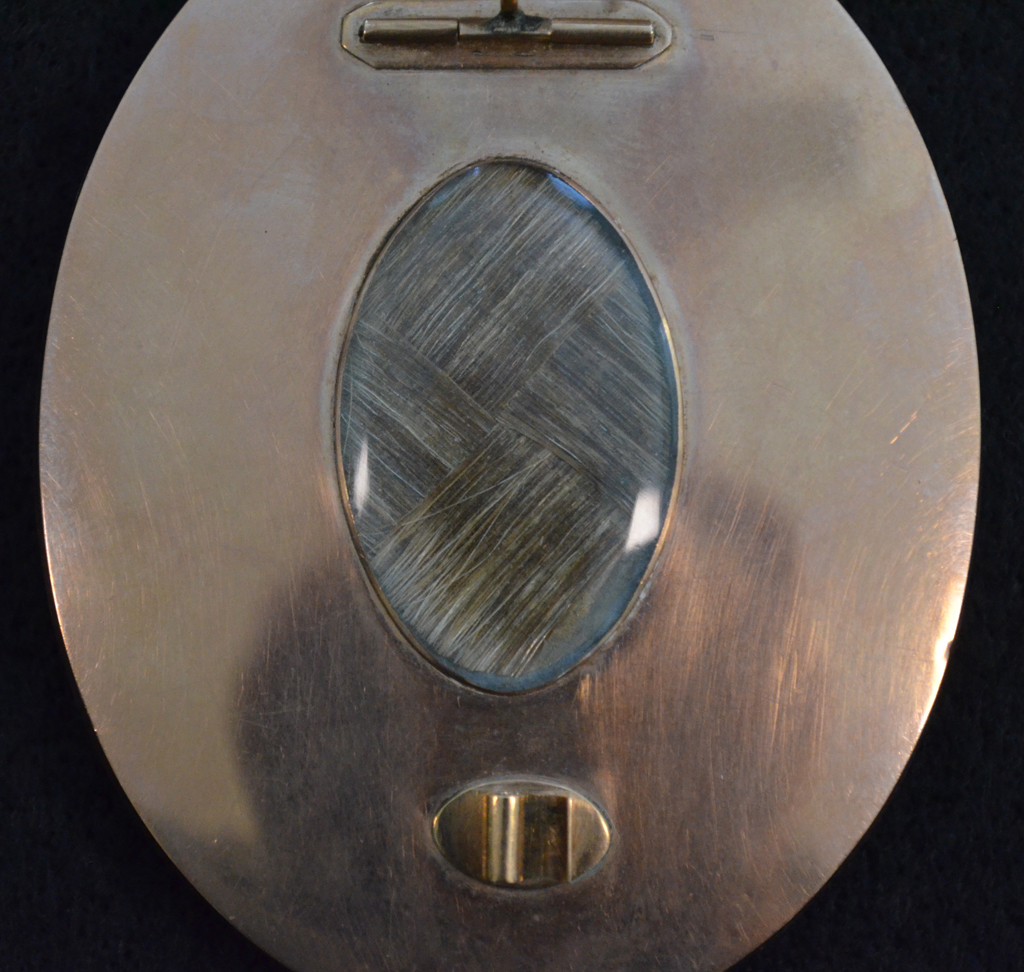
    The back of the brooch contains a plait of brownish-red hair under glass along with a pin fastening.  Tradition says the hair is General Washington’s cut after his death and sent from Mount Vernon by Martha to Mrs. R.B. Lee of the Sully Plantation, Fairfax Co., Virginia in December 1799.

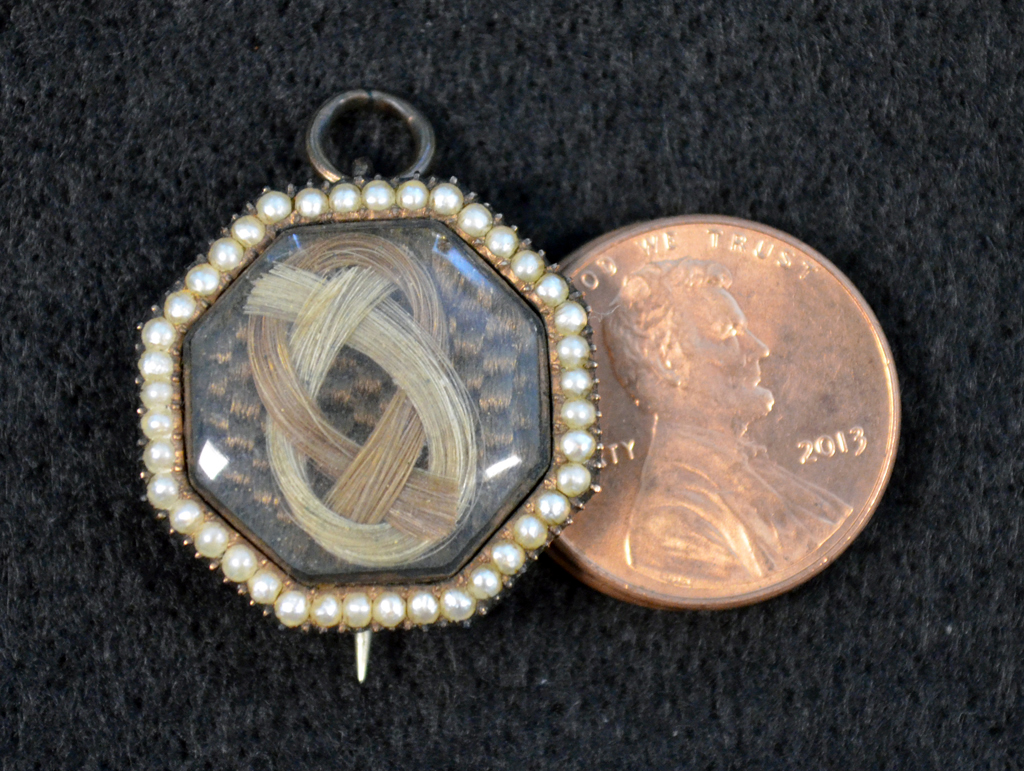
    By the time Washington died, mourning jewelry had evolved with changing attitudes toward death and with a greater focus on sentiment.  The style changed to represent the lighter rococo styles and later Neo-classical designs became popular.  The skulls and coffins were replaced by sepia-toned women dressed in billowing robes lamenting at a tomb, inscribed urns, and weeping willow trees in bucolic landscapes.  Many rings and brooches were lined with pearls to represent tears and included a simple twist of the deceased’s hair.

    GW Locket Brooch
    The octagonal locket dates from between 1800 to 1825 and has been turned into a brooch. The lock of hair, believed to be that of George Washington, is tied in a figure eight type knot and rests on a mat of woven hair. The lock of hair was supposedly given to Captain Robert Smith who knew and served with George during the war. After Captain Smith lost his wife, he went to visit the Washingtons at Mount Vernon and became friends with Nelly Custis, who gave him this lock of her great-grandfather’s hair. When Captain Smith died, he willed the pendant to his cousin and it passed through the Smith family until donated by a relative to The George Washington Foundation in 1925.

    The decorative twist of a loved ones hair for memorial purposes was not new, but it did come into greater use in the 18th century and peaked during the Victorian era.  Hair is one of the few personal mementos people could keep from a loved one.  Human hair contains keratin which is fairly resistant to decomposition particularly when kept in a sealed environment.   The permanence of hair and memory is best summed up with a quote from a journal article of the time discussing female beauty, “Hair is at once the most delicate and lasting of our materials; and survives us, like love. It is so light, so gentle, so escaping from the idea of death, that with a lock of hair belonging to a child or a friend, we may almost look up to heaven, and compare notes with the angelic nature; may almost say, “I have a piece of thee here, not unworthy of thy being now.’” (Page 76)

    Much Brooch 1
    This traditional mourning brooch dates from 1790 to 1810. It contains many neoclassical imagery typical of the time including the weeping woman in classical dress sitting by a tomb, a willow tree, and a ceremonial urn carving. It is inscribed “Much Lov’d, Much Mourn’d”and is painted on ivory encased in a copper mount. The back contains a braid of brownish-blond hair under a glass cover.

    Much Brooch 2

    In the 19th century the use of more elaborate hair work became increasingly popular. The Victorians developed a strict etiquette for mourning rituals and dress.  The stages specified different colors, fabrics and even jewelry at different times during the mourning period, the length of which varied depending on the mourner’s relationship to the deceased.  Mourning jewelry made of hair was allowed during the second stage (usually about a year into the mourning ritual) creating a rise in not only unique hair jewelry but do-it-yourself guides to making pieces with loved one’s hair.

    Memorial jewelry and hair work began to wane at the turn of the 20th century and now these pieces have become curios, often found in antique shops and museum storage collecting dust on shelfs.   Sadly, most of the pieces have no information relating to who they were made for or the names of the mourned. Instead, we are left with an unidentified plait of hair or gold band symbolizing the only piece left from the life of a loved individual.

    Heather Baldus
    Collections Manager

  • 2023 Dig Season Recap!

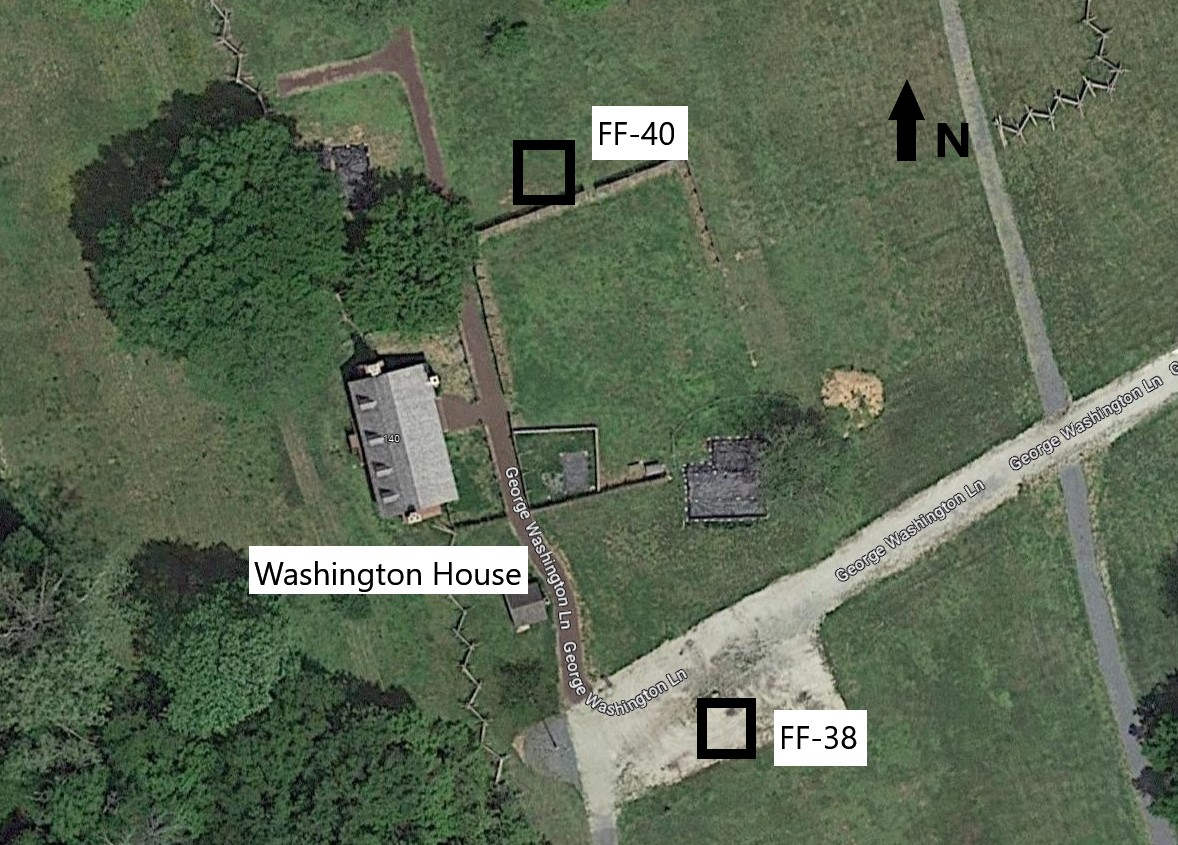
    It’s that time again! As we welcome Fall and the beautiful cool weather it brings, let’s take a look back at our Summer 2023 dig season here at Ferry Farm, George Washington’s Boyhood Home. This year’s dig actually involved excavating two separate areas, designated FF-38 and FF-40, within the historic area. 

    Location of the archaeological projects FF-38 and FF-40 at Ferry Farm.

    Project FF-38

    The FF-38 area contained a large, dark, soil stain that was discovered by accident during the monitoring of a utility trench in 2016.  Only a portion of this feature was visible at that time as it continued beneath the south wall of the trench. We had clues as to the approximate date of this partially-exposed feature, but we still needed to fully uncover the entire feature to establish its total dimensions and determine its age, function, and how it relates to the surrounding landscape.

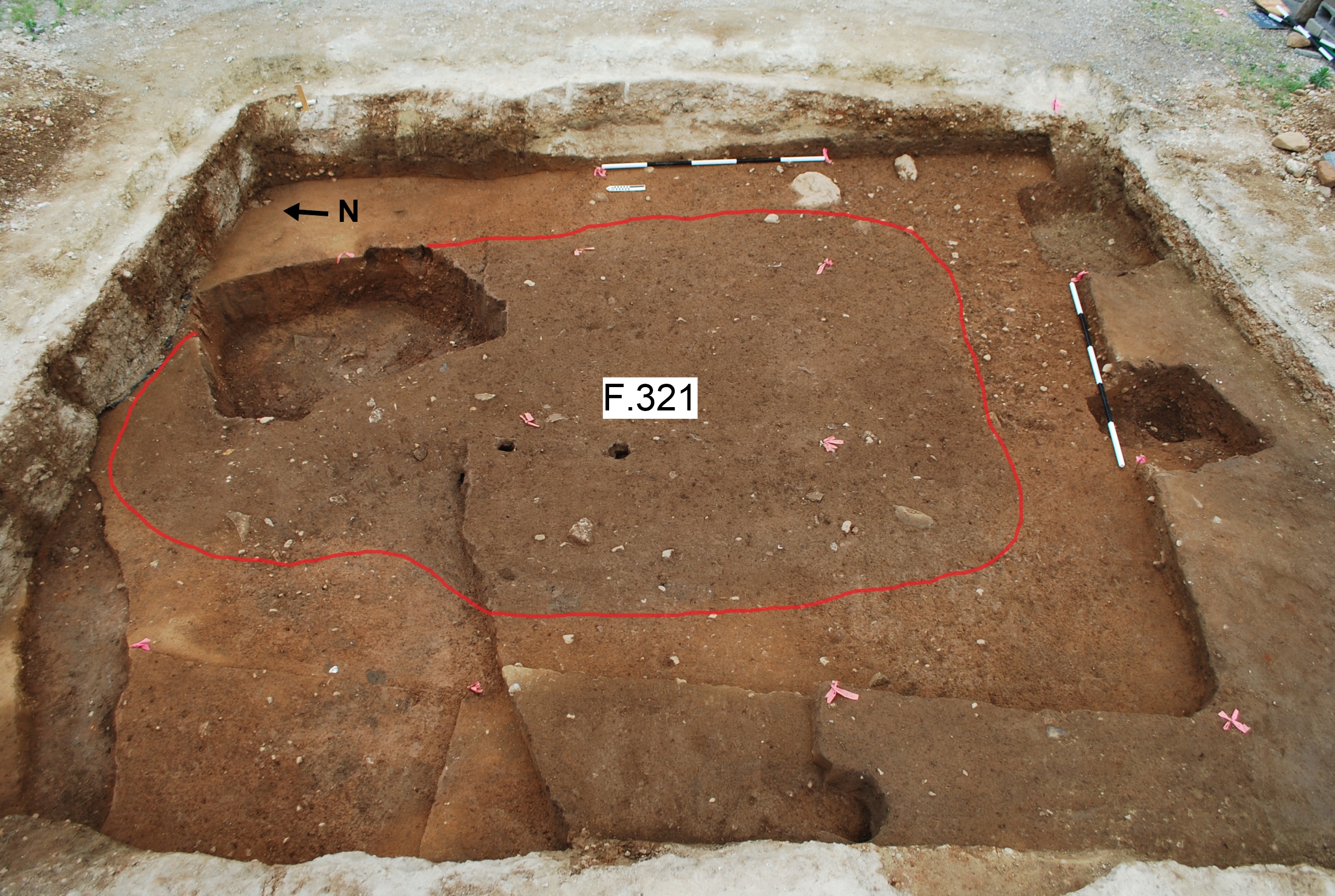
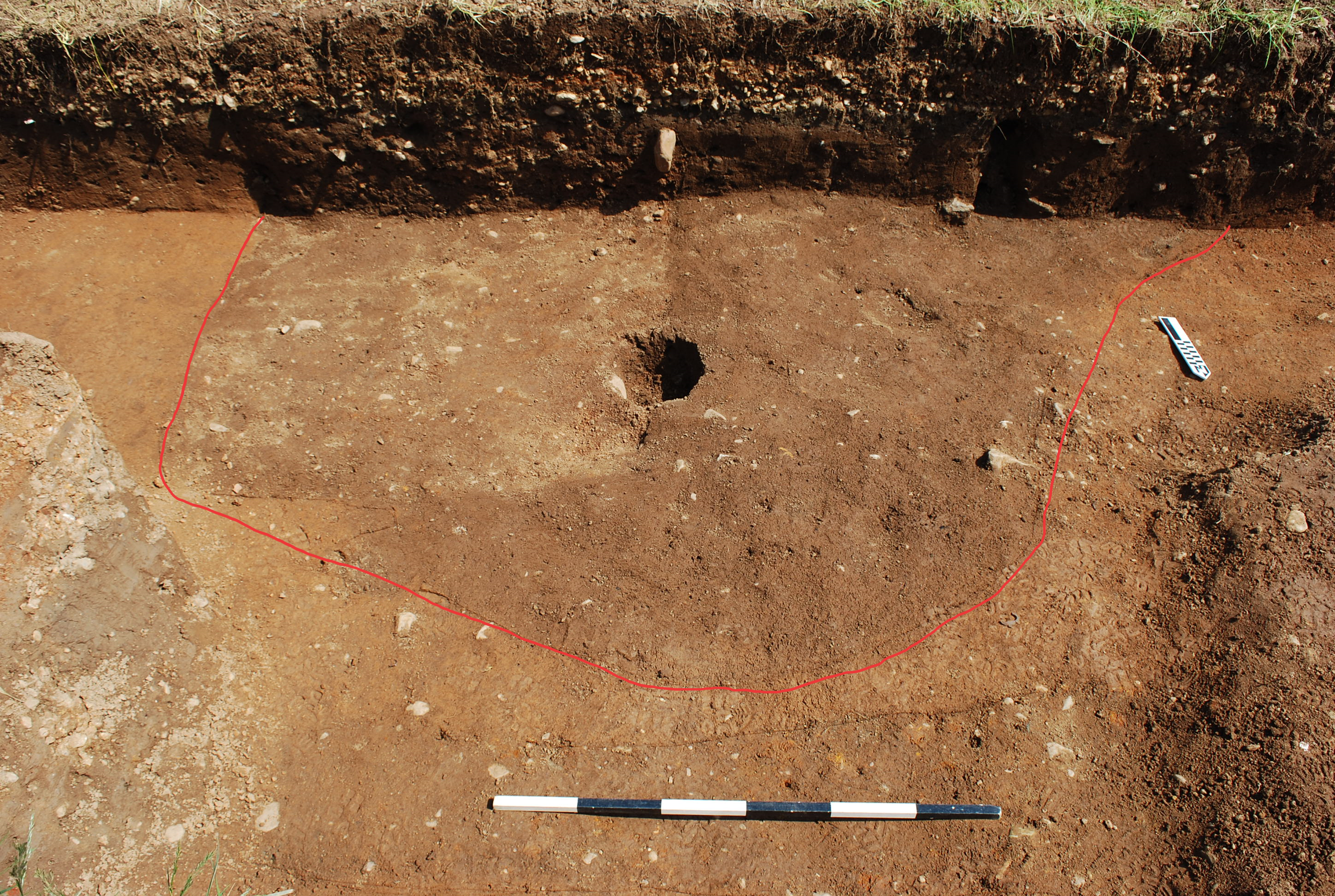
    F.321 as seen in 2016 within the utility trench. Only the northern portion of the feature was exposed at this time. F.321 is outlined in red, and is intruded by a square, lighter-colored 19th-century feature (F. 324).

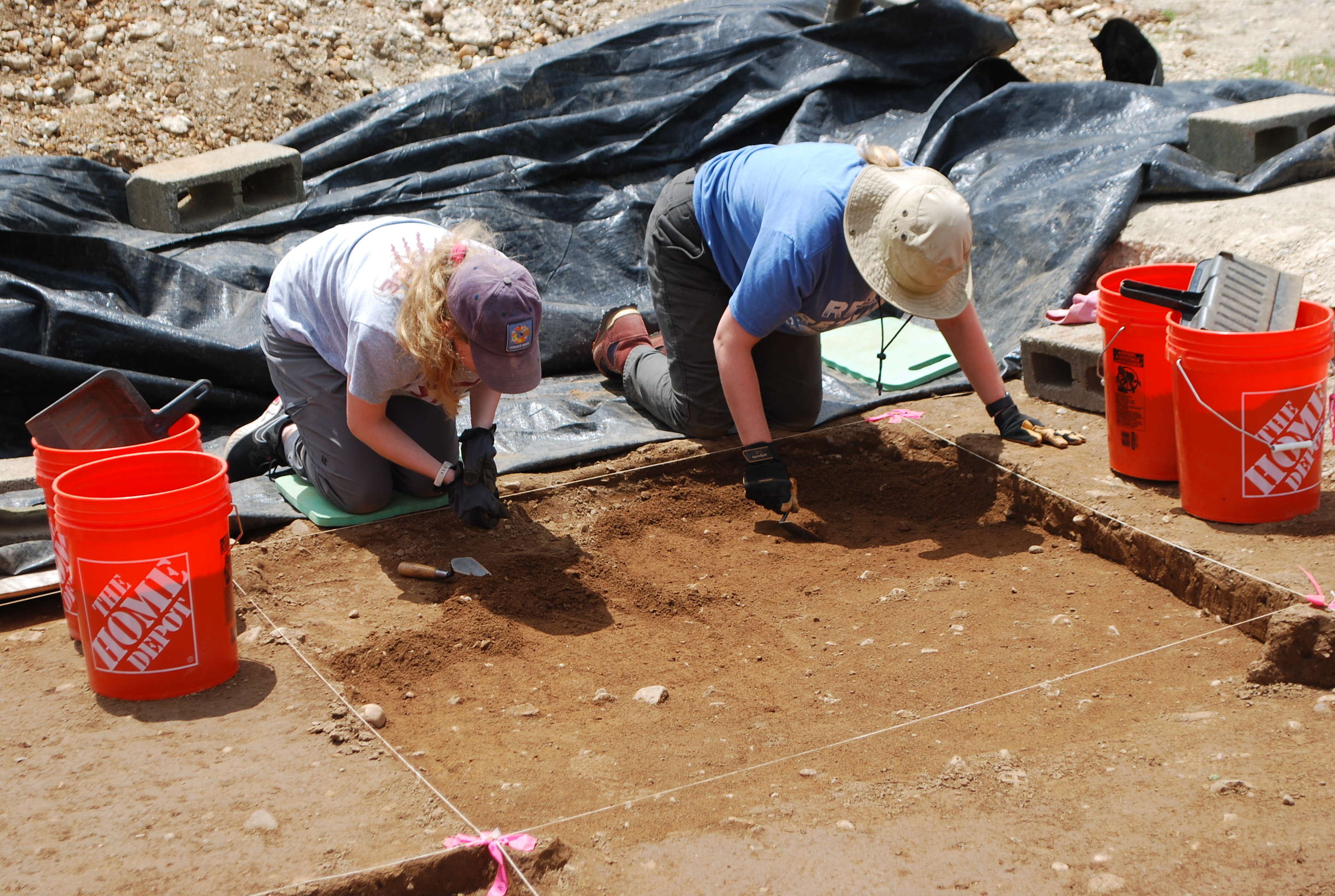
    Our excavation began by the machine removal of two modern layers of gravel that overlay a thick 19th-century layer of plowed soil. The excavation area measured approximately 16 ft. by 20 ft. Our crew of archaeologists then slowly excavated down through the plowed layer until we could identify the boundaries of Feature 321. Fully uncovered, the exciting discoveries began.

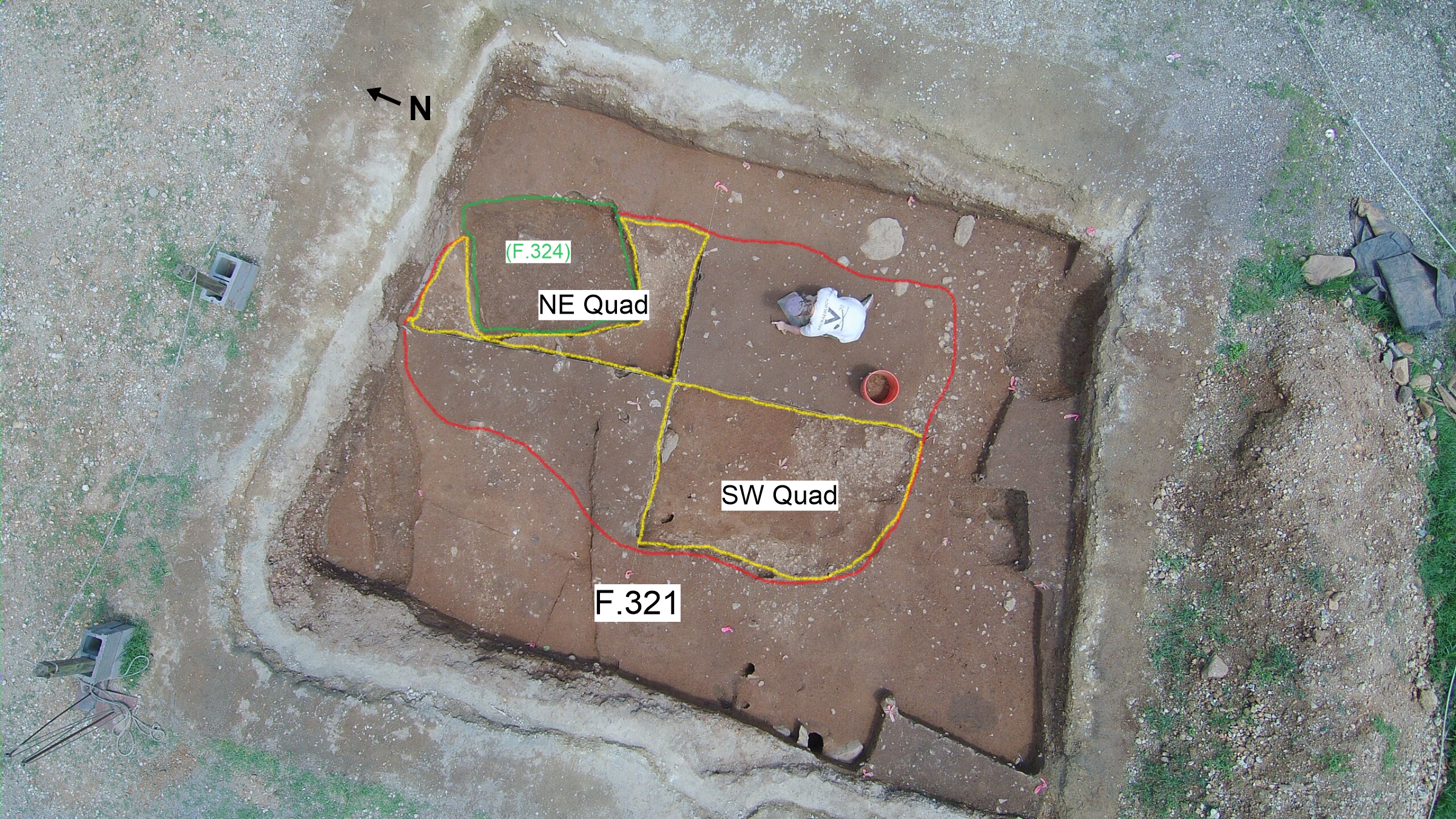
    First and foremost, we discovered the feature was much bigger than originally thought! What initially appeared in 2016 to be a 5’x7’ roundish feature turned out to be the northern tip of a large rectangle measuring 10’ by 16’. The size and shape alone of the feature shifted our interpretation from a small pit to something larger.

    F.321 fully exposed before excavation (outlined in red). The intrusive feature, F. 324, has been partially dug out at the north end of the site.

    Feature 321 was divided into four sections and our crew excavated both southwest and northeast quadrants. This excavation approach allowed us to determine that the feature was roughly 1’ deep at the center, with gently sloping sides, and filled with successive layers of soil and ash-filled deposits. These soil layers provided us with an awesome mix of artifacts which were used to nail down the feature’s end date to the middle of the 18th century.  But establishing a date is only part of the process: artifacts can further help us identify the function of the feature as well.

    F.321 after the southwest and northeast quadrants were excavated.  Intrusive Feature 324 is outlined in green.

    That being said, we are still unsure of what this feature actually is. Here is what we know so far.  There is no hearth of chimney remains. Lack of a fireplace suggests it wasn’t a domestic dwelling, but it could be another type of plantation outbuilding, such as a storage building, shed, or barn. The edges are almost vertical, and the floor is relatively flat.  There is no silt so the pit was covered while it was open.   It is too regular to be a quarry pit used to harvest clay as a building material.

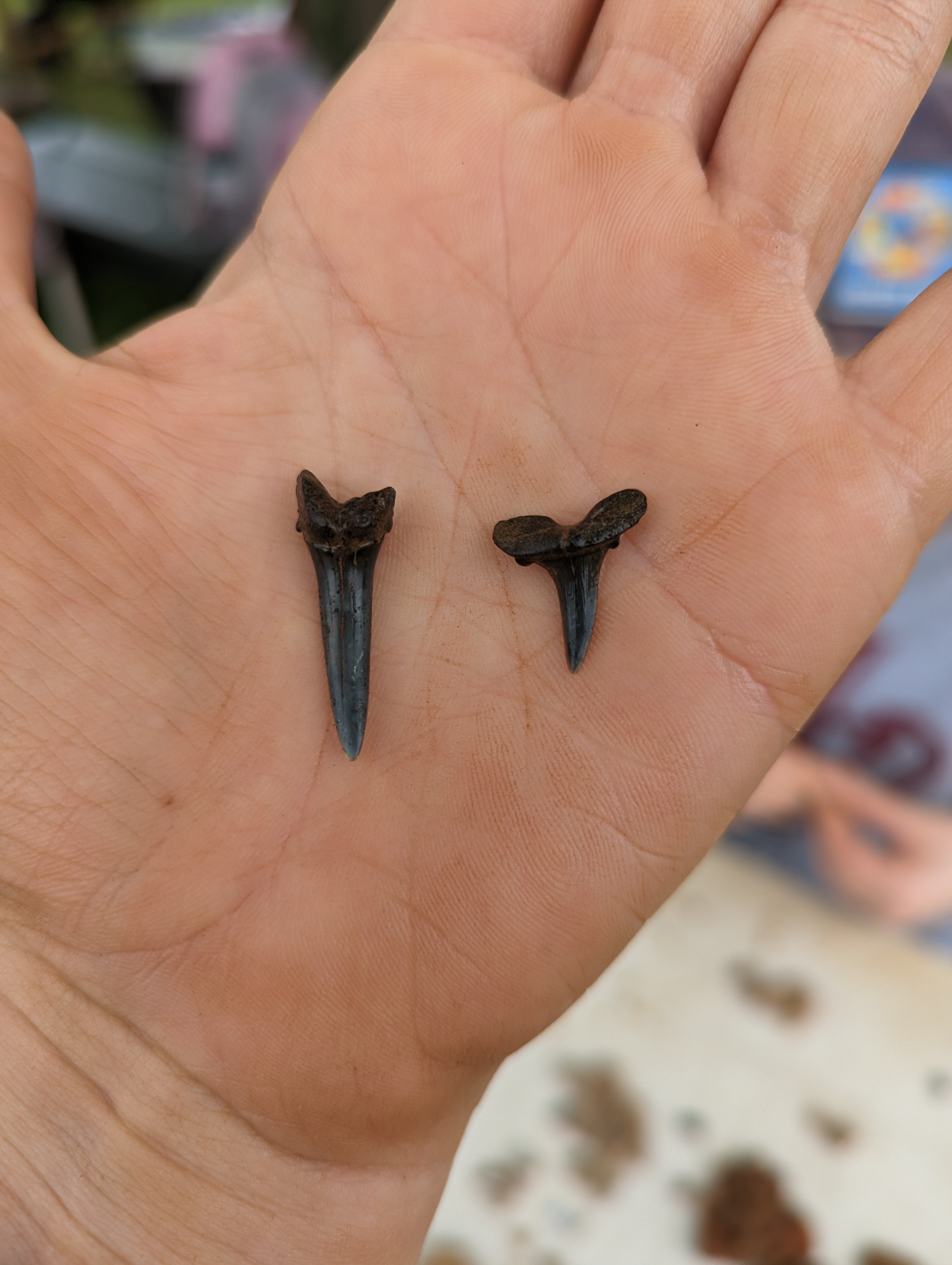
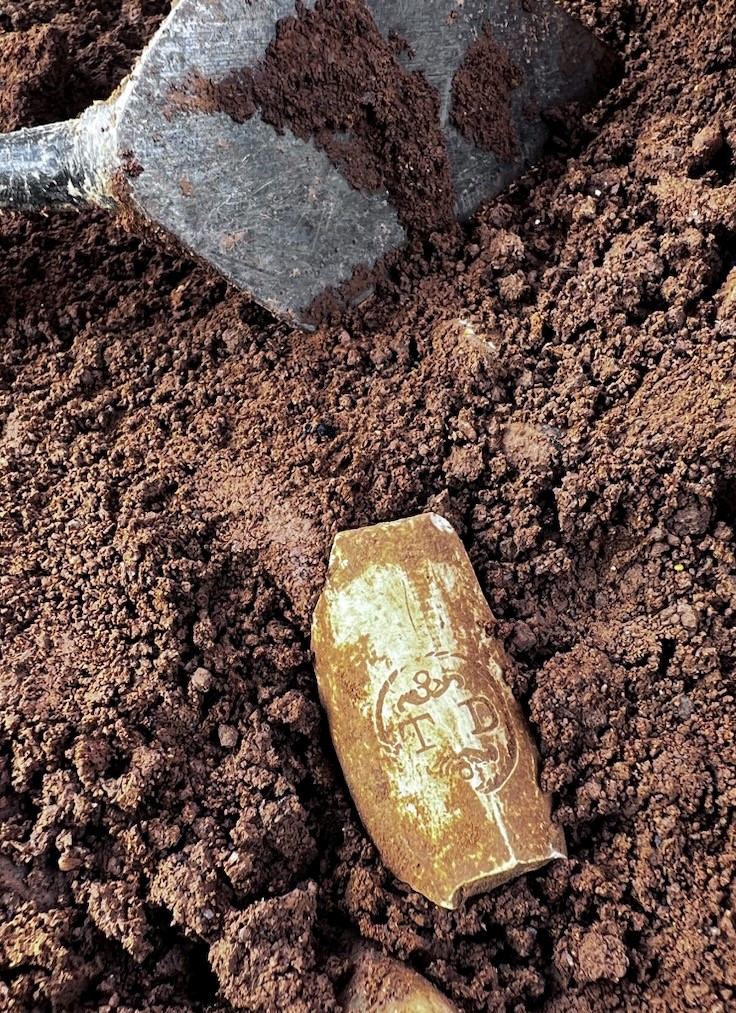
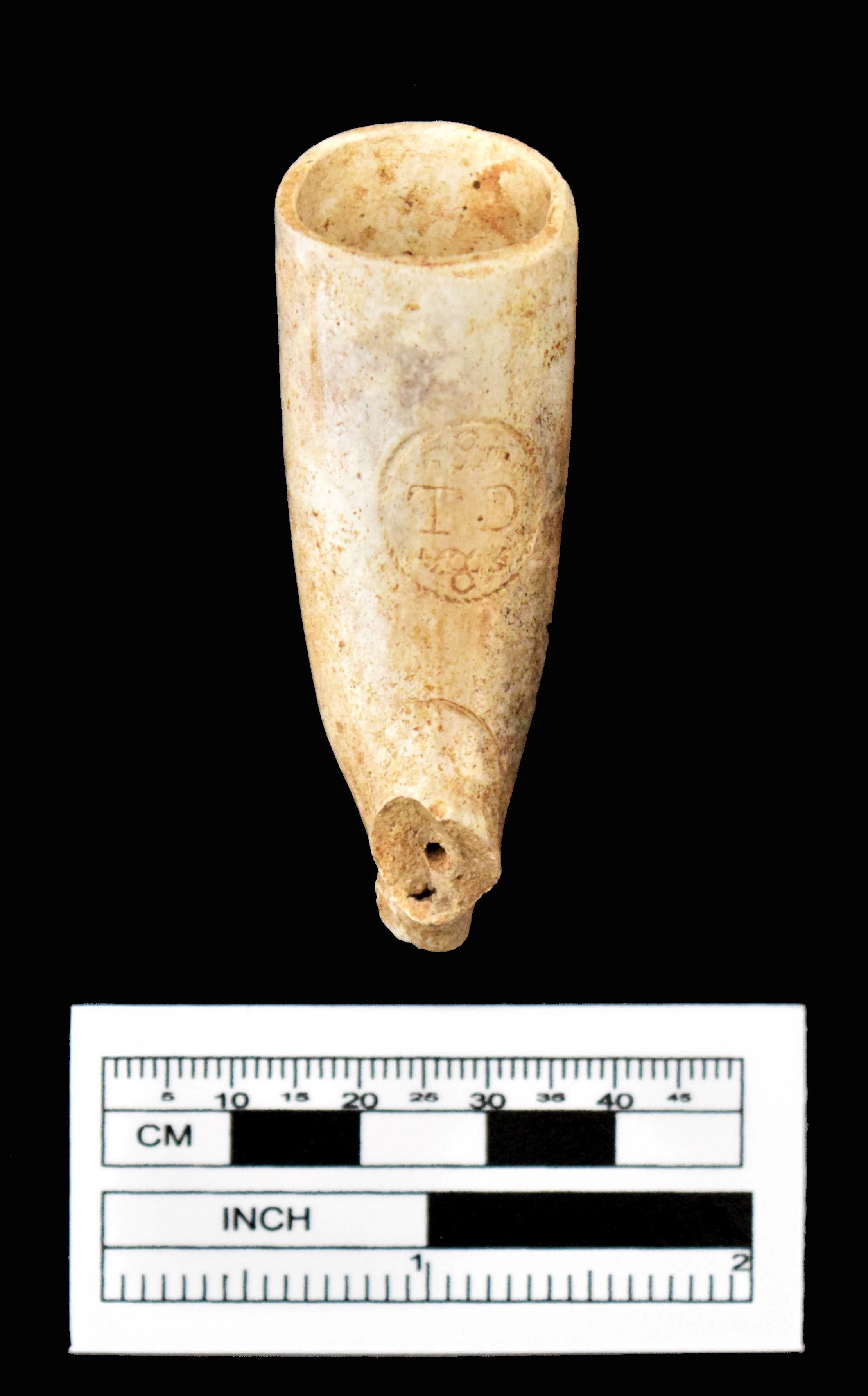
    Even though we are still in the early days of analyzing the artifacts, that doesn’t mean we can’t talk about a few great things we found. This feature had a little bit of everything: personal items, food-related items, architectural debris, domestic items, etc. The crowning glory of the excavation (in our humble opinion) would have to be the complete pipe bowl that was stamped with a maker’s mark that featured the letters “TD.” Other exciting finds include a clipped Spanish coin, sherds to a Westerwald ink well, shark teeth, and prehistoric pottery, just to name a few. This feature also contained a layer of ash that preserved delicate artifacts such as bone, fish scales, and straight pins – items that often don’t survive in the archaeological record.

    So what does this all mean? Well, this means that we will definitely be returning to the FF-38 site next season. While we have gathered a lot of information during this dig, there is still much left to find. Expanding our excavation beyond the limits of the feature and excavating one of the remaining two quadrants will help us interpret the feature’s function and how it relates to the 18th-century farm landscape of the Washington family.

    FF-40

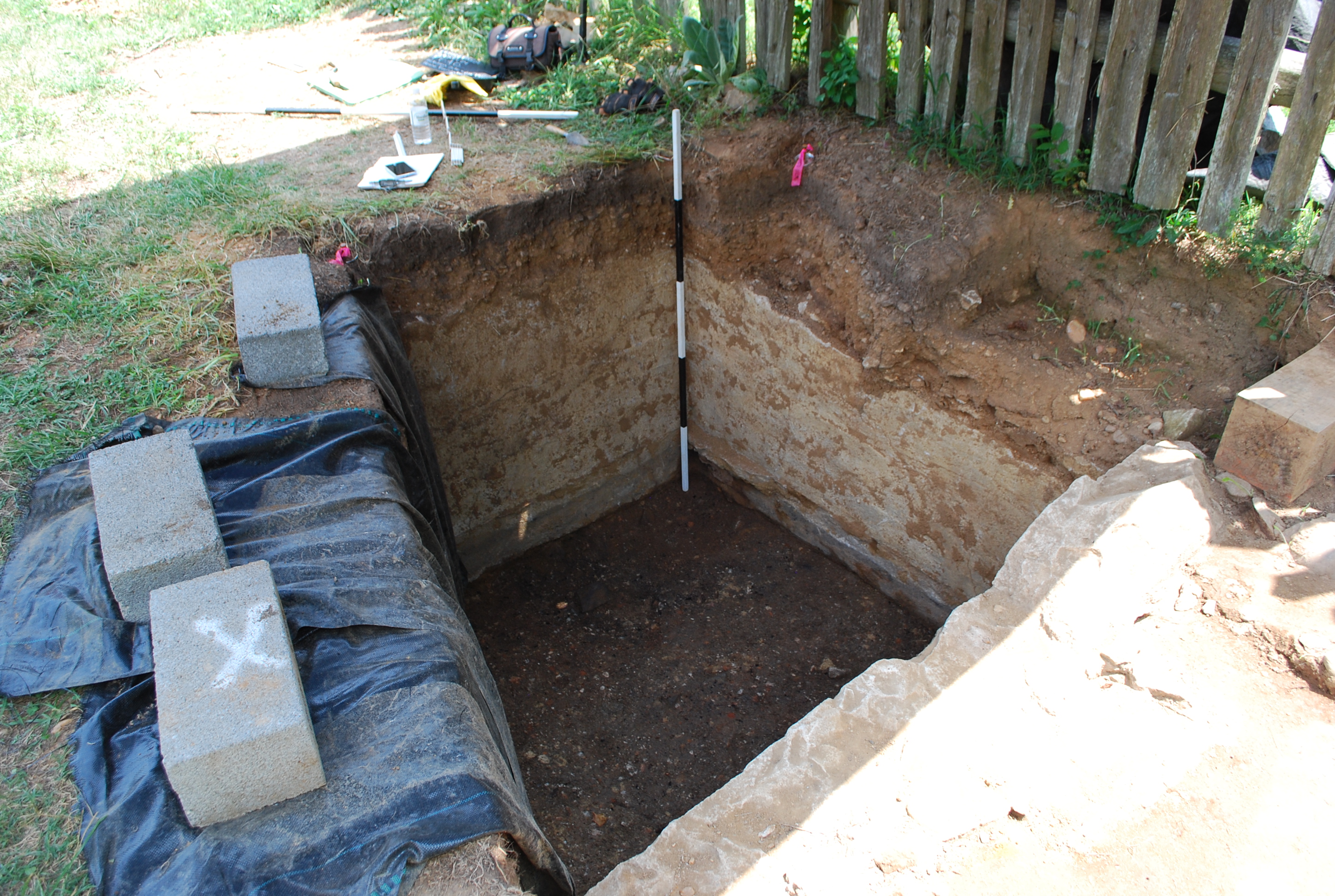
    Wait, that’s not all for this year’s dig. Don’t forget that we had two excavation areas this year. Our second area was FF-40, which was the remains of an 18th century kitchen had experienced an intense fire. This kitchen was partially excavated in the 1990s, so this year’s excavation had more of an exploratory excavation designed to help us establish a game plan for future excavation. We knew the kitchen remains were below the foundations of two later farmhouses, and that the foundation walls of these farmhouses were still extant. Additionally, the interior of the foundations was filled with sand to protect the kitchen site. Our excavations confirmed the location of the farmhouse foundations and the existence of a protective layer of sand! Once our crew were able to get through this sandy fill, a quick clean of the kitchen fill uncovered artifacts that were absolutely toasty. Okay, toasty isn’t a technical term, but the artifacts showed evidence of a fire that burned at extremely high temperatures. This included a high number of architectural artifacts as well as charred ceramics and melted glass. Findings from this year will help guide the excavation in the future.

    The burned kitchen site is located beneath these concrete house foundations dating to 1914.  This picture was taken after protective sand fill was removed within the excavation unit.

    Phew, that was a lot! That sums up our 12-week dig season. We answered a lot of our initial questions and found many more questions to investigate. Archaeologists will be in the lab the rest of the year processing artifacts, researching our findings, planning next season’s dig, and enjoying the A/C. Stop by the lab in the Visitor’s Center and take a peek at what’s happening. See you all in the field next May!


    Danielle Arens

    GWF Archaeologist

  • Of Mice and Men: A brief exploration of rodents’ history in America

    A pest is a broad term for any organism that spreads disease, causes destruction, or is generally a nuisance. In the 21st century, we still constantly battle pests from squirrels who chew through your internet cables or spiders who set up house in the high corner of the ceiling, watching and judging you to evil mosquitoes that ruin outdoor activities and leave you with itchy red welts that no amount of calamine lotion will help. It is a fight as old as time. 

    I wanted to investigate one pest in particular: rodents. Why were mice and rats present in colonial homes? Why this was an issue? What were some of the methods the Washington’s would have used to combat these furry creatures? And how we know without a doubt that Kenmore and Mount Vernon had rodent tenants.

    The Suspects

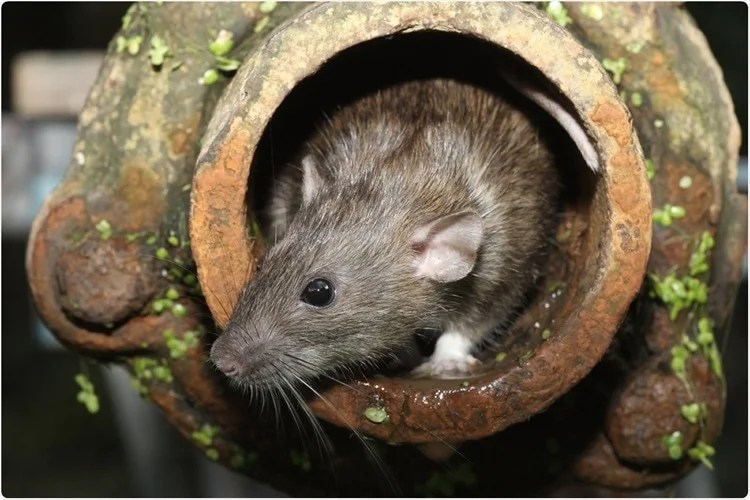
    The house mouse, or Mus Musculus, originating on the Asian and Indian subcontinent, has become the most successful invasive species in recent history. [1] They arrived in this country with the trading ships and settlers that came to the New World in the 16th century. [2][3]

    Similarly, the black rat, aka roof rat, boarded ships for their westward journey around the same time as the seafaring mouse. [4]  Their presence is noted by the residents of Jamestown in November of 1608, stating, “When the shippes departed al the provision of the store but that the President had gotten was so rotten with the last somers rain, and eaten with rats and wormes” [5] The notorious brown rat or sewer rat, who seems to currently enjoy the cities of Chicago, Los Angeles, and New York, arrived a little later than their brethren setting foot in the new country around the 1750s.[6]

    America, the land of plenty…of garbage

    There is no nice way to say it, but living in colonial America was usually gross. Housing wasn’t always the greatest, sometimes being very rudimentary. Food storage was typically simple and easily accessible. But one of the biggest problems (or benefits if you are a rodent) was the lack of systematic waste disposal. [7] [8] Garbage (including human waste) was a personal problem often solved by opening the window and chucking out.

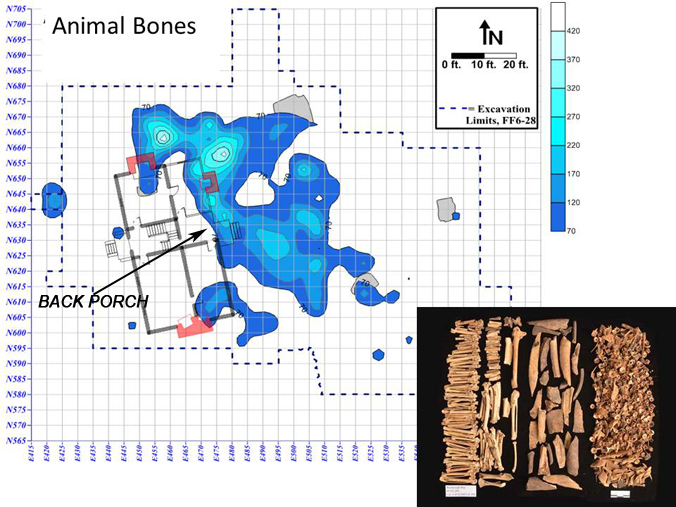
    We have abundant archeological information from Ferry Farm and Kenmore that supports these habits. A large part of Ferry Farm has been excavated over the decades, leaving clear evidence that the Washington family and their enslaved workers disposed of waste right in the backyard…off the porch.    Large amounts of artifacts were discovered and mapped, showing the proximity to the house, meaning the garbage was close, and rodents love trash.

    Map showing the concentration of animal bones excavated from the midden at the rear of the Washington house at Ferry Farm.

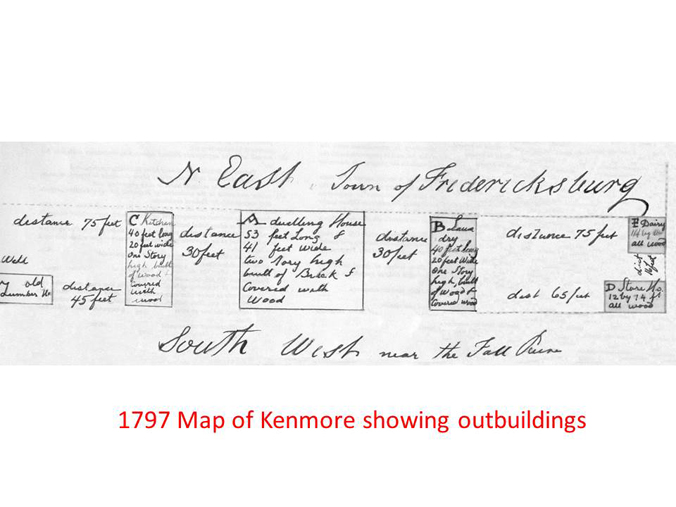
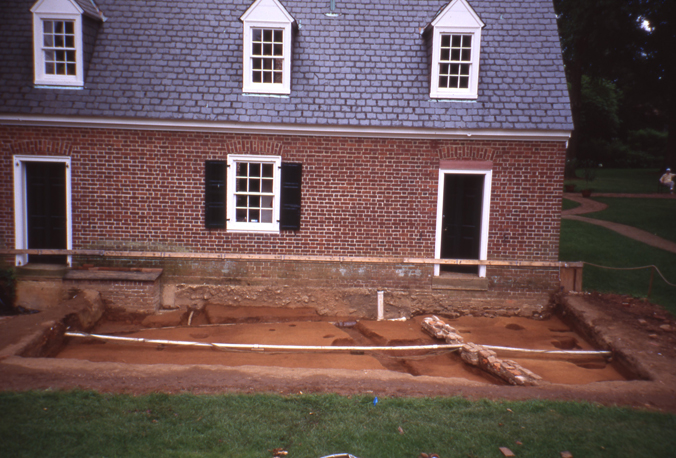
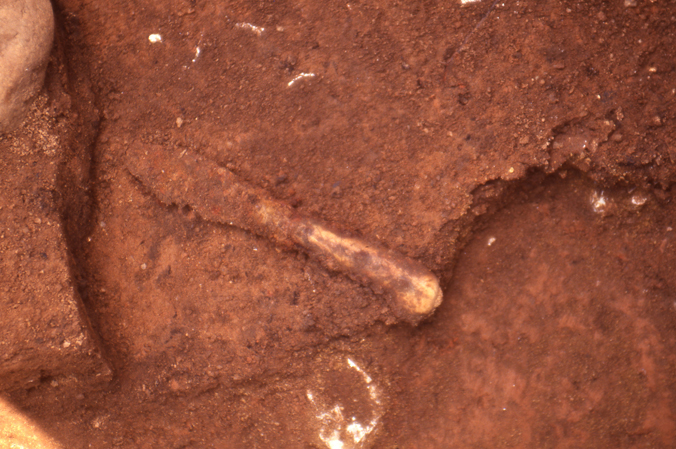
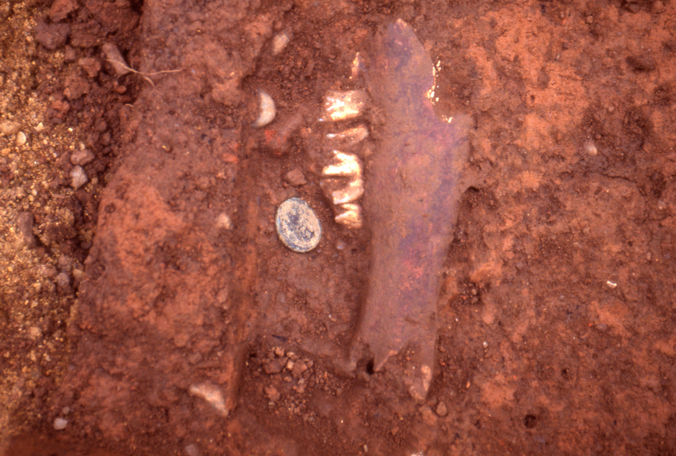
    At Kenmore, the garbage situation seemed to be a little more regulated because the grounds and buildings were planned. The main house was made of brick, surrounded by two wood-built structures containing the kitchen and laundry. During excavations of the kitchen yard (between the house and kitchen), there were minimal artifacts, but a dump site was found west of the kitchen. The location could be accessed by the window or by walking around the side of the building and contained a pig jaw, animal bones, bone-handled knife, and other objects. The kitchen is about 30 feet from the house, with the slave passage doors opening right onto the kitchen yard…plenty close enough for an enterprising rat or mouse. 

    Bad House-guests

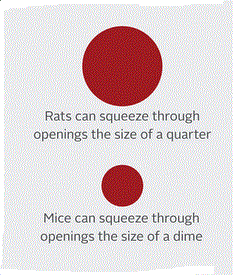
    So, why are rodents bad to have in your house? Disease, contamination, destruction, smells, and lots of poop. [9]  Rats can squeeze through an opening the size of a quarter. Mice only need the size of a dime…so they will be everywhere in your house and will bring friends. [10] Rats and mice are spreaders of disease from rat-bite fever that spreads through bacteria in the rodent’s saliva, urine, or droppings to the bubonic plague transmitted by the lice hitching a ride on their fluffy friend.[11][12]  While today, rodents are relatively low on the list of dangerous disease spreaders in an era of limited medical knowledge and treatments, it could be a matter of life or death.

    Contamination and destruction are these creatures’ modus operandi. They get into everything, period. They will eat almost any human food, chewing through any storage system, leaving behind chaos; they have even been known to eat soap and glue. [13]  While venturing through the house, they are constantly urinating and pooping, which is smelly, can create mold growth, and should never be consumed. [14] In their quest for food, they often destroy household items, eating books, chewing clothes, gnawing on mattresses, and even nesting in furniture. All of which is not only annoying but expensive to fix or replace. [15][16]

    But one of the most offensive things a mouse or rat can do is die in your walls. Take it from Colonel Landon Carter, who had to deal with a rat dying behind his wainscoting, informing everyone, “Wainscoted rooms have their conveniences [inconveniences?] as a dead rat has been stinking behind mine in the hall at least six days and is now intolerable in spite of burning tar…this dead rat stunk prodigiously.” [17] 

    Colonel Landon Carter, not too fond of rats. Source: Wikipedia

    Fighting Back

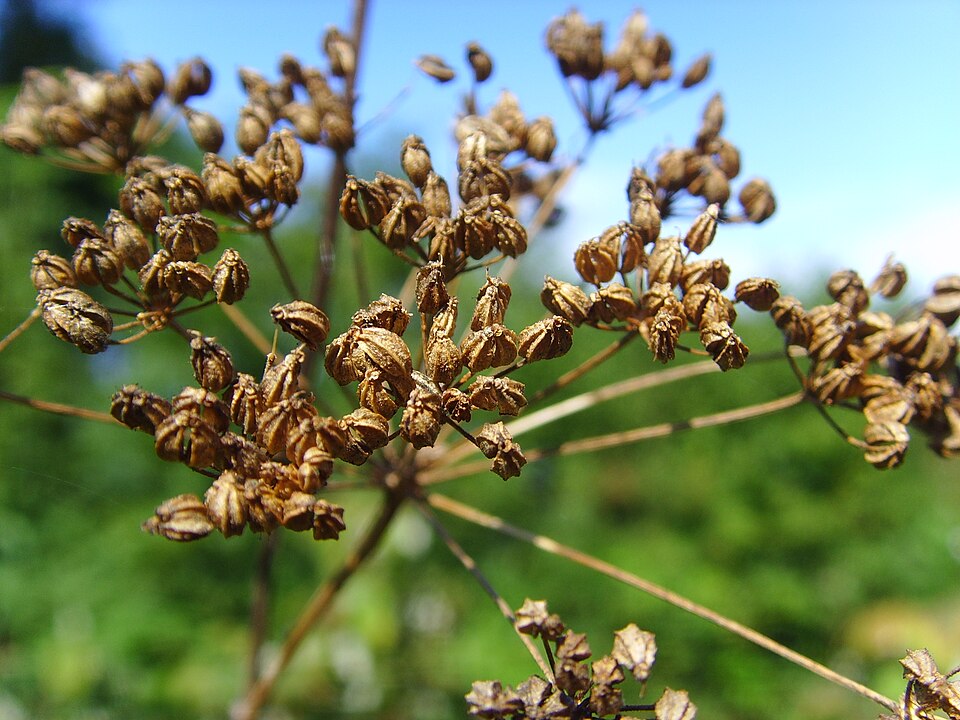
    Surprisingly, colonists used many of the same techniques we do today to eliminate these pests. Pesticides or chemical warfare was widespread, with many recommendations and recipes dating back to the 15th century. I found recipes containing helliberry leaves, bitter almonds, “seade of wild cowcumbers,” colluentida, hemlock seed, aconite or wolfsbane, and arsenic.[18]   I don’t know many of those ingredients, but apparently, they kill rodents nicely. 

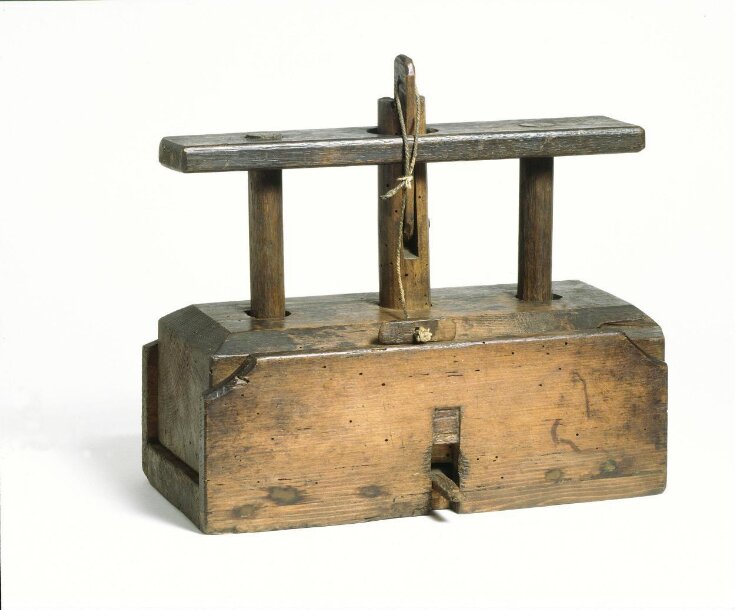
    Another method was traps, which are common today. They were pretty popular, and there were many advertisements in the Virginia Gazette from sellers touting that their mouse traps just arrived from England. [19] There are also many instructions for building easy mouse traps like the “deadfall” or “noose” traps, which are as horrible as you imagine. [20][21]

    Deadfall mouse trap, c. 1800-1850 Source: V&A Collection

    Lastly, one method that is making a comeback is animals, both cats and dogs.[22][23] Cats have been used for ages as rodent killers and are good at their job. [24]  A 14th-century manual suggests that if you have problems with vermin, “have as a good supply of cats.”[25]  The famous diarist Samuel Pepys wrote in December 1660, “my boy taking a catt home with him from my Lord’s, which Sarah hath given him for my wife, we being much troubled with mice.”[26]  There are even modern programs like Barn Buddies that save feral and skittish cats and adopt them out as “rodent control technicians.”[27]

    And dogs, mainly terriers, have been used to clear mice and rat infestations for centuries, just like cats. Ever the dog lover, George Washington had terriers at Mount Vernon, which probably helped immensely around the plantation.[28]  Today, cities like Chicago and New York use these canines in modern rat hunts.[29] It seems the skills of the terrier will always be in demand. 

    Little Historians

    Lastly, how do we, without a doubt, know that there were rodents at Kenmore and Mount Vernon? Rat nests. Rat nests are usually found in walls or under floorboards, and they not only prove these guys resided in the houses as long as the families themselves, but also provide a fascinating historical glimpse into the material lives of the occupants.

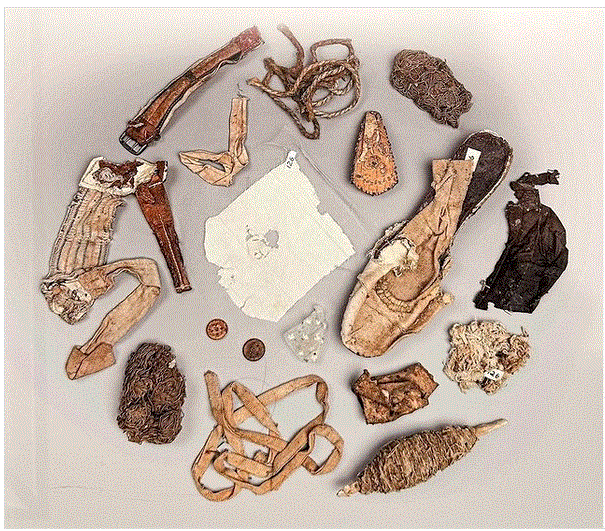
    Mount Vernon documented the finding of a rat nest in 1949 behind the wall in Washington’s bedchamber. When dissected, it included buttons, paper, rope, yarn, a whole woman’s shoe, and fabric matching Washington’s bed curtains.[30]  

    Objects from rat nest found in the wall of Washington’s bedchamber, 1949. Source: Mount Vernon Instagram

    Similarly, in 1989, a rat nest was found in Kenmore while investigating the walls and floorboards. We recently picked apart the bundle to find fabrics, fibers, thread, yarn, newspapers, bones, nutshells, and wood splinters. The remnants in the nest were dated no later than the early 20th century due to dates on newspaper fragments and the absence of plastics.

    In conclusion, rats and mice have been a constant annoyance since they first set foot in this country; unfortunately, that is still somewhat true. These enterprising rodents have adopted America as their own and we as fellow citizens must learn to live together despite our often distaste for each other.

    Fun Fact – We don’t want to malign rats more than they have been throughout history so we would like to add that rats make good pets.  They are quick learners, highly trainable, very clever, and have excellent memories.  They are now being trained to detect land mines, diseases like tuberculosis, and even rescue earthquake survivors.


    Heather Baldus

    Collections Manager


    [1] Agwamba, K. D., & Nachman, M. W. (2023). The demographic history of house mice (Mus musculus domesticus) in eastern North America. G3 Genes|Genomes|Genetics, 13(2). https://doi.org/February 2023
    [2] Agwamba, K.D., & Nachman, M.W. (2023)

    [3] Agwamba, K.D., & Nachman, M.W. (2023)

    [4] Newman, M. H. (2001). The vermin -killers: Pest control in the early Chesapeake [Doctoral Dissertation, Willam & Mary University]. https://scholarworks.wm.edu/etd/1539623387/, pg 111.

    [5] Newman, M.H. (2001), pg. 47.

    [6] Tapia, A. (2021, October 23). America’s 10 Most Rat-Infested Cities. Newsweek. Retrieved September 7, 2023, from https://www.newsweek.com/americas-10-most-rat-infested-cities-1638136
    [7] Newman, M.H. (2001), pg. 17.

    [8] Newman, M.H. (2001), pg. 46.

    [9] (2014, January 6). Of Mice and Men: Rodent Infestations Plague Nearly A Third of Americans. National Pest Management Association. Retrieved September 7, 2023, from https://www.pestworld.org/news-hub/press-releases/of-mice-and-men-rodent-infestations-plague-nearly-a-third-of-americans/

    [10] (2014, January 6). Of Mice and Men.

    [11] (2019, January 18). Transmission. Centers for Disease Control and Prevention. Retrieved September 7, 2023, from https://www.cdc.gov/rat-bite-fever/transmission/index.html

    [12] (2019, July 31). Ecology & Transmission. Centers for Disease Control and Prevention. Retrieved September 7, 2023, from https://www.cdc.gov/plague/transmission/index.html

    [13] Introduced Species Summary Project

    [14] (2022, December 27). How a Mouse Infestation Can Cause You Thousands in Damage. Spidexx. Retrieved September 7, 2023, from https://www.spidexx.com/blog/2022/december/5-things-you-need-to-know-about-mouse-infestatio/

    [15] Newman, M.H. (2001), pg. 17.

    [16] (2022, December 27). How a Mouse Infestation Can Cause You Thousands in Damage

    [17] Newman, M.H. (2001), pg. 84.

    [18] W, W. (1680). The Vermin-Killer (pp. 4-9). London: Samuell Lee.

    [19] Unknown, U. (1766, July 25). Just Imported and to be Sold by the subscribers at their store in Norfolk. Virginia Gazette. https://research.colonialwilliamsburg.org/CWDLImages/VA_GAZET/Images/PD/1766/0084hi.jpg

    [20] Newman, M.H. (2001), pg. 119.

    [21] Feild, Rachael. 1984. Irons in the Fire: A History of Cooking Equipment. Ramsbury,

    Marlborough, Wiltshire: The Cromwood Press

    [22] Pasley, J. (2023, March 18). How the rat population in New York City grew by 800% and infested the city in less than 65 years. Yahoo News. Retrieved September 7, 2023, from https://news.yahoo.com/rat-population-york-city-grew-143000754.html

    [23] Cass, J. (2017, November 10). Chicago needs good dogs to handle the rat epidemic The Chicago Way. Chicago Tribune. Retrieved September 7, 2023, from https://www.chicagotribune.com/columns/john-kass/ct-met-rats-terriers-kass-1112-story.html

    [24] Newman, M.H. (2001), pg. 115.

    [25] Bayard, T. (1991). A Medieval Home Companion Housekeeping in the Fourteenth Century (1st ed., pp. 97-98). Harper Collins Publishers.

    [26] Pepys, S. (1983). The diary of Samuel Pepys : A new and complete transcription (p. 325). London: Bell.
    [27] (n.d.). Adopt a Barn Cat. Barn Cat Buddies. https://www.barncatbuddies.org/

    [28] (n.d.). Dogs. George Washington’s Mount Vernon. http/www.mountvernon.org/library/digitalhistory/digital-encyclopedia/article/dogs/

    [29] Cass, J. (2017, November 10). Chicago needs good dogs to handle the rat epidemic The Chicago Way. Chicago Tribune. Retrieved September 7, 2023, from https://www.chicagotribune.com/columns/john-kass/ct-met-rats-terriers-kass-1112-story.html

    [30] Mount Vernon [mount_vernon]. “In 1949, preservation staff removed a rat’s nest from behind a wall in the Washingtons’ bedchamber..”* Instagram, May 19, https://www.instagram.com/p/CsbIc9sOO_2/.

  • Caring for Ferry Farm’s Flora and Fauna

    Step onto the grounds of George Washington’s boyhood home and, notwithstanding its famous connection, there’s no mistaking the feeling of being in a special place. A National Historic Landmark, Ferry Farm stretches along the Rappahannock River across from downtown Fredericksburg’s City Dock. The land is varied and rich, with native woodlands, a native grass meadow, walking trails, riverbeds, springs, a garden, and scenic Virginia rail fences. It has seen a significant share of American history from the activities of Native Peoples, to the colonial inhabitants, to Civil War Union encampments, and more.

    View of Fredericksburg from Ferry Farm

    Historically significant land such as this ought to be carefully maintained and stewarded – and it is. With its variety of features, maintenance can become a challenge, as there is always the threat of erosion, the caring for trees, the need to ensure the grounds are safe and passable for visitors, and finding economical ways to use and reuse what’s available. Also, we cannot forget the residents that have first rights to be here – Ferry Farm’s numerous critters.

    Leaving natural habitats for flora and fauna promotes a healthy ecosystem

    “We try to keep a balanced ecosystem by only introducing native plants that would not interrupt the natural beauty of the site,” explains John Carmichael, Buildings and Grounds Director. “The land is kept as natural as possible to maintain a primitive ecosystem native to the area. Forests are kept healthy by mitigating the growth of invasives. Grasslands are maintained with tough turf, mainly natural growth. We’re not looking to keep up a pretty green lawn with no weeds; we maintain how it would have looked in Washington’s day, with natural growth, clover, and field grasses.”

    The grass in front of the House leading to the riverfront gets mowed sparingly in order to protect all of the embankments from erosion. Growing large strong roots helps keep the soil in place. Underbrush on the riverbank remains in place, for the same reasons, and fencing keeps visitors off of the area since it is unsafe footing.

    Grasses are kept long in front of the Washington House and along the Rappahannock River to protect the embankment from erosion.

    The entire flat nearest the water was created by the Corps of Engineers shortly after the conclusion of the Civil War. Sediment from erosion was threatening to make the river too shallow to navigate. To relieve the problem, the Corps built wooden retaining walls along the river’s edge and then dredged a channel to allow ships to resume operating on the river. They used the sand from the dredge to fill in behind the wooden retaining walls. With sand not being optimal land for growing trees, trees that happen to grow there are left because they’ve already proven their hardiness.

    Since no commercial fertilizers and minimal weed killers are used at Ferry Farm, composting and mulching are an essential part of stewardship. Large limbs, trimmings, and small branches are placed at the edges of woods to decompose and provide shelter for animals. Tree trimming partners will mulch downed limbs which in turn get spread onto walking paths and parking lots.

    Composting at Ferry Farm is a three-year process. New grass clippings, greens, weeds, manure, wood ash, and leaves go into an initial pile for decomposition. In year two, everything gets turned and sifted regularly. By the third season, it’s ready to be spread throughout gardens and flower beds. Green and cost-effective, composting keeps useable nutrients out of the landfill.

    Box turtles thrive in tall grasses in front of the Washington House. Source: Sharon Houston

    Surrounded by busy roads on two sides, Ferry Farm is a wild animal sanctuary for deer, rabbits, groundhogs, red and grey foxes, hawks, bald eagles, herons, opossums, raccoons, black and garter snakes, box turtles, bats, and hundreds of bird species. Leaving natural habitats for flora and fauna promotes a healthy ecosystem. The back meadow receives rejuvenate mowing in early spring to encourage it back to good health. It’s a birders’ paradise dotted with bluebird boxes along a mowed walking path. Over 125 different species of birds have been identified on the property over the years. Look closely, and flat patches of grass indicate where a deer has bedded for the night. Critters are welcome here. “As long as it poses no threat, it has a right to be here,” says Chris Lynn, Buildings and Grounds Technician.

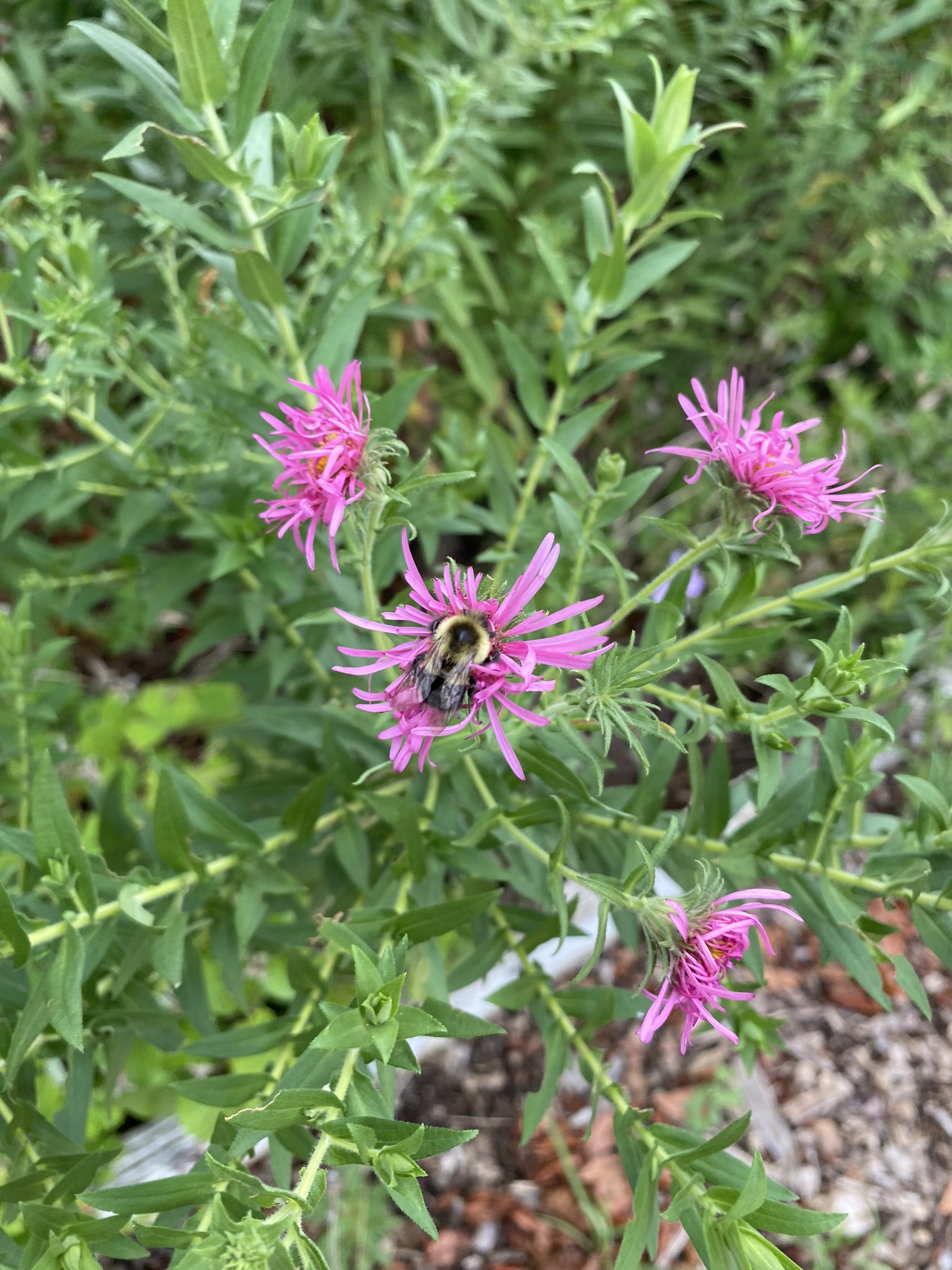
    The flowers in the garden attract pollinators to the herbs and vegetables; fruit-bearing trees and shrubs do their part to attract as well. Gardens grow with the three sisters – corn, squash and beans – as well as tobacco, cotton, potatoes, and more.

    A flower in the garden bed serves to attract pollinators for herbs and vegetables

    Ferry Farm’s beauty conjures up days of natural grasslands, mature forests, and living in harmony with the land’s resources. Knowing that the “Father of our Country” spent his childhood here evokes moments of contemplation. Absorbing the sights and smells of wild flora and fauna while walking where young George walked is a step back in time, where the present awakens the past.

    Lori Scott Pikkaart,

    Marketing & Communications Manager

  • No Buttons for the Ladies

    Whilst I costume actors, living historians, and myself from time to time in 18th century clothing, I find myself puzzled about the stark difference between the closures and attachments of ladies’ and men’s garb.  I have to lace myself into my stays, tie on layers of padding and petticoats around my waist, and finally pin my gown closed.  Men have the enjoyment of a few buttons on their breeches and waistcoat, but that is it.  It frequently makes me grumpy how long it takes me to dress in comparison to my male counterpart.  I did not understand this phenomenon, until recently. 

    To put 18th century clothing closures into perspective, you had hooks and eyes, buttons, and ties/laces.  Thomas Hancock created elastic for gloves, suspenders, and stockings in the 1820s, but it struggled to withstand heat and last through time.  The elastic we know and love in our garments today did not come around until the early 1900s.[1]  The modern zipper was patented in 1917 and was used mainly on boots and tobacco pouches.  It took another 20 years before the technology even made it to mass produced clothing.[2]  By comparison, the button first becomes functional over decorative around 1,000 BCE in Asia.  Buttons would eventually travel the Mediterranean during the crusades into European territories around the late 11th century CE.[3]  So George Washington did not have a zipper on his pants or elastic on his socks, but he definitely had buttons on his coat.   

    A eye from a hook and eye set. Source: Ferry Farm Archaeological Collections

    Hooks and eyes were sometimes used for gown closures for women in the 18th century.  They were not used as much as pins were because of the rigidity in size it created for the garment. 

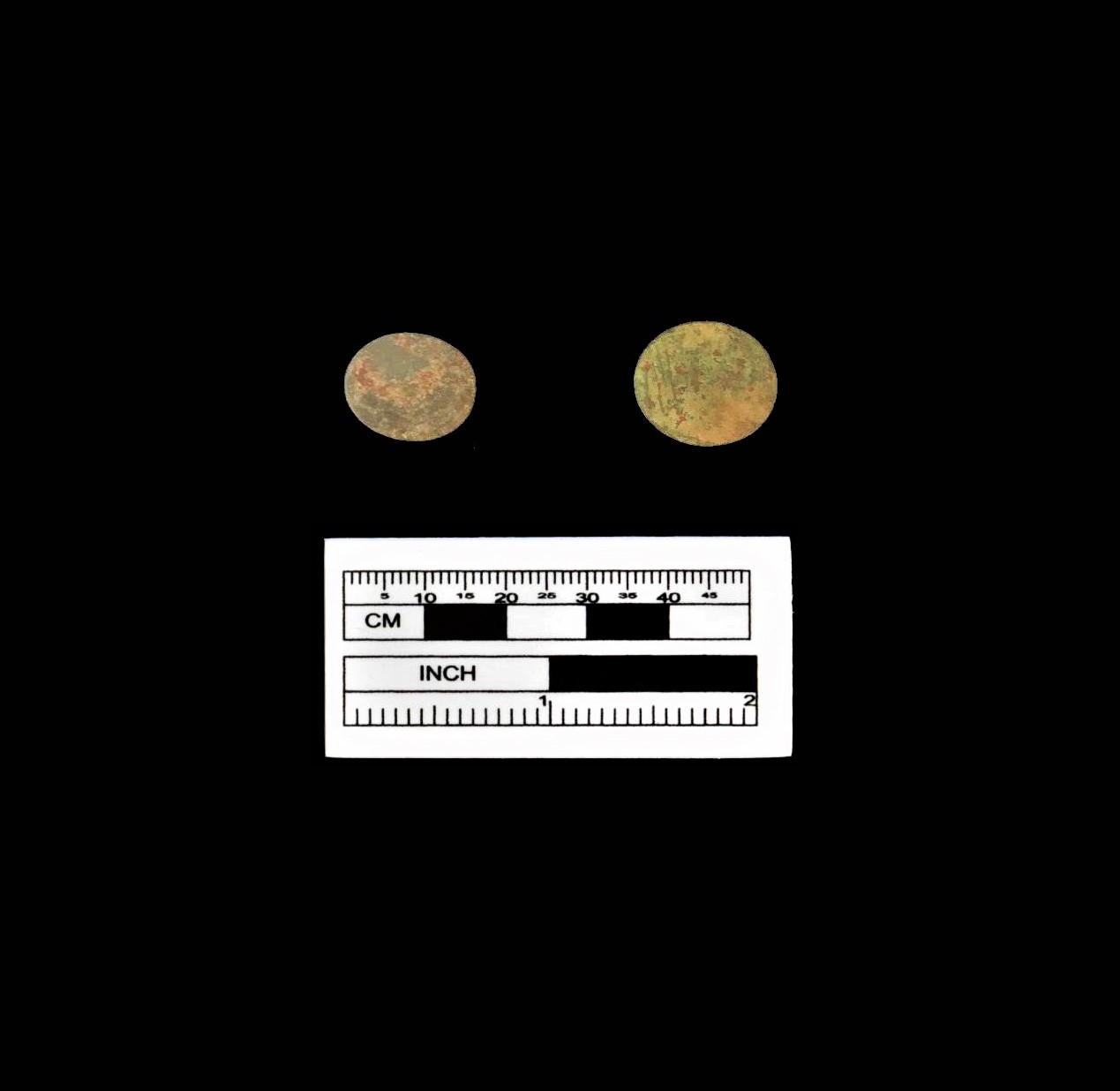
    We have buttons from men’s garments in the archaeological collections here at Ferry Farm.  We also see buttons all around male portraiture in our curatorial collection.  The ladies, however, are stuck with laces, ribbons, and pins.  And boy, do we have the pins to prove it in the archaeology collections. 

    Two metal buttons most likely from men’s garments.  Source: Ferry Farm Archaeological Collections
    Bone buttons Source: Ferry Farm Archaeological Collections
    Pins were used for pinning jackets closed and keeping caps pinned to your hair.  They were a necessary part of dressing. Source: Ferry Farm Archaeological Collections

    A small sample of the large collection of brass dress pins found at Ferry Farm.  Pins were not used for sewing, as basting before sewing was the regular practice.  Pins were used for pinning jackets closed and keeping caps pinned to your hair.  They were a necessary part of dressing.

    The answer to why this phenomenon is how it is hit me one day after rewatching a lecture given by a former staff member entitled “Betty Washington Lewis and Women’s Health.”  Dr. Kelly Brennen Arehart spoke about maternity wardrobes and how women wore their everyday clothing throughout pregnancy.  For my contemporary mind, this was shocking, but the more I thought about it the more it made sense. 

    Women go through a lot of fluctuations in body shape, weight, and proportions in their lifetime.  Between hitting puberty and development of curves, to many pregnancies, to the changes of menopause, women’s bodies go through so much.  Of course in between all of the big changes, there are also changes to the female body based on time in her menstrual cycle, metabolism fluctuations, or periods of eating more or less or different types of food that all change the body’s shape and size.  Unlike today, women of the past could not just go to the shop and buy a pair of pants in the size up.  Clothing was incredibly expensive and time consuming to make before sewing machines and mass production come into play.  In the 18th century, even the highest classes of women did not have the money or the time to go buy or have new clothing made when they gained a few pounds or got pregnant.  It was a matter of adjusting the clothing they already had.  And that is exactly what ties, pins, and laces allowed women to do. 

    The lacing, pinning, and tying made clothing far more adjustable compared to the rigidity of buttons.  Women tied their petticoats looser and simply covered the wider gap in the side with their jacket or gown.  Stays were either loosened significantly by the laces or they were left unlaced at the bottom entirely, especially in cases of late term pregnancies.  On top of the stays, jackets could be pinned further out to allow for more room in the bust and waist, or a stomacher could be added in the center opening of the jacket to expand the top even further.

    Whether these closures were intentionally created to be adjustable or if it was just a byproduct of lacking clothing technology, I am not entirely sure.  But the idea that buttons were only used on men’s not so fluctuating bodies (for the most part) says something.  A button is sewn down and cannot be easily moved or adjusted on a regular basis.  Once a button is sewn into place, there is no room for variation in body shape, unless one wanted to move the buttons every time he ate a large meal the previous day. 

    Even though Betty Washington Lewis had Charlotte, who we believe to be an enslaved woman acting as the seamstress of the Lewis household, Betty was pregnant on and off for twenty years.  If Charlotte or another enslaved seamstress had to make a maternity wardrobe for Betty every time she was with child, the seamstress would have no time to do any other tasks whatsoever.  It was not economical with precious time or expensive cloth for women to need new clothes every few weeks. 

    So to tie all this together, I am still not happy that it is so inconvenient for me to dress myself in 18th century clothing, but I understand why getting dressed was this way.  The adjustability of women’s clothing was so intentionally created to conform to their bodies in any season it was in.  It also opens my eyes to why pins were so important.  Without them, a woman could not dress. 

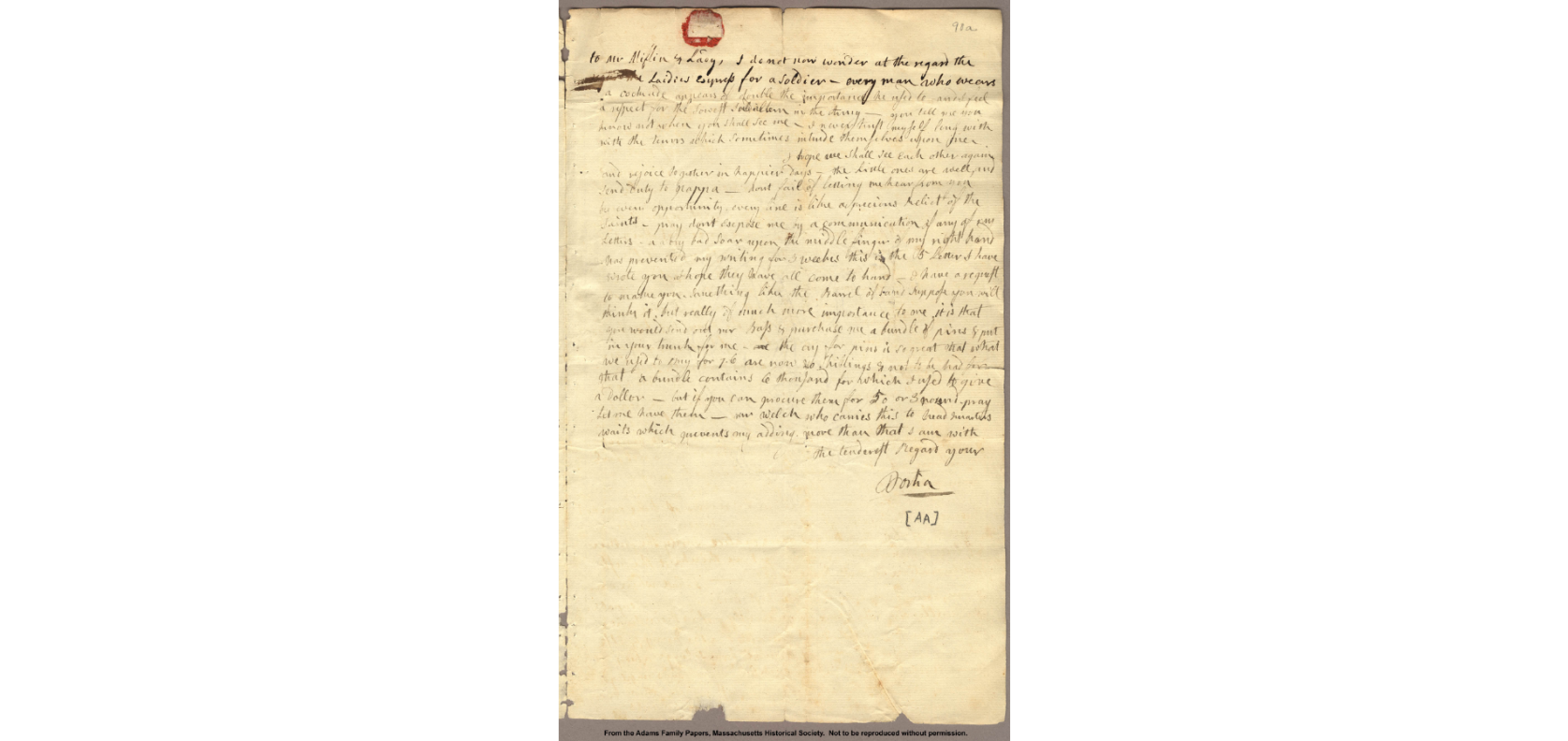
    Letter from Abigail to John Adams, June 14, 1775.  Source: Massachusetts Historical Society

    …I have a request to make you. Something like the Barrel of Sand suppose you will think it, but really of much more importance to me. It is that you would send out Mr. Bass and purchase me a bundle of pins and put in your trunk for me. The cry for pins is so great that what we used to Buy for 7.6 are now 20 Shillings and not to be had for that. A bundle contains 6 thousand for which I used to give a Dollor, but if you can procure them for 50 [shillings] or 3 pound, pray let me have them. Mr. Welch who carries this to head Quarters waits which prevents my adding more than that I am with the tenderest Regard

    your

    Portia


    Allison Ellis

    Manager of Public Programs


    [1] “Questions About Elastic,” Maggie May Clothing, Accessed July 10, 2023, https://maggiemayfashions.com/questions-about-elastic-2/.

    [2] Ninette Dean, “The Up and Down History of the Zipper,” The Smithsonian Libraries and Archives, Accessed July 10, 2023, https://blog.library.si.edu/blog/2010/05/03/the-up-an-down-history-of-the-zipper/.

    [3] Caroline Stone, “The Westward Journeys of Buttons,” AramcoWorld, Accessed July 10, 2023, https://www.aramcoworld.com/Articles/November-2020/The-Westward-Journeys-of-Buttons.

  • Corncrib: A Building as Corny as it Gets

    If you have followed the news of our excavations, you will have kept up to date with our building finds. The past two summers helped uncover evidence of one such structure, which we now believe represents a corncrib. While the name may seem self-explanatory, we have frequently heard the question, “What is a corncrib?”  To answer this, we thought we would dedicate our newest blog to it.

    Indian Corn Source: Wisconsin Horticulture

    Corn as a Crop

                Long cultivated by Native Americans, early colonists quickly adopted corn into their agricultural repertoire. As a crop, corn proved easy to cultivate due to its hardy and adaptable nature, and its high yield to seed ratio made it a prosperous choice. The corn season lasted from planting in early May to the September-October harvest. After this, collected corn, counted as barrels, lay in corncribs. Husking and shelling occurred as needed since home consumption only required a small amount at a given time. This process continued throughout the winter months. 

                As a food staple, corn became an important part of free and enslaved diets in Colonial Virginia. Corn grew in such abundance that it reportedly fed everything. This led to Virginia husbandry relying on the crop and any decline in quantity led to a state of distress. As for the enslaved, records of food rations allotted to enslaved communities often refer to “pecks” or “bushels” of corn. Corn served as a useful ration since small amounts went far and multiple uses for it existed. It also provided better nutrition, which did not go unnoticed by enslavers. Instances of enslaved rations excluding corn resulted in a decline in health, energy, and production. This made the inclusion of the staple essential.  

    Despite their forced labor, enslaved communities integrated corn harvesting into their culture. Annual so-called corn shucking festivities proved frequent sights on plantations, especially as corn production expanded. During this time, the harvested corn lay in heaps next to the crib. As the size of the harvest required many people for husking, this event provided time for socializing. A moment filled with music and dance, even neighboring enslaved individuals and relatives not attached to the property could attend under the guise of providing extra labor. This latter detail explains why such gatherings went ahead. Enslavers often encouraged corn-shucking festivities to speed up the process and at times offered rewards to the person who could shuck the most corn.

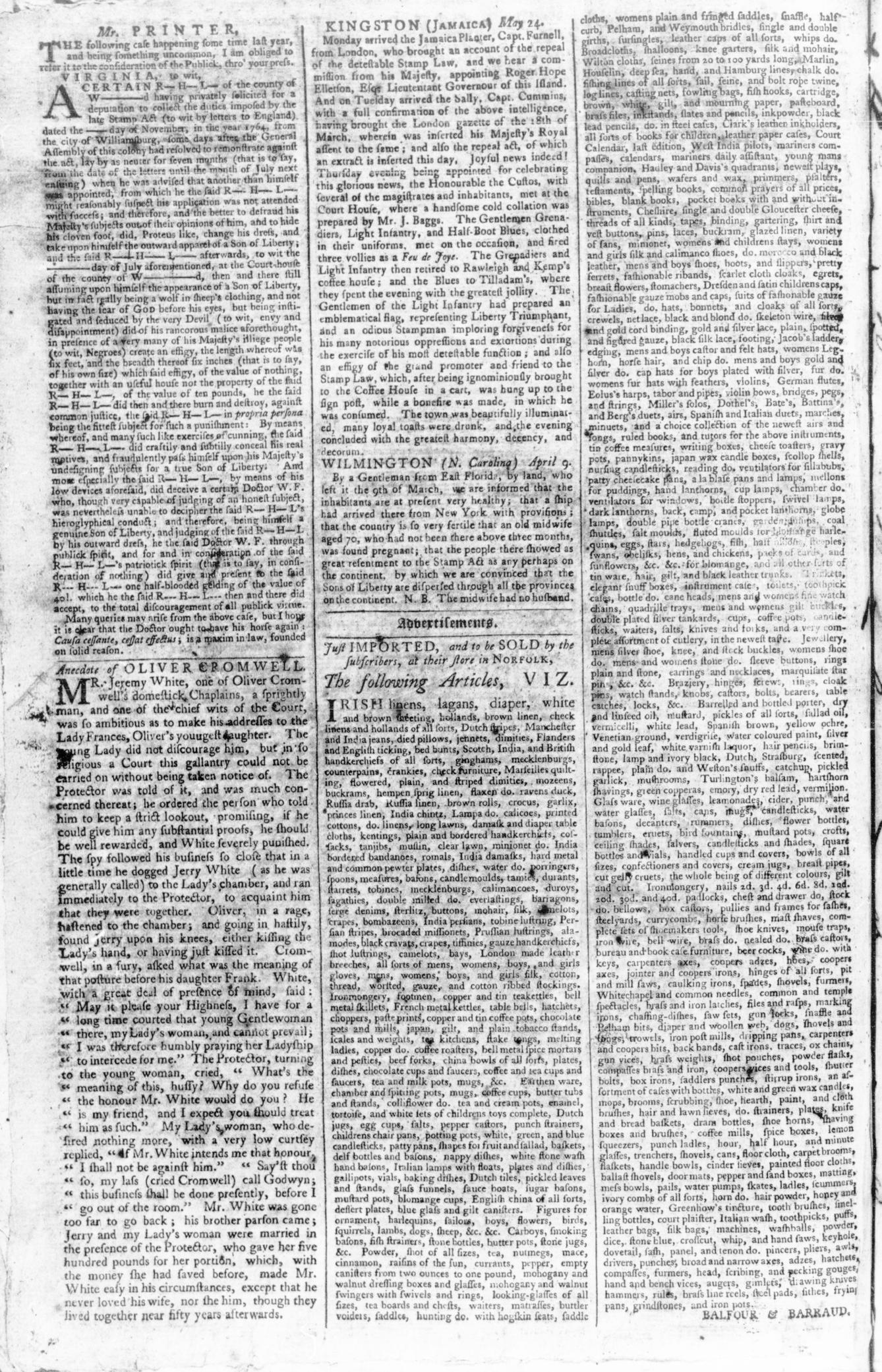
    Corn Shucking, Virginia, 1840s Source: Slavery Images

                The expansion of corn production lies in the decline of tobacco. While tobacco served as the original cash crop of Virginia, its cultivation damaged soils, resulting in increasingly poor crop cycles. Some planters, including George Washington at Mount Vernon, opted to plant grains to avoid this trend and thus have more return each year. As tobacco prices fell in the late 1700s, due in part to the Revolution, more Virginia planters turned their focus to grains. This led to an expansion in corn cultivation, as it became a central part of the economy.

    No longer used for just animal feed or local consumption, corn became a cash crop. In doing so, more structures related to grains appeared or underwent expansion. Gristmills became more common as did grain stores near wharfs. On plantations, the land devoted to grains increased to sustain production with additional or larger storage buildings, such as corncribs, appearing to accommodate the harvest. Corncribs would soon rank amongst the most common structures to appear on farmlands. Apart from buildings, husking and shelling additionally underwent a change as this now occurred over the course of a few weeks, thus allowing for enslaved gatherings, rather than throughout the winter.

    Corncrib

                With corn holding such an important position in society, it required proper storage. Native Americans constructed the first corncribs with Europeans taking note of them shortly after arriving on the continent. The structure evidently held significance for indigenous tribes as many place and group names derive from the various words for a corncrib. Interestingly, our modern term “barbecue” comes from “barbacoa,” an indigenous term from present-day Georgia, which has several meanings including corncrib. Apart from ranging in size, the design of corncribs dating from pre-contact to present appear very similar, as several key elements remain consistent.

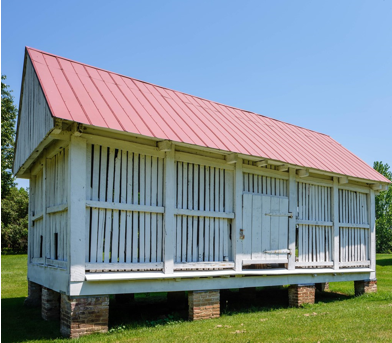
    The main roles of a corncrib constitute storing harvested corn, protecting it, and keeping it dry. To that end, the most recognizable characteristic involves the floor of the structure resting at least a foot off the ground via posts or piles/piers. Raising the structure deterred vermin from accessing the crop and helped keep it dry. The design of the sides additionally helped with this latter desire as vertical slats or offset horizontal siding provided gaps for airflow. Vertical slats for “cribbing” proved the most common during the colonial period.

    Corncrib raised on piers with vertical slats Source: Thomas Stone National Historic Site

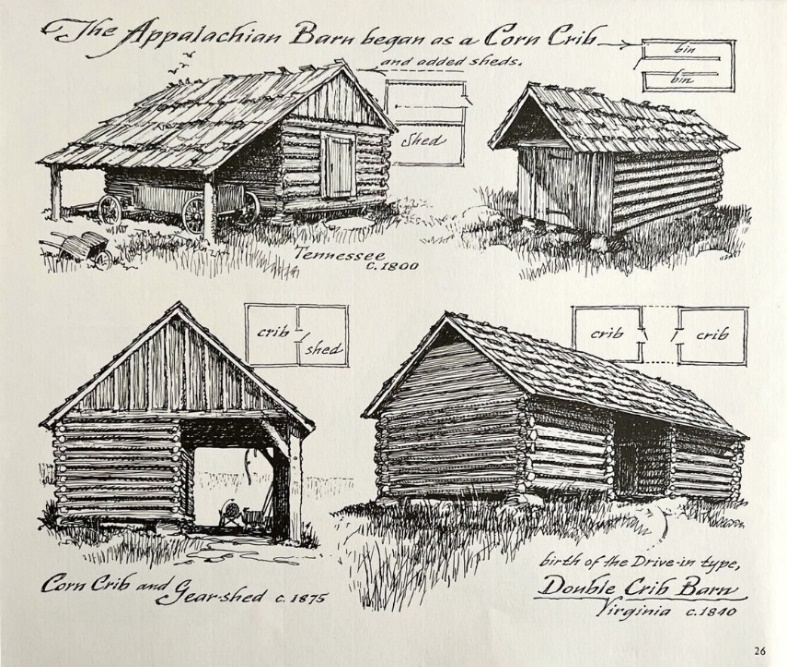
    Overall, the structure required robust timbers and construction techniques that would allow it to carry dead loads and resist interior pressure. Once constructed, the building generally took on a rectangular shape with a gabled roof of shingles, boards, or thatch. This roof could extend over one or more sheds attached to the long sides of the building while a door, typically on a shorter side, provided interior access. The interior varied from an open plan to one with removable dividers to form cribs, hence the name of the structure. Post-colonial era designs could include an additional crib to form a double or “drive-thru” corncrib.

    Corn Crib Designs Source: Sloane 1990: 26

    Since its adoption by colonists, the building’s name has experienced some variation. While we have gone with “corncrib” at Ferry Farm, several other accurate terms exist. The most simple, and unhelpful for interpreting records, consists of “barn.” During colonial times, “barn” could refer to nearly any outbuilding, and corncribs fall under a barn style called “crib-barns.” This, in turn, may refer to the building. While no standard for outbuildings included on properties existed during this time, corncribs counted amongst the most common. Other name options include the similar “corn-house” and the term “stacks.” This latter term may or may not have “corn” attached to it, but referenced ability to relocate the structure. In the end, unless corn appears in the name, identifying the building requires context clues such as location, crop knowledge, structure design, and recorded narratives.

    Our Findings

                So what did we find to suggest we had a corncrib? To start, we know from documents dating to Washington occupation that corn constituted one of the crops grown at Ferry Farm. We knew little beyond this until archaeology provided an insight. Across our 2020 and 2021 field seasons, we uncovered four aligning postholes that each measured 10ft apart. At the same time, a decline in artifact count occurred, suggesting our dig lay on the outskirts of the work yard. In 2022, we expanded this dig area to determine if the postholes belonged to a fence or, as we hoped, a building. The low artifact count continued to support the theory of entering the agricultural world and we soon discounted a fence line, as our excavation revealed no further postholes on that line. Moving 20ft south from the postholes, we uncovered a line of three features, also 10ft apart, which aligned with the first three postholes. The issue? They came from piles/piers rather than posts, and one of the stones for that line remains in place (Fig. 5).

    Image depicting the lines of 4 postholes and 3 pile/pier sites as of 2022

                The two parallel lines evidently went together, but we now needed to identify a structure that used both building techniques. After perusing historic images and sources on 18th century agricultural buildings, we identified the corncrib as the only structure that fit this construction. While corncribs most often stand alone on piles/piers or posts, some examples include an open shed area for carts and temporary storage as discussed earlier. Neither part of the structure would have led to large artifact deposits as the crib merely stored corn while the shed area supported the act of storage.

                So what did our corncrib look like? Well, apart from identifying the crib and shed portions, we can say the crib must have rested at least a foot off the ground. Furthermore, in keeping with standard construction, the siding, likely vertical slats, would have breaks in between to allow airflow. As for the basic dimensions of the corncrib, our emergency access road unfortunately runs through the unexcavated portion.

    Since we cannot inhibit this access, we only have the complete outline of the shed and one side of the crib (Fig. 6). Still, we can make a few estimates for the structure’s dimensions. While we cannot determine height at this stage, the outline of the shed indicates this portion measured 20x30ft. This, in turn, tells us that the corncrib itself measures 30ft in length. As for the crib’s width, several details allow us to determine a range. One source stated that the length of a corncrib should be 2-3 times the width. Of the examples we identified, they generally had a length about twice the size of the width, with the widest one measuring 20ft. On top of this, shed portions do not appear much wider than the accompanying crib. With this in mind, our crib likely measures 15-20ft in width.

    Overview of excavation site showing the 20x30ft shed outline and start of the crib

    Future

                By now, you must wonder when you will see a corncrib at Ferry Farm. One of our goals involves reconstructing the Washington landscape and this will include the corncrib. Currently, we have started construction on a root cellar and slave quarter. Once completed, these structures will be part of your visit and we will turn our attention to reconstructing more areas. This may include the corncrib, but will likely take a few years. In the meantime, continue to visit our ongoing construction projects and make sure to talk with the archaeologists and interpreters.

    Our future corncrib may look similar to this small one at the Museum of Appalachia Source: Wikipedia

    Historical Fact: Those familiar with the life of Harriet Tubman may recognize the term “corncrib” as she, her brothers, and several others briefly hid in one while she led them to freedom.


    Emma Schlauder

    Research Archaeologist


    Belanger, Fergus & T. H. Warner   1934     Notes about Williamsburg and William and Mary College. The William and Mary Quarterly 14(3): 239-240.

    Carson, Cary & Carl Lounsbury (editors)   2013     The Chesapeake House: Architectural Investigation by Colonial Williamsburg. The University of North Carolina Press, Chapel Hill, NC.

    Carter, Landon  1908     Diary of Col. Landon Carter. The William and Mary Quarterly 16(3): 149-156.

    Chandler, Dana 2000     The Prehistory of Randolph County, Alabama. Central States Archaeological Journal 47(1): 28-29.

    Copeland, Pamela C. & Richard K MacMaster 1989     The Five George Masons. University of Virginia Press, Richmond, VA.

    Harriet Tubman Underground Railroad Byway  2023     25. Choptank Landing: Site of Harriet Tubman’s Most Daring Rescues. Harriet Tubman Underground Railroad Byway < https://harriettubmanbyway.org/choptank-landing/&gt;. Accessed 19 June 2023.

    Herman, Bernard L.  1992     The Stolen House. University Press of Virginia, Charlottesville, VA.

    Hollingsworth Jr., G. Dixon  1979     The Story of Barbecue. The Georgia Historical Quarterly 63(3): 391-395.

    Katz-Hyman, Martha B. & Kym S. Rice (editors) 2011     World of a Slave: Encyclopedia of the Material Life of Slaves in the United States. Greenwood, Santa Barbara, CA.

    Kimball, Fiske  1954     Gunston Hall. Journal of the Society of American History 13(2): 3-8.

    Lanier, Gabrielle M. & Bernard L. Vlach  1997     Everyday Architecture of the Mid-Atlantic: Looking at Buildings and Landscapes. The John Hopkins University Press, Baltimore, MD.

    Linebaugh, Donald W. 1994     “All the Annoyances and Inconveniences of the Country”: Environmental Factors in the Development of Outbuildings in the Colonial Chesapeake. Winterthur Portfolio 29(1): 1-18.

    Lounsbury, Carl R. (editor) 1994     An Illustrated Glossary of Early Southern Architecture and Landscape. University Press of Virginia, Charlottesville, VA.

    Morgan, Philip D.  1998     Slave Counterpoint: Black Culture in the Eighteenth-Century Chesapeake & Lowcountry. The University of North Carolina Press, Chapel Hill, NC.

    NPS 2021     Barnyard Trail: Corn Crib. Fire Island National Seashore, NPS <https://www.nps.gov/ places/barnyard-trail-corn-crib.htm>. Accessed 24 May 2023.

    Siener, William H. 1985     Charles Yates, the Grain Trade, and Economic Development in Fredericksburg, Virginia, 1750-1810. The Virginia Magazine of History and Biography 93(4): 409-425.

    Sloane, Eric 1990     An Age of Barns, reprint of earlier edition. Henry Holt & Co., New York City, NY.

    Speck, Frank G. 1907     Notes on the Chickasaw Ethnology and Folk-Lore. The Journal of American Folklore 20(76): 50-58.

    Stilgoe, John R. 1982     Common Landscapes of America, 1580-1845. Yale University Press, New Haven, CT.

    Wells, Camille 1993     The Planter’s Prospect: Houses, Outbuildings, and Rural Landscapes in Eighteenth Century Virginia. Winterthur Portfolio 28(1): 1-31.

    Upton, Dell & John M. Vlach (editors)  1986     Common Places: Readings in American Vernacular Architecture. The University of Georgia Press, Athens, GA.

    Vlach, John M. 1993 Back of the Big House: the Architecture of Plantation Slavery. The University of North Carolina Press, Chapel Hill, NC.

    Washington, Augustine Jr. 1750  Record of Sale and Payment to Mary Ball Washington.

    Washington, George  1749 Letter to Lawrence Washington dated 5 May 1749. Washington Papers, National Archives, Washington, DC.

    Washington, George  1771 Survey of Ferry Farm.                 

    Washington, Mary Ball Undated     Letter to John Augustine Washington, undated no. 154. Box: 87, Folder: undated no. 154, Identifier: RM-904; MS-5404, The George Washington Presidential Library at Mount Vernon, Mount Vernon, VA.

  • Bane of the Washingtons: Deaths in the Next Generation and Amongst the Enslaved

    Welcome back to our 3-Part Blog charting tuberculosis (TB) in the extended Washington Family. If you are new to this series, Part I examined how the disease works, charted its history and explained standard courses of treatments in the 1700s. Part II looked at victims from George’s generation, including his brothers Lawrence and Samuel and brother-in-law Fielding Lewis. You can find those blogs here and here. In our final entry, we will continue to look at individuals who suffered from the disease and see more evidence of how the disease stayed within a family. 

    George Steptoe Washington (1771-1809, aged 37)

    George Steptoe Washington Source: MESDA

    As covered in Part 2, George’s brother Samuel died of tuberculosis, as did several of his sons, including George Steptoe Washington. A product of his father’s fourth marriage to Anne Steptoe, George Steptoe became an orphan at age ten. He and his siblings then fell under the care of their uncle, George Washington. George Steptoe would go on to marry Lucy Payne, the sister of Dolly Madison. Like his father, the point of infection cannot be determined but is likely derived from a family member. George Steptoe certainly faced exposure to TB via his father from the moment of his birth but may have caught it later in life. Regardless, his health experienced a serious decline sometime after 1800, and he ultimately traveled to Augusta, Georgia, in search of health benefits. He died there on January 10, 1809.

    George Augustine Washington (1759-1793, aged 34) & Frances “Fanny” Bassett (1767-1796, aged 29): George Augustine was another nephew of George Washington through his youngest brother Charles and quickly became his uncle’s favorite. He joined the Mount Vernon household in the early 1780s but had already experienced several periods of ill health that forced him to take leaves of absence from the battlefield. A diagnosis of tuberculosis soon came, leading George Washington to take an involved interest in his nephew’s health. Despite having witnessed the lack of improvement made by his brother Lawrence during such ventures, George funded trips to Berkeley Springs, Barbados, and Bermuda for George Augustine. He returned in May 1785 “in better health than when he set out, but not quite recovered.”1

    Fanny Bassett Source: Mount Vernon

    During George Augustine’s absence, Frances “Fanny” Bassett, Martha Washington’s favorite niece, officially joined the household. Upon his return, the two quickly formed an attachment and married on October 15, 1785. George Augustine later became the manager of Mount Vernon, but his health steadily declined, leading his uncle to describe him as “a shadow of what he was.”2 Despite barely being able to ride, George Augustine traveled to Berkeley Springs in October 1791 but would be bedridden and coughing up blood by August 1792. After battling the disease for over ten years, he finally succumbed in 1793. His death “had been long expected,”3 but nevertheless caused his uncle to feel “it very keenly.”4

    The death of her husband left Fanny a young widow with three very young children. Unlike many in that situation, she retained a comfortable lifestyle. As the beloved niece of George and Martha, she always had a home at Mount Vernon and frequently served as an additional hostess. Regardless, she did not remain a widow for long and married Tobias Lear, secretary to her uncle, in August 1795. Sadly, she passed less than a year later, in March 1796, with Lear lamenting, “The Partner of my life is no more!”5 Thought to have died of TB, Fanny likely contracted it from George Augustine during their marriage.

    Charlotte (~1770-unknown, aged 27+): Charlotte served as an enslaved seamstress at Kenmore and later at Betty Washington’s final home, Millbrook. She first appears, aged eleven, in the 1781 probate inventory following the death of Fielding Lewis. Few details about her life exist apart from the record of a son, George, and another baby in a document from 1797. However, Charlotte clearly held an important position within Betty Washington’s household, given the medical records we have.

    Bill for Charlotte’s medical treatments

    Charlotte took ill at Millbrook in 1796 with some form of respiratory complaint. Rather than care for Charlotte personally, Betty sent for the doctor seven times over the year. Charlotte underwent throat examinations and notably received treatment with mercury tablets and ammonia liniment for the chest. The former served as a common cure, which “purged” the body of any imbalances, while the latter mimicked early Vicks VapoRub by opening the airways. None of these treatments would have been pleasant, and the mercury certainly did more harm than good, but Charlotte recovered nonetheless. However, Betty Washington Lewis’ death in 1797 prompted the division of her enslaved staff. In an all-too-common occurrence, Charlotte and her son went to different properties (no mention of the baby exists). They likely saw little of each other after this or never met again. At age twenty-seven, we know Charlotte resided on a property owned by Charles Carter in Frederick County, Virginia. After this, she disappears from the record.

    The true nature of Charlotte’s illness remains a mystery. She certainly suffered from a respiratory ailment and received treatment in line with that given to tuberculosis patients. Nevertheless, we cannot conclusively diagnose it as TB or determine if it ever affected her again. Despite this, her story reflects an important aspect of life in eighteenth-century Virginia and a failing of history. An interest in keeping the enslaved healthy enough to work existed, but the actual health of an enslaved individual often went undocumented. We only know of Charlotte’s illness due to the bill sent by the doctor listing dates and treatments. Even this reflects a rarity as the lady of the household generally oversaw medical treatment for the enslaved rather than a physician. Considering the widespread nature of TB, its higher prominence in poor and minority communities, enslaved living and working conditions, and the high death rates recorded amongst Philadelphia’s free Black population in the early 1800s, the disease likely accounted for a high number of deaths within Virginia’s enslaved population. Sadly, we may never know how many individuals died of the disease or its impact on their lives.

    You can read the full details of Charlotte’s treatment and life here.

    Hercules Posey (~1754-1812, aged roughly 64)

    Hercules Posey Source: Mount Vernon

    One Black individual known to have died of tuberculosis was Hercules Posey. Hercules came to Mount Vernon in 1767 after his previous enslaver, John Posey, failed to pay a mortgage owed to Washington. Having served as a ferryman for Posey, Hercules initially took up the same position. By 1786, he had moved on to the position of cook, for which he is best known. Highly skilled in his culinary abilities, Hercules counted amongst the nine enslaved individuals the Washingtons brought with them to Philadelphia in 1790. Early 1797, however, found Hercules working as a laborer at Mount Vernon, and he acted to self-emancipate in February. In doing so, Hercules left behind at least three children, Richmond, Evey, and Delia, who he shared with his late wife, Alice. Due to Alice’s status as a dower slave, none of their children would receive their freedom in Washington’s will.

    After his escape, Hercules made his way to New York City, where he again worked as a chef. He died on May 15, 1812, with the cause given as TB, and his grave lies in the Second African Burying Ground in Lower Manhattan. Given the span of time between his escape to freedom and death, he possibly contracted the disease after leaving Mount Vernon. Then again, it remains entirely possible that he became ill while enslaved in Virginia or Philadelphia. In this case, he either suffered with an active case for many years, with periods of waxing and waning or had a dormant case that reactivated later in life.

    Others: Additional members of the extended Washington family contracted the disease as time went on, and the same goes for the enslaved. However, an interesting aspect of tuberculosis is that far more individuals may have had it but remained unaware. As covered in Part I, TB can go dormant by walling itself off in the lungs. Minor symptoms would have appeared at the time of infection, but those pauses when the disease goes dormant. Depending on how long it remained active and how severe, the TB may have gone unnoticed or been misdiagnosed. If the disease never reactivated, a person could live a full life and never know they had it.

    Today, we diagnose tuberculosis through symptom analysis and testing. Multiple successful treatments additionally exist to help people overcome the disease. For the 1700s, however, symptoms alone provided the diagnosis, and the dormant phase served as the only successful reprieve from the disease. The fact that our modern technology and medical knowledge would have saved many of the people covered in this 3-part blog appears evident. Nonetheless, it remains unclear just how many people in the extended Washington family actually contracted TB. This then raises the question, if TB testing had existed in the 1700s, would individuals such as George and Betty Washington have turned up positive?

    Emma Schlauder

    Research Archaeologist


    Bibliography

    Anderson, Alicia K. & Lynn A. Price (editors) 2018     George Washington’s Barbados Diary: 1751-52. University of Virginia Press, Charlottesville, VA.

    Budinger, Meghan & Mara Kaktins 2020    Charlotte and the Mercury Pills. Lives & Legacies Blog, The George Washington Foundation <https://livesandlegaciesblog.org/2020/06/17/charlotte-and-the-mercury-pills/&gt;. Accessed April 11 2023.

    Chernow, Ron 2010     Washington: A Life. Penguin Books Ltd, London, UK.

    5 Eliassen, Meredith, Tobias Lear. Digital Encyclopedia of George Washington’s Mount Vernon, George Washington’s Mount Vernon < https://www.mountvernon.org/library/digitalhistory/digital-encyclopedia/article/tobias-lear/&gt;. Accessed April 11 2023.

    1-4 Fore, Samuel K. George Augustine Washington (ca. 1759-1793). Digital Encyclopedia of George Washington’s Mount Vernon, George Washington’s Mount Vernon < https://www.mountvernon.org/library/ digitalhistory/digital-encyclopedia/article/george-augustine-washington-ca-1759-1793/>. Accessed April 11 2023.

    Glen, Justin 2014     The Washingtons: A Family History, Vol 1, Seven Generations of the Presidential Branch. Savas Beatie LLC, El Dorado Hills, CA.

    Lenhart, Chelsea  Hercules. Digital Encyclopedia of George Washington’s Mount Vernon, George Washington’s Mount Vernon < https://www.mountvernon.org/library/digitalhistory/digital-encyclopedia/ article/hercules/>. Accessed 11 April 2023.

    Rankin-Hill, Lesley M.  1997     A Biohistory of 19th-Century Afro-Americans: The Burial Remains of a Philadelphia Cemetery. Bergin & Garvey, Westport, CT.