Lives and Legacies

Category: Historic Kenmore

  • Meet the Lewis Family: John and Fielding Jr.

    Fielding Lewis was married twice.  He and Catharine Washington, his first wife, had three children: John, Frances and Warner.  Both Warner and Frances died leaving John as the sole heir from this first marriage.  After Catharine’s death, Fielding married Betty Washington, and not quite a year later Fielding Lewis Jr. was born in 1751.  Although just 4 years younger than his half-brother John, by rights at that time, Fielding Jr. could have supplanted his older brother as Fielding Sr.’s primary heir.  No personal accounts or letters tell us what Fielding Sr. thought about his two eldest sons’ status as heirs to his estate but his actions in the years after their births are telling.


    In 1775, Fielding Lewis commissioned five portraits by American artist Charles Willson Peale, for his newly completed home at Kenmore.  Only two have been located and they are of Fielding’s two eldest sons.  Peale scholars feel fairly certain that the works were painted as companion portraits, intended to hang side by side with the poses of the two sitters meant to complement one another.  Perhaps Fielding was making a visual statement that his two eldest sons were on equal footing and that neither took precedence.  Indeed, in his final will and testament, Fielding provides for both sons equally, giving his Spotsylvania lands to John and his Frederick County lands to Fielding Jr.  On the surface, it might appear that the two brothers had an amicable relationship, not marred by the usual 18th century family in-fighting over inheritance.  Well, that appearance might not tell the whole story.  The half-brothers couldn’t have been more different.

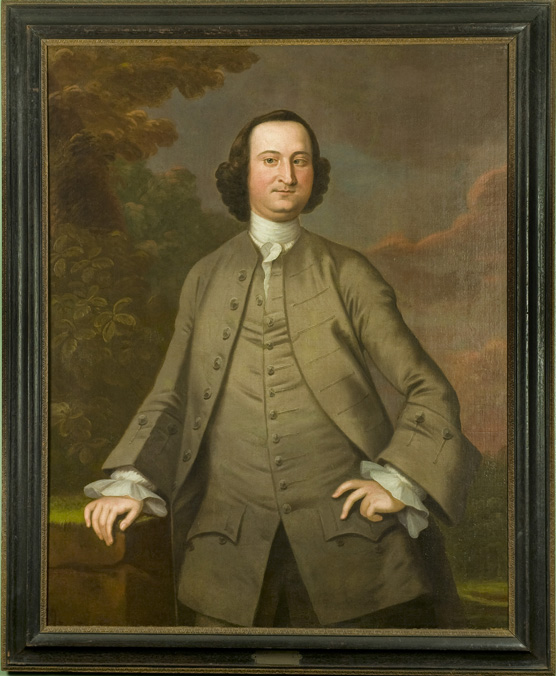
    As early as 1769, Fielding Sr. worried about Fielding Jr’s management of his finances.  The 18-year-old had recently married Nancy Alexander, the daughter of a prominent household in Alexandria, Virginia.  Nancy apparently came to the marriage with a sizeable fortune and Fielding Jr. immediately set about spending it.  In September, both Fieldings wrote to George Washington, to ask his assistance with the Alexander money.  Fielding Jr. wrote his uncle, “Inclos’d you have an Order on Mr. Robart [sic] Alexander for the Balance remaining…of my Wifes Fortune which I shall be Oblig’d to you to receive for me, and purchase Slaves to the amount thereof…” His letter is enclosed in one written by his father, in which we learn a little more about Fielding Jr.’s request to his uncle.
    fielding-lewis-sr-1750s-by-john-wollaston
    Fielding Lewis, Sr. (c. 1750s) by John Wollaston

    Fielding Sr. revealed that Mr. Alexander was concerned at the rate with which Fielding Jr. was spending the money, and has asked Fielding Sr. to take the remainder and use it for something that would help the couple in the long run.  Fielding Sr. went on to say, “I am allmost [sic] certain that he will in a year or Two spend every Shillg as I cannot perceive the least amendment since his Marriage, nor has he the least regard to any advice I give him.” This statement seems to indicate that Fielding Jr.’s spendthrift ways existed prior to marriage and worsened with the influx of his wife’s money.

    Unfortunately, Fielding’s prediction would prove true.  Over the next decade, Fielding Sr. paid his son’s debts time and again, while Fielding Jr. continued to make significant purchases on credit.  Eventually, Fielding Sr.’s burden would be passed to John Lewis.

    Fielding Lewis passed away in 1781.  John Lewis remained in the Fredericksburg area, acting as executor of his father’s estate, and seeing to its myriad debts and complicated business transactions.  He oversaw operations on the lands left to him, and assisted his step-mother, Betty Lewis, in maintaining Kenmore, which would become his upon her death.  He wrote on several occasions of tight finance, and frustrations with his father’s estate but managed to hold it all together.

    His brother Fielding (who dropped the “junior” from his signature following his father’s death), was not managing so well.  He, his wife, and their three children were living on the Frederick County property that he inherited.  His debts were so severe that, by 1784, he was in debtors’ prison and again turned to his famous uncle for help.  In order to bolster his case for being worthy of Washington’s assistance, he sent a collection of letters from his father prior to his death that outlined his plan to save his son from the debt of his “youthfull Folley [sic].”  Fielding wrote, “Since which it has pleased God to take him out of this transetorey [sic] life, before he had Completed his Intention, tharefore [sic] I have taken the Freedom and liberty, of beging you to Assist me…for what Evor Sum or Sums you will be Able to lend me…as Nothing I think in this life So disagreeable as to be drag’ed About by the Sherrifs [sic]…Which Situation I am in at present…”
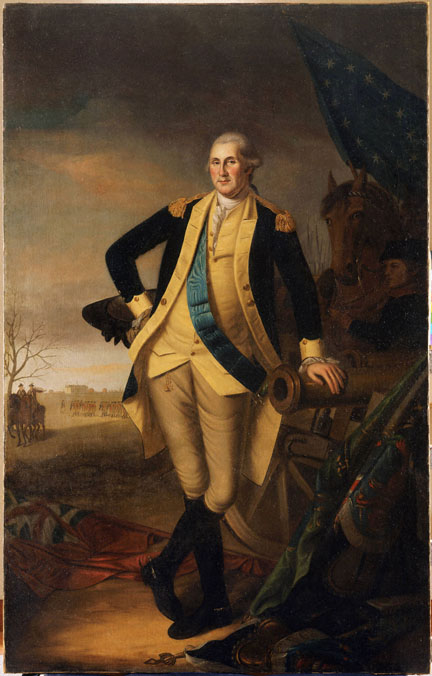
    george-washington-c-1779-by-charles-willson-peale
    George Washington (c. 1779) by Charles Willson Peale

    Washington gently rebuffed his wayward nephew, replying that he had his own debts and there was little money to spare.  He made a pointed statement at the end of his short letter, perhaps indicating that he didn’t fully believe Fielding was the victim of his own youthful folly. He wrote, “There was a great space between…when you were called upon by your Father for a specific list of your Debts and his death: How happened it, that in all that time you did not comply with his request?” Indeed, receipts in our archives show that Fielding commissioned a new carriage to be made for him in August of 1784, just one month before he was sent to prison.  He would not pay for the carriage until a suit was filed against him two years later.[1]

    As Fielding was seeking help from his uncle, John was planning one of many trips to “the Westward” as he called it – the Western frontier, and Kentucky in particular.  His first expedition to the Kentucky territory was on behalf of his father, before the Revolution, when Fielding Sr. was considering a land purchase there.  Apparently, John fell in love with the country, and returned many times in the coming years, making several land purchases of his own.  His uncle George asked him to act as his agent on several of these trips, to assess the state of Washington’s own property near Pittsburgh.

    While Washington was placing increasing trust in John, he had apparently lost faith in Fielding Jr.  By 1786, Fielding had been released from prison but had lost all of his inherited land in Frederick County.  He and his family were living on a lot in Fauquier County and were attempting to build a house.  Once again, Fielding asked for assistance.  Washington’s response was not as gentle this time, replying, “Altho’ your disrespectful conduct towards me, in coming into this country & spending weeks therein without ever coming near me, entitles you to very little notice or favor from me; yet I consent that you may get timber from off my Land in Fauquier County to build a house on your Lott…”  Despite his sharp words, he still agreed to help.

    Fielding’s improved situation was short-lived.  His wife Nancy died in 1788.  Fielding remarried to Elizabeth Dade, who apparently did not bring a fortune to the union, and so the 1790s would be a rough decade for Fielding.  He was returned to debtor’s prison in 1790, and found that there was no one in a financial situation to save him, with the exception of his brother John.  John, however, was not willing to give him money outright.  Instead, he required that Fielding mortgage everything – slaves, housewares, livestock – in exchange for £1200.[2]  One senses the family losing patience with Fielding.

    In 1792, Fielding was again incarcerated for debt, and this time there was no home for his wife and children, who went to live with Betty Lewis at Kenmore.  Betty wrote to her brother George about the situation, “I am sorry it will not be in my Power to advance any, haveing at this time three of my Grandchildren to support, and god knows from every Account but I may expect as many more shortly, Fielding is so distrest that his Children would go naked if it was not for the assistance I give him…”

    After this disastrous turn of events, Fielding’s whereabouts for the rest of his life become murky.  He never again owns property, and most likely stayed with various family members, including John.  His children remained with Betty at Kenmore.  There may have been little contact between Fielding and his children, as indicated in a letter written to him by his brother George informing him of Betty’s death in 1797. George wrote, “You will no doubt be anxious to know what is to be done with poor little Nancy (Fielding’s daughter), she is in good health, and at present with sister Carter…”[3] It is unknown where Fielding was when George sent him this letter.

    After Betty’s death, John moved quickly to sell Kenmore.  Although it would take several years, he did eventually save enough money to move his family to his land in Kentucky, where he spent the rest of his life.  Perhaps the family obligations and strain of his father’s estate made Kentucky a more appealing home than Fredericksburg.  While Fielding Lewis Sr. wanted very much for his two eldest sons to be seen and treated as equals, their lives played out in very different ways, and that’s the real story behind the portraits.

    [1] Fielding Lewis Jr. to Richard Simcock, 15 January 1786.  The George Washington Foundation Manuscript Collection.

    [2] Indenture Between Fielding Lewis Jr. and John Lewis, 20 March 1790. The George Washington Foundation Manuscript Collection.

    [9] George Lewis to Fielding Lewis Jr., 31 March 1797. The George Washington Foundation Manuscript Collection.

  • Photos: 3rd Annual “A Wee Christmas” at Kenmore

    Visit Kenmore this holiday season for an exhibit of highly detailed, replica dollhouses – including the mansion – and miniatures in the Crowninshield Museum Building. Share memories of your dollhouse with your family as you explore life in miniature! Put your mind and eye to the test with our “I Spy Miniatures” challenge – fun for young and old alike!

    Kenmore’s hours are Monday – Saturday from 10:00 a.m. – 4:00 p.m. and Sunday from 12:00 p.m. – 4:00 p.m. Kenmore is closed Christmas Eve and Christmas Day. Exhibit ends on December 30.  Admission to Kenmore and exhibit is $10 adults, $5 students, under 6 free while admission to the dollhouse exhibit only is $5 adults, $2.50 students, under 6 free.

  • Photos: Historic Kenmore Behind-the-Scenes Tours

    On rare occasions, Historic Kenmore offers special behind-the-scenes tours that take visitors into portions of the home not usually open to the public during regular tours. Additionally, Meghan Budinger, Aldrich Director of Curatorial Operations,  leads the tour and shares her expert insights and knowledge into the mansion’s history, furnishing, and ongoing preservation. This past weekend, visitors once again got to go behind-the-scenes!

  • Ten Well-Known Visitors to Historic Kenmore

    Since its transformation into a historic site, Kenmore has drawn its share of prominent and recognizable visitors including a vice president, a congressman, and numerous First Ladies of the United States. Indeed, the ladies of the Kenmore Association, who worked to save, restore, and operate the historic home during the 20th century, made it a point to reach out to First Ladies and, in turn, several of those First Ladies visited the auspicious brick home of Patriot merchant Fielding Lewis and wife Betty Washington Lewis, sister of George Washington.  For that matter, even during the days that Fielding and Betty lived in the home during the late 1700s, important figures in colonial Virginia and of the Patriot cause occasionally came to Kenmore.  Here is a list of “Ten Well-Known Visitors to Historic Kenmore.”

    10. Louise du Pont Crowninshield (1877-1958)

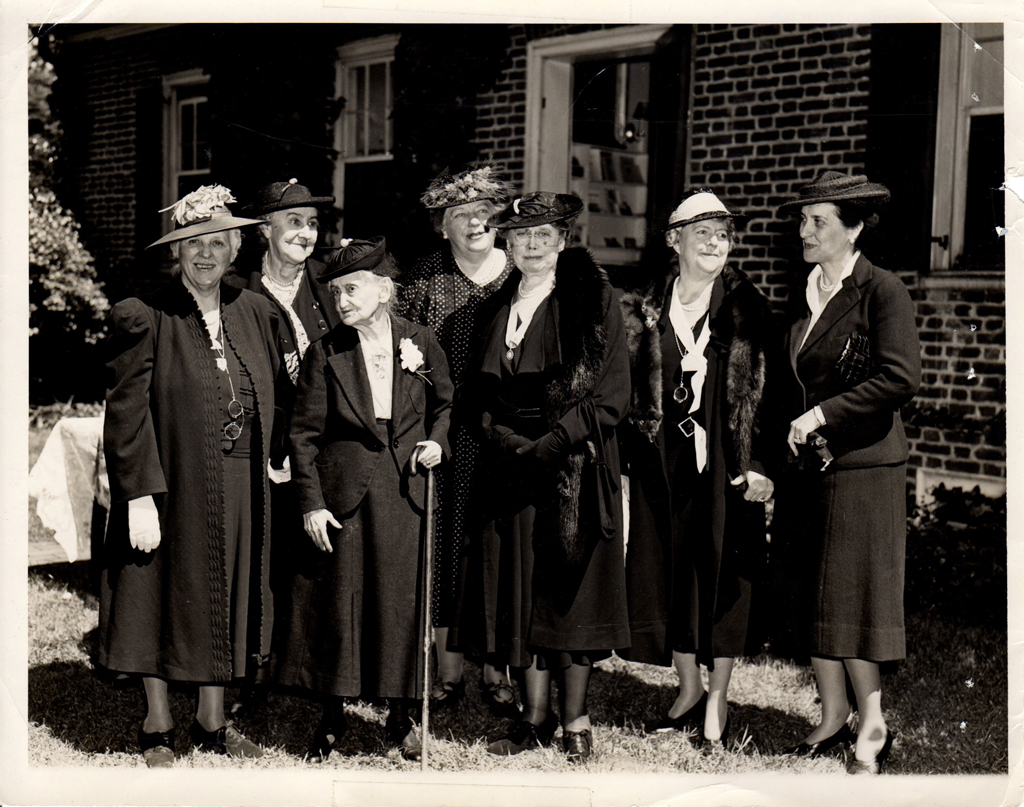
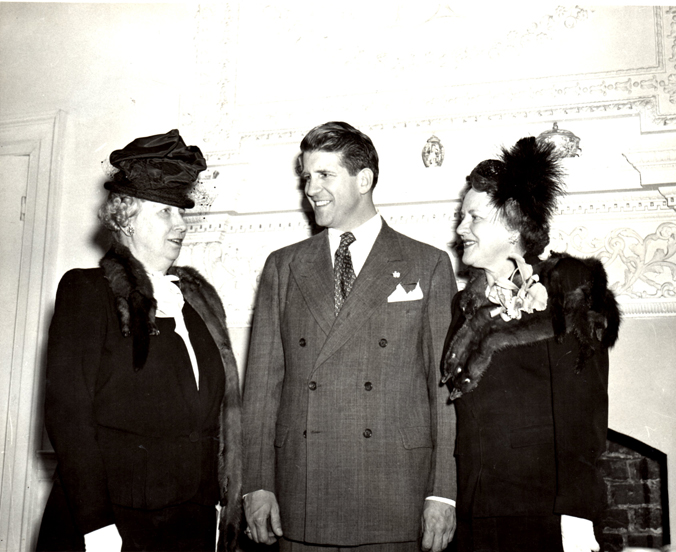
    Louise du Pont Crowninshield surrounded by other members of the Kenmore Association.
    Louise du Pont Crowninshield surrounded by other members of the Kenmore Association.

    Louise du Pont Crowninshield was president and chairman of the board of trustees of the Kenmore Association from 1940 to 1954.  An active historic preservationist, she was also a founding trustee of the National Trust for Historic Preservation.  Mrs. Crowninshield was born into the prominent Du Pont family and grew up at Winterthur, the family estate in Delaware. The home is now a museum and holds some of most important collections of Americana in the United States.  She helped save and restore Kenmore and visited many times during her term as president.

    sol-bloom-portrait
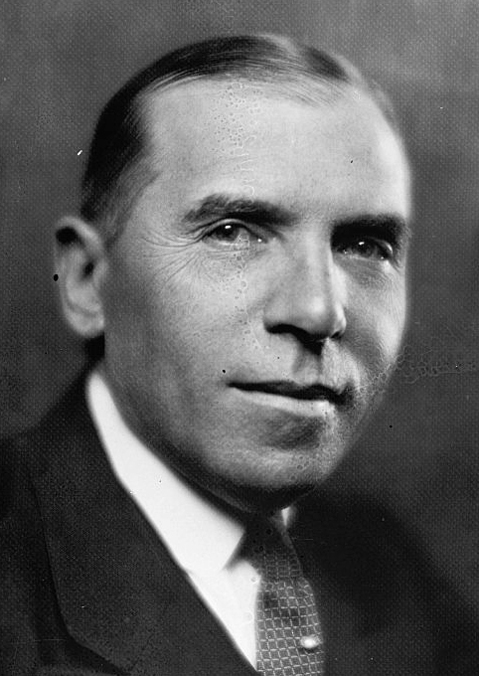
    Sol Bloom in 1923. Credit: Library of Congress / Wikipedia

    9. Sol Bloom (1870-1949)
    Sol Bloom was an entertainer, music publisher, and congressman from New York.  He was the biggest producer of sheet music in the U.S. before taking up politics.  Bloom was associate director of the United States George Washington Bicentennial Commission and came to Kenmore for a luncheon with Emily White Fleming and the Kenmore Association.  In 1936, Bloom made a $10,000 bet with Walter “Big Train” Johnson, former Washington Senator’s star pitcher, that Johnson could not throw a silver dollar across the Rappahannock River as legend said George Washington had done.  Bloom lost but refused pay the money.

    elizabeth-monroe
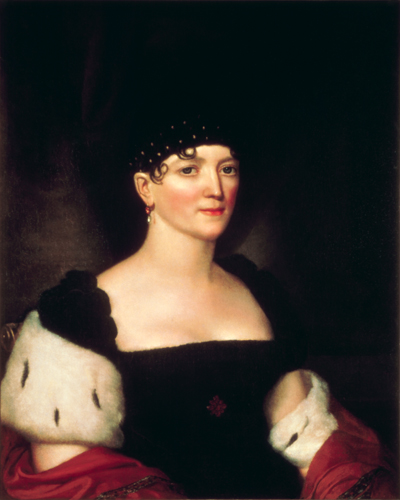
    Elizabeth Monroe, unknown date and artist. Public domain. Credit: John Vanderlyn / Wikipedia

    8. Elizabeth Monroe (1768-1830)
    Elizabeth Kortright Monroe was First Lady of the United States from 1817 to 1825.  Elizabeth was born in New York City and married James Monroe in 1786.  She spent time in France and Britain during her husband’s ambassadorship and was even invited to be part of the American delegation that attended Napoleon Bonaparte’s coronation.  Mrs. Monroe actually lived at Kenmore shortly after her marriage to James.  Her husband left town on business and, since they had not yet set up a home in Fredericksburg, she stayed with Betty Lewis until James returned.


    edith-wilson
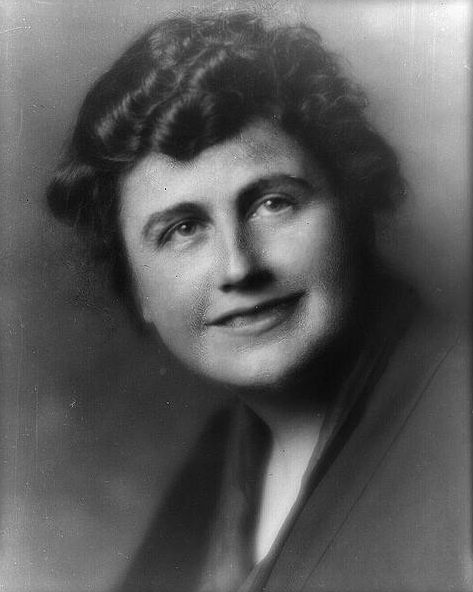
    Edith Wilson. Credit: Library of Congress / Wikipedia

    7. Edith Wilson (1872-1961)
    Edith Bolling Wilson was the second wife of President Woodrow Wilson and served as First Lady of the United States from 1915 to 1921.  Some historians argue that Mrs. Wilson became the de facto president after her husband’s stroke in 1919. She did, it seems, act as the only conduit to and from the president and decided which matters important enough to bring to her husband’s attention while relaying his decisions to those who needed to know.  Long after her time in the White House, Mrs. Wilson came to Kenmore for a luncheon in October 1946.

    6. Elizabeth Virginia “Bess” Truman (1885-1982)

    bess-truman
    Bess Truman in front of the fireplace in Kenmore’s dining room with Robert Porterfield, founder of the Barter Theatre, and an unidentified woman.

    Elizabeth Virginia “Bess” Truman was First Lady of the United States from 1945 to 1953.  Elizabeth Wallace was born in Independence, Missouri and had known Harry Truman, her future husband, since they were children.  They married in 1919.  Mrs. Truman detested the lack of privacy and disliked the social and political scene of Washington, D.C.  She was relieved to move back to Missouri.  Mrs. Truman visited Kenmore multiple times and was pictured in front of the mantel in the Dining Room with Robert Porterfield, founder of Barter Theatre, the State Theatre of Virginia, in Abingdon.

    5. Lou Hoover (1874-1944)

    Lou Henry Hoover was First Lady of the United States from 1929 to 1933.  Lou Henry was born in Iowa in 1874 and married Herbert Hoover in 1899.  She majored in Geology at Stanford University, was fluent in Chinese and Latin, assisted in the Belgian relief during WWI, and worked a great deal with the Girl Scouts of America.  Mrs. Hoover, as First Lady, toured Kenmore in September 1930.

    4. Colonel Sanders (1890-1980)

    Colonel Harland David Sanders founded the restaurant chain Kentucky Fried Chicken (KFC) in 1930.  Sanders was born in Indiana in 1890 and, after a number of jobs, he started selling fried chicken at a roadside restaurant in Corbin, Kentucky during the Great Depression.  The restaurant, Kentucky Fried Chicken, was a success and, in 1952, he started franchising across the country.  In 1964, Sanders sold the company and used his stock holdings to create several charitable organizations.  He promote these organizations as well as KFC by touring the country dressed as the Colonel.  He came to Kenmore and took a tour in the summer of 1977.

    calvin-coolidge
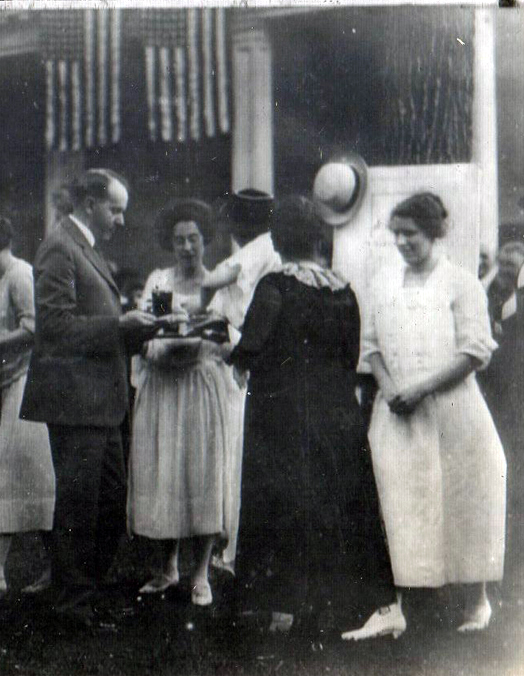
    Calvin Coolidge (left) enjoys gingerbread at Kenmore.

    3. Calvin Coolidge (1872-1933)
    Calvin Coolidge was born in Vermont in 1872.  After college, he became a lawyer and went into politics becoming the governor of Massachusetts from 1919 to 1921.  He was the 29th vice president under Warren Harding and the 30th President of the United States from 1923 to 1929.  Vice President Coolidge came to Kenmore in July 1922 to launch a fundraising campaign aimed at raising money to purchase the house and make it a historic site. He enjoyed some gingerbread during his visit.


    eleanor-roosevelt-portrait
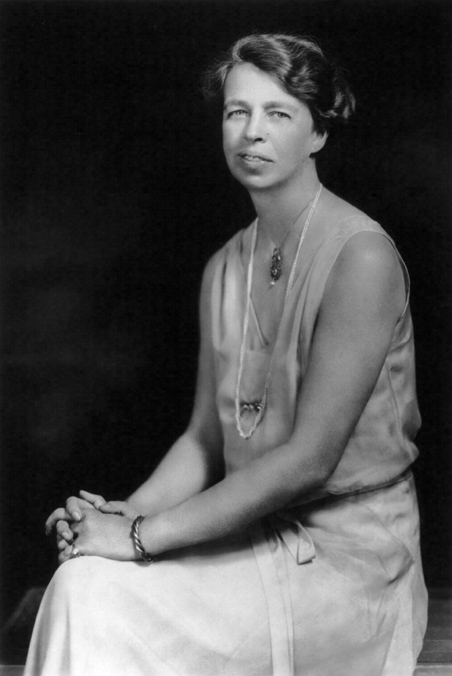
    Eleanor Roosevelt in 1932. Credit: Library of Congress / Wikipedia.

    2. Eleanor Roosevelt (1884-1962)
    Eleanor Roosevelt was First Lady of New York from 1929 to 1933 and First Lady of the United States from 1933 to 1945.  She was born in New York City to the socially prominent Roosevelt and Livingston families and married Franklin D. Roosevelt in March 1905.  After her time in the White House, she chaired the United Nations Commission on Human Rights in the late 1940s and early 1950s and John F. Kennedy’s Presidential Commission on the Status of Women.  When she was First Lady of New York, Mrs. Roosevelt visited Kenmore on several occasions with various groups who came from the New York state capital of Albany.

    1. George Washington (1731-1799)

    houdons-george-washington
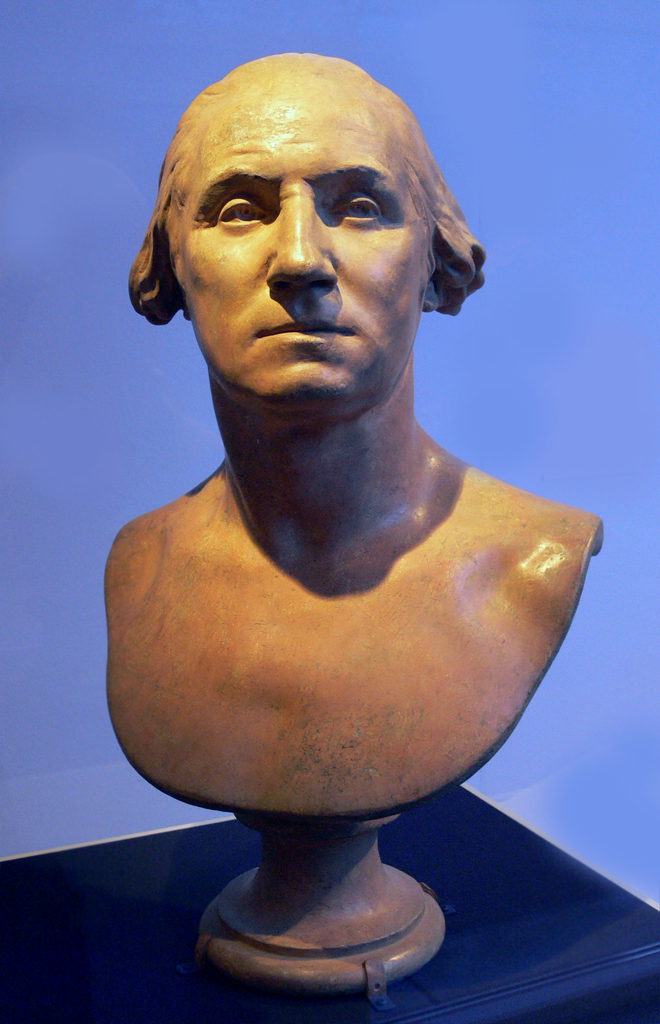
    Bust of George Washington (c. 1786) by Jean-Antoine Houdon and based on a life mask of Washington. Public domain. Credit: Dallas Museum of Art / Wikipedia.

    George Washington was the first President of the United States (1789-1797) and the older brother of Betty Washington Lewis.  Construction of Kenmore was complete late in 1775. George would not stay in the house until 1784.  Including this 1784 visit, Washington stayed at Kenmore at different times during the years 1785, 1787, 1788, and 1791.  The final visits in April and June 1791 were the only times he stayed at Kenmore while serving as president.[1]

    Heather Baldus
    Collections Manager

    [1] Paula Felder, Fielding Lewis and the Washington Family: A Chronicle of 18th Century Fredericksburg. The American History Company, 1998: 216.

  • Ten Rarely-Displayed Objects from Kenmore’s Collection

    It is impossible for museums to exhibit the thousands of objects in their collections.  Historic Kenmore is no exception. While each of our objects is certainly unique and interesting, not every piece fits within our current interpretation of the life and times of the Lewis family.

    One reason museums might not display items is they are not from the time period being interpreted.  Our curator selects each object shown to the public after exhaustive study of primary resources like wills, probate inventories, letters and diaries and making sure it illustrates 18th century life in a wealthy Virginian home.  If we displayed pieces we have from the 1600s or 1960s, it would detract from the story of the Lewis family in the 1700s.

    A second reason museums might not display items is preservation and conservation.  Items that are two-hundred years old or more are very delicate and require special environments with proper temperatures, relative humidity, restricted lighting, and limited handling.  Material like textiles and papers don’t do well on display for long periods of time.  These items are better utilized in temporary exhibits in our visitors center or as digital content.

    In this list, I present ten of my favorite objects from Kenmore’s collection not often exhibited because they don’t quite match the history we’re trying to share or because they are too delicate for display. Besure to click on any of the photos for more detailed views of the objects.

    Ivory Silk Overdress and Petticoat

    overdress-and-petticoat
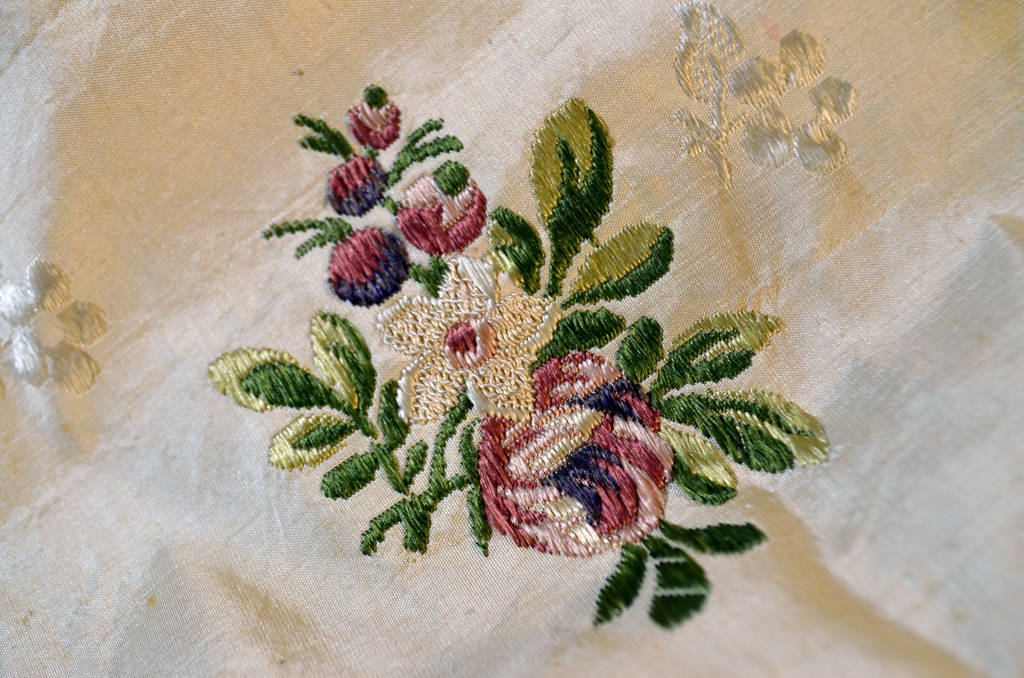
    One portion of the floral embroidery on the dress in Kenmore’s collection. The gown’s material is so delicate in some areas that we felt it best not to try and photograph the complete gown.
    robe-a-la-francaise-block-printed-cotton-c-1770
    Robe à la Française, c. 1770, similar in style to the dress in Kenmore’s collection. Credit: Los Angeles County Museum of Art / Wikipedia

    In Kenmore’s collection is an extremely delicate  overdress and petticoat with a brocaded multicolor floral pattern in the open robe style that dates from about 1775-1785. The particular cut of the open robe style was also known as “a la francaise” or “sack-back gown”.  This robe à la francaise is an illustration of the Rococo aesthetic that was popular during the eighteenth century.  I find clothing to be some of the most personal historic artifacts in any collection.  These pieces are not simply costumes but functional everyday garments that were used, stained, and mended by their owners.  Being able to see and handle this tangible historic link is as close to time-travel as we will get but, at the same times, textiles are extremely fragile and must be handled only rarely.

    empire-dress
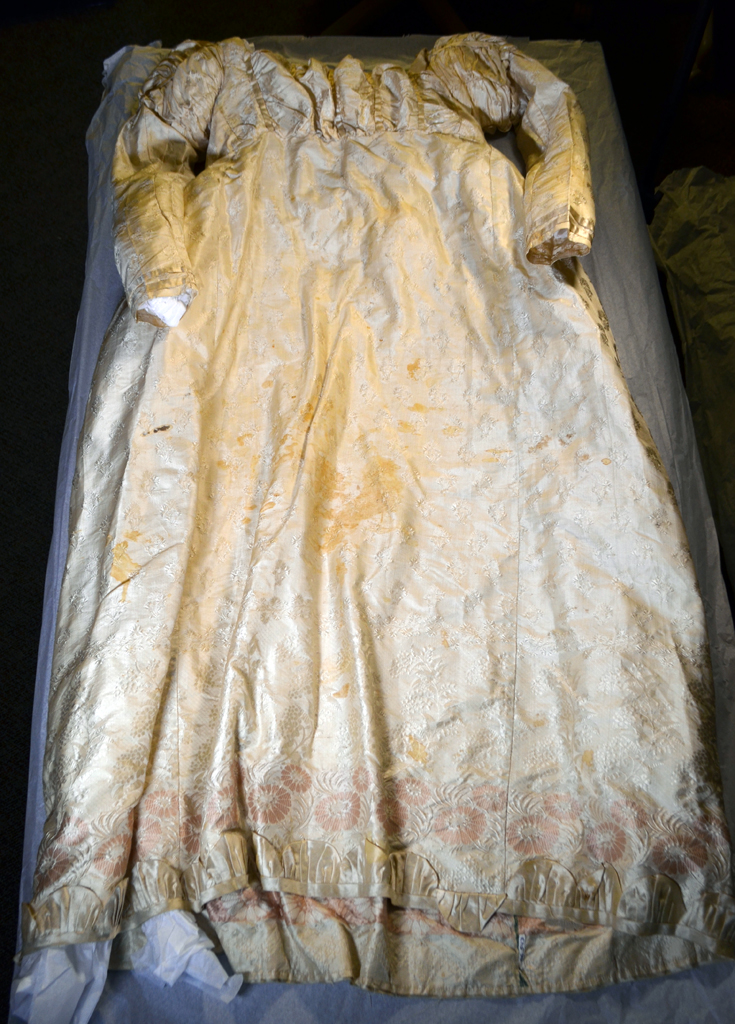
    Empire-style dress in Kenmore’s collection photograph while still laying in its storage box.

    Empire Waist Dress
    This cream-colored silk dress dates from between 1790 and 1820 and features a pattern of flower sprays and vines with row of pink brocaded flowers along bottom.  Cut in neo-classical style popular in the early nineteenth century with an “empire-style” waist, square neck and loose skirt.  Regency fashion is one of my favorite fashion epochs.  I find the empire-waisted silhouette to be flattering and probably the most comfortable of all historic women’s styles.  This piece doesn’t come out of storage much because it is a little too late for the Lewis era.

    “A New and Exact Map of the Dominions”
    new-and-exact-map-of-the-dominions
    Drawn by London cartographer Herman Moll in 1715, this map shows a fascinatingly detailed view of the Atlantic coastline from present-day South Carolina to Newfoundland, Canada indicating counties, mountains, towns, Indian settlements, rivers and bodies of water.  Insets along the bottom are maps of the Gulf of Mexico, the Carolinas, Charles-Town, and a small map of the “Principal Port of North America.” At right center is an inset showing a fully-colored view of Niagara Falls, with cute little beavers in the foreground building a dam.

    “View of London”

    view-of-london
    Close-up of a portion of Frederick de Wit’s “View of London.”

    This colored engraving done by Dutch cartographer Frederick de Wit shows a topographic view of the London with “The River Thames” across the center of map.  In the upper right corner there is a key with 148 streets, churches, wharves, theatres, and monuments listed and identified on the plan with a corresponding number. As an Anglophile who went to graduate school in London and spent over a year exploring that city’s streets,  I like seeing many familiar streets and sites on this map.  It shows that London city’s center has changed very little across the centuries.

    Bourdaloue
    bourdaloe
    This creamware bourdaloue is a smaller and more feminine version of a chamber pot circa 1780-1790.  In an era without public toilets, the bourdaloue provided a lady with a portable and relatively clean means of relieving herself away from home.  The vessel was oblong, rectangular, or oval in shape and a slightly raised lip at one end and a handle at the other and allowed usage from a squatting or standing position.  The bowl would then be given to the lady’s maid who disposed of the waste discretely.  Little everyday artifacts can get overlooked but they these fascinating little pieces give us a whole picture of colonial life. Plus, everyone loves chamber pots!

    The Gentleman’s Magazine
    gentlemans-magazine
    This March 1752 edition of The Gentleman’s Magazine includes articles on poetry, music, weather, gardening tips, criminal proceedings, history, and social services.  It’s amusing to read the various articles today and reflect on how similar they can be to our current news. There is a riveting report on the trial of Miss Blandy for poisoning her father, an account of the history of the Incas, and birth, marriage, and death announcements for the upper-crust of London society.  The Gentleman’s Magazine is digitized and can be read here. The Gentleman’s Magazine was founded in London in 1731 and remained in continuous print for 191 years.

    Homer’s The Iliad translated by Alexander Pope
    iliad
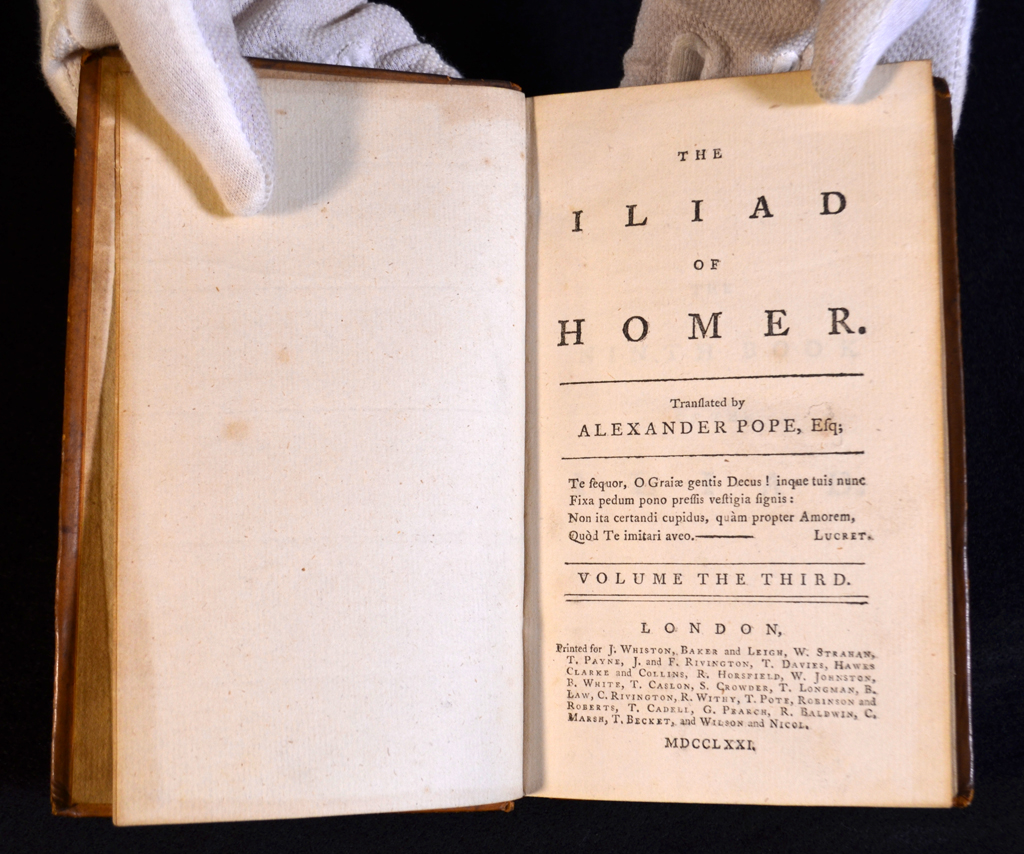
    These five volumes of Homer’s The Iliad were translated into English by the poet Alexander Pope between 1715 and 1720.  Written around the 8th century BC, Homer’s timeless story has influenced great artists for 2,000 years.  Pope was one of those artists.  He suffered from many health problems but was one of the few English poets able to earn a living from his literary works and I just think it’s cool that we have these special books in our collection.  Pope translated the epic verse for the publisher Bernard Lintot and earned the significant sum of £210.

    Marrow Spoon
    marrow-spoon
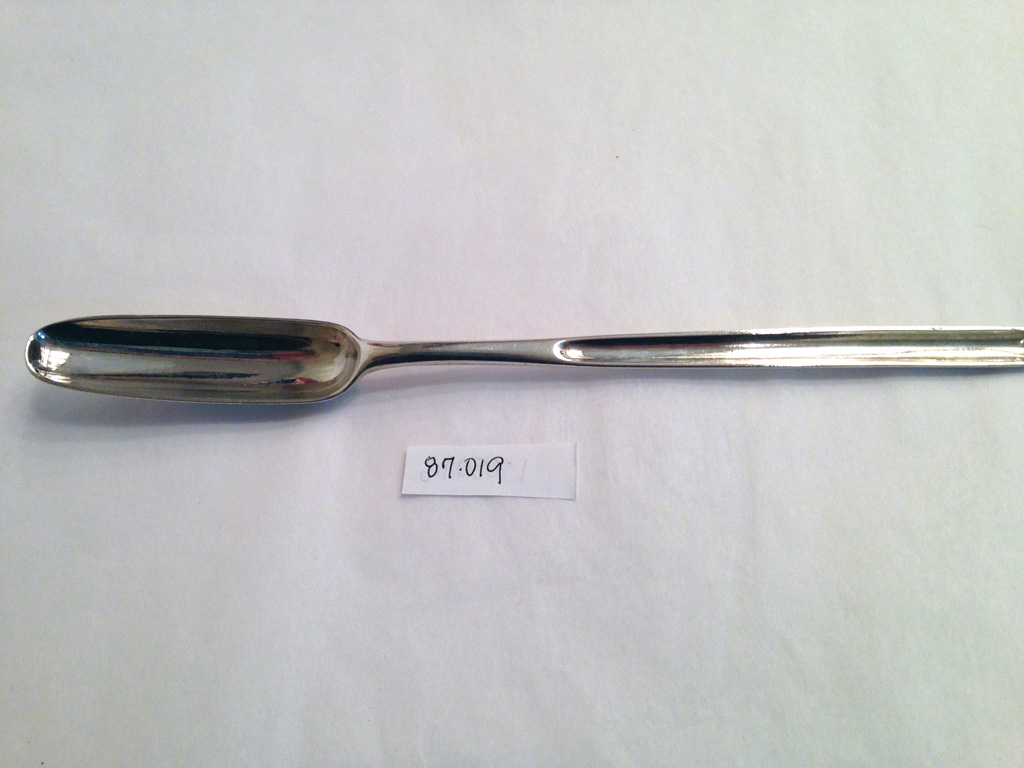
    This silver marrow spoon, circa 1722, features a long narrow scoop at one end and a broader spoon at the other.  Enjoying bone-marrow was so common that utensils were created to assist the diner in retrieving every morsel. These spoons were used at the table to get the tasty marrow out of the center of the bones without having to rudely gnaw, suck, slurp, bang, crack, or bite.  The fashionableness of certain food can be traced through the evolution of dining implements.  Today, our familiarity with the double scooped spoon and its purpose has waned just like roasted long-bone sprinkled with salt is no longer a prevalent dish on our tables.

    Mary Washington Monument Stone

    mary-washington-monument-stone
    Painted on this view of the stone are the ‘new’ [current] monument and the Mary Washington House.
    This is an Aquia sandstone fragment from the original Mary Washington Monument that was started in 1833 when President Andrew Jackson laid the cornerstone. The monument was never finished and was heavily damaged during the Civil war. In 1892, in order to raise money for a new memorial, the Mary Washington Monument Association began to sell off the original pieces painted by local women as “relics”.  While some felt this was desecrating Mary’s grave, the Association raised enough money for a new monument. In 1894, President Grover Cleveland dedicated the new monument, which still stands today. Although the way the group went about raising funds for the new memorial is not how it would be done today, these stones represent the beginning of the American preservation movement at the turn of the century.

    sampler
    The sampler’s poem has large faded from view. It read: “Learn to contemn all Praise betimes / For Flattery Is the Nurse of Crimes / With early Virtue plant thy Breast / The Specious Arts of Vice detest / Youth like softened Wax with Ease will take / Those Images that first Impressions make / If those be fair their Actions will be bright / If foul they’ll clouded be with Shades of / Night.”

    Sampler by Betty Washington Lewis
    This sampler was embroidered, signed, and dated by Betty Washington Lewis on February 25, 1805.  Betty was the daughter of Howell Lewis and the granddaughter of Fielding and Betty Lewis.  Girls demonstrated or tested their needlework skills by making samplers and often included the alphabet, figures, decorative motifs and, usually, a name and date.  This is one of the few textiles in our collection directly related to and created by a member of the Lewis family.  When an item is clearly marked with the date and who made it, it really doesn’t get much better for a historian!

    Heather Baldus
    Collections Manager

  • Video: William Key Howard, Jr. – Saving Kenmore’s Ceilings

    In this video, learn about William Key Howard, Jr., who lived in Kenmore with his family in the years following the Civil War and repaired damage to the house’s plaster ceilings in the first restoration of Kenmore.

    You can learn more about William Key Howard, Jr. and why his boat is still in the attic while visiting rarely seen rooms and spaces during a special behind-the-scenes tour at Historic Kenmore on October 22-23. Reservations required. Details at http://kenmore.org/events.html.

  • The Man on the Ceiling: Neoclassical Decorating at Kenmore

    As with many things at Historic Kenmore, the reasoning behind the choices Fielding and Betty Lewis made for their masterpiece of a house remain a mystery to us.  Why are Aesop’s Fables the subject of the decorative plaster overmantel in the Dining Room? Why is there an old-fashioned paneled wall in the Chamber? Why did they cover the expensive Drawing Room wallpaper with artwork but didn’t hang any art in the Dining Room? We’ll probably never know why they made most of these choices…but it’s pretty fun to speculate!

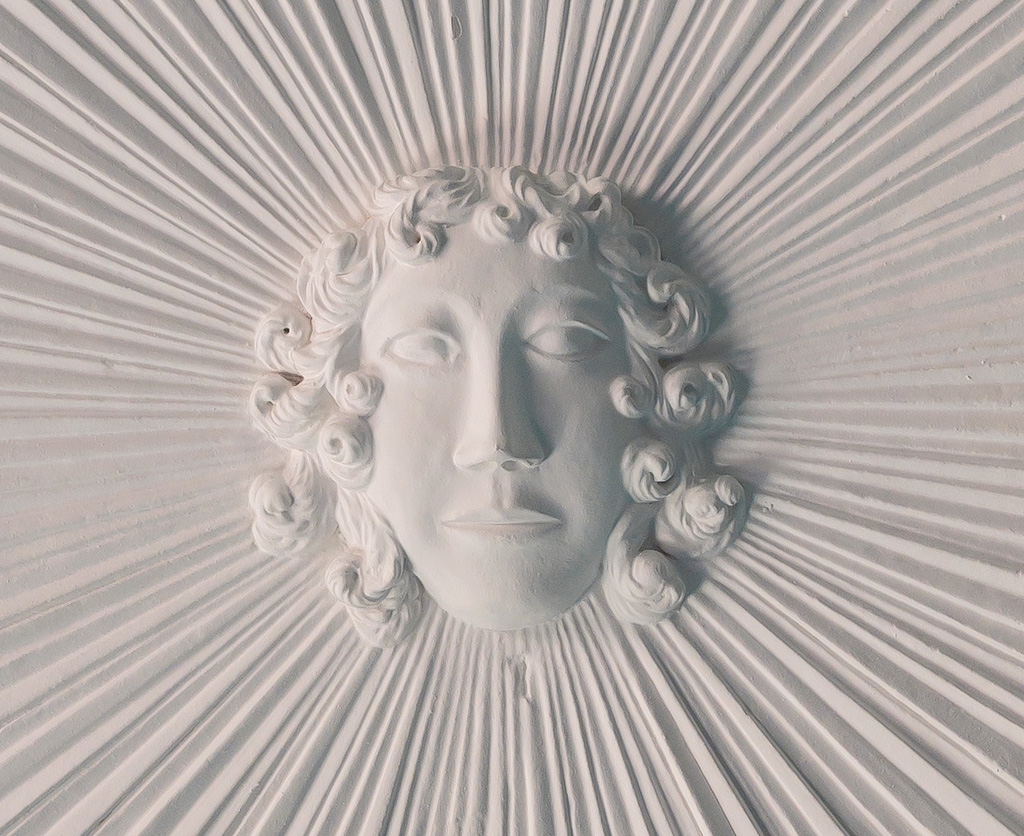
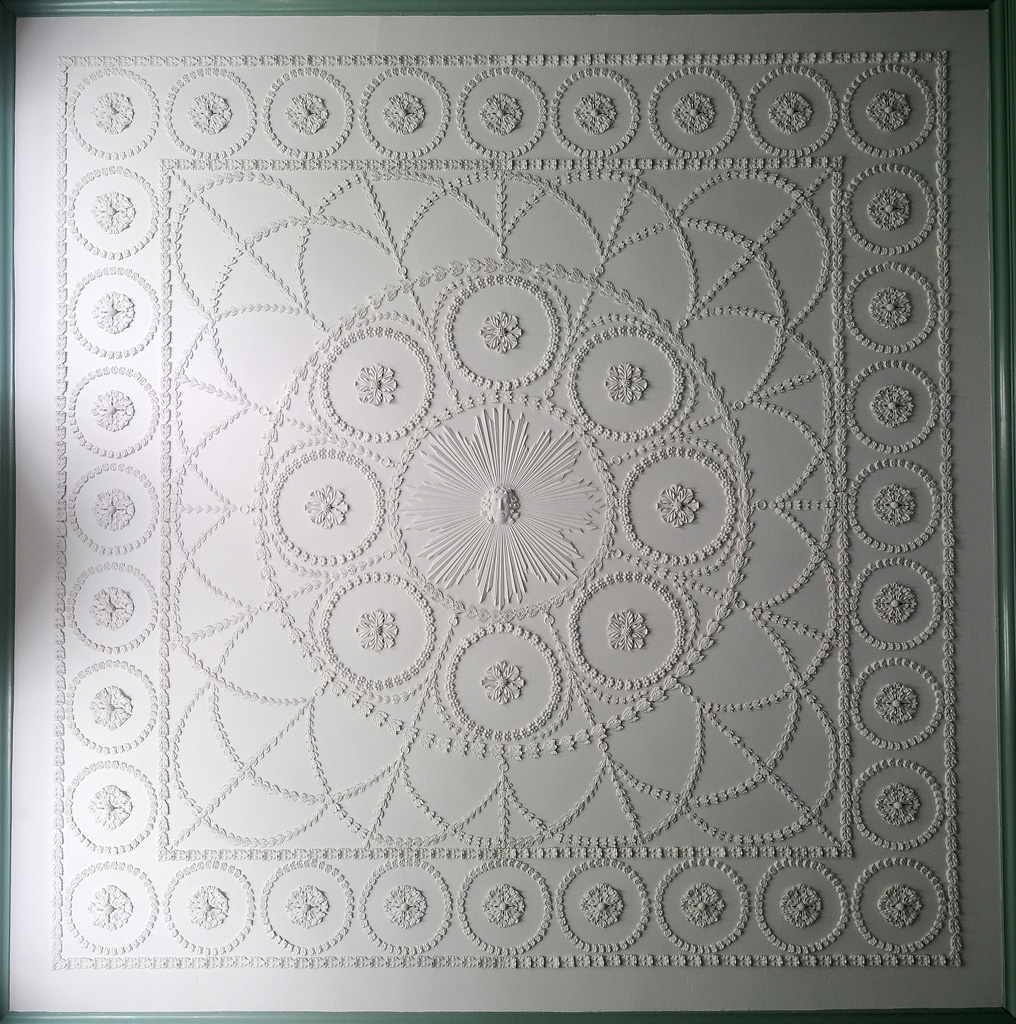
    One such stylistic choice is at the center of the plasterwork ceiling in the master bedchamber.  Visitors to Kenmore may recall the man’s face surrounded by rays or beams of light depicted there.  It is believed that this man is Apollo, the Greek god, and that the light beams emanating from his head, in this case, indicate that he is being depicted as Apollo the Sun God (one of many titles attributed to him).

    apollo-on-chamber-ceiling
    Apollo on the ceiling of the master bedchamber at Historic Kenmore.
    chamber-ceiling
    The entire bedchamber ceiling with Apollo at the center.

    When asked, we usually give visitors a fairly simple explanation for his position on the ceiling, something along the lines of “Apollo was a common symbol of the neoclassical style which was a popular decorating theme at the time.” That’s very true.  In the mid to late 18th century, the neoclassical style was all the rage throughout England and France, and much of the rest of Europe, as well.  As the story goes, the discoveries of the ruined ancient cities of Herculaneum and Pompeii created a fascination with the ancient world that showed up in everything from window curtains to tea pots.  Although the fashion arrived in the American colonies a bit later than in Europe, and despite far fewer options for incorporating it into their homes, the gentry tried to bring the neoclassical flare to their houses, as well.

    However, this explanation for Apollo’s presence in the Kenmore bedchamber may be a bit oversimplified.  After all, Apollo’s face is really the only identifiable neoclassical symbol in the entire house.  Why would Fielding and Betty choose to place this one symbol in this one room, and then completely ignore the neoclassical esthetic in the rest of the house?

    Much has been made of the mysterious craftsman who created Kenmore’s famous plaster ceilings – could the Stucco Man simply have chosen Apollo imagery at random for the bedchamber? Or, could there be another, less obvious, meaning behind the depiction? Maybe we should be looking at the 18th century concept of Apollo himself, rather than his use as a decorative motif.

    raleigh-tavern
    Exterior of the reconstructed Raleigh Tavern in Colonial Williamsburg. Credit: Maggie McCain/Wikipedia
    apollo-room
    Raleigh Tavern’s Apollo Room in Benson Lossing’s The Pictorial Field-Book of the Revolution published in 1860. Lossing visited the tavern in the late 1850s just prior to a renovation (thus the depiction of tools in the room’s center). The tavern was destroyed by fire in 1859. Public domain. Credit: Wikipedia.

    Kenmore’s bedchamber isn’t the only place that Apollo shows up in 18th century Virginia.  In fact, Apollo’s name is fairly common in the colony…especially in taverns.  Many inns and taverns had a room known as the Apollo Room.[1]  The most famous of these Apollo Rooms is probably the one at the Raleigh Tavern in Williamsburg, which was a well-known meeting space and the scene of large public gatherings, like balls or dinners.  When the House of Burgesses was disbanded by the royal governor in 1773, the burgesses simply moved themselves down the street to the Raleigh Tavern and conducted their business in the Apollo Room, drafting the non-importation act and other “treasonous” acts.  There is some thought that the Apollo Room in Williamsburg, and the other various Apollo Rooms in Virginia taverns, were named in honor of the Apollo Room at Hercules Pillars (or Pillars of Hercules, depending on who you talk to) in London.

    pillars-of-hercules
    The Pillars of Hercules pub as it appears today in Soho, London. Credit: Ewan Munro/Wikipedia

    The Hercules was a tavern established sometime before 1709, and is actually still in business today.  The Hercules was a leader among the several taverns in London that catered to the gentlemen’s “clubs” that were so popular at the time.  Much like modern-day college fraternities, these clubs were often known for one thing or another – some focused on scientific discourse, some were patrons of the arts, some met to read poetry, some were political in nature, some were more raucous than others, but they were all essentially drinking clubs.  For their monthly dues, members could meet at their club’s tavern and imbibe or enjoy a good meal, and take part in good conversation.  At the Hercules, the club met in the Apollo Room.[2]  Although it was a bit of a disconnect, Apollo was used in this case as a symbol of refined culture and knowledge, as opposed Bacchus, a god who symbolized wild partying and debauchery.  Whatever the reality, the Apollo Room was intended to be a place for polite discourse and companionship.

    Now, in a previous post on this blog, we discussed some archaeological evidence that Fielding may have had ties to a fraternal organization (that was essentially a drinking club, too) in England known as the Right Honorable Society of Bucks, and we know definitively that he was a member of the Fredericksburg masonic lodge, another fraternal, social organization.  Could that be the idea that Fielding was trying to express in putting Apollo’s head on the ceiling in the bedchamber – Apollo as a symbol of fraternity and knowledge? It would make sense, especially in light of the fact that Fielding was clearly trying to create the household of a proper English gentlemen when designing Kenmore.  Membership in these social clubs was probably prevalent among Fielding’s business associates in England, and certainly masonic membership was important for businessmen in Virginia.  Perhaps Fielding was subtly creating his own “Apollo Room.”

    chamber
    Kenmore’s master bedchamber

    Alas, there is a glitch in this theory.  If Fielding is trying to create his own Apollo Room, or at least convey the idea of an Apollo Room, why did he choose the bedchamber for it? As visitors to Kenmore have no doubt learned on tour, the master bedchamber in an 18th century household was considered an entertaining space, so that’s not the issue – people other than Betty and Fielding spent time there.  It’s more that the bedchamber is typically the domain of the lady of the house.  It was Betty’s command central, she spent most of her day there, running the household, keeping tabs on the enslaved servants and tending to her children.  If there were visitors to be entertained there, they were most likely Betty’s visitors.  The bedchamber tends to have a feminine connotation.  If Fielding wanted to make his business associates and social guests aware of his culturally refined and knowledgeable status, wouldn’t he put the Apollo symbol in the Dining Room or the Drawing Room?

    As I stated at the beginning of this post, there are many aspects of Kenmore that we might never fully understand, and the man on the ceiling is one of them.

    Meghan Budinger
    Aldrich Director of Curatorial Operations

    [1] Study of Taverns in Virginia in the 18th Century. Department of Research, Colonial Williamsburg Foundation, 1990.

    [2] Club Life of London with Anecdotes of the Clubs, Coffee-Houses and Taverns of the Metropolis, During the 17th, 18th and 19th Centuries, Vol. II. John Timbs, 1866.

  • Photos: “The Taming of the Shrew” at Kenmore’s Shakespeare by Candlelight

    Taming of the Shrew (1)

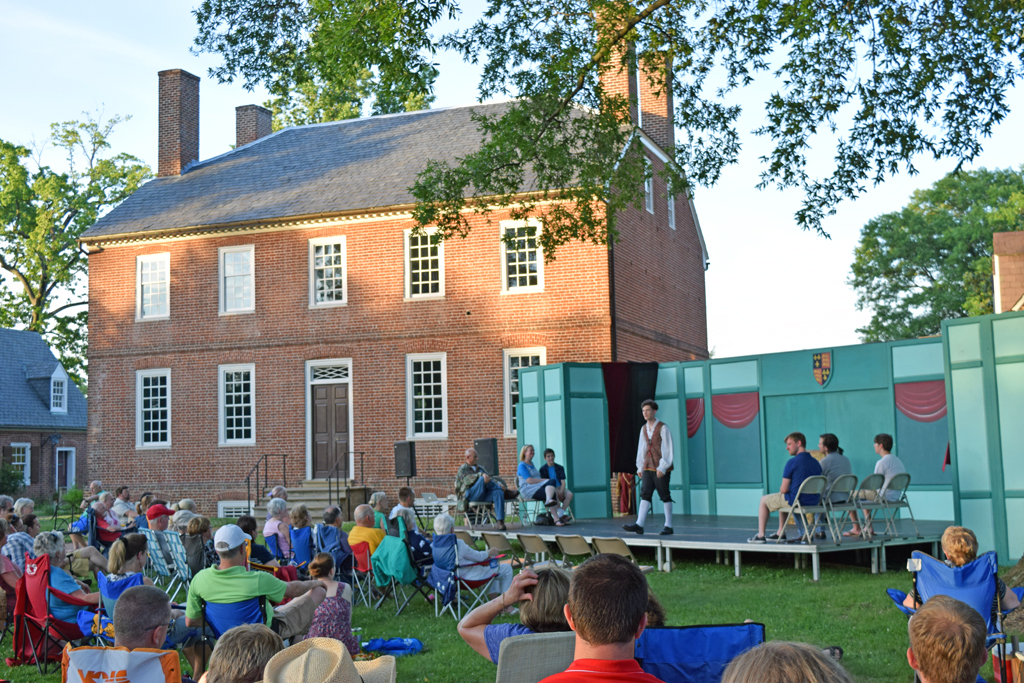
    This past weekend was Shakespeare by Candlelight at Historic Kenmore!  William Shakespeare’s The Taming of the Shrew was presented in eighteenth-century style on the Lawn at Kenmore on Friday and Saturday nights and, because of a thunderstorm, indoors on Sunday night.  Enjoy this collection of photographs from the Saturday and Sunday performances.  Learn more about The Taming of the Shrew’s history here.

  • Video: Drawing Room Carpet

    A carpet was recently installed in the Drawing Room at Historic Kenmore. In this video, Meghan Budinger, Aldrich Director of Curatorial Operations, tells us all about it.

    Follow The Rooms at Kenmore blog for more about the drawing room carpet and the final stages of Kenmore’s refurnishing.

  • Photos: “Hamlet” at Kenmore’s Shakespeare on the Lawn

    Hamlet (1)

    Shakespeare on the Lawn at Historic Kenmore returns this weekend with two more performances of Hamlet.  Catch the one of the final shows at 7:00 p.m. on Saturday, June 18 or Sunday, June  19.  Arrive early to tour the mansion and view the refurnishing. Bring folding chairs or a blanket and a picnic! Thank you to sponsor Lewis Insurance Associates! Learn more at http://www.kenmore.org/events.html.  In the meantime, enjoy these scenes from last weekend’s performances!