Lives and Legacies

Category: Historic Kenmore

  • The ‘Monuments Men’ of World War II Come to Kenmore

    Fielding Lewis by John Wollaston, ca. 1765. This portrait has been in the Kenmore Collection for many decades.  It was recently returned to the Drawing Room, where it would have hung when the Lewis family lived in the house 200 years ago. Watch a video of the hanging process here.

    Editor’s Note: This Memorial Day, we again remember ‘The Monuments Men’ and their invaluable work to locate and save European art looted by the Nazis during World War II as well as their continued efforts to conserve and preserve art after the war, including art at Historic Kenmore.  This post originally appeared on Lives & Legacies on May 20, 2015.

    Recently, while flipping through old files of the Kenmore Association dating back to the 1920s and looking for anything related to our portrait of Fielding Lewis by John Wollaston (ca. 1765), I spotted a familiar name: George Stout.  It took me only a moment to realize why the name was familiar.  Those of you who read Robert Edsel’s book The Monuments Men: Allied Heroes, Nazi Thieves and the Greatest Treasure Hunt in History or saw the movie The Monuments Men starring George Clooney, Matt Damon, John Goodman, and Bill Murray may also recognize the name.

    During World War II, George Stout was a member of the U.S. Army’s  Monuments, Fine Arts, and Archives unit, nicknamed the “Monuments Men.”  These soldiers volunteered to leave their jobs as curators, historians and conservators to travel the frontlines in Europe, documenting, cataloging and in some cases saving priceless cultural artifacts in harm’s way.  Along with serving as a Monuments Man, Stout is widely considered the father of modern methods in art conservation in the museum world.  He’s kind of a rock star to all of us who work in museums, as are all of the Monuments Men.  It is not often that curators get to be the hero, but those men were.

    Lieutenant George Stout, U.S. First Army and U.S. Twelfth Army Group. Age: 47. Born: Winterset, Iowa. A towering figure in the then obscure field of art conservation, Stout was one of the first people in America to understand the Nazi threat to the cultural patrimony of Europe and pushed the museum community and the army toward establishing a professional art conservation corps. As a field officer, he was the go-to expert for all the other Monuments Men in northern Europe and their indispensable role model and friend. Dapper and well-mannered, with a fastidiousness and thoroughness that shone in the field, Stout, a veteran of World War I, left behind a wife, Margie, and a young son. His oldest son served in the U.S. Navy. Walter Hanncock Collection, courtesy of the Monuments Men Foundation
    Lieutenant George Stout, U.S. First Army and U.S. Twelfth Army Group. Age: 47. Born: Winterset, Iowa. A towering figure in the then obscure field of art conservation, Stout was one of the first people in America to understand the Nazi threat to the cultural patrimony of Europe and pushed the museum community and the army toward establishing a professional art conservation corps. As a field officer, he was the go-to expert for all the other Monuments Men in northern Europe and their indispensable role model and friend. Dapper and well-mannered, with a fastidiousness and thoroughness that shone in the field, Stout, a veteran of World War I, left behind a wife, Margie, and a young son. His oldest son served in the U.S. Navy.  From the Walter Hancock Collection courtesy of the Monuments Men Foundation.
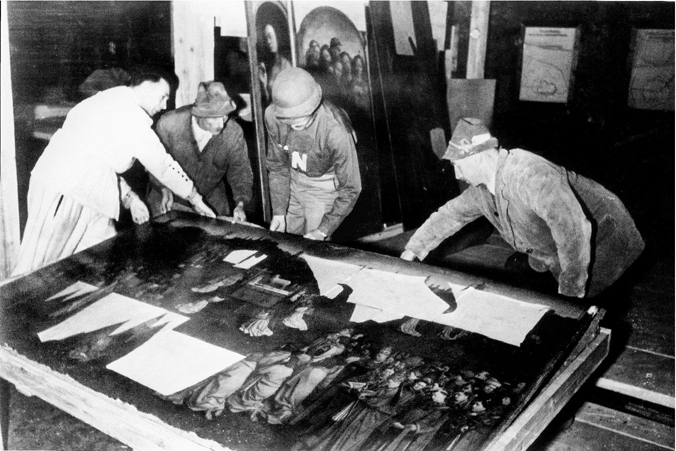
    ALTAUSSEE, AUSTRIA – JULY 10, 1945: Removal of priceless works of art from the salt mine at Alt Aussee posed problems for Monuments Man George Stout unlike any ever contemplated. Stout constructed a pulley to lift Michelangelo’s Bruges Madonna onto the salt cart to begin its long trip home to Belgium. Visible on the far left is Monuments Man Steve Kovalyak, an expert in packing art, who was a key assistant to Stout. National Gallery of Art photo courtesy of the Monuments Men Foundation.

    After the war, many of the Monuments Men returned to their museum jobs where they continued to work together, revolutionizing the care and conservation of artwork and historic objects.  They established standards for conservation practices, ethics for conservators, and tested new scientific methods for preserving all varieties of artwork.  Perhaps their greatest legacy was that many of them established schools for training conservators, ensuring the future of the field.  For the first time, American museums had a cadre of experts to turn to when masterpieces in their collections needed help.

    Kenmore’s old files perfectly reveal the post-war story of George Stout and the Monuments Men. It’s a story that also involves numerous other luminaries of the art conservation world such as John Walker, Harold Cross, Sheldon and Caroline Keck, and Russell Quandt.

    It all started in 1949, when John Walker, then Chief Curator of the National Gallery of Art, visited Kenmore.  His visit moved him to write a letter to Kenmore’s own Louise DuPont Crowninshield, praising the Kenmore Association for its work in saving the property and for its fine collection, which included the Wollaston portrait of Fielding Lewis.  Mr. Walker felt very strongly that the Wollaston portrait was in need of immediate conservation treatment.  He recommended a young man named Harold Cross, the new restorer at the Corcoran Gallery of Art in Washington, D.C., for the project.

    John Walker was not a Monuments Man but he was heavily involved in the complicated and tedious post-war effort to identify artwork looted by the Nazis.  This brought him in close contact with many of the Monuments Men over several decades.  He suggested the Kenmore Association contact George Stout, then at the Worcester Museum of Art, to get a personal testimonial as to Harold Cross’s abilities. Cross apprenticed under George Stout, receiving training in Stout’s scientific methodology.  Mrs. Crowninshield contacted Stout, who highly recommended his former student. Cross performed the first ever restoration of the ca. 1765 Wollaston portrait.  The post-war Monuments Men network had made its first mark at Kenmore by saving our only image of Fielding Lewis.

    keck_sheldon
    Lieutenant Sheldon Keck (kneeling), United States Army. Read Keck’s biography here. Courtesy of the Monuments Men Foundation.

    The next involvement of the Monuments Men with the Wollaston portrait came in 1952, when the ladies of the Kenmore Association became concerned that the portrait was warping at an alarming rate.  Through personal connections, they learned that Sheldon and Caroline Keck would be visiting Colonial Williamsburg in January.  Sheldon Keck was a former Monuments Man and the chief restorer at the Brooklyn Museum of Art; his wife Caroline was also a restoration specialist at the same museum.  Together, they trained more than 150 conservators before they retired.

    Their presence in Virginia was fortuitous, and the decision was made to pack up the Wollaston and have Executive Director Mary Mason take it directly to Williamsburg.  Mr. and Mrs. Keck agreed to take a look at the painting, and apparently performed their treatment of it in their hotel room, “re-keying” the wooden stretcher so as to tighten the canvas and reduce the warp.  The Kecks did not charge for their emergency services “in the field”, rather they indicated that it was their pleasure to assist in the preservation of such an important work.

    Finally, in 1957, the Wollaston portrait’s care was passed on to the capable hands of another heir to the Monuments Men legacy.  When new preservation issues surfaced, the Kecks recommended a former student of theirs, Russell Quandt, examine the painting.  Over the next decade, Mr. Quandt would be the primary conservator of the portrait, performing treatments on it both on-site at Kenmore, at his lab at the Corcoran, and eventually at his own private-practice studio.

    All told, the Monuments Men were either directly responsible, or had trained those responsible, for the preservation of Kenmore’s Wollaston portrait for almost 20 years.  It can be argued that they continue in that role today, as we hire conservators whose professional training has been a direct result of the methods, systems and institutions established by them.  Many of today’s conservators are still inspired by the wartime service of the Monuments Men.  As Memorial Day approaches, the museum world in both Europe and in this country owes them an immense debt of gratitude.

    Visit http://www.monumentsmenfoundation.org/ to learn more about George Stout and Sheldon Keck, their comrades, and their wartime work.

    Meghan Budinger
    Aldrich Director of Curatorial Operations
  • To See or Not to See? Portraying Hamlet in the 18th Century

    Editor’s Note: At the annual Shakespeare on the Lawn performances this June, Historic Kenmore will present Hamlet. The following blog post looks at the actors who played the most famous of Shakespeare’s roles during the 18th century. Details about attending the performances at Kenmore can be found at the end of this entry.

    Since the time when Richard Burbage of The Chamberlain’s Men first performed the role originally written for him by William Shakespeare, actors have long desired to play Hamlet.  As a character, Hamlet must convey both a flamboyant madness and a subtle deception, deliver long speeches of blank verse, and ultimately end the play with exhausting fight scene and tragic death. These highs and lows have made actors covet the complex role for centuries.

    In the 1700s, Hamlet was wildly popular in London in part due to famous portrayals by different actors. At the beginning of that century, Thomas Betterton was still portraying the young Prince of Denmark as he had first done on London stages back in 1661. Although his portrayal of the young Dane spanned 50 years, theatre-going Londoners still praised Betterton’s Hamlet into the eighteenth century.

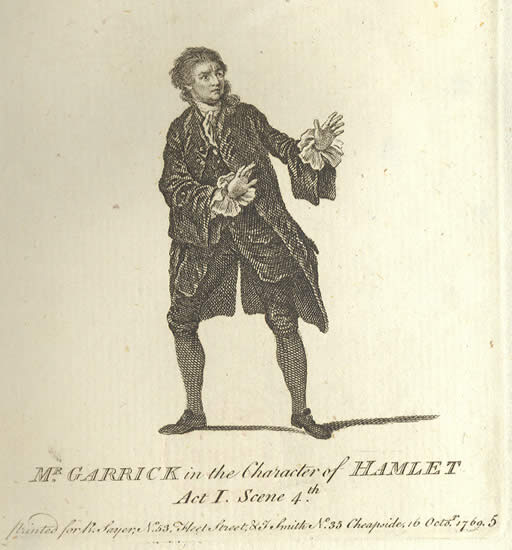
    If there was one name to know on the London stage in the 18th century, it was David Garrick. As a writer and actor, he was synonymous with celebrity. Garrick’s portrayal of Hamlet in the 1740s was one of the performances that made him into that celebrity. He would go on to perform his own adaptation of Hamlet, which omitted Ophelia’s and Gertrude’s deaths, readjusted act breaks, and reintroduced much of Shakespeare’s original text. The original text had slowly been stripped away throughout the 1700s due to the play’s length. It was Garrick’s unique theatricality that inspired him to employ a striking feature.  During the scene when Hamlet first meets the Ghost he wore a special wig with hair that could stand on cue to signifying his terror.

    Garrick as Hamlet
    Etching of David Garrick in Hamlet from Dramatic Characters, or Different Portraits of the English Stage, 1773. Public Domain. Credit: Wikipedia

    Not to be out done by men, actresses of the 18th century were also known to perform Hamlet on English stages. In what were known as ‘breeches roles’ at the time, it was common to see actresses step into men’s roles. However, this was far more common in comedies than in tragedies. Both Fanny Furnival (the first recorded female Hamlet) and Charlotte Charke (daughter of playwright and poet laureate Colley Cibber) played the role of Hamlet, albeit never on a London stage. The most famous eighteenth century female Hamlet to tread the boards was Sarah Siddons, who brought a respectability and gravitas to the role that raised the public esteem of actresses across England.

    Portrait of Mrs. Sarah Siddons (1755-1831)
    Portrait of Mrs. Sarah Siddons (1785) by Sir Thomas Gainsborough . Public domain. Credit: National Gallery, London

    While these different depictions of Hamlet are fascinating, they never crossed the Atlantic. In fact, the first group of professional actors would not perform in the colonies until 1752. At the center of this London Company of Comedians was the Hallam family. They came to the American Colonies in search of audiences seeking quality professional theatre. On September 15, 1752, their first performance was The Merchant of Venice in Williamsburg, Virginia. That evening would also be the debut performance of the young Lewis Hallam Jr., son of the company’s manger and leading lady. Lewis would go on to become the leading man of the company.  In the first recorded performance of Hamlet in the colonies in Philadelphia on July 27, 1759, the playbill lists 17-year-old Lewis in the title role.  He and his company would tour the colonies for the next 15 years until the American Revolution forced theatre from our shores.

    Company of Comedians - Va Gazette
    Hallam’s Company of Comedians announcing their intention to perform in Fredericksburg in The Virginia Gazette on April 30, 1752.

    Not all colonial Americans had the opportunity to see Hamlet upon the stage. Theatre was banned in Massachusetts throughout the colonial time period. Thus, Williamsburg was a frequent stop of Hallam’s company, which came to be called the American Company of Comedians. Of all the recorded performances in Virginia’s capital city, Hamlet is not listed, however. This does not mean that the likes of George Washington and Fielding Lewis could not have seen it.

    In fact, a playbill from May of 1771 reveals the American Company of Comedians performed in Fredericksburg, Virginia. This surviving playbill includes a handwritten addition of two performances, All in the Wrong and Hamlet. While the playbill does not include that evening’s cast, we can safely assume Lewis Hallam Jr. played the title role opposite Nancy Hallam as Ophelia.  We wrote about Nancy here last summer.

    If people are familiar with any words of Shakespeare, those words are most likely the beginning of Hamlet’s famous soliloquy: “to be or not to be?” But the real question for Shakespeare’s theatre going audiences has always been “to see or not to see?”  Ultimately, the decision was made based on the actor (or actress) playing the famous Dane named Hamlet.

    Joe Ziarko
    Manager of Interpretation & Visitor Services

    Hamlet Poster

  • Keeping Secrets, 18th Century Style

    In today’s world we keep our valuables, like money, important documents, jewelry, etc. locked safely in a bank vault or safety deposit box.  These options for safe-keeping of valuables were not available in 18th century America, and so our ancestors had to be a bit more creative in hiding their important items from would-be thieves or prying eyes.

    Probably the most romanticized method for securing valuables was the use of hidden or secret compartments in furniture.  There is no shortage of novels or plays that use a secret compartment to hide the key to the mystery.  In actuality, these secret compartments were fairly rare and usually reserved for only the wealthiest of people, those who could afford not only to commission custom furniture, and perhaps pay for the joiner’s silence about the location of the hidden drawer or concealed box.   Still, when a curator encounters an 18th century case piece, one of the first things they look for is any sign of just such a feature.

    Two candidates at Kenmore for hidden compartments have thus far revealed nothing.  Betty Lewis’s desk, now on display in the Chamber, is a likely suspect because of how it would have been used during it’s time in the Lewis household.  Betty’s desk was the hub of her “command central.”  She ran every aspect of the household from that desk, including the management of funds and the storing of expensive foodstuffs, like spices and sugar.  The spices were kept under lock and key and doled out to kitchen servants as needed, while money would have been kept under strict supervision.  Either could be a candidate for storage in a secret compartment in the desk.  Although the desk contains a multitude of tiny drawers and divided pockets, many with tiny key locks, we haven’t yet found a truly hidden space.

    Another, perhaps even more intriguing, possibility is the bookcase-on-desk currently displayed in Fielding’s Office.  This piece does not have a Lewis family provenance, but its history includes a span of time when it was used in the back room of a store, as the proprietor’s desk.  It, too, has a variety of drawers and doors, many of which were marked by the shopkeeper as to what went in each.  Surely, this piece must have at least one hidden compartment, a place for the shopkeeper to hide the day’s earnings or extra cash.  But sadly, nothing has surfaced yet, despite our best efforts.

    What Kenmore’s desks may lack in hidden compartments, is made up for by the house itself.  During Kenmore’s most recent restoration, a group of painters made an exciting find.  While stripping old paint from woodwork around a window on the second floor, a small section of paneling fell out of place.  At first, the painters were concerned that they had inadvertently broken original material, but upon closer inspection it quickly became clear that the small panel was intended to come loose from the surrounding woodwork.  Behind the panel was an open cavity between the decorative woodwork and the brick masonry of the wall.  And, to everyone’s astonishment, embedded in that masonry was a tiny drawer-front, with a little handle.  It turned out that during the original construction of the house, this small drawer had been built into the brick below the window in such a way that it could be accessed through a false panel in the woodwork.

    The drawer was empty when the painters found it, but there are a variety of theories about what it might have originally held.  Money or important documents are the most likely items, but suggestions have been made that Fielding might have concealed a gun there for personal protection, especially during the final months of the Revolution, when the Washington and Lewis family members were at risk of being kidnapped by the British for ransom.  Other theories have suggested that because Fielding was a frequent correspondent with General Washington, he concealed their letters in the drawer so that they wouldn’t fall in to enemy hands.

    Does the secret compartment’s location under a window that overlooks the town of Fredericksburg and all the way down to the riverfront where Fielding’s ships were docked provide a clue? And why would the compartment be placed in this particular room to begin with? It was simply a bedchamber, probably used by guests.

    While we may never know what secrets the hidden drawer contained in Fielding’s time, we do know that today it has become a time capsule of sorts and holds the business cards of anyone who has worked on Historic Kenmore.

    As with many aspects of Kenmore, there are many questions about this little drawer.  While we may never know the true story behind it, it allows for some imaginative possibilities!

    Meghan Budinger
    Aldrich Director of Curatorial Operations


  • Drinking Vessels and Their Drinks

    The goal of studying archaeological artifacts and, indeed, the goal of studying history more broadly is to understand the people who lived in the past both in the small moments and in the times of monumental change.  Something as ordinary as the beverages people drank and the objects from which they drank reveal what life was like in the past.  In this post, we examine three popular beverages, the vessels used to drink them, and their historical significance.

    Tea: In the 18th century English speaking world, tea was synonymous with high society. Not only was the tea itself expensive (since it was shipped from across the globe) but the entire culture around tea was costly. One could not serve tea without a proper tea service or equipage. The first English references to tea come from early 17th century English merchants abroad in Asia. However, tea wouldn’t enjoy universal English adoration until later in the century when Charles II married Princess Catherine of Braganza of Portugal in 1662 and brought the practice from Europe into England. From then on, tea represented wealth and high society wherever the English went, including across the Atlantic. Over a hundred years later, however, Parliament inadvertently changed tea’s beloved status amongst their North American colonists as colonists boycotted the drink to show their displeasure with the mother country’s rule. Even with that change, tea remained a highly-prized status symbol among many and even inspired some Americans to create ‘Liberty Teas’ from locally grown herbs and fruits.

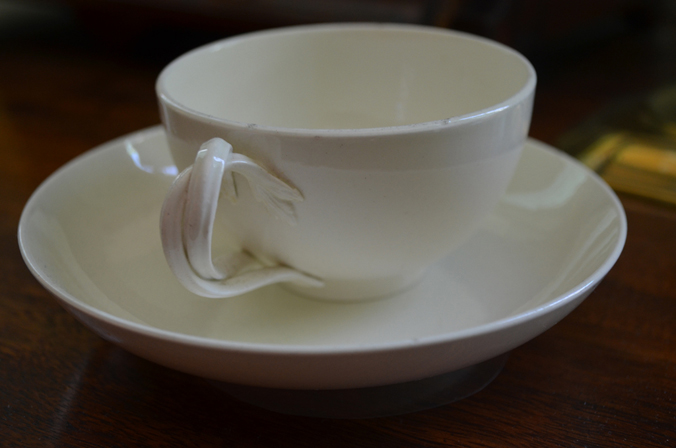
    Like the tea itself, teawares (the vessels in which tea was prepared and served) were fashionable and reflected societal trends.   Well-to-do families like the Lewises of Historic Kenmore exhibited their finest teawares and were expected to update their china cabinet with the most stylish wares they could afford.  Silver topped the list followed by porcelain. If those were lacking, elaborately decorated and finely potted stone and earthenwares would do in a pinch.  At the end of the Revolution, Fielding and Betty Lewis were reeling from wartime expenses so their teawares likely resembled this lovely creamware piece with a delicate strawberry flower at the base of the handle.  While not the most expensive teaware at the time, this molded creamware exhibited good taste and was suitable for the Lewis family to use while serving tea to their guests.

    Drinking Vessels (2)

    Punch: Much like tea, punch was also a status symbol in the 18th century. A punch’s different ingredients usually came from all over the world and were therefore quite expensive. Punch is first written about by 17th century English sailors. The word ‘punch’ is believed to come from the Hindustani word ‘paanstch’, meaning ‘five’, and may explain why historic punches have 5 parts: sweet, sour, strong, weak, and spice. Typically, the sweet was sugar, the sour was a citrus fruit such as lemons, limes, or oranges, the weak was water or tea, the strong was alcohols like rum or whiskey, and the spices could be nutmeg or cinammon. These 5-parts allowed punch to be made from any number of ingredients and to take on unique identities and flavors. Punches varied greatly between taverns and recipes (receipts) were closely guarded secrets. What was not flexible was the necessity of punch. Colonials could hardly have an elegant ball, a large celebration, or even a small get-together without the ubiquitous drink.

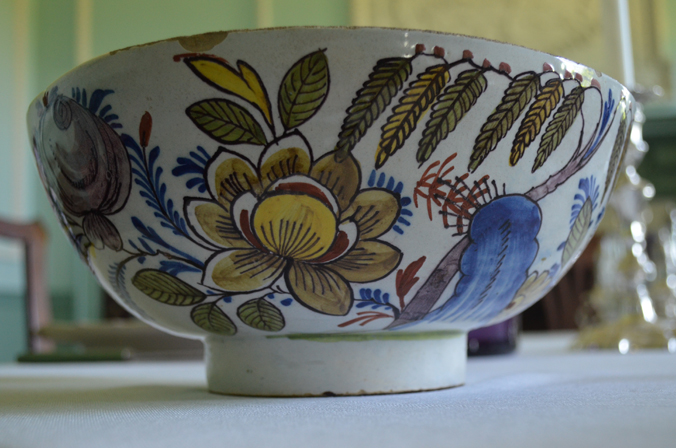
    As with tea, imbibing punch was a communal event requiring fancy equipage.  The bowls themselves ranged from elaborately decorated to elegantly simple and came in many sizes. The smallest served a single individual while grand bowls served lavish parties with dozens of tipplers.  Some bowls even conveyed political opinions or leveled jokes at members of society.  Suitable for a modest gathering of friends, this tin-glazed punch bowl displayed at Kenmore was owned by the family during their more prosperous pre-war days. By the time they moved to Kenmore, however, this cheerfully hand-painted bowl was falling out of fashion.  Tin-glaze was less refined than later wares and was easily chipped and cracked, making it less desirable.

    Drinking Vessels (3)

    Fortified wine:  In 18th century America, fortified wine reigned supreme.  Lacking our own wine industry, despite the best efforts of Thomas Jefferson and others to establish wine grapes in the colonies, we relied on imported wines from Europe.  Because of the ocean journey, fortified wines such as Madeira, port, and sherry became very popular.  These wines shared one thing in common:  The fermentation process was halted by the addition of brandy.   This upped the alcohol content considerably and made the wine portable over long distances.   Most wines prefer a quiet life in a cool environment.  Fortified varieties, however, thrive on chaos and age better when subjected to extremes of temperature, humidity, and constant sloshing around in the belly of a huge ship.  These choice wines even exhibited labels documenting their torturous journeys.  Wines that traveled south of the equator before eventually making their way up the coast to the colonies were especially prized.  Once a fortified wine found its way into a household, it was likely stored in an attic or on a portico, where it would continue to improve while battered by cold winters and sweltering heat.

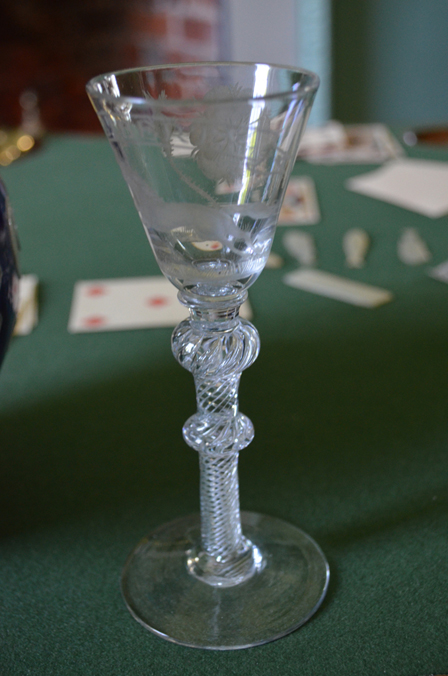
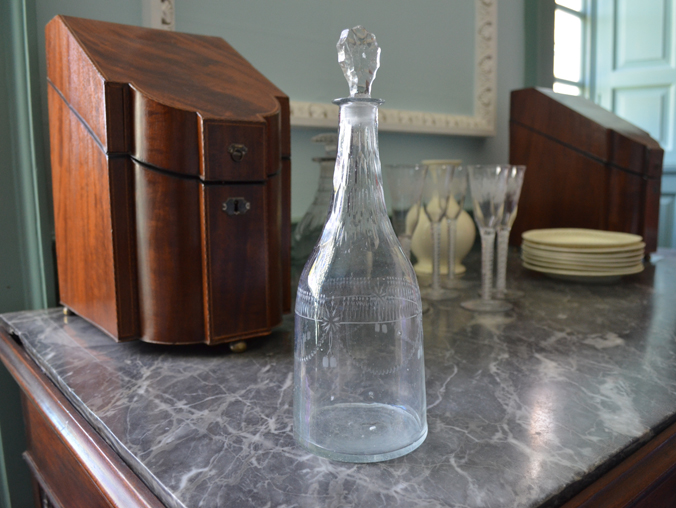
    Today, fortified wines are considered desert wines to be consumed after dinner.  The colonists, however, needed no such excuse to pop open a bottle of fine Madeira.  They did, however, traditionally drink these more potent wines from smaller glasses.    This lovely lead glass example is hand-blown and engraved using a copper wheel.  Probably manufactured in England in the late 1700s, one can only imagine the delicious wines it once held!

    Drinking Vessels (1)

    Mara Kaktins, Archaeologist
    Ceramics & Glass Specialist

    Joe Ziarko
    Manager of Interpretation & Visitor Services


  • Shakespeare Day in Virginia!

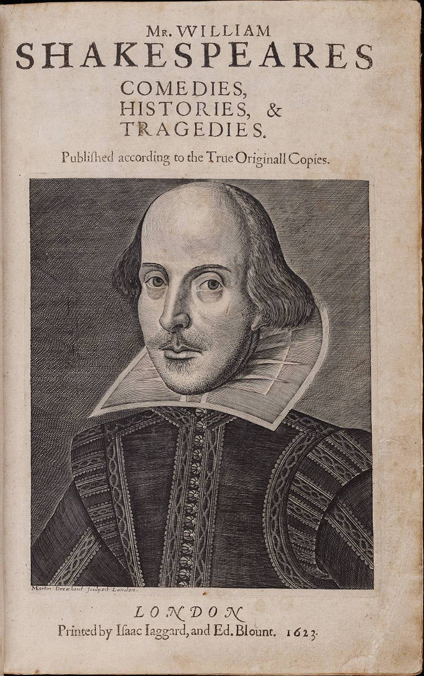
    Title page of the First Folio, by William Shakespeare, with copper engraving of the author by Martin Droeshout. Image courtesy of the Elizabethan Club and the Beinecke Rare Book & Manuscript Library, Yale University
    Title page of the First Folio, by William Shakespeare, with copper engraving of the author by Martin Droeshout. Credit: the Elizabethan Club and the Beinecke Rare Book & Manuscript Library, Yale University

    Governor Terry McAuliffe has proclaimed today – Saturday, April 23, 2016 – as Shakespeare Day in Virginia!

    While we’re planning and preparing Shakespeare on the Lawn in June, our first-ever Shakespeare Camp in July, and Shakespeare by Candlelight in August as Historic Kenmore’s contributions to this year’s many commemorations across the Commonwealth, we want to take a moment on this auspicious day to celebrate Shakespeare’s countless literary achievements!

    Both the theater and Shakespeare were beloved by George Washington and that love began when he was young man living here in Fredericksburg.  For this reason, The George Washington Foundation has presented regular performances of Shakespeare’s plays for many years now.

    To mark Shakespeare Day, we’ve decided to share some photos from last year’s Shakespeare on the Lawn performance of King Lear.

    You can see an additional photo album of last year’s Shakespeare by Candlelight presentation of Cymbeline here as well as a collection of posters from a variety of other past performances here. Furthermore, read up on Shakespeare and theater history here, here, and here.

    Finally, here is the text of the Governor’s proclamation:

    WHEREAS, William Shakespeare, an English poet, playwright, and actor is widely regarded as one of the greatest writers in the English language and one of the world’s pre-eminent dramatists; and 

    WHEREAS, 2016 marks the 400th anniversary of William Shakespeare’s death and is an opportunity to celebrate his work and influence in English literature, film, poetry, and classics studies; and

    WHEREAS, the Virginia Shakespeare Initiative (VSI) is a statewide celebration of William Shakespeare’s work, and will host more than a dozen events across the Commonwealth on April 23, 2016; and

    WHEREAS, on this day, tourism councils, schools, college systems, libraries, and museums will open their doors to exhibits, activities, and celebrations focusing on the works of Shakespeare; and

    WHEREAS, Virginians are encouraged to participate in Shakespeare Day;

    NOW, THEREFORE, I, Terence R. McAuliffe, do hereby recognize April 23, 2016, as SHAKESPEARE DAY in our COMMONWEALTH OF VIRGINIA, and I call this observance to the attention of all our citizens.

    Zac Cunningham
    Manager of Educational Programs

  • Restoring Kenmore’s Gardens

    Kenmore's Gardens 1

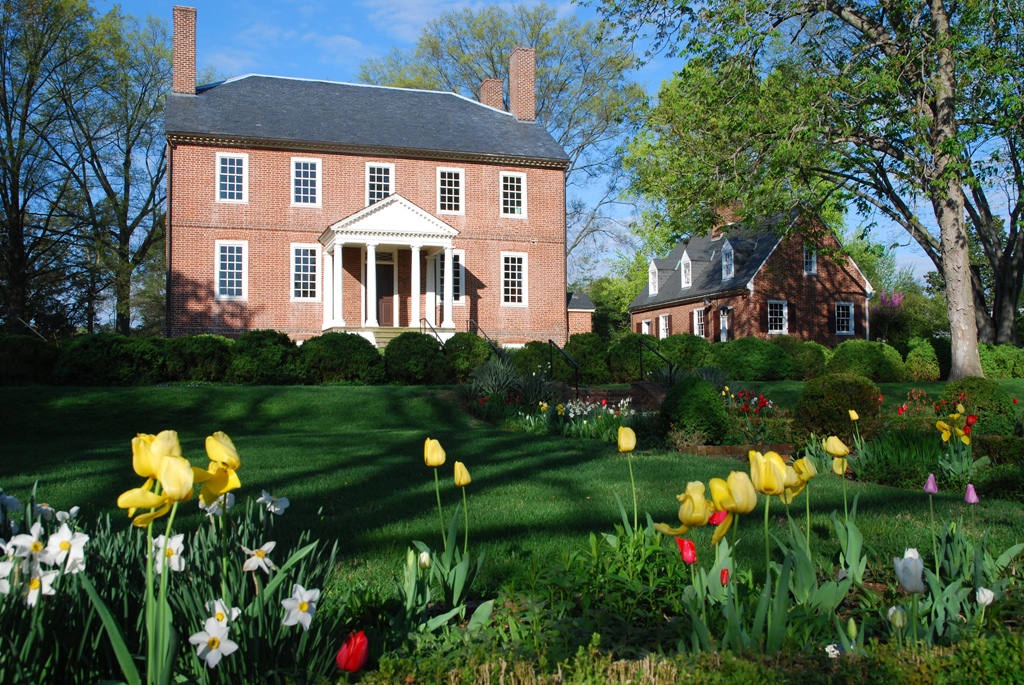
    While the various restorations of Kenmore itself over the years are usually the star attraction for visitors to the site, there was another restoration, equally as important, that occurred on the property in its early years as a museum.  Kenmore’s gardens are well-known for their beauty now, but when the Kenmore Association acquired the property in the 1920s, the grounds were in a sad state.  It would take generations of work and ingenuity from a variety of people and groups to return the gardens to their former glory.

    Perhaps the most important moment in the history of Kenmore’s gardens was when the Garden Club of Virginia decided to tackle them as their first-ever restoration project in 1929.  The Garden Club established Virginia Garden Week specifically to raise funds for the project.  Their success in both completing the first restoration of Kenmore’s gardens, and in creating a significant annual event across the Commonwealth of Virginia lead to more than 50 historic garden restorations since, and the celebration of its 83rd Historic Garden Week next week.

    In 1940, the next phase of Kenmore’s garden restoration began when the Garden Club agreed to fund the implementation of designs by the renowned Southern landscape architect Charles Gillette.  His plans included the “secret garden” area in the northeast corner of the grounds, the brick wall that currently surrounds the property, and Kenmore’s iconic brick gate on Winchester Street. Gillette would continue his work at Kenmore into the 1950s.

    Garden Letter 1
    Page 1 of a letter from Hetty Harrison to Annie Fleming Smith dated June 26, 1940 informing the Kenmore Association that the Garden Club of Virginia had selected Kenmore as its restoration project and that renowned Southern landscape architect Charles Gillette would provide the design.
    Garden Letter 2
    Page 2 of the Harrison-Smith letter
    Tree Planting
    Ceremonial tree-planting on the Kenmore grounds, 1938.

    Most recently, the Garden Club of Virginia undertook another restoration of the gardens in 1992.  The Club remains a vital supporter of Kenmore’s landscape efforts to this day.

    During Historic Garden Week, enjoy Kenmore’s gardens and experience the house in a new way! On Tuesday, April 26, try a specialty tour highlighting one of three topics—the restoration of Kenmore at 11:00 a.m. and 2:00 p.m., American Revolution at Noon and 3:00 p.m., and ceramics at 1:00 p.m. and 4:00 p.m.  For more information and to view the specialty tours monthly schedule, click here.

    Meghan Budinger
    Aldrich Director of Curatorial Operations

  • Video: Arbor Day Celebration

    Each year, Historic Kenmore is the site of the Arbor Day Celebration for the City of Fredericksburg. This video shares sights and sounds from this year’s celebration held on Thursday, April 14, 2016.

  • These Are A Few Of My Favorite (Broken) Things: Cobalt Blue Decanter Stopper

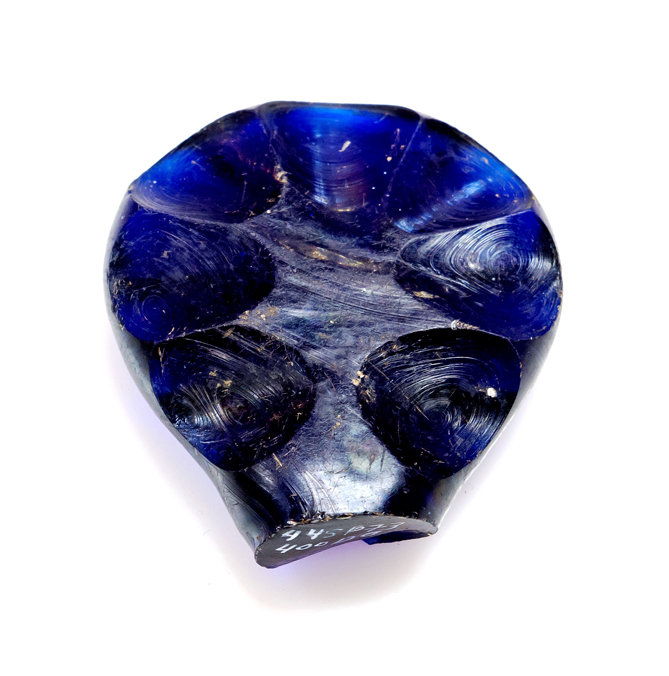
    Archaeologists are somewhat unique in their appreciation for all things broken, mostly due to the coveted information discarded items can tell us about those who died long ago.  However, occasionally a fragment is unearthed which is both informative and beautiful.  Such is the case with a lovely cobalt blue decanter stopper excavated on the grounds of Historic Kenmore.  Made from leaded glass to increase clarity, it seems quite heavy when placed in the hand.  Six carefully hand-cut flutes adorn each side and when held up to a light it exhibits violet-colored highlights that accent the piece perfectly.  Just the stopper alone is beautiful. Imagine how striking the entire decanter would have looked! Conveniently enough, that’s my job!

    Cobalt Stopper

    During the late 18th century, the decanter and its stopper graced one of the rooms at Kenmore and held either fortified wine like Madeira, Port, and Sherry or a stiffer spirit such as rum or gin.  It may have been part of a set and adorned with gold gilding that spelled out which heady beverage was contained within. I picture the decanter being picked up by one of the Lewis family’s enslaved servants on a dark night and a glint of purple from deep within the cobalt bottle shining as it reflects off of a candle while dark burgundy Madeira is poured forth into a waiting cup.

    All musings aside, however, the reality is that this stopper (which I am clearly obsessed with) also teaches us about how Fielding Lewis and his family lived.  The decanter was a showy piece meant for display.  It could be argued that, while it was a functional vessel, its primary purpose was to emphasize the wealth of the family and to impress guests.

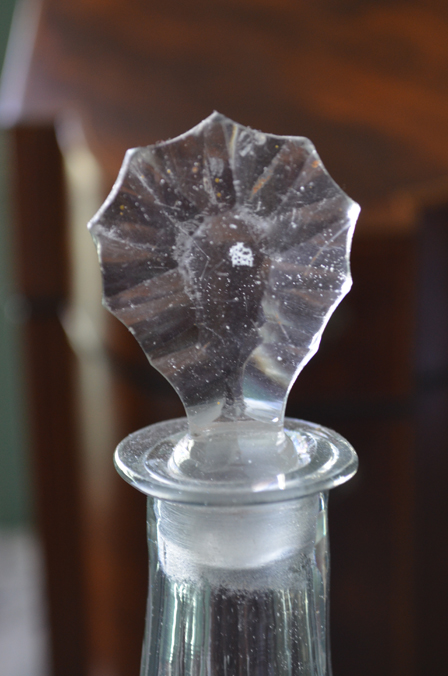
    For us today, the stopper has a practical use. Meghan Budinger, Kenmore’s curator, was able to locate a similar vessel using the excavated stopper as a guide. While the decanter on display in Kenmore’s dining room is clear instead of cobalt blue, its shape and design closely match the cobalt decanter and stopper owned by the Lewises.  Meghan continues her search for a blue decanter.

    Kenmore Decanter (2)

    Still, visitors and obsessed archaeologists alike may marvel at its beauty.  In fact, most of the ceramics and glass in that room have archaeological equivalents that have informed Meghan’s choices.  Thus, when asked by visitors why we have selected the beautiful tablewares before them, we can confidently answer that it is not just because they are pretty (so very, very pretty!) but also because, thanks to the archaeological record, we know the Lewis family owned pieces like them!

    Kenmore Decanter (1)

    You can see the clear glass decanter that is based on the cobalt blue stopper while also learning more about their ceramic cousins and about how archaeology has informed the choices of objects displayed inside Kenmore on a new specialty tour of the house called “Posh Pots and Decadent Dishes: The Lewis Family Life through their Ceramics.” Learn more about this new tour here. If antique glass is more your style, you can read more about Kenmore’s “Beautiful Glass” on The Rooms at Kenmore blog here.

    Mara Kaktins, Archaeologist
    Ceramics & Glass Specialist

  • Photos: Posh Pots and Decadent Dishes

    New specialty tours at Historic Kenmore provide opportunities for guests to explore a deeper understanding of Kenmore by focusing on the topics that make us uniquely Kenmore.

    One such tour, “Posh Pots and Decadent Dishes: The Lewis Family Life through their Ceramics,” explores how everyday objects can teach us about how families lived. In the 18th century, ceramics were at the height of fashion and each piece can tell a fascinating story. While touring our collection, visitors learn what the objects pictured below and others reveal about the Lewis and Washington families.

    This new ceramics-focused specialty tour is available each Thursday at 11:00 a.m. and 3:00 p.m. and on various Fridays and Saturdays.

    Additional specialty tours also available and include:

    • This Old House: Preserving Kenmore

    When Kenmore was completed in 1775, it was the height of 18th century fashion and luxury. We are still able to enjoy its grandeur because it has been preserved. This tour delves into the multiple restorations the house has undergone throughout the years and illuminates the work that goes into bringing a 200-year-old home back to its original glory.  Available each Tuesday at 11:00 a.m. and 3:00 p.m. and on various Fridays and Saturdays.

    • Sacrificing for Liberty: Kenmore and the American Revolution.

    The Lewis family moved into their new home only months after the American Revolution began. Learn how the Revolution shaped the Lewis family and their new home. This tour talks about the events that lead to the revolution, how they affected the Lewis family, and how they moved one another forward to the country (and home) we now know.  Available each Wednesday at 11:00 a.m. and 3:00 p.m. and on various Fridays and Saturdays.

    To learn more about visiting Historic Kenmore, visit kenmore.org/visiting.

  • Payment Tokens… Of a Different Kind

    Tokens (1)
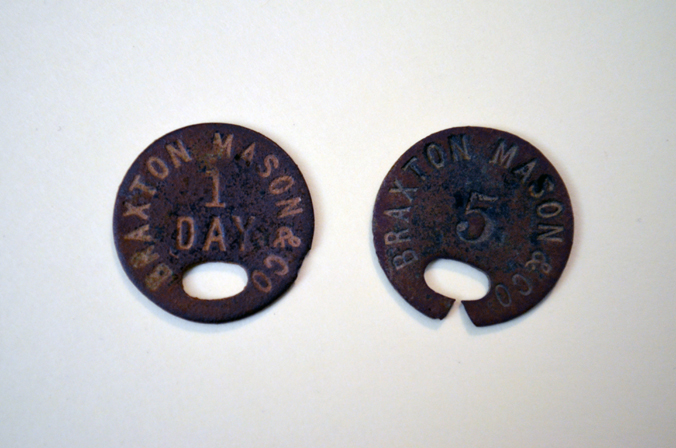
    Two of 21 payment tokens discovered by archaeologists at Historic Kenmore.

    During excavations around and under Kenmore’s 19th century portico in the early 2000s, archaeologists discovered several small metal disks.  Some disks were significantly corroded but a few still showed markings clearly.  They were stamped with the words “Braxton Mason & Co” as well as “1 day” and on another disk “5”. The disks had oval-shaped holes punched through the middle.  Over the years, excavations have found a total of 21 disks scattered around Kenmore.

    Tokens (2)
    Archival box containing artifact bags of payment tokens recovered during excavations at Kenmore.

    What were these disks? The machine-made nature of both the disks and the stamped words on them suggested they dated much later the 18th century and were more likely from the late 19th or even early 20th centuries.  The first clue to their purpose was the holes punched in the middle of each disk, which suggested they were intended to be strung together on a chain or key ring.  Though of different shapes and materials, similar artifacts intended to be strung together in the same manner had been excavated at other sites around Fredericksburg, especially on the nearby Northern Neck.  In those instances, the artifacts were identified as payment tokens used by workers in the “truck farming” industry.  Day laborers were hired to pick produce, which was collected by the bushel-full in trucks and then sold roadside from the same trucks.  For every bushel of produce picked, the laborer received a payment token, usually marked with either the amount “1 bushel” or so many pounds.  At the end of the day or of the week, laborers lined up to trade in their tokens for payment.  As the 20th century progressed, the Northern Neck became a center for the food canning industry, and eventually the small truck farms raised produce almost solely to supply 120 canneries.  These canneries started issuing their own payment tokens often stamped with the company name. [1]

    For a long time, it was believed the metal tokens found at Kenmore were payment tokens related to truck farming.  The thought was that the Howard family, who owned Kenmore from 1881 until 1914, perhaps used the remaining land surrounding the house for a small truck farming operation.  The tokens probably had been inadvertently dropped by laborers around the property.  On its surface, this seemed a plausible explanation and was added to the canon of Kenmore’s history.

    Upon closer inspection, however, there were issues with the truck farming theory.  First, Braxton Mason & Co was neither a Northern Neck cannery nor a business anywhere in the Fredericksburg area in the 20th century.  Also, the Kenmore tokens were stamped with time increments instead of quantities.  Lastly, there was no other evidence of the Howards being involved in truck farming.

    Working in the museum field has its definite perks, and one of them is that we have access to a vast network of people who possess an impressive amount of knowledge about a wide variety of topics.  Almost all of them love a good mystery!  Armed with the name Braxton Mason & Co and a rough date range of 1820 to 1880, I put out a call to museum colleagues in Virginia.  Had anyone ever heard of Braxton Mason & Co? Did anyone have any idea what kind of business it was? Within days, I began receiving bits of information and a truly interesting picture began to emerge.

    First, a colleague from Petersburg found a tiny reference to Braxton Mason & Co in the Railroad Gazette of 1871.  The single sentence stated that the company won the contract to build a portion of the Lynchburg and Danville railroad.[2]  Braxton Mason & Co was a railroading firm!  But who were the individuals Braxton and Mason? The Acts of the General Assembly of the State of Virginia for 1870 recorded that a Mr. Braxton and two gentlemen named Mason were among a group of 24 investors who formed the Fredericksburg & Northern Neck Railway Company in April.  Could this Braxton and one of the two Masons be our guys?

    A second colleague found reference to a Carter M. Braxton in the Fredericksburg City Council minutes of 1866. With the Civil War over, the city renewed pre-war efforts to build a railway line to Gordonsville.[3] The project’s engineer was Carter Braxton.  The Fredericksburg-Gordonsville Railroad was completed in 1870, just before Braxton Mason & Co was contracted to build the Lynchburg-Danville line.  Could Carter Braxton and one of his fellow investors (named Mason) in the Fredericksburg Northern Neck Railroad Company have split off and formed a smaller railway business? At the moment, that seems the likely explanation.

    So, that explains what Braxton Mason & Co was but what did it have to do with Kenmore? A third colleague inadvertently came up with a potential answer.  In order for Carter Braxton to complete the rail line to Gordonsville, the 1866 city council minutes said, swampy land that was part of the Kenmore property needed to be drained.  It was decided the “owners of Kenmore” would be asked to contribute since they would benefit financially from the railway’s construction.  The third colleague involved in this research had done extensive work establishing Kenmore’s ownership history.  The upheaval of the Civil War kept this history a bit cloudy.  Deeds and records of sale simply did not survive.  Because of my colleague’s work, however, we know that, in 1866, Kenmore’s owner was Levi Beardsley, a New Yorker who came to Virginia after the war in hopes of finding promising business ventures.[4]  As New Yorkers were not popular in the South, he told people that he was actually from Iowa.  His secret came to light during a failed political campaign in 1868 and his various business ventures began to crumble.  In order to keep Kenmore safe from his creditors, he put it into trust for his wife.[5]  The trustee was a man named William Barton.

    In 1870, the same year that Braxton Mason & Co began taking contracts on their own, Beardsley and his wife finally gave up and left Virginia.  Kenmore was supposedly auctioned off, but it appears that William Barton retained control of the property.  Shortly thereafter, Barton rented the house out to tenants.  We have never known the identity or number of these tenants.

    Tokens (3)
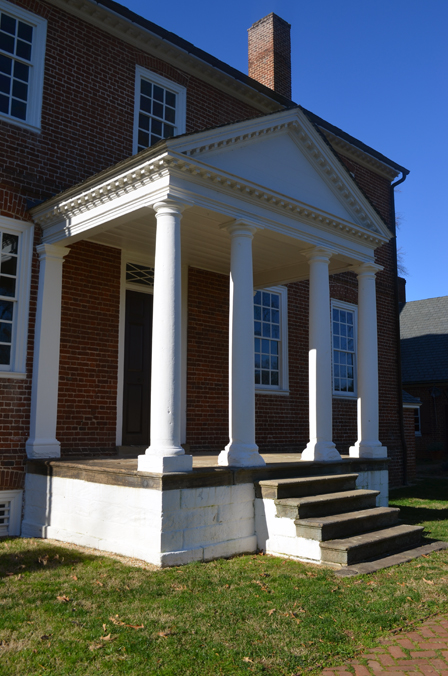
    The 19th century portico on the east front of Kenmore.

    Is it possible that, while working on the Fredericksburg-Gordonsville Railroad that crossed Kenmore property, Braxton Mason & Co housed their workers at Kenmore itself? Did laborers gather on the house’s portico each week to collect payment for their tokens, some of which were accidentally dropped nearby? It would certainly explain the presence of these perplexing metal disks and fill in the gap of who was living at Kenmore after 1870.  Whether this theory can be proven with certainty remains to be seen but, in the end, it’s the investigation that makes it fun…with a little help from our friends.

    Meghan Budinger
    Aldrich Director of Curatorial Operations

    [1] Dodd, Anita L. Day Laborer Tokens: Meaning and Function at Two 18th Century Plantations. 2006.

    [2] Railroad Gazette, vol. 3, 1871. Pg. 68.  Reference provided by Emmanuel Dabney, Curator, Petersburg National Battlefield.

    [3] Minutes of the City Council of Fredericksburg, 1866.  Reference provided by Judy Hynson, Archivist, Stratford Hall.

    [4] Walker, Travis. Levi A. Beardsley and Family. 2013.

    [5] Norman, Gary J. and Edgar R. Hon. Kenmore’s Yankees: The Beardsleys in Fredericksburg. 1996.