Lives and Legacies

Category: Historic Kenmore

  • Kenmore’s Famed Gingerbread

    Historic Kenmore was associated with gingerbread for decades.  Many people’s first memories of Kenmore involve the square of gingerbread and a cup of tea that used to be served at the end of every tour.    The dessert welcomed visitors to the world of colonial Fredericksburg, it comforted soldiers on their way to war in Europe or the Pacific, and, most important of all, it helped save the historic house itself.

    The ladies of the Kenmore Association, which owned and operated the historic home in the 20th century, took on a great challenge when they accepted stewardship of Kenmore.  Raising the money to purchase the house was not the only obstacle they faced.  They also needed funds to restore and staff the house. Unfortunately, the ladies drive to save Kenmore coincided with the Great Depression and the Second World War.  Led by Annie Fleming Smith or “Miss Annie,” the ladies triumphed, kept Kenmore running, and even used the grounds to assist Fredericksburg in the war effort.  They did all this with their indomitable drive and patriotism and with a little help from gingerbread.

    The beneficial partnership between gingerbread and Kenmore began in the early 1930s when the Dromedary Cake Mix Company launched a nationwide search for gingerbread recipes new and old.  In the search, Mary Washington’s personal recipe was found in a cookbook owned by the Washington-Lewis Chapter of the Daughters of the American Revolution. It was tried and well-liked.  The firm approached the chapter about producing the recipe as one of their mixes.  Because the Washington-Lewis Chapter worked closely with the Kenmore Association in saving, restoring, and caring for Kenmore, Miss Annie and the ladies, being astute business women, brokered a deal with the company to benefit the historic home.
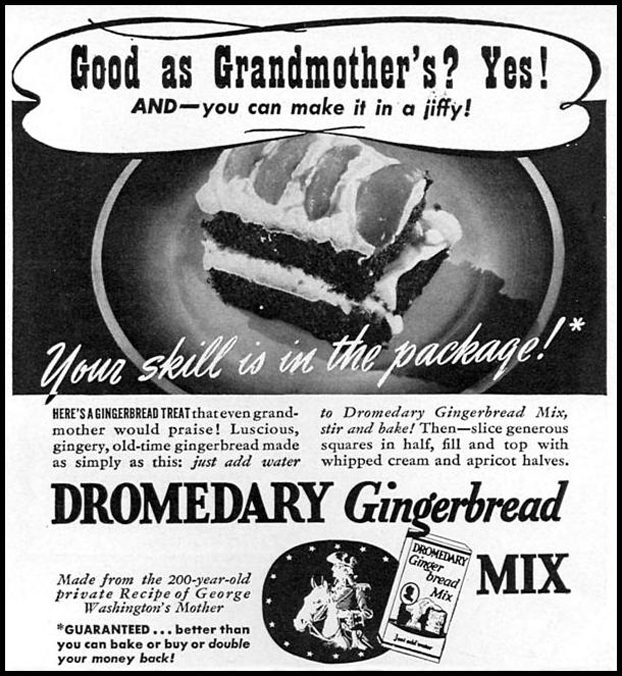
    Dromedary Ad
    An 1940s-era advertisement for Dromedary gingerbread mix “made from the 200-year-old Recipe of George Washington’s Mother.”

    The arrangement allowed Dromedary to produce gingerbread mixes based on Mary Washington’s recipe.  In exchange, the Kenmore Association got all the gingerbread they could serve to visitors.  The company also donated mixes to be sold by the Association and various DAR chapters for 25 cents a box.  The Association got half of the money realized from these sales minus the shipping costs.  This agreement, in the end, earned the Kenmore Association over $38,000 – a hefty sum in the mid-20th century – and provided countless visitors with a yummy Washington family treat.

    In 1941, the United States entered World War II.  Fredericksburg became a hub of activity with thousands of soldiers stationed at the A.P. Hill Military Reservation in Bowling Green visiting town to get a break from military life.

    The Association’s ladies knew that Kenmore, with its historical and patriotic legacy, had a unique opportunity to welcome soldiers who would be fighting for the country and ideals that the Lewis and Washington families helped create. So, they threw open the gates, set out the picnic tables, and recruited local women to put on their colonial best and greet the men of the United States military. At the heart of this hospitality was iced tea and Mary Washington’s gingerbread.
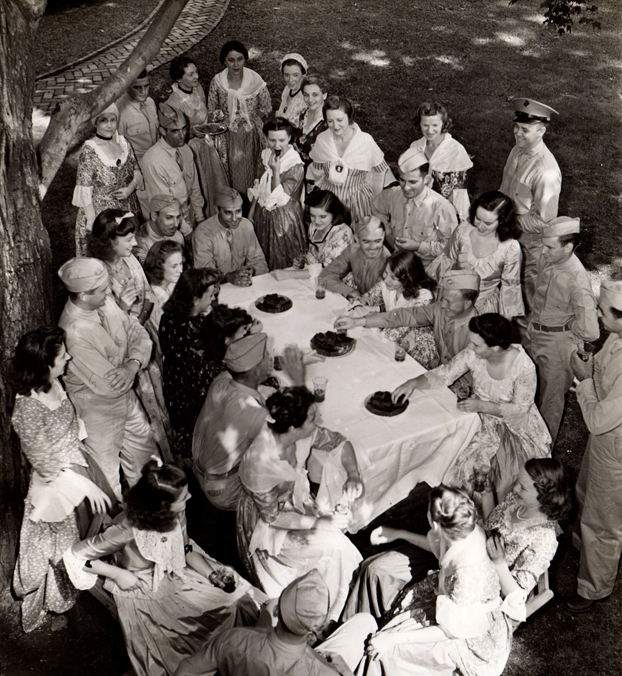
    Gingerbread (1)
    Servicemen enjoy gingerbread and tea on the grounds at Kenmore.

    During the war years, Kenmore hosted over 60,000 soldiers making sure each one was fed and knew his service was greatly cherished.  The ladies of the Washington-Lewis DAR even took time to write each serviceman’s mother, wife, or sweetheart about their loved ones.

    Gingerbread (2)
    C.R. Murphy, Sr. of Coolidge, Georgia wrote The Free Lance Star to express his gratitude for Annie Fleming Smith’s (identified in the letter as Mrs. H.H. Smith)  hospitality towards him and his son during a visit to Fredericksburg from a nearby military post where the son was stationed.

    The humble gingerbread recipe from Mary Washington’s cookbook gave Kenmore a perfect tangible link to its colonial past and bright future.  The gingerbread that resulted assisted the ladies in their community outreach, their historic preservation, and their national patriotic duty.   It was a sign of nostalgia, of hospitality, and most of all appreciation.

    Today, when you tour Kenmore, our guides will happily take you through the reconstructed colonial kitchen that functioned as the Kenmore Association’s tea room.  Regrettably, gingerbread and tea are no longer served to visitors because we do not have a fully-functioning kitchen.  Gingerbread mixes and teas specifically created for The George Washington Foundation are available for purchase by anyone who might wish to relive their first taste of Kenmore’s famed gingerbread.

    Heather Baldus
    Collections Manager

  • Photos: Fielding’s Story, A Gentleman’s Sacrifice

    This past weekend, visitors to George Washington’s Ferry Farm and Historic Kenmore learned about Fielding Lewis in the dramatic presentation, Fielding’s Story: A Gentleman’s Sacrifice. They were able to step back in time and see colonial-era Fredericksburg through the eyes of Fielding Lewis—member of Virginia’s gentry, wealthy merchant and leading citizen of Fredericksburg, builder of Kenmore, patriot and supporter of the American Revolution, and husband of Betty Washington Lewis.

    In this historical drama, which spanned from 1750 to 1781, actors portrayed people and events from Fielding’s life in the settings where those events took place. Guests saw Fielding’s courtship and marriage to Betty Washington, visited his newly built home as the guest of Betty , eavesdropped as Fielding considered wartime plans, and witnessed the sacrifices he made for the Patriot cause.

    In certain scenes, dialogue was taken directly from historic documents including a 1750 edition of the Anglican Book of Common Prayer, a letter dated November 14, 1775 from Fielding Lewis to George Washington, and an authentic patriotic appeal in the Virginia Gazette.

    Here are images from Fielding’s Story: A Gentleman’s Sacrifice…

    The next theater production presented by The George Washington Foundation will be Twelfth Night at Kenmore in January 2016. As we approach the holidays, watch http://www.kenmore.org/events.html for details!

  • A Colonial Wedding

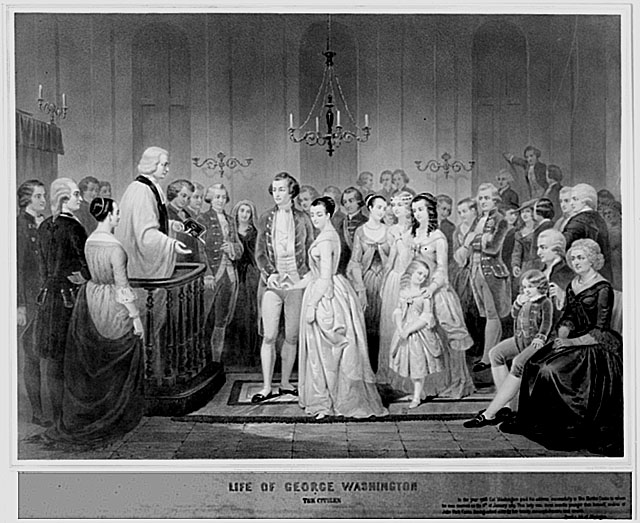
    An imagining of the “Wedding of George Washington and Martha Custis.” Lithograph from Prints and Photographs Division, Library of Congress. Paris: Lemercier, c1853.

    A wedding is one of the most monumental moments in a person’s life.  The celebrations that accompany the ceremony might range from simple to lavish but they are always highly anticipated and joyous.  In this enthusiasm for weddings, we share much with our early American ancestors.  Although there are extremely important differences between past and present, many wedding traditions of the 18th century would be quite familiar to 21st century Americans.  What did a colonial-era wedding look like?

    Today’s weddings can take place in any imaginable location – a church, dedicated wedding venue, cruise ship, beach resort, park, city hall, and on and on – but, in the 1700s, the large distances people often lived from an actual church building meant that the vast majority of weddings occurred at the brides’ home.[1]

    In another inverse of modern preferences for spring, summer, and fall weddings, many colonial-era marriage celebrations took place in the winter months when there was less to do on the farm or plantation agriculturally.

    That doesn’t mean there weren’t weddings outside the winter season.  Indeed, Fielding and Betty married on May 7, 1750.  We have no definitive evidence to say that their wedding occurred at the Washington family home on the land we now refer to as Ferry Farm.  Since Fielding and Betty lived relatively close to St. George’s Church in Fredericksburg, it is certainly possible that the ceremony took place there, though it would have been fairly unusual.

    If the ceremony did occur at the Washington home, an Anglican minister, perhaps from St. George’s, would have still read the marriage ceremony from the Book of Common Prayer.  An edition published in 1750 contains language that remains immensely familiar even today.

    “Dearly beloved, we are gathered together here in the sight of God, and in the face of this Congregation, to join together this Man and this Woman in holy Matrimony…”

    “Wilt thou have this Man to thy wedded Husband, to live together after God’s Ordinance, in the holy Estate of Matrimony? Wilt thou obey him, serve him, love, honour and keep him in sickness and in health, and forsaking all other, keep thee only unto him, so long as ye both shall live?”

    “With this Ring, I thee wed, with my body I thee worship, and with all my worldly goods I thee endow…”

    Along with these familiar words came familiar acts as well.  The father gave his daughter away, the couple exchanged vows, and the groom gave the bride a ring.  The bride, however, did not present a ring to the groom.

    Just as it does today, a party began after the ceremony.  This celebration also took place at the home of the bride’s family.  “The family might decorate a table with white paper chains and lay out white foods for a collation. It included two white cakes. The guests consumed the groom’s cake, and sometimes left the bride’s cake untouched for the couple to save (in a tin of alcohol) to eat on each wedding anniversary.”[2]

    There was much food, drink, and toasting along with games and plenty of dancing.  For Virginia’s gentry the party’s scale and length could be extremely lavish with the festivities continuing for days!

    If you want to learn more about colonial-era weddings, you can witness a re-creation of the marriage ceremony of Fielding Lewis to Betty Washington on either Saturday, October 10 or Sunday, October 11 during Fielding’s Story: A Gentleman’s Sacrifice, a dramatic theater production taking place at both George Washington’s Ferry Farm and Historic Kenmore.  Fielding’s Story recounts important moments and milestones in Fielding’s life as a member of Virginia’s gentry, a wealthy merchant and leading citizen of Fredericksburg, the builder of Kenmore, a supporter of the American Revolution, and the husband of Betty.  Reservations are required. Please call 540-340-0732 ext 24 or email hayes@gwffoundation.org.

    [1] Jane Carson, Colonial Virginians at Play, Williamsburg, VA: Colonial Williamsburg Foundation, 1989: 5-9.

    [2] Elizabeth Maurer, “Courtship and Marriage in the Eighteen Century,” http://www.history.org/history/teaching/enewsletter/volume7/mar09/courtship.cfm

  • Video – Caring for Historic Kenmore: Winding the Clock

    Among Kenmore’s collection is an 18th century seven-day clock that requires winding weekly. In this video, Collections Manager Heather Baldus shares the clock’s history and winds the clock for another week.

  • Meet the Lewis Family: George Lewis

    George Washington Lewis was Fielding and Betty Lewis’s fourth son, being born on March 14, 1757.  His birth came within months of the deaths of two of his older brothers – Augustine and Warner, ages 4 and 1 – and was a bright spot in dark days for his parents.  He was named for his uncle George, who would have great influence on his nephew later in life.  Young George would also become a favorite of his uncle’s, too.

    Bed and Desk
    No known images of George Lewis exist. This photograph shows a bed and the desk he inherited from his parents and that both currently reside in the Bed Chamber at Historic Kenmore.

    The earliest mentions of George in the Lewis family records concern his education.  In 1771, he and his younger brother Charles were sent away to school in New Jersey.  Thirteen-year-old George attended the College of New Jersey (now known as Princeton), while ten-year-old Charles went to a nearby grammar school.  The Lewis boys would be enrolled in New Jersey for the next three years, coming home to Fredericksburg on occasional school breaks.[1]  Whether it was his family relationship to the man who would lead the Continental Army during the Revolution or the strict anti-Anglican education he received in New Jersey, George Lewis would become the most militarily-involved of all of the Lewis children.

    In November of 1775, George Washington asked that his wife, Martha, leave Mount Vernon and spend the winter with him at his encampment in Cambridge.  He was well aware that his nephew George (now eighteen years old) was interested in joining the cause, but Washington was reluctant to give any family members appointments in his army for fear of the appearance of favoritism.  In an attempt to give his eager nephew something to do, he asked the young man to accompany his wife on what would be a very arduous winter journey from Virginia to the encampment.  When George left his childhood home for Mount Vernon, he carried with him a letter from his father to General Washington, in which Fielding gave his blessing for his son to join the military, but hoped that the General could find some “little post that will bear his expenses”[2] for him, safely away from the fighting.  No doubt, this is what Washington originally hoped for, as well.  The reality of George Lewis’s military career would be far different.

    Initially, George did serve as a secretary for his uncle after his arrival in Cambridge.  He must have proved himself trustworthy and capable, though, because in the spring his uncle suddenly reversed his position on commissioning relatives and made his nephew a First Lieutenant on March 12th, 1776, just two days before his 19th birthday.  Lt. Lewis was made second in command of a new cavalry unit, the Commander-in-Chief’s Guard.  In addition to performing as Washington’s personal couriers and escorts, the Guard was also responsible for his protection during battle.  Lt. Lewis would be in the vanguard of the surprise attack on Trenton, and later in the attack on his former stomping grounds at Princeton.  During the battle of Princeton, fellow Fredericksburger General Hugh Mercer was mortally wounded, and captured by the British.  Washington sent his nephew George under a flag of truce and carrying a letter to General Cornwallis, asking that the young man be allowed to tend to General Mercer in his final days.  Cornwallis relented, and Lt. Lewis spent the next few days providing comfort to the dying man.[3]

    In 1777, Lt. Lewis was promoted to Captain in the Third Continental Dragoons.  He participated in the Philadelphia Campaign, wintered with the army at Valley Forge, and survived an encounter with the British 17th Light Dragoons at the disastrous Baylor’s Massacre, when most of the Third Dragoons were ambushed in a barn and slaughtered.[4]

    “Washington and Lafayette at Valley Forge” by John Ward Dunsmore, 1907. Library of Congress photo.

    During the rebuilding of the Third Dragoons, the few officers who remained were assigned to Washington’s headquarters, where Capt. Lewis returned to the rather mundane activities of being Washington’s courier.  At some point during 1779, George met Colonel William Daingerfield, Commander of the Seventh Virginia Regiment of the Continental line, and his daughter Catherine.  George and Catherine fell in love, and apparently the relationship became a huge distraction for the young Captain, who was increasingly absent from camp.  General Washington wrote his nephew an angry rebuke in February, saying that his behavior reflected badly not only on himself but on Washington, too.[5]  Although George returned to his duties immediately after receiving the letter from his uncle, he would resign by September and marry Catherine.

    George and Catherine settled near Berryville, Virginia, on land owned by Fielding Lewis that would eventually be George’s inheritance.  Although he became a planter, his military career wasn’t quite over.  In 1794, the Whiskey Rebellion in southwestern Pennsylvania broke out, and President Washington called on his trusted nephew to supplement the tiny standing army.  George raised a cavalry unit that he called the Fredericksburg Troop of Volunteers.  George was made a Major Commandant and his unit was deployed to Fort Pitt.

    Finally, with the end of the Whiskey Rebellion, George Lewis took up a quiet life.  He and Catherine had three children, and eventually purchased the plantation Marmion, on Virginia’s Northern Neck outside of Fredericksburg.  Many of the original furnishings from Kenmore would be left to George, and would descend through his family at Marmion.  George continued to maintain a close friendship with Washington, who often asked for his advice on family and business matters.  When Washington died, he left his nephew a handsome inheritance, as well as his pick of Washington’s swords.

    Marmion
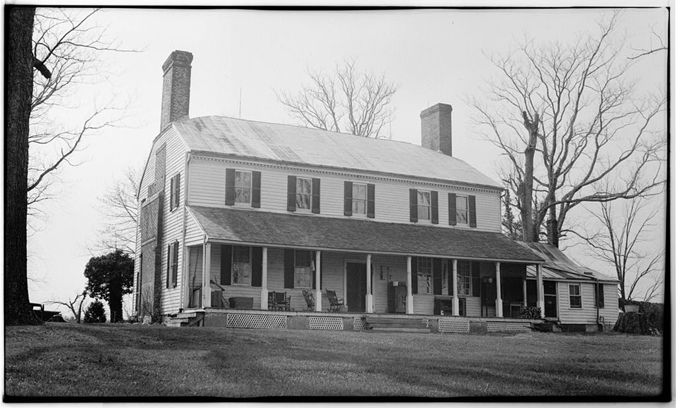
    Marmion, the home of George Lewis and family, as it appeared in the mid-20th century. Library of Congress photo.

    George Lewis died in 1821.  He and Catherine are thought to be buried at Willis Hill in Fredericksburg, the home of their son-in-law, Byrd Willis.

    Meghan Budinger
    Aldrich Director of Curatorial Operations

    [1] Felder, Paula S. Fielding Lewis and the Washington Family, 1998. Pgs. 163-164.

    [2] Fielding Lewis to George Washington, November 14th, 1775.  Pennsylvania Historical Society.

    [3] Lossing, Benson J., ed. Recollections and Private Memoirs of Washington, 1859. Pgs. 180-184.

    [4] Moran, Donald L. The Men of the Commander in Chief Guard, The Liberty Tree Newsletter, 2006; Demarest, Thomas. The Baylor Massacre, Bergen County History Annual, 1971.

    [5] George Washington to George Lewis, February 13th, 1779.

  • Kenmore’s Kitchen: Then & Now

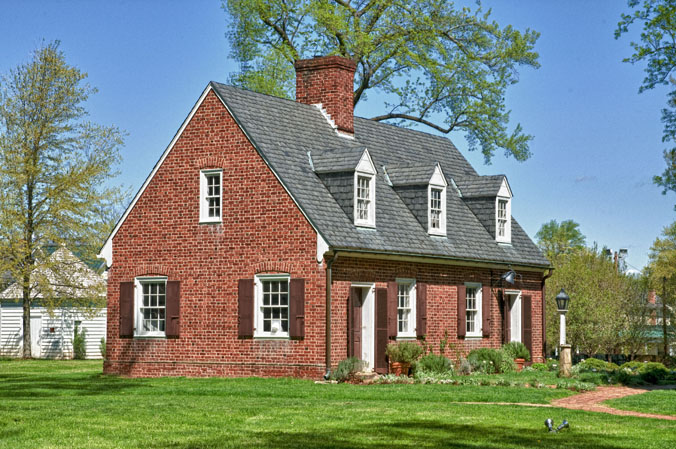
    The brick kitchen building next to Historic Kenmore is not original to the property. It was built in the 1930s in the colonial revival architectural style popular at that time.

    Kitchen01

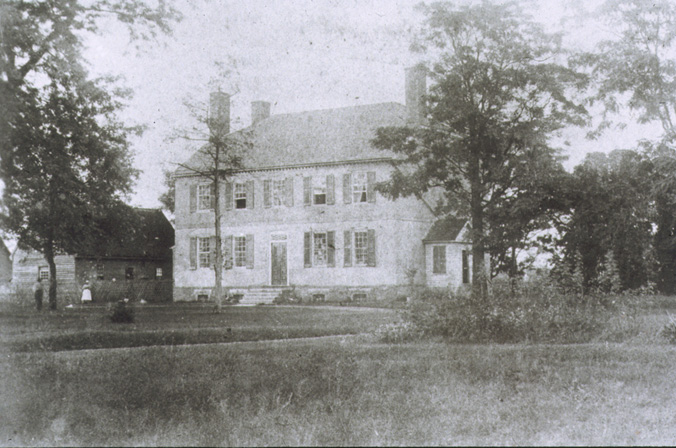
    The brick construction does not reflect the kitchen building seen in the earliest known photo of such a building at Kenmore.  That image, taken around the time of the Civil War, shows a large wooden kitchen to the north of the house as well two enslaved people standing in the kitchen yard.

    pre-1862kitchen02
    The wooden kitchen can be seen to the left of the house in this Civil War-era photograph.

    The Kenmore Association, a group of women who saved the mansion and transformed the property into a historic site open to the public, built the brick kitchen in the 1930s.

    ms 1687
    Inside the brick kitchen just after construction was completed in the 1930s.

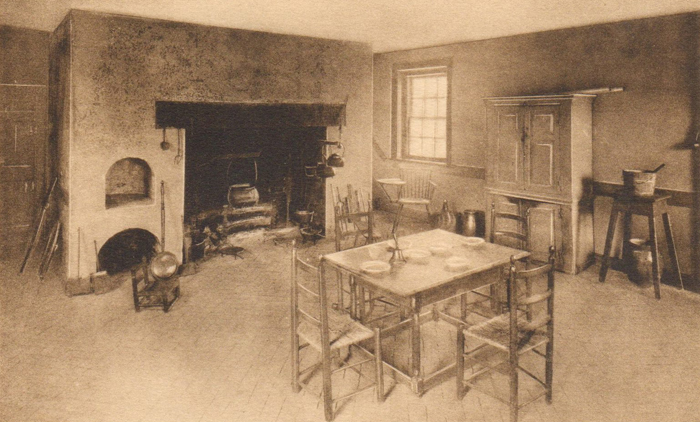
    Throughout much of the 20th century, visitors sat around the table in the photo above to enjoy gingerbread and tea served by the ladies of the Kenmore Association.

    Recently, we decided to highlight these ladies and their efforts to preserve Kenmore even more during our tours. We felt the most logical of places to do this was in the kitchen where they served their famed gingerbread and tea.

    We placed a tea set and faux gingerbread on the same table used to serve visitors for so many years. We surrounded that table with many of the same ladderback chairs, though most of their seats have been re-caned. We returned some of the china and the china cupboard that had stood for so long in the kitchen back to that space.

    While we cannot serve actual gingerbread and tea – modern-day museum guidelines prohibit food service inside historic structures – we can discuss the Kenmore Association’s monumental efforts to save Kenmore and make the mansion accessible to the public. You can read about these efforts here.  Although it does not date back to Kenmore’s very beginning, the 80-year-old brick kitchen is still a part of the site’s centuries-long story.

  • Video: A Busy Morning at Kenmore

    Historic Kenmore’s beautiful grounds and gardens require much work to remain beautiful. On a recent morning, staff mowed and weeded flower beds in the unending effort to make the flowers and grounds look their best.

    Historic Kenmore and George Washington’s Ferry Farm always need volunteers to help with our gardens. If you might be interested in volunteering, visit http://kenmore.org/foundation/volunteers.html for more information.

  • The Atlantic World in Fielding Lewis’s Library

    Ships and sea-faring were parts of daily life and culture in the Atlantic World port of Fredericksburg.  This was especially the case for the Fielding Lewis family, who became wealthy through shipping, ship owning, and ship building.  Wednesday’s Lives & Legacies entry recounted a typical sea voyage around the Atlantic Ocean by the Stanton, a brig owned by John Lewis, Fielding’s father.

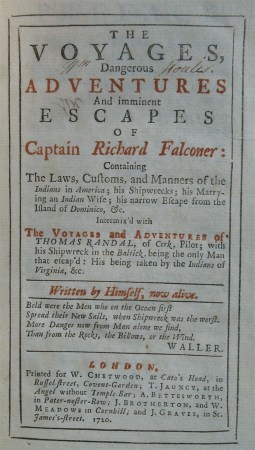
    Chetwood-title-pageShips, the sea, and the Atlantic World even seeped into Fielding’s reading life.  In her latest post on The Rooms at Kenmore blog, Curator Meghan Budinger discusses our efforts to collect books owned by Fielding Lewis.  Her blog entry deals with one book in particular called The Voyages, Dangerous Adventures and Imminent Escapes of Captain Richard Falconer, an adventure story of life at sea in the 1700s.
    As Meghan notes, his choice to include Captain Falconer in his library “may be a nod to Fielding’s lifelong association with merchant vessels, both his father’s fleet and his own.”  It also demonstrates that the Atlantic World was about far more than moving goods across oceans.  It reached into every aspect of life for the peoples living within reach of the great Atlantic Ocean, even into their literature.

    Read about the mystery behind this book on The Rooms at Kenmore.

  • The Voyage of the ‘Stanton’

    In colonial times, ocean-going ships could sail up the Rappahannock River all the way to Fredericksburg.  This made the tiny but growing town a bustling seaport.  All types of goods were loaded onto ships to be sent to Europe while others were unloaded to be sold right here in the colonies.

    George Washington, Fielding Lewis, their families and slaves, as well as the town’s other residents were all members of a wider community centered on the trade traveling back and forth across the Atlantic Ocean.  The townspeople of Fredericksburg saw sailing ships on the Rappahannock every day.  Those ships brought goods to sell and to buy, news from the rest of the British Empire, and people to settle and work in the colonies.  Washington, Lewis, and their neighbors interacted with the sailors from these ships every day and were aware of the hardships of life at sea.

    Map shows actual voyages of British ships in the last half of the 18th century according to their log entries. Learn more about how the map was created and compare British trade routes with Spanish and Dutch ones on the Spatial.ly blog. Created by Geographer James Cheshire, PhD, and used with permission.

    George even experienced life at sea first-hand when he left Ferry Farm and Fredericksburg to sail to Barbados for a visit at the age of 19. This journey is the only time Washington left the confines of the future continental United States.  For a time, George, supported by elder half-brother Lawrence, even toyed with the idea of joining the British navy until Mary, George’s mother, firmly refused to give her permission.  For his part, Fielding Lewis made his riches from shipping goods to and from the colonies.  Shipping cargo, ship owning, and ship building was the family business started by his father John.

    In the 1600s and 1700s, tobacco was Virginia’s most important export but, for a variety of reasons, many planters in this area chose to export things like wheat, timber, and other raw materials. Using the raw materials exported from the Americas, manufactured goods were made in Europe and then sent to Africa and back to the Americas.  The manufactured goods paid for slaves in Africa and for more raw materials in America.  Often known as the ‘triangular trade’ because of the triangle shape it forms on a map, this historic trade pattern is one we learn as early as elementary school.

    More than goods traveled along these trade routes.  People (sailors, settlers, and slaves) moved along them as well.  All of these movements created connections between nations, colonies, and groups of people in Europe, Africa, the Americas, and beyond.  The Atlantic Ocean was at the center of all these connections.  “Every European or African who moved to or was born in Virginia” was also a member of what historians call the Atlantic World.[1]

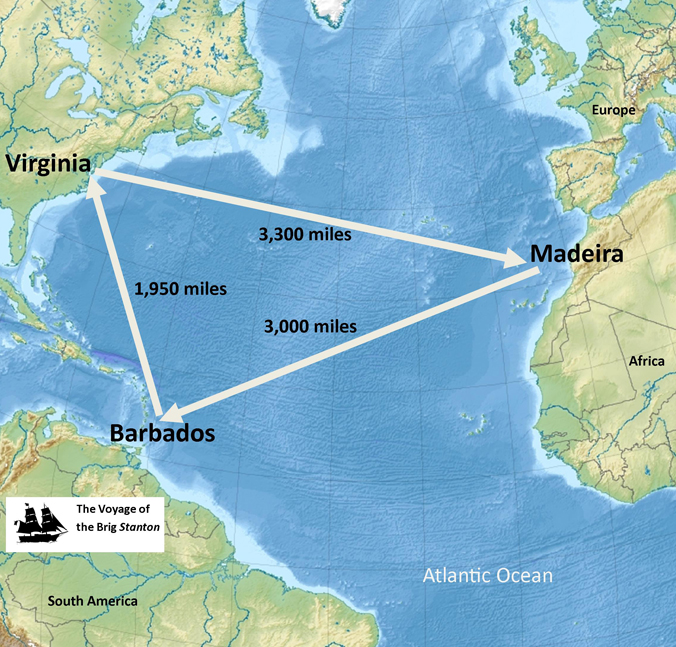
    A voyage typical of those that took place within the Atlantic World was made by one of John Lewis’ ships in early 1732.  On December 23, 1731, the 80-ton brig Stanton — captained by Richard Williams — set sail with 8 crew and 2 guns aboard.

    The Stanton was a brig, a sailing vessel with two square-rigged masts. While we have no idea what the Stanton itself looked like, a replica ship named the Lady Washington provides an idea of a brig’s size and appearance.

    The tall ship, Lady Washington, under sail in Commencement Bay near Tacoma, Washington. Photo by Miso Beno.
    Brig Lady Washington in Morro Bay, California. Photo by “Mike” Michael L. Baird.

    If you look closely at the people toward the ship’s stern in the photo, you can appreciate just how small a brig can be.  Imagine crossing the stormy Atlantic Ocean in a ship that size!

    As it left Virginia, the Stanton’s cargo was listed as “46 Pipe Staves, 1800 bushel corn, 1000 bushell wheat, 40 [tierces] of Bread, 15 barr[els of] flower, 1 bar[rel] of lard, 300 lb of beeswax, 2000 feet plank, 1100 feet heading & 15 barr[els of] Pork.”  Surprisingly to us, in this age before refrigeration, butchered livestock was an important export for Virginia.

    The Stanton was bound for the island of Madeira 550 miles off the coast of Portugal.  The specific cargo exchanged at Madeira is not listed but, after that exchange, the ship set sail for Barbados in the Caribbean Sea.  Once more, cargo was exchanged but specifics were not recorded.

    After a five month voyage covering 8,250 miles, the Stanton finally returned to Virginia on May 10, 1732. When the ship came into port in the colonies, it’s cargo included  “Rum – 21 [tierces and] 16 barrels, Sugar – 14 Barrels [and] 11 Qt. Casks, 8 Negros, 3 baggs ginger, & Sundry household goods.” Though not specified in the Stanton’s case, sundry household goods shipped to the colonies included ceramic and glass dishes, different cloths, jewelry, and books.

    Map of the Stanton's Voyage

    The Stanton’s voyage, the ports it visited, and the cargo it carried are all exceedingly typical of Atlantic World trade throughout the 1700s, whether in the earlier decades of John Lewis or the century’s later decades of his son Fielding.

    Ultimately, situated where farm, frontier, city, river, and road converged on the edge of English empire and the Atlantic World, the people of Fredericksburg found their daily lives governed by Britain’s global economy and imperial culture.  Colonial men – whether gentry, tradesman, or servants – pursued homes, professions, pleasures, and possessions that conveyed their status, wealth, and English identities. Fielding Lewis used the ships he owned and the wealth he gained from actively participating as a British merchant in the Atlantic World to fund the struggle to throw off English colonial control, to do his part to support his brother-in-law’s army, and to create a new nation.

    Zac Cunningham
    Manager of Educational Programs

    Special thanks again to Geographer James Cheshire for permission to use his map of British trade routes. Visit Spatial.ly, his geography blog, at http://spatialanalysis.co.uk/.

    [1] April Lee Hatfield, Atlantic Virginia: Intercolonial Relations in the Seventeenth Century. Philadelphia: University of Pennsylvania Press, 2004: 39.

  • Photos: Shakespeare’s “Cymbeline” by Candlelight

    The Rude Mechanicals presented candlelight performances of William Shakespeare’s Cymbeline this past weekend at Historic Kenmore.