Lives and Legacies

Category: George Washington’s Ferry Farm

  • “I wonder if this was mine?”: Robert Bailey’s Ferry Farm

    We have a unique situation here at the Ferry Farm Archaeology Lab.  One of our volunteers, who has spent hundreds of hours washing, sorting and labeling excavated artifacts, is oddly enough, also partially responsible for creating some of those artifacts in the first place!
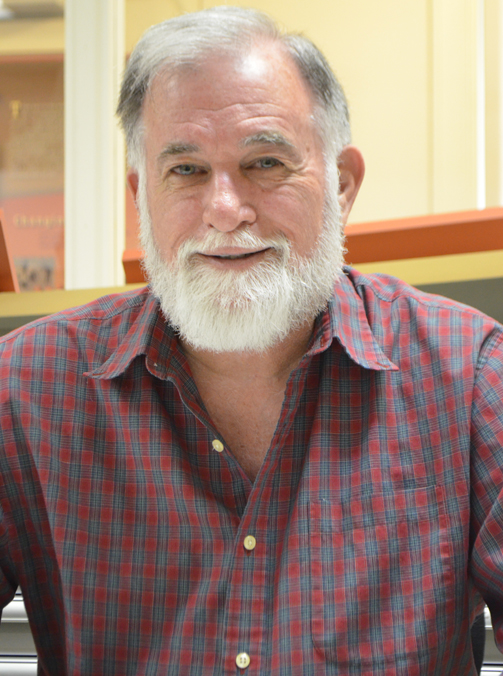
    Robert Bailey 1
    Robert Bailey

    Robert Bailey, his father Ray, mother Peggy and older brother Ray Jr., lived here at Ferry Farm from the late spring of 1957 until August of 1959.  His parents rented what was referred to as the “Colbert house,” a large three-story home built in 1914 by James Colbert, a farmer and businessman.
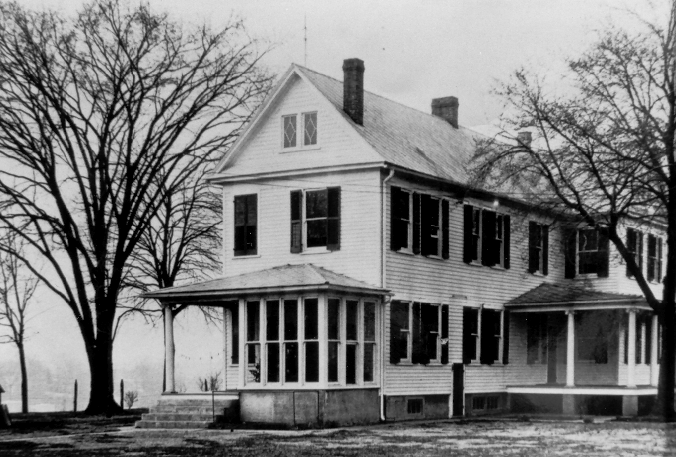
    Colbert House 1
    Colbert House

    Robert was only five years old when he moved to Ferry Farm.  He vividly remembers playing in the many barns, running through the fields and woods that surrounded the farmhouse, and swimming in the stream that runs alongside the historic Ferry Road on hot summer days. He and his brother also showed visitors stopping to see George Washington’s boyhood home around the property and invited them to sign the guest book located inside the small late 19th century building called the Surveyor’s Shed.
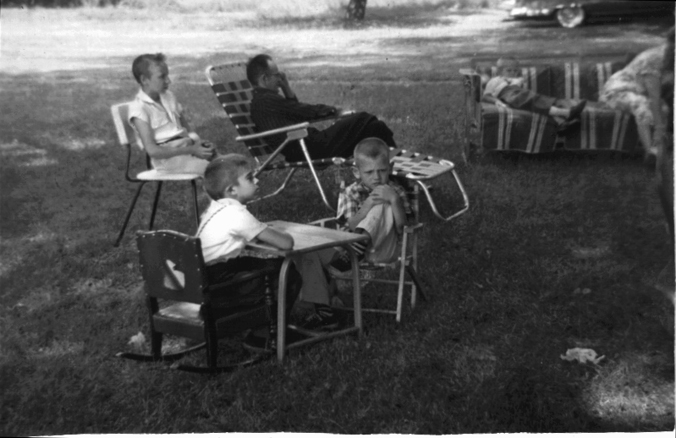
    Young Robert
    Robert as a child (foreground left in the rocker) in the Colbert House back yard.

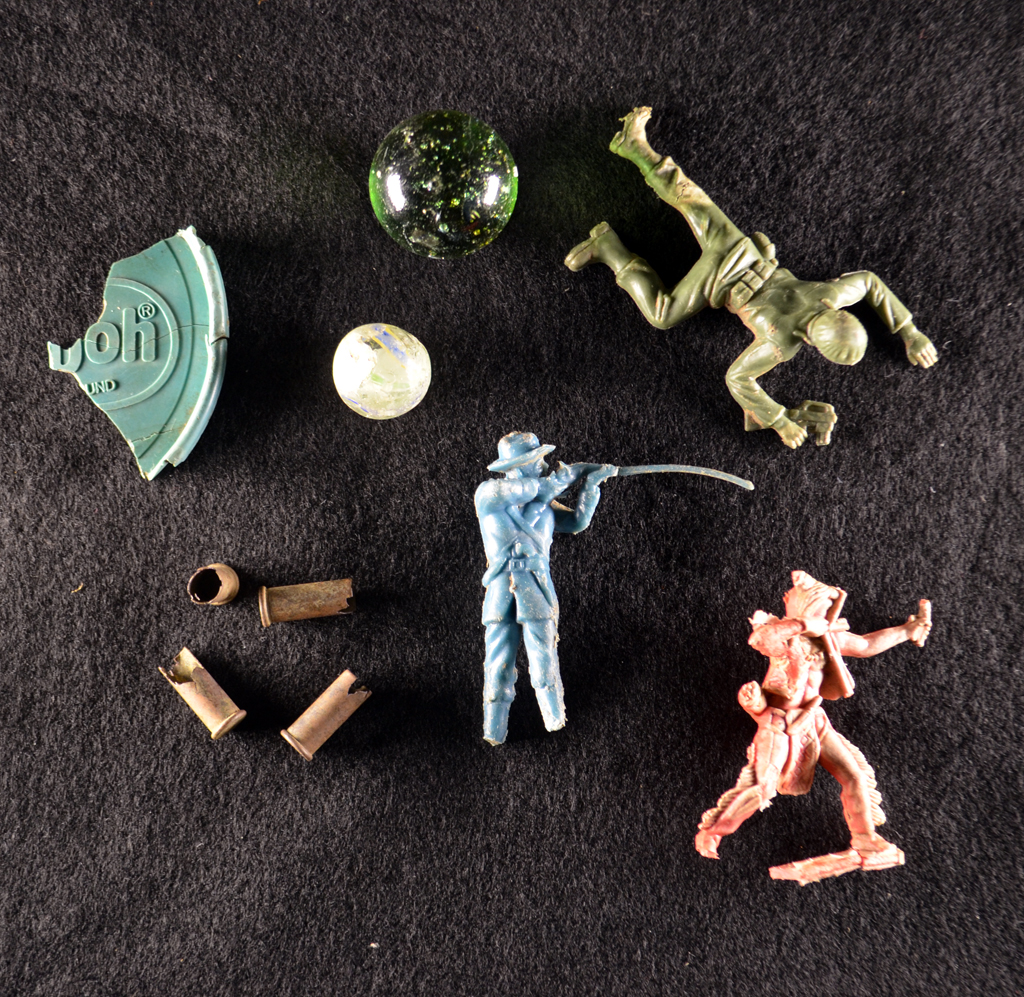
    He also remembers playing with lots of toys typical of the time, most notably glass marbles, plastic army men, toy cars and trucks, and especially a new toy called Play Doh, a wallpaper cleaner compound that had just been reinvented as a moldable clay product for children.
    DSC_0071
    Collection of 20th century items excavated at Ferry Farm. Clockwise from left: portion of a Playdoh canister lid, marbles including a large green shooter, green plastic army man, red plastic Indian, blue plastic Civil War soldier, four .22 caliber shelling casings.

    Over 800 toy-related artifacts have been excavated and catalogued in our artifact database.  As a collection, these toys span all time periods, from colonial clay marbles, to Civil War-era dice, to a Cold War-era Sputnik ring, and most recently, Dora the Explorer sunglasses! We have also catalogued fragments of bicycle parts, dominoes, board game pieces, dolls, plastic figurines, toy guns and planes, toy cars and trucks, and dishes and tea sets.

    Of course, Robert and his brother were not the only children who lived on or visited this site. Other children lived in the Colbert house before and after the Baileys resided there, and hundreds have visited the site on field trips and for special events, such as our annual Fourth of July celebration.

    Robert cannot say with any certainty that any of the marbles he has washed in the lab once belonged to him, but the conversations that those marbles start are an important part of the oral and archaeological history of the site.  Robert Bailey has participated in the Foundation’s oral history program with a detailed accounting of his memories of the house and grounds.  Because he experienced living at Ferry Farm, he can tell us about not only the events and activities his family took part in, but also of the perceptions that visitors to the farm had about the importance of this site as Washington’s boyhood home.

    Another vivid childhood memory that often comes to Robert’s mind is of his mother shooting at the black snakes that appeared in and around the house and yard.  According to Robert, one day a snake came out of a hole in an old gnarled tree located near the Surveyor’s Shed.  His mother dutifully brought out her rifle and proceeded to, as Robert says, “blast away” at the snake. Despite the countless number of bullets expended, she missed and the snake eventually slithered back into its hole.
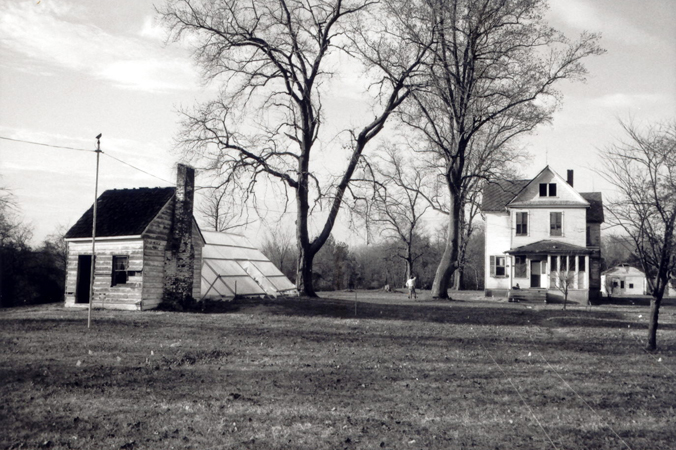
    Colbert House 3
    Surveyor’s Shed in the foreground left with Colbert House in the background right.

    While washing artifacts in the wet lab, Robert has come across a lot of .22 shell casings.  Just this past week he washed seven.  Each time one appears in an artifact bag, Robert chuckles and says “this shell casing might be one that my mom shot at the snake in the tree – and missed!”
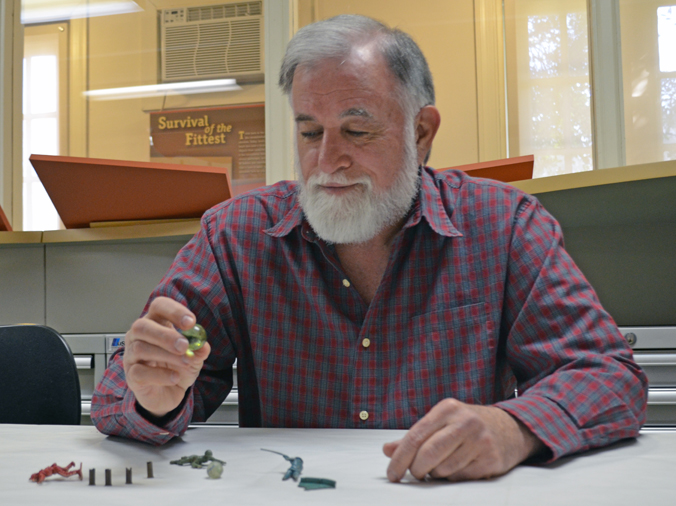
    Robert Bailey 2
    Robert looks over some of the 20th century items excavated at Ferry Farm that, who knows, might have belonged to him in his youth.

    Sixty years have passed since the Bailey family first came to live at Ferry Farm, but the past certainly comes full circle and is alive again when Robert empties another artifact bag onto the tray and begins to sort its contents.  His connection with our archaeological site provides staff with many opportunities to record and analyze more about Ferry Farm in the 20th century. Robert’s deep commitment to helping preserve George Washington’s boyhood history, combined with his own unique insights, creates a new understanding about Ferry Farm for Robert too.

    Robert’s history lies mostly in the topmost soil layers of the site as not enough time has passed to deeply bury his things. Although Robert’s lost marbles and plastic army men are mixed in with excavated toys dropped by other boys and girls, it’s fun to hear him say “I wonder if this was mine?”

    Judy Jobrack, Archaeologist
    Assistant Lab Supervisor

  • Photos: Washington’s Birthday & Archaeology Day 2017

    Every February, Presidents’ Day weekend is a celebratory one at George Washington’s Ferry Farm! As always this year, George’s boyhood home marked his birthday on Saturday, February 18 and then held Archaeology Day on Monday, February 20. Here are some photos from both days.

  • Photos: Building George’s House – Windows & Weatherboard

    Over the past several weeks, following the timber framing and while the shingling of the roof was taking place, The George Washington Foundation’s carpenters Steve Chronister, Tom Rainey, and Josh Schwenk installed the Washington house windows and the beaded weatherboard, enclosing the house and shifting most of the work from the exterior to the interior.

    Read “Washington house replica rises on riverbank” from the past Wednesday’s edition of The Free Lance-Star and plan to attend George Washington’s Birthday Celebration tomorrow and Archaeology Day on Monday to see all the latest progress on the Washington house replica! Visit ferryfarm.org/events for event details.


  • Video: Building George’s House – Timber Framing

    The timber framing of the Washington house is complete. In this video, we get a close-up view of the construction of the house’s timber frame. For a timelapse view of the timber framing, watch this video. To see how the beams in the frame were fashioned, watch this video.

    Learn more about the Washington House here and view other videos, photos, and blog posts about the project here.

  • Photos: Building George’s House – Shingling the Roof

    This past autumn, workers from Peter Post Restorations lead by Peter himself added the shingles to the roof of the Washington house at Ferry Farm. The handmade riven shingles were sawn from a tree trunk, smoothed on one side, and decoratively scalloped. Because they were handmade, each shingle was a different width. The roofers laid the shingles in a pattern to compensate for the different sizes and then nailed them into place.

    The most challenging aspect of roofing the Washington house was shingling where the roof met the dormers.  In the 18th century, roofers curved the wood from the roof to the dormers creating “swept valleys” that are gorgeous examples of historic craftsmanship.

  • Drink Your Vegetables: A Special 18th Century Wedgwood Ware

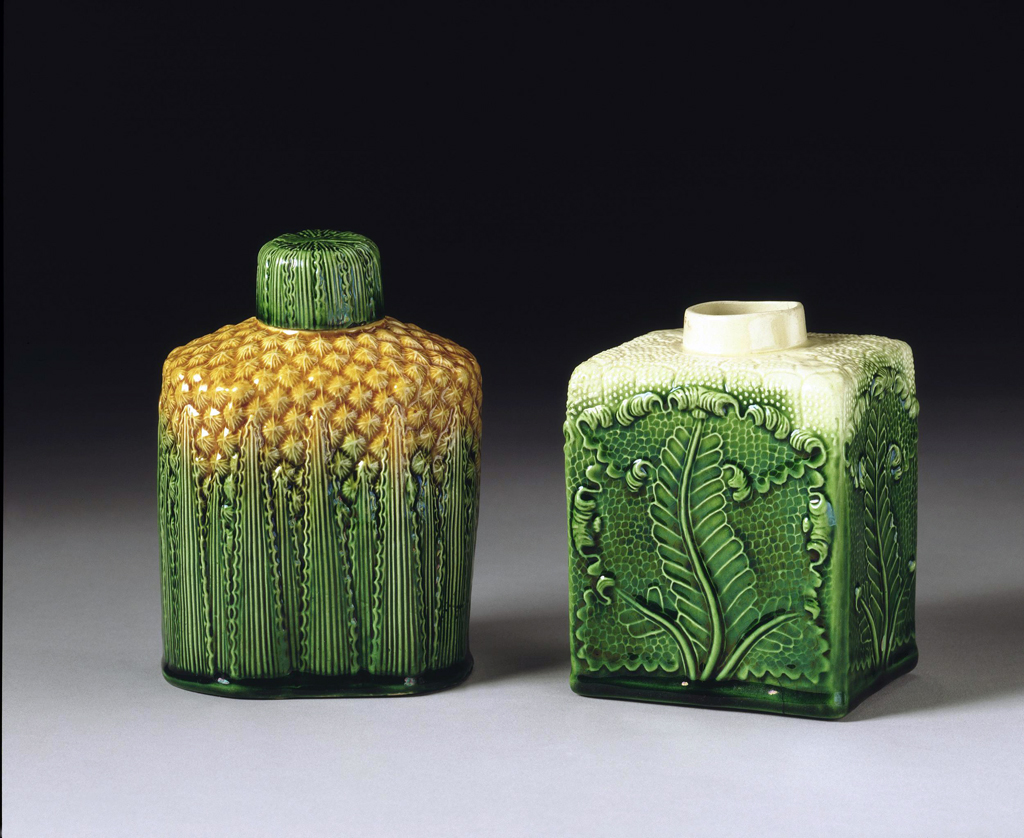
    Fads come and go. Such is life.  Eighteenth century colonists were not immune to flash-in-the-pan trends.  However, given that information traveled a bit slower before the digital age, in the 18th century a ‘quick trend’ may have lasted 10 or 20 years, instead of 10 or 20 months.  Such is the case with ‘vegetable ware’, a refined earthenware molded to look like produce.  Imagine being the envy of all your colonial neighbors if you served them tea out of an elaborate ceramic cauliflower, pineapple, melon, or cabbage.  As evidenced by the archaeological record, Mary Washington, George’ mother, was similarly taken with the prospect of displaying her very own veggie-themed teaware.

    The advent of vegetable ware seems to coincide with the development of bright green and yellow pottery glazes by a young and upcoming potter named Josiah Wedgwood in 1760.  He used these new flashy glazes for a number of applications, including coloring teaware molded to resemble produce.  While some combinations of ceramics and decorations had previously enjoyed decades or even centuries of popularity in the past, the demand for the initially popular vegetable ware seemed to drop off after only ten years, around 1770. At that time, Wedgewood indicated he was glad to send a shipment of overstocked vegetable ware to the colonies – a popular dumping ground for out of fashion or slightly damaged English goods.

    vegetable-ware-tea-canisters-1
    Ceramic vegetable ware tea canisters made at the Josiah Wedgwood’s factory in England between 1754 and 1764. Credit: © Victoria and Albert Museum, London.

    Mary seemed to prefer the pineapple form and owned at least one item, if not more, of this fruit-shaped tea equipage.  Her preference for the tropical fruit design was not unique.  In the 18th century, the pineapple was an incredibly sought after luxury item loaded with symbolism.  Today, many of us, especially along the East Coast, associate the pineapple with welcoming guests into our home and as a decoration for the holidays. Colonial Americans considered it a Christian symbol as well as a display of status. They readily incorporated it into the architecture of their houses, decorated room interiors with the motif, and served food and beverages out of pineapple-shaped objects.  These were all cheaper options than displaying an actual pineapple, which was well outside the price range of the average colonial American. In fact, there are accounts of people actually renting a real pineapple for a party rather than purchasing one outright.  Rented fruit!  Let that sink in for a second.

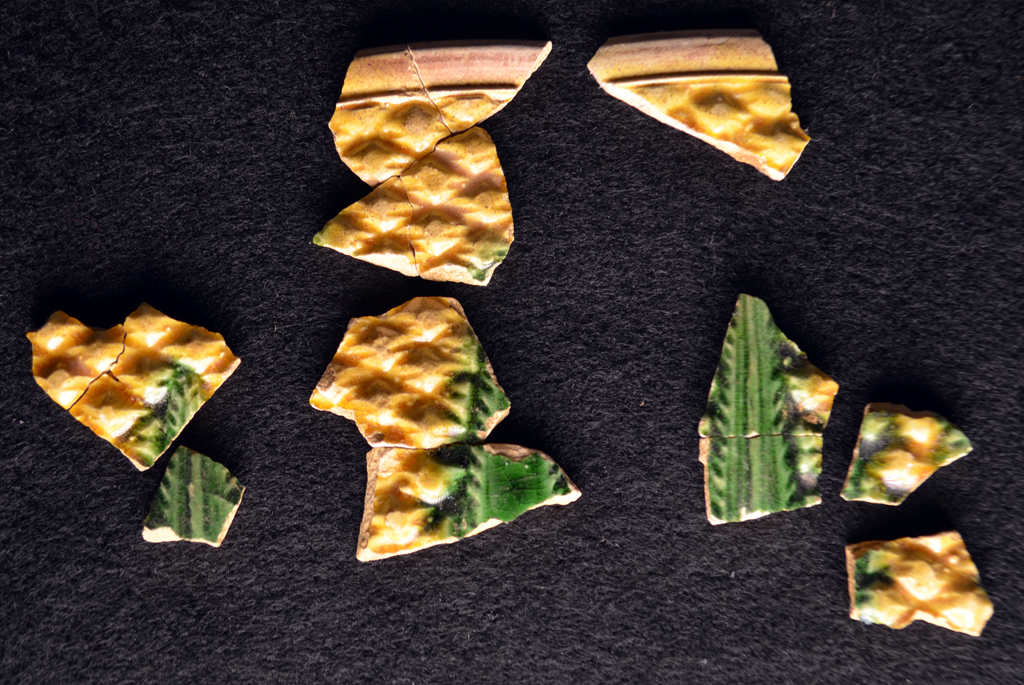
    Returning to Mary’s ceramic pineapple, which is represented archaeologically by a dozen or so sherds.  It is almost certainly some type of tea equipage, although we are not exactly

    vegetable-ware-sherds
    Vegetable ware sherds excavated at George Washington’s Ferry Farm.

    sure which tea vessel it may be.  The pineapple color and texture are unmistakable but we’ve yet to identify the specific object.  A number of forms have been ruled out. It is not a tea or coffee pot because it appears to be relatively squat with a straight or very gently sloping body and a wide rim.  What’s especially odd about this particular vegetable ware vessel is that the rim is unglazed.  This would seem to suggest that it sported a lid of some kind or perhaps endured a defect during firing.  Hopefully more of the vessel will come to light, we’ll be able to answer the question, and proudly display pineapple teaware in the newly recreated Washington house!

    Mara Kaktins, Archaeologist
    Ceramics & Glass Specialist

  • Video: Building George’s House – Laying the Stone Foundation

    In this video, we see how stonemasons Ray Cannetti, Robert Hall, and Kevin Nieto laid the handmade Aquia sandstone foundation stones around and on top of the Washington house’s concrete cradle foundation, which protects original architectural remains underground.  Watch these videos about the concrete cradle and the oyster burning process.

    Learn more about the Washington House here and view other videos, photos, and blog posts about the project here.

  • Video: The GWF in 2016

    Scenes from an exciting and memorable year at Historic Kenmore and George Washington’s Ferry Farm!

  • We Want to Hear from You!

    As 2017 begins, Lives & Legacies would like to hear from its readers! What would you like to know about George Washington’s boyhood, his mother Mary, his sister Betty, and his brothers? Maybe, you’re interested in the life of Fielding Lewis and the sacrifices he made to help the Patriot case. Perhaps, you’re wondering about the archaeological work we do and the artifacts we’ve discovered. Surely, some of you are curious about how we’re creating a replica of the Washington house.  Send us your questions using the comment form below and we may just write a blog post to answer your question!

    In the meantime, as we bring Lives & Legacies’ second year to a close, we thought it might be worthwhile to share several of our most read entries published in 2016. We hope you enjoy reading them for the first time or reading them again as we move into 2017.

    Here are our Top 5 Most Read Posts of 2016:

    #5 Samuel Washington: George’s Brother and Wartime Confidant – This biographical sketch recounts the life of Samuel and the relationship he shared with his famous brother George.

    #4 Put that in Your Pipe and Smoke It: Tobacco & Politics in the 1700s – This post examines a fragment of a smoking pipe unearthed at Ferry Farm and discusses what that pipe fragment may illustrate about the Washington family.

    #3 Introducing the New George Washington’s Ferry Farm – This blog post presents an overview of The George Washington Foundation’s effort to create a replica of the Washington house and outlines Ferry Farm’s transition to an outdoor living museum.

    #2 Petticoats and Pink Lightning – An investigation into some fascinating fashions from across the centuries!

    #1 Glue: The Coolest Thing I’ve Ever Found – Archaeologists are often asked “what’s the coolest thing you’ve ever found?” and for one of the Foundation’s archaeologist the answer to that question is the glue on Mary Washington’s punch bowl.

    Zac Cunningham
    Manager of Educational Programs


  • Photos: Holiday Decorations at Kenmore & Ferry Farm

    The George Washington Foundation wishes everyone a joyous holiday season!  Enjoy these photos of holiday decorations created by wonderful volunteers!  The George Washington Foundation Garden Guild decorated at Historic Kenmore and the Lake Anna Garden Club decorated at George Washington’s Ferry Farm.

    Next week, there will still be time to see Kenmore and Ferry Farm adorned for the season as well as each site’s annual display of dollhouses, miniatures, and gingerbread creations. For details about these exhibits and our holiday hours, visit kenmore.org/events.