In this video, archaeologist Mara Kaktins shares bits of Mary Washington’s dishes excavated at Ferry Farm and explains their significance.
Read more about Mary’s dishes in this blog post.

Lives and Legacies
In this video, archaeologist Mara Kaktins shares bits of Mary Washington’s dishes excavated at Ferry Farm and explains their significance.
Read more about Mary’s dishes in this blog post.
In this video, curator Meghan Budinger updates us on the latest arrivals in the final steps of furnishing the Washington house replica at George Washington’s Ferry Farm and of re-furnishing Historic Kenmore.

Ferry Farm was a unique place to live in the mid-1700s. Situated where farm, frontier, city, river, and road converged on the edge of English empire, young George Washington, his family, and the farm’s enslaved community found their daily lives governed by Britain’s global economy and imperial culture. Ferry Farm, nearby Fredericksburg, and the colonies more broadly were international places made up of a host of different European, African, and Native American ethnicities and nationalities in the 18th century. Accordingly, we present a list of “Five International Influences on George Washington’s Youth.” This is by no means an exhaustive list but each influence helped shape young Washington into a man capable of commanding the Continental Army and serving as the new nation’s first president.


Young George could look from a window in the family home at Ferry Farm down the bluff to the Rappahannock River. He saw ocean-going, sailing vessels being loaded and unloaded at the wharves and warehouses of Fredericksburg. These vessels were part of a global trade network, which we’ve written about here and here, that stretched to Europe, Africa, the Caribbean, India and China. These vessels were not large but traveled the world nonetheless. They took the corn, wheat, and timber of places like Ferry Farm to Europe or the Caribbean and returned with Westerwald mugs from Germany, tea from India, porcelain from China, and enslaved laborers from Africa. The sailors on these ships probably represented numerous ethnicities and nations. One easily can imagine young George, so prone to a thirst for adventure, finding any excuse he could to visit the docks and ships down on the river and, by doing so, traveling the world without leaving the Rappahannock.
Those ships carried numerous manufactured goods from all over the world to Ferry Farm. Westerwald ceramics were one such import. Produced in the Westerwald region of what is now Germany beginning in the 1500s, archaeologists have excavated numerous bits of decorated stoneware tankards, jugs, and other drinking vessels used in the 1700s at Ferry Farm. Several of these excavated vessels sported the initials ‘G.R.’, meaning Georgius Rex, the Latin for King George. The three British kings of the 18th century were all named George and came from the House of Hanover, a German royal family placed on the British throne in 1714. A gentleman sporting a ‘G.R.’ on his Westerwald tankard or jug advertised his loyalty to the Crown with every draught of ale. The presence of these initialed drinking vessels at Ferry Farm show that, until the Revolution, Washington, like most Americans, viewed himself as a loyal subject of the British Crown (ironically worn by a German head).


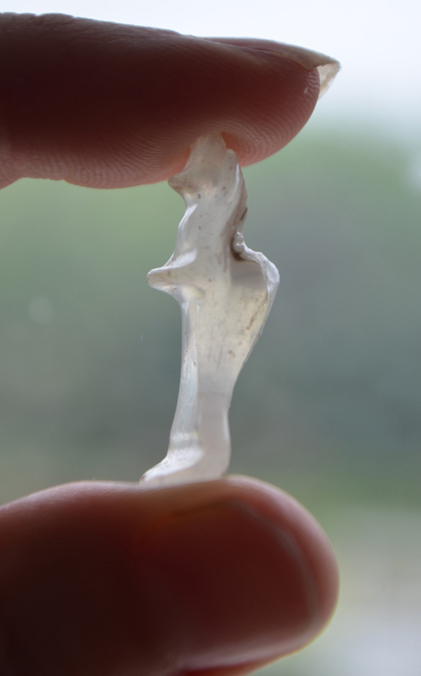
The vast majority of ceramics in the Washington household came from England. The same can be said about the family’s table glass, but the fanciest glassware owned by the Washington family actually came from Venice, Italy. Found by our archaeologists, this piece of a pincered and buttressed handle is likely part of an elaborate hand-blown Venetian piece, made of finely crafted colorless soda lime glass with a barely visible bead of opaque glass running through the center. A Venetian glass goblet such as this was a show piece displayed prominently within the house to emphasize that, despite their colonial location, the Washington family strived to maintain a level of European refinement appropriate to their gentry status.

In 1751, George Washington made his only trip off the North American continent, traveling with his half-brother Lawrence to Barbados. Visiting the island’s fortifications and meeting members of its military garrison fed George’s growing desire for a military career. As Jack Warren concludes, “After returning to Virginia, he dedicated himself to advancement in the military more completely than any of his Virginia contemporaries. And unlike most of the prominent colonial militia officers of the 1750s, he sought a commission in the regular British military establishment – an ambition that was probably prompted, and undoubtedly stimulated, by his experience in Barbados.”

Military service eventually took George into the frontier wilderness of the vast Ohio country. Tasked by Governor Dinwiddie with delivering a demand to the French to leave lands claimed by Virginia and the British Crown, young Major George Washington embarked on a thousand-mile, ten-week trek to and from Fort LeBoeuf on Lake Erie. He was accompanied by the Dutchman Jacob Van Braam, who served as his French interpreter, and by Tanacharison, known as Half-King, as well as other men from Native American nations. Along the way, he met several French officers and soldiers. Although confined to North America, this trip in late 1753 and early 1754 was, in reality, a foreign trip that exposed Washington to different peoples and cultures. It provided vital diplomatic, military, and intelligence gathering experience to the future Continental Army commander and first president. Washington, notes Paul Royster, “practiced diplomacy to keep the Native leaders allied to the English cause; he interviewed French deserters and reported on the extent of French military posts between New Orleans and the Great Lakes; he reconnoitered the Forks of the Ohio with an eye to the proper site for building a fort; and he inspected and reported on the construction of the new French forts and made estimates of their strength . . . .”


Although a fourth generation American, George Washington grew up in a time and place – 18th century Ferry Farm and British North America — where international economic and cultural influences on his life were quite numerous. Through the five international influences we’ve briefly examined, we’ve seen how these influences helped Washington maintain his gentry status, which ultimately set him on a path to military and political greatness.
Zac Cunningham
Manager of Educational Programs
Mara Kaktins, Archaeologist
Ceramics & Glass Specialist
The story of Mary Ball Washington is one of overcoming a lifetime of adversity. Often overshadowed by her larger than life son George, Mary’s place in history fluctuated from saint to shrew with many historians ignoring the obstacles she faced and overcame. The archaeological record sheds light on some of the strategies Mary used to navigate her way through mid-18th century life as a widow while trying to maintain her own social status and that of her children. Fragments of highly-specialized ceramics excavated at Ferry Farm, the plantation Mary called home for much of her life, speaks to her efforts.
Specialized dishes are those designed for a very specific job unlike, say, a bowl which is multi-purpose. We have uncovered evidence of many dishes Mary owned that fulfilled single tasks. These type of ceramics are a sign of gentility. Most households could not afford these items and likely did not possess the resources to make the food and drink that they were designed to hold.
As the 18th century progressed, so did dining habits. Increasingly, people of means gravitated toward dinners with multiple courses of entrees, appetizers, beverages, and deserts. Previously, most meals consisted of large one-pot creations with multiple ingredients. In order to pull course cooking off, one required the specialized dishes designed for serving multiple courses.
One prime example of such specialized dishes from Ferry Farm is Mary’s elaborately decorated creamware sauce boats. The sauce boats are a luxury in and of themselves. They’re highly decorated and were very fashionable at the time. Not only were they expensive, but they showed that Mary had the refinement to serve her guests the fancy sauces being introduced into colonial cooking. They also indicated that she had a trained kitchen staff of enslaved workers capable of executing these new and intricate recipes. You never thought a sauce boat could hold so much meaning, did you?

Fragments of an extremely fancy white salt glazed fruit dish are further examples of Mary’s calculated purchasing of dishes. Previously written about here and here, this dish was meant to display fruit, another luxury in the 18th century. Being able to afford non-local or out-of-season fruit was a status symbol and necessitated the proper dish to proudly display the fruit. To put the rarity of fruit in perspective, in colonial America, pineapples were so expensive you could rent one for display at parties in the holiday season because most people couldn’t afford to buy one outright. While renting a fruit may seem ridiculous to modern readers, the action highlights just how important being seen to own certain items was during the colonial era. Of course, we still engage in this same behavior today, but just not with pineapples.

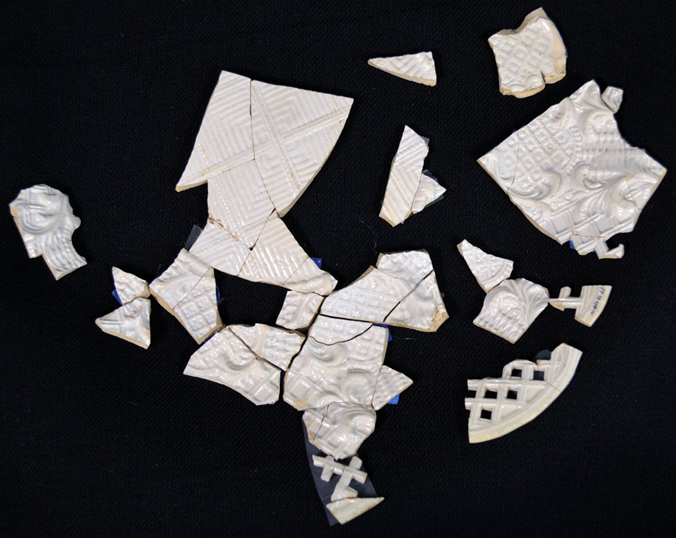
Ferry Farm archaeologists also excavated fragments of two creamware condiment dishes. Once again, the ability to serve various condiments to dinner guests conveyed status. Condiments could include relishes, dips, mustards, ketchups (mushroom ketchup being the preferred type), and pickled vegetables such as capers. Castor sets were also a way to serve other condiments such as olive oil, vinegar, pepper, etc. Generally, these castor sets were only owned by well-to-do households in the colonial period. The base of a creamware castor was recovered at Ferry Farm.

The fact that so many of Mary’s specialized ceramics are made of creamware should also be noted. Creamware was invented in 1762 and wasn’t the most expensive type of ceramic (that was porcelain) but it was highly fashionable. Mary, as a widow with five children and a diminished income following her husband’s death, likely couldn’t afford much porcelain. She opted for the less expensive but still highly-desirable creamware, instead.
The Washington family went to great lengths to demonstrate their status and refinement to visiting friends, neighbors, and relatives. At Ferry Farm, this burden fell solely on Mary after the death of her husband. Her specialized ceramics served to illustrate her place within the gentry class despite her diminished income and refusal to remarry after being widowed. Her goal was to remain independent while raising five children to be successful adults and members of the Virginia gentry class. In doing so, she likely realized that the socioeconomic security of her children would ensure her own into the future as well. Consequently, it was important that Mary cultivate a refined household with appropriate table and teawares. Ceramic artifacts from Ferry Farm reveal a woman who carefully selected choice ceramics to perform very specific tasks, while at the same time not overextending her budget. These ceramics contributed to her goal of remaining a part of the gentry class and teaching her children genteel habits so they could do the same. It was a task in which she overwhelmingly succeeded.
Mara Kaktins, Archaeologist
Ceramics & Glass Specialist
After a delay of five months due to the COVID-19 pandemic, archaeological excavations in the Washington house work yard at George Washington’s Ferry Farm got underway in mid-August and finished on October 30. Despite the cancellation of a planned spring field school with archaeological students from the University of South Florida, a crew of four paid interns and two college students helped make up the labor difference and our work commenced.
Our 2020 project continued last year’s exploration of the Washington-era work yard. This area located to the east of the house is where the everyday activities of a busy colonial household took place. Permanent structures such as a kitchen, dairy, smokehouse, storage sheds, office, laundry, temporary workspaces, and landscape features like gardens were concentrated in this area near the house but out of view of the public eye and the formal riverfront side of the house. Evidence of these buildings and work areas, in conjunction with the trash generated from their associated daily activities, is of the utmost importance in our planned authentic recreation of Ferry Farm’s Washington-era landscape.

In addition to reopening the unfinished 2019 excavation site, we opened fourteen new 5 foot x 5 foot units directly north, revealing a total of 800 square feet. Our approach to excavating was the same as in previous years – remove the 20th century layers, then the 19th century layers, and so on, across the entire site, allowing us to view related features at the same time.
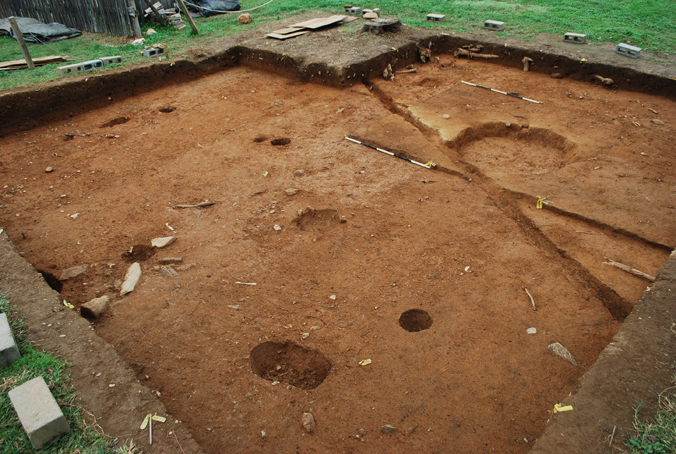
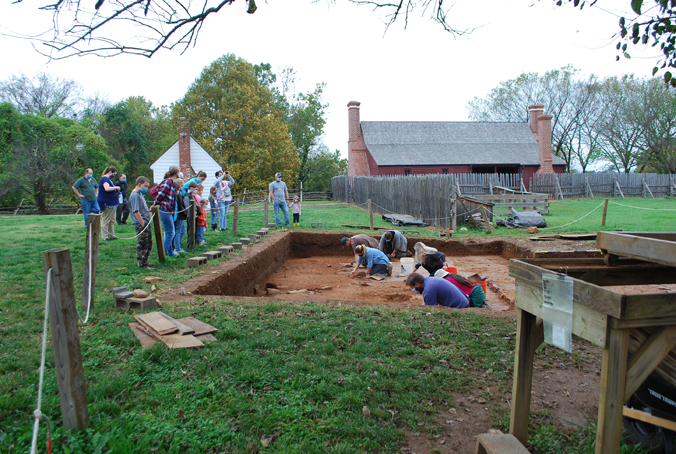
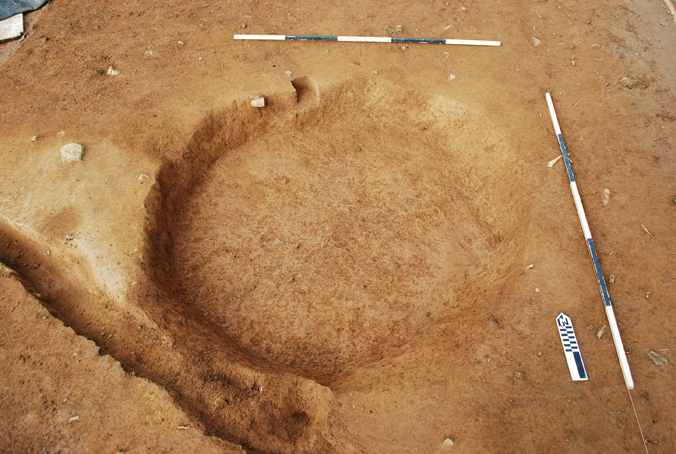
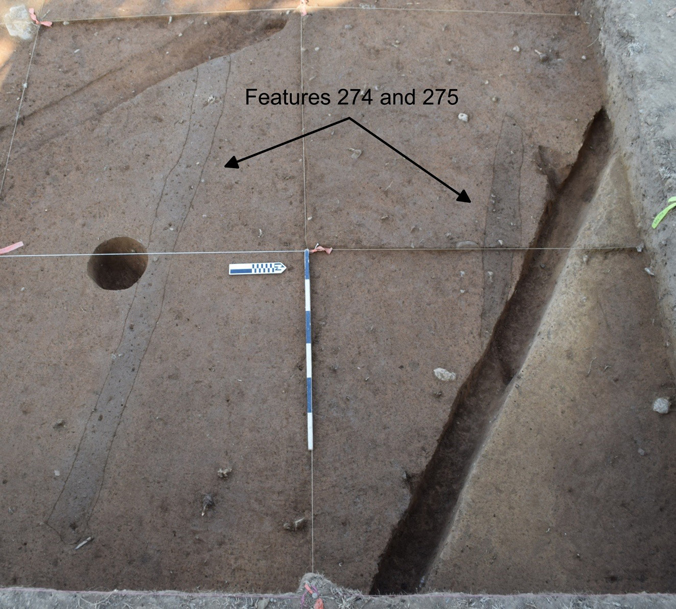
We uncovered numerous new features dating from the 20th century back into prehistoric Native American times. Modern gas and electric lines crisscrossed the site on their way to a now-demolished early 20th century house. They cut through multiple historic layers and sometimes through intact earlier features. Eighteenth century features we excavated included a large, circular, flat-bottomed pit, 5 feet in diameter. The pit’s purpose is still under investigation. A 10-foot long linear feature, obviously related to last year’s still unknown Features 274 and 275, was also found just to their northwest, adding to their mystery.
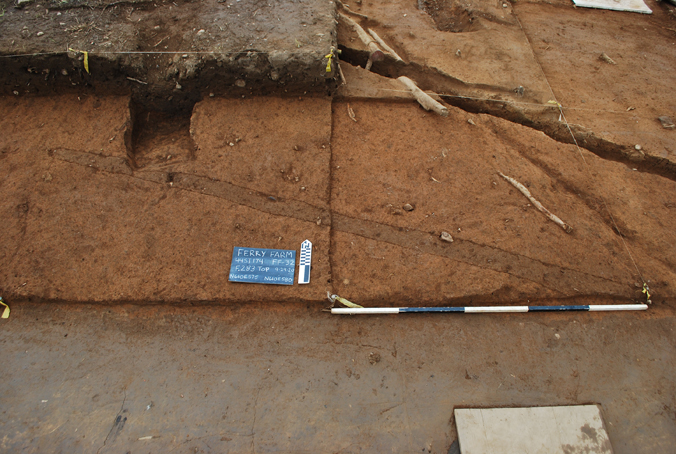
An especially exciting discovery this year was uncovering a large post mold and post hole in the southern end of the site. The posthole indicates the presence of a post-in-ground structure and excavations next year will try to reveal more of this building. Adding another outbuilding to the Washington landscape would be very exciting.
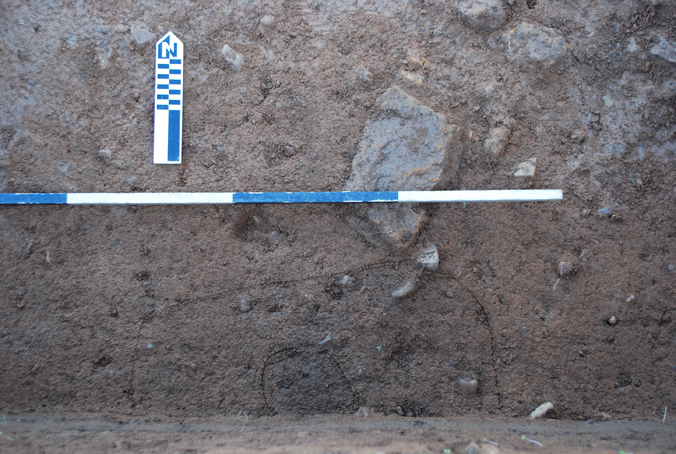
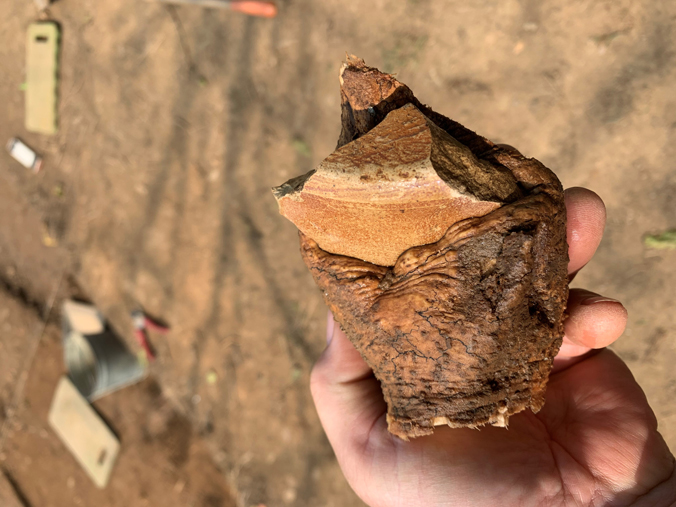
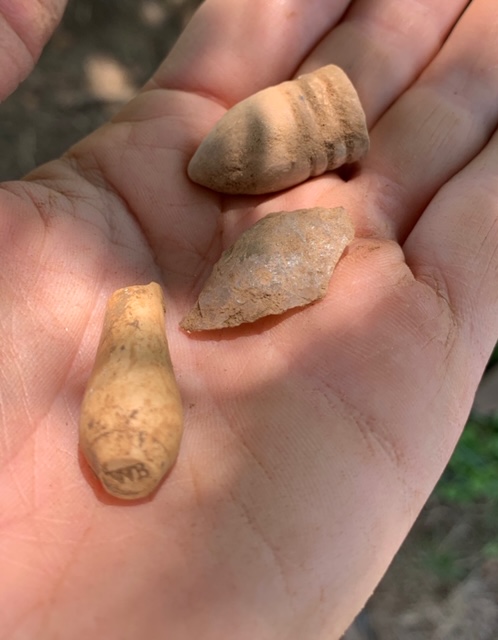
Hundreds of artifacts, of course, were collected during our three-month dig, including wig curler fragments, Native American projectile points, and Civil War bullets. We also found lots of historic ceramics and glass and architectural items, including this stoneware pot base fragment wrapped within a large tree root pictured below.


The upcoming winter months will be spent washing and cataloging all the artifacts recovered across the site, drawing the features and site maps, and writing reports. The site is securely covered for the season and will wait for us until the next dig starts, hopefully in the spring.
Judy Jobrack, Archaeologist
Co-Field Director
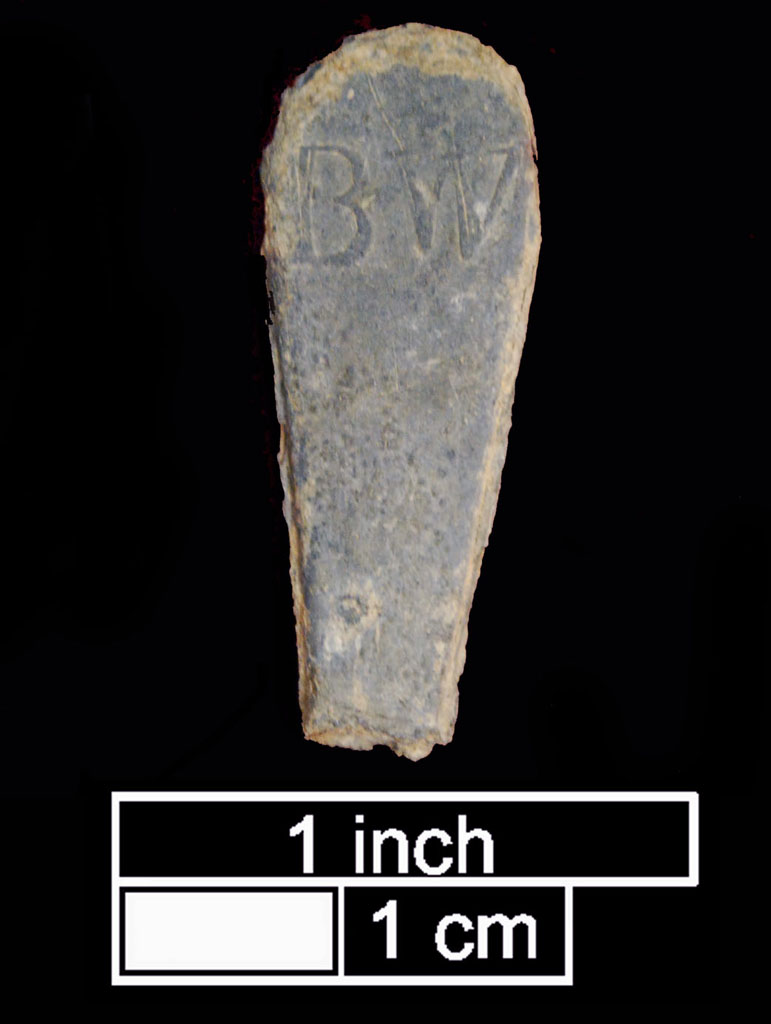
One of the most exciting and important discoveries archaeologists have made at Ferry Farm is a pewter teaspoon baring the initials B.W. It belonged to Betty Washington. This spoon was part of a set that trained her to oversee the extremely important tea ceremony.
Serving tea in the 18th century was more than an act of providing a mid-afternoon refreshment or a small meal to family and guests. Tea time, with its prescribed social behaviors and ritualistic customs of service, symbolized gentility and civility, and was an expression of social class.[1] As an imported good, tea was initially an expensive commodity used only by the upper and middle classes of society. In addition to the tea, a proper hostess also had to purchase the accouterments of the tea ceremony, such as teapots, cups and saucers, slop and sugar bowls, milk jugs, silverware, and a suitable tea table for presentation. The cost of these accessories, as well as the time and decorous social habits needed to prepare, serve, and entertain family and guests, meant that the tea ceremony was more a custom of the elite leisure classes, who had the time and money to do such things.
As a restricted custom, the tea ceremony transformed into an indicator of class and gentility, and consequently, its “social and cultural significance increased enormously.”[2] Rules governing the behavior of the participants, including the host, family and guests, were understood by all and represented learned standards of civility. Politeness and courtesy were important, and deference was made to the hostess in terms of the pace and content of conversation. Even the act of serving tea was ceremonial in nature. Seated at her tea table, the hostess made, poured, and distributed an individualized cup of tea for each guest, who received it in a gracious manner. It was a “small personal ceremony” that “epitomized the giving that was at the heart of hospitality.”[3]
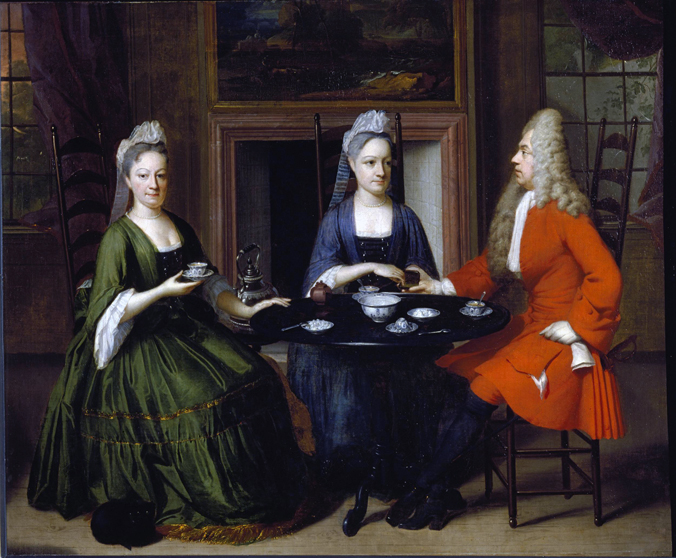
The tea ceremony was a gendered activity almost exclusively performed by and associated with the women of the household, who selected the teaware that they used in the ceremony[4] A household’s leading female figure, often the wife or oldest daughter, predominantly oversaw the service of tea to family members and guests, emphasizing her position of authority within the household and the gathered social circle. As such, women used the opportunity to express their gentility and respectability.[5]
Teatime also supplied a moment to maintain and cultivate important social ties within the community.[6] Neighbors, business and political associates, and potential suitors met over a convivial small meal and discussed important matters.
Teatime was also an opportunity to teach the younger generation, especially girls, how to act and behave during this social encounter.[7] As a future wife in charge of her household, it was essential for women, such as Mary Washington’s daughter Betty, to know how to successfully conduct this unique social custom and be able to demonstrate her inclusion and influence in the community elite.[8] Betty was trained in the art of tea making, as is evidenced by the archaeological presence of a pewter teaspoon bearing her initials at Ferry Farm. Monogrammed just for Betty, the teaspoon was part of a beginners tea set used by a young lady to train for many future tea times to come.
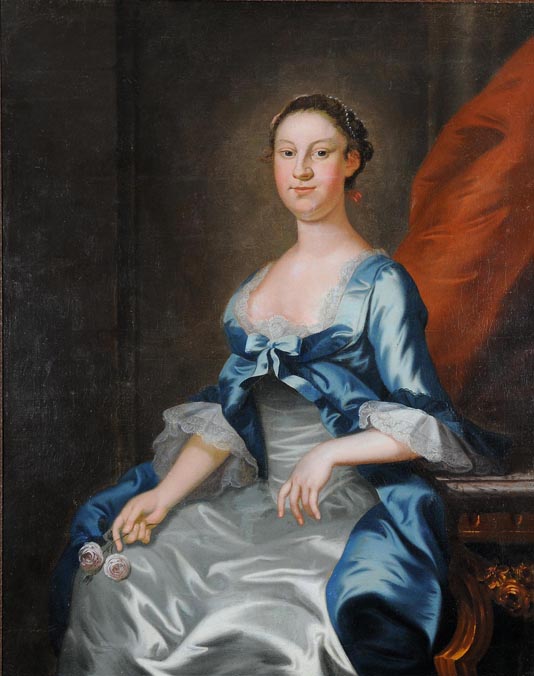
Betty’s uncle Joseph Ball also sent her a silver tea set when she was a teenage girl, further enforcing her future role.[9] The importance of properly entertaining guests with such tea equipage cannot be overstated, but in addition to this, Betty’s learning how to elegantly serve tea was a must for her prospects as the future wife of a well-off gentleman. One can imagine a teenage Betty serving tea gracefully to her future husband, Fielding Lewis, having practiced diligently with her pewter and silver tea sets.
Mara Kaktins, Archaeologist
Ceramics & Glass Specialist
[1] Woodruff Smith, Consumption and the Making of Respectability, 1600-1800 (New York: Routledge, 2002), 173; Amanda Vickery, Behind Closed Doors: At Home in Georgian England (New Haven: Yale University Press, 2009), 275.
[2] Smith, 172.
[3] Vickery, 273.
[4] Annie Gray, “‘The Proud Air of an Unwilling Slave’: Tea, Women and Domesticity, c.1700-1900,” in Historical and Archaeological Perspectives on Gender Transformations: From Private to Public, ed. Suzanne M. Spencer-Wood, 23-43 (New York: Springer, 2013), 28; Smith, 174.
[5] Smith, 173.
[6] Ibid.
[7] Smith, 174.
[8] Laura Galke, “The Mother of the Father of Our Country: Mary Ball Washington’s Genteel Domestic Habits, Northeast Historical Archaeology 38 (2009): 29-48.
[9] Paula Felder, Fielding Lewis and the Washington Family: A Chronicle of Eighteenth-Century Fredericksburg. (Fredericksburg, VA: The American History Publishing Company, 1998), 68.
It’s that time of year again!
Actually, it’s past that time of year but better late than never! The annual summer archaeological dig at George Washington’s Ferry Farm – delayed like so many other things by the COVID-19 pandemic – has finally begun! Ferry Farm’s summer archaeological excavation has become a fall dig too as it runs from August to October this year, instead of in the more typical April to July window.
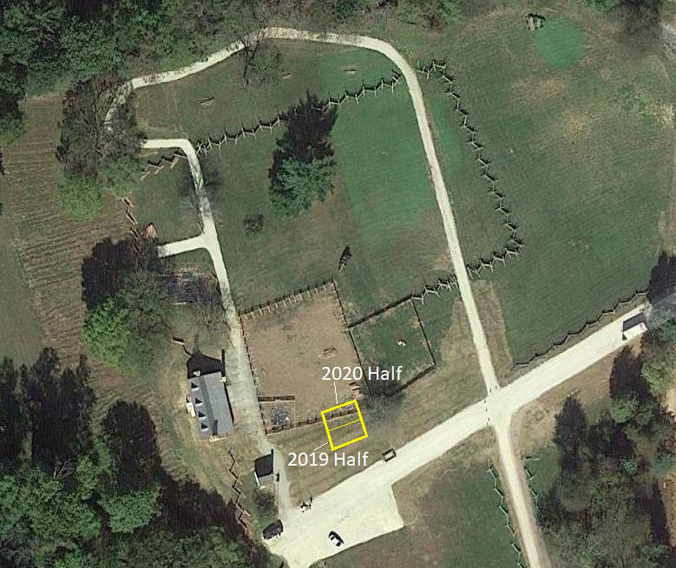
In 2019, we began excavating a 30 foot by 30 foot square in the work yard in search of outbuildings from George Washington’s time. We know there was a kitchen, slave quarters, store houses, barns, and other buildings on the farm, but we have yet to locate them all. Without these outbuildings, which will eventually be reproduced like the Washington House, we can’t accurately represent what the landscape looked like during George’s childhood.

Last year, we were tasked with excavating the 30 foot by 30 foot area, where we suspect there are still remains of and artifacts from undiscovered buildings. We completed about half of the total area. We dug the soil level down to the colonial-era level in half of our square before we had to close for the year. We also lost a few weeks of time last summer because of the nearly 2 feet of gravel that first needed to be removed. You read that right. 2 FEET! This gravel was from the construction of the Washington house replica in 2017 was leveled directly on top of the area where we needed to excavate.
This summer, we begin the other half of the 30 foot by 30 foot square. We are very excited to continue to dig this area.
Last year we excavated thousands of amazing artifacts including several Washington era wig curlers, Civil War bullets, and Native American projectile points of all shapes and sizes. You can read about last year’s discoveries here.
If visit Ferry Farm during the next several weeks, you can watch us dig on weekdays. My fellow archaeologists and I will be happy to talk with you (while masked and at a 6-foot distance) about our excavation work and some of our recent discoveries. There will also be occasional updates on the excavation’s progress on our Facebook and Instagram. Then, after the conclusion of the 2020 excavation, watch this space for a summary of our work!
Elyse Adams, Archaeologist
Co-Field Director
 In this final video of this series, Fredericksburg, Virginia-based furniture maker Steve Dietrich demonstrates the methods he used to make the lid for a blanket chest in the reconstructed Washington house at Ferry Farm.
Watch other videos and read more about rebuilding the Washington house here.
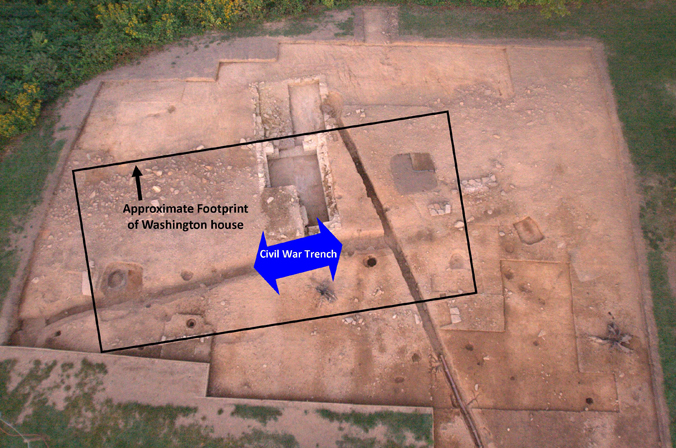
During the Civil War, George Washington’s Ferry Farm was the site of Union Army encampments that included some defensive works like a trench dug into the crest of the ridge overlooking the river. In that trench and throughout Ferry Farm’s landscape, Union soldiers lost and threw away a wide array of military gear and personal belongings, which our archaeologists frequently excavate.
This blog post highlights an intriguing artifact excavated from the trench: a diminutive glass bottle. This bottle is not so much interesting because of what it is – it’s a very common medicine style bottle for the mid-19th century– but rather what’s inside. Clearly visible within the bottle is a hard black substance and for years we’ve wondered what the substance may be.
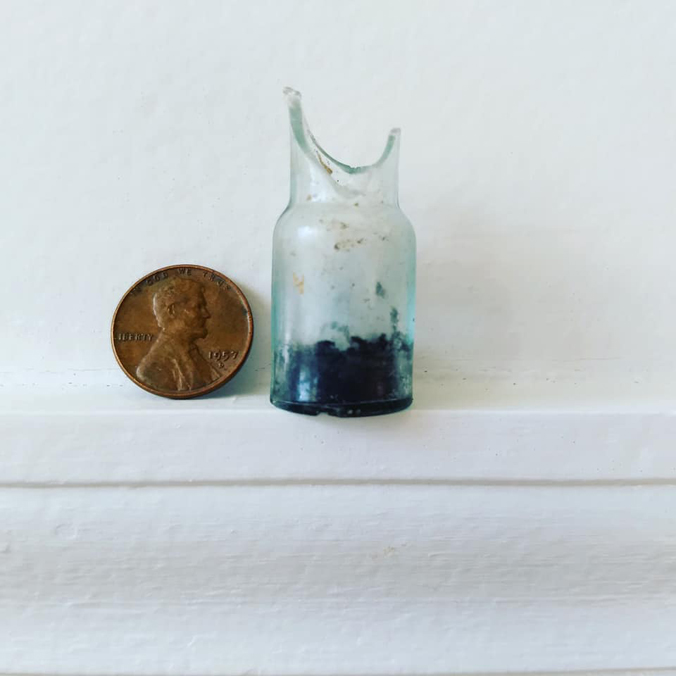
Enter Ruth Ann Armitage, our amazing chemist friend from Eastern Michigan University. Over the years, she and her colleagues have generously used their extremely fancy equipment to analyze many of the residues we’ve recovered archaeologically. So we chipped off a little fragment of the substance in the bottle and sent it to her lab.
The sample was analyzed using scanning electron microscopy (SEM). SEM works by shooting a beam of electrons at the sample, which gives you an image of its surface topography. Backscattered electrons (BSE), collected in a different detector, tell you about the elemental composition. In a BSE image, the contrast in the image is related to the atomic number of the material, with brighter areas showing high number elements (usually metals) and darker areas representing low number elements (like carbon). X-rays are also produced when the electron beam hits the sample, so an x-ray detector allows the chemist to do energy dispersive x-ray spectroscopy (EDS) to map out specifically what elements are present in the sample. To put it simply, all of these techniques are good at alerting the chemist to the elements within a residue.
Our sample was also run through DART (direct in real time) mass spectrometry. This technique is good at detecting organic components within a substance. It’s important to note here that this is not an episode of CSI and a reading does not automatically tell you what is in the bottle.
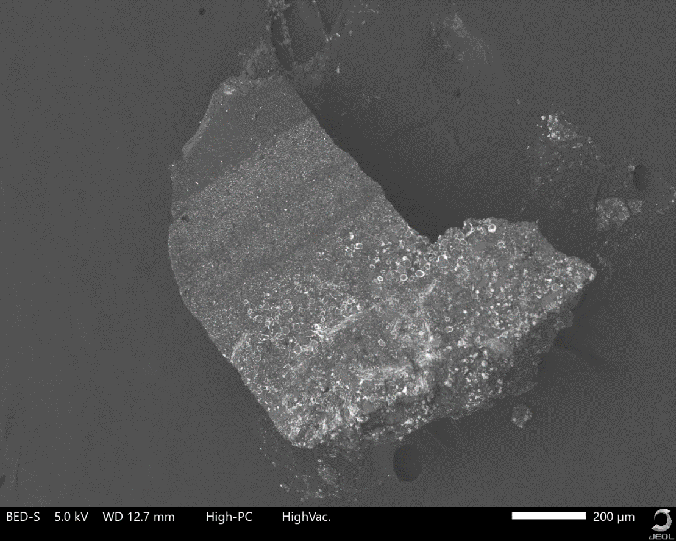
That being said, almost immediately, Ruth Ann responded and we weren’t disappointed: “Did you know there’s mercury in this?” Nope, we did not.
However, this discovery was not too surprising given the use of mercury in many medicines for thousands of years. Now a days it’s common knowledge that you shouldn’t drink mercury…or touch it…or inhale it. Believe it or not many people did not accept mercury’s dangers until well into the 20th century. Some people born in the 1980s and before might even remember playing with the little balls of mercury from a broken thermometer, am I right? As weird as it seems this wasn’t that dangerous because mercury is not toxic in such small concentrations. However, if you were born a little further back you may remember a substance called calomel (mercury chloride), which was marketed as a cure all. Perhaps most tragically, it was as a common teething medication for children until the 1950s. For a long time, mercury was seen as a potent healing metal and it was readily rubbed on skin, consumed, and vaporized for immediate effect on the lungs.
And while all of these treatments using mercury did little to address the body’s medical problem, mercury still caused an immediate bodily response, which convinced people it was working to cure their ailments. When applied topically, it burned. When introduced into the body, it caused a person to sweat, salivate, and have diarrhea. The mucous membranes also went into overdrive, leading many to believe that the bad stuff in your system making you sick was being purged by the mercury. The reality, of course, was that the body was trying desperately to rid itself of poison, the mercury. That being said, mercury does actually have a place in the medical world and can be useful, it just took a little while for people to learn how to properly utilize it.
So, if the residue inside our bottle was medicine, what medicine was it? Initially our archaeology lab thought it was calomel but the chemical analysis didn’t show any chlorine. The most interesting components were mercury and sulfur, which could possibly indicate cinnabar, the ore from which mercury is obtained. The image below is a close up of the mercury and shows the sulfur (dark circles) surrounded by the brighter mercury.
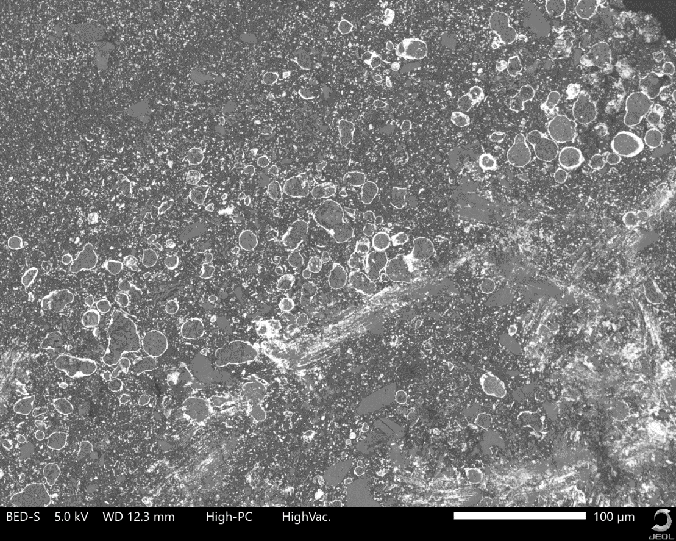
Other elements detected include carbon, oxygen, and trace amounts of iron, silica, and aluminum. A closer look at the DART analysis suggests that the mercury compound might be in the dried remains of a fat or oil based on the presence of substances that form when fats decompose over time.
What does all this mean? Unfortunately, without more research, it’s hard to say what was in the bottle other than the basic components already detected. Because it’s a medicine bottle, our assumption is that the residue it contains was a treatment of some sort in which case we’re dealing with a soldier who had an ailment. Common Civil War-era uses for mercury-based medicines were treating skin sores and lacerations, internal and external parasite infections, syphilis, and constipation, to name but a few.
What is even more interesting is that a nearly identical bottle which also contained a hefty amount of mercury was recovered across the river just a few years ago by Dovetail Cultural Resource Group from another Civil War context. Read more about their discovery here.
Soldiers throughout history are known to have carried their own medicines with them so it’s very cool to see actual physical evidence of that. As to the exact medicine, perhaps we’ll know someday but for now let’s just say it was definitely bad medicine.
Mara Kaktins, Archaeologist
Archaeology Lab Supervisor
It’s hard to believe that there was once a time when products weren’t covered in labels listing all their ingredients in great detail. We are used to labels promising the absence of unhealthy chemicals. We are accustomed to labels warning when a product was packaged in the same facility as an allergen. Product safety is serious concern of manufacturers and customers. We, as a society, are growing increasingly aware of what is going into our bodies.

Before the creation of the Food and Drug Administration (FDA) in 1906, products did not carry ingredient labels. Regulations on medicines were especially lax, compared to today. In this blog, we begin exploring historic cases of “bad medicines” that were used by someone living or working either at Ferry Farm and Kenmore long before federal regulations came into play. Medical history is a profound example of how even well-intentioned people can make lasting and deadly mistakes.
People have lived at or worked on Ferry Farm for over 300 years. We have archaeologically excavated hundreds of thousands of artifacts from the 18th and 19th centuries. Among these artifacts are fragments of glass in all shapes and sizes. Many are bottle fragments- 47,926 of them to be exact. We can’t always determine the function of a bottle from the fragments found, but when we do find enough pieces to identify the bottle’s function, we excitedly begin research into its use.
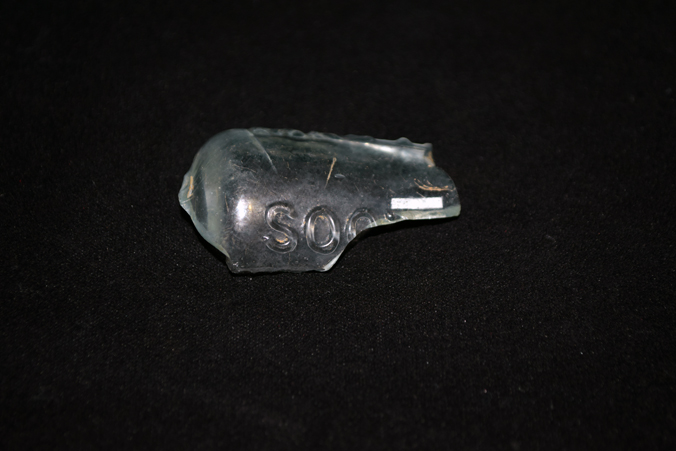
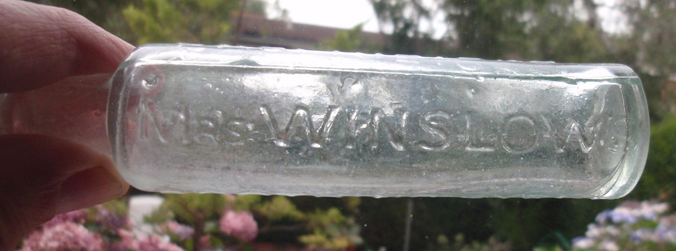
One such artifact is a larger piece of a patent medicine bottle, one that was large enough to make out the embossed lettering on the side and identify its former ingredients. The bottle contained Mrs. Winslow’s Soothing Syrup, first marketed in 1849. Its basic contents were morphine and alcohol so, I suppose, the soothing part of the name was indeed correct.
Today, Avinza® is a common morphine sulfate medication prescribed to patients suffering chronic pain. The FDA has covered its bases on the use of this medication, thoroughly describing how to take this medication without dying. One section very forcibly states:
“Swallow AVINZA whole. Do not cut, break, chew, crush, dissolve, snort, or inject AVINZA because this may cause you to overdose and die.” [1]
What is the recommended dosage for this medication, you ask? Around 60 mg of this morphine sulfate PER DAY for an adult. [2] Mrs. Winslow’s soothing syrup contained a whopping 65 mg of morphine PER OUNCE with slack rules on exactly how many drops to give to a teething infant.
You read that correctly folks – a teething infant.
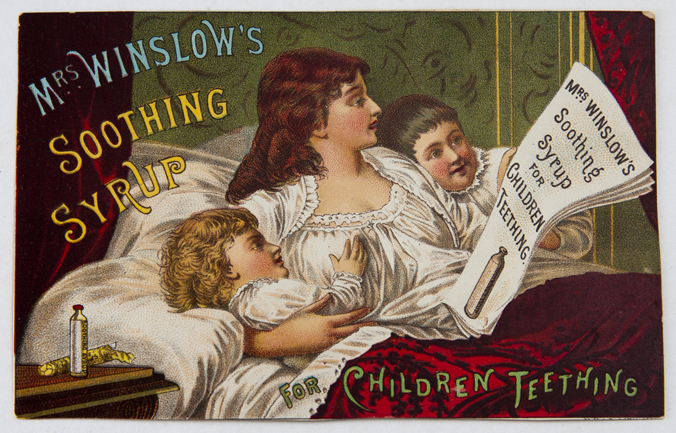
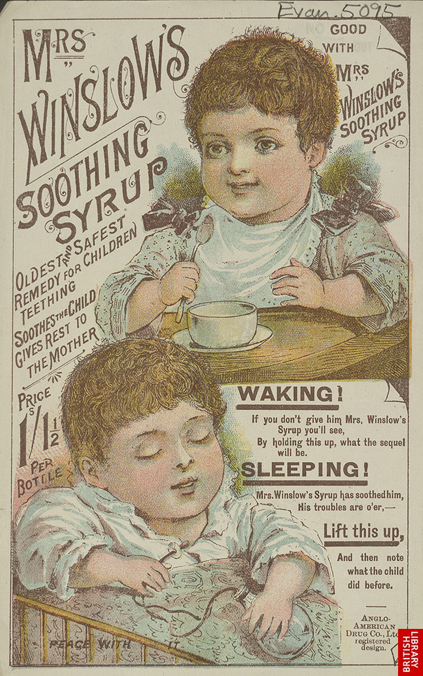
Mrs. Winslow’s Soothing Syrups and other such 19th century medications led to the deaths of thousands of infants. Several children died from withdrawal symptoms after having taking the medication for an extended period of time, but most simply fell asleep never to wake up. Knowing little about drug reactions at the time, and due to the higher infant mortality rates in the 19th century, the cause of the deaths were often blamed on “crib death” (Sudden Infant Death Syndrome or SIDS) or whatever ailment that was causing the child to be fussy enough to drug in the first place.
It wasn’t until 1905 when investigative journalist Samuel Hopkins Adams exposed the unregulated world of patent medicines in The Great American Fraud.
This publication attacked every type of patent medicine with testimonies from doctors and patients as well as scientific reports from trusted sources. In the section aptly titled “Baby Killers”, Adams detailed how various “soothing syrups” led to infant deaths from the mid-1850s to 1905.
Shockingly, Mrs. Winslow’s Soothing Syrup wasn’t the most deadly such syrup in terms of morphine content. Irreparable damage had been caused by all of the different morphine cocktails available on the market in the 1800s. As grieving parents began to realize what had actually happened to their children, these products were taken off the market.
With an enraged public and 509 pages of proof from Samuel Hopkins Adams, Congress enacted the Pure Food and Drug Act in 1906, creating the FDA to ensure the safety of American food and medicines. Still, reports of child death caused by soothing syrups persisted until 1910.

