In this video, curator Meghan Budinger and archaeologist Laura Galke discuss how small things like eating utensils recovered archaeologically reveal big things about the Washington family.

Lives and Legacies
In this video, curator Meghan Budinger and archaeologist Laura Galke discuss how small things like eating utensils recovered archaeologically reveal big things about the Washington family.
Porcelain is the king of all ceramics. As resilient as it is beautiful, porcelain has long fascinated many people. During the Ming Dynasty (1368-1644 AD), the Chinese began exporting porcelain to Europeans, who coveted the precious dishes to the point that porcelain became more valuable than gold. Europeans obsessed over how it was produced and various countries sent spies, attempted to kidnap those with the knowledge, and sought to steal texts describing the process. The Chinese closely guarded the secret, however, and the recipe for the clays and how to get the firing temperature high enough (between 2,200, and 2,600 degrees Fahrenheit) remained a mystery. The Chinese had been making hard-paste porcelain (as opposed to soft-paste porcelain, which was considered less desirable) for over a thousand years. That’s a well-kept secret, folks.
In the 16th century, the first Europeans attempted to make porcelain in Florence but without success. Following that, Portuguese traders returned from China with kaolin, a clay found to be key in making porcelain, but they didn’t know what else to add to it so it would survive the high firing. Then, around 1700, a teenage alchemy apprentice with poor judgement named Johann Friedrich Böttger boasted that he knew the secret of the Philosopher’s Stone, a substance that would turn base metals into gold. Word got out and he was kidnapped first by Frederick I of Prussia and then Augustus II the Strong of Poland. Augustus locked him up in Dresden and ordered him to make good on his claim. Obviously he couldn’t and to avoid being killed by the increasingly impatient king, he reluctantly partnered in 1707 with Ehrenfried Walther von Tschirnhaus, a scientist working on developing porcelain. Combining their efforts resulted in the first hard-paste porcelain manufactured in Europe and resulted in the establishment of the Meissen porcelain factory in 1710.
But the intrigue doesn’t end there. In 1712, Father Francois Xavier d’Entrecolles, a French Jesuit, learned the secrets of how the Chinese manufactured porcelain with the help of Chinese he had converted to Catholicism. He published a letter detailing the process, in what was arguably an act of industrial espionage, and it began circulating through Europe. To further complicate matters, Samuel Stölzel, an employee of the Meissen factory, which fought hard to prevent its employees from blabbing about their secret for making porcelain, fled the factory’s oppressive conditions in 1719. He made it to Vienna, where he promptly spilled the aforementioned secret. Within a few decades, porcelain was being produced widely across Europe. Although Chinese porcelain was still highly valued, their exports began to drop off.
As evidenced by all this thievery and espionage, porcelain was a big deal. Owning porcelain was a sign of status and refinement. If you were of the European upper class, it was imperative that you own these fancy dishes AND show them off whenever possible. It was no less imperative for the gentry class in British North America. Archaeological analysis of the Washington family’s porcelain illustrates that they were very much a part of this culture of conspicuous consumption when they lived at Ferry Farm.
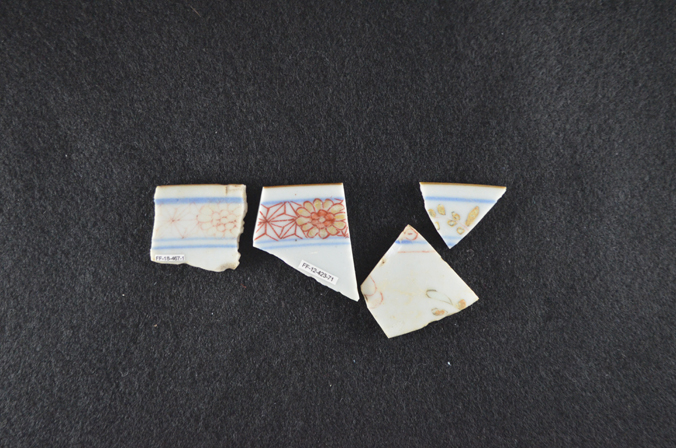
Our current mending project, piecing together porcelain sherds recovered from Ferry Farm, revealed dozens of distinct dishes once owned by the family. George Washington’s mother Mary owned porcelain predominantly from China. Interestingly, all were teawares as opposed to dinner wares. While dinner was definitely a time to show off one’s ‘good china’, colonial tea time was arguably an even better opportunity. Serving tea in the 18th century had a large ceremonial aspect and was an opportunity for those participating to show off how cultured they were while serving a beverage (also from the distant locale of China as well as India) linked closely to high status. Perhaps Mary, a widow on a budget, decided to put her limited resources into more conspicuous teawares rather than dinner plates and bowls. Previous analysis in our archaeology lab indicates that Mary preferred a ceramic called white salt-glazed for her dinner dishes.
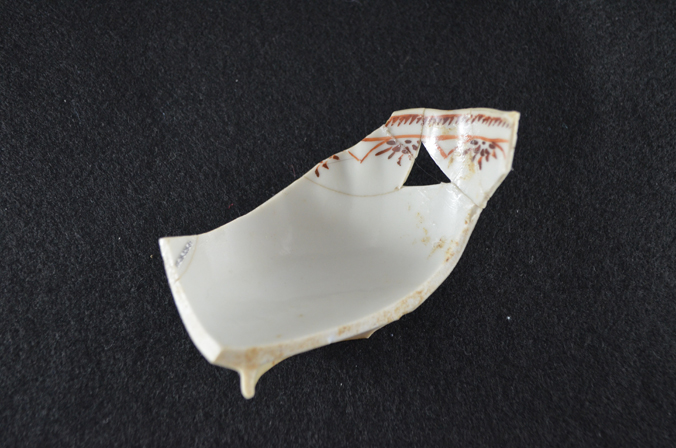
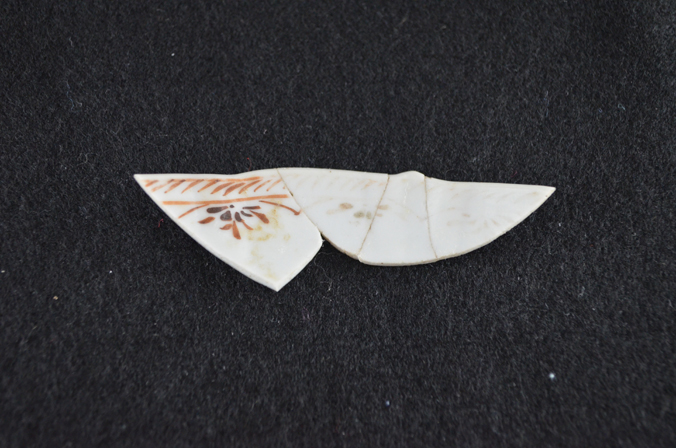
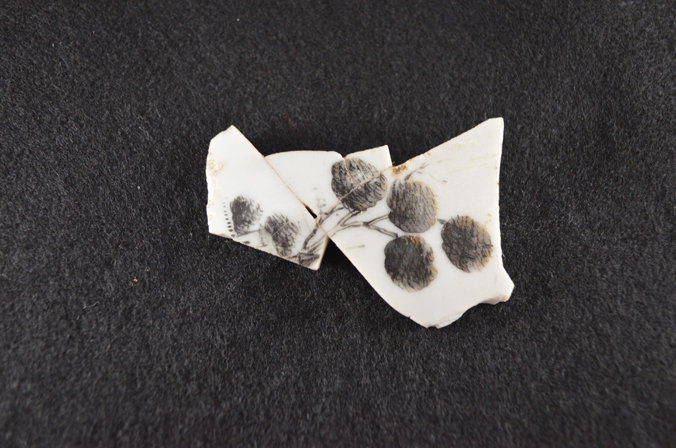
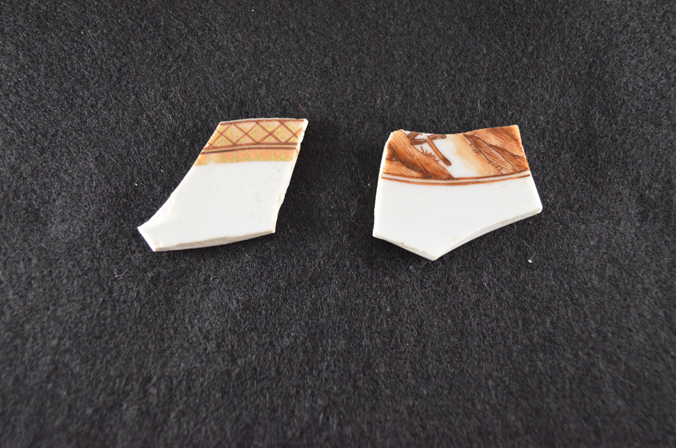
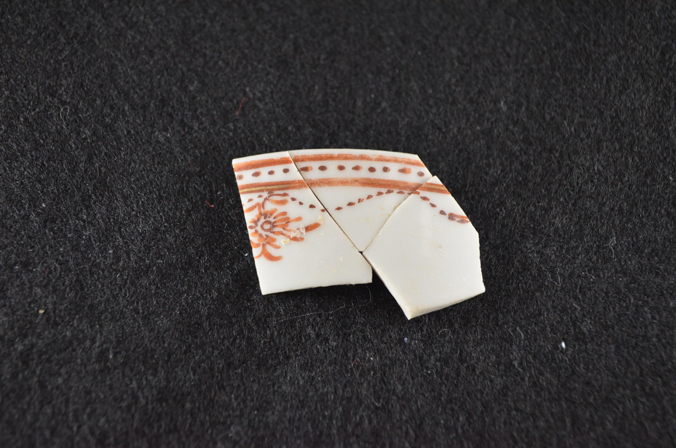
It has also been interesting to discover the china patterns that Mary favored, which include landscape scenes, abstract geometrical designs, and floral patterns. While she did not appear to own ‘sets’ of china she did have cups that matched saucers, a further illustration of refinement. As complete sets of china were not common in the middle of the 18th century, one could attempt to match up similar color palettes. Although we’ve identified dozens of motifs in our collection, there is little evidence for Mary matching the palettes of her porcelains. Her table, as with most colonial households, was a lot more varied in colors and patterns than we expect in the modern day. Mary’s porcelains were delicate and skillfully hand-painted with brushes sometimes containing no more than a few bristles. Many of the teawares are also gilded, which was a premium type of decoration for the time.
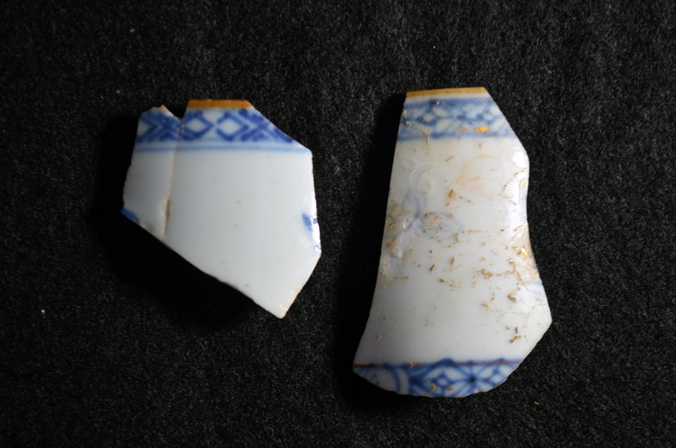
In addition to teacups and saucers, our archaeologists have identified one tea canister and a few coffee or chocolate style cups, which tend to have taller and straighter sides and be of a smaller diameter.
With this mending experiment under our belt it’s on to the next one in our never ending quest to learn as much as we can about the Washington family!
Mara Kaktins, Archaeologist
Archaeology Lab Supervisor
In this video, we visit with Tom Snyder and Astrid Smith of Williamsburg Art Conservation to see how they upholstered the leather bottom chairs in the hall of the Washington house replica.
Watch other videos and read more about rebuilding the Washington house here.
Many visitors to George Washington’s Ferry Farm are surprised to learn that about a quarter of the 750,000 artifacts excavated by Ferry Farm’s archaeologists were created by Native Americans. However, given that indigenous people were living in the land we call Virginia for thousands of years prior to the arrival of Europeans, it makes perfect sense. The vast majority of these Native American artifacts are stone flakes that are the byproduct of stone tool manufacture (think sawdust or wood shavings from carpentry, but stone) and date to the Archaic period (or 10,000–3,200 years before the present day). A very few are even older. In fact, Ferry Farm’s oldest datable artifact is the basal fragment of an ancient jasper dart point made by a people belonging to what we call the Clovis culture.
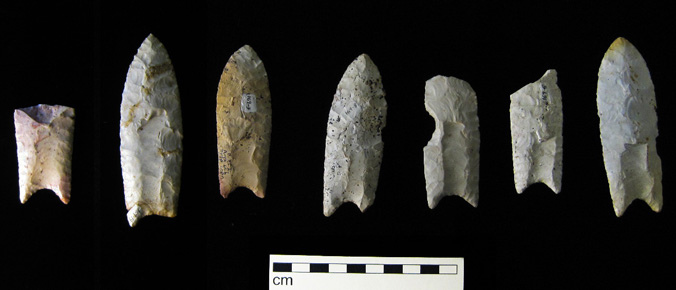
The Clovis culture were some of the earliest inhabitants of North America, and was named after the Clovis “type site” (an archaeological site where a certain culture or artifact type is first recognized) near the town of Clovis, New Mexico. The Clovis people made distinctive projectile points immediately recognizable by their lanceolate or narrow oval shape that tapers to a point at one end and the presence of “flutes” on their bases. These flutes are narrow channels where flakes of stone were carefully removed from both sides of the point to make it thinner. The fluted point could then easily be slid into a notched wooden or bone shaft- a process called hafting- to make a knife or dart (more on darts below). The sides of the point would be ground near the base to dull them so the point could be secured in its haft with sinew or cordage without cutting through these bindings.
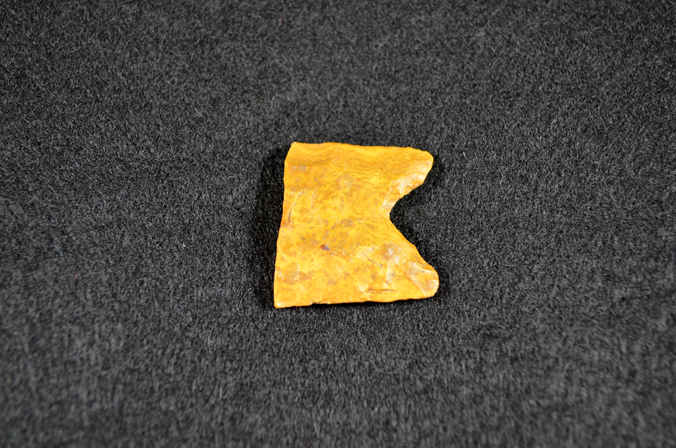
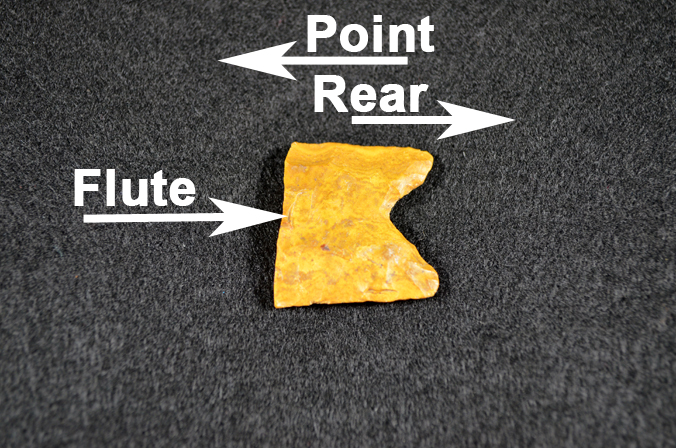
The Clovis people were well known for being picky about their lithic (stone) materials and traveled long distances to procure them. The closest quarry from which they could have obtained jasper to make Ferry Farm’s point is in Culpeper, at least 35 miles away. The people who made this dart point may have manufactured it here as we also have numerous flakes of this same jasper.
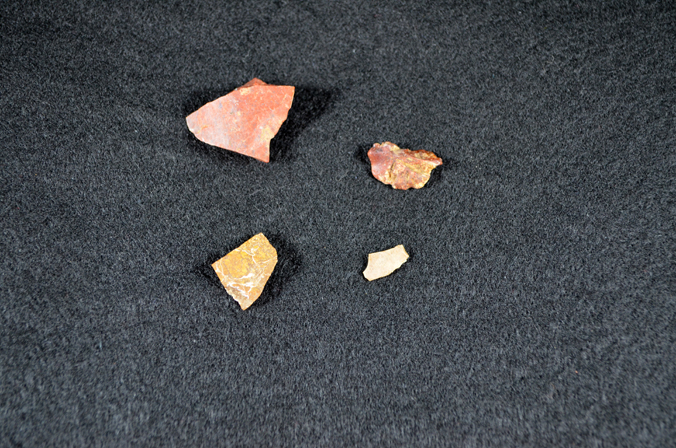
Clovis points date to a fairly narrow period from roughly 13,500 to about 12,800 years ago, and are found almost everywhere in North America, from the Southwest to New England. One of the interesting things about Clovis culture is that it is so widespread- no later cultures made artifacts that are found across such a vast area. It’s even more interesting to consider that these points got deposited all across North America in such a relatively short time span of maybe 700 years. This begs the question: What moved? Was it the people making the Clovis points? Or was it the technique of making the Clovis points? Was there a particular group of fluted-point-making people sprinting across the North American or were there already enough people on the pre-Clovis landscape that it the idea of making fluted points just spread from group to group? Archaeologists are working to answer these questions.
As mentioned, one use for Clovis points were in darts. These darts were not like you throw at a dartboard in a bar. In this context, a dart is like a spear but with a more flexible and lightweight shaft that can fly farther and with greater velocity. Greater distance and speed are achieved by launching the dart with a spear thrower called an atlatl (pronounced “at-lattle”). The atlatl essentially acts as an extension of the arm, creating a longer lever that pushes the dart farther and faster by applying more force with less energy. Although Clovis points were probably multi-purpose tools used as both knives and projectile points. As projectile points, they were likely used on atlatl darts for hunting. Although the extent to which Clovis people relied on meat from such huge creatures is debatable, they probably used their fluted points to bring down a few mammoths and mastodons, at least in the western United States.
What do you think the owner of the Ferry Farm Clovis point was doing with theirs when they lost it? We may never know, but what we do know is that it gives us evidence that people were living along the Rappahannock River nearly 13,000 years ago. We can still find their tools and those tools piece together the whole story of Ferry Farm’s landscape and people!
Joseph Blondino, Archaeologist
Field Director, Dovetail Cultural Resource Group
Mara Kaktins, Archaeologist
Archaeology Lab Supervisor, The George Washington Foundation
As many of you know, the Washington house replica at George Washington’s Ferry Farm was reconstructed and furnished as accurately as possible using historic documents, paintings, letters, and, of course, archaeology. Now that the challenge of getting the house built and open to visitors has passed, it’s time to turn to the rest of our plan for interpreting Ferry Farm’s landscape. This will eventually include constructing outbuildings, finishing the work yard, and improving the garden.
Even though the present garden is located at Ferry Farm’s Visitor Center and not yet near the Washington house replica, we used archaeological discoveries to decide what goes into the garden this spring. Using data from past excavations on Washington-era contexts, we drew some conclusions on what the Washington family and their enslaved workers cultivated here. While most organic material left behind over 250 years ago is long gone, as archaeologists, we sometimes get lucky and find biological and botanical remains that have withstood the time in the ground. We get especially lucky when we do find botanical remains like seeds and wood because, depending on the elements, they usually decompose easier and faster than bone.
Visitor often ask how we find some of our tiniest artifacts such as seeds. For important contexts and Washington era features, we don’t want to miss a single (tiny) thing, so we use a water screen. Instead of the usual quarter-inch screen we use for dry sifting dirt, we use a gentle stream of water from a garden hose and spray away the dirt through a window screen. We then use tweezers to pick out the tiny artifacts left behind. Objects like the straight pin in the photo below and seeds could otherwise fall through the standard quarter-inch screen.
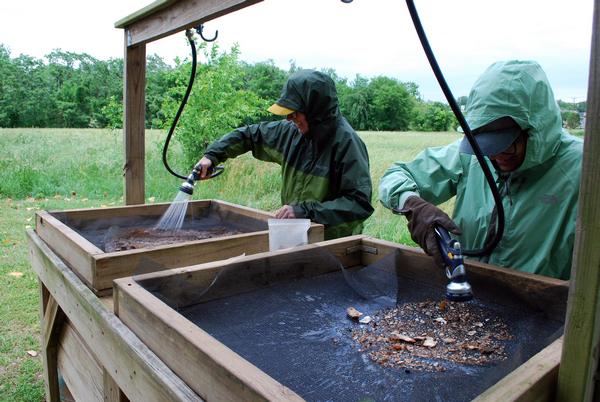


In 2015, we had flora remains from a mid-18th century storehouse cellar feature that had been captured by our fine mesh water screens sent to Justine McKnight, an archaeobotanical consultant for analysis. Without getting extremely technical, I will say that we gained some very useful data to use to plant our garden this year. Seed specimens discovered archaeologically and used in cultivation consisted of peas, green beans, wheat, and corn. Seeds included hackberry and, of course, cherry. The only nut uncovered was a hazelnut shell.


Along with this archaeological evidence, we also know that some tobacco was grown on the Washington farm because of court records. In the 17th and 18th centuries, tobacco was Virginia’s premier export and most valuable cash crop but places along the Rappahannock River like Ferry Farm were not great tobacco land. In these areas, as our excavated seeds show, planters moved onto corn, wheat, and other crops, knowing they would never get rich on tobacco.
Using all of this information, we planted similar crops in the demonstration garden along with other crops widely grown in 18th century colonial America.


While seemingly insignificant at first glance, these tiny charred remains of flora give us a snapshot in time of the diets of the Washington family and enslaved workers at Ferry Farm. These definitely are not the only plants they were eating, but we do know via archaeology that these were stored by the family in the mid-18th century. Using the other archival resources listed above, we will continue to fill in the gaps and enhance our garden and landscape according to the historical and archaeological records.
Elyse Adams, Archaeologist
Archaeology Lab Technician
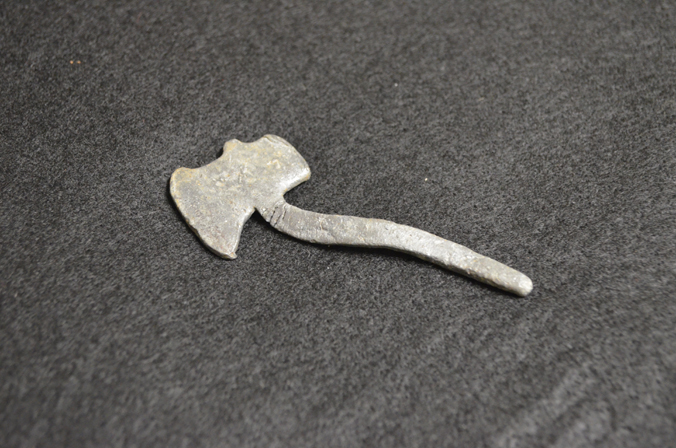
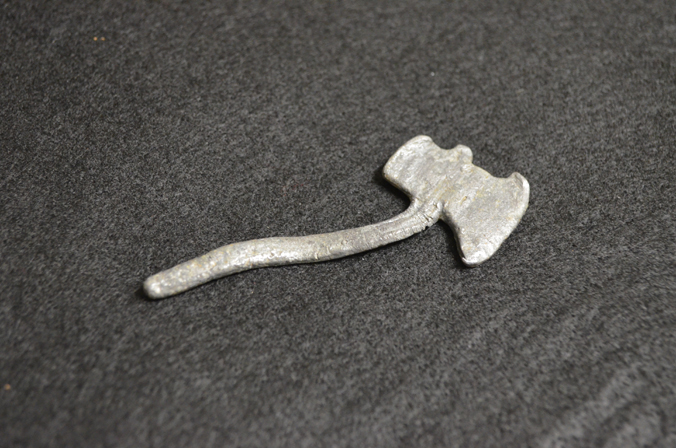
This is a Memorial Day story of a tiny hatchet excavated at George Washington’s Ferry Farm. For such a diminutive object it speaks quite loudly to our local history in Fredericksburg, Virginia. Initially, archaeologists at Ferry Farm assumed it was a pewter toy souvenir given out or sold in 1932, when our country and Fredericksburg celebrated the 200th anniversary of George’s birth. Indeed, cheap pewter toys were very popular during the time period.


A closer look at the provenience, or the location on the Ferry Farm landscape, where the artifact was recovered paints a more complex picture. Provenience is very important in archaeology because whatever is excavated around an artifact paints a more complete picture than one object all by itself. A reexamination of all the artifacts from the context where the hatchet was found revealed that nothing from that strata (we excavate in layers) had any 20th century artifacts in it, nor did the two strata above it. In fact, the youngest artifacts from these strata were all mid-19th century. Additionally, although the archaeologists who excavated the hatchet didn’t know it at the time, the excavation unit from which the hatchet came sat right inside the Civil War-era trench that runs across the property.

This revelation shut the door on our ‘it’s a 20th century souvenir’ narrative but opened the door to an even cooler one. A close examination of the hatchet showed that it didn’t have mold seams, which are always present on cast pewter toys. Furthermore, for some reason, it had one smooth side and one textured side leading us to believe that it was handmade, not machine cast. This was supported by a thorough internet search to find an identical toy hatchet, which came up empty, further supporting our new theory that this piece was a one of a kind. The textured side resembled the grain of wood so we surmised it had been cast in a simple hand carved wooden mold. All of these clues, combined with its location within a Civil War trench, made us suspect that the hatchet was crafted by a soldier, possibly from a lead minie ball. The hatchet is likely ‘trench art’.
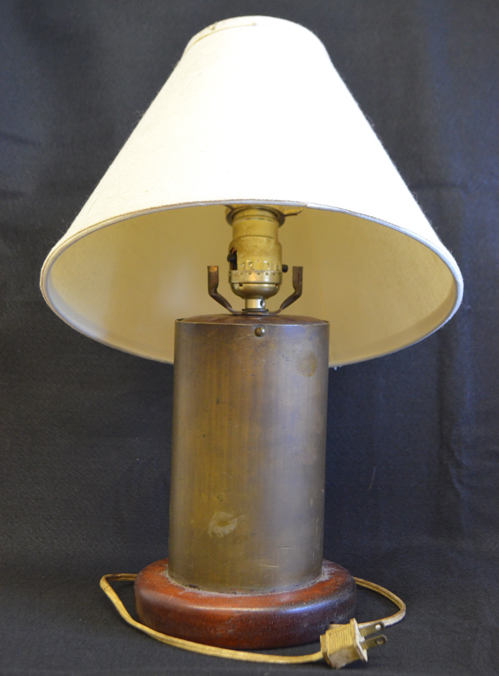
Trench art is defined as objects either made by soldiers and POWs or by civilians using military items such as brass shell casings or lead bullets. This simple lamp, owned by the author, was made using a 105 millimeter brass artillery shell casing.
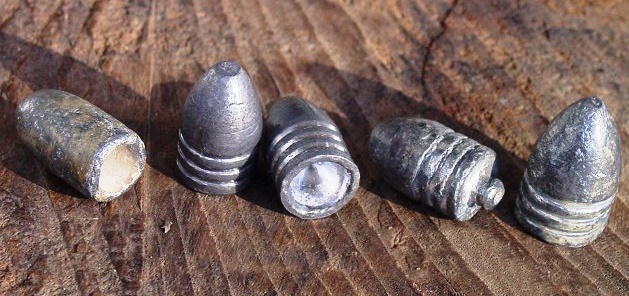
To further support our identification of the hatchet as trench art, we took the artifact to the Virginia Department of Historic Resources where the amazing Katherine Ridgeway analyzed it using XRF or X-ray florescence analysis. This non-destructive technique determines the composition of metal. We also brought along a few minie balls recovered from the same unit for comparison. It turned out that what we thought was a pewter hatchet was actually a lead hatchet with a similar compositional profile to minie balls, which are mostly lead with trace amounts of other metals such as tin and nickel. While minie balls vary in their composition due to their imprecise method of manufacture, the hatchet was still a close match.
One can just imagine a bored Union soldier whittling the mold and then melting down some of his bullets to pour into it. He likely chose the hatchet form because of the famous cherry tree story, in which young George Washington owned up to hacking his father’s cheery tree with a hatchet by proclaiming ‘I cannot tell a lie’. The soldier would have been well-versed in the Washington cherry tree myth, which was set at Ferry Farm by Mason Locke Weems in his first biography of Washington, published in 1800. By the 1860s, the story was nationally known. Additionally, letters Union soldiers wrote while encamped at Ferry Farm indicate they knew the site’s connection to Washington. They even went so far as to send home cherry seeds for their families.
While the identification of the hatchet is now secured, we have so many more questions. Who was this soldier? How many hatchets did he make and why did this one come to be left behind in his trench? Was it a souvenir for himself or did he send one home to his family or share with fellow soldiers? Did he survive the war? Unfortunately these are mysteries that will likely never be solved but that make for great pondering on this Memorial Day.
Mara Kaktins, Archaeologist
Archaeology Lab Supervisor
On Tuesday, May 21, 2019, Dave Muraca, Director of Archaeology at The George Washington Foundation, presented “The Social Role of Garbage in Colonial Virginia,” the final talk in this year’s annual lecture series. Dave presented three case studies in 18th century garbage disposal at George Washington’s Ferry Farm, Colonial Williamsburg, and Historic Kenmore.
Thanks to the Fredericksburg branch of the Central Rappahannock Regional Library at 1201 Caroline Street in Fredericksburg, Virginia for hosting the series once again this year. To learn about other events and happenings, visit kenmore.org.
On Tuesday, May 7, 2019, Archaeologist Mara Kaktins, Ceramics & Glass Specialist at The George Washington Foundation, presented a lecture titled “Drinking with the Washingtons: Archaeological Evidence of Colonial Imbibing at Ferry Farm.” Mara explored a wide variety of beverage-related artifacts from teawares to punch bowls and discussed how cups and glasses reflected efforts by Mary Washington to demonstrate the family’s economic status and refinement.
Join us on Tuesday, May 14, 2019 for “Food in the Eighteenth Century” when Deborah Lawton, Park Ranger at George Washington Birthplace National Monument, will explore the new dishes and changing tastes that marked the foodways of the eighteenth century. Talk begins at 7:00 p.m. The lecture is FREE and hosted at the Fredericksburg branch of the Central Rappahannock Regional Library at 1201 Caroline Street, Fredericksburg, Virginia. To learn more, visit http://www.kenmore.org.
The replica Washington house at George Washington’s Ferry Farm has been open for tours for one year now but we still continue to add reproduction furniture and objects to the rooms inside. Since the house is a replica built using archaeology, historic research, and expert knowledge, we are using the same three foundations to create replica objects to display inside the house so that visitors may have a hands-on interactive experience. Guests may sit on chairs, lie on the beds, pick up tumblers, hold tea pots and much more! Here in the archaeology lab at Ferry Farm, we’re always hard at work making new reproduction ceramic and glass items for the Washington house, as seen in this video. Let’s take a look at some of our newest additions!
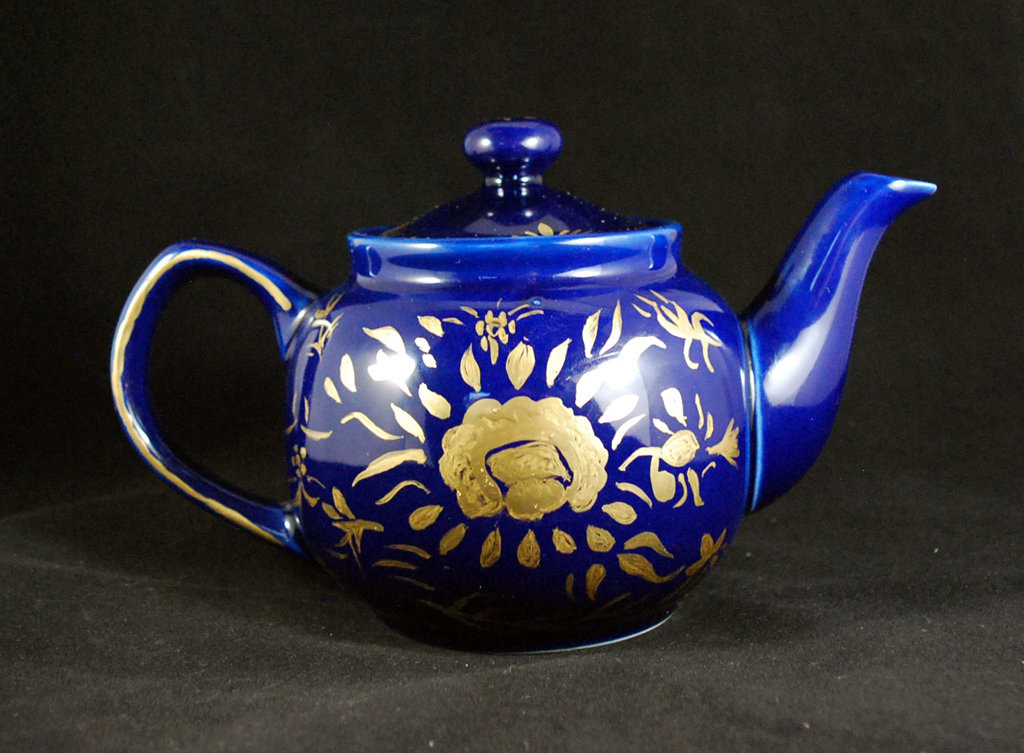
This adorable little teapot is a reproduction of a ware type called Littler’s Blue which had a very short run between 1750 and 1765. These pots were often gilded with gold so we found a tiny blue teapot and made it fabulous.

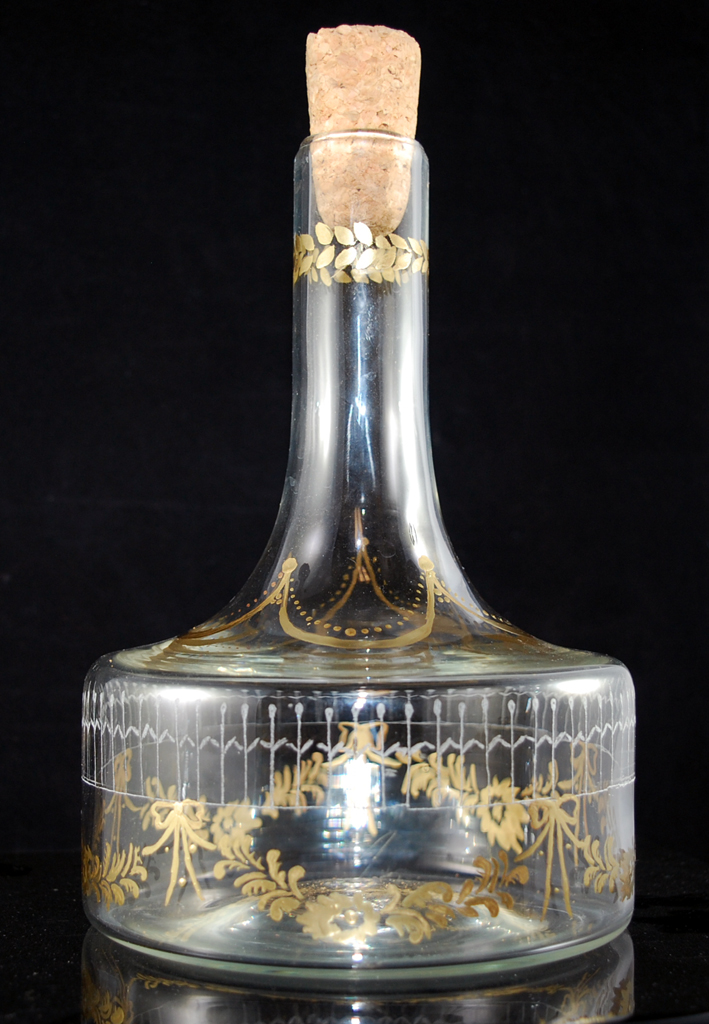
We needed a decanter for the Washington house and while the shape of this one wasn’t perfect we were able to engrave it with a tulip motif based on artifacts recovered archaeologically at Ferry Farm. And because we caught gilding fever one of our very talented interns embellished it further to match eighteenth century examples. We also whittled down the ridiculous cork, although we’re searching for a more appropriate glass one.

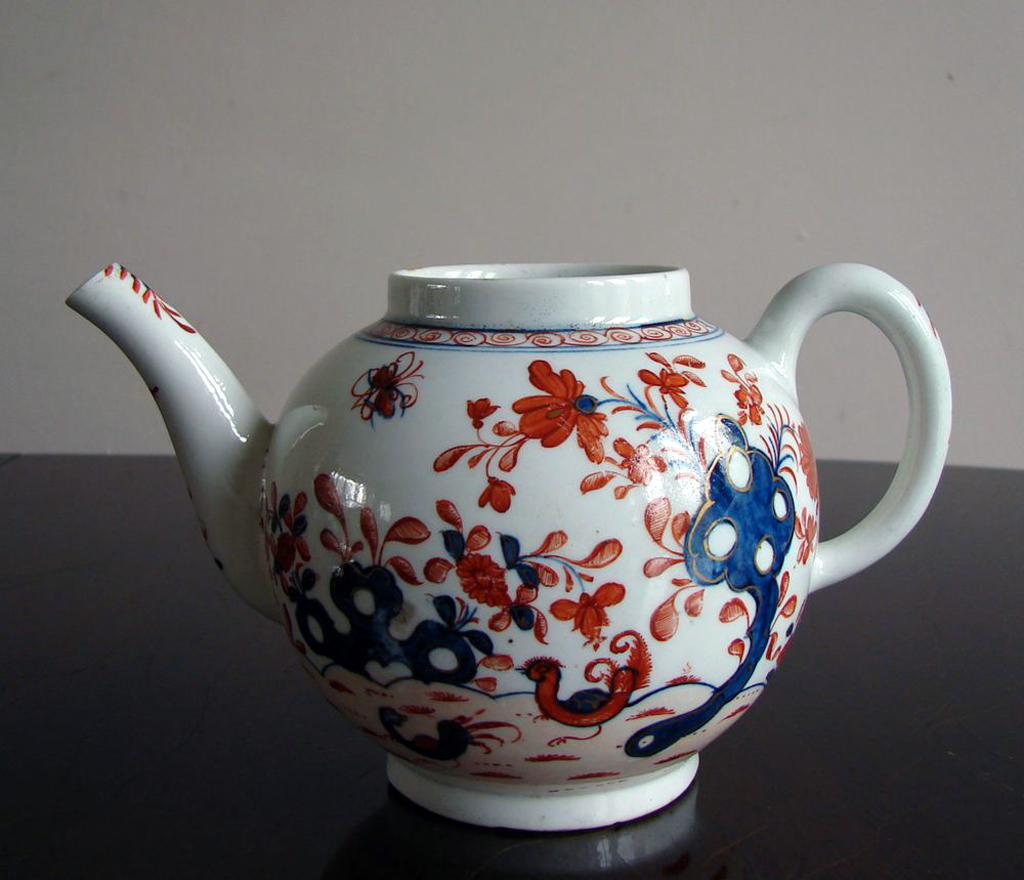
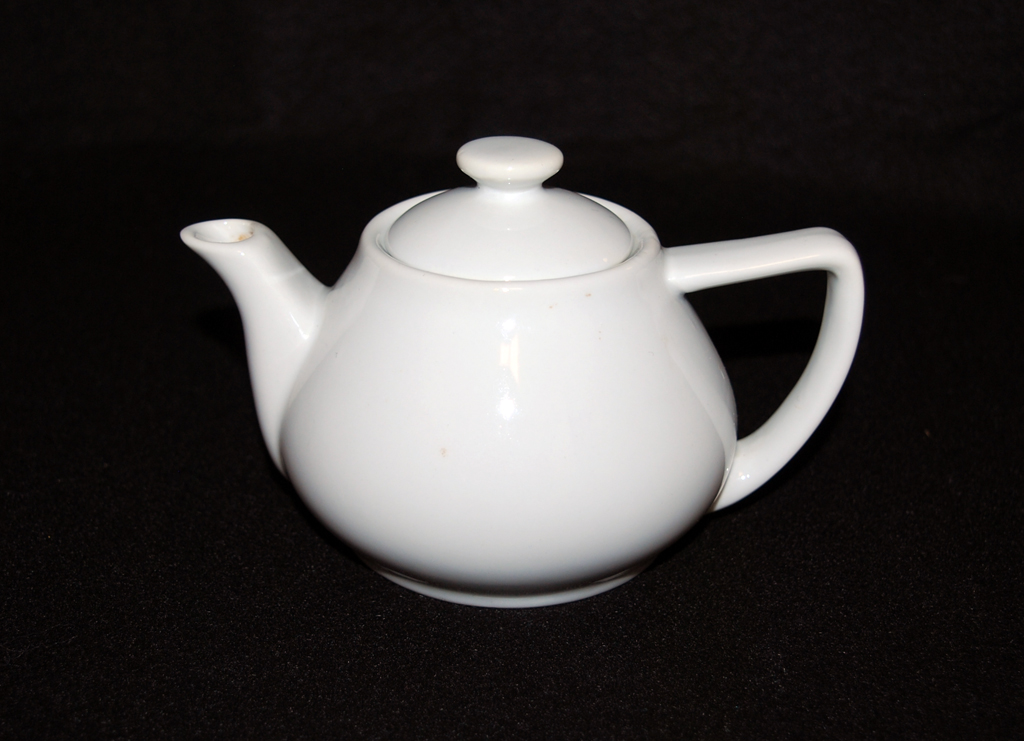
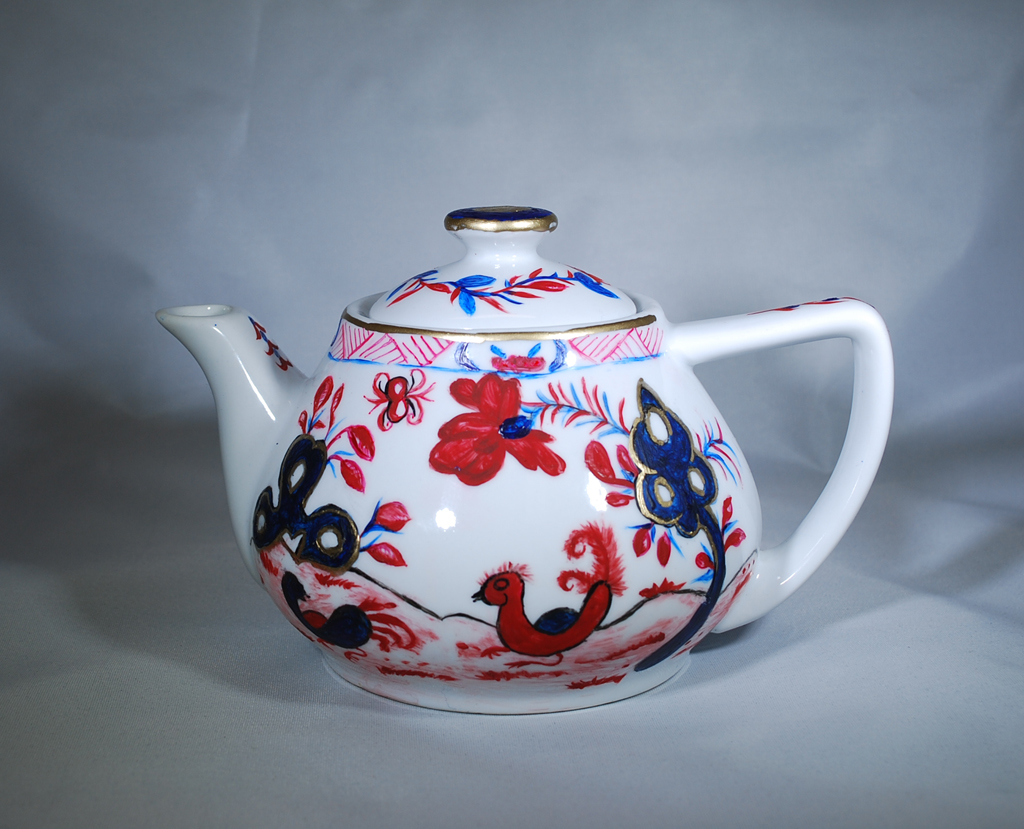
We’ve excavated a lot of Chinese porcelain with what is called at ‘Imari’ palette, which is defined by under the glaze blue hand-painting, over-the-glaze red painting, and gilding. Reproduction Imari is hard to find so we turned this plain white teapot into an Imari. Our inspiration was the 18th century teapot below featuring cute little silkie chickens!
Our staff then set out to turn this colonial revival basin into a tin-glazed serving bowl. Our excavations have turned up quite a bit of hand-painted polychrome tin-glaze so it was a must have for the new house. We decided to copy the eighteenth century bowl below. A little bit of paint and presto! Bye basin and hello serving bowl! Can you spot the tiny bee hidden among the flowers?


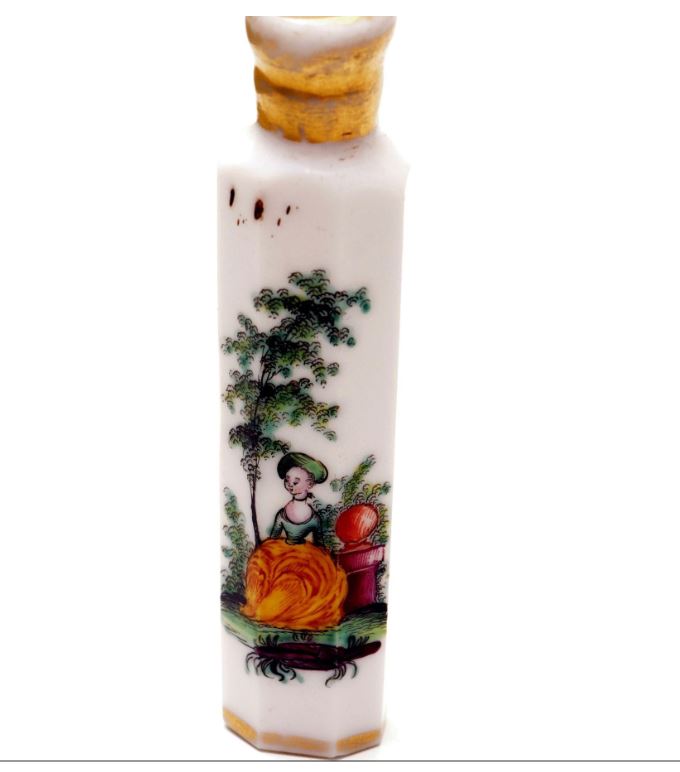
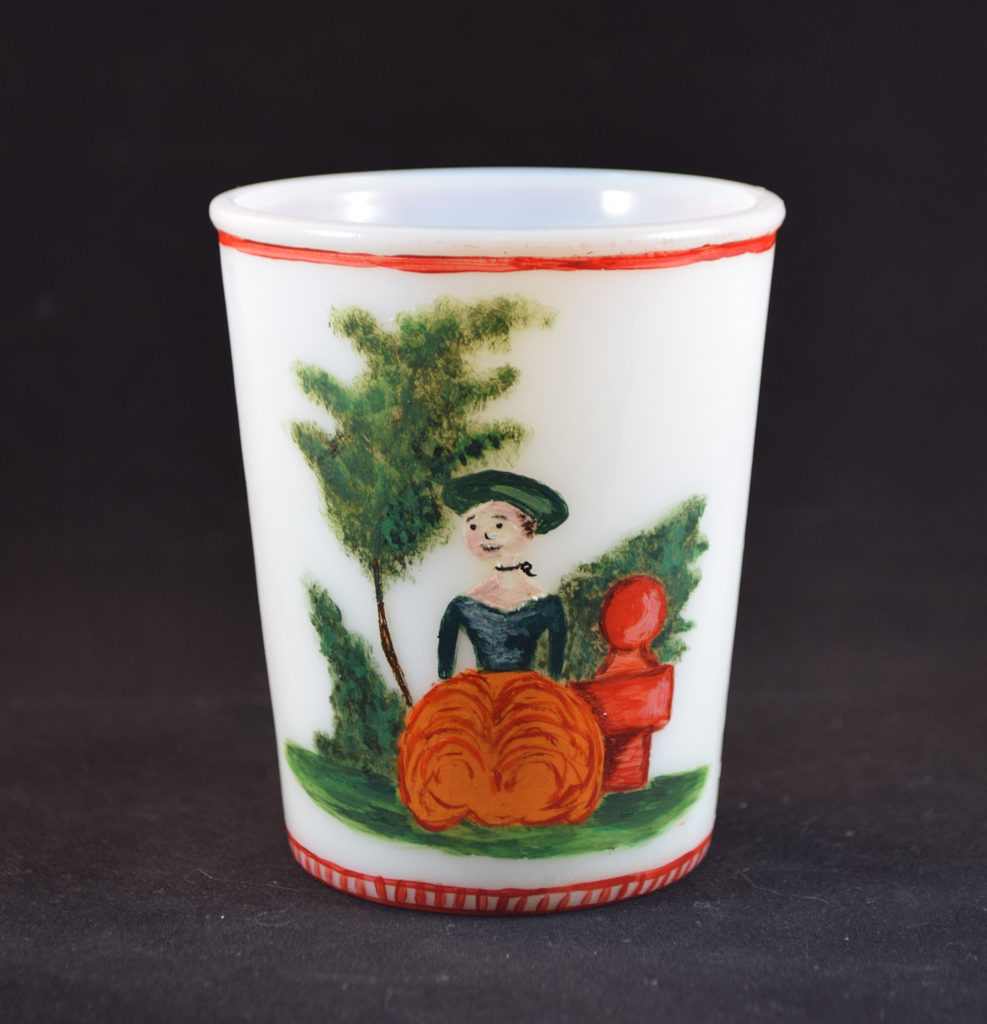
We’ve been very fortunate to have a few extremely artistic interns, one of whom decorated this milk glass tumbler with an eighteenth century design from the vase below. Some artistic license was taken and we decided to leave out the odd crab/lobster/crayfish….thing at the feet of the lady. We think she turned out pretty nicely and since we’ve excavated a lot of painted milk glass at Ferry Farm she is a good fit for the house!
If you’d like to see any of these in person, please come take a tour of the Washington house replica at Ferry Farm! Where, unlike most museums, touching the (reproduction) objects is highly encouraged!
Mara Kaktins, Archaeologist
Archaeology Lab Supervisor

