There’s plenty to be frightened about in the colonial period. But teapots? Not exactly. However, aesthetics change as time passes. We see things through different lenses. As I type this, my substantial black cat with big yellow eyes stares at me, demanding attention.
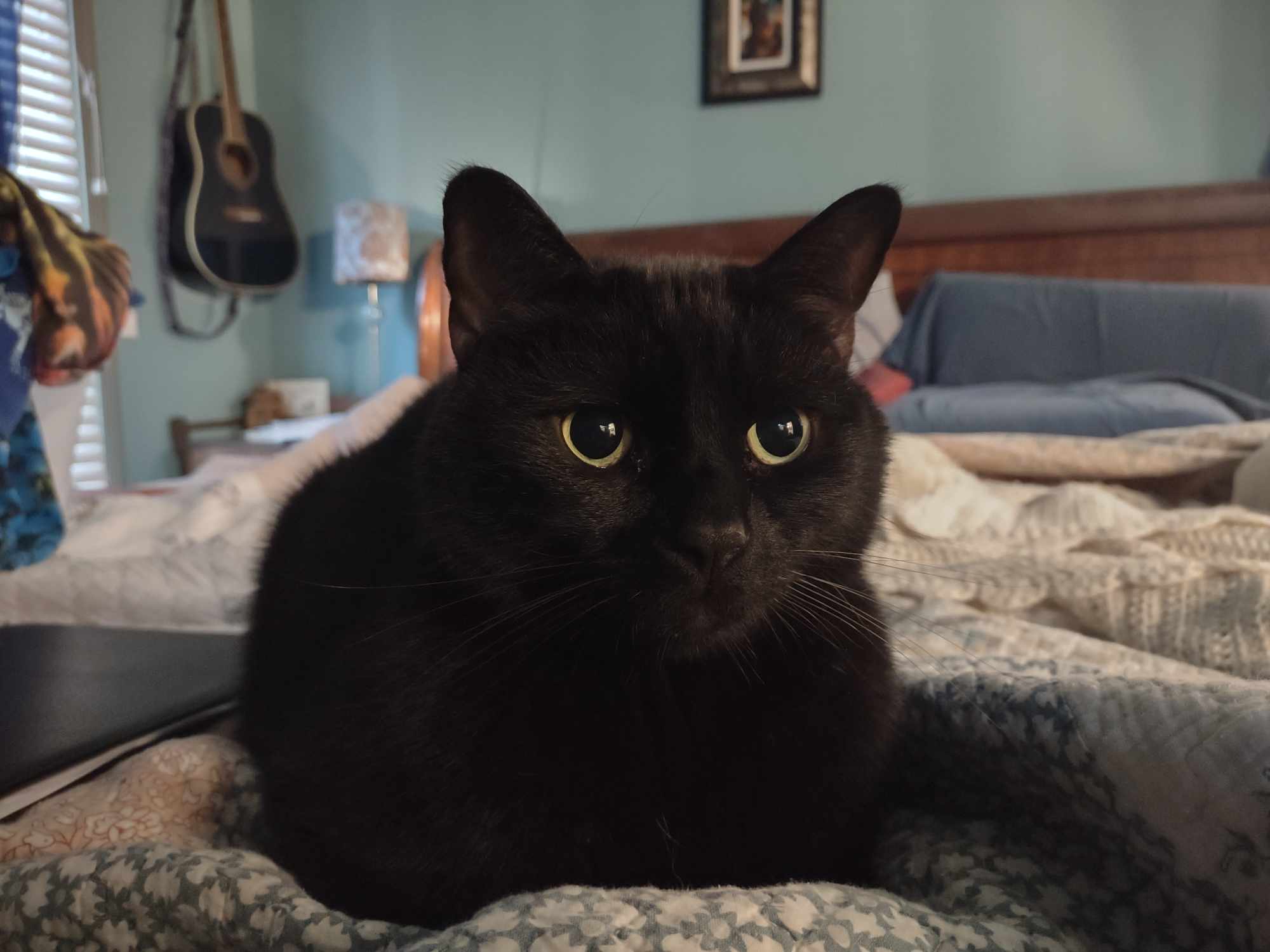
Black animals are currently the least likely to be adopted in the United States, so black can be seen as a negative in pets…but what about black teapots?
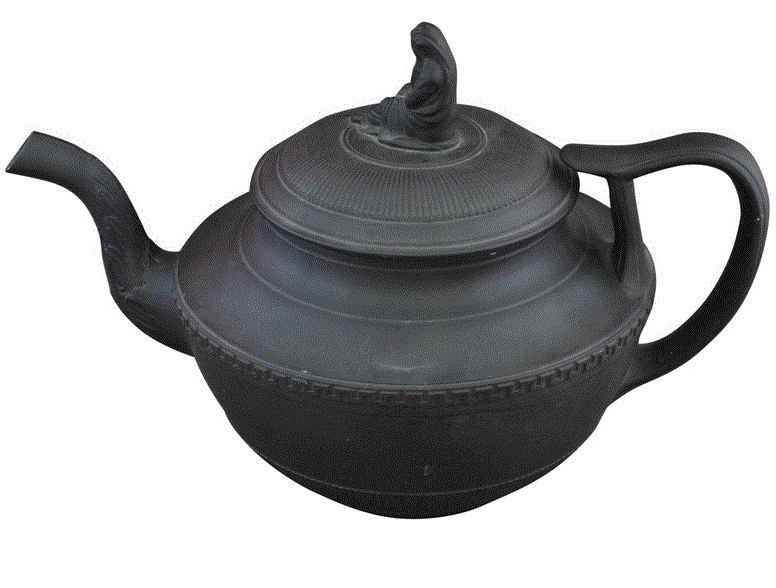
Turns out, they were very much the rage during the middle of the 18th century and even into the early 20th century.
“Black is sterling and will last forever.”
In 1767, Josiah Wedgwood started working with black basalts – a richly hued, glossy black stoneware medium – for his famous Etruscan vases. Wedgewood’s basalt is made from reddish-brown clay that burns black in the firing process; black basalt owes its color to the addition of manganese. [1] [2]


After Wedgwood perfected the fine-grained stoneware, it was soon being produced by other Staffordshire potters in England. It was called ‘Black Basalt’ or ‘Egyptian Black.’ [3] [4] A matte black teaware that was striking and, by our modern estimations, quite possibly macabre.
Black Basalt teapots were decorated utilizing a new technology called ‘engine turning’ lathes. Simple turning lathes have been used for pottery production since the early 1700s. By the 1730s, virtually all hollow wares (mugs, jugs, cups, bowls, etc.) were being lathe-turned to shape and thin bodies. The engine-turning lathe further provided the ability to cut regular patterns in the clay bodies to create decorative elements. [5] The decorative elements at the time were heavily influenced by classical art from Ancient Greece and Rome. [6]
A striking finial accented the lovely neoclassical etches on the body of the matte black pot.

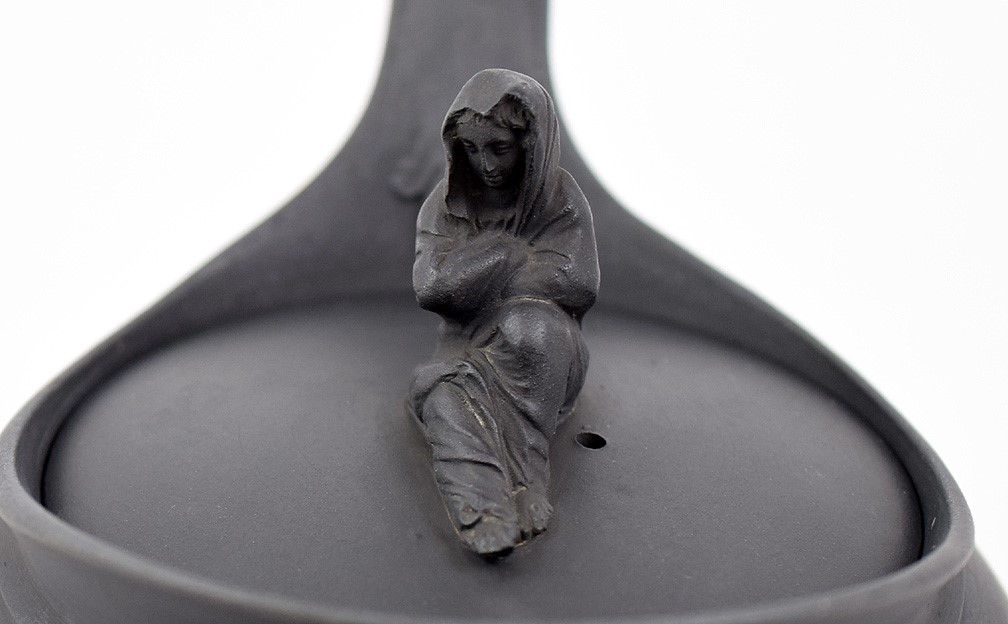
What is a finial? The little knob on the top of the lid. This is where it gets weird for our modern-day eyes. Some looked like women hunched over, draped in mourning clothes or grieving widows. Add this to the black body, and the oddly shaped pots start to take on a dark tone.
Mary Washington owned an early iteration of these black basalt pots, but was it for mourning purposes? Not likely.


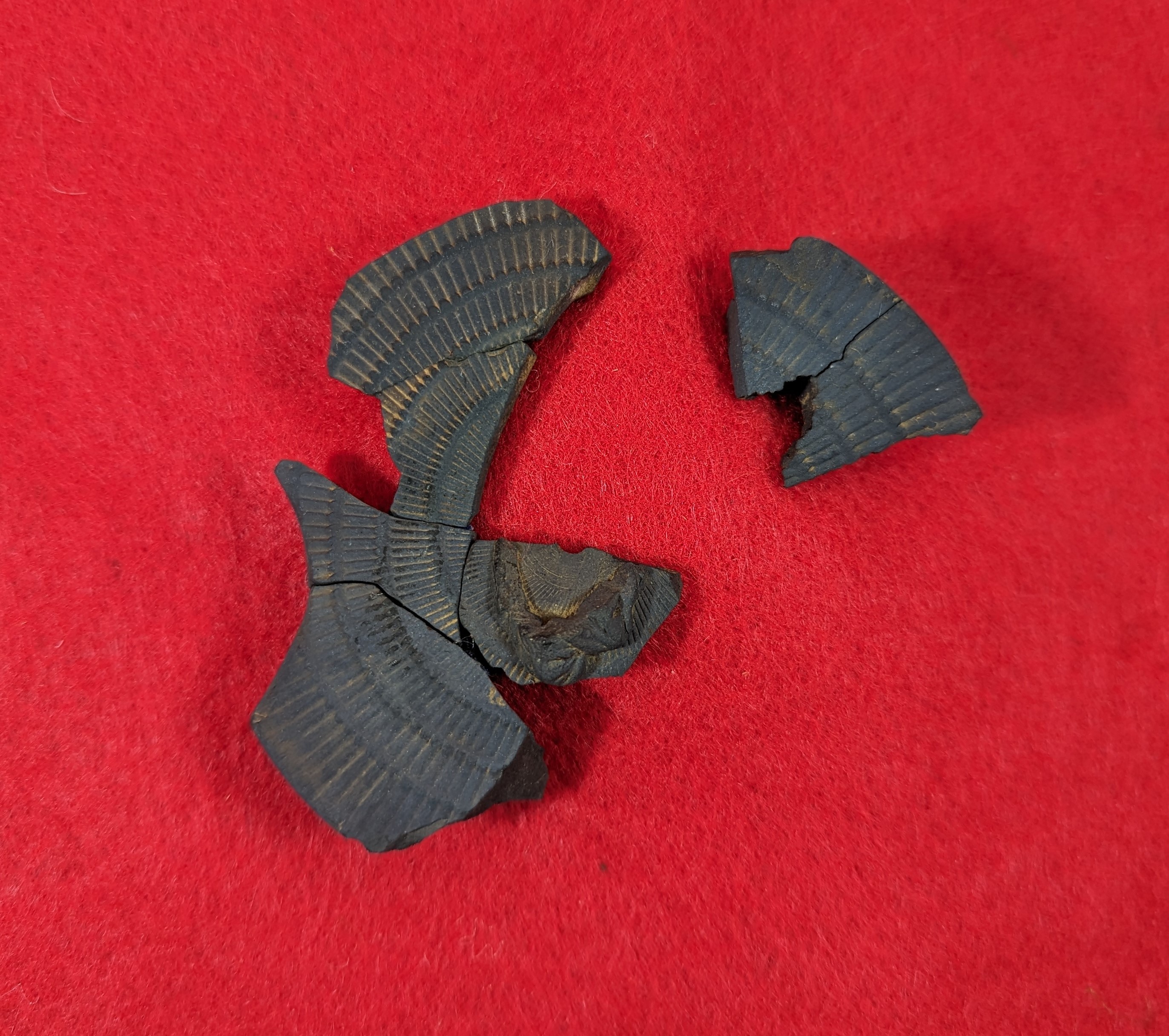


Her husband Augustine died in 1743, early into the family’s occupation at Ferry Farm. This would have been before the invention of this style of pottery and well before strict (and quite frankly tedious) Victorian mourning rituals. A black teapot may seem to symbolize some outward decorative display of bereavement or grief (particularly with a sad woman finial). Yet, to Mary, it would have just been a neoclassical design in the latest black basalt trend. She was just being her fashionable self. Her teaware collection was pretty admirable, and the fact that she owned a black basalt teapot is not surprising.
But that shouldn’t stop us from enjoying beautiful and somewhat spooky teapots.
Mara Kaktins, Archaeologist & Lab Manager
Sources
[1] M.S. Rau. (2019, December 11). Wedgwood: A collector’s guide to English ceramic treasures. https://rauantiques.com/blogs/canvases-carats-and-curiosities/wedgwood-collectors-guide
[2] Todd, L. M. (2020, December 17). Rediscovering Black basalt one of Josiah Wedgwood’s first and most enduring inventions. Architectural Digest. https://www.architecturaldigest.com/story/rediscovering-black-basalt-one-of-josiah-wedgwoods-first-and-most-enduring-inventions
[3] STONEWARE, BLACK BASALT – Type Index | Historical Archaeology Type Gallery. (n.d.). https://www.floridamuseum.ufl.edu/typeceramics/type/stoneware-black-basalt/
[4] The Mint Museum. (2023, January 24). Classic Black: The Basalt sculpture of Wedgwood and his contemporaries – Mint Museum. Mint Museum. https://www.mintmuseum.org/exhibition/classic-black/
[5] The Chipstone Foundation. (n.d.). https://www.chipstone.org/article.php/151/Ceramics-in-America-2004/The-Little-Engine-That-Could:-Adaptation-of-the-Engine-Turning-Lathe-in-the-Pottery-Industry
[6] Portals to the Past: British ceramics 1675-1825 – Google Arts & Culture. (n.d.-b). Google Arts & Culture. https://artsandculture.google.com/story/portals-to-the-past-british-ceramics-1675-1825/GgUh1Et0LThYLw
 Lives & Legacies